Herbs & Botanicals · Calming bark, limited evidence
Magnolia bark
Magnolia officinalis · also called Houpo, hou po, houpu magnolia, Magnoliae cortex. Not magnolia flower buds (xin yi hua).
Magnolia bark, called houpo in Chinese medicine, is used for calm, stress and sleep. Its main compounds, honokiol and magnolol, act on the brain's calming signal in the lab. In people, only a few small trials exist, mostly of a two-bark branded blend, with mixed results. The key caution: it may add to drowsiness from sedatives and alcohol, and some multi-herb slimming products sold with it have caused kidney failure.
General information, not medical advice. Last substantive update · Not medically reviewed. A named clinician has not signed off on this page. How this page is made
About Magnolia bark
Magnolia bark is used in Chinese and Japanese medicine to calm the mind. Its compounds act on the same brain signal as sedatives in the lab, but human trials are few, small and mostly of a branded blend. It may add to drowsiness from sedatives and alcohol. Avoid it in pregnancy and with multi-herb slimming products of unknown origin.
What it is
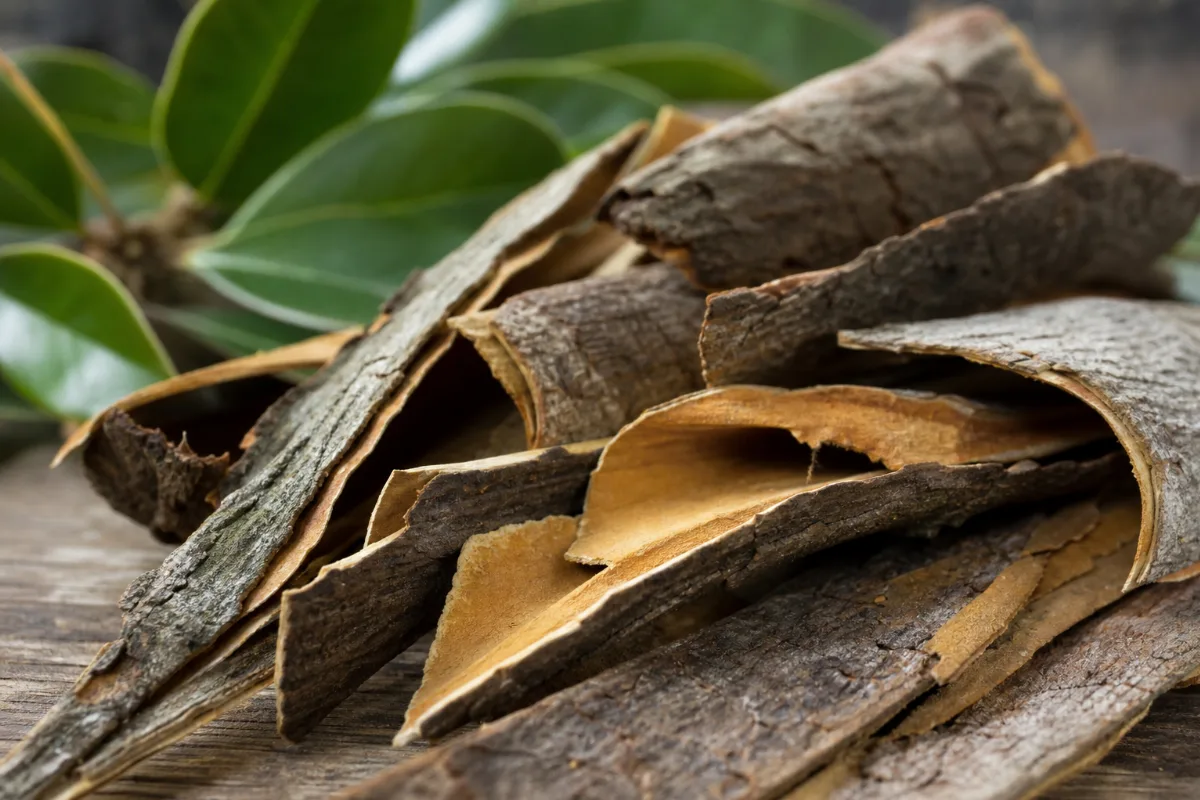
Magnolia bark is the dried bark of Magnolia officinalis, a tree in the magnolia family. In Chinese medicine it is called houpo. Its main compounds are honokiol and magnolol.
Extracts are sold as supplements, often alone, and sometimes with phellodendron bark in a branded blend.
Not the same as the blend or flower buds
The Relora blend combines magnolia bark with phellodendron bark. Its trial results belong to the blend, not to magnolia alone.
Magnolia flower buds (xin yi hua) come from other magnolia species and are a different medicine, not covered here.
What people use it for
Traditional uses include anxiety, depression, asthma, digestive problems and headache. Today it is mostly taken for stress, calm and sleep.
Long use is not proof that it works.
What the research shows
Human evidence is limited to a few small trials. The best-known are two short trials of the blend, one trial for weight, a 12-month combination study, and one fatty-liver trial of an extract tablet.
Most other research is in cells and animals. A 2017 review says only a very few clinical trials exist.
At a glance
Traditional uses history, not proof
- Chinese and Japanese medicine: anxiety, depression, asthma, digestive complaints and headache (per a 2017 review)
Studied for research
- Short-term anxiety and stress (branded blend): very low certainty
- Stress hormone cortisol and mood (blend): mixed, very low certainty
- Weight under stress (blend): one pilot, very low certainty
- Menopause symptoms and sleep (many-ingredient product): very low certainty
- Fatty liver (one extract tablet, one phase II trial): low certainty
- Sleep, calming and inflammation: lab or animal research only
Main compounds
- Honokiol
- Magnolol
Common forms
- Bark extract capsules
- Two-bark blend with phellodendron (Relora)
- Combination products with other herbs
- Decoction or dried bark in Chinese medicine
Research links: PubMed: Magnolia officinalis review (J Zhejiang Univ Sci B, 2017) · PubMed: Relora cortisol and mood trial (2013) · PubMed: Relora anxiety trial (Nutr J, 2008) · PubMed: Belgian kidney failure and Aristolochia (Toxicology, 2002) · Research Library · Genes & Biomarkers Library
The plant and its history
- Accepted scientific name
- Magnolia officinalis Rehder & E.H.Wilson
- Naming authority
- Rehder & E.H.Wilson. GBIF backbone: accepted species, usageKey 3153830, exact match, confidence 99. NCBI Taxonomy taxid 85864 (species).
- Synonyms
- Not listed here; GBIF holds the synonym list.
- Common names
- Magnolia bark (English); Houpo (Chinese (pinyin)); Hou po (Chinese (pinyin)); Houpu magnolia (English); Magnoliae cortex (Latin pharmacopoeia name)
- Botanical family
- Magnoliaceae (the magnolia family), order Magnoliales.
- Classification
- Plantae > Tracheophyta > Magnoliopsida > Magnoliales > Magnoliaceae > Magnolia > Magnolia officinalis
- Native range
- Not verified in a source read. The plant is used in Chinese medicine.
- Habitat
- Not verified in a source read.
- What the plant looks like
- Roots: Not verified.; Stems: The bark of stem, branch or root is the medicinal part (per a safety paper describing the extract as made from dried stem, root or branch bark).; Leaves: Not verified.; Flowers: Flower buds of other Magnolia species (xin yi hua) are a different medicine.; Fruit: Not verified.
- Cultivation
- Not verified in a source read.
- Harvest and processing
- Not verified. One rat study notes processing of the bark ('sweating') but we did not read it.
- Look-alikes and adulterants
- Name: Magnolia officinalis var. biloba; Note: A variety of the same species (GBIF usageKey 3153831).; Name: Magnolia obovata Thunb.; Note: Japanese magnolia (GBIF 3153160); a related species whose compounds (including obovatol) have been studied separately.; Name: Magnolia biondii Pamp.; Note: GBIF-accepted species (3153889); flower buds of Magnolia species are sold as xin yi hua. Which species supply xin yi hua was not verified from a source we read.; Name: Relora blend (Magnolia officinalis plus Phellodendron amurense Rupr., GBIF 3190154, Rutaceae); Note: A two-bark branded blend; results belong to the blend, not to magnolia alone.
- Sustainability and conservation
- Not verified. No IUCN assessment was retrieved.
Traditional use and history history, not clinical proof
| Tradition or era | Documented use | Source |
|---|---|---|
| Traditional Chinese and Japanese medicine | The bark (houpo) has been used for anxiety, asthma, depression, digestive complaints and headache, according to a 2017 review. | p28271656 |
| Modern supplements | Bark extract is a major ingredient of dietary supplements and cosmetic products (2017 review). A branded magnolia and phellodendron blend was tested in small trials in 2006-2013. | p28271656 |
Traditional use shows how a plant was used. It does not show that a supplement works or is safe today.
What is inside, and how it may work
What the plant contains and how those compounds act in cells and animals. Laboratory and animal mechanisms are not proven effects in people.
Main compounds
| Compound | Family | Where it is concentrated | Activity studied | Level of evidence |
|---|---|---|---|---|
| Honokiol PubChem 72303 | neolignan (biphenyl) | Bark | Strengthens GABA-A receptors; shortened sleep onset in mice; blocked collagen receptor GPVI on human platelets in the lab; weak CYP2B6 inducer in human liver cells. 1 18 10 3 | Laboratory research |
| Magnolol PubChem 72300 | neolignan (biphenyl) | Bark A tested bark extract was 94% magnolol and 1.5% honokiol (one safety paper); content varies by product. | Strengthens GABA-A receptors; shortened sleep latency in mice; inhibits CYP1A and CYP2C and propofol glucuronidation in liver microsomes. 1 2 8 23 11 | Laboratory research |
Mechanisms, receptors and pathways
| Target or pathway | Gene or receptor | What was found | Level |
|---|---|---|---|
| GABA-A receptors (benzodiazepine site) | GABRA/GABRB/GABRG/GABRD | Honokiol and magnolol enhanced GABA-A currents in neurons and recombinant receptors; in mice, sleep-promoting effects were blocked by flumazenil. 1 18 2 | Animal research |
| Collagen receptor on platelets | GP6 (GPVI) | Honokiol inhibited collagen-triggered aggregation of human platelets in the lab and lengthened plug formation in mice. 10 | Laboratory research |
| Drug-metabolising enzymes | CYP1A, CYP2C, CYP3A, CYP2B6, UGT | Magnolol inhibited CYP1A and CYP2C in microsomes; honokiol weakly induced CYP2B6 in human hepatocytes. 8 3 23 | Laboratory research |
Absorption, metabolism and elimination
- Absorption
- No human pharmacokinetic study of magnolia bark, honokiol or magnolol was read. A rat liver concentration after oral dosing is cited in one paper.
- Distribution
- Not established in people.
- Metabolism
- Magnolol is metabolised by CYP2C and 3A and by UGT enzymes in liver microsomes (human and rat).
- Elimination
- Not established.
- Bioavailability
- Unknown in people.
Isolated compounds versus whole extracts
Most mechanism work uses isolated honokiol or magnolol, but the human trials used bark extracts, a two-bark blend or a combination product. Results from one cannot be carried over to another.
Nutritional composition
Magnolia bark is used as an extract or decoction, not as a food source of nutrients, so a nutrient profile does not apply.
1 low certainty5 very low certainty3 not enough evidence
What is Magnolia bark good for?
The main proposed uses and how strong the human evidence is for each. 'Low' is the best rating any use receives, and most are 'very low' or 'insufficient'.
Benefits, one by one
Each card is a research question, not a promise. Tap a goal to filter. Open a card to see the studies, doses and limits.
Short-term anxiety and stress (blend trials)
Very low certaintyTwo small trials of a branded magnolia and phellodendron bark blend found less short-term anxiety in one and lower stress and cortisol in the other. Magnolia bark alone has not been tested. Both products came from the company that sells the blend.
3 studiesBranded two-bark blend (Relora: Magnolia officinalis and Phellodendro…
Studies, doses and limits
What the trials found
One 6-week trial (40 people, 26 finished) found less short-term anxiety than placebo but no change in long-standing anxiety, depression, cortisol or sleep. One 4-week trial (56 moderately stressed adults) found 18% lower saliva cortisol and better mood scores than placebo. A 2017 review says only a very few clinical trials exist.
Results
Blend only: less short-term anxiety in one trial; no change in long-standing anxiety. Other trial: better self-rated mood and stress.
Effect sizes as reported
Cortisol -18% vs placebo (4-week trial); mood scores improved by 11% to 42% depending on the scale; STATE anxiety lower than placebo (6-week trial, size not given in the abstract).
Why this rating
Two small, short, industry-linked trials of a two-herb branded blend with mixed results; magnolia alone untested. No GRADE rating exists.
Form and dose studied
Branded two-bark blend (Relora: Magnolia officinalis and Phellodendron amurense bark extracts). Amounts are not discussed here; ask a doctor or pharmacist.
Who was studied
Stressed or anxious adults in small groups: overweight premenopausal women (one trial), moderately stressed men and women (the other).
Limits
Small; short; many drop-outs in the first trial; the blend, not magnolia, was tested; the maker of the blend is linked to the trials.
Why researchers looked
Magnolia bark is a classic calming herb in Chinese and Japanese medicine, and the blend (Relora) is sold for stress.
Traditional use
Houpo (magnolia bark) has long been used in Chinese and Japanese medicine for anxiety, depression, stomach complaints and more, according to a 2017 review. Long use is not proof.
Proposed mechanism Laboratory research
Honokiol and magnolol strengthen GABA-A receptors in cells and animals. That is the same calming signal sedative medicines act on.
A proposed mechanism does not show that the effect happens in people.
No significant adverse events were reported in the first trial. See the safety tab for sedation and drug cautions.
Mood and the stress hormone cortisol (blend)
Very low certaintyIn one 4-week trial the blend lowered saliva cortisol and improved mood scores. In an earlier 6-week trial it did not change cortisol. So the cortisol story is mixed.
3 studiesTwo-bark blend only.
Studies, doses and limits
What the trials found
Talbott 2013: cortisol -18% and better mood scores versus placebo after 4 weeks. Kalman 2008: no significant cortisol change after 6 weeks. Garrison 2006 (weight trial): only a non-significant trend to lower evening cortisol.
Results
Mixed: one significant fall, two non-significant results.
Effect sizes as reported
-18% cortisol in one trial; others not significant.
Why this rating
Contradictory results from small, industry-linked trials; a lab number is not a health outcome.
Form and dose studied
Two-bark blend only.
Who was studied
Moderately stressed or stress-eating adults.
Limits
Different durations and populations; self-rated mood scales.
Why researchers looked
Cortisol is a stress hormone; the blend was designed to lower it.
Traditional use
Not part of the traditional description.
Proposed mechanism Pharmacological theory
Proposed to work through lower cortisol, but this was not proved in people.
A proposed mechanism does not show that the effect happens in people.
None reported in these trials.
Sleep
Not enough evidenceThere is no good human evidence that magnolia bark improves sleep. A blend trial found no sleep change, a many-ingredient menopause product improved sleep scores, and honokiol and magnolol made mice fall asleep faster.
4 studiesNot applicable: no bark-alone sleep trial.
Studies, doses and limits
What the trials found
Kalman 2008: sleep quality and latency not changed by the blend. De Franciscis 2017: better Pittsburgh sleep scores with a combination of agnus castus, magnolia and soy isoflavones versus isoflavones alone in 180 postmenopausal women. Mouse studies of honokiol and magnolol are lab only.
Results
No human trial of magnolia bark alone for sleep.
Effect sizes as reported
Not given for the combination in the abstract.
Why this rating
Human results come from a blend or a many-ingredient product; the rest is mouse work.
Form and dose studied
Not applicable: no bark-alone sleep trial.
Who was studied
Postmenopausal women (combination study).
Limits
Combination effects cannot be assigned to magnolia; mouse work does not show benefit in people.
Why researchers looked
Magnolia compounds act on the same brain receptors as sleep medicines.
Traditional use
Traditional sleep use of other magnolia parts exists, but we did not read a source for bark.
Proposed mechanism Animal research
Mouse studies show honokiol and magnolol shorten sleep onset through the benzodiazepine site of GABA-A receptors; flumazenil blocked the effect.
A proposed mechanism does not show that the effect happens in people.
Possible added drowsiness with sedatives; see the safety tab.
Mood after childbirth (magnolia tea, species unclear)
Very low certaintyA small unblinded trial found lower depression and fatigue scores in new mothers who drank a magnolia tea. The abstract does not say which magnolia plant or part, so it cannot be counted as evidence for magnolia bark.
1 studiesMagnolia tea, composition unstated.
Studies, doses and limits
What the trials found
Xue 2020: lower EPDS depression scores at 3 and 6 weeks (p=0.02) and lower fatigue scores than usual care alone. No placebo, no blinding.
Results
Small differences on self-rated scales.
Effect sizes as reported
p-values only in the abstract.
Why this rating
No placebo or blinding; plant part and species unstated; small pilot; no safety or breastfeeding data.
Form and dose studied
Magnolia tea, composition unstated.
Who was studied
Postnatal women.
Limits
Not bark-specific; could be flower buds or leaves.
Why researchers looked
Magnolia tea is used in traditional oriental medicine as a sleep aid, the authors say.
Traditional use
Traditional use of magnolia tea; plant part not stated.
Proposed mechanism Pharmacological theory
Not tested.
A proposed mechanism does not show that the effect happens in people.
No safety information in the abstract. New mothers should not treat this as a safety signal for bark.
Calming action on brain cells (lab)
Not enough evidenceIn lab cells, honokiol and magnolol boost GABA-A receptors, the calming signal that sedative medicines also act on. This explains the interest in the bark, but it does not prove a benefit in people.
4 studiesIsolated compounds, not bark capsules.
Studies, doses and limits
What the trials found
No human trial of the isolated compounds was found.
Results
Lab and animal only.
Effect sizes as reported
n/a
Why this rating
Cells and mice only.
Form and dose studied
Isolated compounds, not bark capsules.
Who was studied
Not applicable.
Limits
Cannot say how much of these compounds reach the brain in people from a supplement.
Why researchers looked
To understand why the bark might calm and why it could interact with sedatives.
Traditional use
A 2017 review lists anxiety and depression among the traditional uses.
Proposed mechanism Laboratory research
Both compounds strengthened synaptic and outside-synapse GABA-A signalling in rat neurons and cloned receptors. The authors expect anxiolytic and sedative effects but also side effects and drug interactions. A 1999 mouse study found honokiol did not cause the muscle relaxation or memory loss that diazepam did at calming doses.
A proposed mechanism does not show that the effect happens in people.
Mechanism of the interaction caution on the safety tab.
Weight under stress (blend)
Very low certaintyIn one small 6-week trial of the branded blend, women who tended to eat more under stress gained about 1.5 kg on placebo and none on the blend. It is a pilot with the product maker's staff among the authors.
2 studiesBranded two-bark blend only.
Studies, doses and limits
What the trials found
Garrison 2006: 28 completers. Placebo gained about 1.5 kg, treatment group no change. 75% of placebo vs 37% of treatment gained at least 1 kg (p<0.04). The 2008 trial in the same kind of women measured body morphology and found no significant difference.
Results
Weight gain avoided in one pilot; not reproduced in the second trial.
Effect sizes as reported
75% vs 37% gainers (p<0.04).
Why this rating
Two small trials, one positive and one null on body measures; higher drop-out in placebo; industry-linked.
Form and dose studied
Branded two-bark blend only.
Who was studied
Overweight premenopausal women who eat more when stressed.
Limits
Small pilot; completers only; not a weight-loss result.
Why researchers looked
Stress and cortisol are linked to weight gain, and the blend was marketed for that.
Traditional use
Not a traditional use.
Proposed mechanism Pharmacological theory
Proposed to work through lower cortisol; cortisol itself did not change significantly in this trial.
A proposed mechanism does not show that the effect happens in people.
No significant adverse events were reported.
Menopause hot flashes and sleep (combination product)
Very low certaintyA 12-month controlled study of 180 postmenopausal women found fewer hot flashes and better sleep with a product combining agnus castus, magnolia, soy isoflavones and lactobacilli than with isoflavones alone. Magnolia's own part cannot be separated.
1 studiesCombination product (agnus castus + magnolia + soy isoflavones + lact…
Studies, doses and limits
What the trials found
De Franciscis 2017: Kupperman index and hot-flash tendency fell more, and sleep quality rose more, in the combination group. Breast density, endometrial thickness and liver tests were similar between groups at 12 months. No adverse events.
Results
Better in the combination group; numbers not in the abstract.
Effect sizes as reported
Not reported in the abstract.
Why this rating
Four active ingredients; not clearly blinded; effect sizes unavailable.
Form and dose studied
Combination product (agnus castus + magnolia + soy isoflavones + lactobacilli).
Who was studied
Postmenopausal women.
Limits
Cannot tell what magnolia contributed.
Why researchers looked
Magnolia was added for its calming effect on sleep.
Traditional use
Not a traditional use as described.
Proposed mechanism Pharmacological theory
Not tested.
A proposed mechanism does not show that the effect happens in people.
No change in liver function tests at 12 months; no adverse events.
Fatty liver (a magnolia extract tablet)
Low certaintyOne 12-week phase II trial of a magnolia extract tablet (HL tablet) in 74 people with fatty liver found less liver fat on the higher dose than on placebo. It is a branded botanical drug trial, not a bark supplement, and needs repeating.
1 studiesA standardised tablet extract of Magnolia officinalis (plant part not…
Studies, doses and limits
What the trials found
Jeong 2017: high dose reduced liver fat versus placebo (p=0.033), low dose did not (p=0.386); ALT tended to fall; other markers and BMI did not change; no moderate or severe treatment-related safety problems.
Results
Liver fat -1.7 points (high dose) vs +0.61 (placebo) on a percentage scale.
Effect sizes as reported
Absolute change -1.7 +/- 3.1 vs +0.61 +/- 3.87 percentage points of liver fat.
Why this rating
One small phase II randomised, placebo-controlled trial with a lab-measured outcome.
Form and dose studied
A standardised tablet extract of Magnolia officinalis (plant part not stated); not interchangeable with supplements.
Who was studied
Adults with fatty liver on ultrasound.
Limits
Small; 12 weeks; a surrogate (fat on a scan) not liver disease outcomes; product not generally available.
Why researchers looked
Liver fat was tested as a drug target for a magnolia extract.
Traditional use
Not traditional.
Proposed mechanism Pharmacological theory
Not reviewed.
A proposed mechanism does not show that the effect happens in people.
No moderate or severe treatment-related events. Do not assume other magnolia products are liver-safe on this basis.
Antioxidant, anti-inflammatory and antibiotic effects (lab)
Not enough evidenceA 2017 review lists antioxidant, anti-inflammatory, antibiotic and antispasmodic effects of the bark and its compounds. These are lab and animal findings and say little about benefits in people.
1 studiesNot applicable.
Studies, doses and limits
What the trials found
The review says only a very few clinical trials exist. Honokiol also blocked human platelets in the lab (see safety tab).
Results
No human outcome shown.
Effect sizes as reported
n/a
Why this rating
Lab and animal evidence only.
Form and dose studied
Not applicable.
Who was studied
Not applicable.
Limits
Narrative review, not systematic.
Why researchers looked
Many compounds in the bark are active in cells.
Traditional use
Used traditionally for asthma, digestion and headache, per the review.
Proposed mechanism Laboratory research
The review says the mechanisms have not been worked out.
A proposed mechanism does not show that the effect happens in people.
See safety tab for the platelet finding and adulteration history.
Connections to the rest of health
How Magnolia bark connects to the rest of our health knowledge graph. Every link says what kind of connection it is. A safety link (for example to the liver) is a warning, not a benefit. A study that merely mentions a topic never creates a benefit link.
Explore every connection: goals, body systems, organs, symptoms, genes
A. Wellness goals
| Connected to | Kind of connection | Evidence status | Context | Studies |
|---|---|---|---|---|
| Anxiety Support | Potential benefit | Very low certainty | Short-term anxiety and stress (blend trials): Two small trials of a branded magnolia and phellodendron bark blend found less short-term anxiety in one and lower stress and cortisol in the other. Magnolia bark alone has not been tested. Both products came from the company that sells the blend. | 7 19 16 |
| Stress Reduction | Potential benefit | Very low certainty | Short-term anxiety and stress (blend trials): Two small trials of a branded magnolia and phellodendron bark blend found less short-term anxiety in one and lower stress and cortisol in the other. Magnolia bark alone has not been tested. Both products came from the company that sells the blend. Mood and the stress hormone cortisol (blend): In one 4-week trial the blend lowered saliva cortisol and improved mood scores. In an earlier 6-week trial it did not change cortisol. So the cortisol story is mixed. | 7 19 16 5 |
| Calm Relaxation | Potential benefit | Very low certainty | Short-term anxiety and stress (blend trials): Two small trials of a branded magnolia and phellodendron bark blend found less short-term anxiety in one and lower stress and cortisol in the other. Magnolia bark alone has not been tested. Both products came from the company that sells the blend. | 7 19 16 |
| Mood Balance | Potential benefit | Very low certainty | Mood and the stress hormone cortisol (blend): In one 4-week trial the blend lowered saliva cortisol and improved mood scores. In an earlier 6-week trial it did not change cortisol. So the cortisol story is mixed. Mood after childbirth (magnolia tea, species unclear): A small unblinded trial found lower depression and fatigue scores in new mothers who drank a magnolia tea. The abstract does not say which magnolia plant or part, so it cannot be counted as evidence for magnolia bark. | 19 7 5 22 |
| Better Sleep | Preliminary mechanism | Not enough evidence | Sleep: There is no good human evidence that magnolia bark improves sleep. A blend trial found no sleep change, a many-ingredient menopause product improved sleep scores, and honokiol and magnolol made mice fall asleep faster. | 7 4 18 2 |
| Sleep Quality | Preliminary mechanism | Not enough evidence | Sleep: There is no good human evidence that magnolia bark improves sleep. A blend trial found no sleep change, a many-ingredient menopause product improved sleep scores, and honokiol and magnolol made mice fall asleep faster. | 7 4 18 2 |
| Calm Relaxation | Preliminary mechanism | Not enough evidence | Calming action on brain cells (lab): In lab cells, honokiol and magnolol boost GABA-A receptors, the calming signal that sedative medicines also act on. This explains the interest in the bark, but it does not prove a benefit in people. | 1 9 18 2 |
| Weight Management | Potential benefit | Very low certainty | Weight under stress (blend): In one small 6-week trial of the branded blend, women who tended to eat more under stress gained about 1.5 kg on placebo and none on the blend. It is a pilot with the product maker's staff among the authors. | 5 7 |
| Menopause Support | Potential benefit | Very low certainty | Menopause hot flashes and sleep (combination product): A 12-month controlled study of 180 postmenopausal women found fewer hot flashes and better sleep with a product combining agnus castus, magnolia, soy isoflavones and lactobacilli than with isoflavones alone. Magnolia's own part cannot be separated. | 4 |
| Sleep Quality | Potential benefit | Very low certainty | Menopause hot flashes and sleep (combination product): A 12-month controlled study of 180 postmenopausal women found fewer hot flashes and better sleep with a product combining agnus castus, magnolia, soy isoflavones and lactobacilli than with isoflavones alone. Magnolia's own part cannot be separated. | 4 |
| Liver Support | Potential benefit | Low certainty | Fatty liver (a magnolia extract tablet): One 12-week phase II trial of a magnolia extract tablet (HL tablet) in 74 people with fatty liver found less liver fat on the higher dose than on placebo. It is a branded botanical drug trial, not a bark supplement, and needs repeating. | 6 |
| Metabolic Health | Potential benefit | Low certainty | Fatty liver (a magnolia extract tablet): One 12-week phase II trial of a magnolia extract tablet (HL tablet) in 74 people with fatty liver found less liver fat on the higher dose than on placebo. It is a branded botanical drug trial, not a bark supplement, and needs repeating. | 6 |
| Inflammation Balance | Preliminary mechanism | Not enough evidence | Antioxidant, anti-inflammatory and antibiotic effects (lab): A 2017 review lists antioxidant, anti-inflammatory, antibiotic and antispasmodic effects of the bark and its compounds. These are lab and animal findings and say little about benefits in people. | 16 |
B. Body systems
| Connected to | Kind of connection | Evidence status | Context | Studies |
|---|---|---|---|---|
| Blood and clotting | Drug or supplement interaction | Not enough evidence | Lab platelet inhibition; no human data. Preparation or compound: Honokiol |
10 |
| Stress Mood | Biological association | Very low certainty | Studied for: Short-term anxiety and stress (blend trials) Studied for: Mood and the stress hormone cortisol (blend) | 7 19 16 5 22 |
| Endocrine System | Biological association | Very low certainty | Studied for: Mood and the stress hormone cortisol (blend) | 19 7 5 |
| Sleep Recovery | Biological association | Not enough evidence | Studied for: Sleep Studied for: Menopause hot flashes and sleep (combination product) | 7 4 18 2 |
| Nervous System | Biological association | Not enough evidence | Studied for: Calming action on brain cells (lab) | 1 9 18 2 |
| Metabolism Weight | Biological association | Very low certainty | Studied for: Weight under stress (blend) | 5 7 |
| Reproductive System | Biological association | Very low certainty | Studied for: Menopause hot flashes and sleep (combination product) | 4 |
| Hepatic System | Biological association | Low certainty | Studied for: Fatty liver (a magnolia extract tablet) | 6 |
| Immune System | Biological association | Not enough evidence | Studied for: Antioxidant, anti-inflammatory and antibiotic effects (lab) | 16 |
C. Body parts and organs
| Connected to | Kind of connection | Evidence status | Context | Studies |
|---|---|---|---|---|
| Brain | Drug or supplement interaction | Not enough evidence | GABA-A strengthening in cells and mice; possible added drowsiness with sedatives. Preparation or compound: Honokiol and magnolol |
1 29 |
| Kidneys | Adverse effect or risk | Not enough evidence | Aristolochia substitution caused the Belgian kidney failure; magnolia alone not shown to harm kidneys. Preparation or compound: Multi-herb slimming capsules containing Magnolia officinalis and Aristolochia |
21 13 |
D. Symptoms
| Connected to | Kind of connection | Evidence status | Context | Studies |
|---|---|---|---|---|
| Short-term anxiety | Potential benefit | Very low certainty | Branded blend trials only. Preparation or compound: Magnolia and phellodendron blend |
7 |
I. Biomarkers
| Connected to | Kind of connection | Evidence status | Context | Studies |
|---|---|---|---|---|
| Salivary cortisol | Biological association | Very low certainty | Measured in trials: mixed. A lab change is not the same as a health benefit. | 19 7 5 |
| Liver fat (magnetic resonance spectroscopy) | Biological association | Low certainty | Measured in trials: lowered. A lab change is not the same as a health benefit. | 6 |
| ALT (alanine transaminase) | Biological association | Low certainty | Measured in trials: mixed. A lab change is not the same as a health benefit. | 6 4 |
J. Genes, receptors and enzymes
| Connected to | Kind of connection | Evidence status | Context | Studies |
|---|---|---|---|---|
| GABA-A receptor subunits | Preliminary mechanism | In vitro | Target of honokiol and magnolol in cells and mice. | 1 |
| GP6 (platelet collagen receptor) | Preliminary mechanism | In vitro | Honokiol antagonist in the lab. | 10 |
| CYP1A / CYP2C / CYP2B6 | Preliminary mechanism | In vitro | Magnolol inhibition; honokiol weak induction. | 8 3 |
L. Active compounds
| Connected to | Kind of connection | Evidence status | Context | Studies |
|---|---|---|---|---|
| Honokiol | Biological association | In vitro | Strengthens GABA-A receptors; shortened sleep onset in mice; blocked collagen receptor GPVI on human platelets in the lab; weak CYP2B6 inducer in human liver cells. Preparation or compound: Bark |
1 18 10 3 |
| Magnolol | Biological association | In vitro | Strengthens GABA-A receptors; shortened sleep latency in mice; inhibits CYP1A and CYP2C and propofol glucuronidation in liver microsomes. Preparation or compound: Bark |
1 2 8 23 11 |
Each connection is stored with the ingredient, the connected record, the kind of connection, the evidence status, the supporting studies, the preparation or compound involved, and a review date (last reviewed October 25, 2026).
Evidence at a glance: what changed in 3 lab markers
Tap a number to show only those markers. Counts are markers, not people.
The evidence
The research centre for Magnolia bark. Every record here was checked against PubMed or the publisher's page; we never list a study we have not verified.
Evidence by outcome
Bars show how many studies we found for each outcome, not how well it works. People are added up across trials only (reviews are not added, to avoid double counting).
How we rate evidence
High certainty
Several well-run trials or reviews agree; further research is unlikely to change the picture much.
Moderate certainty
Good trials point the same way, but some doubt remains.
Low certainty
Small, short or inconsistent trials. The finding could change with better research.
Very low certainty
Very little or very weak human data. Treat as a possibility only.
Mixed findings
Trials or reviews disagree with each other.
Not enough evidence
Not enough human research to say either way.
Evidence against
Good research found no benefit, or found harm.
We take the reviewers' own risk-of-bias and GRADE statements where they exist, and otherwise judge from study size, design, consistency, directness and whether a product matches what is sold. Many publications do not make evidence high. Method note: We started from our existing magnolia bark summary, re-read the key trials and safety papers in PubMed, and searched for EU, NCCIH, LiverTox and LactMed entries, which were not found. Study design, people, product and result are recorded as reported, mostly from abstracts. Certainty ratings are the compiler's reading. No study is cited that we could not verify.
Study library: every study we checked 29
| Study | Design | People | Product, dose, length | Result |
|---|---|---|---|---|
| Alexeev 2012 The natural products magnolol and honokiol are positive allosteric modulators of both synaptic and extra-synaptic GABA(A) receptors Neuropharmacology · PMID 22445602 · DOI |
Laboratory research in-vitro |
Rat hippocampal neurons and recombinant receptors | Magnolol and honokiol (isolated compounds) bark compounds lab concentrations n/a · vs n/a |
Both compounds strengthened phasic and tonic GABA signalling; all receptor types tested were sensitive, with the highest efficacy at delta-containing receptors. The authors expect anxiolytic, sedative and anticonvulsant effects but also significant side effects and drug-interaction risk. n/a Methods, limits and fundingOutcomes: GABA-A receptor currents Limitations: Cells only; expectation of interactions is the authors' inference Funding and conflicts: NIH-funded (extramural support noted) Read: abstract |
| Chen 2012 Magnolol, a major bioactive constituent of the bark of Magnolia officinalis, induces sleep via the benzodiazepine site of GABA(A) receptor in mice Neuropharmacology · PMID 22771461 · DOI |
Animal research animal |
Mice | Magnolol, injected bark compound 5 and 25 mg/kg i.p. single doses · vs vehicle; flumazenil |
Shorter sleep latency and more non-REM and REM sleep; reversed by flumazenil. n/a Methods, limits and fundingOutcomes: EEG sleep Limitations: Mouse injections; no human data Funding and conflicts: Not read Read: abstract |
| Cho 2014 Effect of honokiol on the induction of drug-metabolizing enzymes in human hepatocytes Drug Des Devel Ther · PMID 25395831 · DOI |
Laboratory research in-vitro |
Human liver cells | Honokiol bark compound 0.5-50 uM 48 hours · vs control |
Honokiol was a weak CYP2B6 inducer at higher concentrations and did not significantly change CYP1A2, 3A4, 2C8, 2C9, 2C19 or the UGT enzymes tested; the authors consider drug interactions from induction unlikely. n/a Methods, limits and fundingOutcomes: Enzyme activity and mRNA Limitations: Cells only Funding and conflicts: Not stated Read: abstract |
| De Franciscis 2017 Adding Agnus Castus and Magnolia to Soy Isoflavones Relieves Sleep Disturbances Besides Postmenopausal Vasomotor Symptoms-Long Term Safety and Effectiveness Nutrients · PMID 28208808 · DOI |
Controlled study (PubMed type: observational) |
180 Postmenopausal women (100 in combination group, 80 in comparison group) |
Combination product: agnus castus + magnolia extracts + soy isoflavones + lactobacilli, versus isoflavones alone unspecified at the recommended amount 12 months · vs soy isoflavone formulation |
Hot flash tendency and Kupperman index fell more, and sleep quality rose more, with the combination than with isoflavones alone. Breast density, endometrial thickness and liver function did not differ between groups at 12 months. No adverse events. Better sleep and fewer vasomotor symptoms with the combination Methods, limits and fundingOutcomes: Kupperman index, Pittsburgh Sleep Quality Index, SF-36, endometrial thickness, breast density, liver function Limitations: Many ingredients, so magnolia's part cannot be separated; not clearly blinded; effect sizes not given in the abstract Funding and conflicts: Authors declare no conflict of interest (abstract). Read: abstract |
| Garrison 2006 Effect of a proprietary Magnolia and Phellodendron extract on weight management: a pilot, double-blind, placebo-controlled clinical trial Altern Ther Health Med · PMID 16454147 |
Controlled trial |
Healthy overweight premenopausal women who eat more under stress | Relora blend of Magnolia officinalis and Phellodendron amurense extracts bark 250 mg capsules three times daily (as reported) 6 weeks · vs identical placebo |
28 completed. Placebo group gained about 1.5 kg; treatment group no change (p=0.89 for the within-group change). 75% of placebo vs 37% of treatment group gained at least 1 kg (p<0.04). Cortisol: a non-significant trend to lower evening cortisol. Both groups improved on some psychological scores. Weight maintained vs gain of about 1.5 kg in placebo Methods, limits and fundingOutcomes: Salivary cortisol, weight change, stress and anxiety scores Limitations: Pilot; 28 completers; higher drop-out in the placebo group; blend; cortisol result not significant Funding and conflicts: Authors include staff of Next Pharmaceuticals (maker of the ingredient). Industry-linked. Read: abstract |
| Jeong 2017 New botanical drug, HL tablet, reduces hepatic fat as measured by magnetic resonance spectroscopy in patients with nonalcoholic fatty liver disease: A placebo-controlled, randomized, phase II trial World J Gastroenterol · PMID 28932090 · DOI |
Controlled trial |
74 Adults with non-alcoholic fatty liver disease on ultrasound |
HL tablet, an extract prepared from Magnolia officinalis (part and standardisation not stated in the abstract) unspecified high 400 mg, low 133.4 mg daily 12 weeks · vs placebo |
Liver fat fell with the high dose versus placebo (p=0.033; change -1.7 +/- 3.1 percentage points vs +0.61 +/- 3.87), not with the low dose (p=0.386). ALT tended to fall; other measures unchanged. No moderate or severe treatment-related safety issues. High dose lowered liver fat by about 12% relative to baseline Methods, limits and fundingOutcomes: Liver fat by magnetic resonance spectroscopy; ALT, AST, lipids, insulin resistance, BMI Limitations: Phase II, 74 people, 12 weeks; a branded botanical drug, not a bark supplement; part of the plant not stated Funding and conflicts: Authors declare no conflicts of interest (abstract). Read: abstract |
| Kalman 2008 Effect of a proprietary Magnolia and Phellodendron extract on stress levels in healthy women: a pilot, double-blind, placebo-controlled clinical trial Nutr J · PMID 18426577 · DOI |
Controlled trial |
40 Healthy overweight premenopausal women aged 20-50 who eat more when stressed and had above-average anxiety scores |
Relora (branded blend of Magnolia officinalis and Phellodendron amurense bark extracts) bark 250 mg capsules three times daily (as reported) 6 weeks · vs identical placebo |
40 analysed by intent to treat, 26 completed. Less short-term (STATE) anxiety than placebo. No change in long-standing (TRAIT) anxiety or depression, salivary cortisol, amylase, appetite, body measures or sleep quality/latency. No significant adverse events. Reduced temporary anxiety only; all other outcomes not significantly different Methods, limits and fundingOutcomes: Spielberger STATE and TRAIT anxiety, salivary cortisol and amylase, sleep and appetite scales, safety markers Limitations: Pilot; small; 14 of 40 did not finish; blend, so magnolia alone not tested; many outcomes tested Funding and conflicts: Funding statement not read. Branded product (Relora, Next Pharmaceuticals); co-author Garrison R is listed at Next Pharmaceuticals on the sister weight trial. Treat as industry-linked. Read: abstract |
| Kim 2016 Metabolic interactions of magnolol with cytochrome P450 enzymes: uncompetitive inhibition of CYP1A and competitive inhibition of CYP2C Drug Dev Ind Pharm · PMID 26133083 · DOI |
Laboratory research in-vitro |
Human and rat liver microsomes | Magnolol bark compound n/a n/a · vs n/a |
Magnolol inhibited CYP1A (IC50 1.62 uM) and CYP2C (5.56 uM) potently and CYP3A weakly (35.0 uM). The authors suggest significant inhibition of CYP1A and 2C, but not 3A, in rats, and call for studies of clinically relevant interactions. n/a Methods, limits and fundingOutcomes: CYP inhibition Limitations: Lab and rat inference; no human interaction study Funding and conflicts: Not stated Read: abstract |
| Kuribara 1999 Honokiol, a putative anxiolytic agent extracted from magnolia bark, has no diazepam-like side-effects in mice J Pharm Pharmacol · PMID 10197425 |
Animal research animal |
Mice | Honokiol, by mouth or injection bark compound 0.1-20 mg/kg up to 12 days · vs diazepam |
Honokiol at anxiolytic doses did not change motor activity or muscle tone, while diazepam caused muscle relaxation. Honokiol did not prolong hexobarbital sleeping, impair learning, or cause withdrawal signs in mice. n/a Methods, limits and fundingOutcomes: Anxiety maze, activity and muscle-tone tests, withdrawal, sleeping time, memory Limitations: Mouse study of the isolated compound; does not show the same in people or with whole bark extract Funding and conflicts: Authors linked to a Japanese herbal-medicine company (Tsumura) department; funding not read Read: abstract |
| Lee 2017 Honokiol as a specific collagen receptor glycoprotein VI antagonist on human platelets: Functional ex vivo and in vivo studies Sci Rep · PMID 28054640 · DOI |
Laboratory research in-vitro |
Human platelets and whole blood; mice | Honokiol bark compound lab concentrations n/a · vs n/a |
Honokiol inhibited collagen-triggered human platelet aggregation, prolonged closure time in human whole blood tested in the lab, and lengthened plug-formation time in mice. n/a Methods, limits and fundingOutcomes: Platelet aggregation, closure time Limitations: Isolated compound; no human bleeding data Funding and conflicts: Not stated Read: abstract |
| Li 2007 Evaluation of the in vitro and in vivo genotoxicity of magnolia bark extract Regul Toxicol Pharmacol · PMID 17692444 · DOI |
Animal research animal |
Bacteria and mice | Magnolia bark extract (94% magnolol, 1.5% honokiol) bark n/a n/a · vs control |
No mutagenic or micronucleus-inducing activity under the test conditions. n/a Methods, limits and fundingOutcomes: Bacterial reverse mutation test; mouse micronucleus test Limitations: A magnolol-rich extract; not tested together with other herbs Funding and conflicts: Funding not stated in the abstract Read: abstract |
| Liu 2007 Evaluation of short-term and subchronic toxicity of magnolia bark extract in rats Regul Toxicol Pharmacol · PMID 17692445 · DOI |
Animal research animal |
Rats | Magnolia bark extract in the diet bark up to 480 mg/kg/day (21 days) and 240 mg/kg/day (90 days) 21 and 90 days · vs control diet |
No treatment-related effects found, including in clinical chemistry and organ findings. n/a Methods, limits and fundingOutcomes: Clinical signs, blood tests, organ pathology Limitations: Rats; the extract's make-up is not given in the abstract Funding and conflicts: Funding not stated in the abstract Read: abstract |
| Martinez 2002 Progression rate of Chinese herb nephropathy: impact of Aristolochia fangchi ingested dose Nephrol Dial Transplant · PMID 11865085 · DOI |
Cohort analysis |
71 Patients with Chinese herb nephropathy (44 end-stage, 27 chronic failure) |
Slimming pills containing Stephania tetrandra (replaced by Aristolochia fangchi), Magnolia officinalis, diethylpropion, fenfluramine unspecified n/a n/a · vs n/a |
The end-stage group had taken more of the Aristolochia-containing component, more Magnolia officinalis (80.1 vs 59.8 g), and more diethylpropion and fenfluramine. In multiple regression only the Aristolochia-containing component predicted faster progression; the authors conclude Aristolochia is causally involved. n/a Methods, limits and fundingOutcomes: Progression of kidney failure vs cumulative doses Limitations: Observational; Magnolia dose was higher in the worse group but was not an independent predictor Funding and conflicts: Not stated Read: abstract |
| Nachtergael 2015 In vitro genotoxicity tests point to an unexpected and harmful effect of a Magnolia and Aristolochia association J Ethnopharmacol · PMID 26278811 · DOI |
Laboratory research in-vitro |
Cultured kidney cells | Aqueous decoctions of Magnolia officinalis and Aristolochia baetica, alone and 1:1 bark n/a 24 hours · vs each alone |
The 1:1 mixture raised gamma-H2AX; the authors call the genotoxic potentiation a possible explanatory factor for the Belgian cases. n/a Methods, limits and fundingOutcomes: DNA-damage marker gamma-H2AX Limitations: Cells only; magnolia alone was not reported as harmful in the abstract Funding and conflicts: Not stated Read: abstract |
| Nortier 2002 Renal interstitial fibrosis and urothelial carcinoma associated with the use of a Chinese herb (Aristolochia fangchi) Toxicology · PMID 12505369 · DOI |
Narrative review |
Chinese herb nephropathy patients | Slimming pills in which Stephania tetrandra (Han fang ji) was replaced by Aristolochia fangchi root n/a n/a · vs n/a |
Pills contained aristolochic acids instead of tetrandrine. Urothelial carcinoma in 46% of end-stage patients. The authors warn that Aristolochia species are treated as interchangeable with, or mistaken for, Stephania, Akebia, Asarum, Clematis and Cocculus in herbal remedies. 46% urothelial carcinoma Methods, limits and fundingOutcomes: Kidney disease and cancer Limitations: Review by the investigators who described the disease Funding and conflicts: Not stated Read: abstract |
| Poivre 2017 Biological activity and toxicity of the Chinese herb Magnolia officinalis Rehder & E. Wilson (Houpo) and its constituents J Zhejiang Univ Sci B · PMID 28271656 · DOI |
Narrative review |
Review of lab, animal and clinical literature | Magnolia officinalis bark and its compounds bark n/a n/a · vs n/a |
Reports antioxidant, anti-inflammatory, antibiotic and antispasmodic effects, mechanisms not worked out, and says only a very few clinical trials have been published. Also reviews toxicity studies. n/a Methods, limits and fundingOutcomes: Composition, use, pharmacology and safety Limitations: Narrative review, not a systematic one; no GRADE Funding and conflicts: Authors declare no conflict of interest. Read: abstract |
| Poivre 2023 Assessment of the Cytotoxicity, Mutagenicity, and Genotoxicity of Two Traditional Chinese Herbs: Aristolochia baetica and Magnolia officinalis Toxins (Basel) · PMID 36668872 · DOI |
Laboratory research in-vitro |
Human kidney cell line; Salmonella (Ames test) | Aqueous and methanolic extracts of Aristolochia and Magnolia officinalis bark, alone and combined bark n/a 24-48 hours · vs each alone |
The combination was more genotoxic and more cytotoxic to human kidney cells and, in aqueous form, mutagenic in the TA98 strain with liver extract, dose-dependently. n/a Methods, limits and fundingOutcomes: Cell viability, gamma-H2AX, Ames test Limitations: Lab only Funding and conflicts: Authors declare no conflict of interest. Read: abstract |
| Qu 2012 Honokiol promotes non-rapid eye movement sleep via the benzodiazepine site of the GABA(A) receptor in mice Br J Pharmacol · PMID 22537192 · DOI |
Animal research animal |
Mice | Honokiol, injected bark compound 10 and 20 mg/kg i.p. single doses · vs vehicle; flumazenil |
Shorter time to non-REM sleep and more non-REM sleep; effect blocked by flumazenil. n/a Methods, limits and fundingOutcomes: EEG sleep Limitations: Mouse injections; not bark extract; no human data Funding and conflicts: Not read Read: abstract |
| Talbott 2013 Effect of Magnolia officinalis and Phellodendron amurense (Relora) on cortisol and psychological mood state in moderately stressed subjects J Int Soc Sports Nutr · PMID 23924268 · DOI |
Rct (placebo controlled; blinding not detailed in abstract) |
56 35 men and 21 women screened as moderately stressed |
Relora (standardised, patented blend of Magnolia officinalis and Phellodendron amurense bark extracts) bark not stated in abstract 4 weeks · vs placebo |
Salivary cortisol 18% lower than placebo (p<0.05). Better mood-state scores: lower overall stress (-11%), tension (-13%), depression (-20%), anger (-42%), fatigue (-31%), confusion (-27%); higher global mood (+11%) and vigor (+18%). Cortisol -18% vs placebo; mood scores improved Methods, limits and fundingOutcomes: Salivary cortisol and mood-state scores Limitations: Small; short; blend; abstract does not give dose, design details or confidence intervals; mood scores are self-reported Funding and conflicts: Product named as made by Next Pharmaceuticals; first author's address is a supplement-review company. Funding statement not read. Treat as industry-linked. Read: abstract |
| Tankeu 2016 Differentiation between two fang ji herbal medicines, Stephania tetrandra and the nephrotoxic Aristolochia fangchi, using hyperspectral imaging Phytochemistry · PMID 26632529 · DOI |
Analytical method n/a |
Root powders | Stephania tetrandra (han fang ji) vs Aristolochia fangchi (guang fang ji) root n/a n/a · vs n/a |
States that the two are both called fang ji, are substituted because of similar looks, and that A. fangchi contains aristolochic acid, a carcinogen. Reports 128 Belgian and 116 Chinese kidney-failure cases. n/a Methods, limits and fundingOutcomes: Species identification Limitations: Lab method paper; about fang ji, not magnolia Funding and conflicts: Not stated Read: abstract |
| Vanherweghem 1993 Rapidly progressive interstitial renal fibrosis in young women: association with slimming regimen including Chinese herbs Lancet · PMID 8094166 · DOI |
Case series |
9 Young women in Brussels with kidney failure after a slimming regimen |
Slimming regimen that from May 1990 included two Chinese herbs, Stephania tetrandra and Magnolia officinalis unspecified n/a at least 3 months · vs n/a |
Nine women had rapidly progressive kidney fibrosis; 3 of 25 randomly chosen women on the regimen for 3+ months had impaired kidney function. The brands tested at the time showed no aristolochic acid, but the capsules had unexpected alkaloid profiles. n/a Methods, limits and fundingOutcomes: Kidney function and biopsies Limitations: Case series; the cause was not yet identified; Magnolia was one of two herbs added Funding and conflicts: Not stated Read: abstract |
| Xue 2020 A randomized controlled pilot study of the effectiveness of magnolia tea on alleviating depression in postnatal women Food Sci Nutr · PMID 32180964 · DOI |
Rct (no placebo; control = usual care) |
Postnatal women | Single-ingredient magnolia tea (species and plant part not stated in the abstract) unspecified not stated 3 weeks of tea, outcomes at 3 and 6 weeks · vs usual postpartum care only |
Lower depression (EPDS) scores at 3 and 6 weeks (p=0.02), lower fatigue scores (p=0.04) and one sleep-inefficiency factor better at 3 weeks (p=0.03) than usual care. Small differences on self-report scales Methods, limits and fundingOutcomes: Postpartum Sleep Quality Scale, Edinburgh Postnatal Depression Scale, Postpartum Fatigue Scale Limitations: Not blinded, no placebo; the tea may not be magnolia bark (species and part not stated); small pilot; no safety or breastfeeding data in the abstract Funding and conflicts: Authors declare no conflict of interest (abstract). Read: abstract |
| Yang 2014 Species-associated differences in the inhibition of propofol glucuronidation by magnolol J Am Assoc Lab Anim Sci · PMID 25199099 |
Laboratory research in-vitro |
Liver microsomes from mouse, rat, pig, macaque (human data cited from earlier work) | Magnolol bark compound 10 uM n/a · vs n/a |
States that magnolol potently inhibits propofol glucuronidation in human liver microsomes (earlier work, nanomolar range); inhibition in animal microsomes was weaker, so animal models underestimate the human effect. n/a Methods, limits and fundingOutcomes: Propofol glucuronidation Limitations: Lab only; the human result is quoted, not tested here Funding and conflicts: Not stated Read: abstract |
| Zhang 2008 Evaluation of magnolia bark extract in chromosomal aberration assays Mutat Res · PMID 18639484 · DOI |
Laboratory research in-vitro |
Hamster cells | Magnolia bark extract bark 0-59 ug/ml 3-24 hours · vs control |
No increase in chromosomal aberrations; higher concentrations were cytotoxic. n/a Methods, limits and fundingOutcomes: Chromosomal aberrations Limitations: Cells only Funding and conflicts: Funding not stated in the abstract Read: abstract |
| s-ema-magnolia-nf European Medicines Agency / HMPC: search for a herbal monograph on Magnolia officinalis bark · Source |
Regulatory search n/a |
Methods, limits and fundingRead: not-found | ||
| s-identity-databases GBIF species match, NCBI Taxonomy and PubChem name lookups (2026-10-25) · Source |
Database lookup n/a |
Methods, limits and fundingRead: full-text | ||
| s-livertox-lactmed-nf NIH LiverTox and LactMed (NCBI Bookshelf): search for Magnolia officinalis / honokiol · Source |
Regulatory search n/a |
Methods, limits and fundingRead: not-found | ||
| s-nccih-magnolia-nf NCCIH: herb pages for magnolia / magnolia bark · Source |
Regulatory search n/a |
Methods, limits and fundingRead: not-found | ||
| s-webmd-magnolia WebMD (consumer drug reference): Magnolia, uses and risks · Source |
Consumer reference n/a |
Methods, limits and fundingRead: summary-only |
What we do not know yet
- What the evidence supports: small, short trials of a branded blend with mixed results, plus one extract tablet trial, at low to very low certainty.
- No trial of magnolia bark alone for stress, anxiety or sleep, and no independent trial of the blend.
- No human study of sedative, alcohol, blood-thinner or enzyme interactions, or of driving.
- Pregnancy, breastfeeding, child and long-term safety are unstudied.
- No EU, NCCIH, LiverTox or LactMed entry was found.
How new research is added
New studies are found by a saved PubMed search and placed in a review queue. A person reads each one before it changes any evidence rating or safety wording. New publications never change ratings automatically.
Lab markers
What changed in blood or saliva tests during trials. A changed number is not the same as feeling or being healthier, and we give no "normal ranges".
Hormonal 1
Salivary cortisol
Mixed results in trials
A stress hormone measured in saliva, which rises and falls through the day.
Very low certaintyResults and what it means
Why it was measured
The branded blend was developed to lower cortisol.
Statistical vs. clinical meaning
One statistically significant fall in three small trials. A change in a lab value is not the same as feeling less stressed or being healthier.
Safety implication
None identified for this marker.
| Study | Result | People | Product |
|---|---|---|---|
| 19 | 18% lower cortisol exposure than placebo after 4 weeks (p<0.05) | 56 moderately stressed adults | Relora blend (magnolia and phellodendron bark) |
| 7 | No significant change in salivary cortisol or amylase vs placebo | 40 enrolled, 26 completed, overweight premenopausal women | Relora blend for 6 weeks |
| 5 | Non-significant trend to lower evening cortisol (group x time p=0.06 for evening) | 28 completers | Relora blend for 6 weeks |
Organ function 1
ALT (alanine transaminase)
Mixed results in trials
A liver enzyme that rises when liver cells are stressed.
Low certaintyResults and what it means
Why it was measured
Secondary outcome in the fatty-liver trial; liver tests were also the safety check in the menopause study.
Statistical vs. clinical meaning
No sign of liver harm in these trials. This does not exclude rare reactions.
Safety implication
Reassuring but limited to small studies of specific products.
Other 1
Liver fat (magnetic resonance spectroscopy)
Lowered in trials
The share of the liver made up of fat, measured on a special scan.
Low certaintyResults and what it means
Why it was measured
Main outcome of the fatty-liver trial.
Statistical vs. clinical meaning
A scan measure, not a patient outcome. Statistically significant at one dose in a small trial.
Safety implication
No moderate or severe treatment-related events reported.
| Study | Result | People | Product |
|---|---|---|---|
| 6 | High-dose group -1.7 +/- 3.1 percentage points vs +0.61 +/- 3.87 on placebo (p=0.033); low dose not significant (p=0.386) | 74 adults with fatty liver | HL tablet magnolia extract for 12 weeks |
Safety
What studies and official sources say about side effects, medicines and who should check first. Each point shows what kind of evidence it comes from.
Main points to know 3
- Possible added drowsiness with sedatives, sleep aids and alcohol. Honokiol and magnolol strengthen the brain's GABA-A calming signal in cells and mice, and the lab authors expect side effects and drug interactions. A consumer drug reference says magnolia may add to drowsiness from sedatives. No human interaction or driving study was found, and the small blend trials reported no significant adverse events. Laboratory research 1 2 29 7
- Mix-ups in multi-herb slimming products caused kidney failure in Belgium. In the early 1990s, women in Brussels developed severe kidney scarring after slimming capsules that contained Magnolia officinalis and a Chinese herb meant to be Stephania tetrandra. Later work showed the second herb had been replaced by a kidney-toxic Aristolochia plant, which was blamed. Magnolia was not shown to cause it. Case series 21 13 15
- Official safety statements are missing. No EU herbal monograph, NCCIH fact sheet, LiverTox record or LactMed record was found for magnolia bark. This is a gap in what we could open, not proof of safety. Authoritative guidance 25 28 27
Side effects 2
| Effect | How often | Severity and recovery | Evidence |
|---|---|---|---|
| No significant adverse events reported in small trials The 6-week blend trial (40 enrolled), the fatty-liver trial (74) and the 12-month combination study (180) each report no significant or no moderate/severe adverse events. These trials are too small to detect uncommon reactions. | Not established | not applicable Not applicable | Controlled trial 7 6 4 |
| Drowsiness or sedation (expected from the mechanism) Predicted from GABA-A action and a consumer reference; not measured in a human sedation or driving study. A mouse study found no diazepam-like central depression or muscle weakening with honokiol at calming doses. | Not established | unknown Unknown | Pharmacological theory 1 29 |
Liver
The fatty-liver trial of a magnolia extract tablet reported no moderate or severe treatment-related safety problems and a tendency for ALT to fall. The 12-month combination study found no difference in liver function. A rat study of a bark extract for 90 days found no treatment-related organ findings. We found no human case report of liver injury attributed to magnolia bark in PubMed, and no LiverTox record could be located. That is absence of reports, not proof of liver safety, and the products studied differ from supplements. 6 4 12 27
How often. No frequency of human liver injury was found. Not established.
Monitoring. No agency advice found. People with liver disease or on liver-affecting medicines should ask a doctor first. Stop and seek care for yellow skin or eyes, dark urine, pale stools or severe tiredness.
This is a safety connection. It is not evidence that Magnolia bark supports liver health.
Medicines and supplements 6
| With | Why it matters | Importance | Evidence | What to do |
|---|---|---|---|---|
| Sedatives, sleep medicines, benzodiazepines, barbiturates and other CNS depressants prescription | Honokiol and magnolol strengthen GABA-A receptors, the target of benzodiazepines. | Added drowsiness is plausible. No human interaction study was found. A mouse study found honokiol did not lengthen sleep caused by hexobarbital, which points the other way, so the picture is unsettled. | Laboratory research Very low certainty 1 9 29 | Ask a doctor or pharmacist before combining. Take extra care with driving or machinery until you know how it affects you. |
| Alcohol substance | Alcohol also acts on GABA-A receptors. | No study of magnolia with alcohol was found; any added drowsiness is theoretical. | Pharmacological theory Not enough evidence 1 | Be cautious; avoid combining until you know your response. |
| Anaesthetics (propofol) and drugs cleared by glucuronidation prescription | Magnolol inhibits propofol glucuronidation in human liver microsomes (as quoted in a 2014 abstract). | Lab finding only. Surgical teams should know about supplement use. | Laboratory research Not enough evidence 23 | Tell the surgical and anaesthetic team about any magnolia product before an operation. |
| Anticoagulants and antiplatelet drugs (warfarin, aspirin, clopidogrel and similar) prescription | Honokiol blocked the collagen receptor GPVI on human platelets in the lab, prolonged closure time in human blood in the lab and lengthened plug formation in mice. | No human bleeding study or case report was found. A consumer reference advises against combining with blood thinners including aspirin. | Laboratory research Not enough evidence 10 29 | Ask a doctor before combining; mention it before surgery. |
| Medicines cleared by liver enzymes CYP1A and CYP2C (some blood thinners, anti-inflammatories and others; check with a pharmacist) prescription | Magnolol inhibited CYP1A and CYP2C and weakly CYP3A in human and rat liver microsomes. Honokiol was a weak CYP2B6 inducer in human liver cells and did not change the other enzymes tested. | Lab results only; the authors call for studies of clinically relevant interactions. Not shown in people. | Laboratory research Not enough evidence 8 3 | Ask a pharmacist if you take medicines with a narrow safe range. |
| Skeletal muscle relaxants prescription | Predicted only from GABA-A action. | No human data. In mice, honokiol at calming doses did not change muscle tone, whereas diazepam did. | Animal research Not enough evidence 9 | No specific advice beyond asking a pharmacist. |
Who should check first 5
| Situation | Advice | Evidence |
|---|---|---|
| Pregnancy | Avoid. A consumer reference advises avoiding it, and we found no safety data. Traditional Chinese medicine texts are said to caution against houpo in pregnancy, but we did not read such a source (NOT verified). | Authoritative guidance 29 |
| Breastfeeding | No safety data found (LactMed has no record we could locate). Avoid unless a clinician advises otherwise. A postnatal tea trial did not report infant safety. | Authoritative guidance 27 22 |
| Children | No safety data found. Not recommended. | Authoritative guidance 25 |
| Before surgery, or with bleeding disorders or blood thinners | Ask a doctor first (lab platelet findings; no human data). | Laboratory research 10 29 |
| Kidney disease | Avoid multi-herb slimming or 'Chinese herb' products of uncertain origin; see adulteration. | Case series 21 15 |
Overdose, product quality and regulators
Summary. Animal and cell tests of a magnolol-rich bark extract found no mutagenic or chromosome-damaging activity and no toxicity in rats. In kidney cells, a magnolia plus Aristolochia mixture was more harmful than either alone.
Animal. 90-day and 21-day rat studies of magnolia bark extract found no treatment-related findings (up to 240 mg/kg/day for 90 days). Bacterial mutation and mouse micronucleus tests were negative. Chromosome tests in hamster cells were negative at the concentrations that could be analysed.
Human doses studied. Small trials lasted 4 to 12 weeks (blend), 12 weeks (extract tablet) and 12 months (combination product). Amounts are not discussed here.
High dose or long term signals. None identified in people; long-term bark-alone safety is unstudied.
Overdose response. No case of overdose was found.
Genotoxicity. Negative for a magnolol-rich bark extract (bacterial test, mouse micronucleus, hamster cells). The aqueous magnolia and Aristolochia mixture was genotoxic and mutagenic in lab tests, which the authors link to the Belgian cases.
Toxic plant parts. No toxic part of magnolia bark itself was identified in the sources read. The toxic danger is from substituted plants such as Aristolochia.
The main quality risk is species mix-up and adulteration in multi-herb Chinese products. Magnolia has also been confused with, or sold alongside, other magnolia species and parts.
Aristolochia substitution in 'fang ji' products. In Belgium, slimming pills labelled to contain Stephania tetrandra (han fang ji) actually contained Aristolochia fangchi (guang fang ji). The pills also contained Magnolia officinalis. Aristolochic acid is a carcinogen that causes kidney failure and urothelial cancer. A review by the investigators says Aristolochia species are treated as interchangeable with, or mistaken for, Stephania, Akebia, Asarum, Clematis and Cocculus. The name 'mu tong' is not stated in the abstracts we read, so a link to mu tong is NOT verified. 21 13 15 20
Magnolia plus Aristolochia in the lab. A magnolia and Aristolochia mix was more genotoxic and cytotoxic to human kidney cells and mutagenic in a bacterial test than either alone. This is a lab finding and does not show magnolia alone harms kidneys. In the 1993 case series, the capsules tested then showed no aristolochic acid, which was found later. 14 17 21
Which magnolia. GBIF lists Magnolia officinalis, its variety biloba, Magnolia obovata (Japanese hou-noki) and Magnolia biondii as separate names. Magnolia flower buds (xin yi hua) are a different part of different Magnolia species and are not studied here. Labels should state species and part (bark). 26
| Body | Action | Date |
|---|
When to get medical help
- Swelling, much less urine, or blood in urine after any herbal slimming product
- Yellow skin or eyes, dark urine or severe tiredness
- Unusual bleeding or bruising, especially with blood thinners
- Extreme sleepiness, confusion or trouble breathing when combined with sedatives or alcohol
- Rash, swelling of the face or breathing difficulty (possible allergy)
Stop the supplement and contact a clinician or emergency service. In the US, Poison Control is 1-800-222-1222.
General information only, not medical advice. Ask a clinician or pharmacist before use, especially with medicines, in pregnancy or with a health condition. See the Natural Remedy Safety guide.
Frequently asked questions
What is magnolia bark used for?
In Chinese and Japanese medicine it is used for anxiety, depression, asthma, digestive problems and headache. Today it is mainly taken for stress, calm and sleep. These uses rest mostly on tradition and small trials.
Does magnolia bark help anxiety or stress?
Does it help sleep?
Is Relora the same as magnolia bark?
Can I drink alcohol or take sleep medicines with it?
Is it safe with blood thinners?
Does it affect how medicines are broken down?
Can it harm the liver?
What is the kidney failure story?
How do I avoid mix-ups?
Is it safe in pregnancy or breastfeeding?
Explore by health goal
Stress ReductionCalm RelaxationMood BalanceSleep QualityAnxiety SupportBetter SleepWeight ManagementMenopause SupportLiver SupportMetabolic HealthInflammation Balance
Editorial transparency
- Written by
- AlternativeMed editorial team. Research compiled with AI assistance, then checked against PubMed records.
- Medical review
- None. This page has not been reviewed by a physician or pharmacist.
- First published
- 2026-10-25
- Last substantive update
- 2026-10-25
- How we research
- We started from our existing magnolia bark summary, re-read the key trials and safety papers in PubMed, and searched for EU, NCCIH, LiverTox and LactMed entries, which were not found. Study design, people, product and result are recorded as reported, mostly from abstracts. Certainty ratings are the compiler's reading. No study is cited that we could not verify.
- How we rate evidence
- See "How we rate evidence" in the Evidence tab.
- Independence
- No product is promoted on this page. No affiliate links are shown. If one is added later it will be labelled and kept apart from the evidence.
Sources 29
Each source was opened and checked. Where we read only the abstract, it says so. The small numbers in the text point here.
- Alexeev M, Grosenbaugh DK, Mott DD et al.. The natural products magnolol and honokiol are positive allosteric modulators of both synaptic and extra-synaptic GABA(A) receptors. Neuropharmacology. 2012. PMID 22445602. DOI 10.1016/j.neuropharm.2012.03.002. (abstract)
- Chen CR, Zhou XZ, Luo YJ et al.. Magnolol, a major bioactive constituent of the bark of Magnolia officinalis, induces sleep via the benzodiazepine site of GABA(A) receptor in mice. Neuropharmacology. 2012. PMID 22771461. DOI 10.1016/j.neuropharm.2012.06.031. (abstract)
- Cho YY, Jeong HU, Kim JH et al.. Effect of honokiol on the induction of drug-metabolizing enzymes in human hepatocytes. Drug Des Devel Ther. 2014. PMID 25395831. DOI 10.2147/DDDT.S72305. (abstract)
- De Franciscis P, Grauso F, Luisi A et al.. Adding Agnus Castus and Magnolia to Soy Isoflavones Relieves Sleep Disturbances Besides Postmenopausal Vasomotor Symptoms-Long Term Safety and Effectiveness. Nutrients. 2017. PMID 28208808. DOI 10.3390/nu9020129. (abstract)
- Garrison R, Chambliss WG. Effect of a proprietary Magnolia and Phellodendron extract on weight management: a pilot, double-blind, placebo-controlled clinical trial. Altern Ther Health Med. 2006. PMID 16454147. (abstract)
- Jeong JY, Sohn JH, Baek YH et al.. New botanical drug, HL tablet, reduces hepatic fat as measured by magnetic resonance spectroscopy in patients with nonalcoholic fatty liver disease: A placebo-controlled, randomized, phase II trial. World J Gastroenterol. 2017. PMID 28932090. DOI 10.3748/wjg.v23.i32.5977. (abstract)
- Kalman DS, Feldman S, Feldman R et al.. Effect of a proprietary Magnolia and Phellodendron extract on stress levels in healthy women: a pilot, double-blind, placebo-controlled clinical trial. Nutr J. 2008. PMID 18426577. DOI 10.1186/1475-2891-7-11. (abstract)
- Kim SB, Kang HE, Cho HJ et al.. Metabolic interactions of magnolol with cytochrome P450 enzymes: uncompetitive inhibition of CYP1A and competitive inhibition of CYP2C. Drug Dev Ind Pharm. 2016. PMID 26133083. DOI 10.3109/03639045.2015.1047846. (abstract)
- Kuribara H, Stavinoha WB, Maruyama Y. Honokiol, a putative anxiolytic agent extracted from magnolia bark, has no diazepam-like side-effects in mice. J Pharm Pharmacol. 1999. PMID 10197425. (abstract)
- Lee TY, Chang CC, Lu WJ et al.. Honokiol as a specific collagen receptor glycoprotein VI antagonist on human platelets: Functional ex vivo and in vivo studies. Sci Rep. 2017. PMID 28054640. DOI 10.1038/srep40002. (abstract)
- Li N, Song Y, Zhang W et al.. Evaluation of the in vitro and in vivo genotoxicity of magnolia bark extract. Regul Toxicol Pharmacol. 2007. PMID 17692444. DOI 10.1016/j.yrtph.2007.06.005. (abstract)
- Liu Z, Zhang X, Cui W et al.. Evaluation of short-term and subchronic toxicity of magnolia bark extract in rats. Regul Toxicol Pharmacol. 2007. PMID 17692445. DOI 10.1016/j.yrtph.2007.06.006. (abstract)
- Martinez MC, Nortier J, Vereerstraeten P et al.. Progression rate of Chinese herb nephropathy: impact of Aristolochia fangchi ingested dose. Nephrol Dial Transplant. 2002. PMID 11865085. DOI 10.1093/ndt/17.3.408. (abstract)
- Nachtergael A, Poivre M, Belayew A et al.. In vitro genotoxicity tests point to an unexpected and harmful effect of a Magnolia and Aristolochia association. J Ethnopharmacol. 2015. PMID 26278811. DOI 10.1016/j.jep.2015.07.045. (abstract)
- Nortier JL, Vanherweghem JL. Renal interstitial fibrosis and urothelial carcinoma associated with the use of a Chinese herb (Aristolochia fangchi). Toxicology. 2002. PMID 12505369. DOI 10.1016/s0300-483x(02)00486-9. (abstract)
- Poivre M, Duez P. Biological activity and toxicity of the Chinese herb Magnolia officinalis Rehder & E. Wilson (Houpo) and its constituents. J Zhejiang Univ Sci B. 2017. PMID 28271656. DOI 10.1631/jzus.B1600299. (abstract)
- Poivre M, Antoine MH, Kryshen K et al.. Assessment of the Cytotoxicity, Mutagenicity, and Genotoxicity of Two Traditional Chinese Herbs: Aristolochia baetica and Magnolia officinalis. Toxins (Basel). 2023. PMID 36668872. DOI 10.3390/toxins15010052. (abstract)
- Qu WM, Yue XF, Sun Y et al.. Honokiol promotes non-rapid eye movement sleep via the benzodiazepine site of the GABA(A) receptor in mice. Br J Pharmacol. 2012. PMID 22537192. DOI 10.1111/j.1476-5381.2012.02010.x. (abstract)
- Talbott SM, Talbott JA, Pugh M. Effect of Magnolia officinalis and Phellodendron amurense (Relora) on cortisol and psychological mood state in moderately stressed subjects. J Int Soc Sports Nutr. 2013. PMID 23924268. DOI 10.1186/1550-2783-10-37. (abstract)
- Tankeu S, Vermaak I, Chen W et al.. Differentiation between two fang ji herbal medicines, Stephania tetrandra and the nephrotoxic Aristolochia fangchi, using hyperspectral imaging. Phytochemistry. 2016. PMID 26632529. DOI 10.1016/j.phytochem.2015.11.008. (abstract)
- Vanherweghem JL, Depierreux M, Tielemans C et al.. Rapidly progressive interstitial renal fibrosis in young women: association with slimming regimen including Chinese herbs. Lancet. 1993. PMID 8094166. DOI 10.1016/0140-6736(93)92984-2. (abstract)
- Xue L, Zhang J, Shen H et al.. A randomized controlled pilot study of the effectiveness of magnolia tea on alleviating depression in postnatal women. Food Sci Nutr. 2020. PMID 32180964. DOI 10.1002/fsn3.1442. (abstract)
- Yang L, Zhu L, Ge G et al.. Species-associated differences in the inhibition of propofol glucuronidation by magnolol. J Am Assoc Lab Anim Sci. 2014. PMID 25199099. (abstract)
- Zhang B, Maniatis T, Song Y et al.. Evaluation of magnolia bark extract in chromosomal aberration assays. Mutat Res. 2008. PMID 18639484. DOI 10.1016/j.mrgentox.2008.05.009. (abstract)
- . European Medicines Agency / HMPC: search for a herbal monograph on Magnolia officinalis bark. . . (not-found)
- . GBIF species match, NCBI Taxonomy and PubChem name lookups (2026-10-25). . . (full-text)
- . NIH LiverTox and LactMed (NCBI Bookshelf): search for Magnolia officinalis / honokiol. . . (not-found)
- . NCCIH: herb pages for magnolia / magnolia bark. . . (not-found)
- . WebMD (consumer drug reference): Magnolia, uses and risks. . . (summary-only)