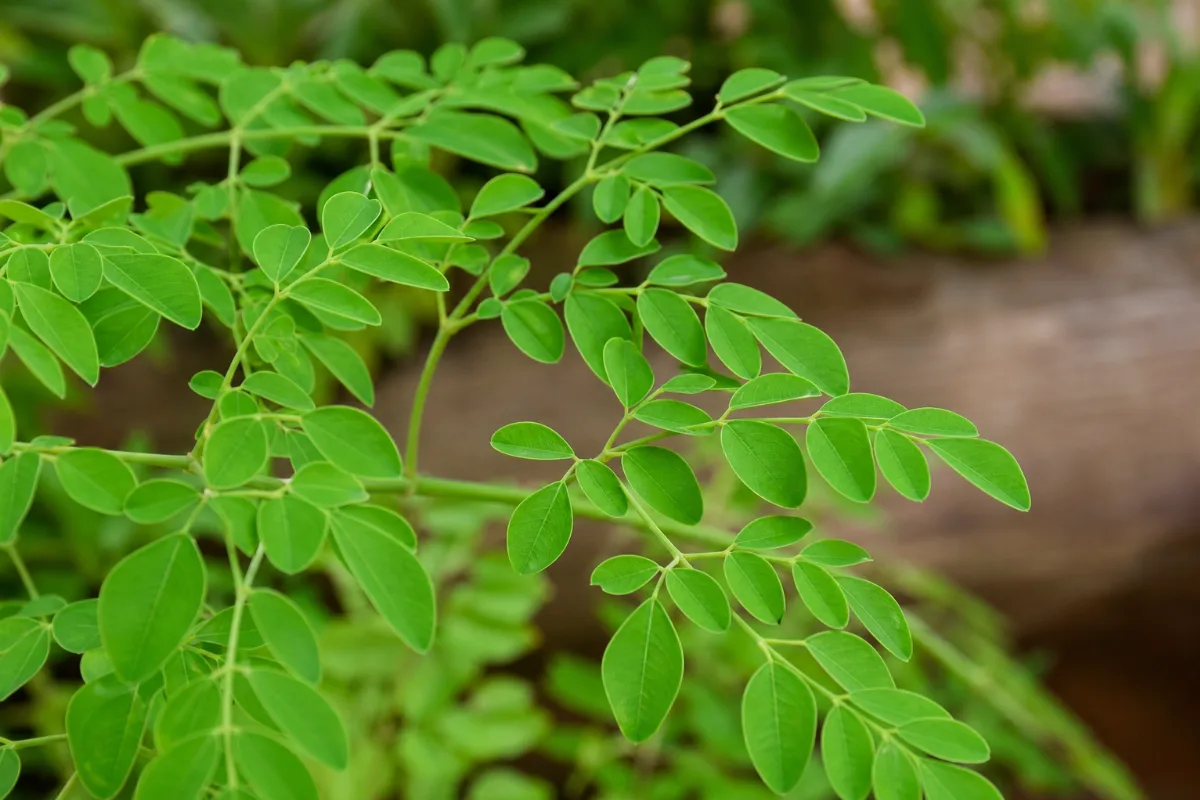
Herbs & Botanicals · Herbs · Tropical leaf food and supplement with weak evidence for most uses and clear cautions for root, bark and pregnancy
Moringa
Moringa oleifera Lam. · also called Moringa, drumstick tree, malunggay (Filipino)
Moringa is a tropical tree whose leaves and pods are eaten as food and whose leaf, seed, root and bark are used in traditional medicine. This profile covers the leaf mainly, with the seed and root or bark kept separate. Human evidence for blood sugar, blood pressure, cholesterol and breast milk is weak or mixed; the best consistent signal is higher hemoglobin in non-randomised food studies. Root and bark should be avoided, especially in pregnancy.
General information, not medical advice. Last substantive update · Not medically reviewed. A named clinician has not signed off on this page. How this page is made
About Moringa
Moringa (Moringa oleifera) is a familiar food tree and supplement. Human research is limited: a few small trials of leaf powder for blood sugar, pooled analyses with mixed results for blood pressure and none for weight, short milk-supply trials, and non-randomised food studies for anemia. Safety concerns are root and bark in pregnancy, drug level changes, a rare clot case, and no product testing.
What it is
Moringa oleifera Lam. is a fast-growing tropical tree of the family Moringaceae, accepted by GBIF with many synonyms. Leaves and young pods are eaten as food. Leaf, seed, root and bark are used in traditional medicine, but they are different materials. In this profile leaf, seed and root or bark are kept apart because their evidence and risks differ.
Traditional and current uses
Moringa leaf is eaten as a nutritious vegetable and used traditionally for many ailments. It is used as a milk booster after birth in some countries, and as a nutrition food against anemia and undernutrition. The bark has a traditional reputation, reported second-hand, as an abortifacient. Today moringa leaf powder is sold as a supplement for blood sugar, cholesterol, blood pressure and weight.
Leaf, seed and root are different
Almost all of the human trials used the leaf, as powder, capsules, cooked leaves or foods. One small uncontrolled study used seed kernel for asthma. No human study of root or bark was found, only animal studies with warning signs. Do not assume that results for the leaf apply to any other part.
What the research shows
Evidence is mostly weak. Rodent studies of blood sugar and fats are strongly positive, but pooled human trials show no consistent effects on blood sugar, cholesterol or weight, and two analyses disagree on blood pressure. For breast milk, Cochrane rates the evidence low to very low, with short positive trials and one clear null trial. The most consistent human signal is a higher hemoglobin in non-randomised food studies of children, girls and pregnant women, but no placebo-controlled trial of leaf alone.
At a glance
Traditional uses history, not proof
- Leaves and young pods are eaten as food; leaf, seed, bark, root, sap and flowers are used in traditional medicine (Stohs 2015).
- Bark credited in traditional African medicine with abortifacient properties (second-hand, a traditional claim).
- Leaf decoction tested in Unani medicine for hypothyroidism in a small pilot (Alam 2021).
- Milk booster after birth in the Philippines and elsewhere (second-hand).
Studied for research
- Blood sugar in prediabetes and diabetes, very low
- Blood pressure, low
- Cholesterol and triglycerides, very low
- Breast milk supply, very low
- Hemoglobin and anemia, low
- CD4 and BMI in people with HIV, very low
- Thyroid function, insufficient
- Asthma (seed), insufficient
Main compounds
- Moringin and glucomoringin, isothiocyanate-type compounds
- Quercetin and kaempferol, flavonols
- Chlorogenic acid, a polyphenol
- Alkaloids, reported in the root extract
Common forms
- Fresh or cooked leaves as food
- Dried leaf powder and capsules
- Leaf extracts
- Seed kernel powder (one small study)
- Root and bark (traditional; not recommended)
Research links: Moringa cardiometabolic meta-analysis with GRADE (abstract) · Cochrane review of galactagogues (abstract) · Moringa and amodiaquine in volunteers (abstract) · LiverTox moringa entry · Research Library · Genes & Biomarkers Library
The plant and its history
- Accepted scientific name
- Moringa oleifera Lam.
- Naming authority
- Lam., Encycl. 1: 398 (1785) (GBIF)
- Synonyms
- Moringa pterygosperma Gaertn.; Moringa moringa (L.) Millsp.; Guilandina moringa L.; Hyperanthera moringa (L.) Vahl
- Common names
- Moringa (English); Drumstick tree (English); Malunggay (Filipino (named in a LactMed search summary)); Moringa (Spanish)
- Botanical family
- Moringaceae, a small family of trees in the order Brassicales (the mustard and cabbage order). The isothiocyanate compounds in moringa are of the same chemical type as those in mustard and cabbage.
- Classification
- Plantae > Tracheophyta > Magnoliopsida > Brassicales > Moringaceae > Moringa > Moringa oleifera
- Native range
- Not verified from a primary source in this file. Reviews describe moringa as grown across South Asia, Africa and the tropics.
- Habitat
- Not verified.
- What the plant looks like
- Roots: Not verified. Root is a separate material from leaf in the studies read.; Stems: Not verified.; Leaves: Leaves are the usual food and supplement part (Stohs 2015 abstract).; Flowers: Flowers are listed among parts used in traditional medicine (Stohs 2015 abstract).; Fruit: Immature seed pods are eaten as food (Stohs 2015 abstract); seeds are a separate material.
- Cultivation
- Not verified.
- Harvest and processing
- Not verified. Product forms (leaf powder, capsules, extracts) are not standardised according to Stohs 2015.
- Look-alikes and adulterants
- Name: Moringa stenopetala (Baker f.) Cufod.; Note: Another accepted species in GBIF (key 3752363), eaten as a leafy vegetable in East Africa. A compositional study of its leaves exists (Abuye 2003, not used here). Not interchangeable with M. oleifera in the evidence.; Name: Moringa peregrina (Forssk.) Fiori; Note: Another accepted species (GBIF key 3752342). Studies of this species should not be assumed to apply to M. oleifera.
- Sustainability and conservation
- Not verified. No IUCN assessment retrieved.
The plant and the parts used
Traditional use and history history, not clinical proof
| Tradition or era | Documented use | Source |
|---|---|---|
| Traditional medicine, South Asia and Africa | Leaf, seed, bark, root, sap and flowers are used in traditional medicine; leaves and immature pods are eaten as food (Stohs 2015). A 2022 review lists traditional use for paralysis, worms, sores and skin infections (Liu 2022). | p25808883 |
| Traditional African medicine | The bark is credited with abortifacient and aphrodisiac properties in traditional African medicine, as reported second-hand in a 2024 review (the underlying citation is Posmontier 2011, not read). This is a traditional claim, not a tested finding. | s-frontiers-moringa-review |
| Ayurvedic pharmacopoeia, India | Listed in the Ayurvedic Pharmacopoeia of India per a 2024 review (second-hand, NOT verified at source). | s-frontiers-moringa-review |
| Unani medicine (leaf decoction) | Leaves called Barg-e-Sahajna were tested for hypothyroidism in a small Indian pilot (Alam 2021). | p34449175 |
| Lactation food, Philippines and elsewhere | Used as a traditional milk booster (second-hand via a LactMed search summary and the 2025 review's own introduction; NOT verified at source). | p40724308 |
| Regulatory | No EMA-HMPC or WHO monograph found; FDA and EFSA mention it as a food plant per a second-hand review. | s-ema-hmpc-none |
Traditional use shows how a plant was used. It does not show that a supplement works or is safe today.
What is inside, and how it may work
What the plant contains and how those compounds act in cells and animals. Laboratory and animal mechanisms are not proven effects in people.
Main compounds
| Compound | Family | Where it is concentrated | Activity studied | Level of evidence |
|---|---|---|---|---|
| Moringin (4-(alpha-L-rhamnosyloxy)benzyl isothiocyanate) PubChem 153557 | isothiocyanate | Seed and leaf (forms from glucomoringin) Not verified here | Formed from glucomoringin when plant tissue is crushed. Its effects were not verified from an abstract read here and have not been shown in people. 28 4 | Laboratory research |
| Glucomoringin PubChem 162639104 | glucosinolate | Leaf, seed, root Identified as a major compound in a leaf extract (Aliyu 2021) | The precursor of moringin. Present in the leaf extract that damaged liver and kidney at very high doses in mice. 4 28 | Animal research |
| Quercetin PubChem 5280343 | flavonol | Leaf Identified as a major compound in a leaf extract (Aliyu 2021); amount varies | A common plant antioxidant; its contribution to any moringa effect was not tested. 4 28 | Animal research |
| Kaempferol PubChem 5280863 | flavonol | Leaf Identified as a major compound in a leaf extract (Aliyu 2021); amount varies | A common plant antioxidant; contribution not tested. 4 28 | Animal research |
| Chlorogenic acid PubChem 1794427 | phenolic acid | Leaf (named in reviews; not verified here) Not verified here | A common plant polyphenol; its role in moringa was not verified here. 28 | Laboratory research |
| Alkaloids (total, in root extract) | alkaloids | Root 0.2% total alkaloids in the methanol root extract (Mazumder 1999) | Root extract with alkaloids changed liver, kidney and blood measures in mice at higher doses. Individual alkaloids not identified in the abstract. 24 | Animal research |
Mechanisms, receptors and pathways
| Target or pathway | Gene or receptor | What was found | Level |
|---|---|---|---|
| Glucose lowering | Not established | In rodents, extracts lower blood glucose (pooled 44 studies). Human trials are mixed. Mechanism not shown in people. 40 9 | Animal research |
| Drug-metabolising enzymes | CYP3A4 | Leaf extracts inhibited CYP3A4 in human liver microsomes (IC50 0.5 and 2.5 mg/ml); root extracts less so. A human volunteer study showed changed amodiaquine levels. 26 31 | Laboratory research |
| Thyroid hormone conversion | T4 to T3 conversion (proposed) | In female rats the leaf extract lowered T3 about 30% and raised T4, suggesting reduced conversion; human data are one uncontrolled pilot. 39 3 | Animal research |
| Uterus and implantation | Not established | Aqueous root extract lowered uterine protein, glycogen and enzyme activity in early pregnancy in rats, interpreted as anti-implantation. 33 | Animal research |
| Lactation | Prolactin | Prolactin was reported to rise in pooled short postpartum trials; the mechanism is not shown. 6 | Human data |
Absorption, metabolism and elimination
- Absorption
- No absorption data for moringa compounds in people were found in the abstracts read.
- Distribution
- No data found.
- Metabolism
- Leaf extracts inhibited CYP3A4 in vitro; leaf powder changed amodiaquine and its metabolite levels in volunteers, which suggests moringa can alter how some drugs are handled.
- Elimination
- No data found.
- Bioavailability
- Unknown.
Isolated compounds versus whole extracts
The studies read do not compare isolated compounds with whole leaf in people. The leaf powder, aqueous extract, alcohol extract, root extract and seed kernel behave as different materials in the evidence (for example, root extract by injection harmed mice at lower doses than leaf extract by mouth). Results from one form should not be applied to another.
Nutritional composition
Moringa leaf is eaten as a nutritious vegetable and several studies used it as a food to raise hemoglobin and retinol (see the body file). Exact vitamin and mineral content was not verified here and varies by growing conditions and processing.
3 low certainty4 very low certainty2 not enough evidence
What is Moringa good for?
The main proposed uses and how strong the human evidence is for each. Low means small or inconsistent studies, very low means one small or indirect study or reviews that disagree, and insufficient means not enough to judge. Nothing about moringa is rated higher than low. Leaf, seed and root are different materials.
Benefits, one by one
Each card is a research question, not a promise. Tap a goal to filter. Open a card to see the studies, doses and limits.
Blood sugar (glucose and HbA1c) in prediabetes and type 2 diabetes
Very low certaintyLeaf powder lowered fasting glucose and HbA1c in one 12-week trial in people with prediabetes, but a 14-day food-amount trial in type 2 diabetes found no adjusted difference, and a pooled review of nine trials found no consistent benefit. Certainty is very low.
5 studiesDry leaf powder capsules (one trial) and cooked or raw leaves in food…
Studies, doses and limits
What the trials found
Rodent evidence is large: a meta-analysis of 44 rodent studies pooled a glucose effect size of -3.92 (95% CI -4.65 to -3.19) with high heterogeneity (Watanabe 2021). In people: a double-blind placebo-controlled trial of 65 adults with prediabetes gave 2400 mg/day of dry leaf powder for 12 weeks; fasting glucose and HbA1c moved in opposite directions (down with moringa, up with placebo) (Gomez-Martinez 2021). A secondary analysis found no differences in inflammation, lipids or blood pressure (Diaz-Prieto 2022). In 40 adults with type 2 diabetes who ate 20, 40 or 60 g of leaves a day for 14 days, fasting glucose did not differ and adjusted results were not significant (Afiaenyi 2025). A 2025 meta-analysis of 9 RCTs (649 adults) found no significant effect on glycemic indices and rated all outcomes very low certainty (Crisan 2025).
Results
Mixed and weak: one positive 12-week trial, one null 14-day trial, and a pooled analysis showing no consistent benefit.
Effect sizes as reported
Prediabetes trial: significant between-group change in fasting glucose and HbA1c (values not in abstract). Pooled RCTs: no significant effect on most outcomes.
Why this rating
Few small trials, short, different forms and doses, pooled results mostly not significant, and the reviewers' own GRADE is very low. The animal evidence does not carry over to people.
Form and dose studied
Dry leaf powder capsules (one trial) and cooked or raw leaves in food amounts (another); seed and root not studied for blood sugar in people. Forms are not comparable.
Who was studied
Adults with prediabetes (n=65) or type 2 diabetes (n=40).
Limits
Small samples, short duration, a placebo-group rise partly explains the prediabetes result, and no trial tested people on diabetes drugs for safety of the combination.
Why researchers looked
Moringa leaves contain polyphenols, fibre and isothiocyanates, and many rodent studies report lower blood glucose.
Traditional use
Moringa (drumstick tree) leaves are eaten as a vegetable across South Asia and Africa, and leaf, seed, root and bark are used in traditional medicine. It is widely promoted for diabetes in folk use.
Proposed mechanism Animal research
In rodents, extracts lower glucose; proposed routes include slowing starch digestion and binding glucose, but these are lab and animal findings and have not been shown to explain any human result.
A proposed mechanism does not show that the effect happens in people.
Moringa could add to the effect of blood-sugar medicines; see the safety section for the rat study with sitagliptin and the human amodiaquine study.
Cholesterol and triglycerides
Very low certaintyRodent studies report better cholesterol and triglycerides, but the pooled human trials show no consistent effect, and in the 14-day diabetes trial triglycerides went up in one group. One small trial combined moringa with garlic on top of a statin. Certainty is very low.
5 studiesLeaf powder capsules at 2 g/day (one trial) and leaves in food amount…
Studies, doses and limits
What the trials found
Meta-analysis of diabetic rodents: triglycerides and cholesterol improved (Watanabe 2021). In people: the 2025 GRADE meta-analysis found no significant effect on lipids, with heterogeneity often above 80% (Crisan 2025). The prediabetes trial found no change in lipids (Diaz-Prieto 2022). In the Nigerian trial, triglycerides rose in the 40 g group (123.80 to 151.20, p = 0.04) before adjustment (Afiaenyi 2025). A trial of 60 patients on atorvastatin 10 mg/day gave moringa 2 g/day alone or with garlic for 45 days and reported significant improvements in total cholesterol, triglycerides and LDL (p < 0.05) without numbers in the abstract (Sarfraz 2023).
Results
No consistent human effect on lipids.
Effect sizes as reported
Pooled RCTs: no significant effect. Single small combination trial: p < 0.05 without effect sizes.
Why this rating
Pooled certainty is very low; the one positive trial is small (15 per group), used a garlic combination and was on top of a statin.
Form and dose studied
Leaf powder capsules at 2 g/day (one trial) and leaves in food amounts. Garlic combination product in one trial.
Who was studied
Adults with high lipids or diabetes.
Limits
Combination design means the moringa effect is not separable; no information on cardiovascular events.
Why researchers looked
Studied because moringa leaf is rich in plant sterols and polyphenols and rodent studies often report lower lipids.
Traditional use
Moringa (drumstick tree) leaves are eaten as a vegetable across South Asia and Africa, and leaf, seed, root and bark are used in traditional medicine.
Proposed mechanism Animal research
Animal findings only: reduced cholesterol absorption and altered fat metabolism are proposed; none is proven in people.
A proposed mechanism does not show that the effect happens in people.
No lipid-related harm was reported except the triglyceride rise in one 14-day group.
Blood pressure
Low certaintyTwo pooled analyses disagree. One of eight trials reports lower systolic and diastolic pressure; the other of nine trials with a GRADE check found only a small diastolic drop that did not hold up and rated all certainty very low. A single meal of cooked leaves lowered pressure for 2 hours in healthy adults. Overall certainty is low.
4 studiesMostly leaf powder or cooked leaf, under 10 g/day in subgroups; forms…
Studies, doses and limits
What the trials found
A 2026 meta-analysis of 8 RCTs reported systolic blood pressure lower by 6.00 mmHg and diastolic by 7.32 mmHg (both p < 0.001), with no change in weight or BMI (Samarin 2026). A 2025 meta-analysis of 9 RCTs with GRADE found only a diastolic drop (SMD -0.41, 95% CI -0.75 to -0.07) that was not robust in sensitivity analyses and called evidence very low certainty (Crisan 2025). In 41 healthy adults, 120 g of cooked leaves lowered diastolic pressure at 2 hours (p = 0.013) (Chan Sun 2020). The 14-day diabetes trial saw systolic pressure fall in one group, but adjusted differences were not significant (Afiaenyi 2025).
Results
Two meta-analyses reach different conclusions; short-term meal effect in healthy people.
Effect sizes as reported
SBP -6.00 mmHg, DBP -7.32 mmHg (Samarin 2026); DBP SMD -0.41, CI -0.75 to -0.07 (Crisan 2025).
Why this rating
The two pooled analyses conflict and the one with GRADE rates very low; trials are small and short. We rate low rather than very low because several sources point the same direction.
Form and dose studied
Mostly leaf powder or cooked leaf, under 10 g/day in subgroups; forms not comparable.
Who was studied
Healthy adults, adults with diabetes or prediabetes.
Limits
No trial showed a lasting drop in people with diagnosed high blood pressure; mostly short; mixed designs.
Why researchers looked
Moringa leaf contains polyphenols, and lab and rat studies have reported reduced angiotensin-converting enzyme activity.
Traditional use
Moringa (drumstick tree) leaves are eaten as a vegetable across South Asia and Africa, and leaf, seed, root and bark are used in traditional medicine. Some people also believe moringa raises blood pressure; the Mauritius trial was done partly to check this.
Proposed mechanism Laboratory research
Lab studies suggest ACE inhibition and blood vessel relaxation; these are in vitro and animal findings.
A proposed mechanism does not show that the effect happens in people.
Moringa may add to blood pressure medicines; see safety.
Body weight and BMI
Low certaintyTwo meta-analyses found no change in body weight or BMI. Moringa is often sold for weight loss, but the trials do not support that.
2 studiesVarious.
Studies, doses and limits
What the trials found
Meta-analysis of 8 RCTs: no significant change in BMI (p = 0.435) or body weight (p = 0.938) (Samarin 2026). The 2025 GRADE meta-analysis found no significant effects on most outcomes (Crisan 2025). A girls' school meal study also saw no weight change (see the body file).
Results
No effect on weight in pooled trials.
Effect sizes as reported
BMI p = 0.435; weight p = 0.938.
Why this rating
Consistent null results across two reviews, but trials are small and varied.
Form and dose studied
Various.
Who was studied
Adults.
Limits
Trial quality is limited.
Why researchers looked
Sold widely as a slimming supplement.
Traditional use
None specific; the leaf is eaten as a nutritious vegetable.
Proposed mechanism Pharmacological theory
Not established in people.
A proposed mechanism does not show that the effect happens in people.
Weight-loss products often mix moringa with other ingredients; those cannot be judged from these trials.
Breast milk supply (galactagogue use)
Very low certaintyMoringa leaf is a widely used traditional milk booster. A 2025 review of 8 short trials reports more milk and higher prolactin, but the Cochrane review rates the whole field low to very low certainty, and the best-described double-blind trial (88 mothers) found no significant difference in milk volume on day 3. Certainty is very low.
5 studiesLeaf capsules (900 mg/day in one trial) or leaf in food; seed, root a…
Studies, doses and limits
What the trials found
Cochrane (41 RCTs, 3005 mothers) found the overall certainty of galactagogue evidence low to very low. In subgroup analysis moringa and a mixed botanical tea may increase infant weight versus placebo, but the size is very uncertain; moringa was also compared with another galactagogue in one small study (Foong 2020). A 2025 review of 8 RCTs (3 to 10 days) reported milk volume up to 400 mL/day higher and prolactin up by 231.72 ng/mL, with one study at high risk of bias (Ammar 2025). An 88-mother double-blind trial of 900 mg/day leaf capsules found no significant difference in median day-3 milk volume (73.5 vs 50 ml, p = 0.19), although the authors note 47% more milk (Fungtammasan 2022). A Kenyan trial of 20 g/day for 3 months was designed but its results are not in the paper we read (Mogaka 2022). A 2023 narrative review found no reported contraindications in pregnancy and lactation, with contradictory results (Rotella 2023).
Results
Weak and mixed; short trials with positive reports, one clear null result.
Effect sizes as reported
Milk volume up to +400 mL/day and prolactin +231.72 ng/mL (review); 73.5 vs 50 ml, p = 0.19 (single RCT).
Why this rating
Cochrane certainty low to very low; the strongest-described trial was null; positive reviews rely on very short trials. One protocol author reports a patent application on moringa extracts (Mogaka 2022).
Form and dose studied
Leaf capsules (900 mg/day in one trial) or leaf in food; seed, root and bark were not studied for lactation.
Who was studied
Mothers of term infants in the first days after birth; Cochrane notes variable populations.
Limits
Short follow-up; subjective measurement of milk; no long-term infant outcomes; safety in breastfeeding not tested in trials.
Why researchers looked
Moringa leaf is used as a traditional milk-booster (in the Philippines it is called malunggay) and is rich in nutrients.
Traditional use
Moringa (drumstick tree) leaves are eaten as a vegetable across South Asia and Africa, and leaf, seed, root and bark are used in traditional medicine. It is a traditional lactation food in the Philippines and parts of Asia and Africa.
Proposed mechanism Pharmacological theory
Proposed: nutrient and plant-sterol content may support lactation. Prolactin rises reported in some trials; mechanism not shown.
A proposed mechanism does not show that the effect happens in people.
Use during breastfeeding is a safety question; see the safety section. Root and bark should not be used in pregnancy.
Hemoglobin, anemia and nutrition (vitamin A, iron intake)
Low certaintySeveral non-randomised studies found higher hemoglobin after moringa leaf in children, adolescent girls and pregnant women. None was a placebo-controlled randomized trial of leaf powder alone, so certainty is low.
4 studiesLeaf powder or leaf-containing foods (snack, biscuit); no standardise…
Studies, doses and limits
What the trials found
Adolescent girls (226, Bangladesh, non-randomised): hemoglobin up by an adjusted 0.41 (p = 0.010) and retinol by 0.27 after 6 months of a moringa snack versus a control school, no change in weight (Khanam 2022). Anemic children under 2 in Tanzania (95, community study): anemia prevalence fell 53.6% with leaf powder plus nutrition education (p < 0.001); controls also improved (Shija 2019). Pregnant women (70, Indonesia): biscuits with moringa plus iron tablets raised hemoglobin 1.04 g/dl (p = 0.001) versus iron tablets alone, with moringa not tested separately (Manggul 2021). A narrative review pulled similar results together (Rotella 2023).
Results
Higher hemoglobin in non-randomised studies; small, food-based.
Effect sizes as reported
Hb +0.41 (girls), +1.04 g/dl (pregnant women with iron tablets); anemia prevalence -53.6% (children).
Why this rating
Consistent direction across three settings, but none randomised with placebo and all with design weaknesses.
Form and dose studied
Leaf powder or leaf-containing foods (snack, biscuit); no standardised dose.
Who was studied
Girls 12 to 14, children under 2, pregnant women.
Limits
Not randomised; groups differ; moringa combined with iron or nutrition education; no comparison with plain iron or other leafy greens.
Why researchers looked
Moringa leaves contain iron, vitamin A and other nutrients, so they are used as food to fight deficiencies.
Traditional use
Moringa (drumstick tree) leaves are eaten as a vegetable across South Asia and Africa, and leaf, seed, root and bark are used in traditional medicine. Used as a nutrient-rich food in programmes against malnutrition.
Proposed mechanism Pharmacological theory
Nutrient content (iron, vitamin A, protein). Plant iron absorption is limited; not established here.
A proposed mechanism does not show that the effect happens in people.
Plant foods do not replace treatment for diagnosed anemia; talk to a doctor. Root and bark are not used for this.
Immune and nutrition markers in people living with HIV
Very low certaintyA 2025 meta-analysis of 7 mostly small studies reported higher CD4 counts and BMI with moringa, but the very large effect sizes and mixed study designs make the result unreliable. It is not a treatment for HIV.
1 studiesMoringa supplementation, form not specified in the abstract.
Studies, doses and limits
What the trials found
Meta-analysis of 7 articles (8 datasets, RCTs and non-RCTs): CD4 SMD 1.4 (95% CI 0.59 to 2.20, p < 0.001), WBC SMD 0.22, platelets SMD 3.14, BMI SMD 0.29; dose influenced outcomes (Jin 2025). Moringa also changes drug levels (see safety), which matters for antiretroviral therapy.
Results
Higher CD4 and BMI in pooled small studies.
Effect sizes as reported
CD4 SMD 1.4 (0.59 to 2.20).
Why this rating
Few small studies, non-randomised data included, implausibly large effects, and known drug-level interactions.
Form and dose studied
Moringa supplementation, form not specified in the abstract.
Who was studied
Adults living with HIV.
Limits
Not a substitute for antiretroviral therapy; the abstract does not give forms or doses.
Why researchers looked
Used as a nutritious food supplement in places where HIV and undernutrition overlap.
Traditional use
Used traditionally as a food in parts of Africa.
Proposed mechanism Pharmacological theory
Nutrient and antioxidant content; not established.
A proposed mechanism does not show that the effect happens in people.
Possible drug interactions; people on HIV medicines should ask their clinician or pharmacist.
Thyroid function
Not enough evidenceEvidence is contradictory and thin: an 8-person uncontrolled human pilot reported lower TSH and higher T3 and T4 in hypothyroidism after leaf decoction, while a rat study found lower T3 and higher T4 and proposed use for an overactive thyroid. Neither supports a use. Certainty is insufficient.
2 studiesFresh leaf decoction in the human pilot; aqueous leaf extract in rats.
Studies, doses and limits
What the trials found
Open observational pilot of 8 adults with primary hypothyroidism taking 5 g fresh leaf decoction twice a day for 45 days: TSH 16.62 to 4.75 (p<0.0246), T3 132 to 150.37, T4 9.28 to 11.84; no change in liver or kidney tests (Alam 2021). In female rats, aqueous leaf extract at 175 and 350 mg/kg for 10 days lowered T3 about 30% and raised T4; males showed no significant change (Tahiliani 2000). The two directions are not easily reconciled.
Results
Contradictory; no controlled human study.
Effect sizes as reported
TSH 16.62 to 4.75 (n = 8); T3 down about 30% in female rats.
Why this rating
Eight people with no control group versus an animal study going the other way.
Form and dose studied
Fresh leaf decoction in the human pilot; aqueous leaf extract in rats.
Who was studied
Adults with hypothyroidism (pilot); rats.
Limits
Tiny uncontrolled study; unclear interaction with thyroid medicine.
Why researchers looked
Studied because traditional medicine claims moringa affects the thyroid.
Traditional use
Folk use only.
Proposed mechanism Animal research
In rats, leaf extract appeared to reduce conversion of T4 to T3 (animal finding).
A proposed mechanism does not show that the effect happens in people.
People taking thyroid medicine should ask a doctor before regular use; stopping or changing medicine without advice is not safe.
Asthma symptoms and lung function (seed kernel)
Not enough evidenceOne uncontrolled study of 20 adults with mild to moderate asthma reported about 30% better lung function after 3 g/day of powdered seed kernel for 3 weeks. With no control group it cannot show a real effect. Certainty is insufficient.
1 studiesFinely powdered dried seed kernel, 3 g/day.
Studies, doses and limits
What the trials found
In 20 patients, FVC, FEV1 and PEFR improved by 32.97%, 30.05% and 32.09%; symptoms improved, hemoglobin rose and ESR fell; the authors reported no adverse effects (Agrawal 2008).
Results
Large before-after improvements, no control.
Effect sizes as reported
FVC +32.97%, FEV1 +30.05%, PEFR +32.09%.
Why this rating
Uncontrolled, 20 patients, 3 weeks. Seed only; not comparable with leaf.
Form and dose studied
Finely powdered dried seed kernel, 3 g/day.
Who was studied
Adults with mild to moderate asthma.
Limits
No placebo group; no independent replication.
Why researchers looked
Traditional use of moringa seed for breathing complaints.
Traditional use
Seed kernels are used in some folk traditions.
Proposed mechanism Pharmacological theory
Not established.
A proposed mechanism does not show that the effect happens in people.
Seed use is not recommended in place of asthma treatment; see safety for seed and the other parts.
Connections to the rest of health
How Moringa connects to the rest of our health knowledge graph. Every link says what kind of connection it is. A safety link (for example to the liver) is a warning, not a benefit. A study that merely mentions a topic never creates a benefit link.
Explore every connection: goals, body systems, organs, symptoms, genes
A. Wellness goals
| Connected to | Kind of connection | Evidence status | Context | Studies |
|---|---|---|---|---|
| Blood Sugar Balance | Potential benefit | Very low certainty | Blood sugar (glucose and HbA1c) in prediabetes and type 2 diabetes: Leaf powder lowered fasting glucose and HbA1c in one 12-week trial in people with prediabetes, but a 14-day food-amount trial in type 2 diabetes found no adjusted difference, and a pooled review of nine trials found no consistent benefit. Certainty is very low. | 40 18 10 1 9 |
| Metabolic Health | Potential benefit | Very low certainty | Blood sugar (glucose and HbA1c) in prediabetes and type 2 diabetes: Leaf powder lowered fasting glucose and HbA1c in one 12-week trial in people with prediabetes, but a 14-day food-amount trial in type 2 diabetes found no adjusted difference, and a pooled review of nine trials found no consistent benefit. Certainty is very low. | 40 18 10 1 9 |
| Cholesterol Balance | Potential benefit | Very low certainty | Cholesterol and triglycerides: Rodent studies report better cholesterol and triglycerides, but the pooled human trials show no consistent effect, and in the 14-day diabetes trial triglycerides went up in one group. One small trial combined moringa with garlic on top of a statin. Certainty is very low. | 40 9 10 1 36 |
| Heart Health | Potential benefit | Very low certainty | Cholesterol and triglycerides: Rodent studies report better cholesterol and triglycerides, but the pooled human trials show no consistent effect, and in the 14-day diabetes trial triglycerides went up in one group. One small trial combined moringa with garlic on top of a statin. Certainty is very low. Blood pressure: Two pooled analyses disagree. One of eight trials reports lower systolic and diastolic pressure; the other of nine trials with a GRADE check found only a small diastolic drop that did not hold up and rated all certainty very low. A single meal of cooked leaves lowered pressure for 2 hours in healthy adults. Overall certainty is low. | 40 9 10 1 36 35 8 |
| Blood Pressure Support | Potential benefit | Low certainty | Blood pressure: Two pooled analyses disagree. One of eight trials reports lower systolic and diastolic pressure; the other of nine trials with a GRADE check found only a small diastolic drop that did not hold up and rated all certainty very low. A single meal of cooked leaves lowered pressure for 2 hours in healthy adults. Overall certainty is low. | 35 9 8 1 |
| Weight Management | Potential benefit | Low certainty | Body weight and BMI: Two meta-analyses found no change in body weight or BMI. Moringa is often sold for weight loss, but the trials do not support that. | 35 9 |
| Womens Wellness | Potential benefit | Very low certainty | Breast milk supply (galactagogue use): Moringa leaf is a widely used traditional milk booster. A 2025 review of 8 short trials reports more milk and higher prolactin, but the Cochrane review rates the whole field low to very low certainty, and the best-described double-blind trial (88 mothers) found no significant difference in milk volume on day 3. Certainty is very low. Hemoglobin, anemia and nutrition (vitamin A, iron intake): Several non-randomised studies found higher hemoglobin after moringa leaf in children, adolescent girls and pregnant women. None was a placebo-controlled randomized trial of leaf powder alone, so certainty is low. | 13 6 16 25 34 20 37 23 |
| Energy Boost | Potential benefit | Low certainty | Hemoglobin, anemia and nutrition (vitamin A, iron intake): Several non-randomised studies found higher hemoglobin after moringa leaf in children, adolescent girls and pregnant women. None was a placebo-controlled randomized trial of leaf powder alone, so certainty is low. | 20 37 23 34 |
| Immune Support | Potential benefit | Very low certainty | Immune and nutrition markers in people living with HIV: A 2025 meta-analysis of 7 mostly small studies reported higher CD4 counts and BMI with moringa, but the very large effect sizes and mixed study designs make the result unreliable. It is not a treatment for HIV. | 19 |
| Thyroid Support | Potential benefit | Not enough evidence | Thyroid function: Evidence is contradictory and thin: an 8-person uncontrolled human pilot reported lower TSH and higher T3 and T4 in hypothyroidism after leaf decoction, while a rat study found lower T3 and higher T4 and proposed use for an overactive thyroid. Neither supports a use. Certainty is insufficient. | 3 39 |
B. Body systems
| Connected to | Kind of connection | Evidence status | Context | Studies |
|---|---|---|---|---|
| Endocrine System | Biological association | Very low certainty | Studied for: Blood sugar (glucose and HbA1c) in prediabetes and type 2 diabetes Studied for: Thyroid function | 40 18 10 1 9 3 39 |
| Metabolism Weight | Biological association | Very low certainty | Studied for: Blood sugar (glucose and HbA1c) in prediabetes and type 2 diabetes Studied for: Cholesterol and triglycerides | 40 18 10 1 9 36 35 20 37 23 34 |
| Cardiovascular System | Biological association | Very low certainty | Studied for: Cholesterol and triglycerides Studied for: Blood pressure | 40 9 10 1 36 35 8 20 37 23 34 |
| Reproductive System | Biological association | Very low certainty | Studied for: Breast milk supply (galactagogue use) | 13 6 16 25 34 |
| Immune System | Biological association | Very low certainty | Studied for: Immune and nutrition markers in people living with HIV | 19 |
| Respiratory System | Biological association | Not enough evidence | Studied for: Asthma symptoms and lung function (seed kernel) | 2 |
E. Health conditions
I. Biomarkers
| Connected to | Kind of connection | Evidence status | Context | Studies |
|---|---|---|---|---|
| Blood glucose | Potential benefit | Very low certainty | Lower fasting glucose in one prediabetes trial; null in another. Preparation or compound: Leaf powder |
18 1 |
| TSH | Biological association | Not enough evidence | Fell in 8 people; opposite signal in rats. Preparation or compound: Fresh leaf decoction |
3 39 |
| Fasting blood glucose | Biological association | Very low certainty | Measured in trials: mixed. A lab change is not the same as a health benefit. | 18 1 40 |
| HbA1c (glycated hemoglobin) | Biological association | Very low certainty | Measured in trials: lowered. A lab change is not the same as a health benefit. | 18 |
| Cholesterol and triglycerides (LDL, total, triglycerides) | Biological association | Very low certainty | Measured in trials: mixed. A lab change is not the same as a health benefit. | 9 36 1 10 |
| Systolic blood pressure | Biological association | Low certainty | Measured in trials: lowered. A lab change is not the same as a health benefit. | 35 1 9 |
| Diastolic blood pressure | Biological association | Low certainty | Measured in trials: lowered. A lab change is not the same as a health benefit. | 35 9 8 |
| Body weight and BMI | Biological association | Low certainty | Measured in trials: no-change. A lab change is not the same as a health benefit. | 35 |
| Breast milk volume | Biological association | Very low certainty | Measured in trials: mixed. A lab change is not the same as a health benefit. | 6 16 13 |
| Prolactin | Biological association | Very low certainty | Measured in trials: raised. A lab change is not the same as a health benefit. | 6 |
| Hemoglobin | Biological association | Low certainty | Measured in trials: raised. A lab change is not the same as a health benefit. | 20 23 37 |
| Serum retinol (vitamin A in blood) | Biological association | Low certainty | Measured in trials: raised. A lab change is not the same as a health benefit. | 20 |
| TSH (thyroid-stimulating hormone) | Biological association | Not enough evidence | Measured in trials: lowered. A lab change is not the same as a health benefit. | 3 39 |
| CD4 T-cell count | Biological association | Very low certainty | Measured in trials: raised. A lab change is not the same as a health benefit. | 19 |
J. Genes, receptors and enzymes
| Connected to | Kind of connection | Evidence status | Context | Studies |
|---|---|---|---|---|
| CYP3A4 | Preliminary mechanism | In vitro | Inhibited by leaf extracts in human liver microsomes. | 26 |
K. Biological pathways
L. Active compounds
| Connected to | Kind of connection | Evidence status | Context | Studies |
|---|---|---|---|---|
| Moringin (4-(alpha-L-rhamnosyloxy)benzyl isothiocyanate) | Biological association | In vitro | Formed from glucomoringin when plant tissue is crushed. Its effects were not verified from an abstract read here and have not been shown in people. Preparation or compound: Seed and leaf (forms from glucomoringin) |
28 4 |
| Glucomoringin | Biological association | Animal | The precursor of moringin. Present in the leaf extract that damaged liver and kidney at very high doses in mice. Preparation or compound: Leaf, seed, root |
4 28 |
| Quercetin | Biological association | Animal | A common plant antioxidant; its contribution to any moringa effect was not tested. Preparation or compound: Leaf |
4 28 |
| Kaempferol | Biological association | Animal | A common plant antioxidant; contribution not tested. Preparation or compound: Leaf |
4 28 |
| Chlorogenic acid | Biological association | In vitro | A common plant polyphenol; its role in moringa was not verified here. Preparation or compound: Leaf (named in reviews; not verified here) |
28 |
| Alkaloids (total, in root extract) | Biological association | Animal | Root extract with alkaloids changed liver, kidney and blood measures in mice at higher doses. Individual alkaloids not identified in the abstract. Preparation or compound: Root |
24 |
Each connection is stored with the ingredient, the connected record, the kind of connection, the evidence status, the supporting studies, the preparation or compound involved, and a review date (last reviewed October 25, 2026).
Evidence at a glance: what changed in 12 lab markers
Tap a number to show only those markers. Counts are markers, not people.
The evidence
The research centre for Moringa. Every record here was checked against PubMed or the publisher's page; we never list a study we have not verified.
Evidence by outcome
Bars show how many studies we found for each outcome, not how well it works. People are added up across trials only (reviews are not added, to avoid double counting).
How we rate evidence
High certainty
Several well-run trials or reviews agree; further research is unlikely to change the picture much.
Moderate certainty
Good trials point the same way, but some doubt remains.
Low certainty
Small, short or inconsistent trials. The finding could change with better research.
Very low certainty
Very little or very weak human data. Treat as a possibility only.
Mixed findings
Trials or reviews disagree with each other.
Not enough evidence
Not enough human research to say either way.
Evidence against
Good research found no benefit, or found harm.
We take the reviewers' own risk-of-bias and GRADE statements where they exist, and otherwise judge from study size, design, consistency, directness and whether a product matches what is sold. Many publications do not make evidence high. Method note: We searched PubMed and read abstracts of about 30 sources, checked plant names in GBIF and NCBI Taxonomy and compounds in PubChem, and looked for EMA and NCCIH pages on moringa (none found). The LiverTox entry summary was read through PubMed. Only abstracts were read. Not verified: the LactMed entry (page could not be opened), FDA, EFSA, WHO, Commission E and Ayurvedic pharmacopoeia statements (second-hand from a review), and the underlying liver case. Certainty ratings are the compiler's own reading unless a review's GRADE is stated. One trial protocol lists an author with a patent application on moringa extracts. No study is cited that we could not verify.
Study library: every study we checked 40
| Study | Design | People | Product, dose, length | Result |
|---|---|---|---|---|
| Afiaenyi 2025 Effects of Moringa oleifera leaves on the blood glucose, blood pressure, and lipid profile of type 2 diabetic subjects: A parallel group randomized clinical trial of efficacy Nutr Health · PMID 37229639 · DOI |
Rct (parallel, four groups) |
40 Adults with type 2 diabetes, rural Nigeria |
Moringa oleifera leaves (food amounts) leaf 20, 40 or 60 g per day 14 days · vs No moringa (usual diet) |
Fasting glucose did not differ between groups. Systolic pressure fell in the 40 g group (136.40 to 123.90 mmHg, p = 0.01) but triglycerides rose in that group (123.80 to 151.20, p = 0.04). After adjusting for starting values there was no significant difference in any measure. No significant adjusted difference in any outcome; authors call improvements marginal and not dose-dependent. Methods, limits and fundingOutcomes: Fasting glucose, blood pressure, lipids Limitations: Only 10 per group; 14 days; large food amounts; unblinded diet design. Funding and conflicts: No conflicts declared. Read: abstract |
| Agrawal 2008 Antiasthmatic activity of Moringa oleifera Lam: A clinical study Indian J Pharmacol · PMID 21264158 · DOI |
Uncontrolled clinical study |
20 Adults with mild to moderate asthma, India |
Moringa oleifera finely powdered dried seed kernels seed 3 g/day 3 weeks · vs None (before and after) |
Improvement in symptom score and in lung function (FVC, FEV1, PEFR improved by about 30%). Hemoglobin rose and ESR fell. No adverse effects reported by the authors. FVC +32.97%, FEV1 +30.05%, PEFR +32.09% (before vs after). Methods, limits and fundingOutcomes: Asthma symptoms, spirometry, blood counts Limitations: No control group or placebo; 20 patients; 3 weeks. Funding and conflicts: No conflict statement in abstract. Read: abstract |
| Alam 2021 Efficacy and safety of Barg-e-Sahajna (Moringa oleifera Lam.) in primary hypothyroidism Drug Metab Pers Ther · PMID 34449175 · DOI |
Open observational pilot |
8 Adults with primary hypothyroidism (10 enrolled, 8 completed) |
Moringa oleifera fresh leaf decoction (Unani preparation) leaf 5 g fresh leaves twice a day after meals 45 days · vs None (before and after) |
TSH fell from 16.62 to 4.75, T3 rose from 132 to 150.37 and T4 from 9.28 to 11.84. No significant effect on SGOT, SGPT, urea or creatinine. TSH p < 0.0246; T3 p < 0.0005; T4 p < 0.0438 (before vs after). Methods, limits and fundingOutcomes: TSH, T3, T4, liver and kidney tests Limitations: 8 completers, no control, no blinding; not a basis for treating thyroid disease; it conflicts with the rat data below. Funding and conflicts: No conflict statement in abstract. Read: abstract |
| Aliyu 2021 Moringa oleifera hydorethanolic leaf extract induced acute and sub-acute hepato-nephrotoxicity in female ICR-mice Sci Prog · PMID 34886737 · DOI |
Animal research animal |
Female ICR mice (10 acute, 25 sub-acute) | Moringa oleifera hydroethanolic leaf extract leaf 2000 mg/kg single dose (acute); sub-acute doses not fully shown 28 days (sub-acute) · vs Water control |
At 2000 mg/kg, mild anemia, higher AST and CK, liver degeneration and necrosis, kidney tubular damage. LD50 above 2000 mg/kg. LD50 > 2000 mg/kg with liver and kidney damage at that dose. Methods, limits and fundingOutcomes: Liver and kidney tests and histology Limitations: Mice, very high dose, concentrated extract; not the same as eating leaves or powder. Funding and conflicts: No conflicts declared. Read: abstract |
| Amaeze 2021 Cytochrome P450 Enzyme Inhibition and Herb-Drug Interaction Potential of Medicinal Plant Extracts Used for Management of Diabetes in Nigeria Eur J Drug Metab Pharmacokinet · PMID 33844145 · DOI |
Laboratory research in-vitro |
Human liver microsomes | Crude extracts of five plants including Moringa oleifera unspecified Various Test-tube · vs No extract |
The abstract names inhibition for Ocimum gratissimum, Vernonia amygdalina, Picralima nitida and Azadirachta indica extracts; moringa is tested but no moringa inhibition result is named in the abstract. None for moringa in abstract. Methods, limits and fundingOutcomes: Inhibition of six CYP enzymes Limitations: Moringa result not stated in the abstract; full text not read. Funding and conflicts: No conflict declared. Read: abstract |
| Ammar 2025 Moringa oleifera Supplementation as a Natural Galactagogue: A Systematic Review on Its Role in Supporting Milk Volume and Prolactin Levels Foods · PMID 40724308 · DOI |
Systematic review of RCTs |
8 RCTs of postpartum mothers | Moringa oleifera leaf supplementation leaf Not stated in abstract; optimal dose not established 3 to 10 days · vs Controls |
Milk volume higher by up to 400 mL/day and prolactin rose significantly (mean increase 231.72 ng/mL); most studies low to moderate risk of bias, one high risk. Authors say longer studies and safety data are needed. Milk volume up to +400 mL/day; prolactin +231.72 ng/mL (pooled values as stated). Methods, limits and fundingOutcomes: Breast milk volume, serum prolactin Limitations: Very short trials (3 to 10 days); mixed methods of measuring milk; no long-term or infant outcomes; the review's wording is stronger than the Cochrane review's very low certainty. Funding and conflicts: No conflicts declared. Read: abstract |
| Bernstein 2021 Is it safe to consume traditional medicinal plants during pregnancy? Phytother Res · PMID 33164294 · DOI |
Narrative review (preclinical) animal |
Preclinical studies of herbs in pregnancy | Medicinal plants, including Moringa oleifera unspecified Various Various · vs None |
Lists Moringa oleifera among plants the reviewers say should be avoided in pregnancy, based on preclinical studies. The abstract does not say which part of the plant or what evidence. None. Methods, limits and fundingOutcomes: Embryotoxic, teratogenic or abortifacient effects in preclinical studies Limitations: Based on animal and lab studies; the abstract does not say which moringa part or what finding. Not human evidence. Funding and conflicts: No conflict statement in abstract. Read: abstract |
| Chan Sun 2020 Consumption of Moringa oleifera Lam Leaves Lowers Postprandial Blood Pressure J Am Coll Nutr · PMID 31063434 · DOI |
Rct (placebo controlled, per abstract) |
41 Healthy adults, Mauritius |
Cooked Moringa oleifera leaves leaf 120 g cooked leaves, single meal 24-hour follow-up · vs No moringa |
Diastolic pressure lower at 2 hours after the meal in the moringa group (p = 0.013); both systolic and diastolic pressure fell in the moringa group. Diastolic BP at 2 h vs baseline p = 0.013. Methods, limits and fundingOutcomes: Blood pressure over 24 hours Limitations: Healthy people; a single meal; does not show a lasting effect or any effect in people with high blood pressure. Funding and conflicts: No conflict statement read in abstract. Read: abstract |
| Crișan 2025 Effects of Moringa oleifera Lam. Supplementation on Cardiometabolic Outcomes: A Meta-Analysis of Randomized Controlled Trials with GRADE Assessment Nutrients · PMID 41305552 · DOI |
Meta analysis of RCTs with GRADE |
649 Adults in 9 RCTs (12 arms): 341 moringa, 308 control |
Moringa oleifera supplementation (various forms) unspecified Various; subgroup under 10 g/day At least 2 weeks; subgroup 12 weeks or more · vs Control |
No significant effect on most outcomes. Small diastolic blood pressure drop, not robust in sensitivity analyses. Certainty very low for all outcomes. Diastolic blood pressure SMD -0.41 (95% CI -0.75 to -0.07), p = 0.02, I2 = 19%. (-0.75 to -0.07) Methods, limits and fundingOutcomes: Anthropometrics, lipids, glycemic indices, blood pressure Limitations: Risk of bias, I2 often over 80% for weight and lipid outcomes, indirectness; authors rate all outcomes very low certainty. Funding and conflicts: No conflicts declared. Read: abstract |
| Díaz-Prieto 2022 Effects of Moringa oleifera Lam. Supplementation on Inflammatory and Cardiometabolic Markers in Subjects with Prediabetes Nutrients · PMID 35565903 · DOI |
Rct (secondary analysis) |
65 Adults with prediabetes (same trial as Gomez-Martinez 2021) |
Moringa oleifera dry leaf powder capsules leaf 2400 mg/day (6 x 400 mg) 12 weeks · vs Placebo |
No differences between groups in any of these change scores. Exploratory analysis found TNF-alpha predicted who improved in HbA1c. No between-group differences in lipids, inflammation or blood pressure. Methods, limits and fundingOutcomes: Inflammatory markers, blood lipids, antioxidant capacity, blood pressure Limitations: Ancillary analysis of one small trial; the TNF-alpha finding is exploratory. Funding and conflicts: No conflict of interest declared. Read: abstract |
| EMA 2026 EMA/HMPC: no Moringa monograph found Web search and secondary review · Source |
Authoritative guidance |
unspecified Not applicable Not applicable · vs Not applicable |
No EMA or HMPC herbal monograph for Moringa oleifera was found. A 2024 Frontiers review states that moringa has no WHO or EMA-HMPC monograph. NOT verified directly on the EMA site. None. Methods, limits and fundingLimitations: Absence in two searches is not proof. Read: summary-only | |
| Ebhohon 2022 Moringa Oleifera leaf extract induced pulmonary embolism-a case report Int J Emerg Med · PMID 35413819 · DOI |
Case report |
1 63-year-old woman with obesity and type 2 diabetes |
Moringa oleifera leaf extract supplement leaf Not stated About 5 months · vs None |
Bilateral pulmonary embolism after 5 months of use, with no other major clot risk factor found; treated with blood thinners for 3 months. Authors say the link is 'likely' and call for cohort studies. Single case; cause not proven. Methods, limits and fundingOutcomes: Pulmonary embolism Limitations: One case; causation not established; authors cite a claim that moringa promotes clotting without a source in the abstract. Funding and conflicts: No competing interests declared. Read: abstract |
| Foong 2020 Oral galactagogues (natural therapies or drugs) for increasing breast milk production in mothers of non-hospitalised term infants Cochrane Database Syst Rev · PMID 32421208 · DOI |
Systematic review (Cochrane) |
3005 41 RCTs, 3005 mothers and 3006 infants |
Oral galactagogues including moringa (several studies) unspecified Various Various · vs Placebo, no treatment or another galactagogue |
Overall certainty low to very low. Subgroup analysis suggested moringa and a mixed botanical tea may increase infant weight; magnitude very uncertain. Cannot say whether one galactagogue is better than another. Adverse effects limited and minor where reported. No pooled moringa effect size; very low certainty. Methods, limits and fundingOutcomes: Continued breastfeeding, infant weight, milk volume, adverse effects Limitations: Lack of blinding, heterogeneity (I2 99% for milk volume), imprecision; moringa results come from small single studies. Funding and conflicts: Cochrane review; no commercial funding stated in abstract. Read: abstract |
| Frontiers in Pharmacology review 2024 Moringa oleifera (drumstick tree): nutraceutical, cosmetological and medicinal importance: a review Front Pharmacol 15:1288382 · Source |
Narrative review |
unspecified Not applicable Not applicable · vs Not applicable |
Review text partly read (first ~100,000 characters). States moringa has no WHO or EMA-HMPC monograph and is listed in the Ayurvedic Pharmacopoeia of India; traditional African medicine credits the bark with abortifacient properties (traditional claim, not a tested finding); FDA and EFSA documents mention it as a food plant. Notes that long-term side effects need study. No thyroid or CYP statements found in the portion read. None. Methods, limits and fundingLimitations: Only the first part of a very long page was read; used for second-hand regulatory statements. Read: summary-only | |
| Fu 2020 Soil-applied selenite increases selenium and reduces cadmium in roots of Moringa oleifera Sci Rep · PMID 33230176 · DOI |
Plant experiment in-vitro |
Moringa grown in soil | Moringa oleifera roots root Sodium selenite 2 to 4 mg/kg in soil Growing season · vs Untreated soil |
Soil treatment changed how much cadmium and selenium accumulated in roots, showing the plant takes up cadmium from soil. Not a study of supplements. Cd in roots down about 80% at 2.0 mg/kg selenite. Methods, limits and fundingOutcomes: Selenium and cadmium in roots Limitations: Agronomy study, not product testing; shows uptake from soil only. Funding and conflicts: None. Read: abstract |
| Fungtammasan 2022 The effect of Moringa oleifera capsule in increasing breast milk volume in early postpartum patients: A double-blind, randomized controlled trial Eur J Obstet Gynecol Reprod Biol X · PMID 36440058 · DOI |
Rct (double blind, placebo controlled) |
88 Early postpartum mothers, Thailand |
Moringa oleifera leaf capsules leaf 900 mg/day Milk volume measured on day 3 postpartum; exclusive breastfeeding followed to 6 months · vs Placebo capsules |
No significant difference in median milk volume (73.5 vs 50 ml, p = 0.19). Authors still say the moringa group had 47% more milk and suggest moringa may be used as a galactagogue. 73.5 vs 50 ml, p = 0.19 (not significant). Methods, limits and fundingOutcomes: Breast milk volume day 3 Limitations: Null primary result; the authors' positive conclusion goes beyond the p-value; no comparison for exclusive breastfeeding at 6 months in the abstract. Funding and conflicts: No competing interests declared. Read: abstract |
| GBIF Secretariat 2026 GBIF backbone: Moringa oleifera Lam. GBIF API · Source |
Database |
unspecified Not applicable Not applicable · vs Not applicable |
Accepted species, key 3054181, authority Lam. (1785), family Moringaceae, order Brassicales; many synonyms listed. Retrieved 2026-10-25. None. Methods, limits and fundingLimitations: Database lookup. Read: full-text | |
| Gómez-Martínez 2021 Moringa oleifera Leaf Supplementation as a Glycemic Control Strategy in Subjects with Prediabetes Nutrients · PMID 35010932 · DOI |
Rct (double blind, placebo controlled, parallel) |
65 Adults with prediabetes (moringa n=31, placebo n=34) |
Moringa oleifera dry leaf powder capsules leaf 2400 mg/day (6 x 400 mg capsules) 12 weeks · vs Placebo |
Fasting glucose and HbA1c changed in opposite directions: down with moringa, up with placebo. No group differences in microbiota, liver/kidney markers or appetite hormones. Significant between-group change in fasting glucose and HbA1c (numbers not in abstract). Methods, limits and fundingOutcomes: Fasting blood glucose, HbA1c, appetite hormones, gut microbiota, liver and kidney markers Limitations: Small; 12 weeks; leaf powder capsule only; exact values not in the abstract; the change was partly a rise in the placebo group. Funding and conflicts: No conflict of interest declared. Read: abstract |
| Jin 2025 Effects of Moringa oleifera supplementation on immune and nutritional biomarkers in adults living with HIV: a systematic review and meta-analysis Front Nutr · PMID 40989801 · DOI |
Systematic review and meta analysis |
Adults living with HIV: 7 articles (8 datasets), RCTs and non-RCTs | Moringa oleifera supplementation unspecified Dose affected outcomes in meta-regression (p = 0.007) Various · vs Control |
CD4 SMD 1.4 (95% CI 0.59 to 2.20); platelets SMD 3.14; WBC SMD 0.22; BMI SMD 0.29. Authors call for larger studies. CD4 SMD = 1.4 (0.59 to 2.20), p < 0.001. Methods, limits and fundingOutcomes: CD4 count, white cells, platelets, BMI Limitations: Very few small studies including non-randomised ones; implausibly large effects (platelet SMD 3.14) suggest heterogeneity or bias; not a statement about HIV treatment. Funding and conflicts: No conflicts declared; PROSPERO CRD420251000927. Registration: PROSPERO CRD420251000927 Read: abstract |
| Khanam 2022 Effects of Moringa oleifera leaves on hemoglobin and serum retinol levels and underweight status among adolescent girls in rural Bangladesh Front Nutr · PMID 35938103 · DOI |
Quasi experimental (non randomised) |
226 Girls aged 12 to 14, rural Bangladesh (113 per group, different schools) |
Moringa leaves as an oil-fried snack (pakora) in a school meal leaf Not stated in abstract 6 months · vs Calorie-matched meal without moringa pakora |
Hemoglobin rose by an adjusted 0.41 (p = 0.010) and retinol by 0.27 versus control. No difference in weight. Hemoglobin coefficient 0.41, p = 0.010; retinol 0.27 (units not in abstract). Methods, limits and fundingOutcomes: Hemoglobin, serum retinol, underweight Limitations: Not randomised; control children at a different school; food-based; measures iron status through hemoglobin only in the abstract. Funding and conflicts: No conflict statement in abstract. Read: abstract |
| Liu 2022 Moringa oleifera: a systematic review of its botany, traditional uses, phytochemistry, pharmacology and toxicity J Pharm Pharmacol · PMID 34718669 · DOI |
Systematic review (broad) mixed |
Whole-plant literature | Moringa oleifera (all parts) unspecified Various Various · vs None |
163 chemical components listed. The review says moringa is toxic at certain doses and overuse can cause genotoxicity. Concludes the pharmacology is not sufficient for evidence-based medicine and little clinical trial data exist; most work on carbamates and glucosinolates is in vitro. None. Methods, limits and fundingOutcomes: Botany, chemistry, pharmacology, toxicity Limitations: Broad review; the abstract does not say which part or dose is toxic. Funding and conflicts: No conflict statement in abstract. Read: abstract |
| LiverTox 2024 Moringa (LiverTox) LiverTox: Clinical and Research Information on Drug-Induced Liver Injury (Bookshelf) · PMID 39047137 |
Authoritative guidance |
Regulatory/clinical database entry | Moringa oleifera (leaves, seeds, bark, roots, sap, flowers) unspecified Not applicable Not applicable · vs Not applicable |
Says moringa is well tolerated, not linked to serum enzyme elevations during therapy, but recently implicated in a case of acute anicteric hepatitis. Only the abstract-level summary was read. None. Methods, limits and fundingOutcomes: Liver injury Limitations: Only the summary paragraph was read; the underlying case was not identified. Funding and conflicts: None. Read: summary-only |
| Manggul 2021 Biscuits containing Moringa oleifera leaves flour improve conditions of anemia in pregnant women Gac Sanit · PMID 34929809 · DOI |
Quasi experimental |
70 Pregnant women with anemia, Indonesia (35 per group) |
Biscuits with 40% moringa leaf flour plus iron tablets leaf 2 biscuits/day (2.8 g leaf flour per biscuit) plus iron tablets 60 days · vs Iron tablets alone |
Hemoglobin rose by 1.04 g/dl (p = 0.001) and iron intake rose; zinc intake rise was not significant (p = 0.144). The authors report the rises were higher than in the iron-only group. Hb +1.04 g/dl, p = 0.001. Methods, limits and fundingOutcomes: Hemoglobin, iron and zinc intake Limitations: Quasi-experimental; combined with iron tablets so moringa's own effect is unclear; small. Funding and conflicts: No conflict statement in abstract. Read: abstract |
| Mazumder 1999 Evaluation of hematological and hepatorenal functions of methanolic extract of Moringa oleifera Lam. root treated mice Indian J Exp Biol · PMID 10641193 |
Animal research animal |
Mice | Methanolic extract of moringa root (0.2% total alkaloids) root Weekly 35, 46, 70 mg/kg or daily 3.5, 4.6, 7.0 mg/kg by injection (i.p.) Not stated · vs Control |
Weekly doses above 46 mg/kg and daily 7 mg/kg changed liver and kidney markers and blood counts; low daily doses (3.5 and 4.6 mg/kg) did not. Dose-dependent changes in liver and kidney tests. Methods, limits and fundingOutcomes: Liver and kidney markers, blood counts Limitations: Injected, not eaten; mice; old study. Funding and conflicts: None stated. Read: abstract |
| Mogaka 2022 Investigating the Impact of Moringa oleifera Supplemented to Kenyan Breastfeeding Mothers on Maternal and Infant Health: A Cluster Randomized Single-Blinded Controlled Pilot Trial Protocol JPGN Rep · PMID 37168619 · DOI |
Trial protocol (no results) |
50 Planned: 50 exclusively breastfeeding mother-infant pairs, Kenya |
Moringa oleifera leaf powder in corn porridge leaf Planned 20 g/day (10 g twice daily) Planned 3 months · vs Porridge only |
Protocol only. No results in this paper. None (protocol). Methods, limits and fundingOutcomes: Planned: infant growth, maternal milk output, vitamin A and iron status Limitations: This is a plan, not a result; listed so readers know a trial was planned. Funding and conflicts: One author is co-inventor on a patent application for Moringaceae extracts; NIH Fogarty funding. Read: abstract |
| Monera 2008 Moringa oleifera leaf extracts inhibit 6beta-hydroxylation of testosterone by CYP3A4 J Infect Dev Ctries · PMID 19745507 · DOI |
Laboratory research in-vitro |
Human liver microsomes and HepG2 cells | Methanolic and aqueous leaf and root extracts leaf, root 0.01 to 10 mg/ml in the test tube Test-tube incubation · vs No extract |
Leaf methanol extract IC50 0.5 mg/ml, leaf water extract IC50 2.5 mg/ml; root extracts less active. Only the leaf-water extract was cytotoxic (IC50 6 mg/ml). IC50 0.5 and 2.5 mg/ml (leaf). Methods, limits and fundingOutcomes: CYP3A4 activity; cell toxicity Limitations: Test tube only; the concentrations may not be reached in the body; clinical interactions not shown. Funding and conflicts: No conflict declared. Read: abstract |
| NCBI 2026 NCBI Taxonomy: Moringa oleifera NCBI Taxonomy · Source |
Database |
unspecified Not applicable Not applicable · vs Not applicable |
Taxonomy search for Moringa oleifera returned taxid 3735. None. Methods, limits and fundingLimitations: Search result only. Read: full-text | |
| NCBI PubChem 2026 PubChem compound records PubChem · Source |
Database |
unspecified Not applicable Not applicable · vs Not applicable |
CIDs checked by name search: quercetin 5280343, kaempferol 5280863, chlorogenic acid 1794427, 4-(alpha-L-rhamnosyloxy)benzyl isothiocyanate (moringin) 153557, glucomoringin 162639104. None. Methods, limits and fundingLimitations: Names checked by API; plant content not checked here. Read: full-text | |
| NCCIH 2026 NCCIH: no Moringa page found nccih.nih.gov · Source |
Authoritative guidance |
unspecified Not applicable Not applicable · vs Not applicable |
The address nccih.nih.gov/health/moringa returned 404 on 2026-10-25 and a web search found no NCCIH page on moringa. None. Methods, limits and fundingLimitations: Absence is not proof. Read: full-text | |
| NIH LactMed 2026 LactMed: Moringa (NIH Drugs and Lactation Database) LactMed (NCBI Bookshelf NBK501899) · Source |
Authoritative guidance |
unspecified Not applicable Not applicable · vs Not applicable |
A LactMed entry for Moringa exists (secondary report of a search result). Said to describe moringa as a traditional galactagogue, to note many published studies are of very poor quality, and to cite a reasonably well-conducted study that found no effect in the first 3 days after birth in mothers of full-term infants. NOT verified: the page could not be opened (browser check screen); content is second-hand. None. Methods, limits and fundingLimitations: Could not be read directly; second-hand via a search summary. Treat as unverified. Read: summary-only | |
| Olawoye 2018 Moringa oleifera leaf powder alters the pharmacokinetics of amodiaquine in healthy human volunteers J Clin Pharm Ther · PMID 29920710 · DOI |
Human pharmacokinetic study (3 period) |
20 Healthy volunteers, Nigeria |
Moringa oleifera leaf powder with amodiaquine (antimalarial) leaf 3 g once daily for 7 days, then with amodiaquine 10 mg/kg 7 days pretreatment · vs Amodiaquine alone |
Amodiaquine peak level fell (P = .037 with co-administration; 32% lower after 7 days of moringa). The metabolite's peak rose 79.36% and its AUC rose 40.4% (co-administered) and 188% (pretreated). Cmax of amodiaquine -32% (pretreated); metabolite AUC +40.4% to +188%. Methods, limits and fundingOutcomes: Plasma levels of amodiaquine and its metabolite Limitations: 20 volunteers, a single drug; clinical meaning for malaria treatment unknown. Funding and conflicts: No conflict statement in abstract. Read: abstract |
| Olurishe 2016 Chronic administration of ethanol leaf extract of Moringa oleifera Lam. (Moringaceae) may compromise glycaemic efficacy of Sitagliptin with no significant effect in retinopathy in a diabetic rat model J Ethnopharmacol · PMID 27789327 · DOI |
Animal research animal |
56 Alloxan-diabetic rats (8 per group) |
Moringa oleifera ethanol leaf extract with sitagliptin leaf 300 mg/kg extract; sitagliptin 50 mg/kg 42 days · vs Sitagliptin or extract alone |
Glucose fell early with the combination (day 14 to 28) but then rose steadily by day 42; authors conclude chronic co-use progressively reduced sitagliptin's effect. Fasting glucose rise of up to 57% from day 28 to 42 in combination group. Methods, limits and fundingOutcomes: Blood glucose, insulin, lens and retina changes Limitations: Rats; injected alloxan model; ethanol extract. Funding and conflicts: No conflict statement in abstract. Read: abstract |
| Prakash 1988 Pre and post-implantation changes in the uteus of rats: response to moringa oleifera lam. Extract Anc Sci Life · PMID 22557630 |
Animal research animal |
Pregnant rats | Moringa oleifera aqueous root extract root Not stated in abstract Early pregnancy (days 2 to 5 after mating) · vs Control pregnant rats |
Extract significantly lowered uterine proteins, glycogen and enzyme activity, which the authors link to an anti-implantation (anti-fertility) action. Significant reductions (no numbers in abstract). Methods, limits and fundingOutcomes: Uterine protein, glycogen and phosphatase enzymes Limitations: Old rat study; root extract; abstract has no doses; not evidence for people. Funding and conflicts: None stated. Read: abstract |
| Rotella 2023 The Impact of Moringa oleifera Supplementation on Anemia and other Variables during Pregnancy and Breastfeeding: A Narrative Review Nutrients · PMID 37375577 · DOI |
Narrative review |
12 studies in pregnancy and the first months after birth | Moringa leaf powder, leaf extract, or in mixed preparations leaf Various Various · vs Various |
Moringa appeared to influence the mother's blood profile, milk production and infant illness in the first 6 months. None of the studies reported contraindications to use in pregnancy and lactation. Results described as contradictory in places. No pooled numbers in abstract. Methods, limits and fundingOutcomes: Maternal blood profile, milk production, infant outcomes Limitations: Narrative, not systematic; studies were mostly small and mixed in design; absence of reported problems is not proof of safety. Funding and conflicts: No conflict of interest declared. Read: abstract |
| Samarin 2026 The Effect of Moringa oleifera on Body Weight and Blood Pressure: A Systematic Review and Meta-Analysis of Randomized Controlled Trials Food Sci Nutr · PMID 42254443 · DOI |
Meta analysis of RCTs |
Adults in 8 RCTs | Moringa oleifera (various forms) unspecified Subgroups under 10 g/day Over 4 weeks in subgroups · vs Control |
Systolic BP fell by a weighted mean of 6.00 mmHg and diastolic by 7.32 mmHg (both p < 0.001). No change in BMI or body weight. SBP -6.00 mmHg; DBP -7.32 mmHg. Methods, limits and fundingOutcomes: Body weight, BMI, blood pressure Limitations: Eight RCTs; the authors say more research is needed. Its own conclusion differs from the GRADE meta-analysis (Crisan 2025) that found very low certainty and a non-robust diastolic effect. Funding and conflicts: No conflicts declared. Read: abstract |
| Sarfraz 2023 Synergistic effect of Moringa oleifera and Allium sativum on BMI and lipid profile: A randomized controlled trial Pak J Pharm Sci · PMID 38008957 |
Rct (four groups; combination) |
60 Patients with high blood lipids, all on atorvastatin 10 mg daily (15 per group) |
Moringa oleifera capsules, alone or with garlic (Allium sativum) unspecified Moringa 2 g/day (1 g twice daily) 45 days · vs Atorvastatin plus placebo |
Moringa plus garlic group had significant improvement in total cholesterol, triglycerides and LDL (p < 0.05); the moringa-alone group was also reported significant (p < 0.05). No numbers in abstract. Significant at p < 0.05; effect sizes not given in abstract. Methods, limits and fundingOutcomes: BMI, total cholesterol, triglycerides, LDL Limitations: 15 per group; 45 days; everyone also on a statin so the added effect cannot be separated; combination product; abstract gives no numbers or blinding details. Funding and conflicts: No conflict statement in abstract. Read: abstract |
| Shija 2019 Effect of Moringa Oleifera leaf powder supplementation on reducing anemia in children below two years in Kisarawe District, Tanzania Food Sci Nutr · PMID 31428346 · DOI |
Community intervention (non randomised) |
95 Anemic children under 2 years, Tanzania |
Moringa oleifera leaf powder plus nutrition education leaf Not stated in abstract 6 months · vs Nutrition education only |
Anemia prevalence fell by 53.6% in the moringa communities (p < 0.001), and the authors report a smaller fall in controls. Mean Hb after 6 months differed between groups (p = 0.002). Anemia prevalence -53.6% with moringa; group Hb difference p = 0.002. Methods, limits and fundingOutcomes: Hemoglobin and anemia prevalence Limitations: Not randomised, communities not individuals; both groups improved; no iron-only comparison. Funding and conflicts: No competing interests declared. Read: abstract |
| Stohs 2015 Review of the Safety and Efficacy of Moringa oleifera Phytother Res · PMID 25808883 · DOI |
Narrative review |
Animal and human studies | Moringa oleifera leaves, seeds, bark, roots, sap, flowers leaf, seed, bark, root Various Various · vs Various |
Aqueous leaf extracts show a high degree of safety in animal studies; no adverse effects reported in the five human studies of whole leaf powder then published. Standardization of products is an issue. Authors say more human studies with standardised extracts are needed. No numbers. Methods, limits and fundingOutcomes: Safety and efficacy Limitations: Narrative review from 2015, five human studies, many animal; 'no adverse effects reported' is not the same as 'tested for safety'. Funding and conflicts: Authors declare no conflicts. Read: abstract |
| Tahiliani 2000 Role of Moringa oleifera leaf extract in the regulation of thyroid hormone status in adult male and female rats Pharmacol Res · PMID 10675284 · DOI |
Animal research animal |
Adult Swiss rats | Moringa oleifera aqueous leaf extract leaf 175 or 350 mg/kg/day 10 days · vs Control |
In female rats T3 fell (about 30%) and T4 rose; no significant change in males. Authors suggest the extract inhibits conversion of T4 to T3 and may be useful for hyperthyroidism. T3 about -30% in female rats. Methods, limits and fundingOutcomes: T3, T4, liver lipid peroxidation Limitations: Rats only; sex-specific; short; does not show what happens in people. Funding and conflicts: No conflict statement in abstract. Read: abstract |
| Watanabe 2021 Moringa oleifera Lam. in Diabetes Mellitus: A Systematic Review and Meta-Analysis Molecules · PMID 34207664 · DOI |
Systematic review and meta analysis (animal studies) animal |
Diabetic rodents (44 studies for blood glucose: 349 treated, 350 controls) | Moringa oleifera extracts (various) unspecified Various Various · vs Diabetic control rodents |
Blood glucose pooled effect size -3.92 (95% CI -4.65 to -3.19) with substantial heterogeneity; triglycerides and cholesterol also improved in diabetic rodents. Pooled effect size -3.92 for glucose (rodents only). (-4.65 to -3.19) Methods, limits and fundingOutcomes: Blood glucose, triglycerides, cholesterol in diabetic rodents Limitations: Rodent studies only; large unexplained heterogeneity; does not show an effect in people. Funding and conflicts: No conflict of interest declared. Read: abstract |
What we do not know yet
- What the evidence supports: nothing is above low certainty. Blood pressure is low; blood sugar, cholesterol, breast milk, HIV markers are very low; thyroid and asthma are insufficient.
- No human study of root or bark safety was found; pregnancy warnings rest on animal and traditional sources.
- No test of moringa products for heavy metals or purity was found.
- LactMed content could not be read directly; EMA, WHO, FDA and Commission E were not checked on the agency sites.
- No large, long, independent trial of leaf for blood sugar, lipids or blood pressure was found.
How new research is added
New studies are found by a saved PubMed search and are placed in a review queue. A person reads each one before it changes any evidence rating or safety wording. New publications never change ratings automatically.
Lab markers
What changed in blood or saliva tests during trials. A changed number is not the same as feeling or being healthier, and we give no "normal ranges".
Hormonal 2
Prolactin
Raised in trials
The hormone that drives milk production.
Very low certaintyResults and what it means
TSH (thyroid-stimulating hormone)
Lowered in trials
A pituitary hormone that rises when the thyroid is underactive.
Not enough evidenceResults and what it means
Why it was measured
Standard screening test for thyroid function.
Statistical vs. clinical meaning
Eight people, no control group.
Safety implication
Unknown interaction with levothyroxine.
| Study | Result | People | Product |
|---|---|---|---|
| 3 | 16.62 to 4.75 (p<0.0246) before vs after in 8 completers. | Adults with hypothyroidism | Fresh leaf decoction, 45 days |
Metabolic 4
Fasting blood glucose
Mixed results in trials
Sugar level in the blood after not eating overnight.
Very low certaintyResults and what it means
Why it was measured
Main marker of blood sugar control.
Statistical vs. clinical meaning
One positive and one null trial; a statistical change, not proof of better health.
Safety implication
See interactions with diabetes medicines.
| Study | Result | People | Product |
|---|---|---|---|
| 18 | Fell with moringa and rose with placebo (significant between groups; values not in abstract). | 65 adults with prediabetes | Leaf powder 2400 mg/day, 12 weeks |
| 1 | No significant difference between groups for fasting glucose. | 40 adults with type 2 diabetes | Leaves 20, 40, 60 g/day, 14 days |
HbA1c (glycated hemoglobin)
Lowered in trials
A blood test that reflects average blood sugar over about 3 months.
Very low certaintyResults and what it means
Why it was measured
Used to judge long-term blood sugar control.
Statistical vs. clinical meaning
One trial; part of the difference came from a rise in the placebo group.
Safety implication
Hypoglycemia risk if combined with diabetes drugs is not studied in people.
| Study | Result | People | Product |
|---|---|---|---|
| 18 | HbA1c decreased with moringa and increased with placebo (significant; values not in abstract). | 65 adults with prediabetes | Leaf powder 2400 mg/day, 12 weeks |
Cholesterol and triglycerides (LDL, total, triglycerides)
Mixed results in trials
Blood fats linked to heart disease risk.
Very low certaintyResults and what it means
Why it was measured
Used to judge heart risk.
Statistical vs. clinical meaning
A lab change; no study measured heart attacks or strokes.
Safety implication
The triglyceride rise in one group is a possible signal but not confirmed.
| Study | Result | People | Product |
|---|---|---|---|
| 9 | No significant effect on lipids in pooled RCTs. | Adults, 9 RCTs | Moringa supplements |
| 36 | Total cholesterol, triglycerides and LDL improved with moringa plus garlic (p < 0.05). | 60 patients on atorvastatin | Moringa 2 g/day with or without garlic, 45 days |
| 1 | Triglycerides rose in the 40 g group (123.80 to 151.20, p = 0.04); no adjusted differences. | 40 adults with type 2 diabetes | Leaves 20-60 g/day, 14 days |
Body weight and BMI
No clear change in trials
Weight, and weight relative to height.
Low certaintyOrgan function 1
Hemoglobin
Raised in trials
The oxygen-carrying protein in red blood cells; low levels mean anemia.
Low certaintyResults and what it means
Why it was measured
Main marker of anemia.
Statistical vs. clinical meaning
Real changes in a blood test, but designs are non-randomised.
Safety implication
Not a replacement for iron treatment when prescribed.
| Study | Result | People | Product |
|---|---|---|---|
| 20 | Adjusted coefficient 0.41 (p = 0.010). | 226 girls 12-14 | Moringa pakora snack, 6 months |
| 23 | +1.04 g/dl (p = 0.001). | 70 pregnant women | Moringa biscuits with iron tablets, 60 days |
| 37 | Group difference after 6 months p = 0.002; anemia prevalence -53.6% in the moringa group. | 95 anemic children under 2 | Leaf powder, 6 months |
Other 5
Systolic blood pressure
Lowered in trials
The top number: pressure when the heart beats.
Low certaintyResults and what it means
Why it was measured
Main target when treating high blood pressure.
Statistical vs. clinical meaning
The two pooled analyses disagree on whether the effect is real.
Safety implication
Possible added effect with blood pressure medicines.
Diastolic blood pressure
Lowered in trials
The bottom number: pressure between heartbeats.
Low certaintyResults and what it means
Why it was measured
Used with systolic pressure.
Statistical vs. clinical meaning
Small effect; the GRADE review calls it not robust.
Safety implication
Same as above.
Breast milk volume
Mixed results in trials
The amount of milk a mother produces.
Very low certaintyResults and what it means
Why it was measured
Main outcome in galactagogue trials.
Statistical vs. clinical meaning
Statistical vs everyday importance unclear; measurement was often subjective.
Safety implication
Safety in breastfeeding not established.
Serum retinol (vitamin A in blood)
Raised in trials
Blood level of vitamin A.
Low certaintyCD4 T-cell count
Raised in trials
A count of immune cells that HIV attacks.
Very low certaintyResults and what it means
Why it was measured
Used to monitor HIV immune status.
Statistical vs. clinical meaning
Implausibly large pooled effect from small mixed studies.
Safety implication
Interaction with HIV medicines possible.
| Study | Result | People | Product |
|---|---|---|---|
| 19 | SMD 1.4 (95% CI 0.59 to 2.20). | Adults living with HIV, 7 articles | Moringa supplementation |
Safety
What studies and official sources say about side effects, medicines and who should check first. Each point shows what kind of evidence it comes from.
Main points to know 8
- Leaf eaten as food is long used; concentrated extracts and other plant parts are different. Moringa leaves are an everyday vegetable in many countries. A 2015 review found animal studies of leaf extracts showed a high degree of safety and no adverse effects were reported in the five human studies then published, but it also said products are not standardised and human studies are few. A 2022 review says moringa is toxic at certain doses and that overuse can cause genotoxicity, without naming the part or dose in its abstract. Food amounts of leaf are not the same as concentrated capsules or extracts. Mixed 38 21
- Root and bark: avoid, and especially avoid in pregnancy. A review of traditional use says the bark is credited in traditional African medicine with abortifacient (pregnancy-ending) properties; that is a traditional claim, not a tested finding. A 1988 rat study found an aqueous root extract lowered uterine proteins, glycogen and enzymes and described this as an anti-implantation action. A 1999 mouse study found a methanol root extract (0.2% alkaloids) given by injection changed liver, kidney and blood measures at higher doses. We found no human study of root or bark safety, and no regulator guidance. Treat root and bark as unstudied and potentially harmful, not as a food. Animal research 33 24 14
- Pregnancy: do not use supplements, root, bark or seed preparations. A review of preclinical studies lists Moringa oleifera among plants it says should be avoided in pregnancy because of possible embryotoxic, teratogenic or abortifacient effects, without saying which part or what finding in the abstract. A narrative review of 12 studies of moringa leaf in pregnancy and after birth found no reported contraindications, but those studies are small. Neither is proof of safety. Ask a doctor before using any moringa product while pregnant. Mixed 7 34
- Breastfeeding: leaf is used to raise milk, but its safety was not tested in the trials. Moringa leaf is a widely used milk booster, but its effect is very uncertain (see the body file) and the trials did not report safety for the mother or baby in detail. Cochrane says adverse effects were minor where reported across galactagogues, and that data on harms are limited. Root, bark and seed should not be used while breastfeeding because they are unstudied. A LactMed entry for moringa exists but could not be opened (NOT verified). Low 13 34 30
- Medicines: moringa can change how some drugs work. In 20 healthy volunteers, 3 g/day of leaf powder lowered the peak level of the antimalarial amodiaquine and raised its metabolite's level. In lab tests leaf extracts inhibited the liver enzyme CYP3A4. In diabetic rats, long use with sitagliptin reduced its effect. Whether any of this matters for patients is not known. If you take regular medicines (diabetes, blood pressure, HIV, malaria, thyroid, blood thinners), ask a pharmacist first. Human data 31 26 32
- Concentrated leaf extract at very high doses damaged liver and kidney in mice. At a single 2000 mg/kg dose, a hydroethanolic leaf extract caused liver and kidney damage in mice. This is far above food amounts and is not shown to apply to people, but it is a reason not to take large doses of concentrated extracts. Animal research 4
- Thyroid: effects are unclear. A tiny uncontrolled human study and a rat study point in opposite directions. People with thyroid disease or on thyroid medicine should ask a doctor before taking moringa regularly. Insufficient 3 39
- Contamination and quality: no product testing found. We found no study testing moringa powders or capsules for heavy metals, pesticides or adulteration. Moringa takes up soil metals such as cadmium into its roots, and reviewers say products are not standardised. Treat this as a reason to choose tested products, not as a measured finding. Insufficient 15 38
Side effects 5
| Effect | How often | Severity and recovery | Evidence |
|---|---|---|---|
| Pulmonary embolism (blood clots in the lungs) in a woman after about 5 months of leaf extract One case; cause not proven. The case report's authors say the link is 'likely' and ask for cohort studies. | Not established | severe Treated with blood thinners for 3 months (outcome beyond that not in the abstract). | Case report 12 |
| Acute anicteric hepatitis (liver inflammation without jaundice) in one case linked to moringa LiverTox says moringa is well tolerated and has not been linked to enzyme elevations during therapy, but has recently been implicated in one case. We did not find the case paper. | Not established | moderate Not stated in the summary read. | Case report 22 |
| Mild to moderate liver and kidney damage at very high doses of leaf extract (mice) 2000 mg/kg once; does not describe food use. | Not established | moderate Not stated in abstract. | Animal research 4 |
| Liver, kidney and blood changes with root extract (mice, injected) Root extract by injection; the lowest tested doses did not change these measures. | Not established | moderate Not stated in abstract. | Animal research 24 |
| No adverse effects reported in short human trials of leaf powder The prediabetes trial found no group differences in liver or kidney markers; the asthma study (seed) reported none. Short trials are not safety proof. | Not established | mild Not applicable. | Controlled trial 38 18 2 |
Liver
LiverTox states moringa is well tolerated, has not been linked to serum enzyme elevations during therapy, but has recently been implicated in a case of acute anicteric hepatitis (summary read, 2024 update). The 12-week prediabetes trial found no difference in liver markers between leaf powder and placebo. Very high doses of leaf extract damaged mouse liver, and a root extract changed liver tests in mice. No liver studies of root or bark in people were found. 22 18 4 24
How often. No frequency was found. Not finding many reports is not proof of safety.
Monitoring. No agency monitoring advice was found.
- .
This is a safety connection. It is not evidence that Moringa supports liver health.
Medicines and supplements 6
| With | Why it matters | Importance | Evidence | What to do |
|---|---|---|---|---|
| Amodiaquine (antimalarial) and possibly other antimalarials prescription | In healthy volunteers moringa leaf powder lowered amodiaquine's peak level (about 32% after 7 days of moringa) and raised its metabolite's exposure (AUC up 40% to 188%). | The authors say it may have clinical implications for malaria treatment; no patient outcomes were measured. | Controlled trial Low certainty 31 | If you are treated for malaria, ask your doctor or pharmacist before taking moringa. |
| Medicines broken down by CYP3A4 (for example some HIV medicines, some statins and others; ask a pharmacist) prescription | In human liver microsomes, leaf extracts inhibited CYP3A4 (IC50 0.5 mg/ml leaf-methanol, 2.5 mg/ml leaf-water); root extracts were less active. A separate in-vitro screen tested moringa among five plants, but the abstract does not name a moringa result. | Lab only. The authors of the first study called for investigation of clinically significant interactions with antiretroviral and other drugs. Not shown in people. | Laboratory research Very low certainty 26 5 | If you take HIV medicines or other drugs with narrow safety margins, ask a pharmacist before regular use. |
| Blood-sugar medicines (for example metformin, sulfonylureas, sitagliptin, insulin) prescription | Theory: moringa may lower glucose and add to these medicines. In diabetic rats, an ethanol leaf extract with sitagliptin lowered glucose early but the sitagliptin effect faded over 42 days. | Not tested in people with diabetes. The human trials were of people with prediabetes or diabetes not on tested combinations. | Animal research Very low certainty 32 18 | Check glucose more often and tell your doctor if you start moringa while on diabetes drugs. |
| Blood-pressure medicines prescription | Theory: pooled trials show a possible small fall in blood pressure; combined with drugs this could add up. | No interaction study. Healthy volunteers' pressure fell for 2 hours after a large meal of leaves. | Pharmacological theory Very low certainty 35 8 | If you take blood-pressure medicine, tell your doctor before regular use. |
| Thyroid medicines (levothyroxine) and thyroid conditions prescription | Theory only: a tiny human pilot reported TSH, T3 and T4 shifts; a rat study found lower T3 and higher T4. | No interaction study exists. | Pharmacological theory Not enough evidence 3 39 | Ask your doctor before regular use; do not change thyroid medicine on your own. |
| Blood thinners and clotting disorders prescription | A single case report links a leaf extract supplement to pulmonary embolism. No mechanism or interaction study was found. | One case only; cause not proven; the direction (more or less clotting) is not established. | Case report Very low certainty 12 | If you have clotting problems or take blood thinners, ask before using moringa products. |
Who should check first 6
| Situation | Advice | Evidence |
|---|---|---|
| Pregnancy: root, bark and any concentrated preparation | Avoid. Traditional abortifacient claims for bark, anti-implantation effects of root extract in rats, and a review listing moringa among plants to avoid in pregnancy (preclinical). | Animal research 33 7 14 |
| Breastfeeding: root, bark and seed | Do not use; not studied. Leaf as a food has a traditional galactagogue role but safety in trials is not established. | Traditional use 13 30 |
| Taking amodiaquine or other medicines with a narrow safety margin | Ask a pharmacist before using moringa; a human study shows changed amodiaquine levels. | Controlled trial 31 |
| Thyroid disease or thyroid medicine | Ask a doctor first; effects are unclear. | Pharmacological theory 3 39 |
| History of blood clots or on blood thinners | Ask a doctor first; one case report links a leaf extract to pulmonary embolism. | Case report 12 |
| Children | Leaf powder was given to anemic children under 2 in a Tanzanian community study. No safety trial in children was found. Ask a paediatrician. | Traditional use 37 |
Overdose, product quality and regulators
Summary. Leaf as food has no documented toxicity in the sources read. Reviews say moringa is toxic at certain doses and overuse can cause genotoxicity, without giving the part or dose in the abstract. Concentrated leaf extract at very high doses and root extract at higher doses harmed liver and kidney in mice. Root and bark are the least studied and have traditional abortifacient claims.
Animal. Mice: hydroethanolic leaf extract 2000 mg/kg single dose caused mild anemia, raised AST and CK, liver necrosis and kidney tubular damage (LD50 above 2000 mg/kg). Mice: root methanol extract by injection changed liver, kidney and blood tests at 46 mg/kg weekly and 7 mg/kg daily, and not at lower doses. Rats: root extract lowered uterine glycogen and proteins in early pregnancy.
Human doses studied. Dry leaf powder 2400 mg/day for 12 weeks; 3 g/day for 7 days; 900 mg/day capsules; cooked leaves 20 to 120 g in food-type studies; seed kernel 3 g/day for 3 weeks. These are what trials gave, not recommendations.
High dose or long term signals. The trial in diabetes showed triglycerides rising in the 40 g group before adjustment. No long-term (over a year) human safety trial was found. One case report of pulmonary embolism followed about 5 months of leaf extract use.
Overdose response. No overdose reports were found in the sources read.
Genotoxicity. A 2022 review states overuse can cause genotoxicity; no details were in the abstract.
Toxic plant parts. Root and bark are the parts with traditional abortifacient claims and animal anti-implantation or organ effects. The root extract contained alkaloids (0.2% total in one study). Leaf and immature pods are the usual foods. Seed kernels were studied in one small asthma study. Do not treat the plant parts as interchangeable.
No test of commercial moringa powders or capsules for heavy metals, pesticides, microbes or adulteration was found.
Metals taken up from soil. A plant experiment showed moringa roots accumulate cadmium from soil and that adding selenite to soil changed cadmium and selenium uptake. This is not a test of products and does not give a safe level. 15
Not standardised. The 2015 safety review notes standardisation of moringa products is an issue. 38
Different species sold as moringa. Other Moringa species exist (for example Moringa stenopetala and Moringa peregrina, both accepted in GBIF); labels should name Moringa oleifera and the plant part. We found no study of substitution in products. 17
| Body | Action | Date |
|---|---|---|
| NCCIH (US National Institutes of Health) (United States) | No moringa page found; nccih.nih.gov/health/moringa returned 404 on 2026-10-25. source | 2026-10-25 |
| LiverTox (NIDDK) (United States) | Entry exists: well tolerated, not linked to enzyme elevations, one recent case of acute anicteric hepatitis. source | 2026-10-25 |
When to get medical help
- Chest pain, sudden shortness of breath, coughing blood or one swollen painful leg (possible blood clot): seek emergency care.
- Yellow skin or eyes, dark urine or severe stomach pain: stop and see a doctor.
- Vaginal bleeding, cramping or leaking fluid in pregnancy after taking any moringa product: seek care at once.
- Fainting, shakiness or sweating while taking diabetes medicine with moringa: check blood sugar and get advice.
Stop the supplement and contact a clinician or emergency service. In the US, Poison Control is 1-800-222-1222.
General information only, not medical advice. Ask a clinician or pharmacist before use, especially with medicines, in pregnancy or with a health condition. See the Natural Remedy Safety guide.
Frequently asked questions
What is moringa?
Does moringa lower blood sugar?
It might help a little in some people, but the evidence is weak. One 12-week trial in prediabetes saw lower fasting glucose and HbA1c with leaf powder, a 14-day trial in type 2 diabetes did not, and a pooled analysis of nine trials found no consistent effect. Rodent studies are much more positive. Certainty is very low.
Does moringa lower blood pressure?
Possibly a little, but pooled analyses disagree. One meta-analysis reports a fall of about 6 mmHg systolic and 7 mmHg diastolic, while a GRADE analysis found only a small diastolic drop that did not hold up and called the evidence very low certainty. If you take blood pressure medicine, tell your doctor before using moringa.
Does moringa increase breast milk?
It is a traditional milk booster, and a 2025 review of eight short trials reports more milk and higher prolactin. But Cochrane rates the evidence low to very low, and an 88-mother double-blind trial found no significant difference in milk on day 3. The effect, if any, is uncertain, and long-term safety is not established. Ask a doctor, midwife or lactation consultant first.
Is moringa safe during pregnancy?
Do not use moringa supplements, root, bark or seed preparations in pregnancy. A review of preclinical studies lists moringa among plants to avoid in pregnancy, a rat study found an anti-implantation effect for root extract, and the bark has a traditional reputation for ending pregnancy. These are animal and traditional sources, not human trials, but there are no human safety trials to reassure. Ask a doctor.
Is the root or bark safe?
Root and bark are the least studied and the most concerning parts. Root extract damaged liver and kidney measures in mice at higher injected doses and had anti-implantation effects in rats, and the bark has a traditional abortifacient reputation. We found no human safety studies. Do not treat them as food or as a supplement.
Can moringa interact with medicines?
Yes, possibly. Leaf powder changed blood levels of the antimalarial amodiaquine in healthy volunteers. Leaf extracts blocked the liver enzyme CYP3A4 in test tubes, and in diabetic rats long use with sitagliptin reduced its effect. Diabetes, blood pressure, HIV, malaria, thyroid and blood-thinning medicines are the ones to ask a pharmacist about.
Does moringa affect the thyroid?
Can moringa harm the liver?
Are moringa products tested for heavy metals or purity?
Explore by health goal
Heart HealthWomens WellnessBlood Sugar BalanceMetabolic HealthCholesterol BalanceBlood Pressure SupportWeight ManagementEnergy BoostImmune SupportThyroid Support
Editorial transparency
- Written by
- AlternativeMed editorial team. Research compiled with AI assistance, then checked against PubMed records.
- Medical review
- None. This page has not been reviewed by a physician or pharmacist.
- First published
- 2026-10-25
- Last substantive update
- 2026-10-25
- How we research
- We searched PubMed and read abstracts of about 30 sources, checked plant names in GBIF and NCBI Taxonomy and compounds in PubChem, and looked for EMA and NCCIH pages on moringa (none found). The LiverTox entry summary was read through PubMed. Only abstracts were read. Not verified: the LactMed entry (page could not be opened), FDA, EFSA, WHO, Commission E and Ayurvedic pharmacopoeia statements (second-hand from a review), and the underlying liver case. Certainty ratings are the compiler's own reading unless a review's GRADE is stated. One trial protocol lists an author with a patent application on moringa extracts. No study is cited that we could not verify.
- How we rate evidence
- See "How we rate evidence" in the Evidence tab.
- Independence
- No product is promoted on this page. No affiliate links are shown. If one is added later it will be labelled and kept apart from the evidence.
Sources 40
Each source was opened and checked. Where we read only the abstract, it says so. The small numbers in the text point here.
- Afiaenyi IC, Ngwu EK, Okafor AM, et al.. Effects of Moringa oleifera leaves on the blood glucose, blood pressure, and lipid profile of type 2 diabetic subjects: A parallel group randomized clinical trial of efficacy. Nutr Health. 2025. PMID 37229639. DOI 10.1177/02601060231176873. (abstract)
- Agrawal B, Mehta A. Antiasthmatic activity of Moringa oleifera Lam: A clinical study. Indian J Pharmacol. 2008. PMID 21264158. DOI 10.4103/0253-7613.40486. (abstract)
- Alam MA, Quamri MA, Haider N. Efficacy and safety of Barg-e-Sahajna (Moringa oleifera Lam.) in primary hypothyroidism. Drug Metab Pers Ther. 2021. PMID 34449175. DOI 10.1515/dmpt-2021-0136. (abstract)
- Aliyu A, Shaari MR, Ahmad Sayuti NS, et al.. Moringa oleifera hydorethanolic leaf extract induced acute and sub-acute hepato-nephrotoxicity in female ICR-mice. Sci Prog. 2021. PMID 34886737. DOI 10.1177/00368504211004272. (abstract)
- Amaeze O, Eng H, Horlbogen L, et al.. Cytochrome P450 Enzyme Inhibition and Herb-Drug Interaction Potential of Medicinal Plant Extracts Used for Management of Diabetes in Nigeria. Eur J Drug Metab Pharmacokinet. 2021. PMID 33844145. DOI 10.1007/s13318-021-00685-1. (abstract)
- Ammar M, Russo GL, Altamimi A, et al.. Moringa oleifera Supplementation as a Natural Galactagogue: A Systematic Review on Its Role in Supporting Milk Volume and Prolactin Levels. Foods. 2025. PMID 40724308. DOI 10.3390/foods14142487. (abstract)
- Bernstein N, Akram M, Yaniv-Bachrach Z, et al.. Is it safe to consume traditional medicinal plants during pregnancy?. Phytother Res. 2021. PMID 33164294. DOI 10.1002/ptr.6935. (abstract)
- Chan Sun M, Ruhomally ZB, Boojhawon R, et al.. Consumption of Moringa oleifera Lam Leaves Lowers Postprandial Blood Pressure. J Am Coll Nutr. 2020. PMID 31063434. DOI 10.1080/07315724.2019.1608602. (abstract)
- Crișan D, Gavrilaș L, Păltinean R, et al.. Effects of Moringa oleifera Lam. Supplementation on Cardiometabolic Outcomes: A Meta-Analysis of Randomized Controlled Trials with GRADE Assessment. Nutrients. 2025. PMID 41305552. DOI 10.3390/nu17223501. (abstract)
- Díaz-Prieto LE, Gómez-Martínez S, Vicente-Castro I, et al.. Effects of Moringa oleifera Lam. Supplementation on Inflammatory and Cardiometabolic Markers in Subjects with Prediabetes. Nutrients. 2022. PMID 35565903. DOI 10.3390/nu14091937. (abstract)
- EMA. EMA/HMPC: no Moringa monograph found. Web search and secondary review. 2026. (summary-only)
- Ebhohon E, Miller D. Moringa Oleifera leaf extract induced pulmonary embolism-a case report. Int J Emerg Med. 2022. PMID 35413819. DOI 10.1186/s12245-022-00419-3. (abstract)
- Foong SC, Tan ML, Foong WC, et al.. Oral galactagogues (natural therapies or drugs) for increasing breast milk production in mothers of non-hospitalised term infants. Cochrane Database Syst Rev. 2020. PMID 32421208. DOI 10.1002/14651858.CD011505.pub2. (abstract)
- Frontiers in Pharmacology review. Moringa oleifera (drumstick tree): nutraceutical, cosmetological and medicinal importance: a review. Front Pharmacol 15:1288382. 2024. (summary-only)
- Fu Z, Liu G, Du L, et al.. Soil-applied selenite increases selenium and reduces cadmium in roots of Moringa oleifera. Sci Rep. 2020. PMID 33230176. DOI 10.1038/s41598-020-77350-1. (abstract)
- Fungtammasan S, Phupong V. The effect of Moringa oleifera capsule in increasing breast milk volume in early postpartum patients: A double-blind, randomized controlled trial. Eur J Obstet Gynecol Reprod Biol X. 2022. PMID 36440058. DOI 10.1016/j.eurox.2022.100171. (abstract)
- GBIF Secretariat. GBIF backbone: Moringa oleifera Lam.. GBIF API. 2026. (full-text)
- Gómez-Martínez S, Díaz-Prieto LE, Vicente Castro I, et al.. Moringa oleifera Leaf Supplementation as a Glycemic Control Strategy in Subjects with Prediabetes. Nutrients. 2021. PMID 35010932. DOI 10.3390/nu14010057. (abstract)
- Jin D, Jin S, Zhou T, et al.. Effects of Moringa oleifera supplementation on immune and nutritional biomarkers in adults living with HIV: a systematic review and meta-analysis. Front Nutr. 2025. PMID 40989801. DOI 10.3389/fnut.2025.1667158. (abstract)
- Khanam M, Sanin KI, Ara G, et al.. Effects of Moringa oleifera leaves on hemoglobin and serum retinol levels and underweight status among adolescent girls in rural Bangladesh. Front Nutr. 2022. PMID 35938103. DOI 10.3389/fnut.2022.959890. (abstract)
- Liu R, Liu J, Huang Q, et al.. Moringa oleifera: a systematic review of its botany, traditional uses, phytochemistry, pharmacology and toxicity. J Pharm Pharmacol. 2022. PMID 34718669. DOI 10.1093/jpp/rgab131. (abstract)
- LiverTox, NIDDK. Moringa (LiverTox). LiverTox: Clinical and Research Information on Drug-Induced Liver Injury (Bookshelf). 2024. PMID 39047137. (summary-only)
- Manggul MS, Hidayanty H, Arifuddin S, et al.. Biscuits containing Moringa oleifera leaves flour improve conditions of anemia in pregnant women. Gac Sanit. 2021. PMID 34929809. DOI 10.1016/j.gaceta.2021.07.013. (abstract)
- Mazumder UK, Gupta M, Chakrabarti S, et al.. Evaluation of hematological and hepatorenal functions of methanolic extract of Moringa oleifera Lam. root treated mice. Indian J Exp Biol. 1999. PMID 10641193. (abstract)
- Mogaka JN, Owuor PM, Odhiambo S, et al.. Investigating the Impact of Moringa oleifera Supplemented to Kenyan Breastfeeding Mothers on Maternal and Infant Health: A Cluster Randomized Single-Blinded Controlled Pilot Trial Protocol. JPGN Rep. 2022. PMID 37168619. DOI 10.1097/PG9.0000000000000237. (abstract)
- Monera TG, Wolfe AR, Maponga CC, et al.. Moringa oleifera leaf extracts inhibit 6beta-hydroxylation of testosterone by CYP3A4. J Infect Dev Ctries. 2008. PMID 19745507. DOI 10.3855/jidc.201. (abstract)
- NCBI. NCBI Taxonomy: Moringa oleifera. NCBI Taxonomy. 2026. (full-text)
- NCBI PubChem. PubChem compound records. PubChem. 2026. (full-text)
- NCCIH. NCCIH: no Moringa page found. nccih.nih.gov. 2026. (full-text)
- NIH LactMed. LactMed: Moringa (NIH Drugs and Lactation Database). LactMed (NCBI Bookshelf NBK501899). 2026. (summary-only)
- Olawoye OS, Adeagbo BA, Bolaji OO. Moringa oleifera leaf powder alters the pharmacokinetics of amodiaquine in healthy human volunteers. J Clin Pharm Ther. 2018. PMID 29920710. DOI 10.1111/jcpt.12725. (abstract)
- Olurishe C, Kwanashie H, Zezi A, et al.. Chronic administration of ethanol leaf extract of Moringa oleifera Lam. (Moringaceae) may compromise glycaemic efficacy of Sitagliptin with no significant effect in retinopathy in a diabetic rat model. J Ethnopharmacol. 2016. PMID 27789327. DOI 10.1016/j.jep.2016.10.065. (abstract)
- Prakash AO, Pathak S, Shukla S, et al.. Pre and post-implantation changes in the uteus of rats: response to moringa oleifera lam. Extract. Anc Sci Life. 1988. PMID 22557630. (abstract)
- Rotella R, Soriano JM, Llopis-González A, et al.. The Impact of Moringa oleifera Supplementation on Anemia and other Variables during Pregnancy and Breastfeeding: A Narrative Review. Nutrients. 2023. PMID 37375577. DOI 10.3390/nu15122674. (abstract)
- Samarin MM, Sheikhhossein F, Khalilkhaneh AH, et al.. The Effect of Moringa oleifera on Body Weight and Blood Pressure: A Systematic Review and Meta-Analysis of Randomized Controlled Trials. Food Sci Nutr. 2026. PMID 42254443. DOI 10.1002/fsn3.71899. (abstract)
- Sarfraz A, Hussain MI, Ibtisam R, et al.. Synergistic effect of Moringa oleifera and Allium sativum on BMI and lipid profile: A randomized controlled trial. Pak J Pharm Sci. 2023. PMID 38008957. (abstract)
- Shija AE, Rumisha SF, Oriyo NM, et al.. Effect of Moringa Oleifera leaf powder supplementation on reducing anemia in children below two years in Kisarawe District, Tanzania. Food Sci Nutr. 2019. PMID 31428346. DOI 10.1002/fsn3.1110. (abstract)
- Stohs SJ, Hartman MJ. Review of the Safety and Efficacy of Moringa oleifera. Phytother Res. 2015. PMID 25808883. DOI 10.1002/ptr.5325. (abstract)
- Tahiliani P, Kar A. Role of Moringa oleifera leaf extract in the regulation of thyroid hormone status in adult male and female rats. Pharmacol Res. 2000. PMID 10675284. DOI 10.1006/phrs.1999.0587. (abstract)
- Watanabe S, Okoshi H, Yamabe S, et al.. Moringa oleifera Lam. in Diabetes Mellitus: A Systematic Review and Meta-Analysis. Molecules. 2021. PMID 34207664. DOI 10.3390/molecules26123513. (abstract)