Herbs & Botanicals · Young wheat juice and green powder
Wheatgrass
Triticum aestivum · also called Wheatgrass, wheat grass, wheat grass juice, wheatgrass juice powder, young wheat leaf
Wheatgrass is the young green leaf of the wheat plant, drunk as fresh juice or taken as a powder, capsule or tablet. People use it for gut problems, blood health and as a general green tonic. The evidence is thin: one small colitis trial and a few small pilot studies, with claims about detox and blood-building not supported. The most important caution is that raw juice can carry mould or bacteria.
General information, not medical advice. Last substantive update · Not medically reviewed. A named clinician has not signed off on this page. How this page is made
About Wheatgrass
Wheatgrass is the young leaf of common wheat (Triticum aestivum), grown for about 7 to 10 days and then juiced and drunk raw, or dried to a powder, capsule or tablet. People use it for bowel problems, blood health, cholesterol and general vitality. Nothing about it is above low certainty. Active ulcerative colitis is low (one 23-person, one-month trial), chemotherapy blood counts are very low (one non-randomised pilot), thalassaemia is mixed (two studies that did not cut transfusions), and cholesterol and toothache pain are very low. Claims of detox, blood-building through chlorophyll, cancer treatment and mood have no human evidence. The key safety points are mould or bacteria in raw juice, nausea, and gluten and wheat allergy, which are separate questions. A lab study found no detectable gluten in the leaf, but supplements can pick up grain. Pregnancy and breastfeeding data are missing. For amounts, ask a doctor or pharmacist.
What it is
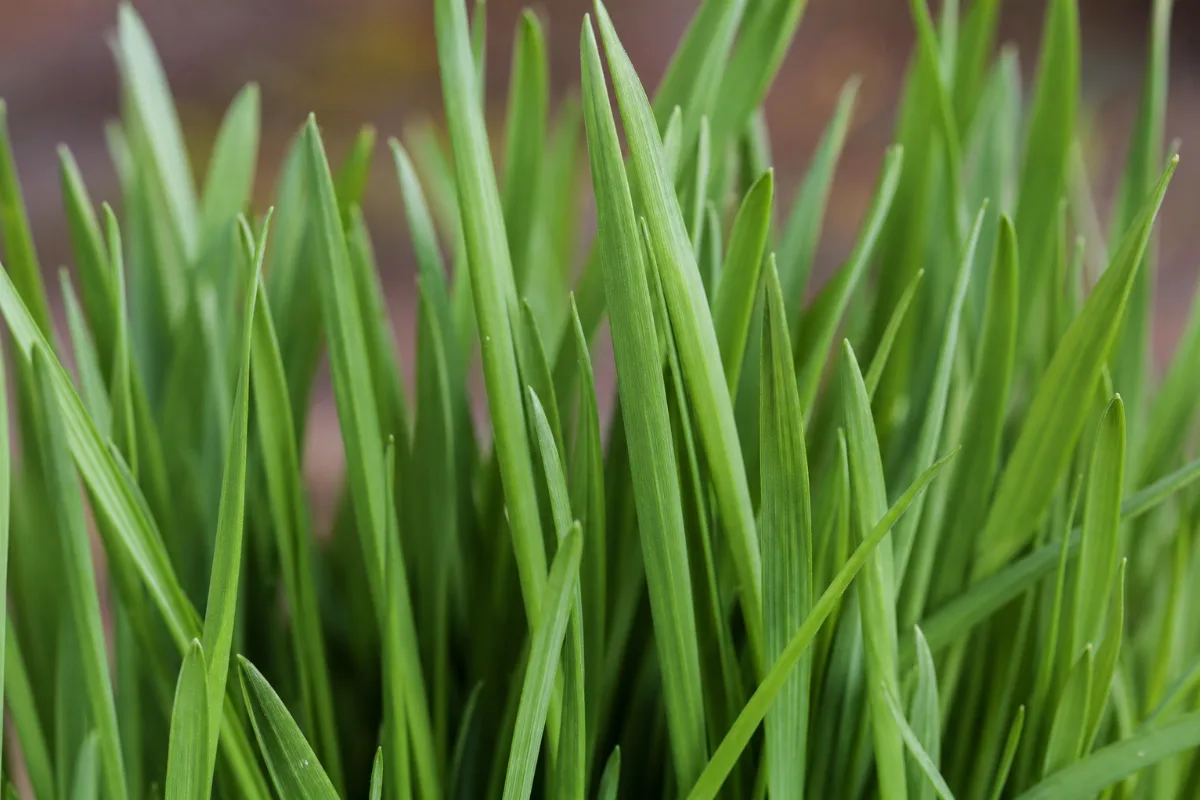
Wheatgrass is the young green shoot of the common wheat plant, Triticum aestivum, a member of the grass family. It is cut after about 7 to 10 days of growth, before the plant forms grain. It is fibrous, so people usually press it into a strong-tasting juice, or buy the juice or leaf dried as a powder, capsule or tablet.
It is not couch grass, not barley grass and not the perennial crop called intermediate wheatgrass. Barley grass is a similar green juice. Barley and wheat grain contain gluten, the leaf is a different part of the plant.
Traditional and current uses
Wheatgrass is a modern natural-health product rather than a classical herb, and we found no regulator monograph. It has been promoted for decades as a detox drink and as a blood builder because chlorophyll looks a little like the haem in blood. Memorial Sloan Kettering says neither idea is supported by science, nor are claims that it treats cancer or AIDS.
The uses that have actually been tested in people are ulcerative colitis, blood counts during chemotherapy, thalassaemia, cholesterol and, in 2026, toothache pain.
What is in it and how it works
The leaf contains chlorophyll, plant antioxidants such as apigenin and quercetin, and vitamins and minerals (MSK lists vitamins A, C, E, K and B-complex, plus iron, calcium, magnesium and selenium). Amounts are not given and differ by product.
In test tubes the juice powder shows antioxidant activity, and computer models predict its compounds bind some cancer-related proteins. These are lab and computer results, not proof of any effect in people. Researchers have also suggested apigenin might calm inflammation and that some parts of wheatgrass may bind iron, but those ideas rest on older lab work and a 2009 conference abstract that we did not read.
What the research shows
The best human result is the 2002 colitis trial: 23 adults, one month, with improvements in disease score and rectal bleeding in the juice group. It has not been repeated, and a systematic review that includes it calls herbal research in bowel disease encouraging but limited. A 2007 pilot found fewer treatment disruptions in women on chemotherapy who drank the juice, but it was not randomised or blinded.
In thalassaemia, neither study we read reduced transfusion need. A 10-week trial in 59 women lowered some blood fats but also lowered HDL. A 2026 toothache trial is promising but small. Reviews that praise wheatgrass admit that most of the evidence comes from limited studies.
At a glance
Traditional uses history, not proof
- Natural-health movement: wheat grass juice has been promoted by proponents for more than 30 years, according to a 2002 trial abstract. Who started it is not verified here.
- Marketed as a detox tonic, a blood builder (the chlorophyll idea) and a remedy for tiredness, colds, ulcers and skin problems. Memorial Sloan Kettering says none of these claims is supported by clinical studies.
- Folk and supplement use for bowel inflammation, which is the one use that has been tested in a randomised trial.
Studied for research
- Active ulcerative colitis, low
- Blood-count side effects of chemotherapy, very low
- Blood transfusion need in thalassaemia, mixed
- Cholesterol and blood fats, very low
- Toothache pain, very low
- Anaemia and haemoglobin, insufficient
- Antioxidant and detox claims, insufficient
- Cancer, insufficient
- Mood, insufficient (mouse study only)
Main compounds
- Chlorophyll, the green plant pigment
- Apigenin and quercetin, plant antioxidants (flavonoids)
- Vitamins and minerals listed by MSK: A, C, E, K and B-complex, iron, calcium, magnesium and selenium; amounts vary by product
Common forms
- Fresh juice from leaves grown 7 to 10 days, drunk raw
- Juice powder
- Dried leaf powder, often in greens blends
- Tablets and capsules
- Chewing fresh grass
Research links: Wheat grass page, Memorial Sloan Kettering Cancer Center · Wheat grass juice in active distal ulcerative colitis (PubMed) · Herbal therapy in inflammatory bowel disease: systematic review (PubMed) · Wheat grass juice and chemotherapy blood counts (PubMed) · Gluten-free status of wheatgrass, lab study (FAO AGRIS) · Coeliac disease (NHS) · Research Library · Genes & Biomarkers Library
The plant and its history
- Accepted scientific name
- Triticum aestivum L.
- Naming authority
- L.; Sp. Pl.: 85 (1753) (GBIF)
- Synonyms
- GBIF lists many names as synonyms of Triticum aestivum, mostly subspecies and varieties (for example Frumentum triticum E.H.L.Krause); no names useful to readers.
- Common names
- Wheatgrass (English); Wheat grass (English); Young wheat (English)
- Botanical family
- Poaceae (grass family). Wheatgrass here means the young leaves of common bread wheat, not the seed.
- Classification
- Plantae > Tracheophyta > Liliopsida > Poales > Poaceae > Triticum > Triticum aestivum
- Native range
- Not verified from a source read.
- Habitat
- Not verified.
- What the plant looks like
- Roots: Not used.; Stems: Not used.; Leaves: The part used: young leaves cut after about 7 to 10 days of sprouting (MSK).; Flowers: Not used; harvested before it flowers.; Fruit: The grain (seed) is the gluten-containing part and is not what is juiced.
- Cultivation
- Grown from sprouted wheat seed, in trays or soil, for about 7 to 10 days (MSK). Details not verified beyond that.
- Harvest and processing
- Leaves are juiced fresh and drunk raw, or the juice or leaf is dried to powder; freeze-drying and oven drying differ in antioxidant effects per a study cited by MSK that we did not read.
- Look-alikes and adulterants
- Name: Couch grass (Elymus repens / Elytrigia repens); Note: A different grass sold as a herb; not the same plant.; Name: Barley grass (Hordeum vulgare); Note: The other common cereal grass juice; GBIF lists Hordeum vulgare L. as accepted. Barley grain contains gluten.; Name: Intermediate wheatgrass (Thinopyrum intermedium, Kernza); Note: A perennial grain crop; not the wheatgrass used in juices, though the names look alike in PubMed.
Traditional use and history history, not clinical proof
| Tradition or era | Documented use | Source |
|---|---|---|
| Natural-health movement, 20th century onwards | The colitis trial's abstract says wheat grass juice had been suggested for gut and other conditions by proponents for more than 30 years before 2002. Names of early promoters are NOT verified here. | p11989836 |
| Modern supplement use | MSK describes the juice for claimed uses (colds, cough, fatigue, ulcers, skin conditions, cancer, AIDS) and sold as powder; none of these claims is supported by clinical studies except as described on the benefits tabs. | s-msk-wheatgrass |
Traditional use shows how a plant was used. It does not show that a supplement works or is safe today.
What is inside, and how it may work
What the plant contains and how those compounds act in cells and animals. Laboratory and animal mechanisms are not proven effects in people.
Main compounds
| Compound | Family | Where it is concentrated | Activity studied | Level of evidence |
|---|---|---|---|---|
| Chlorophyll a PubChem 12085802 | green plant pigment | Leaf | Popularly claimed to raise haemoglobin; MSK says this is not supported. 10 | Other |
| Apigenin PubChem 5280443 | flavone | Leaf | Antioxidant in lab tests; MSK suggests it might ease white-cell sticking to vessel walls (theory based on older lab work). 10 6 | Laboratory research |
| Quercetin PubChem 5280343 | flavonol | Leaf | Found in juice powder and active in antioxidant tests in the lab. 6 | Laboratory research |
| Phylloquinone (vitamin K1) PubChem 5284607 | vitamin | Leaf Amount not given in sources read. | MSK lists vitamin K among the vitamins in wheat grass; relevant to warfarin. 10 | Other |
Mechanisms, receptors and pathways
| Target or pathway | Gene or receptor | What was found | Level |
|---|---|---|---|
| Antioxidant activity | Juice powder showed antioxidant activity in a test tube and phenolic compounds by HPLC. Animal findings of antioxidant effects are cited by MSK. 6 10 | Laboratory research | |
| Predicted binding to cancer-related proteins (docking) | ESR1, EGFR, IKBKB, CXCR4, SOD, CAT, KEAP1 | Computer models predicted compounds bind these proteins. This is prediction only. 6 | In silico |
| Mouse behaviour tests | Barley and wheat grass extract shortened immobility in mice. 18 | Animal research |
Absorption, metabolism and elimination
- Absorption
- No human study of how wheat grass compounds are absorbed was found.
- Distribution
- Not studied.
- Metabolism
- Not studied; a 2022 review lists wheatgrass among products that might affect liver enzymes but gives no finding.
- Elimination
- Not studied.
- Bioavailability
- Unknown.
Isolated compounds versus whole extracts
Wheat grass is a mix of pigments, vitamins, minerals and plant compounds. No single compound has been shown to explain any effect, and the products tested differed: fresh juice, juice tablets, freeze-dried powder capsules and an extract tablet.
Nutritional composition
MSK lists vitamins A, C, E, K and B-complex, iron, calcium, magnesium and selenium in wheat grass but gives no amounts, and the content of products varies. A nutrient table is not given here. Wheat grass is not a proven fix for any deficiency.
1 mixed findings1 low certainty3 very low certainty4 not enough evidence
What was looked at
The 9 benefits and uses checked for Wheatgrass, each with how strong the evidence is. Tap one to open it.
- Ulcerative colitis (active, lower bowel)Low certainty
- Blood-count side effects of chemotherapy (breast cancer)Very low certainty
- Blood transfusion need in thalassaemiaMixed findings
- Anaemia and haemoglobin (the 'chlorophyll builds blood' claim)Not enough evidence
- Cholesterol and blood fatsVery low certainty
- Antioxidant and 'detox' claimsNot enough evidence
- Cancer prevention or treatmentNot enough evidence
- Toothache pain (pulpitis)Very low certainty
- Mood and stress (mouse study only)Not enough evidence
Lab markers tracked in the studies
Ulcerative colitis disease activity index and rectal bleedingEarly stops, dose cuts and growth-factor starts during chemotherapyRed blood cell transfusion requirementSerum ferritinCholesterol, triglycerides and apolipoprotein BPain rating (0 to 10)
What is Wheatgrass good for?
The main proposed uses and how strong the human evidence is for each. "Low" means small or inconsistent studies, "very low" means a single small or unblinded study, "mixed" means the studies disagree, and "insufficient" means there is not enough to judge. Nothing about wheatgrass is rated higher than low. Results come from specific products (fresh juice, tablets, freeze-dried powder, an extract tablet) and cannot be moved from one to another.
Benefits, one by one
Each card is a research question, not a promise. Tap a goal to filter. Open a card to see the studies, doses and limits.
Ulcerative colitis (active, lower bowel)
Low certaintyOne small trial found the juice eased bleeding and overall disease activity over a month. A review called herbal results encouraging but limited.
3 studiesFresh wheat grass juice, 100 cc a day for a month in the trial. Juice…
Studies, doses and limits
What the trials found
In 2002, Israeli researchers randomly gave 23 adults with active distal (lower bowel) ulcerative colitis either wheat grass juice or a matching placebo daily for a month. 21 finished and full data were available on 19. The juice group had a significant fall in the overall disease activity score (P=0.031) and in rectal bleeding (P=0.025), with no serious side effects. A 2013 systematic review of 21 herbal trials in bowel disease listed wheat grass juice among herbs that beat placebo in ulcerative colitis, but called the field limited and mixed, and the wheat grass result still comes from that single small trial.
Results
Positive on two measures in one tiny, one-month trial. No repeat trial and no longer follow-up was found.
Effect sizes as reported
P=0.031 (disease activity index), P=0.025 (rectal bleeding); no effect sizes in the abstract
Why this rating
One randomised, double-blind trial but only 19 analysed, and it has never been repeated; the review only repeats this result.
Form and dose studied
Fresh wheat grass juice, 100 cc a day for a month in the trial. Juice powder and tablets were not tested for colitis.
Who was studied
Adults with mild to moderate active distal ulcerative colitis.
Limits
Tiny trial, one month, no repeat. Ulcerative colitis can be serious and needs medical care; juice is not a replacement for prescribed treatment. Raw juice contamination is a worry for people with a weakened gut or immune system.
Why researchers looked
Wheat grass juice had been promoted for bowel problems for more than 30 years before this was tested in a controlled trial (per the trial's own abstract).
Traditional use
Folk and natural-health use of fresh juice for bowel complaints; no documented traditional medicine monograph was found.
Proposed mechanism Preliminary mechanism
The trial's lab work showed the fresh juice has antioxidant compounds. Whether this explains any gut effect is not known.
A proposed mechanism does not show that the effect happens in people.
See the Safety tab: raw juice can carry mould or bacteria, nausea is the most reported effect, and people with coeliac disease, wheat allergy, weak immunity or pregnancy need extra care.
Blood-count side effects of chemotherapy (breast cancer)
Very low certaintyA small unblinded study found fewer early treatment stops, dose cuts and growth-factor drug starts when women drank the juice. It is not proof.
2 studiesWheat grass juice, 60 cc a day for the first three chemotherapy cycle…
Studies, doses and limits
What the trials found
In a 2007 Israeli pilot, 60 women with breast cancer on FAC chemotherapy were assigned to a juice group or to usual supportive care only (matched, not randomised). There were 5 'censoring events' (early stopping of treatment, dose cuts or starting G-CSF or epoetin) in the juice group against 15 in the control group (P=0.01). 11 of the 15 control events were blood-count related. Chemotherapy response did not appear reduced. Side effects were minimal, but nausea worsened in six women, who stopped the juice. The authors asked for a phase III trial. MSK says larger studies are needed.
Results
Fewer treatment disruptions in the juice group in one small, non-blinded, non-randomised study.
Effect sizes as reported
5 vs 15 events, P=0.01
Why this rating
A single small non-randomised, unblinded pilot with no placebo; people choosing or being assigned to drink a daily juice may differ in other ways.
Form and dose studied
Wheat grass juice, 60 cc a day for the first three chemotherapy cycles (as reported).
Who was studied
Women with breast cancer on FAC chemotherapy.
Limits
Not randomised, not blinded, no placebo, one centre, no repeat. Anyone on chemotherapy should ask their cancer team first, because raw juice carries a germ risk when blood counts are low.
Why researchers looked
Chemotherapy can lower blood cells, and wheat grass juice was promoted as protective on non-established data (per the study's abstract).
Traditional use
Used in natural-health circles as a tonic for people on chemotherapy; not a recognised treatment.
Proposed mechanism Pharmacological theory
MSK suggests the flavonoid apigenin may reduce white-cell sticking to blood vessel walls, citing older lab work. This is a theory, not shown in this study.
A proposed mechanism does not show that the effect happens in people.
See the Safety tab: raw juice can carry mould or bacteria, nausea is the most reported effect, and people with coeliac disease, wheat allergy, weak immunity or pregnancy need extra care.
Blood transfusion need in thalassaemia
Mixed findingsTwo studies looked at whether wheat grass cuts the need for blood transfusions in thalassaemia. Neither found that it did.
3 studiesWheat grass juice tablets (2009) and wheat grass of unstated form (20…
Studies, doses and limits
What the trials found
A 2009 Indian before-and-after study of 53 people with transfusion-dependent beta-thalassaemia major found red cell need before (288.06 gm/kg/year) and after one year of wheat grass tablets (301.25) were not lower (P=0.054); the authors concluded it was not effective. A 2018 Indian study randomised 69 children (45 wheat grass, 24 control, 15 dropped out) over 18 months, and found no difference in number of transfusions, blood transfused or serum ferritin between groups. Liver size and quality-of-life scores changed within the wheat grass group only, and the authors called the result promising. An earlier 2004 pilot cited by MSK that reported benefit was not read.
Results
Main outcome (transfusion need) did not improve in either study we read.
Effect sizes as reported
288.06 vs 301.25 gm/kg/year (P=0.054); no between-group difference in transfusions or ferritin
Why this rating
Two small studies: one with no control group, the other unblinded with unequal groups; MSK itself calls the body of evidence mixed. The main outcome was null in both.
Form and dose studied
Wheat grass juice tablets (2009) and wheat grass of unstated form (2018).
Who was studied
People with beta-thalassaemia major, mostly children and adolescents, in India.
Limits
No placebo in either study; many dropouts; secondary results are within-group comparisons. Wheat grass does not replace transfusions or iron chelation.
Why researchers looked
Wheat grass was reported to lower transfusion needs in an earlier pilot; MSK describes the thalassaemia results as mixed.
Traditional use
Promoted in some parts of India as a supportive remedy for blood disorders.
Proposed mechanism Pharmacological theory
None established. The popular claim that chlorophyll builds haemoglobin because it looks chemically similar to haem is not supported by scientific evidence (MSK).
A proposed mechanism does not show that the effect happens in people.
See the Safety tab: raw juice can carry mould or bacteria, nausea is the most reported effect, and people with coeliac disease, wheat allergy, weak immunity or pregnancy need extra care.
Anaemia and haemoglobin (the 'chlorophyll builds blood' claim)
Not enough evidencePopular, but no controlled trial in ordinary anaemia was found. MSK says the chlorophyll-to-haemoglobin idea is not supported by science.
2 studiesNot tested in iron-deficiency anaemia.
Studies, doses and limits
What the trials found
We found no randomised trial of wheat grass for iron-deficiency or other common anaemias. A 2025 narrative review says wheatgrass juice 'improved haemoglobin levels in anaemia' but also that most of the evidence comes from limited studies; we could not confirm which studies it meant. The thalassaemia trials above looked at transfusion need and ferritin, not at healing anaemia.
Results
No controlled evidence for this use. The thalassaemia work did not show a benefit on transfusion need.
Why this rating
Only a review's general statement against MSK's clear statement that the claim is unsupported.
Form and dose studied
Not tested in iron-deficiency anaemia.
Who was studied
Unknown; claims come from marketing and reviews of weak studies.
Limits
Anaemia has many causes and needs a diagnosis. Wheat grass should not stand in for medical care, iron if prescribed, or treatment of the cause.
Why researchers looked
Chlorophyll is often described as 'green blood', and wheatgrass is marketed for tiredness and low iron.
Traditional use
Common in natural-health marketing; not a recognised traditional use.
Proposed mechanism Pharmacological theory
The claim is that chlorophyll resembles haem. MSK says this concept is not supported by current scientific understanding.
A proposed mechanism does not show that the effect happens in people.
See the Safety tab: raw juice can carry mould or bacteria, nausea is the most reported effect, and people with coeliac disease, wheat allergy, weak immunity or pregnancy need extra care.
Cholesterol and blood fats
Very low certaintyOne small unblinded trial found lower total cholesterol and triglycerides, but good (HDL) cholesterol fell too.
2 studiesFreeze-dried wheatgrass powder in capsules; not juice.
Studies, doses and limits
What the trials found
In a 2017 Indian trial, 59 women with high blood fats were randomised to freeze-dried wheatgrass capsules (3.5 g a day) or no treatment for 10 weeks. In the wheatgrass group total cholesterol fell 5.4%, LDL 4.4% and triglycerides 9.5%, but HDL fell 6%. After adjusting for baseline, total cholesterol, triglycerides and apolipoprotein B were lower than in the control group (P=0.043, 0.045, 0.016). Menopausal symptom changes were not significant.
Results
Modest lowering of some blood fats in one small trial with no placebo; the lower HDL is not a good sign.
Effect sizes as reported
TC P=0.043; TAG P=0.045; Apo B P=0.016 vs control
Why this rating
One small open trial with no placebo and a mixed result (HDL also fell).
Form and dose studied
Freeze-dried wheatgrass powder in capsules; not juice.
Who was studied
Women with high blood fats, India.
Limits
No placebo, 10 weeks. Not a replacement for cholesterol medicine or lifestyle care.
Why researchers looked
Rat studies suggested wheat grass lowers cholesterol (per MSK).
Proposed mechanism Preliminary mechanism
In rats, MSK reports more cholesterol leaving in the stool; not shown in people.
A proposed mechanism does not show that the effect happens in people.
See the Safety tab: raw juice can carry mould or bacteria, nausea is the most reported effect, and people with coeliac disease, wheat allergy, weak immunity or pregnancy need extra care.
Antioxidant and 'detox' claims
Not enough evidenceWheat grass shows antioxidant activity in test tubes. Claims that it detoxifies the body are not supported.
2 studiesJuice powder in the lab.
Studies, doses and limits
What the trials found
A 2026 lab study of juice powder found phenolic compounds and antioxidant activity in a test tube. A 2007 study cited by MSK on lower oxidative stress markers in healthy people could not be read in full (no abstract in PubMed), so we do not rate it. MSK states the claim that raw wheat grass detoxifies the body is not supported by scientific evidence.
Results
Lab antioxidant activity only; no proven detox effect.
Why this rating
Test-tube and computer results; nothing in people we could verify.
Form and dose studied
Juice powder in the lab.
Who was studied
Not tested in people we could read.
Limits
Lab results often do not carry over to people.
Why researchers looked
Wheat grass contains phenolic compounds such as apigenin and quercetin that show antioxidant activity in the lab.
Traditional use
Marketed as a detox tonic; no traditional monograph.
Proposed mechanism Laboratory research
In a test tube the juice powder scavenges free radicals. In people this has not been shown to matter. MSK says detox claims are not backed by science.
A proposed mechanism does not show that the effect happens in people.
See the Safety tab: raw juice can carry mould or bacteria, nausea is the most reported effect, and people with coeliac disease, wheat allergy, weak immunity or pregnancy need extra care.
Cancer prevention or treatment
Not enough evidenceLab studies show effects on cancer cells in a dish, but no human trial shows wheat grass prevents or treats cancer. MSK says there is no scientific evidence it does.
3 studiesJuice powder in lab experiments.
Studies, doses and limits
What the trials found
A 2026 lab study found juice powder was antioxidant and affected MCF-7 breast cancer cells in a dish. A 2024 review of wheatgrass in colorectal cancer says it has been minimally investigated and evidence is limited. MSK states there is no scientific evidence that wheat grass prevents or treats cancer. The only human work is the chemotherapy blood-count pilot in the other tab, which is about side effects, not cancer.
Results
Cell and computer evidence only for any cancer effect.
Why this rating
No controlled human trial of cancer outcomes found.
Form and dose studied
Juice powder in lab experiments.
Limits
Lab studies cannot tell us what happens in people. Never delay or replace cancer treatment.
Why researchers looked
Wheat grass juice has been promoted as a cancer cure; lab teams study its compounds.
Traditional use
Promoted as a cancer 'cure' in natural-health circles; not supported.
Proposed mechanism Laboratory research
Computer docking and cell studies suggest compounds may bind cancer-related proteins. This is far from proof in people.
A proposed mechanism does not show that the effect happens in people.
See the Safety tab: raw juice can carry mould or bacteria, nausea is the most reported effect, and people with coeliac disease, wheat allergy, weak immunity or pregnancy need extra care.
Toothache pain (pulpitis)
Very low certaintyOne small 2026 trial found wheatgrass extract under the tongue cut tooth pain at 30 minutes. It needs repeating.
1 studiesWheatgrass extract tablet under the tongue; not juice.
Studies, doses and limits
What the trials found
A registered Indian trial randomised 45 adults with painful irreversible pulpitis to wheatgrass extract (500 mg under the tongue), piroxicam 20 mg or a placebo sugar tablet. At 30 minutes both active tablets reduced pain more than placebo, and wheatgrass reduced it more than piroxicam. Only about 15 people per group were included.
Results
Pain relief at 30 minutes after a single tablet in one small trial.
Effect sizes as reported
Not given in the abstract
Why this rating
One small single-dose trial in one centre; a surprising result against a standard painkiller needs confirmation.
Form and dose studied
Wheatgrass extract tablet under the tongue; not juice.
Who was studied
Adults aged 18 to 40 with painful pulpitis.
Limits
Dental pain needs a dentist; a tablet is not a treatment for the tooth problem.
Why researchers looked
Researchers tested a natural alternative to anti-inflammatory painkillers for short-term dental pain.
Proposed mechanism Preliminary mechanism
Not established.
A proposed mechanism does not show that the effect happens in people.
See the Safety tab: raw juice can carry mould or bacteria, nausea is the most reported effect, and people with coeliac disease, wheat allergy, weak immunity or pregnancy need extra care.
Mood and stress (mouse study only)
Not enough evidenceA mouse study of a barley and wheat grass mix found less despair-like behaviour. No human trial was found.
1 studiesAqueous extract, 400 mg/kg in mice.
Studies, doses and limits
What the trials found
One 2022 Nepalese study of 24 mice found a barley and wheat grass extract shortened immobility in swim and tail tests and increased time in open arms of a maze compared with stressed controls. It combined barley and wheat grass. We found no human trial for mood.
Results
Animal findings only.
Why this rating
Six mice per group, combined extract, no human data.
Form and dose studied
Aqueous extract, 400 mg/kg in mice.
Who was studied
Mice.
Limits
Cannot be applied to people.
Why researchers looked
Researchers tested green juices in a stress model in mice.
Proposed mechanism Animal research
Not established; mouse behaviour tests are rough guides.
A proposed mechanism does not show that the effect happens in people.
See the Safety tab: raw juice can carry mould or bacteria, nausea is the most reported effect, and people with coeliac disease, wheat allergy, weak immunity or pregnancy need extra care.
Connections to the rest of health
How Wheatgrass connects to the rest of our health knowledge graph. Every link says what kind of connection it is. A safety link (for example to the liver) is a warning, not a benefit. A study that merely mentions a topic never creates a benefit link.
Explore every connection: goals, body systems, organs, symptoms, genes
A. Wellness goals
| Connected to | Kind of connection | Evidence status | Context | Studies |
|---|---|---|---|---|
| Gut Health | Potential benefit | Low certainty | Ulcerative colitis (active, lower bowel): One small trial found the juice eased bleeding and overall disease activity over a month. A review called herbal results encouraging but limited. | 4 14 10 |
| Digestive Support | Potential benefit | Low certainty | Ulcerative colitis (active, lower bowel): One small trial found the juice eased bleeding and overall disease activity over a month. A review called herbal results encouraging but limited. | 4 14 10 |
| Inflammation Balance | Potential benefit | Low certainty | Ulcerative colitis (active, lower bowel): One small trial found the juice eased bleeding and overall disease activity over a month. A review called herbal results encouraging but limited. Toothache pain (pulpitis): One small 2026 trial found wheatgrass extract under the tongue cut tooth pain at 30 minutes. It needs repeating. | 4 14 10 16 |
| Immune Support | Potential benefit | Very low certainty | Blood-count side effects of chemotherapy (breast cancer): A small unblinded study found fewer early treatment stops, dose cuts and growth-factor drug starts when women drank the juice. It is not proof. | 3 10 |
| Resilience Support | Potential benefit | Very low certainty | Blood-count side effects of chemotherapy (breast cancer): A small unblinded study found fewer early treatment stops, dose cuts and growth-factor drug starts when women drank the juice. It is not proof. | 3 10 |
| Energy Boost | Potential benefit | Mixed findings | Blood transfusion need in thalassaemia: Two studies looked at whether wheat grass cuts the need for blood transfusions in thalassaemia. Neither found that it did. Anaemia and haemoglobin (the 'chlorophyll builds blood' claim): Popular, but no controlled trial in ordinary anaemia was found. MSK says the chlorophyll-to-haemoglobin idea is not supported by science. | 5 11 10 2 |
| Reduce Fatigue | Potential benefit | Mixed findings | Blood transfusion need in thalassaemia: Two studies looked at whether wheat grass cuts the need for blood transfusions in thalassaemia. Neither found that it did. Anaemia and haemoglobin (the 'chlorophyll builds blood' claim): Popular, but no controlled trial in ordinary anaemia was found. MSK says the chlorophyll-to-haemoglobin idea is not supported by science. | 5 11 10 2 |
| Cholesterol Balance | Potential benefit | Very low certainty | Cholesterol and blood fats: One small unblinded trial found lower total cholesterol and triglycerides, but good (HDL) cholesterol fell too. | 9 10 |
| Heart Health | Potential benefit | Very low certainty | Cholesterol and blood fats: One small unblinded trial found lower total cholesterol and triglycerides, but good (HDL) cholesterol fell too. | 9 10 |
| Healthy Aging | Preliminary mechanism | Not enough evidence | Antioxidant and 'detox' claims: Wheat grass shows antioxidant activity in test tubes. Claims that it detoxifies the body are not supported. | 6 10 |
| Immune Support | Preliminary mechanism | Not enough evidence | Antioxidant and 'detox' claims: Wheat grass shows antioxidant activity in test tubes. Claims that it detoxifies the body are not supported. Cancer prevention or treatment: Lab studies show effects on cancer cells in a dish, but no human trial shows wheat grass prevents or treats cancer. MSK says there is no scientific evidence it does. | 6 10 19 |
| Mood Balance | Preliminary mechanism | Not enough evidence | Mood and stress (mouse study only): A mouse study of a barley and wheat grass mix found less despair-like behaviour. No human trial was found. | 18 |
| Stress Reduction | Preliminary mechanism | Not enough evidence | Mood and stress (mouse study only): A mouse study of a barley and wheat grass mix found less despair-like behaviour. No human trial was found. | 18 |
B. Body systems
| Connected to | Kind of connection | Evidence status | Context | Studies |
|---|---|---|---|---|
| Digestive System | Biological association | Low certainty | Studied for: Ulcerative colitis (active, lower bowel) | 4 14 10 |
| Immune System | Biological association | Very low certainty | Studied for: Blood-count side effects of chemotherapy (breast cancer) Studied for: Blood transfusion need in thalassaemia | 3 10 5 11 2 6 19 |
| Cardiovascular System | Biological association | Very low certainty | Studied for: Cholesterol and blood fats | 9 10 |
| Metabolism Weight | Biological association | Not enough evidence | Studied for: Antioxidant and 'detox' claims | 6 10 |
| Musculoskeletal System | Biological association | Very low certainty | Studied for: Toothache pain (pulpitis) | 16 |
| Nervous System | Biological association | Not enough evidence | Studied for: Mood and stress (mouse study only) | 18 |
C. Body parts and organs
I. Biomarkers
| Connected to | Kind of connection | Evidence status | Context | Studies |
|---|---|---|---|---|
| Ulcerative colitis disease activity index and rectal bleeding | Biological association | Low certainty | Measured in trials: lowered. A lab change is not the same as a health benefit. | 4 |
| Early stops, dose cuts and growth-factor starts during chemotherapy | Biological association | Very low certainty | Measured in trials: lowered. A lab change is not the same as a health benefit. | 3 |
| Red blood cell transfusion requirement | Biological association | Mixed findings | Measured in trials: no-change. A lab change is not the same as a health benefit. | 5 11 |
| Serum ferritin | Biological association | Low certainty | Measured in trials: no-change. A lab change is not the same as a health benefit. | 11 |
| Cholesterol, triglycerides and apolipoprotein B | Biological association | Very low certainty | Measured in trials: mixed. A lab change is not the same as a health benefit. | 9 |
| Pain rating (0 to 10) | Biological association | Very low certainty | Measured in trials: lowered. A lab change is not the same as a health benefit. | 16 |
J. Genes, receptors and enzymes
| Connected to | Kind of connection | Evidence status | Context | Studies |
|---|---|---|---|---|
| ESR1, EGFR, IKBKB, CXCR4 (docking targets) | Preliminary mechanism | In silico | Predicted only by computer modelling of wheatgrass compounds. | 6 |
L. Active compounds
| Connected to | Kind of connection | Evidence status | Context | Studies |
|---|---|---|---|---|
| Chlorophyll a | Biological association | Other | Popularly claimed to raise haemoglobin; MSK says this is not supported. Preparation or compound: Leaf |
10 |
| Apigenin | Biological association | In vitro | Antioxidant in lab tests; MSK suggests it might ease white-cell sticking to vessel walls (theory based on older lab work). Preparation or compound: Leaf |
10 6 |
| Quercetin | Biological association | In vitro | Found in juice powder and active in antioxidant tests in the lab. Preparation or compound: Leaf |
6 |
| Phylloquinone (vitamin K1) | Biological association | Other | MSK lists vitamin K among the vitamins in wheat grass; relevant to warfarin. Preparation or compound: Leaf |
10 |
Each connection is stored with the ingredient, the connected record, the kind of connection, the evidence status, the supporting studies, the preparation or compound involved, and a review date (last reviewed October 25, 2026).
Evidence at a glance: what changed in 6 lab markers
Tap a number to show only those markers. Counts are markers, not people.
The evidence
The research centre for Wheatgrass. Every record here was checked against PubMed or the publisher's page; we never list a study we have not verified.
Evidence by outcome
Bars show how many studies we found for each outcome, not how well it works. People are added up across trials only (reviews are not added, to avoid double counting).
How we rate evidence
High certainty
Several well-run trials or reviews agree; further research is unlikely to change the picture much.
Moderate certainty
Good trials point the same way, but some doubt remains.
Low certainty
Small, short or inconsistent trials. The finding could change with better research.
Very low certainty
Very little or very weak human data. Treat as a possibility only.
Mixed findings
Trials or reviews disagree with each other.
Not enough evidence
Not enough human research to say either way.
Evidence against
Good research found no benefit, or found harm.
We take the reviewers' own risk-of-bias and GRADE statements where they exist, and otherwise judge from study size, design, consistency, directness and whether a product matches what is sold. Many publications do not make evidence high. Method note: We started from our existing wheatgrass summary, then read the PubMed abstracts of the key trials and reviews, the Memorial Sloan Kettering page on wheat grass, and the FAO AGRIS record of the gluten study, and checked the plant name in GBIF and NCBI and compounds in PubChem. Only abstracts were read for nearly all studies. Some sources were not verified: no NCCIH page, no LiverTox or LactMed record, EMA, WHO, Commission E and FDA not searched this round, the NHS coeliac page was not re-read, and several studies cited by MSK were not read. Certainty ratings are the compiler's own reading, not formal grades. No study is cited that we could not verify.
Study library: every study we checked 19
| Study | Design | People | Product, dose, length | Result |
|---|---|---|---|---|
| Adrianos 2017 Confirmation of gluten-free status of wheatgrass (Triticum aestivum) Quality Assurance and Safety of Crops & Foods (record in FAO AGRIS) · Source |
Laboratory method study laboratory |
Commercial and home-grown wheatgrass leaf samples | Wheatgrass leaf tissue (home-grown and commercial supplements) leaf · vs Gliadin-spiked samples for recovery |
In all preparations tested, the gluten content of wheatgrass leaf tissue was below the limit of detection and quantification for both ELISAs and below the Codex 20 mg/kg gluten-free threshold. Spiked recovery was 91 to 133%. Methods, limits and fundingOutcomes: Gluten by R5 and G12 sandwich ELISA Limitations: Abstract only (AGRIS record). Number of products not stated; tested leaf tissue, not seed or flour contamination in every product; says nothing about wheat allergy, which involves other wheat proteins; no trial in people with coeliac disease. Read: abstract |
| Bangera 2025 Therapeutic potential of wheatgrass juice: a comprehensive narrative review J Pharm Bioallied Sci · PMID 40511096 · DOI |
Narrative review mixed |
Broad review of wheatgrass juice uses | Wheatgrass juice leaf (juice) |
Says wheatgrass juice has shown effects on oxidative stress, haemoglobin in anaemia, immunity and as a cancer add-on, but that most of the evidence comes from limited studies and needs more rigorous testing. Methods, limits and fundingOutcomes: Overview of nutrition, compounds and claimed uses Limitations: Narrative review with no stated method for selecting studies; its positive wording runs ahead of the controlled trials we read. Funding and conflicts: No conflicts declared Read: abstract |
| Bar-Sela 2007 Wheat grass juice may improve hematological toxicity related to chemotherapy in breast cancer patients: a pilot study Nutr Cancer · PMID 17571966 · DOI |
Non randomised controlled study |
60 Women with breast cancer on FAC chemotherapy, Israel |
Wheat grass juice leaf (juice) 60 cc a day (as reported) First three chemotherapy cycles · vs Regular supportive care only (no placebo) |
5 censoring events in the juice arm versus 15 in the control arm. 11 of the 15 control events were blood-count related. No fall in chemotherapy response rate in people who could be assessed. Juice side effects were minimal; nausea worsened in six patients, who stopped the juice. 5 vs 15 events, P=0.01 Methods, limits and fundingOutcomes: "Censoring events": early stop of treatment, dose cut, or starting G-CSF or epoetin; response rate Limitations: Matched, not randomised; no placebo and no blinding; small; one centre. The authors themselves called the results preliminary and asked for a phase III study. Read: abstract |
| Ben-Arye 2002 Wheat grass juice in the treatment of active distal ulcerative colitis: a randomized double-blind placebo-controlled trial Scand J Gastroenterol · PMID 11989836 · DOI |
Controlled trial |
23 Adults with active distal ulcerative colitis, Israel (21 finished, full data on 19) |
Fresh wheat grass (Triticum aestivum) juice leaf (juice) 100 cc a day (as reported) 1 month · vs Matching placebo |
Juice group had a significant fall in the overall disease activity index and in rectal bleeding. No serious side effects. The authors concluded it appeared effective and safe alone or as an add-on. Overall disease activity index P=0.031; rectal bleeding severity P=0.025 (abstract gives no effect size) Methods, limits and fundingOutcomes: Four-part disease activity index (rectal bleeding and bowel movements from diaries, sigmoidoscopy, doctor global assessment) Limitations: Very small trial (23 randomised, 19 with full data), 1 month, one country, never repeated in a larger trial. Abstract does not say which other UC medicines people kept taking. Read: abstract |
| Choudhary 2009 Effect of wheat grass therapy on transfusion requirement in beta-thalassemia major Indian J Pediatr · PMID 19205635 · DOI |
Before after study |
53 People with transfusion-dependent beta-thalassaemia major, median age 16, India |
Wheat grass juice tablets leaf (juice tablet) 1 year |
Red cell need before 288.06 +/- 53.25 and after 301.25 +/- 54.86 (P=0.054). The authors concluded one year of wheat grass was not effective in reducing transfusion need. No adverse effects were noted. 288.06 vs 301.25 gm/kg/year, P=0.054 Methods, limits and fundingOutcomes: Packed red cell requirement per kg per year Limitations: Single-arm before and after design with no control group. Short research letter. Read: abstract |
| Demirag 2026 Phytochemical, in silico, and in vitro studies of wheatgrass (Triticum aestivum L.) juice powder Sci Rep · PMID 41588140 · DOI |
Laboratory research in-vitro |
Lab study: juice powder, MCF-7 breast cancer cell line, computer docking | Wheatgrass juice powder leaf (juice powder) |
Found phenolic compounds (catechin, caffeic acid, coumarin, esculetin, quercetin, ellagic acid, apigenin), antioxidant activity in a test tube, and effects on breast cancer cells in a dish; computer models predicted binding to cancer and antioxidant-related proteins. Methods, limits and fundingOutcomes: Phenols by HPLC, antioxidant capacity, cell killing, docking Limitations: Lab and computer work only. Nothing here shows an effect in people. Funding and conflicts: No competing interests declared Read: abstract |
| GBIF Secretariat 2026 GBIF backbone: Triticum aestivum L. GBIF species API · Source |
Database record |
not applicable | Triticum aestivum |
Accepted species, key 7795888, Poaceae, published in Sp. Pl.: 85 (1753). Methods, limits and fundingOutcomes: Accepted name, family Limitations: Taxonomy only. Read: full-text |
| Goel 2022 Multiresidue analysis and probabilistic dietary risk assessment of 241 pesticides in wheatgrass (Triticum sp.) using LC-MS/MS in combination with QuEChERS extraction Biomed Chromatogr · PMID 35585480 · DOI |
Laboratory method study laboratory |
Random wheatgrass samples from Delhi-NCR, India | Wheatgrass samples leaf |
54% of samples had at least one pesticide. Eight pesticides were found in 38%; metribuzin and carfentrazone-ethyl were above permissible limits in 6%. Calculated risk quotients were below 1, meaning no significant dietary risk was estimated, though the authors urged quality measures. Methods, limits and fundingOutcomes: Pesticide residues and dietary risk Limitations: One region; samples were wheatgrass in general, not a named supplement brand. Read: abstract |
| Kumar 2017 Impact of wheatgrass (Triticum aestivum L.) supplementation on atherogenic lipoproteins and menopausal symptoms in hyperlipidemic South Asian women: a randomized controlled study J Diet Suppl · PMID 28121470 · DOI |
Controlled trial |
59 Women with high blood fats, India |
Freeze-dried wheatgrass powder in capsules leaf (freeze-dried powder) 3.5 g a day (as reported) 10 weeks · vs No intervention (no placebo) |
Intervention group: total cholesterol fell 5.4%, LDL 4.4%, triglycerides 9.5%, but HDL also fell 6%. After adjusting for baseline, total cholesterol, triglycerides and apo B were lower than control (P=0.043, 0.045, 0.016). Menopausal symptom reductions were not significant. TC P=0.043; TAG P=0.045; Apo B P=0.016 vs control Methods, limits and fundingOutcomes: Total cholesterol, LDL, HDL, triglycerides, apolipoprotein B, menopausal symptoms Limitations: Small; control group received nothing (no placebo, so not blinded); 10 weeks; one setting. HDL (the "good" cholesterol) also fell. Read: abstract |
| Memorial Sloan Kettering Cancer Center 2023 Wheat Grass (Herbs, Botanicals and Other Products) MSK About Herbs (last updated 17 March 2023) · Source |
Authoritative guidance |
Cancer patients and general readers | Wheat grass juice and powder leaf |
Says the juice can be contaminated with mould or bacteria because leaves are grown 7 to 10 days then juiced raw; nausea and swallowing difficulty reported; claims of cancer or AIDS treatment, detox and chlorophyll raising haemoglobin are not supported; small studies in ulcerative colitis, thalassaemia (mixed) and chemotherapy blood counts need larger confirmation; wheat grass is not known to cause serious side effects. Methods, limits and fundingOutcomes: Clinical summary, claims, adverse reactions Limitations: A cancer-centre information page; does not discuss interactions, pregnancy, allergy or gluten. Its myelodysplastic syndrome item rests on a 2009 conference abstract that we did not read. Read: full-text |
| Mutha 2018 Efficacy and safety of wheat grass in thalassemic children on regular blood transfusion Cureus · PMID 29755902 · DOI |
Controlled trial |
69 Children with thalassaemia on regular transfusion and folic acid, India (15 did not finish) |
Wheat grass (form not stated in abstract) leaf 18 months · vs No wheat grass (open, no placebo) |
No difference in number of transfusions or blood transfused between groups, and no significant difference in serum ferritin between groups. Liver size and quality-of-life score changed within the wheat grass group only. The authors said wheat grass "appears to play a promising role", which goes further than the main results. Liver size within wheat grass group P<0.021 at 18 months; QOL P<0.05 within group; transfusions and ferritin between groups: no difference Methods, limits and fundingOutcomes: Transfusions, blood volume, ferritin, liver and spleen size, quality of life Limitations: Unequal groups (45 vs 24), no placebo or blinding, 15 dropouts, within-group comparisons. The headline outcome (transfusion need) was null. Funding and conflicts: No competing interests declared Read: abstract |
| NCBI 2026 LiverTox / LactMed search for wheatgrass (NCBI Bookshelf) NCBI Bookshelf search, 2026-10-25 · Source |
Database search |
not applicable | Wheatgrass |
A search of NCBI Bookshelf for wheatgrass with LiverTox or LactMed returned no records (one of two searches errored). This is not proof that no entry exists. Methods, limits and fundingOutcomes: Is there a LiverTox or LactMed entry Limitations: Quick search only; entries under other names were not hunted. Read: search |
| NHS (UK National Health Service) 2023 Coeliac disease nhs.uk condition page · Source |
Authoritative guidance |
General readers | Gluten-free diet grain (wheat, barley, rye) |
Gluten in wheat, barley and rye triggers coeliac disease; the treatment is a lifelong gluten-free diet. Page was found live (HTTP 200) but not re-read in this round; the point is carried over from the existing summary file. Methods, limits and fundingOutcomes: What coeliac disease is and how it is treated Limitations: Says nothing about wheatgrass specifically. Read: summary-only |
| Ng 2013 Systematic review: the efficacy of herbal therapy in inflammatory bowel disease Aliment Pharmacol Ther · PMID 23981095 · DOI |
Systematic review |
1484 People with ulcerative colitis or Crohn's disease (21 randomised trials, 14 UC and 7 CD) |
Several herbal therapies, including wheat grass juice various · vs Placebo or mesalazine, depending on trial |
In UC, wheat grass juice was one of the herbs found superior to placebo in inducing remission or response. The reviewers called the results encouraging but said studies remain limited and heterogeneous. Methods, limits and fundingOutcomes: Remission and response rates Limitations: Wheat grass rests on the single small trial above. The abstract gives no certainty grading for individual herbs. Read: abstract |
| Pedersen 2018 Cross-reactivity by botanicals used in dietary supplements and spices using the multiplex xMAP food allergen detection assay (xMAP FADA) Anal Bioanal Chem · PMID 29916095 · DOI |
Laboratory method study laboratory |
45 botanicals including wheat grass tested in an antibody-based allergen test | Wheat grass among 45 botanicals |
Only a few botanicals reacted above 0.0001%. The abstract lists wheat grass among the botanicals tested but does not say whether it reacted. Methods, limits and fundingOutcomes: Cross-reaction with antibodies for 14 food allergens plus gluten Limitations: Abstract does not give the wheat grass result, so no conclusion on allergen content can be drawn from it. Read: abstract |
| Sabah 2026 Evaluation of the analgesic effect of sublingual administration of wheatgrass (Triticum aestivum) extract for dental pain management in irreversible pulpitis: a randomized clinical trial Odontology · PMID 41636988 · DOI |
Controlled trial |
45 Adults 18-40 with painful irreversible pulpitis, India |
Wheatgrass extract tablet held under the tongue leaf (extract) 500 mg once (as reported) Single dose, pain scored at 30 minutes · vs Piroxicam 20 mg; placebo sugar tablet |
Both wheatgrass and piroxicam cut pain more than placebo, and the wheatgrass group had a larger fall than the piroxicam group (as reported). Methods, limits and fundingOutcomes: Numerical Pain Rating Scale (0-10) at 30 minutes Limitations: Only about 15 per group, one dose, 30 minutes, one centre; surprising result against a standard painkiller that needs repeating. Funding and conflicts: No conflicts declared; registered CTRI/2024/12/078719 Registration: CTRI/2024/12/078719 Read: abstract |
| Sen 2022 Complementary medicines used in ulcerative colitis and unintended interactions with cytochrome P450-dependent drug-metabolizing enzymes Turk J Med Sci · PMID 36422483 · DOI |
Narrative review |
Review of complementary medicines used in ulcerative colitis | Curcumin, cannabinoids, wheatgrass, Boswellia, wormwood, aloe vera various |
Lists wheatgrass among commonly used complementary medicines in UC that may interact with drug-metabolising enzymes; the abstract gives no wheatgrass-specific finding. Methods, limits and fundingOutcomes: Possible interactions with drug-metabolising enzymes Limitations: Abstract only; a wheatgrass-specific interaction could not be confirmed. Used here only as a reason to tell a pharmacist. Funding and conflicts: Author declares no conflict of interest Read: abstract |
| Shrivastava 2022 Effect of aqueous extract of barley and wheat grass in stress induced depression in Swiss mice J Ayurveda Integr Med · PMID 36087390 · DOI |
Animal research animal |
24 Stressed Swiss mice (6 per group) |
Aqueous extract of barley and wheat grass (a combination) leaf 400 mg/kg (mice) · vs Stressed control; imipramine |
Immobility time fell and open-arm time rose compared with stressed controls. Methods, limits and fundingOutcomes: Forced swim, tail suspension, elevated plus maze Limitations: Mouse study, six animals per group, barley and wheat grass combined so wheatgrass alone cannot be judged. Read: abstract |
| Tamraz 2024 The role of wheatgrass in colorectal cancer: a review of the current evidence Int J Mol Sci · PMID 38791211 · DOI |
Narrative review mixed |
Colorectal cancer and its inflammation pathways (lab and limited human data) | Wheatgrass leaf |
The review says wheatgrass has been minimally investigated in colorectal cancer and that evidence is still limited. Methods, limits and fundingOutcomes: Evidence on anti-inflammatory, antioxidant and anticancer effects in colorectal cancer Limitations: Narrative review; the abstract does not describe how studies were chosen. Funding and conflicts: No conflicts declared Read: abstract |
What we do not know yet
- What the evidence supports: nothing about wheatgrass is above low certainty. Active ulcerative colitis is low; chemotherapy blood counts, cholesterol and toothache pain are very low; thalassaemia is mixed; anaemia, detox, cancer and mood are insufficient.
- What is uncertain: the colitis trial had 23 people for one month and was never repeated; the chemotherapy study was not randomised; the cholesterol trial had no placebo and HDL fell; the toothache trial is one small dose study. Products tested differed (fresh juice, tablets, freeze-dried capsules, an extract tablet).
- Safety gaps: no germ-testing study of wheatgrass juice, no wheat allergy study, no coeliac patient study, no pregnancy, breastfeeding or long-term data, and no vitamin K or warfarin data.
- Not verified: no NCCIH page was found (404); EMA, WHO, Commission E and FDA statements were not checked; no LiverTox or LactMed entry was found in a quick search; MSK's iron-lowering item rests on a 2009 conference abstract we did not read; a 2007 oxidative stress study cited by MSK has no abstract on PubMed and was not read; the NHS coeliac page was carried over from our summary, not re-read.
How new research is added
New studies are found by a saved PubMed search and are placed in a review queue. A person reads each one before it changes any evidence rating or safety wording. New publications never change ratings automatically.
Lab markers
What changed in blood or saliva tests during trials. A changed number is not the same as feeling or being healthier, and we give no "normal ranges".
Other 6
Ulcerative colitis disease activity index and rectal bleeding
Lowered in trials
A combined score of rectal bleeding, number of bowel movements, a camera look at the bowel lining (sigmoidoscopy) and the doctor's overall rating.
Low certaintyResults and what it means
Why it was measured
It is how the trial judged whether colitis had eased.
Statistical vs. clinical meaning
Statistically significant in a tiny trial; the abstract gives no score changes or confidence intervals, so the size of the benefit is unknown.
Safety implication
None identified in the trial; no serious side effects reported.
| Study | Result | People | Product |
|---|---|---|---|
| 4 | Overall disease activity index fell significantly (P=0.031) and rectal bleeding severity fell significantly (P=0.025) in the juice group versus placebo | 23 adults with active distal ulcerative colitis (19 analysed) | Wheat grass juice versus matching placebo, one month |
Early stops, dose cuts and growth-factor starts during chemotherapy
Lowered in trials
The count of people whose chemotherapy had to be stopped early, reduced, or supported with G-CSF or epoetin because of low blood counts.
Very low certaintyResults and what it means
Why it was measured
These events are a practical sign that blood counts were a problem.
Statistical vs. clinical meaning
Statistically significant but from a non-randomised, unblinded pilot; actual blood counts were not reported in the abstract.
Safety implication
Six women stopped the juice because nausea worsened.
| Study | Result | People | Product |
|---|---|---|---|
| 3 | 5 events in the juice arm versus 15 in the control arm (P=0.01); 11 of the 15 control events were blood-count related | 60 women with breast cancer on FAC chemotherapy | Wheat grass juice versus usual care only, first three cycles |
Red blood cell transfusion requirement
No clear change in trials
The amount of donor red blood cells a person with thalassaemia needs each year.
Mixed findingsResults and what it means
Why it was measured
The key practical outcome in thalassaemia care.
Statistical vs. clinical meaning
No benefit on the main outcome in either study.
Safety implication
No safety signal mentioned in the abstracts beyond 'no adverse effects' in the 2009 study; the 2018 abstract does not give adverse event results.
| Study | Result | People | Product |
|---|---|---|---|
| 5 | 288.06 +/- 53.25 gm/kg/year before vs 301.25 +/- 54.86 after one year (P=0.054) | 53 people with thalassaemia major | Wheat grass juice tablets, one year, no control group |
| 11 | No difference in number of transfusions or blood transfused between groups over 18 months | 69 children with thalassaemia | Wheat grass versus no wheat grass |
Serum ferritin
No clear change in trials
A blood protein that reflects stored iron; it rises with repeated transfusions.
Low certaintyResults and what it means
Why it was measured
In transfused people, high ferritin signals iron overload.
Statistical vs. clinical meaning
A within-group difference does not prove wheat grass held ferritin down because the between-group comparison was not significant.
Safety implication
None identified.
| Study | Result | People | Product |
|---|---|---|---|
| 11 | Difference in serum ferritin between groups not significant; ferritin rose significantly over time in the control group only | 69 children with thalassaemia | Wheat grass versus no wheat grass, 18 months |
Cholesterol, triglycerides and apolipoprotein B
Mixed results in trials
Blood fats linked to heart disease risk; apo B counts the particles that carry 'bad' cholesterol.
Very low certaintyResults and what it means
Why it was measured
They are used to estimate heart risk.
Statistical vs. clinical meaning
Statistically significant but small, in an unblinded trial; a fall in HDL is unwanted. Lipid numbers are not the same as fewer heart attacks.
Safety implication
None identified.
| Study | Result | People | Product |
|---|---|---|---|
| 9 | Total cholesterol -5.4%, LDL -4.4%, triglycerides -9.5%, HDL -6% in the wheatgrass group; adjusted post-treatment TC, TAG and Apo B lower than control (P=0.043, 0.045, 0.016) | 59 women with high blood fats | Freeze-dried wheatgrass powder capsules, 10 weeks, versus no treatment |
Pain rating (0 to 10)
Lowered in trials
A simple score where people rate their pain from 0 (none) to 10 (worst).
Very low certaintyResults and what it means
Why it was measured
It captures how bad the pain feels.
Statistical vs. clinical meaning
Pain scores are subjective and measured once at 30 minutes.
Safety implication
None reported in the abstract.
| Study | Result | People | Product |
|---|---|---|---|
| 16 | Larger fall in pain score at 30 minutes for wheatgrass than piroxicam and both greater than placebo (numbers not given in abstract) | 45 adults with irreversible pulpitis | Wheatgrass extract 500 mg under the tongue vs piroxicam vs placebo |
Safety
What studies and official sources say about side effects, medicines and who should check first. Each point shows what kind of evidence it comes from.
Main points to know 5
- Raw juice can carry mould or bacteria. Wheat grass is grown for 7 to 10 days and the leaves are juiced and drunk raw. Memorial Sloan Kettering says the juice can be contaminated with mould or bacteria. We found no testing study of wheat grass juice germs, so we do not know how often this happens. Fresh juice kept warm or stored for hours is the usual worry with any raw sprout or grass drink. Authoritative guidance 10
- Coeliac disease and wheat allergy are different problems. Gluten sits in the wheat grain (seed). One laboratory study found gluten in wheatgrass leaf from commercial and home-grown samples below the level it could detect and below the 20 mg/kg gluten-free limit. That is reassuring but limited: it is one study, no one with coeliac disease was tested, and powders or tablets can pick up grain or flour during growing, cutting or processing. Wheat allergy is not caused by gluten alone; other wheat proteins are involved, and we found no study of wheat grass in people with wheat allergy. If you have either condition, ask your doctor or dietitian and use only products labelled certified gluten-free. Authoritative guidance 1 13 15
- Nausea is the most reported effect. MSK lists nausea and difficulty swallowing the strong, grassy juice. In the breast cancer pilot, nausea worsened in six women and they stopped the juice. Authoritative guidance 10 3
- On chemotherapy or with a weak immune system, ask your team first. Raw juice carries a germ risk, and low blood counts make infections more serious. The one small study in chemotherapy patients did not see lower chemotherapy response, but it was not randomised. This caution comes from the contamination warning, not from a reported infection case. Pharmacological theory 10 3
- No pregnancy or breastfeeding data. We found no study of wheat grass in pregnancy or breastfeeding and no LactMed record. Absence of data is not proof of safety. Ask your midwife or doctor before using it. Authoritative guidance 12
Side effects 4
| Effect | How often | Severity and recovery | Evidence |
|---|---|---|---|
| Nausea Study women were also having chemotherapy, which itself causes nausea. | Not established | mild to moderate The six women in the chemotherapy pilot stopped the juice because of worsening nausea; recovery is not described. | Controlled trial 3 10 |
| Difficulty swallowing the juice because of its strong grass taste Reported by MSK without numbers. | Not established | mild Not described | Authoritative guidance 10 |
| Pesticide residues in some samples The authors calculated no significant dietary risk but asked for quality controls. One region, one study. | 54% of random samples in one Delhi-NCR study had at least one pesticide; 6% exceeded limits for two pesticides | not graded Not applicable | Other 8 |
| No serious side effects in the small trials we read The colitis trial (23 people, one month) and the thalassaemia study (53 people, one year) reported no serious or any adverse effects; trials this small can miss rarer problems. | Not established | none reported Not applicable | Controlled trial 4 5 |
Liver
We found no published case of liver injury linked to wheat grass in the sources read. A quick NCBI Bookshelf search found no LiverTox record. The small trials did not report liver problems in their abstracts, but they were not designed to look for them. 12 4
How often. No frequency is known.
Monitoring. No agency monitoring advice was found.
This is a safety connection. It is not evidence that Wheatgrass supports liver health.
Medicines and supplements 4
| With | Why it matters | Importance | Evidence | What to do |
|---|---|---|---|---|
| Warfarin and other blood thinners (vitamin K) prescription | Theory: MSK lists vitamin K among the vitamins in wheat grass. Vitamin K can reduce the effect of warfarin. The amount in juice or powder is not given, and no case of an interaction was found. | Unknown; a theoretical concern only. | Pharmacological theory Very low certainty 10 | If you take warfarin, tell your clinic before starting regular wheat grass so your blood tests can be watched. |
| Medicines broken down by liver enzymes (cytochrome P450) prescription | A 2022 review lists wheatgrass among complementary medicines used in ulcerative colitis that may interact with drug-metabolising enzymes, but its abstract gives no wheatgrass-specific finding. | Unverified. | Pharmacological theory Very low certainty 17 | Tell your pharmacist you use it, especially with medicines that have a narrow safety margin. |
| Chemotherapy and other cancer treatment prescription | The breast cancer pilot reported no reduction in chemotherapy response with FAC, but the study was small and not randomised. Other regimens were not studied. | Unknown beyond that one pilot. | Non randomised study Very low certainty 3 | Always check with the cancer team first. |
| Ulcerative colitis medicines (such as mesalazine) prescription | The colitis trial described the juice as alone or an add-on; the abstract does not say which medicines people took, and no interaction has been reported. | Unknown. | Controlled trial Not enough evidence 4 | Do not stop prescribed colitis medicine in favour of juice. |
Who should check first 4
| Situation | Advice | Evidence |
|---|---|---|
| Wheat allergy or a past reaction to wheat grass or wheat sprouts | Avoid unless an allergy specialist agrees. Gluten-free testing of the leaf does not prove it is safe for wheat allergy, which involves other wheat proteins. | Pharmacological theory 1 |
| Coeliac disease | A single lab study found no detectable gluten in the leaf, but there are no clinical studies in coeliac patients and supplements may carry grain. Check with your doctor and choose products with certified gluten-free labelling. | Authoritative guidance 1 13 |
| Weak immune system, low white cell counts, or active chemotherapy (raw juice) | Ask your care team first. Raw, fresh-grown juice is the main concern. | Authoritative guidance 10 |
| Pregnancy and breastfeeding | No safety data. Ask your doctor or midwife. | Authoritative guidance 12 |
Overdose, product quality and regulators
Summary. No poisonous plant part is documented for wheat grass leaf. MSK says it is not known to cause serious side effects. The main concerns are germs in raw juice and quality (pesticides, grain contamination).
Animal. No animal toxicity study was read.
Human doses studied. Not given here. Trials used fresh juice, juice tablets and freeze-dried powder for 10 weeks to 18 months and reported no serious effects in the abstracts we read.
Overdose response. Not reported.
Genotoxicity. Not assessed in sources read.
Three quality issues: germs in raw juice, pesticide residues, and possible grain or flour in powders.
Mould or bacteria in raw juice. MSK states microbial contamination is possible because leaves are grown for 7 to 10 days before juicing; no germ-count study of wheat grass juice was found. 10
Pesticide residues. In random samples from Delhi-NCR, 54% had at least one pesticide, and two pesticides exceeded permitted limits in 6% of the total. The calculated dietary risk was below 1, so not significant, per the authors. 8
Gluten. In a lab study of commercial and home-grown wheatgrass, leaf tissue gluten was below the detection limit for both ELISAs. The study tested leaf tissue; contamination with seed or flour in a particular product was not ruled out. 1
| Body | Action | Date |
|---|---|---|
| Memorial Sloan Kettering Cancer Center (information page) (United States) | Clinical summary stating wheat grass is not known to cause serious side effects, can be contaminated with mould or bacteria, and that cancer, AIDS and detox claims are unsupported source | 2023-03-17 |
When to get medical help
- Hives, swelling of the lips or face, wheeze or trouble breathing after wheat grass (possible allergy): get emergency help
- Fever, chills, vomiting or diarrhoea after drinking raw juice, especially during chemotherapy or with a weak immune system: contact your doctor the same day
- Worsening bleeding, severe belly pain or fever in ulcerative colitis: seek medical care rather than relying on juice
- Vomiting that will not stop
Stop the supplement and contact a clinician or emergency service. In the US, Poison Control is 1-800-222-1222.
General information only, not medical advice. Ask a clinician or pharmacist before use, especially with medicines, in pregnancy or with a health condition. See the Natural Remedy Safety guide.
Frequently asked questions
Does wheatgrass help ulcerative colitis?
Maybe a little, but the certainty is low. One small trial in 23 adults gave wheat grass juice or a placebo for a month and found a fall in the disease score and rectal bleeding in the juice group. It has not been repeated. A 2013 review included it but called herbal bowel-disease research limited. Colitis needs medical care, so do not replace prescribed treatment with juice.
Is wheatgrass safe for people with coeliac disease or gluten sensitivity?
We do not know for certain. Gluten is in the grain. A lab study found no detectable gluten in the young leaf of commercial and home-grown wheatgrass, which is reassuring, but it is one study, no one with coeliac disease was tested, and powders or tablets may pick up seed or flour. Ask your doctor or dietitian and use only certified gluten-free products.
Can I have wheatgrass if I am allergic to wheat?
Can wheatgrass juice make you sick?
It can. Because the leaves are grown for 7 to 10 days and the juice is drunk raw, MSK says mould or bacteria may contaminate it. We found no testing study, so the frequency is unknown. Nausea is also commonly reported.
Is wheatgrass safe during chemotherapy or with a weak immune system?
Does wheatgrass help with anaemia or raise haemoglobin?
Does wheatgrass treat or prevent cancer?
Does wheatgrass detox the body?
Does wheatgrass lower cholesterol?
A little in one small trial, and the certainty is very low. In 59 women with high blood fats, freeze-dried powder lowered total cholesterol, triglycerides and apolipoprotein B compared with no treatment, but HDL also fell 6% and there was no placebo.
Can I take wheatgrass with warfarin or other medicines?
Tell your doctor or pharmacist. MSK lists vitamin K among wheat grass vitamins, which can matter for warfarin, but no case has been reported and amounts are unknown. A 2022 review lists wheatgrass among products that may affect liver drug-metabolising enzymes without giving details. Both are theory only.
Is wheatgrass safe in pregnancy or while breastfeeding?
We do not know. We found no study in pregnancy or breastfeeding and no LactMed record. Ask your doctor or midwife before using it. For amounts of any form, ask a doctor or pharmacist.
Is the pesticide level in wheatgrass a concern?
One study in the Delhi region found at least one pesticide in 54% of random samples, and two pesticides above permitted limits in 6% of the total, although the authors calculated no significant dietary risk. It shows that where and how it is grown matters.
Explore by health goal
Immune SupportInflammation BalanceEnergy BoostReduce FatigueGut HealthDigestive SupportResilience SupportCholesterol BalanceHeart HealthHealthy AgingMood BalanceStress Reduction
Editorial transparency
- Written by
- AlternativeMed editorial team. Research compiled with AI assistance, then checked against PubMed records.
- Medical review
- None. This page has not been reviewed by a physician or pharmacist.
- First published
- 2026-10-25
- Last substantive update
- 2026-10-25
- How we research
- We started from our existing wheatgrass summary, then read the PubMed abstracts of the key trials and reviews, the Memorial Sloan Kettering page on wheat grass, and the FAO AGRIS record of the gluten study, and checked the plant name in GBIF and NCBI and compounds in PubChem. Only abstracts were read for nearly all studies. Some sources were not verified: no NCCIH page, no LiverTox or LactMed record, EMA, WHO, Commission E and FDA not searched this round, the NHS coeliac page was not re-read, and several studies cited by MSK were not read. Certainty ratings are the compiler's own reading, not formal grades. No study is cited that we could not verify.
- How we rate evidence
- See "How we rate evidence" in the Evidence tab.
- Independence
- No product is promoted on this page. No affiliate links are shown. If one is added later it will be labelled and kept apart from the evidence.
Sources 19
Each source was opened and checked. Where we read only the abstract, it says so. The small numbers in the text point here.
- Adrianos SL, Mattioni B, Tilley M. Confirmation of gluten-free status of wheatgrass (Triticum aestivum). Quality Assurance and Safety of Crops & Foods (record in FAO AGRIS). 2017. (abstract)
- Bangera D, Sikalgar FR, Shetty PP, et al.. Therapeutic potential of wheatgrass juice: a comprehensive narrative review. J Pharm Bioallied Sci. 2025. PMID 40511096. DOI 10.4103/jpbs.jpbs_179_25. (abstract)
- Bar-Sela G, Tsalic M, Fried G, et al.. Wheat grass juice may improve hematological toxicity related to chemotherapy in breast cancer patients: a pilot study. Nutr Cancer. 2007. PMID 17571966. DOI 10.1080/01635580701308083. (abstract)
- Ben-Arye E, Goldin E, Wengrower D, et al.. Wheat grass juice in the treatment of active distal ulcerative colitis: a randomized double-blind placebo-controlled trial. Scand J Gastroenterol. 2002. PMID 11989836. DOI 10.1080/003655202317316088. (abstract)
- Choudhary DR, Naithani R, Panigrahi I, et al.. Effect of wheat grass therapy on transfusion requirement in beta-thalassemia major. Indian J Pediatr. 2009. PMID 19205635. DOI 10.1007/s12098-009-0004-6. (abstract)
- Demirag AD, Bicak B, Akpinar R, et al.. Phytochemical, in silico, and in vitro studies of wheatgrass (Triticum aestivum L.) juice powder. Sci Rep. 2026. PMID 41588140. DOI 10.1038/s41598-026-36596-x. (abstract)
- GBIF Secretariat. GBIF backbone: Triticum aestivum L.. GBIF species API. 2026. (full-text)
- Goel V, Pandey D, Shukla S, et al.. Multiresidue analysis and probabilistic dietary risk assessment of 241 pesticides in wheatgrass (Triticum sp.) using LC-MS/MS in combination with QuEChERS extraction. Biomed Chromatogr. 2022. PMID 35585480. DOI 10.1002/bmc.5411. (abstract)
- Kumar N, Iyer U. Impact of wheatgrass (Triticum aestivum L.) supplementation on atherogenic lipoproteins and menopausal symptoms in hyperlipidemic South Asian women: a randomized controlled study. J Diet Suppl. 2017. PMID 28121470. DOI 10.1080/19390211.2016.1267063. (abstract)
- Memorial Sloan Kettering Cancer Center, Integrative Medicine. Wheat Grass (Herbs, Botanicals and Other Products). MSK About Herbs (last updated 17 March 2023). 2023. (full-text)
- Mutha AS, Shah KU, Kinikar AA, et al.. Efficacy and safety of wheat grass in thalassemic children on regular blood transfusion. Cureus. 2018. PMID 29755902. DOI 10.7759/cureus.2306. (abstract)
- NCBI. LiverTox / LactMed search for wheatgrass (NCBI Bookshelf). NCBI Bookshelf search, 2026-10-25. 2026. (search)
- NHS (UK National Health Service). Coeliac disease. nhs.uk condition page. 2023. (summary-only)
- Ng SC, Lam YT, Tsoi KK, et al.. Systematic review: the efficacy of herbal therapy in inflammatory bowel disease. Aliment Pharmacol Ther. 2013. PMID 23981095. DOI 10.1111/apt.12464. (abstract)
- Pedersen RO, Nowatzke WL, Cho CY, et al.. Cross-reactivity by botanicals used in dietary supplements and spices using the multiplex xMAP food allergen detection assay (xMAP FADA). Anal Bioanal Chem. 2018. PMID 29916095. DOI 10.1007/s00216-018-1187-3. (abstract)
- Sabah S, Shobana K, Mitthra S, et al.. Evaluation of the analgesic effect of sublingual administration of wheatgrass (Triticum aestivum) extract for dental pain management in irreversible pulpitis: a randomized clinical trial. Odontology. 2026. PMID 41636988. DOI 10.1007/s10266-026-01323-5. (abstract)
- Sen A. Complementary medicines used in ulcerative colitis and unintended interactions with cytochrome P450-dependent drug-metabolizing enzymes. Turk J Med Sci. 2022. PMID 36422483. DOI 10.55730/1300-0144.5482. (abstract)
- Shrivastava AK, Magar PT, Shrestha L, et al.. Effect of aqueous extract of barley and wheat grass in stress induced depression in Swiss mice. J Ayurveda Integr Med. 2022. PMID 36087390. DOI 10.1016/j.jaim.2022.100630. (abstract)
- Tamraz M, Al Ghossaini N, Temraz S, et al.. The role of wheatgrass in colorectal cancer: a review of the current evidence. Int J Mol Sci. 2024. PMID 38791211. DOI 10.3390/ijms25105166. (abstract)
Where to buy
Check the label first. Whatever you buy, look for these:
- The plant part and the extract type or ratio on the label
- A standardized amount of the active compounds, where relevant
- A third-party testing mark (USP, NSF or ConsumerLab)
- Interactions: ask a pharmacist if you take medicines, are pregnant or have a medical condition
Talk to a pharmacist or doctor before you start any supplement, especially if you take medicines. See the Safety tab for interactions.
Support our free guides: as an Amazon Associate we earn from qualifying purchases. Full disclosure.


