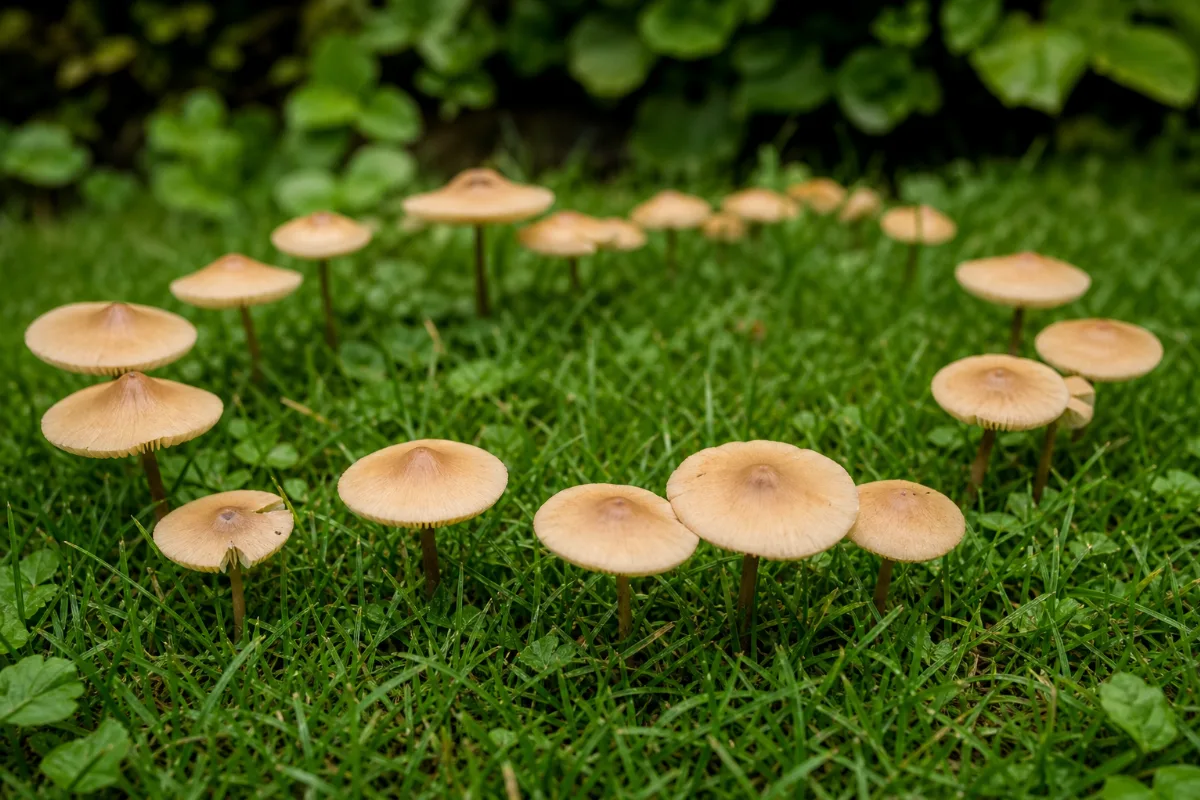
Mushrooms · Wild culinary mushroom
Fairy Ring Mushroom
Marasmius oreades · also called Fairy-ring fungus (names used in the papers we read)
The fairy ring mushroom is a small wild mushroom that grows in grassy rings and is eaten in many places. It is a food, not a proven remedy: we found no human trial of it for any health outcome. The most serious caution is mistaken identity, because poisonous Clitocybe and Inocybe mushrooms can be confused with it and cause muscarine poisoning. The fungus also makes hydrogen cyanide in the lab, and nobody has measured how much is in a meal.
General information, not medical advice. Last substantive update · Not medically reviewed. A named clinician has not signed off on this page. How this page is made
About Fairy Ring Mushroom
The fairy ring mushroom is a wild lawn and meadow mushroom eaten for its flavour. There is no human research on health benefits. The real concerns are poisonous look-alikes, the hydrogen cyanide the fungus makes, metals taken up from soil, and a lack of data on medicines, pregnancy and children.
Hydrogen cyanide: what is known and what is not
Lab and field papers show that the fairy ring fungus makes hydrogen cyanide. In a 1966 report one culture released about 49 ppm over 24 hours, three other isolates released none until they were autoclaved, and water infusions of fruiting bodies slowed root growth in wheat, oats and grass. A 2004 field study found cyanide in soil within 25 cm of fairy rings high enough to inhibit grass roots. A 2015 paper says the cyanide comes from a stored precursor, the cyanohydrin of glyoxylic acid.
These studies measured cultures, soil and seedlings. We found no study that measured cyanide in a portion of mushroom as eaten, and none about how cooking changes it. We therefore cannot say whether the amount in a meal matters for people. It is an open question, not a proven danger and not a reassurance.
What it is
The fairy ring mushroom is Marasmius oreades (GBIF accepted name, family Marasmiaceae). It is a fungus, not a plant. Underground it is a network of threads that spreads outward each year, so the mushrooms appear in an arc or circle. A 2026 study that found its DNA in soil along two rings confirmed that it grows as an open ring.
It is a small mushroom that lives on decaying matter in grass. It shrivels in dry weather and revives after rain, according to the Missouri guide.
What research has tested
We found no trial in which people ate or took fairy ring mushroom and a health outcome was measured. The research is about composition and the lab. One analysis of wild samples from Nigeria reported about 12 to 15% protein, 8% fat and 56 to 58% carbohydrate on a dry basis. The mushroom contains a compound called eritadenine, which lowered a cholesterol ratio in rats when given in pure form.
An alcohol extract scavenged test chemicals, had a moderate effect on cancer cell lines in a dish and stopped bacteria forming biofilms in a dish. A protein from the fungus called MOA is toxic to worms, mouse cells and a beetle pest in lab tests. These are ideas for future research, not evidence that the mushroom prevents or treats any condition.
Metals in the mushroom
In a Spanish study of dried commercial mushrooms, mercury in Marasmius oreades was above the legislated limit. Cooking cut arsenic by 26 to 72% but cut mercury, cadmium and lead much less. In parks in Leicestershire, copper was the leading metal of concern for this species in a species-by-species screening that assumed 300 g fresh weight a week. In a Turkish study of 20 species, other mushrooms, not this one, were named as over the limits.
Wild mushrooms take up what is in the soil, so the place matters. These studies report levels, not illness.
Forms and what is known about them
Fresh and dried mushroom are used as food. Alcohol extracts and purified compounds appear in laboratory studies only. We found no standard supplement, powder or human trial. This page gives no amounts and does not recommend any product.
Rules and official statements
The Missouri Department of Conservation field guide calls it edible with caution. We did not find or read a statement specific to this mushroom from EFSA, the US Food and Drug Administration, the European Medicines Agency, NCCIH, LiverTox or LactMed. The absence of a statement is not a safety guarantee.
At a glance
Traditional uses history, not proof
- An interview study in Andorra found it was the most-cited wild edible mushroom, used almost entirely in cooking (Alvarez-Puig 2025).
- The Missouri Department of Conservation lists it as edible, but with caution because of look-alikes.
Studied for research
- Nutrition as a food: protein and carbohydrate in wild samples from Nigeria, insufficient
- Antioxidant activity in a dish (alcohol extract), insufficient
- Cholesterol: a compound called eritadenine lowered a cholesterol ratio in rats, insufficient
- Cancer cell lines in a dish (alcohol extract), insufficient
- Anti-biofilm and gout-enzyme tests in a dish, insufficient
Main compounds
- Hydrogen cyanide, made from a stored precursor in the fungus (lab culture and soil findings)
- A sugar-binding, protein-cutting protein called MOA, toxic to worms, mouse cells and beetle larvae in the lab
- Eritadenine (0.7 mg per g dry weight in one paper)
- Phenolic compounds such as gallic acid
Common forms
- Fresh or dried fruiting body used as food
- Dried mushroom (metals are reported for dried samples)
- Alcohol extracts used in laboratory research only
Research links: Fairy Ring Mushroom (Missouri Department of Conservation field guide) · Muscarinic toxicity among family members (abstract) · Cholinergic mushroom poisoning, muscarine in urine (abstract) · Muscarine released from a precursor in poisonous mushrooms (abstract) · A free cyanohydrin as arms and armour of Marasmius oreades (abstract) · Cyanide levels near fairy rings (Canadian Journal of Botany, 2004) · Toxic trace elements in dried mushrooms (abstract) · Metals in wild mushrooms from UK green spaces (abstract) · Research Library · Genes & Biomarkers Library
What it is and its history
- Accepted scientific name
- Marasmius oreades
- Naming authority
- (Bolton) Fr. (GBIF)
- Common names
- Fairy ring mushroom (English); Fairy-ring fungus (English)
- Family or group
- Marasmiaceae (a fungus family), not a plant
- Classification
- Fungi > Basidiomycota > Agaricomycetes > Agaricales > Marasmiaceae > Marasmius > Marasmius oreades
- Native range
- Not checked in the sources read.
- Habitat
- The Missouri guide says it grows in grassy areas, lawns and meadows, often in arcs or circles called fairy rings, from May to September in Missouri. Underground it is a network of fungal cells (mycelium) that digests organic matter and grows outward, so the ring gets larger each year.
- What it looks like
- Fruiting body: The Missouri guide gives a small fruiting body (cap about half an inch to two inches across). This page gives no identification characters by design.
- Cultivation
- Not covered in the sources read. We found no cultivation source.
- Harvest and processing
- The Missouri guide says the fruiting bodies shrivel in dry weather and revive after rain. No processing source was read.
- Look-alikes and adulterants
- Name: Poisonous Clitocybe species, including the sweating mushroom (Clitocybe dealbata); Note: Named by the Missouri guide as poisonous and able to be confused with this mushroom. This page does not teach how to tell them apart.; Name: Poisonous Inocybe species; Note: Also named by the Missouri guide as confusable. Muscarine is found in Inocybe and Clitocybe species (Chan 2023).
- Sustainability and conservation
- Not checked.
Traditional use and history history, not clinical proof
| Tradition or era | Documented use | Source |
|---|---|---|
| Andorra, interviews (people born 1914 to 1975) | Marasmius oreades was the most-cited wild edible mushroom of all in an interview study. Almost all use was culinary (97.44% of 1,172 use reports); medicinal use was under 1%. | p41219773 |
| United States, state conservation guide | Described as edible with caution because of poisonous look-alikes. | s-mdc-fairy-ring |
| 1966, grass damage reports | A US Forest Service paper tested whether hydrogen cyanide from the fungus explains the dead or browned grass around fairy rings. | s-filer-1966 |
Traditional use shows how it was used. It does not show that it works or is safe today.
What is inside, and how it may work
What it contains and how those compounds act in cells and animals. Laboratory and animal mechanisms are not proven effects in people.
Main compounds
| Compound | Family | Where it is concentrated | Activity studied | Level of evidence |
|---|---|---|---|---|
| Hydrogen cyanide (from a stored precursor) | cyanogenic compound | Mycelium and fruiting body One culture isolate released about 49 ppm over 24 hours (Filer 1966). No figure for a portion of mushroom as eaten was found. | Damages grass roots; cyanide near rings is high enough to slow grass roots and some fungi (Blenis 2004). Its precursor is the cyanohydrin of glyoxylic acid (Caspar 2015). 9 2 3 | Laboratory research |
| Marasmius oreades agglutinin (MOA), a lectin with protein-cutting activity | protein (lectin) | Fruiting body | Binds Gal-alpha-1,3-Gal/GalNAc sugars; toxic to worms, mouse cells and Colorado potato beetle larvae in the lab. 19 6 20 | Laboratory research |
| Eritadenine | adenine derivative | Fruiting body 0.7 mg per g dry weight (Morales 2018) | Lowered the atherogenic index in rats given the pure compound. 15 | Animal research |
| Phenolic compounds (catechin, ferulic, gallic and vanillic acid) | phenolic | Fruiting body Gallic acid 129.302 ug/g dry weight (Ekin 2025); total phenolics 10.990 mg gallic acid equivalent per 100 g in an ethanol extract (Shomali 2019) | Radical scavenging in a dish. 18 8 | Laboratory research |
Mechanisms, receptors and pathways
| Target or pathway | Gene or receptor | What was found | Level |
|---|---|---|---|
| Fungal defence against worms and insects | Sugar-binding and protein-cutting domains of MOA | MOA binds sugars on animal cell surfaces and cuts proteins; both are needed for toxicity to worms and beetle larvae. 19 20 | Laboratory research |
| Protein synthesis and cell survival (mouse cells) | BAX suggested as a possible protein target | MOA blocked protein synthesis in mouse cells and may trigger cell death through BAX. This is toxicity in a dish, not a therapeutic finding. 6 | Laboratory research |
| Cyanide production | Glycine to cyanohydrin of glyoxylic acid | Glycine is the starting material and the cyanohydrin stores the cyanide. 3 | Laboratory research |
| Xanthine oxidase enzyme | XO | Extract inhibited the enzyme in a test tube. 8 | Laboratory research |
Absorption, metabolism and elimination
- Absorption
- Not found in the sources read.
- Distribution
- Not found. In rats given pure eritadenine, it reached the liver (Morales 2018).
- Metabolism
- Not found.
- Elimination
- Not found.
- Bioavailability
- Not established. For metals, the digestion model found under 40% bioaccessible for mercury, cadmium and lead and 63 to 81% for arsenic (Chiocchetti 2020).
Isolated compounds versus whole extracts
Most lab findings are about an alcohol extract, the purified protein MOA, or the pure compound eritadenine. None of them tell us what eating the whole mushroom does. The cyanide findings are from cultures and soil, not from a meal.
Nutritional composition
It is a wild food, not a major nutrient source, and there is no USDA entry. One Nigerian analysis gave about 12 to 15% protein, 8% fat and 56 to 58% carbohydrate on a dry basis; the main minerals reported were potassium, sodium and phosphorus.
6 not enough evidence
What was looked at
The 6 benefits and uses checked for Fairy Ring Mushroom, each with how strong the evidence is. Tap one to open it.
- As a food (nutrients and everyday use)Not enough evidence
- Antioxidant activity (lab tests only)Not enough evidence
- Cholesterol (one compound, studied in rats)Not enough evidence
- Cancer cell lines (lab only)Not enough evidence
- Bacterial biofilms (lab only)Not enough evidence
- Uric acid and gout (enzyme test only)Not enough evidence
Lab markers tracked in the studies
Atherogenic index (total cholesterol to HDL ratio)Xanthine oxidase enzyme activity (test tube)
What is Fairy Ring Mushroom good for?
What the fairy ring mushroom has been studied for and how strong the evidence is. None of it is proven in people. Read this together with the Safety tab.
Benefits, one by one
Each card is a research question, not a promise. Tap a goal to filter. Open a card to see the studies, doses and limits.
As a food (nutrients and everyday use)
Not enough evidenceFairy ring mushroom is a small wild mushroom eaten in many places. One study of wild samples from Nigeria measured about 12 to 15% protein and 56 to 58% carbohydrate on a dry basis. That describes the food. No study shows that eating it changes anyone's health.
2 studiesFresh or dried mushroom used as food. We found no standard supplement…
Studies, doses and limits
Results
Kayode 2016, dry matter: protein 12.06 to 14.54%, fat 7.73 to 8.38%, fibre 0.56 to 0.62%, ash 10.15 to 14.90%, carbohydrate 56.01 to 57.60%. Minerals in mg/kg: potassium 1270.61, sodium 822.34, phosphorus 619.77, calcium 180.27, magnesium 95.49. The authors rated its protein quality as good, limited in tryptophan and leucine.
Effect sizes as reported
Composition values only; no health effect measured
Why this rating
Composition is measured, but nothing shows a health benefit from eating it. One small analysis of wild samples from one region; values vary with where it grew.
Form and dose studied
Fresh or dried mushroom used as food. We found no standard supplement product. This page gives no amounts.
Limits
Wild samples from one region of Nigeria. The USDA food database has no entry for this mushroom, so no standard nutrient table was available.
Why researchers looked
It is a long-used wild food, so most research simply asks what is in it and how people use it.
Traditional use
An interview study in Andorra found it to be the most-cited wild edible mushroom, with almost all use being culinary (Alvarez-Puig 2025).
Proposed mechanism Other
Not a mechanism claim. The values are laboratory measurements of the food.
A proposed mechanism does not show that the effect happens in people.
Wild-picked mushrooms can be confused with poisonous look-alikes and can carry metals. See the Safety tab first.
Antioxidant activity (lab tests only)
Not enough evidenceAn alcohol extract of fairy ring mushroom mopped up about 80% of a test chemical in a dish. That is a laboratory screen for antioxidant chemistry. It does not show that eating the mushroom protects the body.
2 studiesLaboratory ethanol extract, not a food or supplement. No amounts give…
Studies, doses and limits
Results
Shomali 2019 (Turkish M. oreades, ethanol extract): total phenolics 10.990 mg gallic acid equivalent per 100 g and flavonoids 1.139 mg quercetin equivalent per 100 g; about 80% of DPPH radicals scavenged. Ekin 2025 found gallic acid at 129.302 ug/g dry weight in M. oreades.
Effect sizes as reported
Test-tube radical scavenging; no body measure
Why this rating
Cell-free and enzyme tests only. Test-tube antioxidant results often do not carry over to people.
Form and dose studied
Laboratory ethanol extract, not a food or supplement. No amounts given on this page.
Limits
Extract concentrations used in the lab cannot be compared with eating the mushroom. Two single studies from Turkey.
Why researchers looked
Mushrooms contain plant-like chemicals called phenolics, and researchers screen them for antioxidant activity.
Proposed mechanism Laboratory research
Phenolic compounds such as catechin, ferulic, gallic and vanillic acid were found in an ethanol extract and scavenge a test radical (DPPH) in a dish. The extract did not change three antioxidant enzymes tested and raised a fourth (superoxide dismutase) by 8% at the highest concentration.
A proposed mechanism does not show that the effect happens in people.
None specific to this finding.
Cholesterol (one compound, studied in rats)
Not enough evidenceFairy ring mushroom contains eritadenine, a compound that lowered a cholesterol ratio in rats when given on its own. Nobody has tested the mushroom itself on cholesterol in people.
1 studiesIsolated compound given to rats. Not a mushroom product. No amounts o…
Studies, doses and limits
Results
Morales 2018: fairy ring mushroom contained 0.7 mg eritadenine per g dry weight (shiitake 1.4, Amanita caesarea 0.6). In rats the isolated compound reached the liver and reduced the atherogenic index.
Effect sizes as reported
Rat result with the pure compound; no numbers for the size of change in the abstract
Why this rating
Animal study of a purified compound. No human trial of this mushroom or of eritadenine was found.
Form and dose studied
Isolated compound given to rats. Not a mushroom product. No amounts on this page.
Who was studied
Rats (male and female)
Limits
Fairy ring mushroom was only analysed for content, not fed to animals in the part we read.
Why researchers looked
Eritadenine was first noted in shiitake as a cholesterol-lowering compound, so researchers looked for it in other edible mushrooms.
Proposed mechanism Animal research
Not explained in the abstract read. Rats given pure eritadenine had a lower atherogenic index (total cholesterol to HDL).
A proposed mechanism does not show that the effect happens in people.
The authors judged the pure compound safe in rats at the amounts tested; this says nothing about people.
Cancer cell lines (lab only)
Not enough evidenceAn alcohol extract of fairy ring mushroom had a moderate effect on three human cancer cell lines growing in a dish. This does not show any effect in a person.
1 studiesLaboratory ethanol extract. Not a food or supplement. No amounts on t…
Studies, doses and limits
Results
Shomali 2019: a moderate anticancer effect on colon (HT-29) and breast (MCF-7, MDA-MB-231) cancer cell lines. The abstract gives no percentages.
Effect sizes as reported
Described as moderate; no figures in the abstract
Why this rating
Cell lines in a dish only. Nothing from animals or people.
Form and dose studied
Laboratory ethanol extract. Not a food or supplement. No amounts on this page.
Limits
One study, one extract. Cell results rarely predict what happens in a body.
Why researchers looked
Researchers screen many edible fungi against cancer cells in the lab.
Proposed mechanism Laboratory research
Not explained in the abstract. The effect was measured as cell survival (MTT assay).
A proposed mechanism does not show that the effect happens in people.
A separate lab study found that one protein from this fungus (MOA) is toxic to mouse cells; see the Safety tab. That is not a treatment finding.
Bacterial biofilms (lab only)
Not enough evidenceThe same extract was not a good antibacterial in the lab, but it did block bacteria from forming slimy films (biofilms) in a dish. No one has tested it against infection in people.
1 studiesLaboratory ethanol extract. No amounts on this page.
Studies, doses and limits
Results
Shomali 2019: the extract did not show sufficient antibacterial activity but showed a strong antibiofilm effect against all the Gram-positive and Gram-negative strains tested, at the concentrations used.
Effect sizes as reported
Described as strong in the dish; no figures in the abstract
Why this rating
Test-tube result in one study.
Form and dose studied
Laboratory ethanol extract. No amounts on this page.
Limits
Concentrations used in the lab are not comparable with eating the mushroom.
Why researchers looked
Biofilms make some infections hard to treat, so natural extracts are screened for anti-biofilm activity.
Proposed mechanism Laboratory research
Not explained in the abstract.
A proposed mechanism does not show that the effect happens in people.
None specific.
Uric acid and gout (enzyme test only)
Not enough evidenceIn an enzyme test, fairy ring mushroom slowed xanthine oxidase, an enzyme involved in making uric acid. It was weaker than two of the other mushrooms tested, and the authors did not suggest it for gout.
1 studiesLaboratory extract. No amounts on this page.
Studies, doses and limits
Results
Ekin 2025: IC50 23.85 ug/mL for Marasmius oreades; the authors named Lepista nuda (11.71) and Tricholoma terreum (20.71) as the ones that may be effective for high uric acid and gout.
Effect sizes as reported
Enzyme IC50 only
Why this rating
Enzyme test in a dish. Blood uric acid was not measured in anyone.
Form and dose studied
Laboratory extract. No amounts on this page.
Limits
We read the abstract and the order of values is our reading of it.
Why researchers looked
Xanthine oxidase helps make uric acid. Drugs that block it are used for gout, so researchers screen foods in the same test.
Proposed mechanism Laboratory research
Enzyme inhibition in a test tube (IC50 23.85 ug/mL for M. oreades). Phenolics, fatty acids and trace elements were suggested by the authors as possible contributors.
A proposed mechanism does not show that the effect happens in people.
People with gout take prescription medicines; do not replace them with mushrooms. Ask a doctor.
Connections to the rest of health
How Fairy Ring Mushroom connects to the rest of our health knowledge graph. Every link says what kind of connection it is. A safety link (for example to the liver) is a warning, not a benefit. A study that merely mentions a topic never creates a benefit link.
Explore every connection: goals, body systems, organs, symptoms, genes
A. Wellness goals
| Connected to | Kind of connection | Evidence status | Context | Studies |
|---|---|---|---|---|
| Cholesterol Balance | Preliminary mechanism | Not enough evidence | Cholesterol (one compound, studied in rats): Fairy ring mushroom contains eritadenine, a compound that lowered a cholesterol ratio in rats when given on its own. Nobody has tested the mushroom itself on cholesterol in people. | 15 |
B. Body systems
| Connected to | Kind of connection | Evidence status | Context | Studies |
|---|---|---|---|---|
| Digestive System | Biological association | Not enough evidence | Studied for: As a food (nutrients and everyday use) | 12 1 |
| Immune System | Biological association | Not enough evidence | Studied for: Antioxidant activity (lab tests only) Studied for: Cancer cell lines (lab only) | 18 8 |
| Cardiovascular System | Biological association | Not enough evidence | Studied for: Cholesterol (one compound, studied in rats) | 15 |
| Metabolic System | Biological association | Not enough evidence | Studied for: Uric acid and gout (enzyme test only) | 8 |
C. Body parts and organs
| Connected to | Kind of connection | Evidence status | Context | Studies |
|---|---|---|---|---|
| Nervous system | Adverse effect or risk | Low certainty | Cholinergic signs (sweating, small pupils, slow heartbeat) in the poisoning reports. Sweating, small pupils and a slow heartbeat after eating look-alike mushrooms. Preparation or compound: Muscarine from look-alike mushrooms |
11 4 |
G. Root causes and contributing factors
| Connected to | Kind of connection | Evidence status | Context | Studies |
|---|---|---|---|---|
| Mushroom poisoning | Adverse effect or risk | Low certainty | Muscarinic poisoning reported after eating look-alike wild mushrooms; frequency unknown. Preparation or compound: Poisonous Clitocybe and Inocybe look-alikes (not the fairy ring mushroom) |
14 11 4 |
| Heavy metal exposure | Adverse effect or risk | Not enough evidence | Mercury above legal limits in one study of dried samples; no illness measured. Preparation or compound: Dried or wild-picked fruiting body |
5 17 |
I. Biomarkers
| Connected to | Kind of connection | Evidence status | Context | Studies |
|---|---|---|---|---|
| Atherogenic index (total cholesterol to HDL ratio) | Biological association | Not enough evidence | Measured in trials: lowered. A lab change is not the same as a health benefit. | 15 |
| Xanthine oxidase enzyme activity (test tube) | Biological association | Not enough evidence | Measured in trials: lowered. A lab change is not the same as a health benefit. | 8 |
J. Genes, receptors and enzymes
L. Active compounds
| Connected to | Kind of connection | Evidence status | Context | Studies |
|---|---|---|---|---|
| Hydrogen cyanide (from a stored precursor) | Biological association | In vitro | Damages grass roots; cyanide near rings is high enough to slow grass roots and some fungi (Blenis 2004). Its precursor is the cyanohydrin of glyoxylic acid (Caspar 2015). Preparation or compound: Mycelium and fruiting body |
9 2 3 |
| Marasmius oreades agglutinin (MOA), a lectin with protein-cutting activity | Biological association | In vitro | Binds Gal-alpha-1,3-Gal/GalNAc sugars; toxic to worms, mouse cells and Colorado potato beetle larvae in the lab. Preparation or compound: Fruiting body |
19 6 20 |
| Eritadenine | Biological association | Animal | Lowered the atherogenic index in rats given the pure compound. Preparation or compound: Fruiting body |
15 |
| Phenolic compounds (catechin, ferulic, gallic and vanillic acid) | Biological association | In vitro | Radical scavenging in a dish. Preparation or compound: Fruiting body |
18 8 |
Each connection is stored with the ingredient, the connected record, the kind of connection, the evidence status, the supporting studies, the preparation or compound involved, and a review date (last reviewed October 25, 2026).
Evidence at a glance: what changed in 2 lab markers
Tap a number to show only those markers. Counts are markers, not people.
The evidence
The research centre for Fairy Ring Mushroom. Every record here was checked against PubMed or the publisher's page; we never list a study we have not verified.
Evidence by outcome
Bars show how many studies we found for each outcome, not how well it works. People are added up across trials only (reviews are not added, to avoid double counting).
How we rate evidence
High certainty
Several well-run trials or reviews agree; further research is unlikely to change the picture much.
Moderate certainty
Good trials point the same way, but some doubt remains.
Low certainty
Small, short or inconsistent trials. The finding could change with better research.
Very low certainty
Very little or very weak human data. Treat as a possibility only.
Mixed findings
Trials or reviews disagree with each other.
Not enough evidence
Not enough human research to say either way.
Evidence against
Good research found no benefit, or found harm.
We take the reviewers' own risk-of-bias and GRADE statements where they exist, and otherwise judge from study size, design, consistency, directness and whether a product matches what is sold. Many publications do not make evidence high. Method note: We read PubMed records and abstracts for 15 papers (two muscarine poisoning case reports, a muscarine chemistry paper, a cyanide chemistry paper, three lab papers on metals, a plant-chemistry and enzyme paper, an eritadenine paper, an extract study, three papers on a fungal protein, an ethnobiology survey and a fairy ring ecology paper), plus the Missouri Department of Conservation field guide, the GBIF record, the abstract of a 1966 US Forest Service paper, and the abstracts of a 2004 soil cyanide paper and a 2016 Nigerian composition paper. One case report was also read in PMC full text. Index Fungorum, EFSA, FDA, EMA, NCCIH, LiverTox and LactMed were not read. Certainty ratings are the compiler's own reading.
Study library: every study we checked 20
| Study | Design | People | Product, dose, length | Result |
|---|---|---|---|---|
| Alvarez-Puig 2025 Andorran ethnomycology: culinary uses and beyond. Journal of Ethnobiology and Ethnomedicine · PMID 41219773 · DOI |
Interview survey fungus |
https://pubmed.ncbi.nlm.nih.gov/41219773/ 131 people interviewed in Andorra (born 1914 to 1975) about wild mushroom uses |
Wild mushrooms in general (interview study) |
People gave 1,172 use reports for 42 useful taxa. Culinary use made up 1,142 of them (97.44%) and medicinal use 9 (0.77%). Marasmius oreades was the most cited wild edible mushroom of all. The authors say several mushrooms with strong traditional use lack nutrition data. Shows culinary use, not any health effect Methods, limits and fundingOutcomes: Which wild mushrooms people use and how Limitations: An interview survey, not a health study. An erratum was published in 2026; we did not read it. Funding and conflicts: No competing interests declared Read: abstract |
| Blenis 2004 Cyanide levels near fairy rings affect the growth of grasses and fungi Canadian Journal of Botany · Source · DOI |
Field and lab study fungus and plants |
Soil at two fairy rings; seven fungi and four turfgrasses tested in the lab | Cyanide in soil near M. oreades fairy rings |
Within 25 cm of the rings, cyanide concentrations were high enough to inhibit grass root growth and to greatly inhibit the growth of some fungi, while having a negligible effect on others. Cyanide fell steeply with distance from the rings (within 50 to 60 cm). Cyanide near the rings is high enough to harm grass roots Methods, limits and fundingOutcomes: Cyanide in soil solutions compared with levels that halve grass root length or fungal biomass Limitations: Soil and grass only. Nothing was measured in mushrooms eaten by people. Funding and conflicts: Not stated in the abstract Read: abstract (via Crossref record) |
| Caspar 2015 A free cyanohydrin as arms and armour of Marasmius oreades. ChemBioChem · PMID 25630401 · DOI |
Lab chemistry study fungus |
Cultures of Marasmius oreades and other cyanogenic fungi | Fungal tissue (chemistry) |
The cyanohydrin of glyoxylic acid is the precursor of hydrocyanic acid in M. oreades and several other cyanogenic fungi. A feeding experiment showed glycine to be the starting material. The authors say this makes fungal cyanide production fundamentally different from the plant route. Cyanide arises from a stored precursor, not as free cyanide Methods, limits and fundingOutcomes: Identity of the precursor of hydrocyanic acid Limitations: Chemistry only. It does not say how much cyanide a meal of the mushroom would contain. Funding and conflicts: Not stated in the abstract Read: abstract |
| Chan 2023 Cholinergic Mushroom Poisoning With a Detection of Muscarine Toxin in Urine. Journal of Medical Cases · PMID 37435104 · DOI |
Case report |
2 Two middle-aged patients in Hong Kong |
Cooked wild mushrooms from a country park (identified by a mycologist from form only; species not named in the abstract) fruiting body two tablespoons, cooked (reported) |
Both patients had stomach pain, vomiting and diarrhoea, followed by small pupils, palpitations and sweating. One had mildly raised liver enzymes. Muscarine, which the authors say is found in Inocybe and Clitocybe species, was identified in both patients' urine. Muscarine poisoning confirmed by a urine test Methods, limits and fundingOutcomes: Symptoms and urine toxin testing Limitations: Two patients. The species eaten is not named in the abstract and nothing links it to fairy ring mushroom. Funding and conflicts: None declared Read: abstract |
| Chiocchetti 2020 Toxic trace elements in dried mushrooms: Effects of cooking and gastrointestinal digestion on food safety. Food Chemistry · PMID 31610326 · DOI |
Lab analysis fungus (food analysis) |
Dried commercial mushrooms (including Amanita ponderosa, Boletus edulis, Marasmius oreades, Tricholoma georgii) | Dried mushrooms, raw and cooked, plus a digestion model dried fruiting body |
Mercury in Marasmius oreades, as well as in Amanita ponderosa, Boletus edulis and Tricholoma georgii, exceeded the legislated limits. Cadmium exceeded limits in some Amanita caesarea and T. georgii samples. Cooking cut arsenic by 26 to 72%, but cut mercury, cadmium and lead much less. The share of metal available for the body to absorb in the digestion model was below 40% for the metals and 63 to 81% for arsenic. Mercury above legal limits in the dried M. oreades samples; cooking barely lowers it Methods, limits and fundingOutcomes: Mercury, cadmium, lead and arsenic levels, effect of cooking, bioaccessibility Limitations: The abstract does not give the M. oreades figures, the number of samples or where they were picked. No illness was measured. Funding and conflicts: Not stated in the abstract Read: abstract |
| Cordara 2014 The fungal chimerolectin MOA inhibits protein and DNA synthesis in NIH/3T3 cells and may induce BAX-mediated apoptosis. Biochemical and Biophysical Research Communications · PMID 24747075 · DOI |
In vitro study mouse cells |
Mouse NIH/3T3 cells | Marasmius oreades agglutinin (MOA), a protein from the fungus fruiting body protein |
MOA, a lectin (sugar-binding protein) that carries an active protein-cutting domain, was toxic to mouse cells by blocking protein synthesis, and this toxicity partly depended on its enzyme activity. The authors suggest MOA and related enzymes may play a role in defence of the fungus. MOA is toxic to mouse cells in a dish Methods, limits and fundingOutcomes: Cytotoxicity and protein synthesis Limitations: Mouse cells only. No study of MOA after eating the mushroom, in animals or in people, was found. MOA is a protein, and cooking or digestion effects were not studied in this paper. Funding and conflicts: Not stated in the abstract Read: abstract |
| Dorner 2024 The Fatal Mushroom Neurotoxin Muscarine is Released from a Harmless Phosphorylated Precursor upon Cellular Injury. Angewandte Chemie International Edition · PMID 39432715 · DOI |
Lab chemistry study fungus (chemistry) |
Mycelium of the fool's funnel mushroom (Clitocybe rivulosa) and two fibre cap species | Muscarine and a related compound in poisonous mushrooms mycelium and fruiting body |
The authors state that muscarine-producing mushrooms pose a severe threat to human health, as ingestion can result in circulatory collapse or even death. In Clitocybe rivulosa they found a harmless-looking phosphate form of muscarine that can release muscarine when the mushroom is injured, and say this matters to emergency doctors estimating how toxic these mushrooms are. Muscarine mushrooms can be fatal; a precursor can release it Methods, limits and fundingOutcomes: Chemical identity of the muscarine precursor and its activity at the M3 receptor Limitations: Laboratory chemistry. It does not say which species are mistaken for the fairy ring mushroom. Funding and conflicts: Not stated in the abstract Read: abstract |
| Ekin 2025 Comparison of Xanthine Oxidase Inhibitory Activities and Phenolic, Fatty Acid, Element, and Vitamin Levels of Four Mushroom Species. Food Science & Nutrition · PMID 40264684 · DOI |
In vitro study fungus (in vitro) |
Four edible mushrooms (Helvella leucopus, Tricholoma terreum, Lepista nuda, Marasmius oreades) analysed in the lab | Mushroom extracts fruiting body |
In an enzyme test, the four mushrooms inhibited xanthine oxidase with IC50 values of 39.97, 20.71, 11.71 and 23.85 ug/mL, in the order the species are listed, so 23.85 for M. oreades (a lower value means a stronger effect). The authors say Lepista nuda and Tricholoma terreum may be effective for high uric acid and gout; they did not say that of M. oreades. Gallic acid was the main phenolic in M. oreades (129.302 ug/g dry weight), and linoleic acid made up 20.86% of its fatty acids. M. oreades inhibited the enzyme more weakly than two of the other three mushrooms Methods, limits and fundingOutcomes: Phenolics, vitamins, fatty acids, trace elements and xanthine oxidase (XO) inhibition Limitations: Enzyme test only. The order of values is our reading of the abstract. No uric acid was measured in people. Funding and conflicts: No conflicts declared Read: abstract and PMC record |
| Filer TH Jr 1966 Effect on Grass and Cereal Seedlings of Hydrogen Cyanide Produced by Mycelium and Sporophores of Marasmius oreades Plant Disease Reporter 50(4):264-266 · Source |
Lab study fungus and plants |
Grass seedlings (Poa pratensis, Festuca rubra, Agrostis tenuis) and cereal seedlings | Cultures of M. oreades and water infusions of its fruiting bodies mycelium and fruiting body |
Grasses hung above a 28-day-old viable culture had root damage from hydrogen cyanide. One isolate (Washington isolate 1) averaged 49 ppm of cyanide per 24 hours collected over 7 days. Three other isolates did not release cyanide until the cultures were autoclaved. Dilutions of a water infusion of fruiting bodies inhibited root growth in wheat, oats and Poa pratensis. Cultures made cyanide; fruiting-body infusion inhibited seedling roots Methods, limits and fundingOutcomes: Root damage to seedlings; hydrogen cyanide released Limitations: An old, informally refereed report with few details in the abstract. It measured cultures and seedlings, not the amount of cyanide in a mushroom as eaten. Funding and conflicts: Public research agency (USDA Forest Service) Read: abstract (USDA Treesearch record) |
| GBIF 2026 GBIF Backbone Taxonomy: Marasmius oreades (Bolton) Fr. GBIF species API · Source |
Taxonomy record fungus |
n/a | Name match record |
GBIF matches Marasmius oreades (Bolton) Fr. as ACCEPTED (exact match, key 2537250), family Marasmiaceae, order Agaricales, class Agaricomycetes, phylum Basidiomycota, kingdom Fungi. Name confirmed Methods, limits and fundingOutcomes: Accepted name, family, order Limitations: A name-matching service, not a taxonomy paper. Index Fungorum was not read. Funding and conflicts: Public database Read: API record read 2026-10-25 |
| George 2013 Muscarinic toxicity among family members after consumption of mushrooms. Toxicology International · PMID 23833447 · DOI |
Case report |
4 Four members of one family in India (three women and one man) |
Wild mushrooms matching Clitocybe by description (never identified; not fairy ring mushroom) fruiting body |
Two to three hours after eating, all four had abdominal cramps and diarrhoea. The three with severe poisoning also had salivation, sweating, tears, blurred vision, small pupils, wheeze and cough, a slow heartbeat and low blood pressure. They were treated in hospital with fluids and atropine, were free of symptoms within 8 to 10 hours and went home after 48 hours of observation. The milder case went home within 6 hours. The authors say the mushrooms could not be collected; their description matched Clitocybe. Muscarinic poisoning is fast (hours) and treatable in hospital Methods, limits and fundingOutcomes: Symptoms, treatment and outcome of muscarinic poisoning Limitations: One family. The mushroom was never identified, grew on a wooden log, and was not a fairy ring mushroom mix-up. Used here only to show what muscarinic poisoning looks like. Funding and conflicts: None declared Read: abstract and full text (PMC) |
| Kayode 2016 Chemical composition of Marasmius oreades: a wild edible mushroom among Kabba-Bunu inhabitants of Nigeria FUTA Journal of Research in Sciences · Source |
Composition analysis fungus |
Wild fairy ring mushrooms picked in forests near three villages in Nigeria | Wild M. oreades fruiting bodies (dry matter analysis) fruiting body |
On a dry-matter basis: protein 12.06 to 14.54%, fat 7.73 to 8.38%, fibre 0.56 to 0.62%, ash 10.15 to 14.90%, carbohydrate 56.01 to 57.60%. Linoleic acid was the main fatty acid (average 51.78%). Minerals: potassium 1270.61 mg/kg, sodium 822.34 mg/kg, phosphorus 619.77 mg/kg, calcium 180.27 mg/kg, magnesium 95.49 mg/kg. The authors scored its protein as good quality, but limiting in tryptophan and leucine. Food composition values only Methods, limits and fundingOutcomes: Protein, fat, fibre, ash, carbohydrate, minerals, fatty acids, amino acids, plant chemicals Limitations: Measures what is in the mushroom, not what eating it does. Wild samples from one region of Nigeria; the abstract does not say whether the mineral values are per dry weight. Funding not stated in the abstract. Funding and conflicts: Not stated in the abstract Read: abstract (institutional repository record) |
| Keskin 2021 Element concentration, daily intake of elements, and health risk indices of wild mushrooms collected from Belgrad Forest and Ilgaz Mountain National Park (Turkey). Environmental Science and Pollution Research · PMID 33982259 · DOI |
Lab analysis fungus (food analysis) |
20 wild mushroom species from two protected areas in Turkey, including Marasmius oreades | Wild mushrooms (element analysis) fruiting body |
Across all species, mercury ranged from 14.03 to 37.81 mg/kg and cadmium from 0.09 to 2.4 mg/kg dry weight. Copper in Bovistella utriformis and cadmium in Agaricus campestris, Armillaria ostoyae, B. utriformis and Pleurotus ostreatus exceeded the legal limits. Marasmius oreades was not named among those that exceeded limits. The authors conclude the species from these areas should be eaten "in a controlled manner". M. oreades was analysed but not named among the species over the limits Methods, limits and fundingOutcomes: Element levels, daily metal intake and health risk index Limitations: Ranges are for all species together; the M. oreades values are not in the abstract. Two mountain areas in Turkey only. Funding and conflicts: Not stated in the abstract Read: abstract |
| Missouri Department of Conservation 2026 Fairy Ring Mushroom (field guide entry) Missouri Department of Conservation website · Source |
Authoritative guidance n/a |
n/a | Marasmius oreades (field guide) |
Lists the fairy ring mushroom as edible, but "with caution". Says certain poisonous Clitocybe and Inocybe species can be confused with it, names the sweating mushroom (Clitocybe dealbata) as also poisonous, and says it grows in grassy areas, lawns and meadows, often in arcs or circles. It also says not all fairy rings are this mushroom and not all of this mushroom grows in rings, and urges readers to use many resources and be absolutely sure of identification. Edible with caution; look-alikes can be poisonous Methods, limits and fundingOutcomes: Edibility status, look-alike warning, habitat Limitations: A state conservation agency's public field guide, not a toxicology review. It gives no poisoning rates. Funding and conflicts: Public agency Read: full page text |
| Morales 2018 Effect of traditional and modern culinary processing, bioaccessibility, biosafety and bioavailability of eritadenine, a hypocholesterolemic compound from edible mushrooms. Food & Function · PMID 30456394 · DOI |
Lab and animal study fungus and rat |
https://pubmed.ncbi.nlm.nih.gov/30456394/ Mushroom samples, an in vitro digestion model and male and female rats |
Eritadenine (an isolated compound) from mushrooms 21 and 10 mg per kg of rat per day (animal study) |
Eritadenine was found in shiitake, Marasmius oreades and Amanita caesarea at 1.4, 0.7 and 0.6 mg per g dry weight. Grilling then frying kept more of it than boiling or microwaving. In rats given the isolated compound, intake was judged safe at those amounts, it reached the liver, and the ratio of total to HDL cholesterol (the atherogenic index) fell. Fairy ring mushroom contains eritadenine (0.7 mg per g dry weight); the cholesterol finding is from rats given the pure compound Methods, limits and fundingOutcomes: Eritadenine content, effect of cooking, bioaccessibility, rat safety and cholesterol markers Limitations: The rats were given pure eritadenine, not the mushroom. Fairy ring mushroom was only one of three species analysed for content. No human data. Funding and conflicts: Not stated in the abstract Read: abstract |
| Olsson 2026 Spatial structure and growth dynamics of fairy rings formed by Marasmius oreades. Royal Society Open Science · PMID 42728927 · DOI |
Field and genetic study fungus |
Soil along transects from two fairy rings | Soil DNA (metagenomics) |
The authors confirmed that M. oreades grows as an open ring by finding its DNA in soil along transects, showed that the ring mycelium is dikaryotic (two mating-type alleles), and found the transplant results most consistent with a "transient-escape" idea: the mycelium moves away from inhibiting factors at the back edge of the growth front. Explains the ring shape in ecological terms Methods, limits and fundingOutcomes: How the fungus grows as a ring Limitations: Ecology only; no food or health information. Funding and conflicts: No competing interests declared Read: abstract |
| Pena-Fernandez 2026 Censored-Data-Aware Screening of Hazardous Metal(loid)s in Wild Mushrooms from Urban and Peri-Urban Green Spaces: Multielement Fingerprints and Adult Exposure Assessment. Journal of Xenobiotics · PMID 42646055 · DOI |
Lab analysis fungus (food analysis) |
121 wild mushroom fruiting-body units from parks in Leicester/Leicestershire, UK, including Marasmius oreades | Wild mushrooms from urban green spaces fruiting body 300 g fresh weight per week was the assumed scenario |
For all the edible-relevant mushrooms pooled, cadmium at the assumed 300 g fresh weight a week reached 47.3% of the EFSA tolerable weekly intake of 2.5 ug/kg body weight. When the authors looked species by species, copper became the leading driver of concern for Coprinopsis atramentaria and Marasmius oreades. No link to the soil in the parks was confirmed after statistical correction. Copper was the lead metal of concern for M. oreades in this UK park screening Methods, limits and fundingOutcomes: Metal levels and screening exposure compared with the EFSA tolerable weekly cadmium intake Limitations: A screening estimate, not a measure of illness. The abstract gives no M. oreades numbers. Park mushrooms only. Funding and conflicts: Authors declare no conflicts Read: abstract and PMC record |
| Shomali 2019 Antioxidant, Anticancer, Antimicrobial, and Antibiofilm Properties of the Culinary-Medicinal Fairy Ring Mushroom, Marasmius oreades (Agaricomycetes). International Journal of Medicinal Mushrooms · PMID 31679229 · DOI |
In vitro study fungus (in vitro) |
Laboratory tests on an ethanol extract of Turkish M. oreades; human colon and breast cancer cell lines (HT-29, MCF-7, MDA-MB-231); bacterial strains | Ethanol extract of M. oreades fruiting body up to 10 mg/mL in the lab (not a human amount) |
The extract scavenged about 80% of DPPH radicals. It raised superoxide dismutase activity by 8% at the highest concentration and did not change three other enzymes. It showed a moderate anticancer effect on the three cell lines. It did not show sufficient antibacterial activity, but showed a strong antibiofilm effect against all the bacterial strains tested at the concentrations used. Lab results only; moderate effect on cancer cell lines, antibiofilm effect in a dish Methods, limits and fundingOutcomes: Phenolic content, DPPH radical scavenging, antioxidant enzyme activity, antibacterial and antibiofilm activity, cancer cell viability (MTT assay) Limitations: Test-tube and cell work only. No animals or people. One extract from one Turkish collection. Funding not stated in the abstract. Funding and conflicts: Not stated in the abstract Read: abstract |
| Wohlschlager 2011 Nematotoxicity of Marasmius oreades agglutinin (MOA) depends on glycolipid binding and cysteine protease activity. Journal of Biological Chemistry · PMID 21757752 · DOI |
Lab study worm (C. elegans) |
The roundworm Caenorhabditis elegans | Purified MOA protein from the fairy ring mushroom fruiting body protein |
MOA is a lectin that binds Gal-alpha-1,3-Gal/GalNAc sugars and also has cysteine protease (protein-cutting) activity. It is toxic to the worm, and both the sugar binding and the enzyme activity are needed. The authors suggest it protects the fungus against soil worms that eat it. MOA is a defence protein toxic to worms in the lab Methods, limits and fundingOutcomes: Toxicity to worms; lectin and enzyme activity Limitations: Worm study with the purified protein. It says nothing about people eating the mushroom. Funding and conflicts: Not stated in the abstract Read: abstract |
| Zigon 2026 The Entomotoxic Fungal Lectin Marasmius oreades Agglutinin Disrupts the Midgut Epithelium of Colorado Potato Beetle Larvae. Journal of Agricultural and Food Chemistry · PMID 41701075 · DOI |
Lab study insects |
Colorado potato beetle larvae; adult and larval honeybees | Recombinant MOA |
MOA caused significantly higher larval mortality than five other fungal lectins and damaged the midgut lining. No acute toxicity was found for adult honeybees, but sublethal effects on honeybee larval development were seen. MOA is toxic to a pest insect in feeding tests Methods, limits and fundingOutcomes: Larval death, gut damage Limitations: Recombinant protein, insects only; no data for mammals. Funding and conflicts: Not stated in the abstract Read: abstract |
What we do not know yet
- No trial of eating or taking fairy ring mushroom for any health outcome was found.
- No study measured hydrogen cyanide in a portion as eaten, or the effect of cooking.
- No data on how often poisonous look-alikes are eaten by mistake in place of this mushroom.
- No interaction, pregnancy, breastfeeding, children or allergy data for this species.
- No regulator statement (EFSA, FDA, EMA, NCCIH, LiverTox, LactMed) was found or read.
How new research is added
New studies are found by a saved PubMed search and placed in a review queue. A person reads each one before it changes any evidence rating or safety wording. New publications never change ratings automatically.
Lab markers
What changed in blood or saliva tests during trials. A changed number is not the same as feeling or being healthier, and we give no "normal ranges".
Other 2
Atherogenic index (total cholesterol to HDL ratio)
Lowered in trials
A ratio of total cholesterol to HDL ("good") cholesterol. A lower ratio is usually read as a better blood-fat picture.
Not enough evidenceResults and what it means
Why it was measured
Used in studies as a simple marker of blood-fat balance.
Statistical vs. clinical meaning
Animal finding with a purified compound; it is not evidence for eating the mushroom.
Safety implication
None known.
| Study | Result | People | Product |
|---|---|---|---|
| 15 | Rats given pure eritadenine had a lower atherogenic index. No effect of the mushroom itself was tested. | Male and female rats | Isolated eritadenine, not the mushroom |
Xanthine oxidase enzyme activity (test tube)
Lowered in trials
An enzyme that helps the body make uric acid. In this study it was measured in a test tube, not in people.
Not enough evidenceResults and what it means
Why it was measured
Used to screen foods for possible uric-acid-lowering activity.
Statistical vs. clinical meaning
A screening result only. Blood uric acid was not measured.
Safety implication
None known.
| Study | Result | People | Product |
|---|---|---|---|
| 8 | Marasmius oreades extract inhibited the enzyme with IC50 23.85 ug/mL; two other mushrooms in the same test were stronger. | Enzyme assay | Mushroom extract in the lab |
Safety
What studies and official sources say about side effects, medicines and who should check first. Each point shows what kind of evidence it comes from.
Main points to know 5
- Poisonous look-alikes can be mistaken for it. The Missouri Department of Conservation says the fairy ring mushroom is edible only "with caution", because certain poisonous Clitocybe and Inocybe species can be confused with it. It names the sweating mushroom (Clitocybe dealbata) as one that is poisonous. Muscarine is a poison found in Inocybe and Clitocybe species. Poisoning gives sweating, tears, a lot of saliva, small pupils, wheeze and a slow heartbeat, usually within hours, and needs hospital treatment. Authors of a 2024 chemistry paper say muscarine-producing mushrooms can cause circulatory collapse or death. We found no study giving how often this mix-up happens. This page cannot teach identification, and pictures or apps are not enough. Do not eat a wild mushroom unless a qualified local expert has confirmed it. Authoritative guidance 14 4 11 7
- Cyanide: the fungus makes hydrogen cyanide, but nobody has measured it in a meal. Lab and field papers show that the fairy ring fungus produces hydrogen cyanide. One 1966 culture released about 49 ppm over 24 hours, and a 2004 field study found cyanide in soil near fairy rings high enough to slow grass roots. A 2015 chemistry paper identifies a compound called the cyanohydrin of glyoxylic acid as its source. These studies measured cultures, soil and seedlings. We found no study that measured cyanide in a portion of the mushroom as eaten, and none that says whether cooking changes it. So we cannot say whether the amount in a meal matters for people. Lab analysis 9 2 3
- Metals: mercury was above legal limits in one study of dried samples. In a Spanish study of dried mushrooms, mercury in Marasmius oreades was above the legislated limit, and cooking lowered mercury only a little. A UK park screening named copper as the main metal of concern for this species. Wild mushrooms take up what is in the soil, so the place they grew matters. Lab analysis 5 17 13
- No safety data for medicines, pregnancy, breastfeeding or children. We found no report, trial or official statement on interactions with medicines, liver effects, pregnancy, breastfeeding or young children. That is a gap, not a sign that it is safe. Gap
- No standard supplement product or trial exists. We found no human trial of fairy ring mushroom as a supplement, powder or extract. Anything sold as such is untested here. Gap
Side effects 3
| Effect | How often | Severity and recovery | Evidence |
|---|---|---|---|
| Muscarine poisoning from a look-alike: sweating, tears, saliva, small pupils, wheeze or breathing trouble, slow heartbeat, low blood pressure, belly cramps, vomiting, diarrhoea These reports are about Clitocybe-like mushrooms. In the Indian case the mushroom was never identified; in the Hong Kong case the species is not named in the abstract. No source we read links either case to a fairy ring mushroom meal. | No rate found. The Indian family case began 2 to 3 hours after the meal; all four people recovered. | severe In the family case, symptoms cleared within 8 to 10 hours with atropine and fluids. A 2024 paper says muscarine mushrooms can be fatal. | Case report 11 4 7 |
| Metal exposure (mercury, cadmium, copper) from regular meals of contaminated wild mushrooms Depends heavily on where the mushrooms grew. Urban lawns and roadsides were not compared with clean sites in the papers read. | No illness was measured. Studies report levels and screening estimates only. | unknown Not studied | Lab analysis 5 17 13 |
| Poisoning from the mushroom itself Absence of reports is not proof of safety, and the cyanide question above is unresolved. | None described in the sources read. | unknown n/a | Gap 14 |
Liver
No report of liver injury from fairy ring mushroom was found in the sources read. We did not find a LiverTox entry. One patient in the Hong Kong muscarine case had mildly raised liver enzymes, but that case was a different, unnamed wild mushroom. This is a gap, not a safety guarantee. 4
How often. No rate can be given.
This is a safety connection. It is not evidence that Fairy Ring Mushroom supports liver health.
Medicines and supplements 4
| With | Why it matters | Importance | Evidence | What to do |
|---|---|---|---|---|
| Prescription medicines in general prescription | Unknown. No report, trial or label statement was found. | Gap Not enough evidence | Ask a pharmacist or doctor if you take regular medicines and plan to eat wild mushrooms often. | |
| Alcohol other | Some other mushrooms react with alcohol. No source we read says this for fairy ring mushroom either way. | Unknown. Not found in the sources read. | Gap Not enough evidence | Because it is unknown, a pharmacist or doctor can advise; this page makes no claim either way. |
| Blood thinners, immune-suppressing medicines and supplements prescription | Some other medicinal mushrooms carry cautions of this kind. None was found for fairy ring mushroom. | Unknown. We found no report or study. | Gap Not enough evidence | Tell your pharmacist what you eat if you take these medicines. |
| Atropine-type and other medicines used to treat muscarine poisoning emergency | Not an interaction with the mushroom. In the family case in India, hospital doctors used atropine and fluids for muscarinic poisoning from Clitocybe-like mushrooms. | This is hospital treatment. Do not try to treat poisoning at home. | Case report Low certainty 11 | Call emergency services or a poison centre for any suspected mushroom poisoning. |
Who should check first 5
| Situation | Advice | Evidence |
|---|---|---|
| Any wild mushroom that has not been confirmed by a qualified local expert | Do not eat it. Sources say poisonous Clitocybe and Inocybe species can be mistaken for this mushroom. This page does not teach how to tell them apart, and pictures or phone apps are not enough. | Authoritative guidance 14 11 |
| Pregnancy and breastfeeding | No safety data were found for fairy ring mushroom. Ask a doctor or midwife. The look-alike risk applies to everyone. | Gap |
| Young children | No safety data were found. Poisoning is more dangerous in small bodies, and children should not eat wild-picked mushrooms. Ask a doctor. | Gap |
| Known allergy to mushrooms | No allergy report for this species was found. If you react to other mushrooms, ask an allergy specialist before eating it. | Gap |
| Frequent eating of dried or wild mushrooms from lawns, roadsides or polluted ground | Metal levels depend on where they grew. Ask a doctor if you eat them often, and do not rely on a mushroom from ground you do not know. | Lab analysis 5 17 |
Overdose, product quality and regulators
Summary. The documented dangers are mistaken identity (poisonous look-alikes), a fungus that makes hydrogen cyanide whose amount in a meal is unmeasured, and metals taken up from soil. Poisoning from the fairy ring mushroom itself is not described in the sources read.
Animal. A fungal protein from this species, MOA, is toxic to roundworms, to mouse cells and to Colorado potato beetle larvae in lab tests. These tests used the purified protein, not a meal of mushroom. No animal feeding study of the whole mushroom was found.
Human doses studied. No human trials. This page gives no amounts and none are advised.
High dose or long term signals. No long-term safety study was found. The metal studies raise concern only for regular large intakes from contaminated sites.
Overdose response. Not described. For any suspected mushroom poisoning, seek medical help at once.
Genotoxicity. Not read.
Toxic or hazardous parts. Fungus: fruiting body (eaten), mycelium (underground network, which made the cyanide in the lab culture). Poisonous look-alikes are separate species.
Wild mushrooms take up metals from the soil. Levels depend on where they grew. Products sold as fairy ring mushroom powders or extracts could not be found in the sources read.
Mercury in dried samples. Mercury in Marasmius oreades was above legislated limits in the dried commercial mushrooms tested (Spain). Cooking cut arsenic by 26 to 72% but cut mercury, cadmium and lead much less. Under 40% of the metals was bioaccessible in the digestion model. 5
Copper in UK park mushrooms. In parks in Leicestershire, copper became the leading driver for Marasmius oreades and Coprinopsis atramentaria in a species-by-species screening against assumed 300 g fresh weight a week. Pooled cadmium reached 47.3% of the EFSA tolerable weekly intake. 17
Turkish protected areas. M. oreades was analysed along with 19 other species. The abstract names other species, not M. oreades, as exceeding limits for copper and cadmium. Mercury across all species was 14.03 to 37.81 mg/kg dry weight. 13
Species mix-ups in picked lots. The Missouri guide says not all fairy rings are this mushroom and several similar mushrooms exist. A picked lot may therefore contain other species. 14
| Body | Action | Date |
|---|---|---|
| Missouri Department of Conservation (United States) | Calls the fairy ring mushroom edible but "with caution", warns of poisonous Clitocybe and Inocybe look-alikes and says to be absolutely sure of identification. source | 2026-10-25 |
When to get medical help
- Sweating, streaming eyes, a lot of saliva, small pupils, wheezing, a slow heartbeat, dizziness or fainting after a wild mushroom meal: this can be muscarine poisoning. Call emergency services or a poison centre straight away. In the case we read it began 2 to 3 hours after eating.
- Vomiting, belly cramps or diarrhoea within hours of eating a wild mushroom: get medical advice the same day and tell the clinicians exactly what was eaten. If any of the mushroom is left, keep it for them.
- Trouble breathing, swelling of the face or throat, or hives after eating mushrooms: call emergency services.
- Anyone else who shared the same meal should be checked too, even if they feel well.
If someone may be poisoned or in a crisis, contact a clinician or emergency service straight away. In the US, Poison Control is 1-800-222-1222.
General information only, not medical advice. Ask a clinician or pharmacist before use, especially with medicines, in pregnancy or with a health condition. See the Natural Remedy Safety guide.
Frequently asked questions
What is the fairy ring mushroom?
Is it safe to eat?
The Missouri Department of Conservation calls it edible, but with caution. The danger sources describe is mistaken identity: poisonous Clitocybe and Inocybe mushrooms can be confused with it. We found no study on how often this happens, and an open question remains about hydrogen cyanide. Only eat a wild mushroom confirmed by a qualified local expert.
What are the poisonous look-alikes?
The Missouri guide names poisonous Clitocybe species, including the sweating mushroom (Clitocybe dealbata), and Inocybe species. We do not teach identification here, and pictures or apps are not enough.
What does muscarine poisoning look like?
Does the fairy ring mushroom contain cyanide?
Does it have proven health benefits?
Is it high in heavy metals?
Why does it grow in rings?
Why does the grass look odd around fairy rings?
Can it be taken as a supplement or extract?
We found no standard supplement product and no human trial. Alcohol extracts appear only in laboratory studies. Ask a doctor or pharmacist before using any mushroom product.
Is it safe in pregnancy, breastfeeding, for children or with medicines?
We found no data on any of these, which is not the same as safe. The look-alike risk applies to everyone. Ask a doctor or pharmacist.
Explore by health goal
Editorial transparency
- Written by
- AlternativeMed editorial team. Research compiled with AI assistance, then checked against PubMed records.
- Medical review
- None. This page has not been reviewed by a physician or pharmacist.
- First published
- 2026-10-25
- Last substantive update
- 2026-10-25
- How we research
- We read PubMed records and abstracts for 15 papers (two muscarine poisoning case reports, a muscarine chemistry paper, a cyanide chemistry paper, three lab papers on metals, a plant-chemistry and enzyme paper, an eritadenine paper, an extract study, three papers on a fungal protein, an ethnobiology survey and a fairy ring ecology paper), plus the Missouri Department of Conservation field guide, the GBIF record, the abstract of a 1966 US Forest Service paper, and the abstracts of a 2004 soil cyanide paper and a 2016 Nigerian composition paper. One case report was also read in PMC full text. Index Fungorum, EFSA, FDA, EMA, NCCIH, LiverTox and LactMed were not read. Certainty ratings are the compiler's own reading.
- How we rate evidence
- See "How we rate evidence" in the Evidence tab.
- Independence
- No product is promoted on this page. No affiliate links are shown. This page is information, not a recommendation to eat or pick any mushroom.
Sources 20
Each source was opened and checked. Where we read only the abstract, it says so. The small numbers in the text point here.
- Alvarez-Puig C, Garnatje T, Niell M, et al. Andorran ethnomycology: culinary uses and beyond.. Journal of Ethnobiology and Ethnomedicine. 2025. PMID 41219773. DOI 10.1186/s13002-025-00829-6. (abstract)
- Blenis PV, Chow PS, Duncan A, Knowles NR. Cyanide levels near fairy rings affect the growth of grasses and fungi. Canadian Journal of Botany. 2004. DOI 10.1139/b04-079. (abstract (via Crossref record))
- Caspar J, Spiteller P. A free cyanohydrin as arms and armour of Marasmius oreades.. ChemBioChem. 2015. PMID 25630401. DOI 10.1002/cbic.201402453. (abstract)
- Chan TYC, Ng SW, Chan CK, et al. Cholinergic Mushroom Poisoning With a Detection of Muscarine Toxin in Urine.. Journal of Medical Cases. 2023. PMID 37435104. DOI 10.14740/jmc4109. (abstract)
- Chiocchetti GM, Latorre T, Clemente MJ, et al. Toxic trace elements in dried mushrooms: Effects of cooking and gastrointestinal digestion on food safety.. Food Chemistry. 2020. PMID 31610326. DOI 10.1016/j.foodchem.2019.125478. (abstract)
- Cordara G, Winter HC, Goldstein IJ, et al. The fungal chimerolectin MOA inhibits protein and DNA synthesis in NIH/3T3 cells and may induce BAX-mediated apoptosis.. Biochemical and Biophysical Research Communications. 2014. PMID 24747075. DOI 10.1016/j.bbrc.2014.04.043. (abstract)
- Dorner S, Trottmann F, Jordan PM, et al. The Fatal Mushroom Neurotoxin Muscarine is Released from a Harmless Phosphorylated Precursor upon Cellular Injury.. Angewandte Chemie International Edition. 2024. PMID 39432715. DOI 10.1002/anie.202417220. (abstract)
- Ekin S, Bayramoglu Akkoyun M, Bakir A, et al. Comparison of Xanthine Oxidase Inhibitory Activities and Phenolic, Fatty Acid, Element, and Vitamin Levels of Four Mushroom Species.. Food Science & Nutrition. 2025. PMID 40264684. DOI 10.1002/fsn3.70203. (abstract and PMC record)
- Filer TH Jr. Effect on Grass and Cereal Seedlings of Hydrogen Cyanide Produced by Mycelium and Sporophores of Marasmius oreades. Plant Disease Reporter 50(4):264-266. 1966. (abstract (USDA Treesearch record))
- GBIF. GBIF Backbone Taxonomy: Marasmius oreades (Bolton) Fr.. GBIF species API. 2026. (API record read 2026-10-25)
- George P, Hegde N. Muscarinic toxicity among family members after consumption of mushrooms.. Toxicology International. 2013. PMID 23833447. DOI 10.4103/0971-6580.111559. (abstract and full text (PMC))
- Kayode RMO, Laba SA, Kayode BI, et al. Chemical composition of Marasmius oreades: a wild edible mushroom among Kabba-Bunu inhabitants of Nigeria. FUTA Journal of Research in Sciences. 2016. (abstract (institutional repository record))
- Keskin F, Sarikurkcu C, Akata I, et al. Element concentration, daily intake of elements, and health risk indices of wild mushrooms collected from Belgrad Forest and Ilgaz Mountain National Park (Turkey).. Environmental Science and Pollution Research. 2021. PMID 33982259. DOI 10.1007/s11356-021-14376-6. (abstract)
- Missouri Department of Conservation. Fairy Ring Mushroom (field guide entry). Missouri Department of Conservation website. 2026. (full page text)
- Morales D, Tabernero M, Largo C, et al. Effect of traditional and modern culinary processing, bioaccessibility, biosafety and bioavailability of eritadenine, a hypocholesterolemic compound from edible mushrooms.. Food & Function. 2018. PMID 30456394. DOI 10.1039/c8fo01704b. (abstract)
- Olsson B, Thoren MH, Eriksson O, Johannesson H. Spatial structure and growth dynamics of fairy rings formed by Marasmius oreades.. Royal Society Open Science. 2026. PMID 42728927. DOI 10.1098/rsos.260575. (abstract)
- Pena-Fernandez A, Lobo MC, Pena Fernandez MA, et al. Censored-Data-Aware Screening of Hazardous Metal(loid)s in Wild Mushrooms from Urban and Peri-Urban Green Spaces: Multielement Fingerprints and Adult Exposure Assessment.. Journal of Xenobiotics. 2026. PMID 42646055. DOI 10.3390/jox16040141. (abstract and PMC record)
- Shomali N, Onar O, Karaca B, et al. Antioxidant, Anticancer, Antimicrobial, and Antibiofilm Properties of the Culinary-Medicinal Fairy Ring Mushroom, Marasmius oreades (Agaricomycetes).. International Journal of Medicinal Mushrooms. 2019. PMID 31679229. DOI 10.1615/IntJMedMushrooms.2019030874. (abstract)
- Wohlschlager T, Butschi A, Zurfluh K, et al. Nematotoxicity of Marasmius oreades agglutinin (MOA) depends on glycolipid binding and cysteine protease activity.. Journal of Biological Chemistry. 2011. PMID 21757752. DOI 10.1074/jbc.M111.258202. (abstract)
- Zigon P, Bogataj U, Pracek S, et al. The Entomotoxic Fungal Lectin Marasmius oreades Agglutinin Disrupts the Midgut Epithelium of Colorado Potato Beetle Larvae.. Journal of Agricultural and Food Chemistry. 2026. PMID 41701075. DOI 10.1021/acs.jafc.5c16986. (abstract)


