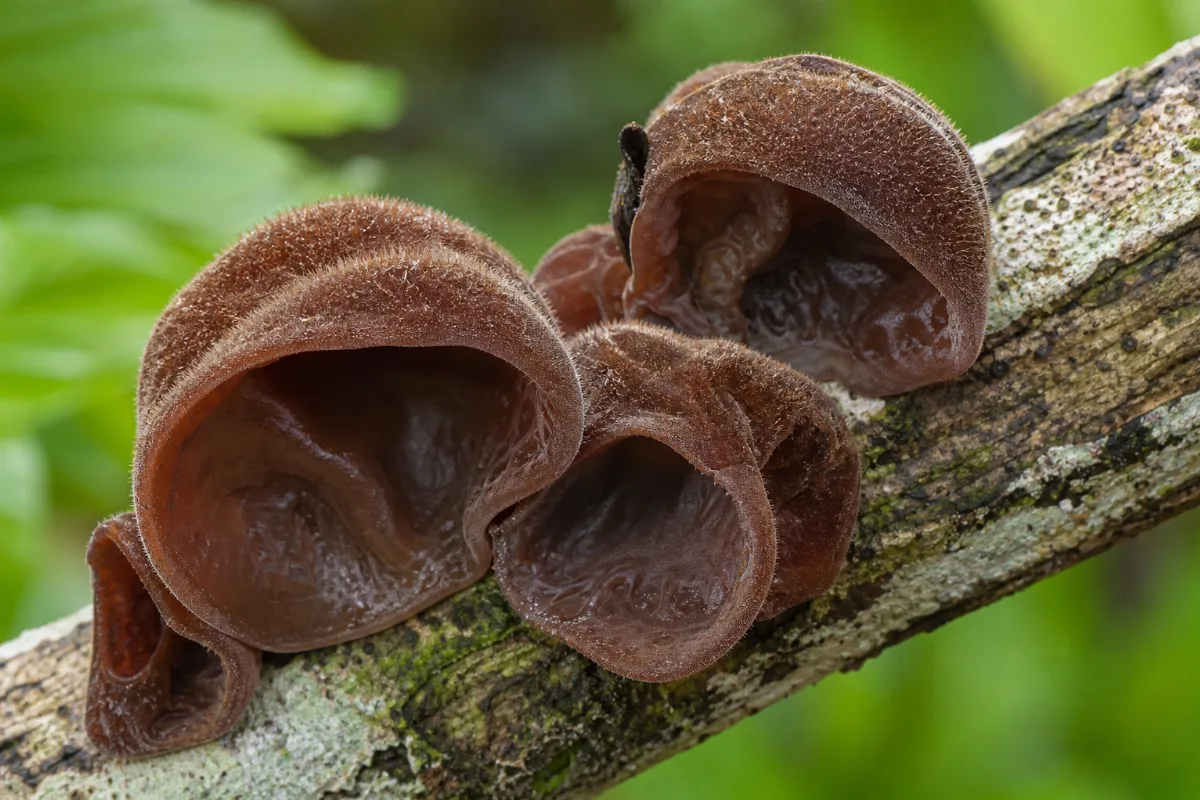
Mushrooms · Culinary and medicinal mushroom
Hairy wood ear
Auricularia polytricha (now Auricularia nigricans) · also called Cloud ear, black tree fungus, black fungus, mo-er (names used in the papers we read)
Hairy wood ear is a chewy, jelly-like mushroom eaten dried and soaked in Asian cooking and used in traditional medicine. No human trial of it was found; the research is test-tube and animal work, plus a 1982 lab finding that its relatives may slow blood platelets. The main caution is food safety: wood ear soaked for too long can carry a deadly toxin that looks, smells and tastes normal. If you take blood thinners, ask a pharmacist before using concentrated products.
General information, not medical advice. Last substantive update · Not medically reviewed. A named clinician has not signed off on this page. How this page is made
About Hairy wood ear
Hairy wood ear is a jelly fungus eaten dried and soaked in Asian dishes. No human trial of it was found and every finding is from cells, test tubes or animals. The clearest dangers are food safety: poisoning from wood ear soaked too long and Salmonella in dried product. Lab work suggests it may slow platelets, and the species name on labels has changed.
What it is
Hairy wood ear is the fruiting body of the jelly fungus Auricularia polytricha, a fungus, not a plant. GBIF now treats that name as a synonym of Auricularia nigricans. Many papers still use the older name. Labels such as wood ear, black fungus and cloud ear do not always say which Auricularia species is inside, and a 2025 review says the Chinese cultivar heimuer is a different species, A. cornea. Our wood ear page covers the wider group.
Traditional and current uses
Reviews describe Auricularia as a long-cultivated Asian food and medicine. We found no source about the traditional use of hairy wood ear on its own, and no regulator monograph. Today it is mainly a cooking ingredient with a chewy texture. Research groups also study its extracts.
What the research shows
We found no human trial of hairy wood ear. In dishes, a water extract and crude polysaccharides activated immune-cell signalling, and extracts and ergosterol calmed inflammation markers in brain immune cells. One methanol extract was toxic to cancer cell lines, slowed some microbes and lowered tumour size in an animal model. In rats, a purified protein lowered lead and liver enzymes.
A study of how it is grown found iron and zinc varied several-fold with the growing material, so nutrient content is not fixed.
Food, extract and purified fraction are different
Nearly all findings are for water, solvent or methanol extracts, purified polysaccharides, ergosterol or a purified protein. None tested the soaked mushroom as eaten in cooking, so results do not carry over between forms. A lab chemistry study also showed the fruiting body binds cadmium, copper and lead strongly from water. That is not a test of products, but it is one reason to ask where a bag was grown.
Legal and regulatory status
We did not find or read an entry for hairy wood ear from NCCIH, EMA, LiverTox, LactMed or WHO. The only regulatory information we found is food safety: dried wood ear was linked to a 2020 Salmonella outbreak and recalls in the United States, as described in a 2024 study.
At a glance
Traditional uses history, not proof
- A 2025 review says the genus Auricularia has a long history of cultivation and is valued for nutrition and medicine in Asia (Liu 2025). We found no source describing the traditional use of hairy wood ear on its own.
Studied for research
- Immune-cell signalling (human cell lines in a dish), insufficient
- Antioxidant and anti-inflammatory markers (cells and test tubes), insufficient
- Platelet clumping (test tube only; a caution, not a benefit), insufficient
- Cancer-cell and tumour-model results (cells and an animal model), insufficient
- Lead levels and liver enzymes (rats, purified protein), insufficient
Main compounds
- Adenosine (154 micrograms per gram of dried fungus in a 1982 test)
- Beta-glucan-containing polysaccharides
- Ergosterol and other fungal compounds
Common forms
- Dried hairy wood ear, soaked before cooking
- Fresh hairy wood ear
- Hot-water and solvent extracts (lab research)
- Powders and capsules (sold in some markets; no human trial found)
Research links: Forensic review of bongkrekic acid poisoning (abstract) · Fatal bongkrekic acid case after spoiled wood ear (abstract) · Dried wood ear handling and the 2020 Salmonella outbreak (abstract) · Platelet inhibition by Mo-er extracts (abstract) · Immune-cell study of A. polytricha polysaccharides (abstract) · Acquired platelet disorders review, 2025 (abstract) · Research Library · Genes & Biomarkers Library
What it is and its history
- Accepted scientific name
- Auricularia nigricans (Sw.) Birkebak, Looney & Sanchez-Garcia (GBIF accepted name); hairy wood ear is the English name used for Auricularia polytricha
- Naming authority
- (Sw.) Birkebak, Looney & Sanchez-Garcia (GBIF, published 2013)
- Synonyms
- Auricularia polytricha (Mont.) Sacc. (a GBIF synonym of Auricularia nigricans)
- Common names
- Hairy wood ear (English); Cloud ear (English (used in a paper title)); Black tree fungus (English (used in papers)); Mo-er (Chinese (as spelled in a 1982 paper title))
- Family or group
- Auriculariaceae (a fungus family of jelly fungi), not a plant
- Classification
- Fungi > Basidiomycota > Agaricomycetes > Auriculariales > Auriculariaceae > Auricularia > Auricularia nigricans
- Native range
- Not checked in the sources read.
- Habitat
- Described as a wood-rotting mushroom grown on wood chips and agricultural wastes (Qin 2025).
- What it looks like
- Fruiting body: Not described in the abstracts read.
- Cultivation
- Qin 2025 says A. polytricha is a nutritious edible wood-rotting mushroom that faces a shortage of wood chips, and tested 12 agricultural wastes as substitutes; cotton straw, coix seed straw and wheat straw worked best.
- Harvest and processing
- Sold dried and soaked before cooking, per the food-safety papers read; no processing details were read.
- Look-alikes and adulterants
- Name: Other Auricularia species (A. cornea, A. heimuer, A. auricula-judae); Note: Papers use these names for products that look similar and are sold as wood ear or black fungus. Wild jelly fungi are not covered and no identification help is given here.
Traditional use and history history, not clinical proof
| Tradition or era | Documented use | Source |
|---|---|---|
| Asia | A 2025 review says the genus Auricularia, mainly A. auricula, has a long history of cultivation and is valued for nutrition and medicine. | p41300345 |
| Not found | No source we read describes the history of hairy wood ear (A. polytricha) specifically, so none is claimed. | p41300345 |
Traditional use shows how it was used. It does not show that it works or is safe today.
What is inside, and how it may work
What it contains and how those compounds act in cells and animals. Laboratory and animal mechanisms are not proven effects in people.
Main compounds
| Compound | Family | Where it is concentrated | Activity studied | Level of evidence |
|---|---|---|---|---|
| Adenosine | nucleoside | Dried fungus 154 micrograms per gram of dry A. polytricha (HPLC, one 1982 study); 133 in A. auricula. | Part of the platelet-slowing effect of Mo-er extracts in the lab, but not all of it. 1 | Laboratory research |
| Beta-glucan-containing polysaccharides | polysaccharide | Fruiting body Not given in the abstract; the authors relate the NF-kB effect to the extract's beta-glucan content. | Switched on immune-signalling in human cell lines. 12 | Laboratory research |
| Ergosterol | sterol | Fruiting body (ethanol extract) | Isolated from the ethanol extract; showed anti-inflammatory and antioxidant activity in cells. 16 | Laboratory research |
| Glycoprotein APL | glycoprotein | Fruiting body 252 kDa; 1.15% carbohydrate. | Lowered lead and liver enzymes in lead-injected rats. 17 | Animal research |
| Other secondary metabolites (xanthines, flavones, stilbenes, coumarins, catechols and others) | mixed | Fruiting body (methanol extract) 183 metabolites identified by LC-MS in one locally isolated strain. | Listed by the authors as possible sources of the extract's lab activity. 5 | Laboratory research |
| Iron and zinc | minerals | Fruiting body Iron rose about 4-fold and zinc about 7-fold when grown on certain straws versus other materials. | Nutrient content depends on the growing material. 14 | Laboratory |
Mechanisms, receptors and pathways
| Target or pathway | Gene or receptor | What was found | Level |
|---|---|---|---|
| Macrophage polarisation and NF-kB | IL-6, IL-1 beta, TNF-alpha, CD86, NF-kB | Water extract and crude polysaccharides raised M1-type genes and the NF-kB pathway in human white-cell lines. 12 | Laboratory research |
| Microglial inflammation and oxidative stress | NF-kB, SOD-1 | Hexane and ethanol extracts and ergosterol lowered cytokines and reactive oxygen species and raised SOD-1 activity in cells. 16 | Laboratory research |
| ADP-triggered platelet aggregation | Adenosine pathways and a second unidentified agent | Mo-er extracts blocked aggregation partly through adenosine and partly through another agent not tied to the platelet cyclic AMP system. 1 | Laboratory research |
| Tumour growth in an animal model | iNOS, TNF-alpha, NF-kB, SOD | Methanol extract lowered tumour volume and weight and changed these markers in a transplantable tumour model. 5 | Animal research |
| Metal binding | Carboxyl, amine, phosphoryl groups on the fungal surface | Cadmium, copper and lead bound to the fruiting body by ion exchange and surface complexation in water. 8 | Laboratory research |
Absorption, metabolism and elimination
- Absorption
- Not found. No human or animal absorption data for A. polytricha were read.
- Distribution
- Not found.
- Metabolism
- Not found.
- Elimination
- Not found.
- Bioavailability
- Not established.
Isolated compounds versus whole extracts
Nearly all findings are for hot-water extracts, solvent extracts or purified fractions (a glycoprotein, crude polysaccharides, ergosterol). None used the soaked mushroom as eaten in cooking, so results do not carry over between forms.
Nutritional composition
One cultivation study found fat, protein, sugars, iron and zinc in fruiting bodies depend heavily on the growing material. A USDA entry for dried cloud ears of unnamed species (FDC 168581) lists a very high fibre share, but it was not re-opened for this page and a soaked portion is mostly water. No nutrient claims are made here.
6 not enough evidence
What was looked at
The 6 benefits and uses checked for Hairy wood ear, each with how strong the evidence is. Tap one to open it.
- Immune-cell signalling (laboratory)Not enough evidence
- Antioxidant and anti-inflammatory lab resultsNot enough evidence
- Platelet clumping (a caution more than a benefit)Not enough evidence
- Cancer-cell lab and animal resultsNot enough evidence
- Germ-killing activity in a dishNot enough evidence
- Lead and liver enzymes in ratsNot enough evidence
Lab markers tracked in the studies
Immune-signalling molecules (IL-6, IL-1 beta, TNF-alpha, CD86)Oxidative stress markers (reactive oxygen species, SOD-1)Platelet aggregation (ADP-triggered)Serum lead and liver enzymes (AST, ALT) in rats
What is Hairy wood ear good for?
The uses researchers have looked at and how strong the evidence is for each. None has been tested in people. Read this together with the Safety tab.
Benefits, one by one
Each card is a research question, not a promise. Tap a goal to filter. Open a card to see the studies, doses and limits.
Immune-cell signalling (laboratory)
Not enough evidenceA water extract and crude polysaccharides of hairy wood ear switched on immune-signalling genes in human white-cell lines in a dish. The authors link this to beta-glucan. There is no human trial.
1 studiesHot-water extract and crude polysaccharide fraction in cell culture; …
Studies, doses and limits
Results
Nilkhet 2024 (cell lines): water extract and crude polysaccharides of A. polytricha raised M1-related genes, cytokines, CD86 and NF-kB dose-dependently. No numbers were taken from the abstract.
Effect sizes as reported
Not available
Why this rating
Cell-line work only, with crude extracts. Nothing shows that eating the mushroom changes immune function in people.
Form and dose studied
Hot-water extract and crude polysaccharide fraction in cell culture; not the same as the soaked mushroom eaten in food. This page gives no amounts.
Who was studied
Human white-cell lines (THP-1) in dishes
Limits
Cell lines, crude extracts, no animal or human data. Immune activation in a dish is not shown to be a health benefit.
Why researchers looked
Fungal polysaccharides such as beta-glucans are studied for how they act on immune cells.
Traditional use
Not described in the sources read for this species.
Proposed mechanism Preliminary mechanism
In the dish, the extract raised M1-type macrophage genes and cytokines (IL-6, IL-1 beta, TNF-alpha) and the NF-kB pathway, which the authors relate to beta-glucan content.
A proposed mechanism does not show that the effect happens in people.
See the Safety tab: soaked hairy wood ear kept for days may carry a deadly toxin, and lab work suggests it may slow platelets.
Antioxidant and anti-inflammatory lab results
Not enough evidenceExtracts of hairy wood ear, and a compound called ergosterol taken from it, calmed inflammation and oxidative stress in brain immune cells in a dish. Growing it on certain straws also raised a test-tube antioxidant score. None of this shows a benefit from eating it.
3 studiesHexane, ethanol and methanol extracts; isolated ergosterol; dried fru…
Studies, doses and limits
Results
Sillapachaiyaporn 2022 (BV2 and HT-22 cells): the extracts and ergosterol reduced inflammation and oxidative stress markers. Qin 2025: test-tube DPPH scavenging rose by up to 36.06% in fruiting bodies grown on certain straws. Elhusseiny 2026: in an animal tumour model the methanol extract lowered iNOS, TNF-alpha and NF-kB and raised SOD.
Effect sizes as reported
Not available
Why this rating
Dish, test-tube and animal results only, using solvent extracts that are not how the mushroom is eaten.
Form and dose studied
Hexane, ethanol and methanol extracts; isolated ergosterol; dried fruiting body powder in a test-tube antioxidant assay. No amounts are advised.
Who was studied
Cell lines, test tubes and an animal model
Limits
Solvent extracts, no human data, and antioxidant tests do not show a health effect from food.
Why researchers looked
Mushroom extracts are often tested for antioxidant activity, and ergosterol is a known fungal compound.
Traditional use
Not described in the sources read for this species.
Proposed mechanism Preliminary mechanism
In the dish, hexane and ethanol extracts and ergosterol lowered bisphenol A-induced inflammatory cytokines through the NF-kB pathway, raised SOD-1 enzyme activity and lowered reactive oxygen species.
A proposed mechanism does not show that the effect happens in people.
See the Safety tab: soaked hairy wood ear kept for days may carry a deadly toxin, and lab work suggests it may slow platelets.
Platelet clumping (a caution more than a benefit)
Not enough evidenceA hot-water extract of dried Mo-er, a wood ear named Auricularia auricula, slowed human and rat platelets in a dish, and dried hairy wood ear contains adenosine, one component involved. A 2025 medical review lists hairy wood ear among herbs that reduce platelet clumping in preclinical work. No human study was found.
3 studiesHot-water extract of the dried fungus. Not the same as soaked mushroo…
Studies, doses and limits
Results
Agarwal 1982: strong inhibition of ADP-triggered aggregation by Mo-er extracts; adenosine 154 micrograms per gram dry A. polytricha (133 in A. auricula). Poniedzialek 2019 (related species): effect above 140 micromol per litre aspirin in the ADP test; no change in PT or INR. Altahan 2025: lists A. polytricha as reducing ADP-induced aggregation (preclinical).
Effect sizes as reported
Not available in the abstracts for hairy wood ear
Why this rating
Test-tube data only, old, and the abstract does not say the hairy wood ear extract itself was tested on platelets. Whether eating it matters in people is unknown.
Form and dose studied
Hot-water extract of the dried fungus. Not the same as soaked mushroom in food. No amounts are advised.
Who was studied
Human and rat platelets in test tubes
Limits
Test tube only; old; a related species supplies the clotting-test data; the 2025 review row rests on the 1982 study.
Why researchers looked
Researchers have screened Mo-er, an Asian food mushroom, for effects on blood platelets.
Traditional use
Not described in the sources read for this species.
Proposed mechanism Preliminary mechanism
The extract slowed ADP-triggered platelet clumping. Adenosine explained only part of the effect; a second unidentified agent not tied to the platelet cyclic AMP system was involved.
A proposed mechanism does not show that the effect happens in people.
This is a safety question first: people on blood thinners or antiplatelet medicines, or with surgery planned, can ask a pharmacist or doctor. See the Safety tab.
Cancer-cell lab and animal results
Not enough evidenceIn dishes, an extract of hairy wood ear was toxic to some cancer cell lines, and macrophages treated with its polysaccharides reduced invasion of breast cancer cells. In an animal tumour model, tumour size was lower. These are early lab findings and say nothing about treating cancer in people.
2 studiesWater extract and crude polysaccharides (cells); methanol extract (ce…
Studies, doses and limits
Results
Nilkhet 2024: polysaccharide-treated macrophages inhibited invasion and induced apoptosis in MCF-7 and MDA-MB-231 breast cancer cells. Elhusseiny 2026: methanol extract was toxic to SW620 and Huh-7 cell lines; tumour volume and weight fell in an animal model of solid Ehrlich carcinoma.
Effect sizes as reported
Not available
Why this rating
Cell lines and one animal model of a transplantable tumour only.
Form and dose studied
Water extract and crude polysaccharides (cells); methanol extract (cells and animals). No amounts are advised.
Who was studied
Cancer cell lines in dishes; an animal model
Limits
Most substances that kill cancer cells in a dish never work in people. Not a treatment; anyone with cancer should follow their care team's advice.
Why researchers looked
Fungal polysaccharides and extracts are routinely screened against cancer cell lines.
Traditional use
Not described in the sources read for this species.
Proposed mechanism Preliminary mechanism
Treated macrophages induced apoptosis in breast cancer cells in a dish; the animal study reports less angiogenesis and more apoptosis markers, per its abstract.
A proposed mechanism does not show that the effect happens in people.
See the Safety tab: soaked hairy wood ear kept for days may carry a deadly toxin, and lab work suggests it may slow platelets.
Germ-killing activity in a dish
Not enough evidenceA methanol extract slowed the growth of some bacteria and a yeast, and showed activity against a virus, in dishes. It was not tested as a treatment for any infection.
1 studiesMethanol extract. Not a food form.
Studies, doses and limits
Results
Elhusseiny 2026: significant activity against S. aureus, B. cereus and C. albicans; antiviral selectivity index 7.7 against vesicular stomatitis virus.
Effect sizes as reported
Not available in the abstract (selectivity index 7.7 for the virus test)
Why this rating
One strain, one methanol extract, dish tests.
Form and dose studied
Methanol extract. Not a food form.
Who was studied
Microbes and cells in dishes
Limits
A dish result is not an infection result.
Why researchers looked
Extracts are often screened against common microbes.
Traditional use
Not described in the sources read for this species.
Proposed mechanism Preliminary mechanism
Not explained in the abstract.
A proposed mechanism does not show that the effect happens in people.
See the Safety tab: soaked hairy wood ear kept for days may carry a deadly toxin, and lab work suggests it may slow platelets.
Lead and liver enzymes in rats
Not enough evidenceA purified protein from hairy wood ear lowered lead levels and liver enzymes in rats that had been injected with lead. This is a purified fraction in animals, not the mushroom as food, and lead poisoning needs medical treatment.
1 studiesA purified 252-kDa glycoprotein by stomach tube. No amounts are advis…
Studies, doses and limits
Results
Zhao 2023: serum lead and liver enzymes (AST, ALT) improved (p<0.05); lead cleared from the liver (44.5%) and kidneys (18.1%) at the highest dose, better than EDTA in the same test.
Effect sizes as reported
Not available beyond the clearance figures above
Why this rating
One rat study of a purified protein, injected-lead model.
Form and dose studied
A purified 252-kDa glycoprotein by stomach tube. No amounts are advised.
Who was studied
Rats
Limits
Animal model; purified protein; not the whole mushroom. Not a way to treat lead exposure.
Why researchers looked
Fungal fruiting bodies can bind metals, so researchers tested a purified glycoprotein in lead-exposed rats.
Traditional use
Not described in the sources read for this species.
Proposed mechanism Preliminary mechanism
The glycoprotein bound lead and changed liver proteins involved in detoxification and immune regulation in the rats.
A proposed mechanism does not show that the effect happens in people.
See the Safety tab: soaked hairy wood ear kept for days may carry a deadly toxin, and lab work suggests it may slow platelets.
Connections to the rest of health
How Hairy wood ear connects to the rest of our health knowledge graph. Every link says what kind of connection it is. A safety link (for example to the liver) is a warning, not a benefit. A study that merely mentions a topic never creates a benefit link.
Explore every connection: goals, body systems, organs, symptoms, genes
A. Wellness goals
| Connected to | Kind of connection | Evidence status | Context | Studies |
|---|---|---|---|---|
| Immune Support | Preliminary mechanism | Not enough evidence | Immune-cell signalling (laboratory): A water extract and crude polysaccharides of hairy wood ear switched on immune-signalling genes in human white-cell lines in a dish. The authors link this to beta-glucan. There is no human trial. | 12 |
| Cellular Protection | Preliminary mechanism | Not enough evidence | Antioxidant and anti-inflammatory lab results: Extracts of hairy wood ear, and a compound called ergosterol taken from it, calmed inflammation and oxidative stress in brain immune cells in a dish. Growing it on certain straws also raised a test-tube antioxidant score. None of this shows a benefit from eating it. | 16 14 5 |
| Healthy Circulation | Drug or supplement interaction | Not enough evidence | Platelet clumping (a caution more than a benefit): A hot-water extract of dried Mo-er, a wood ear named Auricularia auricula, slowed human and rat platelets in a dish, and dried hairy wood ear contains adenosine, one component involved. A 2025 medical review lists hairy wood ear among herbs that reduce platelet clumping in preclinical work. No human study was found. | 1 13 2 |
B. Body systems
| Connected to | Kind of connection | Evidence status | Context | Studies |
|---|---|---|---|---|
| Blood clotting | Drug or supplement interaction | Not enough evidence | Platelets slowed in test tubes; no human data. Preparation or compound: Hot-water extract of dried Mo-er (lab) |
1 13 2 |
| Immune Support | Biological association | Not enough evidence | Studied for: Immune-cell signalling (laboratory) Studied for: Cancer-cell lab and animal results | 12 5 |
| Brain Focus | Biological association | Not enough evidence | Studied for: Antioxidant and anti-inflammatory lab results | 16 14 5 |
| Heart Circulation | Biological association | Not enough evidence | Studied for: Platelet clumping (a caution more than a benefit) | 1 13 2 |
| Liver Detox | Biological association | Not enough evidence | Studied for: Lead and liver enzymes in rats | 17 |
C. Body parts and organs
I. Biomarkers
| Connected to | Kind of connection | Evidence status | Context | Studies |
|---|---|---|---|---|
| Immune-signalling molecules (IL-6, IL-1 beta, TNF-alpha, CD86) | Biological association | Not enough evidence | Measured in trials: increase. A lab change is not the same as a health benefit. | 12 |
| Oxidative stress markers (reactive oxygen species, SOD-1) | Biological association | Not enough evidence | Measured in trials: decrease. A lab change is not the same as a health benefit. | 16 5 |
| Platelet aggregation (ADP-triggered) | Biological association | Not enough evidence | Measured in trials: decrease. A lab change is not the same as a health benefit. | 1 13 |
| Serum lead and liver enzymes (AST, ALT) in rats | Biological association | Not enough evidence | Measured in trials: decrease. A lab change is not the same as a health benefit. | 17 |
K. Biological pathways
| Connected to | Kind of connection | Evidence status | Context | Studies |
|---|---|---|---|---|
| Platelet aggregation | Drug or supplement interaction | Not enough evidence | Slowed in test tubes; no human data. Preparation or compound: Hot-water extract of dried Mo-er |
1 2 |
| Platelet aggregation | Preliminary mechanism | In vitro | Slowed by Mo-er extracts in the lab. | 1 13 |
| NF-kB signalling | Preliminary mechanism | In vitro | Raised in macrophage cell lines and lowered in microglia by different extracts. | 12 16 |
L. Active compounds
| Connected to | Kind of connection | Evidence status | Context | Studies |
|---|---|---|---|---|
| Adenosine | Biological association | In vitro | Part of the platelet-slowing effect of Mo-er extracts in the lab, but not all of it. Preparation or compound: Dried fungus |
1 |
| Beta-glucan-containing polysaccharides | Biological association | In vitro | Switched on immune-signalling in human cell lines. Preparation or compound: Fruiting body |
12 |
| Ergosterol | Biological association | In vitro | Isolated from the ethanol extract; showed anti-inflammatory and antioxidant activity in cells. Preparation or compound: Fruiting body (ethanol extract) |
16 |
| Glycoprotein APL | Biological association | Animal | Lowered lead and liver enzymes in lead-injected rats. Preparation or compound: Fruiting body |
17 |
| Other secondary metabolites (xanthines, flavones, stilbenes, coumarins, catechols and others) | Biological association | In vitro | Listed by the authors as possible sources of the extract's lab activity. Preparation or compound: Fruiting body (methanol extract) |
5 |
| Iron and zinc | Biological association | Laboratory | Nutrient content depends on the growing material. Preparation or compound: Fruiting body |
14 |
Each connection is stored with the ingredient, the connected record, the kind of connection, the evidence status, the supporting studies, the preparation or compound involved, and a review date (last reviewed October 25, 2026).
Evidence at a glance: what the research found for 6 outcomes
Each outcome below is one thing researchers measured. Certainty is how far the evidence can be trusted, not how well it works. The full studies are on the next tab.
The evidence
The research centre for Hairy wood ear. Every record here was checked against PubMed or the publisher's page; we never list a study we have not verified.
Evidence by outcome
Bars show how many studies we found for each outcome, not how well it works. People are added up across trials only (reviews are not added, to avoid double counting).
How we rate evidence
High certainty
Several well-run trials or reviews agree; further research is unlikely to change the picture much.
Moderate certainty
Good trials point the same way, but some doubt remains.
Low certainty
Small, short or inconsistent trials. The finding could change with better research.
Very low certainty
Very little or very weak human data. Treat as a possibility only.
Mixed findings
Trials or reviews disagree with each other.
Not enough evidence
Not enough human research to say either way.
Evidence against
Good research found no benefit, or found harm.
We take the reviewers' own risk-of-bias and GRADE statements where they exist, and otherwise judge from study size, design, consistency, directness and whether a product matches what is sold. Many publications do not make evidence high. Method note: We read PubMed records and abstracts for 13 papers (one case report, one forensic review, one interview study, one medical review read in part from the full text, one naming review, five cell, test-tube or chemistry studies, one cultivation study, one animal-model study and one rat study) and two case-report records read as titles only. We checked the species name in GBIF. NCCIH, EMA, LiverTox, LactMed and WHO were not read. Mostly abstracts were read, so numbers come from abstracts. Certainty ratings are the compiler's own reading.
Study library: every study we checked 17
| Study | Design | People | Product, dose, length | Result |
|---|---|---|---|---|
| Agarwal 1982 Inhibition of human and rat platelet aggregation by extracts of Mo-er (Auricularia auricula). Thrombosis and Haemostasis · PMID 6983740 |
Laboratory research in-vitro |
Human and rat blood platelets in test tubes; HPLC of two dried fungi | Hot-water extract of dried Mo-er (named Auricularia auricula in the title); adenosine also measured in dried A. polytricha dried fungus Not shown here Test-tube experiment · vs Pure adenosine |
Hot-water extracts of Mo-er strongly inhibited ADP-triggered aggregation of human and rat platelets. Adenosine content was 133 micrograms per gram of dry fungus in A. auricula and 154 in A. polytricha. The extract kept its effect after adenosine was broken down, so adenosine did not explain all of it. Platelet clumping slowed in test tubes Methods, limits and fundingOutcomes: ADP-triggered platelet aggregation; adenosine content Limitations: Test tube only; the abstract says the platelet tests used Mo-er extracts (A. auricula in the title), and A. polytricha was analysed for adenosine content; the abstract does not say the A. polytricha extract itself was tested on platelets. Published 1982. Funding and conflicts: Research support from a US public health service grant (stated in the record); no company funding stated. Read: abstract |
| Altahan 2025 Acquired platelet disorders. Frontiers in Medicine · PMID 41306494 · DOI |
Narrative review review |
Review of acquired platelet disorders | Herbal and other causes of platelet dysfunction (table in the full text lists Black Tree Fungus, Auricularia polytricha) |
The full text lists Black Tree Fungus (Auricularia polytricha) as reducing ADP-induced platelet aggregation, marked as preclinical research. It says most evidence for herbal effects on platelets is preclinical and inconsistent, and that herbal treatments should not be recommended for people with an increased risk of bleeding or on anticoagulants because the risks outweigh unproven benefit. Review advice: caution for people at risk of bleeding or on anticoagulants Methods, limits and fundingOutcomes: Causes, diagnosis and management of acquired platelet defects Limitations: A narrative review; the abstract does not mention herbs. The A. polytricha row relies on a 1982 test-tube study (it is not independent evidence). Read in full text via Europe PMC, table and herbal section only. Funding and conflicts: The author declares no commercial or financial relationships. Read: full text (platelet-herbal table and herbal section only); abstract |
| Chen 2024 Evaluation of the Handling Practices and Risk Perceptions of Dried Wood Ear Mushrooms in Asian Restaurants in the United States. Journal of Food Protection · PMID 38007093 · DOI |
Interview study |
25 25 managers and chefs of Asian restaurants in the United States |
Dried wood ear mushrooms (species not stated) dried fruiting body Telephone interviews |
In late 2020, imported dried wood ear mushrooms were linked to a Salmonella Stanley outbreak that sickened 55 people across the United States. Many interviewees used cold water to rehydrate it, 76% did not track expiry date or lot number, 16% did not see it as a raw ingredient, and only 17% knew about the recall. Outbreak and weak handling practices described Methods, limits and fundingOutcomes: Handling practices, risk perception and recall awareness Limitations: A small interview study; it describes opinions and habits, not illness rates. The species is not named in the abstract. Funding and conflicts: No competing interests declared. Read: abstract |
| Chen 2025 Forensic Research Progress on Bongkrekic Acid Poisoning. Fa Yi Xue Za Zhi · PMID 40813078 · DOI |
Narrative review review |
Review of forensic cases and literature on bongkrekic acid poisoning | Spoiled foods including auricularia polytricha soaked too long (as the abstract states) |
The abstract says bongkrekic acid is a stable toxin with no distinctive smell, found in foods including spoiled tremella and auricularia polytricha, and in auricularia polytricha soaked too long. There is no complete detection method and no specific antidote, so poisoning is easily missed and mortality is high. The toxin blocks ATP production and transport and damages the liver, kidney, brain and other organs. No antidote; high mortality; named hairy wood ear soaked too long Methods, limits and fundingOutcomes: Epidemiology, clinical signs, toxic mechanism, detection and diagnosis Limitations: A review; the abstract does not give case numbers or rates. Published in Chinese with an English abstract. Funding and conflicts: Not stated in the abstract. Read: abstract (English and Chinese) |
| Elhusseiny 2026 Metabolomic, in vitro and preclinical evaluation of Auricularia polytricha mushroom. International Microbiology · PMID 42002652 · DOI |
Animal and in vitro animal |
Microbes, virus and cancer cell lines in dishes; an animal model of solid Ehrlich carcinoma | Methanol extract of a locally isolated Auricularia polytricha strain fruiting body (extract) Not shown here |
The extract showed 183 secondary metabolites by LC-MS, slowed S. aureus, B. cereus and C. albicans in a dish, showed antiviral activity with a selectivity index of 7.7 against vesicular stomatitis virus, and was toxic to two cancer cell lines (SW620 colorectal, Huh-7 liver). In the animal model, tumour volume and weight were lower, with lower iNOS, TNF-alpha and NF-kB and higher SOD. Lower tumour size in an animal model; activity in dishes Methods, limits and fundingOutcomes: Metabolites (183 identified), antibacterial, antifungal and antiviral activity, cancer cell toxicity, tumour volume and weight, inflammatory and antioxidant markers Limitations: One strain, one extract type (methanol), an animal model of a transplantable tumour. Dish and animal results are not evidence for people. The authors recommend clinical investigation; that is their view, not a finding. The abstract does not state the animal species or sample size. Funding and conflicts: The authors declare no competing interests. Read: abstract (full text not used for numbers) |
| GBIF Secretariat 2026 GBIF: Auricularia polytricha (Mont.) Sacc. GBIF Backbone Taxonomy (API) · Source |
Database record n/a |
n/a | n/a |
Listed as a synonym (key 5249293); the accepted name is Auricularia nigricans (Sw.) Birkebak, Looney & Sanchez-Garcia (key 7351381). Methods, limits and fundingOutcomes: Accepted name and rank Limitations: Taxonomy database only; says nothing about health. Index Fungorum was not checked. Funding and conflicts: n/a Read: database record, checked 2026-10-25 |
| GBIF Secretariat 2026 GBIF: Auricularia nigricans (Sw.) Birkebak, Looney & Sanchez-Garcia GBIF Backbone Taxonomy (API) · Source |
Database record n/a |
n/a | n/a |
Accepted species in family Auriculariaceae, order Auriculariales, class Agaricomycetes, phylum Basidiomycota, kingdom Fungi (key 7351381); A. polytricha is its synonym. Methods, limits and fundingOutcomes: Accepted name and rank Limitations: Taxonomy database only; says nothing about health. Index Fungorum was not checked. Funding and conflicts: n/a Read: database record, checked 2026-10-25 |
| Huang 2012 Biosorption behavior and mechanism of heavy metals by the fruiting body of jelly fungus (Auricularia polytricha) from aqueous solutions. Applied Microbiology and Biotechnology · PMID 22234535 · DOI |
Laboratory in-vitro |
Water solutions containing cadmium, copper or lead | Fruiting body of Auricularia polytricha as a metal-binding material fruiting body Not shown here 60 minutes contact time |
Under lab conditions the fruiting body bound cadmium, copper and lead from water, with maximum capacities of 63.3, 73.7 and 221 mg per gram. The authors say it has potential to remove toxic heavy metals from contaminated water, and the material could be reused for at least six cycles. The fruiting body binds heavy metals strongly in water Methods, limits and fundingOutcomes: Binding of Cd(2+), Cu(2+) and Pb(2+) to the fungus Limitations: A chemistry experiment on water, not a test of food. It shows the fungus can bind metals; it does not measure metals in any product sold for eating. Funding and conflicts: Not stated in the abstract. Read: abstract |
| Kobayashi 2019 A case of anaphylaxis due to alpha-mannosidase from Auricularia. Allergology International · PMID 30926326 · DOI |
Case report |
1 One patient (details not available in the record) |
Auricularia (species not given in the title) fruiting body One event |
Title and PubMed record only; no abstract exists in the record. Anaphylaxis case reported Methods, limits and fundingOutcomes: Anaphylaxis linked to alpha-mannosidase Limitations: Only the title and record were read, so nothing is known here about the species, symptoms or outcome. Funding and conflicts: Not stated. Read: title and record only |
| Lang 2016 Streaky, whiplash-like erythema and succulent papules: flagellate dermatitis following consumption of Auricularia auricula-judae. Journal der Deutschen Dermatologischen Gesellschaft · PMID 26972199 · DOI |
Case report |
1 One patient (details not available in the record) |
Auricularia auricula-judae (a different species) fruiting body One event |
Title and PubMed record only; no abstract exists in the record. Skin rash case reported Methods, limits and fundingOutcomes: Flagellate (streaky) skin rash after eating Limitations: Only the title and record were read. Funding and conflicts: Not stated. Read: title and record only |
| Liu 2025 Sustainable Cultivation and Functional Bioactive Compounds of Auricularia Mushrooms: Advances, Challenges, and Future Prospects. Biology (Basel) · PMID 41300345 · DOI |
Narrative review review |
Review of the genus Auricularia (mainly A. auricula) | Auricularia mushrooms fruiting body |
The abstract says the genus has a long history of cultivation, that molecular work has clarified taxonomy including reclassifying heimuer as A. cornea, and that polysaccharides (up to 66.1% of dry weight) show hypoglycaemic, antitumour, immunomodulatory and antioxidant activity. It says gaps remain in understanding how the compounds work. Review of mostly lab findings Methods, limits and fundingOutcomes: Taxonomy, cultivation, bioactive compounds, pharmacological effects Limitations: A narrative review focused on A. auricula; the abstract does not mention A. polytricha. Funding and conflicts: Authors declare no conflicts of interest. Read: abstract |
| Nilkhet 2024 M1 macrophages polarized by crude polysaccharides isolated from Auricularia polytricha exhibit anti-tumor effect on human breast cancer cells. Scientific Reports · PMID 38589471 · DOI |
Laboratory research in-vitro |
Human white-cell line (THP-1 macrophages) and human breast cancer cell lines (MCF-7, MDA-MB-231) in dishes | Water extract (APW) and crude polysaccharides (APW-CP) of Auricularia polytricha fruiting body (extract) Not shown here Cell experiment · vs Untreated cells |
The water extract and crude polysaccharides raised M1-type immune-signalling genes and cytokines, the marker CD86, and the NF-kB pathway in a dose-dependent way, which the authors link to the beta-glucan content. Macrophages treated with the crude polysaccharides then reduced invasion and induced apoptosis in breast cancer cells in the dish. Cell-line immune activation; reduced breast cancer cell invasion in a dish Methods, limits and fundingOutcomes: Immune-signalling genes and cytokines (IL-6, IL-1 beta, TNF-alpha), CD86, NF-kB, breast cancer cell invasion and apoptosis Limitations: Cell lines only; no animal or human data. Crude extracts, not defined products. The authors suggest beta-glucan may be the trigger but did not prove it in the abstract. Funding and conflicts: The authors declare no competing interests. Read: abstract |
| Poniedzialek 2019 The Effect of Mushroom Extracts on Human Platelet and Blood Coagulation: In vitro Screening of Eight Edible Species. Nutrients · PMID 31842490 · DOI |
Laboratory research in-vitro |
Human blood platelets and plasma in test tubes | Hot-water extracts of eight edible mushrooms including Auricularia auricularia-judae (spelling as in the abstract; a different species from hairy wood ear) fruiting body Not shown here Test-tube experiment · vs Aspirin at 140 micromol per litre |
The Auricularia auricularia-judae extract and a king oyster extract slowed platelet aggregation most; the effect exceeded that of 140 micromol per litre aspirin in the ADP test. None of the eight extracts changed PT, prothrombin ratio or INR. Antiplatelet effect in the test tube; no change in clotting-time tests Methods, limits and fundingOutcomes: ADP- and arachidonic-acid-triggered platelet aggregation; PT, prothrombin ratio, INR Limitations: Test tube only. A different Auricularia species from hairy wood ear, so it is a related-species note, not evidence about hairy wood ear. The aspirin comparison is a lab concentration, not a human dose. Funding and conflicts: The authors declare no conflict of interest. Read: abstract |
| Qin 2025 Enhancing the Nutritional Value and Antioxidant Activity of Auricularia polytricha Through Efficient Utilization of Agricultural Waste. International Journal of Food Science · PMID 41378177 · DOI |
Laboratory cultivation in-vitro |
Auricularia polytricha grown on 12 kinds of agricultural waste | Fruiting bodies of Auricularia polytricha grown on cotton straw, coix seed straw or wheat straw fruiting body Cultivation cycle shortened by 16 days with these substrates · vs Other growing materials |
Growing on these straws raised crude fat, crude protein, total sugars, iron and zinc in the fruiting bodies by 1.6, 2.6, 2.2, 4 and 7 times respectively, and raised test-tube DPPH scavenging by up to 36.06%. Nutrient content depended strongly on the growing material Methods, limits and fundingOutcomes: Crude fat, crude protein, total sugars, iron, zinc, DPPH antioxidant test in a test tube Limitations: A cultivation study, not a health study. Changes are relative to other growing materials, not to anything a person eats. The control mixture is not defined in the abstract. Funding and conflicts: Research grants from Guizhou Provincial and National Natural Science Foundation of China; no company funding stated. Read: abstract |
| Shi 2024 Severe bongkrekic acid poisoning caused by eating spoiled Auricularia auricula: a case report. BMC Complementary Medicine and Therapies · PMID 39707296 · DOI |
Case report |
1 A 77-year-old woman in China |
Spoiled Auricularia auricula (a related wood ear, not named as A. polytricha) fruiting body One poisoning event |
Bongkrekic acid is a rare mitochondrial toxin made by the bacterium Burkholderia cocovenenans, with a case fatality rate above 50%. The patient had sweating, unconsciousness, nausea, vomiting and acute liver failure and died despite supportive care and plasmapheresis. The authors say it is often mistaken for a minor food-borne illness and call for safer fermentation and food handling. Fatal poisoning from spoiled soaked wood ear Methods, limits and fundingOutcomes: Clinical course after eating spoiled Auricularia auricula Limitations: One case. The abstract does not give the soaking time; the five-day soaking figure on our wood ear page comes from the full text of this report, which this writer did not re-read. Funding and conflicts: The authors declare no competing interests. Read: abstract |
| Sillapachaiyaporn 2022 Ergosterol isolated from cloud ear mushroom (Auricularia polytricha) attenuates bisphenol A-induced BV2 microglial cell inflammation. Food Research International · PMID 35761673 · DOI |
Laboratory research in-vitro |
BV2 microglial cells (brain immune cells) and HT-22 cells in dishes | Hexane (APH) and ethanol (APE) extracts of Auricularia polytricha, and ergosterol isolated from APE fruiting body (extract) Not shown here Cell experiment · vs Untreated and bisphenol A-treated cells |
Both extracts reduced bisphenol A-induced microglial activation and inflammatory cytokines, acting through the NF-kB pathway, raised SOD-1 enzyme activity and reduced reactive oxygen species. Ergosterol isolated from the ethanol extract showed similar effects. Less inflammation and oxidative stress markers in cells in a dish Methods, limits and fundingOutcomes: Microglial activation, inflammatory cytokines, NF-kB, SOD-1 activity, reactive oxygen species Limitations: Cell experiment with solvent extracts (hexane, ethanol) that are not how the mushroom is eaten. No animal or human data. Funding and conflicts: Not stated in the abstract. Read: abstract |
| Zhao 2023 A novel mushroom (Auricularia polytricha) glycoprotein protects against lead-induced hepatoxicity, promotes lead adsorption, inhibits organ accumulation of lead, upregulates detoxifying proteins, and enhances immunoregulation in rats. Frontiers in Nutrition · PMID 37090774 · DOI |
Animal research animal |
Sprague-Dawley rats given lead acetate by injection | A purified 252-kDa glycoprotein (APL) from Auricularia polytricha fruiting bodies, given by stomach tube fruiting body (purified protein) Several dosages; the highest named in the abstract is 160 mg per kg body weight · vs EDTA 300 mg per kg body weight |
In lead-injected rats the purified glycoprotein improved serum lead and liver enzymes (p<0.05) and cleared lead from the liver (44.5%) and kidneys (18.1%) at the highest dose, which was better than EDTA. 351 liver proteins changed with lead exposure and 41 were normalised. Lower lead and liver enzymes in rats Methods, limits and fundingOutcomes: Serum lead, liver enzymes (AST, ALT), lead in liver and kidney, liver proteins Limitations: Rats given injected lead; a purified protein, not the whole mushroom. The authors suggest clinical use for lead poisoning, which is their view, not a finding. Lead poisoning needs medical treatment. Funding and conflicts: The authors declare no commercial or financial relationships. Read: abstract |
What we do not know yet
- No human trial of hairy wood ear was found for any use.
- No human study or case report on hairy wood ear and bleeding or blood-thinner interaction was found.
- The 1982 platelet abstract names A. auricula for the platelet tests; whether the A. polytricha extract itself was tested is not clear.
- Soaking times and temperatures that allow the toxin to form were not found in the sources read.
- No test of heavy metals or pesticides in products was read.
- No data on pregnancy, breastfeeding or children; NCCIH, EMA, LiverTox, LactMed and WHO entries were not found or not read.
How new research is added
New studies are found by a saved PubMed search and placed in a review queue. A person reads each one before it changes any evidence rating or safety wording. New publications never change ratings automatically.
Lab markers
What changed in blood or saliva tests during trials. A changed number is not the same as feeling or being healthier, and we give no "normal ranges".
Other 4
Immune-signalling molecules (IL-6, IL-1 beta, TNF-alpha, CD86)
Increase in trials
Signals released by or found on immune cells when they switch to an inflammatory, pathogen-fighting state.
Not enough evidenceResults and what it means
Why it was measured
Used in cell experiments to see whether an extract activates immune cells.
Statistical vs. clinical meaning
Cell-line signal only; no health meaning shown.
Safety implication
Immune activation could matter for people on immune-suppressing medicines, but this has not been studied.
| Study | Result | People | Product |
|---|---|---|---|
| 12 | Raised by the water extract and crude polysaccharides in a human white-cell line; sizes not taken from the abstract. | THP-1 macrophages in a dish | Water extract and crude polysaccharides of A. polytricha |
Oxidative stress markers (reactive oxygen species, SOD-1)
Decrease in trials
Reactive oxygen species are reactive molecules that can damage cells; SOD-1 is an enzyme that disarms them.
Not enough evidenceResults and what it means
Why it was measured
Standard lab measures when testing antioxidant claims.
Statistical vs. clinical meaning
Lab and animal markers only.
Safety implication
None found.
| Study | Result | People | Product |
|---|---|---|---|
| 16 | Reactive oxygen species were lower and SOD-1 activity higher after hexane or ethanol extract or ergosterol in bisphenol A-treated cells. | BV2 and HT-22 cells in dishes | Hexane and ethanol extracts of A. polytricha; ergosterol |
| 5 | SOD levels rose and iNOS, TNF-alpha and NF-kB fell in an animal tumour model given the methanol extract. | Animal model of solid Ehrlich carcinoma | Methanol extract of A. polytricha |
Platelet aggregation (ADP-triggered)
Decrease in trials
How strongly blood platelets clump together when triggered; clumping is part of clotting.
Not enough evidenceResults and what it means
Why it was measured
A lab test of how much a substance may thin the blood.
Statistical vs. clinical meaning
Lab signal; unknown meaning for people eating the mushroom.
Safety implication
Relevant to people on blood thinners or antiplatelet medicines; ask a pharmacist.
| Study | Result | People | Product |
|---|---|---|---|
| 1 | Mo-er hot-water extracts strongly inhibited ADP-triggered clumping of human and rat platelets. | Human and rat platelets in test tubes | Hot-water extract of dried Mo-er (A. auricula) |
| 13 | A related species, Auricularia auricularia-judae, inhibited ADP-triggered clumping more than 140 micromol per litre aspirin; PT and INR did not change. | Human platelets and plasma in test tubes | Hot-water extract of a related wood ear |
Serum lead and liver enzymes (AST, ALT) in rats
Decrease in trials
Lead in the blood and two enzymes that rise when the liver is injured.
Not enough evidenceResults and what it means
Why it was measured
Used to judge liver injury and lead load in an animal poisoning model.
Statistical vs. clinical meaning
Animal model only.
Safety implication
None found.
| Study | Result | People | Product |
|---|---|---|---|
| 17 | Lower with the purified glycoprotein than in lead-only rats (p<0.05). | Sprague-Dawley rats given injected lead | Purified glycoprotein from A. polytricha |
Safety
What studies and official sources say about side effects, medicines and who should check first. Each point shows what kind of evidence it comes from.
Main points to know 5
- Soaked wood ear kept for days can carry a deadly toxin (bongkrekic acid). A forensic review says bongkrekic acid is a stable toxin with no distinctive smell, found in auricularia polytricha that has been soaked too long. It has no specific antidote and a high death rate. In the one case report we read, a 77-year-old woman died of bongkrekic acid poisoning after eating spoiled Auricularia auricula (a related wood ear): sweating, loss of consciousness, vomiting and acute liver failure. The report says the toxin comes from bacteria and the poisoning is often mistaken for a mild food illness. Hairy wood ear is usually sold dried and soaked before cooking, so soak only what you will cook straight away. Case report 4 15
- Dried wood ear has been linked to a Salmonella outbreak. A 2024 study says dried wood ear imported to the United States was linked in late 2020 to a Salmonella Stanley outbreak that made 55 people ill, with recalls. The abstract does not name the species. Many restaurant staff interviewed used cold water to rehydrate it and 16% did not see it as a raw ingredient. Survey 3
- It may slow blood platelets (lab findings only). Hot-water extracts of dried Mo-er slowed human and rat platelets in a dish. A 2025 medical review lists hairy wood ear among herbs with this lab effect and says herbal treatments should not be recommended for people at higher risk of bleeding or on anticoagulants. We found no human study or bleeding case report. If you take a blood thinner or have surgery planned, ask a pharmacist or doctor about concentrated products. Laboratory research 1 13 2
- Fruiting bodies bind heavy metals in the lab. In a chemistry experiment, the dried fruiting body bound cadmium, copper and lead strongly from water. This shows the fungus can take up metals; it does not tell us what is in any product. We read no test of heavy metals in hairy wood ear sold as food, so where it was grown matters and is rarely stated. Laboratory research 8
- Allergy: no report for this species; single cases for other wood ears. We found no allergy report for Auricularia polytricha. Single case reports exist for Auricularia (anaphylaxis) and for A. auricula-judae (a streaky skin rash), but only the titles were read. Case report 9 10
Side effects 3
| Effect | How often | Severity and recovery | Evidence |
|---|---|---|---|
| Bongkrekic acid poisoning from spoiled, long-soaked wood ear (sweating, loss of consciousness, vomiting, liver failure) The toxin is made by bacteria growing on the food. It is not part of fresh, properly handled wood ear. | Not known. The case report states a fatality rate above 50% for bongkrekic acid poisoning. | serious The patient in the case report died; the forensic review says there is no specific antidote | Case report 15 4 |
| Salmonella infection from contaminated dried wood ear The abstract describes the outbreak and recalls, not patient outcomes. | One outbreak: 55 ill in the United States in 2020; species not named | moderate Not described in the abstract | Survey 3 |
| Anaphylaxis or skin rash after eating Auricularia Only the titles and records were read. | Single case reports; frequency unknown. None specific to A. polytricha | serious Not available (titles only) | Case report 9 10 |
Liver
The one fatal case we found included acute liver failure, but the cause was a bacterial toxin (bongkrekic acid) in spoiled wood ear, not the mushroom itself. The forensic review says the toxin damages the liver, kidney, brain and other organs. We found no report of liver injury from properly handled hairy wood ear. We did not read a LiverTox entry for Auricularia, so none is claimed. 15 4
How often. No rate can be given; no liver safety study of hairy wood ear was found.
- p39707296.
This is a safety connection. It is not evidence that Hairy wood ear supports liver health.
Medicines and supplements 3
| With | Why it matters | Importance | Evidence | What to do |
|---|---|---|---|---|
| Blood thinners (such as warfarin or newer anticoagulants) and antiplatelet medicines (such as aspirin or clopidogrel) prescription | Lab findings: a hot-water extract of dried Mo-er slowed ADP-triggered platelet clumping in human and rat platelets. A related wood ear extract did the same and left clotting-time tests (PT, INR) unchanged. | Unknown. No human interaction report or trial was found for hairy wood ear. A 2025 review advises against herbal treatments in people at bleeding risk or on anticoagulants because the lab evidence is preclinical and inconsistent. | Laboratory research Very low certainty 1 13 2 | Tell your pharmacist or prescriber if you eat hairy wood ear in large or concentrated forms, especially before surgery or if you bruise or bleed easily. |
| Other supplements that may thin the blood (for example fish oil, ginkgo, garlic supplements) supplement | Theoretical: effects on platelets could add up. No study combined hairy wood ear with another supplement. | Unknown; no source tested this. | Pharmacological theory Not enough evidence 1 | Tell a pharmacist about all supplements you take. |
| Immune-suppressing medicines (for example after a transplant) prescription | Theoretical: extracts switched on immune-cell signalling in cell lines. | Unknown; no human or animal interaction study was found. | Pharmacological theory Not enough evidence 12 | If you take immune-suppressing medicines, ask your specialist before using concentrated mushroom products. |
Who should check first 4
| Situation | Advice | Evidence |
|---|---|---|
| Soaked wood ear that has been kept for days or left warm | Throw it away. The toxin has no distinctive smell, so looks, smell and taste are not a safe test. | Case report 15 4 |
| Planned surgery, a bleeding disorder, or use of blood thinners or antiplatelet medicines | Ask a doctor or pharmacist about concentrated products. The concern comes from lab findings only. | Laboratory research 1 2 |
| Past allergic or skin reaction after eating wood ear or another Auricularia | Avoid it and ask an allergy clinician. | Case report 9 10 |
| Pregnancy, breastfeeding, babies and children | No data were found. Ask a doctor or pharmacist about concentrated products. | Insufficient |
Overdose, product quality and regulators
Summary. Properly handled hairy wood ear is a long-eaten food in Asia. The main documented danger is bacterial contamination after soaking or storage, not the mushroom itself.
Animal. The animal studies read (a lead model in rats and a tumour model) reported no safety findings in their abstracts. No toxicity study was read.
Human doses studied. No human trial of this species was found. This page gives no amounts, and none are advised.
High dose or long term signals. No long-term safety study was found.
Overdose response. Not described. For the signs of poisoning from spoiled wood ear, see the urgent signs below.
Genotoxicity. Not read.
Toxic or hazardous parts. Fungus: fruiting body (eaten). Wild jelly fungi are not covered here, and no source we read gives identification help. If someone ate a wild mushroom, call poison control.
The sources describe two food-safety problems: bongkrekic acid-producing bacteria on soaked wood ear, and Salmonella on imported dried wood ear. A lab study shows the fungus binds heavy metals, but we read no test of metals or pesticides in products.
Bongkrekic acid (bacterial toxin) in soaked wood ear. A forensic review says the toxin is stable and has been found in auricularia polytricha soaked too long. A case report names Burkholderia cocovenenans as the bacterium in a fatal case involving A. auricula and says the poisoning is often mistaken for a minor food illness. 4 15
Salmonella in dried wood ear. Dried wood ear was linked to a 2020 Salmonella Stanley outbreak in the United States (55 ill). Interviewed restaurant staff often used cold water to rehydrate it and 76% did not track lot numbers. 3
Heavy-metal uptake. In water, the fruiting body bound cadmium, copper and lead strongly (maximum 63.3, 73.7 and 221 mg per gram). That is a property shown in the lab, not a measurement of products. 8
Which species is in the product. GBIF treats Auricularia polytricha as a synonym of Auricularia nigricans. A 2025 review says the Chinese cultivar heimuer was reclassified as A. cornea. Labels do not always say which species is in a bag. 6 7 11
| Body | Action | Date |
|---|---|---|
| Food-safety recalls (as described in a 2024 Journal of Food Protection study) (United States) | Dried wood ear was linked to a Salmonella Stanley outbreak in late 2020 and to recalls, per the study's abstract. source | 2020-12 |
When to get medical help
- After eating wood ear that was soaked for days: sweating, confusion or fainting, repeated vomiting or a sudden severe illness. Go to emergency care at once and tell staff what was eaten. Poison control can advise.
- Hives, swelling of the lips or throat, wheezing or trouble breathing after eating wood ear: call emergency services.
- Fever, strong belly cramps and diarrhoea after eating wood ear: seek medical care.
- If you take blood thinners: unusual bleeding, black stools or large bruises: seek medical help.
If someone may be poisoned or in a crisis, contact a clinician or emergency service straight away. In the US, Poison Control is 1-800-222-1222.
General information only, not medical advice. Ask a clinician or pharmacist before use, especially with medicines, in pregnancy or with a health condition. See the Natural Remedy Safety guide.
Frequently asked questions
What is hairy wood ear?
Is hairy wood ear the same as wood ear or black fungus?
Can soaked hairy wood ear go bad?
What are the signs of bongkrekic acid poisoning?
The case report describes sweating, loss of consciousness, nausea, vomiting and liver failure. If these follow eating soaked wood ear, go to emergency care and say what was eaten.
Is dried hairy wood ear safe to eat?
A 2024 study links dried wood ear to a 2020 Salmonella outbreak in the United States (55 ill). The species was not named. Restaurant staff often used cold water to rehydrate it, so proper cooking and handling matter.
Does hairy wood ear thin the blood?
Should I stop it before surgery?
Is there evidence that hairy wood ear helps a health condition?
Does it fight cancer?
Does it remove heavy metals from the body?
Is it safe in pregnancy, breastfeeding or for children?
We found no data. Ask a doctor or pharmacist about concentrated products.
Explore by health goal
Editorial transparency
- Written by
- AlternativeMed editorial team. Research compiled with AI assistance, then checked against PubMed records.
- Medical review
- None. This page has not been reviewed by a physician or pharmacist.
- First published
- 2026-10-25
- Last substantive update
- 2026-10-25
- How we research
- We read PubMed records and abstracts for 13 papers (one case report, one forensic review, one interview study, one medical review read in part from the full text, one naming review, five cell, test-tube or chemistry studies, one cultivation study, one animal-model study and one rat study) and two case-report records read as titles only. We checked the species name in GBIF. NCCIH, EMA, LiverTox, LactMed and WHO were not read. Mostly abstracts were read, so numbers come from abstracts. Certainty ratings are the compiler's own reading.
- How we rate evidence
- See "How we rate evidence" in the Evidence tab.
- Independence
- No product is promoted on this page. No affiliate links are shown. This page is information, not a recommendation to eat or use hairy wood ear.
Sources 17
Each source was opened and checked. Where we read only the abstract, it says so. The small numbers in the text point here.
- Agarwal KC, Russo FX, Parks RE Jr. Inhibition of human and rat platelet aggregation by extracts of Mo-er (Auricularia auricula).. Thrombosis and Haemostasis. 1982. PMID 6983740. (abstract)
- Altahan RM. Acquired platelet disorders.. Frontiers in Medicine. 2025. PMID 41306494. DOI 10.3389/fmed.2025.1638994. (full text (platelet-herbal table and herbal section only); abstract)
- Chen H, Kontor-Manu E, Zhu H, et al. Evaluation of the Handling Practices and Risk Perceptions of Dried Wood Ear Mushrooms in Asian Restaurants in the United States.. Journal of Food Protection. 2024. PMID 38007093. DOI 10.1016/j.jfp.2023.100198. (abstract)
- Chen XL, Yuan Q, Sun Y, et al. Forensic Research Progress on Bongkrekic Acid Poisoning.. Fa Yi Xue Za Zhi. 2025. PMID 40813078. DOI 10.12116/j.issn.1004-5619.2024.440206. (abstract (English and Chinese))
- Elhusseiny SM, Aboshanab KM, Eldessouki AM. Metabolomic, in vitro and preclinical evaluation of Auricularia polytricha mushroom.. International Microbiology. 2026. PMID 42002652. DOI 10.1007/s10123-026-00799-z. (abstract (full text not used for numbers))
- GBIF Secretariat. GBIF: Auricularia polytricha (Mont.) Sacc.. GBIF Backbone Taxonomy (API). 2026. (database record, checked 2026-10-25)
- GBIF Secretariat. GBIF: Auricularia nigricans (Sw.) Birkebak, Looney & Sanchez-Garcia. GBIF Backbone Taxonomy (API). 2026. (database record, checked 2026-10-25)
- Huang H, Cao L, Wan Y, et al. Biosorption behavior and mechanism of heavy metals by the fruiting body of jelly fungus (Auricularia polytricha) from aqueous solutions.. Applied Microbiology and Biotechnology. 2012. PMID 22234535. DOI 10.1007/s00253-011-3846-6. (abstract)
- Kobayashi T, Ito T, Egusa C, et al. A case of anaphylaxis due to alpha-mannosidase from Auricularia.. Allergology International. 2019. PMID 30926326. DOI 10.1016/j.alit.2019.02.008. (title and record only)
- Lang N, Enk AH, Toberer F. Streaky, whiplash-like erythema and succulent papules: flagellate dermatitis following consumption of Auricularia auricula-judae.. Journal der Deutschen Dermatologischen Gesellschaft. 2016. PMID 26972199. DOI 10.1111/ddg.12769. (title and record only)
- Liu M, Jiang W, Huang K, et al. Sustainable Cultivation and Functional Bioactive Compounds of Auricularia Mushrooms: Advances, Challenges, and Future Prospects.. Biology (Basel). 2025. PMID 41300345. DOI 10.3390/biology14111555. (abstract)
- Nilkhet S, Mongkolpobsin K, Sillapachaiyaporn C, et al. M1 macrophages polarized by crude polysaccharides isolated from Auricularia polytricha exhibit anti-tumor effect on human breast cancer cells.. Scientific Reports. 2024. PMID 38589471. DOI 10.1038/s41598-024-58208-2. (abstract)
- Poniedzialek B, Siwulski M, Wiater A, et al. The Effect of Mushroom Extracts on Human Platelet and Blood Coagulation: In vitro Screening of Eight Edible Species.. Nutrients. 2019. PMID 31842490. DOI 10.3390/nu11123040. (abstract)
- Qin Z, Wu N, Tarafder E, et al. Enhancing the Nutritional Value and Antioxidant Activity of Auricularia polytricha Through Efficient Utilization of Agricultural Waste.. International Journal of Food Science. 2025. PMID 41378177. DOI 10.1155/ijfo/7257263. (abstract)
- Shi M, Zeng M, Genjiafu A, et al. Severe bongkrekic acid poisoning caused by eating spoiled Auricularia auricula: a case report.. BMC Complementary Medicine and Therapies. 2024. PMID 39707296. DOI 10.1186/s12906-024-04726-5. (abstract)
- Sillapachaiyaporn C, Chuchawankul S, Nilkhet S, et al. Ergosterol isolated from cloud ear mushroom (Auricularia polytricha) attenuates bisphenol A-induced BV2 microglial cell inflammation.. Food Research International. 2022. PMID 35761673. DOI 10.1016/j.foodres.2022.111433. (abstract)
- Zhao S, Gao Y, Wang H, et al. A novel mushroom (Auricularia polytricha) glycoprotein protects against lead-induced hepatoxicity, promotes lead adsorption, inhibits organ accumulation of lead, upregulates detoxifying proteins, and enhances immunoregulation in rats.. Frontiers in Nutrition. 2023. PMID 37090774. DOI 10.3389/fnut.2023.1144346. (abstract)
Where to buy
Check the label first. Whatever you buy, look for these:
- Fruiting body versus mycelium on grain: the label should say which
- The extract type and the beta-glucan amount, if stated
- A third-party testing mark
- Interactions: ask a pharmacist if you take medicines or blood thinners
Talk to a pharmacist or doctor before you start any supplement, especially if you take medicines. See the Safety tab for interactions.
Support our free guides: as an Amazon Associate we earn from qualifying purchases. Full disclosure.


