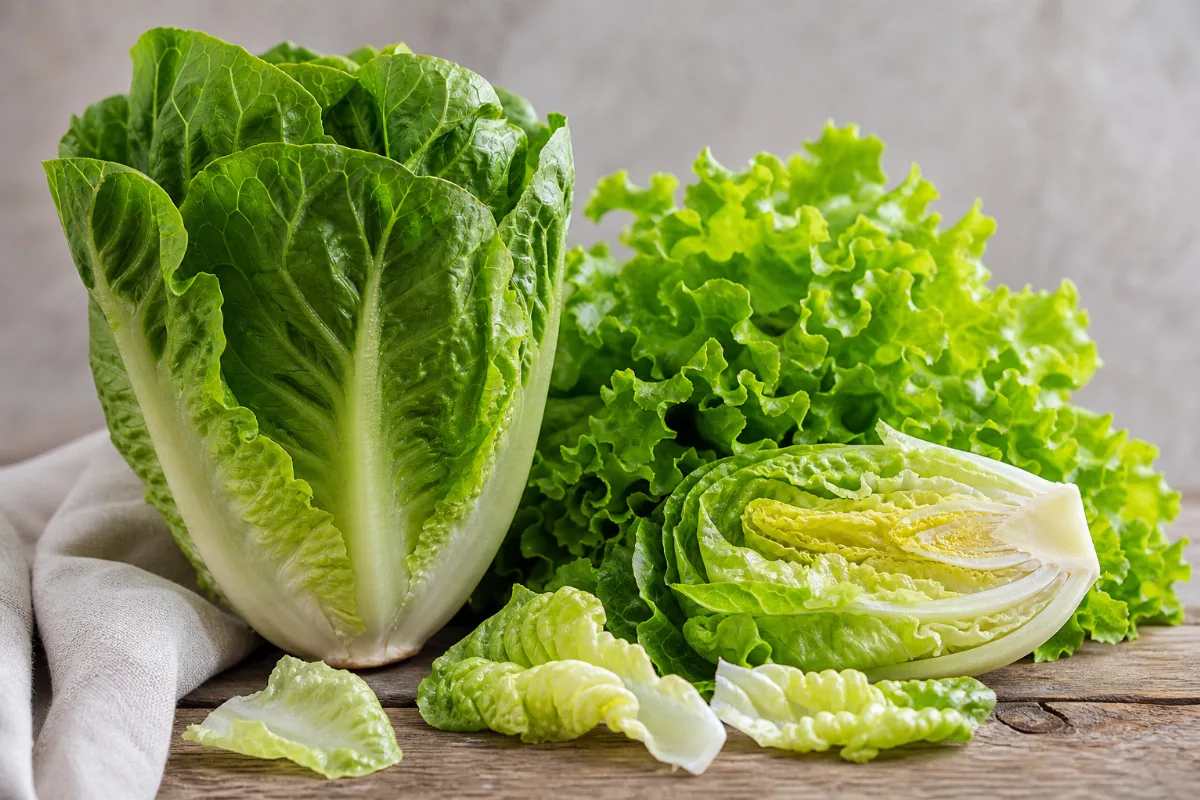
Vegetables · Vegetable
Lettuce
Lactuca sativa · also called Romaine, cos lettuce, green leaf lettuce, lechuga (Spanish)
Lettuce is a leafy salad plant, eaten raw as romaine or loose green leaf. It is mostly water, with some vitamin K, folate and vitamin A. Studies link leafy greens with better health, but they are observational and mostly not about lettuce alone. The main cautions are vitamin K if you take warfarin, germs on raw leaves that have caused E. coli outbreaks, and rare allergy.
General information, not medical advice. Last substantive update · Not medically reviewed. A named clinician has not signed off on this page. How this page is made
About Lettuce
Lettuce is a crisp, watery salad leaf that adds some vitamin K, folate and vitamin A to meals. It is a nutritious food, not a proven remedy: most health findings are for leafy greens as a group.
What it is
Lettuce (Lactuca sativa) is a leafy plant in the daisy family. We eat the leaves, usually raw, as romaine (cos) or loose green leaf.
USDA data for raw romaine: 17 kcal per 100 g, 94.6 g water, 2.1 g fibre, 102 micrograms vitamin K, 436 micrograms vitamin A (RAE), 136 micrograms folate and 247 mg potassium. One cup shredded (47 g) has about 8 kcal, 1 g fibre, 48 micrograms vitamin K, 64 micrograms folate and 116 mg potassium. Green leaf lettuce per 100 g has 15 kcal, 126 micrograms vitamin K, 38 micrograms folate and 9.2 mg vitamin C; one cup shredded (36 g) is about 5 kcal. Portion figures are our arithmetic. Lettuce is mostly water, so a cup gives few calories and little fibre.
What the research shows
The firmest fact is a nutrient fact: vitamin K helps make clotting proteins, and lettuce contains it. No trial tested lettuce for a vitamin K shortage, which is rare.
Studies of people who eat more vegetables and leafy greens show less heart disease on average, but these follow people over time and cannot show cause. Randomised trials of leafy greens found no clear effect on blood vessel function or blood pressure. One cohort linked leafy greens with slower decline in thinking skills.
A few small trials looked at lettuce itself. One found a lower blood sugar response after a fatty meal in 16 healthy men. One found a short fall in blood pressure after lettuce grown to be high in nitrate. A juice trial in 44 people lowered gum inflammation scores. Sleep trials used an extract and a seed syrup. All are small and none shows a lasting health benefit.
The food versus extracts and juices
The sleep trials used a branded leaf extract in capsules and a lettuce seed syrup. The gum and blood pressure trials used a standardised lettuce juice and lettuce grown to differ in nitrate. Results for one form do not carry over to another, and none of these is the same as an ordinary salad.
Amounts
This page gives no amounts to eat. Ask a doctor, pharmacist or dietitian what is right for you, especially if you take warfarin or other medicine.
At a glance
Traditional uses history, not proof
- Eaten as a salad leaf
- Folk use for sleep; long use is not proof it works
Studied for research
- Vitamin K for clotting, high certainty for the nutrient, no lettuce trial
- Heart disease and stroke, low certainty (leafy greens and vegetables, observational)
- Thinking skills in older age, low certainty (one cohort of leafy greens)
- Blood pressure after a serving, low certainty (one small trial of specially grown lettuce)
- Blood sugar after a meal, low certainty (one trial in healthy men)
- Sleep, low to very low certainty (extract and seed syrup, not salad)
Main compounds
- Vitamin K1 (phylloquinone)
- Beta-carotene
- Lutein plus zeaxanthin
- Folate
- Dietary nitrate
Common forms
- Raw romaine or green leaf lettuce as food
- Bagged pre-washed or pre-cut lettuce
- Lettuce juice (used in a gum trial)
- Lettuce extract capsules (used in a sleep trial; not the food)
- Lettuce seed syrup (used in a sleep pilot trial; not the food)
Research links: MedlinePlus: Vitamin K · CDC: 2019 E. coli outbreak linked to romaine lettuce · FDA: Selecting and Serving Produce Safely · Research Library · Genes & Biomarkers Library
What it is and its history
- Accepted scientific name
- Lactuca sativa
- Naming authority
- L. (GBIF accepted; usageKey 7403263)
- Common names
- Lettuce (English); Romaine (English); Cos lettuce (English); Green leaf lettuce (English); Lechuga (Spanish)
- Family or group
- Asteraceae (the daisy family), which also includes chicory, sunflower and chamomile.
- Classification
- Plantae > Tracheophyta > Magnoliopsida > Asterales > Asteraceae > Lactuca > Lactuca sativa
- Native range
- Not verified from a source read.
- Habitat
- Not verified from a source read.
- What it looks like
- Roots: Not verified.; Stems: Not verified.; Leaves: The leaves are the food. USDA lists one head of romaine as 626 g and one cup shredded as 47 g; one head of green leaf as 360 g and one cup shredded as 36 g.; Flowers: Not verified.; Fruit: Not verified.
- Cultivation
- Not verified from a source read. One trial grew lettuce with different fertilisers to change its nitrate and phenolic content.
- Harvest and processing
- Eaten raw as whole leaves, in salads, from bagged pre-cut packs, or as juice in one trial. Cooking effects on lettuce nutrients were not researched.
- Look-alikes and adulterants
- Name: Wild lettuce (Lactuca virosa); Note: A different plant sold as a herb. It is not the salad leaf and is covered on its own page.; Name: Sea lettuce (Ulva); Note: A seaweed with a similar name, not related to garden lettuce.
- Sustainability and conservation
- Not assessed.
Photographs
Traditional use and history history, not clinical proof
| Tradition or era | Documented use | Source |
|---|---|---|
| Folk use for sleep | Lettuce has a folk reputation for helping sleep; two small trials tested a leaf extract and a seed syrup. No historical source was read. | Not verified |
| Culinary use | Eaten as a salad leaf (general knowledge; no historical source was read). | Not verified |
Traditional use shows how it was used. It does not show that it works or is safe today.
What is inside, and how it may work
What it contains and how those compounds act in cells and animals. Laboratory and animal mechanisms are not proven effects in people.
Main compounds
| Compound | Family | Where it is concentrated | Activity studied | Level of evidence |
|---|---|---|---|---|
| Phylloquinone (vitamin K1) PubChem 5284607 | vitamin | Leaf USDA per 100 g raw: romaine 102 micrograms; green leaf 126 micrograms | Needed for blood clotting proteins (MedlinePlus). Matters for people taking warfarin. 25 26 27 19 | Human data |
| Beta-carotene PubChem 5280489 | carotenoid | Leaf USDA per 100 g raw: romaine 5230 micrograms; green leaf 4440 micrograms | Yellow-orange pigment. In one small study carotenoid absorption from a salad depended on fat in the dressing. No lettuce trial of health effects. 21 26 27 2 | Composition only |
| Lutein (with zeaxanthin) PubChem 5281243 | carotenoid | Leaf USDA per 100 g raw: romaine 2310 micrograms; green leaf 1730 micrograms (lutein plus zeaxanthin) | Measured in the food. No lettuce study of eye outcomes was found. 23 26 27 | Composition only |
| Folate PubChem 135398658 | vitamin | Leaf USDA per 100 g raw: romaine 136 micrograms DFE; green leaf 38 micrograms DFE | Listed as a nutrient. No lettuce-specific trial was read. 22 26 27 | Composition only |
| Nitrate PubChem 943 | inorganic anion | Leaf In one trial, 50 g of specially grown lettuce held 530 mg (high-nitrate) versus 3 mg (low-nitrate). Usual store lettuce was not measured. | Blood and saliva nitrate rose after high-nitrate lettuce and systolic pressure fell for a few hours in 19 healthy adults. 24 9 4 | Human data |
Mechanisms, receptors and pathways
| Target or pathway | Gene or receptor | What was found | Level |
|---|---|---|---|
| Vitamin K and clotting | Not specified | Vitamin K is needed to make clotting proteins in the liver (MedlinePlus). Because warfarin is a medicine that prevents clots, big changes in vitamin K intake can change its effect. 19 20 | Human data |
| Dietary nitrate and blood pressure | Not specified | In a crossover trial the fall in systolic pressure matched the peak of nitrate in blood and saliva, not the slower rise in phenolic compounds (the authors' interpretation). 9 | Human data |
| Dietary nitrate and gums | Not specified | The gum trial raised saliva nitrate with lettuce juice. The authors describe this as stimulating the nitrate-nitrite-nitric-oxide pathway; the abstract does not prove the mechanism. 4 | Human data |
| Fat and carotenoid absorption | Not applicable | Carotenoids from a mixed salad hardly reached the blood with a fat-free dressing and rose with more fat in the dressing. 2 | Human data |
Absorption, metabolism and elimination
- Absorption
- Carotenoid absorption from a mixed salad depended on dressing fat (7 people). Nitrate from specially grown lettuce rose in plasma and saliva within hours.
- Distribution
- Not found.
- Metabolism
- Not found.
- Elimination
- Urinary nitrate excretion rose 188 mg after high-nitrate lettuce in one trial.
- Bioavailability
- Not established for lettuce in general.
Isolated compounds versus whole extracts
Sleep trials used a branded leaf extract in capsules and a seed syrup. Gum and nitrate trials used a standardised lettuce juice and specially grown lettuce. None of these is the same as eating a normal salad, and results for one form do not carry over to another.
Nutritional composition
Nutrition from USDA FoodData Central, SR Legacy (romaine FDC 169247 and green leaf FDC 169249, raw), read 2026-10-26 from the FDC portal data. ROMAINE per 100 g: 17 kcal, 94.6 g water, 1.23 g protein, 2.1 g fibre, 1.19 g total sugars, 102 micrograms vitamin K, 436 micrograms vitamin A (RAE), 136 micrograms folate (DFE), 247 mg potassium, 4.0 mg vitamin C, 33 mg calcium, 0.97 mg iron, 0.155 mg manganese, 8 mg sodium. One cup shredded (47 g), by our arithmetic: about 8 kcal, 1.0 g fibre, 0.6 g sugars, 48 micrograms vitamin K, 205 micrograms vitamin A (RAE), 64 micrograms folate, 116 mg potassium, 1.9 mg vitamin C, 15 mg calcium and 0.5 mg iron. GREEN LEAF per 100 g: 15 kcal, 95.0 g water, 1.36 g protein, 1.3 g fibre, 0.78 g total sugars, 126 micrograms vitamin K, 370 micrograms vitamin A (RAE), 38 micrograms folate (DFE), 194 mg potassium, 9.2 mg vitamin C, 36 mg calcium, 0.86 mg iron, 0.25 mg manganese, 28 mg sodium. One cup shredded (36 g): about 5 kcal, 0.5 g fibre, 45 micrograms vitamin K, 133 micrograms vitamin A (RAE), 14 micrograms folate, 70 mg potassium, 3.3 mg vitamin C and 13 mg calcium. Lettuce is mostly water, so a cup gives few calories and little fibre. Other lettuces, such as iceberg, are not covered by these two entries. Figures vary with variety, growing conditions and storage.
1 high certainty1 mixed findings7 low certainty1 very low certainty1 not enough evidence
What was looked at
The 11 benefits and uses checked for Lettuce, each with how strong the evidence is. Tap one to open it.
- Vitamin K for normal blood clotting (nutrient role)High certainty
- Heart disease and stroke risk (leafy greens and vegetables, observational)Low certainty
- Slower thinking-skill decline with age (leafy greens, one cohort)Low certainty
- Blood pressure after a lettuce serving (high-nitrate lettuce, one small trial)Low certainty
- Blood sugar and insulin after a moderately high-fat meal (one trial)Low certainty
- Absorbing carotenoids from a salad (the dressing matters)Low certainty
- Type 2 diabetes risk (green leafy vegetables, observational)Mixed findings
- Gum inflammation (lettuce juice drink, one trial)Low certainty
- Sleep (lettuce extract capsules, one trial)Low certainty
- Sleep in breast cancer patients (lettuce seed syrup, pilot trial)Very low certainty
- Eye health (lutein and beta-carotene in lettuce)Not enough evidence
Lab markers tracked in the studies
Systolic blood pressure (hours after a serving)Rate of decline in thinking test scoresBlood glucose after a meal (0 to 4 hour area)Insulin response after a mealGingival index (gum inflammation score)Sleep quality score (Pittsburgh Sleep Quality Index)
What is Lettuce good for?
The main studied uses and how strong the human evidence is for each. Most results are about leafy greens as a group, or about extracts and juices rather than salad lettuce.
Benefits, one by one
Each card is a research question, not a promise. Tap a goal to filter. Open a card to see the studies, doses and limits.
Vitamin K for normal blood clotting (nutrient role)
High certaintyLettuce is a vitamin K food. Vitamin K is needed to make blood clotting proteins. A cup of shredded romaine has about 48 micrograms. No trial tested lettuce itself against a vitamin K shortage, which is rare.
3 studiesRaw romaine and green leaf lettuce as food.
Studies, doses and limits
What the trials found
MedlinePlus (review date 21 January 2025) lists romaine and green leaf lettuce among food sources of vitamin K and says vitamin K deficiency is very rare. USDA lists 102 micrograms of vitamin K per 100 g of raw romaine and 126 micrograms per 100 g of raw green leaf lettuce. A cup of shredded romaine (47 g) is about 48 micrograms and a cup of green leaf (36 g) about 45 micrograms. MedlinePlus lists an adequate intake of 90 micrograms a day for women and 120 for men aged 19 and over.
Results
A nutrient fact, not a lettuce trial. Raw lettuce is a useful vitamin K source.
Effect sizes as reported
USDA per 100 g raw: romaine 102 micrograms, green leaf 126 micrograms vitamin K.
Why this rating
High for the general fact that vitamin K is needed for clotting and that lettuce contains it (health-agency text and USDA analysis). No lettuce-specific trial of deficiency was found.
Form and dose studied
Raw romaine and green leaf lettuce as food.
Who was studied
Everyone eating a mixed diet. People who take warfarin are a separate safety case (see the Safety tab).
Limits
Not a trial of lettuce. Amounts vary with variety, growing conditions and storage.
Why researchers looked
Leafy greens are one of the main food sources of vitamin K, so people ask how much lettuce adds.
Traditional use
Lettuce is a common salad leaf. Long use as food is not proof that it treats any condition.
Proposed mechanism Established nutrient role
Lettuce is a leafy green with vitamin K1 (phylloquinone). Vitamin K helps the liver make blood clotting proteins.
A proposed mechanism does not show that the effect happens in people.
Vitamin K foods can change how the blood thinner warfarin works. Keep your usual amount steady and tell your warfarin clinic about big changes.
Heart disease and stroke risk (leafy greens and vegetables, observational)
Low certaintyPeople who eat more vegetables and leafy greens have, on average, less heart disease. This comes from studies that follow people over time, which cannot prove cause. Lettuce was not analysed on its own. Trials of leafy greens did not improve blood vessel function or blood pressure.
2 studiesWhole vegetables or green leafy vegetables as a group. Lettuce, speci…
Studies, doses and limits
What the trials found
A meta-analysis of 95 prospective studies (Aune 2017) found that for fruit and vegetables combined, each 200 g a day was linked to a relative risk of 0.92 for coronary heart disease (95% CI 0.90 to 0.94) and 0.84 for stroke (0.76 to 0.92). The abstract says inverse associations were also seen for green leafy vegetables and salads, with cardiovascular disease and all-cause death. A 2026 meta-analysis of green leafy vegetables found a relative risk of 0.89 for cardiovascular disease in observational studies (95% CI 0.82 to 0.97) and 0.79 for cardiovascular death (0.62 to 0.97), with high heterogeneity (I2 80%). Pooled analysis of seven randomised trials found no significant gain in vascular function (mean difference -0.37, 95% CI -1.90 to 1.16), and no significant effect on systolic or diastolic blood pressure.
Results
Observational links with lower risk; randomised trials of leafy greens showed no clear effect. Lettuce alone was not analysed.
Effect sizes as reported
Fruit and vegetables, coronary heart disease: RR 0.92 per 200 g a day. Green leafy vegetables, cardiovascular disease: RR 0.89 (0.82 to 0.97).
Why this rating
Low: the main findings are from observational studies, which cannot show cause and are open to other healthy habits explaining the link; heterogeneity was high in the 2026 analysis and the trials were inconclusive.
Form and dose studied
Whole vegetables or green leafy vegetables as a group. Lettuce, specifically, was not reported separately in the abstracts read.
Who was studied
Adults in prospective cohort studies from many countries.
Limits
Observational; groups of vegetables, not lettuce alone; people who eat more vegetables often differ in other ways.
Why researchers looked
Lettuce is a very common vegetable, so it counts toward the vegetable intake that heart studies measure.
Traditional use
Lettuce is a common salad leaf. Long use as food is not proof that it treats any condition.
Proposed mechanism Hypothesis
Not established. Authors of the studies suggest nutrients and plant compounds in vegetables, but the abstracts do not prove how.
A proposed mechanism does not show that the effect happens in people.
None specific. Raw leafy greens carry a food-safety risk (see the Safety tab).
Slower thinking-skill decline with age (leafy greens, one cohort)
Low certaintyIn one study of 960 older adults, those who ate the most green leafy vegetables lost thinking skills more slowly over about 4.7 years. The study looked at leafy greens as a group, not lettuce alone, and cannot prove cause.
1 studiesGreen leafy vegetables as a group in a food frequency questionnaire.
Studies, doses and limits
What the trials found
The Memory and Aging Project (Morris 2018) followed 960 people aged 58 to 99 for a mean of 4.7 years using a food frequency questionnaire. After adjusting for age, sex, education, physical and cognitive activity, smoking, seafood and alcohol, the highest-intake group (median 1.3 servings a day) had a slower rate of decline (beta 0.05 standardised units, p = 0.0001) than the lowest group. The authors describe this as the equivalent of being 11 years younger in age. Each nutrient tested except beta-carotene was also linked to slower decline.
Results
Slower decline in the highest-intake group. Leafy greens as a group; lettuce not reported alone in the abstract.
Effect sizes as reported
Highest versus lowest fifth of leafy-green intake: beta 0.05 standardised units, p = 0.0001.
Why this rating
One observational cohort, food-frequency questionnaire, no trial. Real-world habits, not lettuce itself, may explain the link.
Form and dose studied
Green leafy vegetables as a group in a food frequency questionnaire.
Who was studied
Older adults in Chicago-area studies, ages 58 to 99.
Limits
Observational; self-reported diet; greens as a group; one study.
Why researchers looked
Leafy greens contain vitamin K, lutein, folate and nitrate, which were each tested in the same study.
Traditional use
Lettuce is a common salad leaf. Long use as food is not proof that it treats any condition.
Proposed mechanism Hypothesis
The study authors point to nutrients and plant compounds in leafy greens. This is their suggestion, not shown directly.
A proposed mechanism does not show that the effect happens in people.
None specific.
Blood pressure after a lettuce serving (high-nitrate lettuce, one small trial)
Low certaintyIn a small crossover trial of 19 healthy young adults, a 50 g serving of lettuce grown to be high in nitrate lowered systolic blood pressure by about 5 mmHg over the next hours compared with lettuce low in nitrate. The two lettuces were grown differently on purpose, so this does not describe ordinary lettuce.
1 studiesIntact lettuce leaves grown under controlled fertiliser conditions. 5…
Studies, doses and limits
What the trials found
In a randomised double-blind crossover trial (Qadir 2022), 19 healthy participants aged 22 to 31 ate 50 g of lettuce with either 530 mg nitrate and 11 mg phenolics, or 3 mg nitrate and 77 mg phenolics. Systolic blood pressure was 4.9 mmHg lower (95% CI plus or minus 4.2; P = 0.031) between 3 and 6 hours after the high-nitrate lettuce. Plasma nitrate rose by 240%.
Results
A short-term drop in systolic pressure after high-nitrate lettuce compared with low-nitrate lettuce. Not a long-term effect.
Effect sizes as reported
Systolic blood pressure 4.9 mmHg lower (P = 0.031) 3 to 6 hours after.
Why this rating
Small trial in healthy young adults, single serving, lettuce grown specially to differ in nitrate, registered after the trial started. Ordinary store lettuce may differ.
Form and dose studied
Intact lettuce leaves grown under controlled fertiliser conditions. 50 g serving (trial detail, not advice).
Who was studied
Healthy adults aged 22 to 31.
Limits
19 people; one serving; special growing method; retrospectively registered; healthy blood pressure at the start.
Why researchers looked
Leafy vegetables hold dietary nitrate, which the body can turn into nitric oxide, a molecule that relaxes blood vessels.
Traditional use
Lettuce is a common salad leaf. Long use as food is not proof that it treats any condition.
Proposed mechanism Human mechanistic
Nitrate from the lettuce rose in blood and saliva, and the blood pressure change followed the nitrate peak, not the slower rise in plant phenolic compounds (study authors).
A proposed mechanism does not show that the effect happens in people.
None reported in the abstract.
Blood sugar and insulin after a moderately high-fat meal (one trial)
Low certaintyIn 16 healthy young men, adding 100 g of lettuce to a moderately high-fat meal lowered the blood sugar and insulin response over 4 hours compared with the same meal with added fibre. Blood fats and inflammation markers did not change.
1 studies100 g fresh lettuce added to a test meal (trial detail, not advice).
Studies, doses and limits
What the trials found
A randomised three-way crossover trial (Shokraei 2021) gave 16 healthy men a meal with 40% of calories from fat plus lettuce, watercress or cellulose (control), 100 g each. The 0 to 4 hour glucose area under the curve was lower with lettuce (361.9 mg/dL) than with the control (385.7; P < 0.05) and watercress (382.3; P < 0.01). The insulin area was lower with lettuce than control (P < 0.05). Triglycerides, total, HDL and LDL cholesterol, IL-6 and TNF-alpha did not differ.
Results
Lower glucose and insulin response with lettuce in one meal. No change in blood fats or inflammation markers.
Effect sizes as reported
Glucose AUC 361.9 with lettuce versus 385.7 with control mg/dL (P < 0.05).
Why this rating
Small single-meal trial in healthy young men; no long-term data; no result in people with diabetes.
Form and dose studied
100 g fresh lettuce added to a test meal (trial detail, not advice).
Who was studied
Healthy men, mean age about 23.
Limits
16 men; one meal; healthy people only; funding not stated in the abstract.
Why researchers looked
Vegetables eaten with a meal may change how fast sugar and fat enter the blood.
Traditional use
Lettuce is a common salad leaf. Long use as food is not proof that it treats any condition.
Proposed mechanism Unknown
Not shown. The authors do not prove how lettuce slowed the sugar response.
A proposed mechanism does not show that the effect happens in people.
None reported in the abstract.
Absorbing carotenoids from a salad (the dressing matters)
Low certaintyLettuce carries carotenoids (yellow-orange plant pigments such as beta-carotene and lutein). In a small study of 7 people eating a mixed salad that included romaine, almost no carotenoids reached the blood when the dressing had no fat. More reached the blood with some fat, and the most with full-fat dressing.
2 studiesMixed salad with canola-oil dressing (trial detail, not advice).
Studies, doses and limits
What the trials found
In a randomised crossover study (Brown 2004), 7 people each ate three salads of spinach, romaine lettuce, cherry tomatoes and carrots with dressings made with 0, 6 or 28 g of canola oil. Alpha-carotene, beta-carotene and lycopene appearing in blood chylomicrons was negligible with the fat-free dressing, higher with the reduced-fat dressing (P < 0.04) and higher still with the full-fat dressing (P < 0.02).
Results
More carotenoid absorption with more dressing fat. The salad was mixed, not lettuce alone, and the study did not test health outcomes.
Effect sizes as reported
Not given as a single number in the abstract.
Why this rating
Seven people, one mixed salad, a blood marker rather than a health outcome.
Form and dose studied
Mixed salad with canola-oil dressing (trial detail, not advice).
Who was studied
7 adults.
Limits
Tiny sample; mixed salad (spinach, romaine, tomato, carrot); absorption only.
Why researchers looked
Carotenoids need fat to be absorbed, so scientists tested salads with different dressings.
Traditional use
Lettuce is a common salad leaf. Long use as food is not proof that it treats any condition.
Proposed mechanism Human measurement
Carotenoids dissolve in fat, and the study measured them in the blood fat particles (chylomicrons) after the meal.
A proposed mechanism does not show that the effect happens in people.
None specific.
Type 2 diabetes risk (green leafy vegetables, observational)
Mixed findingsLarge studies did not clearly show that eating more green leafy vegetables lowers the chance of developing type 2 diabetes. A big Singapore study found no clear link, and a pooled analysis found a borderline link at best.
1 studiesGreen leafy vegetables as a group in food questionnaires.
Studies, doses and limits
What the trials found
The Singapore Chinese Health Study (Chen 2018, 45,411 adults, 5,207 new cases of type 2 diabetes) found no clear link for dark green leafy vegetables, top versus bottom fifth (HR 1.05, 95% CI 0.96 to 1.15). An updated meta-analysis of eleven studies (754,729 participants, 58,297 cases) found a borderline link for green leafy vegetables (RR 0.91, 95% CI 0.84 to 1.00), with moderate to high heterogeneity. The authors call the evidence for a benefit not convincing.
Results
No clear link in the main cohort; borderline in the pooled analysis. Lettuce not analysed alone.
Effect sizes as reported
Green leafy vegetables: RR 0.91 (0.84 to 1.00) pooled; HR 1.05 (0.96 to 1.15) in the Singapore cohort.
Why this rating
Observational studies with borderline and inconsistent results; the authors call the benefit not convincing.
Form and dose studied
Green leafy vegetables as a group in food questionnaires.
Who was studied
Adults in prospective cohorts (Singapore Chinese Health Study plus ten earlier cohorts).
Limits
Observational; greens as a group; no trial.
Why researchers looked
Vegetables are often advised for diabetes prevention, so leafy greens were tested as a group.
Traditional use
Lettuce is a common salad leaf. Long use as food is not proof that it treats any condition.
Proposed mechanism Not tested
Not studied for lettuce.
A proposed mechanism does not show that the effect happens in people.
None specific.
Gum inflammation (lettuce juice drink, one trial)
Low certaintyIn 44 people with chronic gum inflammation, a lettuce juice drink made to contain nitrate lowered gum inflammation scores after 14 days compared with a nitrate-free placebo drink. It is a small trial of a juice drink, not of eating lettuce.
1 studiesLettuce juice drink, 100 mL three times a day (trial detail, not advi…
Studies, doses and limits
What the trials found
In a randomised double-blind trial (Jockel-Schneider 2016), 44 gum-disease recall patients drank 100 mL of lettuce juice three times a day for 14 days, with about 200 mg nitrate a day in the test group or a nitrate-free placebo juice. Day-14 gingival index was lower in the test group (0.3 versus 0.5; p = 0.002). Saliva nitrate was higher (54.0 versus 27.8 micrograms/mL; p < 0.035). Plaque scores did not change.
Results
Lower gum inflammation score after 14 days; plaque unchanged.
Effect sizes as reported
Gingival index 0.3 versus 0.5 (p = 0.002).
Why this rating
One small trial, 14 days, a juice drink with controlled nitrate, not whole lettuce.
Form and dose studied
Lettuce juice drink, 100 mL three times a day (trial detail, not advice).
Who was studied
Adults with chronic gingivitis who attended periodontal recall.
Limits
44 people; 14 days; juice drink; funding not stated in the abstract.
Why researchers looked
The trial tested whether dietary nitrate from lettuce juice changes gum inflammation.
Traditional use
Lettuce is a common salad leaf. Long use as food is not proof that it treats any condition.
Proposed mechanism Human mechanistic
The authors propose nitrate-to-nitric-oxide conversion in the mouth; salivary nitrate was higher in the test group.
A proposed mechanism does not show that the effect happens in people.
None reported in the abstract.
Sleep (lettuce extract capsules, one trial)
Low certaintyOne 4-week trial in Korean adults with poor sleep found better sleep scores with a lettuce extract capsule than with placebo. This was a concentrated extract, not salad lettuce, and the trial funding is not stated in the abstract.
1 studiesLettuce extract capsules (a concentrated extract, not the food); two …
Studies, doses and limits
What the trials found
In a randomised double-blind placebo-controlled trial (Son 2025), adults aged 30 to 65 with a Pittsburgh Sleep Quality Index above 5 took two capsules a day of a lettuce (Lactuca sativa) extract called Heukharang or placebo for 4 weeks. Adjusted PSQI global scores were 6.48 versus 7.41 (p = 0.0462) and actigraphy total sleep time was 421.68 versus 386.57 minutes (p = 0.0023). Polysomnography also favoured the extract (wake after sleep onset 39.26 versus 68.15 minutes; p = 0.0042). The abstract does not give the number of participants.
Results
Better sleep scores with the extract than placebo after 4 weeks.
Effect sizes as reported
PSQI 6.48 versus 7.41 (p = 0.0462).
Why this rating
One trial of a branded extract; participant number and funding not in the abstract; no replication found.
Form and dose studied
Lettuce extract capsules (a concentrated extract, not the food); two capsules a day for 4 weeks (trial detail, not advice).
Who was studied
Korean adults aged 30 to 65 with poor sleep quality.
Limits
Extract, not food; one trial; sample size and funding not stated in the abstract.
Why researchers looked
The authors say lettuce is known to contain compounds that promote sleep, so an extract was tested.
Traditional use
Lettuce has a folk reputation for helping sleep. Eating salad lettuce has not been shown to do this.
Proposed mechanism Authors hypothesis
Not shown. The authors say lettuce is known to contain compounds that promote sleep.
A proposed mechanism does not show that the effect happens in people.
The authors call the extract safe; the abstract gives no detail.
Sleep in breast cancer patients (lettuce seed syrup, pilot trial)
Very low certaintyA small pilot trial of 50 breast cancer patients found better self-reported sleep after 4 weeks of lettuce seed syrup than placebo syrup. The seed syrup is not the same as lettuce leaves, and the authors call for larger trials.
1 studiesLettuce seed syrup, 5 mL twice a day for four weeks (trial detail, no…
Studies, doses and limits
What the trials found
A pilot double-blind randomised trial (Mosavat 2022) in Tehran gave 50 breast cancer patients with insomnia 5 mL of lettuce seed syrup or placebo syrup twice a day for four weeks. Total PSQI score fell more with the syrup (p = 0.014), with gains in sleep quality, duration, efficiency and disturbance subscales.
Results
Better self-reported sleep with the seed syrup than placebo.
Effect sizes as reported
Total PSQI: p = 0.014 versus placebo (no effect size in the abstract).
Why this rating
Pilot trial, self-reported outcome, a seed syrup in a specific patient group. Larger trials are called for by the authors.
Form and dose studied
Lettuce seed syrup, 5 mL twice a day for four weeks (trial detail, not advice).
Who was studied
Adults with breast cancer and sleep problems in Iran.
Limits
50 people; pilot; seed syrup, not leaf; self-reported sleep.
Why researchers looked
Lettuce seed syrup was tested for sleep problems in people with cancer.
Traditional use
Lettuce has a folk reputation for helping sleep. Long use is not proof that it works.
Proposed mechanism Unknown
Not stated in the abstract.
A proposed mechanism does not show that the effect happens in people.
Not reported in the abstract.
Eye health (lutein and beta-carotene in lettuce)
Not enough evidenceUSDA measures lutein plus zeaxanthin and beta-carotene in lettuce, but no trial or review of lettuce for eye health was found. Measured amounts in food are not evidence of a benefit.
2 studiesRaw lettuce as food.
Studies, doses and limits
What the trials found
USDA lists 2310 micrograms lutein plus zeaxanthin and 5230 micrograms beta-carotene per 100 g of raw romaine, and 1730 and 4440 micrograms in green leaf lettuce. No lettuce-specific eye study was read.
Results
Content only. No eye outcome studied for lettuce.
Why this rating
No lettuce-specific study of eye outcomes was found.
Form and dose studied
Raw lettuce as food.
Who was studied
Not studied.
Limits
Composition data only.
Why researchers looked
Lutein is an eye pigment, and leafy greens are a food source.
Traditional use
Lettuce is a common salad leaf. Long use as food is not proof that it treats any condition.
Proposed mechanism Not tested
Not tested for lettuce.
A proposed mechanism does not show that the effect happens in people.
None specific.
Connections to the rest of health
How Lettuce connects to the rest of our health knowledge graph. Every link says what kind of connection it is. A safety link (for example to the liver) is a warning, not a benefit. A study that merely mentions a topic never creates a benefit link.
Explore every connection: goals, body systems, organs, symptoms, genes
A. Wellness goals
| Connected to | Kind of connection | Evidence status | Context | Studies |
|---|---|---|---|---|
| Heart Health | Low certainty | Heart disease and stroke risk (leafy greens and vegetables, observational): People who eat more vegetables and leafy greens have, on average, less heart disease. This comes from studies that follow people over time, which cannot prove cause. Lettuce was not analysed on its own. Trials of leafy greens did not improve blood vessel function or blood pressure. | 1 5 | |
| Healthy Aging | Low certainty | Slower thinking-skill decline with age (leafy greens, one cohort): In one study of 960 older adults, those who ate the most green leafy vegetables lost thinking skills more slowly over about 4.7 years. The study looked at leafy greens as a group, not lettuce alone, and cannot prove cause. | 6 | |
| Blood Pressure Support | Low certainty | Blood pressure after a lettuce serving (high-nitrate lettuce, one small trial): In a small crossover trial of 19 healthy young adults, a 50 g serving of lettuce grown to be high in nitrate lowered systolic blood pressure by about 5 mmHg over the next hours compared with lettuce low in nitrate. The two lettuces were grown differently on purpose, so this does not describe ordinary lettuce. | 9 | |
| Blood Sugar Balance | Low certainty | Blood sugar and insulin after a moderately high-fat meal (one trial): In 16 healthy young men, adding 100 g of lettuce to a moderately high-fat meal lowered the blood sugar and insulin response over 4 hours compared with the same meal with added fibre. Blood fats and inflammation markers did not change. | 11 | |
| Blood Sugar Balance | Mixed findings | Type 2 diabetes risk (green leafy vegetables, observational): Large studies did not clearly show that eating more green leafy vegetables lowers the chance of developing type 2 diabetes. A big Singapore study found no clear link, and a pooled analysis found a borderline link at best. | 3 | |
| Better Sleep | Low certainty | Sleep (lettuce extract capsules, one trial): One 4-week trial in Korean adults with poor sleep found better sleep scores with a lettuce extract capsule than with placebo. This was a concentrated extract, not salad lettuce, and the trial funding is not stated in the abstract. Sleep in breast cancer patients (lettuce seed syrup, pilot trial): A small pilot trial of 50 breast cancer patients found better self-reported sleep after 4 weeks of lettuce seed syrup than placebo syrup. The seed syrup is not the same as lettuce leaves, and the authors call for larger trials. | 12 7 |
B. Body systems
| Connected to | Kind of connection | Evidence status | Context | Studies |
|---|---|---|---|---|
| Cardiovascular System | Biological association | High certainty | Studied for: Vitamin K for normal blood clotting (nutrient role) Studied for: Heart disease and stroke risk (leafy greens and vegetables, observational) | 19 26 27 1 5 9 |
| Nervous System | Biological association | Low certainty | Studied for: Slower thinking-skill decline with age (leafy greens, one cohort) Studied for: Sleep (lettuce extract capsules, one trial) | 6 12 7 |
| Blood Sugar Support | Biological association | Low certainty | Studied for: Blood sugar and insulin after a moderately high-fat meal (one trial) | 11 |
| Digestive System | Biological association | Low certainty | Studied for: Absorbing carotenoids from a salad (the dressing matters) Studied for: Gum inflammation (lettuce juice drink, one trial) | 2 26 4 |
| Endocrine System | Biological association | Mixed findings | Studied for: Type 2 diabetes risk (green leafy vegetables, observational) | 3 |
| Eyes And Vision | Biological association | Not enough evidence | Studied for: Eye health (lutein and beta-carotene in lettuce) | 26 27 |
E. Health conditions
| Connected to | Kind of connection | Evidence status | Context | Studies |
|---|---|---|---|---|
| E. coli infections | Adverse effect or risk | Documented risk | Raw romaine was linked to E. coli O157:H7 outbreaks in 2018 and 2019. Preparation or compound: Raw romaine in outbreaks |
14 15 |
| Food allergy | Adverse effect or risk | Case report | One anaphylaxis case report; frequency not found. Preparation or compound: Lettuce |
8 |
I. Biomarkers
| Connected to | Kind of connection | Evidence status | Context | Studies |
|---|---|---|---|---|
| Systolic blood pressure (hours after a serving) | Biological association | Low certainty | Measured in trials: lowered. A lab change is not the same as a health benefit. | 9 5 |
| Rate of decline in thinking test scores | Biological association | Low certainty | Measured in trials: slower decline with higher intake. A lab change is not the same as a health benefit. | 6 |
| Blood glucose after a meal (0 to 4 hour area) | Biological association | Low certainty | Measured in trials: lowered. A lab change is not the same as a health benefit. | 11 |
| Insulin response after a meal | Biological association | Low certainty | Measured in trials: lowered. A lab change is not the same as a health benefit. | 11 |
| Gingival index (gum inflammation score) | Biological association | Low certainty | Measured in trials: lowered. A lab change is not the same as a health benefit. | 4 |
| Sleep quality score (Pittsburgh Sleep Quality Index) | Biological association | Low certainty | Measured in trials: lowered (better sleep). A lab change is not the same as a health benefit. | 12 7 |
K. Biological pathways
| Connected to | Kind of connection | Evidence status | Context | Studies |
|---|---|---|---|---|
| Vitamin K | Preliminary mechanism | Human | Lettuce is a vitamin K food; MedlinePlus lists romaine and green leaf lettuce as sources. | 19 26 |
| Dietary nitrate | Preliminary mechanism | Human | Nitrate in lettuce was tested for blood pressure and gum inflammation in small trials. | 9 4 |
L. Active compounds
| Connected to | Kind of connection | Evidence status | Context | Studies |
|---|---|---|---|---|
| Phylloquinone (vitamin K1) | Biological association | Human | Needed for blood clotting proteins (MedlinePlus). Matters for people taking warfarin. Preparation or compound: Leaf |
25 26 27 19 |
| Beta-carotene | Biological association | Composition only | Yellow-orange pigment. In one small study carotenoid absorption from a salad depended on fat in the dressing. No lettuce trial of health effects. Preparation or compound: Leaf |
21 26 27 2 |
| Lutein (with zeaxanthin) | Biological association | Composition only | Measured in the food. No lettuce study of eye outcomes was found. Preparation or compound: Leaf |
23 26 27 |
| Folate | Biological association | Composition only | Listed as a nutrient. No lettuce-specific trial was read. Preparation or compound: Leaf |
22 26 27 |
| Nitrate | Biological association | Human | Blood and saliva nitrate rose after high-nitrate lettuce and systolic pressure fell for a few hours in 19 healthy adults. Preparation or compound: Leaf |
24 9 4 |
Each connection is stored with the ingredient, the connected record, the kind of connection, the evidence status, the supporting studies, the preparation or compound involved, and a review date (last reviewed October 26, 2026).
Evidence at a glance: what changed in 4 lab markers
Tap a number to show only those markers. Counts are markers, not people.
The evidence
The research centre for Lettuce. Every record here was checked against PubMed or the publisher's page; we never list a study we have not verified.
Evidence by outcome
Bars show how many studies we found for each outcome, not how well it works. People are added up across trials only (reviews are not added, to avoid double counting).
How we rate evidence
High certainty
Several well-run trials or reviews agree; further research is unlikely to change the picture much.
Moderate certainty
Good trials point the same way, but some doubt remains.
Low certainty
Small, short or inconsistent trials. The finding could change with better research.
Very low certainty
Very little or very weak human data. Treat as a possibility only.
Mixed findings
Trials or reviews disagree with each other.
Not enough evidence
Not enough human research to say either way.
Evidence against
Good research found no benefit, or found harm.
We take the reviewers' own risk-of-bias and GRADE statements where they exist, and otherwise judge from study size, design, consistency, directness and whether a product matches what is sold. Many publications do not make evidence high. Method note: We started from our existing lettuce summary, re-checked nutrition at USDA FoodData Central, re-read the health-agency and outbreak pages, and searched PubMed for human trials, reviews and case reports. Only abstracts were read for studies. Items we could not verify are flagged in the research gaps.
Study library: every study we checked 27
| Study | Design | People | Product, dose, length | Result |
|---|---|---|---|---|
| Aune 2017 Fruit and vegetable intake and the risk of cardiovascular disease, total cancer and all-cause mortality-a systematic review and dose-response meta-analysis of prospective studies. Int J Epidemiol · PMID 28338764 · DOI |
Systematic review and meta analysis of prospective cohort studies |
95 prospective studies (142 publications) of fruit and vegetable intake | Fruit and vegetables, including green leafy vegetables and salads as subgroups Whole food Per 200 g a day (analysis unit, not advice) Varied · vs Lower intake |
RR per 200 g a day for fruit and vegetables combined: coronary heart disease 0.92, stroke 0.84, cardiovascular disease 0.92, total cancer 0.97, all-cause mortality 0.90. Inverse associations were also reported for green leafy vegetables and for salads. Coronary heart disease RR 0.92 per 200 g a day (0.90 to 0.94) Methods, limits and fundingOutcomes: Coronary heart disease, stroke, cardiovascular disease, total cancer, all-cause mortality Limitations: Observational; fruit and vegetables combined; heterogeneity high for some outcomes (stroke I2 73%, mortality I2 83%); lettuce not analysed alone. Funding and conflicts: Not stated in the abstract. Read: abstract |
| Brown 2004 Carotenoid bioavailability is higher from salads ingested with full-fat than with fat-reduced salad dressings as measured with electrochemical detection. Am J Clin Nutr · PMID 15277161 · DOI |
Randomised crossover trial |
7 Adults |
Mixed salad with spinach, romaine lettuce, cherry tomatoes and carrots Leaf and vegetables Dressings with 0, 6 or 28 g canola oil (trial detail, not advice) Single meals with washout of 2 weeks or more · vs Fat-free dressing |
Negligible carotenoid absorption with fat-free dressing; higher with reduced-fat and highest with full-fat dressing. Reduced-fat versus fat-free P < 0.04; full-fat versus reduced-fat P < 0.02 Methods, limits and fundingOutcomes: Carotenoids in blood chylomicrons Limitations: 7 people; mixed salad, not lettuce alone; absorption marker only. Funding and conflicts: Not stated in the abstract. Read: abstract |
| Chen 2018 Green leafy and cruciferous vegetable consumption and risk of type 2 diabetes: results from the Singapore Chinese Health Study and meta-analysis. Br J Nutr · PMID 29457582 · DOI |
Prospective cohort and meta analysis |
45411 Adults aged 45 to 74 in Singapore, plus eleven cohorts in the meta-analysis |
Dark green leafy and cruciferous vegetables (food questionnaire) Whole food Top versus bottom fifth of intake (observed) About 10 to 17 years of follow-up · vs Lowest fifth |
Dark green leafy vegetables HR 1.05 (0.96 to 1.15) in the cohort; pooled RR 0.91 (0.84 to 1.00) across eleven studies, with moderate to high heterogeneity. The authors say evidence for benefit is not convincing. Pooled RR 0.91 (0.84 to 1.00) Methods, limits and fundingOutcomes: Incident type 2 diabetes Limitations: Observational; greens as a group. Funding and conflicts: NIH (NCI) grants listed in the record. Read: abstract |
| Jockel-Schneider 2016 Stimulation of the nitrate-nitrite-NO-metabolism by repeated lettuce juice consumption decreases gingival inflammation in periodontal recall patients: a randomized, double-blinded, placebo-controlled clinical trial. J Clin Periodontol · PMID 26969836 · DOI |
Controlled trial |
44 Periodontal recall patients with chronic gingivitis |
Lettuce juice beverage with standardised nitrate Juice 100 mL three times a day, about 200 mg nitrate a day (trial detail, not advice) 14 days · vs Nitrate-free placebo juice |
Gingival index 0.3 versus 0.5 at day 14 (p = 0.002); salivary nitrate higher; plaque unchanged. Gingival index 0.3 versus 0.5 (p = 0.002) Methods, limits and fundingOutcomes: Gingival index, plaque control record, salivary nitrate Limitations: 44 people; 14 days; juice drink. Funding and conflicts: Not stated in the abstract. Read: abstract |
| Kaewpradup 2026 Dietary Green Leafy Vegetables and Cardiovascular Disease Risk: A Systematic Review and Meta-Analysis. Foods · PMID 42587937 · DOI |
Systematic review and meta analysis (observational studies and randomised trials) |
Observational studies and 7 randomised trials of green leafy vegetables | Green leafy vegetables as a group Whole food Varied Varied · vs Lower intake or control |
Observational: cardiovascular disease RR 0.89, cardiovascular death RR 0.79. Randomised trials: no significant improvement in vascular function and no significant effect on blood pressure. The authors call the trial evidence limited and inconclusive. CVD RR 0.89 (0.82 to 0.97 (I2 80%)) Methods, limits and fundingOutcomes: Cardiovascular disease, cardiovascular death, vascular function, blood pressure Limitations: High heterogeneity; mixed observational and trial evidence; greens as a group. Funding and conflicts: National Research Council of Thailand and Chulalongkorn University (record). Read: abstract |
| Morris 2018 Nutrients and bioactives in green leafy vegetables and cognitive decline: Prospective study. Neurology · PMID 29263222 · DOI |
Prospective cohort |
960 Adults aged 58 to 99 in the Memory and Aging Project |
Green leafy vegetables (food frequency questionnaire) Whole food Highest fifth median 1.3 servings a day (observed, not advice) Mean 4.7 years · vs Lowest fifth of intake |
Highest intake of green leafy vegetables was linked to slower cognitive decline (beta 0.05 standardised units, p = 0.0001). Phylloquinone, lutein, folate, alpha-tocopherol, nitrate and kaempferol were each linked to slower decline; beta-carotene was not significant (p = 0.08). beta 0.05, p = 0.0001 Methods, limits and fundingOutcomes: Rate of change in global cognitive score Limitations: Observational; self-reported diet; leafy greens as a group. Funding and conflicts: Supported by NIA/NIH grants and a US government research agency, according to the record. Read: abstract |
| Mosavat 2022 Efficacy of lettuce seed syrup on insomnia in patients with breast cancer: a pilot double blind randomized placebo controlled clinical trial. J Complement Integr Med · PMID 34455726 · DOI |
Controlled trial |
50 Adults with breast cancer and insomnia |
Lettuce seed syrup Seed 5 mL twice a day (trial detail, not advice) 4 weeks · vs Placebo syrup |
Total PSQI fell more with the syrup than placebo, with gains in sleep quality, duration, efficiency and disturbance. Total PSQI p = 0.014 Methods, limits and fundingOutcomes: PSQI Limitations: Pilot; 50 people; seed syrup; self-reported sleep. Funding and conflicts: Not stated in the abstract. Read: abstract |
| Obermeyer 2025 Lettuce Anaphylaxis in a Florist With Hand Dermatitis and Contact Allergy to the Compositae (Asteraceae) Family of Plants. Contact Dermatitis · PMID 40739752 · DOI |
Case report |
1 One florist with hand dermatitis |
Lettuce (food) Leaf |
The title reports lettuce anaphylaxis in a florist with hand dermatitis and contact allergy to Compositae plants. PubMed holds no abstract for this record, so no further detail was read. Methods, limits and fundingOutcomes: Allergic reaction Limitations: Title and record only; one case. Funding and conflicts: Not stated. Read: title only |
| Qadir 2022 Double-blind controlled dietary cross-over intervention with differentially fertilised intact lettuce leaves shows acute reduction in blood pressure in young adults, associated with faster uptake of nitrate than of phenolics. Eur J Nutr · PMID 35871120 · DOI |
Controlled trial |
19 Healthy adults aged 22 to 31 |
Lettuce leaves grown with different fertilisers Leaf 50 g per session (trial detail, not advice) Single serving, outcomes over 6 hours · vs Low-nitrate, high-phenolic lettuce |
Systolic blood pressure fell 4.9 mmHg between 3 and 6 hours after the high-nitrate lettuce compared with the low-nitrate lettuce (P = 0.031). Plasma nitrate rose 240%. Systolic BP -4.9 mmHg (plus or minus 4.2 (95% CI)) Methods, limits and fundingOutcomes: Ambulatory blood pressure, nitrate, nitrite, cGMP and phenolic metabolites Limitations: 19 healthy adults; one serving; special growing method; registered after the trial began. Funding and conflicts: Medical Research Council grant listed in the record. Registration: NCT02701959 (registered retrospectively) Read: abstract |
| Rydzynska 2026 Lipid Transfer Protein Allergens: A Comprehensive Overview of Current Knowledge. Int J Mol Sci · PMID 41828357 · DOI |
Narrative review n/a |
Review of nsLTP plant allergens | Plant allergens (not lettuce specifically) |
nsLTPs are widespread plant allergens found in fruits, nuts and seeds, vegetables and cereals, and pollens; they are heat and digestion stable and can cause reactions from mild to anaphylaxis, with cross-reactivity between plants. Lettuce is not named in the abstract. Methods, limits and fundingOutcomes: Nature and clinical impact of non-specific lipid transfer protein allergens Limitations: Narrative review; lettuce not named in the abstract. Funding and conflicts: Not stated in the abstract. Read: abstract |
| Shokraei 2021 The acute effect of incorporating lettuce or watercress into a moderately high-fat meal on postprandial lipid, glycemic response, and plasma inflammatory cytokines in healthy young men: a randomized crossover trial. Lipids Health Dis · PMID 34261489 · DOI |
Controlled trial |
16 Healthy young men |
Raw lettuce or watercress added to a test meal Leaf 100 g each (trial detail, not advice) Single meal, 4 hours · vs Cellulose control |
Glucose and insulin response lower with lettuce than control; lipids and inflammatory markers unchanged. Glucose AUC 361.9 versus 385.7 mg/dL (P < 0.05) Methods, limits and fundingOutcomes: Postprandial glucose, insulin, lipids, IL-6 and TNF-alpha Limitations: 16 men; one meal; healthy people. Funding and conflicts: Not stated in the abstract. Registration: IRCT20160702028742N4 Read: abstract |
| Son 2025 Sleep Promoting Effects of Lettuce (Lactuca sativa L.) Extracts in Korean Adults with Poor Sleep Quality: A Randomized, Double-Blind Placebo-Controlled Trial. Nutrients · PMID 40647280 · DOI |
Controlled trial |
Korean adults aged 30 to 65 with PSQI above 5 | Lettuce extract (named Heukharang in the abstract) Extract Two capsules a day (trial detail, not advice) 4 weeks · vs Placebo capsules |
Better adjusted PSQI global score, total sleep time and sleep efficiency than placebo; less wake after sleep onset on polysomnography. PSQI 6.48 versus 7.41 (p = 0.0462) Methods, limits and fundingOutcomes: PSQI, actigraphy and polysomnography Limitations: Abstract gives no sample size or funding; one trial of an extract. Funding and conflicts: Not stated in the abstract. Read: abstract |
| de Oliveira Elias 2019 Salmonella spp. and Escherichia coli O157:H7 prevalence and levels on lettuce: A systematic review and meta-analysis. Food Microbiol · PMID 31421760 · DOI |
Systematic review and meta analysis n/a |
Published reports of pathogens on lettuce worldwide | Raw lettuce samples (not an intervention) Leaf |
Mean Salmonella prevalence 0.041 (95% CI 0.030 to 0.052); 0.028 in developed and 0.064 in developing nations. Other enterohemorrhagic E. coli strains mean 0.041 (0.005 to 0.078); only one report of O157:H7. The authors say lettuce is inherently risky because it is usually eaten raw. Salmonella prevalence 4.1% (3.0 to 5.2%) Methods, limits and fundingOutcomes: Prevalence and levels of Salmonella and E. coli O157:H7 Limitations: Few studies; wide ranges between countries; not a measure of illness. Funding and conflicts: Not stated in the abstract. Read: abstract |
| s-cdc-2018-romaine CDC: Multistate outbreak of E. coli O157:H7 infections linked to romaine lettuce, 2018 (archive) · Source |
Outbreak investigation |
Methods, limits and fundingRead: full-text | ||
| s-cdc-2019-romaine CDC: 2019 E. coli outbreak linked to romaine lettuce, final update (archive) · Source |
Outbreak investigation |
Methods, limits and fundingRead: full-text | ||
| s-fda-outbreaks FDA: Investigations of foodborne illness outbreaks (list) · Source |
Regulator n/a |
Methods, limits and fundingRead: list-only | ||
| s-fda-produce FDA: Selecting and Serving Produce Safely · Source |
Regulator n/a |
Methods, limits and fundingRead: full-text | ||
| s-gbif-lactuca-sativa GBIF species match: Lactuca sativa L. · Source |
Reference database n/a |
Methods, limits and fundingRead: full-text | ||
| s-medlineplus-vitk MedlinePlus: Vitamin K · Source |
Health agency n/a |
Methods, limits and fundingRead: full-text | ||
| s-nhs-warfarin NHS: Warfarin, medicine used to prevent and treat blood clots · Source |
Health agency n/a |
Methods, limits and fundingRead: full-text | ||
| s-pubchem-beta-carotene PubChem: Beta-Carotene (CID 5280489) · Source |
Reference database n/a |
Methods, limits and fundingRead: full-text | ||
| s-pubchem-folic-acid PubChem: Folic Acid (CID 135398658) · Source |
Reference database n/a |
Methods, limits and fundingRead: full-text | ||
| s-pubchem-lutein PubChem: Lutein A (CID 5281243) · Source |
Reference database n/a |
Methods, limits and fundingRead: full-text | ||
| s-pubchem-nitrate PubChem: Nitrate (CID 943) · Source |
Reference database n/a |
Methods, limits and fundingRead: full-text | ||
| s-pubchem-phylloquinone PubChem: Phylloquinone (CID 5284607) · Source |
Reference database n/a |
Methods, limits and fundingRead: full-text | ||
| s-usda-fdc-169247 USDA FoodData Central: Lettuce, cos or romaine, raw (FDC 169247) · Source |
Food composition database n/a |
Methods, limits and fundingRead: full-text | ||
| s-usda-fdc-169249 USDA FoodData Central: Lettuce, green leaf, raw (FDC 169249) · Source |
Food composition database n/a |
Methods, limits and fundingRead: full-text |
What we do not know yet
- No trial has tested eating whole lettuce for heart disease, thinking skills or any long-term outcome.
- Heart, brain and diabetes studies group lettuce with other leafy greens.
- Sleep trials used an extract and a seed syrup, not salad lettuce.
- How common lettuce allergy is was not found.
- Pesticide residues, nitrate in ordinary lettuce, heavy metals and cooking effects were not researched.
How new research is added
New studies are found by a saved PubMed search and placed in a review queue before the page changes.
Lab markers
What changed in blood or saliva tests during trials. A changed number is not the same as feeling or being healthier, and we give no "normal ranges".
Other 6
Systolic blood pressure (hours after a serving)
Lowered in trials
The top blood pressure number, measured by a portable monitor over several hours.
Low certaintyResults and what it means
Why it was measured
High blood pressure raises the risk of heart disease and stroke.
Statistical vs. clinical meaning
A short-term change in healthy people after specially grown lettuce. The pooled leafy-green trials found no significant effect.
Safety implication
None specific.
| Study | Result | People | Product |
|---|---|---|---|
| 9 | 4.9 mmHg lower 3 to 6 hours after high-nitrate lettuce than after low-nitrate lettuce (P = 0.031) | 19 healthy adults | 50 g lettuce with 530 mg nitrate versus 3 mg nitrate |
| 5 | No significant effect on systolic or diastolic blood pressure in pooled randomised trials of green leafy vegetables | Adults in randomised trials | Green leafy vegetables, various |
Rate of decline in thinking test scores
Slower decline with higher intake in trials
How fast a global score from several thinking tests falls over the years.
Low certaintyResults and what it means
Why it was measured
Faster decline over the years is linked to a higher risk of dementia.
Statistical vs. clinical meaning
An association in one cohort, not shown in a trial.
Safety implication
None specific.
| Study | Result | People | Product |
|---|---|---|---|
| 6 | Highest-intake group (median 1.3 servings of leafy greens a day) declined more slowly than the lowest (beta 0.05, p = 0.0001) | 960 older adults | Food frequency questionnaire, observational |
Blood glucose after a meal (0 to 4 hour area)
Lowered in trials
The total rise in blood sugar over the four hours after a meal.
Low certaintyResults and what it means
Why it was measured
A smaller rise means sugar entered the blood more slowly.
Statistical vs. clinical meaning
A single-meal effect in healthy men. It does not show long-term benefit.
Safety implication
None specific.
| Study | Result | People | Product |
|---|---|---|---|
| 11 | Glucose AUC 361.9 with lettuce versus 385.7 mg/dL with control (P < 0.05) | 16 healthy young men | 100 g lettuce added to a moderately high-fat meal |
Insulin response after a meal
Lowered in trials
How much insulin the body releases after a meal.
Low certaintyResults and what it means
Why it was measured
A smaller insulin response can mean a gentler blood sugar rise.
Statistical vs. clinical meaning
A single-meal change in healthy men.
Safety implication
None specific.
| Study | Result | People | Product |
|---|---|---|---|
| 11 | Insulin AUC lower with lettuce than control (P < 0.05); not lower with watercress | 16 healthy young men | 100 g lettuce added to a moderately high-fat meal |
Gingival index (gum inflammation score)
Lowered in trials
A clinician's score of redness and bleeding of the gums.
Low certaintyResults and what it means
Why it was measured
It tracks gum inflammation.
Statistical vs. clinical meaning
One small trial of a juice drink.
Safety implication
None specific.
| Study | Result | People | Product |
|---|---|---|---|
| 4 | 0.3 in the nitrate lettuce juice group versus 0.5 in placebo at day 14 (p = 0.002) | 44 gingivitis patients | 100 mL lettuce juice three times a day for 14 days |
Sleep quality score (Pittsburgh Sleep Quality Index)
Lowered (better sleep) in trials
A questionnaire where a lower total means better sleep.
Low certaintyResults and what it means
Why it was measured
It measures how well people say they sleep.
Statistical vs. clinical meaning
Two small trials of extracts or syrups, not salad lettuce.
Safety implication
None reported in the abstracts.
| Study | Result | People | Product |
|---|---|---|---|
| 12 | Adjusted final score 6.48 with lettuce extract versus 7.41 with placebo (p = 0.0462) | Adults with poor sleep | Lettuce extract capsules for 4 weeks |
| 7 | Total PSQI fell more with lettuce seed syrup than placebo (p = 0.014) | 50 breast cancer patients with sleep problems | Lettuce seed syrup for 4 weeks |
Safety
What studies and official sources say about side effects, medicines and who should check first. Each point shows what kind of evidence it comes from.
Main points to know 3
- Raw lettuce has caused E. coli outbreaks. Lettuce is usually eaten raw, so bacteria on the leaves are not killed by cooking. CDC final reports count 210 people ill in 36 states, 96 hospitalised and 5 deaths in a 2018 romaine outbreak, and 167 ill in 27 states, 85 hospitalised and no deaths in a 2019 romaine outbreak. A 2019 review of studies found Salmonella on about 4 in 100 lettuce samples on average. Washing helps but does not remove all bacteria. Children, older adults, pregnant women and people with weak immune systems are more at risk of serious illness (FDA). Authoritative guidance 14 15 16 13 17
- Warfarin and vitamin K in lettuce. Lettuce is a vitamin K food. If you take the blood thinner warfarin, sudden changes in vitamin K intake can change how the medicine works (MedlinePlus). The NHS says you can still eat green leafy vegetables but should talk to your warfarin clinic. The usual advice is to keep your amount steady, not to avoid greens. Authoritative guidance 19 20 26
- Lettuce allergy is rare but real. A 2025 case report describes anaphylaxis to lettuce in a florist who also had contact allergy to plants in the daisy family (Compositae/Asteraceae). A 2026 review lists vegetables among sources of lipid transfer protein allergens, which are widespread plant proteins that can cross-react. How common lettuce allergy is was not found. Swelling of the face or throat, or trouble breathing, needs emergency help. Case report 8 10
Side effects 2
| Effect | How often | Severity and recovery | Evidence |
|---|---|---|---|
| Food poisoning from germs on raw leaves (E. coli O157:H7, Salmonella) Outbreak counts are for romaine from named growing regions in 2018 and 2019. The prevalence review found only one report of E. coli O157:H7 itself on lettuce. | Salmonella mean prevalence 4.1% of lettuce samples (95% CI 3.0 to 5.2%) in a 2019 review; EHEC strains other than O157:H7 mean 4.1% (0.5 to 7.8%) | mild to life-threatening; some outbreak cases had kidney failure (hemolytic uremic syndrome) Most recover; some outbreak patients needed hospital care and some died | Authoritative guidance 14 15 13 |
| Allergic reaction to lettuce, including anaphylaxis in one reported case One florist with daisy-family contact allergy. Frequency not found. | Not established | severe (one case) Not stated | Case report 8 |
Liver
No liver injury from eating lettuce was found in the sources read. LiverTox was not checked for lettuce.
How often. No frequency was found.
Monitoring. No agency monitoring advice was found.
This is a safety connection. It is not evidence that Lettuce supports liver health.
Medicines and supplements 2
| With | Why it matters | Importance | Evidence | What to do |
|---|---|---|---|---|
| Warfarin (blood thinner) prescription | Vitamin K is involved in blood clotting, and warfarin is a medicine that prevents clots. Lettuce supplies vitamin K, so big changes in how much you eat can change the medicine's effect. | MedlinePlus says sudden changes in vitamin K intake can change the effect of warfarin. The NHS says foods high in vitamin K, such as green leafy vegetables, can affect how warfarin works. | Authoritative guidance High certainty 19 20 26 | You can still eat greens, but tell your warfarin clinic about big diet changes and keep your usual amount steady. Do not change or stop a medicine on your own. |
| Other medicines prescription | Not established. | No source read names a medicine interaction with lettuce other than the vitamin K and warfarin link. This is not proof of safety. | Authoritative guidance Not enough evidence | Ask a pharmacist if you take other blood thinners or have other questions. |
Who should check first 4
| Situation | Advice | Evidence |
|---|---|---|
| Taking warfarin | Keep your lettuce and other leafy-green intake steady and tell your warfarin clinic about big changes. | Authoritative guidance 19 20 |
| Known allergy to lettuce or daisy-family plants | Avoid the food that triggers symptoms and ask an allergist. Call emergency services for trouble breathing or swelling of the face or throat. | Case report 8 |
| Higher risk of serious food poisoning: young children, older adults, pregnant women, weak immune systems | The FDA lists these groups as more vulnerable to foodborne illness. Follow the FDA produce handling steps, and ask your clinician about raw leafy greens. | Authoritative guidance 17 |
| Pregnancy and breastfeeding | No lettuce-specific pregnancy or breastfeeding source was read. MedlinePlus lists the same adequate vitamin K intake (90 micrograms a day for adult women) for pregnant and breastfeeding women. Follow general produce food-safety advice and ask your clinician. | Authoritative guidance 19 17 |
Overdose, product quality and regulators
Summary. No toxicity from garden lettuce as ordinary food was found in the sources read. The concerns are germs on raw leaves, allergy, and vitamin K with warfarin. Garden lettuce is not the same plant as wild lettuce (Lactuca virosa), which is covered on its own page.
Animal. Not reviewed.
Human doses studied. Trials used 50 to 100 g of lettuce in single meals, a lettuce juice drink for 14 days, and extracts or seed syrup for 4 weeks. The abstracts of the extract and syrup trials do not report side effects in detail.
Overdose response. Not found.
Genotoxicity. Not researched.
Raw leafy greens can carry bacteria. The FDA says produce rules reduce but do not eliminate contamination. Pesticide residues, nitrate and heavy metals in lettuce were not researched here.
Handling at home. The FDA says to wash all produce thoroughly under running water. It does not recommend soap, detergent or commercial produce wash, which can be absorbed and may make you sick. Pre-washed, ready-to-eat packages do not need more washing, and if you do wash them, keep them away from unclean surfaces. 17
Keeping it cold. The FDA says to keep lettuce and other perishable produce in a clean refrigerator at 40 F (4 C) or below, and to refrigerate all produce bought pre-cut or packaged. 17
Outbreak source tracing. In the 2018 outbreak CDC found the outbreak strain in canal water in the Yuma growing region; in 2019 romaine from the Salinas Valley region was identified as the source. 14 15
Frequency on lettuce. A 2019 systematic review found a mean Salmonella prevalence of 4.1% on lettuce samples, higher in developing nations (6.4%) than developed nations (2.8%). It notes that lettuce is usually eaten raw without a germ-killing step. 13
| Body | Action | Date |
|---|---|---|
| CDC (US Centers for Disease Control and Prevention) (United States) | Final report, 2019 romaine E. coli O157:H7 outbreak, Salinas Valley: 167 ill in 27 states, 85 hospitalised, 15 with hemolytic uremic syndrome, no deaths. Says antibiotics are not recommended for suspected E. coli infection until testing rules it out. source | 2020-01-15 |
| CDC (US Centers for Disease Control and Prevention) (United States) | Report on the 2018 romaine E. coli O157:H7 outbreak, Yuma region: 210 ill in 36 states, 96 hospitalised, 27 with hemolytic uremic syndrome, 5 deaths; outbreak strain found in canal water. source | 2018-06-28 |
| FDA (US Food and Drug Administration) (United States) | Produce safety advice: wash under running water, no soap or produce wash, pre-washed packages need no more washing, refrigerate at 40 F or below, vulnerable groups named. source | 2024-03-05 |
| FDA (US Food and Drug Administration) (United States) | Outbreak list shows closed romaine E. coli O157:H7 investigations with 89 cases (posted 12/4/2024) and 14 cases (posted 7/1/2026). source | 2026-07-01 |
| NHS (UK) (United Kingdom) | Warfarin page: foods high in vitamin K, such as green leafy vegetables, can affect how warfarin works; you can still eat them but should talk to your warfarin clinic. source | 2026-02-24 |
When to get medical help
- Symptoms of an E. coli infection after eating raw leaves (CDC says people usually get sick 2 to 8 days after swallowing the germ): talk to your healthcare provider. Do not take antibiotics for suspected E. coli unless a clinician advises (CDC).
- Swelling of the face or throat, wheeze or trouble breathing after eating lettuce: call emergency services.
- Warfarin and a big change in your diet: contact your warfarin clinic.
Stop using the product and contact a clinician or emergency service. In the US, Poison Control is 1-800-222-1222.
General information only, not medical advice. Ask a clinician or pharmacist before use, especially with medicines, in pregnancy or with a health condition. See the Natural Remedy Safety guide.
Frequently asked questions
What is lettuce good for?
Is romaine or green leaf lettuce healthier?
Is lettuce high in vitamin K?
Can I eat lettuce if I take warfarin?
Does lettuce lower blood pressure?
Does lettuce help the heart?
Does lettuce help sleep?
Does lettuce help with blood sugar?
Is lettuce safe to eat raw?
Is lettuce safe in pregnancy?
Can you be allergic to lettuce?
Is lettuce the same as wild lettuce?
No. Garden lettuce is a food. Wild lettuce (Lactuca virosa) is a different plant sold as a herb and has its own page.
Explore by health goal
Blood Sugar BalanceBetter SleepHeart HealthHealthy AgingBlood Pressure Support
Editorial transparency
- Written by
- AlternativeMed editorial team. Research compiled with AI assistance, then checked against the sources listed.
- Medical review
- None. This page has not been reviewed by a physician or pharmacist.
- First published
- 2026-10-26
- Last substantive update
- 2026-10-26
- How we research
- We started from our existing lettuce summary, re-checked nutrition at USDA FoodData Central, re-read the health-agency and outbreak pages, and searched PubMed for human trials, reviews and case reports. Only abstracts were read for studies. Items we could not verify are flagged in the research gaps.
- How we rate evidence
- See "How we rate evidence" in the Evidence tab.
- Independence
- No product is promoted on this page. No affiliate links are shown.
Sources 27
Each source was opened and checked. Where we read only the abstract, it says so. The small numbers in the text point here.
- Aune D, Giovannucci E, Boffetta P, et al.. Fruit and vegetable intake and the risk of cardiovascular disease, total cancer and all-cause mortality-a systematic review and dose-response meta-analysis of prospective studies.. Int J Epidemiol. 2017. PMID 28338764. DOI 10.1093/ije/dyw319. (abstract)
- Brown MJ, Ferruzzi MG, Nguyen ML, et al.. Carotenoid bioavailability is higher from salads ingested with full-fat than with fat-reduced salad dressings as measured with electrochemical detection.. Am J Clin Nutr. 2004. PMID 15277161. DOI 10.1093/ajcn/80.2.396. (abstract)
- Chen GC, Koh WP, Yuan JM, et al.. Green leafy and cruciferous vegetable consumption and risk of type 2 diabetes: results from the Singapore Chinese Health Study and meta-analysis.. Br J Nutr. 2018. PMID 29457582. DOI 10.1017/S0007114518000119. (abstract)
- Jockel-Schneider Y, Gossner SK, Petersen N, et al.. Stimulation of the nitrate-nitrite-NO-metabolism by repeated lettuce juice consumption decreases gingival inflammation in periodontal recall patients: a randomized, double-blinded, placebo-controlled clinical trial.. J Clin Periodontol. 2016. PMID 26969836. DOI 10.1111/jcpe.12542. (abstract)
- Kaewpradup T, Chusak C, Chantarasinlapin P, et al.. Dietary Green Leafy Vegetables and Cardiovascular Disease Risk: A Systematic Review and Meta-Analysis.. Foods. 2026. PMID 42587937. DOI 10.3390/foods15152678. (abstract)
- Morris MC, Wang Y, Barnes LL, et al.. Nutrients and bioactives in green leafy vegetables and cognitive decline: Prospective study.. Neurology. 2018. PMID 29263222. DOI 10.1212/WNL.0000000000004815. (abstract)
- Mosavat SH, Mirzaei HR, Mofid B, et al.. Efficacy of lettuce seed syrup on insomnia in patients with breast cancer: a pilot double blind randomized placebo controlled clinical trial.. J Complement Integr Med. 2022. PMID 34455726. DOI 10.1515/jcim-2021-0181. (abstract)
- Obermeyer L, Raulf M, Mittermann I, et al.. Lettuce Anaphylaxis in a Florist With Hand Dermatitis and Contact Allergy to the Compositae (Asteraceae) Family of Plants.. Contact Dermatitis. 2025. PMID 40739752. DOI 10.1111/cod.70008. (title only)
- Qadir OK, Seal CJ, Ashor AW, et al.. Double-blind controlled dietary cross-over intervention with differentially fertilised intact lettuce leaves shows acute reduction in blood pressure in young adults, associated with faster uptake of nitrate than of phenolics.. Eur J Nutr. 2022. PMID 35871120. DOI 10.1007/s00394-022-02961-5. (abstract)
- Rydzynska M, Rosada T, Kosztulska B.. Lipid Transfer Protein Allergens: A Comprehensive Overview of Current Knowledge.. Int J Mol Sci. 2026. PMID 41828357. DOI 10.3390/ijms27052132. (abstract)
- Shokraei S, Khandouzi N, Sina Z, et al.. The acute effect of incorporating lettuce or watercress into a moderately high-fat meal on postprandial lipid, glycemic response, and plasma inflammatory cytokines in healthy young men: a randomized crossover trial.. Lipids Health Dis. 2021. PMID 34261489. DOI 10.1186/s12944-021-01487-9. (abstract)
- Son K, Lee M, Bok MK, et al.. Sleep Promoting Effects of Lettuce (Lactuca sativa L.) Extracts in Korean Adults with Poor Sleep Quality: A Randomized, Double-Blind Placebo-Controlled Trial.. Nutrients. 2025. PMID 40647280. DOI 10.3390/nu17132172. (abstract)
- de Oliveira Elias S, Noronha TB, Tondo EC.. Salmonella spp. and Escherichia coli O157:H7 prevalence and levels on lettuce: A systematic review and meta-analysis.. Food Microbiol. 2019. PMID 31421760. DOI 10.1016/j.fm.2019.05.001. (abstract)
- . CDC: Multistate outbreak of E. coli O157:H7 infections linked to romaine lettuce, 2018 (archive). . . (full-text)
- . CDC: 2019 E. coli outbreak linked to romaine lettuce, final update (archive). . . (full-text)
- . FDA: Investigations of foodborne illness outbreaks (list). . . (list-only)
- . FDA: Selecting and Serving Produce Safely. . . (full-text)
- . GBIF species match: Lactuca sativa L.. . . (full-text)
- . MedlinePlus: Vitamin K. . . (full-text)
- . NHS: Warfarin, medicine used to prevent and treat blood clots. . . (full-text)
- . PubChem: Beta-Carotene (CID 5280489). . . (full-text)
- . PubChem: Folic Acid (CID 135398658). . . (full-text)
- . PubChem: Lutein A (CID 5281243). . . (full-text)
- . PubChem: Nitrate (CID 943). . . (full-text)
- . PubChem: Phylloquinone (CID 5284607). . . (full-text)
- . USDA FoodData Central: Lettuce, cos or romaine, raw (FDC 169247). . . (full-text)
- . USDA FoodData Central: Lettuce, green leaf, raw (FDC 169249). . . (full-text)


