Support Your Heart & Circulation
High Cholesterol
High cholesterol means there is too much of a fatty substance called cholesterol in the blood. It usually causes no symptoms, so it is found by a blood test, and over the years it can raise the chance of heart attack and stroke. This page explains the condition itself: how it is measured, why it happens (including inherited forms), what the risk is, what established care looks like in general terms, and what diet, lifestyle and supplements have and have not shown.
General information, not medical advice. Last updated November 1, 2026. Written by the AlternativeMed editorial team. Not medically reviewed.
Start here
- Find out your numbers: ask for a cholesterol blood test (a lipid panel) if you have never had one or are due another, and ask your clinician what the results mean for your overall heart and stroke risk.
- Tell your clinician about any close relative who had a heart attack or stroke at a young age, or who has been told they have very high cholesterol. Inherited (familial) high cholesterol is common, often missed, and worth testing for in the whole family.
- Make the everyday changes with the best evidence (less saturated fat, more soluble-fibre foods, more activity, no smoking, limited alcohol), and keep taking any medicine you have been prescribed unless your clinician tells you otherwise.
Be careful with
- Do not stop, skip or change a prescribed cholesterol medicine because your numbers improved, because you feel fine, or because you started a supplement. High cholesterol has no symptoms, so feeling well does not mean the medicine is not needed.
- Red yeast rice products can contain a statin-like substance in amounts that vary enormously from brand to brand, and some contain a kidney-damaging contaminant. NCCIH says they are not recommended in pregnancy or breastfeeding. Do not combine them with a prescribed cholesterol medicine without asking a clinician or pharmacist.
- No food, herb, supplement, detox or cleanse has been shown to remove plaque from arteries. Treat 'unclog your arteries' or 'flush out cholesterol' claims as marketing, not medicine.
Get help when
- Emergency care now for possible heart attack or stroke: chest pain, pressure or tightness, breathlessness, fainting, weakness on one side, a drooping face, trouble speaking, or a sudden severe headache. Call your local emergency number.
- You have never had your cholesterol checked and you are an adult with diabetes, kidney disease, high blood pressure, a smoking history, or a family history of early heart disease, stroke or high cholesterol. MedlinePlus says adults should be tested at least every 5 years, and every 1 to 2 years for men aged 45 to 65 and women aged 55 to 65.
- Yellowish fatty bumps or deposits on the tendons (especially the Achilles tendon or the backs of the hands), yellowish patches near the eyelids, or a grey ring at the edge of the cornea: MedlinePlus describes these as signs of inherited high cholesterol (familial hypercholesterolemia). Ask for a check.
- A very high cholesterol result, a close relative who developed heart disease young, or a child with a family history of high cholesterol, heart attack or stroke: ask for specialist advice. NHLBI says children can be tested from as early as age 2 when there is such a family history.
- Muscle pain, weakness, dark urine or unusual tiredness after starting any cholesterol medicine or red yeast rice product: contact your clinician promptly.
About High Cholesterol
What high cholesterol is
Cholesterol is a waxy, fat-like substance that every cell needs. The body makes what it needs and some also comes from food. It travels in the blood on carriers called lipoproteins. NHLBI explains that high levels of LDL ('bad') cholesterol may build up as plaque in the artery walls, which narrows them and makes blood clots more likely; HDL ('good') cholesterol helps carry cholesterol back to the liver to be removed.
The NHS defines high cholesterol simply as having too much cholesterol in the blood. Which number is 'too high' depends on the person: it is judged together with age, blood pressure, smoking, diabetes and family history, not from one figure alone.
1,2How it is measured and what the numbers mean
A lipid panel (lipid profile) is a blood test. NHLBI says it measures total cholesterol, LDL, HDL and triglycerides, and reports calculated values such as non-HDL cholesterol (total minus HDL). Your provider may ask you to fast for 8 to 12 hours; the NHS says fasting makes little difference to the cholesterol readings it describes.
The NHS gives these adult guide levels in mmol/L (used in the UK): total cholesterol below 5, non-HDL below 4, and HDL above 1.0 for men and above 1.2 for women. NHLBI (US, mg/dL) gives a general aim of non-HDL cholesterol below 130 mg/dL with HDL of at least 40 mg/dL for men and 50 mg/dL for women. Both say your own target depends on your age, health conditions and risk, so ask your clinician which level is right for you.
A separate blood test, lipoprotein(a) or Lp(a), is not part of a routine panel. NHLBI says high Lp(a) may raise the risk of heart and blood vessel disease even when other cholesterol levels are healthy, that levels are inherited and change little through life, and that a provider may order it if there is a family history of stroke or early heart disease.
3,4What it feels like
Usually nothing. The NHS says high cholesterol does not usually cause symptoms and the only way to find out is a blood test. Only at very high levels, mainly in inherited forms, can visible signs appear, such as fatty bumps on the tendons, yellowish deposits near the eyelids, or a grey ring at the edge of the cornea.
1,5Why cholesterol rises: lifestyle, other conditions, medicines and genes
NHLBI and MedlinePlus say the most common cause is an unhealthy lifestyle: a diet high in saturated fat, little physical activity, smoking, chronic stress and heavy alcohol use. NHLBI also lists short or poor-quality sleep.
Other conditions can raise LDL or lower HDL, including diabetes, chronic kidney disease, an underactive thyroid, overweight and obesity, polycystic ovary syndrome, sleep apnoea, HIV and lupus. Some medicines can also push levels up (NHLBI lists steroids, some blood pressure and heart rhythm medicines, retinoids used for acne, some cancer and transplant medicines), so never stop a prescribed medicine on your own; ask your clinician if you are concerned.
The NHS says high cholesterol is more likely if you are over 50, a man, past the menopause, or of South Asian or sub-Saharan African origin, and that it can run in families. NHLBI adds that it is most often diagnosed between ages 40 and 59, that women's LDL and total cholesterol typically rise and HDL falls after menopause, and that men have a higher risk than women between ages 20 and 39.
6,7,1Inherited high cholesterol (familial hypercholesterolemia)
Familial hypercholesterolemia (FH) is an inherited condition in which the body cannot clear LDL cholesterol properly. MedlinePlus Genetics says it affects an estimated 1 in 200 to 1 in 250 people in most countries, is thought to be the most common inherited cardiovascular condition, and carries a high risk of coronary artery disease at a young age. Most forms need only one altered gene copy from a parent, so each child of an affected parent has a good chance of inheriting it.
A European Atherosclerosis Society consensus statement describes FH as underdiagnosed and undertreated: of the roughly 1 in 500 theoretical prevalence, fewer than 1 in 100 are diagnosed in most countries, and the statement cites up to a 13-fold higher risk of coronary heart disease in people with FH. It recommends considering FH testing for an adult cholesterol of 8 mmol/L (310 mg/dL) or more, a child's of 6 mmol/L (230 mg/dL) or more, premature heart disease, tendon xanthomas or sudden early cardiac death in the family, and screening relatives of anyone diagnosed.
A raised cholesterol that starts young, stays high despite a healthy lifestyle, or appears in several relatives is a reason to ask your clinician about FH rather than assuming diet is the cause.
5,8What high cholesterol does to your risk
NHLBI says plaque built up from high LDL can lead to a heart attack, stroke or other problems when clots block blood flow to the heart, brain, kidneys or limbs. A large European Atherosclerosis Society review of genetic studies, cohort studies and trials concluded that LDL causes atherosclerotic cardiovascular disease, with risk rising in step with LDL level and with how long the exposure lasts.
Cholesterol is only one part of your risk. Providers may use a risk calculator that combines cholesterol with age, sex, blood pressure, smoking, diabetes and other factors; the NHS mentions the QRISK score, which estimates the chance of a heart or circulation problem over the next 10 years.
2,9,4,3Realistic expectations
Lifestyle changes can lower cholesterol, but each change is modest, so they work best together and over months. After a change of habits or medicine, a repeat blood test is how progress is judged. Some people, particularly those with inherited high cholesterol, need medicine as well as lifestyle changes, and that is a medical decision, not a failure of willpower.
10,11Related conditions and symptoms
Prediabetes, type 2 diabetes and metabolic syndrome → Overweight and obesity → High Blood Pressure →
A manageable starting plan
An educational starting point, not a personal prescription. Adjust it to your own situation and any advice from your clinician.
Your first actions
- Get a lipid panel and ask what your results and overall heart risk mean for you.
- Tell your clinician about family history of early heart disease, stroke or very high cholesterol.
- Make the lifestyle basics a habit: less saturated fat, more oats, beans and lentils, regular activity, no smoking, limited alcohol.
Optional additions
- Add a small handful of nuts most days in place of a processed snack.
- Ask whether plant sterol foods or psyllium might suit you.
- Work towards a 3% to 5% weight loss if you carry extra weight.
What to track
- Your lipid panel results with dates (total, LDL, HDL, non-HDL, triglycerides).
- Weekly activity minutes and days you ate soluble-fibre foods.
- A list of every medicine and supplement you take, and any side effects.
When to reassess
Cholesterol changes over weeks to months, so ask your clinician when to repeat the test. If numbers stay high despite healthy habits, or if there is a strong family history, ask about medicines, specialist referral and testing for familial hypercholesterolemia.
When to seek professional support
- Your GP or primary care clinician for testing, risk assessment and treatment.
- A registered dietitian for a personalised eating plan.
- Stop-smoking and alcohol support services if relevant.
- A pharmacist to check supplements and food against your medicines.
- A lipid clinic or genetics service if inherited high cholesterol is suspected.
What helps
Ordered by how well the research supports each step. Evidence strength is shown on every card; precautions sit next to the advice.
Start here
Know your numbers and your overall risk
High certaintyAddresses: Turns a silent condition into something you can act on
Why it may help: NHLBI and the NHS both say high cholesterol is found only by a blood test. A lipid panel plus a risk assessment (taking in age, blood pressure, smoking, diabetes and family history) is how a clinician decides what, if anything, needs to change.
How to apply it: Ask your GP or primary care clinician for a lipid panel and ask how often to repeat it. MedlinePlus suggests testing every 5 years for adults, every 1 to 2 years for men aged 45 to 65 and women aged 55 to 65, and yearly over 65.
Who it may suit: Every adult; sooner and more often with diabetes, kidney disease, high blood pressure, smoking or a family history.
Precautions: Ask whether to fast before the test. Keep results, with dates, so trends can be seen.
3,7,4Swap saturated fat for unsaturated fat
Moderate certaintyAddresses: Lowers cholesterol and, over the long term, cardiovascular events
Why it may help: NHLBI's heart-healthy eating plans limit saturated fat from fatty meat, dairy and desserts. A Cochrane review of 15 long-term trials (about 59,000 people) found that reducing saturated fat cut combined cardiovascular events by 21%, with moderate-quality evidence; larger cholesterol reductions went with larger risk reductions.
How to apply it: Cook with olive or rapeseed oil rather than butter or lard; choose oily fish, nuts and seeds in place of pastries, fatty meat and processed snacks; check labels for saturated fat.
Who it may suit: Most adults with raised cholesterol.
Precautions: Replacing saturated fat with refined carbohydrates and sugar is not the aim. Ask a registered dietitian if you have kidney disease, diabetes or another condition that limits your diet.
11,10Add soluble-fibre foods such as oats, barley, beans and lentils
Moderate certaintyAddresses: Small average drop in LDL cholesterol
Why it may help: A meta-analysis of 28 randomized trials found that oat beta-glucan (at least 3 g a day as studied) lowered LDL by about 0.25 mmol/L and total cholesterol by about 0.30 mmol/L compared with control, with no significant effect on HDL.
How to apply it: Porridge or whole oats, barley in soups and stews, and beans or lentils in place of some meat. Increase fibre gradually and drink fluids.
Who it may suit: Most adults, including those on medicines, as part of an overall pattern.
Precautions: Large sudden increases in fibre can cause gas and bloating. Some trial analyses included industry-linked authors.
12,10Move more, reach a healthier weight, stop smoking, limit alcohol
Moderate certaintyAddresses: Supports a better cholesterol profile and lower overall heart risk
Why it may help: NHLBI lists regular physical activity (which can lower LDL and triglycerides and raise HDL), losing 3% to 5% of body weight if you have overweight or obesity, managing chronic stress, quitting smoking, getting 7 to 9 hours of sleep and limiting alcohol as the lifestyle steps.
How to apply it: Build up gradually to the amount of activity your clinician says suits you; ask for stop-smoking support and for help with weight or alcohol if needed.
Who it may suit: Most adults.
Precautions: Check with your clinician before starting vigorous exercise if you have heart disease, chest symptoms or other conditions.
10,7Additional options
Plant sterol and stanol enriched foods
Moderate certaintyAddresses: Lower LDL cholesterol
Why it may help: A meta-analysis of 124 studies found plant sterol or stanol intakes in the range of 0.6 to 3.3 g a day gradually reduced LDL cholesterol by about 6% to 12% on average, with little extra benefit above about 4 g a day.
How to apply it: Studied in fortified spreads, yoghurt drinks and similar foods, taken daily with meals.
Who it may suit: Adults with raised LDL who want a food-based option.
Precautions: Not shown to reduce heart attacks or strokes. Ask your clinician before using in pregnancy, in children, or if you have the rare inherited condition sitosterolaemia (not covered by the sources we read).
13Psyllium husk fibre
Moderate certaintyAddresses: Lower LDL cholesterol and non-HDL cholesterol
Why it may help: A meta-analysis of 28 randomized trials (1,924 people) found that a median of about 10 g of psyllium a day lowered LDL by about 0.33 mmol/L and non-HDL by about 0.39 mmol/L.
How to apply it: Studied as a daily supplement taken with fluid over at least 3 weeks.
Who it may suit: Adults who find it hard to reach enough fibre from food.
Precautions: Take with plenty of fluid. It can cause gas and bloating and can slow absorption of some medicines, so ask a pharmacist about timing. Not for people with swallowing problems or bowel obstruction.
14Nuts, olive oil and a Mediterranean-style pattern
Moderate certaintyAddresses: Part of an overall heart-healthy pattern
Why it may help: NHLBI says its eating plans include a variety of nuts and little or no added salt, and the NHS suggests oily fish, olive and rapeseed oil, wholegrain foods, nuts, seeds, fruit and vegetables. These are best seen as an overall pattern rather than single foods.
How to apply it: Swap a processed snack for a small handful of nuts; use olive oil as the main cooking and dressing fat.
Who it may suit: Most adults; nuts are unsuitable for people with nut allergy.
Precautions: Nuts and oils are energy-dense, so they replace other foods rather than add to them.
10Still being studied
Family screening when FH is suspected
Moderate certaintyAddresses: Finds inherited high cholesterol early in relatives
Why it may help: The European Atherosclerosis Society statement recommends that children, adults and families be screened when one person or relative has FH, very high cholesterol, premature heart disease, tendon xanthomas or sudden early cardiac death.
How to apply it: Ask your clinician for a referral to a lipid clinic or genetics service if this fits your family.
Who it may suit: Families with very high cholesterol or early heart disease.
Precautions: This is expert consensus, not a trial. A positive result is a medical matter and treatment decisions belong with a clinician.
8,5Nutraceutical combinations compared
Low certaintyAddresses: Some products lower LDL in trials; others do not
Why it may help: A network meta-analysis of 131 trials (13,062 people) of artichoke, berberine, bergamot, garlic, green tea extract, plant sterols and stanols, policosanols, red yeast rice, silymarin and spirulina found all but policosanols lowered LDL more than placebo, with bergamot and red yeast rice largest. The bergamot evidence came from relatively small studies.
How to apply it: Trials used many different products and strengths, so results do not carry over to any one shop product.
Who it may suit: Mainly people who cannot or prefer not to use medicines, under clinician guidance.
Precautions: Product quality varies. Some of these (red yeast rice, berberine, garlic, green tea extract) interact with medicines or have safety concerns. See claims checked below.
15,16Food & nutrition
A heart-healthy eating pattern
NHLBI's heart-healthy plans (Therapeutic Lifestyle Changes and DASH) limit saturated fat from fatty meat, dairy and desserts, favour whole grains, fruit and vegetables over refined carbohydrates and sweets, include a variety of nuts, and use little or no salt. The NHS suggests more oily fish such as mackerel and salmon, olive and rapeseed oil, wholegrain bread and pasta, brown rice, nuts, seeds, fruit and vegetables.
A Cochrane review found that long-term reductions in saturated fat lowered combined cardiovascular events (moderate-quality evidence), which supports making the swap part of a whole pattern rather than a single food change.
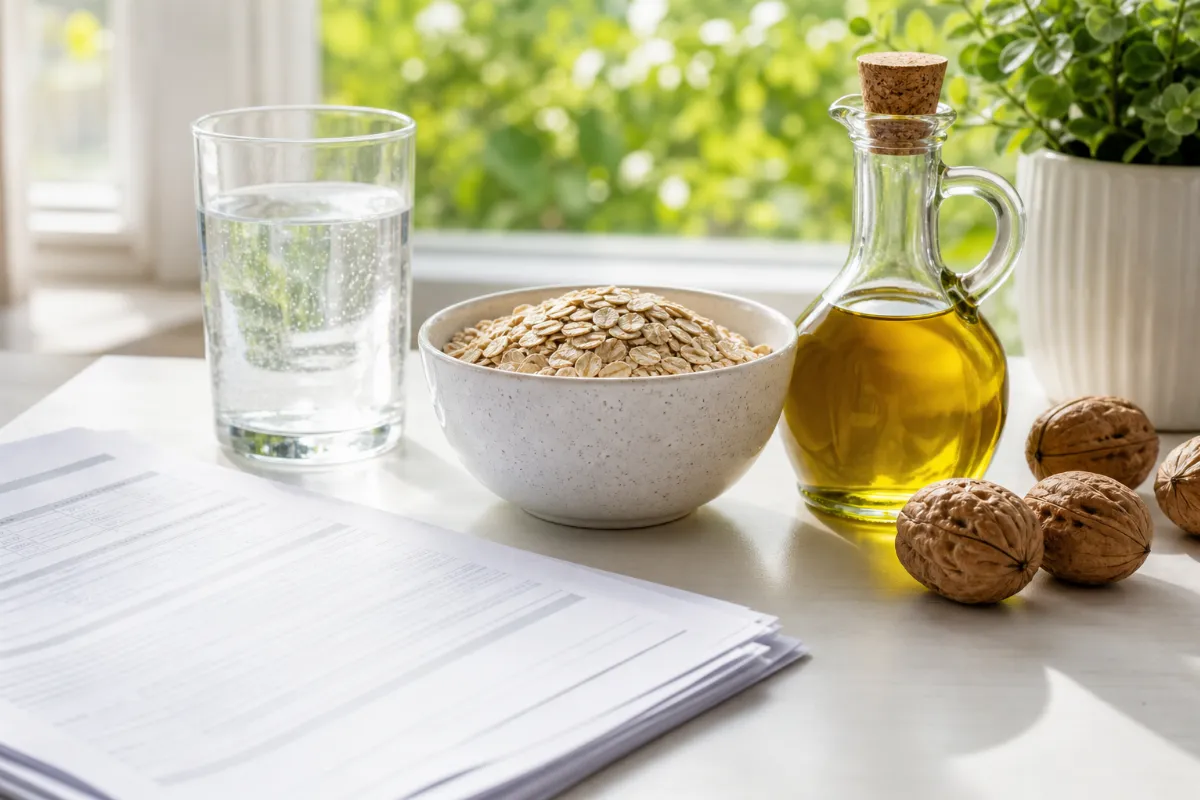
- Oats, barley, beans, lentils, apples and citrus for soluble fibre
- Olive or rapeseed oil instead of butter, lard or palm and coconut oil
- Oily fish, nuts and seeds in place of processed meat and pastries
- Plenty of vegetables and fruit; whole grains in place of refined
Soluble fibre and plant sterols
Trial analyses show soluble fibre from oats (beta-glucan) and psyllium lowers LDL by modest amounts, and plant sterol or stanol enriched foods lower it by about 6% to 12% in the intake range studied. These effects add up when combined with other changes but are not a substitute for medicine when a clinician advises it.
- Oat porridge, oat bran, barley
- Beans and lentils several times a week
- Sterol-enriched spreads or drinks, only if your clinician agrees they suit you
Foods and drinks to be thoughtful about
MedlinePlus lists red meat, full-fat dairy and many baked, deep-fried and processed foods as high in saturated fat. Heavy alcohol use is listed by NHLBI as a contributor to high cholesterol. Grapefruit and some herbs can interact with cholesterol medicines, so check with a pharmacist if you take one.
- Fatty and processed meat, pies, sausages, pastries, cakes
- Butter, lard, cream and large amounts of cheese
- Heavy drinking
Remedies & supplements
Traditional use, laboratory findings and human trials are kept apart. "Natural" does not mean safe.
Oat beta-glucan (oats and oat bran)
Moderate certaintyStudied form and route: Food; oats, oat bran
Intended outcome: Lower LDL and total cholesterol
Human evidence: A meta-analysis of 28 randomized trials found at least 3 g of oat beta-glucan a day lowered LDL by about 0.25 mmol/L and total cholesterol by about 0.30 mmol/L versus control, with no significant HDL effect.
Limits: A modest effect; no data here on heart attacks or strokes. Some analyses included industry-linked authors.
Interactions and precautions: Increase gradually to avoid gas and bloating. Some people with coeliac disease react to oats that are not certified gluten-free.
12Psyllium husk fibre
Moderate certaintyStudied form and route: Soluble fibre supplement taken with fluid
Intended outcome: Lower LDL, non-HDL cholesterol and apoB
Human evidence: A meta-analysis of 28 trials (1,924 people) found a median of about 10 g a day lowered LDL by about 0.33 mmol/L and non-HDL by about 0.39 mmol/L.
Limits: Effects are modest and need daily use. Not a replacement for prescribed medicine.
Interactions and precautions: Take with plenty of fluid; can cause gas, bloating or cramps; can slow absorption of some medicines; avoid with swallowing problems or bowel obstruction.
14Plant sterols and stanols
Moderate certaintyStudied form and route: Fortified foods such as spreads or yoghurt drinks
Intended outcome: Lower LDL cholesterol
Human evidence: A meta-analysis of 124 studies found intakes of 0.6 to 3.3 g a day lowered LDL by about 6% to 12% on average; going above about 4 g a day was not well studied.
Limits: Studies measured LDL, not heart attacks or strokes. Part of the pooled evidence came from industry-linked researchers.
Interactions and precautions: Ask a clinician before use in pregnancy, breastfeeding or childhood. May not suit everyone with other medical conditions.
13Red yeast rice
Moderate certaintyStudied form and route: Fermented rice supplement
Intended outcome: Lower LDL cholesterol
Human evidence: A meta-analysis of 20 randomized studies using products with known monacolin K content found LDL fell by about 1.02 mmol/L versus placebo, similar to statin comparators, but the authors said the quality of safety assessment was low in most studies.
Traditional use: Used in traditional Chinese medicine and as a food.
Laboratory findings: Monacolin K in it is chemically the same as a prescription statin (NCCIH).
Limits: Commercial products vary more than 60-fold in monacolin K and many do not list it. NCCIH describes a kidney-damaging contaminant (citrinin) in many products, and the European Food Safety Authority could not identify a safe intake.
Interactions and precautions: Can cause statin-like muscle, liver and kidney problems and interact with the same medicines as statins. Not recommended in pregnancy or breastfeeding. Do not combine with a prescribed cholesterol medicine without clinician advice.
17,16Garlic
Low certaintyStudied form and route: Raw garlic, garlic supplements
Intended outcome: Possible small LDL and total cholesterol drop
Human evidence: A review reported that garlic lowered total and LDL cholesterol by about 10% if taken for more than 2 months by people with slightly elevated levels, drawing on an earlier meta-analysis of 39 trials.
Traditional use: Widely used in food and folk medicine.
Limits: The cholesterol figure came from an older pooled analysis and is not confirmed by long-term outcome trials.
Interactions and precautions: Garlic supplements may increase bleeding risk with blood thinners and before surgery; tell your clinician.
18Coenzyme Q10
Low certaintyStudied form and route: Supplement
Intended outcome: Very small change in lipids
Human evidence: A meta-analysis of 50 randomized trials (2,794 people) found CoQ10 lowered LDL by only about 3 mg/dL and total cholesterol by about 5.5 mg/dL, with notable differences between studies.
Limits: Effects are tiny and inconsistent; no evidence here that it lowers heart attack or stroke risk.
Interactions and precautions: May interact with some medicines, including blood thinners; ask a pharmacist.
19Berberine, bergamot, artichoke and other nutraceuticals
Low certaintyStudied form and route: Supplements
Intended outcome: Some lower LDL in trials
Human evidence: In a network meta-analysis of 131 trials, all products except policosanols lowered LDL more than placebo, with bergamot and red yeast rice the largest; the bergamot evidence came from relatively small studies.
Traditional use: Several have traditional uses.
Limits: Products and strengths differed; trials were mostly short and measured cholesterol, not heart attacks.
Interactions and precautions: Quality varies and several interact with medicines; ask a pharmacist.
15Therapies & care
Established care for high cholesterol starts with a blood test and an assessment of your overall risk of heart disease and stroke. NHLBI says your provider may recommend heart-healthy lifestyle changes and, where needed, medicines, and may treat a condition or adjust a medicine that is raising your cholesterol. This page describes care in general terms and does not recommend specific medicines or amounts.
Lipid panel and risk assessment
High certaintyMedical assessment The lipid panel measures total, LDL and HDL cholesterol and triglycerides, with non-HDL calculated. Providers may add a risk calculator (the NHS mentions QRISK) and, in some cases, an Lp(a) test.
Who it may suit: Adults at the recommended ages, and children with a family history.
Precautions: Ask whether to fast and when to repeat the test.
3,4Heart-healthy lifestyle care
High certaintyLifestyle care NHLBI describes heart-healthy eating, regular activity, weight management, quitting smoking, limiting alcohol, stress management and sleep as the first steps, and these continue if medicine is also prescribed.
Who it may suit: Most adults with raised cholesterol.
Precautions: Check with your clinician before new vigorous exercise if you have heart disease.
10Cholesterol-lowering medicines
High certaintyMedical treatment NHLBI says statins are the most common treatment and that other classes exist, for example for people who cannot take statins or who have familial hypercholesterolemia. Your clinician weighs your levels, risk and other conditions, and checks liver blood tests when appropriate. This is described only as what a clinician may discuss; the choice is theirs.
Who it may suit: People whose clinician judges that lifestyle changes alone are not enough.
Precautions: Never stop or change a prescribed medicine without asking your clinician. Tell them about supplements, grapefruit and herbs. Pregnancy and breastfeeding need specific advice.
10,9Specialist and family care for FH
Moderate certaintySpecialist care For inherited high cholesterol, the European consensus statement recommends screening relatives and, in children and adults, treatment with lifestyle advice plus medicines; NHLBI notes that lipoprotein apheresis, a filtering procedure that removes LDL from the blood, may help some people with FH.
Who it may suit: People with very high cholesterol, early heart disease in the family, or confirmed FH.
Precautions: Led by a lipid specialist or paediatric clinician; not a self-care area.
8,10What to avoid
Habits, products and claims that can get in the way. Never stop a prescribed medicine without talking to the professional who prescribed it.
Risks that apply to most people
Ignoring a raised result because you feel well
High certaintyWhy: High cholesterol usually causes no symptoms, so feeling fine does not show that risk is low. NHLBI describes plaque building up silently over time.
Who it applies to: Everyone with a raised result.
Try instead: Book a follow-up with your clinician and ask about your overall risk and a repeat test.
1,2Stopping a prescribed medicine on your own
High certaintyWhy: Cholesterol medicines work only while taken, and many people feel nothing either way. Stopping because a result improved or because of a worry about a side effect can raise risk again.
Who it applies to: Anyone prescribed a cholesterol medicine.
Try instead: Talk to your clinician or pharmacist first; they can review side effects and alternatives.
10Smoking
High certaintyWhy: NHLBI lists smoking among the causes of high cholesterol and as a risk factor for heart disease; quitting is one of its lifestyle steps.
Who it applies to: Anyone who smokes.
Try instead: Ask for stop-smoking support.
6,10Personal triggers to check
A diet high in saturated fat
Moderate certaintyWhy: MedlinePlus lists red meat, full-fat dairy and many baked, deep-fried and processed foods as sources of saturated fat that can raise LDL.
Who it applies to: Frequent eaters of these foods.
Try instead: Shift towards unsaturated fats and soluble fibre rather than cutting fat entirely.
7,11Heavy alcohol use, inactivity and short or poor sleep
Moderate certaintyWhy: NHLBI lists heavy drinking, little activity and short or poor-quality sleep as lifestyle contributors to high cholesterol.
Who it applies to: People with these habits.
Try instead: Aim for regular activity, limited alcohol and 7 to 9 hours of sleep, as NHLBI advises.
6,10Other conditions and some medicines that raise cholesterol
Moderate certaintyWhy: Diabetes, kidney disease, an underactive thyroid, sleep apnoea and some medicines can raise cholesterol, so treating the cause may be part of the answer.
Who it applies to: People with these conditions or medicines.
Try instead: Ask your clinician whether a condition or a medicine could be contributing. Do not stop a prescribed medicine without advice.
6,10Products that need caution
Red yeast rice supplements
Moderate certaintyWhy: NCCIH says monacolin K, a substance identical to a prescription statin, varies more than 60-fold across brands, is not on labels, and can cause statin-like muscle, kidney and liver effects. Some products contain the kidney-damaging contaminant citrinin. It is not recommended in pregnancy or breastfeeding.
Who it applies to: Anyone considering it, especially with a prescribed cholesterol medicine, liver or kidney disease.
Try instead: Talk to a clinician or pharmacist first; unregulated products cannot be matched to a known strength.
16,17Niacin (vitamin B3) in cholesterol-lowering amounts
Evidence againstWhy: In a trial of 25,673 adults with vascular disease already on statin-based therapy, extended-release niacin lowered LDL slightly and raised HDL but did not reduce major vascular events and caused more serious side effects, including problems with diabetes control.
Who it applies to: People thinking of high-amount niacin to raise HDL.
Try instead: Discuss any such use with a clinician; do not take it as a self-treatment.
20Fish oil capsules as a heart-protection shortcut
Evidence againstWhy: A Cochrane review of 86 trials (162,796 people) found increasing long-chain omega-3 fats had little or no effect on all-cause mortality or cardiovascular events (high-certainty evidence).
Who it applies to: People hoping capsules replace lifestyle change or medicines.
Try instead: Eat oily fish as part of a heart-healthy pattern instead, and ask your clinician before using capsules.
21Unsupported claims
'Unclog your arteries', 'flush out cholesterol' or 'reverse plaque' with a supplement or detox
Evidence againstWhy: None of the agency sources we read describe a food, herb or supplement that removes plaque. NHLBI describes plaque as building up over time and treated with lifestyle changes and, where needed, medicines.
Who it applies to: Product labels and social media.
Try instead: Treat such claims with caution and discuss any real concern about heart risk with a clinician.
2,10'High cholesterol is just caused by eating too much cholesterol'
Moderate certaintyWhy: NHLBI says genes and lifestyle both play a major role. Inherited FH affects an estimated 1 in 200 to 250 people and can cause very high cholesterol even with a healthy diet.
Who it applies to: Anyone told their cholesterol is purely a diet problem.
Try instead: If cholesterol is very high or runs in the family, ask about inherited causes.
2,5'Natural means safe, so red yeast rice or herbs can replace my medicine'
Evidence againstWhy: NCCIH says high-monacolin K products can cause statin-like harm and share medicine interactions, and the European Food Safety Authority could not identify a guaranteed safe level.
Who it applies to: Anyone considering replacing a prescribed medicine.
Try instead: Never replace a prescribed medicine with a supplement; discuss options with your clinician.
16'Only LDL matters, or only HDL matters'
Moderate certaintyWhy: The NHS and NHLBI both look at several numbers (total, non-HDL, HDL, LDL, triglycerides) and at overall risk. NHLBI notes Lp(a) can add risk even when other numbers look healthy.
Who it applies to: Anyone judging health from a single number.
Try instead: Ask your clinician to explain the whole panel and your overall risk.
3,4Common mistakes
Testing once and never again
Moderate certaintyWhy: Cholesterol changes with age, weight, menopause, medicines and illness. MedlinePlus advises repeat testing at intervals based on age and risk.
Who it applies to: Anyone with a past normal or raised result.
Try instead: Put your next test date in a diary or phone.
7,3Not telling relatives about an inherited cause
Moderate certaintyWhy: If FH is found, close relatives have a good chance of carrying it, and the consensus statement recommends screening them.
Who it applies to: People diagnosed with FH or very high cholesterol.
Try instead: Share the diagnosis and encourage relatives to ask for testing.
5,8Starting supplements without telling your clinician or pharmacist
Moderate certaintyWhy: Red yeast rice, niacin, garlic extracts, green tea extract, berberine and fibre supplements can interact with medicines or affect how they are absorbed.
Who it applies to: Anyone taking medicines.
Try instead: Bring a list of everything you take to appointments.
16,14Evidence & safety
What the research shows
The causal link between LDL cholesterol and heart and artery disease is among the best-supported findings in cardiovascular research. The strongest evidence for what helps is replacing saturated fat with unsaturated fat, adding soluble fibre and plant sterols, and the lifestyle basics, each of which lowers cholesterol by modest amounts. Red yeast rice can lower LDL as much as a statin in trials, but products vary and carry safety concerns. For most other supplements the effect is small or based on short trials, and high-amount niacin and fish-oil capsules did not reduce heart events. Inherited high cholesterol is common and under-diagnosed.
Limits of the evidence
- Most supplement trials measure cholesterol numbers, not heart attacks or strokes, and many are short.
- Meta-analyses pool different products, strengths and study quality, with high variation between studies in several.
- Some fibre and sterol analyses had industry-linked authors.
- The FH figures come from a consensus statement and a genetics reference, not from a trial.
- We did not read full texts of the studies, only abstracts and agency pages.
Precautions and interactions
- Do not stop, skip or change a prescribed cholesterol medicine without your provider's advice.
- Red yeast rice, niacin, berberine, garlic, CoQ10 and green tea extract can interact with medicines or cause side effects.
- Fibre supplements can slow the absorption of other medicines.
- Always tell your clinician and pharmacist about every supplement you take.
Life-stage considerations
- Pregnancy and breastfeeding: NCCIH says red yeast rice is not recommended; ask your clinician before any supplement or cholesterol medicine. We did not read sources on sterol-enriched foods in pregnancy.
- Children and teenagers: NHLBI says screening starts at ages 9 to 11 and may start as early as age 2 with a family history; care is led by a paediatric clinician.
- Older adults: MedlinePlus advises yearly testing over 65; take extra care with supplement and medicine interactions.
- Menopause: NHLBI says LDL and total cholesterol typically rise and HDL falls after menopause.
Warning signs
- Chest pain or pressure, breathlessness, fainting, one-sided weakness, face droop, speech trouble or a sudden severe headache need emergency care.
- Muscle pain, weakness or dark urine on a medicine or red yeast rice.
- Tendon bumps, yellowish eyelid patches or a grey ring around the cornea, especially with a family history.
Claim checks
LDL cholesterol really does cause heart disease
High certaintySupported. A consensus review of genetic, cohort and trial evidence concluded LDL causes atherosclerotic cardiovascular disease, with risk rising with level and duration.
9Red yeast rice is a safe natural alternative to statins
Moderate certaintyIt lowered LDL by about as much as statins in trials, but NCCIH describes variable strength, statin-like side effects and a kidney-damaging contaminant, and the European Food Safety Authority could not set a safe intake.
17,16Niacin is a good way to raise HDL and protect the heart
Evidence againstIn a large trial it raised HDL and lowered LDL slightly but did not reduce major vascular events and caused more serious side effects.
20Fish oil capsules prevent heart attacks and strokes
Evidence againstA Cochrane review of 86 trials found little or no effect on cardiovascular events or all-cause mortality.
21Garlic or CoQ10 will fix high cholesterol
Low certaintyGarlic showed about a 10% fall in total and LDL cholesterol in an older pooled analysis in people with slightly raised levels; CoQ10 showed only a tiny change. Neither is established as a replacement for care.
18,19A cleanse or supplement can unclog arteries
Evidence againstNo source we read supports this.
2Nutraceuticals as a group lower LDL
Low certaintyMost did more than placebo in a network meta-analysis, but products, strengths and quality varied and results measured cholesterol, not heart events.
15Questions people ask
What is high cholesterol?
It means there is too much cholesterol, a fatty substance, in the blood. The NHS says it usually has no symptoms and is found by a blood test. Over time, high LDL cholesterol can build up as plaque in the arteries, which raises the chance of heart attack and stroke.
What counts as a high cholesterol level?
It depends on your overall risk. As a guide, the NHS gives adult levels of total cholesterol below 5 mmol/L and non-HDL below 4 mmol/L, and NHLBI gives non-HDL below 130 mg/dL. Your own target depends on your age, health and family history, so ask your clinician.
Does high cholesterol cause symptoms?
Usually not. Only in very high, often inherited, cases can fatty deposits appear on tendons or near the eyelids, or a grey ring around the cornea.
What is familial hypercholesterolemia?
An inherited condition in which the body cannot clear LDL cholesterol properly. MedlinePlus Genetics estimates it affects 1 in 200 to 1 in 250 people. It carries a high risk of early heart disease and is often under-diagnosed, so relatives of anyone with FH should ask about testing.
How often should I get my cholesterol checked?
MedlinePlus says adults should be tested every 5 years, every 1 to 2 years for men aged 45 to 65 and women aged 55 to 65, and every year over 65. Children are first tested at ages 9 to 11, sooner with a family history. Ask your clinician about your own schedule.
Can I lower cholesterol without medicine?
Lifestyle changes help: less saturated fat, more soluble fibre, regular activity, a healthier weight, no smoking and less alcohol. Some people, particularly with inherited high cholesterol, still need medicine, and that is a decision for you and your clinician.
Do supplements work for high cholesterol?
Some, such as psyllium and plant sterols, lower LDL by modest amounts. Red yeast rice can lower it more but has safety and quality concerns. High-amount niacin and fish oil did not reduce heart events in large trials. Check with a pharmacist before taking any.
Is red yeast rice the same as a statin?
It can contain monacolin K, which is chemically identical to a prescription statin, but the amount varies hugely between products and may not be on the label. It can cause statin-like side effects, so ask a clinician before using it.
What is Lp(a)?
Lipoprotein(a) is an inherited type of cholesterol particle. NHLBI says high levels can raise heart disease risk even when other cholesterol numbers are healthy, and that it is tested separately if there is a family history of early heart disease or stroke.
Can I stop my cholesterol medicine if my numbers are good?
Do not stop without asking your clinician. Numbers are good partly because the medicine is working, and stopping can let them rise again.
When should I get urgent help?
Call your local emergency number for chest pain or pressure, breathlessness, fainting, weakness on one side, a drooping face, speech trouble or a sudden severe headache.
Is high cholesterol only about diet?
No. NHLBI says genes and lifestyle both matter, and conditions such as diabetes, kidney disease and an underactive thyroid, and some medicines, can raise levels.
References
- NHS. High cholesterol. Page last reviewed 13 March 2026. Read 2026-11-01. source
- NHLBI. Blood Cholesterol: What is blood cholesterol? Last updated April 17, 2024. Read 2026-11-01. source
- NHLBI. Blood Cholesterol: Diagnosis. Last updated April 18, 2024. Read 2026-11-01. source
- NHS. High cholesterol: cholesterol levels. Page last reviewed 13 March 2026. Read 2026-11-01. source
- MedlinePlus Genetics. Familial hypercholesterolemia. Read 2026-11-01. source
- NHLBI. Blood Cholesterol: Causes and risk factors. Last updated April 19, 2024. Read 2026-11-01. source
- MedlinePlus. Cholesterol. Read 2026-11-01. source
- Nordestgaard BG, et al. Familial hypercholesterolaemia is underdiagnosed and undertreated in the general population: guidance for clinicians to prevent coronary heart disease: consensus statement of the European Atherosclerosis Society. Eur Heart J. 2013. source
- Ference BA, et al. Low-density lipoproteins cause atherosclerotic cardiovascular disease. 1. Evidence from genetic, epidemiologic, and clinical studies. A consensus statement from the European Atherosclerosis Society Consensus Panel. Eur Heart J. 2017. source
- NHLBI. Blood Cholesterol: Treatment. Last updated April 19, 2024. Read 2026-11-01. source
- Hooper L, et al. Reduction in saturated fat intake for cardiovascular disease. Cochrane Database Syst Rev. 2020. source
- Whitehead A, Beck EJ, Tosh S, Wolever TM. Cholesterol-lowering effects of oat beta-glucan: a meta-analysis of randomized controlled trials. Am J Clin Nutr. 2014. source
- Ras RT, Geleijnse JM, Trautwein EA. LDL-cholesterol-lowering effect of plant sterols and stanols across different dose ranges: a meta-analysis of randomised controlled studies. Br J Nutr. 2014. source
- Jovanovski E, et al. Effect of psyllium (Plantago ovata) fiber on LDL cholesterol and alternative lipid targets, non-HDL cholesterol and apolipoprotein B: a systematic review and meta-analysis of randomized controlled trials. Am J Clin Nutr. 2018. source
- Osadnik T, et al. A network meta-analysis on the comparative effect of nutraceuticals on lipid profile in adults. Pharmacol Res. 2022. source
- NCCIH. Red Yeast Rice. Read 2026-11-01. source
- Gerards MC, et al. Traditional Chinese lipid-lowering agent red yeast rice results in significant LDL reduction but safety is uncertain: a systematic review and meta-analysis. Atherosclerosis. 2015. source
- Ried K. Garlic lowers blood pressure in hypertensive individuals, regulates serum cholesterol, and stimulates immunity: an updated meta-analysis and review. J Nutr. 2016. source
- Liu Z, et al. Effects of coenzyme Q10 supplementation on lipid profiles in adults: a meta-analysis of randomized controlled trials. J Clin Endocrinol Metab. 2022. source
- HPS2-THRIVE Collaborative Group. Effects of extended-release niacin with laropiprant in high-risk patients. N Engl J Med. 2014. source
- Abdelhamid AS, et al. Omega-3 fatty acids for the primary and secondary prevention of cardiovascular disease. Cochrane Database Syst Rev. 2020. source
Related on AlternativeMed
Related goals
Improve Your Cholesterol Levels → Manage High Triglycerides → Build Heart-Healthy Habits → Eat for Heart Health → Support Healthy Blood Pressure →
Ingredients, foods and supplements
Oats → Barley → Psyllium → Garlic → Berberine → Coenzyme Q10 → Niacin (vitamin B3) → Fish oil →
Research, safety and claim-check resources
Medication interactions → Fiber, fluids and meal patterns → Eating patterns compared →