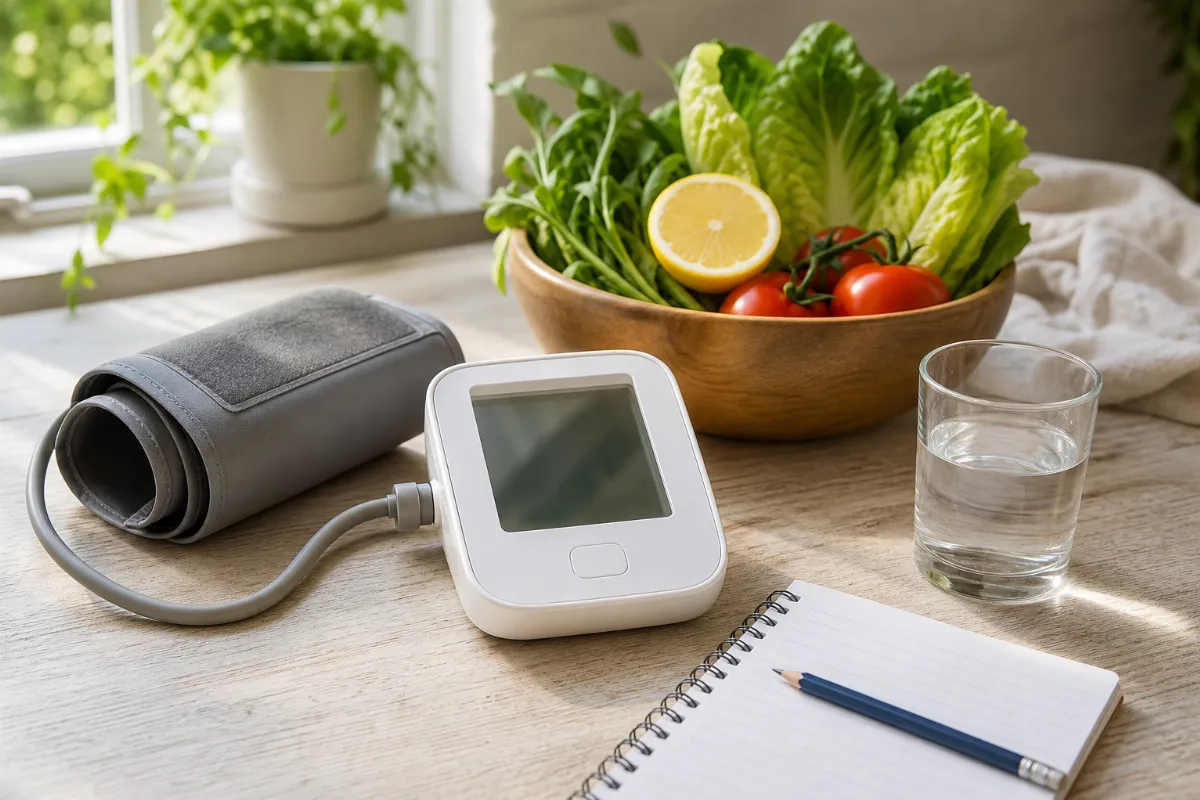
Support Your Heart & Circulation
High Blood Pressure
High blood pressure (hypertension) means the force of blood on your artery walls is often too high. It usually causes no symptoms, so it is found by measuring, and it matters because it quietly raises the risk of stroke, heart attack, kidney disease and more. This page explains the condition itself: the numbers, how it is diagnosed and monitored, what established care looks like in general terms, what is known about natural options and medicine interactions, and when to get urgent help. Everyday habits and home-reading tips are on the Support Healthy Blood Pressure page.
General information, not medical advice. Last updated November 1, 2026. Written by the AlternativeMed editorial team. Not medically reviewed.
Start here
- Get your blood pressure measured and, if it is high, confirmed with repeat readings. A diagnosis needs readings that are consistently high, not one number on one day.
- Follow the plan your clinician agrees with you, including any prescribed medicine, and bring your home readings and a list of every supplement and over-the-counter product you use to your visits.
- Make the well-studied lifestyle changes one at a time (less salt, a DASH-style plate, regular movement, less alcohol, a healthy weight), using the Support Healthy Blood Pressure page as your practical guide.
Be careful with
- Do not stop, skip or change a prescribed blood pressure medicine because your readings look good or because you have started a supplement or herb. Talk to your prescriber first.
- Some everyday products can push blood pressure up or interfere with treatment: the NHLBI names antidepressants, decongestants, hormonal birth control and aspirin-type or ibuprofen-type pain relievers, and NCCIH names the herbs bitter orange, ephedra, ginseng and licorice root. Ask a pharmacist before adding or changing anything, and never stop a prescribed medicine on your own because of this list.
- Potassium supplements and potassium-based salt substitutes are not right for everyone: with kidney disease, or when taking some medicines, extra potassium can build up (MedlinePlus). Check with a clinician first.
- Pregnancy needs its own care. High blood pressure in pregnancy can become an emergency, so follow your maternity team's advice and do not self-treat with herbs.
Get help when
- A reading above 180/120 mm Hg is dangerously high (NHLBI). With no symptoms, the NHLBI says to wait 5 minutes and measure again; if it is still high, call your healthcare provider. With a second high reading plus a sudden severe headache, difficulty breathing, sudden severe pain in the abdomen, chest or back, numbness or weakness, a sudden change in vision or problems talking, the NHLBI says to call 9-1-1 (in the UK the NHS says 999). Do not wait to see if it comes down on its own.
- Chest pain or pressure that does not go away, pain spreading to an arm, the neck, jaw, stomach or back, or chest pain with sweating, nausea, light-headedness or breathlessness: the NHS says call 999, and the NHLBI says call 9-1-1.
- Face drooping on one side, one arm drifting down, or slurred or strange speech: act F.A.S.T. and call emergency services straight away (NHLBI).
- Often having headaches or blurred vision, or chest pain that comes and goes: the NHS advises getting help from NHS 111. Also see a clinician if you are 40 or over and have not had your blood pressure checked for years, or if home readings stay high.
- In pregnancy or soon after birth: a severe headache that does not ease, vision problems, sudden swelling of the face, hands or feet, belly pain or breathlessness need checking immediately (NHS, NHLBI). A sudden reading above 160/110 in pregnancy is a medical emergency (NHLBI).
About High Blood Pressure
What high blood pressure is
Blood pressure is the force of blood on the walls of your arteries. It is written as two numbers, such as 120/80 mm Hg: the top (systolic) number is the pressure when the heart pumps blood out, and the bottom (diastolic) number is the pressure between beats when the heart fills. Blood pressure naturally changes through the day with activity. High blood pressure, or hypertension, is when it is often too high (NHLBI).
It is very common. The NHLBI says half of American adults have it, and the World Health Organization estimated that 1.4 billion adults aged 30 to 79 worldwide had hypertension in 2024, about 600 million of them (44%) unaware of it. MedlinePlus describes two main types: primary (essential) high blood pressure, which usually develops gradually with age and has no single cause, and secondary high blood pressure, which is caused by another medical condition or a medicine and often improves when that cause is treated or removed.
1,2,3What the numbers mean
The NHLBI sorts readings like this: normal is under 120 and under 80; elevated is 120 to 129 and under 80; stage 1 high blood pressure is 130 to 139 or 80 to 89; stage 2 is 140 or higher or 90 or higher; and a hypertensive crisis is higher than 180 or higher than 120. Readings need to be consistently high to count.
Agencies draw the line slightly differently, so ask your clinician which targets apply to you. The NHS usually calls 140/90 or higher in a clinic, or 135/85 or higher at home, high blood pressure. The WHO diagnoses hypertension when readings on two different days are 140 mm Hg or higher systolic and/or 90 mm Hg or higher diastolic, and says the usual goal is under 140/90, or under 130/80 for people with heart disease or stroke, diabetes, chronic kidney disease or high cardiovascular risk. A new US guideline was published in 2025 and replaces the 2017 one; this page follows the NHLBI, NHS and WHO pages we read, not the guideline's full text.
1,4,5,2,6How it is diagnosed and monitored
The NHLBI says everyone aged 3 or older should have blood pressure checked by a healthcare provider at least once a year, and that diagnosing high blood pressure takes two or more readings at separate medical appointments. The provider also asks about eating patterns, activity, sleep, weight, stress, smoking and family history, and may order tests for conditions that cause high blood pressure or for organ effects.
The NHS says that if one test suggests high blood pressure you may be asked to use a home monitor for a few days, come back for another check, or wear a portable monitor that takes readings over 24 hours. The NHLBI explains why: readings can be higher in the clinic than elsewhere ('white coat' high blood pressure) or lower in the clinic than in real life ('masked' high blood pressure), and a cuff that is too small or too big gives wrong numbers. If you measure at home, use an approved home device.
For a good reading the NHLBI advises: no exercise, coffee or cigarettes for 30 minutes before; use the bathroom first; sit and relax for at least 5 minutes with feet flat on the floor; do not talk; uncover your arm and rest it on a table at heart level. For children under 13, readings are compared with what is typical for the same age, sex and height.
4,5,1What it can feel like
Mostly nothing. The NHLBI says symptoms usually do not appear until high blood pressure has caused serious problems, and about 1 in 3 US adults with high blood pressure do not know they have it. The NHS says that rarely it can cause headaches, blurred vision or chest pain, but the only way to find out is to have it checked.
Very high readings are different. The NHLBI and WHO both say a reading of 180/120 or more needs prompt medical attention, especially with symptoms, because pressure that high can damage organs.
1,7,5,2Why it matters: the risks
Over time high blood pressure strains the blood vessels, heart and other organs. The NHLBI lists aneurysm, stroke, chronic kidney disease, eye damage, heart attack, heart failure, atherosclerosis and vascular dementia, and the NHS lists heart disease, strokes, heart failure, kidney disease and vascular dementia. The NHS adds that lowering blood pressure even a small amount helps reduce those risks.
That is borne out in trials. A meta-analysis of 123 randomized trials with 613,815 people found that every 10 mm Hg lower systolic pressure cut the risk of major cardiovascular events (relative risk 0.80), coronary heart disease (0.83), stroke (0.73) and heart failure (0.72). In SPRINT, a trial of 9,361 people at high cardiovascular risk but without diabetes, aiming for a systolic pressure below 120 rather than below 140 lowered cardiovascular events and deaths, but also caused more low blood pressure, fainting, electrolyte problems and acute kidney injury. This is why targets are personal and set with a clinician.
7,5,8,9What raises the risk
Some risks cannot be changed: age (arteries stiffen over time), family history and genes, ethnicity (the NHLBI says high blood pressure is more common and starts earlier in Black adults) and sex (men are more likely in middle age, women in older age). Women who had high blood pressure in pregnancy are more likely to have it later.
Others can be changed: a diet high in salt and low in potassium, too much alcohol or caffeine, too little activity, poor sleep, high stress, and stimulants such as cocaine or methamphetamine. Conditions linked to it include chronic kidney disease, metabolic syndrome, overweight and obesity, sleep apnea, thyroid problems and some tumors. Some medicines can raise it too (see the avoid tab). The NHLBI notes that some people, including Black people, older adults and people with chronic kidney disease, diabetes or metabolic syndrome, are more sensitive to salt.
10,5Realistic expectations
High blood pressure is usually managed rather than cured. The NHLBI says a plan may be lifestyle changes alone or together with medicines, many people need two or more medicines, and the plan may be adjusted over time. If another health condition or a medicine is causing it, it may improve once that cause is treated or removed.
Lifestyle changes help but their size varies. In the studies below, single changes lowered systolic pressure by roughly 2 to 8 mm Hg on average, with larger drops in people whose pressure started higher. Keep taking prescribed medicine while you make the changes.
11,12,3Pregnancy, children and older adults
In pregnancy: the NHLBI says high blood pressure develops in 1 in every 12 to 17 pregnant women in the US. Gestational hypertension is blood pressure of 140/90 or more that develops after 20 weeks, and preeclampsia combines high blood pressure with signs that organs are not working well. The NHS says pre-eclampsia is most likely from 20 weeks onward, can also appear after birth, and that warning signs include a severe headache that does not ease, vision problems, sudden swelling of the face, hands or feet, and heartburn that does not go away with medicines. A sudden reading above 160/110 is a medical emergency (NHLBI). Some blood pressure medicines are safe in pregnancy and some are not, so talk to your provider before changing any.
In children and teens: the NHLBI says blood pressure is checked from age 3, readings under 13 are compared with others of the same age, sex and height, and the risk is rising, possibly with more overweight and obesity. In older adults, blood pressure tends to rise as blood vessels stiffen, so regular checks matter more with age.
13,14,4,10Related conditions and symptoms
Hypertension (health topic) → Sleep apnea → Obesity and weight-related health → Prediabetes, type 2 diabetes and metabolic syndrome →
A manageable starting plan
An educational starting point, not a personal prescription. Adjust it to your own situation and any advice from your clinician.
Your first actions
- This week: book a blood pressure check if you have not had one in the past year, or if readings have been high. Ask whether home or 24-hour monitoring would help and which target suits you.
- This week: write a list of every prescribed medicine, over-the-counter product and supplement you use and review it with a pharmacist, especially pain relievers, decongestants and herbs.
- Weeks 1 to 4: take any prescribed medicine as directed, cut back on salty packaged and restaurant food, and add a short daily walk.
- Weeks 2 to 8: build up regular activity, reduce alcohol if you drink above low-risk levels, and add potassium-rich foods unless you have kidney disease or take medicines that raise potassium.
- Ongoing: keep follow-up visits and review treatment with your clinician as the plan changes.
Optional additions
- Add a yoga, tai chi or meditation class, with your instructor and clinician aware of your blood pressure.
- Ask about a dietitian or structured lifestyle program, quit-smoking support or alcohol support.
- If you snore loudly, gasp at night or are very sleepy by day, ask about sleep apnea.
- Try the practical habits and meal ideas on the Support Healthy Blood Pressure page.
What to track
- Home readings (date, time, both numbers, pulse, and whether you took your medicine), using the same quiet routine each time.
- Habits: days of movement, salty-food swaps, alcohol-free days, and caffeine before readings.
- Symptoms, side effects and any new medicines or supplements.
When to reassess
Habit changes take several weeks to show in your readings, so review your log with your clinician after about a month or at the interval they set. Reassess earlier if readings are very high, if you become pregnant, if you start or change a medicine or supplement, or if you develop new symptoms. If home readings stay at or above the level your clinician gave you, book a visit rather than waiting.
When to seek professional support
- See a clinician for diagnosis, repeat readings and a plan; ask a pharmacist about medicines, supplements and salt substitutes.
- Ask about dietitian or lifestyle programs and about reminders and apps for tracking readings and medicine.
- Share your plan with family or friends who can help you keep the habits, as the NHLBI suggests.
What helps
Ordered by how well the research supports each step. Evidence strength is shown on every card; precautions sit next to the advice.
Start here
A proper diagnosis with repeat readings
High certaintyAddresses: Knowing whether your pressure is truly high, and how high
Why it may help: The NHLBI says diagnosis takes two or more readings at separate appointments, and that office readings can mislead in both directions ('white coat' and 'masked' high blood pressure), so readings from home or a 24-hour monitor can fill in the picture. The NHS describes home monitoring for a few days, repeat visits or a 24-hour portable monitor to confirm. The WHO adds that a health professional's evaluation matters for assessing risk and related conditions even when you can measure at home.
How to apply it: Book a check with a doctor, nurse or pharmacist. Ask whether home readings or a 24-hour monitor would help, and which target applies to you.
Who it may suit: Anyone with a high reading, risk factors, or no check in the past year (the NHLBI recommends a yearly check from age 3).
Precautions: One high reading is not a diagnosis, and one normal reading does not rule it out. Do not start or stop treatment based on a single number.
4,5,2Home blood pressure monitoring with support
Moderate certaintyAddresses: Modest extra drop in pressure when combined with clinician or pharmacist support
Why it may help: An individual-patient meta-analysis of randomized trials (data from 25 trials; 36 were eligible) found that self-monitoring alone did not lower blood pressure (about 1.0 mm Hg systolic, not significant), but combined with co-interventions (medicine adjustment by clinicians, pharmacists or patients, education, or lifestyle counselling) it led to clinically significant reductions, up to 6.1 mm Hg systolic at 12 months with intensive support. The NHLBI says regular home monitoring is recommended.
How to apply it: Use an approved upper-arm device and the preparation steps above, measure at consistent times, write the numbers down and share them at visits.
Who it may suit: People with a diagnosis, borderline readings, or those who want to see how treatment is working.
Precautions: Treat home numbers as information for your clinician, not a reason to change medicine on your own. Anxiety over readings can itself push numbers up.
15,1,4Keeping to the treatment plan your clinician sets
High certaintyAddresses: Lower risk of heart attack, stroke, kidney and heart failure
Why it may help: The NHLBI says to continue your treatment plan, including healthy lifestyle changes, with regular follow-up. The meta-analysis of 123 trials found each 10 mm Hg lower systolic pressure reduced major cardiovascular events by about 20% (relative risk 0.80). The NHLBI notes many people need two or more medicines and that your provider may change or add medicines over time.
How to apply it: Keep appointments, take medicines as prescribed, use reminders or apps if they help, and tell your provider about side effects, new conditions and every other product you take.
Who it may suit: Everyone with diagnosed high blood pressure.
Precautions: Never stop or change a prescribed medicine on your own. If side effects bother you, talk to your provider, who can change the dose or the medicine.
12,11,8A DASH-style plate with less sodium
High certaintyAddresses: Lower systolic and diastolic pressure within weeks
Why it may help: In the DASH trial (459 adults) the combination diet lowered pressure by 5.5/3.0 mm Hg more than the control diet, and by 11.4/5.5 mm Hg in the 133 people with hypertension. In the DASH-Sodium trial (412 people) the DASH diet with low sodium gave pressure 11.5 mm Hg lower (systolic) in people with hypertension than a typical diet with high sodium. A dose-response meta-analysis of 85 trials found a roughly linear fall in pressure as sodium intake dropped, steeper in people with hypertension. The NHLBI says DASH combined with a low-salt eating plan can be as effective as medicines in lowering high blood pressure.
How to apply it: Build meals around vegetables, fruit, whole grains, beans, nuts, fish, poultry and low-fat dairy; cut back on salty packaged and restaurant food. The practical plate and label tips are on the neighbour page.
Who it may suit: Adults with or without high blood pressure.
Precautions: People with kidney disease may need to limit potassium and should check before eating many more potassium-rich foods. Tell your clinician about big diet changes if you take blood pressure medicine.
16,17,18,11,19Regular movement and less sitting
Moderate certaintyAddresses: Lower resting blood pressure, most in people who start with high readings
Why it may help: A meta-analysis of 93 trials (5,223 people) found endurance training lowered systolic pressure by 3.5 mm Hg and diastolic by 2.5 on average, and by 8.3/5.2 mm Hg in groups with hypertension; dynamic resistance training also lowered diastolic pressure. The NHLBI says even a small amount, like walking 10 minutes a day, may help, and that sitting less can help too.
How to apply it: Add short, regular walks or other activity you enjoy and build up gradually. The NHS suggests at least 150 minutes of exercise a week.
Who it may suit: Most adults, with a clinician's guidance first if readings are very high or you have heart or other conditions.
Precautions: Ask your provider what level of activity is right for you before starting a program (NHLBI). Stop and get help for chest pain, fainting or severe breathlessness.
20,11,5Improve Your Cardiovascular Fitness → Sit Less & Move More →
Cutting down heavy drinking
Moderate certaintyAddresses: Lower pressure in people who drink more than about two drinks a day
Why it may help: A meta-analysis of 36 trials (2,865 people) found that in people who drank two or fewer drinks a day, cutting back did not significantly lower blood pressure, but in people who drank more than two a day it did, with the largest fall (-5.5 mm Hg systolic, -4.0 diastolic) in those who drank six or more drinks a day and cut their intake by about half. The NHLBI and NHS both advise limiting alcohol.
How to apply it: Count your drinks for a week, then reduce. The NHS advises not regularly drinking more than 14 units a week. Ask for support if cutting down is hard.
Who it may suit: People who drink regularly, especially above two drinks a day.
Precautions: Do not stop heavy drinking suddenly without medical advice, as withdrawal can be dangerous.
21,11,5Additional options
Reaching a healthier weight if above it
Moderate certaintyAddresses: Lower pressure, roughly 1 mm Hg per kilogram lost
Why it may help: A meta-analysis of 25 trials (4,874 people) found a net 5.1 kg weight loss lowered systolic pressure by 4.4 mm Hg and diastolic by 3.6, about 1.05/0.92 mm Hg per kilogram. The NHLBI says even losing 3% to 5% of weight can improve blood pressure.
How to apply it: Gradual changes in eating and activity, with support from a clinician or dietitian where possible.
Who it may suit: Adults living with overweight or obesity.
Precautions: Avoid crash diets. People with an eating disorder history, pregnancy or diabetes medicines need clinician guidance.
22,11Obesity and weight-related health → Lose Weight Sustainably →
More potassium from foods
Moderate certaintyAddresses: Lower pressure in people with hypertension
Why it may help: A BMJ meta-analysis of 22 trials (1,606 people) found higher potassium intake lowered systolic pressure by 3.49 mm Hg and diastolic by 1.96 in adults, an effect seen in people with hypertension but not in those without. Cohort studies linked higher potassium intake to a 24% lower risk of stroke. The NHLBI notes fruits and vegetables are high in potassium.
How to apply it: Choose leafy greens, root vegetables, fruit and beans. MedlinePlus lists leafy greens, vine fruits such as grapes and blackberries, root vegetables and citrus fruits.
Who it may suit: Most people with normal kidney function.
Precautions: With chronic kidney disease the kidneys may not clear extra potassium, and some medicines raise potassium (MedlinePlus). Ask a clinician before raising potassium or taking potassium supplements.
23,10,24A potassium-enriched salt substitute, where it suits you
Moderate certaintyAddresses: Lower blood pressure and, in one large trial, fewer strokes and deaths
Why it may help: The SSaSS trial (20,995 older adults or people with prior stroke in rural China, about 4.7 years) found a salt substitute of 75% sodium chloride and 25% potassium chloride lowered stroke (rate ratio 0.86), major cardiovascular events (0.87) and death (0.88), without a significantly higher rate of serious hyperkalemia events. A meta-analysis of 21 trials found systolic pressure fell by about 4.6 mm Hg.
How to apply it: Only after your clinician confirms it is safe for you, and not as an extra on top of regular salt.
Who it may suit: Some adults with high blood pressure and normal kidney function, as decided with a clinician.
Precautions: People with kidney disease and those taking certain medicines can build up potassium (MedlinePlus). The trial population and diet differ from many other countries.
25,26,24Checking for and treating sleep apnea
Moderate certaintyAddresses: Small extra fall in blood pressure when apnea is treated
Why it may help: The NHLBI lists sleep apnea among conditions linked to high blood pressure and says untreated sleep apnea raises the risk of stroke, heart attack and other serious problems. A meta-analysis of 29 randomized trials (1,820 people) found CPAP lowered systolic pressure by a net 2.6 mm Hg and diastolic by 2.0 compared with passive treatment such as sham CPAP, a low effect size that was larger in people with frequent apneic episodes.
How to apply it: Tell your clinician about loud snoring, gasping or choking at night, or heavy daytime sleepiness; a sleep study can confirm sleep apnea.
Who it may suit: Adults with high blood pressure who snore, gasp in sleep or feel sleepy by day, especially when readings are hard to control.
Precautions: The effect on blood pressure is small, so CPAP and other apnea treatments are about sleep and heart health more broadly, not a blood pressure fix.
10,27,28A Mediterranean-style eating pattern
Low certaintyAddresses: Small, uncertain fall in pressure
Why it may help: A systematic review of 6 trials (over 7,000 people) found Mediterranean-style diets followed for at least a year lowered systolic pressure by 1.44 mm Hg and diastolic by 0.70 compared with low-fat diets, but the authors said the effect was small, studies varied a lot, and evidence was insufficiently convincing. The NHLBI lists it among heart-healthy patterns for people with high blood pressure.
How to apply it: Vegetables, fruit, whole grains, legumes, nuts, olive oil and fish.
Who it may suit: Adults who prefer this pattern to DASH.
Precautions: Check that your choices stay low in salt: olives, cheese, cured fish and pickles can be salty.
29,1Not smoking, enough good-quality sleep and managing stress
Low certaintyAddresses: Support for overall heart health and blood pressure control
Why it may help: The NHLBI lists quitting smoking, getting 7 to 9 hours of good-quality sleep for adults and managing stress (relaxation techniques, counselling, support groups) among the lifestyle steps to control high blood pressure. We did not read trials of each of these on blood pressure for this page, so we rate them on agency guidance.
How to apply it: Use quit-smoking support, keep regular sleep and wake times, and build in time to relax and talk through problems.
Who it may suit: Everyone with high blood pressure.
Precautions: If sleep or mood problems are severe or last, talk to a clinician.
11Get Support to Stop Smoking or Vaping → Improve Your Sleep Quality → How to relieve stress →
Still being studied
Yoga with breathing and relaxation
Low certaintyAddresses: Possible moderate fall in pressure
Why it may help: A meta-analysis of 49 controlled trials (3,517 people, average age about 49) found yoga lowered systolic pressure by 5.0 mm Hg and diastolic by 3.9 compared with controls; programs that included breathing techniques and meditation or mental relaxation did better in people with hypertension. NCCIH lists yoga among approaches that may have small beneficial effects.
How to apply it: Classes with breathing and relaxation, taught by a trained instructor.
Who it may suit: Adults who enjoy gentle mind-body exercise.
Precautions: NCCIH says people with high blood pressure may need to modify or avoid some yoga poses, so tell your instructor and clinician.
30,31Tai chi
Low certaintyAddresses: Possible reduction in pressure
Why it may help: A systematic review of 26 studies (9 randomized trials) found 22 reported lower blood pressure with tai chi, though the studies varied too much to combine and only five randomized trials were of adequate quality; no adverse effects were reported.
How to apply it: Regular classes with a qualified instructor.
Who it may suit: Adults, including those who prefer low-impact movement.
Precautions: Quality of the trials limits confidence. NCCIH says tai chi is generally safe for healthy people when taught by a well-trained instructor.
32,31Meditation, including Transcendental Meditation
Low certaintyAddresses: Small fall in systolic pressure
Why it may help: A meta-analysis of 12 trials (996 people) found Transcendental Meditation lowered systolic pressure by about 4.3 mm Hg and diastolic by 2.3, with possible bias from missing information on methods. NCCIH notes the American Heart Association suggested biofeedback and TM could be used in addition to medicine, while saying it is uncertain whether relaxation techniques are helpful in general.
How to apply it: Learn from a qualified teacher and practise regularly alongside, not instead of, your treatment.
Who it may suit: People who find meditation acceptable and want an add-on.
Precautions: Not a replacement for medicine. If you have a mental health condition, ask your clinician first.
33,31Device-guided slow breathing
Very low certaintyAddresses: Uncertain; benefit disappeared in independent trials
Why it may help: A meta-analysis of 8 trials (494 people) of one breathing device found systolic pressure lowered by 3.7 mm Hg, but when the five trials involving the manufacturer were excluded there was no overall effect; the authors asked for longer, independent trials.
How to apply it: Studied use was short-term (up to 9 weeks).
Who it may suit: Not established.
Precautions: Devices cost money and benefits are unproven. Simple breathing exercises for relaxation are a separate matter.
34Food & nutrition
An eating pattern for high blood pressure
The NHLBI describes the DASH eating plan as flexible and balanced and says it needs no special foods. It recommends vegetables, fruits and whole grains; fat-free or low-fat dairy, fish, poultry, beans, nuts and vegetable oils; and limiting fatty meats, full-fat dairy, tropical oils (coconut, palm kernel, palm), sugar-sweetened drinks and sweets. In the original trials it lowered blood pressure within weeks, most in people who already had hypertension.
A Mediterranean-style pattern is also named by the NHLBI as a heart-healthy choice, though trials show only a small and uncertain blood pressure effect. The Support Healthy Blood Pressure and Eat for Heart Health pages cover the plate and label tips in detail, so this page does not repeat them.
19,16,17,29,1Salt and sodium
The NHS says adults should have no more than 6 g of salt a day, about 1 level teaspoon, including salt already in food and added in cooking and at the table. The NHLBI DASH table notes that a daily sodium level of 1,500 mg lowers blood pressure even further than 2,300 mg. Ask your clinician what is right for you.
The NHS tips: flavour with herbs, spices, black pepper, garlic, chili or lemon; check labels; choose lower-salt versions; buy tinned vegetables, pulses and fish in water instead of brine; eat cured meats, cheese, olives and pickles less often. It also warns that some dissolvable tablets, such as painkillers, vitamins or prescription medicines, may be high in salt, and to speak to your GP before changing any medicines.
35,19,18Potassium, kidneys and medicines
Fruits and vegetables are rich in potassium, and trials found higher potassium intake lowered blood pressure in people with hypertension. MedlinePlus says many people get all the potassium they need from food, but that with kidney disease the kidneys may not remove extra potassium and that some medicines raise potassium levels, so some people need a special lower-potassium diet.
That is why potassium supplements and potassium-based salt substitutes should be started only after a clinician confirms they are safe for you.
23,24,10Drinks: alcohol, caffeine and licorice
Alcohol: cutting back helps most if you drink more than two drinks a day; the NHS advises not regularly drinking more than 14 units a week. Caffeine: a large dose raises pressure for at least 3 hours in people with hypertension, but regular coffee over weeks did not raise it in the trials reviewed; avoid caffeine for 30 minutes before a reading.
Real licorice, in sweets, teas or supplements, can raise blood pressure and cause serious effects in large or regular amounts, according to NCCIH; many 'licorice' products in the US are actually flavored with anise oil.
21,5,36,37,38Remedies & supplements
Traditional use, laboratory findings and human trials are kept apart. "Natural" does not mean safe.
Hibiscus tea (roselle)
Low certaintyStudied form and route: Brewed tea or extracts
Intended outcome: Small possible fall in pressure
Human evidence: A meta-analysis of five randomized trials (390 people) found Hibiscus sabdariffa lowered systolic pressure by about 7.6 mm Hg and diastolic by 3.5, with larger effects when baseline pressure was higher. NCCIH lists roselle among products that may help reduce blood pressure but says evidence is limited and effects small.
Traditional use: Hibiscus beverages are commonly consumed to treat high blood pressure (as described by the review authors).
Limits: Only five trials; product strength and design varied; the authors called for better-designed trials.
Interactions and precautions: Ask a pharmacist whether it could add to the effect of your medicines. The trials we read did not address pregnancy or breastfeeding.
39,31Garlic
Low certaintyStudied form and route: Aged extract, powder or oil supplements; food
Intended outcome: Small possible fall in pressure, mainly in people with hypertension
Human evidence: An updated meta-analysis of 20 trials (970 people) found garlic preparations lowered systolic pressure by 5.1 mm Hg and diastolic by 2.5 versus placebo, and by 8.7/6.1 mm Hg in trials of people with hypertension. NCCIH says limited evidence suggests garlic supplements may reduce blood pressure to a small extent.
Traditional use: NCCIH says ancient writings from Egypt, Greece and India describe garlic for many health problems.
Limits: Preparations differ; trials were short; no long-term trial of heart attacks or strokes.
Interactions and precautions: Garlic supplements may raise bleeding risk, which matters with anticoagulants, aspirin or before surgery. Side effects include odor, stomach upset and allergy. Amounts above food levels may not be safe in pregnancy or breastfeeding (NCCIH).
40,41,31Magnesium supplements
Low certaintyStudied form and route: Oral supplements
Intended outcome: Very small possible fall in pressure
Human evidence: A meta-analysis of 34 double-blind, placebo-controlled trials (2,028 people) found magnesium supplementation lowered systolic pressure by 2.0 mm Hg and diastolic by 1.78 over a median of about three months. The authors noted possible residual heterogeneity and called for further well-designed trials.
Limits: Small effect; trials varied; results were stronger in higher-quality or low-dropout trials.
Interactions and precautions: As with any supplement, tell your pharmacist and ask about interactions, particularly with kidney conditions or other regular medicines. Do not use to replace prescribed treatment.
42Omega-3 fatty acids (EPA and DHA)
Low certaintyStudied form and route: Fish oil capsules or oily fish
Intended outcome: Small fall in pressure, more in untreated hypertension
Human evidence: A meta-analysis of 70 randomized trials found EPA plus DHA lowered systolic pressure by 1.52 mm Hg and diastolic by 0.99 overall, and by 4.51/3.05 mm Hg in untreated hypertensive people. NCCIH lists fish oil among products that may help but with limited evidence.
Limits: The overall effect is small; trials used different amounts and sources.
Interactions and precautions: Ask a pharmacist about interactions, especially with blood-thinning medicines. Not a replacement for prescribed care.
43,31Coenzyme Q10
Evidence againstStudied form and route: Oral supplement
Intended outcome: No clinically significant effect found
Human evidence: A Cochrane review found only three small trials, two of which could be pooled (50 people), with no significant change in systolic (-3.68 mm Hg) or diastolic (-2.03) pressure, and concluded with moderate-quality evidence that coenzyme Q10 does not have a clinically significant effect on blood pressure. It was well tolerated in the one trial that reported adverse effects.
Limits: Very few and small trials; one was judged at high risk of bias.
Interactions and precautions: No benefit shown; do not rely on it for blood pressure control.
44Therapies & care
Established professional care for high blood pressure starts with confirming the diagnosis and looking for causes and related risks. The NHLBI describes a plan that may be heart-healthy lifestyle changes alone or with medicines; when lifestyle changes do not control blood pressure, a provider may prescribe medicine, many people need two or more, and treatment may be adjusted over time. This page does not recommend specific medicines or doses, and you should never stop or change a prescribed medicine on your own.
Clinician or nurse assessment (clinic, home and 24-hour checks)
High certaintyMedical assessment Blood pressure is measured at two or more visits, readings may be taken at home or over 24 hours, and your provider reviews your history, risk factors, medicines, and tests for causes or organ effects. A risk calculator may be used to estimate your chance of stroke or heart attack.
Who it may suit: Anyone with a high reading, risk factors, or no recent check.
Precautions: Treat home readings as information to share, not a diagnosis.
4,5,11Blood pressure medicines prescribed by a clinician
High certaintyEstablished medical care (general terms) The NHLBI names common classes of blood pressure medicine: ACE inhibitors, angiotensin II receptor blockers, calcium channel blockers and diuretics (water pills). Your provider chooses based on other conditions you have, such as heart or kidney disease, and the NHS says the choice depends on how high your pressure is, your age and your ethnicity. In a meta-analysis of 123 trials, blood pressure lowering treatment reduced cardiovascular events in proportion to the fall in pressure. SPRINT showed benefits of tighter control in some high-risk people but also more adverse events.
Who it may suit: People whose pressure stays high after lifestyle changes, are very high, or who have higher cardiovascular risk (NHS, NHLBI).
Precautions: Report side effects to your provider rather than stopping. Some medicines are not recommended in pregnancy and some are safe, so tell your provider if you are pregnant or planning pregnancy. Supplements, herbs and some over-the-counter products can interact; ask your pharmacist.
11,5,8,9Support for self-monitoring, lifestyle and follow-up
Moderate certaintyStructured support The NHLBI says your provider may involve a dietitian, pharmacist and specialists, and suggests apps and reminders for tracking readings and medicine. Trials found home monitoring lowers pressure meaningfully mainly when combined with this kind of support.
Who it may suit: People starting treatment or struggling to keep habits going.
Precautions: Choose programs your clinician trusts. Apps do not replace appointments.
15,11,12Finding and treating a contributing condition
Moderate certaintyMedical care If another condition or a medicine is raising blood pressure, treating or removing the cause may bring it down (NHLBI, MedlinePlus). The NHLBI lists chronic kidney disease, sleep apnea, thyroid problems, metabolic syndrome and some tumors among possible contributors. In trials, CPAP for sleep apnea lowered pressure by a small amount.
Who it may suit: People whose blood pressure is hard to control, starts young, or comes with other symptoms.
Precautions: Do not stop a medicine you suspect is responsible without speaking to the prescriber.
11,10,3,28What to avoid
Habits, products and claims that can get in the way. Never stop a prescribed medicine without talking to the professional who prescribed it.
Risks that apply to most people
Skipping blood pressure checks because you feel fine
High certaintyWhy: The NHLBI says high blood pressure usually causes no symptoms until it has caused serious problems, and the NHS says many people have it without knowing. The only way to find out is to have it measured.
Who it applies to: Every adult, especially people over 40, with a family history, overweight, or a high-salt diet.
Try instead: Have it checked at least yearly (NHLBI), and sooner if you have risk factors or past high readings.
7,5,2High-salt eating
High certaintyWhy: The NHS says eating too much salt can raise blood pressure, and about three quarters of the salt we eat comes from packaged and everyday foods such as bread, breakfast cereals, meat products and ready meals. A meta-analysis of 85 trials found blood pressure fell roughly in line with lower sodium intake, with a steeper fall in people with hypertension.
Who it applies to: Almost everyone with or at risk of high blood pressure, and especially people the NHLBI says are more salt-sensitive (Black people, older adults, and people with chronic kidney disease, diabetes or metabolic syndrome).
Try instead: Read labels, cook more often, season with herbs, spices, garlic, chili or lemon, and eat cured meats, cheese, olives and pickles less often.
35,18,10Drinking heavily
Moderate certaintyWhy: The NHLBI lists drinking too much alcohol as a lifestyle risk for high blood pressure, and a meta-analysis found cutting back lowered blood pressure in people who drank more than two drinks a day.
Who it applies to: People who drink regularly above low-risk limits.
Try instead: Cut down with a plan, count units, and ask for help if it is hard. Do not stop heavy drinking abruptly without medical advice.
10,21,5Smoking and stimulant drugs
Moderate certaintyWhy: The NHLBI includes quitting smoking among the heart-healthy steps for high blood pressure, and lists cocaine, methamphetamine, 'bath salts' and other stimulants among substances that can raise the risk.
Who it applies to: Anyone with high blood pressure or at risk of it.
Try instead: Use quit-smoking support; avoid stimulant drugs and tell your clinician honestly about any use.
11,10Personal triggers to check
Caffeine just before a reading, and large amounts of caffeine
Moderate certaintyWhy: A meta-analysis found 200 to 300 mg of caffeine raised systolic pressure by about 8.1 mm Hg and diastolic by 5.7 for at least 3 hours in people with hypertension; over about 2 weeks, regular coffee did not raise blood pressure compared with caffeine-free diets, and cohort studies found no link between habitual coffee and cardiovascular disease. The NHLBI advises no coffee for 30 minutes before a reading.
Who it applies to: People with hypertension, and anyone measuring blood pressure at home.
Try instead: Skip coffee, tea, cola and energy drinks for 30 minutes before measuring. Ask your clinician about your usual intake rather than assuming you must give up coffee.
36,4Aspirin-type and ibuprofen-type pain relievers
Moderate certaintyWhy: The NHLBI says non-steroidal anti-inflammatory drugs such as aspirin or ibuprofen can raise blood pressure. A 1994 meta-analysis of randomized trials found they raised mean blood pressure by about 5.0 mm Hg and weakened the effect of blood pressure treatment, most with beta-blockers.
Who it applies to: People with high blood pressure who use these medicines regularly or for long periods.
Try instead: Ask your pharmacist or prescriber about options for pain. If a clinician prescribed aspirin for your heart, do not stop it on your own.
10,45Decongestants, some antidepressants and hormonal birth control
Low certaintyWhy: The NHLBI lists decongestants, antidepressants and hormonal birth control pills among medicines that can make it harder for the body to control blood pressure. We did not read trials for each, so we rate this on the agency statement.
Who it applies to: People with high blood pressure who take or are offered these medicines.
Try instead: Tell every prescriber and pharmacist about your high blood pressure and ask whether a medicine could affect it. Never stop a prescribed medicine on your own.
10Stimulant drugs and some 'energy' products
Moderate certaintyWhy: The NHLBI includes stimulant use among lifestyle factors that raise the risk of high blood pressure, and NCCIH names the herbs bitter orange and ephedra among supplements that may raise it.
Who it applies to: People using stimulant drugs, 'fat burner' or energy supplements.
Try instead: Avoid them and ask a pharmacist before using any stimulant-containing product.
10,31Products that need caution
Licorice root and real-licorice sweets, teas and supplements
Moderate certaintyWhy: NCCIH says licorice contains glycyrrhizin, which can cause serious effects such as irregular heartbeat and cardiac arrest in large or long-term amounts, and even small amounts have been linked to severe effects in people who eat a lot of salt, in people with hypertension, and in people with heart or kidney conditions. In a randomized crossover trial of 28 healthy volunteers, two weeks of a daily licorice intake at the amount WHO had suggested was unlikely to cause harm raised home systolic pressure by 3.1 mm Hg and suppressed renin and aldosterone.
Who it applies to: People with high blood pressure, heart or kidney conditions, anyone who eats licorice often, and pregnancy (NCCIH says large amounts are unsafe in pregnancy). NCCIH adds that many US 'licorice' products contain anise oil rather than licorice.
Try instead: Check labels, avoid regular licorice products, and ask a pharmacist before using licorice-containing teas or supplements.
37,38,31Bitter orange, ephedra and ginseng
Low certaintyWhy: NCCIH lists bitter orange, ephedra, ginseng and licorice root as dietary supplements that may raise blood pressure. We did not read a trial on each and rely on the NCCIH statement.
Who it applies to: People with high blood pressure or taking blood pressure medicine.
Try instead: Ask a pharmacist or doctor before taking any of them.
31Garlic supplements when you take blood thinners or have surgery planned
Low certaintyWhy: NCCIH says garlic supplements may increase the risk of bleeding and that this matters if you take anticoagulants or aspirin or are going to have surgery. Cooking with garlic as a food is different from concentrated supplements.
Who it applies to: People on blood-thinning medicine, before surgery, and in pregnancy or breastfeeding beyond food amounts (NCCIH).
Try instead: Tell your care team about any garlic supplement before treatment or surgery.
41Potassium supplements and potassium salt substitutes taken without checking
Moderate certaintyWhy: MedlinePlus says that with chronic kidney disease the kidneys may not remove extra potassium, and some medicines can also raise potassium. Large trials of salt substitutes enrolled people under supervised conditions.
Who it applies to: People with kidney disease or taking medicines that raise potassium; anyone unsure of their kidney function.
Try instead: Ask a clinician whether potassium from food or a salt substitute is safe for you before changing anything.
24,25Unregulated 'blood pressure support' supplement blends
Not enough evidenceWhy: NCCIH says dietary supplements are not approved by the FDA before they are sold and that makers are responsible for safety and labeling. NCCIH also says foods and supplements studied for blood pressure have limited evidence and small effects, and no supplement has been shown to match prescribed medicines.
Who it applies to: Anyone buying blends, teas or capsules promoted for blood pressure.
Try instead: Prefer single, well-labeled ingredients you have checked with a pharmacist, and treat them as an add-on at most.
37,31Unsupported claims
'This herb or supplement works as well as blood pressure medicine'
Evidence againstWhy: NCCIH says the evidence that foods and supplements lower blood pressure is limited, the effects are small, and no dietary supplement has been shown to have effects comparable to those of drugs for hypertension, and that you should not replace prescribed treatment with an unproven product.
Who it applies to: Product labels, social media and some wellness sites.
Try instead: Keep to the plan your clinician prescribed and treat supplements as a possible extra at most.
31'If I feel fine, my blood pressure is fine'
Evidence againstWhy: The NHLBI and NHS both say high blood pressure usually has no symptoms. Headaches, blurred vision or chest pain appear only rarely, and very high pressure can damage organs without warning.
Who it applies to: Everyone.
Try instead: Rely on measured readings, not how you feel.
7,5'Natural herbs are always safe with blood pressure'
Evidence againstWhy: NCCIH names several herbs that may raise blood pressure and says some supplements can interact harmfully with medicines, including those that treat high blood pressure. The licorice trial found a measurable rise in home blood pressure after two weeks.
Who it applies to: Anyone using herbal products, especially alongside medicines.
Try instead: Bring a list of every product you take to your pharmacist or doctor.
31,38'The clinic reading is the only one that counts' (or 'home readings are always right')
Mixed findingsWhy: The NHLBI explains that readings can be higher in the clinic than at home (white coat) or lower (masked), and cuff size and technique change results. Both settings help, and a clinician puts them together.
Who it applies to: Anyone being diagnosed or monitored.
Try instead: Use a validated home monitor with good technique and share readings with your clinician.
4,15Common mistakes
Stopping or lowering prescribed medicine because readings improve
High certaintyWhy: The NHLBI says to keep up your treatment plan, including lifestyle changes, and that many people need two or more medicines; NCCIH says not to replace prescribed treatment with unproven products.
Who it applies to: Anyone taking blood pressure medicine.
Try instead: Take home readings to your prescriber; any change should be a joint decision.
12,11,31Measuring in a way that distorts the numbers
High certaintyWhy: The NHLBI lists steps that matter: no exercise, coffee or smoking in the previous 30 minutes, a bathroom visit, 5 minutes sitting quietly, feet flat, no talking, arm supported at heart level, and the right cuff size. An approved home device is advised.
Who it applies to: Anyone measuring at home or being measured.
Try instead: Follow the same routine each time and note the time and date.
4,36Treating one reading as a verdict
High certaintyWhy: The NHLBI and WHO say diagnosis needs readings that are consistently high, on two or more occasions. One high number can reflect stress, pain or a rushed measurement; a single normal number can hide masked high blood pressure.
Who it applies to: Anyone checking occasionally.
Try instead: Look at the pattern over days, and bring the log to your clinician.
4,2Adding supplements or over-the-counter products without telling your pharmacist
High certaintyWhy: The NHLBI lists several common medicines that can raise blood pressure, and NCCIH says some supplements raise blood pressure and some interact with blood pressure medicines.
Who it applies to: Anyone with high blood pressure.
Try instead: Keep a current list of everything you take and review it at appointments.
10,31Waiting out a very high reading with warning symptoms
High certaintyWhy: The NHLBI says that with a second reading above 180/120 and symptoms such as a sudden severe headache, trouble breathing, severe chest, abdominal or back pain, weakness, a sudden vision change or speech problems, you should call emergency services and not wait to see if it comes down.
Who it applies to: Anyone who gets a very high reading.
Try instead: Re-measure after 5 minutes; if still above 180/120, call your provider, and call emergency services if you have those symptoms.
7,12Evidence & safety
What the research shows
Health agencies agree on the basics: high blood pressure usually has no symptoms, is diagnosed from readings that are consistently high, raises the risk of stroke, heart attack, kidney disease and other problems, and is managed with a heart-healthy lifestyle and, when needed, prescribed medicines. Trials support DASH-style eating, less sodium, more potassium from food, regular activity, a healthier weight and less heavy drinking, with the strongest evidence for DASH, sodium and exercise. Home monitoring works best with support. Mind-body practices and a range of foods, herbs and supplements show small effects at best in studies of variable quality, and NCCIH says no supplement has been shown to match prescribed medicines. Some products, notably licorice, can raise blood pressure.
Limits of the evidence
- Agencies set slightly different thresholds and targets (NHLBI, NHS and WHO), and a new US guideline was published in 2025. We read its abstract only, so check current local guidance with your clinician.
- Many diet and supplement trials are short, small or open-label, and effects of single foods or herbs are typically 1 to 8 mm Hg.
- Several meta-analyses combine very different products and populations, and one device trial result depended on manufacturer-linked studies.
- The licorice trial had 28 healthy young volunteers and ran two weeks, and the NSAID meta-analysis dates from 1994.
- The salt-substitute trial was done in rural China in older adults with a history of stroke or hypertension; results may not apply everywhere.
- We did not read full texts of the trials; ratings rest on abstracts and agency pages.
Precautions and interactions
- Never stop, skip or change a prescribed blood pressure medicine on your own, and do not replace it with herbs or supplements.
- Chronic kidney disease: potassium supplements and salt substitutes can be unsafe, and some medicines raise potassium (MedlinePlus).
- Licorice, bitter orange, ephedra and ginseng may raise blood pressure (NCCIH, licorice trial).
- Garlic supplements may raise bleeding risk with blood thinners or before surgery (NCCIH).
- Pain relievers of the aspirin or ibuprofen type, decongestants, some antidepressants and hormonal birth control can raise blood pressure (NHLBI); ask before changing any prescribed medicine.
- Yoga and similar practices may need modified poses with high blood pressure (NCCIH).
Life-stage considerations
- Pregnancy: high blood pressure occurs in about 1 in 12 to 17 pregnancies in the US (NHLBI) and can lead to preeclampsia, preterm birth and low birth weight. A sudden reading above 160/110 is a medical emergency. Some blood pressure medicines are not recommended in pregnancy and some are safe; talk to your provider. Avoid herbs and supplements unless your maternity team agrees.
- Breastfeeding: we did not find agency guidance on herbs for high blood pressure while breastfeeding; ask your clinician before using any.
- Children and teens: readings under 13 are compared with others of the same age, sex and height, and the NHLBI says risk is rising with more overweight and obesity. A child with high readings needs a pediatric clinician.
- Older adults: blood pressure tends to rise with age and may be more salt-sensitive (NHLBI). Medicines and targets should be set with a clinician who knows your other conditions and falls risk.
- People with diabetes, kidney disease, heart disease or stroke: the WHO says the usual goal is lower (under 130/80); your clinician sets your target. Black adults tend to develop high blood pressure earlier (NHLBI) and the NHS lists Black African, Black Caribbean and South Asian backgrounds as higher risk.
Warning signs
- A reading above 180/120 mm Hg: wait 5 minutes and re-measure; if still high, call your provider, and call emergency services if you have any warning symptoms (NHLBI).
- Sudden severe headache, difficulty breathing, sudden severe pain in the abdomen, chest or back, numbness or weakness, a sudden change in vision, or problems talking: call emergency services (NHLBI names 9-1-1).
- Chest pain or pressure that does not go away, spreading to an arm, neck, jaw, stomach or back, or with sweating, nausea or breathlessness: heart attack warning signs. The NHS says call 999.
- Face drooping, arm weakness, or slurred speech: possible stroke; act F.A.S.T. and call for help immediately (NHLBI).
- In pregnancy or soon after birth: severe headache, vision problems, sudden swelling, belly pain or trouble breathing need immediate care (NHS, NHLBI).
- Frequent headaches or blurred vision, or chest pain that comes and goes: see a clinician soon (NHS advises NHS 111 in the UK).
Claim checks
Natural supplements can replace blood pressure medicine
Evidence againstNCCIH says the evidence that foods and supplements lower blood pressure is limited, the effects are small, and no supplement has been shown to have effects comparable to drugs for hypertension. Keep your prescribed plan.
31You can feel high blood pressure
Evidence againstUsually you cannot. The NHLBI and NHS say symptoms rarely appear until it has caused serious problems, and only a measurement can tell.
7,5Coenzyme Q10 lowers blood pressure
Evidence againstA Cochrane review found moderate-quality evidence that coenzyme Q10 does not have a clinically significant effect on blood pressure.
44Licorice is a harmless herbal tea or sweet for blood pressure
Evidence againstNCCIH says licorice's glycyrrhizin can cause serious effects, and a randomized crossover trial found home systolic pressure rose by 3.1 mm Hg after two weeks at an intake WHO had suggested was unlikely to cause adverse effects.
37,38Lowering sodium helps blood pressure
High certaintyA dose-response meta-analysis of 85 trials found blood pressure fell roughly in step with lower sodium intake, with a steeper fall in people with hypertension; DASH-Sodium found the DASH diet with low sodium lowered systolic pressure by 11.5 mm Hg in people with hypertension compared with a typical high-sodium diet.
18,17Hibiscus tea and garlic lower blood pressure a little
Low certaintySmall meta-analyses of short trials found lower pressure with each, but the studies are few and varied, and NCCIH rates the evidence as limited with small effects.
39,40,31Salt substitutes are safe for everyone
Moderate certaintyA large trial found a potassium-enriched salt substitute lowered strokes and deaths in older Chinese adults without a significantly higher rate of serious hyperkalemia events, but MedlinePlus says people with kidney disease may not clear extra potassium and some medicines raise potassium. Check first.
25,24Questions people ask
What counts as high blood pressure?
The NHLBI calls readings that are consistently 130/80 mm Hg or higher high blood pressure, with 120 to 129 over under 80 called elevated, 140/90 or higher stage 2, and above 180/120 a hypertensive crisis. The NHS usually calls 140/90 or higher in a clinic, or 135/85 or higher at home, high, and the WHO diagnoses hypertension at 140/90 or higher on two different days. Agencies differ, so ask your clinician which targets apply to you.
Does high blood pressure cause symptoms?
Usually not. The NHLBI says symptoms generally appear only after it has caused serious problems, and the NHS says it rarely causes headaches, blurred vision or chest pain. Very high readings of 180/120 or more need prompt medical attention, especially with symptoms.
How is high blood pressure diagnosed?
With two or more readings at separate appointments (NHLBI). Your provider may also ask for home readings or a 24-hour monitor (NHS) and may order tests for causes or organ effects. White coat and masked high blood pressure are why readings outside the clinic can help.
How should I measure at home?
Use an approved upper-arm device. The NHLBI advises no exercise, coffee or smoking for 30 minutes before, a bathroom visit first, 5 minutes of quiet sitting with feet flat, no talking, and your arm supported at heart level. Write down the numbers and share them with your clinician.
Can high blood pressure be cured?
For most people it is managed rather than cured. Lifestyle changes and, when needed, medicines can control it and lower the risk of complications. If another condition or a medicine is the cause, it may improve once that cause is treated or removed (NHLBI, MedlinePlus).
Can I use herbs or supplements instead of medicine?
No. NCCIH says no dietary supplement has been shown to have effects comparable to drugs for hypertension, and not to replace prescribed treatment with unproven products. Some supplements (bitter orange, ephedra, ginseng, licorice root) may raise blood pressure, and others interact with medicines. Talk to your pharmacist or doctor.
Which common products can raise blood pressure?
The NHLBI lists antidepressants, decongestants, hormonal birth control pills and aspirin-type or ibuprofen-type pain relievers. NCCIH lists the herbs bitter orange, ephedra, ginseng and licorice root. Do not stop a prescribed medicine yourself; ask your prescriber or pharmacist about alternatives.
Does coffee raise blood pressure?
A dose of 200 to 300 mg of caffeine raised blood pressure for at least 3 hours in people with hypertension, but regular coffee over about 2 weeks did not raise it in the trials reviewed, and habitual coffee was not linked to more cardiovascular disease. Avoid caffeine for 30 minutes before a reading.
Is high blood pressure dangerous in pregnancy?
It can be. The NHLBI says it may harm organs and cause early birth and low birth weight, and a sudden reading above 160/110 is an emergency. Preeclampsia warning signs include severe headache, vision changes, sudden swelling and belly pain (NHS, NHLBI). Always follow your maternity team's advice.
How quickly do lifestyle changes work?
In the DASH trial, pressure fell within eight weeks, and in DASH-Sodium within 30 days per sodium level. Other changes, such as weight loss and exercise, take weeks to months. Review your readings with your clinician after about a month.
Can sleep apnea affect blood pressure?
The NHLBI lists sleep apnea among conditions linked to high blood pressure. In trials, treating it with CPAP lowered pressure by a small amount. Ask your clinician about a sleep study if you snore loudly, gasp at night or feel very sleepy by day.
When should I get urgent help?
If a reading is above 180/120 and stays high after 5 minutes, call your provider. If you also have a sudden severe headache, trouble breathing, severe chest, abdominal or back pain, weakness, vision change or problems talking, call emergency services (the NHLBI names 9-1-1; the NHS names 999). Do not wait for it to come down.
References
- NHLBI. High Blood Pressure: What Is High Blood Pressure? (last updated April 25, 2024). Read 2026-11-01. source
- WHO. Hypertension, fact sheet (25 September 2025). Read 2026-11-01. source
- MedlinePlus. High Blood Pressure. Read 2026-11-01. source
- NHLBI. High Blood Pressure: Diagnosis (last updated June 26, 2025). Read 2026-11-01. source
- NHS. High blood pressure (hypertension) (page last reviewed 19 July 2024). Read 2026-11-01. source
- Writing Committee Members, Jones DW, Ferdinand KC, et al. 2025 AHA/ACC/AANP/AAPA/ABC/ACCP/ACPM/AGS/AMA/ASPC/NMA/PCNA/SGIM Guideline for the Prevention, Detection, Evaluation and Management of High Blood Pressure in Adults. Circulation. 2025;152(11):e114-e218. (Abstract read only.) source
- NHLBI. High Blood Pressure: Symptoms (last updated April 25, 2024). Read 2026-11-01. source
- Ettehad D, et al. Blood pressure lowering for prevention of cardiovascular disease and death: a systematic review and meta-analysis. Lancet. 2016;387(10022):957-967. source
- SPRINT Research Group. A Randomized Trial of Intensive versus Standard Blood-Pressure Control. N Engl J Med. 2015;373(22):2103-2116. source
- NHLBI. High Blood Pressure: Causes and Risk Factors (last updated April 30, 2024). Read 2026-11-01. source
- NHLBI. High Blood Pressure: Treatment (last updated April 30, 2024). Read 2026-11-01. source
- NHLBI. High Blood Pressure: Living With High Blood Pressure (last updated April 30, 2024). Read 2026-11-01. source
- NHLBI. High Blood Pressure: Pregnancy and High Blood Pressure (last updated April 30, 2024). Read 2026-11-01. source
- NHS. Pre-eclampsia. Read 2026-11-01. source
- Tucker KL, et al. Self-monitoring of blood pressure in hypertension: A systematic review and individual patient data meta-analysis. PLoS Med. 2017;14(9):e1002389. source
- Appel LJ, et al. A clinical trial of the effects of dietary patterns on blood pressure. N Engl J Med. 1997;336(16):1117-1124. source
- Sacks FM, et al. Effects on blood pressure of reduced dietary sodium and the Dietary Approaches to Stop Hypertension (DASH) diet. N Engl J Med. 2001;344(1):3-10. source
- Filippini T, et al. Blood Pressure Effects of Sodium Reduction: Dose-Response Meta-Analysis of Experimental Studies. Circulation. 2021;143(16):1542-1567. source
- NHLBI. DASH Eating Plan. Read 2026-11-01. source
- Cornelissen VA, Smart NA. Exercise training for blood pressure: a systematic review and meta-analysis. J Am Heart Assoc. 2013;2(1):e004473. source
- Roerecke M, et al. The effect of a reduction in alcohol consumption on blood pressure: a systematic review and meta-analysis. Lancet Public Health. 2017;2(2):e108-e120. source
- Neter JE, et al. Influence of weight reduction on blood pressure: a meta-analysis of randomized controlled trials. Hypertension. 2003;42(5):878-884. source
- Aburto NJ, et al. Effect of increased potassium intake on cardiovascular risk factors and disease: systematic review and meta-analyses. BMJ. 2013;346:f1378. source
- MedlinePlus. Potassium. Read 2026-11-01. source
- Neal B, et al. Effect of Salt Substitution on Cardiovascular Events and Death. N Engl J Med. 2021;385(12):1067-1077. source
- Yin X, et al. Effects of salt substitutes on clinical outcomes: a systematic review and meta-analysis. Heart. 2022;108(20):1608-1615. source
- NHLBI. Sleep Apnea: What Is Sleep Apnea? (last updated January 9, 2025). Read 2026-11-01. source
- Fava C, et al. Effect of CPAP on blood pressure in patients with OSA/hypopnea: a systematic review and meta-analysis. Chest. 2014;145(4):762-771. source
- Nissensohn M, et al. The Effect of the Mediterranean Diet on Hypertension: A Systematic Review and Meta-Analysis. J Nutr Educ Behav. 2016;48(1):42-53. source
- Wu Y, et al. Yoga as Antihypertensive Lifestyle Therapy: A Systematic Review and Meta-analysis. Mayo Clin Proc. 2019;94(3):432-446. source
- NCCIH. Hypertension (High Blood Pressure) (last updated July 2018). Read 2026-11-01. source
- Yeh GY, et al. The effect of tai chi exercise on blood pressure: a systematic review. Prev Cardiol. 2008;11(2):82-89. source
- Bai Z, et al. Investigating the effect of transcendental meditation on blood pressure: a systematic review and meta-analysis. J Hum Hypertens. 2015;29(11):653-662. source
- Mahtani KR, et al. Device-guided breathing exercises in the control of human blood pressure: systematic review and meta-analysis. J Hypertens. 2012;30(5):852-860. source
- NHS. Salt in your diet. Read 2026-11-01. source
- Mesas AE, et al. The effect of coffee on blood pressure and cardiovascular disease in hypertensive individuals: a systematic review and meta-analysis. Am J Clin Nutr. 2011;94(4):1113-1126. source
- NCCIH. Licorice Root: Usefulness and Safety. Read 2026-11-01. source
- Af Geijerstam P, et al. A low dose of daily licorice intake affects renin, aldosterone, and home blood pressure in a randomized crossover trial. Am J Clin Nutr. 2024;119(3):682-691. source
- Serban C, et al. Effect of sour tea (Hibiscus sabdariffa L.) on arterial hypertension: a systematic review and meta-analysis of randomized controlled trials. J Hypertens. 2015;33(6):1119-1127. source
- Ried K. Garlic Lowers Blood Pressure in Hypertensive Individuals, Regulates Serum Cholesterol, and Stimulates Immunity: An Updated Meta-analysis and Review. J Nutr. 2016;146(2):389S-396S. source
- NCCIH. Garlic. Read 2026-11-01. source
- Zhang X, et al. Effects of Magnesium Supplementation on Blood Pressure: A Meta-Analysis of Randomized Double-Blind Placebo-Controlled Trials. Hypertension. 2016;68(2):324-333. source
- Miller PE, et al. Long-chain omega-3 fatty acids eicosapentaenoic acid and docosahexaenoic acid and blood pressure: a meta-analysis of randomized controlled trials. Am J Hypertens. 2014;27(7):885-896. source
- Ho MJ, et al. Blood pressure lowering efficacy of coenzyme Q10 for primary hypertension. Cochrane Database Syst Rev. 2016;3:CD007435. source
- Johnson AG, et al. Do nonsteroidal anti-inflammatory drugs affect blood pressure? A meta-analysis. Ann Intern Med. 1994;121(4):289-300. source
Related on AlternativeMed
Related goals
Support Healthy Blood Pressure → Build Heart-Healthy Habits → Eat for Heart Health → Improve Your Cholesterol Levels → High Cholesterol → Improve Your Cardiovascular Fitness → Sit Less & Move More → Support Healthy Circulation → Improve Your Sleep Quality → Get Support to Stop Smoking or Vaping →
Ingredients, foods and supplements
Potassium → Magnesium → Garlic → Hibiscus → Licorice root (may raise blood pressure) → Bitter orange → Fish oil → Coenzyme Q10 → Salt substitutes (potassium chloride) →
Research, safety and claim-check resources
Support Your Heart & Circulation → Eating patterns compared → Caffeine and energy drinks → Medicines, supplement burden and older adults → Natural remedy safety → Yoga → Tai chi → Meditation → Breathing exercises for stress →