Adaptogens · Herbs & Botanicals · Russian root tonic and spring vegetable
Manchurian Aralia
Aralia elata (also called Aralia mandshurica) · also called Japanese angelica tree, Chinese angelica tree, taranome (young shoots), Aralia
Manchurian aralia is a prickly shrub from Northeast Asia. Its root has been sold in Russia as an alcohol tincture tonic for tiredness and stress, and its young shoots are eaten as a vegetable in Japan. The research is thin: one small weight trial of a two-herb product, one short diabetes trial, and old Russian reports we could not check. Tinctures contain alcohol, and if you take diabetes or blood pressure medicine, ask a doctor or pharmacist first.
General information, not medical advice. Last substantive update · Not medically reviewed. A named clinician has not signed off on this page. How this page is made
About Manchurian Aralia
Manchurian aralia (Aralia elata, also called Aralia mandshurica) is a woody shrub in the ginseng family. In Russia its root is made into an alcohol tincture and sold as an adaptogen-type tonic. In Japan its young shoots, called taranome, are a spring vegetable.
What it is
Manchurian aralia is a prickly shrub or small tree from Northeast Asia. Plant databases treat Aralia mandshurica as another name for Aralia elata. It belongs to the same plant family as Asian ginseng and eleuthero, but it is a different plant, so what is known about those does not carry over.
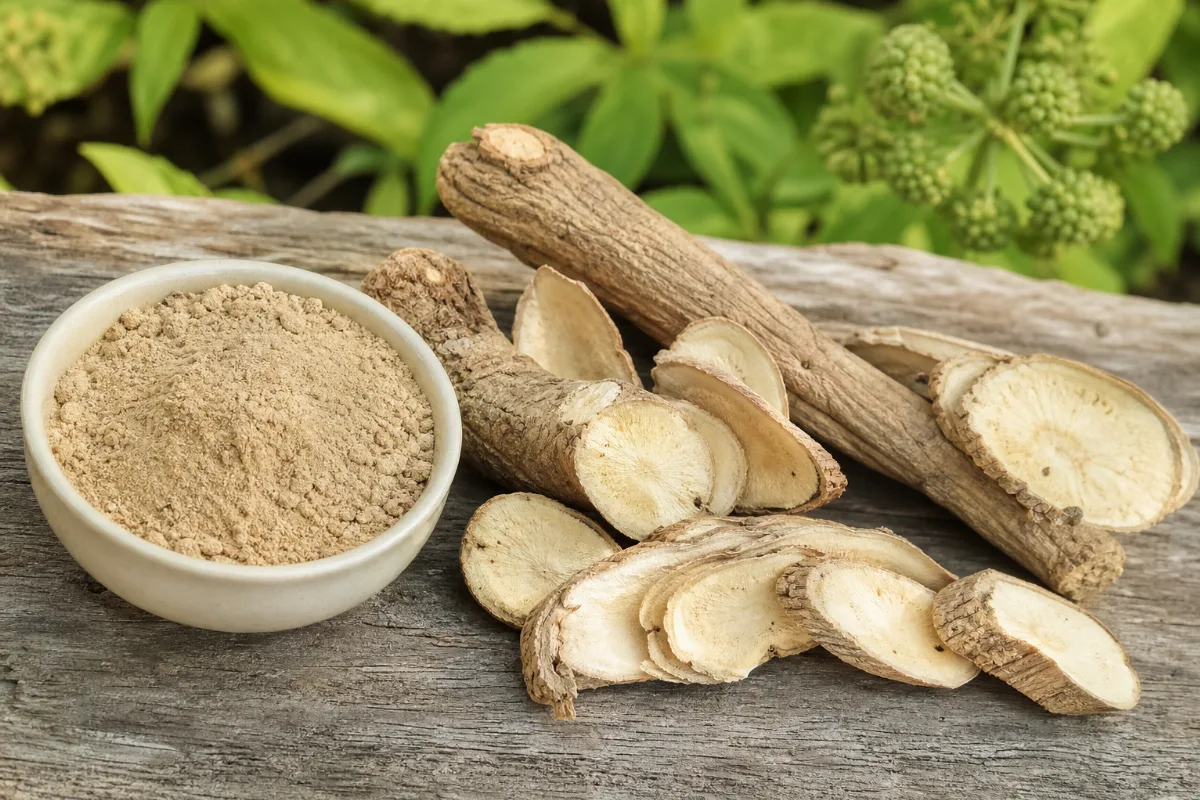
Two parts matter. The root and root bark are the medicine, mostly as an alcohol tincture. The young shoots are food, usually cooked.
What makes it distinctive
Russian researchers added it to the state pharmacopoeia in the 1950s as a local alternative to ginseng. Its main compounds are saponins built on oleanolic acid, such as araloside A. Reviewers describe it as an adaptogen with a possible focus on the heart and on sugar and fat handling, but this comes mostly from animal studies.
Historical and current uses
In Russia the root tincture is an official herbal medicine used for tiredness, low mood after illness or injury, and low blood pressure. In China, Korea and Japan the plant has been used for diabetes and joint disease, and the shoots are a seasonal food.
What the research shows
The evidence is sparse. The 'tonic' claims come from a narrative review of old Russian studies; the abstract gives no numbers and we could not read the studies. We found two small human trials. One, in 148 people with type 2 diabetes, tested a root bark extract added to glipizide for 8 weeks. The other, in 32 women, tested a two-herb product alongside a low-calorie diet. Everything else is mouse, rat or cell work, often with leaf extracts rather than the root used in tinctures.
Only abstracts were read. No trial has looked at long-term safety in people.
At a glance
Traditional uses history, not proof
- Russian root tincture as a stimulating tonic since the 1950s
- East Asian folk use for diabetes and joint pain
- Young shoots (taranome) eaten as a spring vegetable in Japan
Studied for research
- Stress and tiredness, very low certainty (reported by one review of old Russian trials)
- Type 2 diabetes alongside glipizide, low certainty (one 8-week trial)
- Weight and blood fats, very low certainty (one small two-herb trial)
Main compounds
- Oleanolic acid saponins such as araloside A
- Polysaccharides and flavonoids
Common forms
- Alcohol tincture of the root (Russia)
- Root bark extract (used in a Chinese diabetes trial)
- Cooked young shoots as food
Research links: Shikov 2016 review of Aralia pharmacology (PubMed) · Xia 2021 review: a medicinal and edible plant (PubMed) · Research Library · Genes & Biomarkers Library
The plant and its history
- Accepted scientific name
- Aralia elata (Miq.) Seem. (GBIF accepted species)
- Naming authority
- Seemann
- Synonyms
- Aralia mandshurica Rupr. & Maxim. (listed by GBIF as a synonym of Aralia elata); Aralia elata var. mandshurica (Rupr. & Maxim.) J.Wen (name used in the Shikov 2016 review)
- Common names
- Manchurian aralia (English); Japanese angelica tree (English); Korean angelica tree (English); Chinese angelica tree (English); Taranome (young shoots) (Japanese); Long ya mu / ci long ya (Chinese); Aralia, Manchurian ginseng (in Russian trade) (English)
- Botanical family
- Araliaceae (ginseng family, order Apiales), the same family as Panax (true ginseng) and Eleutherococcus (eleuthero).
- Classification
- Plantae > Tracheophyta > Magnoliopsida > Apiales > Araliaceae > Aralia > Aralia elata
- Native range
- Northeast Asia: Far East Russia, Northeast China, Korea and Japan (stated by the reviews; not verified from a primary source).
- Habitat
- Not verified in a source read.
- What the plant looks like
- Roots: Roots and root bark are the Russian pharmacopoeia part (Shikov 2016).; Stems: A prickly woody shrub or small tree (general knowledge; not verified here).; Leaves: Large compound leaves. Leaf extracts are the animal-tested material.; Flowers: Not verified.; Fruit: Not verified.
- Cultivation
- Not verified from a source read.
- Harvest and processing
- Young shoots (taranome) are eaten as a vegetable in Japan (Xia 2021 describes it as a wild vegetable). Preparation details were not verified.
- Look-alikes and adulterants
- Name: Eleutherococcus senticosus (eleuthero, 'Siberian ginseng'); Note: Different genus in the same family (GBIF). Often grouped with Aralia as a Far East adaptogen. Evidence and safety for one do not apply to the other.; Name: Panax ginseng (Asian ginseng); Note: Different genus in the same family; true ginseng.; Name: Other Aralia species (for example Aralia cordata, Aralia racemosa); Note: Other species with their own uses. A label saying only 'Aralia' does not tell you which species it is.
- Sustainability and conservation
- Not verified.
The plant and the parts used
Traditional use and history history, not clinical proof
| Tradition or era | Documented use | Source |
|---|---|---|
| USSR and Russia, 1950s onward | Aralia root tincture entered official Soviet medicine as a plant tonic ('phytoadaptogen') in the 1950s, listed in the USSR Pharmacopoeia and the Russian Register of Medicinal Preparations. | p27765361 |
| Chinese, Korean and Japanese folk medicine | Used for diabetes and rheumatoid arthritis; young shoots eaten as a spring vegetable. | p33438534 |
Traditional use shows how a plant was used. It does not show that a supplement works or is safe today.
What is inside, and how it may work
What the plant contains and how those compounds act in cells and animals. Laboratory and animal mechanisms are not proven effects in people.
Main compounds
| Compound | Family | Where it is concentrated | Activity studied | Level of evidence |
|---|---|---|---|---|
| Oleanolic acid (the base of the saponins) PubChem 10494 | pentacyclic triterpene (oleanane) | Root bark, leaves | The saponin 'sugar chains' sit on oleanolic acid. Free oleanolic acid is a common plant triterpene with many lab effects. No content figure was found. 3 | Laboratory research |
| Araloside A (chikusetsusaponin IV) PubChem 10079497 | oleanane triterpene saponin | Root bark | Araloside A is a named Aralia saponin (PubChem also lists it as chikusetsusaponin IV). A 2025 paper title says chikusetsu saponin IVa improves autophagy in ageing; we read only the title, so this is not verified and is cell or animal work at best. 3 | Laboratory research |
| Calenduloside E (oleanolic acid 3-O-glucuronide) PubChem 176079 | oleanane triterpene saponin | Root bark, leaves (from lab papers) | Studied in cell models for blood-vessel cell protection. Cell evidence only. 3 | Laboratory research |
| Aralia-saponins (including V and VI) | oleanane saponins | Leaves | Measured in rat blood after leaf extract by mouth; no absorption figures in the abstract. 13 | Animal research |
| Polysaccharides and flavonoids | carbohydrate and polyphenol groups | Not specified | Reported in reviews as the other main groups of compounds, with antioxidant and blood-sugar effects in lab studies. 3 | Laboratory research |
Mechanisms, receptors and pathways
| Target or pathway | Gene or receptor | What was found | Level |
|---|---|---|---|
| Stress resistance (adaptogen concept) | Not identified | Animal studies summarised by Shikov 2016 show increased physical working capacity and protection against cold, immobilisation and low air pressure. Antioxidant effects and calcium-pump (SERCA) enhancement are reported in isolated organs and cells. 12 | Animal research |
| Heart rhythm | Not identified | Aralia mandshurica extract reduced rhythm problems after coronary artery blockage in rats; it did not reduce the size of damage. 10 | Animal research |
| Liver insulin signalling and fat build-up | PI3K/Akt, SREBP-1 and others | Aralia elata extract reduced liver fat and improved glucose tolerance in high-fat-diet mice. 4 | Animal research |
Absorption, metabolism and elimination
- Absorption
- No human data. Two saponins were measurable in rat blood after leaf extract by mouth (p25687802).
- Distribution
- No data.
- Metabolism
- No data.
- Elimination
- No data.
- Bioavailability
- Not established in humans.
Isolated compounds versus whole extracts
Saponins are the main focus, but no single compound has been shown to account for the traditional effects in people. Most human reports use whole root tincture or root bark extract.
Nutritional composition
Young shoots (taranome) are a seasonal vegetable in Japan, per the reviews read. No nutrient figures were verified, so none are given.
1 low certainty2 very low certainty4 not enough evidence
What was looked at
The 7 benefits and uses checked for Manchurian Aralia, each with how strong the evidence is. Tap one to open it.
- Stress, tiredness and mental performance (adaptogen use)Very low certainty
- Tiredness and low mood after head injury or in nerve conditionsNot enough evidence
- Heart protection and rhythm (rat studies only)Not enough evidence
- Type 2 diabetes (added to a diabetes drug)Low certainty
- Body fat and blood fats in overweight womenVery low certainty
- Fatty liver and liver enzymes (mouse studies only)Not enough evidence
- Low blood pressure (arterial hypotension)Not enough evidence
Lab markers tracked in the studies
Mental performance and working capacityHbA1c (3-month average blood sugar)LDL cholesterolBlood triglycerides
What is Manchurian Aralia good for?
The main proposed uses and how strong the evidence is. Almost all of it is weak or unverified.
Benefits, one by one
Each card is a research question, not a promise. Tap a goal to filter. Open a card to see the studies, doses and limits.
Stress, tiredness and mental performance (adaptogen use)
Very low certaintyIn Russia, Aralia root tincture is sold as a tonic to ease tiredness and stress and to sharpen attention. A 2016 review says old Russian trials found better mental performance and endurance in healthy people. We could not open those trials and no modern, well-controlled study backs this up.
1 studiesMostly alcohol tincture of the root in Russian practice. Not stated i…
Studies, doses and limits
What the trials found
One narrative review (Shikov 2016) summarises older Russian clinical studies and reports raised mental performance, working capacity and endurance of movement in healthy subjects, and promising stress relief in people whose jobs need high attention. The abstract gives no trial sizes or numbers, and we did not read the original studies.
Results
Positive as reported by the reviewers, but unverified. No modern randomised trial of Aralia for stress or fatigue was found in our PubMed searches.
Effect sizes as reported
No effect sizes available in the abstract.
Why this rating
Only a narrative review of mostly old, non-English reports with no numbers in the abstract. No independent modern trial found.
Form and dose studied
Mostly alcohol tincture of the root in Russian practice. Not stated in the abstract.
Who was studied
Healthy adults and people with tiredness, as summarised by reviewers.
Limits
Old trials, probably small, unclear blinding. Positive framing by authors who promote Russian adaptogens.
Why researchers looked
Soviet researchers in the 1950s looked for a local, Far East alternative to ginseng. Aralia root was added to the USSR pharmacopoeia as a 'stimulating tonic'.
Traditional use
The root bark is used in Chinese, Korean and Japanese folk medicine. In Russia the root tincture became an official medicine.
Proposed mechanism Preliminary mechanism
Animal work cited in the review points to protection against several stresses (cold, immobilisation, low air pressure). These are rodent findings and do not show how it would work in people.
A proposed mechanism does not show that the effect happens in people.
Tinctures contain alcohol. Hold off on use if you are pregnant or taking blood pressure or diabetes medicines (see Safety).
Tiredness and low mood after head injury or in nerve conditions
Not enough evidenceThe same review says Russian clinical trials found Aralia useful for asthenia (weakness and exhaustion) after traumatic brain injury and in some neurological conditions with low mood. This is a report of old trials we could not check.
1 studiesNot stated.
Studies, doses and limits
What the trials found
Shikov 2016 states that numerous clinical trials showed efficiency of Aralia preparations in traumatic brain injury with asthenia, neurasthenia and depression, and in neurological diseases with astheno-depressive syndromes. The abstract gives no numbers, trial designs or control groups.
Results
Reported benefit, no data visible.
Effect sizes as reported
Not available.
Why this rating
We could not verify any single trial. Claims come from one narrative review summarising old reports.
Who was studied
People with post-head-injury asthenia and neurological disease, as reported.
Limits
Unknown designs, no numbers, likely lack of blinding and placebo control in old studies.
Why researchers looked
The root was introduced in the USSR as a tonic for exhaustion states.
Traditional use
Used in Russian clinics from the 1950s onward, according to the review.
Proposed mechanism Unknown
No human mechanism has been shown.
A proposed mechanism does not show that the effect happens in people.
Anyone with head injury, depression or a neurological disease needs medical care first; do not replace treatment with a tonic.
Heart protection and rhythm (rat studies only)
Not enough evidenceIn rats, Aralia extract made the heart more resistant to rhythm problems after a blocked artery. No human data exist for this.
2 studiesRat extract, dose not stated in abstract.
Studies, doses and limits
Results
In rats, fewer rhythm problems during a 45-minute artery blockage; no change in dead tissue size.
Effect sizes as reported
Not available in the abstract.
Why this rating
Animal and lab evidence only.
Form and dose studied
Rat extract, dose not stated in abstract.
Who was studied
Rats.
Limits
Not tested in people; animal model.
Why researchers looked
Reviewers highlight a heart-specific action, unlike other adaptogens.
Traditional use
The review says Aralia is thought a good adaptogen choice for people at higher heart risk. That is a suggestion, not a tested claim.
Proposed mechanism Preliminary mechanism
Rat work and cell studies point to calcium-pump and cell-stress pathways. Rodent and lab findings only.
A proposed mechanism does not show that the effect happens in people.
Do not use Aralia in place of heart medicines or to treat heart rhythm problems.
Type 2 diabetes (added to a diabetes drug)
Low certaintyOne 8-week Chinese trial of 148 people with type 2 diabetes found that adding Aralia root bark extract to the drug glipizide lowered LDL cholesterol more than glipizide alone, and gave a borderline extra drop in HbA1c. It does not show Aralia works alone.
2 studiesRoot bark extract added to glipizide; dose not stated in abstract.
Studies, doses and limits
What the trials found
RCT (Liu 2015): 148 adults with type 2 diabetes, glipizide alone versus glipizide plus Aralia root bark extract for 8 weeks. Blood sugar markers fell in both groups. Extra HbA1c drop with the combination had P = 0.06 (not clearly significant). LDL cholesterol fell more with the combination (P = 0.04).
Results
Borderline for blood sugar, modest for LDL cholesterol, short trial.
Effect sizes as reported
HbA1c between-group P = 0.06; LDL-C between-group P = 0.04. Sizes of the drops not in the abstract.
Why this rating
One short, moderate-size trial; no hard outcomes; blood sugar result not clearly significant; single research group.
Form and dose studied
Root bark extract added to glipizide; dose not stated in abstract.
Who was studied
Adults with type 2 diabetes already taking glipizide.
Limits
8 weeks only. Species not stated. Not tested alone or against other herbs.
Why researchers looked
Aralia root bark is a folk remedy for diabetes in East Asia, and rodent studies show glucose-lowering effects.
Traditional use
Used for diabetes in Chinese, Korean and Japanese folk medicine (Xia 2021 review).
Proposed mechanism Preliminary mechanism
Mouse studies suggest better insulin signalling in the liver. Not shown in people.
A proposed mechanism does not show that the effect happens in people.
Because it may add to blood sugar drugs, low blood sugar is possible. Tell your doctor or pharmacist before combining.
Body fat and blood fats in overweight women
Very low certaintyA small trial of 32 women on a low-calorie diet found a two-herb product containing Aralia (Aralox) lowered body weight, fat and triglycerides more than placebo. Because it also contained another plant, the effect of Aralia alone is unknown.
2 studiesAralia mandshurica + Engelhardtia chrysolepis extracts. Dose not stat…
Studies, doses and limits
What the trials found
RCT (Abidov 2006): 32 women with non-diabetic obesity on a low-calorie diet received the two-extract product Aralox or placebo. Weight, fat weight and triglycerides were lower with the product.
Results
Positive in a very small trial of a combination product.
Effect sizes as reported
Numbers not in the abstract.
Why this rating
Tiny trial, combination product, no numbers visible, industry links unknown, no replication found.
Form and dose studied
Aralia mandshurica + Engelhardtia chrysolepis extracts. Dose not stated in abstract.
Who was studied
Women with non-diabetic obesity.
Limits
Cannot separate Aralia's part. Short, small, single-centre.
Why researchers looked
Russian adaptogen researchers looked at Aralia for metabolic syndrome and obesity.
Traditional use
Reviewers suggest it as an adaptogen for obesity and diabetes (Shikov 2016). That is an opinion, not a tested claim.
Proposed mechanism Human biomarker
The trial reported lower perilipin in fat cells and higher hormone-sensitive lipase activity, which are fat-breakdown markers. Whether these explain the weight change is not shown.
A proposed mechanism does not show that the effect happens in people.
Not a substitute for medical weight care.
Fatty liver and liver enzymes (mouse studies only)
Not enough evidenceIn mice on fatty diets, Aralia elata extracts and its saponins reduced liver fat and liver enzymes. No human trial exists.
2 studiesMouse doses only.
Studies, doses and limits
Results
Less liver fat and lower ALT and AST in mice.
Effect sizes as reported
Not in abstracts.
Why this rating
Animal and cell studies only.
Form and dose studied
Mouse doses only.
Who was studied
Mice, liver cells.
Limits
Not tested in people.
Why researchers looked
Folk use for hepatitis and diabetes; saponins studied in fatty-liver mice.
Traditional use
Folk use for hepatitis is mentioned in the Chinese literature (Luo 2015).
Proposed mechanism Preliminary mechanism
Better insulin signalling and less liver inflammation in mice.
A proposed mechanism does not show that the effect happens in people.
See Safety for what is and is not known about human liver risk.
Low blood pressure (arterial hypotension)
Not enough evidenceThe 2016 review says Russian clinical trials found Aralia helpful in people with low blood pressure. It gives no numbers, and the tincture is not a proven treatment.
1 studiesNot stated.
Studies, doses and limits
What the trials found
Only the review's statement. We found no trial of our own to read.
Results
Reported benefit, unverified.
Why this rating
One review sentence with no data.
Who was studied
People with low blood pressure.
Limits
No design details.
Why researchers looked
The root tincture was classed as a stimulant tonic in USSR practice.
Traditional use
Reported use for hypotension in Russian medicine (Shikov 2016).
Proposed mechanism Unknown
Unknown.
A proposed mechanism does not show that the effect happens in people.
If a tonic raises blood pressure it could be a problem for people with high blood pressure (see Safety).
Connections to the rest of health
How Manchurian Aralia connects to the rest of our health knowledge graph. Every link says what kind of connection it is. A safety link (for example to the liver) is a warning, not a benefit. A study that merely mentions a topic never creates a benefit link.
Explore every connection: goals, body systems, organs, symptoms, genes
A. Wellness goals
| Connected to | Kind of connection | Evidence status | Context | Studies |
|---|---|---|---|---|
| Stress Relief | Potential benefit | Very low certainty | Stress, tiredness and mental performance (adaptogen use): In Russia, Aralia root tincture is sold as a tonic to ease tiredness and stress and to sharpen attention. A 2016 review says old Russian trials found better mental performance and endurance in healthy people. We could not open those trials and no modern, well-controlled study backs this up. | 12 |
| Energy Fatigue | Potential benefit | Very low certainty | Stress, tiredness and mental performance (adaptogen use): In Russia, Aralia root tincture is sold as a tonic to ease tiredness and stress and to sharpen attention. A 2016 review says old Russian trials found better mental performance and endurance in healthy people. We could not open those trials and no modern, well-controlled study backs this up. Tiredness and low mood after head injury or in nerve conditions: The same review says Russian clinical trials found Aralia useful for asthenia (weakness and exhaustion) after traumatic brain injury and in some neurological conditions with low mood. This is a report of old trials we could not check. | 12 |
| Mood Support | Potential benefit | Not enough evidence | Tiredness and low mood after head injury or in nerve conditions: The same review says Russian clinical trials found Aralia useful for asthenia (weakness and exhaustion) after traumatic brain injury and in some neurological conditions with low mood. This is a report of old trials we could not check. | 12 |
| Heart Health | Not enough evidence | Heart protection and rhythm (rat studies only): In rats, Aralia extract made the heart more resistant to rhythm problems after a blocked artery. No human data exist for this. | 10 12 | |
| Blood Sugar Support | Potential benefit | Low certainty | Type 2 diabetes (added to a diabetes drug): One 8-week Chinese trial of 148 people with type 2 diabetes found that adding Aralia root bark extract to the drug glipizide lowered LDL cholesterol more than glipizide alone, and gave a borderline extra drop in HbA1c. It does not show Aralia works alone. | 8 14 |
| Cholesterol | Potential benefit | Low certainty | Type 2 diabetes (added to a diabetes drug): One 8-week Chinese trial of 148 people with type 2 diabetes found that adding Aralia root bark extract to the drug glipizide lowered LDL cholesterol more than glipizide alone, and gave a borderline extra drop in HbA1c. It does not show Aralia works alone. Body fat and blood fats in overweight women: A small trial of 32 women on a low-calorie diet found a two-herb product containing Aralia (Aralox) lowered body weight, fat and triglycerides more than placebo. Because it also contained another plant, the effect of Aralia alone is unknown. | 8 14 1 12 |
| Weight Management | Potential benefit | Very low certainty | Body fat and blood fats in overweight women: A small trial of 32 women on a low-calorie diet found a two-herb product containing Aralia (Aralox) lowered body weight, fat and triglycerides more than placebo. Because it also contained another plant, the effect of Aralia alone is unknown. | 1 12 |
| Liver Health | Not enough evidence | Fatty liver and liver enzymes (mouse studies only): In mice on fatty diets, Aralia elata extracts and its saponins reduced liver fat and liver enzymes. No human trial exists. | 4 9 | |
| Blood Pressure Support | Potential benefit | Not enough evidence | Low blood pressure (arterial hypotension): The 2016 review says Russian clinical trials found Aralia helpful in people with low blood pressure. It gives no numbers, and the tincture is not a proven treatment. | 12 |
B. Body systems
| Connected to | Kind of connection | Evidence status | Context | Studies |
|---|---|---|---|---|
| Nervous System | Biological association | Very low certainty | Studied for: Stress, tiredness and mental performance (adaptogen use) Studied for: Tiredness and low mood after head injury or in nerve conditions | 12 |
| Cardiovascular System | Biological association | Not enough evidence | Studied for: Heart protection and rhythm (rat studies only) Studied for: Type 2 diabetes (added to a diabetes drug) | 10 12 8 14 |
| Endocrine System | Biological association | Low certainty | Studied for: Type 2 diabetes (added to a diabetes drug) | 8 14 |
| Metabolic System | Biological association | Very low certainty | Studied for: Body fat and blood fats in overweight women | 1 12 |
| Digestive System | Biological association | Not enough evidence | Studied for: Fatty liver and liver enzymes (mouse studies only) | 4 9 |
E. Health conditions
| Connected to | Kind of connection | Evidence status | Context | Studies |
|---|---|---|---|---|
| Type 2 diabetes | Drug or supplement interaction | Low certainty | Added blood sugar lowering in an 8-week trial; ask a doctor or pharmacist. Preparation or compound: Aralia root bark extract with glipizide |
8 |
| Pregnancy | Contraindication | Not enough evidence | No safety data and alcohol in tinctures. Preparation or compound: Aralia root tincture |
12 |
| Type 2 diabetes | Potential benefit | Low certainty | Added blood sugar and LDL lowering with glipizide in one 8-week trial. Preparation or compound: Aralia root bark extract plus glipizide |
8 |
I. Biomarkers
| Connected to | Kind of connection | Evidence status | Context | Studies |
|---|---|---|---|---|
| Mental performance and working capacity | Biological association | Very low certainty | Measured in trials: raised. A lab change is not the same as a health benefit. | 12 |
| HbA1c (3-month average blood sugar) | Biological association | Low certainty | Measured in trials: lowered. A lab change is not the same as a health benefit. | 8 |
| LDL cholesterol | Biological association | Low certainty | Measured in trials: lowered. A lab change is not the same as a health benefit. | 8 |
| Blood triglycerides | Biological association | Very low certainty | Measured in trials: lowered. A lab change is not the same as a health benefit. | 1 |
K. Biological pathways
| Connected to | Kind of connection | Evidence status | Context | Studies |
|---|---|---|---|---|
| PI3K/Akt insulin signalling (liver) | Preliminary mechanism | Animal | Altered in high-fat-diet mice given Aralia elata extract. | 4 |
L. Active compounds
| Connected to | Kind of connection | Evidence status | Context | Studies |
|---|---|---|---|---|
| Oleanolic acid (the base of the saponins) | Biological association | In vitro | The saponin 'sugar chains' sit on oleanolic acid. Free oleanolic acid is a common plant triterpene with many lab effects. No content figure was found. Preparation or compound: Root bark, leaves |
3 |
| Araloside A (chikusetsusaponin IV) | Biological association | In vitro | Araloside A is a named Aralia saponin (PubChem also lists it as chikusetsusaponin IV). A 2025 paper title says chikusetsu saponin IVa improves autophagy in ageing; we read only the title, so this is not verified and is cell or animal work at best. Preparation or compound: Root bark |
3 |
| Calenduloside E (oleanolic acid 3-O-glucuronide) | Biological association | In vitro | Studied in cell models for blood-vessel cell protection. Cell evidence only. Preparation or compound: Root bark, leaves (from lab papers) |
3 |
| Aralia-saponins (including V and VI) | Biological association | Animal | Measured in rat blood after leaf extract by mouth; no absorption figures in the abstract. Preparation or compound: Leaves |
13 |
| Polysaccharides and flavonoids | Biological association | In vitro | Reported in reviews as the other main groups of compounds, with antioxidant and blood-sugar effects in lab studies. | 3 |
Each connection is stored with the ingredient, the connected record, the kind of connection, the evidence status, the supporting studies, the preparation or compound involved, and a review date (last reviewed October 25, 2026).
The evidence
The research centre for Manchurian Aralia. Every record here was checked against PubMed or the publisher's page; we never list a study we have not verified.
Evidence by outcome
Bars show how many studies we found for each outcome, not how well it works. People are added up across trials only (reviews are not added, to avoid double counting).
How we rate evidence
High certainty
Several well-run trials or reviews agree; further research is unlikely to change the picture much.
Moderate certainty
Good trials point the same way, but some doubt remains.
Low certainty
Small, short or inconsistent trials. The finding could change with better research.
Very low certainty
Very little or very weak human data. Treat as a possibility only.
Mixed findings
Trials or reviews disagree with each other.
Not enough evidence
Not enough human research to say either way.
Evidence against
Good research found no benefit, or found harm.
We take the reviewers' own risk-of-bias and GRADE statements where they exist, and otherwise judge from study size, design, consistency, directness and whether a product matches what is sold. Many publications do not make evidence high. Method note: We searched PubMed for human trials, reviews and toxicity studies of Aralia elata and Aralia mandshurica, and checked GBIF and PubChem for names and compounds. Only abstracts were read. EU, LiverTox, LactMed and NCCIH pages could not be confirmed and are marked not verified. Certainty ratings are the compiler's own reading, not formal grades.
Study library: every study we checked 18
| Study | Design | People | Product, dose, length | Result |
|---|---|---|---|---|
| Abidov 2006 Effects of Aralia mandshurica and Engelhardtia chrysolepis extracts on some parameters of lipid metabolism in women with nondiabetic obesity. Bulletin of Experimental Biology and Medicine · PMID 17073156 |
Controlled trial |
32 Women with non-diabetic obesity on a low-calorie diet |
Aralox: combination of Aralia mandshurica and Engelhardtia chrysolepis extracts · vs Placebo |
Aralox plus a low-calorie diet lowered total body weight and fat weight, reduced perilipin content in fat cells and plasma triglycerides, and raised hormone-sensitive lipase activity compared with placebo. Methods, limits and fundingOutcomes: Body weight, fat weight, perilipin in fat cells, triglycerides, hormone-sensitive lipase Limitations: Only 32 women. A two-herb combination, so the Aralia part cannot be separated. Dose, length and numbers were not in the abstract. Funding and any link to the product's makers are not stated in the abstract. Funding and conflicts: Not stated in the abstract; industry links are unknown. Read: abstract |
| Frolova 2025 Comparison of Analytical Methods Used for Standardization of Triterpenoid Saponins in Herbal Monographs Included in the Russian and Other Pharmacopeias. Phytochemical Analysis · PMID 39971278 · DOI |
Narrative review n/a |
Pharmacopeial texts | Aralia elata roots and other saponin herbs root |
Compares pharmacopeial standardisation methods for five saponin herbs including Aralia elata roots; common methods are HPTLC and HPLC; the Russian Pharmacopeia also uses titrimetry and spectrophotometry. Methods, limits and fundingOutcomes: Analytical methods for standardising saponins Limitations: About quality testing methods, not health effects. Funding and conflicts: Not stated in abstract. Read: abstract |
| Hu 2025 Extraction and biological activities of polysaccharides and saponins from Aralia elata: a review. Natural Product Research · PMID 39731422 · DOI |
Narrative review animal |
Lab and animal studies | Aralia elata polysaccharides and saponins various |
Describes the plant as perennial woody Araliaceae of Northeast China, eaten and used as medicine in the Changbai Mountain region, with polysaccharides, saponins and flavonoids as main components and reported cardiovascular protective, anti-tumour, anti-fatigue and blood-sugar-lowering effects in lab/animal studies. Methods, limits and fundingOutcomes: Extraction and biological activity Limitations: Mostly lab and animal evidence. Funding and conflicts: Not stated in abstract. Read: abstract |
| Hwang 2016 Extracts from Aralia elata (Miq) Seem alleviate hepatosteatosis via improving hepatic insulin sensitivity. BMC Complementary and Alternative Medicine · PMID 26438035 |
Animal study animal |
High-fat-diet mice and HepG2 liver cells | Aralia elata extract 100 and 300 mg/kg in mice 4 weeks |
The extract reduced fat build-up in liver cells and in mice and improved glucose tolerance and insulin signalling in the liver. Methods, limits and fundingOutcomes: Liver fat, insulin signalling, glucose tolerance Limitations: Mice and cells only. Funding and conflicts: Government research support. Read: abstract |
| Li 2016 Acute and sub-chronic toxicity study of the ethanol extract from leaves of Aralia elata in rats. Journal of Ethnopharmacology · PMID 26456344 |
Animal study animal |
Rats | Ethanol extract of Aralia elata leaves (ELE) leaf Acute 1.00 to 10.00 g/kg; 12 weeks at 60, 180, 540 mg/kg 12 weeks + 4 weeks recovery |
Single-dose deaths rose with dose. Oral LD50 was 3.16 g/kg in female and 5.84 g/kg in male rats. Over 12 weeks, haemoglobin and MCV rose, and some protein measures and organ weights (thymus, brain, adrenal) differed from controls. LD50 3.16 g/kg (female), 5.84 g/kg (male) Methods, limits and fundingOutcomes: LD50, blood tests, organ weights, tissue changes Limitations: Leaf extract, not the root bark used in tinctures. Rats only. Funding and conflicts: Not stated in abstract. Read: abstract |
| Li 2017 Sub-chronic safety evaluation of the ethanol extract of Aralia elata leaves in Beagle dogs. Regulatory Toxicology and Pharmacology · PMID 27156779 |
Animal study animal |
Beagle dogs | Ethanol extract of Aralia elata leaves (ELE) leaf 50, 100 and 200 mg/kg 12 weeks + 4 weeks recovery |
At the high dose, food intake and body weight fell and treatment-related side effects and deaths were seen in high-dose female dogs. The authors set the no-observed-adverse-effect level at 100 mg/kg in dogs. NOAEL 100 mg/kg Methods, limits and fundingOutcomes: Clinical signs, ECG, blood tests, organ pathology Limitations: Leaf extract, dogs. Not a human dose guide. Funding and conflicts: Not stated in abstract. Read: abstract |
| Li 2021 The evaluation of anti-breast cancer activity and safety pharmacology of the ethanol extract of Aralia elata Seem. leaves. Drug and Chemical Toxicology · PMID 31025581 |
Animal study animal |
Mice and beagle dogs; human cancer cell lines | Ethanol extract of Aralia elata leaves leaf |
In mice and dogs, no treatment-related changes in behaviour, heart rate, ECG intervals, breathing or blood pressure were seen at the doses tested. Methods, limits and fundingOutcomes: Behaviour, heart rate, ECG, blood pressure, breathing Limitations: Animals only; leaf extract. Funding and conflicts: Not stated in abstract. Read: abstract |
| Liu 2015 Effects of combined therapy with glipizide and Aralia root bark extract on glycemic control and lipid profiles in patients with type 2 diabetes mellitus. Journal of the Science of Food and Agriculture · PMID 25042995 |
Controlled trial |
148 Adults with type 2 diabetes |
Aralia root bark extract (ARBE) plus glipizide root bark 8 weeks · vs Glipizide alone |
Blood sugar fell in both groups. HbA1c fell slightly more with glipizide plus ARBE, but the extra drop was only marginally significant. LDL cholesterol fell significantly more with the combination. HbA1c between-group P = 0.06; LDL-C between-group P = 0.04 (Marginal for HbA1c; no confidence intervals in abstract) Methods, limits and fundingOutcomes: HbA1c, fasting glucose, 2-hour glucose, total cholesterol, LDL cholesterol Limitations: Only 8 weeks. The abstract says 'Aralia' without a species; the plant was probably the Chinese Aralia elata but we did not confirm. Open-label design not stated. No hard outcomes (heart attacks, complications). Funding and conflicts: Chinese government research support noted in the record; no company conflict stated in abstract. Read: abstract |
| Luo 2015 Total aralosides of aralia elata (Miq) seem (TASAES) ameliorate nonalcoholic steatohepatitis by modulating IRE1α-mediated JNK and NF-κB pathways in ApoE-/- mice. Journal of Ethnopharmacology · PMID 25655997 |
Animal study animal |
ApoE-/- mice on high-fat diet | Total aralosides (saponins) of Aralia elata 75 and 150 mg/kg per day 12 weeks |
Mice given the saponin extract had lower ALT and AST, less liver fat, lower inflammatory markers and fewer dying liver cells than untreated mice on the fatty diet. Methods, limits and fundingOutcomes: Liver enzymes, liver fat, inflammation markers Limitations: Mouse model only. Funding and conflicts: Not stated in abstract. Read: abstract |
| Maslov 2007 [Cardioprotective and antiarrhythmic properties of preparations from Leuzea carthamoides, Aralia mandshurica, and Eleutherococcus senticosus]. Eksperimentalnaia i Klinicheskaia Farmakologiia · PMID 18318196 |
Animal study animal |
Rats | Aralia mandshurica extract (AME) |
Pretreating rats with Aralia mandshurica extract made the heart more resistant to rhythm problems during a 45-minute coronary artery blockage. It did not change the size of dead heart tissue relative to the at-risk area. In the same paper, Eleutherococcus extract protected against stress damage through opioid peptides; this was not shown for Aralia. Methods, limits and fundingOutcomes: Heart rhythm after blocked coronary artery in rats Limitations: Rat study only. Says nothing about people. Funding and conflicts: Not stated in abstract. Read: abstract |
| Shikov 2014 Medicinal plants of the Russian Pharmacopoeia; their history and applications. Journal of Ethnopharmacology · PMID 24742754 · DOI |
Narrative review |
Review of 32 plants found only in the USSR pharmacopoeia | Plants of the USSR Pharmacopoeia (11th edition) various |
Describes how Russian herbal medicine is an official branch of medicine and lists plants found only in the USSR pharmacopoeia (Aralia elata root is among the saponin herbs compared in a later review, p39971278). The abstract does not mention Aralia by name and gives no result for it. It notes some cases of concern about product safety and tolerability. Methods, limits and fundingOutcomes: History, effects and safety of Russian pharmacopoeia plants Limitations: Aralia is not named in the abstract; only the history of Russian official herbal medicine is supported by what we read. Funding and conflicts: Not stated in abstract. Read: abstract |
| Shikov 2016 Aralia elata var. mandshurica (Rupr. & Maxim.) J.Wen: An overview of pharmacological studies. Phytomedicine · PMID 27765361 · DOI |
Narrative review |
Animal, lab and human studies of Aralia root preparations, mostly from the former USSR | Aralia root tincture and other root preparations root |
The authors say Aralia root preparations have been an official medicine in the USSR and Russia since the 1950s. They report animal work showing greater physical working capacity and protection against several stresses. They also report that clinical trials in the former USSR showed benefit in people with asthenia after head injury, neurological disease with low mood and tiredness, and low blood pressure, that mental performance rose in healthy people, and that Aralia plus the diabetes drug glipizide, and Aralia plus Engelhardtia extract for obesity, gave added effects. Methods, limits and fundingOutcomes: Pharmacology, clinical effects and safety of Aralia root preparations Limitations: A narrative (not systematic) review. The abstract does not give trial sizes, designs or numbers, and many of the cited human studies are old Russian-language reports we did not open. The authors' wording is positive and the conclusion goes beyond what the abstract shows. Funding and conflicts: No funding statement in the abstract. Authors are from a Russian research institute and have published widely on Russian adaptogens. Read: abstract |
| Wang 2015 Determination and pharmacokinetic study of two triterpenoid saponins in rat plasma after oral administration of the extract of Aralia elata leaves by UHPLC-ESI-MS/MS. Journal of Chromatography B · PMID 25687802 |
Animal study animal |
Rats | Aralia elata leaf extract (Aralia-saponin V and VI) leaf |
A method was validated to measure two saponins in rat blood after the leaf extract was given by mouth; the abstract gives no absorption figures. Methods, limits and fundingOutcomes: Blood levels of two saponins Limitations: Rats; leaf extract. Funding and conflicts: Not stated in abstract. Read: abstract |
| Xia 2021 A Review on a Medicinal and Edible Plant: Aralia elata (Miq.) Seem. Mini-Reviews in Medicinal Chemistry · PMID 33438534 · DOI |
Narrative review animal |
Lab, animal and some human literature | Aralia elata various |
Describes Aralia elata as a prized wild vegetable and a folk treatment for diabetes and rheumatoid arthritis in East Asia, with reported effects on tumours, heart and brain blood vessel disease and diabetes. The authors say the exact action mechanisms must still be proven. Methods, limits and fundingOutcomes: Chemistry and biological activity Limitations: Narrative review; no ratings of evidence quality. Funding and conflicts: Not stated in abstract. Read: abstract |
| s-gbif-aralia-elata GBIF Backbone: Aralia elata (Miq.) Seem. · Source |
Reference database n/a |
Methods, limits and fundingRead: full-text | ||
| s-gbif-eleutherococcus-senticosus GBIF Backbone: Eleutherococcus senticosus (Rupr. & Maxim.) Maxim. · Source |
Reference database n/a |
Methods, limits and fundingRead: full-text | ||
| s-pubchem-araloside-a PubChem CID 10079497: Araloside A (chikusetsusaponin IV) · Source |
Reference database n/a |
Methods, limits and fundingRead: full-text | ||
| s-pubchem-oleanolic-acid PubChem CID 10494: Oleanolic acid · Source |
Reference database n/a |
Methods, limits and fundingRead: full-text |
What we do not know yet
- What the evidence supports: possible added blood sugar and LDL lowering when taken with glipizide (low certainty). Everything else is very low or unverified.
- No modern controlled trial for stress, fatigue or mental performance.
- No human safety, pregnancy or interaction studies.
How new research is added
New studies are found by a saved PubMed search and placed in a review queue. A person reads each one before it changes any rating or safety wording.
Lab markers
What changed in blood or saliva tests during trials. A changed number is not the same as feeling or being healthier, and we give no "normal ranges".
Metabolic 3
HbA1c (3-month average blood sugar)
Lowered in trials
Percentage of haemoglobin coated with sugar; reflects blood sugar over about 3 months.
Low certaintyResults and what it means
Why it was measured
Standard measure of diabetes control.
Statistical vs. clinical meaning
Borderline and the size of the drop was not in the abstract.
Safety implication
May add to diabetes drugs and cause low blood sugar.
| Study | Result | People | Product |
|---|---|---|---|
| 8 | Fell in both groups; extra drop with Aralia root bark extract plus glipizide was borderline (P = 0.06) | 148 adults with type 2 diabetes | Aralia root bark extract + glipizide vs glipizide alone, 8 weeks |
LDL cholesterol
Lowered in trials
The 'bad' cholesterol carried in the blood.
Low certaintyResults and what it means
Why it was measured
Raised LDL increases heart disease risk.
Statistical vs. clinical meaning
Size not in abstract; no outcome trial.
Safety implication
None specific.
| Study | Result | People | Product |
|---|---|---|---|
| 8 | Fell significantly more with the combination (P = 0.04) | 148 adults with type 2 diabetes | Aralia root bark extract + glipizide vs glipizide alone, 8 weeks |
Blood triglycerides
Lowered in trials
Fats carried in the blood.
Very low certaintyResults and what it means
Why it was measured
Linked to obesity and heart risk.
Statistical vs. clinical meaning
Combination product, tiny trial.
Safety implication
None specific.
| Study | Result | People | Product |
|---|---|---|---|
| 1 | Lower with Aralox than placebo; number not in abstract | 32 women with non-diabetic obesity | Aralia mandshurica + Engelhardtia chrysolepis extracts, low-calorie diet |
Other 1
Mental performance and working capacity
Raised in trials
How well a person does on attention, speed or endurance tasks.
Very low certaintyResults and what it means
Why it was measured
Main claimed benefit of tonics.
Statistical vs. clinical meaning
Cannot be judged without the original trial data.
Safety implication
None specific.
| Study | Result | People | Product |
|---|---|---|---|
| 12 | Reviewers state mental performance and endurance rose in healthy subjects; no numbers in the abstract | Healthy subjects in older studies | Aralia root preparations |
Safety
What studies and official sources say about side effects, medicines and who should check first. Each point shows what kind of evidence it comes from.
Main points to know 4
- Human safety data are very thin. We found no safety trial in people, no EU herbal monograph and no case series of poisoning for Aralia root. What we know comes from animal studies on leaf extracts and from a long history of use in Russia and East Asia. 'Used for decades' is not the same as 'proved safe'. Expert opinion 12 5
- Tinctures contain alcohol. The Russian root tincture is an alcohol extract. People who avoid alcohol, have liver disease, are pregnant or take drugs that react with alcohol should not use it. Alcohol content depends on the product; check the label. Other 12
- Blood sugar and blood pressure. A diabetes trial combined Aralia root bark extract with glipizide and showed extra lowering of blood sugar measures, so low blood sugar is a realistic worry for people on diabetes drugs. The review also describes Aralia as a tonic used for low blood pressure. A stimulating tonic might push blood pressure up in someone with high blood pressure; no trial tested this, so it is a caution, not a finding. Controlled trial 8 12
- Do not mix it up with other 'ginsengs'. Aralia elata (Manchurian aralia) is in the same plant family as Eleutherococcus (eleuthero, 'Siberian ginseng') and Panax (true ginseng) but is a different plant. Safety and dose information from one does not carry over to another. Reference database 15 16
Side effects 3
| Effect | How often | Severity and recovery | Evidence |
|---|---|---|---|
| Reduced appetite and weight loss at high animal doses Beagle dogs fed leaf extract at 200 mg/kg for 12 weeks ate less and lost weight. Female dogs at that dose also had treatment-related side effects and deaths. | Not established | moderate Not stated | Animal research 6 |
| Deaths at very high single doses in rats A leaf extract, far above any human tonic amount. It shows the extract can be toxic at high amounts, not what happens in people. | LD50 3.16 g/kg (female), 5.84 g/kg (male) | severe Not applicable | Animal research 5 |
| Stomach and gut upset from saponins Saponin-rich plants can irritate the gut in general. We found no human report for Aralia, so this is an expectation, not an observed effect. | Not established | mild Presumed reversible | Theory |
Liver
We found no published human case of liver injury from Aralia elata or Aralia mandshurica and did not open a LiverTox record for it. The leaf saponins are used in China as support for hepatitis, and mouse studies suggest liver protection, but that is not human evidence. The 12-week rat and dog studies of a leaf extract checked blood tests and tissues, but the abstracts we read do not single out the liver; at high doses dogs lost weight and some died. 5 6
How often. Unknown.
Monitoring. No agency monitoring advice found. People with liver disease should talk to a doctor first, especially for alcohol tinctures.
This is a safety connection. It is not evidence that Manchurian Aralia supports liver health.
Medicines and supplements 4
| With | Why it matters | Importance | Evidence | What to do |
|---|---|---|---|---|
| Diabetes drugs (glipizide and other blood sugar medicines) prescription | Additive blood-sugar-lowering effect. | In an 8-week trial of 148 people, adding Aralia root bark extract to glipizide gave extra falls in blood sugar measures and LDL. The abstract did not report low blood sugar episodes. | Controlled trial Low certainty 8 | If you take diabetes medicine, tell your doctor or pharmacist before trying it and check your sugar as advised. |
| Blood pressure medicines prescription | Unknown; the review describes Aralia as a tonic used for low blood pressure. | No interaction study found. A tonic that raises blood pressure could work against treatment for high blood pressure; one that lowers it could add to it. | Theory Not enough evidence 12 | Ask a doctor or pharmacist, and check your pressure if you start it. |
| Alcohol, and drugs that react with alcohol (metronidazole, disulfiram, sedatives) prescription | Tinctures contain alcohol. | Not studied for Aralia tinctures specifically. A general property of alcohol-based extracts. | Theory Not enough evidence | Check the product's alcohol content and avoid if you take such drugs. |
| Blood thinners and bleeding prescription | The review says Aralia affects blood coagulation in animal work. | No human study found. | Animal research Not enough evidence 12 | If you take warfarin or other blood thinners, or have surgery planned, ask a doctor or pharmacist first. |
Who should check first 5
| Situation | Advice | Evidence |
|---|---|---|
| Pregnancy and breastfeeding | Do not use. No safety data in pregnant or breastfeeding women were found. The review mentions radioprotective effects in pregnant women, but the abstract gives no safety data, and tinctures contain alcohol. No LactMed or EMA entry was found. | Expert opinion 12 |
| Children | No data. Avoid. | Expert opinion |
| Uncontrolled high blood pressure, heart rhythm problems or heart disease | Only with a doctor's agreement. Tonics are not a replacement for heart treatment. | Expert opinion 12 |
| Diabetes treated with drugs | Only with a doctor or pharmacist's agreement because of added blood-sugar lowering. | Controlled trial 8 |
| Alcohol avoidance, liver disease, or taking alcohol-reactive drugs | Do not use the alcohol tincture. | Expert opinion |
Overdose, product quality and regulators
Summary. Only animal toxicity data (leaf extract) were found. The root bark used in tinctures was not tested in the studies we opened.
Animal. Rats: oral LD50 3.16 g/kg (female) and 5.84 g/kg (male) for a leaf ethanol extract; 12-week study at up to 540 mg/kg showed some blood and organ-weight differences. Dogs: NOAEL 100 mg/kg for 12 weeks; deaths and weight loss at 200 mg/kg in high-dose females. A safety pharmacology study found no behaviour or heart/breathing changes in mice and dogs.
Human doses studied. The 8-week diabetes trial used a root bark extract, the amount was not stated in the abstract.
High dose or long term signals. Dogs at high dose lost weight and some died. No long-term human data.
Overdose response. No overdose case in people was found.
Genotoxicity. Not found.
Toxic plant parts. Young shoots (taranome) are eaten as a vegetable in Japan after cooking. We did not find a source on which parts are unsafe. The spiny stems and bark/root are used as medicine. Do not assume a wild Aralia is safe to eat: it needs correct identification.
We found no survey of contamination or adulteration of Aralia products. Quality is unknown, not known to be good.
Species mix-ups. Aralia elata is in the same family (Araliaceae) as eleuthero and ginseng. Product names such as 'Manchurian ginseng', 'Siberian ginseng', 'Aralia' and 'Chinese angelica tree' are used loosely, and 'Aralia mandshurica' is listed by GBIF as a synonym of Aralia elata. Check that the label gives the full Latin name, the plant part and the alcohol content. 15 16
| Body | Action | Date |
|---|
When to get medical help
- Signs of very low blood sugar after combining with diabetes medicine: shaking, sweating, confusion, fainting.
- Chest pain, a racing or irregular heartbeat, or severe headache after starting a tonic.
- Yellow skin or eyes, dark urine, or severe stomach pain.
- Swelling of the face or throat, rash or trouble breathing (allergy).
Stop the supplement and contact a clinician or emergency service. In the US, Poison Control is 1-800-222-1222.
General information only, not medical advice. Ask a clinician or pharmacist before use, especially with medicines, in pregnancy or with a health condition. See the Natural Remedy Safety guide.
Frequently asked questions
What is Manchurian aralia?
Is Manchurian aralia an adaptogen?
It is sold as one, mainly in Russia. That label comes from older Russian studies and animal work. We found no modern controlled trial showing it helps with stress or tiredness.
Is it the same as eleuthero or ginseng?
Can it help with diabetes?
One 8-week trial of 148 people found that adding a root bark extract to the drug glipizide gave a borderline extra drop in HbA1c and a bigger drop in LDL cholesterol. It was not tested on its own, so this is low certainty.
Is it safe with diabetes medicine?
It may add to the sugar-lowering effect. Ask a doctor or pharmacist before combining and watch for signs of low blood sugar.
Can it raise or lower blood pressure?
Unknown. A review describes it as a tonic used for low blood pressure. No study checked what it does in people with high blood pressure on treatment, so talk to a clinician first.
Does the tincture contain alcohol?
Yes. The Russian tincture is an alcohol extract, so it is not suitable for anyone who avoids alcohol, has liver disease, is pregnant or takes drugs that react with alcohol. Check the label.
Is it safe in pregnancy or breastfeeding?
No safety data were found. Avoid it, particularly because tinctures contain alcohol.
Is it hard on the liver or stomach?
Are the young shoots (taranome) safe to eat?
They are a traditional cooked vegetable in Japan. Correct identification matters because some other plants look similar. We found no safety study of the shoots.
Does it help weight loss?
A tiny trial of a two-herb product plus a low-calorie diet saw less weight and fat than placebo. We cannot say what Aralia did alone.
Explore by health goal
Energy FatigueCholesterolStress ReliefMood SupportHeart HealthBlood Sugar SupportWeight ManagementLiver HealthBlood Pressure Support
Editorial transparency
- Written by
- AlternativeMed editorial team. Research compiled with AI assistance, then checked against PubMed records.
- Medical review
- None. This page has not been reviewed by a physician or pharmacist.
- First published
- 2026-10-25
- Last substantive update
- 2026-10-25
- How we research
- We searched PubMed for human trials, reviews and toxicity studies of Aralia elata and Aralia mandshurica, and checked GBIF and PubChem for names and compounds. Only abstracts were read. EU, LiverTox, LactMed and NCCIH pages could not be confirmed and are marked not verified. Certainty ratings are the compiler's own reading, not formal grades.
- How we rate evidence
- See "How we rate evidence" in the Evidence tab.
- Independence
- No product is promoted on this page. No affiliate links are shown.
Sources 18
Each source was opened and checked. Where we read only the abstract, it says so. The small numbers in the text point here.
- Abidov MT, del Rio MJ, Ramazanov TZ, Klimenov AL. Effects of Aralia mandshurica and Engelhardtia chrysolepis extracts on some parameters of lipid metabolism in women with nondiabetic obesity.. Bulletin of Experimental Biology and Medicine. 2006. PMID 17073156. (abstract)
- Frolova LN, Kovaleva EL, Shelestova VV, Kuteynikov VY. Comparison of Analytical Methods Used for Standardization of Triterpenoid Saponins in Herbal Monographs Included in the Russian and Other Pharmacopeias.. Phytochemical Analysis. 2025. PMID 39971278. DOI 10.1002/pca.3516. (abstract)
- Hu Y, Zhou J, Cao Y, et al.. Extraction and biological activities of polysaccharides and saponins from Aralia elata: a review.. Natural Product Research. 2025. PMID 39731422. DOI 10.1080/14786419.2024.2445787. (abstract)
- Hwang KA, Hwang YJ, Kim GR, Choe JS. Extracts from Aralia elata (Miq) Seem alleviate hepatosteatosis via improving hepatic insulin sensitivity.. BMC Complementary and Alternative Medicine. 2016. PMID 26438035. (abstract)
- Li F, He X, Niu W, et al.. Acute and sub-chronic toxicity study of the ethanol extract from leaves of Aralia elata in rats.. Journal of Ethnopharmacology. 2016. PMID 26456344. (abstract)
- Li F, He X, Niu W, et al.. Sub-chronic safety evaluation of the ethanol extract of Aralia elata leaves in Beagle dogs.. Regulatory Toxicology and Pharmacology. 2017. PMID 27156779. (abstract)
- Li F, Wang W, Xiao H, et al.. The evaluation of anti-breast cancer activity and safety pharmacology of the ethanol extract of Aralia elata Seem. leaves.. Drug and Chemical Toxicology. 2021. PMID 31025581. (abstract)
- Liu XH, Li XM, Han CC. Effects of combined therapy with glipizide and Aralia root bark extract on glycemic control and lipid profiles in patients with type 2 diabetes mellitus.. Journal of the Science of Food and Agriculture. 2015. PMID 25042995. (abstract)
- Luo Y, Dong X, Yu Y, Sun G, Sun X. Total aralosides of aralia elata (Miq) seem (TASAES) ameliorate nonalcoholic steatohepatitis by modulating IRE1α-mediated JNK and NF-κB pathways in ApoE-/- mice.. Journal of Ethnopharmacology. 2015. PMID 25655997. (abstract)
- Maslov LN, Guzarova NV. [Cardioprotective and antiarrhythmic properties of preparations from Leuzea carthamoides, Aralia mandshurica, and Eleutherococcus senticosus].. Eksperimentalnaia i Klinicheskaia Farmakologiia. 2007. PMID 18318196. (abstract)
- Shikov AN, Pozharitskaya ON, Makarov VG, Wagner H. Medicinal plants of the Russian Pharmacopoeia; their history and applications.. Journal of Ethnopharmacology. 2014. PMID 24742754. DOI 10.1016/j.jep.2014.04.007. (abstract)
- Shikov AN, Pozharitskaya ON, Makarov VG. Aralia elata var. mandshurica (Rupr. & Maxim.) J.Wen: An overview of pharmacological studies.. Phytomedicine. 2016. PMID 27765361. DOI 10.1016/j.phymed.2016.07.011. (abstract)
- Wang Z, Wu Q, Meng Y, et al.. Determination and pharmacokinetic study of two triterpenoid saponins in rat plasma after oral administration of the extract of Aralia elata leaves by UHPLC-ESI-MS/MS.. Journal of Chromatography B. 2015. PMID 25687802. (abstract)
- Xia W, Zhou X, Ma J, Li T. A Review on a Medicinal and Edible Plant: Aralia elata (Miq.) Seem.. Mini-Reviews in Medicinal Chemistry. 2021. PMID 33438534. DOI 10.2174/1389557521666210112140730. (abstract)
- . GBIF Backbone: Aralia elata (Miq.) Seem.. . . (full-text)
- . GBIF Backbone: Eleutherococcus senticosus (Rupr. & Maxim.) Maxim.. . . (full-text)
- . PubChem CID 10079497: Araloside A (chikusetsusaponin IV). . . (full-text)
- . PubChem CID 10494: Oleanolic acid. . . (full-text)
Where to buy
Check the label first. Whatever you buy, look for these:
- The plant part and extract type
- A third-party testing mark (USP, NSF or ConsumerLab)
- Other ingredients and fillers
- Interactions: ask a pharmacist if you take medicines, are pregnant or have a thyroid condition
Talk to a pharmacist or doctor before you start any supplement, especially if you take medicines. See the Safety tab for interactions.
Support our free guides: as an Amazon Associate we earn from qualifying purchases. Full disclosure.


