Adaptogens · Herbs & Botanicals · Arctic mountain root herb with low-certainty evidence
Rhodiola
Rhodiola rosea L. · also called Roseroot, golden root, arctic root, rose-root stonecrop, rodiola and raíz de oro (Spanish), Rosenwurz (German), rhodiole rose (French)
Rhodiola rosea is a hardy mountain plant in the stonecrop family. Its thick underground stem, usually called the root, is taken as an extract, capsule or tincture, mainly for stress and tiredness. Nothing about rhodiola is rated above low certainty: the trials are small, short (12 weeks or less) and often linked to the extract makers. It does not prevent altitude sickness in the best trials, and a 2022 expert guideline says it is not supported for mood disorders. Label quality is a problem, since many products are mixed with other Rhodiola species.
General information, not medical advice. Last substantive update · Not medically reviewed. A named clinician has not signed off on this page. How this page is made
About Rhodiola
Rhodiola (Rhodiola rosea) is a mountain plant whose root is taken as an extract, mainly for stress and tiredness. The evidence is weak. For stress and burnout it is low certainty, resting on one small placebo-controlled trial of the extract SHR-5 plus open-label trials of WS 1375. For mental fatigue the results are mixed, and for depression, anxiety and thinking they are very low. A 2022 expert guideline says rhodiola is not supported for mood disorders. For altitude sickness prevention the best evidence points to no effect, and most of those trials used a different species, Rhodiola crenulata. For physical performance the evidence is low and two pooled analyses of endurance trials disagree. Nothing is rated above low. Safety: trials lasted 12 weeks or less and were often linked to the extract makers. Case reports describe a manic episode and a possible serotonin syndrome with paroxetine. One 13-person study found rhodiola slowed the liver enzyme CYP2C9 by 21%; other interaction signals come from test tubes, animals and case reports. Many products are mislabelled or mixed with other species. The EMA does not recommend it in pregnancy, breastfeeding or under 18. All Rhodiola species are on the CITES trade list. Ask a doctor or pharmacist about amounts.
What it is
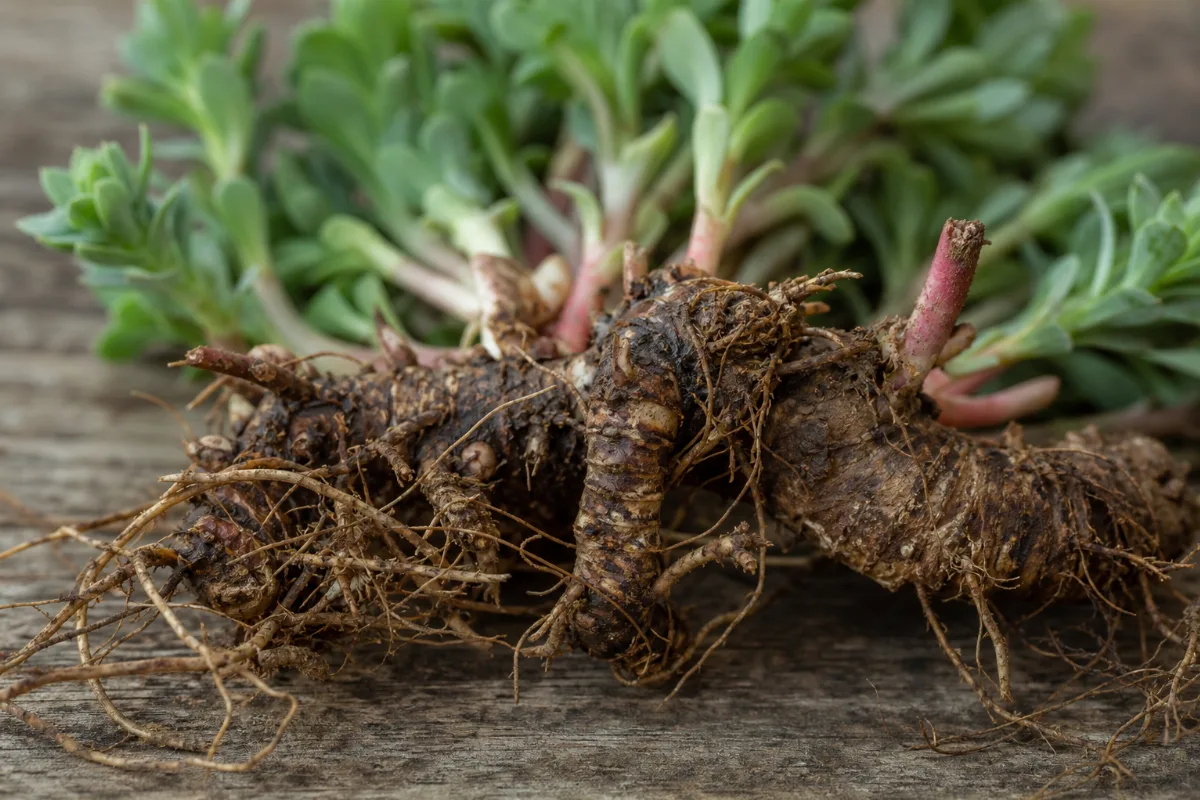
Rhodiola rosea, also called roseroot or golden root, is a hardy mountain plant in the stonecrop family (Crassulaceae). The part used is the thick underground stem, usually called the root, which smells faintly of roses when cut. It grows in mountain and arctic regions across the Northern Hemisphere, and much of the supply is still collected from the wild.
'Rhodiola' on a label can mean different plants. The genus has many species, and Rhodiola crenulata (hong jing tian in Chinese medicine) is a common look-alike and a known substitute. Most altitude trials used R. crenulata, not R. rosea, so results for one species should not be assumed for the other.
What makes it distinctive
Rhodiola is classed as an adaptogen, a plant said to help the body cope with stress. The idea comes from Soviet research in the 1960s and 1970s. It is mainly taken for tiredness and stress.
Its main compounds are the rosavins (the marker that points to R. rosea) and salidroside, along with other plant chemicals. Lab studies suggest the whole extract works differently from any single compound, so results with one branded extract such as SHR-5 should not be assumed for another product.
Historical and current uses
Rhodiola has been used as a folk tonic against fatigue and weakness across its range in northern Europe and Asia. In 1969 the Soviet health ministry allowed medical use of a liquid extract. A Swedish dry extract has been sold since 1987, and several European countries register ethanol extracts as traditional herbal medicines.
The European Medicines Agency (EMA) monograph covers a dry extract of the root for relief of stress symptoms such as fatigue and exhaustion. It rests on long use, not on proof from trials. In Chinese practice the plant called hong jing tian is usually a different species, R. crenulata.
What the research shows
Nothing about rhodiola is rated above low certainty. For stress and burnout there is one small placebo-controlled trial of SHR-5 and three open-label trials of WS 1375. For mental fatigue the trials disagree: older SHR-5 trials were positive, but a better-designed trial in shift-working nursing students found fatigue slightly worse than on placebo. For depression, anxiety and thinking the evidence is very low, and a 2022 expert guideline says rhodiola is not supported for mood disorders.
For altitude sickness prevention the best evidence points to no effect, and most of those trials used a different species. For physical performance the evidence is low, and the two latest pooled analyses of endurance trials disagree. Trials were short (12 weeks or less), small, and often linked to the extract makers. Only abstracts were read for this profile.
63 19 33 42 30 29 107 31 61 71 13 81 83 73 41 14 52 78 76 58 9 59 24 90 75 50 15 62 70 32 87 89 16 91 40
At a glance
Traditional uses history, not proof
- Folk tonic against fatigue and weakness across northern Europe, Asia and the Arctic
- Soviet adaptogen research from the 1960s; a liquid extract was approved for medical use in the USSR in 1969
- Registered in Sweden and other EU countries as a traditional herbal medicine for relief of stress symptoms such as fatigue and exhaustion (based on long use, not on trial proof)
- Chinese 'hong jing tian' is usually a different species, Rhodiola crenulata
Studied for research
- Stress-related fatigue and burnout, low certainty
- Mental fatigue and performance, mixed results
- Depression, anxiety and thinking: very low certainty; a 2022 guideline does not support it for mood disorders
- Altitude sickness prevention: evidence points against it, and most trials used a different species
- Endurance and exercise performance, low certainty; pooled analyses disagree
- Sleep, blood pressure, blood sugar and other uses: insufficient evidence
Main compounds
- Rosavins (rosavin, rosarin, rosin), the marker that points to R. rosea
- Salidroside and tyrosol (also found in other Rhodiola species)
- Flavonoids, gallic acid derivatives, monoterpene glycosides and a little essential oil
Common forms
- Standardised root extracts such as SHR-5 and WS 1375 (the forms most trials used)
- Capsules, tablets and tinctures
- Mixed products with other herbs or vitamins (results cannot be credited to rhodiola alone)
- Products labelled Rhodiola crenulata or other species are different plants
Research links: NIH NCCIH: Rhodiola · EU herbal monograph on Rhodiola rosea root (EMA, revision 1) · PubMed: Rhodiola randomized trials · Research Library · Genes & Biomarkers Library
The plant and its history
- Accepted scientific name
- Rhodiola rosea L. (roseroot, golden root, arctic root)
- Naming authority
- L., published in Sp. Pl. 1035 (1753) (GBIF). Accepted species in GBIF (usageKey 2985688). Binomial used by the European herbal assessment: Rhodiola rosea L., rhizoma et radix (EMA/HMPC/24186/2023).
- Synonyms
- Sedum rosea (L.) Scop. (GBIF synonym; still the name in some older papers and in p32311178); Sedum rhodiola DC.; Rhodiola odora Salisb.; Rhodiola minor Mill.; Rhodia officinarum Crantz (GBIF synonyms); Rhodiola sachalinensis Boriss. (a GBIF synonym of R. rosea, although a research paper treats it as a separate plant, see look-alikes); Rhodiola elongata (Ledeb.) Fisch. & C.A.Mey., Rhodiola arctica Boriss., Rhodiola borealis Boriss. (GBIF synonyms; GBIF lists 60+ synonyms and sub-names in total)
- Common names
- Roseroot (English); Golden root (English); Arctic root (English); Rose-root stonecrop (English); King's crown (English); Rodiola (Spanish); Raíz de oro (Spanish); Rosenwurz (German); Rhodiole rose (French); Racine d'or (French); Rosenrot (Swedish); Родиола розовая (Zolotoy koren, 'golden root') (Russian); Hong jing tian (紅景天) (Chinese); Iwa-benkei (イワベンケイ) (Japanese)
- Botanical family
- Crassulaceae (stonecrop or orpine family, order Saxifragales), the succulent family that also holds sedums and jade plants.
- Classification
- Plantae > Tracheophyta > Magnoliopsida > Saxifragales > Crassulaceae > Rhodiola > Rhodiola rosea
- Native range
- The EMA report says the plant is native throughout the mountains of the Northern Hemisphere, with the Altai region of Asia named as a main source of commercial rhizome (s-ema-hmpc-ar-rhodiola-rosea-2024). A 2021 review calls the distribution circumpolar and notes that supply comes largely from wild populations (p33358852). Country-by-country range was not verified.
- Habitat
- Mountain and arctic-alpine ground, per the EMA wording above. Finer habitat detail (soil, altitude) was not verified in a source read for this file.
- What the plant looks like
- Roots: The part used is the underground organ. The EMA report points out that although it is called a 'root', anatomically it is a rhizome (underground stem) with irregular thickening, so the herbal substance is 'dried roots and rhizomes'. The fresh cut surface smells of roses, which gives the plant its name (s-ema-hmpc-ar-rhodiola-rosea-2024).; Stems: Not verified from a source read for this file (the rhizome is the underground stem, see above).; Leaves: Not used medicinally in the sources read. Leaf chemistry was not checked.; Flowers: Not used medicinally in the sources read.; Fruit: Not used medicinally in the sources read.
- Cultivation
- Not verified in detail. A 2021 review of threats and trade concludes that sourcing should shift from wild collection toward farms using conservation-minded methods, which says farming exists but is not yet the main supply (p33358852). Time to harvest and yields were not verified.
- Harvest and processing
- Not verified in a source read for how the rhizome is dug and dried. What is documented: the European monograph covers a dry extract (drug-to-extract ratio 1.5-5:1) made with 67-70% ethanol (s-ema-hmpc-ar-rhodiola-rosea-2024). Solvent strength changes the chemistry: in the EMA summary of Kucinskaite et al. (2007), 70% ethanol gave lower salidroside than 40% ethanol, while rosavins were extracted more efficiently by 70% ethanol. Products labelled the same way can therefore differ.
- Look-alikes and adulterants
- Name: Rhodiola crenulata (Hook.f. & Thomson) H.Ohba (hong jing tian); Note: A separate accepted species in GBIF (key 4200529) used in Chinese and Tibetan-region medicine. Not shown here to be the same as roseroot. A 2016 market study calls it a common adulterant in the R. rosea supply chain (p26626192). A Bulgarian study found a compound called crenulatin only in R. crenulata, which can flag it in products (p32311178). R. rosea and R. crenulata do not have the same chemistry: rosavins are the marker that points to R. rosea.; Name: Rhodiola sachalinensis Boriss.; Note: GBIF treats this name as a synonym of R. rosea (key 4199437 points to 2985688), but a 2016 chemistry study reports rosavin and rosarin mainly in R. rosea and also in 'Rhodiola sachalinensis' (p27621703). Whether it is a true separate species is a botanical question not settled in the sources read.; Name: Rhodiola kirilowii (Regel) Maxim.; Note: Accepted species in GBIF. Compared with R. rosea and R. crenulata in a 2020 authenticity study (p32311178). Details of its chemistry were not read.; Name: Rhodiola quadrifida (Pall.) Fisch. & C.A.Mey.; Note: Accepted species in GBIF. A Ukrainian market study separated it from R. rosea because it carries salidroside, and set rosavins as the marker for R. rosea (p30919667). The abstract does not say whether it lacks rosavins.; Name: Rhodiola imbricata Edgew. and other Rhodiola species; Note: Accepted species in GBIF (key 7334374). There are many Rhodiola species; since CITES lists the whole genus, trade rules apply to all of them. Chemistry and use were not read for this file.; Name: Products sold as R. rosea that contain little or none of it; Note: In a 2016 test of about 40 products, roughly one fifth labelled R. rosea had no rosavin, and about 80% of the rest had less rosavin than registered products and appeared to contain other Rhodiola species (p26626192). In a Chinese-market sample, about 30% of purchased Rhodiola samples were adulterated with other species (p27621703).
- Sustainability and conservation
- CITES: all Rhodiola species were added to Appendix II at the Panama City conference in November 2022, with annotation #2 (all parts and derivatives except seeds and pollen, and finished products packaged and ready for retail trade). The US Fish and Wildlife Service states these amendments take effect on 23 February 2023 (s-fws-cites-cop19-bulletin). Appendix II means trade is allowed but must be monitored with permits; it is not a ban. IUCN Red List: no global IUCN assessment for R. rosea was found, and the IUCN site could not be opened from this environment (blocked), so it is not verified. Search summaries mention a 'Least Concern' rating for Europe and for Norway and a 'vulnerable' rating for Chinese populations; these were not read at the source and are not verified here. Trade pressure: a 2021 review reports rising demand, shrinking wild stands in the main harvest areas, illegal harvest in protected areas and cross-border smuggling, and increasing substitution with other Rhodiola species (p33358852). Buying tip for ordinary readers: cultivated or sustainably collected supply is the conservation-friendly choice, but the sources read here do not name specific certifications.
Traditional use and history history, not clinical proof
| Tradition or era | Documented use | Source |
|---|---|---|
| Northern Europe, Asia and the Arctic, long-standing folk use | Roseroot is described as used in the ethnomedicines of Arctic peoples and in national systems of traditional medicine across its circumpolar range, (p33358852), and a pharmacology paper says it is traditionally used in Eastern Europe and Asia (p19168123) to stimulate the nervous system, boost physical and mental performance and ease fatigue and low mood. Specific stories often repeated (Viking use, ancient Greek writers, Tibetan or Siberian wedding customs) were not found in a source read and are NOT verified. | p33358852 |
| Soviet Union, 1960s-1970s: the 'adaptogen' idea and the first official use | In 1969 the Ministry of Health of the former USSR recommended allowing medical use and industrial production of a liquid extract of Rhodiola (as reported by Saratikov, 1974). A herbal tea and a tincture in 40% ethanol or vodka are named as traditional preparations in that paper. In 1975 the Rhodiola fluid extract (1 part herb to 1 part extract, 40% ethanol) was accepted as a 'Temporary Pharmacopoeial Article', which allowed large-scale production; it was used in the Baltic states then under Soviet rule. The documented use at the time was for asthenia (weakness), fatigue and dystonia, as drops taken before meals for 10-20 days. The EMA found no reports of current medicinal use of that fluid extract. | s-ema-hmpc-ar-rhodiola-rosea-2024 |
| Soviet adaptogen research (Brekhman and colleagues) | The word 'adaptogen' for plant substances that raise non-specific resistance to stress comes from Soviet pharmacology; a 1969 review by Brekhman and Dardymov in Annual Review of Pharmacology is the classic reference for the concept. Only the title was available (no abstract), so this entry confirms the paper and its date, not what it says about Rhodiola. A modern review by Panossian and Wikman defines adaptogens as herbal preparations that increase tolerance to mental exhaustion and attention under reduced performance, and rates the evidence for the Rhodiola rosea extract SHR-5 as the strongest among the adaptogens it reviewed (this rating is the authors', who are linked to the extract's maker). | p4892434 |
| Sweden and the European Union, registered traditional herbal medicine | A Swedish dry extract (SHR-5 type: extract ratio 2.5-5:1, 70% ethanol then water) has been sold in Sweden since 1987 as a natural remedy and has been registered as a traditional herbal medicinal product there since 2008, for decreased performance such as fatigue and weakness. Several other EU member states (Austria, Netherlands, Germany, Czechia, Slovakia, Croatia, Bulgaria and others) have registered ethanol dry extracts as traditional herbal medicines for relief of stress symptoms such as fatigue and weakness, some since 2008. These are based on long-standing use, not on proof of effect. | s-ema-hmpc-ar-rhodiola-rosea-2024 |
| European Medicines Agency (EMA/HMPC) monograph | The EU herbal committee first adopted a community monograph for Rhodiola rosea rhizome and root in 2012 and revised it later; the revised assessment report is EMA/HMPC/24186/2023 (final, 20 March 2024). The wording now is: traditional herbal medicinal product for the relief of symptoms of stress, such as fatigue and exhaustion, for use based exclusively on long-standing use. The preparation covered is a dry extract (ratio 1.5-5:1) made with 67-70% ethanol. The committee judged the Swedish product to meet the 30-years-of-use rule (15 of them in the EU), and said that one small randomised trial it reviewed did not support 'well-established use'. The 2012 adoption date comes from a search summary and was not seen in the document. | s-ema-hmpc-ar-rhodiola-rosea-2024 |
| Chinese medicine | A chemistry paper describes Rhodiola rosea as used for a long time as an adaptogen in Chinese traditional medicine. The Chinese 'hong jing tian' is usually a different species, R. crenulata, which is the better-documented plant in Chinese practice; details of classical texts were not found in a source read and are not verified. | p12673010 |
Traditional use shows how a plant was used. It does not show that a supplement works or is safe today.
What is inside, and how it may work
What the plant contains and how those compounds act in cells and animals. Laboratory and animal mechanisms are not proven effects in people.
Main compounds
| Compound | Family | Where it is concentrated | Activity studied | Level of evidence |
|---|---|---|---|---|
| Rosavin (a 'rosavin' = cinnamyl alcohol with a sugar chain; cinnamyl-(6'-O-arabinopyranosyl)-glucoside) PubChem 9823887 | phenylpropenoid glycoside (rosavins group) | Rhizome and root of R. rosea; used as the marker that separates R. rosea from most other Rhodiola species Standardised extracts used in animal studies were labelled '3% rosavins and 1% salidroside' (EMA summaries of Mattioli and Perfumi, 2007). Natural content varies; not given here as a fixed value. | Rosavin was inactive alone in a rat 'behavioural despair' (swim) test, but a fixed mix of rosavin, rosarin, rosin and salidroside worked better than any single part (p18054474). Rat bioavailability by mouth was 20-26% in the EMA summary of Panossian 2010. 65 3 102 | In vivo animal |
| Rosarin (cinnamyl-(6'-O-arabinofuranosyl)-glucoside) PubChem 10320370 | phenylpropenoid glycoside (rosavins group) | Rhizome and root of R. rosea Included in the 'total rosavins' figure; 0.4% in one extract reported in the EMA summary of Lee et al. (2009). | Inactive alone in the rat swim test (p18054474). Part of the rosavin mix. 65 102 | In vivo animal |
| Rosin (cinnamyl glucoside) | phenylpropenoid glycoside (rosavins group) | Rhizome and root of R. rosea About 0.4% in one extract reported in the EMA summary of Lee et al. (2009); not a fixed value. | Inactive alone in the rat swim test (p18054474). Lowered inflammation signals in mouse brain-immune cells together with rosarin and salidroside in a study summarised by EMA (Lee et al., 2013). PubChem CID not entered: a name search for 'rosin' is ambiguous, so it was not confirmed. 65 102 | Laboratory research |
| Salidroside (also called rhodioloside; p-hydroxyphenylethyl-beta-D-glucoside) PubChem 159278 | phenylethanoid glycoside | Rhizome and root; also found in other Rhodiola species, so it does NOT prove the plant is R. rosea About 1% in standardised extracts; 1.35-1.62 mg/ml in the aqueous-ethanol extracts studied by Kucinskaite et al. (2007), EMA summary; one product test found less than a quarter of products matched their label amounts of salidroside and total rosavins (p32311178). | With tyrosol, identified as an active part of the extract in the rat swim test (p18054474); stimulated glucose uptake via AMPK in a rat muscle cell line (p18501890); reduced binge eating in stressed rats when given alone, whereas rosavin did not (EMA summary of Cifani et al., 2010). 65 44 53 102 | In vivo animal |
| Tyrosol (p-tyrosol; 4-hydroxyphenylethanol) PubChem 10393 | phenylethanoid (aglycone of salidroside) | Rhizome and root; also the breakdown product of salidroside About 0.8% of the SHR-5 extract in the EMA summary of the warfarin and theophylline rat study. | Active in the rat swim test (p18054474). In rats, tyrosol was found in blood after intravenous salidroside but not after salidroside by mouth (p22525439). 65 25 102 | In vivo animal |
| Rhodiola flavonoids and flavonolignans (rhodionin, rhodiosin, herbacetin, kaempferol and its derivatives, tricin, rhodiolin) | flavonoids / flavonolignan | Rhizome and root Not quantified in the sources read. | Rhodionin and rhodiosin blocked the liver enzyme CYP2D6 in a lab dish with IC50 values of 0.42 and 0.761 micromolar (EMA summary of Xu et al., 2013). Kaempferol, herbacetin, rhodionin and rhodiosin blocked influenza neuraminidase in a lab dish (EMA summary of Jeong et al., 2009). PubChem CIDs for individual members: rhodionin 21626477, rhodiosin 76959646, herbacetin 5280544, kaempferol 5280863, tricin 5281702. 'Rhodiolin' was not entered because a name search returned a different compound (rhodiolinin). 102 | Laboratory research |
| Gallic acid and gallate derivatives (including prodelphinidin-gallate proanthocyanidins) PubChem 370 | phenolic acid / proanthocyanidins | Rhizome and root Not quantified in the sources read. | A review lists gallic acid derivatives among about 140 compounds isolated from the root and rhizome (p20378318); the EMA report names prodelphinidin gallate esters. Gallic acid is a general antioxidant polyphenol; no Rhodiola-specific activity of gallic acid was found. 68 102 | Laboratory research |
| Monoterpene glycosides (rosiridin, rosiridol, rhodiolosides A-E) PubChem 25068281 | monoterpene alcohols and glycosides | Rhizome and root Not quantified in the sources read. CID shown is rosiridin. | Rosiridin was the strongest of 12 isolated compounds against the enzyme monoamine oxidase B in a lab dish (more than 80% inhibition at 10 micromolar) (p19168123). 106 102 | Laboratory research |
| Essential oil (alpha-pinene, geraniol, limonene, linalool, others) PubChem 637566 | volatile terpenes | Dried rhizome About 0.05% essential oil; composition varied by origin (EMA summary of Evstatieva 2010). CID shown is geraniol, the main oil component in a Chinese sample. | Gives the rose-like smell. No activity was linked to the oil in the sources read. 102 | Laboratory research |
| Cyanogenic glycosides (rhodiocyanoside A, lotaustralin) and phenolic acids (chlorogenic acid) PubChem 441467 | cyanogenic glycosides / phenolic acids | Rhizome and root Not quantified in the sources read. CID shown is lotaustralin; chlorogenic acid CID 1794427. | Listed as constituents by the EMA report. The safety meaning of the cyanogenic glycosides for people eating the root was not found in the sources read and belongs in the safety file. 102 | Laboratory research |
Mechanisms, receptors and pathways
| Target or pathway | Gene or receptor | What was found | Level |
|---|---|---|---|
| Stress-hormone (HPA) axis and cortisol | Cortisol / corticosterone; corticotropin-releasing factor (CRF) | In rabbits held still for 2 hours, blood cortisol, nitric oxide and phosphorylated JNK rose 200-300% in placebo animals but cortisol and nitric oxide stayed about unchanged after 7 days of Rhodiola extract (p21901061). In rats under stress, extract at 20 mg/kg lowered stress-raised corticosterone (EMA summary of Cifani 2010) and reversed stress-induced loss of appetite caused by CRF injection (EMA summary of Mattioli & Perfumi, 2007). In people, the one small randomised trial reviewed by EMA (Olsson 2009, 60 adults with fatigue syndrome) measured the morning cortisol response, but its result is not given in the text read, so no human cortisol effect is claimed here. 64 68 102 | Animal research |
| Stress-activated protein kinase (SAPK/JNK) and nitric oxide | MAPK8 (JNK1); nitric oxide synthase | Rhodiola extract and salidroside were among the most active in blocking the stress-induced rise of phosphorylated SAPK/JNK in rabbits (p21901061). Authors suggest this links to the antidepressant and mental-performance effects; that link is a hypothesis, not shown in people. 64 | Animal research |
| Stress-protein release: neuropeptide Y (NPY) and heat-shock protein 72 (Hsp72) | NPY; HSPA1A (Hsp72) | In cell tests, the Rhodiola extract SHR-5 stimulated release of NPY and Hsp72 from human neuroblastoma cells and, in confirmation, from primary human neurons; the combination product ADAPT-232 (which contains it) did the same in human neuroglial cells, and salidroside also raised them (p23920279, p22347152). The authors propose NPY and Hsp72 as lab biomarkers of 'adaptogen' activity. The EMA also notes an earlier snail-embryo study in which the extract protected from heat but did NOT induce heat-shock proteins (EMA, Boon-Niermeijer 2000), so the pathway is not settled. 1 69 102 | Laboratory research |
| Monoamine oxidase (mood-chemical breakdown) | MAOA and MAOB | Methanol and water extracts of the root blocked MAO-A by 92.5% and 84.3% and MAO-B by 81.8% and 88.9% at 100 micrograms/ml in a test tube; the isolated compound rosiridin was the strongest single compound against MAO-B (over 80% at 10 micromolar) (p19168123). Whether enough reaches the human brain to do this is unknown; the compounds named as most absorbed (salidroside, rosavin) were not the MAO-active one. 106 | Laboratory research |
| Brain monoamines and serotonin | Noradrenaline, serotonin (5-HT) and dopamine pathways | In rats with foot-shock stress, extract at 50-450 mg/kg for 14 days moved brain noradrenaline, serotonin and dopamine toward normal and lowered plasma corticosterone at higher doses (EMA summary of Kumar 2018). In rats made 'depressed' by chronic mild stress, hippocampal serotonin returned to normal after 3 weeks (EMA summary of Chen 2009). Animal results only. 102 | Animal research |
| Energy sensor AMPK and glucose uptake (salidroside) | PRKAA1 / PRKAA2 (AMPK) and ACACA (ACC) | Salidroside raised glucose uptake in rat L6 muscle cells and increased phosphorylation of AMPK and its target ACC; blocking AMPK with compound C cut the effect, while blocking PI3K did not. It also boosted insulin-driven Akt activation (p18501890). Cell data on the isolated compound, not the whole root, and not shown in people. 44 102 | Laboratory research |
| Stress resistance and longevity pathway (DAF-16/FOXO) | daf-16 in worms; FOXO family in mammals | In the roundworm C. elegans, SHR-5 at 10-25 micrograms/ml lengthened mean lifespan by 10-20% and raised stress resistance, moving the DAF-16 protein into the cell nucleus; 250 micrograms/ml shortened life by 15-25% (p18536978). The authors read this as the extract acting like a mild stressor. Relevance to people is unknown. 94 67 | Animal research |
| Inflammation signalling in brain immune cells | NF-kB; iNOS and cytokines | A 60%-ethanol dry extract blocked movement of NF-kB into the nucleus in mouse microglial cells stimulated with corticotropin-releasing hormone (EMA summary of Borgonetti 2020). A methanol extract and the isolated rosin, rosarin and salidroside lowered LPS-induced iNOS and cytokines in the same cell type; the extract lowered pro-inflammatory markers in mouse prefrontal cortex at 500 mg/kg (EMA summary of Lee 2013). 102 | Laboratory research |
| Drug-handling enzymes and pump | CYP3A4, CYP2D6, CYP2C9; P-glycoprotein (ABCB1) | Extracts from six Norwegian R. rosea clones blocked CYP3A4 (IC50 1.7-3.1 micrograms/ml) and P-glycoprotein (16.7-51.7 micrograms/ml) in lab systems, more strongly than the authors report for St John's wort (p19790032). Commercial extracts also blocked CYP3A4, CYP2D6, CYP1A2 and CYP2C9 in test tubes (EMA summary of Thu 2016/2017). Lab results; real-world effect in people was not shown in the sources read, see pharmacokinetics. 27 102 | Laboratory research |
| Other lab observations | Antioxidant and cell-protection assays | Extracts shielded human red blood cells and skin cells from oxidant damage in cell tests (EMA summaries of De Sanctis 2004, Battistelli 2005, Calcabrini 2010), but another study found no antioxidant-gene activation and no ability to break down hydrogen peroxide in human cells (EMA summary of Schriner 2009), and one found some toxicity to mouse nerve cells at 100 micrograms/ml (EMA summary of Shen 2013). So an 'antioxidant' label is not settled. 102 | Laboratory research |
Absorption, metabolism and elimination
- Absorption
- Human data are thin. The EMA assessment reports (citing Panossian 2010, which could not be matched to a paper abstract) that 16 volunteers took a single 288 mg dose of the SHR-5 extract containing 7.26 mg salidroside and 8.4 mg rosavin. Salidroside was detectable straight away; rosavin could not be detected in the first hour. Peak blood levels were reached about 2 hours after dosing (about 948 ng/ml salidroside and 446 ng/ml rosavin) and fell below the detection limit by 8 hours. These figures were NOT checked against the original paper, and the salidroside peak looks high for the stated dose, so treat them with caution. No second human absorption study was found.
- Distribution
- No human tissue-distribution data found, including whether any active part reaches the brain in useful amounts.
- Metabolism
- In rats, p-tyrosol (the sugar-free part of salidroside) was found in blood after salidroside was given into a vein but was not detectable after salidroside was given by mouth (p22525439). Human metabolism of salidroside or rosavin by mouth was not found.
- Elimination
- In the human study above, levels were gone by 8 hours, which suggests fairly quick clearance, but the half-life was not reported in the text read. In rats, salidroside given into a vein was no longer detectable in plasma after 1 hour, and after oral SHR-5 its peak was at 1-1.5 hours and gone by 5 hours (EMA summary of Panossian 2010).
- Bioavailability
- In rats, the EMA summary of Panossian 2010 reports salidroside absorbed well by mouth (75-90%) and rosavin much less (20-26%). Human oral bioavailability was not found. Rat results do not carry over directly to people.
Isolated compounds versus whole extracts
The evidence points to the whole extract working better than any single piece, and different pieces seem to do different jobs. In the rat swim test, the root extract worked, salidroside and tyrosol were active alone, rosavin, rosarin, rosin and the cinnamyl compounds were inactive alone, yet a fixed mix of salidroside with the three rosavins beat every single compound, which the authors read as synergy (p18054474). In stressed rats, salidroside alone, but not rosavin, reduced binge eating (EMA summary of Cifani 2010). Absorption also differs: salidroside is absorbed far better than rosavin in rats (EMA). The commonly used '3% rosavins and 1% salidroside' label describes markers, not a proven active dose; the EMA report says only that phenylethanoids such as salidroside seem to contribute (EMA). Because extracts differ by solvent (70% ethanol gives less salidroside than 40%), results from one extract such as SHR-5 should not be assumed for another extract, tea or powder. And because many products are mixed with other species or contain little rosavin (p26626192), the label may not match the root that was tested.
Nutritional composition
Roseroot is a herbal root taken as concentrated extract, not a food, so a vitamin and mineral table is not meaningful. No food-composition data (vitamins, minerals, fibre) were read for this file, so none is stated. The plant chemistry that matters is phenylethanoids (salidroside, tyrosol), rosavins and polyphenols, listed under compounds.
1 mixed findings8 low certainty5 very low certainty9 not enough evidence1 evidence against
What was looked at
The 24 benefits and uses checked for Rhodiola, each with how strong the evidence is. Tap one to open it.
- Stress-related fatigue and burnout symptomsLow certainty
- Mental fatigue and mental performance under pressure (students, physicians, cadets)Mixed findings
- Attention, reaction time and memoryVery low certainty
- Mild to moderate depressionVery low certainty
- Depression: compared with, and added to, sertralineNot enough evidence
- Generalised anxiety and everyday anxietyVery low certainty
- Sleep and insomniaNot enough evidence
- High altitude: mountain sickness and mental performanceEvidence against
- Endurance and time to exhaustionLow certainty
- Sprint power and strengthLow certainty
- Feeling that exercise is easierLow certainty
- Muscle damage and recovery after exerciseLow certainty
- Preventing altitude sicknessLow certainty
- Oxygen levels and adaptation at high altitudeLow certainty
- Heart conditions (angina and heart failure)Very low certainty
- Blood pressure and heart rateNot enough evidence
- Blood sugar, blood fats and body weightNot enough evidence
- Inflammation and antioxidant markersLow certainty
- Menopause symptomsNot enough evidence
- Premenstrual symptomsNot enough evidence
- Sexual functionNot enough evidence
- Eye strain from screensNot enough evidence
- Heart protection during cancer treatmentNot enough evidence
- Lung oxygenation and clot treatment in hospitalVery low certainty
Lab markers tracked in the studies
Cortisol response on waking (saliva)Burnout score (Pines Burnout Scale, Maslach Burnout Inventory)Attention test (Conners' continuous performance test)Reaction time (simple and choice)Fatigue and vitality scalesHamilton Depression Rating Scale (HAM-D)Hamilton Anxiety Rating Scale (HARS)Perceived stress (DASS-42 stress score)Acute mountain sickness (Lake Louise score)Maximal oxygen use (VO2max)Time to exhaustionTime-trial performanceCreatine kinase (CK)Blood lactateTotal antioxidant capacity (TAC) and related markersInterleukin-6 (IL-6)C-reactive protein (CRP)Tumour necrosis factor alpha (TNF-alpha)Heart pumping fraction (LVEF) and BNPBlood oxygen (SaO2 and PaO2)Acute mountain sickness (headache, nausea, tiredness at altitude)Blood pressure and heart rateBlood glucoseFree fatty acids, triglycerides and LDLCortisolHaemoglobin, red cells and erythropoietinRating of perceived exertion (RPE)
What is Rhodiola good for?
The main proposed uses and how strong the human evidence is for each. Nothing is rated above low certainty.
Benefits, one by one
Each card is a research question, not a promise. Tap a goal to filter. Open a card to see the studies, doses and limits.
Stress-related fatigue and burnout symptoms
Low certaintyRhodiola root extracts are best known as a remedy for feeling worn out under stress. In one small placebo-controlled trial of people with stress-related fatigue, the extract SHR-5 beat placebo on a burnout scale and on attention after 4 weeks. Two open-label trials of the extract WS 1375 (one in life-stress, one in burnout) saw large improvements, but nobody was comparing them with placebo, so those results are weaker. Overall this is the area with the most trials, but the evidence is still thin, mostly short and often funded by the extract makers.
10 studiesSHR-5: 576 mg of extract a day for 28 days (Olsson 2009). WS 1375: 20…
Studies, doses and limits
What the trials found
Olsson 2009 (60 adults aged 20 to 55 with stress-related fatigue, SHR-5 576 mg a day for 28 days, parallel, placebo-controlled) found that both groups improved, but SHR-5 was significantly better than placebo on the Pines burnout scale and on attention measures (omissions, reaction-time variability), with a different cortisol-on-waking response; no serious side effects. Open-label, single-arm trials of WS 1375: Edwards 2012 (101 people with life-stress symptoms, 200 mg twice a day for 4 weeks) found clinically relevant improvement on all seven questionnaires, starting by day 3; Kasper 2017 (118 outpatients with burnout symptoms, 400 mg a day for 12 weeks) found improvement on most measures; Lekomtseva 2017 (100 people with prolonged or chronic fatigue, 2 x 200 mg for 8 weeks) found fatigue falling, significant at week 8. Systematic review Ishaque 2012 judged all 11 trials on physical or mental fatigue at high or unclear risk of bias and called the evidence contradictory; Hung 2011 judged 11 RCTs mostly moderate to good quality but lacking independent replication. Łuszczak 2026 (24 RCTs, only 5 on Rhodiola) also reported benefit with limits from small, short trials. Combination products (Mg-Teadiola with magnesium, B vitamins, green tea and rhodiola, Noah 2022, n=100) lowered a stress score (effect size 0.29, CI 0.01 to 0.57), but the result cannot be credited to rhodiola alone.
Results
SHR-5 beat placebo in one small randomised trial; WS 1375 improved symptoms in three uncontrolled trials; reviews call the evidence promising but low quality.
Effect sizes as reported
Olsson 2009: significant between-group difference on Pines burnout scale and CCPT II attention indices (numbers not in abstract). Open-label WS 1375 trials: no control group, so no effect size against placebo. Combination product: effect size 0.29 (95% CI 0.01 to 0.57) on DASS-42 stress.
Why this rating
One small placebo-controlled trial for the leading extract, three uncontrolled trials, large placebo responses seen in the randomised trial, and reviewers rating the trials at high or unclear risk of bias. A negative placebo-controlled trial in shift-working students (see mental fatigue) pulls in the other direction.
Form and dose studied
SHR-5: 576 mg of extract a day for 28 days (Olsson 2009). WS 1375: 200 mg twice a day for 4 or 8 weeks, or 400 mg a day for 12 weeks. Extracts are not interchangeable.
Who was studied
Adults 18 to 55 with stress-related fatigue, life-stress or burnout symptoms (not clinical depression).
Limits
Small trials; the only placebo-controlled trial of the leading extracts has 30 people per group and a large placebo response; open-label trials cannot separate the extract from recovery over time or from expectation; several authors are linked to the makers. Only abstracts were read.
Why researchers looked
Rhodiola rosea is classed as an adaptogen, a plant said to help the body cope with stress. Standardised root extracts (SHR-5 and WS 1375) were developed and tested for stress-related fatigue and burnout.
Traditional use
Rhodiola is described in the reviews read as a traditional tonic against fatigue and stress (general background; not checked against a historical source for this file). The trials here test modern standardised extracts, not home-made preparations.
Proposed mechanism Preliminary mechanism
Lab and animal work suggests rhodiola compounds (rosavins and salidroside) may influence stress hormones and brain signalling. In people, one trial saw a change in the cortisol rise on waking with SHR-5, but a systematic review of stress-hormone trials found no clear Rhodiola-specific effect. These ideas are not shown to explain the benefits seen.
A proposed mechanism does not show that the effect happens in people.
No serious side effects were reported in these trials; adverse events were mostly mild. See the safety section for interactions and cautions.
Mental fatigue and mental performance under pressure (students, physicians, cadets)
Mixed findingsSeveral older trials of the extract SHR-5 found better scores on thinking tests when people were tired or under pressure: junior doctors on night duty, exam-time students and military cadets. A later, better-designed trial in shift-working nursing students (with a different Rhodiola product) found the opposite: fatigue was slightly worse than on placebo. So the evidence is mixed and none of the trials is large.
7 studiesSHR-5 in the positive trials: one tablet a day for 2 weeks, a single …
Studies, doses and limits
What the trials found
Darbinyan 2000 (56 young physicians on night duty, SHR-5 one tablet a day, double-blind cross-over): significant improvement in five tests of thinking and perception during the first two-week period; no side effects. Shevtsov 2003 (161 military cadets, single dose of SHR-5 at two dose levels versus placebo and no treatment): antifatigue index 1.0385 and 1.0195 versus 0.9046 on placebo (p < 0.001); no difference between the doses. Spasov 2000 (foreign students at exam time, SHR-5 for 20 days, pilot): better physical fitness, mental fatigue and neuro-motor tests (p < 0.01) and self-rated well-being (p < 0.05), but the authors thought the dose probably too low and several tests showed no difference. Punja 2014 (48 nursing students on shift-work placements, 364 mg of a commercial extract, 42 days, placebo-controlled): vitality score change favoured placebo (-17.3, CI -30.6 to -3.9, p = 0.011) and the fatigue scale also favoured placebo (1.9, CI 0.4 to 3.5, p = 0.015). Ishaque 2012 found three of five RCTs on mental fatigue positive but all at high or unclear risk of bias. Lara 2025 (18 young adults, 1,200 mg a day for 4 days) found less variability in eye focusing after demanding screen tasks and one of ten eye-strain symptoms improved.
Results
Mixed: positive in three older SHR-5 trials, negative in one randomised trial of a different product.
Effect sizes as reported
Shevtsov 2003: antifatigue index 1.0385 and 1.0195 (Rhodiola) versus 0.9046 (placebo), p < 0.001. Punja 2014: vitality -17.3 (CI -30.6 to -3.9) favouring placebo.
Why this rating
Positive older trials (some without full detail in the abstract, some single-dose or pilot) are offset by a clear negative placebo-controlled trial; reviewers rated the trials at high or unclear risk of bias.
Form and dose studied
SHR-5 in the positive trials: one tablet a day for 2 weeks, a single dose, or low repeated doses for 20 days. The negative trial used a commercial extract of 364 mg plus one optional capsule a day for 42 days. The extracts differ, so the results should not be mixed.
Who was studied
Healthy young adults under exam stress, night shifts or military training; nursing students on shift work.
Limits
Small, mostly older trials; the Spasov pilot did not report the number of participants in the abstract; the single negative trial used a different product, so extract differences or chance cannot be excluded. Only abstracts were read.
Why researchers looked
The Soviet and Scandinavian adaptogen research tradition tested Rhodiola for working capacity under stress; the SHR-5 extract trials followed.
Traditional use
Used traditionally as a tonic for mental and physical weariness.
Proposed mechanism Preliminary mechanism
Proposed explanations (effects on stress hormones, brain chemistry or energy handling) come from lab and animal work and have not been shown to explain the results in people.
A proposed mechanism does not show that the effect happens in people.
No serious side effects were reported in these trials.
Attention, reaction time and memory
Very low certaintyRhodiola has a few small signals for attention and reaction speed, but there is no solid evidence that it improves memory or thinking in healthy people. One trial in stressed people found better attention scores with SHR-5; one in young men found faster reaction times; another found no change in cognitive tests at all.
5 studiesSHR-5 576 mg a day (28 days); a commercial extract 600 mg a day (4 we…
Studies, doses and limits
What the trials found
Olsson 2009 (n=60, SHR-5, 28 days) found better attention scores than placebo (omissions, reaction-time variability). Jówko 2018 (26 healthy male students, 600 mg a day for 4 weeks, placebo-controlled) found shorter simple and choice reaction time and total response time; endurance and hormones did not change. Cropley 2015 (80 mildly anxious adults, Vitano 2 x 200 mg for 14 days, no-treatment control) found no relevant difference in cognitive tests. Fintelmann 2007 (120 adults aged 50 to 89, a Rhodiola-plus-vitamins-and-minerals product, 12 weeks, no placebo) saw big improvements in concentration and memory complaints, but with no control group and a mixed product it cannot show Rhodiola did it. Concerto 2018 (n=28): one 500 mg dose prevented a stimulation-induced plasticity change but did not change cortical excitability.
Results
Small gains in attention and reaction time in two small trials, no gain in another, nothing for memory.
Effect sizes as reported
No pooled estimate. Olsson 2009 and Jówko 2018 report significant between-group differences; numbers not in the abstracts.
Why this rating
Few small trials, inconsistent results, a null cognitive result in a third trial, no good trials of memory, and products that differ.
Form and dose studied
SHR-5 576 mg a day (28 days); a commercial extract 600 mg a day (4 weeks); Vitano 400 mg a day (14 days).
Who was studied
Stressed adults, healthy young men, mildly anxious adults.
Limits
Very small, short trials, young healthy volunteers; reaction time on a test does not mean better everyday thinking. Only abstracts were read.
Why researchers looked
Mental sharpness is the claim most often made for Rhodiola, so several small trials have tested attention and reaction time.
Traditional use
Described in reviews as a traditional tonic for mind and body (general background; not checked against a historical source for this file).
Proposed mechanism Preliminary mechanism
A single 500 mg dose changed a measure of brain plasticity in 28 healthy volunteers (Concerto 2018), a physiology clue but not proof of thinking benefit. Animal studies of memory are not tested in people.
A proposed mechanism does not show that the effect happens in people.
None specific.
Mild to moderate depression
Very low certaintyOne small trial of the extract SHR-5 found that it reduced depression scores in people with mild to moderate depression, whereas placebo did not. A later US trial comparing a Rhodiola extract with sertraline and placebo found no statistically significant differences between the three. A major international guideline does not support rhodiola for mood disorders. Rhodiola is not a proven treatment for depression, and depression needs proper medical care.
5 studiesSHR-5 340 or 680 mg a day (6 weeks). The sertraline trial used a stan…
Studies, doses and limits
What the trials found
Darbinyan 2007 (89 adults aged 18 to 70 with mild to moderate depression, HAM-D 21 to 31; SHR-5 340 or 680 mg a day versus placebo for 6 weeks): overall depression, insomnia, emotional instability and somatisation improved on both doses and not on placebo; self-esteem did not improve; no serious side effects. Mao 2015 (57 adults, 12 weeks; Rhodiola extract versus sertraline versus placebo): no significant difference between groups on HAM-D (p = 0.79), BDI (p = 0.28) or CGI (p = 0.17); HAM-D fell 5.1 on Rhodiola, 8.2 on sertraline and 4.6 on placebo. The WFSBP and CANMAT guideline (Sarris 2022) states in its abstract that rhodiola use was not supported for mood disorders. Sarris 2011 listed rhodiola as having preliminary positive evidence with a caution that studies had not been repeated.
Results
One small positive trial; one small trial with no clear difference from placebo; a guideline not supporting use for mood disorders.
Effect sizes as reported
Mao 2015: HAM-D change Rhodiola -5.1 (CI -8.8 to -1.3) versus placebo -4.6 (CI -8.6 to -0.6). Darbinyan 2007: significant improvement versus placebo; numbers not in abstract.
Why this rating
Two small trials with opposite conclusions, no independent replication of the positive trial, and an international guideline that does not support use. The sertraline trial is too small to say anything about equivalence.
Form and dose studied
SHR-5 340 or 680 mg a day (6 weeks). The sertraline trial used a standardised extract at an unstated dose (12 weeks).
Who was studied
Adults with mild to moderate depression. Not tested in severe depression, bipolar disorder or in people under 18.
Limits
Both trials are small. Only abstracts were read.
Why researchers looked
Rhodiola is promoted as a natural mood lifter, and SHR-5 was tested in people with mild to moderate depression.
Traditional use
Described in reviews as a traditional tonic; the trials test modern extracts.
Proposed mechanism Preliminary mechanism
Lab and animal studies suggest effects on brain chemicals involved in mood; these are not shown to explain anything in people. One human study (Concerto 2018) saw a change in brain plasticity after one dose.
A proposed mechanism does not show that the effect happens in people.
Depression should be assessed by a doctor. Rhodiola should not replace prescribed antidepressants, and it should not be added to them without medical advice.
Depression: compared with, and added to, sertraline
Not enough evidenceIn the one head-to-head trial, sertraline lowered depression scores a bit more than Rhodiola (a drop of 8.2 versus 5.1 points), but neither was statistically different from placebo (4.6 points) because the trial was so small. Rhodiola caused fewer side effects (30% versus 63% reporting any). A Chinese trial found that adding a Rhodiola capsule to sertraline lowered scores further than sertraline alone, but its details are unclear.
2 studiesMao 2015: standardised extract, dose not in abstract, 12 weeks. Gao 2…
Studies, doses and limits
What the trials found
Mao 2015 (57 adults with mild to moderate major depression, 12 weeks): HAM-D fell 8.2 points on sertraline (CI -12.7 to -3.6), 5.1 on Rhodiola (CI -8.8 to -1.3) and 4.6 on placebo (CI -8.6 to -0.6); differences between groups were not significant. Odds of improving versus placebo: sertraline 1.90 (CI 0.44 to 8.20), Rhodiola 1.39 (CI 0.38 to 5.04). Adverse events: sertraline 63.2%, Rhodiola 30.0%, placebo 16.7% (p = 0.012). Gao 2020 (100 adults with mild to moderate major depression, all taking sertraline, 12 weeks): the group given sertraline plus 0.6 g a day of Rhodiola capsule had greater drops in HAM-D, BDI and CGI scores than sertraline plus 0.3 g or sertraline plus placebo. The abstract does not name the species or extract and has no numbers.
Results
No significant difference between groups in the small head-to-head trial; fewer side effects with Rhodiola; add-on benefit reported in a Chinese trial without clear detail.
Effect sizes as reported
Mao 2015: HAM-D -8.2 sertraline, -5.1 Rhodiola, -4.6 placebo, between-group p = 0.79. Gao 2020: numbers not in abstract.
Why this rating
One small head-to-head trial that could not separate any of the three arms, and one add-on trial with unclear details and no independent replication.
Form and dose studied
Mao 2015: standardised extract, dose not in abstract, 12 weeks. Gao 2020: Rhodiola capsule 0.3 or 0.6 g a day added to sertraline, 12 weeks.
Who was studied
Adults with mild to moderate major depression.
Limits
About 19 people per arm in Mao 2015; no Rhodiola-alone arm in Gao 2020; abstract details are thin. Only abstracts were read.
Why researchers looked
Researchers wanted to know whether Rhodiola could match a common antidepressant with fewer side effects, or help it work better.
Proposed mechanism Pharmacological theory
No tested mechanism. Possible interactions between rhodiola and antidepressants are theoretical.
A proposed mechanism does not show that the effect happens in people.
Anyone taking an antidepressant should talk to their doctor before adding Rhodiola. Combining Rhodiola with antidepressants was not assessed for safety in the abstracts read.
Generalised anxiety and everyday anxiety
Very low certaintyThe evidence is weak. A 10-person open-label pilot found anxiety scores fell on Rhodiola over 10 weeks. An 80-person trial without a placebo group found lower self-reported anxiety and stress after 14 days. Combination products that also contained magnesium and green tea lowered stress scores in people under chronic stress. None of this is enough to show Rhodiola relieves an anxiety disorder.
6 studiesRhodax 340 mg a day (10 weeks); Vitano 400 mg a day (14 days).
Studies, doses and limits
What the trials found
Bystritsky 2008 (10 adults with generalised anxiety disorder, Rhodax extract 340 mg a day for 10 weeks, open-label): HARS score fell significantly (t = 3.27, p = 0.01); dizziness and dry mouth were the most common side effects. Cropley 2015 (80 mildly anxious adults, Vitano 2 x 200 mg for 14 days versus no treatment, not placebo): lower self-reported anxiety, stress, anger, confusion and depression, and better mood. Combination trials: Boyle 2022 (100 stressed adults, magnesium plus B vitamins plus green tea plus rhodiola, given before a lab stress test) lowered subjective stress and anxiety; Noah 2022 and Pickering 2023 (Mg-Teadiola) lowered stress scores. Sarris 2013 (review of plant medicines for anxiety) listed Rhodiola among herbs with some support from human trials, noting small trials and no replication.
Results
Early signals in two small unblinded or uncontrolled trials; combinations not attributable to Rhodiola.
Effect sizes as reported
Bystritsky 2008: significant HARS fall (t = 3.27, p = 0.01). Cropley 2015: significant differences versus controls; numbers not in abstract.
Why this rating
Ten-person pilot with no control group; a no-treatment control trial that cannot rule out expectation; combinations that cannot be credited to Rhodiola.
Form and dose studied
Rhodax 340 mg a day (10 weeks); Vitano 400 mg a day (14 days).
Who was studied
Adults with generalised anxiety disorder (10 people) or mild anxiety.
Limits
Tiny, short and unblinded studies. Only abstracts were read.
Why researchers looked
Anxiety often goes with stress and fatigue, the main uses of Rhodiola.
Traditional use
The Bystritsky 2008 abstract says it has been used for decades in Russia and elsewhere for everyday anxiety, depression and insomnia; the studies test modern extracts.
Proposed mechanism Preliminary mechanism
Lab and animal findings only; not shown to explain results in people.
A proposed mechanism does not show that the effect happens in people.
Dizziness and dry mouth were reported in the pilot. Anxiety disorders need medical assessment.
Sleep and insomnia
Not enough evidenceThere are no good trials of Rhodiola on its own for sleep. A few small studies of combination products reported better sleep scores, and one 2026 trial combining Rhodiola with ashwagandha found less waking after falling asleep, but Rhodiola cannot be credited.
4 studiesCombination products only; see studies.
Studies, doses and limits
What the trials found
Darbinyan 2007 (89 adults with mild to moderate depression, SHR-5, 6 weeks) found insomnia sub-scores improved versus placebo (numbers not in abstract). Kim 2024 (20 adults with subthreshold insomnia, a Rhodiola plus lotus mixture, 750 mg at bedtime for 2 weeks, open-label, 13 completers): ISI and PSQI improved, wake time after sleep onset fell 57%. Noah 2022 (Mg-Teadiola): daytime sleepiness item of PSQI improved at day 28, significant at day 56 (p < 0.001). Mastrofini 2026 (103 healthy adults, 300 mg Rhodiola plus 600 mg ashwagandha in the morning for 2 weeks): objective wake after sleep onset shorter (p = 0.047) and sleep quality improved compared with another group. Because every sleep result comes from a combination or an indirect score, no conclusion on Rhodiola alone can be drawn.
Results
Some improved sleep measures, all in combination products or secondary outcomes.
Effect sizes as reported
Kim 2024: 57% fall in wake time after sleep onset (no control group). Mastrofini 2026: p = 0.047 for wake after sleep onset.
Why this rating
No trial of Rhodiola alone for sleep as a main outcome; the results come from combinations, a 13-person uncontrolled study and secondary outcomes.
Form and dose studied
Combination products only; see studies.
Who was studied
Adults with mild sleep disturbance or stress.
Limits
Combination products; tiny uncontrolled study; healthy volunteers. Only abstracts were read.
Why researchers looked
Stress and poor sleep go together, so sleep outcomes are often measured in Rhodiola combination trials.
Traditional use
No traditional sleep use was verified for this file.
Proposed mechanism Pharmacological theory
No mechanism tested in people.
A proposed mechanism does not show that the effect happens in people.
No sleep-related harms were reported in the abstracts read. See the safety section.
High altitude: mountain sickness and mental performance
Evidence againstRhodiola is a mountain plant and is often sold for altitude. For preventing acute mountain sickness, two good analyses found no effect: a Cochrane review and a trial of 102 climbers (with the related species Rhodiola crenulata). Chinese studies of treating people who are already sick at altitude suggest some benefit for blood oxygen. No trial of Rhodiola and mental performance at altitude was found.
4 studiesR. crenulata extract 800 mg a day for 7 days before the climb plus 2 …
Studies, doses and limits
What the trials found
Cochrane review (Molano Franco 2019): for Rhodiola crenulata, risk ratio for acute mountain sickness 1.00 (CI 0.78 to 1.29), 1 trial, 125 people, low-quality evidence. Chiu 2013 (102 healthy adults rising rapidly from 250 m to 3,421 m, 800 mg a day, cross-over): acute mountain sickness 60.8% on both Rhodiola and placebo (adjusted OR 1.02, CI 0.69 to 1.52). Mou 2026 (meta-analysis of 9 RCTs, 424 people, Rhodiola species): did not prevent acute mountain sickness (OR 1.02), no effect on VO2max, but eased some symptoms of coming down from altitude (p < 0.05). Gao 2025 (19 RCTs, 1,690 people with acute high-altitude disease, studies from China, R. crenulata extract): better blood oxygen than placebo and no difference from conventional medicine; certainty and trial quality details are not in the abstract. All of these are mostly Rhodiola crenulata, not Rhodiola rosea. No trial measured thinking performance at altitude.
Results
No protection against acute mountain sickness; possible blood-oxygen benefit when treating existing illness (low quality); no mental-performance data.
Effect sizes as reported
Acute mountain sickness: RR 1.00 (CI 0.78 to 1.29, Cochrane); AOR 1.02 (CI 0.69 to 1.52, Chiu); OR 1.02 (Mou).
Why this rating
Prevention of acute mountain sickness: no effect in the one randomised trial and in two reviews that rely on it, rated low-quality by Cochrane. Treatment of existing illness is supported only by low-confidence Chinese trials of another species. Mental performance at altitude: nothing found, so insufficient.
Form and dose studied
R. crenulata extract 800 mg a day for 7 days before the climb plus 2 days during (Chiu 2013).
Who was studied
Healthy adults rising to about 3,400 m; patients with acute high-altitude illness in China.
Limits
One prevention trial; the main species studied is R. crenulata; review-level overlap, so the reviews do not add independent evidence. Only abstracts were read.
Why researchers looked
Rhodiola species grow at high elevations and are used in the Himalayan and Tibetan regions for altitude symptoms.
Traditional use
Rhodiola crenulata is used in Tibetan and Chinese traditional practice for altitude.
Proposed mechanism Animal research
Lab and animal work suggests protective effects on brain and lungs in low-oxygen conditions; not shown in people.
A proposed mechanism does not show that the effect happens in people.
Do not rely on Rhodiola to prevent altitude sickness; slow ascent and medical advice are the proven approaches.
Endurance and time to exhaustion
Low certaintyTaking Rhodiola gave a small average boost to endurance in a 2025 pooled analysis of 26 trials (longer time to exhaustion, better time trials, higher VO2max), but a 2026 pooled analysis of 9 trials found no clear change in VO2max. A single dose before exercise has helped in some small trials; weeks of daily use often did not. Results are mixed and the studies are small.
13 studiesExtracts named in trials: SHR-5 (432 mg), a 3% rosavin and 1% salidro…
Studies, doses and limits
What the trials found
2025 meta-analysis of 26 randomized trials (668 healthy people, average age 22, average length 33 days): better VO2max (effect size 0.32, 11 studies), time to exhaustion (0.38, 7 studies) and time trial performance (-0.40 means faster, 5 studies); bigger VO2max gains at more than 600 mg per day. 2026 meta-analysis of 9 randomized trials (424 people): no clear effect on VO2max (95% CI -0.91 to 2.99, p=0.30). 2023 systematic review of 13 trials (263 people): acute use helped endurance and effort rating, chronic use did not help endurance. Individual trials: one dose of 200 mg of an extract (3% rosavin, 1% salidroside) lengthened time to exhaustion from 16.8 to 17.2 minutes, but 4 weeks of daily use did not (2004). One dose of 3 mg per kg shortened a 6-mile cycling time trial from 25.8 to 25.4 minutes (p=0.037, 2013). 4 weeks in 14 trained athletes left VO2max and test duration unchanged (2010); 600 mg per day for 4 weeks in 26 men did not change endurance capacity (2018); 432 mg of the SHR-5 extract added nothing to heat acclimation in 20 men (2018); 1,500 mg per day for 4 days did not change time to exhaustion (10.71 vs 10.48 min) in 12 men (2007). Positive 4-week trials in 24 football players (Yo-Yo test, p=0.046) and 48 basketball players (VO2max p=0.034, 5 km run p=0.027) are small and have not been repeated.
Results
A small average benefit in the 2025 pooled analysis, not confirmed in the 2026 one; single doses helped more often than long courses.
Effect sizes as reported
2025 MA: VO2max ES 0.32, time to exhaustion ES 0.38, time trial ES -0.40 (all p<0.05, confidence intervals not in abstract). 2026 MA: VO2max 95% CI -0.91 to 2.99 (not significant).
Why this rating
The two newest pooled analyses disagree on VO2max. Most trials are small (10 to 50 people), short, use different products and doses, and the 2023 review found unclear or high risk of bias in most. Several of the positive trials were in young, healthy, active people, so the result may not apply to other groups. This rating is the compiler's.
Form and dose studied
Extracts named in trials: SHR-5 (432 mg), a 3% rosavin and 1% salidroside extract (200 mg), golden root extract (1,500 mg per day), 600 mg per day, and 3 mg per kg as a single dose. Most trials do not name the extract.
Who was studied
Healthy young adults, students, trained and recreational athletes (football and basketball players). No older adults or people with disease.
Limits
Small trials; differing products and doses; short follow-up; young healthy people only; a 2026 meta-analysis found no VO2max effect.
Why researchers looked
Rhodiola is sold as an adaptogen for stamina, and athletes look for legal ways to go longer and feel less tired.
Traditional use
Rhodiola rosea (golden root, roseroot) has long been used in Russia, Scandinavia and mountain regions of Asia as a tonic for stamina and for coping with cold and altitude (traditional use; as described in the reviews cited elsewhere in this profile). Rhodiola crenulata is a related species used in Tibetan and Chinese practice for altitude.
Proposed mechanism Preliminary mechanism
Proposed explanations include effects on the body's stress response, on energy use in muscle, and on lowering the sense of effort. None has been shown in humans. One trial that looked directly at muscle energy recovery found no change.
A proposed mechanism does not show that the effect happens in people.
The reviews found no obvious adverse reactions in these exercise studies. The safety file covers safety in full.
Sprint power and strength
Low certaintyIn several small trials, a few days of Rhodiola raised sprint power or bench and leg press numbers in trained people, but another trial found fewer repetitions with higher speed, and a 14-week trial of a mixed product found no training gain over placebo. Evidence is early.
9 studiesGolden root extract 1,500 mg per day for 3 days plus 500 mg before te…
Studies, doses and limits
What the trials found
2023 systematic review of 13 trials: chronic use had a positive effect on anaerobic (sprint and power) performance. 2025 crossover trial in 27 resistance-trained adults: low-dose Rhodiola raised bench press 1RM (+5.59 kg, p=0.003) and leg press 1RM (+35.7 kg) versus no capsule, with leg press also better than placebo; Wingate results were inconsistent. 2019 trial in 11 active women: 1,500 mg per day for 3 days raised mean power (p=0.017) and total work (p=0.017) over repeated 15-second sprints. 2021 trial in 10 resistance-trained men: higher bar speed (p=0.046) but fewer repetitions to failure (p<0.001). 2025 trial in 18 healthy adults (4 days): 14 of 17 small effects favoured Rhodiola (more bench press repetitions, faster bench pull). 2023 pilot with caffeine: combination raised 1RM numbers, but Rhodiola's own part cannot be separated. 2021 trial of a Rhodiola and Cordyceps product in 21 men over 14 weeks: no difference in strength or body fat versus placebo. A 2026 network meta-analysis of 119 trials listed caffeine combined with Rhodiola for countermovement jump but rated most comparisons very low certainty.
Results
Mixed; some improvement in power and strength numbers over a few days, and no gain in a long training trial.
Effect sizes as reported
Wingate (2019): mean power ES 0.55, anaerobic power ES 1.07 (p<0.03). Bench press 1RM +5.59 kg (p=0.003). Others report p-values only.
Why this rating
Small short trials (10 to 27 people), mixed direction, products vary, several comparisons were against a no-capsule control rather than placebo, and the reviews note unclear or high risk of bias. This rating is the compiler's.
Form and dose studied
Golden root extract 1,500 mg per day for 3 days plus 500 mg before testing; low and high dose arms in one trial (amounts not in abstract); 4 days of an unnamed extract.
Who was studied
Trained and untrained young adults and athletes.
Limits
Tiny samples; short courses; different outcome tests; possible caffeine effects in combination studies.
Why researchers looked
Strength and sprint athletes use Rhodiola hoping for more power and less fatigue between efforts.
Traditional use
Rhodiola rosea (golden root, roseroot) has long been used in Russia, Scandinavia and mountain regions of Asia as a tonic for stamina and for coping with cold and altitude (traditional use; as described in the reviews cited elsewhere in this profile). Rhodiola crenulata is a related species used in Tibetan and Chinese practice for altitude.
Proposed mechanism Preliminary mechanism
A raised level of the stress hormone noradrenaline after Rhodiola in one trial may fit with faster, more explosive effort, but this was a single measurement, not proof.
A proposed mechanism does not show that the effect happens in people.
No safety concern was reported in the abstracts of these trials. See the safety file for the full picture.
Feeling that exercise is easier
Low certaintyIn several small trials a single dose of Rhodiola made the same exercise feel a bit easier (lower effort rating) and sometimes lowered heart rate. This is a feeling and not a body measurement, and weeks of use did not always keep the effect.
6 studies3 mg per kg as a single dose; 500 mg per day standardised extract for…
Studies, doses and limits
What the trials found
2013 crossover trial (18 people): 3 mg per kg lowered average effort rating (6.0 vs 6.6, p=0.04) and warm-up heart rate (136 vs 140 beats per minute, p=0.001). 2014 trial (10 men, 3 mg per kg): lower effort rating at 30 minutes (p=0.003) with no change in fat or carbohydrate burning. 2026 trial in 24 female taekwondo athletes (500 mg per day for 10 days): effort rating lower by 1.40 Borg units (p=0.006). The 2023 systematic review found acute use helped effort rating. The 2022 review's abstract is unclear on effort ratings (it says both that they fell and that they did not). A 2025 trial found trivial to small effects on perceived exertion.
Results
Lower effort ratings after single doses in three small trials.
Effect sizes as reported
Effort rating 6.0 vs 6.6 (p=0.04); -1.40 Borg units (p=0.006). Confidence intervals not given in abstracts.
Why this rating
Subjective rating; small trials; short courses; reviews say findings are not consistent.
Form and dose studied
3 mg per kg as a single dose; 500 mg per day standardised extract for 10 days.
Who was studied
Healthy active adults and female athletes.
Limits
Self-reported effort; small samples; the effect has not been shown to translate to a real-world performance gain.
Why researchers looked
Lowering how hard exercise feels is one proposed way an adaptogen might help performance.
Traditional use
Rhodiola rosea (golden root, roseroot) has long been used in Russia, Scandinavia and mountain regions of Asia as a tonic for stamina and for coping with cold and altitude (traditional use; as described in the reviews cited elsewhere in this profile). Rhodiola crenulata is a related species used in Tibetan and Chinese practice for altitude.
Proposed mechanism Pharmacological theory
Possible actions on brain chemicals that shape effort and mood have been suggested, but the trial abstracts do not show how Rhodiola could lower perceived effort.
A proposed mechanism does not show that the effect happens in people.
No safety concern reported in these abstracts.
Muscle damage and recovery after exercise
Low certaintyA 2025 pooled analysis found lower creatine kinase (a blood sign of muscle strain) and lower lactate after exercise with Rhodiola. Individual trials agree in part. These are lab measures; none showed that people recovered faster or had less soreness in daily life.
9 studiesRhodiola extracts of different kinds; pure salidroside 60 mg per day …
Studies, doses and limits
What the trials found
2025 meta-analysis of 26 trials: creatine kinase lower (effect size -0.84, 9 studies) and lactate lower (-0.87, 7 studies); effect on CK was larger in trained people and at early follow-up (15 minutes or less). 2023 systematic review: chronic use may reduce muscle damage. 2022 systematic review: lower pain and muscle damage after training. Trials: 4 weeks in 14 trained men gave lower creatine kinase and lactate after exhaustive exercise (p<0.05, 2010); pure salidroside 60 mg per day for 16 days stopped the rise in muscle protein myoglobin at 24 hours (p=0.02 for placebo rise, 2024); 150 mg salidroside per day for 4 weeks gave lower creatine kinase after cycling than sedentary controls (2025). Not helpful: 1,500 mg per day for 4 days did not alter muscle energy recovery in 12 men (2007); a 2021 trial found higher, not lower, post-exercise lactate; a 2018 trial of 26 men saw no change in creatine kinase.
Results
Lower creatine kinase and lactate in the pooled analysis; mixed individual trials.
Effect sizes as reported
CK ES -0.84 (9 studies, p<0.01); lactate ES -0.87 (7 studies, p<0.05); confidence intervals not in abstract.
Why this rating
Lab marker changes only, small trials, mixed direction (one trial found higher lactate), and the 2023 and 2025 reviews cite heterogeneity and unclear bias. Biomarker change is not the same as feeling or healing faster.
Form and dose studied
Rhodiola extracts of different kinds; pure salidroside 60 mg per day and 150 mg per day in two trials.
Who was studied
Healthy trained and recreational people.
Limits
No trial measured soreness or time to full recovery as the main result; salidroside trials used a pure compound, not Rhodiola extract.
Why researchers looked
Hard exercise leaves muscle damage and soreness; supplements that speed recovery are popular with athletes.
Traditional use
Rhodiola rosea (golden root, roseroot) has long been used in Russia, Scandinavia and mountain regions of Asia as a tonic for stamina and for coping with cold and altitude (traditional use; as described in the reviews cited elsewhere in this profile). Rhodiola crenulata is a related species used in Tibetan and Chinese practice for altitude.
Proposed mechanism Pharmacological theory
Rhodiola's antioxidant effect has been suggested as a way to limit muscle strain. This is theory; the antioxidant results themselves are mixed.
A proposed mechanism does not show that the effect happens in people.
No safety concern reported in the abstracts.
Preventing altitude sickness
Low certaintyRhodiola is traditionally taken before going up a mountain, but the best-designed trial (102 climbers) found acute mountain sickness in 60.8% of people on both Rhodiola and placebo, and a 2026 pooled analysis agreed. One Chinese network analysis reached a more positive conclusion. Do not rely on it in place of proven medicines.
5 studiesRhodiola crenulata extract 800 mg per day for 9 days around the climb…
Studies, doses and limits
What the trials found
2013 randomized crossover trial of 102 healthy adults rising fast from 250 m to 3,421 m: 800 mg of Rhodiola crenulata extract a day for 7 days before and 2 days during the climb gave the same acute mountain sickness rate as placebo (60.8% both; odds ratio 1.02, 95% CI 0.69-1.52); severe sickness was 35.3% versus 29.4% (OR 1.42, 95% CI 0.90-2.25). 2019 Cochrane review: for R. crenulata, RR 1.00 (95% CI 0.78-1.29), one trial, low-quality evidence. 2026 meta-analysis of 9 trials: no prevention of AMS (OR 1.02, 95% CI 0.69-1.52), but it might ease some symptoms of coming back down from altitude. 2021 Chinese network meta-analysis of 25 studies: Rhodiola group had less AMS than placebo and higher blood oxygen than acetazolamide or placebo; abstract gives no effect sizes. 2003 trial in a low-oxygen chamber (15 people): no difference in blood oxygen.
Results
No difference from placebo in the best trial and in the 2026 pooled analysis; one Chinese network analysis found benefit.
Effect sizes as reported
AMS OR 1.02 (95% CI 0.69-1.52) in both the 2013 trial and the 2026 pooled analysis; Cochrane RR 1.00 (0.78-1.29).
Why this rating
Cochrane graded the Rhodiola evidence low quality (one trial). The evidence points to no prevention effect, but few trials exist and one network analysis disagrees. This rating is the compiler's.
Form and dose studied
Rhodiola crenulata extract 800 mg per day for 9 days around the climb in the main trial.
Who was studied
Healthy adults going to moderate altitude (3,421 m).
Limits
One large trial; moderate altitude only; results may differ at higher altitude or with other products.
Why researchers looked
Rhodiola grows at high altitude and is a traditional Tibetan and Himalayan remedy; climbers ask whether it prevents headache, nausea and tiredness at height.
Traditional use
Rhodiola crenulata and related species are used in Himalayan and Tibetan practice for altitude (traditional use; as described in the trial reports cited).
Proposed mechanism Preliminary mechanism
Rhodiola is said to help the body cope with low oxygen through antioxidant and stress-response actions. These ideas come from lab and animal work and are not proven in people.
A proposed mechanism does not show that the effect happens in people.
No harm was reported in the abstracts, but this is not a safety study. Proven medicines for altitude sickness exist; ask a doctor.
Oxygen levels and adaptation at high altitude
Low certaintyIn studies of people already living or training at altitude, Rhodiola (often a Chinese extract or a mix with Cordyceps) was linked with better blood oxygen readings and, in one trial, better running time. Most of these studies are small, in Chinese, or lack a placebo group, so conclusions are weak.
4 studiesChinese R. crenulata extract; R. crenulata 1,400 mg plus Cordyceps 60…
Studies, doses and limits
What the trials found
2025 meta-analysis of 19 randomized trials (1,690 people with acute high-altitude illness, China): R. crenulata extract raised blood oxygen and clinical response versus placebo, but not versus conventional medicine, with no effect on blood pressure or heart rate and adverse events not higher. 2014 trial in 18 men training at 2,200 m: R. crenulata 1,400 mg plus Cordyceps 600 mg per day for 2 weeks gave a bigger rise in exhaustive run time (+5.7% vs +2.2%, p<0.05); red cell counts rose equally. 2002 Chinese trial in 24 young men living at 5,380 m: blood oxygen and sleep structure improved after 24 days with Rhodiola, acetazolamide or both, but there was no placebo group. The 2026 meta-analysis found Rhodiola eased some symptoms of high-altitude de-adaptation (p<0.05).
Results
Better blood oxygen in Chinese studies against placebo; weak design in others.
Effect sizes as reported
No pooled numbers in abstracts; run time +5.7% vs +2.2%.
Why this rating
The 2025 meta-analysis used GRADE but only the abstract was read here, and the included trials are from China, in patients with altitude illness. The other studies are small, mixed with Cordyceps, or lack a placebo.
Form and dose studied
Chinese R. crenulata extract; R. crenulata 1,400 mg plus Cordyceps 600 mg per day.
Who was studied
Patients with altitude illness in China; healthy men training at altitude; long-term residents at 5,380 m.
Limits
Chinese-product trials; mixed ingredients; no placebo in one trial; Western studies at altitude are few.
Why researchers looked
Studies in China use Rhodiola crenulata extract to treat altitude illness and help people adapt.
Traditional use
Rhodiola is a long-standing remedy for altitude in Tibetan and Chinese medicine (traditional use; per the reviews cited).
Proposed mechanism Preliminary mechanism
Lab and animal work suggests Rhodiola may protect cells from low-oxygen damage. This has not been shown as the cause of any benefit in people.
A proposed mechanism does not show that the effect happens in people.
The 2025 meta-analysis found adverse events not higher than controls. See the safety file for details.
Heart conditions (angina and heart failure)
Very low certaintyMeta-analyses of Chinese trials found Rhodiola preparations (often given by injection) linked with better angina symptoms, better ECGs and, for an injection, better heart pumping in heart failure. The trials were mostly poor quality, were done with hospital Chinese-medicine products, and do not apply to ordinary supplements. Heart conditions need a doctor's care.
3 studiesChinese Rhodiola formulations and a standardized Rhodiola rosea injec…
Studies, doses and limits
What the trials found
2014 meta-analysis of 13 randomized trials (1,672 patients with ischemic heart disease): Rhodiola preparations alone or with routine medicine were linked with better symptoms (OR 2.40, 95% CI 1.57-3.66) and ECG (OR 1.48, 95% CI 1.17-1.87); most studies were high risk of bias and the ECG result was not stable. 2014 meta-analysis of 7 trials (662 angina patients): add-on oral Rhodiola OR 2.49 (95% CI 1.02-6.09) and add-on injection OR 4.86 (95% CI 2.4-9.82) for angina efficacy; oral Rhodiola did not improve ECG. 2025 meta-analysis of 25 trials (2,325 heart failure patients) of a standardized Rhodiola rosea injection: LVEF higher by 6.81 points (95% CI 5.71-7.91), BNP lower by 105.10 (95% CI -132.29 to -77.90), no clear rise in adverse reactions (RR 0.86, 95% CI 0.59-1.25).
Results
Positive results in Chinese trials, mostly with injections and at high risk of bias.
Effect sizes as reported
Symptom OR 2.40 (1.57-3.66); ECG OR 1.48 (1.17-1.87); LVEF MD 6.81 (5.71-7.91); BNP MD -105.10 (-132.29 to -77.90).
Why this rating
Most included studies were rated poor quality; products and comparators differed; injections are not comparable with oral supplements; no outcome such as deaths or hospital stays is given in the abstracts.
Form and dose studied
Chinese Rhodiola formulations and a standardized Rhodiola rosea injection, used alongside routine medicine.
Who was studied
Patients with angina, ischemic heart disease or heart failure in China.
Limits
Poor quality trials; hospital products; effects of oral supplements unknown; no outcome data on events.
Why researchers looked
In China, Rhodiola preparations are used alongside standard care for angina and heart failure.
Traditional use
Rhodiola is used in Chinese medicine to improve blood flow (traditional use; per the reviews).
Proposed mechanism Preliminary mechanism
Antioxidant and anti-inflammatory actions in the heart are proposed from lab and animal studies; the trials do not prove the cause.
A proposed mechanism does not show that the effect happens in people.
The 2025 injection review found no clear rise in adverse reactions; injections carry different risks from oral products. Do not replace heart medicine.
Blood pressure and heart rate
Not enough evidenceNo trial in this review tested Rhodiola as a blood pressure treatment. Where it was measured, blood pressure and heart rate did not change in altitude patients, and heart rate during exercise was a bit lower after single doses. This is not evidence that Rhodiola treats high blood pressure.
3 studiesNot applicable.
Studies, doses and limits
What the trials found
2025 meta-analysis of 19 trials in altitude illness: no significant effect on systolic or diastolic blood pressure or heart rate. 2013 trial in 18 people: warm-up heart rate lower after one dose (136 vs 140 beats per minute, p=0.001). 2025 crossover trial in 27 resistance-trained adults: no consistent acute effect on blood pressure or heart rate (hemodynamics).
Results
No blood pressure change; small heart rate drop in one exercise trial.
Effect sizes as reported
Heart rate 136 vs 140 beats per minute (p=0.001); blood pressure effects not significant.
Why this rating
Blood pressure was only a side measurement in studies of other things; no trial in people with high blood pressure was found.
Who was studied
Altitude patients and healthy active adults.
Limits
No trial of Rhodiola for high blood pressure was found in the searches.
Why researchers looked
Blood pressure and heart rate are checked in safety terms and as part of studies of stress and exercise.
Traditional use
Rhodiola is not traditionally used mainly for blood pressure (no specific traditional indication found).
Proposed mechanism Pharmacological theory
No clear mechanism for blood pressure is established.
A proposed mechanism does not show that the effect happens in people.
People on blood pressure medicine should ask a doctor or pharmacist; see the safety file.
Blood sugar, blood fats and body weight
Not enough evidenceNo trial of Rhodiola in people with diabetes, high cholesterol or obesity was found. In two small trials in healthy people, blood glucose did not change, and body fat did not differ from placebo; a 4-week trial of pure salidroside in women saw lower triglycerides and LDL than sedentary controls, not than training alone.
3 studiesRhodiola rosea (dose not stated), Rhodiola plus Cordyceps product, an…
Studies, doses and limits
What the trials found
2010 trial in 14 trained men (4 weeks): no change in blood glucose; plasma free fatty acids were lower. 2021 trial in 21 men (14 weeks, Rhodiola plus Cordyceps product): body fat fell 1.3% in both groups with no group difference. 2025 trial in 30 women (4 weeks, salidroside 150 mg per day with training): triglycerides and LDL cholesterol lower than in sedentary controls (p<0.05); body composition unchanged.
Results
No benefit shown for blood sugar or weight; lipid change versus sedentary controls only.
Effect sizes as reported
Not reported with effect sizes in abstracts.
Why this rating
Healthy volunteers only; no diabetes, obesity or lipid-disorder trials; the lipid result compared with sedentary controls, not training alone.
Form and dose studied
Rhodiola rosea (dose not stated), Rhodiola plus Cordyceps product, and salidroside 150 mg per day.
Who was studied
Healthy trained men and active women.
Limits
No clinical-population trials; very small samples.
Why researchers looked
Animal and lab work suggests Rhodiola extracts may affect sugar and fat handling, which led to questions about diabetes and weight.
Traditional use
Not a traditional use of Rhodiola in the sources reviewed.
Proposed mechanism Animal research
Animal and lab studies suggest effects on the way cells use sugar and fat. This is not shown in people.
A proposed mechanism does not show that the effect happens in people.
Rhodiola has not been tested alongside diabetes medicine in these trials; ask a doctor if you take any.
Inflammation and antioxidant markers
Low certaintyPooled analyses show higher antioxidant capacity with Rhodiola, but not lower IL-6 or CRP in healthy people. In hospital trials in China, a Rhodiola injection lowered inflammation markers in heart failure and during chest surgery. These are lab numbers, and the hospital products are not supplements.
6 studiesOral Rhodiola extracts in the exercise trials; standardized Rhodiola …
Studies, doses and limits
What the trials found
2025 meta-analysis of 26 trials: higher total antioxidant capacity (effect size 0.59) and superoxide dismutase (1.16), lower malondialdehyde (-1.21); no effect on IL-6 or CRP. 2026 meta-analysis of 9 trials: total antioxidant capacity higher (p=0.02), malondialdehyde not significantly changed (p=0.07). Individual trials: antioxidant status unaffected in 14 trained men (2010), higher in 26 men (2018). 2025 meta-analysis of 25 heart failure trials of an injection: TNF-alpha lower by 10.37, IL-6 lower by 6.99, hs-CRP lower by 2.58 (all p<0.00001). 2024 surgery trial (46 patients, injection): lower IL-6 and TNF-alpha after single-lung ventilation (p<0.05).
Results
More antioxidant capacity in healthy people; lower inflammation markers only with hospital injections.
Effect sizes as reported
TAC ES 0.59; SOD ES 1.16; MDA ES -1.21; no change in IL-6 or CRP in the 2025 exercise analysis; injection MA: IL-6 MD -6.99 (95% CI -8.88 to -5.11).
Why this rating
Marker changes only; antioxidant results vary between analyses; inflammation results are from injection trials with methodological limits.
Form and dose studied
Oral Rhodiola extracts in the exercise trials; standardized Rhodiola rosea injection in the heart failure and surgery studies.
Who was studied
Healthy trained people; patients with heart failure; surgery patients.
Limits
Biomarker change is not clinical benefit; injection results cannot be applied to capsules.
Why researchers looked
Hard exercise and disease raise oxidative stress and inflammation; Rhodiola is thought to be an antioxidant.
Traditional use
Rhodiola is described as a tonic in traditional use, not specifically for inflammation.
Proposed mechanism Preliminary mechanism
Lab and animal studies find antioxidant and anti-inflammatory activity. Human trials show only small marker changes.
A proposed mechanism does not show that the effect happens in people.
See the safety file.
Menopause symptoms
Not enough evidenceOne 12-week trial of 220 women found that a black cohosh plus Rhodiola combination eased menopause symptoms more than black cohosh alone or placebo. No trial tested Rhodiola by itself, so its own effect is unknown.
1 studiesBlack cohosh 6.5 mg plus Rhodiola combination capsules, once daily fo…
Studies, doses and limits
What the trials found
2020 randomized double-blind trial of 220 women, 12 weeks: black cohosh plus Rhodiola rosea root extract beat black cohosh (two doses) and placebo on the Kupperman index, Menopause Relief Score and Utian quality of life index, mainly emotional symptoms. No numbers are in the abstract.
Results
The combination beat black cohosh alone and placebo.
Effect sizes as reported
Not given in the abstract.
Why this rating
One trial of a fixed combination; no Rhodiola-only arm; abstract gives no numbers.
Form and dose studied
Black cohosh 6.5 mg plus Rhodiola combination capsules, once daily for 12 weeks (full amounts in the paper).
Who was studied
Women with menopausal complaints.
Limits
Combination only; single trial.
Why researchers looked
Women look for plant options to ease hot flashes, mood and sleep trouble at menopause.
Traditional use
Not a traditional use of Rhodiola in the sources reviewed.
Proposed mechanism Pharmacological theory
Some authors describe Rhodiola as acting on the body's stress and hormone systems, but this is a theory and is not shown by the trial.
A proposed mechanism does not show that the effect happens in people.
Black cohosh has its own liver warnings; see the safety file.
Premenstrual symptoms
Not enough evidenceA small 2026 trial in 24 female taekwondo athletes found fewer premenstrual symptoms with Rhodiola than placebo over 10 days. A 3-month trial of a five-ingredient blend found no difference from placebo. Evidence is very thin.
2 studiesStandardised Rhodiola rosea extract 500 mg per day for 10 days in the…
Studies, doses and limits
What the trials found
2026 trial, 24 athletes with premenstrual syndrome: 500 mg per day of a standardised Rhodiola rosea extract for 10 days lowered irritability, depression, anxiety, social withdrawal, food cravings, skin problems and abdominal pain scores versus placebo (p<0.05). 2024 pilot, 42 women, five-ingredient blend (GABA, Rhodiola, Vitex, B6, melatonin) for 3 months: improved within group, but no difference from placebo.
Results
Fewer symptoms in one tiny trial; none in a blend trial.
Effect sizes as reported
Not given for symptom scores in the abstracts.
Why this rating
Two very small trials, one with a mixed product, and the findings conflict.
Form and dose studied
Standardised Rhodiola rosea extract 500 mg per day for 10 days in the premenstrual phase.
Who was studied
Female athletes with premenstrual symptoms; women with PMS.
Limits
Tiny samples; cycle phase estimated, not hormone-confirmed.
Why researchers looked
Rhodiola is studied for mood and stress, and premenstrual mood symptoms are a related question.
Traditional use
Not a traditional use of Rhodiola in the sources reviewed.
Proposed mechanism Preliminary mechanism
The 2026 trial found higher blood serotonin and GABA with Rhodiola, but blood levels are an indirect marker and not proof of how it works.
A proposed mechanism does not show that the effect happens in people.
No adverse events were reported in the blend trial's abstract.
Sexual function
Not enough evidenceOnly one study looked at this: a 91-man trial of a four-ingredient tablet for premature ejaculation, with no placebo. Time to ejaculation rose from about 74 to 102 seconds, but we cannot tell what Rhodiola contributed.
1 studiesOne tablet a day (four-ingredient product).
Studies, doses and limits
What the trials found
2016 single-arm study of 91 men with lifelong premature ejaculation, 90 days of one tablet a day containing Rhodiola rosea, folic acid, zinc and biotin: average time to ejaculation rose from 73.6 to 102.3 seconds (P<0.001); erectile function score did not change (26.1 to 26.3, P=0.64); 60.4% said they had better control; adverse events were 4.4%.
Results
A rise in time to ejaculation in an uncontrolled study of a mixed product.
Effect sizes as reported
IELT 73.6 +/- 46.9 s to 102.3 +/- 60.0 s.
Why this rating
No placebo group; mixed product; one study.
Form and dose studied
One tablet a day (four-ingredient product).
Who was studied
Men aged about 32 with lifelong premature ejaculation.
Limits
Uncontrolled; four ingredients.
Why researchers looked
Rhodiola is marketed for vitality, and some men ask whether it affects sexual function.
Traditional use
Rhodiola has some traditional reputation for vitality; no specific sexual indication is documented in the sources reviewed.
Proposed mechanism Pharmacological theory
No mechanism is shown in the study abstract.
A proposed mechanism does not show that the effect happens in people.
Adverse events were reported in 4.4% of men; their nature is not in the abstract.
Eye strain from screens
Not enough evidenceOne small 4-day trial of 18 young adults found less variability in the eye's focusing and one less eye-strain symptom with Rhodiola. Other symptoms did not change.
1 studies1,200 mg per day (two 300 mg capsules every 12 hours) for 4 days.
Studies, doses and limits
What the trials found
2025 triple-blind crossover trial, 18 young adults, 1,200 mg per day for 4 days: focusing variability lower (p=0.007) and blurred distance vision after near work lower (p=0.009); lag and the other eye-strain symptoms did not change.
Results
One of ten symptoms improved.
Effect sizes as reported
p-values only.
Why this rating
One tiny, short trial.
Form and dose studied
1,200 mg per day (two 300 mg capsules every 12 hours) for 4 days.
Who was studied
Healthy young adults.
Limits
Small; short; clinical meaning unknown.
Why researchers looked
Screen work tires the eyes; researchers tested whether Rhodiola lessens that along with mental tiredness.
Traditional use
Not a traditional use.
Proposed mechanism Pharmacological theory
Not established.
A proposed mechanism does not show that the effect happens in people.
No concern reported in abstract.
Heart protection during cancer treatment
Not enough evidenceOne small Chinese trial of 42 patients with heart damage after epirubicin chemotherapy found lower troponin and better ejection fraction after one month of Rhodiola. No trials of Rhodiola for cancer-treatment fatigue, blood counts or cancer outcomes were found. Cancer care needs an oncologist's guidance.
1 studiesNot stated in abstract.
Studies, doses and limits
What the trials found
2010 Chinese-language randomized trial, 42 patients after epirubicin chemotherapy, 1 month: troponin I 0.54 vs 0.98 mg/L and LVEF 68% vs 57% (P<0.05) with Rhodiola versus control.
Results
Better heart markers in one tiny, old trial.
Effect sizes as reported
cTnI 0.54 vs 0.98 mg/L; LVEF 68% vs 57%.
Why this rating
One tiny trial from 2010 with no blinding information, form and dose not given in abstract.
Who was studied
Patients with chemotherapy-related heart damage.
Limits
Single trial; no blinding information; form unknown.
Why researchers looked
Some cancer drugs can damage the heart; Rhodiola's antioxidant reputation led to a test.
Traditional use
Not a traditional use.
Proposed mechanism Preliminary mechanism
Antioxidant protection of heart cells is suggested from lab and animal work; not proven in this trial.
A proposed mechanism does not show that the effect happens in people.
Rhodiola may interact with cancer drugs; this has not been studied here. Ask an oncologist.
Lung oxygenation and clot treatment in hospital
Very low certaintyTwo hospital trials in China, one of a Rhodiola injection during chest surgery and one of Rhodiola polyglucoside in COPD patients with a leg clot, found better oxygen or clot-treatment results. These are specialist hospital products and the trials are small.
2 studiesRhodiola rosea injection 10 mL by drip; Rhodiola rosea polyglucoside …
Studies, doses and limits
What the trials found
2024 trial, 46 patients having esophageal cancer surgery: a Rhodiola rosea injection before anesthesia improved oxygen (PaO2) during single-lung ventilation and lowered IL-6 and TNF-alpha afterwards; atelectasis rate did not differ. 2025 trial, 82 COPD patients with a leg-vein clot: salidroside plus pulmonary rehabilitation had a higher effective rate than heparin plus rehabilitation (95.12% vs 75.61%, P=0.045); adverse events 17.07% vs 9.76% (P=0.331).
Results
Better oxygen and clinical response in two small hospital trials.
Effect sizes as reported
Effective rate 95.12% vs 75.61%.
Why this rating
Two small trials, hospital products, different comparators.
Form and dose studied
Rhodiola rosea injection 10 mL by drip; Rhodiola rosea polyglucoside (dose not stated).
Who was studied
Surgery and COPD patients in China.
Why researchers looked
Rhodiola is used in Chinese hospitals around low-oxygen and circulation problems.
Traditional use
Not a traditional use.
Proposed mechanism Preliminary mechanism
The COPD authors suggest action on oxygen-sensing HIF-1 alpha and VEGF pathways; this comes from blood tests, not direct proof.
A proposed mechanism does not show that the effect happens in people.
The COPD trial had adverse events in 17.07% (vs 9.76% control); the difference was not significant.
Connections to the rest of health
How Rhodiola connects to the rest of our health knowledge graph. Every link says what kind of connection it is. A safety link (for example to the liver) is a warning, not a benefit. A study that merely mentions a topic never creates a benefit link.
Explore every connection: goals, body systems, organs, symptoms, genes
A. Wellness goals
| Connected to | Kind of connection | Evidence status | Context | Studies |
|---|---|---|---|---|
| Blood sugar balance | Drug or supplement interaction | Not enough evidence | Hypoglycaemia is mentioned in registered product information; no human trial with diabetes medicines was found. Preparation or compound: R. rosea root extracts |
20 57 |
| Blood pressure support | Drug or supplement interaction | Not enough evidence | Theory and a possible CYP2C9 effect on losartan. Pooled R. crenulata trials found no significant blood-pressure change. Preparation or compound: R. rosea root extracts; Rhodiola crenulata in the pooled analysis |
24 85 82 |
| Reduce fatigue | Adverse effect or risk | Low certainty | In a 48-person trial in shift-working nursing students, fatigue was worse on rhodiola than placebo at 42 days. A reminder that benefit is not guaranteed. Preparation or compound: R. rosea capsules, 364 mg plus an optional second capsule |
73 |
| Stress Reduction | Potential benefit | Low certainty | Stress-related fatigue and burnout symptoms: Rhodiola root extracts are best known as a remedy for feeling worn out under stress. In one small placebo-controlled trial of people with stress-related fatigue, the extract SHR-5 beat placebo on a burnout scale and on attention after 4 weeks. Two open-label trials of the extract WS 1375 (one in life-stress, one in burnout) saw large improvements, but nobody was comparing them with placebo, so those results are weaker. Overall this is the area with the most trials, but the evidence is still thin, mostly short and often funded by the extract makers. Mild to moderate depression: One small trial of the extract SHR-5 found that it reduced depression scores in people with mild to moderate depression, whereas placebo did not. A later US trial comparing a Rhodiola extract with sertraline and placebo found no statistically significant differences between the three. A major international guideline does not support rhodiola for mood disorders. Rhodiola is not a proven treatment for depression, and depression needs proper medical care. | 63 19 33 42 30 29 107 31 61 71 14 52 78 76 6 12 4 77 |
| Burnout Recovery | Potential benefit | Low certainty | Stress-related fatigue and burnout symptoms: Rhodiola root extracts are best known as a remedy for feeling worn out under stress. In one small placebo-controlled trial of people with stress-related fatigue, the extract SHR-5 beat placebo on a burnout scale and on attention after 4 weeks. Two open-label trials of the extract WS 1375 (one in life-stress, one in burnout) saw large improvements, but nobody was comparing them with placebo, so those results are weaker. Overall this is the area with the most trials, but the evidence is still thin, mostly short and often funded by the extract makers. | 63 19 33 42 30 29 107 31 61 71 |
| Reduce Fatigue | Potential benefit | Low certainty | Stress-related fatigue and burnout symptoms: Rhodiola root extracts are best known as a remedy for feeling worn out under stress. In one small placebo-controlled trial of people with stress-related fatigue, the extract SHR-5 beat placebo on a burnout scale and on attention after 4 weeks. Two open-label trials of the extract WS 1375 (one in life-stress, one in burnout) saw large improvements, but nobody was comparing them with placebo, so those results are weaker. Overall this is the area with the most trials, but the evidence is still thin, mostly short and often funded by the extract makers. Mental fatigue and mental performance under pressure (students, physicians, cadets): Several older trials of the extract SHR-5 found better scores on thinking tests when people were tired or under pressure: junior doctors on night duty, exam-time students and military cadets. A later, better-designed trial in shift-working nursing students (with a different Rhodiola product) found the opposite: fatigue was slightly worse than on placebo. So the evidence is mixed and none of the trials is large. | 63 19 33 42 30 29 107 31 61 71 13 81 83 73 41 |
| Resilience Support | Potential benefit | Low certainty | Stress-related fatigue and burnout symptoms: Rhodiola root extracts are best known as a remedy for feeling worn out under stress. In one small placebo-controlled trial of people with stress-related fatigue, the extract SHR-5 beat placebo on a burnout scale and on attention after 4 weeks. Two open-label trials of the extract WS 1375 (one in life-stress, one in burnout) saw large improvements, but nobody was comparing them with placebo, so those results are weaker. Overall this is the area with the most trials, but the evidence is still thin, mostly short and often funded by the extract makers. High altitude: mountain sickness and mental performance: Rhodiola is a mountain plant and is often sold for altitude. For preventing acute mountain sickness, two good analyses found no effect: a Cochrane review and a trial of 102 climbers (with the related species Rhodiola crenulata). Chinese studies of treating people who are already sick at altitude suggest some benefit for blood oxygen. No trial of Rhodiola and mental performance at altitude was found. | 63 19 33 42 30 29 107 31 61 71 58 9 59 24 8 26 41 |
| Energy Boost | Potential benefit | Low certainty | Stress-related fatigue and burnout symptoms: Rhodiola root extracts are best known as a remedy for feeling worn out under stress. In one small placebo-controlled trial of people with stress-related fatigue, the extract SHR-5 beat placebo on a burnout scale and on attention after 4 weeks. Two open-label trials of the extract WS 1375 (one in life-stress, one in burnout) saw large improvements, but nobody was comparing them with placebo, so those results are weaker. Overall this is the area with the most trials, but the evidence is still thin, mostly short and often funded by the extract makers. Mental fatigue and mental performance under pressure (students, physicians, cadets): Several older trials of the extract SHR-5 found better scores on thinking tests when people were tired or under pressure: junior doctors on night duty, exam-time students and military cadets. A later, better-designed trial in shift-working nursing students (with a different Rhodiola product) found the opposite: fatigue was slightly worse than on placebo. So the evidence is mixed and none of the trials is large. | 63 19 33 42 30 29 107 31 61 71 13 81 83 73 41 90 59 75 50 15 62 70 32 87 89 16 91 40 18 99 54 |
| Mental Clarity | Potential benefit | Mixed findings | Mental fatigue and mental performance under pressure (students, physicians, cadets): Several older trials of the extract SHR-5 found better scores on thinking tests when people were tired or under pressure: junior doctors on night duty, exam-time students and military cadets. A later, better-designed trial in shift-working nursing students (with a different Rhodiola product) found the opposite: fatigue was slightly worse than on placebo. So the evidence is mixed and none of the trials is large. Attention, reaction time and memory: Rhodiola has a few small signals for attention and reaction speed, but there is no solid evidence that it improves memory or thinking in healthy people. One trial in stressed people found better attention scores with SHR-5; one in young men found faster reaction times; another found no change in cognitive tests at all. | 13 81 83 73 30 29 41 63 32 12 22 11 |
| Cognitive Performance | Potential benefit | Mixed findings | Mental fatigue and mental performance under pressure (students, physicians, cadets): Several older trials of the extract SHR-5 found better scores on thinking tests when people were tired or under pressure: junior doctors on night duty, exam-time students and military cadets. A later, better-designed trial in shift-working nursing students (with a different Rhodiola product) found the opposite: fatigue was slightly worse than on placebo. So the evidence is mixed and none of the trials is large. Attention, reaction time and memory: Rhodiola has a few small signals for attention and reaction speed, but there is no solid evidence that it improves memory or thinking in healthy people. One trial in stressed people found better attention scores with SHR-5; one in young men found faster reaction times; another found no change in cognitive tests at all. | 13 81 83 73 30 29 41 63 32 12 22 11 |
| Better Focus | Potential benefit | Mixed findings | Mental fatigue and mental performance under pressure (students, physicians, cadets): Several older trials of the extract SHR-5 found better scores on thinking tests when people were tired or under pressure: junior doctors on night duty, exam-time students and military cadets. A later, better-designed trial in shift-working nursing students (with a different Rhodiola product) found the opposite: fatigue was slightly worse than on placebo. So the evidence is mixed and none of the trials is large. Attention, reaction time and memory: Rhodiola has a few small signals for attention and reaction speed, but there is no solid evidence that it improves memory or thinking in healthy people. One trial in stressed people found better attention scores with SHR-5; one in young men found faster reaction times; another found no change in cognitive tests at all. | 13 81 83 73 30 29 41 63 32 12 22 11 |
| Memory Support | Potential benefit | Very low certainty | Attention, reaction time and memory: Rhodiola has a few small signals for attention and reaction speed, but there is no solid evidence that it improves memory or thinking in healthy people. One trial in stressed people found better attention scores with SHR-5; one in young men found faster reaction times; another found no change in cognitive tests at all. | 63 32 12 22 11 |
| Mood Balance | Potential benefit | Very low certainty | Mild to moderate depression: One small trial of the extract SHR-5 found that it reduced depression scores in people with mild to moderate depression, whereas placebo did not. A later US trial comparing a Rhodiola extract with sertraline and placebo found no statistically significant differences between the three. A major international guideline does not support rhodiola for mood disorders. Rhodiola is not a proven treatment for depression, and depression needs proper medical care. Depression: compared with, and added to, sertraline: In the one head-to-head trial, sertraline lowered depression scores a bit more than Rhodiola (a drop of 8.2 versus 5.1 points), but neither was statistically different from placebo (4.6 points) because the trial was so small. Rhodiola caused fewer side effects (30% versus 63% reporting any). A Chinese trial found that adding a Rhodiola capsule to sertraline lowered scores further than sertraline alone, but its details are unclear. | 14 52 78 76 107 23 |
| Anxiety Support | Potential benefit | Very low certainty | Generalised anxiety and everyday anxiety: The evidence is weak. A 10-person open-label pilot found anxiety scores fell on Rhodiola over 10 weeks. An 80-person trial without a placebo group found lower self-reported anxiety and stress after 14 days. Combination products that also contained magnesium and green tea lowered stress scores in people under chronic stress. None of this is enough to show Rhodiola relieves an anxiety disorder. | 6 12 4 61 71 77 |
| Calm Relaxation | Potential benefit | Very low certainty | Generalised anxiety and everyday anxiety: The evidence is weak. A 10-person open-label pilot found anxiety scores fell on Rhodiola over 10 weeks. An 80-person trial without a placebo group found lower self-reported anxiety and stress after 14 days. Combination products that also contained magnesium and green tea lowered stress scores in people under chronic stress. None of this is enough to show Rhodiola relieves an anxiety disorder. Premenstrual symptoms: A small 2026 trial in 24 female taekwondo athletes found fewer premenstrual symptoms with Rhodiola than placebo over 10 days. A 3-month trial of a five-ingredient blend found no difference from placebo. Evidence is very thin. | 6 12 4 61 71 77 99 28 |
| Better Sleep | Potential benefit | Not enough evidence | Sleep and insomnia: There are no good trials of Rhodiola on its own for sleep. A few small studies of combination products reported better sleep scores, and one 2026 trial combining Rhodiola with ashwagandha found less waking after falling asleep, but Rhodiola cannot be credited. | 14 36 61 55 |
| Sleep Quality | Potential benefit | Not enough evidence | Sleep and insomnia: There are no good trials of Rhodiola on its own for sleep. A few small studies of combination products reported better sleep scores, and one 2026 trial combining Rhodiola with ashwagandha found less waking after falling asleep, but Rhodiola cannot be credited. | 14 36 61 55 |
| Endurance Support | Potential benefit | Evidence against | High altitude: mountain sickness and mental performance: Rhodiola is a mountain plant and is often sold for altitude. For preventing acute mountain sickness, two good analyses found no effect: a Cochrane review and a trial of 102 climbers (with the related species Rhodiola crenulata). Chinese studies of treating people who are already sick at altitude suggest some benefit for blood oxygen. No trial of Rhodiola and mental performance at altitude was found. Endurance and time to exhaustion: Taking Rhodiola gave a small average boost to endurance in a 2025 pooled analysis of 26 trials (longer time to exhaustion, better time trials, higher VO2max), but a 2026 pooled analysis of 9 trials found no clear change in VO2max. A single dose before exercise has helped in some small trials; weeks of daily use often did not. Results are mixed and the studies are small. | 58 9 59 24 90 75 50 15 62 70 32 87 89 16 91 40 18 99 54 8 26 |
| Physical Stamina | Potential benefit | Low certainty | Endurance and time to exhaustion: Taking Rhodiola gave a small average boost to endurance in a 2025 pooled analysis of 26 trials (longer time to exhaustion, better time trials, higher VO2max), but a 2026 pooled analysis of 9 trials found no clear change in VO2max. A single dose before exercise has helped in some small trials; weeks of daily use often did not. Results are mixed and the studies are small. Sprint power and strength: In several small trials, a few days of Rhodiola raised sprint power or bench and leg press numbers in trained people, but another trial found fewer repetitions with higher speed, and a 14-week trial of a mixed product found no training gain over placebo. Evidence is early. | 90 59 75 50 15 62 70 32 87 89 16 91 40 38 2 95 54 47 39 84 79 92 24 8 26 |
| Peak Performance | Potential benefit | Low certainty | Endurance and time to exhaustion: Taking Rhodiola gave a small average boost to endurance in a 2025 pooled analysis of 26 trials (longer time to exhaustion, better time trials, higher VO2max), but a 2026 pooled analysis of 9 trials found no clear change in VO2max. A single dose before exercise has helped in some small trials; weeks of daily use often did not. Results are mixed and the studies are small. Sprint power and strength: In several small trials, a few days of Rhodiola raised sprint power or bench and leg press numbers in trained people, but another trial found fewer repetitions with higher speed, and a 14-week trial of a mixed product found no training gain over placebo. Evidence is early. | 90 59 75 50 15 62 70 32 87 89 16 91 40 38 2 95 54 47 39 84 18 99 |
| Muscle Recovery | Potential benefit | Low certainty | Sprint power and strength: In several small trials, a few days of Rhodiola raised sprint power or bench and leg press numbers in trained people, but another trial found fewer repetitions with higher speed, and a 14-week trial of a mixed product found no training gain over placebo. Evidence is early. Muscle damage and recovery after exercise: A 2025 pooled analysis found lower creatine kinase (a blood sign of muscle strain) and lower lactate after exercise with Rhodiola. Individual trials agree in part. These are lab measures; none showed that people recovered faster or had less soreness in daily life. | 75 38 2 95 54 47 39 84 16 90 50 70 79 92 89 32 |
| Endurance Support | Traditional use | Low certainty | Preventing altitude sickness: Rhodiola is traditionally taken before going up a mountain, but the best-designed trial (102 climbers) found acute mountain sickness in 60.8% of people on both Rhodiola and placebo, and a 2026 pooled analysis agreed. One Chinese network analysis reached a more positive conclusion. Do not rely on it in place of proven medicines. | 9 58 59 98 96 |
| Resilience Support | Traditional use | Low certainty | Preventing altitude sickness: Rhodiola is traditionally taken before going up a mountain, but the best-designed trial (102 climbers) found acute mountain sickness in 60.8% of people on both Rhodiola and placebo, and a 2026 pooled analysis agreed. One Chinese network analysis reached a more positive conclusion. Do not rely on it in place of proven medicines. | 9 58 59 98 96 |
| Heart Health | Potential benefit | Very low certainty | Heart conditions (angina and heart failure): Meta-analyses of Chinese trials found Rhodiola preparations (often given by injection) linked with better angina symptoms, better ECGs and, for an injection, better heart pumping in heart failure. The trials were mostly poor quality, were done with hospital Chinese-medicine products, and do not apply to ordinary supplements. Heart conditions need a doctor's care. Heart protection during cancer treatment: One small Chinese trial of 42 patients with heart damage after epirubicin chemotherapy found lower troponin and better ejection fraction after one month of Rhodiola. No trials of Rhodiola for cancer-treatment fatigue, blood counts or cancer outcomes were found. Cancer care needs an oncologist's guidance. | 101 10 17 80 |
| Blood Pressure Support | Biological association | Not enough evidence | Blood pressure and heart rate: No trial in this review tested Rhodiola as a blood pressure treatment. Where it was measured, blood pressure and heart rate did not change in altitude patients, and heart rate during exercise was a bit lower after single doses. This is not evidence that Rhodiola treats high blood pressure. | 24 62 38 |
| Heart Health | Biological association | Not enough evidence | Blood pressure and heart rate: No trial in this review tested Rhodiola as a blood pressure treatment. Where it was measured, blood pressure and heart rate did not change in altitude patients, and heart rate during exercise was a bit lower after single doses. This is not evidence that Rhodiola treats high blood pressure. | 24 62 38 |
| Blood Sugar Balance | Biological association | Not enough evidence | Blood sugar, blood fats and body weight: No trial of Rhodiola in people with diabetes, high cholesterol or obesity was found. In two small trials in healthy people, blood glucose did not change, and body fat did not differ from placebo; a 4-week trial of pure salidroside in women saw lower triglycerides and LDL than sedentary controls, not than training alone. | 70 39 92 |
| Metabolic Health | Biological association | Not enough evidence | Blood sugar, blood fats and body weight: No trial of Rhodiola in people with diabetes, high cholesterol or obesity was found. In two small trials in healthy people, blood glucose did not change, and body fat did not differ from placebo; a 4-week trial of pure salidroside in women saw lower triglycerides and LDL than sedentary controls, not than training alone. | 70 39 92 |
| Weight Management | Biological association | Not enough evidence | Blood sugar, blood fats and body weight: No trial of Rhodiola in people with diabetes, high cholesterol or obesity was found. In two small trials in healthy people, blood glucose did not change, and body fat did not differ from placebo; a 4-week trial of pure salidroside in women saw lower triglycerides and LDL than sedentary controls, not than training alone. | 70 39 92 |
| Cholesterol Balance | Biological association | Not enough evidence | Blood sugar, blood fats and body weight: No trial of Rhodiola in people with diabetes, high cholesterol or obesity was found. In two small trials in healthy people, blood glucose did not change, and body fat did not differ from placebo; a 4-week trial of pure salidroside in women saw lower triglycerides and LDL than sedentary controls, not than training alone. | 70 39 92 |
| Inflammation Balance | Biological association | Low certainty | Inflammation and antioxidant markers: Pooled analyses show higher antioxidant capacity with Rhodiola, but not lower IL-6 or CRP in healthy people. In hospital trials in China, a Rhodiola injection lowered inflammation markers in heart failure and during chest surgery. These are lab numbers, and the hospital products are not supplements. | 90 59 17 48 70 32 |
| Immune Support | Biological association | Low certainty | Inflammation and antioxidant markers: Pooled analyses show higher antioxidant capacity with Rhodiola, but not lower IL-6 or CRP in healthy people. In hospital trials in China, a Rhodiola injection lowered inflammation markers in heart failure and during chest surgery. These are lab numbers, and the hospital products are not supplements. | 90 59 17 48 70 32 |
| Healthy Aging | Biological association | Low certainty | Inflammation and antioxidant markers: Pooled analyses show higher antioxidant capacity with Rhodiola, but not lower IL-6 or CRP in healthy people. In hospital trials in China, a Rhodiola injection lowered inflammation markers in heart failure and during chest surgery. These are lab numbers, and the hospital products are not supplements. | 90 59 17 48 70 32 |
| Menopause Support | Potential benefit | Not enough evidence | Menopause symptoms: One 12-week trial of 220 women found that a black cohosh plus Rhodiola combination eased menopause symptoms more than black cohosh alone or placebo. No trial tested Rhodiola by itself, so its own effect is unknown. | 72 |
| Womens Wellness | Potential benefit | Not enough evidence | Menopause symptoms: One 12-week trial of 220 women found that a black cohosh plus Rhodiola combination eased menopause symptoms more than black cohosh alone or placebo. No trial tested Rhodiola by itself, so its own effect is unknown. Premenstrual symptoms: A small 2026 trial in 24 female taekwondo athletes found fewer premenstrual symptoms with Rhodiola than placebo over 10 days. A 3-month trial of a five-ingredient blend found no difference from placebo. Evidence is very thin. | 72 99 28 |
| Hormone Balance | Potential benefit | Not enough evidence | Menopause symptoms: One 12-week trial of 220 women found that a black cohosh plus Rhodiola combination eased menopause symptoms more than black cohosh alone or placebo. No trial tested Rhodiola by itself, so its own effect is unknown. Premenstrual symptoms: A small 2026 trial in 24 female taekwondo athletes found fewer premenstrual symptoms with Rhodiola than placebo over 10 days. A 3-month trial of a five-ingredient blend found no difference from placebo. Evidence is very thin. | 72 99 28 |
| Mens Vitality | Potential benefit | Not enough evidence | Sexual function: Only one study looked at this: a 91-man trial of a four-ingredient tablet for premature ejaculation, with no placebo. Time to ejaculation rose from about 74 to 102 seconds, but we cannot tell what Rhodiola contributed. | 7 |
| Libido Support | Potential benefit | Not enough evidence | Sexual function: Only one study looked at this: a 91-man trial of a four-ingredient tablet for premature ejaculation, with no placebo. Time to ejaculation rose from about 74 to 102 seconds, but we cannot tell what Rhodiola contributed. | 7 |
| Immune Support | Potential benefit | Very low certainty | Lung oxygenation and clot treatment in hospital: Two hospital trials in China, one of a Rhodiola injection during chest surgery and one of Rhodiola polyglucoside in COPD patients with a leg clot, found better oxygen or clot-treatment results. These are specialist hospital products and the trials are small. | 48 100 |
| Inflammation Balance | Potential benefit | Very low certainty | Lung oxygenation and clot treatment in hospital: Two hospital trials in China, one of a Rhodiola injection during chest surgery and one of Rhodiola polyglucoside in COPD patients with a leg clot, found better oxygen or clot-treatment results. These are specialist hospital products and the trials are small. | 48 100 |
B. Body systems
| Connected to | Kind of connection | Evidence status | Context | Studies |
|---|---|---|---|---|
| Nervous system | Adverse effect or risk | Low certainty | Dizziness, headache and, in single cases, restlessness, trembling and a manic episode. Mostly mild in trials; the severe events are case reports. Preparation or compound: R. rosea root extracts |
6 93 51 60 21 |
| Stress and mood | Drug or supplement interaction | Very low certainty | Possible serotonin-syndrome-type reaction with an SSRI in one case; test-tube MAO inhibition. Safety relationship, not a benefit. Preparation or compound: R. rosea root extracts |
51 106 |
| Liver system | Adverse effect or risk | Not enough evidence | No human liver injury case found; absence of reports is not proof of safety. Preparation or compound: R. rosea root extracts |
20 93 |
| Reproductive system | Contraindication | Not enough evidence | Not recommended in pregnancy or breastfeeding; no fertility data; mouse data are for a different species. Preparation or compound: R. rosea root extracts |
21 43 |
| Digestive system | Adverse effect or risk | Not enough evidence | Nausea, stomach pain and diarrhoea are listed by the EU, frequency not known. Preparation or compound: R. rosea root extracts |
21 |
| Skin | Adverse effect or risk | Not enough evidence | Rash and itching are listed by the EU, frequency not known. Preparation or compound: R. rosea root extracts |
21 |
| Stress Mood | Biological association | Low certainty | Studied for: Stress-related fatigue and burnout symptoms Studied for: Mental fatigue and mental performance under pressure (students, physicians, cadets) | 63 19 33 42 30 29 107 31 61 71 13 81 83 73 41 14 52 78 76 23 6 12 4 77 |
| Nervous System | Biological association | Low certainty | Studied for: Stress-related fatigue and burnout symptoms Studied for: Mental fatigue and mental performance under pressure (students, physicians, cadets) | 63 19 33 42 30 29 107 31 61 71 13 81 83 73 41 32 12 22 11 14 52 78 76 6 4 77 58 9 59 24 62 18 99 75 50 54 98 96 |
| Sleep Recovery | Biological association | Not enough evidence | Studied for: Sleep and insomnia | 14 36 61 55 |
| Respiratory System | Biological association | Evidence against | Studied for: High altitude: mountain sickness and mental performance Studied for: Preventing altitude sickness | 58 9 59 24 98 96 8 26 48 100 |
| Musculoskeletal System | Biological association | Low certainty | Studied for: Endurance and time to exhaustion Studied for: Sprint power and strength | 90 59 75 50 15 62 70 32 87 89 16 91 40 38 2 95 54 47 39 84 79 92 |
| Cardiovascular System | Biological association | Low certainty | Studied for: Endurance and time to exhaustion Studied for: Feeling that exercise is easier | 90 59 75 50 15 62 70 32 87 89 16 91 40 18 99 54 24 8 26 101 10 17 38 48 80 100 |
| Metabolism Weight | Biological association | Low certainty | Studied for: Endurance and time to exhaustion Studied for: Blood sugar, blood fats and body weight | 90 59 75 50 15 62 70 32 87 89 16 91 40 39 92 |
| Endocrine System | Biological association | Not enough evidence | Studied for: Blood sugar, blood fats and body weight Studied for: Menopause symptoms | 70 39 92 72 |
| Immune System | Biological association | Low certainty | Studied for: Inflammation and antioxidant markers | 90 59 17 48 70 32 |
| Reproductive System | Biological association | Not enough evidence | Studied for: Menopause symptoms Studied for: Premenstrual symptoms | 72 99 28 7 |
C. Body parts and organs
| Connected to | Kind of connection | Evidence status | Context | Studies |
|---|---|---|---|---|
| Brain | Contraindication | Very low certainty | Avoid in bipolar disorder or past mania unless a psychiatrist agrees; one case report of mania at about three times the usual amount. Preparation or compound: R. rosea root extracts |
93 |
| Liver | Drug or supplement interaction | Very low certainty | Modest CYP2C9 slowing in 13 volunteers; strong CYP3A4 and P-glycoprotein inhibition in the lab but no effect on the CYP3A4 test drug in people. No human liver injury case found. Preparation or compound: R. rosea root extracts |
85 27 86 97 |
D. Symptoms
| Connected to | Kind of connection | Evidence status | Context | Studies |
|---|---|---|---|---|
| Stress-related fatigue and burnout | Potential benefit | Low certainty | One small placebo-controlled SHR-5 trial and three open-label WS 1375 trials; mostly short and maker-linked. Preparation or compound: SHR-5 and WS 1375 root extracts |
63 19 33 42 30 29 107 31 61 71 |
| Mental fatigue | Potential benefit | Mixed findings | Older SHR-5 trials were positive; a nursing-student trial found fatigue worse than on placebo. | 13 81 83 73 30 29 41 |
| Depression | Potential benefit | Very low certainty | One small positive trial and one with no clear difference from placebo or sertraline; a 2022 guideline does not support it. | 14 52 78 76 107 23 |
| Anxiety | Potential benefit | Very low certainty | A 10-person open-label pilot and an 80-person trial without a placebo group. | 6 12 4 61 71 77 |
| Altitude sickness | Evidence against | The best trials found no prevention of acute mountain sickness; most used Rhodiola crenulata. | 58 9 59 24 98 96 | |
| Exercise endurance | Potential benefit | Low certainty | Two pooled analyses disagree; single doses helped more than weeks of use. | 90 59 75 50 15 62 70 32 87 89 16 91 40 |
G. Root causes and contributing factors
| Connected to | Kind of connection | Evidence status | Context | Studies |
|---|---|---|---|---|
| Medication side effects | Drug or supplement interaction | Low certainty | Interactions with antidepressants, CYP2C9 medicines and others are described above; evidence ranges from case report to test tube. Preparation or compound: R. rosea root extracts |
51 85 |
I. Biomarkers
| Connected to | Kind of connection | Evidence status | Context | Studies |
|---|---|---|---|---|
| Cortisol response on waking (saliva) | Biological association | Very low certainty | Measured in trials: mixed. A lab change is not the same as a health benefit. | 63 32 49 |
| Burnout score (Pines Burnout Scale, Maslach Burnout Inventory) | Biological association | Low certainty | Measured in trials: lowered. A lab change is not the same as a health benefit. | 63 33 |
| Attention test (Conners' continuous performance test) | Biological association | Low certainty | Measured in trials: lowered. A lab change is not the same as a health benefit. | 63 |
| Reaction time (simple and choice) | Biological association | Very low certainty | Measured in trials: lowered. A lab change is not the same as a health benefit. | 32 |
| Fatigue and vitality scales | Biological association | Mixed findings | Measured in trials: mixed. A lab change is not the same as a health benefit. | 81 73 42 |
| Hamilton Depression Rating Scale (HAM-D) | Biological association | Very low certainty | Measured in trials: mixed. A lab change is not the same as a health benefit. | 14 52 23 |
| Hamilton Anxiety Rating Scale (HARS) | Biological association | Very low certainty | Measured in trials: lowered. A lab change is not the same as a health benefit. | 6 |
| Perceived stress (DASS-42 stress score) | Biological association | Very low certainty | Measured in trials: lowered. A lab change is not the same as a health benefit. | 61 71 |
| Acute mountain sickness (Lake Louise score) | Biological association | Low certainty | Measured in trials: no-change. A lab change is not the same as a health benefit. | 9 58 59 |
| Maximal oxygen use (VO2max) | Biological association | Low certainty | Measured in trials: mixed. A lab change is not the same as a health benefit. | 90 59 91 70 |
| Time to exhaustion | Biological association | Low certainty | Measured in trials: mixed. A lab change is not the same as a health benefit. | 90 15 89 87 92 |
| Time-trial performance | Biological association | Low certainty | Measured in trials: mixed. A lab change is not the same as a health benefit. | 90 62 91 |
| Creatine kinase (CK) | Biological association | Low certainty | Measured in trials: lowered. A lab change is not the same as a health benefit. | 90 70 92 32 |
| Blood lactate | Biological association | Low certainty | Measured in trials: mixed. A lab change is not the same as a health benefit. | 90 16 95 |
| Total antioxidant capacity (TAC) and related markers | Biological association | Low certainty | Measured in trials: raised. A lab change is not the same as a health benefit. | 90 59 91 70 |
| Interleukin-6 (IL-6) | Biological association | Low certainty | Measured in trials: mixed. A lab change is not the same as a health benefit. | 90 17 48 |
| C-reactive protein (CRP) | Biological association | Low certainty | Measured in trials: mixed. A lab change is not the same as a health benefit. | 90 17 |
| Tumour necrosis factor alpha (TNF-alpha) | Biological association | Low certainty | Measured in trials: lowered. A lab change is not the same as a health benefit. | 17 48 |
| Heart pumping fraction (LVEF) and BNP | Biological association | Very low certainty | Measured in trials: raised. A lab change is not the same as a health benefit. | 17 80 |
| Blood oxygen (SaO2 and PaO2) | Biological association | Low certainty | Measured in trials: raised. A lab change is not the same as a health benefit. | 24 96 48 |
| Acute mountain sickness (headache, nausea, tiredness at altitude) | Biological association | Low certainty | Measured in trials: no-change. A lab change is not the same as a health benefit. | 9 59 58 98 |
| Blood pressure and heart rate | Biological association | Not enough evidence | Measured in trials: no-change. A lab change is not the same as a health benefit. | 24 62 38 |
| Blood glucose | Biological association | Not enough evidence | Measured in trials: no-change. A lab change is not the same as a health benefit. | 70 |
| Free fatty acids, triglycerides and LDL | Biological association | Not enough evidence | Measured in trials: mixed. A lab change is not the same as a health benefit. | 70 92 18 |
| Cortisol | Biological association | Low certainty | Measured in trials: no-change. A lab change is not the same as a health benefit. | 32 39 |
| Haemoglobin, red cells and erythropoietin | Biological association | Not enough evidence | Measured in trials: mixed. A lab change is not the same as a health benefit. | 16 8 |
| Rating of perceived exertion (RPE) | Biological association | Low certainty | Measured in trials: lowered. A lab change is not the same as a health benefit. | 62 18 99 89 |
J. Genes, receptors and enzymes
| Connected to | Kind of connection | Evidence status | Context | Studies |
|---|---|---|---|---|
| MAPK8 (JNK1; stress-activated protein kinase) | Preliminary mechanism | Animal | Phosphorylated SAPK/JNK rose 200-300% with stress in placebo rabbits; Rhodiola extract and salidroside were among the most active in blocking this | 64 |
| MAOA and MAOB (monoamine oxidases) | Preliminary mechanism | In vitro | Root extracts and rosiridin blocked both enzymes in a test tube | 106 |
| PRKAA1 / PRKAA2 (AMPK, energy sensor) | Preliminary mechanism | In vitro | Salidroside raised AMPK and ACC phosphorylation and glucose uptake in rat L6 muscle cells; AMPK blocker reversed the effect | 44 |
| NPY (neuropeptide Y) | Preliminary mechanism | In vitro | SHR-5 and ADAPT-232 raised NPY expression and release in human neuroglial and neuroblastoma cells | 1 69 |
| HSPA1A (heat-shock protein 72) | Preliminary mechanism | In vitro | SHR-5 stimulated Hsp72 release in the same cell tests; an earlier snail-embryo study found no heat-shock protein induction | 1 69 102 |
| daf-16 (worm) / FOXO (mammals) | Preliminary mechanism | Animal | DAF-16 moved into the nucleus in C. elegans fed SHR-5, with lifespan extension at low and shortening at high concentrations | 94 |
| NFKB1 / RELA (NF-kB) | Preliminary mechanism | In vitro | Extract blocked NF-kB nuclear movement in stimulated mouse microglial cells | 102 |
| CYP3A4, CYP2D6, CYP2C9 | Preliminary mechanism | In vitro | Extracts and rhodionin/rhodiosin blocked these drug-metabolising enzymes in test systems | 27 102 |
| ABCB1 (P-glycoprotein) | Preliminary mechanism | In vitro | Six R. rosea clone extracts blocked the pump in Caco-2 cells | 27 |
K. Biological pathways
L. Active compounds
| Connected to | Kind of connection | Evidence status | Context | Studies |
|---|---|---|---|---|
| Rosavin (a 'rosavin' = cinnamyl alcohol with a sugar chain; cinnamyl-(6'-O-arabinopyranosyl)-glucoside) | Biological association | In vivo animal | Rosavin was inactive alone in a rat 'behavioural despair' (swim) test, but a fixed mix of rosavin, rosarin, rosin and salidroside worked better than any single part (p18054474). Rat bioavailability by mouth was 20-26% in the EMA summary of Panossian 2010. Preparation or compound: Rhizome and root of R. rosea; used as the marker that separates R. rosea from most other Rhodiola species |
65 3 102 |
| Rosarin (cinnamyl-(6'-O-arabinofuranosyl)-glucoside) | Biological association | In vivo animal | Inactive alone in the rat swim test (p18054474). Part of the rosavin mix. Preparation or compound: Rhizome and root of R. rosea |
65 102 |
| Rosin (cinnamyl glucoside) | Biological association | In vitro | Inactive alone in the rat swim test (p18054474). Lowered inflammation signals in mouse brain-immune cells together with rosarin and salidroside in a study summarised by EMA (Lee et al., 2013). PubChem CID not entered: a name search for 'rosin' is ambiguous, so it was not confirmed. Preparation or compound: Rhizome and root of R. rosea |
65 102 |
| Salidroside (also called rhodioloside; p-hydroxyphenylethyl-beta-D-glucoside) | Biological association | In vivo animal | With tyrosol, identified as an active part of the extract in the rat swim test (p18054474); stimulated glucose uptake via AMPK in a rat muscle cell line (p18501890); reduced binge eating in stressed rats when given alone, whereas rosavin did not (EMA summary of Cifani et al., 2010). Preparation or compound: Rhizome and root; also found in other Rhodiola species, so it does NOT prove the plant is R. rosea |
65 44 53 102 |
| Tyrosol (p-tyrosol; 4-hydroxyphenylethanol) | Biological association | In vivo animal | Active in the rat swim test (p18054474). In rats, tyrosol was found in blood after intravenous salidroside but not after salidroside by mouth (p22525439). Preparation or compound: Rhizome and root; also the breakdown product of salidroside |
65 25 102 |
| Rhodiola flavonoids and flavonolignans (rhodionin, rhodiosin, herbacetin, kaempferol and its derivatives, tricin, rhodiolin) | Biological association | In vitro | Rhodionin and rhodiosin blocked the liver enzyme CYP2D6 in a lab dish with IC50 values of 0.42 and 0.761 micromolar (EMA summary of Xu et al., 2013). Kaempferol, herbacetin, rhodionin and rhodiosin blocked influenza neuraminidase in a lab dish (EMA summary of Jeong et al., 2009). PubChem CIDs for individual members: rhodionin 21626477, rhodiosin 76959646, herbacetin 5280544, kaempferol 5280863, tricin 5281702. 'Rhodiolin' was not entered because a name search returned a different compound (rhodiolinin). Preparation or compound: Rhizome and root |
102 |
| Gallic acid and gallate derivatives (including prodelphinidin-gallate proanthocyanidins) | Biological association | In vitro | A review lists gallic acid derivatives among about 140 compounds isolated from the root and rhizome (p20378318); the EMA report names prodelphinidin gallate esters. Gallic acid is a general antioxidant polyphenol; no Rhodiola-specific activity of gallic acid was found. Preparation or compound: Rhizome and root |
68 102 |
| Monoterpene glycosides (rosiridin, rosiridol, rhodiolosides A-E) | Biological association | In vitro | Rosiridin was the strongest of 12 isolated compounds against the enzyme monoamine oxidase B in a lab dish (more than 80% inhibition at 10 micromolar) (p19168123). Preparation or compound: Rhizome and root |
106 102 |
| Essential oil (alpha-pinene, geraniol, limonene, linalool, others) | Biological association | In vitro | Gives the rose-like smell. No activity was linked to the oil in the sources read. Preparation or compound: Dried rhizome |
102 |
| Cyanogenic glycosides (rhodiocyanoside A, lotaustralin) and phenolic acids (chlorogenic acid) | Biological association | In vitro | Listed as constituents by the EMA report. The safety meaning of the cyanogenic glycosides for people eating the root was not found in the sources read and belongs in the safety file. Preparation or compound: Rhizome and root |
102 |
Each connection is stored with the ingredient, the connected record, the kind of connection, the evidence status, the supporting studies, the preparation or compound involved, and a review date (last reviewed October 25, 2026).
Evidence at a glance: what changed in 27 lab markers
Tap a number to show only those markers. Counts are markers, not people.
The evidence
The research centre for Rhodiola. Every record here was checked against PubMed or the publisher's page; we never list a study we have not verified.
Evidence by outcome
Bars show how many studies we found for each outcome, not how well it works. People are added up across trials only (reviews are not added, to avoid double counting).
How we rate evidence
High certainty
Several well-run trials or reviews agree; further research is unlikely to change the picture much.
Moderate certainty
Good trials point the same way, but some doubt remains.
Low certainty
Small, short or inconsistent trials. The finding could change with better research.
Very low certainty
Very little or very weak human data. Treat as a possibility only.
Mixed findings
Trials or reviews disagree with each other.
Not enough evidence
Not enough human research to say either way.
Evidence against
Good research found no benefit, or found harm.
We take the reviewers' own risk-of-bias and GRADE statements where they exist, and otherwise judge from study size, design, consistency, directness and whether a product matches what is sold. Many publications do not make evidence high. Method note: We searched PubMed, NIH NCCIH, the EU herbal monograph and assessment reports, CITES and other regulators' pages, and recorded each study's design, people, product and result as reported. Only abstracts were read for most studies. Several sources (NIH LiverTox and LactMed, the FDA, the German Commission E and WHO monographs) were not checked or could not be opened and are marked not verified. Certainty ratings for many uses are the compiler's own reading, not formal grades. No study is cited that we could not verify.
Study library: every study we checked 107
| Study | Design | People | Product, dose, length | Result |
|---|---|---|---|---|
| Asea 2013 Evaluation of molecular chaperons Hsp72 and neuropeptide Y as characteristic markers of adaptogenic activity of plant extracts. Phytomedicine · PMID 23920279 · DOI |
Laboratory research in-vitro |
Human neuroblastoma cells and primary human neurons; 23 plant extracts | R. rosea extract among others root+rhizome · vs Non-adaptogen extracts |
R. rosea, S. chinensis and E. senticosus stimulated both NPY and Hsp70 release; non-adaptogen extracts inhibited Hsp70 and did not change NPY Methods, limits and fundingOutcomes: NPY and Hsp70 release Limitations: Cell test; 'adaptogen' list defined by the authors Read: abstract |
| Ballmann 2019 Effects of short-term Rhodiola Rosea (Golden Root Extract) supplementation on anaerobic exercise performance. J Sports Sci · PMID 30371146 · DOI |
Controlled trial |
11 Physically active women |
Golden root extract (Rhodiola rosea) unspecified 1,500 mg per day for 3 days plus 500 mg 30 minutes before testing 3 days · vs Gluten-free cornstarch placebo |
Higher mean power, anaerobic capacity and total work over the three sprints; fatigue index unchanged. Mean watts p=0.017 (ES 0.55); mean anaerobic power p=0.03 (ES 1.07); mean peak watts p=0.029 (ES 0.46); total work p=0.017 (ES 0.49) (not given in the abstract) Methods, limits and fundingOutcomes: Repeated 15-second Wingate sprints Limitations: Only 11 women, a short course, and a high dose. Read: abstract |
| Booker 2016 The authenticity and quality of Rhodiola rosea products. Phytomedicine · PMID 26626192 · DOI |
Other other |
About 40 commercial R. rosea products (powders and extracts) from different suppliers | Chemical fingerprinting (HPTLC, mass spectrometry, NMR) root · vs Products registered under the EU traditional herbal medicines scheme |
About one fifth of products labelled R. rosea contained no rosavin (the marker that separates R. rosea from other species). Some had no salidroside either. About 80% of the rest had less rosavin than the registered products and appeared adulterated with other Rhodiola species. About 1 in 5 had no rosavin; about 80% of the remainder lower than registered products Methods, limits and fundingOutcomes: Presence of rosavin and salidroside; signs of other species such as R. crenulata Limitations: Exact product counts per result were not given in the abstract. Authors include the maker-side manufacturer Schwabe (Preclinical Research). Funding and conflicts: Not stated in the abstract; one author at Dr Willmar Schwabe GmbH Read: abstract |
| Boyle 2022 A combination of green tea, rhodiola, magnesium and B vitamins modulates brain activity and protects against the effects of induced social stress in healthy volunteers. Nutr Neurosci · PMID 33896388 · DOI |
Controlled trial |
100 100 moderately stressed adults given a laboratory social stress test |
Magnesium + B vitamins + green tea + rhodiola (and two variants without green tea or without rhodiola) unspecified Acute (single supplementation before the stress test) · vs Placebo |
The full combination raised resting EEG theta (p < 0.02), lowered subjective stress, anxiety and mood disturbance, and raised arousal (p < 0.05). Significant differences versus placebo (numbers not in abstract) Methods, limits and fundingOutcomes: EEG relaxation measure, subjective stress, anxiety and mood, blood pressure, heart-rate variability, salivary cortisol Limitations: Multi-ingredient product; acute laboratory stress only; cortisol result not given in the abstract. Only the abstract was read. Read: abstract |
| Brinckmann 2021 Running out of time to smell the roseroots: Reviewing threats and trade in wild Rhodiola rosea L. Journal of Ethnopharmacology · PMID 33358852 · DOI |
Review n/a |
Review of ecology, trade and cultivation | root+rhizome |
Rising demand; wild stands in main harvest areas decreasing; illegal harvesting and smuggling rising; more adulteration and substitution; recommends shifting to conservation-minded farming Methods, limits and fundingOutcomes: Conservation status, harvest, trade, substitution Limitations: Review; one author works for a herbal-tea company Read: abstract |
| Bystritsky 2008 A pilot study of Rhodiola rosea (Rhodax) for generalized anxiety disorder (GAD). J Altern Complement Med · PMID 18307390 · DOI |
Open label pilot |
10 10 adults with generalised anxiety disorder (DSM-IV), aged 34 to 55 |
Rhodiola rosea extract (Rhodax) unspecified 340 mg a day 10 weeks |
Mean HARS score fell significantly at the end (t = 3.27, p = 0.01). Adverse events mild to moderate; dizziness and dry mouth most common. HARS fell significantly (t = 3.27, p = 0.01) Methods, limits and fundingOutcomes: Hamilton Anxiety Rating Scale (HARS), anxiety and depression scale, CGI Limitations: Only ten people and no control group, so it is an early signal only. Only the abstract was read. Read: abstract |
| Cai 2016 Rhodiola rosea, folic acid, zinc and biotin (EndEP(®)) is able to improve ejaculatory control in patients affected by lifelong premature ejaculation: Results from a phase I-II study. Exp Ther Med · PMID 27698696 · DOI |
Clinical trial single arm |
91 Men with lifelong premature ejaculation (mean age 32.3) |
Combination of Rhodiola rosea, folic acid, zinc and biotin (EndEP) unspecified One tablet per day 90 days |
Time to ejaculation rose from 73.6 to 102.3 seconds; erectile function score did not change; 60.4% reported better control; adverse events in 4.4%. IELT 73.6 +/- 46.9 s to 102.3 +/- 60.0 s (P<0.001); IIEF-15 26.1 to 26.3 (P=0.64) (not given in the abstract) Methods, limits and fundingOutcomes: Time to ejaculation (IELT), PEDT questionnaire, erectile function score Limitations: No placebo group; four ingredients, so Rhodiola's own part is unknown. Read: abstract |
| Chen 2014 Rhodiola crenulata- and Cordyceps sinensis-based supplement boosts aerobic exercise performance after short-term high altitude training. High Alt Med Biol · PMID 25251930 · DOI |
Controlled trial |
18 Young men during high-altitude training at 2,200 m |
Rhodiola crenulata plus Cordyceps sinensis unspecified Rhodiola crenulata 1,400 mg plus Cordyceps 600 mg per day 2 weeks · vs Placebo |
Exhaustive run time improved more (+5.7% vs +2.2%) with the combination; the drop in a nervous-system marker was smaller; red cell counts rose equally in both groups. Run time +5.7% vs +2.2% (p<0.05) (not given in the abstract) Methods, limits and fundingOutcomes: Exhaustive run time, autonomic activity, red cell counts, erythropoietin Limitations: Only 18 men and a two-herb combination. Read: abstract |
| Chiu 2013 Rhodiola crenulata extract for prevention of acute mountain sickness: a randomized, double-blind, placebo-controlled, crossover trial. BMC Complement Altern Med · PMID 24176010 · DOI |
Controlled trial |
102 102 healthy adults rapidly ascending from 250 m to 3,421 m (cross-over) |
Rhodiola crenulata extract unspecified 800 mg a day 7 days before the climb plus 2 days during · vs Placebo |
Acute mountain sickness occurred in 60.8% on both Rhodiola and placebo (adjusted OR 1.02, 95% CI 0.69 to 1.52). Severe acute mountain sickness: 35.3% on Rhodiola versus 29.4% on placebo (AOR 1.42, 95% CI 0.90 to 2.25). AOR 1.02 for acute mountain sickness (0.69 to 1.52) Methods, limits and fundingOutcomes: Incidence of acute mountain sickness (Lake Louise score) Limitations: Short climb; R. crenulata, not R. rosea. Only the abstract was read. Read: abstract |
| Chu 2014 [A system review of randomized controlled trials on treating chronic stable angina by rhodiola]. Zhongguo Zhong Xi Yi Jie He Za Zhi · PMID 25223177 |
Meta-analysis |
662 Patients with chronic stable angina, 7 randomized trials (all published in Chinese) |
Rhodiola (oral or intravenous) added to conventional treatment unspecified Oral or intravenous Short (not specified in abstract) · vs Conventional western medicine |
Adding Rhodiola improved angina symptoms; oral Rhodiola did not improve ECG; intravenous Rhodiola did. Oral add-on OR 2.49; intravenous add-on OR 4.86 for angina efficacy (Oral 95% CI 1.02-6.09; intravenous 95% CI 2.4-9.82) Methods, limits and fundingOutcomes: Anti-angina efficacy, ECG, blood thickness (viscosity), fibrinogen, adverse reactions Limitations: Authors describe poor methodological quality, small samples and short treatment. Abstract's adverse-reaction wording is unclear. Only the abstract was read. Read: abstract |
| Concerto 2018 Exploring the effect of adaptogenic Rhodiola Rosea extract on neuroplasticity in humans. Complement Ther Med · PMID 30477830 · DOI |
Controlled trial |
28 28 healthy volunteers |
Rhodiola rosea extract unspecified 500 mg, single dose Single dose · vs Placebo |
A single dose prevented the long-term-depression-like plasticity induced by cathodal stimulation; it did not change cortical excitability. Plasticity change versus placebo (numbers not in abstract) Methods, limits and fundingOutcomes: Cortical excitability and brain plasticity after electrical stimulation (TMS and tDCS) Limitations: A brain-physiology measurement after one dose, not a test of mood, stress or thinking. It is a biological clue, not a clinical benefit. Only the abstract was read. Read: abstract |
| Cropley 2015 The Effects of Rhodiola rosea L. Extract on Anxiety, Stress, Cognition and Other Mood Symptoms. Phytother Res · PMID 26502953 · DOI |
Controlled trial |
80 80 mildly anxious adults |
Rhodiola rosea extract, Vitano unspecified 200 mg twice a day (before breakfast and before lunch) 14 days · vs No treatment (control group, not placebo) |
Compared with controls, the Rhodiola group reported lower anxiety, stress, anger, confusion and depression at 14 days and better total mood. No relevant difference in cognitive performance. Well tolerated. Significant reductions in self-reported anxiety, stress, anger, confusion, depression at 14 days; no cognitive difference Methods, limits and fundingOutcomes: Self-reported anxiety, stress, anger, confusion, depression, total mood; cognitive tests Limitations: No placebo, so expectation may explain part of the change. Only 14 days. Only the abstract was read. Read: abstract |
| Darbinyan 2000 Rhodiola rosea in stress induced fatigue--a double blind cross-over study of a standardized extract SHR-5 with a repeated low-dose regimen on the mental performance of healthy physicians during night duty. Phytomedicine · PMID 11081987 · DOI |
Controlled trial |
56 56 young healthy physicians during night duty (double-blind cross-over) |
SHR-5 standardised extract (RRE) root/rhizome One tablet a day (milligrams not stated in abstract) Two weeks per period, with a washout between · vs Placebo tablet |
Statistically significant improvement in the tests on SHR-5 during the first two-week period. No side effects reported for either treatment. Significant improvement versus placebo (exact numbers not in abstract) Methods, limits and fundingOutcomes: Fatigue Index from five tests of thinking and perception (associative thinking, short-term memory, calculation, concentration, audio-visual speed) Limitations: Small, short, cross-over; no numbers in the abstract; the benefit is described for the first period only. Only the abstract was read. Read: abstract |
| Darbinyan 2007 Clinical trial of Rhodiola rosea L. extract SHR-5 in the treatment of mild to moderate depression. Nord J Psychiatry · PMID 17990195 · DOI |
Controlled trial |
89 89 adults aged 18 to 70 with mild to moderate depression (HAM-D 21 to 31) |
SHR-5 standardised extract rhizome 340 mg a day or 680 mg a day 6 weeks · vs Placebo |
Overall depression, insomnia, emotional instability and somatisation improved on both SHR-5 doses; the placebo group did not improve. Self-esteem did not improve. No serious side effects. Significant improvement versus placebo (numbers not in abstract) Methods, limits and fundingOutcomes: HAM-D total and sub-scores (insomnia, emotional instability, somatisation, self-esteem) Limitations: Small (about 30 per group), 6 weeks, no numbers in the abstract, and the placebo group not improving is unusual for depression trials. Not repeated by an independent team. Only the abstract was read. Read: abstract |
| De Bock 2004 Acute Rhodiola rosea intake can improve endurance exercise performance. Int J Sport Nutr Exerc Metab · PMID 15256690 · DOI |
Controlled trial |
24 Healthy young volunteers (phase I n=24; phase II n=12) |
Rhodiola rosea extract with 3% rosavin and 1% salidroside unspecified 200 mg extract (plus 500 mg starch) acutely; 200 mg per day for 4 weeks in phase II Single dose one hour before testing; 4 weeks in phase II · vs Starch placebo (crossover) |
One acute dose lengthened time to exhaustion by about 0.4 minute and raised VO2peak; 4 weeks of daily use did not change anything measured. Time to exhaustion 16.8 +/- 0.7 versus 17.2 +/- 0.8 min (p<.05); VO2peak 50.9 versus 52.9 ml/min/kg (p<.05) (not given in the abstract) Methods, limits and fundingOutcomes: Time to exhaustion, VO2peak, strength, reaction time, attention Limitations: Small; the gain is under 3 percent and not repeated with 4-week use. Read: abstract |
| Dou 2026 Effects of Rhodiola rosea on Physical and Decision-Making Performance in Football Players: A Randomised Controlled Trial. Nutrients · PMID 41829897 · DOI |
Controlled trial |
24 Male competitive football players |
Rhodiola rosea (extract not named in abstract) unspecified 4 weeks · vs Placebo |
Better Yo-Yo IR2 and mean sprint time than placebo, lower post-sprint lactate, faster and more accurate decisions under fatigue; haemoglobin and haematocrit rose. Yo-Yo IR2 p=0.046 versus placebo; mean sprint time p=0.041; lactate lower at 0, 3, 5 min (all p<0.05); reaction time p=0.042; decision accuracy p=0.049 (not given in the abstract) Methods, limits and fundingOutcomes: Yo-Yo IR2, repeated sprints, blood lactate, passing and shooting, decision-making, match running, haemoglobin Limitations: Small trial in competitive young men; the authors say it points to better maintenance of performance, not a higher peak sprint. Best sprint time did not differ (p=0.723). Only the abstract was read. Funding and conflicts: Authors declare no conflicts. Read: abstract |
| Du 2025 Standardized Rhodiola rosea injection for left ventricular remodeling and inflammation in patients with HFrEF: a systematic review and meta-analysis. Front Pharmacol · PMID 40098619 · DOI |
Meta-analysis |
2325 Patients with heart failure with reduced ejection fraction, 25 randomized trials |
Standardized Rhodiola rosea injection (China) unspecified Injection Varied · vs Usual treatment |
Better pumping fraction, smaller heart chambers, lower inflammation markers and lower BNP than usual treatment alone, with no clear rise in adverse reactions. LVEF MD 6.81; LVEDD MD -4.37; TNF-alpha MD -10.37; IL-6 MD -6.99; hs-CRP MD -2.58; BNP MD -105.10; NT-proBNP MD -415.95; adverse reactions RR 0.86 (LVEF 5.71 to 7.91; TNF-alpha -12.96 to -7.78; IL-6 -8.88 to -5.11; hs-CRP -3.37 to -1.79; adverse reactions 0.59 to 1.25) Methods, limits and fundingOutcomes: Heart pumping fraction (LVEF), heart size, inflammation markers, BNP, adverse reactions Limitations: An injection product used in hospital care, not an oral supplement. Authors cite methodological shortcomings. Only the abstract was read. Funding and conflicts: Authors declare no commercial or financial conflicts. Registration: PROSPERO CRD42024603884 Read: abstract |
| Duncan 2014 The Effect of Acute Rhodiola rosea Ingestion on Exercise Heart Rate, Substrate Utilisation, Mood State, and Perceptions of Exertion, Arousal, and Pleasure/Displeasure in Active Men. J Sports Med (Hindawi Publ Corp) · PMID 26464892 · DOI |
Controlled trial |
10 Active men |
Rhodiola rosea (extract not named) unspecified 3 mg per kg, single dose Single dose · vs Placebo (crossover) |
Lower effort rating at 30 minutes and higher arousal, pleasure and vigour after exercise; no difference in energy use or fat and carbohydrate burning. Effort rating lower at 30 min (P=0.003); pleasure P=0.003; vigour P=0.008 (not given in the abstract) Methods, limits and fundingOutcomes: Effort rating, fuel use, mood, enjoyment during a 30-minute cycle at 70% of maximum Limitations: Only 10 men. Note mood findings are covered in the mind profile. Read: abstract |
| Edwards 2012 Therapeutic effects and safety of Rhodiola rosea extract WS® 1375 in subjects with life-stress symptoms--results of an open-label study. Phytother Res · PMID 22228617 · DOI |
Non randomised open label trial |
101 101 adults with life-stress symptoms |
WS 1375 (Rhodiola rosea dry extract) root 200 mg twice a day 4 weeks |
All measures improved to a clinically relevant degree, with change seen after 3 days and continuing at 1 and 4 weeks. Adverse events mostly mild; none serious. Improvement on all seven questionnaires (numbers not in abstract) Methods, limits and fundingOutcomes: Stress symptoms, perceived stress, fatigue, attention test, disability, clinical global impression Limitations: No placebo group and no randomisation, so natural recovery and expectation cannot be separated from the extract. Only the abstract was read. Read: abstract |
| European Medicines Agency 2011 Assessment report on Rhodiola rosea L., rhizoma et radix (first version), EMA/HMPC/232100/2011 EMA · Source |
Authoritative guidance |
Clinical trials and non-clinical data available up to 2011 | Rhodiola rosea root extracts root+rhizome |
Safety section: no serious side effects in the trials of Olsson 2009 and Darbinyan 2007; dizziness and dry mouth in Bystritsky 2008; hypersensitivity reactions and hypoglycaemia are mentioned in the product information of registered traditional products. No interaction case reports or clinical data were published at that time. In vitro inhibition of CYP3A4 and P-glycoprotein was 'not confirmed in vivo' (animal data). Doses up to 6 g/kg/day of preparations were tolerated in rats in pharmacology tests; an ethanol 68% extract was negative in an Ames test (reported via a UK regulator assessment); salidroside was not genotoxic in the standard battery (Zhu 2010). Overall: reported adverse events mild, no serious ones, use in children and in pregnancy and breastfeeding cannot be recommended. Methods, limits and fundingOutcomes: Safety, interactions, pregnancy and children statements Limitations: This is the 2011 report. It is older than the human CYP study (2016) and the mania case report (2022), so its statement that no interactions had been published is out of date. Read: full-text |
| European Medicines Agency 2024 European Union herbal monograph on Rhodiola rosea L., rhizoma et radix (Final - Revision 1), EMA/HMPC/24177/2023 EMA · Source |
Authoritative guidance |
General adult population; traditional use only | Dry extract (DER 1.5-5:1), ethanol 67-70% root+rhizome 144-400 mg dry extract a day (EU traditional-use range) Up to 2 weeks before seeing a doctor |
Traditional use only, for relief of symptoms of stress such as fatigue and exhaustion. Only contraindication: hypersensitivity. Not recommended under 18 (no adequate data). Pregnancy and breastfeeding: safety not established, not recommended; no fertility data. Interactions: 'no clinically relevant interactions have been observed'. Undesirable effects, frequency not known: headache; nausea, abdominal pain, diarrhoea; skin rash and itching. No overdose case reported. Tests for reproductive toxicity, genotoxicity and carcinogenicity are not available. Adults: single dose 144-200 mg, 1-2 times daily, daily 144-400 mg; see a doctor if symptoms last longer than 2 weeks or get worse. Methods, limits and fundingOutcomes: Safety, interactions, pregnancy and children statements Limitations: A traditional-use document, not proof of benefit or of safety in long-term use. The monograph was written for ethanol dry extracts of R. rosea only. The full revised assessment report was not read; only the monograph text (dated 20 March 2024) was read. The file name of the URL says 'draft' but the document text itself says 'Final - Revision 1'. Read: full-text |
| Fintelmann 2007 Efficacy and tolerability of a Rhodiola rosea extract in adults with physical and cognitive deficiencies. Adv Ther · PMID 17901042 · DOI |
Non controlled monitoring study |
120 120 adults aged 50 to 89 with physical and cognitive complaints |
Rhodiola rosea extract combined with vitamins and minerals (vigodana) unspecified Two capsules in the morning, or one at breakfast and one at lunch 12 weeks |
Large improvement in all groups (p < 0.001), more with the two-capsules-at-breakfast schedule; digit connection test time fell. Doctors and patients rated outcome good or very good in about 80%. Significant improvement in symptoms and digit connection time (p < 0.001) Methods, limits and fundingOutcomes: Symptom scores for exhaustion, concentration, memory, mood; digit connection test Limitations: No placebo group, and the product also contains vitamins and minerals, so Rhodiola's own share cannot be separated. Only the abstract was read. Read: abstract |
| Gao 2020 Antidepressants effects of Rhodiola capsule combined with sertraline for major depressive disorder: A randomized double-blind placebo-controlled clinical trial. J Affect Disord · PMID 32090788 · DOI |
Controlled trial |
100 100 adults with mild to moderate major depressive disorder, all taking sertraline |
Rhodiola capsule (extract and species not stated in abstract) unspecified 0.3 g a day or 0.6 g a day added to sertraline 12 weeks · vs Sertraline plus placebo |
HAM-D, BDI and CGI scores fell more with sertraline plus 0.6 g Rhodiola than with sertraline plus 0.3 g Rhodiola or sertraline plus placebo; the abstract says the higher dose was better than the lower dose. Greater fall in HAM-D, BDI and CGI with sertraline + 0.6 g (numbers not in abstract) Methods, limits and fundingOutcomes: HAM-D, BDI, CGI Limitations: There was no Rhodiola-alone arm, so it only tests Rhodiola as an add-on. Abstract is unclear on design details and gives no numbers. Only the abstract was read. Funding and conflicts: Public funding in China; authors report no conflict of interest Read: abstract |
| Gao 2025 Efficacy and safety of Rhodiola crenulata extract in the treatment of acute high altitude disease, based on studies involving populations in China: A systematic review and meta-analysis. Front Pharmacol · PMID 40584626 · DOI |
Meta-analysis |
1690 19 RCTs (1,690 people) with acute high-altitude disease, studies from China |
Rhodiola crenulata extract unspecified Various Various · vs Placebo or conventional western medicine |
Versus placebo the extract improved blood oxygen and clinical efficacy; versus conventional medicine no significant difference. No effect on blood pressure or heart rate. Safety looked favourable. Authors call for more rigorous trials. Blood oxygen and total clinical efficacy better than placebo; not different from conventional medicine Methods, limits and fundingOutcomes: Blood oxygen (SaO2, PaO2), clinical efficacy, blood pressure, heart rate, adverse events Limitations: Treatment of people already ill, not prevention; R. crenulata, not R. rosea; trials from China; certainty (GRADE) details not given in the abstract. Only the abstract was read. Read: abstract |
| Guo 2012 Simultaneous determination of salidroside and its aglycone metabolite p-tyrosol in rat plasma by liquid chromatography-tandem mass spectrometry. Molecules · PMID 22525439 · DOI |
Animal research animal |
Rats | Pure salidroside root+rhizome 50 mg/kg intravenous; oral by gavage |
p-tyrosol found after intravenous salidroside but not after oral gavage; oral bioavailability was calculated but the figure is not in the abstract Methods, limits and fundingOutcomes: Salidroside and p-tyrosol in plasma Limitations: Rats; isolated compound Read: abstract |
| Ha 2002 [The effect of rhodiola and acetazolamide on the sleep architecture and blood oxygen saturation in men living at high altitude]. Zhonghua Jie He He Hu Xi Za Zhi · PMID 12423559 |
Controlled trial |
24 Young men living at 5,380 m for a year (Chinese-language report) |
Rhodiola (species and dose not in abstract) unspecified 24 days · vs Acetazolamide alone and combined, no placebo group |
Blood oxygen saturation and sleep structure improved in all groups; no added benefit from combining Rhodiola with acetazolamide. Waking, lowest and mean saturation rose after 24 days (P<0.01) (not given in the abstract) Methods, limits and fundingOutcomes: Blood oxygen saturation and sleep structure Limitations: No placebo group, so changes cannot be credited to Rhodiola. Abstract only; Chinese paper. Read: abstract |
| Hellum 2010 Potent in vitro inhibition of CYP3A4 and P-glycoprotein by Rhodiola rosea. Planta Med · PMID 19790032 · DOI |
Laboratory research in-vitro |
Extracts of six R. rosea clones grown in Norway; enzymes in cells and Caco-2 gut cells | Ethanol extracts of R. rosea root IC50 1.7-3.1 ug/mL (CYP3A4) and 16.7-51.7 ug/mL (P-glycoprotein) Lab assay · vs Ketoconazole and verapamil as controls |
All six clones strongly inhibited CYP3A4 and P-glycoprotein in the test tube, at lower concentrations than reported for St John's wort and fluoxetine. Marker compound content did not explain the effect. Methods, limits and fundingOutcomes: CYP3A4 and P-glycoprotein inhibition Limitations: Test tube only. The authors say rhodiola 'might be' a candidate for clinically relevant interactions; this was later tested in people for CYP3A4 (no effect on midazolam) but not for P-glycoprotein. Funding and conflicts: Not stated in the abstract Read: abstract |
| Herrera 2024 Effects of the PREMEN-CALM® in the Management of the Premenstrual Syndrome: A Randomized, Double-Blind, Placebo-Controlled Pilot Study. J Diet Suppl · PMID 38213037 · DOI |
Controlled trial |
42 Women with premenstrual syndrome |
Commercial blend (GABA, Rhodiola rosea, Vitex agnus-castus, vitamin B6, melatonin) unspecified Product dose not in abstract 3 months · vs Placebo |
Women on the blend improved against their own starting point, but there was no difference from placebo. Within-group total antioxidant status 1.49 +/- 0.34 (p=0.002); between-group no significant difference (not given in the abstract) Methods, limits and fundingOutcomes: Antioxidant and inflammatory markers, mood, sleep, cycle features Limitations: Pilot with 42 women and a five-ingredient product. Read: abstract |
| Hung 2011 The effectiveness and efficacy of Rhodiola rosea L.: a systematic review of randomized clinical trials. Phytomedicine · PMID 21036578 · DOI |
Systematic review |
11 placebo-controlled RCTs: 6 physical performance, 4 mental performance, 2 mental health | Rhodiola rosea mono-preparations unspecified Various Various · vs Placebo |
Methodological quality of most trials was moderate or good; only a few mild adverse events. The reviewers said R. rosea may help physical performance, mental performance and certain mental health conditions but that independent replications are lacking. Qualitative conclusion only (no pooled numbers in abstract) Methods, limits and fundingOutcomes: Physical performance, mental performance, mental health conditions Limitations: Search ended July 2009; no independent replication; no pooled estimate. Only the abstract was read. Read: abstract |
| Ishaque 2012 Rhodiola rosea for physical and mental fatigue: a systematic review. BMC Complement Altern Med · PMID 22643043 · DOI |
Systematic review |
11 trials (10 RCTs, 1 controlled trial) of physical or mental fatigue | Rhodiola rosea (various) unspecified Various Various · vs Placebo or control |
Two of six physical-fatigue trials in healthy people and three of five RCTs on mental fatigue found benefit. All included studies had a high or unclear risk of bias. The authors called the research contradictory and said a rigorous RCT is needed. 3 of 5 mental-fatigue RCTs positive; 2 of 6 physical-fatigue trials positive Methods, limits and fundingOutcomes: Physical and mental fatigue Limitations: Search ended in 2012; the review itself rates every included trial as high or unclear risk of bias. Only the abstract was read. Read: abstract |
| Ivanova Stojcheva 2022 The Effectiveness of Rhodiola rosea L. Preparations in Alleviating Various Aspects of Life-Stress Symptoms and Stress-Induced Conditions-Encouraging Clinical Evidence. Molecules · PMID 35745023 · DOI |
Review |
Narrative review of clinical studies of R. rosea preparations in life-stress, fatigue, burnout and performance | Rhodiola rosea (various preparations) root Various Various · vs Various |
The authors judge the clinical evidence encouraging, especially for cognitive function and mental performance, life-stress, fatigue and burnout. Narrative conclusion Methods, limits and fundingOutcomes: Life-stress symptoms, cognition, mental performance Limitations: Narrative review, not systematic, and the authors work for an ingredient supplier (Natac Biotech). Only the abstract was read. Funding and conflicts: Authors are from Natac Biotech S.L.; they declare no conflict of interest Read: abstract |
| Jówko 2018 Effects of Rhodiola rosea supplementation on mental performance, physical capacity, and oxidative stress biomarkers in healthy men. J Sport Health Sci · PMID 30450257 · DOI |
Controlled trial |
26 26 healthy young male students |
Rhodiola rosea extract unspecified 600 mg a day 4 weeks · vs Placebo |
Reaction time and total response time were shorter on Rhodiola and the relative rise in correct responses was greater. No change in endurance capacity or hormones (cortisol, testosterone, growth hormone). Plasma total antioxidant capacity rose. Faster reaction time on Rhodiola; no change in cortisol (numbers not in abstract) Methods, limits and fundingOutcomes: Simple and choice reaction time (Vienna Test System), VO2peak, cortisol, testosterone, growth hormone, oxidative stress markers Limitations: Very small, young, healthy, mostly male group; only abstract read. Only the abstract was read. Read: abstract |
| Kasper 2017 Multicenter, open-label, exploratory clinical trial with Rhodiola rosea extract in patients suffering from burnout symptoms. Neuropsychiatr Dis Treat · PMID 28367055 · DOI |
Open label trial |
118 118 outpatients with burnout symptoms |
WS 1375 (Rosalin; Rhodiola rosea dry extract) root 400 mg a day 12 weeks |
Most outcome measures improved over time, some already after 1 week. Adverse events low (0.015 per observation day). Most measures improved (numbers not in abstract) Methods, limits and fundingOutcomes: Maslach Burnout Inventory, burnout screening scales, Perceived Stress Questionnaire, disability, mood, number-connection test Limitations: Exploratory single-arm trial with no control group. One author is from the extract maker (Dr Willmar Schwabe). Only the abstract was read. Funding and conflicts: Author affiliated with Dr Willmar Schwabe GmbH (maker of WS 1375) Read: abstract |
| Kasprzyk 2022 Safety of a Sustainably Produced, Bioengineered, Nature-Identical Salidroside Compound. Nutrients · PMID 35684130 · DOI |
Animal research animal |
Sprague-Dawley rats; bacterial reverse mutation test | Bioengineered salidroside made by fermentation Up to 2000 mg/kg/day Rat toxicity study · vs Untreated |
No mutagenicity in bacterial tests; no adverse effects in rats, with a no-observed-adverse-effect level of at least 2000 mg/kg/day. Methods, limits and fundingOutcomes: Genotoxicity and toxicity Limitations: Single compound made by fermentation, not a plant extract. Authors hold stock options in the company. Funding and conflicts: DoubleRainbow Biosciences (authors hold stock; some paid for writing) Read: abstract |
| Kasprzyk 2023 In Vitro Evaluation of the Potential for Drug Interactions by Salidroside. Nutrients · PMID 37686755 · DOI |
Laboratory research in-vitro |
Human liver microsomes, human hepatocytes and transfected cells | Bioengineered, nature-identical salidroside (a single compound, not a whole extract) Tested above expected blood levels of under 2 uM (based on 60 mg by mouth) Lab assay · vs Standard controls |
No interaction risk from salidroside alone at the concentrations tested. This does not describe the other compounds in a whole root extract. Methods, limits and fundingOutcomes: Inhibition of CYP1A2, 2B6, 2C8, 2C9, 2C19, 2D6, 3A4, induction of 1A2, 2B6, 3A4, MAO-A/B and OATP1B1/1B3 transport Limitations: Single compound only. Authors hold stock or are paid consultants of the company selling this salidroside. Funding and conflicts: Authors hold stock options in or consult for DoubleRainbow Biosciences, which sells the product Read: abstract |
| Kim 2024 Mixture of Rhodiola rosea and Nelumbo nucifera Extracts Ameliorates Sleep Quality of Adults with Sleep Disturbance. Nutrients · PMID 38931222 · DOI |
Open label trial |
20 20 adults aged 20 to 65 with subthreshold insomnia (13 finished) |
Mixture of Rhodiola rosea and Nelumbo nucifera (lotus) extracts (RNE) unspecified 750 mg at bedtime 2 weeks |
ISI and PSQI scores improved, wake time after sleep onset fell 57%, and sleep efficiency improved in the 13 who finished. Fatigue Severity Scale unchanged. Wake after sleep onset fell 57% Methods, limits and fundingOutcomes: Insomnia Severity Index, Pittsburgh Sleep Quality Index, sleep diary Limitations: Tiny, uncontrolled, two-herb product, 7 of 20 dropped out. It cannot show Rhodiola helps sleep. Funding and conflicts: Authors from LG H&H (product maker) took part; others independent Read: abstract |
| Klaskova 2026 The effect of salidroside, an active component of Rhodiola rosea, on the metabolic activity of rat and human cytochromes P450 in preclinical studies. Pharmacol Rep · PMID 41811662 · DOI |
Animal research animal |
Wistar rats and human liver microsomes | Salidroside by mouth to rats; lab tests on human and rat enzymes 5, 15 or 45 mg/kg/day 7 days · vs Untreated rats |
Salidroside did not change enzyme levels or directly inhibit rat or human CYP enzymes in microsomes; the lowest dose slightly raised enzyme activity. It blocked induction through the PXR switch. Authors judge salidroside unlikely to cause enzyme-based herb-drug interactions. Methods, limits and fundingOutcomes: CYP1A2, 2C6, 2D and 3A activity, protein and gene levels; PXR gene-switch assays Limitations: Rats and test tubes; one compound, not the whole root. Funding and conflicts: No competing interests declared apart from an editor role Read: abstract |
| Koozehchian 2025 Dose-Response Effects of Short-Term Rhodiola rosea (Golden Root Extract) Supplementation on Anaerobic Exercise Performance and Cognitive Function in Resistance-Trained Athletes: A Randomized, Crossover, Double-Blind, and Placebo-Controlled Study. Nutrients · PMID 41374026 · DOI |
Controlled trial |
27 Resistance-trained adults, 27 completed |
Golden root extract (Rhodiola rosea), low and high dose unspecified Low dose and high dose (exact amounts not in abstract) Short-term, tested on day 7 · vs No capsule and placebo |
Low-dose Rhodiola raised bench press 1RM, repetitions and mean power versus no capsule; leg press 1RM was higher with both doses, also versus placebo; Wingate results were inconsistent. Bench press 1RM +5.59 kg (p=0.003); set-3 repetitions +4.30 (p<0.001); mean power +29.7 W (p=0.026); leg press 1RM +35.7 kg low dose and +47.7 kg high dose (both p<0.001), versus no capsule (not given in the abstract) Methods, limits and fundingOutcomes: Bench and leg press 1-repetition max, repetitions to failure, power, 30 second Wingate, Stroop test Limitations: Small crossover study; many of the comparisons were against a no-capsule control, not placebo. Only the abstract was read. Funding and conflicts: Authors declare no conflicts. Read: abstract |
| Kreipke 2021 Effects of Concurrent Training and a Multi-Ingredient Performance Supplement Containing Rhodiola rosea and Cordyceps sinensis on Body Composition, Performance, and Health in Active Men. J Diet Suppl · PMID 33078636 · DOI |
Controlled trial |
21 Active college-aged men |
Multi-ingredient supplement containing Rhodiola rosea and Cordyceps sinensis unspecified Product dose not stated in abstract 14 weeks · vs Placebo |
No difference from placebo in body fat, strength or hormones over 14 weeks; some weekly sprint and bench-press training numbers were better. Both groups: body fat -1.3%, bench press +4%, squat +8%; cortisol -11% in both with no group difference (not given in the abstract) Methods, limits and fundingOutcomes: Body composition, strength, sprint performance, hormone profile, cortisol Limitations: A mixed product, so Rhodiola's own effect cannot be separated. Registration: NCT02383017 Read: abstract |
| Książek 2026 Current Evidence and Practical Considerations for Adaptogen Use in Exercise Recovery, Training Adaptation, and Exercise Performance in Athletes: A Narrative Review. Nutrients · PMID 42588175 · DOI |
Narrative review |
Athletes; review of adaptogens including ashwagandha, Panax, Rhodiola rosea and Cordyceps | Rhodiola rosea (among several adaptogens) unspecified Varied Varied · vs Varied |
The author calls the evidence for Rhodiola rosea limited and preliminary, and says it is not enough for firm advice on benefit, dose or long-term safety. No pooled numbers Methods, limits and fundingOutcomes: Recovery, training adaptation and performance in athletes Limitations: Narrative (not systematic) review. Only the abstract was read. Read: abstract |
| Lara 2025 Can Rhodiola rosea supplementation mitigate digital eye strain? A triple-blinded placebo-controlled study. Ophthalmic Physiol Opt · PMID 40873122 · DOI |
Controlled trial |
18 18 young adults doing 30-minute visual tasks (cross-over) |
Rhodiola rosea unspecified 1,200 mg a day (two 300 mg capsules every 12 hours) 4 days · vs Placebo |
Less variability in eye focusing (p = 0.007) and one of ten eye-strain symptoms (blurred distance vision after near work) improved (p = 0.009); lag of focusing and the other symptoms did not change. Reduced accommodation variability (p = 0.007) Methods, limits and fundingOutcomes: Accommodation (eye focusing) and digital eye strain symptoms Limitations: 18 people, 4 days, one symptom out of ten; relevance to real life is unclear. Only the abstract was read. Funding and conflicts: Authors report no conflicts of interest Read: abstract |
| Lekomtseva 2017 Rhodiola rosea in Subjects with Prolonged or Chronic Fatigue Symptoms: Results of an Open-Label Clinical Trial. Complement Med Res · PMID 28219059 · DOI |
Open label trial |
100 100 adults with prolonged or chronic fatigue symptoms |
WS 1375 (Rhodiola rosea dry ethanolic extract) root 200 mg twice a day 8 weeks |
Biggest change after 1 week; fatigue kept falling, with a statistically significant improvement at week 8. Adverse events mostly mild and not linked to the drug. Significant improvement at week 8 (numbers not in abstract) Methods, limits and fundingOutcomes: Fatigue scales and tests Limitations: Uncontrolled and exploratory, so it cannot show the extract caused the change. Only the abstract was read. Read: abstract |
| Lewicki 2019 Long-term supplementation of Rhodiola kirilowii extracts during pregnancy and lactation does not affect mother health status. J Matern Fetal Neonatal Med · PMID 29034747 · DOI |
Animal research animal |
Pregnant and nursing mice | Rhodiola kirilowii water or 50% alcohol extract (a different species from R. rosea) root and rhizome 20 mg/kg a day Whole pregnancy plus 28 days after birth · vs Water |
No change in body weight, organ weights, organ appearance or blood counts of the mother; small changes in some immune cells. Authors say clinical studies in people are needed. Methods, limits and fundingOutcomes: Mother's weight, organ appearance, blood counts and immune cells Limitations: Different species, mice, mothers only in this paper; other papers from the same group studied the offspring (abstracts not read). Funding and conflicts: Not stated in the abstract Read: abstract |
| Li 2008 Salidroside stimulated glucose uptake in skeletal muscle cells by activating AMP-activated protein kinase. European Journal of Pharmacology · PMID 18501890 · DOI |
Laboratory research in-vitro |
Rat L6 muscle cell line | Isolated salidroside root+rhizome |
Dose-dependent glucose uptake; AMPK blocker reversed it; PI3K blocker did not Methods, limits and fundingOutcomes: Glucose uptake, AMPK, ACC, Akt phosphorylation Limitations: Isolated compound, rat cells; no human data Read: abstract |
| Li 2021 Quality Evaluation of Randomized Controlled Trials of Rhodiola Species: A Systematic Review. Evid Based Complement Alternat Med · PMID 34306163 · DOI |
Systematic review |
39 randomised trials of Rhodiola species (23 R. rosea, 8 R. crenulata, 8 R. wallichiana) | Rhodiola alone root Varied Varied · vs Varied |
None of the 39 trials met all CONSORT reporting criteria; reporting quality was generally poor and most had an unclear risk of bias. Methods, limits and fundingOutcomes: Reporting quality and risk of bias Limitations: Looks at how trials were reported, not at safety. Funding and conflicts: No conflicts declared Read: abstract |
| Liang 2026 Toxicological evaluation of bioengineered salidroside produced by a novel method. Toxicol Rep · PMID 42093757 · DOI |
Animal research animal |
Rats | Bioengineered salidroside Up to 1000 mg/kg/day 90 days |
The no-observed-adverse-effect level for the 90-day study was set conservatively at 1000 mg/kg/day for both sexes. Methods, limits and fundingOutcomes: 90-day toxicity Limitations: Only one line of the abstract was readable. Single compound, not a plant extract. Funding and conflicts: No competing interests declared Read: abstract |
| Liu 2023 Synergistic Effect of Rhodiola rosea and Caffeine Supplementation on the Improvement of Muscle Strength and Muscular Endurance: A Pilot Study for Rats, Resistance Exercise-Untrained and -Trained Volunteers. Nutrients · PMID 36771289 · DOI |
Controlled trial human and animal |
Rats plus resistance-exercise untrained and trained volunteers (human numbers not in abstract) | Rhodiola rosea combined with caffeine unspecified Rhodiola 2.4 g plus caffeine 3 mg/kg in volunteers During a training programme (length not stated in abstract) · vs Placebo and caffeine alone |
The Rhodiola plus caffeine combination raised strength numbers in untrained volunteers, and squat 1RM and isometric strength in trained volunteers. Untrained: bench press 1RM +16.59%, squat 1RM +15.75%, MVIC +14.72%, repetitions +22.15% (combination) (not given in the abstract) Methods, limits and fundingOutcomes: Bench press and squat 1RM, isometric strength, repetitions Limitations: A pilot combining rat and human experiments; Rhodiola's own effect cannot be separated from caffeine in the combination arm, and the human sample size is not in the abstract. Read: abstract |
| Liu 2024 [Effects of Rhodiola rosea injection on intrapulmonary shunt and blood IL-6 and TNF-α levels during single lung ventilation in patients undergoing radical resection of esophageal cancer]. Nan Fang Yi Ke Da Xue Xue Bao · PMID 38708504 · DOI |
Controlled trial |
46 Adults having esophageal cancer surgery (Chinese-language report) |
Rhodiola rosea injection unspecified 10 mL in 250 mL fluid by intravenous drip Single dose before surgery · vs Saline infusion |
Better oxygen levels during single-lung ventilation and lower IL-6 and TNF-alpha afterwards; atelectasis rate did not differ. PaO2 and shunt better at 30 and 60 min (P<0.05); IL-6 and TNF-alpha lower at 30 min after resuming two-lung ventilation (P<0.05) (not given in the abstract) Methods, limits and fundingOutcomes: Oxygen level, lung shunt, IL-6 and TNF-alpha Limitations: Injection used in surgery; 46 patients; no numbers in abstract. Read: abstract |
| Lopresti 2022 Modulation of the hypothalamic-pituitary-adrenal (HPA) axis by plants and phytonutrients: a systematic review of human trials. Nutr Neurosci · PMID 33650944 · DOI |
Systematic review |
52 RCTs of single plants and plant nutrients on stress hormones (HPA axis), including Rhodiola rosea | Rhodiola rosea (among many plants) unspecified Various Various · vs Control |
Because of study variability the effects on stress hormones in humans were unclear for most plants; the most consistent finding was a morning cortisol-lowering effect with ashwagandha, not Rhodiola. Unclear for Rhodiola Methods, limits and fundingOutcomes: Cortisol and related stress hormones Limitations: The abstract does not give any Rhodiola-specific result. Only the abstract was read. Read: abstract |
| Lu 2022 Effects of Rhodiola Rosea Supplementation on Exercise and Sport: A Systematic Review. Front Nutr · PMID 35464040 · DOI |
Systematic review |
Mostly healthy active people; 10 papers | Rhodiola rosea (various) unspecified Varied Varied · vs Placebo |
Most of the 10 studies reported benefit for athletic performance; reduced pain and muscle damage after training, more antioxidant capacity, more explosive power; no obvious adverse reactions reported. No pooled numbers (narrative review) Methods, limits and fundingOutcomes: Exercise ability, sport performance, muscle damage, oxidative stress, effort rating Limitations: Small review of 10 papers; the abstract is internally inconsistent on effort ratings (it says effort scores were both reduced and not reduced) and carries an erratum. Only the abstract was read. Funding and conflicts: Authors declare no commercial or financial conflicts. Read: abstract |
| Maniscalco 2015 [The interaction of Rhodiola rosea and antidepressants. A case report]. Neuropsychiatr · PMID 25413939 · DOI |
Case report |
1 68-year-old woman with recurrent moderate depression taking paroxetine |
Rhodiola rosea added to paroxetine unspecified |
After she began rhodiola on top of paroxetine she developed vegetative symptoms, restlessness and trembling. The authors read this as a possible serotonin syndrome and say both blood-level and brain-effect interactions have to be assumed. Methods, limits and fundingOutcomes: Restlessness, trembling, 'vegetative' symptoms Limitations: Single case in German; no blood levels; paroxetine alone could cause some of these symptoms. The abstract does not give dose or timing. An erratum was published in 2023. Funding and conflicts: Not stated Read: abstract |
| Mao 2015 Rhodiola rosea versus sertraline for major depressive disorder: A randomized placebo-controlled trial. Phytomedicine · PMID 25837277 · DOI |
Controlled trial |
57 57 adults with mild to moderate major depressive disorder |
Standardised Rhodiola rosea extract (product not named in abstract) unspecified 12 weeks · vs Sertraline, and placebo |
No significant difference between the three groups (p = 0.79 for HAM-D, 0.28 for BDI, 0.17 for CGI). HAM-D fell by 8.2 on sertraline, 5.1 on Rhodiola and 4.6 on placebo. Adverse events: 63.2% sertraline, 30.0% Rhodiola, 16.7% placebo. HAM-D change: sertraline -8.2, Rhodiola -5.1, placebo -4.6; odds of improving versus placebo: sertraline 1.90, Rhodiola 1.39 (Sertraline -8.2 (-12.7 to -3.6); Rhodiola -5.1 (-8.8 to -1.3); placebo -4.6 (-8.6 to -0.6); odds ratios 1.90 (0.44 to 8.20) and 1.39 (0.38 to 5.04)) Methods, limits and fundingOutcomes: HAM-D, BDI, CGI change Limitations: Proof-of-concept, small (about 19 per group), and it found no clear difference from placebo, so it cannot show Rhodiola works or is equal to sertraline. Only the abstract was read. Funding and conflicts: Authors state no industry financial interest Read: abstract |
| Marchev 2020 Authenticity and quality evaluation of different Rhodiola species and commercial products based on NMR-spectroscopy and HPLC. Phytochem Anal · PMID 32311178 · DOI |
Other other |
Three Rhodiola species and several commercial products | NMR and HPLC chemical analysis root · vs Labelled content |
Crenulatin, found only in R. crenulata, appeared in 2 of 4 analysed products. In under a quarter of all products were the labelled amounts of salidroside and total rosavins confirmed. Under 1 in 4 products matched label Methods, limits and fundingOutcomes: Crenulatin as marker for R. crenulata; labelled salidroside and rosavin amounts Limitations: Small number of products. Funding and conflicts: Not stated in the abstract Read: abstract |
| Marcos-Frutos 2025 The Impact of Rhodiola Rosea Extract on Strength Performance in Alternative Bench-Press and Bench-Pull Exercises Under Resting and Mental Fatigue Conditions: A Randomized, Triple-Blinded, Placebo-Controlled, Crossover Trial. Nutrients · PMID 40289957 · DOI |
Controlled trial |
18 Healthy young adults (7 women) |
Rhodiola rosea extract (not further described in abstract) unspecified 4 days · vs Placebo (triple-blind crossover) |
Small gains in bench press repetitions and bench pull velocity without mental fatigue; trivial to small effects on mental fatigue and effort. Out of 52 comparisons, 17 small effects: 14 favoured Rhodiola and 3 favoured placebo (not given in the abstract) Methods, limits and fundingOutcomes: Bench press and bench pull performance with and without mental fatigue Limitations: Only 18 people and 4 days; most comparisons were trivial. Only the abstract was read. Read: abstract |
| Mastrofini 2026 Modulating stress and sleep through a multi-compound dietary supplement: a randomized, double-blind, placebo-controlled trial. J Int Soc Sports Nutr · PMID 42829807 · DOI |
Controlled trial |
103 103 healthy physically active adults |
Ashwagandha 600 mg plus Rhodiola rosea 300 mg in the morning (and a separate evening sleep blend in two of the groups) unspecified 300 mg Rhodiola with 600 mg ashwagandha, morning 2 weeks of supplement plus 1 week baseline and 1 washout week · vs Placebo |
Morning adaptogens (ashwagandha plus Rhodiola) lowered weekly perceived stress (p = 0.034), shortened objective wake after sleep onset (p = 0.047) and improved sleep quality compared with the AMPM group; effects on other outcomes were minimal. Weekly perceived stress p = 0.034; wake after sleep onset p = 0.047 Methods, limits and fundingOutcomes: Perceived stress, mood, subjective and wearable-measured sleep Limitations: Combination with ashwagandha, so Rhodiola alone is not tested; healthy people and only two weeks. Only the abstract was read. Read: abstract |
| Memorial Sloan Kettering Cancer Center Rhodiola (Memorial Sloan Kettering About Herbs) Hospital information page · Source |
Authoritative guidance |
Patients and clinicians | Rhodiola products root+rhizome |
Lists dizziness and dry mouth as adverse reactions (from a pilot anxiety study). Advises caution with prescription antidepressants because of one reported case of fast irregular heartbeat in a 26-year-old woman who took rhodiola with her antidepressant for 3 days. Says rhodiola inhibits CYP3A4 and P-glycoprotein in lab studies and modestly inhibits CYP2C9 in people, with clinical relevance to be determined, and that MAO inhibition could raise serotonergic, blood-pressure-lowering or stimulant effects (theory). Methods, limits and fundingOutcomes: Safety, interactions, pregnancy and children statements Limitations: Read through a web-reading tool; the heartbeat case report itself could not be found in PubMed and was NOT verified. Marked here only as the page's statement. Read: summary-only |
| Merck Manual Rhodiola (Merck Manual Professional Version, dietary supplements) Clinical reference page · Source |
Authoritative guidance |
Clinicians | Rhodiola products root+rhizome |
Lists dizziness and dry mouth or too much saliva; mentions a manic episode case report. Says rhodiola may add to serotonergic drugs, may lower blood sugar and blood pressure, may increase warfarin levels, may add to anti-inflammatory drugs and may reduce the effect of immunosuppressants. Says no high-quality human studies show rhodiola works for any condition. Methods, limits and fundingOutcomes: Safety, interactions, pregnancy and children statements Limitations: Read through a web-reading tool. Most interaction statements are not backed by a human study we could find (the warfarin statement conflicts with the one rat study found, which saw no change). Treated as theory. Read: summary-only |
| Molano Franco 2019 Interventions for preventing high altitude illness: Part 3. Miscellaneous and non-pharmacological interventions. Cochrane Database Syst Rev · PMID 31012483 · DOI |
Systematic review |
1406 20 randomised trials of ways to prevent high-altitude illness (1,406 people) |
Rhodiola crenulata (one trial) unspecified · vs Placebo |
For Rhodiola crenulata: risk ratio 1.00 (95% CI 0.78 to 1.29), 1 trial, 125 people, low-quality evidence, meaning no sign of preventing acute mountain sickness. The reviewers call the evidence for miscellaneous supplements heterogeneous and low to very low quality. RR 1.00 for acute mountain sickness (0.78 to 1.29) Methods, limits and fundingOutcomes: Risk of acute mountain sickness Limitations: Only one Rhodiola trial; this is R. crenulata, a related species, not R. rosea. Only the abstract was read. Read: abstract |
| Mou 2026 Antioxidant but not ergogenic or altitude-protective: a meta-analysis of Rhodiola species in healthy adults. Front Physiol · PMID 42908635 · DOI |
Meta-analysis |
424 9 RCTs in healthy adults |
Rhodiola species (R. rosea and R. crenulata) unspecified Various Various · vs Placebo |
Antioxidant capacity rose (p = 0.02). No significant effect on VO2max. Did not prevent acute mountain sickness (OR 1.02, 95% CI 0.69 to 1.52) but eased some symptoms of coming down from altitude (p < 0.05). AMS OR 1.02; VO2max not significant (0.69 to 1.52) Methods, limits and fundingOutcomes: VO2max, antioxidant markers, acute mountain sickness Limitations: Small pooled set with different designs and doses; the acute-mountain-sickness figure is the same as the Chiu 2013 trial, so it carries one trial. Only the abstract was read. Read: abstract |
| National Center for Complementary and Integrative Health (NIH) Rhodiola (NCCIH herbs at a glance) NCCIH web page · Source |
Authoritative guidance |
General readers | Rhodiola products root+rhizome |
Side effects may include dizziness, headache, insomnia, and either dry mouth or too much saliva. Little is known about safety in pregnancy or breastfeeding. A possible interaction with losartan is mentioned. Few reliable studies exist and most human research is of low to moderate quality; not enough is known to say whether rhodiola is useful for any health purpose. The page does not discuss product quality or adulteration. Methods, limits and fundingOutcomes: Safety, interactions, pregnancy and children statements Limitations: Page text was read through a web-reading tool, so wording is paraphrased. No date was visible. Does not give the studies behind each statement. Read: summary-only |
| Noah 2022 Effect of a Combination of Magnesium, B Vitamins, Rhodiola, and Green Tea (L-Theanine) on Chronically Stressed Healthy Individuals-A Randomized, Placebo-Controlled Study. Nutrients · PMID 35565828 · DOI |
Controlled trial |
100 100 adults with chronic stress (DASS-42 stress score at or above 14) |
Magnesium, vitamins B6, B9, B12, rhodiola and green tea/L-theanine combination (Mg-Teadiola); Rhodiola extract and dose not stated in abstract unspecified 28 days · vs Placebo |
DASS-42 stress fell more than on placebo (effect size 0.29, 95% CI 0.01 to 0.57, p = 0.04). Daytime dysfunction from sleepiness improved at day 28 and was significant at day 56 (p < 0.001). Effect size 0.29 on DASS-42 stress (0.01 to 0.57) Methods, limits and fundingOutcomes: DASS-42 stress score; sleep and pain secondary Limitations: A multi-ingredient product, so the result cannot be credited to Rhodiola. Lower confidence limit barely above zero. Only the abstract was read. Funding and conflicts: Sanofi employees among authors; study run by Sanofi Read: abstract |
| Noreen 2013 The effects of an acute dose of Rhodiola rosea on endurance exercise performance. J Strength Cond Res · PMID 23443221 · DOI |
Controlled trial |
18 Healthy active people |
Rhodiola rosea (extract not named) unspecified 3 mg per kg, single dose one hour before testing Single dose · vs Carbohydrate placebo (crossover) |
Faster by about 0.4 minute, lower heart rate during warm-up, and lower effort rating. Time trial 25.4 +/- 2.7 vs 25.8 +/- 3.0 min (p=0.037); warm-up heart rate 136 vs 140 beats/min (p=0.001); mean effort rating 6.0 vs 6.6 (p=0.04) (not given in the abstract) Methods, limits and fundingOutcomes: 6-mile cycling time trial, heart rate, rating of perceived exertion Limitations: Small, single dose, lab cycling test. Read: abstract |
| Olsson 2009 A randomised, double-blind, placebo-controlled, parallel-group study of the standardised extract shr-5 of the roots of Rhodiola rosea in the treatment of subjects with stress-related fatigue. Planta Med · PMID 19016404 · DOI |
Controlled trial |
60 60 adults aged 20 to 55 with stress-related fatigue (fatigue syndrome by Swedish criteria) |
SHR-5 standardised extract root 576 mg of extract a day (four tablets) 28 days · vs Placebo |
Both groups improved (a placebo effect). Compared with placebo, SHR-5 was better on the Pines burnout scale and on three attention measures (omissions, hit reaction-time variability, variability), and the cortisol rise on waking changed differently from placebo. No serious side effects attributed to the extract. Between-group differences significant on burnout scale and CCPT II omissions, hit RT SE and variability; numbers not in abstract Methods, limits and fundingOutcomes: Pines burnout scale, SF-36 quality of life, MADRS depression scale, attention test (CCPT II), cortisol response on waking Limitations: Small (30 per group), 4 weeks. Large placebo response. Numbers not in abstract. Only the abstract was read. Read: abstract |
| Panossian 2007 The adaptogens rhodiola and schizandra modify the response to immobilization stress in rabbits by suppressing the increase of phosphorylated stress-activated protein kinase, nitric oxide and cortisol. Drug Target Insights · PMID 21901061 |
Animal research animal |
Rabbits, 2 hours restraint stress | Rhodioloside and extracts of R. rosea, S. chinensis, E. senticosus and others root+rhizome 7 days oral · vs Placebo |
Placebo stress raised p-SAPK/p-JNK, NO and cortisol by 200-300%; with adaptogens NO and cortisol stayed practically unchanged; rhodioloside and R. rosea were among the most active on p-SAPK/p-JNK Methods, limits and fundingOutcomes: Blood p-SAPK/JNK, nitric oxide, cortisol Limitations: Animal study; authors linked to extract maker; DOI not in the PubMed record Read: abstract |
| Panossian 2008 Comparative study of Rhodiola preparations on behavioral despair of rats. Phytomedicine · PMID 18054474 · DOI |
Animal research animal |
Rats, Porsolt swim test | R. rosea extract, extract plus piperine, isolated compounds root+rhizome 20 mg/kg for the stronger result; ED50 7 mg/kg · vs Imipramine 30 mg/kg, Hypericum extract 20 mg/kg |
Extract dose-dependent and stronger than imipramine at 20 mg/kg; rhodioloside and tyrosol active; rosavin, rosarin, rosin and cinnamyl compounds inactive; fixed combination more active than any single part; piperine changed the pharmacology Methods, limits and fundingOutcomes: Swimming time (a rodent test used for antidepressant-like activity) Limitations: Rat swim test is a weak model of human depression; authors linked to extract maker Read: abstract |
| Panossian 2009 Pharmacokinetic and pharmacodynamic study of interaction of Rhodiola rosea SHR-5 extract with warfarin and theophylline in rats. Phytother Res · PMID 18844284 · DOI |
Animal research animal |
Rats | R. rosea extract SHR-5 with warfarin or theophylline root · vs Warfarin or theophylline alone |
SHR-5 did not significantly change theophylline levels, or warfarin levels or its blood-thinning effect, in rats. Authors conclude interaction is 'likely to be negligible'. Methods, limits and fundingOutcomes: Blood levels of warfarin and theophylline; clotting effect of warfarin Limitations: Rats, one branded extract, single-dose design not described in the abstract. Conducted by the extract maker's research institute, so not independent. Does not settle the question in people. Funding and conflicts: Swedish Herbal Institute (maker of SHR-5) authors Read: abstract |
| Panossian 2009 Evidence-based efficacy of adaptogens in fatigue, and molecular mechanisms related to their stress-protective activity. Current Clinical Pharmacology · PMID 19500070 · DOI |
Review n/a |
Review | Adaptogens incl. R. rosea SHR-5 root+rhizome |
Authors call evidence 'strong' for SHR-5 in fatigue and propose an Hsp70-centred mechanism Methods, limits and fundingOutcomes: Evidence in fatigue; mechanisms via HPA axis, Hsp70, JNK1, DAF-16, cortisol, NO Limitations: Authors linked to extract maker; mechanism is a proposal Read: abstract |
| Panossian 2010 Rosenroot (Rhodiola rosea): traditional use, chemical composition, pharmacology and clinical efficacy. Phytomedicine · PMID 20378318 · DOI |
Review n/a |
Review | root+rhizome |
Review concludes robust traditional and pharmacological evidence in fatigue and emerging evidence for cognition and mood Methods, limits and fundingOutcomes: About 140 compounds isolated; adaptogenic, anti-fatigue and other effects in lab studies; mechanisms involve HPA, p-JNK, nitric oxide, Hsp70, FoxO/DAF-16 Limitations: Authors work for the maker of SHR-5; abstract only Read: abstract |
| Panossian 2012 Adaptogens stimulate neuropeptide y and hsp72 expression and release in neuroglia cells. Frontiers in Neuroscience · PMID 22347152 · DOI |
Laboratory research in-vitro |
Isolated human neuroglia cells | ADAPT-232 (fixed combination including R. rosea SHR-5) and salidroside root+rhizome |
Combination and salidroside stimulated NPY and Hsp72; silencing NPY or HSF1 suppressed the effect Methods, limits and fundingOutcomes: NPY and Hsp72 expression and release Limitations: Mainly a combination product, so effect cannot be assigned to Rhodiola alone Read: abstract |
| Parisi 2010 Effects of chronic Rhodiola Rosea supplementation on sport performance and antioxidant capacity in trained male: preliminary results. J Sports Med Phys Fitness · PMID 20308973 |
Controlled trial |
14 Trained male competitive athletes |
Rhodiola rosea (extract not named in abstract) unspecified 4 weeks · vs Placebo (crossover design, same athletes) |
VO2max, heart rate and test duration did not change; lactate and creatine kinase after exhaustive exercise were lower and plasma free fatty acids fell; glucose, antioxidant status and inflammatory markers were not affected. Lactate and creatine kinase significantly lower (P<0.05); numeric values not in abstract (not given in the abstract) Methods, limits and fundingOutcomes: Exhaustion test performance, lactate, creatine kinase, antioxidant status, free fatty acids, glucose Limitations: Very small preliminary study; the authors call their results preliminary. Read: abstract |
| Pickering 2023 Assessing brain function in stressed healthy individuals following the use of a combination of green tea, Rhodiola, magnesium, and B vitamins: an fMRI study. Front Nutr · PMID 37662591 · DOI |
Controlled trial |
40 40 chronically stressed adults, brain scan study (single-blind) |
Magnesium, B vitamins, Rhodiola and green tea/L-theanine combination (Mg-Teadiola) unspecified 28 days · vs Placebo |
Brain activation changed in stress and pain areas versus placebo; DASS-42 stress score fell (effect size -0.46, 95% CI -0.91 to -0.01, p = 0.048). DASS-42 stress effect size -0.46 (-0.91 to -0.01) Methods, limits and fundingOutcomes: fMRI brain response to thermal stress and pain; DASS-42 stress Limitations: Only 40 people; combination product; funded by Sanofi, whose employee co-wrote it. Only the abstract was read. Funding and conflicts: Funded by Sanofi Read: abstract |
| Pkhaladze 2020 Actaea racemosa L. Is More Effective in Combination with Rhodiola rosea L. for Relief of Menopausal Symptoms: A Randomized, Double-Blind, Placebo-Controlled Study. Pharmaceuticals (Basel) · PMID 32455817 · DOI |
Controlled trial |
220 Women with menopausal complaints |
Combination of black cohosh and Rhodiola rosea root extracts (Menopause Relief EP) root Black cohosh 6.5 mg + Rhodiola combination capsules once daily (details in paper) 12 weeks · vs Black cohosh alone (two doses) and placebo |
The black cohosh plus Rhodiola combination beat black cohosh and placebo on symptom scores and quality of life at 6 and 12 weeks, mainly emotional symptoms. Superior to both comparators in all three scores (numbers not in abstract) (not given in the abstract) Methods, limits and fundingOutcomes: Kupperman Menopausal Index, Menopause Relief Score, Utian quality of life Limitations: The combination cannot show Rhodiola's own effect; no arm gave Rhodiola alone. Read: abstract |
| Punja 2014 Rhodiola rosea for mental and physical fatigue in nursing students: a randomized controlled trial. PLoS One · PMID 25268730 · DOI |
Controlled trial |
48 48 nursing students on shift-work clinical placements, aged 18 to 55 |
Rhodiola rosea (commercial product, 364 mg per dose) unspecified 364 mg at the start of the waking period plus one more capsule within four hours if wanted 42 days · vs Identical placebo |
Vitality score change was significantly different in favour of placebo (-17.3, 95% CI -30.6 to -3.9, p = 0.011); the fatigue visual analogue scale also favoured placebo (1.9, 95% CI 0.4 to 3.5, p = 0.015). Adverse events did not differ. Vitality -17.3 (-30.6 to -3.9) and fatigue VAS 1.9 (0.4 to 3.5), both favouring placebo (Vitality -30.6 to -3.9; fatigue VAS 0.4 to 3.5) Methods, limits and fundingOutcomes: Fatigue (RAND-36 Vitality scale; fatigue visual analogue scale) Limitations: Small (24 per group); the authors urge caution in reading the result. It is a negative trial: the herb did not reduce fatigue and the numbers point the other way. Only the abstract was read. Funding and conflicts: Funded by Alberta Agriculture and Rural Development via AVAC Ltd. (public funding) Read: abstract |
| Ruhsam 2018 Authentication of Eleutherococcus and Rhodiola herbal supplement products in the United Kingdom. J Pharm Biomed Anal · PMID 29154110 · DOI |
Other other |
14 'roseroot' and 25 Siberian ginseng products sold in the UK | DNA barcoding of retail supplements · vs Label claim |
13 of the 14 roseroot products gave usable DNA. In 3 of those 13 only alfalfa (listed on the label) and fenugreek (not listed) were found. In the other 10, Rhodiola DNA was found but only 5 matched R. rosea. The authors conclude that substitution or mixing is common. Methods, limits and fundingOutcomes: Whether the labelled plant was actually in the product Limitations: Small number of products; absence of DNA does not prove absence of the herb, because processing damages DNA. UK products only. Funding and conflicts: Not stated in the abstract Read: abstract |
| Sanz-Barrio 2023 Rhodiola rosea supplementation on sports performance: A systematic review of randomized controlled trials. Phytother Res · PMID 37495266 · DOI |
Systematic review |
263 Healthy adults aged 18-65 (198 men, 65 women), 13 randomized trials |
Rhodiola rosea (various) unspecified Varied; 2 acute, 5 chronic and 6 combined supplementation studies Acute doses to chronic courses (not summarised in abstract) · vs Placebo |
Results were mixed: 11 of 13 studies had some positive effect and 2 found none. Acute use helped endurance and effort rating; chronic use helped anaerobic performance but not endurance; chronic use may reduce muscle damage. No pooled numbers (narrative review) Methods, limits and fundingOutcomes: Muscle damage and physical performance Limitations: Authors flag differing supplement and exercise protocols and unclear or high risk of bias in most included studies. Only the abstract was read. Read: abstract |
| Sarris 2011 Herbal medicine for depression, anxiety and insomnia: a review of psychopharmacology and clinical evidence. Eur Neuropsychopharmacol · PMID 21601431 · DOI |
Systematic review |
66 controlled studies of 11 herbal medicines for depression, anxiety and insomnia | Rhodiola rosea (among others) unspecified Various Various · vs Various |
Rhodiola rosea is listed among herbs with preliminary positive evidence of antidepressant effects, with a caution that many studies have not been replicated. Preliminary positive evidence (no numbers for Rhodiola in abstract) Methods, limits and fundingOutcomes: Depression, anxiety, insomnia Limitations: Search ended February 2011, so newer trials are missing. Only the abstract was read. Read: abstract |
| Sarris 2013 Plant-based medicines for anxiety disorders, part 2: a review of clinical studies with supporting preclinical evidence. CNS Drugs · PMID 23653088 · DOI |
Review |
Narrative review of plant medicines for anxiety (53 plants, 21 with human trials) | Rhodiola rosea (among others) unspecified Various Various · vs Various |
Rhodiola rosea is among the herbs for which the review found support for efficacy with chronic use in human trials, with the caveat of small trials, brief durations and non-replication. Qualitative Methods, limits and fundingOutcomes: Anxiety Limitations: Review dated 2013; support for Rhodiola rests largely on the 10-person pilot above. Only the abstract was read. Read: abstract |
| Sarris 2022 Clinician guidelines for the treatment of psychiatric disorders with nutraceuticals and phytoceuticals: The World Federation of Societies of Biological Psychiatry (WFSBP) and Canadian Network for Mood and Anxiety Treatments (CANMAT) Taskforce. World J Biol Psychiatry · PMID 35311615 · DOI |
Authoritative guidance |
Clinician guidelines for nutraceuticals and phytoceuticals in psychiatric disorders (WFSBP and CANMAT task force) | Rhodiola (as reviewed) unspecified |
The abstract states that rhodiola use was not supported for mood disorders. Not supported for mood disorders (grade given in the full guideline) Methods, limits and fundingOutcomes: Treatment of mood disorders Limitations: Only the abstract was read, so the evidence grade and reasoning behind the Rhodiola rating are not verified here. Read: abstract |
| Schwarz 2024 Salidroside and exercise performance in healthy active young adults - an exploratory, randomized, double-blind, placebo-controlled study. J Int Soc Sports Nutr · PMID 39601362 · DOI |
Controlled trial |
50 Healthy active young adults (30 men, 20 women, age 21 +/- 4) |
Pure biosynthetic salidroside (not whole Rhodiola extract) 60 mg per day 16 days · vs Placebo |
Salidroside raised percent predicted oxygen uptake during high-intensity intermittent exercise; myoglobin rose 24 hours after exercise on placebo but not on salidroside; the placebo group lost intervals and felt more fatigue while the salidroside group stayed stable. Oxygen uptake during high-intensity intermittent exercise p<0.01; myoglobin rise on placebo p=0.02; intervals lost on placebo p=0.03 (not given in the abstract) Methods, limits and fundingOutcomes: Peak oxygen uptake, intermittent time to exhaustion, local muscular endurance, mood, erythropoietin, myoglobin, creatine kinase-MM, CRP Limitations: Exploratory study of an isolated, lab-made compound, so results do not transfer to Rhodiola extracts. Several authors are linked to the companies that make it. Funding and conflicts: Some authors have stated company links (Lesaffre Group, DoubleRainbow Biosciences, Recombia Biosciences). Read: abstract |
| Shen 2010 [Effect of rhodiola on serum troponin 1, cardiac integral backscatter and left ventricle ejective fraction of patients who received epirubicin-contained chemotherapy]. Zhongguo Zhong Xi Yi Jie He Za Zhi · PMID 21302483 |
Controlled trial |
42 Patients with heart muscle damage after epirubicin chemotherapy (Chinese-language report) |
Rhodiola (form and dose not stated) unspecified 1 month · vs Control group (no Rhodiola) |
Lower troponin I and better ejection fraction than the control group. cTnI 0.54 vs 0.98 mg/L; LVEF 68% vs 57% (P<0.05) (not given in the abstract) Methods, limits and fundingOutcomes: Troponin I, heart ultrasound measures, left ventricular ejection fraction Limitations: 42 patients, one month, no description of blinding; very limited evidence. Read: abstract |
| Shevtsov 2003 A randomized trial of two different doses of a SHR-5 Rhodiola rosea extract versus placebo and control of capacity for mental work. Phytomedicine · PMID 12725561 · DOI |
Controlled trial |
161 161 military cadets aged 19 to 21, fatigue and stress (parallel groups plus a no-treatment group) |
SHR-5 standardised extract root Single dose; standard dose (2 capsules) and 50% higher dose (3 capsules) Single dose · vs Placebo and a no-treatment group |
Antifatigue index 1.0385 (2 capsules) and 1.0195 (3 capsules) versus 0.9046 on placebo, p < 0.001 for both doses; no significant difference between the two doses. AFI 1.0385 and 1.0195 versus 0.9046 (placebo) Methods, limits and fundingOutcomes: Capacity for mental work, expressed as an antifatigue index (AFI) Limitations: Single dose in a very uniform young male group, so it may not carry over to other people. Only the abstract was read. Read: abstract |
| Spanakis 2013 Pharmacokinetic interaction between losartan and Rhodiola rosea in rabbits. Pharmacology · PMID 23327826 · DOI |
Animal research animal |
6 6 healthy female New Zealand rabbits |
R. rosea herbal medicinal product with losartan unspecified Product 50 mg/kg with losartan 5 mg/kg, single dose Single dose, crossover · vs Losartan alone |
The herbal product raised losartan peak level and total exposure (AUC almost doubled) and lowered its apparent clearance; the active metabolite EXP3174 did not change significantly. AUC of losartan almost 2-fold higher Methods, limits and fundingOutcomes: Losartan and EXP3174 blood levels Limitations: Six rabbits, single dose, one product. Not shown in people. Funding and conflicts: Not stated in the abstract Read: abstract |
| Spasov 2000 A double-blind, placebo-controlled pilot study of the stimulating and adaptogenic effect of Rhodiola rosea SHR-5 extract on the fatigue of students caused by stress during an examination period with a repeated low-dose regimen. Phytomedicine · PMID 10839209 · DOI |
Controlled trial |
Foreign students during an examination period | SHR-5 standardised extract root Low repeated dose (milligrams not stated in abstract) 20 days · vs Placebo |
Largest gains on SHR-5 were in physical fitness, mental fatigue and neuro-motor tests (p < 0.01); self-rated well-being was better (p < 0.05). No significance on the text correction test or tapping test. The authors judged the dose probably suboptimal. Significant versus placebo (p < 0.01 and p < 0.05); numbers not in abstract Methods, limits and fundingOutcomes: Physical and mental performance, subjective well-being Limitations: Pilot study; number of participants not given in the abstract. Only the abstract was read. Read: abstract |
| Sun 2026 Effects of dietary supplements on lower-limb power and jump performance in physically active individuals and athletes: a systematic review and Bayesian network meta-analysis. J Int Soc Sports Nutr · PMID 42821324 · DOI |
Meta-analysis |
Physically active people and athletes; 119 trials of many supplements | Many supplements; Rhodiola rosea appears only in a caffeine plus Rhodiola rosea combination unspecified Varied Varied · vs Placebo |
Across 1,636 comparisons only a few supplements looked favourable; for countermovement jump, caffeine combined with Rhodiola rosea had a credible interval that excluded zero. Certainty was very low for most comparisons. Rhodiola-specific effect size not given in the abstract (95% credible interval excluded zero for caffeine plus Rhodiola on countermovement jump (value not in abstract)) Methods, limits and fundingOutcomes: Peak power, relative peak power, vertical jump, countermovement jump Limitations: Rhodiola is a very small part of a 119-trial network; the combination with caffeine means Rhodiola's own part cannot be separated. Authors rate most comparisons very low certainty. Only the abstract was read. Funding and conflicts: Authors declare no conflicts. Registration: PROSPERO CRD420261283835 Read: abstract |
| Thu 2016 Effect of commercial Rhodiola rosea on CYP enzyme activity in humans. Eur J Clin Pharmacol · PMID 26613955 · DOI |
Controlled trial |
13 13 healthy volunteers |
Commercial R. rosea product (Arctic Root, Swedish Herbal Institute) root 14 days of pretreatment, randomised crossover · vs Same volunteers without rhodiola |
21% lower EXP-3174/losartan ratio after rhodiola (p = 0.023), meaning less CYP2C9 activity, stronger in people with normal CYP2C9 activity. No significant effect on CYP1A2, CYP2C19, CYP2D6 or CYP3A4. EXP-3174/losartan ratio down 21% Methods, limits and fundingOutcomes: Activity of five drug-processing enzymes measured with a single-dose drug 'cocktail' (caffeine, losartan, omeprazole, dextromethorphan, midazolam) Limitations: Small, healthy volunteers, one product, two weeks. Effect was modest; the authors say it might matter for narrow-margin CYP2C9 drugs such as phenytoin and warfarin, which were not tested. Funding and conflicts: Not stated in the abstract Read: abstract |
| Thu 2016 In vitro inhibition of cytochrome P-450 activities and quantification of constituents in a selection of commercial Rhodiola rosea products. Pharm Biol · PMID 27572116 · DOI |
Laboratory research in-vitro |
Six commercial R. rosea products tested on human enzymes made in cells | Commercial R. rosea products (tincture and others) root IC50 values 7.2-106.6 ug/mL (CYP3A4), 13.0-186.1 (CYP2D6), 10.7-116.0 (CYP1A2) Lab assay · vs Known inhibitors as controls (ketoconazole, quinidine, beta-naphthoflavone) |
All six products inhibited CYP3A4, 2D6 and 1A2 in the test tube, with large differences between products; the tincture was strongest. Amounts of marker compounds did not predict how strongly a product inhibited. One of the six products contained no rosavin, rosarin or rosin and was 'not a R. rosea product'. Methods, limits and fundingOutcomes: Enzyme inhibition and amount of rosavin, rosarin, rosin, tyrosol, salidroside Limitations: Test tube only. Lower IC50 means stronger inhibition, but test-tube levels are not body levels. Funding and conflicts: Not stated in the abstract Read: abstract |
| Timpmann 2018 Influence of Rhodiola rosea on the heat acclimation process in young healthy men. Appl Physiol Nutr Metab · PMID 28873320 · DOI |
Controlled trial |
20 Young healthy men in a heat chamber at 42 C |
Standardised extract SHR-5 (Rhodiola rosea) unspecified 432 mg once daily 8-day heat acclimation · vs Placebo |
Heat acclimation helped both groups equally; Rhodiola added nothing. Time to exhaustion rose from 133.1 +/- 44.1 to 233.4 +/- 59.8 min with acclimation, with no group difference (p>0.05) (not given in the abstract) Methods, limits and fundingOutcomes: Walking time to exhaustion in heat, heart rate, core temperature, stress hormones Limitations: Small trial, one extract. Read: abstract |
| Tolonen 2003 Phenylpropanoid glycosides from Rhodiola rosea. Chemical and Pharmaceutical Bulletin · PMID 12673010 · DOI |
Chemical analysis n/a |
Chemistry of aqueous methanol extract | R. rosea root+rhizome |
Known compounds include tyrosol, salidroside, rosin, rosarin, rosavin; four more compounds isolated, two new Methods, limits and fundingOutcomes: Compound identification Limitations: Chemistry paper; not a clinical study Read: abstract |
| Walker 2007 Failure of Rhodiola rosea to alter skeletal muscle phosphate kinetics in trained men. Metabolism · PMID 17618958 · DOI |
Controlled trial |
12 Resistance-trained men aged 19-39 |
Rhodiola rosea (extract not named) unspecified 1500 mg per day 4 days · vs Placebo (crossover) |
No difference in muscle energy recovery, effort rating or time to exhaustion. Time to exhaustion 10.71 +/- 0.54 min with Rhodiola versus 10.48 +/- 0.68 min with placebo (no significant difference); recovery rate constant 0.3744 versus 0.3956 (not given in the abstract) Methods, limits and fundingOutcomes: Muscle phosphocreatine recovery after exhaustion, rating of perceived exertion, time to exhaustion Limitations: Very small, short, wrist-exercise model; the authors conclude Rhodiola did not improve muscle energy turnover. Read: abstract |
| Wang 2025 The effect of Rhodiola rosea supplementation on endurance performance and related biomarkers: a systematic review and meta-analysis. Front Nutr · PMID 41080184 · DOI |
Meta-analysis |
668 Healthy participants (mean age 22.0 years), 26 randomized trials |
Rhodiola rosea (various products) unspecified Varied; subgroup analysis found larger VO2max gains above 600 mg/day Mean 33 days · vs Placebo or control |
Better VO2max, time to exhaustion and time trial; higher antioxidant markers; lower creatine kinase and lactate; no change in IL-6 or CRP. VO2max ES 0.32 (11 studies); time to exhaustion ES 0.38 (7); time trial ES -0.40 (5); TAC ES 0.59; SOD ES 1.16; MDA ES -1.21; CK ES -0.84; lactate ES -0.87 (not given in the abstract) Methods, limits and fundingOutcomes: VO2max, time to exhaustion, time trial, antioxidant, muscle damage, inflammation and metabolic markers Limitations: Authors note heterogeneity across studies and advise cautious interpretation. Only the abstract was read, so risk-of-bias detail is not available here. Funding and conflicts: Authors declare no commercial or financial conflicts. Registration: PROSPERO CRD42024619014 Read: abstract |
| Wang 2025 The Effect of Short-Term Rhodiola rosea Supplementation on Simulated Game Time, Perceived Fatigue, and Performance in Basketball Players. Nutrients · PMID 41373984 · DOI |
Controlled trial |
48 Professional male basketball players |
Rhodiola rosea (extract not named in abstract) unspecified 28 days · vs Control group given empty capsules, not told |
Faster simulated game time, lower heart rate 60 seconds after play, faster 5 km run, better Yo-Yo test, higher VO2max and total antioxidant capacity than the control group. Game time p=0.046; 5 km run p=0.027; Yo-Yo p=0.036; VO2max p=0.034; TAC p=0.044 (not given in the abstract) Methods, limits and fundingOutcomes: Simulated game completion time, heart rate recovery, 5 km run, Yo-Yo test, VO2max, antioxidant capacity Limitations: The control group took empty capsules rather than a matched placebo, and the abstract does not say how blinding was done. Only the abstract was read. Funding and conflicts: Authors declare no conflicts. Read: abstract |
| Wang 2025 Combined Rhodiola rosea and eccentric training boost endurance performance and lower-limb reactive strength in recreationally active women. Front Physiol · PMID 40988719 · DOI |
Controlled trial |
30 Recreationally active female students |
Salidroside (Rhodiola-derived compound) 150 mg per day 4 weeks · vs Placebo plus training, or sedentary placebo |
Eccentric training itself lengthened time to exhaustion; salidroside added late-stage jump benefit, lower post-ride creatine kinase and lower triglycerides and LDL than the sedentary group. Time to exhaustion +33% (training alone) and +45% (training plus salidroside); extra reactive strength +8% to +33% in last contacts (not given in the abstract) Methods, limits and fundingOutcomes: Time to exhaustion, VO2max, drop-jump reactive strength, creatine kinase, free fatty acids, triglycerides, LDL Limitations: Three groups of only 10; lipid comparisons were against a sedentary control, not against training alone. PubMed does not label it as a randomized trial but the abstract describes random assignment. Read: abstract |
| Whig 2022 Mania Associated With Rhodiola Rosea: An Adaptogen With Antidepressant Effects. Prim Care Companion CNS Disord · PMID 35303403 · DOI |
Case report |
1 58-year-old man brought to an emergency department with manic behaviour; no known psychiatric treatment or family mood disorder; alcohol-free for 11 years |
Rhodiola rosea supplement (brand and extract not stated) unspecified About 3 times the recommended amount (milligrams not stated) |
He used rhodiola at about three times the recommended amount for exercise. Other supplements: alpha-GPC, whey protein, creatine, B/C/D vitamins. He needed sedation and intubation for about 36 hours. Labs: AST 130 IU/L, ALT 57 IU/L, CK 4,789 U/L (muscle breakdown and dehydration). Symptoms cleared within 2 days with monitoring and fluids; no mood stabiliser or antipsychotic was needed afterwards. The authors call it the first case they know of where rhodiola may have triggered mania. Methods, limits and fundingOutcomes: Manic episode Limitations: Single case; cannot prove cause. Other supplements, dehydration and muscle breakdown were present. Exact dose, duration and brand not given; the article does not say outright that rhodiola was stopped. Read via the journal's free page, not the PDF. Funding and conflicts: Not stated Read: summary-only |
| Wiegant 2009 Plant adaptogens increase lifespan and stress resistance in C. elegans. Biogerontology · PMID 18536978 · DOI |
Animal research animal |
C. elegans roundworm | SHR-5 Rhodiola extract and Eleutherococcus SHE-3 root+rhizome 10-25 micrograms/ml SHR-5 lifetime · vs Untreated |
Lifespan up 10-20% at 10-25 micrograms/ml; down 15-25% at 250 micrograms/ml; DAF-16 moved into nucleus Methods, limits and fundingOutcomes: Lifespan, stress resistance, DAF-16 movement Limitations: Roundworm, not mammal; effect reversed at higher concentration Read: abstract |
| Williams 2021 Effects of Short-Term Golden Root Extract (Rhodiola rosea) Supplementation on Resistance Exercise Performance. Int J Environ Res Public Health · PMID 34209617 · DOI |
Controlled trial |
10 Resistance-trained men |
Golden root extract (Rhodiola rosea) unspecified 1,500 mg per day for 3 days plus 500 mg 30 minutes before testing 3 days · vs Gluten-free cornstarch placebo |
Higher bench press velocity but fewer repetitions to failure than placebo; higher post-exercise lactate and higher pre-exercise noradrenaline. Velocity p=0.046 higher; repetitions to failure p<0.001 lower; post lactate p=0.049 higher (not given in the abstract) Methods, limits and fundingOutcomes: Bench press velocity and repetitions to failure, blood lactate, adrenaline, noradrenaline Limitations: Only 10 men; the mixed result means Rhodiola may help explosive effort but hurt strength-endurance. Read: abstract |
| Wing 2003 Lack of effect of Rhodiola or oxygenated water supplementation on hypoxemia and oxidative stress. Wilderness Environ Med · PMID 12659243 · DOI |
Controlled trial |
15 Healthy volunteers in a simulated 4,600 m low-oxygen chamber |
Rhodiola rosea (extract not named) unspecified 7-day supply (dose not in abstract) 7 days · vs Placebo and oxygenated water |
No effect on blood oxygen after 60 minutes of low-oxygen exposure; a possible trend toward lower lipid peroxides. Blood oxygen fell about 38% in all groups; saturation fell from about 97% to 81% in all groups (not given in the abstract) Methods, limits and fundingOutcomes: Blood oxygen, oxidative stress markers Limitations: Very short, sedentary exposure; small sample. Read: abstract |
| Xu 2013 Two potent cytochrome P450 2D6 inhibitors found in Rhodiola rosea. Pharmazie · PMID 24400445 |
Laboratory research in-vitro |
Human liver microsomes | Eight rhodiola compounds, including rhodiosin and rhodionin root IC50 0.761 uM (rhodiosin) and 0.420 uM (rhodionin) Lab assay · vs Other six compounds showed no obvious inhibition |
Rhodiosin and rhodionin inhibited CYP2D6 in the test tube. Methods, limits and fundingOutcomes: CYP2D6 inhibition (dextromethorphan as test drug) Limitations: Test tube only. The human crossover study found no significant effect on CYP2D6 with a commercial product. Funding and conflicts: Not stated in the abstract Read: abstract |
| Yang 2021 [The preventive effect of four drugs on acute mountain sickness: a Bayesian network meta-analysis]. Zhonghua Jie He He Hu Xi Za Zhi · PMID 34758521 · DOI |
Meta-analysis |
People at risk of acute mountain sickness; 23 papers (25 studies) of four drugs (Chinese-language report) | Rhodiola (as grouped by the authors) unspecified Varied Varied · vs Placebo |
In this network analysis the Rhodiola group had lower acute mountain sickness than placebo and higher SpO2 than acetazolamide or placebo. Probability ranking only in the abstract Methods, limits and fundingOutcomes: Incidence of acute mountain sickness and blood oxygen saturation (SpO2) Limitations: Abstract gives no effect sizes or confidence intervals; this contrasts with the 2026 meta-analysis and the Cochrane review and the single large trial, which found no prevention effect. Abstract was read in English translation of a Chinese paper. Read: abstract |
| Yarahmadi 2026 Short-term Rhodiola rosea supplementation improves premenstrual symptoms, reaction time, and perceived exertion in female taekwondo athletes: a randomised double-blind placebo-controlled trial. J Int Soc Sports Nutr · PMID 42879451 · DOI |
Controlled trial |
24 Female taekwondo athletes with premenstrual syndrome |
Standardised Rhodiola rosea extract unspecified 500 mg per day 10 days in the premenstrual phase · vs Placebo |
Fewer premenstrual symptoms, faster reaction time and lower effort rating than placebo; no change in time to exhaustion or estimated VO2max. Reaction time -60 ms (p<0.001); effort rating -1.40 Borg units (p=0.006); time to exhaustion and VO2max not different (p>0.05) (not given in the abstract) Methods, limits and fundingOutcomes: Premenstrual Symptoms Screening Tool, reaction time, serotonin and GABA, time to exhaustion, VO2max, effort rating Limitations: Only 12 per arm, 10 days, cycle phase estimated not confirmed by hormone tests, blood serotonin and GABA are indirect. Read: abstract |
| Ye 2025 Integrative therapy for lower limb venous thrombosis in patients with COPD: a trial of Rhodiola rosea polyglucoside and pulmonary rehabilitation as a synergistic combination. Respir Med · PMID 41167495 · DOI |
Controlled trial |
82 Patients with COPD and a blood clot in a leg vein |
Rhodiola rosea polyglucoside (salidroside) with lung rehabilitation unspecified 14 days · vs Low-molecular-weight heparin plus lung rehabilitation |
Higher response rate in the Rhodiola group and better blood-thickness measures; adverse events were similar. Total effective rate 95.12% vs 75.61% (P=0.045); adverse events 17.07% vs 9.76% (P=0.331) (not given in the abstract) Methods, limits and fundingOutcomes: Clinical response, blood thickness, HIF-1 alpha, VEGF Limitations: Hospital setting in China, open comparison against a different drug, small. Read: abstract |
| Yu 2014 The efficacy and safety of Chinese herbal medicine, Rhodiola formulation in treating ischemic heart disease: a systematic review and meta-analysis of randomized controlled trials. Complement Ther Med · PMID 25146085 · DOI |
Meta-analysis |
1672 Patients with ischemic heart disease, 13 randomized trials |
Rhodiola formulations (mostly Chinese preparations, species and forms varied) unspecified Varied, alone or with routine western medicine Varied · vs Other Chinese herbal medicines or routine western medicine |
Rhodiola formulations were linked with better symptom and ECG results than the comparison treatments. Symptoms OR 2.40; ECG OR 1.48 (Symptoms 95% CI 1.57-3.66; ECG 95% CI 1.17-1.87) Methods, limits and fundingOutcomes: Symptom improvement and ECG improvement Limitations: Most included studies were high risk of bias and poor quality; the ECG result lost significance when one study was removed. Only the abstract was read. Read: abstract |
| s-ema-hmpc-ar-rhodiola-rosea-2024 EMA/HMPC assessment report on Rhodiola rosea L., rhizoma et radix, Final - Revision 1 (EMA/HMPC/24186/2023), 20 March 2024 · Source |
Authoritative guidance n/a |
Methods, limits and fundingRead: full-text | ||
| s-fws-cites-cop19-bulletin US Fish and Wildlife Service notice: CITES CoP19 Amendments to Appendices I and II (13 Jan 2023) · Source |
Authoritative guidance n/a |
Methods, limits and fundingRead: full-text | ||
| s-gbif-rhodiola-rosea GBIF Backbone: Rhodiola rosea L. (usageKey 2985688) · Source |
Reference database n/a |
Methods, limits and fundingRead: full-text | ||
| s-ncbi-taxonomy-rhodiola-rosea NCBI Taxonomy: Rhodiola rosea (taxid 203015) · Source |
Reference database n/a |
Methods, limits and fundingRead: full-text | ||
| van Diermen 2009 Monoamine oxidase inhibition by Rhodiola rosea L. roots. J Ethnopharmacol · PMID 19168123 · DOI |
Laboratory research in-vitro |
Enzyme assay with R. rosea root extracts and 12 isolated compounds | Methanol and water extracts of R. rosea roots root 100 ug/mL extract Lab assay |
Methanol and water extracts inhibited MAO-A by 92.5% and 84.3% and MAO-B by 81.8% and 88.9% at 100 ug/mL. The most active compound, rosiridin, inhibited MAO-B by more than 80% at 10 micromolar. Methods, limits and fundingOutcomes: Inhibition of monoamine oxidase A and B Limitations: Test tube only. Authors conclude 'potent' antidepressant activity, which a test-tube result cannot show. No study found shows MAO inhibition in people taking rhodiola. Funding and conflicts: Not stated in the abstract Read: abstract |
| Łuszczak 2026 Clinical evidence for the adaptogenic effects of Withania somnifera and Rhodiola rosea - A systematic review with molecular interpretation of psychometric outcomes. Ann Agric Environ Med · PMID 41906501 · DOI |
Systematic review |
Systematic review of 24 RCTs (19 ashwagandha, 5 Rhodiola rosea) | Rhodiola rosea standardised extracts unspecified 290 to 1500 mg a day (R. rosea); durations 3 to 16 weeks across both herbs 3 to 16 weeks · vs Placebo or control |
The reviewers say RCTs support adaptogenic effects on stress resilience for both herbs, with limits from small trials, short durations and varying methods. Only 5 of the 24 trials were on Rhodiola. Qualitative conclusion Methods, limits and fundingOutcomes: Psychometric stress, anxiety, mood, sleep and cognition outcomes Limitations: Only 5 Rhodiola trials; most of the evidence in this review comes from ashwagandha. Only the abstract was read. Read: abstract |
What we do not know yet
- What the evidence supports: a possible small benefit for stress-related fatigue and for some exercise measures, both low certainty. Nothing about rhodiola is rated above low.
- What is uncertain: the three positive SHR-5 stress and fatigue trials are small, old and from the same research group, and no recent large independent placebo-controlled trial was found. WS 1375 evidence is open-label only.
- The two latest pooled analyses of endurance trials disagree on VO2max, and most trials are small and short.
- The sertraline comparison is a 57-person proof-of-concept trial. Whether rhodiola is as good as an antidepressant is unknown. The Chinese add-on trial does not name the species or extract.
- No trial tested rhodiola alone for sleep, memory in healthy people, or mental performance at altitude.
- Altitude evidence is mostly Rhodiola crenulata, not Rhodiola rosea. The two species are not interchangeable.
- No controlled trial has tested rhodiola with an antidepressant or any other medicine. Only one human enzyme study exists (13 volunteers, one product, 14 days).
- Only one case report links rhodiola to mania, so how often it happens is unknown. No study longer than 12 weeks was found, and long-term safety, cancer risk and effects in pregnancy are unknown (the EU says reproductive and cancer-risk tests are not available).
- Human absorption data rest on a single report quoted second-hand, and no study shows whether any compound reaches the brain.
- No survey of heavy metals, pesticides or microbes in rhodiola products was found; the proven problem is mislabelling and mixing of species.
- Not verified: NIH LiverTox and LactMed (no standalone entry was found and the pages could not be opened), the FDA (no rhodiola-specific action found, databases not searched), the German Commission E and WHO monographs (not checked), UK registration documents, and the IUCN Red List status. Only abstracts were read for every study.
- Dosage and product comparison are not covered yet. For amounts, ask a doctor or pharmacist.
How new research is added
New studies are found by a saved PubMed search and are placed in a review queue. A person reads each one before it changes any evidence rating, safety wording or dose information. New publications never change ratings automatically.
Lab markers
What changed in blood or saliva tests during trials. A changed number is not the same as feeling or being healthier, and we give no "normal ranges".
Hormonal 1
Cortisol
No clear change in trials
The body's main stress hormone.
Low certaintyResults and what it means
Why it was measured
Tests the idea that Rhodiola dampens the stress response.
Statistical vs. clinical meaning
No evidence of a cortisol effect from the body-focused trials.
Safety implication
None noted.
Metabolic 1
Blood glucose
No clear change in trials
Sugar in the blood.
Not enough evidenceResults and what it means
Inflammatory 3
Interleukin-6 (IL-6)
Mixed results in trials
A signalling protein that rises with inflammation and after hard exercise.
Low certaintyResults and what it means
Why it was measured
Checks whether Rhodiola calms inflammation.
Statistical vs. clinical meaning
Raised in disease and lowered only with injections used in hospital; no change in healthy exercisers.
Safety implication
None noted.
| Study | Result | People | Product |
|---|---|---|---|
| 90 | No significant effect on IL-6 in exercise trials | Healthy people | Rhodiola rosea vs placebo |
| 17 | Lower: MD -6.99 (95% CI -8.88 to -5.11) | 2,325 heart failure patients, 25 RCTs | Standardized Rhodiola rosea injection with usual care |
| 48 | Lower after surgery (P<0.05); numbers not in abstract | 46 patients having esophageal cancer surgery | Rhodiola rosea injection |
C-reactive protein (CRP)
Mixed results in trials
A blood protein that rises with inflammation.
Low certaintyResults and what it means
Why it was measured
A general inflammation test.
Statistical vs. clinical meaning
Meaningful only in the injection trials, which are not oral supplements.
Safety implication
None noted.
Tumour necrosis factor alpha (TNF-alpha)
Lowered in trials
A signalling protein involved in inflammation.
Low certaintyResults and what it means
Why it was measured
Checks whether Rhodiola lowers inflammation signals.
Statistical vs. clinical meaning
Injection trials only; high risk of bias noted by the authors.
Safety implication
None noted.
Organ function 1
Haemoglobin, red cells and erythropoietin
Mixed results in trials
The oxygen-carrying part of blood, red blood cell counts, and the hormone that raises red cells.
Not enough evidenceResults and what it means
Why it was measured
Related to oxygen delivery and altitude adaptation.
Statistical vs. clinical meaning
Small trials; the cause of the haemoglobin rise in footballers is not clear.
Safety implication
None noted.
| Study | Result | People | Product |
|---|---|---|---|
| 16 | Haemoglobin and haematocrit increased (p<0.05) | 24 football players | 4 weeks of Rhodiola rosea |
| 8 | Red cells, haematocrit and haemoglobin rose equally in both groups; erythropoietin stayed about 48% higher in the placebo group | 18 men at 2,200 m | R. crenulata 1,400 mg plus Cordyceps 600 mg per day |
Other 21
Cortisol response on waking (saliva)
Mixed results in trials
The rise in the stress hormone cortisol in the first half hour after waking, measured in saliva.
Very low certaintyResults and what it means
Why it was measured
Used as a marker of how the body is handling stress.
Statistical vs. clinical meaning
A change in a hormone is a biomarker, not proof of feeling better. One small trial changed it, one found no change, and a review could not confirm a Rhodiola effect.
Safety implication
None specific.
| Study | Result | People | Product |
|---|---|---|---|
| 63 | Pre- versus post-treatment cortisol response to awakening stress differed significantly between SHR-5 and placebo (values not in abstract) | 60 adults with stress-related fatigue | SHR-5 576 mg a day, 28 days |
| 32 | No change in cortisol or other hormones after supplementation (values not in abstract) | 26 healthy young men | Rhodiola rosea extract 600 mg a day, 4 weeks |
| 49 | Stress-hormone effects unclear for most plants; most consistent finding was with ashwagandha, not Rhodiola | 52 RCTs of many plants | Various |
Burnout score (Pines Burnout Scale, Maslach Burnout Inventory)
Lowered in trials
Questionnaires that score how exhausted, drained and detached a person feels from stress.
Low certaintyResults and what it means
Why it was measured
Main outcome for burnout and stress-related fatigue.
Statistical vs. clinical meaning
A questionnaire is a person's own account. The only placebo-controlled comparison is small, and placebo also improved.
Safety implication
None specific.
| Study | Result | People | Product |
|---|---|---|---|
| 63 | SHR-5 significantly better than placebo on Pines burnout scale after 28 days (values not in abstract) | 60 adults with stress-related fatigue | SHR-5 576 mg a day |
| 33 | Maslach Burnout Inventory and burnout screening scales improved over 12 weeks, some by week 1 (no control group; values not in abstract) | 118 outpatients with burnout symptoms | WS 1375 400 mg a day |
Attention test (Conners' continuous performance test)
Lowered in trials
A computer test that counts missed targets (omissions), false alarms and reaction-time variability.
Low certaintyResults and what it means
Why it was measured
A measure of ability to concentrate.
Statistical vs. clinical meaning
Lower error counts are better. Computer-test scores may not translate to daily concentration.
Safety implication
None specific.
| Study | Result | People | Product |
|---|---|---|---|
| 63 | Omissions, hit reaction-time variability and variability were significantly better on SHR-5 than placebo (values not in abstract) | 60 adults with stress-related fatigue | SHR-5 576 mg a day, 28 days |
Reaction time (simple and choice)
Lowered in trials
Time taken to respond to a signal on a computer test.
Very low certaintyResults and what it means
Why it was measured
A quick test of alertness.
Statistical vs. clinical meaning
Small, healthy group; faster reaction times on a lab test do not show a daily-life benefit.
Safety implication
None specific.
| Study | Result | People | Product |
|---|---|---|---|
| 32 | Simple and choice reaction time and total response time were shorter on Rhodiola than placebo (values not in abstract) | 26 healthy young men | Rhodiola rosea extract 600 mg a day, 4 weeks |
Fatigue and vitality scales
Mixed results in trials
Questionnaires and tests rating tiredness and energy, including the antifatigue index, RAND-36 vitality and the fatigue visual analogue scale.
Mixed findingsResults and what it means
Why it was measured
Main outcome in the mental-fatigue trials.
Statistical vs. clinical meaning
Positive in a single-dose cadet trial and open-label trials, negative in a randomised nursing-student trial.
Safety implication
None specific.
| Study | Result | People | Product |
|---|---|---|---|
| 81 | Antifatigue index 1.0385 and 1.0195 versus 0.9046 on placebo (p < 0.001) | 161 military cadets | SHR-5 single dose, two levels |
| 73 | RAND-36 vitality change -17.3 (CI -30.6 to -3.9) and fatigue VAS 1.9 (CI 0.4 to 3.5), both in favour of placebo | 48 nursing students on shift work | Rhodiola rosea 364 mg plus optional capsule, 42 days |
| 42 | Fatigue scales improved, significant at week 8 (open-label) | 100 people with chronic fatigue | WS 1375 2 x 200 mg, 8 weeks |
Hamilton Depression Rating Scale (HAM-D)
Mixed results in trials
A clinician-rated depression score. A bigger fall means more improvement.
Very low certaintyResults and what it means
Why it was measured
Main outcome in depression trials.
Statistical vs. clinical meaning
The two trials disagree and both are small. The fall in the Mao trial was about the same on Rhodiola and placebo.
Safety implication
Depression needs medical care.
| Study | Result | People | Product |
|---|---|---|---|
| 14 | Overall depression improved on SHR-5 340 mg and 680 mg a day; not on placebo (values not in abstract) | 89 adults with mild to moderate depression | SHR-5, 6 weeks |
| 52 | HAM-D change: sertraline -8.2 (CI -12.7 to -3.6); Rhodiola -5.1 (CI -8.8 to -1.3); placebo -4.6 (CI -8.6 to -0.6); no significant difference between groups (p = 0.79) | 57 adults with mild to moderate depression | Rhodiola extract versus sertraline versus placebo, 12 weeks |
Hamilton Anxiety Rating Scale (HARS)
Lowered in trials
A clinician-rated anxiety score. Lower means less anxiety.
Very low certaintyResults and what it means
Why it was measured
Main outcome in the generalised anxiety pilot.
Statistical vs. clinical meaning
Ten people, no control group.
Safety implication
Dizziness and dry mouth reported.
| Study | Result | People | Product |
|---|---|---|---|
| 6 | Mean HARS fell significantly by the end (t = 3.27, p = 0.01) | 10 adults with generalised anxiety disorder | Rhodax extract 340 mg a day, 10 weeks (no control group) |
Perceived stress (DASS-42 stress score)
Lowered in trials
A questionnaire rating self-reported stress. Lower is better.
Very low certaintyResults and what it means
Why it was measured
Primary outcome of the combination-product trials.
Statistical vs. clinical meaning
Small effect with confidence limits touching zero; the combination cannot be credited to Rhodiola.
Safety implication
None specific.
| Study | Result | People | Product |
|---|---|---|---|
| 61 | Fell more than on placebo at day 28: effect size 0.29 (CI 0.01 to 0.57, p = 0.04) | 100 chronically stressed adults | Mg-Teadiola combination (includes Rhodiola), 28 days |
| 71 | Fell at day 28: effect size -0.46 (CI -0.91 to -0.01, p = 0.048) | 40 chronically stressed adults | Mg-Teadiola combination, 28 days |
Acute mountain sickness (Lake Louise score)
No clear change in trials
Share of people who develop altitude sickness (headache plus other symptoms) after going high.
Low certaintyResults and what it means
Why it was measured
Main outcome for altitude prevention trials.
Statistical vs. clinical meaning
Clear null result for prevention in a related species.
Safety implication
Do not rely on Rhodiola to prevent altitude sickness.
Maximal oxygen use (VO2max)
Mixed results in trials
How much oxygen the body can use during hard exercise; a common measure of aerobic fitness.
Low certaintyResults and what it means
Why it was measured
To see whether Rhodiola raises aerobic fitness.
Statistical vs. clinical meaning
The two latest pooled analyses disagree; a statistical change in VO2max does not by itself mean better real-world endurance.
Safety implication
None noted.
| Study | Result | People | Product |
|---|---|---|---|
| 90 | Higher with Rhodiola: effect size 0.32 (11 studies, p<0.01) | Healthy people, 26 RCTs | Rhodiola rosea vs placebo |
| 59 | No significant effect; 95% CI -0.91 to 2.99, p=0.30 | Healthy adults, 9 RCTs | Rhodiola species vs placebo |
| 91 | Higher than control, p=0.034 | 48 professional basketball players | Rhodiola rosea 28 days vs empty capsules |
| 70 | Essentially unaffected | 14 trained men | 4 weeks vs placebo |
Time to exhaustion
Mixed results in trials
How long someone can keep exercising at a set effort until they have to stop.
Low certaintyResults and what it means
Why it was measured
A direct test of endurance capacity.
Statistical vs. clinical meaning
Gains are small (under half a minute in the single-dose trials) and not consistent.
Safety implication
None noted.
| Study | Result | People | Product |
|---|---|---|---|
| 90 | Longer: effect size 0.38 (7 studies, p<0.05) | Healthy people | Rhodiola rosea vs placebo |
| 15 | 16.8 +/- 0.7 min to 17.2 +/- 0.8 min after one dose (p<.05); no change with 4 weeks of daily use | 24 young volunteers | 200 mg extract, 3% rosavin 1% salidroside |
| 89 | 10.71 +/- 0.54 vs 10.48 +/- 0.68 min, no difference | 12 resistance-trained men | 1,500 mg per day for 4 days |
| 87 | No difference in heat acclimation gain between groups (p>0.05) | 20 young men | SHR-5 432 mg daily for 8 days |
| 92 | +45% with training plus salidroside vs +33% with training alone (comparison not reported as significant in abstract) | 30 active women | Salidroside 150 mg per day, 4 weeks |
Time-trial performance
Mixed results in trials
How fast someone completes a fixed distance or workload.
Low certaintyResults and what it means
Why it was measured
Closer to real racing than time to exhaustion.
Statistical vs. clinical meaning
A few seconds to under half a minute over distances tested.
Safety implication
None noted.
| Study | Result | People | Product |
|---|---|---|---|
| 90 | Faster: effect size -0.40 (5 studies, p<0.05) | Healthy people | Rhodiola rosea vs placebo |
| 62 | 25.4 +/- 2.7 vs 25.8 +/- 3.0 min over 6 miles (p=0.037) | 18 active people | 3 mg per kg single dose |
| 91 | 5 km run faster than control (p=0.027) | 48 basketball players | 28 days of Rhodiola vs empty capsules |
Creatine kinase (CK)
Lowered in trials
An enzyme that leaks from muscle into the blood after hard exercise; high levels suggest muscle strain.
Low certaintyResults and what it means
Why it was measured
A common marker for muscle damage after training.
Statistical vs. clinical meaning
A lab marker; not proof of less soreness or faster recovery.
Safety implication
None noted.
| Study | Result | People | Product |
|---|---|---|---|
| 90 | Lower: effect size -0.84 (9 studies, p<0.01) | Healthy people | Rhodiola rosea vs placebo |
| 70 | Significantly lower after exhaustive exercise (P<0.05) | 14 trained men | 4 weeks vs placebo |
| 92 | Lower after cycling than the sedentary group (p<0.05) | 30 active women | Salidroside 150 mg per day |
| 32 | No change reported | 26 healthy men | 600 mg per day for 4 weeks |
Blood lactate
Mixed results in trials
A by-product of hard muscle work; high levels build when exercise is intense.
Low certaintyResults and what it means
Why it was measured
Used to judge how the body copes with hard effort.
Statistical vs. clinical meaning
Direction depends on the type of exercise; lower lactate is not the same as better performance.
Safety implication
None noted.
| Study | Result | People | Product |
|---|---|---|---|
| 90 | Lower: effect size -0.87 (7 studies, p<0.05) | Healthy people | Rhodiola rosea vs placebo |
| 16 | Lower than placebo at 0, 3 and 5 min after repeated sprints (all p<0.05) | 24 football players | 4 weeks |
| 95 | Higher after exercise with Rhodiola than placebo (p=0.049) | 10 resistance-trained men | 1,500 mg per day for 3 days |
Total antioxidant capacity (TAC) and related markers
Raised in trials
Blood tests that estimate how well the body can neutralise damaging oxygen compounds.
Low certaintyResults and what it means
Why it was measured
Rhodiola is described as an antioxidant.
Statistical vs. clinical meaning
Blood marker changes; not shown to protect health.
Safety implication
None noted.
| Study | Result | People | Product |
|---|---|---|---|
| 90 | TAC higher: effect size 0.59 (6 studies); SOD higher: 1.16 (7 studies); MDA lower: -1.21 (6 studies) | Healthy people | Rhodiola rosea vs placebo |
| 59 | TAC higher (P=0.02); TBARS trend lower (P=0.06); MDA not significant (P=0.07) | Healthy adults, 9 RCTs | Rhodiola species vs placebo |
| 91 | TAC higher than control (p=0.044) | 48 basketball players | 28 days |
| 70 | Antioxidant status unaffected | 14 trained men | 4 weeks |
Heart pumping fraction (LVEF) and BNP
Raised in trials
LVEF is the share of blood the heart pumps out with each beat; BNP is a blood marker that rises in heart failure.
Very low certaintyResults and what it means
Why it was measured
Standard measures of heart failure severity.
Statistical vs. clinical meaning
Large statistical changes from methodologically limited trials of an injection.
Safety implication
Adverse reactions RR 0.86 (95% CI 0.59-1.25) in the injection review.
| Study | Result | People | Product |
|---|---|---|---|
| 17 | LVEF higher by 6.81 points (95% CI 5.71-7.91); BNP lower by 105.10 (95% CI -132.29 to -77.90); NT-proBNP lower by 415.95 | 2,325 heart failure patients, 25 RCTs | Standardized Rhodiola rosea injection with usual care |
| 80 | LVEF 68% vs 57% in the control group; troponin I 0.54 vs 0.98 mg/L | 42 patients with heart damage after epirubicin | Rhodiola for 1 month |
Blood oxygen (SaO2 and PaO2)
Raised in trials
How much oxygen the blood is carrying.
Low certaintyResults and what it means
Why it was measured
Key measure in altitude illness and lung stress.
Statistical vs. clinical meaning
Improvement in sick patients in China; not seen in healthy volunteers in a chamber.
Safety implication
None noted.
| Study | Result | People | Product |
|---|---|---|---|
| 24 | Higher than placebo; no difference from conventional medicine | 1,690 patients with acute high-altitude illness, 19 RCTs | Rhodiola crenulata extract |
| 96 | No effect after 60 minutes of simulated 4,600 m exposure | 15 volunteers | 7 days of Rhodiola rosea |
| 48 | Higher PaO2 during single-lung ventilation (P<0.05) | 46 surgery patients | Rhodiola rosea injection |
Acute mountain sickness (headache, nausea, tiredness at altitude)
No clear change in trials
Lake Louise score of 3 or more with headache plus another symptom after rapid ascent.
Low certaintyResults and what it means
Why it was measured
The main aim of Rhodiola for climbers.
Statistical vs. clinical meaning
Best-designed evidence shows no prevention effect.
Safety implication
Relying on Rhodiola could mean skipping effective medicine.
| Study | Result | People | Product |
|---|---|---|---|
| 9 | 60.8% on both Rhodiola and placebo; AOR 1.02 (95% CI 0.69-1.52); severe AMS 35.3% vs 29.4% | 102 healthy adults ascending to 3,421 m | R. crenulata extract 800 mg per day |
| 59 | OR 1.02 (95% CI 0.69-1.52) | 9 RCTs, 424 people | Rhodiola species vs placebo |
| 58 | RR 1.00 (95% CI 0.78-1.29); one trial, 125 participants | At-risk travellers | R. crenulata |
| 98 | Lower than placebo in a Chinese network analysis; numbers not in abstract | 25 studies | Rhodiola |
Blood pressure and heart rate
No clear change in trials
The force of blood on artery walls and the number of heartbeats per minute.
Not enough evidenceResults and what it means
Why it was measured
Safety and cardiovascular outcome check.
Statistical vs. clinical meaning
Not a test of high blood pressure; no hypertension trial found.
Safety implication
No blood pressure harm reported in these abstracts.
| Study | Result | People | Product |
|---|---|---|---|
| 24 | No significant effect on systolic or diastolic blood pressure or heart rate | 1,690 altitude illness patients | R. crenulata extract |
| 62 | Warm-up heart rate lower: 136 vs 140 beats per minute (p=0.001) | 18 active people | 3 mg per kg single dose |
| 38 | No consistent acute hemodynamic effects | 27 resistance-trained adults | Low and high dose Rhodiola |
Free fatty acids, triglycerides and LDL
Mixed results in trials
Blood fats that show how the body uses and stores fat.
Not enough evidenceResults and what it means
Why it was measured
To see whether Rhodiola changes fat use.
Statistical vs. clinical meaning
Changes were against sedentary controls or in single small groups; not a cholesterol treatment.
Safety implication
None noted.
| Study | Result | People | Product |
|---|---|---|---|
| 70 | Plasma free fatty acids significantly lower | 14 trained men | 4 weeks of Rhodiola rosea |
| 92 | Triglycerides and LDL lower than in sedentary controls (p<0.05); free fatty acids higher after cycling | 30 recreationally active women | Salidroside 150 mg per day plus eccentric training |
| 18 | No difference in fat or carbohydrate burning during exercise | 10 active men | 3 mg per kg single dose |
Rating of perceived exertion (RPE)
Lowered in trials
A score of how hard the exercise feels.
Low certaintyResults and what it means
Why it was measured
Lower effort feeling may mean exercise is easier.
Statistical vs. clinical meaning
Self-reported; small trials.
Safety implication
None noted.
| Study | Result | People | Product |
|---|---|---|---|
| 62 | 6.0 vs 6.6 (p=0.04) | 18 active people | 3 mg per kg single dose |
| 18 | Lower at 30 minutes (P=0.003) | 10 active men | 3 mg per kg single dose |
| 99 | -1.40 Borg units vs placebo (p=0.006) | 24 female taekwondo athletes | 500 mg per day, 10 days |
| 89 | No difference between conditions | 12 trained men | 1,500 mg per day for 4 days |
Safety
What studies and official sources say about side effects, medicines and who should check first. Each point shows what kind of evidence it comes from.
Main points to know 7
- Short-term safety looks acceptable, but the safety record is thin. In the trials we read, rhodiola root extract caused few and mostly mild problems and no serious side effects were attributed to it. The European regulator (EMA/HMPC) lists headache, nausea, stomach pain, diarrhoea, skin rash and itching, frequency not known, and says no overdose has been reported. Other sources list dizziness, dry mouth or too much saliva, and trouble sleeping. But most trials lasted 2 to 12 weeks, many were small, maker-linked or open-label, and the abstracts often do not count side effects. A review of 39 trials of Rhodiola species found reporting quality was generally poor. So 'few reported problems' is not the same as 'proven safe', and nothing is known about use for years. Authoritative guidance 21 20 60 29 45 6 14 13 83 12 59
- People with bipolar disorder, or who have had mania, should avoid it unless their psychiatrist agrees. One case report describes a 58-year-old man who developed a manic episode after taking about three times the recommended amount of a rhodiola supplement for exercise. He needed sedation and breathing support for about 36 hours and recovered within 2 days. Other supplements, dehydration and muscle breakdown were also present, so cause is not proven, and he had no known mood disorder. The authors say safety at large doses or in people prone to bipolar disorder has not been established. Rhodiola is also used as a mood-lifting herb, and mood-lifting treatments can trigger mania in people with bipolar disorder; that last point is general medical knowledge and is not shown for rhodiola in a trial. Case report 93 57
- If you take an antidepressant, talk to your prescriber first. One case report describes restlessness and trembling that the authors read as a possible serotonin syndrome in a 68-year-old woman who added rhodiola to paroxetine. In test tubes rhodiola extracts block monoamine oxidase, the enzyme that MAO-inhibitor antidepressants target; this has not been shown in people. A 2023 test-tube study of salidroside alone found no MAO effect, but that was one compound, tested by a company that sells it. No controlled study has tested rhodiola with an antidepressant. A hospital information page also mentions one report of a fast irregular heartbeat with an antidepressant; we could not find that report and did not verify it. Case report 51 106 35 56
- Rhodiola modestly slowed one liver enzyme in people; this could matter for a few medicines. In 13 healthy volunteers, 14 days of a commercial rhodiola product lowered the breakdown of the blood-pressure drug losartan by 21% (a sign of less CYP2C9 enzyme activity). Four other enzymes tested, including CYP3A4, showed no significant change. The authors say this might matter for narrow-margin CYP2C9 medicines such as warfarin and phenytoin, but those drugs were not tested. Test-tube studies show much stronger blocking of CYP3A4 and P-glycoprotein, and products varied a lot. The EU monograph text says no clinically relevant interactions have been observed; we could not tell whether the 2024 revision weighed this human study. Tell your doctor or pharmacist if you take warfarin, phenytoin, or any medicine with a narrow safe range. Controlled trial 85 86 27 82 66 21
- Not for pregnancy, breastfeeding or anyone under 18. The EU monograph says safety in pregnancy and breastfeeding has not been established and that use is not recommended; no fertility data exist. Use under 18 is not recommended because adequate data are lacking. NCCIH likewise says little is known in pregnancy and breastfeeding. A mouse study with a different species (Rhodiola kirilowii) found no change in the mothers' health, which is not a safety finding for people or for R. rosea. Authoritative guidance 21 20 60 43
- What is in the bottle may not be what the label says. DNA and chemical tests on retail products found frequent mismatches. Of 13 roseroot products with usable DNA in a UK survey, 3 held only alfalfa and fenugreek and only 5 of the other 10 matched R. rosea. In a European survey of about 40 products, about one in five labelled R. rosea had no rosavin, the marker that tells R. rosea from related species, and about 80% of the rest were lower in rosavin than the registered products and appeared mixed with other species. Another study found labelled salidroside and rosavin amounts confirmed in under a quarter of products. The safety data we have are for R. rosea extracts, so a mixed or different-species product may not behave the same way. Other 74 3 53 86
- Rhodiola has no proven role as a treatment, so do not delay proper care. NCCIH says it has not learned enough to say whether rhodiola is useful for any health purpose, and the trials of it for fatigue and mood are small or poorly reported. One trial in nursing students on shift work found fatigue worse on rhodiola than on placebo. Depression, anxiety, burnout and long-lasting fatigue need a proper assessment; rhodiola should not replace it. Authoritative guidance 60 73 30 52
Side effects 10
| Effect | How often | Severity and recovery | Evidence |
|---|---|---|---|
| Dizziness Among the most common events in a 10-person pilot study of anxiety (340 mg a day for 10 weeks). No count or rate is available. Appears on the NCCIH and hospital pages but we found no larger trial that counts it. | Not established | mild to moderate Not stated | Controlled trial 6 20 60 56 |
| Dry mouth, or too much saliva Same source as dizziness: the 10-person pilot study. NCCIH also lists too much saliva. | Not established | mild to moderate Not stated | Controlled trial 6 20 60 56 |
| Headache Listed by the EU monograph and NCCIH. No trial rate found in the abstracts we read. | Frequency not known (EU) | mild Presumed reversible | Authoritative guidance 21 60 |
| Nausea, stomach pain, diarrhoea Listed in the 2024 EU monograph. No trial counts found. | Frequency not known (EU) | mild Presumed reversible | Authoritative guidance 21 |
| Skin rash, itching, allergic reaction The 2011 EU report says hypersensitivity reactions are mentioned in the product information of registered products. The only contraindication in the monograph is allergy to the herb. | Frequency not known (EU) | mild to moderate Not stated | Authoritative guidance 21 20 |
| Trouble sleeping (insomnia) Listed by NCCIH. We found no trial that counts insomnia as a side effect. Rhodiola is described as stimulating, so taking it late in the day is a plausible but unproven cause. | Not established | mild Not stated | Authoritative guidance 60 |
| Restlessness, trembling, jitteriness Seen in a case report with paroxetine and, at about three times the recommended amount, as part of a manic episode. A common statement that irritability or jitteriness occurs at high doses was not backed by a trial we could read; do not take it as a known rate. | Not established | moderate in the one report Not stated | Case report 51 93 |
| Manic episode 58-year-old man, about three times the recommended amount, other supplements also taken; cause not proven (see key safety). | One case report | severe in the report Cleared within 2 days in the report | Case report 93 |
| Low blood sugar The 2011 EU report says hypoglycaemia is mentioned in product information of registered products. No human study reporting it was found. | Not established | Not stated Not stated | Authoritative guidance 20 57 |
| No benefit, or worse fatigue, in one trial Fatigue was worse on rhodiola than placebo at day 42 in nursing students on shift work (difference -17.3, 95% CI -30.6 to -3.9). Total adverse events did not differ from placebo. Included so the benefit side is not overstated. | One trial of 48 people | not a safety event Not applicable | Controlled trial 73 |
Liver
We found no published human case of liver injury attributed to rhodiola on its own. Most of the liver papers that turn up in a search are animal or cell studies in which salidroside protects the liver from other poisons; they say nothing about the risk of taking rhodiola. In the one mania case report the man had AST 130 IU/L and ALT 57 IU/L together with a very high CK of 4,789 U/L, which points to muscle breakdown and dehydration rather than the liver, but the report does not say. The NIH LiverTox database lists multi-ingredient supplement pages that mention rhodiola (we did not open them) and we found no LiverTox page for rhodiola alone, so no LiverTox likelihood score is given. The 2011 EU report found no laboratory data on the liver in humans. 93 20 21
How often. No frequency of human liver injury was found. Not finding reports is not proof that none exist, and with no large safety studies the true risk is unknown.
Monitoring. No agency monitoring advice was found. Stop and seek care for yellow skin or eyes, dark urine, pale stools or severe itching. People with liver disease should ask their doctor first, since no rhodiola safety data exist for them.
This is a safety connection. It is not evidence that Rhodiola supports liver health.
Medicines and supplements 10
| With | Why it matters | Importance | Evidence | What to do |
|---|---|---|---|---|
| Antidepressants that act on serotonin (SSRIs such as paroxetine, sertraline), and other serotonin-raising medicines prescription | Theory and lab: rhodiola extracts block monoamine oxidase and are said to affect serotonin and dopamine in animals. Some effect on how the drug is cleared is also assumed by the case authors. | Human case report only: restlessness and trembling after adding rhodiola to paroxetine in a 68-year-old woman, read by the authors as a possible serotonin syndrome. In a 12-week randomised trial rhodiola alone was compared with sertraline; the two were not combined. No trial tests the combination. | Case report Very low certainty 51 106 52 56 | Do not combine with an antidepressant without your prescriber knowing. Tell them at once about restlessness, shaking, sweating, fast heartbeat, diarrhoea or fever after adding rhodiola. |
| MAO-inhibitor antidepressants (such as phenelzine, tranylcypromine) and other MAO-blocking medicines prescription | Lab: methanol and water extracts of the root inhibited MAO-A by about 84-93% and MAO-B by about 82-89% at 100 ug/mL in a test tube; rosiridin was the most active compound. Salidroside alone did not inhibit MAO in a company-funded test. | No study shows that taking rhodiola inhibits MAO in people, and no interaction with an MAO-inhibitor has been reported. The risk is theory based on a test-tube result. | Laboratory research Very low certainty 106 35 | Avoid the combination unless the prescriber agrees. The theoretical risks of an MAO-blocking interaction are serious (high blood pressure, serotonin syndrome). |
| Medicines cleared by CYP2C9 with a narrow safe range (warfarin, phenytoin) and losartan prescription | Human crossover: 14 days of a commercial rhodiola product lowered the losartan-to-active-metabolite conversion ratio by 21%, a sign of reduced CYP2C9 activity, more in people with normal CYP2C9. Rabbits given the product with losartan had almost double the losartan exposure (AUC). | The human effect was modest and only the probe drug losartan was tested. Rats given the SHR-5 extract with warfarin showed no change in warfarin levels or its blood-thinning effect (study by the extract maker's institute). A clinical reference page says rhodiola 'may increase warfarin levels' but we found no human data for that. | Controlled trial Low certainty 85 82 66 60 57 | If you take warfarin or phenytoin, ask your doctor before starting rhodiola, and have blood tests (INR for warfarin) checked more closely if you do. If you take losartan, tell your doctor. |
| Medicines cleared by CYP3A4 or moved out of cells by P-glycoprotein prescription | Lab: six Norwegian clones and six commercial products inhibited CYP3A4 and P-glycoprotein in test tubes at low concentrations, stronger than some known inhibitors, with large differences between products (tincture strongest). | In 13 volunteers a commercial product did not significantly change midazolam, a CYP3A4 test drug. P-glycoprotein was not tested in people. Salidroside alone did not inhibit CYP enzymes in two separate lab studies. The 2011 EU report found the lab inhibition 'not confirmed in vivo' in animals. | Laboratory research Low certainty 27 86 85 37 35 20 | Not a reason for alarm, but tell your pharmacist if you take transplant drugs, some heart, cancer, HIV or cholesterol medicines, or other drugs known to be sensitive to these systems. |
| Medicines cleared by CYP2D6 (many antidepressants, beta-blockers, codeine-type painkillers) prescription | Lab: two compounds, rhodiosin and rhodionin, inhibited CYP2D6 in human liver microsomes (IC50 0.42-0.76 uM). | In the human crossover study the commercial product had no significant effect on CYP2D6 (dextromethorphan test). Product content of these compounds varies. | Laboratory research Very low certainty 97 85 | Mention it to the prescriber if you take a CYP2D6-dependent medicine; no change was seen in the one human test. |
| Caffeine and other stimulants supplement | Theory: rhodiola is described as stimulating, and a hospital page says MAO inhibition could strengthen stimulants' blood-pressure effect. In people, a commercial product did not significantly change caffeine's enzyme (CYP1A2) activity. | Several small sports trials give caffeine and rhodiola together, but we did not read them and found no safety finding from them. | Pharmacological theory Not enough evidence 85 56 | Go carefully with high-dose caffeine, pre-workout powders or stimulant medicines; stop if you get a racing heart, shakiness or poor sleep. |
| Diabetes medicines (insulin, metformin, sulfonylureas) prescription | Authority note: the 2011 EU report says hypoglycaemia is mentioned in product information of registered products. Many animal and cell papers describe blood-sugar lowering by salidroside. | No human study of rhodiola with diabetes medicines was found, so the size of any effect is unknown. | Authoritative guidance Not enough evidence 20 57 | If you take diabetes medicines, check your blood sugar more often when starting and tell your diabetes team. |
| Blood-pressure medicines prescription | Theory and a possible CYP2C9 effect on losartan. A clinical reference says rhodiola may lower blood pressure. | In a pooled analysis of 19 trials of Rhodiola crenulata extract (a different species) there was no significant effect on blood pressure or heart rate. In young cadets a single dose of SHR-5 had pulse and blood pressure recorded; the abstract gives no result. No trial tested the combination. | Pharmacological theory Not enough evidence 24 81 57 60 | If you take blood-pressure medicines, check your pressure and tell your doctor; report dizziness on standing. |
| Blood thinners and antiplatelet drugs (apart from warfarin) prescription | Theory only; one lab paper on salidroside and platelets was seen by title only and was not read. | No human data on bleeding were found. | Pharmacological theory Not enough evidence 57 | Tell your doctor or surgeon if you take a blood thinner or have an operation coming up. |
| Immunosuppressant medicines (after a transplant or for autoimmune disease) prescription | A clinical reference states that rhodiola's immune effects may reduce immunosuppressants. | We found no human or animal study of this. P-glycoprotein and CYP3A4 effects in the lab are also relevant to some of these drugs. | Pharmacological theory Not enough evidence 57 27 | Ask the transplant or specialist team before using rhodiola. |
Who should check first 12
| Situation | Advice | Evidence |
|---|---|---|
| Allergy to rhodiola or past reaction to a product | Do not use. The EU monograph lists hypersensitivity as the only contraindication. | Authoritative guidance 21 |
| Pregnancy | Avoid. Safety has not been established and the EU says use is not recommended. | Authoritative guidance 21 20 |
| Breastfeeding | Avoid. Safety has not been established (EU). No NIH LactMed entry for rhodiola was found. | Authoritative guidance 21 60 |
| Children and teenagers under 18 | Not recommended. The EU says use under 18 has not been established for lack of adequate data. | Authoritative guidance 21 20 |
| Bipolar disorder, past mania or hypomania, or a family history of bipolar disorder | Avoid unless a psychiatrist agrees. One case report links rhodiola to mania and the authors say safety in people prone to bipolar disorder is not established. | Case report 93 |
| Taking an antidepressant (SSRI or MAO inhibitor) or another serotonin-raising medicine | Only with the prescriber's knowledge. One case report of a possible serotonin syndrome with paroxetine; MAO inhibition is shown in the lab only. | Case report 51 106 |
| Taking warfarin, phenytoin or other narrow-margin medicines cleared by CYP2C9 | Ask your doctor first. A modest 21% fall in CYP2C9 activity was seen in 13 volunteers. | Controlled trial 85 |
| Diabetes treated with medicines, or low blood sugar | Ask your doctor and check blood sugar closely; hypoglycaemia is mentioned in product information but no human data exist. | Authoritative guidance 20 |
| Low blood pressure or taking blood-pressure medicines | Ask your doctor first. Based on theory; no trial test with these medicines was found. | Pharmacological theory 57 24 |
| Liver disease or abnormal liver tests | Ask your doctor first. There are no rhodiola safety data in people with liver disease. | Authoritative guidance 20 |
| Upcoming surgery | Tell the surgical team. No rhodiola-specific surgery advice was found; stopping an unneeded supplement before an operation is a common precaution (general practice, not a rhodiola study). | Pharmacological theory 57 |
| Trouble sleeping, anxiety with jitteriness, or heart rhythm problems | Use with care; rhodiola is described as stimulating and insomnia is listed by NCCIH. No trial data on heart rhythm were found. | Authoritative guidance 60 |
Overdose, product quality and regulators
Summary. Animal and test-tube tests of rhodiola root preparations and salidroside show low acute toxicity, but the EU says tests for reproductive toxicity, genotoxicity of whole preparations and carcinogenicity are not available. No overdose case in people has been reported to the EU, though the one mania case involved about three times the recommended amount.
Animal. The 2011 EU report says doses up to 6 g of preparation per kg a day were well tolerated in rats in pharmacology tests. An ethanol 68% extract was negative in a bacterial (Ames) mutation test up to a cytotoxic level of 3,160 ug per plate, reported through a UK regulator's assessment we did not read. Salidroside was not genotoxic in the standard battery of tests (bacterial, chromosome and mouse micronucleus) according to the same report. Fermentation-made salidroside had a no-adverse-effect level of at least 2000 mg/kg/day in rats and 1000 mg/kg/day over 90 days in another rat study (both single-compound studies, the first company-funded).
Human doses studied. Trials in this file used extracts at 340 to 680 mg a day for 6 weeks (SHR-5), 576 mg a day for 28 days, 2 x 200 mg a day for 8 weeks (WS 1375) and for 14 days (Vitano), 364 mg plus one more capsule for 42 days, and a single dose of 2 or 3 capsules. The EU monograph range is 144 to 400 mg of dry extract a day. The longest trial we read was 12 weeks. Plain-language doses are not given here; for amounts ask a doctor or pharmacist.
High dose or long term signals. The one mania case involved about three times the recommended amount for an unstated time. No study of use beyond 12 weeks was found, and no study of high-dose use in a trial.
Overdose response. The EU monograph says no case of overdose has been reported. The mania report is the only high-dose event found; it needed emergency treatment.
Genotoxicity. The EU says tests on genotoxicity of the extracts, reproductive toxicity and carcinogenicity are not available (monograph, 2024). Old reports found one ethanol extract and salidroside negative in standard tests.
Toxic plant parts. No toxic part of the root or rhizome was identified in the sources read. Other Rhodiola species (such as R. crenulata, R. kirilowii) are different plants and their safety is not covered by the R. rosea data.
The best-documented problem is mislabelling and mixing of species, not poisons. Several independent surveys found products without rosavin, products with fewer active-marker compounds than labelled, and products containing other Rhodiola species or other plants. We found no survey of heavy metals, pesticides or microbes in rhodiola products, so quality of that kind is unknown rather than known to be good.
UK survey by DNA barcoding. 14 roseroot products were tested; 13 gave usable DNA. In 3, only alfalfa (on the label) and fenugreek (not on the label) were found. In the other 10, Rhodiola DNA was present but only 5 matched R. rosea. The authors say substitution or mixing is common; absence of DNA is not proof, since processing damages DNA. 74
Missing rosavin and probable adulteration in a European survey. About 40 commercial products were tested. About one fifth of those labelled R. rosea had no rosavin, the marker that separates R. rosea from related species, and some also lacked salidroside. About 80% of the remaining products had less rosavin than the registered (licensed) products and appeared adulterated with other Rhodiola species. R. crenulata is thought to be a common adulterant. 3
Salidroside and rosavin versus the label. Salidroside is found in several Rhodiola species, so it cannot prove the plant is R. rosea; rosavins are the marker used to separate R. rosea. A study using NMR found crenulatin (a marker found only in R. crenulata) in 2 of 4 products, and the labelled salidroside and total rosavin amounts were confirmed in under a quarter of all products analysed. 53 3
A product with no R. rosea compounds. Of six commercial products tested for enzyme effects, one contained no rosavin, rosarin or rosin and the authors say it is not a R. rosea product. Constituent amounts did not track how strongly products inhibited enzymes, so the label figures do not predict the drug-interaction strength. 86
Different species are not interchangeable. Many trials of 'Rhodiola' were done with R. crenulata (Chinese altitude studies) or other species. Their results, including safety, cannot be assumed for R. rosea, and the reverse. 45 24
| Body | Action | Date |
|---|---|---|
| European Medicines Agency, Committee on Herbal Medicinal Products (HMPC) (European Union) | Herbal monograph on Rhodiola rosea L., rhizoma et radix, Final - Revision 1 (EMA/HMPC/24177/2023): traditional use only, for relief of stress symptoms such as fatigue and exhaustion; dry extract (DER 1.5-5:1), ethanol 67-70%; contraindication hypersensitivity; not recommended under 18; pregnancy and breastfeeding not recommended; no clinically relevant interactions observed; undesirable effects headache, nausea, abdominal pain, diarrhoea, rash and itching (frequency not known); no overdose reported; reproductive toxicity, genotoxicity and carcinogenicity data not available. First monograph adopted 27 March 2012 (EMA/HMPC/232091/2011). source | 2024-03-20 |
| European Medicines Agency, HMPC assessment report (European Union) | Assessment report on Rhodiola rosea (EMA/HMPC/232100/2011): safety review concluding mild adverse events, no serious events, no published interaction cases (as of 2011), lab CYP3A4 and P-glycoprotein inhibition not confirmed in animals, clinical trial quality too poor for 'well-established use', and not recommended in children, pregnancy and breastfeeding. source | 2011-07-12 |
| NIH National Center for Complementary and Integrative Health (NCCIH) (United States) | Rhodiola page: side effects may include dizziness, headache, insomnia, dry mouth or excess saliva; little known in pregnancy and breastfeeding; losartan interaction reported; few reliable studies; not enough known to say it helps for any purpose. Does not discuss product quality. source | |
| Memorial Sloan Kettering Cancer Center (hospital information, not a regulator) (United States) | About Herbs page: dizziness and dry mouth; caution with antidepressants; lab CYP3A4 and P-glycoprotein inhibition, modest CYP2C9 inhibition in people; MAO-related theories; clinical relevance 'to be determined'. source |
When to get medical help
- Behaviour that is suddenly very energetic, sleepless, wildly talkative, reckless, confused or aggressive after taking rhodiola, especially in large amounts or with other supplements: get emergency help. A case report describes mania needing hospital care.
- Shaking, restlessness, sweating, fast heartbeat, muscle twitching, diarrhoea or fever after adding rhodiola to an antidepressant: stop it and call your doctor or an emergency service the same day, as these can be signs of serotonin syndrome.
- A racing, pounding or irregular heartbeat, chest pain or fainting: stop it and seek care now. The one report of this we found online with antidepressants could not be verified.
- Swelling of the face, lips or throat, trouble breathing or widespread hives: get emergency help.
- Yellow skin or eyes, dark urine, pale stools or severe itching: stop it and see a doctor. No liver cases were found, but the safety data are thin.
- Unusual bleeding, easy bruising, or very dark stools while taking warfarin or another blood thinner together with rhodiola: contact your doctor the same day.
- Shakiness, sweating, confusion or faintness from low blood sugar if you take diabetes medicines: treat as per your plan and tell your doctor.
- Dizziness or faintness when standing after adding rhodiola to blood-pressure medicines: sit or lie down, avoid driving and call your doctor.
- If you are or may be pregnant or breastfeeding and have taken rhodiola: stop it and tell your doctor or midwife; the effects are unknown.
Stop the supplement and contact a clinician or emergency service. In the US, Poison Control is 1-800-222-1222.
General information only, not medical advice. Ask a clinician or pharmacist before use, especially with medicines, in pregnancy or with a health condition. See the Natural Remedy Safety guide.
Frequently asked questions
Does rhodiola help with stress and tiredness?
It may help a little, but the evidence is low certainty. One small placebo-controlled trial of the extract SHR-5 found better burnout and attention scores than placebo after 4 weeks, and three open-label trials of WS 1375 saw improvements without a placebo group. Results for mental fatigue are mixed: a trial in shift-working nursing students found fatigue slightly worse than on placebo. Long-lasting tiredness needs a proper check-up.
Does rhodiola help depression?
It is not a proven treatment. One small trial of SHR-5 found lower depression scores than placebo, but a later 57-person trial found no significant difference between rhodiola, sertraline and placebo. A 2022 expert guideline (WFSBP and CANMAT) says rhodiola is not supported for mood disorders. Certainty is very low. Depression needs medical care.
Does rhodiola help anxiety?
The evidence is very low certainty. A 10-person open-label pilot and an 80-person trial without a placebo group found lower anxiety scores. Products that combined rhodiola with magnesium and green tea also lowered stress scores, but rhodiola cannot be credited for those. None of this shows it treats an anxiety disorder.
Does rhodiola improve endurance or exercise performance?
Possibly a little, with low certainty. A 2025 pooled analysis of 26 small trials found a small average gain in endurance, but a 2026 pooled analysis of 9 trials found no clear change in VO2max, so the two disagree. A single dose helped in some small trials; weeks of daily use often did not.
90 59 75 50 15 62 70 32 87 89 16 91 40 38 2 95 54 47 39 84 18 99
Does rhodiola prevent altitude sickness?
The best evidence says no. A Cochrane review and a trial of 102 climbers found no protection against acute mountain sickness (60.8% on both rhodiola and placebo). Most of these trials used a different species, Rhodiola crenulata, not Rhodiola rosea. Do not use it in place of proven medicines.
What are the side effects of rhodiola?
In trials the most reported were dizziness and dry mouth, and the EU lists headache, nausea, stomach pain, diarrhoea, rash and itching (frequency not known). Insomnia is listed by the US National Center for Complementary and Integrative Health (NCCIH). No serious side effects were attributed to it in the trials read, but most trials lasted 12 weeks or less and often did not count side effects well.
Can I take rhodiola with antidepressants?
Only if your prescriber knows. One case report describes restlessness and trembling that the authors read as a possible serotonin syndrome in a woman who added rhodiola to paroxetine. In test tubes, rhodiola extracts block monoamine oxidase, the enzyme MAO-inhibitor antidepressants target, but this has not been shown in people. No controlled study has tested rhodiola with an antidepressant.
Is rhodiola safe for people with bipolar disorder?
It is best avoided unless a psychiatrist agrees. One case report describes a manic episode in a man who took about three times the recommended amount of a rhodiola supplement along with other supplements; cause was not proven. The authors say safety in people prone to bipolar disorder has not been established.
Can I take rhodiola in pregnancy or while breastfeeding?
Which species of rhodiola should I look for?
Rhodiola rosea is the species the safety data and most stress trials are about. Many trials, especially for altitude, used Rhodiola crenulata, and all Rhodiola species are on the CITES trade list (Appendix II, which allows monitored trade, not a ban). Labels are not always reliable: in a European survey about one in five products labelled R. rosea had no rosavin, the marker for the species, and many others looked mixed with other species.
Who should avoid rhodiola?
Avoid it if you are allergic to it, pregnant or breastfeeding, or under 18. Ask a doctor first if you have bipolar disorder or past mania, take antidepressants, warfarin, phenytoin, diabetes or blood-pressure medicines, immunosuppressants or other medicines with a narrow safe range, have liver disease, or have surgery planned.
How long have the studies on rhodiola lasted?
Most trials lasted 2 to 12 weeks, many were small, open-label or linked to the extract makers, and none longer than 12 weeks was found. Long-term safety, including any effect on cancer risk or the unborn child, is not known. For amounts, ask a doctor or pharmacist.
Explore by health goal
Resilience SupportEndurance SupportEnergy BoostPhysical StaminaStress ReductionBetter FocusPeak PerformanceHeart HealthReduce FatigueMental ClarityCognitive PerformanceMood BalanceCalm RelaxationMuscle RecoveryInflammation BalanceImmune SupportWomens WellnessHormone BalanceBurnout RecoveryMemory SupportAnxiety SupportBetter SleepSleep QualityBlood Pressure SupportBlood Sugar BalanceMetabolic HealthWeight ManagementCholesterol BalanceHealthy AgingMenopause SupportMens VitalityLibido Support
Editorial transparency
- Written by
- AlternativeMed editorial team. Research compiled with AI assistance, then checked against PubMed records.
- Medical review
- None. This page has not been reviewed by a physician or pharmacist.
- First published
- 2026-10-25
- Last substantive update
- 2026-10-25
- How we research
- We searched PubMed, NIH NCCIH, the EU herbal monograph and assessment reports, CITES and other regulators' pages, and recorded each study's design, people, product and result as reported. Only abstracts were read for most studies. Several sources (NIH LiverTox and LactMed, the FDA, the German Commission E and WHO monographs) were not checked or could not be opened and are marked not verified. Certainty ratings for many uses are the compiler's own reading, not formal grades. No study is cited that we could not verify.
- How we rate evidence
- See "How we rate evidence" in the Evidence tab.
- Independence
- No product is promoted on this page. No affiliate links are shown. If one is added later it will be labelled and kept apart from the evidence.
Sources 107
Each source was opened and checked. Where we read only the abstract, it says so. The small numbers in the text point here.
- Asea A, Kaur P, Panossian A, et al.. Evaluation of molecular chaperons Hsp72 and neuropeptide Y as characteristic markers of adaptogenic activity of plant extracts.. Phytomedicine. 2013. PMID 23920279. DOI 10.1016/j.phymed.2013.07.001. (abstract)
- Ballmann CG, Maze SB, Wells AC, et al.. Effects of short-term Rhodiola Rosea (Golden Root Extract) supplementation on anaerobic exercise performance.. J Sports Sci. 2019. PMID 30371146. DOI 10.1080/02640414.2018.1538028. (abstract)
- Booker A, Jalil B, Frommenwiler D, et al.. The authenticity and quality of Rhodiola rosea products.. Phytomedicine. 2016. PMID 26626192. DOI 10.1016/j.phymed.2015.10.006. (abstract)
- Boyle NB, Billington J, Lawton C et al.. A combination of green tea, rhodiola, magnesium and B vitamins modulates brain activity and protects against the effects of induced social stress in healthy volunteers.. Nutr Neurosci. 2022. PMID 33896388. DOI 10.1080/1028415X.2021.1909204. (abstract)
- Brinckmann JA, Cunningham AB, Harter DEV. Running out of time to smell the roseroots: Reviewing threats and trade in wild Rhodiola rosea L.. Journal of Ethnopharmacology. 2021. PMID 33358852. DOI 10.1016/j.jep.2020.113710. (abstract)
- Bystritsky A, Kerwin L, Feusner JD. A pilot study of Rhodiola rosea (Rhodax) for generalized anxiety disorder (GAD).. J Altern Complement Med. 2008. PMID 18307390. DOI 10.1089/acm.2007.7117. (abstract)
- Cai T, Verze P, Massenio P, et al.. Rhodiola rosea, folic acid, zinc and biotin (EndEP(®)) is able to improve ejaculatory control in patients affected by lifelong premature ejaculation: Results from a phase I-II study.. Exp Ther Med. 2016. PMID 27698696. DOI 10.3892/etm.2016.3595. (abstract)
- Chen CY, Hou CW, Bernard JR, et al.. Rhodiola crenulata- and Cordyceps sinensis-based supplement boosts aerobic exercise performance after short-term high altitude training.. High Alt Med Biol. 2014. PMID 25251930. DOI 10.1089/ham.2013.1114. (abstract)
- Chiu TF, Chen LL, Su DH et al.. Rhodiola crenulata extract for prevention of acute mountain sickness: a randomized, double-blind, placebo-controlled, crossover trial.. BMC Complement Altern Med. 2013. PMID 24176010. DOI 10.1186/1472-6882-13-298. (abstract)
- Chu JF, Wu GW, Zheng GH, et al.. [A system review of randomized controlled trials on treating chronic stable angina by rhodiola].. Zhongguo Zhong Xi Yi Jie He Za Zhi. 2014. PMID 25223177. (abstract)
- Concerto C, Infortuna C, Muscatello MRA et al.. Exploring the effect of adaptogenic Rhodiola Rosea extract on neuroplasticity in humans.. Complement Ther Med. 2018. PMID 30477830. DOI 10.1016/j.ctim.2018.09.013. (abstract)
- Cropley M, Banks AP, Boyle J. The Effects of Rhodiola rosea L. Extract on Anxiety, Stress, Cognition and Other Mood Symptoms.. Phytother Res. 2015. PMID 26502953. DOI 10.1002/ptr.5486. (abstract)
- Darbinyan V, Kteyan A, Panossian A et al.. Rhodiola rosea in stress induced fatigue--a double blind cross-over study of a standardized extract SHR-5 with a repeated low-dose regimen on the mental performance of healthy physicians during night duty.. Phytomedicine. 2000. PMID 11081987. DOI 10.1016/S0944-7113(00)80055-0. (abstract)
- Darbinyan V, Aslanyan G, Amroyan E et al.. Clinical trial of Rhodiola rosea L. extract SHR-5 in the treatment of mild to moderate depression.. Nord J Psychiatry. 2007. PMID 17990195. DOI 10.1080/08039480701643290. (abstract)
- De Bock K, Eijnde BO, Ramaekers M, et al.. Acute Rhodiola rosea intake can improve endurance exercise performance.. Int J Sport Nutr Exerc Metab. 2004. PMID 15256690. DOI 10.1123/ijsnem.14.3.298. (abstract)
- Dou Y, Wang Y, Zhang W, et al.. Effects of Rhodiola rosea on Physical and Decision-Making Performance in Football Players: A Randomised Controlled Trial.. Nutrients. 2026. PMID 41829897. DOI 10.3390/nu18050724. (abstract)
- Du X, Wang X, Zhang R, et al.. Standardized Rhodiola rosea injection for left ventricular remodeling and inflammation in patients with HFrEF: a systematic review and meta-analysis.. Front Pharmacol. 2025. PMID 40098619. DOI 10.3389/fphar.2025.1536686. (abstract)
- Duncan MJ, Clarke ND. The Effect of Acute Rhodiola rosea Ingestion on Exercise Heart Rate, Substrate Utilisation, Mood State, and Perceptions of Exertion, Arousal, and Pleasure/Displeasure in Active Men.. J Sports Med (Hindawi Publ Corp). 2014. PMID 26464892. DOI 10.1155/2014/563043. (abstract)
- Edwards D, Heufelder A, Zimmermann A. Therapeutic effects and safety of Rhodiola rosea extract WS® 1375 in subjects with life-stress symptoms--results of an open-label study.. Phytother Res. 2012. PMID 22228617. DOI 10.1002/ptr.3712. (abstract)
- European Medicines Agency, Committee on Herbal Medicinal Products (HMPC). Assessment report on Rhodiola rosea L., rhizoma et radix (first version), EMA/HMPC/232100/2011. EMA. 2011. (full-text)
- European Medicines Agency, Committee on Herbal Medicinal Products (HMPC). European Union herbal monograph on Rhodiola rosea L., rhizoma et radix (Final - Revision 1), EMA/HMPC/24177/2023. EMA. 2024. (full-text)
- Fintelmann V, Gruenwald J. Efficacy and tolerability of a Rhodiola rosea extract in adults with physical and cognitive deficiencies.. Adv Ther. 2007. PMID 17901042. DOI 10.1007/BF02849986. (abstract)
- Gao L, Wu C, Liao Y et al.. Antidepressants effects of Rhodiola capsule combined with sertraline for major depressive disorder: A randomized double-blind placebo-controlled clinical trial.. J Affect Disord. 2020. PMID 32090788. DOI 10.1016/j.jad.2020.01.065. (abstract)
- Gao Z, Liu Y, Liao W et al.. Efficacy and safety of Rhodiola crenulata extract in the treatment of acute high altitude disease, based on studies involving populations in China: A systematic review and meta-analysis.. Front Pharmacol. 2025. PMID 40584626. DOI 10.3389/fphar.2025.1595953. (abstract)
- Guo N, Hu Z, Fan X, et al.. Simultaneous determination of salidroside and its aglycone metabolite p-tyrosol in rat plasma by liquid chromatography-tandem mass spectrometry.. Molecules. 2012. PMID 22525439. DOI 10.3390/molecules17044733. (abstract)
- Ha Z, Zhu Y, Zhang X, et al.. [The effect of rhodiola and acetazolamide on the sleep architecture and blood oxygen saturation in men living at high altitude].. Zhonghua Jie He He Hu Xi Za Zhi. 2002. PMID 12423559. (abstract)
- Hellum BH, Tosse A, Hoybakk K, et al.. Potent in vitro inhibition of CYP3A4 and P-glycoprotein by Rhodiola rosea.. Planta Med. 2010. PMID 19790032. DOI 10.1055/s-0029-1186153. (abstract)
- Herrera A, Al Adib M, Rodríguez AB, et al.. Effects of the PREMEN-CALM® in the Management of the Premenstrual Syndrome: A Randomized, Double-Blind, Placebo-Controlled Pilot Study.. J Diet Suppl. 2024. PMID 38213037. DOI 10.1080/19390211.2023.2301398. (abstract)
- Hung SK, Perry R, Ernst E. The effectiveness and efficacy of Rhodiola rosea L.: a systematic review of randomized clinical trials.. Phytomedicine. 2011. PMID 21036578. DOI 10.1016/j.phymed.2010.08.014. (abstract)
- Ishaque S, Shamseer L, Bukutu C et al.. Rhodiola rosea for physical and mental fatigue: a systematic review.. BMC Complement Altern Med. 2012. PMID 22643043. DOI 10.1186/1472-6882-12-70. (abstract)
- Ivanova Stojcheva E, Quintela JC. The Effectiveness of Rhodiola rosea L. Preparations in Alleviating Various Aspects of Life-Stress Symptoms and Stress-Induced Conditions-Encouraging Clinical Evidence.. Molecules. 2022. PMID 35745023. DOI 10.3390/molecules27123902. (abstract)
- Jówko E, Sadowski J, Długołęcka B et al.. Effects of Rhodiola rosea supplementation on mental performance, physical capacity, and oxidative stress biomarkers in healthy men.. J Sport Health Sci. 2018. PMID 30450257. DOI 10.1016/j.jshs.2016.05.005. (abstract)
- Kasper S, Dienel A. Multicenter, open-label, exploratory clinical trial with Rhodiola rosea extract in patients suffering from burnout symptoms.. Neuropsychiatr Dis Treat. 2017. PMID 28367055. DOI 10.2147/NDT.S120113. (abstract)
- Kasprzyk PG, Vickery C, Ye M, et al.. Safety of a Sustainably Produced, Bioengineered, Nature-Identical Salidroside Compound.. Nutrients. 2022. PMID 35684130. DOI 10.3390/nu14112330. (abstract)
- Kasprzyk PG, Tremaine L, Fahmi OA, et al.. In Vitro Evaluation of the Potential for Drug Interactions by Salidroside.. Nutrients. 2023. PMID 37686755. DOI 10.3390/nu15173723. (abstract)
- Kim Y, Lee WK, Jeong H et al.. Mixture of Rhodiola rosea and Nelumbo nucifera Extracts Ameliorates Sleep Quality of Adults with Sleep Disturbance.. Nutrients. 2024. PMID 38931222. DOI 10.3390/nu16121867. (abstract)
- Klaskova E, Jurica J, Danek PJ, et al.. The effect of salidroside, an active component of Rhodiola rosea, on the metabolic activity of rat and human cytochromes P450 in preclinical studies.. Pharmacol Rep. 2026. PMID 41811662. DOI 10.1007/s43440-026-00842-w. (abstract)
- Koozehchian MS, Newton AT, Mabrey G, et al.. Dose-Response Effects of Short-Term Rhodiola rosea (Golden Root Extract) Supplementation on Anaerobic Exercise Performance and Cognitive Function in Resistance-Trained Athletes: A Randomized, Crossover, Double-Blind, and Placebo-Controlled Study.. Nutrients. 2025. PMID 41374026. DOI 10.3390/nu17233736. (abstract)
- Kreipke VC, Moffatt RJ, Tanner CJ, et al.. Effects of Concurrent Training and a Multi-Ingredient Performance Supplement Containing Rhodiola rosea and Cordyceps sinensis on Body Composition, Performance, and Health in Active Men.. J Diet Suppl. 2021. PMID 33078636. DOI 10.1080/19390211.2020.1822486. (abstract)
- Książek A. Current Evidence and Practical Considerations for Adaptogen Use in Exercise Recovery, Training Adaptation, and Exercise Performance in Athletes: A Narrative Review.. Nutrients. 2026. PMID 42588175. DOI 10.3390/nu18152552. (abstract)
- Lara PM, Vera J, Marcos-Frutos D et al.. Can Rhodiola rosea supplementation mitigate digital eye strain? A triple-blinded placebo-controlled study.. Ophthalmic Physiol Opt. 2025. PMID 40873122. DOI 10.1111/opo.70005. (abstract)
- Lekomtseva Y, Zhukova I, Wacker A. Rhodiola rosea in Subjects with Prolonged or Chronic Fatigue Symptoms: Results of an Open-Label Clinical Trial.. Complement Med Res. 2017. PMID 28219059. DOI 10.1159/000457918. (abstract)
- Lewicki S, Skopińska-Różewska E, Lewicka A, et al.. Long-term supplementation of Rhodiola kirilowii extracts during pregnancy and lactation does not affect mother health status.. J Matern Fetal Neonatal Med. 2019. PMID 29034747. DOI 10.1080/14767058.2017.1393069. (abstract)
- Li HB, Ge YK, Zheng XX, et al.. Salidroside stimulated glucose uptake in skeletal muscle cells by activating AMP-activated protein kinase.. European Journal of Pharmacology. 2008. PMID 18501890. DOI 10.1016/j.ejphar.2008.04.036. (abstract)
- Li X, Chen W, Xu Y, et al.. Quality Evaluation of Randomized Controlled Trials of Rhodiola Species: A Systematic Review.. Evid Based Complement Alternat Med. 2021. PMID 34306163. DOI 10.1155/2021/9989546. (abstract)
- Liang H, Lu Z, Yang X, et al.. Toxicological evaluation of bioengineered salidroside produced by a novel method.. Toxicol Rep. 2026. PMID 42093757. DOI 10.1016/j.toxrep.2026.102262. (abstract)
- Liu C, Zhao H, Yan Y, et al.. Synergistic Effect of Rhodiola rosea and Caffeine Supplementation on the Improvement of Muscle Strength and Muscular Endurance: A Pilot Study for Rats, Resistance Exercise-Untrained and -Trained Volunteers.. Nutrients. 2023. PMID 36771289. DOI 10.3390/nu15030582. (abstract)
- Liu X, Hu H, Fang J, et al.. [Effects of Rhodiola rosea injection on intrapulmonary shunt and blood IL-6 and TNF-α levels during single lung ventilation in patients undergoing radical resection of esophageal cancer].. Nan Fang Yi Ke Da Xue Xue Bao. 2024. PMID 38708504. DOI 10.12122/j.issn.1673-4254.2024.04.12. (abstract)
- Lopresti AL, Smith SJ, Drummond PD. Modulation of the hypothalamic-pituitary-adrenal (HPA) axis by plants and phytonutrients: a systematic review of human trials.. Nutr Neurosci. 2022. PMID 33650944. DOI 10.1080/1028415X.2021.1892253. (abstract)
- Lu Y, Deng B, Xu L, et al.. Effects of Rhodiola Rosea Supplementation on Exercise and Sport: A Systematic Review.. Front Nutr. 2022. PMID 35464040. DOI 10.3389/fnut.2022.856287. (abstract)
- Maniscalco I, Toffol E, Giupponi G, et al.. [The interaction of Rhodiola rosea and antidepressants. A case report].. Neuropsychiatr. 2015. PMID 25413939. DOI 10.1007/s40211-014-0124-8. (abstract)
- Mao JJ, Xie SX, Zee J et al.. Rhodiola rosea versus sertraline for major depressive disorder: A randomized placebo-controlled trial.. Phytomedicine. 2015. PMID 25837277. DOI 10.1016/j.phymed.2015.01.010. (abstract)
- Marchev AS, Koycheva IK, Aneva IY, et al.. Authenticity and quality evaluation of different Rhodiola species and commercial products based on NMR-spectroscopy and HPLC.. Phytochem Anal. 2020. PMID 32311178. DOI 10.1002/pca.2940. (abstract)
- Marcos-Frutos D, Leban Ž, Li Z, et al.. The Impact of Rhodiola Rosea Extract on Strength Performance in Alternative Bench-Press and Bench-Pull Exercises Under Resting and Mental Fatigue Conditions: A Randomized, Triple-Blinded, Placebo-Controlled, Crossover Trial.. Nutrients. 2025. PMID 40289957. DOI 10.3390/nu17060940. (abstract)
- Mastrofini GF, Romersi RF, Lombardi MG et al.. Modulating stress and sleep through a multi-compound dietary supplement: a randomized, double-blind, placebo-controlled trial.. J Int Soc Sports Nutr. 2026. PMID 42829807. DOI 10.1080/15502783.2026.2740227. (abstract)
- Memorial Sloan Kettering Cancer Center. Rhodiola (Memorial Sloan Kettering About Herbs). Hospital information page. . (summary-only)
- Merck Manual. Rhodiola (Merck Manual Professional Version, dietary supplements). Clinical reference page. . (summary-only)
- Molano Franco D, Nieto Estrada VH, Gonzalez Garay AG et al.. Interventions for preventing high altitude illness: Part 3. Miscellaneous and non-pharmacological interventions.. Cochrane Database Syst Rev. 2019. PMID 31012483. DOI 10.1002/14651858.CD013315. (abstract)
- Mou J, Yin J, Fan L et al.. Antioxidant but not ergogenic or altitude-protective: a meta-analysis of Rhodiola species in healthy adults.. Front Physiol. 2026. PMID 42908635. DOI 10.3389/fphys.2026.1908897. (abstract)
- National Center for Complementary and Integrative Health (NIH). Rhodiola (NCCIH herbs at a glance). NCCIH web page. . (summary-only)
- Noah L, Morel V, Bertin C et al.. Effect of a Combination of Magnesium, B Vitamins, Rhodiola, and Green Tea (L-Theanine) on Chronically Stressed Healthy Individuals-A Randomized, Placebo-Controlled Study.. Nutrients. 2022. PMID 35565828. DOI 10.3390/nu14091863. (abstract)
- Noreen EE, Buckley JG, Lewis SL, et al.. The effects of an acute dose of Rhodiola rosea on endurance exercise performance.. J Strength Cond Res. 2013. PMID 23443221. DOI 10.1519/JSC.0b013e31825d9799. (abstract)
- Olsson EM, von Schéele B, Panossian AG. A randomised, double-blind, placebo-controlled, parallel-group study of the standardised extract shr-5 of the roots of Rhodiola rosea in the treatment of subjects with stress-related fatigue.. Planta Med. 2009. PMID 19016404. DOI 10.1055/s-0028-1088346. (abstract)
- Panossian A, Hambardzumyan M, Hovhanissyan A, et al.. The adaptogens rhodiola and schizandra modify the response to immobilization stress in rabbits by suppressing the increase of phosphorylated stress-activated protein kinase, nitric oxide and cortisol.. Drug Target Insights. 2007. PMID 21901061. (abstract)
- Panossian A, Nikoyan N, Ohanyan N, et al.. Comparative study of Rhodiola preparations on behavioral despair of rats.. Phytomedicine. 2008. PMID 18054474. DOI 10.1016/j.phymed.2007.10.003. (abstract)
- Panossian A, Hovhannisyan A, Abrahamyan H, et al.. Pharmacokinetic and pharmacodynamic study of interaction of Rhodiola rosea SHR-5 extract with warfarin and theophylline in rats.. Phytother Res. 2009. PMID 18844284. DOI 10.1002/ptr.2631. (abstract)
- Panossian A, Wikman G. Evidence-based efficacy of adaptogens in fatigue, and molecular mechanisms related to their stress-protective activity.. Current Clinical Pharmacology. 2009. PMID 19500070. DOI 10.2174/157488409789375311. (abstract)
- Panossian A, Wikman G, Sarris J. Rosenroot (Rhodiola rosea): traditional use, chemical composition, pharmacology and clinical efficacy.. Phytomedicine. 2010. PMID 20378318. DOI 10.1016/j.phymed.2010.02.002. (abstract)
- Panossian A, Wikman G, Kaur P, et al.. Adaptogens stimulate neuropeptide y and hsp72 expression and release in neuroglia cells.. Frontiers in Neuroscience. 2012. PMID 22347152. DOI 10.3389/fnins.2012.00006. (abstract)
- Parisi A, Tranchita E, Duranti G, et al.. Effects of chronic Rhodiola Rosea supplementation on sport performance and antioxidant capacity in trained male: preliminary results.. J Sports Med Phys Fitness. 2010. PMID 20308973. (abstract)
- Pickering G, Noah L, Pereira B et al.. Assessing brain function in stressed healthy individuals following the use of a combination of green tea, Rhodiola, magnesium, and B vitamins: an fMRI study.. Front Nutr. 2023. PMID 37662591. DOI 10.3389/fnut.2023.1211321. (abstract)
- Pkhaladze L, Davidova N, Khomasuridze A, et al.. Actaea racemosa L. Is More Effective in Combination with Rhodiola rosea L. for Relief of Menopausal Symptoms: A Randomized, Double-Blind, Placebo-Controlled Study.. Pharmaceuticals (Basel). 2020. PMID 32455817. DOI 10.3390/ph13050102. (abstract)
- Punja S, Shamseer L, Olson K et al.. Rhodiola rosea for mental and physical fatigue in nursing students: a randomized controlled trial.. PLoS One. 2014. PMID 25268730. DOI 10.1371/journal.pone.0108416. (abstract)
- Ruhsam M, Hollingsworth PM. Authentication of Eleutherococcus and Rhodiola herbal supplement products in the United Kingdom.. J Pharm Biomed Anal. 2018. PMID 29154110. DOI 10.1016/j.jpba.2017.11.025. (abstract)
- Sanz-Barrio PM, Noreen EE, Gilsanz-Estebaranz L, et al.. Rhodiola rosea supplementation on sports performance: A systematic review of randomized controlled trials.. Phytother Res. 2023. PMID 37495266. DOI 10.1002/ptr.7950. (abstract)
- Sarris J, Panossian A, Schweitzer I et al.. Herbal medicine for depression, anxiety and insomnia: a review of psychopharmacology and clinical evidence.. Eur Neuropsychopharmacol. 2011. PMID 21601431. DOI 10.1016/j.euroneuro.2011.04.002. (abstract)
- Sarris J, McIntyre E, Camfield DA. Plant-based medicines for anxiety disorders, part 2: a review of clinical studies with supporting preclinical evidence.. CNS Drugs. 2013. PMID 23653088. DOI 10.1007/s40263-013-0059-9. (abstract)
- Sarris J, Ravindran A, Yatham LN et al.. Clinician guidelines for the treatment of psychiatric disorders with nutraceuticals and phytoceuticals: The World Federation of Societies of Biological Psychiatry (WFSBP) and Canadian Network for Mood and Anxiety Treatments (CANMAT) Taskforce.. World J Biol Psychiatry. 2022. PMID 35311615. DOI 10.1080/15622975.2021.2013041. (abstract)
- Schwarz NA, Stratton MT, Colquhoun RJ, et al.. Salidroside and exercise performance in healthy active young adults - an exploratory, randomized, double-blind, placebo-controlled study.. J Int Soc Sports Nutr. 2024. PMID 39601362. DOI 10.1080/15502783.2024.2433744. (abstract)
- Shen WS, Gao CH, Zhang H. [Effect of rhodiola on serum troponin 1, cardiac integral backscatter and left ventricle ejective fraction of patients who received epirubicin-contained chemotherapy].. Zhongguo Zhong Xi Yi Jie He Za Zhi. 2010. PMID 21302483. (abstract)
- Shevtsov VA, Zholus BI, Shervarly VI et al.. A randomized trial of two different doses of a SHR-5 Rhodiola rosea extract versus placebo and control of capacity for mental work.. Phytomedicine. 2003. PMID 12725561. DOI 10.1078/094471103321659780. (abstract)
- Spanakis M, Vizirianakis IS, Batzias G, et al.. Pharmacokinetic interaction between losartan and Rhodiola rosea in rabbits.. Pharmacology. 2013. PMID 23327826. DOI 10.1159/000345929. (abstract)
- Spasov AA, Wikman GK, Mandrikov VB et al.. A double-blind, placebo-controlled pilot study of the stimulating and adaptogenic effect of Rhodiola rosea SHR-5 extract on the fatigue of students caused by stress during an examination period with a repeated low-dose regimen.. Phytomedicine. 2000. PMID 10839209. DOI 10.1016/S0944-7113(00)80078-1. (abstract)
- Sun R, Su M, Xu X, et al.. Effects of dietary supplements on lower-limb power and jump performance in physically active individuals and athletes: a systematic review and Bayesian network meta-analysis.. J Int Soc Sports Nutr. 2026. PMID 42821324. DOI 10.1080/15502783.2026.2740221. (abstract)
- Thu OK, Spigset O, Nilsen OG, et al.. Effect of commercial Rhodiola rosea on CYP enzyme activity in humans.. Eur J Clin Pharmacol. 2016. PMID 26613955. DOI 10.1007/s00228-015-1988-7. (abstract)
- Thu OK, Nilsen OG, Hellum B. In vitro inhibition of cytochrome P-450 activities and quantification of constituents in a selection of commercial Rhodiola rosea products.. Pharm Biol. 2016. PMID 27572116. DOI 10.1080/13880209.2016.1223145. (abstract)
- Timpmann S, Hackney AC, Tamm M, et al.. Influence of Rhodiola rosea on the heat acclimation process in young healthy men.. Appl Physiol Nutr Metab. 2018. PMID 28873320. DOI 10.1139/apnm-2017-0372. (abstract)
- Tolonen A, Pakonen M, Hohtola A, et al.. Phenylpropanoid glycosides from Rhodiola rosea.. Chemical and Pharmaceutical Bulletin. 2003. PMID 12673010. DOI 10.1248/cpb.51.467. (abstract)
- Walker TB, Altobelli SA, Caprihan A, et al.. Failure of Rhodiola rosea to alter skeletal muscle phosphate kinetics in trained men.. Metabolism. 2007. PMID 17618958. DOI 10.1016/j.metabol.2007.04.004. (abstract)
- Wang X, Yang X, Gao Z, et al.. The effect of Rhodiola rosea supplementation on endurance performance and related biomarkers: a systematic review and meta-analysis.. Front Nutr. 2025. PMID 41080184. DOI 10.3389/fnut.2025.1645346. (abstract)
- Wang J, Zhao H, Yu L, et al.. The Effect of Short-Term Rhodiola rosea Supplementation on Simulated Game Time, Perceived Fatigue, and Performance in Basketball Players.. Nutrients. 2025. PMID 41373984. DOI 10.3390/nu17233694. (abstract)
- Wang IL, Su Y, Zhang L, et al.. Combined Rhodiola rosea and eccentric training boost endurance performance and lower-limb reactive strength in recreationally active women.. Front Physiol. 2025. PMID 40988719. DOI 10.3389/fphys.2025.1663086. (abstract)
- Whig R, Leo RJ. Mania Associated With Rhodiola Rosea: An Adaptogen With Antidepressant Effects.. Prim Care Companion CNS Disord. 2022. PMID 35303403. DOI 10.4088/PCC.21cr02980. (summary-only)
- Wiegant FA, Surinova S, Ytsma E, et al.. Plant adaptogens increase lifespan and stress resistance in C. elegans.. Biogerontology. 2009. PMID 18536978. DOI 10.1007/s10522-008-9151-9. (abstract)
- Williams TD, Langley HN, Roberson CC, et al.. Effects of Short-Term Golden Root Extract (Rhodiola rosea) Supplementation on Resistance Exercise Performance.. Int J Environ Res Public Health. 2021. PMID 34209617. DOI 10.3390/ijerph18136953. (abstract)
- Wing SL, Askew EW, Luetkemeier MJ, et al.. Lack of effect of Rhodiola or oxygenated water supplementation on hypoxemia and oxidative stress.. Wilderness Environ Med. 2003. PMID 12659243. DOI 10.1580/1080-6032(2003)014[0009:loeoro]2.0.co;2. (abstract)
- Xu W, Zhang T, Wang Z, et al.. Two potent cytochrome P450 2D6 inhibitors found in Rhodiola rosea.. Pharmazie. 2013. PMID 24400445. (abstract)
- Yang HL, Deng MJ, Zhang W, et al.. [The preventive effect of four drugs on acute mountain sickness: a Bayesian network meta-analysis].. Zhonghua Jie He He Hu Xi Za Zhi. 2021. PMID 34758521. DOI 10.3760/cma.j.cn112147-20210330-00211. (abstract)
- Yarahmadi Y, Tayebi SM, Bassami M, et al.. Short-term Rhodiola rosea supplementation improves premenstrual symptoms, reaction time, and perceived exertion in female taekwondo athletes: a randomised double-blind placebo-controlled trial.. J Int Soc Sports Nutr. 2026. PMID 42879451. DOI 10.1080/15502783.2026.2743154. (abstract)
- Ye RH, Wang Z, Ren Z, et al.. Integrative therapy for lower limb venous thrombosis in patients with COPD: a trial of Rhodiola rosea polyglucoside and pulmonary rehabilitation as a synergistic combination.. Respir Med. 2025. PMID 41167495. DOI 10.1016/j.rmed.2025.108466. (abstract)
- Yu L, Qin Y, Wang Q, et al.. The efficacy and safety of Chinese herbal medicine, Rhodiola formulation in treating ischemic heart disease: a systematic review and meta-analysis of randomized controlled trials.. Complement Ther Med. 2014. PMID 25146085. DOI 10.1016/j.ctim.2014.05.001. (abstract)
- . EMA/HMPC assessment report on Rhodiola rosea L., rhizoma et radix, Final - Revision 1 (EMA/HMPC/24186/2023), 20 March 2024. . . (full-text)
- . US Fish and Wildlife Service notice: CITES CoP19 Amendments to Appendices I and II (13 Jan 2023). . . (full-text)
- . GBIF Backbone: Rhodiola rosea L. (usageKey 2985688). . . (full-text)
- . NCBI Taxonomy: Rhodiola rosea (taxid 203015). . . (full-text)
- van Diermen D, Marston A, Bravo J, et al.. Monoamine oxidase inhibition by Rhodiola rosea L. roots.. J Ethnopharmacol. 2009. PMID 19168123. DOI 10.1016/j.jep.2009.01.007. (abstract)
- Łuszczak J, Kocki J. Clinical evidence for the adaptogenic effects of Withania somnifera and Rhodiola rosea - A systematic review with molecular interpretation of psychometric outcomes.. Ann Agric Environ Med. 2026. PMID 41906501. DOI 10.26444/aaem/213417. (abstract)
Where to buy
Check the label first. Whatever you buy, look for these:
- The plant part and extract type
- A third-party testing mark (USP, NSF or ConsumerLab)
- Other ingredients and fillers
- Interactions: ask a pharmacist if you take medicines, are pregnant or have a thyroid condition
Talk to a pharmacist or doctor before you start any supplement, especially if you take medicines. See the Safety tab for interactions.
Support our free guides: as an Amazon Associate we earn from qualifying purchases. Full disclosure.


