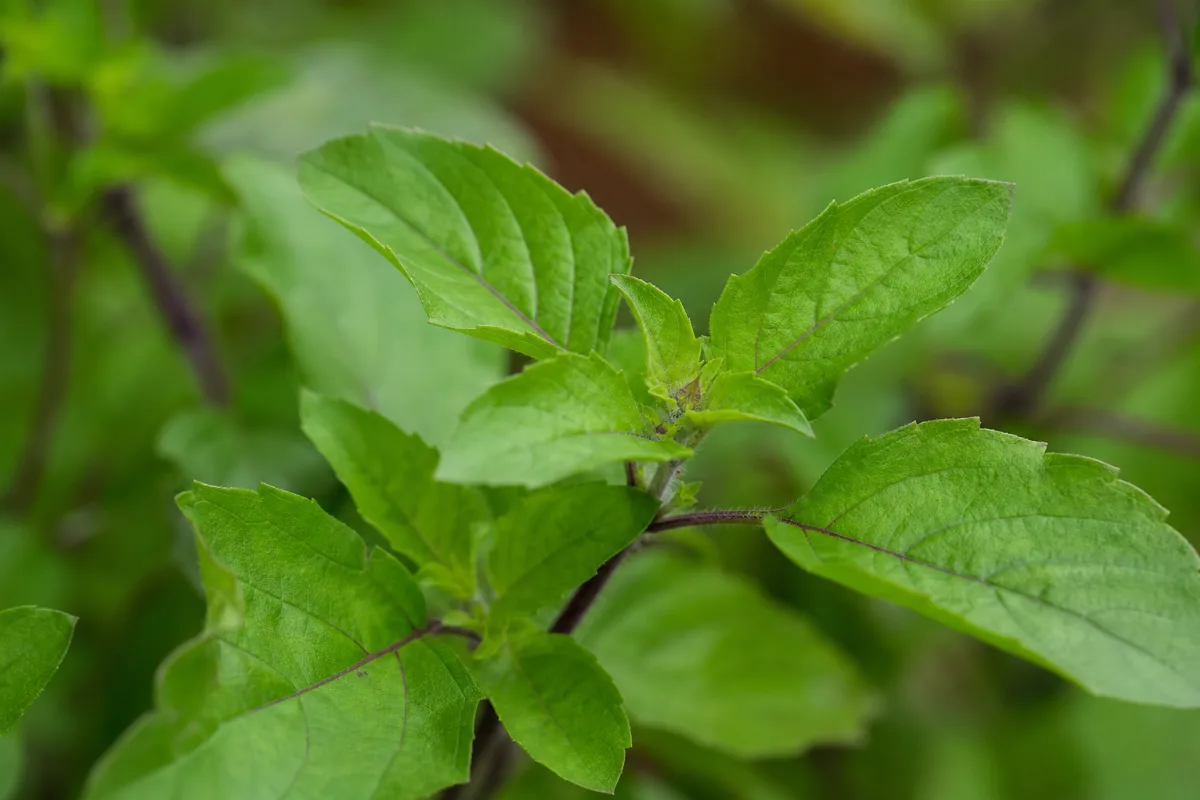
Adaptogens · Herbs & Botanicals · Sacred Indian basil with low-certainty evidence
Holy Basil (Tulsi)
Ocimum tenuiflorum L. (also Ocimum sanctum L.) · also called Holy basil, sacred basil, tulsi, tulasi, Krishna tulsi (purple type), albahaca sagrada and albahaca morada (Spanish), basilic sacré (French)
Holy basil, or tulsi, is a fragrant mint-family plant that is sacred in India and long used in Ayurveda as a tea and herbal remedy. The leaf is taken as a tea, capsule or extract, mainly for stress. Confidence is low: the two main stress trials were positive but both were linked to the extract makers and have not been repeated independently. The one real human signal is a drop in fasting blood sugar, also low certainty. Claims about fertility, thyroid, bleeding and drug interactions come only from animals or test tubes. It is not sweet basil, and products are sometimes the wrong species.
General information, not medical advice. Last substantive update · Not medically reviewed. A named clinician has not signed off on this page. How this page is made
About Holy Basil (Tulsi)
Holy basil (tulsi, Ocimum tenuiflorum) is a sacred Indian herb whose leaf is taken as a tea, capsule or extract, mainly for stress. The evidence is weak. For stress and sleep it is low certainty, resting on two placebo-controlled trials of branded extracts that were both linked to the extract makers and never repeated independently. For anxiety, mood, thinking and fatigue it is very low. The one real human signal is a fall in fasting blood sugar (about 21 mg/dl in one crossover trial), low certainty: a 24-study review had only 8 placebo-controlled studies and 7 of high quality. Everything on fertility, thyroid, bleeding and clotting, and drug interactions is from animals or test tubes, and no human data were found. In human trials, which lasted up to 13 weeks, holy basil was well tolerated. People taking diabetes medicine should watch for low blood sugar. A 2024 survey found 2 of 30 'tulsi' powders were another basil species. Ask a doctor or pharmacist about amounts.
What it is
Holy basil, also called tulsi, is Ocimum tenuiflorum (older papers call it Ocimum sanctum), a fragrant plant in the mint family (Lamiaceae). It is native to India and nearby countries and is widely grown in pots, gardens and temple courtyards. The leaf smells of cloves, which is mostly from a compound called eugenol.
It is not sweet basil (Ocimum basilicum), the pesto basil, and research on one should not be applied to the other. 'Tulsi' on a label is not always the right plant: a 2024 DNA survey of 30 market powders found 2 were Ocimum gratissimum, and the name 'vana tulsi' often points to that other species.
What makes it distinctive
Tulsi leaf holds a mix of oil compounds (eugenol, caryophyllene), plant acids (ursolic and oleanolic acid), flavones and rosmarinic acid. Green (Rama) and purple (Krishna) types differ in make-up, and purple types may carry more methyl eugenol, a compound one author group describes as potentially harmful.
In cell and animal work, tulsi extract calmed the body's stress-hormone system. This has not been shown to be how it works in people, and no one knows which compound does the work, since all the human trials used the whole leaf or leaf extracts.
Historical and current uses
In Ayurveda and Hindu household practice tulsi is the 'Queen of Herbs' and is worshipped as a goddess. It is taken daily as a tea and used for cough, asthma, fever, indigestion, skin problems and stress. These are traditional uses, not proof. Classical texts are often said to describe it, but the verses and dates were not checked at a source.
Today it is sold as a stress and general wellbeing herb, as tea, capsules and extracts, and in some mouthwashes and toothpastes. Modern reviews call it an adaptogen; one author is a paid consultant to a tulsi company, so the tone of that review is promotional.
What the research shows
For stress, two placebo-controlled trials of branded extracts found lower stress scores, and the newer one found lower hair cortisol. Both were linked to the extract makers and neither has been repeated by others. Sleep improved a little in the same trials. For anxiety, mood, thinking and fatigue there is almost nothing: one small uncontrolled anxiety study and one small attention study.
For blood sugar, several small Indian trials found lower fasting and after-meal sugar in type 2 diabetes. In the 24-study review only 8 had a placebo group and 7 were high quality, so this is promising but low certainty. Cholesterol, immune markers and gum health show small low-certainty signals. For fertility, thyroid, skin, cough and asthma there are no human trials.
At a glance
Traditional uses history, not proof
- Sacred plant in Hindu households, kept in pots and courtyards in India
- Ayurvedic 'Queen of Herbs', taken daily as a tea or leaf preparation and called an adaptogen, a herb said to help the body cope with stress
- Traditional remedy for cough, asthma, fever, indigestion, skin problems and insect bites
- Classical Ayurvedic texts are often said to describe it, but those verses were not verified here
Studied for research
- Stress and sleep, low certainty
- Anxiety, mood, thinking and fatigue, very low certainty
- Fasting blood sugar in type 2 diabetes, low certainty
- Cholesterol, immune markers and gum health, low certainty
- Fertility, thyroid, bleeding and drug interactions: animal or test-tube findings only, no human data found
Main compounds
- Eugenol, the clove-smelling oil in the leaf
- Ursolic and oleanolic acid (plant triterpenes)
- Flavones (apigenin, luteolin) and rosmarinic acid
Common forms
- Leaf tea (the traditional form)
- Branded leaf extracts such as OciBest and Holixer (used in the stress trials)
- Leaf powder, capsules and tinctures
- Mouthwash, toothpaste and gum gels (dental trials)
- Products called 'vana tulsi' or sold as tulsi may be another basil species
Research links: PubMed: systematic review of 24 human studies of tulsi (2017) · PubMed: 8-week placebo-controlled stress trial (2022) · PubMed: DNA test of 30 tulsi powders (2024) · Research Library · Genes & Biomarkers Library
The plant and its history
- Accepted scientific name
- Ocimum tenuiflorum L.
- Naming authority
- L. (Linnaeus, Sp. Pl. 597, 1753), accepted species in GBIF (usageKey 2927100) and NCBI Taxonomy (taxid 204149)
- Synonyms
- Ocimum sanctum L. (the name used in most older papers; GBIF treats it as a synonym of O. tenuiflorum, usageKey 2927101; NCBI lists 'Ocimum sanctum' as a synonym); GBIF lists 19 synonyms in all, e.g. Ocimum monachorum L., Ocimum frutescens Burm.f., Ocimum hirsutum Benth., Ocimum inodorum Burm.f., Ocimum villosum Roxb., Ocimum tomentosum Lam., Geniosporum tenuiflorum (L.) Merr., Moschosma tenuiflorum (L.) Heynh., Plectranthus monachorum (L.) Spreng.
- Common names
- Holy basil; sacred basil; tulsi; tulasi; Krishna tulsi (purple type); brush-leaf-tea (English); Albahaca morada; albahaca sagrada; tulsi (Spanish); Basilic sacre (French); Tulsi / tulasi (Hindi, Marathi, Nepali, Urdu spellings differ); Kemangi hutan and Ruku-ruku (Indonesian); Kaphrao / krapao (Thai, the stir-fry basil) (South and Southeast Asia)
- Botanical family
- Lamiaceae (the mint family, tribe Ocimeae), which also holds sweet basil, mint, rosemary, sage, thyme and lavender (NCBI Taxonomy lineage).
- Classification
- Plantae > Tracheophyta > Magnoliopsida > Lamiales > Lamiaceae > Ocimum > Ocimum tenuiflorum
- Native range
- GBIF lists the plant as present across India (almost throughout), Nepal, Pakistan, Bangladesh, Sri Lanka, Myanmar, Thailand, Laos, Cambodia, Vietnam, Malaysia, southern China and parts of Arabia, with other places marked as introduced (GBIF distribution records, s-gbif-ocimum-tenuiflorum). A 2014 review says it is thought to have originated in north-central India (p25624701). Kew POWO was not checked.
- Habitat
- Warm tropical and subtropical regions; widely grown in home gardens, pots and temple courtyards in India (p25624701). Detailed wild habitat not verified in a primary source.
- What the plant looks like
- Roots: Roots are used in some folk practices (p22228948 lists roots among parts used), but the leaf is the part studied in the human trials and sold as tulsi.; Stems: Not described in a source read for this file.; Leaves: Aromatic leaves with a clove-like smell, attributed to eugenol (p25624701). Green (Rama / 'Sri') and purple-green (Krishna) leaf types exist (p17225591, p38520476).; Flowers: Not described in a source read for this file.; Fruit: Not described in a source read for this file.
- Cultivation
- Grown as a pot and garden plant in India; has also been grown in controlled plant factories in Thailand for research (p36340360). Further cultivation detail not verified.
- Harvest and processing
- Leaves are used fresh, dried as tea, or made into alcohol/water extracts. Essential oil is made by steam or hydrodistillation of the leaves (p39073007). Not verified beyond these papers.
- Look-alikes and adulterants
- Name: Sweet basil (Ocimum basilicum L.); Note: The common culinary basil in pesto and Italian cooking. GBIF (usageKey 2927096) and NCBI (taxid 39350) list it as a separate species in the same genus. It is not holy basil and the research on tulsi should not be applied to it. A rat study found both species' seed oils had anti-inflammatory effects, so they share some traits, but they are different plants (p10356964).; Name: Vana tulsi, wild tulsi (often Ocimum gratissimum L., clove basil / African basil); Note: 'Vana' means wild. In the trade the name usually points to Ocimum gratissimum, a different species (a 2023 Hungarian study grew 'African and Vana holy basil' as O. gratissimum, p38202372). In a 2024 market survey of 30 tulsi powders, two samples were not O. tenuiflorum and turned out to be O. gratissimum (p38520476). A 2014 review describes 'white Vana (wild) tulsi' as a lower-antioxidant type than Krishna tulsi (p25624701), without naming the species there. The botanical identity of 'Vana tulsi' is therefore not settled in the sources read and may differ by seller.; Name: Rama tulsi (green leaf) versus Krishna tulsi (purple leaf); Note: Both are Ocimum tenuiflorum. The Rama / 'Sri' type is green-leaved and the Krishna type is purple-black (p17225591: 'black (Krishna Tulasi) and green (Sri Tulasi) varieties'; p38520476: 'Green Tulsi and purple Tulsi are two subtypes in O. tenuiflorum and both have the same medicinal properties'). The Rama/Krishna wording is the common trade naming; the two papers use 'green/black/purple'. Lab content differs a little between them (see compounds).; Name: Other basils: lemon basil (O. x citriodorum), Thai sweet basil (O. basilicum var.), African blue basil; Note: Grown and sold as kitchen basils. A 2023 study profiled several of them next to green holy basil and found different main oil compounds (estragole, thymol, methyl cinnamate, linalool, eugenol) and holy basil oil content below 0.5% (p38202372).; Name: Thai holy basil (kaphrao); Note: The Thai stir-fry herb is Ocimum tenuiflorum (research on Thai holy basil cultivars is on that species, p36340360). The leaves taste peppery and are used as food; the same species is called tulsi in India.
- Sustainability and conservation
- No conservation concern found in the sources read; widely cultivated. IUCN status not checked.
Traditional use and history history, not clinical proof
| Tradition or era | Documented use | Source |
|---|---|---|
| Ayurveda and Hindu household practice (India) | Tulsi is called 'The Incomparable One', 'Mother Medicine of Nature' and 'Queen of Herbs' in Ayurveda and is treated as sacred; in Hinduism the plant is worshipped as a goddess and many homes keep a tulsi plant in a pot or courtyard. Ayurveda describes the taste as hot and bitter and credits daily use with health, longevity and coping with stress. Traditional uses listed include cough, asthma, fever, diarrhoea, arthritis, eye and skin problems, indigestion and insect or snake bites. | p25624701 |
| Ancient Ayurvedic texts (Charaka Samhita, Sushruta Samhita and others) | Often said to be described in the classical Ayurvedic texts and to be thousands of years old. I could not confirm the exact verses, dates or text names from a source read, so this is NOT verified here. The 2014 review states the tradition without citing a specific classical verse in the parts read. | NOT verified (p25624701 gives the tradition in general terms only) |
| Dose in classical practice | A 2014 review of Ayurvedic and pharmaceutical dosing looked at documented traditional dose ranges for tulsi leaves and at marketed products; its stated purpose was to question a European regulatory restriction that rested on a high-dose rabbit study. Dose figures are not given on this page; ask a doctor or pharmacist about amounts. | p25035537 |
| Modern reviews: the 'adaptogen' label | A 2014 review calls tulsi a 'potent adaptogen' in the Ayurvedic sense of helping the body adapt to stress, and lists many animal and lab findings. The author discloses being a paid consultant to a tulsi-product company, so treat the tone as promotional and not as proof. | p25624701 |
| Human research record (to 2017) | A systematic review found 24 human studies on tulsi (metabolic, heart, immunity and brain/stress outcomes). All reported favourable results and none reported significant side effects, but the reviewers say many studies were small and that dose and form need to be clarified. Quality is mixed; a list of only-positive results can also reflect publication bias. | p28400848 |
| Important note | The items above describe tradition and use, not proof. Clinical benefit is judged only by trials (see the benefits and biomarkers files). Safety is in the safety file. | n/a |
Traditional use shows how a plant was used. It does not show that a supplement works or is safe today.
What is inside, and how it may work
What the plant contains and how those compounds act in cells and animals. Laboratory and animal mechanisms are not proven effects in people.
Main compounds
| Compound | Family | Where it is concentrated | Activity studied | Level of evidence |
|---|---|---|---|---|
| Eugenol PubChem 3314 | phenylpropene (the clove-smelling oil component) | Leaf (and the essential oil) Eugenol was 0.175 to 0.362% (w/w) of dried leaf in the samples of green and black tulsi measured by HPTLC (p17225591). In essential oil from four places in Vietnam it ranged from 9.0 to 44.0% (p39073007). Content varies a lot with variety and growth stage (p24420851, p36340360). | Main smell compound. In a test tube it blocked the COX-1 and COX-2 enzymes (97% COX-1 block at 1000 micromolar) and acted as an antioxidant at 10 micromolar (p10782484). In human liver-cell preparations it reduced the activity of drug-processing enzymes CYP2C9, CYP2D6 and CYP3A4 (p38841106). Rat work shows a long half-life after a single dose (p17321520). 8 31 42 7 33 71 | Laboratory research |
| Ursolic acid PubChem 64945 | pentacyclic triterpene acid | Leaf 0.478% and 0.348% (w/w) in green tulsi from two sources, and 0.252% and 0.264% in black tulsi, by HPTLC (p17225591). That method could not separate ursolic from oleanolic acid on the plate; the paper used a stain to tell them apart. | In cell and test-tube assays, an O. sanctum extract and ursolic acid lowered cortisol release, blocked the CRH receptor CRHR1 and blocked the enzymes 11-beta-HSD1 and COMT (p26899341). That is lab data; the same group's rat trial used the whole extract, not ursolic acid alone. 8 38 | Laboratory research |
| Oleanolic acid PubChem 10494 | pentacyclic triterpene acid (isomer of ursolic acid) | Leaf 0.174% and 0.218% (w/w) in black tulsi from two sources; not detected in the green type (p17225591). | Named as a main triterpene of O. tenuiflorum in a 2024 review (p39473808). No activity data for tulsi-specific oleanolic acid were read for this file. 8 15 | Laboratory research |
| Rosmarinic acid PubChem 5281792 | phenolic acid (caffeic acid ester) | Leaf Isolated from fresh leaves and stems (p10782484). No general percentage of dried leaf was verified. | Antioxidant at 10 micromolar and a weak-to-moderate COX-1/COX-2 blocker in test tubes (58% COX-1 at 1000 micromolar) (p10782484). Human absorption data come from a perilla extract, not from tulsi (see pharmacokinetics). 42 15 9 | Laboratory research |
| Apigenin and its glycosides (apigenin-7-O-glucuronide, apigenin-7-O-glucoside) PubChem 5280443 | flavone | Leaf Not verified. Isolated from leaf extract in two papers (p10782484, p17850106) without a content percentage in the abstracts read. | Free apigenin blocked COX-1 (65% at 1000 micromolar) and COX-2 in test tubes (p10782484). In rats, the apigenin glucuronide compound did not lower stress-raised corticosterone (p17850106). 42 34 | Laboratory research |
| Luteolin and its glycosides PubChem 5280445 | flavone | Leaf Luteolin was 0.019 to 0.046% (w/w) of dried leaf in the samples tested (p17225591). | Luteolin glucosides were isolated from leaf extract (p17850106). No tulsi-specific activity result was read for luteolin itself. 8 34 15 | Laboratory research |
| Carvacrol PubChem 10364 | monoterpene phenol | Essential oil (reported mainly for the related species O. gratissimum) Not verified for O. tenuiflorum. A review of O. gratissimum lists carvacrol among its oil compounds (p34901489). Carvacrol was not among the main oil compounds in the four O. tenuiflorum oils analysed in Vietnam (p39073007). | No tulsi-based activity result read. Listed because it is often quoted for 'basil' in general; do not credit tulsi with it without a tulsi-specific measurement. 89 31 | Laboratory research |
| Beta-caryophyllene ((E)-caryophyllene) PubChem 5281515 | sesquiterpene (peppery, woody smell) | Essential oil 27.8 to 49.0% of the essential oil in four Vietnamese O. tenuiflorum samples, alongside trans-beta-elemene (20.3 to 37.1%) and eugenol (9.0 to 44.0%) (p39073007). Oil makes up under 0.5% of the plant in the green holy basil tested in Hungary (p38202372). | Outside tulsi, it bound the CB2 cannabinoid receptor (Ki 155 nM), was a CB2 agonist and cut inflammation in mice that have the receptor (not in mice lacking it) (p18574142). Whether the small amount in tulsi tea or capsules reaches such levels in people is not known. 31 57 30 | Animal research |
| Methyleugenol PubChem 7127 | phenylpropene (methyl ether of eugenol) | Leaf and essential oil; higher in some chemotypes, reported higher in purple tulsi Seven O. tenuiflorum chemotypes rich in eugenol and methyleugenol were found, with methyleugenol changing during growth (p24420851). Purple tulsi was reported to contain more methyl eugenol, and 80% of 30 market powders tested were purple tulsi (p38520476). Thai accessions OC072 and OC081 were highest in methyl eugenol (p36340360). | Included because purple tulsi supply is dominated by a high methyl-eugenol type that the 2024 authors call 'moderately toxic and potentially carcinogenic' (p38520476). That safety statement is the authors' claim read in an abstract; safety detail belongs in the safety file. 71 10 20 | Laboratory research |
| Ocimumosides A and B (and ocimarin) | glycosides specific to O. sanctum (as named in the paper) | Leaf Not verified. | In rats, ocimumosides A and B (40 mg/kg by mouth) lowered stress-raised corticosterone and sugar and shifted brain chemical levels back toward normal; ocimarin did not (p17850106, p22455995). Animal data only; no human work. PubChem name search found no record for 'ocimumoside', so no CID is given. 34 4 | Animal research |
Mechanisms, receptors and pathways
| Target or pathway | Gene or receptor | What was found | Level |
|---|---|---|---|
| Stress hormone (cortisol) and the HPA stress axis | CRHR1; HSD11B1 (11-beta-HSD1); COMT | Lab: an O. sanctum extract and ursolic acid lowered cortisol release in cells, blocked the CRHR1 stress-signal receptor and inhibited 11-beta-HSD1 (which makes active cortisol) and COMT in test tubes. Animal: the extract improved body weight and cut immobility time in rats under 16 days of varied stress (p26899341). Rat compounds ocimumoside A/B lowered stress-raised corticosterone (p17850106, p22455995). Human: in an 8-week trial of 100 stressed adults, a 250 mg/day extract was linked to lower hair cortisol and lower salivary cortisol after a lab stress test than placebo (p36185698); in a 30-day trial of healthy volunteers, salivary cortisol fell over time in the extract group only, but the between-group difference was not significant (p26571987). A systematic review of HPA-axis trials found the human effect of most plants unclear (p33650944). 38 34 4 50 72 51 | Controlled trial |
| Cyclooxygenase (COX-1/COX-2) blocking | PTGS1 (COX-1), PTGS2 (COX-2) | Test tube: eugenol, rosmarinic acid, apigenin and other isolated leaf compounds blocked COX-1 and COX-2; eugenol blocked 97% of COX-1 at 1000 micromolar, and effects were described as comparable to ibuprofen, naproxen and aspirin at 10, 10 and 1000 micromolar (p10782484). These are concentrations in a dish; human blood levels of these compounds after tulsi are not known. 42 | Laboratory research |
| Lipoxygenase and the arachidonic-acid (inflammation) pathway | ALOX5 (5-LOX) and COX together (dual inhibition) | Animal: tulsi SEED oil (not leaf) reduced paw swelling caused by prostaglandin E2, leukotriene and arachidonic acid in rats; the authors credited linolenic acid for blocking both COX and LOX routes, and reviewers described the oil as a dual inhibitor (p10356964, p17569280). Seed oil is a different product from leaf tea or leaf extract. No leaf-extract LOX measurement in humans was found. 81 83 | Animal research |
| Antioxidant action | General redox balance; glutathione, SOD, catalase, lipid peroxidation in rat brain | Test tube: eugenol, rosmarinic acid, cirsilineol and others scavenged free radicals at 10 micromolar (p10782484). Animal: in rats under chronic stress, ocimumosides A and B restored brain glutathione, superoxide dismutase and catalase and reduced lipid peroxidation, with an effect comparable to melatonin (p22455995). Human antioxidant outcomes were not read for this file. Antioxidant results in a dish or in rats are not proof of a health benefit. 42 4 | Laboratory research |
| Immune cells and cytokines | IFNG (interferon-gamma), IL4; NK cells, T-helper cells | Human: in a double-blind crossover trial in 24 healthy volunteers (22 analysed), 300 mg of ethanolic leaf extract on an empty stomach for 4 weeks raised interferon-gamma (p=0.039), interleukin-4 (p=0.001), T-helper cell percentage (p=0.001) and NK-cell percentage (p=0.017) compared with placebo (p21619917). Small, healthy-people trial; the clinical meaning (for example fewer infections) was not tested. 55 | Controlled trial |
| Brain chemistry (noradrenaline, dopamine, serotonin) under stress | Monoamine systems (NA, DA, 5-HT) | Animal: chronic stress lowered noradrenaline, dopamine and serotonin in three rat brain areas; ocimumosides A and B (40 mg/kg) reversed most of these changes (p22455995). No human brain-chemistry data were found. Human mood and thinking results are in the benefits files. 4 | Animal research |
| Cannabinoid receptor CB2 (caryophyllene, from outside tulsi) | CNR2 (CB2) | Lab/animal: purified (E)-beta-caryophyllene bound CB2 (Ki 155 nM), lowered inflammatory chemicals in human blood cells and reduced paw swelling in mice (5 mg/kg by mouth) that have CB2 but not in mice lacking it (p18574142). Tulsi's oil contains 27.8 to 49.0% caryophyllene in four samples (p39073007), but no experiment ties tulsi's own effects to CB2. 30 31 | Animal research |
| Drug-processing liver enzymes (cytochrome P450) | CYP1A2, CYP2C9, CYP2D6, CYP3A4 | Test tube: purified eugenol at 1, 10 and 100 micromolar reduced the activity of these four enzymes in human liver microsomes (CYP2D6 IC50 11.09 micromolar; CYP3A4 IC50 13.48 micromolar) (p38841106). This is a signal for possible herb-drug interactions with high eugenol exposure, not a tested interaction with tulsi tea or capsules in people. Interactions are detailed in the safety file. 7 | Laboratory research |
| Plant-adaptogen network summary | HPA axis; Hsp70; NF-kB; JNK; FOXO (as a group of adaptogens) | A 2026 narrative review of seven adaptogens including O. tenuiflorum describes shared pathway effects (HPA regulation, heat-shock protein induction, NF-kB, JNK and FOXO signalling) across the group. The abstract does not separate what is shown for tulsi from the others, so it is listed here only as background and not as a tulsi finding. 86 | Pharmacological theory |
Absorption, metabolism and elimination
- Absorption
- No human absorption study of tulsi leaf, tea or extract was found. For single compounds from other sources: eugenol reached peak blood levels quickly after an oral dose in rats and had a long half-life of 14.0 h in plasma and 18.3 h in blood at 40 mg/kg (p17321520). Eugenol from a curry dish appeared in the urine of 18 breastfeeding women with a peak 1.5 h after the meal, up to 6 micrograms per gram creatinine (p37953385). Rosmarinic acid from a perilla extract (200 mg RA) was absorbed by 6 healthy men; free rosmarinic acid peaked in blood at about 0.5 h (p15309457).
- Distribution
- No human tissue-distribution data for tulsi compounds were found. The rat study measured blood and plasma only (p17321520).
- Metabolism
- Eugenol is conjugated: glucuronide forms were 77 times higher in urine after enzyme treatment in a six-person food study (p37953385). Rosmarinic acid is conjugated (glucuronide/sulfate) and methylated, and part is broken down to caffeic and ferulic acids, mostly present as conjugates (p15309457). These two studies used a curry dish and a perilla extract; tulsi itself was not tested. Eugenol also reduced several CYP enzymes in human liver microsomes (p38841106).
- Elimination
- After the perilla extract, about 6.3% of the dose appeared in urine as rosmarinic acid and related products, about 75% of it within 6 hours (p15309457). Eugenol's blood half-life in rats was 14 to 18 hours (p17321520). Ursolic acid given by vein as nano-liposomes (not by mouth and not from tulsi) showed a linear dose-response and no build-up over 14 days in 8 patients (p23319864; the analytical paper is p21169069).
- Bioavailability
- Not measured for tulsi in people. Ursolic acid and other triterpenes are known in general to dissolve poorly in water, and most ursolic-acid delivery research uses nano-formulations to get around that (p23319864); that statement is general background and not a measurement of tulsi. The size of the flavone and rosmarinic acid share that reaches blood from tulsi is unknown.
Isolated compounds versus whole extracts
Tulsi is a mix of essential-oil compounds (eugenol, caryophyllene, elemene), triterpenes (ursolic and oleanolic acid), flavones (apigenin, luteolin and their glycosides) and phenolic acids (rosmarinic acid). The only human tulsi trials used whole leaf or leaf extracts (p36185698, p26571987, p21619917, p19253862, p8880292), so which compound carries the effect is unknown. In the lab, several different leaf compounds blocked COX enzymes, so no single one explains it (p10782484). For cortisol the lab data point to ursolic acid and extract together (p26899341), while in rats two newly named glycosides, ocimumosides A and B, worked but ocimarin and apigenin glucuronide did not (p17850106, p22455995). Content differs by type: green tulsi had more ursolic acid, black (Krishna) had oleanolic acid and the green type did not (p17225591), and purple types may carry more methyl eugenol (p38520476). So 'tulsi' means different things in tea, capsule and essential oil, and purified compounds (eugenol, ursolic acid) should not be treated as the same thing as the leaf or its extract.
Nutritional composition
Tulsi is used as a herb, tea and flavouring, so a nutrient table is not very meaningful and no per-100 g vitamin or mineral values were verified here. The oil makes up under 0.5% of fresh herb in the green holy basils tested in one study (p38202372). Seed oil contains alpha-linolenic acid (an omega-3 fat) and is a separate product from the leaf (p17569280).
7 low certainty6 very low certainty7 not enough evidence
What was looked at
The 20 benefits and uses checked for Holy Basil (Tulsi), each with how strong the evidence is. Tap one to open it.
- StressLow certainty
- Anxiety and generalized anxiety disorderVery low certainty
- Mood and depressionVery low certainty
- Thinking, attention and memoryVery low certainty
- SleepLow certainty
- Fatigue and burnoutVery low certainty
- Blood sugar and type 2 diabetesLow certainty
- Cholesterol and blood fatsLow certainty
- Blood pressureVery low certainty
- Metabolic syndrome and body weightVery low certainty
- Immune markersLow certainty
- Gum health and dental plaque (mouthwash, toothpaste, gel)Low certainty
- Mouth bacteria, tooth decay germs and bad breathLow certainty
- Fighting germs and infectionsNot enough evidence
- Cough, asthma and COPDNot enough evidence
- Skin and acneNot enough evidence
- Fertility, sperm and PCOSNot enough evidence
- Exercise performance and physical fatigueNot enough evidence
- Inflammation and uric acidNot enough evidence
- ThyroidNot enough evidence
Lab markers tracked in the studies
CortisolPerceived Stress Scale (PSS)Stress symptom rating scaleAnxiety rating scalesAthens Insomnia Scale (AIS)Attention and memory test speed (Sternberg, Stroop) and P300 latencyFasting blood glucoseAfter-meal (postprandial) blood glucoseHbA1c (long-term blood sugar)TriglyceridesLDL cholesterolHDL cholesterolTotal cholesterolInsulin and insulin resistanceBlood pressureInterferon-gammaInterleukin-4Natural killer (NK) cellsDental plaque indexGum (gingival) inflammation indexSalivary Streptococcus mutansSerum uric acidLiver enzymes (SGPT/ALT and SGOT/AST)
What is Holy Basil (Tulsi) good for?
The main proposed uses and how strong the human evidence is for each. Nothing is rated above low certainty.
Benefits, one by one
Each card is a research question, not a promise. Tap a goal to filter. Open a card to see the studies, doses and limits.
Stress
Low certaintyHoly basil extracts have been tested for stress in a few small to medium trials. Two placebo-controlled trials of branded extracts (OciBest and Holixer) found lower stress scores, and the newer one also found lower hair cortisol. Both were funded or linked to the extract makers, and there are few independent trials, so confidence is low.
7 studiesBranded standardised extracts (OciBest 1200 mg of actives per day for…
Studies, doses and limits
What the trials found
Saxena 2012 (OciBest, 150 adults, 1200 mg of actives per day, 6 weeks) found total stress-symptom scores fell more than on placebo (P <= 0.05), described by the authors as 39% more improvement. Lopresti 2022 (Holixer extract, 100 adults, 125 mg twice daily, 8 weeks) found a larger fall in Perceived Stress Scale scores than placebo (p = 0.003), lower hair cortisol at week 8 (p = 0.025), and, after a lab stress test, lower salivary cortisol (p = 0.001), salivary amylase (p = 0.001), blood pressure (systolic p = 0.010, diastolic p = 0.025) and rated stress (p < 0.001). Sampath 2015 (ethanolic leaf extract, 300 mg a day, 30 days, healthy volunteers) found salivary cortisol and anxiety scores improved over time in the extract group only, but the difference from placebo was not significant. A 2026 trial (186 adults, 60 days) of a three-herb formula of Rhodiola, holy basil and Schisandra found lower Perceived Stress Scale scores than placebo (p < 0.0001), but holy basil cannot be credited alone. The 2017 systematic review of 24 human tulsi studies (Jamshidi and Cohen) reported favourable results on psychological stress, but it was not a meta-analysis and all studies were reported as positive. A 2022 systematic review of stress-hormone trials (Lopresti) listed holy basil among 26 plants and said the effect of most plants on stress hormones in people was unclear.
Results
Both main extract trials were positive on stress scores. The 2022 trial adds objective stress-hormone measures.
Effect sizes as reported
Saxena 2012: 1.6 times (39%) more improvement than placebo, P <= 0.05. Lopresti 2022: PSS p = 0.003; hair cortisol p = 0.025 (effect sizes not in the abstract).
Why this rating
Few trials, both positive trials used branded extracts and have ties to the makers, no independent replication, no pooled analysis, and the reviews rely on mostly small and lower-quality studies. No formal GRADE rating was found.
Form and dose studied
Branded standardised extracts (OciBest 1200 mg of actives per day for 6 weeks; Holixer 125 mg twice daily for 8 weeks) and a leaf extract (300 mg a day for 30 days). No trial of tea or plain leaf powder for stress was found among those read. Results from one preparation should not be assumed for another.
Who was studied
Adults with general stress or high stress, aged 18 to 65 in the Holixer trial; healthy volunteers in Sampath.
Limits
Mostly manufacturer-linked trials; stress is mostly self-rated; the cortisol results come from one trial and were not repeated; the 2022 stress-hormone review gives no holy-basil-specific result.
Why researchers looked
Holy basil is sold mainly as a stress herb, so stress is its main studied use in people.
Traditional use
Holy basil (tulsi) is a sacred plant in India and a long-used Ayurvedic herb, traditionally taken as a tea or leaf preparation and called an adaptogen, a herb said to help the body cope with stress.
Proposed mechanism Preliminary mechanism
Lab and animal work suggests holy basil extract may calm the body's stress-hormone system: in cell tests a standardised extract (Holixer) reduced cortisol release and blocked the CRF1 stress receptor, and in rodents it blocked a stress-induced rise in corticosterone (Gowda 2023, written by the extract maker). This has not been shown to be how it works in people.
A proposed mechanism does not show that the effect happens in people.
No serious side effects reported in the trials read; trials were short (up to 8 weeks). See the safety file for full safety information.
Anxiety and generalized anxiety disorder
Very low certaintyOne small uncontrolled hospital study in 35 people with generalized anxiety disorder found lower anxiety after 60 days of a leaf extract, but with no comparison group it cannot show the herb did it. Placebo-controlled stress trials add only indirect hints. There is no good trial of holy basil for diagnosed anxiety.
4 studiesLeaf extract 500 mg twice daily for 60 days (Bhattacharyya); leaf ext…
Studies, doses and limits
What the trials found
Bhattacharyya 2008 gave 35 people with generalized anxiety disorder a leaf extract, 500 mg twice daily, and assessed them at days 0, 30 and 60. Anxiety, and the related stress and depression, fell (p<0.001), and attention and willingness to adjust improved. The abstract describes no placebo or comparison group. Sampath 2015 (healthy adults, 300 mg ethanolic leaf extract a day for 30 days) found State-Trait Anxiety Inventory scores improved over time in the extract group only, but the difference between groups was not significant. In the 2026 three-herb formula trial (Rhodiola, holy basil, Schisandra; 186 adults) anxiety scores improved versus placebo (p = 0.0004), but holy basil cannot be separated out. The Cohen 2014 narrative review cites mostly animal studies for anxiety-reducing effects.
Results
One uncontrolled study improved; one placebo-controlled study improved over time but not versus placebo; one formula trial improved but is not specific to holy basil.
Effect sizes as reported
Bhattacharyya 2008: p<0.001 vs baseline (no scale scores in abstract).
Why this rating
The only study in diagnosed anxiety had no placebo group, was small and does not describe the preparation in detail. The other results are indirect.
Form and dose studied
Leaf extract 500 mg twice daily for 60 days (Bhattacharyya); leaf extract 300 mg daily for 30 days (Sampath). No trial of tea or leaf powder for anxiety was found.
Who was studied
People with generalized anxiety disorder (35); healthy adults (Sampath).
Limits
Not a controlled trial; very small; published in a small journal; no independent replication. Holy basil should not replace treatment for anxiety disorders.
Why researchers looked
Holy basil is traditionally seen as calming, and animals given it show anxiety-reducing behaviour in many experiments, so anxiety is a natural thing to test.
Traditional use
Holy basil (tulsi) is a sacred plant in India and a long-used Ayurvedic herb, traditionally taken as a tea or leaf preparation and called an adaptogen, a herb said to help the body cope with stress.
Proposed mechanism Preliminary mechanism
Mostly from animal and lab work, which is not covered in detail here. The likeliest ideas involve the stress-hormone system (see stress) and antioxidant effects in brain tissue; none is proven in people.
A proposed mechanism does not show that the effect happens in people.
Do not stop prescribed anxiety medicine to try holy basil. See the safety file for interactions.
Mood and depression
Very low certaintyThere is no good human trial of holy basil for depression. Mood was measured in trials of holy basil for stress, but the abstracts give little detail. Evidence is very thin and mostly from animals.
5 studiesLeaf extract 500 mg twice daily (Bhattacharyya); three-herb formula (…
Studies, doses and limits
What the trials found
No randomised trial in people with depression was found among those read. Bhattacharyya 2008 (35 people with generalized anxiety disorder, leaf extract 500 mg twice daily, 60 days, no comparison group) reported that depression scores fell alongside anxiety (p<0.001). Lopresti 2022 measured mood with the Profile of Mood States, but the abstract does not report the result. In the 2026 three-herb formula trial (Rhodiola, holy basil and Schisandra, 186 adults) mood dysregulation improved versus placebo (p = 0.0454), but holy basil cannot be credited alone.
Results
Mood effects were small side findings in uncontrolled or multi-herb studies.
Effect sizes as reported
Only p-values; no effect sizes available in the abstracts.
Why this rating
No trial was designed for depression; findings come from an uncontrolled study and a three-herb formula.
Form and dose studied
Leaf extract 500 mg twice daily (Bhattacharyya); three-herb formula (2026).
Who was studied
People with anxiety disorder or high stress; none with diagnosed depression.
Limits
No trial in people with depression; mood result in Lopresti 2022 not seen (full text not read).
Why researchers looked
Holy basil is traditionally used for low mood and mental fatigue, and animal studies report antidepressant-like effects.
Traditional use
Holy basil (tulsi) is a sacred plant in India and a long-used Ayurvedic herb, traditionally taken as a tea or leaf preparation and called an adaptogen, a herb said to help the body cope with stress.
Proposed mechanism Preliminary mechanism
Animal studies are said to show antidepressant-like effects, and the Holixer extract reduced immobility time in the rat forced swim test (Gowda 2023). These are animal tests and do not show a benefit in people with depression.
A proposed mechanism does not show that the effect happens in people.
Do not use as a replacement for depression treatment. See the safety file for interactions with antidepressants.
Thinking, attention and memory
Very low certaintyOne small placebo-controlled study in healthy adults found faster reaction times and fewer errors on attention and memory tests after 30 days of a holy basil leaf extract. It has not been repeated, the abstract gives no group size, and the evidence is very limited. Animal studies show brain-protective effects, which are not proof for people.
4 studiesEthanolic leaf extract 300 mg daily for 30 days (Sampath); OciBest 12…
Studies, doses and limits
What the trials found
Sampath 2015 gave healthy adult volunteers a 300 mg capsule of ethanolic holy basil leaf extract or placebo daily for 30 days. Compared with placebo, the extract group improved more in reaction time and error rate on the Sternberg memory test and in reaction time on neutral and interference Stroop tasks (and error rate on the interference task). P300 latency, an electrical brain-response speed measure, was significantly better than placebo. The placebo group also improved on the tasks, but stopped improving after day 15. Saxena 2012 (OciBest, 150 adults) found self-rated forgetfulness fell more than on placebo (P <= 0.05). A 2023 trial (128 older adults, 90 days) of a ten-herb blend that includes holy basil found faster task speed but memory deficits, which the authors say may be due to unequal randomisation; holy basil cannot be credited or blamed for this.
Results
Faster reaction times and fewer errors in healthy adults on one small trial; self-rated forgetfulness improved in a stress trial.
Effect sizes as reported
Specific values not given in the abstracts.
Why this rating
Only one small trial in healthy people, group size not stated in the abstract, and no replication. Others are indirect or multi-herb.
Form and dose studied
Ethanolic leaf extract 300 mg daily for 30 days (Sampath); OciBest 1200 mg of actives a day (Saxena).
Who was studied
Healthy adults (Sampath); stressed adults (Saxena). None in people with dementia or mild cognitive impairment.
Limits
Single small trial; healthy volunteers only; the practice effect on repeat testing; no trial in memory problems or dementia.
Why researchers looked
Holy basil is traditionally taken to sharpen the mind, and lab studies show it may protect brain cells from damage.
Traditional use
Holy basil (tulsi) is a sacred plant in India and a long-used Ayurvedic herb, traditionally taken as a tea or leaf preparation and called an adaptogen, a herb said to help the body cope with stress.
Proposed mechanism Animal research
In animal and cell studies, Ocimum extracts raise the brain's own antioxidant enzymes and reduce beta-amyloid and tau (Vasincu 2025 review, covering holy and sweet basil). This is lab work and does not show a benefit for memory in people.
A proposed mechanism does not show that the effect happens in people.
No safety concerns reported in these trials; short duration.
Sleep
Low certaintyHoly basil extracts were linked to better self-rated sleep in two stress trials. The 2022 trial found a better insomnia score than placebo, but the Fitbit results are not reported in the abstract, and the authors say the sleep findings need confirming with objective measures. Evidence is low.
3 studiesHolixer 125 mg twice daily for 8 weeks; OciBest 1200 mg of actives pe…
Studies, doses and limits
What the trials found
Lopresti 2022 (Holixer extract, 100 stressed adults, 125 mg twice daily, 8 weeks) found a larger improvement than placebo in Athens Insomnia Scale scores (p = 0.025); the authors say sleep results were subjective and objective sleep measures are needed. Saxena 2012 (OciBest, 150 adults, 6 weeks) found self-rated recent sleep problems fell more than on placebo (P <= 0.05). The 2026 three-herb formula trial (Rhodiola, holy basil, Schisandra) improved PSQI (p = 0.0008) and restorative sleep (p < 0.0001) versus placebo, but holy basil cannot be credited alone.
Results
Better self-rated sleep in two single-extract trials; objective sleep not reported in the abstract.
Effect sizes as reported
p-values only (AIS p = 0.025 in Lopresti 2022).
Why this rating
Two trials with branded extracts and ties to makers; sleep was a secondary outcome; self-rated. Rated low rather than very-low because two separate trials point the same way.
Form and dose studied
Holixer 125 mg twice daily for 8 weeks; OciBest 1200 mg of actives per day for 6 weeks.
Who was studied
Adults with stress; none selected for insomnia.
Limits
Sleep was secondary; self-reported; no trial in people with insomnia; objective Fitbit results not seen in the abstract.
Why researchers looked
Poor sleep goes with stress, and a stress-reducing herb may help sleep indirectly.
Traditional use
Holy basil (tulsi) is a sacred plant in India and a long-used Ayurvedic herb, traditionally taken as a tea or leaf preparation and called an adaptogen, a herb said to help the body cope with stress.
Proposed mechanism Pharmacological theory
No clear mechanism for sleep has been shown. If the herb lowers stress arousal (see stress), sleep could improve as a result; this is a theory.
A proposed mechanism does not show that the effect happens in people.
No sleepiness or serious effects reported; trial duration was short.
Fatigue and burnout
Very low certaintyThe only direct finding is that people with stress symptoms taking OciBest reported less frequent exhaustion than on placebo. No trial was designed to test holy basil for fatigue or burnout, so evidence is very limited.
3 studiesOciBest 1200 mg of actives per day for 6 weeks.
Studies, doses and limits
What the trials found
In Saxena 2012 (OciBest, 150 adults with general stress, 1200 mg of actives per day, 6 weeks), the symptom 'frequent feeling of exhaustion' decreased significantly more than on placebo (P <= 0.05). Fatigue was one item among several stress symptoms, not a main outcome. The 2026 three-herb formula trial (Rhodiola, holy basil, Schisandra) reported reduced fatigue in its conclusion but the abstract does not give the fatigue figure, and holy basil cannot be credited alone.
Results
One item of a stress symptom scale improved.
Effect sizes as reported
P <= 0.05 for the exhaustion item; no effect size in the abstract.
Why this rating
One symptom item in one manufacturer-linked trial; no fatigue-focused trial or burnout trial.
Form and dose studied
OciBest 1200 mg of actives per day for 6 weeks.
Who was studied
Adults with general stress.
Limits
Self-rated item; not a validated fatigue scale; no trial in burnout or chronic fatigue.
Why researchers looked
Holy basil is used in Ayurveda as a tonic for tiredness related to stress.
Traditional use
Holy basil (tulsi) is a sacred plant in India and a long-used Ayurvedic herb, traditionally taken as a tea or leaf preparation and called an adaptogen, a herb said to help the body cope with stress.
Proposed mechanism Animal research
Animal tests show greater swimming endurance after holy basil extract (Gowda 2023, mice), which has been used to suggest an anti-fatigue effect; this does not show fatigue relief in people.
A proposed mechanism does not show that the effect happens in people.
No adverse events reported in this trial.
Blood sugar and type 2 diabetes
Low certaintySeveral small human trials, mostly from India and many decades old, found lower fasting and after-meal blood sugar when people with type 2 diabetes took holy basil (tulsi) leaf powder or extract. The best-described trial found fasting blood sugar about 21 mg/dl lower than on placebo. The 2017 review that gathered the human studies rated only a minority as good quality, so this is promising but low-certainty. It is not a replacement for diabetes medicine.
7 studiesLeaf powder 1 to 2.5 g a day, capsules totalling 3 g a day, or 300 mg…
Studies, doses and limits
What the trials found
The 2017 systematic review (Jamshidi and Cohen) found blood sugar was the most common outcome, measured in 8 of 24 human studies, and all of those reported lower sugar. The most fully described trial (Agrawal 1996, single-blind crossover, people with type 2 diabetes) gave holy basil leaves against placebo leaves: fasting blood sugar fell by 21.0 mg/dl (17.6%) and after-meal sugar by 15.8 mg/dl (7.3%); urine sugar showed the same trend. Other studies listed in the review table, which could not be independently located and read for this profile, include: Somasundaram 2012 (60 adults, tulsi 300 mg a day plus glibenclamide versus glibenclamide alone for 13 weeks, with lower fasting and after-meal sugar and HbA1c), Gandhi 2016 (40 men, 3 g of leaf capsules a day for about 6.5 weeks), Venkatesan 2015 (30 adults, 2 g a day for 2 weeks), Rai 1997 (27 adults, 1 g of leaf powder a day for 4 weeks, uncontrolled) and Dineshkumar 2010 (40 adults, 8 weeks, compared with water). I did not find a newer, larger, well-run trial after the review.
Results
Lower fasting and after-meal blood sugar in every trial reported, with HbA1c lower in the trials that measured it (per the review table).
Effect sizes as reported
Agrawal 1996: fasting glucose -21.0 mg/dl (95% CI -31.4 to -11.2, p<0.001); after-meal glucose -15.8 mg/dl (95% CI -27.0 to -5.6, p<0.02). Other trials: no numbers available to this profile.
Why this rating
Small trials (27 to 90 people), short (2 to 13 weeks), mostly from India, many with no placebo or only single-blinding, and the review itself says only 7 of 24 studies were high quality and that benefit may be overestimated. No pooled meta-analysis. The rating is the compiler's, informed by the review's own caution.
Form and dose studied
Leaf powder 1 to 2.5 g a day, capsules totalling 3 g a day, or 300 mg of leaf extract with a diabetes drug; dose and form varied widely and cultivar was usually not stated.
Who was studied
Adults with type 2 diabetes (40 to 65 years), India.
Limits
No trial longer than 13 weeks. Hard outcomes such as eye, kidney or heart complications were not studied. Whether the effect is large enough to matter on top of modern diabetes care is unknown. Products and doses cannot be compared.
Why researchers looked
Type 2 diabetes is very common and people look for food-based add-ons. Tulsi leaves have long been used in Ayurveda, and lab and animal studies found blood-sugar lowering, which led to the human trials.
Traditional use
Tulsi is a sacred plant in India and has been used daily as a leaf, tea or juice. Use for sugar disorders is mentioned in Ayurvedic tradition; the 2017 review says the trials reinforce those traditional uses.
Proposed mechanism Preliminary mechanism
The review suggests the leaf compound eugenol may lower blood sugar in two ways: by stopping glucose from binding to blood proteins and by slowing the breakdown of starch into sugar. This comes from lab work and is a suggestion, not shown in these trials.
A proposed mechanism does not show that the effect happens in people.
If you take diabetes medicine, tulsi on top could in theory push sugar lower; tell your doctor or pharmacist before trying it. See the safety file for more.
Cholesterol and blood fats
Low certaintyA handful of small trials report better blood fats (triglycerides, LDL, HDL) with tulsi. The one trial I could read (30 overweight young adults, 250 mg of leaf extract twice a day for 8 weeks) found better triglycerides, LDL and HDL than at the start, but only HDL was clearly better than the untreated group. Evidence is low-certainty.
7 studies250 mg of leaf extract capsule twice a day (8 weeks); 5 mL of aqueous…
Studies, doses and limits
What the trials found
Satapathy 2017 (30 young overweight or obese adults in India; open-label, no placebo; 16 took a 250 mg leaf extract capsule twice daily for 8 weeks and 14 had no treatment): in the tulsi group, triglycerides (p=0.019), LDL (p=0.001), HDL (p=0.001), VLDL (p=0.019) and BMI (p=0.005) improved; against the untreated group, only the HDL gain was significant (p=0.037). Liver enzymes did not change. In Agrawal 1996, total cholesterol showed only a mild reduction. The 2017 review table lists further small studies that reported better lipids but that I could not read: Devra 2012 (100 adults with metabolic syndrome, aqueous leaf preparation 5 mL twice daily for 12 weeks), Dineshkumar 2010 (40 adults with type 2 diabetes, 8 weeks versus water), Rai 1997 and a small healthy-volunteer trial where lipids fell in 6 people. The review counted 6 studies with lipids as an outcome. Total cholesterol was the one lipid the review table says did not improve in the Satapathy trial.
Results
Mostly better triglycerides, LDL and HDL in small, short studies; total cholesterol change was mild or absent.
Effect sizes as reported
p-values only in the abstracts (e.g., HDL vs untreated p=0.037); no effect sizes or confidence intervals available.
Why this rating
Small, short, often no placebo or blinding; abstract-level data only; no pooled analysis; one hint (HDL) survived comparison with the control group. Compiler's rating.
Form and dose studied
250 mg of leaf extract capsule twice a day (8 weeks); 5 mL of aqueous leaf preparation twice daily (12 weeks); other forms listed in the review.
Who was studied
Overweight/obese young adults; adults with metabolic syndrome or type 2 diabetes; India.
Limits
A better lab number is not fewer heart attacks. No trial followed heart outcomes. Diet and exercise changes were not controlled in the abstract.
Why researchers looked
Blood fats are a main risk factor for heart disease and often go along with high blood sugar and weight.
Traditional use
Tulsi is described in Ayurveda as a heart-supportive herb; modern lipid trials followed lab and animal findings.
Proposed mechanism Animal research
Animal studies found tulsi lowered cholesterol and fats in diabetic and high-fat-diet animals; how this might work in people is not established.
A proposed mechanism does not show that the effect happens in people.
Satapathy found no significant change in liver enzymes; the review reported mild nausea in one study. See the safety file.
Blood pressure
Very low certaintyA few very small, old trials of fresh tulsi juice or leaf powder reported lower blood pressure in people with high blood pressure or metabolic syndrome. The details could not be checked, and one trial was in women with low blood pressure. There is not enough reliable evidence to say tulsi lowers blood pressure.
5 studiesFresh tulsi juice 30 mL once or twice a day; 2 g leaf powder daily; 5…
Studies, doses and limits
What the trials found
Six studies in the 2017 review measured blood pressure. From its table: Sarvaiya 1986 (two small trials, 20 and 16 adults with hypertension, fresh juice of about 75% tulsi, 30 mL a day for 10 days in a crossover trial and 30 mL twice a day for 12 days versus coloured water; blood pressure fell, by about 25% in the second); Devra 2012 (100 adults with metabolic syndrome, aqueous leaf, 12 weeks, blood pressure improved); Kochhar 2009 (90 men, 2 g of leaf powder a day for 12 weeks, blood pressure improved). Bhargava 2013 (50 young women with LOW blood pressure, juice of 15 leaves, 4 weeks) also reported a change in blood pressure; the review does not state the direction. I found no later trial.
Results
Lower blood pressure reported in the high-blood-pressure and metabolic syndrome trials, with no usable numbers.
Effect sizes as reported
Not available; the review table gives no mmHg values (one summary says about 25% lower).
Why this rating
Tiny and old trials, short follow-up, no numbers, details unverifiable, one trial in a low-blood-pressure group. Compiler's rating.
Form and dose studied
Fresh tulsi juice 30 mL once or twice a day; 2 g leaf powder daily; 5 mL aqueous preparation twice daily.
Who was studied
Adults with hypertension or metabolic syndrome; India.
Limits
Only the review summary was read; no mmHg values; very short; not tested together with blood pressure medicines.
Why researchers looked
Tulsi is traditionally linked to heart health and was tested alongside the sugar and lipid work.
Traditional use
Ayurvedic texts describe tulsi as a heart tonic; no specific modern blood pressure use is established.
Proposed mechanism Pharmacological theory
No mechanism for blood pressure in people has been shown. Animal work suggests a heart-protective effect, which is a theory.
A proposed mechanism does not show that the effect happens in people.
If you take blood pressure medicine, ask your doctor first: in theory the effects could add up. If you already have low blood pressure, avoid assuming tulsi is harmless. See the safety file.
Metabolic syndrome and body weight
Very low certaintyMetabolic syndrome is a cluster of high blood sugar, blood pressure, blood fats and waist size. Tulsi has been tried in only a few small trials. One pilot in 30 overweight young adults found a lower BMI, insulin and insulin resistance in the tulsi group after 8 weeks, but there was no placebo. A larger 100-person trial in metabolic syndrome is listed in a review but I could not read it.
4 studies250 mg of leaf extract capsule twice a day for 8 weeks; 5 mL aqueous …
Studies, doses and limits
What the trials found
Satapathy 2017 (30 overweight/obese young adults, 250 mg leaf extract twice a day for 8 weeks versus no treatment): in the tulsi group BMI (p=0.005), plasma insulin (p=0.021) and insulin resistance (p=0.049) improved. The review table also lists Devra 2012 (100 adults aged 40+ with metabolic syndrome, 12 weeks, improved lipids, fasting sugar and blood pressure) and Kochhar 2009 (90 men with type 2 diabetes or metabolic syndrome, 12 weeks).
Results
Small improvements in BMI, insulin and insulin resistance in one open-label pilot; improvements reported in two further trials that could not be read.
Effect sizes as reported
p-values only: BMI p=0.005, insulin p=0.021, insulin resistance p=0.049 (within the tulsi group).
Why this rating
Only a 30-person pilot with no placebo or blinding was read; the larger trials are known only through a review table. Compiler's rating.
Form and dose studied
250 mg of leaf extract capsule twice a day for 8 weeks; 5 mL aqueous leaf twice a day for 12 weeks.
Who was studied
Overweight/obese young adults; adults with metabolic syndrome; India.
Limits
Weight changes were small and measured as BMI; diet and exercise not described; only 8 to 12 weeks.
Why researchers looked
The review's authors argue that tulsi's effects on sugar, fats and pressure together fit a lifestyle-disease picture, with inflammation as a common thread.
Traditional use
Daily tulsi is part of Ayurvedic lifestyle care; weight loss is not a classical claim.
Proposed mechanism Preliminary mechanism
The review proposes that tulsi's anti-inflammatory compounds may act on several pathways at once. This is a theory based mainly on lab and animal studies.
A proposed mechanism does not show that the effect happens in people.
No change in liver enzymes in the pilot; see the safety file.
Immune markers
Low certaintyIn one small crossover trial of 22 healthy adults, 300 mg of a tulsi leaf extract a day for 4 weeks raised some immune signals in blood tests (interferon-gamma, interleukin-4, T-helper cells and NK cells) compared with placebo. That shows the immune system was changed, not that people got sick less often, and no trial has counted colds or infections with tulsi alone.
4 studies300 mg of ethanolic leaf extract capsule once a day on an empty stoma…
Studies, doses and limits
What the trials found
Mondal 2011 (22 healthy volunteers in a double-blind crossover trial): after 4 weeks of tulsi, interferon-gamma (p=0.039), interleukin-4 (p=0.001), T-helper cells (p=0.001) and NK cells (p=0.017) were higher than with placebo. A separate five-herb tea study (Bhat 2010; ashwagandha, licorice, ginger, tulsi and cardamom) in people aged 55 and over with low NK activity found higher NK activity versus regular tea, but tulsi cannot be separated from the other herbs. The review also lists small 1980s open trials in viral hepatitis and viral encephalitis that cannot be treated as proof.
Results
Higher lab markers of immune activity; no study counted fewer infections.
Effect sizes as reported
p-values only; no effect sizes available.
Why this rating
One small trial of healthy people and a mixed-herb tea; lab markers only. Compiler's rating.
Form and dose studied
300 mg of ethanolic leaf extract capsule once a day on an empty stomach for 4 weeks.
Who was studied
Healthy adults in India.
Limits
A higher immune marker is not necessarily better protection; too much immune activity can be unhelpful in some conditions. No long-term data.
Why researchers looked
In India tulsi leaf eaten on an empty stomach is traditionally believed to raise resistance to illness, and lab studies showed it influences immune cells.
Traditional use
Daily tulsi leaves or tea are a long-standing household practice for coughs, colds and general resistance in India.
Proposed mechanism Preliminary mechanism
Laboratory work suggests tulsi extracts act on immune cells and cytokines. The human trial measured the signals but not how they work.
A proposed mechanism does not show that the effect happens in people.
People with autoimmune disease or on immune-suppressing drugs should ask their doctor first. See the safety file.
Gum health and dental plaque (mouthwash, toothpaste, gel)
Low certaintyDental trials from India tested tulsi mouthwash, toothpaste and gum gels. In most, tulsi lowered plaque and gum inflammation and was often about as good as chlorhexidine (the standard medicated rinse) after a month; in one trial tulsi toothpaste matched fluoride toothpaste and beat placebo toothpaste. The trials are small, short and mostly report p-values.
7 studiesMouthwash 4% extract or unspecified, 10 ml twice daily for 15 to 30 d…
Studies, doses and limits
What the trials found
Mouthwash: Penmetsa 2019 (60 adults with gingivitis, tulsi vs aloe vera vs chlorhexidine rinse twice daily, with scaling) found all three equally effective at 30 days for plaque, gum and bleeding scores. Kamran 2023 (75 people with braces) found that adding a 4% tulsi or noni mouthwash lowered plaque and lowered TNF-alpha, IL-1 alpha and IL-1 beta in gum fluid. Toothpaste: Nadar 2020 (84 schoolchildren, 4% tulsi toothpaste for 21 days) gave a bigger fall in plaque and gum scores than placebo toothpaste and the same as fluoride toothpaste. Gel in gum pockets after cleaning: Deepika 2021 (30 people, 2% gel for 1 month, compared with chlorhexidine gel; mixed results), Rahalkar 2021 (15 people) and Agrawal 2024 (tulsi about as good as curcumin) found small extra benefits mainly on a bacterial enzyme test. An oral submucous fibrosis paste trial (Biswas 2022, 60 people) reported less burning and better mouth opening but had no control group.
Results
Lower plaque, gum redness and bleeding scores, about equal to chlorhexidine at 30 days in the best-designed comparison.
Effect sizes as reported
Mostly p-values; no effect sizes or confidence intervals in the abstracts.
Why this rating
Many small randomised trials with consistent direction, but short (1 to 4 weeks), tiny groups, abstract-level reading, unclear extract strengths. Compiler's rating.
Form and dose studied
Mouthwash 4% extract or unspecified, 10 ml twice daily for 15 to 30 days; 4% tulsi toothpaste for 21 days; 2% gel for 1 month.
Who was studied
Schoolchildren and adults with gingivitis, gum pockets, or braces, India.
Limits
Not a replacement for brushing, flossing or dentist care. Strengths and extraction methods differ. No long-term follow-up.
Why researchers looked
Chewing tulsi leaves and oral rinses with tulsi are traditional in India, and tulsi contains eugenol and other compounds that kill bacteria in the lab.
Traditional use
Tulsi leaves are traditionally chewed or used in mouth care in India; the 2017 review cites ethnomedicine surveys of oral care.
Proposed mechanism Laboratory research
Tulsi extracts kill mouth bacteria in laboratory tests, and a mouthwash trial found lower inflammatory chemicals in gum fluid.
A proposed mechanism does not show that the effect happens in people.
Mouthwash and gel studies did not report problems in the abstracts, but they were not safety studies. Do not swallow mouthwash. See the safety file.
Mouth bacteria, tooth decay germs and bad breath
Low certaintyTulsi rinses lowered levels of Streptococcus mutans (a germ linked to cavities) in several short trials, and a 15-day trial found tulsi helped bad breath but less than chlorhexidine or hydrogen peroxide. These are lab counts over a week or two, not proof of fewer cavities.
5 studies4% tulsi leaf extract rinses (10 ml twice daily or per instructions);…
Studies, doses and limits
What the trials found
Agarwal 2011 (45 schoolchildren, 4% tulsi rinse versus chlorhexidine and Listerine, crossover): all three lowered S. mutans, with no significant difference between them. Megalaa 2018 (60 children and young people at high caries risk, 4% tulsi rinse versus sodium fluoride rinse for 7 days): S. mutans fell in all groups, tulsi lowered it more than the others at 1 hour; fluoride raised saliva pH more. Jain 2022 (80 dental students, 10 ml twice daily for 2 weeks): tulsi rinse lowered S. mutans and L. acidophilus and the hygiene score, like chlorhexidine. Sharma 2019 (45 adults with bad breath, 10 ml twice daily for 15 days): tulsi lowered bad breath, plaque and gum scores, but less than chlorhexidine or hydrogen peroxide. Nomura 2023 (44 patients having radioiodine treatment, 180 ml of basil tea from 2 g of holy basil leaves after each meal for 4 days versus water) found less rise in cavity-causing bacteria and other saliva changes, but the main aim was side effects of cancer treatment.
Results
Fewer cavity-causing bacteria and lower bad breath scores, usually similar to the standard rinse but not better.
Effect sizes as reported
Mostly p-values; no effect sizes in the abstracts.
Why this rating
Several randomised trials agree on direction, but they measure bacteria counts and breath scores over days to 2 weeks, have small groups, and none counted cavities. Compiler's rating.
Form and dose studied
4% tulsi leaf extract rinses (10 ml twice daily or per instructions); holy basil leaf tea 2 g per cup, after meals, for 4 days (one trial).
Who was studied
Schoolchildren, students, adults, India; Japanese patients having radioiodine treatment.
Limits
A lower bacteria count in saliva is not fewer cavities. Short and small. Not a substitute for fluoride toothpaste.
Why researchers looked
Cavity-causing bacteria are the targets of mouth rinses, and tulsi's eugenol-rich oil kills them in the lab.
Traditional use
Chewing tulsi leaves for oral health is a traditional practice in India.
Proposed mechanism Laboratory research
Antibacterial plant compounds such as eugenol act against mouth bacteria in lab tests.
A proposed mechanism does not show that the effect happens in people.
No harm was noted in the abstracts; none were safety studies. Rinses are not for swallowing.
Fighting germs and infections
Not enough evidenceIn the lab tulsi oils and extracts kill many bacteria and fungi, and mouth rinse trials show lower tooth-decay bacteria. For infections in the body there is almost no usable human evidence: only small, old open trials listed in a review, and cell-culture work on pneumonia bacteria. It should not be used to treat an infection.
3 studiesNot established.
Studies, doses and limits
What the trials found
In people, the only direct evidence is in the mouth (see the oral sections). Beyond that, the 2017 review table lists very small, old open trials: viral hepatitis (20 people, 10 g of fresh leaf aqueous extract, symptoms improved within 2 weeks) and viral encephalitis (14 people, compared with dexamethasone, higher survival with tulsi). These are not controlled or large enough to rely on. Cell-culture work (Suresh 2022) showed less lung cell death from Klebsiella with basil extract.
Results
Strong antibacterial effects in the lab; no reliable human evidence for infections outside the mouth.
Why this rating
No well-run human trial of tulsi against an infection outside the mouth; evidence is lab-based or from 1980s open trials. Compiler's rating.
Form and dose studied
Not established.
Limits
Do not use tulsi in place of antibiotics, antivirals or medical care.
Why researchers looked
Tulsi is known as a household remedy for coughs, colds and fevers, and its oil is rich in eugenol, an antibacterial compound.
Traditional use
Tulsi tea and leaf have been used in India for fevers, coughs and infections for centuries.
Proposed mechanism Laboratory research
Tulsi extract protected human lung cells from Klebsiella bacteria in a dish and raised interferon-gamma, but this has not been tested in people with pneumonia.
A proposed mechanism does not show that the effect happens in people.
Seek medical care for fever, breathing trouble or infection symptoms.
Cough, asthma and COPD
Not enough evidenceTulsi is a traditional cough and asthma remedy in India, but there is almost no modern human evidence. The only human study listed is a 1983 open trial of 20 people with asthma in a review, and the other findings are from rodents or cell dishes. We cannot say tulsi helps cough, asthma or COPD.
5 studiesNot established.
Studies, doses and limits
What the trials found
The 2017 review lists one small open trial (Sharma 1983, 20 adults with asthma, aqueous leaf tablets 500 mg three times daily for 1 week) with relief within 3 days and better vital capacity, and no control group. No randomised trial for cough, bronchitis or COPD was found in PubMed. Animal and lab work: Srivastava 2023 (rodents, cigarette-smoke COPD model) and Suresh 2022 (lung cells).
Results
Reported symptom relief in one uncontrolled 1983 trial; lung protection in animals.
Why this rating
No controlled human trial; only an old open trial and animal/cell work. Compiler's rating.
Form and dose studied
Not established.
Limits
Asthma and COPD can be serious; tulsi must not replace prescribed inhalers or medicines.
Why researchers looked
Tulsi tea and juice are a classic home remedy for coughs, colds and wheeze in India.
Traditional use
Used traditionally for cough, asthma and breathlessness; see the 2017 review's description of Ayurvedic uses.
Proposed mechanism Animal research
In smoke-exposed rodents, a leaf extract lowered lung inflammation and oxidant damage. A guinea-pig cough study exists but its results could not be read (title only).
A proposed mechanism does not show that the effect happens in people.
Do not stop prescribed asthma or COPD medicine. Seek urgent help for breathing trouble.
Skin and acne
Not enough evidenceTulsi is used in skin care and has anti-bacterial and anti-inflammatory activity in the lab, but I found no human trial of tulsi for acne or any skin condition in the databases searched.
1 studiesNot established.
Studies, doses and limits
What the trials found
No randomised or other human trial of tulsi for acne, eczema, psoriasis or wounds was found in PubMed or Europe PMC searches for this profile. A dental paste study for oral submucous fibrosis is about the mouth lining, not skin.
Results
No human results.
Why this rating
No human evidence found.
Form and dose studied
Not established.
Limits
A lab effect on bacteria in a dish does not predict a skin effect in people.
Why researchers looked
Tulsi extracts and oil act against skin bacteria in the lab, which is why they appear in skin products.
Traditional use
Tulsi leaf paste and juice have been applied to skin problems in Indian folk medicine.
Proposed mechanism Laboratory research
Lab work shows tulsi extracts act against skin and scalp microbes and reduce inflammation chemicals in cells.
A proposed mechanism does not show that the effect happens in people.
No human skin data; if you try a product on skin, test a small patch first.
Fertility, sperm and PCOS
Not enough evidenceNo human trial has tested tulsi for fertility, sperm quality or polycystic ovary syndrome. A few rat studies suggest tulsi protected testes from drug damage or eased PCOS-like changes. There is not enough to say anything about people.
1 studiesNot established for people.
Studies, doses and limits
What the trials found
No human trial found. Animal: Tuimah Alabedi 2021 (40 rats, 20 mg/kg a day for 1 week) showed some protection of sperm-making tissue from filgrastim damage.
Results
Protective effect in rats only.
Why this rating
Only animal data.
Form and dose studied
Not established for people.
Limits
Rat results often do not carry over to people.
Why researchers looked
Antioxidant plants are often tested for protection of reproductive tissue in animals.
Traditional use
Ayurvedic texts mention tulsi for women's health, but no precise fertility use is established.
Proposed mechanism Animal research
In rats, tulsi extract reduced tissue damage from the drug filgrastim and showed antioxidant action; this is animal work.
A proposed mechanism does not show that the effect happens in people.
No human safety data exist for fertility; anyone trying to conceive should ask a doctor before using concentrated extracts.
Exercise performance and physical fatigue
Not enough evidenceOne small trial reported in a review (30 healthy young adults, a snack bar with tulsi extract for 2 weeks) found better physical performance and less fatigue than a control bar. I could not read the original, so it is a hint only. Stress-related fatigue is covered on the mind page.
2 studiesSnack bar with 0.5% ethanolic leaf extract, twice a day (per the revi…
Studies, doses and limits
What the trials found
Venu Prasad 2014, as summarised in the 2017 review table (30 healthy adults aged 18 to 30, bar containing 0.5% tulsi ethanolic leaf extract, one bar twice a day for 2 weeks versus a control bar): physical performance improved, fatigue and creatine kinase (a muscle-stress marker) were lower and the rise in lactic acid was smaller. I could not locate the paper in PubMed and have no numbers.
Results
Better performance and lower fatigue/muscle-stress markers in one small trial.
Effect sizes as reported
Not available.
Why this rating
One small trial of 2 weeks, summary only, unread original.
Form and dose studied
Snack bar with 0.5% ethanolic leaf extract, twice a day (per the review).
Who was studied
Healthy young adults, India.
Limits
One trial, two weeks, a snack bar mix.
Why researchers looked
Tulsi is called an adaptogen, and adaptogens are often tested for stamina and tiredness.
Traditional use
Tulsi is traditionally taken for vigor and resistance to stress; not as a sports aid.
Proposed mechanism Pharmacological theory
No mechanism for exercise is established; adaptogen effects are a theory.
A proposed mechanism does not show that the effect happens in people.
None reported in the review table.
Inflammation and uric acid
Not enough evidenceThe authors of the 2017 review suggest tulsi's many effects may share inflammation as a root, and tulsi lowers inflammation markers in lab and animal work. In people, evidence is thin: one 200-person trial in gout (a tincture) reported lower uric acid, and tulsi mouthwash lowered some inflammation markers in gum fluid. No trial measured CRP or joint pain in arthritis.
4 studiesTulsi tincture 10 drops three times a day (gout trial); 4% mouthwash …
Studies, doses and limits
What the trials found
Ahmad 2013, as listed in the review table (200 adults with gouty arthritis, a commercial tulsi tincture 10 drops three times a day for 12 weeks versus a wild rosemary tincture): serum uric acid fell significantly. Rai 1997 (27 adults) also reported lower uric acid. Kamran 2023: braces patients using a 4% tulsi mouthwash had lower TNF-alpha, IL-1 alpha and IL-1 beta in gum fluid. No trial of tulsi measuring CRP or arthritis symptoms was found.
Results
Lower uric acid in a gout trial and lower gum-fluid inflammation markers in a mouthwash trial.
Effect sizes as reported
No numbers available.
Why this rating
The key gout trial is known only from a review table, compared with another herb rather than placebo; the gum-fluid result is local to the mouth.
Form and dose studied
Tulsi tincture 10 drops three times a day (gout trial); 4% mouthwash (braces trial).
Who was studied
Adults with gout, adults with braces
Limits
Uric acid is a lab value, not gout attacks avoided.
Why researchers looked
Chronic inflammation underlies many lifestyle diseases, and tulsi is anti-inflammatory in the lab.
Traditional use
Tulsi is used in Ayurveda for inflammatory and painful conditions.
Proposed mechanism Preliminary mechanism
Tulsi extracts lower inflammatory chemicals in cells and animals (for example NF-kB, TNF-alpha); the review suggests multiple compounds may act together.
A proposed mechanism does not show that the effect happens in people.
Gout needs medical treatment; do not replace prescribed medicine.
Thyroid
Not enough evidenceNo human trial tested tulsi for an underactive or overactive thyroid. The only thyroid-related trial gave holy basil tea to people having radioactive iodine treatment after thyroid cancer surgery and looked at anxiety and mouth and salivary-gland side effects, not thyroid function.
1 studiesNot established.
Studies, doses and limits
What the trials found
Nomura 2023 (44 people after thyroid cancer surgery getting radioiodine treatment): holy basil tea (2 g of leaves per 180 ml after each meal for 4 days) versus distilled water lowered anxiety scores and some saliva changes, and the salivary gland scan suggested better washout. This was about treatment side effects. No trial measured TSH, T3 or T4 with tulsi.
Results
No thyroid function data.
Why this rating
No human thyroid-function studies.
Form and dose studied
Not established.
Who was studied
One trial: 44 thyroid cancer patients in Japan.
Limits
Not a trial of thyroid disease treatment.
Why researchers looked
Tulsi is sometimes listed among adaptogens for endocrine balance, with little evidence behind that claim.
Traditional use
No classical thyroid indication is established for tulsi.
Proposed mechanism Pharmacological theory
None demonstrated for thyroid hormones in people.
A proposed mechanism does not show that the effect happens in people.
If you have a thyroid condition or take thyroid medicine, ask your doctor before adding herbs.
Connections to the rest of health
How Holy Basil (Tulsi) connects to the rest of our health knowledge graph. Every link says what kind of connection it is. A safety link (for example to the liver) is a warning, not a benefit. A study that merely mentions a topic never creates a benefit link.
Explore every connection: goals, body systems, organs, symptoms, genes
A. Wellness goals
| Connected to | Kind of connection | Evidence status | Context | Studies |
|---|---|---|---|---|
| Stress Reduction | Potential benefit | Low certainty | Stress: Holy basil extracts have been tested for stress in a few small to medium trials. Two placebo-controlled trials of branded extracts (OciBest and Holixer) found lower stress scores, and the newer one also found lower hair cortisol. Both were funded or linked to the extract makers, and there are few independent trials, so confidence is low. | 77 50 72 53 37 51 32 |
| Resilience Support | Potential benefit | Low certainty | Stress: Holy basil extracts have been tested for stress in a few small to medium trials. Two placebo-controlled trials of branded extracts (OciBest and Holixer) found lower stress scores, and the newer one also found lower hair cortisol. Both were funded or linked to the extract makers, and there are few independent trials, so confidence is low. | 77 50 72 53 37 51 32 |
| Anxiety Support | Potential benefit | Very low certainty | Anxiety and generalized anxiety disorder: One small uncontrolled hospital study in 35 people with generalized anxiety disorder found lower anxiety after 60 days of a leaf extract, but with no comparison group it cannot show the herb did it. Placebo-controlled stress trials add only indirect hints. There is no good trial of holy basil for diagnosed anxiety. | 14 72 53 21 |
| Calm Relaxation | Potential benefit | Very low certainty | Anxiety and generalized anxiety disorder: One small uncontrolled hospital study in 35 people with generalized anxiety disorder found lower anxiety after 60 days of a leaf extract, but with no comparison group it cannot show the herb did it. Placebo-controlled stress trials add only indirect hints. There is no good trial of holy basil for diagnosed anxiety. | 14 72 53 21 |
| Mood Balance | Preliminary mechanism | Very low certainty | Mood and depression: There is no good human trial of holy basil for depression. Mood was measured in trials of holy basil for stress, but the abstracts give little detail. Evidence is very thin and mostly from animals. | 14 50 53 32 21 |
| Memory Support | Potential benefit | Very low certainty | Thinking, attention and memory: One small placebo-controlled study in healthy adults found faster reaction times and fewer errors on attention and memory tests after 30 days of a holy basil leaf extract. It has not been repeated, the abstract gives no group size, and the evidence is very limited. Animal studies show brain-protective effects, which are not proof for people. | 72 77 94 90 |
| Cognitive Performance | Potential benefit | Very low certainty | Thinking, attention and memory: One small placebo-controlled study in healthy adults found faster reaction times and fewer errors on attention and memory tests after 30 days of a holy basil leaf extract. It has not been repeated, the abstract gives no group size, and the evidence is very limited. Animal studies show brain-protective effects, which are not proof for people. | 72 77 94 90 |
| Better Focus | Potential benefit | Very low certainty | Thinking, attention and memory: One small placebo-controlled study in healthy adults found faster reaction times and fewer errors on attention and memory tests after 30 days of a holy basil leaf extract. It has not been repeated, the abstract gives no group size, and the evidence is very limited. Animal studies show brain-protective effects, which are not proof for people. | 72 77 94 90 |
| Mental Clarity | Potential benefit | Very low certainty | Thinking, attention and memory: One small placebo-controlled study in healthy adults found faster reaction times and fewer errors on attention and memory tests after 30 days of a holy basil leaf extract. It has not been repeated, the abstract gives no group size, and the evidence is very limited. Animal studies show brain-protective effects, which are not proof for people. | 72 77 94 90 |
| Better Sleep | Potential benefit | Low certainty | Sleep: Holy basil extracts were linked to better self-rated sleep in two stress trials. The 2022 trial found a better insomnia score than placebo, but the Fitbit results are not reported in the abstract, and the authors say the sleep findings need confirming with objective measures. Evidence is low. | 50 77 53 |
| Sleep Quality | Potential benefit | Low certainty | Sleep: Holy basil extracts were linked to better self-rated sleep in two stress trials. The 2022 trial found a better insomnia score than placebo, but the Fitbit results are not reported in the abstract, and the authors say the sleep findings need confirming with objective measures. Evidence is low. | 50 77 53 |
| Reduce Fatigue | Potential benefit | Very low certainty | Fatigue and burnout: The only direct finding is that people with stress symptoms taking OciBest reported less frequent exhaustion than on placebo. No trial was designed to test holy basil for fatigue or burnout, so evidence is very limited. Exercise performance and physical fatigue: One small trial reported in a review (30 healthy young adults, a snack bar with tulsi extract for 2 weeks) found better physical performance and less fatigue than a control bar. I could not read the original, so it is a hint only. Stress-related fatigue is covered on the mind page. | 77 53 32 92 37 |
| Burnout Recovery | Potential benefit | Very low certainty | Fatigue and burnout: The only direct finding is that people with stress symptoms taking OciBest reported less frequent exhaustion than on placebo. No trial was designed to test holy basil for fatigue or burnout, so evidence is very limited. | 77 53 32 |
| Energy Boost | Potential benefit | Very low certainty | Fatigue and burnout: The only direct finding is that people with stress symptoms taking OciBest reported less frequent exhaustion than on placebo. No trial was designed to test holy basil for fatigue or burnout, so evidence is very limited. | 77 53 32 |
| Blood Sugar Balance | Potential benefit | Low certainty | Blood sugar and type 2 diabetes: Several small human trials, mostly from India and many decades old, found lower fasting and after-meal blood sugar when people with type 2 diabetes took holy basil (tulsi) leaf powder or extract. The best-described trial found fasting blood sugar about 21 mg/dl lower than on placebo. The 2017 review that gathered the human studies rated only a minority as good quality, so this is promising but low-certainty. It is not a replacement for diabetes medicine. Metabolic syndrome and body weight: Metabolic syndrome is a cluster of high blood sugar, blood pressure, blood fats and waist size. Tulsi has been tried in only a few small trials. One pilot in 30 overweight young adults found a lower BMI, insulin and insulin resistance in the tulsi group after 8 weeks, but there was no placebo. A larger 100-person trial in metabolic syndrome is listed in a review but I could not read it. | 37 2 84 28 91 68 26 76 25 45 |
| Metabolic Health | Potential benefit | Low certainty | Blood sugar and type 2 diabetes: Several small human trials, mostly from India and many decades old, found lower fasting and after-meal blood sugar when people with type 2 diabetes took holy basil (tulsi) leaf powder or extract. The best-described trial found fasting blood sugar about 21 mg/dl lower than on placebo. The 2017 review that gathered the human studies rated only a minority as good quality, so this is promising but low-certainty. It is not a replacement for diabetes medicine. Cholesterol and blood fats: A handful of small trials report better blood fats (triglycerides, LDL, HDL) with tulsi. The one trial I could read (30 overweight young adults, 250 mg of leaf extract twice a day for 8 weeks) found better triglycerides, LDL and HDL than at the start, but only HDL was clearly better than the untreated group. Evidence is low-certainty. | 37 2 84 28 91 68 26 76 25 56 45 |
| Cholesterol Balance | Potential benefit | Low certainty | Cholesterol and blood fats: A handful of small trials report better blood fats (triglycerides, LDL, HDL) with tulsi. The one trial I could read (30 overweight young adults, 250 mg of leaf extract twice a day for 8 weeks) found better triglycerides, LDL and HDL than at the start, but only HDL was clearly better than the untreated group. Evidence is low-certainty. | 76 2 37 25 26 68 56 |
| Heart Health | Potential benefit | Low certainty | Cholesterol and blood fats: A handful of small trials report better blood fats (triglycerides, LDL, HDL) with tulsi. The one trial I could read (30 overweight young adults, 250 mg of leaf extract twice a day for 8 weeks) found better triglycerides, LDL and HDL than at the start, but only HDL was clearly better than the untreated group. Evidence is low-certainty. Blood pressure: A few very small, old trials of fresh tulsi juice or leaf powder reported lower blood pressure in people with high blood pressure or metabolic syndrome. The details could not be checked, and one trial was in women with low blood pressure. There is not enough reliable evidence to say tulsi lowers blood pressure. | 76 2 37 25 26 68 56 75 45 12 |
| Blood Pressure Support | Potential benefit | Very low certainty | Blood pressure: A few very small, old trials of fresh tulsi juice or leaf powder reported lower blood pressure in people with high blood pressure or metabolic syndrome. The details could not be checked, and one trial was in women with low blood pressure. There is not enough reliable evidence to say tulsi lowers blood pressure. | 37 75 25 45 12 |
| Weight Management | Potential benefit | Very low certainty | Metabolic syndrome and body weight: Metabolic syndrome is a cluster of high blood sugar, blood pressure, blood fats and waist size. Tulsi has been tried in only a few small trials. One pilot in 30 overweight young adults found a lower BMI, insulin and insulin resistance in the tulsi group after 8 weeks, but there was no placebo. A larger 100-person trial in metabolic syndrome is listed in a review but I could not read it. | 76 25 45 37 |
| Immune Support | Biological association | Low certainty | Immune markers: In one small crossover trial of 22 healthy adults, 300 mg of a tulsi leaf extract a day for 4 weeks raised some immune signals in blood tests (interferon-gamma, interleukin-4, T-helper cells and NK cells) compared with placebo. That shows the immune system was changed, not that people got sick less often, and no trial has counted colds or infections with tulsi alone. | 55 13 70 37 |
| Digestive Support | Demonstrated clinical effect | Low certainty | Gum health and dental plaque (mouthwash, toothpaste, gel): Dental trials from India tested tulsi mouthwash, toothpaste and gum gels. In most, tulsi lowered plaque and gum inflammation and was often about as good as chlorhexidine (the standard medicated rinse) after a month; in one trial tulsi toothpaste matched fluoride toothpaste and beat placebo toothpaste. The trials are small, short and mostly report p-values. Mouth bacteria, tooth decay germs and bad breath: Tulsi rinses lowered levels of Streptococcus mutans (a germ linked to cavities) in several short trials, and a 15-day trial found tulsi helped bad breath but less than chlorhexidine or hydrogen peroxide. These are lab counts over a week or two, not proof of fewer cavities. | 65 40 60 24 67 3 16 1 54 36 80 63 |
| Immune Support | Preliminary mechanism | Not enough evidence | Fighting germs and infections: In the lab tulsi oils and extracts kill many bacteria and fungi, and mouth rinse trials show lower tooth-decay bacteria. For infections in the body there is almost no usable human evidence: only small, old open trials listed in a review, and cell-culture work on pneumonia bacteria. It should not be used to treat an infection. | 87 70 37 |
| Immune Support | Traditional use | Not enough evidence | Cough, asthma and COPD: Tulsi is a traditional cough and asthma remedy in India, but there is almost no modern human evidence. The only human study listed is a 1983 open trial of 20 people with asthma in a review, and the other findings are from rodents or cell dishes. We cannot say tulsi helps cough, asthma or COPD. | 79 85 61 87 37 |
| Healthy Skin | Preliminary mechanism | Not enough evidence | Skin and acne: Tulsi is used in skin care and has anti-bacterial and anti-inflammatory activity in the lab, but I found no human trial of tulsi for acne or any skin condition in the databases searched. | 37 |
| Fertility Support | Preliminary mechanism | Not enough evidence | Fertility, sperm and PCOS: No human trial has tested tulsi for fertility, sperm quality or polycystic ovary syndrome. A few rat studies suggest tulsi protected testes from drug damage or eased PCOS-like changes. There is not enough to say anything about people. | 88 |
| Mens Vitality | Preliminary mechanism | Not enough evidence | Fertility, sperm and PCOS: No human trial has tested tulsi for fertility, sperm quality or polycystic ovary syndrome. A few rat studies suggest tulsi protected testes from drug damage or eased PCOS-like changes. There is not enough to say anything about people. | 88 |
| Womens Wellness | Preliminary mechanism | Not enough evidence | Fertility, sperm and PCOS: No human trial has tested tulsi for fertility, sperm quality or polycystic ovary syndrome. A few rat studies suggest tulsi protected testes from drug damage or eased PCOS-like changes. There is not enough to say anything about people. | 88 |
| Physical Stamina | Potential benefit | Not enough evidence | Exercise performance and physical fatigue: One small trial reported in a review (30 healthy young adults, a snack bar with tulsi extract for 2 weeks) found better physical performance and less fatigue than a control bar. I could not read the original, so it is a hint only. Stress-related fatigue is covered on the mind page. | 92 37 |
| Endurance Support | Potential benefit | Not enough evidence | Exercise performance and physical fatigue: One small trial reported in a review (30 healthy young adults, a snack bar with tulsi extract for 2 weeks) found better physical performance and less fatigue than a control bar. I could not read the original, so it is a hint only. Stress-related fatigue is covered on the mind page. | 92 37 |
| Inflammation Balance | Preliminary mechanism | Not enough evidence | Inflammation and uric acid: The authors of the 2017 review suggest tulsi's many effects may share inflammation as a root, and tulsi lowers inflammation markers in lab and animal work. In people, evidence is thin: one 200-person trial in gout (a tincture) reported lower uric acid, and tulsi mouthwash lowered some inflammation markers in gum fluid. No trial measured CRP or joint pain in arthritis. | 5 68 40 37 |
| Joint Support | Preliminary mechanism | Not enough evidence | Inflammation and uric acid: The authors of the 2017 review suggest tulsi's many effects may share inflammation as a root, and tulsi lowers inflammation markers in lab and animal work. In people, evidence is thin: one 200-person trial in gout (a tincture) reported lower uric acid, and tulsi mouthwash lowered some inflammation markers in gum fluid. No trial measured CRP or joint pain in arthritis. | 5 68 40 37 |
| Thyroid Support | Biological association | Not enough evidence | Thyroid: No human trial tested tulsi for an underactive or overactive thyroid. The only thyroid-related trial gave holy basil tea to people having radioactive iodine treatment after thyroid cancer surgery and looked at anxiety and mouth and salivary-gland side effects, not thyroid function. | 63 |
B. Body systems
| Connected to | Kind of connection | Evidence status | Context | Studies |
|---|---|---|---|---|
| Reproductive system | Contraindication | Very low certainty | Avoid in pregnancy and while trying to conceive; precaution based on animal data. Preparation or compound: Leaf extracts |
66 93 41 |
| Digestive system | Adverse effect or risk | Low certainty | Mild nausea and digestive upset occasionally reported, similar to placebo. Preparation or compound: Leaf extracts |
50 37 |
| Endocrine system | Adverse effect or risk | Very low certainty | Hormone changes (T4, estradiol, progesterone, testosterone, FSH, LH) in animals only. Preparation or compound: Leaf extracts |
64 66 78 |
| Cardiovascular system | Drug or supplement interaction | Very low certainty | Lowered blood pressure in dogs; interactions with blood pressure medicines are theoretical. Preparation or compound: Fixed oil |
82 |
| Stress Mood | Biological association | Low certainty | Studied for: Stress Studied for: Anxiety and generalized anxiety disorder | 77 50 72 53 37 51 32 14 21 |
| Nervous System | Biological association | Low certainty | Studied for: Stress Studied for: Anxiety and generalized anxiety disorder | 77 50 72 53 37 51 32 14 21 94 90 |
| Sleep Recovery | Biological association | Low certainty | Studied for: Sleep | 50 77 53 |
| Endocrine System | Biological association | Low certainty | Studied for: Blood sugar and type 2 diabetes Studied for: Metabolic syndrome and body weight | 37 2 84 28 91 68 26 76 25 45 63 |
| Metabolism Weight | Biological association | Low certainty | Studied for: Blood sugar and type 2 diabetes Studied for: Cholesterol and blood fats | 37 2 84 28 91 68 26 76 25 56 45 |
| Cardiovascular System | Biological association | Low certainty | Studied for: Cholesterol and blood fats Studied for: Blood pressure | 76 2 37 25 26 68 56 75 45 12 |
| Immune System | Biological association | Low certainty | Studied for: Immune markers Studied for: Fighting germs and infections | 55 13 70 37 87 5 68 40 |
| Digestive System | Biological association | Low certainty | Studied for: Gum health and dental plaque (mouthwash, toothpaste, gel) Studied for: Mouth bacteria, tooth decay germs and bad breath | 65 40 60 24 67 3 16 1 54 36 80 63 |
| Respiratory System | Biological association | Not enough evidence | Studied for: Fighting germs and infections Studied for: Cough, asthma and COPD | 87 70 37 79 85 61 |
| Integumentary System | Biological association | Not enough evidence | Studied for: Skin and acne | 37 |
| Reproductive System | Biological association | Not enough evidence | Studied for: Fertility, sperm and PCOS | 88 |
| Musculoskeletal System | Biological association | Not enough evidence | Studied for: Exercise performance and physical fatigue Studied for: Inflammation and uric acid | 92 37 5 68 40 |
C. Body parts and organs
| Connected to | Kind of connection | Evidence status | Context | Studies |
|---|---|---|---|---|
| Reproductive organs | Adverse effect or risk | Very low certainty | Lower sperm count and changed sex hormones in rats and rabbits; reduced ovulation reported in rats. No human data. A safety relationship, not a benefit. Preparation or compound: Leaf extracts and eugenol (animal) |
6 78 66 |
| Thyroid | Adverse effect or risk | Very low certainty | Lower T4 in mice; no human data. Preparation or compound: Leaf extract (mouse) |
64 |
| Blood vessels | Drug or supplement interaction | Very low certainty | Possible slower blood clotting; test-tube and animal data only. Preparation or compound: Fixed oil, leaf extract, eugenol |
82 52 35 |
| Liver | Adverse effect or risk | Not enough evidence | No case reports found; liver enzymes unchanged in a small trial; not a benefit claim. Preparation or compound: Leaf extracts |
76 62 |
D. Symptoms
| Connected to | Kind of connection | Evidence status | Context | Studies |
|---|---|---|---|---|
| Stress | Potential benefit | Low certainty | Both main extract trials were positive on stress scores. The 2022 trial adds objective stress-hormone measures. Preparation or compound: Leaf and leaf extracts of holy basil |
77 50 72 53 37 51 32 |
| Anxiety | Potential benefit | Very low certainty | One uncontrolled study improved; one placebo-controlled study improved over time but not versus placebo; one formula trial improved but is not specific to holy basil. Preparation or compound: Leaf and leaf extracts of holy basil |
14 72 53 21 |
| Mood and depression | Preliminary mechanism | Very low certainty | Mood effects were small side findings in uncontrolled or multi-herb studies. Preparation or compound: Leaf and leaf extracts of holy basil |
14 50 53 32 21 |
| Thinking, attention and memory | Potential benefit | Very low certainty | Faster reaction times and fewer errors in healthy adults on one small trial; self-rated forgetfulness improved in a stress trial. Preparation or compound: Leaf and leaf extracts of holy basil |
72 77 94 90 |
| Sleep | Potential benefit | Low certainty | Better self-rated sleep in two single-extract trials; objective sleep not reported in the abstract. Preparation or compound: Leaf and leaf extracts of holy basil |
50 77 53 |
| Fatigue and burnout | Potential benefit | Very low certainty | One item of a stress symptom scale improved. Preparation or compound: Leaf and leaf extracts of holy basil |
77 53 32 |
| Blood sugar | Potential benefit | Low certainty | Lower fasting and after-meal blood sugar in every trial reported, with HbA1c lower in the trials that measured it (per the review table). Preparation or compound: Leaf and leaf extracts of holy basil |
37 2 84 28 91 68 26 |
| Cholesterol and blood fats | Potential benefit | Low certainty | Mostly better triglycerides, LDL and HDL in small, short studies; total cholesterol change was mild or absent. Preparation or compound: Leaf and leaf extracts of holy basil |
76 2 37 25 26 68 56 |
| Blood pressure | Potential benefit | Very low certainty | Lower blood pressure reported in the high-blood-pressure and metabolic syndrome trials, with no usable numbers. Preparation or compound: Leaf and leaf extracts of holy basil |
37 75 25 45 12 |
| Metabolic syndrome and weight | Potential benefit | Very low certainty | Small improvements in BMI, insulin and insulin resistance in one open-label pilot; improvements reported in two further trials that could not be read. Preparation or compound: Leaf and leaf extracts of holy basil |
76 25 45 37 |
| Immune markers | Biological association | Low certainty | Higher lab markers of immune activity; no study counted fewer infections. Preparation or compound: Leaf and leaf extracts of holy basil |
55 13 70 37 |
| Gum health and plaque | Demonstrated clinical effect | Low certainty | Lower plaque, gum redness and bleeding scores, about equal to chlorhexidine at 30 days in the best-designed comparison. Preparation or compound: Leaf and leaf extracts of holy basil |
65 40 60 24 67 3 16 |
| Mouth bacteria and bad breath | Demonstrated clinical effect | Low certainty | Fewer cavity-causing bacteria and lower bad breath scores, usually similar to the standard rinse but not better. Preparation or compound: Leaf and leaf extracts of holy basil |
1 54 36 80 63 |
| Infections | Preliminary mechanism | Not enough evidence | Strong antibacterial effects in the lab; no reliable human evidence for infections outside the mouth. Preparation or compound: Leaf and leaf extracts of holy basil |
87 70 37 |
| Cough, asthma and COPD | Traditional use | Not enough evidence | Reported symptom relief in one uncontrolled 1983 trial; lung protection in animals. Preparation or compound: Leaf and leaf extracts of holy basil |
79 85 61 87 37 |
| Skin and acne | Preliminary mechanism | Not enough evidence | No human results. Preparation or compound: Leaf and leaf extracts of holy basil |
37 |
| Fertility, sperm and PCOS | Preliminary mechanism | Not enough evidence | Protective effect in rats only. Preparation or compound: Leaf and leaf extracts of holy basil |
88 |
| Exercise performance | Potential benefit | Not enough evidence | Better performance and lower fatigue/muscle-stress markers in one small trial. Preparation or compound: Leaf and leaf extracts of holy basil |
92 37 |
| Inflammation and uric acid | Preliminary mechanism | Not enough evidence | Lower uric acid in a gout trial and lower gum-fluid inflammation markers in a mouthwash trial. Preparation or compound: Leaf and leaf extracts of holy basil |
5 68 40 37 |
| Thyroid | Biological association | Not enough evidence | No thyroid function data. Preparation or compound: Leaf and leaf extracts of holy basil |
63 |
I. Biomarkers
| Connected to | Kind of connection | Evidence status | Context | Studies |
|---|---|---|---|---|
| Blood glucose | Drug or supplement interaction | Low certainty | Lowers blood glucose in type 2 diabetes; relevant to hypoglycemia with diabetes drugs. Preparation or compound: Leaf and leaf extract |
2 37 |
| Testosterone | Biological association | Very low certainty | Testosterone rose while sperm count fell in rabbits; human significance unknown. Preparation or compound: Fresh leaves (rabbits) |
78 |
| Cortisol | Biological association | Low certainty | Measured in trials: mixed. A lab change is not the same as a health benefit. | 50 72 51 |
| Perceived Stress Scale (PSS) | Biological association | Low certainty | Measured in trials: lowered. A lab change is not the same as a health benefit. | 50 53 |
| Stress symptom rating scale | Biological association | Low certainty | Measured in trials: lowered. A lab change is not the same as a health benefit. | 77 |
| Anxiety rating scales | Biological association | Very low certainty | Measured in trials: mixed. A lab change is not the same as a health benefit. | 14 72 |
| Athens Insomnia Scale (AIS) | Biological association | Low certainty | Measured in trials: lowered. A lab change is not the same as a health benefit. | 50 |
| Attention and memory test speed (Sternberg, Stroop) and P300 latency | Biological association | Very low certainty | Measured in trials: lowered. A lab change is not the same as a health benefit. | 72 |
| Fasting blood glucose | Biological association | Low certainty | Measured in trials: lowered. A lab change is not the same as a health benefit. | 2 28 84 37 |
| After-meal (postprandial) blood glucose | Biological association | Low certainty | Measured in trials: lowered. A lab change is not the same as a health benefit. | 2 91 37 |
| HbA1c (long-term blood sugar) | Biological association | Very low certainty | Measured in trials: lowered. A lab change is not the same as a health benefit. | 84 68 |
| Triglycerides | Biological association | Low certainty | Measured in trials: lowered. A lab change is not the same as a health benefit. | 76 |
| LDL cholesterol | Biological association | Low certainty | Measured in trials: lowered. A lab change is not the same as a health benefit. | 76 |
| HDL cholesterol | Biological association | Low certainty | Measured in trials: raised. A lab change is not the same as a health benefit. | 76 |
| Total cholesterol | Biological association | Very low certainty | Measured in trials: mixed. A lab change is not the same as a health benefit. | 2 37 |
| Insulin and insulin resistance | Biological association | Very low certainty | Measured in trials: lowered. A lab change is not the same as a health benefit. | 76 |
| Blood pressure | Biological association | Very low certainty | Measured in trials: mixed. A lab change is not the same as a health benefit. | 75 25 12 |
| Interferon-gamma | Biological association | Low certainty | Measured in trials: raised. A lab change is not the same as a health benefit. | 55 |
| Interleukin-4 | Biological association | Low certainty | Measured in trials: raised. A lab change is not the same as a health benefit. | 55 |
| Natural killer (NK) cells | Biological association | Low certainty | Measured in trials: raised. A lab change is not the same as a health benefit. | 55 13 |
| Dental plaque index | Biological association | Low certainty | Measured in trials: lowered. A lab change is not the same as a health benefit. | 65 60 80 40 |
| Gum (gingival) inflammation index | Biological association | Low certainty | Measured in trials: lowered. A lab change is not the same as a health benefit. | 65 24 60 |
| Salivary Streptococcus mutans | Biological association | Low certainty | Measured in trials: lowered. A lab change is not the same as a health benefit. | 1 54 36 |
| Serum uric acid | Biological association | Very low certainty | Measured in trials: lowered. A lab change is not the same as a health benefit. | 5 |
| Liver enzymes (SGPT/ALT and SGOT/AST) | Biological association | Low certainty | Measured in trials: no-change. A lab change is not the same as a health benefit. | 76 |
J. Genes, receptors and enzymes
| Connected to | Kind of connection | Evidence status | Context | Studies |
|---|---|---|---|---|
| CRHR1 (corticotropin-releasing hormone receptor 1) | Preliminary mechanism | In vitro | An O. sanctum extract and ursolic acid showed CRHR1 antagonist activity in a cell assay. | 38 |
| HSD11B1 (11-beta-hydroxysteroid dehydrogenase type 1) | Preliminary mechanism | In vitro | Extract and ursolic acid inhibited this cortisol-activating enzyme in a cell-free test; not tested in people. | 38 |
| COMT (catechol-O-methyltransferase) | Preliminary mechanism | In vitro | Inhibited by O. sanctum extract and constituents in a cell-free assay. | 38 |
| PTGS1 / PTGS2 (COX-1 and COX-2) | Preliminary mechanism | In vitro | Eugenol, rosmarinic acid, apigenin and other isolated leaf compounds blocked both in test tubes. | 42 |
| ALOX5 (5-lipoxygenase) | Preliminary mechanism | Animal | Seed oil lowered leukotriene- and arachidonic-acid-driven swelling in rats; the review calls this dual COX/LOX inhibition. Seed oil only, no leaf data read. | 81 83 |
| IFNG and IL4 (interferon-gamma, interleukin-4) | Preliminary mechanism | Rct | Both rose after 4 weeks of ethanolic leaf extract compared with placebo in 22 healthy volunteers. | 55 |
| CNR2 (CB2 cannabinoid receptor) | Preliminary mechanism | Animal | Bound and activated by purified (E)-caryophyllene, a major compound of tulsi oil; tulsi itself was not tested for CB2 activity. | 30 31 |
| CYP2C9, CYP2D6, CYP3A4, CYP1A2 | Preliminary mechanism | In vitro | Reduced by purified eugenol in human liver microsomes; relevant to possible herb-drug interactions, not tested with tulsi in people. | 7 |
| EOMT (eugenol O-methyltransferase) | Preliminary mechanism | In vitro | Plant enzyme that converts eugenol to methyleugenol; chemotypes differ in its activity and in methyleugenol amount. | 71 |
K. Biological pathways
| Connected to | Kind of connection | Evidence status | Context | Studies |
|---|---|---|---|---|
| HPA axis (hypothalamic-pituitary-adrenal stress axis) | Preliminary mechanism | Rct | Hair and stress-test cortisol were lower on a standardized extract than on placebo in one 100-person trial; a systematic review of HPA-axis trials found human effects of most herbs unclear. | 50 51 38 |
| Brain monoamine and antioxidant systems (noradrenaline, dopamine, serotonin, glutathione, SOD, catalase) | Preliminary mechanism | Animal | Stress-induced changes in rat brain were reversed by ocimumosides A and B. | 4 |
L. Active compounds
| Connected to | Kind of connection | Evidence status | Context | Studies |
|---|---|---|---|---|
| Eugenol | Biological association | In vitro | Main smell compound. In a test tube it blocked the COX-1 and COX-2 enzymes (97% COX-1 block at 1000 micromolar) and acted as an antioxidant at 10 micromolar (p10782484). In human liver-cell preparations it reduced the activity of drug-processing enzymes CYP2C9, CYP2D6 and CYP3A4 (p38841106). Rat work shows a long half-life after a single dose (p17321520). Preparation or compound: Leaf (and the essential oil) |
8 31 42 7 33 71 |
| Ursolic acid | Biological association | In vitro | In cell and test-tube assays, an O. sanctum extract and ursolic acid lowered cortisol release, blocked the CRH receptor CRHR1 and blocked the enzymes 11-beta-HSD1 and COMT (p26899341). That is lab data; the same group's rat trial used the whole extract, not ursolic acid alone. Preparation or compound: Leaf |
8 38 |
| Oleanolic acid | Biological association | In vitro | Named as a main triterpene of O. tenuiflorum in a 2024 review (p39473808). No activity data for tulsi-specific oleanolic acid were read for this file. Preparation or compound: Leaf |
8 15 |
| Rosmarinic acid | Biological association | In vitro | Antioxidant at 10 micromolar and a weak-to-moderate COX-1/COX-2 blocker in test tubes (58% COX-1 at 1000 micromolar) (p10782484). Human absorption data come from a perilla extract, not from tulsi (see pharmacokinetics). Preparation or compound: Leaf |
42 15 9 |
| Apigenin and its glycosides (apigenin-7-O-glucuronide, apigenin-7-O-glucoside) | Biological association | In vitro | Free apigenin blocked COX-1 (65% at 1000 micromolar) and COX-2 in test tubes (p10782484). In rats, the apigenin glucuronide compound did not lower stress-raised corticosterone (p17850106). Preparation or compound: Leaf |
42 34 |
| Luteolin and its glycosides | Biological association | In vitro | Luteolin glucosides were isolated from leaf extract (p17850106). No tulsi-specific activity result was read for luteolin itself. Preparation or compound: Leaf |
8 34 15 |
| Carvacrol | Biological association | In vitro | No tulsi-based activity result read. Listed because it is often quoted for 'basil' in general; do not credit tulsi with it without a tulsi-specific measurement. Preparation or compound: Essential oil (reported mainly for the related species O. gratissimum) |
89 31 |
| Beta-caryophyllene ((E)-caryophyllene) | Biological association | Animal | Outside tulsi, it bound the CB2 cannabinoid receptor (Ki 155 nM), was a CB2 agonist and cut inflammation in mice that have the receptor (not in mice lacking it) (p18574142). Whether the small amount in tulsi tea or capsules reaches such levels in people is not known. Preparation or compound: Essential oil |
31 57 30 |
| Methyleugenol | Biological association | In vitro | Included because purple tulsi supply is dominated by a high methyl-eugenol type that the 2024 authors call 'moderately toxic and potentially carcinogenic' (p38520476). That safety statement is the authors' claim read in an abstract; safety detail belongs in the safety file. Preparation or compound: Leaf and essential oil; higher in some chemotypes, reported higher in purple tulsi |
71 10 20 |
| Ocimumosides A and B (and ocimarin) | Biological association | Animal | In rats, ocimumosides A and B (40 mg/kg by mouth) lowered stress-raised corticosterone and sugar and shifted brain chemical levels back toward normal; ocimarin did not (p17850106, p22455995). Animal data only; no human work. PubChem name search found no record for 'ocimumoside', so no CID is given. Preparation or compound: Leaf |
34 4 |
Each connection is stored with the ingredient, the connected record, the kind of connection, the evidence status, the supporting studies, the preparation or compound involved, and a review date (last reviewed October 25, 2026).
Evidence at a glance: what changed in 23 lab markers
Tap a number to show only those markers. Counts are markers, not people.
The evidence
The research centre for Holy Basil (Tulsi). Every record here was checked against PubMed or the publisher's page; we never list a study we have not verified.
Evidence by outcome
Bars show how many studies we found for each outcome, not how well it works. People are added up across trials only (reviews are not added, to avoid double counting).
How we rate evidence
High certainty
Several well-run trials or reviews agree; further research is unlikely to change the picture much.
Moderate certainty
Good trials point the same way, but some doubt remains.
Low certainty
Small, short or inconsistent trials. The finding could change with better research.
Very low certainty
Very little or very weak human data. Treat as a possibility only.
Mixed findings
Trials or reviews disagree with each other.
Not enough evidence
Not enough human research to say either way.
Evidence against
Good research found no benefit, or found harm.
We take the reviewers' own risk-of-bias and GRADE statements where they exist, and otherwise judge from study size, design, consistency, directness and whether a product matches what is sold. Many publications do not make evidence high. Method note: We searched PubMed and Europe PMC, read the abstracts of the studies cited, and read the full text of a 2017 systematic review and a 2014 review for history and for trials known only from its table. Plant names were checked in GBIF and NCBI Taxonomy. Pages from NCCIH, Memorial Sloan Kettering, LiverTox, LactMed and the FDA on holy basil could not be found or opened, and whether an EMA herbal monograph exists was not confirmed; all are marked not verified. The classical Ayurvedic verses were not checked at a source. Certainty ratings are the compiler's own reading, not formal grades. No study is cited that we could not verify.
Study library: every study we checked 96
| Study | Design | People | Product, dose, length | Result |
|---|---|---|---|---|
| Agarwal 2011 Comparative evaluation of efficacy of 0.2% Chlorhexidine, Listerine and Tulsi extract mouth rinses on salivary Streptococcus mutans count of high school children--RCT. Contemp Clin Trials · PMID 21763461 · DOI |
Controlled trial |
45 School children aged 14 to 15, India |
4% tulsi extract mouth rinse Rinse twice daily for 1 minute for 7 days, then once on day 8 8 days per phase, crossover with 15-day washouts · vs 0.2% chlorhexidine and Listerine rinses |
All three rinses lowered S. mutans counts; the differences between rinses did not reach statistical significance. No significant difference between tulsi, chlorhexidine and Listerine Methods, limits and fundingOutcomes: Salivary Streptococcus mutans (a tooth-decay bacterium) count Limitations: Short, small; a bacteria count is not the same as fewer cavities. Read: abstract |
| Agrawal 1996 Randomized placebo-controlled, single blind trial of holy basil leaves in patients with noninsulin-dependent diabetes mellitus. Int J Clin Pharmacol Ther · PMID 8880292 |
Controlled trial |
40 Adults with non-insulin-dependent (type 2) diabetes, India (the review lists 40 people, ages 41-65) |
Holy basil leaves (Ocimum sanctum; the review lists leaf powder 2.5 g a day in the morning before a meal) leaf About 2.5 g a day (dose from the review table, not the abstract) About 5 weeks per phase, crossover (about 5 weeks with a 5-day washout, per the review) · vs Placebo leaves (the review lists spinach leaf powder 2.5 g a day) |
Fasting blood sugar fell by 21.0 mg/dl with holy basil compared with placebo (17.6% lower); after-meal blood sugar fell by 15.8 mg/dl (7.3% lower). Urine sugar showed a similar trend. Total cholesterol showed a mild reduction. Fasting glucose difference -21.0 mg/dl (p<0.001); after-meal glucose -15.8 mg/dl (p<0.02) (Fasting: -31.4 to -11.2 mg/dl; after meal: -27.0 to -5.6 mg/dl) Methods, limits and fundingOutcomes: Fasting and after-meal blood sugar, total cholesterol, urine sugar Limitations: Single-blind (the researchers knew who got what), small, short, 1996; the abstract does not state how many people finished or whether diabetes drugs were changed. Cholesterol change was described only as mild. Read: abstract |
| Agrawal 2024 Assessment of the Efficiency of Tulsi Extract as a Locally Administered Medication Agent and Its Comparison With Curcumin in the Treatment of Periodontal Pockets. Cureus · PMID 38523946 · DOI |
Controlled trial |
Adults with gum pockets (30 sites per group) | Tulsi extract placed in the gum pocket after cleaning Local application 30 days · vs Cleaning alone and cleaning plus curcumin gel |
All three groups improved. The enzyme test fell more with tulsi than with curcumin, but plaque and gum scores fell slightly more with curcumin. The authors conclude tulsi and curcumin worked about the same. Similar to curcumin; numbers not in the abstract Methods, limits and fundingOutcomes: Bacterial enzyme test (BAPNA), bleeding, gum and plaque scores, attachment level, pocket depth Limitations: Counted by gum site, not by person, so the true number of people is unclear; 30 days. Read: abstract |
| Ahmad 2012 Novel Ocimumoside A and B as anti-stress agents: modulation of brain monoamines and antioxidant systems in chronic unpredictable stress model in rats Phytomedicine · PMID 22455995 · DOI |
Animal research animal |
Methods, limits and fundingRead: abstract | ||
| Ahmad et al. 2013 Ahmad 2013 (as tabulated in Jamshidi & Cohen 2017) Reported in Jamshidi & Cohen 2017 table · Source |
Controlled trial |
200 Adults with gouty arthritis |
Tulsi tincture (a commercial tincture) leaf 10 drops three times a day 12 weeks · vs Wild rosemary tincture, 10 drops three times a day |
The review table says serum uric acid fell significantly. Lower uric acid; no numbers Methods, limits and fundingOutcomes: Serum uric acid Limitations: Known only from the one-line summary in the Jamshidi and Cohen 2017 review table; the original paper was not located in PubMed or read for this profile, so details may be incomplete. Read: summary-only |
| Ahmed 2002 Reversible anti-fertility effect of benzene extract of Ocimum sanctum leaves on sperm parameters and fructose content in rats. Journal of basic and clinical physiology and pharmacology · PMID 12099405 · DOI |
Animal research animal |
Albino rats (male) | Benzene extract of Ocimum sanctum leaves (a solvent extract not used in teas or supplements) leaf 250 mg/kg body weight 48 days · vs Untreated control |
Total sperm count, motility and forward velocity fell, abnormal sperm rose and fructose fell. All values returned to normal 2 weeks after treatment stopped. Authors attribute this to an anti-androgenic effect. Reduced sperm count and motility; reversible (Not given) Methods, limits and fundingOutcomes: Sperm count, motility, abnormal sperm, fructose Limitations: Benzene extract (not a food or supplement form); rats; one dose; sample size not in abstract. Read: abstract |
| Alharbi 2024 Effect of eugenol on cytochrome P450 1A2, 2C9, 2D6, and 3A4 activity in human liver microsomes Saudi Pharm J · PMID 38841106 · DOI |
Laboratory research in-vitro |
Methods, limits and fundingRead: abstract | ||
| Anandjiwala 2006 Quantification of eugenol, luteolin, ursolic acid, and oleanolic acid in black (Krishna Tulasi) and green (Sri Tulasi) varieties of Ocimum sanctum Linn. using HPTLC J AOAC Int · PMID 17225591 |
Phytochemical analysis n/a |
Methods, limits and fundingRead: abstract | ||
| Baba 2005 Absorption, metabolism, degradation and urinary excretion of rosmarinic acid after intake of Perilla frutescens extract in humans Eur J Nutr · PMID 15309457 · DOI |
Pharmacokinetic |
6 |
Methods, limits and fundingRead: abstract | |
| Balaji 2024 Development of an allele-specific PCR (AS-PCR) method for identifying high-methyl eugenol-containing purple Tulsi (Ocimum tenuiflorum L.) in market samples. Molecular biology reports · PMID 38520476 · DOI |
Other other |
30 30 tulsi powder samples bought on the Indian market |
Market tulsi powders tested by DNA (allele-specific PCR) leaf powder |
80% of market samples were purple tulsi, 3.5% green tulsi, about 10% mixtures and two samples (6.5%) were not O. tenuiflorum but O. gratissimum. The authors say purple tulsi has higher methyl eugenol, which they describe as moderately toxic and potentially carcinogenic. 6.5% wrong species (Not given) Methods, limits and fundingOutcomes: Identified green tulsi, purple tulsi and other species Limitations: Only 30 samples from one market; the methyl eugenol claim is stated by the authors, and the abstract does not give measured levels or human risk. Read: abstract |
| Bhamra 2022 The Cultural and Commercial Value of Tulsi (Ocimum tenuiflorum L.): Multidisciplinary Approaches Focusing on Species Authentication. Plants (Basel, Switzerland) · PMID 36432888 · DOI |
Other other |
33 vouchered Ocimum specimens and 47 commercial samples in the UK | DNA barcoding of tulsi unspecified |
Found a potential species substitution of O. gratissimum for O. tenuiflorum among households in the South Asian community. Commercial samples (47) were difficult to authenticate, probably because manufacturing degraded the DNA. Substitution found; commercial products hard to verify (Not given) Methods, limits and fundingOutcomes: Authentication Limitations: Sample count (33 + 47 = 80) is the sum of two groups; barcoding of processed products often fails. Read: abstract |
| Bhargava et al. 2013 Bhargava 2013 (as tabulated in Jamshidi & Cohen 2017) Reported in Jamshidi & Cohen 2017 table · Source |
Clinical trial |
50 Women aged 18 to 30 with low blood pressure (hypotension) |
Fresh juice of 15 tulsi leaves leaf Twice a day 4 weeks |
The review table says blood pressure changed significantly; this group had LOW blood pressure to begin with, so the direction is not stated in the review. Change in blood pressure; direction not stated Methods, limits and fundingOutcomes: Blood pressure Limitations: Known only from the one-line summary in the Jamshidi and Cohen 2017 review table; the original paper was not located in PubMed or read for this profile, so details may be incomplete. Read: summary-only |
| Bhat 2010 In vivo enhancement of natural killer cell activity through tea fortified with Ayurvedic herbs. Phytother Res · PMID 19504465 · DOI |
Controlled trial |
142 Healthy adults aged 55 or older in India with low natural killer (NK) cell activity and a history of recurrent coughs and colds (two studies, 32 and 110 people) |
A tea fortified with five Ayurvedic herbs: ashwagandha, licorice, ginger, tulsi (Ocimum sanctum) and cardamom mixed herbs · vs Regular tea |
NK cell activity was higher after the fortified tea than after regular tea in the pilot (32 people) and in a crossover study (110 people). Higher NK cell activity; no numbers in the abstract Methods, limits and fundingOutcomes: Ex vivo natural killer cell activity Limitations: Five herbs in one tea, so tulsi's own part cannot be separated. Industry-run (Unilever). Lab marker only; no infections were counted in the abstract. Funding and conflicts: Authors are from Unilever research; funding not stated in the abstract. Read: abstract |
| Bhattacharyya 2008 Controlled programmed trial of Ocimum sanctum leaf on generalized anxiety disorders. Nepal Med Coll J · PMID 19253862 |
Clinical trial uncontrolled |
35 35 hospital patients with generalized anxiety disorder (21 men, 14 women, average age 38.4) |
Ocimum sanctum leaf extract (described as plant extract) capsules leaf 500 mg capsule twice daily after meals 60 days (assessed at day 0, 30, 60) |
Anxiety significantly reduced (p<0.001) along with related stress and depression; attention and willingness to adjust improved (p<0.001). Scale scores and effect sizes not given in the abstract (null) Methods, limits and fundingOutcomes: Anxiety, stress and depression rating scales; attention and willingness to adjust Limitations: Abstract only. One group of 35 treated people, and the abstract describes no placebo or comparison group, so improvement cannot be attributed to the herb. Small, from one hospital; the exact preparation is not described. Read: abstract |
| Bhattarai 2024 A Comprehensive Review of the Phytochemical Constituents and Bioactivities of Ocimum tenuiflorum ScientificWorldJournal · PMID 39473808 · DOI |
Narrative review n/a |
Methods, limits and fundingRead: abstract | ||
| Biswas 2022 Efficacy of topical tulsi (Ocimum sanctum) paste for the management of oral submucous fibrosis - A clinical study. Indian J Dent Res · PMID 36254950 · DOI |
Clinical trial |
60 People with oral submucous fibrosis (a gum and cheek stiffening disease linked to betel nut chewing), India |
Tulsi (Ocimum sanctum) paste applied inside the mouth Topical paste (frequency not stated) 3 months |
Burning fell and mouth opening improved in all three groups over 3 months. Improvement over time; no comparison group Methods, limits and fundingOutcomes: Burning sensation (pain scale) and mouth opening Limitations: No control group, so improvement cannot be credited to tulsi alone. Read: abstract |
| Chandrasekaran 2013 Evaluation of the mutagenic potential and acute oral toxicity of standardized extract of Ocimum sanctum (OciBest™). Human & experimental toxicology · PMID 23424203 · DOI |
Animal research animal |
Salmonella bacteria, cultured cells; rats | OciBest standardised Ocimum sanctum extract leaf Up to 5 g/kg once in rats; 7.9 to 2,500 micrograms/mL in test tube 14 days observation · vs Control |
No mutations or chromosome damage in the standard test battery. Rats given 5 g/kg showed no treatment-related toxic effects over 14 days. Not genotoxic; no acute toxicity at 5 g/kg (Not given) Methods, limits and fundingOutcomes: Mutagenicity, acute toxicity Limitations: Single manufacturer extract; acute only. Read: abstract |
| Chang 2024 Eugenol: A Potential Modulator of Human Platelet Activation and Mouse Mesenteric Vascular Thrombosis via an Innovative cPLA2-NF-κB Signaling Axis. Biomedicines · PMID 39200154 · DOI |
Laboratory research in-vitro |
Human platelets from healthy donors; mice | Eugenol (pure compound) Not given in the part read Acute · vs Control |
Eugenol inhibited collagen-triggered platelet signalling and, per the abstract, showed anti-thrombotic potential in mouse vessels. Antithrombotic action in mice (Not given) Methods, limits and fundingOutcomes: Platelet signalling; clot formation in mouse vessels Limitations: Pure eugenol, not tulsi; cut-off sentence in the abstract read; mouse and test-tube data. Read: abstract |
| Checked by the author of this file 2026 Check for NCCIH, EMA/HMPC, Memorial Sloan Kettering and LactMed pages on holy basil Agency web pages (checked 2026-10-25) · Source |
Authoritative guidance |
Holy basil (Ocimum tenuiflorum) unspecified |
Guessed NCCIH and Memorial Sloan Kettering holy basil pages returned page-not-found. The EMA site refused automated access (a security check page), so whether an EU herbal monograph exists was not confirmed. A search of the NCBI Bookshelf for holy basil or tulsi lactation entries returned nothing. Not finding a page does not prove none exists. Methods, limits and fundingOutcomes: Existence of an agency or reference entry Limitations: Nothing in this record is agency guidance. It only documents what could not be found. Read: summary-only | |
| Chutimanukul 2022 Physiological responses and variation in secondary metabolite content among Thai holy basil cultivars (Ocimum tenuiflorum L.) grown under controlled environmental conditions in a plant factory Front Plant Sci · PMID 36340360 · DOI |
Phytochemical analysis n/a |
12 |
Methods, limits and fundingRead: abstract | |
| Cohen 2014 Tulsi - Ocimum sanctum: A herb for all reasons. J Ayurveda Integr Med · PMID 25624701 · DOI |
Narrative review |
Narrative review of laboratory, animal and human research on tulsi | Tulsi (various) unspecified Various Various · vs Various |
Author concludes research supports effects on psychological stress through memory and cognitive effects and anxiety-reducing and antidepressant-like properties. None (narrative) Methods, limits and fundingOutcomes: Stress, memory, mood, metabolic and antimicrobial effects Limitations: Abstract only. Narrative, not systematic; author discloses being paid as consultant and adviser to Organic India, a tulsi product maker. Much of the antidepressant and anxiety-reducing evidence is from animals. Funding and conflicts: Author consultant to Organic India (declared in the article) Read: abstract |
| Dash 2024 Raw Ocimum sanctum L. leaf extract modulates the pharmacokinetic of ceftriaxone and increases its bioavailability in staphylococcal mastitis. Indian journal of pharmacology · PMID 39687955 · DOI |
Animal research animal |
Goats with experimentally caused chronic udder infection | Fresh raw Ocimum sanctum leaf juice with intravenous ceftriaxone leaf juice 5 ml/kg by mouth for 7 days 7 days · vs Ceftriaxone alone |
Leaf juice increased ceftriaxone bioavailability and slowed its elimination. Higher antibiotic exposure (Not given) Methods, limits and fundingOutcomes: Antibiotic blood and milk levels Limitations: Goats, very large juice dose per kg, injected antibiotic; shows plausibility only. Read: abstract |
| Debong 2024 Linalool, 1,8-Cineole, and Eugenol Transfer from a Curry Dish into Human Urine Mol Nutr Food Res · PMID 37953385 · DOI |
Pharmacokinetic |
18 |
Methods, limits and fundingRead: abstract | |
| Deepika 2021 Comparative clinical data for gingivitis treatment using gels from Ocimum sanctum (Tulsi) and chlorhexidine (CHX). Bioinformation · PMID 35291347 · DOI |
Controlled trial |
30 Adults with gingivitis |
2% tulsi gel placed on the gums Gel advised for 1 month 1 month · vs Chlorhexidine gel (15 per group) |
Gum index and pocket depth did not change significantly in either group. The plaque index and attachment loss improved in the tulsi group. The authors call the gel promising. Mixed; mostly p-values; no numbers in the abstract Methods, limits and fundingOutcomes: Gingival index, plaque index, pocket depth, attachment loss Limitations: Only 30 people; the abstract's p-values are hard to read as a clear win; small and short. Read: abstract |
| Devra et al. 2012 Devra 2012 (as tabulated in Jamshidi & Cohen 2017) Reported in Jamshidi & Cohen 2017 table · Source |
Controlled trial |
100 Adults aged 40 or older with metabolic syndrome |
Aqueous tulsi leaf preparation leaf 5 mL twice a day before meals 12 weeks · vs Not disclosed in the review (described as placebo-controlled) |
The review table says lipid profile, fasting blood glucose and blood pressure improved. Improvement; no numbers Methods, limits and fundingOutcomes: Blood fats, fasting blood sugar, blood pressure Limitations: Known only from the one-line summary in the Jamshidi and Cohen 2017 review table; the original paper was not located in PubMed or read for this profile, so details may be incomplete. Read: summary-only |
| Dineshkumar et al. 2010 Dineshkumar 2010 (as tabulated in Jamshidi & Cohen 2017) Reported in Jamshidi & Cohen 2017 table · Source |
Controlled trial |
40 Adults aged 45 to 55 with type 2 diabetes |
Aqueous tulsi leaf preparation leaf Printed as '500 g/day' in the review table, which looks like a typing error, so the dose is treated as unknown 8 weeks · vs Water (placebo) |
The review table says lipid profile improved; it was one of the better-rated studies (Jadad score 3 in the review). Improvement; no numbers Methods, limits and fundingOutcomes: Blood fats Limitations: Known only from the one-line summary in the Jamshidi and Cohen 2017 review table; the original paper was not located in PubMed or read for this profile, so details may be incomplete. Read: summary-only |
| GBIF Secretariat 2026 GBIF Backbone: Ocimum tenuiflorum L. (usageKey 2927100) GBIF Backbone Taxonomy · Source |
Reference database n/a |
Methods, limits and fundingRead: full-text | ||
| Gandhi et al. 2016 Gandhi 2016 (as tabulated in Jamshidi & Cohen 2017) Reported in Jamshidi & Cohen 2017 table · Source |
Controlled trial |
40 Men aged 45 to 55 with type 2 diabetes |
Tulsi leaf capsules leaf 3 g a day before meals About 6.5 weeks · vs Not disclosed |
The review table says both fasting and after-meal blood sugar fell significantly. Improvement; no numbers Methods, limits and fundingOutcomes: Fasting and after-meal blood sugar Limitations: Known only from the one-line summary in the Jamshidi and Cohen 2017 review table; the original paper was not located in PubMed or read for this profile, so details may be incomplete. Read: summary-only |
| Gautam 2014 Toxicological Study of Ocimum sanctum Linn Leaves: Hematological, Biochemical, and Histopathological Studies. Journal of toxicology · PMID 24616736 · DOI |
Animal research animal |
Mice (acute) and rats (28 days) | 50% ethanolic O. sanctum leaf extract leaf Acute 200, 600, 2,000 mg/kg in mice; 200, 400, 800 mg/kg a day for 28 days in rats 14 days acute; 28 days · vs Control |
No deaths or toxic signs; no changes in blood counts, chemistry or organ tissue (liver, kidney, spleen, heart, testis, ovary). No toxicity at doses tested (Not given) Methods, limits and fundingOutcomes: Behaviour, deaths, blood tests, organ pathology Limitations: Short; animals; doses given in mg per kg of extract. Read: abstract |
| Gertsch 2008 Beta-caryophyllene is a dietary cannabinoid Proc Natl Acad Sci U S A · PMID 18574142 · DOI |
In vitro+animal animal |
Methods, limits and fundingRead: abstract | ||
| Giang Le 2024 Essential Oil and Waste Hydrosol of Ocimum Tenuiflorum L.: A Low-Cost Raw Material Source of Eugenol, Botanical Pesticides, and Therapeutic Potentiality Chem Biodivers · PMID 39073007 · DOI |
Phytochemical analysis n/a |
4 |
Methods, limits and fundingRead: abstract | |
| Gowda 2023 Ocimum tenuiflorum extract (HOLIXER): Possible effects on hypothalamic-pituitary-adrenal (HPA) axis in modulating stress. PLoS One · PMID 37141281 · DOI |
Animal research animal |
Mice, rats and cell assays | Holixer, standardised Ocimum tenuiflorum extract unspecified Single experiments · vs Controls |
In animals the extract increased swimming time, reduced immobility and prevented a rise in corticosterone. In cell tests it inhibited cortisol release and blocked the CRF1 stress receptor. Not given in the abstract (null) Methods, limits and fundingOutcomes: Swim endurance and forced-swim immobility; corticosterone; cortisol release and CRF1 receptor activity in cells Limitations: Abstract only. Animal and cell work only; written by employees of the extract maker. The journal has a 2026 erratum which was not read. Funding and conflicts: Authors employed by Natural Remedies (extract maker) Read: abstract |
| Guenette 2007 Pharmacokinetics of eugenol and its effects on thermal hypersensitivity in rats Eur J Pharmacol · PMID 17321520 · DOI |
Pharmacokinetic animal |
6 |
Methods, limits and fundingRead: abstract | |
| Gupta 2007 Constituents of Ocimum sanctum with antistress activity J Nat Prod · PMID 17850106 · DOI |
Animal research animal |
Methods, limits and fundingRead: abstract | ||
| Huang 2024 Eugenol Suppresses Platelet Activation and Mitigates Pulmonary Thromboembolism in Humans and Murine Models. International journal of molecular sciences · PMID 38396774 · DOI |
Laboratory research in-vitro |
Human platelets from healthy donors; mice | Eugenol (pure compound from clove oil, not tulsi itself) 2 micromolar inhibited aggregation induced by collagen and arachidonic acid Acute · vs Control |
At 2 micromolar eugenol reduced collagen- and arachidonic-acid-induced platelet clumping; thrombin- and U46619-induced clumping was unaffected. In mice it reduced clots in lung vessels without lengthening bleeding time. Inhibits aggregation in test tube (Not given) Methods, limits and fundingOutcomes: Platelet aggregation, bleeding time in mice Limitations: Pure eugenol from clove, not tulsi extract; tulsi leaf eugenol content and blood levels after use not shown; mouse bleeding time was not prolonged, which argues against a strong bleeding effect. Read: abstract |
| Jain 2022 Antibacterial efficacy of manuka honey, ocimum sanctum, curcuma longa and 0.2% chlorhexidine mouthwash on the level of streptococcus mutans and lactobacillus acidophilus - A randomized controlled trial. Indian J Dent Res · PMID 36254954 · DOI |
Controlled trial |
80 Dental students, India |
Tulsi (Ocimum sanctum) mouthrinse (also manuka honey, turmeric, chlorhexidine groups) 10 ml twice daily 2 weeks · vs 0.2% chlorhexidine and other herbal rinses; 20 per group |
Oral hygiene scores and both bacteria counts fell in all four groups, including tulsi. All rinses lowered counts; no numbers in the abstract Methods, limits and fundingOutcomes: Oral hygiene score and counts of S. mutans and Lactobacillus acidophilus in saliva Limitations: Healthy students; 2 weeks; no no-rinse group stated. Read: abstract |
| Jamshidi 2017 The Clinical Efficacy and Safety of Tulsi in Humans: A Systematic Review of the Literature. Evid Based Complement Alternat Med · PMID 28400848 · DOI |
Systematic review |
24 human studies of tulsi on metabolic disorders, cardiovascular disease, immunity and neurocognition | Tulsi (various preparations) unspecified Various Various · vs Various |
All 24 studies reported favourable outcomes and none reported significant adverse events. The authors say the results suggest tulsi may help lifestyle-related chronic disease including diabetes, metabolic syndrome and psychological stress, but that mechanisms, dose, dose form and best populations need further study. No pooled numbers in the abstract (null) Methods, limits and fundingOutcomes: Clinical outcomes after ingesting tulsi, including psychological stress Limitations: Abstract only. Not a meta-analysis; no formal risk-of-bias rating or GRADE given in the abstract. Included theses and conference papers. All studies were reported as favourable, which can signal publication bias. Read: abstract |
| Jothie Richard 2016 Anti-stress Activity of Ocimum sanctum: Possible Effects on Hypothalamic-Pituitary-Adrenal Axis Phytother Res · PMID 26899341 · DOI |
Animal+in vitro animal |
Methods, limits and fundingRead: abstract | ||
| Jürges 2018 Product authenticity versus globalisation-The Tulsi case. PloS one · PMID 30475878 · DOI |
Other other |
Ocimum plants | Chloroplast DNA markers and chemical profiles of tulsi types leaf |
Rama and Krishna tulsi belong to O. tenuiflorum; Vana tulsi belongs to a different genetic group (haplotype I), and the chemical profile differs with genetics. The authors built a test to tell Vana tulsi apart. Different tulsi types differ in genes and chemistry (Not given) Methods, limits and fundingOutcomes: Genetic and chemical authentication Limitations: Does not test safety directly; shows that products called tulsi can be chemically different. Read: abstract |
| Kamran 2023 Effect of Plant-Based Mouthwash (Morinda citrifolia and Ocimum sanctum) on TNF-α, IL-α, IL-β, IL-2, and IL-6 in Gingival Crevicular Fluid and Plaque Scores of Patients Undergoing Fixed Orthodontic Treatment. Medicina (Kaunas) · PMID 38004017 · DOI |
Controlled trial |
75 Adults with fixed braces (orthodontic treatment) |
4% Ocimum sanctum mouthwash (also 5% noni, Morinda citrifolia, and 0.12% chlorhexidine groups) Mouthwash on top of fluoride toothpaste and brushing · vs Chlorhexidine and noni mouthwashes |
Adding a mouthwash lowered plaque scores. TNF-alpha, IL-1 alpha and IL-1 beta fell in herbal mouthwash users. The authors say tulsi (and noni) can be an alternative to chlorhexidine. Lower plaque and gum-fluid inflammation markers; numbers not in the abstract Methods, limits and fundingOutcomes: Plaque score; inflammatory chemicals (TNF-alpha, IL-1 alpha and beta, IL-2, IL-6) in gum fluid Limitations: Duration not given in the abstract; not clear how many were in each group. Read: abstract |
| Kasinathan 1972 Antifertility effect of Ocimum sanctum L. Indian journal of experimental biology · PMID 4344433 |
Animal research animal |
Not available | Ocimum sanctum L. unspecified Not available Not available · vs Not available |
Only the title (Antifertility effect of Ocimum sanctum L., 1972) was read; no abstract in PubMed, so the findings are not known. Not available (Not available) Methods, limits and fundingOutcomes: Fertility Limitations: Result not read. Cited only to show that this study exists. Read: summary-only |
| Kelm 2000 Antioxidant and cyclooxygenase inhibitory phenolic compounds from Ocimum sanctum Linn. Phytomedicine · PMID 10782484 · DOI |
Laboratory research in-vitro |
Methods, limits and fundingRead: abstract | ||
| Khan 2011 Thrombolytic potential of Ocimum sanctum L., Curcuma longa L., Azadirachta indica L. and Anacardium occidentale L. Journal of basic and clinical pharmacy · PMID 24826011 |
Laboratory research in-vitro |
Human blood clots in a test-tube model | Aqueous Ocimum sanctum extract unspecified Not given · vs Streptokinase (positive control); water |
O. sanctum extract dissolved 30.01 +/- 6.168% of clot, versus 86.2 +/- 10.7% for streptokinase. 30.01% clot lysis (SD 6.168) Methods, limits and fundingOutcomes: Percent clot dissolving Limitations: Test-tube clot-lysis model only; no in-body or bleeding data. Read: abstract |
| Khanna 1986 Effect of long term feeding of tulsi(Ocimum sanctum Linn) on reproductive performance of adult albino rats. Indian journal of experimental biology · PMID 3770821 |
Animal research animal |
Adult albino rats | Tulsi (Ocimum sanctum) fed long term unspecified Not available Long term · vs Not available |
Only the title was read; no abstract is in PubMed, so the result is not known. Not available (Not available) Methods, limits and fundingOutcomes: Reproductive performance Limitations: Result not read. Cited only to show that this study exists. Read: summary-only |
| Kochhar et al. 2009 Kochhar 2009 (as tabulated in Jamshidi & Cohen 2017) Reported in Jamshidi & Cohen 2017 table · Source |
Controlled trial |
90 Men aged 40 to 60 with type 2 diabetes or metabolic syndrome |
Tulsi leaf powder leaf 2 g a day 12 weeks · vs Neem alone vs neem plus tulsi (comparator as given in the review) |
The review table says thirst, hunger and blood pressure improved. Improvement; no numbers Methods, limits and fundingOutcomes: Diabetes symptoms, blood pressure Limitations: Known only from the one-line summary in the Jamshidi and Cohen 2017 review table; the original paper was not located in PubMed or read for this profile, so details may be incomplete. Read: summary-only |
| Kothari 2004 Essential oil yield and quality of methyl eugenol rich Ocimum tenuiflorum L.f. (syn. O. sanctum L.) grown in south India as influenced by method of harvest. Journal of chromatography. A · PMID 15553132 · DOI |
Other other |
Field-grown methyl eugenol-rich Ocimum tenuiflorum in India | Essential oil aerial parts 1 year of harvests |
Describes a methyl eugenol-rich O. tenuiflorum type; shoot cuts at 30 cm gave oil with the highest methyl eugenol. Methyl eugenol-rich chemotype exists (Not given) Methods, limits and fundingOutcomes: Essential oil yield and make-up Limitations: Agricultural study; does not assess safety. Read: abstract |
| Kumar 2010 Chemical composition, antifungal and antiaflatoxigenic activities of Ocimum sanctum L. essential oil and its safety assessment as plant based antimicrobial. Food and chemical toxicology : an international journal published for the British Industrial Biological Research Association · PMID 19909781 · DOI |
Animal research animal |
Mice; fungi | Ocimum sanctum essential oil and eugenol leaf essential oil LD50 4,571.43 microlitres per kg in mice Acute |
The oil's LD50 in mice was 4,571.43 microlitres per kg, which the authors call non-toxic to mammals. LD50 4,571.43 microlitres/kg (Not given) Methods, limits and fundingOutcomes: Antifungal activity; mouse lethal dose Limitations: Acute test in mice; not repeated-dose, not human. Read: abstract |
| Kumar 2016 Evaluation of the synergistic effect of Allium sativum, Eugenia jambolana, Momordica charantia, Ocimum sanctum, and Psidium guajava on hepatic and intestinal drug metabolizing enzymes in rats. Journal of intercultural ethnopharmacology · PMID 27757267 · DOI |
Animal research animal |
Sprague-Dawley rats | Polyherbal formulation containing garlic, jamun, bitter melon, Ocimum sanctum and guava (not tulsi alone) mixed Several doses Several doses; time-dependent · vs Control |
The five-herb mixture raised the activity of phase II enzymes (UDP-glucuronyltransferase, glutathione S-transferase) with doses and time and altered some CYP levels, but CYP3A mRNA did not rise. Authors say it might cause herb-drug interactions. Phase II enzyme activity increased (Not given) Methods, limits and fundingOutcomes: Liver and gut drug-metabolising enzymes (CYP and phase II) Limitations: The mixture contains five herbs, so effects cannot be pinned on tulsi; rats. Read: abstract |
| Kumar 2017 Evaluation of the potential effect of Allium sativum, Momordica charantia, Eugenia jambolana, Ocimum sanctum, and Psidium guajava on intestinal p-glycoprotein in rats. Journal of intercultural ethnopharmacology · PMID 28163963 · DOI |
Animal research animal |
Sprague-Dawley rats | Same five-herb polyherbal formulation as above mixed 50, 100 and 200 mg/kg a day 1 to 4 weeks · vs Control |
The mixture lowered P-glycoprotein expression and pump activity after 1 week, which the authors say might change how much of some antidiabetic drugs is absorbed. P-gp mRNA down 1.75 to 2.45 fold (Not given) Methods, limits and fundingOutcomes: Intestinal P-glycoprotein (drug pump) expression and activity Limitations: Five-herb mixture, rats; cannot attribute to tulsi. Read: abstract |
| Lopresti 2022 A randomized, double-blind, placebo-controlled trial investigating the effects of an Ocimum tenuiflorum (Holy Basil) extract (Holixer) on stress, mood, and sleep in adults experiencing stress. Front Nutr · PMID 36185698 · DOI |
Controlled trial |
100 100 adults aged 18 to 65 experiencing stress |
Holixer, a standardised Ocimum tenuiflorum extract unspecified 125 mg twice daily 8 weeks · vs Placebo |
Greater improvement than placebo in Perceived Stress Scale (p = 0.003) and Athens Insomnia Scale (p = 0.025); lower hair cortisol at week 8 (p = 0.025); after the lab stress test, lower salivary cortisol (p = 0.001), salivary amylase (p = 0.001), systolic (p = 0.010) and diastolic (p = 0.025) blood pressure and subjective stress (p < 0.001). Well tolerated, no major adverse effects. The authors note the sleep findings are subjective and need confirming with gold-standard sleep measures. Group differences given only as p-values in the abstract; effect sizes not stated (null) Methods, limits and fundingOutcomes: Perceived Stress Scale (primary), Profile of Mood States, Athens Insomnia Scale, Restorative Sleep Questionnaire, PROMIS-29, Fitbit sleep tracking, hair cortisol, and salivary cortisol, salivary amylase, blood pressure and subjective stress after the Maastricht Acute Stress Test Limitations: Abstract only. Fitbit sleep results and Profile of Mood States results are not reported in the abstract. Funded by the extract maker (Natural Remedies Pty Ltd); the funder says it was not involved in design, analysis or reporting. Registered ACTRN12621000609853. Funding and conflicts: Funding from Natural Remedies Pty Ltd, the Holixer manufacturer Read: abstract |
| Lopresti 2022 Modulation of the hypothalamic-pituitary-adrenal (HPA) axis by plants and phytonutrients: a systematic review of human trials. Nutr Neurosci · PMID 33650944 · DOI |
Systematic review |
52 randomised human trials of single herbs or plant nutrients on stress hormones (including holy basil) | Many plants, including holy basil unspecified Various Various · vs Control |
The authors say that for most plants, including holy basil, the effect on stress-hormone activity in humans was unclear; the most consistent finding was a morning cortisol-lowering effect of ashwagandha. None for holy basil in the abstract (null) Methods, limits and fundingOutcomes: Cortisol, cortisone, CRH, ACTH in blood, saliva, urine or hair Limitations: Abstract only. The abstract names holy basil among the 26 plants studied but gives no holy-basil-specific result. The review searched until October 2020, so it predates the 2022 Holixer trial. Read: abstract |
| Maaz 2026 Protective Effects of the Ethanolic Leaf Extract of Ocimum sanctum L. on Collagen-Induced Human Platelet Aggregation and CCl4-Induced Hepatotoxicity in Rats: Molecular Docking Analysis of Platelet Activation Signaling Targets. Molecules (Basel, Switzerland) · PMID 42653832 · DOI |
Laboratory research in-vitro |
Human platelets in test tubes; carbon-tetrachloride liver injury in rats | Ethanolic Ocimum sanctum leaf extract leaf 1 to 10 mg/mL on platelets · vs Control |
The extract dose-dependently reduced collagen-induced human platelet aggregation, P-selectin and calcium release in the test tube. In rats it reduced rises in liver enzymes caused by carbon tetrachloride. Dose-dependent inhibition of aggregation (Not given) Methods, limits and fundingOutcomes: Collagen-induced platelet aggregation, liver enzymes Limitations: Test-tube concentrations of 1 to 10 mg/mL may not be reached in blood after drinking tea or taking capsules; no bleeding outcome tested. Published 2026 so not yet widely replicated. Read: abstract |
| McKinney 2026 Effects of multi-herb and ashwagandha root formulas on stress modulation: a randomized, double-blind, placebo-controlled clinical study. Trials · PMID 41656269 · DOI |
Controlled trial |
186 186 adults aged 18 to 65 with high stress, BMI 18 to 29.9 |
Multi-herb formula VL-G-A57 containing Rhodiola, holy basil and Schisandra chinensis (and a separate ashwagandha formula) unspecified 60 days · vs Placebo |
At day 60 the three-herb formula lowered Perceived Stress Scale scores versus placebo (p < 0.0001); improved PSQI (p = 0.0008), restorative sleep (p < 0.0001), mood dysregulation (p = 0.0454) and anxiety (p = 0.0004). No difference in mental alertness. Only p-values in the abstract (null) Methods, limits and fundingOutcomes: Perceived Stress Scale (primary); sleep quality, fatigue, restorative sleep, mental alertness, mood, anxiety Limitations: Abstract only. Holy basil is one of three herbs, so the result cannot be credited to holy basil alone. Two of the authors work for Gaia Herbs, which makes the products. Funding and conflicts: Authors from Gaia Herbs (product maker); see article for funding Read: abstract |
| Megalaa 2018 A comparative evaluation of the anticaries efficacy of herbal extracts (Tulsi and Black myrobalans) and sodium fluoride as mouthrinses in children: A randomized controlled trial. Indian J Dent Res · PMID 30589005 · DOI |
Controlled trial |
60 Children and young people at high risk of tooth decay, India |
4% tulsi leaf ethanolic mouthrinse leaf Rinse for 7 days 7 days · vs 0.05% sodium fluoride rinse and a 2.5% black myrobalan (Terminalia) rinse; 20 each |
Saliva pH rose and S. mutans fell in all three groups. The fluoride rinse raised pH more than the herbal rinses. Tulsi lowered S. mutans more than the others at 1 hour and at day 7 the black myrobalan rinse lowered it more. Direction clear; numbers not in the abstract Methods, limits and fundingOutcomes: Saliva acidity (pH) and S. mutans count Limitations: Only 7 days; 20 per group; a lab bacteria count, not cavities. Read: abstract |
| Mondal 2011 Double-blinded randomized controlled trial for immunomodulatory effects of Tulsi (Ocimum sanctum Linn.) leaf extract on healthy volunteers. J Ethnopharmacol · PMID 21619917 · DOI |
Controlled trial |
24 Healthy adult volunteers, India (22 completed) |
Tulsi (Ocimum sanctum) ethanolic leaf extract capsule leaf 300 mg capsule once a day on an empty stomach 4 weeks, crossover · vs Placebo capsule |
After 4 weeks of tulsi, blood cultures made more interferon-gamma (p=0.039) and interleukin-4 (p=0.001), and the share of T-helper cells (p=0.001) and NK cells (p=0.017) was higher than with placebo. p-values only; no effect sizes or confidence intervals in the abstract Methods, limits and fundingOutcomes: Immune signals measured in blood: interferon-gamma, interleukin-4, T-helper cells, NK cells Limitations: Only 22 healthy volunteers; no illness outcomes (no colds or infections counted); a higher lab value is not proof of better protection. Read: abstract |
| Mondal et al. 2012 Mondal 2012 (as tabulated in Jamshidi & Cohen 2017) Reported in Jamshidi & Cohen 2017 table · Source |
Controlled trial |
22 Healthy adults aged 22 to 37 |
Tulsi ethanolic leaf extract leaf 300 mg a day before food 4 weeks (3-week washout) · vs 300 mg sucrose |
The review table says lipid profile fell in 6 of the participants (same trial as the immune-marker trial). Lipids fell in 6 people; no more detail Methods, limits and fundingOutcomes: Blood fats Limitations: Known only from the one-line summary in the Jamshidi and Cohen 2017 review table; the original paper was not located in PubMed or read for this profile, so details may be incomplete. Read: summary-only |
| Mulugeta 2023 Phenotypic Variations and Bioactive Constituents among Selected Ocimum Species Plants (Basel) · PMID 38202372 · DOI |
Phytochemical analysis n/a |
15 |
Methods, limits and fundingRead: abstract | |
| Murugan 2025 Assessment of genotoxicity and acute oral toxicity of a standardized Ocimum tenuiflorum extract (HolixerTM). Drug and chemical toxicology · PMID 39610007 · DOI |
Animal research animal |
Bacteria, cultured cells, mice, rats | Holixer standardised O. tenuiflorum extract leaf Up to 5,000 micrograms/plate; 2,000 mg/kg in mice; 5 g/kg in rats Acute · vs Control |
No mutations, no chromosome damage in cells or mouse bone marrow; acute oral toxicity not seen up to 5 g/kg. Non-genotoxic and non-toxic acutely (Not given) Methods, limits and fundingOutcomes: Genotoxicity, acute toxicity Limitations: Acute testing of one manufacturer extract; no repeated-dose or reproduction testing in the abstract. Funding and conflicts: Study of the manufacturer's extract; funding not recorded here Read: abstract |
| NCBI Taxonomy 2026 NCBI Taxonomy: Ocimum tenuiflorum (taxid 204149) NCBI Taxonomy database · Source |
Reference database n/a |
Methods, limits and fundingRead: full-text | ||
| Nadar 2020 Comparative Evaluation of Efficacy of 4% Tulsi Extract (Ocimum sanctum), Fluoridated and Placebo Dentifrices against Gingivitis and Plaque among 14-15 years School Children in Davangere City, India - A Triple Blinded Randomized Clinical Trial. Contemp Clin Dent · PMID 33110312 · DOI |
Controlled trial |
84 Schoolchildren aged 14 to 15 with gingivitis, India |
Toothpaste with 4% tulsi leaf extract leaf Brushing with the assigned toothpaste (frequency not stated in the abstract) 21 days · vs Fluoride toothpaste and placebo toothpaste |
Plaque and gum scores fell significantly between groups at day 21 (P=0.001), with the biggest fall in the 4% tulsi toothpaste group compared with placebo toothpaste. The authors say tulsi and the fluoride toothpaste worked the same. Tulsi toothpaste beat placebo toothpaste; same as fluoride toothpaste Methods, limits and fundingOutcomes: Plaque and gum (gingival) scores Limitations: 3 weeks; adolescents only; numbers not in the abstract; frequency of brushing not stated. Read: abstract |
| Nadig 2005 Study of anti-tussive activity of Ocimum sanctum Linn in guinea pigs. Indian J Physiol Pharmacol · PMID 16170996 |
Animal research animal |
Guinea pigs | Ocimum sanctum extract unspecified Not in the abstract record Not in the abstract record · vs Not available |
Only the title, 'Study of anti-tussive activity of Ocimum sanctum in guinea pigs', is available; no abstract was available to read. Not available Methods, limits and fundingOutcomes: Cough response Limitations: Title only; no results were read; cannot be cited for any result. Read: summary-only |
| National Institute of Diabetes and Digestive and Kidney Diseases 2026 LiverTox (NIH) search for holy basil, tulsi, Ocimum NCBI Bookshelf search (checked 2026-10-25) · Source |
Authoritative guidance |
Holy basil (Ocimum tenuiflorum) unspecified |
A search of the NCBI Bookshelf for holy basil, tulsi and Ocimum within LiverTox returned no matching entry. A search for basil returned only annotated bibliographies. So no LiverTox likelihood score for holy basil was found. Methods, limits and fundingOutcomes: Existence of an agency or reference entry Limitations: A missing search result is not proof that no entry exists; the LiverTox website itself could not be browsed. Read: summary-only | |
| Nomura 2023 Benefits of basil tea for patients with differentiated thyroid cancer during radioiodine therapy: A randomized controlled trial. Heliyon · PMID 37829808 · DOI |
Controlled trial |
44 People after thyroid cancer surgery getting radioactive iodine treatment, Japan |
Holy basil (Ocimum tenuiflorum) tea leaf 180 ml of tea made from 2.0 g of leaves, after each meal 4 days · vs Distilled water |
Anxiety scores fell more with basil tea. Saliva tests showed less rise in cavity-causing bacteria, ammonia, protein and blood. The salivary gland scan suggested better gland washout with basil tea. Group differences (P<0.05); numbers not in the abstract Methods, limits and fundingOutcomes: Anxiety score; saliva tests; salivary gland scan Limitations: Only 44 people and 4 days; funded by a spice promotion foundation; this trial is about side effects of radioiodine treatment, not about treating a thyroid condition with tulsi. Funding and conflicts: Funded by the Yamazaki Spice Promotion Foundation. Read: abstract |
| Panda 1998 Ocimum sanctum leaf extract in the regulation of thyroid function in the male mouse. Pharmacological research · PMID 9721597 · DOI |
Animal research animal |
Male mice | Ocimum sanctum leaf extract leaf 0.5 g/kg body weight 15 days · vs Control |
Serum T4 fell significantly. No marked change in T3, T3/T4 ratio or cholesterol. Authors conclude the extract appears antithyroidic and antioxidant in this model. T4 significantly decreased (p-value in abstract not given) (Not given) Methods, limits and fundingOutcomes: Serum T3, T4, cholesterol, liver antioxidant enzymes Limitations: One dose in mice; the dose (0.5 g/kg) is far above a human supplement dose per kg. No human thyroid data found. Read: abstract |
| Penmetsa 2019 Efficacy of Ocimum sanctum, Aloe vera and chlorhexidine mouthwash on gingivitis: A randomized controlled comparative clinical study. Ayu · PMID 31831965 · DOI |
Controlled trial |
60 Adults with gingivitis, India |
Ocimum sanctum (tulsi) mouthwash Rinse twice daily 1 month (checked at 15 and 30 days) · vs Aloe vera mouthwash and chlorhexidine mouthwash (20 people per group); all had scaling |
At 30 days tulsi, aloe vera and chlorhexidine mouthwashes were equally effective at lowering plaque, gum inflammation and bleeding scores. At 15 days, tulsi and aloe were not significantly better than chlorhexidine. No difference from chlorhexidine at 30 days; numbers not in the abstract Methods, limits and fundingOutcomes: Plaque index, gingival index, bleeding index Limitations: 20 people per group; no group without any mouthwash is described in the abstract despite the placebo-controlled label; no long-term follow-up; extract strength not stated. Read: abstract |
| Poli 2019 A comparative study of eugenol and Ocimum sanctum Linn. leaf extract on the antifertility effect in female albino rats. Journal of the Chinese Medical Association : JCMA · PMID 30908416 · DOI |
Animal research animal |
Female albino rats | Eugenol (99% pure) and Ocimum sanctum leaf extract leaf Extract 500 mg/kg body weight a day by mouth (eugenol 0.4 ml a day) 15 days · vs Control |
Extract caused no significant change in cycle length but raised progesterone; eugenol lengthened the cycle and raised estradiol and progesterone. The authors say both reduced ovulation frequency and impaired fertility. Hormone changes (estradiol, progesterone) reported (Not given) Methods, limits and fundingOutcomes: Oestrous cycle, estradiol, progesterone Limitations: Rats; fertility itself (pregnancy rate) was not directly measured in the abstract; pure eugenol dose is much larger than eugenol in a cup of tea. Read: abstract |
| Rahalkar 2021 Determination of efficacy of curcumin and Tulsi extracts as local drugs in periodontal pocket reduction: A clinical and microbiological study. J Indian Soc Periodontol · PMID 34158685 · DOI |
Controlled trial |
15 Adults with gum pockets, 15 people, split-mouth design |
Tulsi gel placed in the gum pocket after cleaning (scaling and root planing, SRP) Single local application 30 days · vs SRP alone and SRP plus curcumin gel (each person had all three sites) |
All three treatments improved scores. Compared with cleaning alone, only the bacterial enzyme test was significantly better with tulsi (and plaque index with curcumin). Small extra benefit on one lab test Methods, limits and fundingOutcomes: Pocket depth, attachment level, plaque, gum and bleeding scores, and a bacterial enzyme test (BAPNA) Limitations: 15 people; 30 days; mostly the cleaning itself did the work. Read: abstract |
| Rai et al. 1997 Rai 1997 (as tabulated in Jamshidi & Cohen 2017) Reported in Jamshidi & Cohen 2017 table · Source |
Clinical trial |
27 Adults aged 45 to 65 with type 2 diabetes or metabolic syndrome |
Tulsi leaf powder leaf 1 g a day in the morning before a meal 4 weeks |
The review table says lipids, blood sugar, glycated protein/HbA1c and uric acid improved. Improvement; no numbers Methods, limits and fundingOutcomes: Blood sugar, blood fats, HbA1c, uric acid Limitations: Known only from the one-line summary in the Jamshidi and Cohen 2017 review table; the original paper was not located in PubMed or read for this profile, so details may be incomplete. Read: summary-only |
| Raina 2015 Evaluation of subacute toxicity of methanolic/aqueous preparation of aerial parts of O. sanctum in Wistar rats: Clinical, haematological, biochemical and histopathological studies. Journal of ethnopharmacology · PMID 26456329 · DOI |
Animal research animal |
Wistar rats, 5 per sex per group | Methanolic/aqueous O. sanctum aerial-parts extract aerial parts 250, 500 and 1,000 mg/kg a day 28 days · vs Control |
No toxic changes in any dose; only small rises in mean corpuscular haemoglobin at 1,000 mg/kg. Authors conclude no toxicity up to the highest dose. No toxicity up to 1,000 mg/kg (Not given) Methods, limits and fundingOutcomes: Body weight, blood counts, chemistry, tissue pathology (liver, kidney, spleen, heart, testis/ovary) Limitations: 28 days only; rats; Group size was 5 per sex per dose. Read: abstract |
| Rajalakshmi et al.; Das et al. 1986 Rajalakshmi 1986 and Das 1983 (as tabulated in Jamshidi & Cohen 2017) Reported in Jamshidi & Cohen 2017 table · Source |
Clinical trial |
34 20 people with viral hepatitis (10 g fresh-leaf aqueous extract, 2 to 3 weeks) and 14 with viral encephalitis (2.5 g four times a day, 4 weeks, compared with dexamethasone) |
Aqueous extract of fresh tulsi leaves leaf 10 g a day (hepatitis); 2.5 g four times a day (encephalitis) 2 to 4 weeks |
The review table says hepatitis symptoms all improved within 2 weeks and survival in encephalitis was higher than in the steroid group. Not interpretable as proof; 1980s small studies, no numbers Methods, limits and fundingOutcomes: Symptoms; survival Limitations: Known only from the one-line summary in the Jamshidi and Cohen 2017 review table; the original paper was not located in PubMed or read for this profile, so details may be incomplete. Read: summary-only |
| Renu 2014 Characterization and functional analysis of eugenol O-methyltransferase gene reveal metabolite shifts, chemotype specific differential expression and developmental regulation in Ocimum tenuiflorum L. Mol Biol Rep · PMID 24420851 · DOI |
Phytochemical analysis n/a |
7 |
Methods, limits and fundingRead: abstract | |
| Sampath 2015 Holy basil (Ocimum sanctum Linn.) leaf extract enhances specific cognitive parameters in healthy adult volunteers: A placebo controlled study. Indian J Physiol Pharmacol · PMID 26571987 |
Controlled trial |
Healthy adult volunteers (number not stated in abstract) | Ethanolic leaf extract of Ocimum sanctum (EtOS) leaf 300 mg capsule per day 30 days · vs Placebo |
Compared with placebo, the extract group improved more on reaction time and error rate of the Sternberg test, and on reaction time of the neutral Stroop task and reaction time and error rate of the Stroop interference task. Salivary cortisol and State-Trait Anxiety Inventory improved over time in the extract group only, but the between-group difference was significant only for P300 latency. No change in heart rate or galvanic skin response. Specific values not given in the abstract (null) Methods, limits and fundingOutcomes: Sternberg and Stroop tests, P300 latency, salivary cortisol, State-Trait Anxiety Inventory, heart rate, galvanic skin response Limitations: Abstract only. Number of participants, whether subjects were blinded and any funding are not stated in the abstract. Healthy volunteers, short trial. Placebo group also improved on the cognitive tests during the first 15 days (practice effect). Read: abstract |
| Sarangi 2017 Pharmacokinetic and pharmacodynamic interaction of hydroalcoholic extract of Ocimum sanctum with valproate. Epilepsy & behavior : E&B · PMID 28867572 · DOI |
Animal research animal |
Wistar rats | Hydroalcoholic Ocimum sanctum extract with valproate unspecified 200 to 1,000 mg/kg for 14 days; 1,000 mg/kg was the best dose 14 days · vs Valproate alone |
Extract alone gave 50% protection against seizures. Combined with valproate there was no significant change in valproate blood levels or its seizure control. No significant pharmacokinetic change (Not given) Methods, limits and fundingOutcomes: Seizure protection, valproate blood levels Limitations: Rats; doses far above human use; valproate only. Read: abstract |
| Sarangi 2020 An interaction study of Ocimum sanctum L. and levetiracetam in pentylenetetrazole kindling model of epilepsy. Journal of ethnopharmacology · PMID 31739106 · DOI |
Animal research animal |
Adult male Wistar rats with chemically induced chronic seizures | Hydroalcoholic Ocimum sanctum extract with levetiracetam unspecified 1,000 mg/kg with levetiracetam 300 mg/kg 14 days of drug treatment for the interaction test · vs Levetiracetam alone; controls |
No significant pharmacokinetic interaction with levetiracetam, apart from a later peak time (Tmax) in the combination group (p=0.009). The combination gave better seizure control than levetiracetam alone in rats. Tmax later; seizure protection 85.72% vs 42.86% (Not given) Methods, limits and fundingOutcomes: Seizure scores and drug levels Limitations: Rats, one high dose; seizure-protection results came from a small model; says nothing about human seizure safety. Read: abstract |
| Sarvaiya 1986 Sarvaiya 1986 (as tabulated in Jamshidi & Cohen 2017) Reported in Jamshidi & Cohen 2017 table · Source |
Controlled trial |
36 Adults aged 45 to 64 with high blood pressure (two small trials of 20 and 16 people) |
Fresh juice with about 75% tulsi leaf 30 mL a day (crossover trial, 10 days); 30 mL twice a day (12 days) 10 to 12 days · vs Green-coloured water |
The review table says blood pressure fell significantly with tulsi juice (about 25% lower in the second trial). Blood pressure fell; no more detail Methods, limits and fundingOutcomes: Blood pressure Limitations: Known only from the one-line summary in the Jamshidi and Cohen 2017 review table; the original paper was not located in PubMed or read for this profile, so details may be incomplete. Read: summary-only |
| Satapathy 2017 Effect of Tulsi (Ocimum sanctum Linn.) Supplementation on Metabolic Parameters and Liver Enzymes in Young Overweight and Obese Subjects. Indian J Clin Biochem · PMID 28811698 · DOI |
Controlled trial |
30 Young overweight and obese adults, India |
Tulsi (Ocimum sanctum) leaf extract capsule leaf 250 mg capsule twice daily on an empty stomach 8 weeks · vs No treatment (open-label, parallel group of 14 people; 16 took tulsi) |
With tulsi, triglycerides (p=0.019), LDL (p=0.001), HDL (p=0.001), VLDL (p=0.019), BMI (p=0.005), insulin (p=0.021) and insulin resistance (p=0.049) improved over 8 weeks. Against the untreated group, only the HDL improvement was reported as significant (p=0.037). Liver enzymes (SGOT, SGPT) did not change significantly in either group. p-values only; no effect sizes or confidence intervals in the abstract Methods, limits and fundingOutcomes: Blood fats, body mass index, insulin and insulin resistance, liver enzymes Limitations: Pilot study of 30 people, open label, no placebo, no blinding, no calorie or diet control stated in the abstract; the review reports mild nausea in the tulsi group. Read: abstract |
| Saxena 2012 Efficacy of an Extract of Ocimum tenuiflorum (OciBest) in the Management of General Stress: A Double-Blind, Placebo-Controlled Study. Evid Based Complement Alternat Med · PMID 21977056 · DOI |
Controlled trial |
150 150 adults with general stress symptoms (79 placebo, 71 OciBest) |
OciBest, a standardised Ocimum tenuiflorum extract unspecified 1200 mg of actives per day 6 weeks · vs Placebo |
Forgetfulness, recent sexual problems, frequent exhaustion and recent sleep problems fell more than on placebo (P <= 0.05); total symptom score fell more than placebo (P <= 0.05). No adverse events reported. Overall improvement 1.6 times (39% more) than placebo, as reported by the authors Methods, limits and fundingOutcomes: Self-rated stress symptom scores at weeks 0, 2, 4 and 6 Limitations: Abstract only. Self-rated symptom scale; the plant part and extract strength are not stated in the abstract; the trial reported no adverse events. Authors' affiliation with the extract maker not checked. Read: abstract |
| Sethi 2010 Effect of tulsi (Ocimum Sanctum Linn.) on sperm count and reproductive hormones in male albino rabbits. International journal of Ayurveda research · PMID 21455446 · DOI |
Animal research animal |
Male albino rabbits | Fresh Ocimum sanctum leaves leaf 2 g of fresh leaves per rabbit a day 30 days · vs Normal diet |
Sperm count fell significantly. Testosterone rose markedly; FSH and LH fell. The authors suggest a possible use as a male contraceptive. Sperm count decreased; testosterone increased; FSH and LH decreased (Not given) Methods, limits and fundingOutcomes: Sperm count, testosterone, FSH, LH Limitations: Rabbits; sample size not in abstract; effect on actual fertility (pregnancies) not measured; the same paper is indexed twice in PubMed (see also PMID 21897650). Read: abstract |
| Sharma 1983 Sharma 1983 (as tabulated in Jamshidi & Cohen 2017) Reported in Jamshidi & Cohen 2017 table · Source |
Clinical trial |
20 Adults with asthma |
Tulsi aqueous leaf tablets leaf 500 mg three times a day 1 week |
The review table says relief within 3 days and improved vital capacity. Improvement; no comparison group Methods, limits and fundingOutcomes: Asthma symptoms and vital capacity Limitations: Known only from the one-line summary in the Jamshidi and Cohen 2017 review table; the original paper was not located in PubMed or read for this profile, so details may be incomplete. Read: summary-only |
| Sharma 2019 Efficacy of chlorhexidine, hydrogen peroxide and tulsi extract mouthwash in reducing halitosis using spectrophotometric analysis: A randomized controlled trial. J Clin Exp Dent · PMID 31275519 · DOI |
Controlled trial |
45 Adults aged 17 to 35 with bad breath, India |
Tulsi extract mouthwash 10 ml twice daily 15 days · vs Chlorhexidine and hydrogen peroxide mouthwashes |
Bad breath, plaque and gum scores fell in all three groups. Chlorhexidine and hydrogen peroxide lowered bad breath more than tulsi, and chlorhexidine lowered plaque and gum scores more than tulsi. Tulsi worked but less than chlorhexidine; numbers not in the abstract Methods, limits and fundingOutcomes: Bad breath scores (smell test and volatile sulphur compounds in saliva), plaque and gum scores Limitations: Small groups (about 15 each); 15 days only; no no-rinse group. Read: abstract |
| Singh 1998 Comparative evaluation of antiinflammatory potential of fixed oil of different species of Ocimum and its possible mechanism of action Indian J Exp Biol · PMID 10356964 |
Animal research animal |
Methods, limits and fundingRead: abstract | ||
| Singh 2001 Effect of Ocimum sanctum fixed oil on blood pressure, blood clotting time and pentobarbitone-induced sleeping time. Journal of ethnopharmacology · PMID 11694358 · DOI |
Animal research animal |
Anaesthetised dogs and rats | Ocimum sanctum fixed oil (seed oil) seed (fixed oil) Not given in abstract Acute · vs Aspirin as comparison; controls |
The oil lowered blood pressure in dogs (peripheral vessel widening), increased blood clotting time by a percentage comparable to aspirin (possibly through reduced platelet clumping) and lengthened pentobarbitone-induced sleeping time in rats, suggesting it may slow the liver enzymes that clear that drug. Clotting time increase comparable to aspirin (Not given) Methods, limits and fundingOutcomes: Blood pressure, clotting time, pentobarbitone sleeping time Limitations: Fixed oil from the seed is not the leaf in teas or standard extracts; animals; doses not in abstract. Read: abstract |
| Singh 2007 Biological activities of Ocimum sanctum L. fixed oil--an overview Indian J Exp Biol · PMID 17569280 |
Narrative review animal |
Methods, limits and fundingRead: abstract | ||
| Somasundaram et al. 2012 Somasundaram 2012 (as tabulated in Jamshidi & Cohen 2017) Reported in Jamshidi & Cohen 2017 table · Source |
Controlled trial |
60 Adults aged 30 to 65 with type 2 diabetes |
Tulsi leaf 300 mg a day plus glibenclamide 5 mg a day leaf 300 mg a day with glibenclamide 13 weeks · vs Glibenclamide 5 mg a day alone |
The review table says fasting and after-meal glucose and HbA1c were lower with tulsi plus the drug. Improvement; no numbers Methods, limits and fundingOutcomes: Fasting and after-meal blood sugar, HbA1c Limitations: Known only from the one-line summary in the Jamshidi and Cohen 2017 review table; the original paper was not located in PubMed or read for this profile, so details may be incomplete. Read: summary-only |
| Srivastava 2023 Potential of hydroethanolic leaf extract of Ocimum sanctum in ameliorating redox status and lung injury in COPD: an in vivo and in silico study. Sci Rep · PMID 36670131 · DOI |
Animal research animal |
Rodents exposed to cigarette smoke for 8 weeks (a model of COPD) | Ocimum sanctum leaf hydroethanolic extract leaf 200 and 400 mg/kg before each smoke exposure 8 weeks · vs Smoke-exposed animals without extract |
Less lung inflammation and oxidant damage, and more antioxidant, with the extract (p<0.01). Computer docking suggested the leaf compounds eugenol and caryophyllene bind antioxidant enzymes. Animal study; no human data Methods, limits and fundingOutcomes: Lung inflammation, oxidant and antioxidant levels Limitations: Animal and computer study only; not shown in people. Read: abstract |
| Such 2026 System-Level, Molecular and Cellular Mechanisms of Selected Plant Adaptogens-A Review Nutrients · PMID 41901106 · DOI |
Narrative review n/a |
Methods, limits and fundingRead: abstract | ||
| Suresh 2022 The holy basil administration diminishes the NF-kB expression and protects alveolar epithelial cells from pneumonia infection through interferon gamma. Phytother Res · PMID 35233841 · DOI |
Laboratory research in-vitro |
Human lung cell line (A549) infected with Klebsiella pneumoniae | Holy basil (Ocimum sanctum) extract unspecified Pretreatment for 24 hours 24 hours · vs Infected cells without extract |
Basil extract reduced cell death, increased bacteria-killing and lowered NF-kB while raising interferon-gamma in infected lung cells. Cell culture only Methods, limits and fundingOutcomes: Cell death, bacteria killing, cytokines Limitations: Cell culture; not tested in animals or people in this paper. Read: abstract |
| Tuimah Alabedi 2021 Effects of Ocimum tenuiflorum on Induced Testicular Degeneration by Filgrastim in Wistar Rats. Arch Razi Inst · PMID 35355764 · DOI |
Animal research animal |
40 Male Wistar rats given filgrastim (a drug that damages sperm-making tissue) |
Ocimum tenuiflorum unspecified 20 mg/kg a day by mouth 1 week · vs Filgrastim alone; saline |
Filgrastim damaged sperm cells and testicular tissue; the tulsi group showed some protection. Animal study; no human data Methods, limits and fundingOutcomes: Testis tissue and sperm-cell damage Limitations: Rats, 1 week, high chemical stress model; not human fertility data. Read: abstract |
| Ugbogu 2021 A review on the traditional uses, phytochemistry, and pharmacological activities of clove basil (Ocimum gratissimum L.) Heliyon · PMID 34901489 · DOI |
Narrative review n/a |
Methods, limits and fundingRead: abstract | ||
| Vasincu 2025 The Neuroprotective Potential of Ocimum Plant Species: Seasoning the Mind with Sweet and Holy Basil. Nutrients · PMID 40944265 · DOI |
Narrative review in-vitro |
Review of laboratory and animal evidence on Ocimum sanctum and Ocimum basilicum in Alzheimer's-type brain changes | Ocimum extracts (various) unspecified Various Various · vs Various |
Authors say the extracts raise the brain's own antioxidant enzymes and reduce beta-amyloid and tau in experiments, and that more research is needed. None (narrative) Methods, limits and fundingOutcomes: Antioxidant enzymes, beta-amyloid and tau Limitations: Abstract only. Experimental evidence and covers two basil species (holy and sweet basil); not human trials. Read: abstract |
| Venkatesan and Sengupta 2015 Venkatesan 2015 (as tabulated in Jamshidi & Cohen 2017) Reported in Jamshidi & Cohen 2017 table · Source |
Clinical trial |
30 Adults with type 2 diabetes |
Tulsi leaf powder leaf 2 g a day 2 weeks · vs Curry leaves vs tulsi plus curry leaves |
The review table says both blood sugar measures fell significantly. Improvement; no numbers Methods, limits and fundingOutcomes: Fasting and after-meal blood sugar Limitations: Known only from the one-line summary in the Jamshidi and Cohen 2017 review table; the original paper was not located in PubMed or read for this profile, so details may be incomplete. Read: summary-only |
| Venu Prasad 2014 Venu Prasad 2014 (as tabulated in Jamshidi & Cohen 2017) Reported in Jamshidi & Cohen 2017 table · Source |
Controlled trial |
30 Healthy adults aged 18 to 30 |
Snack bar with 0.5% tulsi ethanolic leaf extract (1000 mg tulsi in the bars eaten daily, per the review) leaf One bar twice a day 2 weeks · vs A control bar (contents not described) |
The review table says physical performance improved, and fatigue and CK were lower and the rise in lactic acid was smaller. Improvement; no numbers Methods, limits and fundingOutcomes: Physical performance, fatigue, creatine kinase, lactic acid Limitations: Known only from the one-line summary in the Jamshidi and Cohen 2017 review table; the original paper was not located in PubMed or read for this profile, so details may be incomplete. Read: summary-only |
| Vohora 1969 Antifertility screening of plants. 3. Effect of six indigenous plants on early pregnancy in albino rats. The Indian journal of medical research · PMID 5820437 |
Animal research animal |
Albino rats | Six Indian plants including (per its title) Ocimum sanctum, tested on early pregnancy unspecified Not available Not available · vs Not available |
Only the title was read; no abstract is in PubMed, so which plants had an effect is not known. Not available (Not available) Methods, limits and fundingOutcomes: Early pregnancy Limitations: Result not read. Cited only to show that this early screening study exists (1969). Read: summary-only |
| Wightman 2023 Chronic supplementation of a multi-ingredient herbal supplement increases speed of cognitive task performance alongside changes in the urinary metabolism of dopamine and the gut microbiome in cognitively intact older adults experiencing subjective memory decline. Front Nutr · PMID 37885445 · DOI |
Controlled trial |
128 128 adults aged 55 to 75 with subjective memory decline |
Ten-herb blend (includes Bacopa, gotu kola, turmeric, reishi, rosemary, cardamom, holy basil, green tea, seagreens) unspecified 90 days · vs Placebo |
Faster performance on cognitive tasks and fewer false alarms on rapid visual information processing; deficits in memory were observed in the herbal group, which the authors say may be due to unequal randomisation before and after COVID-19. Not given in the abstract (null) Methods, limits and fundingOutcomes: Cognitive tests, urine metabolome, gut microbiome Limitations: Abstract only. Holy basil is one of about ten ingredients, so nothing can be credited to it. Funded by Pukka Herbs, whose employee is an author. NCT05504668. Funding and conflicts: Funded by Pukka Herbs Ltd Read: abstract |
| Xia 2011 Quantitation of ursolic acid in human plasma by UPLC-MS/MS and its pharmacokinetic study J Chromatogr B · PMID 21169069 · DOI |
Analytical method |
Methods, limits and fundingRead: abstract | ||
| Zhu 2013 A phase I pharmacokinetic study of ursolic acid nanoliposomes in healthy volunteers and patients with advanced solid tumors Int J Nanomedicine · PMID 23319864 · DOI |
Pharmacokinetic |
32 |
Methods, limits and fundingRead: abstract |
What we do not know yet
- What the evidence supports: possibly lower stress scores and a modest fall in fasting blood sugar. Stress and sleep are low certainty; anxiety, mood, thinking and fatigue are very low.
- What is uncertain: the two main stress trials (OciBest 2012, Holixer 2022) were linked to the extract makers and have not been repeated by an independent group.
- Blood sugar rests mostly on small, old Indian trials; in the 24-study review only 8 had a placebo group and 7 were high quality. No newer large trial of holy basil alone for type 2 diabetes was found, and no pooled analysis.
- No human data at all were found for fertility, thyroid, bleeding and clotting, or drug interactions. All of those findings are from animals or test tubes.
- No trial looked for low blood sugar when holy basil is combined with diabetes medicine.
- No trial of tulsi tea or plain leaf powder for stress, mood or thinking was found; the stress evidence is for branded extracts.
- Human studies lasted up to 13 weeks, so long-term effects are unknown. Nothing was found on safety in children, pregnancy or breastfeeding.
- Product identity is a problem: a 2024 survey found 2 of 30 'tulsi' powders were another basil species. No survey of pesticides or heavy metals in tulsi products was found.
- Which compound does the work in people is unknown; all human trials used leaf or leaf extract.
- Not verified: pages from NCCIH, Memorial Sloan Kettering, LiverTox and LactMed on holy basil could not be found or opened, whether an EMA herbal monograph exists is unconfirmed, and the classical Ayurvedic verses and dates were not checked at a source.
- Several body-use trials are known only from the 2017 review table; their original papers were not read.
- Dosage and product comparisons are not covered yet. Ask a doctor or pharmacist about amounts.
How new research is added
New studies are found by a saved PubMed search and are placed in a review queue. A person reads each one before it changes any evidence rating or safety wording. New publications never change ratings automatically.
Lab markers
What changed in blood or saliva tests during trials. A changed number is not the same as feeling or being healthier, and we give no "normal ranges".
Hormonal 1
Cortisol
Mixed results in trials
The body's main stress hormone, measured in saliva, hair or blood.
Low certaintyResults and what it means
Why it was measured
Cortisol is used as an objective sign of the body's stress response.
Statistical vs. clinical meaning
A fall in cortisol is a lab measure, not proof that someone feels better or is healthier. The only significant result versus placebo comes from one manufacturer-linked trial.
Safety implication
Lowering cortisol is not always good; low cortisol has its own problems. See the safety file.
| Study | Result | People | Product |
|---|---|---|---|
| 50 | Hair cortisol lower than placebo at week 8 (p = 0.025); after a lab stress test, salivary cortisol lower than placebo (p = 0.001) | 100 adults experiencing stress | Holixer Ocimum tenuiflorum extract, 125 mg twice daily, 8 weeks |
| 72 | Salivary cortisol improved over time in the extract group only; the difference from placebo was not significant | Healthy adult volunteers | Ethanolic leaf extract, 300 mg a day, 30 days |
| 51 | Review of 52 trials: holy basil listed, effect on stress hormones across most plants unclear | Adults in many trials | Various plants |
Metabolic 7
Fasting blood glucose
Lowered in trials
Blood sugar after not eating for several hours.
Low certaintyResults and what it means
Why it was measured
Used to track diabetes and prediabetes.
Statistical vs. clinical meaning
A drop of about 21 mg/dl is a modest change; the trials are small and short.
Safety implication
Combined with diabetes medicine could push sugar too low; ask a clinician.
| Study | Result | People | Product |
|---|---|---|---|
| 2 | Fell 21.0 mg/dl (17.6%) more than with placebo (CI -31.4 to -11.2, p<0.001) | Adults with type 2 diabetes (n=40) | Holy basil leaves vs placebo leaves, about 5 weeks |
| 28 | Fasting sugar fell significantly (no numbers in the review table) | Men with type 2 diabetes (n=40) | Tulsi leaf capsules 3 g a day, about 6.5 weeks |
| 84 | Lower with tulsi plus glibenclamide (no numbers) | Adults with type 2 diabetes (n=60) | Tulsi 300 mg plus glibenclamide, 13 weeks |
HbA1c (long-term blood sugar)
Lowered in trials
A blood test that reflects average blood sugar over about 3 months.
Very low certaintyResults and what it means
Why it was measured
The standard diabetes control measure.
Statistical vs. clinical meaning
Known only from review table lines; no values; one uncontrolled.
Safety implication
Same as above.
| Study | Result | People | Product |
|---|---|---|---|
| 84 | HbA1c lower with tulsi plus glibenclamide than with glibenclamide alone (no numbers) | Adults with type 2 diabetes (n=60) | Tulsi 300 mg a day plus glibenclamide, 13 weeks |
| 68 | Glycated protein/HbA1c reported to improve (no numbers; uncontrolled) | Adults with type 2 diabetes/metabolic syndrome (n=27) | Tulsi leaf powder 1 g a day, 4 weeks |
Triglycerides
Lowered in trials
A type of fat in the blood.
Low certaintyResults and what it means
Why it was measured
High levels are linked to heart disease risk.
Statistical vs. clinical meaning
Open-label pilot with no placebo.
Safety implication
Liver enzymes did not change in the same trial.
| Study | Result | People | Product |
|---|---|---|---|
| 76 | Improved within the tulsi group (p=0.019); not shown to be significantly better than the untreated group | Overweight/obese young adults (n=30) | Tulsi leaf extract 250 mg twice daily, 8 weeks |
LDL cholesterol
Lowered in trials
So-called bad cholesterol.
Low certaintyResults and what it means
Why it was measured
Higher LDL raises heart disease risk.
Statistical vs. clinical meaning
One small open-label pilot.
Safety implication
None noted.
| Study | Result | People | Product |
|---|---|---|---|
| 76 | Improved within the tulsi group (p=0.001); not significantly better than control in the abstract | Overweight/obese young adults (n=30) | Tulsi leaf extract 250 mg twice daily, 8 weeks |
HDL cholesterol
Raised in trials
So-called good cholesterol.
Low certaintyResults and what it means
Why it was measured
Higher HDL is associated with lower heart risk.
Statistical vs. clinical meaning
The one lipid change that beat the control group; single pilot.
Safety implication
None noted.
| Study | Result | People | Product |
|---|---|---|---|
| 76 | Improved within the tulsi group (p=0.001) and more than in the untreated group (p=0.037) | Overweight/obese young adults (n=30) | Tulsi leaf extract 250 mg twice daily, 8 weeks |
Total cholesterol
Mixed results in trials
All cholesterol in the blood.
Very low certaintyResults and what it means
Why it was measured
A broad heart disease risk marker.
Statistical vs. clinical meaning
Inconsistent and small.
Safety implication
None noted.
Insulin and insulin resistance
Lowered in trials
How much insulin the body makes and how well it responds to it.
Very low certaintyResults and what it means
Why it was measured
High insulin and resistance come before type 2 diabetes.
Statistical vs. clinical meaning
Barely significant; no placebo.
Safety implication
None noted.
| Study | Result | People | Product |
|---|---|---|---|
| 76 | Plasma insulin (p=0.021) and insulin resistance (p=0.049) improved in the tulsi group | Overweight/obese young adults (n=30) | Tulsi leaf extract 250 mg twice daily, 8 weeks |
Organ function 1
Liver enzymes (SGPT/ALT and SGOT/AST)
No clear change in trials
Blood markers that rise with liver damage.
Low certaintyResults and what it means
Why it was measured
A safety check, not a benefit.
Statistical vs. clinical meaning
One 8-week pilot; safety marker only.
Safety implication
No liver signal in that trial; see the safety file.
| Study | Result | People | Product |
|---|---|---|---|
| 76 | No significant change in either group (SGOT p=0.141, SGPT p=0.074 in the tulsi group) | Overweight/obese young adults (n=30) | Tulsi leaf extract 250 mg twice daily, 8 weeks |
Other 14
Perceived Stress Scale (PSS)
Lowered in trials
A short questionnaire where people rate how stressed they felt over the past month. Lower scores mean less stress.
Low certaintyResults and what it means
Why it was measured
The most common self-report way to measure stress in trials.
Statistical vs. clinical meaning
A questionnaire change is a feeling, not an objective measure. Only one trial tested holy basil alone.
Safety implication
None.
| Study | Result | People | Product |
|---|---|---|---|
| 50 | Greater PSS improvement than placebo (p = 0.003) | 100 adults experiencing stress | Holixer extract, 125 mg twice daily, 8 weeks |
| 53 | PSS lower than placebo at day 60 (p < 0.0001) | 186 adults with high stress | Three-herb formula (Rhodiola, holy basil, Schisandra), 60 days; holy basil cannot be credited alone |
Stress symptom rating scale
Lowered in trials
A self-rated list of stress-related symptoms such as forgetfulness, exhaustion and sleep problems, scored at several visits.
Low certaintyResults and what it means
Why it was measured
Used in the OciBest trial to track general stress symptoms.
Statistical vs. clinical meaning
Self-rated, not a validated clinical scale as named in the abstract; one trial.
Safety implication
None.
| Study | Result | People | Product |
|---|---|---|---|
| 77 | Total symptom score fell more than on placebo (P <= 0.05); about 39% more improvement than placebo | 150 adults with general stress | OciBest, 1200 mg of actives per day, 6 weeks |
Anxiety rating scales
Mixed results in trials
Questionnaires on which people (or clinicians) score anxiety. Lower scores mean less anxiety.
Very low certaintyResults and what it means
Why it was measured
Used to judge whether a treatment lowers anxiety.
Statistical vs. clinical meaning
The only improvement was in an uncontrolled study; the placebo-controlled study did not show a difference.
Safety implication
None.
| Study | Result | People | Product |
|---|---|---|---|
| 14 | Anxiety, stress and depression ratings fell (p<0.001) from day 0 to day 60; no comparison group described | 35 people with generalized anxiety disorder | Leaf extract 500 mg twice daily, 60 days |
| 72 | State-Trait Anxiety Inventory improved over time in the extract group only; not significantly different from placebo | Healthy adult volunteers | Ethanolic leaf extract 300 mg a day, 30 days |
Athens Insomnia Scale (AIS)
Lowered in trials
A questionnaire scoring insomnia symptoms. Lower scores mean better sleep.
Low certaintyResults and what it means
Why it was measured
Used to track self-rated sleep problems.
Statistical vs. clinical meaning
Self-rated, one trial, secondary outcome; authors say objective sleep measures are needed.
Safety implication
None.
| Study | Result | People | Product |
|---|---|---|---|
| 50 | Greater improvement than placebo (p = 0.025) | 100 adults experiencing stress | Holixer extract, 125 mg twice daily, 8 weeks |
Attention and memory test speed (Sternberg, Stroop) and P300 latency
Lowered in trials
Computer tests of memory and attention reaction time and error rate. P300 latency is how fast the brain responds to a signal, measured with electrodes on the scalp.
Very low certaintyResults and what it means
Why it was measured
Used to look for a measurable effect on thinking speed in healthy volunteers.
Statistical vs. clinical meaning
One small trial in healthy people; faster test scores do not show a real-life memory benefit. Lower values mean faster reaction.
Safety implication
None.
| Study | Result | People | Product |
|---|---|---|---|
| 72 | Reaction time and error rate improved more than placebo on Sternberg and Stroop tasks; P300 latency significantly better than placebo | Healthy adult volunteers | Ethanolic leaf extract, 300 mg a day, 30 days |
After-meal (postprandial) blood glucose
Lowered in trials
Blood sugar measured after a meal.
Low certaintyResults and what it means
Why it was measured
Shows how well the body handles carbohydrate.
Statistical vs. clinical meaning
Smaller drop than fasting glucose; small trials.
Safety implication
Same caution as fasting glucose.
Blood pressure
Mixed results in trials
The pressure of blood on artery walls.
Very low certaintyResults and what it means
Why it was measured
High pressure raises risk of stroke and heart disease.
Statistical vs. clinical meaning
No mmHg values; old and tiny trials.
Safety implication
Possible additive effect with blood pressure drugs; low blood pressure people should be cautious.
| Study | Result | People | Product |
|---|---|---|---|
| 75 | Fell significantly with tulsi juice in two small trials (about 25% in the second) | Adults with hypertension (n=36 across two trials) | Fresh juice about 75% tulsi, 30 mL once or twice a day, 10 to 12 days |
| 25 | Improved (no numbers) | Adults with metabolic syndrome (n=100) | Aqueous tulsi leaf, 12 weeks |
| 12 | Changed significantly in women with low blood pressure (direction not stated) | Women with hypotension (n=50) | Juice of 15 tulsi leaves twice daily, 4 weeks |
Interferon-gamma
Raised in trials
An immune signal made by T-helper cells (Th1).
Low certaintyResults and what it means
Why it was measured
Used to see whether immune cells are more active.
Statistical vs. clinical meaning
Lab marker; no infection outcomes.
Safety implication
Immune stimulation may not suit autoimmune disease.
| Study | Result | People | Product |
|---|---|---|---|
| 55 | Higher than placebo after 4 weeks (p=0.039) | 22 healthy adults | Tulsi ethanolic leaf extract 300 mg a day, crossover |
Interleukin-4
Raised in trials
An immune signal made by T-helper 2 cells.
Low certaintyResults and what it means
Why it was measured
Used to see whether immune cells are more active.
Statistical vs. clinical meaning
Lab marker; no infection outcomes.
Safety implication
As above.
| Study | Result | People | Product |
|---|---|---|---|
| 55 | Higher than placebo after 4 weeks (p=0.001) | 22 healthy adults | Tulsi ethanolic leaf extract 300 mg a day, crossover |
Natural killer (NK) cells
Raised in trials
Immune cells that attack infected and abnormal cells.
Low certaintyResults and what it means
Why it was measured
A measure of the body's early defence.
Statistical vs. clinical meaning
Lab marker; mixed-herb in one study.
Safety implication
As above.
| Study | Result | People | Product |
|---|---|---|---|
| 55 | Share of NK cells higher than placebo after 4 weeks (p=0.017); T-helper cells also higher (p=0.001) | 22 healthy adults | Tulsi ethanolic leaf extract 300 mg a day, crossover |
| 13 | NK cell activity higher with a five-herb tea including tulsi | Adults 55+ with low NK activity (n=32 and 110) | Fortified tea vs regular tea |
Dental plaque index
Lowered in trials
A score of how much plaque is on teeth.
Low certaintyResults and what it means
Why it was measured
Plaque causes gum disease and decay.
Statistical vs. clinical meaning
Short trials; scores, not tooth loss.
Safety implication
None noted.
| Study | Result | People | Product |
|---|---|---|---|
| 65 | Lowered by tulsi mouthwash like chlorhexidine at 30 days | Adults with gingivitis (n=60) | Tulsi mouthwash twice daily for 1 month |
| 60 | Fell more with 4% tulsi toothpaste than placebo toothpaste (P=0.01) | Schoolchildren (n=84) | 4% tulsi toothpaste, 21 days |
| 80 | Fell with tulsi but less than chlorhexidine | Adults (n=45) | Tulsi mouthwash 10 ml twice daily, 15 days |
Gum (gingival) inflammation index
Lowered in trials
A score of gum redness and swelling.
Low certaintyResults and what it means
Why it was measured
Shows gum inflammation.
Statistical vs. clinical meaning
Mixed between trials.
Safety implication
None noted.
Salivary Streptococcus mutans
Lowered in trials
A cavity-causing mouth germ counted in saliva.
Low certaintyResults and what it means
Why it was measured
Shows effect of rinses on decay-causing bacteria.
Statistical vs. clinical meaning
A germ count, not cavities.
Safety implication
None noted.
| Study | Result | People | Product |
|---|---|---|---|
| 1 | Lowered, similar to chlorhexidine and Listerine | Schoolchildren (n=45) | 4% tulsi rinse, 8-day phases |
| 54 | Lowered more than fluoride rinse at 1 hour | High caries-risk patients (n=60) | 4% tulsi rinse, 7 days |
| 36 | Lowered in all groups including tulsi | Dental students (n=80) | Tulsi rinse twice daily, 2 weeks |
Serum uric acid
Lowered in trials
A waste product that builds up in gout.
Very low certaintyResults and what it means
Why it was measured
High levels cause gout.
Statistical vs. clinical meaning
Known from a review table only.
Safety implication
None noted.
| Study | Result | People | Product |
|---|---|---|---|
| 5 | Fell significantly with tulsi tincture compared with a wild rosemary tincture (no numbers) | Adults with gouty arthritis (n=200) | Tulsi tincture 10 drops three times a day, 12 weeks |
Safety
What studies and official sources say about side effects, medicines and who should check first. Each point shows what kind of evidence it comes from.
Main points to know 8
- In human trials holy basil looks well tolerated, but the trials are short and small. A review of 24 human studies (1,111 people, 2 to 13 weeks) found that 15 reported no adverse events, 8 did not describe any, and only one reported occasional mild nausea. In an 8-week placebo-controlled trial of 100 stressed adults taking 250 mg a day of a standardised leaf extract, no serious adverse events occurred and mild effects were about equally common on extract and placebo (12 versus 10 events). The longest human study was 13 weeks, many were small, so rare or long-term problems cannot be ruled out. Systematic review 37 50 77
- Pregnancy and trying to conceive: avoid it, based on animal findings and no human safety data. In rats, holy basil leaf extract and its main compound eugenol changed female hormones and were reported to reduce ovulation and impair fertility; early tests in rats from the 1960s and 1970s were titled as antifertility or early-pregnancy studies (only their titles could be read). No human pregnancy-outcome study was found. This is a precaution built on animal studies and the lack of human data, not proof that holy basil harms a pregnancy. Tea in cooking amounts is a different thing from capsules and concentrated extracts, but no source separates the two. Animal research 66 93 41 44
- Men trying to have a child: animal studies show lower sperm counts that came back to normal. In male rats a benzene leaf extract at 250 mg/kg for 48 days lowered sperm count and movement, and everything returned to normal 2 weeks after stopping. In rabbits fed 2 g of fresh leaves a day for 30 days, sperm count fell and testosterone rose. No study of sperm or fertility in men was found, and one rat study with a low dose of a different preparation found the opposite (it protected testes from a damaging drug). Men trying to father a child may want to avoid concentrated products until human data exist. Animal research 6 78 88
- It can lower blood sugar: people on diabetes medicines should talk to their prescriber. In a 1996 single-blind crossover trial in type 2 diabetes, holy basil leaves lowered fasting blood glucose by 21.0 mg/dl and after-meal glucose by 15.8 mg/dl compared with placebo. The 2017 review also describes a 12-week trial in which a leaf extract added to glibenclamide lowered glucose and HbA1c more than the drug alone (not individually read). Neither source we read reports low blood sugar episodes, but they were not designed to look for them. If you take insulin or glucose-lowering tablets, check your sugars more often and tell your prescriber. Controlled trial 2 37
- Possible effect on blood clotting: unproven in people. A fixed (seed) oil from Ocimum sanctum raised clotting time in dogs by about as much as aspirin, and a leaf extract reduced human platelet clumping in the test tube. Eugenol, one of its main compounds, reduced platelet clumping in test tubes and in mice without lengthening mouse bleeding time. No trial or case report of bleeding in people taking holy basil was found. If you take warfarin, aspirin, clopidogrel or a blood thinner, or have surgery planned, tell your doctor before using concentrated holy basil. Pharmacological theory 82 52 35 18
- Thyroid: a mouse study found lower T4; no human thyroid data. In male mice, 0.5 g/kg of leaf extract for 15 days lowered thyroxine (T4) without changing T3 and the authors called it antithyroidic. No study of thyroid function in people taking holy basil was found. If you have a thyroid condition or take thyroid medicine, ask your prescriber before using it. Animal research 64
- No liver injury reports were found, and liver tests did not change in one small trial. We found no case report of liver injury from holy basil, and no LiverTox entry for it. In an 8-week open-label trial of 16 overweight adults taking 250 mg of leaf extract twice daily, liver enzymes SGOT and SGPT did not change significantly. Animal studies at up to 1,000 mg/kg for 28 days showed no liver changes. Not finding cases does not prove none occur; liver injury from herbs is often missed or unreported. Controlled trial 76 69 29 62
- What you are buying may not be the right plant. DNA tests found that some products and plants sold as tulsi are another Ocimum species: 2 of 30 Indian market powders (6.5%) were O. gratissimum, and a UK study found possible O. gratissimum substitution in household plants and could not authenticate many commercial products. A 2014 review also says European tulsi products have shown frequent substitution with other herbs, including sweet basil (secondary citation, not checked at source). Purple tulsi, which was most of the Indian samples, is described by the authors as higher in methyl eugenol. Other 10 11 21
Side effects 13
| Effect | How often | Severity and recovery | Evidence |
|---|---|---|---|
| Digestive disturbances (stomach upset, nausea) The 2017 review says one trial of leaf extract capsules before meals (250 mg twice daily, 16 obese adults) reported occasional nausea. In the 2022 trial one participant on placebo withdrew because of nausea. | 5 events on holy basil and 5 on placebo (about 100 adults, 250 mg/day for 8 weeks) | mild Reversible | Controlled trial 50 37 |
| Headache Same 8-week trial; the difference is within chance. | 3 on holy basil vs 2 on placebo | mild Reversible | Controlled trial 50 |
| Agitation A single case; cannot be called a drug effect. | 1 on holy basil vs 0 on placebo (the person withdrew) | mild Resolved after withdrawal, as presumed | Controlled trial 50 |
| Skin rash Equal in both groups. | 1 on holy basil vs 1 on placebo | mild Not described | Controlled trial 50 |
| Vivid dreams Equal in both groups. | 1 vs 1 | mild Not described | Controlled trial 50 |
| Reduced libido A single report. Separately, rabbit data show lower sperm count and higher testosterone; no human libido study was found. | 1 on holy basil vs 0 on placebo | mild Not described | Controlled trial 50 78 |
| Sleep disturbance Occurred on placebo only. | 0 on holy basil vs 1 on placebo | mild Not described | Controlled trial 50 |
| Low blood sugar (hypoglycemia) when combined with diabetes drugs A theoretical risk from glucose lowering of about 21 mg/dl fasting in type 2 diabetes. The trials did not report looking for it. | No hypoglycemia events were reported in the sources we read; frequency unknown | moderate Not applicable | Controlled trial 2 37 |
| Longer blood clotting time or easier bruising and bleeding Based on an oil in dogs, a leaf extract on human platelets in the test tube and eugenol in the test tube and in mice. Mouse bleeding time was not prolonged by eugenol. | Not reported in any human study found | moderate Not applicable | Pharmacological theory 82 52 35 |
| Low blood pressure or dizziness A fixed oil lowered blood pressure in anaesthetised dogs. The 2017 review describes small human trials where blood pressure fell in hypertensive people and was normalised in people with low blood pressure; the individual studies were not read. | Not reported in the human safety data read | moderate Not applicable | Pharmacological theory 82 37 |
| Lower sperm count and fertility (men) or changed cycle hormones (women) No human fertility study was found. See pregnancy and fertility notes. | Animal studies only; no rate in humans | moderate In the rat study, sperm values recovered 2 weeks after stopping | Animal research 6 78 66 |
| Lower thyroxine (T4) No human thyroid study found. | Mouse study only | moderate Not tested | Animal research 64 |
| Raised liver enzymes or liver injury No case reports found. The absence of reports is not proof of safety. | None reported; liver enzymes unchanged in 16 treated adults (8 weeks) | serious Not applicable | Controlled trial 76 62 |
Liver
We found no published case of liver injury from holy basil (Ocimum tenuiflorum or O. sanctum) and no LiverTox entry for it. In one small open-label trial (16 overweight adults, 250 mg leaf extract twice daily for 8 weeks), SGOT and SGPT did not change significantly. In rats, extracts up to 1,000 mg/kg a day for 28 days caused no changes in liver tests or tissue, and in other rat studies the extract lowered liver enzyme rises caused by toxic chemicals. Those animal findings suggest it does not harm the liver at the tested doses but are not proof for people. 76 69 29 52 62
How often. No frequency of human liver injury exists. No reports were found, which is not proof that none occur. Herb liver injuries are often missed unless a product is named.
Monitoring. No agency monitoring advice was found. If you notice yellow skin or eyes, dark urine, pale stools or severe itching, stop the product and seek care.
This is a safety connection. It is not evidence that Holy Basil (Tulsi) supports liver health.
Medicines and supplements 10
| With | Why it matters | Importance | Evidence | What to do |
|---|---|---|---|---|
| Diabetes medicines (insulin, metformin, glibenclamide and others) prescription | Holy basil lowered fasting glucose by 21.0 mg/dl and after-meal glucose by 15.8 mg/dl in people with type 2 diabetes. Combined with glucose-lowering drugs the effect could add up. | The 2017 review describes a 12-week trial in which 300 mg of leaf extract with glibenclamide lowered glucose and HbA1c more than the drug alone (not individually read). No hypoglycemia events were reported in the sources read, but they were not looked for specifically. | Controlled trial Low certainty 2 37 | Tell your prescriber. Check blood sugar more often at the start, and know the signs of low blood sugar (sweating, shakiness, hunger, confusion). |
| Blood thinners and antiplatelet drugs (warfarin, apixaban, clopidogrel, aspirin) and NSAIDs prescription | Fixed oil lengthened clotting time in dogs by about as much as aspirin; a leaf extract and eugenol reduced human platelet clumping in the test tube. Eugenol did not lengthen bleeding time in mice. | Theory and lab only. No human bleeding report or trial was found. | Pharmacological theory Very low certainty 82 52 35 18 43 | Do not combine without telling your prescriber; ask whether extra clotting tests are needed if you take warfarin. |
| Thyroid medicines (levothyroxine) and anti-thyroid drugs prescription | Leaf extract lowered T4 in mice. In people, the effect is unknown. | Animal only. | Animal research Very low certainty 64 | Ask your prescriber before using it, and ask for thyroid tests if you start. |
| Seizure medicines (valproate, levetiracetam) prescription | In rats, a leaf extract did not significantly change valproate blood levels; with levetiracetam the only change was a later peak time. | Rats given 1,000 mg/kg showed no important interaction, and the extract itself had some anticonvulsant effect. This does not tell us what happens in people. | Animal research Very low certainty 73 74 | Tell your neurologist; do not stop or change epilepsy medicine because of holy basil. |
| Sedatives, sleeping pills and alcohol prescription | A fixed oil lengthened pentobarbitone sleeping time in rats, which the authors link to slower breakdown in the liver. | Animal only and for a seed oil; no human sedation reports were found in the trials read. | Animal research Very low certainty 82 | Be cautious combining with sedatives until you know how you react. |
| Drugs cleared by liver CYP enzymes and drug pumps (many medicines) prescription | A five-herb mixture containing Ocimum sanctum raised phase II enzymes and lowered the intestinal drug pump P-glycoprotein in rats. Tulsi alone was not tested. | Rat data on a mixture; cannot be assigned to tulsi. No human CYP data were found. | Animal research Very low certainty 48 49 | Treat medicines with a narrow safe range (for example transplant or heart medicines) with extra caution and ask a pharmacist. |
| Antibiotics (ceftriaxone) prescription | In goats, raw leaf juice (5 ml/kg) raised ceftriaxone levels and slowed its removal. | Single animal study with very large juice doses. | Animal research Very low certainty 22 | No human advice is possible from one goat study; mention holy basil to your doctor when you take antibiotics. |
| Blood pressure medicines prescription | A fixed oil lowered blood pressure in dogs; the review describes human blood pressure changes in small studies. | Blood-pressure effects in people are unclear and the studies were not read individually. | Pharmacological theory Very low certainty 82 37 | Check your blood pressure if you add it to medicines for blood pressure. |
| Immune-suppressing medicines (after transplant or for autoimmune disease) prescription | In 22 healthy volunteers 300 mg a day of leaf extract for 4 weeks raised interferon-gamma, IL-4, T-helper cells and NK cells. | Unknown meaning for people on immune drugs; theory only. | Controlled trial Very low certainty 55 | Ask your specialist before using it if you take immune-suppressing medicine. |
| Fertility treatment, contraceptives and hormone medicines prescription | Extract and eugenol changed estradiol and progesterone in rats; extracts changed sperm values in male rats and rabbits. | Animal only. | Animal research Very low certainty 66 6 78 | Avoid while trying to conceive or on fertility treatment unless your doctor agrees. |
Who should check first 11
| Situation | Advice | Evidence |
|---|---|---|
| Pregnancy | Avoid concentrated products. No human safety data; animal studies suggest hormone and fertility effects. A precaution, not proof of harm. | Animal research 66 93 41 |
| Breastfeeding | Avoid concentrated products. We found no information on holy basil in breast milk; no LactMed entry was found. | Authoritative guidance 19 |
| Trying to conceive (both partners) | Avoid concentrated products until human data exist. Rat and rabbit studies show lower sperm counts and altered hormones. | Animal research 6 78 66 |
| Children and teenagers | No safety guidance for children was found. The 2017 review included participants aged 10 to 80, but the child data were not examined. Ask a paediatrician. | Systematic review 37 |
| Diabetes treated with insulin or tablets | Use only with your prescriber's knowledge; check blood sugar. | Controlled trial 2 37 |
| Bleeding disorders or blood-thinning medicines | Avoid concentrated products unless your doctor agrees. Theory-based. | Pharmacological theory 82 52 |
| Planned surgery | No holy-basil-specific guidance was found. Because of the theoretical effects on clotting and blood sugar, tell your surgical team about any supplement and ask whether to pause it beforehand. | Pharmacological theory 82 35 |
| Thyroid disease | Ask your prescriber first. Mouse data show lower T4. | Animal research 64 |
| Low blood pressure | Be cautious; blood pressure effects are possible. | Pharmacological theory 82 |
| Liver disease | No data. As with any herb, discuss with your doctor. | Authoritative guidance 62 |
| Allergy to basil or other Lamiaceae (mint family) plants | Avoid. We found no allergy case report for holy basil; this is a general precaution. | Pharmacological theory |
Overdose, product quality and regulators
Summary. In animal tests, holy basil leaf extracts show low toxicity: no deaths at 5 g/kg in a single dose and no organ damage in 28-day tests up to 1,000 mg/kg. Repeated-dose testing beyond 28 days and reproduction and cancer testing of tulsi were not found, and there are no human overdose data.
Animal. OciBest extract at 5 g/kg in rats: no treatment-related toxic effects over 14 days, and it was not mutagenic or chromosome-damaging in the standard tests. Holixer extract: non-mutagenic and non-clastogenic, and no acute toxicity up to 5 g/kg in rats. A methanolic/aqueous extract at 250, 500 and 1,000 mg/kg for 28 days in rats: no toxic changes except slightly higher mean corpuscular haemoglobin at 1,000 mg/kg. A 50% ethanol extract at 200 to 800 mg/kg for 28 days in rats and up to 2,000 mg/kg once in mice: no toxic signs. The essential oil had a mouse LD50 of 4,571.43 microlitres per kg.
Human doses studied. The 2017 review lists 300 mg to 3,000 mg a day of leaf extract, 300 to 1,000 mg once or twice daily of ethanolic extract, 6 to 14 g a day of whole-plant aqueous extract and 10 g of fresh leaf, for 2 to 13 weeks. The 2022 trial used 250 mg a day for 8 weeks; the 2012 trial used 1,200 mg of actives a day for 6 weeks.
High dose or long term signals. No human high-dose or long-term (over 13 weeks) data were found. In animals, hormone and sperm effects and lower T4 were reported at doses well above supplement doses per kg.
Overdose response. No human overdose case was found.
Genotoxicity. Two commercial extracts were not mutagenic or chromosome-damaging in standard tests. Methyl eugenol, which is higher in purple tulsi according to one author group, is described by them as potentially carcinogenic; no measurements or human risk numbers were read. The effect of normal tea or supplement intake on cancer risk has not been studied.
Toxic plant parts. No toxic plant part was identified in the sources read. Essential oil is concentrated eugenol-rich oil and should not be swallowed undiluted; the LD50 is for mice and not a safe dose for people. Eugenol content of tulsi was not quantified here. The concern for consumers is substitution with O. gratissimum or other plants rather than a poisonous part of tulsi itself.
Product identity is the documented quality problem: DNA tests found other Ocimum species sold or grown as tulsi. We found no survey of pesticide or heavy-metal residues in tulsi supplements, so quality is unknown rather than known to be good.
Wrong species (Ocimum gratissimum). 2 of 30 Indian market tulsi powders (6.5%) were O. gratissimum, not O. tenuiflorum. A UK study found possible substitution of O. gratissimum in plants shared in South Asian households. 10 11
Commercial products hard to authenticate. In a UK DNA barcoding study 47 commercial samples were difficult to authenticate, probably because manufacturing degraded the DNA. This means labels cannot be confirmed from the DNA alone. 11
Purple vs green tulsi (methyl eugenol). 80% of 30 Indian market powders were purple tulsi, which the authors say contains more methyl eugenol, a compound they describe as moderately toxic and potentially carcinogenic. A methyl-eugenol-rich chemotype of O. tenuiflorum has been described. How much methyl eugenol is in typical products, and whether it matters at normal intake, was not shown. 10 46 39
Sweet basil substitution. A 2014 review says European tulsi products had frequent substitution with other herbs including Ocimum basilicum. The original 2009 paper was not read. 21
Heavy metals in polluted soils. The same review says leaves from polluted areas had nearly twice the toxic-element levels of leaves from unpolluted areas, citing a 2003 Indian paper that we could not verify. No survey of retail products was found. 21
| Body | Action | Date |
|---|
When to get medical help
- Trouble breathing, swelling of the face or throat, or a widespread rash soon after taking holy basil: call emergency services (possible allergy).
- Yellow skin or eyes, dark urine, pale stools or severe itching: stop it and get medical care the same day (liver warning signs; none are documented for holy basil, but any herb can rarely cause them).
- Shakiness, sweating, confusion or fainting if you take diabetes medicine: check your blood sugar and treat low sugar; call for help if you cannot recover.
- Unusual bruising, nosebleeds, blood in urine or stool, or heavy bleeding while on blood thinners: seek medical care promptly and stop the product.
- Pregnancy, or vaginal bleeding or cramps while using a concentrated product: stop it and contact your doctor.
- Fast heartbeat, tremor or heat intolerance if you have a thyroid condition: see a doctor (thyroid effects are untested in people).
Stop the supplement and contact a clinician or emergency service. In the US, Poison Control is 1-800-222-1222.
General information only, not medical advice. Ask a clinician or pharmacist before use, especially with medicines, in pregnancy or with a health condition. See the Natural Remedy Safety guide.
Frequently asked questions
Does holy basil help with stress?
It may help a little, but the confidence is low. Two placebo-controlled trials of branded extracts (OciBest in 150 adults for 6 weeks, Holixer in 100 adults for 8 weeks) found lower stress scores than placebo, and the newer one also found lower hair cortisol. Both were funded by or linked to the extract makers, and no independent group has repeated them. Sleep looked a little better in the same trials (low certainty).
Does holy basil help with anxiety?
There is no good evidence yet. The only anxiety study in patients was small (35 people with generalized anxiety disorder), ran for 60 days and had no placebo group, so it cannot show the herb caused the improvement. The stress trials give only indirect hints. Certainty is very low. Anxiety that is affecting daily life deserves a proper check-up.
Does holy basil lower blood sugar?
It is the one effect with a real human signal, but the certainty is low. In a 1996 single-blind crossover trial in people with type 2 diabetes, holy basil leaves lowered fasting blood glucose by about 21 mg/dl compared with placebo. A review of 24 human studies (most from India, many old) found good results, but only 8 of the 24 had a placebo group and only 7 were high quality. It is not a replacement for diabetes medicine.
Does holy basil lower cholesterol?
Does holy basil affect fertility or pregnancy?
Nobody knows for people. No human study has looked at fertility, sperm or pregnancy outcomes with holy basil. In rats and rabbits, extracts changed hormones, lowered sperm counts (which recovered after stopping in one rat study) and reduced ovulation. Animal results do not prove harm in people, but they are the reason to avoid concentrated products while trying to conceive.
Does holy basil affect the thyroid?
Can I take holy basil with diabetes medicine?
Only with your prescriber's knowledge. Holy basil lowered blood sugar in trials, so with insulin or glucose-lowering tablets the effects could add up and cause low blood sugar. The sources we read did not report low-sugar episodes, but they were not designed to look for them. Check your sugars more often when you start, and know the signs: sweating, shakiness, hunger and confusion.
Is holy basil safe in pregnancy or while breastfeeding?
Not enough is known, so avoid concentrated products. There is no human pregnancy or breast-milk safety information. Rat studies found hormone and fertility effects, which is a precaution and not proof of harm. Tea in food-like amounts is a different thing from capsules and extracts, but no source separates the two. Ask your doctor.
What about tulsi tea?
Tea is how tulsi is traditionally taken, but the stress trials used branded extracts and no trial of tea or plain leaf powder for stress, mood or thinking was found. So the trial results cannot be assumed for tea. The one tea study found was in people having radioactive iodine treatment, and it looked at anxiety and mouth side effects. For amounts, ask a doctor or pharmacist. Check that a label names Ocimum tenuiflorum (also called Ocimum sanctum).
What is the difference between holy basil and sweet basil?
They are different plants in the same genus. Holy basil or tulsi is Ocimum tenuiflorum. Sweet basil (Ocimum basilicum) is the pesto and Italian-cooking basil. The research on holy basil should not be applied to sweet basil. Mix-ups happen in the market: a 2024 survey of 30 'tulsi' powders in India found 2 were actually another basil species (Ocimum gratissimum), and a review says European tulsi products have shown substitution with other herbs, including sweet basil (that review was not checked at its original source).
Who should avoid holy basil?
Talk to a doctor first if you are pregnant, breastfeeding or trying to conceive, take diabetes medicine, blood thinners or aspirin, thyroid medicine or immune-suppressing medicine, have a bleeding disorder, a thyroid condition or low blood pressure, or have surgery planned. Avoid it if you are allergic to basil or other mint-family plants. No safety guidance for children was found. Most of these cautions come from animal and test-tube findings, not from human cases.
How long have the studies on holy basil lasted?
Not long. A review of 24 human studies (1,111 people) covered 2 to 13 weeks, and the two main stress trials ran for 6 and 8 weeks. Of the 24 studies, 15 reported no side effects, 8 did not describe any, and one reported occasional mild nausea. So it looks well tolerated in the short term, but long-term effects and rare problems are unknown.
Explore by health goal
Metabolic HealthImmune SupportReduce FatigueBlood Sugar BalanceHeart HealthDigestive SupportStress ReductionResilience SupportAnxiety SupportCalm RelaxationMood BalanceMemory SupportCognitive PerformanceBetter FocusMental ClarityBetter SleepSleep QualityBurnout RecoveryEnergy BoostCholesterol BalanceBlood Pressure SupportWeight ManagementHealthy SkinFertility SupportMens VitalityWomens WellnessPhysical StaminaEndurance SupportInflammation BalanceJoint SupportThyroid Support
Editorial transparency
- Written by
- AlternativeMed editorial team. Research compiled with AI assistance, then checked against PubMed records.
- Medical review
- None. This page has not been reviewed by a physician or pharmacist.
- First published
- 2026-10-25
- Last substantive update
- 2026-10-25
- How we research
- We searched PubMed and Europe PMC, read the abstracts of the studies cited, and read the full text of a 2017 systematic review and a 2014 review for history and for trials known only from its table. Plant names were checked in GBIF and NCBI Taxonomy. Pages from NCCIH, Memorial Sloan Kettering, LiverTox, LactMed and the FDA on holy basil could not be found or opened, and whether an EMA herbal monograph exists was not confirmed; all are marked not verified. The classical Ayurvedic verses were not checked at a source. Certainty ratings are the compiler's own reading, not formal grades. No study is cited that we could not verify.
- How we rate evidence
- See "How we rate evidence" in the Evidence tab.
- Independence
- No product is promoted on this page. No affiliate links are shown. If one is added later it will be labelled and kept apart from the evidence.
Sources 96
Each source was opened and checked. Where we read only the abstract, it says so. The small numbers in the text point here.
- Agarwal P, Nagesh L. Comparative evaluation of efficacy of 0.2% Chlorhexidine, Listerine and Tulsi extract mouth rinses on salivary Streptococcus mutans count of high school children--RCT.. Contemp Clin Trials. 2011. PMID 21763461. DOI 10.1016/j.cct.2011.06.007. (abstract)
- Agrawal P, Rai V, Singh RB. Randomized placebo-controlled, single blind trial of holy basil leaves in patients with noninsulin-dependent diabetes mellitus.. Int J Clin Pharmacol Ther. 1996. PMID 8880292. (abstract)
- Agrawal A, Sharma AR, Rathod V, et al.. Assessment of the Efficiency of Tulsi Extract as a Locally Administered Medication Agent and Its Comparison With Curcumin in the Treatment of Periodontal Pockets.. Cureus. 2024. PMID 38523946. DOI 10.7759/cureus.54619. (abstract)
- Ahmad A, Rasheed N, Gupta P, et al.. Novel Ocimumoside A and B as anti-stress agents: modulation of brain monoamines and antioxidant systems in chronic unpredictable stress model in rats. Phytomedicine. 2012. PMID 22455995. DOI 10.1016/j.phymed.2012.02.012. (abstract)
- Ahmad et al.. Ahmad 2013 (as tabulated in Jamshidi & Cohen 2017). Reported in Jamshidi & Cohen 2017 table. 2013. (summary-only)
- Ahmed M, Ahamed RN, Aladakatti RH, et al.. Reversible anti-fertility effect of benzene extract of Ocimum sanctum leaves on sperm parameters and fructose content in rats.. Journal of basic and clinical physiology and pharmacology. 2002. PMID 12099405. DOI 10.1515/jbcpp.2002.13.1.51. (abstract)
- Alharbi NFM, Ahad A, Bin Jardan YA, et al.. Effect of eugenol on cytochrome P450 1A2, 2C9, 2D6, and 3A4 activity in human liver microsomes. Saudi Pharm J. 2024. PMID 38841106. DOI 10.1016/j.jsps.2024.102118. (abstract)
- Anandjiwala S, Kalola J, Rajani M. Quantification of eugenol, luteolin, ursolic acid, and oleanolic acid in black (Krishna Tulasi) and green (Sri Tulasi) varieties of Ocimum sanctum Linn. using HPTLC. J AOAC Int. 2006. PMID 17225591. (abstract)
- Baba S, Osakabe N, Natsume M, et al.. Absorption, metabolism, degradation and urinary excretion of rosmarinic acid after intake of Perilla frutescens extract in humans. Eur J Nutr. 2005. PMID 15309457. DOI 10.1007/s00394-004-0482-2. (abstract)
- Balaji R, Parani M. Development of an allele-specific PCR (AS-PCR) method for identifying high-methyl eugenol-containing purple Tulsi (Ocimum tenuiflorum L.) in market samples.. Molecular biology reports. 2024. PMID 38520476. DOI 10.1007/s11033-024-09365-0. (abstract)
- Bhamra SK, Heinrich M, Johnson MRD, et al.. The Cultural and Commercial Value of Tulsi (Ocimum tenuiflorum L.): Multidisciplinary Approaches Focusing on Species Authentication.. Plants (Basel, Switzerland). 2022. PMID 36432888. DOI 10.3390/plants11223160. (abstract)
- Bhargava et al.. Bhargava 2013 (as tabulated in Jamshidi & Cohen 2017). Reported in Jamshidi & Cohen 2017 table. 2013. (summary-only)
- Bhat J, Damle A, Vaishnav PP, et al.. In vivo enhancement of natural killer cell activity through tea fortified with Ayurvedic herbs.. Phytother Res. 2010. PMID 19504465. DOI 10.1002/ptr.2889. (abstract)
- Bhattacharyya D, Sur TK, Jana U, et al.. Controlled programmed trial of Ocimum sanctum leaf on generalized anxiety disorders.. Nepal Med Coll J. 2008. PMID 19253862. (abstract)
- Bhattarai K, Bhattarai R, Pandey RD, et al.. A Comprehensive Review of the Phytochemical Constituents and Bioactivities of Ocimum tenuiflorum. ScientificWorldJournal. 2024. PMID 39473808. DOI 10.1155/2024/8895039. (abstract)
- Biswas D, Naik Z, Kumar SL, et al.. Efficacy of topical tulsi (Ocimum sanctum) paste for the management of oral submucous fibrosis - A clinical study.. Indian J Dent Res. 2022. PMID 36254950. DOI 10.4103/ijdr.IJDR_929_20. (abstract)
- Chandrasekaran CV, Srikanth HS, Anand MS, et al.. Evaluation of the mutagenic potential and acute oral toxicity of standardized extract of Ocimum sanctum (OciBest™).. Human & experimental toxicology. 2013. PMID 23424203. DOI 10.1177/0960327112472992. (abstract)
- Chang Y, Hsia CW, Chiou KR, et al.. Eugenol: A Potential Modulator of Human Platelet Activation and Mouse Mesenteric Vascular Thrombosis via an Innovative cPLA2-NF-κB Signaling Axis.. Biomedicines. 2024. PMID 39200154. DOI 10.3390/biomedicines12081689. (abstract)
- Checked by the author of this file. Check for NCCIH, EMA/HMPC, Memorial Sloan Kettering and LactMed pages on holy basil. Agency web pages (checked 2026-10-25). 2026. (summary-only)
- Chutimanukul P, Jindamol H, Thongtip A, et al.. Physiological responses and variation in secondary metabolite content among Thai holy basil cultivars (Ocimum tenuiflorum L.) grown under controlled environmental conditions in a plant factory. Front Plant Sci. 2022. PMID 36340360. DOI 10.3389/fpls.2022.1008917. (abstract)
- Cohen MM. Tulsi - Ocimum sanctum: A herb for all reasons.. J Ayurveda Integr Med. 2014. PMID 25624701. DOI 10.4103/0975-9476.146554. (abstract)
- Dash JR, Sar TK, Samanta I, et al.. Raw Ocimum sanctum L. leaf extract modulates the pharmacokinetic of ceftriaxone and increases its bioavailability in staphylococcal mastitis.. Indian journal of pharmacology. 2024. PMID 39687955. DOI 10.4103/ijp.ijp_22_24. (abstract)
- Debong MW, N'Diaye K, Schoeberl D, et al.. Linalool, 1,8-Cineole, and Eugenol Transfer from a Curry Dish into Human Urine. Mol Nutr Food Res. 2024. PMID 37953385. DOI 10.1002/mnfr.202300396. (abstract)
- Deepika BA, Ramamurthy J, Jayakumar ND, et al.. Comparative clinical data for gingivitis treatment using gels from Ocimum sanctum (Tulsi) and chlorhexidine (CHX).. Bioinformation. 2021. PMID 35291347. DOI 10.6026/973206300171091. (abstract)
- Devra et al.. Devra 2012 (as tabulated in Jamshidi & Cohen 2017). Reported in Jamshidi & Cohen 2017 table. 2012. (summary-only)
- Dineshkumar et al.. Dineshkumar 2010 (as tabulated in Jamshidi & Cohen 2017). Reported in Jamshidi & Cohen 2017 table. 2010. (summary-only)
- GBIF Secretariat. GBIF Backbone: Ocimum tenuiflorum L. (usageKey 2927100). GBIF Backbone Taxonomy. 2026. (full-text)
- Gandhi et al.. Gandhi 2016 (as tabulated in Jamshidi & Cohen 2017). Reported in Jamshidi & Cohen 2017 table. 2016. (summary-only)
- Gautam MK, Goel RK. Toxicological Study of Ocimum sanctum Linn Leaves: Hematological, Biochemical, and Histopathological Studies.. Journal of toxicology. 2014. PMID 24616736. DOI 10.1155/2014/135654. (abstract)
- Gertsch J, Leonti M, Raduner S, et al.. Beta-caryophyllene is a dietary cannabinoid. Proc Natl Acad Sci U S A. 2008. PMID 18574142. DOI 10.1073/pnas.0803601105. (abstract)
- Giang Le D, Satyal P, Giang Nguyen H, et al.. Essential Oil and Waste Hydrosol of Ocimum Tenuiflorum L.: A Low-Cost Raw Material Source of Eugenol, Botanical Pesticides, and Therapeutic Potentiality. Chem Biodivers. 2024. PMID 39073007. DOI 10.1002/cbdv.202401161. (abstract)
- Gowda CMM, Murugan SK, Bethapudi B, et al.. Ocimum tenuiflorum extract (HOLIXER): Possible effects on hypothalamic-pituitary-adrenal (HPA) axis in modulating stress.. PLoS One. 2023. PMID 37141281. DOI 10.1371/journal.pone.0285012. (abstract)
- Guenette SA, Ross A, Marier JF, et al.. Pharmacokinetics of eugenol and its effects on thermal hypersensitivity in rats. Eur J Pharmacol. 2007. PMID 17321520. DOI 10.1016/j.ejphar.2007.01.044. (abstract)
- Gupta P, Yadav DK, Siripurapu KB, et al.. Constituents of Ocimum sanctum with antistress activity. J Nat Prod. 2007. PMID 17850106. DOI 10.1021/np0700164. (abstract)
- Huang WC, Shu LH, Kuo YJ, et al.. Eugenol Suppresses Platelet Activation and Mitigates Pulmonary Thromboembolism in Humans and Murine Models.. International journal of molecular sciences. 2024. PMID 38396774. DOI 10.3390/ijms25042098. (abstract)
- Jain A, Singh V, Lukram A, et al.. Antibacterial efficacy of manuka honey, ocimum sanctum, curcuma longa and 0.2% chlorhexidine mouthwash on the level of streptococcus mutans and lactobacillus acidophilus - A randomized controlled trial.. Indian J Dent Res. 2022. PMID 36254954. DOI 10.4103/ijdr.ijdr_159_22. (abstract)
- Jamshidi N, Cohen MM. The Clinical Efficacy and Safety of Tulsi in Humans: A Systematic Review of the Literature.. Evid Based Complement Alternat Med. 2017. PMID 28400848. DOI 10.1155/2017/9217567. (abstract)
- Jothie Richard E, Illuri R, Bethapudi B, et al.. Anti-stress Activity of Ocimum sanctum: Possible Effects on Hypothalamic-Pituitary-Adrenal Axis. Phytother Res. 2016. PMID 26899341. DOI 10.1002/ptr.5584. (abstract)
- Jürges G, Sahi V, Rios Rodriguez D, et al.. Product authenticity versus globalisation-The Tulsi case.. PloS one. 2018. PMID 30475878. DOI 10.1371/journal.pone.0207763. (abstract)
- Kamran MA, Alnazeh AA, Almoammar S, et al.. Effect of Plant-Based Mouthwash (Morinda citrifolia and Ocimum sanctum) on TNF-α, IL-α, IL-β, IL-2, and IL-6 in Gingival Crevicular Fluid and Plaque Scores of Patients Undergoing Fixed Orthodontic Treatment.. Medicina (Kaunas). 2023. PMID 38004017. DOI 10.3390/medicina59111968. (abstract)
- Kasinathan S, Ramakrishnan S, Basu SL. Antifertility effect of Ocimum sanctum L.. Indian journal of experimental biology. 1972. PMID 4344433. (summary-only)
- Kelm MA, Nair MG, Strasburg GM, et al.. Antioxidant and cyclooxygenase inhibitory phenolic compounds from Ocimum sanctum Linn.. Phytomedicine. 2000. PMID 10782484. DOI 10.1016/S0944-7113(00)80015-X. (abstract)
- Khan IN, Habib MR, Rahman MM, et al.. Thrombolytic potential of Ocimum sanctum L., Curcuma longa L., Azadirachta indica L. and Anacardium occidentale L.. Journal of basic and clinical pharmacy. 2011. PMID 24826011. (abstract)
- Khanna S, Gupta SR, Grover JK. Effect of long term feeding of tulsi(Ocimum sanctum Linn) on reproductive performance of adult albino rats.. Indian journal of experimental biology. 1986. PMID 3770821. (summary-only)
- Kochhar et al.. Kochhar 2009 (as tabulated in Jamshidi & Cohen 2017). Reported in Jamshidi & Cohen 2017 table. 2009. (summary-only)
- Kothari SK, Bhattacharya AK, Ramesh S. Essential oil yield and quality of methyl eugenol rich Ocimum tenuiflorum L.f. (syn. O. sanctum L.) grown in south India as influenced by method of harvest.. Journal of chromatography. A. 2004. PMID 15553132. DOI 10.1016/j.chroma.2004.03.019. (abstract)
- Kumar A, Shukla R, Singh P, et al.. Chemical composition, antifungal and antiaflatoxigenic activities of Ocimum sanctum L. essential oil and its safety assessment as plant based antimicrobial.. Food and chemical toxicology : an international journal published for the British Industrial Biological Research Association. 2010. PMID 19909781. DOI 10.1016/j.fct.2009.11.028. (abstract)
- Kumar D, Trivedi N, Dixit RK. Evaluation of the synergistic effect of Allium sativum, Eugenia jambolana, Momordica charantia, Ocimum sanctum, and Psidium guajava on hepatic and intestinal drug metabolizing enzymes in rats.. Journal of intercultural ethnopharmacology. 2016. PMID 27757267. DOI 10.5455/jice.20160723124347. (abstract)
- Kumar D, Trivedi N, Dixit RK. Evaluation of the potential effect of Allium sativum, Momordica charantia, Eugenia jambolana, Ocimum sanctum, and Psidium guajava on intestinal p-glycoprotein in rats.. Journal of intercultural ethnopharmacology. 2017. PMID 28163963. DOI 10.5455/jice.20160902023435. (abstract)
- Lopresti AL, Smith SJ, Metse AP, et al.. A randomized, double-blind, placebo-controlled trial investigating the effects of an Ocimum tenuiflorum (Holy Basil) extract (Holixer) on stress, mood, and sleep in adults experiencing stress.. Front Nutr. 2022. PMID 36185698. DOI 10.3389/fnut.2022.965130. (abstract)
- Lopresti AL, Smith SJ, Drummond PD. Modulation of the hypothalamic-pituitary-adrenal (HPA) axis by plants and phytonutrients: a systematic review of human trials.. Nutr Neurosci. 2022. PMID 33650944. DOI 10.1080/1028415X.2021.1892253. (abstract)
- Maaz M, Balupillai A, Periyakali S, et al.. Protective Effects of the Ethanolic Leaf Extract of Ocimum sanctum L. on Collagen-Induced Human Platelet Aggregation and CCl4-Induced Hepatotoxicity in Rats: Molecular Docking Analysis of Platelet Activation Signaling Targets.. Molecules (Basel, Switzerland). 2026. PMID 42653832. DOI 10.3390/molecules31162749. (abstract)
- McKinney E, Stewart J, Kewalramani R, et al.. Effects of multi-herb and ashwagandha root formulas on stress modulation: a randomized, double-blind, placebo-controlled clinical study.. Trials. 2026. PMID 41656269. DOI 10.1186/s13063-026-09495-9. (abstract)
- Megalaa N, Thirumurugan K, Kayalvizhi G, et al.. A comparative evaluation of the anticaries efficacy of herbal extracts (Tulsi and Black myrobalans) and sodium fluoride as mouthrinses in children: A randomized controlled trial.. Indian J Dent Res. 2018. PMID 30589005. DOI 10.4103/ijdr.IJDR_790_16. (abstract)
- Mondal S, Varma S, Bamola VD, et al.. Double-blinded randomized controlled trial for immunomodulatory effects of Tulsi (Ocimum sanctum Linn.) leaf extract on healthy volunteers.. J Ethnopharmacol. 2011. PMID 21619917. DOI 10.1016/j.jep.2011.05.012. (abstract)
- Mondal et al.. Mondal 2012 (as tabulated in Jamshidi & Cohen 2017). Reported in Jamshidi & Cohen 2017 table. 2012. (summary-only)
- Mulugeta SM, Pluhar Z, Radacsi P. Phenotypic Variations and Bioactive Constituents among Selected Ocimum Species. Plants (Basel). 2023. PMID 38202372. DOI 10.3390/plants13010064. (abstract)
- Murugan SK, Bethapudi B, Mundkinajeddu D, et al.. Assessment of genotoxicity and acute oral toxicity of a standardized Ocimum tenuiflorum extract (HolixerTM).. Drug and chemical toxicology. 2025. PMID 39610007. DOI 10.1080/01480545.2024.2429619. (abstract)
- NCBI Taxonomy. NCBI Taxonomy: Ocimum tenuiflorum (taxid 204149). NCBI Taxonomy database. 2026. (full-text)
- Nadar BG, Usha GV, Lakshminarayan N. Comparative Evaluation of Efficacy of 4% Tulsi Extract (Ocimum sanctum), Fluoridated and Placebo Dentifrices against Gingivitis and Plaque among 14-15 years School Children in Davangere City, India - A Triple Blinded Randomized Clinical Trial.. Contemp Clin Dent. 2020. PMID 33110312. DOI 10.4103/ccd.ccd_109_19. (abstract)
- Nadig P, Laxmi S. Study of anti-tussive activity of Ocimum sanctum Linn in guinea pigs.. Indian J Physiol Pharmacol. 2005. PMID 16170996. (summary-only)
- National Institute of Diabetes and Digestive and Kidney Diseases. LiverTox (NIH) search for holy basil, tulsi, Ocimum. NCBI Bookshelf search (checked 2026-10-25). 2026. (summary-only)
- Nomura K, Nakayama M, Okizaki A. Benefits of basil tea for patients with differentiated thyroid cancer during radioiodine therapy: A randomized controlled trial.. Heliyon. 2023. PMID 37829808. DOI 10.1016/j.heliyon.2023.e20691. (abstract)
- Panda S, Kar A. Ocimum sanctum leaf extract in the regulation of thyroid function in the male mouse.. Pharmacological research. 1998. PMID 9721597. DOI 10.1006/phrs.1998.0338. (abstract)
- Penmetsa GS, Pitta SR. Efficacy of Ocimum sanctum, Aloe vera and chlorhexidine mouthwash on gingivitis: A randomized controlled comparative clinical study.. Ayu. 2019. PMID 31831965. DOI 10.4103/ayu.AYU_212_18. (abstract)
- Poli V, Challa C. A comparative study of eugenol and Ocimum sanctum Linn. leaf extract on the antifertility effect in female albino rats.. Journal of the Chinese Medical Association : JCMA. 2019. PMID 30908416. DOI 10.1097/JCMA.0000000000000034. (abstract)
- Rahalkar A, Kumathalli K, Kumar R. Determination of efficacy of curcumin and Tulsi extracts as local drugs in periodontal pocket reduction: A clinical and microbiological study.. J Indian Soc Periodontol. 2021. PMID 34158685. DOI 10.4103/jisp.jisp_158_20. (abstract)
- Rai et al.. Rai 1997 (as tabulated in Jamshidi & Cohen 2017). Reported in Jamshidi & Cohen 2017 table. 1997. (summary-only)
- Raina P, Chandrasekaran CV, Deepak M, et al.. Evaluation of subacute toxicity of methanolic/aqueous preparation of aerial parts of O. sanctum in Wistar rats: Clinical, haematological, biochemical and histopathological studies.. Journal of ethnopharmacology. 2015. PMID 26456329. DOI 10.1016/j.jep.2015.10.015. (abstract)
- Renu IK, Haque I, Kumar M, et al.. Characterization and functional analysis of eugenol O-methyltransferase gene reveal metabolite shifts, chemotype specific differential expression and developmental regulation in Ocimum tenuiflorum L.. Mol Biol Rep. 2014. PMID 24420851. DOI 10.1007/s11033-014-3035-7. (abstract)
- Sampath S, Mahapatra SC, Padhi MM, et al.. Holy basil (Ocimum sanctum Linn.) leaf extract enhances specific cognitive parameters in healthy adult volunteers: A placebo controlled study.. Indian J Physiol Pharmacol. 2015. PMID 26571987. (abstract)
- Sarangi SC, Joshi D, Kumar R, et al.. Pharmacokinetic and pharmacodynamic interaction of hydroalcoholic extract of Ocimum sanctum with valproate.. Epilepsy & behavior : E&B. 2017. PMID 28867572. DOI 10.1016/j.yebeh.2017.08.018. (abstract)
- Sarangi SC, Pattnaik SS, Katyal J, et al.. An interaction study of Ocimum sanctum L. and levetiracetam in pentylenetetrazole kindling model of epilepsy.. Journal of ethnopharmacology. 2020. PMID 31739106. DOI 10.1016/j.jep.2019.112389. (abstract)
- Sarvaiya. Sarvaiya 1986 (as tabulated in Jamshidi & Cohen 2017). Reported in Jamshidi & Cohen 2017 table. 1986. (summary-only)
- Satapathy S, Das N, Bandyopadhyay D, et al.. Effect of Tulsi (Ocimum sanctum Linn.) Supplementation on Metabolic Parameters and Liver Enzymes in Young Overweight and Obese Subjects.. Indian J Clin Biochem. 2017. PMID 28811698. DOI 10.1007/s12291-016-0615-4. (abstract)
- Saxena RC, Singh R, Kumar P, et al.. Efficacy of an Extract of Ocimum tenuiflorum (OciBest) in the Management of General Stress: A Double-Blind, Placebo-Controlled Study.. Evid Based Complement Alternat Med. 2012. PMID 21977056. DOI 10.1155/2012/894509. (abstract)
- Sethi J, Yadav M, Sood S, et al.. Effect of tulsi (Ocimum Sanctum Linn.) on sperm count and reproductive hormones in male albino rabbits.. International journal of Ayurveda research. 2010. PMID 21455446. DOI 10.4103/0974-7788.76782. (abstract)
- Sharma. Sharma 1983 (as tabulated in Jamshidi & Cohen 2017). Reported in Jamshidi & Cohen 2017 table. 1983. (summary-only)
- Sharma K, Acharya S, Verma E, et al.. Efficacy of chlorhexidine, hydrogen peroxide and tulsi extract mouthwash in reducing halitosis using spectrophotometric analysis: A randomized controlled trial.. J Clin Exp Dent. 2019. PMID 31275519. DOI 10.4317/jced.55523. (abstract)
- Singh S. Comparative evaluation of antiinflammatory potential of fixed oil of different species of Ocimum and its possible mechanism of action. Indian J Exp Biol. 1998. PMID 10356964. (abstract)
- Singh S, Rehan HM, Majumdar DK. Effect of Ocimum sanctum fixed oil on blood pressure, blood clotting time and pentobarbitone-induced sleeping time.. Journal of ethnopharmacology. 2001. PMID 11694358. DOI 10.1016/s0378-8741(01)00336-1. (abstract)
- Singh S, Taneja M, Majumdar DK. Biological activities of Ocimum sanctum L. fixed oil--an overview. Indian J Exp Biol. 2007. PMID 17569280. (abstract)
- Somasundaram et al.. Somasundaram 2012 (as tabulated in Jamshidi & Cohen 2017). Reported in Jamshidi & Cohen 2017 table. 2012. (summary-only)
- Srivastava A, Subhashini, Pandey V, et al.. Potential of hydroethanolic leaf extract of Ocimum sanctum in ameliorating redox status and lung injury in COPD: an in vivo and in silico study.. Sci Rep. 2023. PMID 36670131. DOI 10.1038/s41598-023-27543-1. (abstract)
- Such S, Puchalski C, Kogut L, et al.. System-Level, Molecular and Cellular Mechanisms of Selected Plant Adaptogens-A Review. Nutrients. 2026. PMID 41901106. DOI 10.3390/nu18060931. (abstract)
- Suresh A, Rao TC, Solanki S, et al.. The holy basil administration diminishes the NF-kB expression and protects alveolar epithelial cells from pneumonia infection through interferon gamma.. Phytother Res. 2022. PMID 35233841. DOI 10.1002/ptr.7428. (abstract)
- Tuimah Alabedi GS, Al-Baghdady HF, Alahmer MA, et al.. Effects of Ocimum tenuiflorum on Induced Testicular Degeneration by Filgrastim in Wistar Rats.. Arch Razi Inst. 2021. PMID 35355764. DOI 10.22092/ari.2021.356079.1772. (abstract)
- Ugbogu OC, Emmanuel O, Agi GO, et al.. A review on the traditional uses, phytochemistry, and pharmacological activities of clove basil (Ocimum gratissimum L.). Heliyon. 2021. PMID 34901489. DOI 10.1016/j.heliyon.2021.e08404. (abstract)
- Vasincu A, Rusu RN, Ababei DC, et al.. The Neuroprotective Potential of Ocimum Plant Species: Seasoning the Mind with Sweet and Holy Basil.. Nutrients. 2025. PMID 40944265. DOI 10.3390/nu17172877. (abstract)
- Venkatesan and Sengupta. Venkatesan 2015 (as tabulated in Jamshidi & Cohen 2017). Reported in Jamshidi & Cohen 2017 table. 2015. (summary-only)
- Venu Prasad. Venu Prasad 2014 (as tabulated in Jamshidi & Cohen 2017). Reported in Jamshidi & Cohen 2017 table. 2014. (summary-only)
- Vohora SB, Garg SK, Chaudhury RR. Antifertility screening of plants. 3. Effect of six indigenous plants on early pregnancy in albino rats.. The Indian journal of medical research. 1969. PMID 5820437. (summary-only)
- Wightman E, Khan J, Smith E, et al.. Chronic supplementation of a multi-ingredient herbal supplement increases speed of cognitive task performance alongside changes in the urinary metabolism of dopamine and the gut microbiome in cognitively intact older adults experiencing subjective memory decline.. Front Nutr. 2023. PMID 37885445. DOI 10.3389/fnut.2023.1257516. (abstract)
- Xia Y, Wei G, Si D, et al.. Quantitation of ursolic acid in human plasma by UPLC-MS/MS and its pharmacokinetic study. J Chromatogr B. 2011. PMID 21169069. DOI 10.1016/j.jchromb.2010.11.037. (abstract)
- Zhu Z, Qian Z, Yan Z, et al.. A phase I pharmacokinetic study of ursolic acid nanoliposomes in healthy volunteers and patients with advanced solid tumors. Int J Nanomedicine. 2013. PMID 23319864. DOI 10.2147/IJN.S38271. (abstract)
Where to buy
Check the label first. Whatever you buy, look for these:
- The plant part and extract type
- A third-party testing mark (USP, NSF or ConsumerLab)
- Other ingredients and fillers
- Interactions: ask a pharmacist if you take medicines, are pregnant or have a thyroid condition
Talk to a pharmacist or doctor before you start any supplement, especially if you take medicines. See the Safety tab for interactions.
Support our free guides: as an Amazon Associate we earn from qualifying purchases. Full disclosure.


