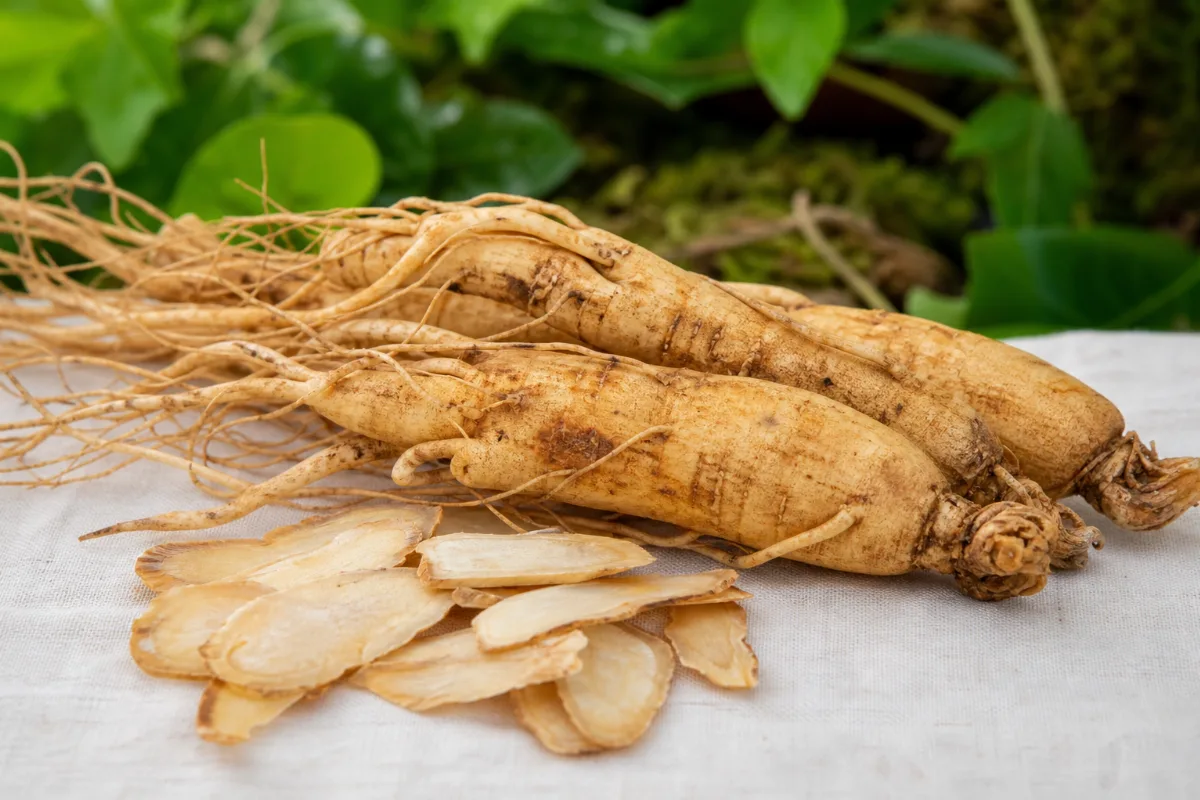
Adaptogens · Herbs & Botanicals · Rare Vietnamese highland tonic
Vietnamese ginseng
Panax vietnamensis · also called Ngoc Linh ginseng, Ngoc Linh
Vietnamese ginseng is a rare root from the mountains of Vietnam, used in local folk medicine as a tonic. Its main compound, majonoside R2, is unusual among ginsengs. Human research is almost non-existent: one small blood sugar test and a lot of lab work. Because the root is costly and easy to fake, ask a doctor or pharmacist before use, especially if you take blood thinners or diabetes medicine.
General information, not medical advice. Last substantive update · Not medically reviewed. A named clinician has not signed off on this page. How this page is made
About Vietnamese ginseng
Vietnamese ginseng (Panax vietnamensis, Ngoc Linh ginseng) is a rare Panax root with a long local use as a tonic. Human evidence is very sparse, and safety in people has not been studied.
What it is
Vietnamese ginseng is Panax vietnamensis, a plant of the ginseng family (Araliaceae). The root is the part used. It is related to Asian and American ginseng.
Its saponins include majonoside R2 and vina-ginsenoside R2, which are of the ocotillol type and are characteristic of this species.
What the research shows
The only human study we found tested wild Vietnamese ginseng in 12 healthy adults before a sugar drink. It showed a non-significant tendency toward lower blood sugar.
The rest is cells and animals, mostly on isolated majonoside R2 or special extracts. That cannot show a benefit in people.
At a glance
Traditional uses history, not proof
- Anti-fatigue tonic in Vietnamese hill-tribe folk medicine
- Anti-inflammatory and "life-saving" remedy in folk use
Studied for research
- Blood sugar after a glucose drink (one small human test)
- Inflammation, kidney, heart-cell and stomach-cell effects (lab and animal only)
Main compounds
- Ocotillol-type saponins: majonoside R2, vina-ginsenoside R2
- Protopanaxadiol and protopanaxatriol ginsenosides such as Rg1
Common forms
- Dried root
- Steamed ("black") root
- Lab-grown root cultures (research only)
Research links: NIH NCCIH: Asian ginseng (a different species, safety context) · PubMed: Panax vietnamensis review (2025) · Research Library · Genes & Biomarkers Library
The plant and its history
- Accepted scientific name
- Panax vietnamensis Ha & Grushv.
- Naming authority
- Ha & Grushv.
- Common names
- Vietnamese ginseng; Ngoc Linh ginseng
- Botanical family
- Araliaceae (the ginseng or ivy family)
- Classification
- Plantae > Apiales > Araliaceae > Panax > Panax vietnamensis
- Native range
- The 2026 ginsenoside paper calls it a rare medicinal plant of China and Vietnam. The metabolomics paper sampled var. fuscidiscus in Quang Nam and var. vietnamensis in Lai Chau provinces (Vietnam). Detailed wild range not verified.
- Habitat
- Cool, shaded mountain forest in the wild.
- What the plant looks like
- Roots: Root and rhizome are the used parts; tap root and fibrous roots differ in saponin content.; Stems: Not read.; Leaves: Not read.; Flowers: Not read.; Fruit: Not read.
- Cultivation
- About five years of growth are needed for a good crop in field cultivation, per a 2026 six-year study.
- Harvest and processing
- Steaming (e.g. 120 C for 12 hours) produces "black" ginseng with a different, less-polar saponin mix.
- Look-alikes and adulterants
- Name: Panax notoginseng; Note: Hard to tell by appearance; the 2026 paper names it as the main confusion.; Name: Other Panax roots; Note: Standards for telling them apart are lacking.
- Sustainability and conservation
- Wild populations are described as threatened by overexploitation (2026 paper). Formal IUCN or CITES status not verified here.
The plant and the parts used
Traditional use and history history, not clinical proof
| Tradition or era | Documented use | Source |
|---|---|---|
| Hill tribes of the Vietnamese highlands (as summarised in review abstracts) | Used for anti-fatigue, anti-inflammatory and "life-saving" purposes in folk medicine. Not verified beyond the abstracts; no further history was found in the sources read. | p26256699 |
Traditional use shows how a plant was used. It does not show that a supplement works or is safe today.
What is inside, and how it may work
What the plant contains and how those compounds act in cells and animals. Laboratory and animal mechanisms are not proven effects in people.
Main compounds
| Compound | Family | Where it is concentrated | Activity studied | Level of evidence |
|---|---|---|---|---|
| Majonoside R2 PubChem 9962384 | ocotillol-type saponin | Main root | Characteristic of this species; anti-inflammatory in mouse cells; protected heart-muscle cells in a dish. 11 4 13 | Laboratory research |
| Vina-ginsenoside R2 PubChem 177825710 | ocotillol-type saponin | Main root | Toxic to mouse macrophages in one study. 4 | Laboratory research |
| Ginsenoside Rg1 PubChem 441923 | protopanaxatriol saponin | Root Average 25.57 mg/g in P. vietnamensis (2026 paper). | Modulated host inflammatory and oxidative responses in infected stomach cells. 11 3 | Laboratory research |
| Ocotillol PubChem 3850493 | ocotillol-type genin (gut-bacteria metabolite) | Formed in the gut | Strongest anti-inflammatory in mouse macrophages; the abstract says human gut bacteria produce it from majonoside R2 and vina-ginsenoside R2. 4 | Laboratory research |
Mechanisms, receptors and pathways
| Target or pathway | Gene or receptor | What was found | Level |
|---|---|---|---|
| NF-kB inflammatory signalling | NF-kB, TLR4, TNF-alpha, IL-1, COX-2, iNOS | Majonoside R2 and metabolites reduced inflammatory signals in LPS-stimulated mouse macrophages. 4 | Laboratory research |
| Keap1/Nrf2 antioxidant pathway | Nrf2 (nfe2l2), gstp1, prdx1 | Hairy-root extract raised antioxidant genes in zebrafish; effect needed Nrf2. 12 | Animal research |
| HIF1-alpha and RISK survival signalling | HIF1A, TGFB1, Akt/GSK3B | Majonoside R2 improved heart-cell survival after oxygen deprivation. 13 | Laboratory research |
Absorption, metabolism and elimination
- Absorption
- Not studied in people.
- Distribution
- Not studied.
- Metabolism
- A 2015 abstract says human gut bacteria convert majonoside R2 and vina-ginsenoside R2 to pseudoginsenoside RT4 and then ocotillol (from a preliminary study cited in that abstract).
- Elimination
- Not studied.
- Bioavailability
- Unknown.
Isolated compounds versus whole extracts
Most lab results come from isolated majonoside R2, fractions or lab-grown root cultures, not the harvested root. Steaming, variety and plant part change the saponin mix, so results do not transfer between them.
Nutritional composition
Not a food source of nutrients; a high-value herbal root.
1 very low certainty7 not enough evidence
What was looked at
The 8 benefits and uses checked for Vietnamese ginseng, each with how strong the evidence is. Tap one to open it.
- Stress and fatigue ("adaptogen" use)Not enough evidence
- Immune support and longevity (traditional claims)Not enough evidence
- Oxidative stress (zebrafish, lab-grown root)Not enough evidence
- Blood sugar after a glucose drink (healthy adults)Very low certainty
- Inflammation (cell studies)Not enough evidence
- Kidney protection with cisplatin (animals)Not enough evidence
- Stomach infection with H. pylori (cell studies)Not enough evidence
- Heart muscle cells and oxygen deprivation (cell study)Not enough evidence
Lab markers tracked in the studies
Stress or fatigue scoresBlood glucose 90 minutes after a sugar drinkSerum creatinine and BUN (animals)
What is Vietnamese ginseng good for?
The proposed benefits and how strong the human evidence is for each. For this plant, it is thin.
Benefits, one by one
Each card is a research question, not a promise. Tap a goal to filter. Open a card to see the studies, doses and limits.
Stress and fatigue ("adaptogen" use)
Not enough evidenceUsed in Vietnamese highland folk medicine as a tonic against tiredness. We found no human trial testing it for stress or fatigue. Only lab and animal work exists.
2 studiesNot given here. No human trial of a defined Vietnamese ginseng produc…
Studies, doses and limits
Results
No human trial found.
Effect sizes as reported
Not testable from the sources read.
Why this rating
Only lab and animal work and traditional use. Traditional use is not evidence of an effect.
Form and dose studied
Not given here. No human trial of a defined Vietnamese ginseng product was found.
Who was studied
Not studied.
Limits
No human data; the review is narrative and abstract-only.
Why researchers looked
Hill tribes of Vietnam are described as using it for anti-fatigue and "life-saving" purposes; "adaptogen" is a traditional and marketing idea, not a medical category.
Traditional use
Folk medicine of the Ngoc Linh highlands, Vietnam (as summarised by the 2015 and 2025 papers).
Proposed mechanism Preliminary mechanism
The 2025 review lists anti-stress effects among lab and animal findings. No mechanism has been shown in people.
A proposed mechanism does not show that the effect happens in people.
No human safety data for this plant were found.
Immune support and longevity (traditional claims)
Not enough evidenceDescribed as a remedy believed to help the immune response and long life. This is a traditional belief. No human trial was found.
1 studiesNot given here. No human trial of a defined Vietnamese ginseng produc…
Studies, doses and limits
Results
No human trial found.
Effect sizes as reported
Not testable.
Why this rating
Belief and cell work only.
Form and dose studied
Not given here. No human trial of a defined Vietnamese ginseng product was found.
Who was studied
Not studied.
Limits
No human data.
Why researchers looked
Traditional description in a 2025 review.
Traditional use
Described as "life-saving" folk remedy in Vietnamese hill tribes.
Proposed mechanism Preliminary mechanism
Majonoside R2 and related compounds reduced inflammatory signals in mouse immune cells in a dish (see the body tab).
A proposed mechanism does not show that the effect happens in people.
No human safety data.
Oxidative stress (zebrafish, lab-grown root)
Not enough evidenceA lab-grown root-culture extract helped zebrafish larvae survive chemical oxidative stress. This is animal work on a different material from the real root. It does not show an antioxidant benefit in people.
1 studiesNot given here. No human trial of a defined Vietnamese ginseng produc…
Studies, doses and limits
Results
No human trial found.
Effect sizes as reported
Not testable.
Why this rating
One animal study using lab-grown hairy roots.
Form and dose studied
Not given here. No human trial of a defined Vietnamese ginseng product was found.
Who was studied
Not studied.
Limits
Zebrafish; different material; abstract only.
Why researchers looked
Antioxidant effects are a common claim for ginseng saponins.
Proposed mechanism Preliminary mechanism
Raised antioxidant genes (gstp1, prdx1) through the Keap1/Nrf2 pathway in zebrafish.
A proposed mechanism does not show that the effect happens in people.
No human safety data.
Blood sugar after a glucose drink (healthy adults)
Very low certaintyIn one small experiment in 12 healthy adults, Vietnamese ginseng showed a tendency toward lower blood sugar 90 minutes after a sugar drink, but it was not clearly significant. It has not been tested in people with diabetes. Other ginseng types in the same test raised blood sugar.
1 studiesNot given here. No human trial of a defined Vietnamese ginseng produc…
Studies, doses and limits
What the trials found
A double-blind randomized multiple-crossover test in 12 healthy adults.
Results
Compared with placebo, Vietnamese ginseng showed a tendency to lower 90-minute glucose (p under 0.06, i.e. not clearly significant).
Effect sizes as reported
Trend only (p under 0.06).
Why this rating
One tiny acute test on healthy people, wild-grown material, non-significant trend, no repeat.
Form and dose studied
Not given here. No human trial of a defined Vietnamese ginseng product was found.
Who was studied
Healthy adults only.
Limits
12 people; one test day; no people with diabetes; abstract gives no Vietnamese-specific numbers.
Why researchers looked
Ginseng species vary in their glucose effects, perhaps with their ginsenoside mix.
Traditional use
Not specific.
Proposed mechanism Preliminary mechanism
Authors linked glucose change to the ratio of protopanaxadiol to protopanaxatriol ginsenosides, which explained little (r-squared about 0.04 to 0.07).
A proposed mechanism does not show that the effect happens in people.
Other ginseng types in the same test raised glucose, so effects are not predictable across types. Anyone using diabetes medicines should talk to a doctor first.
Inflammation (cell studies)
Not enough evidenceMajonoside R2 and its gut-bacteria breakdown products calmed inflammatory signals in mouse immune cells in a dish. This is cell work only.
1 studiesNot given here. No human trial of a defined Vietnamese ginseng produc…
Studies, doses and limits
What the trials found
No human trial found.
Results
Not testable.
Why this rating
Mouse cells only; isolated compounds.
Form and dose studied
Not given here. No human trial of a defined Vietnamese ginseng product was found.
Who was studied
Not studied.
Limits
Cell work only.
Why researchers looked
Anti-inflammatory use is described in folk medicine.
Traditional use
Folk medicine of Vietnamese hill tribes.
Proposed mechanism Preliminary mechanism
Inhibited NF-kB, TNF-alpha, IL-1, COX-2 and iNOS; ocotillol (a metabolite made by human gut bacteria) was strongest.
A proposed mechanism does not show that the effect happens in people.
Vina-ginsenoside R2 was toxic to the cells in this study.
Kidney protection with cisplatin (animals)
Not enough evidenceA steamed ("black") root extract of one variety lowered kidney-injury markers in animals given the cancer drug cisplatin. This is not shown in people, and nobody should use it to protect their kidneys during chemotherapy.
1 studiesNot given here. No human trial of a defined Vietnamese ginseng produc…
Studies, doses and limits
What the trials found
No human trial found.
Results
Not testable.
Why this rating
Animal and cell models only.
Form and dose studied
Not given here. No human trial of a defined Vietnamese ginseng product was found.
Who was studied
Not studied.
Limits
Animals only; one variety; abstract only.
Why researchers looked
Steaming changes the saponin mix and raised activity in earlier work.
Proposed mechanism Preliminary mechanism
Lowered creatinine, BUN and lipid peroxidation, restored glutathione in kidney cells.
A proposed mechanism does not show that the effect happens in people.
Herbs can interfere with cancer treatment. Tell the cancer team about any herb.
Stomach infection with H. pylori (cell studies)
Not enough evidenceA majonoside R2-rich fraction reduced inflammation and bacterial virulence signals in infected human stomach-lining cells in a dish. No human data.
1 studiesNot given here. No human trial of a defined Vietnamese ginseng produc…
Studies, doses and limits
What the trials found
No human trial found.
Results
Not testable.
Why this rating
Culture dish only.
Form and dose studied
Not given here. No human trial of a defined Vietnamese ginseng product was found.
Who was studied
Not studied.
Limits
Fractions, not whole root; abstract only.
Why researchers looked
Gut-health interest in ginsenosides.
Proposed mechanism Preliminary mechanism
Reduced urease, biofilm and virulence genes with little direct antibacterial effect.
A proposed mechanism does not show that the effect happens in people.
None reported in the abstract.
Heart muscle cells and oxygen deprivation (cell study)
Not enough evidenceMajonoside R2 improved survival of rat heart muscle cells after oxygen deprivation in a dish. No animal or human heart data.
1 studiesNot given here. No human trial of a defined Vietnamese ginseng produc…
Studies, doses and limits
What the trials found
No human trial found.
Results
Not testable.
Why this rating
One cell-line study.
Form and dose studied
Not given here. No human trial of a defined Vietnamese ginseng product was found.
Who was studied
Not studied.
Limits
Cell line only.
Why researchers looked
Interest in ocotillol-type saponins.
Proposed mechanism Preliminary mechanism
Suppressed HIF1-alpha and TGF-beta1; activated survival signalling (RISK pathway).
A proposed mechanism does not show that the effect happens in people.
None reported.
Connections to the rest of health
How Vietnamese ginseng connects to the rest of our health knowledge graph. Every link says what kind of connection it is. A safety link (for example to the liver) is a warning, not a benefit. A study that merely mentions a topic never creates a benefit link.
Explore every connection: goals, body systems, organs, symptoms, genes
A. Wellness goals
| Connected to | Kind of connection | Evidence status | Context | Studies |
|---|---|---|---|---|
| Stress Reduction | Not enough evidence | Stress and fatigue ("adaptogen" use): Used in Vietnamese highland folk medicine as a tonic against tiredness. We found no human trial testing it for stress or fatigue. Only lab and animal work exists. | 7 4 | |
| Reduce Fatigue | Not enough evidence | Stress and fatigue ("adaptogen" use): Used in Vietnamese highland folk medicine as a tonic against tiredness. We found no human trial testing it for stress or fatigue. Only lab and animal work exists. | 7 4 | |
| Immune Support | Not enough evidence | Immune support and longevity (traditional claims): Described as a remedy believed to help the immune response and long life. This is a traditional belief. No human trial was found. | 7 | |
| Longevity | Not enough evidence | Immune support and longevity (traditional claims): Described as a remedy believed to help the immune response and long life. This is a traditional belief. No human trial was found. | 7 | |
| Cellular Protection | Not enough evidence | Oxidative stress (zebrafish, lab-grown root): A lab-grown root-culture extract helped zebrafish larvae survive chemical oxidative stress. This is animal work on a different material from the real root. It does not show an antioxidant benefit in people. | 12 | |
| Blood Sugar Balance | Very low certainty | Blood sugar after a glucose drink (healthy adults): In one small experiment in 12 healthy adults, Vietnamese ginseng showed a tendency toward lower blood sugar 90 minutes after a sugar drink, but it was not clearly significant. It has not been tested in people with diabetes. Other ginseng types in the same test raised blood sugar. | 10 | |
| Inflammation Balance | Not enough evidence | Inflammation (cell studies): Majonoside R2 and its gut-bacteria breakdown products calmed inflammatory signals in mouse immune cells in a dish. This is cell work only. | 4 | |
| Detoxification Support | Not enough evidence | Kidney protection with cisplatin (animals): A steamed ("black") root extract of one variety lowered kidney-injury markers in animals given the cancer drug cisplatin. This is not shown in people, and nobody should use it to protect their kidneys during chemotherapy. | 9 | |
| Digestive Support | Not enough evidence | Stomach infection with H. pylori (cell studies): A majonoside R2-rich fraction reduced inflammation and bacterial virulence signals in infected human stomach-lining cells in a dish. No human data. | 3 | |
| Heart Health | Not enough evidence | Heart muscle cells and oxygen deprivation (cell study): Majonoside R2 improved survival of rat heart muscle cells after oxygen deprivation in a dish. No animal or human heart data. | 13 |
B. Body systems
| Connected to | Kind of connection | Evidence status | Context | Studies |
|---|---|---|---|---|
| Nervous System | Biological association | Not enough evidence | Studied for: Stress and fatigue ("adaptogen" use) | 7 4 |
| Immune System | Biological association | Not enough evidence | Studied for: Immune support and longevity (traditional claims) Studied for: Inflammation (cell studies) | 7 4 |
| Whole Body | Biological association | Not enough evidence | Studied for: Oxidative stress (zebrafish, lab-grown root) | 12 |
| Endocrine System | Biological association | Very low certainty | Studied for: Blood sugar after a glucose drink (healthy adults) | 10 |
| Kidney Urinary | Biological association | Not enough evidence | Studied for: Kidney protection with cisplatin (animals) | 9 |
| Digestive System | Biological association | Not enough evidence | Studied for: Stomach infection with H. pylori (cell studies) | 3 |
| Cardiovascular System | Biological association | Not enough evidence | Studied for: Heart muscle cells and oxygen deprivation (cell study) | 13 |
D. Symptoms
| Connected to | Kind of connection | Evidence status | Context | Studies |
|---|---|---|---|---|
| High blood sugar after meals | Potential benefit | Very low certainty | One small test in healthy adults showed a non-significant tendency. Preparation or compound: Wild Vietnamese ginseng root |
10 |
E. Health conditions
I. Biomarkers
| Connected to | Kind of connection | Evidence status | Context | Studies |
|---|---|---|---|---|
| Stress or fatigue scores | Biological association | Not enough evidence | Measured in trials: not measured. A lab change is not the same as a health benefit. | 7 |
| Blood glucose 90 minutes after a sugar drink | Biological association | Very low certainty | Measured in trials: trend toward lower (not significant). A lab change is not the same as a health benefit. | 10 |
| Serum creatinine and BUN (animals) | Biological association | Not enough evidence | Measured in trials: lowered (animals). A lab change is not the same as a health benefit. | 9 |
K. Biological pathways
| Connected to | Kind of connection | Evidence status | Context | Studies |
|---|---|---|---|---|
| Keap1-Nrf2 antioxidant response | Preliminary mechanism | Animal | Zebrafish extract study. | 12 |
L. Active compounds
| Connected to | Kind of connection | Evidence status | Context | Studies |
|---|---|---|---|---|
| Majonoside R2 | Biological association | In vitro | Characteristic of this species; anti-inflammatory in mouse cells; protected heart-muscle cells in a dish. Preparation or compound: Main root |
11 4 13 |
| Vina-ginsenoside R2 | Biological association | In vitro | Toxic to mouse macrophages in one study. Preparation or compound: Main root |
4 |
| Ginsenoside Rg1 | Biological association | In vitro | Modulated host inflammatory and oxidative responses in infected stomach cells. Preparation or compound: Root |
11 3 |
| Ocotillol | Biological association | In vitro | Strongest anti-inflammatory in mouse macrophages; the abstract says human gut bacteria produce it from majonoside R2 and vina-ginsenoside R2. Preparation or compound: Formed in the gut |
4 |
Each connection is stored with the ingredient, the connected record, the kind of connection, the evidence status, the supporting studies, the preparation or compound involved, and a review date (last reviewed October 25, 2026).
Evidence at a glance: what the research found for 8 outcomes
Each outcome below is one thing researchers measured. Certainty is how far the evidence can be trusted, not how well it works. The full studies are on the next tab.
The evidence
The research centre for Vietnamese ginseng. Every record here was checked against PubMed or the publisher's page; we never list a study we have not verified.
Evidence by outcome
Bars show how many studies we found for each outcome, not how well it works. People are added up across trials only (reviews are not added, to avoid double counting).
How we rate evidence
High certainty
Several well-run trials or reviews agree; further research is unlikely to change the picture much.
Moderate certainty
Good trials point the same way, but some doubt remains.
Low certainty
Small, short or inconsistent trials. The finding could change with better research.
Very low certainty
Very little or very weak human data. Treat as a possibility only.
Mixed findings
Trials or reviews disagree with each other.
Not enough evidence
Not enough human research to say either way.
Evidence against
Good research found no benefit, or found harm.
We take the reviewers' own risk-of-bias and GRADE statements where they exist, and otherwise judge from study size, design, consistency, directness and whether a product matches what is sold. Many publications do not make evidence high. Method note: We started from our existing summary of this herb, then searched PubMed and read the abstracts, plus the NIH NCCIH Asian ginseng page for safety context. The LiverTox page could not be read; LactMed and EU/other regulator documents were not searched and are marked not verified. Only abstracts were read for most studies. No study is cited that we could not verify.
Study library: every study we checked 17
| Study | Design | People | Product, dose, length | Result |
|---|---|---|---|---|
| Cheng 2026 Mechanisms of yield and quality enhancement in Panax Vietnamensis: A comparison of three artificial cultivation models. J Ginseng Res · PMID 42395009 · DOI |
Cultivation study plant-cultivation |
Plants grown six years in three systems | States that wild populations are threatened by overexploitation. Standard-field growing gave the highest biomass at year five with competitive saponin content. Not applicable Methods, limits and fundingOutcomes: Biomass and saponin content Limitations: Agricultural study; abstract only. Funding and conflicts: Authors declare no competing interests. Read: abstract | |
| Coon 2002 Panax ginseng: a systematic review of adverse effects and drug interactions. Drug Saf · PMID 12020172 · DOI |
Systematic review |
Trials, case reports and reporting-scheme data on P. ginseng root extracts | Trial adverse events with ginseng alone were similar to placebo; most common were headache, sleep and gastrointestinal problems. Serious events were mainly in isolated case reports and combination products. Possible interactions were reported with warfarin, phenelzine and alcohol. Not applicable Methods, limits and fundingOutcomes: Adverse events, interactions Limitations: About Panax ginseng (Asian ginseng), not Vietnamese ginseng; published in 2002; abstract only. Read: abstract | |
| Do 2026 Alleviation of Helicobacter pylori-Induced Pathogenicity and Gastric Inflammation by Majonoside-R2- and Ginsenoside Rg1-Rich Fractions From Panax vietnamensis Ha Et Grushv.: A Metabolomics-Guided Investigation. Mol Nutr Food Res · PMID 42109191 · DOI |
Cell study cell |
H. pylori bacteria and infected human stomach-lining (AGS) cells in a dish | A majonoside R2-rich fraction had little direct antibacterial effect but reduced urease activity, biofilm and virulence genes (vacA, cagA) at low concentrations, and reduced inflammatory signalling in infected cells. Not given as a single number Methods, limits and fundingOutcomes: Bacterial virulence genes, urease, biofilm, inflammatory signalling Limitations: Culture dish only; fractions, not whole root; abstract only. Read: abstract | |
| Jeong 2015 Anti-inflammatory effects of vina-ginsenoside R2 and majonoside R2 isolated from Panax vietnamensis and their metabolites in lipopolysaccharide-stimulated macrophages. Int Immunopharmacol · PMID 26256699 · DOI |
Cell study cell |
Mouse peritoneal macrophages in a dish | Majonoside R2 and its metabolites reduced inflammatory signals in LPS-stimulated mouse immune cells; vina-ginsenoside R2 was toxic to the cells. Ocotillol, a gut-bacteria metabolite, was strongest. The abstract notes that human gut bacteria turned the two saponins into these metabolites. Not given as a single number Methods, limits and fundingOutcomes: NF-kB, TNF-alpha, IL-1, COX-2, iNOS Limitations: Mouse cells in a dish; isolated compounds, not the whole root; abstract only. Read: abstract | |
| Jiang 2004 Effect of St John's wort and ginseng on the pharmacokinetics and pharmacodynamics of warfarin in healthy subjects. Br J Clin Pharmacol · PMID 15089812 · DOI |
Open label randomized crossover |
12 12 healthy men |
Ginseng did not change INR, platelet aggregation or warfarin levels in this test (St John's wort did lower warfarin effect). No effect of ginseng on warfarin clearance Methods, limits and fundingOutcomes: INR, platelet aggregation, warfarin levels Limitations: Single warfarin dose, healthy men, open-label; Panax ginseng, not Vietnamese ginseng. Read: abstract | |
| Lee 2008 Interaction between warfarin and Panax ginseng in ischemic stroke patients. J Altern Complement Med · PMID 18637764 · DOI |
Randomized open label |
25 25 patients with ischemic stroke not previously on warfarin |
No significant difference in INR or PT between groups. No difference between groups Methods, limits and fundingOutcomes: PT and INR Limitations: Small, open-label, 2 weeks; Panax ginseng. Read: abstract | |
| Ngau 2025 Ethnopharmacology, genetic diversity, phytochemistry and pharmacological effects of Panax vietnamensis Ha et Grushv.: A review. J Environ Pathol Toxicol Oncol · PMID 39462451 · DOI |
Narrative review review-of-lab-and-animal-work |
Literature on Panax vietnamensis | Says the plant is believed to improve immune response, longevity and health, that over 300 compounds have been isolated (ginsenosides, flavonoids, phenolics), and that anti-tumour, anti-inflammatory, neuroprotective and anti-stress effects were shown in vitro and in vivo (lab and animal). The abstract names no human trial of this plant. Not applicable (narrative review) Methods, limits and fundingOutcomes: Overview Limitations: Narrative review, not systematic. Abstract only; its toxicology section was not read. The abstract calls ginseng efficacy and safety "verified in clinical therapy" for ginseng in general; this is not repeated here for this plant. Read: abstract | |
| Nguyen 2023 Untargeted Metabolomics Approach for the Differentiation between Panax vietnamensis var. vietnamensis and Panax vietnamensis var. fuscidiscus. Metabolites · PMID 37367920 · DOI |
Chemical analysis chemistry |
54 42 fuscidiscus and 12 vietnamensis root samples from Quang Nam and Lai Chau, DNA-checked |
The two varieties have distinct ginsenoside profiles and were told apart with no misclassification in the test set. The authors say they are chemically and morphologically similar and hard for consumers to tell apart. No misclassification in the test set Methods, limits and fundingOutcomes: Classification of the two varieties Limitations: Chemistry only; abstract only. Funding and conflicts: Authors declare no conflict of interest. Read: abstract | |
| Nguyen 2026 Nephroprotective Effect of Black Panax vietnamensis var. fuscidiscus Against Cisplatin Toxicity. Molecules · PMID 42197139 · DOI |
Animal and cell study animal |
Cell models and animals given the cancer drug cisplatin | The steamed extract lowered raised serum creatinine and BUN, lowered lipid peroxidation (MDA) and restored glutathione in kidney cells to near normal, with effects comparable to quercetin. Less-polar saponins such as Rg3, Rg5 and ocotillol genin were characteristic. Lower creatinine and BUN than cisplatin-only animals (figures not given in the abstract) Methods, limits and fundingOutcomes: Kidney markers (creatinine, BUN), oxidative stress markers Limitations: Animal and cell work only; one variety (fuscidiscus); no human data. Abstract only. Funding and conflicts: Authors declare no conflict of interest. Read: abstract | |
| Sievenpiper 2004 Decreasing, null and increasing effects of eight popular types of ginseng on acute postprandial glycemic indices in healthy humans: the role of ginsenosides. J Am Coll Nutr · PMID 15190050 · DOI |
Randomized double blind crossover |
12 12 healthy adults (6 men, 6 women), average age 34, average BMI 25.8 |
Ginseng type changed blood glucose and insulin differently. Compared with placebo, American and Vietnamese ginseng showed a tendency to lower the 90-minute glucose (p under 0.06, not clearly significant), while Asian ginseng raised peak glucose and Siberian ginseng raised several glucose measures. A higher protopanaxadiol to protopanaxatriol ginsenoside ratio went with lower glucose, but explained little of the variation. Vietnamese ginseng: tendency to lower 90-minute glucose (p under 0.06). The abstract gives no Vietnamese-specific numbers. Methods, limits and fundingOutcomes: Blood glucose and insulin over 2 hours Limitations: Only 12 healthy people, one test day per treatment, wild-grown Vietnamese material, no people with diabetes. Only the abstract was read; Vietnamese-specific numbers are not in the abstract. Funding and conflicts: Not stated in the abstract. The authors have worked on ginseng and glucose before (American ginseng); no industry funding is stated in the abstract. Read: abstract | |
| Su 2026 Comparative Analysis of the Ginsenosides in Panax vietnamensis and Three Panax Species. Molecules · PMID 42197124 · DOI |
Chemical analysis chemistry |
Roots, fibrous roots, stems and leaves of P. vietnamensis and three other Panax species | 55 ginsenosides were found (30 protopanaxadiol-type, 21 protopanaxatriol-type, 3 ocotillol-type, 1 oleanane-type). Main roots of P. vietnamensis contained characteristic majonoside R2, majonoside R1 and vina-ginsenoside R2. The authors say it is hard to tell from other Panax material, especially Panax notoginseng, by looks, and that quality-control standards are lacking. Average ginsenoside Rg1 in P. vietnamensis 25.57 mg/g Methods, limits and fundingOutcomes: 55 ginsenosides identified Limitations: Laboratory chemistry only; says nothing about health effects. Funding and conflicts: Authors state no conflicts only in the full record; not checked. Read: abstract | |
| Thanh Nguyen 2026 UPLC-QTOF-MS/mS profiling and antioxidant activity of Ngoc Linh ginseng (panax vietnamensis) hairy root extract from zebrafish: insights into Keap1/Nrf2-dependent mechanisms. Nat Prod Res · PMID 40462737 · DOI |
Animal study animal |
Zebrafish larvae under hydrogen peroxide stress | Pre-treatment with the extract improved larval survival, raised antioxidant genes (gstp1, prdx1) and worked through the Keap1/Nrf2 pathway (confirmed with Nrf2-deficient fish). 41 compounds were identified, mostly saponins. Survival improved (figures not in the abstract) Methods, limits and fundingOutcomes: Larval survival, antioxidant genes Limitations: Zebrafish; lab-grown root culture, a different material from the harvested root; abstract only. Read: abstract | |
| Thu 2021 Majonoside-R2 Postconditioning Protects Cardiomyocytes Against Hypoxia/Reoxygenation Injury by Attenuating the Expression of HIF1a and Activating RISK Pathway. J Med Food · PMID 34714126 · DOI |
Cell study cell |
H9C2 rat heart muscle cells in a dish | Majonoside R2 improved survival of heart cells after oxygen deprivation and reoxygenation and changed signalling and apoptosis-related genes. Not given as a single number Methods, limits and fundingOutcomes: Cell survival, HIF1-alpha, apoptosis genes Limitations: Cell line only; isolated compound; abstract only. Read: abstract | |
| Yuan 2004 Brief communication: American ginseng reduces warfarin's effect in healthy patients: a randomized, controlled Trial. Ann Intern Med · PMID 15238367 · DOI |
Randomized double blind placebo controlled |
20 20 healthy adults |
Peak INR fell after 2 weeks of American ginseng versus placebo, and warfarin levels fell too. Peak INR difference -0.19 (95% CI -0.36 to -0.07), P = 0.0012 Methods, limits and fundingOutcomes: INR and plasma warfarin level Limitations: Young healthy volunteers, not patients on regular warfarin; American ginseng (a different species from Vietnamese ginseng). Read: abstract | |
| s-gbif-panax-vietnamensis GBIF Backbone Taxonomy: Panax vietnamensis Ha & Grushv. (usageKey 5372258) · Source |
Reference database n/a |
Methods, limits and fundingRead: api | ||
| s-livertox-ginseng NIH LiverTox: Ginseng · Source |
Regulator or reference n/a |
Methods, limits and fundingRead: not-opened | ||
| s-nccih-asian-ginseng NIH NCCIH: Asian Ginseng (Panax ginseng, a different species; general ginseng safety context) · Source |
Regulator or reference n/a |
Methods, limits and fundingRead: full-text |
What we do not know yet
- No human trial in anyone with a health condition.
- No human safety, liver, pregnancy or interaction study for this plant.
- No quality or authenticity standard for products.
How new research is added
New studies are found by a saved PubMed search and are placed in a review queue. A person reads each one before it changes any evidence rating or safety wording.
Lab markers
What changed in blood or saliva tests during trials. A changed number is not the same as feeling or being healthier, and we give no "normal ranges".
Other 3
Stress or fatigue scores
Not measured in trials
Questionnaire or hormone measures of stress and tiredness.
Not enough evidenceResults and what it means
Why it was measured
Would be the main outcomes of any trial of an adaptogen.
Statistical vs. clinical meaning
No human study measured these for Vietnamese ginseng.
Safety implication
Not applicable.
Blood glucose 90 minutes after a sugar drink
Trend toward lower (not significant) in trials
Blood sugar measured 90 minutes after a 75 g oral glucose test.
Very low certaintyResults and what it means
Why it was measured
Shows how well the body handles a sugar load.
Statistical vs. clinical meaning
Too uncertain to mean anything for health.
Safety implication
Could add to glucose-lowering medicines in theory; not shown for this plant.
| Study | Result | People | Product |
|---|---|---|---|
Serum creatinine and BUN (animals)
Lowered (animals) in trials
Blood markers that rise when kidneys are injured.
Not enough evidenceResults and what it means
Why it was measured
Kidney injury readout in the cisplatin animal model.
Statistical vs. clinical meaning
Animal result only.
Safety implication
Not applicable.
| Study | Result | People | Product |
|---|---|---|---|
Safety
What studies and official sources say about side effects, medicines and who should check first. Each point shows what kind of evidence it comes from.
Main points to know 4
- Almost nothing is known about the safety of Vietnamese ginseng in people. We found no human safety study of Vietnamese ginseng. Everything below is borrowed from other Panax ginsengs (mainly Asian ginseng) and is a reasonable caution, not a proven fact for this plant. Gap 7
- Blood thinners and surgery. Asian ginseng may interfere with blood clotting according to NCCIH, and small trials of ginseng with warfarin gave mixed results. Tell your doctor or pharmacist before combining any ginseng with warfarin or other blood thinners, and before surgery. Mixed 17 14 5 6
- Diabetes medicines. Some ginseng types lower blood sugar and others raised it in one small test. If you use insulin or diabetes pills, ask before using any ginseng. Authoritative guidance 17 10
- Expensive root, many look-alikes. Authentic Vietnamese ginseng roots are rare and costly and are hard to tell from other Panax roots (especially notoginseng). Counterfeit and mislabelled products are a real risk, and no quality standard exists. Chemical analysis 11 8
Side effects 3
| Effect | How often | Severity and recovery | Evidence |
|---|---|---|---|
| Trouble sleeping (insomnia) Reported for Asian ginseng by NCCIH, not studied for Vietnamese ginseng. | Not established | mild Expected to stop after stopping (general ginseng knowledge; not stated for this plant) | Authoritative guidance 17 |
| Headache and stomach or bowel upset From the Panax ginseng review; saponin-rich roots can upset the stomach in some people. Not studied for Vietnamese ginseng. | Not established | mild Usually mild and brief with Panax ginseng | Systematic review 2 |
| Rash or allergic reaction NCCIH lists severe rash and severe allergic reactions as uncommon for Asian ginseng. | Uncommon | moderate to severe Not stated | Authoritative guidance 17 |
Liver
NCCIH lists liver damage as an uncommon reported effect of Asian ginseng. No liver injury case of Vietnamese ginseng was found. The LiverTox ginseng page could not be opened, so it is not cited. 17 16
How often. No frequency found.
Monitoring. No monitoring advice found. Stop and see a doctor for yellow eyes or skin, dark urine or marked tiredness.
This is a safety connection. It is not evidence that Vietnamese ginseng supports liver health.
Medicines and supplements 4
| With | Why it matters | Importance | Evidence | What to do |
|---|---|---|---|---|
| Warfarin and other blood thinners prescription | Panax ginsengs are reported to alter clotting or warfarin levels in some studies. Mechanism for Vietnamese ginseng unknown. | American ginseng lowered warfarin effect in 20 healthy adults (peak INR -0.19). Panax ginseng showed no effect in 12 healthy men and in 25 stroke patients. Results are mixed and none involve Vietnamese ginseng. | Controlled trial Low certainty 14 5 6 17 | Tell the doctor or clinic who manages your blood thinner before starting any ginseng so your INR can be watched. |
| Diabetes medicines (insulin, tablets) prescription | Some ginseng types change post-meal glucose. Direction differed by type in one small test. | In 12 healthy adults, Vietnamese ginseng showed a non-significant tendency toward lower glucose; Asian ginseng raised it. No tests on people using diabetes drugs. | Theoretical plus small human Very low certainty 10 17 | Ask your doctor or pharmacist; check glucose as they advise. |
| Immune-suppressing medicines (for transplants or autoimmune disease) prescription | Ginseng is traditionally said to stimulate immunity; NCCIH says Asian ginseng may worsen autoimmune disorders. | No data for Vietnamese ginseng. Concern is by analogy only. | Authoritative guidance other species Not enough evidence 17 | Ask the specialist who prescribes your immune medicine first. |
| Phenelzine and alcohol prescription-and-other | Unclear. | Case-level reports with Panax ginseng, as summarised in the review. Not studied for Vietnamese ginseng. | Systematic review Very low certainty 2 | Ask a pharmacist. |
Who should check first 3
| Situation | Advice | Evidence |
|---|---|---|
| Pregnancy or breastfeeding | Avoid unless a doctor agrees. NCCIH says some experts advise against Asian ginseng in pregnancy and breastfeeding and that one chemical caused birth defects in animals. Nothing is known for Vietnamese ginseng. | Authoritative guidance other species 17 |
| Children | Avoid; some experts advise against ginseng in children (NCCIH, Asian ginseng). | Authoritative guidance other species 17 |
| Blood-clotting problems, planned surgery, autoimmune disease or diabetes treatment | Ask your doctor or pharmacist first. | Authoritative guidance other species 17 |
Overdose, product quality and regulators
Summary. No toxicity data in people were found. The 2025 review has a toxicology section that we did not read.
Animal. Not read.
Overdose response. Not reported.
Genotoxicity. Not found.
Toxic plant parts. Root is the traditional part. Leaf, stem and flower-bud extracts appear in lab studies; their safety is not known.
The main documented problem is authenticity, not contamination. Vietnamese ginseng is rare and hard to tell from Panax notoginseng and other Panax roots, and standards are lacking.
. Authors state the root is hard to tell from other Panax roots, notably notoginseng, and quality-control standards are lacking. 11
. The two varieties (vietnamensis and fuscidiscus) are chemically and visually similar and were separated only by metabolomics. 8
. Wild populations are described as threatened by overharvesting; cultivation (about five years to a good crop) is being studied. 1
| Body | Action | Date |
|---|---|---|
| NIH NCCIH (United States) | Page on Asian ginseng (Panax ginseng), used as context. No NCCIH page for Vietnamese ginseng was found. source | 2025 |
When to get medical help
- Swelling of the face, lips or throat, trouble breathing, or a widespread rash.
- Unusual bleeding or bruising, black stools, or a sudden change in your INR if you take warfarin.
- Yellow skin or eyes, dark urine, or severe stomach pain.
Stop the supplement and contact a clinician or emergency service. In the US, Poison Control is 1-800-222-1222.
General information only, not medical advice. Ask a clinician or pharmacist before use, especially with medicines, in pregnancy or with a health condition. See the Natural Remedy Safety guide.
Frequently asked questions
What is Vietnamese ginseng?
It is Panax vietnamensis, also called Ngoc Linh ginseng, a rare root from the highlands of Vietnam. It belongs to the same genus as Asian and American ginseng but has its own saponins, especially majonoside R2.
Is there proof that it works?
Does it help with stress or tiredness?
It is used that way in folk medicine, but no human trial has tested it. The claim comes from tradition and lab work.
Does it lower blood sugar?
Is it safe with warfarin or other blood thinners?
Can I take it with immune-suppressing medicine?
Ask your specialist first. For Asian ginseng, NCCIH says it may worsen autoimmune disorders. Nothing is known for Vietnamese ginseng.
Is it safe in pregnancy or breastfeeding?
Not known. For Asian ginseng, some experts advise against use in pregnancy and breastfeeding. Avoid it unless a doctor agrees.
What side effects can ginseng cause?
Why is it so expensive, and can I trust the product?
How is it different from Asian and American ginseng?
All three are Panax roots, but Vietnamese ginseng is rich in ocotillol-type saponins (majonoside R2) that a 2026 comparison found characteristic of this species. Asian and American ginseng have much more human research.
What is "black" Vietnamese ginseng?
Root that has been steamed for hours, which changes its saponin mix. It has only been tested in animals and cells.
Where can I ask about amounts?
Ask a doctor or pharmacist. No dose has been established for this plant.
Explore by health goal
Stress ReductionReduce FatigueImmune SupportLongevityCellular ProtectionBlood Sugar BalanceInflammation BalanceDetoxification SupportDigestive SupportHeart Health
Editorial transparency
- Written by
- AlternativeMed editorial team. Research compiled with AI assistance, then checked against PubMed records.
- Medical review
- None. This page has not been reviewed by a physician or pharmacist.
- First published
- 2026-10-25
- Last substantive update
- 2026-10-25
- How we research
- We started from our existing summary of this herb, then searched PubMed and read the abstracts, plus the NIH NCCIH Asian ginseng page for safety context. The LiverTox page could not be read; LactMed and EU/other regulator documents were not searched and are marked not verified. Only abstracts were read for most studies. No study is cited that we could not verify.
- How we rate evidence
- See "How we rate evidence" in the Evidence tab.
- Independence
- No product is promoted on this page. No affiliate links are shown. If one is added later it will be labelled and kept apart from the evidence.
Sources 17
Each source was opened and checked. Where we read only the abstract, it says so. The small numbers in the text point here.
- Cheng Y, Pham HTT, Tu P, Huang L, Cui X. Mechanisms of yield and quality enhancement in Panax Vietnamensis: A comparison of three artificial cultivation models.. J Ginseng Res. 2026. PMID 42395009. DOI 10.1016/j.jgr.2026.101056. (abstract)
- Coon JT, Ernst E. Panax ginseng: a systematic review of adverse effects and drug interactions.. Drug Saf. 2002. PMID 12020172. DOI 10.2165/00002018-200225050-00003. (abstract)
- Do AD, Nguyen TS, Nguyen TV, et al.. Alleviation of Helicobacter pylori-Induced Pathogenicity and Gastric Inflammation by Majonoside-R2- and Ginsenoside Rg1-Rich Fractions From Panax vietnamensis Ha Et Grushv.: A Metabolomics-Guided Investigation.. Mol Nutr Food Res. 2026. PMID 42109191. DOI 10.1002/mnfr.70493. (abstract)
- Jeong JJ, Van Le TH, Lee SY, et al.. Anti-inflammatory effects of vina-ginsenoside R2 and majonoside R2 isolated from Panax vietnamensis and their metabolites in lipopolysaccharide-stimulated macrophages.. Int Immunopharmacol. 2015. PMID 26256699. DOI 10.1016/j.intimp.2015.07.025. (abstract)
- Jiang X, Williams KM, Liauw WS, et al.. Effect of St John's wort and ginseng on the pharmacokinetics and pharmacodynamics of warfarin in healthy subjects.. Br J Clin Pharmacol. 2004. PMID 15089812. DOI 10.1111/j.1365-2125.2003.02051.x. (abstract)
- Lee SH, Ahn YM, Ahn SY, et al.. Interaction between warfarin and Panax ginseng in ischemic stroke patients.. J Altern Complement Med. 2008. PMID 18637764. DOI 10.1089/acm.2007.0799. (abstract)
- Ngau TH, Dieu CPK, Hue CPK, Huynh DTN, Do BH, Huynh LD. Ethnopharmacology, genetic diversity, phytochemistry and pharmacological effects of Panax vietnamensis Ha et Grushv.: A review.. J Environ Pathol Toxicol Oncol. 2025. PMID 39462451. DOI 10.1615/JEnvironPatholToxicolOncol.2024052414. (abstract)
- Nguyen HT, Phan LK, Huynh KV, et al.. Untargeted Metabolomics Approach for the Differentiation between Panax vietnamensis var. vietnamensis and Panax vietnamensis var. fuscidiscus.. Metabolites. 2023. PMID 37367920. DOI 10.3390/metabo13060763. (abstract)
- Nguyen HT, Ngo TMD, Tran MK, et al.. Nephroprotective Effect of Black Panax vietnamensis var. fuscidiscus Against Cisplatin Toxicity.. Molecules. 2026. PMID 42197139. DOI 10.3390/molecules31101586. (abstract)
- Sievenpiper JL, Arnason JT, Leiter LA, Vuksan V. Decreasing, null and increasing effects of eight popular types of ginseng on acute postprandial glycemic indices in healthy humans: the role of ginsenosides.. J Am Coll Nutr. 2004. PMID 15190050. DOI 10.1080/07315724.2004.10719368. (abstract)
- Su J, Xu K, Chen Q, et al.. Comparative Analysis of the Ginsenosides in Panax vietnamensis and Three Panax Species.. Molecules. 2026. PMID 42197124. DOI 10.3390/molecules31101570. (abstract)
- Thanh Nguyen V, Thi Loan H, Thao VTM, et al.. UPLC-QTOF-MS/mS profiling and antioxidant activity of Ngoc Linh ginseng (panax vietnamensis) hairy root extract from zebrafish: insights into Keap1/Nrf2-dependent mechanisms.. Nat Prod Res. 2026. PMID 40462737. DOI 10.1080/14786419.2025.2512563. (abstract)
- Thu VT, Kim HK. Majonoside-R2 Postconditioning Protects Cardiomyocytes Against Hypoxia/Reoxygenation Injury by Attenuating the Expression of HIF1a and Activating RISK Pathway.. J Med Food. 2021. PMID 34714126. DOI 10.1089/jmf.2021.K.0083. (abstract)
- Yuan CS, Wei G, Dey L, et al.. Brief communication: American ginseng reduces warfarin's effect in healthy patients: a randomized, controlled Trial.. Ann Intern Med. 2004. PMID 15238367. DOI 10.7326/0003-4819-141-1-200407060-00011. (abstract)
- . GBIF Backbone Taxonomy: Panax vietnamensis Ha & Grushv. (usageKey 5372258). . . (api)
- . NIH LiverTox: Ginseng. . . (not-opened)
- . NIH NCCIH: Asian Ginseng (Panax ginseng, a different species; general ginseng safety context). . . (full-text)
Where to buy
Check the label first. Whatever you buy, look for these:
- The plant part and extract type
- A third-party testing mark (USP, NSF or ConsumerLab)
- Other ingredients and fillers
- Interactions: ask a pharmacist if you take medicines, are pregnant or have a thyroid condition
Talk to a pharmacist or doctor before you start any supplement, especially if you take medicines. See the Safety tab for interactions.
Support our free guides: as an Amazon Associate we earn from qualifying purchases. Full disclosure.


