Essential Oils & Aromatherapy · Essential oil
Cumin Oil
Cuminum cyminum L. · also called Cumin seed oil, cumin essential oil, green cumin oil
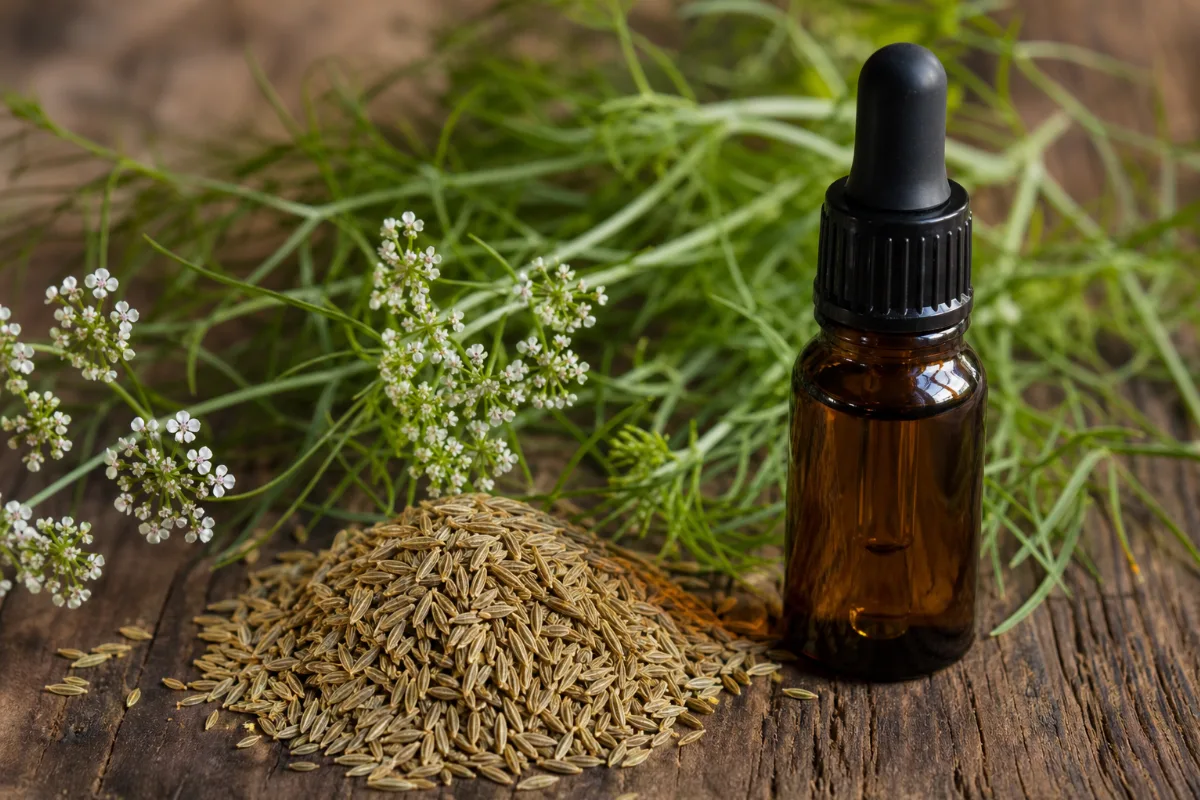
Cumin oil is the strong, spicy-smelling oil taken from cumin seeds. The FDA gives it as an example of an oil that is safe in food but can make skin blister, so safety comes first. A few small trials of swallowed capsules report effects on blood sugar and thinking speed, but they are low certainty. Never put it on skin undiluted or swallow it.
General information, not medical advice. Last substantive update · Not medically reviewed. A named clinician has not signed off on this page. How this page is made
About Cumin Oil
Cumin oil is a concentrated seed oil, not the kitchen spice. The FDA warns it can blister skin, and poison centres say essential oils should not be swallowed. The few small human trials all used swallowed capsules and found little that can be relied on.
What cumin oil is
Cumin oil is the essential oil from the seeds of Cuminum cyminum, a plant in the carrot family (Apiaceae). LactMed says the seed holds a volatile oil with cuminaldehyde and other aldehydes. In one lab analysis of a Tunisian oil, cuminaldehyde made up about 39%, with gamma-terpinene, cymene and beta-pinene next. Other oils may differ.
It is not the same as cumin seed, cumin powder or cumin supplements, and it is not black cumin (black seed, Nigella sativa), which is a different plant.
What the research shows
Three small human trials gave volunteers cumin oil in capsules: a pilot of 38 older adults (thinking speed), a trial of 99 people with type 2 diabetes (blood sugar) and a trial of 56 adults with metabolic syndrome (mostly no effect). Results were mixed, small and low certainty, and the thinking-speed pilot was funded by a spice company.
Everything else is lab or rat work: germ-killing tests in dishes, skin cell tests, liver fluke eggs and one rat liver study. These do not show what the oil does in a person. A 2025 meta-analysis of cumin supplements reported lower blood sugar with very uneven results, but it mixes seed products with the oil and cannot be used to judge the oil.
At a glance
Traditional uses history, not proof
- Cumin seed has been used to try to raise milk supply (LactMed). This is about the seed, not the essential oil.
- Cumin is a common food spice; the FDA lists it as generally recognized as safe as a spice (per LactMed). That does not apply to the concentrated oil.
Studied for research
- Thinking speed in older adults, swallowed capsules, very low certainty
- Blood sugar in type 2 diabetes, swallowed capsules, very low certainty
- Weight, blood fats and blood pressure, swallowed capsules, against (one trial, no effect except one blood pressure number)
- Lab and rat studies only: germ-killing, skin cells, liver fluke, rat liver
Main compounds
- Cuminaldehyde, the main aroma compound
- Gamma-terpinene
- Cymene
- Beta-pinene
Common forms
- Essential oil from the seed
- Study capsules in the trials (not a product recommendation)
Research links: FDA: Aromatherapy · Poison Control: Essential oils · Tisserand Institute safety guidelines · Research Library · Genes & Biomarkers Library
What it is and its history
- Accepted scientific name
- Cuminum cyminum
- Naming authority
- L.
- Synonyms
- Cuminum odorum (listed in LactMed keywords)
- Common names
- Cumin (English); Green cumin (English); Comino (Spanish); Jeeraka / Zira (Sanskrit / other (LactMed keywords))
- Family or group
- Apiaceae (the carrot or umbellifer family), per GBIF.
- Classification
- Plantae > Tracheophyta > Magnoliopsida > Apiales > Apiaceae > Cuminum > Cuminum cyminum
- Native range
- Not checked.
- Habitat
- Not checked.
- What it looks like
- Part used: The essential oil comes from the seed (hydrodistilled in the lab study read). How commercial cumin oil is made was not established from sources read.
- Look-alikes and adulterants
- Name: Black cumin / black seed (Nigella sativa) and other 'cumin' oils; Note: Different plants with their own oils; do not assume results carry across. A PubMed search also returned work on Bunium persicum (another plant called cumin) oil; not read in detail.
- Sustainability and conservation
- Not checked.
Photographs
Traditional use and history history, not clinical proof
| Tradition or era | Documented use | Source |
|---|---|---|
| Cumin seed as a spice and a milk-supply remedy | LactMed says cumin has been used to try to raise milk supply (with some literature support) and is generally recognized as safe as a spice and flavouring by the FDA. This concerns the seed, not the essential oil. | LactMed Cumin record |
Traditional use shows how it was used. It does not show that it works or is safe today.
What is inside, and how it may work
What it contains and how those compounds act in cells and animals. Laboratory and animal mechanisms are not proven effects in people.
Main compounds
| Compound | Family | Where it is concentrated | Activity studied | Level of evidence |
|---|---|---|---|---|
| Cuminaldehyde (4-isopropylbenzaldehyde) PubChem 326 | aromatic aldehyde | Seed essential oil 39.48% in one Tunisian hydrodistilled oil; other oils not compared | The main aroma compound; the 2026 cognition trial used an oil 'rich in cuminaldehyde'. 20 5 6 | Laboratory (composition), human (as part of the whole oil) |
| Gamma-terpinene PubChem 7461 | monoterpene | Seed essential oil 15.21% in the same oil | Not studied separately in the papers read. 5 20 | Laboratory (composition) |
| Cymene (written 'O-cymene' in the abstract) | aromatic monoterpene | Seed essential oil 11.82% in the same oil | Not studied separately. The abstract's isomer label was not confirmed; PubChem p-cymene is CID 7463. 5 | Laboratory (composition) |
| Beta-pinene PubChem 14896 | monoterpene | Seed essential oil 11.13% in the same oil | Not studied separately. 5 20 | Laboratory (composition) |
Mechanisms, receptors and pathways
| Target or pathway | Gene or receptor | What was found | Level |
|---|---|---|---|
| Germ growth in dishes | Not specified | One cumin oil stopped growth of several bacteria and fungi in dishes, most strongly Vibrio species, and acted as an antioxidant in four test-tube assays. 5 | Laboratory research |
| Skin cells under UVA light | Not specified | Lab-made nanoemulsions improved survival of skin cells under UVA and lowered reactive oxygen species; higher strengths killed melanoma cells. 10 | Laboratory research |
| Liver fluke eggs and adults | Not specified | The oil stopped fluke eggs developing and inactivated adult flukes in a dish. 1 | Laboratory research |
| How it might change thinking speed or blood sugar in people | Not established | No mechanism was shown in the human trials read. 6 7 | Not assessed |
Absorption, metabolism and elimination
- Absorption
- Not established in the sources read.
- Distribution
- Not established.
- Metabolism
- Not established.
- Elimination
- Not established.
- Bioavailability
- Not established. LactMed says no data exist on cumin components in breast milk.
Isolated compounds versus whole extracts
Cumin essential oil (the concentrated volatile oil) is not the same as cumin seed, the spice, or cumin seed powder or extract capsules. A 2025 meta-analysis of 'cumin supplementation' in people with metabolic disorders reported lower fasting blood sugar and triglycerides with very uneven results; it does not separate the oil from seed products, so it cannot be used to judge the oil.
Nutritional composition
Cumin oil is not a food source of any vitamin or mineral.
4 very low certainty1 evidence against
What is Cumin Oil good for?
The uses researchers have tested and how strong the evidence is for each. Read the certainty label first. Every human result here comes from swallowed study capsules, which this page does not recommend. Nothing was found for cumin oil on skin or as a scent.
Benefits, one by one
Each card is a research question, not a promise. Tap a goal to filter. Open a card to see the studies, doses and limits.
Thinking speed in healthy older adults (swallowed oil capsules)
Very low certaintyOne small pilot trial in 38 healthy older Japanese adults found faster psychomotor speed and reaction time after 12 weeks of cumin oil capsules than placebo. It was funded by a spice company and has not been repeated.
1 studiesNot covered. This page gives no amounts and no ways of using the oil.
Studies, doses and limits
What the trials found
A registered (UMIN000050328), randomized, double-blind, placebo-controlled pilot in 38 people aged 65 to 86 (19 oil, 19 placebo), 12 weeks, using the Cognitrax computer test.
Results
Group-by-time effects favoured the oil for psychomotor speed (p = 0.012) and reaction time (p = 0.022). Blood biomarkers showed no group difference.
Effect sizes as reported
p-values only in the abstract.
Why this rating
One small pilot, many outcomes tested, only two cognitive scores improved, and the study was funded and partly written by employees of a spice company. No repeat trial was found.
Form and dose studied
Not covered. This page gives no amounts and no ways of using the oil.
Who was studied
Healthy older adults in Japan.
Limits
Pilot size; healthy volunteers; short; industry-funded; not repeated. Results cannot be applied to people with memory problems.
Why researchers looked
Researchers wanted to know whether a plant oil rich in cuminaldehyde could help keep thinking sharp in later life.
Traditional use
Not applicable. No traditional use of the oil for thinking was found in the papers read.
Proposed mechanism Preliminary mechanism
Not established in the papers read.
A proposed mechanism does not show that the effect happens in people.
These trials used study capsules swallowed by volunteers. Poison Control and the Tisserand Institute advise against swallowing essential oils. See the Safety tab.
Blood sugar and insulin in type 2 diabetes (swallowed oil capsules)
Very low certaintyOne 8-week trial of 99 people with type 2 diabetes reports lower fasting blood sugar, HbA1c and insulin on cumin oil capsules than placebo. A second trial in people with metabolic syndrome did not find a blood sugar effect, so the evidence is mixed.
2 studiesNot covered. This page gives no amounts and no ways of using the oil.
Studies, doses and limits
What the trials found
A 2017 randomized, double-blind, placebo-controlled trial with three groups of 33 (two oil strengths and placebo), 8 weeks. In the 2019 metabolic syndrome trial (56 people) fasting blood sugar and insulin resistance did not differ between oil and placebo.
Results
Type 2 diabetes trial: fasting blood sugar, HbA1c and insulin fell in the oil groups (P < 0.001 for the higher strength) and rose in the placebo group; the abstract says HOMA-IR increased in the oil groups. Metabolic syndrome trial: no group difference for these measures.
Effect sizes as reported
P-values only in the abstracts.
Why this rating
One positive trial with an unclear abstract (inflammation markers also changed on placebo) against one null trial in a different group of people. Neither is a reliable basis for any claim.
Form and dose studied
Not covered. This page gives no amounts and no ways of using the oil.
Who was studied
Adults with type 2 diabetes; adults with metabolic syndrome.
Limits
Small single trials; short; abstracts give no detail on medicines or diet; the two trials disagree. Trials of cumin seed powder or extract are a different product (see the science notes).
Why researchers looked
Cumin seed is a kitchen spice with a reputation for blood sugar, so researchers tried the oil too.
Traditional use
Not applicable to the oil.
Proposed mechanism Preliminary mechanism
Not established in the papers read.
A proposed mechanism does not show that the effect happens in people.
These trials used study capsules swallowed by volunteers. Poison Control and the Tisserand Institute advise against swallowing essential oils. See the Safety tab. Anyone taking diabetes medicine should ask a doctor or pharmacist before trying anything that may change blood sugar.
Weight, blood fats and blood pressure in metabolic syndrome (swallowed oil capsules)
Evidence againstOne triple-blind trial in 56 adults with metabolic syndrome found no difference from placebo for body measures, blood fats, blood sugar or insulin resistance. Diastolic blood pressure (the lower number) ended a few points lower with the oil. The authors conclude the oil has no effect except on that one number.
1 studiesNot covered. This page gives no amounts and no ways of using the oil.
Studies, doses and limits
What the trials found
A 2019 randomized, triple-blind, placebo-controlled trial, 56 adults aged 18 to 60, 8 weeks.
Results
No group difference for almost all measures. Diastolic blood pressure 81.41 vs 84.09 mmHg at the end (mean difference -3.98 mmHg, 95% CI -7.60 to -0.35).
Effect sizes as reported
-3.98 mmHg diastolic blood pressure; other measures not different.
Why this rating
For weight, blood fats and blood sugar this trial found no effect. The single blood pressure difference was one of many measures and falls were also seen on placebo.
Form and dose studied
Not covered. This page gives no amounts and no ways of using the oil.
Who was studied
Adults with metabolic syndrome.
Limits
One small trial; short; no repeat.
Why researchers looked
Metabolic syndrome is a cluster of weight, blood sugar, blood fat and blood pressure problems that the cumin plant has been tested against.
Traditional use
Not applicable to the oil.
Proposed mechanism Preliminary mechanism
Not established in the papers read.
A proposed mechanism does not show that the effect happens in people.
These trials used study capsules swallowed by volunteers. Poison Control and the Tisserand Institute advise against swallowing essential oils. See the Safety tab.
Tests in dishes: germs, antioxidant tests, skin cells and a livestock parasite
Very low certaintyIn dishes, cumin oil slowed growth of several bacteria and fungi, scored well in test-tube antioxidant tests, protected skin cells in a lab-made nanoemulsion and killed liver-fluke eggs and adults (a livestock parasite). None of this was tested in people or animals.
3 studiesNot covered. This page gives no amounts and no ways of using the oil.
Studies, doses and limits
What the trials found
No human evidence. Three laboratory papers: composition and germ tests (2010), skin-cell tests with a lab nanoemulsion (2025) and fluke egg and adult tests (2023).
Results
Oil of one Tunisian sample: bacteria and fungi stopped growing in dishes, most strongly Vibrio species. Nanoemulsions improved survival of skin cells under UVA light in a dish, and melanoma cells died at higher strengths. Fluke eggs: 100% stopped at all strengths tested.
Effect sizes as reported
Test-tube measurements only.
Why this rating
Dish and cell tests cannot predict what happens on skin or in the body, and in the cell tests the oil also killed melanoma cells at higher strengths.
Form and dose studied
Not covered. This page gives no amounts and no ways of using the oil.
Who was studied
Cells, bacteria, fungi and parasites in dishes.
Limits
No animal or human study of these uses was found.
Why researchers looked
Cumin oil is cheap to make and is often tested as a natural food preservative or germ killer.
Traditional use
Not applicable.
Proposed mechanism Preliminary mechanism
The oil contains cuminaldehyde and other aroma compounds; the papers read do not show which one causes these dish effects.
A proposed mechanism does not show that the effect happens in people.
Lab only. These results do not show the oil is safe or useful on a person. See the Safety tab: cumin oil can blister skin in sunlight.
Liver protection against a paracetamol overdose (rats only)
Very low certaintyIn rats given a large paracetamol (acetaminophen) dose, cumin oil by mouth kept liver enzymes closer to normal. This is a single rat study and says nothing about people.
1 studiesNot covered. This page gives no amounts and no ways of using the oil.
Studies, doses and limits
What the trials found
No human evidence.
Results
Rats given the oil for 2 weeks before one paracetamol dose: liver enzymes normalised and liver structure was better preserved than with chamomile oil.
Effect sizes as reported
Not given as one number.
Why this rating
One animal study with a single overdose model.
Form and dose studied
Not covered. This page gives no amounts and no ways of using the oil.
Who was studied
Male rats.
Limits
Not tested in people; paracetamol overdose is an emergency that needs a doctor.
Why researchers looked
Researchers tested whether the oil's antioxidant activity could protect the liver.
Traditional use
Not applicable.
Proposed mechanism Preliminary mechanism
The author links the result to antioxidant and anti-inflammatory effects; this was not shown in people.
A proposed mechanism does not show that the effect happens in people.
Animal only. This is not advice to swallow the oil. A separate rat safety study recorded a liver enzyme rise at the highest oil level (see the Safety tab).
Connections to the rest of health
How Cumin Oil connects to the rest of our health knowledge graph. Every link says what kind of connection it is. A safety link (for example to the liver) is a warning, not a benefit. A study that merely mentions a topic never creates a benefit link.
Explore every connection: goals, body systems, organs, symptoms, genes
A. Wellness goals
| Connected to | Kind of connection | Evidence status | Context | Studies |
|---|---|---|---|---|
| Cognitive Performance | Very low certainty | Thinking speed in healthy older adults (swallowed oil capsules): One small pilot trial in 38 healthy older Japanese adults found faster psychomotor speed and reaction time after 12 weeks of cumin oil capsules than placebo. It was funded by a spice company and has not been repeated. | 6 | |
| Mental Clarity | Very low certainty | Thinking speed in healthy older adults (swallowed oil capsules): One small pilot trial in 38 healthy older Japanese adults found faster psychomotor speed and reaction time after 12 weeks of cumin oil capsules than placebo. It was funded by a spice company and has not been repeated. | 6 | |
| Brain Health | Very low certainty | Thinking speed in healthy older adults (swallowed oil capsules): One small pilot trial in 38 healthy older Japanese adults found faster psychomotor speed and reaction time after 12 weeks of cumin oil capsules than placebo. It was funded by a spice company and has not been repeated. | 6 | |
| Blood Sugar Balance | Very low certainty | Blood sugar and insulin in type 2 diabetes (swallowed oil capsules): One 8-week trial of 99 people with type 2 diabetes reports lower fasting blood sugar, HbA1c and insulin on cumin oil capsules than placebo. A second trial in people with metabolic syndrome did not find a blood sugar effect, so the evidence is mixed. | 7 12 | |
| Metabolic Health | Very low certainty | Blood sugar and insulin in type 2 diabetes (swallowed oil capsules): One 8-week trial of 99 people with type 2 diabetes reports lower fasting blood sugar, HbA1c and insulin on cumin oil capsules than placebo. A second trial in people with metabolic syndrome did not find a blood sugar effect, so the evidence is mixed. | 7 12 | |
| Metabolic Health | Evidence against | Weight, blood fats and blood pressure in metabolic syndrome (swallowed oil capsules): One triple-blind trial in 56 adults with metabolic syndrome found no difference from placebo for body measures, blood fats, blood sugar or insulin resistance. Diastolic blood pressure (the lower number) ended a few points lower with the oil. The authors conclude the oil has no effect except on that one number. | 12 | |
| Blood Pressure Support | Evidence against | Weight, blood fats and blood pressure in metabolic syndrome (swallowed oil capsules): One triple-blind trial in 56 adults with metabolic syndrome found no difference from placebo for body measures, blood fats, blood sugar or insulin resistance. Diastolic blood pressure (the lower number) ended a few points lower with the oil. The authors conclude the oil has no effect except on that one number. | 12 | |
| Cholesterol Balance | Evidence against | Weight, blood fats and blood pressure in metabolic syndrome (swallowed oil capsules): One triple-blind trial in 56 adults with metabolic syndrome found no difference from placebo for body measures, blood fats, blood sugar or insulin resistance. Diastolic blood pressure (the lower number) ended a few points lower with the oil. The authors conclude the oil has no effect except on that one number. | 12 | |
| Weight Management | Evidence against | Weight, blood fats and blood pressure in metabolic syndrome (swallowed oil capsules): One triple-blind trial in 56 adults with metabolic syndrome found no difference from placebo for body measures, blood fats, blood sugar or insulin resistance. Diastolic blood pressure (the lower number) ended a few points lower with the oil. The authors conclude the oil has no effect except on that one number. | 12 | |
| Cellular Protection | Very low certainty | Tests in dishes: germs, antioxidant tests, skin cells and a livestock parasite: In dishes, cumin oil slowed growth of several bacteria and fungi, scored well in test-tube antioxidant tests, protected skin cells in a lab-made nanoemulsion and killed liver-fluke eggs and adults (a livestock parasite). None of this was tested in people or animals. | 5 10 1 | |
| Healthy Skin | Very low certainty | Tests in dishes: germs, antioxidant tests, skin cells and a livestock parasite: In dishes, cumin oil slowed growth of several bacteria and fungi, scored well in test-tube antioxidant tests, protected skin cells in a lab-made nanoemulsion and killed liver-fluke eggs and adults (a livestock parasite). None of this was tested in people or animals. | 5 10 1 | |
| Liver Support | Very low certainty | Liver protection against a paracetamol overdose (rats only): In rats given a large paracetamol (acetaminophen) dose, cumin oil by mouth kept liver enzymes closer to normal. This is a single rat study and says nothing about people. | 3 |
B. Body systems
| Connected to | Kind of connection | Evidence status | Context | Studies |
|---|---|---|---|---|
| Brain Focus | Biological association | Very low certainty | Studied for: Thinking speed in healthy older adults (swallowed oil capsules) | 6 |
| Nervous System | Biological association | Very low certainty | Studied for: Thinking speed in healthy older adults (swallowed oil capsules) | 6 |
| Blood Sugar Support | Biological association | Very low certainty | Studied for: Blood sugar and insulin in type 2 diabetes (swallowed oil capsules) | 7 12 |
| Endocrine System | Biological association | Very low certainty | Studied for: Blood sugar and insulin in type 2 diabetes (swallowed oil capsules) | 7 12 |
| Metabolism Weight | Biological association | Evidence against | Studied for: Weight, blood fats and blood pressure in metabolic syndrome (swallowed oil capsules) | 12 |
| Heart Circulation | Biological association | Evidence against | Studied for: Weight, blood fats and blood pressure in metabolic syndrome (swallowed oil capsules) | 12 |
| Skin Hair Beauty | Biological association | Very low certainty | Studied for: Tests in dishes: germs, antioxidant tests, skin cells and a livestock parasite | 5 10 1 |
| Immune Support | Biological association | Very low certainty | Studied for: Tests in dishes: germs, antioxidant tests, skin cells and a livestock parasite | 5 10 1 |
| Liver Detox | Biological association | Very low certainty | Studied for: Liver protection against a paracetamol overdose (rats only) | 3 |
E. Health conditions
| Connected to | Kind of connection | Evidence status | Context | Studies |
|---|---|---|---|---|
| Phototoxic dermatitis | Adverse effect or risk | Documented risk | FDA, LactMed and NAHA statements; no cumin-specific case series found. Preparation or compound: Cumin oil |
4 2 13 |
| Contact dermatitis | Adverse effect or risk | Documented risk | NAHA lists cumin as a dermal irritant; Poison Control says oils can cause rashes. Preparation or compound: Cumin oil |
13 16 |
| Food allergy (spice) | Adverse effect or risk | Documented risk | Cumin spice allergy with cross-reactions in the carrot family; one inhalation anaphylaxis case in a child. Preparation or compound: Cumin spice (not the oil) |
9 14 |
I. Biomarkers
| Connected to | Kind of connection | Evidence status | Context | Studies |
|---|---|---|---|---|
| Psychomotor speed (Cognitrax) | Biological association | Very low certainty | Measured in trials: increase. A lab change is not the same as a health benefit. | 6 |
| Reaction time (Cognitrax) | Biological association | Very low certainty | Measured in trials: improve. A lab change is not the same as a health benefit. | 6 |
| Fasting blood sugar | Biological association | Very low certainty | Measured in trials: decrease. A lab change is not the same as a health benefit. | 7 12 |
| Diastolic blood pressure | Biological association | Very low certainty | Measured in trials: decrease. A lab change is not the same as a health benefit. | 12 |
L. Active compounds
| Connected to | Kind of connection | Evidence status | Context | Studies |
|---|---|---|---|---|
| Cuminaldehyde (4-isopropylbenzaldehyde) | Biological association | Laboratory (composition), human (as part of the whole oil) | The main aroma compound; the 2026 cognition trial used an oil 'rich in cuminaldehyde'. Preparation or compound: Seed essential oil |
20 5 6 |
| Gamma-terpinene | Biological association | Laboratory (composition) | Not studied separately in the papers read. Preparation or compound: Seed essential oil |
5 20 |
| Cymene (written 'O-cymene' in the abstract) | Biological association | Laboratory (composition) | Not studied separately. The abstract's isomer label was not confirmed; PubChem p-cymene is CID 7463. Preparation or compound: Seed essential oil |
5 |
| Beta-pinene | Biological association | Laboratory (composition) | Not studied separately. Preparation or compound: Seed essential oil |
5 20 |
Each connection is stored with the ingredient, the connected record, the kind of connection, the evidence status, the supporting studies, the preparation or compound involved, and a review date (last reviewed October 25, 2026).
The evidence
The research centre for Cumin Oil. Every record here was checked against PubMed or the publisher's page; we never list a study we have not verified.
Evidence by outcome
Bars show how many studies we found for each outcome, not how well it works. People are added up across trials only (reviews are not added, to avoid double counting).
How we rate evidence
High certainty
Several well-run trials or reviews agree; further research is unlikely to change the picture much.
Moderate certainty
Good trials point the same way, but some doubt remains.
Low certainty
Small, short or inconsistent trials. The finding could change with better research.
Very low certainty
Very little or very weak human data. Treat as a possibility only.
Mixed findings
Trials or reviews disagree with each other.
Not enough evidence
Not enough human research to say either way.
Evidence against
Good research found no benefit, or found harm.
We take the reviewers' own risk-of-bias and GRADE statements where they exist, and otherwise judge from study size, design, consistency, directness and whether a product matches what is sold. Many publications do not make evidence high. Method note: We read the abstracts of 13 PubMed papers and records, plus the FDA, NAHA, Poison Control, Pet Poison Helpline and Tisserand Institute pages; we checked the plant name in GBIF and the compounds in PubChem. We did not check LiverTox, EMA, NCCIH or IFRA.
Study library: every study we checked 20
| Study | Design | People | Product, dose, length | Result |
|---|---|---|---|---|
| Brauner de Mello 2023 Activity of cumin essential oil to control fascioliasis: Efficacy and changes in the tegument of Fasciola hepatica. Exp Parasitol · PMID 37454922 · DOI |
Laboratory study (livestock parasite) in-vitro |
Eggs and adult liver flukes (Fasciola hepatica) of ruminants, plus bovine kidney cells | Cumin (Cuminum cyminum) essential oil essential oil (seed) Not reported here Up to 24 hours (dish) · vs Nitroxynil (drug), negative control, Tween 80 |
All tested oil strengths stopped fluke eggs developing. Adult flukes were inactivated within 15 hours at the highest strength tested. Under the microscope the fluke skin showed marked vacuolization (empty bubbles). Egg test 100% effective at all strengths (as reported) Methods, limits and fundingOutcomes: Egg and adult fluke survival; damage to the fluke surface; cell toxicity Limitations: Dish test on a livestock parasite; not a test in animals or people. Funding and conflicts: Competing interests: none declared. Read: abstract |
| Drugs and Lactation Database (LactMed) 2006 Cumin (LactMed record) LactMed · PMID 30000933 |
Reference database entry n/a |
n/a | Cumin seed and its volatile oil seed / seed oil Not reported here n/a · vs n/a |
Says cumin seed contains a volatile oil with cuminaldehyde and other aldehydes; cumin has been used to try to raise milk supply; no data exist on any cumin component in breast milk or on safety in nursing mothers or infants; GRAS (generally recognized as safe) as a spice and flavouring by the FDA; generally well tolerated, but occasional phototoxic skin reactions have been reported after contact with the oil; people allergic to cumin or related herbs should avoid it. Methods, limits and fundingOutcomes: Safety in breastfeeding; general safety Limitations: A database summary; it does not give the cases behind the phototoxic reports. PubMed record dated 2006 with a 2026 contribution date. Funding and conflicts: Not applicable (not a trial) Read: abstract |
| Ebada 2018 Essential oils of green cumin and chamomile partially protect against acute acetaminophen hepatotoxicity in rats. An Acad Bras Cienc · PMID 29947676 · DOI |
Animal study (rats) animal |
Male rats given a large acetaminophen (paracetamol) dose | Green cumin (Cuminum cyminum) essential oil, given by mouth essential oil (seed) Not reported here 2 weeks before the acetaminophen dose · vs Chamomile oil; untreated acetaminophen group |
Acetaminophen raised liver enzymes. Cumin oil brought them back to normal and kept liver structure better than chamomile oil in these rats. Not given as a single number in the abstract Methods, limits and fundingOutcomes: Liver enzymes, oxidative stress markers, liver tissue under the microscope Limitations: Rats only, one overdose model; says nothing about human liver safety or protection. Funding and conflicts: Competing interests: none stated in the PubMed record. Read: abstract |
| FDA (US) 2023 Aromatherapy (FDA cosmetics page, read 2026-10-25) FDA (US) · Source |
Regulator statement n/a |
n/a | n/a n/a Not reported here n/a · vs n/a |
Says that plant-derived does not mean safe, and gives this example: cumin oil is safe in food but can cause the skin to blister; certain citrus oils used safely in food can also be harmful in cosmetics on skin exposed to sun. The page does not use the word phototoxic. Methods, limits and fundingOutcomes: Safety statements Limitations: A cosmetics information page, not a cumin-specific safety assessment. Publication year as shown in our notes (2023); page date not re-checked. Funding and conflicts: Not applicable (not a trial) Read: full-text |
| Hajlaoui 2010 Chemical composition and biological activities of Tunisian Cuminum cyminum L. essential oil: a high effectiveness against Vibrio spp. strains. Food Chem Toxicol · PMID 20488223 · DOI |
Laboratory study (chemistry, germ and antioxidant tests) in-vitro |
One Tunisian cumin oil, hydrodistilled; bacteria, fungi and test-tube antioxidant assays | Cumin essential oil (hydrodistilled) essential oil (seed) Not reported here Not applicable (test tubes) · vs Reference antioxidant BHT |
Twenty-one components found. Main ones: cuminaldehyde 39.48%, gamma-terpinene 15.21%, cymene 11.82% (written 'O-cymene' in the abstract), beta-pinene 11.13%, 2-caren-10-al 7.93%, trans-carveol 4.49%, myrtenal 3.5%. The oil stopped growth of several bacteria and fungi in dishes, most strongly Vibrio species, and scored well in four antioxidant tests. Inhibition zones 11 to 23 mm; MIC 0.078 to 0.31 mg/ml (as reported) Methods, limits and fundingOutcomes: Oil composition; germ-killing zones and concentrations; antioxidant tests Limitations: Test-tube and dish work only; one oil sample; says nothing about a person's skin or body. Funding and conflicts: Competing interests: none stated in the PubMed record. Read: abstract |
| Ito 2026 Daily intake of cuminaldehyde-rich cumin essential oil improves cognitive function in healthy elderly Japanese adults: a randomized, double-blind, placebo-controlled pilot study. Front Nutr · PMID 42088310 · DOI |
Randomized, double blind, placebo controlled pilot trial |
38 Healthy older adults in Japan, aged 65 to 86 (19 oil, 19 placebo) |
Cumin essential oil rich in cuminaldehyde, swallowed daily (study capsules) essential oil (seed) Not reported here 12 weeks · vs Placebo |
Group-by-time effects favoured the oil group for psychomotor speed (p = 0.012) and reaction time (p = 0.022). Within the oil group both improved after 12 weeks (p = 0.048 and p = 0.012). Blood biomarkers changed over time but no group-by-time difference was seen for any biomarker. p-values only in the abstract; no effect sizes Methods, limits and fundingOutcomes: Cognitrax computer test scores and blood biomarkers Limitations: Pilot of 38 people; many outcomes tested; healthy volunteers only; a swallowed oil, which this page does not advise. Funding and conflicts: Industry-linked: three authors were employed by S&B Foods Inc., which funded the study and took part in design, analysis and interpretation. Registration: UMIN000050328 Read: abstract |
| Jafari 2017 Evaluation the effect of 50 and 100 mg doses of Cuminum cyminum essential oil on glycemic indices, insulin resistance and serum inflammatory factors on patients with diabetes type II: A double-blind randomized placebo-controlled clinical trial. J Tradit Complement Med · PMID 28725629 · DOI |
Randomized, double blind, placebo controlled trial (three groups) |
99 People with type 2 diabetes (33 per group: two oil strengths and placebo) |
Green cumin (Cuminum cyminum) essential oil in capsules, swallowed essential oil (seed) Not reported here 8 weeks · vs Placebo capsules |
Fasting blood sugar, HbA1c and insulin fell in both oil groups while these measures rose in the placebo group. The abstract says HOMA-IR (insulin sensitivity) increased in the oil groups. TNF-alpha and hsCRP fell and adiponectin rose in the oil groups (p < 0.001 and p = 0.008) and, as the abstract words it, also in the placebo group. HOMA-B and QUICKI did not change. p-values only in the abstract (P < 0.001 for the higher-strength group on several measures) Methods, limits and fundingOutcomes: Fasting blood sugar, HbA1c, insulin, HOMA-IR, TNF-alpha, hsCRP, adiponectin Limitations: Abstract gives no details on how blinding, diabetes medicines or diet were handled; inflammation markers also changed on placebo; a swallowed oil, which this page does not advise. Funding and conflicts: Not stated in the abstract. Read: abstract |
| Kejlova 2010 Phototoxicity of essential oils intended for cosmetic use. Toxicol In Vitro · PMID 20688147 · DOI |
Laboratory and human photopatch study (other oils) human / in-vitro |
Orange, lemon and Litsea cubeba oils in skin models, then limited human volunteers | Other essential oils (not cumin) essential oil Not reported here n/a · vs Skin-model tests |
Phototoxicity depended on the light-sensitive components and the solvent. A level that looked non-phototoxic in a skin model still caused a phototoxic reaction in human photopatch tests for 3 of 8 tested oils, so the authors say a safety factor of 10 should be used when moving from the model to people. 3 of 8 tests phototoxic at the model's 'safe' level (as reported) Methods, limits and fundingOutcomes: Phototoxicity in skin models and human photopatch tests Limitations: Does NOT test cumin oil. Used only to show that lab 'safe' levels can fail in people. Funding and conflicts: Competing interests: none stated in the PubMed record. Read: abstract |
| Lisiecka 2026 Allergic reactions to spices: a review of sensitivities to pepper, cumin, oregano, anise, mustard and other spices. Eur Ann Allergy Clin Immunol · PMID 40341008 · DOI |
Literature review (2010 to 2023 papers) |
People with spice allergy | Cumin as a food spice seed (spice) Not reported here n/a · vs n/a |
Cumin allergens belong to the PR-10 family and can provoke allergic reactions. Cross-reactivity between cumin and other umbelliferae (the carrot family) is common. Diagnosis uses skin prick and IgE blood tests. Narrative review; no numbers Methods, limits and fundingOutcomes: Allergens and cross-reactivity Limitations: About the spice, not the essential oil; a narrative review of mixed quality. Funding and conflicts: Competing interests: none stated in the PubMed record. Read: abstract |
| Liu 2025 Formulation and evaluation of ulvan-functionalized cumin oil nanoemulsions for antioxidant, anti-photoaging, and anti-melanogenesis activities in skin cells. Bioresour Bioprocess · PMID 41288832 · DOI |
Laboratory study (skin cells, nanoemulsion) in-vitro |
Mouse fibroblast, human keratinocyte and mouse melanoma cell lines | Cumin oil nanoemulsions, with and without seaweed (ulvan) extract essential oil (seed) Not reported here Not applicable (cells in a dish) · vs Untreated cells |
The lab-made nanoemulsions lowered reactive oxygen species and, at 0.1%, improved cell survival under UVA light in cells; above 0.025% they also lowered survival and pigment-making of mouse melanoma cells. The version with seaweed extract did better. Concentration-dependent effects (as reported) Methods, limits and fundingOutcomes: Antioxidant tests, enzyme tests, cell survival under hydrogen peroxide and UVA light Limitations: Cell lines only; a lab formulation, not a consumer oil; safe and harmful strengths differ by cell type. Funding and conflicts: Competing interests: none declared. Read: abstract |
| Liu 2025 Potential benefits of Cuminum cyminum L supplementation on components of metabolic syndrome in adults with metabolic disorders: a GRADE-assessed systematic review and meta-analysis of randomized controlled trials. Front Nutr · PMID 41608519 · DOI |
Systematic review and meta analysis |
Adults with metabolic disorders (9 trials, 2013 to 2020) | Cumin supplementation (forms are not separated in the abstract; the reference list includes the two oil trials) seed products Not reported here 8 to 24 weeks · vs Placebo or control |
Cumin supplementation lowered fasting blood sugar (SMD -1.38, 95% CI -2.26 to -0.50), triglycerides (SMD -0.58) and waist circumference (SMD -0.46) and raised HDL cholesterol (SMD 0.77), with very uneven results between trials (I-squared up to 94.6%). Authors call for larger high-quality trials. SMD -1.38 fasting blood sugar (I-squared 94.6%) Methods, limits and fundingOutcomes: Fasting blood sugar, blood fats, waist Limitations: Very high heterogeneity; mixes cumin products; not a test of the oil alone; the abstract does not give the GRADE rating. Funding and conflicts: Competing interests: none stated in the PubMed record. Read: abstract |
| Morovati 2019 Effects of cumin (Cuminum cyminum L.) essential oil supplementation on metabolic syndrome components: A randomized, triple-blind, placebo-controlled clinical trial. Phytother Res · PMID 31478290 · DOI |
Randomized, triple blind, placebo controlled trial |
56 Adults aged 18 to 60 with metabolic syndrome |
Cumin (Cuminum cyminum L.) essential oil in soft gel capsules, swallowed essential oil (seed) Not reported here 8 weeks · vs Placebo soft gel |
No significant difference between groups for nearly every measure. The exception was diastolic blood pressure, lower with the oil than with placebo at the end (81.41 vs 84.09 mmHg, mean difference -3.98 mmHg). Authors' conclusion: no effect on metabolic syndrome components except diastolic blood pressure. Diastolic blood pressure difference -3.98 mmHg (-7.60 to -0.35 (diastolic blood pressure)) Methods, limits and fundingOutcomes: Body measures, blood sugar, blood pressure, blood fats, insulin resistance Limitations: Small trial; 8 weeks; the blood pressure result was one of many measures and both groups' pressure fell within-group; a swallowed oil, which this page does not advise. Funding and conflicts: Competing interests: none stated in the PubMed record. Read: abstract |
| NAHA (US professional association of aromatherapists) NAHA Safety page (read 2026-10-25) NAHA (US professional association of aromatherapists) · Source |
Professional association guidance n/a |
n/a | n/a n/a Not reported here n/a · vs n/a |
Lists Cuminum cyminum (cumin) in its table of dermal irritants and in its table of photosensitizers. Advises not using photosensitizing oils before sun or a tanning booth, staying out of both for at least 24 hours after photosensitizing oils were applied to skin, and notes that some medicines such as tetracycline increase photosensitivity. Its pregnancy 'avoid' table as read does not name cumin; that is not proof of safety. Methods, limits and fundingOutcomes: Safety statements Limitations: Trade-association guidance, not a regulator; no cumin-specific data or percentages quoted here. Funding and conflicts: Not applicable (not a trial) Read: full-text |
| Pessina 2026 Cumin anaphylaxis and allergy to spices in pediatrics: a case report and literature review. Front Immunol · PMID 42519315 · DOI |
Case report with literature review |
1 One child |
Cumin spice, inhaled seed (spice powder) Not reported here n/a · vs n/a |
The authors say this is, to their knowledge, the first report of cumin anaphylaxis via inhalation in a child. They suggest suspecting spice allergy when reactions follow eating or breathing in several unrelated foods, and recommend prick-by-prick skin tests with spice powders. One case Methods, limits and fundingOutcomes: Allergic reaction Limitations: One case; spice powder, not essential oil vapour. Funding and conflicts: Some authors report personal or speaker fees from Sanofi, Thermo Fisher Scientific and Nutricia, stated as outside the submitted work. Read: abstract |
| Pet Poison Helpline (US) Essential Oils (Pet Poison Helpline page, read 2026-10-25) Pet Poison Helpline (US) · Source |
Animal poison centre information page n/a |
n/a | n/a n/a Not reported here n/a · vs n/a |
Says essential oil poisoning can affect all species, with cats and birds at greatest risk. Common signs include drooling, vomiting, lethargy, loss of appetite and irritation of skin, airways and mucous membranes. Methods, limits and fundingOutcomes: Safety statements Limitations: General page; it does not name cumin. The page redirected to a new address when read. Funding and conflicts: Not applicable (not a trial) Read: full-text |
| Poison Control (US) Essential oils: Poisonous when misused (read 2026-10-25) Poison Control (US) · Source |
Poison centre information page n/a |
n/a | n/a n/a Not reported here n/a · vs n/a |
Misuse of essential oils can cause serious poisoning. Many oils can cause rashes; some are poisonous if absorbed through skin or swallowed. Aspirating an oil can cause pneumonia. Children have thin skin and immature livers and may be more susceptible. Oils may interact with medicines. Diluting in a carrier oil is the best way to avoid a bad reaction on skin. Products are not well regulated, so species, strength and contaminants can be hard to know. Allergy is a real possibility. If someone swallows an essential oil: Poison Control online tool or 1-800-222-1222 (US). Methods, limits and fundingOutcomes: Safety statements Limitations: General page on essential oils; cumin is not named on it. Funding and conflicts: Not applicable (not a trial) Read: full-text |
| Taghizadeh 2017 Sub-chronic oral toxicity of Cuminum cyminum L.'s essential oil in female Wistar rats. Regul Toxicol Pharmacol · PMID 28634146 · DOI |
Animal toxicity study (rats) animal |
80 80 healthy female Wistar rats in four groups |
Cumin (Cuminum cyminum) essential oil by oral gavage essential oil (seed) Not reported here 23 and 45 days · vs Vehicle control group |
No adverse effects on signs, deaths, weight, blood counts, chemistry or the liver, kidney, spleen and lung tissue at lower levels after 23 and 45 days. At the highest level the liver enzyme ALT rose after 23 days. The authors cautiously set a no-observed-adverse-effect level in rats and say results should be treated with caution for other organs. ALT rise at the highest level only (as reported) Methods, limits and fundingOutcomes: Clinical signs, body weight, blood counts, blood chemistry, organ tissue Limitations: Female rats only; says nothing about human safety, skin, sun or breathing; no numbers are carried over to people. Funding and conflicts: Competing interests: none stated in the PubMed record. Read: abstract |
| Tisserand Institute Safety guidelines: topical use and dilution (read 2026-10-25) Tisserand Institute · Source |
Aromatherapy safety education guidance n/a |
n/a | n/a n/a Not reported here n/a · vs n/a |
Says plainly not to apply undiluted essential oils to skin (the most common cause of skin reactions), not to drip them into eyes or ears undiluted, and not to swallow essential oils unless advised by a qualified practitioner licensed to prescribe them that way. Methods, limits and fundingOutcomes: Safety statements Limitations: General guidance; no cumin-specific figure was read. A cumin skin limit that appears on secondary sites could not be checked and is not used. Funding and conflicts: Not applicable (not a trial) Read: full-text |
| n/a 2026 GBIF Backbone Taxonomy: Cuminum cyminum match (GBIF match API, read 2026-10-25) n/a · Source |
Registry or database n/a |
n/a | n/a n/a Not reported here n/a · vs n/a |
Match returned 'Cuminum cyminum L.' (key 3034775), status ACCEPTED, family Apiaceae, order Apiales. Methods, limits and fundingOutcomes: Name status and family Funding and conflicts: Not applicable Read: full-text |
| n/a 2026 PubChem: cuminaldehyde (read 2026-10-25) n/a · Source |
Registry or database n/a |
n/a | n/a n/a Not reported here n/a · vs n/a |
CID 326, 4-propan-2-ylbenzaldehyde, C10H12O. Also read: gamma-terpinene CID 7461 (C10H16), beta-pinene CID 14896 (C10H16), p-cymene CID 7463 (C10H14). Methods, limits and fundingOutcomes: Compound identity Funding and conflicts: Not applicable Read: full-text |
What we do not know yet
- What the evidence supports: every human result is very low certainty or against, and comes from swallowed capsules.
- No trial of cumin oil on skin, smelled, or as aromatherapy was found.
- No published case report or test of cumin oil causing a sun reaction was found; the warning rests on FDA, LactMed and NAHA statements.
- No safety study of cumin oil in pregnancy, breastfeeding, children or pets.
- No verified cumin-specific dilution limit.
- The thinking-speed pilot was funded by a spice company and has not been repeated.
How new research is added
New studies are found by a saved PubMed search and are placed in a review queue. A person reads each one before it is added.
Lab markers
What changed in blood or saliva tests during trials. A changed number is not the same as feeling or being healthier, and we give no "normal ranges".
Other 4
Psychomotor speed (Cognitrax)
Increase in trials
A computer test of how fast and accurately a person carries out simple tasks.
Very low certaintyResults and what it means
Why it was measured
Main cognitive outcome in the older-adult pilot.
Statistical vs. clinical meaning
A test score, not a diagnosis or a daily-life measure.
Safety implication
A better score does not show the oil is safe to swallow or on skin.
| Study | Result | People | Product |
|---|---|---|---|
| 6 | Group-by-time effect favoured the oil (p = 0.012); the pilot was industry-funded. |
Reaction time (Cognitrax)
Improve in trials
A computer test of how quickly a person responds.
Very low certaintyFasting blood sugar
Decrease in trials
Blood sugar measured after not eating overnight.
Very low certaintyResults and what it means
Why it was measured
Main outcome in both blood sugar trials.
Statistical vs. clinical meaning
One trial positive, one null.
Safety implication
Could add to diabetes medicines; ask a doctor or pharmacist.
Diastolic blood pressure
Decrease in trials
The lower number in a blood pressure reading.
Very low certaintyResults and what it means
Why it was measured
One of the metabolic syndrome measures.
Statistical vs. clinical meaning
One of many measures in a small trial.
Safety implication
Not a reason to use the oil for blood pressure.
| Study | Result | People | Product |
|---|---|---|---|
| 12 | 81.41 vs 84.09 mmHg at the end, mean difference -3.98 mmHg (95% CI -7.60 to -0.35). |
Safety
What studies and official sources say about side effects, medicines and who should check first. Each point shows what kind of evidence it comes from.
Main points to know 4
- Skin plus sun or a tanning bed: the FDA and others warn of blistering.. The FDA uses cumin oil as its example of an oil that is fine in food but can make skin blister. LactMed reports occasional phototoxic (sun-triggered) skin reactions after contact with the oil. NAHA lists cumin among photosensitizing oils and says to avoid sun and tanning booths for at least 24 hours after such oils touch skin. We found no published case report or test of cumin oil itself, so how often or how badly this happens is not known. Lab 'safe' levels from other oils failed in human tests, so a skin-model number would not protect you either. Regulator or expert statement 4 2 13 8
- Skin irritation and allergy: never use it undiluted on skin.. NAHA lists cumin among dermal irritants. The Tisserand Institute and Poison Control both warn against undiluted essential oils on skin, which is the most common cause of reactions. Allergy to essential oils is a real possibility, and cumin spice allergy is documented. Expert statement 13 18 16
- Do not swallow it. Children and pets are most at risk.. Poison Control says misuse of essential oils can cause serious poisoning and that breathing a swallowed oil into the lungs can cause pneumonia. The Tisserand Institute says not to swallow essential oils unless a qualified practitioner licensed to prescribe them says so. Three small trials gave volunteers cumin oil in capsules, but a trial does not make swallowing safe at home. No cumin oil poisoning report was found. Expert statement 16 18 6
- Pregnancy, breastfeeding and young children: no safety data.. LactMed says no data exist on cumin components in breast milk or on safety in nursing mothers or infants. No pregnancy study of cumin oil was found. Poison Control says children's thin skin and immature livers may make them more open to harm. Database statement 2 16
Side effects 5
| Effect | How often | Severity and recovery | Evidence |
|---|---|---|---|
| Blistering or sun-triggered (phototoxic) skin reaction after contact with the oil Statements by the FDA, LactMed and NAHA; no cumin-specific case series was found, so no rate or time course can be given. | Not established | can be moderate to severe (blistering, FDA wording) Not described in the sources read | Regulator or expert statement 4 2 13 |
| Skin irritation (redness, stinging, rash) General statements about essential oils; cumin is named only on the NAHA irritant list. | Not established | mild to moderate (general oil warnings) Poison Control advises washing the oil off and stopping use if a rash appears | Expert statement 13 16 |
| Allergic reaction (rash, and in rare cases serious reactions) Evidence is about the spice, not the oil. Cross-reactions occur with the carrot family. | Not established | mild to severe; one child had anaphylaxis from breathing in cumin spice powder Not applicable | Case report 9 14 |
| Raised liver enzyme (ALT) in rats at the highest oil level, swallowed Female rats only; it is not known whether people are affected. The three human trial abstracts read did not report this. | Not established | lab-test change in animals Not assessed beyond the 45-day study | Animal research 17 |
| Poisoning if swallowed, especially by a child or pet No cumin oil poisoning case was found; this is the class warning. | Not established | potentially serious (general essential oil statements) Not described for cumin | Expert statement 16 15 |
Liver
No human liver injury from cumin oil was found in the sources read, and a LiverTox record was not checked. In a rat study the liver enzyme ALT rose only at the highest swallowed level after 23 days; other liver and organ tests were normal. A separate rat study reported liver protection against a paracetamol overdose. Neither says what happens in people. 17 3
How often. Not established.
Monitoring. Not applicable. Tell a doctor about yellow skin or eyes, dark urine or belly pain.
This is a safety connection. It is not evidence that Cumin Oil supports liver health.
Medicines and supplements 3
| With | Why it matters | Importance | Evidence | What to do |
|---|---|---|---|---|
| Medicines or treatments that make skin more sensitive to light (NAHA gives tetracycline as an example) and ultraviolet therapy photosensitizing-medicines | Theory: another light-sensitizing agent could add to the sun reaction of the oil. | No cumin-specific study was read. | Theoretical Not enough evidence 13 | Ask a dermatologist or pharmacist before any ultraviolet treatment or if you take light-sensitizing medicines. |
| Medicines that lower blood sugar diabetes-medicines | Theory: one small trial of swallowed cumin oil capsules reported lower blood sugar in people with type 2 diabetes, so an added effect is possible if the oil were swallowed. | Not studied as an interaction. A second trial found no blood sugar effect. | Theoretical Not enough evidence 7 12 | Do not swallow the oil. Anyone on diabetes medicine should ask a doctor or pharmacist before trying any new supplement. |
| Medicines in general general-essential-oil-warning | Poison Control says essential oils may interact with medicines; no specific cumin oil interaction is named. | Unknown. | Expert statement Not enough evidence 16 | Ask a pharmacist. |
Who should check first 4
| Situation | Advice | Evidence |
|---|---|---|
| Skin that will meet sun, a sunbed or ultraviolet treatment soon after the oil touched it | This is the documented trigger for blistering. Ask a dermatologist or pharmacist; this page gives no safe amount, only NAHA's statement of at least 24 hours out of sun after photosensitizing oils. | Regulator or expert statement 4 13 |
| Applying the oil undiluted to skin, eyes or ears | Do not. The Tisserand Institute says this causes most skin reactions and that undiluted oil in eyes can cause chemical burns. | Expert statement 18 |
| Swallowing the oil, especially by or near children or pets | Do not swallow. If anyone may have swallowed any essential oil, call a poison center (US: 1-800-222-1222) or emergency services. | Expert statement 16 18 |
| Known allergy to cumin or related spices and herbs (carrot family) | LactMed says people allergic to cumin or related herbs should avoid it. Spice allergy is documented, though not tested with the oil. | Database statement 2 9 |
Overdose, product quality and regulators
Summary. The documented harms are blistering and sun reactions on skin (statements, not case series), skin irritation, allergy to cumin in general, and the class warning about swallowed essential oils. Rats given the oil by mouth for 23 and 45 days showed no harm at lower levels and a liver enzyme rise at the highest level.
Amounts. No safe amount is established, and this page gives none.
Onset and course. Not described for cumin oil in the sources read.
Repeated use. Not studied in people beyond 8 to 12 week capsule trials; rats were studied for up to 45 days.
Animal data. A 23- and 45-day rat study found no adverse effects at lower levels and raised ALT at the highest level, after which the authors set a conservative no-effect level for rats.
Toxic parts. The seed oil. Cuminaldehyde is its main aroma compound in the sources read.
Not read. Tisserand and Young 'Essential Oil Safety', IFRA standards, EU fragrance allergen lists, original case reports of cumin oil skin reactions, any cat or dog study of cumin oil, asthma, epilepsy and hormone studies.
Poison Control says essential oil products are not well regulated, so the plant species, strength and contaminants can be hard to know. One lab analysis of a single Tunisian cumin oil found about 39% cuminaldehyde; other oils may differ. 'Black cumin' and 'cumin' are different plants.
Composition varies and can be unclear. One hydrodistilled cumin oil had cuminaldehyde 39.48%, gamma-terpinene 15.21%, cymene 11.82% and beta-pinene 11.13%. Composition of other oils was not compared. 5
Unregulated products. Species, strength and contaminants are not always known; products may contain other oils or alcohol. 16
| Body | Action | Date |
|---|---|---|
| FDA (US) (United States) | Aromatherapy page: gives cumin oil as an example of an oil that is safe in food but can cause the skin to blister; says FDA has no regulations defining 'natural' or 'organic' for cosmetics. source | 2023 |
| LactMed (US National Library of Medicine) (United States) | Cumin record: no data on breast milk or safety in nursing mothers or infants; GRAS as a spice and flavouring by the FDA (per LactMed); occasional phototoxic skin reactions after contact with the oil; people allergic to cumin or related herbs should avoid it. source | 2006 (PubMed record; 2026 contribution date) |
| NAHA (US association of aromatherapists) (United States (professional body)) | Safety page: cumin in the dermal irritant and photosensitizer tables; advice to avoid sun and tanning booths for at least 24 hours after photosensitizing oils on skin. source | Not shown |
| Tisserand Institute (International (safety education)) | Safety guidelines: do not apply undiluted essential oils to skin; do not swallow essential oils unless advised by a qualified practitioner. source | Not shown |
When to get medical help
- If anyone may have swallowed any essential oil, call poison control straight away (US: Poison Help 1-800-222-1222) or your local emergency number.
- Trouble breathing, swelling of the face or throat, collapse or hives after any contact or breathing in cumin: call emergency services at once.
- A child or pet that has swallowed oil or is drooling, vomiting, very sleepy or struggling to breathe: call poison control or a vet at once (US pets: Pet Poison Helpline).
- Blisters, burning or dark patches on skin that met the oil and then sun: stop contact, wash the skin, keep it out of sun and see a doctor.
- Oil in the eyes: rinse with plenty of water and get medical help.
Stop using the product and contact a clinician or emergency service. In the US, Poison Control is 1-800-222-1222.
General information only, not medical advice. Ask a clinician or pharmacist before use, especially with medicines, in pregnancy or with a health condition. See the Natural Remedy Safety guide.
Frequently asked questions
Can cumin oil burn or blister skin in the sun?
It can. The FDA gives cumin oil as an example of an oil that is safe in food but can cause the skin to blister. LactMed reports occasional phototoxic skin reactions, and NAHA advises staying out of sun and tanning booths for at least 24 hours after photosensitizing oils touch skin. No cumin-specific case series was found, so how often this happens is unknown.
Is cumin oil safe to put on skin?
Not undiluted. The Tisserand Institute and Poison Control both say undiluted essential oils on skin are the most common cause of reactions, and NAHA lists cumin as a skin irritant. Stop and wash it off if a rash appears. Ask a pharmacist or dermatologist before using any essential oil product.
Can you swallow cumin oil?
This page does not advise it. Poison Control warns that misuse can cause serious poisoning and the Tisserand Institute says not to swallow essential oils unless a qualified practitioner advises it. Three trials gave volunteers study capsules, but that does not make swallowing safe at home. If anyone swallows an essential oil, call poison control (US 1-800-222-1222).
Is cumin oil safe in pregnancy or while breastfeeding?
Is cumin oil safe around children and pets?
Is cumin oil the same as cumin spice or cumin supplements?
No. The oil is a concentrated extract of the seed with its own risks, such as blistering in sun. The spice is a food and is generally recognized as safe as a spice. Supplement trials of seed powder or extract are a separate product, and a 2025 meta-analysis of them cannot be used to judge the oil.
Does cumin oil improve memory or thinking?
There is one small pilot. In 38 healthy older Japanese adults, psychomotor speed and reaction time scores were better than placebo after 12 weeks of swallowed oil capsules. The study was funded by a spice company and has not been repeated, so certainty is very low.
Does cumin oil lower blood sugar or help diabetes?
The evidence is thin and mixed. One 8-week trial in 99 people with type 2 diabetes reported lower fasting blood sugar and HbA1c with swallowed oil capsules, while a trial in metabolic syndrome found no difference. Anyone on diabetes medicine should ask a doctor or pharmacist before trying any supplement.
Does cumin oil help with weight, cholesterol or blood pressure?
One triple-blind trial of 56 adults found no effect on weight, blood fats or blood sugar. Diastolic blood pressure was about 4 points lower than placebo, one of many measures. This is not a reason to use the oil.
Does cumin oil kill germs?
Can you be allergic to cumin oil?
Explore by health goal
Metabolic HealthCognitive PerformanceMental ClarityBrain HealthBlood Sugar BalanceBlood Pressure SupportCholesterol BalanceWeight ManagementCellular ProtectionHealthy SkinLiver Support
Editorial transparency
- Written by
- AlternativeMed editorial team. Research compiled with AI assistance, then checked against PubMed records.
- Medical review
- None. This page has not been reviewed by a physician or pharmacist.
- First published
- 2026-10-25
- Last substantive update
- 2026-10-25
- How we research
- We read the abstracts of 13 PubMed papers and records, plus the FDA, NAHA, Poison Control, Pet Poison Helpline and Tisserand Institute pages; we checked the plant name in GBIF and the compounds in PubChem. We did not check LiverTox, EMA, NCCIH or IFRA.
- How we rate evidence
- See "How we rate evidence" in the Evidence tab.
- Independence
- No product is promoted on this page. No affiliate links are shown. One trial funded by a spice company is labelled.
Sources 20
Each source was opened and checked. Where we read only the abstract, it says so. The small numbers in the text point here.
- Brauner de Mello A, Baccega B, Obelar Martins F, Ignes de Santi I, Islabao YW, de Giacometi M, Pereira Soares M, da Rosa Farias NA, Belmonte Oliveira C. Activity of cumin essential oil to control fascioliasis: Efficacy and changes in the tegument of Fasciola hepatica.. Exp Parasitol. 2023. PMID 37454922. DOI 10.1016/j.exppara.2023.108587. (abstract)
- Drugs and Lactation Database (LactMed), US National Library of Medicine. Cumin (LactMed record). LactMed. 2006. PMID 30000933. (abstract)
- Ebada ME. Essential oils of green cumin and chamomile partially protect against acute acetaminophen hepatotoxicity in rats.. An Acad Bras Cienc. 2018. PMID 29947676. DOI 10.1590/0001-3765201820170825. (abstract)
- FDA (US). Aromatherapy (FDA cosmetics page, read 2026-10-25). FDA (US). 2023. (full-text)
- Hajlaoui H, Mighri H, Noumi E, Snoussi M, Trabelsi N, Ksouri R, Bakhrouf A. Chemical composition and biological activities of Tunisian Cuminum cyminum L. essential oil: a high effectiveness against Vibrio spp. strains.. Food Chem Toxicol. 2010. PMID 20488223. DOI 10.1016/j.fct.2010.05.044. (abstract)
- Ito K, Yoon J, Sasaki K, Nakagawa Y, Onda H, Isoda H, Okura T. Daily intake of cuminaldehyde-rich cumin essential oil improves cognitive function in healthy elderly Japanese adults: a randomized, double-blind, placebo-controlled pilot study.. Front Nutr. 2026. PMID 42088310. DOI 10.3389/fnut.2026.1784027. (abstract)
- Jafari S, Sattari R, Ghavamzadeh S. Evaluation the effect of 50 and 100 mg doses of Cuminum cyminum essential oil on glycemic indices, insulin resistance and serum inflammatory factors on patients with diabetes type II: A double-blind randomized placebo-controlled clinical trial.. J Tradit Complement Med. 2017. PMID 28725629. DOI 10.1016/j.jtcme.2016.08.004. (abstract)
- Kejlova K, Jirova D, Bendova H, Gajdos P, Kolarova H. Phototoxicity of essential oils intended for cosmetic use.. Toxicol In Vitro. 2010. PMID 20688147. DOI 10.1016/j.tiv.2010.07.025. (abstract)
- Lisiecka MF. Allergic reactions to spices: a review of sensitivities to pepper, cumin, oregano, anise, mustard and other spices.. Eur Ann Allergy Clin Immunol. 2026. PMID 40341008. DOI 10.23822/EurAnnACI.1764-1489.400. (abstract)
- Liu FL, Fang SY, Chan HW, Fang MC, Chiang MT, Huang CH. Formulation and evaluation of ulvan-functionalized cumin oil nanoemulsions for antioxidant, anti-photoaging, and anti-melanogenesis activities in skin cells.. Bioresour Bioprocess. 2025. PMID 41288832. DOI 10.1186/s40643-025-00980-8. (abstract)
- Liu M, Wu S, Falahatzadeh M. Potential benefits of Cuminum cyminum L supplementation on components of metabolic syndrome in adults with metabolic disorders: a GRADE-assessed systematic review and meta-analysis of randomized controlled trials.. Front Nutr. 2025. PMID 41608519. DOI 10.3389/fnut.2025.1618108. (abstract)
- Morovati A, Pourghassem Gargari B, Sarbakhsh P. Effects of cumin (Cuminum cyminum L.) essential oil supplementation on metabolic syndrome components: A randomized, triple-blind, placebo-controlled clinical trial.. Phytother Res. 2019. PMID 31478290. DOI 10.1002/ptr.6500. (abstract)
- NAHA (US professional association of aromatherapists). NAHA Safety page (read 2026-10-25). NAHA (US professional association of aromatherapists). . (full-text)
- Pessina B, Masiello E, Giovannini M, Bardasi MC, Barni S, Catamero F, Klain A, Liccioli G, Del Giudice MM, Novembre E, Sarti L, Tomei L, Valleriani C, Mori F. Cumin anaphylaxis and allergy to spices in pediatrics: a case report and literature review.. Front Immunol. 2026. PMID 42519315. DOI 10.3389/fimmu.2026.1838155. (abstract)
- Pet Poison Helpline (US). Essential Oils (Pet Poison Helpline page, read 2026-10-25). Pet Poison Helpline (US). . (full-text)
- Poison Control (US). Essential oils: Poisonous when misused (read 2026-10-25). Poison Control (US). . (full-text)
- Taghizadeh M, Ostad SN, Asemi Z, Mahboubi M, Hejazi S, Sharafati-Chaleshtori R, Rashidi A, Akbari H, Sharifi N. Sub-chronic oral toxicity of Cuminum cyminum L.'s essential oil in female Wistar rats.. Regul Toxicol Pharmacol. 2017. PMID 28634146. DOI 10.1016/j.yrtph.2017.06.007. (abstract)
- Tisserand Institute. Safety guidelines: topical use and dilution (read 2026-10-25). Tisserand Institute. . (full-text)
- n/a. GBIF Backbone Taxonomy: Cuminum cyminum match (GBIF match API, read 2026-10-25). n/a. 2026. (full-text)
- n/a. PubChem: cuminaldehyde (read 2026-10-25). n/a. 2026. (full-text)