Fruits · Fruit
Lychee
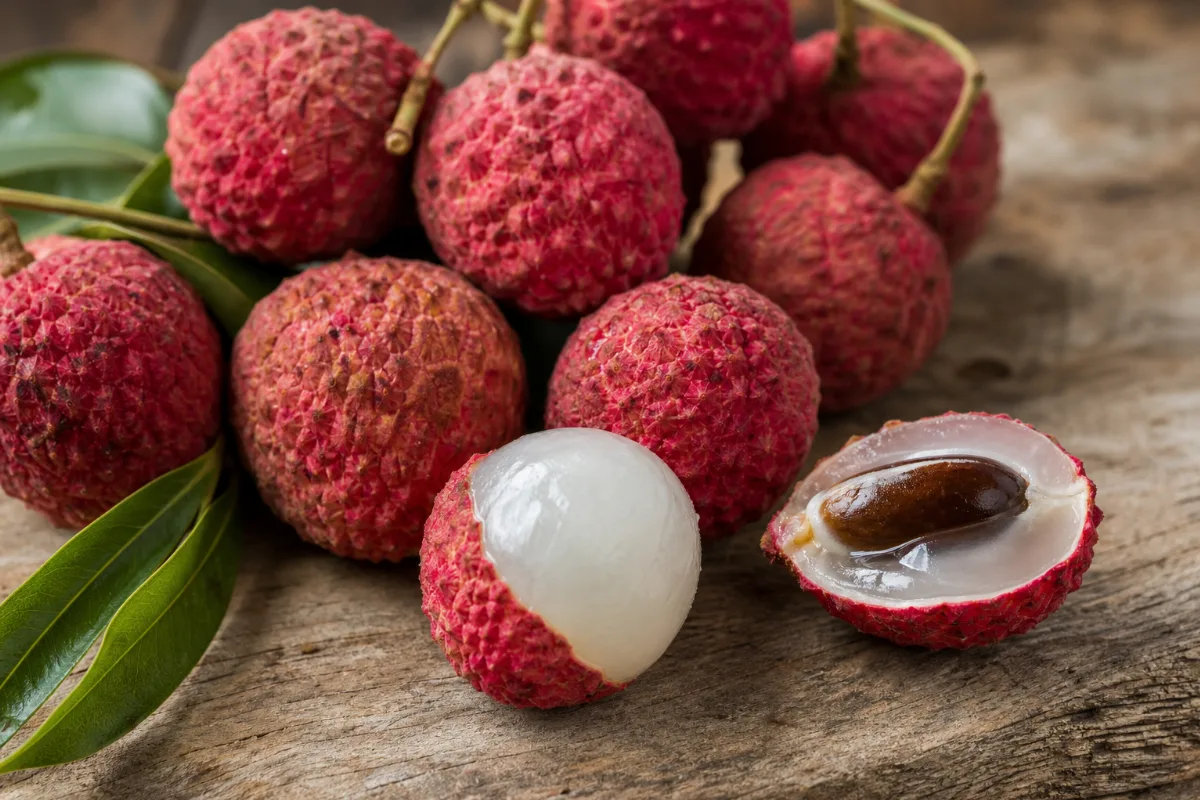
Litchi chinensis · also called Lychee, litchi, leechee, lichi (Spanish)
Lychee is a sweet tropical fruit with a rough skin and juicy white flesh around one seed. Raw lychee is a rich source of vitamin C. No human trial has tested the fruit for any illness, and the extra claims come from lab and animal work or from an extract called Oligonol. The main cautions are a serious brain illness with low blood sugar seen in children in Bihar, India, and rare but severe allergic reactions.
General information, not medical advice. Last substantive update · Not medically reviewed. A named clinician has not signed off on this page. How this page is made
About Lychee
Lychee is a sweet, juicy tropical fruit that is a rich source of vitamin C. It is a food, not a proven remedy: the health claims are mostly lab and animal findings, and lychee eating has been linked to a serious brain illness in some undernourished children in India.
What it is
Lychee (Litchi chinensis) is a tropical to subtropical fruit in the soapberry family, grown in more than 20 countries (2020 review). The flesh around the seed is what people eat.
USDA data for raw lychee: 66 kcal per 100 g, with 15.2 g sugars, 1.3 g fibre, 71.5 mg vitamin C, 171 mg potassium and 0.148 mg copper. One cup (190 g) has about 125 kcal, 28.9 g sugars, 2.5 g fibre, 136 mg vitamin C and 325 mg potassium. One peeled fruit (9.6 g) has about 6 kcal and 7 mg vitamin C. It has no vitamin A in the USDA data.
What the research shows
The firmest fact is about vitamin C: too little causes scurvy and vitamin C foods prevent it. That is a nutrient fact, not a lychee trial.
Lab and animal studies describe antioxidant and blood-sugar effects, mostly from peel and seed. No human trial of the fruit was found.
The human trials we found tested Oligonol, a lychee polyphenol extract sold as a supplement. Results were small, mixed or preliminary: belly fat fell in one trial, fatty liver results disagreed, and the muscle and exercise studies were small.
Extract versus the fruit
Every human trial found used Oligonol, a standardised polyphenol extract (the belly fat trial used 200 mg containing 40 mg of flavanols from lychee and tea). The fruit gives vitamin C, sugar and fibre and carries the cautions above; the results for one do not carry over to the other.
Amounts
This page gives no amounts to eat. Ask a doctor or pharmacist what is right for you, especially if you have diabetes, take medicine, or are feeding a young child.
At a glance
Traditional uses history, not proof
- Eaten fresh as a sweet fruit
- Used for centuries in traditional Chinese medicine for stomach ulcers, diabetes, cough, diarrhoea and indigestion; long use is not proof it works
Studied for research
- Preventing scurvy through vitamin C, high certainty for the nutrient, no lychee trial
- Antioxidant and other broad claims, very low certainty (lab and animal work)
- Blood sugar, insufficient evidence (rat study only)
- Belly fat, low certainty (one trial of an extract, not the fruit)
- Fatty liver, mixed (two small extract trials)
- Muscle and walking in older adults, low certainty (extract)
- Recovery after hard exercise, very low certainty (extract, 10 men)
Main compounds
- Vitamin C (ascorbic acid)
- Polyphenols and polysaccharides
- Hypoglycin A and MCPG (natural toxins)
- Profilin (allergen protein)
Common forms
- Raw lychee flesh as food
- Peel and seed (lab and animal work only)
- Oligonol, a lychee polyphenol extract (used in the human trials; not the fruit)
- Canned, dried and juice forms (not checked)
Research links: NHS: Scurvy · Muzaffarpur case-control study of litchi and acute toxic encephalopathy (2017) · Review of litchi nutrients, health benefits and safety (2020) · Research Library · Genes & Biomarkers Library
What it is and its history
- Accepted scientific name
- Litchi chinensis
- Naming authority
- Sonn. (GBIF accepted; usageKey 3190002)
- Common names
- Lychee (English); Litchi (English); Leechee (English); Lichi (Spanish)
- Family or group
- Sapindaceae (the soapberry family), per GBIF.
- Classification
- Plantae > Tracheophyta > Magnoliopsida > Sapindales > Sapindaceae > Litchi > Litchi chinensis
- Native range
- Not verified from a source read. A 2020 review says litchi is a tropical to subtropical fruit cultivated in more than 20 countries.
- Habitat
- Not verified from a source read.
- What it looks like
- Roots: Not verified.; Stems: Not verified.; Leaves: Not verified.; Flowers: Not verified.; Fruit: The fruit is the food; only the flesh (aril) is eaten. USDA lists one fruit without refuse as 9.6 g and one cup of flesh as 190 g.
- Cultivation
- Not verified from a source read. Named cultivars in the studies include Shahi, China, Brewster, Feizixiao, Huaizhi and Nuomici.
- Harvest and processing
- Eaten fresh. USDA data are for raw fruit. Canned, dried and juice forms were not checked.
- Sustainability and conservation
- Not assessed.
Photographs
Traditional use and history history, not clinical proof
| Tradition or era | Documented use | Source |
|---|---|---|
| Traditional Chinese medicine | A 2020 review says whole litchi fruit has been used for centuries in traditional Chinese medicine for stomach ulcers, diabetes, cough, diarrhoea and indigestion, and to kill intestinal worms. Long use is not proof that it works. | p33337091 |
Traditional use shows how it was used. It does not show that it works or is safe today.
What is inside, and how it may work
What it contains and how those compounds act in cells and animals. Laboratory and animal mechanisms are not proven effects in people.
Main compounds
| Compound | Family | Where it is concentrated | Activity studied | Level of evidence |
|---|---|---|---|---|
| Ascorbic acid (vitamin C) PubChem 54670067 | vitamin | Flesh (aril) USDA: 71.5 mg per 100 g raw lychee flesh | Essential nutrient. The NHS says too little over a long period causes scurvy. 29 24 26 | Human data |
| Hypoglycin A PubChem 45039541 | non-protein amino acid (natural toxin) | Flesh (aril); seed levels not read 12.4 to 152.0 micrograms per gram in Muzaffarpur arils (36 samples); 0.35 to 14.46 mg per kg in three Chinese cultivars | Linked with low blood sugar and disruption of fatty acid metabolism in the Muzaffarpur children. 15 19 27 | Human data |
| Methylenecyclopropylglycine (MCPG) PubChem 55289519 | non-protein amino acid (natural toxin) | Pulp and seed 44.9 to 220.0 micrograms per gram in Muzaffarpur arils; not detected to 11.7 micrograms per gram dry weight in ripe Shahi and China arils | Linked with low blood sugar and encephalopathy; levels vary by cultivar, maturity and storage. 15 16 14 28 | Human data |
| Polyphenols and polysaccharides | plant pigments and long sugar chains | Flesh, peel and seed | The 2020 review credits these with most reported effects, from lab and animal studies. 20 2 | In vitro animal |
| Profilin (allergen protein) | protein | Flesh | A plant protein shared by many plants; identified as the allergen in one anaphylaxis case. 3 | Human data |
| Copper | mineral | Flesh USDA: 0.148 mg per 100 g raw lychee | Essential mineral; lychee is a modest source. 29 | Composition |
Mechanisms, receptors and pathways
| Target or pathway | Gene or receptor | What was found | Level |
|---|---|---|---|
| Fatty acid oxidation and gluconeogenesis | Not specified | A 2024 review says hypoglycin A and MCPG block steps of fatty acid burning and sugar making. In fasting children with low glycogen, this can cause low blood sugar and toxic by-products. In the 2014 Muzaffarpur study 90% of 80 case plasma samples had abnormal acylcarnitine profiles, consistent with severe disruption of fatty acid metabolism. 9 15 | Human data |
| Profilin allergy and cross-reaction | Not specified | Profilin was identified as the responsible allergen in one patient; cross-reaction with latex, mugwort and other plants appeared in other case reports. 3 8 12 | Human data |
| Vitamin C and scurvy | Not specified | The NHS says scurvy results from too little vitamin C over a long time; fruit and vegetables are the main source. 24 29 | Human data |
| Antioxidant activity (lab) | Not specified | Lychee peel and seed showed high antioxidant activity in the lab, tracking phenolic content. This does not show a benefit in people. 2 20 | Laboratory research |
Absorption, metabolism and elimination
- Absorption
- Not studied for lychee fruit. The Oligonol trial authors describe the extract as expected to have high absorption, but give no measurements in the abstract.
- Distribution
- Not found.
- Metabolism
- Hypoglycin A and MCPG metabolites were detected in urine of ill children in the 2014 study (66% of tested case samples).
- Elimination
- Not found.
- Bioavailability
- Not established for lychee flesh.
Isolated compounds versus whole extracts
All human trials of a lychee product tested Oligonol, a standardised polyphenol extract (the 12-week abdominal fat trial used 200 mg containing 40 mg of flavanol monomers and dimers from lychee and tea). Eating the fruit delivers vitamin C, sugars, fibre and, in rare situations, toxins that an extract may not. Results for one do not carry over to the other.
Nutritional composition
Nutrition from USDA FoodData Central (Litchis, raw, FDC 169086, SR Legacy, last updated 4/1/2019, read 2026-10-25). Per 100 g: 66 kcal (276 kJ), about 82 g water, 0.83 g protein, 0.44 g fat, 16.5 g carbohydrate, 1.3 g fibre, 15.2 g total sugars, 71.5 mg vitamin C, 171 mg potassium, 0.148 mg copper, 0.1 mg vitamin B6, 0.065 mg riboflavin, 14 micrograms folate (DFE), 31 mg phosphorus, 10 mg magnesium, 5 mg calcium, 0.31 mg iron, 0.4 micrograms vitamin K and no vitamin A. USDA lists two household weights: 1 cup (190 g) and 1 fruit without refuse (9.6 g), so a cup is about 20 peeled fruit. Our arithmetic for one cup: about 125 kcal, 2.5 g fibre, 28.9 g sugars, 136 mg vitamin C, 325 mg potassium, 0.28 mg copper, 0.19 mg vitamin B6 and 27 micrograms folate. One fruit: about 6 kcal, 1.5 g sugars and 6.9 mg vitamin C. Lychee is a vitamin C and copper food with notable natural sugar; it has no carotenoids in the USDA data. Values vary with variety, ripeness and storage. This describes composition only, not how much to eat.
1 high certainty1 mixed findings2 low certainty2 very low certainty1 not enough evidence
What was looked at
The 7 benefits and uses checked for Lychee, each with how strong the evidence is. Tap one to open it.
- Preventing scurvy (severe vitamin C shortage)High certainty
- Antioxidant and other broad health claims (lab and animal research)Very low certainty
- Blood sugar (lychee fruit)Not enough evidence
- Belly (visceral) fat: Oligonol lychee extract, not the fruitLow certainty
- Fatty liver (NAFLD): Oligonol lychee extract, not the fruitMixed findings
- Muscle and walking in middle-aged and older adults: Oligonol, not the fruitLow certainty
- Recovery after hard exercise: Oligonol, not the fruitVery low certainty
Lab markers tracked in the studies
Visceral (belly) fat area on CT scanLiver fat on MRI (MRI-PDFF)Blood lactate 30 minutes after maximal exercise
What is Lychee good for?
The main studied uses and how strong the human evidence is for each. No trial has tested the lychee fruit itself; the human trials used Oligonol, a lychee extract.
Benefits, one by one
Each card is a research question, not a promise. Tap a goal to filter. Open a card to see the studies, doses and limits.
Preventing scurvy (severe vitamin C shortage)
High certaintyScurvy comes from going without enough vitamin C for a long time. Fruit and vegetables are the main source, and raw lychee is a rich vitamin C food (USDA). No trial has tested lychee itself for scurvy.
3 studiesRaw lychee flesh as food. The composition figure is for raw fruit; ca…
Studies, doses and limits
What the trials found
The NHS says scurvy is caused by not having enough vitamin C over a long period, that vitamin C is mainly found in fruit and vegetables, and that mild cases are often easily treated by adding vitamin C to the diet. USDA FoodData Central lists 71.5 mg of vitamin C per 100 g of raw lychee. The NHS vitamin C page lists citrus fruit, peppers, strawberries and blackcurrants as good sources and does not name lychee.
Results
The link between vitamin C foods and scurvy is well accepted. No trial of lychee for scurvy was found.
Effect sizes as reported
USDA: 71.5 mg vitamin C per 100 g raw lychee; about 136 mg in one cup of 190 g (our arithmetic).
Why this rating
High for the general point that a diet with enough vitamin C prevents scurvy (health agency statements). Lychee-specific: no trial, only a food composition figure.
Form and dose studied
Raw lychee flesh as food. The composition figure is for raw fruit; canned, dried and juice were not checked.
Who was studied
People with very limited diets: little or no fresh fruit and vegetables, some smokers, people with eating disorders or long-term drug or alcohol dependency (NHS).
Limits
Not a trial of lychee. Scurvy is rare with an ordinary diet. This is not a treatment for anyone with suspected scurvy.
Why researchers looked
Lychee is often described as a vitamin C fruit, so people ask whether it helps protect against vitamin C shortage.
Traditional use
Lychee has been used in traditional Chinese medicine for centuries for stomach ulcers, diabetes, cough, diarrhoea and indigestion (2020 review). Long use is not proof that it works.
Proposed mechanism Authoritative guidance
Vitamin C (ascorbic acid) is an essential nutrient. A long-term shortage causes scurvy, according to the NHS. Raw lychee flesh holds a lot of it per 100 g.
A proposed mechanism does not show that the effect happens in people.
Bleeding gums, easy bruising, tiredness and joint pain need a doctor, not food alone. Read the lychee safety warnings for children on the Safety tab.
Antioxidant and other broad health claims (lab and animal research)
Very low certaintyReviews describe antioxidant, blood-vessel, liver and other effects of lychee, but nearly all of it comes from lab dishes and animals, and from fruit parts such as peel and seed. No human trial of the whole fruit for these claims was found.
2 studiesFruit parts (peel, seed, pulp) and extracts in lab and animal work. N…
Studies, doses and limits
What the trials found
A 2020 review of lychee says in vitro and in vivo (animal) studies have indicated antioxidant, blood-sugar-lowering, liver-protecting, blood-fat-lowering and anti-obesity activity, and anticancer, artery, blood-pressure, nerve-protecting and immune effects. The review abstract does not report a human trial of the fruit for these effects. A 2022 laboratory and rat study found high antioxidant activity in lychee peel and seed, which tracked their phenolic content.
Results
Lab and animal findings only. They do not show that eating lychee has these effects in people.
Why this rating
Laboratory and animal research only, mostly on peel, seed or extracts rather than the flesh people eat. Rated very-low for people.
Form and dose studied
Fruit parts (peel, seed, pulp) and extracts in lab and animal work. Not the same as eating lychee flesh.
Who was studied
Cells and animals.
Limits
No human trial of whole lychee found. Antioxidant activity in a test tube does not predict benefit in the body.
Why researchers looked
Lychee is rich in plant pigments (polyphenols) and long sugar chains (polysaccharides), which are tested in the lab for antioxidant effects.
Traditional use
Lychee has been used in traditional Chinese medicine for centuries for stomach ulcers, diabetes, cough, diarrhoea and indigestion (2020 review). Long use is not proof that it works.
Proposed mechanism Laboratory research
A 2020 review credits lychee polysaccharides and polyphenols with most of the reported activity. A 2022 rat study measured antioxidant activity in the peel and seed in the lab.
A proposed mechanism does not show that the effect happens in people.
Seed and peel are not normally eaten. Nothing here supports using seed extracts.
Blood sugar (lychee fruit)
Not enough evidenceTraditional Chinese medicine used lychee for diabetes, and a rat study found that some parts of the fruit lowered blood sugar. No human study of lychee for blood sugar was found. Lychee fruit has also been linked to dangerously low blood sugar in some malnourished children (see the Safety tab).
3 studiesPulp, peel and seed of Brewster lychee at two ripeness stages in rats.
Studies, doses and limits
What the trials found
The 2022 rat study (Wistar rats, Brewster variety) reported that stage I (immature) pulp and stage II peel and seed reduced blood glucose, and that the effects of the pulp and peel were synergistic with metformin. The pulp of mature fruit lacked a blood-sugar-lowering effect. The 2020 review lists hypoglycaemic (blood-sugar-lowering) activity from lab and animal studies. No human trial was found.
Results
Animal results only, and they depend on the fruit part and ripeness. Nothing shows that eating lychee improves blood sugar control in people.
Effect sizes as reported
Not reported in the abstracts read.
Why this rating
One rat study and a review of lab work; no human trial. USDA lists about 15 g of sugars per 100 g of raw lychee, so it is a sweet fruit.
Form and dose studied
Pulp, peel and seed of Brewster lychee at two ripeness stages in rats.
Who was studied
Rats.
Limits
Animal study. The authors judged mature fruit safe to eat from rat data, which does not settle human safety.
Why researchers looked
Lychee is a sweet fruit with a traditional use for diabetes, and its natural toxins can lower blood sugar.
Traditional use
Lychee has been used in traditional Chinese medicine for centuries for stomach ulcers, diabetes, cough, diarrhoea and indigestion (2020 review). Long use is not proof that it works.
Proposed mechanism Animal research
A 2022 rat study found that unripe pulp, and the peel and seed of export-ripe fruit, lowered blood glucose in a glucose tolerance test. The pulp of ripe fruit did not.
A proposed mechanism does not show that the effect happens in people.
People who take insulin or diabetes medicine should ask their care team before adding any new food as a remedy. Lychee has been linked to low blood sugar in some children.
Belly (visceral) fat: Oligonol lychee extract, not the fruit
Low certaintyIn one 12-week trial of 66 overweight adults, 200 mg a day of Oligonol, a lychee polyphenol extract, reduced belly fat measured by CT scan more than placebo. This tested an extract, not the fruit, and it is only one trial.
1 studiesOligonol extract capsules (trial detail, not advice). Oligonol is a p…
Studies, doses and limits
What the trials found
A 2025 randomised, double-blind, placebo-controlled trial in Japan gave 66 overweight adults (BMI 25 to under 30) either placebo or 200 mg Oligonol daily for 12 weeks. 63 were analysed (placebo 32, Oligonol 31). The main outcome, visceral fat area on a CT scan, was significantly lower with Oligonol than placebo. No clinically relevant adverse events were related to Oligonol.
Results
Visceral fat area fell more with Oligonol than with placebo. The abstract gives no numbers for the size of the difference.
Effect sizes as reported
Significant reduction in visceral fat area vs placebo (numbers not given in the abstract).
Why this rating
One 12-week randomised, double-blind, placebo-controlled trial of 63 analysed people, a branded extract, with no funding information in the abstract and no repeat trial found.
Form and dose studied
Oligonol extract capsules (trial detail, not advice). Oligonol is a patented, standardised low-molecular-weight polyphenol extract made from lychee fruit. The trial abstracts describe the 12-week abdominal fat dose as 200 mg Oligonol, containing 40 mg of flavanol monomers and dimers from lychee and tea. It is a supplement, not the fruit, and eating lychee is not the same.
Who was studied
Overweight Japanese men and women, BMI 25 to under 30.
Limits
Extract, not fruit. Single trial. Funding and numbers not in the abstract. The effect on body weight, waist and blood tests was not reported in the abstract.
Why researchers looked
The trial authors describe Oligonol as expected to be well absorbed and to reduce body fat, and obesity raises the risk of diabetes, high blood pressure and abnormal blood fats.
Traditional use
Oligonol is a modern supplement, not a traditional preparation.
Proposed mechanism Hypothesis
The trial authors describe Oligonol as an oligomerised polyphenol expected to have high absorption and body-fat-reducing effects. The abstract does not show how this works in people.
A proposed mechanism does not show that the effect happens in people.
No related serious adverse events in this trial. Supplements are not food; ask a pharmacist if you take medicine.
Fatty liver (NAFLD): Oligonol lychee extract, not the fruit
Mixed findingsTwo small Thai trials of Oligonol in adults with fatty liver disease reached different conclusions. One found no difference from placebo on the main target. The other reported a drop in liver fat in the Oligonol group, with a smaller non-significant drop in the placebo group.
2 studiesOligonol extract capsules for 24 weeks (trial detail, not advice). Ol…
Studies, doses and limits
What the trials found
Trial 1 (J Integr Complement Med, 2022): 40 adults with fatty liver on MRI (MRI-PDFF at least 11%), 20 per group, oligonol or placebo for 24 weeks. The main target, a 30% or greater fall in liver fat, was reached by 20% on oligonol and 15% on placebo (p = 0.50). Liver fat fell from start to week 24 in the oligonol group but the change was not different from placebo, and secondary outcomes were similar. The authors say oligonol has not shown a significant therapeutic effect. Trial 2 (Nutrients, 2022): 38 adults, 19 per group, 24 weeks. Liver fat (MRI-PDFF) fell significantly in the oligonol group and non-significantly in the placebo group; gut bacteria diversity improved in both groups.
Results
Mixed. The larger target outcome in trial 1 was not met. Trial 2 reports a within-group liver fat drop. The abstract of trial 2 does not report a direct oligonol versus placebo comparison of that change.
Effect sizes as reported
Trial 1: 20% vs 15% reached 30% liver fat reduction, p = 0.50. Trial 2: significant within-group fall on oligonol (numbers not given in the abstract).
Why this rating
Two small trials (40 and 38 people) from overlapping authors, with conflicting conclusions. The abstracts do not say whether the same participants appear in both.
Form and dose studied
Oligonol extract capsules for 24 weeks (trial detail, not advice). Oligonol is a patented, standardised low-molecular-weight polyphenol extract made from lychee fruit. The trial abstracts describe the 12-week abdominal fat dose as 200 mg Oligonol, containing 40 mg of flavanol monomers and dimers from lychee and tea. It is a supplement, not the fruit, and eating lychee is not the same.
Who was studied
Adults with fatty liver disease confirmed by MRI.
Limits
Small samples, extract not fruit. Trial 1 found no benefit over placebo; trial 2 does not show a clear between-group result in its abstract.
Why researchers looked
Earlier lab work suggested lychee extract might ease fatty liver by changing the gut bacteria.
Traditional use
Oligonol is a modern supplement, not a traditional preparation.
Proposed mechanism Human biomarker
The 2022 Nutrients trial reports that Oligonol changed gut bacteria, with fewer Dorea, Romboutsia and Agathobacter and more Akkermansia, Faecalibacterium and other short-chain-fatty-acid producers. Whether this explains any liver change is not shown.
A proposed mechanism does not show that the effect happens in people.
Anyone with liver disease should ask their doctor before using supplements.
Muscle and walking in middle-aged and older adults: Oligonol, not the fruit
Low certaintyA 12-week trial in 103 middle-aged and older adults found better walking speed and strength in men taking Oligonol than in men on placebo, while women showed smaller changes. This was an extract, not the fruit.
1 studiesOligonol capsules 200 mg daily vs dextrin placebo (trial detail, not …
Studies, doses and limits
What the trials found
A double-blind randomised trial gave 200 mg Oligonol or 200 mg placebo (dextrin) capsules to 120 people, with 103 analysed (52 Oligonol, 51 placebo; mean age 64.0 years, two-thirds women). In men, 6-metre walking speed, 6-minute walk distance and handgrip strength improved with Oligonol, and mid-thigh muscle area was maintained while it fell in the placebo group (p = 0.03). In women, hip circumference fell (p = 0.009) and 6-metre walking speed rose (p = 0.001) in the Oligonol group.
Results
Better physical performance and maintained muscle area in men; smaller changes in women. The authors say further studies are needed.
Effect sizes as reported
Men: mid-thigh muscle area change differed from placebo (p = 0.03, 95% CI 0.002 to 0.05). Women: walking speed +, hip circumference - (within group).
Why this rating
One randomised trial with many sub-analyses by sex, an extract, 12 weeks; the abstract notes no conflicts of interest.
Form and dose studied
Oligonol capsules 200 mg daily vs dextrin placebo (trial detail, not advice).
Who was studied
Middle-aged and older adults, mean age 64.
Limits
Extract, not fruit. Several sub-group results (men and women analysed separately). One trial.
Why researchers looked
Oligonol had metabolic effects in animals, so researchers tested muscle function in older people.
Traditional use
Oligonol is a modern supplement, not a traditional preparation.
Proposed mechanism Animal research
The abstract says Oligonol has biological effects on metabolism in animals. No mechanism in people is shown.
A proposed mechanism does not show that the effect happens in people.
Ask a pharmacist or doctor before supplements if you take medicines.
Recovery after hard exercise: Oligonol, not the fruit
Very low certaintyIn 10 healthy young men, short-term Oligonol did not change exercise performance but was linked with lower blood lactate and faster return of an oxidative stress marker 30 minutes after a maximal exercise test. The study was tiny and single-blind.
1 studiesOligonol: one dose and a 5-day course (trial detail, not advice).
Studies, doses and limits
What the trials found
A 2026 randomised, single-blind crossover study in 10 healthy young men compared placebo, a single dose of low-molecular-weight polyphenols (oligonol) and a 5-day course, each separated by at least 2 weeks. Exercise performance did not differ. Blood lactate 30 minutes after exercise was lower in both oligonol conditions (reported as placebo 17.09, single dose 8.36, 5-day 9.18; p = 0.005; units not shown in the abstract). The change in malondialdehyde (an oxidative stress marker) was lower after a single dose than after placebo (single dose -8.41 vs placebo 26.80, p = 0.007).
Results
No change in performance, but blood-marker differences in recovery. The authors say larger controlled studies are needed.
Effect sizes as reported
Lactate at 30 min: p = 0.005 across conditions. MDA percent change: single dose -8.41 vs placebo 26.80 (p = 0.007).
Why this rating
Ten participants, single-blind, blood markers rather than performance, extract not fruit.
Form and dose studied
Oligonol: one dose and a 5-day course (trial detail, not advice).
Who was studied
Healthy young men.
Limits
Very small, single-blind crossover; markers only. The lactate numbers look unusual and units are not in the abstract, so they should be treated with caution.
Why researchers looked
Polyphenols are often suggested for exercise recovery, but absorption is a problem; Oligonol is made to be absorbed better.
Traditional use
Oligonol is a modern supplement, not a traditional preparation.
Proposed mechanism Hypothesis
The authors suggest an antioxidant effect. The abstract shows only changes in blood markers, not why.
A proposed mechanism does not show that the effect happens in people.
None specific in the abstract.
Connections to the rest of health
How Lychee connects to the rest of our health knowledge graph. Every link says what kind of connection it is. A safety link (for example to the liver) is a warning, not a benefit. A study that merely mentions a topic never creates a benefit link.
Explore every connection: goals, body systems, organs, symptoms, genes
B. Body systems
| Connected to | Kind of connection | Evidence status | Context | Studies |
|---|---|---|---|---|
| Immune system | Adverse effect or risk | Documented risk | Case reports of anaphylaxis and cross-reaction with latex, profilin and mugwort. Case reports of anaphylaxis to lychee, linked to profilin and cross-reaction with latex. Preparation or compound: Lychee flesh eaten |
3 8 12 |
| Immune System | Biological association | High certainty | Studied for: Preventing scurvy (severe vitamin C shortage) Studied for: Antioxidant and other broad health claims (lab and animal research) | 24 29 25 20 2 |
| Integumentary System | Biological association | High certainty | Studied for: Preventing scurvy (severe vitamin C shortage) | 24 29 25 |
| Cardiovascular System | Biological association | Very low certainty | Studied for: Antioxidant and other broad health claims (lab and animal research) | 20 2 |
| Blood Sugar Support | Biological association | Not enough evidence | Studied for: Blood sugar (lychee fruit) | 2 20 29 |
| Endocrine System | Biological association | Not enough evidence | Studied for: Blood sugar (lychee fruit) | 2 20 29 |
| Metabolism Weight | Biological association | Low certainty | Studied for: Belly (visceral) fat: Oligonol lychee extract, not the fruit Studied for: Muscle and walking in middle-aged and older adults: Oligonol, not the fruit | 18 10 |
| Hepatic System | Biological association | Mixed findings | Studied for: Fatty liver (NAFLD): Oligonol lychee extract, not the fruit | 1 5 |
| Digestive System | Biological association | Mixed findings | Studied for: Fatty liver (NAFLD): Oligonol lychee extract, not the fruit | 1 5 |
| Musculoskeletal System | Biological association | Low certainty | Studied for: Muscle and walking in middle-aged and older adults: Oligonol, not the fruit Studied for: Recovery after hard exercise: Oligonol, not the fruit | 10 6 |
| Sleep Recovery | Biological association | Very low certainty | Studied for: Recovery after hard exercise: Oligonol, not the fruit | 6 |
C. Body parts and organs
| Connected to | Kind of connection | Evidence status | Context | Studies |
|---|---|---|---|---|
| Brain | Adverse effect or risk | Documented risk | Acute encephalopathy with low blood sugar in outbreaks; hypoglycin A and MCPG detected. Acute encephalopathy with low blood sugar in undernourished children in Bihar outbreaks; the cause is debated. Preparation or compound: Litchi fruit eaten by undernourished children, often fasting, in Bihar |
15 11 |
E. Health conditions
| Connected to | Kind of connection | Evidence status | Context | Studies |
|---|---|---|---|---|
| Low blood sugar (hypoglycaemia) | Adverse effect or risk | Documented risk | 62% of 327 tested children in the 2014 outbreak had glucose 70 mg/dL or lower on admission. Preparation or compound: Litchi toxins hypoglycin A and MCPG |
15 |
| Scurvy | Biological association | Deficiency link | Lychee is a vitamin C food; scurvy comes from too little vitamin C. Preparation or compound: Raw lychee as a vitamin C food |
24 29 |
I. Biomarkers
| Connected to | Kind of connection | Evidence status | Context | Studies |
|---|---|---|---|---|
| Visceral (belly) fat area on CT scan | Biological association | Low certainty | Measured in trials: lowered. A lab change is not the same as a health benefit. | 18 |
| Liver fat on MRI (MRI-PDFF) | Biological association | Mixed findings | Measured in trials: mixed. A lab change is not the same as a health benefit. | 1 5 |
| Blood lactate 30 minutes after maximal exercise | Biological association | Very low certainty | Measured in trials: lowered. A lab change is not the same as a health benefit. | 6 |
K. Biological pathways
| Connected to | Kind of connection | Evidence status | Context | Studies |
|---|---|---|---|---|
| Vitamin C | Preliminary mechanism | Human | Lychee is a rich vitamin C food; scurvy results from too little vitamin C. | 29 24 |
| Fatty acid oxidation and gluconeogenesis | Preliminary mechanism | Human | Hypoglycin A and MCPG disrupt these pathways, linked to low blood sugar in the Bihar outbreaks. | 9 15 |
L. Active compounds
| Connected to | Kind of connection | Evidence status | Context | Studies |
|---|---|---|---|---|
| Ascorbic acid (vitamin C) | Biological association | Human | Essential nutrient. The NHS says too little over a long period causes scurvy. Preparation or compound: Flesh (aril) |
29 24 26 |
| Hypoglycin A | Biological association | Human | Linked with low blood sugar and disruption of fatty acid metabolism in the Muzaffarpur children. Preparation or compound: Flesh (aril); seed levels not read |
15 19 27 |
| Methylenecyclopropylglycine (MCPG) | Biological association | Human | Linked with low blood sugar and encephalopathy; levels vary by cultivar, maturity and storage. Preparation or compound: Pulp and seed |
15 16 14 28 |
| Polyphenols and polysaccharides | Biological association | In vitro animal | The 2020 review credits these with most reported effects, from lab and animal studies. Preparation or compound: Flesh, peel and seed |
20 2 |
| Profilin (allergen protein) | Biological association | Human | A plant protein shared by many plants; identified as the allergen in one anaphylaxis case. Preparation or compound: Flesh |
3 |
| Copper | Biological association | Composition | Essential mineral; lychee is a modest source. Preparation or compound: Flesh |
29 |
Each connection is stored with the ingredient, the connected record, the kind of connection, the evidence status, the supporting studies, the preparation or compound involved, and a review date (last reviewed October 25, 2026).
Evidence at a glance: what changed in 3 lab markers
Tap a number to show only those markers. Counts are markers, not people.
The evidence
The research centre for Lychee. Every record here was checked against PubMed or the publisher's page; we never list a study we have not verified.
Evidence by outcome
Bars show how many studies we found for each outcome, not how well it works. People are added up across trials only (reviews are not added, to avoid double counting).
How we rate evidence
High certainty
Several well-run trials or reviews agree; further research is unlikely to change the picture much.
Moderate certainty
Good trials point the same way, but some doubt remains.
Low certainty
Small, short or inconsistent trials. The finding could change with better research.
Very low certainty
Very little or very weak human data. Treat as a possibility only.
Mixed findings
Trials or reviews disagree with each other.
Not enough evidence
Not enough human research to say either way.
Evidence against
Good research found no benefit, or found harm.
We take the reviewers' own risk-of-bias and GRADE statements where they exist, and otherwise judge from study size, design, consistency, directness and whether a product matches what is sold. Many publications do not make evidence high. Method note: We started from our existing lychee summary, re-checked nutrition at USDA FoodData Central, and searched PubMed for outbreak investigations, case reports, reviews and human trials. Only abstracts were read for studies. Items we could not verify are flagged in the research gaps.
Study library: every study we checked 29
| Study | Design | People | Product, dose, length | Result |
|---|---|---|---|---|
| Chayanupatkul 2022 The Efficacy of Oligonol in Nonalcoholic Fatty Liver Disease: A Randomized Double-Blinded Placebo-Controlled Trial. J Integr Complement Med · PMID 36074799 · DOI |
Controlled trial |
40 Adults with NAFLD (MRI-PDFF at least 11%) |
Oligonol (lychee extract) Fruit extract 24 weeks · vs Placebo capsules |
20% on oligonol vs 15% on placebo reached the primary endpoint (p = 0.50). Liver fat fell in the oligonol group but not differently from placebo. Secondary outcomes were similar. 20% vs 15%, p = 0.50 (not reported) Methods, limits and fundingOutcomes: 30% or greater fall in MRI-PDFF (primary); weight, waist, ALT, fasting glucose, lipids Limitations: Small trial; extract. Funding and conflicts: Not stated in the abstract. Registration: Thai Clinical Trial Registry TCTR20200814001 Read: abstract |
| Contreras-Castro 2022 Chemical Characterization and Evaluation of the Antihyperglycemic Effect of Lychee (Litchi chinensis Sonn.) cv. Brewster. J Med Food · PMID 34874786 · DOI |
Animal research rat |
Wistar rats (oral glucose tolerance test) plus chemical analysis | Brewster lychee peel, pulp and seed extracts at two ripeness stages Peel, pulp and seed Single glucose tolerance test · vs Control (and metformin combination) |
Immature pulp and mature peel and seed lowered blood glucose; the pulp and peel effects were synergistic with metformin. Mature pulp had no blood-sugar-lowering effect. Peel and seed had the highest antioxidant activity and phenolic content. No numbers in the abstract (n/a) Methods, limits and fundingOutcomes: Blood glucose after glucose load; phenolics, flavonoids, organic acids, sugars, antioxidant activity Limitations: Animal study of extracts; abstract gives no effect sizes. Funding and conflicts: Not stated in the abstract. Read: abstract |
| Fäh 1995 Anaphylactic reaction to lychee fruit: evidence for sensitization to profilin. Clin Exp Allergy · PMID 8556556 · DOI |
Case report |
1 One atopic patient with sunflower seed and Compositae pollen allergy |
Lychee fruit eaten Fruit Single event |
Anaphylactic reaction after eating lychee. Antibody tests showed broad cross-reactivity with other plants and identified profilin as the responsible protein. Case report (n/a) Methods, limits and fundingOutcomes: Anaphylaxis and allergen identification Limitations: One patient. Funding and conflicts: Not stated in the abstract. Read: abstract |
| Islam 2017 Outbreak of Sudden Death with Acute Encephalitis Syndrome Among Children Associated with Exposure to Lychee Orchards in Northern Bangladesh, 2012. Am J Trop Med Hyg · PMID 28749763 · DOI |
Case control |
Children in northern Bangladesh, 2012 outbreak (14 children affected, 13 died) | Lychee orchard visits and lychee eating (exposure) Fruit and orchard 2012 outbreak · vs Controls from nearby village and neighbourhood |
Visiting an orchard within 24 hours (aOR 11.6, 1.02 to 109.8) and family members working in an orchard (aOR 7.2) were associated with illness; pesticides were used in orchards. Eating lychees was not associated. aOR 11.6 for orchard visit within 24 h (1.02 to 109.8) Methods, limits and fundingOutcomes: Risk factors for acute encephalitis syndrome Limitations: Lack of acute specimens; very wide intervals. Funding and conflicts: Not stated in the abstract. Read: abstract |
| Jinato 2022 Litchi-Derived Polyphenol Alleviates Liver Steatosis and Gut Dysbiosis in Patients with Non-Alcoholic Fatty Liver Disease: A Randomized Double-Blinded, Placebo-Controlled Study. Nutrients · PMID 35889878 · DOI |
Controlled trial |
38 Adults with NAFLD (MRI-PDFF at least 11%), 19 per group |
Oligonol (litchi-derived polyphenol) Fruit extract 24 weeks · vs Placebo |
MRI-PDFF fell significantly with oligonol and non-significantly with placebo; gut bacteria diversity improved in both groups; oligonol shifted specific bacteria. Significant within-group fall (numbers not in the abstract) (not reported) Methods, limits and fundingOutcomes: MRI-PDFF; gut microbiota by 16S rRNA sequencing Limitations: Small trial; between-group difference not stated in the abstract. Funding and conflicts: No conflict of interest declared. Read: abstract |
| Kim 2026 Short-Term Consumption of Low-Molecular Weight Polyphenols (Oligonol) Is Associated with Improved Post-Exercise Recovery in Healthy Young Men: A Randomized Single-Blind Crossover Study. Antioxidants (Basel) · PMID 41750630 · DOI |
Crossover |
10 Healthy young men |
Oligonol (low-molecular-weight polyphenols) Fruit extract Single dose or 5 days (trial detail, not advice) Single dose or 5 days; at least 2 weeks washout · vs Placebo |
Performance unchanged; lactate lower at 30 min recovery with both oligonol conditions (p = 0.005); MDA percent change lower after single dose (p = 0.007). Lactate p = 0.005; MDA -8.41 vs 26.80 (p = 0.007) (not reported) Methods, limits and fundingOutcomes: Exercise performance, lactate, malondialdehyde Limitations: Ten participants, single-blind; units not shown. Funding and conflicts: No conflicts declared by the authors. Read: abstract |
| Logesh 2023 Unripe fruits of Litchi chinensis (Gaertn.) Sonn.: An overview of its toxicity. Ann Pharm Fr · PMID 37442293 · DOI |
Review review |
Review of toxicity of unripe litchi | Hypoglycin A and MCPG Fruit |
States the June 2019 outbreak in Muzaffarpur reached 872 cases and 176 deaths (as reported by the review). 872 cases, 176 deaths as stated (n/a) Methods, limits and fundingOutcomes: Toxicity overview Limitations: Narrative review; its case counts differ from the smaller 2019 case-control sample. Funding and conflicts: Not stated in the abstract. Read: abstract |
| Niggemann 2002 Anaphylactic reaction to lychee in a 12-year-old girl: cross-reactivity to latex? Pediatr Allergy Immunol · PMID 12000501 · DOI |
Case report |
1 One 12-year-old girl |
Raw lychee fruit eaten Fruit Half a lychee in the challenge 30 to 50 minutes |
Swollen lips, itching, hives and breathlessness 30 minutes after raw lychee; a food challenge caused flushing, hives and stridor. Cross-reactivity with latex was shown. Case report (n/a) Methods, limits and fundingOutcomes: Anaphylaxis and cross-reactivity Limitations: One child. Funding and conflicts: Not stated in the abstract. Read: abstract |
| Panda 2024 A review on mechanistic aspects of litchi fruit induced acute encephalopathy. Toxicon · PMID 39074693 · DOI |
Review review |
Review of the mechanism of litchi-induced encephalopathy | Hypoglycin A and MCPG Fruit |
Says the toxins block fatty acid oxidation and gluconeogenesis; fasting with low glycogen stores in malnourished children leads to low blood sugar and metabolic failure; recommends awareness for farmers, vendors and consumers. No effect sizes (n/a) Methods, limits and fundingOutcomes: Mechanism and prevention Limitations: Narrative review. Funding and conflicts: No competing interests declared. Read: abstract |
| Peng 2022 Clinical efficacy of oligonol® supplementation on metabolism and muscle health in middle-aged and older adults: A double-blinded randomized controlled trial. Arch Gerontol Geriatr · PMID 35985196 · DOI |
Controlled trial |
103 Middle-aged and older adults, mean age 64.0 (120 randomised, 103 analysed) |
Oligonol capsules Fruit extract 200 mg daily (trial detail, not advice) 12 weeks · vs 200 mg dextrin placebo |
In men, walking speed, 6-minute walk distance and handgrip strength improved and mid-thigh muscle area was maintained vs a fall in placebo. In women, hip circumference fell and walking speed rose. Mid-thigh area change vs placebo p = 0.03 (95% CI 0.002 to 0.05) Methods, limits and fundingOutcomes: Muscle parameters, walking speed, handgrip, body fat Limitations: Results reported by sex; extract. Funding and conflicts: No conflicts declared by the authors. Read: abstract |
| Ponnaiah 2023 Litchi consumption and missed meals continue to be associated with acute encephalopathy syndrome among children: an investigation of the 2019 outbreak in Muzaffarpur district, Bihar, India. Trans R Soc Trop Med Hyg · PMID 36107937 · DOI |
Case control |
300 Children with acute encephalopathy syndrome in Muzaffarpur and nearby districts, 2019 (61 cases, 239 controls) |
Litchi fruit (exposure) and skipped evening meal Fruit 2019 outbreak · vs Community and household controls |
Versus community controls: litchi in prior 7 days AOR 5.1 (1.3 to 19); skipped previous evening meal AOR 5.2 (1.4 to 20). Versus household controls: age under 5 AOR 5.3 (1.3 to 22), skipped meal AOR 7.4 (1.7 to 34). AOR 5.1 for litchi; 5.2 for missed meal (95% CI 1.3 to 19; 1.4 to 20) Methods, limits and fundingOutcomes: Risk factors for AES Limitations: Wide confidence intervals; observational. Funding and conflicts: Not stated in the abstract. Read: abstract |
| Raap 2007 Exotic food allergy: anaphylactic reaction to lychee. J Investig Allergol Clin Immunol · PMID 17583110 |
Case report |
1 One 26-year-old man |
Lychee fruit eaten Fruit Within 15 minutes |
Itching, hives and severe swelling of lips and tongue with breathlessness within 15 minutes. No lychee-specific IgE, but basophil activation and skin tests were positive. He also had oral allergy to parsley and was sensitised to mugwort, not to latex or profilin. Case report (n/a) Methods, limits and fundingOutcomes: Allergic reaction and testing Limitations: One patient. Funding and conflicts: Not stated in the abstract. Read: abstract |
| Saraswat 2005 Anaphylactic reaction to apple, banana and lychee: what is common between botanically disparate plant families? Int J Dermatol · PMID 16409262 · DOI |
Case report |
1 One 33-year-old nonatopic woman |
Apple, banana and lychee eaten Fruit Multiple episodes |
Multiple anaphylaxis episodes after apple, banana and lychee; prick tests confirmed apple and banana; no latex or pollen allergy. Case report (n/a) Methods, limits and fundingOutcomes: Anaphylaxis to unrelated fruits Limitations: One patient; lychee was not confirmed by testing in the abstract. Funding and conflicts: Not stated in the abstract. Read: abstract |
| Sharma 2025 Determination of α-methylenecyclopropylglycine in Shahi and China litchi cultivars at three different maturity stages: A quantitative study using liquid chromatography tandem mass spectrometry. Food Chem · PMID 39208734 · DOI |
Other n/a |
Shahi and China litchi cultivars grown in India, three harvest seasons (laboratory analysis) | MCPG Peel, pulp and seed 30 and 15 days before harvest, and ripe |
MCPG increased as the seeds grew towards maturity. In arils at maturity it ranged from not detected to 11.7 micrograms per gram dry weight. Shahi was slightly higher than China. Aril MCPG ND to 11.7 micrograms/g dry weight (n/a) Methods, limits and fundingOutcomes: MCPG by fruit part and maturity Limitations: Laboratory method study. Funding and conflicts: No competing interests declared. Read: abstract |
| Shrivastava 2017 Association of acute toxic encephalopathy with litchi consumption in an outbreak in Muzaffarpur, India, 2014: a case-control study. Lancet Glob Health · PMID 28153514 · DOI |
Case control |
208 Children aged 15 or younger admitted to two hospitals in Muzaffarpur, India, 2014 (390 cases; 104 cases matched to 104 controls) |
Litchi fruit (exposure) Fruit (aril) Surveillance 26 May to 17 July 2014 · vs Age-matched hospital controls |
390 cases, 122 (31%) died; 62% of 327 had glucose 70 mg/dL or lower. Litchi eating mOR 9.6 (3.6 to 24); no evening meal 2.2 (1.2 to 4.3). Hypoglycin A or MCPG metabolites in 48 of 73 (66%) case urine samples and none of 15 controls. Aril hypoglycin A 12.4 to 152.0 micrograms per gram, MCPG 44.9 to 220.0. mOR 9.6 for litchi eating (95% CI 3.6 to 24) Methods, limits and fundingOutcomes: Cause and risk factors of acute neurological illness; blood, CSF, urine and litchi testing Limitations: Observational; association with toxin evidence. Cases and controls came from one outbreak. Funding and conflicts: Funded by the US CDC; authors include CDC staff. Read: abstract |
| Sinha 2020 A recurring disease outbreak following litchi fruit consumption among children in Muzaffarpur, Bihar-A comprehensive investigation on factors of toxicity. PLoS One · PMID 33382820 · DOI |
Other |
Children in Muzaffarpur, Bihar, 2014 samples | Litchi fruit samples and urine samples Pulp and seed |
MCPG was found in both pulp and seed of litchi samples. Diethyl phosphate metabolites were found in urine of children who had eaten litchi from the area, indicating pesticide exposure. The authors call for a comprehensive investigation. No numbers in the abstract (n/a) Methods, limits and fundingOutcomes: MCPG in fruit; DEP metabolites in urine Limitations: Brief laboratory report; the abstract gives no counts. Funding and conflicts: No competing interests declared. Read: abstract |
| Soni 2025 Is lychee-associated encephalopathy in children a straightforward case of toxicity or a complex metabolic and environmental cascade? Toxicol Lett · PMID 41067590 · DOI |
Review review |
Review of lychee-associated encephalopathy | Litchi toxins hypoglycin A and MCPG; pesticides; viral and other causes Fruit |
Argues the toxin-only idea is challenged because lychees are eaten safely around the world; illness probably needs host vulnerability (malnutrition) and co-factors such as unripe fruit on an empty stomach; concludes multifactorial. No effect sizes (n/a) Methods, limits and fundingOutcomes: Evidence for competing causes Limitations: Narrative review. Funding and conflicts: No competing interests declared. Read: abstract |
| Takanari 2025 Effects of Oligonol(®) Supplementation on Abdominal Fat in Japanese Overweight Volunteers: A Randomized, Double-Blind, Placebo-Controlled, Parallel Group Study. J Nutr Sci Vitaminol (Tokyo) · PMID 40887285 · DOI |
Controlled trial |
63 Overweight Japanese adults, BMI 25 to under 30 (66 enrolled, 63 analysed) |
Oligonol (lychee fruit polyphenol extract) Fruit extract 200 mg daily (trial detail, not advice) 12 weeks · vs Placebo |
Visceral fat area was significantly lower with Oligonol than with placebo. No clinically relevant adverse events were related to Oligonol. Significant reduction in VFA vs placebo (numbers not in the abstract) (not reported) Methods, limits and fundingOutcomes: Visceral fat area by CT (primary), body weight, BMI, waist, blood tests, urinalysis Limitations: Extract, not fruit. Numbers, funding not in the abstract. Funding and conflicts: Not stated in the abstract. Read: abstract |
| Yang 2020 Detection of toxic methylenecyclopropylglycine and hypoglycin A in litchi aril of three Chinese cultivars. Food Chem · PMID 32454275 · DOI |
Other n/a |
Litchi aril of three Chinese cultivars (laboratory analysis) | Hypoglycin A and MCPG Aril Storage time varied |
Feizixiao: MCPG 0.60 to 0.83 mg/kg, hypoglycin A 10.66 to 14.46 mg/kg; Huaizhi: MCPG 0.08 to 0.12, hypoglycin A 0.63 to 1.54; Nuomici: MCPG 0.09 to 0.11, hypoglycin A 0.35 to 0.91. Levels linked to cultivar and storage time. Levels in mg per kg (n/a) Methods, limits and fundingOutcomes: Toxin levels by cultivar and storage Limitations: Laboratory method study. Funding and conflicts: No competing interests declared. Read: abstract |
| Zhao 2020 Nutrient components, health benefits, and safety of litchi (Litchi chinensis Sonn.): A review. Compr Rev Food Sci Food Saf · PMID 33337091 · DOI |
Review review |
Review of lychee composition, health effects and safety | Lychee fruit and its polysaccharides and polyphenols (lab, animal and traditional-use evidence) Whole fruit, parts and extracts |
Reports antioxidant, hypoglycaemic, liver-protecting, blood-fat-lowering, anti-obesity and other effects from in vitro and in vivo studies; polysaccharides and polyphenols credited. Adverse reactions: itching, hives, swollen lips and throat, breathlessness, diarrhoea, probably from a soluble protein. No effect sizes in the abstract (n/a) Methods, limits and fundingOutcomes: Narrative review of nutrients, benefits and safety Limitations: Review of mostly lab and animal work; the abstract reports no human trial of the fruit for these effects. Funding and conflicts: Not stated in the abstract. Read: abstract |
| s-fda-produce FDA: Selecting and Serving Produce Safely · Source |
Health agency n/a |
Methods, limits and fundingRead: full-text | ||
| s-gbif-litchi-chinensis GBIF Backbone: Litchi chinensis Sonn. (usageKey 3190002) · Source |
Reference database n/a |
Methods, limits and fundingRead: full-text | ||
| s-nhs-pregnancy-foods NHS: Foods to avoid in pregnancy · Source |
Health agency n/a |
Methods, limits and fundingRead: full-text | ||
| s-nhs-scurvy NHS: Scurvy · Source |
Health agency n/a |
Methods, limits and fundingRead: full-text | ||
| s-nhs-vitc NHS: Vitamin C · Source |
Health agency n/a |
Methods, limits and fundingRead: full-text | ||
| s-pubchem-ascorbic PubChem: L-Ascorbic Acid (CID 54670067) · Source |
Reference database n/a |
Methods, limits and fundingRead: full-text | ||
| s-pubchem-hga PubChem: Hypoglycin A (CID 45039541) · Source |
Reference database n/a |
Methods, limits and fundingRead: full-text | ||
| s-pubchem-mcpg PubChem: Methylenecyclopropylglycine (CID 55289519) · Source |
Reference database n/a |
Methods, limits and fundingRead: full-text | ||
| s-usda-fdc-169086 USDA FoodData Central: Litchis, raw (FDC 169086) · Source |
Reference database n/a |
Methods, limits and fundingRead: full-text |
What we do not know yet
- No human trial of lychee fruit, juice or flesh for any health outcome was found.
- The cause of the Bihar outbreaks is debated and no safe amount for children is known.
- Every human trial used Oligonol, and the belly fat and fatty liver results are not confirmed by repeat trials.
- Funding of most Oligonol trials is not stated in the abstracts.
- Medicine interactions, pregnancy, choking, pesticide residues and canned or dried lychee were not found in the sources read.
How new research is added
New studies are found by a saved PubMed search and placed in a review queue before the page changes.
Lab markers
What changed in blood or saliva tests during trials. A changed number is not the same as feeling or being healthier, and we give no "normal ranges".
Other 3
Visceral (belly) fat area on CT scan
Lowered in trials
The amount of fat stored around the organs in the belly, measured on a CT scan.
Low certaintyResults and what it means
Why it was measured
Belly fat is linked to a higher risk of diabetes, high blood pressure and abnormal blood fats.
Statistical vs. clinical meaning
A single trial of an extract. It does not show that eating lychee changes belly fat.
Safety implication
No related adverse events were reported.
| Study | Result | People | Product |
|---|---|---|---|
| 18 | Significantly lower visceral fat area with Oligonol than with placebo after 12 weeks (numbers not in the abstract) | 66 overweight Japanese adults (63 analysed) | 200 mg Oligonol daily vs placebo |
Liver fat on MRI (MRI-PDFF)
Mixed results in trials
The share of the liver that is fat, measured on a special MRI scan.
Mixed findingsResults and what it means
Why it was measured
Higher liver fat means fatty liver disease.
Statistical vs. clinical meaning
Conflicting small trials of an extract.
Safety implication
None specific.
| Study | Result | People | Product |
|---|---|---|---|
| 1 | 30% reduction reached by 20% on oligonol and 15% on placebo (p = 0.50); change not different from placebo | 40 adults with fatty liver | Oligonol vs placebo, 24 weeks |
| 5 | Significant fall in the oligonol group, non-significant fall in placebo | 38 adults with fatty liver | Oligonol vs placebo, 24 weeks |
Blood lactate 30 minutes after maximal exercise
Lowered in trials
Lactate is a by-product of hard muscle work; it is measured in blood.
Very low certaintyResults and what it means
Why it was measured
Lower lactate during recovery is read as quicker recovery.
Statistical vs. clinical meaning
A very small single-blind crossover; performance was not different.
Safety implication
None specific.
| Study | Result | People | Product |
|---|---|---|---|
| 6 | Lower with both oligonol conditions than placebo (p = 0.005); units not given in the abstract | 10 healthy young men | Single dose or 5-day oligonol vs placebo |
Safety
What studies and official sources say about side effects, medicines and who should check first. Each point shows what kind of evidence it comes from.
Main points to know 3
- Lychee has been linked to a serious brain illness with low blood sugar in children in Bihar, India. In a 2014 outbreak in Muzaffarpur, 390 children aged 15 or younger were admitted with seizures or altered consciousness and 122 (31%) died. 62% of 327 tested had blood glucose of 70 mg/dL or less. Children who had eaten litchi had about 9.6 times the odds of being ill compared with matched hospital controls, and not having an evening meal raised the risk further. A second investigation of the 2019 outbreak again linked litchi and a missed evening meal to the illness. The investigators advised minimising litchi eating in the area, making sure children have an evening meal, and quick glucose correction for suspected cases. This is a regional pattern in malnourished children and does not show that ordinary lychee eating elsewhere causes it. Case control 15 11 9
- The cause is still debated. Two natural toxins, hypoglycin A and MCPG, were found in the fruit and in the urine of ill children, and they block the way the body makes sugar and burns fat. Other work points to pesticides, malnutrition and other factors. A 2012 outbreak in Bangladesh was linked to visiting lychee orchards that used pesticides, not to eating lychees. A 2025 review concludes the cause is probably multifactorial. Case control 15 4 17 16
- Lychee can cause serious allergic reactions. Case reports describe anaphylaxis (a severe allergic reaction) after eating lychee, including swelling of lips and tongue with breathing difficulty within 15 minutes. Some cases were linked to profilin, a protein shared by many plants, or to cross-reaction with latex, mugwort or other foods. Case report 3 12 8 13
Side effects 3
| Effect | How often | Severity and recovery | Evidence |
|---|---|---|---|
| Acute encephalopathy with low blood sugar in children (seizures, altered consciousness) in lychee-growing areas of Bihar, India Matched case-control studies show association, with toxin findings supporting a link. Not all outbreaks (Bangladesh 2012) were linked to eating the fruit. | 2014: 390 children admitted over about 7 weeks, 31% died. 2019: 61 cases in one investigation. | severe, life-threatening Not stated in the abstracts | Case control 15 11 |
| Allergic reactions: itching, hives, swollen lips or throat, breathlessness, anaphylaxis; diarrhoea has also been listed Case reports and a review; no source read gives how common lychee allergy is. | Not established | mild to severe Not stated in the abstracts | Case report 3 12 8 20 |
| Reaction in someone who reacts to several unrelated fruits (apple, banana and lychee in one woman) Shows that lychee allergy can occur without a latex or pollen allergy. | One case | severe (anaphylaxis) Not stated in the abstract | Case report 13 |
Liver
No liver injury from eating lychee was found in the sources read. LiverTox was not checked for lychee. In the Muzaffarpur children, the abstracts describe disrupted fatty acid metabolism (abnormal acylcarnitine profiles in 90% of tested case patients), not a liver diagnosis. 15
How often. No frequency was found.
Monitoring. No agency monitoring advice was found.
This is a safety connection. It is not evidence that Lychee supports liver health.
Medicines and supplements 3
| With | Why it matters | Importance | Evidence | What to do |
|---|---|---|---|---|
| Insulin and diabetes medicines prescription | Lychee toxins and a fasting state can lower blood sugar in children. In rats, some parts of the fruit lowered blood glucose and acted together with metformin. No human study of lychee with diabetes medicines was found. | Unknown in people. If you use insulin or tablets that lower blood sugar, ask your care team before using lychee as a remedy. | Animal research Very low certainty 2 15 | Ask a pharmacist or your diabetes team how fruit fits your plan. |
| Latex and plant pollen allergy (cross-reaction) other | A 12-year-old girl with lychee anaphylaxis showed cross-reaction with latex; another patient had profilin sensitisation and also reacted to sunflower seeds and Compositae pollen; a third was thought to react because of mugwort. | Case reports suggest people allergic to latex or to profilin may react to lychee. How often is not known. | Case report Very low certainty 8 3 12 | If you have latex or pollen-food allergy, ask an allergist before trying lychee. |
| Medicines affected by grapefruit juice or other food-medicine pairs prescription | No source read describes a lychee and medicine interaction. | Absence of evidence is not proof of safety. Nothing was found, either way. | None found Not enough evidence | A pharmacist can check your list of medicines. |
Who should check first 4
| Situation | Advice | Evidence |
|---|---|---|
| Known allergy to lychee, or latex or profilin sensitisation | Avoid the food that causes symptoms and ask an allergist. Call emergency services for trouble breathing or swelling of the face, lips or throat. | Case report 3 8 12 |
| Children, especially undernourished children or children who have skipped a meal, in lychee-growing areas of Bihar and nearby districts | The outbreak investigators advised making sure children get an evening meal, minimising litchi eating in the outbreak area, and giving quick glucose treatment for suspected cases. Seek urgent medical care for seizures or altered consciousness. | Case control 15 11 9 |
| Pregnancy and breastfeeding | No official statement naming lychee was found. NHS guidance says most fruit and vegetables are safe to eat if washed thoroughly. Ask your midwife or doctor if you are unsure. | Authoritative guidance 23 |
| Diabetes or other conditions that cause low blood sugar | No human study was found. Ask your care team how a sweet fruit with about 15 g of sugars per 100 g fits your plan. | Authoritative guidance 29 |
Overdose, product quality and regulators
Summary. Lychee flesh and seed contain hypoglycin A and MCPG (methylenecyclopropylglycine), amino acids that can cause low blood sugar and metabolic failure. Amounts vary widely with cultivar, ripeness and storage, and the sources read give no safe level. Most people eat lychee with no reported harm, and a 2025 review notes it is safely eaten around the world.
Animal. Not reviewed.
High dose or long term signals. Illness came on suddenly, with seizures or altered consciousness. In the 2014 Muzaffarpur study not having an evening meal raised the risk, and in the Bangladesh outbreak the median time from onset to unconsciousness was 2.5 hours. Hypoglycin A and MCPG metabolites were found in 66% of tested case urine samples and in none of 15 controls.
Overdose response. No safe-intake figure was found in the sources read.
Genotoxicity. Not researched.
Toxic or hazardous parts. MCPG was found in both the pulp (aril) and the seed in the 2020 Indian analysis. A 2025 study found MCPG in the seed rising towards maturity. Reviews focus on unripe fruit, but the studies read do not settle which stage is riskiest.
Pesticides are discussed in the outbreak papers but the evidence is mixed. The 2014 Muzaffarpur tests for infectious agents and pesticides were negative. A separate analysis found pesticide metabolites in urine from children who had eaten litchi from the area, and a Bangladesh outbreak was linked to orchards where pesticides were used. Washing produce also reduces dirt and germs.
Pesticides in outbreak areas. Muzaffarpur 2014: tests for infectious agents and pesticides were negative in the case-control investigation. A separate 2020 analysis found diethyl phosphate (a pesticide metabolite) in urine from children who ate litchi from the area. Bangladesh 2012: visiting orchards that used pesticides was linked to illness; eating lychees was not. 15 16 4
Food safety handling. The FDA says to wash all produce under running water before eating, cut away damaged or bruised areas, avoid soap or produce wash, and refrigerate cut produce at or below 40 F. Washing reduces bacteria but will not eliminate them. 21
| Body | Action | Date |
|---|---|---|
| FDA (US Food and Drug Administration) (United States) | Selecting and serving produce safely: wash under running water, cut away damaged areas, refrigerate cut produce at 40 F or below source | |
| NHS (UK) (United Kingdom) | Foods to avoid in pregnancy: says most fruits and vegetables are safe to eat if washed thoroughly source | 2026-06-15 |
When to get medical help
- Seizures, confusion, unusual sleepiness, limpness or loss of consciousness in a child, especially after eating lychee, a missed meal or time in a lychee orchard (call emergency services; low blood sugar needs fast treatment)
- Trouble breathing, swelling of the lips, tongue, face or throat, or widespread hives after eating lychee
- Bleeding gums, easy bruising, tiredness and joint pain in someone with a very limited diet (possible vitamin C shortage; NHS lists these symptoms)
Stop using the product and contact a clinician or emergency service. In the US, Poison Control is 1-800-222-1222.
General information only, not medical advice. Ask a clinician or pharmacist before use, especially with medicines, in pregnancy or with a health condition. See the Natural Remedy Safety guide.
Frequently asked questions
What is lychee good for?
Is lychee safe to eat?
Why has lychee been linked to children's deaths in India?
Does the Bihar illness mean lychee is dangerous everywhere?
Can lychee lower blood sugar?
Can you be allergic to lychee?
Is lychee high in sugar?
USDA lists 15.2 g of sugars per 100 g of raw lychee, and about 28.9 g in a cup (190 g). The fruit has 1.3 g of fibre per 100 g.
Is lychee a good source of vitamin C?
Does lychee help with weight, fatty liver or muscle?
Is lychee safe in pregnancy?
No official statement naming lychee was found. The NHS says most fruit and vegetables are safe to eat if washed thoroughly. Ask your midwife or doctor if you are unsure.
Is lychee safe for young children?
Explore by health goal
Editorial transparency
- Written by
- AlternativeMed editorial team. Research compiled with AI assistance, then checked against the sources listed.
- Medical review
- None. This page has not been reviewed by a physician or pharmacist.
- First published
- 2026-10-25
- Last substantive update
- 2026-10-25
- How we research
- We started from our existing lychee summary, re-checked nutrition at USDA FoodData Central, and searched PubMed for outbreak investigations, case reports, reviews and human trials. Only abstracts were read for studies. Items we could not verify are flagged in the research gaps.
- How we rate evidence
- See "How we rate evidence" in the Evidence tab.
- Independence
- No product is promoted on this page. No affiliate links are shown. Oligonol is named only because trials used it.
Sources 29
Each source was opened and checked. Where we read only the abstract, it says so. The small numbers in the text point here.
- Chayanupatkul M, Sawatdee W, Chutaputti A, et al.. The Efficacy of Oligonol in Nonalcoholic Fatty Liver Disease: A Randomized Double-Blinded Placebo-Controlled Trial.. J Integr Complement Med. 2022. PMID 36074799. DOI 10.1089/jicm.2021.0362. (abstract)
- Contreras-Castro AI, Oidor-Chan VH, Bustamante-Camilo P, et al.. Chemical Characterization and Evaluation of the Antihyperglycemic Effect of Lychee (Litchi chinensis Sonn.) cv. Brewster.. J Med Food. 2022. PMID 34874786. DOI 10.1089/jmf.2021.0098. (abstract)
- Fäh J, Wüthrich B, Vieths S. Anaphylactic reaction to lychee fruit: evidence for sensitization to profilin.. Clin Exp Allergy. 1995. PMID 8556556. DOI 10.1111/j.1365-2222.1995.tb00405.x. (abstract)
- Islam MS, Sharif AR, Sazzad HMS, et al.. Outbreak of Sudden Death with Acute Encephalitis Syndrome Among Children Associated with Exposure to Lychee Orchards in Northern Bangladesh, 2012.. Am J Trop Med Hyg. 2017. PMID 28749763. DOI 10.4269/ajtmh.16-0856. (abstract)
- Jinato T, Chayanupatkul M, Dissayabutra T, et al.. Litchi-Derived Polyphenol Alleviates Liver Steatosis and Gut Dysbiosis in Patients with Non-Alcoholic Fatty Liver Disease: A Randomized Double-Blinded, Placebo-Controlled Study.. Nutrients. 2022. PMID 35889878. DOI 10.3390/nu14142921. (abstract)
- Kim H, Park J, Hwang SM, et al.. Short-Term Consumption of Low-Molecular Weight Polyphenols (Oligonol) Is Associated with Improved Post-Exercise Recovery in Healthy Young Men: A Randomized Single-Blind Crossover Study.. Antioxidants (Basel). 2026. PMID 41750630. DOI 10.3390/antiox15020250. (abstract)
- Logesh R, Das N, Sellappan G, et al.. Unripe fruits of Litchi chinensis (Gaertn.) Sonn.: An overview of its toxicity.. Ann Pharm Fr. 2023. PMID 37442293. DOI 10.1016/j.pharma.2023.07.004. (abstract)
- Niggemann B, Reibel S, Hipler C, et al.. Anaphylactic reaction to lychee in a 12-year-old girl: cross-reactivity to latex?. Pediatr Allergy Immunol. 2002. PMID 12000501. DOI 10.1034/j.1399-3038.2002.00032.x. (abstract)
- Panda B, Momin A, Devabattula G, et al.. A review on mechanistic aspects of litchi fruit induced acute encephalopathy.. Toxicon. 2024. PMID 39074693. DOI 10.1016/j.toxicon.2024.108052. (abstract)
- Peng LN, Lin MH, Lee HF, et al.. Clinical efficacy of oligonol® supplementation on metabolism and muscle health in middle-aged and older adults: A double-blinded randomized controlled trial.. Arch Gerontol Geriatr. 2022. PMID 35985196. DOI 10.1016/j.archger.2022.104784. (abstract)
- Ponnaiah M, Dikid T, Yadav R, et al.. Litchi consumption and missed meals continue to be associated with acute encephalopathy syndrome among children: an investigation of the 2019 outbreak in Muzaffarpur district, Bihar, India.. Trans R Soc Trop Med Hyg. 2023. PMID 36107937. DOI 10.1093/trstmh/trac084. (abstract)
- Raap U, Schaefer T, Kapp A, et al.. Exotic food allergy: anaphylactic reaction to lychee.. J Investig Allergol Clin Immunol. 2007. PMID 17583110. (abstract)
- Saraswat A, Kumar B. Anaphylactic reaction to apple, banana and lychee: what is common between botanically disparate plant families?. Int J Dermatol. 2005. PMID 16409262. DOI 10.1111/j.1365-4632.2005.02286.x. (abstract)
- Sharma S, Oulkar D, Pongener A, et al.. Determination of α-methylenecyclopropylglycine in Shahi and China litchi cultivars at three different maturity stages: A quantitative study using liquid chromatography tandem mass spectrometry.. Food Chem. 2025. PMID 39208734. DOI 10.1016/j.foodchem.2024.140971. (abstract)
- Shrivastava A, Kumar A, Thomas JD, et al.. Association of acute toxic encephalopathy with litchi consumption in an outbreak in Muzaffarpur, India, 2014: a case-control study.. Lancet Glob Health. 2017. PMID 28153514. DOI 10.1016/S2214-109X(17)30035-9. (abstract)
- Sinha SN, Ramakrishna UV, Sinha PK, et al.. A recurring disease outbreak following litchi fruit consumption among children in Muzaffarpur, Bihar-A comprehensive investigation on factors of toxicity.. PLoS One. 2020. PMID 33382820. DOI 10.1371/journal.pone.0244798. (abstract)
- Soni R, Das S, Sahni GS, et al.. Is lychee-associated encephalopathy in children a straightforward case of toxicity or a complex metabolic and environmental cascade?. Toxicol Lett. 2025. PMID 41067590. DOI 10.1016/j.toxlet.2025.111742. (abstract)
- Takanari J, Misu M, Goto K, et al.. Effects of Oligonol(®) Supplementation on Abdominal Fat in Japanese Overweight Volunteers: A Randomized, Double-Blind, Placebo-Controlled, Parallel Group Study.. J Nutr Sci Vitaminol (Tokyo). 2025. PMID 40887285. DOI 10.3177/jnsv.71.357. (abstract)
- Yang J, Zhu X, Zhang P, et al.. Detection of toxic methylenecyclopropylglycine and hypoglycin A in litchi aril of three Chinese cultivars.. Food Chem. 2020. PMID 32454275. DOI 10.1016/j.foodchem.2020.127013. (abstract)
- Zhao L, Wang K, Wang K, et al.. Nutrient components, health benefits, and safety of litchi (Litchi chinensis Sonn.): A review.. Compr Rev Food Sci Food Saf. 2020. PMID 33337091. DOI 10.1111/1541-4337.12590. (abstract)
- . FDA: Selecting and Serving Produce Safely. . . (full-text)
- . GBIF Backbone: Litchi chinensis Sonn. (usageKey 3190002). . . (full-text)
- . NHS: Foods to avoid in pregnancy. . . (full-text)
- . NHS: Scurvy. . . (full-text)
- . NHS: Vitamin C. . . (full-text)
- . PubChem: L-Ascorbic Acid (CID 54670067). . . (full-text)
- . PubChem: Hypoglycin A (CID 45039541). . . (full-text)
- . PubChem: Methylenecyclopropylglycine (CID 55289519). . . (full-text)
- . USDA FoodData Central: Litchis, raw (FDC 169086). . . (full-text)


