Herbal Teas & Extracts · Tea
Lapsang Souchong (Smoked Tea)
Camellia sinensis · also called Lapsang souchong, smoked tea, pine-smoked black tea
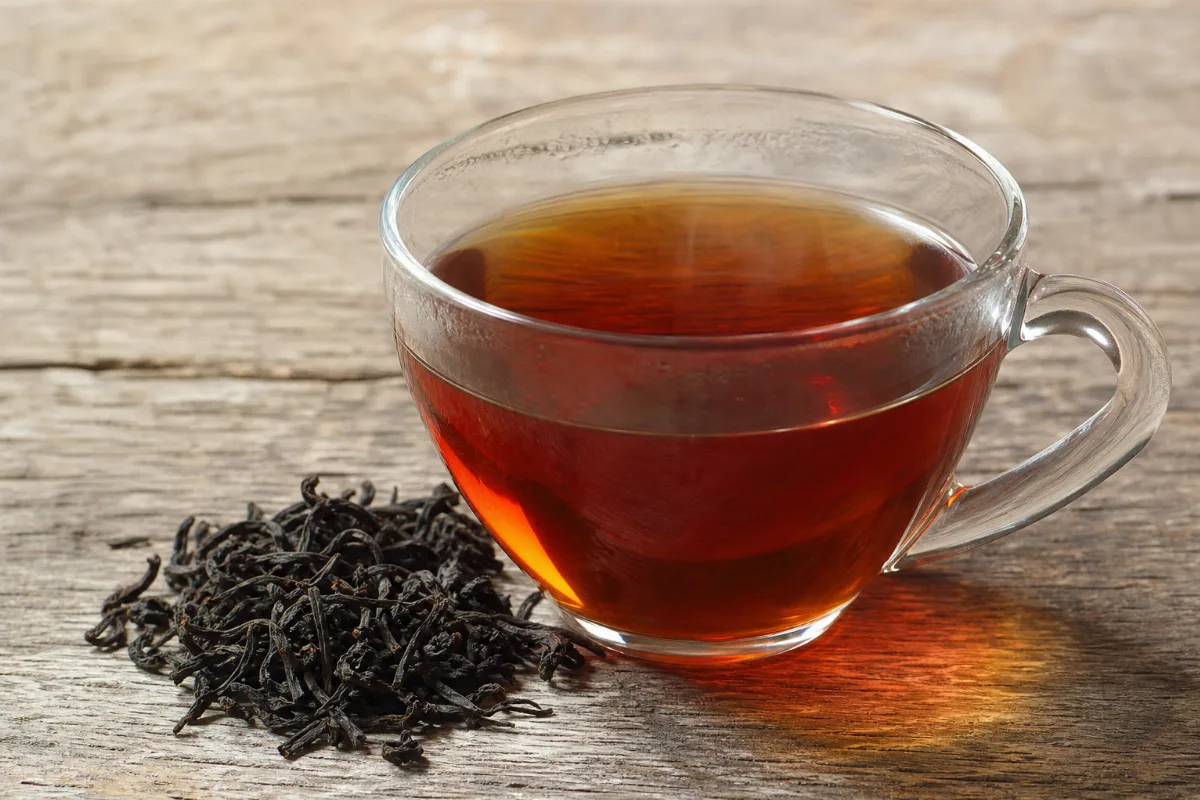
Lapsang souchong is a Chinese black tea dried over pine smoke, which gives it a strong smoky taste. It contains caffeine like other black tea. The research is mostly on black tea in general: small links with heart health and attention, none specific to smoked tea. The smoke can leave chemicals called PAHs in the leaf, but one laboratory found very little in the brewed drink. Very hot tea and the caffeine limit in pregnancy are the clearer cautions.
General information, not medical advice. Last substantive update · Not medically reviewed. A named clinician has not signed off on this page. How this page is made
About Lapsang Souchong (Smoked Tea)
Lapsang souchong is a pine-smoked Chinese black tea. It has caffeine and a smoke step that can leave PAHs in the leaf; the brewed drink looked low in PAHs in the laboratory work read. Health research is on black tea in general and shows weak, low-certainty links with heart health, blood pressure and attention. Cautions: caffeine, iron, very hot drinks, and a few medicines.
What it is
Lapsang souchong comes from Camellia sinensis, the tea plant (family Theaceae), accepted by GBIF. Black tea is fermented and, for lapsang souchong, dried over pine smoke. A laboratory study found longifolene, guaiacol and other compounds only in this kind of black tea, from pine smoke.
Its origin in Fujian is commonly stated but was not found in a source read, so it is not verified here.
Tea versus extracts
This page is about the tea drink. Tea extracts and capsules are different products; the results for them cannot be carried over, and the liver warnings that apply to green tea extract are not covered here.
What the research shows
Nothing was tested in people for smoked lapsang souchong as a health aid. The evidence is for black tea in general: about 11% lower coronary heart disease in the highest drinkers across 14 cohort studies (observational), a few mmHg lower blood pressure in five small trials of green or black tea, and better attention-test accuracy in two short studies of ordinary black tea.
Pooled cohort data show no clear overall link between tea and type 2 diabetes. A lapsang souchong extract stopped mice gaining weight on a high-fat diet, which says nothing about people. In 51 patients, drinking lapsang souchong before an MRCP scan reduced gut fluid signal, an imaging effect rather than a health benefit.
The large blood pressure review mixes tea with cocoa and fruit and has authors employed by tea and food companies. One attention paper has a corresponding author at Unilever.
Regulators and status
The NHS and EFSA caffeine limits above were read. EU law sets PAH limits for some foods in Regulation (EU) 2023/915; a laboratory's summary lists dried herbs, spices and plant powders for beverages but not tea leaves, and the official text could not be opened, so tea leaves are unconfirmed. IARC's 2016 review of very hot beverages could not be read in full; the 65 degrees C point comes from another paper's abstract.
At a glance
Traditional uses history, not proof
- Described in the sources read as a special Chinese black tea made with a pine smoking process.
- Its origin in Fujian and any older tradition were not found in a source read and are not verified.
Studied for research
- Heart disease risk (observational, ordinary black tea), low
- Blood pressure (tea trials, green and black), low
- Attention and alertness (ordinary black tea), low
- Type 2 diabetes risk (all teas), low
- Body weight (mouse study of lapsang souchong), insufficient
- Drink before an MRCP scan (51 patients), very low
Main compounds
- Caffeine
- Pine terpenoids and guaiacol from smoking
- PAHs (polycyclic aromatic hydrocarbons) as smoke contaminants
- Black tea polyphenols
Common forms
- Loose leaf or tea-bag tea as a drink
- Smoked and non-smoked souchong teas (different products)
- Tea extracts and capsules (different products, not covered here)
Research links: NHS: foods to avoid in pregnancy (caffeine) · EFSA: caffeine · PAHs in smoked and non-smoked black tea (abstract) · Black tea and coronary heart disease (abstract) · NCCIH: green tea · Research Library · Genes & Biomarkers Library
What it is and its history
- Accepted scientific name
- Camellia sinensis
- Naming authority
- (L.) Kuntze
- Common names
- Lapsang souchong (English); Smoked tea (English)
- Family or group
- Theaceae (the tea family)
- Classification
- Plantae > Ericales > Theaceae > Camellia > Camellia sinensis
- Native range
- Not checked in the sources read. Lapsang souchong is commonly said to come from Fujian, China; the sources read call it a Chinese black tea but do not name Fujian, so that detail is NOT verified here.
- Habitat
- Not checked.
- What it looks like
- Stems: Not checked.; Leaves: The leaf is the part used.; Flowers: Not checked.; Fruit: Not checked.
- Cultivation
- Not checked.
- Harvest and processing
- Black tea is fermented (NCCIH). Lapsang souchong is smoked with pine, and smoking lowers the tea's own aroma compounds while adding pine terpenoids and pine-wood heat breakdown products (Yao 2005).
- Look-alikes and adulterants
- Name: Other black tea and non-smoked souchong; Note: They share the plant and caffeine but lack the pine smoke compounds; some PAHs were lower in non-smoked black tea (Pincemaille 2014).
- Sustainability and conservation
- Not checked.
Photographs
Traditional use and history history, not clinical proof
| Tradition or era | Documented use | Source |
|---|---|---|
| Chinese black tea with a pine smoking process | A group of special Chinese black teas made with pine smoking (Yao 2005). Its Fujian origin and any older history were not found in a source read and are NOT verified. | p16248572 |
Traditional use shows how it was used. It does not show that it works or is safe today.
What is inside, and how it may work
What it contains and how those compounds act in cells and animals. Laboratory and animal mechanisms are not proven effects in people.
Main compounds
| Compound | Family | Where it is concentrated | Activity studied | Level of evidence |
|---|---|---|---|---|
| Caffeine PubChem 2519 | purine alkaloid | Leaf About 75 mg in a cup of black or green tea (NHS); not measured for lapsang souchong in the sources read. | Stimulant; counted toward daily limits by NHS and EFSA. 23 20 17 | Human data |
| Guaiacol PubChem 460 | phenol (smoke compound) | Leaf after smoking Found only in this kind of black tea among those compared (Yao 2005); amount not read. | Smoky aroma; no health effect read. 21 14 | Lab |
| Benzo[a]pyrene (a PAH) PubChem 2336 | polycyclic aromatic hydrocarbon | Leaf (a contaminant, not a tea ingredient) Not found in smoked tea infusions; leaf amounts in surveys varied widely. | A PAH used as an indicator of PAH exposure in food. 24 10 12 | Lab |
| Pine terpenoids (longifolene, alpha-terpineol) | terpenes | Smoked leaf Longifolene and alpha-terpineol were the most abundant aroma compounds (Yao 2005). | Aroma only. 14 | Lab |
Mechanisms, receptors and pathways
| Target or pathway | Gene or receptor | What was found | Level |
|---|---|---|---|
| Aroma change from smoking | n/a | Smoking lowers the tea's own aroma compounds and adds pine terpenoids and pine heat-breakdown products. 14 | Lab |
| Gut bacteria and weight (mouse) | n/a | A lapsang souchong extract prevented diet-induced obesity in mice, depending on gut bacteria. 6 | Animal research |
| Attention (theory) | n/a | The study authors link attention effects to caffeine and theanine levels in the blood. 1 | Hypothesis by authors |
Absorption, metabolism and elimination
- Absorption
- Not covered in the sources read.
- Distribution
- Not covered.
- Metabolism
- Not covered.
- Elimination
- Not covered.
- Bioavailability
- Not covered.
Isolated compounds versus whole extracts
This page is about the tea drink. Studies of green tea extracts, flavan-3-ol products and caffeine pills are different products and their results should not be carried over.
Nutritional composition
Tea is not a nutrient source. The only mineral figures read are manganese and iron in one lab-tested preparation for imaging (4.705 mg/L and 0.040 mg/L).
4 low certainty1 very low certainty1 not enough evidence
What was looked at
The 6 benefits and uses checked for Lapsang Souchong (Smoked Tea), each with how strong the evidence is. Tap one to open it.
- Attention and alertnessLow certainty
- Heart disease riskLow certainty
- Blood pressureLow certainty
- Type 2 diabetes riskLow certainty
- Body weight and gut bacteria (mouse study only)Not enough evidence
- Drink before a bile-duct scan (MRCP)Very low certainty
Lab markers tracked in the studies
Systolic blood pressureAccuracy on an attention testNew type 2 diabetes diagnoses
What is Lapsang Souchong (Smoked Tea) good for?
The uses people ask about and how strong the evidence is for each. Almost all of the research is on ordinary black tea or tea in general, not on smoked lapsang souchong, and none of it is proof.
Benefits, one by one
Each card is a research question, not a promise. Tap a goal to filter. Open a card to see the studies, doses and limits.
Attention and alertness
Low certaintyTwo short crossover studies of ordinary black tea found better attention-test accuracy and higher self-rated alertness than a look-alike placebo drink. Smoked lapsang souchong was not tested, and caffeine is part of the effect.
1 studiesOrdinary black tea as a drink in the studies; none tested smoked laps…
Studies, doses and limits
What the trials found
Two double-blind, randomised, placebo-controlled crossover studies compared black tea from tea bags with a coloured, flavoured placebo drink in single sessions.
Results
Black tea gave better accuracy on the switch task (p<.002 and p=.007) and higher self-reported alertness (p<.001 and p=.021). Intersensory attention was better in the first study only.
Effect sizes as reported
Better accuracy and alertness in short sessions; no effect sizes in the abstract.
Why this rating
Randomised and blinded, but the abstract gives no numbers of people, sessions were short, tea bags were not lapsang souchong, and the corresponding author has a Unilever email address (Unilever is a food and tea company).
Form and dose studied
Ordinary black tea as a drink in the studies; none tested smoked lapsang souchong for this use.
Who was studied
Volunteers; details not in the abstract.
Limits
Single-session effects of a caffeinated drink. Not shown for lapsang souchong or for long-term use.
Why researchers looked
Tea contains caffeine and theanine, which are studied for attention.
Traditional use
No traditional use for this is described in the sources read.
Proposed mechanism Hypothesis by authors
Caffeine and theanine in tea are thought to act on alertness; the study authors link stronger results to higher modelled blood levels of both.
A proposed mechanism does not show that the effect happens in people.
Lapsang souchong is an ordinary caffeinated black tea with a smoke step; see the Safety tab for caffeine, smoke-chemical, iron and very-hot-drink points.
Heart disease risk
Low certaintyLarge groups of people who drink more black tea had about 11% lower rates of coronary heart disease in a 2026 pooled analysis. This is a link seen in observation, not proof, and smoked tea was not separated out.
2 studiesBlack tea as a drink, self-reported; smoked tea not singled out.
Studies, doses and limits
What the trials found
A meta-analysis of 14 cohort studies (16,990 cases among 958,477 people) compared the highest with the lowest black tea intake.
Results
Summary relative risk 0.89 (95% CI 0.79 to 0.99), with moderate heterogeneity (I2 50.6%). The lower risk was seen in European studies but not in US studies.
Effect sizes as reported
About 11% lower risk in the highest-intake group.
Why this rating
Cohort data cannot show cause, the result sits right at the edge of chance (upper CI 0.99), results differed by region, and tea drinkers may differ in other habits.
Form and dose studied
Black tea as a drink, self-reported; smoked tea not singled out.
Who was studied
Adults in cohort studies.
Limits
Observational only; no trial shows black tea prevents heart disease.
Why researchers looked
Tea contains polyphenols and many people drink it daily, so researchers compare heart outcomes in tea drinkers and non-drinkers.
Traditional use
No traditional use for this is described in the sources read.
Proposed mechanism Not established
No mechanism was tested in this study. Black tea polyphenols are discussed in reviews but not read here.
A proposed mechanism does not show that the effect happens in people.
Lapsang souchong is an ordinary caffeinated black tea with a smoke step; see the Safety tab for caffeine, smoke-chemical, iron and very-hot-drink points.
Blood pressure
Low certaintyPooled trials of tea (green and black mixed) in people with raised blood pressure found small falls. Green tea did more than black tea, and a large mixed-product review is industry-linked.
2 studiesTea drinks in the first review; mixed products in the second.
Studies, doses and limits
What the trials found
A meta-analysis of 5 trials (408 people with raised blood pressure) tested green or black tea drinks. A broader meta-analysis of 145 trials (5,205 people) pooled many flavan-3-ol products including tea.
Results
Tea trials: systolic fell by 4.81 mmHg (95% CI -8.40 to -1.58) and diastolic by 1.98 mmHg (-3.77 to -0.20); about 3.53 and 0.99 mmHg after removing the most varied trials; the green tea effect was larger than black. Broad review: office pressure fell 2.8/2.0 mmHg, and the authors rate the evidence "moderate" because results varied.
Effect sizes as reported
Small average falls of a few mmHg.
Why this rating
Few small trials, results varied, black tea alone did less than green, and the broad review mixes cocoa, apples and extracts and has authors employed by tea and food companies.
Form and dose studied
Tea drinks in the first review; mixed products in the second.
Who was studied
Adults, mostly with raised blood pressure.
Limits
Not tested with lapsang souchong. People on blood pressure medicine should not change treatment because of tea.
Why researchers looked
Blood pressure is a main driver of heart disease, so tea trials often measure it.
Traditional use
No traditional use for this is described in the sources read.
Proposed mechanism Hypothesis by authors
Flavan-3-ols (plant compounds in tea, cocoa and fruit) are thought to improve blood vessel function; the large review reports better flow-mediated dilation.
A proposed mechanism does not show that the effect happens in people.
Lapsang souchong is an ordinary caffeinated black tea with a smoke step; see the Safety tab for caffeine, smoke-chemical, iron and very-hot-drink points.
Type 2 diabetes risk
Low certaintyAcross 19 cohort studies plus a new cohort, tea drinkers overall had no clear lower diabetes risk; only the heaviest drinkers had a lower risk. All teas were pooled.
2 studiesTea of any variety, self-reported.
Studies, doses and limits
What the trials found
A cohort of 5,199 people in China plus a meta-analysis of 19 cohort studies (1,076,311 people) compared tea drinkers with non-drinkers.
Results
New cohort relative risk 1.02 (95% CI 0.82 to 1.28). Pooled overall 0.96 (0.91 to 1.00). For the heaviest drinkers 0.83 (0.76 to 0.90).
Effect sizes as reported
No clear overall difference; lower risk only in the heaviest drinkers.
Why this rating
Observational, all tea types mixed, heavy drinkers may differ in other ways, and the overall result touches 1.00.
Form and dose studied
Tea of any variety, self-reported.
Who was studied
Adults in cohort studies.
Limits
Does not separate black tea or smoked tea; says nothing about treating diabetes.
Why researchers looked
Tea polyphenols are studied for effects on blood sugar.
Traditional use
No traditional use for this is described in the sources read.
Proposed mechanism Hypothesis by authors
The authors suggest polyphenols and theaflavins may lower blood sugar; this was not tested in the study.
A proposed mechanism does not show that the effect happens in people.
Lapsang souchong is an ordinary caffeinated black tea with a smoke step; see the Safety tab for caffeine, smoke-chemical, iron and very-hot-drink points.
Body weight and gut bacteria (mouse study only)
Not enough evidenceA lab study found that a water extract of lapsang souchong stopped mice gaining weight on a high-fat diet. No study has tested this in people.
1 studiesA water extract given to mice, not a cup of tea.
Studies, doses and limits
What the trials found
Mice were fed a high-fat diet with or without the lapsang souchong water extract.
Results
The extract prevented diet-induced obesity in the mice and changed gut bacteria and gene activity; the effect was passed on by fecal transplant.
Effect sizes as reported
Less weight gain in mice; no numbers read.
Why this rating
Animal evidence only. Mouse results often do not carry over to people.
Form and dose studied
A water extract given to mice, not a cup of tea.
Who was studied
High-fat-fed mice.
Limits
Animal study, no human data.
Why researchers looked
Researchers wanted to know how black tea might act on gut bacteria and body weight.
Traditional use
No traditional use for this is described in the sources read.
Proposed mechanism Animal research
In mice the effect depended on the gut bacteria and the authors credit tea alkaloids and changes in gene activity.
A proposed mechanism does not show that the effect happens in people.
Lapsang souchong is an ordinary caffeinated black tea with a smoke step; see the Safety tab for caffeine, smoke-chemical, iron and very-hot-drink points.
Drink before a bile-duct scan (MRCP)
Very low certaintyIn a small before-and-after study of 51 patients, lapsang souchong drunk before an MRCP scan reduced the fluid signal in the stomach and duodenum, which may help the picture. It is an imaging aid, not a health benefit.
1 studiesLapsang souchong tea given before a scan (amount not read).
Studies, doses and limits
What the trials found
Two black teas were tested in the lab; the better one, lapsang souchong, was given to 51 patients having an MRCP scan, and signals were compared before and after.
Results
Fluid signal fell in the stomach and duodenum; the signal-to-noise ratio rose in the duodenal bulb; no difference in other gut segments.
Effect sizes as reported
Significant fall in gut fluid signal (paired tests); sizes not read.
Why this rating
No control group, 51 patients, one centre, imaging outcome only. This is a medical-imaging use that only a radiology team should arrange.
Form and dose studied
Lapsang souchong tea given before a scan (amount not read).
Who was studied
51 patients having an MRCP scan.
Limits
Not a health benefit; do not use tea to replace any scan instructions.
Why researchers looked
The scan can be blurred by fluid in the gut; the authors tested black tea as a safe drink to dim that signal.
Traditional use
No traditional use for this.
Proposed mechanism Hypothesis by authors
The authors link the effect to the manganese and iron in the tea (lab tests found 4.705 mg/L manganese and 0.040 mg/L iron in the tested preparation).
A proposed mechanism does not show that the effect happens in people.
Lapsang souchong is an ordinary caffeinated black tea with a smoke step; see the Safety tab for caffeine, smoke-chemical, iron and very-hot-drink points.
Connections to the rest of health
How Lapsang Souchong (Smoked Tea) connects to the rest of our health knowledge graph. Every link says what kind of connection it is. A safety link (for example to the liver) is a warning, not a benefit. A study that merely mentions a topic never creates a benefit link.
Explore every connection: goals, body systems, organs, symptoms, genes
A. Wellness goals
| Connected to | Kind of connection | Evidence status | Context | Studies |
|---|---|---|---|---|
| Better Focus | Low certainty | Attention and alertness: Two short crossover studies of ordinary black tea found better attention-test accuracy and higher self-rated alertness than a look-alike placebo drink. Smoked lapsang souchong was not tested, and caffeine is part of the effect. | 1 | |
| Heart Health | Biological association | Low certainty | Heart disease risk: Large groups of people who drink more black tea had about 11% lower rates of coronary heart disease in a 2026 pooled analysis. This is a link seen in observation, not proof, and smoked tea was not separated out. | 13 15 |
| Blood Pressure Support | Low certainty | Blood pressure: Pooled trials of tea (green and black mixed) in people with raised blood pressure found small falls. Green tea did more than black tea, and a large mixed-product review is industry-linked. | 7 2 | |
| Blood Sugar Balance | Biological association | Low certainty | Type 2 diabetes risk: Across 19 cohort studies plus a new cohort, tea drinkers overall had no clear lower diabetes risk; only the heaviest drinkers had a lower risk. All teas were pooled. | 4 15 |
| Weight Management | Preliminary mechanism | Not enough evidence | Body weight and gut bacteria (mouse study only): A lab study found that a water extract of lapsang souchong stopped mice gaining weight on a high-fat diet. No study has tested this in people. | 6 |
B. Body systems
| Connected to | Kind of connection | Evidence status | Context | Studies |
|---|---|---|---|---|
| Nervous System | Biological association | Low certainty | Studied for: Attention and alertness | 1 |
| Cardiovascular System | Biological association | Low certainty | Studied for: Heart disease risk Studied for: Blood pressure | 13 15 7 2 |
| Endocrine System | Biological association | Low certainty | Studied for: Type 2 diabetes risk | 4 15 |
| Digestive System | Biological association | Not enough evidence | Studied for: Body weight and gut bacteria (mouse study only) Studied for: Drink before a bile-duct scan (MRCP) | 6 5 |
C. Body parts and organs
| Connected to | Kind of connection | Evidence status | Context | Studies |
|---|---|---|---|---|
| Oesophagus (food pipe) | Adverse effect or risk | Low certainty | Pooled odds ratio 2.04 for hot tea in case-control studies; modelling points to temperature. Preparation or compound: Very hot tea |
16 8 |
E. Health conditions
I. Biomarkers
| Connected to | Kind of connection | Evidence status | Context | Studies |
|---|---|---|---|---|
| Systolic blood pressure | Biological association | Low certainty | Measured in trials: lowered. A lab change is not the same as a health benefit. | 7 |
| Accuracy on an attention test | Biological association | Low certainty | Measured in trials: raised. A lab change is not the same as a health benefit. | 1 |
| New type 2 diabetes diagnoses | Biological association | Low certainty | Measured in trials: mixed. A lab change is not the same as a health benefit. | 4 |
L. Active compounds
| Connected to | Kind of connection | Evidence status | Context | Studies |
|---|---|---|---|---|
| Caffeine | Biological association | Human | Stimulant; counted toward daily limits by NHS and EFSA. Preparation or compound: Leaf |
23 20 17 |
| Guaiacol | Biological association | Lab | Smoky aroma; no health effect read. Preparation or compound: Leaf after smoking |
21 14 |
| Benzo[a]pyrene (a PAH) | Biological association | Lab | A PAH used as an indicator of PAH exposure in food. Preparation or compound: Leaf (a contaminant, not a tea ingredient) |
24 10 12 |
| Pine terpenoids (longifolene, alpha-terpineol) | Biological association | Lab | Aroma only. Preparation or compound: Smoked leaf |
14 |
Each connection is stored with the ingredient, the connected record, the kind of connection, the evidence status, the supporting studies, the preparation or compound involved, and a review date (last reviewed October 25, 2026).
Evidence at a glance: what changed in 3 lab markers
Tap a number to show only those markers. Counts are markers, not people.
The evidence
The research centre for Lapsang Souchong (Smoked Tea). Every record here was checked against PubMed or the publisher's page; we never list a study we have not verified.
Evidence by outcome
Bars show how many studies we found for each outcome, not how well it works. People are added up across trials only (reviews are not added, to avoid double counting).
How we rate evidence
High certainty
Several well-run trials or reviews agree; further research is unlikely to change the picture much.
Moderate certainty
Good trials point the same way, but some doubt remains.
Low certainty
Small, short or inconsistent trials. The finding could change with better research.
Very low certainty
Very little or very weak human data. Treat as a possibility only.
Mixed findings
Trials or reviews disagree with each other.
Not enough evidence
Not enough human research to say either way.
Evidence against
Good research found no benefit, or found harm.
We take the reviewers' own risk-of-bias and GRADE statements where they exist, and otherwise judge from study size, design, consistency, directness and whether a product matches what is sold. Many publications do not make evidence high. Method note: We searched PubMed and read the abstracts of the papers listed, read the NHS, EFSA and NCCIH pages, checked the plant name in GBIF and compounds in PubChem. The EU regulation text and the IARC release could not be opened in full and are marked not verified. Certainty ratings are the compiler's own reading. Industry links are flagged.
Study library: every study we checked 25
| Study | Design | People | Product, dose, length | Result |
|---|---|---|---|---|
| De Bruin 2011 Black tea improves attention and self-reported alertness. Appetite · PMID 21172396 · DOI |
Controlled trial |
Two double-blind, randomised, placebo-controlled crossover studies (number of people not given in the abstract) | Black tea made from commercially available tea bags (not smoked lapsang) versus a coloured, flavoured placebo drink leaf Single sessions (crossover) · vs Placebo tea (hot water with colours and flavours) |
Black tea gave better accuracy on the switch task (p<.002 and p=.007) and higher self-reported alertness (p<.001 and p=.021) in the two studies. Intersensory attention was better in the first study only. Better attention accuracy and alertness after black tea in short sessions (p values only in the abstract) Methods, limits and fundingOutcomes: Attention tests (switch task, intersensory attention) and self-reported alertness Limitations: Number of participants not given in the abstract; short single sessions; ordinary tea bags, not smoked lapsang souchong; caffeine and theanine both present so the tea itself cannot be separated from caffeine. Funding and conflicts: The corresponding author has a Unilever address in PubMed (a food and tea company). Treat as possibly industry-linked. Read: abstract |
| Lagou 2025 Impact of flavan-3-ols on blood pressure and endothelial function in diverse populations: a systematic review and meta-analysis of randomized controlled trials. European Journal of Preventive Cardiology · PMID 40126033 · DOI |
Meta-analysis |
5205 145 randomised trials in 109 publications, 5,205 people |
Flavan-3-ol-rich foods, drinks and supplements (cocoa, tea, grape extract, apples and others pooled; black tea was not analysed alone in the abstract) various Varied · vs Control interventions |
Office blood pressure fell by 2.8 (95% CI -3.9 to -1.7) over 2.0 (-2.6 to -1.3) mmHg after repeated intake; larger falls in people with raised blood pressure. Flow-mediated dilation rose by about 1.7 to 2.0 percentage points. The authors rate the strength of evidence "moderate" because results varied a lot (I2 above 50%). Small average blood pressure fall; better vessel function test (Office BP -2.8 / -2.0 mmHg) Methods, limits and fundingOutcomes: Blood pressure and flow-mediated dilation (a blood vessel function test) Limitations: Mixes many products, mostly not tea; heterogeneity; authors say strength of evidence is moderate. Funding and conflicts: Two authors are employed by Unilever and Lipton Teas and Infusions (tea and food companies), as stated in the abstract. Treat as industry-linked. Registration: PROSPERO CRD42023454691 Read: abstract |
| Lazrak 2021 Tea Consumption Reduces Iron Bioavailability from NaFeEDTA in Nonanemic Women and Women with Iron Deficiency Anemia: Stable Iron Isotope Studies in Morocco. Journal of Nutrition · PMID 34038558 · DOI |
Crossover trial |
46 46 Moroccan women: 25 with iron deficiency anaemia and 21 without anaemia |
Traditional Moroccan green tea (not black or smoked tea) taken with a meal containing iron as NaFeEDTA, versus water leaf 300 mL of tea (polyphenol content 492 mg) per test meal Two test meals each, iron absorption measured after 14 days · vs Water with the same meal |
Tea cut iron absorption by more than 85% in both groups: in women with anaemia median absorption was 36.7% without tea and 4.1% with tea; in women without anaemia 16.7% and 1.4% (both P<0.001). Large fall in iron absorbed from that meal (Medians reported, no CI in abstract) Methods, limits and fundingOutcomes: Fractional iron absorption Limitations: Green tea and one type of added iron, in a flour meal; not black or smoked tea; absorption on single test meals, not iron status over time. Funding and conflicts: Registered trial NCT02175888; funding not stated in the abstract Registration: NCT02175888 Read: abstract |
| Li 2023 Daily higher tea consumption is associated with a reduced risk of type 2 diabetes: A cohort study and updated systematic review and meta-analysis. Nutrition Research · PMID 37647847 · DOI |
Meta-analysis |
1076311 A new cohort of 5,199 people in China plus 19 cohort studies with 1,076,311 people |
Tea drinking of any variety (not black tea alone) leaf Follow-up varied · vs Non-tea drinkers |
In the new cohort the relative risk for tea drinkers was 1.02 (95% CI 0.82 to 1.28). In the pooled analysis the overall relative risk was 0.96 (0.91 to 1.00), not clearly different; for the heaviest tea drinkers it was 0.83 (0.76 to 0.90). No clear overall link; lower risk only in the heaviest drinkers (Overall RR 0.96 (0.91, 1.00)) Methods, limits and fundingOutcomes: New type 2 diabetes diagnoses Limitations: Observational, so cause cannot be shown; tea types mixed; heavy drinkers may differ in other ways. Funding and conflicts: No conflict declared in the abstract Read: abstract |
| Liang 2025 From Cup to Scan: The Impact of Black Tea on Magnetic Resonance Cholangiopancreatography Signal Suppression. Current Medical Imaging · PMID 40248936 · DOI |
Uncontrolled before after |
51 51 patients having an MRCP scan (a scan of the bile and pancreas ducts) |
Lapsang souchong black tea (best of two teas in lab tests) drunk before the scan leaf Single use before one scan · vs Same patients before and after (paired comparison) |
Lab tests showed the lapsang souchong tea suppressed the scan signal best. In 51 patients the fluid signal in stomach and duodenum fell, and image clarity (signal-to-noise) rose in the duodenal bulb only; other gut segments showed no difference. Scan fluid signal reduced after the tea (n/a) Methods, limits and fundingOutcomes: Signal from fluid in the stomach and gut on the scan Limitations: No control group; imaging effect, not a health benefit; authors say more research is needed. Funding and conflicts: No conflict declared in the abstract Read: abstract |
| Liu 2022 Black Tea Reduces Diet-Induced Obesity in Mice via Modulation of Gut Microbiota and Gene Expression in Host Tissues. Nutrients · PMID 35458198 · DOI |
Animal study mouse |
Mice fed a high-fat diet | Water extract of Lapsang souchong black tea (the abstract names it LS) leaf · vs High-fat diet without tea extract |
The extract prevented high-fat-diet obesity in mice, and the effect depended on the gut bacteria. The authors credit the tea alkaloids. Less weight gain in mice (n/a) Methods, limits and fundingOutcomes: Body weight gain, gut bacteria, gene activity Limitations: Mouse study only; says nothing about weight in people. Funding and conflicts: No conflict declared in the abstract Read: abstract |
| Mahdavi-Roshan 2020 The effects of regular consumption of green or black tea beverage on blood pressure in those with elevated blood pressure or hypertension: A systematic review and meta-analysis. Complementary Therapies in Medicine · PMID 32507441 · DOI |
Meta-analysis |
408 5 trials, 408 people with raised blood pressure or hypertension |
Green or black tea as a drink leaf Trials of varying length; longer use (3 months or more) showed larger falls · vs Control drinks in the trials |
Pooled across 9 measurements: systolic fell by 4.81 mmHg (95% CI -8.40 to -1.58) and diastolic by 1.98 mmHg (95% CI -3.77 to -0.20). After removing the most varied trials the falls were about 3.53 and 0.99 mmHg. Green tea effects were larger than black tea effects. No side effects were reported in the trials. Small average fall in blood pressure (Systolic WMD -4.81 mmHg (-8.40, -1.58)) Methods, limits and fundingOutcomes: Systolic and diastolic blood pressure Limitations: Only five small trials; results varied between trials; green and black tea pooled, and the abstract says black tea did less; not about smoked tea. Funding and conflicts: Not stated in the abstract Read: abstract |
| Okaru 2018 Comparative oesophageal cancer risk assessment of hot beverage consumption (coffee, mate and tea): the margin of exposure of PAH vs very hot temperatures. BMC Cancer · PMID 29490609 · DOI |
Risk assessment model |
Modelled population exposure from coffee, mate and tea | Tea, coffee and mate infusions (smoked tea not analysed separately) leaf · vs Compared PAH risk with the very-hot-temperature risk |
For tea, average exposure was 8.03E-04 micrograms per kg body weight per day for benzo(a)pyrene and 4.98E-03 for the four-PAH sum. For all scenarios the margin of exposure was over 100,000 for both, which the authors call a very low risk. For very hot drinking temperatures the margin was below 1. They conclude the temperature effect, not PAH, may pose the oesophageal cancer risk. PAH risk judged very low; very hot drinking temperature judged the bigger concern (n/a) Methods, limits and fundingOutcomes: Margin of exposure (a safety-margin calculation) for PAH and for temperature Limitations: A modelling study from estimates; smoked tea not singled out; not a measure of actual cancer cases. Funding and conflicts: Authors state no competing interests Read: abstract |
| Parker 2009 Interaction between warfarin and black tea. Annals of Pharmacotherapy · PMID 19126824 · DOI |
Case report |
1 Case report (letter); no abstract is available in PubMed |
Black tea with warfarin leaf Not read Not read |
Only the title and publication details could be read. The details of the case were not read, so no finding is quoted. Not read (n/a) Methods, limits and fundingOutcomes: Warfarin effect Limitations: Title only; details not read. Funding and conflicts: Not read Read: title-only |
| Pincemaille 2014 Determination of polycyclic aromatic hydrocarbons in smoked and non-smoked black teas and tea infusions. Food Chemistry · PMID 24128549 · DOI |
Lab analysis lab |
Smoked and non-smoked black tea leaves and their infusions measured in a food-control laboratory in Luxembourg (number of samples not given in the abstract) | Smoked and non-smoked black tea leaves and infusions leaf · vs Non-smoked black tea |
In smoked tea leaves the four PAHs ranged from 1.2 micrograms per kg (benzo(b)fluoranthene) to 125.0 micrograms per kg (benzo(a)anthracene); in smoked infusions from 0.6 micrograms per litre to 1.2 micrograms per litre. Benzo(a)pyrene was never detected in infusions. Non-smoked leaves ranged from 0.6 to 10.8 micrograms per kg. Benzo(a)anthracene and chrysene were higher in smoked tea; benzo(b)fluoranthene and benzo(a)pyrene did not differ. The authors say infusion levels were low compared with other foods but that migration from leaf into water was high (82 to 123%). Higher benzo(a)anthracene and chrysene in smoked tea; low levels in the drink (n/a) Methods, limits and fundingOutcomes: Four PAHs chosen by EFSA as indicators: benzo(a)anthracene, chrysene, benzo(b)fluoranthene and benzo(a)pyrene Limitations: Sample count not in abstract; only four PAHs measured; says nothing about health outcomes. Funding and conflicts: Not stated in the abstract Read: abstract |
| Rohweder 2024 Caffeine intake during pregnancy and adverse outcomes: An integrative review. Reproductive Toxicology · PMID 38042437 · DOI |
Review |
59 articles included from 16,192 found | Caffeine from all sources |
Caffeine intake was linked with pregnancy loss, low birth weight, heart and genital anomalies, higher body mass and neurodevelopmental outcomes, often dose-dependent. No link with prematurity was shown. In some studies, intakes below the recommended 200 mg a day were still linked with problems. The authors say a safe dose is hard to define and better studies are needed. Links, not proof; safe level uncertain (n/a) Methods, limits and fundingOutcomes: Pregnancy loss, birth weight, birth defects, child development Limitations: Mostly observational studies; caffeine intake hard to measure; results conflict. Funding and conflicts: Authors declare no competing interests Read: abstract |
| Schulz 2014 Occurrence of 15 + 1 EU priority polycyclic aromatic hydrocarbons (PAH) in various types of tea (Camellia sinensis) and herbal infusions. Food Additives & Contaminants Part A · PMID 25186127 · DOI |
Lab analysis lab |
91 91 tea and herbal infusion samples analysed in a contaminants laboratory in Germany |
Tea (Camellia sinensis) and herbal infusions (smoked tea not singled out in the abstract) and brews made from them leaf |
Benzo(a)pyrene in dry samples ranged from below 0.5 to 460 micrograms per kg (median 4.7; mean 39); total PAH from below 1.0 to 2700 micrograms per kg (median 39; mean 250). For brews made the usual home way (20 g in 2 L of boiling water for 10 minutes) no PAH was found above the detection limit. With a longer 30 minute brew, 0.25 to 0.52% of the PAH moved into the water, and levels stayed under the EU drinking-water limit. Wide range in dry tea; very little PAH reached the brew (n/a) Methods, limits and fundingOutcomes: PAH in dry tea and in brews Limitations: Does not say which samples were smoked; this transfer finding differs from the high transfer reported by Pincemaille 2014 and the abstracts do not explain why (methods and PAH sets differ). Funding and conflicts: Laboratory authors (Eurofins); no conflict statement in the abstract Read: abstract |
| Wang 2026 Black tea consumption and the risk of coronary heart disease: a systematic review and meta-analysis of cohort studies. Nutrition, Metabolism and Cardiovascular Diseases · PMID 41152040 · DOI |
Meta-analysis |
958477 14 cohort studies, 16,990 coronary heart disease cases among 958,477 people |
Black tea drinking reported by participants (type of black tea not specified in the abstract) leaf Follow-up varied by study · vs Lowest or no black tea intake |
Highest versus lowest black tea intake: summary relative risk 0.89 (95% CI 0.79 to 0.99), with moderate heterogeneity (I2 50.6%). The lower risk was seen in European studies but not in US studies. About 11% lower risk of coronary heart disease in the highest-intake group (RR 0.89 (0.79, 0.99)) Methods, limits and fundingOutcomes: Coronary heart disease (heart attack and related events) Limitations: Cohort studies show a link, not cause; people who drink tea may differ in other habits; heterogeneity; results differed by region; no distinction for smoked black tea. Funding and conflicts: No conflict declared in the abstract Registration: PROSPERO CRD42023395469 Read: abstract |
| Yao 2005 Flavor characteristics of lapsang souchong and smoked lapsang souchong, a special Chinese black tea with pine smoking process. Journal of Agricultural and Food Chemistry · PMID 16248572 · DOI |
Lab analysis lab |
Samples of lapsang souchong, smoked lapsang souchong and smoked souchong teas, and the pine wood used for smoking | Pine-smoked black teas leaf · vs Compared the teas and the pine material |
49 volatile compounds were identified. Longifolene and alpha-terpineol were the most abundant. Longifolene, longicyclene, guaiacol, 4-methylguaiacol and 4-ethylguaiacol were found only in this kind of black tea. Smoking lowered the tea's own aroma compounds and raised pine terpenoids and pine-wood heat breakdown products. Smoking changes the aroma chemistry (n/a) Methods, limits and fundingOutcomes: Aroma compounds Limitations: Flavour chemistry only; no health outcome. Funding and conflicts: Not stated in the abstract Read: abstract |
| Yi 2019 Tea Consumption and Health Outcomes: Umbrella Review of Meta-Analyses of Observational Studies in Humans. Molecular Nutrition & Food Research · PMID 31216091 · DOI |
Umbrella review |
96 meta-analyses of observational studies covering 40 health outcomes | Tea consumption of all kinds leaf |
Tea looked more beneficial than harmful overall in observational data, with the largest reductions at two to three cups a day for several outcomes. Harmful links were found for oesophageal and gastric cancer when tea was taken hotter than about 55 to 60 degrees C. The authors say trials are needed to show cause. Observed links, mostly favourable, except very hot tea (n/a) Methods, limits and fundingOutcomes: Many outcomes including death, heart disease, diabetes, cancers Limitations: Reviews observational studies only; cannot show cause; all teas pooled. Funding and conflicts: Not stated in the abstract Read: abstract |
| Zhong 2022 Hot Tea Drinking and the Risk of Esophageal Cancer: A Systematic Review and Meta-Analysis. Nutrition and Cancer · PMID 34818954 · DOI |
Meta-analysis |
13526 12 case-control studies with 5,253 cases and 8,273 controls |
Hot tea drinking (tea types pooled) leaf · vs People who did not drink hot tea |
Hot tea drinking was linked with oesophageal cancer, pooled odds ratio 2.04 (95% CI 1.78 to 2.31). The authors say the evidence is still limited. About double the odds with hot tea (OR 2.04 (1.78, 2.31)) Methods, limits and fundingOutcomes: Oesophageal cancer Limitations: Case-control studies only (people recalling habits); the abstract does not define "hot"; link not proof of cause. Funding and conflicts: Not stated in the abstract Read: abstract |
| n/a 2015 EFSA: Caffeine (topic page; Scientific Opinion on the safety of caffeine, 27 May 2015) n/a · Source |
Authoritative guidance n/a |
n/a | n/a |
Says caffeine up to 400 mg a day from all sources is considered safe for healthy adults (not pregnant), single doses up to 200 mg are not a concern, and up to 200 mg a day does not raise concern for the foetus in pregnant or breastfeeding women. A single 100 mg dose may disrupt sleep in some adults near bedtime. Methods, limits and fundingOutcomes: Says caffeine up to 400 mg a day from all sources is considered safe for healthy adults (not pregnant), single doses up to 200 mg are not a concern, and up to 200 mg a day does not raise concern for the foetus in pregnant or breastfeeding women. A single 100 mg dose may disrupt sleep in some adults near bedtime. Limitations: Topic page read; the full 2015 opinion was not opened. Read: full-text |
| n/a 2016 IARC press release: IARC Monographs evaluate drinking coffee, mate, and very hot beverages (15 June 2016) n/a · Source |
Authoritative guidance n/a |
n/a | n/a |
Title and date only were readable. The classification details were not read; the 65 degrees C figure here is taken from the Okaru 2018 abstract, which says drinking very hot (above 65 degrees C) beverages is probably associated with a higher oesophageal cancer risk. Methods, limits and fundingOutcomes: Title and date only were readable. The classification details were not read; the 65 degrees C figure here is taken from the Okaru 2018 abstract, which says drinking very hot (above 65 degrees C) beverages is probably associated with a higher oesophageal cancer risk. Limitations: The press release text could not be read in this session. Read: title-only |
| n/a 2025 NCCIH (NIH): Green tea (fact sheet) n/a · Source |
Authoritative guidance n/a |
n/a | n/a |
About green tea, not black tea. Reports no safety concerns for green tea as a drink in adults; lists lower blood levels of nadolol (high-dose green tea) and atorvastatin (extract) and an interaction with raloxifene; says caffeine in pregnancy should stay moderate and high caffeine in nursing mothers can cause fussiness and poor sleep in infants. Notes that black tea comes from the same plant and is fermented. Methods, limits and fundingOutcomes: About green tea, not black tea. Reports no safety concerns for green tea as a drink in adults; lists lower blood levels of nadolol (high-dose green tea) and atorvastatin (extract) and an interaction with raloxifene; says caffeine in pregnancy should stay moderate and high caffeine in nursing mothers can cause fussiness and poor sleep in infants. Notes that black tea comes from the same plant and is fermented. Limitations: Green tea page; used here only for caffeine points and to show how green tea interactions were reported. Not tested with smoked black tea. Read: full-text |
| n/a 2026 NHS: Foods to avoid in pregnancy (caffeine section; page reviewed 15 June 2026) n/a · Source |
Authoritative guidance n/a |
n/a | n/a |
Says you should not have more than 200 mg of caffeine a day in pregnancy and lists about 75 mg in a cup of tea, for example black or green tea. It notes a mug may hold more than a cup. Methods, limits and fundingOutcomes: Says you should not have more than 200 mg of caffeine a day in pregnancy and lists about 75 mg in a cup of tea, for example black or green tea. It notes a mug may hold more than a cup. Limitations: Page summary read in this session; details of other caffeine sources not read. Read: full-text |
| n/a 2026 PubChem: Guaiacol (CID 460) PubChem · Source |
Authoritative guidance n/a |
n/a | n/a |
Compound record for guaiacol, a smoky-smelling compound. Methods, limits and fundingOutcomes: Compound record for guaiacol, a smoky-smelling compound. Limitations: Chemistry database record; CID confirmed through the PubChem name lookup on 2026-10-25. Read: record |
| n/a 2026 Measurlabs: PAH analysis, overview of EU regulations (a testing laboratory page summarising Regulation (EU) 2023/915) n/a · Source |
Authoritative guidance n/a |
n/a | n/a |
Lists EU maximum levels for benzo(a)pyrene and the sum of four PAHs (for example 10 and 50 micrograms per kg for dried herbs and spices and plant powders for beverages) and does not list tea leaves. Methods, limits and fundingOutcomes: Lists EU maximum levels for benzo(a)pyrene and the sum of four PAHs (for example 10 and 50 micrograms per kg for dried herbs and spices and plant powders for beverages) and does not list tea leaves. Limitations: A secondary summary, not the official regulation text. The official EUR-Lex text could not be opened in this session, so whether tea leaves have any PAH limit is not confirmed. Read: secondary-summary |
| n/a 2026 PubChem: Caffeine (CID 2519) PubChem · Source |
Authoritative guidance n/a |
n/a | n/a |
Compound record for caffeine. Methods, limits and fundingOutcomes: Compound record for caffeine. Limitations: Chemistry database record; CID confirmed through the PubChem name lookup on 2026-10-25. Read: record |
| n/a 2026 PubChem: Benzo[a]pyrene (CID 2336) PubChem · Source |
Authoritative guidance n/a |
n/a | n/a |
Compound record for benzo[a]pyrene, one of the PAHs. Methods, limits and fundingOutcomes: Compound record for benzo[a]pyrene, one of the PAHs. Limitations: Chemistry database record; CID confirmed through the PubChem name lookup on 2026-10-25. Read: record |
| n/a 2026 GBIF Backbone Taxonomy: Camellia sinensis (L.) Kuntze, accepted species, family Theaceae (key 3189635) GBIF · Source |
Authoritative guidance n/a |
n/a | n/a |
Accepted name of the tea plant. Methods, limits and fundingOutcomes: Accepted name of the tea plant. Limitations: Taxonomy database record; retrieved by API on 2026-10-25. Read: full-text |
What we do not know yet
- No trial tested smoked lapsang souchong for any health use; the human results are for black tea or tea in general.
- Caffeine, heavy metals, pesticides and PAH levels across lapsang souchong brands were not found in the sources read.
- Whether EU law sets a PAH limit for tea leaves is not confirmed.
- The two PAH studies disagree on transfer from leaf to brew and were not reconciled.
- No source read covers children, allergy or the warfarin and black tea case report beyond its title.
How new research is added
New studies are found by a saved PubMed search and are placed in a review queue. A person reads each one before it changes any evidence rating or safety wording.
Lab markers
What changed in blood or saliva tests during trials. A changed number is not the same as feeling or being healthier, and we give no "normal ranges".
Other 3
Systolic blood pressure
Lowered in trials
The top number in a blood pressure reading, the pressure when the heart beats.
Low certaintyResults and what it means
Why it was measured
To see whether regular tea drinking changes blood pressure.
Statistical vs. clinical meaning
Small average fall; green tea did more than black.
Safety implication
No side effects were reported in the trials.
| Study | Result | People | Product |
|---|---|---|---|
| 7 | Pooled fall of 4.81 mmHg (95% CI -8.40 to -1.58); about 3.53 mmHg after removing the most varied trials. | 408 people with raised blood pressure in 5 trials | Regular green or black tea drink |
Accuracy on an attention test
Raised in trials
How many correct answers a person gives on a task that needs quick switching of attention.
Low certaintyResults and what it means
Why it was measured
A lab way to test short-term alertness.
Statistical vs. clinical meaning
Statistically significant in both studies; sizes not given.
Safety implication
Contains caffeine.
| Study | Result | People | Product |
|---|---|---|---|
| 1 | Black tea gave higher accuracy than placebo tea in two studies (p<.002 and p=.007). | Volunteers (number not in the abstract) | Black tea from tea bags versus placebo drink, single sessions |
New type 2 diabetes diagnoses
Mixed results in trials
How many people in a group are newly diagnosed with type 2 diabetes over the follow-up.
Low certaintyResults and what it means
Why it was measured
To see whether tea drinkers get diabetes less often.
Statistical vs. clinical meaning
Not clearly different overall; lower in the heaviest drinkers.
Safety implication
Heavy tea means more caffeine.
| Study | Result | People | Product |
|---|---|---|---|
| 4 | Pooled relative risk 0.96 (95% CI 0.91 to 1.00) overall; 0.83 (0.76 to 0.90) in the heaviest drinkers. | 19 cohort studies, 1,076,311 people | Tea of any variety versus none |
Safety
What studies and official sources say about side effects, medicines and who should check first. Each point shows what kind of evidence it comes from.
Main points to know 4
- It is a caffeinated drink with a smoke step, and the smoke chemicals are the main question. Lapsang souchong is black tea dried over pine smoke. Smoke can leave polycyclic aromatic hydrocarbons (PAHs) in the leaf. A Luxembourg laboratory found some PAHs higher in smoked than non-smoked black tea leaves, but low levels in the brewed drink and no benzo(a)pyrene in any infusion. A modelling study judged PAH risk from tea very low. Food analysis 10 12 8
- Very hot tea, not the tea itself, is the clearer cancer signal. Studies link drinking very hot tea with oesophageal cancer. The authors of a modelling study conclude temperature, not PAH, may pose the risk. Let drinks cool before sipping. Observational 16 8 15
- Caffeine counts, especially in pregnancy. The NHS says to have no more than 200 mg of caffeine a day in pregnancy and lists about 75 mg in a cup of tea. EFSA says up to 400 mg a day is safe for healthy adults who are not pregnant and up to 200 mg a day does not raise concern for the foetus. The caffeine in lapsang souchong specifically was not measured in the sources read. Authoritative guidance 20 17
- Tea can block iron from a meal. In a trial in 46 women, Moroccan green tea cut iron absorption from a meal by more than 85%. Black tea and lapsang souchong were not tested. People with low iron should ask a clinician about tea with meals. Controlled trial 3
Side effects 3
| Effect | How often | Severity and recovery | Evidence |
|---|---|---|---|
| Caffeine effects (jitters, fast heartbeat, poor sleep) EFSA says a single 100 mg caffeine dose may disrupt sleep in some adults, especially near bedtime. | No rate in the sources read for lapsang souchong | mild to moderate Reversible when caffeine is cut back | Authoritative guidance 17 |
| Less iron absorbed from a meal eaten with tea Moroccan green tea with a flour meal; the abstract does not test black tea. | Large in one trial with green tea | mild to moderate (matters most if iron is low) Not studied after stopping | Controlled trial 3 |
| Oesophageal irritation and cancer link with very hot drinks The link is with temperature, as argued by the Okaru authors, and observational only. | Pooled odds ratio 2.04 for hot tea in case-control studies | serious if cancer Not applicable | Observational 16 15 |
Liver
No liver injury reports for black or lapsang souchong tea were found in the sources read. This is not proof of safety. Liver warnings belong to concentrated green tea extract, not to tea as a drink, and are not covered on this page.
How often. No rate could be found.
Monitoring. No agency monitoring advice was read.
This is a safety connection. It is not evidence that Lapsang Souchong (Smoked Tea) supports liver health.
Medicines and supplements 4
| With | Why it matters | Importance | Evidence | What to do |
|---|---|---|---|---|
| Warfarin (blood thinner) prescription | Not read. | A 2009 case report titled 'Interaction between warfarin and black tea' exists, but only its title could be read, so we cannot say what it found. | Case report Very low certainty 9 | Tell your prescriber and have your INR checked if your tea habit changes a lot. |
| Iron supplements and iron-rich meals nutrient | Tea polyphenols reduce iron absorption. | Absorption from a test meal fell by more than 85% with Moroccan green tea in 46 women. Not tested with lapsang souchong. | Controlled trial Low certainty 3 | If you take iron or have low iron, ask a clinician or pharmacist about timing tea. |
| Nadolol and atorvastatin prescription | Not read. | NCCIH reports lower blood levels of nadolol with high-dose green tea and of atorvastatin with green tea extract. These are green tea findings; nothing was read for black or smoked tea. | Authoritative guidance Low certainty 19 | Ask a pharmacist before assuming it also applies to black tea. |
| Other caffeine sources and caffeine-sensitive medicines general | Caffeine adds up across drinks. | EFSA's limits count caffeine from all sources together. No source read lists specific medicines for lapsang souchong. | Authoritative guidance Low certainty 17 | Ask a pharmacist if you take heart-rhythm, anxiety, stimulant or sleep medicines. |
Who should check first 4
| Situation | Advice | Evidence |
|---|---|---|
| Pregnancy | Tea is not banned, but its caffeine counts toward the 200 mg a day limit given by the NHS and EFSA. A 2024 review found links between caffeine and pregnancy loss, low birth weight and other outcomes, and some at intakes under 200 mg, so the safe level is uncertain. Ask your midwife or doctor. | Authoritative guidance 20 17 11 |
| Breastfeeding | EFSA applies the same 200 mg a day to breastfeeding women. NCCIH says high caffeine in nursing mothers can cause fussiness and poor sleep in infants. | Authoritative guidance 17 19 |
| Iron deficiency or anaemia | Tea with meals can cut the iron you absorb. Ask a clinician about it. | Controlled trial 3 |
| Children | No source read gives advice on lapsang souchong for children. Caffeine is a concern for young children, so ask a paediatrician. | Gap |
Overdose, product quality and regulators
Summary. No poisoning from lapsang souchong as a drink was found in the sources read. The questions are caffeine, smoke chemicals and very hot temperature.
Animal. Not reviewed.
Human doses studied. Not given.
High dose or long term signals. Very hot tea drinking is linked with oesophageal cancer in observational studies. Long-term PAH effects from tea were not studied directly.
Overdose response. Too much caffeine can cause jitters, fast heartbeat and poor sleep; severe signs need urgent care.
Genotoxicity. Benzo(a)pyrene is a recognised PAH of concern, but its genotoxicity was not reviewed here.
Toxic or hazardous parts. Leaf is the part used.
PAHs from smoking were measured in two laboratory studies. Heavy metals, pesticides and other contaminants were not found in the sources read for lapsang souchong, so they are unknown here, not shown safe.
PAHs in smoked tea leaf. A Luxembourg laboratory found benzo(a)anthracene up to 125.0 micrograms per kg in smoked tea leaves, with benzo(a)anthracene and chrysene higher than in non-smoked tea; benzo(b)fluoranthene and benzo(a)pyrene did not differ. Non-smoked leaves ranged from 0.6 to 10.8 micrograms per kg. 10
PAHs in the brewed drink. In smoked infusions the four PAHs were 0.6 to 1.2 micrograms per litre and benzo(a)pyrene was never detected. The authors report high migration from leaf to water (82 to 123%). A German laboratory testing 91 tea and herbal samples found no PAH above its detection limit in a standard home brew, and 0.25 to 0.52% transfer with a longer brew. These two findings differ and the abstracts do not explain why. 10 12
Risk estimate. A modelling study found margins of exposure over 100,000 for benzo(a)pyrene and the four-PAH sum from tea, which the authors call a very low risk. The study did not single out smoked tea. 8
Smoke compounds in the leaf. Smoking adds pine terpenoids and pine-wood heat breakdown products such as guaiacol. This is flavour chemistry; no safety finding was read. 14 21
Other contaminants. No measured lead, cadmium, pesticide or mould figures for lapsang souchong were read.
| Body | Action | Date |
|---|---|---|
| NHS (UK) (United Kingdom) | Pregnancy advice: no more than 200 mg of caffeine a day; lists about 75 mg in a cup of tea (black or green). source | 2026-06-15 |
| EFSA (European Food Safety Authority) (European Union) | Caffeine from all sources up to 400 mg a day is considered safe for healthy adults other than pregnant women; up to 200 mg a day in pregnancy and breastfeeding does not raise concern for the foetus. source | 2015-05-27 |
| NCCIH (NIH) (United States) | Green tea page: no safety concerns reported for green tea as a drink in adults; names medicine interactions and says caffeine in pregnancy should be moderate. source | 2025-02 |
When to get medical help
- Chest pain, a racing or irregular heartbeat that does not settle, fainting or a seizure after a lot of caffeine: get urgent medical help.
- Trouble swallowing, food sticking, unexplained weight loss or vomiting blood: see a doctor soon, and tell them if you often drink very hot drinks.
- Signs of low iron (tiredness, pale skin, breathlessness): ask a clinician about your iron and about tea with meals.
Stop using the product and contact a clinician or emergency service. In the US, Poison Control is 1-800-222-1222.
General information only, not medical advice. Ask a clinician or pharmacist before use, especially with medicines, in pregnancy or with a health condition. See the Natural Remedy Safety guide.
Frequently asked questions
What is lapsang souchong?
Why does it taste smoky?
Does smoked tea contain harmful chemicals?
Smoking can leave polycyclic aromatic hydrocarbons (PAHs). A Luxembourg laboratory found benzo(a)anthracene and chrysene higher in smoked than non-smoked black tea leaves, and low levels in the brewed drink, with no benzo(a)pyrene found in any infusion. Another laboratory found almost no PAH moving into a standard home brew. A modelling study judged PAH risk from tea very low, but it did not look at smoked tea alone.
Does the EU limit PAHs in tea?
We could not confirm this. A testing laboratory's summary of Regulation (EU) 2023/915 lists limits for dried herbs, spices and plant powders for beverages but not tea leaves. The official text could not be opened, so ask your local food authority if you need a firm answer.
Does lapsang souchong have caffeine?
Is it safe in pregnancy and breastfeeding?
Tea is not banned, but its caffeine counts toward the limit. The NHS says no more than 200 mg of caffeine a day in pregnancy, and EFSA gives the same figure for pregnancy and breastfeeding. A 2024 review found links between caffeine and pregnancy loss and low birth weight, some below 200 mg, so the safe level is uncertain. Ask your midwife or doctor.
Is it good for your heart or blood pressure?
Does tea affect iron?
In a trial in 46 women, Moroccan green tea cut iron absorption from a meal by more than 85%. Black tea and lapsang souchong were not tested. If your iron is low, ask a clinician about tea with meals.
Can tea interact with medicines?
Tea contains caffeine, and NCCIH reports that green tea lowered blood levels of nadolol and green tea extract lowered atorvastatin. Nothing was read for smoked tea. A 2009 case report links warfarin and black tea, but only its title could be read. Tell your prescriber and pharmacist about your tea habits.
Does very hot tea raise cancer risk?
Does it help with weight or diabetes?
Explore by health goal
Better FocusHeart HealthBlood Pressure SupportBlood Sugar BalanceWeight Management
Editorial transparency
- Written by
- AlternativeMed editorial team. Research compiled with AI assistance, then checked against PubMed records.
- Medical review
- None. This page has not been reviewed by a physician or pharmacist.
- First published
- 2026-10-25
- Last substantive update
- 2026-10-25
- How we research
- We searched PubMed and read the abstracts of the papers listed, read the NHS, EFSA and NCCIH pages, checked the plant name in GBIF and compounds in PubChem. The EU regulation text and the IARC release could not be opened in full and are marked not verified. Certainty ratings are the compiler's own reading. Industry links are flagged.
- How we rate evidence
- See "How we rate evidence" in the Evidence tab.
- Independence
- No product is promoted on this page. No affiliate links are shown here.
Sources 25
Each source was opened and checked. Where we read only the abstract, it says so. The small numbers in the text point here.
- De Bruin EA, Rowson MJ, Van Buren L, et al. Black tea improves attention and self-reported alertness.. Appetite. 2011. PMID 21172396. DOI 10.1016/j.appet.2010.12.011. (abstract)
- Lagou V, Greyling A, Ferruzzi MG, et al. Impact of flavan-3-ols on blood pressure and endothelial function in diverse populations: a systematic review and meta-analysis of randomized controlled trials.. European Journal of Preventive Cardiology. 2025. PMID 40126033. DOI 10.1093/eurjpc/zwaf173. (abstract)
- Lazrak M, El Kari K, Stoffel NU, et al. Tea Consumption Reduces Iron Bioavailability from NaFeEDTA in Nonanemic Women and Women with Iron Deficiency Anemia: Stable Iron Isotope Studies in Morocco.. Journal of Nutrition. 2021. PMID 34038558. DOI 10.1093/jn/nxab159. (abstract)
- Li X, Zeng J, Chen B, et al. Daily higher tea consumption is associated with a reduced risk of type 2 diabetes: A cohort study and updated systematic review and meta-analysis.. Nutrition Research. 2023. PMID 37647847. DOI 10.1016/j.nutres.2023.08.002. (abstract)
- Liang S, Wang Y, Liang H, et al. From Cup to Scan: The Impact of Black Tea on Magnetic Resonance Cholangiopancreatography Signal Suppression.. Current Medical Imaging. 2025. PMID 40248936. DOI 10.2174/0115734056393392250414074014. (abstract)
- Liu X, Hu G, Wang A, et al. Black Tea Reduces Diet-Induced Obesity in Mice via Modulation of Gut Microbiota and Gene Expression in Host Tissues.. Nutrients. 2022. PMID 35458198. DOI 10.3390/nu14081635. (abstract)
- Mahdavi-Roshan M, Salari A, Ghorbani Z, et al. The effects of regular consumption of green or black tea beverage on blood pressure in those with elevated blood pressure or hypertension: A systematic review and meta-analysis.. Complementary Therapies in Medicine. 2020. PMID 32507441. DOI 10.1016/j.ctim.2020.102430. (abstract)
- Okaru AO, Rullmann A, Farah A, et al. Comparative oesophageal cancer risk assessment of hot beverage consumption (coffee, mate and tea): the margin of exposure of PAH vs very hot temperatures.. BMC Cancer. 2018. PMID 29490609. DOI 10.1186/s12885-018-4060-z. (abstract)
- Parker DL, Hoffmann TK, Tucker MA, et al. Interaction between warfarin and black tea.. Annals of Pharmacotherapy. 2009. PMID 19126824. DOI 10.1345/aph.1L396. (title-only)
- Pincemaille J, Schummer C, Heinen E, et al. Determination of polycyclic aromatic hydrocarbons in smoked and non-smoked black teas and tea infusions.. Food Chemistry. 2014. PMID 24128549. DOI 10.1016/j.foodchem.2013.08.121. (abstract)
- Rohweder R, de Oliveira Schmalfuss T, Dos Santos Borniger D, et al. Caffeine intake during pregnancy and adverse outcomes: An integrative review.. Reproductive Toxicology. 2024. PMID 38042437. DOI 10.1016/j.reprotox.2023.108518. (abstract)
- Schulz CM, Fritz H, Ruthenschrör A. Occurrence of 15 + 1 EU priority polycyclic aromatic hydrocarbons (PAH) in various types of tea (Camellia sinensis) and herbal infusions.. Food Additives & Contaminants Part A. 2014. PMID 25186127. DOI 10.1080/19440049.2014.952785. (abstract)
- Wang ZM, Lian XQ, Long Q, et al. Black tea consumption and the risk of coronary heart disease: a systematic review and meta-analysis of cohort studies.. Nutrition, Metabolism and Cardiovascular Diseases. 2026. PMID 41152040. DOI 10.1016/j.numecd.2025.104369. (abstract)
- Yao SS, Guo WF, Lu Y, et al. Flavor characteristics of lapsang souchong and smoked lapsang souchong, a special Chinese black tea with pine smoking process.. Journal of Agricultural and Food Chemistry. 2005. PMID 16248572. DOI 10.1021/jf058059i. (abstract)
- Yi M, Wu X, Zhuang W, et al. Tea Consumption and Health Outcomes: Umbrella Review of Meta-Analyses of Observational Studies in Humans.. Molecular Nutrition & Food Research. 2019. PMID 31216091. DOI 10.1002/mnfr.201900389. (abstract)
- Zhong Y, Yang C, Wang N, et al. Hot Tea Drinking and the Risk of Esophageal Cancer: A Systematic Review and Meta-Analysis.. Nutrition and Cancer. 2022. PMID 34818954. DOI 10.1080/01635581.2021.2007963. (abstract)
- n/a. EFSA: Caffeine (topic page; Scientific Opinion on the safety of caffeine, 27 May 2015). n/a. 2015. (full-text)
- n/a. IARC press release: IARC Monographs evaluate drinking coffee, mate, and very hot beverages (15 June 2016). n/a. 2016. (title-only)
- n/a. NCCIH (NIH): Green tea (fact sheet). n/a. 2025. (full-text)
- n/a. NHS: Foods to avoid in pregnancy (caffeine section; page reviewed 15 June 2026). n/a. 2026. (full-text)
- n/a. PubChem: Guaiacol (CID 460). PubChem. 2026. (record)
- n/a. Measurlabs: PAH analysis, overview of EU regulations (a testing laboratory page summarising Regulation (EU) 2023/915). n/a. 2026. (secondary-summary)
- n/a. PubChem: Caffeine (CID 2519). PubChem. 2026. (record)
- n/a. PubChem: Benzo[a]pyrene (CID 2336). PubChem. 2026. (record)
- n/a. GBIF Backbone Taxonomy: Camellia sinensis (L.) Kuntze, accepted species, family Theaceae (key 3189635). GBIF. 2026. (full-text)
Where to buy
Check the label first. Whatever you buy, look for these:
- The herb is the first or only ingredient
- Organic or lab-tested if that matters to you
- Loose leaf or tea bags, and how long they have been stored
- If you take medicines or are pregnant, ask a pharmacist about the herb first
Talk to a pharmacist or doctor before you start any supplement, especially if you take medicines. See the Safety tab for interactions.
Support our free guides: as an Amazon Associate we earn from qualifying purchases. Full disclosure.


