Herbal Teas & Extracts · Herbal tea
Olive Leaf Tea
Olea europaea L. (leaf) · also called Olive leaf infusion, olive tree leaf tea, olivier / feuille d'olivier (French), hoja de olivo (Spanish)
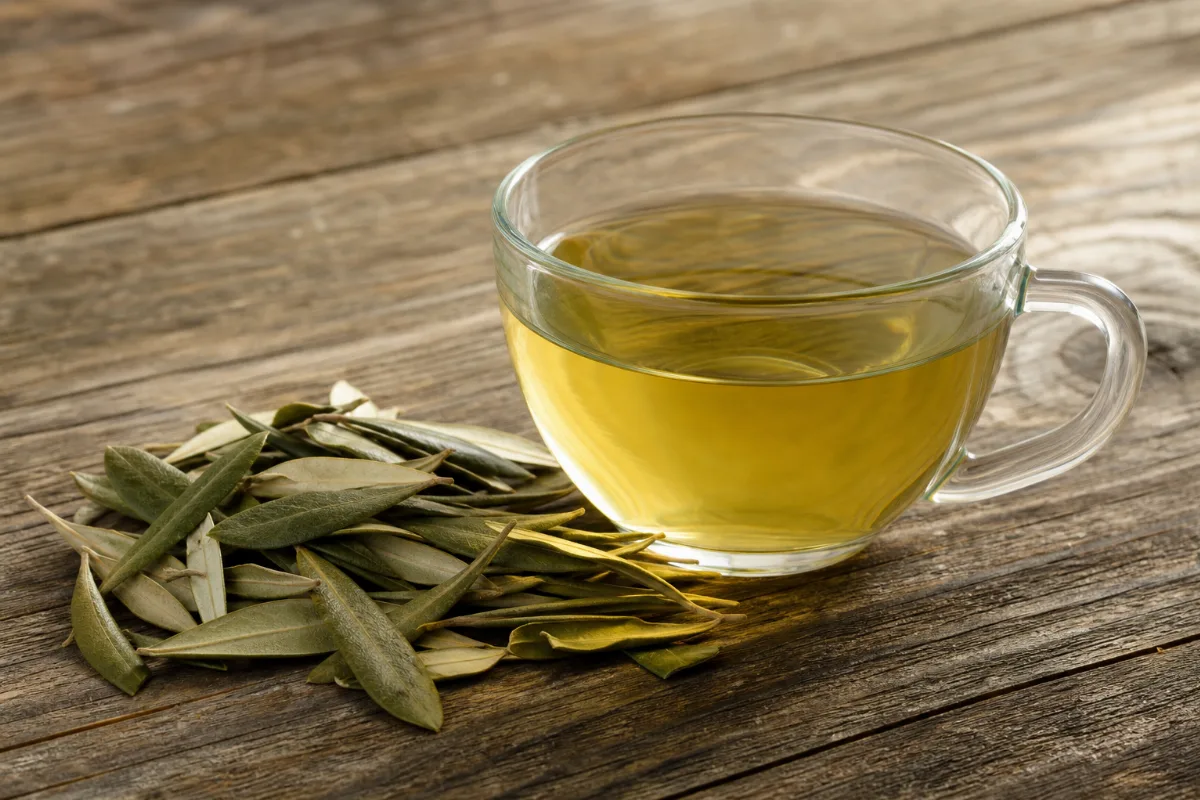
Olive leaf tea is a herbal drink made from the leaves of the olive tree, not the fruit or oil. It is not made from the tea plant, and herbal teas are generally described as caffeine-free. It is studied for blood pressure, blood fats and blood sugar, but most of that research used concentrated extract capsules, which are a different product. Studies of the tea itself are few and small. If you take blood pressure or diabetes medicine, tell your doctor or pharmacist before drinking it regularly.
General information, not medical advice. Last substantive update · Not medically reviewed. A named clinician has not signed off on this page. How this page is made
About Olive Leaf Tea
Olive leaf tea is a herbal infusion of olive tree leaves. The research on the tea itself is small: one observational blood pressure study, one trial of blood fats and sugar in prediabetes, a single-meal glucose trial and a small blood count trial. Most blood pressure and blood sugar trials used extract capsules, which show a small blood pressure fall (low certainty) and mixed blood sugar results. Cautions: blood pressure and diabetes medicines, pregnancy and breastfeeding, allergy to olive tree products, and people who must limit fluids.
What it is
Olive leaf tea is made from the leaves of Olea europaea, the olive tree, a member of the olive family (Oleaceae). The leaves taste bitter because of oleuropein, their main compound. This is a herbal tea, not true tea (Camellia sinensis). Herbal teas are generally described as caffeine-free, but no caffeine measurement for olive leaf tea was found, so we cannot confirm it for this tea specifically. It is different from olive oil and table olives, which are foods with their own research.
Traditional and current uses
The EU assessment report says the first formal medical mention of olive leaf was an 1854 account of a tincture for severe fevers and malaria, and that olive leaf was used as a folk remedy for blood pressure and diabetes in several Mediterranean countries. Today the EU accepts it only as a traditional medicine for mild water retention in adults.
What the research shows
Tea. A 2025 observational study of 220 adults with high blood pressure linked the infusion to a fall in blood pressure from week two, without numbers in its abstract. A 2019 trial of 57 adults with prediabetes found lower LDL cholesterol with regular-strength tea than with a weaker tea. A 2023 crossover trial in 13 healthy adults found a higher glucose curve after a meal with the tea than with placebo tea. A 2019 trial of 31 women found higher red blood cell counts than with green tea.
Extract. Reviews of extract capsules found a small fall in systolic blood pressure (about 4 to 6 mmHg pooled) and a small fall in triglycerides. A 2025 trial in 621 people treated for high blood pressure saw a larger fall than placebo. Blood sugar results were mixed. Some trials were linked to makers of the extract.
Tea versus extract capsules
A cup of tea and a capsule of concentrated extract are not the same. Most trials used capsules or liquid extracts standardised for oleuropein. We could not find a measurement of how much oleuropein a cup of tea contains. Results from capsules should not be assumed for tea, and the other way round. No amounts are given on this page; ask a doctor or pharmacist.
Legal and regulatory status
The European Medicines Agency's herbal committee has a traditional-use monograph for olive leaf for mild water retention in adults, based on long-standing use only. Its assessment report records that the committee did not accept a heart-and-circulation use as suitable for self-treatment. We did not confirm a US NCCIH page, a LiverTox entry or a LactMed entry for olive leaf.
At a glance
Traditional uses history, not proof
- Drunk in Mediterranean and North African countries as a folk remedy for high blood pressure and diabetes (EU assessment report).
- Used in 19th-century Europe as a fever and malaria remedy (EU assessment report).
- Accepted in the EU as a traditional herbal medicine for mild water retention in adults, after a doctor has ruled out serious causes (EMA).
Studied for research
- Blood pressure, tea: insufficient (one observational study)
- Blood pressure, extract capsules (not tea): low
- Cholesterol and triglycerides, tea: low (one exploratory trial)
- Blood sugar, tea: mixed
- Blood sugar, extract capsules (not tea): mixed
- Red blood cell counts versus green tea: very low
- Mild water retention: insufficient (traditional use only)
Main compounds
- Oleuropein, the bitter main compound
- Hydroxytyrosol, the form mostly found in blood after olive leaf extract
- Flavonoids such as luteolin and apigenin glucosides
- Triterpene acids such as oleanolic acid
Common forms
- Dried whole or cut leaf infusion or tea bag
- Leaf powder
- Extract capsules or liquids (a different product, used in most trials)
Research links: EMA: Oleae folium (olive leaf) · EMA assessment report on olive leaf · Olive leaf tea and lipids in prediabetes, 2019 (abstract) · Olive leaf tea and after-meal glucose, 2023 (abstract) · Olive leaf infusion and blood pressure, 2025 (abstract) · Extract and blood pressure in 621 adults, 2025 (abstract) · Research Library · Genes & Biomarkers Library
What it is and its history
- Accepted scientific name
- Olea europaea L. (olive tree). The tea is made from the leaf (Olea europaea folium, 'Oleae folium'), not the fruit or oil.
- Naming authority
- Olea europaea L., published in Sp. Pl.: 8 (1753) (GBIF; NCBI gives 'Olea europaea L., 1753').
- Synonyms
- GBIF synonyms returned by the API include Olea europaea Thunb., Olea pallida Salisb., Olea sativa Hoffmanns. & Link and Olea verrucosa var. brachybotrya A.DC. (partial list).; NCBI lists Olea sativa as a synonym and 'common olive' as the common name.
- Common names
- Olive leaf (English); European olive (English); Olivier / feuille d'olivier (French); Olivenbaum / Olivenblatt (German); Olivo / ulivo (Italian); Acebuche (wild olive); hoja de olivo (Spanish); Oliveira / folha de oliveira (Portuguese); 油橄欖 (Chinese); الزيتون (Arabic)
- Family or group
- Oleaceae (olive family, order Lamiales), the same family as ash, jasmine, lilac and privet.
- Classification
- Plantae > Tracheophyta > Magnoliopsida > Lamiales > Oleaceae > Olea > Olea europaea
- Native range
- The EU assessment report (a secondary source) says the olive tree is native to southern European countries and the Mediterranean region as far as Iran and beyond the Caucasus, and is also cultivated in similar climates in the Americas. Not checked against a botanical database.
- Habitat
- An evergreen tree about 6-9 m tall (EU report); more than 300 cultivars are recognised (EU report citing Blaschek 2006).
- What it looks like
- Roots: Not part of the medicinal use.; Stems: Not described in sources read.; Leaves: Per the European Pharmacopoeia description in the EU report: simple, thick and leathery, lanceolate to obovate, 30-50 mm long and 10-15 mm wide, upper surface grey-green and shiny, lower surface paler with fine hairs. Dried leaf must contain at least 5% oleuropein; the leaf tastes bitter.; Flowers: Not part of the use studied.; Fruit: The olive fruit and its oil are separate products and are not covered in this profile.
- Cultivation
- Leaves are harvested throughout the year from cultivated trees and dried in the shade (EU assessment report).
- Harvest and processing
- Dried leaf, cut leaf for tea, powdered leaf and liquid or dry extracts are described in the EU report. Most clinical trials used extract products, which are not the same as tea. The tea trials used ready-made olive leaf tea or an infusion; leaf amounts were not stated in the abstracts.
- Look-alikes and adulterants
- Name: Olive oil and olive fruit; Note: The most important thing to keep separate. Olive oil and table olives are foods with their own research. Studies on olive oil or olives say little about the leaf extract and are not used in this profile.; Name: African wild olive (Olea europaea subsp. cuspidata / africana); Note: A different subspecies. One lab study of its leaf extract is cited and labelled; its oleuropein content varied from undetectable to 59.4 mg/g.; Name: Other plants called 'olive'; Note: Names such as Russian olive or tea olive belong to other plant families. Products should name Olea europaea. This note comes from general botanical knowledge, not a source read for this file.; Name: Olive pomace and olive leaf extracts mixed with fruit; Note: Pomace is the waste from pressing olives. A 2026 review analysed olive leaf and pomace separately and found different results.
- Sustainability and conservation
- Not verified. No IUCN assessment was retrieved.
Traditional use and history history, not clinical proof
| Tradition or era | Documented use | Source |
|---|---|---|
| Europe, 19th century (Spain, France, England) | The EU assessment report says the first formal medical mention of olive leaf was an 1854 account of a tincture for severe fevers and malaria. Spanish physicians prescribed the leaves as a fever remedy early in the 19th century. | s-ema-ar-olive-leaf |
| Mediterranean folk use | Teas or extracts were taken for high blood pressure in Spain, Greece, Italy, Bulgaria, Madeira and the Canary Islands, for diabetes in Spain, Canary Islands, Mexico, Serbia and Tunisia, and as a diuretic in France and Brazil (EU report). | s-ema-ar-olive-leaf |
| France | Leaf is regarded as an herbal substance with efficacy and safety shown by literature and long use, for mild urinary and digestive function and promoting kidney water elimination (EU report). | s-ema-ar-olive-leaf |
| Germany | Used at least since 1976 for preventing atherosclerosis and against high blood pressure (EU report). The EU report says the German Commission E published a negative monograph for olive leaf. | s-ema-ar-olive-leaf |
| Science, 1960s | An Italian researcher reported in 1962 that oleuropein lowered blood pressure in animals, which started modern interest (EU report). | s-ema-ar-olive-leaf |
| Modern EU regulation | The EU herbal monograph (traditional use only) covers mild water retention, with a first version published 2018 and a periodic review under way. | s-ema-hmpc-olive-leaf |
Traditional use shows how it was used. It does not show that it works or is safe today.
What is inside, and how it may work
What it contains and how those compounds act in cells and animals. Laboratory and animal mechanisms are not proven effects in people.
Main compounds
| Compound | Family | Where it is concentrated | Activity studied | Level of evidence |
|---|---|---|---|---|
| Oleuropein PubChem 5281544 | secoiridoid glycoside | Leaf (also fruit and other parts) 5-9% of leaf per the EU report's constituents list; 60-90 mg/g dry weight in a cited analysis; European Pharmacopoeia minimum 5% in dried leaf. African wild olive varied from below detection to 59.4 mg/g. | The bitter main compound. Blocked a liver enzyme marker (CYP3A) in human liver preparations in the lab. Very low blood levels after dosing in people. 14 9 13 | Laboratory research |
| Hydroxytyrosol PubChem 82755 | phenolic alcohol (breakdown product of oleuropein) | Leaf extracts Present in leaf extracts; the human blood form is mainly sulfate and glucuronide conjugates. | The main form found in human blood and urine after olive leaf extract. 13 14 | Human data |
| Tyrosol PubChem 10393 | phenolic alcohol | Leaf and fruit Listed among phenolic compounds in the EU report. | Not studied separately here. 14 | Laboratory research |
| Ligstroside PubChem 14136859 | secoiridoid glycoside | Leaf Listed with oleuropein in the EU report. | Not studied separately here. 14 | Laboratory research |
| Elenolic acid PubChem 169607 | secoiridoid breakdown product | Leaf; formed when oleuropein breaks down Present as a hydrolysis product of oleuropein (EU report). | Not studied here. 14 | Laboratory research |
| Oleacein PubChem 18684078 | secoiridoid | Olive tree; stronger in fruit and oil Not quantified in leaf in the sources read. | Not studied here. 19 | Laboratory research |
| Luteolin and luteolin 7-O-glucoside PubChem 5280445 | flavone | Leaf Luteolin derivatives listed in the EU report's constituents. | Not studied separately here. 14 19 | Laboratory research |
| Apigenin 7-O-glucoside PubChem 5280704 | flavone glycoside | Leaf Apigenin derivatives listed in the EU report. | Not studied separately here. 14 19 | Laboratory research |
| Rutin PubChem 5280805 | flavonol glycoside | Leaf Quercetin-type flavonoids are common; not quantified in the sources read. | Not studied here. 19 | Laboratory research |
| Verbascoside PubChem 5281800 | phenylethanoid glycoside | Leaf Not quantified in the sources read. | Not studied here. 19 | Laboratory research |
| Oleanolic acid and maslinic acid PubChem 10494 | pentacyclic triterpenes | Leaf Listed in the EU report's constituents. | Not studied separately here. 14 19 | Laboratory research |
Mechanisms, receptors and pathways
| Target or pathway | Gene or receptor | What was found | Level |
|---|---|---|---|
| Starch digestion and absorption | Intestinal starch handling (rat sac model) | In rats, a leaf extract reduced starch digestion and absorption (reported in the Wainstein paper). Not shown for tea or in people. 11 | Animal research |
| CYP3A and CYP1A2 enzyme activity | CYP3A4 marker (androstenedione 6-beta-hydroxylation), CYP1A2 | Oleuropein inactivated the CYP3A marker activity in a time- and NADPH-dependent way (Ki 22.2 micromolar) and weakly inhibited CYP1A2 in human liver microsomes. 9 | Laboratory research |
| Human blood levels after dosing | Conjugation of hydroxytyrosol (sulfate and glucuronide) | After olive leaf extract in people, hydroxytyrosol conjugates were the main forms in blood and urine. 13 | Human data |
Absorption, metabolism and elimination
- Absorption
- In nine healthy volunteers, oleuropein and hydroxytyrosol from olive leaf extract reached the blood mainly as conjugated hydroxytyrosol; peak plasma oleuropein was 2.74 ng/mL after liquid versus 0.47 ng/mL after capsules (p=0.004).
- Distribution
- No human tissue distribution data found.
- Metabolism
- Oleuropein breaks down to hydroxytyrosol and elenolic acid (EU report), and hydroxytyrosol is then conjugated into sulfate and glucuronide forms.
- Elimination
- All conjugated hydroxytyrosol metabolites were recovered in the urine within 8 hours (de Bock 2013).
- Bioavailability
- Not measured against an intravenous dose. There was wide variation between people, and men had higher exposure than women in the small study (p=0.048). All data are for extract capsules or liquid, not tea.
Isolated compounds versus whole extracts
Most clinical trials use whole leaf extracts. No trial separated oleuropein or hydroxytyrosol from the rest of the leaf, so it is unknown whether one compound explains any result. Tea contains an unknown, variable share of these compounds.
Nutritional composition
Olive leaf tea is not a nutritional food. It supplies plant polyphenols rather than vitamins or minerals in meaningful amounts. Olive oil and table olives are foods with their own nutrition and are not covered here.
2 mixed findings3 low certainty1 very low certainty2 not enough evidence
What was looked at
The 8 benefits and uses checked for Olive Leaf Tea, each with how strong the evidence is. Tap one to open it.
- Blood pressure: olive leaf teaNot enough evidence
- Blood pressure: olive leaf extract capsules (a different product from tea)Low certainty
- Cholesterol and triglycerides: olive leaf teaLow certainty
- Cholesterol and triglycerides: olive leaf extract (a different product from tea)Low certainty
- Blood sugar: olive leaf teaMixed findings
- Blood sugar: olive leaf extract (a different product from tea)Mixed findings
- Red blood cell countsVery low certainty
- Mild water retention (traditional use in the EU)Not enough evidence
Lab markers tracked in the studies
Systolic blood pressure (top number)LDL cholesterolTriglyceridesFasting blood glucoseHbA1c (3-month average blood sugar)Red blood cell count, haemoglobin and haematocrit
What is Olive Leaf Tea good for?
The uses people ask about and how strong the human evidence is for each. The tea and the extract capsules are listed separately because most trials used capsules. None of this is proof of treatment.
Benefits, one by one
Each card is a research question, not a promise. Tap a goal to filter. Open a card to see the studies, doses and limits.
Blood pressure: olive leaf tea
Not enough evidenceOnly one study looked at the tea itself. It followed hospital patients in Algeria who drank an olive leaf infusion twice a day for six weeks and compared them with patients who did not. Pressure fell more in the tea group, but this was not a randomised trial and the summary gives no figures. It cannot show that the tea caused the fall.
1 studiesInfusion (tea). Amounts of leaf are not stated in the abstract.
Studies, doses and limits
What the trials found
One six-week observational study of 220 adults with high blood pressure (110 drinking an olive leaf infusion twice a day, 110 not). Blood pressure fell more in the infusion group from week 2, levelling off after week 4. The abstract gives no mmHg figures, no leaf amounts and does not say whether people were randomised or blinded.
Results
Direction favours the tea, but the size is unknown and the design cannot show cause.
Effect sizes as reported
No numbers in the abstract (group-by-time p<0.001 for systolic and diastolic).
Why this rating
One observational study with no figures in its abstract. No randomised trial of the tea for blood pressure was found.
Form and dose studied
Infusion (tea). Amounts of leaf are not stated in the abstract.
Who was studied
Adults with high blood pressure in one Algerian hospital.
Limits
Not randomised. Only the abstract was read. Use of blood pressure medicines is not described in the abstract.
Why researchers looked
Olive leaf has long been drunk as a folk remedy for high blood pressure around the Mediterranean and in North Africa.
Traditional use
The EU assessment report lists traditional use of olive leaf preparations for blood pressure in several countries. The EU's own approval of the leaf is only for mild water retention, not for blood pressure. The EU committee did not accept a heart-and-circulation use for self-treatment.
Proposed mechanism Preliminary mechanism
Lab work on olive leaf and its bitter compound oleuropein suggests ways it could relax blood vessels. None of this has been shown to explain a tea effect in people.
A proposed mechanism does not show that the effect happens in people.
If you take blood pressure medicine, tell your doctor or pharmacist if you drink olive leaf tea regularly. See the safety tab.
Blood pressure: olive leaf extract capsules (a different product from tea)
Low certaintyMost of the blood pressure research used concentrated leaf extract, not tea. In one trial an extract lowered blood pressure about as much as a low starting dose of the drug captopril. A larger 2025 trial in people already treated for high blood pressure saw a fall too. Pooled reviews agree on a small fall, but trials are few and some involve makers. These results cannot be carried over to tea.
4 studiesConcentrated leaf extract capsules or tablets, not tea. Amounts are n…
Studies, doses and limits
What the trials found
Susalit 2011: double-blind trial of the extract EFLA 943 against captopril in stage-1 high blood pressure over 8 weeks; both groups improved and did not differ (no placebo group). Lamti 2025: 621 people treated for high blood pressure, 12 weeks; 24-hour systolic pressure fell 6.4 mmHg on the extract and 1.5 mmHg on placebo (each against its own starting value). Razmpoosh 2022 pooled 12 studies (819 people): systolic -3.86 mmHg overall and -4.81 mmHg in people with hypertension. Ismail 2021 pooled 5 trials (325 people): one comparison showed a systolic fall of 5.78 mmHg, others showed no clear difference, and the authors judged the evidence limited.
Results
A modest fall in systolic pressure, roughly 4 to 11 mmHg depending on the trial and review. Not consistent across all comparisons.
Effect sizes as reported
Susalit: systolic -11.5 +/- 8.5 mmHg (extract) vs -13.7 +/- 7.6 mmHg (captopril). Lamti: 24-h systolic -6.4 mmHg (95% CI -10 to -2.1) vs -1.5 mmHg (-3.9 to 0.51) on placebo. Razmpoosh: -3.86 mmHg (95% CI -6.44 to -1.28). Ismail: -5.78 mmHg (95% CI -10.27 to -1.30) in one comparison.
Why this rating
Few trials with different products and comparison groups. The captopril trial had no placebo group. Funding: one author of Susalit has worked with the extract maker; one author of Lamti lists a pharmaceutical laboratory; the reviews' funding was not read. Only abstracts were read.
Form and dose studied
Concentrated leaf extract capsules or tablets, not tea. Amounts are not repeated on this page; ask a doctor or pharmacist.
Who was studied
Adults with stage-1 or treated high blood pressure in Indonesia, Tunisia and other countries.
Limits
Short trials (8 to 12 weeks). Different extracts. No trial measured strokes or heart attacks.
Why researchers looked
Olive leaf is a long-standing folk remedy for high blood pressure, so makers of extracts ran trials.
Traditional use
Same traditional background as the tea. The extracts are concentrated products, not the home-made drink.
Proposed mechanism Preliminary mechanism
Not established. Lab work suggests olive leaf compounds may act on blood vessels, but this was not tested in these trials.
A proposed mechanism does not show that the effect happens in people.
Anything that lowers blood pressure can add to blood pressure medicines. See the safety tab.
Cholesterol and triglycerides: olive leaf tea
Low certaintyOne 12-week Japanese trial in adults with prediabetes found LDL cholesterol fell in people drinking regular-strength olive leaf tea, and fell more than in people drinking a weaker version. There was no plain-tea or no-tea group, so the true size of the effect is unclear.
1 studiesReady-to-drink olive leaf tea in the trial. Amounts of leaf not state…
Studies, doses and limits
What the trials found
Araki 2019: 57 adults aged 40 to 70 with prediabetes were randomly given regular-strength or weaker olive leaf tea with meals for 12 weeks. Within the regular group LDL cholesterol fell (p<0.01) and triglycerides fell (p<0.05, log scale). The LDL fall was larger than in the weaker-tea group (p<0.05); the triglyceride difference between groups was not significant (p=0.079). Body weight, waist and insulin did not change.
Results
Lower LDL than a weaker tea in one exploratory trial.
Effect sizes as reported
Group-difference p<0.05 for LDL; p=0.079 for triglycerides; the abstract gives no mg/dL values.
Why this rating
A single small exploratory trial with a weaker-tea comparison instead of placebo. The authors call the glucose effect unclear.
Form and dose studied
Ready-to-drink olive leaf tea in the trial. Amounts of leaf not stated.
Who was studied
Adults 40 to 70 with prediabetes and a body mass index of 23 to 29.9, Japan.
Limits
Small, exploratory, no placebo. Funding not stated in the abstract.
Why researchers looked
Olive leaf contains oleuropein, which lab work links to blood fat metabolism. The same group had earlier seen no clear benefit of the tea in people without prediabetes.
Traditional use
Olive leaf tea is a traditional Mediterranean drink; cholesterol is a modern research question.
Proposed mechanism Unknown
Not tested in this trial.
A proposed mechanism does not show that the effect happens in people.
Tell your doctor if you drink it regularly and take cholesterol or other medicines.
Cholesterol and triglycerides: olive leaf extract (a different product from tea)
Low certaintyPooled reviews of extract trials found a small fall in triglycerides, and in people with high blood pressure also in total and LDL cholesterol. The reviewers rated the evidence for blood sugar and liver and kidney tests as low to very low. These are extracts, not tea.
2 studiesExtract capsules and liquids; not tea.
Studies, doses and limits
What the trials found
Razmpoosh 2022 pooled 12 studies (819 people): triglycerides fell by 9.51 mg/dL overall; in people with hypertension total cholesterol fell 9.14 mg/dL, LDL 4.6 mg/dL and triglycerides 14.42 mg/dL. Susalit 2011 also saw a triglyceride fall in the extract group but not the captopril group.
Results
Small falls in triglycerides, and in cholesterol in people with hypertension.
Effect sizes as reported
Triglycerides WMD -9.51 mg/dL (95% CI -17.83 to -1.18; heterogeneity I2 68.7%).
Why this rating
Moderate-to-high differences between trials (I2 68.7%), many different extracts, and the review itself rates other outcomes low to very low.
Form and dose studied
Extract capsules and liquids; not tea.
Who was studied
Adults in 12 trials.
Limits
Abstract-level reading only. Results come from varied products.
Why researchers looked
Heart-health markers were studied alongside blood pressure in extract trials.
Traditional use
Not a traditional use of the tea.
Proposed mechanism Unknown
Not established.
A proposed mechanism does not show that the effect happens in people.
See the safety tab.
Blood sugar: olive leaf tea
Mixed findingsResults for the tea are mixed and small. In 13 healthy adults, tea with a high-carbohydrate meal delayed the glucose peak but raised the overall glucose curve, so the authors found no sign it lowers blood sugar after a meal. In a 12-week trial in prediabetes, fasting glucose was lower than with a weaker tea, but the authors say the effect on glucose remains unclear.
2 studiesOlive leaf tea; leaf amounts not stated.
Studies, doses and limits
What the trials found
Meireles 2023: double-blind crossover, 18 healthy adults randomised, 13 analysed; one meal with olive leaf tea or placebo tea. Time to glucose peak was later (48.5 vs 35.7 min, p=0.03) and the glucose area under the curve was higher with olive leaf tea (14,502.7 vs 13,633.3 mg/dL x min, p=0.03). No adverse effects reported. Araki 2019 (prediabetes, 12 weeks): fasting glucose lower than in the weaker-tea group (p<0.05); insulin, weight and waist did not change.
Results
No clear lowering of blood sugar by the tea. One trial suggests a higher curve after a meal; another suggests lower fasting glucose than a weaker tea.
Effect sizes as reported
See above.
Why this rating
Two small trials pointing in different directions, one of them in healthy people after a single meal and one with a weaker-tea comparison.
Form and dose studied
Olive leaf tea; leaf amounts not stated.
Who was studied
Healthy adults (Portugal); adults with prediabetes (Japan).
Limits
Very small samples; short; different comparison drinks.
Why researchers looked
Olive leaf tea is a folk remedy for diabetes in Mediterranean countries.
Traditional use
Traditional use only; the EU has not approved olive leaf for blood sugar.
Proposed mechanism Unknown
Not tested in the tea trials.
A proposed mechanism does not show that the effect happens in people.
If you use diabetes medicines, ask your doctor or pharmacist before drinking it regularly.
Blood sugar: olive leaf extract (a different product from tea)
Mixed findingsExtract trials are mixed. One 14-week trial in 79 adults with type 2 diabetes saw lower HbA1c and fasting insulin than placebo. A trial in 46 overweight men saw better insulin sensitivity. A 6-month trial of a combination of fenugreek, bergamot and olive leaf in 87 completers with prediabetes saw no change in HbA1c or glucose. The tea cannot be assumed to behave the same way.
3 studiesExtract tablets or capsules, not tea.
Studies, doses and limits
What the trials found
Wainstein 2012: 79 adults with type 2 diabetes, 14 weeks, once-daily tablet vs placebo: HbA1c and fasting plasma insulin lower, after-meal insulin not different. De Bock 2013: 46 men, crossover, 12 weeks: 15% better insulin sensitivity (p=0.024) and 28% better beta-cell responsiveness (p=0.013); no effect on lipids, 24-hour blood pressure or liver function; interleukin-6 rose. Florentin 2019: fenugreek + bergamot + olive leaf combination, 100 randomised (87 completed), 6 months: no change in HbA1c, fasting glucose, insulin or lipids.
Results
Mixed: two trials with benefits, one clear null result, with different products.
Effect sizes as reported
De Bock: insulin sensitivity +15%, p=0.024. Others: see above.
Why this rating
Small trials, three different products (one a combination), different people. Funding not stated in the abstracts read.
Form and dose studied
Extract tablets or capsules, not tea.
Who was studied
Adults with type 2 diabetes (Israel); overweight middle-aged men (New Zealand); adults with prediabetes (Greece).
Limits
Abstracts only; short; small.
Why researchers looked
Olive leaf has been used in folk medicine for diabetes.
Traditional use
Traditional use only.
Proposed mechanism Animal research
In rats, a leaf extract slowed starch digestion and absorption (reported in the Wainstein paper). This animal finding is not proof of the human result.
A proposed mechanism does not show that the effect happens in people.
Could add to diabetes medicines. See the safety tab.
Red blood cell counts
Very low certaintyIn a small Japanese trial of 31 women, red blood cell count, haemoglobin and haematocrit were higher after olive leaf tea than after green tea. With no placebo group, it is unclear whether olive leaf tea raised them or green tea lowered them (the green tea group's red cell count and iron fell).
1 studiesOlive leaf tea; amounts not stated.
Studies, doses and limits
What the trials found
Ferdousi 2019: 31 women aged 40 to 70, olive leaf tea or green tea for 12 weeks. Red cell count, haemoglobin and haematocrit were higher in the olive leaf group at 6 and 12 weeks. Within the green tea group, red cell count and serum iron fell at 12 weeks.
Results
Higher counts than with green tea, but no placebo group.
Effect sizes as reported
p-values not given in the abstract.
Why this rating
One small trial, a green tea comparison, blood counts rather than a health outcome.
Form and dose studied
Olive leaf tea; amounts not stated.
Who was studied
Women 40 to 70, Japan.
Limits
Only 31 women; no placebo.
Why researchers looked
Lab work by the same group suggested leaf compounds could help blood cell precursors mature.
Traditional use
Not a traditional use.
Proposed mechanism Laboratory research
Suggested by the authors' earlier lab work (not tested here).
A proposed mechanism does not show that the effect happens in people.
Not a treatment for anaemia; see a doctor for low iron or blood counts.
Mild water retention (traditional use in the EU)
Not enough evidenceThe EU herbal committee accepts olive leaf as a traditional herbal medicine to increase the kidneys' removal of water in mild water retention in adults, once a doctor has ruled out serious causes. This rests on long-standing use only, not on trials of the tea.
2 studiesPer the EU, leaf preparations for oral use; amounts not repeated here.
Studies, doses and limits
What the trials found
No trial of olive leaf tea for water retention was found. The position comes from the EU monograph and assessment report.
Results
Not tested in trials.
Why this rating
Traditional use only; no trial.
Form and dose studied
Per the EU, leaf preparations for oral use; amounts not repeated here.
Who was studied
Adults only.
Limits
Not a trial result.
Why researchers looked
Traditional use.
Traditional use
EU traditional-use registration based on long-standing use.
Proposed mechanism Unknown
Not established.
A proposed mechanism does not show that the effect happens in people.
Not for people who must limit fluids (for example severe heart or kidney disease). See the safety tab.
Connections to the rest of health
How Olive Leaf Tea connects to the rest of our health knowledge graph. Every link says what kind of connection it is. A safety link (for example to the liver) is a warning, not a benefit. A study that merely mentions a topic never creates a benefit link.
Explore every connection: goals, body systems, organs, symptoms, genes
A. Wellness goals
| Connected to | Kind of connection | Evidence status | Context | Studies |
|---|---|---|---|---|
| Blood pressure support | Demonstrated clinical effect | Mixed findings | Modest evidence in hypertension; weaker in borderline pressure. Blood pressure: olive leaf extract capsules (a different product from tea): Most of the blood pressure research used concentrated leaf extract, not tea. In one trial an extract lowered blood pressure about as much as a low starting dose of the drug captopril. A larger 2025 trial in people already treated for high blood pressure saw a fall too. Pooled reviews agree on a small fall, but trials are few and some involve makers. These results cannot be carried over to tea. Preparation or compound: Olive leaf extract |
10 6 8 5 |
| Blood Pressure Support | Not enough evidence | Blood pressure: olive leaf tea: Only one study looked at the tea itself. It followed hospital patients in Algeria who drank an olive leaf infusion twice a day for six weeks and compared them with patients who did not. Pressure fell more in the tea group, but this was not a randomised trial and the summary gives no figures. It cannot show that the tea caused the fall. | 1 | |
| Heart Health | Not enough evidence | Blood pressure: olive leaf tea: Only one study looked at the tea itself. It followed hospital patients in Algeria who drank an olive leaf infusion twice a day for six weeks and compared them with patients who did not. Pressure fell more in the tea group, but this was not a randomised trial and the summary gives no figures. It cannot show that the tea caused the fall. | 1 | |
| Heart Health | Demonstrated clinical effect | Low certainty | Blood pressure: olive leaf extract capsules (a different product from tea): Most of the blood pressure research used concentrated leaf extract, not tea. In one trial an extract lowered blood pressure about as much as a low starting dose of the drug captopril. A larger 2025 trial in people already treated for high blood pressure saw a fall too. Pooled reviews agree on a small fall, but trials are few and some involve makers. These results cannot be carried over to tea. Cholesterol and triglycerides: olive leaf tea: One 12-week Japanese trial in adults with prediabetes found LDL cholesterol fell in people drinking regular-strength olive leaf tea, and fell more than in people drinking a weaker version. There was no plain-tea or no-tea group, so the true size of the effect is unclear. | 10 6 8 5 2 |
| Cholesterol Balance | Demonstrated clinical effect | Low certainty | Cholesterol and triglycerides: olive leaf tea: One 12-week Japanese trial in adults with prediabetes found LDL cholesterol fell in people drinking regular-strength olive leaf tea, and fell more than in people drinking a weaker version. There was no plain-tea or no-tea group, so the true size of the effect is unclear. Cholesterol and triglycerides: olive leaf extract (a different product from tea): Pooled reviews of extract trials found a small fall in triglycerides, and in people with high blood pressure also in total and LDL cholesterol. The reviewers rated the evidence for blood sugar and liver and kidney tests as low to very low. These are extracts, not tea. | 2 8 10 |
| Blood Sugar Balance | Mixed findings | Blood sugar: olive leaf tea: Results for the tea are mixed and small. In 13 healthy adults, tea with a high-carbohydrate meal delayed the glucose peak but raised the overall glucose curve, so the authors found no sign it lowers blood sugar after a meal. In a 12-week trial in prediabetes, fasting glucose was lower than with a weaker tea, but the authors say the effect on glucose remains unclear. Blood sugar: olive leaf extract (a different product from tea): Extract trials are mixed. One 14-week trial in 79 adults with type 2 diabetes saw lower HbA1c and fasting insulin than placebo. A trial in 46 overweight men saw better insulin sensitivity. A 6-month trial of a combination of fenugreek, bergamot and olive leaf in 87 completers with prediabetes saw no change in HbA1c or glucose. The tea cannot be assumed to behave the same way. | 7 2 11 12 4 | |
| Metabolic Health | Mixed findings | Blood sugar: olive leaf tea: Results for the tea are mixed and small. In 13 healthy adults, tea with a high-carbohydrate meal delayed the glucose peak but raised the overall glucose curve, so the authors found no sign it lowers blood sugar after a meal. In a 12-week trial in prediabetes, fasting glucose was lower than with a weaker tea, but the authors say the effect on glucose remains unclear. Blood sugar: olive leaf extract (a different product from tea): Extract trials are mixed. One 14-week trial in 79 adults with type 2 diabetes saw lower HbA1c and fasting insulin than placebo. A trial in 46 overweight men saw better insulin sensitivity. A 6-month trial of a combination of fenugreek, bergamot and olive leaf in 87 completers with prediabetes saw no change in HbA1c or glucose. The tea cannot be assumed to behave the same way. | 7 2 11 12 4 |
B. Body systems
| Connected to | Kind of connection | Evidence status | Context | Studies |
|---|---|---|---|---|
| Cardiovascular system | Demonstrated clinical effect | Mixed findings | Blood pressure falls of about 4 to 11 mmHg systolic in trials; effect size differs by review. Small systolic blood pressure falls in trials and reviews. Preparation or compound: Olive leaf extract (EFLA 943 and others) |
10 6 8 |
| Cardiovascular system | Drug or supplement interaction | Preliminary | May add to blood pressure medicines; no combined trial. Preparation or compound: Olive leaf extract |
10 14 |
| Endocrine system | Drug or supplement interaction | Preliminary | May lower blood sugar; use with diabetes medicines needs medical advice. Preparation or compound: Olive leaf extract |
11 12 |
| Cardiovascular system | Not enough evidence | One observational blood pressure study; extract trials separate. Preparation or compound: Olive leaf infusion (tea) |
1 | |
| Endocrine system | Mixed findings | Blood sugar results mixed. Preparation or compound: Olive leaf tea and extract |
7 2 11 | |
| Cardiovascular System | Biological association | Not enough evidence | Studied for: Blood pressure: olive leaf tea Studied for: Blood pressure: olive leaf extract capsules (a different product from tea) | 1 10 6 8 5 2 |
| Endocrine System | Biological association | Mixed findings | Studied for: Blood sugar: olive leaf tea Studied for: Blood sugar: olive leaf extract (a different product from tea) | 7 2 11 12 4 |
| Metabolism Weight | Biological association | Mixed findings | Studied for: Blood sugar: olive leaf tea | 7 2 |
| Circulatory System | Biological association | Very low certainty | Studied for: Red blood cell counts | 3 |
| Urinary System | Biological association | Not enough evidence | Studied for: Mild water retention (traditional use in the EU) | 15 14 |
I. Biomarkers
| Connected to | Kind of connection | Evidence status | Context | Studies |
|---|---|---|---|---|
| Systolic blood pressure (top number) | Biological association | Low certainty | Measured in trials: lowered. A lab change is not the same as a health benefit. | 1 10 6 8 5 |
| LDL cholesterol | Biological association | Low certainty | Measured in trials: lowered. A lab change is not the same as a health benefit. | 2 8 |
| Triglycerides | Biological association | Low certainty | Measured in trials: lowered. A lab change is not the same as a health benefit. | 2 8 |
| Fasting blood glucose | Biological association | Mixed findings | Measured in trials: mixed. A lab change is not the same as a health benefit. | 2 4 |
| HbA1c (3-month average blood sugar) | Biological association | Mixed findings | Measured in trials: mixed. A lab change is not the same as a health benefit. | 11 4 |
| Red blood cell count, haemoglobin and haematocrit | Biological association | Very low certainty | Measured in trials: raised vs green tea. A lab change is not the same as a health benefit. | 3 |
J. Genes, receptors and enzymes
| Connected to | Kind of connection | Evidence status | Context | Studies |
|---|---|---|---|---|
| CYP3A4 / CYP3A (human liver enzyme) | Preliminary mechanism | In vitro | Oleuropein inactivated a CYP3A marker activity in human liver microsomes. | 9 |
L. Active compounds
| Connected to | Kind of connection | Evidence status | Context | Studies |
|---|---|---|---|---|
| Oleuropein | Biological association | In vitro | The bitter main compound. Blocked a liver enzyme marker (CYP3A) in human liver preparations in the lab. Very low blood levels after dosing in people. Preparation or compound: Leaf (also fruit and other parts) |
14 9 13 |
| Hydroxytyrosol | Biological association | Human | The main form found in human blood and urine after olive leaf extract. Preparation or compound: Leaf extracts |
13 14 |
| Tyrosol | Biological association | In vitro | Not studied separately here. Preparation or compound: Leaf and fruit |
14 |
| Ligstroside | Biological association | In vitro | Not studied separately here. Preparation or compound: Leaf |
14 |
| Elenolic acid | Biological association | In vitro | Not studied here. Preparation or compound: Leaf; formed when oleuropein breaks down |
14 |
| Oleacein | Biological association | In vitro | Not studied here. Preparation or compound: Olive tree; stronger in fruit and oil |
19 |
| Luteolin and luteolin 7-O-glucoside | Biological association | In vitro | Not studied separately here. Preparation or compound: Leaf |
14 19 |
| Apigenin 7-O-glucoside | Biological association | In vitro | Not studied separately here. Preparation or compound: Leaf |
14 19 |
| Rutin | Biological association | In vitro | Not studied here. Preparation or compound: Leaf |
19 |
| Verbascoside | Biological association | In vitro | Not studied here. Preparation or compound: Leaf |
19 |
| Oleanolic acid and maslinic acid | Biological association | In vitro | Not studied separately here. Preparation or compound: Leaf |
14 19 |
Each connection is stored with the ingredient, the connected record, the kind of connection, the evidence status, the supporting studies, the preparation or compound involved, and a review date (last reviewed October 25, 2026).
The evidence
The research centre for Olive Leaf Tea. Every record here was checked against PubMed or the publisher's page; we never list a study we have not verified.
Evidence by outcome
Bars show how many studies we found for each outcome, not how well it works. People are added up across trials only (reviews are not added, to avoid double counting).
How we rate evidence
High certainty
Several well-run trials or reviews agree; further research is unlikely to change the picture much.
Moderate certainty
Good trials point the same way, but some doubt remains.
Low certainty
Small, short or inconsistent trials. The finding could change with better research.
Very low certainty
Very little or very weak human data. Treat as a possibility only.
Mixed findings
Trials or reviews disagree with each other.
Not enough evidence
Not enough human research to say either way.
Evidence against
Good research found no benefit, or found harm.
We take the reviewers' own risk-of-bias and GRADE statements where they exist, and otherwise judge from study size, design, consistency, directness and whether a product matches what is sold. Many publications do not make evidence high. Method note: We read the abstracts of 13 PubMed papers, the EU herbal committee page and assessment report for olive leaf, and checked the plant name in GBIF and NCBI Taxonomy. Only abstracts were read for papers. Certainty ratings are the compiler's own reading. We do not know funding for most trials; where an author list or abstract showed a link to an extract maker, we flag it. No study is cited that we could not verify.
Study library: every study we checked 19
| Study | Design | People | Product, dose, length | Result |
|---|---|---|---|---|
| Affane 2025 Health status, risk factors and effects of olive leaf extract infusion (Olea europaea L.) on blood pressure in a hypertensive population. Rocz Panstw Zakl Hig · PMID 42145281 · DOI |
Observational |
220 Adults with high blood pressure at a public hospital in Relizane, Algeria, matched on daily salt intake |
Olive leaf infusion (tea) twice a day before meals, plus usual diet leaf Amounts not stated in the abstract 6 weeks · vs A group of 110 who did not drink it (not randomised, not blinded as far as the abstract says) |
Blood pressure fell more in the infusion group than in the comparison group from week 2, levelling off after week 4. The abstract gives no figures for the size of the fall. Group-by-time interaction p<0.001 for both systolic and diastolic; no mmHg values in the abstract Methods, limits and fundingOutcomes: Systolic and diastolic blood pressure, measured weekly Limitations: Observational (not a randomised trial). No numbers, leaf amount or blinding in the abstract. Blood pressure medicine use is not described in the abstract. Cannot show cause. Funding and conflicts: No funding or conflict statement in the abstract. Read: abstract |
| Araki 2019 Olive leaf tea is beneficial for lipid metabolism in adults with prediabetes: an exploratory randomized controlled trial. Nutr Res · PMID 31158739 · DOI |
Controlled trial |
57 Adults aged 40-70 with prediabetes and BMI 23-29.9, Japan |
Olive leaf tea, two strengths (regular and low-concentration) leaf Amounts not repeated here; see the abstract 12 weeks · vs Low-concentration olive leaf tea (no placebo) |
Triglycerides and LDL fell in the regular-strength tea group, and the falls were larger than in the weaker-tea group. Fasting glucose was lower than the weaker-tea group. Weight, waist and insulin did not change. LDL: P<0.01 within regular tea group; triglycerides P<0.05; fasting glucose lower than low-concentration group (P<0.05) Methods, limits and fundingOutcomes: Triglycerides, LDL cholesterol, glucose, weight, waist, insulin Limitations: Exploratory; the comparison was a weaker olive leaf tea, not a plain placebo. 28 and 29 per group. Funding and conflicts: No conflict statement in the abstract. Read: abstract |
| Ferdousi 2019 Olive leaf tea may have hematological health benefit over green tea. Clin Nutr · PMID 30501915 · DOI |
Controlled trial |
31 Women aged 40 to 70, Japan |
Olive leaf tea compared with green tea leaf Amounts not stated in the abstract 12 weeks (checked at 6 and 12 weeks) · vs Green tea (Camellia sinensis) |
Red blood cell count, haemoglobin and haematocrit were higher in the olive leaf tea group than the green tea group at 6 and 12 weeks. Red cell count and serum iron fell in the green tea group at 12 weeks. There was no non-tea or placebo group, so it is unclear whether olive leaf tea raised these values or green tea lowered them. Significant between-group differences for red cell count, haemoglobin and haematocrit (p-values not in the abstract) Methods, limits and fundingOutcomes: Red blood cell count, haemoglobin, haematocrit, serum iron Limitations: Only 31 women, compared with green tea rather than placebo; the authors say larger studies are needed. Blood counts in healthy women are not a health outcome by themselves. Funding and conflicts: Abstract lists the work as Research Support, Non-U.S. Gov't; no conflict statement in the abstract. Read: abstract |
| Florentin 2019 No effect of fenugreek, bergamot and olive leaf extract on glucose homeostasis in patients with prediabetes: a randomized double-blind placebo-controlled study. Arch Med Sci Atheroscler Dis · PMID 31448348 · DOI |
Controlled trial |
100 Adults with prediabetes (87 completed), Greece |
Combination of fenugreek, bergamot and olive leaf polyphenols leaf+other herbs Amounts not repeated here; see the abstract 6 months · vs Placebo |
No significant change in HbA1c, glucose, insulin, HOMA-IR or lipids in either group. No significant changes Methods, limits and fundingOutcomes: HbA1c (primary), fasting glucose, insulin, HOMA-IR, lipids Limitations: A three-ingredient product, so a null result cannot be assigned to olive leaf alone. Funding and conflicts: Authors report no conflict of interest. Read: abstract |
| Ismail 2021 Olive leaf extract effect on cardiometabolic profile among adults with prehypertension and hypertension: a systematic review and meta-analysis. PeerJ · PMID 33868820 · DOI |
Meta-analysis |
325 Adults with pre-hypertension or hypertension; 5 randomised trials (325 people) |
Olive leaf extract, one combined formula and three single-extract comparisons leaf Amounts not repeated here; see the abstract At least 8 weeks for that comparison · vs Placebo, no treatment or captopril |
The lower-amount comparison lowered systolic pressure versus placebo or no treatment but not diastolic. The 1000 mg comparison showed no significant difference from its comparator. Authors say the conclusions are not robust because trials were small. Lower-amount comparison: systolic MD -5.78 mmHg; LDL MD -6.00 mg/dL in one comparison; IL-6, IL-8 and TNF-alpha lower in the 500 mg comparison (Systolic -10.27 to -1.30; LDL -11.5 to -0.50; IL-6 -13.15 to -0.51; TNF-alpha -13.23 to -1.57) Methods, limits and fundingOutcomes: Systolic and diastolic blood pressure; lipids, glucose, inflammatory markers, liver and kidney safety Limitations: Few small trials. In the abstract the third comparison is labelled olive leaf versus placebo but its numbers (-11.5 and -13.7 mmHg) match the olive-versus-captopril trial, so the labels look mixed up; read the full paper before quoting it. Funding and conflicts: Authors declare no competing interests. Registration: PROSPERO CRD42020181212 Read: abstract |
| Lamti 2025 Efficacy of olive leaf extracts in controlling blood pressure in hypertensive patients: a double-blind randomized clinical trial. J Hypertens · PMID 40990594 · DOI |
Controlled trial |
621 Adults treated for hypertension, multicentre trial (Tunisia) |
Olive leaf extract (product and amount not given in the abstract) leaf Amounts not repeated here; see the abstract 12 weeks · vs Placebo |
24-hour systolic pressure fell 6.4 mmHg from baseline on extract and 1.5 mmHg on placebo. The abstract reports improvements in lipids, blood glucose, triglycerides, CRP and body weight and no significant adverse events. 24-h SBP change from baseline: -6.4 mmHg (extract) vs -1.5 mmHg (placebo); systolic BP load 53.9% to 42.2% on extract (Extract -6.4 mmHg (95% CI -10 to -2.1); placebo -1.5 mmHg (95% CI -3.9 to 0.51)) Methods, limits and fundingOutcomes: 24-hour systolic and diastolic blood pressure (primary); blood pressure load and variability, metabolic markers, CRP, body weight Limitations: Only the abstract was read: the product, dose, usual medicines taken, and the size of the extract-versus-placebo difference are not stated there. The abstract compares each group with its own baseline. Funding and conflicts: Funding not stated in the abstract. One author lists a pharmaceutical laboratory (Belpharma, Sfax) as an affiliation. Read: abstract |
| Meireles 2023 Olive Leaf Tea Impact on Postprandial Glycemia: A Randomized Cross-Over Trial. Foods · PMID 36766057 · DOI |
Controlled trial |
18 Healthy adults (13 analysed), Portugal |
Olive leaf tea with a high-carbohydrate meal leaf Amounts not repeated here; see the abstract Single meal · vs Placebo tea |
The tea delayed the glucose peak (48.5 vs 35.7 min) but the glucose area under the curve was higher with olive leaf tea, so there was no sign of lower after-meal glucose. Peak time 48.5 +/- 4.2 vs 35.7 +/- 4.0 min (p=0.03); glucose AUC 14,502.7 vs 13,633.3 mg/dL x min (p=0.03) Methods, limits and fundingOutcomes: Blood glucose over 2 hours after the meal Limitations: Very small, single meal, healthy people. Funding and conflicts: Authors declare no conflict of interest. Read: abstract |
| Razmpoosh 2022 The effects of olive leaf extract on cardiovascular risk factors in the general adult population: a systematic review and meta-analysis of randomized controlled trials. Diabetol Metab Syndr · PMID 36271405 · DOI |
Meta-analysis |
819 Adults in 12 controlled trials (819 people), including people with hypertension |
Olive leaf extract supplements leaf Amounts not repeated here; see the abstract Various · vs Placebo or control |
Pooled triglycerides and systolic blood pressure were lower. In people with hypertension systolic, diastolic, triglycerides, total cholesterol and LDL were lower. Glucose, liver, kidney and inflammatory markers did not change meaningfully; the authors rated evidence for those as low to very low. Triglycerides WMD -9.51 mg/dL; systolic BP WMD -3.86 mmHg; hypertension subgroup: systolic -4.81, diastolic -2.45 mmHg, triglycerides -14.42, total cholesterol -9.14, LDL -4.6 mg/dL (Triglycerides -17.83 to -1.18; systolic -6.44 to -1.28) Methods, limits and fundingOutcomes: Lipids, glucose, inflammatory, liver and kidney markers, blood pressure Limitations: Only the abstract was read. Trials differ in extract and dose. Heterogeneity was moderate for triglycerides (I2 68.7%). Funding and conflicts: Authors declare no competing interests. Registration: PROSPERO CRD42022302395 Read: abstract |
| Stupans 2001 Inactivation of cytochrome P450 by the food-derived complex phenol oleuropein. Food Chem Toxicol · PMID 11527571 · DOI |
Laboratory research in-vitro |
Human liver microsomes in the lab | Oleuropein (pure compound) leaf Amounts not repeated here; see the abstract Lab incubation · vs Without NADPH |
Oleuropein inactivated a CYP3A marker activity in a time-dependent way and weakly inhibited CYP1A2 (24% at 100 micromolar); no effect on CYP2E1. Ki 22.2 micromolar for CYP3A marker inactivation Methods, limits and fundingOutcomes: CYP3A and CYP1A2 enzyme activity Limitations: Test-tube study; levels reached in people are much lower (see PK studies). Funding and conflicts: No conflict statement in the abstract. Read: abstract |
| Susalit 2011 Olive (Olea europaea) leaf extract effective in patients with stage-1 hypertension: comparison with Captopril. Phytomedicine · PMID 21036583 · DOI |
Controlled trial |
Adults with stage-1 hypertension, Indonesia (232 enrolled per the EU assessment report; the abstract gives no total) | Olive leaf extract EFLA 943 leaf Amounts not repeated here; see the abstract 8 weeks after a 4-week run-in · vs Captopril (a blood pressure drug), adjusted as needed |
Both groups had a significant fall in blood pressure and the falls did not differ between groups. Triglycerides fell on the olive leaf extract but not on captopril. Systolic -11.5 +/- 8.5 mmHg (olive) vs -13.7 +/- 7.6 mmHg (captopril); diastolic -4.8 +/- 5.5 vs -6.4 +/- 5.2 mmHg Methods, limits and fundingOutcomes: Systolic blood pressure change to week 8 (primary); diastolic pressure, lipids Limitations: No placebo group, so this shows the extract and captopril did similarly, not that the extract beats no treatment. Captopril was at a low starting dose. The EU assessment report notes many people did not reach the per-protocol analysis (about 64% evaluable). Funding and conflicts: Funding and conflicts are not stated in the abstract. Co-author Perrinjaquet-Moccetti also wrote the 2008 EFLA943 twins study from Frutarom Switzerland, a maker of the extract. Read: abstract |
| Wainstein 2012 Olive leaf extract as a hypoglycemic agent in both human diabetic subjects and in rats. J Med Food · PMID 22512698 · DOI |
Controlled trial |
79 Adults with type 2 diabetes, Israel (plus rat experiments) |
Olive leaf extract tablet leaf Amounts not repeated here; see the abstract 14 weeks · vs Matching placebo |
HbA1c and fasting plasma insulin were significantly lower with the extract than with placebo; after-meal insulin did not differ. Rat experiments suggested slower starch digestion. HbA1c and fasting insulin significantly lower (numbers not in abstract) Methods, limits and fundingOutcomes: HbA1c and plasma insulin Limitations: Only the abstract was read; the size of the HbA1c change is not given there. Listed in PubMed as a controlled clinical trial; the text says patients were randomised. Funding and conflicts: No conflict statement in the abstract. Read: abstract |
| de Bock 2013 Olive (Olea europaea L.) leaf polyphenols improve insulin sensitivity in middle-aged overweight men: a randomized, placebo-controlled, crossover trial. PLoS One · PMID 23516412 · DOI |
Controlled trial |
46 Overweight men aged about 46 (BMI about 28), New Zealand |
Olive leaf extract capsules (standardised for oleuropein and hydroxytyrosol) leaf Amounts not repeated here; see the abstract 12 weeks per arm, 6-week washout, crossover · vs Placebo |
Insulin sensitivity was 15% better and beta-cell responsiveness 28% better than on placebo. No effect on lipids, blood pressure, body composition, hs-CRP, IL-8 or TNF-alpha. Fasting IL-6, IGFBP-1 and IGFBP-2 rose. Insulin sensitivity +15% (p=0.024); beta-cell responsiveness +28% (p=0.013) Methods, limits and fundingOutcomes: Insulin sensitivity (Matsuda method, primary); glucose and insulin profile, cytokines, lipids, blood pressure Limitations: Men only, small, one trial. Fasting IL-6 went up, not down. Funding and conflicts: The extract maker (Comvita) co-funded the project and supplied the extract and placebo. Read: abstract |
| de Bock 2013 Human absorption and metabolism of oleuropein and hydroxytyrosol ingested as olive (Olea europaea L.) leaf extract. Mol Nutr Food Res · PMID 23766098 · DOI |
Controlled trial |
9 Nine healthy volunteers, New Zealand |
Olive leaf extract as capsule or liquid (two strengths) leaf Amounts not repeated here; see the abstract 24 hours · vs Crossover of doses |
Hydroxytyrosol conjugates were the main forms in blood and urine. Peak plasma oleuropein was higher after liquid than capsule. Wide differences between people. Peak oleuropein 2.74 vs 0.47 ng/mL (liquid vs capsule, p=0.004) Methods, limits and fundingOutcomes: Blood and urine levels of oleuropein and hydroxytyrosol metabolites Limitations: Nine people only. Funding and conflicts: No conflict statement in the abstract. Read: abstract |
| s-ema-ar-olive-leaf EMA HMPC Assessment report on Olea europaea L., folium (final, EMA/HMPC/359236/2016, 31 January 2017) · Source |
Authoritative guidance n/a |
Methods, limits and fundingRead: full-text | ||
| s-ema-hmpc-olive-leaf EMA herbal medicine page: Oleae folium (olive leaf) · Source |
Authoritative guidance n/a |
Methods, limits and fundingRead: full-text | ||
| s-gbif-olea-europaea GBIF Backbone: Olea europaea L. (usageKey 5415040) · Source |
Reference database n/a |
Methods, limits and fundingRead: full-text | ||
| s-livertox-olive-leaf LiverTox (NIH): no olive leaf entry could be confirmed · Source |
Reference database n/a |
Methods, limits and fundingRead: summary-only | ||
| s-ncbi-taxonomy-olea-europaea NCBI Taxonomy: Olea europaea (taxid 4146) · Source |
Reference database n/a |
Methods, limits and fundingRead: full-text | ||
| s-pubchem-olive-leaf-compounds PubChem compound records for olive leaf constituents (CIDs checked by name lookup) · Source |
Reference database n/a |
Methods, limits and fundingRead: full-text |
What we do not know yet
- No randomised placebo-controlled trial of olive leaf tea for blood pressure was found.
- The tea trials are small and one used a weaker tea rather than placebo.
- Leaf amounts, brewing method and oleuropein content of the tea are rarely stated.
- No trial combined olive leaf with blood pressure or diabetes medicines.
- No safety data for pregnancy, breastfeeding or children; caffeine and contamination have not been measured.
How new research is added
New studies are found by a saved PubMed search and placed in a review queue. A person reads each one before it changes any rating or safety wording.
Lab markers
What changed in blood or saliva tests during trials. A changed number is not the same as feeling or being healthier, and we give no "normal ranges".
Metabolic 4
LDL cholesterol
Lowered in trials
The 'bad' cholesterol carried in the blood, measured with a blood test.
Low certaintyResults and what it means
Why it was measured
High LDL is a risk factor for heart disease.
Statistical vs. clinical meaning
Small and from exploratory work.
Safety implication
None specific.
| Study | Result | People | Product |
|---|---|---|---|
| 2 | Fell significantly in the regular-strength tea group (p<0.01) and more than in the weaker-tea group (p<0.05); no mg/dL values in the abstract | 57 adults with prediabetes, Japan | Olive leaf tea with meals, 12 weeks |
| 8 | -4.6 mg/dL in people with hypertension (subgroup) | Subgroup of 12 pooled studies | Olive leaf extract (not tea) |
Triglycerides
Lowered in trials
A type of fat in the blood, measured with a blood test.
Low certaintyResults and what it means
Why it was measured
High levels are linked with heart disease and diabetes risk.
Statistical vs. clinical meaning
Small, with large differences between trials.
Safety implication
None specific.
Fasting blood glucose
Mixed results in trials
Sugar in the blood after not eating, measured with a blood test.
Mixed findingsResults and what it means
Why it was measured
A key marker for prediabetes and diabetes.
Statistical vs. clinical meaning
Unclear.
Safety implication
Could add to diabetes medicines.
HbA1c (3-month average blood sugar)
Mixed results in trials
A blood test showing average blood sugar over about three months.
Mixed findingsResults and what it means
Why it was measured
The main long-term marker in diabetes.
Statistical vs. clinical meaning
No HbA1c result exists for olive leaf tea.
Safety implication
Could add to diabetes medicines.
Other 2
Systolic blood pressure (top number)
Lowered in trials
The pressure in the arteries when the heart beats, measured with a cuff or a 24-hour monitor.
Low certaintyResults and what it means
Why it was measured
The main number used to judge high blood pressure, which raises the risk of stroke and heart disease over time.
Statistical vs. clinical meaning
A fall of 4 to 11 mmHg would matter if real. For the tea, the only evidence is one observational study without figures in its abstract.
Safety implication
Anyone taking blood pressure medicine could see pressure fall too far. Check with a doctor or pharmacist.
| Study | Result | People | Product |
|---|---|---|---|
| 1 | Fell more in the infusion group than the comparison group from week 2 (no figures in the abstract) | 220 adults with hypertension, Algeria | Olive leaf infusion twice a day, 6 weeks (tea) |
| 10 | -11.5 +/- 8.5 mmHg (olive leaf extract EFLA 943) vs -13.7 +/- 7.6 mmHg (captopril); no difference between groups | Stage-1 hypertension | Extract, 8 weeks (capsules, not tea) |
| 6 | 24-hour systolic -6.4 mmHg (95% CI -10 to -2.1) from start on extract vs -1.5 mmHg (-3.9 to 0.51) on placebo | 621 adults treated for hypertension | Extract, 12 weeks (not tea) |
| 8 | -3.86 mmHg (95% CI -6.44 to -1.28) pooled; -4.81 mmHg in people with hypertension | 12 studies, 819 people | Olive leaf extract (not tea) |
| 5 | -5.78 mmHg (95% CI -10.27 to -1.30) in one comparison against placebo or no treatment; no change in diastolic; other comparisons not significant | 5 trials, 325 people with prehypertension or hypertension | Olive leaf extract (not tea) |
Red blood cell count, haemoglobin and haematocrit
Raised vs green tea in trials
Blood-count measures of the cells that carry oxygen.
Very low certaintyResults and what it means
Safety
What studies and official sources say about side effects, medicines and who should check first. Each point shows what kind of evidence it comes from.
Main points to know 8
- Tea is not the same as the extract capsules used in most trials. Nearly all the blood pressure and blood sugar trials used concentrated leaf extract. Olive leaf tea has far fewer studies. Safety findings for extracts may not apply to the tea, and the other way round. No leaf amounts are given here; ask a doctor or pharmacist. Authoritative guidance 14 10 7
- If you take blood pressure medicine, tell your doctor or pharmacist about olive leaf tea. Trials of the extract lowered blood pressure, and one compared it with the drug captopril. The tea itself has little data. The EU report says no drug interactions were reported, but that means none were looked for in depth, not proof of safety. Anything that lowers blood pressure could add to your medicine and cause dizziness or fainting. No trial tested leaf tea or extract together with blood pressure medicine. Controlled trial 10 6 14
- If you take diabetes medicine or insulin, ask first. Some extract trials saw lower HbA1c or better insulin sensitivity and others saw no change. The tea trials gave mixed results, one showing a higher after-meal glucose curve. Because a glucose-lowering effect cannot be ruled out, people on insulin or other diabetes medicines should check with their doctor and watch for low blood sugar. The trials were not designed to look for low blood sugar. Controlled trial 11 12 4 7 2
- Not recommended in pregnancy or breastfeeding, and not for children. The EU assessment report says use in pregnancy and breastfeeding is not recommended because no safety data exist, and use under 18 is not established. The NHS advises limiting herbal teas in pregnancy because research is limited (as summarised in our source notes; the NHS page itself was not re-read here). Authoritative guidance 14 15
- Not for people who must limit fluids. The EU says leaf tea and powdered leaf must not be used where reduced fluid intake is advised, for example severe heart or kidney disease. People with heart disease or kidney problems should get medical advice first. Authoritative guidance 14 15
- Allergy to olive tree products. The EU lists hypersensitivity to the active substance as a contraindication. Stop and seek care for hives, swelling of the face or lips or trouble breathing. Authoritative guidance 14
- Caffeine. Olive leaf is not from the tea plant (Camellia sinensis). Herbal teas made from other leaves are generally described as caffeine-free, and our notes record this as a general statement from a 2024 review; we did not find a lab measurement for olive leaf tea, so this is not verified for olive leaf specifically. Other
- Tea, extract and food are different. Findings here are about olive leaf and leaf extracts, not olive oil or table olives. Authoritative guidance 14
Side effects 7
| Effect | How often | Severity and recovery | Evidence |
|---|---|---|---|
| Cough From the only trial with detailed adverse-event reporting in the EU report (EFLA 943 versus captopril). | 4.6% of all adverse events in the olive leaf group (7% in the captopril group); the proportion of people is not given | mild Resolved by the end of the study per the EU report | Controlled trial 10 14 |
| Vertigo or dizziness Judged possibly related to both olive leaf extract and captopril. Dizziness is also what low blood pressure feels like. | 5.9% of adverse events in the olive group (6.3% captopril) | mild Resolved by study end | Controlled trial 10 14 |
| Muscle discomfort, headache, fatigue, malaise, myalgia, muscle cramp Similar in both groups in the captopril trial. | Each under 5% of total events | mild Resolved | Controlled trial 10 14 |
| No significant adverse events reported 2025 trial of 621 people for 12 weeks; abstract only. | Not given | n/a n/a | Controlled trial 6 |
| Possible gallbladder pain in people with gallstones The EU report notes a literature suggestion (PDR for Herbal Medicines 2007) that olive leaf could stimulate bile flow and cause biliary colic in people with bile duct stones. Not tested. | No frequency; theory only | unknown unknown | Pharmacological theory 14 |
| Stomach upset or nausea In a 1996 trial summarised by the EU report, patients on beta-blockers reported stomach disturbances disappearing during olive leaf treatment. Dog data on one compound (calcium elenolate) showed gastric irritation at high doses. | Not reported as a distinct effect in the abstracts read | unknown unknown | Pharmacological theory 14 |
| Detox, die-off or Jarisch-Herxheimer-type reaction Online sources claim olive leaf causes a 'herx' reaction with flu-like symptoms. A PubMed search for olive leaf with Herxheimer, detox or die-off returned no human report of this. It is not established, and flu-like symptoms after starting any supplement should not be put down to 'detox' without medical advice. | None found | unknown unknown | Traditional use |
Liver
No published human case of liver injury from olive leaf was found in the PubMed search done for this profile. LiverTox could not be confirmed to have an entry. The tea trials did not report liver problems in their abstracts, and the extract trial in 46 men reported no effect on liver function tests. Not finding reports is not proof that none exist. 12 14 17
How often. Unknown.
Monitoring. No agency monitoring advice found. Yellow skin or eyes, dark urine, pale stools or severe itching: stop and call a doctor.
This is a safety connection. It is not evidence that Olive Leaf Tea supports liver health.
Medicines and supplements 6
| With | Why it matters | Importance | Evidence | What to do |
|---|---|---|---|---|
| Blood pressure medicines (for example ACE inhibitors such as captopril, beta-blockers, diuretics, calcium channel blockers) prescription | Both olive leaf extract and these drugs lower blood pressure, so the effects could add up. The mechanism in people is not known. | Olive leaf extract EFLA 943 lowered pressure about as much as captopril in a head-to-head trial, which shows it has a real pressure effect. No trial tested the two together. The EU report says no drug interactions were found in trials or case studies, which is an absence of reports, not proof of safety. | Pharmacological theory Very low certainty 10 14 | If you take blood pressure medicine, ask your doctor before using olive leaf and have your pressure checked. |
| Diabetes medicines and insulin prescription | Olive leaf extract may lower blood sugar or insulin needs in some people. In rats it slowed starch digestion. | Trials in diabetes and prediabetes gave mixed results. No trial tested olive leaf with insulin or glucose-lowering drugs. Low blood sugar from the combination is possible in theory. | Pharmacological theory Very low certainty 11 12 4 | Check blood sugar more often if you add olive leaf and tell your care team. |
| Medicines broken down by liver enzymes (CYP3A, CYP1A2 and others) prescription | In human liver preparations in the lab, pure oleuropein (a leaf compound) blocked a liver enzyme (CYP3A marker) and weakly blocked another (CYP1A2). | No human interaction study with olive leaf or its tea was found. Whether the lab effect happens at the very low blood levels of oleuropein seen in people is unknown. | Animal research Very low certainty 9 13 | Ask a pharmacist about medicines with a narrow safe range. |
| Water pills (diuretics) and other medicines affecting fluid or salt balance prescription | The EU's traditional use of olive leaf is to promote the kidneys' elimination of water. | No study of olive leaf with diuretics was found. | Authoritative guidance Not enough evidence 14 15 | Ask a doctor, particularly with heart or kidney disease. |
| Other herbs or supplements that lower blood pressure or blood sugar (for example garlic, hawthorn, berberine) supplement | Possible additive effect. | No study found. This is a theoretical overlap only. | Pharmacological theory Not enough evidence 14 | Do not stack several without medical advice. |
| Medicines before surgery surgery | Blood pressure and blood sugar effects could matter around anaesthesia. | No source on olive leaf and surgery was found. | Pharmacological theory Not enough evidence 14 | Tell the surgical team about any supplement. |
Who should check first 8
| Situation | Advice | Evidence |
|---|---|---|
| Allergy to olive leaf or other olive tree products | Do not use. The EU report lists hypersensitivity to the active substance as a contraindication. | Authoritative guidance 14 |
| Severe heart or kidney disease where less fluid is advised (leaf tea or powdered leaf) | Do not use. EU contraindication; medical advice needed for any heart or kidney problem. | Authoritative guidance 14 15 |
| Pregnancy and breastfeeding | Not recommended: no safety data (EU). | Authoritative guidance 14 |
| Children and adolescents under 18 | Not intended; use not established (EU). | Authoritative guidance 14 15 |
| Low blood pressure or fainting spells | Avoid unless a doctor agrees; the extract lowers pressure. | Pharmacological theory 10 6 |
| Diabetes treated with insulin or glucose-lowering drugs | Ask your doctor first; check glucose more often. | Pharmacological theory 11 |
| Gallstones or bile duct problems | Ask a doctor; a literature suggestion of bile-stimulating effect (theory). | Pharmacological theory 14 |
| Planned surgery | Tell your doctor; no data. | Pharmacological theory 14 |
Overdose, product quality and regulators
Summary. No toxic amount of olive leaf has been identified in people. Animal studies of one specially prepared leaf extract found no toxicity at the highest dose tested. Human data on long-term use are limited.
Animal. The EU report describes a 90-day rat study of one specially prepared water-soluble leaf extract: no deaths or toxic effects at the highest dose tested. One leaf component (calcium elenolate) was well tolerated in rats for one month, with yellowing of the forestomach at the top dose, and caused mild stomach irritation and sporadic vomiting at the top dose in dogs.
Human doses studied. Tea trials ran up to 12 weeks and extract trials up to 6 months. Safety beyond that is not known. Amounts are not repeated here.
High dose or long term signals. No overdose data are available (EU). The 2025 trial of 621 people reported no significant adverse events over 12 weeks.
Overdose response. No data.
Genotoxicity. The same extract was negative in a bacterial mutation test, a lab chromosome test and a mouse micronucleus test (EU report). The EU says genotoxicity, cancer and reproductive toxicity data for the leaf in general are missing.
Toxic or hazardous parts. No toxic part identified for olive leaf in the sources read.
No contamination or adulteration study of olive leaf tea was found. Heavy metals, pesticide residues and mislabelling have not been studied for it in the sources read. Oleuropein content of leaf varies; the European Pharmacopoeia sets a minimum for the dried leaf.
Content varies. The EU report quotes the European Pharmacopoeia minimum of 5% oleuropein for dried leaf, and 60 to 90 mg/g dry weight in a cited analysis. 14
Pesticides, metals, mixed blends. No data found. Tea bags may contain added herbs; check the label.
| Body | Action | Date |
|---|---|---|
| European Medicines Agency, Committee on Herbal Medicinal Products (HMPC) (European Union) | EU herbal monograph on Olea europaea L., folium (EMA/HMPC/359238/2016): traditional use only, to promote the renal elimination of water in mild water retention after serious conditions are excluded by a doctor; adults only; contraindicated with hypersensitivity and where reduced fluid intake is advised. Status page lists 'ongoing call for scientific data' for periodic review (2024 consultation) and an addendum to the assessment report (2025). source | 2017-01-31 (final assessment report); monograph published 2018-01-04 |
| European Medicines Agency (HMPC) assessment report: position on blood pressure use (European Union) | The assessment report notes German traditional use for atherosclerosis and hypertension and states that the HMPC did not accept the cardiovascular indication as suitable for self-medication; it also records that the German Commission E published a negative monograph. source | 2017-01-31 |
When to get medical help
- Fainting, severe dizziness, or a very slow heartbeat after starting olive leaf, especially with blood pressure medicine: stop it and seek medical help.
- Signs of low blood sugar (shaking, sweating, confusion, fast heartbeat) in someone using diabetes medicines: treat it as usual and call your doctor.
- Swelling of the face or lips, hives or trouble breathing: stop and seek emergency care (possible allergy).
- Yellow skin or eyes, dark urine, pale stools or severe itching: stop and call a doctor (liver warning; no olive leaf case reported, but any supplement can be suspect).
- Chest pain, severe headache or blood pressure that stays very high: do not treat with olive leaf; seek care.
- Severe or persistent stomach pain, especially if you have gallstones: stop and seek care.
Stop using the product and contact a clinician or emergency service. In the US, Poison Control is 1-800-222-1222.
General information only, not medical advice. Ask a clinician or pharmacist before use, especially with medicines, in pregnancy or with a health condition. See the Natural Remedy Safety guide.
Frequently asked questions
What is olive leaf tea?
Does olive leaf tea contain caffeine?
Herbal teas made from other leaves are generally described as caffeine-free, and olive leaf is not from the tea plant. We found no caffeine measurement for olive leaf tea, so this is not confirmed for it specifically.
Does olive leaf tea lower blood pressure?
Can it lower blood sugar?
Is olive leaf tea the same as olive leaf extract?
Can I drink it with blood pressure medicine?
Is it safe with diabetes medicine?
Is olive leaf tea safe in pregnancy or breastfeeding?
The EU does not recommend olive leaf medicines in pregnancy or breastfeeding because there are no safety data.
Is it safe for children?
The EU does not recommend use under 18 because data are lacking.
Who should not drink it?
Does the EU approve it for blood pressure?
Does olive leaf tea cause a detox or die-off reaction?
Online claims exist, but a PubMed search for olive leaf with Herxheimer, detox or die-off found no human report of this. Do not put flu-like symptoms down to detox; see a doctor.
Explore by health goal
Heart HealthBlood Pressure SupportCholesterol BalanceBlood Sugar BalanceMetabolic Health
Editorial transparency
- Written by
- AlternativeMed editorial team. Research compiled with AI assistance, then checked against PubMed records.
- Medical review
- None. This page has not been reviewed by a physician or pharmacist.
- First published
- 2026-10-25
- Last substantive update
- 2026-10-25
- How we research
- We read the abstracts of 13 PubMed papers, the EU herbal committee page and assessment report for olive leaf, and checked the plant name in GBIF and NCBI Taxonomy. Only abstracts were read for papers. Certainty ratings are the compiler's own reading. We do not know funding for most trials; where an author list or abstract showed a link to an extract maker, we flag it. No study is cited that we could not verify.
- How we rate evidence
- See "How we rate evidence" in the Evidence tab.
- Independence
- No product is promoted on this page and no affiliate links are shown.
Sources 19
Each source was opened and checked. Where we read only the abstract, it says so. The small numbers in the text point here.
- Affane F, Meskini Z, Araf A, et al.. Health status, risk factors and effects of olive leaf extract infusion (Olea europaea L.) on blood pressure in a hypertensive population.. Rocz Panstw Zakl Hig. 2025. PMID 42145281. DOI 10.32394/rpzh/220651. (abstract)
- Araki R, Fujie K, Yuine N, et al.. Olive leaf tea is beneficial for lipid metabolism in adults with prediabetes: an exploratory randomized controlled trial.. Nutr Res. 2019. PMID 31158739. DOI 10.1016/j.nutres.2019.05.003. (abstract)
- Ferdousi F, Araki R, Hashimoto K, et al.. Olive leaf tea may have hematological health benefit over green tea.. Clin Nutr. 2019. PMID 30501915. DOI 10.1016/j.clnu.2018.11.009. (abstract)
- Florentin M, Liberopoulos E, Elisaf MS, et al.. No effect of fenugreek, bergamot and olive leaf extract on glucose homeostasis in patients with prediabetes: a randomized double-blind placebo-controlled study.. Arch Med Sci Atheroscler Dis. 2019. PMID 31448348. DOI 10.5114/amsad.2019.86756. (abstract)
- Ismail MA, Norhayati MN, Mohamad N. Olive leaf extract effect on cardiometabolic profile among adults with prehypertension and hypertension: a systematic review and meta-analysis.. PeerJ. 2021. PMID 33868820. DOI 10.7717/peerj.11173. (abstract)
- Lamti F, Trabelsi I, Dhaoui R, et al.. Efficacy of olive leaf extracts in controlling blood pressure in hypertensive patients: a double-blind randomized clinical trial.. J Hypertens. 2025. PMID 40990594. DOI 10.1097/HJH.0000000000004141. (abstract)
- Meireles M, Cortez-Ribeiro AC, Polck D, et al.. Olive Leaf Tea Impact on Postprandial Glycemia: A Randomized Cross-Over Trial.. Foods. 2023. PMID 36766057. DOI 10.3390/foods12030528. (abstract)
- Razmpoosh E, Abdollahi S, Mousavirad M, et al.. The effects of olive leaf extract on cardiovascular risk factors in the general adult population: a systematic review and meta-analysis of randomized controlled trials.. Diabetol Metab Syndr. 2022. PMID 36271405. DOI 10.1186/s13098-022-00920-y. (abstract)
- Stupans I, Murray M, Kirlich A, et al.. Inactivation of cytochrome P450 by the food-derived complex phenol oleuropein.. Food Chem Toxicol. 2001. PMID 11527571. DOI 10.1016/s0278-6915(01)00060-6. (abstract)
- Susalit E, Agus N, Effendi I, et al.. Olive (Olea europaea) leaf extract effective in patients with stage-1 hypertension: comparison with Captopril.. Phytomedicine. 2011. PMID 21036583. DOI 10.1016/j.phymed.2010.08.016. (abstract)
- Wainstein J, Ganz T, Boaz M, et al.. Olive leaf extract as a hypoglycemic agent in both human diabetic subjects and in rats.. J Med Food. 2012. PMID 22512698. DOI 10.1089/jmf.2011.0243. (abstract)
- de Bock M, Derraik JG, Brennan CM, et al.. Olive (Olea europaea L.) leaf polyphenols improve insulin sensitivity in middle-aged overweight men: a randomized, placebo-controlled, crossover trial.. PLoS One. 2013. PMID 23516412. DOI 10.1371/journal.pone.0057622. (abstract)
- de Bock M, Thorstensen EB, Derraik JG, et al.. Human absorption and metabolism of oleuropein and hydroxytyrosol ingested as olive (Olea europaea L.) leaf extract.. Mol Nutr Food Res. 2013. PMID 23766098. DOI 10.1002/mnfr.201200795. (abstract)
- . EMA HMPC Assessment report on Olea europaea L., folium (final, EMA/HMPC/359236/2016, 31 January 2017). . . (full-text)
- . EMA herbal medicine page: Oleae folium (olive leaf). . . (full-text)
- . GBIF Backbone: Olea europaea L. (usageKey 5415040). . . (full-text)
- . LiverTox (NIH): no olive leaf entry could be confirmed. . . (summary-only)
- . NCBI Taxonomy: Olea europaea (taxid 4146). . . (full-text)
- . PubChem compound records for olive leaf constituents (CIDs checked by name lookup). . . (full-text)
Where to buy
Check the label first. Whatever you buy, look for these:
- The herb is the first or only ingredient
- Organic or lab-tested if that matters to you
- Loose leaf or tea bags, and how long they have been stored
- If you take medicines or are pregnant, ask a pharmacist about the herb first
Talk to a pharmacist or doctor before you start any supplement, especially if you take medicines. See the Safety tab for interactions.
Support our free guides: as an Amazon Associate we earn from qualifying purchases. Full disclosure.


