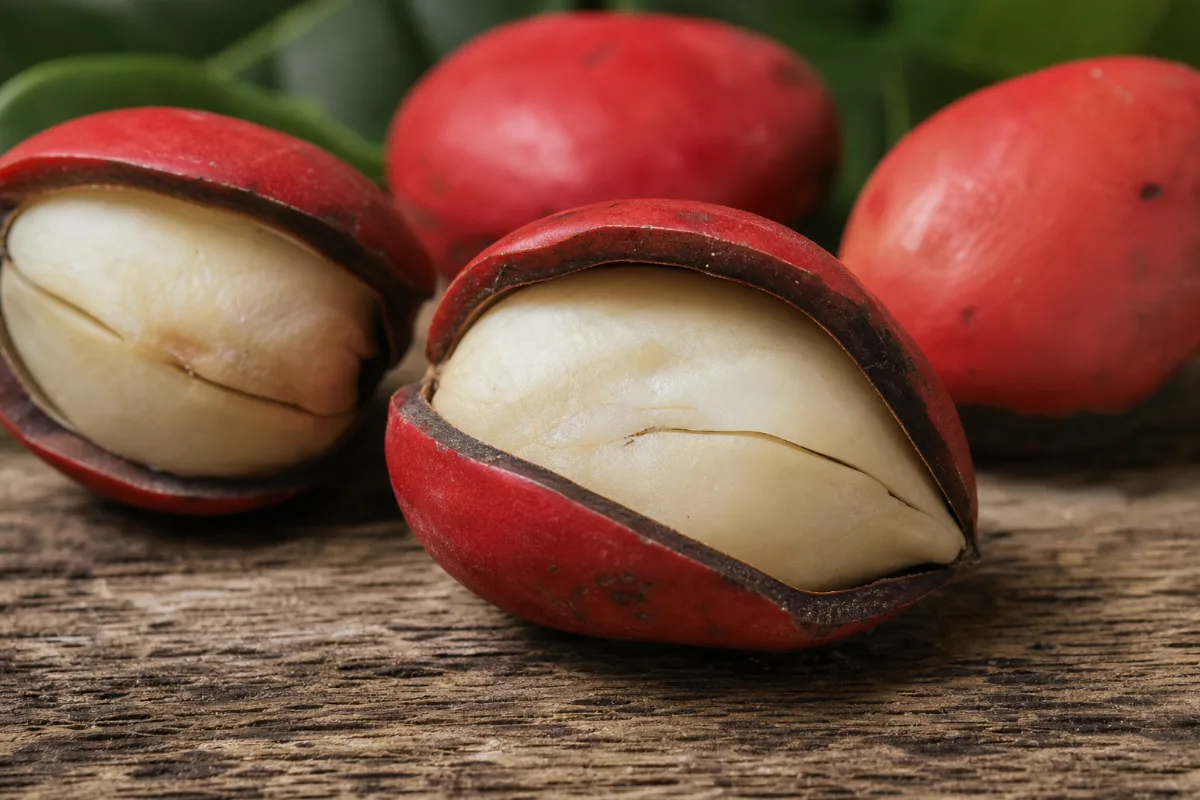
Herbs & Botanicals · West African caffeine seed
Kola Nut
Cola nitida and Cola acuminata · also called Kola nut, cola nut, kola seed, Colae semen (pharmacy name)
Kola nut is the seed of two West African trees, chewed or taken as powder or tincture for a lift because it contains caffeine. No clinical trial of kola itself exists, so we cannot say whether it works for tiredness or anything else. The EU accepts it only as a traditional medicine for short-term tiredness. Caffeine can raise blood pressure and disturb sleep, and the EU says to avoid kola in pregnancy, with ulcers or with heart rhythm problems.
General information, not medical advice. Last substantive update · Not medically reviewed. A named clinician has not signed off on this page. How this page is made
About Kola Nut
Kola nut is a West African caffeine seed. No clinical trial of kola itself exists; the EU accepts it only as a traditional medicine for short-term tiredness, and its safety side follows from the caffeine: effects on blood pressure and sleep, a warning for pregnancy, breastfeeding, ulcers and heart problems, medicine interactions, and a possible cancer concern with years of chewing.
Safety first: caffeine, pregnancy and chewing
Kola nut is a caffeine product. Caffeine in general raises blood pressure a little, shortens and disturbs sleep, and can raise anxiety, especially in larger amounts. The EU says not to use kola if you have stomach or duodenal ulcers, high blood pressure, heart rhythm problems or an overactive thyroid, and not before bedtime.
The EU also says safety in pregnancy, breastfeeding and under age 18 is not established and does not recommend use. Kola is eaten for morning sickness in West Africa, but pregnant rats given a kola extract had changes in their pups' brain development, and higher caffeine intake goes with more pregnancy loss in a meta-analysis, which the authors call inconclusive.
Chewing kola for many years has been linked with mouth and digestive-tract cancer concerns in northern Nigeria, where most chewers also smoke. This is not proven, but it is a reason for caution. Check medicines with a pharmacist: MAO inhibitors, stimulants, sedatives, lithium and medicines that slow caffeine clearance are the main concerns.
What it is
Kola nut is the seed of Cola nitida and Cola acuminata, evergreen trees native to West Africa. The seeds, called nuts, are chewed fresh, or dried and powdered for drinks, tinctures and medicines. Chewing kola is part of hospitality and social ceremonies in Nigeria and many West African countries.
The seed contains caffeine (at least 1.5 percent by European standards), a little theobromine, catechins and other tannins, and amines. The caffeine is partly bound to catechins, which may make its effect more gradual than pure caffeine, as seen in rats.
Kola nut and cola drinks are not the same
Some cola-type drinks have used kola extract as a flavouring since the late 19th century. The drinks may also include other flavourings and added caffeine, so they are not a measure of kola seed, and this page does not describe them. Bitter kola (Garcinia kola) and gotu kola (Centella) are also different plants.
How strong is the evidence?
Very weak for benefits. We found no clinical trial of kola seed or extract for any use. The EU says clinical trials are lacking, and a 2021 review of 164 newer papers found none; most were animal or lab studies. Everything rests on tradition, the seed's caffeine, and rat, mouse, cat and test-tube studies.
The caffeine research is much better, and it is why the cautions on blood pressure, sleep and anxiety are firmer than the benefits. Those results come from caffeine in general, not from kola.
What regulators say
The EU herbal committee (HMPC) adopted a traditional-use monograph on 22 November 2011 for symptoms of temporary fatigue and sensation of weakness, based only on long-standing use. It listed the contraindications and cautions above. It could not create an EU list entry because genotoxicity data were inadequate. In 2021 it saw no need to revise the monograph and found no adverse-effect reports for kola products in its safety databases.
We found no NCCIH page on kola nut and could not open NIH LiverTox or LactMed. FDA and Council of Europe food-use statements are known to us only through the EU report.
At a glance
Traditional uses history, not proof
- Chewed in West Africa as a stimulant and as part of hospitality and social ceremonies; said to suppress hunger, thirst and sleep.
- Dried seed used in African folk medicine as a tonic and for dysentery and other complaints.
- Used in Europe for at least 150 years as a stimulant and tonic for fatigue.
- EU traditional herbal medicine for temporary tiredness and a sensation of weakness (powder, tea, liquid extract, tincture).
Studied for research
- Temporary tiredness: traditional use, no kola trials (insufficient)
- Alertness, exercise and mood: caffeine evidence only (insufficient for kola)
- Blood pressure: raised by caffeine, so a caution (against)
- Blood sugar, weight and digestion: animal studies only (insufficient)
- Male vitality: traditional claims, rat results mixed to negative (insufficient)
- Morning sickness in pregnancy: traditional use with a safety warning (against)
- Cancer cells: lab and computer findings only (insufficient)
Main compounds
- Caffeine, at least 1.5 percent of the dried seed
- Theobromine, a milder stimulant, in small amounts
- Catechins and other tannins (plant antioxidants)
- Amines, which are the basis of a lab cancer concern with chewing
Common forms
- Fresh seed chewed (traditional)
- Dried powdered seed, including as a decoction
- Liquid extract and tincture (EU traditional preparations)
- Capsules (a few markets) and food flavouring extracts, which are not the same product
Research links: EU herbal monograph on kola seed (European Medicines Agency) · EU assessment report on kola seed (European Medicines Agency) · EMA kola seed page and 2021 review addendum · Research Library · Genes & Biomarkers Library
The plant and its history
- Accepted scientific name
- Cola nitida (Vent.) Schott & Endl.
- Naming authority
- Accepted species in the GBIF backbone (key 5406687), exact match, checked 2026-10-25. Cola acuminata (P.Beauv.) Schott & Endl. (GBIF key 5406685) is a second accepted species used in the same way.
- Synonyms
- Per the EMA report (citing Seitz 1992): Cola nitida = Cola vera K.Schum., Sterculia nitida Vent.; Cola acuminata = Sterculia acuminata P.Beauv. GBIF synonym lists were not retrieved.
- Common names
- Kola nut; cola nut; kola seed (English); Cola, nuez de (Spanish); Kola (noix de) (French); Kolasamen (German); Kolanoot (Dutch)
- Botanical family
- Malvaceae (GBIF). Older sources, including the 2011 EMA report, say Sterculiaceae.
- Classification
- Plantae > Tracheophyta > Magnoliopsida > Malvales > Malvaceae > Cola > Cola nitida
- Native range
- West Africa. The EMA report says Cola nitida centres were Sierra Leone, Benin, Ghana and Ivory Coast, and that Cola acuminata's natural range stretches from Nigeria to Gabon; both were spread elsewhere in West Africa and to the Caribbean (Jamaica).
- Habitat
- Not verified beyond the above.
- What the plant looks like
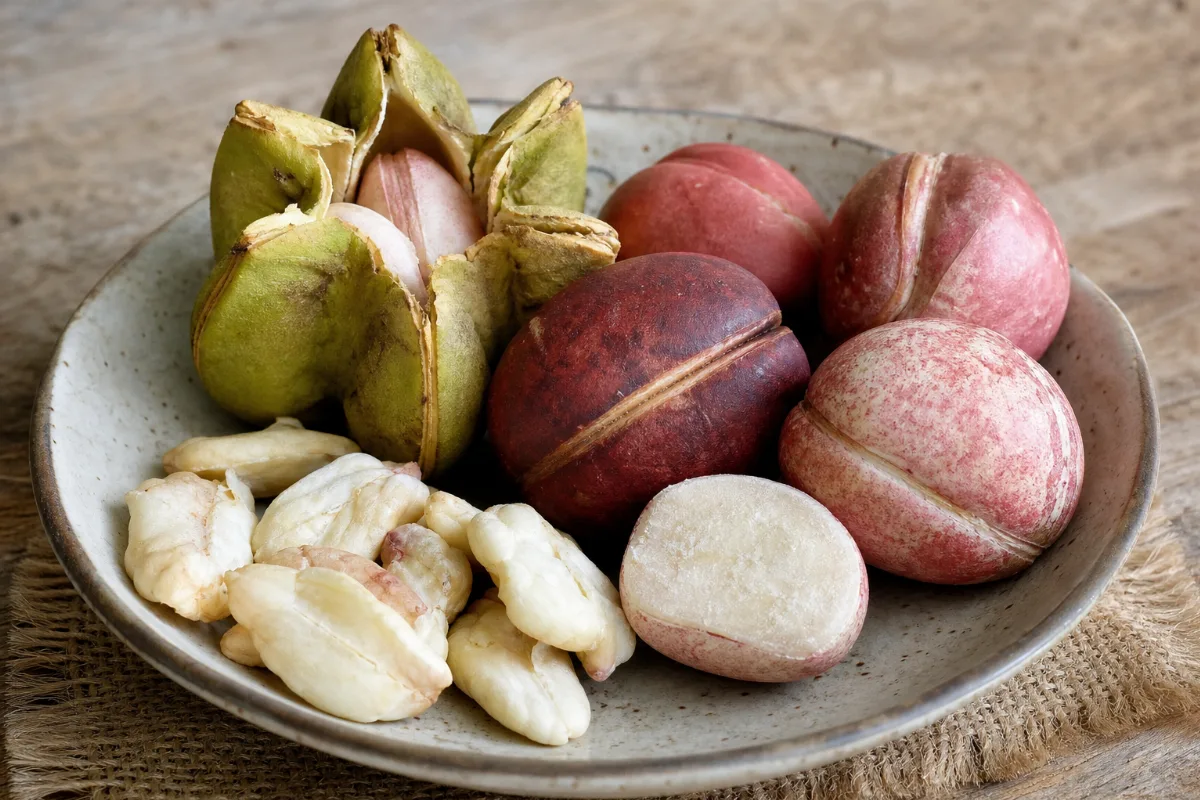
- Fruit: Two to six woody follicles in a star; each holds 5 to 10 seeds (the 'nuts'), which have two cotyledons in Cola nitida and three to six in Cola acuminata (EMA report). Seeds are red or white in C. nitida and white or crimson in C. acuminata.
- Cultivation
- Cola genus has about 140 species; C. nitida and C. acuminata are the most used commercially (EMA report, citing Bruneton 1998).
- Harvest and processing
- Follicles are opened, seeds recovered and left in a pile or in water so the pulpy coat rots off; seeds are used fresh (chewed) or dried. Caffeine content differs for fresh, cured, sun-dried and milled-and-stored seed (EMA report).
- Look-alikes and adulterants
- Name: Garcinia kola (bitter kola); Note: A different plant, chewed in West Africa; the 1995 amine study analysed it separately from Cola.; Name: Gotu kola (Centella asiatica); Note: Unrelated plant with a similar name; has its own page.; Name: Cola soft-drink flavourings; Note: Kola extract is one flavouring ingredient in some cola drinks; the drinks are not the same as the seed.
The plant and the parts used
Traditional use and history history, not clinical proof
| Tradition or era | Documented use | Source |
|---|---|---|
| West Africa | Seeds are chewed as a stimulant and are part of hospitality and social ceremonies in Nigeria and many West African countries; users say they suppress hunger, thirst and sleep. Dried seed is used in folk medicine as a tonic, mild stimulant and remedy for dysentery. | s-ema-hmpc-cola-assessment-2012 |
| Trade | The EMA report says intra-African trade in kola dates back to at least the 14th century, with firm written records of exports to England and the United States from the mid-19th century. | s-ema-hmpc-cola-assessment-2012 |
| Europe | Used as a stimulant and tonic for at least 150 years. The British Herbal Pharmacopoeia (1971) and the British Herbal Compendium (1992) list kola for fatigue and depressive states, among other uses. | s-ema-hmpc-cola-assessment-2012 |
| Cola drinks | The EMA report says a druggist created Coca-Cola in 1886 by combining coca and kola extracts as a headache and hangover remedy. | s-ema-hmpc-cola-assessment-2012 |
| EU regulation | HMPC adopted a traditional-use monograph on 22 November 2011 and decided in 2021 not to revise it. | s-ema-hmpc-cola-monograph-2011 |
Traditional use shows how a plant was used. It does not show that a supplement works or is safe today.
What is inside, and how it may work
What the plant contains and how those compounds act in cells and animals. Laboratory and animal mechanisms are not proven effects in people.
Main compounds
| Compound | Family | Where it is concentrated | Activity studied | Level of evidence |
|---|---|---|---|---|
| Caffeine PubChem 2519 | methylxanthine alkaloid | Seed 1.5 to 3.2 percent of the dried seed, 2.5 percent on average (Bruneton 1998, as quoted by the EMA); the report also gives 1.5 to 3.8 percent depending on variety and treatment. Ph. Eur. minimum 1.5 percent. | Central nervous system stimulant; raises alertness, can disturb sleep, raise blood pressure and speed the heart; crosses the placenta and enters breast milk. The EMA report attributes kola's main effect to it. 11 18 20 | Human data |
| Theobromine PubChem 5429 | methylxanthine alkaloid | Seed Traces, 0.02 to 0.08 percent (EMA report). In a study of seed accessions caffeine was about 21 times higher than theobromine. | A milder methylxanthine, related to caffeine. 11 20 | Pharmacological theory |
| Catechin and epicatechin PubChem 9064 | flavan-3-ol polyphenols | Seed Catechin 7 to 24 mg/g in C. acuminata and 2 to 10 mg/g in C. nitida (EMA report citing Niemenak 2008). Epicatechin PubChem CID 72276. | Antioxidant in test tubes; binds caffeine, which may slow its release (stated as a suggestion in the EMA report). 11 2 20 | Laboratory research |
| Tannins (including proanthocyanidins, colatin, colanin) | polyphenols | Seed 5 to 10 percent of the seed (EMA report). | Astringent; the reason given for traditional use against diarrhoea. 11 | Traditional use |
| Aliphatic amines (dimethylamine, pyrrolidine, ethylamine and others) | primary and secondary amines | Seed Mg/kg amounts per the EMA report (for example dimethylamine 4 mg/kg and pyrrolidine 7.4 mg/kg in C. acuminata). | Can form methylating nitrosamides after nitrosation in the lab; the basis of the cancer concern with chewing. 4 11 | Laboratory research |
| Other compounds found by chemical screening | mixed | Seed A 2026 GC-MS screen of a methanol extract identified 78 compounds and lists yohimbine among those selected for computer modelling; amounts are not given in the abstract and the identification was by library match. | No activity in people shown. 2 | Laboratory research |
Mechanisms, receptors and pathways
| Target or pathway | Gene or receptor | What was found | Level |
|---|---|---|---|
| Adenosine receptor blockade by caffeine | adenosine receptors | Caffeine blocks adenosine receptors in the brain, blood vessels, kidneys, heart, gut and airways (EMA report, citing Burdock 2009). This is the main proposed basis for kola's stimulant action. 11 18 | Pharmacological theory |
| Gradual stimulant effect in rats | central nervous system | Rats given kola extract (6.2% caffeine) or pure caffeine at the same caffeine dose showed similar stimulant effects, but the extract's effect built up more gradually and the brain-wave pattern differed (EMA report). The caffeine-catechin complex in the seed is suggested as the reason. 11 | Animal research |
| Stomach acid secretion | cholinergic and histamine pathways | In cats, kola extract raised stomach acid more than equal-caffeine solution, and atropine or cimetidine almost abolished the response, suggesting more than caffeine is involved (EMA report, Osim 1991). 11 | Animal research |
| Blood vessel tone | adrenergic and cholinergic vessel responses | In rats, 6 weeks of kola extract or kola caffeine raised mean arterial pressure and reduced aortic ring relaxation; decaffeinated extract also reduced some responses. 22 | Animal research |
| Antioxidant and anti-elastase effects | red blood cells; neutrophil elastase | Extracts protected red cells from oxidation and decaffeinated extract inhibited elastase in test-tube systems (EMA report). 11 | Laboratory research |
| Nitrosation of seed amines | none (chemistry) | Kola nuts treated with nitrite in the lab produced a high methylating activity (170 to 490 micrograms/kg as nitrosomethylurea equivalents). 4 | Laboratory research |
| Drug handling | P-glycoprotein and conjugating enzymes (proposed) | Cola nitida cut metoclopramide exposure in rabbits; the authors suggest caffeine induces transport proteins and enzymes but did not test this. 3 | Animal research |
Absorption, metabolism and elimination
- Absorption
- No kola-specific data (EMA). For caffeine in general the EMA report says absorption is rapid and almost complete (99% within 45 minutes), peak levels around 50 micromoles per litre after normal use, and a half-life of 2.5 to 10 hours.
- Distribution
- Caffeine reaches all tissues, crosses the placenta and enters breast milk (EU monograph; EMA report).
- Metabolism
- Caffeine is broken down in the liver to more than 25 products, with less than 5 percent excreted unchanged; the enzyme CYP1A2 is central (Carrillo 2000, EMA report). In the seed, caffeine is partly bound to catechins and colatin, which may slow its release.
- Elimination
- Half-life in adults 2.5 to 10 hours; much longer in newborns (97.5 hours in a neonate, 80 hours in a newborn and 2.6 hours at six months, as quoted by the EMA report).
- Bioavailability
- No data on kola seed or its preparations (EMA).
Isolated compounds versus whole extracts
Kola seed is a mixture of caffeine, a little theobromine, catechins and other tannins. Rat studies quoted by the EMA found kola extract acted like the same amount of caffeine but more gradually, which the authors link to caffeine bound in the seed. No human study compared whole kola with pure caffeine. The 2009 food-safety review treats kola extract like roughly equal caffeine. Kola nut, kola extract (a flavouring) and caffeine pills are different products and their results cannot be swapped.
Nutritional composition
The seed also contains protein (8 to 12 percent), fibre, potassium and some B vitamins and vitamin C, according to the EMA report; amounts eaten as a chewed nut are small and kola is not used as a nutrient source.
10 not enough evidence2 evidence against
What was looked at
The 12 benefits and uses checked for Kola Nut, each with how strong the evidence is. Tap one to open it.
- Temporary tiredness and weakness (EU traditional use)Not enough evidence
- Alertness and focus (caffeine effect)Not enough evidence
- Exercise and physical performance (caffeine effect)Not enough evidence
- Low mood and exhaustion (old European use)Not enough evidence
- Memory and anxiety in animalsNot enough evidence
- Blood sugar and blood fats (rats)Not enough evidence
- Blood pressure and heart: a caution, not a benefitEvidence against
- Appetite and body weightNot enough evidence
- Diarrhoea, dysentery and stomach (traditional use)Not enough evidence
- Male vitality and fertility (traditional use)Not enough evidence
- Morning sickness (traditional use, with a warning)Evidence against
- Antioxidant, anti-inflammatory and cancer-cell findings (lab only)Not enough evidence
Lab markers tracked in the studies
Repeated sprint speed (caffeine capsule trial)Heart rate with caffeineBlood pressure (caffeine supplements)Blood glucose (diabetic rats)
What is Kola Nut good for?
The main proposed uses and how strong the human evidence is for each. "Insufficient" means there is not enough evidence to judge, and "against" means the evidence points the wrong way. For kola nut every row is traditional use, caffeine in general, or animal and lab work: no trial tested kola in people. Ratings are this team's own reading, not formal grades.
Benefits, one by one
Each card is a research question, not a promise. Tap a goal to filter. Open a card to see the studies, doses and limits.
Temporary tiredness and weakness (EU traditional use)
Not enough evidenceIn the EU, kola seed preparations are accepted only as a traditional medicine for short-term tiredness and a feeling of weakness. No trial of kola itself exists. The idea rests on long use and on the seed's caffeine.
4 studiesNo dose advice is given on this page.
Studies, doses and limits
What the trials found
The EU herbal committee (HMPC) says clinical trials of kola seed for fatigue are lacking and that well-established medicinal use is not possible. It still found the use plausible because of the caffeine. A review of 164 newer papers in 2021 found no clinical trials and no reason to change the monograph.
Results
No trial of kola seed on tiredness exists. The regulator calls the effect plausible, not proven.
Why this rating
No human trial of kola for tiredness. The plausibility argument rests on caffeine in general.
Form and dose studied
No dose advice is given on this page.
Who was studied
Adults only; the EU does not recommend use under 18, in pregnancy or while breastfeeding.
Limits
The same caffeine that may lift tiredness can disturb sleep, speed the heart and raise blood pressure. See the safety file.
Why researchers looked
Kola seed has been used for centuries as a stimulant, and caffeine is known to reduce tiredness.
Traditional use
Chewed in West Africa for its stimulating effect and as part of hospitality and social ceremonies. In Europe the dried seed has been used for at least 150 years as a tonic and stimulant (EMA assessment report).
Proposed mechanism Pharmacological theory
The EU assessors say the use can be explained by the seed's caffeine content. This is a general caffeine explanation, not a test of kola.
A proposed mechanism does not show that the effect happens in people.
The EU monograph says not to use before bedtime and to see a doctor if symptoms last more than a week.
Alertness and focus (caffeine effect)
Not enough evidenceKola seed contains caffeine, which in general raises alertness and attention. We found no trial that tested kola on attention or memory.
2 studiesNot applicable.
Studies, doses and limits
What the trials found
A 2016 review of caffeine in general found that low to moderate doses improve alertness, vigilance, attention and reaction time, with less consistent effects on memory and higher-order decisions. In rats, kola extract produced stimulant effects like caffeine but more gradual, and the extract's brain-wave pattern was broader (EMA report).
Results
Caffeine in general improves alertness. For kola itself there is no human result; rat tests show a caffeine-like but slower stimulant effect.
Effect sizes as reported
McLellan 2016 reports improved alertness, vigilance, attention and reaction time after low to moderate caffeine doses (no pooled numbers in the abstract).
Why this rating
The evidence is for caffeine, not kola. No attention or memory trial of kola was found.
Who was studied
Healthy adults (for caffeine in general).
Limits
Caffeine content of kola varies with variety and treatment (1.5 to 3.8 percent in the EMA report), so the effect of a given piece or product is unpredictable.
Why researchers looked
Kola is chewed to stay awake and alert. Its caffeine blocks the brain's sleepiness signals.
Traditional use
Consumers say kola seed suppresses hunger, thirst and sleep (EMA assessment report, traditional claims).
Proposed mechanism Pharmacological theory
Caffeine blocks adenosine receptors, which dampens sleepiness (stated in the EMA report for caffeine).
A proposed mechanism does not show that the effect happens in people.
More caffeine can bring jitteriness, anxiety and poor sleep.
Exercise and physical performance (caffeine effect)
Not enough evidenceCaffeine can help exercise performance. No trial of kola for exercise was found.
2 studiesNot applicable.
Studies, doses and limits
What the trials found
The EMA report describes two caffeine trials: 21 active men given a caffeine capsule ran repeated sprints slightly faster than on placebo, and 24 trained cyclists who ate a bar with caffeine rode longer to exhaustion and did better on thinking tests. A 2016 review says physical gains are seen with caffeine doses above about 200 mg. None used kola.
Results
Caffeine capsule trial in 21 men: fastest sprint 0.06 s (1.4%) quicker than placebo, with a 3.4 beats-per-minute higher heart rate. Cycling bar trial in 24 cyclists: longer time to exhaustion with caffeine than with the no-caffeine bar (P < 0.05).
Effect sizes as reported
As reported in the EMA assessment report (Glaister 2008; Hogervorst 2008). Those two papers were not opened separately.
Why this rating
Caffeine trials only, quoted second-hand from the EMA report. No kola trial for exercise.
Who was studied
Physically active adults and trained cyclists (caffeine trials).
Limits
Results for caffeine cannot be moved to kola. Kola contains catechins that bind caffeine, which may change how it is released.
Why researchers looked
Kola is used for strength and endurance in folk use, and caffeine is a well-known sports aid.
Traditional use
Kola is thought in African folk medicine to increase energy and strength and dispel drowsiness (EMA report).
Proposed mechanism Pharmacological theory
General caffeine effects on muscle and fatigue; not tested with kola.
A proposed mechanism does not show that the effect happens in people.
Caffeine raised heart rate in the sprint trial.
Low mood and exhaustion (old European use)
Not enough evidenceOld British herbal books list kola for depressive states and exhaustion. No trial of kola for mood exists.
1 studiesNot applicable.
Studies, doses and limits
What the trials found
No human study of kola for mood was found. The EU monograph covers only temporary tiredness and weakness.
Results
No evidence in people.
Why this rating
Traditional listing only.
Limits
Historic claims; low mood needs proper medical care.
Why researchers looked
Historic use only: British herbal references listed 'depressive states' and 'melancholia'.
Traditional use
The British Herbal Pharmacopoeia (1971 edition) and the British Herbal Compendium (1992) list kola for depressive states, exhaustion and related complaints (EMA report). The EU did not accept this as an indication.
Proposed mechanism Pharmacological theory
None proposed beyond caffeine's stimulant action.
A proposed mechanism does not show that the effect happens in people.
Caffeine can worsen anxiety. A sudden stop of caffeine has been linked with a rise in lithium level in one case report; see the safety file.
Memory and anxiety in animals
Not enough evidenceA few rat studies looked at memory and anxiety. They are animal findings and tell us little about people.
1 studiesNot applicable.
Studies, doses and limits
What the trials found
The 2021 EMA review says most newer papers were animal or lab studies, including one on anxiety in rats and one on cognitive problems in rats (named in the addendum; the original papers were not opened here).
Results
Animal only. No human data.
Why this rating
Animal studies, summarised second-hand.
Who was studied
Rats.
Limits
We did not open the original rat papers.
Why researchers looked
Researchers test African plant extracts in rats for brain effects.
Traditional use
Not a traditional use claim.
Proposed mechanism Animal research
Not established.
A proposed mechanism does not show that the effect happens in people.
Not applicable.
Blood sugar and blood fats (rats)
Not enough evidenceKola extract lowered blood sugar and blood fats in diabetic rats. There is no human trial.
2 studiesNot applicable.
Studies, doses and limits
What the trials found
In type 2 diabetic rats, a hot water extract at 150 and 300 mg/kg for 6 weeks lowered blood glucose, triglycerides, LDL cholesterol, fructosamine, ALT and uric acid, and raised insulin and HDL. The 2021 EMA review notes several animal and lab papers on antidiabetic effects. No human study was found.
Results
Rat study only.
Effect sizes as reported
Treated diabetic rats had lower glucose and triglycerides and higher insulin and HDL (p<0.05); the abstract gives no pooled numbers.
Why this rating
Animal data only.
Who was studied
Diabetic rats.
Limits
Rats are not people and doses are not human doses.
Why researchers looked
Cola nitida is used in West African folk medicine for diabetes among other ailments.
Traditional use
Used in Trinidad and Tobago for diabetes and high blood pressure (EMA report, Cola acuminata).
Proposed mechanism Animal research
Caffeine and theobromine were found in the extract by NMR, and the authors suggest they may explain the effect. Not proven.
A proposed mechanism does not show that the effect happens in people.
Caffeine can affect blood sugar in some people. Ask a doctor if you use diabetes medicine.
Blood pressure and heart: a caution, not a benefit
Evidence againstCaffeine raises blood pressure a little on average. Kola extract raised blood pressure in rats, and the EU lists high blood pressure and heart rhythm problems as reasons not to use kola.
4 studiesNot applicable.
Studies, doses and limits
What the trials found
A 2023 meta-analysis of 8 trials of caffeine supplements found small average rises in systolic and diastolic pressure. In rats, six weeks of kola extract or kola caffeine raised mean arterial pressure. The EU monograph lists hypertension and arrhythmia as contraindications.
Results
Caffeine raised pressure on average; kola raised it in rats. No human kola trial.
Effect sizes as reported
Systolic +1.94 mmHg (95% CI 0.52 to 3.35); diastolic +1.66 mmHg (95% CI 0.75 to 2.57) for caffeine supplements in adults.
Why this rating
Evidence points to a small rise in blood pressure, not a benefit.
Who was studied
Adults (caffeine trials); rats (kola).
Limits
Caffeine, not kola, in the human meta-analysis.
Why researchers looked
Safety question: kola is a caffeine source.
Traditional use
Folk use for high blood pressure is reported for Cola acuminata in Trinidad and Tobago (EMA report), but no evidence supports it.
Proposed mechanism Pharmacological theory
Caffeine blocks adenosine receptors in blood vessels and the heart (EMA report).
A proposed mechanism does not show that the effect happens in people.
Do not use with high blood pressure or heart rhythm problems per the EU monograph.
Appetite and body weight
Not enough evidenceFolk reports say kola reduces hunger. Mice and rats fed kola ate less and lost weight, but there is no human trial.
2 studiesNot applicable.
Studies, doses and limits
What the trials found
In mice fed kola seed at 25% of chow for 28 days, food intake and weight gain were lower than control (EMA report, Umoren 2009). In rats given kola extract for six weeks, body weight also fell (Salahdeen 2014). No human weight-loss trial of kola was found.
Results
Animal only.
Effect sizes as reported
Lower food intake and body weight change in mice (P<0.001); lower body weight in rats (p<0.05).
Why this rating
Animal data only; weight loss in animals at high intakes can also be a sign of toxicity.
Who was studied
Mice and rats.
Limits
A large decline in rat weight was also reported at high doses in an older study quoted by the EMA.
Why researchers looked
Consumers say kola suppresses hunger, thirst and sleep.
Traditional use
Traditional claims of hunger suppression and use as an appetite remedy (EMA report).
Proposed mechanism Animal research
Caffeine reduces food intake in animals, but in mice the kola diet did not behave exactly like a caffeine diet.
A proposed mechanism does not show that the effect happens in people.
Caffeine can disturb sleep and raise heart rate.
Diarrhoea, dysentery and stomach (traditional use)
Not enough evidenceKola has been used for diarrhoea and dysentery because of its tannins. But kola can irritate the stomach and raise stomach acid, and the EU lists ulcers as a reason not to use it.
2 studiesNot applicable.
Studies, doses and limits
What the trials found
No human study. In rats and cats kola extract raised stomach acid more than an equal amount of caffeine in cats (more than 6.5-fold over baseline versus about 42% of that with caffeine). The EU lists gastric and duodenal ulcers as contraindications.
Results
Traditional use only; animal data point to stomach irritation.
Effect sizes as reported
Cats: acid secretion more than 6.5 times baseline with kola extract (Osim 1991, as quoted in the EMA report).
Why this rating
No human trial; animal signals of harm.
Who was studied
Cats and rats.
Limits
Animal results quoted second-hand.
Why researchers looked
Tannins are astringent. Old European and African herbals list kola for diarrhoea.
Traditional use
Dried seed used in African folk medicine for dysentery; British herbals list dysentery and atonic diarrhoea (EMA report).
Proposed mechanism Animal research
Tannins tighten tissues; caffeine and other compounds stimulate stomach acid.
A proposed mechanism does not show that the effect happens in people.
Avoid with stomach or duodenal ulcers.
Male vitality and fertility (traditional use)
Not enough evidenceKola is used in parts of Africa for impotence and fertility, but there is no human study. In rats, some kola extracts lowered sperm counts and testosterone.
2 studiesNot applicable.
Studies, doses and limits
What the trials found
No human study. Several rat studies in the 2021 addendum found lower testosterone and sperm numbers with water extracts; one study with crude extract found no change. The assessor said the effects were not considered relevant to the human situation given the doses.
Results
Traditional claims; rat studies mixed to negative.
Effect sizes as reported
Rats: lower sperm count and testosterone with some water extracts (p<0.05); no change with a crude methanol extract in another study.
Why this rating
Traditional claims only; animal results do not support a benefit.
Who was studied
Male rats.
Limits
Original rat papers not opened.
Why researchers looked
Folk use in West and East Africa.
Traditional use
Used for erectile dysfunction in western Uganda and for sterility in Benin (EMA report).
Proposed mechanism Animal research
Not established.
A proposed mechanism does not show that the effect happens in people.
The EMA found no data on kola and human fertility.
Morning sickness (traditional use, with a warning)
Evidence againstIn Nigeria, kola is used in early pregnancy for morning sickness. The EU says not to use it in pregnancy, and a rat study found brain changes in pups.
3 studiesNot applicable.
Studies, doses and limits
What the trials found
No human trial. In pregnant rats, kola extract at 400 to 800 mg/kg caused changes in the cerebellum of pups. The EU does not recommend kola in pregnancy.
Results
Traditional use; animal signal of harm.
Why this rating
No evidence of benefit and an animal harm signal.
Who was studied
Pregnant rats.
Limits
Rat study at high doses.
Why researchers looked
Popular remedy in Nigeria and West Africa, per a 2021 rat study.
Traditional use
Used against vomiting of pregnancy and migraine in Nigeria (EMA report); commonly eaten by pregnant women in the first trimester (Atiba 2021).
Proposed mechanism Animal research
Not established.
A proposed mechanism does not show that the effect happens in people.
Do not use kola in pregnancy without medical advice.
Antioxidant, anti-inflammatory and cancer-cell findings (lab only)
Not enough evidenceKola extracts protected red blood cells in test tubes and were toxic to some cancer cells in dishes. A 2026 paper used computer models. None of this has been tested in people.
2 studiesNot applicable.
Studies, doses and limits
What the trials found
The EMA report describes red blood cell protection and an anti-elastase effect in test tubes, and cytotoxicity of extracts on cancer cell lines. A 2026 study identified 78 compounds in a methanol extract and modelled 15 against a cancer-related protein.
Results
Lab and computer only.
Why this rating
No human data.
Who was studied
Cells and computer models.
Limits
Findings in dishes often do not carry over to people.
Why researchers looked
Kola seed contains catechins and other polyphenols.
Traditional use
Not a traditional use.
Proposed mechanism Laboratory research
Catechins and caffeine act as antioxidants in lab systems (EMA report).
A proposed mechanism does not show that the effect happens in people.
Chewing kola has also been linked to mouth cancer concerns; see the safety file.
Connections to the rest of health
How Kola Nut connects to the rest of our health knowledge graph. Every link says what kind of connection it is. A safety link (for example to the liver) is a warning, not a benefit. A study that merely mentions a topic never creates a benefit link.
Explore every connection: goals, body systems, organs, symptoms, genes
A. Wellness goals
| Connected to | Kind of connection | Evidence status | Context | Studies |
|---|---|---|---|---|
| Reduce Fatigue | Traditional use | Not enough evidence | Temporary tiredness and weakness (EU traditional use): In the EU, kola seed preparations are accepted only as a traditional medicine for short-term tiredness and a feeling of weakness. No trial of kola itself exists. The idea rests on long use and on the seed's caffeine. | 10 11 12 18 |
| Energy Boost | Traditional use | Not enough evidence | Temporary tiredness and weakness (EU traditional use): In the EU, kola seed preparations are accepted only as a traditional medicine for short-term tiredness and a feeling of weakness. No trial of kola itself exists. The idea rests on long use and on the seed's caffeine. | 10 11 12 18 |
| Mental Clarity | Biological association | Not enough evidence | Alertness and focus (caffeine effect): Kola seed contains caffeine, which in general raises alertness and attention. We found no trial that tested kola on attention or memory. | 11 18 |
| Better Focus | Biological association | Not enough evidence | Alertness and focus (caffeine effect): Kola seed contains caffeine, which in general raises alertness and attention. We found no trial that tested kola on attention or memory. | 11 18 |
| Physical Stamina | Biological association | Not enough evidence | Exercise and physical performance (caffeine effect): Caffeine can help exercise performance. No trial of kola for exercise was found. | 11 18 |
| Endurance Support | Biological association | Not enough evidence | Exercise and physical performance (caffeine effect): Caffeine can help exercise performance. No trial of kola for exercise was found. | 11 18 |
| Peak Performance | Biological association | Not enough evidence | Exercise and physical performance (caffeine effect): Caffeine can help exercise performance. No trial of kola for exercise was found. | 11 18 |
| Mood Balance | Traditional use | Not enough evidence | Low mood and exhaustion (old European use): Old British herbal books list kola for depressive states and exhaustion. No trial of kola for mood exists. | 11 |
| Burnout Recovery | Traditional use | Not enough evidence | Low mood and exhaustion (old European use): Old British herbal books list kola for depressive states and exhaustion. No trial of kola for mood exists. | 11 |
| Memory Support | Preliminary mechanism | Not enough evidence | Memory and anxiety in animals: A few rat studies looked at memory and anxiety. They are animal findings and tell us little about people. | 12 |
| Anxiety Support | Preliminary mechanism | Not enough evidence | Memory and anxiety in animals: A few rat studies looked at memory and anxiety. They are animal findings and tell us little about people. | 12 |
| Blood Sugar Balance | Preliminary mechanism | Not enough evidence | Blood sugar and blood fats (rats): Kola extract lowered blood sugar and blood fats in diabetic rats. There is no human trial. | 9 12 |
| Cholesterol Balance | Preliminary mechanism | Not enough evidence | Blood sugar and blood fats (rats): Kola extract lowered blood sugar and blood fats in diabetic rats. There is no human trial. | 9 12 |
| Metabolic Health | Preliminary mechanism | Not enough evidence | Blood sugar and blood fats (rats): Kola extract lowered blood sugar and blood fats in diabetic rats. There is no human trial. | 9 12 |
| Blood Pressure Support | Adverse effect or risk | Evidence against | Blood pressure and heart: a caution, not a benefit: Caffeine raises blood pressure a little on average. Kola extract raised blood pressure in rats, and the EU lists high blood pressure and heart rhythm problems as reasons not to use kola. | 1 22 10 11 |
| Heart Health | Adverse effect or risk | Evidence against | Blood pressure and heart: a caution, not a benefit: Caffeine raises blood pressure a little on average. Kola extract raised blood pressure in rats, and the EU lists high blood pressure and heart rhythm problems as reasons not to use kola. | 1 22 10 11 |
| Weight Management | Preliminary mechanism | Not enough evidence | Appetite and body weight: Folk reports say kola reduces hunger. Mice and rats fed kola ate less and lost weight, but there is no human trial. | 11 22 |
| Digestive Support | Traditional use | Not enough evidence | Diarrhoea, dysentery and stomach (traditional use): Kola has been used for diarrhoea and dysentery because of its tannins. But kola can irritate the stomach and raise stomach acid, and the EU lists ulcers as a reason not to use it. | 11 10 |
| Gut Health | Traditional use | Not enough evidence | Diarrhoea, dysentery and stomach (traditional use): Kola has been used for diarrhoea and dysentery because of its tannins. But kola can irritate the stomach and raise stomach acid, and the EU lists ulcers as a reason not to use it. | 11 10 |
| Mens Vitality | Traditional use | Not enough evidence | Male vitality and fertility (traditional use): Kola is used in parts of Africa for impotence and fertility, but there is no human study. In rats, some kola extracts lowered sperm counts and testosterone. | 11 12 |
| Libido Support | Traditional use | Not enough evidence | Male vitality and fertility (traditional use): Kola is used in parts of Africa for impotence and fertility, but there is no human study. In rats, some kola extracts lowered sperm counts and testosterone. | 11 12 |
| Fertility Support | Traditional use | Not enough evidence | Male vitality and fertility (traditional use): Kola is used in parts of Africa for impotence and fertility, but there is no human study. In rats, some kola extracts lowered sperm counts and testosterone. | 11 12 |
| Womens Wellness | Contraindication | Evidence against | Morning sickness (traditional use, with a warning): In Nigeria, kola is used in early pregnancy for morning sickness. The EU says not to use it in pregnancy, and a rat study found brain changes in pups. | 5 11 10 |
| Inflammation Balance | Preliminary mechanism | Not enough evidence | Antioxidant, anti-inflammatory and cancer-cell findings (lab only): Kola extracts protected red blood cells in test tubes and were toxic to some cancer cells in dishes. A 2026 paper used computer models. None of this has been tested in people. | 2 11 |
| Immune Support | Preliminary mechanism | Not enough evidence | Antioxidant, anti-inflammatory and cancer-cell findings (lab only): Kola extracts protected red blood cells in test tubes and were toxic to some cancer cells in dishes. A 2026 paper used computer models. None of this has been tested in people. | 2 11 |
B. Body systems
| Connected to | Kind of connection | Evidence status | Context | Studies |
|---|---|---|---|---|
| Heart and blood pressure | Adverse effect or risk | Moderate certainty | Caffeine supplements raised blood pressure slightly in a meta-analysis; kola raised it in rats; EU lists hypertension and arrhythmia as contraindications. Caffeine raised blood pressure slightly in a meta-analysis; EU lists hypertension and arrhythmia as contraindications. Preparation or compound: Caffeine in kola seed |
1 22 10 |
| Sleep | Adverse effect or risk | Moderate certainty | Caffeine meta-analysis: less total sleep time and efficiency; EU says not before bedtime. Preparation or compound: Caffeine in kola seed |
15 10 |
| Stomach and duodenum | Contraindication | Low certainty | EU contraindicates ulcers; kola raised stomach acid in animals. Preparation or compound: Kola seed |
10 11 |
| Mouth and digestive tract (cancer concern) | Adverse effect or risk | Not enough evidence | Concern from lab amine data and Nigerian hospital series; no controlled study; tobacco confounds. Concern from lab and Nigerian hospital data; not proven; tobacco confounds. Preparation or compound: Habitual kola chewing |
11 4 21 |
| Pregnancy and breastfeeding | Contraindication | Low certainty | EU not recommended; caffeine meta-analysis shows higher pregnancy loss at higher intake; rat pup brain changes. EU does not recommend use; rat pup brain changes. Preparation or compound: Kola seed and its caffeine |
10 8 5 |
| Nervous System | Biological association | Not enough evidence | Studied for: Temporary tiredness and weakness (EU traditional use) Studied for: Alertness and focus (caffeine effect) | 10 11 12 18 |
| Musculoskeletal System | Biological association | Not enough evidence | Studied for: Exercise and physical performance (caffeine effect) | 11 18 |
| Endocrine System | Biological association | Not enough evidence | Studied for: Blood sugar and blood fats (rats) | 9 12 |
| Metabolism Weight | Biological association | Not enough evidence | Studied for: Blood sugar and blood fats (rats) Studied for: Appetite and body weight | 9 12 11 22 |
| Cardiovascular System | Biological association | Evidence against | Studied for: Blood pressure and heart: a caution, not a benefit | 1 22 10 11 |
| Digestive System | Biological association | Not enough evidence | Studied for: Diarrhoea, dysentery and stomach (traditional use) | 11 10 |
| Reproductive System | Biological association | Not enough evidence | Studied for: Male vitality and fertility (traditional use) Studied for: Morning sickness (traditional use, with a warning) | 11 12 5 10 |
| Immune System | Biological association | Not enough evidence | Studied for: Antioxidant, anti-inflammatory and cancer-cell findings (lab only) | 2 11 |
I. Biomarkers
| Connected to | Kind of connection | Evidence status | Context | Studies |
|---|---|---|---|---|
| Repeated sprint speed (caffeine capsule trial) | Biological association | Low certainty | Measured in trials: lowered. A lab change is not the same as a health benefit. | 11 |
| Heart rate with caffeine | Biological association | Low certainty | Measured in trials: raised. A lab change is not the same as a health benefit. | 11 |
| Blood pressure (caffeine supplements) | Biological association | Moderate certainty | Measured in trials: raised. A lab change is not the same as a health benefit. | 1 22 |
| Blood glucose (diabetic rats) | Biological association | Not enough evidence | Measured in trials: lowered. A lab change is not the same as a health benefit. | 9 |
J. Genes, receptors and enzymes
K. Biological pathways
| Connected to | Kind of connection | Evidence status | Context | Studies |
|---|---|---|---|---|
| P-glycoprotein (proposed) | Preliminary mechanism | Animal | Suggested by the authors of the rabbit metoclopramide study; not tested. | 3 |
L. Active compounds
| Connected to | Kind of connection | Evidence status | Context | Studies |
|---|---|---|---|---|
| Caffeine | Biological association | Human | Central nervous system stimulant; raises alertness, can disturb sleep, raise blood pressure and speed the heart; crosses the placenta and enters breast milk. The EMA report attributes kola's main effect to it. Preparation or compound: Seed |
11 18 20 |
| Theobromine | Biological association | Pharmacological theory | A milder methylxanthine, related to caffeine. Preparation or compound: Seed |
11 20 |
| Catechin and epicatechin | Biological association | In vitro | Antioxidant in test tubes; binds caffeine, which may slow its release (stated as a suggestion in the EMA report). Preparation or compound: Seed |
11 2 20 |
| Tannins (including proanthocyanidins, colatin, colanin) | Biological association | Traditional use | Astringent; the reason given for traditional use against diarrhoea. Preparation or compound: Seed |
11 |
| Aliphatic amines (dimethylamine, pyrrolidine, ethylamine and others) | Biological association | In vitro | Can form methylating nitrosamides after nitrosation in the lab; the basis of the cancer concern with chewing. Preparation or compound: Seed |
4 11 |
| Other compounds found by chemical screening | Biological association | In vitro | No activity in people shown. Preparation or compound: Seed |
2 |
Each connection is stored with the ingredient, the connected record, the kind of connection, the evidence status, the supporting studies, the preparation or compound involved, and a review date (last reviewed October 25, 2026).
The evidence
The research centre for Kola Nut. Every record here was checked against PubMed or the publisher's page; we never list a study we have not verified.
Evidence by outcome
Bars show how many studies we found for each outcome, not how well it works. People are added up across trials only (reviews are not added, to avoid double counting).
How we rate evidence
High certainty
Several well-run trials or reviews agree; further research is unlikely to change the picture much.
Moderate certainty
Good trials point the same way, but some doubt remains.
Low certainty
Small, short or inconsistent trials. The finding could change with better research.
Very low certainty
Very little or very weak human data. Treat as a possibility only.
Mixed findings
Trials or reviews disagree with each other.
Not enough evidence
Not enough human research to say either way.
Evidence against
Good research found no benefit, or found harm.
We take the reviewers' own risk-of-bias and GRADE statements where they exist, and otherwise judge from study size, design, consistency, directness and whether a product matches what is sold. Many publications do not make evidence high. Method note: We started from our existing kola nut summary, read the full text of the EU herbal monograph, the EU assessment report and the 2021 review addendum, read the EMA kola seed page, checked the plant names in GBIF and NCBI Taxonomy and compounds in PubChem, and read PubMed abstracts for the studies cited. Two PubMed records (a 1979 cola nut chewing study and a 2024 lithium and caffeine case report) have no abstract, so only their titles were read. Caffeine numbers come from caffeine studies, not kola. Pregnancy and breastfeeding caffeine limits are as quoted in the EMA report and were not checked against current national advice. Some sources were not verified: no NCCIH page was found; NIH LiverTox and LactMed could not be opened; the EFSA caffeine opinion, FDA and Council of Europe listings were not read; animal studies described in the EMA documents were not opened. Funding and industry links could not be read from most abstracts. Certainty ratings are the compiler's own reading, not formal grades. No study is cited that we could not verify.
Study library: every study we checked 24
| Study | Design | People | Product, dose, length | Result |
|---|---|---|---|---|
| Abbas-Hashemi 2023 The effects of caffeine supplementation on blood pressure in adults: A systematic review and dose-response meta-analysis. Clinical Nutrition ESPEN · PMID 38057002 · DOI |
Meta analysis of RCTs |
Adults; 8 randomised trials (11 effect sizes) | Caffeine supplements; not kola Dose-response analysed; effect larger above 400 mg/day for diastolic pressure Longer than 9 weeks raised both pressures · vs Control |
Caffeine supplementation raised systolic pressure by 1.94 mmHg (95% CI 0.52 to 3.35) and diastolic by 1.66 mmHg (0.75 to 2.57). The effect was larger in men than women and grew with dose and duration. Small average rise in blood pressure Methods, limits and fundingOutcomes: Systolic and diastolic blood pressure Limitations: Small number of trials; averages hide individual differences. Funding and conflicts: Not stated in the abstract; industry links not checked Read: abstract |
| Alshehri 2026 Unveiling bioactive compounds in kola nut seeds: GC-MS identification and computational analysis for anticancer potential. Frontiers in Nutrition · PMID 41586220 · DOI |
Laboratory and computer modelling study in-vitro |
Kola nut seed methanol extract | Methanol extract fractions of kola nut seeds seed |
78 compounds were identified, including caffeine, theobromine, catechin and epicatechin; the report lists yohimbine among the 15 bioactive compounds picked for further modelling. The study is a chemical screen and computer model; it does not show an effect on cancer in people. Computer and lab only Methods, limits and fundingOutcomes: Chemical constituents and computer docking against a cancer-related protein (PI3K alpha) Limitations: No cells, animals or people were treated in the parts of the abstract read. Identification by GC-MS library match; amounts not given in the abstract. Funding and conflicts: Not stated in the abstract; industry links not checked Read: abstract |
| Amadi 2020 The effects of oral administration of Cola nitida on the pharmacokinetic profile of metoclopramide in rabbits. BMC Pharmacology and Toxicology · PMID 31907041 |
Animal study animal |
5 Five healthy male rabbits (crossover with 1-week washout) |
Cola nitida with metoclopramide (a nausea medicine) seed Cola nitida 0.7 mg/kg with metoclopramide 0.5 mg/kg Single doses · vs Metoclopramide alone |
With Cola nitida, metoclopramide area under the curve fell by 51%, peak level by 39% and half-life by 51%, and clearance rose by 98%. Possible herb-drug interaction in rabbits Methods, limits and fundingOutcomes: Blood levels of metoclopramide Limitations: Five animals; rabbit result; the authors link it to caffeine's effect on transport proteins but did not test that. Funding and conflicts: No competing interests declared Read: abstract |
| Atawodi 1995 Nitrosatable amines and nitrosamide formation in natural stimulants: Cola acuminata, C. nitida and Garcinia cola. Food and Chemical Toxicology · PMID 7672735 · DOI |
Laboratory study in-vitro |
Kola nut samples of Nigerian origin (three varieties) | Cola acuminata, Cola nitida and Garcinia cola nuts, treated with nitrite in the lab seed |
Primary and secondary amines were found in all varieties. The authors estimated that a typical kola chewer takes in 260 to 1040 micrograms a day of secondary amines and 2430 to 9710 micrograms a day of primary amines. After nitrosation the methylating activity (as N-nitroso-N-methylurea equivalents) was 170 to 490 micrograms/kg, higher than they say had been reported for any fresh plant product. They suggest the possible role of kola chewing in human cancer should be explored where kola is widely used. Lab finding; raises a hypothesis, does not show cancer in people Methods, limits and fundingOutcomes: Amine content and methylating activity after nitrosation Limitations: Chemical analysis and calculations; no people were studied. Intake figures are estimates. Funding and conflicts: Not stated in the abstract; industry links not checked Read: abstract |
| Atiba 2021 Kola nut from Cola nitida vent. Schott administered to pregnant rats induces histological alterations in pups' cerebellum. PLoS One · PMID 33684143 |
Animal study animal |
Pregnant Wistar rats and their pups | Aqueous (crude) extract of kola nut seed 400, 600 and 800 mg/kg by mouth (rats) From pregnancy to day 21 after birth · vs Water |
Treated pups showed early reduction in body and brain weights and structural changes in the cerebellum, including fewer Purkinje cells and signs of reactive gliosis. The authors say kola nut is commonly eaten by pregnant women in the first trimester for morning sickness in Nigeria and West Africa, and that the findings warrant further study of excessive intake. Developmental harm signal in rat pups at the doses tested Methods, limits and fundingOutcomes: Pup body and brain weight; cerebellum structure Limitations: Animal study at high doses; cannot show what happens in people. Funding and conflicts: No competing interests declared Read: abstract |
| Burdock 2009 Safety assessment of kola nut extract as a food ingredient. Food and Chemical Toxicology · PMID 19394393 · DOI |
Safety review |
Review of kola nut extract used as a food flavouring | Kola nut extract (food flavouring) seed Present-day consumption estimated at 0.69 mg/kg/day (as stated) |
Limited data for kola extract itself; its properties are expected to parallel those of a roughly equivalent amount of caffeine. No frank developmental or reproductive effects reported; changes in offspring in animals cannot be extrapolated to humans. A no-effect level cannot be defined for repeated oral exposure to kola extract. Cola-type drinks with kola extract have been consumed since the late 19th century. Kola extract treated like caffeine for safety Methods, limits and fundingOutcomes: Safety of kola nut extract Limitations: Authors are from a consulting group that does food-safety assessments for industry; funder not stated in the abstract. Funding and conflicts: Possible industry link (consulting group); not stated Read: abstract |
| Carrillo 2000 Clinically significant pharmacokinetic interactions between dietary caffeine and medications. Clinical Pharmacokinetics · PMID 10976659 · DOI |
Review |
Review of dietary caffeine and medicine interactions | Caffeine from coffee, tea and soft drinks (not kola-specific) |
Caffeine's toxic effects extend its drug effects: seizures and delirium at the worst, and heart effects from faster heartbeat to arrhythmia. The liver enzyme CYP1A2 clears caffeine, and drugs reported to be potent blockers include fluvoxamine, mexiletine, clozapine, theophylline and enoxacin (a quinolone). Background for caffeine interactions Methods, limits and fundingOutcomes: Caffeine toxicity and CYP1A2-based drug interactions Limitations: A 2000 review about caffeine in general, not kola. Kola itself has not been tested for these interactions. Funding and conflicts: Not stated in the abstract; industry links not checked Read: abstract |
| Chen 2016 Maternal caffeine intake during pregnancy and risk of pregnancy loss: a categorical and dose-response meta-analysis of prospective studies. Public Health Nutrition · PMID 26329421 · DOI |
Meta analysis (prospective studies) |
130456 14 studies, 130,456 participants, 3429 cases of pregnancy loss |
Caffeine from all dietary sources; not kola · vs No or very low caffeine |
Relative risk of pregnancy loss versus no or very low caffeine: 1.02 (0.85 to 1.24) for 50-149 mg/day, 1.16 (0.94 to 1.41) for 150-349, 1.40 (1.16 to 1.68) for 350-699 and 1.72 (1.40 to 2.13) for 700 mg/day or more. Each extra 100 mg/day went with 7% higher risk (95% CI 3% to 12%). The authors call the result inconclusive and note possible publication bias and leftover confounding from smoking and pregnancy symptoms. Association, higher at higher intakes Methods, limits and fundingOutcomes: Pregnancy loss Limitations: Observational; cannot prove cause. Funding and conflicts: Not stated in the abstract; industry links not checked Read: abstract |
| Erukainure 2019 The antidiabetic properties of the hot water extract of kola nut (Cola nitida (Vent.) Schott & Endl.) in type 2 diabetic rats. Journal of Ethnopharmacology · PMID 31220600 |
Animal study animal |
Type 2 diabetic rats | Hot water extract of Cola nitida seeds (contains caffeine and theobromine by NMR) seed 150 and 300 mg/kg by mouth (rats) 6 weeks · vs Untreated diabetic rats |
The extract lowered blood glucose, triglycerides, LDL cholesterol, fructosamine, ALT and uric acid, and raised insulin and HDL in diabetic rats, with better pancreatic cell function (p<0.05). Caffeine and theobromine were identified in the extract. Lab and animal finding only Methods, limits and fundingOutcomes: Blood glucose, insulin, lipids, pancreas, oxidative stress markers Limitations: Rats; effects cannot be taken as effects in people; caffeine and theobromine were not separated from other compounds. Funding and conflicts: Not stated in the abstract; industry links not checked Read: abstract |
| European Medicines Agency 2011 Community herbal monograph on Cola nitida (Vent.) Schott et Endl. and its varieties and Cola acuminata (P. Beauv.) Schott et Endl., semen (EMA/HMPC/722367/2010) EMA · Source |
Regulator monograph authoritative-guidance |
Traditional herbal medicinal product, kola seed | Kola seed: powdered seed (including as herbal tea), liquid extract, tincture seed |
Adopted by the HMPC on 22 November 2011. Traditional use (long-standing use only) for symptoms of temporary fatigue and sensation of weakness. Contraindications: hypersensitivity, gastric and duodenal ulcers, cardiovascular disorders such as hypertension and arrhythmia, hyperthyroidism. Not recommended before bedtime; use under 18 not established; caution with MAO-inhibitor drugs; like other caffeine preparations it reduces the action of sedative drugs and increases side effects of sympathomimetic drugs; use in pregnancy and lactation is not recommended; no fertility data; undesirable effects none known; no case of overdose reported; tests on reproductive toxicity, genotoxicity and carcinogenicity have not been performed. Regulator wording Methods, limits and fundingOutcomes: Indication, contraindications, warnings, interactions, pregnancy Limitations: A traditional-use monograph rests on long use, not on trials. Funding and conflicts: Public regulator Read: full-text |
| European Medicines Agency 2012 Assessment report on Cola nitida (Vent.) Schott et Endl. and its varieties and Cola acuminata (P. Beauv.) Schott et Endl., semen (EMA/HMPC/722365/2010) EMA · Source |
Regulator assessment report authoritative-guidance |
Kola seed (Colae semen): historical use, chemistry, lab and animal data, caffeine background and safety | Kola seed and its preparations (powder, liquid extract, tincture) seed |
The report says no clinical trials of kola seed or its preparations exist and that well-established medicinal use is not possible for that reason. It finds the use for temporary tiredness plausible because of the seed's caffeine. It lists contraindications (stomach and duodenal ulcers, high blood pressure and heart rhythm problems, overactive thyroid), says use in pregnancy, breastfeeding and under 18 is not recommended, notes a concern about nitrosatable amines and oral and digestive tumours in northern Nigeria, and says genotoxicity data are inadequate for an EU list entry. Regulator's conclusion: traditional-use monograph is justified; efficacy is plausible, not proven Methods, limits and fundingOutcomes: Traditional use, constituents, non-clinical findings, clinical data, safety and conclusions Limitations: Most safety text is second-hand from handbooks and a 2009 food-safety review. Final assessment report published 7 Feb 2012 on the EMA page; the report text is dated to the 2010-2011 assessment. Funding and conflicts: Public regulator Read: full-text |
| European Medicines Agency 2021 Addendum to Assessment report on Cola nitida and Cola acuminata, semen (EMA/HMPC/357351/2020) EMA · Source |
Regulator periodic review authoritative-guidance |
Review of literature 2010-2020 (PubMed, SciFinder, Web of Knowledge) and pharmacovigilance and market data | Kola seed seed |
164 new references were found, 17 judged relevant, 0 justified a revision. No clinical trials of efficacy or safety of kola seed were found. Most relevant papers were animal or lab studies on blood sugar and brain effects. Rat studies with water extracts reduced testosterone and sperm numbers at some doses; the assessor did not consider this relevant to people at human doses. Liver enzyme changes in rats were contradictory and at very high doses. No adverse-effect reports for kola-containing products were found in pharmacovigilance databases. Fourteen countries reported no medicinal products on their market with kola seed as sole ingredient; Latvia has one multicomponent product (outside the scope of the review). The HMPC agreed by consensus not to revise the monograph. No revision of the monograph needed (dated 5 May 2021) Methods, limits and fundingOutcomes: Whether new data justify revising the monograph Limitations: Full list of the 17 papers was not re-read; findings are as summarised by the assessor. Funding and conflicts: Public regulator Read: full-text |
| European Medicines Agency 2026 Colae semen - herbal medicinal product (EMA page) EMA website · Source |
Regulator web page authoritative-guidance |
Status page for kola seed herbal assessment | Kola seed seed |
Page lists status 'F: Assessment finalised', outcome 'European Union herbal monograph', therapeutic area fatigue and weakness. Final monograph EMA/HMPC/722367/2010, opinion EMA/HMPC/888906/2011, final assessment report EMA/HMPC/722365/2010 and list of references (all first published 07/02/2012), addendum EMA/HMPC/357351/2020 (first published 28/06/2021). A 2020 call for data for a periodic review is listed. No public statement is listed. Monograph exists Methods, limits and fundingOutcomes: Status and document list Limitations: Page read 2026-10-25 through a summarising fetch tool, not word for word. Funding and conflicts: Public regulator Read: summary-only |
| GBIF Secretariat 2026 GBIF Backbone Taxonomy: Cola nitida (Vent.) Schott & Endl. (usageKey 5406687) GBIF API · Source |
Taxonomy database record n/a |
Plant name check | Not applicable |
Exact match, status ACCEPTED, rank species, family Malvaceae, order Malvales (checked 2026-10-25). Cola acuminata (P.Beauv.) Schott & Endl. (usageKey 5406685) is also an accepted species, family Malvaceae. Names confirmed Methods, limits and fundingOutcomes: Accepted name and family Limitations: Synonym lists were not retrieved. Funding and conflicts: Not applicable Read: full-text |
| Gardiner 2023 The effect of caffeine on subsequent sleep: A systematic review and meta-analysis. Sleep Medicine Reviews · PMID 36870101 · DOI |
Meta-analysis |
24 studies of caffeine and night-time sleep | Caffeine from coffee and pre-workout supplements; not kola Coffee (107 mg per 250 mL) and pre-workout (217.5 mg) used for timing advice · vs Placebo or no caffeine |
Caffeine cut total sleep time by 45 minutes and sleep efficiency by 7%, added 9 minutes to the time to fall asleep and 12 minutes of waking after sleep onset, and reduced deep sleep by 11.4 minutes. The authors estimate coffee should be taken at least 8.8 hours before bed to avoid reduced sleep time. Poorer sleep with caffeine Methods, limits and fundingOutcomes: Total sleep time, sleep efficiency, sleep onset, awakenings, sleep stages Limitations: Caffeine from other sources, not kola; individual sensitivity varies. Funding and conflicts: No conflicts declared Read: abstract |
| Jahanfar 2015 Effects of restricted caffeine intake by mother on fetal, neonatal and pregnancy outcomes. Cochrane Database of Systematic Reviews · PMID 26058966 · DOI |
Systematic review (Cochrane) |
1197 Pregnant women; 2 trials met criteria, 1 gave data (1197 women) |
Caffeine (coffee vs decaffeinated coffee); not kola About 182 mg/day less caffeine (as reported) Second and third trimester · vs Caffeinated coffee |
Reducing caffeine by about 182 mg/day in regular coffee drinkers (3+ cups/day) did not change birthweight (MD 20.00 g, 95% CI -48.68 to 88.68), preterm birth (RR 0.81, 0.48 to 1.37) or small-for-gestational-age (RR 0.97, 0.57 to 1.64). Evidence was low quality. The authors say there is insufficient evidence to confirm or refute that avoiding caffeine changes pregnancy outcomes. Insufficient evidence either way Methods, limits and fundingOutcomes: Birthweight, preterm birth, small-for-gestational-age Limitations: One trial supplied data; wide confidence intervals. Funding and conflicts: None known Read: abstract |
| Liu 2024 Caffeine intake and anxiety: a meta-analysis. Frontiers in Psychology · PMID 38362247 · DOI |
Meta-analysis |
546 8 articles; 546 healthy participants in 14 studies |
Caffeine; not kola Low-dose and high-dose subgroups; greater risk above 400 mg · vs Control |
Caffeine intake was linked with higher anxiety in healthy people (SMD 0.94, 95% CI 0.28 to 1.60). Low-dose caffeine moderately raised anxiety (SMD 0.61) and high-dose raised it strongly (SMD 2.86), especially above 400 mg. Higher anxiety with caffeine Methods, limits and fundingOutcomes: Anxiety scores Limitations: Wide intervals and large differences between studies; a small number of studies. Funding and conflicts: No conflicts declared Read: abstract |
| McLellan 2016 A review of caffeine's effects on cognitive, physical and occupational performance. Neuroscience and Biobehavioral Reviews · PMID 27612937 · DOI |
Narrative review |
Review of caffeine and performance | Caffeine; not kola Low (about 40 mg) to moderate (about 300 mg) doses for alertness; above about 200 mg for physical performance (as stated) · vs Placebo |
After low to moderate caffeine doses, alertness, vigilance, attention and reaction time improve, but effects on memory and higher-order decisions are less consistent. Physical performance gains (time to exhaustion, strength, sprints) were seen with doses above about 200 mg. Caffeine improves alertness and some performance Methods, limits and fundingOutcomes: Alertness, vigilance, attention, reaction time, physical performance Limitations: Narrative review; caffeine alone, not kola. One author is at a US Army research institute. Funding and conflicts: Not stated in the abstract; industry links not checked Read: abstract |
| NCBI 2026 NCBI Taxonomy: Cola nitida (taxid 82457) and Cola acuminata (taxid 93760) NCBI Entrez · Source |
Taxonomy database record n/a |
Plant name check | Not applicable |
A search by scientific name returned taxid 82457 for Cola nitida and 93760 for Cola acuminata (checked 2026-10-25). The full records were not opened. Ids returned by name search Methods, limits and fundingOutcomes: Taxonomy ids Limitations: Matched by name only. Funding and conflicts: Not applicable Read: summary-only |
| NCBI PubChem 2026 PubChem compound records: caffeine (CID 2519), theobromine (CID 5429), catechin (CID 9064), epicatechin (CID 72276) PubChem · Source |
Chemical database record n/a |
Compound identity check | Not applicable |
Caffeine C8H10N4O2 (2519), theobromine C7H8N4O2 (5429), catechin C15H14O6 (9064), epicatechin C15H14O6 (72276); titles and formulas confirmed 2026-10-25. Ids confirmed Methods, limits and fundingOutcomes: Names and formulas Limitations: Identity only. Funding and conflicts: Not applicable Read: full-text |
| Otoh 2005 Intra-oral carcinomas in Maiduguri, north-eastern Nigeria. Oral Diseases · PMID 16269030 · DOI |
Case series (hospital records review) |
43 317 primary cancers over 1987-2002 at one hospital, including 43 intra-oral carcinomas |
Habits recorded: kola nut and tobacco use seed · vs No comparison group |
Squamous cell carcinoma was the most common mouth cancer and was commonly reported in users of kola nuts and tobacco. Occurrence under age 40 was three to six times greater than reported for the USA and Europe. The authors say this may be associated with poor diet and habitual use of kola nuts and tobacco. Association in a hospital series; cause not shown Methods, limits and fundingOutcomes: Pattern of intra-oral cancers Limitations: No control group, so it cannot separate kola from tobacco or other factors. Numbers are small. Funding and conflicts: Not stated in the abstract; industry links not checked Read: abstract |
| Salahdeen 2014 Effects of chronic administration of ethanolic extract of kolanut (Cola nitida) and caffeine on vascular function. African Journal of Medicine and Medical Sciences · PMID 25335374 |
Animal study animal |
40 Wistar rats, 10 per group, 6 weeks |
Ethanolic kola nut extract; caffeine extracted from kola nut; decaffeinated kola extract seed Kola extract 11.9 mg/kg; caffeine 7.5 mg/kg; decaffeinated extract 6 mg/kg (rats) 6 weeks · vs Distilled water |
Kola extract and caffeine each significantly lowered body weight and raised mean arterial blood pressure (p<0.05), and reduced the relaxation response of aortic rings. Decaffeinated extract also reduced some vessel responses. The authors conclude the kola effect is due to its caffeine content. Raised blood pressure in rats Methods, limits and fundingOutcomes: Body weight, blood pressure, blood vessel responses in aortic rings Limitations: Rats, not people; doses are not human-equivalent doses; ethanolic extract of unclear strength. Funding and conflicts: Not stated in the abstract; industry links not checked Read: abstract |
| Song 2024 Sudden Reduction in Caffeine Intake Increases Serum Lithium Concentration to Supratherapeutic Level: A Case Report. Primary Care Companion for CNS Disorders · PMID 38621222 · DOI |
Case report |
1 One patient on lithium |
Caffeine; not kola Not available Not available |
Per the title, a sudden reduction in caffeine intake raised the serum lithium level to a supratherapeutic (too high) level. PubMed holds no abstract, so no further detail was read. Single case Methods, limits and fundingOutcomes: Serum lithium level after a sudden fall in caffeine intake Limitations: Title only; no abstract in PubMed. One person. Funding and conflicts: Not stated Read: title-only |
| Vesell 1979 Failure of cola nut chewing to alter antipyrine disposition in normal male subjects from a small town in South Central Pennsylvania. Clinical Pharmacology and Therapeutics · PMID 466922 · DOI |
Human pharmacology study |
Normal male subjects (number not available in the record read) | Cola nut chewing seed Not available Not available · vs Not available |
Per the title, cola nut chewing did not change how the body handled antipyrine. PubMed holds no abstract, so no numbers were read. Title-level finding only Methods, limits and fundingOutcomes: Antipyrine disposition (a test of how fast the liver clears a marker drug) Limitations: No abstract in PubMed; only the title was read. Design, numbers and amount of nut chewed are unknown to us. Funding and conflicts: Not stated Read: title-only |
What we do not know yet
- What the evidence supports: kola has a long record of use as a stimulant, and the EU accepts a traditional-use indication. Caffeine's effects on alertness, blood pressure and sleep are well documented.
- What is uncertain: whether kola itself works for tiredness, how its caffeine, catechins and other compounds interact, and whether years of chewing really raises mouth or digestive-tract cancer risk after allowing for tobacco.
- What is missing: any human trial of kola, any interaction study of kola with a medicine, and any pregnancy data on kola itself.
- What we could not check: NCCIH (no kola page found), NIH LiverTox and LactMed (could not be opened), the 2015 EFSA caffeine opinion, FDA and Council of Europe listings and German Commission E (known only through the EMA report), and the original animal papers cited in the EMA documents.
How new research is added
New studies are found by a saved PubMed search and are placed in a review queue. A person reads each one before it changes any evidence rating or safety wording. New publications never change ratings automatically.
Lab markers
What changed in blood or saliva tests during trials. A changed number is not the same as feeling or being healthier, and we give no "normal ranges".
Metabolic 1
Blood glucose (diabetic rats)
Lowered in trials
Sugar in the blood.
Not enough evidenceResults and what it means
Why it was measured
Kola is used in folk medicine for diabetes.
Statistical vs. clinical meaning
Rat result; nothing is known in people.
Safety implication
None directly.
| Study | Result | People | Product |
|---|---|---|---|
| 9 | Significant fall in blood glucose and triglycerides, rise in insulin and HDL (p<0.05); numbers not given in the abstract. | Type 2 diabetic rats | Hot water extract, 150 and 300 mg/kg for 6 weeks |
Other 3
Repeated sprint speed (caffeine capsule trial)
Lowered in trials
How fast a person runs repeated short sprints. Used to test whether a substance helps short, hard exercise.
Low certaintyResults and what it means
Why it was measured
To see whether caffeine helps sprint sports.
Statistical vs. clinical meaning
A 1.4% change in one sprint test is small and may not matter in daily life. It was a caffeine capsule, not kola.
Safety implication
Heart rate went up.
| Study | Result | People | Product |
|---|---|---|---|
| 11 | Fastest sprint time 0.06 s (1.4%) shorter with caffeine than placebo; 95% likely range 0.04 to 0.09 s. Mean heart rate 3.4 beats per minute higher. | 21 physically active men (Glaister 2008, as quoted in the EMA report) | Caffeine capsule, 5 mg per kg body mass, one hour before; not kola |
Heart rate with caffeine
Raised in trials
Beats per minute at rest or during exercise.
Low certaintyResults and what it means
Why it was measured
Caffeine speeds the heart in some people.
Statistical vs. clinical meaning
Small on average; the range shows the effect may be near zero for some and larger for others.
Safety implication
People with heart rhythm problems are told by the EU not to use kola.
| Study | Result | People | Product |
|---|---|---|---|
| 11 | +3.4 beats per minute (95% likely range 0.1 to 6.6) during repeated sprints after caffeine versus placebo. | 21 active men (Glaister 2008, via the EMA report) | Caffeine capsule, not kola |
Blood pressure (caffeine supplements)
Raised in trials
The force of blood on artery walls: systolic (when the heart beats) and diastolic (between beats).
Moderate certaintyResults and what it means
Why it was measured
Caffeine can raise it; kola contains caffeine.
Statistical vs. clinical meaning
Small average rise; may matter more to people with high blood pressure or heart disease.
Safety implication
EU: high blood pressure is a contraindication.
| Study | Result | People | Product |
|---|---|---|---|
| 1 | Systolic +1.94 mmHg (95% CI 0.52 to 3.35); diastolic +1.66 mmHg (95% CI 0.75 to 2.57). | Adults in 8 randomised trials (11 effect sizes) | Caffeine supplements; not kola |
| 22 | Kola extract and caffeine significantly raised mean arterial pressure (p<0.05). | 40 rats | Ethanolic kola extract for 6 weeks |
Safety
What studies and official sources say about side effects, medicines and who should check first. Each point shows what kind of evidence it comes from.
Main points to know 7
- Kola seed is a caffeine product, with the usual caffeine effects. Kola seed contains caffeine (the European Pharmacopoeia sets a minimum of 1.5 percent; the EMA report gives a range of 1.5 to 3.8 percent depending on variety and treatment). The EMA report says kola's safety profile is expected to be roughly that of the equivalent amount of caffeine. Meta-analyses of caffeine in general find it raises blood pressure a little on average (systolic +1.94 mmHg, diastolic +1.66 mmHg in 8 trials), cuts total sleep time by 45 minutes and sleep efficiency by 7%, and raises anxiety in healthy people, more so at higher doses. Kola itself has not been tested in these ways except in rats, where kola extract raised blood pressure like caffeine did. Heart rate rose by about 3 beats per minute in one caffeine sprint trial quoted by the EMA. Meta-analysis 1 15 17 22 6 11
- Chewing kola for years has been linked with mouth and digestive-tract cancer concerns. The EMA report notes a preponderance of oral tumours and gastrointestinal cancers in northern Nigeria, where kola chewing is most common, and that most habitual chewers also smoke. A lab study found kola nuts contain amines that, once nitrosated, have a methylating activity higher than in any fresh plant product the authors knew of, and the authors suggest the link to human cancer should be explored. A hospital series from north-eastern Nigeria found that squamous cell carcinoma of the mouth was commonly reported in users of kola nuts and tobacco. None of this proves kola causes cancer: no case-control or cohort study of kola chewing was found, tobacco is a major confounder, and the EMA says no carcinogenicity studies of kola preparations exist and genotoxicity data are inadequate. Case series 11 4 21
- Pregnancy and breastfeeding: the EU does not recommend kola. The EU monograph says safety in pregnancy and breastfeeding is not established and use is not recommended. Caffeine crosses the placenta and enters breast milk. For caffeine in general, a meta-analysis of 14 prospective studies found higher pregnancy loss at higher intakes (relative risk 1.40 at 350 to 699 mg/day and 1.72 at 700 mg/day or more compared with none or very low), though the authors call it inconclusive. A Cochrane review found only one usable trial and could not say whether cutting caffeine changes outcomes. The EMA report quotes advice that women who may become pregnant keep caffeine to 300 mg a day or less and that breastfeeding mothers keep it below 300 mg a day, and notes that newborns clear caffeine very slowly (half-life 97.5 hours in a neonate). In pregnant rats a kola extract changed pup cerebellum development. Kola is eaten for morning sickness in West Africa, so this matters. Authoritative guidance 10 11 8 16 5
- Stomach ulcers, high blood pressure, heart rhythm problems and overactive thyroid are contraindications. The EU monograph lists gastric and duodenal ulcers, cardiovascular disorders such as hypertension and arrhythmia, and hyperthyroidism as reasons not to use kola, as well as allergy to it. Kola extract raised stomach acid in cats more than an equal amount of caffeine did. Authoritative guidance 10 11
- Medicine interactions are expected but have barely been tested. The monograph asks for caution with MAO-inhibitor drugs and says kola, like other caffeine products, reduces the action of sedatives and increases side effects of sympathomimetic drugs. Rabbit data show kola lowered blood levels of metoclopramide. Caffeine interactions with CYP1A2-blocking drugs and lithium are known for caffeine in general. See the interactions list. Authoritative guidance 10 3 7 23
- Not for children and adolescents, and not before bed. The EU does not recommend use under 18 because of lack of data and says not to take it before bedtime because it may cause sleep disturbances. Authoritative guidance 10
- Kola seed is not the same as cola soft drinks. Kola extract is used as a flavouring in some cola-type drinks and foods and has been consumed that way since the late 19th century (Burdock 2009). Drinks may use only extracts, other flavourings and added caffeine, so a cola drink is not a measure of kola seed intake and kola seed evidence does not describe the drink. Authoritative guidance 6 11
Side effects 6
| Effect | How often | Severity and recovery | Evidence |
|---|---|---|---|
| Trouble sleeping EU monograph: not before bedtime. Meta-analysis of caffeine: 45 minutes less total sleep, 9 minutes longer to fall asleep. | Not established | mild to moderate Expected to stop when caffeine wears off. | Meta-analysis 15 10 |
| Restlessness, over-excitability and anxiety Listed in the EMA report (from a handbook); in the caffeine meta-analysis anxiety scores rose, especially above 400 mg. | Not established | mild to moderate Expected to ease as caffeine clears. | Meta-analysis 17 11 |
| Raised blood pressure and faster heartbeat Average rise of about 2 mmHg in caffeine trials; kola raised blood pressure in rats. | Not established | mild to serious in people with heart disease Short-lived for single doses. | Meta-analysis 1 22 11 |
| Stomach irritation Listed in the EMA report; kola extract raised stomach acid in cats. Ulcers are a contraindication. | Not established | mild to moderate Not described. | Authoritative guidance 11 10 |
| Dependence with habitual chewing The EMA report says the seed is chewed throughout life by habitual chewers because it contains caffeine, which it calls addictive. | Not established | not graded Not described. | Authoritative guidance 11 |
| Undesirable effects 'none known' in the EU monograph This reflects the lack of reports, not proof of safety. No adverse-effect reports for kola products were found in pharmacovigilance databases (2021 addendum), but few kola medicines are sold in the EU. | Not established | not applicable Not applicable | Authoritative guidance 10 12 |
Liver
No human case of liver injury from kola nut was found in the sources read. The 2021 EMA review found no adverse-effect reports for kola products in pharmacovigilance databases. In rats, very high doses gave contradictory liver enzyme results (ALT and AST rose at 500 mg/kg for 21 days in one study, but fell or were unchanged in others); the assessor concluded no new safety issue could be identified. The NIH LiverTox page could not be opened (the site showed a bot check), so whether LiverTox has a kola entry is unknown. 12
How often. No frequency can be given; no human reports were found.
Monitoring. No agency monitoring advice was found.
This is a safety connection. It is not evidence that Kola Nut supports liver health.
Medicines and supplements 8
| With | Why it matters | Importance | Evidence | What to do |
|---|---|---|---|---|
| MAO-inhibitor medicines (a class of antidepressants and Parkinson's drugs, for example selegiline) prescription | Caffeine adds a stimulating effect to these drugs. The EMA report quotes a drug reference saying large caffeine amounts with MAO inhibitors may cause dangerous heart rhythms or severe high blood pressure, and small amounts may cause fast heartbeat and a mild rise in blood pressure. | EU monograph: people taking MAO-inhibitor drugs should use kola with caution. The MAO-inhibitor detail is second-hand. | Authoritative guidance Low certainty 10 11 | Do not combine without asking the prescriber. |
| Stimulants and sympathomimetic medicines (for example ephedrine, decongestants and ADHD stimulants) prescription and over-the-counter | Added stimulation of the heart and nervous system. | EU monograph: caffeine-containing preparations increase side effects caused by sympathomimetic drugs. The EMA report also lists ephedrine and phenylpropanolamine among drugs noted to interact (from a 2009 food-safety review). | Authoritative guidance Low certainty 10 11 6 | Tell your doctor or pharmacist about all caffeine sources. |
| Sedatives and benzodiazepines prescription | Caffeine opposes sleepiness. | EU monograph: kola reduces the action of sedative drugs. Benzodiazepines are also named in the EMA report list. | Authoritative guidance Low certainty 10 11 | Ask the prescriber. |
| Medicines cleared by or blocking the CYP1A2 liver enzyme (for example fluvoxamine, some quinolone antibiotics, clozapine, theophylline, mexiletine) prescription | Caffeine is cleared by CYP1A2. A review reports these drugs can block it and raise caffeine levels, adding to toxicity; caffeine can also add to the effect of clozapine and theophylline. | From a review of dietary caffeine in general; kola has not been tested. The EMA report also names clozapine, quinolone antibiotics, propranolol and metoprolol among possible interactions. | Pharmacological theory Low certainty 7 11 | Ask a pharmacist before using kola with these drugs. |
| Lithium prescription | Not established in the sources read. | One case report (title only read) describes a sudden drop in caffeine intake raising a patient's lithium level to too high a level, so changing caffeine intake may matter for people on lithium. | Case report Very low certainty 23 | If you take lithium, keep caffeine intake steady and ask the prescriber before starting or stopping kola. |
| Metoclopramide (nausea medicine) prescription | Not established; the authors suggest caffeine may affect transport proteins. | In five rabbits, Cola nitida cut metoclopramide exposure (AUC) by 51%. | Animal research Very low certainty 3 | Not tested in people; ask a pharmacist. |
| Antipyrine (a research drug used to test liver enzymes) research | A 1979 human study of cola nut chewing reported, per its title, no change in antipyrine handling. This does not rule out interactions with other drugs. Only the title was read. | Human study (design not read) Very low certainty 24 | No action. | |
| Other caffeine sources (coffee, tea, energy drinks, guarana, yerba mate, caffeine pills) dietary | Caffeine from all sources adds up. | Meta-analysis: anxiety and blood pressure effects grow with dose; the EMA report quotes 400 mg caffeine a day as a level for healthy adults (from a 2003 review) and says the 9 g daily dose in its monograph supplies 135 to 288 mg. | Meta-analysis Moderate certainty 17 1 11 | Count kola with all your other caffeine. |
Who should check first 9
| Situation | Advice | Evidence |
|---|---|---|
| Allergy to kola or its ingredients | Do not use. EU monograph contraindication. | Authoritative guidance 10 |
| Gastric or duodenal ulcers | Do not use. EU monograph contraindication. | Authoritative guidance 10 11 |
| High blood pressure or heart rhythm problems | Do not use. EU monograph contraindication. | Authoritative guidance 10 1 |
| Overactive thyroid | Do not use. EU monograph contraindication. | Authoritative guidance 10 |
| Pregnancy and breastfeeding | Not recommended by the EU; safety not established. | Authoritative guidance 10 11 |
| Children and adolescents under 18 | Not recommended by the EU for lack of data. | Authoritative guidance 10 |
| Taking an MAO inhibitor, stimulant, sedative, lithium or CYP1A2-blocking medicine | Ask a doctor or pharmacist first (see interactions). | Authoritative guidance 10 7 23 |
| Anxiety, panic or trouble sleeping | Caffeine can worsen these. Not an EU contraindication; our caution from caffeine meta-analyses. | Meta-analysis 17 15 |
| Habitual chewing, especially with smoking | Chewing kola for years, especially with tobacco, has been linked to mouth cancer in Nigerian hospital data; see the safety notes. | Case series 21 11 |
Overdose, product quality and regulators
Summary. Kola seed has a long history of use and the EU lists no overdose cases. Its toxic potential is expected to resemble that of caffeine. The main concerns are caffeine effects, stomach irritation, the long-term cancer question with habitual chewing, and use in pregnancy.
Animal. In rats, an 80% methanol extract had an LD50 of 6320 mg/kg (2021 addendum). Rats given kola extract over weeks showed restlessness, hair and weight loss and diuresis at high doses (older study quoted by the EMA). Pregnant mice and rats showed lower pup weight or brain changes at some doses.
Human doses studied. No human trial of kola was found. The only human kola study found was a 1979 chewing study with an antipyrine test (title only).
High dose or long term signals. A no-effect level for repeated oral kola extract exposure cannot be set from available data (Burdock 2009). Long-term habitual chewing is linked to oral and gastrointestinal cancer concerns in northern Nigeria (not proven).
Overdose response. The EMA monograph says no case of overdose has been reported. For caffeine, the EMA report says the lethal dose in adults is estimated at about 10 g, with death reported after 6.5 g and survival after 24 g; at 1.5 percent caffeine, 10 g corresponds to about 667 g of seed. Caffeine toxicity in general includes seizures and delirium and abnormal heart rhythms (Carrillo 2000).
Genotoxicity. A single Cola extract tested negative for chromosome damage in hamster cells (reported in the EMA report). Caffeine's mutagenicity results are described as inconclusive. The EMA says genotoxicity data on kola are inadequate, so no EU list entry can be made.
Toxic plant parts. The seed is the part used. No toxic-part warning was found. Do not confuse kola nut (Cola) with bitter kola (Garcinia kola), a different plant analysed separately in the 1995 amine study.
No source read reported pesticide, heavy metal, mould or adulteration testing of kola nut products, so nothing can be said about contamination levels. Species mix-ups with other plants called kola are a known risk of naming.
Different plants called kola. Bitter kola (Garcinia kola) and gotu kola (Centella) are different plants. The 1995 amine study analysed Garcinia cola separately from Cola. The EMA says Cola nitida and Cola acuminata differ only in amounts of constituents. 11 4
Caffeine content varies. The EMA report gives caffeine as 1.5 to 3.8 percent depending on variety and processing (fresh, cured, sun-dried, milled and stored). Caffeine in the seed is partly bound to catechins, and the proportions of free and combined caffeine depend on whether the seed is fresh, dry or stabilised. 11
| Body | Action | Date |
|---|---|---|
| European Medicines Agency, HMPC (European Union) | Community herbal monograph on kola seed (Cola nitida and Cola acuminata, semen), traditional use only, for symptoms of temporary fatigue and sensation of weakness. Contraindications, interaction and pregnancy statements as in the safety text. source | 2011-11-22 |
| European Medicines Agency, HMPC (European Union) | Final assessment report EMA/HMPC/722365/2010. Concluded that clinical trials of kola are lacking, well-established use is not possible, efficacy for tiredness is plausible via caffeine, and no Community list entry can be made because genotoxicity data are inadequate. source | 2012-02-07 |
| European Medicines Agency, HMPC (European Union) | Addendum (periodic review of 2010-2020 literature): 164 new references, 17 relevant, 0 justify revising the monograph. No kola adverse-effect reports in pharmacovigilance databases. No single-ingredient medicinal products on the market in 14 countries; one multicomponent product in Latvia. source | 2021-05-05 |
| European Medicines Agency (European Union) | Product page: status assessment finalised; outcome 'European Union herbal monograph'; therapeutic area fatigue and weakness. source | 2026-10-25 |
| European Medicines Agency, HMPC (European Union) | No Community list entry for kola seed: the HMPC said that in the absence of adequate genotoxicity data a list entry cannot be established. source | 2012-02-07 |
When to get medical help
- Chest pain, a racing or irregular heartbeat that does not settle, fainting, or a seizure after using kola.
- Severe stomach pain, vomiting blood or black stools (possible ulcer bleeding).
- Severe agitation, confusion or tremor after a large amount of caffeine.
- A mouth sore, white or red patch, or lump that does not heal, especially in someone who chews kola or smokes.
- In pregnancy: ask your midwife or doctor before using kola at all, and tell them if you already have.
Stop the supplement and contact a clinician or emergency service. In the US, Poison Control is 1-800-222-1222.
General information only, not medical advice. Ask a clinician or pharmacist before use, especially with medicines, in pregnancy or with a health condition. See the Natural Remedy Safety guide.
Frequently asked questions
Is kola nut the same as the cola in soft drinks?
No. Kola nut is the seed of Cola nitida or Cola acuminata trees. Some cola drinks use kola extract as one flavouring, but a drink is a mix of flavourings, sugar or sweeteners and often added caffeine, so it does not tell you how much kola seed you are getting. The evidence on this page is about the seed.
Does kola nut work for tiredness?
We do not know. The EU accepts it only as a traditional medicine for short-term tiredness, based on long use and caffeine. The EU committee says no clinical trials of kola seed exist, and a 2021 review of newer research found none. The effect is plausible because the seed contains caffeine, which in general improves alertness.
How much caffeine is in kola nut?
The European Pharmacopoeia requires at least 1.5 percent caffeine in the dried seed, and the EU assessment gives a range of 1.5 to 3.8 percent depending on the variety and how the seed is treated. Fresh, dried and stored seeds differ. A small amount of theobromine, a milder relative of caffeine, is also present.
Will kola nut keep me awake?
Can kola nut affect blood pressure or the heart?
Yes, it could. Caffeine supplements raised blood pressure by about 2 mmHg on average in a meta-analysis, and kola extract raised blood pressure in rats. The EU lists high blood pressure and heart rhythm problems as reasons not to use kola. Get urgent help for chest pain, a racing heartbeat that does not settle or fainting.
Is kola nut safe in pregnancy or while breastfeeding?
The EU says safety is not established and does not recommend it. Caffeine crosses the placenta and enters breast milk, and newborns clear it very slowly. In a meta-analysis, higher caffeine intake went with more pregnancy loss, though the authors call it inconclusive. In pregnant rats a kola extract changed pup brain development. Ask your midwife or doctor before using kola, even though it is a traditional remedy for morning sickness in West Africa.
Does chewing kola nut cause cancer?
This is not proven. A lab study found kola nuts contain amines that can form strongly methylating compounds, and Nigerian hospital records often list kola use alongside tobacco in people with mouth cancer. The EU assessment notes more oral and digestive-tract cancers where chewing is common, but also says no cancer studies of kola preparations exist and that most chewers smoke. Heavy long-term chewing is the worry, not occasional use, but we cannot say what is safe. Anyone with a mouth sore that does not heal should have it checked.
Which medicines interact with kola nut?
Kola has barely been tested with medicines, so the guidance comes from caffeine. The EU monograph advises caution with MAO inhibitors, says kola reduces the action of sedatives and increases side effects of stimulant-type medicines. Some medicines, such as fluvoxamine and certain antibiotics, slow caffeine clearance. A case report links a sudden change in caffeine with a rise in lithium level. In rabbits kola lowered levels of metoclopramide. Ask a pharmacist.
Is kola nut safe for children?
The EU does not recommend use under 18 because there is not enough data. Children and teenagers can be more sensitive to caffeine's effects on sleep and nerves.
Does kola nut help with weight loss or diabetes?
Are bitter kola and gotu kola the same thing?
What do regulators say?
The EU herbal committee adopted a traditional-use monograph in 2011 for short-term tiredness and a feeling of weakness, and in 2021 saw no reason to change it. It could not add kola to the EU list of herbal substances because genotoxicity data were inadequate. We found no NCCIH page, and we could not open LiverTox or LactMed.
Explore by health goal
Reduce FatigueEnergy BoostMental ClarityBetter FocusPhysical StaminaEndurance SupportPeak PerformanceMood BalanceBurnout RecoveryMemory SupportAnxiety SupportBlood Sugar BalanceCholesterol BalanceMetabolic HealthBlood Pressure SupportHeart HealthWeight ManagementDigestive SupportGut HealthMens VitalityLibido SupportFertility SupportWomens WellnessInflammation BalanceImmune Support
Editorial transparency
- Written by
- AlternativeMed editorial team. Research compiled with AI assistance, then checked against PubMed records.
- Medical review
- None. This page has not been reviewed by a physician or pharmacist.
- First published
- 2026-10-25
- Last substantive update
- 2026-10-25
- How we research
- We started from our existing kola nut summary, read the full text of the EU herbal monograph, the EU assessment report and the 2021 review addendum, read the EMA kola seed page, checked the plant names in GBIF and NCBI Taxonomy and compounds in PubChem, and read PubMed abstracts for the studies cited. Two PubMed records (a 1979 cola nut chewing study and a 2024 lithium and caffeine case report) have no abstract, so only their titles were read. Caffeine numbers come from caffeine studies, not kola. Pregnancy and breastfeeding caffeine limits are as quoted in the EMA report and were not checked against current national advice. Some sources were not verified: no NCCIH page was found; NIH LiverTox and LactMed could not be opened; the EFSA caffeine opinion, FDA and Council of Europe listings were not read; animal studies described in the EMA documents were not opened. Funding and industry links could not be read from most abstracts. Certainty ratings are the compiler's own reading, not formal grades. No study is cited that we could not verify.
- How we rate evidence
- See "How we rate evidence" in the Evidence tab.
- Independence
- No product is promoted on this page. No affiliate links are shown. If one is added later it will be labelled and kept apart from the evidence.
Sources 24
Each source was opened and checked. Where we read only the abstract, it says so. The small numbers in the text point here.
- Abbas-Hashemi SA, Hosseininasab D, Rastgoo S, et al.. The effects of caffeine supplementation on blood pressure in adults: A systematic review and dose-response meta-analysis.. Clinical Nutrition ESPEN. 2023. PMID 38057002. DOI 10.1016/j.clnesp.2023.09.923. (abstract)
- Alshehri A, Bahaffi S, Rehan M, et al.. Unveiling bioactive compounds in kola nut seeds: GC-MS identification and computational analysis for anticancer potential.. Frontiers in Nutrition. 2026. PMID 41586220. DOI 10.3389/fnut.2025.1706709. (abstract)
- Amadi CN, Nwachukwu WI. The effects of oral administration of Cola nitida on the pharmacokinetic profile of metoclopramide in rabbits.. BMC Pharmacology and Toxicology. 2020. PMID 31907041. (abstract)
- Atawodi SE, Mende P, Pfundstein B, et al.. Nitrosatable amines and nitrosamide formation in natural stimulants: Cola acuminata, C. nitida and Garcinia cola.. Food and Chemical Toxicology. 1995. PMID 7672735. DOI 10.1016/0278-6915(95)00035-z. (abstract)
- Atiba FA, Fatokun AA, Imosemi IO, et al.. Kola nut from Cola nitida vent. Schott administered to pregnant rats induces histological alterations in pups' cerebellum.. PLoS One. 2021. PMID 33684143. (abstract)
- Burdock GA, Carabin IG, Crincoli CM. Safety assessment of kola nut extract as a food ingredient.. Food and Chemical Toxicology. 2009. PMID 19394393. DOI 10.1016/j.fct.2009.04.019. (abstract)
- Carrillo JA, Benitez J. Clinically significant pharmacokinetic interactions between dietary caffeine and medications.. Clinical Pharmacokinetics. 2000. PMID 10976659. DOI 10.2165/00003088-200039020-00004. (abstract)
- Chen LW, Wu Y, Neelakantan N, et al.. Maternal caffeine intake during pregnancy and risk of pregnancy loss: a categorical and dose-response meta-analysis of prospective studies.. Public Health Nutrition. 2016. PMID 26329421. DOI 10.1017/S1368980015002463. (abstract)
- Erukainure OL, Sanni O, Ijomone OM, et al.. The antidiabetic properties of the hot water extract of kola nut (Cola nitida (Vent.) Schott & Endl.) in type 2 diabetic rats.. Journal of Ethnopharmacology. 2019. PMID 31220600. (abstract)
- European Medicines Agency, Committee on Herbal Medicinal Products (HMPC). Community herbal monograph on Cola nitida (Vent.) Schott et Endl. and its varieties and Cola acuminata (P. Beauv.) Schott et Endl., semen (EMA/HMPC/722367/2010). EMA. 2011. (full-text)
- European Medicines Agency, Committee on Herbal Medicinal Products (HMPC). Assessment report on Cola nitida (Vent.) Schott et Endl. and its varieties and Cola acuminata (P. Beauv.) Schott et Endl., semen (EMA/HMPC/722365/2010). EMA. 2012. (full-text)
- European Medicines Agency, Committee on Herbal Medicinal Products (HMPC). Addendum to Assessment report on Cola nitida and Cola acuminata, semen (EMA/HMPC/357351/2020). EMA. 2021. (full-text)
- European Medicines Agency. Colae semen - herbal medicinal product (EMA page). EMA website. 2026. (summary-only)
- GBIF Secretariat. GBIF Backbone Taxonomy: Cola nitida (Vent.) Schott & Endl. (usageKey 5406687). GBIF API. 2026. (full-text)
- Gardiner C, Weakley J, Burke LM, et al.. The effect of caffeine on subsequent sleep: A systematic review and meta-analysis.. Sleep Medicine Reviews. 2023. PMID 36870101. DOI 10.1016/j.smrv.2023.101764. (abstract)
- Jahanfar S, Jaafar SH. Effects of restricted caffeine intake by mother on fetal, neonatal and pregnancy outcomes.. Cochrane Database of Systematic Reviews. 2015. PMID 26058966. DOI 10.1002/14651858.CD006965.pub4. (abstract)
- Liu C, Wang L, Zhang C, et al.. Caffeine intake and anxiety: a meta-analysis.. Frontiers in Psychology. 2024. PMID 38362247. DOI 10.3389/fpsyg.2024.1270246. (abstract)
- McLellan TM, Caldwell JA, Lieberman HR. A review of caffeine's effects on cognitive, physical and occupational performance.. Neuroscience and Biobehavioral Reviews. 2016. PMID 27612937. DOI 10.1016/j.neubiorev.2016.09.001. (abstract)
- NCBI. NCBI Taxonomy: Cola nitida (taxid 82457) and Cola acuminata (taxid 93760). NCBI Entrez. 2026. (summary-only)
- NCBI PubChem. PubChem compound records: caffeine (CID 2519), theobromine (CID 5429), catechin (CID 9064), epicatechin (CID 72276). PubChem. 2026. (full-text)
- Otoh EC, Johnson NW, Olasoji HO, et al.. Intra-oral carcinomas in Maiduguri, north-eastern Nigeria.. Oral Diseases. 2005. PMID 16269030. DOI 10.1111/j.1601-0825.2005.01134.x. (abstract)
- Salahdeen HM, Omoaghe AO, Isehunwa GO, et al.. Effects of chronic administration of ethanolic extract of kolanut (Cola nitida) and caffeine on vascular function.. African Journal of Medicine and Medical Sciences. 2014. PMID 25335374. (abstract)
- Song JJ, Eyabi JC, Awatramani PD, et al.. Sudden Reduction in Caffeine Intake Increases Serum Lithium Concentration to Supratherapeutic Level: A Case Report.. Primary Care Companion for CNS Disorders. 2024. PMID 38621222. DOI 10.4088/PCC.23cr03642. (title-only)
- Vesell ES, Shively CA, Passananti GT. Failure of cola nut chewing to alter antipyrine disposition in normal male subjects from a small town in South Central Pennsylvania.. Clinical Pharmacology and Therapeutics. 1979. PMID 466922. DOI 10.1002/cpt1979263287. (title-only)
Where to buy
Check the label first. Whatever you buy, look for these:
- The plant part and the extract type or ratio on the label
- A standardized amount of the active compounds, where relevant
- A third-party testing mark (USP, NSF or ConsumerLab)
- Interactions: ask a pharmacist if you take medicines, are pregnant or have a medical condition
Talk to a pharmacist or doctor before you start any supplement, especially if you take medicines. See the Safety tab for interactions.
Support our free guides: as an Amazon Associate we earn from qualifying purchases. Full disclosure.


