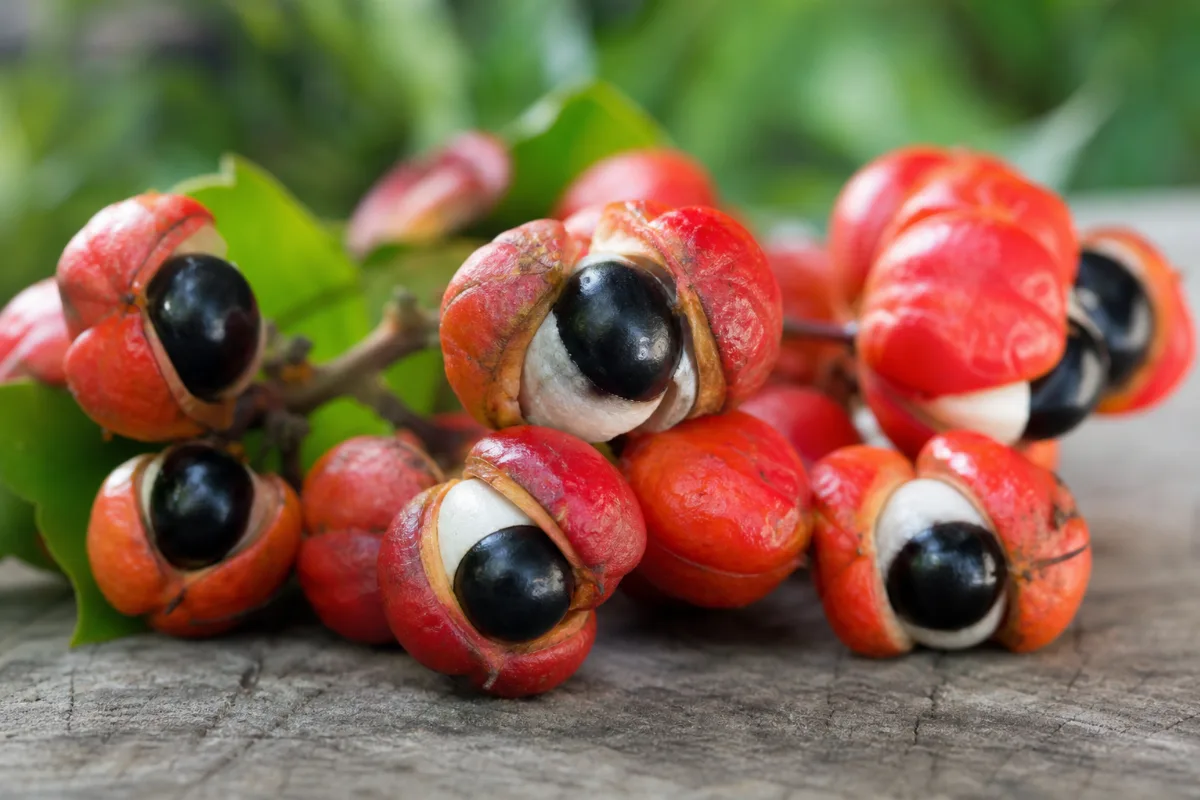
Herbs & Botanicals · Herbs · Amazon seed rich in caffeine, with low-certainty evidence for alertness and mostly caffeine-type risks
Guarana
Paullinia cupana Kunth · also called Guarana, guaraná (Portuguese and Spanish), Guaranasamen (German), guarana seed, Brazilian cocoa, zoom cocoa. Medicinal seed is described in EU documents as Paullinia cupana var. sorbilis.
Guarana is a climbing vine from the Amazon whose seeds hold a lot of caffeine, usually between about 1% and 6% of the dried seed. The seed is ground to a powder or extracted and sold as capsules, powders, drinks and an ingredient in energy drinks and weight-loss products. People take it for energy, focus, tiredness and appetite. In small, short studies a single dose made healthy adults slightly faster on thinking tasks, but it is not known whether that is more than the caffeine alone. For fatigue in people with cancer the results conflict and two reviews rated the certainty very low. The European Medicines Agency lists powdered guarana seed as a traditional herbal medicine for tiredness and weakness in adults, based on long use and not on proof from trials. Most of the safety concerns are caffeine concerns: a fast or irregular heartbeat, higher blood pressure, jitters, poor sleep, and seizures at high amounts.
General information, not medical advice. Last substantive update · Not medically reviewed. A named clinician has not signed off on this page. How this page is made
About Guarana
Guarana is a caffeine-rich Amazon seed sold as a powder, capsule, extract and energy-drink ingredient. In human studies it has been tested mostly for alertness, thinking, fatigue and weight, and nothing is better than low certainty. A pooled review found a small speed gain in thinking, not an accuracy gain, and cannot say whether guarana beats caffeine alone. Safety information is mostly about caffeine: heart rhythm problems, higher blood pressure, anxiety, poor sleep and seizures at high amounts, plus drug interactions and advice to avoid it in pregnancy, breastfeeding and in children. The EU lists it as a traditional medicine for tiredness and weakness in adults.
What it is
Guarana (Paullinia cupana) is a climbing, woody vine from the Amazon rainforest, in the soapberry family (Sapindaceae). It bears small orange-red capsules that burst open to show one dark seed in a white cup. The seed is the part used, and it is dried, roasted, ground and sometimes shaped into sticks or extracted. About 70% of Brazilian production goes to soft drinks and energy drinks, and the rest becomes powder.
The seed holds caffeine (1.1% to 5.8% in the EU assessment), small amounts of related stimulants, and tannins and catechins. It is a different plant from coffee, tea, yerba mate and cacao, though they share caffeine and related compounds.
Traditional and current uses
Amazonian peoples used the seed as a stimulant and during fasting to dull appetite. It became a fashionable drink in 19th century France and was in the US Pharmacopoeia from 1889 to 1910, according to the EU assessment.
Today the EU registers powdered guarana seed as a traditional herbal medicine for symptoms of tiredness and a feeling of weakness in adults. The registration depends on long use. Most people meet it as an ingredient in energy drinks, 'fat burners' and pre-workout powders, where it adds caffeine and is mixed with other stimulants.
What is in it and how it works
Caffeine blocks adenosine, a brain chemical that makes you feel sleepy, and also raises heart rate and blood pressure. Guarana also contains tannins and catechins, which are antioxidants in test tubes, and some early trials argued that guarana helped thinking more than its small caffeine content would predict. Trials that matched caffeine to guarana have not shown that guarana does more than caffeine, and a pooled review says this is unknown.
In the lab and in animals, guarana extracts have been seen to thin blood platelets, lower a mouse cancer marker and protect cells from some toxins. None of that has been shown to help people. Much of the key human work came from a small number of research groups, and some of it involved an extract maker.
What the research shows
No use of guarana is rated above low. A pooled review of 8 small studies found a slight gain in response speed and none in accuracy. Two recent caffeine-comparison trials in healthy adults were mostly null for thinking, and a small exercise trial found a very small gain. In cancer fatigue, early trials were positive, later ones were not, and three reviews disagree, with certainty rated very low where graded. Weight-loss trials used combination products, often with ephedra.
Many of these studies are small, short, and used single doses. Some come from groups linked to the extract makers. Only abstracts were read for most, so details like funding are often missing.
At a glance
Traditional uses history, not proof
- Amazonian peoples: the EMA assessment says the seed was taken during fasting to suppress appetite and as a stimulant, and was believed to protect against malaria and dysentery and to act as an aphrodisiac.
- Europe: popular as a stimulating drink in 19th century France, and in the US Pharmacopoeia from 1889 to 1910 (EMA assessment).
- Today in the EU: a registered traditional herbal medicine for symptoms of tiredness and a feeling of weakness in adults, based only on long-standing use (EMA, 2013).
Studied for research
- Attention and thinking speed in healthy adults, low certainty
- Mood and alertness, low certainty; memory, very low
- Fatigue in people with cancer, very low (reviews disagree)
- Weight loss, calorie burning and appetite, very low (mostly combination products)
- Exercise performance, low
- Hot flashes after breast cancer, very low (one small uncontrolled study)
Main compounds
- Caffeine, the main active compound, 1.1% to 5.8% of the seed in the EU assessment; most effects and risks come from it
- Theobromine and theophylline, related stimulants in small amounts
- Tannins and catechins, plant polyphenols that are antioxidants in the lab
Common forms
- Seed powder
- Capsules or tablets
- Concentrated extracts
- Energy drinks and shots (blended with other stimulants)
- Blended weight-loss and pre-workout products
Research links: EMA: Guarana seed, EU herbal monograph and assessment report · Memorial Sloan Kettering: Guarana · US FDA: How much caffeine is too much? · Systematic review on guarana and thinking (Nutrients, 2023) · Research Library · Genes & Biomarkers Library
The plant and its history
- Accepted scientific name
- Paullinia cupana Kunth
- Naming authority
- Kunth, Nova Genera et Species Plantarum 5: 117 (1821) (GBIF 'publishedIn'). The EU monograph names the medicinal material as Paullinia cupana Kunth ex H.B.K. var. sorbilis (Mart.) Ducke (= P. sorbilis C. Mart.).
- Synonyms
- Paullinia brasiliensis Lodd. (homotypic synonym); Paullinia brasiliensis Lodd. ex Radlk.; Paullinia cupana f. typica Ducke; Paullinia cupana var. sorbilis (Mart.) Ducke (accepted variety in GBIF; also written Paullinia sorbilis C. Mart. in the EMA report)
- Common names
- Guarana (English); Guarana seed (English); Guaraná (Portuguese); Guaranazeiro (Portuguese); Guaraná (Spanish); Guaranasamen (German); Guarana (graine de) (French); Brazilian cocoa (English); Zoom cocoa (English); Guarana gum (English)
- Botanical family
- Sapindaceae, the soapberry family, order Sapindales (GBIF). Guarana is a climbing vine in the genus Paullinia.
- Classification
- Plantae > Tracheophyta > Magnoliopsida (eudicots) > Sapindales > Sapindaceae > Paullinia > Paullinia cupana
- Native range
- The EU assessment calls it native to Amazonian rain forests, cultivated mainly in Brazil. A 2013 review says it is mainly produced in the Brazilian states of Amazonas and Bahia (p23981847, s-ema-ar-guarana).
- Habitat
- A woody, evergreen perennial vine that climbs through the forest, up to 10 m long (EMA report).
- What the plant looks like
- Roots: Not described in the sources read.; Stems: Woody climbing stems up to about 10 m (EMA report).; Leaves: Large, palmate, leathery (coriaceous), distinctly ribbed and roughly toothed (EMA report, citing Gruenwald et al. 2007).; Flowers: Usually single-sex, inconspicuous, yellow to whitish and fragrant, in long panicles that carry only female or male flowers at one time (EMA report).; Fruit: A hazelnut-sized, deep yellow to red-orange capsule in three sections that bursts open when ripe, releasing one purple-brown to black seed in a cup-like aril (EMA report). The seed is the part used.
- Cultivation
- About 75 days after pollination the flower cluster (raceme) is ripe. A raceme carries up to 80 seeds (EMA report, citing Gruenwald et al. 2007). Details of commercial growing practice were not read beyond that.
- Harvest and processing
- Per the EMA report: ripe racemes are picked by hand from October to December; seeds are removed from the shells, soaked, separated from the aril, sun-dried, roasted for 2 to 3 hours in clay ovens, cooled, de-shelled and ground. The paste is smoked over aromatic charcoal and shaped into dark-brown sticks. A 2013 review says about 70% of production goes to soft and energy drinks and 30% becomes powder for capsules or direct use (p23981847). The EMA addendum notes that toasting can leave traces of polycyclic aromatic hydrocarbons.
- Look-alikes and adulterants
- Name: Other caffeine plants (coffee, tea, yerba mate, cacao); Note: These are not look-alikes in appearance. They share caffeine and related compounds with guarana, so effects of guarana overlap with them. They are separate plants with different safety data.; Name: Paullinia cupana var. cupana versus var. sorbilis; Note: GBIF accepts both varieties. The EU monograph is written for var. sorbilis. Labels often say only 'Paullinia cupana', and which variety is in a product is not always clear (the sources read do not say how often).
- Sustainability and conservation
- Not assessed in the sources read. It is a cultivated crop; part of Brazilian production still comes from indigenous communities in the Amazonas state (p23981847).
Traditional use and history history, not clinical proof
| Tradition or era | Documented use | Source |
|---|---|---|
| Amazonian Indian societies (as summarised by the EMA assessment report) | Guarana seeds have played an important role in South American culture and Amazonian Indian society. The report says the seed is often taken during periods of fasting to suppress appetite, and in some regions the extract is believed to be an aphrodisiac and a protection from malaria and dysentery. The USP safety review adds that the rhizome was traditionally boiled into a tea by Amazonian cultures. | s-ema-ar-guarana |
| 19th century Europe and the United States (EMA report) | In the 19th century guarana became popular as a stimulating drink in France. In 1889 it was introduced as an official drug in the US Pharmacopoeia, where it remained until 1910. A 2022 narrative review says the first reports of benefits for human health appear in the 19th century. | s-ema-ar-guarana |
| Modern European traditional-use registrations (EMA) | Powdered seed in capsules has been used in France since 1985 and in Spain since 1984, for functional tiredness or weakness and, in those countries, as an aid in slimming diets. A German well-established-use listing since 1995 covers short-term physical fatigue (described second-hand). The EMA's HMPC adopted the EU monograph on 15 January 2013 for the traditional use 'symptoms of fatigue and sensation of weakness'. | s-ema-hmpc-guarana-monograph |
| Modern use as a food and drink ingredient | A 2013 review says about 70% of Brazilian production goes to soft drinks and energy drinks. The Brazilian Food Supplement Law acknowledges guarana as a source of bioactive compounds (2022 review). Memorial Sloan Kettering says guarana is used in traditional medicine for fevers, headaches and dysentery and is promoted for appetite suppression, fatigue, sexual performance and energy. | p23981847 |
| Origin with the Sateré-Mawé people of the Amazon | Commonly stated in general sources as the people who first cultivated guarana. NOT verified: none of the sources read here (EMA, PubMed abstracts, MSK) says this, so no claim is made. | none read |
Traditional use shows how a plant was used. It does not show that a supplement works or is safe today.
What is inside, and how it may work
What the plant contains and how those compounds act in cells and animals. Laboratory and animal mechanisms are not proven effects in people.
Main compounds
| Compound | Family | Where it is concentrated | Activity studied | Level of evidence |
|---|---|---|---|---|
| Caffeine (sometimes called guaranine in older texts) PubChem 2519 | methylxanthine (alkaloid) | Seed 1.1% to 5.8% of the dried seed per the EMA report; the French pharmacopoeia standard cited by the EMA sets not less than 3.5% for the seed. A review says up to 6% (p23981847). Content varies by product and extract. | Blocks adenosine receptors and stimulates the nervous system and heart; raises blood pressure; mildly raises calorie burning; cleared by liver enzyme CYP1A2. Most of guarana's stimulant effects and its heart, sleep and seizure risks are linked to caffeine. 11 42 6 32 58 | Human data |
| Theobromine PubChem 5429 | methylxanthine | Seed 0.01% to 0.17% (EMA report) | A weaker stimulant than caffeine; no guarana-specific data read. 11 | Chemistry |
| Theophylline PubChem 2153 | methylxanthine | Seed 0.006% to 0.25% (EMA report) | A related stimulant also used as a drug for breathing problems; cleared by CYP1A2, so levels can rise with caffeine (reviews). 11 6 | Chemistry |
| Condensed tannins (proanthocyanidins) | polyphenols | Seed Tannins 9.5% to 16%, mainly proanthocyanidins (EMA report). The EMA also describes a guarana extract with 13% total tannins. | Antioxidant in test tubes; may bind caffeine; whether they matter in people is not known. A semi-purified guarana fraction (which also contained caffeine) improved rat maze performance in animal work cited by the EMA. 11 48 | Laboratory research |
| Catechin PubChem 9064 | flavan-3-ol | Seed 1.3% to 6% (EMA report) | Antioxidant in test tubes. A caffeine-catechin complex was linked in test-tube work to a bacterial gene-activation (genotoxic-type) signal at high concentrations. 11 | Laboratory research |
| Epicatechin PubChem 72276 | flavan-3-ol | Seed 1.2% to 3.8% (EMA report) | Antioxidant in test tubes; no guarana-specific human data. 11 | Laboratory research |
| Carvacrol PubChem 10364 | monoterpenoid phenol (volatile oil) | Seed (volatile fraction) A volatile fraction of 0.4%, mainly carvacrol (EMA report) | No guarana-specific activity data read. 11 | Chemistry |
| Fatty oil and cyanolipids | acylglycerols and nitrile lipids | Seed Fatty oil 2.2% to 3.7%; cyanolipids mainly esters of 2,4-dihydroxy-3-methylene-butyronitrile (EMA report) | No activity data read. 11 | Chemistry |
| Saponins, starch and protein | general seed constituents | Seed Starch about 30% and protein about 15% (EMA report); saponins listed without amounts | No activity data read. 11 | Chemistry |
Mechanisms, receptors and pathways
| Target or pathway | Gene or receptor | What was found | Level |
|---|---|---|---|
| Adenosine receptor blockade (caffeine) | Adenosine receptors (A1, A2A) | Caffeine is a nonselective competitive blocker of adenosine A2A receptors, which is why it counters adenosine in a heart stress test (human patients). In mice, a guarana extract's antidepressant-like effect was not blocked by an adenosine agonist drug, whereas caffeine's was, suggesting guarana acts by more than the adenosine pathway. 16 11 | Human data |
| Non-caffeine effects on thinking (open question) | Not identified | In a human trial, a 75 mg extract with about 9 mg of caffeine improved attention tasks, and the authors argued caffeine alone was unlikely to explain it; a multi-dose trial reached a similar view. A pooled review of 8 trials says it is unknown whether effects come from caffeine or other substances, and trials that matched caffeine were mostly null. A narrative review says co-occurring plant substances may modify caffeine's effects. 25 21 18 22 | Human data |
| Platelet aggregation and thromboxane formation | Platelet activation by ADP and arachidonate; thromboxane synthesis | Aqueous guarana extracts reduced ADP- and arachidonate-induced aggregation (but not collagen) in human and rabbit platelets in the lab and in rabbits given the extract by mouth or vein; the EMA report adds a 1991 finding that thromboxane formation from arachidonic acid fell in rabbit platelets. No human study of this effect was found. 3 11 | Laboratory research |
| Antioxidant action | Lipid peroxidation, free radicals | In test-tube and rat-brain preparations, guarana extracts reduced lipid peroxidation and scavenged free radicals (EMA report). These laboratory results are not proof of human benefit. 11 | Laboratory research |
| Fat metabolism in trained rats | CPT I (muscle fat-burning enzyme) | In rats given a guarana extract or the same extract decaffeinated, effects on aspects of fat metabolism were abolished by decaffeination (EMA report, citing ESCOP), pointing to caffeine as the active part. Animal study. 11 | Animal research |
| Caffeine clearance through CYP1A2 | CYP1A2 | CYP1A2 breaks down caffeine and many drugs; drugs that block CYP1A2 raise caffeine levels, and caffeine can raise levels of CYP1A2-cleared drugs such as clozapine. In two women on oral contraceptives, caffeine half-life from an ephedra-guarana supplement was 15.5 hours vs 5.6 hours in others. 6 47 19 | Human data |
| Monoamine oxidase inhibition (weak) | MAO-A, MAO-B | Caffeine inhibited MAO-A and MAO-B only weakly in test tubes (Ki 0.70 mM and 3.83 mM), judged unlikely to matter at normal blood levels. This is an in-vitro caffeine result; the EU monograph still advises caution with MAO-inhibitor drugs. 38 9 | Laboratory research |
| Raised blood pressure and heart rate | Sympathetic nervous system (caffeine, with ephedrine in combination products) | Ephedra-guarana products raised heart rate and blood pressure after repeated doses in healthy adults; a meta-analysis of caffeine trials found a rise in blood pressure; energy drinks raised blood pressure within about an hour. 20 32 17 | Human data |
| Cell cycle in a mouse cancer model | Cyclin D1 | In mice carrying Ehrlich ascites carcinoma, powdered guarana lowered cyclin D1 expression, caused G1 cell cycle arrest and improved survival (EMA report). Mouse study; no human relevance shown. 11 | Animal research |
| Blood vessel relaxation | cAMP in smooth muscle | A hydroethanolic guarana extract relaxed rat aorta rings and rabbit corpus cavernosum tissue and raised cAMP in the rabbit tissue (EMA report). Tissue-bath work only. 11 | Laboratory research |
Absorption, metabolism and elimination
- Absorption
- No pharmacokinetic study of guarana seed powder itself was found in the EMA report (2013 review). The best human data are from an ephedra and guarana supplement (labelled 200 mg caffeine), where caffeine plasma clearance and half-life were similar to published drug-formulation values (p12087345).
- Distribution
- Caffeine crosses the placenta and is distributed in breast milk (EU monograph).
- Metabolism
- Caffeine is broken down by CYP1A2 in the liver (review). CYP1A2 inhibitors (for example fluvoxamine, quinolones, oral contraceptives) slow caffeine clearance; smoking speeds it. The EMA report notes that the liver enzyme cannot always handle large amounts of caffeine and the process can become saturated, leading to build-up (Carrillo review).
- Elimination
- In the ephedra-guarana supplement study, women on oral contraceptives had a caffeine half-life of 15.5 +/- 0.3 hours versus 5.6 +/- 1.7 hours in those who were not (2 vs 6 people) (p12087345). In horses given 20 g of guarana seed powder twice daily for 5 days, caffeine was found in urine for up to 9 days and theobromine and theophylline for up to 13 days (EMA report citing ESCOP). No amine metabolites with possible psychoactive effects were found in human urine after guarana powder (ESCOP via EMA).
- Bioavailability
- Not determined for guarana. In rats, a guarana extract cut peak amiodarone levels by 73.2% and exposure by 57.8% (p23304200), showing guarana can change drug absorption or handling in that species at a high dose.
Isolated compounds versus whole extracts
Guarana is a whole seed containing caffeine plus tannins, catechins and other substances. Whether it works better than the same amount of caffeine alone is not settled. A pooled analysis of acute trials says it is unknown whether effects come from caffeine or other substances and asks for caffeine-matched comparisons. Two early UK trials argued that a low-caffeine extract improved thinking more than caffeine alone would predict, but they had no caffeine-matched arm. Two recent crossover trials compared guarana with 100 mg caffeine, and in the cycling trial guarana gave slightly more work than placebo while caffeine did not differ from placebo or guarana. The arms were not matched, because the guarana contained 130 mg of caffeine. A rat study found some effects on fat metabolism disappeared when the extract was decaffeinated. Because most guarana products are sold on caffeine content, assume caffeine-like effects and risks.
Nutritional composition
No food-composition database (USDA FoodData Central) was checked for guarana. The EMA report lists the seed as about 30% starch, about 15% protein and 2.2% to 3.7% fatty oil, with caffeine and polyphenols. Guarana is not claimed here to be a meaningful source of any vitamin or mineral.
3 low certainty7 very low certainty2 not enough evidence
What was looked at
The 12 benefits and uses checked for Guarana, each with how strong the evidence is. Tap one to open it.
- Attention and thinking speed in healthy adultsLow certainty
- Memory and learningVery low certainty
- Mental tiredness during demanding tasks (vitamin, mineral and guarana combination)Very low certainty
- Mood, alertness and well-beingLow certainty
- Fatigue in people with cancerVery low certainty
- Everyday tiredness and weakness (registered traditional use in the EU)Not enough evidence
- Weight loss and body fatVery low certainty
- Calorie burning and fat burningVery low certainty
- Exercise and sports performanceLow certainty
- Appetite in advanced cancerVery low certainty
- Hot flashes after breast cancerVery low certainty
- Other promoted uses (antioxidant, cholesterol, cancer prevention, sexual performance)Not enough evidence
Lab markers tracked in the studies
Response time on thinking tasksAccuracy on thinking tasksFatigue questionnaire scoresMood rating scales (Bond-Lader and others)Heart rate variabilityBody weight24-hour energy expenditureHeart rateBlood pressureWork done in a 15-minute cycling time trialHot flash number and severity
What is Guarana good for?
The main proposed uses and how strong the human evidence is for each. "Moderate" means good trials point the same way but some doubt remains, "low" means small or inconsistent studies, "very low" means a single small or unclear study, and "insufficient" means there is not enough to judge. Guarana is mostly a caffeine source, so results may come from caffeine rather than from the plant. These results come from specific extracts and combination products and may not apply to other products.
Benefits, one by one
Each card is a research question, not a promise. Tap a goal to filter. Open a card to see the studies, doses and limits.
Attention and thinking speed in healthy adults
Low certaintyIn small, short studies of healthy adults, a single dose of guarana made people slightly faster on thinking tasks but not more accurate. It is not known whether this is just the caffeine in the seed.
4 studiesCapsules and powders or liquids with different guarana and caffeine a…
Studies, doses and limits
What the trials found
A 2023 systematic review pooled 8 small placebo-controlled studies of single guarana doses in 328 healthy people. Across all thinking measures the effect was less than trivial (Hedges g 0.076, p = 0.14). Split by type, response time was faster with guarana (g 0.202, p = 0.005) but accuracy was not changed (g -0.077, p = 0.4) (p36678305). Early trials from one UK group found improvements after single doses of a guarana extract: a 75 mg dose containing about 9 mg of caffeine improved attention tasks, though with some sign of lower accuracy (p15582012), and a four-dose study found better secondary memory and more 'alert' and 'content' ratings, with the two lower doses (37.5 and 75 mg) working better than the higher ones (p16533867). Two later crossover trials compared guarana (500 mg, containing 130 mg caffeine) with 100 mg caffeine and placebo. In 20 people neither guarana nor caffeine changed response time or heart rate variability, and there was no steady mood benefit (p38931247). Because guarana contained more caffeine than the caffeine arm, those trials cannot show whether guarana does more than its caffeine.
Results
A small gain in reaction speed after single doses; no gain in accuracy; recent caffeine-comparison trials were mostly null.
Effect sizes as reported
Response time g 0.202 (p = 0.005); accuracy g -0.077 (p = 0.4); overall g 0.076 (p = 0.14) (p36678305).
Why this rating
Only a handful of small, short studies on single doses, using different guarana products and caffeine amounts. The pooled review says it is unknown whether the effect comes from caffeine or from other seed substances. Trials that compared guarana with caffeine were mostly null.
Form and dose studied
Capsules and powders or liquids with different guarana and caffeine amounts; the pooled review (p36678305) found the guarana amount did not explain results.
Who was studied
Healthy young and middle-aged adults; mostly university volunteers.
Limits
Single doses only; reviewers could not match caffeine; some trials were by the same research groups; abstracts only were read.
Why researchers looked
Guarana is sold as a natural stimulant and 'brain' ingredient, and it contains caffeine, which is known to affect alertness.
Traditional use
Used for centuries in the Amazon as a stimulant drink; in Europe it is registered as a traditional medicine for tiredness and weakness (EMA), not specifically for thinking.
Proposed mechanism Preliminary mechanism
Guarana seed holds caffeine, which blocks adenosine receptors in the brain and so promotes alertness. A rodent study summarised by the EMA found that a guarana extract's antidepressant-like effect in mice was not blocked by an adenosine-pathway drug, whereas caffeine's was, which suggests guarana may act in other ways too. Other substances in the seed (tannins, catechins) may play a part. None of this has been shown to explain a human benefit.
A proposed mechanism does not show that the effect happens in people.
Guarana adds caffeine; see the safety file for heart rate, blood pressure, sleep and interactions.
Memory and learning
Very low certaintyOne dose-ranging trial found better 'secondary' memory (remembering things after a delay) after single doses of a guarana extract in young adults. Other studies found no clear memory benefit, and one long-term study in older adults found no change.
4 studiesDifferent extracts; not comparable.
Studies, doses and limits
What the trials found
The multi-dose trial in 26 healthy young adults found guarana improved secondary memory performance (p16533867). A trial of guarana, ginseng and both together in 28 people found guarana improved attention tasks but the memory-speed gains were seen with ginseng and the combination, not with guarana alone (p15582012). A 2025 network meta-analysis of 25 trials of 10 plant products in 1,861 healthy older adults gave guarana the highest ranking probability for perceptual-motor skills (90.3%), but this is a ranking, not an effect size, and the abstract does not say how many guarana trials were included (p41640686). In a double-blind trial in 45 elderly volunteers, neither guarana nor caffeine changed cognition compared with placebo (p8984582).
Results
A signal for secondary memory in one young-adult trial; no benefit in older volunteers.
Effect sizes as reported
Not given in the abstracts.
Why this rating
One small positive trial, one small null trial in older adults, and a ranking analysis that is not an effect size.
Form and dose studied
Different extracts; not comparable.
Who was studied
Healthy young adults; one study in elderly people; healthy older adults in the network analysis.
Limits
Tiny studies; mostly single doses; no long-term memory outcomes.
Why researchers looked
People take guarana hoping for better memory and focus.
Traditional use
Not a documented traditional use in the EU assessment; the EU use is for tiredness and weakness.
Proposed mechanism Animal research
Rodent studies summarised by the EMA found that guarana extracts reduced the memory-blocking effect of scopolamine and shortened maze escape times. Rodent results do not show the same effect in people.
A proposed mechanism does not show that the effect happens in people.
See safety file.
Mental tiredness during demanding tasks (vitamin, mineral and guarana combination)
Very low certaintyA drink with vitamins, minerals and guarana helped healthy young adults stay quicker and more accurate on one attention task and reduced the build-up of mental tiredness. Because it was a combination, the result cannot be credited to guarana alone.
1 studiesA drink with a vitamin and mineral blend plus guarana (amount not in …
Studies, doses and limits
What the trials found
In a double-blind parallel trial of 129 healthy adults aged 18 to 24, a vitamin, mineral and guarana drink improved speed and accuracy on the RVIP attention task for an hour afterwards and reduced the rise in mental fatigue seen with long testing, compared with a placebo drink (p18077056).
Results
Less mental fatigue and better attention on one task for about an hour after one drink.
Effect sizes as reported
Not given in the abstract.
Why this rating
A single trial of a combination product; no guarana-only comparison; possible industry link not verified.
Form and dose studied
A drink with a vitamin and mineral blend plus guarana (amount not in the abstract).
Who was studied
Healthy young adults.
Limits
Combination product; one trial; abstract only read; funding not shown in the abstract.
Why researchers looked
Guarana is often combined with vitamins and minerals in 'energy' products.
Proposed mechanism Preliminary mechanism
Guarana seed holds caffeine, which blocks adenosine receptors in the brain and so promotes alertness. A rodent study summarised by the EMA found that a guarana extract's antidepressant-like effect in mice was not blocked by an adenosine-pathway drug, whereas caffeine's was, which suggests guarana may act in other ways too. Other substances in the seed (tannins, catechins) may play a part. None of this has been shown to explain a human benefit.
A proposed mechanism does not show that the effect happens in people.
See safety file.
Mood, alertness and well-being
Low certaintySingle doses raised ratings of feeling alert and content in some small studies, but a 5-day trial of a commercial guarana product found no effect on well-being, anxiety or mood.
4 studiesDifferent products.
Studies, doses and limits
What the trials found
In the dose-ranging trial (26 healthy young adults) guarana raised 'alert' and 'content' ratings (p16533867). In a 5-day single-blind crossover trial of 27 healthy volunteers taking a commercial guarana product three times a day, there were no significant differences from placebo on six well-being areas, an anxiety scale or 16 mood scales (p23706111). In the 20-person comparison with caffeine there was no consistent mood benefit (p38931247). The EU assessment report notes the 5-day null trial and concludes it gave no evidence of major effects on well-being, anxiety or mood (s-ema-addendum-guarana).
Results
Short-lived alert and content ratings after single doses in one trial; no effect over 5 days of regular use.
Effect sizes as reported
No significant differences in the 5-day trial.
Why this rating
Mixed small trials: a positive single-dose study and two null studies.
Form and dose studied
Different products.
Who was studied
Healthy adults.
Limits
Small; short; self-rated mood; abstracts only.
Why researchers looked
Caffeine-containing plants are used to feel more awake and in a better mood.
Traditional use
A traditional stimulant drink.
Proposed mechanism Preliminary mechanism
Guarana seed holds caffeine, which blocks adenosine receptors in the brain and so promotes alertness. A rodent study summarised by the EMA found that a guarana extract's antidepressant-like effect in mice was not blocked by an adenosine-pathway drug, whereas caffeine's was, which suggests guarana may act in other ways too. Other substances in the seed (tannins, catechins) may play a part. None of this has been shown to explain a human benefit.
A proposed mechanism does not show that the effect happens in people.
Caffeine-type products can cause anxiety, jitters and sleep disturbance in sensitive people; see safety file.
Fatigue in people with cancer
Very low certaintySeveral small trials in women with breast cancer tested guarana for fatigue. Early ones were positive, later and larger-scale pooling disagreed. Two systematic reviews found no clear benefit and rated the certainty very low; one found a benefit.
8 studiesGuarana dry extract (50 mg twice a day in the positive trial) and the…
Studies, doses and limits
What the trials found
A 2011 phase II crossover trial (75 women with breast cancer, 50 mg twice a day for 21 days) found better fatigue scores than placebo (FACIT-F, BFI, FACT-ES, p < 0.01) (p21612429). A pilot crossover trial in 36 women during radiotherapy found no difference from placebo (p19388866). Two later trials of a purified extract (PC-18) found no advantage over placebo, with an unexpectedly strong placebo response; an author works at the extract maker (p29190155). A 2021 systematic review of 7 studies (427 patients) pooled three breast cancer trials and found no benefit versus placebo (mean difference -0.02, 95% CI -1.54 to 1.50) with very low GRADE certainty (p34146166). A 2024 meta-analysis of 5 reports (229 patients) found a benefit (SMD -0.77, 95% CI -1.34 to -0.21) with high heterogeneity (I2 78%), and the senior author also led several of the included trials (p39536249). A 2026 review of 14 herbal trials found no statistically significant guarana subgroup effect and very low certainty overall (p41745077). An earlier 2018 review of dietary supplements for fatigue in breast cancer listed guarana among supplements that helped (p29915949). The EU assessment addendum reviewed the 2021 meta-analysis and said efficacy could not be shown in this indication (s-ema-addendum-guarana).
Results
Mixed. Early trials positive; later trials and two of three meta-analyses negative or unclear.
Effect sizes as reported
2021 review: MD -0.02 (95% CI -1.54 to 1.50), very low certainty; 2024 review: SMD -0.77 (95% CI -1.34 to -0.21), I2 78%.
Why this rating
Reviewers' own GRADE for the 2021 review is very low; the 2026 review also rates certainty very low; trials are small and results conflict.
Form and dose studied
Guarana dry extract (50 mg twice a day in the positive trial) and the purified PC-18 extract; not interchangeable with shop products.
Who was studied
Mostly women with breast cancer on chemotherapy or radiotherapy.
Limits
Small trials, many from one group; some placebo capsules may have been active (magnesium silicate in PC-18 trials); abstracts only read. Cancer patients should discuss any supplement with their oncology team before using it.
Why researchers looked
Fatigue is very common in people with cancer, and guarana is a low-cost stimulant studied mainly by one Brazilian research group.
Traditional use
Not a traditional use.
Proposed mechanism Preliminary mechanism
Guarana seed holds caffeine, which blocks adenosine receptors in the brain and so promotes alertness. A rodent study summarised by the EMA found that a guarana extract's antidepressant-like effect in mice was not blocked by an adenosine-pathway drug, whereas caffeine's was, which suggests guarana may act in other ways too. Other substances in the seed (tannins, catechins) may play a part. None of this has been shown to explain a human benefit.
A proposed mechanism does not show that the effect happens in people.
No grade 2 to 4 toxicity was seen in the positive trial; caffeine can still affect heart rate and sleep. Guarana may add to bleeding risk with blood thinners (lab data).
Everyday tiredness and weakness (registered traditional use in the EU)
Not enough evidenceThe EU registers powdered guarana seed as a traditional herbal medicine for symptoms of fatigue and a feeling of weakness in adults. This rests on long use, not on proof from modern trials.
5 studiesPowdered seed in capsules (details are in the EU documents).
Studies, doses and limits
What the trials found
The EMA committee (HMPC) concluded in 2013 that guarana seed can be used as a traditional herbal medicine for symptoms of fatigue and sensation of weakness, based only on long-standing use, in adults only, and to see a health professional if symptoms last longer than a week (s-ema-hmpc-guarana-monograph, s-ema-summary-guarana). The assessment report says non-clinical data support the plausibility of this use, and cites small trials (a 2007 dose study, a green tea and guarana study, a short study in sleep-restricted volunteers) as supportive (s-ema-ar-guarana). In 2022 the committee reviewed ten years of new data; the assessor's comments say no revision of the monograph was needed (s-ema-addendum-guarana). A traditional-use registration does not require proof from trials that the product works.
Results
An EU registered traditional use; modern trial proof for this exact use is limited.
Why this rating
Based on long-standing use and plausibility; the regulator itself says it is not based on clinical proof.
Form and dose studied
Powdered seed in capsules (details are in the EU documents).
Who was studied
Adults and elderly; not under 18; not advised in pregnancy or breastfeeding.
Limits
A regulatory position, not a trial result.
Why researchers looked
This is the one use for which a regulator has set out a position on guarana.
Traditional use
The EMA report records powdered guarana seed in capsules sold for tiredness in France since 1985 and in Spain since 1984, and a German use since 1995 for short-term physical fatigue.
Proposed mechanism Preliminary mechanism
Guarana seed holds caffeine, which blocks adenosine receptors in the brain and so promotes alertness. A rodent study summarised by the EMA found that a guarana extract's antidepressant-like effect in mice was not blocked by an adenosine-pathway drug, whereas caffeine's was, which suggests guarana may act in other ways too. Other substances in the seed (tannins, catechins) may play a part. None of this has been shown to explain a human benefit.
A proposed mechanism does not show that the effect happens in people.
Contains caffeine: the monograph lists high blood pressure, rhythm problems, stomach ulcers and overactive thyroid as reasons not to use it.
Weight loss and body fat
Very low certaintyThe weight-loss trials involve combination products, usually with caffeine-rich or ephedra ingredients. There is no good trial of guarana alone for weight loss.
4 studiesCombination products only.
Studies, doses and limits
What the trials found
An 8-week double-blind trial in 67 overweight adults of a product containing Ma Huang (ephedra), guarana and other ingredients (72 mg/day ephedrine alkaloids and 240 mg/day caffeine) found more weight loss than placebo (-4.0 kg vs -0.8 kg, p < 0.006), but 8 of 35 (23%) in the active group dropped out for possible treatment-related effects against none on placebo; dry mouth, insomnia and headache were most common (p11319627). The EMA report also describes a small trial of a yerba mate, guarana and damiana combination (47 people), which reported more weight loss over 45 days and slower stomach emptying; this is described second-hand and was not checked in the original (s-ema-ar-guarana). A systematic review of adverse events of herbal weight-loss supplements, covering seven herbs including guarana and ephedra, concluded that the reported risks tip the balance against most of them (garcinia and yerba mate being exceptions needing more study) (p15836459). A narrative review of guarana lists anti-obesity effects but says human studies are lacking (p34755935).
Results
Weight loss in a trial of an ephedra-guarana combination; no guarana-only trial found.
Effect sizes as reported
Ephedra-guarana product: -4.0 +/- 3.4 kg vs -0.8 +/- 2.4 kg over 8 weeks (p < 0.006) (p11319627).
Why this rating
The positive trial tested an ephedra and guarana combination, so it cannot show what guarana does; the other reports are second-hand or reviews.
Form and dose studied
Combination products only.
Who was studied
Overweight adults.
Limits
Combination products; high dropout; short; abstracts only read for the PubMed items.
Why researchers looked
Guarana is widely added to weight-loss supplements because of its caffeine and its reputation as an appetite suppressant.
Traditional use
The EMA report notes guarana seeds are often taken in the Amazon during fasting to suppress appetite, and that France and Spain registered it as an aid in slimming diets.
Proposed mechanism Preliminary mechanism
Much of guarana's body effect is probably caffeine, which raises heart rate and the body's release of stress hormones and can speed up calorie burning a little. The EMA summarises a rat study in which a guarana extract's effect on fat-related muscle enzymes disappeared when the extract was decaffeinated, which points to caffeine. None of the lab work has been shown to explain a human benefit.
A proposed mechanism does not show that the effect happens in people.
The trial product caused more side effects and dropouts than placebo; ephedra-containing products have raised heart rate and blood pressure (p15961987). Weight-loss supplements are discussed in the safety file.
Calorie burning and fat burning
Very low certaintyGuarana combinations raised calorie burning slightly in two small studies, but did not clearly increase the amount of fat burned.
3 studiesMixtures; not guarana alone.
Studies, doses and limits
What the trials found
In 14 men, capsules of green tea and guarana extract with 200 mg caffeine and 90 to 400 mg EGCG three times a day raised 24-hour energy use by about 750 kJ in a metabolic chamber, with no change in fat burning; blood pressure rose about 7 (top) and 5 (bottom) mmHg, significant only for the 24-hour bottom number (p16176615). In two groups of 10 overweight men, a bitter orange, green tea and guarana formula had no significant effect on total energy use at rest or during treadmill walking, though more carbohydrate and less fat was burned (p16418760). The EMA report describes a 12-person study of 2.72 g guarana powder (4% caffeine) in which respiratory quotient and systolic pressure rose but energy expenditure did not change; this was read second-hand (s-ema-ar-guarana).
Results
Small, mixed changes in energy use; no solid increase in fat burning.
Effect sizes as reported
24-hour energy use about +750 kJ (green tea plus guarana plus caffeine) (p16176615).
Why this rating
Tiny studies of mixtures with green tea or bitter orange, with different results.
Form and dose studied
Mixtures; not guarana alone.
Who was studied
Healthy or overweight men.
Limits
Mixtures; 10 to 14 men; short; abstracts only read.
Why researchers looked
Caffeine mildly raises energy use, so guarana products are marketed as 'thermogenic'.
Proposed mechanism Preliminary mechanism
Much of guarana's body effect is probably caffeine, which raises heart rate and the body's release of stress hormones and can speed up calorie burning a little. The EMA summarises a rat study in which a guarana extract's effect on fat-related muscle enzymes disappeared when the extract was decaffeinated, which points to caffeine. None of the lab work has been shown to explain a human benefit.
A proposed mechanism does not show that the effect happens in people.
Blood pressure rose in the chamber study.
Exercise and sports performance
Low certaintyTwo small recent crossover trials found a small benefit from a single guarana dose on some exercise tests but not others.
2 studiesOne dose each; different products.
Studies, doses and limits
What the trials found
In 11 trained cyclists and non-cyclists, 500 mg guarana (containing 130 mg caffeine) gave slightly more work in a 15-minute time trial than placebo (241.4 vs 232.1 kJ; effect size 0.18, 95% CI 0.003 to 0.355, p = 0.046); 100 mg caffeine alone did not differ from placebo or guarana. The authors call the effects trivial to small and say it cannot be told whether guarana does more than its caffeine (p37898479). In 27 under-17 soccer players, 3 g guarana seed powder did not change jump, sprints or agility but increased distance in an intermittent recovery test (p=0.01) (p38958672).
Results
Small gains on some endurance-type tests after one dose; no gain on power or sprint tests.
Effect sizes as reported
Time trial work effect size 0.18 (95% CI 0.003 to 0.355) (p37898479).
Why this rating
Two small crossover trials, effects small, no caffeine-matched comparison.
Form and dose studied
One dose each; different products.
Who was studied
Trained cyclists; youth soccer players.
Limits
11 and 27 participants; single doses; abstracts only.
Why researchers looked
Athletes use caffeine to feel less effort and to work a bit harder.
Proposed mechanism Preliminary mechanism
Much of guarana's body effect is probably caffeine, which raises heart rate and the body's release of stress hormones and can speed up calorie burning a little. The EMA summarises a rat study in which a guarana extract's effect on fat-related muscle enzymes disappeared when the extract was decaffeinated, which points to caffeine. None of the lab work has been shown to explain a human benefit.
A proposed mechanism does not show that the effect happens in people.
Caffeine and exercise can add to heart strain in people with heart conditions.
Appetite in advanced cancer
Very low certaintyOne small open trial in people with advanced cancer found little weight gain, though some reported better appetite.
1 studiesCrude dry extract.
Studies, doses and limits
What the trials found
In an open-label, non-randomized phase II trial, 30 people with advanced cancer, weight loss over 5% and reduced appetite took 50 mg of crude guarana extract twice a day for 4 weeks; 18 finished. Only 2 gained more than 5% weight and 6 had at least a 3-point appetite scale improvement. Lack of appetite and sleepiness scores improved on one symptom inventory (p = 0.02 and 0.0142). One person stopped for joint pain (p25695932).
Results
Weight stabilization and some appetite gain in a small uncontrolled trial.
Effect sizes as reported
Weight gain over 5% in 2 of 18; appetite scale gain 3+ points in 6 of 18.
Why this rating
No control group, 12 of 30 did not finish.
Form and dose studied
Crude dry extract.
Who was studied
Adults with advanced cancer.
Limits
Single-arm; high dropout; abstract only read.
Why researchers looked
Poor appetite and weight loss are common in advanced cancer.
Traditional use
Guarana is traditionally taken to suppress, not boost, appetite (EMA), so this is an unexpected use.
Proposed mechanism Pharmacological theory
No mechanism is established for this use.
A proposed mechanism does not show that the effect happens in people.
One dropout for joint pain; no grade 3 or 4 toxicities reported.
Hot flashes after breast cancer
Very low certaintyA small uncontrolled pilot reported fewer hot flashes. Without a placebo group, no conclusion can be drawn.
1 studiesDry extract.
Studies, doses and limits
What the trials found
In an open pilot, 18 breast cancer survivors with at least 14 hot flashes a week took 50 mg of dry guarana extract twice a day for 6 weeks. Of 15 who finished, 10 had more than 50% lower hot flash severity; numbers and severity fell during the 6 weeks (p = 0.0009 and p < 0.0001). It was well tolerated (p24488380).
Results
Fewer hot flashes in 15 people, with no placebo group.
Effect sizes as reported
Hot flash number p = 0.0009; severity p < 0.0001.
Why this rating
Uncontrolled pilot with 15 completers; hot flashes often improve with placebo.
Form and dose studied
Dry extract.
Who was studied
Breast cancer survivors.
Limits
No placebo; tiny; abstract only read.
Why researchers looked
Many breast cancer survivors cannot use hormone treatment and look for other options.
Traditional use
Not a traditional use.
Proposed mechanism Pharmacological theory
No mechanism is established for this use.
A proposed mechanism does not show that the effect happens in people.
Well tolerated in the pilot.
Other promoted uses (antioxidant, cholesterol, cancer prevention, sexual performance)
Not enough evidenceGuarana is also promoted for several other purposes, but the support is lab or animal work only, and no human trial of these was found.
3 studiesNot applicable.
Studies, doses and limits
What the trials found
Memorial Sloan Kettering says guarana is promoted to reduce hunger and to increase sexual performance and energy, and that doctors have not studied the other uses to see if they work (s-mskcc-guarana). A 2022 narrative review of guarana lists anti-inflammatory, antioxidant, anticancer and cholesterol-lowering effects and says human studies and mechanism studies are lacking (p34755935). The EMA assessment report describes lab and animal findings and no completed human trials for these uses (s-ema-ar-guarana).
Results
No human trial results found.
Why this rating
Lab and animal work only.
Limits
No human data.
Why researchers looked
Guarana seeds are rich in tannins and catechins that are antioxidants in the lab.
Traditional use
The EMA report lists traditional proposed uses including as an aphrodisiac and for diarrhoea, weight control and headache.
Proposed mechanism Animal research
Test-tube and animal studies summarised by the EMA found antioxidant action, a lower rate of liver tumour lesions in mice, and relaxation of rat and rabbit blood vessel and corpus cavernosum tissue. These do not show human benefit.
A proposed mechanism does not show that the effect happens in people.
See safety file.
Connections to the rest of health
How Guarana connects to the rest of our health knowledge graph. Every link says what kind of connection it is. A safety link (for example to the liver) is a warning, not a benefit. A study that merely mentions a topic never creates a benefit link.
Explore every connection: goals, body systems, organs, symptoms, genes
A. Wellness goals
| Connected to | Kind of connection | Evidence status | Context | Studies |
|---|---|---|---|---|
| Reduce fatigue | Traditional use | Not enough evidence | Registered EU traditional use for tiredness and weakness; cancer fatigue trials and reviews conflict. Everyday tiredness and weakness (registered traditional use in the EU): The EU registers powdered guarana seed as a traditional herbal medicine for symptoms of fatigue and a feeling of weakness in adults. This rests on long use, not on proof from modern trials. Preparation or compound: Powdered guarana seed |
9 54 28 10 11 12 30 |
| Energy boost | Potential benefit | Low certainty | Alertness is mostly the effect of caffeine. Fatigue in people with cancer: Several small trials in women with breast cancer tested guarana for fatigue. Early ones were positive, later and larger-scale pooling disagreed. Two systematic reviews found no clear benefit and rated the certainty very low; one found a benefit. Preparation or compound: Guarana seed |
18 21 55 53 44 54 28 29 37 12 |
| Cognitive Performance | Potential benefit | Low certainty | Attention and thinking speed in healthy adults: In small, short studies of healthy adults, a single dose of guarana made people slightly faster on thinking tasks but not more accurate. It is not known whether this is just the caffeine in the seed. | 18 25 21 46 |
| Better Focus | Potential benefit | Low certainty | Attention and thinking speed in healthy adults: In small, short studies of healthy adults, a single dose of guarana made people slightly faster on thinking tasks but not more accurate. It is not known whether this is just the caffeine in the seed. Mental tiredness during demanding tasks (vitamin, mineral and guarana combination): A drink with vitamins, minerals and guarana helped healthy young adults stay quicker and more accurate on one attention task and reduced the build-up of mental tiredness. Because it was a combination, the result cannot be credited to guarana alone. | 18 25 21 46 26 45 12 |
| Mental Clarity | Potential benefit | Low certainty | Attention and thinking speed in healthy adults: In small, short studies of healthy adults, a single dose of guarana made people slightly faster on thinking tasks but not more accurate. It is not known whether this is just the caffeine in the seed. Mental tiredness during demanding tasks (vitamin, mineral and guarana combination): A drink with vitamins, minerals and guarana helped healthy young adults stay quicker and more accurate on one attention task and reduced the build-up of mental tiredness. Because it was a combination, the result cannot be credited to guarana alone. | 18 25 21 46 26 |
| Memory Support | Potential benefit | Very low certainty | Memory and learning: One dose-ranging trial found better 'secondary' memory (remembering things after a delay) after single doses of a guarana extract in young adults. Other studies found no clear memory benefit, and one long-term study in older adults found no change. | 21 25 13 14 |
| Brain Health | Potential benefit | Very low certainty | Memory and learning: One dose-ranging trial found better 'secondary' memory (remembering things after a delay) after single doses of a guarana extract in young adults. Other studies found no clear memory benefit, and one long-term study in older adults found no change. | 21 25 13 14 |
| Reduce Fatigue | Potential benefit | Very low certainty | Mental tiredness during demanding tasks (vitamin, mineral and guarana combination): A drink with vitamins, minerals and guarana helped healthy young adults stay quicker and more accurate on one attention task and reduced the build-up of mental tiredness. Because it was a combination, the result cannot be credited to guarana alone. Fatigue in people with cancer: Several small trials in women with breast cancer tested guarana for fatigue. Early ones were positive, later and larger-scale pooling disagreed. Two systematic reviews found no clear benefit and rated the certainty very low; one found a benefit. | 26 55 53 44 54 28 29 37 12 |
| Mood Balance | Potential benefit | Low certainty | Mood, alertness and well-being: Single doses raised ratings of feeling alert and content in some small studies, but a 5-day trial of a commercial guarana product found no effect on well-being, anxiety or mood. | 21 45 46 12 |
| Anxiety Support | Potential benefit | Low certainty | Mood, alertness and well-being: Single doses raised ratings of feeling alert and content in some small studies, but a 5-day trial of a commercial guarana product found no effect on well-being, anxiety or mood. | 21 45 46 12 |
| Energy Boost | Traditional use | Not enough evidence | Everyday tiredness and weakness (registered traditional use in the EU): The EU registers powdered guarana seed as a traditional herbal medicine for symptoms of fatigue and a feeling of weakness in adults. This rests on long use, not on proof from modern trials. | 9 10 11 12 30 |
| Weight Management | Potential benefit | Very low certainty | Weight loss and body fat: The weight-loss trials involve combination products, usually with caffeine-rich or ephedra ingredients. There is no good trial of guarana alone for weight loss. Appetite in advanced cancer: One small open trial in people with advanced cancer found little weight gain, though some reported better appetite. | 2 11 39 48 34 |
| Metabolic Health | Potential benefit | Very low certainty | Weight loss and body fat: The weight-loss trials involve combination products, usually with caffeine-rich or ephedra ingredients. There is no good trial of guarana alone for weight loss. | 2 11 39 48 |
| Metabolic Health | Preliminary mechanism | Very low certainty | Calorie burning and fat burning: Guarana combinations raised calorie burning slightly in two small studies, but did not clearly increase the amount of fat burned. | 4 41 11 |
| Weight Management | Preliminary mechanism | Very low certainty | Calorie burning and fat burning: Guarana combinations raised calorie burning slightly in two small studies, but did not clearly increase the amount of fat burned. | 4 41 11 |
| Physical Stamina | Potential benefit | Low certainty | Exercise and sports performance: Two small recent crossover trials found a small benefit from a single guarana dose on some exercise tests but not others. | 36 8 |
| Endurance Support | Potential benefit | Low certainty | Exercise and sports performance: Two small recent crossover trials found a small benefit from a single guarana dose on some exercise tests but not others. | 36 8 |
| Peak Performance | Potential benefit | Low certainty | Exercise and sports performance: Two small recent crossover trials found a small benefit from a single guarana dose on some exercise tests but not others. | 36 8 |
| Menopause Support | Potential benefit | Very low certainty | Hot flashes after breast cancer: A small uncontrolled pilot reported fewer hot flashes. Without a placebo group, no conclusion can be drawn. | 33 |
| Womens Wellness | Potential benefit | Very low certainty | Hot flashes after breast cancer: A small uncontrolled pilot reported fewer hot flashes. Without a placebo group, no conclusion can be drawn. | 33 |
| Healthy Aging | Preliminary mechanism | Not enough evidence | Other promoted uses (antioxidant, cholesterol, cancer prevention, sexual performance): Guarana is also promoted for several other purposes, but the support is lab or animal work only, and no human trial of these was found. | 30 48 11 |
| Cholesterol Balance | Preliminary mechanism | Not enough evidence | Other promoted uses (antioxidant, cholesterol, cancer prevention, sexual performance): Guarana is also promoted for several other purposes, but the support is lab or animal work only, and no human trial of these was found. | 30 48 11 |
| Libido Support | Preliminary mechanism | Not enough evidence | Other promoted uses (antioxidant, cholesterol, cancer prevention, sexual performance): Guarana is also promoted for several other purposes, but the support is lab or animal work only, and no human trial of these was found. | 30 48 11 |
B. Body systems
| Connected to | Kind of connection | Evidence status | Context | Studies |
|---|---|---|---|---|
| Cardiovascular system | Adverse effect or risk | Low certainty | Raised heart rate and blood pressure; case reports of atrial fibrillation and ventricular fibrillation, mostly high caffeine intake or heart disease. Higher heart rate and blood pressure with caffeine and ephedra-guarana products; case reports of atrial and ventricular fibrillation. Preparation or compound: Guarana products, caffeine content |
7 5 20 9 17 |
| Nervous system | Adverse effect or risk | Low certainty | Seizures in a series of 4 people; anxiety, jitters and sleep disturbance. Preparation or compound: Heavy energy drink or high caffeine use |
23 30 49 |
| Liver | Adverse effect or risk | Not enough evidence | One kidney and liver failure case in a person also using an injected painkiller; no LiverTox statement read. Preparation or compound: Guarana products |
11 39 |
| Nervous system | Potential benefit | Low certainty | Small speed gain on thinking tasks after single doses; effect of caffeine not separated. Preparation or compound: Guarana seed extracts |
18 46 |
| Nervous System | Biological association | Low certainty | Studied for: Attention and thinking speed in healthy adults Studied for: Memory and learning | 18 25 21 46 13 14 26 45 12 55 53 44 54 28 29 37 9 10 11 30 |
| Stress Mood | Biological association | Low certainty | Studied for: Mood, alertness and well-being | 21 45 46 12 |
| Metabolism Weight | Biological association | Very low certainty | Studied for: Weight loss and body fat Studied for: Calorie burning and fat burning | 2 11 39 48 4 41 |
| Musculoskeletal System | Biological association | Low certainty | Studied for: Exercise and sports performance | 36 8 |
| Digestive System | Biological association | Very low certainty | Studied for: Appetite in advanced cancer | 34 |
| Reproductive System | Biological association | Very low certainty | Studied for: Hot flashes after breast cancer Studied for: Other promoted uses (antioxidant, cholesterol, cancer prevention, sexual performance) | 33 30 48 11 |
| Cardiovascular System | Biological association | Not enough evidence | Studied for: Other promoted uses (antioxidant, cholesterol, cancer prevention, sexual performance) | 30 48 11 |
E. Health conditions
| Connected to | Kind of connection | Evidence status | Context | Studies |
|---|---|---|---|---|
| Pregnancy | Contraindication | Not enough evidence | EU advises against use; caffeine crosses the placenta. EU advises against; caffeine crosses the placenta. Preparation or compound: Guarana seed products |
9 15 49 |
| Breastfeeding | Contraindication | Not enough evidence | EU advises against use; caffeine passes into breast milk. Preparation or compound: Guarana seed products |
9 49 |
I. Biomarkers
| Connected to | Kind of connection | Evidence status | Context | Studies |
|---|---|---|---|---|
| Response time on thinking tasks | Biological association | Low certainty | Measured in trials: lowered. A lab change is not the same as a health benefit. | 18 46 |
| Accuracy on thinking tasks | Biological association | Low certainty | Measured in trials: no-change. A lab change is not the same as a health benefit. | 18 25 |
| Fatigue questionnaire scores | Biological association | Very low certainty | Measured in trials: mixed. A lab change is not the same as a health benefit. | 55 53 44 54 |
| Mood rating scales (Bond-Lader and others) | Biological association | Low certainty | Measured in trials: mixed. A lab change is not the same as a health benefit. | 21 45 |
| Heart rate variability | Biological association | Low certainty | Measured in trials: no-change. A lab change is not the same as a health benefit. | 46 |
| Body weight | Biological association | Very low certainty | Measured in trials: lowered. A lab change is not the same as a health benefit. | 2 |
| 24-hour energy expenditure | Biological association | Very low certainty | Measured in trials: mixed. A lab change is not the same as a health benefit. | 4 41 |
| Heart rate | Biological association | Low certainty | Measured in trials: raised. A lab change is not the same as a health benefit. | 20 19 |
| Blood pressure | Biological association | Low certainty | Measured in trials: raised. A lab change is not the same as a health benefit. | 20 19 4 |
| Work done in a 15-minute cycling time trial | Biological association | Low certainty | Measured in trials: raised. A lab change is not the same as a health benefit. | 36 |
| Hot flash number and severity | Biological association | Very low certainty | Measured in trials: lowered. A lab change is not the same as a health benefit. | 33 |
J. Genes, receptors and enzymes
| Connected to | Kind of connection | Evidence status | Context | Studies |
|---|---|---|---|---|
| Adenosine receptors (A1, A2A) | Preliminary mechanism | Human | Caffeine in guarana blocks adenosine receptors; relevant to alertness and to adenosine heart stress tests. | 16 |
| CYP1A2 | Preliminary mechanism | Human | Main liver enzyme for caffeine and several drugs (clozapine, theophylline); source of many caffeine interactions. | 6 47 |
| Monoamine oxidase A and B | Preliminary mechanism | In vitro | Caffeine is a weak inhibitor in test tubes; EU monograph advises caution with MAO inhibitor drugs. | 38 9 |
| CCND1 (cyclin D1) | Preliminary mechanism | Animal | Lowered expression in a mouse tumour model given guarana powder. | 11 |
K. Biological pathways
| Connected to | Kind of connection | Evidence status | Context | Studies |
|---|---|---|---|---|
| Platelet thromboxane synthesis | Preliminary mechanism | In vitro | Guarana extract reduced platelet aggregation and thromboxane formation in lab and rabbit work. | 3 11 |
| Sympathetic cardiovascular response | Preliminary mechanism | Human | Raised heart rate and blood pressure after ephedra-guarana, caffeine and energy drinks. | 20 32 17 |
L. Active compounds
| Connected to | Kind of connection | Evidence status | Context | Studies |
|---|---|---|---|---|
| Caffeine (sometimes called guaranine in older texts) | Biological association | Human | Blocks adenosine receptors and stimulates the nervous system and heart; raises blood pressure; mildly raises calorie burning; cleared by liver enzyme CYP1A2. Most of guarana's stimulant effects and its heart, sleep and seizure risks are linked to caffeine. Preparation or compound: Seed |
11 42 6 32 58 |
| Theobromine | Biological association | Chemistry | A weaker stimulant than caffeine; no guarana-specific data read. Preparation or compound: Seed |
11 |
| Theophylline | Biological association | Chemistry | A related stimulant also used as a drug for breathing problems; cleared by CYP1A2, so levels can rise with caffeine (reviews). Preparation or compound: Seed |
11 6 |
| Condensed tannins (proanthocyanidins) | Biological association | In vitro | Antioxidant in test tubes; may bind caffeine; whether they matter in people is not known. A semi-purified guarana fraction (which also contained caffeine) improved rat maze performance in animal work cited by the EMA. Preparation or compound: Seed |
11 48 |
| Catechin | Biological association | In vitro | Antioxidant in test tubes. A caffeine-catechin complex was linked in test-tube work to a bacterial gene-activation (genotoxic-type) signal at high concentrations. Preparation or compound: Seed |
11 |
| Epicatechin | Biological association | In vitro | Antioxidant in test tubes; no guarana-specific human data. Preparation or compound: Seed |
11 |
| Carvacrol | Biological association | Chemistry | No guarana-specific activity data read. Preparation or compound: Seed (volatile fraction) |
11 |
| Fatty oil and cyanolipids | Biological association | Chemistry | No activity data read. Preparation or compound: Seed |
11 |
| Saponins, starch and protein | Biological association | Chemistry | No activity data read. Preparation or compound: Seed |
11 |
Each connection is stored with the ingredient, the connected record, the kind of connection, the evidence status, the supporting studies, the preparation or compound involved, and a review date (last reviewed October 25, 2026).
The evidence
The research centre for Guarana. Every record here was checked against PubMed or the publisher's page; we never list a study we have not verified.
Evidence by outcome
Bars show how many studies we found for each outcome, not how well it works. People are added up across trials only (reviews are not added, to avoid double counting).
How we rate evidence
High certainty
Several well-run trials or reviews agree; further research is unlikely to change the picture much.
Moderate certainty
Good trials point the same way, but some doubt remains.
Low certainty
Small, short or inconsistent trials. The finding could change with better research.
Very low certainty
Very little or very weak human data. Treat as a possibility only.
Mixed findings
Trials or reviews disagree with each other.
Not enough evidence
Not enough human research to say either way.
Evidence against
Good research found no benefit, or found harm.
We take the reviewers' own risk-of-bias and GRADE statements where they exist, and otherwise judge from study size, design, consistency, directness and whether a product matches what is sold. Many publications do not make evidence high. Method note: We searched PubMed, read the European Medicines Agency's guarana seed monograph, assessment report, 2022 review addendum and public summary, the Memorial Sloan Kettering and US FDA pages, and checked plant names in GBIF and the NCBI taxonomy and compounds in PubChem. Only abstracts were read for the PubMed studies. Some sources were not verified: NCCIH has no guarana page (404), the LiverTox and LactMed pages could not be opened, and the German Commission E, ESCOP and WHO statements are known only through the EMA report. Certainty ratings are the compiler's own reading, using the reviewers' own GRADE where they gave one. No study is cited that we could not verify.
Study library: every study we checked 58
| Study | Design | People | Product, dose, length | Result |
|---|---|---|---|---|
| Biggs 2017 Abuse and Misuse of Selected Dietary Supplements Among Adolescents: a Look at Poison Center Data. J Pediatr Pharmacol Ther · PMID 29290737 · DOI |
Retrospective review of poison centre data |
84 Adolescents with single-substance intentional abuse or misuse reported to US poison centres, 2003 to 2014 |
Guarana (28 cases), garcinia, salvia and St John's wort seed 2003 to 2014 |
28 guarana cases were included. Overall, 73.8% of all 84 cases had minor or no effect. Clinical effects were most common with guarana and salvia. Abuse and misuse were uncommon and outcomes mild. 28 of 84 cases involved guarana (None) Methods, limits and fundingOutcomes: Medical outcome and clinical effects Limitations: Reported cases only; no denominator; the guarana-only outcome split is not in the abstract. Abstract only was read. Funding and conflicts: Authors declare no conflicts of interest. Read: abstract |
| Boozer 2001 An herbal supplement containing Ma Huang-Guarana for weight loss: a randomized, double-blind trial. Int J Obes Relat Metab Disord · PMID 11319627 · DOI |
Randomized controlled trial (double blind, 8 weeks) |
67 Overweight men and women (BMI 29 to 35) |
A herbal weight-loss product containing Ma Huang (ephedra), guarana and other ingredients (72 mg/day ephedrine alkaloids and 240 mg/day caffeine) seed (plus ephedra stem and others) 72 mg/day ephedrine alkaloids and 240 mg/day caffeine 8 weeks · vs Placebo |
Weight and fat loss were greater with the product (-4.0 kg vs -0.8 kg). 23% of the active group (8 of 35) and none of the placebo group dropped out for possible treatment-related effects. Dry mouth, insomnia and headache were the most common complaints. Weight -4.0 +/- 3.4 kg vs -0.8 +/- 2.4 kg (p < 0.006) (Not given in the abstract) Methods, limits and fundingOutcomes: Body weight, body fat, triglycerides, side effects Limitations: A COMBINATION product with ephedra, so the result says little about guarana alone. Only 24 per group finished. Abstract only was read. Funding and conflicts: Funding and conflicts of interest not shown in the abstract. Read: abstract |
| Bydlowski 1988 A novel property of an aqueous guaraná extract (Paullinia cupana): inhibition of platelet aggregation in vitro and in vivo. Braz J Med Biol Res · PMID 3228635 |
Laboratory and animal study in-vitro and animal |
Human and rabbit platelets; rabbits | Aqueous guarana extract seed · vs Control |
Guarana extract blocked platelet clumping caused by ADP or arachidonate, but not by collagen, in human and rabbit platelets. Rabbits showed less aggregation after intravenous or oral doses. The active material was water-soluble and heat-resistant and did not look like salicylates, nicotinic acid or known xanthines. Not given in the abstract (None) Methods, limits and fundingOutcomes: Platelet aggregation Limitations: Lab and rabbit work from 1988; no human trial; not known whether it matters at supplement doses. Abstract only was read. Funding and conflicts: Funding and conflicts of interest not shown in the abstract. Read: abstract |
| Bérubé-Parent 2005 Effects of encapsulated green tea and Guarana extracts containing a mixture of epigallocatechin-3-gallate and caffeine on 24 h energy expenditure and fat oxidation in men. Br J Nutr · PMID 16176615 · DOI |
Randomized controlled trial (double blind, crossover) |
14 Men tested five times in a metabolic chamber |
Green tea and guarana extract capsules with 200 mg caffeine and 90 to 400 mg EGCG, three times a day seed (plus green tea) 200 mg caffeine three times daily with EGCG 90 to 400 mg One day per condition, 24 hours · vs Placebo |
24-hour energy use rose by about 750 kJ with all mixtures. Fat burning did not change. Blood pressure rose about 7 (top number) and 5 (bottom number) mmHg; only the 24-hour diastolic rise was significant. 24 h energy expenditure +about 750 kJ; systolic +7, diastolic +5 mmHg (Not given in the abstract) Methods, limits and fundingOutcomes: 24-hour energy expenditure, fat oxidation, blood pressure Limitations: A green tea plus guarana mixture, so guarana alone is not tested. 14 men. Abstract only was read. Funding and conflicts: Funding and conflicts of interest not shown in the abstract. Read: abstract |
| Cannon 2001 Caffeine-induced cardiac arrhythmia: an unrecognised danger of healthfood products. Med J Aust · PMID 11419773 · DOI |
Case report |
1 A 25-year-old woman with mitral valve prolapse |
A guarana 'natural energy' health drink with a high concentration of caffeine seed (in a drink) Single occasion |
She developed intractable ventricular fibrillation after drinking the guarana energy drink. The authors say it shows the need for labelling and regulation. (The EMA assessment report says she died, and reports about 550 mg of caffeine in a ginseng and guarana drink; the abstract itself does not say this.) 1 patient (None) Methods, limits and fundingOutcomes: Ventricular fibrillation Limitations: Single case in a person with a heart valve problem. Abstract only was read; death and caffeine amount come from the EMA report. Funding and conflicts: Funding and conflicts of interest not shown in the abstract. Read: abstract |
| Carrillo 2000 Clinically significant pharmacokinetic interactions between dietary caffeine and medications. Clin Pharmacokinet · PMID 10976659 · DOI |
Narrative review |
Review of drug interactions with dietary caffeine | Caffeine |
Caffeine toxicity includes seizures and delirium and heart rate increases up to arrhythmia. CYP1A2 is involved in caffeine breakdown, and drugs reported to inhibit it include fluvoxamine, mexiletine, clozapine, psoralens, theophylline and enoxacin-type quinolone antibiotics. Not applicable (None) Methods, limits and fundingOutcomes: Interactions between caffeine and medicines, mostly through the liver enzyme CYP1A2 Limitations: Review of caffeine in general; not about guarana. Abstract only was read. Funding and conflicts: Funding and conflicts of interest not shown in the abstract. Read: abstract |
| Ciszowski 2014 Acute caffeine poisoning resulting in atrial fibrillation after guarana extract overdose. Przegl Lek · PMID 25632790 |
Case report |
1 A 44-year-old man |
Tablets of guarana extract containing 1.6 g of caffeine taken intentionally seed About 1.6 g of caffeine Single ingestion |
Nausea, vomiting, anxiety and palpitations soon after the dose; admitted about 21 hours later with fast heart rate and a long QTc. Atrial fibrillation with fast rhythm appeared about 45 hours after the dose and settled after amiodarone and correction of potassium. An echocardiogram suggested non-obstructive hypertrophic cardiomyopathy. 1 patient (None) Methods, limits and fundingOutcomes: Atrial fibrillation after caffeine poisoning Limitations: Single case, intentional overdose, with a heart condition that may have made him more prone. Abstract only was read. Funding and conflicts: Funding and conflicts of interest not shown in the abstract. Read: abstract |
| Estrázulas 2024 Effects of Acute Ingestion of Guarana (Paullinia Cupana) on Soccer Player Performance: A Randomized, Cross-over, Placebo-Controlled Study. J Am Nutr Assoc · PMID 38958672 · DOI |
Randomized controlled trial (double blind, crossover) |
27 Under-17 professional soccer players |
Guarana seed powder in a drink (3 g of seed powder) seed 3 g seed powder Single dose, tests 60 minutes later; 7-day washout · vs Placebo drink |
Guarana did not improve jump, sprints or agility. Distance covered in the Yo-Yo intermittent recovery test was greater. Yo-Yo distance greater than placebo (p = 0.01); other tests no difference (None) Methods, limits and fundingOutcomes: Jump, 10 and 20 m sprints, agility, Yo-Yo intermittent recovery test Limitations: 27 young male players, one dose, no caffeine-matched arm. Abstract only was read. Funding and conflicts: Funding and conflicts of interest not shown in the abstract. Read: abstract |
| European Medicines Agency 2013 EU herbal monograph on Paullinia cupana Kunth ex H.B.K. var. sorbilis (Mart.) Ducke, semen (EMA/HMPC/897344/2011), final, adopted 15 January 2013 EMA · Source |
Authoritative guidance n/a |
Guarana seed (powdered herbal substance) seed |
Traditional-use monograph for symptoms of fatigue and sensation of weakness, based only on long-standing use. Contraindicated in people with hypersensitivity, gastric and duodenal ulcers, cardiovascular disorders such as hypertension and arrhythmias, and hyperthyroidism. Not for under-18s. Not recommended before bedtime. Use with caution with MAO-inhibitor drugs; caffeine preparations reduce sedative action and increase side effects of sympathomimetic drugs. Pregnancy and lactation: not recommended. Undesirable effects: none known. Overdose: no case reported. Reproductive toxicity, genotoxicity and carcinogenicity tests not performed. Methods, limits and fundingOutcomes: Indication, contraindications, interactions, pregnancy Limitations: Traditional use only; no proof of effect required by this type of monograph. Full text read. Read: full-text | |
| European Medicines Agency 2013 Herbal medicine: summary for the public. Guarana seed (EMA/HMPC/284498/2013) EMA · Source |
Authoritative guidance n/a |
Guarana seed seed |
HMPC concluded that, on the basis of long-standing use, guarana seed can be used for relief of symptoms of fatigue and weakness, in adults only, and that people should see a health professional if symptoms last longer than a week. Methods, limits and fundingOutcomes: Public summary of the HMPC conclusion Limitations: Plain-language summary only. Full text read. Read: full-text | |
| European Medicines Agency 2013 Assessment report on Paullinia cupana Kunth ex H.B.K. var. sorbilis (Mart.) Ducke, semen (EMA/HMPC/897384/2011), final, 15 January 2013 EMA · Source |
Authoritative guidance n/a |
Guarana seed seed |
Describes the seed (caffeine 1.1% to 5.8%, theobromine, theophylline, tannins 9.5% to 16%), traditional uses in the EU, lab and animal data (platelet effects, antioxidant, stimulant), small trials, and safety reports: tachycardia in 4 of 15 volunteers over 150 days, palpitations in a smoker taking two guarana supplements, a young woman with mitral valve prolapse who died of ventricular fibrillation after a guarana and ginseng drink, a case of acute tubular necrosis, and muscle pain with myoglobinuria with a combination product. Notes drug interaction potential reported by Burdock 2009 (ephedrine, phenelzine, MAO inhibitors, adenosine, clozapine, benzodiazepines, propranolol, metoprolol, phenylpropanolamine, quinolones). Methods, limits and fundingOutcomes: History, chemistry, lab data, clinical studies, safety reports Limitations: Original studies are described second-hand; the safety reports are cited from ESCOP and other sources and were not each checked. Full text read. Read: full-text | |
| European Medicines Agency 2022 Addendum to assessment report on Paullinia cupana Kunth (syn. Paullinia sorbilis Mart.), semen (EMA/HMPC/684020/2021), adopted 23 November 2022 EMA · Source |
Authoritative guidance n/a |
Guarana seed seed |
Found 6 palpitations reports in EudraVigilance and VigiBase (up to May 2022), considered plausibly related to caffeine, with no new safety concern. Noted the rat amiodarone interaction, not changing the monograph because only clinically observed interactions are included. Noted the guarana cancer fatigue meta-analysis showing no benefit, and that no medicines for those indications are on the EU market. Noted trace polycyclic aromatic hydrocarbons (naphthalene, phenanthrene) in toasted guarana powders. The assessor's comments say no revision was needed for the items discussed (the final tick-box decision could not be read in the extracted text). Methods, limits and fundingOutcomes: Periodic review of new data 2012 to 2022 Limitations: Full text read; check boxes for the final decision were not readable in the extracted text. Read: full-text | |
| Feng 2025 The effect of plant active substances on cognitive function in healthy older adults: a systematic review and network meta-analysis of randomized controlled trials. Front Pharmacol · PMID 41640686 · DOI |
Systematic review and network meta analysis |
1861 Healthy older adults; 25 randomized trials of 10 plant products |
Ten plant products including guarana various Various Various · vs Various |
Guarana had the highest ranking probability (90.3%) in the perceptual-motor domain. Effects on complex attention were generally limited. Raisin and tart cherry ranked best for learning and memory. Guarana SUCRA 90.3% in perceptual-motor skills (Not given in the abstract) Methods, limits and fundingOutcomes: Learning and memory, attention, executive function, language, perceptual-motor skills Limitations: Ranking probabilities are not effect sizes; how many guarana trials were included is not stated in the abstract. Abstract only was read. Funding and conflicts: Authors declare no commercial or financial relationships. Read: abstract |
| Galduróz 1996 The effects of long-term administration of guarana on the cognition of normal, elderly volunteers. Sao Paulo Med J · PMID 8984582 · DOI |
Randomized controlled trial (double blind, three groups) |
45 Healthy elderly volunteers |
Guarana versus caffeine versus placebo, long-term seed Long-term (length not stated in abstract) · vs Caffeine; placebo |
No significant cognitive changes in any group. No significant changes (None) Methods, limits and fundingOutcomes: Cognition Limitations: 1996 study, 15 people per group, details missing from the abstract. A null result. Abstract only was read. Funding and conflicts: Funding and conflicts of interest not shown in the abstract. Read: abstract |
| Greenwood 2014 Caffeine intake during pregnancy and adverse birth outcomes: a systematic review and dose-response meta-analysis. Eur J Epidemiol · PMID 25179792 · DOI |
Systematic review and dose response meta analysis |
60 publications from 53 cohort and case-control studies of caffeine in pregnancy | Caffeine from all sources Per 100 increment (abstract prints '100 g'; presumably 100 mg) Observational · vs Lower intake |
Higher caffeine intake was associated with more miscarriage, stillbirth, low birth weight and small babies, but not preterm birth. No intake level was clearly safe. The authors say the associations were modest and could be due to bias. Per 100 increment: miscarriage +14%, stillbirth +19%, preterm +2% (not significant), low birth weight +7%, small for gestational age +10% (Miscarriage 10 to 19%; stillbirth 5 to 35%; preterm -2 to 6%; low birth weight 1 to 12%; SGA 6 to 14%) Methods, limits and fundingOutcomes: Spontaneous abortion, stillbirth, preterm delivery, low birth weight, small for gestational age Limitations: Observational data, large heterogeneity, evidence of publication bias and small-study effects. The abstract prints the unit as '100 g'; this is almost certainly a typo for 100 mg. Abstract only was read. Funding and conflicts: Funding and conflicts of interest not shown in the abstract. Read: abstract |
| Greulich 2017 Effects of caffeine on the detection of ischemia in patients undergoing adenosine stress cardiovascular magnetic resonance imaging. J Cardiovasc Magn Reson · PMID 29254482 · DOI |
Prospective patient study |
30 Patients with known or suspected heart disease and a positive adenosine stress scan |
200 mg caffeine before a repeat adenosine stress heart scan (CMR) 200 mg caffeine Single dose · vs Their own caffeine-free scan |
Caffeine did not turn any positive scan negative, but the amount of ischemia seen was significantly smaller after caffeine (about 1 of 16 segments). The authors still advise patients to avoid caffeine before adenosine stress tests. Ischemic burden lower by about 1 segment of 16 (p < 0.001) (Not given in the abstract) Methods, limits and fundingOutcomes: Detection of heart-muscle ischemia on scan Limitations: 30 patients, one caffeine dose; caffeine, not guarana. Abstract only was read. Funding and conflicts: Authors declare no competing interests. Read: abstract |
| Gualberto 2024 Acute effects of energy drink consumption on cardiovascular parameters in healthy adults: a systematic review and meta-analysis of randomized clinical trials. Nutr Rev · PMID 37695306 · DOI |
Systematic review and meta analysis |
Healthy adults; 17 randomized trials of energy drinks | Energy drinks (caffeine and other ingredients, which can include guarana) Various Acute (hours) · vs Control drinks |
Energy drinks raised systolic blood pressure about 4.7 mmHg at 60 to 80 minutes (moderate certainty) and diastolic pressure at 120 minutes (low certainty). Heart rate and QT interval did not change significantly. Systolic +4.71 mmHg (60 to 80 min); diastolic +4.51 mmHg (120 min); cardiac output +0.43 L (30 to 40 min) (Systolic 2.97 to 6.45; diastolic 2.60 to 6.42; cardiac output 0.08 to 0.77) Methods, limits and fundingOutcomes: Blood pressure, heart rate, cardiac output, QT interval Limitations: Energy drinks as a whole, not guarana alone; 11 studies had some concerns and 6 high risk of bias. Abstract only was read. Funding and conflicts: Funding and conflicts of interest not shown in the abstract. Read: abstract |
| Hack 2023 Effect of Guarana (Paullinia cupana) on Cognitive Performance: A Systematic Review and Meta-Analysis. Nutrients · PMID 36678305 · DOI |
Meta-analysis |
328 Healthy adults; 8 placebo-controlled studies of single (acute) doses |
Guarana (capsule or dissolved in liquid; guarana 37.5 to 500 mg, reported caffeine 4.3 to 100 mg) seed 37.5 to 500 mg guarana per study Single doses (acute) · vs Placebo |
Averaged over all cognitive measures the effect was less than trivial. Response time was faster with guarana than placebo; accuracy did not change. Dose and waiting time before testing did not explain results. Overall Hedges g 0.076 (p = 0.14); response time g 0.202 (p = 0.005); accuracy g -0.077 (p = 0.4); capsule g 0.111 vs liquid g 0.281 (difference p = 0.085) (Not reported in the abstract) Methods, limits and fundingOutcomes: Cognitive performance (response time, accuracy) Limitations: Only 8 small studies with different guarana products and different caffeine content, so the effect of caffeine cannot be separated from other guarana substances. Abstract only was read. Funding and conflicts: Authors declare no conflict of interest and no funding. Read: abstract |
| Haller 2002 Pharmacology of ephedra alkaloids and caffeine after single-dose dietary supplement use. Clin Pharmacol Ther · PMID 12087345 · DOI |
Pharmacokinetic and pharmacodynamic study |
8 Healthy adults |
Thermogenic supplement with ephedra and guarana (labelled 20 mg ephedrine alkaloids and 200 mg caffeine) seed (plus ephedra) One dose 14 hours of monitoring |
Caffeine and ephedrine behaved like the pharmaceutical forms. Systolic blood pressure rose by up to 14 mmHg and heart rate by up to 15 beats a minute. Two women on oral contraceptives had a caffeine half-life of 15.5 hours vs 5.6 hours in the others. Systolic +14 mmHg at 90 min; heart rate +15 beats/min at 6 h (Not given in the abstract) Methods, limits and fundingOutcomes: Blood levels of ephedrine alkaloids and caffeine, heart rate and blood pressure Limitations: 8 people; ephedra plus guarana, so caffeine effects cannot be separated; only two women were on contraceptives. Abstract only was read. Funding and conflicts: Funding and conflicts of interest not shown in the abstract. Read: abstract |
| Haller 2005 Short-term metabolic and hemodynamic effects of ephedra and guarana combinations. Clin Pharmacol Ther · PMID 15961987 · DOI |
Randomized controlled trial (double blind, three arm crossover) |
16 Healthy adults (8 women) |
Ephedra-guarana supplement; Xenadrine RFA (25 mg ephedra alkaloids and 200 mg caffeine); placebo; two doses 5 hours apart seed (plus ephedra) Two doses 5 hours apart, per label Single day · vs Placebo |
Both active products raised heart rate (max +9.4 beats a minute), blood pressure (max +11.5 top and +7.3 bottom mmHg), glucose and insulin, and lowered potassium after both doses. Heart rate +9.4 +/- 8.6 beats/min (p = .002); systolic +11.5 +/- 10.7 mmHg, diastolic +7.3 +/- 7.4 mmHg (p = .015) (Not given in the abstract) Methods, limits and fundingOutcomes: Heart rate, blood pressure, glucose, insulin, potassium Limitations: Tested ephedra-guarana combinations, so changes cannot be credited to guarana alone; 16 healthy adults. Abstract only was read. Funding and conflicts: Funding and conflicts of interest not shown in the abstract. Read: abstract |
| Haskell 2007 A double-blind, placebo-controlled, multi-dose evaluation of the acute behavioural effects of guaraná in humans. J Psychopharmacol · PMID 16533867 · DOI |
Controlled clinical trial (placebo controlled, counterbalanced) |
26 Healthy young adults |
Guarana extract PC-102 at four single doses (37.5, 75, 150, 300 mg) seed 37.5, 75, 150 and 300 mg single doses Single doses on separate days · vs Placebo |
Guarana improved secondary memory and increased alert and content mood ratings. The two lower doses had more positive cognitive effects than the higher doses. Not given in the abstract (None) Methods, limits and fundingOutcomes: Cognition (computerized battery) and mood (Bond-Lader) Limitations: Small, young, healthy volunteers and single doses only. The authors say effects cannot be put down to caffeine alone, but the study did not compare matched caffeine. Abstract only was read. Funding and conflicts: Funding and conflicts of interest not shown in the abstract. Read: abstract |
| Haskell 2013 Behavioural effects of compounds co-consumed in dietary forms of caffeinated plants. Nutr Res Rev · PMID 23561485 · DOI |
Narrative review |
Review of caffeine-containing plants (coffee, tea, cocoa, guarana) and their other bioactive compounds | Caffeine plants and co-occurring phytochemicals various |
The review says research is beginning to show independent effects of several phytochemicals that occur with caffeine, or changes in caffeine's effect when co-consumed, and that more research is needed. Not applicable (None) Methods, limits and fundingOutcomes: Effects of non-caffeine plant compounds on brain function Limitations: Narrative review; not guarana-specific. Abstract only was read. Funding and conflicts: Funding and conflicts of interest not shown in the abstract. Read: abstract |
| Iyadurai 2007 New-onset seizures in adults: possible association with consumption of popular energy drinks. Epilepsy Behav · PMID 17349826 · DOI |
Case series |
4 Four adults with new-onset seizures |
Heavy intake of energy drinks containing caffeine, taurine and guarana seed extract seed (in energy drinks) Heavy consumption (amounts not stated in the abstract) |
Four patients had discrete seizures on several occasions after heavy energy drink use; none recurred once they stopped the drinks. The authors propose that large amounts of caffeine, taurine and guarana could have provoked the seizures. 4 patients (None) Methods, limits and fundingOutcomes: Seizures Limitations: Cannot say which ingredient caused it; mixture product; authors say there were no earlier published cases. Abstract only was read. Funding and conflicts: Funding and conflicts of interest not shown in the abstract. Read: abstract |
| Jefferson 1988 Lithium tremor and caffeine intake: two cases of drinking less and shaking more. J Clin Psychiatry · PMID 3338980 |
Case report (two patients) |
2 Two patients taking lithium |
Caffeine (coffee) stopped |
Lithium tremor worsened in two patients when coffee was removed from the diet. The proposed reason is that caffeine speeds lithium clearance by the kidney, so stopping it raises lithium levels. 2 patients (None) Methods, limits and fundingOutcomes: Lithium tremor and lithium level Limitations: Two cases from 1988; caffeine from coffee, not guarana. Abstract only was read. Funding and conflicts: Funding and conflicts of interest not shown in the abstract. Read: abstract |
| Kennedy 2004 Improved cognitive performance in human volunteers following administration of guarana (Paullinia cupana) extract: comparison and interaction with Panax ginseng. Pharmacol Biochem Behav · PMID 15582012 · DOI |
Controlled clinical trial (double blind, counterbalanced, placebo controlled) |
28 Healthy young adults aged 18 to 24 |
Guarana dry ethanolic extract, 75 mg (about 12% caffeine, about 9 mg caffeine per dose), alone and with Panax ginseng seed 75 mg single dose Single doses 7 days apart · vs Placebo; ginseng alone; ginseng plus guarana |
All treatments improved task performance compared with placebo. For guarana the gains were in attention tasks (with some sign of reduced accuracy) and sentence verification, and also in serial subtraction. Not given in the abstract (None) Methods, limits and fundingOutcomes: Cognition and mood at 1, 2.5, 4 and 6 hours Limitations: Small single-dose study in young adults. The authors argue caffeine alone (9 mg) is unlikely to explain it, but no caffeine comparison arm was included. Abstract only was read. Funding and conflicts: Funding and conflicts of interest not shown in the abstract. Read: abstract |
| Kennedy 2008 Improved cognitive performance and mental fatigue following a multi-vitamin and mineral supplement with added guaraná (Paullinia cupana). Appetite · PMID 18077056 · DOI |
Randomized controlled trial (double blind, parallel groups) |
129 Healthy adults aged 18 to 24 |
Vitamin, mineral and guarana drink (a combination product) seed Single dose; tests for 60 minutes after 30 minutes · vs Placebo drink |
The combination drink improved speed and accuracy on one attention task (RVIP) and reduced the rise in mental fatigue over the testing period. Not given in the abstract (None) Methods, limits and fundingOutcomes: Cognitive Demand Battery and mental fatigue scale Limitations: This was a vitamin, mineral and guarana combination, so the guarana share cannot be separated. Several authors are listed from a company side (named in the author list); funding is not shown in the abstract, so an industry link is possible but not verified. Abstract only was read. Funding and conflicts: Funding and conflicts of interest not shown in the abstract. Read: abstract |
| Lévy 2019 European Cardiac Arrhythmia Society Statement on the cardiovascular events associated with the use or abuse of energy drinks. J Interv Card Electrophysiol · PMID 31482331 · DOI |
Expert statement and systematic review |
22 reported cardiovascular events linked to energy drinks | Energy drinks (caffeine plus other ingredients) Various Case reports |
The European Cardiac Arrhythmia Society found 22 cardiovascular events reported with energy drink use or abuse, drew attention to possible complications, especially in young people, and called for prospective studies. 22 reported events (None) Methods, limits and fundingOutcomes: Life-threatening arrhythmias and other heart events Limitations: Reports, not controlled studies; ingredients differ between products. Abstract only was read. Funding and conflicts: Funding and conflicts of interest not shown in the abstract. Read: abstract |
| Maselli-Schoueri 2024 Natural supplementation to effectively treat cancer-induced fatigue: evidence of a meta-analysis on the use of guaraná. Rev Assoc Med Bras (1992) · PMID 39536249 · DOI |
Meta-analysis |
229 Cancer patients with fatigue; 4 full articles and 1 abstract, 2009 to 2023 |
Guarana (various extracts) seed Various Various · vs Placebo |
Pooled result favoured guarana for cancer-related fatigue, but studies differed a lot from each other (I2 = 78%). Standardized mean difference -0.77 (95% CI -1.34 to -0.21 (p = 0.007)) Methods, limits and fundingOutcomes: Cancer-related fatigue Limitations: High heterogeneity; includes one conference abstract; same research group as several of the original trials (del Giglio is an author of the review and of several included trials). Abstract only was read. Funding and conflicts: Authors declare no conflicts of interest. Note that the senior author also led several of the included trials. Read: abstract |
| Matsas 2026 Efficacy of Phytotherapy for Cancer-Related Fatigue: A Systematic Review and Meta-Analysis of Randomized Controlled Trials. Diseases · PMID 41745077 · DOI |
Systematic review and meta analysis |
Adults with cancer-related fatigue; 14 randomized trials of herbal products, including Paullinia cupana and Panax ginseng | Herbal products (guarana was one subgroup) various Various Various · vs Placebo |
Herbal products overall gave a modest improvement, but the ginseng and guarana subgroups did not show statistically significant effects. Most trials had high or unclear risk of bias and certainty was rated very low. All herbal products: SMD 0.31; guarana subgroup not statistically significant (value not given in the abstract) (95% CI 0.08 to 0.53 for all herbal products) Methods, limits and fundingOutcomes: Cancer-related fatigue Limitations: Guarana-only numbers are not in the abstract. Abstract only was read. Funding and conflicts: Authors declare no conflicts of interest. Read: abstract |
| Memorial Sloan Kettering Cancer Center 2022 Memorial Sloan Kettering Cancer Center: Guarana, Purported Benefits, Side Effects and More MSK About Herbs · Source |
Authoritative guidance n/a |
Guarana seed seed |
Lists appetite suppression, fatigue, sexual performance and energy as uses; side effects nausea and insomnia; at high amounts vomiting, heartbeat changes, high blood pressure and seizures. Case reports: children with vomiting, agitation, tachycardia; tachycardia in 2 women; premature ventricular contractions in a woman with mitral valve prolapse; seizures in 4 young adults after an energy drink. Advises talking to a provider about stimulants and blood thinners such as warfarin. Notes the lab antiplatelet activity and the rat amiodarone finding as of unknown clinical relevance. Does not address pregnancy. Methods, limits and fundingOutcomes: Uses, side effects, interactions Limitations: A cancer centre patient and professional information page, not a regulator. Full text read. Read: full-text | |
| National Center for Complementary and Integrative Health NCCIH: Guarana (page not found) NCCIH · Source |
Authoritative guidance n/a |
Guarana seed |
The address https://www.nccih.nih.gov/health/guarana returned HTTP 404 on 2026-10-25. No NCCIH page on guarana was found, so no NCCIH statement is reported. Methods, limits and fundingOutcomes: Whether NCCIH has a guarana page Limitations: Absence of a page is not a statement that guarana is safe. Page not found. Read: summary-only | |
| Noordzij 2005 Blood pressure response to chronic intake of coffee and caffeine: a meta-analysis of randomized controlled trials. J Hypertens · PMID 15834273 · DOI |
Meta analysis of randomized trials |
1010 16 randomized trials of at least 7 days |
Coffee or caffeine (median caffeine trial dose 410 mg/day) Median 410 mg/day caffeine in caffeine trials At least 7 days · vs Control |
Regular caffeine raised blood pressure. Heart rate effects were negligible. Caffeine trials: systolic +4.16 mmHg, diastolic +2.41 mmHg (Systolic 2.13 to 6.20; diastolic 0.98 to 3.84) Methods, limits and fundingOutcomes: Blood pressure and heart rate Limitations: Older (trials to 2003); caffeine and coffee, not guarana. Abstract only was read. Funding and conflicts: Funding and conflicts of interest not shown in the abstract. Read: abstract |
| Oliveira 2013 Paullinia cupana for control of hot flashes in breast cancer patients: a pilot study. Einstein (Sao Paulo) · PMID 24488380 · DOI |
Pilot study (phase II, single arm) |
18 Breast cancer survivors with at least 14 hot flashes a week |
Guarana dry extract, 50 mg twice a day seed 50 mg twice daily 6 weeks |
10 of 15 who finished had more than 50% lower hot-flash severity; numbers and severity fell during the 6 weeks. Hot flash number p = 0.0009; severity p < 0.0001 (Not given in the abstract) Methods, limits and fundingOutcomes: Number and severity of hot flashes Limitations: No placebo group, 15 completers, so a placebo effect cannot be ruled out. Abstract only was read. Funding and conflicts: Authors declare no conflicts of interest. Read: abstract |
| Palma 2016 Guarana (Paullinia cupana) Improves Anorexia in Patients with Advanced Cancer. J Diet Suppl · PMID 25695932 · DOI |
Clinical trial (phase II, open label, non randomized) |
30 Adults with advanced cancer, reduced appetite and weight loss over 5% |
Crude dry guarana extract, 50 mg twice a day seed 50 mg twice daily 4 weeks |
Only 2 of 18 who finished gained more than 5% weight, and 6 had at least a 3-point appetite improvement. Appetite loss and sleepiness scores improved on one symptom inventory (p = 0.02 and 0.0142). Weight gain over 5% in 2 of 18; appetite scale 3 points or more in 6 of 18 (Not given in the abstract) Methods, limits and fundingOutcomes: Weight, appetite scale, symptoms Limitations: No control group, 12 of 30 did not finish, very small. Abstract only was read. Funding and conflicts: Funding and conflicts of interest not shown in the abstract. Read: abstract |
| Patrick 2019 Safety of Guarana Seed as a Dietary Ingredient: A Review. J Agric Food Chem · PMID 31539257 · DOI |
Narrative safety review |
Review of published guarana literature | Guarana seed as a dietary ingredient seed |
The authors found that guarana is not currently known to be causally associated with serious health risks when consumed properly, and that if caffeine guidelines are respected, serious risks are not likely. Not applicable (None) Methods, limits and fundingOutcomes: Safety of guarana seed as a food or supplement ingredient Limitations: A review, not a trial. Authors come from the US Pharmacopeia expert committee; one author is listed with Procter & Gamble. Abstract only was read. Funding and conflicts: One author is listed with Procter & Gamble; funding not stated in the abstract. Read: abstract |
| Penna 2024 Guarana (Paullinia cupana) but Not Low-Dose Caffeine Improves Cycling Time-Trial Performance Versus Placebo. Int J Sport Nutr Exerc Metab · PMID 37898479 · DOI |
Randomized controlled trial (double blind, crossover) |
11 Endurance-trained cyclists and non-cyclists |
Guarana 500 mg (containing 130 mg caffeine) versus 100 mg caffeine versus placebo seed 500 mg guarana (130 mg caffeine) Single dose before 60-minute cycling plus 15-minute time trial · vs 100 mg caffeine; placebo |
Guarana gave slightly more work than placebo in the time trial (effect size 0.18). Caffeine alone was not different from placebo or from guarana. Heart rate and oxygen use did not differ. Work: guarana 241.4 kJ vs placebo 232.1 kJ; effect size 0.18 (95% CI 0.003 to 0.355 (p = 0.046)) Methods, limits and fundingOutcomes: Work done in a 15-minute time trial, perceived exertion, heart rate, glucose, lactate Limitations: Only 11 people. The authors say effects were trivial to small and guarana had more caffeine than the caffeine arm, so it cannot be said whether guarana does more than its caffeine. Abstract only was read. Funding and conflicts: Funding and conflicts of interest not shown in the abstract. Read: abstract |
| Pereira PTVT 2018 Dietary supplements and fatigue in patients with breast cancer: a systematic review. Breast Cancer Res Treat · PMID 29915949 · DOI |
Systematic review |
932 Women with breast cancer; 8 studies of dietary supplements and fatigue |
Dietary supplements including guarana, acetyl-L-carnitine and coenzyme Q10 various Various Various · vs Various |
The review lists guarana among the supplements that improved fatigue and says two studies had low risk of bias. Not given in the abstract (None) Methods, limits and fundingOutcomes: Fatigue in breast cancer Limitations: Published before the 2021 guarana-only meta-analysis, which found no benefit beyond placebo. Abstract only was read. Funding and conflicts: Funding and conflicts of interest not shown in the abstract. Read: abstract |
| Petzer 2013 The interactions of caffeine with monoamine oxidase. Life Sci · PMID 23850513 · DOI |
Laboratory study in-vitro |
Recombinant human enzymes | Caffeine Test-tube concentrations |
Caffeine inhibited MAO-A and MAO-B only weakly (Ki 0.70 mM and 3.83 mM). At blood levels from normal use (about 1 to 10 micromolar) the effect is unlikely to matter. Ki 0.70 mM (MAO-A), 3.83 mM (MAO-B) (Not given in the abstract) Methods, limits and fundingOutcomes: Inhibition of monoamine oxidase A and B Limitations: Test-tube study; does not test people taking MAO-inhibitor drugs. Abstract only was read. Funding and conflicts: Funding and conflicts of interest not shown in the abstract. Read: abstract |
| Pittler 2005 Adverse events of herbal food supplements for body weight reduction: systematic review. Obes Rev · PMID 15836459 · DOI |
Systematic review |
Herbal weight-loss supplements including Paullinia cupana | Seven herbal supplements including guarana, ephedra and yerba mate various Various Various |
Adverse events including liver injury and death have been reported with some herbal weight-loss supplements. For ephedra products, psychiatric, autonomic, gastrointestinal events and palpitations were reported. The authors said the data usually do not allow causal attribution, but the risks tip the balance against use of most of these supplements (garcinia and yerba mate were exceptions needing more study). Not given in the abstract (None) Methods, limits and fundingOutcomes: Adverse events Limitations: Abstract does not give guarana-only numbers; the review covers seven products. Abstract only was read. Funding and conflicts: Funding and conflicts of interest not shown in the abstract. Read: abstract |
| Rodrigues 2012 Herb-Drug Interaction of Paullinia cupana (Guarana) Seed Extract on the Pharmacokinetics of Amiodarone in Rats. Evid Based Complement Alternat Med · PMID 23304200 · DOI |
Animal study (pharmacokinetic) animal |
Rats | Standardized guarana seed extract with amiodarone seed 821 mg/kg guarana by mouth with amiodarone 50 mg/kg Single dose; 14-day pre-treatment in a second study · vs Vehicle |
When given together, the peak amiodarone level fell by 73.2% and total exposure by 57.8%. Tissue levels also fell. Cmax -73.2%; exposure -57.8% (Not given in the abstract) Methods, limits and fundingOutcomes: Amiodarone blood and tissue levels Limitations: Rats at a very high guarana dose (the EMA says about three times a human daily amount); never tested in people. Abstract only was read. Funding and conflicts: Funding and conflicts of interest not shown in the abstract. Read: abstract |
| Sale 2006 Metabolic and physiological effects of ingesting extracts of bitter orange, green tea and guarana at rest and during treadmill walking in overweight males. Int J Obes (Lond) · PMID 16418760 · DOI |
Randomized controlled trial (double blind, counterbalanced, two small studies) |
20 Overweight men (two groups of 10) |
Commercial formula of bitter orange, green tea and guarana (6 mg synephrine, 150 mg caffeine, 150 mg catechins) seed (plus bitter orange and green tea) Two 500 mg capsules Single dose · vs Placebo |
No significant effect on total energy use. The balance shifted toward burning more carbohydrate and less fat (carbohydrate burning up to 30% higher at rest). No effect on total ATP use; carbohydrate oxidation up to 30% at rest (Not given in the abstract) Methods, limits and fundingOutcomes: Energy use and fuel burned at rest and during treadmill walking Limitations: A three-herb combination, tiny groups, single dose. Abstract only was read. Funding and conflicts: Funding and conflicts of interest not shown in the abstract. Read: abstract |
| Schimpl 2013 Guarana: revisiting a highly caffeinated plant from the Amazon. J Ethnopharmacol · PMID 23981847 · DOI |
Narrative review |
Review of guarana botany, chemistry and pharmacology | Guarana seed seed |
The review says guarana seed can contain up to 6% caffeine and that about 70% of production goes to soft and energy drinks, with about 30% as powder for capsules or direct use. Caffeine up to 6% of seed (None) Methods, limits and fundingOutcomes: Caffeine content, production and pharmacology Limitations: Narrative review. Abstract only was read. Funding and conflicts: Funding and conflicts of interest not shown in the abstract. Read: abstract |
| Seifert 2011 Health effects of energy drinks on children, adolescents, and young adults. Pediatrics · PMID 21321035 · DOI |
Narrative review |
Children, adolescents and young adults | Energy drinks (including guarana-containing products) |
Energy drinks were consumed by 30% to 50% of adolescents and young adults by survey. Of 5,448 US caffeine overdoses in 2007, 46% were in people under 19. The authors concluded energy drinks have no therapeutic benefit and may be risky for young people with seizures, diabetes, heart abnormalities or mood and behaviour disorders, or who take certain medicines. 46% of 5,448 US caffeine overdoses in 2007 under age 19 (None) Methods, limits and fundingOutcomes: Health effects and caffeine overdoses Limitations: Review of reports; an erratum exists (2016). Abstract only was read. Funding and conflicts: Funding and conflicts of interest not shown in the abstract. Read: abstract |
| Sette 2018 Purified Dry Paullinia cupana (PC-18) Extract for Chemotherapy-Induced Fatigue: Results of Two Double-Blind Randomized Clinical Trials. J Diet Suppl · PMID 29190155 · DOI |
Randomized controlled trials (two double blind trials) |
Women with early breast cancer and increased fatigue after the first adjuvant chemotherapy cycle | PC-18, a purified dry guarana extract (various doses: 37.5 mg twice a day, or 7.5 or 12.5 mg twice a day) seed 37.5 mg twice daily (study 1); 7.5 or 12.5 mg twice daily (study 2) · vs Placebo |
PC-18 was not better than placebo in either study. The authors say the placebo worked unusually well and found that serum magnesium rose in placebo patients (capsules contained magnesium silicate). Not better than placebo (Not given in the abstract) Methods, limits and fundingOutcomes: Fatigue (Chalder and BFI) Limitations: Number of patients is not in the abstract. The capsules contained magnesium silicate, which may have acted as an active placebo. One author is from Kyolab, the company that makes the extract, so there is an industry link. Abstract only was read. Funding and conflicts: One author is from Kyolab Laboratorio Ltda (extract maker). Read: abstract |
| Silvestrini 2013 Effects of a commercial product containing guaraná on psychological well-being, anxiety and mood: a single-blind, placebo-controlled study in healthy subjects. J Negat Results Biomed · PMID 23706111 · DOI |
Randomized controlled trial (single blind, placebo controlled, crossover) |
27 Healthy adult volunteers |
Commercial guarana preparation (350 mg three times a day with breakfast) seed 350 mg x 3 daily 5 consecutive days · vs Placebo |
No significant differences from placebo on any psychological well-being area, anxiety or mood scale. No significant differences (None) Methods, limits and fundingOutcomes: Psychological well-being scales, anxiety scale, 16 mood scales Limitations: Small, single-blind, short (5 days), tested one day after the last dose. A null result. Abstract only was read. Funding and conflicts: Funding and conflicts of interest not shown in the abstract. Read: abstract |
| Talik 2024 Effects of Acute Guarana (Paullinia cupana) Ingestion on Mental Performance and Vagal Modulation Compared to a Low Dose of Caffeine. Nutrients · PMID 38931247 · DOI |
Randomized controlled trial (double blind, crossover) |
20 Healthy adults |
Guarana 500 mg capsules (containing 130 mg caffeine) versus 100 mg caffeine versus placebo seed 500 mg guarana (130 mg caffeine) Single dose, tests 60 minutes later · vs 100 mg caffeine; placebo |
Neither guarana nor the lower caffeine dose changed response time or heart rate variability compared with placebo, and neither gave a consistent mood benefit. No consistent differences (None) Methods, limits and fundingOutcomes: Cognitive tests (Simon, 2-back), mood, heart rate variability Limitations: Small. Guarana contained more caffeine (130 mg) than the caffeine arm (100 mg), so the arms were not matched. Abstract only was read. Funding and conflicts: Authors declare no conflicts of interest. Read: abstract |
| Taylor 1997 Pharmacokinetic interactions involving clozapine. Br J Psychiatry · PMID 9337943 · DOI |
Narrative review |
Review of clozapine interactions | Caffeine as an inhibitor of CYP1A2 and clozapine |
Clozapine is largely cleared by CYP1A2, and caffeine is listed among CYP1A2 inhibitors that raise clozapine levels. Not applicable (None) Methods, limits and fundingOutcomes: Clozapine blood levels Limitations: 1997 review of case reports and trials; caffeine, not guarana. Abstract only was read. Funding and conflicts: Funding and conflicts of interest not shown in the abstract. Read: abstract |
| Torres EAFS 2022 Effects of the consumption of guarana on human health: A narrative review. Compr Rev Food Sci Food Saf · PMID 34755935 · DOI |
Narrative review |
Narrative review of human and lab research on guarana | Guarana seed powder and extracts seed |
The review lists many proposed effects, attributes them to methylxanthines and flavonoids in the seed, and says human studies and mechanism studies are lacking and that toxicity studies and intake levels need to be defined. Not applicable (None) Methods, limits and fundingOutcomes: Overview of stimulant, anti-inflammatory, antioxidant, anticancer, cholesterol and anti-obesity effects Limitations: Narrative (not systematic) review. Abstract only was read. Funding and conflicts: Funding and conflicts of interest not shown in the abstract. Read: abstract |
| US Food and Drug Administration 2024 FDA: Spilling the Beans: How Much Caffeine Is Too Much? FDA consumer update · Source |
Authoritative guidance n/a |
Caffeine from all sources (guarana is named as a caffeine-containing ingredient) |
FDA cites 400 mg a day as an amount not generally associated with negative effects for most adults, with wide differences in sensitivity. Pregnant, trying to conceive or breastfeeding people should ask a provider about limiting caffeine. Toxic effects like seizures can be seen with rapid intake of about 1,200 mg. Medical experts advise against energy drinks for children and teens. Signs of too much caffeine include fast heart rate, palpitations, high blood pressure, insomnia, anxiety, jitters and nausea. Methods, limits and fundingOutcomes: Safe amount, warning signs, pregnancy, children Limitations: Caffeine guidance, not guarana-specific. Full text read. Read: full-text | |
| US National Institute of Diabetes and Digestive and Kidney Diseases LiverTox: Guarana (not read) LiverTox · Source |
Authoritative guidance n/a |
Guarana seed |
The LiverTox page address was reached but showed a bot-check page and could not be read. No LiverTox statement is reported. A LiverTox entry for guarana may exist. Methods, limits and fundingOutcomes: Liver safety Limitations: Not read. NOT verified. Read: summary-only | |
| US National Library of Medicine LactMed: Caffeine (not read) LactMed · Source |
Authoritative guidance n/a |
Caffeine |
The NCBI Bookshelf site showed a bot-check page. No LactMed statement is reported. NOT verified. Methods, limits and fundingOutcomes: Breastfeeding Limitations: Not read. NOT verified. Read: summary-only | |
| Wikoff 2017 Systematic review of the potential adverse effects of caffeine consumption in healthy adults, pregnant women, adolescents, and children. Food Chem Toxicol · PMID 28438661 · DOI |
Systematic review |
Healthy adults, pregnant women, adolescents and children; 381 studies on 5 outcome types | Caffeine from all sources (not guarana alone) Compared with 400 mg/day adults, 300 mg/day pregnant women, 2.5 mg/kg/day children and adolescents Studies published 2001 to June 2015 · vs Health Canada safe intake levels |
The authors judged that up to 400 mg of caffeine a day in healthy adults is not associated with overt harms in these five areas, and up to 300 mg a day in healthy pregnant women is generally not associated with reproductive or developmental harms. Evidence for children and adolescents was limited and 2.5 mg per kg per day was kept as an appropriate figure. Not applicable (None) Methods, limits and fundingOutcomes: Acute toxicity, heart and blood vessel effects, bone, behaviour, development and reproduction Limitations: Caffeine, not guarana. The author list includes people from a consulting company; funding is not shown in the abstract and was not checked. Abstract only was read. Funding and conflicts: Funding not shown in the abstract and not checked. Read: abstract |
| da Costa Miranda 2009 Effectiveness of guaraná (Paullinia cupana) for postradiation fatigue and depression: results of a pilot double-blind randomized study. J Altern Complement Med · PMID 19388866 · DOI |
Randomized controlled trial (pilot, double blind, crossover) |
36 Women with breast cancer having radiotherapy |
Guarana 75 mg a day seed 75 mg daily Half of 28 radiotherapy sessions on each arm · vs Placebo |
No statistically significant difference between guarana and placebo in any measured score. No significant differences (None) Methods, limits and fundingOutcomes: Fatigue and depression scores Limitations: Pilot study, small. A null result. Abstract only was read. Funding and conflicts: Funding and conflicts of interest not shown in the abstract. Read: abstract |
| de Araujo 2021 The use of guarana (Paullinia cupana) as a dietary supplement for fatigue in cancer patients: a systematic review with a meta-analysis. Support Care Cancer · PMID 34146166 · DOI |
Systematic review and meta analysis |
427 Cancer patients with fatigue; 7 studies (3 breast cancer studies pooled) |
Guarana as a dietary supplement seed Various Various · vs Placebo |
Guarana did not reduce cancer-related fatigue compared with placebo in the pooled breast cancer trials. Certainty (GRADE) was very low. Pooled mean difference -0.02 (95% CI -1.54 to 1.50 (p = 0.98)) Methods, limits and fundingOutcomes: Cancer-related fatigue (BFI, Chalder, FACIT-Fatigue, Piper scales) Limitations: Only 3 trials could be pooled. Abstract only was read. Funding and conflicts: Funding and conflicts of interest not shown in the abstract. Read: abstract |
| de Oliveira Campos 2011 Guarana (Paullinia cupana) improves fatigue in breast cancer patients undergoing systemic chemotherapy. J Altern Complement Med · PMID 21612429 · DOI |
Randomized controlled trial (phase II, double blind, crossover) |
75 Women with breast cancer and fatigue after the first cycle of chemotherapy |
Guarana extract, 50 mg twice a day seed 50 mg twice daily 21 days, 7-day washout, then crossover · vs Placebo |
Guarana scored better than placebo on FACIT-F, FACT-ES and BFI at days 21 and 49 (p < 0.01). The Chalder scale was better at day 21 but not day 49. No grade 2 to 4 toxicity. Improved FACIT-F, FACT-ES, BFI (p < 0.01) (Not given in the abstract) Methods, limits and fundingOutcomes: Fatigue questionnaires (FACIT-F primary), sleep, anxiety, depression Limitations: Short, crossover, from the research group that went on to author several guarana fatigue papers; later trials and meta-analyses did not confirm the benefit. Abstract only was read. Funding and conflicts: Funding and conflicts of interest not shown in the abstract. Read: abstract |
| s-gbif-paullinia-cupana GBIF Backbone Taxonomy: Paullinia cupana Kunth (usageKey 3189949) · Source |
Reference database n/a |
Methods, limits and fundingRead: full-text | ||
| s-ncbi-taxonomy-paullinia-cupana NCBI Taxonomy: Paullinia cupana (taxid 392747) · Source |
Reference database n/a |
Methods, limits and fundingRead: summary-only | ||
| s-pubchem-guarana-compounds PubChem compound records for caffeine (CID 2519), theobromine (5429), theophylline (2153), catechin (9064), epicatechin (72276) and carvacrol (10364) · Source |
Reference database n/a |
Methods, limits and fundingRead: summary-only |
What we do not know yet
- What the evidence supports: a small speed gain after single doses in healthy adults, rated low, and a registered EU traditional use for tiredness and weakness.
- What is uncertain: whether guarana does anything beyond its caffeine, because no trial has matched caffeine, and whether cancer fatigue benefit exists at all, since reviews disagree and certainty is very low.
- What is missing: any trial of guarana alone for weight, blood pressure or heart rhythm, long-term trials, and human studies of its interactions with blood thinners, amiodarone, MAO inhibitors and lithium.
- What could not be read: NCCIH has no guarana page; the LiverTox and LactMed entries could not be opened; several EMA-reported cases were read second-hand.
How new research is added
New studies are found by a saved PubMed search and are placed in a review queue. A person reads each one before it changes any evidence rating or safety wording. New publications never change ratings automatically.
Lab markers
What changed in blood or saliva tests during trials. A changed number is not the same as feeling or being healthier, and we give no "normal ranges".
Metabolic 1
Body weight
Lowered in trials
Weight in kilograms; in the trials, change over weeks.
Very low certaintyResults and what it means
Why it was measured
Main outcome in the weight-loss trial.
Statistical vs. clinical meaning
A combination product with ephedra; not a guarana-only result.
Safety implication
23% of the active group dropped out for possible treatment effects.
| Study | Result | People | Product |
|---|---|---|---|
| 2 | -4.0 +/- 3.4 kg vs -0.8 +/- 2.4 kg on placebo (p < 0.006) | 67 overweight adults, 24 per group finished | Ma Huang plus guarana product, 8 weeks |
Other 10
Response time on thinking tasks
Lowered in trials
How fast a person answers on a computer-based attention or memory task (milliseconds).
Low certaintyResults and what it means
Why it was measured
Main speed outcome in guarana thinking studies.
Statistical vs. clinical meaning
A small statistical effect in one pooled analysis; not shown to matter in daily life.
Safety implication
None specific.
Accuracy on thinking tasks
No clear change in trials
How many answers are correct on attention and memory tasks.
Low certaintyResults and what it means
Why it was measured
Checks whether faster answers come at the cost of errors.
Statistical vs. clinical meaning
Speed may rise without better accuracy.
Safety implication
None specific.
Fatigue questionnaire scores
Mixed results in trials
Self-rated tiredness on scales such as FACIT-Fatigue, Brief Fatigue Inventory (BFI) and the Chalder scale.
Very low certaintyResults and what it means
Why it was measured
Main outcome of the cancer fatigue trials.
Statistical vs. clinical meaning
Self-reported and prone to a strong placebo response.
Safety implication
None specific.
| Study | Result | People | Product |
|---|---|---|---|
| 55 | Better than placebo on FACIT-F, FACT-ES and BFI at days 21 and 49 (p < 0.01) | 75 women with breast cancer on chemotherapy | Guarana 50 mg twice daily |
| 53 | No significant difference from placebo | 36 women having radiotherapy | Guarana 75 mg daily |
| 44 | PC-18 not better than placebo on Chalder and BFI | Women with early breast cancer after the first chemotherapy cycle | PC-18 purified extract |
| 54 | Pooled mean difference -0.02 (95% CI -1.54 to 1.50) | 3 breast cancer trials | Guarana |
Mood rating scales (Bond-Lader and others)
Mixed results in trials
Questionnaires where people rate how alert, content or calm they feel.
Low certaintyResults and what it means
Why it was measured
To see if guarana changes how people feel.
Statistical vs. clinical meaning
Short-lived and self-rated.
Safety implication
None specific.
Heart rate variability
No clear change in trials
Small beat-to-beat changes in heart rhythm used as a rough marker of nervous-system balance.
Low certaintyResults and what it means
Why it was measured
A safety-related outcome in a guarana versus caffeine trial.
Statistical vs. clinical meaning
One small trial.
Safety implication
Does not rule out effects on heart rate or blood pressure; see the body file and safety file.
| Study | Result | People | Product |
|---|---|---|---|
| 46 | Unaffected by guarana or caffeine (p > 0.05) | 20 healthy adults | 500 mg guarana (130 mg caffeine) vs 100 mg caffeine vs placebo |
24-hour energy expenditure
Mixed results in trials
Total calories the body burns over a day, measured in a metabolic chamber.
Very low certaintyResults and what it means
Why it was measured
Used to test 'thermogenic' claims.
Statistical vs. clinical meaning
Small, and not guarana alone.
Safety implication
Blood pressure rose in the chamber study.
Heart rate
Raised in trials
Heartbeats per minute.
Low certaintyResults and what it means
Why it was measured
Safety marker for stimulant products.
Statistical vs. clinical meaning
Both studies used ephedra plus guarana, so the heart rate rise cannot be credited to guarana alone.
Safety implication
May matter in people with heart rhythm problems.
Blood pressure
Raised in trials
Pressure in the arteries in mmHg; top number systolic, bottom number diastolic.
Low certaintyResults and what it means
Why it was measured
Caffeine-containing products can raise it.
Statistical vs. clinical meaning
All three used combination products with caffeine, ephedra or both. For caffeine alone see the safety file.
Safety implication
May matter in people with high blood pressure; the EU monograph lists hypertension as a contraindication.
| Study | Result | People | Product |
|---|---|---|---|
| 20 | Systolic up to +11.5 +/- 10.7 mmHg and diastolic up to +7.3 +/- 7.4 mmHg (p = .015) | 16 healthy adults | Ephedra-guarana products |
| 19 | Systolic up to +14 mmHg at 90 minutes | 8 healthy adults | Ephedra plus guarana supplement |
| 4 | Systolic about +7 and diastolic about +5 mmHg; only 24-hour diastolic significant | 14 men | Green tea plus guarana with caffeine |
Work done in a 15-minute cycling time trial
Raised in trials
Total energy output in kilojoules during a timed hard effort.
Low certaintyResults and what it means
Why it was measured
A standard test of endurance performance.
Statistical vs. clinical meaning
Small; the caffeine-only arm was not different from either.
Safety implication
None specific.
| Study | Result | People | Product |
|---|---|---|---|
| 36 | 241.4 +/- 39.9 kJ guarana vs 232.1 +/- 46.6 kJ placebo (effect size 0.18, p = .046) | 11 trained people | 500 mg guarana (130 mg caffeine) |
Hot flash number and severity
Lowered in trials
How often hot flashes occur per week and a severity score.
Very low certaintyResults and what it means
Why it was measured
Main outcome in the pilot.
Statistical vs. clinical meaning
No placebo group.
Safety implication
None reported.
| Study | Result | People | Product |
|---|---|---|---|
| 33 | 10 of 15 completers had over 50% lower severity (number p = 0.0009; severity p < 0.0001) | 18 breast cancer survivors started, 15 finished | Guarana dry extract, 6 weeks |
Safety
What studies and official sources say about side effects, medicines and who should check first. Each point shows what kind of evidence it comes from.
Main points to know 7
- Guarana is a caffeine product: expect caffeine effects. Guarana seed is a highly caffeinated plant. The EU assessment gives 1.1% to 5.8% caffeine in the seed, with smaller amounts of theobromine and theophylline, and a 2013 review says up to 6% (s-ema-ar-guarana, p23981847). Caffeine content differs between products, so two products with the same guarana amount can give very different caffeine. The effects people feel and the risks come mostly from caffeine: fast or irregular heartbeat, palpitations, higher blood pressure, jitters, anxiety, trouble sleeping, nausea, and at high amounts vomiting and seizures (s-mskcc-guarana, s-fda-caffeine). Guarana caffeine adds to caffeine from coffee, tea, cola and energy drinks. FDA cites 400 mg of caffeine a day as an amount not generally linked to negative effects in most adults, with wide differences in sensitivity (s-fda-caffeine). Authoritative guidance 11 42 30 49 52
- Heart rhythm problems have been reported, mostly after high caffeine intake or in people with heart conditions. A 44-year-old man developed atrial fibrillation about 45 hours after taking guarana extract tablets containing about 1.6 g of caffeine; he had signs of an enlarged heart muscle (p25632790). A 25-year-old woman with mitral valve prolapse developed intractable ventricular fibrillation after a guarana health drink; the EMA report says she died (p11419773, s-ema-ar-guarana). The EMA report also describes palpitations, anxiety and irritability in a smoker taking two guarana supplements, which stopped when she stopped them. Memorial Sloan Kettering lists tachycardia in two women and premature ventricular contractions in the woman with mitral valve prolapse. The EMA addendum found 6 palpitations reports in EudraVigilance and VigiBase up to May 2022 and considered them plausibly caused by caffeine, without a new safety signal (s-ema-addendum-guarana). The EU monograph lists high blood pressure and arrhythmias as reasons not to use guarana (s-ema-hmpc-guarana-monograph). These are individual cases; they do not show how often it happens. Case report 7 5 11 12 9 30 27
- Seizures have been reported after heavy energy drink use. A case series described four adults with seizures on several occasions after heavy use of energy drinks containing caffeine, taurine and guarana; the seizures stopped when they stopped the drinks (p17349826). The ingredient responsible cannot be known. Memorial Sloan Kettering lists seizures among effects at high amounts. FDA says toxic effects such as seizures can be seen with rapid intake of around 1,200 mg of caffeine (s-fda-caffeine). People with seizure disorders should ask a doctor first. Case series 23 30 49 43
- Not recommended in pregnancy or breastfeeding. The EU assessment says the safety of guarana in pregnancy and breastfeeding has not been established and recommends not using it. Caffeine crosses the placenta and passes into breast milk (s-ema-hmpc-guarana-monograph, s-ema-ar-guarana). FDA advises people who are pregnant, trying to become pregnant or breastfeeding to ask a provider about limiting caffeine (s-fda-caffeine). A pooled analysis of observational studies found higher caffeine intake linked with more miscarriage, stillbirth, low birth weight and small babies, with no clearly safe level, though the effects were modest and could be due to bias (p25179792). A systematic review of caffeine safety (funding not checked) judged up to 300 mg a day in healthy pregnant women generally not linked to reproductive harm (p28438661). Guarana adds to total caffeine, and caffeine content varies by product. Authoritative guidance 9 11 49 15 52
- Check medicines before use: stimulants, heart-rhythm and psychiatric drugs, and some heart tests. The main concerns are other stimulants (added effect on heart rate and blood pressure), MAO-inhibitor antidepressants (the EU monograph says use with caution), drugs cleared by the liver enzyme CYP1A2 such as clozapine and theophylline, lithium, and the adenosine heart stress test (caffeine can blunt it). Lab data show an antiplatelet effect that might add to blood thinners, and a rat study found guarana lowered blood levels of amiodarone. Most of these links are based on caffeine or lab and animal data, not on human guarana studies. See the interactions list for the evidence type of each. Pharmacological theory 9 11 6 16
- Energy drinks and mixed products are riskier than a single herb. A systematic review of 17 trials found energy drinks raised systolic blood pressure about 4.7 mmHg one hour later, but heart rate and QT interval did not change significantly (p37695306). The European Cardiac Arrhythmia Society counted 22 cardiovascular events reported with energy drinks and asked for prospective studies (p31482331). A paediatric review found energy drinks have no therapeutic benefit and warned of risk in young people with seizures, diabetes, heart abnormalities or mood disorders (p21321035). Energy drinks mix caffeine, guarana, taurine, sugar and sometimes alcohol, so the effects of guarana alone cannot be read from them. Weight-loss and 'fat burner' products that combine guarana with ephedra raised heart rate and blood pressure in healthy adults (p15961987). Systematic review 17 27 43 20 39
- Children and teenagers should avoid guarana products. The EU monograph says use under 18 is not recommended because of a lack of data, and a German listing summarised in the assessment report bars use under 12 (s-ema-hmpc-guarana-monograph, s-ema-ar-guarana). FDA notes medical experts advise against energy drinks for children and teens (s-fda-caffeine). Poison centre data on 28 adolescent guarana misuse cases found outcomes mostly mild, but clinical effects were most common with guarana among four supplements studied (p29290737). Memorial Sloan Kettering describes vomiting, agitation, fast heartbeat and high blood pressure in children with misuse of guarana supplements. Authoritative guidance 9 11 49 1 30
Side effects 8
| Effect | How often | Severity and recovery | Evidence |
|---|---|---|---|
| Nausea and stomach burning Nausea is the most commonly listed effect (Memorial Sloan Kettering). The EU monograph lists gastric and duodenal ulcers as a contraindication. | The EMA report cites ESCOP for a 150-day trial in 15 volunteers in which 3 reported burning in the stomach; no other frequency found | mild Expected to resolve after stopping; not specifically reported | Authoritative guidance 11 30 |
| Trouble sleeping (insomnia) The EU monograph says not recommended before bedtime because it may cause sleep disturbance. The cancer fatigue trial in 75 women did not find worse sleep quality (p21612429). | No frequency found; insomnia was among the most reported complaints in an ephedra-guarana weight-loss trial | mild Expected to resolve after stopping | Controlled trial 30 9 2 |
| Fast heartbeat and palpitations In a controlled study, ephedra-guarana products raised heart rate by up to 9.4 beats a minute; the effect of guarana alone was not separated (p15961987). | 4 of 15 volunteers in a 150-day trial cited by the EMA report developed tachycardia; 6 palpitations reports in pharmacovigilance databases to May 2022 (no denominator) | moderate Resolved after stopping in the EMA-reported cases | Case series 11 12 20 |
| Raised blood pressure These are caffeine and energy drink results; guarana alone has no blood pressure trial. The EU monograph lists high blood pressure as a contraindication. | Caffeine trials: systolic up +4.16 mmHg over at least 7 days (meta-analysis); energy drinks: systolic +4.71 mmHg about an hour later | moderate Reverses when caffeine is stopped; not specifically reported for guarana | Meta-analysis 32 17 20 |
| Anxiety, jitters and agitation Anxiety disorders are listed as a reason not to use guarana in a German listing summarised by the EMA. | No frequency found. The 5-day trial of a commercial guarana product found no anxiety difference from placebo | mild Resolved within 10 days of stopping in an EMA-reported case | Authoritative guidance 49 11 45 |
| Vomiting, irregular heartbeat and seizures at high intake The cause cannot be assigned to guarana in particular. | Not known; seizures were reported in a series of 4 people after heavy energy drink use | severe Seizures did not recur after the drinks were stopped in the series | Case series 23 30 49 |
| Headache, tiredness and muscle pain after suddenly stopping heavy use A German listing summarised by the EMA says abrupt stopping after long high-dose use can cause headache, tiredness, muscle pain and nervousness. | Not found | mild Expected to pass; not specifically reported | Authoritative guidance 11 |
| Muscle pain with myoglobin in the urine Reported in a 29-year-old taking a combination with ginkgo and kava; guarana cannot be blamed alone. Cited second-hand from ESCOP in the EMA report. | One case | severe Recovered over 6 weeks; no kidney complication | Case report 11 |
Liver
No LiverTox entry could be read (the page showed a bot check), so no LiverTox statement is reported. The EMA assessment report describes one case, second-hand, of a 30-year-old woman who took guarana products and occasionally an injected painkiller and developed acute kidney and liver failure with acute tubular necrosis on kidney biopsy; kidney function recovered after temporary dialysis (cited as Vagasi 2007; the original was not read). A systematic review of herbal weight-loss supplements, which included guarana, reported liver injury and death with some of the herbal supplements reviewed but could not attribute causation for most (p15836459). A German listing summarised by the EMA advises against guarana in liver cirrhosis because caffeine can build up. Lab studies in rats suggest guarana protects the liver against some toxins, but that is not human evidence. 11 39 50
How often. No frequency of liver injury from guarana was found. The single case involved another drug and cannot show guarana caused the injury.
Monitoring. No agency advice on liver monitoring was found. Stop and seek care for yellow skin or eyes, dark urine, severe tiredness or belly pain. People with cirrhosis should avoid it (German listing summarised by the EMA).
- .
This is a safety connection. It is not evidence that Guarana supports liver health.
Medicines and supplements 9
| With | Why it matters | Importance | Evidence | What to do |
|---|---|---|---|---|
| Other stimulants: ephedrine and ephedra products, decongestants, caffeine, energy drinks, ADHD stimulants prescription and over-the-counter | Added stimulation of the heart and nervous system. The EU monograph says caffeine-containing preparations increase side effects of sympathomimetic drugs. A German listing summarised in the EMA assessment report adds that guarana increases the dependence potential of ephedrine-type substances. | In 16 healthy adults, ephedra-guarana products raised heart rate (max +9.4 beats a minute), blood pressure (max +11.5 top and +7.3 bottom mmHg) and blood sugar, and lowered potassium after repeated doses (p15961987). Another study showed blood pressure rising up to 14 mmHg and heart rate by 15 beats a minute after a single ephedra-guarana dose (p12087345). Those products contain ephedra, which is itself a strong stimulant, so the guarana share is not known. Memorial Sloan Kettering says taking guarana with stimulants may not be safe. | Controlled trial Low certainty 20 19 9 30 | Avoid stacking guarana with other stimulants or energy drinks. Tell your doctor or pharmacist about any stimulant medicine. |
| MAO-inhibitor antidepressants (for example phenelzine) and similar drugs prescription | Not established for guarana. Caffeine is a weak MAO inhibitor in test-tube work (Ki 0.70 mM for MAO-A), which the authors say is unlikely to matter at normal blood levels. The EMA report names phenelzine and MAO inhibitors among reported potential interactions with guarana but gives no clinical cases. | The EU monograph says people taking MAO-inhibitor drugs should use guarana with caution. No human interaction study or case was found. | Authoritative guidance Not enough evidence 9 11 38 | Do not combine without asking the prescriber, because MAO inhibitors can interact with stimulants. |
| Warfarin, aspirin, clopidogrel and other blood thinners or antiplatelet drugs prescription | Water extracts of guarana blocked platelet clumping in human and rabbit platelets in the lab, and rabbits showed less aggregation after oral or intravenous doses. Guarana also lowered platelet thromboxane formation in rabbit platelets (EMA report citing ESCOP). One 1988 study said the active material appeared different from salicylates, nicotinic acid or known xanthines, while a 1991 report cited by the EMA found a xanthine fraction also reduced aggregation, so the active substance is unclear. | No human study of guarana with an anticoagulant was found. Memorial Sloan Kettering says guarana may increase bleeding risk with blood thinners, and that clinical relevance has yet to be determined. | Laboratory research Very low certainty 3 30 11 | Tell your doctor if you take a blood thinner before using guarana. No source found addresses stopping guarana before surgery. |
| Drugs broken down by the liver enzyme CYP1A2: clozapine, theophylline, fluvoxamine, quinolone antibiotics, mexiletine, and oral contraceptives (also cimetidine and disulfiram) prescription | Caffeine is cleared by CYP1A2. Drugs that slow this enzyme (fluvoxamine, quinolones, mexiletine, oral contraceptives, cimetidine, disulfiram) raise caffeine levels; caffeine in turn competes with clozapine and theophylline. A review lists caffeine itself among inhibitors that raise clozapine levels. | In 2 women on oral contraceptives, caffeine half-life was 15.5 hours vs 5.6 hours in others (p12087345). Reviews describe raised clozapine levels with caffeine and possible toxicity with caffeine plus CYP1A2 inhibitors (p10976659, p9337943). These are caffeine data from reviews and tiny studies, not guarana trials. | Pharmacological theory Low certainty 6 47 19 11 | If you take clozapine, theophylline or a quinolone antibiotic, ask your prescriber about caffeine from guarana. |
| Lithium prescription | Caffeine is thought to speed lithium clearance by the kidney, so more caffeine can lower lithium levels and stopping caffeine can raise them. | Two patients had worse lithium tremor when coffee was removed from the diet, attributed to a drop in lithium clearance (p3338980). No guarana-specific report was found. | Case report Very low certainty 24 | If you take lithium, tell your prescriber before starting or stopping guarana or other caffeine products. |
| Adenosine and adenosine-type heart stress tests; adenosine used for fast heart rhythms medical test and prescription | Caffeine blocks adenosine receptors, which is how adenosine opens the heart vessels in a stress scan. The EMA report names adenosine among possible interactions. | In 30 patients, 200 mg caffeine did not change any positive stress scan to negative, but the amount of ischemia seen fell significantly and the authors advise avoiding caffeine before adenosine stress tests (p29254482). A blunted effect of adenosine given as a treatment is plausible but was not studied in this research. | Pharmacological theory Low certainty 16 11 | Tell the testing clinic you take guarana or other caffeine, and follow their instructions about stopping beforehand. |
| Amiodarone (heart rhythm drug) prescription | Not known. In rats guarana lowered amiodarone blood and tissue levels. | In rats, guarana at 821 mg/kg given with amiodarone cut peak amiodarone levels by 73.2% and total exposure by 57.8% (p23304200). The EMA says this was roughly three times the human equivalent of the monograph daily amount and did not change the monograph because only clinically observed interactions are included; Memorial Sloan Kettering says clinical relevance has yet to be determined (s-ema-addendum-guarana, s-mskcc-guarana). | Animal research Very low certainty 40 12 30 | If you take amiodarone, ask your cardiologist before using guarana. |
| Sedatives and sleep medicines (benzodiazepines, barbiturates), beta-blockers (propranolol, metoprolol) and thyroid medicines prescription | Caffeine opposes sedation and adds to stimulating effects. | The EU monograph says caffeine-containing preparations reduce the sedative action of medicines. The EMA report names benzodiazepines, propranolol and metoprolol among reported possible interactions, and a German listing says caffeine may increase effects of thyroid medicines. No clinical studies of guarana with these drugs were found in this research. | Authoritative guidance Not enough evidence 9 11 | Ask your pharmacist if you take any of these medicines. |
| Alcohol and alcohol-containing energy drink mixes substance | Caffeine does not reduce alcohol impairment. A German listing summarised by the EMA says guarana cannot compensate for impairment caused by alcohol. | The European Cardiac Arrhythmia Society notes energy drinks are often used with alcohol and that cardiovascular events have been reported; the role of each ingredient is unknown (p31482331). | Authoritative guidance Not enough evidence 11 27 | Do not use stimulants to counteract the effects of alcohol. |
Who should check first 8
| Situation | Advice | Evidence |
|---|---|---|
| Pregnancy and breastfeeding | The EU monograph and assessment report do not recommend use because safety has not been established. Ask a health professional about caffeine from all sources. | Authoritative guidance 9 11 49 15 |
| High blood pressure, heart rhythm problems such as arrhythmia or fast heartbeat, other heart disease | The EU monograph lists cardiovascular disorders such as hypertension and arrhythmias as contraindications. Avoid unless your doctor agrees. | Authoritative guidance 9 7 5 |
| Overactive thyroid (hyperthyroidism) | Listed as a contraindication in the EU monograph. | Authoritative guidance 9 |
| Stomach or duodenal ulcers | Listed as a contraindication in the EU monograph. | Authoritative guidance 9 |
| Allergy to guarana (hypersensitivity) | Do not use. Listed in the EU monograph. | Authoritative guidance 9 |
| Children and teenagers under 18 | Use not recommended by the EU monograph; a German listing summarised by the EMA bars use under 12. Energy drinks are advised against for children and teens. | Authoritative guidance 9 11 49 43 |
| Seizure disorders, anxiety disorders, panic attacks, trouble sleeping | Caffeine can provoke seizures at high amounts and worsen anxiety and sleep. A German listing summarised by the EMA includes anxiety disorders as a contraindication. Ask your doctor first. | Case series 23 11 49 |
| Severe liver disease (cirrhosis) | A German listing summarised by the EMA warns caffeine can accumulate. Avoid unless your doctor agrees. | Authoritative guidance 11 |
Overdose, product quality and regulators
Summary. The EU assessment calls guarana seed powder non-toxic for short-term use at traditional amounts but says there are no adequate data on genotoxicity, carcinogenicity or reproductive harm, which is why no EU list entry was made. Most human toxicity relates to caffeine at high intakes.
Animal. The EMA report describes a semi-purified guarana extract: oral lethal dose in mice about 1.825 g/kg and intraperitoneal 0.827 g/kg. In a 90-day rat study of 30, 150 and 300 mg/kg a day, no rats died; males at the two higher doses gained weight more slowly and had lower kidney weights, with few blood test changes and no significant tissue changes; no toxicity was seen at 30 mg/kg. In long rodent studies of guarana powder in drinking water for up to 23 months, lifespan matched controls (ESCOP, cited in the EMA report).
Human doses studied. Trials ran from single doses to 150 days and generally found few side effects, except that 4 of 15 people in a 150-day trial cited by the EMA developed tachycardia and 3 had stomach burning. A 5-day trial found no mood or anxiety changes.
High dose or long term signals. High caffeine intake brings heart rhythm problems, seizures and vomiting (cases above). FDA estimates toxic effects like seizures can be seen with rapid intake of about 1,200 mg of caffeine (s-fda-caffeine). A man who took tablets containing about 1.6 g of caffeine had atrial fibrillation and a long QTc (p25632790).
Overdose response. The EMA monograph says no case of overdose has been reported, but the literature has caffeine poisoning cases with guarana products (p25632790). Treatment is hospital care; call poison control or emergency services.
Genotoxicity. In test tubes, aqueous guarana seed extracts produced a bacterial gene-activation signal attributed to a caffeine-catechin complex, and a weak positive in one Salmonella strain at 30 mg per plate but not in three others; the EMA notes these tests do not meet current guideline requirements. Reproductive and carcinogenicity studies are lacking.
Toxic plant parts. The seed is the part used. The EMA report says stems, leaves and roots of the plant are used as a fish-killing drug in Central and South America (citing the Review of Natural Products 2005); no toxicity data for these parts in humans were found.
Two quality points stand out: caffeine content varies a lot between products, and toasting the seed can leave trace polycyclic aromatic hydrocarbons (PAHs). No study of heavy-metal or adulteration testing of guarana supplements was found.
Caffeine content varies. The EU assessment gives caffeine as 1.1% to 5.8% of the seed, and a 2013 review gives up to 6%. Products labelled in guarana grams can therefore carry very different caffeine amounts. FDA says most US energy drinks list total caffeine from all sources, including guarana, on the label. 11 42 49
PAHs from toasting. The EMA addendum cites a 2014 food chemistry study that found naphthalene (0.13 and 0.78 micrograms per kg) and phenanthrene in toasted guarana powders from Brazil. The EMA says the seed quality used was not described and points to its reflection paper on PAHs. 12
Mixed products. Many guarana supplements are blends with ephedra, green tea, bitter orange, ginseng or other stimulants; the cardiovascular trials in the ephedra-guarana group raised heart rate and blood pressure (p15961987). A case of ventricular fibrillation was linked to a poorly labelled caffeine-rich guarana drink, and the authors called for better labelling (p11419773). 20 5
| Body | Action | Date |
|---|---|---|
| European Medicines Agency, Committee on Herbal Medicinal Products (HMPC) (European Union) | Community herbal monograph (EMA/HMPC/897344/2011) on guarana seed: traditional herbal medicinal product for symptoms of fatigue and sensation of weakness, adults only, powdered seed in solid oral forms. Contraindicated in hypersensitivity, gastric and duodenal ulcers, hypertension and arrhythmias, and hyperthyroidism. Not recommended before bedtime, in pregnancy or lactation, or under 18. Caution with MAO inhibitors; caffeine reduces sedation and increases side effects of sympathomimetics. Undesirable effects: none known. No list entry because genotoxicity, carcinogenicity and reproductive toxicity data are lacking. source | 2013-01-15 |
| European Medicines Agency, HMPC periodic review (addendum) (European Union) | 2022 addendum reviewed new data from 2012 to 2022: 6 palpitations reports from pharmacovigilance (plausibly due to caffeine, no new concern), rat amiodarone interaction (no monograph change), meta-analysis showing no cancer fatigue benefit (efficacy not shown in that use, well-established use not met), PAHs in toasted seeds. New European Pharmacopoeia monograph (04/2018:2669) replaces the French monograph. source | 2022-11-23 |
| US Food and Drug Administration (United States) | No guarana-specific FDA statement was read. FDA consumer guidance on caffeine: 400 mg a day not generally associated with negative effects in most adults; ask a provider about caffeine in pregnancy and breastfeeding; around 1,200 mg of rapidly consumed caffeine can cause seizures; energy drinks advised against for children and teens. source | 2024 |
| Memorial Sloan Kettering Cancer Center (About Herbs) (United States) | Patient and clinician page: generally safe in small amounts; side effects nausea and insomnia; high amounts may cause vomiting, heartbeat changes, high blood pressure and seizures; talk to a provider about stimulants and blood thinners. Does not address pregnancy. source | 2022 |
| US Pharmacopeia expert committee review (journal article) (United States) | A review published in 2019 concluded guarana is not known to be causally associated with serious health risks when consumed properly and is generally recognized as safe as a dietary ingredient marketed for flavor and caffeine, as long as caffeine intake guidelines are respected. This is a review, not a regulation. source | 2019 |
When to get medical help
- Chest pain, a racing, pounding or irregular heartbeat that does not settle, fainting or collapse (heart rhythm emergency)
- A seizure or fit
- Repeated vomiting with confusion, severe agitation or hallucinations after taking a lot of a caffeine product
- Severe headache with very high blood pressure
- Swelling of the face, lips or throat, hives or trouble breathing (allergy)
- Black or bloody stools, or unusual bruising or bleeding if you also take a blood thinner
- Yellow skin or eyes, dark urine or severe belly pain
- Very little urine, or passing dark urine with severe muscle pain
Stop the supplement and contact a clinician or emergency service. In the US, Poison Control is 1-800-222-1222.
General information only, not medical advice. Ask a clinician or pharmacist before use, especially with medicines, in pregnancy or with a health condition. See the Natural Remedy Safety guide.
Frequently asked questions
Does guarana give you energy?
It can wake you up, because it contains caffeine. In small trials a single dose made healthy adults slightly faster on thinking tasks, but it did not make them more accurate, and the evidence is rated low. Trials that compared guarana with caffeine did not show that guarana does more than caffeine. A registered EU traditional use for tiredness and weakness rests on long use, not on trial proof.
Is guarana just caffeine?
Mostly, as far as is known. Guarana seed holds 1% to 6% caffeine, and the pooled review of thinking trials says it is unknown whether effects come from caffeine or other substances. Two early UK trials argued for effects beyond caffeine, and the recent caffeine-comparison trials did not clearly show it. Assume caffeine-like effects and risks.
Does guarana help with weight loss?
There is no good trial of guarana alone. The one weight-loss trial tested a product with ephedra and guarana: it led to more weight loss than placebo, but about one in four people taking it dropped out for possible side effects. A review of herbal weight-loss supplements judged the risks to outweigh the benefits for most of them.
Does guarana help cancer-related fatigue?
Reviews disagree. Early trials in women with breast cancer were positive, but two later trials of a purified extract were not better than placebo. A 2021 review found no benefit and a 2024 review found a benefit with large differences between studies; a 2026 review found no significant guarana effect. Certainty is very low. Talk to your oncology team before using any supplement.
Can guarana cause heart problems?
Because of its caffeine, it can raise heart rate and blood pressure, and there are case reports of atrial fibrillation and ventricular fibrillation, mostly after large caffeine intakes or in people with heart conditions. The EU monograph lists high blood pressure and arrhythmias as reasons not to use it. These are individual cases; how often they happen is not known.
Can guarana cause seizures?
Seizures were reported in a series of four adults who drank a lot of energy drinks containing caffeine, taurine and guarana; they stopped when the drinks stopped. FDA says seizures can happen with rapid intake of very large amounts of caffeine. People with seizure disorders should ask a doctor before using caffeine products.
Is guarana safe in pregnancy or breastfeeding?
Not recommended. The EU says its safety has not been established, and caffeine crosses the placenta and passes into breast milk. A pooled analysis of observational studies linked higher caffeine intake to more miscarriage, stillbirth and small babies, with modest effects that could be due to bias. FDA advises asking a provider about limiting caffeine.
Which medicines interact with guarana?
Evidence is mostly about caffeine or lab work, not guarana trials. Reviews and cases link caffeine to higher clozapine levels and changes in lithium levels, and the EU monograph advises caution with MAO-inhibitor antidepressants and other stimulants. Caffeine can blunt adenosine heart stress tests. Guarana blocked platelet clumping in the lab, and a rat study found lower amiodarone levels. Ask your pharmacist about your own medicines.
Are guarana energy drinks safe?
Energy drinks mix caffeine, guarana, sugar and other ingredients, so the effects cannot be put down to guarana. A pooled analysis of 17 trials found they raised blood pressure within about an hour in healthy adults. Cardiac experts counted 22 reported heart events linked to energy drinks, and pediatric experts and FDA advise against them for children and teens.
Can children or teenagers use guarana?
Is guarana safe for the liver?
No liver injury has been clearly linked to guarana. One case of kidney and liver failure in a person also using an injected painkiller is described in the EU assessment. The LiverTox entry could not be opened, so no LiverTox statement is made. People with cirrhosis should avoid it, because caffeine can build up.
Do health agencies approve guarana?
The EU registers powdered guarana seed as a traditional herbal medicine for tiredness and weakness in adults, with listed warnings. The US NCCIH has no guarana page, and no guarana-specific FDA statement was read. A 2019 review by a US Pharmacopeia expert committee concluded guarana is not known to cause serious harm when used properly. Ask a doctor or pharmacist about amounts and total caffeine.
Explore by health goal
Better FocusReduce FatigueWeight ManagementMental ClarityEnergy BoostMetabolic HealthCognitive PerformanceMemory SupportBrain HealthMood BalanceAnxiety SupportPhysical StaminaEndurance SupportPeak PerformanceMenopause SupportWomens WellnessHealthy AgingCholesterol BalanceLibido Support
Editorial transparency
- Written by
- AlternativeMed editorial team. Research compiled with AI assistance, then checked against PubMed records.
- Medical review
- None. This page has not been reviewed by a physician or pharmacist.
- First published
- 2026-10-25
- Last substantive update
- 2026-10-25
- How we research
- We searched PubMed, read the European Medicines Agency's guarana seed monograph, assessment report, 2022 review addendum and public summary, the Memorial Sloan Kettering and US FDA pages, and checked plant names in GBIF and the NCBI taxonomy and compounds in PubChem. Only abstracts were read for the PubMed studies. Some sources were not verified: NCCIH has no guarana page (404), the LiverTox and LactMed pages could not be opened, and the German Commission E, ESCOP and WHO statements are known only through the EMA report. Certainty ratings are the compiler's own reading, using the reviewers' own GRADE where they gave one. No study is cited that we could not verify.
- How we rate evidence
- See "How we rate evidence" in the Evidence tab.
- Independence
- No product is promoted on this page. No affiliate links are shown. If one is added later it will be labelled and kept apart from the evidence.
Sources 58
Each source was opened and checked. Where we read only the abstract, it says so. The small numbers in the text point here.
- Biggs JM, Morgan JA, Lardieri AB et al.. Abuse and Misuse of Selected Dietary Supplements Among Adolescents: a Look at Poison Center Data.. J Pediatr Pharmacol Ther. 2017. PMID 29290737. DOI 10.5863/1551-6776-22.6.385. (abstract)
- Boozer CN, Nasser JA, Heymsfield SB et al.. An herbal supplement containing Ma Huang-Guarana for weight loss: a randomized, double-blind trial.. Int J Obes Relat Metab Disord. 2001. PMID 11319627. DOI 10.1038/sj.ijo.0801539. (abstract)
- Bydlowski SP, Yunker RL, Subbiah MT. A novel property of an aqueous guaraná extract (Paullinia cupana): inhibition of platelet aggregation in vitro and in vivo.. Braz J Med Biol Res. 1988. PMID 3228635. (abstract)
- Bérubé-Parent S, Pelletier C, Doré J et al.. Effects of encapsulated green tea and Guarana extracts containing a mixture of epigallocatechin-3-gallate and caffeine on 24 h energy expenditure and fat oxidation in men.. Br J Nutr. 2005. PMID 16176615. DOI 10.1079/bjn20051502. (abstract)
- Cannon ME, Cooke CT, McCarthy JS. Caffeine-induced cardiac arrhythmia: an unrecognised danger of healthfood products.. Med J Aust. 2001. PMID 11419773. DOI 10.5694/j.1326-5377.2001.tb143404.x. (abstract)
- Carrillo JA, Benitez J. Clinically significant pharmacokinetic interactions between dietary caffeine and medications.. Clin Pharmacokinet. 2000. PMID 10976659. DOI 10.2165/00003088-200039020-00004. (abstract)
- Ciszowski K, Biedroń W, Gomólka E. Acute caffeine poisoning resulting in atrial fibrillation after guarana extract overdose.. Przegl Lek. 2014. PMID 25632790. (abstract)
- Estrázulas JA, Pereira Dos Santos F, Taborda Machado AJ et al.. Effects of Acute Ingestion of Guarana (Paullinia Cupana) on Soccer Player Performance: A Randomized, Cross-over, Placebo-Controlled Study.. J Am Nutr Assoc. 2024. PMID 38958672. DOI 10.1080/27697061.2024.2373189. (abstract)
- European Medicines Agency, HMPC. EU herbal monograph on Paullinia cupana Kunth ex H.B.K. var. sorbilis (Mart.) Ducke, semen (EMA/HMPC/897344/2011), final, adopted 15 January 2013. EMA. 2013. (full-text)
- European Medicines Agency, HMPC. Herbal medicine: summary for the public. Guarana seed (EMA/HMPC/284498/2013). EMA. 2013. (full-text)
- European Medicines Agency, HMPC. Assessment report on Paullinia cupana Kunth ex H.B.K. var. sorbilis (Mart.) Ducke, semen (EMA/HMPC/897384/2011), final, 15 January 2013. EMA. 2013. (full-text)
- European Medicines Agency, HMPC. Addendum to assessment report on Paullinia cupana Kunth (syn. Paullinia sorbilis Mart.), semen (EMA/HMPC/684020/2021), adopted 23 November 2022. EMA. 2022. (full-text)
- Feng X, Fan S, Wei F. The effect of plant active substances on cognitive function in healthy older adults: a systematic review and network meta-analysis of randomized controlled trials.. Front Pharmacol. 2025. PMID 41640686. DOI 10.3389/fphar.2025.1672171. (abstract)
- Galduróz JC, Carlini EA. The effects of long-term administration of guarana on the cognition of normal, elderly volunteers.. Sao Paulo Med J. 1996. PMID 8984582. DOI 10.1590/s1516-31801996000100003. (abstract)
- Greenwood DC, Thatcher NJ, Ye J et al.. Caffeine intake during pregnancy and adverse birth outcomes: a systematic review and dose-response meta-analysis.. Eur J Epidemiol. 2014. PMID 25179792. DOI 10.1007/s10654-014-9944-x. (abstract)
- Greulich S, Kaesemann P, Seitz A et al.. Effects of caffeine on the detection of ischemia in patients undergoing adenosine stress cardiovascular magnetic resonance imaging.. J Cardiovasc Magn Reson. 2017. PMID 29254482. DOI 10.1186/s12968-017-0412-0. (abstract)
- Gualberto PIB, Benvindo VV, Waclawovsky G et al.. Acute effects of energy drink consumption on cardiovascular parameters in healthy adults: a systematic review and meta-analysis of randomized clinical trials.. Nutr Rev. 2024. PMID 37695306. DOI 10.1093/nutrit/nuad112. (abstract)
- Hack B, Penna EM, Talik T et al.. Effect of Guarana (Paullinia cupana) on Cognitive Performance: A Systematic Review and Meta-Analysis.. Nutrients. 2023. PMID 36678305. DOI 10.3390/nu15020434. (abstract)
- Haller CA, Jacob P 3rd, Benowitz NL. Pharmacology of ephedra alkaloids and caffeine after single-dose dietary supplement use.. Clin Pharmacol Ther. 2002. PMID 12087345. DOI 10.1067/mcp.2002.124523. (abstract)
- Haller CA, Jacob P, Benowitz NL. Short-term metabolic and hemodynamic effects of ephedra and guarana combinations.. Clin Pharmacol Ther. 2005. PMID 15961987. DOI 10.1016/j.clpt.2005.01.023. (abstract)
- Haskell CF, Kennedy DO, Wesnes KA et al.. A double-blind, placebo-controlled, multi-dose evaluation of the acute behavioural effects of guaraná in humans.. J Psychopharmacol. 2007. PMID 16533867. DOI 10.1177/0269881106063815. (abstract)
- Haskell CF, Dodd FL, Wightman EL et al.. Behavioural effects of compounds co-consumed in dietary forms of caffeinated plants.. Nutr Res Rev. 2013. PMID 23561485. DOI 10.1017/S0954422413000036. (abstract)
- Iyadurai SJ, Chung SS. New-onset seizures in adults: possible association with consumption of popular energy drinks.. Epilepsy Behav. 2007. PMID 17349826. DOI 10.1016/j.yebeh.2007.01.009. (abstract)
- Jefferson JW. Lithium tremor and caffeine intake: two cases of drinking less and shaking more.. J Clin Psychiatry. 1988. PMID 3338980. (abstract)
- Kennedy DO, Haskell CF, Wesnes KA et al.. Improved cognitive performance in human volunteers following administration of guarana (Paullinia cupana) extract: comparison and interaction with Panax ginseng.. Pharmacol Biochem Behav. 2004. PMID 15582012. DOI 10.1016/j.pbb.2004.07.014. (abstract)
- Kennedy DO, Haskell CF, Robertson B et al.. Improved cognitive performance and mental fatigue following a multi-vitamin and mineral supplement with added guaraná (Paullinia cupana).. Appetite. 2008. PMID 18077056. DOI 10.1016/j.appet.2007.10.007. (abstract)
- Lévy S, Santini L, Capucci A et al.. European Cardiac Arrhythmia Society Statement on the cardiovascular events associated with the use or abuse of energy drinks.. J Interv Card Electrophysiol. 2019. PMID 31482331. DOI 10.1007/s10840-019-00610-2. (abstract)
- Maselli-Schoueri JH, Aguiar Junior PN, Giglio AD. Natural supplementation to effectively treat cancer-induced fatigue: evidence of a meta-analysis on the use of guaraná.. Rev Assoc Med Bras (1992). 2024. PMID 39536249. DOI 10.1590/1806-9282.20240528. (abstract)
- Matsas S, Medeiros Araujo de Matos U, Molina Llata C et al.. Efficacy of Phytotherapy for Cancer-Related Fatigue: A Systematic Review and Meta-Analysis of Randomized Controlled Trials.. Diseases. 2026. PMID 41745077. DOI 10.3390/diseases14020039. (abstract)
- Memorial Sloan Kettering Cancer Center. Memorial Sloan Kettering Cancer Center: Guarana, Purported Benefits, Side Effects and More. MSK About Herbs. 2022. (full-text)
- National Center for Complementary and Integrative Health. NCCIH: Guarana (page not found). NCCIH. . (summary-only)
- Noordzij M, Uiterwaal CS, Arends LR et al.. Blood pressure response to chronic intake of coffee and caffeine: a meta-analysis of randomized controlled trials.. J Hypertens. 2005. PMID 15834273. DOI 10.1097/01.hjh.0000166828.94699.1d. (abstract)
- Oliveira SS, Del Giglio AB, Lerner TG et al.. Paullinia cupana for control of hot flashes in breast cancer patients: a pilot study.. Einstein (Sao Paulo). 2013. PMID 24488380. DOI 10.1590/s1679-45082013000400005. (abstract)
- Palma CG, Lera AT, Lerner T et al.. Guarana (Paullinia cupana) Improves Anorexia in Patients with Advanced Cancer.. J Diet Suppl. 2016. PMID 25695932. DOI 10.3109/19390211.2015.1008612. (abstract)
- Patrick M, Kim HA, Oketch-Rabah H et al.. Safety of Guarana Seed as a Dietary Ingredient: A Review.. J Agric Food Chem. 2019. PMID 31539257. DOI 10.1021/acs.jafc.9b03781. (abstract)
- Penna EM, Harp A, Hack B et al.. Guarana (Paullinia cupana) but Not Low-Dose Caffeine Improves Cycling Time-Trial Performance Versus Placebo.. Int J Sport Nutr Exerc Metab. 2024. PMID 37898479. DOI 10.1123/ijsnem.2023-0148. (abstract)
- Pereira PTVT, Reis AD, Diniz RR et al.. Dietary supplements and fatigue in patients with breast cancer: a systematic review.. Breast Cancer Res Treat. 2018. PMID 29915949. DOI 10.1007/s10549-018-4857-0. (abstract)
- Petzer A, Pienaar A, Petzer JP. The interactions of caffeine with monoamine oxidase.. Life Sci. 2013. PMID 23850513. DOI 10.1016/j.lfs.2013.06.020. (abstract)
- Pittler MH, Schmidt K, Ernst E. Adverse events of herbal food supplements for body weight reduction: systematic review.. Obes Rev. 2005. PMID 15836459. DOI 10.1111/j.1467-789X.2005.00169.x. (abstract)
- Rodrigues M, Alves G, Lourenço N et al.. Herb-Drug Interaction of Paullinia cupana (Guarana) Seed Extract on the Pharmacokinetics of Amiodarone in Rats.. Evid Based Complement Alternat Med. 2012. PMID 23304200. DOI 10.1155/2012/428560. (abstract)
- Sale C, Harris RC, Delves S et al.. Metabolic and physiological effects of ingesting extracts of bitter orange, green tea and guarana at rest and during treadmill walking in overweight males.. Int J Obes (Lond). 2006. PMID 16418760. DOI 10.1038/sj.ijo.0803209. (abstract)
- Schimpl FC, da Silva JF, Gonçalves JF et al.. Guarana: revisiting a highly caffeinated plant from the Amazon.. J Ethnopharmacol. 2013. PMID 23981847. DOI 10.1016/j.jep.2013.08.023. (abstract)
- Seifert SM, Schaechter JL, Hershorin ER et al.. Health effects of energy drinks on children, adolescents, and young adults.. Pediatrics. 2011. PMID 21321035. DOI 10.1542/peds.2009-3592. (abstract)
- Sette CVM, Ribas de Alcântara BB, Schoueri JHM et al.. Purified Dry Paullinia cupana (PC-18) Extract for Chemotherapy-Induced Fatigue: Results of Two Double-Blind Randomized Clinical Trials.. J Diet Suppl. 2018. PMID 29190155. DOI 10.1080/19390211.2017.1384781. (abstract)
- Silvestrini GI, Marino F, Cosentino M. Effects of a commercial product containing guaraná on psychological well-being, anxiety and mood: a single-blind, placebo-controlled study in healthy subjects.. J Negat Results Biomed. 2013. PMID 23706111. DOI 10.1186/1477-5751-12-9. (abstract)
- Talik TN, Penna EM, Hack BP et al.. Effects of Acute Guarana (Paullinia cupana) Ingestion on Mental Performance and Vagal Modulation Compared to a Low Dose of Caffeine.. Nutrients. 2024. PMID 38931247. DOI 10.3390/nu16121892. (abstract)
- Taylor D. Pharmacokinetic interactions involving clozapine.. Br J Psychiatry. 1997. PMID 9337943. DOI 10.1192/bjp.171.2.109. (abstract)
- Torres EAFS, Pinaffi-Langley ACDC, Figueira MS et al.. Effects of the consumption of guarana on human health: A narrative review.. Compr Rev Food Sci Food Saf. 2022. PMID 34755935. DOI 10.1111/1541-4337.12862. (abstract)
- US Food and Drug Administration. FDA: Spilling the Beans: How Much Caffeine Is Too Much?. FDA consumer update. 2024. (full-text)
- US National Institute of Diabetes and Digestive and Kidney Diseases. LiverTox: Guarana (not read). LiverTox. . (summary-only)
- US National Library of Medicine. LactMed: Caffeine (not read). LactMed. . (summary-only)
- Wikoff D, Welsh BT, Henderson R et al.. Systematic review of the potential adverse effects of caffeine consumption in healthy adults, pregnant women, adolescents, and children.. Food Chem Toxicol. 2017. PMID 28438661. DOI 10.1016/j.fct.2017.04.002. (abstract)
- da Costa Miranda V, Trufelli DC, Santos J et al.. Effectiveness of guaraná (Paullinia cupana) for postradiation fatigue and depression: results of a pilot double-blind randomized study.. J Altern Complement Med. 2009. PMID 19388866. DOI 10.1089/acm.2008.0324. (abstract)
- de Araujo DP, Pereira PTVT, Fontes AJC et al.. The use of guarana (Paullinia cupana) as a dietary supplement for fatigue in cancer patients: a systematic review with a meta-analysis.. Support Care Cancer. 2021. PMID 34146166. DOI 10.1007/s00520-021-06242-5. (abstract)
- de Oliveira Campos MP, Riechelmann R, Martins LC et al.. Guarana (Paullinia cupana) improves fatigue in breast cancer patients undergoing systemic chemotherapy.. J Altern Complement Med. 2011. PMID 21612429. DOI 10.1089/acm.2010.0571. (abstract)
- . GBIF Backbone Taxonomy: Paullinia cupana Kunth (usageKey 3189949). . . (full-text)
- . NCBI Taxonomy: Paullinia cupana (taxid 392747). . . (summary-only)
- . PubChem compound records for caffeine (CID 2519), theobromine (5429), theophylline (2153), catechin (9064), epicatechin (72276) and carvacrol (10364). . . (summary-only)
Where to buy
Check the label first. Whatever you buy, look for these:
- The plant part and the extract type or ratio on the label
- A standardized amount of the active compounds, where relevant
- A third-party testing mark (USP, NSF or ConsumerLab)
- Interactions: ask a pharmacist if you take medicines, are pregnant or have a medical condition
Talk to a pharmacist or doctor before you start any supplement, especially if you take medicines. See the Safety tab for interactions.
Support our free guides: as an Amazon Associate we earn from qualifying purchases. Full disclosure.


