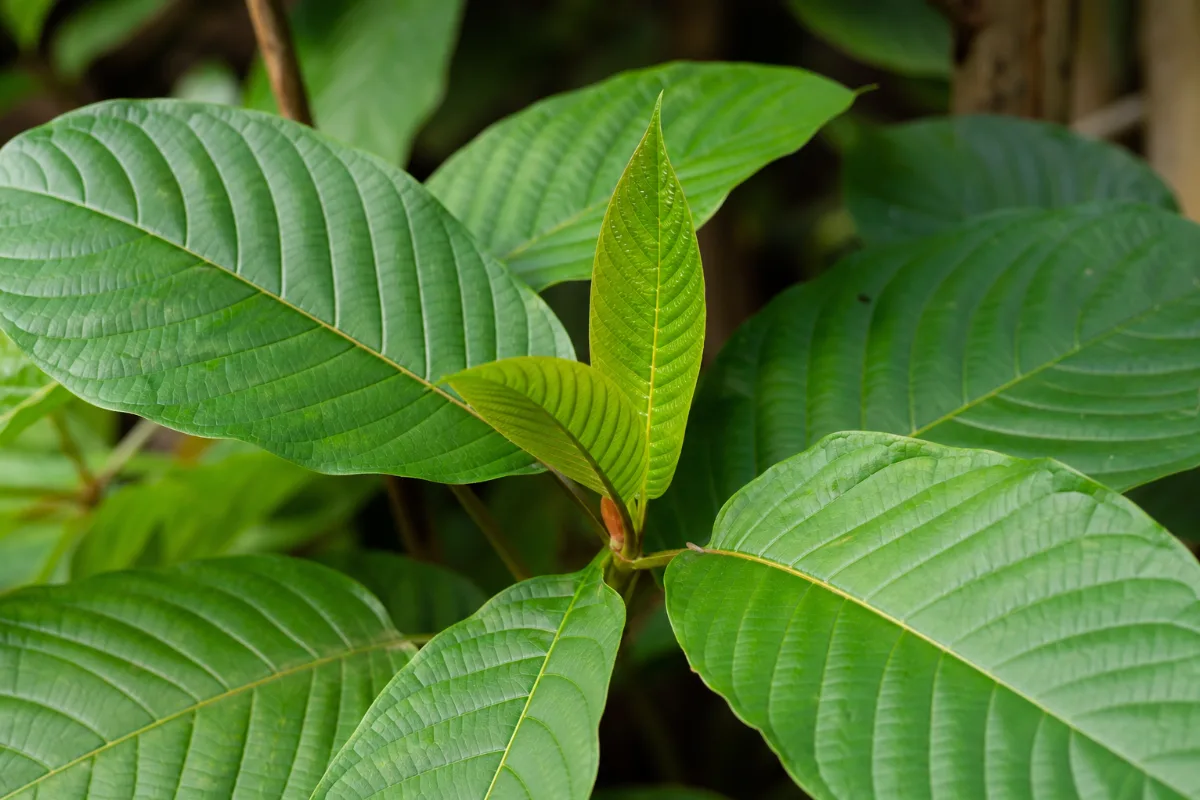
Herbs & Botanicals · Herbs · Opioid-like leaf with no approved medical use and serious safety concerns
Kratom
Mitragyna speciosa Korth. (also written Mitragyna speciosa (Korth.) Havil.) · also called Kratom, ketum, biak-biak, thang (names listed by FDA); not the same as kava
Kratom is the leaf of a tropical tree in the coffee family from Southeast Asia. Its main compounds, mitragynine and 7-hydroxymitragynine (7-OH), act on opioid receptors. The FDA warns consumers not to use it and says it is not lawfully marketed as a drug, supplement or food additive. Human research is mostly surveys, case reports and a few small studies in volunteers. No controlled trial shows kratom treats pain, opioid withdrawal, anxiety or any other condition. This profile puts the safety evidence first.
General information, not medical advice. Last substantive update · Not medically reviewed. A named clinician has not signed off on this page. How this page is made
About Kratom
Kratom (Mitragyna speciosa) is an opioid-like leaf with no approved medical use. The FDA warns against it. Human research is mostly surveys and case reports plus a few small pharmacology studies. Reported harms include dependence and withdrawal, liver injury, deaths (mostly with other drugs), seizures, heart and lung problems, newborn withdrawal, contamination and 7-OH products that are far more potent than leaf. No controlled trial shows it treats any condition.
What it is
Mitragyna speciosa Korth. is a tropical evergreen tree of the coffee family (Rubiaceae). GBIF and NCBI Taxonomy accept the name. The written form Mitragyna speciosa (Korth.) Havil. is a synonym of the same plant. The leaf is the part used.
Kratom contains over 50 alkaloids. Mitragynine is the most abundant and 7-OH is a minor one in leaf (under 2% of alkaloids).
Traditional and current uses
In Southeast Asia the leaf has been chewed or made into tea to fight fatigue and improve work output, and for pain and diarrhea, sometimes as a substitute for opium. Traditional use is not proof that it works or is safe.
In Western countries people use it for pain, anxiety, mood, fatigue and opioid withdrawal. About 0.7% of US people aged 12 and over used it in the past year in a 2019 national survey.
What the research shows
One crossover trial of 26 daily users found longer pain tolerance on an ice-water test after kratom tea than placebo. A 2022 review found no controlled human trials in opioid-related uses. Surveys report benefit but were self-selected and some were run by advocacy groups.
Three placebo-controlled trials in volunteers (116 healthy adults on one leaf powder; 40 polydrug users in an FDA pilot) found opioid-like effects, modest liking at the top doses, no serious events, and no meaningful withdrawal after 15 days. They do not show treatment benefit. The largest trial was sponsored by a kratom company.
Leaf versus 7-OH and concentrated products
Human trials used whole leaf powder or tea. Concentrated and lab-made 7-OH products are a different and higher-risk category: FDA says 7-OH is more potent than morphine at the mu-opioid receptor, and children exposed to 7-OH type products had higher odds of serious effects. Nobody has compared leaf with 7-OH products in people.
Legal and regulatory status
FDA says kratom is not lawfully marketed in the US as a drug, supplement or food additive and has an import alert. DEA acted on 7-OH related compounds in 2026: a temporary order for three compounds (effective August 2026) and a notice of intent for 7-OH above a threshold (October 2026). DEA lists ten states that prohibit 7-OH. Laws differ by state and country and change often.
NCCIH and NIDA both say kratom is not shown safe or effective. WHO kept kratom under surveillance with no international scheduling. We found no EMA/HMPC monograph, but could not confirm it on the EMA site.
At a glance
Traditional uses history, not proof
- Chewed or brewed as tea in Southeast Asia to fight fatigue and improve work productivity (NCCIH).
- Used in religious ceremonies and to treat pain and diarrhea, sometimes as a substitute for opium (NCCIH).
- Described by anthropologists as a multi-purpose remedy used for hundreds of years (NIDA).
- In Western countries now used to self-treat pain, anxiety, low mood, fatigue and opioid withdrawal (NIDA, FDA).
Studied for research
- Pain tolerance in daily users (one small trial), very low
- Opioid-like and relaxing effects in volunteers, low
- Energy, alertness and relaxation (self-report), very low
- Thinking and memory in regular users, very low
- Cholesterol and body weight (users versus non-users), very low
- Opioid withdrawal self-treatment, insufficient (no controlled trial)
- Mood and anxiety, insufficient (no benefit found)
- Diarrhea and cough, insufficient (traditional use only)
Main compounds
- Mitragynine, the most abundant alkaloid
- 7-Hydroxymitragynine (7-OH), minor in leaf and much more potent
- Mitragynine pseudoindoxyl, a 7-OH related compound now scheduled in the US
- Over 50 alkaloids in all (FDA)
Common forms
- Dried leaf powder and capsules
- Tea or decoction
- Chewed fresh leaf (traditional)
- Liquid extracts, shots and resins
- Concentrated or lab-made 7-OH tablets, gummies and films (higher-risk category)
Research links: FDA and Kratom (regulator page) · NIDA: Kratom · NCCIH: Kratom · Liver injury systematic review 2026 (abstract) · Poison-center trends, MMWR 2026 (abstract) · Healthy-volunteer safety trial (abstract) · Research Library · Genes & Biomarkers Library
The plant and its history
- Accepted scientific name
- Mitragyna speciosa
- Naming authority
- Korth.
- Synonyms
- Mitragyna speciosa (Korth.) Havil. (homotypic synonym; the combination often written in labels); Stephegyne speciosa (Korth.) Korth.; Nauclea speciosa (Korth.) Miq.; Nauclea luzoniensis Blanco
- Common names
- Kratom (English); Ketum (not stated); Biak-biak (not stated); Thang (not stated); Krathom (not stated)
- Botanical family
- Rubiaceae (the coffee family)
- Classification
- Plantae > Tracheophyta > Magnoliopsida > Gentianales > Rubiaceae > Mitragyna > Mitragyna speciosa
- Native range
- Southeast Asia, including Thailand and neighbouring countries (NCCIH, NIDA, WHO).
- Habitat
- A tropical evergreen tree (MMWR 2026 abstract). Further habitat detail was not checked.
- What the plant looks like
- Roots: Not checked in the sources read.; Stems: Tree; not described further in the sources read.; Leaves: Leaves are the part used (chewed fresh, dried and powdered, or brewed).; Flowers: Not checked.; Fruit: Not checked.
- Cultivation
- Not checked in the sources read.
- Harvest and processing
- Products include dried leaf powder, capsules and tablets, tea, extracts, resin and concentrated or semi-synthetic 7-OH products (FDA, DEA, product studies). How leaves are harvested was not checked.
- Look-alikes and adulterants
- Name: Other kratom-type products; Note: A 2026 product study found labels often did not match contents and some products held unlisted alkaloids or higher 7-OH. 'Kratom' on a label does not guarantee leaf only.; Name: Historical names; Note: Stephegyne speciosa and Nauclea speciosa are old names for the same plant, not different species (GBIF).; Name: Kava (Piper methysticum); Note: A different plant often sold in the same shops and drinks; kava is a pepper-family sedative with its own liver warnings. Kava and kratom are increasingly combined.
- Sustainability and conservation
- Not checked.
Traditional use and history history, not clinical proof
| Tradition or era | Documented use | Source |
|---|---|---|
| Southeast Asia, traditional use | People chewed the leaves or made tea to fight fatigue and improve work productivity; also used in religious ceremonies and to treat pain and diarrhea, sometimes as a substitute for opium. | s-nccih-kratom |
| Southeast Asia, hundreds of years | Anthropologists report use as a multi-purpose traditional remedy and to raise alertness and energy at work and social gatherings. | s-nida-kratom |
| Traditional medicine in some countries | WHO's drug-dependence committee notes use in traditional medicine in some countries. | s-who-ecdd |
| United States regulation | NCCIH notes that under US law kratom is treated as a new dietary ingredient because it was not marketed as a dietary ingredient before October 15, 1994. FDA now says kratom is not lawfully marketed as a dietary supplement. | s-nccih-kratom |
| International review | WHO's drug-dependence committee placed kratom under surveillance in 2020 and kept it there after a 2021 pre-review. | s-who-ecdd |
| 2015 to 2026, Western market | US poison-center kratom reports rose from 258 in 2015 to 3,434 in 2025. Concentrated 7-OH products appeared, and DEA acted on 7-OH related compounds in 2026. | p41886310 |
| Europe | No EMA/HMPC herbal monograph was found, so no European traditional-use history is given. This was not confirmed on the EMA site. | s-ema-hmpc-none |
Traditional use shows how a plant was used. It does not show that a supplement works or is safe today.
What is inside, and how it may work
What the plant contains and how those compounds act in cells and animals. Laboratory and animal mechanisms are not proven effects in people.
Main compounds
| Compound | Family | Where it is concentrated | Activity studied | Level of evidence |
|---|---|---|---|---|
| Mitragynine PubChem 3034396 | indole alkaloid | Leaf The most abundant alkaloid in kratom (WHO); amounts vary by product. | Partial mu-opioid receptor agonist; also binds adrenergic, serotonin and dopamine receptors. Turns slowly into 7-OH in the body (CYP3A4). Main compound in human trials. 47 37 40 16 10 | Human data |
| 7-Hydroxymitragynine (7-OH) PubChem 44301524 | indole alkaloid | Leaf (minor); also made in the body and in the lab Less than 2% of total alkaloids in natural leaf (FDA, DEA); much higher in concentrated and semi-synthetic products. | More potent at the mu-opioid receptor than mitragynine and morphine (FDA); animals self-administer it (WHO); can cause breathing depression in lab models that naloxone reverses (NIDA). 48 39 40 37 10 | Authoritative guidance |
| Mitragynine pseudoindoxyl PubChem 44301701 | indole alkaloid (7-OH related) | Detected in designer-type products Not stated in leaf in the sources read. | A 7-OH related opioid-active compound that DEA temporarily placed in Schedule I in August 2026. In children's poison-center cases, 7-OH or this compound carried higher odds of serious breathing and nerve effects than mitragynine. 49 41 9 | Authoritative guidance |
| 3-Dehydromitragynine | indole alkaloid | Found in commercial products (tablets, films, shots) Not stated. | Described in a 2026 product study as a toxicologically active compound found in many products. No PubChem record was matched by name, so no CID is given. 7 | Authoritative guidance |
| Other alkaloids | indole alkaloids | Leaf FDA says kratom contains over 50 alkaloids. | Most research focuses on mitragynine and 7-OH. The roles of the rest are not established in the sources read. 39 | Authoritative guidance |
Mechanisms, receptors and pathways
| Target or pathway | Gene or receptor | What was found | Level |
|---|---|---|---|
| Mu-opioid receptor | mu-opioid receptor (OPRM1) | Mitragynine and 7-OH partly activate it, so effects only partly resemble heroin or oxycodone. The WHO committee describes them as partial agonists. Pain relief is reversed by an opioid blocker in animals. 40 37 | Authoritative guidance |
| Kappa and delta opioid receptors; beta-arrestin pathway | OPRK1, OPRD1 | A pharmacokinetic paper's introduction says mitragynine is a competitive antagonist at kappa and delta receptors and, unlike morphine, does not activate the beta-arrestin-2 breathing-depression pathway. This was not tested in that paper. 10 | Laboratory research |
| Adrenergic, serotonin and dopamine receptors | adrenergic, serotonin, dopamine receptors | Mitragynine binds these receptors and this may explain the 'stimulating' effects people report. Effects of these links in people are not established. 40 37 | Laboratory research |
| CYP3A4 conversion of mitragynine to 7-OH | CYP3A4 | In healthy volunteers, itraconazole cut 7-OH exposure by 43 to 56% and raised the mitragynine peak 1.5 times, supporting CYP3A4 as the main route. 16 | Human data |
| CYP3A inhibition by kratom | CYP3A | Kratom tea raised midazolam exposure about 1.4 to 1.5 times; modelling with mitragynine as a time-dependent CYP3A inhibitor fits, mainly in the gut. 28 | Human data |
| Breathing control | mu-opioid receptor | NIDA says kratom leaf and mitragynine generally do not cause the breathing suppression typical of opioid overdose because mitragynine turns into 7-OH slowly, but 7-OH can in lab models and naloxone reverses it. In poisoning reports, response to naloxone varies. 40 1 | Animal research |
| Heart potassium channels | myocardial potassium channels | In vitro studies show kratom can inhibit these channels, which fits the long QT reports. 15 14 | Laboratory research |
Absorption, metabolism and elimination
- Absorption
- By mouth. Mitragynine reaches its peak in the blood about 0.8 to 1.7 hours after dosing in volunteer and user studies. Peak levels rose in step with the dose.
- Distribution
- Apparent volume of distribution 38.04 L/kg (SD 24.32) in nine regular users in Thailand.
- Metabolism
- CYP3A4 turns mitragynine into 7-OH. After one dose of leaf powder the 7-OH to mitragynine ratio was 0.20 to 0.31, and 0.15 to 0.21 after daily dosing. In kratom tea, 7-OH peak was about 9% and AUC about 20% of mitragynine's.
- Elimination
- Terminal half-life about 23 hours in regular users (SD 16). In the 116-person trial the mean half-life was 43.4 hours after one dose and 67.9 hours after repeated daily dosing for mitragynine, and 4.7 and 24.7 hours for 7-OH. Only 0.14% of mitragynine appeared unchanged in urine. Steady state took 8 to 9 days of daily dosing.
- Bioavailability
- Not established; no intravenous comparison was found in the sources read.
Isolated compounds versus whole extracts
Whole leaf, extracts and isolated or lab-made 7-OH are different things. Human trials used whole dried leaf powder or tea. Natural leaf holds under 2% 7-OH, while concentrated products can hold much more, and FDA, DEA and a children's poison-center study treat 7-OH products as higher risk. No study compared leaf with isolated mitragynine or 7-OH in people. Results from leaf trials should not be applied to extracts or 7-OH products.
Nutritional composition
Kratom is not a nutrient and has no nutritional claim. FDA has determined that kratom added to conventional food is an unsafe food additive.
1 low certainty5 very low certainty3 not enough evidence
What is Kratom good for?
The uses people ask about and how strong the human evidence is for each. None is proven, and all must be read with the safety section.
Benefits, one by one
Each card is a research question, not a promise. Tap a goal to filter. Open a card to see the studies, doses and limits.
Pain relief and pain tolerance
Very low certaintyPeople use kratom for pain, and one small trial in daily users found more time with a hand in ice water after kratom tea than after placebo. No trial has tested kratom for a pain condition such as back pain or arthritis. The U.S. FDA and NCCIH say it has not been shown safe and effective for pain or any medical use.
9 studiesThe trial used a kratom decoction (tea); the amount is not given in t…
Studies, doses and limits
What the trials found
One randomised, placebo-controlled crossover study in 26 young men who had used kratom daily for about six years measured pain tolerance on a cold pressor test (how long the hand stays in ice water after the pain starts). A pilot trial in 40 volunteers with opioid experience found that kratom narrowed the pupils from 3 g upward, an opioid-like effect; the abstract reports no pain test. A 2022 systematic review found only 2 interventional human studies, both with lower pain sensitivity, and no trial in people with a pain illness. WHO's drug-dependence committee states that painkilling effects have been shown in people and animals; NCCIH and FDA say safe and effective use is not shown.
Results
In the cold pressor study, pain tolerance rose from 11.2 seconds (SD 6.7) before to 24.9 seconds (SD 39.4) one hour after kratom decoction (p = 0.02). After placebo it was 15.0 and 12.0 seconds (p = 0.40). No withdrawal signs were seen over 10 to 20 hours without kratom.
Effect sizes as reported
Pain tolerance about doubled in the mean after kratom in daily users; spread was very wide.
Why this rating
One small study of 26 daily users, a lab pain test rather than illness pain, no repeat, and no controlled trial in a pain condition. Survey claims of benefit come from self-selected users.
Form and dose studied
The trial used a kratom decoction (tea); the amount is not given in the abstract. Other trials used capsules of dried leaf powder.
Who was studied
Daily kratom users (men, Malaysia) for the cold pressor study; volunteers with opioid experience for the pilot.
Limits
The pain test shows a short-term effect in people who may already be dependent; it does not show long-term relief or safety. Surveys are not controlled.
Why researchers looked
Pain is the most common reason people give for using kratom. In one 2017 online survey run through the American Kratom Association, 48% of users said pain was their main reason.
Traditional use
In Southeast Asia, leaves have been chewed or brewed as tea to fight fatigue and to treat pain and diarrhea, sometimes as a substitute for opium (NCCIH).
Proposed mechanism Pharmacological theory
Mitragynine and its body product 7-hydroxymitragynine (7-OH) are partial activators of mu-opioid receptors. Mitragynine also touches adrenergic, serotonin and dopamine receptors. Their effects only partly match opioids such as heroin or oxycodone (NIDA).
A proposed mechanism does not show that the effect happens in people.
Kratom has real safety risks (dependence, withdrawal, liver injury, deaths mostly with other drugs, contamination). See the Safety tab. FDA warns consumers not to use it.
Easing opioid withdrawal or cravings (self-treatment)
Not enough evidenceMany people use kratom to cut down on opioids or to ease withdrawal, and surveys report they find it helpful. No controlled trial has tested this. NCCIH says it has not been shown safe or effective for this use, and kratom can itself cause dependence and withdrawal. Approved medicines for opioid withdrawal exist.
6 studiesNot applicable; no trial.
Studies, doses and limits
What the trials found
A 2022 systematic review of 16 animal studies, 25 case reports and 10 observational studies states there were no controlled human clinical trials. Rodent studies show that mitragynine can reduce signs of opioid withdrawal. In the 10 user surveys, some assisted by pro-kratom lobbying groups, people reported high benefit and few side effects. The review also notes that 7-OH replaced morphine in animal tests and showed potential for tolerance and dependence. A 2024 phone-based study of 357 regular users found that when kratom use looked problematic, avoiding withdrawal became the main reason for the next dose.
Results
No trial results exist. In the national survey (N = 56,136) past-year kratom use was 0.7% overall and 10.4% among people with prescription opioid use disorder (adjusted odds ratio 3.20; 95% CI 1.38 to 7.41).
Effect sizes as reported
No effect size from a controlled trial.
Why this rating
No controlled human trial. Evidence is animal work plus self-selected surveys, some linked to advocacy groups.
Form and dose studied
Not applicable; no trial.
Who was studied
People with opioid use disorder who used kratom on their own.
Limits
Self-selection, advocacy-group sampling and no comparison group. Kratom can cause withdrawal itself, so relief of withdrawal could be relief of kratom's own withdrawal.
Why researchers looked
Kratom acts on the same receptors as opioids, so people try it as a substitute. A 2019 US national survey found 10.4% of people with a prescription-opioid use disorder had used it in the past year.
Traditional use
Used traditionally in Southeast Asia, sometimes as a substitute for opium (NCCIH).
Proposed mechanism Pharmacological theory
Mitragynine and its body product 7-hydroxymitragynine (7-OH) are partial activators of mu-opioid receptors. Mitragynine also touches adrenergic, serotonin and dopamine receptors. Their effects only partly match opioids such as heroin or oxycodone (NIDA).
A proposed mechanism does not show that the effect happens in people.
Kratom has real safety risks (dependence, withdrawal, liver injury, deaths mostly with other drugs, contamination). See the Safety tab. FDA warns consumers not to use it. Do not stop prescribed opioid treatment or use kratom instead of it without talking to a clinician.
Mood, anxiety and depression
Not enough evidencePeople say they use kratom for anxiety, depression or stress. A 2024 pooled analysis of 36 observational studies found no link between kratom use and better mental health, and a small link with worse outcomes such as substance use problems. No trial has tested kratom as a treatment for mood or anxiety.
4 studiesNot applicable.
Studies, doses and limits
What the trials found
A multilevel meta-analysis of 36 articles (observational) pooled the links between kratom use and mental health measures. There was a very small link with negative indicators and no significant link with positive indicators or quality of life. Anxiety and depression (internalising problems) showed no link. Substance use problems showed a small link. The authors read the results as consistent with people using kratom for a purpose, but the data cannot show cause.
Results
Negative indicators r = 0.092 (95% CI 0.020 to 0.164); positive indicators r = -0.031 (-0.149 to 0.087); externalising problems r = 0.201 (0.107 to 0.300); internalising problems r = -0.001 (not significant).
Effect sizes as reported
Very small links; none showing benefit.
Why this rating
Only observational associations. No randomised trial of kratom for mood or anxiety was found.
Form and dose studied
Not applicable.
Who was studied
Kratom users in many countries, mostly Malaysia and the U.S.
Limits
Observational studies cannot say whether kratom changes mood or whether people with mood problems use kratom. Surveys by advocacy groups are not neutral.
Why researchers looked
In the 2017 American Kratom Association survey, 22% of respondents used kratom for anxiety, PTSD or depression. NIDA lists mental health among the reasons people give.
Traditional use
No traditional use for mood is described in the sources read; traditional use was for fatigue, pain and diarrhea.
Proposed mechanism Preliminary mechanism
Mitragynine also binds adrenergic and serotonin receptors, which may relate to mood effects. This is lab science, not proof of benefit.
A proposed mechanism does not show that the effect happens in people.
Kratom has real safety risks (dependence, withdrawal, liver injury, deaths mostly with other drugs, contamination). See the Safety tab. FDA warns consumers not to use it.
Energy, alertness and relaxation
Very low certaintyUsers report two different feelings: energy and alertness, and relaxation and sedation. NCCIH and NIDA describe both. A 2024 phone-based study of 357 regular users found that energy and productivity were everyday reasons for use. No controlled trial has measured whether kratom improves work output or alertness.
6 studiesCapsules of 500 to 4,000 mg dried leaf powder (6.65 to 53.2 mg mitrag…
Studies, doses and limits
What the trials found
In the 2024 smartphone study of 357 regular users (13,401 use events), proximal reasons were mainly more energy and productivity and less pain. In the 2026 placebo-controlled trial of kratom leaf powder in 116 healthy volunteers, relaxation was one of the most commonly reported effects after single doses, and liking-type scores rose above placebo only at the top dose (4,000 mg leaf). Scores fell with repeated daily dosing. A 2026 pilot trial found higher drug liking only at the 12 g dose.
Results
Liking scores were significantly above placebo only at the highest single dose (4,000 mg leaf, 53.2 mg mitragynine) and decreased over 15 days of daily dosing. No performance or energy score was reported as improved.
Effect sizes as reported
Modest, dose-related subjective effects; no proof of better energy or work output.
Why this rating
Self-reported benefits plus small subjective-effect measures in volunteers. No test of energy, fatigue or work performance against placebo.
Form and dose studied
Capsules of 500 to 4,000 mg dried leaf powder (6.65 to 53.2 mg mitragynine) and single doses of 1 to 12 g were studied in volunteers.
Who was studied
Healthy volunteers (the large trial) and regular users (the phone study).
Limits
Commercial products vary in alkaloid content. Results in kratom-naive volunteers may not apply to daily users. The big trial was supported by a kratom company.
Why researchers looked
Kratom has been used in Southeast Asia to fight fatigue and improve work productivity (NCCIH).
Traditional use
Leaves were chewed or brewed as tea to fight fatigue and improve work productivity (NCCIH).
Proposed mechanism Pharmacological theory
Small doses are said by users to feel stimulating and larger doses sedating, but NIDA states studies have not yet established that this depends on the amount or method.
A proposed mechanism does not show that the effect happens in people.
Kratom has real safety risks (dependence, withdrawal, liver injury, deaths mostly with other drugs, contamination). See the Safety tab. FDA warns consumers not to use it.
Opioid-like and sedating effects in volunteers
Low certaintyIn human trials, kratom leaf powder produced mild, dose-related effects. Larger single doses narrowed the pupils and raised liking scores, and some people felt relaxed or sleepy. These are drug effects, not health benefits.
4 studiesSingle doses and 15 daily doses of one dried leaf powder; single dose…
Studies, doses and limits
What the trials found
Three small to mid-size placebo-controlled trials are now published. The largest (116 healthy volunteers, MitraLeaf leaf powder, 500 to 4,000 mg) found no serious adverse events and no clinically meaningful opioid withdrawal after 15 days. The FDA pilot (40 recreational polydrug users with opioid experience, single doses of 1 to 12 g) found pupil narrowing from 3 g and higher drug liking at 12 g, with sleepiness and vomiting the common side effects.
Results
Pupils narrowed at 3 g and above; drug liking rose at 12 g (pilot) and at 4,000 mg leaf (large trial); no participant met the threshold for meaningful opioid withdrawal after 15 daily doses.
Effect sizes as reported
Dose-related, mostly mild.
Why this rating
Randomised, placebo-controlled, but short, single-product, and in the large trial sponsored by a kratom company; results may not apply to other products or long-term use.
Form and dose studied
Single doses and 15 daily doses of one dried leaf powder; single doses of botanical kratom in the FDA pilot.
Who was studied
Healthy kratom-naive adults; recreational polydrug users with opioid experience.
Limits
Short duration, one product each, and these volunteers differ from people who use kratom daily for years. A 15-day study cannot show dependence risk.
Why researchers looked
Regulators want to know whether kratom has abuse potential. FDA says a well-designed human abuse potential study had not yet been completed when its page was last updated in December 2025; the 2026 trials add data.
Traditional use
Not applicable.
Proposed mechanism Pharmacological theory
Mitragynine and its body product 7-hydroxymitragynine (7-OH) are partial activators of mu-opioid receptors. Mitragynine also touches adrenergic, serotonin and dopamine receptors. Their effects only partly match opioids such as heroin or oxycodone (NIDA).
A proposed mechanism does not show that the effect happens in people.
Kratom has real safety risks (dependence, withdrawal, liver injury, deaths mostly with other drugs, contamination). See the Safety tab. FDA warns consumers not to use it.
Thinking and memory
Very low certaintyA Malaysian study of 70 regular kratom tea users and 25 non-users found about the same scores on most computer tests of memory and attention. Users who drank more than 3 glasses a day did worse on one visual memory and learning test. No trial has tested kratom for brain performance.
1 studiesKratom tea or juice in regular users.
Studies, doses and limits
What the trials found
One cross-sectional study used a standard computerised test battery (CANTAB).
Results
Users and controls were comparable on motor, attention and executive tasks. Intake above 3 glasses a day (about 72.5 to 74.9 mg mitragynine) was linked with poorer Paired Associates Learning (visual episodic memory and new learning).
Effect sizes as reported
No overall difference; one task worse at high intake.
Why this rating
One small cross-sectional study of 95 people; it cannot show cause and does not test improvement.
Form and dose studied
Kratom tea or juice in regular users.
Who was studied
Regular kratom users in Malaysia.
Limits
Small, single setting, observational. Reasons for dose differences are not controlled.
Why researchers looked
Whether long-term use harms thinking is a safety question; some users hope for better focus.
Traditional use
Not applicable.
Proposed mechanism Pharmacological theory
Not established. Opioid-receptor activity could in theory affect learning.
A proposed mechanism does not show that the effect happens in people.
Kratom has real safety risks (dependence, withdrawal, liver injury, deaths mostly with other drugs, contamination). See the Safety tab. FDA warns consumers not to use it.
Cholesterol, triglycerides and body weight
Very low certaintyA 2025 pooled analysis of five studies of 1,458 adults found that people who use kratom had slightly lower LDL cholesterol, triglycerides and BMI, and slightly higher HDL, than non-users. These are comparisons of users and non-users at one point in time, so they do not show that kratom changed the numbers.
2 studiesNot applicable; users of kratom in the form they chose.
Studies, doses and limits
What the trials found
The meta-analysis pooled five cross-sectional studies. It also says total cholesterol and blood sugar did not differ significantly. The earlier systematic review had pointed to high cholesterol in some chronic users, so the two sources do not agree on direction; the authors of the newer review call for longer studies.
Results
Kratom users versus non-users: LDL cholesterol lower (95% CI -0.39 to -0.02 mmol/L), triglycerides lower (mean difference -0.17 mmol/L; -0.25 to -0.09), HDL higher (+0.07; 0.03 to 0.11), BMI lower (-1.52 kg/m2; -2.81 to -0.23). Total cholesterol and blood sugar: not significant.
Effect sizes as reported
Small differences between groups.
Why this rating
Cross-sectional comparisons only, so cause cannot be shown; an earlier review reported high cholesterol in some chronic users.
Form and dose studied
Not applicable; users of kratom in the form they chose.
Who was studied
Adults who use kratom, mostly in Southeast Asia (not stated in the abstract).
Limits
Cross-sectional design; groups may differ in diet, smoking or other substances. No trial of kratom for blood fats exists.
Why researchers looked
A 2022 systematic review of human kratom studies noted that observational studies of chronic use reported a high cholesterol level, so researchers asked if kratom changes blood fats.
Traditional use
No traditional use for blood fats is described in the sources read.
Proposed mechanism Pharmacological theory
No mechanism for blood-fat effects was established in the sources read.
A proposed mechanism does not show that the effect happens in people.
Kratom has real safety risks (dependence, withdrawal, liver injury, deaths mostly with other drugs, contamination). See the Safety tab. FDA warns consumers not to use it.
Testosterone and sex hormones
Very low certaintyOne small Malaysian study of 19 long-term kratom users found no sign of low testosterone or changed gonadotropin hormones. It had no control group in the abstract, so it is a limited reassurance, not proof of hormone safety.
1 studiesKratom tea or juice drunk for over 2 years.
Studies, doses and limits
What the trials found
A cross-sectional study of 19 regular kratom tea or juice users (use for more than 2 years) measured testosterone, FSH, LH and routine blood tests.
Results
Daily mitragynine of about 76 to 94 mg was not linked with impaired testosterone, gonadotropins, blood counts or blood chemistry.
Effect sizes as reported
No change seen.
Why this rating
19 people, one study, no comparison group described, cross-sectional.
Form and dose studied
Kratom tea or juice drunk for over 2 years.
Who was studied
Regular kratom users in Malaysia (sex not stated in the abstract; the study measured testosterone).
Limits
Very small and not controlled. The paper says kratom has been reported to affect sperm shape and movement (source not given in the abstract), so the question is not closed.
Why researchers looked
Long-term opioid use is linked with low testosterone, and kratom acts on opioid receptors, so researchers checked hormones in regular users.
Traditional use
Not applicable.
Proposed mechanism Pharmacological theory
Opioid-receptor activity can lower sex hormones in opioid users; this was the reason for the study.
A proposed mechanism does not show that the effect happens in people.
Kratom has real safety risks (dependence, withdrawal, liver injury, deaths mostly with other drugs, contamination). See the Safety tab. FDA warns consumers not to use it.
Diarrhea and cough (traditional use)
Not enough evidenceKratom has been used traditionally for diarrhea, and FDA lists cough and diarrhea among the things people self-treat with it. No human trial was found for either. Kratom's opioid-like action can slow the gut and cause constipation, which is a known side effect.
3 studiesNot applicable.
Studies, doses and limits
What the trials found
No human trial or review of kratom for diarrhea or cough was found in this search. Constipation and nausea are listed by NCCIH and NIDA as common mild side effects.
Results
No trial results.
Effect sizes as reported
None.
Why this rating
Only traditional use and a regulator's list of self-treatment. No human data.
Form and dose studied
Not applicable.
Who was studied
Not applicable.
Limits
No trials. Kratom is not an approved treatment for any digestive or lung condition.
Why researchers looked
Opioids slow gut movement, which is why traditional users turned to it for diarrhea.
Traditional use
NCCIH notes traditional use to treat symptoms such as pain and diarrhea, sometimes as a substitute for opium.
Proposed mechanism Pharmacological theory
Opioid-receptor action slows the gut. Not tested for diarrhea in controlled human studies.
A proposed mechanism does not show that the effect happens in people.
Kratom has real safety risks (dependence, withdrawal, liver injury, deaths mostly with other drugs, contamination). See the Safety tab. FDA warns consumers not to use it.
Connections to the rest of health
How Kratom connects to the rest of our health knowledge graph. Every link says what kind of connection it is. A safety link (for example to the liver) is a warning, not a benefit. A study that merely mentions a topic never creates a benefit link.
Explore every connection: goals, body systems, organs, symptoms, genes
A. Wellness goals
| Connected to | Kind of connection | Evidence status | Context | Studies |
|---|---|---|---|---|
| Anxiety Support | Biological association | Not enough evidence | Mood, anxiety and depression: People say they use kratom for anxiety, depression or stress. A 2024 pooled analysis of 36 observational studies found no link between kratom use and better mental health, and a small link with worse outcomes such as substance use problems. No trial has tested kratom as a treatment for mood or anxiety. | 36 3 24 40 |
| Mood Balance | Biological association | Not enough evidence | Mood, anxiety and depression: People say they use kratom for anxiety, depression or stress. A 2024 pooled analysis of 36 observational studies found no link between kratom use and better mental health, and a small link with worse outcomes such as substance use problems. No trial has tested kratom as a treatment for mood or anxiety. | 36 3 24 40 |
| Energy Boost | Traditional use | Very low certainty | Energy, alertness and relaxation: Users report two different feelings: energy and alertness, and relaxation and sedation. NCCIH and NIDA describe both. A 2024 phone-based study of 357 regular users found that energy and productivity were everyday reasons for use. No controlled trial has measured whether kratom improves work output or alertness. | 24 4 11 21 38 40 |
| Reduce Fatigue | Traditional use | Very low certainty | Energy, alertness and relaxation: Users report two different feelings: energy and alertness, and relaxation and sedation. NCCIH and NIDA describe both. A 2024 phone-based study of 357 regular users found that energy and productivity were everyday reasons for use. No controlled trial has measured whether kratom improves work output or alertness. | 24 4 11 21 38 40 |
| Calm Relaxation | Traditional use | Very low certainty | Energy, alertness and relaxation: Users report two different feelings: energy and alertness, and relaxation and sedation. NCCIH and NIDA describe both. A 2024 phone-based study of 357 regular users found that energy and productivity were everyday reasons for use. No controlled trial has measured whether kratom improves work output or alertness. | 24 4 11 21 38 40 |
| Memory Support | Biological association | Very low certainty | Thinking and memory: A Malaysian study of 70 regular kratom tea users and 25 non-users found about the same scores on most computer tests of memory and attention. Users who drank more than 3 glasses a day did worse on one visual memory and learning test. No trial has tested kratom for brain performance. | 23 |
| Cognitive Performance | Biological association | Very low certainty | Thinking and memory: A Malaysian study of 70 regular kratom tea users and 25 non-users found about the same scores on most computer tests of memory and attention. Users who drank more than 3 glasses a day did worse on one visual memory and learning test. No trial has tested kratom for brain performance. | 23 |
| Cholesterol Balance | Biological association | Very low certainty | Cholesterol, triglycerides and body weight: A 2025 pooled analysis of five studies of 1,458 adults found that people who use kratom had slightly lower LDL cholesterol, triglycerides and BMI, and slightly higher HDL, than non-users. These are comparisons of users and non-users at one point in time, so they do not show that kratom changed the numbers. | 20 19 |
| Metabolic Health | Biological association | Very low certainty | Cholesterol, triglycerides and body weight: A 2025 pooled analysis of five studies of 1,458 adults found that people who use kratom had slightly lower LDL cholesterol, triglycerides and BMI, and slightly higher HDL, than non-users. These are comparisons of users and non-users at one point in time, so they do not show that kratom changed the numbers. | 20 19 |
| Weight Management | Biological association | Very low certainty | Cholesterol, triglycerides and body weight: A 2025 pooled analysis of five studies of 1,458 adults found that people who use kratom had slightly lower LDL cholesterol, triglycerides and BMI, and slightly higher HDL, than non-users. These are comparisons of users and non-users at one point in time, so they do not show that kratom changed the numbers. | 20 19 |
| Hormone Balance | Biological association | Very low certainty | Testosterone and sex hormones: One small Malaysian study of 19 long-term kratom users found no sign of low testosterone or changed gonadotropin hormones. It had no control group in the abstract, so it is a limited reassurance, not proof of hormone safety. | 22 |
| Mens Vitality | Biological association | Very low certainty | Testosterone and sex hormones: One small Malaysian study of 19 long-term kratom users found no sign of low testosterone or changed gonadotropin hormones. It had no control group in the abstract, so it is a limited reassurance, not proof of hormone safety. | 22 |
B. Body systems
| Connected to | Kind of connection | Evidence status | Context | Studies |
|---|---|---|---|---|
| Nervous system | Adverse effect or risk | Low certainty | Sedation, confusion, tremor, possible seizures; mu-opioid receptor activity. Preparation or compound: Mitragynine and 7-OH |
40 32 |
| Nervous System | Biological association | Very low certainty | Studied for: Pain relief and pain tolerance Studied for: Easing opioid withdrawal or cravings (self-treatment) | 33 21 19 27 37 38 39 3 40 17 24 36 4 11 23 |
| Metabolism Weight | Biological association | Very low certainty | Studied for: Cholesterol, triglycerides and body weight | 20 19 |
| Cardiovascular System | Biological association | Very low certainty | Studied for: Cholesterol, triglycerides and body weight | 20 19 |
| Endocrine System | Biological association | Very low certainty | Studied for: Testosterone and sex hormones | 22 |
| Reproductive System | Biological association | Very low certainty | Studied for: Testosterone and sex hormones | 22 |
| Digestive System | Biological association | Not enough evidence | Studied for: Diarrhea and cough (traditional use) | 38 39 40 |
| Respiratory System | Biological association | Not enough evidence | Studied for: Diarrhea and cough (traditional use) | 38 39 40 |
C. Body parts and organs
| Connected to | Kind of connection | Evidence status | Context | Studies |
|---|---|---|---|---|
| Liver | Adverse effect or risk | Low certainty | 32 published cases, 4 transplants; mostly case reports. Preparation or compound: Leaf, mostly high long-term use; cholestatic pattern |
2 6 |
| Heart | Adverse effect or risk | Very low certainty | Fast heartbeat, high blood pressure, QT and Brugada case reports. Preparation or compound: Mitragynine; leaf |
14 15 |
| Lungs | Adverse effect or risk | Very low certainty | Rare lung injury syndromes in case reports; breathing depression with 7-OH in lab models. Preparation or compound: Kratom, 7-OH |
12 40 |
| Brain | Biological association | Very low certainty | One small study: poorer visual learning on one test at high intake. Preparation or compound: Regular tea use |
23 |
E. Health conditions
| Connected to | Kind of connection | Evidence status | Context | Studies |
|---|---|---|---|---|
| Kratom use disorder and dependence | Adverse effect or risk | Low certainty | 25.5% of surveyed users met adapted criteria; withdrawal reported. Preparation or compound: Regular use |
8 26 |
| Neonatal abstinence syndrome | Adverse effect or risk | Very low certainty | Case reports of newborn withdrawal. Preparation or compound: Maternal regular use |
35 5 |
| Pregnancy | Contraindication | Very low certainty | No controlled data; newborn withdrawal reported. Preparation or compound: Kratom |
35 40 |
| Opioid withdrawal | Traditional use | Not enough evidence | Self-treatment; no controlled trial; NCCIH says not shown safe or effective. Preparation or compound: Kratom leaf |
27 38 |
I. Biomarkers
| Connected to | Kind of connection | Evidence status | Context | Studies |
|---|---|---|---|---|
| Pain tolerance on a cold pressor test | Biological association | Very low certainty | Measured in trials: raised. A lab change is not the same as a health benefit. | 33 |
| Pupil size | Biological association | Low certainty | Measured in trials: lowered. A lab change is not the same as a health benefit. | 21 |
| Opioid withdrawal scores (COWS and SOWS) | Biological association | Low certainty | Measured in trials: no-change. A lab change is not the same as a health benefit. | 4 11 |
| LDL cholesterol | Biological association | Very low certainty | Measured in trials: lowered. A lab change is not the same as a health benefit. | 20 |
| Triglycerides | Biological association | Very low certainty | Measured in trials: lowered. A lab change is not the same as a health benefit. | 20 |
| HDL cholesterol | Biological association | Very low certainty | Measured in trials: raised. A lab change is not the same as a health benefit. | 20 |
| Testosterone | Biological association | Very low certainty | Measured in trials: no-change. A lab change is not the same as a health benefit. | 22 |
J. Genes, receptors and enzymes
| Connected to | Kind of connection | Evidence status | Context | Studies |
|---|---|---|---|---|
| OPRM1 (mu-opioid receptor) | Preliminary mechanism | Authoritative guidance | Main target of mitragynine and 7-OH. | 40 37 |
| CYP3A4 | Preliminary mechanism | Human | Makes 7-OH from mitragynine; blocked by itraconazole; kratom raises levels of a CYP3A drug. | 16 28 |
| CYP2D6 | Preliminary mechanism | Human | No change in dextromethorphan; one nortriptyline case. | 28 6 |
| Adrenergic, serotonin and dopamine receptors | Preliminary mechanism | In vitro | Binding by mitragynine; links to stimulating effects not proven. | 40 |
L. Active compounds
| Connected to | Kind of connection | Evidence status | Context | Studies |
|---|---|---|---|---|
| Mitragynine | Biological association | Human | Partial mu-opioid receptor agonist; also binds adrenergic, serotonin and dopamine receptors. Turns slowly into 7-OH in the body (CYP3A4). Main compound in human trials. Preparation or compound: Leaf |
47 37 40 16 10 |
| 7-Hydroxymitragynine (7-OH) | Biological association | Authoritative guidance | More potent at the mu-opioid receptor than mitragynine and morphine (FDA); animals self-administer it (WHO); can cause breathing depression in lab models that naloxone reverses (NIDA). Preparation or compound: Leaf (minor); also made in the body and in the lab |
48 39 40 37 10 |
| Mitragynine pseudoindoxyl | Biological association | Authoritative guidance | A 7-OH related opioid-active compound that DEA temporarily placed in Schedule I in August 2026. In children's poison-center cases, 7-OH or this compound carried higher odds of serious breathing and nerve effects than mitragynine. Preparation or compound: Detected in designer-type products |
49 41 9 |
| 3-Dehydromitragynine | Biological association | Authoritative guidance | Described in a 2026 product study as a toxicologically active compound found in many products. No PubChem record was matched by name, so no CID is given. Preparation or compound: Found in commercial products (tablets, films, shots) |
7 |
| Other alkaloids | Biological association | Authoritative guidance | Most research focuses on mitragynine and 7-OH. The roles of the rest are not established in the sources read. Preparation or compound: Leaf |
39 |
Each connection is stored with the ingredient, the connected record, the kind of connection, the evidence status, the supporting studies, the preparation or compound involved, and a review date (last reviewed October 25, 2026).
The evidence
The research centre for Kratom. Every record here was checked against PubMed or the publisher's page; we never list a study we have not verified.
Evidence by outcome
Bars show how many studies we found for each outcome, not how well it works. People are added up across trials only (reviews are not added, to avoid double counting).
How we rate evidence
High certainty
Several well-run trials or reviews agree; further research is unlikely to change the picture much.
Moderate certainty
Good trials point the same way, but some doubt remains.
Low certainty
Small, short or inconsistent trials. The finding could change with better research.
Very low certainty
Very little or very weak human data. Treat as a possibility only.
Mixed findings
Trials or reviews disagree with each other.
Not enough evidence
Not enough human research to say either way.
Evidence against
Good research found no benefit, or found harm.
We take the reviewers' own risk-of-bias and GRADE statements where they exist, and otherwise judge from study size, design, consistency, directness and whether a product matches what is sold. Many publications do not make evidence high. Method note: We searched PubMed and read abstracts of about 51 sources, read the FDA, NIDA, NCCIH, WHO and two DEA Federal Register pages and the FDA import alert, checked the plant name in GBIF and NCBI Taxonomy and compounds in PubChem, and looked for EMA, LiverTox and LactMed pages (EMA and LiverTox not confirmed; a LactMed listing was seen but not read). Only abstracts were read for papers. Certainty ratings are the compiler's own reading. The largest volunteer trial was sponsored by a kratom company, and one survey was run through a kratom advocacy group; both are flagged. No study is cited that we could not verify.
Study library: every study we checked 51
| Study | Design | People | Product, dose, length | Result |
|---|---|---|---|---|
| Babun 2026 Kratom Toxicity: Pharmacologic Mechanisms, Clinical Risks, and Management Considerations. Cureus · PMID 42634663 · DOI |
Narrative review |
Case reports, series and observational studies of kratom poisoning | Kratom and its alkaloids leaf Varied n/a · vs n/a |
Kratom poisoning can look like opioid poisoning, with responses to naloxone that vary. Delayed or repeated slowing of breathing after an initial response to naloxone has been reported, so longer observation may be needed. More risk when other substances are involved and with product differences. Variable naloxone response; recurrent breathing depression reported Methods, limits and fundingOutcomes: Breathing effects and naloxone response in poisoning Limitations: Narrative review of reports, not a measurement of how often this happens. Funding and conflicts: No financial support declared. Read: abstract |
| Calicdan 2026 Liver Injury Associated With Kratom (Mitragyna speciosa): A Systematic Review. Journal of Addiction Medicine · PMID 41803068 · DOI |
Systematic review |
32 31 studies describing 32 cases of liver injury, mostly US single-patient reports; mostly adult men |
Kratom (dose and form often unreported) leaf Inconsistently reported n/a · vs n/a |
Most cases had jaundice and raised liver enzymes, and the pattern was mostly cholestatic (bile flow blocked). Liver tests improved after stopping in most. In 4 cases the liver did not recover and a transplant was needed. Only 7 cases (22%) had full exposure details, 3 (9%) had liver disease already, and many people used other substances. Several reports supported a link by ruling out other causes and, in some, by a rechallenge. 32 cases; 4 transplants Methods, limits and fundingOutcomes: Pattern and outcome of kratom-associated liver injury Limitations: Case reports only, so it gives no rate; co-exposures; causality was graded inconsistently. Funding and conflicts: One author reports in-kind medication support for an NIH trial; others none. Read: abstract |
| Coe 2019 Kratom as a substitute for opioids: Results from an online survey. Drug and Alcohol Dependence · PMID 31284119 · DOI |
Survey |
3024 2,867 current and 157 former kratom users, recruited through the American Kratom Association and social media, Sept 2017 |
Kratom products as used leaf Self-reported n/a · vs None |
Reasons: pain 48%, anxiety, PTSD or depression 22%, energy or focus 10%, cutting down on opioids or easing withdrawal 10%. Over 90% of those who used it in place of opioids said it helped pain, reduced opioid use and relieved withdrawal. Bad adverse reactions were reported by 13%, mostly mild and self-managed. Self-reported benefit Methods, limits and fundingOutcomes: Reasons for use, benefit and side effects Limitations: Self-selected users recruited by a kratom advocacy and trade group; no comparison group; self-report. Funding and conflicts: Recruited through the American Kratom Association; authors work at Pinney Associates, a consulting firm that works with kratom-related organisations (see the disclosures in p42144893). Read: abstract |
| Coe 2026 Assessment of Abuse Potential-Related Effects of Oral Dried Kratom Leaf Powder in Healthy Normal Participants Following Single and Multiple Daily Doses. Drug Testing and Analysis · PMID 42144893 · DOI |
Controlled trial |
116 Healthy kratom-naive adults; 49 on kratom, 67 on placebo (same trial as p41486478) |
MitraLeaf dried kratom leaf powder capsules leaf 500 to 4000 mg leaf (6.65 to 53.2 mg mitragynine), single dose or 15 daily doses 15 days · vs Placebo |
Liking-type responses were dose-related and rose significantly above placebo only at the highest single dose. They became smaller with repeated dosing. No participant met the threshold for clinically meaningful opioid withdrawal. Abuse-related adverse events were more frequent at higher doses but mild. Modest dose-related subjective effects; minimal withdrawal after 15 days Methods, limits and fundingOutcomes: Drug Effects Questionnaire (DEQ), opioid withdrawal scales (SOWS, COWS), abuse-related adverse events Limitations: Kratom-naive volunteers given 15 days of one product; does not show what happens after months or years of daily use, or with concentrated products. Funding and conflicts: Supported by NP Pharma (Della Terra Pharmaceuticals), which reviewed a draft. Authors consult for NP Pharma; two authors are paid expert witnesses in kratom legal cases and one consults for the American Kratom Association through Pinney Associates (per the disclosure statement). Read: abstract |
| Eldridge 2018 Neonatal Abstinence Syndrome Due to Maternal Kratom Use. Pediatrics · PMID 30404789 · DOI |
Case report |
1 One newborn whose mother drank kratom tea daily to self-treat opioid dependence |
Kratom tea leaf Daily n/a · vs None |
The infant had neonatal abstinence syndrome (opioid-like withdrawal) after maternal daily kratom tea. One case Methods, limits and fundingOutcomes: Neonatal abstinence syndrome Limitations: One case with maternal opioid history. Funding and conflicts: No conflicts. Read: abstract |
| Gnanasegaram 2026 Kratom Consumption Associated With Herb-Induced Liver Injury and a Pharmacokinetic Interaction: A Case Report. Cureus · PMID 42051846 · DOI |
Case report |
1 45-year-old man on nortriptyline and lisdexamfetamine |
Raw dried kratom leaf, two tablespoons daily for 5 to 6 years leaf Two tablespoons a day 5 to 6 years · vs None |
ALT 70 U/L, ALP 136, GGT 141 and a nortriptyline level of 350 mcg/L. Cutting the nortriptyline dose only partly lowered the level and liver enzymes stayed high. Both returned to normal within three weeks of stopping kratom. Mild liver enzyme rise and high antidepressant level that cleared after stopping Methods, limits and fundingOutcomes: Liver tests and nortriptyline level Limitations: One person; cause not proven; a rare, mild case. Funding and conflicts: No funding or conflicts declared. Read: abstract |
| Gour 2026 Mislabeling and Status of Semisynthetic Kratom-Derived Products in the US Market. Drug Testing and Analysis · PMID 42448619 · DOI |
Product analysis |
Commercial kratom tablets, films and liquid shots collected from several locations | Commercial kratom products, including semisynthetic types leaf n/a n/a · vs Label claims |
Alkaloid content varied widely and often did not match labels. Products often held alkaloids not listed or lacked ones that were listed, and most still contained active compounds such as 7-hydroxymitragynine and 3-dehydromitragynine. The authors describe inconsistent manufacturing, label errors and possible adulteration. Label mismatch and 7-OH in many products Methods, limits and fundingOutcomes: Alkaloid content versus label Limitations: Number of products not shown in the abstract; a convenience set. Funding and conflicts: Not read in the abstract. Read: abstract |
| Hill 2024 Prevalence of Kratom Use Disorder Among Kratom Consumers. Journal of Addiction Medicine · PMID 38441236 · DOI |
Survey |
2061 2,061 current kratom consumers in an online anonymous survey, Feb to May 2023 |
Kratom products as used leaf Self-reported n/a · vs None |
25.5% (525 people) met the adapted criteria. Among them tolerance was reported by 81.3% and withdrawal by 68.0%. People with another substance use disorder had 2.83 times the odds (95% CI 2.19 to 3.67) of meeting the criteria. About 1 in 4 of the surveyed users met adapted disorder criteria (OR 2.83 (2.19, 3.67)) Methods, limits and fundingOutcomes: Share meeting DSM-5-style criteria adapted for kratom use disorder Limitations: Non-random online sample; criteria adapted by the authors (DSM-5 has no kratom diagnosis). Funding and conflicts: Not read in the abstract. Read: abstract |
| Hoffmann 2026 Risk of respiratory and neurologic effects in children ingesting kratom and related alkaloids. American Journal of Emergency Medicine · PMID 42715782 · DOI |
Database analysis |
169 169 children under 12 with single-substance kratom ingestions (median age 2; 97% unintentional) |
Kratom products; 7-OH or mitragynine pseudoindoxyl versus mitragynine leaf Not known n/a · vs Mitragynine products |
Children exposed to 7-OH or mitragynine pseudoindoxyl products had higher odds of serious respiratory effects (OR 2.5; 95% CI 1.1 to 5.4) and neurologic effects (OR 2.6; 1.2 to 5.4), and naloxone was used almost twice as often. Higher risk with 7-OH type products (OR 2.5 (1.1, 5.4); OR 2.6 (1.2, 5.4)) Methods, limits and fundingOutcomes: Serious breathing and nerve effects Limitations: Retrospective poison-center data; small numbers; wide intervals. Funding and conflicts: No competing interests declared. Read: abstract |
| Huestis 2024 Human Mitragynine and 7-Hydroxymitragynine Pharmacokinetics after Single and Multiple Daily Doses of Oral Encapsulated Dried Kratom Leaf Powder. Molecules · PMID 38474495 · DOI |
Controlled trial |
Healthy adult volunteers (same MitraLeaf dose-escalation trial) | MitraLeaf dried kratom leaf powder capsules leaf 500 to 4000 mg leaf (6.65 to 53.2 mg mitragynine), single and 15 daily doses 15 days · vs Placebo |
Peak levels rose in step with dose. Mitragynine peaked about 1 to 1.7 hours after dosing. Average half-life of mitragynine was 43.4 hours after one dose and 67.9 hours after repeated dosing. For 7-hydroxymitragynine it was 4.7 and 24.7 hours. Steady state took 8 to 9 days. The 7-OH to mitragynine ratio was 0.20 to 0.31 after one dose. Long half-life; some build-up with daily dosing Methods, limits and fundingOutcomes: Blood levels of mitragynine and 7-hydroxymitragynine Limitations: One product, healthy volunteers, doses up to 53.2 mg mitragynine. Funding and conflicts: Johnson Foods, LLC paid for the study of its MitraLeaf product; one author works for Della Terra Pharmaceuticals. Read: abstract |
| Huestis 2026 Safety and Tolerability of Single and Multiple Daily Oral Doses of Dried Kratom Leaf Powder in a Randomized Trial in Healthy Volunteers. Therapeutic Drug Monitoring · PMID 41486478 · DOI |
Controlled trial |
116 Healthy non-smoking adults aged 18-55 who had never used kratom or not for 12 months or more; 49 on kratom, 67 on placebo |
MitraLeaf dried kratom leaf powder (capsules) leaf Single doses of 500, 1000, 2000 or 4000 mg of leaf (6.65 to 53.2 mg mitragynine), then the same dose daily for 15 days 47 days in all, including follow-up · vs Placebo |
No serious adverse events or deaths. Side effects rose with dose. After a single dose the most common were dizziness, nausea and feeling of relaxation. After 15 daily doses they were headache, feeling hot, raised ALT (a liver blood test) and nausea. The authors concluded the product was well tolerated with no meaningful abuse potential or withdrawal. No serious events at these doses; mild effects dose-related; ALT rise listed among common events Methods, limits and fundingOutcomes: Adverse events, withdrawal and abuse potential Limitations: One branded leaf powder; healthy volunteers who were not regular users; only 15 days; top dose 53.2 mg mitragynine. Results cannot be applied to extracts, 7-OH products or people who use kratom daily for years. Funding and conflicts: Study supported by NP Pharma (now Della Terra Pharmaceuticals), a kratom product company; several authors consult for or work for the sponsor (disclosure in the companion paper p42144893). The PubMed record shows no separate conflict statement for this paper. Read: abstract |
| Kanchustambham 2026 Kratom-Associated Pulmonary Toxicity: A Systematic Review of Case Reports and Forensic Series with a Proposed Clinical Phenotype Classification. Journal of Medical Toxicology · PMID 42661120 · DOI |
Systematic review |
24 24 reports (14 clinical, 10 forensic) |
Kratom, mitragynine or 7-OH exposure leaf Varied n/a · vs n/a |
Reported problems fell into five groups: diffuse alveolar hemorrhage (3), acute respiratory distress syndrome or lung injury (3), eosinophilic or hypersensitivity pneumonitis (2), breathing slowed by central effects (6) and lung fluid found after death (10). All clinical patients survived and all forensic cases died. Single-substance deaths had high mitragynine levels (2,325 to 7,500 ng/mL). Link rated Probable in 9 reports, Possible in 13 and Unlikely in 2. Rare lung syndromes reported Methods, limits and fundingOutcomes: Lung problems after kratom Limitations: Case reports; the classification is provisional and hypothesis-generating. Funding and conflicts: Registered in PROSPERO CRD420261427143; no funding concern in the abstract. Read: abstract |
| Leonard 2026 Kratom exposure cases reported to United States Poison Centers: 2016-July 2025. American Journal of Emergency Medicine · PMID 42013627 · DOI |
Database analysis |
13194 13,194 kratom exposures; 68% male, mean age 32 |
Kratom (any form) leaf Not known Jan 2016 to Jul 2025 · vs n/a |
85% were in or referred to a health facility; 16.5% went to intensive care, 15.1% to a ward and 6.2% to a psychiatric unit. There were 219 deaths (1.6%): 43 single-substance and 176 multi-substance. 1,324 (10%) had major effects. 219 deaths (1.6%), 80% with other substances Methods, limits and fundingOutcomes: Outcomes of reported exposures Limitations: Exposures are self-reported and not all are poisonings; cannot show kratom was the cause of any death. Funding and conflicts: No competing interests declared; data from America's Poison Centers. Read: abstract |
| Leong Bin Abdullah 2021 The Adverse Cardiovascular Effects and Cardiotoxicity of Kratom (Mitragyna speciosa Korth.): A Comprehensive Review. Frontiers in Pharmacology · PMID 34646135 · DOI |
Narrative review |
Lab studies, poison-center data, autopsy reports, case reports and clinical studies | Kratom and mitragynine leaf Varied n/a · vs n/a |
In lab tests mitragynine lengthened the QTc interval and raised torsades risk. One clinical study of regular users did not report that risk but did show a dose-related rise in QTc. A few case reports link kratom to ventricular arrhythmia and cardiopulmonary arrest, sometimes with other substances. Poison data show fast heartbeat and high blood pressure as the most common acute heart effects. Heart rhythm and blood pressure effects reported Methods, limits and fundingOutcomes: Heart effects of kratom Limitations: Narrative review; many reports include other drugs. Funding and conflicts: Not read in the abstract. Read: abstract |
| Miller 2025 Kratom Cardiotoxicity: Reversible Brugada Pattern and QTc Prolongation. JACC: Case Reports · PMID 40054906 · DOI |
Case report |
1 One patient who used kratom to self-treat ADHD |
Kratom leaf Not stated in the abstract n/a · vs None |
A reversible Brugada pattern and long QT interval on ECG after kratom use. Reversible ECG changes in one patient Methods, limits and fundingOutcomes: ECG changes Limitations: One case; abstract gives few details. Funding and conflicts: No relationships to disclose. Read: abstract |
| Mongar 2024 Effects of Itraconazole on Pharmacokinetics of Mitragynine and 7-Hydroxymitragynine in Healthy Volunteers. ACS Pharmacology & Translational Science · PMID 38481700 · DOI |
Pharmacokinetic study |
Healthy volunteers in Thailand (number not shown in the abstract) | Kratom tea with 23.6 mg mitragynine, alone and after itraconazole 200 mg a day for 4 days leaf 23.6 mg mitragynine in tea Two periods · vs Own baseline period |
Itraconazole (a strong CYP3A4 blocker) cut 7-OH exposure by 56% (peak) and 43% (AUC over 72 h) and raised the mitragynine peak 1.5 times. This suggests CYP3A4 turns mitragynine into 7-OH in people. 7-OH down 43 to 56%; mitragynine peak up 1.5-fold Methods, limits and fundingOutcomes: Blood levels of mitragynine and 7-hydroxymitragynine (7-OH) Limitations: Small healthy-volunteer study; one dose; effect on how people feel was not measured. Funding and conflicts: Not stated in the abstract. Read: abstract |
| Palamar 2021 Past-Year Kratom Use in the U.S.: Estimates From a Nationally Representative Sample. American Journal of Preventive Medicine · PMID 34027890 · DOI |
Survey |
56136 US residents aged 12 and over, 2019 National Survey on Drug Use and Health |
Kratom use (any form) leaf Not applicable Past year · vs None |
An estimated 0.7% (95% CI 0.6 to 0.8) used kratom in the past year. Among people with a prescription opioid use disorder, 10.4% used it, and the odds were higher (adjusted odds ratio 3.20; 1.38 to 7.41). Use was also more common among people using cannabis, cocaine or misused stimulants. About 0.7% past-year use (AOR 3.20 (1.38, 7.41) for opioid use disorder) Methods, limits and fundingOutcomes: Share who used kratom in the past year and who they were Limitations: Self-report. Two comment letters were published in the same journal, and NIDA notes that estimates of regular use vary. Funding and conflicts: Research support from NIH. Read: abstract |
| Peroutka 2025 Prevalence of antibiotic-resistant Salmonella in kratom: Three-year monitoring study. Public Health in Practice · PMID 41035495 · DOI |
Product analysis |
96 96 commercial kratom samples in the Czech Republic, 2022 to 2024 |
Kratom powder leaf n/a 3 years · vs n/a |
Salmonella was found in 16 of 96 samples. 15 isolates were resistant to at least one antibiotic and 3 were multidrug resistant. The rate did not change over the three years. 16 of 96 samples contaminated Methods, limits and fundingOutcomes: Salmonella in the product and antibiotic resistance Limitations: One country, one lab; not every brand. Funding and conflicts: Not read in the abstract. Read: abstract |
| Prevete 2022 A systematic review of (pre)clinical studies on the therapeutic potential and safety profile of kratom in humans. Human Psychopharmacology · PMID 34309900 · DOI |
Systematic review |
57 preclinical and 18 clinical studies | Kratom and its alkaloids leaf Varied n/a · vs n/a |
Preclinical work pointed to value for pain and for morphine or alcohol withdrawal. Of 18 human studies, only 2 were interventional (both reported lower pain sensitivity) and 9 were observational studies of chronic use that described learning problems, high cholesterol and dependence or withdrawal. The authors called the early evidence encouraging and asked for large controlled trials. Little controlled human evidence Methods, limits and fundingOutcomes: Therapeutic potential and human safety Limitations: Search of PubMed and Medline only; most studies are small and observational. Funding and conflicts: No conflicts declared. Read: abstract |
| Rayanakorn 2025 The effects of kratom (Mitragyna speciosa) on metabolic syndrome-related parameters: a systematic review and meta-analysis. Frontiers in Pharmacology · PMID 40606596 · DOI |
Meta-analysis |
1458 Five cross-sectional studies of 1,458 adults |
Kratom use (comparisons of users and non-users) leaf Not applicable n/a · vs Non-users |
Users had lower LDL cholesterol (95% CI -0.39 to -0.02 mmol/L), lower triglycerides (mean difference -0.17; -0.25 to -0.09), higher HDL (+0.07; 0.03 to 0.11) and lower BMI (-1.52 kg/m2; -2.81 to -0.23). Total cholesterol and blood sugar did not differ significantly. Small differences in users versus non-users (TG MD -0.17 (-0.25, -0.09)) Methods, limits and fundingOutcomes: Cholesterol, triglycerides, BMI, blood sugar Limitations: Cross-sectional only, so it cannot show kratom changed these numbers; the abstract's own LDL figure is printed with an odd value. Funding and conflicts: Not read in the abstract. Read: abstract |
| Reissig 2026 A Pilot, Dose-Finding, Pharmacodynamic and Pharmacokinetic Study of Orally Administered Botanical Kratom. Journal of Clinical Psychopharmacology · PMID 41837407 · DOI |
Controlled trial |
40 Recreational polydrug users with opioid experience; 8 per dose group (6 on kratom, 2 on placebo) |
Botanical kratom leaf with trace 7-hydroxymitragynine leaf Single doses of 1, 3, 8, 10 and 12 g Single dose · vs Placebo |
No deaths or serious adverse events. Sleepiness, vomiting and nausea were the most common events. From 3 g upward the pupils narrowed. Few dose-related effects were seen, but the 12 g dose raised several subjective ratings including drug liking. Opioid-like pupil narrowing from 3 g; higher drug liking at 12 g Methods, limits and fundingOutcomes: Pupil size, subjective effects, safety (ECG, labs), blood alkaloid levels Limitations: Pilot study with 6 people per dose on kratom; one product; single doses only; people with opioid experience; authors note results may not apply to other kratom products. Funding and conflicts: Authors work at the US Food and Drug Administration; contract research staff from Altasciences and University of Florida co-authors. FDA's own page says it funded a single-dose study. Read: abstract |
| Singh 2018 Assessment of gonadotropins and testosterone hormone levels in regular Mitragyna speciosa (Korth.) users. Journal of Ethnopharmacology · PMID 29626673 · DOI |
Observational |
19 19 regular kratom tea or juice users in Malaysia (use for over 2 years) |
Kratom tea or juice leaf Daily mitragynine about 76 to 94 mg More than 2 years · vs None described in the abstract |
Long-term use at about 76 to 94 mg of mitragynine a day was not linked to lower testosterone or changes in gonadotropins, blood counts or chemistry. No hormone change seen Methods, limits and fundingOutcomes: Testosterone, LH, FSH and routine blood tests Limitations: 19 people, no control group described in the abstract, cross-sectional. Funding and conflicts: Not read in the abstract. Read: abstract |
| Singh 2019 Long-Term Cognitive Effects of Kratom (Mitragyna speciosa Korth.) Use. Journal of Psychoactive Drugs · PMID 30556488 · DOI |
Observational |
95 70 regular kratom tea users and 25 controls in Malaysia |
Kratom tea or juice leaf Up to more than 3 glasses a day (about 72.5 to 74.9 mg mitragynine) Regular long-term use · vs Non-user controls |
Users and controls scored about the same on motor, attention and executive tasks. Higher use (more than 3 glasses a day) was linked to poorer visual episodic memory and learning on one test (Paired Associates Learning). Mostly no difference; one memory task worse at high intake Methods, limits and fundingOutcomes: Cambridge computer-based memory and attention tests Limitations: Small, cross-sectional; cannot show cause; one setting. Funding and conflicts: Research support from non-US government sources. Read: abstract |
| Smith 2024 Ecological Momentary Assessment of Self-Reported Kratom Use, Effects, and Motivations Among US Adults. JAMA Network Open · PMID 38277146 · DOI |
Observational |
357 357 US adults who used kratom at least 3 days a week for 4 weeks or more; phone-based reports for 15 days (13,401 use events) |
Self-chosen kratom products leaf Self-reported 15 days · vs None |
Day-to-day reasons were situation-specific, mainly more energy and productivity and less pain. Most people used kratom in a seemingly non-problematic way. Higher use was linked with signs of physical dependence such as withdrawal or tolerance, and when use looked problematic, avoiding withdrawal was usually the main reason for the next dose. Self-reported benefits; dependence signs rise with use Methods, limits and fundingOutcomes: Why people use kratom and what they feel Limitations: Convenience sample, self-report, 15 days; cannot prove kratom caused the effects. Funding and conflicts: NIDA intramural and extramural funding. Authors disclose grants from NIDA, a fee from the International Plant and Herbal Alliance (Smith), involvement in kratom legal disputes (Grundmann) and unrelated industry consulting (Dunn). Read: abstract |
| Snow Caroti 2024 Elemental impurities (heavy metals) in kratom products: an assessment of published individual product analyses. Clinical Toxicology · PMID 39235176 · DOI |
Product analysis |
68 68 products from three published lab assessments |
Kratom products (non-extract, extract, one soda) leaf Modelled at 3 g and 25 g a day n/a · vs Permissible daily exposure limits |
At 3 g a day, 7.4% of products exceeded the lead limit and 3.1% the arsenic limit (nickel 0%, cadmium 0%). At 25 g a day, 70.6% exceeded lead, 20.6% nickel and 9.4% arsenic. Non-extract products had higher metal levels than extracts. Some products above limits, more at high daily amounts Methods, limits and fundingOutcomes: Share of products above safety limits for lead, nickel, arsenic, cadmium, manganese Limitations: Only 68 products from three published sets; results depend on the dose assumed. Funding and conflicts: Not read in the abstract. Read: abstract |
| Stanciu 2019 Kratom Withdrawal: A Systematic Review with Case Series. Journal of Psychoactive Drugs · PMID 30614408 · DOI |
Systematic review |
Published reports of kratom withdrawal plus the authors' own clinical cases | Regular kratom use then stopping leaf Varied n/a · vs n/a |
The authors say chronic use can lead to dependence, tolerance and withdrawal when stopped, that clinicians see more such cases, and that they suggest an approach like opioid withdrawal care with long-term maintenance to prevent relapse. Numbers are not in the abstract. Withdrawal is described in case reports Methods, limits and fundingOutcomes: Withdrawal after stopping kratom Limitations: Only the abstract was read; evidence is case reports and series. Funding and conflicts: Not read in the abstract. Read: abstract |
| Stanciu 2022 Kratom as an opioid alternative: harm, or harm reduction? A systematic review of literature. American Journal of Drug and Alcohol Abuse · PMID 36001875 · DOI |
Systematic review |
16 animal studies, 25 case reports, 10 observational studies | Kratom and its alkaloids leaf Varied n/a · vs n/a |
Rodent studies support action on opioid receptors and easing of opioid withdrawal. 7-OH substituted for morphine and showed potential for tolerance and dependence. Ten user surveys, some helped by pro-kratom lobbying groups, found high self-reported benefit and few side effects. The review states there were no controlled human clinical trials. No controlled human trials at the time of the review Methods, limits and fundingOutcomes: Kratom in opioid-related settings Limitations: Published 2022, before the 2024 to 2026 volunteer trials. Surveys are self-selected; case reports include other toxicity. Funding and conflicts: No conflict statement read in the abstract. Read: abstract |
| Tanna 2023 Clinical Assessment of the Drug Interaction Potential of the Psychotropic Natural Product Kratom. Clinical Pharmacology & Therapeutics · PMID 36924284 · DOI |
Pharmacokinetic study |
12 12 healthy adults |
Kratom tea (2 g) with test doses of midazolam (CYP3A probe) and dextromethorphan (CYP2D6 probe) leaf 2 g kratom as tea, single dose Single dose · vs Probe drugs without kratom |
Midazolam levels rose: AUC ratio 1.39 (90% CI 1.23 to 1.57), peak ratio 1.50 (1.32 to 1.70). Dextromethorphan did not change: AUC ratio 0.99 (0.83 to 1.19). Mitragynine appears to block CYP3A, mostly in the gut, in lab tests and modelling. Modest rise in a CYP3A drug; no change in a CYP2D6 drug Methods, limits and fundingOutcomes: Change in blood levels of the probe drugs Limitations: One small dose of kratom tea; healthy people; effect of regular or concentrated kratom may differ. Funding and conflicts: NIH-funded research (Research Support, N.I.H., Extramural). Read: abstract |
| Towers 2026 Increases in Kratom-Related Reports to Poison Centers - National Poison Data System, United States, 2015-2025. MMWR Morbidity and Mortality Weekly Report · PMID 41886310 · DOI |
Database analysis |
14449 14,449 kratom exposure reports to US poison centers, 2015 to 2025 |
Kratom (any form) leaf Not known 11 years · vs n/a |
Reports reached a record 3,434 in 2025, about 1,200% more than the 258 in 2015. Single-substance reports were 62% of the total. Multiple-substance reports had more hospital stays (44% to 56% versus 24% to 29%) and more serious outcomes (57% to 66% versus 41% to 49%). Of 233 kratom-associated deaths, 184 (79%) involved multiple substances. Rising reports; deaths mostly with other substances Methods, limits and fundingOutcomes: Trends, outcomes and deaths Limitations: Poison-center reports show an exposure, not proof that kratom caused the outcome; reporting may have changed over time. Funding and conflicts: Published in MMWR. One author reports support from FDA for a human abuse potential study of kratom, outside this work. Read: abstract |
| Towers 2026 Increase in Poison Center Reports Linked to Kratom-Containing Kava Products - National Poison Data System, United States, 2000-2025. MMWR Morbidity and Mortality Weekly Report · PMID 41926333 · DOI |
Database analysis |
US poison-center kava exposure reports 2000 to 2025 | Kava products, many combined with kratom leaf Not known 26 years · vs n/a |
Since 2017, reports involving combined kava and kratom rose to 30% (61) of all kava reports in 2025. Serious outcomes were reported in 32% of kava reports in 2025 versus 12% in 2000. Kava-kratom combination reports rising with more serious outcomes Methods, limits and fundingOutcomes: Trend in kava reports and kava-kratom combinations Limitations: Reports, not cause; kava is a different herb with its own liver warnings. Funding and conflicts: Published in MMWR. One author sits on the America's Poison Centers board. Read: abstract |
| Trakulsrichai 2015 Pharmacokinetics of mitragynine in man. Drug Design, Development and Therapy · PMID 25995615 · DOI |
Pharmacokinetic study |
10 Ten healthy men in Thailand who were regular kratom users |
Kratom tea (given for 7 days to reach steady state, then different doses) leaf Different oral doses; amounts not shown in the abstract 7 days plus a 24-hour test day · vs None |
Nine men analysed. Time to peak 0.83 hours (SD 0.35). Terminal half-life 23.24 hours (SD 16.07). Only 0.14% of mitragynine left in urine unchanged. Fitted a two-compartment model. Half-life about one day in regular users Methods, limits and fundingOutcomes: Mitragynine blood and urine levels Limitations: Small, all men, regular users, one subject excluded because of odd results. Funding and conflicts: Not stated in the abstract. Read: abstract |
| Turla 2025 Reported associations between kratom and seizures: a systematic review. Frontiers in Pharmacology · PMID 41170377 · DOI |
Systematic review |
20 11 publications (6 case reports, 2 case series, 2 retrospective studies, 1 FAERS summary); 20 patients |
Kratom (self-reported use) leaf Not known n/a · vs n/a |
20 patients had seizures after reported kratom use, but only one had a measured mitragynine level in urine. Of 481 kratom-related FAERS reports 22 (4.5%) involved seizure; in the CAERS database 18 seizures were among 221,178 kratom-related incidents. The authors concluded the evidence is insufficient to say kratom causes seizures, because there are no dose data, records are incomplete and seizures are common in general. Reports exist; cause not shown Methods, limits and fundingOutcomes: Whether kratom causes seizures Limitations: Narrative review of weak data; FDA names seizures as a risk, so the question is open, not settled. Funding and conflicts: Authors work at a consulting firm (Paustenbach and Associates); no funding statement in the abstract. Read: abstract |
| Vicknasingam 2020 Kratom and Pain Tolerance: A Randomized, Placebo-Controlled, Double-Blind Study. Yale Journal of Biology and Medicine · PMID 32607084 |
Controlled trial |
26 26 men, mean age 24.3 years, who had used kratom daily for about 6 years (Malaysia) |
Kratom decoction (tea) versus matched placebo drink leaf Not stated in the abstract One-day inpatient stay, crossover · vs Placebo drink |
After kratom, pain tolerance rose from 11.2 (SD 6.7) to 24.9 (SD 39.4) seconds at 1 hour (p = 0.02). After placebo it went from 15.0 to 12.0 seconds (p = 0.40). No withdrawal signs during 10 to 20 hours without kratom. Longer hand-in-ice time after kratom than placebo Methods, limits and fundingOutcomes: Pain tolerance on a cold pressor test (seconds with the hand in ice water after pain starts) Limitations: Only young men who already used kratom every day, so effects may reflect their dependence; lab pain test, not illness pain; one day; very wide spread of results (SD larger than the mean). Funding and conflicts: Research support from non-US government sources; no conflict statement in the abstract. Read: abstract |
| Wright 2018 Suspected Driving Under the Influence Case Involving Mitragynine. Journal of Analytical Toxicology · PMID 29718282 · DOI |
Case report |
1 A 37-year-old woman who nearly struck an oncoming vehicle |
Kratom (mitragynine found in blood) leaf Not known n/a · vs None |
Mitragynine and citalopram were detected qualitatively and amphetamine at 0.052 mg/L. The drug recognition expert concluded stimulant and cannabis influence, so kratom's own role was not clear. One driving case; cause not clear Methods, limits and fundingOutcomes: Impairment findings Limitations: One case with other drugs present. Funding and conflicts: Government forensic laboratory author. Read: abstract |
| Wright 2021 Outcomes of mothers and newborns to prenatal exposure to kratom: a systematic review. Journal of Perinatology · PMID 33589723 · DOI |
Systematic review |
6 Six case reports of prenatal kratom exposure |
Kratom leaf Not stated n/a · vs n/a |
Maternal and infant withdrawal was described in each case, and both mothers and infants needed drug treatment. Withdrawal in mother and baby in all 6 cases Methods, limits and fundingOutcomes: Maternal and infant outcomes Limitations: Only six case reports; no rates; other substances possible. Funding and conflicts: No competing interests. Read: abstract |
| Yang 2024 Kratom (Mitragyna speciosa) Use and Mental Health: A Systematic Review and Multilevel Meta-Analysis. European Addiction Research · PMID 38889703 · DOI |
Meta-analysis |
36 observational articles | Kratom use (any form) leaf Not applicable n/a · vs Non-users |
Kratom use had a very small link with negative mental health indicators (r = 0.092; 95% CI 0.020 to 0.164) and no significant link with positive indicators (r = -0.031; -0.149 to 0.087). It was linked with externalizing problems such as substance use (r = 0.201; 0.107 to 0.300) but not with internalizing problems such as anxiety and depression (r = -0.001) or quality of life (r = 0.069; ns). Small associations; no measured mood benefit (r = 0.092 (0.020, 0.164) for negative indicators) Methods, limits and fundingOutcomes: Associations between kratom use and mental health measures Limitations: Associations from observational studies, not effects of kratom; cannot tell cause from effect. Funding and conflicts: Not read in the abstract. Read: abstract |
| n/a 2021 WHO Expert Committee on Drug Dependence: Kratom, mitragynine, 7-hydroxymitragynine (44th ECDD, 2021, pre-review) n/a · Source |
Authoritative guidance n/a |
n/a | n/a n/a n/a n/a · vs n/a |
Current scheduling status: none. Mitragynine and 7-OH are partial mu-opioid agonists. Analgesic effects are described as shown in people and animals. Reported adverse effects include agitation, confusion, sedation, hallucinations, tremor, seizure, coma, fast heartbeat, high blood pressure, vomiting and respiratory depression; cases of liver toxicity documented. Withdrawal in people is usually mild per limited evidence. A few neonatal withdrawal cases. Deaths with mitragynine nearly all involved other substances. Driving: kratom and mitragynine have been associated with cases of driving under the influence, but their role in impairment could not be established in most. Recommendation: kept under surveillance; insufficient evidence for a critical review. Methods, limits and fundingOutcomes: Current scheduling status: none. Mitragynine and 7-OH are partial mu-opioid agonists. Analgesic effects are described as shown in people and animals. Reported adverse effects include agitation, confusion, sedation, hallucinations, tremor, seizure, coma, fast heartbeat, high blood pressure, vomiting and respiratory depression; cases of liver toxicity documented. Withdrawal in people is usually mild per limited evidence. A few neonatal withdrawal cases. Deaths with mitragynine nearly all involved other substances. Driving: kratom and mitragynine have been associated with cases of driving under the influence, but their role in impairment could not be established in most. Recommendation: kept under surveillance; insufficient evidence for a critical review. Limitations: A 2021 pre-review; the committee found insufficient evidence for a critical review and kept kratom, mitragynine and 7-OH under surveillance. It predates the 2025 to 2026 US 7-OH actions. Read: full-text |
| n/a 2022 NCCIH (NIH): Kratom (fact sheet, last updated April 2022) n/a · Source |
Authoritative guidance n/a |
n/a | n/a n/a n/a n/a · vs n/a |
Says very little research in people has evaluated kratom; it has not been shown safe and effective for any medical use. Kratom is not in the US controlled-substance schedule (DEA lists it as a drug of concern as of the 2022 page). Side effects include nausea, constipation, dizziness, drowsiness and, rarely, seizures, high blood pressure and liver problems. Fatal overdose from kratom alone appears extremely rare; use with other drugs is linked to deaths. Heavy metals and bacteria have been found in some products. Methods, limits and fundingOutcomes: Says very little research in people has evaluated kratom; it has not been shown safe and effective for any medical use. Kratom is not in the US controlled-substance schedule (DEA lists it as a drug of concern as of the 2022 page). Side effects include nausea, constipation, dizziness, drowsiness and, rarely, seizures, high blood pressure and liver problems. Fatal overdose from kratom alone appears extremely rare; use with other drugs is linked to deaths. Heavy metals and bacteria have been found in some products. Limitations: Page last updated April 2022; the scheduling status below may have changed since. Read: full-text |
| n/a 2025 FDA: FDA and Kratom (content current as of 2 Dec 2025) n/a · Source |
Authoritative guidance n/a |
n/a | n/a n/a n/a n/a · vs n/a |
Warns consumers not to use kratom because of serious adverse events including liver toxicity, seizures and substance use disorder. No approved kratom drugs. FDA says kratom is not lawfully marketed as a dietary supplement, food additive or drug; supplements containing it are adulterated (new dietary ingredient with inadequate safety information). Deaths have been associated in rare cases, usually with other drugs. Neonatal abstinence syndrome cases noted. Salmonella and heavy-metal contamination in some products. Natural 7-OH is under 2% of the alkaloids in leaf but is more potent at the mu-opioid receptor than mitragynine and morphine. Works with US Customs and the Department of Justice on enforcement. FDA says well-designed human studies are few and that a human abuse potential study has not yet shown whether kratom produces rewarding effects. Methods, limits and fundingOutcomes: Warns consumers not to use kratom because of serious adverse events including liver toxicity, seizures and substance use disorder. No approved kratom drugs. FDA says kratom is not lawfully marketed as a dietary supplement, food additive or drug; supplements containing it are adulterated (new dietary ingredient with inadequate safety information). Deaths have been associated in rare cases, usually with other drugs. Neonatal abstinence syndrome cases noted. Salmonella and heavy-metal contamination in some products. Natural 7-OH is under 2% of the alkaloids in leaf but is more potent at the mu-opioid receptor than mitragynine and morphine. Works with US Customs and the Department of Justice on enforcement. FDA says well-designed human studies are few and that a human abuse potential study has not yet shown whether kratom produces rewarding effects. Limitations: A regulator's position statement, not a trial. Read: full-text |
| n/a 2026 NIDA (NIH): Kratom (page dated March 2026) n/a · Source |
Authoritative guidance n/a |
n/a | n/a n/a n/a n/a · vs n/a |
No FDA-approved medical use. Mitragynine turns into 7-OH in the body; both activate mu-opioid receptors, but effects only partly resemble heroin or oxycodone. Leaf and mitragynine do not generally seem to cause the breathing suppression typical of opioid overdose, but 7-OH can in lab models. Mild to moderate withdrawal after stopping regular use. A small number of deaths linked to kratom, nearly all with other drugs or contaminants; 11 US deaths 2011 to 2017 with 2 kratom alone (2019 report). Opioid-like neonatal abstinence syndrome reported. Driving and operating machinery while impaired has not been studied extensively. Heavy metals and bacteria in some products. No approved therapy for kratom withdrawal or use disorder. Methods, limits and fundingOutcomes: No FDA-approved medical use. Mitragynine turns into 7-OH in the body; both activate mu-opioid receptors, but effects only partly resemble heroin or oxycodone. Leaf and mitragynine do not generally seem to cause the breathing suppression typical of opioid overdose, but 7-OH can in lab models. Mild to moderate withdrawal after stopping regular use. A small number of deaths linked to kratom, nearly all with other drugs or contaminants; 11 US deaths 2011 to 2017 with 2 kratom alone (2019 report). Opioid-like neonatal abstinence syndrome reported. Driving and operating machinery while impaired has not been studied extensively. Heavy metals and bacteria in some products. No approved therapy for kratom withdrawal or use disorder. Limitations: Summarises case reports and surveys; much is still unknown by NIDA's own account. Read: full-text |
| n/a 2026 DEA temporary order (Federal Register 2026-17429, 91 FR 54948, 26 Aug 2026): mitragynine pseudoindoxyl, MGM-15 and MGM-16 placed in Schedule I n/a · Source |
Authoritative guidance n/a |
n/a | n/a n/a n/a n/a · vs n/a |
Temporary Schedule I placement effective 26 Aug 2026 to 26 Aug 2028 for three 7-OH-related substances. Methods, limits and fundingOutcomes: Temporary Schedule I placement effective 26 Aug 2026 to 26 Aug 2028 for three 7-OH-related substances. Limitations: Covers those three compounds, not kratom leaf. The FederalRegister.gov copy is unofficial. Read: full-text |
| n/a 2026 DEA notice of intent (Federal Register 2026-20943, 91 FR 65370, 14 Oct 2026): 7-hydroxymitragynine and mitragynine pseudoindoxyl above a specified threshold to Schedule I n/a · Source |
Authoritative guidance n/a |
n/a | n/a n/a n/a n/a · vs n/a |
A notice that DEA intends to issue a temporary scheduling order. It notes that natural 7-OH is under 2% of leaf alkaloids, that concentrated tablets, gummies and films contain much more, that ten states (Alabama, Arkansas, Connecticut, Indiana, Kansas, Louisiana, Massachusetts, Tennessee, Vermont, Wisconsin) prohibit 7-OH consumption, and that 19 states have a Kratom Consumer Protection Act. No controlled trials have established safe limits for concentrated 7-OH products. Methods, limits and fundingOutcomes: A notice that DEA intends to issue a temporary scheduling order. It notes that natural 7-OH is under 2% of leaf alkaloids, that concentrated tablets, gummies and films contain much more, that ten states (Alabama, Arkansas, Connecticut, Indiana, Kansas, Louisiana, Massachusetts, Tennessee, Vermont, Wisconsin) prohibit 7-OH consumption, and that 19 states have a Kratom Consumer Protection Act. No controlled trials have established safe limits for concentrated 7-OH products. Limitations: A notice of intent, not a final order; state lists are DEA's summary and change often; the FederalRegister.gov copy is unofficial. Read: full-text |
| n/a 2026 LiverTox (NCBI Bookshelf): kratom entry not confirmed n/a · Source |
Authoritative guidance n/a |
n/a | n/a n/a n/a n/a · vs n/a |
The LiverTox kratom page address could not be opened by our tool, so we could not confirm or read a LiverTox entry. Liver injury is covered here from the 2026 systematic review and a case report. Methods, limits and fundingOutcomes: The LiverTox kratom page address could not be opened by our tool, so we could not confirm or read a LiverTox entry. Liver injury is covered here from the 2026 systematic review and a case report. Limitations: Absence of a read is not proof of absence. Read: summary-only |
| n/a 2026 LactMed (NCBI Bookshelf): Kratom record NBK617437 n/a · Source |
Authoritative guidance n/a |
n/a | n/a n/a n/a n/a · vs n/a |
A Bookshelf search returned a LactMed-style 'Kratom' record (sections Substance Identification and Drug Levels and Effects, book NBK617437). The page itself could not be opened (reCAPTCHA), so its content was not read. Methods, limits and fundingOutcomes: A Bookshelf search returned a LactMed-style 'Kratom' record (sections Substance Identification and Drug Levels and Effects, book NBK617437). The page itself could not be opened (reCAPTCHA), so its content was not read. Limitations: Listing seen only; text not read. Read: summary-only |
| n/a 2026 FDA Import Alert 54-15: detention without physical examination of dietary supplements and bulk ingredients that are or contain Mitragyna speciosa (kratom); published 17 Aug 2026 n/a · Source |
Authoritative guidance n/a |
n/a | n/a n/a n/a n/a · vs n/a |
Shipments of kratom dietary supplements and bulk ingredients (capsules, leaves, resins, extracts, powders) may be detained at the border without examination. Methods, limits and fundingOutcomes: Shipments of kratom dietary supplements and bulk ingredients (capsules, leaves, resins, extracts, powders) may be detained at the border without examination. Limitations: Only the opening of the alert was read, not the full list of firms. Read: full-text |
| n/a 2026 EMA/HMPC: no herbal monograph for Mitragyna speciosa found n/a · Source |
Authoritative guidance n/a |
n/a | n/a n/a n/a n/a · vs n/a |
No HMPC monograph for kratom was found. The EMA search page returned an error (HTTP 401) to our tool, so this is not confirmed on the EMA site. Methods, limits and fundingOutcomes: No HMPC monograph for kratom was found. The EMA search page returned an error (HTTP 401) to our tool, so this is not confirmed on the EMA site. Limitations: Absence from searches is not proof. Read: summary-only |
| n/a 2026 PubChem: Mitragynine (CID 3034396) n/a · Source |
Authoritative guidance n/a |
n/a | n/a n/a n/a n/a · vs n/a |
C23H30N2O4. Retrieved 2026-10-25. Methods, limits and fundingOutcomes: C23H30N2O4. Retrieved 2026-10-25. Limitations: Chemistry record, not evidence of effect. Read: full-text |
| n/a 2026 PubChem: 7-Hydroxymitragynine (CID 44301524) n/a · Source |
Authoritative guidance n/a |
n/a | n/a n/a n/a n/a · vs n/a |
C23H30N2O5. Retrieved 2026-10-25. Methods, limits and fundingOutcomes: C23H30N2O5. Retrieved 2026-10-25. Limitations: Chemistry record, not evidence of effect. Read: full-text |
| n/a 2026 PubChem: Mitragynine pseudoindoxyl (CID 44301701) n/a · Source |
Authoritative guidance n/a |
n/a | n/a n/a n/a n/a · vs n/a |
C23H30N2O5. Retrieved 2026-10-25. Methods, limits and fundingOutcomes: C23H30N2O5. Retrieved 2026-10-25. Limitations: Chemistry record, not evidence of effect. Read: full-text |
| n/a 2026 GBIF Backbone Taxonomy: Mitragyna speciosa Korth. (key 7461054), family Rubiaceae n/a · Source |
Authoritative guidance n/a |
n/a | n/a n/a n/a n/a · vs n/a |
Accepted species in GBIF, family Rubiaceae, order Gentianales. The combination Mitragyna speciosa (Korth.) Havil. (key 2900453) is listed as a homotypic synonym. Other synonyms include Stephegyne speciosa (Korth.) Korth., Nauclea speciosa (Korth.) Miq. and Nauclea luzoniensis Blanco. Retrieved 2026-10-25. Methods, limits and fundingOutcomes: Accepted species in GBIF, family Rubiaceae, order Gentianales. The combination Mitragyna speciosa (Korth.) Havil. (key 2900453) is listed as a homotypic synonym. Other synonyms include Stephegyne speciosa (Korth.) Korth., Nauclea speciosa (Korth.) Miq. and Nauclea luzoniensis Blanco. Retrieved 2026-10-25. Limitations: Taxonomy database, not evidence about safety. Read: full-text |
| n/a 2026 NCBI Taxonomy: Mitragyna speciosa (taxid 170351) n/a · Source |
Authoritative guidance n/a |
n/a | n/a n/a n/a n/a · vs n/a |
Listed as a species, common name kratom. Retrieved 2026-10-25 by the eutils API. Methods, limits and fundingOutcomes: Listed as a species, common name kratom. Retrieved 2026-10-25 by the eutils API. Limitations: Taxonomy database. Read: full-text |
What we do not know yet
- What the evidence supports: none of the uses is above very low certainty except opioid-like effects in volunteers (low). Opioid withdrawal, mood and diarrhea have no controlled trials.
- No controlled trial in people with a pain illness, opioid use disorder or any condition; no long-term daily-use trial.
- Rates of liver injury, seizures, heart effects and dependence are unknown; numbers come from case reports, surveys and poison-center reports.
- Little or no data on breastfeeding, older adults, driving impairment and interactions beyond small volunteer studies.
- EMA/HMPC could not be confirmed (site error); LiverTox and LactMed pages could not be opened; Commission E and non-US national laws were not checked.
How new research is added
New studies are found by a saved PubMed search and are placed in a review queue. A person reads each one before it changes any evidence rating or safety wording. New publications never change ratings automatically.
Lab markers
What changed in blood or saliva tests during trials. A changed number is not the same as feeling or being healthier, and we give no "normal ranges".
Hormonal 1
Testosterone
No clear change in trials
The main male sex hormone, also present in women at lower levels.
Very low certaintyResults and what it means
Why it was measured
Long-term opioid use can lower testosterone, so kratom users were checked.
Statistical vs. clinical meaning
No group to compare to is described in the abstract.
Safety implication
One small study; does not rule out effects.
| Study | Result | People | Product |
|---|---|---|---|
| 22 | Not impaired in long-term users at about 76 to 94 mg mitragynine a day (values not in the abstract). | 19 regular kratom users | Kratom tea or juice, more than 2 years |
Metabolic 3
LDL cholesterol
Lowered in trials
The 'bad' cholesterol carried in the blood; high levels are linked with heart disease.
Very low certaintyResults and what it means
Why it was measured
To check if kratom use goes with different blood fats.
Statistical vs. clinical meaning
Small, from cross-sectional data; a lab number, not a heart outcome.
Safety implication
No safety conclusion from this alone.
| Study | Result | People | Product |
|---|---|---|---|
| 20 | Lower in users: 95% CI -0.39 to -0.02 mmol/L (point estimate printed oddly in the abstract). | Adults in five cross-sectional studies | Kratom use versus non-use |
Triglycerides
Lowered in trials
A type of fat in the blood; high levels are linked with heart and pancreas problems.
Very low certaintyResults and what it means
Why it was measured
Part of the metabolic syndrome group of checks.
Statistical vs. clinical meaning
Statistically significant but observational.
Safety implication
None identified.
| Study | Result | People | Product |
|---|---|---|---|
| 20 | Mean difference -0.17 mmol/L (95% CI -0.25 to -0.09) in users versus non-users. | 1,458 adults pooled | Kratom use versus non-use |
HDL cholesterol
Raised in trials
The 'good' cholesterol; higher levels are usually better.
Very low certaintyResults and what it means
Why it was measured
Part of the metabolic syndrome group of checks.
Statistical vs. clinical meaning
Small and observational.
Safety implication
None identified.
| Study | Result | People | Product |
|---|---|---|---|
| 20 | Mean difference +0.07 mmol/L (95% CI 0.03 to 0.11) in users. | Adults in five cross-sectional studies | Kratom use versus non-use |
Other 3
Pain tolerance on a cold pressor test
Raised in trials
The number of seconds a person keeps a hand in ice water after the pain starts. A longer time means a higher pain tolerance.
Very low certaintyResults and what it means
Why it was measured
It is a standard lab way to test pain medicines before testing them in people with illness.
Statistical vs. clinical meaning
Statistically significant in a small group with very wide spread; a lab test, not relief of a pain condition.
Safety implication
Participants were daily users; no withdrawal was seen over 10 to 20 hours.
| Study | Result | People | Product |
|---|---|---|---|
| 33 | Rose from 11.2 (SD 6.7) to 24.9 (SD 39.4) seconds at 1 hour after kratom tea (p = 0.02); placebo 15.0 to 12.0 seconds (p = 0.40). | 26 young men who used kratom daily | Kratom decoction versus placebo drink, one day |
Pupil size
Lowered in trials
How wide the dark centre of the eye is. Opioids make the pupil narrower.
Low certaintyResults and what it means
Why it was measured
Pupil narrowing is a quick sign that a drug is acting like an opioid.
Statistical vs. clinical meaning
Shows an opioid-like drug effect; it is not a health benefit.
Safety implication
Narrow pupils show opioid-receptor activity. Higher doses also raised drug liking.
| Study | Result | People | Product |
|---|---|---|---|
| 21 | At doses of 3 g and above, kratom produced pupillary constriction (numbers not in the abstract). | 40 recreational polydrug users with opioid experience, 6 on kratom and 2 on placebo per dose group | Single dose of botanical kratom leaf, 1 to 12 g |
Opioid withdrawal scores (COWS and SOWS)
No clear change in trials
Checklists clinicians (COWS) and patients (SOWS) use to rate opioid withdrawal such as sweating, restlessness and cramps.
Low certaintyResults and what it means
Why it was measured
To see if stopping kratom causes withdrawal like stopping an opioid.
Statistical vs. clinical meaning
Fifteen days in non-users does not show what happens in people who use it daily for months or years; surveys and case reports describe withdrawal in regular users.
Safety implication
Withdrawal after longer use is covered on the Safety tab.
| Study | Result | People | Product |
|---|---|---|---|
| 4 | No participant met the threshold for clinically meaningful opioid withdrawal after 15 daily doses of 500 to 4,000 mg leaf powder. | 49 healthy kratom-naive adults on kratom, 67 on placebo | Dried leaf powder, single and 15 daily doses |
Safety
What studies and official sources say about side effects, medicines and who should check first. Each point shows what kind of evidence it comes from.
Main points to know 12
- No approved medical use, and FDA says do not use it. FDA warns consumers not to use kratom because of serious risks including liver toxicity, seizures and substance use disorder. No kratom drug is approved. NCCIH says kratom has not been shown safe and effective for any medical use. Human research is mostly surveys and case reports plus a few small studies in volunteers. Authoritative guidance 39 38 40
- Dependence, tolerance and withdrawal. Regular use can lead to tolerance, cravings and withdrawal when stopped. In a 2023 online survey of 2,061 current users, 25.5% met criteria adapted from the DSM-5 for a kratom use disorder; of those, 81.3% reported tolerance and 68.0% withdrawal. NIDA describes mild to moderate withdrawal after stopping regular use. In a 15-day trial in healthy volunteers no one had clinically meaningful withdrawal, but that trial cannot show what happens after months or years of daily use. Mixed 8 26 4 40 39
- Overdose and deaths, mostly with other substances. US poison centers got 14,449 kratom exposure reports from 2015 to 2025. Of 233 kratom-associated deaths, 184 (79%) involved more than one substance. An analysis of 13,194 exposures from 2016 to July 2025 found 219 deaths (1.6%), 43 with kratom alone and 176 with other substances. Reports show an exposure, not proof that kratom caused the death. NCCIH and NIDA say fatal overdose from kratom alone appears extremely rare. Database analysis 29 13 38 40
- Concentrated 7-OH products are a higher-risk category. Natural 7-OH is under 2% of the alkaloids in kratom leaf. Tablets, gummies, films and shots sold as 7-OH or 'kratom extract' can contain far more. FDA says 7-OH is more potent than morphine at the mu-opioid receptor. In US children under 12, 7-OH or mitragynine pseudoindoxyl exposures had higher odds of serious breathing and nerve effects than mitragynine exposures. DEA has moved to control some of these compounds. A product study found frequent mismatches between label and contents. Mixed 39 9 7 41 42
- Liver injury. A 2026 systematic review found 32 published cases of kratom-associated liver injury, mostly bile-flow (cholestatic) with jaundice. Most improved after stopping, and 4 people needed a liver transplant. Many cases involved other substances. No rate is known. A trial in healthy volunteers listed raised ALT among the common events after 15 daily doses. Systematic review 2 11 39 38
- Seizures. FDA names seizures as a risk. A 2025 review found 20 reported patients but only one had a confirmed mitragynine level, and the authors judged the evidence too weak to say kratom causes seizures. That is not the same as proving it is safe. Systematic review 32 39
- Heart rhythm and blood pressure. Poison data show fast heartbeat and high blood pressure as common acute effects. Lab work shows mitragynine can lengthen the QT interval. One clinical study showed a dose-related QTc rise in regular users. Case reports describe a reversible Brugada pattern with long QT, and arrhythmia or cardiac arrest, sometimes with other substances. Narrative review 14 15
- Breathing and lungs. NIDA says kratom leaf and mitragynine generally do not seem to cause the breathing suppression typical of opioid overdose, but 7-OH can in lab models. Poisoning reports describe opioid-like breathing depression with variable response to naloxone and, in some, delayed or repeated depression after an initial response. A 2026 review found case reports of lung bleeding, acute lung injury and eosinophilic pneumonitis, attribution mostly Possible or Probable. Systematic review 40 1 12
- Pregnancy and newborn withdrawal. FDA and NIDA describe newborns with opioid-like withdrawal after regular kratom use in pregnancy. A 2021 systematic review of six case reports found withdrawal in both mother and baby in every case, with drug treatment needed. No controlled research exists. Case report 35 5 40 39
- Contamination and mislabeling. FDA has warned about kratom products contaminated with Salmonella and heavy metals. A Czech study found Salmonella in 16 of 96 samples; a review of 68 products found some above lead and arsenic limits, more so at high daily amounts. A 2026 study found label and content often disagreed and 7-OH was present in many products. Product analysis 39 18 25 7
- Driving and machinery. Kratom can cause sleepiness, dizziness and confusion. WHO notes kratom and mitragynine have been linked to driving-under-the-influence cases, but their role in impairment could not be established in most. NIDA says impairment effects on driving have not been extensively studied. Treat kratom like other sedating substances. Authoritative guidance 37 40 34 11
- Mixing with other drugs. Poison-center reports with several substances had more hospital stays and more serious outcomes than single-substance reports. Kratom and kava are increasingly used together, and kava reports involving kratom rose with more serious outcomes. One volunteer study found kratom raised levels of a CYP3A drug. Database analysis 29 30 28 38
Side effects 15
| Effect | How often | Severity and recovery | Evidence |
|---|---|---|---|
| Nausea, vomiting Listed by NCCIH and NIDA as a mild effect. Vomiting and sleepiness were common in the FDA pilot trial. | Among the most common events in the trials; no rate in the abstracts | mild Reversible in the trials | Controlled trial 11 21 38 |
| Dizziness, sleepiness, relaxation Effects rose with dose. | Dizziness was the most common event after single doses in the 116-person trial | mild Reversible | Controlled trial 11 21 |
| Headache, feeling hot From one product in healthy volunteers. | Common after 15 daily doses in the trial; no rate in the abstract | mild Reversible | Controlled trial 11 |
| Constipation Opioid-like effect on the gut. | Not established | mild Reversible | Authoritative guidance 38 40 |
| Raised liver enzyme (ALT) in volunteers Shows the liver may react even in short trials; the abstract does not give the size. | Listed among common events after 15 daily doses; no number in the abstract | mild Not stated | Controlled trial 11 |
| Tolerance, cravings and withdrawal Survey sample is not random. FDA describes cases meeting criteria for substance use disorder. | 25.5% of 2,061 surveyed users met adapted use-disorder criteria; among them withdrawal 68.0% | moderate Withdrawal is usually described as mild to moderate; treatment may be needed | Survey 8 26 40 37 |
| Liver injury (mostly cholestatic) Mostly case reports with other exposures. | 32 published cases; no rate known | serious Improved after stopping in most; 4 needed transplant | Systematic review 2 6 |
| Seizures FDA names seizures in its warning. | FAERS: 22 of 481 kratom-related reports (4.5%) mentioned seizure; cause not shown | serious Not stated | Systematic review 32 39 |
| Fast heartbeat and high blood pressure Most common acute heart effects in poison data. | Not established | moderate Not stated | Narrative review 14 38 |
| Long QT, Brugada pattern, arrhythmia Case reports and lab studies; one clinical study showed dose-related QTc rise. | Not established | serious Reversible in one case after stopping | Case report 15 14 |
| Slowed breathing (opioid-like), may recur after naloxone More linked with 7-OH and with other depressants. | Not established | serious Variable | Narrative review 1 40 |
| Acute lung injury, lung bleeding, eosinophilic pneumonitis Hypothesis-generating groups; attribution Possible or Probable in most. | 24 reports in a 2026 review | serious All clinical patients in the review survived | Systematic review 12 |
| Agitation, confusion, hallucinations, tremor, coma Reported after intoxication. | Not established | serious Not stated | Authoritative guidance 37 40 |
| Opioid-like withdrawal in newborns Many pregnancy cases involve other substances. | 6 case reports in a 2021 review | serious Responded to standard treatment (NIDA) | Case report 35 5 40 |
| Death Poison-center data cannot prove cause. | 219 of 13,194 poison-center exposures (1.6%), 80% with other substances | serious Not applicable | Database analysis 13 29 |
Liver
A 2026 systematic review of 31 reports found 32 cases of kratom-associated liver injury. Most patients were adult men from the United States, and many used other substances. The usual picture was jaundice with raised liver enzymes in a cholestatic (bile-flow) pattern. Liver tests improved after stopping in most. In 4 cases the liver did not recover and transplant followed. Only 7 cases (22%) had full details of kratom dose, form, frequency and duration, and 3 (9%) had liver disease already. Some reports supported a link by excluding other causes and by rechallenge. A separate case report describes mild reversible enzyme rises in a man using raw leaf for 5 to 6 years. NIDA says serious liver problems appear unpredictably in a small minority of long-term heavy users. In a healthy-volunteer trial, ALT rises were among the common events after 15 daily doses. 2 6 11 40 43
How often. No rate in users could be found. The cases come from published reports only, so the real frequency is unknown.
Monitoring. No agency monitoring advice was read. The case report authors suggest checking liver tests and drug levels in anyone using kratom with other medicines, and trying a stop to test cause. See a clinician if you have yellow skin or eyes, dark urine, pale stools or itching.
- p42051846.
- p41803068.
This is a safety connection. It is not evidence that Kratom supports liver health.
Medicines and supplements 9
| With | Why it matters | Importance | Evidence | What to do |
|---|---|---|---|---|
| Opioids (prescription or illicit), including buprenorphine and methadone prescription | Both act on mu-opioid receptors, so effects may add up. | NCCIH links kratom combined with other drugs to deaths and severe effects, and poison-center reports with several substances had more hospital stays and serious outcomes. The data do not split the opioid group out in what we read. | Authoritative guidance Low certainty 38 29 40 | Do not combine without a clinician who knows both. Tell your prescriber you use kratom. |
| Alcohol, benzodiazepines, sleep medicines and other sedatives other | Added sedation and breathing depression are expected from combining central nervous system depressants with an opioid-like substance. | Theory plus general multi-substance data. The poison-center reports we read do not name which drug classes were involved. | Pharmacological theory Very low certainty 29 1 | Avoid combining. Treat as additive sedation and ask a pharmacist. |
| Midazolam and other drugs broken down mainly by CYP3A prescription | Mitragynine blocks CYP3A, mainly in the gut, in lab tests and modelling. | In 12 healthy adults, 2 g of kratom tea raised midazolam levels: AUC ratio 1.39 (90% CI 1.23 to 1.57) and peak ratio 1.50 (1.32 to 1.70). The authors say co-use with certain drugs may raise their exposure. Effects of regular or concentrated kratom were not tested. | Pharmacokinetic study Low certainty 28 | Ask a pharmacist before combining with drugs cleared by CYP3A, especially those with a narrow safety margin. |
| Drugs broken down by CYP2D6 (for example nortriptyline, dextromethorphan) prescription | Mitragynine is handled by CYP2D6 in the lab and may affect it; results disagree. | Mixed: kratom tea did not change dextromethorphan levels in 12 healthy adults (AUC ratio 0.99; 0.83 to 1.19), but one case report found a high nortriptyline level that normalised after stopping kratom. | Pharmacokinetic study Mixed findings 28 6 | Tell your prescriber if you use kratom and take an antidepressant; levels may need checking. |
| Strong CYP3A4 blockers such as itraconazole prescription | CYP3A4 turns mitragynine into 7-OH in people. | In healthy volunteers itraconazole lowered 7-OH exposure by 43 to 56% and raised the mitragynine peak 1.5 times. How this changes effects or risk was not measured. | Pharmacokinetic study Low certainty 16 | Ask a pharmacist; the net effect on risk is not known. |
| Kava herb | Kava is a central nervous system depressant with its own liver warnings; kratom is opioid-like. | US poison-center reports of kava combined with kratom rose to 30% of kava reports in 2025, and serious outcomes in kava reports rose from 12% in 2000 to 32% in 2025. Reports cannot show which product caused harm. | Database analysis Very low certainty 30 | Avoid combining sedating herbs. |
| Medicines that lengthen the QT interval prescription | Mitragynine blocks heart potassium channels in lab studies. | Theory and lab data, one clinical study with dose-related QTc rise, and a case report. No interaction study. | Pharmacological theory Very low certainty 14 15 | Ask a clinician if you take a QT-prolonging medicine or have a rhythm problem. |
| Medicines, alcohol or herbs that can harm the liver other | Both could add liver stress. Many reported liver injury cases involved other substances. | Case reports only; no interaction study. | Case report Very low certainty 2 | Tell your doctor about all liver-active products and ask about liver tests. |
| Naloxone (rescue treatment) other | 7-OH effects can be reversed by naloxone in lab models; response in poisoning varies. | Reviews describe variable naloxone response and delayed or repeated breathing depression after an initial response. | Narrative review Low certainty 1 40 | After a suspected overdose get emergency help even if naloxone helped; observation may be needed. |
Who should check first 8
| Situation | Advice | Evidence |
|---|---|---|
| Pregnancy | Do not use kratom. Newborn opioid-like withdrawal has been reported, and there are no controlled studies. If you already use it, talk to a clinician before stopping; buprenorphine has been used in a few reported pregnancy cases. | Case report 35 5 40 39 |
| Breastfeeding | No data were read. A LactMed record seems to exist but could not be opened. Avoid unless a clinician advises otherwise. | Insufficient 44 |
| Children | Keep all kratom, tablets, gummies and shots out of reach. In 169 poison-center cases under 12 (median age 2), 97% were unintentional, and 7-OH type products carried higher odds of serious breathing and nerve effects. | Database analysis 9 |
| Liver disease, or taking medicines that affect the liver | Avoid. Liver injury cases are documented and baseline liver disease was present in 3 of 32 case-report patients. | Systematic review 2 |
| History of seizures | Avoid; FDA names seizures as a risk and the link is unproven but not ruled out. | Systematic review 32 39 |
| Heart rhythm problems or long QT | Avoid and ask a cardiologist; lab and case-report signals exist. | Case report 15 14 |
| Opioid use disorder or other substance use disorders | Kratom is not an approved treatment. Safe and effective medicines for withdrawal and opioid use disorder exist; ask a clinician before using kratom as a replacement. | Authoritative guidance 40 38 |
| Driving, work with machinery, and surgery | Do not drive or use machinery if drowsy or dizzy. Tell your surgeon and anaesthetist if you use kratom. | Authoritative guidance 40 37 |
Overdose, product quality and regulators
Summary. Leaf is the plant part used. Poisoning from kratom alone is described as rare, but deaths and serious poisoning are reported, mostly with other substances. Concentrated and 7-OH products add a higher-risk category. Animal toxicity studies were not reviewed in depth for this profile.
Animal. Not reviewed in depth for this profile. A 2022 review reports that rodent studies support opioid-receptor action and easing of opioid withdrawal, and that 7-OH showed potential for tolerance and dependence.
Human doses studied. In the 116-person trial: single doses of 500 to 4,000 mg of one dried leaf powder (6.65 to 53.2 mg mitragynine) and 15 daily doses. In the FDA pilot: single doses of 1 to 12 g. Regular users in Malaysia drank kratom tea or juice with roughly 72 to 94 mg mitragynine a day (cognition and hormone studies). These are what studies used, not advice.
High dose or long term signals. Case reports link large long-term amounts to liver injury (NIDA). A man using two tablespoons of raw leaf daily for 5 to 6 years had raised liver enzymes. Single-agent forensic deaths had high mitragynine blood levels (2,325 to 7,500 ng/mL) in the 2026 lung review. Long-term effects are poorly understood (NIDA).
Overdose response. Poisoning can look like an opioid overdose, with variable response to naloxone and possible delayed or repeated breathing depression. Seek emergency care and poison control (1-800-222-1222 in the US).
Genotoxicity. Not read.
Toxic plant parts. Leaf is the part sold. No source read compared other plant parts.
Kratom products are not covered by the same quality rules as approved medicines. Studies and regulators report bacteria, heavy metals, wrong labels and hidden concentrated 7-OH.
Salmonella. FDA warned about Salmonella-contaminated kratom. A Czech study found Salmonella in 16 of 96 commercial samples (2022 to 2024); 15 isolates resisted at least one antibiotic and 3 were multidrug resistant. 39 18
Heavy metals. Across 68 products from three published assessments, 7.4% would exceed the lead limit and 3.1% the arsenic limit at 3 g a day; at 25 g a day it was 70.6% for lead, 20.6% for nickel and 9.4% for arsenic. Cadmium was not exceeded. Non-extract products had more metal than extracts. 25
Label mismatch and 7-OH in products. A 2026 study of tablets, films and shots found frequent differences between label and contents, unlisted alkaloids, and most products still containing 7-hydroxymitragynine. The authors raise the possibility of adulteration. 7
Contaminants producing other effects. NIDA says some kratom products contain contaminants that produce effects not associated with kratom itself, and that similar contamination occurs with many herbal supplements. 40
| Body | Action | Date |
|---|---|---|
| US Food and Drug Administration (United States) | Warns consumers not to use kratom. Says kratom is not lawfully marketed as a drug, dietary supplement or food additive. Says dietary supplements that are or contain kratom are adulterated (new dietary ingredient lacking safety information). Seizes shipments and works with Customs and the Department of Justice. source | 2025-12-02 |
| US Food and Drug Administration (United States) | Import Alert 54-15: detention without physical examination of dietary supplements and bulk ingredients that are or contain kratom, published 17 Aug 2026. source | 2026-08-17 |
| US Drug Enforcement Administration (United States) | Temporary order placing mitragynine pseudoindoxyl, MGM-15 and MGM-16 in Schedule I, effective 26 Aug 2026 to 26 Aug 2028. These are 7-OH-related substances, not kratom leaf. source | 2026-08-26 |
| US Drug Enforcement Administration (United States) | Notice of intent (14 Oct 2026) to issue a temporary Schedule I order for 7-hydroxymitragynine and mitragynine pseudoindoxyl above a specified threshold. A notice, not a final order. It says natural leaf has under 2% 7-OH and that ten states prohibit 7-OH consumption (Alabama, Arkansas, Connecticut, Indiana, Kansas, Louisiana, Massachusetts, Tennessee, Vermont, Wisconsin); 19 states have a Kratom Consumer Protection Act; and some states and localities have limits or bans. source | 2026-10-14 |
| NCCIH (US National Institutes of Health) (United States) | Fact sheet: kratom not shown safe or effective for any medical use. Notes kratom is not in the US schedule of controlled substances and DEA lists it as a drug of concern (as of April 2022). source | 2022-04 |
| NIDA (US National Institutes of Health) (United States) | Research topic page summarising effects, risks, pregnancy, withdrawal and ongoing research. States no approved use and no approved therapy for kratom withdrawal. source | 2026-03-11 |
| WHO Expert Committee on Drug Dependence (International) | 44th meeting (2021): insufficient evidence for a critical review; kratom, mitragynine and 7-hydroxymitragynine kept under surveillance. Current international scheduling: none. source | 2021 |
When to get medical help
- Slow, shallow or stopped breathing, blue lips, or being very hard to wake: call emergency services now. Naloxone may help, but breathing problems can come back after it wears off, so keep getting medical care.
- A seizure, fainting, chest pain, a racing or irregular heartbeat: call emergency services.
- Yellow skin or eyes, dark urine, pale stools, strong itching or pain in the upper right belly: stop and see a doctor the same day.
- A child or pet has swallowed kratom, tablets, gummies or shots: call poison control (1-800-222-1222 in the US) or emergency services. Tell them the product name.
- Severe vomiting, severe agitation, hallucinations, or confusion after taking kratom, especially with other drugs or alcohol: get urgent medical care.
- Withdrawal that is hard to bear, or you cannot stop: talk to a clinician or call the SAMHSA helpline 1-800-662-4357 (US).
- If you are pregnant and use kratom regularly: talk to a clinician before stopping suddenly; both mother and baby may need supervised care.
Stop the supplement and contact a clinician or emergency service. In the US, Poison Control is 1-800-222-1222.
General information only, not medical advice. Ask a clinician or pharmacist before use, especially with medicines, in pregnancy or with a health condition. See the Natural Remedy Safety guide.
Frequently asked questions
What is kratom?
Kratom is the leaf of Mitragyna speciosa, a tropical tree in the coffee family from Southeast Asia. Leaves have been chewed or brewed for fatigue and pain. In the US it is sold as powder, capsules, tea, extracts and concentrated 7-OH products. It acts on opioid receptors. FDA says it is not lawfully marketed as a supplement, food additive or drug.
Does kratom work for pain?
There is no controlled trial in people with a pain illness. One small crossover trial of 26 daily users found longer time with a hand in ice water after kratom tea than placebo (11.2 to 24.9 seconds), which is a lab test. We rate it very low certainty. FDA and NCCIH say kratom has not been shown safe and effective for pain or any medical use.
Can kratom help with opioid withdrawal?
No controlled trial has tested this. A 2022 review found animal studies and self-selected user surveys, some helped by pro-kratom groups. NCCIH says it has not been shown safe or effective for withdrawal, and kratom can cause its own dependence. Approved medicines for opioid withdrawal exist; a clinician can advise.
Does kratom help mood, anxiety or energy?
People report using it for all three. A pooled analysis of 36 observational studies found no link with better mental health and a small link with worse outcomes such as substance use problems. In trials, effects were modest and dose-related, with no test showing better mood or work output. Evidence is insufficient to very low.
Is kratom addictive? What is withdrawal like?
Regular use can cause tolerance, cravings and withdrawal. In a 2023 survey of 2,061 current users, 25.5% met criteria adapted from the DSM-5 for a kratom use disorder, and 68% of them reported withdrawal. NIDA describes mild to moderate withdrawal after stopping regular use. A 15-day trial in healthy volunteers found no clinically meaningful withdrawal, but it cannot speak for long-term daily use.
Can kratom cause death or overdose?
Deaths are reported, mostly with other substances. In US poison-center data 2015 to 2025, 184 of 233 kratom-associated deaths (79%) involved multiple substances. Another analysis found 219 deaths in 13,194 exposures (1.6%), 43 with kratom alone. These reports do not prove kratom caused the death. NCCIH and NIDA say fatal overdose from kratom alone appears extremely rare.
Can kratom harm the liver?
What about seizures, the heart and the lungs?
FDA names seizures as a risk. A 2025 review found 20 reported patients but too little proof of kratom use to say it causes seizures. For the heart, reports describe fast heartbeat, high blood pressure and, in a case, a reversible Brugada pattern with long QT. Rare lung injury syndromes are reported, and breathing can slow in poisoning, sometimes returning after naloxone. These are mostly case reports.
Is kratom safe in pregnancy, breastfeeding or for children?
Avoid it. Newborns have shown opioid-like withdrawal after regular use in pregnancy: a 2021 review found six case reports, all with withdrawal in mother and baby. We found no breastfeeding data (a LactMed record exists but could not be read). In 169 poison-center cases in children under 12, 97% were accidental, and 7-OH type products carried higher odds of serious effects.
What medicines and drugs interact with kratom?
By evidence: opioids and other substances in the same report carried most deaths (poison-center data); sedatives and alcohol are an expected additive risk (theory); in 12 volunteers kratom tea raised midazolam levels 1.4 to 1.5 times, so other CYP3A drugs may rise; dextromethorphan (CYP2D6) did not change, but one case report found a high nortriptyline level; itraconazole changed mitragynine and 7-OH levels; kava plus kratom reports are rising. Do not drive if drowsy: WHO says its role in impairment could not be established in most driving cases. Ask a pharmacist.
What are 7-OH products and are kratom products contaminated?
7-OH is a minor compound in leaf (under 2% of alkaloids) but is sold concentrated or made in the lab as tablets, gummies and films. FDA says it is more potent than morphine at the mu-opioid receptor. A 2026 study found labels often did not match contents. Salmonella was found in 16 of 96 Czech samples, and some products exceed lead or arsenic limits, especially at high daily amounts.
Is kratom legal, and what do health agencies say?
In the US, FDA says it is not lawfully marketed as a drug, supplement or food additive and has an import alert (54-15, August 2026). The DEA temporarily scheduled three 7-OH related compounds (August 2026) and announced intent for 7-OH above a threshold (October 2026, not final). DEA lists ten states that prohibit 7-OH; states vary. NCCIH and NIDA say it is not shown safe or effective. WHO keeps it under surveillance with no international scheduling. We found no EMA/HMPC monograph (not confirmed). Laws change often; check local law.
Explore by health goal
Anxiety SupportMood BalanceEnergy BoostReduce FatigueCalm RelaxationMemory SupportCognitive PerformanceCholesterol BalanceMetabolic HealthWeight ManagementHormone BalanceMens Vitality
Editorial transparency
- Written by
- AlternativeMed editorial team. Research compiled with AI assistance, then checked against PubMed records.
- Medical review
- None. This page has not been reviewed by a physician or pharmacist.
- First published
- 2026-10-25
- Last substantive update
- 2026-10-25
- How we research
- We searched PubMed and read abstracts of about 51 sources, read the FDA, NIDA, NCCIH, WHO and two DEA Federal Register pages and the FDA import alert, checked the plant name in GBIF and NCBI Taxonomy and compounds in PubChem, and looked for EMA, LiverTox and LactMed pages (EMA and LiverTox not confirmed; a LactMed listing was seen but not read). Only abstracts were read for papers. Certainty ratings are the compiler's own reading. The largest volunteer trial was sponsored by a kratom company, and one survey was run through a kratom advocacy group; both are flagged. No study is cited that we could not verify.
- How we rate evidence
- See "How we rate evidence" in the Evidence tab.
- Independence
- No product is promoted on this page. No affiliate links are shown, and none will be added for kratom. This page is information, not a recommendation to use it.
Sources 51
Each source was opened and checked. Where we read only the abstract, it says so. The small numbers in the text point here.
- Babun AA, Evans BR, Volic IN, et al. Kratom Toxicity: Pharmacologic Mechanisms, Clinical Risks, and Management Considerations.. Cureus. 2026. PMID 42634663. DOI 10.7759/cureus.113280. (abstract)
- Calicdan XA, Kopczynski A, Medina E, et al. Liver Injury Associated With Kratom (Mitragyna speciosa): A Systematic Review.. Journal of Addiction Medicine. 2026. PMID 41803068. DOI 10.1097/ADM.0000000000001663. (abstract)
- Coe MA, Pillitteri JL, Sembower MA, et al. Kratom as a substitute for opioids: Results from an online survey.. Drug and Alcohol Dependence. 2019. PMID 31284119. DOI 10.1016/j.drugalcdep.2019.05.005. (abstract)
- Coe M, Huestis M, Wang D, et al. Assessment of Abuse Potential-Related Effects of Oral Dried Kratom Leaf Powder in Healthy Normal Participants Following Single and Multiple Daily Doses.. Drug Testing and Analysis. 2026. PMID 42144893. DOI 10.1002/dta.70089. (abstract)
- Eldridge WB, Foster C, Wyble L. Neonatal Abstinence Syndrome Due to Maternal Kratom Use.. Pediatrics. 2018. PMID 30404789. DOI 10.1542/peds.2018-1839. (abstract)
- Gnanasegaram S, Stanciu CN. Kratom Consumption Associated With Herb-Induced Liver Injury and a Pharmacokinetic Interaction: A Case Report.. Cureus. 2026. PMID 42051846. DOI 10.7759/cureus.106016. (abstract)
- Gour A, Kanumuri SRR, Mukhopadhyay S, et al. Mislabeling and Status of Semisynthetic Kratom-Derived Products in the US Market.. Drug Testing and Analysis. 2026. PMID 42448619. DOI 10.1002/dta.70122. (abstract)
- Hill K, Grundmann O, Smith KE, et al. Prevalence of Kratom Use Disorder Among Kratom Consumers.. Journal of Addiction Medicine. 2024. PMID 38441236. DOI 10.1097/ADM.0000000000001290. (abstract)
- Hoffmann NA, Lee SC, Oakland CL, et al. Risk of respiratory and neurologic effects in children ingesting kratom and related alkaloids.. American Journal of Emergency Medicine. 2026. PMID 42715782. DOI 10.1016/j.ajem.2026.08.044. (abstract)
- Huestis MA, Brett MA, Bothmer J, et al. Human Mitragynine and 7-Hydroxymitragynine Pharmacokinetics after Single and Multiple Daily Doses of Oral Encapsulated Dried Kratom Leaf Powder.. Molecules. 2024. PMID 38474495. DOI 10.3390/molecules29050984. (abstract)
- Huestis MA, Bothmer J, Hudzik T, et al. Safety and Tolerability of Single and Multiple Daily Oral Doses of Dried Kratom Leaf Powder in a Randomized Trial in Healthy Volunteers.. Therapeutic Drug Monitoring. 2026. PMID 41486478. DOI 10.1097/FTD.0000000000001427. (abstract)
- Kanchustambham V, Saladi S. Kratom-Associated Pulmonary Toxicity: A Systematic Review of Case Reports and Forensic Series with a Proposed Clinical Phenotype Classification.. Journal of Medical Toxicology. 2026. PMID 42661120. DOI 10.1007/s13181-026-01153-5. (abstract)
- Leonard JB, Brown K, Colvin JM. Kratom exposure cases reported to United States Poison Centers: 2016-July 2025.. American Journal of Emergency Medicine. 2026. PMID 42013627. DOI 10.1016/j.ajem.2026.04.006. (abstract)
- Leong Bin Abdullah MFI, Singh D. The Adverse Cardiovascular Effects and Cardiotoxicity of Kratom (Mitragyna speciosa Korth.): A Comprehensive Review.. Frontiers in Pharmacology. 2021. PMID 34646135. DOI 10.3389/fphar.2021.726003. (abstract)
- Miller AHF, Krotulski AJ, Walton SE, et al. Kratom Cardiotoxicity: Reversible Brugada Pattern and QTc Prolongation.. JACC: Case Reports. 2025. PMID 40054906. DOI 10.1016/j.jaccas.2024.103109. (abstract)
- Mongar P, Jaisi A, Inkviya T, et al. Effects of Itraconazole on Pharmacokinetics of Mitragynine and 7-Hydroxymitragynine in Healthy Volunteers.. ACS Pharmacology & Translational Science. 2024. PMID 38481700. DOI 10.1021/acsptsci.3c00335. (abstract)
- Palamar JJ. Past-Year Kratom Use in the U.S.: Estimates From a Nationally Representative Sample.. American Journal of Preventive Medicine. 2021. PMID 34027890. DOI 10.1016/j.amepre.2021.02.004. (abstract)
- Peroutka V, Demnerova K, Kadava J, et al. Prevalence of antibiotic-resistant Salmonella in kratom: Three-year monitoring study.. Public Health in Practice. 2025. PMID 41035495. DOI 10.1016/j.puhip.2025.100652. (abstract)
- Prevete E, Kuypers KPC, Theunissen EL, et al. A systematic review of (pre)clinical studies on the therapeutic potential and safety profile of kratom in humans.. Human Psychopharmacology. 2022. PMID 34309900. DOI 10.1002/hup.2805. (abstract)
- Rayanakorn A, Apisitwittaya P, Lee SWH, et al. The effects of kratom (Mitragyna speciosa) on metabolic syndrome-related parameters: a systematic review and meta-analysis.. Frontiers in Pharmacology. 2025. PMID 40606596. DOI 10.3389/fphar.2025.1587528. (abstract)
- Reissig CJ, Chen L, Nallani SC, et al. A Pilot, Dose-Finding, Pharmacodynamic and Pharmacokinetic Study of Orally Administered Botanical Kratom.. Journal of Clinical Psychopharmacology. 2026. PMID 41837407. DOI 10.1097/JCP.0000000000002158. (abstract)
- Singh D, Murugaiyah V, Hamid SBS, et al. Assessment of gonadotropins and testosterone hormone levels in regular Mitragyna speciosa (Korth.) users.. Journal of Ethnopharmacology. 2018. PMID 29626673. DOI 10.1016/j.jep.2018.04.005. (abstract)
- Singh D, Narayanan S, Muller CP, et al. Long-Term Cognitive Effects of Kratom (Mitragyna speciosa Korth.) Use.. Journal of Psychoactive Drugs. 2019. PMID 30556488. DOI 10.1080/02791072.2018.1555345. (abstract)
- Smith KE, Panlilio LV, Feldman JD, et al. Ecological Momentary Assessment of Self-Reported Kratom Use, Effects, and Motivations Among US Adults.. JAMA Network Open. 2024. PMID 38277146. DOI 10.1001/jamanetworkopen.2023.53401. (abstract)
- Snow Caroti K, Joseph A, Sapowadia A, et al. Elemental impurities (heavy metals) in kratom products: an assessment of published individual product analyses.. Clinical Toxicology. 2024. PMID 39235176. DOI 10.1080/15563650.2024.2395552. (abstract)
- Stanciu CN, Gnanasegaram SA, Ahmed S, et al. Kratom Withdrawal: A Systematic Review with Case Series.. Journal of Psychoactive Drugs. 2019. PMID 30614408. DOI 10.1080/02791072.2018.1562133. (abstract)
- Stanciu C, Ahmed S, Gnanasegaram S, et al. Kratom as an opioid alternative: harm, or harm reduction? A systematic review of literature.. American Journal of Drug and Alcohol Abuse. 2022. PMID 36001875. DOI 10.1080/00952990.2022.2111685. (abstract)
- Tanna RS, Nguyen JT, Hadi DL, et al. Clinical Assessment of the Drug Interaction Potential of the Psychotropic Natural Product Kratom.. Clinical Pharmacology & Therapeutics. 2023. PMID 36924284. DOI 10.1002/cpt.2891. (abstract)
- Towers EB, Thomas YT, Holstege CP, et al. Increases in Kratom-Related Reports to Poison Centers - National Poison Data System, United States, 2015-2025.. MMWR Morbidity and Mortality Weekly Report. 2026. PMID 41886310. DOI 10.15585/mmwr.mm7511a1. (abstract)
- Towers EB, Williams IL, Holstege CP, et al. Increase in Poison Center Reports Linked to Kratom-Containing Kava Products - National Poison Data System, United States, 2000-2025.. MMWR Morbidity and Mortality Weekly Report. 2026. PMID 41926333. DOI 10.15585/mmwr.mm7512a1. (abstract)
- Trakulsrichai S, Sathirakul K, Auparakkitanon S, et al. Pharmacokinetics of mitragynine in man.. Drug Design, Development and Therapy. 2015. PMID 25995615. DOI 10.2147/DDDT.S79658. (abstract)
- Turla T, Abele G, Hua M, et al. Reported associations between kratom and seizures: a systematic review.. Frontiers in Pharmacology. 2025. PMID 41170377. DOI 10.3389/fphar.2025.1632835. (abstract)
- Vicknasingam B, Chooi WT, Rahim AA, et al. Kratom and Pain Tolerance: A Randomized, Placebo-Controlled, Double-Blind Study.. Yale Journal of Biology and Medicine. 2020. PMID 32607084. (abstract)
- Wright TH. Suspected Driving Under the Influence Case Involving Mitragynine.. Journal of Analytical Toxicology. 2018. PMID 29718282. DOI 10.1093/jat/bky028. (abstract)
- Wright ME, Ginsberg C, Parkison AM, et al. Outcomes of mothers and newborns to prenatal exposure to kratom: a systematic review.. Journal of Perinatology. 2021. PMID 33589723. DOI 10.1038/s41372-021-00952-8. (abstract)
- Yang Y, Muller CP, Singh D. Kratom (Mitragyna speciosa) Use and Mental Health: A Systematic Review and Multilevel Meta-Analysis.. European Addiction Research. 2024. PMID 38889703. DOI 10.1159/000539338. (abstract)
- n/a. WHO Expert Committee on Drug Dependence: Kratom, mitragynine, 7-hydroxymitragynine (44th ECDD, 2021, pre-review). n/a. 2021. (full-text)
- n/a. NCCIH (NIH): Kratom (fact sheet, last updated April 2022). n/a. 2022. (full-text)
- n/a. FDA: FDA and Kratom (content current as of 2 Dec 2025). n/a. 2025. (full-text)
- n/a. NIDA (NIH): Kratom (page dated March 2026). n/a. 2026. (full-text)
- n/a. DEA temporary order (Federal Register 2026-17429, 91 FR 54948, 26 Aug 2026): mitragynine pseudoindoxyl, MGM-15 and MGM-16 placed in Schedule I. n/a. 2026. (full-text)
- n/a. DEA notice of intent (Federal Register 2026-20943, 91 FR 65370, 14 Oct 2026): 7-hydroxymitragynine and mitragynine pseudoindoxyl above a specified threshold to Schedule I. n/a. 2026. (full-text)
- n/a. LiverTox (NCBI Bookshelf): kratom entry not confirmed. n/a. 2026. (summary-only)
- n/a. LactMed (NCBI Bookshelf): Kratom record NBK617437. n/a. 2026. (summary-only)
- n/a. FDA Import Alert 54-15: detention without physical examination of dietary supplements and bulk ingredients that are or contain Mitragyna speciosa (kratom); published 17 Aug 2026. n/a. 2026. (full-text)
- n/a. EMA/HMPC: no herbal monograph for Mitragyna speciosa found. n/a. 2026. (summary-only)
- n/a. PubChem: Mitragynine (CID 3034396). n/a. 2026. (full-text)
- n/a. PubChem: 7-Hydroxymitragynine (CID 44301524). n/a. 2026. (full-text)
- n/a. PubChem: Mitragynine pseudoindoxyl (CID 44301701). n/a. 2026. (full-text)
- n/a. GBIF Backbone Taxonomy: Mitragyna speciosa Korth. (key 7461054), family Rubiaceae. n/a. 2026. (full-text)
- n/a. NCBI Taxonomy: Mitragyna speciosa (taxid 170351). n/a. 2026. (full-text)