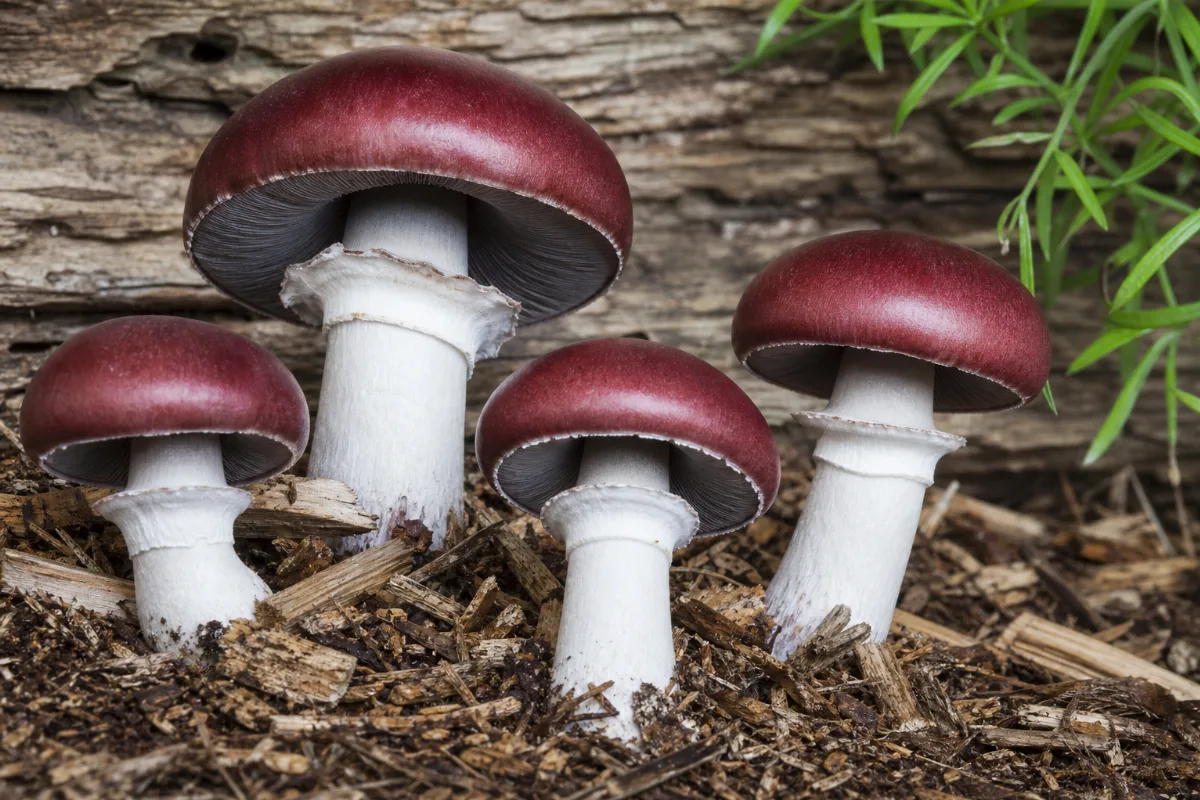
Mushrooms · Culinary mushroom
King stropharia
Stropharia rugosoannulata · also called Wine cap, garden giant, giant stropharia, wine roundhead
King stropharia, or wine cap, is a large food mushroom with a wine-red cap that is grown on straw and wood chips. It is eaten cooked, especially in China. We found no human trial of it, so health claims are unproven; the research is on nutrition, mouse work and test-tube work. The most important caution: never eat a wild mushroom unless an expert has identified it in person.
General information, not medical advice. Last substantive update · Not medically reviewed. A named clinician has not signed off on this page. How this page is made
About King stropharia
King stropharia (wine cap) is a cultivated food mushroom. Research describes what is in it and reports mouse and test-tube findings on extracts. No human trial was found. The main cautions are wild-mushroom identification, possible allergy and metals from growing material.
What it is
King stropharia is Stropharia rugosoannulata, in the family Strophariaceae (accepted name in GBIF). It is called wine cap, garden giant or giant stropharia. A 2025 review describes a wine-red cap, a stalk with a wrinkled ring and thick crisp flesh. Fresh mushrooms are about 92% water.
Unlike some other Stropharia species, it is reported not to make psilocybin. The sources say so from a review statement and a genome study, not from tests of shop-bought mushrooms.
Uses
It is used as food. The earliest cultivation record is from German farmers in 1969, and it was brought to China in the 1980s, where it is now a big crop. We read no traditional medicinal use.
What the research shows
There is no human trial. A mouse study of a polysaccharide extract found changes in immune and liver markers in drug-treated mice. A test-tube study found antioxidant activity in purified polysaccharides. A cell-culture study found that isolated compounds reduced bone-resorbing cell formation. Each is an early finding on an extract or compound, not on the cooked mushroom, so health benefits remain unproven.
Fresh food versus powders and extracts
Reviews describe fresh, dried, brined and frozen forms and mention powders and laboratory extracts. We found no tested supplement. What is known about extracts is from mice and test tubes, so do not assume it applies to food or to a powder.
At a glance
Traditional uses history, not proof
- No traditional medicinal use was found in the sources we read.
- Wild mushrooms were foraged before it was cultivated; the earliest cultivation record is from German farmers in 1969 (industry review).
Studied for research
- Food nutrition (protein, fibre, potassium), no health effect shown
- Immune markers in mice (extract), insufficient
- Antioxidant activity in test tubes, insufficient
- Liver enzyme markers in mice (extract), insufficient
- Bone-cell findings in cell culture, insufficient
- Any human health outcome, insufficient (no human trial found)
Main compounds
- Polysaccharides, the most studied
- Lectin, oxalates and other anti-nutritional factors listed by reviews
- Phenols, sterols, peptides and triterpenes
- Potassium and, when added to the growing material, zinc and selenium
Common forms
- Fresh, cooked mushroom (the usual food)
- Dried
- Brined or frozen
- Powders and laboratory extracts (mentioned in reviews; no tested supplement found)
Research links: Journal of Fungi 2023 review: nutrition, bioactive and flavour components · Journal of Fungi 2025 review: nutritional and therapeutic potential · Midwest American Mycological Information: wine cap · Research Library · Genes & Biomarkers Library
What it is and its history
- Accepted scientific name
- Stropharia rugosoannulata
- Naming authority
- Farl. ex Murrill (GBIF)
- Synonyms
- Stropharia rugoso-annulata (spelling variant used in many papers); Stropharia ferrii Bres. (listed by First Nature)
- Common names
- King stropharia (English); Wine cap (English); Garden giant (English); Giant stropharia (English); Wine roundhead (English (UK))
- Family or group
- Strophariaceae (a gilled-mushroom family)
- Classification
- Fungi > Basidiomycota > Agaricomycetes > Agaricales > Strophariaceae > Stropharia > Stropharia rugosoannulata
- Native range
- A 2025 review says it is naturally spread across temperate regions of the Northern Hemisphere.
- Habitat
- Grows on wood chips, mulch and straw; often found on garden wood-chip beds (society page).
- What it looks like
- Fruiting body: A 2025 review describes a wine-red cap, a stalk with a wrinkled ring, and thick, crisp flesh. First Nature says the cap colour fades to brown and nearly white in dry weather.
- Cultivation
- Cultivated on straw and other plant waste (industry review). No growing instructions are given here.
- Harvest and processing
- Sold fresh; also dried, brined or frozen (reviews).
- Look-alikes and adulterants
- Name: Possible mix-ups named by one source; Note: First Nature names Stropharia hornemannii and Cortinarius praestans as similar. A mushroom society page says there are no reasonable look-alikes. The two disagree, and neither is a safe way to identify a wild mushroom.
- Sustainability and conservation
- First Nature says it is a rare find in Britain, mostly on garden wood chips; not assessed elsewhere.
Traditional use and history history, not clinical proof
| Tradition or era | Documented use | Source |
|---|---|---|
| Scientific naming, 1922 | The American botanist William Murrill described it as Stropharia rugosoannulata in 1922, drawing on an earlier description by William Farlow (First Nature; the industry review also cites Murrill 1922). | s-first-nature |
| Cultivation, 1969 onward | The earliest record of cultivation is by German farmers on straw in 1969; it later spread to other European countries, the USA and, in the 1980s, China, where it became a large crop (industry review). | p40830602 |
| Traditional medicine | No traditional medicinal use was found in the sources read. | p40830602 |
Traditional use shows how it was used. It does not show that it works or is safe today.
What is inside, and how it may work
What it contains and how those compounds act in cells and animals. Laboratory and animal mechanisms are not proven effects in people.
Main compounds
| Compound | Family | Where it is concentrated | Activity studied | Level of evidence |
|---|---|---|---|---|
| Polysaccharides (glucose-based, alpha and beta linkages) | polysaccharide | Fruiting body Not given in the abstracts read | Antioxidant in the test tube; immune markers changed in mice (extracts). 3 6 | In vitro / animal |
| Lectin (SRL, 38 kDa protein) | protein | Fruiting body Not given | Reviews describe cell-culture activity against cancer cells and an HIV enzyme; also listed among anti-nutritional factors. 1 5 | Laboratory research |
| Oxalates | organic acid | Not stated Not given | Can bind calcium (review). 5 | Expert opinion |
| Phenols, triterpenes, sterols (including ergosterol), peptides, flavonoids | mixed | Fruiting body Ranges vary by paper | Listed with antioxidant and other activity in cells and tests. 1 7 | Laboratory research |
| Potassium and other minerals | mineral | Fruiting body 3.58 g per 100 g (2025 industry review, basis not stated); about 1600 mg per 100 g (another review, basis unclear) | Nutrient. Zinc and selenium rise when added to the growing material (2023 review). 2 5 1 | Nutrition data |
Mechanisms, receptors and pathways
| Target or pathway | Gene or receptor | What was found | Level |
|---|---|---|---|
| TLR4/MyD88/NF-kB signalling | TLR4, MyD88, NF-kB | The authors of the mouse study say a polysaccharide extract acted through this pathway. 6 | Animal research |
Absorption, metabolism and elimination
- Absorption
- Not found in the sources read.
- Distribution
- Not found.
- Metabolism
- Not found.
- Elimination
- Not found.
- Bioavailability
- Not established.
Isolated compounds versus whole extracts
Nearly all bioactivity work uses purified or extracted polysaccharides, peptides or isolated compounds. These are not the same as eating the cooked mushroom, and a purified extract's effect in mice cannot be assumed for food.
Nutritional composition
It is a watery food mushroom (about 92% water) with protein, fibre and potassium. These are food values, not treatment claims.
5 not enough evidence
What was looked at
The 5 benefits and uses checked for King stropharia, each with how strong the evidence is. Tap one to open it.
- As a food: protein, fibre and potassiumNot enough evidence
- Immune markers (mouse work on an extract)Not enough evidence
- Antioxidant activity (test tube)Not enough evidence
- Liver enzyme markers (mouse work)Not enough evidence
- Bone-cell and anti-fungal findings (cell culture)Not enough evidence
Lab markers tracked in the studies
Immune measures in drug-treated mice (spleen index, CD4+/CD8+ ratio, cytokines, IgA, IgG)ALT and AST liver enzymes in drug-treated miceFree-radical scavenging (ABTS, DPPH, hydroxyl) in a test tube
What is King stropharia good for?
The uses people ask about and how strong the evidence is for each. None has been tested in people.
Benefits, one by one
Each card is a research question, not a promise. Tap a goal to filter. Open a card to see the studies, doses and limits.
As a food: protein, fibre and potassium
Not enough evidenceKing stropharia is mostly water, and what is left is mainly carbohydrate and protein, with fibre and potassium. These are values for eating the mushroom. No study shows that eating it improves anyone's health.
3 studiesEaten fresh and cooked, dried, brined or frozen (reviews). No supplem…
Studies, doses and limits
What the trials found
No trial of eating king stropharia was found. Reviews report composition only.
Results
Fresh mushrooms average 92% water (Huang 2023). Crude protein 26.07 to 34.60% of dry weight in the cap and 12.49 to 22.60% in the stalk. A 2025 industry review gives potassium as 3.58 g per 100 g (basis not stated). Another review gives about 1600 mg potassium per 100 g, also with the basis unclear.
Why this rating
There are composition figures, but no study of health outcomes from eating it. Figures vary with growing material and stage of growth.
Form and dose studied
Eaten fresh and cooked, dried, brined or frozen (reviews). No supplement was evaluated.
Who was studied
Not studied in people
Limits
Values come from reviews of many small analyses and differ by substrate, growth stage and cap versus stalk. They are not measured values for what you would buy.
Why researchers looked
It is a widely grown food mushroom, so researchers describe what is in it and how growing and cooking change that.
Traditional use
Grown on straw since at least 1969 in Germany and brought to China in the 1980s; it is now a major crop there (industry review).
Proposed mechanism Expert opinion
Not applicable: this is a description of food content, not a drug-like action.
A proposed mechanism does not show that the effect happens in people.
Reviews also list oxalates, a lectin, possible digestive-enzyme inhibitors and fibre that can upset digestion. See the Safety tab.
Immune markers (mouse work on an extract)
Not enough evidenceIn mice that had their immune systems weakened by a chemotherapy drug, a polysaccharide extract from the mushroom shifted several immune markers. This was an extract, in animals. It does not show that eating the mushroom helps the immune system of a person.
2 studiesA polysaccharide extract made in a laboratory. This is not the same a…
Studies, doses and limits
Results
In the mouse study the extract raised body weight, spleen index and phagocytic index, changed the CD4+/CD8+ ratio, and raised TNF-alpha, IL-1 beta, IL-6, IgA and IgG compared with drug-treated mice.
Effect sizes as reported
Not given in the abstract
Why this rating
Animal-only, abstract-only, a purified extract, and no people tested.
Form and dose studied
A polysaccharide extract made in a laboratory. This is not the same as the cooked mushroom, and no supplement product was found.
Who was studied
Mice
Limits
Mouse results often do not carry over to people. The abstract's wording on two blood markers is internally inconsistent, so we do not rely on them.
Why researchers looked
Mushroom polysaccharides such as beta-glucans are commonly tested for effects on immune cells.
Traditional use
No traditional immune use was found in the sources read.
Proposed mechanism Animal research
The authors say the extract acted through the TLR4/MyD88/NF-kB pathway in the mice. This is animal work.
A proposed mechanism does not show that the effect happens in people.
Immune-active extracts are untested in people. People on immune-suppressing medicines should ask their doctor or pharmacist before trying any mushroom extract.
Antioxidant activity (test tube)
Not enough evidencePurified polysaccharides from the mushroom mopped up free radicals in test-tube tests. That is a chemistry result. It does not show an effect inside the body.
2 studiesPurified polysaccharides, not the whole mushroom.
Studies, doses and limits
Results
The acidic polysaccharide SRP-2 scavenged radicals more strongly than the neutral SRP-1.
Effect sizes as reported
Not given in the abstract
Why this rating
Test-tube study of purified extracts; no cells, animals or people.
Form and dose studied
Purified polysaccharides, not the whole mushroom.
Limits
Antioxidant activity in a test tube often does not carry over to a living body.
Why researchers looked
Free-radical tests are a quick first screen for mushroom extracts.
Proposed mechanism Laboratory research
Free-radical scavenging in a test tube (ABTS, DPPH, hydroxyl radicals).
A proposed mechanism does not show that the effect happens in people.
None specific.
Liver enzyme markers (mouse work)
Not enough evidenceIn mice with chemotherapy-drug injury, an extract was linked to lower liver enzyme readings (ALT and AST). It is an animal result on an extract only.
1 studiesLaboratory polysaccharide extract.
Studies, doses and limits
Results
ALT and AST were lower after the extract in drug-treated mice; tissue slides also looked less damaged, the authors report.
Effect sizes as reported
Not given in the abstract
Why this rating
One mouse study, abstract only, with inconsistent wording on two other markers.
Form and dose studied
Laboratory polysaccharide extract.
Who was studied
Mice
Limits
Not tested in people. A liver-protective effect in mice is not a reason to take mushroom products for the liver.
Why researchers looked
Researchers test mushroom extracts for protection against drug-caused liver damage in mice.
Proposed mechanism Animal research
The authors suggest antioxidant and immune pathways; not shown in people.
A proposed mechanism does not show that the effect happens in people.
If you have liver disease, ask your doctor before using any mushroom supplement.
Bone-cell and anti-fungal findings (cell culture)
Not enough evidenceNine compounds were isolated from the fruiting bodies. In cell culture, seven reduced the formation of bone-resorbing cells and two showed weak anti-fungal activity. This is cell-culture work only.
1 studiesIsolated compounds.
Studies, doses and limits
Results
Compounds 1 to 5, 8 and 9 suppressed osteoclast formation; compounds 2 and 5 were anti-fungal at 250 and 500 micromolar.
Why this rating
A short 2011 cell-culture paper with no animal or human follow-up that we found.
Form and dose studied
Isolated compounds.
Limits
Cell culture only.
Why researchers looked
Researchers screen mushroom compounds for activity in cells.
Proposed mechanism Laboratory research
Suppression of osteoclast formation in cell culture; the abstract does not say how.
A proposed mechanism does not show that the effect happens in people.
None specific.
Connections to the rest of health
How King stropharia connects to the rest of our health knowledge graph. Every link says what kind of connection it is. A safety link (for example to the liver) is a warning, not a benefit. A study that merely mentions a topic never creates a benefit link.
Explore every connection: goals, body systems, organs, symptoms, genes
A. Wellness goals
| Connected to | Kind of connection | Evidence status | Context | Studies |
|---|---|---|---|---|
| Balanced Nutrition | Not enough evidence | As a food: protein, fibre and potassium: King stropharia is mostly water, and what is left is mainly carbohydrate and protein, with fibre and potassium. These are values for eating the mushroom. No study shows that eating it improves anyone's health. | 1 5 2 | |
| Immune Support | Preliminary mechanism | Not enough evidence | Immune markers (mouse work on an extract): In mice that had their immune systems weakened by a chemotherapy drug, a polysaccharide extract from the mushroom shifted several immune markers. This was an extract, in animals. It does not show that eating the mushroom helps the immune system of a person. | 6 5 |
| Cellular Protection | Preliminary mechanism | Not enough evidence | Antioxidant activity (test tube): Purified polysaccharides from the mushroom mopped up free radicals in test-tube tests. That is a chemistry result. It does not show an effect inside the body. | 3 5 |
| Liver Support | Preliminary mechanism | Not enough evidence | Liver enzyme markers (mouse work): In mice with chemotherapy-drug injury, an extract was linked to lower liver enzyme readings (ALT and AST). It is an animal result on an extract only. | 6 |
| Bone Health | Preliminary mechanism | Not enough evidence | Bone-cell and anti-fungal findings (cell culture): Nine compounds were isolated from the fruiting bodies. In cell culture, seven reduced the formation of bone-resorbing cells and two showed weak anti-fungal activity. This is cell-culture work only. | 7 |
B. Body systems
| Connected to | Kind of connection | Evidence status | Context | Studies |
|---|---|---|---|---|
| Immune System | Biological association | Not enough evidence | Studied for: Immune markers (mouse work on an extract) | 6 5 |
| Hepatic System | Biological association | Not enough evidence | Studied for: Liver enzyme markers (mouse work) | 6 |
| Musculoskeletal System | Biological association | Not enough evidence | Studied for: Bone-cell and anti-fungal findings (cell culture) | 7 |
E. Health conditions
| Connected to | Kind of connection | Evidence status | Context | Studies |
|---|---|---|---|---|
| Food allergy | Adverse effect or risk | Low certainty | A society page says some people may be allergic; no case report read. Preparation or compound: Fruiting body, eaten |
8 |
G. Root causes and contributing factors
| Connected to | Kind of connection | Evidence status | Context | Studies |
|---|---|---|---|---|
| Heavy metal exposure | Low certainty | Can take up cadmium and mercury from growing material; one sample set was low. Preparation or compound: Fruiting body |
4 2 |
I. Biomarkers
| Connected to | Kind of connection | Evidence status | Context | Studies |
|---|---|---|---|---|
| Immune measures in drug-treated mice (spleen index, CD4+/CD8+ ratio, cytokines, IgA, IgG) | Biological association | Not enough evidence | Measured in trials: changed (see study). A lab change is not the same as a health benefit. | 6 |
| ALT and AST liver enzymes in drug-treated mice | Biological association | Not enough evidence | Measured in trials: lowered (in mice). A lab change is not the same as a health benefit. | 6 |
| Free-radical scavenging (ABTS, DPPH, hydroxyl) in a test tube | Biological association | Not enough evidence | Measured in trials: scavenging seen. A lab change is not the same as a health benefit. | 3 |
K. Biological pathways
| Connected to | Kind of connection | Evidence status | Context | Studies |
|---|---|---|---|---|
| TLR4/MyD88/NF-kB | Preliminary mechanism | Animal | Reported in a mouse study of an extract. | 6 |
L. Active compounds
| Connected to | Kind of connection | Evidence status | Context | Studies |
|---|---|---|---|---|
| Polysaccharides (glucose-based, alpha and beta linkages) | Biological association | In vitro / animal | Antioxidant in the test tube; immune markers changed in mice (extracts). Preparation or compound: Fruiting body |
3 6 |
| Lectin (SRL, 38 kDa protein) | Biological association | In vitro | Reviews describe cell-culture activity against cancer cells and an HIV enzyme; also listed among anti-nutritional factors. Preparation or compound: Fruiting body |
1 5 |
| Oxalates | Biological association | Expert opinion | Can bind calcium (review). | 5 |
| Phenols, triterpenes, sterols (including ergosterol), peptides, flavonoids | Biological association | In vitro | Listed with antioxidant and other activity in cells and tests. Preparation or compound: Fruiting body |
1 7 |
| Potassium and other minerals | Biological association | Nutrition data | Nutrient. Zinc and selenium rise when added to the growing material (2023 review). Preparation or compound: Fruiting body |
2 5 1 |
Each connection is stored with the ingredient, the connected record, the kind of connection, the evidence status, the supporting studies, the preparation or compound involved, and a review date (last reviewed October 25, 2026).
Evidence at a glance: what the research found for 5 outcomes
Each outcome below is one thing researchers measured. Certainty is how far the evidence can be trusted, not how well it works. The full studies are on the next tab.
The evidence
The research centre for King stropharia. Every record here was checked against PubMed or the publisher's page; we never list a study we have not verified.
Evidence by outcome
Bars show how many studies we found for each outcome, not how well it works. People are added up across trials only (reviews are not added, to avoid double counting).
How we rate evidence
High certainty
Several well-run trials or reviews agree; further research is unlikely to change the picture much.
Moderate certainty
Good trials point the same way, but some doubt remains.
Low certainty
Small, short or inconsistent trials. The finding could change with better research.
Very low certainty
Very little or very weak human data. Treat as a possibility only.
Mixed findings
Trials or reviews disagree with each other.
Not enough evidence
Not enough human research to say either way.
Evidence against
Good research found no benefit, or found harm.
We take the reviewers' own risk-of-bias and GRADE statements where they exist, and otherwise judge from study size, design, consistency, directness and whether a product matches what is sold. Many publications do not make evidence high. Method note: We read PubMed records and abstracts for seven papers (three narrative reviews, one lab analysis, one mouse study, one test-tube study, one cell-culture study), the full text of the reviews and the cadmium paper in part, two web pages (a mushroom society and a fungi website) and checked the species name in GBIF. Index Fungorum, EMA, FDA, NCCIH, LiverTox and LactMed were not opened. Certainty ratings are the compiler's own reading and numbers come from abstracts or the text read.
Study library: every study we checked 10
| Study | Design | People | Product, dose, length | Result |
|---|---|---|---|---|
| Huang 2023 Nutritional, Bioactive, and Flavor Components of Giant Stropharia (Stropharia rugoso-annulata): A Review. Journal of Fungi · PMID 37623563 · DOI |
Narrative review fungus |
Published research on the nutrition, bioactive compounds and flavour of the mushroom | Fruiting body, mycelium and extracts (various) fruiting body Not shown here |
Fresh mushrooms average 92% moisture. Crude protein is given as 26.07 to 34.60% (cap) and 12.49 to 22.60% (stalk) of dry weight. The review lists polysaccharides, phenols, triterpenes, sterols, a lectin and peptides, and says the mushroom takes up zinc and selenium from its growing material. A description of what is in the mushroom, not a health result Methods, limits and fundingOutcomes: Moisture, protein, amino acids, minerals, polysaccharides, lectin, flavour compounds Limitations: Narrative review, not systematic. Full text read only in part (text was cut off after about 100,000 characters in the earlier read). Many figures come from other papers and vary with growing material, so they are ranges. Funding and conflicts: Authors declare no conflict of interest Read: full text (part) |
| Huang 2025 The rise of Stropharia rugosoannulata industry in China: current state and prospects. Applied Microbiology and Biotechnology · PMID 40830602 · DOI |
Narrative review fungus |
Industry overview of cultivation, markets and uses | Fresh and processed fruiting bodies fruiting body Not shown here |
Says the species was described by Murrill in 1922, first grown on straw by German farmers in 1969 (earliest cultivation record it cites) and brought to China in the 1980s. It calls the mushroom rich in potassium (3.58 g per 100 g, basis not stated), says it can take up mercury and cadmium from soil, and says it does not make psilocybin, unlike some other Stropharia species. It notes fresh mushrooms are eaten cooked and also raw as sashimi in China. An industry and history overview, not a health study Methods, limits and fundingOutcomes: History, cultivation, nutrition, product forms, safety statements Limitations: Written by authors close to the Chinese industry; promotional in tone ('completely safe'), which we do not repeat. Full text read in part. Funding and conflicts: Authors declare no competing interests Read: full text (part) |
| Liu 2020 Isolation, characterization and antioxidant of polysaccharides from Stropharia rugosoannulata. International Journal of Biological Macromolecules · PMID 31706814 · DOI |
Laboratory research fungus (purified extract) |
Test-tube chemistry on purified polysaccharides | Two purified polysaccharides (SRP-1 neutral, SRP-2 acidic) fruiting body Not shown here |
Both polysaccharides had a glucose-based backbone. The acidic one (SRP-2) scavenged free radicals more strongly than the neutral one (SRP-1) in test-tube assays. SRP-2 stronger than SRP-1 in test-tube radical tests Methods, limits and fundingOutcomes: Structure; scavenging of ABTS, DPPH and hydroxyl radicals Limitations: Test tube only; no cells, animals or people. Says the findings may be useful for 'potential pharmaceuticals', which is a hope, not a result. Funding and conflicts: Authors declare no competing financial interest Read: abstract |
| Liu 2026 Integrating Speciation Analysis and Bioaccessibility to Reassess Cadmium Exposure Risk from Six Mushrooms. Toxics · PMID 41600615 · DOI |
Lab analysis fungus |
Fruiting bodies of six cultivated mushrooms bought in China, including one sample set of Stropharia rugosoannulata | Whole fruiting bodies, dried and powdered fruiting body Not shown here |
In the king stropharia sample, cadmium was found only in the insoluble 'residue' fraction (0.008 mg/kg), and none was detected after the lab digestion test. The highest total cadmium was in Agaricus blazei (3.84 mg/kg), which is a different mushroom. The authors say five of six species were below China's national limit. Low cadmium and none released in a lab digestion test, for one sample set Methods, limits and fundingOutcomes: Total cadmium, cadmium forms, and cadmium released in a lab digestion model Limitations: One sample set from one supplier; lab model of digestion, not people. Says nothing about other metals or about wild or garden-grown mushrooms. Funding and conflicts: Authors declare no conflicts of interest Read: full text (part) |
| Wang 2025 Nutritional and Therapeutic Potential of Stropharia rugosoannulata and Macrolepiota procera: From Composition to Health-Promoting Effect. Journal of Fungi · PMID 40278080 · DOI |
Narrative review fungus |
Published research on two edible mushrooms (this page uses the Stropharia parts only) | Fruiting body and extracts (various) fruiting body Not shown here |
Describes antioxidant, immune and anti-cancer activity in cells and animals only. Its safety section lists oxalates, a lectin, possible digestive-enzyme inhibitors and fibre that can upset digestion, says lead and cadmium are typically below safety limits, and mentions that a genome study found no known genes for making psilocybin. Mostly cell and animal findings; no human trial described Methods, limits and fundingOutcomes: Composition, bioactivity, safety and toxicology Limitations: Narrative review. It mixes two species; only Stropharia statements are used here. It gives no amounts for oxalate or the enzyme inhibitors. Funding and conflicts: Authors declare no conflict of interest; funded by Anhui education and university project grants Read: full text (part) |
| Wang 2026 Effects of polysaccharides from Stropharia rugosoannulata on cyclophosphamide-induced immunosuppression and hepatic injury in mice. Journal of the Science of Food and Agriculture · PMID 41195471 · DOI |
Animal study mouse |
Mice given the chemotherapy drug cyclophosphamide to suppress the immune system | Polysaccharides extracted from the fruiting body (three-phase extraction) fruiting body Not shown here · vs Cyclophosphamide-treated mice |
The extract raised body weight, spleen index and phagocytic index, changed the CD4+/CD8+ ratio, raised several cytokines and antibodies (IgA, IgG), and lowered ALT and AST in the drug-treated mice. The authors link this to the TLR4/MyD88/NF-kB pathway. Changes in mouse immune and liver markers after an extract (no people tested) Methods, limits and fundingOutcomes: Body weight, spleen index, phagocytic index, CD4+/CD8+ ratio, cytokines (TNF-alpha, IL-1 beta, IL-6), IgA, IgG, liver enzymes ALT and AST, tissue slides Limitations: Abstract only. Mice, not people; a purified extract, not the cooked mushroom. The abstract says the extract 'increased' serum MDA while 'decreasing' SOD, which reads the wrong way round for a protective effect, so we do not rely on those two markers. The authors call it a basis for developing a product. Funding and conflicts: Not stated in the abstract; academic departments in China Read: abstract |
| Wu 2011 Functional-food constituents in the fruiting bodies of Stropharia rugosoannulata. Bioscience, Biotechnology, and Biochemistry · PMID 21821923 · DOI |
Laboratory research fungus (isolated compounds) |
Nine compounds isolated from fruiting bodies | Nine isolated compounds fruiting body Not shown here |
Seven of the nine compounds suppressed the formation of bone-resorbing cells (osteoclasts) in culture. Two had weak anti-fungal activity (minimum inhibitory concentrations 250 and 500 micromolar). Compounds 2 to 6 reduced thapsigargin toxicity in cells. Cell-culture findings only Methods, limits and fundingOutcomes: Osteoclast formation, anti-fungal activity, protection against thapsigargin toxicity Limitations: Abstract only; very short. Cell culture; no animal or human data. The abstract does not name the compounds. Funding and conflicts: Not stated in the abstract Read: abstract |
| n/a 2026 Midwest American Mycological Information: Stropharia rugoso-annulata (wine cap) Web page (mushroom society) · Source |
Web page n/a |
n/a | n/a fruiting body Not shown here |
Calls wine caps edible and choice, says some people may be allergic, advises cooking all mushrooms before eating them, advises small portions of any new species, and says there are no reasonable look-alikes because of the burgundy-red cap with purple gills. Society guidance for foragers; no data Methods, limits and fundingOutcomes: Edibility, allergy caution, look-alikes, handling Limitations: A hobby society page, not peer reviewed or a regulator. Its 'no look-alikes' statement is disputed by another source we read (see First Nature) and must not be used to identify wild mushrooms. Funding and conflicts: Society page; no funding stated Read: full text |
| n/a 2026 First Nature: Stropharia rugosoannulata, Wine Roundhead Web page (fungi identification site) · Source |
Web page n/a |
n/a | n/a fruiting body Not shown here |
Says the cap colour fades to brown and almost white in dry weather, names Stropharia hornemannii (conifer roundhead) and the Goliath webcap (Cortinarius praestans) as species that could be confused with it, and gives Index Fungorum as its source for synonyms (for example Stropharia ferrii). Field-guide description; no data Methods, limits and fundingOutcomes: Description, similar species, taxonomic history Limitations: A website, not peer reviewed. Included only to show that sources disagree about look-alikes. It is not an identification guide and we do not use it as one. Funding and conflicts: Website with a book for sale; no sponsor stated Read: full text |
| n/a 2026 GBIF Backbone Taxonomy: Stropharia rugosoannulata Farl. ex Murrill GBIF species API (checked 2026-10-25) · Source |
Taxonomy record n/a |
n/a | n/a fruiting body Not shown here |
GBIF key 2533347: accepted species, family Strophariaceae, order Agaricales, class Agaricomycetes, phylum Basidiomycota; exact match, not a synonym. Name confirmed Methods, limits and fundingOutcomes: Accepted name, rank, family Limitations: Index Fungorum was not opened directly; First Nature says its synonym information is drawn mainly from Index Fungorum. Funding and conflicts: Public database Read: API record |
What we do not know yet
- No human trial of king stropharia as food or supplement was found.
- Look-alike claims conflict between sources, and no source here is a safe way to identify wild mushrooms.
- No data in pregnancy, breastfeeding or children; no allergy or poisoning case report.
- Only one set of purchased mushrooms was tested for cadmium; other metals were not read.
- Regulator pages (EMA, FDA, NCCIH, LiverTox, LactMed) were not read.
How new research is added
New studies are found by a saved PubMed search and placed in a review queue. A person reads each one before it changes any evidence rating or safety wording. New publications never change ratings automatically.
Lab markers
What changed in blood or saliva tests during trials. A changed number is not the same as feeling or being healthier, and we give no "normal ranges".
Other 3
Immune measures in drug-treated mice (spleen index, CD4+/CD8+ ratio, cytokines, IgA, IgG)
Changed (see study) in trials
Blood and organ measures used in animal studies to describe how active the immune system is.
Not enough evidenceResults and what it means
Why it was measured
They are used as stand-ins for immune activity in animal work.
Statistical vs. clinical meaning
Animal result only; no human measurement exists.
Safety implication
None established for people.
| Study | Result | People | Product |
|---|---|---|---|
| 6 | Spleen index, phagocytic index, several cytokines and antibodies rose, and the CD4+/CD8+ ratio changed, in mice given the extract after cyclophosphamide. | Mice with drug-suppressed immunity | Polysaccharide extract from the fruiting body |
ALT and AST liver enzymes in drug-treated mice
Lowered (in mice) in trials
Enzymes that leak into blood when liver cells are damaged.
Not enough evidenceResults and what it means
Free-radical scavenging (ABTS, DPPH, hydroxyl) in a test tube
Scavenging seen in trials
A chemistry test of how well a substance neutralises free radicals.
Not enough evidenceSafety
What studies and official sources say about side effects, medicines and who should check first. Each point shows what kind of evidence it comes from.
Main points to know 4
- Never identify a wild mushroom from a description, a photo or an app. King stropharia is also found wild, but eating a wild mushroom you picked yourself carries the risk of a mix-up with a poisonous species. The sources we read disagree: one hobby society page says it has no reasonable look-alikes, while a fungi identification site names Stropharia hornemannii and the Goliath webcap (Cortinarius praestans) as species it could be confused with and notes that the cap colour fades. This page does not teach identification. Only eat wild mushrooms that an expert has identified in person. Expert opinion 9 8
- No human trial or case report of harm from the cultivated mushroom was found. We found no trial and no poisoning or liver case report for the cultivated, cooked mushroom. That is not proof of safety. There is simply very little human research. Gap 5 2
- Cook it, and watch for allergy. A US mushroom society page says some people may be allergic to this mushroom and advises cooking all mushrooms before eating. A review mentions it being eaten raw as sashimi in China. We found no study of eating it raw. Allergy to this species has no case report in what we read. Expert opinion 8 2
- It can take up metals from its growing material. Reviews say the species can take up mercury and cadmium from soil or growing material, and it has been used to clean contaminated soil. A 2026 lab analysis of one set of purchased mushrooms found very little cadmium and none released in a digestion test. A 2025 review says lead and cadmium are typically below safety limits. Garden beds, mulch and manure differ, so these results may not apply to what you grow or find. Lab analysis 4 2 5
Side effects 2
| Effect | How often | Severity and recovery | Evidence |
|---|---|---|---|
| Digestive discomfort (from fibre and insoluble polysaccharides) A review says excessive fibre can hinder nutrient absorption and cause digestive discomfort; no human data. | No rate reported | mild Not described | Expert opinion 5 |
| Allergic reaction Society page says some individuals may be allergic to this species. | Not known; no species-specific case report read | unknown Not described | Expert opinion 8 |
Liver
No liver injury report for king stropharia was found. A mouse extract study reported lower liver enzymes after chemotherapy injury; that is not evidence of liver safety or benefit in people. LiverTox was not searched. 6
Monitoring. No monitoring advice exists. People with liver disease can ask their doctor about any new supplement.
This is a safety connection. It is not evidence that King stropharia supports liver health.
Medicines and supplements 3
| With | Why it matters | Importance | Evidence | What to do |
|---|---|---|---|---|
| Prescription medicines in general prescription | No interaction mechanism has been described for king stropharia. | No interaction report was found. This is an absence of data, not a finding of safety. | No data Not enough evidence 5 | If you take medicines and plan to use mushroom extracts or powders, tell your doctor or pharmacist. |
| Immune-suppressing medicines prescription | Theoretical only: a polysaccharide extract changed immune markers in mice. | No human data. Ordinary cooked mushrooms as food have not been reported as a problem in what we read. | Theoretical Not enough evidence 6 | Ask your doctor or pharmacist before using concentrated mushroom extracts if you take immune-suppressing medicines. |
| Alcohol other | Nothing found for this species. | No data Not enough evidence | Not applicable. |
Who should check first 5
| Situation | Advice | Evidence |
|---|---|---|
| Wild mushrooms of uncertain identity | Do not eat them. Only eat wild mushrooms identified in person by an expert. | Expert opinion 9 8 |
| Known mushroom allergy | Avoid it, or ask an allergy doctor first. | Expert opinion 8 |
| Told to limit oxalate (for example after kidney stones) | A review says the mushroom contains oxalates but gives no amount. Ask your doctor or dietitian whether it fits your diet. | Expert opinion 5 |
| Pregnancy and breastfeeding | No study of king stropharia in pregnancy or breastfeeding was found, and LactMed was not read. Cooked food amounts are not shown to be harmful or safe; ask your midwife or doctor about concentrated extracts. | Gap |
| Young children | No data on children were found. Ordinary mushroom food safety applies; keep wild mushrooms away from small children. | Gap |
Overdose, product quality and regulators
Summary. No poisoning from the cultivated, cooked mushroom was described in the sources we read. Reviews list anti-nutritional factors (a lectin, oxalates, possible enzyme inhibitors) without amounts or harm reports.
Animal. Not reviewed in depth. The mouse polysaccharide study did not report toxicity of the extract in its abstract.
Human doses studied. No human trial. This page gives no amounts.
High dose or long term signals. Unknown. A review says too much fibre can upset digestion.
Overdose response. No description found.
Genotoxicity. Not read.
Toxic or hazardous parts. Fungus: the fruiting body is eaten. Unlike some other Stropharia species, this one is reported not to make psilocybin: a 2025 industry review says it does not, and another review says its genome lacks known genes for making it. No assay of retail mushrooms was read.
The main quality points are what the mushroom grew on and whether a product is real mushroom. We did not find any tested supplements.
Metals from growing material. Reviews say the species can accumulate mercury and cadmium from soil or substrate. A 2026 analysis of one set of fruiting bodies found only 0.008 mg/kg cadmium (insoluble fraction) and none released in lab digestion. Reviews disagree in tone (one says lead and cadmium are typically below limits, another stresses uptake). 4 2 5
Spoilage and storage. A review says improperly stored mushrooms should be discarded. A society page says to throw away specimens with holes in the stalk or cap (maggots). 5 8
Powders and extracts. No supplement of this species was found or tested in the sources we read. A powder or extract may differ from the whole mushroom, and the label may not say which part or how it was made. 2
| Body | Action | Date |
|---|
When to get medical help
- Swelling of the lips, tongue or throat, wheezing or trouble breathing after eating any mushroom: call emergency services.
- Severe or repeated vomiting, severe diarrhoea, confusion or severe stomach pain after eating a wild mushroom: get emergency care or call your poison control centre and say what you ate.
If someone may be poisoned or in a crisis, contact a clinician or emergency service straight away. In the US, Poison Control is 1-800-222-1222.
General information only, not medical advice. Ask a clinician or pharmacist before use, especially with medicines, in pregnancy or with a health condition. See the Natural Remedy Safety guide.
Frequently asked questions
What is king stropharia?
Is king stropharia the same as a wine cap or garden giant?
Is it safe to eat?
Can I pick it in the wild and eat it?
Does king stropharia boost the immune system?
Does it have antioxidants?
In test tubes, purified polysaccharides from the mushroom mopped up free radicals. That is a chemistry result and does not show any effect in the body.
Is it good for the liver?
No human evidence. In mice with chemotherapy-drug injury, an extract was linked to lower liver enzymes. If you have liver disease, ask your doctor before using any mushroom supplement.
Does it contain psilocybin?
Can it contain heavy metals?
Is it safe in pregnancy or breastfeeding?
No study was found, so we cannot say. Ask your midwife or doctor, especially about concentrated extracts or powders.
Does it interact with medicines?
No interaction has been reported, but there is almost no research. If you take immune-suppressing medicines, ask your doctor or pharmacist before using concentrated mushroom extracts.
Explore by health goal
Balanced NutritionImmune SupportCellular ProtectionLiver SupportBone Health
Editorial transparency
- Written by
- AlternativeMed editorial team. Research compiled with AI assistance, then checked against PubMed records.
- Medical review
- None. This page has not been reviewed by a physician or pharmacist.
- First published
- 2026-10-25
- Last substantive update
- 2026-10-25
- How we research
- We read PubMed records and abstracts for seven papers (three narrative reviews, one lab analysis, one mouse study, one test-tube study, one cell-culture study), the full text of the reviews and the cadmium paper in part, two web pages (a mushroom society and a fungi website) and checked the species name in GBIF. Index Fungorum, EMA, FDA, NCCIH, LiverTox and LactMed were not opened. Certainty ratings are the compiler's own reading and numbers come from abstracts or the text read.
- How we rate evidence
- See "How we rate evidence" in the Evidence tab.
- Independence
- No product is promoted on this page. No affiliate links are shown. This page is information, not a recommendation to eat or use king stropharia.
Sources 10
Each source was opened and checked. Where we read only the abstract, it says so. The small numbers in the text point here.
- Huang L, He C, Si C, et al. Nutritional, Bioactive, and Flavor Components of Giant Stropharia (Stropharia rugoso-annulata): A Review.. Journal of Fungi. 2023. PMID 37623563. DOI 10.3390/jof9080792. (full text (part))
- Huang L, Si C, He CM, et al. The rise of Stropharia rugosoannulata industry in China: current state and prospects.. Applied Microbiology and Biotechnology. 2025. PMID 40830602. DOI 10.1007/s00253-025-13576-1. (full text (part))
- Liu Y, Hu CF, Feng X, et al. Isolation, characterization and antioxidant of polysaccharides from Stropharia rugosoannulata.. International Journal of Biological Macromolecules. 2020. PMID 31706814. DOI 10.1016/j.ijbiomac.2019.11.045. (abstract)
- Liu P, Wang X, Chen W, et al. Integrating Speciation Analysis and Bioaccessibility to Reassess Cadmium Exposure Risk from Six Mushrooms.. Toxics. 2026. PMID 41600615. DOI 10.3390/toxics14010066. (full text (part))
- Wang Q, Yang X, Zhu J. Nutritional and Therapeutic Potential of Stropharia rugosoannulata and Macrolepiota procera: From Composition to Health-Promoting Effect.. Journal of Fungi. 2025. PMID 40278080. DOI 10.3390/jof11040259. (full text (part))
- Wang L, Yang Y, Tang X, et al. Effects of polysaccharides from Stropharia rugosoannulata on cyclophosphamide-induced immunosuppression and hepatic injury in mice.. Journal of the Science of Food and Agriculture. 2026. PMID 41195471. DOI 10.1002/jsfa.70295. (abstract)
- Wu J, Fushimi K, Tokuyama S, et al. Functional-food constituents in the fruiting bodies of Stropharia rugosoannulata.. Bioscience, Biotechnology, and Biochemistry. 2011. PMID 21821923. DOI 10.1271/bbb.110308. (abstract)
- n/a. Midwest American Mycological Information: Stropharia rugoso-annulata (wine cap). Web page (mushroom society). 2026. (full text)
- n/a. First Nature: Stropharia rugosoannulata, Wine Roundhead. Web page (fungi identification site). 2026. (full text)
- n/a. GBIF Backbone Taxonomy: Stropharia rugosoannulata Farl. ex Murrill. GBIF species API (checked 2026-10-25). 2026. (API record)
Where to buy
Check the label first. Whatever you buy, look for these:
- Fruiting body versus mycelium on grain: the label should say which
- The extract type and the beta-glucan amount, if stated
- A third-party testing mark
- Interactions: ask a pharmacist if you take medicines or blood thinners
Talk to a pharmacist or doctor before you start any supplement, especially if you take medicines. See the Safety tab for interactions.
Support our free guides: as an Amazon Associate we earn from qualifying purchases. Full disclosure.


