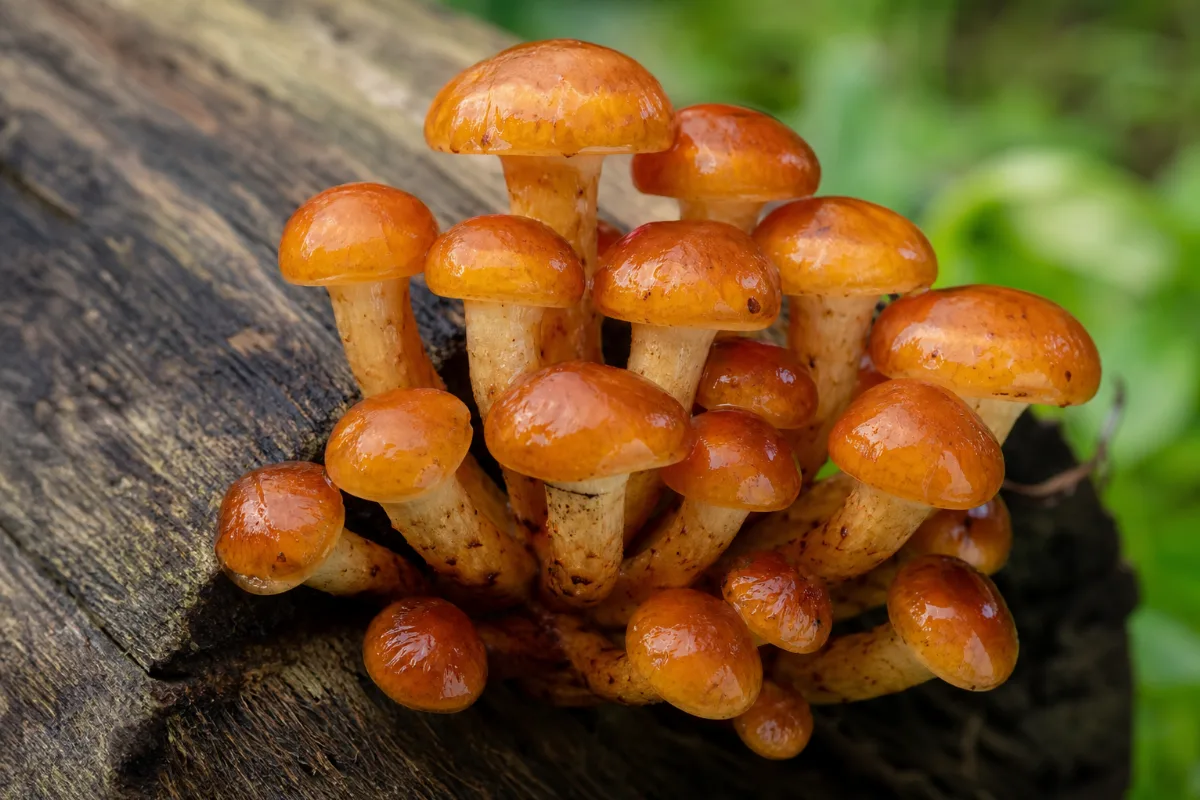
Mushrooms · Culinary mushroom
Nameko
Pholiota microspora (also written Pholiota nameko) · also called Butterscotch mushroom, slippery mushroom
Nameko is a small amber-brown Japanese mushroom with a slippery coating, used in miso soup and hot pots. As a food it is low in energy, with some fibre, potassium and B vitamins. Health research is thin: we found no human trial, only lab and mouse work on extracts. The one documented risk is a lung allergy in people who breathe the spores while growing it.
General information, not medical advice. Last substantive update · Not medically reviewed. A named clinician has not signed off on this page. How this page is made
About Nameko
Nameko is a slippery cooking mushroom from Japan. As a food it is low in energy and has some fibre, potassium and B vitamins. We found no human trial of any health benefit; the research is lab and mouse work on purified extracts. The documented risk is a lung allergy in growers who breathe the spores. Metal levels depend on where the mushroom was grown.
What it is
Nameko is a mushroom of the genus Pholiota, in the fungus family Strophariaceae. It is not a plant. GBIF, a public biodiversity database, lists both Pholiota microspora and Pholiota nameko as accepted species, so a label may use either name. Japanese sources use P. microspora.
Almost all Japanese commercial nameko is grown on sawdust, and a genetic study concluded the cultivated strains come from a single wild strain collected in Fukushima. The slippery coating is a gel: studies describe a beta-glucan in extracts and a mucilage that one paper calls mainly pectin.
How it is used
It is used as a cooking mushroom in miso soup and hot pots, and sold fresh, jarred, dried and as home-growing kits. We read no source describing traditional medicinal use. A factory study (summary-only) found that pre-cooking in hot water moves much of the protein, amino acids and phenolics into the liquid, which is why the broth carries flavour.
What the research shows
No randomised or controlled human trial of nameko as a food or supplement was found in PubMed. Reviews of nameko polysaccharide describe lab and animal work, and one says clinical trial reports are scarce.
The animal and lab studies used purified fractions: a polysaccharide that lowered immune-cell signalling in mouse cells, a beta-glucan that reduced pain behaviour in mice, a zinc-enriched mycelium extract that improved blood fats in mice, a protein that slowed implanted tumour cells in mice, and extracts with mixed antioxidant results in test tubes. None of this shows that eating nameko helps anyone.
Fruiting body, mycelium and extracts are different
The cooked cap and stem are the usual food. Several animal studies used mycelium grown in liquid culture, sometimes zinc-enriched, or purified fractions. Their results do not carry over to the cooked mushroom. We found no finished nameko supplement with human evidence and no quality data for such products.
Rules and official statements
We did not find or read a regulator statement about nameko, so none is quoted here. Nameko is sold as a food. Ask a doctor or pharmacist before using concentrated extracts, especially if you take regular medicines.
At a glance
Traditional uses history, not proof
- No traditional medicinal use of nameko was described in the sources we read.
- It is a cooking mushroom: nearly all Japanese commercial nameko is grown on sawdust (99% of production in one report).
Studied for research
- Nutrition as a food: values measured, no health effect shown, insufficient
- Immune-cell signalling, lab only, insufficient
- Pain and inflammation, one mouse study, insufficient
- Antioxidant tests, test tube only and mixed, insufficient
- Blood fats and liver, mouse study of a special extract, insufficient
- Tiredness, mouse swim test, insufficient
- Cancer cells, purified protein in mice, insufficient
Main compounds
- Beta-glucan, a fibre-like carbohydrate that makes the coating gel
- Pectin-rich mucilage on the cap
- Ergothioneine and trehalose, measured in the food
Common forms
- Fresh or jarred, cooked
- Dried
- Home-growing kits
- Polysaccharide or protein extracts made in laboratories
Research links: Chest 1989: lung allergy from nameko spores (abstract) · Internal Medicine 1996: farmer case (abstract) · Beijing survey of metals in edible fungi (abstract) · Canned mushrooms in Spain: metals (abstract) · Nameko polysaccharide review, 2025 (abstract) · Research Library · Genes & Biomarkers Library
What it is and its history
- Accepted scientific name
- Pholiota microspora (also written Pholiota nameko; both are listed as accepted in GBIF)
- Naming authority
- (Berkeley) Saccardo for P. microspora; (T.Itô) S.Ito & S.Imai for P. nameko (GBIF)
- Synonyms
- Pholiota nameko (T.Itô) S.Ito & S.Imai (listed as a separate accepted species in GBIF, not a synonym there); Kuehneromyces nameko and Collybia nameko (older names from our earlier record; not re-checked)
- Common names
- Nameko (Japanese); Butterscotch mushroom (English); Slippery mushroom (English)
- Family or group
- Strophariaceae (a fungus family), not a plant
- Classification
- Fungi > Basidiomycota > Agaricomycetes > Agaricales > Strophariaceae > Pholiota > Pholiota microspora
- Native range
- Japan is where the cultivated strains come from (Hirao 2022). Wild range not checked.
- Habitat
- Not checked in the sources read. Earlier record: a cold-triggered mushroom that fruits in autumn; not re-checked.
- What it looks like
- Fruiting body: Earlier record (Wikipedia, not re-checked): a small amber-brown cap with a slippery coating. The cap mucilage is described as mainly pectin by Moriwaki 2026.
- Cultivation
- Sawdust cultivation accounts for 99% of Japanese production, and all current Japanese commercial strains appear to descend from a single wild strain collected in Fukushima (Hirao 2022). Sold fresh, jarred, dried and as home-growing kits in some places.
- Harvest and processing
- A 2026 factory study (summary-only) describes pre-cooking in hot water, which moves protein, amino acids and phenolics into the liquid.
- Look-alikes and adulterants
- Name: Other wild Pholiota and gilled mushrooms; Note: No source we read lists look-alikes for wild nameko. Do not identify wild mushrooms from this page.
- Sustainability and conservation
- Not checked.
Traditional use and history history, not clinical proof
| Tradition or era | Documented use | Source |
|---|---|---|
| Modern Japanese cultivation | Nameko is one of the most common edible mushrooms in Japan, grown on sawdust. A genetic study concluded that cultivated strains arose from one domestication event from a wild strain collected in Fukushima. | p37089630 |
| Traditional medicine | No traditional medicinal use of nameko was described in any source we read. It is a culinary mushroom. | p37089630 |
Traditional use shows how it was used. It does not show that it works or is safe today.
What is inside, and how it may work
What it contains and how those compounds act in cells and animals. Laboratory and animal mechanisms are not proven effects in people.
Main compounds
| Compound | Family | Where it is concentrated | Activity studied | Level of evidence |
|---|---|---|---|---|
| Beta-glucan with (1-3) links and side chains | polysaccharide | Fruiting body (hot-water or cold-water extract) 1.2 g per 100 g fresh raw nameko (SD 0.4, n = 3) in the NARO survey (summary-only). Hot-water extract yield 1.46% in one study. | Gels in water and thickens soups. Reduced pain behaviour in mice as a purified fraction. 16 1 11 | Animal research |
| Mucilage, reported as mainly pectin | polysaccharide | Slimy surface layer | Formed a gel with Fe(III) that clumped microplastics in the lab. This is an environmental finding, not a health one. 10 | Laboratory research |
| Mixed polysaccharides (glucose, mannose, galactose) | polysaccharide | Fruiting body extracts A cold-water extract was mannose 24.1%, galactose 44.9%, glucose 31%. | Described in the lab; the 2025 review adds xylose and arabinose and lists antioxidant, blood-fat-lowering and immune-regulating activity. 16 21 | Review |
| Zinc-enriched mycelium polysaccharide (MZPS) | polysaccharide | Mycelium grown in culture, not fruiting body Zinc 16.68 +/- 0.73 mg/g; weight-average molecular weight 3.64 x 10^4 Da; glucose, mannose, galactose, arabinose. | Improved blood and liver fats in mice on a high-fat diet. 20 | Animal research |
| Ergothioneine | amino acid derivative | Fruiting body 0.82 mg per g dry weight (SD 0.03; one producer, one batch; summary-only). | Measured only; no effect tested. 8 | Theory |
| Trehalose | sugar | Fruiting body 0.77 g per 100 g fresh (SD 0.13, n = 3; summary-only). | Measured only. 11 | Theory |
| Antitumour protein PNAP | protein | Purified from the mushroom | Slowed implanted human breast-cancer cells in mice. 18 | Animal research |
Mechanisms, receptors and pathways
| Target or pathway | Gene or receptor | What was found | Level |
|---|---|---|---|
| TLR2 and NF-kB signalling in dendritic cells | TLR2; NFKB1, NFKB2, RELA, MYD88, TRAF6 | A purified polysaccharide lowered NF-kB pathway genes and proteins and two maturation markers in mouse cells, and the effect weakened when TLR2 was blocked with an antibody. 7 | Laboratory research |
| Death-receptor and mitochondrial cell-death pathways | not specified in the abstract | A purified protein switched on these pathways in implanted human tumour cells in mice and shifted the Th1/Th2 balance towards Th1. 18 | Animal research |
| Blood-fat and liver oxidative stress markers | not specified | A zinc-enriched mycelium polysaccharide improved blood and liver fats and antioxidant markers (SOD, T-AOC, MDA, LPO) in mice. 20 | Animal research |
| Alpha-glucosidase enzyme and probiotic growth | alpha-glucosidase | Some extracts blocked the enzyme by 30 to 50% in test tubes and raised growth of two probiotic strains in cultures. 13 | Laboratory research |
Absorption, metabolism and elimination
- Absorption
- Not found in the sources read.
- Distribution
- Not found.
- Metabolism
- Not found.
- Elimination
- Not found.
- Bioavailability
- Not established.
Isolated compounds versus whole extracts
Nearly all health-style research uses purified polysaccharides, one purified protein, or zinc-enriched mycelium extracts. These are not the same as eating the cooked fruiting body, and none has human trial evidence.
Nutritional composition
Raw nameko is low in energy. The Japanese food table (summary-only) lists 21 kcal, 3.4 g fibre, 240 mg potassium, 5.3 mg niacin and 60 micrograms folate per 100 g, and 0 vitamin D (no UV-exposed value found). These describe the food; they do not show a health effect.
9 not enough evidence
What was looked at
The 9 benefits and uses checked for Nameko, each with how strong the evidence is. Tap one to open it.
- Immune-cell signalling (lab only)Not enough evidence
- Inflammation and pain (mouse only)Not enough evidence
- Antioxidant activity (test tube only)Not enough evidence
- Nameko as a food (what is in it)Not enough evidence
- Blood fats and liver (mouse, mycelium extract)Not enough evidence
- Stamina and tiredness (mouse swim test)Not enough evidence
- Cancer cells (purified protein in mice)Not enough evidence
- Gut bacteria and a sugar-digesting enzyme (test tube)Not enough evidence
- Serum cytokines in healthy volunteers (unclear how tested)Not enough evidence
Lab markers tracked in the studies
CD40 and CD80 maturation markers (mouse cells)Pain behaviour in the mouse formalin testRadical scavenging (ABTS and OH tests)Blood and liver fats (mouse)Forced swim time (mouse)39 serum cytokines (route unclear)Alpha-glucosidase blocking (test tube)
What is Nameko good for?
The uses people ask about and how strong the evidence is for each. Everything here is lab, mouse or food-table information, and none is proven in people. Read this together with the Safety tab.
Benefits, one by one
Each card is a research question, not a promise. Tap a goal to filter. Open a card to see the studies, doses and limits.
Immune-cell signalling (lab only)
Not enough evidenceIn the lab, a purified nameko polysaccharide changed signalling in mouse immune cells. No person has been tested. This is a research lead, not a health effect.
3 studiesA purified polysaccharide fraction. Not the cooked mushroom and not a…
Studies, doses and limits
Results
In mouse dendritic cells, CD40 and CD80 maturation markers fell and NF-kB pathway genes and proteins were lower (abstract gives no figures).
Effect sizes as reported
Lower signalling in mouse cells in dishes
Why this rating
Only cells in dishes. Reviews say clinical trials are scarce. Lab immune effects often do not carry over to people.
Form and dose studied
A purified polysaccharide fraction. Not the cooked mushroom and not a finished supplement. No amounts are given on this page.
Who was studied
Mouse bone marrow-derived dendritic cells
Limits
One cell study; purified fraction; no animals or people; the same research group wrote other nameko papers listed here.
Why researchers looked
Mushroom polysaccharides are often studied for immune effects, so researchers tested nameko fractions on immune cells.
Traditional use
No traditional medicinal use of nameko was described in the sources we read. It is a cooking mushroom.
Proposed mechanism Laboratory research
A purified polysaccharide (PNPS-1) lowered NF-kB signalling and two maturation markers in mouse dendritic cells. The authors link this to the TLR2 receptor. This is cell work only.
A proposed mechanism does not show that the effect happens in people.
No harm from eating nameko was described in the sources we read. The documented risks are lung allergy from breathing spores in growing rooms and metals taken up from the growing medium. See the Safety tab.
Inflammation and pain (mouse only)
Not enough evidenceA purified beta-glucan from nameko reduced pain behaviour in mice after an injected irritant. This was one animal study and says nothing about people eating nameko.
2 studiesA purified beta-glucan made by hot-water extraction. Not food. No amo…
Studies, doses and limits
Results
Pain behaviour fell by 24.8%, 56.9% and 82.3% at 0.3, 1.0 and 3.0 mg per kg in mice in the formalin test.
Effect sizes as reported
Large drops in mouse pain behaviour at the tested levels
Why this rating
One animal study of a purified fraction with no human follow-up.
Form and dose studied
A purified beta-glucan made by hot-water extraction. Not food. No amounts are advised here.
Who was studied
Mice
Limits
One study; mouse model of pain; purified fraction; not repeated in the sources we read.
Why researchers looked
Beta-glucans from mushrooms are studied for anti-inflammatory activity, and this one also gelled well in water.
Traditional use
No traditional medicinal use of nameko was described in the sources we read. It is a cooking mushroom.
Proposed mechanism Animal research
The mechanism was not studied in the abstract. The glucan is a (1-3)-linked beta-glucan with side chains, which also makes it thicken water.
A proposed mechanism does not show that the effect happens in people.
No harm from eating nameko was described in the sources we read. The documented risks are lung allergy from breathing spores in growing rooms and metals taken up from the growing medium. See the Safety tab.
Antioxidant activity (test tube only)
Not enough evidenceSome nameko extracts mopped up free radicals in test tubes, but one study found no strong antioxidant activity. Results are mixed and none is from people.
3 studiesEnzyme-made and ultrasound extracts. Not food.
Studies, doses and limits
Results
No strong antioxidant activity was observed, although extracts were able to scavenge ABTS and OH radicals (abstract).
Effect sizes as reported
Mixed: weak overall in one study, some activity in tests
Why this rating
Lab radical tests only. The 2026 review (summary-only) also lists antioxidant activity from preclinical work.
Form and dose studied
Enzyme-made and ultrasound extracts. Not food.
Who was studied
Test tubes
Limits
Different extracts and tests give different answers; nothing in animals or people was read.
Why researchers looked
Antioxidant tests are cheap and common, so many mushroom extracts get tested this way.
Traditional use
No traditional medicinal use of nameko was described in the sources we read. It is a cooking mushroom.
Proposed mechanism Laboratory research
Test-tube radical scavenging (ABTS and OH). Test-tube scores do not show what happens in the body.
A proposed mechanism does not show that the effect happens in people.
No harm from eating nameko was described in the sources we read. The documented risks are lung allergy from breathing spores in growing rooms and metals taken up from the growing medium. See the Safety tab.
Nameko as a food (what is in it)
Not enough evidenceFresh nameko is a low-energy food. Japan's national food table lists about 21 kcal per 100 g, with some fibre, potassium and B vitamins. These are measured amounts in the food. They do not show a health effect from eating it.
3 studiesRaw or cooked whole mushroom, fresh, jarred or dried. No supplement a…
Studies, doses and limits
What the trials found
No trial tested a health outcome from eating nameko. The values come from a national food table and analytical studies.
Results
Per 100 g raw (MEXT, summary-only): 21 kcal, 3.4 g fibre, 240 mg potassium, 5.3 mg niacin, 60 micrograms folate, 0 vitamin D. NARO: beta-glucan 1.2 g and trehalose 0.77 g per 100 g (n = 3). One Chinese sample, per gram dry weight: ergothioneine 0.82 mg.
Effect sizes as reported
Composition is documented; health benefit is not shown
Why this rating
A measured amount in food is not proof of benefit. Each figure is one table row or one batch.
Form and dose studied
Raw or cooked whole mushroom, fresh, jarred or dried. No supplement amounts are given or advised.
Who was studied
General food-eating adults; no specific group studied
Limits
Values vary by strain, growing medium, harvest, drying and cooking. Dry-weight and fresh-weight numbers must not be mixed. All three sources were summary-only this round.
Why researchers looked
People ask what is in a mushroom they eat in soup, so food tables and a few analytical papers measure it.
Traditional use
No traditional medicinal use of nameko was described in the sources we read. It is a cooking mushroom.
Proposed mechanism Authoritative guidance
Not a mechanism question. The slippery coating is a polysaccharide gel, which is why nameko thickens soups. A 2026 factory study found that much of the protein, free amino acids and phenolics move into the hot water during pre-cooking (summary-only).
A proposed mechanism does not show that the effect happens in people.
No harm from eating nameko was described in the sources we read. The documented risks are lung allergy from breathing spores in growing rooms and metals taken up from the growing medium. See the Safety tab.
Blood fats and liver (mouse, mycelium extract)
Not enough evidenceA zinc-enriched polysaccharide made from nameko mycelium improved blood fat and liver measures in mice fed a high-fat diet. It is a special lab product, not the cooked mushroom.
2 studiesMycelium grown in culture, zinc-enriched polysaccharide. Not fruiting…
Studies, doses and limits
Results
In mice on a high-fat diet, total cholesterol, triglycerides, HDL-C, LDL-C and VLDL-C and liver fats were improved, with less liver injury on pathology (abstract gives no figures).
Effect sizes as reported
Better fat and liver measures in mice
Why this rating
One mouse study of a zinc-enriched mycelium extract.
Form and dose studied
Mycelium grown in culture, zinc-enriched polysaccharide. Not fruiting body, not food.
Who was studied
Mice
Limits
One study; special extract; model of fatty liver; no people.
Why researchers looked
Mushroom polysaccharides are tested for fat-lowering effects in mice.
Traditional use
No traditional medicinal use of nameko was described in the sources we read. It is a cooking mushroom.
Proposed mechanism Animal research
Not described beyond improved fat and antioxidant markers (SOD, T-AOC, MDA, LPO) in the mice.
A proposed mechanism does not show that the effect happens in people.
No harm from eating nameko was described in the sources we read. The documented risks are lung allergy from breathing spores in growing rooms and metals taken up from the growing medium. See the Safety tab.
Stamina and tiredness (mouse swim test)
Not enough evidenceA nameko polysaccharide lengthened forced-swim time in mice. That is a mouse test and does not say whether nameko helps tired people.
1 studiesA purified polysaccharide. Not food.
Studies, doses and limits
Results
Forced swim time rose from 121.58 and 101.91 min to 154.95 and 134.13 min in male and female mice.
Effect sizes as reported
About 32 to 33 minutes longer in mice (calculated from the abstract figures)
Why this rating
One mouse study with no human follow-up.
Form and dose studied
A purified polysaccharide. Not food.
Who was studied
Male and female mice
Limits
One study; animal test; purified fraction.
Why researchers looked
Swim-to-exhaustion tests in mice are a common first screen for anti-fatigue claims.
Traditional use
No traditional medicinal use of nameko was described in the sources we read. It is a cooking mushroom.
Proposed mechanism Animal research
The authors also report higher SOD and lower MDA after the polysaccharide, which they link to less oxidative stress.
A proposed mechanism does not show that the effect happens in people.
No harm from eating nameko was described in the sources we read. The documented risks are lung allergy from breathing spores in growing rooms and metals taken up from the growing medium. See the Safety tab.
Cancer cells (purified protein in mice)
Not enough evidenceA purified protein from nameko slowed implanted human breast-cancer cells growing in mice. This is a lab finding about one protein. It is not a treatment and says nothing about eating nameko.
1 studiesA purified protein (PNAP). Not food and not a supplement.
Studies, doses and limits
Results
Inhibited growth of MCF-7 tumour implants in mice (abstract gives no figures).
Effect sizes as reported
Slower implanted-tumour growth in mice
Why this rating
One mouse study of a purified protein with implanted human cells.
Form and dose studied
A purified protein (PNAP). Not food and not a supplement.
Who was studied
Mice carrying human breast-cancer cell implants
Limits
Single study; no people; not a treatment.
Why researchers looked
Researchers look for proteins in edible fungi that kill cancer cells in the lab.
Traditional use
No traditional medicinal use of nameko was described in the sources we read. It is a cooking mushroom.
Proposed mechanism Animal research
The authors report that the protein switched on cell-death pathways in the tumour cells and shifted the immune balance towards Th1.
A proposed mechanism does not show that the effect happens in people.
No harm from eating nameko was described in the sources we read. The documented risks are lung allergy from breathing spores in growing rooms and metals taken up from the growing medium. See the Safety tab.
Gut bacteria and a sugar-digesting enzyme (test tube)
Not enough evidenceIn test tubes, some nameko extracts helped two probiotic bacteria grow and blocked an enzyme that digests starch. It was not tested in animals or people.
1 studiesEnzyme-made and ultrasound extracts. Not food.
Studies, doses and limits
Results
All extracts showed possible prebiotic activity (some raising Lactobacillus acidophilus La-5 and Bifidobacterium animalis BB12 growth by 1.4 to 2 log cycles); ultrasound, Flavourzyme and Cellulase extracts blocked alpha-glucosidase by 30 to 50%.
Effect sizes as reported
Lab growth and enzyme-blocking effects
Why this rating
Test tubes and bacterial cultures only.
Form and dose studied
Enzyme-made and ultrasound extracts. Not food.
Who was studied
Test tubes
Limits
One lab study; not tested in animals or people.
Why researchers looked
Fibre-like mushroom carbohydrates may feed gut bacteria, and enzyme blockers are screened for blood-sugar effects.
Traditional use
No traditional medicinal use of nameko was described in the sources we read. It is a cooking mushroom.
Proposed mechanism Laboratory research
Prebiotic growth in bacterial cultures and alpha-glucosidase blocking in test tubes.
A proposed mechanism does not show that the effect happens in people.
No harm from eating nameko was described in the sources we read. The documented risks are lung allergy from breathing spores in growing rooms and metals taken up from the growing medium. See the Safety tab.
Serum cytokines in healthy volunteers (unclear how tested)
Not enough evidenceOne 2012 paper measured 39 cytokines in the serum of healthy volunteers and called a nameko polysaccharide anti-inflammatory. The abstract does not say whether volunteers took it, so this is not good evidence of an effect from eating nameko.
1 studiesPurified polysaccharide PNPS-1. Not food.
Studies, doses and limits
What the trials found
Not clear. The abstract does not say whether volunteers swallowed the polysaccharide or whether it was tested on their serum in the lab.
Results
Reported as significant anti-inflammatory activity, no figures in the abstract.
Effect sizes as reported
Reported anti-inflammatory signal, unclear design
Why this rating
Design not described in the abstract; no controls or sizes are given there.
Form and dose studied
Purified polysaccharide PNPS-1. Not food.
Who was studied
Healthy volunteers' serum
Limits
Abstract only; route of exposure unknown; one paper.
Why researchers looked
It is the only paper we found that mentions human samples.
Traditional use
No traditional medicinal use of nameko was described in the sources we read. It is a cooking mushroom.
Proposed mechanism Laboratory research
A cytokine network map was drawn from the measurements. No firm mechanism.
A proposed mechanism does not show that the effect happens in people.
No harm from eating nameko was described in the sources we read. The documented risks are lung allergy from breathing spores in growing rooms and metals taken up from the growing medium. See the Safety tab.
Connections to the rest of health
How Nameko connects to the rest of our health knowledge graph. Every link says what kind of connection it is. A safety link (for example to the liver) is a warning, not a benefit. A study that merely mentions a topic never creates a benefit link.
Explore every connection: goals, body systems, organs, symptoms, genes
A. Wellness goals
| Connected to | Kind of connection | Evidence status | Context | Studies |
|---|---|---|---|---|
| Immune Support | Preliminary mechanism | Not enough evidence | Immune-cell signalling (lab only): In the lab, a purified nameko polysaccharide changed signalling in mouse immune cells. No person has been tested. This is a research lead, not a health effect. Cancer cells (purified protein in mice): A purified protein from nameko slowed implanted human breast-cancer cells growing in mice. This is a lab finding about one protein. It is not a treatment and says nothing about eating nameko. | 7 21 17 18 |
| Inflammation Balance | Preliminary mechanism | Not enough evidence | Inflammation and pain (mouse only): A purified beta-glucan from nameko reduced pain behaviour in mice after an injected irritant. This was one animal study and says nothing about people eating nameko. | 1 17 |
| Healthy Aging | Preliminary mechanism | Not enough evidence | Antioxidant activity (test tube only): Some nameko extracts mopped up free radicals in test tubes, but one study found no strong antioxidant activity. Results are mixed and none is from people. | 13 21 17 |
| Balanced Nutrition | Biological association | Not enough evidence | Nameko as a food (what is in it): Fresh nameko is a low-energy food. Japan's national food table lists about 21 kcal per 100 g, with some fibre, potassium and B vitamins. These are measured amounts in the food. They do not show a health effect from eating it. | 9 11 8 |
| Cholesterol Balance | Preliminary mechanism | Not enough evidence | Blood fats and liver (mouse, mycelium extract): A zinc-enriched polysaccharide made from nameko mycelium improved blood fat and liver measures in mice fed a high-fat diet. It is a special lab product, not the cooked mushroom. | 20 21 |
| Reduce Fatigue | Preliminary mechanism | Not enough evidence | Stamina and tiredness (mouse swim test): A nameko polysaccharide lengthened forced-swim time in mice. That is a mouse test and does not say whether nameko helps tired people. | 19 |
| Blood Sugar Balance | Preliminary mechanism | Not enough evidence | Gut bacteria and a sugar-digesting enzyme (test tube): In test tubes, some nameko extracts helped two probiotic bacteria grow and blocked an enzyme that digests starch. It was not tested in animals or people. | 13 |
| Inflammation Balance | Not enough evidence | Serum cytokines in healthy volunteers (unclear how tested): One 2012 paper measured 39 cytokines in the serum of healthy volunteers and called a nameko polysaccharide anti-inflammatory. The abstract does not say whether volunteers took it, so this is not good evidence of an effect from eating nameko. | 6 |
B. Body systems
| Connected to | Kind of connection | Evidence status | Context | Studies |
|---|---|---|---|---|
| Immune System | Biological association | Not enough evidence | Studied for: Immune-cell signalling (lab only) Studied for: Inflammation and pain (mouse only) | 7 21 17 1 13 18 6 |
| Nervous System | Biological association | Not enough evidence | Studied for: Inflammation and pain (mouse only) | 1 17 |
| Digestive System | Biological association | Not enough evidence | Studied for: Nameko as a food (what is in it) Studied for: Gut bacteria and a sugar-digesting enzyme (test tube) | 9 11 8 13 |
| Cardiovascular System | Biological association | Not enough evidence | Studied for: Blood fats and liver (mouse, mycelium extract) | 20 21 |
| Hepatic System | Biological association | Not enough evidence | Studied for: Blood fats and liver (mouse, mycelium extract) | 20 21 |
| Musculoskeletal System | Biological association | Not enough evidence | Studied for: Stamina and tiredness (mouse swim test) | 19 |
C. Body parts and organs
E. Health conditions
| Connected to | Kind of connection | Evidence status | Context | Studies |
|---|---|---|---|---|
| Extrinsic allergic alveolitis | Adverse effect or risk | Low certainty | Mushroom-worker lung allergy. Preparation or compound: Nameko spores |
12 5 4 |
G. Root causes and contributing factors
| Connected to | Kind of connection | Evidence status | Context | Studies |
|---|---|---|---|---|
| Heavy metal exposure | Biological association | Low certainty | Low in two surveys; aluminium near the limit in one model of canned nameko. Preparation or compound: Fruiting body, depends on growing medium |
3 2 14 |
I. Biomarkers
| Connected to | Kind of connection | Evidence status | Context | Studies |
|---|---|---|---|---|
| CD40 and CD80 maturation markers (mouse cells) | Biological association | Not enough evidence | Measured in trials: lowered. A lab change is not the same as a health benefit. | 7 |
| Pain behaviour in the mouse formalin test | Biological association | Not enough evidence | Measured in trials: lowered. A lab change is not the same as a health benefit. | 1 |
| Radical scavenging (ABTS and OH tests) | Biological association | Not enough evidence | Measured in trials: mixed. A lab change is not the same as a health benefit. | 13 |
| Blood and liver fats (mouse) | Biological association | Not enough evidence | Measured in trials: mixed. A lab change is not the same as a health benefit. | 20 |
| Forced swim time (mouse) | Biological association | Not enough evidence | Measured in trials: raised. A lab change is not the same as a health benefit. | 19 |
| 39 serum cytokines (route unclear) | Biological association | Not enough evidence | Measured in trials: mixed. A lab change is not the same as a health benefit. | 6 |
| Alpha-glucosidase blocking (test tube) | Biological association | Not enough evidence | Measured in trials: lowered. A lab change is not the same as a health benefit. | 13 |
J. Genes, receptors and enzymes
| Connected to | Kind of connection | Evidence status | Context | Studies |
|---|---|---|---|---|
| Toll-like receptor 2 (TLR2) | Preliminary mechanism | In vitro | A purified nameko polysaccharide appeared to act through TLR2 in mouse cells. | 7 |
| Alpha-glucosidase | Preliminary mechanism | In vitro | Blocked 30 to 50% by some extracts in test tubes. | 13 |
K. Biological pathways
| Connected to | Kind of connection | Evidence status | Context | Studies |
|---|---|---|---|---|
| NF-kB signalling | Preliminary mechanism | In vitro | Lowered by the same polysaccharide in mouse cells. | 7 |
L. Active compounds
| Connected to | Kind of connection | Evidence status | Context | Studies |
|---|---|---|---|---|
| Beta-glucan with (1-3) links and side chains | Biological association | Animal | Gels in water and thickens soups. Reduced pain behaviour in mice as a purified fraction. Preparation or compound: Fruiting body (hot-water or cold-water extract) |
16 1 11 |
| Mucilage, reported as mainly pectin | Biological association | In vitro | Formed a gel with Fe(III) that clumped microplastics in the lab. This is an environmental finding, not a health one. Preparation or compound: Slimy surface layer |
10 |
| Mixed polysaccharides (glucose, mannose, galactose) | Biological association | Review | Described in the lab; the 2025 review adds xylose and arabinose and lists antioxidant, blood-fat-lowering and immune-regulating activity. Preparation or compound: Fruiting body extracts |
16 21 |
| Zinc-enriched mycelium polysaccharide (MZPS) | Biological association | Animal | Improved blood and liver fats in mice on a high-fat diet. Preparation or compound: Mycelium grown in culture, not fruiting body |
20 |
| Ergothioneine | Biological association | Theory | Measured only; no effect tested. Preparation or compound: Fruiting body |
8 |
| Trehalose | Biological association | Theory | Measured only. Preparation or compound: Fruiting body |
11 |
| Antitumour protein PNAP | Biological association | Animal | Slowed implanted human breast-cancer cells in mice. Preparation or compound: Purified from the mushroom |
18 |
Each connection is stored with the ingredient, the connected record, the kind of connection, the evidence status, the supporting studies, the preparation or compound involved, and a review date (last reviewed October 25, 2026).
Evidence at a glance: what changed in 7 lab markers
Tap a number to show only those markers. Counts are markers, not people.
The evidence
The research centre for Nameko. Every record here was checked against PubMed or the publisher's page; we never list a study we have not verified.
Evidence by outcome
Bars show how many studies we found for each outcome, not how well it works. People are added up across trials only (reviews are not added, to avoid double counting).
How we rate evidence
High certainty
Several well-run trials or reviews agree; further research is unlikely to change the picture much.
Moderate certainty
Good trials point the same way, but some doubt remains.
Low certainty
Small, short or inconsistent trials. The finding could change with better research.
Very low certainty
Very little or very weak human data. Treat as a possibility only.
Mixed findings
Trials or reviews disagree with each other.
Not enough evidence
Not enough human research to say either way.
Evidence against
Good research found no benefit, or found harm.
We take the reviewers' own risk-of-bias and GRADE statements where they exist, and otherwise judge from study size, design, consistency, directness and whether a product matches what is sold. Many publications do not make evidence high. Method note: We read PubMed records and abstracts for 14 papers (three case reports, three food or metal surveys, seven laboratory, animal or chemistry papers and one review), and checked the species names in GBIF. Two more records (the 2023 Japanese food table and a 2026 Scientific Reports analysis) and one 2026 RSC Advances review were carried over from an earlier read and are marked summary-only. No regulator page for nameko was found. Numbers come from abstracts. Certainty ratings are the compiler's own reading.
Study library: every study we checked 23
| Study | Design | People | Product, dose, length | Result |
|---|---|---|---|---|
| Abreu 2019 Gelling functional property, anti-inflammatory and antinociceptive bioactivities of beta-D-glucan from the edible mushroom Pholiota nameko. International Journal of Biological Macromolecules · PMID 30218731 · DOI |
Animal research animal |
Mice in the formalin-induced pain test | Purified beta-D-glucan (GHW-PN) made by hot-water extraction (1.46% yield) edible mushroom (part not stated in the abstract) Not shown here |
The glucan thickened and gelled in water and kept its structure under simulated pasteurisation. At 0.3, 1.0 and 3.0 mg per kg it reduced inflammatory pain behaviour in mice by 24.8%, 56.9% and 82.3%. Less pain behaviour in mice after an injected irritant Methods, limits and fundingOutcomes: Thickening behaviour of the glucan; pain response in mice Limitations: One mouse study of a purified fraction. It does not show an effect of eating nameko, and nothing was tested in people. Funding and conflicts: Not stated in the abstract Read: abstract |
| Chen 2024 Levels and health risk assessment of inorganic arsenic, methylmercury, and heavy metals in edible mushrooms collected from an online supermarket in China. Biological Trace Element Research · PMID 37526876 · DOI |
Survey survey |
Seven edible mushroom types bought from an online supermarket in China, 2015 to 2017 | Edible mushrooms including Pholiota nameko fruiting body Not shown here |
Chromium, cadmium and lead contamination were common across the mushrooms. The target hazard quotients for the five metals from P. nameko, A. auricula, A. aegirit and L. edodes were below 1. Hazard indices for A. blazei, T. matsutake and B. edulis were above 1. The ordering for cancer risk from inorganic arsenic ranked P. nameko third of seven, and all values were below the level the authors call a carcinogenic risk. Nameko hazard quotients below 1 in this survey Methods, limits and fundingOutcomes: Chromium, arsenic, cadmium, mercury, methylmercury and lead; hazard quotients Limitations: Model-based risk estimate from market samples; the abstract gives no nameko-only figures. Funding and conflicts: Not stated in the abstract Read: abstract |
| Huang 2015 Market survey and risk assessment for trace metals in edible fungi and the substrate role in accumulation of heavy metals. Journal of Food Science · PMID 26077507 · DOI |
Survey survey |
285 285 samples of 9 edible fungi from Beijing markets, plus 7 cultivation bases |
Edible fungi including Pholiota nameko fruiting body Not shown here |
Metals in mushrooms rose and fell with metals in their growing medium (for Cd, Pb and As). Levels were relatively high in Lentinus edodes and relatively low in Tremella fuciformis and Pholiota nameko. Estimated weekly intake was lower than the WHO/FAO tolerable weekly intake. Nameko had relatively low metal levels in this survey Methods, limits and fundingOutcomes: Cadmium, arsenic, mercury, lead, iron and zinc levels; weekly intake Limitations: Market samples in one city; the abstract gives no nameko-only figures. Funding and conflicts: Research support from a non-US government source per the PubMed record; no industry funding noted Read: abstract |
| Inage 1996 Hypersensitivity pneumonitis induced by spores of Pholiota nameko. Internal Medicine · PMID 8739786 |
Case report |
1 A 42-year-old man who had been a mushroom farmer for 10 years |
Inhaled Pholiota nameko spores spores in the work environment Not shown here |
He had repeated bouts of dry cough, fever and breathlessness on effort. A precipitin test was positive for nameko spores and not for other antigens. After he was separated from the spores and given a corticosteroid, symptoms, inflammation and low blood oxygen quickly settled. Recovered after leaving the exposure and taking a corticosteroid Methods, limits and fundingOutcomes: Symptoms, immune tests, oxygen level Limitations: One person; two changes happened together (leaving exposure and steroid), so each effect cannot be separated. Funding and conflicts: Not stated in the abstract Read: abstract |
| Ishii 1994 Hypersensitivity pneumonitis induced by inhalation of mushroom (Pholiota nameko) spores. Internal Medicine · PMID 7849381 |
Case report |
1 A 49-year-old woman who had grown nameko indoors for three years |
Inhaled Pholiota nameko spores spores from indoor cultivation Not shown here |
Findings matched other forms of hypersensitivity pneumonitis. A blood test identified nameko spores as the cause. The authors say the indoor growing method appeared to play a major role. Hypersensitivity pneumonitis in an indoor grower Methods, limits and fundingOutcomes: Lung biopsy, lavage fluid, immune tests Limitations: One person; the abstract does not describe the outcome. Funding and conflicts: Not stated in the abstract Read: abstract |
| Li 2012 Effects of the polysaccharide from Pholiota nameko on human cytokine network in serum. International Journal of Biological Macromolecules · PMID 22044749 · DOI |
Laboratory research in-vitro |
Healthy volunteers' serum (39 cytokines measured) | Pholiota nameko polysaccharide (PNPS-1) extract (part not stated in the abstract) Not shown here |
The abstract says the polysaccharide showed significant anti-inflammatory activity and, from a cytokine network map, could affect innate and adaptive immunity and blood-cell formation. It does not say whether volunteers swallowed it or whether it was added to their serum in the lab, and it gives no figures. Reported as anti-inflammatory; unclear how it was tested Methods, limits and fundingOutcomes: Levels of 39 cytokines in serum Limitations: The abstract does not say how the volunteers' serum was exposed. We treat it as laboratory evidence, not a human trial. Funding and conflicts: Research support from a non-US government source per the PubMed record; no industry funding noted Read: abstract |
| Li 2015 Effects of Pholiota nameko polysaccharide on NF-kB pathway of murine bone marrow-derived dendritic cells. International Journal of Biological Macromolecules · PMID 25812973 · DOI |
Laboratory research in-vitro |
Mouse bone marrow-derived dendritic cells grown in dishes | Purified Pholiota nameko polysaccharide (PNPS-1) extract of the mushroom (part not stated in the abstract) Not shown here |
PNPS-1 decreased the maturation markers CD40 and CD80 on the cells, lowered mRNA of several NF-kB pathway genes and lowered IKK-beta and P65 protein. The effects were weaker when the cells were first treated with an anti-TLR2 antibody, which the authors read as direct interaction with the TLR2 receptor. Lower NF-kB signalling and lower maturation markers in mouse cells in dishes Methods, limits and fundingOutcomes: Immune-cell maturation markers and NF-kB signalling genes and proteins Limitations: Cells in dishes, not animals or people. A purified fraction, not the cooked mushroom. Funding and conflicts: Research support from a non-US government source per the PubMed record; no industry funding noted Read: abstract |
| Meng 2026 Chemical composition, metabolomics, and functional potential of Pholiota nameko pre-cooking liquid Scientific Reports · Source · DOI |
Product analysis n/a |
3 Freeze-dried fruiting-body powder from one commercial processor in Yan'an, China (strain not named) |
Pholiota nameko fruiting body powder and its pre-cooking liquid fruiting body Not shown here |
Summary-only (read in full on 2026-10-23 for the earlier page, not re-opened): per gram dry weight, crude protein 205 mg, free amino acids 12.31 mg, ergothioneine 0.82 mg (SD 0.03) and total phenolics 0.27 mg (SD 0.02) from one producer and one batch. In 10 minutes in 95 C water, about 41% of the protein, 84% of the free amino acids and 63% of the phenolics moved into the water. Methods, limits and fundingOutcomes: Protein, amino acids, ergothioneine, phenolics; what moves into the cooking water Limitations: One producer, one batch, a factory pre-cooking step rather than a home recipe. Dry-weight values are not comparable to fresh-weight values. Funding and conflicts: Academic paper (CC BY-NC-ND 4.0); funding not re-checked Read: summary-only |
| Ministry of Education 2023 Standard Tables of Food Composition in Japan 2023 (8th revised edition, supplement): nameko, cluster-harvested, raw (food no. 08020) Government food composition table · Source |
Database record n/a |
Raw nameko, per 100 g edible portion | Raw nameko (Pholiota microspora), cluster-harvested fruiting body Not shown here |
Summary-only (read 2026-10-23 for the earlier page): about 92.1 g water, 21 kcal, 1.8 g protein, 0.2 g fat, 5.4 g carbohydrate, 3.4 g total dietary fibre, 240 mg potassium, 68 mg phosphorus, 0.5 mg zinc, 0.7 mg iron, 5.3 mg niacin, 60 micrograms folate and 0 vitamin D (no UV-exposed value found). Methods, limits and fundingOutcomes: Energy and nutrient content per 100 g Limitations: One national table entry. Amounts vary by strain, medium, harvest and cooking. It describes what is in the food, not any health effect. Not re-opened on 2026-10-25. Funding and conflicts: Government source; independent Read: summary-only |
| Moriwaki 2026 Removal of microplastics or nanoplastics using nameko (Pholiota nameko) mucilage as a flocculant. Chemosphere · PMID 41903317 · DOI |
Other n/a |
Laboratory suspensions of plastic particles | Mucilage solution from nameko surface mucilage Not shown here |
The authors describe nameko mucus as composed mainly of pectin. With Fe(III), the mucilage removed 95.3% of 1.0 micrometre polystyrene microplastics within 5 minutes, and 98.4% when nameko washing wastewater was used. Mucilage clumps plastic particles in the lab Methods, limits and fundingOutcomes: Removal of microplastics from water Limitations: An environmental chemistry study, not a health study. Funding and conflicts: Not stated in the abstract Read: abstract |
| NARO (National Agriculture and Food Research Organization) Functional component content information, mushrooms (nameko, raw, n = 3) Government functional-component table · Source |
Database record n/a |
3 Raw nameko |
Raw nameko fruiting body Not shown here |
Summary-only: beta-glucan 1.2 g per 100 g fresh (SD 0.4) and trehalose 0.77 g per 100 g fresh (SD 0.13), mean of 3 analyses. Method and date not stated in the table. Methods, limits and fundingOutcomes: Beta-glucan and trehalose content Limitations: Three analyses; method not stated; not re-opened on 2026-10-25. Funding and conflicts: Government source; independent Read: summary-only |
| Nakazawa 1989 Hypersensitivity pneumonitis due to mushroom (Pholiota nameko) spores. Chest · PMID 2707072 |
Case report |
1 A 52-year-old mushroom worker |
Inhaled Pholiota nameko spores spores in a mushroom-cultivating room Not shown here |
Cough, breathlessness on effort and high fever began several hours after work in the cultivating room. Chest X-ray showed fine granular shadows in both lungs, and a lung biopsy showed granulomatous alveolitis. Antibodies and an immune-cell test reacted to the spore extract and not to other moulds. An inhalation test with the extract brought on similar symptoms. Hypersensitivity pneumonitis from nameko spores Methods, limits and fundingOutcomes: Lung symptoms, scans, biopsy, immune tests Limitations: One person. A case report cannot show how often it happens. Exposure was in a workplace. Funding and conflicts: Not stated in the abstract Read: abstract |
| Rodrigues 2017 Chemical and structural characterization of Pholiota nameko extracts with biological properties. Food Chemistry · PMID 27596407 · DOI |
Laboratory research in-vitro |
Laboratory extracts (test tubes and bacterial cultures) | Enzyme-made and ultrasound extracts of Pholiota nameko mushroom (part not stated in the abstract) Not shown here |
Cellulase and Viscozyme extractions gave the highest yields (67 to 77%). No strong antioxidant activity was observed, although the extracts did scavenge ABTS and OH radicals. Every extract showed possible prebiotic activity, some raising Lactobacillus acidophilus La-5 and Bifidobacterium animalis BB12 growth by 1.4 to 2 log cycles. Ultrasound, Flavourzyme and Cellulase extracts blocked alpha-glucosidase by 30 to 50%. Mixed: weak antioxidant result, some growth of two probiotic strains and some enzyme blocking, all in the lab Methods, limits and fundingOutcomes: Extraction yield, antioxidant tests, prebiotic growth tests, alpha-glucosidase blocking, composition Limitations: Test-tube work on extracts. It does not show any effect in the body. Funding and conflicts: Not stated in the abstract Read: abstract |
| Rubio 2018 Trace element and toxic metal intake from the consumption of canned mushrooms marketed in Spain. Environmental Monitoring and Assessment · PMID 29564562 · DOI |
Survey survey |
100 100 canned mushroom samples grown in Spain |
Canned mushrooms including Pholiota nameko fruiting body (canned) Not shown here |
At an average intake of 300 g a day the authors say exposure to toxic metals does not pose a health risk. However, the contribution of lead (87.6%) in Lentinula edodes and aluminium (59.2%) in Pholiota nameko samples was near the maximum intake. Aluminium from nameko samples reached 59.2% of the intake limit in the authors' model Methods, limits and fundingOutcomes: Fourteen metals including aluminium, cadmium and lead Limitations: Canned products in one country; a model assuming 300 g a day. Funding and conflicts: Not stated in the abstract Read: abstract |
| S Hirao 2022 Japanese "nameko" mushrooms (Pholiota microspora) produced via sawdust-based cultivation exhibit severe genetic bottleneck associated with a single founder. Mycoscience · PMID 37089630 · DOI |
Other fungus |
50 cultivars and 73 wild strains from across Japan | Pholiota microspora cultivars and wild strains fungal DNA Not shown here |
Sawdust cultivation makes up 99% of Japanese production. Cultivated strains were much less genetically diverse than wild ones and clustered in one group, consistent with all commercial nameko descending from a single wild strain collected in Fukushima. Commercial nameko in Japan is genetically very uniform Methods, limits and fundingOutcomes: Genetic diversity of cultivated versus wild strains Limitations: A genetic study of strains in Japan; says nothing about health. Funding and conflicts: Not stated in the abstract Read: abstract |
| Sovrani 2017 Structural characterization and rheological properties of a gel-like beta-d-glucan from Pholiota nameko. Carbohydrate Polymers · PMID 28504124 · DOI |
Other n/a |
Laboratory extracts | Cold-water extract (SCW) and purified glucan (bG-PN) of Pholiota nameko mushroom (part not stated in the abstract) Not shown here |
The cold-water extract was mannose 24.1%, galactose 44.9% and glucose 31%. The purified fraction was only glucose: a (1-3)-linked beta-D-glucan with side chains. Both formed heat-stable gels, so the authors suggest it as a food thickener. Describes the gel-forming glucan Methods, limits and fundingOutcomes: Sugar make-up, structure and gel behaviour Limitations: Chemistry only. Funding and conflicts: Not stated in the abstract Read: abstract |
| Sun 2026 Extraction, purification, structural characterization, bioactivities, and applications of Pholiota nameko polysaccharide: a review (RSC Advances, 2026; PMC13054809) RSC Advances · Source |
Narrative review review |
Review of laboratory and animal work on nameko polysaccharide | Pholiota nameko polysaccharide not separated here Not shown here |
Summary-only: our earlier record says this review finds the effects mostly confined to preclinical work and that reports of clinical trials are scarce. We did not re-open it this round. Preclinical findings only; clinical trial reports scarce (summary-only) Methods, limits and fundingOutcomes: Reported bioactivities and clinical evidence Limitations: Summary-only. Not re-opened on 2026-10-25. Funding and conflicts: Not checked Read: summary-only |
| Zhang 2020 A novel antitumor protein from the mushroom Pholiota nameko induces apoptosis of human breast adenocarcinoma MCF-7 cells in vivo and modulates cytokine secretion in mice bearing MCF-7 xenografts. International Journal of Biological Macromolecules · PMID 32858105 · DOI |
Animal research animal |
BALB/c mice carrying human MCF-7 breast-cancer cell implants | A purified protein (PNAP) from Pholiota nameko mushroom (part not stated in the abstract) Not shown here |
The purified protein inhibited growth of the implanted tumours, switched on cell-death pathways in the tumour cells, and shifted the Th1/Th2 balance towards Th1. The authors call it a possible new approach for breast cancer. Slower growth of implanted human tumour cells in mice Methods, limits and fundingOutcomes: Growth of implanted tumours; cell-death pathways; cytokines Limitations: A purified protein in mice with implanted human cells. Not the mushroom, not a person, and not a treatment. Funding and conflicts: Not stated in the abstract Read: abstract |
| Zhang 2022 Chemical properties and anti-fatigue effect of polysaccharide from Pholiota nameko. Journal of Food Biochemistry · PMID 34821398 · DOI |
Animal research animal |
Male and female mice in a forced-swim test | Pholiota nameko polysaccharide (PNP) mushroom (part not stated in the abstract) Not shown here |
Forced swim time rose from 121.58 +/- 18.48 and 101.91 +/- 14.27 min to 154.95 +/- 24.26 and 134.13 +/- 25.71 min in male and female mice. LDH, Ca-Mg-ATPase and SOD activity were reported higher and MDA lower. Longer swim time in mice Methods, limits and fundingOutcomes: Forced swim time and blood and tissue fatigue markers Limitations: One animal study; swim time in mice is not the same as tiredness in people. Funding and conflicts: Research support from a non-US government source per the PubMed record; no industry funding noted Read: abstract |
| Zheng 2014 Antihyperlipidemic and hepatoprotective activities of mycelia zinc polysaccharide from Pholiota nameko SW-02. International Journal of Biological Macromolecules · PMID 25077837 · DOI |
Animal research animal |
Mice made hyperlipidaemic with a high-fat emulsion | Zinc-enriched polysaccharide (MZPS) from mycelia of Pholiota nameko strain SW-02 mycelium grown in culture (zinc content 16.68 +/- 0.73 mg/g) Not shown here |
Supplementing MZPS improved blood fats (TC, TG, HDL-C, LDL-C, VLDL-C), liver fats (TC, TG) and antioxidant markers (SOD, T-AOC, MDA, LPO). Liver pathology and the liver enzyme GPT suggested less liver cell injury. The authors say it might help lower fats and protect against fatty liver from a high-fat diet. Better blood-fat and liver measures in mice on a high-fat diet Methods, limits and fundingOutcomes: Blood and liver fats, antioxidant status, liver injury Limitations: A zinc-enriched mycelium extract in mice. Different from the cooked fruiting body. No human data. Funding and conflicts: Research support from a non-US government source per the PubMed record; no industry funding noted Read: abstract |
| Zhou 2025 Extraction, structure and bioactivities of polysaccharides from Pholiota nameko: a review. Food Science and Biotechnology · PMID 41211565 · DOI |
Narrative review review |
Review of laboratory and animal work on nameko polysaccharides | Pholiota nameko polysaccharides (PNPS) fruiting body and mycelium extracts (not separated in the abstract) Not shown here |
The review says PNPS are mainly glucose and mannose with some galactose, xylose and arabinose, and lists antioxidant, blood-fat-lowering and immune-regulating activity. The abstract mentions no human trials. Review lists lab and animal activities; no human trials mentioned Methods, limits and fundingOutcomes: Extraction, structure and reported activities Limitations: Only the abstract was read. A review of preclinical work cannot show benefit in people. Funding and conflicts: Not stated in the abstract Read: abstract |
| n/a 2026 GBIF Backbone Taxonomy record: Pholiota microspora (Berkeley) Saccardo, key 9751347, checked by API 2026-10-25 n/a · Source |
Database record n/a |
n/a | n/a |
ACCEPTED species, family Strophariaceae, order Agaricales, class Agaricomycetes, phylum Basidiomycota, kingdom Fungi. Methods, limits and fundingOutcomes: Accepted name and family. Limitations: Identity record only; says nothing about safety or effects. Funding and conflicts: Independent public information source Read: full text |
| n/a 2026 GBIF Backbone Taxonomy record: Pholiota nameko (T.Itô) S.Ito & S.Imai, key 2534290, checked by API 2026-10-25 n/a · Source |
Database record n/a |
n/a | n/a |
ACCEPTED species, published in Bot. Mag., Tokyo 47: 388 (1933), family Strophariaceae. Methods, limits and fundingOutcomes: Accepted name, authority and family. Limitations: Identity record only; says nothing about safety or effects. Funding and conflicts: Independent public information source Read: full text |
What we do not know yet
- No human trial of nameko as a food or supplement.
- No food-allergy report or allergy testing for eaten nameko, and no data on pregnancy, children or medicine interactions.
- No regulator statement about nameko was found.
- No source on look-alikes for wild nameko.
- Food composition rests on single table entries and one factory sample.
How new research is added
New studies are found by a saved PubMed search and placed in a review queue. A person reads each one before it changes any evidence rating or safety wording. New publications never change ratings automatically.
Lab markers
What changed in blood or saliva tests during trials. A changed number is not the same as feeling or being healthier, and we give no "normal ranges".
Other 7
CD40 and CD80 maturation markers (mouse cells)
Lowered in trials
Proteins on the surface of dendritic cells that rise when the cells switch on to alert other immune cells.
Not enough evidenceResults and what it means
Why it was measured
Used in the lab to see whether a substance calms or excites immune cells.
Statistical vs. clinical meaning
Statistical size is not given in the abstract.
Safety implication
None known. Cell work does not show effects in people.
| Study | Result | People | Product |
|---|---|---|---|
| 7 | PNPS-1 decreased CD40 and CD80 expression on mouse bone marrow-derived dendritic cells; no figures in the abstract. | Mouse cells in dishes | Purified Pholiota nameko polysaccharide (PNPS-1) |
Pain behaviour in the mouse formalin test
Lowered in trials
How much a mouse licks or guards a paw after an irritant is injected. Used as a stand-in for inflammatory pain in animals.
Not enough evidenceResults and what it means
Why it was measured
A standard animal screen for pain-relieving or anti-inflammatory substances.
Statistical vs. clinical meaning
Dose-related fall in a mouse behaviour score; not tested in people.
Safety implication
None assessed in the abstract.
| Study | Result | People | Product |
|---|---|---|---|
| 1 | Inhibition of inflammatory pain behaviour of 24.8%, 56.9% and 82.3% at 0.3, 1.0 and 3.0 mg per kg. | Mice | Purified beta-D-glucan (GHW-PN) from Pholiota nameko |
Radical scavenging (ABTS and OH tests)
Mixed results in trials
Test-tube measures of how well a liquid neutralises unstable molecules called free radicals.
Not enough evidenceResults and what it means
Why it was measured
A quick lab screen for antioxidant potential.
Statistical vs. clinical meaning
Weak to modest in the lab; says nothing about the body.
Safety implication
None known.
| Study | Result | People | Product |
|---|---|---|---|
| 13 | No strong antioxidant activity was observed, although extracts could scavenge ABTS and OH radicals. | Test tubes | Enzyme-made and ultrasound extracts of Pholiota nameko |
Blood and liver fats (mouse)
Mixed results in trials
Total cholesterol, triglycerides, HDL-C, LDL-C and VLDL-C in blood, and cholesterol and triglycerides in the liver, measured in mice.
Not enough evidenceResults and what it means
Why it was measured
Used to test whether a substance protects against fatty liver or high blood fats in animals.
Statistical vs. clinical meaning
Direction reported as improved; sizes not shown.
Safety implication
None assessed.
| Study | Result | People | Product |
|---|---|---|---|
| 20 | Blood fats (TC, TG, HDL-C, LDL-C, VLDL-C) and liver fats (TC, TG) were improved in mice on a high-fat diet; no figures in the abstract. | Mice on a high-fat emulsion | Zinc-enriched mycelium polysaccharide from Pholiota nameko SW-02 |
Forced swim time (mouse)
Raised in trials
How long a mouse keeps swimming before giving up.
Not enough evidenceResults and what it means
Why it was measured
A common animal screen for anti-fatigue claims.
Statistical vs. clinical meaning
Longer in both sexes; mouse test only.
Safety implication
None assessed.
| Study | Result | People | Product |
|---|---|---|---|
| 19 | Swim time rose from 121.58 +/- 18.48 and 101.91 +/- 14.27 min to 154.95 +/- 24.26 and 134.13 +/- 25.71 min in male and female mice. | Male and female mice | Pholiota nameko polysaccharide (PNP) |
39 serum cytokines (route unclear)
Mixed results in trials
Messenger proteins released by immune cells, measured in serum.
Not enough evidenceResults and what it means
Why it was measured
A broad look at inflammation and immune signalling.
Statistical vs. clinical meaning
Cannot be judged from the abstract.
Safety implication
None assessed.
| Study | Result | People | Product |
|---|---|---|---|
| 6 | Reported as significant anti-inflammatory activity across a network of 39 cytokines; the abstract gives no figures and does not say how volunteers were exposed. | Healthy volunteers' serum | Pholiota nameko polysaccharide PNPS-1 |
Alpha-glucosidase blocking (test tube)
Lowered in trials
How much an extract slows an enzyme that breaks starch into sugar.
Not enough evidenceResults and what it means
Safety
What studies and official sources say about side effects, medicines and who should check first. Each point shows what kind of evidence it comes from.
Main points to know 4
- Breathing nameko spores while growing it can cause a lung allergy. Three Japanese case reports describe hypersensitivity pneumonitis, an immune inflammation of the lungs, in people who worked with or grew nameko: a 52-year-old worker in a cultivating room, a 49-year-old woman who grew it indoors for three years, and a 42-year-old farmer of 10 years. Symptoms were cough, fever and breathlessness. In the farmer's case the symptoms settled after he left the exposure and took a corticosteroid. Case reports show it can happen, not how often. All three involved breathing spores, not eating the mushroom. Case report 12 5 4
- No harm from eating nameko was found, but the evidence is thin. We found no case report of harm from eating cooked nameko, and no food-allergy report. Absence of reports is not proof of safety. No study was designed to test safety, and this page does not rest on any safety trial. Insufficient
- Metals depend on where the mushroom was grown. Mushrooms take up metals from their growing medium. In a Beijing market survey nameko had relatively low metal levels, and in a Chinese online-supermarket survey its hazard quotients were below 1. In canned mushrooms sold in Spain, nameko carried 59.2% of the aluminium intake limit in the authors' model, which they call near the maximum. Survey 3 2 14
- Never pick wild mushrooms using this page. No source we read describes look-alikes for wild nameko, so this page cannot help you tell it from other wild fungi. If anyone has eaten a wild mushroom they cannot identify, call a poison centre straight away (in the US, Poison Help 1-800-222-1222) and do not wait for symptoms. Insufficient
Side effects 3
| Effect | How often | Severity and recovery | Evidence |
|---|---|---|---|
| Hypersensitivity pneumonitis (lung allergy) from breathing spores Linked to growing rooms and indoor cultivation, not to eating. | Unknown. Three case reports in the literature we read; no rate | moderate to serious Settled after leaving the exposure and taking a corticosteroid in one report; outcomes in the others were not given in the abstracts | Case report 12 5 4 |
| Food allergy from eating nameko Not found in the literature searched. Mushroom allergy exists in general, so someone with a known mushroom allergy should ask their doctor first. | No report found | not known Not known | Insufficient |
| Metal intake (aluminium, cadmium, lead and others) Low in two surveys; aluminium near the limit in one model of canned nameko. | Depends on the product and the growing medium | not assessed as an effect; modelled intake only Not applicable | Survey 3 2 14 |
Liver
No report of liver injury from nameko was found. A mouse study of a zinc-enriched mycelium extract reported less liver cell injury on a high-fat diet, which is not a safety study. 20
Monitoring. No agency monitoring advice was read.
This is a safety connection. It is not evidence that Nameko supports liver health.
Medicines and supplements 2
| With | Why it matters | Importance | Evidence | What to do |
|---|---|---|---|---|
| Prescription medicines, supplements and alcohol (any) other | Not studied for nameko as a food. | We read no source that documents an interaction with eating nameko, and no source that rules one out. | Insufficient Not enough evidence | If you take regular medicines, ask your pharmacist about any new mushroom product, especially concentrated extracts. Eating cooked nameko as a food is a different thing from an extract. |
| Corticosteroids and immune-suppressing medicines prescription | Not studied. Nameko polysaccharides changed immune-cell signalling in mouse cells in the lab only. | No human data. Not shown to matter for eating nameko. | Laboratory research Not enough evidence 7 | People on immune-suppressing medicines can ask their doctor before using concentrated mushroom extracts. |
Who should check first 4
| Situation | Advice | Evidence |
|---|---|---|
| Growing nameko indoors or working in a growing room | If you develop cough, fever or breathlessness after handling the mushroom or its spores, see a clinician and mention the exposure. | Case report 12 5 4 |
| Known mushroom allergy | No nameko-specific allergy report was found, but ask a doctor before eating it. | Insufficient |
| Wild mushrooms you cannot identify | Do not eat them. No source we read lists nameko look-alikes. | Insufficient |
| Pregnancy, breastfeeding and young children | Not described in any source read for nameko. Normal food amounts of well-cooked mushrooms are not singled out as a risk by any source we read, but we have no study to confirm that. Ask a doctor before using concentrated extracts. | Insufficient |
Overdose, product quality and regulators
Summary. Poisoning from eating cultivated nameko was not described in the sources we read. The documented problem is breathing spores in growing rooms.
Animal. No animal toxicology study of nameko was read.
Human doses studied. No human trial exists. This page gives no amounts.
High dose or long term signals. Not studied. Long-term effects of extracts are unknown.
Overdose response. No overdose description was found. For any poisoning concern call a poison centre.
Genotoxicity. Not read.
Toxic or hazardous parts. Fungus: the fruiting body is the part eaten. Spores are the part linked to lung allergy in growers. Mycelium extracts used in lab work are a different material.
Mushrooms can carry metals from their growing medium. Nameko is sold as a food, and no quality data on finished extracts were found.
Metals in Beijing markets. Cd, Pb and As in mushrooms rose with those in their medium. Nameko and Tremella had relatively low levels, and estimated weekly intake was lower than WHO/FAO limits. 3
Metals in a Chinese online supermarket. Nameko hazard quotients for five metals were below 1. 2
Aluminium in canned mushrooms from Spain. Aluminium in nameko samples reached 59.2% of the maximum intake in the authors' model, near the limit. 14
Extracts and supplements. No nameko supplement with human evidence and no quality testing of such products was found.
When to get medical help
- Cough, fever and breathlessness developing hours after handling or growing nameko or other mushrooms indoors.
- Any illness after eating a wild mushroom you could not identify: call a poison centre straight away and do not wait for symptoms.
- Swelling of lips or face, wheeze, or hives after eating mushrooms: seek emergency care.
If someone may be poisoned or in a crisis, contact a clinician or emergency service straight away. In the US, Poison Control is 1-800-222-1222.
General information only, not medical advice. Ask a clinician or pharmacist before use, especially with medicines, in pregnancy or with a health condition. See the Natural Remedy Safety guide.
Frequently asked questions
What is nameko?
Is nameko safe to eat?
Why is nameko slimy?
Does nameko have health benefits?
Can growing nameko at home cause problems?
Is nameko the same as Pholiota microspora?
Does nameko contain vitamin D?
Japan's food table lists 0 for raw nameko, and we found no value for UV-exposed nameko.
Does nameko contain heavy metals?
Can nameko interact with medicines?
We read no source that documents an interaction with eating nameko, and none that rules one out. If you take regular medicines, ask your pharmacist before adding concentrated mushroom extracts.
Is it safe in pregnancy or for children?
Not described in any source we read for nameko. Ask a doctor or midwife before using concentrated extracts.
Can I pick wild nameko?
Do not pick wild mushrooms using this page. No source we read lists look-alikes for wild nameko. If someone has eaten a wild mushroom they cannot identify, call a poison centre straight away; in the US that is Poison Help, 1-800-222-1222.
Explore by health goal
Immune SupportInflammation BalanceHealthy AgingBalanced NutritionCholesterol BalanceReduce FatigueBlood Sugar Balance
Editorial transparency
- Written by
- AlternativeMed editorial team. Research compiled with AI assistance, then checked against PubMed records.
- Medical review
- None. This page has not been reviewed by a physician or pharmacist.
- First published
- 2026-10-25
- Last substantive update
- 2026-10-25
- How we research
- We read PubMed records and abstracts for 14 papers (three case reports, three food or metal surveys, seven laboratory, animal or chemistry papers and one review), and checked the species names in GBIF. Two more records (the 2023 Japanese food table and a 2026 Scientific Reports analysis) and one 2026 RSC Advances review were carried over from an earlier read and are marked summary-only. No regulator page for nameko was found. Numbers come from abstracts. Certainty ratings are the compiler's own reading.
- How we rate evidence
- See "How we rate evidence" in the Evidence tab.
- Independence
- No product is promoted on this page. No affiliate links are shown. This page is information, not a recommendation to use nameko.
Sources 23
Each source was opened and checked. Where we read only the abstract, it says so. The small numbers in the text point here.
- Abreu H, Simas FF, Smiderle FR, et al. Gelling functional property, anti-inflammatory and antinociceptive bioactivities of beta-D-glucan from the edible mushroom Pholiota nameko.. International Journal of Biological Macromolecules. 2019. PMID 30218731. DOI 10.1016/j.ijbiomac.2018.09.062. (abstract)
- Chen S, Guo Q, Zhou T, et al. Levels and health risk assessment of inorganic arsenic, methylmercury, and heavy metals in edible mushrooms collected from an online supermarket in China.. Biological Trace Element Research. 2024. PMID 37526876. DOI 10.1007/s12011-023-03779-w. (abstract)
- Huang Q, Jia Y, Wan Y, et al. Market survey and risk assessment for trace metals in edible fungi and the substrate role in accumulation of heavy metals.. Journal of Food Science. 2015. PMID 26077507. DOI 10.1111/1750-3841.12923. (abstract)
- Inage M, Takahashi H, Nakamura H, et al. Hypersensitivity pneumonitis induced by spores of Pholiota nameko.. Internal Medicine. 1996. PMID 8739786. (abstract)
- Ishii M, Kikuchi A, Kudoh K, et al. Hypersensitivity pneumonitis induced by inhalation of mushroom (Pholiota nameko) spores.. Internal Medicine. 1994. PMID 7849381. (abstract)
- Li H, Liu X, Li Y, et al. Effects of the polysaccharide from Pholiota nameko on human cytokine network in serum.. International Journal of Biological Macromolecules. 2012. PMID 22044749. DOI 10.1016/j.ijbiomac.2011.10.015. (abstract)
- Li H, Tao Y, Zhao P, et al. Effects of Pholiota nameko polysaccharide on NF-kB pathway of murine bone marrow-derived dendritic cells.. International Journal of Biological Macromolecules. 2015. PMID 25812973. DOI 10.1016/j.ijbiomac.2015.03.011. (abstract)
- Meng Y, Xue J, et al. Chemical composition, metabolomics, and functional potential of Pholiota nameko pre-cooking liquid. Scientific Reports. 2026. DOI 10.1038/s41598-026-35650-y. (summary-only)
- Ministry of Education, Culture, Sports, Science and Technology (MEXT), Japan. Standard Tables of Food Composition in Japan 2023 (8th revised edition, supplement): nameko, cluster-harvested, raw (food no. 08020). Government food composition table. 2023. (summary-only)
- Moriwaki H, Ono K, Akiyama Y. Removal of microplastics or nanoplastics using nameko (Pholiota nameko) mucilage as a flocculant.. Chemosphere. 2026. PMID 41903317. DOI 10.1016/j.chemosphere.2026.144919. (abstract)
- NARO (National Agriculture and Food Research Organization), Japan. Functional component content information, mushrooms (nameko, raw, n = 3). Government functional-component table. . (summary-only)
- Nakazawa T, Tochigi T. Hypersensitivity pneumonitis due to mushroom (Pholiota nameko) spores.. Chest. 1989. PMID 2707072. (abstract)
- Rodrigues D, Freitas AC, Sousa S, et al. Chemical and structural characterization of Pholiota nameko extracts with biological properties.. Food Chemistry. 2017. PMID 27596407. DOI 10.1016/j.foodchem.2016.08.030. (abstract)
- Rubio C, Martinez C, Paz S, et al. Trace element and toxic metal intake from the consumption of canned mushrooms marketed in Spain.. Environmental Monitoring and Assessment. 2018. PMID 29564562. DOI 10.1007/s10661-018-6614-6. (abstract)
- S Hirao A, Kumata A, Takagi T, et al. Japanese "nameko" mushrooms (Pholiota microspora) produced via sawdust-based cultivation exhibit severe genetic bottleneck associated with a single founder.. Mycoscience. 2022. PMID 37089630. DOI 10.47371/mycosci.2022.03.002. (abstract)
- Sovrani V, de Jesus LI, Simas-Tosin FF, et al. Structural characterization and rheological properties of a gel-like beta-d-glucan from Pholiota nameko.. Carbohydrate Polymers. 2017. PMID 28504124. DOI 10.1016/j.carbpol.2017.03.093. (abstract)
- Sun J, et al. Extraction, purification, structural characterization, bioactivities, and applications of Pholiota nameko polysaccharide: a review (RSC Advances, 2026; PMC13054809). RSC Advances. 2026. (summary-only)
- Zhang Y, Zhang Y, Gao W, et al. A novel antitumor protein from the mushroom Pholiota nameko induces apoptosis of human breast adenocarcinoma MCF-7 cells in vivo and modulates cytokine secretion in mice bearing MCF-7 xenografts.. International Journal of Biological Macromolecules. 2020. PMID 32858105. DOI 10.1016/j.ijbiomac.2020.08.187. (abstract)
- Zhang S, Liu B, Yan G, et al. Chemical properties and anti-fatigue effect of polysaccharide from Pholiota nameko.. Journal of Food Biochemistry. 2022. PMID 34821398. DOI 10.1111/jfbc.14015. (abstract)
- Zheng L, Zhai G, Zhang J, et al. Antihyperlipidemic and hepatoprotective activities of mycelia zinc polysaccharide from Pholiota nameko SW-02.. International Journal of Biological Macromolecules. 2014. PMID 25077837. DOI 10.1016/j.ijbiomac.2014.07.037. (abstract)
- Zhou X, Li H, Huang Y, et al. Extraction, structure and bioactivities of polysaccharides from Pholiota nameko: a review.. Food Science and Biotechnology. 2025. PMID 41211565. DOI 10.1007/s10068-025-01866-3. (abstract)
- n/a. GBIF Backbone Taxonomy record: Pholiota microspora (Berkeley) Saccardo, key 9751347, checked by API 2026-10-25. n/a. 2026. (full text)
- n/a. GBIF Backbone Taxonomy record: Pholiota nameko (T.Itô) S.Ito & S.Imai, key 2534290, checked by API 2026-10-25. n/a. 2026. (full text)
Where to buy
Check the label first. Whatever you buy, look for these:
- Fruiting body versus mycelium on grain: the label should say which
- The extract type and the beta-glucan amount, if stated
- A third-party testing mark
- Interactions: ask a pharmacist if you take medicines or blood thinners
Talk to a pharmacist or doctor before you start any supplement, especially if you take medicines. See the Safety tab for interactions.
Support our free guides: as an Amazon Associate we earn from qualifying purchases. Full disclosure.


