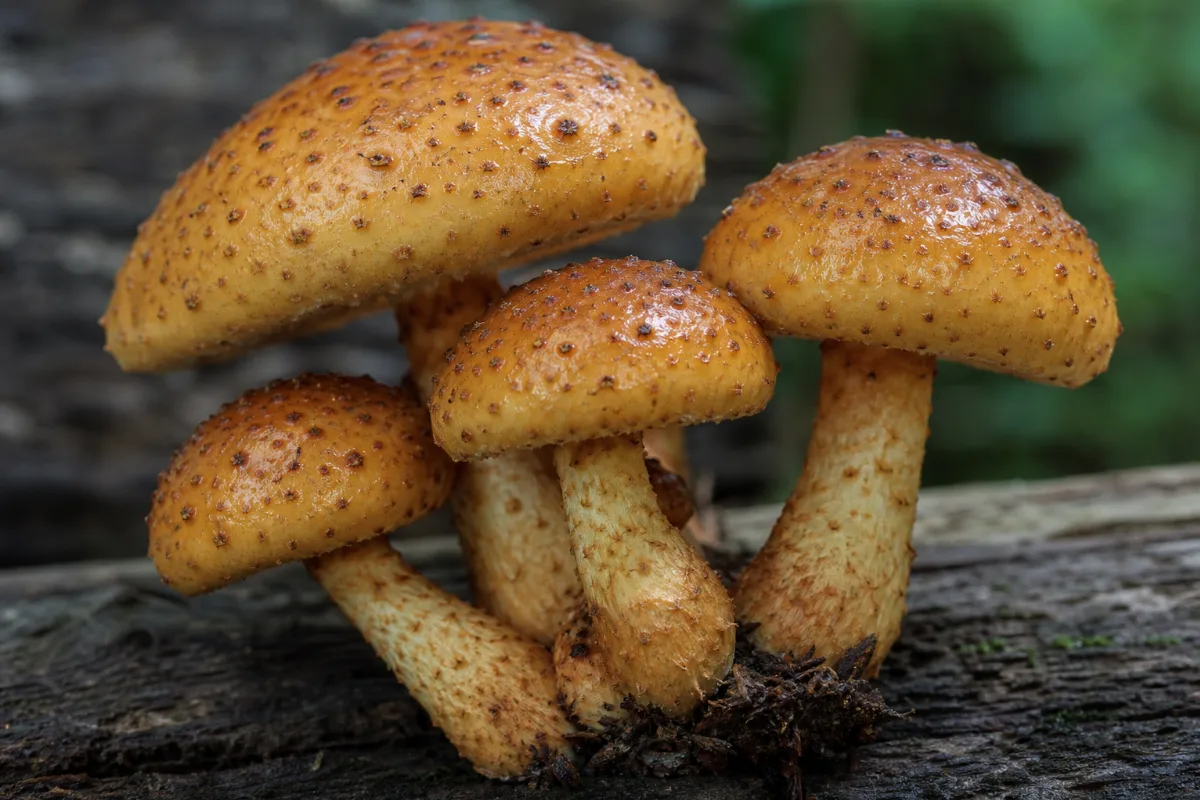
Mushrooms · Culinary mushroom
Chestnut mushroom
Pholiota adiposa
Chestnut mushroom is a cooking mushroom grown on sawdust in northeast China. Health research is thin: we found no human trial, only lab and mouse work on extracts and purified compounds. The main caution is with wild ones: one UK dataset labelled the species 'toxic', and wild specimens can hold high cadmium. Do not forage it unless an expert identifies it in person.
General information, not medical advice. Last substantive update · Not medically reviewed. A named clinician has not signed off on this page. How this page is made
About Chestnut mushroom
Chestnut mushroom is a cooking mushroom grown on sawdust in northeast China. We found no human trial of any health benefit and no human safety study. The research is lab and mouse work on extracts and purified compounds. For wild ones, the edibility record conflicts and metals can be high.
What it is
Chestnut mushroom is Pholiota adiposa, a fungus in the family Strophariaceae. It is not a plant. GBIF, a public biodiversity database, lists the name as accepted. It is related to nameko (Pholiota microspora).
A study of a wild strain from Heilongjiang Province identified it by shape and DNA and grew fruiting bodies on sawdust, wheat bran, soybean powder and quicklime. Cultivation papers describe it as nutritious and tasty, but we found no measured nutrient table.
How it is used
It is eaten as a cooking mushroom and grown on sawdust bags. We read no source describing traditional medicinal use, so we make no claim about it.
What the research shows
No human trial of chestnut mushroom, as a food or an extract, was found in PubMed.
The mouse work uses an alcohol extract and one purified sterol. The extract slowed liver tumours and changed gut bacteria in mice; the sterol slowed tumours by 59.74% and 76.10% at two doses and, in separate diabetic mice, lowered fasting glucose by about 10 mmol/L at its high dose. In dishes, extracts, polysaccharides and a lectin slowed cancer cell lines, and a polysaccharide activated immune cells. One water-extract study in mice had a mixed result on fat. A computer study predicted Alzheimer's-related targets.
None of this shows that eating the mushroom helps anyone. Most papers come from a few research groups and we found no replication.
Fruiting body, mycelium and extracts are different
The cooked cap and stem are the food. Research used alcohol extracts, water extracts, purified compounds and mycelium grown on grain. Their results do not carry over to the cooked mushroom, and we found no supplement with human evidence or quality testing.
Rules and official statements
We did not find or read a regulator statement about chestnut mushroom, so none is quoted. Ask a doctor or pharmacist before using concentrated extracts, especially if you take regular medicines.
At a glance
Traditional uses history, not proof
- No traditional medicinal use was described in the sources we read.
- Cultivation papers from China call it edible and medicinal and grow it on sawdust bags.
Studied for research
- Liver tumours in mice, animal only, insufficient
- Cancer cells in dishes, lab only, insufficient
- Immune-cell activation, lab only, insufficient
- Blood sugar and blood fats in mice, insufficient
- Gut bacteria in mice, insufficient
- Alzheimer's prediction by computer, insufficient
- Food value: no measured table found
Main compounds
- Sterols, including ETO (ergosta-4,6,8(14),22-tetraen-3-one)
- Polysaccharides, mostly mannose and galactose
- A lectin (sugar-binding protein) and fatty acids
Common forms
- Fresh or cooked fruiting body (the food)
- Alcohol and water extracts made in laboratories
- Purified sterol, polysaccharide or protein used only in research
- Mycelium grown on grain (food-processing research)
Research links: Mouse liver-tumour study, Scientific Reports 2022 (abstract) · Purified sterol in tumour mice, 2025 (abstract) · Anti-diabetic sterol in mice, 2023 (abstract) · Chemistry and cancer cells, 2023 (abstract) · Metals in wild mushrooms, UK, 2026 (abstract) · Research Library · Genes & Biomarkers Library
What it is and its history
- Accepted scientific name
- Pholiota adiposa
- Naming authority
- (Batsch) P.Kumm.
- Synonyms
- Pholiota jahnii Tjall.-Beuk. & Bas (listed as a synonym in one GBIF dataset)
- Common names
- Chestnut mushroom (English)
- Family or group
- Strophariaceae (a fungus family, the same as nameko), not a plant
- Classification
- Fungi > Basidiomycota > Agaricomycetes > Agaricales > Strophariaceae > Pholiota > Pholiota adiposa
- Native range
- Not checked in the sources read. Cultivation papers come from northeast China.
- Habitat
- A wood-growing fungus; one paper collected a wild strain in Mudanjiang City, Heilongjiang Province (Cao 2023).
- What it looks like
- Fruiting body: Not described in the sources read.
- Cultivation
- Grown on sawdust-based bags. In one study the best single-bag yield was 24.96 g on sawdust (20%), wheat bran (10%), soybean powder (1%) and quicklime (1%) (Cao 2023, abstract).
- Harvest and processing
- Not described in the sources read.
- Sustainability and conservation
- Not assessed in the sources read.
Traditional use and history history, not clinical proof
| Tradition or era | Documented use | Source |
|---|---|---|
| Modern cultivation in northeast China | Cultivation papers call it an edible and medicinal mushroom with a low yield compared with demand, grown on sawdust and grain by-products. | p40428558 |
| Traditional medicine | No traditional medicinal use was described in any source we read. We make no claim about traditional use. | p37830198 |
Traditional use shows how it was used. It does not show that it works or is safe today.
What is inside, and how it may work
What it contains and how those compounds act in cells and animals. Laboratory and animal mechanisms are not proven effects in people.
Main compounds
| Compound | Family | Where it is concentrated | Activity studied | Level of evidence |
|---|---|---|---|---|
| Sterols (including ergosta-4,6,8(14),22-tetraen-3-one, ETO) | sterol | Fruiting body extract | Purified ETO slowed tumours and lowered glucose in mice; a sterol class was among 35 components matched by mass spectrometry. 5 10 9 | Animal research |
| Fatty acids | lipid | Fruiting body extract | Reported among the main component groups; no separate activity shown. 9 | Laboratory research |
| Polysaccharide PAP-1a (mostly mannose and galactose) | polysaccharide | Fruiting body Molecular weight 16.453 kDa; molar % mannose 33.41, galactose 38.31, arabinose 18.04, glucose 5.28 | Activated macrophages and slowed liver cancer cells in co-culture (cells only). 12 | Laboratory research |
| Polysaccharides SPAP2-1 and SPAP2-2 | polysaccharide | Fruiting body 19 and 20 kDa; mannose, glucose and galactose | SPAP2-1 damaged HeLa cells in dishes. 14 | Laboratory research |
| Lectin (sugar-binding protein) | protein | Not stated in the abstract Two identical 16 kDa subunits | Slowed Hep G2 and MCF7 cancer cells and blocked HIV-1 reverse transcriptase in a test tube. 13 | Laboratory research |
Mechanisms, receptors and pathways
| Target or pathway | Gene or receptor | What was found | Level |
|---|---|---|---|
| Cell-death (apoptosis) proteins | BAX up, BCL-2 down | The ethanol extract raised BAX and lowered BCL-2 in HepG-2 cells; the authors suggest a caspase-mediated pathway. 9 | Laboratory research |
| Apoptosis and blood-vessel growth in tumours | Cleaved caspases, BAX, Bcl-2, VEGF | Mouse tumour tissue showed more cell death and less blood-vessel growth after the extract (abstract names the markers, not the sizes). 8 | Animal research |
| Insulin signalling | IRS1/PI3K/AKT | The sterol changed parts of this pathway in diabetic mouse tissue. 10 | Animal research |
| Macrophage activation | NO, TNF-a, IL-6, IL-12p70 | PAP-1a made macrophages release these signals in dishes. 12 | Laboratory research |
| Predicted Alzheimer's targets | STAT3, NFKB1, PRKCA, CDK1 | Database prediction only. 11 | In silico |
Absorption, metabolism and elimination
- Absorption
- Not found in the sources read.
- Distribution
- Not found.
- Metabolism
- Not found.
- Elimination
- Not found.
- Bioavailability
- Not established.
Isolated compounds versus whole extracts
All health-style findings come from an alcohol or water extract, a purified sterol, polysaccharide fractions or a lectin. None is the cooked mushroom, and none has been tested in people.
Nutritional composition
We found no measured nutrient table for chestnut mushroom and USDA has no entry. Papers call it nutrient-rich in their introductions only, so we state no figures.
9 not enough evidence
What was looked at
The 9 benefits and uses checked for Chestnut mushroom, each with how strong the evidence is. Tap one to open it.
- Liver-tumour growth in mice (lab and animal only)Not enough evidence
- Cancer cells in dishes (lab only)Not enough evidence
- Immune-cell activation by a polysaccharide (lab only)Not enough evidence
- Blood sugar in diabetic mice (animal only)Not enough evidence
- Blood fats and body fat in mice (animal only)Not enough evidence
- Gut bacteria in tumour-bearing mice (animal only)Not enough evidence
- Germ-killing activity in the test tubeNot enough evidence
- Alzheimer's prediction from a computer studyNot enough evidence
- Food value (what is in the mushroom)Not enough evidence
Lab markers tracked in the studies
Tumour inhibition rate (mice)Cell-death rate in liver cancer cells (HepG-2)Macrophage signals (NO, TNF-a, IL-6, IL-12p70)Fasting blood glucose (diabetic mice)Cholesterol and triglycerides (diabetic mice)Retroperitoneal fat mass (mice)DPPH free-radical scavenging (fermented grain)
What is Chestnut mushroom good for?
The uses people ask about and how strong the evidence is for each. Everything here is lab, mouse or computer work, and none is proven in people. Read this together with the Safety tab.
Benefits, one by one
Each card is a research question, not a promise. Tap a goal to filter. Open a card to see the studies, doses and limits.
Liver-tumour growth in mice (lab and animal only)
Not enough evidenceIn mice with implanted liver-tumour cells, an alcohol extract and a purified sterol from the mushroom slowed tumour growth. No person has been tested. This is a research lead, not a treatment.
2 studiesAlcohol extract and one purified sterol. Not the cooked mushroom. Mou…
Studies, doses and limits
Results
Ethanol extract: antitumour activity in mice, with more 'beneficial' and fewer 'harmful' gut bacteria (no figures in the abstract). Purified sterol ETO: tumour inhibition of 59.74% (low dose) and 76.10% (high dose).
Effect sizes as reported
59.74% and 76.10% tumour inhibition in mice with the sterol
Why this rating
Mouse studies of an extract and one purified compound, from one research setting, with no replication found and no human data.
Form and dose studied
Alcohol extract and one purified sterol. Not the cooked mushroom. Mouse doses are not human amounts, and none are given as advice here.
Who was studied
Male mice with implanted H22 liver-tumour cells
Limits
Two mouse papers; the extract paper has no figures in its abstract; both are lab-made preparations.
Why researchers looked
Mushroom extracts are often tested on tumour cells, so chestnut mushroom extracts and compounds were tried in mice.
Traditional use
No traditional medicinal use of chestnut mushroom was described in the sources we read. It is a cooking mushroom grown in northeast Asia.
Proposed mechanism In vivo animal
The extract promoted cell death in tumour tissue and reduced blood-vessel growth; the purified sterol changed gut bacteria and blood metabolites. Mouse results.
A proposed mechanism does not show that the effect happens in people.
No human safety study exists. The cautions are on the Safety tab: wild-mushroom identification, metals in wild fruiting bodies, and no data on medicines, pregnancy or children.
Cancer cells in dishes (lab only)
Not enough evidenceExtracts, polysaccharides and a protein from the mushroom killed or slowed several human cancer cell lines in dishes. That does not show any effect in the body.
3 studiesEthanol extract, purified polysaccharides and a purified lectin. None…
Studies, doses and limits
Results
Ethanol extract: most toxic to HepG-2 liver cancer cells, cell-death rate 23.71 +/- 1.59% at 50 ug/mL. Lectin: IC50 about 2.1 micromolar (Hep G2) and 3.2 (MCF7). Polysaccharide SPAP2-1: damaged HeLa cells.
Effect sizes as reported
Cell death in cancer cell lines
Why this rating
Test-tube results with several different preparations; cell toxicity rarely carries over to people.
Form and dose studied
Ethanol extract, purified polysaccharides and a purified lectin. None is a finished product.
Who was studied
Human cancer cell lines (HepG-2, A549, HeLa, MCF-7) grown in dishes
Limits
Cell lines only; different preparations; no check against normal cells except in one paper.
Why researchers looked
Researchers screen mushroom compounds on cancer cell lines as a first step.
Traditional use
No traditional medicinal use of chestnut mushroom was described in the sources we read. It is a cooking mushroom grown in northeast Asia.
Proposed mechanism Laboratory research
The ethanol extract raised the cell-death protein BAX and lowered BCL-2 in liver cancer cells; polysaccharide fractions disturbed the cell cycle of HeLa cells; a lectin slowed liver and breast cancer cells. Cell work only.
A proposed mechanism does not show that the effect happens in people.
No human safety study exists. The cautions are on the Safety tab: wild-mushroom identification, metals in wild fruiting bodies, and no data on medicines, pregnancy or children.
Immune-cell activation by a polysaccharide (lab only)
Not enough evidenceA purified polysaccharide from the mushroom made mouse immune cells release signals in dishes. No animal or human immune outcome has been shown.
1 studiesA purified polysaccharide, not the mushroom and not a supplement.
Studies, doses and limits
Results
PAP-1a activated macrophages and, through them, slowed three liver cancer cell lines in co-culture without directly harming a normal liver cell line.
Effect sizes as reported
Higher immune signals in cells
Why this rating
One cell paper on a purified fraction.
Form and dose studied
A purified polysaccharide, not the mushroom and not a supplement.
Who was studied
Mouse macrophage cell line and human liver cell lines in dishes
Limits
One paper; abstract only; fraction made in a lab.
Why researchers looked
Polysaccharides are a main compound class of the fruiting body and are often tested on immune cells.
Traditional use
No traditional medicinal use of chestnut mushroom was described in the sources we read. It is a cooking mushroom grown in northeast Asia.
Proposed mechanism Laboratory research
PAP-1a (mostly mannose and galactose, not a glucan) switched on macrophages to release NO, TNF-a, IL-6 and IL-12p70; in a co-culture this slowed liver cancer cell lines.
A proposed mechanism does not show that the effect happens in people.
No human safety study exists. The cautions are on the Safety tab: wild-mushroom identification, metals in wild fruiting bodies, and no data on medicines, pregnancy or children.
Blood sugar in diabetic mice (animal only)
Not enough evidenceA purified sterol from the mushroom lowered blood sugar in diabetic mice. Nobody has tested it in people, and the mushroom as food was not tested.
1 studiesPurified sterol, not the mushroom. No human amount is implied.
Studies, doses and limits
Results
High dose: fasting glucose about 10 mmol/L lower than diabetic control mice, body weight about 5 g higher; triglycerides, total cholesterol and LDL fell; HDL and antioxidant enzymes rose; pancreas islet structure improved.
Effect sizes as reported
About 10 mmol/L lower fasting glucose in mice
Why this rating
One mouse paper on a purified compound.
Form and dose studied
Purified sterol, not the mushroom. No human amount is implied.
Who was studied
Diabetic mice
Limits
One animal study; abstract only.
Why researchers looked
The same sterol was tested for diabetes effects after its antitumour tests.
Traditional use
No traditional medicinal use of chestnut mushroom was described in the sources we read. It is a cooking mushroom grown in northeast Asia.
Proposed mechanism In vivo animal
The authors link the effect to the IRS1/PI3K/AKT signalling pathway (mouse tissue).
A proposed mechanism does not show that the effect happens in people.
No human safety study exists. The cautions are on the Safety tab: wild-mushroom identification, metals in wild fruiting bodies, and no data on medicines, pregnancy or children. If you take diabetes medicines, ask a pharmacist before any concentrated mushroom product.
Blood fats and body fat in mice (animal only)
Not enough evidenceIn mice on a high-fat diet, a water extract reduced one fat pad but not triglycerides or another fat pad. The same diabetic-mouse sterol lowered cholesterol markers. Mouse results only.
2 studiesWater extract (one strain) and a purified sterol. Not the cooked mush…
Studies, doses and limits
Results
Water extract: no change in total triglycerides or epididymal fat; retroperitoneal fat fell significantly. Sterol: lower triglycerides, total cholesterol and LDL in diabetic mice.
Effect sizes as reported
Mixed: one of three measures changed in the extract study
Why this rating
An old mouse study with a mixed result plus a second mouse paper on a different preparation.
Form and dose studied
Water extract (one strain) and a purified sterol. Not the cooked mushroom.
Who was studied
Mice
Limits
Mouse results; mixed; abstracts only.
Why researchers looked
Edible fungi are often tested for effects on fat and cholesterol.
Traditional use
No traditional medicinal use of chestnut mushroom was described in the sources we read. It is a cooking mushroom grown in northeast Asia.
Proposed mechanism In vivo animal
Not established.
A proposed mechanism does not show that the effect happens in people.
No human safety study exists. The cautions are on the Safety tab: wild-mushroom identification, metals in wild fruiting bodies, and no data on medicines, pregnancy or children.
Gut bacteria in tumour-bearing mice (animal only)
Not enough evidenceIn mice with tumours, the extract and the purified sterol changed the mix of gut bacteria. That is an observation, not a proven benefit.
2 studiesAlcohol extract and purified sterol.
Studies, doses and limits
Results
Gut bacteria shifted in tumour-bearing mice in two papers.
Effect sizes as reported
Changes in bacteria groups; no health outcome tied to them in people
Why this rating
Mouse sequencing data; bacteria names do not show a health effect.
Form and dose studied
Alcohol extract and purified sterol.
Who was studied
Mice with implanted tumours
Limits
Mouse only; changes in bacteria are not a benefit by themselves.
Why researchers looked
Gut bacteria changes were reported alongside the tumour findings.
Traditional use
No traditional medicinal use of chestnut mushroom was described in the sources we read. It is a cooking mushroom grown in northeast Asia.
Proposed mechanism In vivo animal
The sterol increased Firmicutes and Lactobacillus and reduced Bartonella; the extract increased 'beneficial' and reduced 'harmful' bacteria (labels are the authors').
A proposed mechanism does not show that the effect happens in people.
No human safety study exists. The cautions are on the Safety tab: wild-mushroom identification, metals in wild fruiting bodies, and no data on medicines, pregnancy or children.
Germ-killing activity in the test tube
Not enough evidenceA methanol extract showed antimicrobial activity in one old lab paper. The abstract gives no details.
1 studiesA methanol extract, which is a lab solvent, not a food.
Studies, doses and limits
Results
The abstract says only that a 60% methanol extract showed antimicrobial activity.
Effect sizes as reported
No figures
Why this rating
A one-sentence abstract with no organisms named or figures.
Form and dose studied
A methanol extract, which is a lab solvent, not a food.
Who was studied
Lab microbes
Limits
Abstract has no detail.
Why researchers looked
Fungal extracts are often screened against microbes.
Traditional use
No traditional medicinal use of chestnut mushroom was described in the sources we read. It is a cooking mushroom grown in northeast Asia.
Proposed mechanism Laboratory research
Not stated.
A proposed mechanism does not show that the effect happens in people.
No human safety study exists. The cautions are on the Safety tab: wild-mushroom identification, metals in wild fruiting bodies, and no data on medicines, pregnancy or children.
Alzheimer's prediction from a computer study
Not enough evidenceA computer analysis predicted that compounds in the mushroom could bind proteins linked to Alzheimer's disease. Nothing was tested in cells, animals or people.
1 studiesDatabase entries, not a tested product.
Studies, doses and limits
Results
Computer prediction only, with no animal or human data.
Why this rating
A prediction method. The paper's own wording is stronger than the method allows.
Form and dose studied
Database entries, not a tested product.
Limits
No lab or animal test of the prediction was found in our reading.
Why researchers looked
Database tools are used to guess which mushroom compounds might matter for brain disease.
Traditional use
No traditional medicinal use of chestnut mushroom was described in the sources we read. It is a cooking mushroom grown in northeast Asia.
Proposed mechanism In silico
The paper predicts STAT3 and NF-kB1 as targets and names carnosol, carnosic acid and clovane diol as key components; these are predictions, not measurements in the mushroom.
A proposed mechanism does not show that the effect happens in people.
No human safety study exists. The cautions are on the Safety tab: wild-mushroom identification, metals in wild fruiting bodies, and no data on medicines, pregnancy or children.
Food value (what is in the mushroom)
Not enough evidenceThe mushroom is described as nutritious, but we found no measured nutrient table for it. Fermented grains grown with its mycelium were higher in soluble protein in a lab test.
2 studiesThe fruiting body is the food; the grain result concerns mycelium on …
Studies, doses and limits
Results
Papers describe it as nutrient-rich and tasty in their introductions. Mycelium-fermented grain had more soluble protein and reducing sugar and stronger DPPH free-radical scavenging than unfermented grain in the lab.
Effect sizes as reported
No nutrient values found
Why this rating
No measured composition table was read, and the grain result is a food-processing result.
Form and dose studied
The fruiting body is the food; the grain result concerns mycelium on grain.
Who was studied
Lab food-processing experiment
Limits
The 'rich in nutrients' wording comes from introductions, not from measurements.
Why researchers looked
It is eaten as a cultivated mushroom in northeast Asia, so people ask what it provides as food.
Traditional use
No traditional medicinal use of chestnut mushroom was described in the sources we read. It is a cooking mushroom grown in northeast Asia.
Proposed mechanism Laboratory research
Not a mechanism question.
A proposed mechanism does not show that the effect happens in people.
No human safety study exists. The cautions are on the Safety tab: wild-mushroom identification, metals in wild fruiting bodies, and no data on medicines, pregnancy or children.
Connections to the rest of health
How Chestnut mushroom connects to the rest of our health knowledge graph. Every link says what kind of connection it is. A safety link (for example to the liver) is a warning, not a benefit. A study that merely mentions a topic never creates a benefit link.
Explore every connection: goals, body systems, organs, symptoms, genes
A. Wellness goals
| Connected to | Kind of connection | Evidence status | Context | Studies |
|---|---|---|---|---|
| Blood sugar balance | Not enough evidence | Mouse result only; no human data. Preparation or compound: Purified sterol, diabetic mice |
10 | |
| Immune Support | Preliminary mechanism | Not enough evidence | Liver-tumour growth in mice (lab and animal only): In mice with implanted liver-tumour cells, an alcohol extract and a purified sterol from the mushroom slowed tumour growth. No person has been tested. This is a research lead, not a treatment. Cancer cells in dishes (lab only): Extracts, polysaccharides and a protein from the mushroom killed or slowed several human cancer cell lines in dishes. That does not show any effect in the body. | 8 5 9 14 13 12 3 |
| Blood Sugar Balance | Preliminary mechanism | Not enough evidence | Blood sugar in diabetic mice (animal only): A purified sterol from the mushroom lowered blood sugar in diabetic mice. Nobody has tested it in people, and the mushroom as food was not tested. | 10 |
| Cholesterol Balance | Preliminary mechanism | Not enough evidence | Blood fats and body fat in mice (animal only): In mice on a high-fat diet, a water extract reduced one fat pad but not triglycerides or another fat pad. The same diabetic-mouse sterol lowered cholesterol markers. Mouse results only. | 2 10 |
| Gut Health | Preliminary mechanism | Not enough evidence | Gut bacteria in tumour-bearing mice (animal only): In mice with tumours, the extract and the purified sterol changed the mix of gut bacteria. That is an observation, not a proven benefit. | 8 5 |
| Memory Support | Preliminary mechanism | Not enough evidence | Alzheimer's prediction from a computer study: A computer analysis predicted that compounds in the mushroom could bind proteins linked to Alzheimer's disease. Nothing was tested in cells, animals or people. | 11 |
| Holistic Balance | Preliminary mechanism | Not enough evidence | Food value (what is in the mushroom): The mushroom is described as nutritious, but we found no measured nutrient table for it. Fermented grains grown with its mycelium were higher in soluble protein in a lab test. | 6 1 |
B. Body systems
| Connected to | Kind of connection | Evidence status | Context | Studies |
|---|---|---|---|---|
| Immune System | Biological association | Not enough evidence | Studied for: Liver-tumour growth in mice (lab and animal only) Studied for: Cancer cells in dishes (lab only) | 8 5 9 14 13 12 3 |
| Endocrine System | Biological association | Not enough evidence | Studied for: Blood sugar in diabetic mice (animal only) | 10 |
| Cardiovascular System | Biological association | Not enough evidence | Studied for: Blood fats and body fat in mice (animal only) | 2 10 |
| Digestive System | Biological association | Not enough evidence | Studied for: Gut bacteria in tumour-bearing mice (animal only) Studied for: Food value (what is in the mushroom) | 8 5 6 1 |
| Nervous System | Biological association | Not enough evidence | Studied for: Alzheimer's prediction from a computer study | 11 |
G. Root causes and contributing factors
| Connected to | Kind of connection | Evidence status | Context | Studies |
|---|---|---|---|---|
| Heavy metal exposure | Biological association | Low certainty | High cadmium in some wild specimens from UK parks; cultivated stock not measured. Preparation or compound: Wild fruiting body |
7 |
I. Biomarkers
| Connected to | Kind of connection | Evidence status | Context | Studies |
|---|---|---|---|---|
| Tumour inhibition rate (mice) | Biological association | Not enough evidence | Measured in trials: increased. A lab change is not the same as a health benefit. | 5 |
| Cell-death rate in liver cancer cells (HepG-2) | Biological association | Not enough evidence | Measured in trials: increased. A lab change is not the same as a health benefit. | 9 |
| Macrophage signals (NO, TNF-a, IL-6, IL-12p70) | Biological association | Not enough evidence | Measured in trials: increased. A lab change is not the same as a health benefit. | 12 |
| Fasting blood glucose (diabetic mice) | Biological association | Not enough evidence | Measured in trials: decreased. A lab change is not the same as a health benefit. | 10 |
| Cholesterol and triglycerides (diabetic mice) | Biological association | Not enough evidence | Measured in trials: decreased. A lab change is not the same as a health benefit. | 10 |
| Retroperitoneal fat mass (mice) | Biological association | Not enough evidence | Measured in trials: decreased. A lab change is not the same as a health benefit. | 2 |
| DPPH free-radical scavenging (fermented grain) | Biological association | Not enough evidence | Measured in trials: increased. A lab change is not the same as a health benefit. | 6 |
K. Biological pathways
L. Active compounds
| Connected to | Kind of connection | Evidence status | Context | Studies |
|---|---|---|---|---|
| Sterols (including ergosta-4,6,8(14),22-tetraen-3-one, ETO) | Biological association | Animal | Purified ETO slowed tumours and lowered glucose in mice; a sterol class was among 35 components matched by mass spectrometry. Preparation or compound: Fruiting body extract |
5 10 9 |
| Fatty acids | Biological association | In vitro | Reported among the main component groups; no separate activity shown. Preparation or compound: Fruiting body extract |
9 |
| Polysaccharide PAP-1a (mostly mannose and galactose) | Biological association | In vitro | Activated macrophages and slowed liver cancer cells in co-culture (cells only). Preparation or compound: Fruiting body |
12 |
| Polysaccharides SPAP2-1 and SPAP2-2 | Biological association | In vitro | SPAP2-1 damaged HeLa cells in dishes. Preparation or compound: Fruiting body |
14 |
| Lectin (sugar-binding protein) | Biological association | In vitro | Slowed Hep G2 and MCF7 cancer cells and blocked HIV-1 reverse transcriptase in a test tube. | 13 |
Each connection is stored with the ingredient, the connected record, the kind of connection, the evidence status, the supporting studies, the preparation or compound involved, and a review date (last reviewed October 25, 2026).
Evidence at a glance: what the research found for 9 outcomes
Each outcome below is one thing researchers measured. Certainty is how far the evidence can be trusted, not how well it works. The full studies are on the next tab.
The evidence
The research centre for Chestnut mushroom. Every record here was checked against PubMed or the publisher's page; we never list a study we have not verified.
Evidence by outcome
Bars show how many studies we found for each outcome, not how well it works. People are added up across trials only (reviews are not added, to avoid double counting).
How we rate evidence
High certainty
Several well-run trials or reviews agree; further research is unlikely to change the picture much.
Moderate certainty
Good trials point the same way, but some doubt remains.
Low certainty
Small, short or inconsistent trials. The finding could change with better research.
Very low certainty
Very little or very weak human data. Treat as a possibility only.
Mixed findings
Trials or reviews disagree with each other.
Not enough evidence
Not enough human research to say either way.
Evidence against
Good research found no benefit, or found harm.
We take the reviewers' own risk-of-bias and GRADE statements where they exist, and otherwise judge from study size, design, consistency, directness and whether a product matches what is sold. Many publications do not make evidence high. Method note: We read PubMed records and abstracts for 13 papers (ten lab, mouse or computer papers, two cultivation papers and one metals survey, whose species figures come from the open-access full text) and checked the species name in GBIF. No regulator page for this species was found. Numbers come from abstracts or that full text. Certainty ratings are the compiler's own reading.
Study library: every study we checked 14
| Study | Design | People | Product, dose, length | Result |
|---|---|---|---|---|
| Cao 2023 Medicinal Value, Biological Characteristics, and Domestication of the Wild Mushroom Pholiota adiposa (Agaricomycetes). International Journal of Medicinal Mushrooms · PMID 37830198 · DOI |
Laboratory research in-vitro |
A wild strain collected in Mudanjiang City, Heilongjiang Province, grown in the lab | Pholiota adiposa mycelium and fruiting bodies fruiting body and mycelium |
The wild strain was identified as Pholiota adiposa by shape and DNA. The best single-bag yield of fruiting body was 24.96 g on a medium of sawdust (20%), wheat bran (10%), soybean powder (1%) and quicklime (1%). The authors call it an important edible and medicinal mushroom, without citing a human study in the abstract. Growing and identification data Methods, limits and fundingOutcomes: Identification (ITS and nLSU DNA), growth conditions, fruiting-body yield Limitations: A cultivation paper; the 'medicinal value' in the title is not tested in the abstract. Funding and conflicts: Not stated in the abstract Read: abstract |
| Cho 2006 Effect of a Pholiota adiposa Extract on Fat Mass in Hyperlipidemic Mice. Mycobiology · PMID 24039505 · DOI |
Animal research animal |
Mice fed a high-fat diet | Water extract of Pholiota adiposa (strain ASI 24018) Not shown here · vs High-fat diet without extract |
Total triglycerides and epididymal fat mass were not changed. Retroperitoneal fat mass fell significantly. The authors suggest it may be a candidate functional food, but note no effect on triglycerides. Mixed: one fat pad smaller, others unchanged Methods, limits and fundingOutcomes: Triglycerides and fat pads Limitations: Mice only; an old, small, mixed result. Funding and conflicts: Not stated in the abstract Read: abstract |
| Dulger 2004 Antimicrobial activity of the macrofungus Pholiota adiposa. Fitoterapia · PMID 15159005 · DOI |
Laboratory research in-vitro |
Lab microbes | 60% methanol extract of Pholiota adiposa Not shown here |
The abstract says only that the extract showed antimicrobial activity. Test-tube germ-killing effect (no detail in the abstract) Methods, limits and fundingOutcomes: Growth of microbes Limitations: One-sentence abstract; no figures, no organisms named in the abstract. Funding and conflicts: Not stated in the abstract Read: abstract |
| GBIF Secretariat 2026 GBIF Backbone Taxonomy: Pholiota adiposa (Batsch) P.Kumm. GBIF species match API · Source |
Database record database |
Not applicable | Not applicable |
Pholiota adiposa (Batsch) P.Kumm., status ACCEPTED, species key 2534085, family Strophariaceae, order Agaricales, class Agaricomycetes, phylum Basidiomycota, kingdom Fungi. A separate GBIF record lists Pholiota jahnii as a synonym of the name in one dataset. Name check Methods, limits and fundingOutcomes: Accepted name and classification Limitations: One database, checked on 2026-10-25. Index Fungorum was not read. Funding and conflicts: Not applicable Read: API response read |
| Liu 2025 Integrated gut microbiota and metabolomics analysis reveals the antitumor effects of ergosta-4,6,8(14),22-tetraen-3-one purified from the medicinal fungus pholiota adiposa in tumor-bearing mice. Frontiers in Pharmacology · PMID 41476790 · DOI |
Animal research animal |
Mice with implanted H22 liver-tumour cells | Purified sterol ETO (ergosta-4,6,8(14),22-tetraen-3-one) Low and high dose in mice (figures not given in the abstract) |
Tumour inhibition rates were 59.74% (low dose) and 76.10% (high dose). Gut bacteria changed (more Firmicutes and Lactobacillus, less Bartonella). The authors say liver and kidney damage was less than with cyclophosphamide. Tumour inhibition of 59.74% and 76.10% in mice Methods, limits and fundingOutcomes: Tumour inhibition rate; blood metabolites; gut bacteria Limitations: Mice only; one purified compound, not the mushroom; no human data. Funding and conflicts: Not stated in the abstract; no funding listed in the PubMed record Read: abstract |
| Lou 2025 The Domestication and Cultivation of Pholiota adiposa and Its High-Temperature Adaptability: Enhancing the Utilization of Agricultural Residues and Grain Nutrition in Northeast China. Foods · PMID 40428558 · DOI |
Laboratory research in-vitro |
Fungal mycelium and fermented grains in the lab | Mycelium of Pholiota adiposa grown on four common grains mycelium on grain · vs Unfermented grains |
The authors call the mushroom nutrient-rich and delicious. Fermented grains had more soluble protein, more reducing sugar and stronger DPPH free-radical scavenging than unfermented grains. This is a food-processing result, not a health result. Higher soluble protein and lab antioxidant test in fermented grain Methods, limits and fundingOutcomes: Mycelium growth; soluble protein, reducing sugar and DPPH free-radical scavenging of fermented grain Limitations: Lab food-processing study. The introduction's claim that eating more 'can improve human immunity and inhibit cancer' is not shown by this paper. Funding and conflicts: Natural Science Foundation of Heilongjiang Province; no industry funding noted Read: abstract |
| Pena-Fernandez 2026 Censored-Data-Aware Screening of Hazardous Metal(loid)s in Wild Mushrooms from Urban and Peri-Urban Green Spaces: Multielement Fingerprints and Adult Exposure Assessment. Journal of Xenobiotics · PMID 42646055 · DOI |
Survey survey |
121 121 wild mushroom fruiting-body units from parks in Leicester/Leicestershire, UK (5 of Pholiota adiposa) |
Wild fruiting bodies fruiting body · vs EFSA tolerable weekly intake for cadmium |
The abstract (read) does not list P. adiposa. The full text (Europe PMC open access, PMC13514479) gives for P. adiposa (n = 5): median cadmium 2.520 mg/kg dry weight (range 1.404 to 101.054), median manganese 183.960 and zinc about 85, with one record at 101.054 cadmium, 2676.159 manganese and 3064.543 zinc. Under the 300 g per week scenario its cadmium was 43.19% of the EFSA tolerable weekly intake. The dataset filed this species under 'Toxic' in its edibility groups, with no basis stated in the table. Cadmium about 43% of the weekly limit in the authors' wild-mushroom scenario Methods, limits and fundingOutcomes: Metal levels in wild mushrooms; modelled exposure Limitations: Wild park mushrooms in one UK area, five samples of this species, one extreme record; says little about cultivated mushrooms sold as food. Funding and conflicts: Spanish government and regional grants and a UK university; no industry funding noted Read: full text (open access) |
| Wang 2022 Influence of Pholiota adiposa on gut microbiota and promote tumor cell apoptosis properties in H22 tumor-bearing mice. Scientific Reports · PMID 35597811 · DOI |
Animal research animal |
Male mice with implanted H22 liver-tumour cells | Ethanol extract of Pholiota adiposa (EPA) fruiting body (part not stated in the abstract) Three levels, 100, 200 and 300 mg/kg/day in mice (not human amounts) · vs Model group and cyclophosphamide group |
The extract showed antitumour activity in the mice by promoting cell death (apoptosis) and reducing blood-vessel growth, and shifted gut bacteria towards more 'beneficial' and fewer 'harmful' types. The abstract gives no figures. Antitumour effect in mice; gut bacteria changed Methods, limits and fundingOutcomes: Tumour cell death and blood-vessel growth markers; gut bacteria Limitations: Mice only; extract, not the cooked mushroom; no figures in the abstract; same research group as the 2023 sterol paper. Funding and conflicts: Not stated in the abstract; no industry funding listed in the PubMed record Read: abstract |
| Wang 2023 Chemical Components Analyzed by UPLC-QTOF-MS and In Vitro Antitumor Effects of the Chestnut Mushroom Pholiota adiposa (Agaricomycetes). International Journal of Medicinal Mushrooms · PMID 37075083 · DOI |
Laboratory research in-vitro |
Four human cancer cell lines (HepG-2, A549, HeLa, MCF-7) grown in dishes | Ethanol extract of cultivated Pholiota adiposa (EPA) cultivated fruiting body (as described in the abstract) Different concentrations; 50 ug/mL gave the figure below · vs Untreated cells |
35 chemical components matched a database, with sterols, fatty acids and polysaccharides making up a large share. The extract was most toxic to liver cancer HepG-2 cells; at 50 ug/mL the cell-death rate rose to 23.71 +/- 1.59%. BAX rose and BCL-2 fell. Cell death in cancer cell lines Methods, limits and fundingOutcomes: Cell survival (CCK-8 test), cell death by flow cytometry, cell-death proteins Limitations: Cells in dishes only. Extract toxicity to cancer cells is not a treatment and says nothing about eating the mushroom. Funding and conflicts: Not stated in the abstract Read: abstract |
| Wang 2023 Anti-diabetic effects of fungal Ergosta-4, 6, 8(14), 22-tetraen-3-one from Pholiota adiposa. Steroids · PMID 36720423 · DOI |
Animal research animal |
Diabetic mice | Purified sterol ETO fruiting body (purified compound) Treatment groups including a high dose (figures in mice not given in the abstract) · vs Diabetic control group |
In the high-dose group fasting blood glucose was about 10 mmol/L lower than in diabetic control mice and body weight about 5 g higher. Triglycerides, total cholesterol and LDL-cholesterol fell; HDL-cholesterol and antioxidant enzymes rose; pancreas islet structure improved. The authors link this to the IRS1/PI3K/AKT pathway. Lower glucose and cholesterol markers in diabetic mice Methods, limits and fundingOutcomes: Fasting blood glucose, glucose tolerance, blood fats, antioxidant enzymes, pancreas and liver tissue Limitations: Mice only; one purified compound; no human data. Funding and conflicts: Not stated in the abstract; no funding listed in the PubMed record Read: abstract |
| Xiaoying 2025 Uncovering active ingredients and mechanisms of Pholiota adiposa in the treatment of Alzheimer's disease based on network pharmacology and bioinformatics. Scientific Reports · PMID 40745201 · DOI |
Computational in-silico |
No animals or people: database and computer modelling | Components of Pholiota adiposa taken from databases |
Computer analysis predicted that components such as carnosol, carnosic acid and clovane diol could bind proteins linked to Alzheimer's disease (STAT3, NFKB1). These are predictions from databases, not measurements in the mushroom. Computer prediction only Methods, limits and fundingOutcomes: Predicted protein targets and docking Limitations: A prediction, not a test in animals or people. The authors' wording ('promise as a therapeutic agent') goes beyond what the method can show. Funding and conflicts: Government and academy grants listed in PubMed; no industry funding noted Read: abstract |
| Yang 2022 Study on the physicochemical properties and immunomodulatory anti-tumor effect of the Pholiota adiposa polysaccharide. Food & Function · PMID 35420612 · DOI |
Laboratory research in-vitro |
Mouse macrophage cells and human liver cancer cell lines in dishes | Purified polysaccharide fraction PAP-1a fruiting body (part not stated in the abstract) Not shown here · vs Untreated cells |
PAP-1a (16.453 kDa) was mostly mannose (33.41 molar %) and galactose (38.31%). It activated macrophages to release NO, TNF-a, IL-6 and IL-12p70, and in a co-culture slowed three liver cancer cell lines, while not directly harming a normal liver cell line (L02) or macrophages. Macrophage activation and slowed liver cancer cell growth in co-culture Methods, limits and fundingOutcomes: Macrophage signals; cancer-cell growth in co-culture Limitations: Cells in dishes; purified fraction; no animals or people. Funding and conflicts: Not stated in the abstract Read: abstract |
| Zhang 2009 A novel lectin with antiproliferative activity from the medicinal mushroom Pholiota adiposa. Acta Biochimica Polonica · PMID 19636442 |
Laboratory research in-vitro |
Cancer cell lines and an enzyme assay in the lab | Purified lectin (a sugar-binding protein) Not shown here |
A 16 kDa-subunit lectin slowed liver (Hep G2) and breast (MCF7) cancer cells with IC50 values of 2.1 and about 3.2 micromolar, and blocked HIV-1 reverse transcriptase in a test tube (IC50 1.9 micromolar). Slowed cancer cells in dishes Methods, limits and fundingOutcomes: Cell growth and an HIV enzyme test Limitations: Test-tube and cell work with a purified protein. Not an effect of eating the mushroom. Funding and conflicts: Not stated in the abstract Read: abstract |
| Zhou 2022 Structural analysis and in vitro antitumor effect of polysaccharides from Pholiota adiposa. Glycoconjugate Journal · PMID 35675021 · DOI |
Laboratory research in-vitro |
HeLa cervical cancer cells in dishes | Acid-extracted polysaccharide fractions SPAP2-1 and SPAP2-2 fruiting body (part not stated in the abstract) Not shown here · vs Untreated cells |
Two fractions (19 and 20 kDa) contained mannose, glucose and galactose. SPAP2-1 damaged HeLa cells, changed their growth, disturbed the cell cycle and caused cell death. The authors say it needs further study. Cell damage in one cancer cell line Methods, limits and fundingOutcomes: Cell growth (MTT), cell-cycle and cell death Limitations: One cell line in dishes; purified fraction. Funding and conflicts: Not stated in the abstract Read: abstract |
What we do not know yet
- No human trial of chestnut mushroom as a food or an extract.
- No safety study, regulator statement or look-alike source was found.
- The edibility conflict between a UK dataset ('toxic') and Chinese papers ('edible') is unresolved.
- No measured nutrient table or metal data for cultivated and dried products.
- Most research comes from a few groups and was not independently replicated.
How new research is added
New studies are found by a saved PubMed search and placed in a review queue. A person reads each one before it changes any evidence rating or safety wording. New publications never change ratings automatically.
Lab markers
What changed in blood or saliva tests during trials. A changed number is not the same as feeling or being healthier, and we give no "normal ranges".
Other 7
Tumour inhibition rate (mice)
Increased in trials
How much smaller implanted tumours grew in treated mice compared with untreated mice.
Not enough evidenceResults and what it means
Why it was measured
A lab measure of whether a substance slows tumour growth.
Statistical vs. clinical meaning
Size relative to controls is not tested statistically in the abstract.
Safety implication
None known from this measure. Mouse result.
| Study | Result | People | Product |
|---|---|---|---|
| 5 | Tumour inhibition rates of 59.74% (low dose) and 76.10% (high dose) with the purified sterol. | Mice with implanted H22 tumours | Purified sterol ETO |
Cell-death rate in liver cancer cells (HepG-2)
Increased in trials
The share of cultured liver cancer cells that die by programmed cell death after treatment.
Not enough evidenceResults and what it means
Why it was measured
A lab measure of how toxic an extract is to cancer cells.
Statistical vs. clinical meaning
One cell experiment.
Safety implication
None known. Cell result.
| Study | Result | People | Product |
|---|---|---|---|
| 9 | The apoptosis rate rose to 23.71 +/- 1.59% at 50 ug/mL of ethanol extract; BAX rose and BCL-2 fell. | HepG-2 cells in dishes | Ethanol extract of cultivated Pholiota adiposa |
Macrophage signals (NO, TNF-a, IL-6, IL-12p70)
Increased in trials
Chemical messengers that immune cells called macrophages release when they are switched on.
Not enough evidenceResults and what it means
Why it was measured
Used to see whether a substance activates immune cells.
Statistical vs. clinical meaning
Size not given in the abstract.
Safety implication
None known. Cell result.
| Study | Result | People | Product |
|---|---|---|---|
| 12 | PAP-1a made macrophages release NO, TNF-a, IL-6 and IL-12p70; no figures in the abstract. | Macrophage cell line | Purified polysaccharide PAP-1a |
Fasting blood glucose (diabetic mice)
Decreased in trials
The blood sugar level after fasting.
Not enough evidenceResults and what it means
Why it was measured
A main measure of diabetes in animals and people.
Statistical vs. clinical meaning
Statistical detail is not given in the abstract.
Safety implication
None known from this measure. Mouse result.
| Study | Result | People | Product |
|---|---|---|---|
| 10 | In the high-dose group fasting glucose was about 10 mmol/L lower than in diabetic control mice. | Diabetic mice | Purified sterol ETO |
Cholesterol and triglycerides (diabetic mice)
Decreased in trials
Blood fats linked to heart-disease risk.
Not enough evidenceResults and what it means
Why it was measured
Used in animals to see whether a substance changes blood fats.
Statistical vs. clinical meaning
Figures not given in the abstract.
Safety implication
None known. Mouse result.
| Study | Result | People | Product |
|---|---|---|---|
| 10 | TG, total cholesterol and LDL-C fell, while HDL-C rose in the treated groups. | Diabetic mice | Purified sterol ETO |
Retroperitoneal fat mass (mice)
Decreased in trials
The weight of a fat pad behind the abdominal cavity in mice.
Not enough evidenceResults and what it means
Why it was measured
A lab measure of body fat in mice on a high-fat diet.
Statistical vs. clinical meaning
Mixed result; figures not given in the abstract.
Safety implication
None known. Mouse result.
| Study | Result | People | Product |
|---|---|---|---|
| 2 | Retroperitoneal fat fell significantly; total triglycerides and epididymal fat did not change. | Mice on a high-fat diet | Water extract of Pholiota adiposa |
DPPH free-radical scavenging (fermented grain)
Increased in trials
A test-tube measure of how well a sample neutralises a test chemical (an 'antioxidant' test).
Not enough evidenceResults and what it means
Why it was measured
A cheap lab test often reported for food extracts.
Statistical vs. clinical meaning
Does not show an effect in the body.
Safety implication
None known. Lab result.
| Study | Result | People | Product |
|---|---|---|---|
| 6 | Fermented grains were significantly higher than unfermented grains. | Fermented and unfermented grains in the lab | Mycelium of Pholiota adiposa on four grains |
Safety
What studies and official sources say about side effects, medicines and who should check first. Each point shows what kind of evidence it comes from.
Main points to know 4
- No human safety study exists. We found no human trial, no case report of harm and no safety study for chestnut mushroom, whether eaten or taken as an extract. Cultivated material is described as edible in cultivation papers from northeast China, but absence of reports is not proof of safety. Insufficient 1 6
- Do not forage it from a text description. A UK park-mushroom dataset filed Pholiota adiposa under 'Toxic' in its edibility groups, with no reason given in the table, while Chinese papers describe cultivated material as edible. We could not settle the conflict. Wild fungi should only be eaten when an expert has identified them in person, never from a description or an app. We read no look-alike source for this species. Survey 7 1
- Wild fruiting bodies can hold high cadmium. In 5 wild specimens from Leicester parks, median cadmium was 2.520 mg/kg dry weight (range 1.404 to 101.054), and one record also had very high manganese and zinc. In the authors' scenario of a 300 g fresh serving per week, cadmium for this species was 43.19% of the EFSA tolerable weekly intake. Cultivated stock was not measured. Survey 7
- Extracts are lab preparations with no human data. The 'anticancer' and 'anti-diabetic' results come from alcohol extracts, purified sterol, polysaccharide and lectin in cells and mice. None is a consumer product, none has human safety data, and a mushroom extract must not replace medical care. In vivo animal 10 5 12
Side effects 2
| Effect | How often | Severity and recovery | Evidence |
|---|---|---|---|
| Any adverse effect from eating cultivated chestnut mushroom Mushroom allergy and stomach upset can happen with any fungus, but no case for this species turned up in our PubMed search. | Unknown: no reports and no studies were found | unknown unknown | Insufficient |
| Poisoning from a mistaken wild identification The only edibility label we read for wild P. adiposa was 'Toxic' in a UK dataset, with no stated basis. | Unknown for this species | unknown to serious unknown | Survey 7 |
Liver
No report of liver injury from chestnut mushroom was found. A mouse paper says liver and kidney damage from the purified sterol was less than with the cancer drug cyclophosphamide; that is a lab comparison, not a safety study. 5
Monitoring. No agency monitoring advice was read.
This is a safety connection. It is not evidence that Chestnut mushroom supports liver health.
Medicines and supplements 4
| With | Why it matters | Importance | Evidence | What to do |
|---|---|---|---|---|
| Prescription medicines, supplements and alcohol (any) other | Not studied for chestnut mushroom as a food or extract. | We read no source that documents an interaction and no source that rules one out. | Insufficient Not enough evidence | If you take regular medicines, ask your pharmacist before any new mushroom extract. |
| Diabetes medicines and insulin prescription | A purified sterol lowered blood glucose in diabetic mice. This is not shown for the mushroom or in people. | Theoretical only. No human data. | In vivo animal Not enough evidence 10 | Ask a pharmacist before using a concentrated mushroom product if you take medicines for blood sugar. |
| Immune-suppressing medicines and corticosteroids prescription | A polysaccharide activated macrophages in dishes. Not studied in animals or people. | Theoretical only. No human data. | Laboratory research Not enough evidence 12 | People on immune-suppressing medicines can ask their doctor before using concentrated extracts. |
| Blood thinners (anticoagulants and antiplatelet medicines) prescription | No source we read links chestnut mushroom to blood clotting. | No data either way. | Insufficient Not enough evidence | If you take a blood thinner, ask your pharmacist about any new mushroom product. |
Who should check first 4
| Situation | Advice | Evidence |
|---|---|---|
| Foraging wild Pholiota or other yellow-brown scaly mushrooms | Do not eat a wild mushroom unless an experienced local expert has identified it in person. If someone becomes ill after eating one, call a poison centre or emergency number straight away. | Survey 7 |
| Pregnancy and breastfeeding | No data on chestnut mushroom were found. Cooked cultivated mushrooms as an ordinary food are a different question from concentrated extracts; ask a doctor or midwife about extracts. | Insufficient |
| Children | No data. Concentrated extracts have not been studied in children. | Insufficient |
| Known mushroom allergy, or taking medicines for diabetes or immune problems | Ask a doctor or pharmacist before trying it or any extract. | Insufficient |
Overdose, product quality and regulators
Summary. No poisoning from cultivated chestnut mushroom was described in the sources we read. No toxicology study was found. The only edibility label for wild material was 'Toxic' in one UK dataset, basis not stated.
Animal. No dedicated animal toxicology study was read. One mouse paper reports that a purified sterol caused less liver and kidney damage than cyclophosphamide.
Human doses studied. No human trial exists. This page gives no amounts.
High dose or long term signals. Not studied.
Overdose response. No overdose description was found. For any poisoning concern call a poison centre or emergency number.
Genotoxicity. Not read.
Toxic or hazardous parts. Fungus: the fruiting body is the part eaten. Mycelium on grain and lab extracts are different materials.
Mushrooms take up metals from where they grow. The only metal data we read for this species are from wild park specimens in one UK area.
Cadmium, manganese and zinc in wild specimens. Five wild P. adiposa fruiting bodies: median cadmium 2.520 mg/kg dry weight (range 1.404 to 101.054). One record had manganese 2676.159 and zinc 3064.543 mg/kg. At 300 g fresh weight per week the authors estimate 43.19% of the EFSA cadmium weekly limit. 7
Cultivated and dried products. No measurements of cultivated, dried or extract products were found.
Fruiting body versus mycelium on grain. Mycelium grown on grain is a different material from the fruiting body; its supplement content and safety are unknown. 6
When to get medical help
- Vomiting, severe stomach pain or confusion after eating any wild mushroom: call a poison centre or emergency number at once and keep a sample of the mushroom.
- Swelling of the face or lips, wheeze or trouble breathing after eating a mushroom: treat as an emergency.
If someone may be poisoned or in a crisis, contact a clinician or emergency service straight away. In the US, Poison Control is 1-800-222-1222.
General information only, not medical advice. Ask a clinician or pharmacist before use, especially with medicines, in pregnancy or with a health condition. See the Natural Remedy Safety guide.
Frequently asked questions
What is chestnut mushroom?
Is chestnut mushroom safe to eat?
Is it poisonous?
Can I pick it in the wild?
We would not advise it. Wild mushrooms should only be eaten when an expert has identified them in person. We read no look-alike source for this species.
Does it fight cancer?
Does it lower blood sugar?
Only a purified sterol, in diabetic mice. The mushroom was not tested and there is no human data. If you take diabetes medicines, ask a pharmacist before using mushroom extracts.
Does it boost the immune system?
A purified polysaccharide activated mouse immune cells in dishes. No animal or human immune result exists.
Does it help memory or Alzheimer's?
No. One computer study predicted possible targets. Nothing was tested in cells, animals or people.
Is it high in metals?
Five wild specimens from UK parks had a median cadmium of 2.520 mg/kg dry weight, with one very high record. We found no measurements for cultivated or dried products.
Is it safe in pregnancy, breastfeeding or for children?
No data were found. Ask a doctor or midwife, especially about extracts.
How is it different from nameko?
Both are Pholiota mushrooms with slimy caps and thin evidence. Chestnut mushroom research is mostly mouse and cell work on extracts; see the nameko page for its separate spore-allergy reports.
Explore by health goal
Immune SupportBlood Sugar BalanceCholesterol BalanceGut HealthMemory SupportHolistic Balance
Editorial transparency
- Written by
- AlternativeMed editorial team. Research compiled with AI assistance, then checked against PubMed records.
- Medical review
- None. This page has not been reviewed by a physician or pharmacist.
- First published
- 2026-10-25
- Last substantive update
- 2026-10-25
- How we research
- We read PubMed records and abstracts for 13 papers (ten lab, mouse or computer papers, two cultivation papers and one metals survey, whose species figures come from the open-access full text) and checked the species name in GBIF. No regulator page for this species was found. Numbers come from abstracts or that full text. Certainty ratings are the compiler's own reading.
- How we rate evidence
- See "How we rate evidence" in the Evidence tab.
- Independence
- No product is promoted on this page. No affiliate links are shown. This page is information, not a recommendation to use chestnut mushroom.
Sources 14
Each source was opened and checked. Where we read only the abstract, it says so. The small numbers in the text point here.
- Cao T, Luo S, Du P, Tu H, Zhang Q. Medicinal Value, Biological Characteristics, and Domestication of the Wild Mushroom Pholiota adiposa (Agaricomycetes).. International Journal of Medicinal Mushrooms. 2023. PMID 37830198. DOI 10.1615/IntJMedMushrooms.2023049499. (abstract)
- Cho SM, Lee YM, Lee DH, Chun HK, Lee JS. Effect of a Pholiota adiposa Extract on Fat Mass in Hyperlipidemic Mice.. Mycobiology. 2006. PMID 24039505. DOI 10.4489/MYCO.2006.34.4.236. (abstract)
- Dulger B. Antimicrobial activity of the macrofungus Pholiota adiposa.. Fitoterapia. 2004. PMID 15159005. DOI 10.1016/j.fitote.2004.01.005. (abstract)
- GBIF Secretariat. GBIF Backbone Taxonomy: Pholiota adiposa (Batsch) P.Kumm.. GBIF species match API. 2026. (API response read)
- Liu B, Qin J, Zheng S, et al. Integrated gut microbiota and metabolomics analysis reveals the antitumor effects of ergosta-4,6,8(14),22-tetraen-3-one purified from the medicinal fungus pholiota adiposa in tumor-bearing mice.. Frontiers in Pharmacology. 2025. PMID 41476790. DOI 10.3389/fphar.2025.1653035. (abstract)
- Lou H, Fan B, Guo C, et al. The Domestication and Cultivation of Pholiota adiposa and Its High-Temperature Adaptability: Enhancing the Utilization of Agricultural Residues and Grain Nutrition in Northeast China.. Foods. 2025. PMID 40428558. DOI 10.3390/foods14101779. (abstract)
- Pena-Fernandez A, Lobo MC, Pena Fernandez MA, et al. Censored-Data-Aware Screening of Hazardous Metal(loid)s in Wild Mushrooms from Urban and Peri-Urban Green Spaces: Multielement Fingerprints and Adult Exposure Assessment.. Journal of Xenobiotics. 2026. PMID 42646055. DOI 10.3390/jox16040141. (full text (open access))
- Wang XY, Zhang Y, Liu FF. Influence of Pholiota adiposa on gut microbiota and promote tumor cell apoptosis properties in H22 tumor-bearing mice.. Scientific Reports. 2022. PMID 35597811. DOI 10.1038/s41598-022-11041-x. (abstract)
- Wang X, Liu Y, Kong F, Li G. Chemical Components Analyzed by UPLC-QTOF-MS and In Vitro Antitumor Effects of the Chestnut Mushroom Pholiota adiposa (Agaricomycetes).. International Journal of Medicinal Mushrooms. 2023. PMID 37075083. DOI 10.1615/IntJMedMushrooms.2023047786. (abstract)
- Wang XY, Jiang S, Liu Y. Anti-diabetic effects of fungal Ergosta-4, 6, 8(14), 22-tetraen-3-one from Pholiota adiposa.. Steroids. 2023. PMID 36720423. DOI 10.1016/j.steroids.2023.109185. (abstract)
- Xiaoying M, Zhiming H, Mingwen S, et al. Uncovering active ingredients and mechanisms of Pholiota adiposa in the treatment of Alzheimer's disease based on network pharmacology and bioinformatics.. Scientific Reports. 2025. PMID 40745201. DOI 10.1038/s41598-025-94861-x. (abstract)
- Yang Z, Liu Z, Xu J, et al. Study on the physicochemical properties and immunomodulatory anti-tumor effect of the Pholiota adiposa polysaccharide.. Food & Function. 2022. PMID 35420612. DOI 10.1039/d1fo03628a. (abstract)
- Zhang GQ, Sun J, Wang HX, Ng TB. A novel lectin with antiproliferative activity from the medicinal mushroom Pholiota adiposa.. Acta Biochimica Polonica. 2009. PMID 19636442. (abstract)
- Zhou J, Gong J, Chai Y, et al. Structural analysis and in vitro antitumor effect of polysaccharides from Pholiota adiposa.. Glycoconjugate Journal. 2022. PMID 35675021. DOI 10.1007/s10719-022-10065-9. (abstract)
Where to buy
Check the label first. Whatever you buy, look for these:
- Fruiting body versus mycelium on grain: the label should say which
- The extract type and the beta-glucan amount, if stated
- A third-party testing mark
- Interactions: ask a pharmacist if you take medicines or blood thinners
Talk to a pharmacist or doctor before you start any supplement, especially if you take medicines. See the Safety tab for interactions.
Support our free guides: as an Amazon Associate we earn from qualifying purchases. Full disclosure.


