Men's Wellness
Meet Your Nutritional Needs
Most men can meet their nutritional needs with a varied, mostly unprocessed diet, a sensible handle on salt and alcohol, and a few targeted checks as they get older. This page covers what men eat, drink and supplement across adult life; testosterone, prostate and urinary symptoms, fertility and sexual health have their own pages.
General information, not medical advice. Last updated November 1, 2026. Written by the AlternativeMed editorial team. Not medically reviewed.
Start here
- Build most meals around vegetables and fruit, higher-fibre starchy foods such as wholegrain bread, brown rice or potatoes with the skin on, and protein foods such as beans, fish, eggs and lean meat (NHS Eatwell Guide).
- Check three everyday limits: salt (no more than 6 g a day for adults), alcohol (no more than 14 units a week on a regular basis) and red and processed meat (about 70 g a day on average if you eat more than 90 g now), all from NHS guidance.
- Ask a pharmacist or doctor about vitamin D in autumn and winter, and about vitamin B12 if you eat little or no animal food or are older, before buying other supplements.
Be careful with
- Supplements are not a shortcut. The NHS says most people get what they need from a varied, balanced diet, and some nutrients cause harm in excess (vitamin B6, vitamin A, zinc, selenium and vitamin E are named on NHS pages).
- Two large randomised trials in men found that selenium and vitamin E supplements did not prevent prostate cancer, and vitamin E was linked to a higher risk. Do not take them for prostate protection.
- Never stop or change a prescribed medicine because of a diet or supplement change. Ask your doctor or pharmacist first, especially if you take blood pressure, diabetes, blood-thinning or prostate medicines.
Get help when
- Unplanned weight loss, constant tiredness, breathlessness, a very poor appetite, trouble swallowing, blood in stool or vomit, or black stools: see a doctor promptly. These need checking, not a diet change.
- Numbness or tingling in the hands or feet, or memory and balance changes. The NHS notes vitamin B12 deficiency can damage the nervous system, and very high vitamin B6 supplement intake can cause loss of feeling in the arms and legs.
- Drinking more than you intend, needing alcohol to relax, or feeling you cannot cut down: talk to a doctor or a local alcohol service. Restricting food, skipping meals through fear of eating, bingeing or purging also need professional support; eating disorders affect men too.
- Low mood for two weeks or more, loss of interest, or any thoughts of harming yourself: contact a doctor or your local emergency services now. This is a medical need, not a nutrition one.
- Sudden inability to pass urine, blood in urine, or sudden severe testicular pain are urgent: see the men's safety page linked below.
About Meet Your Nutritional Needs
What this goal means
This goal is about getting the energy, protein, fibre, vitamins and minerals that adult male bodies need, in amounts that suit age, activity and health, without excess salt, alcohol or ultra-processed food. The NHS says the key is to eat the right amount of calories for how active you are and to eat a wide range of foods. It gives around 2,500 calories a day as a general figure for men, and says most UK adults eat more calories than they need.
Typical NHS reference amounts for men aged 19 to 64 include about 9.5 mg of zinc, 8.7 mg of iron, 300 mg of magnesium, 75 micrograms of selenium, 700 micrograms of vitamin A and 1.5 micrograms of vitamin B12 a day, plus 700 mg of calcium for adults. The NHS says you should be able to get all of these from a varied and balanced diet.
1,2,3,4,5,6Common experiences
Many men eat on the move, rely on takeaways or convenience food, or skip breakfast. Others eat a lot of red or processed meat, drink more alcohol than they realise, or add supplements because of advertising. The NHS notes that about three-quarters of the salt we eat is already in packaged foods such as bread, breakfast cereals, meat products and ready meals, so salt can be high even if you never use the salt shaker.
Average fibre intake in the UK is about 20 g a day against a government target of 30 g, according to the NHS.
7,8What shapes your needs
Activity, body size, age, medical conditions and the way you eat all shape your needs. Men who are very active need more energy. Vegans may not get enough vitamin B12 because it is not found naturally in fruit, vegetables or grains. People with dark skin, those who are rarely outdoors and those in care homes are advised by the NHS to consider vitamin D all year. Older men face particular cautions: the NHS says older men should keep vitamin A from food and supplements to 1.5 mg a day or less, that older people should not take potassium supplements unless a doctor advises it, and that absorbing vitamin B12 becomes harder with age.
5,9,4,3Relevant conditions
Diet interacts with several conditions that are common in men: high blood pressure, high cholesterol, type 2 diabetes and overweight, and, as a result, heart disease. The NHS says too much salt can raise blood pressure, and too much saturated fat can raise blood cholesterol. Iron deficiency can lead to anaemia, and low B12 can too. Kidney disease changes the advice on potassium and some other nutrients, so people with kidney problems need individual guidance.
7,1,2,5Realistic expectations
Good nutrition supports energy, weight, blood pressure and long-term health. It will not fix every symptom, and no food or supplement we read about is a proven way to prevent prostate cancer or raise testosterone. Small, steady changes (an extra portion of vegetables, a swap to wholegrain, a few drink-free days) usually matter more than a perfect diet.
1,10Who this applies to
Adult men of any age, including men with a partner or children who cook for others. Teenagers, boys, pregnant partners and men with diabetes, kidney disease, bowel disease, a history of eating disorders or a medically prescribed diet need guidance that suits them; ask a doctor or registered dietitian. Erectile function is a separate topic with its own page. The related links below also cover testosterone, prostate and urinary health, fertility and midlife health, which this page does not repeat.
11Related conditions and symptoms
Vitamin B12 Deficiency → Anemia and Iron Deficiency → Erectile Dysfunction → Prostatitis and Pelvic Pain in Men → Obesity and weight-related health → Prediabetes, type 2 diabetes and metabolic syndrome → Osteoporosis and bone health →
A manageable starting plan
An educational starting point, not a personal prescription. Adjust it to your own situation and any advice from your clinician.
Your first actions
- Build your meals around vegetables, higher-fibre starch and a protein food, and keep fruit and unsalted nuts for snacks.
- Check salt, red and processed meat, and alcohol against the NHS limits, and make one change you can keep.
- Ask a pharmacist or doctor about vitamin D (autumn and winter) and about B12 if you eat few animal foods or are older.
Optional additions
- Eat fish twice a week, one of them oily.
- Move toward 30 g of fibre a day by adding beans or wholegrains gradually.
- Plan two or three quick home meals for busy weeks.
What to track
- Your usual week of drinks (count units) and of red and processed meat.
- Energy, weight, sleep, bowel habit and mood, and any new symptoms.
- Every supplement and medicine you take, with the amounts on the labels.
When to reassess
Review after about a month, again each autumn for vitamin D, and whenever your weight, medicines, activity or health change.
When to seek professional support
- See a doctor for lasting tiredness, weight change, numbness or tingling, or blood tests you have been advised to have.
- Ask a registered dietitian for help with a medical diet, vegan eating or weight.
- Use the related men's pages for testosterone, prostate and urinary health, fertility and midlife check-ups.
What helps
Ordered by how well the research supports each step. Evidence strength is shown on every card; precautions sit next to the advice.
Start here
A balanced base of vegetables, fruit, higher-fibre starch and protein foods
Moderate certaintyAddresses: Covers most nutrient needs
Why it may help: The NHS Eatwell Guide shows a balance of fruit and vegetables (just over a third of what you eat), starchy foods (just over a third, wholegrain where you can), protein foods such as beans, pulses, fish, eggs and meat, some dairy or alternatives, and small amounts of unsaturated oils. It says you do not need to get the balance right at every meal, but across a day or a week.
How to apply it: Add one extra portion of vegetables to a main meal, choose wholegrain for the starchy part and keep fruit or unsalted nuts for snacks. A portion of fruit or vegetables is 80 g.
Who it may suit: Most adult men.
Precautions: Allergies, coeliac disease, kidney disease or diabetes need individual advice.
12,1Dietary patterns: Mediterranean, DASH and others → Whole grains → Legumes →
Lean fish twice a week, one oily
Moderate certaintyAddresses: Protein, vitamin D and long-chain omega-3 fats
Why it may help: The NHS advises at least 2 portions of fish a week (a portion is about 140 g), including 1 of oily fish such as salmon, sardines, trout or mackerel, which are high in omega-3 fats that may help prevent heart disease. Canned and smoked fish can be high in salt. The page limits shark to 1 portion a week for adults who are not trying for a pregnancy.
How to apply it: Swap one red-meat meal for baked or grilled fish; tinned sardines or salmon on wholegrain toast count.
Who it may suit: Fish eaters.
Precautions: Fish allergy; avoid battered and fried fish as a habit. Choose lower-mercury fish.
13,1Get fibre up toward 30 g a day, gradually
Moderate certaintyAddresses: Digestion, fullness and long-term health
Why it may help: The NHS says eating plenty of fibre is associated with a lower risk of heart disease, stroke, type 2 diabetes and bowel cancer, and that government guidelines say intake should rise to 30 g a day while most adults eat about 20 g.
How to apply it: Choose porridge or other wholegrain breakfast cereal, wholemeal bread, wholewheat pasta and brown rice, potatoes with skins on, and add beans, lentils or chickpeas to stews and salads. High-fibre foods have 6 g or more per 100 g on labels. Increase slowly and drink fluids if you get bloated.
Who it may suit: Most adults.
Precautions: Increase slowly if you get gas or bloating; bowel disease needs individual advice.
8How much fibre per day and side effects → Fiber, Fluids and Meal Patterns for Gut Comfort →
Keep salt, red and processed meat, and alcohol within limits
Moderate certaintyAddresses: Lower blood pressure and cancer risk over time
Why it may help: The NHS says adults should have no more than 6 g of salt a day, that eating too much processed and red meat probably increases bowel cancer risk, and that regular drinking above 14 units a week risks health. If you eat more than 90 g of red or processed meat a day (cooked weight), it advises cutting down to 70 g.
How to apply it: Read labels for salt (more than 1.5 g per 100 g is high), add flavour with herbs and spices, make processed meat an occasional food, and have several drink-free days each week.
Who it may suit: Anyone who exceeds these limits.
Precautions: If you have high blood pressure or kidney disease, ask your doctor before using salt substitutes.
7,14,15Added sugars, sodium and saturated fat on labels → Support Healthy Blood Pressure →
Additional options
Ask about vitamin D, especially in autumn and winter
Moderate certaintyAddresses: Fills a gap that food rarely covers
Why it may help: The NHS says everyone should consider a daily 10 microgram vitamin D supplement during autumn and winter, and people at higher risk, including those with dark skin, those rarely outdoors and those who cover most of their skin, should consider it all year. It says not to take more than 100 micrograms (4,000 IU) a day.
How to apply it: Ask a pharmacist or doctor.
Who it may suit: Most adults in northern climates, and men with limited sun exposure.
Precautions: Too much vitamin D over a long time can cause too much calcium in the blood, which can damage bones, kidneys and the heart. Follow a doctor's own advice if given.
9Include vitamin B12 sources, or ask a clinician if you eat few animal foods
Moderate certaintyAddresses: Prevents deficiency and nerve problems
Why it may help: The NHS says vitamin B12 is found in meat, fish, milk, cheese, eggs and some fortified breakfast cereals, and not naturally in fruit, vegetables or grains, so vegans may not get enough. It adds that absorbing B12 becomes harder with age. A lack can lead to B12 deficiency anaemia.
How to apply it: If you eat mostly plant foods, look for fortified foods and ask a pharmacist or doctor about testing or a supplement.
Who it may suit: Vegans, many vegetarians and older men.
Precautions: Do not self-treat unexplained tingling, numbness or tiredness; see a doctor for a blood test.
5Drink to thirst, and mostly water
Low certaintyAddresses: Hydration without extra sugar or alcohol
Why it may help: The NHS Eatwell Guide suggests 6 to 8 cups or glasses of fluid a day as a guide, enough that your pee is a clear pale yellow, with water, lower-fat milk, tea and coffee all counting, and fruit juice and smoothies limited to 150 ml a day in total. You may need more when hot, ill or active.
How to apply it: Keep water within reach at work, and swap sugary drinks for water or low-sugar options.
Who it may suit: Everyone.
Precautions: Persistent thirst or very frequent urination needs a medical check.
16,12Still being studied
Taking selenium or vitamin E to prevent prostate cancer
Evidence againstAddresses: Not shown to help; may add risk
Why it may help: SELECT randomised 34,887 men to selenium, vitamin E, both, or placebo. The first report found no reduction in prostate cancer. With longer follow-up, 620 men in the vitamin E group developed prostate cancer versus 529 on placebo (hazard ratio 1.17), a statistically significant increase. Selenium alone and the combination showed no significant difference.
How to apply it: Not something we recommend: neither supplement is an advised way to protect the prostate.
Who it may suit: Men asking about prostate protection.
Precautions: Vitamin E at the dose and form used raised risk in this trial. See the supplements section.
17,10Saw Palmetto and Prostate Supplements → Support Prostate & Urinary Health →
Food & nutrition
A plate for most days
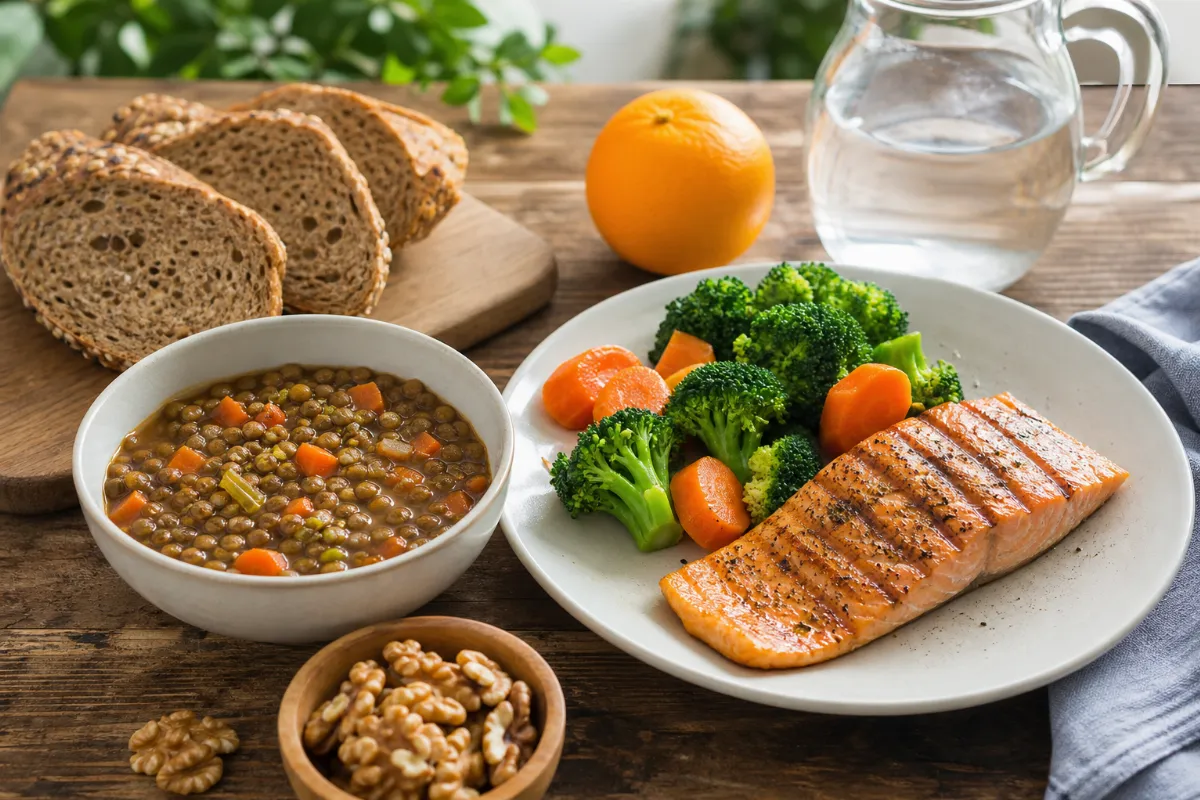
There is no required menu. The Eatwell Guide suggests building meals from vegetables and fruit, wholegrain starchy foods, protein foods, some dairy or alternatives and small amounts of unsaturated oils, eating high-fat, high-salt and high-sugar foods less often. The NHS gives 6 to 8 glasses of fluid as a guide.
12,16Foods worth a closer look
These foods are named by the agency pages we read for nutrients men commonly ask about. None is a treatment.
Oily fish
Moderate certaintyAddresses: Protein, vitamin D and omega-3 fats
Why it may help: The NHS names salmon, sardines, trout, herring and mackerel as oily fish, and says oily fish is a good source of vitamin D and high in long-chain omega-3.
How to apply it: About 140 g cooked, once a week or more.
Who it may suit: Fish eaters.
Precautions: Tinned and smoked fish can be salty.
13Beans, lentils and chickpeas
Moderate certaintyAddresses: Fibre, protein and iron
Why it may help: The NHS says pulses are good alternatives to meat because they are low in fat and a good source of fibre and protein; beans and chickpeas are also named as iron sources.
How to apply it: Add to stews, curries, soups and salads.
Who it may suit: Everyone, especially those cutting down on red meat.
Precautions: Introduce gradually if you get gas.
12,2,8Nuts and seeds
Low certaintyAddresses: Magnesium, selenium and vitamin E
Why it may help: The NHS names nuts as sources of magnesium, vitamin E and iron, Brazil nuts as a selenium source, and seeds and nuts as snacks. Choose unsalted nuts without added sugars.
How to apply it: A small handful as a snack.
Who it may suit: Anyone without a nut allergy.
Precautions: Allergy; nuts are high in energy.
3,18,8Meat, shellfish and dairy
Moderate certaintyAddresses: Zinc, B12, iron and calcium
Why it may help: The NHS lists meat, shellfish and dairy among good sources of zinc, and meat, fish, milk, cheese and eggs among sources of B12. Calcium comes from dairy foods, sardines with bones, green leafy vegetables and fortified soya drinks; adults need 700 mg a day.
How to apply it: Moderate portions, lean choices.
Who it may suit: Meat and dairy eaters.
Precautions: Limit red and processed meat; liver no more than once a week.
3,5,6,14Wholegrains and potatoes with skins
Moderate certaintyAddresses: Fibre, B vitamins and energy
Why it may help: The NHS says higher-fibre or wholegrain starchy foods contain more fibre than refined ones and can help you feel full for longer.
How to apply it: Include one at each main meal.
Who it may suit: Everyone.
Precautions: Watch added fats such as butter and creamy sauces.
1,8Drinks
Water, lower-fat milk, tea and coffee count toward fluids. The NHS says to keep fruit juice and smoothies to 150 ml a day, and alcohol is limited to 14 units a week with several drink-free days. A pint of higher-strength beer is about 3 units.
16,19,15Reading labels
For packaged foods the NHS gives these label cut-offs per 100 g: salt above 1.5 g is high; total sugars above 22.5 g is high and 5 g or less is low; fibre 6 g or more is high. Front-of-pack colour codes help when present.
1,8,7Remedies & supplements
Traditional use, laboratory findings and human trials are kept apart. "Natural" does not mean safe.
Vitamin D
Moderate certaintyStudied form and route: Daily supplement
Intended outcome: Replacing a shortfall, mainly when sun exposure is low
Human evidence: The NHS advises everyone to consider 10 micrograms a day in autumn and winter, and all year for people with dark skin, little time outdoors or covered skin. It warns against more than 100 micrograms (4,000 IU) a day.
Traditional use: Used as a modern supplement, not a traditional remedy.
Laboratory findings: We did not read lab studies.
Limits: We did not read trials of vitamin D for men's outcomes on this page.
Interactions and precautions: Too much can cause high blood calcium and harm bones, kidneys and the heart. Follow your doctor's own advice if one gave a different amount.
9Vitamin B12
Moderate certaintyStudied form and route: Fortified foods or supplement
Intended outcome: Preventing deficiency in people who avoid animal foods or absorb it poorly
Human evidence: The NHS says vegans may not get enough and that absorption declines with age; 2 mg or less a day of supplements is unlikely to harm.
Traditional use: Not a traditional remedy.
Laboratory findings: Not read.
Limits: We did not read trials on supplements in people who are not deficient.
Interactions and precautions: A lack of B12 can be hidden by high folic acid doses (above 1 mg a day), which matters most in older people. See a doctor for tingling or numbness.
5Zinc
Not enough evidenceStudied form and route: Single supplement or in multivitamins
Intended outcome: Meeting zinc needs; no proven testosterone effect shown in our sources
Human evidence: The NHS gives about 9.5 mg a day for men, says diet usually covers it and says not to take more than 25 mg of supplements a day unless advised by a doctor.
Traditional use: Not a traditional remedy.
Laboratory findings: Not read.
Limits: We did not read trials of zinc supplements in men; see the testosterone-booster claim check for what reviews found.
Interactions and precautions: Excess zinc reduces copper absorption and can lead to anaemia and weakened bones.
3Zinc → Testosterone Boosters and Male-Enhancement Products: Claim Check →
Selenium
Evidence againstStudied form and route: Supplement; Brazil nuts as food
Intended outcome: Not shown to prevent prostate cancer
Human evidence: SELECT, a double-blind trial of 35,533 men, found selenium at 200 micrograms a day did not prevent prostate cancer; the combination showed no significant difference. The NHS says 350 micrograms a day or less is unlikely to cause harm and too much can cause hair and nail loss.
Traditional use: Not a traditional remedy.
Laboratory findings: Not read.
Limits: The trial used one form (selenomethionine) in healthy older men.
Interactions and precautions: Excess selenium causes selenosis. Do not take it for prostate protection.
17,10,3Vitamin E
Evidence againstStudied form and route: Supplement
Intended outcome: Not shown to prevent prostate cancer; may raise risk
Human evidence: In SELECT, vitamin E (400 IU a day) was linked with higher prostate cancer risk after longer follow-up: 620 cases versus 529 on placebo (hazard ratio 1.17). The NHS says 540 mg (800 IU) or less a day is unlikely to cause harm, and that food usually covers needs.
Traditional use: Not a traditional remedy.
Laboratory findings: Not read.
Limits: One dose and form was tested, in healthy older men.
Interactions and precautions: Do not take vitamin E for prostate protection. Tell your doctor about any use.
10,18Magnesium
Not enough evidenceStudied form and route: Supplement
Intended outcome: Meeting magnesium needs if diet is low
Human evidence: The NHS gives 300 mg a day for men and says 400 mg or less a day from supplements is unlikely to cause harm; more can cause diarrhoea.
Traditional use: Not a traditional remedy.
Laboratory findings: Not read.
Limits: We did not read trials of magnesium supplements here.
Interactions and precautions: Kidney disease and some medicines change how magnesium is handled; ask a pharmacist.
3Iron
Moderate certaintyStudied form and route: Supplement only if a clinician advises
Intended outcome: Treating iron deficiency
Human evidence: The NHS says men need about 8.7 mg a day from food, that most people get enough from diet, and that doses above 20 mg commonly cause constipation, nausea, vomiting and stomach pain; it advises taking 17 mg or less a day unless a GP says otherwise.
Traditional use: Not a traditional remedy.
Laboratory findings: Not read.
Limits: We did not read trials on iron for men.
Interactions and precautions: Iron deficiency in an adult man should be investigated by a doctor rather than self-treated. Keep iron away from children.
2Multivitamin or "men's formula" blends
Not enough evidenceStudied form and route: Combination product
Intended outcome: No clear benefit shown in our sources
Human evidence: The NHS overview says most people should get all the nutrients they need from a varied, balanced diet, although some need supplements. We did not read trials of multivitamins.
Traditional use: Not a traditional remedy.
Laboratory findings: Not read.
Limits: Blends can stack nutrients above upper limits (see the avoid list).
Interactions and precautions: Check vitamin A, zinc, B6 and iron totals; avoid products promising testosterone, prostate or enhancement effects.
11Testosterone Boosters and Male-Enhancement Products: Claim Check → Reading supplement labels →
Therapies & care
Professional nutrition help comes from registered dietitians, pharmacists and doctors. This page does not recommend medicines or doses, and no one should stop a prescribed medicine because of a diet change without talking to the prescriber.
Registered dietitian
Not enough evidenceClinical nutrition advice The NHS iron page suggests speaking to a GP or a registered dietitian for advice about iron. A dietitian can help with weight, diabetes, high cholesterol, vegetarian or vegan diets and food intolerances. We did not read trials of dietitian-led care for men.
Who it may suit: Men with a medical condition, a restricted diet, or a long-standing struggle with weight or food.
Precautions: Check that the person is registered.
2Doctor or pharmacist review
Not enough evidenceMedical check A doctor can check blood tests for anaemia or B12 when tiredness or tingling lasts, and review blood pressure, cholesterol and blood sugar, and a pharmacist can check supplements against your medicines. The NHS B-vitamin page notes that B12 deficiency can damage the nervous system if not treated.
Who it may suit: Men with lasting symptoms, older men, and men taking medicines or several supplements.
Precautions: Bring a list of every supplement and medicine.
5Medicine interaction checker → Men's Health: When to Get Help →
Alcohol support services
Not enough evidenceProfessional support If cutting down is hard, a doctor or local alcohol service can help. The NHS says regular heavy drinking can worsen mental health and has strong links with self-harm, including suicide.
Who it may suit: Men who drink above the limits and struggle to cut down.
Precautions: If you drink heavily, ask a doctor before cutting down sharply.
15What to avoid
Habits, products and claims that can get in the way. Never stop a prescribed medicine without talking to the professional who prescribed it.
Risks that apply to most people
Regularly drinking more than 14 units a week
Moderate certaintyWhy: The NHS says drinking more than 14 units a week over many years can raise the risk of mouth, throat and breast cancer, stroke, heart disease, liver disease and brain damage, that there is no safe level, and that the idea that moderate drinking protects the heart has been revised. It also warns that binge drinking, defined for men as more than 8 units in one session, raises the risk of accidents and injury.
Who it applies to: Anyone who drinks.
Try instead: If you drink, keep to 14 units or less spread over 3 or more days, with several drink-free days; alternate with water and drink with food. Count units: one pint of higher-strength beer is about 3 units.
15,19Too much salt
Moderate certaintyWhy: The NHS says eating too much salt can cause high blood pressure, which raises the risk of heart attacks and strokes, and that about three-quarters of salt comes from packaged and everyday foods rather than the salt shaker.
Who it applies to: Anyone eating processed or restaurant food regularly.
Try instead: Read labels, choose lower-salt versions, make salty snacks, cured meats, cheese and sauces occasional, and use herbs, spices, garlic or lemon juice for flavour.
7A lot of red and processed meat
Moderate certaintyWhy: The NHS says eating too much processed meat and red meat probably increases bowel cancer risk, and processed meat is often high in salt. Some meats are high in saturated fat. It also says men should have no more than about 30 g of saturated fat a day on average.
Who it applies to: Regular meat eaters.
Try instead: Aim for an average of about 70 g a day if you eat more than 90 g now, choose lean cuts, and use beans, fish, eggs and poultry for some meals.
14,1Personal triggers to check
Eating mostly on the run: skipped breakfast, sugary drinks and convenience food
Low certaintyWhy: The NHS says a healthy breakfast high in fibre and low in fat, sugar and salt can form part of a balanced diet, that skipping breakfast to lose weight is a common but unhelpful idea, and that free sugars in sugary drinks, cereals, cakes and sweets raise the risk of obesity and tooth decay. Fruit juice and smoothies are also high in free sugars.
Who it applies to: Busy or shift-working men.
Try instead: Plan two or three simple meals you can make quickly, such as porridge with fruit, a bean and vegetable chilli or eggs on wholegrain toast, and keep fruit and unsalted nuts at hand.
1Products that need caution
High-dose vitamin A, liver, and fish liver oil in older men
Moderate certaintyWhy: The NHS says an average of more than 1.5 mg a day of vitamin A over many years may make bones more likely to fracture, particularly in older people, and that older men should not exceed 1.5 mg a day from food and supplements, eating liver or pate no more than once a week. If you eat liver weekly it advises against supplements containing vitamin A, including fish liver oil.
Who it applies to: Men over about 50, and anyone eating liver often.
Try instead: Check multivitamin labels for vitamin A and tell a pharmacist about any supplements you use.
4,14Stacking supplements: zinc, vitamin B6, magnesium, potassium and others
Moderate certaintyWhy: The NHS names harms from excess: zinc above 25 mg a day reduces copper absorption (can lead to anaemia and weakened bones); vitamin B6 at 200 mg or more can cause nerve damage (it advises no more than 10 mg a day in supplements unless a doctor says so); magnesium above 400 mg can cause diarrhoea; and older people should not take potassium supplements unless advised by a doctor because of kidney handling.
Who it applies to: Men taking several products, or multivitamins plus single-nutrient products.
Try instead: Add up everything from all products, bring them to a pharmacist, and check labels.
3,5Unsupported claims
"This supplement protects the prostate" or "naturally boosts testosterone"
Evidence againstWhy: The SELECT trial found selenium and vitamin E did not prevent prostate cancer. For testosterone boosters, our claim-check page reviews what trials show and the hidden-ingredient risks in some enhancement products.
Who it applies to: Anyone seeing these claims on products or social media.
Try instead: Treat claims of boosting or protecting as unproven, and ask a doctor about symptoms.
10Testosterone Boosters and Male-Enhancement Products: Claim Check → Testosterone and Low Testosterone →
"Natural" or "detox" means safe or necessary
Not enough evidenceWhy: The NHS pages we read set upper limits for many nutrients and describe harms from too much of several of them, so natural or vitamin-labelled does not mean harmless. We did not find a source we read that supports detox diets or cleanses for men.
Who it applies to: Anyone buying supplements or cleanses.
Try instead: Prefer food first and check labels.
11,3Common mistakes
Trying to fix tiredness or low drive with supplements before getting checked
Moderate certaintyWhy: Persistent tiredness has many possible causes. The NHS pages note that low iron and low B12 can each lead to anaemia, which a blood test can show. Self-treatment can delay a diagnosis.
Who it applies to: Men with lasting tiredness or low energy.
Try instead: See a doctor; ask what tests are appropriate.
2,5Anemia and Iron Deficiency → Recognize When Low Testosterone Needs Evaluation →
Cutting out whole food groups or eating very little to lose weight quickly
Low certaintyWhy: The Eatwell Guide aims for a balance of food groups, and the NHS says eating a wide range of foods helps give the body all the nutrients it needs. We did not find a source we read that supports crash diets.
Who it applies to: Men who want to lose weight fast, or who exercise heavily.
Try instead: Aim for gradual change; see the weight goal pages, and ask for professional help if food has become a source of fear or guilt.
12,1Lose Weight Sustainably → Eating disorders and disordered eating →
Evidence & safety
What the research shows
Agency guidance (NHS pages we read) agrees on the basics: a varied diet with plenty of vegetables, fruit and higher-fibre starch, fish twice a week, little salt, limited red and processed meat, and alcohol within 14 units a week. The same pages say most men can get the vitamins and minerals they need from food and set upper limits for supplements. The best human trial evidence we read concerns supplements: SELECT found selenium and vitamin E did not prevent prostate cancer and that vitamin E was linked to a higher risk.
Limits of the evidence
- Most of this page rests on NHS guidance, not on trials in men; we found and read two supplement trials (SELECT reports).
- We did not review studies on testosterone, specific food patterns, protein needs or supplements for muscle, fertility or sexual function; see the linked pages.
- UK reference amounts differ from other countries, and the NHS pages we read were not all recently updated.
- Needs differ by activity, age, size and health, so figures are general.
Precautions and interactions
- Supplements can harm in excess (vitamin A, B6, zinc, selenium, vitamin E, potassium, magnesium, iron, vitamin D). Add up all sources and check with a pharmacist.
- Tell your doctor and pharmacist about every supplement; do not stop a prescribed medicine because of a diet change.
- Do not use supplements, boosters or enhancement products instead of a medical check.
Life-stage considerations
- Younger men: food quality, alcohol and weight habits set the long-term picture; heavy training or supplements need individual advice.
- Midlife: blood pressure, cholesterol, blood sugar and weight are worth checking; see the midlife page.
- Older men: B12 absorption falls, vitamin A and potassium supplement cautions apply, bones need calcium and vitamin D, and appetite or weight loss should be checked.
- Vegetarian and vegan men: plan for B12, iron, zinc and calcium with a dietitian.
- Teenage boys, and men with kidney disease or diabetes: need individual guidance.
Warning signs
- Unexplained weight loss or loss of appetite.
- Persistent tiredness, breathlessness, paleness or dizziness.
- Numbness, tingling or balance problems.
- Blood in stool or vomit, black stools, trouble swallowing or severe abdominal pain.
- Very frequent thirst and urination.
- Drinking you cannot control, or fear of eating.
- Low mood for two weeks, hopelessness or thoughts of self-harm: seek help now from a doctor or local emergency services.
Claim checks
Men need extra supplements to meet their needs
Moderate certaintyNot supported as a general rule. The NHS says most people can get what they need from a varied, balanced diet, with some exceptions such as vitamin D in autumn and winter and B12 for vegans.
11,9,5Selenium or vitamin E protects the prostate
Evidence againstAgainst. SELECT found no prevention, and vitamin E was linked with a higher prostate cancer risk.
17,10A moderate amount of alcohol is good for the heart
Evidence againstNot supported. The NHS says the previously held position has been revised and the evidence for a protective effect is less strong than thought; there is no safe level.
15Cutting all carbohydrates or fat is the way to eat well
Moderate certaintyNot supported by the sources we read. The Eatwell Guide advises a balance, with higher-fibre starch about a third of the plate, and the NHS says gram for gram carbohydrate has fewer than half the calories of fat.
12,1You need a protein supplement to build or keep muscle
Not enough evidenceWe did not review protein supplements here. The NHS says meat, fish, eggs, beans and dairy are protein sources; see the muscle pages.
12Questions people ask
How many calories should a man eat a day?
The NHS gives around 2,500 calories a day as a general figure for men, with the right amount depending on how active you are. If you are trying to gain or lose weight, ask a doctor or dietitian.
How much salt is too much?
The NHS says adults should have no more than 6 g of salt a day, about a level teaspoon, including salt already in food. About three-quarters of the salt we eat is in packaged foods.
How much alcohol is low risk?
The NHS advises not drinking more than 14 units a week on a regular basis, spread over 3 or more days with several drink-free days. It says there is no safe level, and the risk rises the more you drink.
How much red meat is okay?
The NHS suggests that if you eat more than 90 g of red or processed meat a day (cooked weight), you cut down to an average of 70 g, because too much probably raises bowel cancer risk.
Do men need vitamin D?
The NHS says everyone should consider 10 micrograms a day in autumn and winter, and all year if you have dark skin, are rarely outdoors or cover most of your skin. It says not to exceed 100 micrograms a day.
Should men take a multivitamin?
The NHS says most people get what they need from a varied, balanced diet. We did not read trials of multivitamins. If a multivitamin is used, check the vitamin A, zinc and B6 totals with a pharmacist.
Can supplements prevent prostate cancer?
Not that we found. The SELECT trial of 35,533 men found selenium and vitamin E did not prevent prostate cancer, and vitamin E was linked to a higher risk. See the prostate page for what else is known.
What should vegan men watch?
The NHS says vitamin B12 is not found naturally in plant foods, so vegans may not get enough. Ask a pharmacist, dietitian or doctor about fortified foods or a supplement, and about iron, zinc and calcium.
Why does age change nutrition advice?
The NHS notes that absorbing vitamin B12 gets harder with age, that older men should limit vitamin A to 1.5 mg a day from food and supplements, and that older people should not take potassium supplements unless advised.
Will this help my testosterone?
Nutrition supports general health and weight, but we did not find a food or supplement we read that is a proven testosterone fix. See the testosterone pages and the claim check for what to do and when to be tested.
When is tiredness a food problem?
Sometimes, such as low iron or B12, but many causes exist. If tiredness lasts, see a doctor for tests rather than guessing with supplements.
References
- NHS. 8 tips for healthy eating. Read 2026-11-01. source
- NHS. Iron. Read 2026-11-01. source
- NHS. Others: magnesium, potassium, selenium, zinc and other minerals. Read 2026-11-01. source
- NHS. Vitamin A. Read 2026-11-01. source
- NHS. B vitamins and folic acid (including vitamin B6, folate and vitamin B12). Read 2026-11-01. source
- NHS. Calcium. Read 2026-11-01. source
- NHS. Salt in your diet. Read 2026-11-01. source
- NHS. How to get more fibre into your diet. Read 2026-11-01. source
- NHS. Vitamin D. Read 2026-11-01. source
- Klein EA, Thompson IM Jr, Tangen CM, et al. Vitamin E and the risk of prostate cancer: the Selenium and Vitamin E Cancer Prevention Trial (SELECT). JAMA. 2011;306(14):1549-56. PubMed 21990298, doi:10.1001/jama.2011.1437. Abstract read 2026-11-01. source
- NHS. Vitamins and minerals: overview. Read 2026-11-01. source
- NHS. The Eatwell Guide. Read 2026-11-01. source
- NHS. Fish and shellfish. Read 2026-11-01. source
- NHS. Meat in your diet. Read 2026-11-01. source
- NHS. The risks of drinking too much. Read 2026-11-01. source
- NHS. Water, drinks and hydration. Read 2026-11-01. source
- Lippman SM, Klein EA, Goodman PJ, et al. Effect of selenium and vitamin E on risk of prostate cancer and other cancers: the Selenium and Vitamin E Cancer Prevention Trial (SELECT). JAMA. 2009;301(1):39-51. PubMed 19066370, doi:10.1001/jama.2008.864. Abstract read 2026-11-01. source
- NHS. Vitamin E. Read 2026-11-01. source
- NHS. Alcohol units. Read 2026-11-01. source
Related on AlternativeMed
Related goals
Everyday Health Habits for Men → Testosterone and Low Testosterone → Recognize When Low Testosterone Needs Evaluation → Support Prostate & Urinary Health → Reduce Sleep Disruption From Nighttime Urination → Male Fertility → Maintain Health Through Midlife → Testosterone Boosters and Male-Enhancement Products: Claim Check → Eat for Heart Health → Support Healthy Blood Pressure → Stay Hydrated for Daily Wellbeing → Improve Your Cholesterol Levels →
Ingredients, foods and supplements
Vitamin D → Vitamin B12 → Zinc → Selenium → Magnesium → Oily fish → Legumes →
Research, safety and claim-check resources
Men's Wellness: A Starting Guide → Men's Health: When to Get Help → Men's Wellness Research and Evidence → Saw Palmetto and Prostate Supplements → Medicine interaction checker → Reading supplement labels →