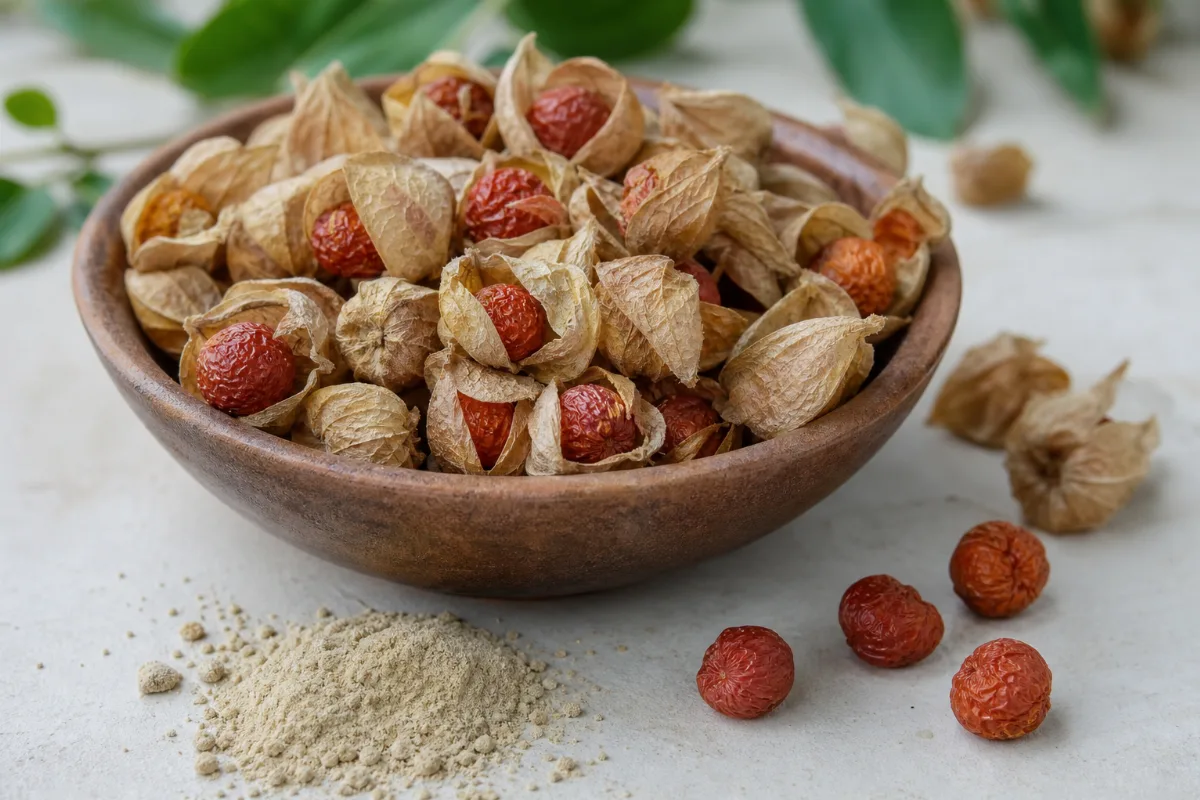
Adaptogens · Herbs & Botanicals · Ayurvedic fruit and rennet herb
Withania coagulans
Withania coagulans · also called Indian cheesemaker, Indian rennet, paneer dodi, paneer flower, Rishyagandha
Withania coagulans is a relative of ashwagandha whose fruit is used in Ayurveda for diabetes and in South Asia to curdle milk for cheese. The human evidence is two very small studies on blood sugar, with no placebo-controlled trial found. Most results come from rats. Two 2026 case reports describe a possible liver injury and a severe allergy, so people with diabetes, liver, thyroid or immune problems, and anyone pregnant or breastfeeding, should ask a clinician first.
General information, not medical advice. Last substantive update · Not medically reviewed. A named clinician has not signed off on this page. How this page is made
About Withania coagulans
Withania coagulans is a nightshade-family plant whose fruit is used in Ayurveda and to curdle milk. It is a different species from ashwagandha. Human evidence is thin and its safety is poorly studied.
What it is
Withania coagulans is a shrub of the nightshade family. In South Asia the fruit and seed are known as paneer dodi, Indian rennet or Indian cheesemaker, because they curdle milk for paneer-style cheese. In Ayurveda the fruit is called Rishyagandha.
A protein-cutting enzyme (an aspartic protease) purified from the fruit is what clots the milk. The fruit also contains withanolides, a family of plant steroids that ashwagandha shares.
How it differs from ashwagandha
Ashwagandha (Withania somnifera) is a different species. It is mainly used for its root and is studied for stress, sleep and hormones. Withania coagulans is mainly used for its fruit and seed, and has almost no human research.
Do not assume ashwagandha results apply to Withania coagulans, or the other way round. Some cautions on ashwagandha (pregnancy, thyroid, liver, medicine interactions) are shown on the safety tab as possible warning signs, but they were not proven for this species. See our ashwagandha page for that herb.
What it is used for
Ayurveda uses the fruit for diabetes, sleeplessness, liver ailments and wasting disorders, according to reviews. The best-studied use is blood sugar.
Human studies are two small ones: 53 people in an Indian Ayurvedic study without a placebo group, and a 12-person crossover trial in Pakistan of a dish combining the herb with fenugreek, which lowered after-meal blood sugar by about 15%. Animal studies also report lower blood fats, fewer stomach ulcers and kidney protection.
How strong is the research?
Weak. The human studies are tiny, short, and not placebo-controlled or mixed with another herb. We found no human trial for cholesterol, fatty liver or stress. Trials from other countries or with industry sponsors may exist but were not found in PubMed, so we do not report on them.
Most results come from rats and rabbits, which often do not carry over to people. All studies here were read at abstract level only.
At a glance
Traditional uses history, not proof
- Ayurveda: fruit (Rishyagandha) used for diabetes (Prameha), sleeplessness, liver ailments and wasting disorders, according to reviews
- South Asian dairy craft: fruit used as vegetable rennet to curdle milk for paneer
Studied for research
- Blood sugar in type 2 diabetes: very low certainty (two tiny human studies)
- Cholesterol and blood fats: insufficient (animals only)
- Stomach ulcers, kidney protection, pain and mood-like tests: insufficient (rats only)
Main compounds
- Withanolides, including withaferin A (found in one fruit extract) and others named in reviews
- A milk-clotting aspartic protease from the fruit
Common forms
- Dried fruit powder
- Water, alcohol or other extracts of the fruit
- Capsules and tablets sold as supplements; contents vary
- Fruit used in a recipe (food use)
Research links: Small Ayurvedic study in type 2 diabetes, Ayu 2011 · Chickpea dish with fenugreek and Indian rennet, 12-person crossover trial, Food Science & Nutrition 2024 · Review of chemistry and pharmacology, Journal of Pharmacy and Pharmacology 2010 · Research Library · Genes & Biomarkers Library
The plant and its history
- Accepted scientific name
- Withania coagulans (Stocks) Dunal
- Naming authority
- (Stocks) Dunal
- Common names
- Indian cheesemaker (English); Indian rennet (English); Paneer dodi (paneer doda) (Hindi/Urdu); Paneer flower (English); Rishyagandha (Sanskrit)
- Botanical family
- Solanaceae (the nightshade family), order Solanales.
- Classification
- Plantae > Tracheophyta > Magnoliopsida > Solanales > Solanaceae > Withania > Withania coagulans
- Native range
- Not verified from a source read.
- Habitat
- Not verified.
- What the plant looks like
- Roots: Not verified.; Stems: Not verified.; Leaves: Not verified.; Flowers: Not verified.; Fruit: The fruit (berry) and its seeds are the parts traditionally used as a milk coagulant and in Ayurveda.
- Cultivation
- Not verified.
- Harvest and processing
- Not verified.
- Look-alikes and adulterants
- Name: Ashwagandha (Withania somnifera); Note: A different species of the same genus. Ashwagandha is used mainly for its root; W. coagulans is used mainly for its fruit and seed. Human trials of ashwagandha (stress, sleep, hormones) do not apply to W. coagulans, and the two may not share the same safety record.
- Sustainability and conservation
- Not verified.
The plant and the parts used
Traditional use and history history, not clinical proof
| Tradition or era | Documented use | Source |
|---|---|---|
| Ayurveda and traditional dairy use (South Asia) | Fruit used as a milk coagulant (vegetable rennet) in making paneer and similar cheeses, and in Ayurveda (as Rishyagandha) for diabetes (Prameha), sleeplessness, liver ailments and wasting disorders, according to reviews. | p34833974 |
| Traditional milk coagulant | The fruit has traditionally been used as a milk coagulant, and a milk-clotting aspartic protease has been purified from it. | p28202335 |
Traditional use shows how a plant was used. It does not show that a supplement works or is safe today.
What is inside, and how it may work
What the plant contains and how those compounds act in cells and animals. Laboratory and animal mechanisms are not proven effects in people.
Main compounds
| Compound | Family | Where it is concentrated | Activity studied | Level of evidence |
|---|---|---|---|---|
| Withaferin A PubChem 265237 | withanolide (steroidal lactone) | Fruit (extract) 3.56 mg/g of one standardised fruit extract (single paper) | Also known from ashwagandha. Its effects in people are not established for W. coagulans. 19 16 | Animal research |
| Withanolide D PubChem 161671 | withanolide | Not verified | Named in the wider Withania literature; presence in W. coagulans and activity not verified from a source we read. 16 | Theory |
| Withacoagin PubChem 14236709 | withanolide | Not verified | Name suggests W. coagulans origin; not verified from a source we read. 16 | Theory |
| Coagulin L PubChem 10508451 | withanolide glycoside | Not verified | Name lookup only. Whether this PubChem record is the compound studied in lab papers on 'coagulin-L' was not verified. 16 | Theory |
| Milk-clotting aspartic protease (31 kDa) | enzyme (aspartic protease) | Fruit | Clots milk. Reported as the only enzyme responsible for milk clotting in the purified fruit preparation. The task brief mentioned esterases; the paper read names an aspartic protease. 17 | Laboratory |
Mechanisms, receptors and pathways
| Target or pathway | Gene or receptor | What was found | Level |
|---|---|---|---|
| Blood sugar lowering | Not identified | Extracts lowered blood sugar in rats, including normal rats, and enhanced a sulfonylurea drug. The mechanism is not established in the abstracts read. 5 9 | Animal research |
| Stomach acid and mucus (H2 receptor) | Histamine H2 receptor (authors' suggestion) | Fruit extract lowered acid secretion like an H2 blocker and raised mucus and PGE2 in rats. 1 | Animal research |
| Oxidative stress and inflammation | Not identified | Antioxidant and anti-inflammatory effects in rat kidney, stomach and rabbit studies. 19 20 | Animal research |
| Milk clotting | Aspartic protease | The enzyme cuts casein and clots milk; stable at 65 C. 17 | Laboratory |
Absorption, metabolism and elimination
- Absorption
- No human data found.
- Distribution
- No data.
- Metabolism
- No data.
- Elimination
- No data.
- Bioavailability
- Not measured.
Isolated compounds versus whole extracts
Human studies used whole fruit powder or a recipe. Animal studies used water, alcohol or methanol extracts. Isolated withanolides are described in reviews but their effects were not tested in people. Extracts differ, so results of one do not transfer to another.
Nutritional composition
Used as a medicinal and dairy-processing plant, not a nutrient source. No nutrient table was built.
1 very low certainty5 not enough evidence
What was looked at
The 6 benefits and uses checked for Withania coagulans, each with how strong the evidence is. Tap one to open it.
- Blood sugar and type 2 diabetesVery low certainty
- Cholesterol and blood fatsNot enough evidence
- Stomach ulcers and acidNot enough evidence
- Kidney protection (rats)Not enough evidence
- Pain, swelling and mood-like behaviour (rats)Not enough evidence
- Traditional Ayurvedic uses (liver, wasting, sleep)Not enough evidence
Lab markers tracked in the studies
Blood glucoseCholesterol and triglyceridesStomach ulcer damage (rats)Urea and creatinine (rats)
What is Withania coagulans good for?
The traditional and studied uses, and how strong the evidence is for each. For nearly all of them the evidence is from animals, and the two human studies are very small.
Benefits, one by one
Each card is a research question, not a promise. Tap a goal to filter. Open a card to see the studies, doses and limits.
Blood sugar and type 2 diabetes
Very low certaintyUsed in Ayurveda for diabetes. Two very small human studies reported better blood sugar, but neither was a proper placebo trial. Most of the evidence is from rats and rabbits.
5 studiesFruit powder (dose not in abstract); a cooked dish with fenugreek and…
Studies, doses and limits
What the trials found
Two small human studies: (1) 53 people in India with type 2 diabetes in three groups (fruit powder, a standard oral drug, or both), all of whom 'improved', with no placebo group; (2) a 12-person single-blind crossover trial in Pakistan of a chickpea rice dish made with fenugreek seeds and Indian rennet (W. coagulans), which lowered after-meal blood sugar by about 15% compared with the plain dish. We found no large placebo-controlled trial of a W. coagulans extract, and no human trial of its effect on fatty liver. The details of any Iranian or industry-sponsored trials were not found in PubMed.
Results
Powder study: improvement in all groups, no numbers in the abstract. Recipe trial: about 15% lower after-meal blood sugar vs the control dish (12 people). Rats: the fruit extract reversed high blood sugar, comparable to glipizide; it also lowered blood sugar in normal rats.
Effect sizes as reported
Recipe trial about 15%; powder study not quantified
Why this rating
Human data are two tiny studies: one without a placebo group and one in which W. coagulans was mixed with fenugreek, so its own effect cannot be separated. All other evidence is animal.
Form and dose studied
Fruit powder (dose not in abstract); a cooked dish with fenugreek and W. coagulans; rat studies used water or alcohol extracts at doses that cannot be converted to people.
Who was studied
People with type 2 diabetes (India, Pakistan); diabetic and normal rats
Limits
No placebo, tiny samples, short follow-up, combined herbs, abstract-level reading only. Extracts differ between studies.
Why researchers looked
The fruit is a traditional Ayurvedic and Unani remedy for diabetes (called Prameha), so researchers tested it.
Traditional use
Reviews say the plant is used in Ayurveda for diabetes mellitus (Khan 2021). Long use does not by itself show it works.
Proposed mechanism Animal research
In rats the fruit extract lowered blood sugar and improved pancreas tissue, and added to the effect of the drug glipizide. Reviews credit withanolides, but the abstracts read do not prove this.
A proposed mechanism does not show that the effect happens in people.
Animal work shows it can lower blood sugar even in normal animals and may add to glipizide. People on diabetes medicines should talk to a prescriber or pharmacist first (precaution, not a documented human interaction).
Cholesterol and blood fats
Not enough evidenceIn rats and rabbits the fruit extract lowered cholesterol and triglycerides. We found no human trial of its effect on blood fats.
4 studiesAqueous or hydroalcoholic fruit extracts in animals, at doses that ca…
Studies, doses and limits
Results
Cholesterol-fed rats: blood fats controlled comparably to atorvastatin. Diabetic rats: lower cholesterol and triglycerides. Cholesterol-fed rabbits: lower total cholesterol, triglycerides and LDL.
Effect sizes as reported
Direction only
Why this rating
Animal studies only (rats, rabbits); no human data found.
Form and dose studied
Aqueous or hydroalcoholic fruit extracts in animals, at doses that cannot be turned into human amounts.
Who was studied
Rats, rabbits
Limits
Abstract-level reading; different extracts; HDL ('good' cholesterol) fell in one rat study.
Why researchers looked
High blood fats often go with diabetes, and the plant's blood-sugar effect led researchers to check blood fats.
Traditional use
Reviews list blood-fat-lowering among its effects in animals (Maurya 2010).
Proposed mechanism Animal research
In rabbits the extract lowered fat-making enzyme activity and raised antioxidant enzymes; in rats it matched a statin in one experiment.
A proposed mechanism does not show that the effect happens in people.
None specific found; if it did lower blood fats it could add to cholesterol medicines (theory).
Stomach ulcers and acid
Not enough evidenceA fruit extract protected rats from stomach ulcers and lowered acid, similar to acid-blocking drugs in that test. No human study.
1 studiesFruit extract in rats.
Studies, doses and limits
Results
At 10 mg/kg the extract most reduced ulcers, with effects 'comparable to H2 receptor blockers' (authors).
Effect sizes as reported
Comparable to lansoprazole/ranitidine in rats
Why this rating
One rat study; no human data.
Form and dose studied
Fruit extract in rats.
Who was studied
Rats
Limits
Abstract-level reading; one lab group.
Why researchers looked
Traditional use for digestive complaints and ulcer-like problems led to a rat test.
Traditional use
Described in reviews as an Ayurvedic remedy; tradition does not prove effect.
Proposed mechanism Animal research
In rats it behaved like an H2 blocker, raised mucus and prostaglandin E2 and lowered inflammatory signals.
A proposed mechanism does not show that the effect happens in people.
None specific found.
Kidney protection (rats)
Not enough evidenceIn rats given the cancer drug cisplatin, the fruit extract protected the kidneys. This is a rat study only.
1 studiesFruit extract standardised to withaferin A (3.56 mg/g).
Studies, doses and limits
Results
The extract prevented the rise in urea and creatinine and preserved kidney tissue in cisplatin-treated rats.
Effect sizes as reported
Protection in rats
Why this rating
One rat study; no human data.
Form and dose studied
Fruit extract standardised to withaferin A (3.56 mg/g).
Who was studied
Rats
Limits
Abstract only. Not advice to use it during chemotherapy.
Why researchers looked
Cisplatin damages kidneys, so researchers tested whether the extract helped.
Traditional use
Reviews list diuretic activity in lab work.
Proposed mechanism Animal research
Reduced oxidative stress and DNA damage in kidney tissue.
A proposed mechanism does not show that the effect happens in people.
Never combine with cancer treatment without the oncology team's agreement.
Pain, swelling and mood-like behaviour (rats)
Not enough evidenceA crude extract reduced pain and swelling in rats and showed antidepressant-like behaviour. Nothing shows this in people.
2 studiesCrude plant extract (part not read).
Studies, doses and limits
Results
Pain 62 to 65% reduction and swelling up to 74% in rat tests; immobility time 2.2 s in the forced swim test.
Effect sizes as reported
Percent reductions in rats
Why this rating
Rat tests only.
Form and dose studied
Crude plant extract (part not read).
Who was studied
Rats
Limits
Abstract only; crude extract; rat behaviour tests are weak guides for people.
Why researchers looked
The plant is listed in reviews as having central-nervous-system depressant and anti-inflammatory activity.
Traditional use
Reviews list sleeplessness and nerve problems among its Ayurvedic uses.
Proposed mechanism Animal research
Not studied beyond behaviour tests.
A proposed mechanism does not show that the effect happens in people.
The review says it has central-nervous-system depressant activity, so extra drowsiness with sedatives is a theoretical concern.
Traditional Ayurvedic uses (liver, wasting, sleep)
Not enough evidenceReviews say Ayurveda uses the plant for diabetes, sleeplessness, liver ailments, wasting and nerve problems. Reviews also list liver-protective effects in animals. A 2026 case report goes the other way, linking it to liver injury in two people.
3 studiesVarious
Studies, doses and limits
Results
Reviews report liver-protective, anti-inflammatory and antioxidant effects in animals and test tubes.
Why this rating
Reviews of lab and animal work; tradition is not evidence.
Form and dose studied
Various
Limits
Reviews are narrative and partly promotional. Abstract only.
Why researchers looked
Traditional use.
Traditional use
Khan 2021 and Maurya 2010 describe Ayurvedic uses and lab activity.
Proposed mechanism Review
Withanolides are named as the main active compounds.
A proposed mechanism does not show that the effect happens in people.
See the safety tab for the liver case report.
Connections to the rest of health
How Withania coagulans connects to the rest of our health knowledge graph. Every link says what kind of connection it is. A safety link (for example to the liver) is a warning, not a benefit. A study that merely mentions a topic never creates a benefit link.
Explore every connection: goals, body systems, organs, symptoms, genes
A. Wellness goals
| Connected to | Kind of connection | Evidence status | Context | Studies |
|---|---|---|---|---|
| Blood sugar balance | Animal | Low blood sugar risk with diabetes medicines (theory from rat data). Preparation or compound: Fruit extract |
5 | |
| Blood sugar balance | Traditional use | Very low certainty | Traditional Ayurvedic use; two very small human studies. Blood sugar and type 2 diabetes: Used in Ayurveda for diabetes. Two very small human studies reported better blood sugar, but neither was a proper placebo trial. Most of the evidence is from rats and rabbits. Preparation or compound: Fruit powder; recipe with fenugreek |
21 2 5 9 7 |
| Cholesterol balance | Preliminary mechanism | Not enough evidence | Rats and rabbits only. Cholesterol and blood fats: In rats and rabbits the fruit extract lowered cholesterol and triglycerides. We found no human trial of its effect on blood fats. Preparation or compound: Fruit extracts |
5 20 18 9 |
| Metabolic Health | Traditional use | Very low certainty | Blood sugar and type 2 diabetes: Used in Ayurveda for diabetes. Two very small human studies reported better blood sugar, but neither was a proper placebo trial. Most of the evidence is from rats and rabbits. | 21 2 5 9 7 |
| Metabolic Health | Preliminary mechanism | Not enough evidence | Cholesterol and blood fats: In rats and rabbits the fruit extract lowered cholesterol and triglycerides. We found no human trial of its effect on blood fats. | 5 18 20 9 |
| Digestive Support | Preliminary mechanism | Not enough evidence | Stomach ulcers and acid: A fruit extract protected rats from stomach ulcers and lowered acid, similar to acid-blocking drugs in that test. No human study. | 1 |
| Kidney Health | Preliminary mechanism | Not enough evidence | Kidney protection (rats): In rats given the cancer drug cisplatin, the fruit extract protected the kidneys. This is a rat study only. | 19 |
| Pain Relief | Preliminary mechanism | Not enough evidence | Pain, swelling and mood-like behaviour (rats): A crude extract reduced pain and swelling in rats and showed antidepressant-like behaviour. Nothing shows this in people. | 10 14 |
| Liver Health | Traditional use | Not enough evidence | Traditional Ayurvedic uses (liver, wasting, sleep): Reviews say Ayurveda uses the plant for diabetes, sleeplessness, liver ailments, wasting and nerve problems. Reviews also list liver-protective effects in animals. A 2026 case report goes the other way, linking it to liver injury in two people. | 14 11 13 |
B. Body systems
| Connected to | Kind of connection | Evidence status | Context | Studies |
|---|---|---|---|---|
| Endocrine System | Biological association | Very low certainty | Studied for: Blood sugar and type 2 diabetes | 21 2 5 9 7 |
| Metabolism Weight | Biological association | Very low certainty | Studied for: Blood sugar and type 2 diabetes Studied for: Cholesterol and blood fats | 21 2 5 9 7 18 20 |
| Cardiovascular System | Biological association | Not enough evidence | Studied for: Cholesterol and blood fats | 5 18 20 9 |
| Digestive System | Biological association | Not enough evidence | Studied for: Stomach ulcers and acid Studied for: Traditional Ayurvedic uses (liver, wasting, sleep) | 1 14 11 13 |
| Urinary System | Biological association | Not enough evidence | Studied for: Kidney protection (rats) | 19 |
| Nervous System | Biological association | Not enough evidence | Studied for: Pain, swelling and mood-like behaviour (rats) | 10 14 |
C. Body parts and organs
I. Biomarkers
| Connected to | Kind of connection | Evidence status | Context | Studies |
|---|---|---|---|---|
| Blood glucose | Biological association | Very low certainty | Measured in trials: lowered. A lab change is not the same as a health benefit. | 2 21 9 |
| Cholesterol and triglycerides | Biological association | Not enough evidence | Measured in trials: lowered. A lab change is not the same as a health benefit. | 5 20 18 |
| Stomach ulcer damage (rats) | Biological association | Not enough evidence | Measured in trials: lowered. A lab change is not the same as a health benefit. | 1 |
| Urea and creatinine (rats) | Biological association | Not enough evidence | Measured in trials: lowered. A lab change is not the same as a health benefit. | 19 |
L. Active compounds
| Connected to | Kind of connection | Evidence status | Context | Studies |
|---|---|---|---|---|
| Withaferin A | Biological association | Animal | Also known from ashwagandha. Its effects in people are not established for W. coagulans. Preparation or compound: Fruit (extract) |
19 16 |
| Withanolide D | Biological association | Theory | Named in the wider Withania literature; presence in W. coagulans and activity not verified from a source we read. Preparation or compound: Not verified |
16 |
| Withacoagin | Biological association | Theory | Name suggests W. coagulans origin; not verified from a source we read. Preparation or compound: Not verified |
16 |
| Coagulin L | Biological association | Theory | Name lookup only. Whether this PubChem record is the compound studied in lab papers on 'coagulin-L' was not verified. Preparation or compound: Not verified |
16 |
| Milk-clotting aspartic protease (31 kDa) | Biological association | Laboratory | Clots milk. Reported as the only enzyme responsible for milk clotting in the purified fruit preparation. The task brief mentioned esterases; the paper read names an aspartic protease. Preparation or compound: Fruit |
17 |
Each connection is stored with the ingredient, the connected record, the kind of connection, the evidence status, the supporting studies, the preparation or compound involved, and a review date (last reviewed October 25, 2026).
The evidence
The research centre for Withania coagulans. Every record here was checked against PubMed or the publisher's page; we never list a study we have not verified.
Evidence by outcome
Bars show how many studies we found for each outcome, not how well it works. People are added up across trials only (reviews are not added, to avoid double counting).
How we rate evidence
High certainty
Several well-run trials or reviews agree; further research is unlikely to change the picture much.
Moderate certainty
Good trials point the same way, but some doubt remains.
Low certainty
Small, short or inconsistent trials. The finding could change with better research.
Very low certainty
Very little or very weak human data. Treat as a possibility only.
Mixed findings
Trials or reviews disagree with each other.
Not enough evidence
Not enough human research to say either way.
Evidence against
Good research found no benefit, or found harm.
We take the reviewers' own risk-of-bias and GRADE statements where they exist, and otherwise judge from study size, design, consistency, directness and whether a product matches what is sold. Many publications do not make evidence high. Method note: We built this page from our existing summary of Withania coagulans and checked PubMed abstracts, the GBIF taxonomy record, PubChem and the NIH ashwagandha page. Only abstracts were read (one report by title only). LiverTox could not be opened, and EMA and LactMed were not opened; they are marked not verified. Certainty ratings are the compiler's own reading, not formal grades. No study is cited that we could not verify.
Study library: every study we checked 21
| Study | Design | People | Product, dose, length | Result |
|---|---|---|---|---|
| Amir 2025 Withania coagulans fruit extract antiulcerogenic effect: comparative study with lansoprazole and ranitidine in rats Front Med (Lausanne) · PMID 40636368 · DOI |
Animal research animal |
Rats with acid-ethanol-induced stomach ulcers | W. coagulans fruit extract compared with lansoprazole and ranitidine fruit (extract) 1, 5, 10 or 20 mg/kg; 10 mg/kg best (animal dose) Not given · vs Lansoprazole, ranitidine, untreated |
The 10 mg/kg dose most reduced ulcers, lowered acid secretion like an H2-blocker, raised mucus and PGE2 and lowered inflammatory signals. The authors say it was comparable to H2-blockers. Comparable to H2-blockers in rats (Not given in abstract) Methods, limits and fundingOutcomes: Ulcer score, acid secretion, inflammation and protection markers Limitations: Rat study; abstract only. Not tested in people. Funding and conflicts: Abstract does not state funding or conflicts. Read: abstract |
| Arooj 2024 Formulation and assessment of chickpea pulao using fenugreek seeds and Indian rennet to improve blood glycemic levels Food Sci Nutr · PMID 38873453 · DOI |
Rct crossover |
12 12 adults with type 2 diabetes (Pakistan) |
Cooked chickpea rice dish (pulao) made with fenugreek seeds and Indian rennet (W. coagulans) fruit (in a recipe, combined with fenugreek) Recipe concentration chosen by taste test (exact amount not read) 3 weeks with a 1-week wash-out (single-blind crossover) · vs Same dish without the herbs |
The herb recipe lowered blood sugar after the meal by about 15% a day compared with the plain recipe (p reported as .000). Lab tests in the same paper showed antioxidant and enzyme-blocking activity of both herbs. About 15% lower after-meal blood sugar vs the control recipe (Not given in abstract) Methods, limits and fundingOutcomes: Blood sugar before and after the meal Limitations: Only 12 people, single-blind, two herbs together so the effect of W. coagulans alone cannot be separated, and the blood-sugar trial lasted only a few weeks. Funding and conflicts: Abstract does not state funding or conflicts. Read: abstract |
| Björnsson 2020 Ashwagandha-induced liver injury: A case series from Iceland and the US Drug-Induced Liver Injury Network Liver Int · PMID 31991029 · DOI |
Case series |
5 5 people with liver injury attributed to ashwagandha supplements (Iceland and US DILIN) |
Ashwagandha (Withania somnifera) supplements, a DIFFERENT species as in supplements (not stated) Not given Latency 2 to 12 weeks |
All five developed jaundice with nausea, tiredness and itching after 2 to 12 weeks; injury was cholestatic or mixed. No liver failure; liver tests normalised in 1 to 5 months in four patients (one lost to follow-up). Four also used other supplements, and rhodiola was a possible cause in one. Not applicable (Not given in abstract) Methods, limits and fundingOutcomes: Liver tests, jaundice, recovery Limitations: Five cases; a different species (W. somnifera); causality by expert opinion. Funding and conflicts: Abstract does not state funding or conflicts. Read: abstract |
| Daniel 2026 Anaphylaxis triggered by rennet flower (Withania coagulans): A cautionary tale from traditional medicine J Allergy Clin Immunol Glob · PMID 42516814 · DOI |
Case report |
1 One patient (details not in abstract) |
Rennet flower (Withania coagulans) Not read Not read |
The authors call this the first documented case of anaphylaxis caused by W. coagulans and say it is a cautionary tale from traditional medicine. Not applicable (Not given in abstract) Methods, limits and fundingOutcomes: Allergic reaction Limitations: One case; the abstract is two sentences and gives no details of the product, timing or treatment. Funding and conflicts: Abstract does not state funding or conflicts. Read: abstract |
| Datta 2013 Antidiabetic and antihyperlipidemic activity of hydroalcoholic extract of Withania coagulans Dunal dried fruit in experimental rat models J Ayurveda Integr Med · PMID 23930042 · DOI |
Animal research animal |
30 Streptozotocin-diabetic albino rats (30) and cholesterol-fed rats (6 per group) |
Hydroalcoholic extract of W. coagulans dried fruit, alone and with glipizide fruit (hydroalcoholic extract) 1000 mg/kg extract (animal dose) 4 weeks · vs Vehicle, glipizide, atorvastatin |
The extract reversed high blood sugar in diabetic rats, comparable to glipizide. With glipizide 2.5 mg/kg it gave a 'synergistic' blood-sugar-lowering effect and better pancreas tissue. In cholesterol-fed rats it controlled blood fats comparably to atorvastatin. Comparable to glipizide / atorvastatin; no numbers read (Not given in abstract) Methods, limits and fundingOutcomes: Blood glucose, pancreas tissue, blood fats, liver tissue Limitations: Rat study. Abstract only. Rat doses cannot be turned into human amounts. Funding and conflicts: Conflict of interest: none declared (per the record). Read: abstract |
| GBIF 2026 GBIF backbone: Withania coagulans (Stocks) Dunal (key 3801167); W. somnifera (L.) Dunal (key 2928840) GBIF · Source |
Database record not applicable |
Not applicable | Not applicable |
Both names returned ACCEPTED, exact match, confidence 99, family Solanaceae, order Solanales (API checked 2026-10-25). Not applicable (Not applicable) Methods, limits and fundingOutcomes: Not applicable Limitations: Taxonomy record only. Read: full-text |
| Gaurav 2025 Evaluation of Hypoglycemic and Hypolipidemic Effects of Jamun (Syzygium Cumini) and Paneer Flower (Withania Coagulans) and Comparison with that of Metformin in Rabbit (Oryctolagus Cuniculus): An Experimental Study J Pharm Bioallied Sci · PMID 40510951 · DOI |
Animal research animal |
Healthy non-diabetic rabbits | Jamun (Syzygium cumini) and paneer flower (W. coagulans) methanolic extracts compared with metformin fruit (methanolic extract) W. coagulans 3 and 4 g (as listed in the abstract) 'Short period' (not specified) · vs Metformin |
The abstract describes the plan and the outcomes measured but gives no results. None reported in the abstract (Not given in abstract) Methods, limits and fundingOutcomes: Fasting glucose, HbA1c, blood fats Limitations: Rabbit study; abstract has no results. Cited only to show the question has been asked in animals. Funding and conflicts: Abstract does not state funding or conflicts. Read: abstract |
| Hayashi 2024 Painless Thyroiditis by Withania somnifera (Ashwagandha) Cureus · PMID 38559552 · DOI |
Case report |
1 A 47-year-old Japanese man |
Ashwagandha (Withania somnifera), a DIFFERENT species Not given Two months before first visit |
He developed thyrotoxicosis diagnosed as painless thyroiditis; symptoms and thyroid tests improved after he stopped ashwagandha. Not applicable (Not given in abstract) Methods, limits and fundingOutcomes: Thyroid tests and symptoms Limitations: One case; a different species. Shows a possible thyroid effect of the Withania class, not of W. coagulans. Funding and conflicts: Abstract does not state funding or conflicts. Read: abstract |
| Hemalatha 2004 Hypoglycemic activity of Withania coagulans Dunal in streptozotocin induced diabetic rats J Ethnopharmacol · PMID 15234762 · DOI |
Animal research animal |
Normal and streptozotocin-diabetic rats | Aqueous extract of W. coagulans fruits fruit (aqueous extract) Highest dose 1 g/kg (animal dose) Not given · vs Untreated rats |
At 1 g/kg by mouth the extract lowered blood sugar, cholesterol and lipid-peroxidation markers in diabetic rats, and also lowered blood sugar in normal rats. It also scavenged free radicals in a test tube. Direction only (Not given in abstract) Methods, limits and fundingOutcomes: Blood sugar, cholesterol, lipid peroxides Limitations: Rat study from 2004; abstract only. Lowering blood sugar in normal animals matters for hypoglycaemia caution. Funding and conflicts: Abstract does not state funding or conflicts. Read: abstract |
| Ismail 2017 Five Indigenous Plants of Pakistan with Antinociceptive, Anti-Inflammatory, Antidepressant, and Anticoagulant Properties in Sprague Dawley Rats Evid Based Complement Alternat Med · PMID 29348774 · DOI |
Animal research animal |
Rats (Sprague Dawley) in pain, swelling and forced-swim tests | Crude extracts of five Pakistani plants including W. coagulans plant extract (part not read) Not read Not read · vs Other plant extracts |
W. coagulans reduced pain (65.3% hot plate, 62.0% writhing), swelling (up to 74.3% in the histamine test) and showed the strongest antidepressant-like effect (immobility 2.2 s). The anticoagulant tests highlighted other plants, not W. coagulans. Percent reductions as listed (Not given in abstract) Methods, limits and fundingOutcomes: Pain, swelling, immobility time in the forced swim test Limitations: Rat tests of crude extracts; abstract only. Antidepressant-like behaviour in rats is not evidence for people. Funding and conflicts: Abstract does not state funding or conflicts. Read: abstract |
| Khan 2021 Phytochemistry, Food Application, and Therapeutic Potential of the Medicinal Plant (Withania coagulans): A Review Molecules · PMID 34833974 · DOI |
Narrative review not applicable |
Review of plant chemistry, food use and pharmacology | W. coagulans, various parts whole plant |
Says the plant has been used in Ayurveda for abnormal cell growth, wasting disorders, nerve and physical problems, diabetes, insomnia and liver ailments, and lists lab activities (diuretic, anti-inflammatory, anti-bacterial, anti-fungal, heart- and liver-protective, blood-sugar-lowering, antioxidant). Says withanolides are the main active compounds, with flavonoids, tannins and beta-sterols. Not applicable (Not given in abstract) Methods, limits and fundingOutcomes: Phytochemistry, food uses, biological activity Limitations: Narrative review. Its own wording ('least reported side effects') is promotional and is not evidence of safety. Abstract only was read. Funding and conflicts: Abstract does not state funding or conflicts. Read: abstract |
| Kumar 2026 Potential Adverse Effects of Ashwagandha: A Critical Review of Preclinical and Clinical Evidence Phytother Res · PMID 41502355 · DOI |
Narrative review not applicable |
Review of ashwagandha (W. somnifera) preclinical and clinical safety | Ashwagandha, a DIFFERENT species root (mainly) |
Reports stomach and gut effects, immune hypersensitivity, liver toxicity and endocrine effects (thyrotoxicosis, adrenal suppression) with prolonged or excessive use of ashwagandha, and calls for better safety data. Not applicable (Not given in abstract) Methods, limits and fundingOutcomes: Adverse effects and interactions Limitations: Review of another Withania species. Abstract only. Funding and conflicts: Abstract does not state funding or conflicts. Read: abstract |
| Malakar 2026 Rishyagandha Induced Possible Autoimmune-like Liver Injury in an Elderly Couple With Diabetes Mellitus J Clin Exp Hepatol · PMID 42181165 · DOI |
Case report |
2 An elderly couple with diabetes |
Rishyagandha (Withania coagulans), product and amount not read Not read Not read |
The title reports a possible autoimmune-like liver injury linked to Rishyagandha in both members of an elderly couple with diabetes. No abstract is available in PubMed or Crossref, so no details (timing, tests, outcome) were read. Not applicable (Not given in abstract) Methods, limits and fundingOutcomes: Liver injury Limitations: Title and citation only; the content of the report was not read. A 'possible' link in two people does not show how often it happens. Funding and conflicts: Not read Read: title-only |
| Maurya 2010 Chemistry and pharmacology of Withania coagulans: an Ayurvedic remedy J Pharm Pharmacol · PMID 20487193 · DOI |
Narrative review not applicable |
Review of laboratory, animal and plant-chemistry papers | W. coagulans whole plant, extracts, fractions and isolated withanolides whole plant |
Describes 37 compounds (46 references) and lists liver-protective, anti-inflammatory, blood-sugar-lowering, blood-fat-lowering, antioxidant, antimicrobial, heart, central-nervous-system-depressant, immune-modulating and anti-tumour effects, 'supported' by laboratory and animal tests. Not applicable (Not given in abstract) Methods, limits and fundingOutcomes: Chemistry and pharmacology Limitations: Narrative review, not systematic. Mostly lab and animal work. Abstract only was read. Funding and conflicts: Abstract does not state funding or conflicts. Read: abstract |
| NCCIH 2026 NCCIH: Ashwagandha (Withania somnifera) fact sheet NIH National Center for Complementary and Integrative Health · Source |
Regulator page not applicable |
Not applicable | Not applicable |
For ashwagandha: rare liver injury cases; avoid in pregnancy and breastfeeding; not recommended before surgery or with autoimmune or thyroid disorders; may interact with diabetes and blood-pressure medicines, immunosuppressants, sedatives, anti-seizure drugs and thyroid hormone medicines. There is no NCCIH page for W. coagulans. Not applicable (Not applicable) Methods, limits and fundingOutcomes: Not applicable Limitations: Page is about W. somnifera, a different species; its cautions are shown here as the closest class-level signal, not as findings for W. coagulans. Read: full-text |
| PubChem 2026 PubChem compound name lookups: withaferin A (CID 265237), withanolide D (161671), withacoagin (14236709), coagulin L (10508451) PubChem · Source |
Database record not applicable |
Not applicable | Not applicable |
Each name returned one compound record with the stated formula (checked 2026-10-25). The match is by name only; that each compound is present in W. coagulans comes from the cited papers or is marked not verified. Not applicable (Not applicable) Methods, limits and fundingOutcomes: Not applicable Limitations: Name matching only; PubChem does not say which plants contain a compound. Read: full-text |
| Salehi 2017 Purification and characterization of a milk-clotting aspartic protease from Withania coagulans fruit Int J Biol Macromol · PMID 28202335 · DOI |
Laboratory laboratory |
Purified enzyme from the fruit | Aspartic protease purified from W. coagulans fruit fruit |
The fruit has traditionally been used as a milk coagulant; an aspartic protease (31 kDa) was the only enzyme responsible for clotting milk, stable at 65 C, and the authors suggest it may suit low-salt cheeses. Not applicable (Not given in abstract) Methods, limits and fundingOutcomes: Milk-clotting and casein-cutting activity Limitations: Enzyme chemistry only; says nothing about effects in the body. Funding and conflicts: Abstract does not state funding or conflicts. Read: abstract |
| Saxena 2010 Anti-hyperlipidemic activity of Withania coagulans in streptozotocin-induced diabetes: A potent anti-atherosclerotic agent Drug Discov Ther · PMID 22491236 |
Animal research animal |
Normal and streptozotocin-diabetic rats | Aqueous extract of W. coagulans fruit/plant extract (aqueous) 1000 mg/kg (animal dose) Sub-chronic dosing · vs Untreated rats |
The extract lowered blood glucose in normal and diabetic rats. Total cholesterol, HDL and triglycerides fell only in diabetic rats, and the atherogenic index fell. The author calls it a candidate against atherosclerosis in diabetes. Direction only (Not given in abstract) Methods, limits and fundingOutcomes: Glucose, cholesterol, HDL, triglycerides, atherogenic index Limitations: Rat study, one author, abstract only. Falling HDL ('good' cholesterol) is not clearly a benefit. Funding and conflicts: Abstract does not state funding or conflicts. Read: abstract |
| Sharma 2017 Protective Effect of Withania coagulans Fruit Extract on Cisplatin-induced Nephrotoxicity in Rats Pharmacognosy Res · PMID 29263628 · DOI |
Animal research animal |
Rats given cisplatin | W. coagulans fruit extract standardised to withaferin A (3.56 mg/g) fruit (extract) Several doses (not read) Not read · vs Cisplatin only |
The extract stopped the rise in urea and creatinine, reduced oxidative stress and DNA damage and preserved kidney tissue in cisplatin-treated rats. A standard (OECD) subacute toxicity study was also run; the abstract text read does not report its result. Protection in rats; no numbers read (Not given in abstract) Methods, limits and fundingOutcomes: Kidney markers, oxidative stress, DNA damage, kidney tissue Limitations: Rat study; abstract only. Interaction with cancer drugs in people is unknown, so this is not advice to combine it with chemotherapy. Funding and conflicts: Abstract does not state funding or conflicts. Read: abstract |
| Shukla 2014 Hypolipidemic and antioxidant activity of aqueous extract of fruit of Withania coagulans (Stocks) Dunal in cholesterol-fed hyperlipidemic rabbit model Indian J Exp Biol · PMID 25241586 |
Animal research animal |
Cholesterol-fed rabbits | Aqueous extract of W. coagulans fruit fruit (aqueous extract) 250 mg/kg (animal dose) Not given in abstract · vs Cholesterol-fed untreated rabbits |
Total cholesterol, triglycerides, LDL and tissue fat fell; HDL partly recovered; lipid peroxides fell and antioxidant enzymes rose. Direction only (Not given in abstract) Methods, limits and fundingOutcomes: Blood fats, antioxidant markers, enzymes of fat making Limitations: Rabbit study; abstract only. Not shown in people. Funding and conflicts: Abstract does not state funding or conflicts. Read: abstract |
| Upadhyay 2011 A clinical study on the effect of Rishyagandha (Withania coagulans) in the management of Prameha (Type II Diabetes Mellitus) Ayu · PMID 22661845 · DOI |
Non randomised clinical study |
53 53 registered people with Prameha (type 2 diabetes in Ayurveda), in 3 groups |
Rishyagandha (Withania coagulans) fruit powder, alone or with an oral glucose-lowering drug fruit (powder) Not given in abstract Not given in abstract · vs Group B took the usual oral drug only (no placebo group) |
All three groups (powder alone, drug alone, powder plus drug) showed 'statistically significant improvement' after the course. The authors concluded the powder is effective in uncomplicated cases. No numbers in the abstract (Not given in abstract) Methods, limits and fundingOutcomes: Objective and subjective measures of diabetes (not itemised in the abstract) Limitations: Small, no placebo, no stated blinding or randomisation in the abstract, no effect sizes, outcome measures not named. Cannot show the powder works better than no treatment. Funding and conflicts: Abstract does not state funding or conflicts. Read: abstract |
What we do not know yet
- No placebo-controlled human trial of Withania coagulans for any use.
- No human trial for blood fats or fatty liver was found.
- No human safety, pregnancy, breastfeeding, thyroid or interaction data.
- The 2026 liver case report was read by title only.
- LiverTox, EMA and LactMed were not opened.
How new research is added
New studies are found by a saved PubMed search and placed in a review queue. A person reads each one before it changes any evidence rating or safety wording. New publications never change ratings automatically.
Lab markers
What changed in blood or saliva tests during trials. A changed number is not the same as feeling or being healthier, and we give no "normal ranges".
Metabolic 1
Blood glucose
Lowered in trials
Sugar in the blood, before or after a meal.
Very low certaintyResults and what it means
Why it was measured
Main outcome in the diabetes studies.
Statistical vs. clinical meaning
A lower number is not the same as better health. Human studies are tiny and uncontrolled or combined with another herb.
Safety implication
Lowering blood sugar in normal animals means low blood sugar is a theoretical risk, especially with diabetes drugs.
| Study | Result | People | Product |
|---|---|---|---|
| 2 | About 15% lower after-meal blood sugar with the herb recipe than the plain recipe | 12 adults with type 2 diabetes | Chickpea dish with fenugreek and W. coagulans, single-blind crossover |
| 21 | 'Statistically significant improvement' in all three groups; no numbers in the abstract | 53 people with type 2 diabetes | W. coagulans fruit powder, an oral drug, or both |
| 9 | Lower blood sugar in diabetic and in normal rats | Rats | Aqueous fruit extract |
Other 3
Cholesterol and triglycerides
Lowered in trials
Fats carried in the blood.
Not enough evidenceResults and what it means
Why it was measured
Main outcome in the animal lipid studies.
Statistical vs. clinical meaning
Animal results only.
Safety implication
None specific found.
| Study | Result | People | Product |
|---|---|---|---|
| 5 | Blood fats controlled comparably to atorvastatin in high-cholesterol rats | Rats | Hydroalcoholic fruit extract |
| 20 | Lower total cholesterol, triglycerides, LDL; HDL partly recovered | Cholesterol-fed rabbits | Aqueous fruit extract |
| 18 | Lower cholesterol, HDL and triglycerides, and atherogenic index, in diabetic rats only | Diabetic rats | Aqueous extract |
Stomach ulcer damage (rats)
Lowered in trials
How much stomach lining damage is seen.
Not enough evidenceUrea and creatinine (rats)
Lowered in trials
Blood waste products that rise when kidneys are damaged.
Not enough evidenceSafety
What studies and official sources say about side effects, medicines and who should check first. Each point shows what kind of evidence it comes from.
Main points to know 3
- No human safety trial of W. coagulans was found. We found no trial that set out to measure safety of W. coagulans fruit, seed or extracts in people. Reviews say it has few reported side effects, but that is not the same as proven safety. Most of what is known about the Withania group comes from ashwagandha, a different species. Evidence gap 11
- Two case reports of serious reactions to W. coagulans. A 2026 report describes possible autoimmune-like liver injury in an elderly couple with diabetes who took Rishyagandha (W. coagulans). A separate 2026 report describes anaphylaxis, a severe allergic reaction, which its authors call the first documented case. Both are single reports and the liver report was read by title only. Case report 13 4
- Ashwagandha cautions are a warning sign, not proof for this species. For ashwagandha (W. somnifera) NIH advises avoiding it in pregnancy and breastfeeding and before surgery, and warns about autoimmune or thyroid disorders and several drug interactions. No equivalent regulator page exists for W. coagulans. Until it is studied, it is sensible to treat similar cautions as possible here. Regulatory class signal 15
Side effects 3
| Effect | How often | Severity and recovery | Evidence |
|---|---|---|---|
| Allergic reaction including anaphylaxis Abstract is two sentences. Product, timing and treatment not read. | One documented case | Severe (anaphylaxis) Not stated in the abstract | Case report 4 |
| Possible autoimmune-like liver injury Title and citation only; no abstract available. | Reported in an elderly couple (2 people) | Not read Not read | Case report 13 |
| Low blood sugar (theory) The extract lowered blood sugar in normal rats too, and added to glipizide in diabetic rats. | Not measured in people | Unknown Unknown | Animal research 9 5 |
Liver
One 2026 case report links Rishyagandha (W. coagulans) to possible autoimmune-like liver injury in an elderly couple with diabetes (title read; no abstract found). For the related ashwagandha (a different species), a case series of five people described jaundice and itching after 2 to 12 weeks, mostly cholestatic or mixed injury, with liver tests normalising in 1 to 5 months in four; NIH says liver injury is rare. LiverTox could not be opened (the site showed a bot check) so whether it has an entry for W. coagulans is not verified. Reviews that call W. coagulans 'hepatoprotective' are describing animal and lab findings; they do not outweigh the case report. 13 3 15 14
How often. Unknown for W. coagulans.
Monitoring. No agency monitoring advice found. Anyone who develops yellow skin or eyes, dark urine, itching or severe tiredness should stop and seek care.
This is a safety connection. It is not evidence that Withania coagulans supports liver health.
Medicines and supplements 5
| With | Why it matters | Importance | Evidence | What to do |
|---|---|---|---|---|
| Diabetes medicines (insulin, metformin, sulfonylureas such as glipizide) drug | Animal data: the extract lowered blood sugar in normal and diabetic rats and gave a 'synergistic' effect with glipizide. | No human interaction study. Low blood sugar (hypoglycaemia) is the concern. | Animal research Very low certainty 5 9 | Ask a prescriber or pharmacist before combining and tell them about any herb you use. Do not stop or change diabetes medicine on your own. |
| Sedatives, sleep medicines and alcohol drug | A review lists central-nervous-system depressant activity for the plant; NIH lists sedatives among ashwagandha interactions. | Possible extra drowsiness. Theory only. | Theory Very low certainty 14 15 | Ask a pharmacist, especially before driving or if you use sleep medicines. |
| Immunosuppressants and autoimmune conditions drug | The review lists immune-modulating activity; NIH advises against ashwagandha with autoimmune disease and warns of interaction with immunosuppressants; the liver case was described as autoimmune-like. | Could in theory weaken or confuse immune treatment. No human interaction study. | Theory Very low certainty 14 15 13 | Check with the specialist who prescribes your immune medicine first. |
| Thyroid medicines and thyroid disease drug | Ashwagandha (a different species) has been linked to thyrotoxicosis in a case report and NIH lists thyroid hormone medicines as an interaction. No thyroid data for W. coagulans were found. | Class-level signal only; unknown for this species. | Theory Very low certainty 8 12 15 | If you have a thyroid condition or take thyroid medicine, ask a doctor before using any Withania product. |
| Cancer drugs (cisplatin) drug | Protective in a rat study of cisplatin kidney damage; whether it changes cisplatin's anti-cancer action in people is unknown. | Unknown. | Animal research Very low certainty 19 | Do not use during cancer treatment without the oncology team's agreement. |
Who should check first 5
| Situation | Advice | Evidence |
|---|---|---|
| Pregnancy and breastfeeding | Avoid. No safety data for W. coagulans. NIH advises avoiding ashwagandha in pregnancy and breastfeeding; a possible miscarriage risk in the Withania group is a precaution from that advice, not something we found shown for this species. | Evidence gap 15 |
| Allergy to nightshade-family plants or to this plant | W. coagulans is in the nightshade family (Solanaceae). We found no study of cross-reaction, but a severe allergic reaction to W. coagulans itself has been reported. Avoid if you have had a reaction to it. | Case report 4 6 |
| Liver disease or past liver injury from supplements | Avoid unless a clinician agrees, given the 2026 case report. | Case report 13 |
| Autoimmune or thyroid disease; before surgery | Ask a clinician first. These cautions come from advice on ashwagandha and are unstudied for W. coagulans. | Regulatory class signal 15 |
| Diabetes treated with medicine | Ask a prescriber or pharmacist first; watch for low blood sugar. | Animal research 5 |
Overdose, product quality and regulators
Summary. No human toxicity assessment was found. A standard rat subacute toxicity study was run on a fruit extract standardised to withaferin A, but the abstract read does not state its result. The abstract states that this extract contained withaferin A (3.56 mg/g).
Animal. Rats were given a fruit extract in an OECD subacute toxicity study; the result is not in the abstract we read.
Human doses studied. No doses are advised here. The small human studies used fruit powder (dose not in the abstract) and a recipe.
High dose or long term signals. Not studied in people. The liver and allergy case reports are the only human warning signals found.
Overdose response. Not described. Seek medical help for any severe reaction.
Genotoxicity. Not found. The cisplatin study reported reduced DNA damage in rats, which is a different question.
Toxic plant parts. The review literature describes use of fruit, seeds and sometimes other parts; no source we read gives a toxicity ranking by part. Not verified.
No contamination or adulteration data for W. coagulans products were found. The common name 'ashwagandha' and Withania names are easy to confuse; labels may not say which species is inside.
Species confusion. W. coagulans and ashwagandha (W. somnifera) are separate species with different parts used. 6
| Body | Action | Date |
|---|---|---|
| NCCIH (US) (United States) | No page on W. coagulans. The ashwagandha page advises avoiding it in pregnancy, breastfeeding, before surgery, and with autoimmune or thyroid disorders. source |
When to get medical help
- Swelling of the lips, tongue or throat, hives or trouble breathing (allergy): call emergency services
- Yellow skin or eyes, dark urine, pale stools or intense itching (liver)
- Shaking, sweating, confusion or fainting if you take diabetes medicine (low blood sugar)
- Fast heartbeat, weight loss, heat intolerance or tremor (possible thyroid effect, from the ashwagandha reports)
Stop the supplement and contact a clinician or emergency service. In the US, Poison Control is 1-800-222-1222.
General information only, not medical advice. Ask a clinician or pharmacist before use, especially with medicines, in pregnancy or with a health condition. See the Natural Remedy Safety guide.
Frequently asked questions
What is Withania coagulans?
Is it the same as ashwagandha?
Does it help with diabetes?
Is there human evidence for cholesterol or fatty liver?
Why is it called Indian rennet?
The fruit curdles milk. A protein-cutting enzyme called an aspartic protease, purified from the fruit, is what clots the milk.
Can it harm the liver?
Is it safe with diabetes medicine?
Does it affect the thyroid?
Is it safe in pregnancy or breastfeeding?
No safety data exist. NIH advises avoiding ashwagandha in pregnancy and breastfeeding, so it is wise to avoid this relative as well.
Could it cause allergies?
A 2026 case report describes anaphylaxis, a severe allergic reaction, after using it. It belongs to the nightshade family; no study of cross-reaction with other nightshades was found. Seek emergency help for swelling of the throat or trouble breathing.
Can it be combined with sedatives or immune medicines?
How much should I take?
We do not give amounts because no good human data exist. Ask a doctor or pharmacist.
Explore by health goal
Metabolic HealthBlood Sugar BalanceCholesterol BalanceDigestive SupportKidney HealthPain ReliefLiver Health
Editorial transparency
- Written by
- AlternativeMed editorial team. Research compiled with AI assistance, then checked against PubMed records.
- Medical review
- None. This page has not been reviewed by a physician or pharmacist.
- First published
- 2026-10-25
- Last substantive update
- 2026-10-25
- How we research
- We built this page from our existing summary of Withania coagulans and checked PubMed abstracts, the GBIF taxonomy record, PubChem and the NIH ashwagandha page. Only abstracts were read (one report by title only). LiverTox could not be opened, and EMA and LactMed were not opened; they are marked not verified. Certainty ratings are the compiler's own reading, not formal grades. No study is cited that we could not verify.
- How we rate evidence
- See "How we rate evidence" in the Evidence tab.
- Independence
- No product is promoted on this page. No affiliate links are shown. If one is added later it will be labelled and kept apart from the evidence.
Sources 21
Each source was opened and checked. Where we read only the abstract, it says so. The small numbers in the text point here.
- Amir N, Abu Damir H, Ghazal-Aswad K et al.. Withania coagulans fruit extract antiulcerogenic effect: comparative study with lansoprazole and ranitidine in rats. Front Med (Lausanne). 2025. PMID 40636368. DOI 10.3389/fmed.2025.1544422. (abstract)
- Arooj M, Ahmed Z, Khalid N et al.. Formulation and assessment of chickpea pulao using fenugreek seeds and Indian rennet to improve blood glycemic levels. Food Sci Nutr. 2024. PMID 38873453. DOI 10.1002/fsn3.4107. (abstract)
- Björnsson HK, Björnsson ES, Avula B et al.. Ashwagandha-induced liver injury: A case series from Iceland and the US Drug-Induced Liver Injury Network. Liver Int. 2020. PMID 31991029. DOI 10.1111/liv.14393. (abstract)
- Daniel J, Rajasekar S, Christopher DJ. Anaphylaxis triggered by rennet flower (Withania coagulans): A cautionary tale from traditional medicine. J Allergy Clin Immunol Glob. 2026. PMID 42516814. DOI 10.1016/j.jacig.2026.100640. (abstract)
- Datta A, Bagchi C, Das S et al.. Antidiabetic and antihyperlipidemic activity of hydroalcoholic extract of Withania coagulans Dunal dried fruit in experimental rat models. J Ayurveda Integr Med. 2013. PMID 23930042. DOI 10.4103/0975-9476.113880. (abstract)
- GBIF. GBIF backbone: Withania coagulans (Stocks) Dunal (key 3801167); W. somnifera (L.) Dunal (key 2928840). GBIF. 2026. (full-text)
- Gaurav A, Jha AR, Ingole N et al.. Evaluation of Hypoglycemic and Hypolipidemic Effects of Jamun (Syzygium Cumini) and Paneer Flower (Withania Coagulans) and Comparison with that of Metformin in Rabbit (Oryctolagus Cuniculus): An Experimental Study. J Pharm Bioallied Sci. 2025. PMID 40510951. DOI 10.4103/jpbs.jpbs_1567_24. (abstract)
- Hayashi M, Hamada H, Azuma SI et al.. Painless Thyroiditis by Withania somnifera (Ashwagandha). Cureus. 2024. PMID 38559552. DOI 10.7759/cureus.55352. (abstract)
- Hemalatha S, Wahi AK, Singh PN et al.. Hypoglycemic activity of Withania coagulans Dunal in streptozotocin induced diabetic rats. J Ethnopharmacol. 2004. PMID 15234762. DOI 10.1016/j.jep.2004.03.043. (abstract)
- Ismail H, Rasheed A, Haq IU et al.. Five Indigenous Plants of Pakistan with Antinociceptive, Anti-Inflammatory, Antidepressant, and Anticoagulant Properties in Sprague Dawley Rats. Evid Based Complement Alternat Med. 2017. PMID 29348774. DOI 10.1155/2017/7849501. (abstract)
- Khan MI, Maqsood M, Saeed RA et al.. Phytochemistry, Food Application, and Therapeutic Potential of the Medicinal Plant (Withania coagulans): A Review. Molecules. 2021. PMID 34833974. DOI 10.3390/molecules26226881. (abstract)
- Kumar A, Sah BK, Ahmad F et al.. Potential Adverse Effects of Ashwagandha: A Critical Review of Preclinical and Clinical Evidence. Phytother Res. 2026. PMID 41502355. DOI 10.1002/ptr.70158. (abstract)
- Malakar S, Kothalkar S, Mishra P et al.. Rishyagandha Induced Possible Autoimmune-like Liver Injury in an Elderly Couple With Diabetes Mellitus. J Clin Exp Hepatol. 2026. PMID 42181165. DOI 10.1016/j.jceh.2026.103549. (title-only)
- Maurya R. Chemistry and pharmacology of Withania coagulans: an Ayurvedic remedy. J Pharm Pharmacol. 2010. PMID 20487193. DOI 10.1211/jpp.62.02.0001. (abstract)
- NCCIH. NCCIH: Ashwagandha (Withania somnifera) fact sheet. NIH National Center for Complementary and Integrative Health. 2026. (full-text)
- PubChem. PubChem compound name lookups: withaferin A (CID 265237), withanolide D (161671), withacoagin (14236709), coagulin L (10508451). PubChem. 2026. (full-text)
- Salehi M, Aghamaali MR, Sajedi RH et al.. Purification and characterization of a milk-clotting aspartic protease from Withania coagulans fruit. Int J Biol Macromol. 2017. PMID 28202335. DOI 10.1016/j.ijbiomac.2017.02.034. (abstract)
- Saxena B. Anti-hyperlipidemic activity of Withania coagulans in streptozotocin-induced diabetes: A potent anti-atherosclerotic agent. Drug Discov Ther. 2010. PMID 22491236. (abstract)
- Sharma S, Joshi A, Hemalatha S. Protective Effect of Withania coagulans Fruit Extract on Cisplatin-induced Nephrotoxicity in Rats. Pharmacognosy Res. 2017. PMID 29263628. DOI 10.4103/pr.pr_1_17. (abstract)
- Shukla K, Dikshit P, Shukla R et al.. Hypolipidemic and antioxidant activity of aqueous extract of fruit of Withania coagulans (Stocks) Dunal in cholesterol-fed hyperlipidemic rabbit model. Indian J Exp Biol. 2014. PMID 25241586. (abstract)
- Upadhyay BN, Gupta V. A clinical study on the effect of Rishyagandha (Withania coagulans) in the management of Prameha (Type II Diabetes Mellitus). Ayu. 2011. PMID 22661845. DOI 10.4103/0974-8520.96124. (abstract)
Where to buy
Check the label first. Whatever you buy, look for these:
- The plant part and extract type
- A third-party testing mark (USP, NSF or ConsumerLab)
- Other ingredients and fillers
- Interactions: ask a pharmacist if you take medicines, are pregnant or have a thyroid condition
Talk to a pharmacist or doctor before you start any supplement, especially if you take medicines. See the Safety tab for interactions.
Support our free guides: as an Amazon Associate we earn from qualifying purchases. Full disclosure.


