Guduchi (Giloy) (Tinospora cordifolia): Evidence, Safety and How It Is Used
Guduchi, or giloy (Tinospora cordifolia), is an Ayurvedic climber linked to liver injury reports; this guide covers the debate over causes, look-alike species and autoimmune cautions.
Content last updated . This page has not been medically reviewed.
Safety first. Supplements can cause side effects and interact with medicines. Read mushroom safety and interactions before you use any mushroom product.
What is Guduchi (giloy) good for?
What the body uses it for, and how strong the evidence is. A normal job in the body is not proof that extra supplements add benefit; each card says which.
Counter-argument: authentic plant said to be safe
Not enough evidenceAn essay argues the harmful effects belong to T. crispa and that authentication and manufacturing standards matter. It is an argument, not a trial.
Supplements: Opinion essay; it does not remove the documented reports.
Traditional Ayurvedic use
Not enough evidenceLeaf, root and bark extracts have long been used in Ayurveda for conditions including diabetes, arthritis, liver disease, malaria, pain and urinary infection.
Supplements: Traditional use is not evidence of benefit; no trial result was read.
Promotion as an immune booster
Not enough evidenceDuring COVID-19 the herb was promoted to the public in India as an immune booster. Promotion is not proof that it prevents infection.
Supplements: No evidence of prevention was read; the same herb was linked to liver injury.
Connected topics
Open a group to see how each topic connects and how strong the evidence is.
Body systems (2)
- Hepatic / Liver SystemDocumented risk
Liver injury has been reported with guduchi (giloy), including acute hepatitis and liver failure in an Indian study. Whether the real plant or a look-alike species is responsible is still debated.
- Liver & DetoxDocumented risk
Reports link guduchi products to liver injury rather than to liver benefit. The cause is debated, so it should not be used as a liver tonic.
Body parts (1)
- LiverDocumented risk
LiverTox and a 43-patient Indian study describe clinically apparent liver injury after guduchi use, often within about 46 days. Some authors argue a look-alike species may be to blame.
Root causes (2)
- Autoimmune DysfunctionDocumented risk
An Indian study found guduchi was linked to hepatitis with autoimmune features and could unmask autoimmune hepatitis in people who had it silently. People with autoimmune or liver disease should be especially careful.
- Medication Side EffectsDocumented risk
Herb-induced liver injury is a recognised unwanted effect of guduchi products. One case was judged probable by a standard causality score, and symptoms eased after the product was stopped.
Biomarkers (2)
- ALTDocumented risk
In a reported case, liver enzymes (transaminases) were severely raised during guduchi use and fell by more than half within two weeks of stopping. The report does not name ALT alone.
- ASTDocumented risk
In a reported case, liver enzymes (transaminases) were severely raised during guduchi use and fell by more than half within two weeks of stopping. The report does not name AST alone.
Conditions & symptoms (3)
- Drug-Induced Liver DiseaseDocumented risk
Herb-induced liver injury has been reported with guduchi; cause (authentic plant or look-alike species) is debated.
- Acute Toxic HepatitisDocumented risk
The Indian study reports acute hepatitis with autoimmune features after giloy use.
- Hashimoto DiseaseDocumented risk
One case report describes liver injury in a woman with Hashimoto thyroiditis taking a product containing guduchi. A single case.
Documented risks and interactions (4)
- Liver injury reports (herb-induced liver injury). Several reports describe liver injury with guduchi, from acute hepatitis to liver failure. A study of 43 patients in India judged the link probable in 67.4% of cases.
- Can unmask autoimmune hepatitis. The Indian study found guduchi linked to hepatitis with autoimmune features, and it could bring out autoimmune hepatitis in people who had it without symptoms.
- Single case in a person with Hashimoto thyroiditis. A woman with Hashimoto thyroiditis developed liver injury after starting a supplement containing guduchi. Liver enzymes fell after she stopped it.
- Species mix-ups and adulteration. Other Tinospora species are traded under the name guduchi or giloy. Some reviewers argue the liver cases may involve a wrong species, but this is not settled.
Safety box: liver injury reports come first
- Liver injury has been reported. NIH's LiverTox says several recent reports have documented clinically apparent liver injury with long-term use of Tinospora cordifolia. [1] A multicenter study from India described 43 patients with liver injury temporally linked to giloy; the median time from first use to symptoms was 46 days, and causality was judged probable in 67.4%. [2]
- People with autoimmune or liver disease. That study concluded giloy was associated with acute hepatitis with autoimmune features and could unmask autoimmune hepatitis in people with silent disease. [2] A case report involved a woman with Hashimoto thyroiditis whose injury appeared idiosyncratic and possibly immune-mediated; her symptoms were abdominal discomfort and nausea over two weeks. [3]
- What to do. If you take guduchi or giloy and notice such symptoms, or other signs listed on the liver safety page, contact a clinician promptly. In the US, Poison Help is 1-800-222-1222; for an emergency call 911. Do not stop any prescribed medicine without asking the prescriber or pharmacist.
- Pregnancy, breastfeeding, children and surgery: not described in the sources we read. See pregnancy and breastfeeding and supplements before surgery.
What guduchi is
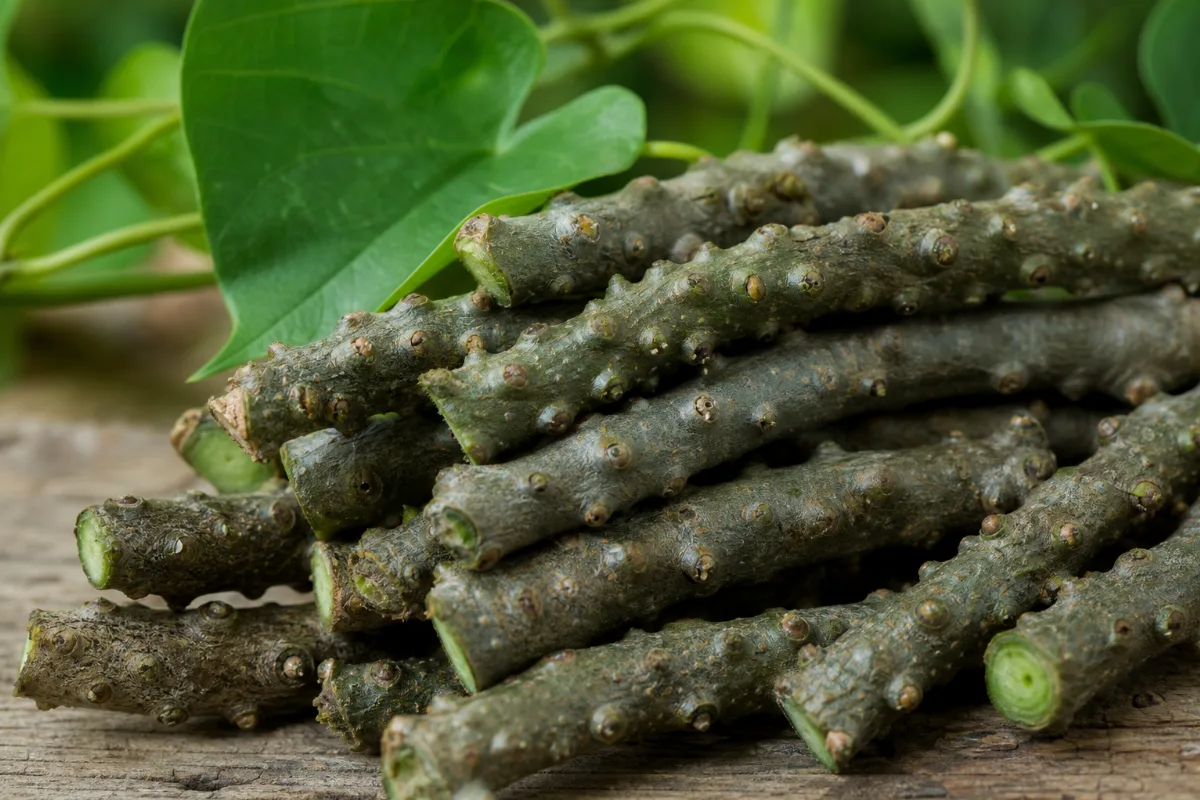
Guduchi, also called giloy, is Tinospora cordifolia (Willd.) Miers, a climbing plant of the family Menispermaceae; GBIF lists this as the accepted name. [4] LiverTox describes it as an herbaceous climbing shrub native to India and South Asia whose leaf, root and bark extracts are used in Ayurveda. [1]Look-alike and mislabeling question
Other Tinospora species, such as T. sinensis and T. crispa, are also commonly traded in the Indian subcontinent as guduchi or giloy. [5] An Ayurvedic-journal review argues that the liver cases did not test the botanical identity of the products and that a wrong species may have been taken; it also says T. crispa is known to cause liver toxicity. [5] A separate essay likewise argues that negative effects may be due to T. crispa, which resembles T. cordifolia. [6] The Indian study also ran chemical and toxicological analyses of retrieved giloy samples; the results are not in the abstract we read. [2] [2] The debate is not settled in the sources we read, and a consumer cannot tell species apart from a label alone. For identification questions ask a pharmacist or a qualified local botanist; see species identification. Mislabeling is the point the review itself stresses: it says the cases highlight adulteration in herbal markets. [5]Is guduchi an adaptogen?
"Adaptogen" is a contested term; see What are adaptogens?. The sources we read describe guduchi as an Ayurvedic medicinal plant, not as an adaptogen, and the classification is not described in them. [1]Traditional use (not proof)
LiverTox says leaf, root and bark extracts have been used extensively in Ayurveda for conditions including diabetes, arthritis, liver diseases, malaria, pain and urinary tract infection. [1] During the COVID-19 pandemic the herb was promoted to the public in India as an immune booster. [2] Promotion is a marketing claim; traditional use and promotion are not evidence that it prevents infection. See Ayurveda and integrative care.What research shows
Proper evidence not found for benefit in people from the sources we read: we searched PubMed for Tinospora cordifolia randomized trials and systematic reviews, and the sources we read concern liver injury, not proven benefit. Do not read the traditional uses above as research findings.| Question | What the source found | Strength of evidence |
|---|---|---|
| Liver injury | 43 cases in a multicenter study; probable in 67.4%; autoimmune features. [2] | Evidence of harm (case series; cause debated) |
| Liver injury in one patient | A case with Hashimoto thyroiditis; liver enzymes fell by more than 50% within two weeks of stopping the supplement. [3] | Evidence of harm (single case) |
| Role of look-alike species | Reviewers argue wrong species may explain cases. [5][6] | Unresolved |
Forms
One case involved a commercial supplement containing guduchi. [3] Results for one preparation do not transfer to another, and products with several ingredients cannot be assigned to guduchi alone.Safety in more detail
- Liver: see the box at the top and liver safety and supplements.
- Autoimmune conditions: the Indian study found unmasking of autoimmune hepatitis. [2]
- Medicines and diabetes: not described in the sources we read; ask a pharmacist and read how interactions work.
- Quality: see quality testing and certifications and adulteration in Ayurvedic products.
Frequently asked questions
Can guduchi or giloy harm the liver?
Reports from LiverTox and an Indian multicenter study say yes, with debate over whether look-alike species were involved. [1][2][5]
Is giloy the same as Tinospora crispa?
No. They are different species, but T. crispa and others are traded under the same name in India. [5]
Does giloy prevent infection?
It was promoted as an immune booster, but a promotion is not proof. [2]
Who should be especially careful?
People with liver disease or autoimmune conditions: the Indian study found unmasked autoimmune hepatitis. [2]
Is guduchi an adaptogen?
The sources we read do not classify it as one.
References
- NIH LiverTox, Tinospora, updated 2025 Jun 27. Read 2026-10-23.
- Hepatology Communications 2022, Tinospora cordifolia (Giloy)-induced liver injury during the COVID-19 pandemic: multicenter study from India. Read 2026-10-23.
- Nnamani et al., Cureus 2023, Tinospora cordifolia (Guduchi/Giloy)-induced liver injury: a case review. Read 2026-10-23.
- GBIF Backbone Taxonomy name match, Tinospora cordifolia (Willd.) Miers, accessed 2026-10-23. Read 2026-10-23.
- Panneer Selvam K et al., Journal of Ayurveda and Integrative Medicine 2023, Can Guduchi, a well-known ayurvedic hepato-protectant, cause liver damage?. Read 2026-10-23.
- Current Drug Safety 2024, Is Tinospora cordifolia responsible for drug-induced liver injury?. Read 2026-10-23.