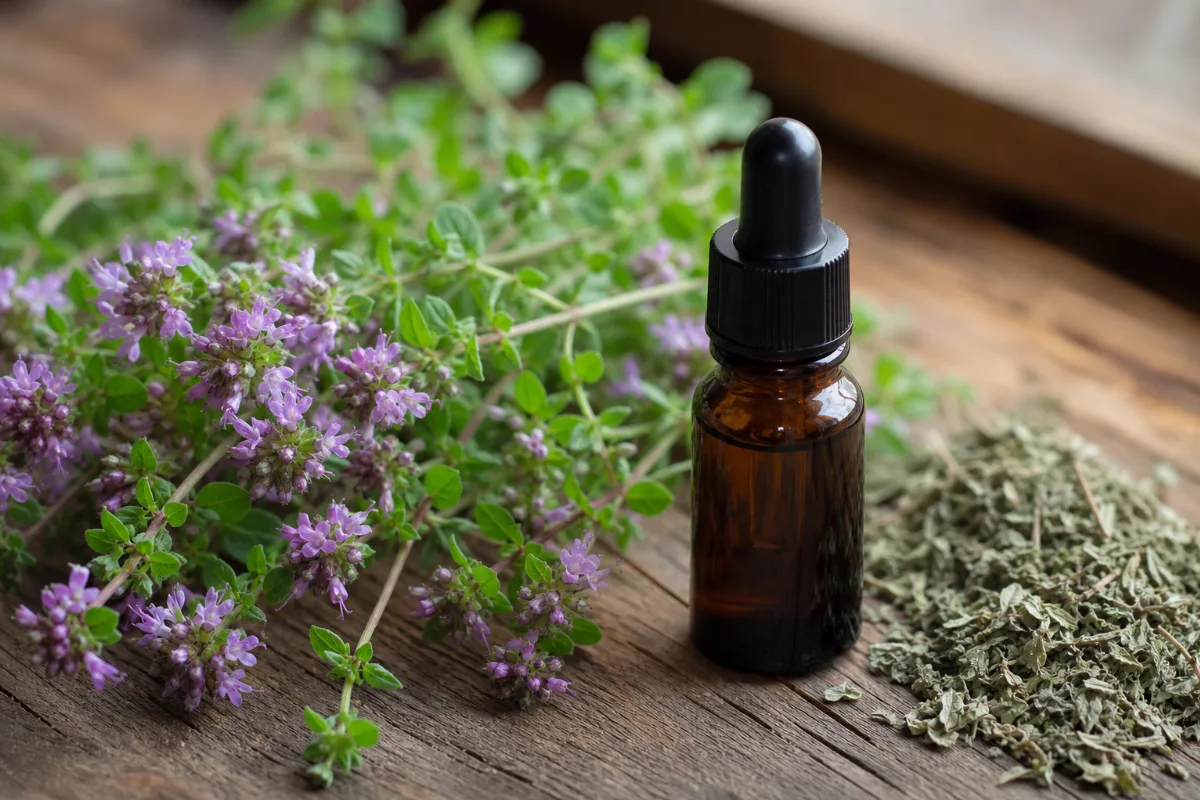
Essential Oils & Aromatherapy · Essential oil (dangerous)
Pennyroyal Oil (Dangers)
Mentha pulegium and Hedeoma pulegioides · also called Pennyroyal essential oil, European pennyroyal oil, American pennyroyal oil, oil of pennyroyal
Pennyroyal oil is a strong mint-family essential oil that is highly poisonous if swallowed. It has caused liver failure, kidney failure, brain injury and deaths, and there is no antidote. There is almost no human research showing it helps with anything. Keep it away from pregnancy, children and pets, and never swallow it.
General information, not medical advice. Last substantive update · Not medically reviewed. A named clinician has not signed off on this page. How this page is made
About Pennyroyal Oil (Dangers)
Pennyroyal oil is a mint-family essential oil that is highly toxic by mouth. The oil, and in babies tea containing it, have caused liver failure and deaths. Human evidence of any benefit is almost non-existent, so the risk is not balanced by proven good.
Safety first
Pennyroyal oil is highly toxic if swallowed. Published cases include liver failure, kidney failure, seizures, brain swelling, bleeding problems and death. In reviewed cases, swallowing about two teaspoons of oil or more caused moderate to severe poisoning, and no safe amount has been established. There is no antidote.
Tea made with pennyroyal is not a safe alternative: two infants given home-brewed mint teas that contained pennyroyal developed liver and brain injury, and one died. Avoid pennyroyal in pregnancy, breastfeeding and childhood. Keep the oil off pets: a dog treated for fleas died within 48 hours.
If anyone may have swallowed pennyroyal, call a poison centre or emergency services at once, even if they feel well (US Poison Help: 1-800-222-1222; numbers elsewhere were not checked). Symptoms can start with stomach upset, with liver and kidney failure following later.
What the oil is
Two plants share the name. European pennyroyal (Mentha pulegium) and American pennyroyal (Hedeoma pulegioides) are different genera in the mint family. The oil is distilled from the leaf and flowering tops and is rich in pulegone: about 85-97% in European oil and about 30% in American oil, according to the European Medicines Agency.
The oil has been used in folk medicine for periods, pregnancy, colds, bronchitis and pain, and as an insect repellent. The European regulator notes that it was used to induce menstruation and abortion and "is not used anymore".
What the research shows
We found no trial of pennyroyal oil for any use. The one randomized trial tested a standardized leaf extract (not the oil): in 100 adults in Iran with functional dyspepsia, it improved indigestion and quality-of-life scores more than placebo when added to a stomach-acid drug. It is a single small trial and has not been repeated.
For every other use, there is no human trial. MSK found no scientific evidence for menstrual symptoms, colds, lung problems, inflammation or insect repelling. Many lab papers exist, but lab findings do not show benefit in people. In the liver, pulegone is turned by enzymes into menthofuran, which damages liver cells.
At a glance
Traditional uses history, not proof
- Folk use to bring on a period or end a pregnancy (documented harm)
- Colds, bronchitis and coughs
- Flea, tick and mosquito repellent (a dog treated this way died)
- Scent and flavouring, now discontinued in the EU according to the regulator
Studied for research
- Indigestion: one 100-person trial, of a leaf extract not the oil (low certainty)
- Everything else: no human trials of the oil; MSK found no scientific evidence
Main compounds
- Pulegone: the main toxic compound, most of the oil
- Menthofuran: the toxic breakdown product made in the liver
- Isomenthone and piperitone: other minor oil components
Common forms
- Essential oil, distilled from leaf and flowering tops (the form behind most poisonings)
- Tea made with pennyroyal (has also poisoned infants)
- Ethanol leaf extract in capsules (tested in one trial; not the oil)
Research links: Memorial Sloan Kettering: Pennyroyal · US poison centres: Pennyroyal oil · EMA statement on pulegone and menthofuran · Research Library · Genes & Biomarkers Library
What it is and its history
- Accepted scientific name
- Mentha pulegium L. (European pennyroyal) and Hedeoma pulegioides (L.) Pers. (American pennyroyal); the oil is distilled from the leaf and flowering tops
- Naming authority
- Both names are ACCEPTED in the GBIF backbone (usage keys 2927189 and 2926704), checked 2026-10-25. NCBI Taxonomy ids returned by search: 294739 (Mentha pulegium) and 1547260 (Hedeoma pulegioides); ids not opened individually.
- Common names
- Pennyroyal (English); European pennyroyal (English); American pennyroyal (English); Squaw mint (English); Mosquito plant (English); Squaw balm (English); Tickweed (English)
- Family or group
- Lamiaceae (mint family)
- Classification
- Plantae > Tracheophyta > Magnoliopsida > Lamiales > Lamiaceae > Mentha (European) and Hedeoma (American) > Mentha pulegium; Hedeoma pulegioides
- Native range
- Mentha pulegium: Europe, North Africa and the Middle East (Amtaghri 2024 review). Hedeoma pulegioides: not verified in the sources read.
- Habitat
- Not verified.
- What it looks like
- Roots: Not verified.; Stems: Mentha pulegium is a perennial herb growing up to about half a metre (review).; Leaves: Crushed leaves of M. pulegium have a pungent, spearmint-like smell (review).; Flowers: Not verified.; Fruit: Not verified.
- Cultivation
- Not verified.
- Harvest and processing
- Leaves and flowering tops are used (MSK); the essential oil is distilled from them. Details not verified.
- Look-alikes and adulterants
- Name: Peppermint and spearmint (Mentha x piperita, M. spicata); Note: Also contain pulegone and menthofuran, but at far lower levels (EMA gives 0.5-4.6% pulegone in peppermint and mint oils). Pennyroyal can be mistaken for ordinary mint in home-brewed teas, as in the infant cases.; Name: American vs European pennyroyal; Note: Different genera (Hedeoma vs Mentha); pulegone about 30% in American oil vs 85-97% in European oil (EMA).
- Sustainability and conservation
- Not assessed in the sources read.
Photographs
Traditional use and history history, not clinical proof
| Tradition or era | Documented use | Source |
|---|---|---|
| Folk medicine (Europe and North America) | Tea and oil used to bring on periods, end pregnancy, and treat colds, bronchitis, inflammation and minor ailments (MSK). The EU regulator notes the oil was used as a fragrance agent and herbal medicine to induce menstruation and abortion and "is not used anymore". | s-ema-hmpc-pulegone |
| Moroccan traditional medicine | Used for influenza, rheumatism, migraine, ulcer, pain, stomach problems, cough and more (2024 review); also a flavouring in drinks. | p37711001 |
| Iranian traditional medicine | Leaves used for indigestion; basis for the 2017 trial. | p28571727 |
| Insect repellent | Leaves and oil used against fleas, mosquitoes and ticks (MSK; review). | s-mskcc-pennyroyal |
| Regulatory/modern toxicology | NTP studied pulegone in 2011; FDA removed synthetic pulegone from the flavouring list in 2018; EMA published a pulegone/menthofuran statement in 2016. | s-fda-fr-2018-pulegone |
Traditional use shows how it was used. It does not show that it works or is safe today.
What is inside, and how it may work
What it contains and how those compounds act in cells and animals. Laboratory and animal mechanisms are not proven effects in people.
Main compounds
| Compound | Family | Where it is concentrated | Activity studied | Level of evidence |
|---|---|---|---|---|
| Pulegone ((R)-(+)-pulegone) PubChem 442495 | Monoterpene ketone | Essential oil of leaf and flowering tops About 85-97% of European pennyroyal oil and about 30% of American (EMA); MSK gives 80-90% and 16-30%. | Main toxic compound of the oil; turned into menthofuran in the liver. 5 14 11 | Human data |
| Menthofuran PubChem 329983 | Furan monoterpene | Oil; also formed in the body from pulegone Not given in the sources read for pennyroyal oil. | Toxic metabolite; further oxidised to a reactive furan epoxide. 11 3 2 | Human data |
| Isomenthone PubChem 6432469 | Monoterpene ketone | Oil Listed as a constituent (review); amount not read. | Not studied for toxicity in the sources read. PubChem record is a racemic mixture. 1 15 | Laboratory research |
| Piperitone PubChem 6987 | Monoterpene ketone | Oil Listed as a constituent (review). | Not studied in the sources read. PubChem record is a racemic mixture. 1 15 | Laboratory research |
Mechanisms, receptors and pathways
| Target or pathway | Gene or receptor | What was found | Level |
|---|---|---|---|
| Liver CYP450 conversion of pulegone to menthofuran | CYP2E1, CYP1A2, CYP2C19 (and CYP2A6 for menthofuran) | Human liver enzymes made in the lab turn pulegone to menthofuran and menthofuran to a reactive furan epoxide. 11 10 | Laboratory research |
| Glutathione depletion and cell damage | Glutathione | In rodents, liver and kidney toxicity appears only when protective glutathione is depleted, which suggests a threshold; reactive metabolites bind to cell proteins. 5 14 | Animal research |
| Low blood sugar | Glucose-6-phosphatase | Menthofuran lowers this enzyme in rats, which MSK links to low blood sugar in poisoning. 14 | Animal research |
| Womb contraction | Not specified | MSK says the abortifacient effect is thought to be irritation causing contractions, inconsistent and only at lethal doses. 14 | Human data |
| Rodent tumours | Not specified | Bladder tumours in female rats and liver tumours in mice at high pulegone amounts; EMA judged the mechanism threshold-based and probably not relevant at ordinary human exposure. 20 5 23 | Animal research |
Absorption, metabolism and elimination
- Absorption
- Swallowed oil is absorbed enough to reach the blood: pulegone and menthofuran were measured in poisoned patients. Skin absorption in people has not been measured (EMA).
- Distribution
- Not studied in the sources read.
- Metabolism
- Pulegone is oxidised to menthofuran by CYP2E1, CYP1A2 and CYP2C19; menthofuran is oxidised further by the same enzymes plus CYP2A6 to a furan epoxide and other products (lab enzymes).
- Elimination
- Not described in the sources read. Fatal case: pulegone 18 ng/mL and menthofuran 1 ng/mL still present 72 hours after swallowing.
- Bioavailability
- Not studied.
Isolated compounds versus whole extracts
Pulegone is the toxic centre of the oil, and most animal work uses the isolated compound. The oil holds far more pulegone than leaf tea, but tea is not shown to be safe either: it harmed infants. The one benefit trial used a standardized ethanol leaf extract whose pulegone content the abstract does not give, so its apparent safety cannot be applied to the oil.
Nutritional composition
Pennyroyal oil is not a nutrient and has no food use as a supplement.
1 low certainty1 very low certainty5 not enough evidence2 evidence against
What was looked at
The 9 benefits and uses checked for Pennyroyal Oil (Dangers), each with how strong the evidence is. Tap one to open it.
- Use to end a pregnancy (traditional use, documented harm)Evidence against
- Period pain, PMS, and "bringing on a period"Not enough evidence
- Insect repellent (skin, clothing, around the home)Not enough evidence
- Indigestion with no clear cause (functional dyspepsia), leaf extract (not the oil)Low certainty
- Colds, cough, bronchitis and lung complaintsNot enough evidence
- Inflammation, headache, toothache and general achesNot enough evidence
- Mint tea or oil for infant colic and minor ailments (documented harm)Evidence against
- H. pylori test result in the extract trial (leaf extract, not the oil)Very low certainty
- Antimicrobial, antioxidant and other lab findingsNot enough evidence
Lab markers tracked in the studies
Dyspepsia symptom score (Hong Kong dyspepsia index)Quality of life (SF-36)H. pylori urease testLiver and kidney blood tests in the dyspepsia trialPulegone and menthofuran in blood (poisoning cases)
What is Pennyroyal Oil (Dangers) good for?
Safety comes first with this oil. Below are the uses people try it for and how strong the human evidence is. For most there is none; for two, the evidence shows harm.
Benefits, one by one
Each card is a research question, not a promise. Tap a goal to filter. Open a card to see the studies, doses and limits.
Use to end a pregnancy (traditional use, documented harm)
Evidence againstPennyroyal has been used in folk medicine to end pregnancies. This use has caused liver failure, kidney failure, and deaths in young women. It is not a safe or reliable method, and this page gives no instructions for it.
5 studiesNot given. We deliberately give no amounts or preparation steps.
Studies, doses and limits
What the trials found
Case reports and series of poisoning; no trials (and none would be ethical).
Results
A 2023 emergency-medicine review names pennyroyal among herbal products with significant illness and death. A US poison centre page says young women have died after swallowing the oil to try to end a pregnancy. A rat study of extracts found harm to pregnancy and fetuses.
Why this rating
Multiple case reports describe organ failure and death after swallowing the oil; no source shows a safe way.
Form and dose studied
Not given. We deliberately give no amounts or preparation steps.
Who was studied
Pregnant people.
Limits
Case reports cannot give how often harm happens.
Why researchers looked
A long folk tradition, now mainly known through poison-centre and emergency-medicine reports.
Traditional use
Folk abortifacient (Anderson 1996; Feng 2023; EMA).
Proposed mechanism Human case series
The toxic metabolites of pulegone damage the liver (see Science tab). MSK states the womb effect is inconsistent and needs doses that can be lethal.
A proposed mechanism does not show that the effect happens in people.
Serious and sometimes fatal. If someone has swallowed pennyroyal, call a poison centre or emergency services at once. A clinician or local health service can discuss safe options for a pregnancy.
Period pain, PMS, and "bringing on a period"
Not enough evidencePennyroyal has been used for hundreds of years to bring on a period or ease menstrual symptoms. No human study shows it works, and the same plant has caused liver failure and deaths.
3 studiesTea and oil were both used traditionally. Not a recommendation for ei…
Studies, doses and limits
What the trials found
No clinical trial found. MSK found no scientific evidence for inducing menstruation or relieving PMS.
Results
No human results to report.
Why this rating
No human trial exists in the sources read; the only human information is on poisoning.
Form and dose studied
Tea and oil were both used traditionally. Not a recommendation for either.
Who was studied
Women of reproductive age.
Limits
Tradition is not evidence. The documented outcome in published case reports is toxicity.
Why researchers looked
Folk use for menstrual problems.
Traditional use
Folk medicine (MSK); EU regulator notes it was used to induce menstruation but "is not used anymore".
Proposed mechanism Traditional claim
MSK says the womb-contracting effect is inconsistent and happens only at doses that can be lethal.
A proposed mechanism does not show that the effect happens in people.
Liver and kidney damage and deaths are reported (see Safety).
Insect repellent (skin, clothing, around the home)
Not enough evidencePennyroyal leaves and oil are an old folk repellent for fleas, mosquitoes and ticks. We found no human trial for pennyroyal. The oil killed a dog treated for fleas.
5 studiesNot given.
Studies, doses and limits
What the trials found
No human repellent trial of pennyroyal was found. A general review says too few plant-repellent studies followed standard WHO testing.
Results
No pennyroyal result to report. A veterinary case report: a dog treated for fleas with the oil vomited within 2 hours and died within 48 hours.
Why this rating
No pennyroyal-specific human data. MSK states no scientific evidence for repellent use.
Form and dose studied
Not given.
Who was studied
People and pets exposed to insects.
Limits
The evidence we have is general (plant repellents overall) and a single veterinary case.
Why researchers looked
Traditional use of the plant to repel insects.
Traditional use
Folk insect repellent (MSK; Amtaghri 2024 review).
Proposed mechanism Traditional claim
Not established for people.
A proposed mechanism does not show that the effect happens in people.
Pets, small children and anyone who may swallow or lick treated skin are at risk. Skin absorption in people has not been measured (EMA).
Indigestion with no clear cause (functional dyspepsia), leaf extract (not the oil)
Low certaintyOne trial in Iran tested a standardized European pennyroyal leaf extract in capsules, not the essential oil. Added to a stomach-acid drug for two months, it improved indigestion scores more than placebo. This is not evidence for the oil, which is poisonous by mouth.
1 studiesStandardized 70% ethanol leaf extract in capsules. This is not tea an…
Studies, doses and limits
What the trials found
One randomized, double-blind, placebo-controlled trial, 100 adults (50 per group), two months.
Results
50 people per group: lower total dyspepsia score than placebo (P=0.011), better quality of life (P=0.003), improvement in stomach pain, upper belly bloating, dull ache and belching. Other symptom scores did not differ. No adverse effects, and no change in blood counts, liver or kidney tests.
Effect sizes as reported
Statistically significant but the size of the difference was not given in the abstract.
Why this rating
A single small, single-country trial with no replication, used on top of a stomach-acid drug, with funding and registration not stated in the abstract and two different amounts given in the abstract.
Form and dose studied
Standardized 70% ethanol leaf extract in capsules. This is not tea and not the essential oil. We make no amount recommendation.
Who was studied
Adults with functional dyspepsia in Iran.
Limits
Does not show the extract works on its own, or that tea or oil is helpful. The extract's pulegone content was not stated in the abstract. Two months of safety in 50 people cannot rule out rare liver harm; see Safety.
Why researchers looked
Leaves are used in Iranian traditional medicine for indigestion.
Traditional use
Used in Iranian traditional medicine for functional dyspepsia (trial authors).
Proposed mechanism Not studied
Not established. The abstract does not say how the extract works.
A proposed mechanism does not show that the effect happens in people.
This trial used a leaf extract in capsules. It says nothing about the essential oil, which has caused liver failure and deaths.
Colds, cough, bronchitis and lung complaints
Not enough evidencePennyroyal tea has been used for colds, bronchitis and coughs. No study in people shows it helps, and the tea has poisoned infants.
3 studiesTea (traditional). Not a recommendation.
Studies, doses and limits
What the trials found
No clinical trial found. MSK found no scientific evidence for lung conditions.
Why this rating
No human data.
Form and dose studied
Tea (traditional). Not a recommendation.
Who was studied
Adults and children (traditional).
Limits
Tradition only; the only human reports are of poisoning.
Why researchers looked
Folk use for colds, flu and chronic bronchitis.
Traditional use
Folk use (MSK); Moroccan traditional use for influenza and cough (Amtaghri review).
Proposed mechanism Traditional claim
MSK suggests that menthol-type mint properties might open airways in tea form; this is theoretical.
A proposed mechanism does not show that the effect happens in people.
Do not give pennyroyal tea or oil to infants or children: two infants developed multiple organ failure after tea; one died.
Inflammation, headache, toothache and general aches
Not enough evidenceFolk uses include pain and inflammation. We found no human study for pennyroyal. Lab studies of other mint extracts are not evidence for this plant in people.
2 studiesNot given.
Studies, doses and limits
What the trials found
No human trial found. MSK found no scientific evidence for inflammation.
Why this rating
No human data; lab and animal work only.
Form and dose studied
Not given.
Limits
Lab and animal studies do not show an effect in people, and the same compounds are liver toxins.
Why researchers looked
Folk anti-inflammatory use.
Traditional use
Folk use (MSK); Moroccan traditional use for rheumatism, migraine and pain (review).
Proposed mechanism Laboratory research
Lab findings in a narrative review; not tested in people.
A proposed mechanism does not show that the effect happens in people.
See Safety.
Mint tea or oil for infant colic and minor ailments (documented harm)
Evidence againstMint teas have been given to infants for colic or minor illness. If the plant was pennyroyal, two infants developed liver failure and brain injury and one died. This is a warning, not a benefit.
2 studiesHome-brewed teas of unknown strength.
Studies, doses and limits
What the trials found
Two published infant cases.
Results
One infant died of fulminant liver failure with brain swelling; the other developed liver dysfunction and a severe epileptic encephalopathy.
Why this rating
Two well-documented cases with measured toxins.
Form and dose studied
Home-brewed teas of unknown strength.
Who was studied
Infants.
Limits
Only two cases, but the harm was severe.
Why researchers looked
Home remedy for babies.
Traditional use
Home use (Bakerink 1996).
Proposed mechanism Human case series
Pulegone and menthofuran were found in the infants' blood.
A proposed mechanism does not show that the effect happens in people.
Never give unidentified or home-brewed mint teas to infants without being sure what plant it is.
H. pylori test result in the extract trial (leaf extract, not the oil)
Very low certaintyIn the same Iranian dyspepsia trial, fewer people in the extract group had a positive H. pylori urease test afterwards. This was a secondary result from one small trial and needs confirmation.
1 studiesLeaf extract (not tea or oil).
Studies, doses and limits
What the trials found
Secondary outcome of one randomized trial of 100 adults.
Results
The share with a positive urease test fell more than with placebo (P=0.001).
Why this rating
A simple urease test, secondary result, single small trial, no replication.
Form and dose studied
Leaf extract (not tea or oil).
Who was studied
Adults with functional dyspepsia.
Limits
A positive-to-negative change on a urease test is not proof of eradication.
Why researchers looked
Measured as a secondary outcome.
Traditional use
Not traditional.
Proposed mechanism Not studied
Not established.
A proposed mechanism does not show that the effect happens in people.
See the dyspepsia entry.
Antimicrobial, antioxidant and other lab findings
Not enough evidenceMany lab and animal papers test pennyroyal extracts and oils for antimicrobial, antioxidant and other effects. None of them shows a benefit in people, and the oil's main compound is a liver toxin.
1 studiesExtracts and oils in laboratory tests.
Studies, doses and limits
What the trials found
No human studies for these effects.
Why this rating
Lab and animal only.
Form and dose studied
Extracts and oils in laboratory tests.
Limits
Results from test tubes and animals often fail in people.
Why researchers looked
Interest in plant chemistry.
Traditional use
Not traditional.
Proposed mechanism Laboratory research
Flavonoids, phenolic acids and terpenes are reported in leaf extracts (lab findings in a narrative review).
A proposed mechanism does not show that the effect happens in people.
Pulegone and menthofuran are hepatotoxic; see Safety.
Connections to the rest of health
How Pennyroyal Oil (Dangers) connects to the rest of our health knowledge graph. Every link says what kind of connection it is. A safety link (for example to the liver) is a warning, not a benefit. A study that merely mentions a topic never creates a benefit link.
Explore every connection: goals, body systems, organs, symptoms, genes
A. Wellness goals
| Connected to | Kind of connection | Evidence status | Context | Studies |
|---|---|---|---|---|
| Womens Wellness | Traditional use | Evidence against | Use to end a pregnancy (traditional use, documented harm): Pennyroyal has been used in folk medicine to end pregnancies. This use has caused liver failure, kidney failure, and deaths in young women. It is not a safe or reliable method, and this page gives no instructions for it. Period pain, PMS, and "bringing on a period": Pennyroyal has been used for hundreds of years to bring on a period or ease menstrual symptoms. No human study shows it works, and the same plant has caused liver failure and deaths. | 6 2 19 4 5 14 10 |
| Preventive Wellness | Traditional use | Not enough evidence | Insect repellent (skin, clothing, around the home): Pennyroyal leaves and oil are an old folk repellent for fleas, mosquitoes and ticks. We found no human trial for pennyroyal. The oil killed a dog treated for fleas. Mint tea or oil for infant colic and minor ailments (documented harm): Mint teas have been given to infants for colic or minor illness. If the plant was pennyroyal, two infants developed liver failure and brain injury and one died. This is a warning, not a benefit. | 14 1 13 21 5 3 19 |
| Digestive Support | Potential benefit | Low certainty | Indigestion with no clear cause (functional dyspepsia), leaf extract (not the oil): One trial in Iran tested a standardized European pennyroyal leaf extract in capsules, not the essential oil. Added to a stomach-acid drug for two months, it improved indigestion scores more than placebo. This is not evidence for the oil, which is poisonous by mouth. H. pylori test result in the extract trial (leaf extract, not the oil): In the same Iranian dyspepsia trial, fewer people in the extract group had a positive H. pylori urease test afterwards. This was a secondary result from one small trial and needs confirmation. | 12 |
| Immune Support | Traditional use | Not enough evidence | Colds, cough, bronchitis and lung complaints: Pennyroyal tea has been used for colds, bronchitis and coughs. No study in people shows it helps, and the tea has poisoned infants. | 14 1 3 |
| Inflammation Balance | Not enough evidence | Inflammation, headache, toothache and general aches: Folk uses include pain and inflammation. We found no human study for pennyroyal. Lab studies of other mint extracts are not evidence for this plant in people. | 14 1 | |
| Holistic Balance | Not enough evidence | Antimicrobial, antioxidant and other lab findings: Many lab and animal papers test pennyroyal extracts and oils for antimicrobial, antioxidant and other effects. None of them shows a benefit in people, and the oil's main compound is a liver toxin. | 1 |
B. Body systems
| Connected to | Kind of connection | Evidence status | Context | Studies |
|---|---|---|---|---|
| Liver | Adverse effect or risk | Documented | Liver failure and deaths in published cases. Preparation or compound: Oil and tea; pulegone, menthofuran |
2 3 17 |
| Kidneys | Adverse effect or risk | Documented | Kidney failure in poisoning cases. Preparation or compound: Oil |
14 |
| Nervous system | Adverse effect or risk | Documented | Seizures, brain swelling and epilepsy after poisoning, including infants. Preparation or compound: Oil and tea |
3 14 |
| Reproductive system | Contraindication | Documented | Contraindicated in pregnancy and breastfeeding; deaths reported. Avoid in pregnancy and breastfeeding; deaths reported after use to try to end pregnancy. Preparation or compound: Oil and tea |
14 6 |
| Reproductive System | Biological association | Evidence against | Studied for: Use to end a pregnancy (traditional use, documented harm) Studied for: Period pain, PMS, and "bringing on a period" | 6 2 19 4 5 14 10 |
| Integumentary System | Biological association | Not enough evidence | Studied for: Insect repellent (skin, clothing, around the home) | 14 1 13 21 5 |
| Digestive System | Biological association | Low certainty | Studied for: Indigestion with no clear cause (functional dyspepsia), leaf extract (not the oil) Studied for: H. pylori test result in the extract trial (leaf extract, not the oil) | 12 |
| Respiratory System | Biological association | Not enough evidence | Studied for: Colds, cough, bronchitis and lung complaints | 14 1 3 |
| Musculoskeletal System | Biological association | Not enough evidence | Studied for: Inflammation, headache, toothache and general aches | 14 1 |
| Nervous System | Biological association | Evidence against | Studied for: Mint tea or oil for infant colic and minor ailments (documented harm) | 3 19 |
| Immune System | Biological association | Not enough evidence | Studied for: Antimicrobial, antioxidant and other lab findings | 1 |
I. Biomarkers
| Connected to | Kind of connection | Evidence status | Context | Studies |
|---|---|---|---|---|
| Blood sugar | Adverse effect or risk | Documented | Low blood sugar appears in published poisoning cases (MSK). Preparation or compound: Oil |
14 |
| Dyspepsia symptom score (Hong Kong dyspepsia index) | Biological association | Low certainty | Measured in trials: lowered. A lab change is not the same as a health benefit. | 12 |
| Quality of life (SF-36) | Biological association | Low certainty | Measured in trials: raised. A lab change is not the same as a health benefit. | 12 |
| H. pylori urease test | Biological association | Very low certainty | Measured in trials: lowered. A lab change is not the same as a health benefit. | 12 |
| Liver and kidney blood tests in the dyspepsia trial | Biological association | Low certainty | Measured in trials: unchanged. A lab change is not the same as a health benefit. | 12 |
| Pulegone and menthofuran in blood (poisoning cases) | Biological association | Low certainty | Measured in trials: raised. A lab change is not the same as a health benefit. | 2 3 |
K. Biological pathways
L. Active compounds
| Connected to | Kind of connection | Evidence status | Context | Studies |
|---|---|---|---|---|
| Pulegone ((R)-(+)-pulegone) | Biological association | Human | Main toxic compound of the oil; turned into menthofuran in the liver. Preparation or compound: Essential oil of leaf and flowering tops |
5 14 11 |
| Menthofuran | Biological association | Human | Toxic metabolite; further oxidised to a reactive furan epoxide. Preparation or compound: Oil; also formed in the body from pulegone |
11 3 2 |
| Isomenthone | Biological association | In vitro | Not studied for toxicity in the sources read. PubChem record is a racemic mixture. Preparation or compound: Oil |
1 15 |
| Piperitone | Biological association | In vitro | Not studied in the sources read. PubChem record is a racemic mixture. Preparation or compound: Oil |
1 15 |
Each connection is stored with the ingredient, the connected record, the kind of connection, the evidence status, the supporting studies, the preparation or compound involved, and a review date (last reviewed October 25, 2026).
Evidence at a glance: what changed in 4 lab markers
Tap a number to show only those markers. Counts are markers, not people.
The evidence
The research centre for Pennyroyal Oil (Dangers). Every record here was checked against PubMed or the publisher's page; we never list a study we have not verified.
Evidence by outcome
Bars show how many studies we found for each outcome, not how well it works. People are added up across trials only (reviews are not added, to avoid double counting).
How we rate evidence
High certainty
Several well-run trials or reviews agree; further research is unlikely to change the picture much.
Moderate certainty
Good trials point the same way, but some doubt remains.
Low certainty
Small, short or inconsistent trials. The finding could change with better research.
Very low certainty
Very little or very weak human data. Treat as a possibility only.
Mixed findings
Trials or reviews disagree with each other.
Not enough evidence
Not enough human research to say either way.
Evidence against
Good research found no benefit, or found harm.
We take the reviewers' own risk-of-bias and GRADE statements where they exist, and otherwise judge from study size, design, consistency, directness and whether a product matches what is sold. Many publications do not make evidence high. Method note: We started from our existing pennyroyal summary, searched PubMed, and read the abstract of every PubMed study cited, the full EMA statement on pulegone, and the Memorial Sloan Kettering page. The FDA notice and poison-centre page were read through a page-summarising tool, and the LiverTox page could not be fully opened. Where a source was not found, the page says so.
Study library: every study we checked 23
| Study | Design | People | Product, dose, length | Result |
|---|---|---|---|---|
| Amtaghri 2024 Mentha Pulegium: A Plant with Several Medicinal Properties. Endocrine, Metabolic and Immune Disorders Drug Targets · PMID 37711001 · DOI |
Narrative review mixed |
Review of traditional use and laboratory studies of European pennyroyal | Mentha pulegium (whole plant, leaf, oil) Aerial parts |
Describes the plant as a perennial Lamiaceae herb up to about half a metre tall, native to Europe, North Africa and the Middle East. It lists Moroccan traditional uses (including influenza, rheumatism, migraine, ulcer, pain, stomach complaints, cough). It states that the tea is not recommended because of liver toxicity, that infants and children can die from it, and that the essential oil should never be taken by mouth. It reports that the leaves repel insects. Main constituents include pulegone, isomenthone, menthofuran, menthol and 1,8-cineole. A review that lists traditional uses and lab findings; it is not human evidence of benefit. Methods, limits and fundingOutcomes: Traditional uses, constituents, lab activity Limitations: Narrative review dominated by lab research; promotional tone about "candidate for therapeutic use" is not backed by human trials. Funding and conflicts: Not stated in the abstract. Read: abstract |
| Anderson 1996 Pennyroyal toxicity: measurement of toxic metabolite levels in two cases and review of the literature. Annals of Internal Medicine · PMID 8633832 · DOI |
Case series |
4 People who swallowed pennyroyal (four new cases plus 18 earlier case reports reviewed) |
Pennyroyal oil (swallowed) Essential oil |
Four new cases: one died, one was given N-acetylcysteine, two swallowed minimally toxic amounts. In the fatal case a blood sample taken 72 hours after the swallowing held 18 ng/mL pulegone and 1 ng/mL menthofuran. In the person treated with N-acetylcysteine, menthofuran was 40 ng/mL at 10 hours. The 18 earlier case reports showed moderate to severe poisoning in people who had swallowed at least 10 mL of oil. The authors call pennyroyal an herb of public-health importance and discuss tighter control of access. Documents deaths and organ toxicity after swallowing the oil; shows the toxic metabolites are measurable in people. Methods, limits and fundingOutcomes: Blood levels of pulegone and menthofuran; outcome; review of earlier cases Limitations: Small series; cases are self-selected poisonings; no control group; cannot give a safe or toxic amount for individuals. Funding and conflicts: Not stated in the abstract. Read: abstract |
| Bakerink 1996 Multiple organ failure after ingestion of pennyroyal oil from herbal tea in two infants. Pediatrics · PMID 8909490 |
Case series |
2 Two infants given home-brewed mint teas that contained pennyroyal |
Home-brewed mint tea made from plants found to contain pennyroyal oil Aerial plant (tea) |
Fulminant liver failure with brain swelling and tissue death developed in the first infant, who died (menthofuran 10 ng/mL in blood, no pulegone found). The second infant (pulegone 25 ng/mL, menthofuran 41 ng/mL) developed liver dysfunction and a severe epileptic encephalopathy. The authors advise considering pennyroyal poisoning in infants with liver and brain injury who were given home-brewed mint teas. One infant death and one survivor with severe brain injury after pennyroyal-containing tea. Methods, limits and fundingOutcomes: Liver, brain and blood levels of pulegone and menthofuran Limitations: Two cases; the teas were home-brewed from plants, so the amount taken is unknown. Funding and conflicts: Not stated in the abstract. Read: abstract |
| El-Gazar 2022 Mentha pulegium L. (Pennyroyal, Lamiaceae) Extracts Impose Abortion or Fetal-Mediated Toxicity in Pregnant Rats; Evidenced by the Modulation of Pregnancy Hormones, MiR-520, MiR-146a, TIMP-1, MMP-9, GFAP, BDNF, and 5-HT. Toxins · PMID 35622593 · DOI |
Animal study animal |
Pregnant rats | Mentha pulegium extracts and fractions Aerial parts |
In pregnant rats, the extract or fractions given for three days late in pregnancy damaged uterine and placental tissue, harmed fetal development or ended pregnancies, and changed hormone levels and brain markers. The authors say the effect had low toxicity margins. Animal evidence that pennyroyal extracts harm pregnancy. Methods, limits and fundingOutcomes: Pregnancy outcomes and markers in rats Limitations: Rat study of extracts; not a guide for people. We cite it only as evidence of pregnancy harm. Funding and conflicts: Authors report no conflict of interest. Read: abstract |
| European Medicines Agency 2016 Public statement on the use of herbal medicinal products containing pulegone and menthofuran (EMA/HMPC/138386/2005 Rev. 1) EMA public statement, adopted 12 July 2016 · Source |
Authoritative guidance |
Not applicable | Pulegone and menthofuran in peppermint, mint and pennyroyal oils Essential oils |
Read in full text. Names pennyroyal oil (Mentha pulegium or Hedeoma pulegioides) as a source and says it "has also been used as a fragrance agent and as an herbal medicine to induce menstruation and abortion. It is not used anymore." Pulegone is 85-97% of European pennyroyal oil and about 30% of American. Target organs in rodents are liver and kidney; toxicity needs glutathione depletion and follows reactive metabolites. In the cited human poisonings with pennyroyal oil, ingesting about 10 mL gave moderate to severe poisoning. HMPC concluded the rodent tumours are probably not relevant to people at ordinary exposure, and proposed exposure limits for herbal medicinal products containing pulegone and menthofuran (a general limit, not a pennyroyal monograph). Notes no quantitative data on skin absorption. EU regulator treats pennyroyal oil as a source of toxic pulegone; it is not used in medicines now. Methods, limits and fundingOutcomes: Toxicity assessment and limit values Limitations: Statement is about pulegone and menthofuran limits in herbal medicines (mainly peppermint and mint oils); it is not a monograph on pennyroyal. Funding and conflicts: Not applicable. Read: full-text |
| Feng 2023 Toxicities of herbal abortifacients. American Journal of Emergency Medicine · PMID 36924751 · DOI |
Narrative review |
Published reports of people using herbal products to end a pregnancy | Herbal abortifacients including pennyroyal, blue cohosh, rue and quinine Various |
Narrative review of MEDLINE and a library catalogue. It names pennyroyal, blue cohosh, rue and quinine as herbal products with significant illness and death, and tells emergency staff to watch for liver, heart, kidney and blood toxicity after significant exposures. Pennyroyal is named among the herbal products with serious illness and death. Methods, limits and fundingOutcomes: Reported toxicity Limitations: Narrative review, not systematic; does not give frequencies. Funding and conflicts: Authors report no competing interests. Read: abstract |
| Fozard 2020 Hepatic Failure From Pennyroyal Tea Interaction With Medications Metabolized by the Cytochrome P450 Enzymes. American Journal of Therapeutics · PMID 31513020 · DOI |
Case report |
1 One adult with acute liver failure (details taken from the MSK summary: a 76-year-old woman) |
Pennyroyal tea with several drugs handled by CYP enzymes Tea |
Title and journal record only; PubMed lists no abstract. MSK describes it as a 76-year-old woman with acute liver failure possibly caused by an interaction between pennyroyal tea and drugs that use the CYP1A2, 2E1 and 2C19 enzymes. We did not read the paper. A possible tea-drug interaction causing liver failure (not confirmed). Methods, limits and fundingOutcomes: Liver failure; possible interaction Limitations: Not read; one case; causation "possible" only. Funding and conflicts: Not stated. Read: title-only |
| GBIF 2026 GBIF Backbone Taxonomy: Hedeoma pulegioides (L.) Pers. GBIF species match API, checked 2026-10-25 · Source |
Authoritative guidance |
Not applicable | Hedeoma pulegioides |
Exact match, status ACCEPTED, usage key 2926704, family Lamiaceae, order Lamiales, genus Hedeoma. Accepted name confirmed. Methods, limits and fundingOutcomes: Accepted name Limitations: None. Funding and conflicts: Not applicable. Read: full-text |
| GBIF 2026 GBIF Backbone Taxonomy: Mentha pulegium L. GBIF species match API, checked 2026-10-25 · Source |
Authoritative guidance |
Not applicable | Mentha pulegium |
Exact match, status ACCEPTED, usage key 2927189, family Lamiaceae, order Lamiales, genus Mentha. Accepted name confirmed. Methods, limits and fundingOutcomes: Accepted name Limitations: None. Funding and conflicts: Not applicable. Read: full-text |
| Gordon 2015 A decades-long investigation of acute metabolism-based hepatotoxicity by herbal constituents: a case study of pennyroyal oil. Drug Metabolism Reviews · PMID 25512112 · DOI |
Narrative review mixed |
Laboratory and animal studies of pennyroyal oil constituents | Pennyroyal oil and its constituents pulegone and menthofuran Essential oil |
Reviews three decades of work showing that pennyroyal oil injures the liver because enzymes in the body change its constituents (pulegone, menthofuran) into reactive products. It describes how the toxic components, animal models and the enzymes involved were identified. Supports a metabolism-based mechanism of liver injury. Methods, limits and fundingOutcomes: Mechanism of liver toxicity Limitations: Mostly lab and animal work; review of one research group's decades of studies. Funding and conflicts: Not stated in the abstract. Read: abstract |
| Khojasteh-Bakht 1999 Metabolism of (R)-(+)-pulegone and (R)-(+)-menthofuran by human liver cytochrome P-450s: evidence for formation of a furan epoxide. Drug Metabolism and Disposition · PMID 10220485 |
Laboratory research in-vitro |
Human liver enzymes made in the lab | (R)-(+)-pulegone and (R)-(+)-menthofuran (isolated compounds) Compounds from the oil |
CYP2E1, CYP1A2 and CYP2C19 turned pulegone into menthofuran (CYP2E1 fastest). The same enzymes, plus CYP2A6, oxidized menthofuran further through a furan epoxide, a reactive intermediate. The abstract calls pulegone a liver toxin used in folk medicine as an abortifacient despite lethal potential. Identifies the human enzymes involved in forming the toxic metabolite. Methods, limits and fundingOutcomes: Which human liver enzymes turn pulegone into menthofuran Limitations: Lab enzyme study; not a study in people. Funding and conflicts: Not stated in the abstract. Read: abstract |
| Khonche 2017 Efficacy of Mentha pulegium extract in the treatment of functional dyspepsia: A randomized double-blind placebo-controlled clinical trial. Journal of Ethnopharmacology · PMID 28571727 · DOI |
Controlled trial |
100 Adults in Iran with functional dyspepsia (Rome III criteria) |
Standardized Mentha pulegium leaf extract (70% ethanol), added to one famotidine tablet a day Leaf Capsules three times daily (the abstract gives two different amounts, 330 mg and 270 mg) 2 months · vs Placebo plus the same famotidine |
50 people per group. The extract group had a lower total dyspepsia score than placebo (P=0.011) and a better quality-of-life score (P=0.003). Stomach pain, upper belly bloating, dull ache and belching improved more than with placebo; other symptoms did not differ. The share with a positive H. pylori urease test fell more than with placebo (P=0.001). Blood counts, liver tests and kidney tests did not change significantly, and no adverse effects were reported. Modest improvement of dyspepsia scores over placebo in one two-month trial. Methods, limits and fundingOutcomes: Hong Kong dyspepsia index, SF-36 quality of life, H. pylori urease test, blood counts, liver and kidney tests Limitations: One small single-country trial; add-on to a stomach acid drug, so it does not show the extract works alone; no registration or funding stated in the abstract; the abstract gives two different amounts; the extract's pulegone content was not stated in the abstract; the H. pylori test was a simple urease test; not replicated. An ethanol extract is not the same as tea or oil. Funding and conflicts: Not stated in the abstract. Read: abstract |
| Maia 2011 Plant-based insect repellents: a review of their efficacy, development and testing. Malaria Journal · PMID 21411012 · DOI |
Narrative review |
Mosquito repellent testing | Plant-based repellents in general (not pennyroyal specifically in the abstract) Various |
Plant-based repellents have long been used traditionally, but too few studies followed standard WHO testing, and "natural" products are sometimes wrongly assumed safe. More standardized studies are needed. General caution on plant repellents; pennyroyal is not singled out in the abstract. Methods, limits and fundingOutcomes: Repellent efficacy and safety Limitations: Abstract only; does not report results for pennyroyal. Funding and conflicts: Not stated in the abstract. Read: abstract |
| Memorial Sloan Kettering Cancer Center 2022 Pennyroyal (Memorial Sloan Kettering Cancer Center integrative medicine herb page) mskcc.org About Herbs · Source |
Authoritative guidance |
Not applicable | Pennyroyal oil and tea Leaf and flowering tops |
Read in full (clinical section). Oil is highly toxic and not recommended for internal use. Pulegone makes up 80-90% of European and 16-30% of American pennyroyal oil, and is turned into menthofuran by CYP450. At least 24 toxicity cases are in the literature (liver and kidney failure, low blood sugar, clotting problems, acidosis, bleeding, lung congestion, mental changes, brain swelling, seizures, death). Two young adults died of multiorgan failure; two infants had multiorgan failure after tea. Treatment of oil ingestion in people seen early includes stomach washing, activated charcoal and N-acetylcysteine. Contraindicated in pregnancy and breastfeeding. Interactions: a case of liver failure possibly from tea-drug interactions; flavonoids may cut iron absorption by 50% or more. Purported uses (cancer, inflammation, insect repellent, lung conditions, menstrual symptoms) have no scientific evidence in this page. No dosage section was used. Authoritative summary: serious toxicity, avoid, no evidence for the folk uses. Methods, limits and fundingOutcomes: Safety record, uses, interactions Limitations: Secondary summary; a few details cite older papers we did not re-read. Funding and conflicts: Not applicable. Read: full-text |
| NCBI PubChem 2026 PubChem compound records: (+)-pulegone, menthofuran, isomenthone, piperitone PubChem PUG REST, checked 2026-10-25 · Source |
Authoritative guidance |
Not applicable | Pulegone, menthofuran, isomenthone, piperitone Compounds |
(+)-Pulegone CID 442495 (C10H16O); menthofuran CID 329983 (C10H14O); isomenthone CID 6432469 (a racemic record); piperitone CID 6987 (a racemic record). Identity confirmed. Methods, limits and fundingOutcomes: Compound identity Limitations: Two records are not the exact stereoisomer found in the plant. Funding and conflicts: Not applicable. Read: full-text |
| NCCIH 2026 NCCIH herb page for pennyroyal: not found nccih.nih.gov/health/pennyroyal · Source |
Authoritative guidance |
Not applicable | Pennyroyal |
The address https://www.nccih.nih.gov/health/pennyroyal returned HTTP 404 on 2026-10-25. No NCCIH page for pennyroyal was found. We make no claim about NCCIH. Not found. Methods, limits and fundingOutcomes: Existence of page Limitations: One address tried. Funding and conflicts: Not applicable. Read: abstract |
| NIDDK (US National Institute of Diabetes and Digestive and Kidney Diseases) 2020 Pennyroyal Oil. LiverTox: Clinical and Research Information on Drug-Induced Liver Injury. LiverTox (NCBI Bookshelf), updated 2020 Mar 28 · PMID 31643984 |
Authoritative guidance |
Not applicable | Pennyroyal oil Essential oil |
Summary read: pennyroyal is an oil from the leaves of Mentha pulegium that was used in the past as an insect repellent and an abortifacient. When taken by mouth the oil is highly toxic and has been linked to several instances of toxic liver injury and death. The full LiverTox page (likelihood score, case descriptions) could not be opened because the site returned a browser-check page; a search-result excerpt also described severe harm from a tablespoon of the oil, which we have not verified on the page itself. US liver-injury database lists the oil as highly toxic by mouth. Methods, limits and fundingOutcomes: Liver injury record Limitations: Only the summary was read; full page not opened. Funding and conflicts: Government resource. Read: abstract |
| NLM LactMed 2026 LactMed record for pennyroyal: not found NCBI Bookshelf search · Source |
Authoritative guidance |
Not applicable | Pennyroyal |
An NCBI Bookshelf search for "pennyroyal AND lactmed" returned no results on 2026-10-25. No LactMed record was found. Not found. Methods, limits and fundingOutcomes: Existence of record Limitations: One search tried. Funding and conflicts: Not applicable. Read: abstract |
| National Capital Poison Center (poison.org) 2016 Pennyroyal Oil: A Potentially Toxic Folk Remedy poison.org article (copyright notice 2012-2026) · Source |
Authoritative guidance |
Not applicable | Pennyroyal oil and mint teas that contained pennyroyal Oil and tea |
Read through a page-summarising tool. Oil is highly toxic; early signs are nausea, vomiting and belly pain, later liver and kidney failure, bleeding, seizures, multiple organ failure and death. Young women have died after swallowing the oil to try to end a pregnancy; an 18-year-old in the featured case died about 6 days after swallowing the oil. Infants were severely sickened by teas made with pennyroyal thought to be mint. There is no antidote; prevention and early treatment are key; US Poison Help line 1-800-222-1222. US poison-centre education page: avoid, and call immediately if swallowed. Methods, limits and fundingOutcomes: Poison-centre guidance Limitations: Educational page; undated; read through a summarising tool. Funding and conflicts: Non-profit. Read: abstract |
| National Toxicology Program 2011 Toxicology and carcinogenesis studies of pulegone (CAS No. 89-82-7) in F344/N rats and B6C3F1 mice (gavage studies). NTP Technical Report 563 · PMID 21921962 |
Animal study animal |
Rats and mice | Pulegone (about 96% pure, isolated compound) Compound from the oil Gavage in corn oil (range of amounts) 2 weeks, 3 months or 2 years |
In the 2-week rat study, nearly all rats at the two highest amounts died, and deaths were attributed to liver toxicity, with liver cell death and vacuolization. (Only the 2-week rat part of the abstract was read in detail; the tumour findings used here come from the EMA and FDA documents that cite this report: bladder tumours in female rats and liver tumours in mice.) Pulegone is toxic to the liver in rodents and caused tumours in two-year studies. Methods, limits and fundingOutcomes: Toxicity and tumours Limitations: Rodent study of the isolated compound given by stomach tube; relevance of the tumours to people is debated (EMA). Funding and conflicts: US government (National Toxicology Program). Read: abstract |
| Sudekum 1992 Pennyroyal oil toxicosis in a dog. Journal of the American Veterinary Medical Association · PMID 1568929 |
Case report animal |
1 One dog |
Pennyroyal oil from a health food store, applied for fleas Essential oil (on skin) |
A dog was treated for fleas with pennyroyal oil. Vomiting began within 2 hours and the dog died within 48 hours despite emergency treatment. Necropsy found pennyroyal oil was the cause of death. One dog death after flea treatment with the oil. Methods, limits and fundingOutcomes: Outcome Limitations: Single animal report. Funding and conflicts: Not stated in the abstract. Read: abstract |
| US Food and Drug Administration 2018 Food Additives Permitted for Direct Addition to Food for Human Consumption; Synthetic Flavoring Substances (final rule, 83 FR 50490) Federal Register, 9 October 2018 · Source |
Authoritative guidance |
Not applicable | Synthetic pulegone as a food flavouring Compound |
FDA removed synthetic pulegone, with five other substances, from the list of permitted synthetic flavourings (21 CFR 172.515) because of the Delaney Clause: the NTP studies found it caused tumours in rodents. FDA said pulegone at current use levels is unlikely to cause cancer in people. The notice does not mention pennyroyal. Read through a page-summarising tool, not word for word. FDA action concerns synthetic pulegone as a flavour additive, not pennyroyal herb or oil. Methods, limits and fundingOutcomes: Regulatory action Limitations: Not about pennyroyal products or dietary supplements. Funding and conflicts: Government. Read: abstract |
| Voigt 2024 Risk Assessment of Pulegone in Foods Based on Benchmark Dose-Response Modeling. Foods · PMID 39335834 · DOI |
Narrative review mixed |
Food-flavouring exposure in the EU and USA | Pulegone in foods and drinks Compound |
Pulegone is classed by the IARC as possibly carcinogenic to humans (Group 2B). Using the NTP rat and mouse data, the authors calculate a lower acceptable daily intake (48 micrograms per kg body weight) than the 1997 value (0.1 mg/kg). They judge current food intakes in the EU and USA to be below it. This is about flavouring intakes from food, not about pennyroyal products. Food-level pulegone intake is judged low risk; says nothing that makes pennyroyal oil or tea safe. Methods, limits and fundingOutcomes: Acceptable daily intake Limitations: Risk modelling from rodent data; food exposure only. Funding and conflicts: Authors report no competing interests. Read: abstract |
What we do not know yet
- No randomized trial of pennyroyal oil for any use.
- The one benefit trial is a single 100-person dyspepsia trial of a leaf extract.
- No frequency of harm is known, and no safe amount.
- No NCCIH page or LactMed record was found.
- LiverTox full page, UK/EU poison-centre records, WHO, Commission E and ESCOP were not read.
- Native range and plant description of American pennyroyal were not verified.
How new research is added
New studies are found by a saved PubMed search and placed in a review queue. A person reads each one before it changes any rating or safety wording.
Lab markers
What changed in blood or saliva tests during trials. A changed number is not the same as feeling or being healthier, and we give no "normal ranges".
Other 5
Dyspepsia symptom score (Hong Kong dyspepsia index)
Lowered in trials
A questionnaire total of indigestion symptoms such as pain, bloating and belching.
Low certaintyResults and what it means
Why it was measured
Main outcome of the only human efficacy trial.
Statistical vs. clinical meaning
Statistically significant in one small trial; size not given in the abstract.
Safety implication
No adverse effects reported in the trial; this does not apply to tea or oil.
| Study | Result | People | Product |
|---|---|---|---|
| 12 | Total score fell more than with placebo (P=0.011); stomach pain, upper bloating, dull ache and belching improved more (all P 0.003 or smaller). | 100 adults with functional dyspepsia | Leaf extract plus famotidine, 2 months |
Quality of life (SF-36)
Raised in trials
A questionnaire about physical and mental well-being.
Low certaintyResults and what it means
Why it was measured
Secondary outcome of the dyspepsia trial.
Statistical vs. clinical meaning
Single trial, not replicated.
Safety implication
None reported in the trial.
| Study | Result | People | Product |
|---|---|---|---|
| 12 | SF-36 score improved more than with placebo (P=0.003). | 100 adults with functional dyspepsia | Leaf extract plus famotidine, 2 months |
H. pylori urease test
Lowered in trials
A breath or biopsy-type test for the stomach bacterium H. pylori.
Very low certaintyResults and what it means
Why it was measured
Secondary outcome of the dyspepsia trial.
Statistical vs. clinical meaning
Single trial, secondary result.
Safety implication
None reported.
| Study | Result | People | Product |
|---|---|---|---|
| 12 | Fewer positive tests than with placebo (P=0.001). | 100 adults with functional dyspepsia | Leaf extract plus famotidine, 2 months |
Liver and kidney blood tests in the dyspepsia trial
Unchanged in trials
Routine blood tests of liver and kidney function.
Low certaintyResults and what it means
Why it was measured
Safety check in the trial.
Statistical vs. clinical meaning
Reassuring for that extract in 50 people, but too small to rule out rare liver injury, and not applicable to tea or oil.
Safety implication
Do not generalise to oil or tea.
| Study | Result | People | Product |
|---|---|---|---|
| 12 | Blood counts, liver tests and kidney tests did not change significantly. | 100 adults | Leaf extract plus famotidine, 2 months |
Pulegone and menthofuran in blood (poisoning cases)
Raised in trials
Levels of the oil's main compound and its toxic metabolite measured after poisoning.
Low certaintyResults and what it means
Why it was measured
Confirms exposure in poisoning.
Statistical vs. clinical meaning
Shows the toxins reach the blood; not a way to judge safe levels.
Safety implication
These levels are evidence of poisoning, not a target.
| Study | Result | People | Product |
|---|---|---|---|
| 2 | Fatal case: 18 ng/mL pulegone and 1 ng/mL menthofuran 72 hours after swallowing; another patient: menthofuran 40 ng/mL at 10 hours. | Adults who swallowed the oil | Pennyroyal oil (poisoning) |
| 3 | Infants: menthofuran 10 ng/mL in one (died); pulegone 25 and menthofuran 41 ng/mL in the other. | Two infants | Pennyroyal-containing mint tea (poisoning) |
Safety
What studies and official sources say about side effects, medicines and who should check first. Each point shows what kind of evidence it comes from.
Main points to know 6
- Do not swallow pennyroyal oil: it has caused liver failure and deaths. The essential oil is highly toxic by mouth. Published cases include liver failure, kidney failure, brain swelling, seizures, bleeding problems and death. Poisonings are rare but can be fatal, and there is no antidote. MSK counts at least 24 cases in the literature; reviewed cases of moderate to severe poisoning followed swallowing about 10 mL (two teaspoons) or more of oil. No safe amount has been established. Case series 2 17 14 19
- Tea made with pennyroyal is not a safe alternative: infants were poisoned. Two infants developed liver and brain injury after home-brewed mint teas that contained pennyroyal; one died and the other has severe epilepsy. MSK also describes liver failure in an adult woman possibly linked to tea plus medicines, and a review states that the tea is not recommended because of liver toxicity. The strength of a home-brewed tea is unknown. Case series 3 14 1 7
- Pregnancy: avoid completely; deaths have been reported after use to try to end pregnancy. Memorial Sloan Kettering (MSK) says pennyroyal should not be used in pregnancy or breastfeeding. A 2023 emergency-medicine review names pennyroyal among herbal products linked to serious illness and death, and a US poison-centre page says young women have died. In a rat study, extracts harmed pregnancies and fetuses. This page gives no method and no amounts, and gives no advice on use. If someone has swallowed pennyroyal, call a poison centre or emergency services at once, even if they feel well. If you are pregnant and want care or information about your options, a doctor, nurse or local health service can help you safely. Authoritative guidance 14 6 19
- Pets and skin: do not put the oil on animals. A dog treated for fleas with pennyroyal oil from a health food store vomited within 2 hours and died within 48 hours. How much oil passes through human skin has not been measured (EMA). Case report 21 5
- Medicines and the liver. One case of liver failure is described as possibly caused by pennyroyal tea plus medicines that use the same liver enzymes (summary from Memorial Sloan Kettering; the paper itself was read by title only). Alcohol, acetaminophen (paracetamol) and other substances that stress the liver have not been studied with pennyroyal; any added risk is theoretical. Case report 7 14 11
- Almost no human research on benefit. We found one randomized trial, of a leaf extract (not the oil) for indigestion. No trial supports the oil for periods, colds, pain or repelling insects, and MSK found no scientific evidence for those uses. The risk is therefore not balanced by any proven benefit. Controlled trial 12 14
Side effects 6
| Effect | How often | Severity and recovery | Evidence |
|---|---|---|---|
| Liver injury, liver failure Oil and tea. Acetaminophen-like injury through reactive metabolites (see Science). | Not known; at least 24 published cases (MSK) | severe, can be fatal Not reversible in fatal cases | Case series 2 3 14 17 |
| Kidney failure Kidney and liver are the main target organs in rodents too (EMA). | Not known | severe Not stated | Case series 14 5 |
| Seizures, brain swelling, severe epilepsy after exposure | Not known | severe One infant was left with severe epileptic encephalopathy | Case series 3 14 |
| Bleeding and clotting problems, low blood sugar, acidosis, lung congestion Low blood sugar is linked in rats to menthofuran lowering an enzyme (glucose-6-phosphatase); human frequency unknown. | Not known | severe Not stated | Case series 14 |
| Early signs: nausea, vomiting, belly pain, dizziness, weakness, fainting, hallucinations Serious liver and kidney signs can follow later. | Not known | moderate to severe Not stated | Case series 19 14 |
| No adverse effects in the dyspepsia extract trial A leaf extract for two months, not oil or tea. Small trial. | 0 reported in 50 people on the extract | none reported Not applicable | Controlled trial 12 |
Liver
LiverTox calls pennyroyal oil highly toxic by mouth, linked to several cases of toxic liver injury and death. The mechanism is understood: human liver enzymes (CYP2E1, CYP1A2, CYP2C19) turn pulegone into menthofuran, which is changed further into reactive products that damage liver cells and use up glutathione. Fatal cases and the two infant cases show liver failure; in one infant brain injury accompanied it. N-acetylcysteine has been used in treatment, as in acetaminophen overdose, but no trial proves it works. Not every person who swallows the oil is harmed to the same degree, so no individual safe amount can be given. 17 11 10 2 3 19
How often. No frequency is known. Poisonings are described as rare but severe (poison centre).
Monitoring. No agency monitoring advice was found. Anyone who has swallowed the oil needs urgent medical assessment, not home monitoring.
- .
- .
- .
- .
This is a safety connection. It is not evidence that Pennyroyal Oil (Dangers) supports liver health.
Medicines and supplements 3
| With | Why it matters | Importance | Evidence | What to do |
|---|---|---|---|---|
| Medicines broken down by CYP2E1, CYP1A2 or CYP2C19 liver enzymes prescription | Pulegone is processed by the same enzymes, so competition or changed enzyme activity is plausible. | One case of liver failure in a 76-year-old woman was described as possibly caused by tea plus such drugs (MSK; paper title only read). No controlled study. | Case report Very low certainty 7 11 14 | Tell your doctor or pharmacist if you have taken pennyroyal tea or oil and take regular medicines. |
| Alcohol, acetaminophen (paracetamol) and other liver-stressing substances drug | Pulegone toxicity needs reactive metabolites and low glutathione (EMA, rodents); substances that stress the liver or use up glutathione could add to the risk. | Theoretical only. No human study or case series on these combinations was found. | Theoretical Not enough evidence 5 10 | Avoid combining; better not to use pennyroyal at all. |
| Medicines or supplements that affect blood clotting prescription | Bleeding and clotting problems occur in severe poisoning (MSK). | No study of pennyroyal with blood thinners was found; the concern is theoretical and for poisoning-level exposure. | Theoretical Not enough evidence 14 | Ask a pharmacist. |
Who should check first 5
| Situation | Advice | Evidence |
|---|---|---|
| Pregnancy | Do not use. MSK says pennyroyal can cause miscarriage and serious poisoning; a 2023 review lists pennyroyal among herbal products with illness and death. Rat studies of extracts show pregnancy and fetal harm. | Authoritative guidance 14 6 4 |
| Breastfeeding | Do not use (MSK). No LactMed record was found. | Authoritative guidance 14 18 |
| Infants and children | Do not give pennyroyal oil or tea, and keep the oil out of reach. Two infants had multiple organ failure after tea that contained pennyroyal oil; one died. | Case series 3 1 |
| Liver disease, kidney disease, or taking medicines processed by the liver | Avoid; the liver and kidney are the main target organs. | Authoritative guidance 14 5 |
| Any use of the essential oil by mouth | Not recommended for internal use (MSK); highly toxic (LiverTox). | Authoritative guidance 14 17 |
Overdose, product quality and regulators
Summary. Pulegone is the main toxic compound. It makes up about 85-97% of European pennyroyal oil (EMA; MSK gives 80-90%) and about 30% of American pennyroyal oil (EMA; MSK gives 16-30%). In reviewed human cases, swallowing about 10 mL of oil (two teaspoons) or more led to moderate to severe poisoning. The oil is far more concentrated than tea, but tea has also poisoned infants and an adult. No safe amount has been established for either.
Animal. Rodents: nearly all rats given the highest amounts in a 2-week NTP study died, attributed to liver toxicity. Two-year studies found bladder tumours in female rats and liver tumours in mice (reported in the EMA and FDA documents). EMA concluded the tumours probably follow cell damage, not DNA damage, and are probably not relevant to people at ordinary exposure. Mice also showed lung toxicity in older work (cited by MSK; not read). Pregnant rats given M. pulegium extracts had pregnancy and fetal harm. A dog died within 48 hours after oil was put on it for fleas.
Human doses studied. Efficacy trial: a standardized ethanol leaf extract in capsules for 2 months, no reported adverse effects (not oil). No amounts of oil are suggested here. The figure in the first paragraph is a toxicity threshold from poisoning cases, not a safe or usable amount.
High dose or long term signals. Long-term human safety of repeated tea or low-dose use has not been studied. IARC classes pulegone as possibly carcinogenic to humans (Group 2B; as stated in a 2024 risk-assessment abstract).
Overdose response. Call a poison centre or emergency services at once (US Poison Help 1-800-222-1222). There is no antidote. In hospital, treatment can include activated charcoal and N-acetylcysteine for people seen early (MSK).
Genotoxicity. NTP concluded pulegone is genotoxic on a single positive result; FDA and EMA judged it likely non-genotoxic with a threshold mechanism.
Toxic or hazardous parts. Leaf and flowering tops, and the essential oil from them. Both European and American pennyroyal contain pulegone. Seed, root and other parts are not covered in the sources.
The main hazard is not contamination but mistaken identity and mislabelling: pennyroyal can be sold or grown as "mint", and oils may say only "pennyroyal". No survey of retail pennyroyal oils for adulteration or pulegone content was found in the sources read.
Pennyroyal mistaken for ordinary mint. The two infants were given home-brewed mint teas; the plants used contained pennyroyal oil. 3
Oil from the shop used on animals. The dog that died had been treated with pennyroyal oil bought at a health food store. 21
Look-alike plant with same common name. European pennyroyal (Mentha) and American pennyroyal (Hedeoma) are different genera with different pulegone levels; labels may say only "pennyroyal". 5 8
| Body | Action | Date |
|---|---|---|
| European Medicines Agency / HMPC (European Union) | Public statement on herbal medicines containing pulegone and menthofuran (EMA/HMPC/138386/2005 Rev. 1). Names pennyroyal oil as a source, says it was used to induce menstruation and abortion and "is not used anymore", and sets exposure limits for herbal medicines. No HMPC herbal monograph for pennyroyal was found (we did not search the full EMA herbal list). source | 2016-07-12 |
| US FDA (United States) | In October 2018 FDA removed synthetic pulegone from the list of permitted synthetic food flavourings (21 CFR 172.515) under the Delaney Clause because of rodent tumours, while saying current use levels are unlikely to pose a cancer risk in people. This concerns the flavouring additive, not pennyroyal herb or oil. We did not find an FDA warning, ban or approval specific to pennyroyal supplements or oils. source | 2018-10-09 |
| NIDDK LiverTox (United States) | Pennyroyal oil record: highly toxic by mouth; linked to toxic liver injury and death. source | 2020-03-28 |
| Memorial Sloan Kettering Cancer Center (United States) | Herb page: oil highly toxic, not for internal use; contraindicated in pregnancy and breastfeeding; no scientific evidence for the folk uses. source | 2022 |
| US poison centres (National Capital Poison Center, poison.org) (United States) | Pennyroyal oil is highly toxic; no antidote; call 1-800-222-1222 if swallowed. source |
When to get medical help
- Anyone who may have swallowed pennyroyal oil, or a tea made from it: call a poison centre or emergency services now (US Poison Help 1-800-222-1222), even if they feel fine. Early stomach upset can be followed by liver and kidney failure.
- Repeated vomiting, belly pain, confusion, unusual sleepiness, agitation, fainting or seizures.
- Yellow skin or eyes, dark urine, little or no urine, or unusual bruising or bleeding.
- An infant or child who is unwell after a home-made herbal or mint tea.
- A pet that has been treated with the oil and vomits or becomes weak: call a vet at once.
Stop using the product and contact a clinician or emergency service. In the US, Poison Control is 1-800-222-1222.
General information only, not medical advice. Ask a clinician or pharmacist before use, especially with medicines, in pregnancy or with a health condition. See the Natural Remedy Safety guide.
Frequently asked questions
Is pennyroyal oil safe?
What does pennyroyal oil do to the liver?
Has pennyroyal oil killed people?
Is pennyroyal oil safe in pregnancy or breastfeeding?
No. MSK says it should not be used in pregnancy or breastfeeding. A 2023 review lists pennyroyal among herbal products linked to serious illness and death, and a rat study showed harm to pregnancies and fetuses. If you are pregnant and want care or information about your options, a doctor, nurse or local health service can help you safely.
Why do people say pennyroyal oil brings on a period?
What should I do if someone swallowed pennyroyal oil?
Is pennyroyal tea safer than the oil?
Is pennyroyal oil safe for pets or on skin?
Does pennyroyal oil work as an insect repellent?
Does pennyroyal help digestion?
One trial of 100 adults found a standardized leaf extract, added to a stomach-acid drug, lowered dyspepsia scores more than placebo. It was an extract, not the oil, and has not been repeated, so the certainty is low. It is not a reason to use the oil.
What is the difference between European and American pennyroyal oil?
Has the FDA banned pennyroyal?
Explore by health goal
Womens WellnessPreventive WellnessDigestive SupportImmune SupportInflammation BalanceHolistic Balance
Editorial transparency
- Written by
- AlternativeMed editorial team. Research compiled with AI assistance, then checked against PubMed records.
- Medical review
- None. This page has not been reviewed by a physician or pharmacist.
- First published
- 2026-10-25
- Last substantive update
- 2026-10-25
- How we research
- We started from our existing pennyroyal summary, searched PubMed, and read the abstract of every PubMed study cited, the full EMA statement on pulegone, and the Memorial Sloan Kettering page. The FDA notice and poison-centre page were read through a page-summarising tool, and the LiverTox page could not be fully opened. Where a source was not found, the page says so.
- How we rate evidence
- See "How we rate evidence" in the Evidence tab.
- Independence
- No product is promoted on this page. No affiliate links are shown, because we do not recommend anyone buy or use pennyroyal oil.
Sources 23
Each source was opened and checked. Where we read only the abstract, it says so. The small numbers in the text point here.
- Amtaghri S, Slaoui M, Eddouks M.. Mentha Pulegium: A Plant with Several Medicinal Properties.. Endocrine, Metabolic and Immune Disorders Drug Targets. 2024. PMID 37711001. DOI 10.2174/1871530323666230914103731. (abstract)
- Anderson IB, Mullen WH, Meeker JE, et al.. Pennyroyal toxicity: measurement of toxic metabolite levels in two cases and review of the literature.. Annals of Internal Medicine. 1996. PMID 8633832. DOI 10.7326/0003-4819-124-8-199604150-00004. (abstract)
- Bakerink JA, Gospe SM Jr, Dimand RJ, Eldridge MW.. Multiple organ failure after ingestion of pennyroyal oil from herbal tea in two infants.. Pediatrics. 1996. PMID 8909490. (abstract)
- El-Gazar AA, Emad AM, Ragab GM, et al.. Mentha pulegium L. (Pennyroyal, Lamiaceae) Extracts Impose Abortion or Fetal-Mediated Toxicity in Pregnant Rats; Evidenced by the Modulation of Pregnancy Hormones, MiR-520, MiR-146a, TIMP-1, MMP-9, GFAP, BDNF, and 5-HT.. Toxins. 2022. PMID 35622593. DOI 10.3390/toxins14050347. (abstract)
- European Medicines Agency, Committee on Herbal Medicinal Products (HMPC). Public statement on the use of herbal medicinal products containing pulegone and menthofuran (EMA/HMPC/138386/2005 Rev. 1). EMA public statement, adopted 12 July 2016. 2016. (full-text)
- Feng C, Fay KE, Burns MM.. Toxicities of herbal abortifacients.. American Journal of Emergency Medicine. 2023. PMID 36924751. DOI 10.1016/j.ajem.2023.03.005. (abstract)
- Fozard J, Hieger M.. Hepatic Failure From Pennyroyal Tea Interaction With Medications Metabolized by the Cytochrome P450 Enzymes.. American Journal of Therapeutics. 2020. PMID 31513020. DOI 10.1097/MJT.0000000000001052. (title-only)
- GBIF. GBIF Backbone Taxonomy: Hedeoma pulegioides (L.) Pers.. GBIF species match API, checked 2026-10-25. 2026. (full-text)
- GBIF. GBIF Backbone Taxonomy: Mentha pulegium L.. GBIF species match API, checked 2026-10-25. 2026. (full-text)
- Gordon P, Khojasteh SC.. A decades-long investigation of acute metabolism-based hepatotoxicity by herbal constituents: a case study of pennyroyal oil.. Drug Metabolism Reviews. 2015. PMID 25512112. DOI 10.3109/03602532.2014.990032. (abstract)
- Khojasteh-Bakht SC, Chen W, Koenigs LL, Peter RM, Nelson SD.. Metabolism of (R)-(+)-pulegone and (R)-(+)-menthofuran by human liver cytochrome P-450s: evidence for formation of a furan epoxide.. Drug Metabolism and Disposition. 1999. PMID 10220485. (abstract)
- Khonche A, Fallah Huseini H, Abdi H, Mohtashami R, Nabati F, Kianbakht S.. Efficacy of Mentha pulegium extract in the treatment of functional dyspepsia: A randomized double-blind placebo-controlled clinical trial.. Journal of Ethnopharmacology. 2017. PMID 28571727. DOI 10.1016/j.jep.2017.05.026. (abstract)
- Maia MF, Moore SJ.. Plant-based insect repellents: a review of their efficacy, development and testing.. Malaria Journal. 2011. PMID 21411012. DOI 10.1186/1475-2875-10-S1-S11. (abstract)
- Memorial Sloan Kettering Cancer Center. Pennyroyal (Memorial Sloan Kettering Cancer Center integrative medicine herb page). mskcc.org About Herbs. 2022. (full-text)
- NCBI PubChem. PubChem compound records: (+)-pulegone, menthofuran, isomenthone, piperitone. PubChem PUG REST, checked 2026-10-25. 2026. (full-text)
- NCCIH. NCCIH herb page for pennyroyal: not found. nccih.nih.gov/health/pennyroyal. 2026. (abstract)
- NIDDK (US National Institute of Diabetes and Digestive and Kidney Diseases). Pennyroyal Oil. LiverTox: Clinical and Research Information on Drug-Induced Liver Injury.. LiverTox (NCBI Bookshelf), updated 2020 Mar 28. 2020. PMID 31643984. (abstract)
- NLM LactMed. LactMed record for pennyroyal: not found. NCBI Bookshelf search. 2026. (abstract)
- National Capital Poison Center (poison.org). Pennyroyal Oil: A Potentially Toxic Folk Remedy. poison.org article (copyright notice 2012-2026). 2016. (abstract)
- National Toxicology Program. Toxicology and carcinogenesis studies of pulegone (CAS No. 89-82-7) in F344/N rats and B6C3F1 mice (gavage studies).. NTP Technical Report 563. 2011. PMID 21921962. (abstract)
- Sudekum M, Poppenga RH, Raju N, Braselton WE Jr.. Pennyroyal oil toxicosis in a dog.. Journal of the American Veterinary Medical Association. 1992. PMID 1568929. (abstract)
- US Food and Drug Administration. Food Additives Permitted for Direct Addition to Food for Human Consumption; Synthetic Flavoring Substances (final rule, 83 FR 50490). Federal Register, 9 October 2018. 2018. (abstract)
- Voigt V, Franke H, Lachenmeier DW.. Risk Assessment of Pulegone in Foods Based on Benchmark Dose-Response Modeling.. Foods. 2024. PMID 39335834. DOI 10.3390/foods13182906. (abstract)


