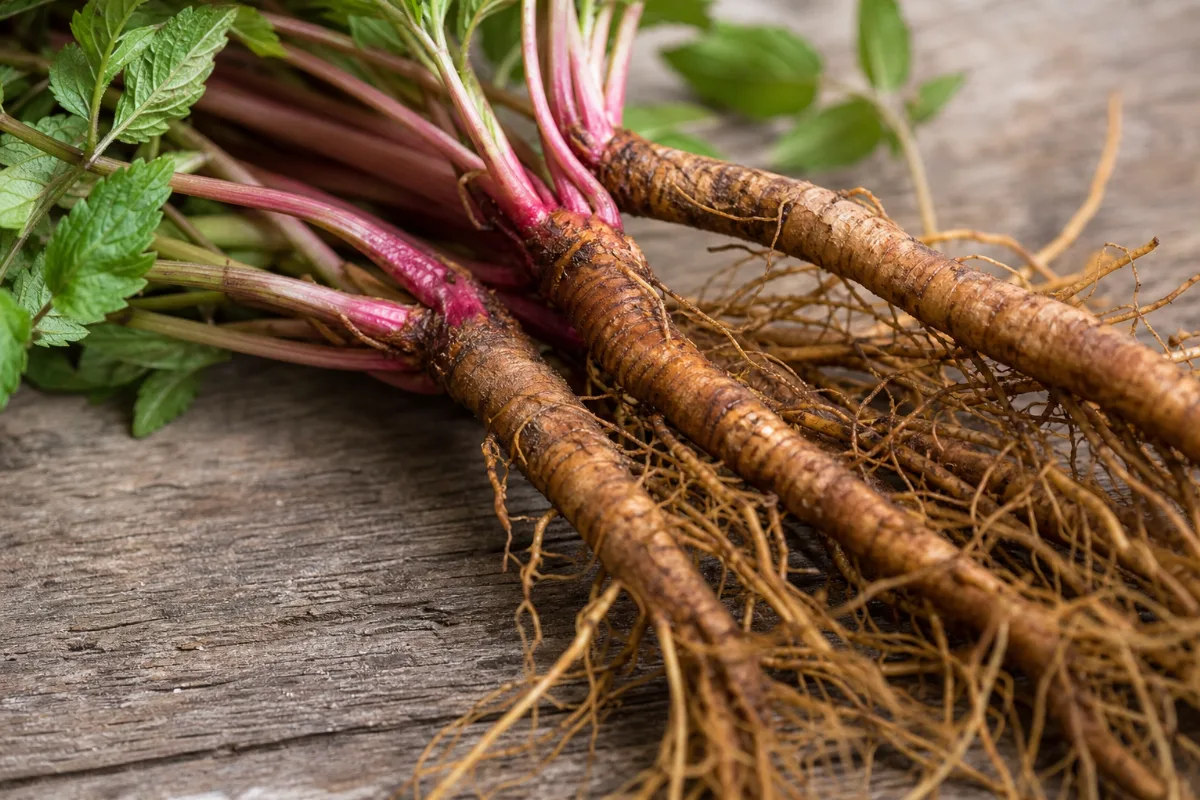
Herbs & Botanicals · Herbs · Chinese red sage root used for heart and circulation, with important blood-thinner cautions
Danshen (Red Sage Root)
Salvia miltiorrhiza Bunge (GBIF accepted name), family Lamiaceae · also called Danshen, dan shen, red sage root, Chinese sage, Salviae miltiorrhizae radix et rhizoma
Danshen is the dried root and rhizome of a Chinese sage plant, used for many centuries in Chinese medicine for blood circulation and chest pain. Most modern research is on the compound danshen dripping pill (a multi-herb pill), on danshen injections given in hospitals, and on purified compounds such as tanshinone IIA sulfonate. These are different from plain root tea, powder or tablets. Evidence is mostly low quality and from China. The safety side is clearer: danshen has caused dangerous over-thinning of the blood in people taking warfarin, and may add to the bleeding risk of other blood thinners.
General information, not medical advice. Last substantive update · Not medically reviewed. A named clinician has not signed off on this page. How this page is made
About Danshen (Red Sage Root)
Danshen is a traditional Chinese root used for circulation and chest pain. Research is mostly on a multi-herb pill and on hospital injections, mostly from China, and mostly low quality. The strongest evidence concerns safety: danshen can raise bleeding risk and has caused dangerous over-thinning of the blood with warfarin.
What it is
Danshen is the dried root and rhizome of Salvia miltiorrhiza Bunge, a plant in the mint family (Lamiaceae). It is used in Chinese medicine for blood circulation and pain. The European Pharmacopoeia and the Chinese Pharmacopoeia both describe the root, and quality standards set minimum amounts of salvianolic acid B and tanshinone II.
Its main active groups are the fat-soluble tanshinones and the water-soluble salvianolic acids and danshensu. Much of what is known about how they work comes from lab and animal studies.
Products that are not the same
Plain root (tea, powder, tablets), the compound danshen dripping pill (a multi-herb pill), danshen injections, purified salvianolic-acid salt injection and tanshinone IIA sulfonate injection are five different things. Most trials tested the pill or an injection, not plain root.
The EMA committee noted that most clinical studies used combination products, and that many publications lack a proper description of what was used. Results for one product should not be applied to another.
What the research shows
For angina, meta-analyses of many Chinese trials favour the dripping pill over nitrates, but risk of bias is high and GRADE is low. The manufacturer's large phase II and phase III placebo-controlled trials (124 and 1,004 people) are registered as complete, but we found no published results. For stroke, diabetic kidney disease and diabetic eye disease, the evidence is also mostly low quality and Chinese.
Where trials were done outside China the picture is weaker: a Dutch crossover trial of a root water extract found no benefit on blood pressure and slightly higher LDL. We found no trial of plain danshen alone for liver fibrosis. In 2022 the European regulator (EMA/HMPC) decided that an EU herbal monograph for danshen cannot be established.
At a glance
Traditional uses history, not proof
- Root and rhizome to invigorate and cool the blood and relieve pain in Chinese medicine
- Wine-fried root for 'invigorating the blood and channels' (EMA, quoting Chinese texts)
- Listed as 'Danshen' in the Chinese Pharmacopoeia since its 1963 edition
Studied for research
- Angina and coronary disease (compound danshen dripping pill), low
- Angina with danshen or depside-salt injections, low
- Stroke with injections, very low
- Blood pressure and blood fats, insufficient
- Diabetic kidney disease, low
- Diabetic retinopathy (dripping pill), low
- Liver fibrosis, insufficient (animal data only)
- Urinary symptoms in men, low (one trial)
Main compounds
- Tanshinones (tanshinone IIA, tanshinone I, cryptotanshinone)
- Salvianolic acids (salvianolic acid B) and danshensu
- Rosmarinic acid
Common forms
- Dried root as tea, powder or tablets
- Compound danshen dripping pill (multi-herb pill) and its capsule form T89
- Danshen injection, depside-salt injection and tanshinone IIA sodium sulfonate injection (given by clinicians, not supplements)
Research links: EMA/HMPC public statement on danshen · Chan 2001: warfarin and danshen (PubMed) · Liao 2026: bleeding with anticoagulants (PubMed) · Research Library · Genes & Biomarkers Library
The plant and its history
- Accepted scientific name
- Salvia miltiorrhiza Bunge
- Naming authority
- GBIF backbone (read 2026-10-25): ACCEPTED, published in Enum. Pl. China Bor.: 50 (1833). NCBI Taxonomy: species, taxid 226208, active.
- Common names
- Danshen (Chinese (pinyin)); Red sage root (English); Chinese sage (English); Salviae miltiorrhizae radix et rhizoma (Latin (pharmacopoeia and EMA name))
- Botanical family
- Lamiaceae (mint family)
- Classification
- Plantae > Tracheophyta > Magnoliopsida > Lamiales > Lamiaceae > Salvia > Salvia miltiorrhiza
- Native range
- Not verified in the sources read. The herb is used mainly in Chinese medicine.
- Habitat
- Not verified.
- What the plant looks like
- Roots: The dried root and rhizome is the herbal substance; the root is the part named in the Chinese and European Pharmacopoeias and the EMA documents.; Stems: Not verified.; Leaves: Not verified.; Flowers: Not verified.; Fruit: Not verified.
- Cultivation
- Not verified.
- Harvest and processing
- EMA: collected in spring or autumn, washed, softened, sliced and dried; may be stir-baked with wine (jiuzhi method).
- Look-alikes and adulterants
- Name: Other Salvia species (for example common sage, Salvia officinalis); Note: Different plants with different uses and chemistry. This profile covers Salvia miltiorrhiza root only. The difference is a naming caution; no source read describes adulteration of danshen with other Salvia.
- Sustainability and conservation
- Not assessed in the sources read.
Traditional use and history history, not clinical proof
| Tradition or era | Documented use | Source |
|---|---|---|
| Traditional Chinese medicine | Dried root and rhizome used to invigorate and cool the blood, relieve pain and clear the heart of vexation; wine-fried forms are described as best for invigorating the blood and channels (EMA, quoting Chinese texts). | s-ema-hmpc-assessment |
| Chinese Pharmacopoeia, 1963 onward | Listed as 'Danshen', the dried root and rhizome, in every edition from 1963 to 2015, with a processed (wine-fried) form. | s-ema-hmpc-assessment |
| European regulation, 2013 to 2022 | Root and rhizome has a European Pharmacopoeia monograph (8th edition, 2013). In 2022 the EMA/HMPC concluded an EU herbal monograph could not be established because traditional or well-established use requirements were not met. | s-ema-hmpc-statement |
| Modern use in China | Compound danshen dripping pill and danshen injections are used for heart and stroke care in hospitals. The compound pill's capsule form (T89) has been tested in US-registered phase II and phase III trials. | s-ctgov-nct01659580 |
Traditional use shows how a plant was used. It does not show that a supplement works or is safe today.
What is inside, and how it may work
What the plant contains and how those compounds act in cells and animals. Laboratory and animal mechanisms are not proven effects in people.
Main compounds
| Compound | Family | Where it is concentrated | Activity studied | Level of evidence |
|---|---|---|---|---|
| Tanshinone IIA PubChem 164676 | fat-soluble diterpene quinone (tanshinone) | Root European Pharmacopoeia sets a minimum of 0.12% tanshinone II in the root (EMA). | Blocked CYP1A2 in a test-tube study; zebrafish embryo toxicity at high lab concentrations (EMA); the injectable sodium sulfonate is a separate product. 23 5 21 | Laboratory research |
| Cryptotanshinone PubChem 160254 | tanshinone | Root | Strong CYP1A2 inhibitor and moderate CYP2C9 inhibitor in test tubes; named among possible allergic-like triggers in danshen injection (lab study). EMA says it is not absorbed orally in animal work and is converted to tanshinone IIA after intravenous dosing. 23 12 5 21 | Laboratory research |
| Tanshinone I PubChem 114917 | tanshinone | Root | Strong CYP1A2 inhibitor and weak CYP2D6 inhibitor in test tubes. 23 21 | Laboratory research |
| Salvianolic acid B PubChem 6451084 | water-soluble phenolic acid | Root European Pharmacopoeia sets a minimum of 3.0% in the root (EMA). | Poorly absorbed after oral dosing in animals (EMA, from a 2005 review); named among possible allergic-like triggers in danshen injection (lab study). 12 5 21 | Laboratory research |
| Danshensu PubChem 11600642 | water-soluble phenolic acid | Root | The only danshen component studied in humans for absorption (EMA); rose when taken with warfarin in a healthy-volunteer study; weak CYP2C9 inhibitor in test tubes. 5 36 23 21 | Human data |
| Rosmarinic acid PubChem 5281792 | phenolic acid | Root British Herbal Pharmacopoeia sets a minimum of 0.17% in processed root (EMA). | Listed as a marker compound; no activity read. 5 21 | Traditional use |
Mechanisms, receptors and pathways
| Target or pathway | Gene or receptor | What was found | Level |
|---|---|---|---|
| Platelets, clotting and fibrinolysis | Not specified | A 2001 review states danshen inhibits platelet aggregation, interferes with the extrinsic clotting pathway, shows antithrombin III-like activity and promotes fibrinolysis. This is a lab and animal explanation for the bleeding and warfarin signals; it is not a proven mechanism in people. 1 | Animal research |
| Warfarin handling and vitamin K cycle | EPHX1 (mEH), VKOR | In cells with the EPHX1 A variant the compound pill plus warfarin lowered mEH and VKOR and raised clotting factor proteins; in healthy volunteers with the A/A genotype it only slightly influenced warfarin PK/PD. 3 | Laboratory research |
| Cytochrome P450 enzymes | CYP1A2, CYP2C9, CYP2D6, CYP3A4 | Tanshinones blocked CYP1A2 and danshensu or cryptotanshinone blocked CYP2C9 in human liver microsomes. A 12-person human study cited by EMA suggested danshen tablets may induce gut CYP3A4. 23 5 | Laboratory research |
| Allergic-like reactions to injection | MrgprX2 receptor, ALOX5, PTGS1 | Computer and lab analysis suggests several injection compounds bind MrgprX2 and trigger mast cells. Not measured in patients. 12 | Laboratory research |
| Heart and vessel protection | Many | Reviews describe protective actions of tanshinones and salvianolic acids on atherosclerosis and heart injury in lab and animal studies. 13 | Animal research |
| Liver scarring genes | TGF-beta1, TIMP-1, MMP-13 | In rats danshen reduced fibrosis and lowered TGF-beta1, procollagens and TIMP-1 while raising MMP-13. 31 | Animal research |
Absorption, metabolism and elimination
- Absorption
- EMA: in animal studies danshensu and tanshinone IIA were absorbed quickly by mouth; salvianolic acid B was poorly absorbed; cryptotanshinone could not be absorbed orally. Absorption varies with the preparation.
- Distribution
- Not covered in the sources read.
- Metabolism
- Cryptotanshinone is converted to tanshinone IIA after intravenous dosing in animal work (EMA).
- Elimination
- Not covered in the sources read.
- Bioavailability
- Danshensu is the only component studied in humans; it is absorbed quickly, and sublingual dosing gave a longer half-life than oral in the report EMA cites. Human PK of specific preparations is not available (EMA).
Isolated compounds versus whole extracts
There are at least five different things sold or given under the danshen name: (1) whole root as tea, powder or tablets; (2) the compound danshen dripping pill (a multi-herb pill), including its capsule form T89; (3) danshen injections; (4) purified salvianolic-acid salt injections (depside salt); (5) tanshinone IIA sodium sulfonate injection, a single compound. Evidence from one does not transfer to the others. The EMA assessment points out that most clinical studies used combination products such as Fufang Danshen rather than single-herb preparations.
Nutritional composition
Danshen is a medicinal herb, not a food, and has no nutritional role.
5 low certainty1 very low certainty3 not enough evidence
What was looked at
The 9 benefits and uses checked for Danshen (Red Sage Root), each with how strong the evidence is. Tap one to open it.
- Angina and coronary heart disease (compound danshen dripping pill)Low certainty
- Angina (danshen and depside-salt injections added to usual care)Low certainty
- Ischaemic stroke (injections added to usual care)Very low certainty
- Blood pressure and blood fatsNot enough evidence
- Heart attack, death and other major outcomesNot enough evidence
- Diabetic kidney disease (added to usual care)Low certainty
- Diabetic retinopathy (eye disease from diabetes)Low certainty
- Liver fibrosis and hepatitisNot enough evidence
- Urinary symptoms in men (prostate-related)Low certainty
Lab markers tracked in the studies
Angina symptom 'effective rate'ECG improvement rateNeurological deficit improvement after strokeLDL cholesterol24-hour blood pressureUrinary albumin excretion rateSerum creatinineEye angiography responseInternational Prostate Symptom Score (IPSS)
What is Danshen (Red Sage Root) good for?
The main studied uses and how strong the human evidence is for each. Most evidence is low quality, from China, and for a multi-herb pill or injections rather than plain danshen. None of it outweighs the bleeding and drug-interaction cautions on the Safety tab.
Benefits, one by one
Each card is a research question, not a promise. Tap a goal to filter. Open a card to see the studies, doses and limits.
Angina and coronary heart disease (compound danshen dripping pill)
Low certaintyMany Chinese trials found a multi-herb danshen pill beat a nitrate drug on symptom and ECG 'effective rate'. The trials are mostly open-label and low quality, and the pill is not plain danshen. Two large Western-style trials of a related capsule are registered but we found no published results.
6 studiesCompound danshen dripping pill (multi-herb pill) and related T89 caps…
Studies, doses and limits
What the trials found
A 2017 meta-analysis pooled 109 randomised trials (11,973 people) of the danshen dripping pill against isosorbide dinitrate and found better 'effective rate' for symptoms and ECG, but GRADE was low and bias was high. A 2023 meta-analysis of 29 trials against nitrates reached similar results with very low to low certainty; four of its authors work for the pill maker. An overview of 13 reviews (34,071 people) said benefit on heart attack and death was unproved. The manufacturer's phase II (124 people, completed 2010) and phase III (1,004 people, completed 2016) placebo-controlled trials of the capsule form T89 are registered, but no results are posted and we found no published report. A second phase 3 trial is recruiting.
Results
Symptom and ECG improvement versus nitrates in many low-quality Chinese trials; no proven effect on heart attack or death.
Effect sizes as reported
Symptoms OR 2.94 (95% CI 2.53-3.41); ECG OR 2.37 (2.08-2.69) vs ISDN (2017). Symptoms OR 1.95 to 4.02 and ECG OR 1.60 to 3.43 vs nitrates at 4 to 8 weeks (2023).
Why this rating
Consistent direction across many trials, but high risk of bias, mostly open comparison with a nitrate, soft 'effective rate' outcomes, Chinese-only populations and manufacturer-linked authors. The reviewers' own GRADE was low to very low.
Form and dose studied
Compound danshen dripping pill (multi-herb pill) and related T89 capsule. Not plain danshen root.
Who was studied
Chinese adults with stable angina; Western populations are not covered by published results.
Limits
Not a test of danshen alone. Open nitrate comparison rather than placebo. No published results from the large registered placebo trials. Regional bias: nearly all trials come from China. Results cannot be carried over to teas, powders or injections.
Why researchers looked
Chest pain from narrowed heart arteries (angina) is the main modern use of the compound danshen dripping pill in China.
Traditional use
Danshen (red sage root) is a core herb in Chinese medicine, used to move and cool the blood and ease chest and abdominal pain (EMA/HMPC assessment). Uses in the trials below are modern.
Proposed mechanism Preliminary mechanism
Lab and animal work suggests danshen compounds widen vessels, calm inflammation and reduce clotting. This has not been shown to explain the trial results in people.
A proposed mechanism does not show that the effect happens in people.
Open the Safety tab first. Danshen can raise bleeding risk and has caused dangerous over-thinning of the blood in people taking warfarin.
Angina (danshen and depside-salt injections added to usual care)
Low certaintyReviews and a small trial of injections given by clinicians found better angina 'effective rate' when added to usual treatment. These are injections, not supplements, and the evidence is weak.
2 studiesInjections given by clinicians (danshen injection; salvianolic acid s…
Studies, doses and limits
What the trials found
A 2017 meta-analysis of 17 trials (1,433 people with unstable angina) found danshen injection plus Western medicine raised the angina effective rate (RR 1.23) and the ECG effective rate (RR 1.18) compared with Western medicine alone; the authors said safety was not exactly established. A 2021 multicentre pragmatic randomised trial in stable angina (135 completers) tested a purified depside-salt injection with aspirin: it improved a clotting-test measure of aspirin sensitivity and a symptom score (mean difference 1.71) versus aspirin alone, but not the angina questionnaire or platelet aggregation. No bleeding was seen over 10 days.
Results
Better 'effective rate' with add-on injection; mixed on other measures in the one trial.
Effect sizes as reported
RR 1.23 (1.17-1.29) angina; RR 1.18 (1.06-1.30) ECG (2017). Symptom score MD 1.71 (0.15-3.27) (2021).
Why this rating
Small, short Chinese trials with quality problems and poor adverse-event reporting. The 2021 trial was open and measured lab markers.
Form and dose studied
Injections given by clinicians (danshen injection; salvianolic acid salt injection). Not consumer products.
Who was studied
Adults with unstable or stable angina in China.
Limits
Injections are different from the whole herb and from pills. Short follow-up. Safety poorly reported.
Why researchers looked
In Chinese hospitals danshen injections and a purified salvianolic-acid salt injection are given by drip alongside standard heart medicines.
Traditional use
Danshen (red sage root) is a core herb in Chinese medicine, used to move and cool the blood and ease chest and abdominal pain (EMA/HMPC assessment). Uses in the trials below are modern.
Proposed mechanism Preliminary mechanism
Possible effects on platelets, clotting and blood vessel lining (lab work). Unproved as the reason for any benefit.
A proposed mechanism does not show that the effect happens in people.
Injections have been linked to allergic-like reactions and bleeding concerns. See Safety.
Ischaemic stroke (injections added to usual care)
Very low certaintyA Cochrane review found a better 'neurological improvement' score with danshen agents but called the trials poor quality. A 2025 review of an isolated tanshinone injection found a better stroke score but no better daily living. No trial of danshen taken by mouth was found.
3 studiesDanshen injections (clinician-given) and an isolated-compound injecti…
Studies, doses and limits
What the trials found
Cochrane (2007): six trials, 494 people. Neurological improvement was more common with danshen agents (Peto OR 3.02, 95% CI 1.73-5.26). No trial reported deaths or dependence after 3 months, and only two reported adverse events. Reviewers said the quality was poor and no reliable conclusion could be drawn. A 2025 meta-analysis of 22 trials (2,289 people) of tanshinone IIA sodium sulfonate injection (a purified compound) found better stroke scores (NIHSS) and clotting-marker changes but no significant difference in activities of daily living.
Results
Surrogate score improved; the patient-centred outcome (daily living) did not.
Effect sizes as reported
Peto OR 3.02 (1.73-5.26) for neurological improvement (Cochrane 2007).
Why this rating
Cochrane reviewers rated study quality poor; the 2025 review found no difference in daily living; surrogate outcomes; older and Chinese-only trials.
Form and dose studied
Danshen injections (clinician-given) and an isolated-compound injection. No oral danshen trials found.
Who was studied
Adults with acute ischaemic stroke in China.
Limits
Injections only. Data on death and disability are missing. Regional bias.
Why researchers looked
Danshen injections are widely used in China after ischaemic stroke.
Traditional use
Danshen (red sage root) is a core herb in Chinese medicine, used to move and cool the blood and ease chest and abdominal pain (EMA/HMPC assessment). Uses in the trials below are modern.
Proposed mechanism Animal research
Lab and animal studies suggest effects on blood thickness, clotting and brain protection. Not proven in people.
A proposed mechanism does not show that the effect happens in people.
Bleeding concerns after intravenous use are noted by EMA. See Safety.
Blood pressure and blood fats
Not enough evidenceResults conflict. One small Dutch crossover trial of a danshen water extract found no blood pressure benefit and slightly higher LDL cholesterol. One 2025 Chinese trial of a 12-week daily intravenous infusion reported lower blood pressure, but it came from one hospital and has not been repeated.
3 studiesDanshen root water extract (oral) and intravenous Salvia miltiorrhiza…
Studies, doses and limits
What the trials found
Dutch randomised double-blind crossover trial (2015, 20 adults aged 40 to 70 with high cholesterol and high blood pressure, 4 weeks of danshen root water extract): LDL cholesterol was slightly higher after danshen (3.82 vs 3.52 mmol/L) and blood pressure, endothelial function and inflammation markers did not change; the authors said it does not support use. Chinese placebo-controlled trial (2025, 320 adults with primary hypertension, daily intravenous Salvia miltiorrhiza for 12 weeks): blood pressure reached 136.78/85.36 mmHg at week 12, lower than placebo, with better lipids; this is a hospital infusion, not a consumer product.
Results
Oral extract: no benefit in 20 people. Infusion: reported benefit in one hospital trial.
Effect sizes as reported
LDL 3.82 vs 3.52 mmol/L (oral extract); BP 136.78/85.36 mmHg at 12 weeks (infusion).
Why this rating
Two very different products, one tiny trial (commercially funded) and one single-hospital trial with an unusually large effect.
Form and dose studied
Danshen root water extract (oral) and intravenous Salvia miltiorrhiza injection.
Who was studied
Adults with hypertension; one Dutch, one Chinese sample.
Limits
No oral trial in a large sample. The two trials are not comparable.
Why researchers looked
High blood pressure and high cholesterol are risk factors that danshen is often said to help.
Traditional use
Danshen (red sage root) is a core herb in Chinese medicine, used to move and cool the blood and ease chest and abdominal pain (EMA/HMPC assessment). Uses in the trials below are modern.
Proposed mechanism Preliminary mechanism
Not established.
A proposed mechanism does not show that the effect happens in people.
EMA notes danshen may cause low blood pressure and dizziness and should be used with caution with blood-pressure medicines.
Heart attack, death and other major outcomes
Not enough evidenceNot shown. An overview of 13 reviews said benefit on endpoints such as heart attack and death was unproved.
2 studiesCompound danshen dripping pill reviews.
Studies, doses and limits
What the trials found
The 2015 overview of systematic reviews (13 reviews, 34,071 people) found that only 5 of 13 reviews looked at endpoints and benefit there was unproved. The EMA committee found no clinical study good enough to show plausibility or well-established use.
Results
No proven benefit on heart attack, death or quality of life.
Why this rating
Missing or poor-quality data on hard outcomes; EMA review of 2022 reached the same view.
Form and dose studied
Compound danshen dripping pill reviews.
Who was studied
Adults with coronary disease in China.
Limits
Endpoint data are rare; no large placebo-controlled published results.
Why researchers looked
These are the outcomes patients care about most.
Traditional use
Danshen (red sage root) is a core herb in Chinese medicine, used to move and cool the blood and ease chest and abdominal pain (EMA/HMPC assessment). Uses in the trials below are modern.
Proposed mechanism Pharmacological theory
Not applicable.
A proposed mechanism does not show that the effect happens in people.
Open the Safety tab first. Danshen can raise bleeding risk and has caused dangerous over-thinning of the blood in people taking warfarin.
Diabetic kidney disease (added to usual care)
Low certaintyReviews of mostly Chinese trials found lower kidney markers (creatinine, urine albumin) and inflammation markers when danshen preparations were added to usual diabetic kidney treatment. The trials are not high quality and mix several products.
2 studiesSalvia miltiorrhiza preparations (tablets, injections) and a danshen-…
Studies, doses and limits
What the trials found
A 2025 meta-analysis (21 RCTs, 1,970 people) of Salvia miltiorrhiza preparations found lower creatinine, urea, urine albumin, 24-hour urine protein, CRP, TNF-alpha, IL-6 and endothelin-1 and higher flow-mediated dilation than usual care alone, with no difference in adverse events. A 2021 meta-analysis (22 trials, 1,939 people) of an injection combining danshen with ligustrazine (another herb) added to usual care in early kidney disease found lower urine albumin (SMD -1.82), creatinine (MD -13.21 micromol/L), IL-6 and TNF-alpha; the authors said study quality limited their conclusions.
Results
Lower kidney and inflammation markers; no kidney failure or death outcomes read.
Effect sizes as reported
Creatinine MD -13.21 micromol/L (95% CI -19.58 to -6.83); urine albumin SMD -1.82 (-2.62 to -1.01) (2021 injection review).
Why this rating
Many small Chinese trials, lab markers rather than kidney failure, mixed products. The 2025 review does not give a GRADE in its abstract.
Form and dose studied
Salvia miltiorrhiza preparations (tablets, injections) and a danshen-plus-ligustrazine injection.
Who was studied
Adults with diabetic kidney disease in China.
Limits
Mixed preparation types; the injection includes another herb; no long-term kidney outcomes read.
Why researchers looked
Diabetic kidney disease is a common long-term complication of diabetes and a frequent target of Chinese herbal injections and tablets.
Traditional use
Danshen (red sage root) is a core herb in Chinese medicine, used to move and cool the blood and ease chest and abdominal pain (EMA/HMPC assessment). Uses in the trials below are modern.
Proposed mechanism Preliminary mechanism
Possible anti-inflammatory and vessel-lining effects from lab work. Not shown to explain the trial results.
A proposed mechanism does not show that the effect happens in people.
Danshen can raise bleeding risk and interacts with several heart and blood medicines. See Safety.
Diabetic retinopathy (eye disease from diabetes)
Low certaintyThe best evidence is for the compound danshen dripping pill (a multi-herb pill) in early retinopathy. Meta-analyses of Chinese trials and one 223-person placebo-controlled trial found improvement on eye-exam grading. Evidence is low to moderate and not for plain danshen.
3 studiesCompound danshen dripping pill (multi-herb pill) with usual treatment.
Studies, doses and limits
What the trials found
A 2022 meta-analysis of 26 RCTs (2,047 people) found a better curative effect with the compound danshen dripping pill (RR 0.54, 95% CI 0.40-0.73; moderate-quality evidence) and improvements in retinal haemorrhage and microaneurysms; GRADE ranged from moderate to very low. A 2021 meta-analysis of 8 RCTs (524 people) found pooled effective rate OR 5.00. A multicentre randomised, double-blind, placebo-controlled trial in 223 people with non-proliferative retinopathy (24 weeks) found 'excellent' or 'effective' angiography results in 74% and 77% of two pill groups versus 28% with placebo.
Results
Better eye-exam grading than placebo or usual care in Chinese trials.
Effect sizes as reported
RR 0.54 (0.40-0.73) curative effect (2022); 74-77% vs 28% (angiography) in the placebo-controlled trial.
Why this rating
Moderate to very low GRADE depending on outcome; all trials from China; grading by investigators; long-term vision outcomes are not shown in the abstracts.
Form and dose studied
Compound danshen dripping pill (multi-herb pill) with usual treatment.
Who was studied
Adults with non-proliferative diabetic retinopathy in China.
Limits
Not plain danshen; short trials; regional bias.
Why researchers looked
Retinopathy damages tiny blood vessels in the eye; the pill is widely used in China for early (non-proliferative) disease.
Traditional use
Danshen (red sage root) is a core herb in Chinese medicine, used to move and cool the blood and ease chest and abdominal pain (EMA/HMPC assessment). Uses in the trials below are modern.
Proposed mechanism Animal research
Animal work suggests effects on retinal vessels and nerve cells. Not shown in people.
A proposed mechanism does not show that the effect happens in people.
Retinal bleeding patients should talk to an eye doctor before using blood-affecting herbs. See Safety.
Liver fibrosis and hepatitis
Not enough evidenceNo human trial of danshen for liver fibrosis was found in our search. Rat studies show less scarring. A Chinese dosing study of an injection in hepatitis B is mentioned by EMA with lower liver enzymes, but we did not read it.
2 studiesRat study: herb preparation; human: injection in hepatitis B (via EMA…
Studies, doses and limits
What the trials found
A 1998 rat study (carbon tetrachloride model) found Salvia reduced fibrosis on slides and lowered TGF-beta1, procollagen I/III and TIMP-1 transcripts. The EMA assessment mentions a dosing study of danshen injection in hepatitis B that reported lower liver enzymes, but only as an English abstract of a Chinese paper (Ye 2005) that we did not read. We found no randomised trial of danshen alone for human liver fibrosis or cirrhosis.
Results
Animal benefit only; no usable human evidence.
Why this rating
Only animal data read; the human report is second-hand.
Form and dose studied
Rat study: herb preparation; human: injection in hepatitis B (via EMA).
Who was studied
Rats; people with hepatitis B (EMA mention).
Limits
Rat result cannot be carried over to people. Danshen has been linked to raised liver enzymes in TCM reports.
Why researchers looked
Scarring (fibrosis) from long-term liver injury has few treatments, so herbs are studied.
Traditional use
Danshen (red sage root) is a core herb in Chinese medicine, used to move and cool the blood and ease chest and abdominal pain (EMA/HMPC assessment). Uses in the trials below are modern.
Proposed mechanism Animal research
In rats danshen lowered fibrosis genes such as TGF-beta1 and raised a collagen-clearing enzyme (MMP-13).
A proposed mechanism does not show that the effect happens in people.
Raised liver enzymes were reported in TCM use (EMA). See Safety.
Urinary symptoms in men (prostate-related)
Low certaintyOne 12-week placebo-controlled trial of a branded root extract found better symptom scores. It is a single industry-linked trial, so evidence is thin.
1 studiesBranded root extract (SAGX).
Studies, doses and limits
What the trials found
A multicentre, randomised, double-blind, placebo-controlled trial in Korea (136 men, 12 weeks) of a Salvia miltiorrhiza root extract (SAGX) found better International Prostate Symptom Scores than placebo, with improved erectile function scores mainly in the lower-dose group. PSA and testosterone did not change. No serious adverse events leading to stopping were seen. Two authors worked for companies.
Results
Better symptom scores than placebo in one trial.
Effect sizes as reported
Numbers not stated in the abstract.
Why this rating
One trial, 136 men, 12 weeks, company-linked, abstract only.
Form and dose studied
Branded root extract (SAGX).
Who was studied
Korean men with lower urinary tract symptoms.
Limits
No replication; short; not a test of plain root or tea.
Why researchers looked
Urinary symptoms from an enlarged prostate are common in older men.
Proposed mechanism Preliminary mechanism
Not established.
A proposed mechanism does not show that the effect happens in people.
See Safety for bleeding and drug interactions.
Connections to the rest of health
How Danshen (Red Sage Root) connects to the rest of our health knowledge graph. Every link says what kind of connection it is. A safety link (for example to the liver) is a warning, not a benefit. A study that merely mentions a topic never creates a benefit link.
Explore every connection: goals, body systems, organs, symptoms, genes
A. Wellness goals
| Connected to | Kind of connection | Evidence status | Context | Studies |
|---|---|---|---|---|
| Heart Health | Potential benefit | Low certainty | Angina and coronary heart disease (compound danshen dripping pill): Many Chinese trials found a multi-herb danshen pill beat a nitrate drug on symptom and ECG 'effective rate'. The trials are mostly open-label and low quality, and the pill is not plain danshen. Two large Western-style trials of a related capsule are registered but we found no published results. Angina (danshen and depside-salt injections added to usual care): Reviews and a small trial of injections given by clinicians found better angina 'effective rate' when added to usual treatment. These are injections, not supplements, and the evidence is weak. | 11 37 18 27 26 28 33 19 |
| Brain Health | Potential benefit | Very low certainty | Ischaemic stroke (injections added to usual care): A Cochrane review found a better 'neurological improvement' score with danshen agents but called the trials poor quality. A 2025 review of an isolated tanshinone injection found a better stroke score but no better daily living. No trial of danshen taken by mouth was found. | 32 17 5 |
| Blood Pressure Support | Potential benefit | Not enough evidence | Blood pressure and blood fats: Results conflict. One small Dutch crossover trial of a danshen water extract found no blood pressure benefit and slightly higher LDL cholesterol. One 2025 Chinese trial of a 12-week daily intravenous infusion reported lower blood pressure, but it came from one hospital and has not been repeated. | 39 14 5 |
| Cholesterol Balance | Potential benefit | Not enough evidence | Blood pressure and blood fats: Results conflict. One small Dutch crossover trial of a danshen water extract found no blood pressure benefit and slightly higher LDL cholesterol. One 2025 Chinese trial of a 12-week daily intravenous infusion reported lower blood pressure, but it came from one hospital and has not been repeated. | 39 14 5 |
| Heart Health | Preliminary mechanism | Not enough evidence | Heart attack, death and other major outcomes: Not shown. An overview of 13 reviews said benefit on endpoints such as heart attack and death was unproved. | 18 5 |
| Metabolic Health | Potential benefit | Low certainty | Diabetic kidney disease (added to usual care): Reviews of mostly Chinese trials found lower kidney markers (creatinine, urine albumin) and inflammation markers when danshen preparations were added to usual diabetic kidney treatment. The trials are not high quality and mix several products. Diabetic retinopathy (eye disease from diabetes): The best evidence is for the compound danshen dripping pill (a multi-herb pill) in early retinopathy. Meta-analyses of Chinese trials and one 223-person placebo-controlled trial found improvement on eye-exam grading. Evidence is low to moderate and not for plain danshen. | 38 34 30 10 15 |
| Healthy Aging | Potential benefit | Low certainty | Diabetic retinopathy (eye disease from diabetes): The best evidence is for the compound danshen dripping pill (a multi-herb pill) in early retinopathy. Meta-analyses of Chinese trials and one 223-person placebo-controlled trial found improvement on eye-exam grading. Evidence is low to moderate and not for plain danshen. | 30 10 15 |
| Liver Support | Preliminary mechanism | Not enough evidence | Liver fibrosis and hepatitis: No human trial of danshen for liver fibrosis was found in our search. Rat studies show less scarring. A Chinese dosing study of an injection in hepatitis B is mentioned by EMA with lower liver enzymes, but we did not read it. | 31 5 |
| Mens Vitality | Potential benefit | Low certainty | Urinary symptoms in men (prostate-related): One 12-week placebo-controlled trial of a branded root extract found better symptom scores. It is a single industry-linked trial, so evidence is thin. | 24 |
B. Body systems
| Connected to | Kind of connection | Evidence status | Context | Studies |
|---|---|---|---|---|
| Cardiovascular system | Drug or supplement interaction | Moderate certainty | Case reports and a hospital database study point to higher bleeding risk with anticoagulants. Preparation or compound: Whole danshen with warfarin and antiplatelets |
1 16 |
| Liver | Adverse effect or risk | Low certainty | Raised liver enzymes reported; no LiverTox record found. Preparation or compound: TCM danshen use and injections |
5 2 |
| Pregnancy and lactation | Contraindication | Low certainty | EMA says contraindicated; no human data. Preparation or compound: Danshen root |
5 |
| Cardiovascular System | Biological association | Low certainty | Studied for: Angina and coronary heart disease (compound danshen dripping pill) Studied for: Angina (danshen and depside-salt injections added to usual care) | 11 37 18 27 26 28 33 19 32 17 5 39 14 |
| Nervous System | Biological association | Very low certainty | Studied for: Ischaemic stroke (injections added to usual care) Studied for: Diabetic retinopathy (eye disease from diabetes) | 32 17 5 30 10 15 |
| Urinary System | Biological association | Low certainty | Studied for: Diabetic kidney disease (added to usual care) Studied for: Urinary symptoms in men (prostate-related) | 38 34 24 |
| Endocrine System | Biological association | Low certainty | Studied for: Diabetic kidney disease (added to usual care) | 38 34 |
| Hepatic System | Biological association | Not enough evidence | Studied for: Liver fibrosis and hepatitis | 31 5 |
| Reproductive System | Biological association | Low certainty | Studied for: Urinary symptoms in men (prostate-related) | 24 |
I. Biomarkers
| Connected to | Kind of connection | Evidence status | Context | Studies |
|---|---|---|---|---|
| INR | Drug or supplement interaction | Low certainty | Raised INR reported in case reports (EMA quotes an INR rise from 2.0 to above 5.5). Preparation or compound: Danshen with warfarin |
5 25 |
| Angina symptom 'effective rate' | Biological association | Low certainty | Measured in trials: raised. A lab change is not the same as a health benefit. | 11 37 |
| ECG improvement rate | Biological association | Low certainty | Measured in trials: raised. A lab change is not the same as a health benefit. | 11 33 |
| Neurological deficit improvement after stroke | Biological association | Very low certainty | Measured in trials: raised. A lab change is not the same as a health benefit. | 32 17 |
| LDL cholesterol | Biological association | Not enough evidence | Measured in trials: mixed. A lab change is not the same as a health benefit. | 39 14 |
| 24-hour blood pressure | Biological association | Not enough evidence | Measured in trials: mixed. A lab change is not the same as a health benefit. | 39 14 |
| Urinary albumin excretion rate | Biological association | Low certainty | Measured in trials: lowered. A lab change is not the same as a health benefit. | 34 38 |
| Serum creatinine | Biological association | Low certainty | Measured in trials: lowered. A lab change is not the same as a health benefit. | 34 |
| Eye angiography response | Biological association | Low certainty | Measured in trials: raised. A lab change is not the same as a health benefit. | 15 |
| International Prostate Symptom Score (IPSS) | Biological association | Low certainty | Measured in trials: lowered. A lab change is not the same as a health benefit. | 24 |
J. Genes, receptors and enzymes
| Connected to | Kind of connection | Evidence status | Context | Studies |
|---|---|---|---|---|
| CYP1A2 | Preliminary mechanism | In vitro | Strongly blocked by tanshinones in test tubes; clinical meaning unknown. | 23 |
| CYP2C9 | Preliminary mechanism | In vitro | Blocked by danshensu and cryptotanshinone in test tubes; CYP2C9 clears warfarin, so this is a possible route for the warfarin signal but is not shown clinically. | 23 |
| CYP3A4 | Preliminary mechanism | Human | EMA cites a 12-person study suggesting gut CYP3A4 induction after danshen tablets. | 5 |
| EPHX1 (epoxide hydrolase) | Preliminary mechanism | In vitro | A common variant (rs2292566) may modify the compound pill and warfarin interaction. | 3 |
| MrgprX2 | Preliminary mechanism | In vitro | Proposed route for allergic-like reactions to danshen injection. | 12 |
L. Active compounds
| Connected to | Kind of connection | Evidence status | Context | Studies |
|---|---|---|---|---|
| Tanshinone IIA | Biological association | In vitro | Blocked CYP1A2 in a test-tube study; zebrafish embryo toxicity at high lab concentrations (EMA); the injectable sodium sulfonate is a separate product. Preparation or compound: Root |
23 5 21 |
| Cryptotanshinone | Biological association | In vitro | Strong CYP1A2 inhibitor and moderate CYP2C9 inhibitor in test tubes; named among possible allergic-like triggers in danshen injection (lab study). EMA says it is not absorbed orally in animal work and is converted to tanshinone IIA after intravenous dosing. Preparation or compound: Root |
23 12 5 21 |
| Tanshinone I | Biological association | In vitro | Strong CYP1A2 inhibitor and weak CYP2D6 inhibitor in test tubes. Preparation or compound: Root |
23 21 |
| Salvianolic acid B | Biological association | In vitro | Poorly absorbed after oral dosing in animals (EMA, from a 2005 review); named among possible allergic-like triggers in danshen injection (lab study). Preparation or compound: Root |
12 5 21 |
| Danshensu | Biological association | Human | The only danshen component studied in humans for absorption (EMA); rose when taken with warfarin in a healthy-volunteer study; weak CYP2C9 inhibitor in test tubes. Preparation or compound: Root |
5 36 23 21 |
| Rosmarinic acid | Biological association | Traditional use | Listed as a marker compound; no activity read. Preparation or compound: Root |
5 21 |
Each connection is stored with the ingredient, the connected record, the kind of connection, the evidence status, the supporting studies, the preparation or compound involved, and a review date (last reviewed October 25, 2026).
The evidence
The research centre for Danshen (Red Sage Root). Every record here was checked against PubMed or the publisher's page; we never list a study we have not verified.
Evidence by outcome
Bars show how many studies we found for each outcome, not how well it works. People are added up across trials only (reviews are not added, to avoid double counting).
How we rate evidence
High certainty
Several well-run trials or reviews agree; further research is unlikely to change the picture much.
Moderate certainty
Good trials point the same way, but some doubt remains.
Low certainty
Small, short or inconsistent trials. The finding could change with better research.
Very low certainty
Very little or very weak human data. Treat as a possibility only.
Mixed findings
Trials or reviews disagree with each other.
Not enough evidence
Not enough human research to say either way.
Evidence against
Good research found no benefit, or found harm.
We take the reviewers' own risk-of-bias and GRADE statements where they exist, and otherwise judge from study size, design, consistency, directness and whether a product matches what is sold. Many publications do not make evidence high. Method note: We searched PubMed, read the abstract of every PubMed study cited, read the EMA/HMPC public statement and assessment report on danshen in full, checked ClinicalTrials.gov records, and checked the plant name in GBIF and NCBI Taxonomy and compounds in PubChem. Not found or not verified: NCCIH danshen page (none), FDA, LiverTox, LactMed, Health Canada, WHO. Most studies were read as abstracts only. Certainty ratings are the compiler's reading and lean on the reviewers' own GRADE where given.
Study library: every study we checked 39
| Study | Design | People | Product, dose, length | Result |
|---|---|---|---|---|
| Chan 2001 Interaction between warfarin and danshen (Salvia miltiorrhiza). Ann Pharmacother · PMID 11302416 · DOI |
Systematic review |
Narrative review of danshen and warfarin literature to Oct 2000 | Danshen (dry root and rhizome of Salvia miltiorrhiza) root and rhizome |
Danshen can inhibit platelet clumping, affect the extrinsic clotting pathway, show antithrombin III-like activity and promote fibrinolysis. In rats it raised warfarin exposure and exaggerated the anticoagulant response. Three earlier case reports described gross over-anticoagulation and bleeding in people on long-term warfarin who also took danshen. The author concluded danshen should be avoided in people taking warfarin. 3 prior case reports; rat PK data (n/a) Methods, limits and fundingOutcomes: Danshen effects on clotting; danshen-warfarin interaction Limitations: Narrative review (MEDLINE to Oct 2000); case reports have co-medications; no controlled human data. Read: abstract |
| Chang 2014 Postmarketing safety evaluation: depside salt injection made from Danshen (Radix Salviae Miltiorrhizae). J Tradit Chin Med · PMID 25618981 · DOI |
Systematic review |
Post-marketing review of one danshen injection (depside salt) using trial data, hospital records and spontaneous reports | Salvia miltiorrhiza depside salt injection (isolated salvianolic acid salts) root extract (isolated) |
Most common reports were headache, head distention, dizziness, facial flushing, skin itching, thrombocytopenia and elevated AST that reversed. Hospital data showed no kidney damage at above recommended doses. Dog studies found toxicity at high doses. n/a (n/a) Methods, limits and fundingOutcomes: Adverse drug reactions Limitations: Product evaluation by a Chinese group; spontaneous reports undercount; this is an isolated-compound injection, not whole herb. Read: abstract |
| Chen 2023 Evaluation and clinical implications of interactions between compound Danshen dropping pill and warfarin associated with the epoxide hydrolase gene. Front Pharmacol · PMID 37214448 · DOI |
Clinical trial |
Cell lines plus healthy volunteers with the EPHX1 A/A genotype | Compound Danshen dripping pill (CDDP) with warfarin multi-herb pill · vs Warfarin alone (implied) |
In EPHX1 A cells the pill plus warfarin lowered mEH and VKOR and raised clotting factor protein levels. In healthy volunteers the pill only slightly influenced warfarin PK/PD. Authors concluded the combination was safe with no bleeding risk but needs managing. Slight PK/PD change (Not given in abstract) Methods, limits and fundingOutcomes: Warfarin pharmacokinetics and effects; vitamin K cycle proteins Limitations: Healthy volunteers with one genotype; abstract gives no numbers or sample size. Not proof of safety in patients on long-term warfarin. Registration: ChiCTR190002434 Read: abstract |
| Datta 2002 Effect of Chinese medicines Chan Su and Danshen on EMIT 2000 and Randox digoxin immunoassays: wide variation in digoxin-like immunoreactivity and magnitude of interference in digoxin measurement by different brands of the same product. Ther Drug Monit · PMID 12352936 · DOI |
Laboratory research in-vitro |
Drug-free serum and digoxin patient serum pools spiked with danshen extract (lab test) | Danshen ethyl acetate extract (several brands) root · vs Four digoxin immunoassays compared |
No danshen interference in the EMIT 2000, Randox or CLIA assays but interference in the FPIA assay. Different brands varied widely in how much they interfered. Assay-dependent (Not given) Methods, limits and fundingOutcomes: Apparent digoxin concentration Limitations: Lab spiking study with tiny extract amounts, not patients who took danshen. Read: abstract |
| European Medicines Agency 2022 Assessment report on Salvia miltiorrhiza Bunge, radix et rhizoma (EMA/HMPC/509932/2019, final) · Source |
Authoritative guidance |
Danshen root and rhizome root and rhizome |
34-page assessment dated 30 March 2022. Concludes no plausibility or well-established use can be shown from clinical studies (poor design, small samples, poorly defined products). Safety section lists anaphylactic reaction, abdominal discomfort, itching, low blood pressure, dizziness and headache, bleeding (skin, mucous membranes, heavy periods) and raised liver enzymes from TCM use; interactions with warfarin, digitalis/cardiac glycosides and blood-pressure drugs; AHPA interaction class C; contraindicated in pregnancy and breastfeeding; bleeding concerns after intravenous use. One Dutch traditional product (registered 2016, for mild menstrual pain) and a tea food supplement exist; no EU pharmacovigilance data. Non-clinical data scarce: no reproductive or carcinogenicity data; one Ames test negative; tanshinone IIA was toxic to zebrafish embryos. A midazolam study in 12 healthy volunteers suggested gut CYP3A4 induction. Methods, limits and fundingLimitations: Read 2026-10-25 (text extracted from the PDF; key sections read). The assessment mostly summarises older reviews and Chinese literature; several statements rest on a TCM textbook and secondary reviews rather than primary data. Read: full-text | |
| European Medicines Agency 2022 Public statement on Salvia miltiorrhiza Bunge, radix et rhizoma (EMA/HMPC/509931/2019, final) · Source |
Authoritative guidance |
Danshen root and rhizome root and rhizome |
Adopted 30 March 2022. The HMPC concluded a European Union herbal monograph on danshen root and rhizome cannot be established. Requirements for well-established use (recognised efficacy and acceptable safety) and for traditional use (period of traditional use and sufficient data, product shown not harmful) were not fulfilled. Many publications exist but often lack a proper description of the herbal substance or preparation used. Methods, limits and fundingLimitations: Read in full 2026-10-25 (2 pages). Read: full-text | |
| GBIF Secretariat 2026 GBIF Backbone Taxonomy: Salvia miltiorrhiza Bunge (usageKey 7308369) · Source |
Authoritative guidance |
Plant identity |
ACCEPTED name Salvia miltiorrhiza Bunge, published in Enum. Pl. China Bor.: 50 (1833); family Lamiaceae, order Lamiales, genus Salvia. Methods, limits and fundingLimitations: Read via the GBIF API 2026-10-25. Read: full-text | |
| Hu 2005 Herb-drug interactions: a literature review. Drugs · PMID 15916450 · DOI |
Systematic review |
Review of reported herb-drug interactions | Many herbs including Salvia miltiorrhiza (danshen) mixed |
Notes cases of enhanced anticoagulation and bleeding when people on long-term warfarin also took danshen. Mostly case reports and limited observations. n/a (n/a) Methods, limits and fundingOutcomes: Clinically significant herb-drug interactions Limitations: Literature review of mostly case reports. Read: abstract |
| Hu 2019 Interactions between clopidogrel and traditional Chinese medicine. J Thromb Thrombolysis · PMID 31471773 · DOI |
Systematic review |
Review of herb-clopidogrel studies | Many TCM herbs including Danshen and Fufang Danshen dripping pill mixed |
Reports that danshen decreased clopidogrel active metabolite and decreased platelet inhibition; Fufang Danshen dripping pill decreased the active metabolite and inactive metabolite exposure. Source studies are mostly animal or small. n/a (n/a) Methods, limits and fundingOutcomes: Clopidogrel levels and platelet inhibition Limitations: Narrative review; details of the underlying studies not in the abstract; direction (less clopidogrel effect) differs from the bleeding-up concern for anticoagulants. Read: abstract |
| Huang 2021 Efficacy of Compound Danshen Dripping Pills combined with western medicine in the treatment of diabetic retinopathy: a systematic review and meta-analysis of randomized controlled trials. Ann Palliat Med · PMID 34763458 · DOI |
Meta-analysis |
524 8 RCTs, 524 people with diabetic retinopathy |
Compound danshen dripping pills plus Western medicine multi-herb pill · vs Western medicine alone |
Pooled effective rate OR 5.00; small improvements in visual acuity (MD 0.15). Authors called it effective and safe. OR 5.00 effective rate (95% CI 2.84-8.83) Methods, limits and fundingOutcomes: Effective rate; visual field; microaneurysm volume; bleeding area; visual acuity Limitations: Only 8 Chinese trials; "effective rate" is a soft outcome; no GRADE. Read: abstract |
| Jia 2017 How Efficacious is Danshen (Salvia miltiorrhiza) Dripping Pill in Treating Angina Pectoris? Evidence Assessment for Meta-Analysis of Randomized Controlled Trials. J Altern Complement Med · PMID 28650203 · DOI |
Meta-analysis |
11973 109 RCTs, 11,973 people with angina (China) |
Danshen dripping pill (multi-herb pill) versus isosorbide dinitrate multi-herb pill At least 4 weeks · vs Isosorbide dinitrate (ISDN) |
Pill better than ISDN: odds ratio 2.94 for symptoms (108 trials) and 2.37 for ECG (81 trials). Risk of bias was high for randomisation and blinding. GRADE rated the evidence low. OR 2.94 symptoms; OR 2.37 ECG (95% CI 2.53-3.41 (symptoms); 2.08-2.69 (ECG); I2 41-44%) Methods, limits and fundingOutcomes: Symptom improvement; ECG improvement Limitations: Trials from China, mostly open comparisons with a nitrate, high risk of bias; "effective rate" outcomes are soft; GRADE low. Read: abstract |
| Lei 2024 Based on UHPLC-Q-TOF-MS and bioinformatics strategies, the potential allergens and mechanisms of allergic reactions caused by Danshen injection were explored. Biomed Chromatogr · PMID 39138643 · DOI |
Laboratory research in-vitro |
Lab and computer analysis of danshen injection | Danshen injection (a clinician-given injection) root extract |
Identified 45 compounds; 24 bound strongly to an allergic-reaction receptor (MrgprX2). Key candidates named were cryptotanshinone, miltipolone, neocryptotanshinone, salvianolic acid B and isosalvianolic acid C. Authors propose these trigger mast cell release. n/a (n/a) Methods, limits and fundingOutcomes: Compounds that may cause allergic-like reactions Limitations: Lab and computer study. It suggests a reason for allergic-like reactions but does not measure how often they occur in patients. Read: abstract |
| Li 2018 Salvia miltiorrhizaBurge (Danshen): a golden herbal medicine in cardiovascular therapeutics. Acta Pharmacol Sin · PMID 29698387 · DOI |
Systematic review in-vitro |
Review of cardiovascular pharmacology of danshen compounds | Danshen and its constituents (tanshinones, danshensu, salvianolic acids, protocatechuic aldehyde) root |
Describes protective effects of fat-soluble (tanshinone I, IIA, IIB, cryptotanshinone, dihydrotanshinone) and water-soluble (danshensu, salvianolic acids A and B, protocatechuic aldehyde) constituents on atherosclerosis and heart injury, mostly from lab and animal work. n/a (n/a) Methods, limits and fundingOutcomes: Cardiovascular actions of constituents Limitations: Narrative review of mostly preclinical work. Read: abstract |
| Li 2025 Effects of Dan Shen (Salvia miltiorrhiza) on blood pressure management in hypertensive patients: a randomized controlled trial. Blood Press · PMID 40658027 · DOI |
Controlled trial |
320 320 adults with primary high blood pressure, one hospital in Ganzhou, China |
Intravenous Salvia miltiorrhiza injection versus placebo infusion root injection 12 weeks · vs Placebo infusion |
Reported lower systolic and diastolic blood pressure from week 4 (136.78/85.36 mmHg at week 12, both below placebo), better lipids and quality of life. Adverse events mild to moderate (stomach upset, dizziness). 136.78/85.36 mmHg at 12 weeks (p < 0.01) Methods, limits and fundingOutcomes: 24-hour ambulatory blood pressure; lipids; quality of life Limitations: Single hospital; a daily intravenous infusion for 12 weeks, which is not a consumer product; unusually large effect for a herb, not yet replicated; abstract does not give placebo group values or funding. Read: abstract |
| Lian 2015 The effectiveness and safety of a danshen-containing Chinese herbal medicine for diabetic retinopathy: a randomized, double-blind, placebo-controlled multicenter clinical trial. J Ethnopharmacol · PMID 25666427 · DOI |
Controlled trial |
223 223 adults with non-proliferative diabetic retinopathy, multicentre, China |
Compound danshen dripping pill (CDDP) three doses versus placebo multi-herb pill 24 weeks · vs Placebo |
At 24 weeks "excellent" or "effective" on fluorescein angiography was 74% (high dose) and 77% (mid dose) versus 28% with placebo; on fundus exam 42% and 59% versus 11%. No clinically significant adverse events. 74-77% vs 28% (angiography); 42-59% vs 11% (fundus) (P < 0.001) Methods, limits and fundingOutcomes: Fluorescein angiography and fundus examination changes Limitations: Chinese trial of a multi-herb pill; short; "excellent/effective" grading is investigator-defined; vision outcomes and long-term outcomes not shown in the abstract. Abstract does not state a funder. Read: abstract |
| Liao 2026 Increasing risk of hemorrhage following concurrent use of Salvia miltiorrhiza and oral anticoagulants: a retrospective self-controlled case series study. Ther Adv Drug Saf · PMID 42136797 · DOI |
Cohort study |
525 525 adults in a Taiwanese hospital database who were co-prescribed oral anticoagulants and danshen; 146 had bleeding |
Salvia miltiorrhiza prescribed together with oral anticoagulants (type of product not stated in abstract) Days 1-28 of overlap · vs Days on anticoagulant alone (same patients) |
Bleeding risk about 4 times higher on days 1-14 and 15-28 of overlap. GI bleeding and intracranial bleeding were also raised in the first 14 days. Any bleeding aIRR 3.98 (days 1-14) and 3.99 (days 15-28); GI aIRR 3.79; intracranial aIRR 3.59 (95% CI 3.29-4.77 (days 1-14); 3.23-4.79 (days 15-28); 2.95-4.53 (GI); 2.79-5.03 (intracranial)) Methods, limits and fundingOutcomes: Any bleeding; major bleeding; GI bleeding; intracranial bleeding Limitations: One hospital group database in Taiwan; self-controlled design; product type, dose and anticoagulant type not given in the abstract; observational so not proof of cause. Read: abstract |
| Liu 2025 A systematic review and meta-analysis of randomized controlled trials on the efficacy and safety of tanshinone IIA sodium sulfonate injection as adjunctive therapy for stroke. J Ethnopharmacol · PMID 40816584 · DOI |
Meta-analysis |
2289 22 RCTs, 2,289 people with ischaemic stroke |
Tanshinone IIA sodium sulfonate (STS) injection as add-on therapy isolated compound (injection) · vs Conventional treatment |
Improved effective rate and NIHSS, and changes in blood thickness, fats and clotting markers. No significant difference in activities of daily living versus conventional treatment. Authors judged it relatively safe. Improved NIHSS (numbers not in abstract); no ADL difference (Not given in abstract) Methods, limits and fundingOutcomes: Effective rate; NIHSS; blood viscosity; lipids; D-dimer; ADL Limitations: Isolated compound injection, not whole danshen; Chinese trials; the outcome that matters most to patients (daily living) did not improve. Registration: PROSPERO CRD4202024093 Read: abstract |
| Luo 2015 Compound Danshen (Salvia miltiorrhiza) dripping pill for coronary heart disease: an overview of systematic reviews. Am J Chin Med · PMID 25582415 · DOI |
Systematic review |
34071 Overview of 13 systematic reviews (34,071 people with angina or heart attack) |
Compound danshen dripping pill (CDDP) multi-herb pill · vs Usual care or nitrates |
Most reviews suggested benefit for symptoms and ECG with few adverse reactions, but benefits on major endpoints were unproved. Only 5 of 13 reviews looked at endpoints. Quality of evidence ranged from very low to moderate. n/a (n/a) Methods, limits and fundingOutcomes: Symptoms, ECG, endpoints (death, heart attack), quality of life Limitations: Overview of reviews, so it inherits the problems of the underlying Chinese trials; reviews overlap. Read: abstract |
| Lyu 2021 Clinical effectiveness and safety of salvia miltiorrhiza depside salt combined with aspirin in patients with stable angina pectoris: A multicenter, pragmatic, randomized controlled trial. Phytomedicine · PMID 33360345 · DOI |
Controlled trial |
135 Adults 35 to 75 with stable angina, four hospitals in China; 135 completed the main outcome |
Salvia miltiorrhiza depside salt (SMDS) by intravenous drip, alone or with aspirin root extract (isolated salts) 10 days treatment, 1-month follow-up · vs Aspirin enteric-coated tablets |
The aspirin-plus-SMDS group had the biggest improvement in aspirin sensitivity (30.6% to 81.6%) and better TCM symptom score than aspirin alone (MD 1.71). No difference in angina questionnaire, platelet aggregation or glucose. No bleeding tendency or adverse drug reactions in any participant. TCM symptom score MD 1.71 (95% CI 0.15-3.27 (p = 0.032)) Methods, limits and fundingOutcomes: Thromboelastography (aspirin sensitivity); angina questionnaire; platelet aggregation Limitations: Open pragmatic design; short; not a hard-outcome trial; an injection of isolated salts, not whole herb. No bleeding seen in a small group over 10 days. Read: abstract |
| NCBI 2026 NCBI Taxonomy: Salvia miltiorrhiza (taxid 226208) · Source |
Authoritative guidance |
Plant identity |
Rank species, division eudicots, status active. Methods, limits and fundingLimitations: Read via the NCBI Entrez API 2026-10-25. Read: full-text | |
| NCBI PubChem 2026 PubChem compound records: tanshinone IIA (CID 164676), cryptotanshinone (160254), tanshinone I (114917), salvianolic acid B (6451084), danshensu (11600642), rosmarinic acid (5281792) · Source |
Authoritative guidance |
Compounds |
Names and formulas returned by the PubChem PUG REST API: tanshinone IIA C19H18O3; cryptotanshinone C19H20O3; tanshinone I C18H12O3; salvianolic acid B C36H30O16; danshensu C9H10O5; rosmarinic acid C18H16O8. Methods, limits and fundingLimitations: Read via API 2026-10-25. Dihydrotanshinone I was not confirmed (name lookup failed). Read: full-text | |
| National Center for Complementary and Integrative Health (NIH) 2019 Traditional Chinese Medicine: What You Need To Know (NCCIH) · Source |
Authoritative guidance |
Chinese herbal products in general |
General page (last updated April 2019). Says some Chinese herbal products have been found contaminated with undeclared plant or animal material, drugs such as the blood thinner warfarin and diclofenac, heavy metals, pesticides, sulfites, or incorrect herbs. Danshen is not named in the text read. Methods, limits and fundingLimitations: General TCM page. NCCIH has no danshen-specific page (nccih.nih.gov/health/danshen returned 404 on 2026-10-25). Read: full-text | |
| Qiu 2008 Inhibitory effects of seven components of danshen extract on catalytic activity of cytochrome P450 enzyme in human liver microsomes. Drug Metab Dispos · PMID 18411400 · DOI |
Laboratory research in-vitro |
Human liver microsomes with 7 danshen components | Seven isolated danshen compounds (danshensu, protocatechuic aldehyde, protocatechuic acid, salvianolic acid B, tanshinone I, tanshinone IIA, cryptotanshinone) root compounds · vs Enzyme probe substrates |
Tanshinone I, tanshinone IIA and cryptotanshinone were potent competitive inhibitors of CYP1A2 (Ki 0.48, 1.0, 0.45 micromolar). Danshensu and cryptotanshinone inhibited CYP2C9; cryptotanshinone weakly inhibited CYP2D6; protocatechuic aldehyde weakly inhibited CYP3A4. Ki values as stated (Not given) Methods, limits and fundingOutcomes: Inhibition of cytochrome P450 enzymes Limitations: Test-tube study of isolated compounds. Human relevance depends on blood levels, which are not shown here. The authors call for in vivo studies. Read: abstract |
| Shin 2024 Salvia miltiorrhiza Root Extract for Men with Lower Urinary Tract Symptoms: A Multicenter, Randomized, Double-Blind, Placebo-Controlled Trial. Nutrients · PMID 39796461 · DOI |
Controlled trial |
136 136 men with lower urinary tract symptoms, multicentre, Korea |
Salvia miltiorrhiza root extract (branded SAGX) versus placebo root extract 12 weeks · vs Placebo |
Both extract groups improved total IPSS and several secondary outcomes more than placebo, and erectile function scores improved especially in the lower-dose group. No change in PSA or testosterone. No serious adverse events leading to stopping. Improved vs placebo (numbers not in abstract) (Not given in abstract) Methods, limits and fundingOutcomes: International Prostate Symptom Score (primary); PSA; testosterone; erectile function Limitations: One branded extract; 12 weeks; a single trial; two authors worked for companies (Healthism Corporation, Green Medicine Co.). Funding and conflicts: Two authors employed by Healthism Corporation and Green Medicine Co. (conflict of interest statement). Read: abstract |
| Tam 1995 Warfarin interactions with Chinese traditional medicines: danshen and methyl salicylate medicated oil. Aust N Z J Med · PMID 7487701 · DOI |
Case report |
1 One patient (EMA assessment report describes a patient with gastric carcinoma) |
Danshen plus methyl salicylate medicated oil (title) unspecified |
Abstract not available (a letter). The EMA assessment report describes a temporal link between danshen and a rise in INR from 2.0 to above 5.5. INR 2.0 to >5.5 (as quoted by EMA) (Not applicable) Methods, limits and fundingOutcomes: INR on warfarin Limitations: Letter with no abstract; INR figures taken from the EMA report, not the original. Read: summary-only |
| Tasly Pharmaceuticals 2010 Phase II Multi-Center Study of T89 to Treat Chronic Stable Angina (NCT00797953) · Source |
Controlled trial |
124 |
T89 (Dantonic) |
Registered US phase II dose-response study of T89, described as a 2-herb botanical drug product, in chronic stable angina. Status COMPLETED (2010-01), enrolment 124, no results posted. Methods, limits and fundingLimitations: Registry record only; no results posted; no published report found. Funding and conflicts: Sponsor: Tasly Pharmaceuticals, Inc. (industry) Read: summary-only |
| Tasly Pharmaceuticals 2016 Phase III Trial of Dantonic (T89) Capsule to Prevent and Treat Stable Angina (NCT01659580) · Source |
Controlled trial |
1004 |
T89 (Dantonic), multi-herb capsule |
Registered double-blind, randomised, multi-nation, multi-centre, placebo-controlled phase III trial in chronic stable angina. Status COMPLETED, final completion 2016-12, actual enrolment 1,004. No results posted on ClinicalTrials.gov, and no published report was found by our searches. Methods, limits and fundingLimitations: Registry record only; no results posted; sponsor is the manufacturer. Funding and conflicts: Sponsor: Tasly Pharmaceuticals, Inc. (industry) Read: summary-only |
| Tasly Pharmaceuticals 2027 Outcome Research to Confirm the Anti-anginal Effect of T89 in Patients With Stable Angina (NCT03789552) · Source |
Controlled trial |
765 |
T89 (Dantonic) |
Second registered phase 3 placebo-controlled trial with an 8-week double-blind period and an open-label long-term safety extension; 765 people planned. Status RECRUITING, estimated completion 2027-03, no results. Methods, limits and fundingLimitations: Registry record only; ongoing. Funding and conflicts: Sponsor: Tasly Pharmaceuticals, Inc. (industry) Read: summary-only |
| Wahed 2001 Positive and negative in vitro interference of Chinese medicine dan shen in serum digoxin measurement. Elimination of interference by monitoring free digoxin concentration. Am J Clin Pathol · PMID 11554169 · DOI |
Laboratory research in-vitro |
Digoxin patient serum pools spiked with danshen extract (lab test) | Danshen extract root · vs Two Abbott digoxin assays |
Danshen extract caused falsely high digoxin readings in the FPIA assay and falsely low readings in the MEIA assay. Measuring free digoxin removed the interference. Positive and negative interference depending on assay (Not given) Methods, limits and fundingOutcomes: Apparent digoxin concentration Limitations: Lab study; not patients. Newer assays were not tested in this paper. Read: abstract |
| Wang 2022 Systematic review and Meta-analysis of 26 randomized controlled clinical trials of Compound Danshen Dripping Pill for non-proliferating diabetic retinopathy. Chin Herb Med · PMID 36120120 · DOI |
Meta-analysis |
2047 26 RCTs, 2,047 people with non-proliferative diabetic retinopathy |
Compound danshen dripping pill (CDDP) added to usual treatment multi-herb pill · vs Control treatments |
Curative effect RR 0.54 (moderate-quality evidence); retinal haemorrhage and microaneurysm measures improved; GRADE ranged from moderate to very low depending on the outcome. RR 0.54 curative effect (95% CI 0.40-0.73) Methods, limits and fundingOutcomes: Curative effect; retinal haemorrhage; vision; microaneurysms; macular thickness Limitations: All Chinese trials; mixed GRADE (moderate to very low); heterogeneity. Read: abstract |
| Wasser 1998 Salvia miltiorrhiza reduces experimentally-induced hepatic fibrosis in rats. J Hepatol · PMID 9833914 · DOI |
Animal research animal |
Male Wistar rats with carbon tetrachloride-induced liver fibrosis | Salvia miltiorrhiza (herb preparation) 12 weeks, or 2 weeks after 10-week injury · vs Untreated fibrosis rats |
Salvia reduced fibrosis on histology and lowered TGF-beta1, procollagen I and III and TIMP-1 transcripts while raising MMP-13. Reduced fibrosis (rats) (Not given) Methods, limits and fundingOutcomes: Liver histology and fibrosis gene activity Limitations: Rats only. Not evidence it works in people. Read: abstract |
| Wu 2007 Dan Shen agents for acute ischaemic stroke. Cochrane Database Syst Rev · PMID 17443544 · DOI |
Systematic review |
494 6 trials, 494 people with acute ischaemic stroke |
Dan Shen agents (injections) versus placebo or open control root agents · vs Placebo or open control |
No trial reported deaths or dependency at 3+ months. Dan Shen agents increased the number with significant improvement in neurological deficit (Peto OR 3.02). Only two trials reported adverse events. Reviewers said quality was poor and reliable conclusions could not be drawn. Peto OR 3.02 (95% CI 1.73-5.26) Methods, limits and fundingOutcomes: Death or dependency at 3+ months; neurological deficit improvement Limitations: Cochrane review 2007 (older); small poor-quality trials; surrogate outcome; no quality of life data. Read: abstract |
| Wu 2017 Danshen injection as adjuvant treatment for unstable angina pectoris: A systematic review and meta-analysis. Chin J Integr Med · PMID 27921196 · DOI |
Meta-analysis |
1433 17 RCTs, 1,433 people with unstable angina (China) |
Danshen injection plus Western medicine versus Western medicine alone root injection · vs Western medicine alone |
Adding danshen injection raised the angina effective rate (RR 1.23) and ECG effective rate (RR 1.18) and lowered fibrinogen. Fifteen adverse drug reactions were reported in two studies, four in the danshen group. The authors said there was no exact conclusion on safety. RR 1.23 symptoms; RR 1.18 ECG (95% CI 1.17-1.29; 1.06-1.30) Methods, limits and fundingOutcomes: Angina total effectiveness rate; ECG effectiveness rate; safety Limitations: Chinese trials, quality concerns, injection given by clinicians; adverse events poorly reported. Read: abstract |
| Xie 2021 Efficacy and safety of Salvia miltiorrhiza (Salvia miltiorrhiza Bunge) and ligustrazine injection in the adjuvant treatment of early-stage diabetic kidney disease: A systematic review and meta-analysis. J Ethnopharmacol · PMID 34153447 · DOI |
Meta-analysis |
1939 22 trials, 1,939 people with early-stage diabetic kidney disease |
Salvia miltiorrhiza plus ligustrazine injection added to conventional therapy root plus Ligusticum striatum extract (combination injection) · vs Conventional therapy alone |
Better than conventional therapy alone: urinary albumin (SMD -1.82), serum creatinine (MD -13.21 micromol/L), IL-6 and TNF-alpha lower. Authors judged it safe and effective but said study quality limited the conclusions. UAER SMD -1.82; creatinine MD -13.21 micromol/L (95% CI -2.62 to -1.01; -19.58 to -6.83) Methods, limits and fundingOutcomes: Urinary albumin excretion rate; creatinine; beta2-microglobulin; IL-6; TNF-alpha Limitations: Combination injection with another herb, not danshen alone; Chinese trials of limited quality. Read: abstract |
| Yu 1997 Chinese herbs and warfarin potentiation by 'danshen'. J Intern Med · PMID 9159606 · DOI |
Case report |
1 One patient with rheumatic heart disease |
Danshen (preparation not stated in abstract) unspecified |
Danshen-induced over-coagulation with severe and dangerous clotting abnormalities in a patient on warfarin. Not applicable (Not applicable) Methods, limits and fundingOutcomes: Clotting abnormalities Limitations: Single case; abstract gives no INR values or product details. Read: abstract |
| Zhang 2020 Is it safe to take Radix Salvia Miltiorrhiza - Radix Pueraria Lobate product with warfarin and aspirin? A pilot study in healthy human subjects. J Ethnopharmacol · PMID 32736050 · DOI |
Clinical trial |
14 14 healthy volunteers, 5-day multiple-dose, five sessions, 2-week washouts |
Danshen plus kudzu (Pueraria lobata) formula with aspirin or warfarin root (both herbs) 5 days per session · vs Aspirin alone, warfarin alone, formula alone (sessions) |
Combining the formula with aspirin moderately raised aspirin exposure (AUC) and lowered thromboxane B2. With warfarin it lowered 7-hydroxy-warfarin AUC and raised danshensu exposure, and offset the warfarin-induced rise in soluble thrombomodulin. Authors concluded significant PK and PD interactions occur. Significant PK/PD interactions (numbers not in abstract) (Not given in abstract) Methods, limits and fundingOutcomes: Drug blood levels; thromboxane B2; soluble thrombomodulin Limitations: Pilot in healthy people; a two-herb formula, not danshen alone; INR effects not reported in the abstract. Read: abstract |
| Zhang 2023 Compound danshen dripping pills vs. nitrates for stable angina pectoris: a systematic review and meta-analysis. Front Cardiovasc Med · PMID 37283584 · DOI |
Meta-analysis |
29 RCTs comparing compound danshen dripping pills with nitrates in stable angina | Compound danshen dripping pills (CDDP) versus nitrates multi-herb pill 4 to 8 weeks · vs Nitrates |
Pill better than nitrates on symptoms (OR 1.95 at 4 weeks, 3.45 at 6 weeks, 4.02 at 8 weeks) and ECG (OR 1.60, 2.47, 3.43). Fewer adverse reactions reported with the pill (OR 0.15, 23 RCTs). GRADE very low to low. OR 1.95-4.02 symptoms; OR 0.15 adverse reactions (95% CI 1.25-3.05 (4 wk); 1.84-6.48 (6 wk); 2.14-7.57 (8 wk); adverse reactions 0.10-0.21) Methods, limits and fundingOutcomes: Symptom effective rate; ECG effective rate; adverse drug reactions Limitations: Four authors work for the pill maker Tasly; mostly Chinese open-label trials; very low to low certainty. Funding and conflicts: Four authors employed by Tasly Pharmaceutical Group (conflict of interest statement). Registration: PROSPERO CRD42022352888 Read: abstract |
| Zheng 2025 Effects and safety of Salvia miltiorrhiza on the improvement of renal function, inflammatory factors, and vascular endothelium in patients with diabetic kidney disease: a meta-analysis and systematic review. Front Pharmacol · PMID 41019991 · DOI |
Meta-analysis |
1970 21 RCTs, 1,970 people with diabetic kidney disease |
Salvia miltiorrhiza preparations added to usual care root preparations (mixed forms) · vs Usual care |
Preparations lowered creatinine, urea, urinary albumin and 24-hour protein and inflammation markers, and raised flow-mediated dilation. No difference in adverse event rates. Authors call it safe and effective. Direction favours danshen (numbers not in abstract) (Not given in abstract) Methods, limits and fundingOutcomes: Creatinine, BUN, urinary albumin, 24-h protein, CRP, TNF-alpha, IL-6, ET-1, flow-mediated dilation, adverse events Limitations: Mixed preparation types; RCTs from the past decade, mostly Chinese; surrogate markers, no kidney failure or death outcomes in the abstract; abstract gives no GRADE. Registration: PROSPERO CRD42024623452 Read: abstract |
| van Poppel 2015 Salvia Miltiorrhiza Root Water-Extract (Danshen) Has No Beneficial Effect on Cardiovascular Risk Factors. A Randomized Double-Blind Cross-Over Trial. PLoS One · PMID 26192328 · DOI |
Controlled trial |
20 20 adults aged 40-70 with raised cholesterol and high blood pressure (Netherlands) |
Danshen root water extract versus placebo, crossover root water extract 4 weeks per period, 4-week washout · vs Placebo |
LDL-cholesterol was slightly higher after danshen (3.82 vs 3.52 mmol/L, p<0.05). No effect on blood pressure (138/84 vs 136/87), endothelial function, inflammation, oxidative stress, glucose or clotting measures. The authors said it does not support using danshen to prevent or treat atherosclerosis. LDL 3.82 vs 3.52 mmol/L (Not given in abstract) Methods, limits and fundingOutcomes: LDL cholesterol (primary), 24-hour blood pressure, endothelial function, inflammation markers Limitations: Only 20 people, 4 weeks; one water extract; funded by a commercial source (Cinmar Pharma BV) per the conflict statement. Funding and conflicts: Funded by Cinmar Pharma BV; one author founded a small company (conflict of interest statement). Registration: ClinicalTrials.gov NCT01563770 Read: abstract |
What we do not know yet
- No trial of plain danshen alone shows a clear benefit; most trials used a multi-herb pill or injections.
- No published results from the manufacturer's phase II or phase III placebo-controlled trials of the capsule form were found.
- No controlled study of plain oral danshen with warfarin measuring INR and bleeding.
- Estrogenic or hormone-sensitive safety not stated in any source read.
- LiverTox, LactMed, FDA, Health Canada and WHO pages were not found or not opened.
- Almost all benefit trials are from China.
How new research is added
New studies are found by a saved PubMed search and placed in a review queue. A person reads each one before it changes any rating or safety wording.
Lab markers
What changed in blood or saliva tests during trials. A changed number is not the same as feeling or being healthier, and we give no "normal ranges".
Metabolic 1
LDL cholesterol
Mixed results in trials
The cholesterol carried in LDL particles; high levels raise heart disease risk.
Not enough evidenceResults and what it means
Why it was measured
Primary outcome of the Dutch oral extract trial.
Statistical vs. clinical meaning
Opposite directions with different products.
Safety implication
Cannot say which result applies to which product.
| Study | Result | People | Product |
|---|---|---|---|
| 39 | 3.82 +/- 0.14 mmol/L after danshen vs 3.52 +/- 0.16 mmol/L after placebo (higher with danshen) | 20 adults with high cholesterol and blood pressure | Danshen root water extract, 4 weeks |
| 14 | LDL-C fell 10.7% (Chinese trial of IV injection, 12 weeks) | 320 adults with hypertension | Intravenous Salvia miltiorrhiza |
Other 8
Angina symptom 'effective rate'
Raised in trials
The share of people whose angina symptoms were rated improved in a trial.
Low certaintyResults and what it means
Why it was measured
Main outcome in the angina trials.
Statistical vs. clinical meaning
'Effective rate' is a soft, investigator-judged outcome; trials largely open label.
Safety implication
Does not measure heart attack or death.
ECG improvement rate
Raised in trials
The share of people whose resting ECG changes were rated improved.
Low certaintyResults and what it means
Why it was measured
Used as an objective-looking angina outcome in Chinese trials.
Statistical vs. clinical meaning
Rating criteria vary and blinding is poor.
Safety implication
Not a measure of patient benefit.
Neurological deficit improvement after stroke
Raised in trials
Share of stroke patients with a clear improvement in neurological scores.
Very low certaintyResults and what it means
Why it was measured
The only outcome all six Cochrane trials reported.
Statistical vs. clinical meaning
Poor-quality trials; surrogate outcome.
Safety implication
Daily living did not improve in the 2025 review.
24-hour blood pressure
Mixed results in trials
Average blood pressure measured over a day with a wearable monitor.
Not enough evidenceResults and what it means
Why it was measured
Primary outcome in the hypertension trials.
Statistical vs. clinical meaning
Conflicting results from very different products.
Safety implication
The infusion result has not been repeated.
Urinary albumin excretion rate
Lowered in trials
Protein (albumin) leaking into urine; a sign of kidney damage.
Low certaintyResults and what it means
Why it was measured
Early marker of diabetic kidney disease.
Statistical vs. clinical meaning
A marker, not a kidney outcome.
Safety implication
Does not show slower progression to kidney failure.
| Study | Result | People | Product |
|---|---|---|---|
| 34 | SMD -1.82 (95% CI -2.62 to -1.01), 12 RCTs, 1,181 people (danshen plus ligustrazine injection) | Early-stage diabetic kidney disease | Danshen plus ligustrazine injection added to usual care |
| 38 | Lower UAER and 24-hour urine protein (P < 0.05); numbers not in abstract | Diabetic kidney disease, 21 RCTs | Salvia miltiorrhiza preparations |
Serum creatinine
Lowered in trials
A waste product in blood; higher levels suggest poorer kidney filtering.
Low certaintyResults and what it means
Why it was measured
Standard kidney function marker.
Statistical vs. clinical meaning
Small average change; trial quality limited.
Safety implication
Not a long-term outcome.
| Study | Result | People | Product |
|---|---|---|---|
| 34 | MD -13.21 micromol/L (95% CI -19.58 to -6.83), 13 RCTs, 1,228 people | Early diabetic kidney disease | Danshen plus ligustrazine injection |
Eye angiography response
Raised in trials
A grading of leakage and vessel changes on a dye eye scan.
Low certaintyResults and what it means
Why it was measured
Primary outcome of the placebo-controlled retinopathy trial.
Statistical vs. clinical meaning
Investigator-defined categories; abstract has no vision data.
Safety implication
Not the same as keeping vision.
| Study | Result | People | Product |
|---|---|---|---|
| 15 | 'Excellent' or 'effective' in 74% and 77% (two pill groups) vs 28% placebo at 24 weeks | 223 people with non-proliferative diabetic retinopathy | Compound danshen dripping pill |
International Prostate Symptom Score (IPSS)
Lowered in trials
A questionnaire score of urinary symptoms; lower is better.
Low certaintyResults and what it means
Why it was measured
Primary outcome of the urinary trial.
Statistical vs. clinical meaning
Self-reported, one trial.
Safety implication
None reported in abstract.
| Study | Result | People | Product |
|---|---|---|---|
| 24 | Both extract groups improved total IPSS more than placebo; numbers not in abstract | 136 men with lower urinary tract symptoms | Salvia miltiorrhiza root extract (SAGX), 12 weeks |
Safety
What studies and official sources say about side effects, medicines and who should check first. Each point shows what kind of evidence it comes from.
Main points to know 7
- Warfarin: the main, best-documented danger. Case reports describe dangerous over-thinning of the blood and bleeding in people on long-term warfarin who also took danshen. A 2001 review found three earlier cases and advised avoiding danshen with warfarin. The EMA assessment describes a patient whose INR rose from 2.0 to above 5.5 after danshen, and rat studies in which danshen raised warfarin exposure. All human cases had other drugs or herbs too, and the reports give few details. A healthy-volunteer study of the compound danshen pill with warfarin found only slight changes, so the size of the risk is not settled, but the case reports are serious enough that the EMA assessment and the 2001 review advise avoiding the combination, and a 2005 review lists the cases. Case report 1 35 25 8 3 5
- Bleeding and blood-thinning medicines. A 2026 hospital database study (525 people prescribed danshen with an oral anticoagulant, 146 with bleeding) found about four times the bleeding risk in the first 4 weeks of overlap, including stomach and brain bleeding. The EMA assessment says danshen may add to bleeding with aspirin, heparin, clopidogrel and NSAIDs such as ibuprofen. In 14 healthy volunteers a danshen-kudzu formula raised aspirin exposure. A review found danshen lowered clopidogrel's active metabolite and platelet inhibition, so danshen may also weaken that drug. Anyone on a blood thinner or antiplatelet should ask a doctor or pharmacist before using any danshen product. Cohort study 16 36 9 5
- Injections can cause allergic-like reactions and bleeding. Danshen injections are given by clinicians in China. EMA lists anaphylactic reaction, itching, low blood pressure and bleeding concerns after intravenous use. A post-marketing review of one depside-salt injection listed headache, dizziness, flushing, itching, low platelets and raised liver enzymes in spontaneous reports. A 2024 lab study identified compounds that may trigger allergic-like reactions. These injections are not supplements and should not be used outside medical care. Authoritative guidance 5 2 12
- Liver enzyme tests and digoxin blood tests can be affected. Raised liver enzymes were reported in TCM use of danshen (EMA). In lab tests, danshen extract caused false high or false low digoxin readings depending on the assay type, and brands varied widely. Anyone taking digoxin who also takes danshen should tell the lab and doctor. Laboratory research 29 4 5
- Pregnancy and breastfeeding: avoid. The EMA assessment states danshen is contraindicated in pregnancy and breastfeeding because of its blood-thinning activity and unknown effects on the baby; the statement cites a TCM textbook and a review, not human studies. No human safety data were found. The EMA also notes that tanshinone IIA was toxic to zebrafish embryos and that no reproductive toxicity data exist. Authoritative guidance 5
- Product quality is a concern. NCCIH says some Chinese herbal products are contaminated with undeclared drugs (including warfarin), heavy metals, pesticides or wrong herbs. In lab tests, different brands of danshen varied widely in digoxin-like reactivity, which suggests poor manufacturing control. EMA found no standard dose or defined preparation for oral danshen. Authoritative guidance 22 4 5
- Different products, different risks. Whole root (tea, powder, tablets), the compound danshen dripping pill, danshen injections, purified salvianolic-acid salt injection and tanshinone IIA sulfonate injection are not the same. Most evidence in this profile comes from Chinese trials and reports. Interaction case reports mostly involve oral danshen, while allergic-like reactions are reported with injections. Authoritative guidance 6 5
Side effects 9
| Effect | How often | Severity and recovery | Evidence |
|---|---|---|---|
| Bleeding or bruising (skin, nose, gums, stomach, brain) Hospital database in Taiwan; product and doses not given in the abstract. | About 4 times higher risk in the first 4 weeks when danshen was prescribed with an anticoagulant (146 of 525 people had bleeding); not a rate for danshen alone | moderate to serious Not stated | Cohort study 16 |
| Over-anticoagulation (high INR) with warfarin Three earlier reports in 2001 review plus later reports; frequency unknown. | Not established | serious Not stated | Case report 1 35 25 |
| Anaphylactic or allergic-like reaction Mostly with injections or combination products; no frequency in the sources read. | Not established | mild to serious Not stated | Authoritative guidance 5 12 |
| Low blood pressure, dizziness, headache Listed by EMA from TCM use and reported with a danshen injection. | Not established | mild Not stated | Authoritative guidance 5 2 |
| Stomach upset, loss of appetite, itching Mild stomach upset and dizziness were reported in a 2025 injection trial. | Not established | mild Not stated | Authoritative guidance 5 14 |
| Low platelet count (thrombocytopenia) Appeared in spontaneous reports for one depside-salt injection. | Not established | unknown Not stated | Case series 2 |
| Raised liver enzymes (AST/ALT) EMA says an increase in serum aminotransferase has been reported; a post-marketing review described reversal. | Not established | mild to unknown Reversible in some spontaneous reports | Authoritative guidance 5 2 |
| Drowsiness EMA advises caution with driving; source is a secondary review. | Not established | mild Not stated | Authoritative guidance 5 |
| Higher LDL cholesterol (small) 3.82 vs 3.52 mmol/L in a 20-person crossover trial; not confirmed elsewhere. | Not established | mild Not stated | Controlled trial 39 |
Liver
No LiverTox record for danshen was found. EMA says raised liver enzymes (aminotransferases) have been reported in TCM use, and a post-marketing review of a danshen depside-salt injection listed raised AST that reversed in spontaneous reports. A rat study shows less liver scarring; this is a lab finding, not a safety statement for people. No published human case of serious liver injury from plain danshen was found in our search, but absence of reports is not proof of safety. 5 2 31
How often. No frequency data.
Monitoring. No agency monitoring advice found. People with liver disease should ask a doctor before using danshen.
This is a safety connection. It is not evidence that Danshen (Red Sage Root) supports liver health.
Medicines and supplements 8
| With | Why it matters | Importance | Evidence | What to do |
|---|---|---|---|---|
| Warfarin anticoagulant | Danshen affects platelets, clotting and fibrinolysis; rat studies show raised warfarin exposure. A lab study of the compound danshen pill in people with one gene type showed only slight changes. | Case reports of INR above 5.5 and bleeding; EMA, a 2001 review and a 2005 review advise avoiding. | Case report Low certainty 1 35 25 8 3 5 | Do not combine without a doctor monitoring INR. |
| Other anticoagulants (apixaban, rivaroxaban, dabigatran, heparin) anticoagulant | Possible additive bleeding effects. | A hospital database study found about 4 times more bleeding with danshen plus oral anticoagulants (type not stated). | Cohort study Low certainty 16 5 | Avoid unless a doctor agrees and monitors. |
| Aspirin antiplatelet | In healthy volunteers a danshen-kudzu formula moderately raised aspirin exposure and lowered thromboxane B2. | Possible additive bleeding; EMA names aspirin. | Clinical trial Low certainty 36 5 | Ask a doctor or pharmacist before combining. |
| Clopidogrel antiplatelet | A review reports danshen lowered clopidogrel's active metabolite and platelet inhibition (mostly animal or small studies). | May weaken clopidogrel's effect. | Pharmacological theory Very low certainty 9 | Ask a doctor or pharmacist before combining. |
| NSAIDs (ibuprofen, naproxen) antiplatelet | Additive bleeding effects. | EMA lists them as examples of drugs sharing the bleeding risk. | Authoritative guidance Very low certainty 5 | Ask a pharmacist. |
| Digoxin and other cardiac glycosides heart | Danshen compounds react in some digoxin lab tests (false high or low readings depending on assay). EMA also says danshen may add to digitalis effects. | Wrong digoxin levels could lead to wrong dosing. | Laboratory research Low certainty 29 4 5 | Tell the doctor and lab; free-digoxin measurement avoided the interference in the lab studies. |
| Blood-pressure medicines (ACE inhibitors, beta-blockers) blood pressure | EMA notes possible low blood pressure and, with beta-blockers, slow heart rate. | Cautions from secondary reviews; no trial data read. | Authoritative guidance Very low certainty 5 | Ask a pharmacist. |
| Drugs cleared by CYP1A2, CYP2C9, CYP2D6 or CYP3A4 enzyme | Test-tube: tanshinone I, IIA and cryptotanshinone strongly blocked CYP1A2; danshensu and cryptotanshinone blocked CYP2C9; weaker effects on CYP2D6 and CYP3A4. Human: EMA cites a 12-volunteer midazolam study suggesting gut CYP3A4 induction after danshen tablets. | In-vitro blocking of CYP1A2/2C9; human data suggest CYP3A4 induction. Clinical meaning unknown. | Laboratory research Very low certainty 23 5 | Ask a pharmacist about medicines with narrow safety margins. |
Who should check first 8
| Situation | Advice | Evidence |
|---|---|---|
| Pregnancy and breastfeeding | Avoid. EMA says it is contraindicated; no human safety data were found. | Authoritative guidance 5 |
| Taking warfarin or other blood thinners | Avoid unless your doctor is monitoring you closely. | Case report 1 16 5 |
| Bleeding disorders, heavy periods, recent surgery or bleeding conditions | EMA says use with caution in any situation linked to bleeding, including menstruation, nosebleeds or blood in urine or phlegm; stop before planned surgery only on a doctor's advice. | Authoritative guidance 5 |
| Allergy to the herb or injection ingredients | Avoid; hypersensitivity is listed as a contraindication by EMA. | Authoritative guidance 5 |
| Low blood pressure or taking blood-pressure medicines | Use only with medical advice. | Authoritative guidance 5 |
| Taking digoxin | Tell the doctor and lab; blood level tests can be wrong. | Laboratory research 29 4 |
| Hormone-sensitive conditions (breast, ovarian, uterine, prostate cancers; endometriosis, fibroids) | The sources read do not say whether danshen is estrogenic or anti-estrogenic in people. Ask a doctor before use. This is a gap, not a verdict. | Authoritative guidance 5 |
| Children | No safe use can be recommended; EMA says no recommendations can be made for children. | Authoritative guidance 5 |
Overdose, product quality and regulators
Summary. Non-clinical safety data are scarce. The EMA says reproductive toxicity and carcinogenicity data are not available; one extract was not mutagenic in an Ames test; tanshinone IIA was toxic to zebrafish embryos at lab concentrations.
Animal. A danshen depside-salt injection had an LD50 of 1.49 g/kg in animals and caused toxic effects in beagle dogs at the highest tested dose (post-marketing review). Rat studies show raised warfarin exposure.
Human doses studied. Not given here. Trial doses vary by product and are not a safe-use guide.
High dose or long term signals. EMA expects more adverse events and interactions from high-dose single-herb preparations than from low-dose TCM combinations, and says clinical safety for high-dose mono-preparations is not established.
Overdose response. No data for specific preparations.
Genotoxicity. One unspecified extract was negative in an Ames test (EMA); other genotoxicity data not available.
Toxic plant parts. The root and rhizome is the part used. Safety of leaves or other parts was not found.
Quality varies and no standard oral preparation has been defined by EMA.
General TCM product contamination. NCCIH reports Chinese herbal products found contaminated with undeclared drugs such as warfarin and diclofenac, heavy metals, pesticides, sulfites or the wrong herbs. Danshen is not named. 22
Brand variation. In a lab study, different brands of danshen varied widely in digoxin-like reactivity, which the authors read as poor quality control. 4
| Body | Action | Date |
|---|---|---|
| European Medicines Agency (EMA) / HMPC (European Union) | Public statement 30 March 2022: an EU herbal monograph on danshen root and rhizome cannot be established; requirements for well-established and traditional use not met. Assessment report finds no plausibility or well-established use, lists bleeding and interaction concerns, and says use in pregnancy and breastfeeding is contraindicated. source | 2022-03-30 |
| EMA assessment: national status in the EU (Netherlands) | One traditional herbal medicine registered in 2016 (dry extract, for mild menstrual pain) and a tea sold as a food supplement since 1991; no preparations on the market in most other member states listed. HMPC found the data insufficient for a monograph. source | 2022-03-30 |
| Chinese Pharmacopoeia and European Pharmacopoeia (China; Europe) | Danshen root and rhizome has a monograph in both (European Pharmacopoeia 8th edition 2013 sets minimum salvianolic acid B and tanshinone II levels). A monograph is a quality standard, not an approval for a medical use. source | 2013-2017 |
| NCCIH (US National Institutes of Health) (United States) | No danshen page found (URL returned 404). A general page on Traditional Chinese Medicine warns of contamination of some Chinese herbal products, including undeclared warfarin. source | 2019-04 |
When to get medical help
- Bleeding that will not stop, black or bloody stools, vomiting blood, blood in urine, coughing blood
- Sudden severe headache, weakness, confusion or trouble speaking (possible brain bleed)
- Large unexplained bruises or nosebleeds if you take warfarin
- Hives, swelling of the face or lips, trouble breathing, or fainting (allergic reaction)
- Heavy vaginal bleeding or any bleeding in pregnancy
- Chest pain that is new, worse or not relieved by usual medicine
Stop the supplement and contact a clinician or emergency service. In the US, Poison Control is 1-800-222-1222.
General information only, not medical advice. Ask a clinician or pharmacist before use, especially with medicines, in pregnancy or with a health condition. See the Natural Remedy Safety guide.
Frequently asked questions
What is danshen?
Is danshen safe with warfarin?
No, it should be avoided unless a doctor is monitoring you. Case reports describe dangerous over-thinning of the blood and bleeding in people on long-term warfarin who also took danshen, with INR rising from 2.0 to above 5.5 in one case quoted by EMA. A healthy-volunteer study of the compound pill with warfarin found only slight changes, so the size of the risk is not settled, but the EMA assessment and a 2001 review advise avoiding the combination.
Does danshen raise bleeding risk?
Possibly yes. In a 2026 hospital database study of 525 people prescribed danshen and an oral anticoagulant, bleeding risk was about four times higher in the first four weeks of overlap, including stomach and brain bleeding. Lab work shows danshen affects platelets and clotting. This was an observational study, so it does not prove cause, and the product and anticoagulant were not named in the abstract.
Can I take it with aspirin or clopidogrel?
Ask a doctor or pharmacist first. In 14 healthy volunteers a danshen-kudzu formula raised aspirin exposure. A review reports that danshen lowered clopidogrel's active form and platelet inhibition, so it might weaken that drug. EMA lists aspirin, heparin, clopidogrel and NSAIDs as drugs that share the bleeding risk.
Does danshen work for angina or heart disease?
Many Chinese trials say a multi-herb danshen pill improves angina symptoms and ECG more than nitrates, but the trials are mostly open-label with high risk of bias, and reviewers rated the evidence low to very low. Benefit on heart attack or death is unproved. No trial of plain danshen alone shows a clear benefit, and we found no published results from the large placebo-controlled trials of the capsule form.
Does it help after a stroke?
Not proven. A Cochrane review of six small trials of danshen injections found more neurological improvement but rated quality poor and could not draw reliable conclusions. A 2025 review of an isolated tanshinone injection found no better daily living. We found no trial of danshen taken by mouth for stroke.
Is it useful for diabetic kidney or eye problems?
Chinese meta-analyses report lower kidney markers (21 trials) and better eye-exam grading with the compound danshen pill (26 trials, plus a 223-person placebo-controlled trial), but evidence is low quality and the products tested are specific pills or injections. Talk to your diabetes or eye doctor before adding any herb.
Does danshen help the liver?
Can it affect other medicines or lab tests?
Yes. In test tubes, danshen compounds blocked liver enzymes CYP1A2 and CYP2C9, and EMA cites a small human study suggesting CYP3A4 induction, so the effect on other drugs is unclear. Danshen extract also caused false high or low digoxin readings depending on the lab method. Tell your doctor and lab if you take digoxin.
Is danshen safe in pregnancy, breastfeeding or for children?
No. EMA says danshen is contraindicated in pregnancy and breastfeeding, citing its blood-thinning activity and unknown effects on the baby, and that no recommendation can be made for children. No human studies were found. Tanshinone IIA was toxic to zebrafish embryos in a lab study.
Is danshen estrogenic, and is it safe with hormone-sensitive conditions?
We could not find a source that says. The EMA assessment gives no estrogen data. If you have a hormone-sensitive cancer, endometriosis or fibroids, ask your doctor before using any danshen product. This is a gap in the research we read, not a clearance.
Is danshen approved or regulated?
The European Medicines Agency's herbal committee decided in March 2022 that an EU herbal monograph for danshen root cannot be established, because the requirements for well-established or traditional use were not met. The root is described in the European and Chinese Pharmacopoeias. NCCIH has no danshen page; its general Chinese medicine page warns of contamination in some herbal products. We did not find an FDA approval.
When should I get urgent help?
Explore by health goal
Heart HealthMetabolic HealthBrain HealthBlood Pressure SupportCholesterol BalanceHealthy AgingLiver SupportMens Vitality
Editorial transparency
- Written by
- AlternativeMed editorial team. Research compiled with AI assistance, then checked against PubMed records.
- Medical review
- None. This page has not been reviewed by a physician or pharmacist.
- First published
- 2026-10-25
- Last substantive update
- 2026-10-25
- How we research
- We searched PubMed, read the abstract of every PubMed study cited, read the EMA/HMPC public statement and assessment report on danshen in full, checked ClinicalTrials.gov records, and checked the plant name in GBIF and NCBI Taxonomy and compounds in PubChem. Not found or not verified: NCCIH danshen page (none), FDA, LiverTox, LactMed, Health Canada, WHO. Most studies were read as abstracts only. Certainty ratings are the compiler's reading and lean on the reviewers' own GRADE where given.
- How we rate evidence
- See "How we rate evidence" in the Evidence tab.
- Independence
- No product is promoted on this page. No affiliate links are shown. Several cited trials and reviews are linked to the manufacturer of the compound danshen pill; this is stated where it applies.
Sources 39
Each source was opened and checked. Where we read only the abstract, it says so. The small numbers in the text point here.
- Chan TY. Interaction between warfarin and danshen (Salvia miltiorrhiza).. Ann Pharmacother. 2001. PMID 11302416. DOI 10.1345/aph.19029. (abstract)
- Chang Y, Zhang W, Xie Y, et al.. Postmarketing safety evaluation: depside salt injection made from Danshen (Radix Salviae Miltiorrhizae).. J Tradit Chin Med. 2014. PMID 25618981. DOI 10.1016/s0254-6272(15)30091-1. (abstract)
- Chen X, Zuo X, Zhao Y, et al.. Evaluation and clinical implications of interactions between compound Danshen dropping pill and warfarin associated with the epoxide hydrolase gene.. Front Pharmacol. 2023. PMID 37214448. DOI 10.3389/fphar.2023.1105702. (abstract)
- Datta P, Dasgupta A. Effect of Chinese medicines Chan Su and Danshen on EMIT 2000 and Randox digoxin immunoassays: wide variation in digoxin-like immunoreactivity and magnitude of interference in digoxin measurement by different brands of the same product.. Ther Drug Monit. 2002. PMID 12352936. DOI 10.1097/00007691-200210000-00010. (abstract)
- European Medicines Agency, HMPC. Assessment report on Salvia miltiorrhiza Bunge, radix et rhizoma (EMA/HMPC/509932/2019, final). . 2022. (full-text)
- European Medicines Agency, Committee on Herbal Medicinal Products (HMPC). Public statement on Salvia miltiorrhiza Bunge, radix et rhizoma (EMA/HMPC/509931/2019, final). . 2022. (full-text)
- GBIF Secretariat. GBIF Backbone Taxonomy: Salvia miltiorrhiza Bunge (usageKey 7308369). . 2026. (full-text)
- Hu Z, Yang X, Ho PC, et al.. Herb-drug interactions: a literature review.. Drugs. 2005. PMID 15916450. DOI 10.2165/00003495-200565090-00005. (abstract)
- Hu Y, Wang J. Interactions between clopidogrel and traditional Chinese medicine.. J Thromb Thrombolysis. 2019. PMID 31471773. DOI 10.1007/s11239-019-01945-3. (abstract)
- Huang H, Li Y, Huang Q, et al.. Efficacy of Compound Danshen Dripping Pills combined with western medicine in the treatment of diabetic retinopathy: a systematic review and meta-analysis of randomized controlled trials.. Ann Palliat Med. 2021. PMID 34763458. DOI 10.21037/apm-21-2563. (abstract)
- Jia Y, Leung SW. How Efficacious is Danshen (Salvia miltiorrhiza) Dripping Pill in Treating Angina Pectoris? Evidence Assessment for Meta-Analysis of Randomized Controlled Trials.. J Altern Complement Med. 2017. PMID 28650203. DOI 10.1089/acm.2017.0069. (abstract)
- Lei W, Zhiqi H, You P, et al.. Based on UHPLC-Q-TOF-MS and bioinformatics strategies, the potential allergens and mechanisms of allergic reactions caused by Danshen injection were explored.. Biomed Chromatogr. 2024. PMID 39138643. DOI 10.1002/bmc.5985. (abstract)
- Li ZM, Xu SW, Liu PQ. Salvia miltiorrhizaBurge (Danshen): a golden herbal medicine in cardiovascular therapeutics.. Acta Pharmacol Sin. 2018. PMID 29698387. DOI 10.1038/aps.2017.193. (abstract)
- Li P, Jiang Z, Dong L, et al.. Effects of Dan Shen (Salvia miltiorrhiza) on blood pressure management in hypertensive patients: a randomized controlled trial.. Blood Press. 2025. PMID 40658027. DOI 10.1080/08037051.2025.2532523. (abstract)
- Lian F, Wu L, Tian J, et al.. The effectiveness and safety of a danshen-containing Chinese herbal medicine for diabetic retinopathy: a randomized, double-blind, placebo-controlled multicenter clinical trial.. J Ethnopharmacol. 2015. PMID 25666427. DOI 10.1016/j.jep.2015.01.048. (abstract)
- Liao JA, Chen TC, Chai PYC, et al.. Increasing risk of hemorrhage following concurrent use of Salvia miltiorrhiza and oral anticoagulants: a retrospective self-controlled case series study.. Ther Adv Drug Saf. 2026. PMID 42136797. DOI 10.1177/20420986261446497. (abstract)
- Liu F, Zhao Q, Sun L, et al.. A systematic review and meta-analysis of randomized controlled trials on the efficacy and safety of tanshinone IIA sodium sulfonate injection as adjunctive therapy for stroke.. J Ethnopharmacol. 2025. PMID 40816584. DOI 10.1016/j.jep.2025.120413. (abstract)
- Luo J, Song W, Yang G, et al.. Compound Danshen (Salvia miltiorrhiza) dripping pill for coronary heart disease: an overview of systematic reviews.. Am J Chin Med. 2015. PMID 25582415. DOI 10.1142/S0192415X15500020. (abstract)
- Lyu J, Xue M, Li J, et al.. Clinical effectiveness and safety of salvia miltiorrhiza depside salt combined with aspirin in patients with stable angina pectoris: A multicenter, pragmatic, randomized controlled trial.. Phytomedicine. 2021. PMID 33360345. DOI 10.1016/j.phymed.2020.153419. (abstract)
- NCBI. NCBI Taxonomy: Salvia miltiorrhiza (taxid 226208). . 2026. (full-text)
- NCBI PubChem. PubChem compound records: tanshinone IIA (CID 164676), cryptotanshinone (160254), tanshinone I (114917), salvianolic acid B (6451084), danshensu (11600642), rosmarinic acid (5281792). . 2026. (full-text)
- National Center for Complementary and Integrative Health (NIH). Traditional Chinese Medicine: What You Need To Know (NCCIH). . 2019. (full-text)
- Qiu F, Zhang R, Sun J, et al.. Inhibitory effects of seven components of danshen extract on catalytic activity of cytochrome P450 enzyme in human liver microsomes.. Drug Metab Dispos. 2008. PMID 18411400. DOI 10.1124/dmd.108.021030. (abstract)
- Shin D, Moon HW, Bae WJ, et al.. Salvia miltiorrhiza Root Extract for Men with Lower Urinary Tract Symptoms: A Multicenter, Randomized, Double-Blind, Placebo-Controlled Trial.. Nutrients. 2024. PMID 39796461. DOI 10.3390/nu17010024. (abstract)
- Tam LS, Chan TY, Leung WK, et al.. Warfarin interactions with Chinese traditional medicines: danshen and methyl salicylate medicated oil.. Aust N Z J Med. 1995. PMID 7487701. DOI 10.1111/j.1445-5994.1995.tb01540.x. (summary-only)
- Tasly Pharmaceuticals, Inc. (ClinicalTrials.gov). Phase II Multi-Center Study of T89 to Treat Chronic Stable Angina (NCT00797953). . 2010. (summary-only)
- Tasly Pharmaceuticals, Inc. (ClinicalTrials.gov). Phase III Trial of Dantonic (T89) Capsule to Prevent and Treat Stable Angina (NCT01659580). . 2016. (summary-only)
- Tasly Pharmaceuticals, Inc. (ClinicalTrials.gov). Outcome Research to Confirm the Anti-anginal Effect of T89 in Patients With Stable Angina (NCT03789552). . 2027. (summary-only)
- Wahed A, Dasgupta A. Positive and negative in vitro interference of Chinese medicine dan shen in serum digoxin measurement. Elimination of interference by monitoring free digoxin concentration.. Am J Clin Pathol. 2001. PMID 11554169. DOI 10.1309/3WXE-M27D-8HKG-VQTP. (abstract)
- Wang Y, Hao L, Huo Z, et al.. Systematic review and Meta-analysis of 26 randomized controlled clinical trials of Compound Danshen Dripping Pill for non-proliferating diabetic retinopathy.. Chin Herb Med. 2022. PMID 36120120. DOI 10.1016/j.chmed.2021.08.002. (abstract)
- Wasser S, Ho JM, Ang HK, et al.. Salvia miltiorrhiza reduces experimentally-induced hepatic fibrosis in rats.. J Hepatol. 1998. PMID 9833914. DOI 10.1016/s0168-8278(98)80257-2. (abstract)
- Wu B, Liu M, Zhang S. Dan Shen agents for acute ischaemic stroke.. Cochrane Database Syst Rev. 2007. PMID 17443544. DOI 10.1002/14651858.CD004295.pub3. (abstract)
- Wu JR, Liu S, Zhang XM, et al.. Danshen injection as adjuvant treatment for unstable angina pectoris: A systematic review and meta-analysis.. Chin J Integr Med. 2017. PMID 27921196. DOI 10.1007/s11655-016-2272-0. (abstract)
- Xie F, Zhang B, Dai S, et al.. Efficacy and safety of Salvia miltiorrhiza (Salvia miltiorrhiza Bunge) and ligustrazine injection in the adjuvant treatment of early-stage diabetic kidney disease: A systematic review and meta-analysis.. J Ethnopharmacol. 2021. PMID 34153447. DOI 10.1016/j.jep.2021.114346. (abstract)
- Yu CM, Chan JC, Sanderson JE. Chinese herbs and warfarin potentiation by 'danshen'.. J Intern Med. 1997. PMID 9159606. DOI 10.1046/j.1365-2796.1997.134137000.x. (abstract)
- Zhang Y, Yang M, Ho NJ, et al.. Is it safe to take Radix Salvia Miltiorrhiza - Radix Pueraria Lobate product with warfarin and aspirin? A pilot study in healthy human subjects.. J Ethnopharmacol. 2020. PMID 32736050. DOI 10.1016/j.jep.2020.113151. (abstract)
- Zhang M, Wang W, Sun H, et al.. Compound danshen dripping pills vs. nitrates for stable angina pectoris: a systematic review and meta-analysis.. Front Cardiovasc Med. 2023. PMID 37283584. DOI 10.3389/fcvm.2023.1168730. (abstract)
- Zheng S, Zhang M, Wang W, et al.. Effects and safety of Salvia miltiorrhiza on the improvement of renal function, inflammatory factors, and vascular endothelium in patients with diabetic kidney disease: a meta-analysis and systematic review.. Front Pharmacol. 2025. PMID 41019991. DOI 10.3389/fphar.2025.1556368. (abstract)
- van Poppel PC, Breedveld P, Abbink EJ, et al.. Salvia Miltiorrhiza Root Water-Extract (Danshen) Has No Beneficial Effect on Cardiovascular Risk Factors. A Randomized Double-Blind Cross-Over Trial.. PLoS One. 2015. PMID 26192328. DOI 10.1371/journal.pone.0128695. (abstract)
Where to buy
Check the label first. Whatever you buy, look for these:
- The plant part and the extract type or ratio on the label
- A standardized amount of the active compounds, where relevant
- A third-party testing mark (USP, NSF or ConsumerLab)
- Interactions: ask a pharmacist if you take medicines, are pregnant or have a medical condition
Talk to a pharmacist or doctor before you start any supplement, especially if you take medicines. See the Safety tab for interactions.
Support our free guides: as an Amazon Associate we earn from qualifying purchases. Full disclosure.


