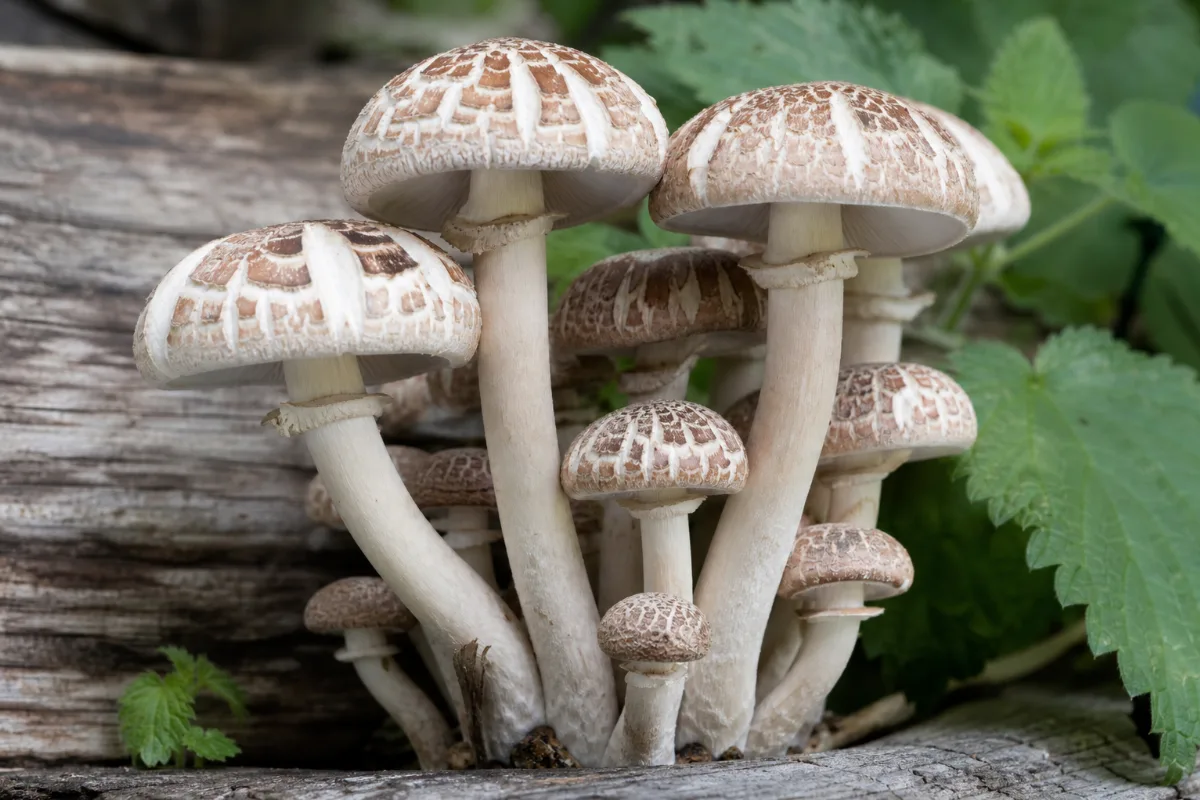
Mushrooms · Culinary mushroom
Pioppino
Cyclocybe aegerita · also called Black poplar mushroom, poplar mushroom, velvet pioneer, yanagi-matsutake, Agrocybe aegerita
Pioppino is a cultivated food mushroom with a long, firm stem and a brown cap, popular in Italian cooking. It is mainly a food: cooked, it supplies protein, fibre, potassium and niacin. Health claims rest on lab and animal work only, and no human trial was found. The main cautions are a lectin that injured mouse livers in raw extracts, and the danger of picking wild mushrooms.
General information, not medical advice. Last substantive update · Not medically reviewed. A named clinician has not signed off on this page. How this page is made
About Pioppino
Pioppino is a cultivated mushroom eaten cooked. Its health claims come from lab and animal work only. A lectin in raw extracts harmed mouse livers, and wild picking is dangerous.
What it is
Pioppino is the fruiting body of the fungus Cyclocybe aegerita, also written Agrocybe aegerita. Many papers, especially from China, call it Agrocybe cylindracea, which one database treats as a separate species. It is a fungus, not a plant.
A 2020 study found a European and an Asian lineage that may be separate species, so results from one set of strains may not carry over to another.
As a food
A US food database record for raw pioppini lists about 39 kcal, 3.5 g protein, 2.8 g fibre, 392 mg potassium and 6.2 mg niacin per 100 g, plus 1.4 g beta-glucan and 23.19 mg ergothioneine. It lists no sodium and no vitamin D.
Another source is reported to give much lower ergothioneine values for this species, so the figure is uncertain. What the mushrooms are grown on changes their composition.
What the research shows
No human trial of pioppino for any health outcome was found. Everything else is test-tube, cell or animal work, often on extracts or purified proteins that are not food.
A purified lectin slowed liver tumours in mice. Ageritin kills cells in the lab. Extracts slowed skin bacteria in dishes. A rat study did not show liver protection. None of this shows that pioppino treats anything.
Contamination and quality
Mushrooms take up metals from what they grow in. In a study of dried mushrooms bought online in China, pioppino scored below the hazard threshold for five heavy metals, while three other kinds did not. Buy cultivated mushrooms from a reliable source.
What regulators say
We did not read any statement from the FDA, EFSA, EMA, NCCIH or LiverTox on pioppino.
At a glance
Traditional uses history, not proof
- Eaten as a popular food mushroom in Campania, Italy (2017 paper).
- Valued as a functional food in papers from China (2025 paper). No traditional medical use was found in the sources read.
Studied for research
- Nutrition as a cooked food, food data only
- Immune system, insufficient (lab only)
- Cancer, insufficient (purified proteins in mice and dishes)
- Antioxidant activity, insufficient (test tube)
- Skin bacteria and wound healing, insufficient (cell dishes)
- Liver protection, against (one rat study)
Main compounds
- Beta-glucans and other polysaccharides
- Ergothioneine
- Lectins (AAL, AAGL)
- Ageritin (a toxin-like protein)
- Phenols such as gallic acid
Common forms
- Fresh or cooked fruiting body (the food)
- Dried fruiting body
- Water or polysaccharide extracts (research)
- Mycelium cultures (research)
Research links: USDA FoodData Central: pioppini · Raw extract and liver toxicity in mice (abstract) · Review of Agrocybe compounds (2024) · Ageritin review (2021) · Heavy metals in retail mushrooms (abstract) · European and Asian lineages (2020) · Research Library · Genes & Biomarkers Library
What it is and its history
- Accepted scientific name
- Cyclocybe aegerita
- Naming authority
- (V.Brig.) Vizzini (GBIF)
- Synonyms
- Agrocybe aegerita (V.Brig.) Singer (GBIF synonym); Agrocybe cylindracea (name used for the cultivated mushroom in many papers; GBIF lists it as a separate species)
- Common names
- Pioppino (Italian); Black poplar mushroom (English); Poplar mushroom (English); Velvet pioneer (English); Yanagi-matsutake (Japanese); Chaxingu (Chinese)
- Family or group
- Tubariaceae (a fungus family), not a plant
- Classification
- Fungi > Basidiomycota > Agaricomycetes > Agaricales > Tubariaceae > Cyclocybe > Cyclocybe aegerita
- Native range
- A 2020 paper calls it widely cultivated and almost worldwide in distribution, with European and Asian lineages.
- Habitat
- Our earlier notes say it grows on poplar and other hardwood; no source on this was re-opened today.
- What it looks like
- Fruiting body: Not described in the sources read; larger caps and longer stems are reported for the Asian lineage versus the European one (Frings 2020).
- Cultivation
- Widely cultivated. Yield and composition vary with the growing medium (Mediatrice 2025).
- Harvest and processing
- Not checked in the sources read.
- Look-alikes and adulterants
- Name: Not described; Note: We read no source naming look-alikes. Do not pick wild mushrooms without an expert teaching you in person.
- Sustainability and conservation
- Not checked.
Traditional use and history history, not clinical proof
| Tradition or era | Documented use | Source |
|---|---|---|
| Campania, Italy | A 2017 paper calls pioppino a popular edible mushroom known in the Campania region, noting its wild availability is strongly reduced by the use of fungicides. | p28503801 |
| Asia | Papers from China use the names Agrocybe cylindracea and Agrocybe aegerita for a mushroom valued as a functional food. No traditional medical use was found in the sources read. | p39997426 |
Traditional use shows how it was used. It does not show that it works or is safe today.
What is inside, and how it may work
What it contains and how those compounds act in cells and animals. Laboratory and animal mechanisms are not proven effects in people.
Main compounds
| Compound | Family | Where it is concentrated | Activity studied | Level of evidence |
|---|---|---|---|---|
| Beta-glucans and other polysaccharides | polysaccharides | Fruiting body USDA lists 1.4 g beta-glucan per 100 g raw. A polysaccharide extract held the highest beta-glucan content among three mushrooms (Petrovic 2024). | Immune-cell and anti-inflammatory activity in cell and animal tests. No human effect shown. 13 10 | Laboratory research |
| Lectins AAL and AAGL | proteins (lectins) | Fruiting body Not stated in the abstracts. | Cause liver injury in mice; AAGL slowed liver tumours in mice. Toxic first. 6 15 14 | Animal research |
| Ageritin | ribotoxin-like protein | Fruiting body More than 2.5 mg per 100 g (Ragucci 2021). | Stops protein making and kills cells in the lab; antifungal and insecticidal. 12 | Laboratory research |
| Ergothioneine | sulfur-containing amino acid | Fruiting body 23.19 mg per 100 g raw in the USDA record; another source is reported to give far lower values (summary-only). | A diet-derived antioxidant amino acid; benefit from eating more is not shown in the sources read. 13 8 | Other |
| Phenols (gallic acid, coumaric acid isomers, rutin) | phenolic compounds | Fruiting body and mycelium Gallic acid 27.94 mg/100 g and rutin 7.35 mg/100 g in a mycelium extract (Bains 2023). | Radical scavenging in test tubes. 1 7 | Laboratory research |
Mechanisms, receptors and pathways
| Target or pathway | Gene or receptor | What was found | Level |
|---|---|---|---|
| Ribosomal RNA cleavage by ageritin | Sarcin-ricin loop of 23-28S rRNA | Ageritin cuts one bond in the loop, which stops protein making and leads to apoptosis (review). 12 | Laboratory research |
| T cell and macrophage recruitment to the liver by AAGL | IL-1 beta, CXCL9 | In mice the lectin raised IL-1 beta and drew T cells into the liver; an anti-IL-1 beta antibody eased the injury. 15 14 | Animal research |
Absorption, metabolism and elimination
- Absorption
- Not found in the sources read.
- Distribution
- Not found in the sources read.
- Metabolism
- AAL resisted digestive enzymes in a lab test (Jin 2014 abstract).
- Elimination
- Not found in the sources read.
- Bioavailability
- Not established in people.
Isolated compounds versus whole extracts
Research uses very different materials: the cooked fruiting body (food), raw water extracts, polysaccharide extracts, purified lectins and ageritin, and mycelium extracts grown in culture. Results from a purified protein or a concentrated extract do not tell you about eating the mushroom, in either direction.
Nutritional composition
USDA Foundation Foods (raw pioppini, one record): about 39 kcal, 3.5 g protein, 2.8 g fibre, 1.4 g beta-glucan, 392 mg potassium, 6.2 mg niacin and 0.43 mg riboflavin per 100 g, no sodium and no vitamin D. Pioppino is eaten as a food; these values do not apply to supplements.
1 low certainty4 not enough evidence1 evidence against
What was looked at
The 6 benefits and uses checked for Pioppino, each with how strong the evidence is. Tap one to open it.
- As a food: nutrition and ergothioneineLow certainty
- Immune system (beta-glucan and polysaccharide lab research)Not enough evidence
- Cancer (lab and mouse research on lectins and ageritin)Not enough evidence
- Antioxidant activity (test-tube)Not enough evidence
- Skin bacteria and wound healing (cell-dish work)Not enough evidence
- Liver protection (rat study: not shown)Evidence against
What is Pioppino good for?
The uses people ask about and how strong the evidence is for each. No human trial of pioppino was found. None of these is proven. Read this together with the Safety tab.
Benefits, one by one
Each card is a research question, not a promise. Tap a goal to filter. Open a card to see the studies, doses and limits.
As a food: nutrition and ergothioneine
Low certaintyPioppino is a cooked food. A US food database lists protein, fibre, potassium, niacin and riboflavin, plus a note on ergothioneine. This is nutrition, not a treatment.
3 studiesThe food (cooked fruiting body). No supplement is shown to add benefi…
Studies, doses and limits
What the trials found
No human trial. The USDA record lists, per 100 g raw, about 39 kcal, 3.5 g protein, 2.8 g fibre, 392 mg potassium, 6.2 mg niacin, 0.43 mg riboflavin, 1.4 g beta-glucan and 23.19 mg ergothioneine. A Chinese exposure paper (2026) is reported in our earlier notes to list this species as low in ergothioneine (3.5 to 8.36 mg per kg); we could not confirm that in its abstract, so the two sources are not reconciled.
Results
USDA per 100 g raw: 3.5 g protein, 2.753 g fibre, 1.4 g beta-glucan, 23.19 mg ergothioneine (one sample). Another source is reported to disagree on ergothioneine (summary-only).
Effect sizes as reported
Food values only; no health outcome measured
Why this rating
The food values come from one measured sample (high confidence in the number), but no study shows a health benefit from eating pioppino; the ergothioneine figure conflicts with another source, so the rating for any benefit is low.
Form and dose studied
The food (cooked fruiting body). No supplement is shown to add benefit.
Who was studied
Food composition; wild Italian samples and one US sample
Limits
One sample per source; values change with strain, growing method and freshness; no outcome in people.
Why researchers looked
It is a popular culinary mushroom, so people ask what it contributes to the diet.
Traditional use
Eaten as a food in Italy (Campania); the sources we read give no medicinal tradition.
Proposed mechanism Pharmacological theory
Ergothioneine is an antioxidant amino acid made by fungi and found in mushrooms. Whether eating more of it improves health is not shown in the sources read.
A proposed mechanism does not show that the effect happens in people.
Cooked pioppino is a food. See the Safety tab for the lectin finding in raw extracts and for wild-picking.
Immune system (beta-glucan and polysaccharide lab research)
Not enough evidenceLab and mouse work suggests compounds in pioppino act on immune cells. No human study has tested it.
3 studiesLab used a water extract and a polysaccharide extract; not the cooked…
Studies, doses and limits
What the trials found
No human trial of pioppino for this use was found (PubMed search for Cyclocybe aegerita, Agrocybe aegerita and Agrocybe cylindracea, 2026-10-25). In cell work, a pioppino polysaccharide extract had the highest beta-glucan content of three mushrooms tested, and the water extract lowered the inflammation signal IL-6 in a skin-bacteria model. A genus review describes anti-inflammatory activity from cell and animal work.
Results
Petrovic 2024: polysaccharide extract had the highest beta-glucan content of three mushrooms; water extract lowered IL-6 to 4.56 pg/mL in an S. aureus model (cells). Zhang 2024: genus review of lab findings.
Effect sizes as reported
Lab-only measures
Why this rating
Only cell and animal results; no human data; the 2026 review of the species also describes the evidence as mostly pre-clinical (summary-only).
Form and dose studied
Lab used a water extract and a polysaccharide extract; not the cooked mushroom.
Who was studied
Cell lines and mice
Limits
Extracts in dishes are not food; no human trial; results from Asian strains may not apply to European ones.
Why researchers looked
Mushroom beta-glucans are the best-known immune-active group, so researchers test polysaccharide extracts.
Proposed mechanism Laboratory research
Polysaccharide extracts hold beta-glucan and act on immune cells and inflammation signals in cell and animal tests. This is a laboratory finding and does not show an effect in people.
A proposed mechanism does not show that the effect happens in people.
Immune-active compounds can also cause harm (see the lectin liver findings on the Safety tab).
Cancer (lab and mouse research on lectins and ageritin)
Not enough evidenceTwo pioppino proteins kill some cancer cells in dishes and one slowed liver tumours in mice. Both are also toxic, and nothing has been tested in people.
3 studiesPurified proteins, not the mushroom or a supplement.
Studies, doses and limits
What the trials found
No human trial of pioppino for this use was found (PubMed search for Cyclocybe aegerita, Agrocybe aegerita and Agrocybe cylindracea, 2026-10-25). In mice with liver tumours, a purified lectin (AAGL) slowed tumour growth and strengthened the response to an anti-PD-1 antibody. A review describes ageritin as a protein that causes cell death by apoptosis.
Results
Ye 2021 (mice): tumour growth slowed in a dose-dependent way. Ragucci 2021 (review): ageritin triggers apoptosis; antifungal and insecticidal. Zhang 2024: anticancer activity listed for the genus.
Effect sizes as reported
Smaller tumours in mice with a purified protein
Why this rating
Purified proteins in mice and dishes only. The same lectin injures healthy mouse liver. Not a basis for eating or taking pioppino for cancer.
Form and dose studied
Purified proteins, not the mushroom or a supplement.
Who was studied
Mice; cell lines
Limits
Not the mushroom; same proteins are toxic; no human study.
Why researchers looked
Proteins that kill cells are studied as possible drug leads.
Proposed mechanism Animal research
The protein ageritin cuts a specific site in ribosomal RNA, which stops protein making and leads to cell death. The lectin AAGL activates T cells and macrophages in the liver of mice. These are laboratory and animal findings about purified proteins.
A proposed mechanism does not show that the effect happens in people.
Do not use pioppino in place of cancer care. The lectin causes liver injury in mice (Safety tab).
Antioxidant activity (test-tube)
Not enough evidenceExtracts of pioppino mop up free radicals in test tubes. That does not show a benefit in people.
2 studiesEthanol extract of cultured mycelium; alcohol extract of wild fruitin…
Studies, doses and limits
What the trials found
No human trial. A mycelium extract scavenged free radicals in a dose-dependent way (38.56% to 85.63% at 50 to 200 ug/mL) and held gallic acid and rutin. A wild-mushroom extract scored higher than a button mushroom extract in radical-scavenging tests.
Results
Bains 2023: DPPH scavenging 38.56% to 85.63% (mycelium ethanol extract). Landi 2017: higher than cultivated button mushroom in tests.
Effect sizes as reported
Test-tube effect only
Why this rating
Test-tube assays of extracts; no animal or human outcome.
Form and dose studied
Ethanol extract of cultured mycelium; alcohol extract of wild fruiting body.
Who was studied
Test-tube assays
Limits
Mycelium is not the mushroom people eat; antioxidant tests are poor predictors of health effects.
Why researchers looked
Mushrooms contain phenols and similar compounds that react in antioxidant tests.
Proposed mechanism Laboratory research
Phenols such as gallic acid and rutin react with free radicals in test-tube assays. Test-tube results do not show that eating the mushroom changes oxidative stress in the body.
A proposed mechanism does not show that the effect happens in people.
None specific; see the Safety tab.
Skin bacteria and wound healing (cell-dish work)
Not enough evidenceIn dishes, pioppino extracts slowed a skin bacterium and helped skin cells close a scratch. This is far from a wound treatment.
2 studiesWater extract (fruiting body) and ethanol extract (mycelium).
Studies, doses and limits
What the trials found
No human or animal test. In dishes, the water extract slowed Staphylococcus aureus (minimal inhibitory concentration 4.00 mg/mL; minimal bactericidal concentration 8.00 mg/mL) and helped HaCaT skin cells close a scratch over 24 hours. A mycelium extract cut Pseudomonas aeruginosa biofilm by 72.35% and swarming by 56.32%.
Results
Petrovic 2024: S. aureus MIC 4.00 mg/mL, MBC 8.00 mg/mL; wound-closure promoted in HaCaT cells over 24 h. Bains 2023: biofilm inhibition 72.35%.
Effect sizes as reported
Dish effects at high extract strengths
Why this rating
Dish-only studies of extracts; concentrations in mg/mL are far above food levels (the abstracts give no comparison).
Form and dose studied
Water extract (fruiting body) and ethanol extract (mycelium).
Who was studied
Bacteria and a human skin-cell line
Limits
No animal or human test; not food; not an antibiotic or wound treatment.
Why researchers looked
Researchers looked for cosmetic and anti-infective uses of mushroom extracts.
Proposed mechanism Laboratory research
Extract compounds slowed bacterial growth and biofilm in dishes and made a skin-cell line close a scratch. Dish results often fail in animals and people.
A proposed mechanism does not show that the effect happens in people.
Do not put mushroom extracts on wounds or infections; see a clinician for a wound that is red, hot or not healing.
Liver protection (rat study: not shown)
Evidence againstThe only animal test of pioppino against a liver poison did not show protection. Pioppino extracts also harmed the liver in mice (Safety tab).
1 studiesAgrocybe cylindracea supplement (preparation not stated in the abstra…
Studies, doses and limits
What the trials found
No human trial. In 36 rats, carbon tetrachloride caused severe liver and kidney lesions. The abstract says A. cylindracea did not ease the damage and raised MPO and ADA, while another mushroom (Lactarius deliciosus) did ease it. The abstract wording on lesions in the group given pioppino alone is unclear.
Results
Dogan 2022 (rats): no protection from A. cylindracea; MPO and ADA raised.
Effect sizes as reported
Not protective in rats
Why this rating
One small rat study with unclear abstract wording, plus separate mouse work showing a pioppino lectin injures the liver. We therefore rate the idea of liver protection "against" on animal evidence only.
Form and dose studied
Agrocybe cylindracea supplement (preparation not stated in the abstract).
Who was studied
Rats
Limits
Rat study; cannot be applied to people; abstract is unclear.
Why researchers looked
A genus review lists liver-protecting activity, so researchers tested it against a known liver poison in rats.
Proposed mechanism Animal research
The rat study measured enzyme levels and tissue damage. The abstract reports no protection by pioppino and higher MPO and ADA enzyme levels.
A proposed mechanism does not show that the effect happens in people.
Do not use pioppino to protect the liver. See the Safety tab.
Connections to the rest of health
How Pioppino connects to the rest of our health knowledge graph. Every link says what kind of connection it is. A safety link (for example to the liver) is a warning, not a benefit. A study that merely mentions a topic never creates a benefit link.
Explore every connection: goals, body systems, organs, symptoms, genes
A. Wellness goals
| Connected to | Kind of connection | Evidence status | Context | Studies |
|---|---|---|---|---|
| Cellular Protection | Low certainty | As a food: nutrition and ergothioneine: Pioppino is a cooked food. A US food database lists protein, fibre, potassium, niacin and riboflavin, plus a note on ergothioneine. This is nutrition, not a treatment. | 13 7 8 | |
| Immune Support | Not enough evidence | Immune system (beta-glucan and polysaccharide lab research): Lab and mouse work suggests compounds in pioppino act on immune cells. No human study has tested it. | 10 16 17 | |
| Cellular Protection | Not enough evidence | Cancer (lab and mouse research on lectins and ageritin): Two pioppino proteins kill some cancer cells in dishes and one slowed liver tumours in mice. Both are also toxic, and nothing has been tested in people. Antioxidant activity (test-tube): Extracts of pioppino mop up free radicals in test tubes. That does not show a benefit in people. | 14 12 16 1 7 | |
| Healthy Skin | Not enough evidence | Skin bacteria and wound healing (cell-dish work): In dishes, pioppino extracts slowed a skin bacterium and helped skin cells close a scratch. This is far from a wound treatment. | 10 1 | |
| Liver Support | Evidence against | Liver protection (rat study: not shown): The only animal test of pioppino against a liver poison did not show protection. Pioppino extracts also harmed the liver in mice (Safety tab). | 3 |
B. Body systems
| Connected to | Kind of connection | Evidence status | Context | Studies |
|---|---|---|---|---|
| Digestive System | Biological association | Low certainty | Studied for: As a food: nutrition and ergothioneine | 13 7 8 |
| Immune System | Biological association | Not enough evidence | Studied for: Immune system (beta-glucan and polysaccharide lab research) Studied for: Cancer (lab and mouse research on lectins and ageritin) | 10 16 17 14 12 1 7 |
| Integumentary System | Biological association | Not enough evidence | Studied for: Skin bacteria and wound healing (cell-dish work) | 10 1 |
| Hepatic System | Biological association | Evidence against | Studied for: Liver protection (rat study: not shown) | 3 |
C. Body parts and organs
| Connected to | Kind of connection | Evidence status | Context | Studies |
|---|---|---|---|---|
| Liver | Adverse effect or risk | Very low certainty | Liver injury in mice; no human case found. Preparation or compound: Raw water extract; the lectins AAL and AAGL |
6 15 |
| Immune system | Not enough evidence | Activates T cells and macrophages in mouse livers; no human data. Preparation or compound: Purified lectin |
14 |
J. Genes, receptors and enzymes
L. Active compounds
| Connected to | Kind of connection | Evidence status | Context | Studies |
|---|---|---|---|---|
| Beta-glucans and other polysaccharides | Biological association | In vitro | Immune-cell and anti-inflammatory activity in cell and animal tests. No human effect shown. Preparation or compound: Fruiting body |
13 10 |
| Lectins AAL and AAGL | Biological association | Animal | Cause liver injury in mice; AAGL slowed liver tumours in mice. Toxic first. Preparation or compound: Fruiting body |
6 15 14 |
| Ageritin | Biological association | In vitro | Stops protein making and kills cells in the lab; antifungal and insecticidal. Preparation or compound: Fruiting body |
12 |
| Ergothioneine | Biological association | Other | A diet-derived antioxidant amino acid; benefit from eating more is not shown in the sources read. Preparation or compound: Fruiting body |
13 8 |
| Phenols (gallic acid, coumaric acid isomers, rutin) | Biological association | In vitro | Radical scavenging in test tubes. Preparation or compound: Fruiting body and mycelium |
1 7 |
Each connection is stored with the ingredient, the connected record, the kind of connection, the evidence status, the supporting studies, the preparation or compound involved, and a review date (last reviewed October 25, 2026).
Evidence at a glance: what the research found for 6 outcomes
Each outcome below is one thing researchers measured. Certainty is how far the evidence can be trusted, not how well it works. The full studies are on the next tab.
The evidence
The research centre for Pioppino. Every record here was checked against PubMed or the publisher's page; we never list a study we have not verified.
Evidence by outcome
Bars show how many studies we found for each outcome, not how well it works. People are added up across trials only (reviews are not added, to avoid double counting).
How we rate evidence
High certainty
Several well-run trials or reviews agree; further research is unlikely to change the picture much.
Moderate certainty
Good trials point the same way, but some doubt remains.
Low certainty
Small, short or inconsistent trials. The finding could change with better research.
Very low certainty
Very little or very weak human data. Treat as a possibility only.
Mixed findings
Trials or reviews disagree with each other.
Not enough evidence
Not enough human research to say either way.
Evidence against
Good research found no benefit, or found harm.
We take the reviewers' own risk-of-bias and GRADE statements where they exist, and otherwise judge from study size, design, consistency, directness and whether a product matches what is sold. Many publications do not make evidence high. Method note: We read PubMed records and abstracts for 14 papers (one rat study, three mouse studies, two reviews, several laboratory and cultivation studies, two heavy-metal surveys, one exposure model and one taxonomy paper), the USDA FoodData Central record through its API, and GBIF taxonomy records. A 2026 review of the species was read only as a page excerpt earlier and is marked summary-only. No regulator statements were read. Only abstracts were read for papers, so numbers come from abstracts. Certainty ratings are the compiler's own reading.
Study library: every study we checked 17
| Study | Design | People | Product, dose, length | Result |
|---|---|---|---|---|
| Bains 2023 Evaluation of In Vitro Antimicrobial, Antioxidant, and Anti-Quorum Sensing Activity of Edible Mushroom (Agrocybe aegerita). Foods · PMID 37835214 · DOI |
Laboratory study in-vitro |
Test-tube assays; the bacterium Pseudomonas aeruginosa PAO1 | Ethanol extract of cultured mycelium of Agrocybe aegerita mycelium Not shown here |
The mycelial extract scavenged free radicals in a dose-dependent way (38.56% to 85.63% in the DPPH test, 50 to 200 ug/mL). It held gallic acid (27.94 mg/100 g) and rutin (7.35 mg/100 g). It cut pyocyanin by 61.32%, pyoverdine by 54.02%, swarming by 56.32% and biofilm by 72.35% in the bacterium. Test-tube effects (n/a) Methods, limits and fundingOutcomes: Antioxidant assays; bacterial virulence factors and biofilm Limitations: Mycelium (not the mushroom you eat); ethanol extract; bacteria in dishes; the authors' idea of use "against multi-drug resistant pathogens" is untested in animals or people. Funding and conflicts: Authors declare no conflict of interest Read: abstract |
| Chen 2024 Levels and Health Risk Assessment of Inorganic Arsenic, Methylmercury, and Heavy Metals in Edible Mushrooms Collected from Online Supermarket in China. Biological Trace Element Research · PMID 37526876 · DOI |
Product analysis n/a |
Seven kinds of dried or packaged mushrooms bought online in China, 2015 to 2017 | Agrocybe aegerita (spelled "agrocybe aegirit" in the abstract) among seven species fruiting body Not shown here |
Across the seven mushroom types, chromium, cadmium and lead contamination was common. For Agrocybe aegerita, as for nameko, wood ear and shiitake, the hazard score (THQ) for each of the five heavy metals was below 1, and the arsenic-related cancer risk was not considered a potential risk. Three other species (Agaricus blazei, matsutake, porcini) had overall hazard index above 1. Pioppino scores were below the hazard threshold (n/a) Methods, limits and fundingOutcomes: Chromium, arsenic, cadmium, mercury, methylmercury and lead; hazard scores Limitations: Retail samples from 2015 to 2017 in China; the number of pioppino samples is not given in the abstract; results depend on where mushrooms were grown. Funding and conflicts: Not stated in the abstract Read: abstract |
| Dogan 2022 The protective effects of the Lactarius deliciosus and Agrocybe cylindracea mushrooms on histopathology of carbon tetrachloride induced oxidative stress in rats. Biotechnic & Histochemistry · PMID 33970727 · DOI |
Animal study animal |
36 36 rats in six groups |
Agrocybe cylindracea supplement, with or without carbon tetrachloride (a liver poison) Not shown here |
Carbon tetrachloride caused severe liver and kidney lesions. The abstract says A. cylindracea alone and with carbon tetrachloride raised MPO and ADA levels, and that damage was not eased by A. cylindracea, while Lactarius deliciosus did ease it. The abstract sentence on lesions with A. cylindracea alone is unclear. No protection shown in rats (n/a) Methods, limits and fundingOutcomes: Liver and kidney tissue damage; MPO and ADA enzyme levels Limitations: Rat study; unclear wording in the abstract; only 6 rats per group on average; cannot be applied to people. Funding and conflicts: Not stated in the abstract Read: abstract |
| Frings 2020 Multilocus phylogeny- and fruiting feature-assisted delimitation of European Cyclocybe aegerita from a new Asian species complex and related species. Mycological Progress · PMID 33046967 · DOI |
Laboratory analysis n/a |
Strains of Cyclocybe aegerita from different continents | DNA and fruiting tests of strains Not shown here |
Cyclocybe aegerita in the wide sense splits into two groups: a European lineage and an Asian lineage, which the authors call Cyclocybe chaxingu agg. and which may contain several species. The Asian group tends to make larger mushrooms with bigger caps and longer stems. The species is widely cultivated and almost worldwide. Two geographic lineages (n/a) Methods, limits and fundingOutcomes: Relationships between strains Limitations: A taxonomy paper; says nothing about health. It implies results from one lineage may not carry over to another. Funding and conflicts: Authors declare no competing interests Read: abstract |
| GBIF 2026 GBIF Backbone Taxonomy species match: Cyclocybe aegerita (API checked 2026-10-25) GBIF · Source |
Database record n/a |
n/a | n/a Not shown here |
Cyclocybe aegerita (V.Brig.) Vizzini is ACCEPTED (key 7941167; Fungi, Basidiomycota, Agaricomycetes, Agaricales, Tubariaceae, genus Cyclocybe). Agrocybe aegerita (V.Brig.) Singer is listed as a SYNONYM of it. Agrocybe cylindracea (DC.) Gillet is listed as a separate ACCEPTED species (key 8393417, family Strophariaceae). Taxonomy record (n/a) Methods, limits and fundingOutcomes: Accepted name and synonyms Limitations: A database snapshot; names change. Index Fungorum was not checked. Papers from China and Europe often use Agrocybe cylindracea and Agrocybe aegerita for the same cultivated mushroom, which GBIF treats differently. Funding and conflicts: Independent public information source Read: full text |
| Jin 2014 Lethal protein in mass consumption edible mushroom Agrocybe aegerita linked to strong hepatic toxicity. Toxicon · PMID 25173078 · DOI |
Animal study animal |
BALB/c mice | Water extract of Agrocybe aegerita, then protein and small-molecule fractions fruiting body Not shown here 6 days |
The water extract was lethal to mice, with a median lethal dose of 8.77 g/kg. At 25 and 250 mg/kg body weight per day for 6 days it caused strong liver toxicity. The protein fraction caused the liver injury; the main agent was the lectin AAL, which resisted digestive enzymes in the lab. The authors say correct consumption can avoid human health risk. Liver injury in mice from a raw water extract (n/a) Methods, limits and fundingOutcomes: Lethality (LD50) and liver injury Limitations: Mouse study of a concentrated raw water extract; no human cases described; the abstract does not say whether cooking removes the lectin. Funding and conflicts: Research support from non-US government sources; no conflict stated in the abstract Read: abstract |
| Landi 2017 Pioppino mushroom in southern Italy: an undervalued source of nutrients and bioactive compounds. Journal of the Science of Food and Agriculture · PMID 28503801 · DOI |
Laboratory analysis n/a |
Wild pioppino from Campania, Italy, compared with cultivated Agaricus bisporus | Alcohol extract of defatted wild pioppino fruiting body Not shown here |
The extract was mainly sugars, sugar alcohols and malic acid, with coumaric acid isomers also detected. In test-tube antioxidant assays it scored higher than the button mushroom extract; the authors call wild pioppino an excellent functional food. Lab chemistry only (n/a) Methods, limits and fundingOutcomes: Nutrients, amino acids, fatty acids, phenols, radical-scavenging tests Limitations: Wild mushrooms from one area; test-tube antioxidant tests do not show an effect in people; the authors' phrase "excellent functional food" goes beyond what the tests show. Numbers were not used. Funding and conflicts: Not stated in the abstract Read: abstract |
| Ma 2026 Dietary Exposure and Risk Assessment for L-Ergothioneine in China. Foods · PMID 41829095 · DOI |
Exposure assessment |
42218 42,218 Chinese participants with three-day dietary recalls |
Ergothioneine from food (modelled) Not shown here |
Mean dietary ergothioneine exposure was 0.043 mg/kg body weight per day across 42,218 Chinese participants (0.174 mg/kg per day among consumers). Safety margins against an animal no-effect level of 800 mg/kg per day stayed above the threshold of 300 for almost everyone. The abstract does not name pioppino. Our earlier notes say the full text lists this species among low sources (3.5 to 8.36 mg per kg); this was not re-checked (summary-only). Exposure estimate (n/a) Methods, limits and fundingOutcomes: Estimated dietary ergothioneine exposure and safety margin Limitations: Modelled from published food values; says nothing about benefit; pioppino is not named in the abstract. Funding and conflicts: Authors declare no conflicts of interest Read: abstract |
| Mediatrice 2025 The Influence of the Divergent Substrate on Physicochemical Properties and Metabolite Profiling of Agrocybe cylindracea Cultivation. Journal of Fungi (Basel) · PMID 39997426 · DOI |
Cultivation study n/a |
Mushrooms grown on three different substrates | Agrocybe cylindracea fruiting bodies fruiting body Not shown here |
What the mushrooms were grown on changed their protein, fat and ash and their metabolites. Biological efficiency was 35.8% on cottonseed hulls, 31.5% on giant juncao grass mixed with another grass, and 28.7% on waste tea leaves mixed with sawdust. Dopamine and caffeine were enriched in fruiting bodies grown on waste tea leaves, sawdust and cottonseed hulls. Composition varies with the growing medium (n/a) Methods, limits and fundingOutcomes: Yield and composition by growing medium Limitations: Cultivation study; no health outcome; amounts of metabolites are not stated in the abstract. Funding and conflicts: Authors declare no conflicts of interest Read: abstract |
| Petrovic 2024 Comparative Chemical Analysis and Bioactive Properties of Aqueous and Glucan-Rich Extracts of Three Widely Appreciated Mushrooms: Agaricus bisporus, Laetiporus sulphureus and Agrocybe aegerita. Pharmaceuticals (Basel) · PMID 39338316 · DOI |
Laboratory study in-vitro |
Cell and bacterial tests with extracts of three mushrooms | Water extract and polysaccharide (glucan-rich) extract of Agrocybe aegerita fruiting body Not shown here |
Polysaccharide extracts held more total and beta-glucan than water extracts, and A. aegerita had the highest content. The A. aegerita water extract had the highest phenol content. It slowed the skin bacterium Staphylococcus aureus in a dish (minimal inhibitory concentration 4.00 mg/mL, minimal bactericidal concentration 8.00 mg/mL), helped a skin-cell line close a scratch over 24 hours, and lowered IL-6 in an S. aureus inflammation model to 4.56 pg/mL. Cell and test-tube results only (n/a) Methods, limits and fundingOutcomes: Beta-glucan and phenol content; antioxidant, antibacterial, anti-inflammatory and wound-closure tests in cells Limitations: Cell lines and bacteria in dishes; extracts, not cooked food; no human or animal test; the authors' call the extract "most promising" is a lab ranking. Funding and conflicts: Authors declare no conflicts of interest Read: abstract |
| Qin 2024 Analysis of heavy metal characteristics and health risks of edible mushrooms in the mid-western region of China. Scientific Reports · PMID 39506043 · DOI |
Product analysis n/a |
Nine edible mushrooms from the mid-western region of China | Edible mushrooms (pioppino is not named in the abstract) fruiting body Not shown here |
Cadmium and arsenic were the main sources of health risk in the nine mushrooms tested. Some samples exceeded Chinese maximum limits: cadmium in 22.95%, arsenic 8.20%, lead 1.64% and mercury 3.28%. Morel, Agaricus blazei and Dictyophora were the main sources of risk. The abstract does not name pioppino. General mushroom contamination finding (n/a) Methods, limits and fundingOutcomes: Arsenic, cadmium, chromium, lead and mercury; health risk Limitations: Pioppino is not named in the abstract, so this applies to edible mushrooms in general, not to this species. Funding and conflicts: No competing interests declared Read: abstract |
| Ragucci 2021 Ageritin from Pioppino Mushroom: The Prototype of Ribotoxin-Like Proteins, a Novel Family of Specific Ribonucleases in Edible Mushrooms. Toxins (Basel) · PMID 33917246 · DOI |
Review in-vitro |
Review of one pioppino protein | Ageritin, a protein from the fruiting body fruiting body Not shown here |
Ageritin cuts a specific site in ribosomal RNA, which stops protein making and leads to cell death by apoptosis. It is present in high amounts in the fruiting body (more than 2.5 mg per 100 g) and has antifungal and insect-killing actions, which suggests a defence role. The authors suggest uses in agriculture and as a possible medical tool. A toxin-like protein with lab activity (n/a) Methods, limits and fundingOutcomes: Structure and biological action of ageritin Limitations: A review of lab work. A protein that kills cells is a toxin first; "possible therapeutic" is the authors' hope, not a result in people. Funding and conflicts: Authors declare no conflict of interest Read: abstract |
| USDA 2021 USDA FoodData Central: Mushroom, pioppini (Foundation Foods, FDC 2003604, published 2021-10-28; API record read 2026-10-25) USDA FoodData Central · Source |
Database record n/a |
n/a | Raw pioppini (food) fruiting body Not shown here |
Per 100 g raw: water 89.56 g; protein 3.5 g; total fibre 2.753 g; beta-glucan 1.4 g; potassium 392.4 mg; sodium 0 mg; niacin 6.224 mg; riboflavin 0.4263 mg; selenium 4.121 ug; ergothioneine 23.19 mg; vitamin D 0 ug; energy about 39 kcal (Atwater general factors). Food composition values (n/a) Methods, limits and fundingOutcomes: Nutrient values per 100 g raw Limitations: One sample record; values vary with strain, growing method and freshness. The record does not say whether the mushrooms were exposed to UV light. Funding and conflicts: Independent public information source Read: full text |
| Ye 2021 Synergistic effects of AAGL and anti-PD-1 on hepatocellular carcinoma through lymphocyte recruitment to the liver. Cancer Biology & Medicine · PMID 33710817 · DOI |
Animal study animal |
Mice with liver tumours | Purified lectin AAGL from Agrocybe aegerita (a protein, not a food), alone or with anti-PD-1 antibody fruiting body (purified protein) Not shown here |
In tumour-bearing mice the purified lectin slowed liver tumour growth in a dose-dependent way, activated T cells and macrophages in the liver, and made the response to anti-PD-1 treatment stronger. The authors call the combination a promising strategy. Slower tumour growth in mice (n/a) Methods, limits and fundingOutcomes: Tumour size and survival; immune cells in the liver Limitations: Mouse study of a purified protein, not of eating the mushroom. The same group shows the same lectin injures the liver of healthy mice (see Safety tab). Funding and conflicts: No conflicts of interest disclosed Read: abstract |
| Yu 2020 Critical role of IL-1beta in the pathogenesis of Agrocybe aegerita galectin-induced liver injury through recruiting T cell to liver. Biochemical and Biophysical Research Communications · PMID 31676068 · DOI |
Animal study animal |
Mice | Purified lectin AAGL from Agrocybe aegerita, injected into a vein fruiting body (purified protein) Not shown here |
Intravenous AAGL caused acute liver injury in mice by drawing T cells, NKT cells and NK cells into the liver; IL-1beta was raised and an antibody against it eased the injury. Acute liver injury model in mice (n/a) Methods, limits and fundingOutcomes: Mechanism of acute liver injury Limitations: Injection into the blood is not the same as eating; shows what the lectin can do to immune cells in the liver, not what happens after a meal. Funding and conflicts: Research support from non-US government sources Read: abstract |
| Zhang 2024 A comprehensive review of secondary metabolites from the genus Agrocybe: Biological activities and pharmacological implications. Mycology · PMID 38813473 · DOI |
Review review |
Review of the mushroom genus Agrocybe | Polysaccharides, lectins and 80 small molecules from Agrocybe species fruiting body and mycelium Not shown here |
Lists anti-inflammatory, anticancer, antioxidant, liver-protecting, antimicrobial and blood-sugar-lowering activities for compounds from Agrocybe species, with polysaccharides showing the most activities. These come from cell and animal work; the abstract describes no human trial. Narrative review of lab findings (n/a) Methods, limits and fundingOutcomes: Reported biological activities Limitations: Narrative review, not a systematic one; covers the whole genus, not only pioppino; lab and animal findings. Funding and conflicts: No conflict of interest reported Read: abstract |
| n/a 2026 Cyclocybe aegerita (syn. Agrocybe aegerita) - Black poplar mushroom: cultivation biology, nutritional profiling and bioactive potential (review, Plant Science Today, 2026) Plant Science Today · Source |
Review review |
n/a | Review of the species fruiting body and mycelium Not shown here |
Summary-only (page excerpt read in an earlier pass, not re-opened): the review describes the evidence for health effects as mostly pre-clinical. Overview; no human data (n/a) Methods, limits and fundingOutcomes: Cultivation, nutrition and bioactivity overview Limitations: Only a page excerpt was read; no tables. Not re-checked on 2026-10-25. Funding and conflicts: Not stated Read: summary-only |
What we do not know yet
- No human trial of pioppino for any outcome.
- Not known whether cooking removes the liver-toxic lectin.
- Safety of extracts, pregnancy, breastfeeding and children is unknown.
- Ergothioneine content is uncertain (sources disagree).
- Results from European and Asian strains may not carry over to each other.
How new research is added
New studies are found by a saved PubMed search and placed in a review queue. A person reads each one before it changes any evidence rating or safety wording. New publications never change ratings automatically.
Lab markers
What changed in blood or saliva tests during trials. A changed number is not the same as feeling or being healthier, and we give no "normal ranges".
Safety
What studies and official sources say about side effects, medicines and who should check first. Each point shows what kind of evidence it comes from.
Main points to know 5
- Wild mushrooms: do not pick or eat by looking them up. Pioppino is widely grown as a cultivated food and also grows wild on poplar and other wood. Some poisonous mushrooms also grow on wood. We read no source on how to tell this species from look-alikes, and this page gives no help with that. Never eat a wild mushroom unless an expert has identified it in person. Cultivated stock bought from a shop or grower is the safer source. Even the name covers more than one lineage: European and Asian material are different groups. Other 4
- A pioppino lectin harmed the liver in mice. A raw water extract of the mushroom was lethal to mice at high amounts and injured the liver at lower ones; the lectin AAL (Agrocybe aegerita lectin) was the cause and survived digestive enzymes in the lab. A related lectin, AAGL, injured the liver when injected. The authors of the first study say correct consumption can avoid human risk. We found no human case of liver harm and no test of whether cooking removes the lectin in the abstracts we read. For that reason, raw extracts and homemade preparations are best avoided. Animal research 6 15
- Ageritin is a toxin-like protein. Pioppino contains ageritin, a protein that cuts ribosomal RNA and kills cells in the lab. It is present in the fruiting body at more than 2.5 mg per 100 g and is thought to be a defence against fungi and insects. Whether it matters when the mushroom is eaten is not shown in the sources read. Laboratory research 12
- No human safety studies of supplements. We found no human trial and no case report of poisoning, allergy or interaction for pioppino. That means the risks of concentrated extracts, powders or mycelium products are unknown, not shown to be absent. Gap
- Heavy metals depend on what the mushrooms grew in. Mushrooms can take up metals from what they grow in. In one study of retail dried mushrooms in China, pioppino scored below the hazard threshold for five heavy metals, while some other kinds did not. Another study found cadmium and arsenic the main risks across edible mushrooms in general. Other 2 11
Side effects 3
| Effect | How often | Severity and recovery | Evidence |
|---|---|---|---|
| Liver injury (lectin, raw water extract, mice) Mouse findings only; no human case found. | Not applicable to people | serious (in mice) Not studied | Animal research 6 15 |
| Allergic reactions We read no report of allergy to pioppino. As with any food, an allergy to a mushroom is possible. | No pioppino-specific report found | unknown Unknown | Gap |
| Stomach upset No study or case report on digestive effects was read. | No data | unknown Unknown | Gap |
Liver
No human liver injury from pioppino was found. In mice a raw water extract caused severe liver injury through the lectin AAL. In rats, pioppino did not protect against a liver poison. We found no LiverTox entry in our searches (not checked directly). Anyone with liver disease should ask a doctor before using any mushroom extract. 6 15 3
How often. No human liver case reports were found in the sources we read.
Monitoring. No monitoring is advised in the sources read. Get help for yellow skin or eyes, dark urine or severe itching.
This is a safety connection. It is not evidence that Pioppino supports liver health.
Medicines and supplements 3
| With | Why it matters | Importance | Evidence | What to do |
|---|---|---|---|---|
| Liver-affecting medicines and alcohol prescription | In mice a pioppino lectin injures the liver; this suggests a theoretical extra load on the liver, but no human or interaction study exists. | Unknown. Theoretical only. | Pharmacological theory Not enough evidence 6 | Ask a doctor or pharmacist before using extracts if you take liver-affecting medicines. |
| Immune-modulating medicines (for example immunosuppressants or cancer immunotherapy) prescription | A purified pioppino lectin activated T cells and macrophages in mouse livers and strengthened the effect of an anti-PD-1 antibody. This is a mouse study of a purified protein. | Unknown. No human data. | Animal research Not enough evidence 14 | Tell your care team about any mushroom extract or supplement. |
| Other medicines in general prescription | No interaction with a named medicine was found in the sources read. | Unknown. | Gap Not enough evidence | Ask a pharmacist before combining a concentrated product with medicines. |
Who should check first 5
| Situation | Advice | Evidence |
|---|---|---|
| Wild mushrooms of any kind that have not been identified by an expert in person | Do not eat them. Call a poison centre or emergency services if you have eaten a wild mushroom and feel unwell. | Other |
| Liver disease, or heavy alcohol use | Avoid concentrated pioppino extracts; ask a doctor. The mouse liver findings are not known to apply to people. | Animal research 6 |
| Pregnancy and breastfeeding | No safety data were found for extracts or supplements. Eating the cooked mushroom as part of normal meals is a separate question; ask your midwife or doctor. | Gap |
| Children | No safety data were found for extracts or supplements. Do not give extracts to children. | Gap |
| Past allergy to mushrooms | Avoid it, as with other mushrooms. No pioppino-specific report was found. | Gap |
Overdose, product quality and regulators
Summary. The sources we read describe mouse toxicity of a raw water extract and a lectin; they do not describe poisoning of people from the cultivated mushroom.
Animal. A raw water extract of the mushroom had a median lethal dose of 8.77 g/kg in mice and caused liver injury at lower amounts over 6 days; the lectin AAL was the cause (abstract).
Human doses studied. No human dose was studied. This page does not give amounts.
High dose or long term signals. No long-term data of any kind were found.
Overdose response. No description was found. Seek medical help for the urgent signs below.
Genotoxicity. Not found in the sources read.
Toxic or hazardous parts. Fungus: the fruiting body (the mushroom) and the mycelium are both used. The lectin AAL and the protein ageritin occur in the fruiting body (ageritin more than 2.5 mg per 100 g).
Cultivated mushrooms take up some of what is in their growing medium, and supplements are not checked like medicines.
Heavy metals in retail dried mushrooms. In a study of seven kinds of mushrooms bought online in China, Agrocybe aegerita had hazard scores below 1 for five heavy metals, unlike three other kinds. Cadmium, chromium and lead contamination were common across the seven. 2
General mushroom contamination. A second Chinese study found cadmium and arsenic to be the main risks in nine edible mushrooms; pioppino is not named in its abstract. 11
Wild pioppino and sprays. An Italian paper says wild availability is strongly reduced by heavy fungicide use. We read nothing about residues in wild mushrooms. 7
| Body | Action | Date |
|---|
When to get medical help
- Swelling of the lips, tongue or throat, hives, trouble breathing or feeling faint after eating pioppino: call emergency services now.
- Vomiting, severe stomach pain, diarrhoea, confusion or yellow skin or eyes after eating any wild mushroom: call a poison centre or emergency services now. If you can, keep a sample of the mushroom for the doctors.
- Dark urine, yellow skin or eyes, or severe itching after taking a mushroom extract: stop it and see a doctor.
If someone may be poisoned or in a crisis, contact a clinician or emergency service straight away. In the US, Poison Control is 1-800-222-1222.
General information only, not medical advice. Ask a clinician or pharmacist before use, especially with medicines, in pregnancy or with a health condition. See the Natural Remedy Safety guide.
Frequently asked questions
What is pioppino?
Is pioppino good for you?
Does pioppino boost the immune system?
Can pioppino fight cancer?
Is it safe for the liver?
Should it be eaten raw?
We found no study of raw versus cooked pioppino. The mouse toxicity was seen with a raw water extract, so raw extracts are best avoided. Ask a doctor or pharmacist about any extract or supplement.
What is the lectin in pioppino?
Can I pick pioppino in the wild?
Do not rely on a web page for this. Some poisonous mushrooms also grow on wood, and we read no source on look-alikes. Eat only mushrooms an expert has identified in person, or buy cultivated ones. If you feel sick after eating a wild mushroom, call a poison centre or emergency services.
Can it cause an allergic reaction?
As with any food, an allergy to a mushroom is possible. We found no report of allergy to pioppino. Get emergency help for swelling of the lips, tongue or throat or trouble breathing.
Does it interact with medicines?
No interaction with a named medicine was found. A purified pioppino lectin boosted an immune treatment in mice, but this is not known to matter for people. Tell your doctor or pharmacist about any mushroom extract.
Is it safe in pregnancy, breastfeeding or for children?
We found no safety data for extracts or supplements. Eating the cooked mushroom as part of a normal meal is a separate question; ask a doctor, midwife or pharmacist.
Is Cyclocybe aegerita the same as Agrocybe cylindracea?
Explore by health goal
Editorial transparency
- Written by
- AlternativeMed editorial team. Research compiled with AI assistance, then checked against PubMed records.
- Medical review
- None. This page has not been reviewed by a physician or pharmacist.
- First published
- 2026-10-25
- Last substantive update
- 2026-10-25
- How we research
- We read PubMed records and abstracts for 14 papers (one rat study, three mouse studies, two reviews, several laboratory and cultivation studies, two heavy-metal surveys, one exposure model and one taxonomy paper), the USDA FoodData Central record through its API, and GBIF taxonomy records. A 2026 review of the species was read only as a page excerpt earlier and is marked summary-only. No regulator statements were read. Only abstracts were read for papers, so numbers come from abstracts. Certainty ratings are the compiler's own reading.
- How we rate evidence
- See "How we rate evidence" in the Evidence tab.
- Independence
- No product is promoted on this page. No affiliate links are shown. This page is information, not a recommendation to eat or take pioppino.
Sources 17
Each source was opened and checked. Where we read only the abstract, it says so. The small numbers in the text point here.
- Bains A, Chawla P, Inbaraj BS. Evaluation of In Vitro Antimicrobial, Antioxidant, and Anti-Quorum Sensing Activity of Edible Mushroom (Agrocybe aegerita).. Foods. 2023. PMID 37835214. DOI 10.3390/foods12193562. (abstract)
- Chen S, Guo Q, Zhou T, Liu L. Levels and Health Risk Assessment of Inorganic Arsenic, Methylmercury, and Heavy Metals in Edible Mushrooms Collected from Online Supermarket in China.. Biological Trace Element Research. 2024. PMID 37526876. DOI 10.1007/s12011-023-03779-w. (abstract)
- Dogan A, Uyar A, Hasar S, et al. The protective effects of the Lactarius deliciosus and Agrocybe cylindracea mushrooms on histopathology of carbon tetrachloride induced oxidative stress in rats.. Biotechnic & Histochemistry. 2022. PMID 33970727. DOI 10.1080/10520295.2021.1918349. (abstract)
- Frings RA, Macia-Vicente JG, Busse S, et al. Multilocus phylogeny- and fruiting feature-assisted delimitation of European Cyclocybe aegerita from a new Asian species complex and related species.. Mycological Progress. 2020. PMID 33046967. DOI 10.1007/s11557-020-01599-z. (abstract)
- GBIF. GBIF Backbone Taxonomy species match: Cyclocybe aegerita (API checked 2026-10-25). GBIF. 2026. (full text)
- Jin Y, Che T, Yin Y, et al. Lethal protein in mass consumption edible mushroom Agrocybe aegerita linked to strong hepatic toxicity.. Toxicon. 2014. PMID 25173078. DOI 10.1016/j.toxicon.2014.08.066. (abstract)
- Landi N, Pacifico S, Ragucci S, et al. Pioppino mushroom in southern Italy: an undervalued source of nutrients and bioactive compounds.. Journal of the Science of Food and Agriculture. 2017. PMID 28503801. DOI 10.1002/jsfa.8428. (abstract)
- Ma S, Ma X, Hao L, et al. Dietary Exposure and Risk Assessment for L-Ergothioneine in China.. Foods. 2026. PMID 41829095. DOI 10.3390/foods15050822. (abstract)
- Mediatrice H, Aimable N, Claude I, et al. The Influence of the Divergent Substrate on Physicochemical Properties and Metabolite Profiling of Agrocybe cylindracea Cultivation.. Journal of Fungi (Basel). 2025. PMID 39997426. DOI 10.3390/jof11020132. (abstract)
- Petrovic J, Glamoclija J, Milincic DD, et al. Comparative Chemical Analysis and Bioactive Properties of Aqueous and Glucan-Rich Extracts of Three Widely Appreciated Mushrooms: Agaricus bisporus, Laetiporus sulphureus and Agrocybe aegerita.. Pharmaceuticals (Basel). 2024. PMID 39338316. DOI 10.3390/ph17091153. (abstract)
- Qin G, Liu J, Zou K, et al. Analysis of heavy metal characteristics and health risks of edible mushrooms in the mid-western region of China.. Scientific Reports. 2024. PMID 39506043. DOI 10.1038/s41598-024-78091-1. (abstract)
- Ragucci S, Landi N, Russo R, et al. Ageritin from Pioppino Mushroom: The Prototype of Ribotoxin-Like Proteins, a Novel Family of Specific Ribonucleases in Edible Mushrooms.. Toxins (Basel). 2021. PMID 33917246. DOI 10.3390/toxins13040263. (abstract)
- USDA. USDA FoodData Central: Mushroom, pioppini (Foundation Foods, FDC 2003604, published 2021-10-28; API record read 2026-10-25). USDA FoodData Central. 2021. (full text)
- Ye X, Wang X, Yu W, et al. Synergistic effects of AAGL and anti-PD-1 on hepatocellular carcinoma through lymphocyte recruitment to the liver.. Cancer Biology & Medicine. 2021. PMID 33710817. DOI 10.20892/j.issn.2095-3941.2020.0278. (abstract)
- Yu W, Lan X, Cai J, et al. Critical role of IL-1beta in the pathogenesis of Agrocybe aegerita galectin-induced liver injury through recruiting T cell to liver.. Biochemical and Biophysical Research Communications. 2020. PMID 31676068. DOI 10.1016/j.bbrc.2019.10.087. (abstract)
- Zhang L, Yan M, Liu C. A comprehensive review of secondary metabolites from the genus Agrocybe: Biological activities and pharmacological implications.. Mycology. 2024. PMID 38813473. DOI 10.1080/21501203.2023.2292994. (abstract)
- n/a. Cyclocybe aegerita (syn. Agrocybe aegerita) - Black poplar mushroom: cultivation biology, nutritional profiling and bioactive potential (review, Plant Science Today, 2026). Plant Science Today. 2026. (summary-only)
Where to buy
Check the label first. Whatever you buy, look for these:
- Fruiting body versus mycelium on grain: the label should say which
- The extract type and the beta-glucan amount, if stated
- A third-party testing mark
- Interactions: ask a pharmacist if you take medicines or blood thinners
Talk to a pharmacist or doctor before you start any supplement, especially if you take medicines. See the Safety tab for interactions.
Support our free guides: as an Amazon Associate we earn from qualifying purchases. Full disclosure.


