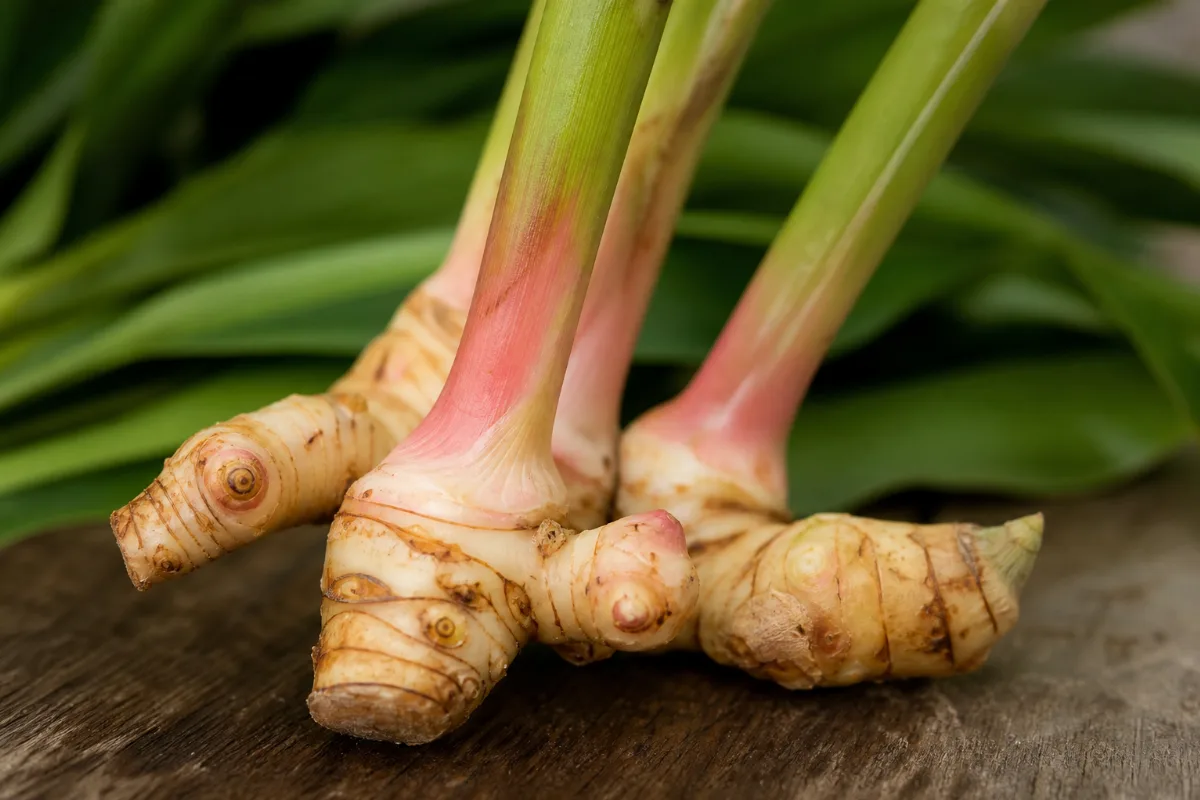
Herbs & Botanicals · Herbs · Southeast Asian spice with very little human research and several open safety questions
Galangal
Alpinia galanga (L.) Willd. · also called Greater galangal, galangal, lengkuas, kha (not the same as lesser galangal or ginger)
Galangal is the underground stem (rhizome) of a plant in the ginger family. It is a common spice in Thai, Indonesian and Malaysian cooking and is used in traditional medicine. This profile is about greater galangal, Alpinia galanga. Lesser galangal (Alpinia officinarum) and ginger are different plants. Human research is thin: one knee-pain trial of a ginger plus galangal mix, three small trials of branded extracts or mixtures, and no trial for nausea or digestion. Most other findings come from cells and animals.
General information, not medical advice. Last substantive update · Not medically reviewed. A named clinician has not signed off on this page. How this page is made
About Galangal
Greater galangal (Alpinia galanga) is a ginger-family spice. Human research is limited to one knee-pain trial of a ginger plus galangal extract and three small trials of branded extracts or mixtures. Nothing is above low certainty. There is no human trial for nausea or digestion. Safety questions are lab-based enzyme and platelet findings, a few skin allergy cases and no pregnancy data.
What it is
Alpinia galanga (L.) Willd. is a perennial plant of the ginger family (Zingiberaceae). GBIF and NCBI Taxonomy both accept the name. The rhizome is the part used as a spice and in studies.
Do not confuse it with lesser galangal (Alpinia officinarum), ginger (Zingiber officinale) or aromatic ginger (Kaempferia galanga). They are separate species.
Traditional and current uses
Galangal is a common spice in Indonesia, Thailand and Malaysia. In traditional medicine it has been used for throat infection, asthma, urinary problems, inflammation, rheumatism and stomach complaints. A 2011 review also lists use as an emmenagogue and abortifacient. Traditional use is not proof that it works or is safe.
Today it is sold as an extract or in mixed supplements for joints, energy and male vitality.
What the research shows
The only trial of reasonable size tested a standardized extract of ginger and greater galangal in 261 adults with knee osteoarthritis. After 6 weeks more people on the extract had a clear drop in pain (63% vs 50%), but more had gut side effects.
Three small trials looked at alertness (59 people), erectile function in men on SSRIs (60 men) and sperm movement (70 men, with pomegranate). Each is one trial, and two of them have company links. A trial of a five-plant mix for long COVID cannot tell us about galangal.
For nausea, digestion, blood sugar, asthma and kidney protection there are no human trials, only animal and lab work.
At a glance
Traditional uses history, not proof
- Spice and condiment in Indonesia, Thailand and Malaysia (2022 review).
- Traditional medicine for throat infection, asthma, urinary ailments, inflammation and rheumatism (2022 review).
- Listed in a 2011 review as emmenagogue, aphrodisiac, abortifacient, carminative and fever-reducing; also for bronchitis, enteritis, kidney stones and diabetes.
- Traditional use for stomach pain, vomiting and diarrhea (2025 rat-study introduction).
Studied for research
- Knee osteoarthritis pain (ginger plus galangal mix), low
- Mental alertness (one branded extract), very low
- Sexual function in men on SSRI antidepressants, very low
- Sperm motility (pomegranate plus galangal tablet), very low
- Long COVID symptoms (five-plant formula), insufficient
- Nausea, vomiting and digestion, insufficient (no human trial)
- Blood sugar, asthma and allergy, kidney protection, insufficient (animals only)
Main compounds
- Galangin, a flavonol
- 1'-Acetoxychavicol acetate (ACA), the pungent main compound
- 1'-Acetoxyeugenol acetate, a related compound
- Essential oil
Common forms
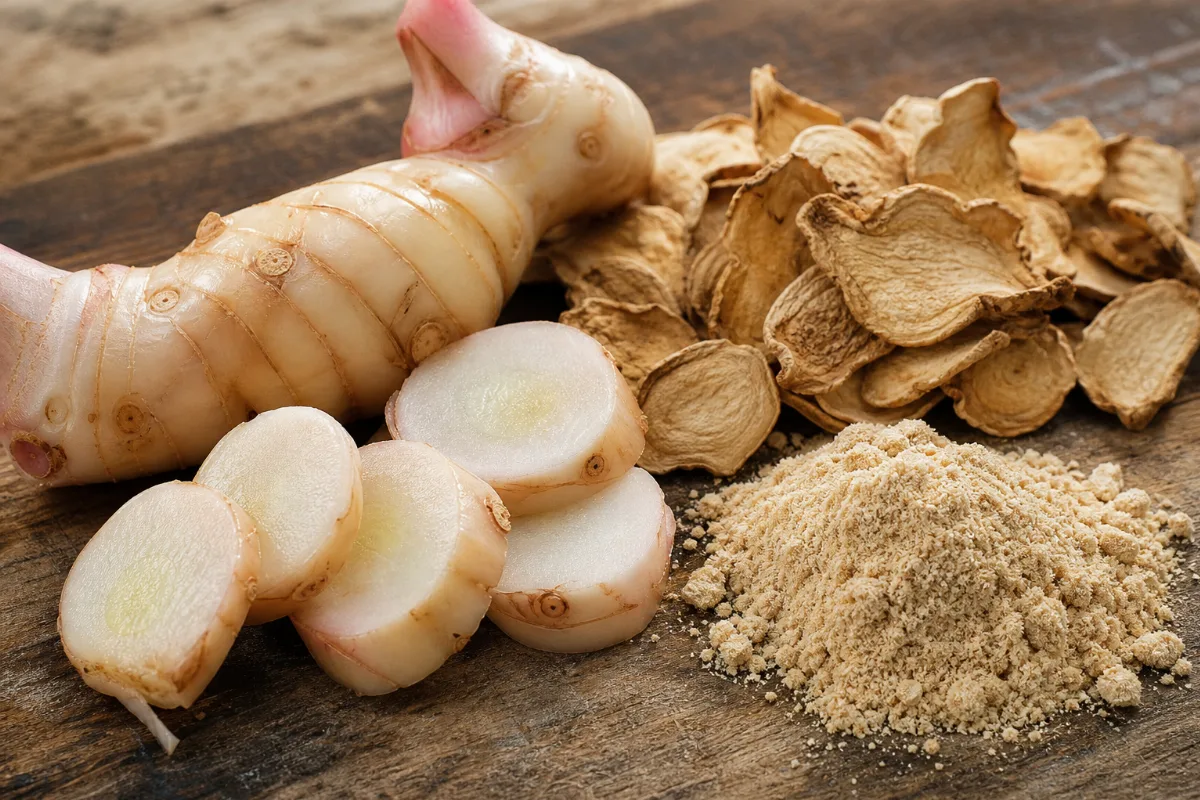
- Fresh or dried rhizome as a spice
- Powdered rhizome
- Branded extracts used in trials (E-AG-01, EV.EXT 77, EnXtra, Punalpin)
- Essential oil (tested in rats only)
Research links: Ginger plus galangal knee trial (abstract) · Alertness crossover trial (abstract) · Enzyme (CYP) inhibition by ACA (abstract) · 90-day rat toxicity study (abstract) · Research Library · Genes & Biomarkers Library
The plant and its history
- Accepted scientific name
- Alpinia galanga (L.) Willd.
- Naming authority
- (L.) Willd. (GBIF accepted name, key 5302225)
- Synonyms
- Amomum galanga (L.) Lour.; Alpinia alba (Retz.) Roscoe; Alpinia pyramidata Blume; Galanga major Garsault
- Common names
- Greater galangal (English); Galangal (English); Thai ginger / Siamese ginger (English); Lengkuas (Malay / Indonesian); Kha (Thai)
- Botanical family
- Zingiberaceae, the ginger family, which also includes ginger, turmeric and cardamom.
- Classification
- Plantae > Tracheophyta > Liliopsida > Zingiberales > Zingiberaceae > Alpinia > Alpinia galanga
- Native range
- Not verified from a primary source here. Reviews describe use as a spice in Indonesia, Thailand and Malaysia and in traditional medicine in India.
- Habitat
- Not verified.
- What the plant looks like
- Roots: The rhizome (underground stem) is the part used in the studies read.; Stems: Not verified.; Leaves: Not verified; one animal study used aerial parts but is not cited here.; Flowers: Not verified.; Fruit: A 1976 paper on seeds exists but was not read.
- Cultivation
- Not verified.
- Harvest and processing
- Not verified. Product forms (fresh rhizome, dried powder, extracts, essential oil) are not compared in the studies read.
- Look-alikes and adulterants
- Name: Alpinia officinarum Hance (lesser galangal); Note: Separate accepted species (GBIF key 5302199). Source of much of the 'galangal' research on galangin and some CYP work; not interchangeable with greater galangal in the evidence.; Name: Zingiber officinale Roscoe (ginger); Note: Separate accepted species (GBIF key 2757280). The knee-pain trial combined ginger and greater galangal, so ginger's own evidence must not be credited to galangal.; Name: Kaempferia galanga L. (aromatic ginger, sand ginger); Note: Separate accepted species (GBIF key 5301451) with a similar name; not covered here.
- Sustainability and conservation
- Not verified. No IUCN assessment retrieved.
The plant and the parts used
Traditional use and history history, not clinical proof
| Tradition or era | Documented use | Source |
|---|---|---|
| Southeast Asian cooking | A spice and condiment in Indonesia, Thailand and Malaysia. | p35227783 |
| Traditional medicine, South and Southeast Asia | Used for throat infection, asthma, urinary ailments, inflammation and rheumatism (2022 review); also as emmenagogue, aphrodisiac, abortifacient, carminative and antipyretic, and for bronchitis, heart disease, chronic enteritis, kidney stones, diabetes and kidney disorders (2011 review). | p22015185 |
| Siddha medicine, India | A galangal drug appears in a case report of a skin reaction (title only read). | p26392454 |
| Modern regulators | No EMA/HMPC monograph and no NCCIH fact sheet were found; not confirmed on the EMA site. | s-ema-hmpc-none |
Traditional use shows how a plant was used. It does not show that a supplement works or is safe today.
What is inside, and how it may work
What the plant contains and how those compounds act in cells and animals. Laboratory and animal mechanisms are not proven effects in people.
Main compounds
| Compound | Family | Where it is concentrated | Activity studied | Level of evidence |
|---|---|---|---|---|
| Galangin PubChem 5281616 | flavonol | Rhizome (confirmed by HPLC in A. galanga samples) Not verified here | Lab studies show it is broken down by CYP1A2 and CYP2C9 and inhibits CYP2C9. In lab tests its breakdown products were mutagenic. Not shown to work in people. 33 27 17 23 24 | Laboratory research |
| 1'-Acetoxychavicol acetate (ACA) PubChem 119104 | phenylpropanoid | Rhizome Not verified here | The pungent main compound. Reviews report many lab activities and activation of AMPK. It protected rat stomach lining and calmed mouse asthma, and it inhibited CYP1A2, CYP2D6 and CYP3A4 in the lab. Used as a standardisation marker in the sperm trial tablet. 34 11 15 21 7 6 | Animal research |
| 1'-Acetoxyeugenol acetate (AEA) PubChem 4484222 | phenylpropanoid | Rhizome Not verified here | A related compound that also protected rat stomach lining in the same study. Nothing else was read. 35 15 | Animal research |
| Essential oil (terpenes and phenylpropanoids) | volatile oil | Rhizome Not verified here | The oil lowered kidney-injury markers in gentamicin-treated rats. Composition not read. 5 | Animal research |
Mechanisms, receptors and pathways
| Target or pathway | Gene or receptor | What was found | Level |
|---|---|---|---|
| Joint inflammation and cartilage breakdown | MMP-1, MMP-2, MMP-3, MMP-13, COX-2 | A hexane extract lowered these in IL-1 beta-stimulated human joint-lining cells. Not shown in people. 18 | Laboratory research |
| Stomach protection | Prostaglandins and sulfhydryl compounds | ACA protected rat stomach lining against alcohol, acid and aspirin; its effect was weakened by indomethacin and N-ethylmaleimide. 15 | Animal research |
| Allergic airway inflammation | IL-4, IL-13, IgE, eosinophils | ACA lowered these in mice with induced asthma. 21 | Animal research |
| Energy sensing | AMPK | A review says ACA activates AMPK in lab studies and proposes this as a central route for many of its effects. 11 | Laboratory research |
| Platelet activation | PAF receptor | A methanol extract blocked PAF binding to rabbit platelets. 9 | Laboratory research |
| Alertness, sexual function, sperm | Not established | No mechanism was shown in people. Rat studies show more testosterone and sperm movement with a rhizome extract. 16 19 | Animal research |
Absorption, metabolism and elimination
- Absorption
- No absorption data in people were found for galangal compounds.
- Distribution
- No data found.
- Metabolism
- Human liver microsomes convert galangin to kaempferol mainly through CYP1A2 and also CYP2C9 (Km 9.5 micromolar). P450 enzymes can then form quercetin. ACA inhibits CYP1A2, CYP2D6 and CYP3A4 in the lab.
- Elimination
- No data found.
- Bioavailability
- Unknown in people.
Isolated compounds versus whole extracts
Most mechanism, enzyme and organ-protection findings come from isolated ACA, galangin or oils. The human trials used whole-rhizome extracts, often mixed with other plants. Nobody has compared isolated compounds with the whole rhizome in people.
Nutritional composition
Greater galangal is eaten as a spice in small amounts. Nutrient content was not studied in the sources read, and no nutrient claim is made.
1 low certainty3 very low certainty6 not enough evidence
What is Galangal good for?
The uses people ask about and how strong the human evidence is for each. Most have little or none.
Benefits, one by one
Each card is a research question, not a promise. Tap a goal to filter. Open a card to see the studies, doses and limits.
Knee osteoarthritis pain (ginger plus galangal extract)
Low certaintyOne 6-week trial of a two-species extract (ginger and greater galangal) eased knee pain a little more than placebo, but it also caused more stomach upset. Nothing tests galangal alone.
3 studiesBranded combined extract; amounts per day are not in the abstract.
Studies, doses and limits
What the trials found
One multicenter randomized, placebo-controlled trial of 261 adults with knee osteoarthritis tested a standardized extract of ginger (Zingiber officinale) and Alpinia galanga (EV.EXT 77) for 6 weeks. No trial of galangal alone was found.
Results
Among 247 evaluable people, 63% on the extract and 50% on placebo had a clear drop in knee pain on standing (p = 0.048). Pain on standing fell 24.5 mm vs 16.4 mm. Pain after walking fell 15.1 mm vs 8.7 mm. The combined WOMAC score did not differ significantly (p = 0.087). Quality of life was equal.
Effect sizes as reported
Responders 63% vs 50% (p = 0.048); standing pain -24.5 vs -16.4 mm (p = 0.005).
Why this rating
One trial, 6 weeks, a branded two-species extract, and benefit shown on some but not all measures. Galangal's own share is unknown.
Form and dose studied
Branded combined extract; amounts per day are not in the abstract.
Who was studied
Adults with knee osteoarthritis and moderate-to-severe pain.
Limits
Combination product; short; no independent repeat found; funding not stated in the abstract.
Why researchers looked
Greater galangal is used in Southeast Asian and Indian traditional medicine for rheumatism and inflammation. Lab work shows its extracts calm joint-lining cells.
Traditional use
A 2022 review lists traditional use for inflammation and rheumatism, and a 2011 review lists rheumatism too.
Proposed mechanism Laboratory research
In human joint-lining cells in a dish, a hexane extract lowered the enzymes that break down cartilage (MMPs) and COX-2. This is cell work, not shown to explain any result in people.
A proposed mechanism does not show that the effect happens in people.
More people on the extract had gut side effects (59 vs 21), mostly mild.
Mental alertness and attention
Very low certaintyOne short crossover study of a branded galangal extract found a small speed-of-response gain in healthy coffee drinkers. It has not been repeated.
1 studiesProprietary extract E-AG-01; amounts not in the abstract.
Studies, doses and limits
What the trials found
A randomized, double-dummy, placebo-controlled crossover study of 59 healthy adults with moderate caffeine intake compared the extract E-AG-01, caffeine, both together, and placebo.
Results
The extract raised the alertness score by about 12 ms from baseline (p = 0.042 at 3 hours). With caffeine, the average response time fell by 15.55 ms at 3 hours (p = 0.026). Sleep and safety were measured but results are not in the abstract.
Effect sizes as reported
Alertness +12.50 ms at 3 hours; response time -15.55 ms with caffeine.
Why this rating
A single small study of one proprietary extract, single doses, with a possible company link by author affiliation.
Form and dose studied
Proprietary extract E-AG-01; amounts not in the abstract.
Who was studied
Healthy adults aged 18-40 with moderate caffeine intake.
Limits
Changes of tens of milliseconds are small; no long-term data; no independent repeat.
Why researchers looked
The extract was developed as a possible stimulant ingredient for energy products.
Traditional use
Not a traditional use in the sources read.
Proposed mechanism Pharmacological theory
Not known. The abstract gives no mechanism.
A proposed mechanism does not show that the effect happens in people.
Safety results were not given in the abstract.
Sexual function in men taking SSRI antidepressants
Very low certaintyOne small trial found higher erectile-function scores after 4 weeks of galangal extract in men on SSRIs. It needs repeating.
3 studiesExtract, 500 mg in the trial; which plant part and how it was made ar…
Studies, doses and limits
What the trials found
A triple-blind randomized trial in Iran gave 60 men on SSRIs either 500 mg of Alpinia galanga extract or placebo for 4 weeks. It was registered (IRCT20101130005280N41).
Results
The IIEF erectile-function score rose from 11.2 to 17.4 with the extract and from 10.6 to 13.7 with placebo (p < 0.001 between groups).
Effect sizes as reported
IIEF 17.4 vs 13.7 at week 4 (baseline 11.2 vs 10.6).
Why this rating
One small trial, 4 weeks, one centre, no side-effect results in the abstract, and no independent repeat.
Form and dose studied
Extract, 500 mg in the trial; which plant part and how it was made are not stated in the abstract.
Who was studied
Adult men taking SSRIs with sexual dysfunction.
Limits
Very small; the extract is not identified; does not show it is safe to add to antidepressants (see the safety tab).
Why researchers looked
SSRIs often cause sexual side effects, and rodent work suggested galangal raises androgen activity.
Traditional use
A 2011 review lists traditional use as an aphrodisiac.
Proposed mechanism Animal research
Rodent studies report higher testosterone and sperm measures with galangal extract; no mechanism was shown in people.
A proposed mechanism does not show that the effect happens in people.
Adverse events are not reported in the abstract. No interaction study with SSRIs was found.
Nausea, vomiting and digestion
Not enough evidenceNo human trial of galangal for nausea or digestion was found. It is used in food and traditional medicine for stomach complaints, and a rat study shows stomach protection from one galangal compound.
4 studiesNot applicable: no human forms tested.
Studies, doses and limits
What the trials found
No randomized trial of galangal for nausea, vomiting, indigestion or any gut disease was found. The only digestive findings are from rats and traditional use.
Results
Rats: ACA cut alcohol-induced stomach lesions (ED50 about 0.6 mg/kg) and acid- and aspirin-induced lesions. The gut side effects seen in the knee trial are a safety signal, not a benefit (see the safety tab).
Effect sizes as reported
No human effect sizes.
Why this rating
No human trials. Animal work used isolated compounds.
Form and dose studied
Not applicable: no human forms tested.
Who was studied
None studied.
Limits
Rat stomach lesions were chemically induced; ACA is a single compound, not the whole rhizome.
Why researchers looked
Galangal is a close relative of ginger, which is studied for nausea, but ginger's evidence does not carry over to galangal.
Traditional use
A 2025 paper lists traditional use for stomach pain, vomiting and diarrhea, and a 2011 review lists carminative use and chronic enteritis.
Proposed mechanism Animal research
One isolated compound, ACA, protected rat stomach lining from alcohol, acid and aspirin injury through prostaglandins and sulfhydryl compounds. It did not protect against indomethacin injury.
A proposed mechanism does not show that the effect happens in people.
In the one human trial that included galangal, stomach and gut side effects were more common with the extract than placebo.
Sperm motility (pomegranate plus galangal tablet)
Very low certaintyIn one 3-month trial in men with weak semen quality, a tablet of pomegranate extract plus greater galangal rhizome raised the number of moving sperm more than placebo. The tablet had two ingredients and its makers ran the study.
3 studiesBranded tablet (Punalpin); the amount is not in the abstract.
Studies, doses and limits
What the trials found
A randomized, double-blind trial of 70 men (66 finished) compared a tablet of pomegranate fruit extract and freeze-dried greater galangal rhizome (standardised to ACA) with placebo for 3 months.
Results
Total motile sperm rose 62% (from 23.4 to 37.8 million) with the tablet and 20% with placebo (p = 0.026). Sperm shape did not change. No pregnancy outcome was measured.
Effect sizes as reported
Motile sperm +62% vs +20% (p = 0.026).
Why this rating
One small trial of a two-ingredient product, with authors who hold patent applications on it. Galangal's own share is unknown.
Form and dose studied
Branded tablet (Punalpin); the amount is not in the abstract.
Who was studied
Men with semen quality below a cryobank's standard but not azoospermia.
Limits
Sperm counts are a lab marker; no live births; not repeated.
Why researchers looked
Rodent studies of galangal extract reported more testosterone, sperm movement and sperm count.
Traditional use
A 2011 review lists traditional use as an aphrodisiac.
Proposed mechanism Animal research
In rats and mice, extracts raised testosterone and sperm measures; this has not been shown to work the same way in people.
A proposed mechanism does not show that the effect happens in people.
Side effects were not given in the abstract.
Long COVID symptoms (five-plant formula)
Not enough evidenceA 7-day trial of a five-plant mixture that included galangal lowered a symptom score but not a blood inflammation marker. The mixture also contained cannabis, so nothing can be said about galangal itself.
1 studiesCombination formula, 4500 mg/day in the trial.
Studies, doses and limits
What the trials found
An exploratory randomized, double-blind trial of 66 adults compared 4500 mg/day of a five-plant formula (Citrus aurantifolia, Tiliacora triandra, Cannabis sativa, Alpinia galanga, Piper nigrum) with placebo for 7 days.
Results
C-reactive protein did not change (difference -0.05 mg/L, 95% CI -0.49 to 0.39). The total symptom score fell by 4 points (95% CI -7.58 to -0.42). Moderate-to-severe fatigue and post-exertional malaise were less common. Quality of life did not differ. Side effects were mostly mild.
Effect sizes as reported
Symptom score MD -4.00 (95% CI -7.58 to -0.42); CRP no change.
Why this rating
A five-herb mixture, 7 days, a new unvalidated questionnaire, and a company collaboration. Galangal's effect cannot be separated.
Form and dose studied
Combination formula, 4500 mg/day in the trial.
Who was studied
Adults with long COVID in Thailand.
Limits
Exploratory; short; combination with cannabis and pepper.
Why researchers looked
The formula was developed in Thailand as a herbal approach to lingering symptoms after COVID.
Traditional use
Not a traditional use of galangal alone.
Proposed mechanism Pharmacological theory
Not known.
A proposed mechanism does not show that the effect happens in people.
Cannabis and pepper in the formula could affect other medicines; the trial does not show which ingredient does what.
Blood sugar
Not enough evidenceNo human trial of galangal for blood sugar was found. Rabbit results were mixed and a rodent safety study saw glucose go up.
4 studiesNot applicable.
Studies, doses and limits
What the trials found
No human blood-sugar trial was found. Animal results disagree.
Results
In normal rabbits, powder and methanol or water extracts lowered blood glucose about as much as the drug gliclazide, but in diabetic rabbits the fall was not significant. In a separate animal safety study, galangal extracts raised glucose, liver enzymes and bilirubin.
Effect sizes as reported
Rabbit glucose fell in normal animals only.
Why this rating
Animal studies point in different directions and no human data exist.
Form and dose studied
Not applicable.
Who was studied
None studied in people.
Limits
Rabbits and rodents; solvent extracts; doses not in abstracts.
Why researchers looked
Reviews list galangal compounds, such as ACA, as having antidiabetic effects in lab work.
Traditional use
A 2011 review lists traditional use in diabetes.
Proposed mechanism Laboratory research
ACA is reported to activate AMPK, an energy-sensing switch, in lab work. This is not shown in people.
A proposed mechanism does not show that the effect happens in people.
Possible effect on blood sugar is a reason for people on diabetes medicines to ask a doctor or pharmacist before use (see the safety tab).
Allergy and asthma
Not enough evidenceA mouse study shows the main galangal compound calms allergic lung inflammation. No human study exists, and galangal itself has caused skin allergy in a few people.
3 studiesNot applicable.
Studies, doses and limits
What the trials found
No human study of galangal for asthma or allergy was found.
Results
Mice treated with ACA (25 or 50 mg/kg/day for 5 days) had less lung inflammation than untreated asthmatic mice.
Effect sizes as reported
No human effect sizes.
Why this rating
Mouse model, isolated compound, 5 days.
Form and dose studied
Not applicable.
Who was studied
None studied in people.
Limits
Does not show galangal helps asthma. Contact allergy to galangal is also reported (see the safety tab).
Why researchers looked
Reviews list antiallergic activity of galangal compounds, and the plant is used traditionally for asthma.
Traditional use
A 2022 review lists traditional use for asthma and throat infection.
Proposed mechanism Animal research
In mice with induced asthma, ACA lowered eosinophils, IgE, IL-4 and IL-13 and reduced airway changes.
A proposed mechanism does not show that the effect happens in people.
Skin allergy to galangal has been reported in case reports.
Kidney protection (rat study with an antibiotic)
Not enough evidenceThe essential oil lowered kidney-injury markers in rats given a kidney-toxic antibiotic. There is no human evidence.
2 studiesEssential oil in rats only.
Studies, doses and limits
What the trials found
No human study was found.
Results
Rats given gentamicin plus the oil (50 or 100 mg/kg) had lower creatinine, uric acid, urea and kidney-injury markers than rats given gentamicin alone.
Effect sizes as reported
No human effect sizes.
Why this rating
Rats, 2 weeks, essential oil.
Form and dose studied
Essential oil in rats only.
Who was studied
None studied in people.
Limits
Essential oils are not interchangeable with food spice; no human safety data for the oil were found.
Why researchers looked
Galangal is used traditionally for kidney complaints, and the authors tested its oil against a known kidney-damaging drug.
Traditional use
A 2011 review lists traditional use for kidney disorders and kidney stones.
Proposed mechanism Animal research
The oil raised antioxidant enzymes and lowered inflammatory signals (TLR4/NF-kappaB pathway) in rat kidneys.
A proposed mechanism does not show that the effect happens in people.
Not tested for kidney safety in people.
Cancer, germs and other lab claims
Not enough evidenceMany lab studies of galangal and its compounds report effects on cancer cells, germs and inflammation. These are cell and animal findings and no human trial tests any of them.
3 studiesNot applicable.
Studies, doses and limits
What the trials found
No human study of galangal for cancer or infection was found.
Results
A 2020 review of ACA lists anticancer, antiobesity, antiallergy, antimicrobial, antidiabetic, gastroprotective and anti-inflammatory effects and says more clinical studies are needed. Galangal extracts also slowed tuberculosis bacteria by 18-32% in a test tube.
Effect sizes as reported
No human effect sizes.
Why this rating
Lab and animal work only; the authors themselves ask for clinical studies.
Form and dose studied
Not applicable.
Who was studied
None studied in people.
Limits
Cells in a dish do not predict results in people, and some lab work (see the safety tab) shows galangin's breakdown products can damage DNA in tests.
Why researchers looked
Galangal compounds ACA and galangin are active in many lab tests.
Traditional use
Spice and folk medicine across Southeast Asia and India.
Proposed mechanism Laboratory research
ACA is reported to activate AMPK and affect many cell pathways; galangin is a flavonol with lab antioxidant activity.
A proposed mechanism does not show that the effect happens in people.
Lab doses and isolated compounds are not food amounts.
Connections to the rest of health
How Galangal connects to the rest of our health knowledge graph. Every link says what kind of connection it is. A safety link (for example to the liver) is a warning, not a benefit. A study that merely mentions a topic never creates a benefit link.
Explore every connection: goals, body systems, organs, symptoms, genes
A. Wellness goals
| Connected to | Kind of connection | Evidence status | Context | Studies |
|---|---|---|---|---|
| Joint Support | Potential benefit | Low certainty | Knee osteoarthritis pain (ginger plus galangal extract): One 6-week trial of a two-species extract (ginger and greater galangal) eased knee pain a little more than placebo, but it also caused more stomach upset. Nothing tests galangal alone. | 4 18 20 |
| Inflammation Balance | Potential benefit | Low certainty | Knee osteoarthritis pain (ginger plus galangal extract): One 6-week trial of a two-species extract (ginger and greater galangal) eased knee pain a little more than placebo, but it also caused more stomach upset. Nothing tests galangal alone. | 4 18 20 |
| Better Focus | Potential benefit | Very low certainty | Mental alertness and attention: One short crossover study of a branded galangal extract found a small speed-of-response gain in healthy coffee drinkers. It has not been repeated. | 25 |
| Mental Clarity | Potential benefit | Very low certainty | Mental alertness and attention: One short crossover study of a branded galangal extract found a small speed-of-response gain in healthy coffee drinkers. It has not been repeated. | 25 |
| Cognitive Performance | Potential benefit | Very low certainty | Mental alertness and attention: One short crossover study of a branded galangal extract found a small speed-of-response gain in healthy coffee drinkers. It has not been repeated. | 25 |
| Energy Boost | Potential benefit | Very low certainty | Mental alertness and attention: One short crossover study of a branded galangal extract found a small speed-of-response gain in healthy coffee drinkers. It has not been repeated. | 25 |
| Mens Vitality | Potential benefit | Very low certainty | Sexual function in men taking SSRI antidepressants: One small trial found higher erectile-function scores after 4 weeks of galangal extract in men on SSRIs. It needs repeating. Sperm motility (pomegranate plus galangal tablet): In one 3-month trial in men with weak semen quality, a tablet of pomegranate extract plus greater galangal rhizome raised the number of moving sperm more than placebo. The tablet had two ingredients and its makers ran the study. | 1 10 16 6 19 |
| Libido Support | Potential benefit | Very low certainty | Sexual function in men taking SSRI antidepressants: One small trial found higher erectile-function scores after 4 weeks of galangal extract in men on SSRIs. It needs repeating. | 1 10 16 |
| Digestive Support | Traditional use | Not enough evidence | Nausea, vomiting and digestion: No human trial of galangal for nausea or digestion was found. It is used in food and traditional medicine for stomach complaints, and a rat study shows stomach protection from one galangal compound. | 15 5 10 4 |
| Gut Health | Traditional use | Not enough evidence | Nausea, vomiting and digestion: No human trial of galangal for nausea or digestion was found. It is used in food and traditional medicine for stomach complaints, and a rat study shows stomach protection from one galangal compound. | 15 5 10 4 |
| Fertility Support | Potential benefit | Very low certainty | Sperm motility (pomegranate plus galangal tablet): In one 3-month trial in men with weak semen quality, a tablet of pomegranate extract plus greater galangal rhizome raised the number of moving sperm more than placebo. The tablet had two ingredients and its makers ran the study. | 6 16 19 |
| Reduce Fatigue | Potential benefit | Not enough evidence | Long COVID symptoms (five-plant formula): A 7-day trial of a five-plant mixture that included galangal lowered a symptom score but not a blood inflammation marker. The mixture also contained cannabis, so nothing can be said about galangal itself. | 13 |
| Immune Support | Potential benefit | Not enough evidence | Long COVID symptoms (five-plant formula): A 7-day trial of a five-plant mixture that included galangal lowered a symptom score but not a blood inflammation marker. The mixture also contained cannabis, so nothing can be said about galangal itself. | 13 |
| Blood Sugar Balance | Preliminary mechanism | Not enough evidence | Blood sugar: No human trial of galangal for blood sugar was found. Rabbit results were mixed and a rodent safety study saw glucose go up. | 2 3 11 10 |
| Metabolic Health | Preliminary mechanism | Not enough evidence | Blood sugar: No human trial of galangal for blood sugar was found. Rabbit results were mixed and a rodent safety study saw glucose go up. | 2 3 11 10 |
| Immune Support | Preliminary mechanism | Not enough evidence | Allergy and asthma: A mouse study shows the main galangal compound calms allergic lung inflammation. No human study exists, and galangal itself has caused skin allergy in a few people. Cancer, germs and other lab claims: Many lab studies of galangal and its compounds report effects on cancer cells, germs and inflammation. These are cell and animal findings and no human trial tests any of them. | 21 20 8 11 3 |
| Inflammation Balance | Preliminary mechanism | Not enough evidence | Allergy and asthma: A mouse study shows the main galangal compound calms allergic lung inflammation. No human study exists, and galangal itself has caused skin allergy in a few people. Kidney protection (rat study with an antibiotic): The essential oil lowered kidney-injury markers in rats given a kidney-toxic antibiotic. There is no human evidence. | 21 20 8 5 10 11 3 |
B. Body systems
| Connected to | Kind of connection | Evidence status | Context | Studies |
|---|---|---|---|---|
| Musculoskeletal System | Biological association | Low certainty | Studied for: Knee osteoarthritis pain (ginger plus galangal extract) | 4 18 20 |
| Nervous System | Biological association | Very low certainty | Studied for: Mental alertness and attention Studied for: Sexual function in men taking SSRI antidepressants | 25 1 10 16 |
| Reproductive System | Biological association | Very low certainty | Studied for: Sexual function in men taking SSRI antidepressants Studied for: Sperm motility (pomegranate plus galangal tablet) | 1 10 16 6 19 |
| Digestive System | Biological association | Not enough evidence | Studied for: Nausea, vomiting and digestion | 15 5 10 4 |
| Immune System | Biological association | Not enough evidence | Studied for: Long COVID symptoms (five-plant formula) Studied for: Allergy and asthma | 13 21 20 8 11 3 |
| Endocrine System | Biological association | Not enough evidence | Studied for: Blood sugar | 2 3 11 10 |
| Metabolism Weight | Biological association | Not enough evidence | Studied for: Blood sugar | 2 3 11 10 |
| Respiratory System | Biological association | Not enough evidence | Studied for: Allergy and asthma | 21 20 8 |
| Urinary System | Biological association | Not enough evidence | Studied for: Kidney protection (rat study with an antibiotic) | 5 10 |
E. Health conditions
| Connected to | Kind of connection | Evidence status | Context | Studies |
|---|---|---|---|---|
| Knee osteoarthritis | Potential benefit | Low certainty | One 6-week trial; two-species extract; more gut side effects. Preparation or compound: Ginger plus galangal extract (EV.EXT 77) |
4 |
| Allergic contact dermatitis | Adverse effect or risk | Very low certainty | One patch-test-confirmed case plus one worsening case. Preparation or compound: Fresh and dried rhizome applied on skin |
8 12 |
| Pregnancy | Contraindication | Not enough evidence | Traditional abortifacient use; no human data. Preparation or compound: Rhizome |
10 |
I. Biomarkers
| Connected to | Kind of connection | Evidence status | Context | Studies |
|---|---|---|---|---|
| Knee pain on standing (0-100 mm scale) | Biological association | Low certainty | Measured in trials: lowered. A lab change is not the same as a health benefit. | 4 |
| Alertness score (Attention Network Test, milliseconds) | Biological association | Very low certainty | Measured in trials: raised. A lab change is not the same as a health benefit. | 25 |
| International Index of Erectile Function (IIEF) score | Biological association | Very low certainty | Measured in trials: raised. A lab change is not the same as a health benefit. | 1 |
| Total motile sperm count | Biological association | Very low certainty | Measured in trials: raised. A lab change is not the same as a health benefit. | 6 |
| C-reactive protein (CRP) | Biological association | Not enough evidence | Measured in trials: no-change. A lab change is not the same as a health benefit. | 13 |
| Blood glucose (animals only) | Biological association | Not enough evidence | Measured in trials: mixed. A lab change is not the same as a health benefit. | 2 3 |
| Creatinine and other kidney markers (rats) | Biological association | Not enough evidence | Measured in trials: lowered. A lab change is not the same as a health benefit. | 5 |
J. Genes, receptors and enzymes
| Connected to | Kind of connection | Evidence status | Context | Studies |
|---|---|---|---|---|
| CYP2D6 | Drug or supplement interaction | Very low certainty | Inhibition in human liver microsomes; no human interaction study. Preparation or compound: Rhizome extract; ACA |
26 7 |
| CYP2C9 | Drug or supplement interaction | Very low certainty | Competitive inhibition in the lab; galangin is also a substrate. Preparation or compound: Galangin |
23 17 |
| CYP3A4 | Drug or supplement interaction | Very low certainty | Moderate inhibition in the lab. Preparation or compound: ACA |
7 |
| CYP1A2 | Drug or supplement interaction | Very low certainty | Inhibited by ACA in the lab; galangin is broken down by it. Preparation or compound: ACA; galangin |
7 17 |
| CYP2D6 | Preliminary mechanism | In vitro | Inhibited by A. galanga rhizome extract and by ACA in human liver microsomes. | 26 7 |
| CYP2C9 | Preliminary mechanism | In vitro | Inhibited by galangin; also helps break galangin down. | 23 17 |
| CYP3A4 | Preliminary mechanism | In vitro | Moderately inhibited by ACA in the lab. | 7 |
| CYP1A2 | Preliminary mechanism | In vitro | Inhibited by ACA; main enzyme that breaks down galangin in human liver microsomes. | 7 17 |
K. Biological pathways
L. Active compounds
| Connected to | Kind of connection | Evidence status | Context | Studies |
|---|---|---|---|---|
| Galangin | Biological association | In vitro | Lab studies show it is broken down by CYP1A2 and CYP2C9 and inhibits CYP2C9. In lab tests its breakdown products were mutagenic. Not shown to work in people. Preparation or compound: Rhizome (confirmed by HPLC in A. galanga samples) |
33 27 17 23 24 |
| 1'-Acetoxychavicol acetate (ACA) | Biological association | Animal | The pungent main compound. Reviews report many lab activities and activation of AMPK. It protected rat stomach lining and calmed mouse asthma, and it inhibited CYP1A2, CYP2D6 and CYP3A4 in the lab. Used as a standardisation marker in the sperm trial tablet. Preparation or compound: Rhizome |
34 11 15 21 7 6 |
| 1'-Acetoxyeugenol acetate (AEA) | Biological association | Animal | A related compound that also protected rat stomach lining in the same study. Nothing else was read. Preparation or compound: Rhizome |
35 15 |
| Essential oil (terpenes and phenylpropanoids) | Biological association | Animal | The oil lowered kidney-injury markers in gentamicin-treated rats. Composition not read. Preparation or compound: Rhizome |
5 |
Each connection is stored with the ingredient, the connected record, the kind of connection, the evidence status, the supporting studies, the preparation or compound involved, and a review date (last reviewed October 25, 2026).
Evidence at a glance: what changed in 7 lab markers
Tap a number to show only those markers. Counts are markers, not people.
The evidence
The research centre for Galangal. Every record here was checked against PubMed or the publisher's page; we never list a study we have not verified.
Evidence by outcome
Bars show how many studies we found for each outcome, not how well it works. People are added up across trials only (reviews are not added, to avoid double counting).
How we rate evidence
High certainty
Several well-run trials or reviews agree; further research is unlikely to change the picture much.
Moderate certainty
Good trials point the same way, but some doubt remains.
Low certainty
Small, short or inconsistent trials. The finding could change with better research.
Very low certainty
Very little or very weak human data. Treat as a possibility only.
Mixed findings
Trials or reviews disagree with each other.
Not enough evidence
Not enough human research to say either way.
Evidence against
Good research found no benefit, or found harm.
We take the reviewers' own risk-of-bias and GRADE statements where they exist, and otherwise judge from study size, design, consistency, directness and whether a product matches what is sold. Many publications do not make evidence high. Method note: We searched PubMed and read abstracts of about 27 sources, checked the plant name in GBIF and NCBI Taxonomy and compounds in PubChem, and looked for EMA, NCCIH, LiverTox and LactMed pages on galangal (none found; the EMA, LiverTox and LactMed checks are not confirmed on the agency sites). Only abstracts were read, and one skin case report was read by title only. Certainty ratings are the compiler's own reading. The knee trial combined ginger and greater galangal. Two trials have company links by author statement or affiliation. No study is cited that we could not verify.
Study library: every study we checked 36
| Study | Design | People | Product, dose, length | Result |
|---|---|---|---|---|
| Akbarzadeh 2023 Assessing the effect of Alpinia galanga extract on the treatment of SSRI-induced erectile dysfunction: A randomized triple-blind clinical trial. Front Psychiatry · PMID 37143784 · DOI |
Rct (randomized, triple blind, placebo controlled) |
60 Adult men taking SSRI antidepressants with sexual dysfunction |
Alpinia galanga extract not stated in abstract 500 mg 4 weeks · vs Placebo |
IIEF rose from 11.2 to 17.4 with the extract and from 10.6 to 13.7 with placebo (p < 0.001 between groups). IIEF 17.4 vs 13.7 at week 4, p < 0.001. Methods, limits and fundingOutcomes: International Index of Erectile Function (IIEF); Beck Depression and Anxiety scores Limitations: 30 per group; 4 weeks; one centre; the abstract does not report side effects or what the extract was; needs repeating. Funding and conflicts: No conflicts declared. Registration: IRCT20101130005280N41 Read: abstract |
| Akhtar 2002 Hypoglycaemic activity of Alpinia galanga rhizome and its extracts in rabbits. Fitoterapia · PMID 12490221 · DOI |
Animal research animal |
Normal and alloxan-diabetic rabbits | Powdered rhizome, methanol and aqueous extracts rhizome Not in abstract Not in abstract · vs Gliclazide and controls |
In normal rabbits the powder and extracts significantly lowered blood glucose, comparable to gliclazide. In diabetic rabbits they did not lower it significantly. Significant fall in normal rabbits only. Methods, limits and fundingOutcomes: Blood glucose Limitations: Rabbits; mixed result; no human data. Funding and conflicts: Not stated. Read: abstract |
| Alajmi 2018 Antimycobacterial Activity and Safety Profile Assessment of Alpinia galanga and Tinospora cordifolia. Evid Based Complement Alternat Med · PMID 30069222 · DOI |
Animal and in vitro animal |
Test-tube TB bacteria; animals (species not in abstract) | Dichloromethane and ethanolic A. galanga extracts not stated in abstract Not in abstract Acute and chronic · vs Controls |
Extracts slowed TB bacteria by 18-32% at 50 micrograms/ml. A. galanga raised the relative weight of heart, liver, spleen and kidney, slightly lowered red cells, white cells, haemoglobin and platelets, and raised liver enzymes, bilirubin and glucose. Significant organ, blood and liver-enzyme changes. Methods, limits and fundingOutcomes: Antibacterial activity; body, organ and blood tests Limitations: Animal species, doses and durations are not in the abstract; solvent extracts, not food use. Funding and conflicts: Not stated. Read: abstract |
| Altman 2001 Effects of a ginger extract on knee pain in patients with osteoarthritis. Arthritis Rheum · PMID 11710709 · DOI |
Rct (randomized, double blind, placebo controlled, multicenter) |
261 Adults with knee osteoarthritis and moderate-to-severe pain (247 evaluable) |
Standardized extract of two ginger species, Zingiber officinale and Alpinia galanga (EV.EXT 77) rhizome (not stated in abstract) Twice daily (amount not in abstract) 6 weeks · vs Placebo; acetaminophen allowed as rescue |
More responders on the extract (63% vs 50%, p = 0.048). Pain on standing fell 24.5 mm vs 16.4 mm (p = 0.005); pain after walking 50 feet fell 15.1 mm vs 8.7 mm (p = 0.016); the WOMAC composite change was not significant (12.9 vs 9.0 mm, p = 0.087). Quality of life was equal. More gut side effects on the extract (59 vs 21 patients), mostly mild. Responders 63% vs 50%, p = 0.048. Methods, limits and fundingOutcomes: Responders with a drop of 15 mm or more on a pain scale for knee pain on standing; secondary pain and function scores Limitations: Two-species combination, so the effect cannot be given to galangal alone; 6 weeks; branded extract; funding and conflicts not stated in the abstract. Funding and conflicts: Not stated in abstract (abstract notes non-US government research support). Read: abstract |
| Alyami 2025 Alpinia galanga Essential Oil Mitigates Gentamicin-Induced Renal Injury: In silico and in vivo Studies. Kidney Dis (Basel) · PMID 41321790 · DOI |
Animal plus computer modelling animal |
Rats given the antibiotic gentamicin | Galangal essential oil rhizome 50 or 100 mg/kg by mouth 2 weeks · vs Gentamicin alone |
The oil lowered creatinine, uric acid, urea and other kidney-injury markers and signs of oxidative stress and inflammation in gentamicin-treated rats. The introduction lists traditional use for stomach pain, vomiting, diarrhea, infections and kidney disorders. Lower kidney-injury markers. Methods, limits and fundingOutcomes: Kidney tests and tissue Limitations: Rats and a computer model; the oil was given with a toxic drug; no human data. Funding and conflicts: No conflicts declared. Read: abstract |
| Fedder 2014 An extract of pomegranate fruit and galangal rhizome increases the numbers of motile sperm: a prospective, randomised, controlled, double-blinded trial. PLoS One · PMID 25275520 · DOI |
Rct (randomized, double blind, placebo controlled) |
70 Men with semen quality below a cryobank's standard, without azoospermia (66 finished) |
Tablet (Punalpin) of pomegranate fruit extract plus freeze-dried greater galangal rhizome standardised to 1'S-1'-acetoxychavicol acetate rhizome Daily (amount not in abstract) 3 months · vs Placebo |
Motile sperm rose 62% (23.4 to 37.8 million) with the tablet and 20% with placebo (p = 0.026). Sperm shape was not affected. Between-group p = 0.026. Methods, limits and fundingOutcomes: Total number of motile sperm Limitations: Two-ingredient product, so galangal's own part is unknown; 66 completers; sperm numbers are a lab marker, not pregnancy. Funding and conflicts: Two authors were commercialising the product and hold patent applications; the company did not fund the study. Registration: NCT01357044 Read: abstract |
| Haque AKMM 2017 In vitro inhibitory mechanisms and molecular docking of 1'-S-1'-acetoxychavicol acetate on human cytochrome P450 enzymes. Phytomedicine · PMID 28606510 · DOI |
Laboratory research in-vitro |
Lab assays with human CYP enzymes | ACA (the main galangal compound) and an extract of Alpinia conchigera, a different species rhizome n/a n/a · vs n/a |
ACA moderately inhibited CYP1A2 (IC50 4.5 micromolar), CYP2D6 (7.5) and CYP3A4 (9.5); other enzymes were weakly inhibited. CYP2D6 inhibition was mechanism-based. The authors say interactions are possible and need in vivo study. IC50 4.5, 7.5, 9.5 micromolar. Methods, limits and fundingOutcomes: CYP enzyme inhibition Limitations: Lab only; the extract tested was A. conchigera, not A. galanga; no human data. Funding and conflicts: None stated. Read: abstract |
| Hong 2006 Erythema multiforme-like generalized allergic contact dermatitis caused by Alpinia galanga. Contact Dermatitis · PMID 16487286 · DOI |
Case report |
1 One patient, Taiwan |
Topical herbal remedies; patch tests with fresh and dried A. galanga rhizome n/a n/a · vs n/a |
Local contact dermatitis, then a widespread erythema multiforme-like rash after topical herbal remedies. Patch tests found an allergen in fresh and dried A. galanga. Positive patch tests. Methods, limits and fundingOutcomes: Skin reaction Limitations: One case; the cause was an applied remedy, not a swallowed product. Funding and conflicts: Not stated. Read: abstract |
| Jantan 2005 Platelet-activating factor (PAF) receptor-binding antagonist activity of Malaysian medicinal plants. Phytomedicine · PMID 15693713 · DOI |
Laboratory research in-vitro |
Rabbit platelets in the lab | Methanol extracts of 37 plant species including Alpinia galanga rhizome (not stated) n/a n/a · vs n/a |
A. galanga was among the extracts that significantly blocked PAF binding (IC50 between 1.2 and 18.4 micrograms/ml across the plants listed). IC50 range 1.2-18.4 micrograms/ml for the group. Methods, limits and fundingOutcomes: Blocking of PAF binding to platelets Limitations: Lab only, rabbit platelets; not bleeding or clotting in people. Funding and conflicts: Not stated. Read: abstract |
| Kaushik 2011 Current pharmacological and phytochemical studies of the plant Alpinia galanga. Zhong Xi Yi Jie He Xue Bao · PMID 22015185 · DOI |
Narrative review review of mixed (mostly traditional and lab) |
Review of A. galanga studies | Alpinia galanga rhizome and other parts n/a n/a · vs n/a |
Lists traditional uses as emmenagogue, aphrodisiac, abortifacient, carminative, antipyretic and anti-inflammatory, and for bronchitis, heart disease, chronic enteritis, kidney stones, diabetes, rheumatism and kidney disorders. Lists compounds including galangin and kaempferide. None. Methods, limits and fundingOutcomes: Traditional uses and compounds Limitations: Short narrative review; traditional uses are not evidence of benefit or safety. Funding and conflicts: Not read. Read: abstract |
| Kojima-Yuasa 2020 Pharmacological Effects of 1'-Acetoxychavicol Acetate, a Major Constituent in the Rhizomes of Alpinia galanga and Alpinia conchigera. J Med Food · PMID 32069429 · DOI |
Narrative review in-vitro and animal |
Review of ACA studies | 1'-acetoxychavicol acetate (ACA), isolated compound rhizome n/a n/a · vs n/a |
ACA is reported to have anticancer, antiobesity, antiallergy, antimicrobial, antidiabetic, gastroprotective and anti-inflammatory activity and to activate AMPK. The authors say more studies are needed on clinical effects. None. Methods, limits and fundingOutcomes: Lab effects of ACA Limitations: Isolated compound, not whole rhizome; lab and animal findings; authors call for clinical work. Funding and conflicts: Not read. Read: abstract |
| Kumar 2015 Herpes-associated erythema multiforme worsened by a Siddha drug, Alpinia galanga, in an 18-year-old man. BMJ Case Rep · PMID 26392454 · DOI |
Case report |
1 One 18-year-old man, India |
Siddha preparation of A. galanga (details not read) not read n/a n/a · vs n/a |
The title states that a skin condition (erythema multiforme linked to herpes) was worsened by Alpinia galanga. No abstract was available, so only the title was read. Not available. Methods, limits and fundingOutcomes: Skin reaction Limitations: Title only; route, dose and proof of cause not read. Funding and conflicts: Not read. Read: title-only |
| Lukkunaprasit 2024 Impact of combined plant extracts on long COVID: An exploratory randomized controlled trial. Complement Ther Med · PMID 39488240 · DOI |
Rct (exploratory, randomized, double blind, placebo controlled) |
66 Adults with long COVID, Thailand |
Five-plant formula: Citrus aurantifolia, Tiliacora triandra, Cannabis sativa, Alpinia galanga and Piper nigrum not stated 4500 mg/day of the formula 7 days · vs Placebo |
CRP did not change (median difference -0.05 mg/L, 95% CI -0.49 to 0.39). Symptom score fell (-4.00, 95% CI -7.58 to -0.42). Adverse events were mostly mild. Symptom score difference -4.00. (Symptom score MD -4.00 (95% CI -7.58 to -0.42)) Methods, limits and fundingOutcomes: C-reactive protein (CRP) and total symptom score Limitations: Five-herb mixture including cannabis, so no effect can be given to galangal; 7 days; new unvalidated symptom questionnaire; authors' university collaborates with the formula's owner. Funding and conflicts: Research collaboration with the product owner (Naree Pharma); the company had no role in design or analysis, per the statement. Registration: TCTR20230131004 Read: abstract |
| Ma 2019 Two Approaches for Evaluating the Effects of Galangin on the Activities and mRNA Expression of Seven CYP450. Molecules · PMID 30934565 · DOI |
Animal research animal |
Male Sprague Dawley rats | Galangin (pure flavonol found in galangal) isolated compound Daily (amount not in abstract) 8 weeks · vs Untreated rats |
Galangin lowered exposure to probes for CYP1A2 and CYP2B3 and raised exposure for CYP2C13 and CYP3A1. CYP2C11, 2D4 and 2E1 were not changed. Gene activity matched. Direction differed by enzyme. Methods, limits and fundingOutcomes: Blood levels of seven probe drugs and CYP gene activity Limitations: Rat enzymes, pure galangin, 8 weeks; not whole galangal and not human. Funding and conflicts: No conflict declared. Read: abstract |
| Matsuda 2003 Gastroprotective effects of phenylpropanoids from the rhizomes of Alpinia galanga in rats: structural requirements and mode of action. Eur J Pharmacol · PMID 12809953 · DOI |
Animal research animal |
Rats with chemically induced stomach lesions | Isolated ACA and 1'-acetoxyeugenol acetate from rhizome rhizome 0.5-5 mg/kg Single dose · vs Controls |
ACA strongly reduced alcohol-, acid- and aspirin-induced stomach lesions but not indomethacin-induced lesions. The effect depended on prostaglandins and sulfhydryl compounds. ED50 about 0.6-0.7 mg/kg. Methods, limits and fundingOutcomes: Stomach lesions Limitations: Rats and isolated compounds; not whole galangal and not tested in people. Funding and conflicts: Not stated. Read: abstract |
| Mazaheri 2014 Molecullar and biochemical effect of alcohlic extract of Alpinia galanga on rat spermatogenesis process. Iran J Reprod Med · PMID 25709632 |
Animal research animal |
45 Male Wistar rats |
Alcoholic rhizome extract rhizome 100 and 300 mg/day 56 days · vs Controls |
Testosterone, sperm viability and motility rose in both treated groups; sperm count rose at 300 mg/day; testis weight fell. p < 0.05 for testosterone. Methods, limits and fundingOutcomes: Testosterone, sperm and a gene involved in sperm making Limitations: Male rats only; says nothing about pregnancy or breastfeeding. Funding and conflicts: Not stated. Read: abstract |
| Otake 2002 Oxidation of the flavonoids galangin and kaempferide by human liver microsomes and CYP1A1, CYP1A2, and CYP2C9. Drug Metab Dispos · PMID 11792676 · DOI |
Laboratory research in-vitro |
Human liver microsomes and CYP enzymes | Galangin isolated compound n/a n/a · vs n/a |
Human liver microsomes turned galangin into kaempferol (Km 9.5 micromolar), mainly through CYP1A2 and also CYP2C9. CYP1A1 did it less efficiently. Km 9.5 micromolar. Methods, limits and fundingOutcomes: How galangin is broken down Limitations: Lab only; shows galangin is a CYP1A2 and CYP2C9 substrate, not what happens with a spice or supplement. Funding and conflicts: Not stated. Read: abstract |
| Pothacharoen 2011 Alpinia galanga extracts downregulate interleukin-1beta-induced matrix metalloproteinases expression in human synovial fibroblasts. In Vitro Cell Dev Biol Anim · PMID 21132464 · DOI |
Laboratory research in-vitro |
Human joint-lining cells in the lab | A. galanga hexane extracts rhizome (not stated) n/a 24 hours · vs Untreated cells |
The extracts reduced MMP-2 activity and the gene activity of MMP-1, MMP-3, MMP-13 and COX-2 in cells stimulated with IL-1 beta. Significant MMP-2 reduction. Methods, limits and fundingOutcomes: Cartilage-damaging enzymes (MMPs) and COX-2 Limitations: Cells in a dish; a hexane extract is not a food or supplement form; no joint outcome measured. Funding and conflicts: Not stated. Read: abstract |
| Qureshi 1992 Toxicity studies on Alpinia galanga and Curcuma longa. Planta Med · PMID 1529022 · DOI |
Animal (acute and 90 day toxicity) animal |
Mice | Ethanolic rhizome extract of A. galanga rhizome Acute 0.5, 1 and 3 g/kg; chronic 100 mg/kg/day 24 hours; 90 days · vs Controls |
No significant deaths. Red blood cell counts rose in the galangal group. Male sex organ weights, sperm motility and sperm count rose, more with galangal than with turmeric. No sperm toxicity. RBC rise significant. Methods, limits and fundingOutcomes: Deaths, weight, blood counts, organ weights, sperm Limitations: Mice, 1992, one extract; abstract gives few numbers. Funding and conflicts: Not stated. Read: abstract |
| Ramanunny 2022 Journey of Alpinia galanga from kitchen spice to nutraceutical to folk medicine to nanomedicine. J Ethnopharmacol · PMID 35227783 · DOI |
Narrative review review of mixed (mostly animal and in-vitro) |
Review of studies on A. galanga | Alpinia galanga (L.) Willd. rhizome extracts and isolates rhizome mainly n/a n/a · vs n/a |
Describes use as a spice in Indonesia, Thailand and Malaysia and in traditional medicine for throat infection, asthma, urinary problems, inflammation and rheumatism. Reports anti-inflammatory, anticancer, antipsoriasis, antiallergic, neuroprotective and thermogenesis effects in studies of rhizomes. No effect sizes in the abstract. Methods, limits and fundingOutcomes: Traditional uses and lab pharmacology Limitations: Narrative review, not systematic; mostly lab and animal findings; no safety conclusion in the abstract section read. Funding and conflicts: Not read. Read: abstract |
| Seo 2013 1'-Acetoxychavicol acetate isolated from Alpinia galanga ameliorates ovalbumin-induced asthma in mice. PLoS One · PMID 23451048 · DOI |
Animal research animal |
BALB/c mice with induced asthma | Isolated ACA rhizome 25 or 50 mg/kg/day 5 days · vs Dexamethasone and vehicle |
ACA reduced eosinophil and white cell infiltration, IgE and airway changes, and lowered IL-4 and IL-13. Reduced inflammation markers. Methods, limits and fundingOutcomes: Airway inflammation, IgE, cytokines Limitations: Mice, isolated compound, 5 days; not a human study. Funding and conflicts: No competing interests declared. Read: abstract |
| Shanmugasundaram 2022 Subchronic toxicological evaluation of EnXtra (standardised extract of Alpinia galanga rhizome) in rats. J Complement Integr Med · PMID 35114741 · DOI |
Animal (90 day toxicity, OECD 408) animal |
Sprague Dawley rats | EnXtra standardised A. galanga rhizome extract rhizome 1,000, 2,000 and 3,000 mg/kg body weight by mouth 90 days plus 28-day recovery · vs Vehicle |
No treatment-related harm at any dose; the highest dose (3,000 mg/kg/day) was set as the no-observed-adverse-effect level. NOAEL 3,000 mg/kg/day (rats). Methods, limits and fundingOutcomes: Clinical signs, blood counts, blood chemistry, thyroid hormones, organ pathology Limitations: Rats, one branded extract; not a human study. The abstract says a proprietary extract is already US GRAS; that is not verified here. Funding not stated; author is at a contract research company. Funding and conflicts: Not stated. Read: abstract |
| Si 2009 Mechanism of CYP2C9 inhibition by flavones and flavonols. Drug Metab Dispos · PMID 19074529 · DOI |
Laboratory research in-vitro |
Lab CYP2C9 assay | Flavones and flavonols including galangin isolated compounds n/a n/a · vs n/a |
All the flavonoids tested except plain flavone, galangin included, inhibited CYP2C9 (diclofenac hydroxylation) with Ki of 2.2 micromolar or lower, mostly competitively. Ki <= 2.2 micromolar. Methods, limits and fundingOutcomes: CYP2C9 inhibition Limitations: Lab only; pure compounds; no human drug-interaction data. Funding and conflicts: Not stated. Read: abstract |
| Silva 1997 Metabolism of galangin by rat cytochromes P450: relevance to the genotoxicity of galangin. Mutat Res · PMID 9393617 · DOI |
Laboratory research in-vitro |
Rat liver enzymes, bacteria and hamster cells | Galangin isolated compound n/a n/a · vs n/a |
Galangin was changed in steps to kaempferol and then quercetin by P450 enzymes. These products were responsible for galangin's mutagenicity in a Salmonella test and for chromosome damage in V79 cells. Mutagenic in lab tests after P450 conversion. Methods, limits and fundingOutcomes: Mutagenicity of galangin and its products Limitations: Lab tests with a pure compound; not shown in people or animals eating galangal. Funding and conflicts: Not stated. Read: abstract |
| Srivastava 2017 Effect of Alpinia galanga on Mental Alertness and Sustained Attention With or Without Caffeine: A Randomized Placebo-Controlled Study. J Am Coll Nutr · PMID 28910196 · DOI |
Rct (randomized, double dummy, double blind, placebo controlled crossover) |
59 Healthy adults aged 18-40 with moderate caffeine intake |
Proprietary A. galanga extract E-AG-01, alone and with caffeine rhizome (not stated in abstract) Not in abstract Single doses at separate visits, measured for 5 hours · vs Placebo and caffeine |
Alertness score rose in the extract group (p = 0.042 at 3 hours). With caffeine, mean response time fell by 15.55 ms at 3 hours (p = 0.026). Alertness +12.50 ms at 3 hours vs baseline (extract). Methods, limits and fundingOutcomes: Alertness and sustained attention (Attention Network Test), sleep, safety Limitations: Single-dose, short; one proprietary extract; healthy people only; first and third authors are affiliated with a company (Enovate Biolife) and the abstract does not say whether it makes the extract; sleep and safety results are not in the abstract. Funding and conflicts: Possible industry link by author affiliation; not confirmed. Read: abstract |
| Subehan 2006 Mechanism-based inhibition of CYP3A4 and CYP2D6 by Indonesian medicinal plants. J Ethnopharmacol · PMID 16414224 · DOI |
Laboratory research in-vitro |
Human liver microsomes | Methanol extracts of 30 plants including Alpinia galanga rhizome rhizome 0.5 mg/ml in the lab 0 and 20 min preincubation · vs No preincubation |
A. galanga rhizome extract raised CYP2D6 inhibition by more than 30% after preincubation. The authors named other plants (not galangal) as likely mechanism-based inhibitors after further tests. >30% increase in CYP2D6 inhibition on screening. Methods, limits and fundingOutcomes: CYP3A4 and CYP2D6 inhibition Limitations: Screening only; galangal was not followed up; no human data. Funding and conflicts: Not stated. Read: abstract |
| Urumarudappa 2026 Authentication of Alpinia galanga extracts using DNA barcoding, HPTLC and HPLC analysis. Nat Prod Res · PMID 42480010 · DOI |
Quality / lab method n/a |
Rhizome and extract samples | A. galanga rhizomes and extracts rhizome n/a n/a · vs n/a |
DNA barcoding (rbcL and trnL-trnF) identified the species, and HPLC found galangin in all samples. The authors say the methods help reduce adulteration risk in plant products. None. Methods, limits and fundingOutcomes: Identity testing Limitations: A method paper on reference samples; it did not test retail products for adulteration; early online publication. Funding and conflicts: Not stated in the abstract. Read: abstract |
| n/a 2026 GBIF Backbone Taxonomy: Alpinia officinarum Hance (5302199), Zingiber officinale Roscoe (2757280), Kaempferia galanga L. (5301451) n/a · Source |
Authoritative guidance n/a |
n/a | n/a n/a n/a n/a · vs n/a |
All three are separate accepted species in GBIF, retrieved 2026-10-25. Methods, limits and fundingOutcomes: All three are separate accepted species in GBIF, retrieved 2026-10-25. Limitations: Taxonomy only. Read: full-text |
| n/a 2026 GBIF Backbone Taxonomy: Alpinia galanga (L.) Willd. (key 5302225) n/a · Source |
Authoritative guidance n/a |
n/a | n/a n/a n/a n/a · vs n/a |
Accepted species in family Zingiberaceae (order Zingiberales); synonyms include Amomum galanga (L.) Lour., Alpinia alba (Retz.) Roscoe and Galanga major Garsault. Retrieved 2026-10-25. Methods, limits and fundingOutcomes: Accepted species in family Zingiberaceae (order Zingiberales); synonyms include Amomum galanga (L.) Lour., Alpinia alba (Retz.) Roscoe and Galanga major Garsault. Retrieved 2026-10-25. Limitations: Taxonomy database, not evidence about safety. Read: full-text |
| n/a 2026 LiverTox and LactMed (NCBI Bookshelf): no galangal entry found n/a · Source |
Authoritative guidance n/a |
n/a | n/a n/a n/a n/a · vs n/a |
A Bookshelf search for galangal and for Alpinia with LiverTox or LactMed returned no LiverTox or LactMed entry for galangal on 2026-10-25. Methods, limits and fundingOutcomes: A Bookshelf search for galangal and for Alpinia with LiverTox or LactMed returned no LiverTox or LactMed entry for galangal on 2026-10-25. Limitations: A search result is not proof that no entry exists. Read: summary-only |
| n/a 2026 EMA/HMPC herbal monographs: none for Alpinia galanga found n/a · Source |
Authoritative guidance n/a |
n/a | n/a n/a n/a n/a · vs n/a |
No HMPC monograph for Alpinia galanga was found in our searches. The EMA search page could not be read by our tool (page loads by script), so this is not confirmed on the EMA site. Methods, limits and fundingOutcomes: No HMPC monograph for Alpinia galanga was found in our searches. The EMA search page could not be read by our tool (page loads by script), so this is not confirmed on the EMA site. Limitations: Absence from searches is not proof. Read: summary-only |
| n/a 2026 NCCIH: no galangal page found (address /health/galangal returned 404; ginger page exists) n/a · Source |
Authoritative guidance n/a |
n/a | n/a n/a n/a n/a · vs n/a |
On 2026-10-25 https://www.nccih.nih.gov/health/galangal returned HTTP 404, while the ginger page returned 200. No NCCIH galangal fact sheet was found. Methods, limits and fundingOutcomes: On 2026-10-25 https://www.nccih.nih.gov/health/galangal returned HTTP 404, while the ginger page returned 200. No NCCIH galangal fact sheet was found. Limitations: A missing page address is not proof that NCCIH says nothing about galangal elsewhere. Read: full-text |
| n/a 2026 PubChem: Galangin (CID 5281616) n/a · Source |
Authoritative guidance n/a |
n/a | n/a n/a n/a n/a · vs n/a |
C15H10O5; 3,5,7-trihydroxy-2-phenylchromen-4-one. Retrieved 2026-10-25. Methods, limits and fundingOutcomes: C15H10O5; 3,5,7-trihydroxy-2-phenylchromen-4-one. Retrieved 2026-10-25. Limitations: Chemistry record, not evidence of effect. Read: full-text |
| n/a 2026 PubChem: 1'-Acetoxychavicol Acetate (CID 119104) n/a · Source |
Authoritative guidance n/a |
n/a | n/a n/a n/a n/a · vs n/a |
C13H14O4; [4-[(1S)-1-acetyloxyprop-2-enyl]phenyl] acetate. Retrieved 2026-10-25. Methods, limits and fundingOutcomes: C13H14O4; [4-[(1S)-1-acetyloxyprop-2-enyl]phenyl] acetate. Retrieved 2026-10-25. Limitations: Chemistry record, not evidence of effect. Read: full-text |
| n/a 2026 PubChem: 1'-Acetoxyeugenol acetate (CID 4484222) n/a · Source |
Authoritative guidance n/a |
n/a | n/a n/a n/a n/a · vs n/a |
C14H16O5; [4-(1-acetyloxyprop-2-enyl)-2-methoxyphenyl] acetate. Retrieved 2026-10-25. Methods, limits and fundingOutcomes: C14H16O5; [4-(1-acetyloxyprop-2-enyl)-2-methoxyphenyl] acetate. Retrieved 2026-10-25. Limitations: Chemistry record, not evidence of effect. Read: full-text |
| n/a 2026 NCBI Taxonomy: Alpinia galanga (taxid 94327) n/a · Source |
Authoritative guidance n/a |
n/a | n/a n/a n/a n/a · vs n/a |
NCBI Taxonomy lists Alpinia galanga as an active species (taxid 94327), retrieved 2026-10-25 by the eutils API. Methods, limits and fundingOutcomes: NCBI Taxonomy lists Alpinia galanga as an active species (taxid 94327), retrieved 2026-10-25 by the eutils API. Limitations: Taxonomy database. Read: full-text |
What we do not know yet
- What the evidence supports: knee pain with a ginger plus galangal mix is low; alertness, sexual function and sperm motility are very low; everything else is insufficient.
- No human trial of galangal alone for any use, and none for nausea or digestion.
- No human interaction, bleeding or blood-sugar study; those cautions rest on lab and animal work.
- No pregnancy, breastfeeding or children data.
- EMA/HMPC, LiverTox, LactMed, Commission E and WHO were not confirmed on the agency sites; only the NCCIH address was checked directly.
How new research is added
New studies are found by a saved PubMed search and are placed in a review queue. A person reads each one before it changes any evidence rating or safety wording. New publications never change ratings automatically.
Lab markers
What changed in blood or saliva tests during trials. A changed number is not the same as feeling or being healthier, and we give no "normal ranges".
Metabolic 1
Blood glucose (animals only)
Mixed results in trials
Sugar in the blood.
Not enough evidenceResults and what it means
Why it was measured
Tested because galangal is used traditionally in diabetes.
Statistical vs. clinical meaning
Animal results disagree; no human data.
Safety implication
See interactions with diabetes medicines.
Inflammatory 1
C-reactive protein (CRP)
No clear change in trials
A blood marker that rises with inflammation.
Not enough evidenceResults and what it means
Why it was measured
Measured as a primary outcome in the long COVID trial.
Statistical vs. clinical meaning
No effect on the inflammation marker; symptom score changed.
Safety implication
None.
| Study | Result | People | Product |
|---|---|---|---|
| 13 | No change: difference -0.05 mg/L (95% CI -0.49 to 0.39). | 66 adults with long COVID | Five-plant formula including galangal, 7 days |
Organ function 1
Creatinine and other kidney markers (rats)
Lowered in trials
Blood waste products that rise when the kidneys are injured.
Not enough evidenceResults and what it means
Why it was measured
Used to judge kidney damage in the rat study.
Statistical vs. clinical meaning
Rat finding only.
Safety implication
No human kidney safety data.
| Study | Result | People | Product |
|---|---|---|---|
| 5 | Creatinine, uric acid, urea and kidney-injury markers were lower with the oil than with gentamicin alone. | Rats given gentamicin | Galangal essential oil 50 and 100 mg/kg, 2 weeks |
Other 4
Knee pain on standing (0-100 mm scale)
Lowered in trials
How much the knee hurts when standing, marked by the patient on a 100 mm line.
Low certaintyResults and what it means
Why it was measured
It is the main way knee osteoarthritis pain is judged in trials.
Statistical vs. clinical meaning
Statistically significant, called moderate by the authors; patient-reported and short-term.
Safety implication
More gut side effects with the extract.
| Study | Result | People | Product |
|---|---|---|---|
| 4 | Fell 24.5 mm with the extract vs 16.4 mm with placebo (p = 0.005); 63% vs 50% were responders (p = 0.048). | 247 evaluable adults with knee osteoarthritis | Ginger plus galangal extract EV.EXT 77, 6 weeks |
Alertness score (Attention Network Test, milliseconds)
Raised in trials
A computer test of how quickly a person responds after a warning cue.
Very low certaintyResults and what it means
Why it was measured
Used to measure short-term alertness.
Statistical vs. clinical meaning
A small lab-test change; not shown to matter in daily life.
Safety implication
Safety results not in the abstract.
| Study | Result | People | Product |
|---|---|---|---|
| 25 | Alertness score rose 11.65, 12.50 and 12.62 ms from baseline at 1, 3 (p = 0.042) and 5 hours with the extract. | 59 healthy adults with moderate caffeine intake | Proprietary extract E-AG-01, single doses |
International Index of Erectile Function (IIEF) score
Raised in trials
A questionnaire score where higher means better erectile function.
Very low certaintyResults and what it means
Why it was measured
Standard way to track erectile function in trials.
Statistical vs. clinical meaning
Large change on a questionnaire in a very small, short trial; needs repeating.
Safety implication
Side effects not reported in the abstract.
| Study | Result | People | Product |
|---|---|---|---|
| 1 | At week 4: 17.4 with the extract vs 13.7 with placebo (baseline 11.2 vs 10.6; p < 0.001 between groups). | 60 men taking SSRIs | Galangal extract 500 mg, 4 weeks |
Total motile sperm count
Raised in trials
The number of moving sperm in an ejaculate, in millions.
Very low certaintyResults and what it means
Why it was measured
A basic measure used in fertility clinics.
Statistical vs. clinical meaning
A statistical change in a lab count; not pregnancy.
Safety implication
Side effects not in the abstract.
| Study | Result | People | Product |
|---|---|---|---|
| 6 | Rose 62% (23.4 to 37.8 million) with the tablet vs 20% with placebo (p = 0.026). | 66 completers, men with weaker semen quality | Pomegranate extract plus galangal rhizome tablet, 3 months |
Safety
What studies and official sources say about side effects, medicines and who should check first. Each point shows what kind of evidence it comes from.
Main points to know 6
- Used as a spice for a long time, but there is almost no human safety data. Greater galangal is a common spice and folk medicine in Southeast Asia and India. We found no human safety study of galangal on its own. The few human trials used mixtures and did not report side effects in the abstracts, except the knee trial. A 90-day rat study of one branded extract found no harm up to the highest dose tested, while older animal studies of other extracts reported changes in blood counts, organ weights and liver tests. Spice amounts, concentrated extracts and essential oils are not the same thing. Mixed 22 19 3 20
- Stomach and gut upset was the one side effect clearly counted in people. In the 6-week knee trial of a ginger plus galangal extract, 59 people on the extract and 21 on placebo had gut-related side effects. Most were mild. The extract was a two-species mix, so the cause cannot be given to galangal alone. Controlled trial 4
- Possible medicine interactions come from lab work, not from people. Lab tests show galangal compounds can block and be broken down by liver enzymes (CYP) that handle many medicines. No study has tested galangal with a medicine in people. If you take medicines with a narrow safety margin, ask a doctor or pharmacist before using galangal extracts. Laboratory research 7 23 17 26 14
- Pregnancy and breastfeeding: no safety data; traditional use as an abortifacient. No study of galangal in pregnancy or breastfeeding was found. A 2011 review lists traditional use as an emmenagogue and abortifacient. Avoid medicinal amounts of galangal in pregnancy and while breastfeeding unless a doctor says otherwise. Traditional use 10
- Skin allergy is documented. Two case reports describe skin reactions linked to galangal. In one, a body-wide rash followed herbal remedies applied to the skin, and patch tests were positive to fresh and dried galangal. Case report 8 12
- Greater galangal, lesser galangal and ginger are different plants. Most of the research in this profile is on greater galangal (Alpinia galanga). Lesser galangal (Alpinia officinarum) and ginger (Zingiber officinale) are separate species. A product that only says 'galangal' may not be the one studied. Authoritative guidance 28 29
Side effects 4
| Effect | How often | Severity and recovery | Evidence |
|---|---|---|---|
| Stomach and gut upset (any gut-related side effect) From a ginger plus galangal extract; the cause cannot be given to galangal alone. | 59 people on the extract vs 21 on placebo had a gut-related event (group sizes are not in the abstract) | mild Not stated in the abstract. | Controlled trial 4 |
| Widespread allergic skin rash (erythema multiforme-like) after applying herbal remedies One patient; patch tests were positive to fresh and dried galangal. Applied to the skin, not swallowed. | Not established | moderate Not stated in the abstract. | Case report 8 |
| Erythema multiforme (skin condition) worsened in a young man after a Siddha galangal drug Only the title was available. The herpes infection also played a role according to the title, so the cause is unclear. | Not established | moderate Not read. | Case report 12 |
| Changes in blood counts, organ weights and liver tests in animals given solvent extracts Heavier heart, liver, spleen and kidney; slightly lower red cells, white cells, haemoglobin and platelets; higher liver enzymes, bilirubin and glucose. Doses and species are not in the abstract. | Not established | unknown Not stated. | Animal research 3 |
Liver
No LiverTox entry for galangal was found in our search, and no case of liver injury from galangal in people was found. In animals, one study of solvent extracts reported higher liver enzymes and bilirubin and heavier livers, while a 90-day rat study of a standardised extract found no treatment-related change in blood chemistry or liver tissue up to 3,000 mg/kg/day. The results disagree and neither is a human study. 3 22 30
How often. No frequency in people could be found. Not finding reports is not proof of safety.
Monitoring. No agency monitoring advice was found.
This is a safety connection. It is not evidence that Galangal supports liver health.
Medicines and supplements 7
| With | Why it matters | Importance | Evidence | What to do |
|---|---|---|---|---|
| Medicines broken down by CYP2D6 (for example some antidepressants, beta-blockers and codeine-type painkillers) prescription | In human liver microsomes, a methanol extract of A. galanga rhizome raised CYP2D6 inhibition by more than 30% after preincubation in a screening test. In a separate lab test, pure ACA inhibited CYP2D6 (IC50 7.5 micromolar, mechanism-based), although that study also used a different species (A. conchigera) for its extract. | Unknown. The authors of the ACA study say in-living-body studies are needed. | Laboratory research Very low certainty 26 7 | If you take a medicine that depends on CYP2D6, ask your doctor or pharmacist before using galangal supplements. Food amounts were not studied. |
| Medicines broken down by CYP1A2 or CYP3A4 prescription | Pure ACA inhibited CYP1A2 (IC50 4.5 micromolar) and CYP3A4 (9.5 micromolar) in lab assays. In rats given galangin for 8 weeks, drug exposure fell for CYP1A2 and CYP2B3 probes and rose for CYP2C13 and CYP3A1 probes, so the direction depends on the enzyme. | Unknown; lab and rat data only. | Laboratory research Very low certainty 7 14 | Ask a doctor or pharmacist about medicines with narrow safety margins. |
| Warfarin and other medicines broken down by CYP2C9 prescription | Galangin competitively inhibited CYP2C9 in the lab (Ki 2.2 micromolar or lower in a series of flavonoids). Warfarin is cleared mainly by CYP2C9; this link is general pharmacology and was not tested with galangal. | Unknown. No human or animal study of galangal with warfarin was found. | Pharmacological theory Very low certainty 23 | If you take warfarin, ask your doctor before using galangal supplements, because small changes in its level matter. |
| Blood thinners and antiplatelet drugs (bleeding risk) prescription | A methanol extract of A. galanga blocked platelet-activating factor binding to rabbit platelets in the lab. No bleeding study, clotting test or case report was found. | Theory only; no human data on bleeding or bruising. | Laboratory research Very low certainty 9 | If you take a blood thinner or have a bleeding disorder, or if you have surgery planned, ask your doctor or pharmacist before using galangal supplements. |
| Diabetes medicines (insulin, sulfonylureas, others) prescription | Powder and extracts lowered blood glucose in normal rabbits, comparable to gliclazide, but not significantly in diabetic rabbits. A separate animal safety study saw glucose rise. No human data. | Unknown. The effect could be additive or absent. | Animal research Very low certainty 2 3 | If you take diabetes medicines, ask your doctor or pharmacist before using galangal supplements and keep checking your blood sugar as advised. |
| SSRI antidepressants prescription | One 4-week trial gave galangal extract to men already on SSRIs. The abstract reports no safety or interaction findings. | Unknown. SSRI levels were not measured, and CYP2D6 is involved in the breakdown of some SSRIs (general pharmacology). | Controlled trial Very low certainty 1 | Do not add galangal to antidepressant treatment without asking the prescriber. |
| Ginger, black pepper, cannabis and other herbs in mixed products herb | The knee, sperm and long COVID trials used mixtures. Effects and side effects in those trials cannot be assigned to galangal alone. | Unknown. | Controlled trial Very low certainty 4 6 13 | Check labels of mixed products for other herbs. |
Who should check first 6
| Situation | Advice | Evidence |
|---|---|---|
| Pregnancy | Avoid medicinal amounts. No human safety data; traditional use as emmenagogue and abortifacient is listed in a review. Culinary amounts in food were not studied. | Traditional use 10 |
| Breastfeeding | Avoid medicinal amounts. No human data and no LactMed entry was found; it is unknown whether any compound enters breast milk. | Traditional use 30 |
| Known allergy or skin reaction to galangal | Avoid. Allergic contact dermatitis has been confirmed by patch test in one case. Whether people allergic to ginger or other relatives react to galangal was not studied. | Case report 8 12 |
| Taking warfarin, other blood thinners, diabetes medicines, or medicines that rely on CYP2D6, CYP1A2, CYP3A4 or CYP2C9 | Ask a doctor or pharmacist before using galangal supplements; the evidence is lab-based but the medicines have narrow safety margins. | Laboratory research 7 26 23 9 2 |
| Bleeding disorder or planned surgery | Ask your doctor before using galangal supplements. The concern is theoretical (platelet lab test). | Laboratory research 9 |
| Children | No studies in children were found. Avoid supplements. | Traditional use |
Overdose, product quality and regulators
Summary. A 90-day rat study of one standardised extract found no harm up to 3,000 mg/kg/day. A 1992 mouse study found no deaths but higher red blood cell counts, and a 2018 animal study of solvent extracts reported heavier organs, lower blood counts and higher liver enzymes. No human toxicity study was found.
Animal. Rats (90 days, up to 3,000 mg/kg/day of EnXtra extract): no treatment-related effects, so the no-effect level was 3,000 mg/kg/day. Mice (ethanolic extract, 90 days at 100 mg/kg/day; single doses up to 3 g/kg): no significant deaths; red blood cells rose; male sex organ weights and sperm measures rose. Solvent extracts in a 2018 animal study: heavier heart, liver, spleen and kidney, slightly lower blood counts, higher liver enzymes, bilirubin and glucose.
Human doses studied. Trials lasted 7 days to 3 months; the amounts used are given in the study records. No trial reported a serious side effect in its abstract, but safety reporting was limited.
High dose or long term signals. No long-term human data. Animal signals above are mixed.
Overdose response. No overdose reports were found in the sources read.
Genotoxicity. In lab tests, galangin was turned by P450 enzymes into kaempferol and then quercetin, and these products were mutagenic in a Salmonella test and caused chromosome damage in V79 cells. This is a lab finding with a pure compound and has not been shown in people.
Toxic plant parts. No toxic plant part was identified in the sources read. Studies are mostly on the rhizome.
No test of retail galangal powders or capsules for heavy metals, pesticides, microbes or adulteration was found.
Identity testing. A 2026 lab paper shows DNA barcoding and HPLC can confirm A. galanga rhizomes and extracts by species and by galangin content. It tested reference and extract samples, not shop products. 27
Several plants share the name. Greater galangal (Alpinia galanga), lesser galangal (Alpinia officinarum), ginger and aromatic ginger (Kaempferia galanga) are separate accepted species in GBIF. Studies of one should not be assumed to apply to another. 28
Branded extracts differ. The trials used proprietary extracts (E-AG-01, EnXtra, EV.EXT 77, Punalpin). Their make-up is not described in the abstracts read. 25 22 4 6
| Body | Action | Date |
|---|---|---|
| NCCIH (US National Institutes of Health) (United States) | No NCCIH fact sheet on galangal was found: the page address nccih.nih.gov/health/galangal returned 404 on 2026-10-25, while a ginger page exists. source | 2026-10-25 |
When to get medical help
- A spreading rash, blistering, target-shaped skin patches or swelling of the lips or face after contact with or eating galangal: stop and get medical help.
- Trouble breathing, wheezing or throat swelling: call emergency services.
- Unusual bleeding or bruising if you take a blood thinner and use galangal supplements: contact your doctor.
- Yellow skin or eyes, dark urine or severe stomach pain: stop and get medical help (a liver caution from animal data).
Stop the supplement and contact a clinician or emergency service. In the US, Poison Control is 1-800-222-1222.
General information only, not medical advice. Ask a clinician or pharmacist before use, especially with medicines, in pregnancy or with a health condition. See the Natural Remedy Safety guide.
Frequently asked questions
What is galangal?
Is galangal the same as ginger or lesser galangal?
Does galangal help knee osteoarthritis?
One 6-week trial of a ginger plus galangal extract in 261 adults found a moderate pain benefit over placebo (63% vs 50% responders), with more mild gut side effects. We rate it low certainty. No trial tested galangal alone.
Does galangal help with nausea or digestion?
Can galangal boost alertness or energy?
One crossover study of 59 healthy coffee drinkers found a small rise in an alertness score after a branded extract, about 12 ms on a computer test. It is a single study with possible company links, so we rate it very low certainty.
Does galangal help sexual function or fertility?
Is galangal safe in pregnancy or breastfeeding?
Does galangal interact with medicines?
Does galangal thin the blood or raise bleeding risk?
Does galangal change blood sugar or affect diabetes drugs?
Can galangal cause allergy or side effects?
Explore by health goal
Inflammation BalanceImmune SupportMens VitalityJoint SupportBetter FocusMental ClarityCognitive PerformanceEnergy BoostLibido SupportDigestive SupportGut HealthFertility SupportReduce FatigueBlood Sugar BalanceMetabolic Health
Editorial transparency
- Written by
- AlternativeMed editorial team. Research compiled with AI assistance, then checked against PubMed records.
- Medical review
- None. This page has not been reviewed by a physician or pharmacist.
- First published
- 2026-10-25
- Last substantive update
- 2026-10-25
- How we research
- We searched PubMed and read abstracts of about 27 sources, checked the plant name in GBIF and NCBI Taxonomy and compounds in PubChem, and looked for EMA, NCCIH, LiverTox and LactMed pages on galangal (none found; the EMA, LiverTox and LactMed checks are not confirmed on the agency sites). Only abstracts were read, and one skin case report was read by title only. Certainty ratings are the compiler's own reading. The knee trial combined ginger and greater galangal. Two trials have company links by author statement or affiliation. No study is cited that we could not verify.
- How we rate evidence
- See "How we rate evidence" in the Evidence tab.
- Independence
- No product is promoted on this page. No affiliate links are shown. If one is added later it will be labelled and kept apart from the evidence.
Sources 36
Each source was opened and checked. Where we read only the abstract, it says so. The small numbers in the text point here.
- Akbarzadeh F, Eslamzadeh M, Behravan G, et al.. Assessing the effect of Alpinia galanga extract on the treatment of SSRI-induced erectile dysfunction: A randomized triple-blind clinical trial.. Front Psychiatry. 2023. PMID 37143784. DOI 10.3389/fpsyt.2023.1105828. (abstract)
- Akhtar MS, Khan MA, Malik MT. Hypoglycaemic activity of Alpinia galanga rhizome and its extracts in rabbits.. Fitoterapia. 2002. PMID 12490221. DOI 10.1016/s0367-326x(02)00235-6. (abstract)
- Alajmi MF, Mothana RA, Al-Rehaily AJ, et al.. Antimycobacterial Activity and Safety Profile Assessment of Alpinia galanga and Tinospora cordifolia.. Evid Based Complement Alternat Med. 2018. PMID 30069222. DOI 10.1155/2018/2934583. (abstract)
- Altman RD, Marcussen KC. Effects of a ginger extract on knee pain in patients with osteoarthritis.. Arthritis Rheum. 2001. PMID 11710709. DOI 10.1002/1529-0131(200111)44:11<2531::aid-art433>3.0.co;2-j. (abstract)
- Alyami SA, Alnaim RS, Alaraifi RK, et al.. Alpinia galanga Essential Oil Mitigates Gentamicin-Induced Renal Injury: In silico and in vivo Studies.. Kidney Dis (Basel). 2025. PMID 41321790. DOI 10.1159/000548197. (abstract)
- Fedder MD, Jakobsen HB, Giversen I, et al.. An extract of pomegranate fruit and galangal rhizome increases the numbers of motile sperm: a prospective, randomised, controlled, double-blinded trial.. PLoS One. 2014. PMID 25275520. DOI 10.1371/journal.pone.0108532. (abstract)
- Haque AKMM, Leong KH, Lo YL, et al.. In vitro inhibitory mechanisms and molecular docking of 1'-S-1'-acetoxychavicol acetate on human cytochrome P450 enzymes.. Phytomedicine. 2017. PMID 28606510. DOI 10.1016/j.phymed.2017.05.002. (abstract)
- Hong SJ, Chang CH. Erythema multiforme-like generalized allergic contact dermatitis caused by Alpinia galanga.. Contact Dermatitis. 2006. PMID 16487286. DOI 10.1111/j.0105-1873.2006.0560b.x. (abstract)
- Jantan I, Rafi IA, Jalil J. Platelet-activating factor (PAF) receptor-binding antagonist activity of Malaysian medicinal plants.. Phytomedicine. 2005. PMID 15693713. DOI 10.1016/j.phymed.2003.06.006. (abstract)
- Kaushik D, Yadav J, Kaushik P, et al.. Current pharmacological and phytochemical studies of the plant Alpinia galanga.. Zhong Xi Yi Jie He Xue Bao. 2011. PMID 22015185. DOI 10.3736/jcim20111004. (abstract)
- Kojima-Yuasa A, Matsui-Yuasa I. Pharmacological Effects of 1'-Acetoxychavicol Acetate, a Major Constituent in the Rhizomes of Alpinia galanga and Alpinia conchigera.. J Med Food. 2020. PMID 32069429. DOI 10.1089/jmf.2019.4490. (abstract)
- Kumar SM, Kumar HM, Kumar VS, et al.. Herpes-associated erythema multiforme worsened by a Siddha drug, Alpinia galanga, in an 18-year-old man.. BMJ Case Rep. 2015. PMID 26392454. DOI 10.1136/bcr-2015-212303. (title-only)
- Lukkunaprasit T, Satapornpong P, Kulchanawichien P, et al.. Impact of combined plant extracts on long COVID: An exploratory randomized controlled trial.. Complement Ther Med. 2024. PMID 39488240. DOI 10.1016/j.ctim.2024.103107. (abstract)
- Ma YL, Zhao F, Yin JT, et al.. Two Approaches for Evaluating the Effects of Galangin on the Activities and mRNA Expression of Seven CYP450.. Molecules. 2019. PMID 30934565. DOI 10.3390/molecules24061171. (abstract)
- Matsuda H, Pongpiriyadacha Y, Morikawa T, et al.. Gastroprotective effects of phenylpropanoids from the rhizomes of Alpinia galanga in rats: structural requirements and mode of action.. Eur J Pharmacol. 2003. PMID 12809953. DOI 10.1016/s0014-2999(03)01785-0. (abstract)
- Mazaheri M, Shahdadi V, Nazari Boron A. Molecullar and biochemical effect of alcohlic extract of Alpinia galanga on rat spermatogenesis process.. Iran J Reprod Med. 2014. PMID 25709632. (abstract)
- Otake Y, Walle T. Oxidation of the flavonoids galangin and kaempferide by human liver microsomes and CYP1A1, CYP1A2, and CYP2C9.. Drug Metab Dispos. 2002. PMID 11792676. DOI 10.1124/dmd.30.2.103. (abstract)
- Pothacharoen P, Choocheep K, Phitak T, et al.. Alpinia galanga extracts downregulate interleukin-1beta-induced matrix metalloproteinases expression in human synovial fibroblasts.. In Vitro Cell Dev Biol Anim. 2011. PMID 21132464. DOI 10.1007/s11626-010-9375-2. (abstract)
- Qureshi S, Shah AH, Ageel AM. Toxicity studies on Alpinia galanga and Curcuma longa.. Planta Med. 1992. PMID 1529022. DOI 10.1055/s-2006-961412. (abstract)
- Ramanunny AK, Wadhwa S, Gulati M, et al.. Journey of Alpinia galanga from kitchen spice to nutraceutical to folk medicine to nanomedicine.. J Ethnopharmacol. 2022. PMID 35227783. DOI 10.1016/j.jep.2022.115144. (abstract)
- Seo JW, Cho SC, Park SJ, et al.. 1'-Acetoxychavicol acetate isolated from Alpinia galanga ameliorates ovalbumin-induced asthma in mice.. PLoS One. 2013. PMID 23451048. DOI 10.1371/journal.pone.0056447. (abstract)
- Shanmugasundaram D. Subchronic toxicological evaluation of EnXtra (standardised extract of Alpinia galanga rhizome) in rats.. J Complement Integr Med. 2022. PMID 35114741. DOI 10.1515/jcim-2021-0526. (abstract)
- Si D, Wang Y, Zhou YH, et al.. Mechanism of CYP2C9 inhibition by flavones and flavonols.. Drug Metab Dispos. 2009. PMID 19074529. DOI 10.1124/dmd.108.023416. (abstract)
- Silva ID, Rodrigues AS, Gaspar J, et al.. Metabolism of galangin by rat cytochromes P450: relevance to the genotoxicity of galangin.. Mutat Res. 1997. PMID 9393617. DOI 10.1016/s1383-5718(97)00109-5. (abstract)
- Srivastava S, Mennemeier M, Pimple S. Effect of Alpinia galanga on Mental Alertness and Sustained Attention With or Without Caffeine: A Randomized Placebo-Controlled Study.. J Am Coll Nutr. 2017. PMID 28910196. DOI 10.1080/07315724.2017.1342576. (abstract)
- Subehan, Usia T, Iwata H, et al.. Mechanism-based inhibition of CYP3A4 and CYP2D6 by Indonesian medicinal plants.. J Ethnopharmacol. 2006. PMID 16414224. DOI 10.1016/j.jep.2005.12.001. (abstract)
- Urumarudappa SKJ, Bommuluri V, J S, et al.. Authentication of Alpinia galanga extracts using DNA barcoding, HPTLC and HPLC analysis.. Nat Prod Res. 2026. PMID 42480010. DOI 10.1080/14786419.2026.2704039. (abstract)
- n/a. GBIF Backbone Taxonomy: Alpinia officinarum Hance (5302199), Zingiber officinale Roscoe (2757280), Kaempferia galanga L. (5301451). n/a. 2026. (full-text)
- n/a. GBIF Backbone Taxonomy: Alpinia galanga (L.) Willd. (key 5302225). n/a. 2026. (full-text)
- n/a. LiverTox and LactMed (NCBI Bookshelf): no galangal entry found. n/a. 2026. (summary-only)
- n/a. EMA/HMPC herbal monographs: none for Alpinia galanga found. n/a. 2026. (summary-only)
- n/a. NCCIH: no galangal page found (address /health/galangal returned 404; ginger page exists). n/a. 2026. (full-text)
- n/a. PubChem: Galangin (CID 5281616). n/a. 2026. (full-text)
- n/a. PubChem: 1'-Acetoxychavicol Acetate (CID 119104). n/a. 2026. (full-text)
- n/a. PubChem: 1'-Acetoxyeugenol acetate (CID 4484222). n/a. 2026. (full-text)
- n/a. NCBI Taxonomy: Alpinia galanga (taxid 94327). n/a. 2026. (full-text)