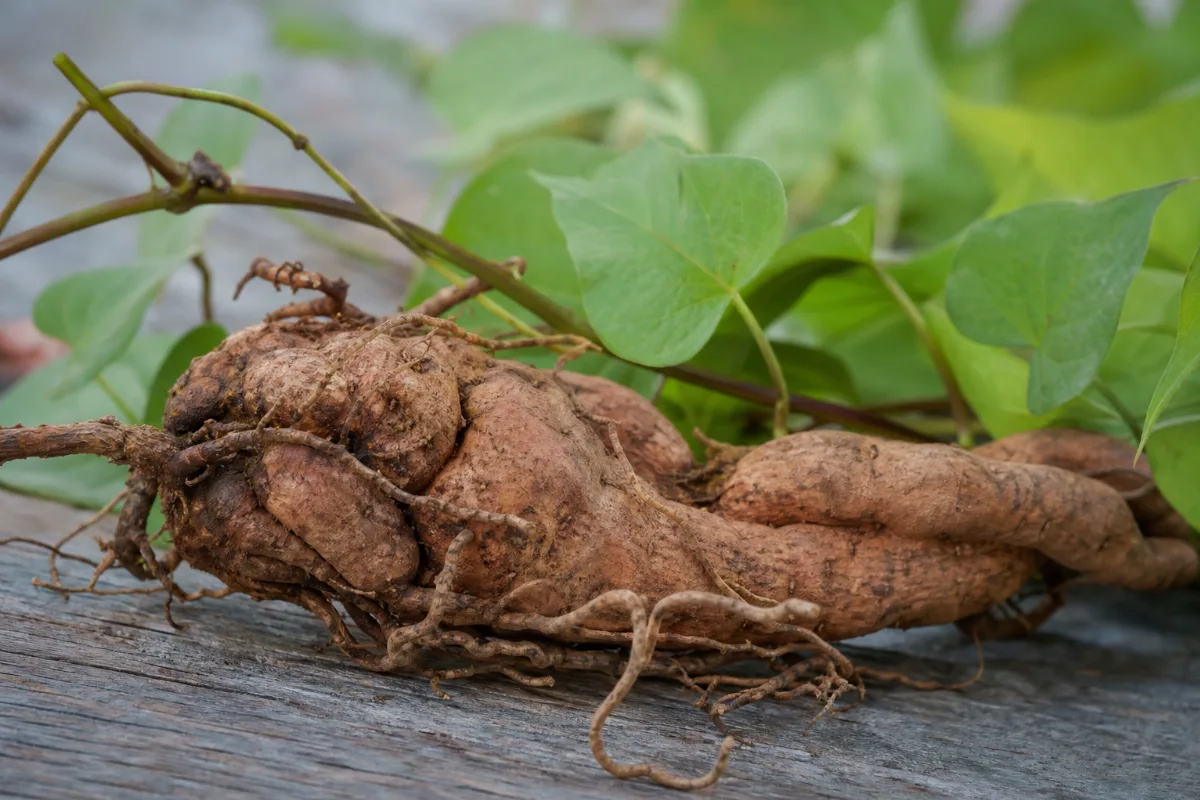
Adaptogens · Herbs & Botanicals · Herbs · Chinese tonic root sold for hair and ageing, with serious liver-injury reports and almost no human trials
He shou wu
Reynoutria multiflora (Thunb.) Moldenke (also Polygonum multiflorum Thunb., Fallopia multiflora) · also called He shou wu, Fo-ti, Chinese fleece flower, tuber fleeceflower, Chinese knotweed, 何首烏, Shou Wu Pian (tablet name)
He shou wu is the dried root tuber of a climbing plant of the knotweed family from China and East Asia. In Chinese medicine it is used raw and in a processed (steamed) form as a tonic for ageing and for dark hair. It is also sold in the West in hair supplements. Its main compounds are a stilbene glucoside (TSG) and anthraquinones such as emodin. The best-documented fact about it is that it can injure the liver.
General information, not medical advice. Last substantive update · Not medically reviewed. A named clinician has not signed off on this page. How this page is made
About He shou wu
He shou wu (Reynoutria multiflora, formerly Polygonum multiflorum) is the root of a Chinese climbing plant used for centuries as a hair and ageing tonic. It is sold in tablets, hair supplements and teas. The research on benefits is almost all in cells, fish and rodents. The research on harm is stronger: liver injury, including liver transplants and deaths, has been reported many times, and a gene variant raises the risk.
What it is
He shou wu is the dried tuberous root of Reynoutria multiflora (Thunb.) Moldenke, a climbing plant in the knotweed family (Polygonaceae). Polygonum multiflorum and Fallopia multiflora are older names for the same plant, and most medical papers still use Polygonum multiflorum. The name is Chinese; 'Fo-ti' is the trade name used in the West.
In China the raw root and the processed root are two separate drugs in the Pharmacopoeia, with different traditional uses. Western products sold for hair often mix He shou wu with other herbs and vitamins, so a label may not show how much root you get. Look-alike roots are sometimes substituted, and one review records nine adulterant species. The plant has no connection to ginseng or to ashwagandha even though it is sold with them as an adaptogen-type tonic.
Traditional and current uses
A 2017 review says the root has been a Chinese and Taoist medicine for over a thousand years. A 2015 review says it is traditionally valued for blackening hair, tonifying the liver and kidney, slowing ageing and having 'low toxicity'. A popular story about a man named He gaining black hair is not checked against any source.
Today people use it for gray hair, hair loss, high cholesterol and general ageing. Several of these uses are the same ones for which cases of liver injury have been reported.
What is in it and how it works
The root contains TSG, a stilbene glucoside, and anthraquinones such as emodin, physcion, chrysophanol, rhein and aloe-emodin. Raw root also holds a compound called emoghrelin that disappears on processing. Lab studies on TSG show antioxidant and anti-inflammatory actions, lower cholesterol in rodents, and effects on hair-growth signals.
The anthraquinones, especially emodin and its glucoside, are suspected of causing the liver injury. In mice carrying the human gene HLA-B*35:01, emodin triggers an immune attack on the liver. Pure TSG does not behave like the whole root: it was weaker for hair colour in mice, and with emodin glucoside it made rat liver injury worse.
What the research found
For benefits, there is one Chinese trial of a compound product in Alzheimer's disease (209 people, 12 weeks), a case report of a multi-herb hair spray, and many animal and cell studies. No controlled trial was found for gray hair, hair loss or cholesterol.
The research on harm is stronger. A review of 450 case reports found jaundice, tiredness, poor appetite and dark urine, usually starting about a month after starting the herb. Two people needed liver transplants and seven died; the other 441 recovered or improved after stopping. A 72-person cohort found a symptom-free enzyme rise in 6 people over 4 weeks, far more often in HLA-B*35:01 carriers.
At a glance
Traditional uses history, not proof
- Chinese and Taoist medicine: for over a thousand years as a tonic for the liver and kidney, to slow ageing and to blacken hair; raw and processed root are listed as separate drugs in the Chinese Pharmacopoeia.
- Traditional reputation of 'low toxicity', which later case reports contradict.
- Modern supplements: Shou-Wu-Pian tablets and hair products sold in Asia, Europe, Australia and the United States.
Studied for research
- Hair graying and hair loss: cell, fish, mouse and one multi-herb case report only; no controlled human trial found.
- Cholesterol and artery plaque: animal studies only.
- Alzheimer's disease: one Chinese trial of a compound product; very low certainty.
- Brain, heart, kidney and joint protection: rodent studies only.
- Ageing and lifespan: lab studies only.
Main compounds
- TSG (2,3,5,4'-tetrahydroxystilbene-2-O-glucoside), a stilbene glucoside
- Emodin and its glucoside, physcion, chrysophanol, rhein and aloe-emodin (anthraquinones)
- Emoghrelin, found only in raw root
Common forms
- Raw root (shengshouwu)
- Processed root (zhi heshouwu), listed separately in the Chinese Pharmacopoeia
- Tablets such as Shou-Wu-Pian, hair supplements and herbal teas
- Alcohol and water extracts
Research links: NIH LiverTox record on Polygonum multiflorum (not opened directly) · Review of 450 published liver-damage cases (Lei 2015) · HLA-B*35:01 and liver injury (Li 2019) · TGA safety advisory on Fallopia multiflora (not opened directly) · Research Library · Genes & Biomarkers Library
The plant and its history
- Accepted scientific name
- Reynoutria multiflora (Thunb.) Moldenke
- Naming authority
- (Thunb.) Moldenke, Bull. Torrey Bot. Club 68: 675 (1941), per GBIF
- Synonyms
- Polygonum multiflorum Thunb. (the name used in most medical literature); Fallopia multiflora (Thunb.) Haraldson; Fallopia multiflora (Thunb.) Czerep.; Pleuropterus multiflorus (Thunb.) Turcz.; Bilderdykia multiflora (Thunb.) Roberty & Vautier; Polygonum chinense Houtt. (as listed in GBIF)
- Common names
- He shou wu (Chinese (pinyin)); 何首烏 (Chinese); Fo-ti (English (trade name)); Chinese fleece flower (English); Tuber fleeceflower (English); Chinese knotweed (English); Hierba nudosa tuberosa (Spanish); Hasuo (Korean)
- Botanical family
- Polygonaceae (the knotweed or buckwheat family).
- Classification
- Plantae > Tracheophyta > Magnoliopsida > Caryophyllales > Polygonaceae > Reynoutria > Reynoutria multiflora
- Native range
- Not verified from a botanical source. A review says it is widely distributed and has been used for centuries in China, Japan and East Asia (p25449462).
- Habitat
- Not verified.
- What the plant looks like
- Roots: The used part is the tuberous root. Raw root and processed (steamed with black bean juice, per general sources; method not verified) root are listed separately in the Chinese Pharmacopoeia (p27484243).; Stems: Climbing twining stems (commonly described; not verified in sources read).; Leaves: Not verified.; Flowers: Not verified. Many small flowers are implied by the Latin name multiflora.; Fruit: Not verified.
- Cultivation
- Not verified.
- Harvest and processing
- Raw and processed root are two drug forms. Up to twenty processing methods are said to exist (from an automated reading of Liu 2019; not verified). Processing removes or reduces some anthraquinone glycosides, including the compound emoghrelin that exists only in raw root (p25446595).
- Look-alikes and adulterants
- Name: Cynanchum wilfordii or C. auriculatum (sometimes called 'white he shou wu', bai shou wu); Note: NOT verified in any source read. It is a different plant used in Chinese medicine and Korean herbal tonics, sometimes confused with true He shou wu. Check the Latin name on a label.; Name: Other species recorded as adulterants; Note: A review says nine adulterant species from six families have been recorded in ethnomedical use of He shou wu (p25449462). The names are not in the abstract.; Name: Polygoni Multiflori Caulis (the vine stem); Note: NOT verified. A different part of the same plant used in Chinese medicine; do not assume it has the same safety profile as the root.
- Sustainability and conservation
- Not verified. No IUCN assessment was retrieved.
Traditional use and history history, not clinical proof
| Tradition or era | Documented use | Source |
|---|---|---|
| Chinese and Taoist medicine | A 2017 review says Heshouwu has been a common Chinese medicine and folk Taoist medicine for over a thousand years, listed in the Chinese Pharmacopoeia in two forms: raw root (Shengshouwu) and processed root (Zhiheshouwu). | p27484243 |
| Traditional claims | A 2015 review says the root is traditionally valued for hair blackening, tonifying the liver and kidney and anti-ageing, and for having low toxicity. The same review lists liver, kidney and embryo toxicity as adverse effects. The 'low toxicity' tradition conflicts with the later reports of liver injury. | p25449462 |
| Legend of Mr He | A popular story says a man called He gained black hair and long life after eating the root. NOT verified in any source read. | not verified |
| Modern Western use (1990s onward) | Shou-Wu-Pian tablets and hair supplements such as Shen-Min were sold in Australia, Europe and the United States, and were linked to liver injury case reports from 1996 on (But 1996 in Hong Kong; Park 2001 in Australia for gray hair; Cardenas 2006 for a hair supplement). | p11206309 |
Traditional use shows how a plant was used. It does not show that a supplement works or is safe today.
What is inside, and how it may work
What the plant contains and how those compounds act in cells and animals. Laboratory and animal mechanisms are not proven effects in people.
Main compounds
| Compound | Family | Where it is concentrated | Activity studied | Level of evidence |
|---|---|---|---|---|
| 2,3,5,4'-Tetrahydroxystilbene-2-O-beta-D-glucoside (TSG, THSG) PubChem 5321884 | stilbene glucoside | Root (the main marker compound) | Antioxidant and anti-inflammatory in the lab. Lowered cholesterol in rats and mice; protected nerve cells in rodents; started hair growth in mice. Not shown to be safe or useful in people. May worsen emodin liver toxicity in rats and in reviews' proposals. 14 10 55 53 23 | Animal research |
| Emodin PubChem 3220 | anthraquinone | Root (free form and as glycosides) | Suspected main liver toxin; binds HLA-B*35:01 in mice and causes immune liver injury there. Also considered responsible for diarrhea-type effects of anthraquinones. A review links emodin and rhein to liver, kidney and embryo toxicity. 50 25 23 | Animal research |
| Emodin-8-O-glucoside (EG) PubChem 99649 | anthraquinone glycoside | Root | Caused liver injury alone in rats with inflammation, and more with TSG; found in serum of patients with P. multiflorum liver injury. 53 | Animal research |
| Physcion PubChem 10639 | anthraquinone | Root | Confirmed toxic to human liver cells in a dish together with emodin and the glucosides; present in more quantity in ethanol than water extracts. 28 | Laboratory research |
| Chrysophanol PubChem 10208 | anthraquinone | Root | Listed among the anthraquinones in processed root extract; no separate activity from the abstracts read. 45 | Laboratory research |
| Rhein PubChem 10168 | anthraquinone | Root | Named with emodin by a review as a quinone linked to adverse effects of the plant. Also listed among the anthraquinones in processed root extract. 25 45 | Laboratory research |
| Aloe-emodin PubChem 10207 | anthraquinone | Root | Listed among the anthraquinones in processed root extract that changed emodin's behaviour in rats. 45 | Animal research |
| Emoghrelin (emodin-8-O-(6'-O-malonyl)-glucoside) | anthraquinone glycoside | Raw root only; removed by processing | Triggered growth hormone release in rat pituitary cells through the ghrelin receptor. 27 | Laboratory research |
Mechanisms, receptors and pathways
| Target or pathway | Gene or receptor | What was found | Level |
|---|---|---|---|
| Immune liver injury (T cells recognising emodin on HLA-B*35:01) | HLA-B | Emodin non-covalently bound HLA-B*35:01-peptide complexes; in HLA-B*35:01 transgenic mice emodin caused liver inflammation with CD8+ T cells; normal mice did not react. 50 | Animal research |
| Human genetics of susceptibility | HLA-B*35:01, rs1055348 | HLA-B*35:01 was in 45.4% of pilot patients versus 2.7% of Han Chinese controls, and in 41.1% versus 11.9% of other-DILI patients. A tag SNP (rs1055348) was proposed as a cheaper test. 22 47 | Human data |
| Component synergy in liver injury | Metabolic pathways (sphingolipids, bile acids) | Emodin-glucoside injured rat liver and TSG made it worse; the combination disturbed bile acid and sphingolipid metabolism. 53 | Animal research |
| Hair pigment signalling | POMC, alpha-MSH, MC1R, MITF, TYR | Raw root raised these in faded mouse hair; also raised melanin in cells and zebrafish. 16 42 | Animal research |
| Hair follicle growth signalling | SHH, CTNNB1 (beta-catenin), FGF-7, p53, Fas, BAX | Extract or TSG started the growth phase in mice via Shh/beta-catenin, FGF-7 and by blocking p53/Fas/Bax cell death. 36 20 9 | Animal research |
| Hair growth in human cell culture | Bcl2, BAD, Dkk-1, DHT response | Extract raised Bcl2, lowered Dkk-1, reversed DHT effects in human dermal papilla cells and prolonged anagen in organ culture. 41 | Laboratory research |
| Cholesterol handling | LDLR, HMGCR, ABCA1, ABCG1, SR-BI, ABCG5, CYP7A1 | TSG raised liver LDLR and cholesterol-export transporters in rats and mice. 14 10 | Animal research |
| Memory and amyloid | Src, NR2B, TREM2, PI3K/AKT | TSG protected synapses and lowered amyloid deposits in rodents. 55 24 | Animal research |
| Neuroinflammation | MAPK in microglia | TSG calmed microglia and protected dopamine neurons in rats. 17 | Animal research |
| Growth hormone release | GHSR (ghrelin receptor) | Emoghrelin made rat pituitary cells release growth hormone. 27 | Laboratory research |
| Kidney and oxidative stress | SIRT1, TGF-B1, COX-2 | TSG raised SIRT1 and lowered TGF-beta1 and COX-2 in diabetic rat kidneys. 19 | Animal research |
| Heart protection after reperfusion | KATP channels | Effect of TSG on infarct size was cancelled by glybenclamide. 48 | Animal research |
Absorption, metabolism and elimination
- Absorption
- No human pharmacokinetic study was found. In rats, other anthraquinones in processed-root extract changed emodin's peak and total exposure compared with emodin alone.
- Distribution
- A review says the main components (TSG and emodin) distribute to many organs and tissues (animal data).
- Metabolism
- A review proposes that TSG enhances emodin absorption and inhibits its metabolism. Rat extracts changed CYP2B6, CYP2C9, CYP2C19, CYP1A2 and CYP2D6 activity.
- Elimination
- In rats, emodin in extract cleared faster than emodin alone (CL 19.30 vs 2.78).
- Bioavailability
- Unknown in people.
Isolated compounds versus whole extracts
The whole root and its single compounds do not behave alike. TSG alone was weaker than the whole root for hair colour in mice. Emodin glucoside and TSG together injured rat liver more than emodin glucoside alone. Ethanol extract was more liver-toxic than water extract. In rats, emodin behaved differently inside the extract than on its own. So lab results on pure TSG cannot be moved to the root.
1 very low certainty12 not enough evidence
What was looked at
The 13 benefits and uses checked for He shou wu, each with how strong the evidence is. Tap one to open it.
- Alzheimer's disease symptoms (one multi-ingredient product, one Chinese trial)Very low certainty
- Learning and memory in animal models of Alzheimer's disease (the compound TSG)Not enough evidence
- Brain protection after a stroke-type injury (animals)Not enough evidence
- Protection of dopamine nerve cells (Parkinson-type model, rats and cell cultures)Not enough evidence
- Healthy ageing and lifespan (the traditional anti-ageing claim)Not enough evidence
- Growth hormone release (a compound found only in raw root, cells only)Not enough evidence
- Hair graying (traditional use)Not enough evidence
- Hair loss and hair growth (traditional use)Not enough evidence
- Blood cholesterol and fatsNot enough evidence
- Arterial plaque (atherosclerosis) in animalsNot enough evidence
- Heart injury after a blocked artery (rats)Not enough evidence
- Kidney damage in diabetic ratsNot enough evidence
- Joint inflammation (osteoarthritis model, rats)Not enough evidence
Lab markers tracked in the studies
Mini-Mental State Examination (MMSE)Activities of Daily Living scale (ADL)Brain infarct volume (animal)Amyloid-beta deposits in brain (animal)LDL cholesterolTotal cholesterolHDL cholesterolTriglyceridesCreatinineHair melaninLiver enzymes (transaminases such as ALT and AST)
What is He shou wu good for?
The main uses people ask about and how strong the human evidence is for each. 'Very low' means a single weak human study. 'Insufficient' means there is no human evidence, only cell, fish or animal work. Nothing about He shou wu is rated higher than very low, and these findings do not outweigh the documented liver risk described on the safety tab. Many results use the isolated compound TSG, not the whole root.
Benefits, one by one
Each card is a research question, not a promise. Tap a goal to filter. Open a card to see the studies, doses and limits.
Alzheimer's disease symptoms (one multi-ingredient product, one Chinese trial)
Very low certaintyOne Chinese trial of 209 people with Alzheimer's disease found better memory-test and daily-living scores on a compound product containing He shou wu than on He shou wu extract alone or on a drug. It is a single small, poorly described study and it was a mixed product, so it cannot show that He shou wu itself helps.
2 studiesA compound extract of unstated make-up for 12 weeks. Amounts are not …
Studies, doses and limits
What the trials found
Chen 2010 (Chinese journal): 209 people with Alzheimer's disease, 12 weeks. 120 took a compound He shou wu extract, 60 took He shou wu extract alone and 29 took Naofukang. MMSE and daily-living scores improved in all groups, and more in the compound group (P < 0.01). Total effective rate was 93.33%, 73.33% and 68.97%. A 2015 review lists clinical studies in neurodegenerative disease but its details were not read.
Results
Better scores on the compound product than on the comparators, in one trial.
Effect sizes as reported
Group differences reported as P < 0.01. Score values and confidence intervals are not in the abstract.
Why this rating
One trial, only its English abstract was read. It does not say people were randomly assigned or that anyone was blinded. The product is a mix, the diagnosis rules are not given and there is no safety data. Nobody has repeated it.
Form and dose studied
A compound extract of unstated make-up for 12 weeks. Amounts are not given in the abstract.
Who was studied
209 adults with Alzheimer's disease (age and severity not in the abstract).
Limits
Mixed product, unclear design, unequal groups, no placebo, no safety results, not replicated. The herb is linked to liver injury (see the safety section), and the abstract does not say whether liver tests were checked.
Why researchers looked
He shou wu is traditionally called a tonic for ageing. Lab work suggests its stilbene compound protects brain cells (see the animal entries below), so a Chinese group tested a compound product in Alzheimer's disease.
Traditional use
In Chinese medicine the processed root is used to tonify the liver and kidney and slow ageing. Memory or dementia is not named as a use in the sources read.
Proposed mechanism Preliminary mechanism
Lab studies in rats and mice suggest the compound TSG protects synapses and lowers amyloid build-up (see the animal entries). Whether this happens in a person's brain is not shown.
A proposed mechanism does not show that the effect happens in people.
He shou wu has caused serious liver injury in many people. See the safety section before considering any use, especially in older adults who take other medicines.
Learning and memory in animal models of Alzheimer's disease (the compound TSG)
Not enough evidenceIn rats and mice given Alzheimer-type brain damage, the stilbene TSG from He shou wu improved maze performance and lowered amyloid deposits. This is animal work on one purified compound. There are no matching human trials.
3 studiesTSG by stomach tube at 50 to 180 mg per kg in animals. Not a human do…
Studies, doses and limits
Results
Rat: TSG 50 mg per kg per day for 4 weeks reversed memory and synapse damage caused by amyloid-beta injection (24 rats, 4 groups). Mouse: TSG 60, 120 and 180 mg per kg reduced amyloid deposits and increased neuron survival in APP/PS1 mice.
Effect sizes as reported
Numbers are not in the abstracts.
Why this rating
Animal and cell evidence only, one purified compound, doses that cannot be turned into a safe human amount, no human trial of TSG.
Form and dose studied
TSG by stomach tube at 50 to 180 mg per kg in animals. Not a human dose.
Who was studied
Rats and mice.
Limits
Animal models of Alzheimer's disease have a poor record of predicting human results. Small group sizes. TSG alone is not the same as the whole root, which also holds liver-toxic anthraquinones.
Why researchers looked
TSG is the main stilbene in the root and has antioxidant and anti-inflammatory actions in the lab.
Traditional use
Not a traditional use as such. The root is traditionally a tonic for ageing.
Proposed mechanism Animal research
In rats, TSG reversed damage to synapses and the drop in Src and NR2B (proteins used in memory signalling). In mice, it cut amyloid deposits and shifted brain immune cells (microglia) away from the inflammatory type through the TREM2/PI3K/AKT pathway. A review of lab models reports less oxidative and mitochondrial damage and less brain inflammation.
A proposed mechanism does not show that the effect happens in people.
Liver injury is a major documented risk of He shou wu in people. TSG is reported to make emodin more liver-toxic in rats (see the safety section).
Brain protection after a stroke-type injury (animals)
Not enough evidenceIn gerbils, two weeks of pretreatment with an ethanol extract of He shou wu cut the area of dead brain tissue by half after a blocked brain artery. This was given before the injury and has not been tested in people.
1 studies50% ethanol extract. Dose not given in the abstract.
Studies, doses and limits
Results
Infarct volume reduced by 50% in gerbils pretreated with a 50% ethanol extract for 2 weeks (Chan 2003).
Effect sizes as reported
50% reduction in infarct volume. No confidence interval in the abstract.
Why this rating
One animal study, 2003, treatment given before the injury, no human data.
Form and dose studied
50% ethanol extract. Dose not given in the abstract.
Who was studied
Gerbils.
Limits
Pretreatment is not how a stroke would be treated. Ethanol extracts of the root had stronger liver toxicity than water extracts in another lab study (see the safety section).
Why researchers looked
Antioxidant activity of the root suggested it might limit stroke damage.
Traditional use
Not a recorded traditional use in the sources read.
Proposed mechanism Animal research
Not shown in the abstract.
A proposed mechanism does not show that the effect happens in people.
See the liver warning in the safety section.
Protection of dopamine nerve cells (Parkinson-type model, rats and cell cultures)
Not enough evidenceIn rats and brain-cell cultures, injected TSG protected dopamine neurons and calmed brain immune cells. It is a lab finding with no human trial.
1 studiesTSG injected into the abdomen of rats. Dose not in the abstract.
Studies, doses and limits
Results
Daily injections of TSG for 14 days protected dopamine neurons from 6-OHDA toxicity in rats (Huang 2018).
Effect sizes as reported
Not in the abstract.
Why this rating
Animal and cell work only, injected not eaten, one compound.
Form and dose studied
TSG injected into the abdomen of rats. Dose not in the abstract.
Who was studied
Rats and rat brain cells.
Limits
6-OHDA models do not copy the human disease. No human study.
Why researchers looked
TSG has anti-inflammatory activity and Parkinson's disease involves brain inflammation.
Traditional use
Not a recorded traditional use in the sources read.
Proposed mechanism Animal research
The authors link the protection to lower microglia activation and switching off the MAPK pathway.
A proposed mechanism does not show that the effect happens in people.
See the liver warning in the safety section.
Healthy ageing and lifespan (the traditional anti-ageing claim)
Not enough evidenceHe shou wu is best known as an anti-ageing tonic. A 2025 review of TSG reports longer lifespan and less age-related damage in lab studies. No trial in people has shown that He shou wu slows ageing or extends life.
1 studiesTSG in lab models. Whole-root products are not covered by this review.
Studies, doses and limits
What the trials found
No human trial of ageing or lifespan was found. The 2025 review abstract mentions none.
Results
A 2025 systematic review of TSG reports lifespan extension, neuroprotection, less atherosclerosis, delayed gonad ageing, less bone loss and more hair regrowth, The abstract does not say how many studies or species. The authors say standard ways to measure TSG's efficacy are still missing.
Effect sizes as reported
Not in the abstract.
Why this rating
Lab evidence only, abstract read only, no human data.
Form and dose studied
TSG in lab models. Whole-root products are not covered by this review.
Limits
Anti-ageing in the lab is not shown in people. The root carries a documented risk of liver injury.
Why researchers looked
The root has been used for centuries as a longevity tonic, and TSG has antioxidant and anti-inflammatory actions in the lab.
Traditional use
A Chinese Taoist and folk medicine said to extend life and keep hair dark. Stories about its origin were not checked against sources.
Proposed mechanism Preliminary mechanism
The review reports less oxidative stress, inflammation and cell death, plus better mitochondrial function and telomerase activity in lab models.
A proposed mechanism does not show that the effect happens in people.
Serious liver injury has been reported in people taking He shou wu, including products sold for ageing. See the safety section.
Growth hormone release (a compound found only in raw root, cells only)
Not enough evidenceA compound in raw He shou wu root, named emoghrelin, made rat pituitary cells release growth hormone in a dish. This has not been tested in animals or people.
1 studiesIsolated compound. Not a human amount.
Studies, doses and limits
Results
Dose-dependent growth hormone release from rat pituitary cells, blocked by a ghrelin-receptor blocker. No toxicity to cells at 10^-7 to 10^-4 mol per litre.
Effect sizes as reported
Not in the abstract.
Why this rating
Cell experiment only.
Form and dose studied
Isolated compound. Not a human amount.
Who was studied
Rat cells.
Limits
No animal or human test. The compound disappears when the root is processed, which is also the form said to be gentler on the liver.
Why researchers looked
The authors wanted to explain why raw root is said to work better for ageing than processed root.
Traditional use
Raw root is traditionally used for different purposes than processed root. The comparison of anti-ageing strength is the authors' statement, not tested here.
Proposed mechanism Laboratory research
The compound acts on the ghrelin receptor in cells and in a computer docking model.
A proposed mechanism does not show that the effect happens in people.
Raw root has more anthraquinones, linked to diarrhea in the authors' introduction and to liver risk in the reviews on the safety page.
Hair graying (traditional use)
Not enough evidenceHe shou wu is best known as a remedy for gray hair. Lab work on cells, fish and mice shows raw root extract can raise melanin (hair pigment), but no trial in people with graying hair was found.
4 studiesLab extracts of the root; raw root worked better than processed root …
Studies, doses and limits
Results
Mouse: raw root gave the blackest hair, processed root slightly less and TSG alone least (Han 2015). Cells and zebrafish: more melanin (Thang 2017). Human melanocytes and ex vivo follicles: less cell death and more melanin (Sextius 2017).
Effect sizes as reported
No numbers in the abstracts.
Why this rating
Cell, fish, mouse and ex vivo work only, no human trial, and no direct test on natural human graying.
Form and dose studied
Lab extracts of the root; raw root worked better than processed root in the mouse study. Amounts are not given in the abstracts.
Who was studied
Mice, zebrafish, cultured cells and ex vivo human hair follicles.
Limits
The hydrogen-peroxide mouse model is not natural graying. The best lab results were with raw root, the form reviews link to more anthraquinones. One study was for cosmetic development and its funding is not stated.
Why researchers looked
Hair blackening is the oldest and best-known use of the root.
Traditional use
Used in East Asia for centuries to keep hair dark and to treat early graying.
Proposed mechanism Preliminary mechanism
In cells, fish and mice the extract raised melanin through alpha-MSH, MC1R, MITF and tyrosinase. A cosmetic study found it lowered oxidative stress in human melanocytes and kept more melanin in follicles kept alive in a dish.
A proposed mechanism does not show that the effect happens in people.
He shou wu has caused serious liver injury in many people, including in products sold for hair. See the safety section before any use.
Hair loss and hair growth (traditional use)
Not enough evidenceIn mice, root extract and its compound TSG started the hair growth phase, and in a dish it prolonged the growth phase of human hair follicles. No controlled trial in people with hair loss was found, only one case report of a multi-herb spray.
6 studiesOral and topical extracts in mice; TSG injected under the skin in mic…
Studies, doses and limits
What the trials found
One case report (a 41-year-old man) of a multi-herb spray containing Fallopia multiflora improved hair density over 3 months, but it had no control and many herbs (Qian 2023).
Results
Mice: oral raw root 100% hair-covered skin, oral processed root 48 to 88%, topical processed root about 90% (Li 2015). Topical extract and TSG started hair growth in mice (Park 2011, Chen 2018, Zhang 2026). Human dermal papilla cells and hair follicles in a dish: longer growth phase (Shin 2020).
Effect sizes as reported
Percentages as reported in the mouse study; no confidence intervals in the abstracts.
Why this rating
Mouse, cell and ex vivo work, plus one uncontrolled case report of a multi-herb product.
Form and dose studied
Oral and topical extracts in mice; TSG injected under the skin in mice. No human dose.
Who was studied
Mice, human dermal papilla cells in a dish, and one man with androgenic alopecia.
Limits
No human trial. Mouse hair cycles differ from human hair. One case report cannot separate the effect of He shou wu from the other herbs.
Why researchers looked
Hair loss is a second traditional use, and many hair supplements contain the root.
Traditional use
Used in East Asia for baldness and hair loss.
Proposed mechanism Preliminary mechanism
In mice, the extract and TSG raised beta-catenin and Sonic hedgehog and blocked p53/Fas/Bax cell death. In cultured human dermal papilla cells it raised Bcl2 and growth factors, lowered Dkk-1 and reversed the effect of DHT. A 2026 mouse study links TSG to Th22 immune cells.
A proposed mechanism does not show that the effect happens in people.
He shou wu has caused serious liver injury in many people, including in products sold for hair. See the safety section before any use.
Blood cholesterol and fats
Not enough evidenceAnimal studies report that a raw-root extract and the compound TSG lowered LDL cholesterol, total cholesterol and triglycerides. Reviews mention clinical studies in high blood fats, but none could be checked or located, so there is no confirmed human result.
4 studiesTSG and raw root extract by mouth in animals. The high raw extract do…
Studies, doses and limits
Results
Rats: TSG 90 and 180 mg per kg per day lowered total cholesterol, LDL-C and the atherosclerosis index (Gao 2007). Raw extract lowered LDL-C, total cholesterol and triglycerides (Xian 2017). ApoE mice: TSG lowered total cholesterol, triglycerides and LDL-C and raised HDL-C (Chen 2018).
Effect sizes as reported
No numbers in the abstracts.
Why this rating
Animal and cell data only; no human trial was found or read.
Form and dose studied
TSG and raw root extract by mouth in animals. The high raw extract dose was 16.2 g per kg, not a human amount.
Who was studied
Rats, mice and other animals.
Limits
Animal models. The 2017 paper compares with simvastatin in animals only. The authors of one study found raw extract improved liver fat in animals, but human liver injury from the root is documented.
Why researchers looked
The root is used in Chinese medicine for high blood fats and several reviews cover it.
Traditional use
One animal paper (Xian 2017) states the root is widely used in traditional Chinese medicine to prevent and treat high blood fats.
Proposed mechanism Preliminary mechanism
TSG raised liver LDL receptor expression in rats and lowered HMG-CoA reductase and fat-making enzymes with raw root extract in another study.
A proposed mechanism does not show that the effect happens in people.
He shou wu has caused serious liver injury in many people, including in products sold for hair. See the safety section before any use. Cholesterol-lowering is not a reason to use it.
Arterial plaque (atherosclerosis) in animals
Not enough evidenceIn mice prone to artery plaque, TSG lowered cholesterol, reduced plaque and liver fat, and raised cholesterol transporters. This has not been tested in people.
2 studiesTSG in mice. Not a human dose.
Studies, doses and limits
Results
ApoE-deficient mice, 8 weeks (Chen 2018): lower total cholesterol, triglycerides and LDL-C, higher HDL-C, less plaque, fewer foam cells.
Effect sizes as reported
No numbers in the abstract.
Why this rating
One mouse study read (plus a review), single compound.
Form and dose studied
TSG in mice. Not a human dose.
Who was studied
ApoE-deficient mice.
Limits
Mouse model. Not tested in people. Not the whole root.
Why researchers looked
Part of the root's lipid-lowering reputation.
Traditional use
Not a defined traditional use in the sources read.
Proposed mechanism Preliminary mechanism
TSG raised the proteins ABCA1, ABCG1, SR-BI, ABCG5 and CYP7A1 that move cholesterol out of cells and into bile.
A proposed mechanism does not show that the effect happens in people.
He shou wu has caused serious liver injury in many people, including in products sold for hair. See the safety section before any use.
Heart injury after a blocked artery (rats)
Not enough evidenceIn rats, TSG given as the blood flow returned cut the area of heart damage from 43.6% to 16.5%. It is a 2006 rat study with no human testing.
1 studiesTSG 7.5 mg per kg in rats.
Studies, doses and limits
Results
Infarct size 43.6 +/- 9.1% to 16.5 +/- 6.5% (P < 0.01); arrhythmia 55.6% vs 100% (P < 0.05) (Ye 2006).
Effect sizes as reported
Infarct 43.6% to 16.5%.
Why this rating
One rat study, small, injected, single compound.
Form and dose studied
TSG 7.5 mg per kg in rats.
Who was studied
Rats.
Limits
Animal surgery model only.
Why researchers looked
TSG releases nitric oxide from artery lining cells and is a strong antioxidant in the lab.
Traditional use
Not a recorded traditional use.
Proposed mechanism Preliminary mechanism
The authors link the effect to opening potassium (KATP) channels, because glybenclamide cancelled it.
A proposed mechanism does not show that the effect happens in people.
He shou wu has caused serious liver injury in many people, including in products sold for hair. See the safety section before any use.
Kidney damage in diabetic rats
Not enough evidenceIn diabetic rats, TSG lowered cholesterol, triglycerides, blood urea nitrogen, creatinine and urine protein. It is a rat study with no human result.
2 studiesTSG in rats. Not a human dose.
Studies, doses and limits
Results
Diabetic rats and mesangial cells (Li 2010). The review of the root also lists kidney toxicity as an adverse effect (Lin 2015).
Effect sizes as reported
No numbers in the abstract.
Why this rating
One rat and cell study.
Form and dose studied
TSG in rats. Not a human dose.
Who was studied
Rats and cells.
Limits
Another review lists nephrotoxicity among the root's adverse effects, so a kidney benefit in rats is not a reason to use it.
Why researchers looked
TSG is antioxidant and anti-inflammatory in the lab.
Traditional use
Not a recorded traditional use.
Proposed mechanism Preliminary mechanism
The authors link the effect to more SIRT1 and less TGF-beta1 and COX-2.
A proposed mechanism does not show that the effect happens in people.
He shou wu has caused serious liver injury in many people, including in products sold for hair. See the safety section before any use.
Joint inflammation (osteoarthritis model, rats)
Not enough evidenceTSG reduced inflammation markers in cells and lessened paw swelling in a rat osteoarthritis model. No human study.
1 studiesTHSG in rats. Not a human dose.
Studies, doses and limits
Results
Rat mono-iodoacetate model: less paw swelling and better weight-bearing (Tsai 2018).
Effect sizes as reported
No numbers in the abstract.
Why this rating
One cell and rat study.
Form and dose studied
THSG in rats. Not a human dose.
Who was studied
Rat and cell cultures.
Limits
Early lab work only.
Why researchers looked
TSG has anti-inflammatory activity in the lab.
Traditional use
Not a recorded traditional use.
Proposed mechanism Preliminary mechanism
THSG reduced nitric oxide, PGE2, iNOS, COX-2 and MMP-13 in cells.
A proposed mechanism does not show that the effect happens in people.
He shou wu has caused serious liver injury in many people, including in products sold for hair. See the safety section before any use.
Connections to the rest of health
How He shou wu connects to the rest of our health knowledge graph. Every link says what kind of connection it is. A safety link (for example to the liver) is a warning, not a benefit. A study that merely mentions a topic never creates a benefit link.
Explore every connection: goals, body systems, organs, symptoms, genes
A. Wellness goals
| Connected to | Kind of connection | Evidence status | Context | Studies |
|---|---|---|---|---|
| Hair support | Traditional use | Not enough evidence | Traditional use for gray hair and hair loss; evidence is lab and animal only. Hair graying (traditional use): He shou wu is best known as a remedy for gray hair. Lab work on cells, fish and mice shows raw root extract can raise melanin (hair pigment), but no trial in people with graying hair was found. Preparation or compound: Root extract, TSG |
16 20 42 39 25 36 9 41 54 37 |
| Memory Support | Potential benefit | Very low certainty | Alzheimer's disease symptoms (one multi-ingredient product, one Chinese trial): One Chinese trial of 209 people with Alzheimer's disease found better memory-test and daily-living scores on a compound product containing He shou wu than on He shou wu extract alone or on a drug. It is a single small, poorly described study and it was a mixed product, so it cannot show that He shou wu itself helps. | 8 3 |
| Brain Health | Potential benefit | Very low certainty | Alzheimer's disease symptoms (one multi-ingredient product, one Chinese trial): One Chinese trial of 209 people with Alzheimer's disease found better memory-test and daily-living scores on a compound product containing He shou wu than on He shou wu extract alone or on a drug. It is a single small, poorly described study and it was a mixed product, so it cannot show that He shou wu itself helps. | 8 3 |
| Memory Support | Preliminary mechanism | Not enough evidence | Learning and memory in animal models of Alzheimer's disease (the compound TSG): In rats and mice given Alzheimer-type brain damage, the stilbene TSG from He shou wu improved maze performance and lowered amyloid deposits. This is animal work on one purified compound. There are no matching human trials. | 55 24 6 |
| Brain Health | Preliminary mechanism | Not enough evidence | Learning and memory in animal models of Alzheimer's disease (the compound TSG): In rats and mice given Alzheimer-type brain damage, the stilbene TSG from He shou wu improved maze performance and lowered amyloid deposits. This is animal work on one purified compound. There are no matching human trials. Brain protection after a stroke-type injury (animals): In gerbils, two weeks of pretreatment with an ethanol extract of He shou wu cut the area of dead brain tissue by half after a blocked brain artery. This was given before the injury and has not been tested in people. | 55 24 6 7 17 |
| Healthy Aging | Preliminary mechanism | Not enough evidence | Brain protection after a stroke-type injury (animals): In gerbils, two weeks of pretreatment with an ethanol extract of He shou wu cut the area of dead brain tissue by half after a blocked brain artery. This was given before the injury and has not been tested in people. Growth hormone release (a compound found only in raw root, cells only): A compound in raw He shou wu root, named emoghrelin, made rat pituitary cells release growth hormone in a dish. This has not been tested in animals or people. | 7 27 |
| Healthy Aging | Traditional use | Not enough evidence | Healthy ageing and lifespan (the traditional anti-ageing claim): He shou wu is best known as an anti-ageing tonic. A 2025 review of TSG reports longer lifespan and less age-related damage in lab studies. No trial in people has shown that He shou wu slows ageing or extends life. Hair graying (traditional use): He shou wu is best known as a remedy for gray hair. Lab work on cells, fish and mice shows raw root extract can raise melanin (hair pigment), but no trial in people with graying hair was found. | 56 42 16 39 25 |
| Longevity | Traditional use | Not enough evidence | Healthy ageing and lifespan (the traditional anti-ageing claim): He shou wu is best known as an anti-ageing tonic. A 2025 review of TSG reports longer lifespan and less age-related damage in lab studies. No trial in people has shown that He shou wu slows ageing or extends life. | 56 |
| Cholesterol Balance | Preliminary mechanism | Not enough evidence | Blood cholesterol and fats: Animal studies report that a raw-root extract and the compound TSG lowered LDL cholesterol, total cholesterol and triglycerides. Reviews mention clinical studies in high blood fats, but none could be checked or located, so there is no confirmed human result. Arterial plaque (atherosclerosis) in animals: In mice prone to artery plaque, TSG lowered cholesterol, reduced plaque and liver fat, and raised cholesterol transporters. This has not been tested in people. | 46 14 10 3 56 |
| Heart Health | Preliminary mechanism | Not enough evidence | Blood cholesterol and fats: Animal studies report that a raw-root extract and the compound TSG lowered LDL cholesterol, total cholesterol and triglycerides. Reviews mention clinical studies in high blood fats, but none could be checked or located, so there is no confirmed human result. Arterial plaque (atherosclerosis) in animals: In mice prone to artery plaque, TSG lowered cholesterol, reduced plaque and liver fat, and raised cholesterol transporters. This has not been tested in people. | 46 14 10 3 56 48 |
| Metabolic Health | Preliminary mechanism | Not enough evidence | Blood cholesterol and fats: Animal studies report that a raw-root extract and the compound TSG lowered LDL cholesterol, total cholesterol and triglycerides. Reviews mention clinical studies in high blood fats, but none could be checked or located, so there is no confirmed human result. Kidney damage in diabetic rats: In diabetic rats, TSG lowered cholesterol, triglycerides, blood urea nitrogen, creatinine and urine protein. It is a rat study with no human result. | 46 14 10 3 19 25 |
| Blood Sugar Balance | Preliminary mechanism | Not enough evidence | Kidney damage in diabetic rats: In diabetic rats, TSG lowered cholesterol, triglycerides, blood urea nitrogen, creatinine and urine protein. It is a rat study with no human result. | 19 25 |
| Joint Support | Preliminary mechanism | Not enough evidence | Joint inflammation (osteoarthritis model, rats): TSG reduced inflammation markers in cells and lessened paw swelling in a rat osteoarthritis model. No human study. | 44 |
| Inflammation Balance | Preliminary mechanism | Not enough evidence | Joint inflammation (osteoarthritis model, rats): TSG reduced inflammation markers in cells and lessened paw swelling in a rat osteoarthritis model. No human study. | 44 |
B. Body systems
| Connected to | Kind of connection | Evidence status | Context | Studies |
|---|---|---|---|---|
| Hepatic system | Contraindication | Moderate certainty | Avoid with liver disease or hepatitis B. Preparation or compound: Whole root products |
49 |
| Reproductive system | Contraindication | Very low certainty | Avoid in pregnancy: one report of hepatitis in a pregnant woman and a review mention of embryo toxicity. Avoid in pregnancy and breastfeeding. No safety data. Preparation or compound: Whole root products |
4 25 |
| Nervous System | Biological association | Very low certainty | Studied for: Alzheimer's disease symptoms (one multi-ingredient product, one Chinese trial) Studied for: Learning and memory in animal models of Alzheimer's disease (the compound TSG) | 8 3 55 24 6 7 17 56 |
| Cardiovascular System | Biological association | Not enough evidence | Studied for: Brain protection after a stroke-type injury (animals) Studied for: Healthy ageing and lifespan (the traditional anti-ageing claim) | 7 56 46 14 10 3 48 |
| Musculoskeletal System | Biological association | Not enough evidence | Studied for: Healthy ageing and lifespan (the traditional anti-ageing claim) Studied for: Joint inflammation (osteoarthritis model, rats) | 56 44 |
| Endocrine System | Biological association | Not enough evidence | Studied for: Growth hormone release (a compound found only in raw root, cells only) | 27 |
| Integumentary System | Biological association | Not enough evidence | Studied for: Hair graying (traditional use) Studied for: Hair loss and hair growth (traditional use) | 42 16 39 25 20 36 9 41 54 37 |
| Metabolism Weight | Biological association | Not enough evidence | Studied for: Blood cholesterol and fats Studied for: Kidney damage in diabetic rats | 46 14 10 3 19 25 |
| Urinary System | Biological association | Not enough evidence | Studied for: Kidney damage in diabetic rats | 19 25 |
C. Body parts and organs
| Connected to | Kind of connection | Evidence status | Context | Studies |
|---|---|---|---|---|
| Liver | Adverse effect or risk | Moderate certainty | Many case reports, a 450-case review with 7 deaths and 2 transplants, a genetic risk factor (HLA-B*35:01). Frequency unknown. Hundreds of case reports, 2 transplants and 7 deaths in a 450-case review; HLA-B*35:01 risk allele. Preparation or compound: Raw and processed root; Chinese patent medicines containing it; emodin and glucosides suspected |
18 22 1 |
| Gut | Adverse effect or risk | Very low certainty | Diarrhea is described in one paper's introduction as a side effect processing is meant to reduce. Preparation or compound: Raw root (anthraquinones) |
27 |
I. Biomarkers
| Connected to | Kind of connection | Evidence status | Context | Studies |
|---|---|---|---|---|
| ALT | Adverse effect or risk | Low certainty | Symptom-free rise in transaminases in 6 of 72 people; higher in HLA-B*35:01 carriers. Preparation or compound: Polygonum multiflorum, 4-week cohort |
22 |
| Mini-Mental State Examination (MMSE) | Biological association | Very low certainty | Measured in trials: raised. A lab change is not the same as a health benefit. | 8 |
| Activities of Daily Living scale (ADL) | Biological association | Very low certainty | Measured in trials: raised. A lab change is not the same as a health benefit. | 8 |
| Brain infarct volume (animal) | Biological association | Not enough evidence | Measured in trials: lowered. A lab change is not the same as a health benefit. | 7 |
| Amyloid-beta deposits in brain (animal) | Biological association | Not enough evidence | Measured in trials: lowered. A lab change is not the same as a health benefit. | 24 |
| LDL cholesterol | Biological association | Not enough evidence | Measured in trials: lowered. A lab change is not the same as a health benefit. | 14 10 46 |
| Total cholesterol | Biological association | Not enough evidence | Measured in trials: lowered. A lab change is not the same as a health benefit. | 14 19 |
| HDL cholesterol | Biological association | Not enough evidence | Measured in trials: raised. A lab change is not the same as a health benefit. | 10 |
| Triglycerides | Biological association | Not enough evidence | Measured in trials: lowered. A lab change is not the same as a health benefit. | 10 46 19 |
| Creatinine | Biological association | Not enough evidence | Measured in trials: lowered. A lab change is not the same as a health benefit. | 19 25 |
| Hair melanin | Biological association | Not enough evidence | Measured in trials: raised. A lab change is not the same as a health benefit. | 16 39 42 |
| Liver enzymes (transaminases such as ALT and AST) | Biological association | Low certainty | Measured in trials: raised. A lab change is not the same as a health benefit. | 22 |
J. Genes, receptors and enzymes
| Connected to | Kind of connection | Evidence status | Context | Studies |
|---|---|---|---|---|
| HLA-B (HLA-B*35:01 allele) | Preliminary mechanism | Human | Risk allele for P. multiflorum liver injury in Han Chinese; emodin activates T cells in HLA-B*35:01 mice. | 22 47 50 |
| MC1R, MITF, TYR | Preliminary mechanism | Animal | Melanin pathway raised by raw root in mice and by extract in cells and zebrafish. | 16 42 |
| LDLR | Preliminary mechanism | Animal | Raised in rat liver by TSG. | 14 |
| SIRT1 | Preliminary mechanism | Animal | Raised by TSG in diabetic rat kidneys. | 19 |
| TREM2 | Preliminary mechanism | Animal | TSG acts through TREM2/PI3K/AKT in APP/PS1 mice. | 24 |
| GHSR (ghrelin receptor) | Preliminary mechanism | In vitro | Emoghrelin acts on it in rat pituitary cells. | 27 |
L. Active compounds
| Connected to | Kind of connection | Evidence status | Context | Studies |
|---|---|---|---|---|
| 2,3,5,4'-Tetrahydroxystilbene-2-O-beta-D-glucoside (TSG, THSG) | Biological association | Animal | Antioxidant and anti-inflammatory in the lab. Lowered cholesterol in rats and mice; protected nerve cells in rodents; started hair growth in mice. Not shown to be safe or useful in people. May worsen emodin liver toxicity in rats and in reviews' proposals. Preparation or compound: Root (the main marker compound) |
14 10 55 53 23 |
| Emodin | Biological association | Animal | Suspected main liver toxin; binds HLA-B*35:01 in mice and causes immune liver injury there. Also considered responsible for diarrhea-type effects of anthraquinones. A review links emodin and rhein to liver, kidney and embryo toxicity. Preparation or compound: Root (free form and as glycosides) |
50 25 23 |
| Emodin-8-O-glucoside (EG) | Biological association | Animal | Caused liver injury alone in rats with inflammation, and more with TSG; found in serum of patients with P. multiflorum liver injury. Preparation or compound: Root |
53 |
| Physcion | Biological association | In vitro | Confirmed toxic to human liver cells in a dish together with emodin and the glucosides; present in more quantity in ethanol than water extracts. Preparation or compound: Root |
28 |
| Chrysophanol | Biological association | In vitro | Listed among the anthraquinones in processed root extract; no separate activity from the abstracts read. Preparation or compound: Root |
45 |
| Rhein | Biological association | In vitro | Named with emodin by a review as a quinone linked to adverse effects of the plant. Also listed among the anthraquinones in processed root extract. Preparation or compound: Root |
25 45 |
| Aloe-emodin | Biological association | Animal | Listed among the anthraquinones in processed root extract that changed emodin's behaviour in rats. Preparation or compound: Root |
45 |
| Emoghrelin (emodin-8-O-(6'-O-malonyl)-glucoside) | Biological association | In vitro | Triggered growth hormone release in rat pituitary cells through the ghrelin receptor. Preparation or compound: Raw root only; removed by processing |
27 |
Each connection is stored with the ingredient, the connected record, the kind of connection, the evidence status, the supporting studies, the preparation or compound involved, and a review date (last reviewed October 25, 2026).
Evidence at a glance: what changed in 11 lab markers
Tap a number to show only those markers. Counts are markers, not people.
The evidence
The research centre for He shou wu. Every record here was checked against PubMed or the publisher's page; we never list a study we have not verified.
Evidence by outcome
Bars show how many studies we found for each outcome, not how well it works. People are added up across trials only (reviews are not added, to avoid double counting).
How we rate evidence
High certainty
Several well-run trials or reviews agree; further research is unlikely to change the picture much.
Moderate certainty
Good trials point the same way, but some doubt remains.
Low certainty
Small, short or inconsistent trials. The finding could change with better research.
Very low certainty
Very little or very weak human data. Treat as a possibility only.
Mixed findings
Trials or reviews disagree with each other.
Not enough evidence
Not enough human research to say either way.
Evidence against
Good research found no benefit, or found harm.
We take the reviewers' own risk-of-bias and GRADE statements where they exist, and otherwise judge from study size, design, consistency, directness and whether a product matches what is sold. Many publications do not make evidence high. Method note: We searched PubMed, read abstracts of case reports, reviews and lab studies, and checked plant names in GBIF and the NCBI taxonomy and compounds in PubChem. Only abstracts were read for nearly all studies. Not verified: the NIH LiverTox score and the TGA notice (read through search summaries), the Chinese regulator actions (read through an automated summary of a review), the MHRA warning, and any EMA, Health Canada, NCCIH, LactMed, Commission E or WHO documents (none found). Wikipedia-style plant description and the origin legend were not verified. Certainty ratings are the compiler's own reading, not formal grades. No study is cited that we could not verify in PubMed.
Study library: every study we checked 56
| Study | Design | People | Product, dose, length | Result |
|---|---|---|---|---|
| Assis 2022 LIVER INJURY INDUCED BY HERBAL AND DIETARY SUPPLEMENTS: A POOLED ANALYSIS OF CASE REPORTS Arq Gastroenterol · PMID 36515339 · DOI |
Systematic review |
428 428 cases of supplement-induced liver injury from 189 articles |
Dietary supplements and herbs, including Polygonum multiflorum unspecified |
Herbalife products were linked to 50 cases and Polygonum multiflorum to 25 cases. Across all products 82.6% needed hospital care, 3.6% died, 8.9% had a liver transplant and 1.9% developed chronic liver disease. 25 He shou wu cases of 428. Methods, limits and fundingOutcomes: Products most often implicated; outcomes Limitations: Pooled case reports; the outcomes quoted are for all products, not for He shou wu alone. Read: abstract |
| Banarova 2012 [Toxic hepatitis induced by Polygonum multiflorum] Vnitr Lek · PMID 23691566 |
Case report |
1 A 33-year-old woman (Slovak-language report) |
Polygonum multiflorum extract pills, restarted unspecified not given in the abstract 2 months |
Jaundice and nausea with liver cell damage after 2 months of re-using the pills; other causes excluded; early recovery after stopping; the causal score supported the link. Not applicable. Methods, limits and fundingOutcomes: Liver injury and recovery Limitations: Single case. Read: abstract |
| Bounda 2015 Review of clinical studies of Polygonum multiflorum Thunb. and its isolated bioactive compounds Pharmacognosy Res · PMID 26130933 · DOI |
Narrative review |
Published clinical studies on P. multiflorum and its isolated compounds | Polygonum multiflorum Thunb. (He shou wu, Fo-ti) and isolated compounds root |
The abstract says it reviews clinical studies on pharmacokinetics, sleep disorders, dyslipidaemia and neurodegenerative diseases. It gives no results or numbers. Not applicable. Methods, limits and fundingOutcomes: Pharmacokinetics, sleep disorders, dyslipidaemia, neurodegenerative diseases Limitations: Only the abstract was read. The review's own clinical studies were not checked, so no human result from it is quoted here. Read: abstract |
| But 1996 Hepatitis related to the Chinese medicine Shou-wu-pian manufactured from Polygonum multiflorum Vet Hum Toxicol · PMID 8829347 |
Case report |
1 A 31-year-old pregnant Chinese woman |
Shou-Wu-Pian, a proprietary medicine made from Polygonum multiflorum unspecified not given in the abstract |
Hepatitis developed after taking the product. Tests for viral hepatitis were negative and there was no other systemic disease. The abstract does not say how the pregnancy or the baby fared. Not applicable. Methods, limits and fundingOutcomes: Liver injury and recovery Limitations: Single case; outcome for mother and baby not in the abstract. Read: abstract |
| Byeon 2019 Systematic review of published data on herb induced liver injury J Ethnopharmacol · PMID 30639232 · DOI |
Systematic review |
7511 31 studies of drug and herb-induced liver injury, 7,511 cases |
Herbs as a group unspecified |
25.0% of cases (1,874) involved herbs. The main herbs causing herb-induced liver injury included Polygonum multiflorum, Psoralea corylifolia, Corydalis yanhusuo and Rheum officinale. 25.0% of 7,511 cases involved herbs. Methods, limits and fundingOutcomes: Share of cases due to herbs; main herbs Limitations: Mostly Asian case cohorts. The percentages describe all herbs together, not He shou wu alone. Read: abstract |
| Cha 2024 Preclinical Evidence and Underlying Mechanisms of Polygonum multiflorum and Its Chemical Constituents Against Cognitive Impairments and Alzheimer's Disease J Pharmacopuncture · PMID 38948308 · DOI |
Narrative review animal |
Preclinical (animal and cell) studies of cognition and Alzheimer's disease | Polygonum multiflorum and its compounds (stilbenes, emodin) unspecified |
The reviewers report that P. multiflorum and its stilbenes and emodin changed behaviour tests and Alzheimer-type targets in lab models, with less oxidative and mitochondrial damage, less brain inflammation, less cell death and more nerve growth. Not applicable. Methods, limits and fundingOutcomes: Maze tests, passive avoidance, amyloid and tau markers Limitations: The review is of animal and cell work and says its findings may be a basis for future clinical trials. It does not report human results. Read: abstract |
| Chan 2003 Long-term administration of Polygonum multiflorum Thunb. reduces cerebral ischemia-induced infarct volume in gerbils Am J Chin Med · PMID 12723756 · DOI |
Animal research animal |
Gerbils with a blocked brain artery (stroke model) | 50% ethanol extract of Polygonum multiflorum Thunb. unspecified not given in the abstract 2 weeks of pretreatment before the artery was blocked · vs Gerbils blocked for 24 hours without pretreatment |
Two weeks of pretreatment cut the infarct volume by 50% compared with the 24-hour-block group. Infarct volume reduced by 50%. Methods, limits and fundingOutcomes: Brain infarct (dead tissue) volume Limitations: Animal study done before the stroke, not after it. Gerbils, not people. Number of animals not in the abstract. Read: abstract |
| Chen 2010 [Effect of compound Polygonum multiflorum extract on Alzheimer's disease] Zhong Nan Da Xue Xue Bao Yi Xue Ban · PMID 20622335 · DOI |
Controlled clinical trial |
209 209 people with Alzheimer's disease (diagnostic criteria not given in the abstract) |
"Compound Polygonum multiflorum extract" (a multi-ingredient product; contents not listed in the abstract), versus a Polygonum multiflorum extract alone, versus Naofukang (a drug) unspecified not given in the abstract 12 weeks · vs 120 on the compound extract; 60 on P. multiflorum extract alone; 29 on Naofukang |
Scores improved in all three groups. The compound-extract group improved more than the other two (P < 0.01). Total effective rate 93.33% versus 73.33% (extract alone) and 68.97% (Naofukang). MMSE and ADL group differences P < 0.01; effective rate 93.33% / 73.33% / 68.97%. Score values are not in the abstract. Methods, limits and fundingOutcomes: MMSE, Activities of Daily Living scale (ADL), "total effective rate" Limitations: Chinese-language paper; only the English abstract was read. The abstract does not say people were randomly assigned or that anyone was blinded. Groups were unequal (120 / 60 / 29). The compound product is not described, so the effect cannot be put down to P. multiflorum. "Effective rate" is not defined in the abstract. No safety or liver results are reported in the abstract. Read: abstract |
| Chen 2018 Tetrahydroxystilbene Glucoside Effectively Prevents Apoptosis Induced Hair Loss Biomed Res Int · PMID 29808162 · DOI |
Animal research animal |
Depilated C57BL/6J mice, plus skin from people and mice with hair loss | Tetrahydroxystilbene glucoside (TSG) on the skin unspecified not given in the abstract 2 weeks · vs Saline, Pifithrin-alpha, minoxidil |
TSG-treated mice showed clear hair regrowth with fewer dying cells. The authors link this to blocking p53, Fas and Bax-driven cell death. Not in the abstract. Methods, limits and fundingOutcomes: Hair regrowth, cell death markers (p53, caspase-3, caspase-9, Fas, Bax) Limitations: Mouse model. TSG alone, not the whole root. No direct comparison with minoxidil results is given in the abstract. Read: abstract |
| Chen 2018 2,3,4',5-tetrahydroxystilbene-2-O-β-d-glycoside attenuates atherosclerosis in apolipoprotein E-deficient mice: role of reverse cholesterol transport Can J Physiol Pharmacol · PMID 28863273 · DOI |
Animal research animal |
ApoE-deficient mice (an atherosclerosis model) | 2,3,4',5-tetrahydroxystilbene-2-O-beta-D-glucoside (TSG) unspecified not given in the abstract 8 weeks · vs Not given in the abstract |
After 8 weeks TSG lowered total cholesterol, triglycerides and LDL-C, raised HDL-C, reduced liver fat and plaque, and raised transporters (ABCA1, ABCG1, SR-BI, ABCG5, CYP7A1) that move cholesterol out. Not in the abstract. Methods, limits and fundingOutcomes: Total cholesterol, triglycerides, LDL-C, HDL-C, plaque size, foam cells, cholesterol transporters Limitations: Mice. Single compound. Read: abstract |
| Chinese Food and Drug Administration 2019 Chinese regulator actions on P. multiflorum as listed in a 2019 review Front Pharmacol · Source |
Authoritative guidance |
Chinese consumers | unspecified |
As summarised from the review's full text by an automated reader (first 100,000 characters of about 195,000): 2005 adverse-reaction bulletin on a P. multiflorum product; 2013 circular barring people with liver dysfunction from five products; 2014 limits and label warnings on health-food use; a 2014 bulletin on oral preparations; more than 10,000 adverse-reaction complaints; pharmacopoeia lists raw and processed root separately. Methods, limits and fundingLimitations: Second-hand and partly checked only. The review text itself was not read line by line. The review's own text also has a typo for the UK date. Read: summary-only |
| Cárdenas 2006 Acute hepatitis due to shen-min: a herbal product derived from Polygonum multiflorum J Clin Gastroenterol · PMID 16917407 · DOI |
Case report |
1 A 28-year-old white woman |
Shen-Min, a hair supplement that mixes several plants and vitamins including Polygonum multiflorum unspecified not given in the abstract 8 weeks before symptoms |
Symptomatic hepatitis 8 weeks after starting; viral, ischaemic, metabolic and autoimmune causes excluded; a fine rash and mild eosinophilia suggested an idiosyncratic reaction; slow resolution over 3 weeks after stopping. Not applicable. Methods, limits and fundingOutcomes: Liver injury and recovery Limitations: Mixed product, so the part played by He shou wu cannot be separated. Single case. Read: abstract |
| GBIF Secretariat 2026 GBIF backbone: Reynoutria multiflora (Thunb.) Moldenke GBIF API (checked 2026-10-25) · Source |
Database |
Not applicable | unspecified |
Accepted species, key 4038333, family Polygonaceae, order Caryophyllales; published in Moldenke (1941), Bull. Torrey Bot. Club 68: 675. Polygonum multiflorum Thunb. (key 6390904) is a synonym of it. Many synonyms listed, including Fallopia multiflora (Thunb.) Haraldson and Pleuropterus multiflorus (Thunb.) Turcz. Vernacular names include Chinese fleece flower, tuber fleeceflower, he shou wu and Chinese knotweed. Methods, limits and fundingLimitations: Taxonomic database; vernacular names are as listed in GBIF. Read: full-text |
| Gao 2007 [Blood lipid-regulation of stilbene glycoside from polygonum multiflorum] Zhongguo Zhong Yao Za Zhi · PMID 17455469 |
Animal research animal |
Rats made hyperlipidaemic | Tetrahydroxystilbene glucoside (TSG), by mouth unspecified 90 and 180 mg per kg per day (as written in the abstract) not given in the abstract · vs Atorvastatin and saline |
TSG significantly lowered total cholesterol, LDL-C and the atherosclerosis index and raised liver LDLR expression, partly like atorvastatin. Not in the abstract. Methods, limits and fundingOutcomes: Total cholesterol, LDL-C, atherosclerosis index, liver LDLR and HMGR mRNA Limitations: Chinese-language paper, abstract only. Rat model. Group sizes and duration not in the abstract. Read: abstract |
| Guan 2024 [A case of the syndrome of disappearing intrahepatic bile ducts caused by Polygonum multiflorum] Zhonghua Gan Zang Bing Za Zhi · PMID 38584108 · DOI |
Case report |
1 One patient (Chinese-language report) |
Polygonum multiflorum unspecified not given in the abstract |
Vanishing bile duct syndrome (loss of bile ducts inside the liver with cholestasis) linked to He shou wu, per the title and Chinese abstract. Not applicable. Methods, limits and fundingOutcomes: Liver injury and recovery Limitations: Single case; only the title and a Chinese abstract were available. Read: abstract |
| Han 2015 Mechanistic Studies on the Use of Polygonum multiflorum for the Treatment of Hair Graying Biomed Res Int · PMID 26640791 · DOI |
Animal research animal |
C57BL/6 mice whose hair was faded with hydrogen peroxide | Raw root (PMR), processed root (PMRP) and TSG, compared root not given in the abstract not given in the abstract · vs Not given in the abstract |
Raw root gave the blackest hair and the highest melanin, alpha-MSH, MC1R and tyrosinase. Processing lowered the effect a little. TSG alone was weaker than raw or processed root. The authors say raw, not processed, root should be used to blacken hair. Not in the abstract. Methods, limits and fundingOutcomes: Hair colour, total melanin, alpha-MSH, MC1R and tyrosinase Limitations: Mouse hair-fading model with hydrogen peroxide, not natural human graying. The authors recommend raw root for this effect, but raw root is the form linked in reviews to more anthraquinones and liver risk (see the safety section). Read: abstract |
| Huang 2018 Tetrahydroxystilbene Glucoside Produces Neuroprotection against 6-OHDA-Induced Dopamine Neurotoxicity Oxid Med Cell Longev · PMID 29576855 · DOI |
Animal research animal |
Rats with 6-OHDA injected into the substantia nigra (Parkinson-type model) and rat brain cell cultures | Tetrahydroxystilbene glucoside (TSG), injected into the abdomen unspecified not given in the abstract 14 days · vs Not given |
TSG protected dopamine neurons and reduced microglia activation, linked to switching off the MAPK signalling pathway. Numbers are not in the abstract. Methods, limits and fundingOutcomes: Survival of dopamine neurons, microglia (brain immune cell) activation Limitations: Rat and cell work only. TSG was injected, not eaten. Single compound. Read: abstract |
| Lei 2015 Liver Damage Associated with Polygonum multiflorum Thunb.: A Systematic Review of Case Reports and Case Series Evid Based Complement Alternat Med · PMID 25648693 · DOI |
Systematic review |
450 450 reported cases from 76 articles (case reports and case series), search to June 2014 |
Raw and processed He shou wu decoction pieces and many Chinese patent medicines containing it root not given in the abstract |
Symptoms (jaundice, fatigue, poor appetite, dark urine) mostly began about a month after starting. 2 people had liver transplants, 7 died, and the other 441 recovered or improved after stopping and standard care. The authors tie most cases to long-term use or overdose. 2 transplants, 7 deaths, 441 recovered or improved of 450. Methods, limits and fundingOutcomes: Liver damage features and outcomes Limitations: Case reports only: no denominator of people who took the herb, so no rate. Mixed products. Search ended in 2014. Read: abstract |
| Li 2010 Tetrahydroxystilbene glucoside ameliorates diabetic nephropathy in rats: involvement of SIRT1 and TGF-β1 pathway Eur J Pharmacol · PMID 20854812 · DOI |
Animal research animal |
Diabetic rats and cultured rat mesangial cells | Tetrahydroxystilbene glucoside (TSG) unspecified not given in the abstract not given in the abstract · vs Untreated diabetic rats |
TSG lowered cholesterol and triglycerides, blood urea nitrogen, creatinine and urine protein in diabetic rats, raised antioxidant enzymes, and reversed lower SIRT1. Not in the abstract. Methods, limits and fundingOutcomes: Total cholesterol, triglycerides, blood urea nitrogen, creatinine, 24-hour urine protein, kidney weight, oxidative markers, SIRT1, TGF-beta1 Limitations: Rats and cells only. Numbers not in the abstract. Read: abstract |
| Li 2015 Hair Growth Promotion Activity and Its Mechanism of Polygonum multiflorum Evid Based Complement Alternat Med · PMID 26294926 · DOI |
Animal research animal |
C57BL/6J mice | Oral raw root (PMR), oral processed root (PMRP) and topical processed root root not given in the abstract not given in the abstract · vs Not given in the abstract |
Oral raw root: 100% hair-covered skin. Oral processed root: 48 to 88%. Topical processed root: about 90%. Oral raw root was linked to FGF-7, and topical processed root to SHH. Percentages as reported; no confidence intervals in the abstract. Methods, limits and fundingOutcomes: Hair length, hair-covered skin ratio, follicle number, hair colour, growth factors (FGF-7, SHH, beta-catenin, IGF-1, HGF) Limitations: Mice, with their hair-cycle biology differing from human hair. Comparison groups and numbers are not in the abstract. Read: abstract |
| Li 2017 Hepatoprotection and hepatotoxicity of Heshouwu, a Chinese medicinal herb: Context of the paradoxical effect Food Chem Toxicol · PMID 27484243 · DOI |
Narrative review |
Literature on Heshouwu liver protection and liver toxicity | Raw root (Shengshouwu) and processed root (Zhiheshouwu) root |
Both forms protected the liver in lab models and were used clinically for fatty liver, high blood fats, cirrhosis and hepatitis B, yet both could cause drug-induced liver injury and even death. Emodin, physcion and probably TSG are linked to both benefit and toxicity. Not applicable. Methods, limits and fundingOutcomes: Liver benefits in lab work; liver injury in clinical settings Limitations: Review; the abstract says both forms are listed in the Chinese Pharmacopoeia. Read: abstract |
| Li 2019 HLA-B*35:01 Allele Is a Potential Biomarker for Predicting Polygonum multiflorum-Induced Liver Injury in Humans Hepatology · PMID 30985007 · DOI |
Cohort and case control |
72 Pilot: 11 patients with P. multiflorum liver injury; replication: 15 patients, 33 with other drug liver injury, 99 population controls; prospective cohort: 72 outpatients given P. multiflorum for 4 weeks |
Polygonum multiflorum (product and amount not given in the abstract) unspecified not given in the abstract 4 weeks (cohort) · vs Population controls and patients with other drug-induced liver injury |
HLA-B*35:01 was found in 45.4% of the pilot patients versus 2.7% of the Han Chinese population. In the cohort, an asymptomatic transaminase rise occurred in 6 patients: 37.5% of HLA-B*35:01 carriers versus 4.7% of noncarriers. Pilot OR 30.4 (95% CI 11.7 to 77.8); versus other liver injury OR 86.5 (14.2 to 527.8); versus controls OR 143.9 (30.1 to 687.5); cohort RR 8.0 (95% CI 1.9 to 33.2, P < 0.02) (RR 1.9 to 33.2) Methods, limits and fundingOutcomes: HLA-B*35:01 frequency; transaminase rise in the cohort Limitations: Wide confidence intervals (small groups). Han Chinese only. The cohort measured symptom-free enzyme rises, not clinical illness. Read: abstract |
| Li 2020 Overview of Pharmacokinetics and Liver Toxicities of Radix Polygoni Multiflori Toxins (Basel) · PMID 33233441 · DOI |
Narrative review |
Pharmacokinetics and liver toxicity of Radix Polygoni Multiflori | Raw root root |
The authors conclude that plasma and liver emodin levels could contribute to the liver injury, and that co-administered TSG and other drugs or herbs could worsen emodin toxicity by enhancing its absorption and inhibiting its metabolism. Not applicable. Methods, limits and fundingOutcomes: Absorption, metabolism, toxicity Limitations: Review; the interaction idea is a hypothesis. Read: abstract |
| Li 2025 Tetrahydroxy Stilbene Glycoside Reduces Abeta Deposition by Modulating Microglia Activation and via TREM2/PI3K/AKT Pathway in APP/PS1 Mice Basic Clin Pharmacol Toxicol · PMID 39948751 · DOI |
Animal research animal |
APP/PS1 mice (a mouse model that builds up amyloid plaques) | Tetrahydroxystilbene glycoside (TSG) unspecified 60, 120 and 180 mg per kg not given in the abstract · vs Not given in the abstract |
TSG increased neuron survival and reduced amyloid deposits, and shifted microglia away from the inflammatory M1 type. Numbers are not in the abstract. Methods, limits and fundingOutcomes: Amyloid-beta deposits, neuron survival, microglia type, TREM2/PI3K/AKT signalling Limitations: Mouse work only. Single compound at animal doses. Read: abstract |
| Lin 2015 Traditional usages, botany, phytochemistry, pharmacology and toxicology of Polygonum multiflorum Thunb.: a review J Ethnopharmacol · PMID 25449462 · DOI |
Systematic review mixed |
Traditional uses, botany, chemistry, pharmacology and toxicology of P. multiflorum | Polygonum multiflorum Thunb. root |
The review says the root is valued for hair blackening, liver and kidney tonifying and anti-ageing, and that extracts and pure compounds show anti-ageing, lipid-lowering, anti-cancer, anti-inflammatory, immune, and nerve-protective effects. It also lists liver, kidney and embryo toxicity, blamed on quinones such as emodin and rhein. Not applicable. Methods, limits and fundingOutcomes: Traditional uses, chemistry, effects, toxicity Limitations: Abstract read only. It calls itself a systematic review but gives no study counts or grades. Read: abstract |
| Liu 2019 Polygonum multiflorum-Induced Liver Injury: Clinical Characteristics, Risk Factors, Material Basis, Action Mechanism and Current Challenges Front Pharmacol · PMID 31920657 · DOI |
Narrative review |
Reports of P. multiflorum liver injury | Raw and processed root (RPM, PMP) root |
Raw and processed root have both been reported to cause liver injury. Most cases were assessed with RUCAM. The responsible components are not settled and reports contradict one another; the authors call for quality control and safety monitoring. Not applicable. Methods, limits and fundingOutcomes: Clinical features, risk factors, mechanism Limitations: Narrative review. The regulatory dates quoted from its full text were read through an automated summary of the first half only and are marked unverified. Read: abstract |
| Lo 2015 Emoghrelin, a unique emodin derivative in Heshouwu, stimulates growth hormone secretion via activation of the ghrelin receptor J Ethnopharmacol · PMID 25446595 · DOI |
Laboratory research in-vitro |
Rat pituitary cells in a dish | Emoghrelin (emodin-8-O-(6'-O-malonyl)-glucoside), a compound isolated from raw He shou wu root, plus computer docking root 10^-7 to 10^-4 mol per litre · vs Growth hormone-releasing peptide-6 (GHRP-6) |
The compound made rat pituitary cells release growth hormone in a dose-dependent way, blocked by a ghrelin-receptor blocker. It was not toxic to the cells at the doses tested. Numbers are not in the abstract. Methods, limits and fundingOutcomes: Growth hormone release by cells Limitations: Cells and a computer model. The compound is lost when the root is processed. No animal or human result. The authors' claim that this explains the anti-ageing use is a suggestion. Read: abstract |
| Lv 2015 Effect of sample preparation on components and liver toxicity of Polygonum multiflorum J Pharm Biomed Anal · PMID 25766851 · DOI |
Laboratory research in-vitro |
Extracts of P. multiflorum on human liver cell lines | Ethanol versus water extracts root |
Ethanol extract was much more liver-toxic than water extract and held more emodin, physcion and their glucosides. Emodin-8-glucoside, physcion-8-glucoside, emodin and physcion were confirmed toxic to the liver cells. Not in the abstract. Methods, limits and fundingOutcomes: Components and liver cell toxicity Limitations: Cell work. The authors prefer water extracts as the conventional form, which is not proof of safety. Read: abstract |
| NCBI 2026 NCBI Taxonomy: Fallopia multiflora / Reynoutria multiflora NCBI Taxonomy (checked 2026-10-25) · Source |
Database |
Not applicable | unspecified |
Both "Fallopia multiflora" and "Reynoutria multiflora" resolve to taxonomy ID 76025. Methods, limits and fundingLimitations: Only the ID match was checked; the lineage page was not opened. Read: full-text |
| NCBI PubChem 2026 PubChem compound 5321884 PubChem REST (checked 2026-10-25) · Source |
Database |
Not applicable | unspecified |
2,3,5,4'-Tetrahydroxystilbene-2-O-beta-D-glucoside, C20H22O9, 406.4 (name lookup via the PubChem REST name service). Methods, limits and fundingLimitations: CID matched by name; structure not compared to the plant source. Read: full-text |
| NCBI PubChem 2026 PubChem compound 3220 PubChem REST (checked 2026-10-25) · Source |
Database |
Not applicable | unspecified |
Emodin, C15H10O5, 270.24 (name lookup via the PubChem REST name service). Methods, limits and fundingLimitations: CID matched by name; structure not compared to the plant source. Read: full-text |
| NCCIH 2026 NCCIH: no He shou wu / Fo-ti page found NCCIH website |
Authoritative guidance |
Not applicable | unspecified |
A web search for NCCIH or LactMed pages on Fo-ti or He shou wu returned none. Methods, limits and fundingLimitations: Absence in a search is not proof. Read: none |
| NIDDK 2020 LiverTox: Polygonum multiflorum (Fo-Ti, He Shou Wu) NCBI Bookshelf NBK548795 · Source |
Authoritative guidance |
Adults | unspecified |
As summarised by a web search tool (page itself would not load): likelihood score A (well-established cause of clinically apparent liver injury), last updated 18 August 2020; mechanism not known, usually attributed to anthraquinones such as emodin; HLA-B*35:01 a major risk factor suggesting an immune cause; usually self-limited but can be prolonged and occasionally fatal. Methods, limits and fundingLimitations: NOT directly read. The page showed a browser check when fetched. Content is from a search summary only. Read: summary-only |
| NLM LactMed 2026 LactMed: no He shou wu / Fo-ti entry found LactMed |
Authoritative guidance |
Not applicable | unspecified |
A web search returned no LactMed entry on Fo-ti or He shou wu. Methods, limits and fundingLimitations: Absence in a search is not proof. Read: none |
| Park 2001 Acute hepatitis induced by Shou-Wu-Pian, a herbal product derived from Polygonum multiflorum J Gastroenterol Hepatol · PMID 11206309 · DOI |
Case report |
1 A Chinese woman taking the product for graying hair (Australia) |
Shou-Wu-Pian (Polygonum multiflorum product) unspecified not given in the abstract |
Cholestatic hepatitis; liver biopsy was consistent with a toxic reaction; clinical and blood tests returned to normal after stopping. Not applicable. Methods, limits and fundingOutcomes: Liver injury and recovery Limitations: Single case. Read: abstract |
| Park 2011 Topical application of Polygonum multiflorum extract induces hair growth of resting hair follicles through upregulating Shh and β-catenin expression in C57BL/6 mice J Ethnopharmacol · PMID 21419834 · DOI |
Animal research animal |
Shaved resting-phase C57BL/6N mice | P. multiflorum extract applied to the skin unspecified not given in the abstract not given in the abstract · vs Untreated control |
The extract started the growth phase (anagen) and increased follicle number and size, with earlier beta-catenin and Shh. Not in the abstract. Methods, limits and fundingOutcomes: Hair-follicle number and size, beta-catenin and Sonic hedgehog (Shh) expression Limitations: Mouse skin application only. Read: abstract |
| Qian 2023 Favorable effect of herbal extract on androgenic alopecia: A case report Medicine (Baltimore) · PMID 37773795 · DOI |
Case report |
1 A 41-year-old man with moderate androgenic alopecia for 8 years |
Zimmer aqueous spray: a multi-herb spray whose extract includes Fallopia multiflora, Ligustrum lucidum fruit, Eclipta herb, Polygonatum sibiricum and others unspecified 3 to 4 mL of spray daily or every other day 3 months |
Hair density, diameter and other trichoscopy measures improved after 3 months. Not in the abstract. Methods, limits and fundingOutcomes: Hair density, diameter, vellus hair rate under trichoscopy Limitations: One man, no control, multi-herb product, so the part played by He shou wu cannot be separated. Case report. Read: abstract |
| Rao 2021 The hepatotoxicity of Polygonum multiflorum: The emerging role of the immune-mediated liver injury Acta Pharmacol Sin · PMID 32123300 · DOI |
Narrative review |
Evidence on how the immune system takes part in P. multiflorum liver injury | Polygonum multiflorum root |
The authors conclude, from clinical and experimental evidence, that P. multiflorum liver injury is an immune-mediated idiosyncratic reaction. Not applicable. Methods, limits and fundingOutcomes: Immune mechanisms Limitations: Review of mechanisms. Read: abstract |
| Sextius 2017 Polygonum multiflorum Radix extract protects human foreskin melanocytes from oxidative stress in vitro and potentiates hair follicle pigmentation ex vivo Int J Cosmet Sci · PMID 28109001 · DOI |
Laboratory research in-vitro |
Primary human foreskin melanocytes and human hair follicles kept ex vivo | Commercial P. multiflorum radix extract and a newly made, more soluble extract designed for cosmetic use root not given in the abstract not given in the abstract · vs Vehicle (carrier) controls |
The extract lowered oxidative stress and cell death in melanocytes exposed to hydrogen peroxide. Follicles treated ex vivo with the new extract had more melanin than vehicle-treated follicles. Not in the abstract. Methods, limits and fundingOutcomes: Reactive oxygen species, glutathione, cell death, melanin in follicles Limitations: Dish and ex vivo only. The new extract was developed for cosmetic use, and the abstract does not say who funded the work, so a commercial interest cannot be ruled out. Funding and conflicts: Not stated in the abstract. The extract was developed for cosmetic use; industry links not checked. Read: abstract |
| Shao 2022 Concurrent severe hepatotoxicity and agranulocytosis induced by Polygonum multiflorum: A case report World J Clin Cases · PMID 36186172 · DOI |
Case report |
1 A 65-year-old woman |
Polygonum multiflorum (product not described) unspecified not given in the abstract 17 days before onset |
Severe liver injury and agranulocytosis (a dangerous drop in white blood cells) 17 days after starting. RUCAM score 10 (highly probable) for the liver; Naranjo score 6 (probable) for the white cells. Liver tests and white cells improved over 15 days of treatment with G-CSF, a steroid and liver medicines. Not applicable. Methods, limits and fundingOutcomes: Liver injury and recovery Limitations: Single case. The authors say the combination is rare. Read: abstract |
| Shin 2020 Polygonum multiflorum extract support hair growth by elongating anagen phase and abrogating the effect of androgen in cultured human dermal papilla cells BMC Complement Med Ther · PMID 32398000 · DOI |
Laboratory research in-vitro |
Cultured human dermal papilla cells and human hair follicles in organ culture | P. multiflorum extract unspecified not given in the abstract not given in the abstract · vs Untreated cultures |
The extract raised cell viability and mitochondrial activity, increased the anti-cell-death protein Bcl2, cut Dkk-1, and prolonged the growth phase of human follicles in a dish. It reversed the effect of DHT on the cells. Dose-dependent; numbers not in the abstract. Methods, limits and fundingOutcomes: Cell survival, mitochondrial activity, Bcl2, BAD, Dkk-1, growth factors, response to the androgen DHT, anagen length Limitations: Dish and ex vivo follicle experiments, not a person using it. Extract type is not described in the abstract. Read: abstract |
| Thang 2017 Polygonum multiflorum root extract as a potential candidate for treatment of early graying hair J Adv Pharm Technol Res · PMID 28217548 · DOI |
Laboratory research in-vitro |
Human melanoma cells (SKMEL-28), zebrafish embryos and larvae, and hair follicle samples from young people with graying versus black hair | P. multiflorum root extract (PM-RE) root not given in the abstract not given in the abstract · vs Untreated cells and embryos |
The extract raised melanin production in the melanoma cells and in zebrafish. Graying hair follicles from young people showed lower activity of the same pathway than black follicles. Not in the abstract. Methods, limits and fundingOutcomes: Melanin production; MC1R/MITF/tyrosinase pathway activity Limitations: Not a trial in people with gray hair. Cancer cell line and fish. The follicle comparison only looked at gene activity. No hair colour was changed in a person. Read: abstract |
| Therapeutic Goods Administration (Australia) 2019 TGA safety advisory and recall: Fallopia multiflora (He shou wu) and hair products TGA website · Source |
Authoritative guidance |
Australian consumers | unspecified |
As summarised by a web search tool (page itself timed out): advisory dated 29 April 2019 about a low risk of liver damage in rare cases; liver warning required on labels of oral listed medicines; 9 liver-damage reports 2008 to 2018 (or 15 liver-related reports since 2014, six with markers of severe injury, three hospitalised); four hair-product listings recalled in May 2019. Methods, limits and fundingLimitations: NOT directly read. Numbers differ between search snippets, so they are given as reported by the tool and not relied on. Read: summary-only |
| Tsai 2018 In Vitro and In Vivo Anti-Osteoarthritis Effects of 2,3,5,4'-Tetrahydroxystilbene-2-O-β-d-Glucoside from Polygonum Multiflorum Molecules · PMID 29510478 · DOI |
Animal research animal |
Cell lines, primary rat chondrocytes and a rat osteoarthritis model (mono-iodoacetate) | 2,3,5,4'-tetrahydroxystilbene-2-O-beta-D-glucoside (THSG) unspecified not given in the abstract not given in the abstract · vs Not given in the abstract |
THSG reduced inflammation markers in cells and cut paw swelling and improved weight-bearing in the rat model. Not in the abstract. Methods, limits and fundingOutcomes: Nitric oxide, PGE2, iNOS, COX-2, MMP-13, paw swelling, weight-bearing Limitations: Rat and cell work only. Read: abstract |
| Wang 2023 Pharmacokinetic characteristics of emodin in polygoni Multiflori Radix Praeparata J Ethnopharmacol · PMID 36435407 · DOI |
Animal research animal |
Sprague-Dawley rats | Emodin alone versus emodin in a processed-root (Zhiheshouwu) extract root · vs Emodin alone |
Other anthraquinones in the extract changed how emodin behaved in rats: lower peak and total exposure than emodin alone, a larger volume of distribution and faster clearance. The authors say the processed root met the 2020 Chinese Pharmacopoeia quality standard. Cmax 239.90 vs 898.46; AUC0-t 1575.09 vs 12154.96 (units as written in the abstract; extract vs emodin alone, P < 0.001) Methods, limits and fundingOutcomes: Emodin blood and gut levels Limitations: Rat study. Which column is which in the abstract is easy to misread; only the direction is used in the text. Read: abstract |
| Xian 2017 The Anti-hyperlipidemia Effects of Raw Polygonum multiflorum Extract in Vivo Biol Pharm Bull · PMID 29093330 · DOI |
Animal research animal |
Hyperlipidaemic animals (species and diet details not given in the abstract) | Raw P. multiflorum extract (RPM), given by mouth root High dose 16.2 g per kg (other doses not given in the abstract) not given in the abstract · vs Untreated model group and simvastatin |
Plasma LDL-C, total cholesterol and triglycerides fell in the treated groups, most at the high dose. Liver fat vacuoles were less than in untreated animals. Liver injury was slightly less than with simvastatin. The authors say RPM did better than simvastatin. Not in the abstract. Methods, limits and fundingOutcomes: LDL-C, total cholesterol, triglycerides, HMGR, FAS, ACC, liver fat and injury Limitations: Animal study, species not stated in the abstract. The authors claim to beat simvastatin; this is in an animal model and not a human comparison. The dose of 16.2 g per kg is not a human dose. Read: abstract |
| Yang 2020 Single-nucleotide polymorphisms of HLA and Polygonum multiflorum-induced liver injury in the Han Chinese population World J Gastroenterol · PMID 32256020 · DOI |
Case control |
382 73 patients with P. multiflorum liver injury, 118 with other drug-induced liver injury, 191 healthy controls (Han Chinese, four hospitals) |
Polygonum multiflorum (products not described in the abstract) unspecified · vs Other-DILI patients and healthy controls |
HLA-B*35:01 was present in 41.1% of the P. multiflorum group versus 11.9% of other-DILI patients and 2.7% in a Han population database. The tag variant rs1055348 was more common in the P. multiflorum group. HLA-B*35:01 versus other-DILI OR 11.11 (95% CI 5.57 to 22.19); versus Han-MHC database OR 62.62 (35.91 to 109.20) Methods, limits and fundingOutcomes: HLA and other gene variants Limitations: Han Chinese only. About 59% of the P. multiflorum cases did not carry HLA-B*35:01, so noncarriers can also be injured. Read: abstract |
| Ye 2006 Postconditioning's protection of THSG on cardiac ischemia-reperfusion injury and mechanism J Huazhong Univ Sci Technolog Med Sci · PMID 16718927 · DOI |
Animal research animal |
Rats with the main heart artery blocked for 30 minutes then reopened | THSG (TSG) given as postconditioning root (dried tuber root, per the abstract) 7.5 mg per kg 3 hours of reperfusion · vs Untreated model group; glybenclamide combination |
Infarct size fell from 43.6 +/- 9.1% to 16.5 +/- 6.5% (P < 0.01). Arrhythmia incidence was 55.6% versus 100% (P < 0.05). Glybenclamide cancelled the benefit, which the authors link to potassium channel opening. Infarct 43.6% to 16.5% (P < 0.01); arrhythmia 55.6% vs 100% (P < 0.05). Methods, limits and fundingOutcomes: Infarct size, arrhythmia, ST-segment recovery Limitations: Rats, injected around the time of reperfusion. Group sizes not in the abstract. Read: abstract |
| Yuen 2006 Traditional Chinese medicine causing hepatotoxicity in patients with chronic hepatitis B infection: a 1-year prospective study Aliment Pharmacol Ther · PMID 17014576 · DOI |
Prospective cohort |
45 45 chronic hepatitis B patients admitted with liver dysfunction in 2004 (Hong Kong) |
Traditional Chinese medicines, among them Polygonum multiflorum unspecified 1 year |
In 7 patients (15.6%) the liver dysfunction was attributed to TCM. Three had adverse outcomes (two deaths, one liver transplant) and one more awaited transplant. The hepatotoxic components identified included Polygonum multiflorum and seven other herbs. One formula was adulterated with N-nitrosofenfluramine. 7 of 45 (15.6%) due to TCM; 2 deaths, 1 transplant. Methods, limits and fundingOutcomes: Whether liver dysfunction was due to TCM; outcomes Limitations: Small hospital sample; several herbs were involved, so He shou wu is one of eight named components. Not a rate for He shou wu. Read: abstract |
| Zeng 2024 HLA-B*35:01-mediated activation of emodin-specific T cells contributes to Polygonum multiflorum thunb. -induced liver injury in mice J Ethnopharmacol · PMID 38969149 · DOI |
Animal research animal |
Wild-type and HLA-B*35:01 transgenic mice | Emodin (the main component of P. multiflorum per the abstract) unspecified not given in the abstract · vs Wild-type mice |
Only the HLA-B*35:01 mice developed immune liver injury after emodin, with raised transaminases, inflammation and CD8+ T-cell activity. Emodin bound HLA-B*35:01-peptide complexes without a covalent bond. Not in the abstract. Methods, limits and fundingOutcomes: Transaminases, liver inflammation, CD8+ T cells Limitations: Mouse model with a human gene. Emodin alone, not the whole root. Read: abstract |
| Zhai 2021 Herb-Induced Liver Injury Related to Reynoutria multiflora (Thunb.) Moldenke: Risk Factors, Molecular and Mechanistic Specifics Front Pharmacol · PMID 34539416 · DOI |
Narrative review |
Herb-induced liver injury related to Reynoutria multiflora | Reynoutria multiflora (Thunb.) Moldenke root root |
The authors call P. multiflorum the most common herb that can cause herb-induced liver injury (HILI). Not applicable. Methods, limits and fundingOutcomes: Clinical features, predisposing factors, hepatotoxic components Limitations: Abstract does not give figures. The claim is the authors' statement. Read: abstract |
| Zhang 2015 Effects of Polygonum multiflorum on the activity of cytochrome P450 isoforms in rats Pharmazie · PMID 25975098 |
Animal research animal |
20 Rats, 5 male and 5 female per group, 5 groups |
Alcohol and water extracts of P. multiflorum, by stomach tube, with a six-drug probe mix root 15 and 30 g per kg per day 28 days · vs Saline |
The alcohol extract inhibited CYP2C19 and CYP2C9 and induced CYP1A2. The water extract inhibited CYP2B6, CYP2C19, CYP2C9, CYP1A2 and CYP2D6. Liver cells showed degeneration in both extract groups. Numbers not in the abstract. Methods, limits and fundingOutcomes: Blood levels of probe drugs (to judge CYP enzyme activity); liver pathology Limitations: Rats at very large doses. Human effect on medicine levels not known. Read: abstract |
| Zhang 2020 Components synergy between stilbenes and emodin derivatives contributes to hepatotoxicity induced by Polygonum multiflorum Xenobiotica · PMID 31424332 · DOI |
Animal research animal |
Rats given LPS (an inflammatory stress), plus serum from patients with P. multiflorum liver injury | Emodin-8-O-glucoside (EG) and TSG root |
EG and TSG were both detected in the serum of patients with P. multiflorum liver injury. In rats, EG alone caused liver injury, TSG alone did not, and the two together caused more severe injury. Not in the abstract. Methods, limits and fundingOutcomes: Plasma tests, liver histology, metabolomics Limitations: Rat model with inflammation added, which fits the idea of an inflammation-triggered reaction. Not a human trial. Read: abstract |
| Zhang 2026 Tetrahydroxy stilbene glucoside promotes hair regeneration by inducing Th22 cell differentiation J Ethnopharmacol · PMID 40983305 · DOI |
Animal research animal |
Mouse skin explants and C57BL/6 mice | Tetrahydroxy stilbene glucoside (TSG) by injection under the skin unspecified not given in the abstract not given in the abstract · vs Emodin and catechol in explants; IL-22BP blocker in mice |
TSG moved follicles from rest to growth, increased follicle number and CD4+ T cells, and raised a Th22 marker. Blocking IL-22 undid the effect, which the authors take as the mechanism. Not in the abstract. Methods, limits and fundingOutcomes: Hair follicle growth phase, follicle number, Th22 T cells Limitations: Injection under the skin in mice, not eaten or applied as a cream. Single compound. Read: abstract |
| Zhou 2012 Tetrahydroxystilbene glucoside improves the learning and memory of amyloid-β(₁₋₄₂)-injected rats and may be connected to synaptic changes in the hippocampus Can J Physiol Pharmacol · PMID 23181273 · DOI |
Animal research animal |
24 24 male rats given amyloid-beta 1-42 into the brain (Alzheimer-type model) or sham surgery |
Tetrahydroxystilbene glucoside (TSG), a single compound from P. multiflorum, by stomach tube unspecified 50 mg per kg body weight per day 4 weeks · vs Saline |
The amyloid injection impaired learning and memory, damaged synapse structure and lowered Src and NR2B. TSG reversed these changes. Numbers are not in the abstract. Methods, limits and fundingOutcomes: Morris water maze (learning and memory), synapse structure under the electron microscope, Src and NR2B gene and protein levels Limitations: Rats, 6 per group. A single purified compound, not the whole root. Not a model of the slow human disease. Read: abstract |
| Zhu 2025 2,3,5,4'-Tetrahydroxystilbene-2-O-β-D-glucoside (TSG) from Polygonum multiflorum Thunb.: A Systematic Review on Anti-Aging Int J Mol Sci · PMID 40244282 · DOI |
Systematic review animal |
Studies of TSG and ageing (number of studies and species mix not given in the abstract) | Tetrahydroxystilbene glucoside (TSG), the main stilbene of P. multiflorum unspecified |
The authors report lifespan extension, neuroprotection, less atherosclerosis and high blood pressure, delayed gonad ageing, less bone loss and more hair regrowth, with less oxidative stress, inflammation and cell death. They say standard ways to measure TSG's effect are still needed. Not applicable. Methods, limits and fundingOutcomes: Lifespan, neuroprotection, heart and artery protection, gonad ageing, bone loss, hair regrowth Limitations: Only the abstract was read, so it is not known how many studies were included or how many were in people. No human trial is mentioned in the abstract. Read: abstract |
What we do not know yet
- What the evidence supports: nothing about He shou wu is above very low certainty for benefit. Alzheimer's disease is very low (one poorly described Chinese trial of a compound product); hair, cholesterol, brain, heart, kidney, joint and ageing effects are insufficient because they come only from cells, fish and rodents.
- What is uncertain: how often liver injury happens; whether raw or processed root is riskier; the exact toxic component; whether an HLA-B*35:01 test should be used; and what human clinical studies on high blood fats (mentioned in a review) actually found.
- What is missing: any controlled human trial for gray hair, hair loss or cholesterol with He shou wu alone; any human pharmacokinetic or interaction study; pregnancy and breastfeeding data.
- Limits of this page: most studies were read as abstracts. The NIH LiverTox page, the TGA notice and the Chinese regulator actions could not be read directly, and no NCCIH, LactMed, EMA or Health Canada page was found.
How new research is added
New studies are found by a saved PubMed search and are placed in a review queue. A person reads each one before it changes any evidence rating or safety wording. New publications never change ratings automatically.
Lab markers
What changed in blood or saliva tests during trials. A changed number is not the same as feeling or being healthier, and we give no "normal ranges".
Metabolic 4
LDL cholesterol
Lowered in trials
The cholesterol carried in low-density lipoprotein, often called 'bad' cholesterol.
Not enough evidenceResults and what it means
Why it was measured
A common target in heart-disease prevention.
Statistical vs. clinical meaning
Animal results only; no human LDL result was found.
Safety implication
Not a reason to use the root, because of the liver risk.
| Study | Result | People | Product |
|---|---|---|---|
| 14 | TSG lowered LDL-C and total cholesterol significantly (numbers not in the abstract). | Hyperlipidaemic rats | TSG 90 and 180 mg per kg per day |
| 10 | TSG lowered LDL-C in ApoE-deficient mice after 8 weeks. | ApoE-deficient mice | TSG, 8 weeks |
| 46 | Raw P. multiflorum extract lowered LDL-C versus untreated model animals. | Hyperlipidaemic animals | Raw root extract |
Total cholesterol
Lowered in trials
All cholesterol in the blood.
Not enough evidenceResults and what it means
HDL cholesterol
Raised in trials
The cholesterol carried in high-density lipoprotein.
Not enough evidenceTriglycerides
Lowered in trials
The main fat in the blood.
Not enough evidenceResults and what it means
Why it was measured
Part of a standard lipid panel.
Statistical vs. clinical meaning
Animal only.
Safety implication
As above.
Organ function 2
Creatinine
Lowered in trials
A waste product in blood that rises when kidneys work less well.
Not enough evidenceResults and what it means
Why it was measured
Used to judge kidney function.
Statistical vs. clinical meaning
One rat study.
Safety implication
Another review lists kidney toxicity as an adverse effect of the root.
| Study | Result | People | Product |
|---|---|---|---|
| 19 | TSG lowered creatinine, blood urea nitrogen and 24-hour urine protein in diabetic rats. | Diabetic rats | TSG |
Liver enzymes (transaminases such as ALT and AST)
Raised in trials
Enzymes that rise in the blood when liver cells are damaged (ALT and AST are the usual ones).
Low certaintyResults and what it means
Why it was measured
Used to detect liver injury. Here it is a safety signal, not a benefit.
Statistical vs. clinical meaning
Statistically significant in a small cohort; shows a risk marker, not a benefit.
Safety implication
This is the main safety signal. Anyone who takes He shou wu should discuss liver tests with a doctor, and stop and seek care for signs of liver trouble (see the safety section).
| Study | Result | People | Product |
|---|---|---|---|
| 22 | In a prospective cohort of 72 outpatients receiving P. multiflorum for 4 weeks, 6 developed an asymptomatic rise in transaminases (relative risk 8.0, 95% CI 1.9 to 33.2 for HLA-B*35:01 carriers, 37.5%, versus noncarriers, 4.7%). | 72 outpatients on P. multiflorum for 4 weeks | P. multiflorum, product and amount not given in the abstract |
Other 5
Mini-Mental State Examination (MMSE)
Raised in trials
A 30-point paper test of memory, attention and language.
Very low certaintyResults and what it means
Why it was measured
Used to follow thinking ability in dementia.
Statistical vs. clinical meaning
Statistically different between groups in one trial, but the design is unclear and the product is a mixture. Clinical meaning cannot be judged.
Safety implication
Liver tests were not reported in the abstract.
| Study | Result | People | Product |
|---|---|---|---|
| 8 | Scores improved in all three groups; improvement was larger in the compound He shou wu extract group than in the extract-alone and Naofukang groups (P < 0.01). Score values are not in the abstract. | 209 people with Alzheimer's disease | Compound P. multiflorum extract, 12 weeks |
Activities of Daily Living scale (ADL)
Raised in trials
A score of how well a person manages daily tasks such as dressing and eating.
Very low certaintyResults and what it means
Why it was measured
A practical measure of function in dementia.
Statistical vs. clinical meaning
Same trial and limits as the MMSE.
Safety implication
None reported in the abstract.
| Study | Result | People | Product |
|---|---|---|---|
| 8 | ADL scores improved in all groups, with larger gains in the compound extract group (P < 0.01). Values not in the abstract. | 209 people with Alzheimer's disease | Compound P. multiflorum extract, 12 weeks |
Brain infarct volume (animal)
Lowered in trials
The size of dead brain tissue after a blocked artery, measured in animals.
Not enough evidenceResults and what it means
Why it was measured
Shows how much damage a stroke model caused.
Statistical vs. clinical meaning
Animal measure only.
Safety implication
Not assessed.
| Study | Result | People | Product |
|---|---|---|---|
| 7 | Reduced by 50% compared with the 24-hour block group. | Gerbils with a blocked middle cerebral artery | 50% ethanol extract of P. multiflorum, 2 weeks before the block |
Amyloid-beta deposits in brain (animal)
Lowered in trials
Clumps of amyloid-beta protein in brain tissue, a hallmark of Alzheimer's disease.
Not enough evidenceResults and what it means
Why it was measured
Used in mouse models to judge disease-like changes.
Statistical vs. clinical meaning
Mouse measure only, and lower amyloid has not reliably meant better memory in people.
Safety implication
Not assessed.
| Study | Result | People | Product |
|---|---|---|---|
| 24 | TSG decreased amyloid deposits and increased neuron survival (numbers not in the abstract). | APP/PS1 mice | TSG 60, 120 and 180 mg per kg |
Hair melanin
Raised in trials
The pigment that gives hair and skin colour.
Not enough evidenceResults and what it means
Why it was measured
The lab measure behind the hair-darkening claim.
Statistical vs. clinical meaning
Lab melanin is not a change in visible hair colour in people.
Safety implication
Raw root, the form that worked best in the mouse study, is also a form reviews link to more anthraquinones and liver risk.
| Study | Result | People | Product |
|---|---|---|---|
| 16 | Raw root gave the highest total melanin, alpha-MSH, MC1R and tyrosinase in faded mouse hair; processed root slightly less; TSG weaker. | C57BL/6 mice | Raw root, processed root, TSG |
| 39 | Treated ex vivo human hair follicles had more melanin than vehicle-treated follicles. | Ex vivo human hair follicles | Newly made P. multiflorum radix extract |
| 42 | Root extract raised melanin in melanoma cells and zebrafish. | SKMEL-28 cells and zebrafish | P. multiflorum root extract |
Safety
What studies and official sources say about side effects, medicines and who should check first. Each point shows what kind of evidence it comes from.
Main points to know 6
- Liver injury is the main and best-documented danger. He shou wu is one of the herbs most often named in reports of herb-induced liver injury. A review of 450 published cases found jaundice, tiredness, poor appetite and dark urine, usually starting about a month after starting the product. Two people had liver transplants and seven died; the rest recovered or improved after stopping. These are case reports, so no rate can be given. NIH LiverTox is reported to rate it 'A' (a well-established cause), but that page could not be opened. Case report 18 1 5 33
- Raw root and processed root have both been linked to liver injury. Chinese medicine uses the raw root and the processed (steamed) root for different purposes. Reviews report liver injury with both. One lab study found an ethanol extract much more liver-toxic than a water extract. No study compared raw and processed root for liver injury in people, so neither form can be called safe. Case report 26 21 28
- Some people carry a gene that raises the risk, but most cases are not carriers. People who carry the immune gene variant HLA-B*35:01 had a much higher chance of liver injury from He shou wu. In a 4-week cohort of 72 people, 37.5% of carriers and 4.7% of non-carriers had a symptom-free rise in liver enzymes. But about 41% to 45% of injured patients carried the variant, so over half of the cases happened in people without it. A gene test cannot make the herb safe. Case report 22 47 50
- Pregnancy and breastfeeding: avoid. No safety study in pregnancy or breastfeeding was found. A case report describes hepatitis in a pregnant woman who took a He shou wu product. A review lists embryo toxicity among the root's adverse effects, without detail in its abstract. No LactMed entry or breastfeeding data was found. Case report 4 25
- Contains anthraquinones that act on the gut. The root contains emodin and related anthraquinones. One paper's introduction says raw root is processed partly to reduce diarrhea thought to come from its anthraquinones. If you also take stimulant laxatives or have bowel disease, talk to a doctor. Authoritative guidance 27 25
- Higher risk in people with liver disease. In a Hong Kong study of 45 people with chronic hepatitis B who were admitted with liver trouble, 7 had liver dysfunction due to traditional Chinese medicines, and He shou wu was one of the herbs named. Among the 7, three had bad outcomes (two deaths, one liver transplant), but these are across all the herbs involved, not He shou wu alone. Anyone with liver disease should avoid it. Case series 49
Side effects 5
| Effect | How often | Severity and recovery | Evidence |
|---|---|---|---|
| Liver injury (hepatitis, jaundice, liver failure) No rate is known because no one knows how many people took the herb. Onset was usually about a month after starting; one report was 17 days, others 8 weeks and 2 months. | Not established | serious Most people recovered after stopping (441 of 450 in one review of case reports), but 2 needed transplants and 7 died. | Case report 18 35 12 2 40 |
| Cholestatic hepatitis and vanishing bile duct syndrome Pattern of bile flow blockage rather than only cell damage. | Not established | serious One cholestatic case resolved after stopping; the vanishing bile duct case outcome is not in the abstract. | Case report 35 15 |
| Drop in white blood cells (agranulocytosis) together with liver injury One 65-year-old woman. The authors call it rare. | Not established | serious Improved after treatment in the one reported case. | Case report 40 |
| Rash and eosinophilia with hepatitis Seen with a mixed hair supplement. Suggests an allergic-type reaction. | Not established | moderate Resolved over 3 weeks after stopping in the one case. | Case report 12 |
| Diarrhea Stated by the authors of a lab paper as a side effect that processing is meant to reduce, attributed to anthraquinones. No clinical rate found. | Not established | mild Not stated. | Authoritative guidance 27 |
Liver
He shou wu is a well-documented cause of liver injury. A review of 450 published cases from 76 articles included raw and processed root pieces and many Chinese patent medicines: 2 liver transplants and 7 deaths, with 441 recovered or improved after stopping. Another review calls it the most common herb that can cause herb-induced liver injury, and a review of 31 studies of herb and drug liver injury names it among the main herbs. Reports include hepatitis after Shou-Wu-Pian taken for gray hair, a hair supplement (Shen-Min), an herbal tea, and a 65-year-old woman with severe liver injury and a drop in white blood cells. A lab immune mechanism has been shown in mice: emodin activates T cells in mice carrying HLA-B*35:01. Reviews say the exact toxic component is not settled; emodin and its glucoside, physcion, and TSG acting together are suspected. NIH LiverTox is reported to rate it 'A', but the page could not be opened, so this is not verified. Not all reports are from the herb alone: many products are mixtures. 18 26 51 5 1 38 22 47 50 21 33
How often. No rate of liver injury among users was found. The prospective cohort of 72 outpatients saw a symptom-free enzyme rise in 6 over 4 weeks (about 8%), but the product and amount are not given and the group was small.
Monitoring. No agency monitoring advice was verified. Anyone with liver disease, hepatitis B, heavy alcohol use or other liver-affecting medicines should avoid it. Stop and get care for yellow skin or eyes, dark urine, pale stools, severe itching, severe tiredness or loss of appetite. Report any use to your doctor.
This is a safety connection. It is not evidence that He shou wu supports liver health.
Medicines and supplements 5
| With | Why it matters | Importance | Evidence | What to do |
|---|---|---|---|---|
| Medicines or herbs that can harm the liver prescription | Theory: adding more liver-toxic substances raises the chance of liver injury. China's 2014 health-food label rules reportedly say not to combine with hepatotoxic drugs (second-hand). | Not tested in people. | Pharmacological theory Very low certainty 11 23 | Avoid combining He shou wu with other medicines or herbs that can injure the liver. Ask a pharmacist. |
| Medicines broken down by CYP enzymes (CYP1A2, 2B6, 2C9, 2C19, 2D6) prescription | In rats, very large doses of alcohol and water extracts changed activity of these enzymes (inhibited CYP2C9 and CYP2C19 in both; induced CYP1A2 with the alcohol extract; also inhibited CYP2B6, CYP1A2 and CYP2D6 with the water extract). | The size of the effect in people is unknown; the rat doses were 15 and 30 g per kg per day. | Animal research Very low certainty 52 | Ask a pharmacist before combining with any prescription medicine, especially ones with a narrow safety margin. |
| Other herbal products containing TSG or emodin-type compounds herb | A review suggests TSG may worsen emodin's liver toxicity by increasing its absorption and slowing its breakdown; in rats, the combination of emodin glucoside and TSG injured the liver more than either alone. | Hypothesis from lab work. | Animal research Very low certainty 23 53 | Do not take several He shou wu products or other anthraquinone herbs at once. |
| Stimulant laxatives or other anthraquinone herbs herb | He shou wu contains emodin and related anthraquinones; raw root is linked to diarrhea in one paper's introduction. | No interaction study found. | Pharmacological theory Very low certainty 27 | Avoid combining unless a doctor agrees. |
| Alcohol (including alcohol-based tinctures) other | In human liver cell tests an ethanol extract was much more liver-toxic than a water extract. No study tested alcohol drinking together with He shou wu. | Unknown. | Laboratory research Very low certainty 28 | Avoid heavy alcohol use; be aware that tinctures are alcohol extracts. |
Who should check first 6
| Situation | Advice | Evidence |
|---|---|---|
| Liver disease, abnormal liver tests, hepatitis B or C, or a history of herb or drug liver injury | Do not use. Reviews and case series place He shou wu among the most reported herbal causes of liver injury, and a hepatitis B series included deaths. | Case series 49 18 |
| Pregnancy | Avoid. There is no safety data, one report of hepatitis in a pregnant woman, and a review lists embryo toxicity. | Case report 4 25 |
| Breastfeeding | Avoid. No data was found, and no LactMed entry was found. | Authoritative guidance 34 |
| Children | Avoid. No pediatric safety studies were found. | Authoritative guidance |
| Anyone who has had a reaction to He shou wu or a product containing it | Do not take it again. One reported case of liver injury happened after the pills were restarted. | Case report 2 |
| Kidney disease | Take advice first. A review lists kidney toxicity among the root's adverse effects, without detail in its abstract. | Authoritative guidance 25 |
Overdose, product quality and regulators
Summary. The root tuber is the used part. The toxic concern is mainly to the liver. The responsible components are not settled: emodin, physcion, their glucosides and TSG (acting together with them) are suspected.
Animal. In rats given alcohol or water extracts for 28 days at 15 or 30 g per kg per day, liver cells showed degeneration and irregular arrangement (Zhang 2015). In mice carrying human HLA-B*35:01, emodin caused immune liver injury, while normal mice were not affected (Zeng 2024). In an inflamed-rat model, emodin glucoside caused liver injury and TSG made it worse (Zhang 2020).
Human doses studied. No dose-finding safety study was found. In the 72-person cohort, the product and amount are not given in the abstract.
High dose or long term signals. The 450-case review ties most cases to long use or overdose, but the abstract gives no figures, and cases occurred within about a month in many reports.
Overdose response. Not described in the abstracts read.
Genotoxicity. Not covered in the sources read. A review lists embryonic toxicity and kidney toxicity among adverse effects.
Toxic plant parts. The tuberous root (raw and processed). Other plant parts were not examined.
Quality and mix-ups are a concern: many products are mixtures, and look-alike roots are used as substitutes.
Mixed products complicate cases. Many reports involve mixtures such as Shen-Min (several plants and vitamins) or compound pills, so the herb's own role can be hard to separate. 12
Look-alike roots and adulterants. A review says nine adulterant species in six families have been recorded in ethnomedical use of He shou wu. 25
Extract type changes toxicity in the lab. An ethanol extract was much more liver-toxic than a water extract in human liver cells and held more emodin and physcion. 28
A separate adulterated formula in a hepatitis B series. One traditional Chinese formula in the Hong Kong series was adulterated with N-nitrosofenfluramine. This was a different product from He shou wu. 49
| Body | Action | Date |
|---|
When to get medical help
- Yellow skin or eyes, dark urine, pale stools, severe itching, severe tiredness, nausea, vomiting or loss of appetite after taking He shou wu: stop it and seek medical care the same day.
- Fever, sore throat or mouth sores (possible drop in white blood cells), with or after taking it.
- Pain in the upper right belly or swelling of the belly.
- Confusion, drowsiness or bleeding easily (possible liver failure).
Stop the supplement and contact a clinician or emergency service. In the US, Poison Control is 1-800-222-1222.
General information only, not medical advice. Ask a clinician or pharmacist before use, especially with medicines, in pregnancy or with a health condition. See the Natural Remedy Safety guide.
Frequently asked questions
Is He shou wu safe?
Does He shou wu cause liver damage?
Yes, it can. The damage usually begins about a month after starting, with yellow skin or eyes, dark urine, tiredness and poor appetite. It appears to be an immune-type reaction in some people. Many case reports exist, and NIH LiverTox is reported to rate it 'A' for liver injury (we could not open that page).
Is the processed root safer than the raw root?
What is HLA-B*35:01 and should I be tested?
Does He shou wu turn gray hair black?
Does He shou wu help with hair loss?
Does it lower cholesterol?
Can it help Alzheimer's disease or memory?
Is it safe during pregnancy or breastfeeding?
Does it interact with medicines?
Is it a laxative?
What are other names for it, and how do I avoid mix-ups?
He shou wu, Fo-ti, Chinese fleece flower, Chinese knotweed, Polygonum multiflorum, Reynoutria multiflora, Fallopia multiflora and the tablet name Shou Wu Pian are all the same plant. Many hair supplements mix it with other herbs, so check ingredient lists. A different plant is sometimes sold as 'white he shou wu'; we did not verify that from a source.
Explore by health goal
Brain HealthHealthy AgingHeart HealthMemory SupportHair SupportCholesterol BalanceMetabolic HealthLongevityBlood Sugar BalanceJoint SupportInflammation Balance
Editorial transparency
- Written by
- AlternativeMed editorial team. Research compiled with AI assistance, then checked against PubMed records.
- Medical review
- None. This page has not been reviewed by a physician or pharmacist.
- First published
- 2026-10-25
- Last substantive update
- 2026-10-25
- How we research
- We searched PubMed, read abstracts of case reports, reviews and lab studies, and checked plant names in GBIF and the NCBI taxonomy and compounds in PubChem. Only abstracts were read for nearly all studies. Not verified: the NIH LiverTox score and the TGA notice (read through search summaries), the Chinese regulator actions (read through an automated summary of a review), the MHRA warning, and any EMA, Health Canada, NCCIH, LactMed, Commission E or WHO documents (none found). Wikipedia-style plant description and the origin legend were not verified. Certainty ratings are the compiler's own reading, not formal grades. No study is cited that we could not verify in PubMed.
- How we rate evidence
- See "How we rate evidence" in the Evidence tab.
- Independence
- No product is promoted on this page. No affiliate links are shown. If one is added later it will be labelled and kept apart from the evidence.
Sources 56
Each source was opened and checked. Where we read only the abstract, it says so. The small numbers in the text point here.
- Assis MH, Alves BC, Luft VC, et al.. LIVER INJURY INDUCED BY HERBAL AND DIETARY SUPPLEMENTS: A POOLED ANALYSIS OF CASE REPORTS. Arq Gastroenterol. 2022. PMID 36515339. DOI 10.1590/S0004-2803.202204000-84. (abstract)
- Banarova A, Koller T, Payer J. [Toxic hepatitis induced by Polygonum multiflorum]. Vnitr Lek. 2012. PMID 23691566. (abstract)
- Bounda GA, Feng YU. Review of clinical studies of Polygonum multiflorum Thunb. and its isolated bioactive compounds. Pharmacognosy Res. 2015. PMID 26130933. DOI 10.4103/0974-8490.157957. (abstract)
- But PP, Tomlinson B, Lee KL. Hepatitis related to the Chinese medicine Shou-wu-pian manufactured from Polygonum multiflorum. Vet Hum Toxicol. 1996. PMID 8829347. (abstract)
- Byeon JH, Kil JH, Ahn YC, et al.. Systematic review of published data on herb induced liver injury. J Ethnopharmacol. 2019. PMID 30639232. DOI 10.1016/j.jep.2019.01.006. (abstract)
- Cha J, Yun JH, Choi JH, et al.. Preclinical Evidence and Underlying Mechanisms of Polygonum multiflorum and Its Chemical Constituents Against Cognitive Impairments and Alzheimer's Disease. J Pharmacopuncture. 2024. PMID 38948308. DOI 10.3831/KPI.2024.27.2.70. (abstract)
- Chan YC, Wang MF, Chen YC, et al.. Long-term administration of Polygonum multiflorum Thunb. reduces cerebral ischemia-induced infarct volume in gerbils. Am J Chin Med. 2003. PMID 12723756. DOI 10.1142/S0192415X03000734. (abstract)
- Chen L, Huang J, Xue L. [Effect of compound Polygonum multiflorum extract on Alzheimer's disease]. Zhong Nan Da Xue Xue Bao Yi Xue Ban. 2010. PMID 20622335. DOI 10.3969/j.issn.1672-7347.2010.06.012. (abstract)
- Chen L, Duan H, Xie F, et al.. Tetrahydroxystilbene Glucoside Effectively Prevents Apoptosis Induced Hair Loss. Biomed Res Int. 2018. PMID 29808162. DOI 10.1155/2018/1380146. (abstract)
- Chen X, Tang K, Peng Y, et al.. 2,3,4',5-tetrahydroxystilbene-2-O-β-d-glycoside attenuates atherosclerosis in apolipoprotein E-deficient mice: role of reverse cholesterol transport. Can J Physiol Pharmacol. 2018. PMID 28863273. DOI 10.1139/cjpp-2017-0474. (abstract)
- Chinese Food and Drug Administration, as reported in Liu 2019 (p31920657). Chinese regulator actions on P. multiflorum as listed in a 2019 review. Front Pharmacol. 2019. (summary-only)
- Cárdenas A, Restrepo JC, Sierra F, et al.. Acute hepatitis due to shen-min: a herbal product derived from Polygonum multiflorum. J Clin Gastroenterol. 2006. PMID 16917407. DOI 10.1097/00004836-200608000-00014. (abstract)
- GBIF Secretariat. GBIF backbone: Reynoutria multiflora (Thunb.) Moldenke. GBIF API (checked 2026-10-25). 2026. (full-text)
- Gao X, Hu YJ, Fu LC. [Blood lipid-regulation of stilbene glycoside from polygonum multiflorum]. Zhongguo Zhong Yao Za Zhi. 2007. PMID 17455469. (abstract)
- Guan SB, Zhang WT, Guo H. [A case of the syndrome of disappearing intrahepatic bile ducts caused by Polygonum multiflorum]. Zhonghua Gan Zang Bing Za Zhi. 2024. PMID 38584108. DOI 10.3760/cma.j.cn501113-20231203-00260. (abstract)
- Han MN, Lu JM, Zhang GY, et al.. Mechanistic Studies on the Use of Polygonum multiflorum for the Treatment of Hair Graying. Biomed Res Int. 2015. PMID 26640791. DOI 10.1155/2015/651048. (abstract)
- Huang C, Lin F, Wang G, et al.. Tetrahydroxystilbene Glucoside Produces Neuroprotection against 6-OHDA-Induced Dopamine Neurotoxicity. Oxid Med Cell Longev. 2018. PMID 29576855. DOI 10.1155/2018/7927568. (abstract)
- Lei X, Chen J, Ren J, et al.. Liver Damage Associated with Polygonum multiflorum Thunb.: A Systematic Review of Case Reports and Case Series. Evid Based Complement Alternat Med. 2015. PMID 25648693. DOI 10.1155/2015/459749. (abstract)
- Li C, Cai F, Yang Y, et al.. Tetrahydroxystilbene glucoside ameliorates diabetic nephropathy in rats: involvement of SIRT1 and TGF-β1 pathway. Eur J Pharmacol. 2010. PMID 20854812. DOI 10.1016/j.ejphar.2010.09.004. (abstract)
- Li Y, Han M, Lin P, et al.. Hair Growth Promotion Activity and Its Mechanism of Polygonum multiflorum. Evid Based Complement Alternat Med. 2015. PMID 26294926. DOI 10.1155/2015/517901. (abstract)
- Li H, Wang X, Liu Y, et al.. Hepatoprotection and hepatotoxicity of Heshouwu, a Chinese medicinal herb: Context of the paradoxical effect. Food Chem Toxicol. 2017. PMID 27484243. DOI 10.1016/j.fct.2016.07.035. (abstract)
- Li C, Rao T, Chen X, et al.. HLA-B*35:01 Allele Is a Potential Biomarker for Predicting Polygonum multiflorum-Induced Liver Injury in Humans. Hepatology. 2019. PMID 30985007. DOI 10.1002/hep.30660. (abstract)
- Li D, Yang M, Zuo Z. Overview of Pharmacokinetics and Liver Toxicities of Radix Polygoni Multiflori. Toxins (Basel). 2020. PMID 33233441. DOI 10.3390/toxins12110729. (abstract)
- Li M, Song Q, Jie S, et al.. Tetrahydroxy Stilbene Glycoside Reduces Abeta Deposition by Modulating Microglia Activation and via TREM2/PI3K/AKT Pathway in APP/PS1 Mice. Basic Clin Pharmacol Toxicol. 2025. PMID 39948751. DOI 10.1111/bcpt.70008. (abstract)
- Lin L, Ni B, Lin H, et al.. Traditional usages, botany, phytochemistry, pharmacology and toxicology of Polygonum multiflorum Thunb.: a review. J Ethnopharmacol. 2015. PMID 25449462. DOI 10.1016/j.jep.2014.11.009. (abstract)
- Liu Y, Wang W, Sun M, et al.. Polygonum multiflorum-Induced Liver Injury: Clinical Characteristics, Risk Factors, Material Basis, Action Mechanism and Current Challenges. Front Pharmacol. 2019. PMID 31920657. DOI 10.3389/fphar.2019.01467. (abstract)
- Lo YH, Chen YJ, Chung TY, et al.. Emoghrelin, a unique emodin derivative in Heshouwu, stimulates growth hormone secretion via activation of the ghrelin receptor. J Ethnopharmacol. 2015. PMID 25446595. DOI 10.1016/j.jep.2014.10.063. (abstract)
- Lv GP, Meng LZ, Han DQ, et al.. Effect of sample preparation on components and liver toxicity of Polygonum multiflorum. J Pharm Biomed Anal. 2015. PMID 25766851. DOI 10.1016/j.jpba.2015.02.029. (abstract)
- NCBI. NCBI Taxonomy: Fallopia multiflora / Reynoutria multiflora. NCBI Taxonomy (checked 2026-10-25). 2026. (full-text)
- NCBI PubChem. PubChem compound 5321884. PubChem REST (checked 2026-10-25). 2026. (full-text)
- NCBI PubChem. PubChem compound 3220. PubChem REST (checked 2026-10-25). 2026. (full-text)
- NCCIH. NCCIH: no He shou wu / Fo-ti page found. NCCIH website. 2026. (none)
- NIDDK, LiverTox (NCBI Bookshelf). LiverTox: Polygonum multiflorum (Fo-Ti, He Shou Wu). NCBI Bookshelf NBK548795. 2020. (summary-only)
- NLM LactMed. LactMed: no He shou wu / Fo-ti entry found. LactMed. 2026. (none)
- Park GJ, Mann SP, Ngu MC. Acute hepatitis induced by Shou-Wu-Pian, a herbal product derived from Polygonum multiflorum. J Gastroenterol Hepatol. 2001. PMID 11206309. DOI 10.1046/j.1440-1746.2001.02309.x. (abstract)
- Park HJ, Zhang N, Park DK. Topical application of Polygonum multiflorum extract induces hair growth of resting hair follicles through upregulating Shh and β-catenin expression in C57BL/6 mice. J Ethnopharmacol. 2011. PMID 21419834. DOI 10.1016/j.jep.2011.03.028. (abstract)
- Qian Y, Zhu L, Wu L, et al.. Favorable effect of herbal extract on androgenic alopecia: A case report. Medicine (Baltimore). 2023. PMID 37773795. DOI 10.1097/MD.0000000000034524. (abstract)
- Rao T, Liu YT, Zeng XC, et al.. The hepatotoxicity of Polygonum multiflorum: The emerging role of the immune-mediated liver injury. Acta Pharmacol Sin. 2021. PMID 32123300. DOI 10.1038/s41401-020-0360-3. (abstract)
- Sextius P, Betts R, Benkhalifa I, et al.. Polygonum multiflorum Radix extract protects human foreskin melanocytes from oxidative stress in vitro and potentiates hair follicle pigmentation ex vivo. Int J Cosmet Sci. 2017. PMID 28109001. DOI 10.1111/ics.12391. (abstract)
- Shao YL, Ma CM, Wu JM, et al.. Concurrent severe hepatotoxicity and agranulocytosis induced by Polygonum multiflorum: A case report. World J Clin Cases. 2022. PMID 36186172. DOI 10.12998/wjcc.v10.i27.9921. (abstract)
- Shin JY, Choi YH, Kim J, et al.. Polygonum multiflorum extract support hair growth by elongating anagen phase and abrogating the effect of androgen in cultured human dermal papilla cells. BMC Complement Med Ther. 2020. PMID 32398000. DOI 10.1186/s12906-020-02940-5. (abstract)
- Thang ND, Diep PN, Lien PT, et al.. Polygonum multiflorum root extract as a potential candidate for treatment of early graying hair. J Adv Pharm Technol Res. 2017. PMID 28217548. DOI 10.4103/2231-4040.197332. (abstract)
- Therapeutic Goods Administration (Australia). TGA safety advisory and recall: Fallopia multiflora (He shou wu) and hair products. TGA website. 2019. (summary-only)
- Tsai PW, Lee YH, Chen LG, et al.. In Vitro and In Vivo Anti-Osteoarthritis Effects of 2,3,5,4'-Tetrahydroxystilbene-2-O-β-d-Glucoside from Polygonum Multiflorum. Molecules. 2018. PMID 29510478. DOI 10.3390/molecules23030571. (abstract)
- Wang D, Duan J, Chen XJ, et al.. Pharmacokinetic characteristics of emodin in polygoni Multiflori Radix Praeparata. J Ethnopharmacol. 2023. PMID 36435407. DOI 10.1016/j.jep.2022.115945. (abstract)
- Xian Z, Liu Y, Xu W, et al.. The Anti-hyperlipidemia Effects of Raw Polygonum multiflorum Extract in Vivo. Biol Pharm Bull. 2017. PMID 29093330. DOI 10.1248/bpb.b17-00218. (abstract)
- Yang WN, Pang LL, Zhou JY, et al.. Single-nucleotide polymorphisms of HLA and Polygonum multiflorum-induced liver injury in the Han Chinese population. World J Gastroenterol. 2020. PMID 32256020. DOI 10.3748/wjg.v26.i12.1329. (abstract)
- Ye S, Tang L, Xu J, et al.. Postconditioning's protection of THSG on cardiac ischemia-reperfusion injury and mechanism. J Huazhong Univ Sci Technolog Med Sci. 2006. PMID 16718927. DOI 10.1007/BF02828026. (abstract)
- Yuen MF, Tam S, Fung J, et al.. Traditional Chinese medicine causing hepatotoxicity in patients with chronic hepatitis B infection: a 1-year prospective study. Aliment Pharmacol Ther. 2006. PMID 17014576. DOI 10.1111/j.1365-2036.2006.03111.x. (abstract)
- Zeng X, Li C, Liu Y, et al.. HLA-B*35:01-mediated activation of emodin-specific T cells contributes to Polygonum multiflorum thunb. -induced liver injury in mice. J Ethnopharmacol. 2024. PMID 38969149. DOI 10.1016/j.jep.2024.118523. (abstract)
- Zhai XR, Zou ZS, Wang JB, et al.. Herb-Induced Liver Injury Related to Reynoutria multiflora (Thunb.) Moldenke: Risk Factors, Molecular and Mechanistic Specifics. Front Pharmacol. 2021. PMID 34539416. DOI 10.3389/fphar.2021.738577. (abstract)
- Zhang Y, Ding T, Diao T, et al.. Effects of Polygonum multiflorum on the activity of cytochrome P450 isoforms in rats. Pharmazie. 2015. PMID 25975098. (abstract)
- Zhang L, Liu X, Tu C, et al.. Components synergy between stilbenes and emodin derivatives contributes to hepatotoxicity induced by Polygonum multiflorum. Xenobiotica. 2020. PMID 31424332. DOI 10.1080/00498254.2019.1658138. (abstract)
- Zhang L, Tao N, Chen Y, et al.. Tetrahydroxy stilbene glucoside promotes hair regeneration by inducing Th22 cell differentiation. J Ethnopharmacol. 2026. PMID 40983305. DOI 10.1016/j.jep.2025.120627. (abstract)
- Zhou L, Hou Y, Yang Q, et al.. Tetrahydroxystilbene glucoside improves the learning and memory of amyloid-β(₁₋₄₂)-injected rats and may be connected to synaptic changes in the hippocampus. Can J Physiol Pharmacol. 2012. PMID 23181273. DOI 10.1139/y2012-121. (abstract)
- Zhu C, Li J, Tang W, et al.. 2,3,5,4'-Tetrahydroxystilbene-2-O-β-D-glucoside (TSG) from Polygonum multiflorum Thunb.: A Systematic Review on Anti-Aging. Int J Mol Sci. 2025. PMID 40244282. DOI 10.3390/ijms26073381. (abstract)


