Rhaponticum (Maral Root) (Rhaponticum carthamoides): Evidence, Safety and How It Is Used
Rhaponticum (maral root, Russian leuzea) is a Soviet-era adaptogen herb; this guide covers its ecdysteroids, the very limited human evidence and sports-supplement label problems.
Content last updated . This page has not been medically reviewed.
Safety first. Supplements can cause side effects and interact with medicines. Read mushroom safety and interactions before you use any mushroom product.
What is Rhaponticum (maral root) good for?
What the body uses it for, and how strong the evidence is. A normal job in the body is not proof that extra supplements add benefit; each card says which.
Traditional adaptogen use
Not enough evidenceUsed for centuries in eastern Russia and later as a Soviet-era adaptogen herb. Traditional use is not proof of an effect.
Supplements: No human trial of maral root extract for stress or energy was found.
Ecdysteroids and muscle gain (ecdysterone products)
Preliminary or mixedOne 10-week trial in 46 young men reported more muscle mass and bench-press strength with ecdysterone supplements. A later 12-week trial of a commercial product found no group difference.
Supplements: Results for isolated ecdysterone products do not transfer to whole maral root.
Blood sugar and blood vessel effects in mice
Lab or animal research onlyIn mice with type 2 diabetes the extract lowered blood glucose and fats and improved vessel markers.
Supplements: Does not show a benefit in people.
Antioxidant and immune effects in the lab
Lab or animal research onlyThe review lists antioxidant and immune effects seen in lab and animal work.
Supplements: Lab findings do not show human benefit.
Possible fatigue use for ecdysterone compounds
Not enough evidenceA 2024 review mentions chronic fatigue as a possible application of ecdysterone-rich extracts.
Supplements: No trial of maral root for fatigue was read.
Connected topics
Open a group to see how each topic connects and how strong the evidence is.
Health goals (1)
- Blood Sugar BalanceLab or animal research only
An extract lowered blood glucose in mice with type 2 diabetes. No human trial was found, so this does not show a benefit for people.
Body parts (1)
- MusclesPreliminary or mixed
A small trial of ecdysterone supplements in strength training men reported more muscle gain, but a later trial of a commercial product found no extra benefit. Neither tested whole maral root extract.
Functional actions (1)
- AdaptogenicLab or animal research only
Maral root is called an adaptogen in Russian-language literature, and one review says it has adaptogenic potential. This label rests on animal and lab work and old studies, not on modern human trials.
Biomarkers (1)
- Blood GlucoseLab or animal research only
Blood glucose fell in diabetic mice given the extract. Human data were not found.
Documented risks and interactions (3)
- Sport anti-doping question. The authors of the 2019 trial argued ecdysterone should be on the prohibited list in sport. Athletes should check current anti-doping rules.
- Label does not match contents. In a 2025 trial a commercial phytosteroid capsule held under 1% of its claimed 20-hydroxyecdysone.
- Human safety data are limited. No human safety trial of maral root extract was found. The review calls preparations hopefully safe, which is not a safety finding. A 2019 ecdysterone trial saw no rise in liver or kidney markers in 46 men.
Quick safety points
- Human safety data are thin. A chemistry and pharmacology review described extracts and preparations of the plant as "hopefully safe," which is not a safety finding. [1] We found no human safety trial of maral root extract in the sources we read.
- Athletes. The authors of a 2019 trial of ecdysterone supplements argued the compound should be added to the list of prohibited substances in sport. [2] Check current anti-doping rules; see adaptogens for athletes and doping rules.
- Supplement labels may not match contents. In a 2025 trial, a commercial phytosteroid capsule contained less than 1% of its claimed 20-hydroxyecdysone. [3] See quality testing and certifications.
- Medicines, pregnancy, breastfeeding, children, liver and kidney, surgery and allergy: not described in the sources we read. See how interactions work.
What it is and naming
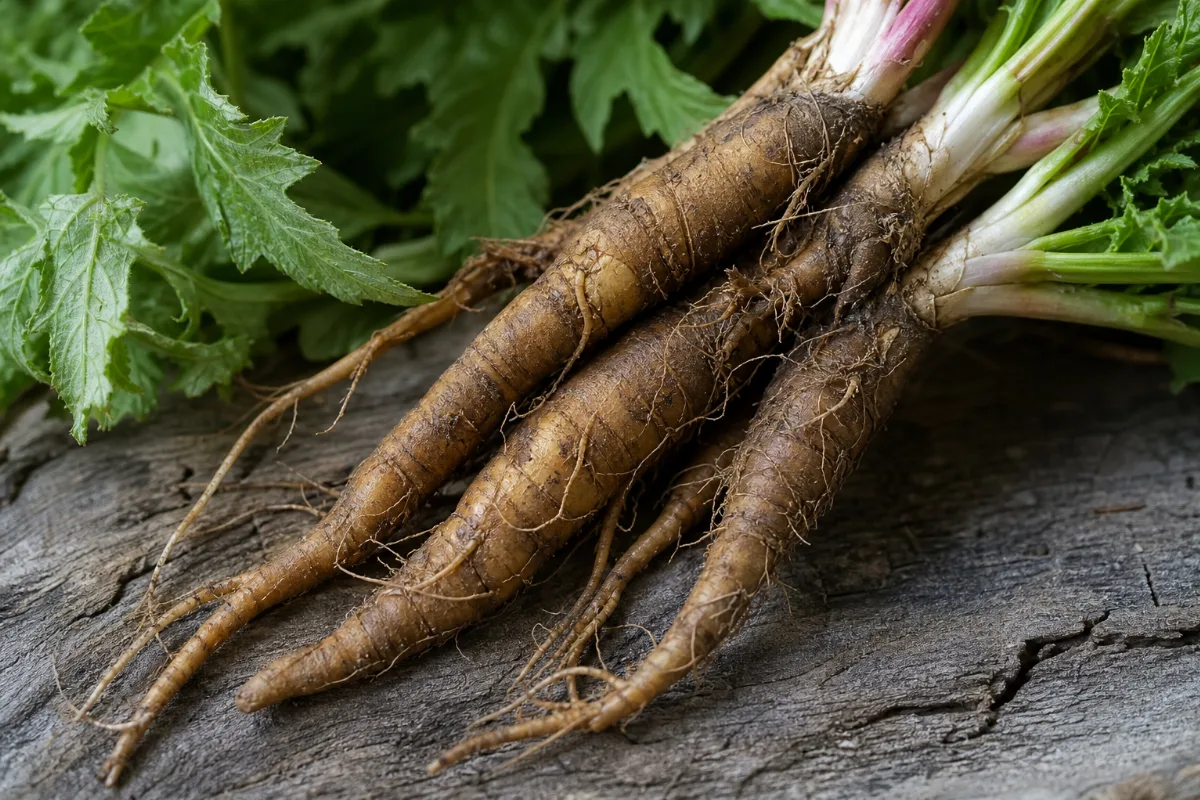
Maral root, also called Russian leuzea, is the plant written Rhaponticum carthamoides (Willd.) Iljin, in the daisy family (Asteraceae). [1][4] GBIF's backbone lists this name as a synonym and treats the plant as Leuzea carthamoides, so you may see either name on labels and in studies. [4] The review describes it as a perennial herb used for centuries in eastern parts of Russia. [1]Is maral root an adaptogen?
"Adaptogen" is a contested term; see What are adaptogens? and the history of the concept. A 2021 review lists extracts of R. carthamoides among those "considered to be naturally occurring adaptogens," and says about 50 years ago plant adaptogens were first used in professional sports. [5] The same review says clinical trials in humans are limited. [5] That label comes from Soviet-era literature rather than from modern Western trials.Traditional use (not proof)
The review describes use for centuries in eastern parts of Russia. [1] Details of specific peoples and practices were not described in the sources we read, and we do not describe ceremonial uses. Traditional use is not evidence of an effect.What research shows
The compounds most discussed are ecdysteroids, a group of plant steroids that includes ecdysterone, along with phenolic compounds such as flavonoids. [1][6]| Question | What the source found | Strength of evidence | Population and form |
|---|---|---|---|
| Maral root extract for any health outcome in people | Proper evidence not found | Insufficient evidence | We searched PubMed for Rhaponticum, Leuzea and ecdysterone human trials and read none of the whole extract |
| Ecdysterone supplements and strength training | A 10-week study of 46 young men found greater muscle mass gains and bench-press strength on ecdysterone supplements. [2] | Promising but limited; the source plant of the supplement is not stated in the abstract, so it cannot be assigned to maral root | 46 young men in strength training |
| A commercial phytosteroid supplement | In a 12-week trial of 28 resistance-trained men, training gains were similar in both groups; the capsules held far less than the claimed 20E. [3] | No good evidence of benefit from that product | 24 men finished; product combining two compounds |
| Diabetes and blood vessels | A 2024 study in type 2 diabetes mice reported lower blood glucose and lipids after extract. [7] | Preclinical (animals) | Male mice; 12 weeks of oral extract |
Ecdysterone is also found in other plants, including spinach and quinoa; a review lists maral root as one source. [6] Results for an ecdysterone product do not transfer to a whole maral root extract, and animal findings do not show human benefit. Biomarker changes and strength measures are not the same as feeling less stressed; see adrenal fatigue and adrenal support claims.
Forms and why the form matters
The studies above used isolated or standardized ecdysterone products or mouse extracts, not teas or whole-root powders. A label should name the species, the plant part and, if standardized, the compound. See standardization markers.Quality and sourcing
The 2025 trial found a major gap between claimed and measured amounts in one commercial product, and its authors recommend checking active compound content and absence of prohibited-substance contamination. [3] We did not read sources on how wild maral root is harvested or on conservation, so we make no statement on that.Frequently asked questions
What is maral root?
The root of Rhaponticum carthamoides, also called Russian leuzea, used for centuries in eastern parts of Russia. [1]
Is Rhaponticum the same as Leuzea?
GBIF treats Rhaponticum carthamoides as a synonym of Leuzea carthamoides. [4]
Does maral root build muscle?
Proper evidence not found for maral root itself. A trial of ecdysterone supplements reported gains, and a trial of a commercial product found no extra benefit. [2][3]
Is it banned in sport?
Not described in the sources we read, except that one trial's authors argued ecdysterone should be prohibited. [2]
Is it safe?
Human safety data were not found in what we read; the review calls it "hopefully safe." [1]
References
- Phytochemistry 2009, Chemistry and pharmacology of Rhaponticum carthamoides: a review. Read 2026-10-23.
- Isenmann E et al., Archives of Toxicology 2019, Ecdysteroids as non-conventional anabolic agent: performance enhancement by ecdysterone supplementation in humans. Read 2026-10-23.
- Dissemond J et al., Journal of the International Society of Sports Nutrition 2025, How reliable is the labeling of a commercial phytosteroid product?. Read 2026-10-23.
- GBIF Backbone Taxonomy name match, Rhaponticum carthamoides (Willd.) Iljin, accessed 2026-10-23. Read 2026-10-23.
- Karcheva-Bahchevanska D, Ivanova S, Nutrients 2021, Plant adaptogens: history and future perspectives. Read 2026-10-23.
- Nutrients 2024, Ecdysterone and turkesterone: compounds with potential in sport and healthy nutrition. Read 2026-10-23.
- Phytomedicine 2024, Rhaponticum carthamoides on endothelial dysfunction and inflammation in type 2 diabetes mice. Read 2026-10-23.