Herbal Teas & Extracts · Herbal tea
Sage Tea
Salvia officinalis L. · also called Common sage, garden sage, culinary sage, salvia and salvia real (Spanish), sauge officinale (French), Echter Salbei (German).
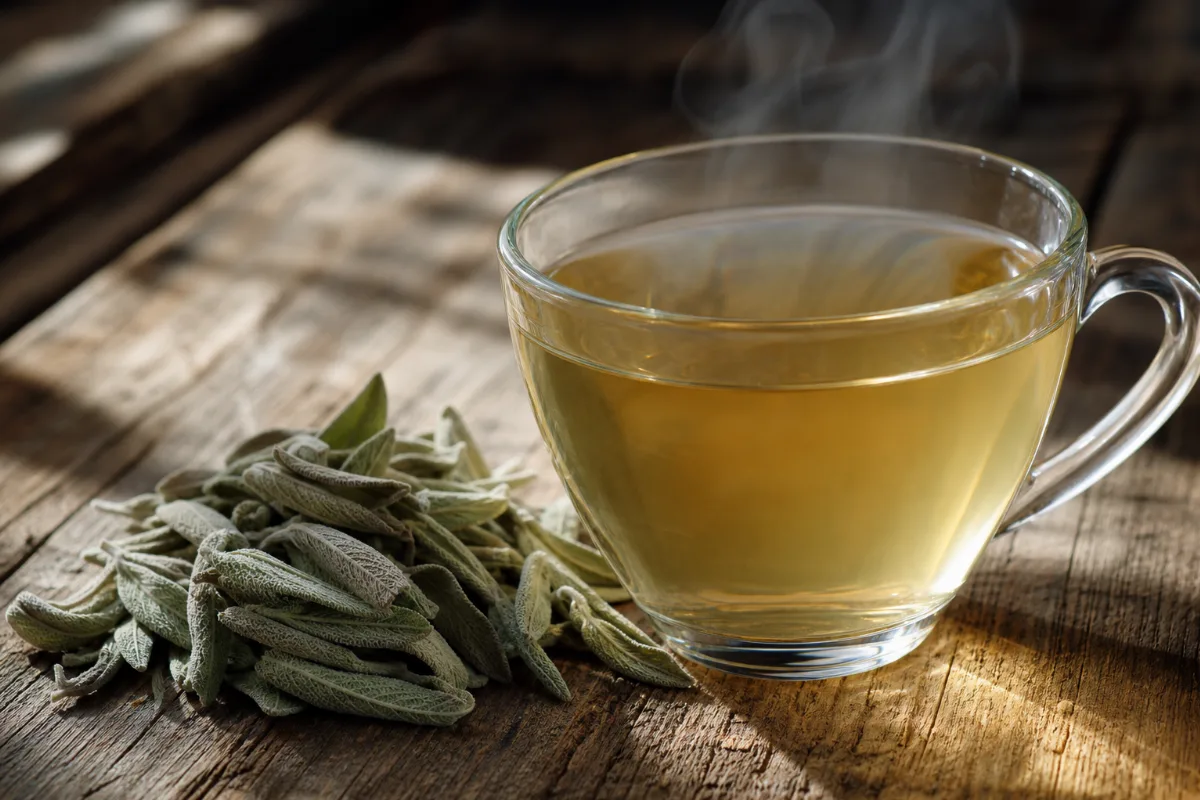
Sage tea is a savoury, caffeine-free drink made by steeping the dried leaves of common garden sage. It is used for sore throats, mouth rinses and heavy sweating in folk medicine. The human trials of sage, on hot flushes, memory and blood sugar, mostly used extracts, tablets or sprays, not tea, and the evidence is low certainty. The main caution is thujone, a natural substance in sage that is toxic to the brain at high intake, so sage tea is not for people with seizure disorders or in pregnancy.
General information, not medical advice. Last substantive update · Not medically reviewed. A named clinician has not signed off on this page. How this page is made
About Sage Tea
Sage tea is a caffeine-free infusion of the dried leaves of common garden sage (Salvia officinalis). People drink it, and gargle with it, for sore throats, heavy sweating and as a traditional remedy for indigestion. Research is thin and mostly low certainty: small trials of extracts for hot flushes, sprays for sore throat, and capsules for memory, blood sugar and cholesterol. Almost none used tea. The main cautions are thujone, a natural substance in sage that is toxic to the brain at high intake, so people with seizure disorders should avoid it and the EU regulator does not recommend sage in pregnancy, breastfeeding or under 18; and possible additive effects with diabetes medicines.
What it is
Common sage (Salvia officinalis) is a woody Mediterranean herb in the mint family, the same family as rosemary and thyme. The part used is the dried leaf. Steeped in hot water it makes sage tea. The EU herbal monograph lists the dried leaf as a herbal tea for oral use, and the European Medicines Agency (EMA) lists it as a traditional medicine for mild indigestion, excessive sweating, and inflammation of the mouth and throat.
Sage is not from the tea plant (Camellia sinensis), so it does not carry tea's caffeine. A lab analysis of 33 non-Camellia herbal teas found no caffeine in any of them, but it did not name sage in its abstract, so for sage this is indirect.
Tea, extract, tincture and oil are not the same thing
Sage tea is the leaf steeped in water. Extracts and tablets are concentrated products, tinctures are made with alcohol, and sage essential oil is the distilled oil. They carry different amounts of thujone. In a survey of 108 sage products, teas ranged from none detectable to a high level, and tinctures were far higher. A second survey found a tea recovers only about a third of the thujone that a strong alcohol extract gives.
Almost every trial on this page used a tablet, capsule, spray or rinse, not a cup of tea. The only tea studies are a six-person pilot, a mouth rinse made from sage tea, and a sage tea-thyme-peppermint rinse. Results from an extract cannot be assumed for tea, and the dangers of the oil do not apply to tea in the same way.
Which sage? Garden sage is not the same as clary, Spanish or white sage
Garden sage (Salvia officinalis) is the plant behind the EU monograph and most of the trials here. Spanish sage (Salvia lavandulifolia) has a different oil with less thujone, and some memory trials used it or a mix. Clary sage, white sage and danshen (Salvia miltiorrhiza) are different plants with different chemistry, and results from them do not carry over.
What it is used for and what the research found
Traditional uses are for sore mouths and throats, heavy sweating and indigestion. In small trials, sage extract tablets were linked to fewer menopausal hot flushes, sage sprays eased sore throat pain for a few hours, and sage extract capsules lowered blood sugar and cholesterol in people with type 2 diabetes. Capsules and extracts also improved some memory tests in short trials. All of these are low certainty at best, and none tested sage tea you drink.
Sage mouth rinses lowered plaque bacteria and, in a 12-week trial, plaque and gum scores. For very ill hospice patients a sage tea rinse eased dry mouth a little more than salt water, but it did not beat it overall.
How strong is the research?
Small. The largest hot flush trial has no placebo group, and two of the five hot flush studies have authors at the maker of the fresh-sage product. The diabetes and cholesterol trials all come from Iran. No trial measured outcomes such as heart attacks or diabetes complications, and none lasted more than 4 months. The EU regulator rates sage leaf as traditional use only, meaning it rests on long use, not proof from modern trials.
At a glance
Traditional uses history, not proof
- A gargle and tea for sore mouths and throats, recorded from ancient Greek medicine onward (EMA assessment report).
- A traditional remedy for heavy sweating, listed by the EU regulator on the basis of long use only.
- Folk use for indigestion and bloating, for memory in old European herbals, and to dry up breast milk when weaning (the last has never been tested).
Studied for research
- Menopausal hot flushes, low certainty (several small trials of sage extract tablets, none of tea)
- Sore throat, low certainty (sage sprays and lozenges; none of tea)
- Mouth rinses for plaque, gum redness and dry mouth, low certainty (small trials, including a sage tea rinse that did not beat salt water overall)
- Memory and attention, low certainty (small trials of extracts and capsules); Alzheimer's disease, low certainty (one 42-person trial)
- Blood sugar and cholesterol, low certainty (small trials of extract capsules; a six-person tea pilot)
- Sweating without menopause, premenstrual symptoms and milk supply, insufficient evidence
Main compounds
- Thujones (alpha and beta), volatile terpenes that are toxic to the brain at high intake
- Camphor and 1,8-cineole, two more volatile terpenes in the leaf oil
- Rosmarinic acid and other phenolic acids
- Carnosic acid and carnosol, antioxidant diterpenes also found in rosemary
- Flavonoids such as luteolin and apigenin glycosides, and ursolic acid
Common forms
- Dried leaf steeped in hot water as a tea (the tea itself)
- Mouth rinses and gargles made from sage tea
- Tablets and capsules of dried or fresh-leaf extract (concentrated, used in most trials)
- Liquid extracts and alcohol tinctures (stronger in thujone than tea)
- Throat sprays and lozenges, some combined with Echinacea
- Sage essential oil (not for swallowing; EMA judged its benefit-risk balance negative)
Research links: EMA herbal monograph on sage leaf (Salvia officinalis L., folium), 2016 · EMA public statement on sage essential oil (2016 corrected text) · Systematic review and meta-analysis of sage for hot flashes (Moradi, 2023), PubMed record · Research Library · Genes & Biomarkers Library
What it is and its history
- Accepted scientific name
- Salvia officinalis L.
- Naming authority
- L.; published in Species Plantarum, page 23 (1753) (GBIF)
- Synonyms
- GBIF's current list for this accepted name has no true botanical synonyms beyond three names that actually belong to the Spanish sage group: Salvia officinalis var. lavandulifolia (Vahl) Pau, Salvia officinalis f. lavandulifolia (Vahl) O.Bolos & Vigo, and Betonica brachyodonta Klokov (1960). Older books may use 'Salvia officinalis' loosely for several Mediterranean sages.
- Common names
- Sage (English); Common sage (English); Garden sage (English); Culinary sage (English); Salvia real / salvia / salvia dulce (Spanish); Sauge officinale (French); Echter Salbei / Heilsalbei / Garten-Salbei (German); Salvia domestica (Italian); Salva / salvia (sálvia) (Portuguese); Echte salie (Dutch); Ada cayi (Turkish (transliterated)); Maryamiyya (Arabic: مريمية) (Arabic (transliterated))
- Family or group
- Lamiaceae (mint family, also called Labiatae; it also holds rosemary, thyme, oregano, lavender, lemon balm and basil)
- Classification
- Plantae > Tracheophyta > Magnoliopsida > Lamiales > Lamiaceae > Salvia > Salvia officinalis
- Native range
- Native to the Mediterranean region, especially around the Adriatic Sea according to the EMA assessment report; widely cultivated and naturalised elsewhere. Commercial material comes mainly from south-eastern Europe (EMA report, citing Blumenthal et al. 2000). A review adds that it is naturalised across the world (p29034191).
- Habitat
- Not verified from a primary botanical source for this file. General knowledge (unverified here): a sun-loving Mediterranean subshrub of dry, well-drained, often rocky ground.
- What it looks like
- Roots: Not part of the medicinal use of garden sage. (The root is the used part of a different plant, danshen, S. miltiorrhiza.); Stems: A perennial, evergreen subshrub with woody stems (Wikipedia summary; not verified in a primary botanical source).; Leaves: The medicinal part: whole or cut dried leaf, with the European Pharmacopoeia requiring at least 12 ml/kg essential oil for the whole drug and at least 10 ml/kg for the cut drug (EMA assessment report). Leaves are grey-green (Wikipedia summary).; Flowers: Blue to purplish flowers (Wikipedia summary). Flowers are not the standard medicinal part.; Fruit: Not relevant to the medicinal use; not verified.
- Cultivation
- Not verified from a primary source read. The EMA report states that cultivation in northern Europe dates to medieval times and that sage reached North America in the 17th century.
- Harvest and processing
- Not verified in detail. Documented in the sources read: sage leaf is dried and marketed whole or cut; oil content varies with source, harvest time and other factors (EMA report); in one study fresh leaf extracts were 2 to 4 times more active in receptor-binding tests than extracts of dried plant (p31196061), and Swiss products use freshly harvested leaf (p21630133, p33615001). Along the stem the thujone proportion falls from top to base while camphor rises (EMA report, citing Langer et al. 1996).
- Look-alikes and adulterants
- Name: Salvia lavandulifolia Spreng. (Spanish sage); Note: A separate species in GBIF (key 7948017); NCBI files it as a subspecies of S. officinalis (subsp. lavandulifolia, taxid 3110498). Its essential oil is dominated by camphor, 1,8-cineole, camphene and alpha-pinene (p28825692, p24689309) and does not list thujone among its main components. Most of the cholinesterase and 'cognitive oil' work in people uses this oil (p20937617, p12895684, p11926204), not garden sage. Do not assume results carry over between the two.; Name: Salvia sclarea L. (clary sage); Note: A different, ornamental/aromatic sage grown for its oil. Greek wild material was rich in linalyl acetate (19.75-31.05%) and linalool (18.46-30.43%) (p12405762), very unlike garden sage oil. Not the same as sage leaf in the medicines monograph.; Name: Salvia miltiorrhiza Bunge (danshen, redroot sage); Note: A Chinese medicine plant whose ROOT is the used part; its active compounds are tanshinones and salvianolic acids and its research is mainly cardiovascular (p29698387). This is a different herb and should not be mixed with garden sage research.; Name: Salvia apiana Jeps. (white sage); Note: A California chaparral sage used by the Chumash as a calmative, diuretic and cold remedy and burned as a ritual smudge herb (p33890254). Different chemistry from garden sage (a review compares them); not a substitute.; Name: Salvia fruticosa Mill. (Greek or three-lobed sage); Note: Has its own European Pharmacopoeia monograph (three-lobed sage leaf) alongside the S. officinalis monograph (EMA report). Sometimes sold as 'sage'; its oils have been tested for cholinesterase activity too (search results only, not read).; Name: Pineapple sage, Russian sage, sagebrush; Note: 'Sage' in the name does not make a plant a Salvia officinalis: pineapple sage (Salvia elegans) is another Salvia, while Russian sage (Perovskia) and sagebrush (Artemisia) are other genera. Not checked in a source for this file beyond the genus relationship; named only to warn readers about look-alike names.
- Sustainability and conservation
- Not verified. No IUCN assessment was retrieved. Garden sage is widely grown as a crop.
Photographs
Traditional use and history history, not clinical proof
| Tradition or era | Documented use | Source |
|---|---|---|
| Ancient Egypt, Greece and Rome | The EMA assessment report (citing Blumenthal et al. 2000) says sage was used in ancient Egyptian, Greek and Roman medicine; the Egyptians as a fertility drug, the Greeks to stop the bleeding of wounds, to clean ulcers and sores, for hoarseness and cough, to enhance memory and in gargles for sore mouths and throats. Written mentions are credited to Hippocrates and later herbalists. | s-ema-hmpc-salvia-officinalis-folium |
| Medieval and early-modern European herbals | Sage leaf appears in the writings of Paracelsus, Hildegard von Bingen, Lonicerus, Bock and Matthiolus (Madaus 1938, as cited by EMA). Cultivation in northern Europe dates to medieval times. The herbals of Gerard (1633), Culpeper (1653) and Hill credit sage with improving memory. | s-ema-hmpc-salvia-officinalis-folium |
| Greek-Arabic medicine, India (Ayurveda, Siddha, Unani) | Traditional Greek use spread to India, where the dried leaf (called Salbia-sefakuss in Hindi) and fluid extract are used in Ayurvedic, Siddha and Unani medicine (EMA report, citing Blumenthal et al. 2000). | s-ema-hmpc-salvia-officinalis-folium |
| Folk medicine across the Middle East and Mediterranean | A review lists folk use for seizure, ulcers, gout, rheumatism, inflammation, dizziness, tremor, paralysis, diarrhea and high blood sugar. | p29034191 |
| Pharmacognosy handbooks (19th-20th century onward) | Described as carminative (eases gas), antispasmodic, antiseptic, astringent and antihidrotic (reduces sweating); used for flatulent dyspepsia, sore throat, inflamed mouth and gums, excessive sweating and stopping milk flow (galactorrhoea) (EMA report, citing Barnes et al. 2007). | s-ema-hmpc-salvia-officinalis-folium |
| Germany: Commission E | The German Commission E approved internal use of sage for dyspeptic (indigestion-type) symptoms and excessive sweating, and external use for inflammation of the mucous membranes of the mouth and throat (EMA report, citing Blumenthal 2000). Not re-checked against the original Commission E text. | s-ema-hmpc-salvia-officinalis-folium |
| European Union: EMA/HMPC (traditional herbal medicine) | Sage leaf has an EU herbal monograph (first adopted 2009, revised 20 September 2016, EMA/HMPC/277152/2015) as a traditional herbal medicine for mild indigestion such as heartburn and bloating, for excessive sweating, for inflammation of the mouth or throat, and for minor skin inflammations. The status is 'traditional use' only, meaning it rests on long-standing use and not on proof from modern trials: the committee said the clinical data cannot meet the criteria for well-established use but accepted them as making the traditional use plausible. A periodic review was open for consultation in 2025; its outcome was not checked. | s-ema-hmpc-salvia-officinalis-folium |
| Where the name comes from | The genus name Salvia is usually explained as coming from the Latin salvus ('safe, healthy') and salvere ('to feel healthy, to heal'), which is where the popular line that sage means 'to save' comes from. This is from Wikipedia only and was NOT verified from a primary source. Pliny the Elder is said to be the first author to describe a plant called Salvia. | s-wikipedia-salvia |
Traditional use shows how it was used. It does not show that it works or is safe today.
What is inside, and how it may work
What it contains and how those compounds act in cells and animals. Laboratory and animal mechanisms are not proven effects in people.
Main compounds
| Compound | Family | Where it is concentrated | Activity studied | Level of evidence |
|---|---|---|---|---|
| alpha-Thujone PubChem 261491 | monoterpene ketone (essential oil) | Leaf (essential oil); falls from top to base of the plant 10-60% of the essential oil per the EMA report (citing Bradley 2006); 1.17-9.26% in three Italian oils (p33321838). Very variable: some leaves and some sage oils have more 1,8-cineole than thujone. | Blocks (inhibits) GABA-A receptors; in animals this causes excitation and convulsions at high doses and it is the neurotoxic component of concern in sage oil. Rapidly detoxified by liver P450 enzymes (CYP2A6 > CYP3A4 > CYP2B6 in human liver preparations). 27 14 28 49 75 52 65 | Animal research |
| beta-Thujone PubChem 91456 | monoterpene ketone (essential oil) | Leaf (essential oil) 4-36% of the essential oil per the EMA report (Bradley 2006) | Same GABA-A receptor-blocking action as alpha-thujone in the animal and cell work (both forms are the neurotoxic principle of concern); the metabolism of the two forms differs in detail. 28 49 75 52 | Animal research |
| 1,8-Cineole (eucalyptol) PubChem 2758 | monoterpene ether (essential oil) | Leaf (essential oil); also the main compound in Spanish sage oil 1-15% of the essential oil (EMA report); 8.80-9.86% in three Italian oils (p33321838) | The best single cholinesterase-blocking terpene found in sage-type oils in the lab (IC50 0.06 mg/ml, about the same as the whole Spanish sage oil); also reduced IL-6 and IL-8 release from stimulated human gum cells by more than 50% (cited in the EMA report). 59 13 65 75 | Laboratory research |
| Camphor PubChem 2537 | monoterpene ketone (essential oil) | Leaf (essential oil) 5-20% of the essential oil (EMA report); 16.16-18.92% in three Italian oils (p33321838). Mostly the (+)-enantiomer (50-70% in S. officinalis per EFSA 2008, cited in the EMA report). | Weak cholinesterase inhibitor in the lab and antagonistic (works against) 1,8-cineole in the combined test (p12895684). Camphor, like thujone, is named in the EMA report as a constituent with toxic effects in high doses. 59 65 75 | Laboratory research |
| Borneol PubChem 64685 | bicyclic monoterpene alcohol (essential oil) | Leaf (essential oil); proportion rises from top to base of the plant Present, amount not given in the sources read | Tested as one of eight terpenoids against acetylcholinesterase in the lab; cut IL-6 and IL-8 release in stimulated human gum cells (cited in the EMA report). 59 75 | Laboratory research |
| alpha-Pinene PubChem 6654 | monoterpene hydrocarbon (essential oil) | Leaf (essential oil) Present; amount not given in the sources read for S. officinalis | Mild synergy with 1,8-cineole at the acetylcholinesterase enzyme in the lab. 59 13 | Laboratory research |
| Camphene PubChem 6616 | monoterpene hydrocarbon (essential oil) | Leaf (essential oil) 6.27-8.08% in three Italian oils (p33321838) | No specific activity established in the sources read. 65 | Laboratory research |
| beta-Caryophyllene PubChem 5281515 | sesquiterpene (essential oil) | Leaf (essential oil) Listed among the sesquiterpenes by the EMA report; amount not given | Not studied alone in the sources read for sage; its oxide was tested at the cholinesterase enzyme in the lab (mild synergy with 1,8-cineole). 75 59 | Laboratory research |
| alpha-Humulene PubChem 5281520 | sesquiterpene (essential oil) | Leaf (essential oil) Listed by the EMA report; amount not given | No specific activity established in the sources read. 75 | Laboratory research |
| Viridiflorol PubChem 11996452 | sesquiterpene alcohol (essential oil) | Leaf (essential oil and extracts) Principal oil component in some samples (p17487611) | Isolated from a sage extract but did not activate PPAR-gamma in the reporter test (p20696231). 52 12 | Laboratory research |
| Carnosic acid PubChem 65126 | phenolic diterpene (abietane) | Leaf Not given as a percentage for sage in the sources read. It readily oxidises to carnosol (EMA report). | Activated human PPAR-gamma in a cell reporter assay (EC50 19.6 +/- 2.0 microM); a review describes neuroprotective actions in lab and animal models. In rats, bioavailability of pure carnosic acid by mouth was 40.1% (rosemary-sourced). 55 43 17 | Laboratory research |
| Carnosol PubChem 442009 | phenolic diterpene lactone | Leaf About 0.35% of the leaf (EMA report, citing Bradley 2006) | Activated human PPAR-gamma in the lab (EC50 41.2 +/- 5.9 microM). 55 75 | Laboratory research |
| Rosmanol PubChem 13966122 | phenolic diterpene lactone (carnosol breakdown product) | Leaf Listed by the EMA report; amount not given | Seen as a rosemary-extract metabolite (glucuronide) in rat gut, liver and plasma; sage also contains it. 75 57 | Animal research |
| Rosmarinic acid PubChem 5281792 | caffeic acid dimer (hydroxycinnamic ester) | Leaf; most of the 'tea' polyphenol Up to 3.3% of the leaf (EMA report, citing Bradley 2006) | Anti-inflammatory activity reported in older work (cited by EMA); in a human gum-cell test it was less effective than the volatile oil components at tea-like concentrations. In people drinking rosemary tea it is split to caffeic acid-type metabolites mainly by colon bacteria. 75 3 | Laboratory research |
| Ursolic acid PubChem 64945 | pentacyclic triterpene acid | Leaf (waxy surface) Up to 3.5% of the leaf (EMA report) | Main anti-inflammatory component of a chloroform sage extract in a mouse ear-swelling test, reported as about twice as potent as indomethacin (ID50 0.14 vs 0.26 microM/cm2) (cited in the EMA report); low oral bioavailability. 75 29 | Animal research |
| Oleanolic acid PubChem 10494 | pentacyclic triterpene acid | Leaf Up to 0.4% (EMA report) | Antibacterial against vancomycin-resistant enterococci in the lab (MIC 8 microg/ml, ursolic acid 4 microg/ml; cited in the EMA report). Did not activate PPAR-gamma in the reporter test (p20696231). 75 12 | Laboratory research |
| Luteolin and its glycosides (7-glucoside, 7-glucuronide) PubChem 5280445 | flavone | Leaf Total flavonoids about 1.1% of the leaf (EMA report). Luteolin glycoside CID: luteolin 7-O-glucoside 5280637 (C21H20O11). | Luteolin-7-O-glucuronide and luteolin-7-O-glucoside were identified as the probable estrogen-receptor-active components in a sub-extract in the lab (EC50 129 and 0.7 microg/mL for the fractions concerned). 54 75 | Laboratory research |
| Apigenin PubChem 5280443 | flavone | Leaf Listed with its glycosides by the EMA report | Weak affinity at the human brain benzodiazepine site (IC50 30 microM versus 0.05 microM for diazepam), as cited by the EMA report from Bradley 2006. 75 | Laboratory research |
| Hispidulin PubChem 5281628 | flavone (6-methoxy-apigenin) | Leaf Listed by the EMA report | One of the most active benzodiazepine-site binders from a sage leaf extract in human brain tissue (IC50 1.3 microM), as cited by the EMA report. 75 | Laboratory research |
| Methyl rosmarinate and ferulic acid | phenolic acid esters | Aerial parts Methyl rosmarinate 24.86 mg/100 g and ferulic acid 6.06 mg/100 g in one Egyptian ethanolic extract (p34499963) | Raised uterine weight in young ovariectomized rats (ferulic acid and the whole extract); mimics an estrogen-like action in rats only. No PubChem CID looked up for methyl rosmarinate; ferulic acid not looked up. 58 | Animal research |
Mechanisms, receptors and pathways
| Target or pathway | Gene or receptor | What was found | Level |
|---|---|---|---|
| Acetylcholinesterase (AChE) inhibition | ACHE | Several sage preparations block AChE (the enzyme that clears acetylcholine, a memory-related signal) in test tubes. An S. officinalis leaf extract inhibited AChE in a dose-related way (p16205785); the EMA report cites 68% inhibition by an ethanolic extract at 2.5 mg/ml. Spanish sage oil and its main terpene 1,8-cineole are stronger and the oil lowered cholinesterase in rat striatum and hippocampus after 5 days (p11926204). Important caveat: a 66% ethanolic tincture of S. officinalis showed no AChE inhibition at the highest concentration tested (p23670626), so the effect depends on the preparation. In people, memory and mood gains after single doses were seen with S. officinalis leaf, an S. officinalis extract and with Spanish sage oil, but no study measured brain enzyme activity in the volunteers, so the link between enzyme blocking and the human results is an assumption. 31 61 59 50 32 54 65 | Laboratory research |
| Butyrylcholinesterase (BChE) inhibition | BCHE | An S. officinalis leaf extract inhibited BChE even more than AChE in the lab (p16205785); one Italian sage oil had a BChE IC50 of 33.13 microg/mL (p33321838). In late-stage Alzheimer's disease BChE takes over much acetylcholine breakdown, which is why this enzyme draws interest, but that point is general background, not shown for sage. 31 65 48 | Laboratory research |
| Acetylcholine receptors (muscarinic and nicotinic) | CHRM / CHRN receptor families | Ethanolic extracts of three Salvia species were among the most potent at displacing nicotinic and muscarinic ligands from human cerebral cortex membranes (IC50 below 1 mg/ml); accessions of one species varied a lot. A thujone-free fresh-leaf extract also bound muscarinic M3 receptors (IC50 25 microg/ml). Binding does not tell us whether the plant switches the receptor on or off. 68 64 | Laboratory research |
| GABA-A receptor: thujone BLOCKS it | GABRA/GABRB/GABRG/GABRD subunit families | alpha-Thujone suppresses GABA currents in rat neurons (reversible) and recombinant receptors, most strongly alpha1-beta2-delta, which suggests tonic (steady background) inhibition is most affected. In mice it causes convulsions that diazepam and phenobarbital relieve. This is a toxic, excitatory mechanism at high doses, the reason thujone is limited in medicines, and is the opposite of a calming action. 27 14 49 | Animal research |
| GABA-A and GABA-B receptor binding (extract) | GABRA/GABBR families | A fresh-leaf thujone-free extract displaced 50% of ligand binding at GABA-A (IC50 89 microg/ml) and GABA-B receptors (229 microg/ml). Separately, the EMA report cites a sage leaf extract that bound the human brain benzodiazepine site, with galdosol (IC50 0.8 microM), hispidulin (1.3 microM) and 7-methoxyrosmanol (7.2 microM) the strongest, versus 0.05 microM for diazepam (second-hand through EMA, original not read). Binding alone does not show a calming effect in people. 64 75 | Laboratory research |
| PPAR-gamma activation (blood sugar and fat handling, inflammation) | PPARG | A sage extract (80% ethanol) activated human PPAR-gamma in a cell reporter assay (EC50 33.7 mg/L); carnosic acid (EC50 19.6 microM) and carnosol (41.2 microM) were identified as active principles. In a second study 12-O-methyl carnosic acid and alpha-linolenic acid were active, but viridiflorol, oleanolic acid and the other isolated diterpenes were not. No study shows PPAR-gamma activation in people taking sage, although one placebo-controlled trial reported better glucose and lipids (p24050577). 55 12 34 | Laboratory research |
| Estrogen receptor activity (mixed) | ESR1 / ESR2 | Results disagree. The whole 66% tincture was not estrogenic, while an aqueous-ethanolic sub-extract was (EC50 64 microg/mL), traced to luteolin glucuronide/glucoside (p23670626). An ethanolic extract and ferulic acid raised uterine weight and lowered FSH and LH in young ovariectomized rats (p34499963). The finished tincture itself showed no estrogen-like action in the cell test. The plausibility of a direct estrogen effect in women is therefore low-to-uncertain, and the receptor subtype was not stated in the abstracts read. 54 58 | Laboratory research |
| Other brain receptors (extract binding) | ADRA2A, OPRM1, CHRM3, HTR1A, HTR2B, HTR2C, SLC6A4 | A thujone-free fresh-leaf extract bound the alpha-2A adrenergic receptor (IC50 15 microg/ml), mu-opioid (20), muscarinic M3 (25) and serotonin 5-HT1A (19) receptors strongly, and 5-HT2B, 5-HT2C and the serotonin transporter moderately; the authors link this to temperature control and mood in menopause. Fresh leaf extracts were 2-4 times more active than dried-plant extracts. Binding assays only, funded work on a branded product. The same extract in the other study (p23670626) did not inhibit serotonin reuptake in a different test. 64 54 | Laboratory research |
| Anti-inflammatory signalling in gum cells | IL6, CXCL8 (IL-8) | In human gum fibroblasts, sage infusion cut stimulated release of IL-6 and IL-8 by more than 50%; the volatile compounds 1,8-cineole, borneol, camphor and thujone did this, but rosmarinic acid did not at tea-like concentrations (Ehrnhofer-Ressler 2013, as cited in the EMA report; original not read). A sore-throat spray trial supports local use (p16504956). The EMA report adds a mouse ear-swelling result for ursolic acid. 75 26 | Laboratory research |
| Antioxidant effects in people (small pilot) | SOD1, CAT, HSPA1A (Hsp70) | In six women, four weeks of sage tea raised erythrocyte SOD and CAT activity and lymphocyte Hsp70, and improved lipids, with no liver signal. A pilot with no placebo and six participants. 62 | Human data |
| Antimicrobial actions | not applicable | The EMA report lists lab activity of sage oil against bacteria and yeasts and of oleanolic and ursolic acid against resistant enterococci, which fits the traditional gargle use. Lab activity only. 75 | Laboratory research |
Absorption, metabolism and elimination
- Absorption
- No absorption study of sage tea or sage extract was found by the European regulator (EMA report: no pharmacokinetic studies on extracts were available) and none was found in this search. In a 2018 study, volunteers drank a sage infusion and alpha-thujone was found in their urine only in low amounts, with the highest concentration at 94 ng/L in the volunteer with the highest intake per body weight.
- Distribution
- No human tissue-distribution data for sage compounds. Rat work on rosemary extract (which shares carnosic acid with sage) found only trace amounts reaching the brain; this was not tested with sage.
- Metabolism
- Thujone: in human liver preparations CYP2A6 is the main enzyme, then CYP3A4 and to a lesser extent CYP2B6, giving less toxic hydroxy-thujones that are then conjugated, with big differences between species. In the 2018 study, 4-hydroxythujone and 7-hydroxythujone were found in volunteers' urine after sage tea (after the conjugates were split), and 2-hydroxythujone was not.
- Elimination
- Not established for sage in people beyond the urine findings above.
- Bioavailability
- Unknown for sage in people. A toxicology review by Pelkonen states that thujone bioavailability and human dose-concentration-effect relationships are the most important gaps. Water gets less out of the leaf than alcohol: one survey found tea recovered about 30% of the thujone that a strong alcohol extract gave.
Isolated compounds versus whole extracts
No single compound explains what sage does, and sage tea is not one uniform product. Water pulls out different compounds, in different amounts, than alcohol: a survey found tea recovered only about a third of the thujone that a strong alcohol extract gave, and teas differed from none detectable to more than 37 mg per litre. The best-studied products for menopause and memory are particular extracts (fresh-leaf ethanol extracts, a combination extract), not tea. Thujone is both active and toxic at high intake, which is why thujone-free extracts exist and are studied separately. Research on isolated carnosic acid, rosmarinic acid or ursolic acid mostly comes from rosemary and cell work and cannot stand in for sage tea.
Nutritional composition
A nutrient table does not apply: sage tea is a flavoured water, and its health-related ingredients are essential-oil terpenes, phenolic acids, diterpenes, triterpenes and flavonoids rather than vitamins or minerals. No vitamin or mineral analysis was read, and none is claimed. Caffeine: sage is not from the tea plant. A lab analysis of 33 non-Camellia herbal teas found no caffeine, theobromine or theophylline, but its abstract does not name sage, so the caffeine-free statement for sage is indirect.
7 low certainty1 very low certainty4 not enough evidence
What was looked at
The 12 benefits and uses checked for Sage Tea, each with how strong the evidence is. Tap one to open it.
- Memory and attention in healthy adults (sage leaf extracts and capsules, not tea)Low certainty
- Alzheimer's disease, mild to moderate (Salvia officinalis liquid extract)Low certainty
- Mood and calm in healthy adults (dried sage leaf in capsules)Very low certainty
- Sage tea itself for memory, thinking or moodNot enough evidence
- Menopausal hot flushes (sage leaf extract tablets; not tea)Low certainty
- Excessive sweating (other than menopausal)Not enough evidence
- Sore throat (sage sprays and lozenges; not gargled tea)Low certainty
- Mouth rinses: plaque bacteria, gum redness and dry mouth (sage tea or extract rinse, not swallowed)Low certainty
- Blood sugar in type 2 diabetes (sage leaf extract capsules and tablets)Low certainty
- Cholesterol and blood fats (sage leaf extract capsules; one tea pilot)Low certainty
- Premenstrual syndrome (sage capsules)Not enough evidence
- Reducing milk supply when weaning (traditional use)Not enough evidence
Lab markers tracked in the studies
ADAS-cog score (a thinking test used in Alzheimer's trials)Clinical Dementia Rating, Sum of BoxesSecondary memory (recall of words and pictures after a delay)Working memory and accuracy tasksHot flush score (diary-rated frequency and intensity)Fasting blood glucoseHbA1c (average blood sugar over about 3 months)LDL and total cholesterolThroat pain intensity
What is Sage Tea good for?
The main studied uses and how strong the human evidence is for each. "Low" is the best rating found for any use, and several are lower. Nearly all trials used extracts, capsules, sprays or rinses. Each row says whether tea was involved. Sage tea is not a replacement for medicine.
Benefits, one by one
Each card is a research question, not a promise. Tap a goal to filter. Open a card to see the studies, doses and limits.
Memory and attention in healthy adults (sage leaf extracts and capsules, not tea)
Low certaintySmall placebo-controlled trials found that sage leaf extracts or capsules improved some memory and attention tests for a few hours, and one 29-day trial of a sage combination extract improved working memory tasks. None of these trials used sage tea. The trials are small and several are linked to the same research group or to a company.
4 studiesLeaf extracts, dried leaf in capsules and a combination extract. No t…
Studies, doses and limits
What the trials found
Scholey 2008 (20 adults over 65, five-way crossover, a standardised Salvia officinalis leaf extract versus placebo): one of the tested amounts improved secondary memory at every test time and accuracy of attention; other amounts helped less. Kennedy 2006 (30 healthy adults, crossover, dried sage leaf in capsules): both amounts improved mood before a stress task, and the higher one improved task performance, while the lower one reduced performance at the later test. Wightman 2021 (94 adults aged 30 to 60, parallel groups, 29 days): a combination extract of Salvia officinalis and Spanish sage (Salvia lavandulifolia) beat placebo on working memory and accuracy tasks, acutely and after 29 days. One author works for the maker of the extract (Nexira), so this is an industry-linked trial, and it used two sage species. Miroddi 2014, a systematic review of eight acute-effect studies, found benefits for thinking in healthy people but warned of method problems and very different preparations.
Results
Several small crossover and parallel trials of extracts point the same way for memory and attention, with short follow-up and no tea trials.
Effect sizes as reported
Not reported as pooled numbers; each trial reported significance on selected tests (for example Scholey 2008 secondary memory at all test times).
Why this rating
Small trials (20 to 94 people), mostly single-session, from related research groups, with different species and products. The only reviewers say the methods need to be better.
Form and dose studied
Leaf extracts, dried leaf in capsules and a combination extract. No trial gave sage as tea. Amounts are not repeated here.
Who was studied
Healthy younger adults, healthy adults over 65 and adults aged 30 to 60.
Limits
Single sessions up to 6 hours in most trials, one 29-day trial, many outcomes tested, one trial industry-linked, nothing tested with tea. Results from extracts cannot be assumed for a cup of tea.
Why researchers looked
Sage has a long reputation in European herbal medicine as a memory herb, and sage extracts block an enzyme (cholinesterase) in test tubes, the same enzyme some Alzheimer's medicines target.
Traditional use
European herbals from the Middle Ages onward credit sage with improving memory.
Proposed mechanism Preliminary mechanism
Test-tube work shows sage extracts can block cholinesterase. No study measured this in people, so it is an idea, not a shown mechanism.
A proposed mechanism does not show that the effect happens in people.
Sage leaf contains thujone, which is toxic at high intake (see the Safety tab). Extracts used in trials are not the same as tea.
Alzheimer's disease, mild to moderate (Salvia officinalis liquid extract)
Low certaintyOne small 4-month placebo-controlled trial in Iran found a sage extract slowed the fall in thinking scores more than placebo in people with mild to moderate Alzheimer's disease. No larger trial has repeated it, and sage tea was not tested. Sage is not a proven treatment and should not replace prescribed medicine.
3 studiesLiquid extract taken as drops in the trial. Not tea.
Studies, doses and limits
What the trials found
Akhondzadeh 2003 (42 people aged 65 to 80 with mild to moderate Alzheimer's, three centres in Tehran, 16 weeks, a Salvia officinalis liquid extract at a fixed amount versus placebo): at 4 months the sage group did better on the ADAS-cog (F = 4.77, P = 0.03) and the CDR Sum of Boxes (F = 10.84, P < 0.003). Side effects did not differ significantly between groups, except agitation, which appeared more frequent on placebo. The Miroddi 2014 review of sage trials and a 2023 systematic review of natural remedies for Alzheimer's (Ahmad 2023) both list sage among herbs with positive findings. These reviews rest on very few trials.
Results
One 42-person trial with a clear positive result and no replication found in what we read.
Effect sizes as reported
ADAS-cog F = 4.77, P = 0.03; CDR-SB F = 10.84, P < 0.003 (the abstract gives no mean differences).
Why this rating
A single small randomised trial from one group, 4 months long, with no replication; the reviews that mention it are not independent evidence.
Form and dose studied
Liquid extract taken as drops in the trial. Not tea.
Who was studied
Adults aged 65 to 80 with mild to moderate Alzheimer's disease.
Limits
Small, single trial, strength of extract not described in the abstract, 4 months only. Sage should not replace prescribed treatment.
Why researchers looked
Sage extracts block cholinesterase in the lab, which is the target of several approved Alzheimer's medicines.
Traditional use
Sage has long been used in European herbalism for memory.
Proposed mechanism Preliminary mechanism
Cholinesterase blocking seen in test tubes; not shown in the people in the trial.
A proposed mechanism does not show that the effect happens in people.
People with dementia often take several medicines. Ask a doctor or pharmacist before adding sage.
Mood and calm in healthy adults (dried sage leaf in capsules)
Very low certaintyIn one small crossover trial, dried sage leaf in capsules improved mood scores in healthy young adults, but the calming effect of the lower amount disappeared during a stressful task. This is early and mixed evidence, and not from tea.
2 studiesDried sage leaf in capsules. Not tea.
Studies, doses and limits
What the trials found
Kennedy 2006 (30 healthy adults, double-blind placebo-controlled crossover, dried sage leaf capsules, mood measured before and after a 20-minute stress task): both amounts improved mood ratings before the task. The lower amount reduced anxiety before the task, but this was abolished by the task, and that amount also reduced alertness during it. The higher amount improved alertness, calmness and contentedness and improved task performance.
Results
Mixed: improved mood before a stressor, not reliably during it.
Effect sizes as reported
Not reported in the abstract.
Why this rating
One small trial of 30 people, a single day per treatment, mixed results by amount and by test.
Form and dose studied
Dried sage leaf in capsules. Not tea.
Who was studied
Healthy young adults.
Limits
One trial, short follow-up, no people with anxiety disorders.
Why researchers looked
The same cholinesterase idea, plus traditional use of sage as a calming herb.
Traditional use
Used traditionally in European herbal medicine for the nerves and memory.
Proposed mechanism Preliminary mechanism
Test-tube work: sage leaf constituents bind to the benzodiazepine site of the brain's GABA-A receptor (Kavvadias 2003). The effect in people is unknown.
A proposed mechanism does not show that the effect happens in people.
Do not combine with sedatives or sleep medicines without asking a pharmacist.
Sage tea itself for memory, thinking or mood
Not enough evidenceWe found no trial of sage tea for memory, thinking or mood. All the human trials above used capsules, drops or standardised extracts. A cup of tea cannot be assumed to do the same.
1 studiesNot applicable.
Studies, doses and limits
What the trials found
No human trial of sage tea for cognition was found. A review of eight acute-effect studies (Miroddi 2014) described a mixture of extracts, essential oil and raw material, with little detail about the products used.
Results
No tea trials.
Why this rating
No studies of tea for this use.
Limits
The gap itself is the finding.
Why researchers looked
Tea is the common way people drink sage.
Traditional use
Sage tea is a traditional drink in Mediterranean and European homes.
Proposed mechanism None
No tea mechanism study was found.
A proposed mechanism does not show that the effect happens in people.
Tea strength varies a lot, including its thujone content (see the Safety tab).
Menopausal hot flushes (sage leaf extract tablets; not tea)
Low certaintySeveral small trials of sage leaf extract tablets found fewer or milder hot flushes. Two had a placebo. A pooled review found fewer flushes but the range of possible results was wide, and two of the trials have authors who work for the maker of the fresh-sage tablets. No trial tested sage tea.
7 studiesFresh-sage tablets, an ethanol extract and extract tablets. No sage t…
Studies, doses and limits
What the trials found
Bommer 2011 (open trial, no placebo, 71 women with at least five flushes a day, fresh sage leaf tablet for 8 weeks): the intensity-rated flush score fell 50% within 4 weeks and 64% within 8 weeks (P<0.0001), and severe and very severe flushes fell 79% and 100%. Menosan 2021 (80 women aged 48 to 65, double-blind, placebo, 4 weeks, a fresh-sage ethanol extract): the Menopause Rating Scale fell 39.2% and was significantly better than placebo (p = 0.002); the hot flush score fell 55.3%, reaching significance from week 3 (p = 0.028); three adverse events in total, none judged treatment-related. Zeidabadi 2020 (66 postmenopausal women, double-blind, placebo, 3 months, extract tablets): flushing scores fell by 1.6 units. De Leo 1998 (30 women, no placebo, a sage and alfalfa product): flushes and night sweats disappeared in 20 women, but the mix means sage alone cannot be judged. Moradi 2023 (systematic review and meta-analysis, 4 studies, 310 women): all four reported fewer or milder flushes; frequency effect size -1.12 (95% CI -2.37 to 0.14), severity -2.05 (95% CI -6.53 to 2.43) with high heterogeneity.
Results
Four small trials point towards fewer flushes. The pooled interval for frequency just reaches zero and the interval for severity crosses zero.
Effect sizes as reported
Frequency ES -1.12 (95% CI -2.37 to 0.14); severity ES -2.05 (95% CI -6.53 to 2.43) (Moradi 2023). Bommer 2011 flush score down 64% over 8 weeks without a control group.
Why this rating
Small trials of 4 weeks to 3 months. Only two have a placebo. The open trial cannot separate sage from the large placebo effect seen in hot flush trials. The review's pooled range is wide.
Form and dose studied
Fresh-sage tablets, an ethanol extract and extract tablets. No sage tea trial. Amounts are not repeated here.
Who was studied
Postmenopausal and menopausal women with bothersome hot flushes.
Limits
Short trials, self-reported scores, two trials (Bommer 2011 and Menosan 2021) have authors at A.Vogel, the maker of the fresh-sage products, no comparison with hormone therapy, nothing beyond 3 months. Not studied in women who have had breast cancer.
Why researchers looked
Sage is a traditional remedy for sweating and for the changes of the menopause.
Traditional use
EMA records traditional use of sage leaf for excessive sweating.
Proposed mechanism Preliminary mechanism
Lab and rat work suggests plant compounds in sage (such as luteolin glycosides and ferulic acid) have weak estrogen-like activity, but a whole tincture showed none in one cell test. Whether this explains any effect in women is unknown.
A proposed mechanism does not show that the effect happens in people.
Estrogen-like activity seen in the lab: women with hormone-sensitive conditions should ask their doctor first. See the Safety tab.
Excessive sweating (other than menopausal)
Not enough evidenceSage tea is a traditional remedy for heavy sweating and EU regulators list it for this, but we found no controlled trial of sage for sweating outside menopause.
2 studiesNot applicable.
Studies, doses and limits
What the trials found
No controlled trial of sage for sweating without menopause was found. Night sweats were counted alongside hot flushes in the menopause studies, where the abstracts do not separate them in numbers.
Results
Traditional use only.
Why this rating
No trials. The EMA listing rests on long-standing use, not on proof from modern trials.
Limits
Heavy sweating can have medical causes (infection, thyroid problems, diabetes, some medicines) that need a doctor. The EU monograph advises seeing a doctor if sweating does not improve within 6 weeks.
Why researchers looked
A long-standing traditional use.
Traditional use
The EU herbal monograph lists sage leaf, including as a tea, as a traditional herbal medicine for relief of excessive sweating, on the basis of long-standing use only.
Proposed mechanism None
No mechanism established.
A proposed mechanism does not show that the effect happens in people.
See the limits on length of use in the Safety tab.
Sore throat (sage sprays and lozenges; not gargled tea)
Low certaintyA 15% sage extract spray eased sore throat pain more than placebo in the first two hours in a trial of 286 people, and a sage and Echinacea spray worked about as well as a chlorhexidine and lidocaine spray in another. The first trial's lead author works for a company, the second used a combination product, and who paid for each is not stated in the abstracts. No trial tested sage tea as a gargle or drink.
4 studiesSage fluid-extract spray, Echinacea and sage spray, Echinacea and sag…
Studies, doses and limits
What the trials found
Hubbert 2006 (286 adults with acute viral pharyngitis, double-blind, placebo, adaptive two-stage design, 3 days): the 15% sage fluid-extract spray gave significantly more relief of throat pain over the first two hours after the first use than placebo; the 5% and 30% sprays looked unlikely to beat placebo at the interim check; only minor side effects (dry throat, mild burning). The first author is at the company Sidroga. Schapowal 2009 (154 people aged 12 and over, double-blind, double-dummy): an Echinacea and sage spray had similar response rates to a chlorhexidine and lidocaine spray over three days (63.8% versus 57.8%); Echinacea was in the product, and the abstract does not say who funded it. Weishaupt 2023 (74 people, observational, no control group, Echinacea and sage lozenges): throat pain fell 48% after a single lozenge; in the 18 who tested virus-positive, viral load fell 62% after one lozenge and 96% after 4 days. Sore throats often settle by themselves.
Results
Two controlled trials with positive or equal results (one with a company-affiliated first author, one of a combination product), plus an uncontrolled study whose authors include A.Vogel employees.
Effect sizes as reported
Hubbert 2006: significantly better pain relief than placebo in the first 2 hours (no numbers in the abstract). Schapowal 2009: response rate 63.8% (Echinacea and sage) versus 57.8% (chlorhexidine and lidocaine).
Why this rating
Two controlled trials, one with a company-affiliated first author and one of a combination product, plus an uncontrolled study by the maker; relief measured over short periods; sore throats often improve without treatment.
Form and dose studied
Sage fluid-extract spray, Echinacea and sage spray, Echinacea and sage lozenges. Not tea.
Who was studied
People aged 12 and over with a viral sore throat.
Limits
Short follow-up, no comparison with a plain painkiller or a plain tea gargle, mixed products.
Why researchers looked
Sage has long been used as a gargle and tea for sore mouths and throats, and EMA lists mouth and throat inflammation as a traditional use.
Traditional use
The Greeks used sage in gargles for sore mouths and throats, according to the EMA assessment report.
Proposed mechanism Preliminary mechanism
Sage contains tannins and volatile oils with antiseptic and anti-inflammatory actions in the lab. Their role in a sore throat is not shown.
A proposed mechanism does not show that the effect happens in people.
A sore throat that lasts more than a few days, with high fever, or with trouble swallowing needs a doctor. EMA advises seeing a doctor if mouth or throat symptoms last more than a week.
Mouth rinses: plaque bacteria, gum redness and dry mouth (sage tea or extract rinse, not swallowed)
Low certaintySage mouth rinses lowered plaque bacteria in two small trials and, in a 12-week trial of a sage infusion, lowered plaque and gum inflammation scores more than placebo. In very ill hospice patients a sage tea rinse eased dry mouth a little more than salt water but did not beat it overall.
4 studiesSage tea-based rinse, 2% infusion rinse, extract mouthwash and a sage…
Studies, doses and limits
What the trials found
Monsen 2021 (88 hospice patients with late-stage cancer, 4 days, a rinse made from sage tea versus saline): overall oral health improved similarly in both groups; dry mouth improved more with sage (p = 0.036 and p = 0.045); the study found no significant overall difference between rinses. Lile 2026 (175 healthy young adults, five groups of 35, a 2% sage infusion rinse three times a day for 12 weeks): plaque and gum inflammation scores fell significantly more than with placebo; chamomile, sage and ginger rinses did not differ from each other, and a chlorhexidine group was also included. Beheshti-Rouy 2015 (70 girls aged 11 to 14, double-blind, 21 days, a sage extract mouthwash): colonies of the bacterium Streptococcus mutans in plaque fell from 3900 to 300 per sample (P = 0.001), against 4400 to 4000 with placebo (not significant). Mutluay Yayla 2016 (60 chemotherapy patients, open-label): a rinse of sage tea, thyme and peppermint with basic mouth care had less grade 1 mouth sores on day 5 (10%) than basic care alone (53.3%); the three-plant mix means sage's own part is unknown.
Results
Encouraging but small trials; bacteria counts are not the same as fewer cavities; the best-controlled trial in very ill patients found no overall difference from salt water.
Effect sizes as reported
S. mutans colonies 3900 to 300 per sample (sage) versus 4400 to 4000 (placebo); grade 1 mouth sores 10% versus 53.3% (mixed rinse, open-label).
Why this rating
Four small randomised trials with short follow-up, different populations and rinse types; one is open-label and uses a mixture.
Form and dose studied
Sage tea-based rinse, 2% infusion rinse, extract mouthwash and a sage-thyme-peppermint hydrosol. All were rinses, not drinks.
Who was studied
Hospice patients, chemotherapy patients, healthy teenagers and young adults.
Limits
No study in people with established gum disease; not compared with fluoride rinses; the newest trial has not been repeated.
Why researchers looked
Gargles and mouth rinses are a very old use of sage tea.
Traditional use
The EU monograph lists sage for inflammations of the mouth and throat.
Proposed mechanism Preliminary mechanism
Antibacterial and anti-inflammatory actions are shown in the lab; effects in the mouth are measured by plaque and gum scores in the trials.
A proposed mechanism does not show that the effect happens in people.
Rinses are spat out. Swallowing sage preparations is a different question (see the Safety tab).
Blood sugar in type 2 diabetes (sage leaf extract capsules and tablets)
Low certaintyIn three small trials in Iran in people with type 2 diabetes, sage leaf extract lowered blood sugar more than placebo in two, and after-meal sugar in the third. A pooled analysis of the three agrees. All the trials are small, all from Iran, and none used tea. Sage is not a replacement for diabetes treatment.
5 studiesLeaf extract capsules and tablets. Tea was tested only in a six-perso…
Studies, doses and limits
What the trials found
Kianbakht 2013 (80 adults with type 2 diabetes and high blood fats, 3 months): fasting glucose and HbA1c lower than placebo (P = 0.001 and P = 0.01). Behradmanesh 2013 (80 adults with poorly controlled type 2 diabetes, 3 months): 2-hour after-meal glucose lower than placebo (p < 0.05), but no difference in fasting glucose or HbA1c; the authors say higher amounts may be needed. Kianbakht 2016 (100 adults already on glyburide, metformin and atorvastatin, 2 months): fasting and after-meal glucose and HbA1c lower than placebo (P < 0.05). Abdollahi 2023 (meta-analysis of these three trials): fasting glucose lower by 31.15 mg/dL (95% CI -37.56 to -24.73) and HbA1c by 0.94 percentage points (95% CI -1.25 to -0.63). In a small non-randomised pilot of sage tea in six healthy women (Sá 2009), four weeks of tea had no effect on plasma glucose.
Results
Consistent direction in three trials, with large pooled falls; the sage tea pilot found no change in healthy women.
Effect sizes as reported
Fasting glucose -31.15 mg/dL (95% CI -37.56 to -24.73); HbA1c -0.94 points (95% CI -1.25 to -0.63) (Abdollahi 2023, 3 trials).
Why this rating
Three small trials, all from Iran and two from the same group, 2 to 3 months long; one found no change in fasting glucose or HbA1c; no replication elsewhere; no formal grade was found.
Form and dose studied
Leaf extract capsules and tablets. Tea was tested only in a six-person pilot in healthy women.
Who was studied
Adults with type 2 diabetes (trials); six healthy women (tea pilot).
Limits
Short follow-up, no complication outcomes, big effects from small trials deserve caution.
Why researchers looked
Sage has a reputation as an anti-diabetic herb, and sage tea lowered blood sugar in animals.
Traditional use
A review lists folk use of sage for high blood sugar in Middle Eastern and Mediterranean medicine.
Proposed mechanism Preliminary mechanism
Lab work shows sage compounds activate PPAR-gamma, a receptor that affects sugar and fat handling. Not shown in the trials.
A proposed mechanism does not show that the effect happens in people.
May add to diabetes medicines (see the Safety tab).
Cholesterol and blood fats (sage leaf extract capsules; one tea pilot)
Low certaintyIn small trials from one Iranian group, sage leaf extract capsules lowered total cholesterol, LDL and triglycerides and raised HDL more than placebo. A pooled analysis found lower total cholesterol and LDL but not triglycerides or HDL. A very small pilot of sage tea in six healthy women also reported better cholesterol numbers.
5 studiesLeaf extract capsules in trials; tea in the six-person pilot.
Studies, doses and limits
What the trials found
Kianbakht 2011 (67 adults with high cholesterol or triglycerides, 2 months, 34 sage versus 33 placebo): total cholesterol (p < 0.001), triglyceride (p = 0.001), LDL (p = 0.004) and VLDL (p = 0.001) lower and HDL higher (p < 0.001) than placebo; liver enzymes and creatinine did not differ. Kianbakht 2013 and 2016 (80 and 100 adults with type 2 diabetes) found similar lipid changes, in the 2016 trial on top of atorvastatin. Abdollahi 2023 (3 diabetes trials pooled): total cholesterol lower by 43.64 mg/dL (95% CI -83.26 to -4.02), LDL lower, with no significant change in triglycerides or HDL. Sá 2009 (non-randomised pilot, 6 healthy women aged 40 to 50, sage tea for 4 weeks): lower LDL and total cholesterol and higher HDL during and two weeks after the tea, with no liver or other side effects seen. This pilot had no control group and only six people.
Results
Positive in small trials from one region; the tea result comes only from a six-person pilot.
Effect sizes as reported
Total cholesterol -43.64 mg/dL (95% CI -83.26 to -4.02) (Abdollahi 2023); no significant change in triglycerides or HDL in the pooled analysis.
Why this rating
Small trials from one research group, 2 to 3 months, a wide pooled interval, and conflicting triglyceride and HDL results. The tea pilot is very low certainty on its own.
Form and dose studied
Leaf extract capsules in trials; tea in the six-person pilot.
Who was studied
Adults with high blood fats, adults with type 2 diabetes, and six healthy women.
Limits
Cholesterol numbers are stand-in measures, not heart attacks or strokes. No long-term trial.
Why researchers looked
Sage extracts lowered blood fats in animals and may affect fat handling.
Traditional use
Not a traditional use.
Proposed mechanism Preliminary mechanism
PPAR-gamma activation and antioxidant effects are shown in the lab only.
A proposed mechanism does not show that the effect happens in people.
Tell your doctor if you take sage in medicinal amounts alongside a statin.
Premenstrual syndrome (sage capsules)
Not enough evidenceOne triple-blind trial of 90 college students found premenstrual symptoms fell about 20 to 23% over two months with sage capsules, more than with placebo. It is a single small study and no tea was used.
1 studiesCapsules. Not tea.
Studies, doses and limits
What the trials found
Abdnezhad 2019 (90 college students in Tehran, triple-blind, sage capsules versus placebo for 2 months): symptom severity fell 19.84% in month 1 and 23.42% in month 2, and physical and psychological symptoms fell more with sage than with placebo (p < 0.001). The abstract gives no placebo-group numbers.
Results
A single positive trial in young students.
Effect sizes as reported
Symptom severity down 19.84% and 23.42% at months 1 and 2 (sage group).
Why this rating
One small trial, self-reported scores, abstract only, no replication.
Form and dose studied
Capsules. Not tea.
Who was studied
Young women with premenstrual symptoms.
Limits
Nothing beyond 2 months.
Why researchers looked
Sage is used traditionally in women's health.
Traditional use
Traditional use for menstrual and menopausal complaints.
Proposed mechanism None
No mechanism established.
A proposed mechanism does not show that the effect happens in people.
EMA says medicinal use in pregnancy is not recommended; if pregnancy is possible, ask a doctor first.
Reducing milk supply when weaning (traditional use)
Not enough evidenceSage is traditionally used to dry up breast milk, and some people drink sage tea for this. No study has tested whether it works, and there is no safety data for nursing mothers or babies.
2 studiesNot applicable.
Studies, doses and limits
What the trials found
No human study of sage and milk supply was found. The NIH LactMed entry, as we could read it, says no scientific studies on this use were located and no safety data exist for nursing mothers or infants.
Results
Tradition only.
Why this rating
No studies.
Limits
The LactMed text was read through a mirrored copy because the NCBI page was blocked, so wording is not confirmed on the live page.
Why researchers looked
A well-known folk use.
Traditional use
Handbooks describe sage as used for stopping milk flow (galactorrhoea).
Proposed mechanism None
No mechanism established.
A proposed mechanism does not show that the effect happens in people.
Sage could reduce milk when it is not wanted. EMA does not recommend use while breastfeeding.
Connections to the rest of health
How Sage Tea connects to the rest of our health knowledge graph. Every link says what kind of connection it is. A safety link (for example to the liver) is a warning, not a benefit. A study that merely mentions a topic never creates a benefit link.
Explore every connection: goals, body systems, organs, symptoms, genes
A. Wellness goals
| Connected to | Kind of connection | Evidence status | Context | Studies |
|---|---|---|---|---|
| Blood sugar balance | Drug or supplement interaction | Low certainty | Lowered blood sugar in diabetes trials, so it may add to diabetes medicines. Preparation or compound: Leaf extract |
35 34 2 |
| Hormone balance | Drug or supplement interaction | Very low certainty | Estrogen-like activity in rats and one cell test; not studied in women with hormone-sensitive conditions. Preparation or compound: Leaf extract |
58 54 |
| Memory Support | Potential benefit | Low certainty | Memory and attention in healthy adults (sage leaf extracts and capsules, not tea): Small placebo-controlled trials found that sage leaf extracts or capsules improved some memory and attention tests for a few hours, and one 29-day trial of a sage combination extract improved working memory tasks. None of these trials used sage tea. The trials are small and several are linked to the same research group or to a company. Alzheimer's disease, mild to moderate (Salvia officinalis liquid extract): One small 4-month placebo-controlled trial in Iran found a sage extract slowed the fall in thinking scores more than placebo in people with mild to moderate Alzheimer's disease. No larger trial has repeated it, and sage tea was not tested. Sage is not a proven treatment and should not replace prescribed medicine. | 61 31 72 42 5 4 |
| Cognitive Performance | Potential benefit | Low certainty | Memory and attention in healthy adults (sage leaf extracts and capsules, not tea): Small placebo-controlled trials found that sage leaf extracts or capsules improved some memory and attention tests for a few hours, and one 29-day trial of a sage combination extract improved working memory tasks. None of these trials used sage tea. The trials are small and several are linked to the same research group or to a company. Alzheimer's disease, mild to moderate (Salvia officinalis liquid extract): One small 4-month placebo-controlled trial in Iran found a sage extract slowed the fall in thinking scores more than placebo in people with mild to moderate Alzheimer's disease. No larger trial has repeated it, and sage tea was not tested. Sage is not a proven treatment and should not replace prescribed medicine. | 61 31 72 42 5 4 |
| Mental Clarity | Potential benefit | Low certainty | Memory and attention in healthy adults (sage leaf extracts and capsules, not tea): Small placebo-controlled trials found that sage leaf extracts or capsules improved some memory and attention tests for a few hours, and one 29-day trial of a sage combination extract improved working memory tasks. None of these trials used sage tea. The trials are small and several are linked to the same research group or to a company. Mood and calm in healthy adults (dried sage leaf in capsules): In one small crossover trial, dried sage leaf in capsules improved mood scores in healthy young adults, but the calming effect of the lower amount disappeared during a stressful task. This is early and mixed evidence, and not from tea. | 61 31 72 42 30 |
| Better Focus | Potential benefit | Low certainty | Memory and attention in healthy adults (sage leaf extracts and capsules, not tea): Small placebo-controlled trials found that sage leaf extracts or capsules improved some memory and attention tests for a few hours, and one 29-day trial of a sage combination extract improved working memory tasks. None of these trials used sage tea. The trials are small and several are linked to the same research group or to a company. | 61 31 72 42 |
| Brain Health | Potential benefit | Low certainty | Alzheimer's disease, mild to moderate (Salvia officinalis liquid extract): One small 4-month placebo-controlled trial in Iran found a sage extract slowed the fall in thinking scores more than placebo in people with mild to moderate Alzheimer's disease. No larger trial has repeated it, and sage tea was not tested. Sage is not a proven treatment and should not replace prescribed medicine. | 5 42 4 |
| Memory Support | Traditional use | Not enough evidence | Sage tea itself for memory, thinking or mood: We found no trial of sage tea for memory, thinking or mood. All the human trials above used capsules, drops or standardised extracts. A cup of tea cannot be assumed to do the same. | 42 |
| Cognitive Performance | Traditional use | Not enough evidence | Sage tea itself for memory, thinking or mood: We found no trial of sage tea for memory, thinking or mood. All the human trials above used capsules, drops or standardised extracts. A cup of tea cannot be assumed to do the same. | 42 |
| Menopause Support | Potential benefit | Low certainty | Menopausal hot flushes (sage leaf extract tablets; not tea): Several small trials of sage leaf extract tablets found fewer or milder hot flushes. Two had a placebo. A pooled review found fewer flushes but the range of possible results was wide, and two of the trials have authors who work for the maker of the fresh-sage tablets. No trial tested sage tea. | 11 73 74 15 45 54 58 |
| Womens Wellness | Potential benefit | Low certainty | Menopausal hot flushes (sage leaf extract tablets; not tea): Several small trials of sage leaf extract tablets found fewer or milder hot flushes. Two had a placebo. A pooled review found fewer flushes but the range of possible results was wide, and two of the trials have authors who work for the maker of the fresh-sage tablets. No trial tested sage tea. Premenstrual syndrome (sage capsules): One triple-blind trial of 90 college students found premenstrual symptoms fell about 20 to 23% over two months with sage capsules, more than with placebo. It is a single small study and no tea was used. | 11 73 74 15 45 54 58 1 |
| Hormone Balance | Potential benefit | Low certainty | Menopausal hot flushes (sage leaf extract tablets; not tea): Several small trials of sage leaf extract tablets found fewer or milder hot flushes. Two had a placebo. A pooled review found fewer flushes but the range of possible results was wide, and two of the trials have authors who work for the maker of the fresh-sage tablets. No trial tested sage tea. Premenstrual syndrome (sage capsules): One triple-blind trial of 90 college students found premenstrual symptoms fell about 20 to 23% over two months with sage capsules, more than with placebo. It is a single small study and no tea was used. | 11 73 74 15 45 54 58 1 |
| Menopause Support | Traditional use | Not enough evidence | Excessive sweating (other than menopausal): Sage tea is a traditional remedy for heavy sweating and EU regulators list it for this, but we found no controlled trial of sage for sweating outside menopause. | 18 74 |
| Healthy Skin | Traditional use | Not enough evidence | Excessive sweating (other than menopausal): Sage tea is a traditional remedy for heavy sweating and EU regulators list it for this, but we found no controlled trial of sage for sweating outside menopause. | 18 74 |
| Immune Support | Potential benefit | Low certainty | Sore throat (sage sprays and lozenges; not gargled tea): A 15% sage extract spray eased sore throat pain more than placebo in the first two hours in a trial of 286 people, and a sage and Echinacea spray worked about as well as a chlorhexidine and lidocaine spray in another. The first trial's lead author works for a company, the second used a combination product, and who paid for each is not stated in the abstracts. No trial tested sage tea as a gargle or drink. | 26 60 71 18 |
| Inflammation Balance | Potential benefit | Low certainty | Sore throat (sage sprays and lozenges; not gargled tea): A 15% sage extract spray eased sore throat pain more than placebo in the first two hours in a trial of 286 people, and a sage and Echinacea spray worked about as well as a chlorhexidine and lidocaine spray in another. The first trial's lead author works for a company, the second used a combination product, and who paid for each is not stated in the abstracts. No trial tested sage tea as a gargle or drink. | 26 60 71 18 |
| Digestive Support | Potential benefit | Low certainty | Mouth rinses: plaque bacteria, gum redness and dry mouth (sage tea or extract rinse, not swallowed): Sage mouth rinses lowered plaque bacteria in two small trials and, in a 12-week trial of a sage infusion, lowered plaque and gum inflammation scores more than placebo. In very ill hospice patients a sage tea rinse eased dry mouth a little more than salt water but did not beat it overall. | 44 39 8 46 |
| Healthy Aging | Potential benefit | Low certainty | Mouth rinses: plaque bacteria, gum redness and dry mouth (sage tea or extract rinse, not swallowed): Sage mouth rinses lowered plaque bacteria in two small trials and, in a 12-week trial of a sage infusion, lowered plaque and gum inflammation scores more than placebo. In very ill hospice patients a sage tea rinse eased dry mouth a little more than salt water but did not beat it overall. | 44 39 8 46 |
| Blood Sugar Balance | Potential benefit | Low certainty | Blood sugar in type 2 diabetes (sage leaf extract capsules and tablets): In three small trials in Iran in people with type 2 diabetes, sage leaf extract lowered blood sugar more than placebo in two, and after-meal sugar in the third. A pooled analysis of the three agrees. All the trials are small, all from Iran, and none used tea. Sage is not a replacement for diabetes treatment. | 34 9 35 2 62 |
| Metabolic Health | Potential benefit | Low certainty | Blood sugar in type 2 diabetes (sage leaf extract capsules and tablets): In three small trials in Iran in people with type 2 diabetes, sage leaf extract lowered blood sugar more than placebo in two, and after-meal sugar in the third. A pooled analysis of the three agrees. All the trials are small, all from Iran, and none used tea. Sage is not a replacement for diabetes treatment. Cholesterol and blood fats (sage leaf extract capsules; one tea pilot): In small trials from one Iranian group, sage leaf extract capsules lowered total cholesterol, LDL and triglycerides and raised HDL more than placebo. A pooled analysis found lower total cholesterol and LDL but not triglycerides or HDL. A very small pilot of sage tea in six healthy women also reported better cholesterol numbers. | 34 9 35 2 62 33 |
| Cholesterol Balance | Potential benefit | Low certainty | Cholesterol and blood fats (sage leaf extract capsules; one tea pilot): In small trials from one Iranian group, sage leaf extract capsules lowered total cholesterol, LDL and triglycerides and raised HDL more than placebo. A pooled analysis found lower total cholesterol and LDL but not triglycerides or HDL. A very small pilot of sage tea in six healthy women also reported better cholesterol numbers. | 33 34 35 2 62 |
| Heart Health | Potential benefit | Low certainty | Cholesterol and blood fats (sage leaf extract capsules; one tea pilot): In small trials from one Iranian group, sage leaf extract capsules lowered total cholesterol, LDL and triglycerides and raised HDL more than placebo. A pooled analysis found lower total cholesterol and LDL but not triglycerides or HDL. A very small pilot of sage tea in six healthy women also reported better cholesterol numbers. | 33 34 35 2 62 |
| Womens Wellness | Traditional use | Not enough evidence | Reducing milk supply when weaning (traditional use): Sage is traditionally used to dry up breast milk, and some people drink sage tea for this. No study has tested whether it works, and there is no safety data for nursing mothers or babies. | 47 18 |
B. Body systems
| Connected to | Kind of connection | Evidence status | Context | Studies |
|---|---|---|---|---|
| Nervous system | Contraindication | Very low certainty | People with epilepsy or past seizures should avoid medicinal sage and oil and ask about tea. Preparation or compound: Thujone-rich preparations |
20 49 |
| Reproductive system | Contraindication | Very low certainty | EMA: use in pregnancy and breastfeeding not recommended. Older sources call thujone able to end a pregnancy, which is unproven in women. Preparation or compound: Sage leaf (tea, extracts) and especially sage oil |
18 20 47 |
| Nervous System | Biological association | Low certainty | Studied for: Memory and attention in healthy adults (sage leaf extracts and capsules, not tea) Studied for: Alzheimer's disease, mild to moderate (Salvia officinalis liquid extract) | 61 31 72 42 5 4 30 |
| Reproductive System | Biological association | Low certainty | Studied for: Menopausal hot flushes (sage leaf extract tablets; not tea) Studied for: Premenstrual syndrome (sage capsules) | 11 73 74 15 45 54 58 1 47 18 |
| Endocrine System | Biological association | Low certainty | Studied for: Menopausal hot flushes (sage leaf extract tablets; not tea) Studied for: Blood sugar in type 2 diabetes (sage leaf extract capsules and tablets) | 11 73 74 15 45 54 58 34 9 35 2 62 |
| Integumentary System | Biological association | Not enough evidence | Studied for: Excessive sweating (other than menopausal) | 18 74 |
| Respiratory System | Biological association | Low certainty | Studied for: Sore throat (sage sprays and lozenges; not gargled tea) | 26 60 71 18 |
| Immune System | Biological association | Low certainty | Studied for: Sore throat (sage sprays and lozenges; not gargled tea) Studied for: Mouth rinses: plaque bacteria, gum redness and dry mouth (sage tea or extract rinse, not swallowed) | 26 60 71 18 44 39 8 46 |
| Digestive System | Biological association | Low certainty | Studied for: Mouth rinses: plaque bacteria, gum redness and dry mouth (sage tea or extract rinse, not swallowed) | 44 39 8 46 |
| Cardiovascular System | Biological association | Low certainty | Studied for: Cholesterol and blood fats (sage leaf extract capsules; one tea pilot) | 33 34 35 2 62 |
C. Body parts and organs
| Connected to | Kind of connection | Evidence status | Context | Studies |
|---|---|---|---|---|
| Brain | Adverse effect or risk | Very low certainty | Seizures reported after swallowing sage oil, and after sage tea in one toddler. Thujone blocks GABA-A receptors in lab and animal tests. A safety relationship, not a benefit. Preparation or compound: Sage oil, strong alcoholic extracts and thujone; rarely tea |
19 20 23 56 |
| Liver | Biological association | Very low certainty | Sage tea made carbon-tetrachloride liver injury worse in mice; no human liver cases found. Preparation or compound: Sage tea (mouse study) |
40 |
I. Biomarkers
| Connected to | Kind of connection | Evidence status | Context | Studies |
|---|---|---|---|---|
| ADAS-cog score (a thinking test used in Alzheimer's trials) | Biological association | Low certainty | Measured in trials: improved versus placebo. A lab change is not the same as a health benefit. | 5 |
| Clinical Dementia Rating, Sum of Boxes | Biological association | Low certainty | Measured in trials: improved versus placebo. A lab change is not the same as a health benefit. | 5 |
| Secondary memory (recall of words and pictures after a delay) | Biological association | Low certainty | Measured in trials: improved at one tested amount. A lab change is not the same as a health benefit. | 61 |
| Working memory and accuracy tasks | Biological association | Low certainty | Measured in trials: improved. A lab change is not the same as a health benefit. | 72 |
| Hot flush score (diary-rated frequency and intensity) | Biological association | Low certainty | Measured in trials: lowered. A lab change is not the same as a health benefit. | 11 73 45 |
| Fasting blood glucose | Biological association | Low certainty | Measured in trials: lowered. A lab change is not the same as a health benefit. | 2 62 |
| HbA1c (average blood sugar over about 3 months) | Biological association | Low certainty | Measured in trials: lowered in 2 of 3 trials. A lab change is not the same as a health benefit. | 2 9 |
| LDL and total cholesterol | Biological association | Low certainty | Measured in trials: lowered. A lab change is not the same as a health benefit. | 2 33 62 |
| Throat pain intensity | Biological association | Low certainty | Measured in trials: lowered. A lab change is not the same as a health benefit. | 26 60 |
J. Genes, receptors and enzymes
| Connected to | Kind of connection | Evidence status | Context | Studies |
|---|---|---|---|---|
| ACHE (acetylcholinesterase) | Preliminary mechanism | In vitro | Inhibited by S. officinalis extract and by Spanish sage oil and 1,8-cineole in enzyme tests; lower brain activity in rats after Spanish sage oil | 31 59 50 |
| BCHE (butyrylcholinesterase) | Preliminary mechanism | In vitro | Inhibited, more than AChE, by an S. officinalis leaf extract; an Italian sage oil gave an IC50 of 33.13 microg/mL | 31 65 |
| PPARG (PPAR-gamma) | Preliminary mechanism | In vitro | Activated by sage extract, carnosic acid, carnosol and 12-O-methyl carnosic acid in cell reporter assays | 55 12 |
| GABA-A receptor (chloride channel) | Preliminary mechanism | Animal | alpha-Thujone blocks it (animal neurons and recombinant receptors); a thujone-free leaf extract competes for ligand binding (IC50 89 microg/ml); flavones and diterpenes bind the benzodiazepine site in brain tissue (cited via EMA) | 27 14 64 75 |
| GABA-B receptor | Preliminary mechanism | In vitro | A thujone-free fresh-leaf extract displaced ligand binding (IC50 229 microg/ml) | 64 |
| Muscarinic and nicotinic acetylcholine receptors | Preliminary mechanism | In vitro | Ethanolic Salvia extracts displaced ligands from human cortex membranes; extract also bound M3 (IC50 25 microg/ml) | 68 64 |
| Estrogen receptor (ER) | Preliminary mechanism | In vitro | Sub-extract active in an ER reporter assay (EC50 64 microg/mL), traced to luteolin glucuronide/glucoside; the whole tincture was inactive; extract and ferulic acid raised uterine weight in rats | 54 58 |
| 5-HT1A, 5-HT2B, 5-HT2C, serotonin transporter | Preliminary mechanism | In vitro | Extract binding in receptor assays (IC50 19 microg/ml for 5-HT1A; above 32 for the others); no reuptake inhibition in a separate assay | 64 54 |
| Alpha-2A adrenergic and mu-opioid receptors | Preliminary mechanism | In vitro | Extract bound both with IC50 about 15 and 20 microg/ml in a binding assay | 64 |
| CYP2A6, CYP3A4, CYP2B6 (thujone-metabolising enzymes) | Preliminary mechanism | In vitro | Main human liver enzymes for thujone, in that order of importance | 49 28 |
| CYP2D6 | Preliminary mechanism | In vitro | A commercial aqueous sage extract inhibited CYP2D6-mediated dextromethorphan metabolism in vitro (IC50 0.8 mg/ml) | 75 |
| IL6 and CXCL8 (interleukin-6 and interleukin-8) | Preliminary mechanism | In vitro | Release from stimulated human gum fibroblasts cut by more than 50% by sage infusion and by 1,8-cineole, borneol, camphor and thujone (as reported in the EMA assessment) | 75 |
| SOD1, CAT and HSPA1A (Hsp70) | Preliminary mechanism | Human | Raised erythrocyte SOD and CAT activity and lymphocyte Hsp70 after four weeks of sage tea in six women | 62 |
K. Biological pathways
| Connected to | Kind of connection | Evidence status | Context | Studies |
|---|---|---|---|---|
| Acetylcholine signalling (cholinergic system) | Preliminary mechanism | In vitro | Proposed route for sage's memory and alertness effects; supported by enzyme and receptor assays but not shown in a living human brain | 31 61 32 68 5 |
| Thermoregulation and neurotransmitter binding in menopause | Preliminary mechanism | Human | Authors of a binding study propose receptor binding as the route for hot-flush effects; a quantitative EEG change correlated with symptom relief in a randomised trial (sponsor-funded) | 64 73 11 45 |
L. Active compounds
| Connected to | Kind of connection | Evidence status | Context | Studies |
|---|---|---|---|---|
| alpha-Thujone | Biological association | Animal | Blocks (inhibits) GABA-A receptors; in animals this causes excitation and convulsions at high doses and it is the neurotoxic component of concern in sage oil. Rapidly detoxified by liver P450 enzymes (CYP2A6 > CYP3A4 > CYP2B6 in human liver preparations). Preparation or compound: Leaf (essential oil); falls from top to base of the plant |
27 14 28 49 75 52 65 |
| beta-Thujone | Biological association | Animal | Same GABA-A receptor-blocking action as alpha-thujone in the animal and cell work (both forms are the neurotoxic principle of concern); the metabolism of the two forms differs in detail. Preparation or compound: Leaf (essential oil) |
28 49 75 52 |
| 1,8-Cineole (eucalyptol) | Biological association | In vitro | The best single cholinesterase-blocking terpene found in sage-type oils in the lab (IC50 0.06 mg/ml, about the same as the whole Spanish sage oil); also reduced IL-6 and IL-8 release from stimulated human gum cells by more than 50% (cited in the EMA report). Preparation or compound: Leaf (essential oil); also the main compound in Spanish sage oil |
59 13 65 75 |
| Camphor | Biological association | In vitro | Weak cholinesterase inhibitor in the lab and antagonistic (works against) 1,8-cineole in the combined test (p12895684). Camphor, like thujone, is named in the EMA report as a constituent with toxic effects in high doses. Preparation or compound: Leaf (essential oil) |
59 65 75 |
| Borneol | Biological association | In vitro | Tested as one of eight terpenoids against acetylcholinesterase in the lab; cut IL-6 and IL-8 release in stimulated human gum cells (cited in the EMA report). Preparation or compound: Leaf (essential oil); proportion rises from top to base of the plant |
59 75 |
| alpha-Pinene | Biological association | In vitro | Mild synergy with 1,8-cineole at the acetylcholinesterase enzyme in the lab. Preparation or compound: Leaf (essential oil) |
59 13 |
| Camphene | Biological association | In vitro | No specific activity established in the sources read. Preparation or compound: Leaf (essential oil) |
65 |
| beta-Caryophyllene | Biological association | In vitro | Not studied alone in the sources read for sage; its oxide was tested at the cholinesterase enzyme in the lab (mild synergy with 1,8-cineole). Preparation or compound: Leaf (essential oil) |
75 59 |
| alpha-Humulene | Biological association | In vitro | No specific activity established in the sources read. Preparation or compound: Leaf (essential oil) |
75 |
| Viridiflorol | Biological association | In vitro | Isolated from a sage extract but did not activate PPAR-gamma in the reporter test (p20696231). Preparation or compound: Leaf (essential oil and extracts) |
52 12 |
| Carnosic acid | Biological association | In vitro | Activated human PPAR-gamma in a cell reporter assay (EC50 19.6 +/- 2.0 microM); a review describes neuroprotective actions in lab and animal models. In rats, bioavailability of pure carnosic acid by mouth was 40.1% (rosemary-sourced). Preparation or compound: Leaf |
55 43 17 |
| Carnosol | Biological association | In vitro | Activated human PPAR-gamma in the lab (EC50 41.2 +/- 5.9 microM). Preparation or compound: Leaf |
55 75 |
| Rosmanol | Biological association | Animal | Seen as a rosemary-extract metabolite (glucuronide) in rat gut, liver and plasma; sage also contains it. Preparation or compound: Leaf |
75 57 |
| Rosmarinic acid | Biological association | In vitro | Anti-inflammatory activity reported in older work (cited by EMA); in a human gum-cell test it was less effective than the volatile oil components at tea-like concentrations. In people drinking rosemary tea it is split to caffeic acid-type metabolites mainly by colon bacteria. Preparation or compound: Leaf; most of the 'tea' polyphenol |
75 3 |
| Ursolic acid | Biological association | Animal | Main anti-inflammatory component of a chloroform sage extract in a mouse ear-swelling test, reported as about twice as potent as indomethacin (ID50 0.14 vs 0.26 microM/cm2) (cited in the EMA report); low oral bioavailability. Preparation or compound: Leaf (waxy surface) |
75 29 |
| Oleanolic acid | Biological association | In vitro | Antibacterial against vancomycin-resistant enterococci in the lab (MIC 8 microg/ml, ursolic acid 4 microg/ml; cited in the EMA report). Did not activate PPAR-gamma in the reporter test (p20696231). Preparation or compound: Leaf |
75 12 |
| Luteolin and its glycosides (7-glucoside, 7-glucuronide) | Biological association | In vitro | Luteolin-7-O-glucuronide and luteolin-7-O-glucoside were identified as the probable estrogen-receptor-active components in a sub-extract in the lab (EC50 129 and 0.7 microg/mL for the fractions concerned). Preparation or compound: Leaf |
54 75 |
| Apigenin | Biological association | In vitro | Weak affinity at the human brain benzodiazepine site (IC50 30 microM versus 0.05 microM for diazepam), as cited by the EMA report from Bradley 2006. Preparation or compound: Leaf |
75 |
| Hispidulin | Biological association | In vitro | One of the most active benzodiazepine-site binders from a sage leaf extract in human brain tissue (IC50 1.3 microM), as cited by the EMA report. Preparation or compound: Leaf |
75 |
| Methyl rosmarinate and ferulic acid | Biological association | Animal | Raised uterine weight in young ovariectomized rats (ferulic acid and the whole extract); mimics an estrogen-like action in rats only. No PubChem CID looked up for methyl rosmarinate; ferulic acid not looked up. Preparation or compound: Aerial parts |
58 |
Each connection is stored with the ingredient, the connected record, the kind of connection, the evidence status, the supporting studies, the preparation or compound involved, and a review date (last reviewed October 25, 2026).
The evidence
The research centre for Sage Tea. Every record here was checked against PubMed or the publisher's page; we never list a study we have not verified.
Evidence by outcome
Bars show how many studies we found for each outcome, not how well it works. People are added up across trials only (reviews are not added, to avoid double counting).
How we rate evidence
High certainty
Several well-run trials or reviews agree; further research is unlikely to change the picture much.
Moderate certainty
Good trials point the same way, but some doubt remains.
Low certainty
Small, short or inconsistent trials. The finding could change with better research.
Very low certainty
Very little or very weak human data. Treat as a possibility only.
Mixed findings
Trials or reviews disagree with each other.
Not enough evidence
Not enough human research to say either way.
Evidence against
Good research found no benefit, or found harm.
We take the reviewers' own risk-of-bias and GRADE statements where they exist, and otherwise judge from study size, design, consistency, directness and whether a product matches what is sold. Many publications do not make evidence high. Method note: We searched PubMed, downloaded and read the EMA herbal monograph, public statement and the safety sections of the assessment report, and checked plant-name databases. Only abstracts were read for most studies. LactMed, the FDA listing and the German Commission E text were not re-opened for this page and are marked not verified. Certainty ratings are the compiler's own reading, not formal grades, unless a review's own grade is quoted. No study is cited that we could not verify.
Study library: every study we checked 82
| Study | Design | People | Product, dose, length | Result |
|---|---|---|---|---|
| Abdnezhad 2019 [Salvia officinalis Reduces the Severity of the Premenstrual Syndrome]. Complement Med Res · PMID 30572339 · DOI |
Controlled trial |
90 College students with premenstrual syndrome (PMS), Tehran, Iran |
Sage (Salvia officinalis) capsules unspecified Not shown here; see the study 2 consecutive months · vs Placebo |
Symptom severity fell 19.84% in month 1 and 23.42% in month 2 with sage; physical and psychological symptoms fell more than with placebo (p<0.001). Severity -19.84% (month 1) and -23.42% (month 2) vs baseline Methods, limits and fundingOutcomes: PMS symptom severity (questionnaire and daily form) Limitations: Young students only; self-reported; 2 months; German-language report, abstract only; placebo group's change not given in numbers. Read: abstract |
| Abdollahi 2023 The effect of Salvia officinalis on blood glycemic indexes and blood lipid profile in diabetic patients: a systematic review and meta-analysis. J Complement Integr Med · PMID 35106985 · DOI |
Meta-analysis |
Adults with diabetes; 3 trials included (total number of people not given in the abstract) | Salvia officinalis (leaf extract or tablets) unspecified Not shown here; see the study Varied · vs Placebo |
Fasting glucose MD -31.15 mg/dL (95% CI -37.56 to -24.73); HbA1c MD -0.94 percentage points (-1.25 to -0.63); total cholesterol MD -43.64 mg/dL (-83.26 to -4.02); LDL MD -19.23 mg/dL (-35.81 to -2.65). No significant effect on triglyceride or HDL. No significant effect on liver enzymes; no specific side effects. Fasting glucose -31.15 mg/dL; HbA1c -0.94 points; LDL -19.23 mg/dL (Fasting glucose -37.56 to -24.73; HbA1c -1.25 to -0.63; total cholesterol -83.26 to -4.02; LDL -35.81 to -2.65) Methods, limits and fundingOutcomes: Fasting glucose, HbA1c, cholesterol, LDL, triglyceride, HDL, liver enzymes, side effects Limitations: Only 3 small trials, two from the same group, so the pooled result is not strong evidence; the authors ask for stronger trials. Total participant count not given in the abstract. Read: abstract |
| Achour 2021 Bioavailability and nutrikinetics of rosemary tea phenolic compounds in humans Food Res Int · PMID 33509454 · DOI |
Human nutrikinetic study |
healthy volunteers | Rosemary tea leaf Not shown here; see the study single ingestion with plasma and urine sampling |
Forty-eight compounds found in plasma and urine, nearly all as phase II conjugates. Urinary excretion was 235 micromol, 22.3% of the ingested amount. Rosmarinic acid appears to be split to caffeic acid and 3,4-dihydroxyphenyl-lactic acid in the gut, with strong involvement of colon bacteria. Methods, limits and fundingOutcomes: Plasma and urine phenolic metabolites Funding and conflicts: Rosemary tea, not sage tea. The number of volunteers is not given in the abstract. Read: human |
| Ahmad 2023 Natural remedies for Alzheimer's disease: A systematic review of randomized controlled trials. Metab Brain Dis · PMID 35960461 · DOI |
Systematic review |
Randomised trials of natural remedies in Alzheimer's disease (searched to November 2021) | Many herbs including Salvia officinalis unspecified Not shown here; see the study Various · vs Various |
Found significant positive effects for several herbs including Salvia officinalis; the review's own conclusions are generous, and its abstract does not give sage-specific numbers. No pooled numbers in the abstract. Methods, limits and fundingOutcomes: Alzheimer's disease outcomes Limitations: Abstract only; sage is one of many herbs; trials appraised with an NIH framework rather than GRADE. Read: abstract |
| Akhondzadeh 2003 Salvia officinalis extract in the treatment of patients with mild to moderate Alzheimer's disease: a double blind, randomized and placebo-controlled trial. J Clin Pharm Ther · PMID 12605619 · DOI |
Controlled trial |
42 Adults aged 65 to 80 with mild to moderate Alzheimer's disease (18 women), three centres in Tehran |
Salvia officinalis extract (liquid, taken as drops; extract type and strength not given in the abstract) unspecified Not shown here; see the study 16 weeks (4 months) · vs Placebo |
At 4 months the sage extract group did better than placebo on both measures. No significant difference in side effects except agitation, which looked more frequent on placebo (P = 0.09, not significant). ADAS-cog F = 4.77, P = 0.03; CDR-SB F = 10.84, P < 0.003. Mean scores and group sizes are not in the abstract. Methods, limits and fundingOutcomes: ADAS-cog and CDR Sum of Boxes change from baseline; side effects by checklist Limitations: Small trial (42 people), one research group, 4 months. The abstract does not give the extract strength, group sizes or mean scores, so the size of the benefit cannot be judged here. The agitation finding is not statistically significant. No larger trial has repeated it. Read: abstract |
| Al-Ramahi 2013 Use of herbal medicines during pregnancy in a group of Palestinian women. J Ethnopharmacol · PMID 23933314 · DOI |
Other |
300 300 women who had just given birth in a Palestinian hospital (survey) |
Herbal medicines in pregnancy including sage leaf Not shown here; see the study During pregnancy · vs Non-users |
40% (120 women) used herbs; sage was used by 55% of the herb users. No significant difference in pregnancy outcomes between users and non-users and 99.2% reported no side effects. Methods, limits and fundingOutcomes: Herb use and pregnancy outcomes Limitations: Self-reported survey; cannot prove safety; amounts, timing and forms of sage were not measured. Funding and conflicts: Not stated in abstract Read: abstract |
| Arceusz 2013 Comparison of different extraction methods for the determination of α- and β-thujone in sage (Salvia officinalis L.) herbal tea. J Sep Sci · PMID 23843295 · DOI |
Other |
Sage herbal tea | Sage tea leaf Not shown here; see the study |
Alpha- and beta-thujone and other volatile compounds were found in sage tea; headspace microextraction was most complete. Methods, limits and fundingOutcomes: Extraction methods for volatile oil compounds Limitations: Analytical methods paper. Funding and conflicts: Not stated in abstract Read: abstract |
| Beheshti-Rouy 2015 The antibacterial effect of sage extract (Salvia officinalis) mouthwash against Streptococcus mutans in dental plaque: a randomized clinical trial. Iran J Microbiol · PMID 26668706 |
Controlled trial |
70 Girls aged 11-14 in a dormitory, Hamadan, Iran |
Sage (Salvia officinalis) extract mouthwash unspecified Not shown here; see the study 21 days · vs Placebo mouthwash without active ingredient |
Colonies fell from 3,900 to 300 per sample with sage (P=0.001); in the placebo group from 4,400 to 4,000 (not significant). Plaque S. mutans count about 92% lower with sage (3,900 to 300) Methods, limits and fundingOutcomes: Streptococcus mutans colony count in plaque samples Limitations: Counts a bacterium, not tooth decay or gum disease; short (21 days); girls only; the abstract does not give the strength of the rinse. Read: abstract |
| Behradmanesh 2013 Effect of Salvia officinalis on diabetic patients. J Renal Inj Prev · PMID 25340127 · DOI |
Controlled trial |
80 Adults with type 2 diabetes not well controlled, Shahrekord, Iran |
Sage (Salvia officinalis) tablets unspecified Not shown here; see the study 3 months · vs Placebo tablets |
After-meal glucose and cholesterol fell more with sage than placebo (p<0.05). No difference in HbA1c or fasting glucose. The authors suggest higher doses may be needed. 2-hour after-meal glucose and cholesterol lower (p<0.05); fasting glucose and HbA1c not different Methods, limits and fundingOutcomes: Fasting glucose, 2-hour after-meal glucose, HbA1c, lipids, liver and kidney tests Limitations: Small; no numbers or confidence intervals in the abstract; dose not stated; 3 months. Read: abstract |
| Bi 2016 Investigation of free amino acid, total phenolics, antioxidant activity and purine alkaloids to assess the health properties of non-Camellia tea. Acta Pharm Sin B · PMID 27006902 · DOI |
Lab analysis lab |
33 non-Camellia herbal teas analysed in the lab, including Hibiscus sabdariffa | Herbal tea material (including hibiscus sabdariffa) Not shown here; see the study · vs Camellia teas (green, pu-erh, black) |
Caffeine, theobromine and theophylline were not detected in the non-Camellia teas tested. Hibiscus sabdariffa tea was named among teas with high gamma-aminobutyric acid. Purine alkaloids not detected Methods, limits and fundingOutcomes: Amino acids, polyphenols, antioxidant activity, purine alkaloids Limitations: Lab chemistry on dried material; the abstract does not list results for each plant separately, and it does not describe how the hibiscus tea was prepared. Read: abstract |
| Bommer 2011 First time proof of sage's tolerability and efficacy in menopausal women with hot flushes. Adv Ther · PMID 21630133 · DOI |
Open label trial |
71 Women aged about 56 (mean 56.4) who were at least 12 months past their last period and had at least five hot flushes a day; 69 in the main analysis; 8 practices in Switzerland |
Fresh sage leaf tablet (Salvia officinalis) leaf Not shown here; see the study 8 weeks after a 1-week baseline |
Intensity-rated flush score fell 50% by week 4 and 64% by week 8 (P<0.0001). Mild, moderate, severe and very severe flushes fell by 46%, 62%, 79% and 100%. Menopause Rating Scale fell 43%. Intensity-rated flush score -64% from baseline at 8 weeks (no control group) Methods, limits and fundingOutcomes: Hot flush diary: intensity-rated flush score (TSIRHF), number per day; Menopause Rating Scale Limitations: No placebo group, so a placebo response (often large in hot flush trials) cannot be separated; open label; funded and run by the maker of the fresh sage product (author affiliation A. Vogel Bioforce); small. Funding and conflicts: Authors affiliated with the manufacturer (A. Vogel Bioforce AG). Read: abstract |
| Christensen 2010 Activation of the nuclear receptor PPARγ by metabolites isolated from sage (Salvia officinalis L.) J Ethnopharmacol · PMID 20696231 · DOI |
Laboratory study (cell reporter assay) |
human PPAR-gamma ligand-binding domain in a reporter cell assay | Dichloromethane extract of sage and compounds isolated from it leaf (aerial part not specified) Not shown here; see the study · vs untreated / inactive compounds |
Eight diterpenes plus viridiflorol, oleanolic acid and alpha-linolenic acid were isolated. 12-O-methyl carnosic acid and alpha-linolenic acid activated PPAR-gamma significantly; the other isolated compounds did not, or only insignificantly. in-vitro Methods, limits and fundingOutcomes: Activation of the PPAR-gamma receptor Funding and conflicts: not applicable Read: Test-tube result only. Does not show that sage lowers blood sugar in people through this route; authors say the antidiabetic activity 'could in part be mediated' by it. |
| Cutillas 2017 Composition and Antioxidant, Antienzymatic and Antimicrobial Activities of Volatile Molecules from Spanish Salvia lavandulifolia (Vahl) Essential Oils Molecules · PMID 28825692 · DOI |
Laboratory analysis (GC) and enzyme assays |
Salvia lavandulifolia oils from Murcia, Spain | Essential oil of Spanish sage aerial parts (oil) Not shown here; see the study |
Main components were camphor, 1,8-cineole, camphene and alpha-pinene (mostly (+)-camphor). All oils inhibited lipoxygenase and acetylcholinesterase; 1,8-cineole was the most active single compound against AChE. Methods, limits and fundingOutcomes: Composition and in vitro activities Funding and conflicts: Laboratory study; Spanish sage only. Read: in-vitro |
| Czyzewska 2013 Monoterpene α-thujone exerts a differential inhibitory action on GABA(A) receptors implicated in phasic and tonic GABAergic inhibition Eur J Pharmacol · PMID 23376563 · DOI |
Laboratory study (recombinant receptors, cultured neurons) |
recombinant GABA-A receptor subtypes; cultured neurons | alpha-thujone (pure compound) |
alpha-Thujone inhibited all GABA-A receptor types tested by a qualitatively similar mechanism; the strongest effect was on alpha1-beta2-delta receptors, and tonic currents were more sensitive than phasic ones. Methods, limits and fundingOutcomes: Effect of alpha-thujone on phasic versus tonic GABA-A currents Funding and conflicts: Isolated cells and recombinant receptors only. Read: in-vitro |
| De Leo 1998 [Treatment of neurovegetative menopausal symptoms with a phytotherapeutic agent]. Minerva Ginecol · PMID 9677811 |
Uncontrolled trial |
30 Menopausal women with hot flushes |
Plant product with sage leaf extract plus alfalfa (Medicago sativa) leaf extract leaf Not shown here; see the study 3 months |
Hot flushes and night sweating disappeared in 20 of 30 women, improved well in 4 and reduced in 6. Basal estradiol, LH, FSH, prolactin and TSH did not change. 20 of 30 women symptom-free (no control group) Methods, limits and fundingOutcomes: Hot flushes and night sweating; hormone tests in 8 women Limitations: Mixed product, so sage's own part cannot be separated; no placebo; old (1998) Italian-language paper; only the abstract was available. Read: abstract |
| Domaracký 2007 Effects of selected plant essential oils on the growth and development of mouse preimplantation embryos in vivo. Physiol Res · PMID 16497088 · DOI |
Animal research animal |
Female mice | Sage essential oil and four other oils in food essential oil Not shown here; see the study 2 weeks before mating · vs Normal feed |
Sage oil changed the distribution of embryos by number of cells in a negative direction; the authors conclude none of the oils helped embryo development. Methods, limits and fundingOutcomes: Mouse embryo development at day 4 Limitations: Oil in feed; mouse early-embryo study only. Funding and conflicts: Not stated in abstract Read: abstract |
| Doolaege 2011 Absorption, distribution and elimination of carnosic acid, a natural antioxidant from Rosmarinus officinalis, in rats Plant Foods Hum Nutr · PMID 21751091 · DOI |
Animal pharmacokinetic study (rats) |
rats (4 intravenous, 9 oral) | Carnosic acid (pure) Not shown here; see the study single dose · vs intravenous versus oral |
Bioavailability after 360 min was 40.1%. Traces were found in intestinal content, liver and muscle; 15.6 +/- 8.2% was recovered in feces at 24 h. Present as free (unconjugated) acid; main route of elimination is fecal. Methods, limits and fundingOutcomes: Absorption, distribution and elimination Funding and conflicts: Rat study with pure compound from rosemary; not from sage. Read: animal |
| EMA Committee on Herbal Medicinal Products (HMPC) 2016 European Union herbal monograph on Salvia officinalis L., folium (sage leaf) EMA/HMPC/277152/2015 · Source |
Authoritative guidance |
Adults; traditional use only | Sage leaf (tea, extracts, tincture) leaf |
Traditional use only (long-standing use, not proof of effect): mild dyspepsia, excessive sweating, mouth/throat inflammation, minor skin inflammation. Contraindication: hypersensitivity. Use under 18 not recommended (data lacking). Interactions: none reported. Pregnancy and breastfeeding: safety not established, use not recommended. Fertility: no data. Undesirable effects: none known. Overdose: no case from sage leaves; Tea for the stomach and sweating indications: see doctor if no better after 2 weeks (stomach) or 6 weeks (sweating). Methods, limits and fundingOutcomes: Indications, contraindications, interactions, pregnancy, undesirable effects, overdose Limitations: Traditional-use document: it does not prove that sage works. Based on long use and on limited data; the herbal-tea doses are not repeated in this file. Read: full-text |
| EMA Committee on Herbal Medicinal Products (HMPC) 2016 Public statement on Salvia officinalis L., aetheroleum (sage oil) EMA/HMPC/41843/2009 Corr. 1 · Source |
Authoritative guidance |
Sage essential oil as a single-ingredient product | Sage essential oil unspecified |
Sage oil is rich in thujone; thujone is toxic and may cause seizures at high doses, shown in animal studies and indicated by case reports. The HMPC concluded the benefit-risk analysis of sage oil is negative and that the data are not adequate for a monograph. Adopted 15 July 2010; corrected text dated 2 February 2016. Methods, limits and fundingOutcomes: Benefit-risk of sage oil Limitations: A regulatory judgement about traditional-use medicines, not a ban on culinary sage. Read: full-text |
| EMA Committee on Herbal Medicinal Products (HMPC) 2016 Assessment report on Salvia officinalis L., folium and Salvia officinalis L., aetheroleum EMA/HMPC/150801/2015 · Source |
Authoritative guidance |
Sage leaf and sage essential oil; regulatory safety review | Sage leaf and oil leaf |
Safety sections read in full. No studies on reproductive toxicity; genotoxicity data lacking (so no EU list entry); no suspicion of carcinogenic potential. Human: convulsions reported after prolonged use of alcoholic extracts or the pure oil (German Commission E); intensive-care poisonings (Millet 1981); a poisoning after oil taken for acne (Centini 1987); a toddler (18 months) with seizures after a home-grown sage tea (Tong 2003, as quoted); a newborn and a toddler with seizures after sage oil (Halicioglu 2011). Sage oil is a moderate skin irritant and not recommended in aromatherapy. Patch test: sage gave a positive reaction at 25% in 2 of 55 patients tested for spice allergy (Futrell 1993). Pregnancy and breastfeeding: contraindicated per ESCOP and Barnes; the oil's thujones described as abortifacient and emmenagogic (period-bringing). Interactions: none documented clinically; an in-vitro CYP screen gave no conclusion for sage leaf; a 2009 first version of the monograph carried an interaction warning that was deleted in 2016 because no interactions are documented. EMA notes the lack of adverse reactions suggests thujone may be less neurotoxic than once thought and that its danger may be overestimated because of problems with liquor misuse. Methods, limits and fundingOutcomes: See the study for details. Limitations: Several statements are quotes of older books (ESCOP, Barnes, Wichtl, Commission E) and of case reports we could not open ourselves (Millet, Centini, Tong). Treat those as reported by EMA. Read: full-text (safety sections) |
| German Commission E (as cited in EMA/HMPC/150801/2015) 1990 German Commission E monograph on sage leaf (Salviae folium), as quoted by EMA Commission E (cited in EMA assessment report) · Source |
Authoritative guidance |
Adults | Sage leaf, extracts and oil leaf |
As cited by EMA: epileptiform convulsions can occur after prolonged use of alcoholic extracts or of the pure essential oil; the pure oil and alcoholic extracts should not be taken in pregnancy. Methods, limits and fundingOutcomes: Safety statements Limitations: We did not open the Commission E monograph itself; this is only what the EMA report says it states. Read: summary-only (quoted by EMA) |
| Ghorbani 2017 Pharmacological properties of Salvia officinalis and its components J Tradit Complement Med · PMID 29034191 · DOI |
Narrative review |
not applicable (review of preclinical and clinical work) | Salvia officinalis and its components leaf/aerial parts (not specified in abstract) |
Lists anticancer, anti-inflammatory, antinociceptive, antioxidant, antimicrobial, antimutagenic, antidementia, hypoglycemic and hypolipidemic findings; notes folk uses for seizure, ulcers, gout, rheumatism, inflammation, dizziness, tremor, paralysis, diarrhea and high blood sugar. Methods, limits and fundingOutcomes: Overview of reported pharmacology Funding and conflicts: Narrative review, no stated method for selecting studies in the abstract; most listed effects come from cell and animal work. Read: mixed |
| Halicioglu 2011 Toxicity of Salvia officinalis in a newborn and a child: an alarming report. Pediatr Neurol · PMID 21907890 · DOI |
Case series |
2 A 33-day-old boy given sage oil for colic and a 5-year-old girl who took about 5 ml of sage oil for stomach colic (case descriptions from the EMA report; the abstract describes a newborn and a toddler) |
Sage essential oil (accidental or home use) unspecified Not shown here; see the study |
Two children had generalised tonic-clonic seizures after sage oil; no other cause was found in either. One seizure was a single event, the other repeated in the newborn. Both had good outcomes. The authors say a first unexplained seizure should prompt asking about herbal products. Methods, limits and fundingOutcomes: Seizures after exposure to sage oil Limitations: Two cases only; the exact oil, amount and thujone content were not measured. Age details differ between the abstract (newborn and toddler) and the EMA summary (33-day-old and 5-year-old). Funding and conflicts: Not stated Read: abstract |
| Hellum 2007 The induction of CYP1A2, CYP2D6 and CYP3A4 by six trade herbal products in cultured primary human hepatocytes. Basic Clin Pharmacol Toxicol · PMID 17214607 · DOI |
Laboratory research in-vitro |
Cultured human liver cells | Common sage commercial product extract leaf Not shown here; see the study |
Common sage showed a general inhibitory potential on these enzymes in cells; St John's wort, valerian and ginkgo were singled out as the likelier real-world interactors. Methods, limits and fundingOutcomes: CYP1A2, 2D6, 3A4 activity Limitations: Cell study. Funding and conflicts: Not stated in abstract Read: abstract |
| Hellum 2009 Trade herbal products and induction of CYP2C19 and CYP2E1 in cultured human hepatocytes. Basic Clin Pharmacol Toxicol · PMID 19371257 · DOI |
Laboratory research in-vitro |
Cultured human liver cells | Common sage commercial product extract leaf Not shown here; see the study 72 hours · vs Rifampicin as control |
Common sage raised CYP2C19 activity in a dose-dependent way; the authors say sage should be considered a possible candidate for interaction with some CYP2C19 drugs. Methods, limits and fundingOutcomes: CYP2C19 and CYP2E1 activity Limitations: Cell study; clinical relevance unknown. Funding and conflicts: Not stated in abstract Read: abstract |
| Hubbert 2006 Efficacy and tolerability of a spray with Salvia officinalis in the treatment of acute pharyngitis - a randomised, double-blind, placebo-controlled study with adaptive design and interim analysis. Eur J Med Res · PMID 16504956 |
Controlled trial |
286 Adults with acute viral sore throat (pharyngitis), two study parts (122 and 164) |
Sage spray (Salvia officinalis fluid extract), 15% spray unspecified (fluid extract) Not shown here; see the study 3 days · vs Placebo spray |
The 15% spray beat placebo for the throat pain score over 2 hours (statistically significant). The 30% and 5% sprays looked unlikely to beat placebo at the interim check. Only minor side effects: dry throat or mild burning. Statistically significant pain relief vs placebo in the first 2 hours; the abstract gives no numbers Methods, limits and fundingOutcomes: Throat pain intensity on a 100 mm scale over the first 2 hours after the first dose Limitations: Abstract gives no pain scores or confidence intervals; relief was measured over the first 2 hours only; adaptive design with an interim look; one company-linked trial. Funding and conflicts: Lead author at Sidroga GmbH, the company; funding not stated in the abstract. Read: abstract |
| Höld 2000 Alpha-thujone (the active component of absinthe): gamma-aminobutyric acid type A receptor modulation and metabolic detoxification Proc Natl Acad Sci U S A · PMID 10725394 · DOI |
Animal and laboratory study (mice, fly, rat neurons, mouse brain membranes) |
mice; Drosophila; rat dorsal root ganglion neurons; mouse brain membranes | alpha-thujone (pure compound) Not shown here; see the study · vs untreated / diazepam and phenobarbital as rescue |
Four lines of evidence show alpha-thujone is a modulator of the GABA type A receptor (it suppressed GABA-induced currents in rat neurons, fully reversible after washout). In mouse liver microsomes it is rapidly converted (mainly to 7-hydroxy-alpha-thujone) by cytochrome P450, and the metabolites were less toxic. Diazepam and phenobarbital relieved the poisoning signs in mice. Methods, limits and fundingOutcomes: Mechanism of alpha-thujone neurotoxicity and its metabolism Funding and conflicts: Animal and cell work; doses that cause convulsions in animals are not translated into human doses here. Read: animal |
| Höld 2001 Detoxification of alpha- and beta-Thujones (the active ingredients of absinthe): site specificity and species differences in cytochrome P450 oxidation in vitro and in vivo Chem Res Toxicol · PMID 11368559 · DOI |
Animal and laboratory study (liver microsomes, mice, rats, flies) |
mouse, rat and human liver microsomes; human recombinant CYP3A4; orally treated mice and rats; Drosophila | alpha-thujone and beta-thujone (pure compounds) Not shown here; see the study |
Hydroxylation by P450 enzymes (including human CYP3A4) is a detoxification step: P450 inhibitors synergised thujone toxicity in flies, and six metabolites were weaker than thujone at the GABA-A receptor site and as toxicants. Metabolic sites differ between species. Methods, limits and fundingOutcomes: Thujone metabolism by cytochrome P450 and toxicity of the metabolites Funding and conflicts: Mostly animal and microsome data; species differences are large. Read: animal |
| Jinhua 2019 Ursolic acid: Pharmacokinetics process in vitro and in vivo, a mini review Arch Pharm (Weinheim) · PMID 30663087 · DOI |
Mini review |
not applicable | Ursolic acid |
Oral bioavailability is low because it is absorbed mainly by passive diffusion; few pharmacokinetic studies exist and new formulations are being tested to improve it. Methods, limits and fundingOutcomes: Pharmacokinetics of ursolic acid Funding and conflicts: Short review; no data specific to sage. Read: mixed |
| Kavvadias 2003 Constituents of sage (Salvia officinalis) with in vitro affinity to human brain benzodiazepine receptor. Planta Med · PMID 12624814 · DOI |
Laboratory research in-vitro |
Human brain receptor binding assay | Sage leaf methanol extract components leaf Not shown here; see the study |
Apigenin, hispidulin, cirsimaritin and two diterpenes (7-methoxyrosmanol, galdosol) bound the benzodiazepine receptor in a test tube. Methods, limits and fundingOutcomes: Benzodiazepine-receptor binding Limitations: Test-tube only. Funding and conflicts: Not stated in abstract Read: abstract |
| Kennedy 2006 Effects of cholinesterase inhibiting sage (Salvia officinalis) on mood, anxiety and performance on a psychological stressor battery. Neuropsychopharmacology · PMID 16205785 · DOI |
Controlled trial |
30 Healthy young adults |
Dried sage leaf (Salvia officinalis), capsules leaf Not shown here; see the study Single doses 7 days apart; mood checked before and at 1 and 4 hours · vs Placebo (crossover) |
Both doses improved mood before the stress task. The lower-dose anxiety benefit disappeared after doing the stress task. A lab test on a sage leaf extract also blocked cholinesterase enzymes. Numbers not in the abstract. Methods, limits and fundingOutcomes: Bond-Lader mood scales and State Trait Anxiety Inventory before and after a 20-minute stress task (DISS multitasking battery); task performance Limitations: Single doses in young healthy people; effect on anxiety did not hold during the stress task; opposite effects on task performance at the two doses. Not a test in people with an anxiety disorder. Read: abstract |
| Kennedy 2011 Monoterpenoid extract of sage (Salvia lavandulaefolia) with cholinesterase inhibiting properties improves cognitive performance and mood in healthy adults. J Psychopharmacol · PMID 20937617 · DOI |
Controlled trial |
36 Healthy adults |
Essential oil of Salvia lavandulaefolia (almost all monoterpenoids), capsules unspecified (essential oil) Not shown here; see the study Single dose; tests at 1 and 4 hours · vs Placebo (crossover, 7 days apart) |
Better secondary memory and attention tasks, most at 1 hour; less mental fatigue and more alertness, most at 4 hours. In the lab the oil strongly blocked human acetylcholinesterase. Numbers not in the abstract. Methods, limits and fundingOutcomes: Computerised memory and attention tasks, Cognitive Demand Battery, mood Limitations: Single dose, short follow-up, healthy adults. Read: abstract |
| Kianbakht 2011 Antihyperlipidemic effects of Salvia officinalis L. leaf extract in patients with hyperlipidemia: a randomized double-blind placebo-controlled clinical trial. Phytother Res · PMID 21506190 · DOI |
Controlled trial |
67 Adults with high cholesterol and/or triglycerides, Karaj, Iran (34 sage, 33 placebo) |
Sage (Salvia officinalis) leaf extract capsules leaf Not shown here; see the study 2 months · vs Placebo |
Total cholesterol (p<0.001), triglyceride (p=0.001), LDL (p=0.004) and VLDL (p=0.001) were lower and HDL higher (p<0.001) than placebo. No effect on liver enzymes or creatinine; no adverse effects reported. Lower total cholesterol, triglyceride, LDL, VLDL and higher HDL vs placebo (no sizes in abstract) Methods, limits and fundingOutcomes: Total cholesterol, triglyceride, LDL, VLDL, HDL, liver enzymes, creatinine Limitations: Small; abstract gives p-values but no sizes; one research group; 2 months; not replicated outside Iran. Read: abstract |
| Kianbakht 2013 Improved glycemic control and lipid profile in hyperlipidemic type 2 diabetic patients consuming Salvia officinalis L. leaf extract: a randomized placebo. Controlled clinical trial. Complement Ther Med · PMID 24050577 · DOI |
Controlled trial |
80 Adults with type 2 diabetes and high blood fats, Karaj, Iran (40 sage, 40 placebo) |
Sage (Salvia officinalis) leaf extract capsules leaf Not shown here; see the study 3 months · vs Placebo |
Fasting glucose, HbA1c, total cholesterol, triglyceride and LDL were lower and HDL higher with sage than placebo (P between <0.001 and 0.01). Percent differences reported as 32.2% (glucose), 22.7% (HbA1c), 16.9% (total cholesterol), 56.4% (triglyceride), 35.6% (LDL), 27.6% (HDL). No effect on liver enzymes or creatinine. No adverse effects reported. Glucose 32.2%, HbA1c 22.7%, total cholesterol 16.9%, triglyceride 56.4%, LDL 35.6%, HDL 27.6% (percent difference vs placebo, as reported) (Glucose 26.5-37.9; HbA1c 16.8-28.6; total cholesterol 9.7-24.1; triglyceride 36.1-76.7; LDL 29.9-41.3; HDL 15.8-39.4 (percent difference)) Methods, limits and fundingOutcomes: Fasting glucose, HbA1c, total cholesterol, triglyceride, LDL, HDL, liver enzymes, creatinine Limitations: Very large effects from one small trial by one research group; the abstract does not give raw values; same group ran the two other lipid trials; not replicated outside Iran; 3 months. Read: abstract |
| Kianbakht 2016 Salvia officinalis (Sage) Leaf Extract as Add-on to Statin Therapy in Hypercholesterolemic Type 2 Diabetic Patients: a Randomized Clinical Trial. Int J Mol Cell Med · PMID 27942500 |
Controlled trial |
100 Adults with type 2 diabetes and high cholesterol already on glyburide, metformin and atorvastatin, Karaj, Iran (50 each group) |
Sage (Salvia officinalis) leaf extract capsules, as an add-on to usual drugs leaf Not shown here; see the study 2 months · vs Placebo |
Fasting glucose, 2-hour glucose, HbA1c, total cholesterol, LDL and triglyceride were lower and HDL higher than with placebo (P<0.05). No effect on other measures; no adverse effect reported. Lower glucose, HbA1c and LDL, higher HDL than placebo (P<0.05); no numbers in the abstract Methods, limits and fundingOutcomes: Fasting glucose, after-meal glucose, HbA1c, cholesterol, LDL, triglyceride, HDL, liver enzymes, creatinine, BMI Limitations: Same research group as the 2011 and 2013 trials; abstract gives no numbers; short; patients were already on several drugs, so any combined effect on blood sugar needs a doctor's attention. Read: abstract |
| Krol 2022 White Sage (Salvia apiana)-a Ritual and Medicinal Plant of the Chaparral: Plant Characteristics in Comparison with Other Salvia Species Planta Med · PMID 33890254 · DOI |
Narrative review |
not applicable | Salvia apiana (white sage) leaf |
White sage is an evergreen subshrub of California and Baja California chaparral, used by the Chumash as a calmative, diuretic and cold remedy; it carries substantial essential oil plus triterpenes, diterpenes and flavonoids. Methods, limits and fundingOutcomes: Botany, chemistry and use of white sage Funding and conflicts: Review. Read: mixed |
| Lachenmeier 2010 Risk assessment of thujone in foods and medicines containing sage and wormwood--evidence for a need of regulatory changes? Regul Toxicol Pharmacol · PMID 20727933 · DOI |
Other animal |
Risk assessment of published animal data, including a long-term US National Toxicology Program study | Thujone from sage and wormwood unspecified Not shown here; see the study |
they view short-term medicinal use of these herbs as safe and say the evidence does not call for regulatory change. Methods, limits and fundingOutcomes: See the study for details. Limitations: Animal data only, converted to human estimates; authors also used tea thujone levels that vary a lot between products. Not a human trial. Funding and conflicts: Not stated in abstract Read: abstract |
| Li 2018 Salvia miltiorrhizaBurge (Danshen): a golden herbal medicine in cardiovascular therapeutics Acta Pharmacol Sin · PMID 29698387 · DOI |
Narrative review |
not applicable | Salvia miltiorrhiza (Danshen) and its components root (the traditional drug; not stated in the abstract I read, so not verified here) |
Lipophilic tanshinones and water-soluble phenolic acids (danshensu, salvianolic acids A and B) are said to underlie its cardiovascular and cerebrovascular actions. Methods, limits and fundingOutcomes: Cardiovascular actions of Danshen Funding and conflicts: Review of mostly preclinical work. Danshen is a different plant from garden sage. Read: mixed |
| Lile 2026 Comparative Clinical Evaluation of Chamomile, Sage, and Ginger Mouthwashes in Reducing Plaque and Gingival Inflammation. Antibiotics (Basel) · PMID 42192655 · DOI |
Controlled trial |
175 Healthy young adults, 5 groups of 35 (chamomile, sage, ginger, placebo, chlorhexidine), Romania |
Sage (Salvia officinalis) 2% aqueous infusion used as a mouthwash unspecified Not shown here; see the study 12 weeks · vs Placebo rinse; chlorhexidine as a standard comparison |
Plaque and gum-inflammation scores fell over time in all active rinses, and all active rinses did better than placebo; the three herbal rinses did not differ from each other. All herbal rinses better than placebo; no between-herb difference (effect sizes for sage alone not in the abstract) Methods, limits and fundingOutcomes: Plaque index (Silness-Loe) and gingival index (modified Loe-Silness) Limitations: Healthy young adults, not people with gum disease; no sage-only numbers in the abstract; published 2026 and not yet checked by others; the authors themselves say mechanism claims are not possible. Funding and conflicts: No conflicts declared. Read: abstract |
| Lima 2007 Drinking of Salvia officinalis tea increases CCl(4)-induced hepatotoxicity in mice. Food Chem Toxicol · PMID 17084954 · DOI |
Animal research animal |
Mice of both sexes | Sage tea (infusion) as drinking fluid leaf Not shown here; see the study 14 days before carbon tetrachloride · vs Water |
Sage tea alone had no toxic effect but increased carbon-tetrachloride liver injury (higher transaminases, more tissue damage) and raised CYP2E1; the authors warn herb-drug interactions with drugs cleared by phase I enzymes are possible. Effect was higher in females. Methods, limits and fundingOutcomes: Liver injury after carbon tetrachloride Limitations: Mouse model with a liver poison; unknown relevance to people. Funding and conflicts: Not stated in abstract Read: abstract |
| Maggini 2023 The Different Phytochemical Profiles of Salvia officinalis Dietary Supplements Labelled for Menopause Symptoms. Molecules · PMID 38202677 · DOI |
Other |
4 Four commercial sage supplements sold for menopause |
Sage supplements leaf Not shown here; see the study |
None of the four extracts contained thujones or isoflavones; polyphenol content differed by up to 1.8 to 3.2 times between products. Methods, limits and fundingOutcomes: Thujone and phenolic content Limitations: Only four products tested. Funding and conflicts: No conflict declared Read: abstract |
| Miroddi 2014 Systematic review of clinical trials assessing pharmacological properties of Salvia species on memory, cognitive impairment and Alzheimer's disease. CNS Neurosci Ther · PMID 24836739 · DOI |
Systematic review |
Eight acute-effect studies in healthy people (six on cognitive performance) and two Alzheimer's trials, plus toxicity reports | S. officinalis and S. lavandulaefolia (extracts, essential oil, raw material) unspecified Not shown here; see the study Various · vs Various |
The authors found beneficial effects on cognitive performance in healthy people and in people with dementia or cognitive impairment and called it safe for this use, but said the promising results are weakened by method problems, very different preparations and poor product detail. They call for better trials. No pooled numbers in the abstract. Methods, limits and fundingOutcomes: Memory, cognition, Alzheimer's disease, safety Limitations: Abstract only. No formal GRADE rating. The review mixes different species and forms. Read: abstract |
| Mirza 2023 Neuroprotective Effects of Carnosic Acid: Insight into Its Mechanisms of Action Molecules · PMID 36903551 · DOI |
Narrative review |
not applicable | Carnosic acid |
Review stating that carnosic acid is abundant in Rosmarinus and Salvia and summarising mechanisms behind its neuroprotective role in lab and animal models. The abstract gives no figures. Methods, limits and fundingOutcomes: Neuroprotective mechanisms of carnosic acid Funding and conflicts: Abstract only; no human data. Read: mixed |
| Monsen 2021 A mouth rinse based on a tea solution of Salvia officinalis for oral discomfort in palliative cancer care: a randomized controlled trial. Support Care Cancer · PMID 33586003 · DOI |
Controlled trial |
88 Adults with advanced cancer in a hospice unit, Norway (73 completed) |
Sage (Salvia officinalis) tea-based mouth rinse leaf (tea) Not shown here; see the study 4 days · vs Normal saline rinse |
Overall oral health improved equally with sage and saline (p<0.001 in both). Dry mouth ratings improved more with sage (p=0.036 and p=0.045). Plaque on teeth improved in both groups. The authors report no significant overall difference between sage and saline. No overall difference vs saline; dry mouth slightly better with sage (p=0.036 and 0.045) Methods, limits and fundingOutcomes: Patient-reported oral symptoms (EORTC QLQ-OH17, 0-10 scales) and oral examination Limitations: Only dry mouth favoured sage, among many outcomes tested; very ill patients; 17% dropped out; saline is itself helpful. Funding and conflicts: No competing interests declared. Registration: NCT02067572 Read: abstract |
| Moradi 2023 The Effect of Salvia Officinalis on Hot Flashes in Postmenopausal Women: A Systematic Review and Meta-Analysis. Int J Community Based Nurs Midwifery · PMID 37489230 · DOI |
Systematic review |
310 Postmenopausal women; 4 trials (310 people) in the meta-analysis |
Salvia officinalis (various preparations) unspecified Not shown here; see the study Varied · vs Placebo |
All 4 trials reported fewer or milder hot flashes with sage. Pooled effect on frequency ES -1.12 (95% CI -2.37 to 0.14; I2 71%). Pooled effect on severity ES -2.05 (95% CI -6.53 to 2.43; I2 70%), not significant. Frequency ES -1.12; severity ES -2.05 (both with wide intervals) (Frequency -2.37 to 0.14; severity -6.53 to 2.43) Methods, limits and fundingOutcomes: Hot flash frequency, severity, duration Limitations: Only 4 small trials; high variation between trials (I2 about 70%); the frequency interval reaches 0.14, so it just crosses zero even though the abstract calls it significant; no GRADE rating in the abstract. Funding and conflicts: None declared. Read: abstract |
| Mutluay Yayla 2016 Sage tea-thyme-peppermint hydrosol oral rinse reduces chemotherapy-induced oral mucositis: A randomized controlled pilot study. Complement Ther Med · PMID 27515877 · DOI |
Controlled trial |
60 Adults on 5-fluorouracil chemotherapy, Ankara, Turkey |
Sage tea-thyme-peppermint hydrosol oral rinse (a three-plant mix) unspecified Not shown here; see the study Assessed on day 5 and day 14 · vs Basic oral care only (no placebo rinse) |
Grade 1 mucositis on day 5: 10% with the rinse versus 53.3% with basic care. By day 14 most patients in both groups had no mucositis. Grade 1 mucositis at day 5: 10% vs 53.3% Methods, limits and fundingOutcomes: Oral mucositis grade (WHO scale) Limitations: Open-label, no placebo rinse; mixture of three herbs, so sage cannot be separated; pilot study; the abstract gives no p-value. Read: abstract |
| National Institute of Child Health and Human Development (NIH) 2025 Sage. Drugs and Lactation Database (LactMed) LactMed (NCBI Bookshelf) · PMID 30000875 |
Authoritative guidance |
Breastfeeding mothers and infants (no studies located) | Sage (Salvia officinalis) leaf Not shown here; see the study |
LactMed states that sage and Salvia fruticosa purportedly reduce lactation and have been used to help with weaning or an overabundant milk supply, but no scientific studies could be located on sage's effect on milk supply and no data exist on its safety in nursing mothers or infants. Thujone and camphor are neurotoxic in high doses. No study; claim rests on traditional use Methods, limits and fundingOutcomes: Effect on milk supply; safety in nursing Limitations: A database entry summarizing the absence of studies, not a trial. Read: abstract |
| Orhan 2008 Activity of essential oils and individual components against acetyl- and butyrylcholinesterase Z Naturforsch C J Biosci · PMID 18810999 · DOI |
Laboratory study (enzyme assay) |
in vitro AChE and BChE assays of 19 essential oils and many single compounds | Essential oils of dill, fennel, lemon balm, mints, lavender, basil, oreganos, clary sage (S. sclarea), common sage (S. officinalis) and savory; single terpenes aerial parts (oils) Not shown here; see the study |
Almost all oils inhibited both enzymes by more than 80% at 1 mg/ml, while single components were less active than the oils. The abstract does not give a separate figure for the S. officinalis oil. Methods, limits and fundingOutcomes: Inhibition of AChE and BChE Funding and conflicts: Very high concentration; one S. officinalis oil sample only; screening study. Read: in-vitro |
| Pelkonen 2013 Thujone and thujone-containing herbal medicinal and botanical products: toxicological assessment Regul Toxicol Pharmacol · PMID 23201408 · DOI |
Narrative toxicological review |
not applicable | Thujone and thujone-containing herbal products |
Neurotoxicity is the principal toxic outcome. In animals thujone inhibits the GABA-A receptor and causes excitation and convulsions in a dose-dependent way. In human liver preparations CYP2A6 is the main metabolising enzyme, then CYP3A4 and, to a lesser extent, CYP2B6. Equivocal evidence of carcinogenicity in rats. Key gaps: human dose-concentration-effect relationships and bioavailability. Methods, limits and fundingOutcomes: Toxicological assessment of thujone Funding and conflicts: Review of animal and in vitro data; the author notes uncertainty about the doses that matter in humans. Read: mixed |
| Perry 2002 Salvia lavandulaefolia essential oil inhibits cholinesterase in vivo. Phytomedicine · PMID 11926204 · DOI |
Animal research animal |
Rats | Essential oil of Salvia lavandulaefolia, by mouth unspecified (essential oil) Not shown here; see the study 5 days · vs Untreated |
Cholinesterase activity fell in the striatum at both doses and in the hippocampus at the higher dose, but not significantly in the cortex. Not given in the abstract. Methods, limits and fundingOutcomes: Brain cholinesterase activity after death Limitations: Rat study. The abstract says this may help explain the traditional use for memory but it is not human evidence. Read: abstract |
| Pitarokili 2002 Composition and antifungal activity on soil-borne pathogens of the essential oil of Salvia sclarea from Greece J Agric Food Chem · PMID 12405762 · DOI |
Laboratory analysis (GC MS) |
wild Salvia sclarea (clary sage) from two Greek localities | Essential oil aerial parts Not shown here; see the study |
Linalyl acetate (19.75-31.05%) and linalool (18.46-30.43%) were the major components. (The abstract is cut off after that.) Methods, limits and fundingOutcomes: Oil composition Funding and conflicts: Greek wild plants only. Read: in-vitro |
| Raal 2007 Composition of the essential oil of Salvia officinalis L. from various European countries. Nat Prod Res · PMID 17487611 · DOI |
Other |
Sage leaves from several European countries | Sage leaf essential oil leaf Not shown here; see the study |
Main components were 1,8-cineole, camphor, alpha-thujone, beta-thujone, borneol and viridiflorol; sage cultivated in Estonia had comparatively high thujones; three samples had less oil than the pharmacopoeia standard (10 mL/kg). Methods, limits and fundingOutcomes: Oil composition Limitations: Chemistry only. Funding and conflicts: Not stated in abstract Read: abstract |
| Radulović 2017 Toxic essential oils. Part V: Behaviour modulating and toxic properties of thujones and thujone-containing essential oils of Salvia officinalis L., Artemisia absinthium L., Thuja occidentalis L. and Tanacetum vulgare L. Food Chem Toxicol · PMID 28472675 · DOI |
Other animal |
Four plant essential oils (sage, wormwood, thuja, tansy) tested in rats and brine shrimp, with chemical analysis | Essential oils containing thujones leaf Not shown here; see the study |
Statistics suggested the toxic and behaviour-changing effects of these oils are not caused by thujones alone; other oil components also correlated with toxicity and brain effects. Methods, limits and fundingOutcomes: Behaviour and toxicity compared with oil composition Limitations: Animal and lab study; small number of oils. Funding and conflicts: Not stated in abstract Read: abstract |
| Rahte 2013 Salvia officinalis for hot flushes: towards determination of mechanism of activity and active principles. Planta Med · PMID 23670626 · DOI |
Laboratory research in-vitro |
Cell assays | Sage tincture and fractions leaf Not shown here; see the study |
The whole tincture showed no estrogenic effect; a water-ethanol sub-extract did (EC50 64 micrograms/mL), traced to luteolin glucuronide or glucoside. The authors suggest common plant flavonoids contribute to the hot-flush effect. Methods, limits and fundingOutcomes: Estrogen-like and serotonin-uptake activity Limitations: Cell test; does not show an effect in women. Funding and conflicts: Not stated in abstract Read: abstract |
| Rau 2006 Carnosic acid and carnosol, phenolic diterpene compounds of the labiate herbs rosemary and sage, are activators of the human peroxisome proliferator-activated receptor gamma Planta Med · PMID 16858665 · DOI |
Laboratory study (cell reporter assay) |
Cos7 cells carrying a Gal4-PPAR-gamma fusion receptor and luciferase reporter | 80% aqueous ethanol extracts of sage and rosemary; carnosic acid; carnosol leaf · vs untreated cells |
Sage extract activated the receptor with an EC50 of 33.7 +/- 7.3 mg/L (rosemary 22.8 +/- 8.4 mg/L). Carnosic acid EC50 19.6 +/- 2.0 microM; carnosol EC50 41.2 +/- 5.9 microM. Methods, limits and fundingOutcomes: Activation of human PPAR-gamma Funding and conflicts: Reporter-cell assay; no animal or human data in this paper; the 'glucose-lowering effect' it mentions was reported for rosemary. Read: in-vitro |
| Rivera 2014 Central α- and β-thujone: similar anxiogenic-like effects and differential modulation on GABAA receptors in neonatal chicks. Brain Res · PMID 24486357 · DOI |
Animal research animal |
3-day-old chicks given thujone directly into the brain | Alpha- and beta-thujone pure compound Not shown here; see the study Single · vs Control |
Higher doses caused convulsions. Both thujones reduced movement in an open-field test at 78 nmol. Alpha-thujone suppressed a stress-induced change in a benzodiazepine-sensitive GABA-A receptor measure. The paper says the convulsant action of alpha-thujone is attributed to blocking GABA-A receptors. Methods, limits and fundingOutcomes: Anxiety-like behaviour and GABA-A receptor changes Limitations: Chick brain injection model; not relevant to dose by mouth in people. Funding and conflicts: Not stated in abstract Read: abstract |
| Romo Vaquero 2013 Bioavailability of the major bioactive diterpenoids in a rosemary extract: metabolic profile in the intestine, liver, plasma, and brain of Zucker rats Mol Nutr Food Res · PMID 23625681 · DOI |
Animal pharmacokinetic study (Zucker rats) |
lean and obese Zucker rats | Rosemary extract rich in carnosic acid leaf Not shown here; see the study |
26 compounds tentatively identified. Main metabolites were glucuronides of carnosic acid, carnosol and rosmanol; small amounts of carnosic acid and trace metabolites reached the brain. All metabolites were detected as early as 25 min after the dose. Methods, limits and fundingOutcomes: Metabolites in intestine, liver, plasma, brain Funding and conflicts: Rosemary extract in rats; sage contains the same diterpenes but this was not tested here. Read: animal |
| Sabry 2022 Estrogenic activity of Sage (Salvia officinalis L.) aerial parts and its isolated ferulic acid in immature ovariectomized female rats. J Ethnopharmacol · PMID 34499963 · DOI |
Animal research animal |
Young rats with ovaries removed | Sage aerial-part ethanol extract and ferulic acid aerial parts Not shown here; see the study 7 days · vs Untreated ovariectomised rats |
Uterine weight rose and LH/FSH fell, consistent with an estrogen-like effect. Methods, limits and fundingOutcomes: Uterus weight, hormones, tissue changes Limitations: Rat study at doses given per kg; unknown how it applies to people. Funding and conflicts: Not stated in abstract Read: abstract |
| Savelev 2003 Synergistic and antagonistic interactions of anticholinesterase terpenoids in Salvia lavandulaefolia essential oil. Pharmacol Biochem Behav · PMID 12895684 · DOI |
Laboratory research in-vitro |
Lab test of eight terpenes found in Spanish sage oil | Individual terpenes from Salvia lavandulaefolia essential oil unspecified (essential oil constituents) Not shown here; see the study Lab experiment |
1,8-cineole was the strongest single compound (IC50 0.06 mg/mL, close to that of the whole oil at 0.05 mg/mL). Some combinations boosted each other and some worked against each other. IC50: 1,8-cineole 0.06 +/- 0.01 mg/mL; whole oil 0.05 +/- 0.01 mg/mL. Methods, limits and fundingOutcomes: Acetylcholinesterase inhibition Limitations: Test-tube work only. Read: abstract |
| Schapowal 2009 Echinacea/sage or chlorhexidine/lidocaine for treating acute sore throats: a randomized double-blind trial. Eur J Med Res · PMID 19748859 · DOI |
Controlled trial |
154 Adults with acute sore throat in Swiss practices |
Echinacea/sage throat spray leaf Not shown here; see the study Up to 5 days · vs Chlorhexidine/lidocaine spray |
Response was 63.8% with echinacea/sage and 57.8% with the comparison spray; both were very well tolerated. Methods, limits and fundingOutcomes: Symptom response over 3 days Limitations: Combination product; no placebo group. Funding and conflicts: Not stated in abstract Read: abstract |
| Scholey 2008 An extract of Salvia (sage) with anticholinesterase properties improves memory and attention in healthy older volunteers. Psychopharmacology (Berl) · PMID 18350281 · DOI |
Controlled trial |
20 Healthy older adults, over 65 (average age about 73) |
Standardised extract of Salvia officinalis unspecified Not shown here; see the study Five visits 7 days apart; tests up to 6 hours · vs Placebo (five-period crossover) |
Other doses helped secondary memory to a lesser extent. Numbers not in the abstract. Methods, limits and fundingOutcomes: Cognitive Drug Research battery Limitations: Only 20 volunteers and single doses. The authors call for larger studies with different dosing. Extract type is described only as standardised. Read: abstract |
| Sá 2009 Sage tea drinking improves lipid profile and antioxidant defences in humans Int J Mol Sci · PMID 19865527 · DOI |
Non randomized pilot crossover |
6 healthy women |
Sage tea leaf Not shown here; see the study 4 weeks, with follow-up two weeks after · vs before-and-after (crossover) |
No effect on plasma glucose. Lower LDL and total cholesterol and higher HDL during and two weeks after the tea; higher Hsp70 in lymphocytes and higher erythrocyte SOD and CAT activity. No liver or other adverse effects were seen. Methods, limits and fundingOutcomes: Glucose, lipids, transaminases, antioxidant enzymes Funding and conflicts: Only six women, no randomisation, no placebo. Read: human |
| Thamm 2018 Quantification of α-Thujone and Its Metabolites in Human Urine after Consumption of a Sage Infusion Using Stable Isotope Dilution Assays. Toxins (Basel) · PMID 30513900 · DOI |
Other |
Healthy volunteers who drank sage tea (number not given in the abstract) | Sage infusion (tea) leaf Not shown here; see the study Single exposure |
After tea, breakdown products 4-hydroxythujone and 7-hydroxythujone were found in urine; alpha-thujone itself was found only in very low amounts (highest 94 ng/L in the volunteer with the highest dose of 14.3 micrograms per kg body weight). 2-hydroxythujone was not detected. Methods, limits and fundingOutcomes: Alpha-thujone and its breakdown products in urine Limitations: Lab method study with a small number of volunteers; no symptoms or blood levels are reported in the abstract. Funding and conflicts: No conflict declared Read: abstract |
| Tober 2019 Modulation of neurological pathways by Salvia officinalis and its dependence on manufacturing process and plant parts used. BMC Complement Altern Med · PMID 31196061 · DOI |
Laboratory research in-vitro |
Cell and tissue receptor assays, including hypothalamic tissue from two women | Thujone-free hydroalcoholic extract of fresh sage leaf leaf Not shown here; see the study |
The extract bound GABA-A (IC50 89 micrograms/mL) and GABA-B receptors (229), and strongly bound adrenaline alpha-2A, mu-opioid, muscarinic M3 and serotonin 5-HT1A receptors; fresh leaf was 2 to 4 times more active than dried. Methods, limits and fundingOutcomes: Binding to brain receptors Limitations: Test-tube binding; does not show a sedative effect in people. Funding and conflicts: Not stated in abstract Read: abstract |
| Tundis 2020 Salvia officinalis L. from Italy: A Comparative Chemical and Biological Study of Its Essential Oil in the Mediterranean Context Molecules · PMID 33321838 · DOI |
Laboratory analysis (GC MS) and enzyme assays |
sage oils from three areas of southern Italy | Essential oil aerial parts (oil) Not shown here; see the study |
Most abundant: camphor 16.16-18.92%, 1,8-cineole 8.80-9.86%, beta-pinene 3.08-9.14%, camphene 6.27-8.08%, alpha-thujone 1.17-9.26%. The best BChE inhibition came from one sample (IC50 33.13 microg/mL). Methods, limits and fundingOutcomes: Composition, AChE/BChE inhibition, antioxidant tests Funding and conflicts: Three samples from one region; amounts vary with environment. Read: in-vitro |
| US Food and Drug Administration (via eCFR) 2025 Code of Federal Regulations Title 21, section 182.10: spices and other natural seasonings and flavorings 21 CFR 182.10 · Source |
Authoritative guidance |
Food use | Culinary sage leaf |
Sage (Salvia officinalis L.) is listed among the spices and natural seasonings that are generally recognized as safe (GRAS) when used as food flavouring. Methods, limits and fundingOutcomes: US food status of sage Limitations: Covers culinary use only. It says nothing about medicinal amounts, tinctures, supplements or the essential oil as a medicine, and FDA does not approve herbal supplements for safety or effect. Read: summary-only |
| Usano-Alemany 2014 Chemical description and essential oil yield variability of different accessions of Salvia lavandulifolia Nat Prod Commun · PMID 24689309 |
Field and laboratory analysis |
Spanish sage (S. lavandulifolia) accessions grown wild and in a plot | Essential oil aerial parts Not shown here; see the study a whole growth cycle |
Oil yield peaked at full seed maturation (average 1.74%). Main compounds: alpha-pinene, beta-pinene plus myrcene, limonene, 1,8-cineole, camphor and beta-caryophyllene. Methods, limits and fundingOutcomes: Oil yield and composition Funding and conflicts: Spanish sage, not common sage. Read: in-vitro |
| Wake 2000 CNS acetylcholine receptor activity in European medicinal plants traditionally used to improve failing memory J Ethnopharmacol · PMID 10687867 · DOI |
Laboratory study (human brain membranes) |
homogenates of human cerebral cortex membranes | Ethanolic extracts of European medicinal plants aerial parts |
The most potent extracts, from one lemon balm accession, three Salvia species and wormwood, had IC50 values below 1 mg/ml. Differences between accessions of one species were considerable. The abstract does not say which three Salvia species. Methods, limits and fundingOutcomes: Displacement of nicotinic and muscarinic ligands Funding and conflicts: Binding assay in post-mortem tissue; does not prove action in a living brain. Read: in-vitro |
| Walch 2011 Determination of the biologically active flavour substances thujone and camphor in foods and medicines containing sage (Salvia officinalis L.). Chem Cent J · PMID 21777420 · DOI |
Other |
Commercial sage foods and medicines (teas, tinctures) | Sage tea infusions leaf Not shown here; see the study |
Brewing raised thujone and camphor for about 5 minutes, then levelled off. About 30% of the thujone in an ethanol extract is recovered in tea. Average thujone and camphor were 4.4 and 16.7 mg per litre in food teas and 11.3 and 25.4 mg per litre in medicinal teas. Methods, limits and fundingOutcomes: Thujone and camphor in sage products Limitations: Laboratory survey; Funding and conflicts: Not stated in abstract Read: abstract |
| Walch 2012 Holistic Control of Herbal Teas and Tinctures Based on Sage (Salvia officinalis L.) for Compounds with Beneficial and Adverse Effects using NMR Spectroscopy. Anal Chem Insights · PMID 22493561 · DOI |
Other |
108 108 sage products (teas and tinctures) tested by NMR |
Sage teas and tinctures leaf Not shown here; see the study |
Total thujone in tea infusions ranged from not detectable to 37.5 mg per litre (average 9.2 mg/L); tinctures ranged from not detectable to 409 mg per litre (average 107 mg/L). Camphor in infusions 2.1 to 43.7 mg/L (average 14.1) and in tinctures up to 748 mg/L (average 206). Methods, limits and fundingOutcomes: Thujone and camphor in sage products Limitations: Product survey in one lab; products tested at one time point; which brands are not named in the abstract. Funding and conflicts: Not stated in abstract Read: abstract |
| Weishaupt 2023 Reduction of Viral Load in Patients with Acute Sore Throats: Results from an Observational Clinical Trial with Echinacea/Salvia Lozenges. Complement Med Res · PMID 36889292 · DOI |
Observational |
74 People aged 13-69 with a sore throat of less than 48 hours; 18 had a virus detected |
Echinacea purpurea plus Salvia officinalis lozenge (a combination) unspecified Not shown here; see the study 4 days |
One lozenge cut throat pain by 48% (p<0.001) and symptoms by 34% (p<0.001). In the 18 virus-positive patients, viral load fell 62% after one lozenge and 96% after 4 days. Throat pain -48% after a single lozenge (no control group) Methods, limits and fundingOutcomes: Throat pain and tonsillopharyngitis symptom diary; viral load by swab Limitations: Combination product, so sage cannot be separated from Echinacea; no placebo; sore throats often settle on their own; only 18 had measurable virus; sponsored by the manufacturer. Funding and conflicts: Sponsor A. Vogel AG; some authors are employees. Read: abstract |
| Wightman 2021 The Acute and Chronic Cognitive Effects of a Sage Extract: A Randomized, Placebo Controlled Study in Healthy Humans. Nutrients · PMID 33466627 · DOI |
Controlled trial |
94 Healthy adults aged 30 to 60 (25 men, 69 women) |
CogniviaTM, a proprietary extract of Salvia officinalis polyphenols plus Salvia lavandulaefolia terpenoids leaf (combination extract) Not shown here; see the study Acute (120 and 240 minutes after the first dose) and 29 days · vs Placebo (parallel groups) |
A consistent benefit was seen on working memory and accuracy tasks (Corsi Blocks, Numeric Working Memory, Name to Face Recall), both on the first day and after 29 days. Numbers not in the abstract. Methods, limits and fundingOutcomes: Wide range of computerised cognitive tasks Limitations: One trial of one branded combination; the authors say a follow-up is needed to see how this differs from either sage alone. Industry connection. Funding and conflicts: Co-author affiliated with Nexira SAS (conflict of interest declared). Read: abstract |
| Wilfried 2021 Effectiveness of Menosan® Salvia officinalis in the treatment of a wide spectrum of menopausal complaints. A double-blind, randomized, placebo-controlled, clinical trial. Heliyon · PMID 33615001 · DOI |
Controlled trial |
80 Menopausal women aged 48 to 65 |
Menosan, a fresh-plant ethanol extract of Salvia officinalis (tablets) fresh leaf (as stated: freshly harvested Salvia officinalis) Not shown here; see the study 4 weeks · vs Placebo |
Menopause Rating Scale fell more than with placebo. The abstract reports a positive effect on sleep quality, discontent and fatigue (P < 0.05) and frontal-lobe EEG changes. Menopause Rating Scale -39.2% (p = 0.002 vs placebo); sleep and mood numbers not in the abstract. Methods, limits and fundingOutcomes: Menopause Rating Scale; hot flush score; EEG; sleep and mood questionnaires Limitations: Sponsored by the manufacturer. Menopausal women only. Sleep and mood were secondary outcomes. Funding and conflicts: Sponsored by A.Vogel; one author is an employee (declared). Registration: EudraCT 2016-005033-77 Read: abstract |
| Zeidabadi 2020 The effect of Salvia officinalis extract on symptoms of flushing, night sweat, sleep disorders, and score of forgetfulness in postmenopausal women. J Family Med Prim Care · PMID 32318472 · DOI |
Controlled trial |
66 Postmenopausal women with menopausal symptoms (Shiraz, Iran) |
Salvia officinalis extract tablets unspecified Not shown here; see the study 3 months · vs Placebo tablets |
In the sage group, scores for sleep problems, depression, nervousness and anxiety dropped by 1.6, 1.4, 1.2 and 1.6 units compared with the control group (P < 0.001), and PSQI fell by 3.8 units (9.4 to 5.6, P < 0.05). As stated in the abstract; confidence intervals not given. Methods, limits and fundingOutcomes: Menopause Rating Scale items; Pittsburgh Sleep Quality Index (PSQI) Limitations: Small trial in menopausal women, so results may not apply to other people. The PSQI drop is a within-group change as described in the abstract. Hot flush results are covered in the body file. Read: abstract |
| s-ema-hmpc-salvia-officinalis-folium EMA/HMPC: European Union herbal monograph on Salvia officinalis L., folium (EMA/HMPC/277152/2015) and Final assessment report on Salvia officinalis L., folium and aetheroleum (EMA/HMPC/150801/2015) · Source |
Authoritative guidance n/a |
Methods, limits and fundingRead: full-text | ||
| s-gbif-salvia-apiana GBIF Backbone: Salvia apiana Jeps. (usageKey 2927016) · Source |
Reference database n/a |
Methods, limits and fundingRead: full-text | ||
| s-gbif-salvia-lavandulifolia GBIF Backbone: Salvia lavandulifolia Spreng. (usageKey 7948017) · Source |
Reference database n/a |
Methods, limits and fundingRead: full-text | ||
| s-gbif-salvia-miltiorrhiza GBIF Backbone: Salvia miltiorrhiza Bunge (usageKey 7308369) · Source |
Reference database n/a |
Methods, limits and fundingRead: full-text | ||
| s-gbif-salvia-officinalis GBIF Backbone: Salvia officinalis L. (usageKey 2927004) · Source |
Reference database n/a |
Methods, limits and fundingRead: full-text | ||
| s-gbif-salvia-sclarea GBIF Backbone: Salvia sclarea L. (usageKey 2927000) · Source |
Reference database n/a |
Methods, limits and fundingRead: full-text | ||
| s-ncbi-taxonomy-salvia NCBI Taxonomy: Salvia officinalis (taxid 38868) and related Salvia species · Source |
Reference database n/a |
Methods, limits and fundingRead: full-text | ||
| s-pubchem-sage-compounds PubChem PUG REST: compound lookups by name (CIDs and molecular formulae) · Source |
Reference database n/a |
Methods, limits and fundingRead: full-text |
What we do not know yet
- No trial of sage tea for memory, thinking or mood was found.
- The Alzheimer's evidence is one 42-person trial from 2003 with no replication.
- Most memory trials were single sessions in healthy volunteers, many from one research group; whether any benefit lasts or matters in daily life is unknown.
- No trial of sage tea as a drink or gargle for hot flushes, sore throat, blood sugar or cholesterol; the only tea studies are a six-person pilot and mouth rinses.
- Hot flush trials are short, with a strong placebo effect in this field, and the largest has no placebo; two of the five studies have authors at one maker.
- The diabetes and cholesterol trials all come from Iran, two from one group, and none lasted more than 3 months.
- No trial measured outcomes such as heart attacks or diabetes complications.
- No trial has tested sage in people with epilepsy or a seizure history. Seizure warnings rest on animal work and a handful of case reports, mostly with oil.
- The case reports EMA quotes (adult intensive-care poisonings, the toddler sage tea case, oil used for acne) were not read in the original.
- No measurement of thujone in the blood of the people harmed; one 2018 study measured only urine breakdown products in volunteers who drank sage tea.
- No rate for any adverse effect: the number of people who drink sage tea is unknown, so case reports cannot be turned into a risk.
How new research is added
New studies are found by a saved PubMed search and are placed in a review queue. A person reads each one before it changes any evidence rating or safety wording. New publications never change ratings automatically.
Lab markers
What changed in blood or saliva tests during trials. A changed number is not the same as feeling or being healthier, and we give no "normal ranges".
Metabolic 2
Fasting blood glucose
Lowered in trials
Blood sugar after not eating overnight, measured in mg/dL.
Low certaintyResults and what it means
Why it was measured
Main outcome of the diabetes trials.
Statistical vs. clinical meaning
Large pooled fall in people with diabetes; none in healthy women drinking tea.
Safety implication
May add to diabetes medicines.
HbA1c (average blood sugar over about 3 months)
Lowered in 2 of 3 trials in trials
A blood test showing average blood sugar over roughly three months.
Low certaintyResults and what it means
Why it was measured
Standard long-term measure in diabetes trials.
Statistical vs. clinical meaning
Positive in the pooled analysis, null in one of the three trials.
Safety implication
Check with the prescriber when on diabetes medicine.
| Study | Result | People | Product |
|---|---|---|---|
| 2 | Mean difference -0.94 percentage points (95% CI -1.25 to -0.63) | 3 trials in adults with type 2 diabetes | Salvia officinalis leaf extract or tablets |
| 9 | No significant change in HbA1c or fasting glucose; after-meal glucose lower | 80 adults with type 2 diabetes | Sage tablets versus placebo, 3 months |
Other 7
ADAS-cog score (a thinking test used in Alzheimer's trials)
Improved versus placebo in trials
A clinician-run test of memory, language and thinking; a lower score means better function.
Low certaintyResults and what it means
Why it was measured
Main outcome of the Alzheimer's trial.
Statistical vs. clinical meaning
A statistical difference in one small trial; its size in everyday terms is not given in the abstract.
Safety implication
None specific.
| Study | Result | People | Product |
|---|---|---|---|
| 5 | Better outcome than placebo at 4 months (F = 4.77, P = 0.03) | 42 adults aged 65 to 80 with mild to moderate Alzheimer's | Salvia officinalis liquid extract, 16 weeks |
Clinical Dementia Rating, Sum of Boxes
Improved versus placebo in trials
A clinician rating of how much memory and thinking problems affect daily life.
Low certaintyResults and what it means
Why it was measured
Second main outcome of the Alzheimer's trial.
Statistical vs. clinical meaning
Agrees in direction with the ADAS-cog result, in the same single trial.
Safety implication
None specific.
| Study | Result | People | Product |
|---|---|---|---|
| 5 | Better outcome than placebo at 4 months (F = 10.84, P < 0.003) | 42 adults aged 65 to 80 with mild to moderate Alzheimer's | Salvia officinalis liquid extract, 16 weeks |
Secondary memory (recall of words and pictures after a delay)
Improved at one tested amount in trials
A computerised memory test battery measuring how well people remember new information.
Low certaintyResults and what it means
Why it was measured
Main outcome in the older-adults extract trial.
Statistical vs. clinical meaning
A same-day effect in 20 people; lasting benefit was not tested.
Safety implication
None specific.
| Study | Result | People | Product |
|---|---|---|---|
| 61 | Improved at all test times for one of the four tested amounts versus placebo; the other amounts helped less | 20 healthy adults over 65 | Standardised Salvia officinalis extract, single sessions |
Working memory and accuracy tasks
Improved in trials
Tests such as Corsi Blocks and Numeric Working Memory that measure holding and using information for a short time.
Low certaintyResults and what it means
Why it was measured
Main outcomes in the 29-day combination extract trial.
Statistical vs. clinical meaning
Industry-linked trial of a two-species combination extract; not tea.
Safety implication
None reported in the abstract.
| Study | Result | People | Product |
|---|---|---|---|
| 72 | Consistent significant benefit on working memory and accuracy tasks, acutely and across 29 days | 94 adults aged 30 to 60 | Combination extract of Salvia officinalis and Spanish sage versus placebo, 29 days |
Hot flush score (diary-rated frequency and intensity)
Lowered in trials
A woman's own diary of how many flushes she has and how strong they are.
Low certaintyResults and what it means
Why it was measured
Main outcome of the menopause trials.
Statistical vs. clinical meaning
Self-reported scores with a strong placebo effect in this field; the pooled range is wide.
Safety implication
Hormone-sensitive conditions: ask a doctor first.
| Study | Result | People | Product |
|---|---|---|---|
| 11 | Intensity-rated flush score down 50% by week 4 and 64% by week 8 (P<0.0001); no placebo group | 71 women, at least 5 flushes a day | Fresh sage leaf tablet, 8 weeks |
| 73 | Hot flush score down 55.3% (significant from week 3, p = 0.028); Menopause Rating Scale down 39.2%, better than placebo (p = 0.002) | 80 women aged 48 to 65 | Fresh-sage ethanol extract tablets versus placebo, 4 weeks |
| 45 | Frequency ES -1.12 (95% CI -2.37 to 0.14); severity ES -2.05 (95% CI -6.53 to 2.43) | 4 trials, 310 women | Salvia officinalis (various preparations) |
LDL and total cholesterol
Lowered in trials
Blood fats linked to heart disease risk.
Low certaintyResults and what it means
Why it was measured
Main outcomes of the blood fat trials.
Statistical vs. clinical meaning
Stand-in measures; no heart outcomes studied.
Safety implication
Mention to your doctor if on a statin.
| Study | Result | People | Product |
|---|---|---|---|
| 2 | Total cholesterol -43.64 mg/dL (95% CI -83.26 to -4.02) in the pooled analysis | 3 trials in type 2 diabetes | Salvia officinalis leaf extract |
| 33 | Total cholesterol, triglyceride, LDL and VLDL lower and HDL higher than placebo | 67 adults with high blood fats | Sage leaf extract capsules versus placebo, 2 months |
| 62 | Lower LDL and total cholesterol and higher HDL during and 2 weeks after the tea; no control group | 6 healthy women | Sage tea, 4 weeks |
Throat pain intensity
Lowered in trials
A patient-rated scale of how sore the throat is.
Low certaintyResults and what it means
Why it was measured
Main outcome of the spray and lozenge trials.
Statistical vs. clinical meaning
Short-term relief in trials with company links; combination product in one.
Safety implication
See a doctor if symptoms last more than a few days.
| Study | Result | People | Product |
|---|---|---|---|
| 26 | The 15% sage spray was significantly better than placebo over the first 2 hours after the first use (no numbers in the abstract) | 286 adults with viral pharyngitis | Sage fluid-extract spray versus placebo, 3 days |
| 60 | Response rate 63.8% with Echinacea and sage versus 57.8% with chlorhexidine and lidocaine | 154 people aged 12 and over | Echinacea and sage spray versus chlorhexidine and lidocaine spray |
Safety
What studies and official sources say about side effects, medicines and who should check first. Each point shows what kind of evidence it comes from.
Main points to know 9
- Sage tea contains thujone, a natural substance that is toxic to the brain at high intake, and tea strength varies a lot. Sage leaf contains thujone. In animals it blocks the brain's main calming (GABA-A) receptors and can cause convulsions at high doses. The EU regulator (EMA) reports no case of overdose from sage leaves themselves and lists undesirable effects of the leaf as none known, but it sets a daily ceiling on thujone from sage leaf medicines and a maximum of 2 weeks at that ceiling. EMA's figures come from animal studies on thujone alone, not from sage tea in people. In a survey of 108 sage products, the thujone in teas ranged from not detectable to more than 37 mg per litre, and in alcohol tinctures it was far higher. A second survey found medicinal teas averaged more than twice the thujone of food teas, and brewing for longer than about 5 minutes did not add more. So a cup of sage tea can hold very different amounts depending on the product. Authoritative guidance 18 20 19 70 69 37
- EMA limits how long sage leaf should be used without seeing a doctor. The EU herbal monograph (2016) lists sage leaf, including as a herbal tea, as a traditional medicine only, meaning it rests on long use and not on modern trial proof. It says to see a doctor if indigestion symptoms last longer than 2 weeks, if mouth or throat symptoms last longer than 1 week, if skin symptoms last longer than 2 weeks, and if sweating has not improved within 6 weeks. EMA's separate public statement on the thujone ceiling says the thujone allowance for sage leaf preparations applies for a maximum duration of 2 weeks. Sage tea drunk daily for months is outside what has been assessed. Authoritative guidance 18 19
- Never swallow sage essential oil; seizures have been reported, including in a baby and a young child. Sage essential oil is concentrated. EMA reports that swallowing sage oil in an amount equal to a large quantity of sage leaf has caused a sensation of heat, a fast heartbeat, dizziness and seizures. A case report describes generalised seizures in a 33-day-old given sage oil for colic and in a 5-year-old who took sage oil for tummy pain; both recovered, and no other cause was found. EMA concluded in 2010 that the benefit-risk balance of sage oil as a single-ingredient medicine is negative. Oil is not tea, but the same plant and the same substance are involved. Case report 23 19 20 18
- People with epilepsy or any seizure history should avoid medicinal amounts of sage, and ask a doctor even about regular tea. EMA's assessment report quotes a case of an 18-month-old girl who had vomiting and diarrhoea and was given a tea made from a home-grown herb that a botanist identified as sage; two hours later she had a seizure and 18 hours later three more, and the authors suggest the tea may have brought out a seizure tendency that was already there. It is one case, and the amount of sage and thujone is unknown. The German Commission E, as quoted by EMA, warns that seizures can occur after prolonged use of alcoholic sage extracts or the pure oil. No trial has tested sage in people with epilepsy. Case report 20 21 56 49
- Pregnancy and breastfeeding: not recommended. EMA says safety in pregnancy and breastfeeding has not been established and use is not recommended; no fertility data exist. The EMA report also quotes older reference books that call sage contraindicated in pregnancy and describe thujones as able to end a pregnancy and bring on a period. We found no study that proves this in women. The US LactMed database, as we could read it, says there is no safety data for nursing mothers or infants and that sage is traditionally used to reduce milk supply, but no study tested that. In a hospital survey of 300 Palestinian women, sage was one of the most used herbs and pregnancy outcomes did not differ from non-users, but this self-report survey cannot show safety. In mice, sage oil in feed changed early-embryo cell counts in a negative direction, a small animal finding. Authoritative guidance 18 20 47 6 16
- Children and teenagers: oral use is not recommended. EMA says use under 18 has not been established because of a lack of adequate data. Two small children had seizures after sage oil. Sprays were tested in people aged 12 and over; no trial of sage tea in children was found. Authoritative guidance 18 23 60
- Sage may add to the effect of diabetes medicines. Three small trials in people with type 2 diabetes found lower blood sugar on sage leaf extract than on placebo (in one, people were already on glyburide, metformin and atorvastatin), and a 2023 pooled analysis of the three found a fall in fasting sugar and HbA1c. These used extracts, not tea. EMA left blood-sugar effects out of its monograph because it judged the evidence limited. Abstracts report no adverse effects but do not say whether low blood sugar was specifically checked. If you take diabetes medicine, tell your doctor or pharmacist before using sage regularly and watch your readings. Controlled trial 34 35 9 2 20
- Estrogen-like activity is shown in the lab and in rats, not proven in women. A sage extract raised uterus weight in young rats with their ovaries removed. In cell tests a fraction of one sage extract showed estrogen-like activity, though the whole tincture did not. In 8 women in a small 1998 study of a sage and alfalfa product, resting estradiol, LH and FSH did not change. No study followed breast or womb tissue in women. People with hormone-sensitive conditions, for example some breast cancers, should ask their doctor before regular medicinal use. Pharmacological theory 58 54 15
- Short trials report few problems, but nothing long-term has been studied. In a 4-week placebo trial of a fresh-sage extract in 80 menopausal women, three adverse events occurred in total and none was linked to the treatment. Trials of 2 to 3 months in people with diabetes reported no adverse effects. Sprays caused mild dry throat or burning. These trials used extracts, not tea, lasted days to 4 months, and most did not describe safety in detail. A six-person pilot of sage tea for 4 weeks saw no liver or other side effects, which is too small to prove safety. Controlled trial 73 34 35 26 62
Side effects 7
| Effect | How often | Severity and recovery | Evidence |
|---|---|---|---|
| Seizures after swallowing sage essential oil Cases come from accidental or home use of the oil in a newborn and a young child. EMA also cites adult intensive-care poisonings (Millet 1981) that we could not read in the original. No rate is known. | Not established | serious Both children in the cited report recovered; one had repeated seizures | Case report 23 20 19 |
| Seizures after sage tea in a toddler One 18-month-old with vomiting and diarrhoea (Tong 2003, as reported in the EMA assessment report). The original case was not read, and the amount of sage and thujone is unknown. | Not established | serious Treated in hospital; doctors suggested the tea may have unmasked a seizure tendency | Case report 20 |
| Heat sensation, fast heartbeat and dizziness EMA lists these as reported after sage oil, in an amount corresponding to a large quantity of leaf, before seizures. | Not established | moderate Not stated | Authoritative guidance 18 |
| Mild dry throat or burning with sage spray In a trial of 286 adults with sore throat, only minor side effects of this kind were reported, with no counts in the abstract. | Not established | mild Presumed reversible | Controlled trial 26 |
| Skin irritation or allergic skin reaction EMA calls sage oil a moderate skin irritant and not recommended for aromatherapy. The patch-test figure is quoted by EMA from a 1993 study; a reaction at only one concentration may be irritation rather than true allergy. | Sage gave a positive patch-test result at one concentration in 2 of 55 patients tested for spice allergy | mild Presumed reversible | Authoritative guidance 20 |
| Low blood sugar when combined with diabetes medicines Sage extract lowered blood sugar in diabetes trials. Trials did not report low-sugar episodes, but the abstracts do not say they were looked for. | Not established | moderate Not applicable | Pharmacological theory 35 34 2 |
| Few problems in several small trials Trials in menopause, diabetes and Alzheimer's disease reported none or very few problems. They were small, short, and several did not describe safety in detail. | 3 adverse events in 80 women over 4 weeks, none treatment-related | not applicable Not applicable | Controlled trial 73 34 35 5 |
Liver
We found no published human case of liver injury caused by sage in the sources read. In the diabetes trials that measured liver enzymes, results did not differ from placebo. In mice, sage tea given before the liver poison carbon tetrachloride made the injury worse and raised a liver enzyme (CYP2E1), although the tea alone was not toxic; the authors warn of possible interactions with medicines cleared by the liver. We could not find an NIH LiverTox entry for sage, so no LiverTox likelihood score is given. 34 35 2 40 62
How often. No frequency of human liver injury was found. Not finding reports is not proof that none exist; the trials were of 80 to 100 people.
Monitoring. No agency monitoring advice was found. Anyone with liver disease should ask a doctor first, especially for alcohol-based tinctures. Stop and seek care for yellow skin or eyes, dark urine, pale stools or severe itching.
This is a safety connection. It is not evidence that Sage Tea supports liver health.
Medicines and supplements 7
| With | Why it matters | Importance | Evidence | What to do |
|---|---|---|---|---|
| Anti-seizure medicines prescription | Theory: thujone blocks GABA-A receptors in animals and cells, the same calming system many anti-seizure medicines support. In test tubes, sage leaf compounds also bound to the benzodiazepine site of this receptor. | EMA lists no interactions as reported, and no interaction with anti-seizure medicines has been documented in people. The concern rests on mechanism and on seizure case reports. | Pharmacological theory Very low certainty 18 20 56 30 | If you take anti-seizure medicine, do not add medicinal sage or sage tincture without your neurologist or pharmacist knowing, and ask about regular tea. |
| Diabetes medicines (for example glyburide, metformin, insulin) prescription | Sage extract lowered blood sugar in people with type 2 diabetes. This could add to the medicine's effect. | In a 100-person trial, sage extract was added to glyburide, metformin and atorvastatin and lowered glucose and HbA1c further than placebo, with no adverse effect reported. The abstract does not say whether low-sugar episodes were checked. | Controlled trial Low certainty 35 34 9 2 | If you take diabetes medicine, tell your doctor before using sage regularly and check blood sugar as advised. Do not change your medicine yourself. |
| Sedatives, sleeping pills and benzodiazepines prescription | Lab only: sage flavones and diterpenes bound the benzodiazepine receptor in test tubes. | No study tested sage with sedatives in people, and the trials we read did not report drowsiness. The effect in people is unknown. | Laboratory research Very low certainty 30 | If you take sedatives or sleep medicines, ask your pharmacist before regular medicinal use of sage. |
| Medicines broken down by liver enzymes (CYP2C19 and others) prescription | In cultured human liver cells a common sage product raised CYP2C19 activity as concentration rose and showed a general inhibitory effect on other CYP enzymes; in mice, sage tea raised CYP2E1. | No human interaction study. The authors of the cell work name sage as a possible candidate for interaction with CYP2C19 drugs, though they point to St John's wort, ginkgo and valerian as the likelier ones. | Laboratory research Very low certainty 25 24 40 | If you take a medicine with a narrow safety margin, ask your pharmacist before regular use of sage in medicinal amounts. |
| Hormone medicines (menopausal hormone therapy, anti-estrogen medicines such as tamoxifen) prescription | Theory: estrogen-like effects were seen in rats and in one cell test. | No study has looked at sage with hormone therapy or breast cancer medicines. | Pharmacological theory Very low certainty 58 54 15 | If you have a hormone-sensitive condition or take such medicine, ask your doctor before regular medicinal use. |
| Other thujone sources (wormwood, tansy, thuja, absinthe, sage oil) herb | Thujone adds up across products. | EMA's thujone ceiling counts all sources. Combining several thujone-rich products could pass it. No combination study has been done. | Pharmacological theory Low certainty 19 49 53 | Do not stack several thujone-rich herbs or oils. Check the labels of teas and tinctures. |
| Alcohol (tinctures and liquid extracts) otc | Sage tinctures and some liquid extracts are made with ethanol (EMA lists tincture and extract solvents of 31.5% to 70% ethanol). Tea is made with water. Tinctures also carry more thujone than tea. | EMA requires alcohol labelling on ethanol-containing sage medicines. | Authoritative guidance Moderate certainty 18 70 | People avoiding alcohol, with liver disease or on sedatives should ask a pharmacist before choosing a tincture. |
Who should check first 10
| Situation | Advice | Evidence |
|---|---|---|
| Allergy to sage or a past reaction to a sage product | Do not use. The EU monograph lists hypersensitivity to the active substance as the only contraindication. | Authoritative guidance 18 |
| Epilepsy, past seizures or an unexplained seizure | Avoid sage oil, tinctures and medicinal amounts. Ask your doctor even about regular tea. This rests on mechanism and case reports, not on a trial. | Case report 20 23 56 |
| Anyone swallowing sage essential oil (including children, who may drink it by accident) | Do not swallow the oil. Keep it out of children's reach. EMA concluded the benefit-risk balance of sage oil is negative. | Authoritative guidance 19 23 |
| Pregnancy | Not recommended (EMA): safety not established. Older references describe thujone as able to end a pregnancy, which is unproven in women. | Authoritative guidance 18 20 |
| Breastfeeding | Not recommended (EMA). LactMed found no safety data, and sage is traditionally used to reduce milk supply, which was not tested in a study. | Authoritative guidance 47 18 |
| Children and teenagers under 18 | Oral use is not recommended (EMA). Two small children had seizures after sage oil. | Authoritative guidance 18 23 |
| Taking diabetes medicines | Ask your doctor first and monitor blood sugar; sage extract lowered blood sugar in trials. | Controlled trial 35 2 |
| Hormone-sensitive conditions (for example some breast, womb or ovarian cancers, endometriosis) | Ask your doctor before regular medicinal use. Estrogen-like activity was seen in rats and cells; its effect in women is unknown. | Pharmacological theory 58 54 |
| Liver disease, or a need to avoid alcohol (for alcohol-based tinctures) | No human liver case reports were found, but data are scarce. Choose non-alcohol forms and ask your doctor. | Pharmacological theory 40 18 |
| Planned surgery | Tell the surgical team about regular medicinal use of sage, because it may lower blood sugar. This is a precaution based on the diabetes trials, not a documented problem. | Pharmacological theory 2 |
Overdose, product quality and regulators
Summary. The toxic part of sage is its essential oil and strong alcoholic extracts, which are rich in thujone and camphor. Sage leaf as tea or food has low reported toxicity, with no overdose reported to EMA. A large drink of strong tea has not been reported to cause poisoning in the sources we read, but tea strength varies and the single toddler case suggests a risk for people prone to seizures.
Animal. EMA, quoting ESCOP, reports that sage oil caused convulsions in rats at high doses and deaths at much higher ones. A US long-term toxicology study analysed by Lachenmeier gave a lower confidence bound at which 10% of male rats had clonic seizures; female rats and mice are more sensitive because thujone reaches the brain at higher levels. A statistical study found other oil components, not only thujone, also contributed to toxicity and behaviour effects in rats.
Human doses studied. Trials gave sage as extract tablets or capsules for 4 weeks to 4 months, as drops for 4 months in Alzheimer's disease, as a fresh-leaf tablet for 8 weeks, as sprays and rinses for days to 12 weeks, and as tea only in a six-person 4-week pilot. None reported serious problems in the abstracts. This describes what was studied, not what to take.
High dose or long term signals. EMA says seizures can follow prolonged use of alcoholic extracts or the pure oil. No long-term study of sage tea was found beyond the 4-week pilot. A mouse study found 2 weeks of sage tea made carbon-tetrachloride liver injury worse.
Overdose response. Sage leaf: no overdose reported (EMA). Sage oil: sense of heat, fast heartbeat, dizziness and seizures reported. If someone, especially a child, swallows sage oil or has a seizure after a sage product, call emergency services or your local poison centre at once.
Genotoxicity. Data are lacking: EMA says adequate tests on genotoxicity and carcinogenicity have not been performed for the monograph preparations, and reproductive toxicity tests have not been performed.
Toxic or hazardous parts. Essential oil (distilled from the leaves) and strong alcoholic extracts are the concern. Leaf as tea or in food is the traditional form.
Quality is the main issue: the thujone content of sage tea, tinctures, oils and supplements varies enormously, and sage is often misidentified. We found no survey of pesticides or heavy metals in retail sage tea.
Thujone varies widely between teas and tinctures. In 108 products, thujone in teas ranged from not detectable to 37.5 mg per litre, and in tinctures to 409 mg per litre. A second survey found food teas averaged 4.4 mg per litre and medicinal teas 11.3 mg per litre, and that aqueous teas recovered only about a third of the thujone that a strong alcohol extract gave. 70 69 7
Supplements labelled for menopause can have no thujone. Four commercial sage supplements sold for menopause had no detectable thujone or isoflavones, and their polyphenol levels differed by up to 1.8 to 3.2 times. The product bought may differ from the sage used in trials. 41
Other Salvia species and adulteration. LactMed, as we could read it, says sage is often misidentified or adulterated. Garden sage (Salvia officinalis) is not clary sage, danshen, white sage or Spanish sage; safety findings do not transfer between them. 47
Caffeine. Sage is not from the tea plant (Camellia sinensis). A lab analysis of 33 non-Camellia teas found no caffeine, theobromine or theophylline in any of them, but its abstract does not list sage by name, so this is indirect. 10
| Body | Action | Date |
|---|---|---|
| European Medicines Agency, Committee on Herbal Medicinal Products (HMPC) (European Union) | Herbal monograph on sage leaf (EMA/HMPC/277152/2015): traditional use only, for mild indigestion, excessive sweating, mouth and throat inflammation and minor skin inflammation. Contraindication: hypersensitivity. Not recommended under 18. Pregnancy and breastfeeding: safety not established, not recommended. Interactions: none reported. Undesirable effects: none known. Overdose: none from sage leaf; sage oil in an amount equal to a large quantity of leaf is reported to cause heat, fast heartbeat, dizziness and seizures. Thujone: the amount in a product must be specified and daily exposure kept under the stated ceiling. source | 2016-09-20 |
| European Medicines Agency, Committee on Herbal Medicinal Products (HMPC) (European Union) | Public statement on sage essential oil: the benefit-risk analysis of sage oil as a single-ingredient traditional medicine is negative. Sage oil is rich in thujone and may cause seizures at high doses. The thujone allowance for sage leaf preparations applies for a maximum duration of 2 weeks. source | 2016-02-02 |
| European Medicines Agency, HMPC assessment report (European Union) | Assessment report on sage leaf and sage oil: reports the toddler seizure case after sage tea, the oil seizure cases, a skin patch test figure, older references on pregnancy, and says hypoglycaemic effects were left out of the monograph because of limited evidence. source | 2016 |
When to get medical help
- A seizure, convulsion or a child who is limp or unresponsive after any sage product, especially sage oil: call emergency services now. Do not wait to see if it passes.
- Anyone, especially a child, who swallows sage essential oil: call emergency services or your local poison centre right away, even if they seem well.
- Racing heart, strong feeling of heat, severe dizziness or confusion after sage tea, tincture or oil: stop and get medical care promptly.
- Very shaky, sweaty, confused or faint (possible low blood sugar) while using sage with diabetes medicines: treat as your diabetes plan says and call your doctor.
- Yellow skin or eyes, dark urine, pale stools or severe itching: stop sage and see a doctor the same day.
- Rash, swelling of the face or lips, or trouble breathing after a sage product: stop and seek emergency care (possible allergic reaction).
- Pregnant, or think you may be: stop medicinal sage and ask your doctor. Vaginal bleeding or cramps in pregnancy: call your doctor or emergency services.
Stop using the product and contact a clinician or emergency service. In the US, Poison Control is 1-800-222-1222.
General information only, not medical advice. Ask a clinician or pharmacist before use, especially with medicines, in pregnancy or with a health condition. See the Natural Remedy Safety guide.
Frequently asked questions
Does sage tea help hot flushes?
It might, but the evidence is low certainty and it is not from tea. Four small trials of sage extract tablets (310 women in a pooled review) all reported fewer or milder flushes, but the pooled range of results was wide, only two trials had a placebo group, and two had authors at the maker of the fresh-sage product. Nobody has tested sage tea for hot flushes.
Does sage tea help a sore throat?
Sage throat sprays eased pain for a short time in trials, but sage tea itself has not been tested. A 15% sage extract spray beat placebo for pain in the first two hours in 286 people, and a sage and Echinacea spray worked about as well as a chlorhexidine and lidocaine spray in another trial, but that was a combination product. Sore throats often get better by themselves. See a doctor if it lasts more than a few days or comes with high fever.
Does sage tea improve memory?
No trial has tested sage tea for memory. Small trials of sage leaf extracts and capsules improved some memory and attention tests for a few hours in healthy adults, and one 42-person trial in mild to moderate Alzheimer's disease reported better scores on a liquid extract. All are low certainty, and the one 29-day trial of a two-species extract has an industry link.
Can sage tea lower blood sugar or cholesterol?
Sage extract capsules lowered blood sugar and cholesterol in three small Iranian trials in people with type 2 diabetes, and a pooled analysis agrees. Sage tea was tried only in a six-person pilot in healthy women, which found no change in blood sugar and better cholesterol numbers without a control group. It is not a replacement for diabetes treatment, and it can add to diabetes medicines.
Does sage tea contain caffeine?
Sage is not from the tea plant, so it is not a source of tea caffeine. A lab analysis of 33 herbal teas that were not from Camellia found no caffeine in any, but its abstract does not name sage, so this is indirect. Blends sold as sage tea may add other ingredients, so read the label.
What is thujone and should I worry about it?
Thujone is a natural substance in sage leaf that blocks the brain's calming (GABA-A) receptors in animals and can cause seizures at high intake. Tea has far less than tinctures or oil, but the amount in tea varies a lot between products. EMA reports no overdose from sage leaf itself. The concern is greatest for people with seizure disorders, for oil and tinctures, and for combining several thujone-rich products.
How long is it safe to drink sage tea?
Nobody has proved a safe length of time, and no study followed sage tea beyond 4 weeks. The EU monograph says to see a doctor if indigestion symptoms last longer than 2 weeks, mouth or throat symptoms longer than 1 week, or sweating has not improved after 6 weeks. EMA's thujone allowance for sage leaf medicines applies for a maximum of 2 weeks.
Is sage tea safe in pregnancy or while breastfeeding?
EMA says safety has not been established and use is not recommended in either. Older books call thujone able to end a pregnancy, which has not been proven in women. Sage is traditionally used to dry up breast milk, but no study tested whether it works, and it could reduce milk when you do not want that.
Who should avoid sage tea?
Anyone allergic to sage, people with epilepsy or past seizures (ask a doctor even about tea), children and teenagers under 18, and people who are pregnant or breastfeeding. People taking diabetes, sedative, anti-seizure or hormone medicines, or with a hormone-sensitive condition or liver disease, should ask a doctor or pharmacist first.
Does sage tea interact with medicines?
Possibly. Sage extract lowered blood sugar in trials, so it may add to diabetes medicine. Lab work suggests it could affect liver enzymes that process some medicines and bind the same brain receptor as sedatives, but there are no human interaction studies. EMA lists no interactions as reported.
Is sage tea the same as sage extract, capsules or sage oil?
No. Tea is the leaf steeped in water. Extracts and capsules are concentrated and used in most trials, tinctures are made with alcohol and carry more thujone, and sage oil is a distilled oil that should never be swallowed. EMA judged the benefit-risk balance of sage oil negative. Results from one form should not be assumed for another.
Explore by health goal
Memory SupportCognitive PerformanceWomens WellnessMental ClarityMenopause SupportHormone BalanceMetabolic HealthBetter FocusBrain HealthHealthy SkinImmune SupportInflammation BalanceDigestive SupportHealthy AgingBlood Sugar BalanceCholesterol BalanceHeart Health
Editorial transparency
- Written by
- AlternativeMed editorial team. Research compiled with AI assistance, then checked against PubMed records.
- Medical review
- None. This page has not been reviewed by a physician or pharmacist.
- First published
- 2026-10-25
- Last substantive update
- 2026-10-25
- How we research
- We searched PubMed, downloaded and read the EMA herbal monograph, public statement and the safety sections of the assessment report, and checked plant-name databases. Only abstracts were read for most studies. LactMed, the FDA listing and the German Commission E text were not re-opened for this page and are marked not verified. Certainty ratings are the compiler's own reading, not formal grades, unless a review's own grade is quoted. No study is cited that we could not verify.
- How we rate evidence
- See "How we rate evidence" in the Evidence tab.
- Independence
- No product is promoted on this page. No affiliate links are shown. If one is added later it will be labelled and kept apart from the evidence.
Sources 82
Each source was opened and checked. Where we read only the abstract, it says so. The small numbers in the text point here.
- Abdnezhad R, Simbar M, Sheikhan Z, et al.. [Salvia officinalis Reduces the Severity of the Premenstrual Syndrome].. Complement Med Res. 2019. PMID 30572339. DOI 10.1159/000490104. (abstract)
- Abdollahi A, Adelibahram F, Ghassab-Abdollahi N, et al.. The effect of Salvia officinalis on blood glycemic indexes and blood lipid profile in diabetic patients: a systematic review and meta-analysis.. J Complement Integr Med. 2023. PMID 35106985. DOI 10.1515/jcim-2021-0425. (abstract)
- Achour M, Bravo L, Sarriá B et al.. Bioavailability and nutrikinetics of rosemary tea phenolic compounds in humans. Food Res Int. 2021. PMID 33509454. DOI 10.1016/j.foodres.2020.109815. (human)
- Ahmad S, Ahmed SB, Khan A, et al.. Natural remedies for Alzheimer's disease: A systematic review of randomized controlled trials.. Metab Brain Dis. 2023. PMID 35960461. DOI 10.1007/s11011-022-01063-9. (abstract)
- Akhondzadeh S, Noroozian M, Mohammadi M, et al.. Salvia officinalis extract in the treatment of patients with mild to moderate Alzheimer's disease: a double blind, randomized and placebo-controlled trial.. J Clin Pharm Ther. 2003. PMID 12605619. DOI 10.1046/j.1365-2710.2003.00463.x. (abstract)
- Al-Ramahi R, Jaradat N, Adawi D. Use of herbal medicines during pregnancy in a group of Palestinian women.. J Ethnopharmacol. 2013. PMID 23933314. DOI 10.1016/j.jep.2013.07.041. (abstract)
- Arceusz A, Occhipinti A, Capuzzo A et al.. Comparison of different extraction methods for the determination of α- and β-thujone in sage (Salvia officinalis L.) herbal tea.. J Sep Sci. 2013. PMID 23843295. DOI 10.1002/jssc.201300206. (abstract)
- Beheshti-Rouy M, Azarsina M, Rezaie-Soufi L, et al.. The antibacterial effect of sage extract (Salvia officinalis) mouthwash against Streptococcus mutans in dental plaque: a randomized clinical trial.. Iran J Microbiol. 2015. PMID 26668706. (abstract)
- Behradmanesh S, Derees F, Rafieian-Kopaei M. Effect of Salvia officinalis on diabetic patients.. J Renal Inj Prev. 2013. PMID 25340127. DOI 10.12861/jrip.2013.18. (abstract)
- Bi W, He C, Ma Y, et al. Investigation of free amino acid, total phenolics, antioxidant activity and purine alkaloids to assess the health properties of non-Camellia tea.. Acta Pharm Sin B. 2016. PMID 27006902. DOI 10.1016/j.apsb.2015.11.003. (abstract)
- Bommer S, Klein P, Suter A. First time proof of sage's tolerability and efficacy in menopausal women with hot flushes.. Adv Ther. 2011. PMID 21630133. DOI 10.1007/s12325-011-0027-z. (abstract)
- Christensen KB, Jørgensen M, Kotowska D et al.. Activation of the nuclear receptor PPARγ by metabolites isolated from sage (Salvia officinalis L.). J Ethnopharmacol. 2010. PMID 20696231. DOI 10.1016/j.jep.2010.07.054. (Test-tube result only. Does not show that sage lowers blood sugar in people through this route; authors say the antidiabetic activity 'could in part be mediated' by it.)
- Cutillas AB, Carrasco A, Martinez-Gutierrez R et al.. Composition and Antioxidant, Antienzymatic and Antimicrobial Activities of Volatile Molecules from Spanish Salvia lavandulifolia (Vahl) Essential Oils. Molecules. 2017. PMID 28825692. DOI 10.3390/molecules22081382. (in-vitro)
- Czyzewska MM, Mozrzymas JW. Monoterpene α-thujone exerts a differential inhibitory action on GABA(A) receptors implicated in phasic and tonic GABAergic inhibition. Eur J Pharmacol. 2013. PMID 23376563. DOI 10.1016/j.ejphar.2013.01.032. (in-vitro)
- De Leo V, Lanzetta D, Cazzavacca R, et al.. [Treatment of neurovegetative menopausal symptoms with a phytotherapeutic agent].. Minerva Ginecol. 1998. PMID 9677811. (abstract)
- Domaracký M, Rehák P, Juhás S et al.. Effects of selected plant essential oils on the growth and development of mouse preimplantation embryos in vivo.. Physiol Res. 2007. PMID 16497088. DOI 10.33549/physiolres.930929. (abstract)
- Doolaege EH, Raes K, De Vos F et al.. Absorption, distribution and elimination of carnosic acid, a natural antioxidant from Rosmarinus officinalis, in rats. Plant Foods Hum Nutr. 2011. PMID 21751091. DOI 10.1007/s11130-011-0233-5. (animal)
- EMA Committee on Herbal Medicinal Products (HMPC). European Union herbal monograph on Salvia officinalis L., folium (sage leaf). EMA/HMPC/277152/2015. 2016. (full-text)
- EMA Committee on Herbal Medicinal Products (HMPC). Public statement on Salvia officinalis L., aetheroleum (sage oil). EMA/HMPC/41843/2009 Corr. 1. 2016. (full-text)
- EMA Committee on Herbal Medicinal Products (HMPC). Assessment report on Salvia officinalis L., folium and Salvia officinalis L., aetheroleum. EMA/HMPC/150801/2015. 2016. (full-text (safety sections))
- German Commission E (as cited in EMA/HMPC/150801/2015). German Commission E monograph on sage leaf (Salviae folium), as quoted by EMA. Commission E (cited in EMA assessment report). 1990. (summary-only (quoted by EMA))
- Ghorbani A, Esmaeilizadeh M. Pharmacological properties of Salvia officinalis and its components. J Tradit Complement Med. 2017. PMID 29034191. DOI 10.1016/j.jtcme.2016.12.014. (mixed)
- Halicioglu O, Astarcioglu G, Yaprak I et al.. Toxicity of Salvia officinalis in a newborn and a child: an alarming report.. Pediatr Neurol. 2011. PMID 21907890. DOI 10.1016/j.pediatrneurol.2011.05.012. (abstract)
- Hellum BH, Hu Z, Nilsen OG. The induction of CYP1A2, CYP2D6 and CYP3A4 by six trade herbal products in cultured primary human hepatocytes.. Basic Clin Pharmacol Toxicol. 2007. PMID 17214607. DOI 10.1111/j.1742-7843.2007.00011.x. (abstract)
- Hellum BH, Hu Z, Nilsen OG. Trade herbal products and induction of CYP2C19 and CYP2E1 in cultured human hepatocytes.. Basic Clin Pharmacol Toxicol. 2009. PMID 19371257. DOI 10.1111/j.1742-7843.2009.00412.x. (abstract)
- Hubbert M, Sievers H, Lehnfeld R, et al.. Efficacy and tolerability of a spray with Salvia officinalis in the treatment of acute pharyngitis - a randomised, double-blind, placebo-controlled study with adaptive design and interim analysis.. Eur J Med Res. 2006. PMID 16504956. (abstract)
- Höld KM, Sirisoma NS, Ikeda T et al.. Alpha-thujone (the active component of absinthe): gamma-aminobutyric acid type A receptor modulation and metabolic detoxification. Proc Natl Acad Sci U S A. 2000. PMID 10725394. DOI 10.1073/pnas.070042397. (animal)
- Höld KM, Sirisoma NS, Casida JE. Detoxification of alpha- and beta-Thujones (the active ingredients of absinthe): site specificity and species differences in cytochrome P450 oxidation in vitro and in vivo. Chem Res Toxicol. 2001. PMID 11368559. DOI 10.1021/tx000242c. (animal)
- Jinhua W. Ursolic acid: Pharmacokinetics process in vitro and in vivo, a mini review. Arch Pharm (Weinheim). 2019. PMID 30663087. DOI 10.1002/ardp.201800222. (mixed)
- Kavvadias D, Monschein V, Sand P et al.. Constituents of sage (Salvia officinalis) with in vitro affinity to human brain benzodiazepine receptor.. Planta Med. 2003. PMID 12624814. DOI 10.1055/s-2003-37712. (abstract)
- Kennedy DO, Pace S, Haskell C, et al.. Effects of cholinesterase inhibiting sage (Salvia officinalis) on mood, anxiety and performance on a psychological stressor battery.. Neuropsychopharmacology. 2006. PMID 16205785. DOI 10.1038/sj.npp.1300907. (abstract)
- Kennedy DO, Dodd FL, Robertson BC, et al.. Monoterpenoid extract of sage (Salvia lavandulaefolia) with cholinesterase inhibiting properties improves cognitive performance and mood in healthy adults.. J Psychopharmacol. 2011. PMID 20937617. DOI 10.1177/0269881110385594. (abstract)
- Kianbakht S, Abasi B, Perham M, et al.. Antihyperlipidemic effects of Salvia officinalis L. leaf extract in patients with hyperlipidemia: a randomized double-blind placebo-controlled clinical trial.. Phytother Res. 2011. PMID 21506190. DOI 10.1002/ptr.3506. (abstract)
- Kianbakht S, Dabaghian FH. Improved glycemic control and lipid profile in hyperlipidemic type 2 diabetic patients consuming Salvia officinalis L. leaf extract: a randomized placebo. Controlled clinical trial.. Complement Ther Med. 2013. PMID 24050577. DOI 10.1016/j.ctim.2013.07.004. (abstract)
- Kianbakht S, Nabati F, Abasi B. Salvia officinalis (Sage) Leaf Extract as Add-on to Statin Therapy in Hypercholesterolemic Type 2 Diabetic Patients: a Randomized Clinical Trial.. Int J Mol Cell Med. 2016. PMID 27942500. (abstract)
- Krol A, Kokotkiewicz A, Luczkiewicz M. White Sage (Salvia apiana)-a Ritual and Medicinal Plant of the Chaparral: Plant Characteristics in Comparison with Other Salvia Species. Planta Med. 2022. PMID 33890254. DOI 10.1055/a-1453-0964. (mixed)
- Lachenmeier DW, Uebelacker M. Risk assessment of thujone in foods and medicines containing sage and wormwood--evidence for a need of regulatory changes?. Regul Toxicol Pharmacol. 2010. PMID 20727933. DOI 10.1016/j.yrtph.2010.08.012. (abstract)
- Li ZM, Xu SW, Liu PQ. Salvia miltiorrhizaBurge (Danshen): a golden herbal medicine in cardiovascular therapeutics. Acta Pharmacol Sin. 2018. PMID 29698387. DOI 10.1038/aps.2017.193. (mixed)
- Lile IE, Samoilă AOJ, Cojocariu C, et al.. Comparative Clinical Evaluation of Chamomile, Sage, and Ginger Mouthwashes in Reducing Plaque and Gingival Inflammation.. Antibiotics (Basel). 2026. PMID 42192655. DOI 10.3390/antibiotics15050433. (abstract)
- Lima CF, Fernandes-Ferreira M, Pereira-Wilson C. Drinking of Salvia officinalis tea increases CCl(4)-induced hepatotoxicity in mice.. Food Chem Toxicol. 2007. PMID 17084954. DOI 10.1016/j.fct.2006.09.009. (abstract)
- Maggini V, Bertazza G, Gallo E et al.. The Different Phytochemical Profiles of Salvia officinalis Dietary Supplements Labelled for Menopause Symptoms.. Molecules. 2023. PMID 38202677. DOI 10.3390/molecules29010094. (abstract)
- Miroddi M, Navarra M, Quattropani MC, et al.. Systematic review of clinical trials assessing pharmacological properties of Salvia species on memory, cognitive impairment and Alzheimer's disease.. CNS Neurosci Ther. 2014. PMID 24836739. DOI 10.1111/cns.12270. (abstract)
- Mirza FJ, Zahid S, Holsinger RMD. Neuroprotective Effects of Carnosic Acid: Insight into Its Mechanisms of Action. Molecules. 2023. PMID 36903551. DOI 10.3390/molecules28052306. (mixed)
- Monsen RE, Herlofson BB, Gay C, et al.. A mouth rinse based on a tea solution of Salvia officinalis for oral discomfort in palliative cancer care: a randomized controlled trial.. Support Care Cancer. 2021. PMID 33586003. DOI 10.1007/s00520-021-06021-2. (abstract)
- Moradi M, Ghavami V, Niazi A, et al.. The Effect of Salvia Officinalis on Hot Flashes in Postmenopausal Women: A Systematic Review and Meta-Analysis.. Int J Community Based Nurs Midwifery. 2023. PMID 37489230. DOI 10.30476/IJCBNM.2023.97639.2198. (abstract)
- Mutluay Yayla E, Izgu N, Ozdemir L, et al.. Sage tea-thyme-peppermint hydrosol oral rinse reduces chemotherapy-induced oral mucositis: A randomized controlled pilot study.. Complement Ther Med. 2016. PMID 27515877. DOI 10.1016/j.ctim.2016.05.010. (abstract)
- National Institute of Child Health and Human Development (NIH). Sage. Drugs and Lactation Database (LactMed). LactMed (NCBI Bookshelf). 2025. PMID 30000875. (abstract)
- Orhan I, Kartal M, Kan Y et al.. Activity of essential oils and individual components against acetyl- and butyrylcholinesterase. Z Naturforsch C J Biosci. 2008. PMID 18810999. DOI 10.1515/znc-2008-7-813. (in-vitro)
- Pelkonen O, Abass K, Wiesner J. Thujone and thujone-containing herbal medicinal and botanical products: toxicological assessment. Regul Toxicol Pharmacol. 2013. PMID 23201408. DOI 10.1016/j.yrtph.2012.11.002. (mixed)
- Perry NS, Houghton PJ, Jenner P, et al.. Salvia lavandulaefolia essential oil inhibits cholinesterase in vivo.. Phytomedicine. 2002. PMID 11926204. DOI 10.1078/0944-7113-00082. (abstract)
- Pitarokili D, Couladis M, Petsikos-Panayotarou N et al.. Composition and antifungal activity on soil-borne pathogens of the essential oil of Salvia sclarea from Greece. J Agric Food Chem. 2002. PMID 12405762. DOI 10.1021/jf020422n. (in-vitro)
- Raal A, Orav A, Arak E. Composition of the essential oil of Salvia officinalis L. from various European countries.. Nat Prod Res. 2007. PMID 17487611. DOI 10.1080/14786410500528478. (abstract)
- Radulović NS, Genčić MS, Stojanović NM et al.. Toxic essential oils. Part V: Behaviour modulating and toxic properties of thujones and thujone-containing essential oils of Salvia officinalis L., Artemisia absinthium L., Thuja occidentalis L. and Tanacetum vulgare L.. Food Chem Toxicol. 2017. PMID 28472675. DOI 10.1016/j.fct.2017.04.044. (abstract)
- Rahte S, Evans R, Eugster PJ et al.. Salvia officinalis for hot flushes: towards determination of mechanism of activity and active principles.. Planta Med. 2013. PMID 23670626. DOI 10.1055/s-0032-1328552. (abstract)
- Rau O, Wurglics M, Paulke A et al.. Carnosic acid and carnosol, phenolic diterpene compounds of the labiate herbs rosemary and sage, are activators of the human peroxisome proliferator-activated receptor gamma. Planta Med. 2006. PMID 16858665. DOI 10.1055/s-2006-946680. (in-vitro)
- Rivera EM, Cid MP, Zunino P et al.. Central α- and β-thujone: similar anxiogenic-like effects and differential modulation on GABAA receptors in neonatal chicks.. Brain Res. 2014. PMID 24486357. DOI 10.1016/j.brainres.2014.01.039. (abstract)
- Romo Vaquero M, García Villalba R, Larrosa M et al.. Bioavailability of the major bioactive diterpenoids in a rosemary extract: metabolic profile in the intestine, liver, plasma, and brain of Zucker rats. Mol Nutr Food Res. 2013. PMID 23625681. DOI 10.1002/mnfr.201300052. (animal)
- Sabry MM, Abdel-Rahman RF, El-Shenawy SM et al.. Estrogenic activity of Sage (Salvia officinalis L.) aerial parts and its isolated ferulic acid in immature ovariectomized female rats.. J Ethnopharmacol. 2022. PMID 34499963. DOI 10.1016/j.jep.2021.114579. (abstract)
- Savelev S, Okello E, Perry NS, et al.. Synergistic and antagonistic interactions of anticholinesterase terpenoids in Salvia lavandulaefolia essential oil.. Pharmacol Biochem Behav. 2003. PMID 12895684. DOI 10.1016/s0091-3057(03)00125-4. (abstract)
- Schapowal A, Berger D, Klein P et al.. Echinacea/sage or chlorhexidine/lidocaine for treating acute sore throats: a randomized double-blind trial.. Eur J Med Res. 2009. PMID 19748859. DOI 10.1186/2047-783x-14-9-406. (abstract)
- Scholey AB, Tildesley NT, Ballard CG, et al.. An extract of Salvia (sage) with anticholinesterase properties improves memory and attention in healthy older volunteers.. Psychopharmacology (Berl). 2008. PMID 18350281. DOI 10.1007/s00213-008-1101-3. (abstract)
- Sá CM, Ramos AA, Azevedo MF et al.. Sage tea drinking improves lipid profile and antioxidant defences in humans. Int J Mol Sci. 2009. PMID 19865527. DOI 10.3390/ijms10093937. (human)
- Thamm I, Tiefenbacher K, Rychlik M. Quantification of α-Thujone and Its Metabolites in Human Urine after Consumption of a Sage Infusion Using Stable Isotope Dilution Assays.. Toxins (Basel). 2018. PMID 30513900. DOI 10.3390/toxins10120511. (abstract)
- Tober C, Schoop R. Modulation of neurological pathways by Salvia officinalis and its dependence on manufacturing process and plant parts used.. BMC Complement Altern Med. 2019. PMID 31196061. DOI 10.1186/s12906-019-2549-x. (abstract)
- Tundis R, Leporini M, Bonesi M et al.. Salvia officinalis L. from Italy: A Comparative Chemical and Biological Study of Its Essential Oil in the Mediterranean Context. Molecules. 2020. PMID 33321838. DOI 10.3390/molecules25245826. (in-vitro)
- US Food and Drug Administration (via eCFR). Code of Federal Regulations Title 21, section 182.10: spices and other natural seasonings and flavorings. 21 CFR 182.10. 2025. (summary-only)
- Usano-Alemany J, Palá-Paúl J, Rodríguez MS et al.. Chemical description and essential oil yield variability of different accessions of Salvia lavandulifolia. Nat Prod Commun. 2014. PMID 24689309. (in-vitro)
- Wake G, Court J, Pickering A et al.. CNS acetylcholine receptor activity in European medicinal plants traditionally used to improve failing memory. J Ethnopharmacol. 2000. PMID 10687867. DOI 10.1016/s0378-8741(99)00113-0. (in-vitro)
- Walch SG, Kuballa T, Stühlinger W et al.. Determination of the biologically active flavour substances thujone and camphor in foods and medicines containing sage (Salvia officinalis L.).. Chem Cent J. 2011. PMID 21777420. DOI 10.1186/1752-153X-5-44. (abstract)
- Walch SG, Lachenmeier DW, Kuballa T et al.. Holistic Control of Herbal Teas and Tinctures Based on Sage (Salvia officinalis L.) for Compounds with Beneficial and Adverse Effects using NMR Spectroscopy.. Anal Chem Insights. 2012. PMID 22493561. DOI 10.4137/ACI.S8946. (abstract)
- Weishaupt R, Buchkov A, Kolev E, et al.. Reduction of Viral Load in Patients with Acute Sore Throats: Results from an Observational Clinical Trial with Echinacea/Salvia Lozenges.. Complement Med Res. 2023. PMID 36889292. DOI 10.1159/000530017. (abstract)
- Wightman EL, Jackson PA, Spittlehouse B, et al.. The Acute and Chronic Cognitive Effects of a Sage Extract: A Randomized, Placebo Controlled Study in Healthy Humans.. Nutrients. 2021. PMID 33466627. DOI 10.3390/nu13010218. (abstract)
- Wilfried D, Nina CDG, Silvia B. Effectiveness of Menosan® Salvia officinalis in the treatment of a wide spectrum of menopausal complaints. A double-blind, randomized, placebo-controlled, clinical trial.. Heliyon. 2021. PMID 33615001. DOI 10.1016/j.heliyon.2021.e05910. (abstract)
- Zeidabadi A, Yazdanpanahi Z, Dabbaghmanesh MH, et al.. The effect of Salvia officinalis extract on symptoms of flushing, night sweat, sleep disorders, and score of forgetfulness in postmenopausal women.. J Family Med Prim Care. 2020. PMID 32318472. DOI 10.4103/jfmpc.jfmpc_913_19. (abstract)
- . EMA/HMPC: European Union herbal monograph on Salvia officinalis L., folium (EMA/HMPC/277152/2015) and Final assessment report on Salvia officinalis L., folium and aetheroleum (EMA/HMPC/150801/2015). . . (full-text)
- . GBIF Backbone: Salvia apiana Jeps. (usageKey 2927016). . . (full-text)
- . GBIF Backbone: Salvia lavandulifolia Spreng. (usageKey 7948017). . . (full-text)
- . GBIF Backbone: Salvia miltiorrhiza Bunge (usageKey 7308369). . . (full-text)
- . GBIF Backbone: Salvia officinalis L. (usageKey 2927004). . . (full-text)
- . GBIF Backbone: Salvia sclarea L. (usageKey 2927000). . . (full-text)
- . NCBI Taxonomy: Salvia officinalis (taxid 38868) and related Salvia species. . . (full-text)
- . PubChem PUG REST: compound lookups by name (CIDs and molecular formulae). . . (full-text)
Where to buy
Check the label first. Whatever you buy, look for these:
- The herb is the first or only ingredient
- Organic or lab-tested if that matters to you
- Loose leaf or tea bags, and how long they have been stored
- If you take medicines or are pregnant, ask a pharmacist about the herb first
Talk to a pharmacist or doctor before you start any supplement, especially if you take medicines. See the Safety tab for interactions.
Support our free guides: as an Amazon Associate we earn from qualifying purchases. Full disclosure.


