Herbs & Botanicals · Herbs · Berry and root-bark shrub, studied mostly in Iran, with low-certainty evidence at best
Barberry
Berberis vulgaris L. · also called Barberry, common barberry, European barberry, zereshk (dried fruit, Persian), agracejo (Spanish), epine-vinette (French), Berberitze (German)
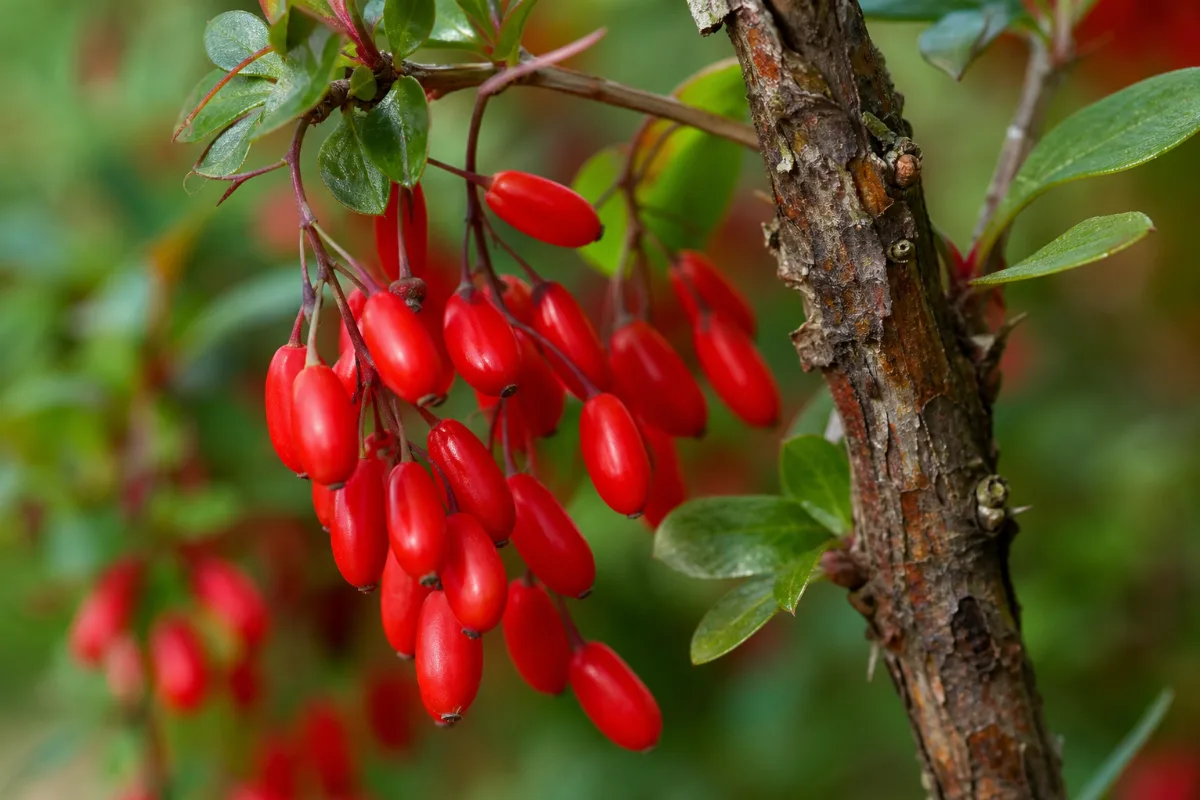
Barberry is a thorny shrub with red berries. The dried berries and juice are eaten, and the root and stem bark are used as a traditional herb. It contains berberine, an alkaloid also found in goldenseal and Oregon grape.
General information, not medical advice. Last substantive update · Not medically reviewed. A named clinician has not signed off on this page. How this page is made
About Barberry
Barberry (Berberis vulgaris) is a thorny shrub whose red berries are eaten dried or as juice in Iran and whose root bark is used as a traditional herb. Most human trials are small Iranian studies of the fruit, juice or extract in people with metabolic syndrome or diabetes. Evidence is low certainty at best: cholesterol and triglycerides fell in pooled trials, blood sugar and blood pressure results are mixed, and every other use rests on one or two small trials. The main safety points come from berberine: avoid in pregnancy, breastfeeding and newborns, and expect medicine interactions.
What it is
Barberry (Berberis vulgaris L.) is a thorny shrub of the barberry family (Berberidaceae). Its red or purple berries are eaten dried or as juice, and the root bark and stem bark are used as traditional herbal drugs. In Iran the dried fruit is called zereshk.
The plant contains berberine, a yellow alkaloid that is also found in goldenseal, Oregon grape and other Berberis species. Berberine supplements, goldenseal and Indian barberry (Berberis aristata) are different products with their own research and are not counted as barberry evidence here.
What people use it for, and what the research shows
Most trials are from Iran and test the fruit, juice, fruit extract or root extract. The best-studied uses are cholesterol, blood sugar, blood pressure and metabolic syndrome. Cholesterol and triglyceride falls are the most consistent finding; blood sugar and blood pressure results disagree between reviews.
Acne, fatty liver, breast-disease markers and rheumatoid arthritis rest on one or two small trials, and some of those used a related species. A trial in people with schizophrenia found no benefit.
Barberry is not berberine, and not other berberine plants
Berberine is the best-known compound in barberry, but a fruit, a juice and a root-bark extract hold different amounts. Two lab extracts of B. vulgaris had very different berberine content. Most warnings about newborns, medicine interactions and transplant drugs come from berberine itself, so they are shown as berberine findings.
Some trials in this profile name the fruit Berberis integerrima, or only "black barberry". Those are labelled and not counted as B. vulgaris results.
How strong is the research?
Nothing about barberry reaches moderate certainty. Cholesterol and lipid results are low; blood sugar, blood pressure and weight are mixed; vessel function, inflammation, acne, fatty liver and breast-disease markers are very low; rheumatoid arthritis and stomach protection are insufficient; antipsychotic-related metabolic effects are against.
Most trials last 4 weeks to 3 months and some appear to report the same people more than once. Several abstracts do not name the plant part or product.
At a glance
Traditional uses history, not proof
- Iranian folk medicine: the fruit, juice and root bark are used for many complaints, according to a clinical review (traditional use, not proof).
- Homoeopathy: root-bark extract is used for kidney and liver disorders, according to a toxicology paper.
- Not verified: older European and ancient uses were not checked against primary sources.
Studied for research
- Cholesterol and blood fats, low
- Blood sugar and insulin, mixed
- Blood pressure, mixed
- Metabolic syndrome, low
- Blood-vessel function, very low
- Acne in teenagers, very low
- Fatty liver enzymes, very low
- Antipsychotic metabolic effects, against
Main compounds
- Berberine, the main alkaloid, which can slow some drug-processing enzymes
- Other alkaloids such as magnoflorine and berbamine, and phenolic compounds
- Anthocyanin pigments in the fruit
Common forms
- Dried berries as food
- Barberry juice
- Aqueous fruit extract
- Root or root-bark extract
- Homoeopathic root-bark tincture
- Not the same as pure berberine, goldenseal or Oregon grape
Research links: Berberine (NCCIH) · Berberine and barberry: a clinical review (PubMed) · Toxicology of Berberis vulgaris and berberine (PubMed) · Barberry and lipid parameters, meta-analysis (PubMed) · Barberry and blood pressure, meta-analysis (PubMed) · Berberis vulgaris and cytochrome P450 enzymes (PubMed) · Research Library · Genes & Biomarkers Library
The plant and its history
- Accepted scientific name
- Berberis vulgaris L.
- Naming authority
- L., Sp. Pl.: 330 (1753) (GBIF)
- Synonyms
- Berberis vulgaris f. vulgaris; Berberis vulgaris var. asperma DC., 1821; Berberis vulgaris var. purpurea Bertin (homotypic); Berberis vulgaris var. purpurea Bertin ex Jacques & Herincq; Berberis vulgaris var. sulcata Ahrendt; Berberis angulizans G.Nicholson; Berberis bigelowii Schrad.; Berberis calliobotrys Bien. ex Aitch.; Berberis lycium K.Koch (a different plant from the separately accepted Berberis lycium Royle)
- Common names
- Barberry (English); Common barberry (English); European barberry (English); European berbery (English); Agracejo / agracejo oficinal (Spanish); Abrilla, acetin (Spanish); Epine-vinette, berberis commun (French); Berberitze, Sauerdorn (German); Zereshk (the dried fruit in Iran; from the trial literature, not GBIF) (Persian)
- Botanical family
- Berberidaceae (barberry family). Goldenseal (Hydrastis canadensis) is NOT in this family (GBIF: Ranunculaceae) even though it also contains berberine.
- Classification
- Plantae > Tracheophyta > Magnoliopsida > Ranunculales > Berberidaceae > Berberis > Berberis vulgaris
- Native range
- Not verified from a primary source in this file. General knowledge, unverified here: a shrub of Europe and western Asia, widely grown elsewhere.
- Habitat
- Not verified.
- What the plant looks like
- Roots: Not described in the sources read; berberine is reported in roots, rhizomes, stem and bark (p30637820).; Stems: A thorny shrub (general knowledge; not verified in a primary source). Stem bark and root bark are used as drugs (p38731544, p42516544).; Leaves: Leaf extracts were tested in rats (p35145893). Not verified botanically.; Flowers: Not verified.; Fruit: Red or purple berries are eaten and sold dried or as juice in Iran (trial papers). Seeds were tested in mice (p26639472).
- Cultivation
- Not verified.
- Harvest and processing
- Not verified in detail. The trials used dried fruit, fruit juice, fruit aqueous extract and root-bark ethanol extract.
- Look-alikes and adulterants
- Name: Berberis aristata DC. (Indian barberry, tree turmeric); Note: GBIF key 3982087, accepted species. Different species with its own research and Ayurvedic use. Its berberine-rich root extracts are often sold. Do not borrow its trial results for B. vulgaris (p40239774).; Name: Berberis integerrima Bunge; Note: GBIF key 7484666. Named in the Emamat and Aryaeian Iranian trials. The same research group also called the fruit B. vulgaris in one paper (p33350540 vs p35255880).; Name: Berberis lycium Royle; Note: GBIF key 8415406, a separate accepted Himalayan species; a different Berberis lycium (K.Koch) is listed as a synonym of B. vulgaris.; Name: Berberis thunbergii DC. (Japanese barberry); Note: GBIF key 3033896. A common garden shrub; not a medicinal substitute.; Name: Oregon grape (Mahonia aquifolium); Note: GBIF key 3033865, accepted as Mahonia in the same family. A different plant also used for berberine. Keep separate.; Name: Goldenseal (Hydrastis canadensis); Note: GBIF key 3033110, family Ranunculaceae. Source of berberine and hydrastine; a different herb with its own safety record.; Name: Pure berberine supplements; Note: Isolated alkaloid, usually from Berberis or Coptis; not the same as barberry fruit or root. Most big berberine trials and warnings are about this form.
- Sustainability and conservation
- Not verified.
Traditional use and history history, not clinical proof
| Tradition or era | Documented use | Source |
|---|---|---|
| Iranian folk medicine | Barberry (zereshk) has different medicinal applications in Iranian folk medicine, per a clinical review; fruit, juice and root bark all appear in trials. | p30637820 |
| Homoeopathy | Root-bark extract is described as widely used in homoeopathy for renal and hepatic disorders (p42516544). | p42516544 |
| Modern herbal regulation | A secondary encyclopedia lists a German Commission E negative monograph for barberry root bark. No EMA/HMPC monograph was found. NOT verified from the primary documents. | s-commission-e-altmeyers |
| Ancient and European use | Not verified. Wikipedia-style claims of ancient Egyptian, Greek or medieval use were not checked against a primary source and are not stated here. | s-ema-hmpc-none |
Traditional use shows how a plant was used. It does not show that a supplement works or is safe today.
What is inside, and how it may work
What the plant contains and how those compounds act in cells and animals. Laboratory and animal mechanisms are not proven effects in people.
Main compounds
| Compound | Family | Where it is concentrated | Activity studied | Level of evidence |
|---|---|---|---|---|
| Berberine PubChem 2353 | protoberberine alkaloid | Roots, rhizomes, stem and bark (p30637820) One crude extract 0.6 mg per mg (p24007270, plant part not stated); a 50% ethanol stem-bark extract 78.95 micrograms per gram (p38731544). The two numbers are not comparable. | Main studied alkaloid. Acts on AMPK, SIRT1, LDLR, PCSK9, PTP1B and inflammation pathways in lab and animal work; inhibits CYP2D6, CYP2C9 and CYP3A4 in people. 27 1 28 16 20 | Human (CYP and drug level data), mechanisms mostly animal and cell |
| Palmatine PubChem 19009 | protoberberine alkaloid | Listed as a B. vulgaris alkaloid in an in-silico paper (p41033163) | Predicted only. No human data read. 11 | In silico |
| Berbamine PubChem 275182 | bisbenzylisoquinoline alkaloid | Listed as a B. vulgaris alkaloid in an in-silico paper (p41033163) | Predicted only. 11 | In silico |
| Magnoflorine PubChem 73337 | aporphine alkaloid | Isolated from the root (p37108329) | In mice, injection raised parvalbumin neurons in the hippocampus at lower doses; higher dose raised IL-6 and IL-1beta. 47 | Animal research |
| Columbamine PubChem 72310 | protoberberine alkaloid | A berberine metabolite in the body (p28290706) | Active metabolite with berberine-like effects in lab work. 50 | Review |
| Berberrubine PubChem 72704 | protoberberine metabolite | A berberine metabolite (p28290706); also on the in-silico alkaloid list (p41033163) | Active metabolite. 50 11 | Review |
| Cannabisin G PubChem 10438919 | lignanamide (phenolic) | Root bark (p18389483) | Scavenged hydroxyl radicals and protected cultured MCF-7 cells from hydrogen peroxide. 48 | Laboratory research |
| Lyoniresinol PubChem 317840 | lignan (phenolic) | Root bark (p18389483) | Antioxidant in a radical-scavenging assay. 48 | Laboratory research |
| N-(p-trans-coumaroyl)tyramine (paprazine) PubChem 5372945 | phenolic amide | Root bark (p18389483) | Isolated; not active in the antioxidant assay. 48 | Laboratory research |
| Anthocyanins (fruit pigments) | flavonoid pigments | Fruit (purple-black barberry described as rich in anthocyanins and berberine in p35255880) | Proposed antioxidant role; not tested separately in the trials. 14 | Authoritative guidance |
Mechanisms, receptors and pathways
| Target or pathway | Gene or receptor | What was found | Level |
|---|---|---|---|
| AMPK (cell energy switch) | PRKAA1/PRKAA2 | Berberine is described as acting on AMPK and related pathways (mTOR). Not shown for barberry fruit in people. 58 16 | In vitro and animal (review) |
| LDL receptor and PCSK9 | LDLR, PCSK9 | Berberine is described as acting on LDLR and PCSK9, a pathway that can lower LDL cholesterol. Review-level. 16 | Animal (review) |
| Inflammation signals (TLR4/NF-kB, MAPK, PI3K/AKT) | NFKB1, TLR4 | B. vulgaris and berberine lowered TNF-alpha, IL-1beta, IL-6, IL-17 and raised IL-10 in cells and tissues. 46 58 | In vitro and animal (review) |
| Alpha-glucosidase | GAA / MGAM | A B. vulgaris crude extract blocked alpha-glucosidase more strongly than berberine chloride in a lab test. 1 | Laboratory research |
| Acetylcholinesterase | ACHE | Crude extract and berberine chloride blocked the enzyme equally in a lab test. 1 | Laboratory research |
| Antioxidant defence | SOD1, GPX1 | Extract raised SOD and GPx activity and cut lipid peroxidation in cells; fruit trial lowered the pro-oxidant-antioxidant balance in people. 1 36 37 | In vitro and human (marker) |
| Drug-metabolising enzymes | CYP2D6, CYP3A4, CYP2C9 | In healthy men two weeks of berberine reduced CYP2D6, CYP2C9 and CYP3A4 activity; in the test tube CYP2D6 was most sensitive. 20 57 8 | Human data |
| Bilirubin binding to albumin | ALB | In vitro berberine displaced bilirubin from albumin; in rats free and total bilirubin rose. 10 | In vitro and animal |
| Growth-factor and gene signals in breast tissue | IGF1, IGFBP3, PPARG, VEGFA, HIF1A | Juice lowered IGF-1, raised IGFBP-3 and lowered PPAR-gamma, VEGF and HIF gene expression in women with benign breast disease. 41 | Human (marker) |
| Prostaglandin E2 in the stomach lining | PTGES | Leaf extract raised stomach prostaglandin E2 in rats. 30 | Animal research |
Absorption, metabolism and elimination
- Absorption
- Berberine is extensively metabolised after an oral dose, leaving extremely low plasma levels (p28290706); one review states oral bioavailability is below 1 percent (p41509110). No pharmacokinetic study of a B. vulgaris fruit, juice or root product was found.
- Distribution
- Not established for barberry. Magnoflorine from the root reached brain tissue in mice but not in proportion to dose (p37108329).
- Metabolism
- Berberine is demethylated, demethylenated, reduced, hydroxylated and then conjugated; active metabolites include columbamine, berberrubine and demethyleneberberine (p28290706). Berberine in turn inhibits CYP2D6, CYP3A4 and CYP2C9 in people (p21870106).
- Elimination
- Not read for this profile.
- Bioavailability
- Poor for berberine. For whole barberry products the berberine delivered is unknown and varies by extract (p24007270, p38731544).
Isolated compounds versus whole extracts
Whole barberry is not the same as berberine. Fruit, root bark, stem bark and leaf contain different mixes, and fruit products are not expected to match root-bark extracts in berberine. Trials of fruit, juice and extract may work (or not) through anthocyanins, other phenolics or other alkaloids, and the lab study of the whole extract found it blocked alpha-glucosidase more strongly than berberine alone (p24007270). Most safety warnings (newborn jaundice, CYP interactions, cyclosporin) are proven for isolated berberine at high doses, not for barberry fruit.
Nutritional composition
Barberry fruit is eaten dried or as juice in Iran. A full nutrient table was not obtained from a source read, so none is given. The fruit is described as rich in anthocyanins (p35255880).
3 mixed findings4 low certainty6 very low certainty3 not enough evidence1 evidence against
What was looked at
The 17 benefits and uses checked for Barberry, each with how strong the evidence is. Tap one to open it.
- Blood sugar (fasting glucose and HbA1c)Mixed findings
- Insulin and insulin resistance (HOMA-IR)Low certainty
- Cholesterol and blood fatsLow certainty
- Blood pressureMixed findings
- Blood-vessel function and vessel inflammationVery low certainty
- Metabolic syndrome as a wholeLow certainty
- Body weight and waistMixed findings
- Inflammation markers (CRP, IL-6, TNF-alpha)Very low certainty
- Oxidative stress (antioxidant balance)Very low certainty
- Acne in teenagersVery low certainty
- Fatty liver (liver enzymes)Very low certainty
- Rheumatoid arthritis (related barberry species)Not enough evidence
- Benign breast disease (hormone-pathway markers)Very low certainty
- Weight and metabolic effects of antipsychotic drugsEvidence against
- Stomach ulcer protection (animal studies only)Not enough evidence
- Protecting the liver from chemical injury (animal studies only)Not enough evidence
- Diarrhoea (berberine, not barberry plant)Low certainty
Lab markers tracked in the studies
Fasting blood glucoseHbA1cFasting insulinHOMA-IRTotal cholesterolLDL cholesterolHDL cholesterolTriglyceridesSystolic blood pressureDiastolic blood pressureFlow-mediated dilation (FMD)Vessel-inflammation markers (ICAM-1, MCP-1)C-reactive protein (CRP)Pro-oxidant-antioxidant balance (PAB)Alanine aminotransferase (ALT)Aspartate aminotransferase (AST)Acne lesion counts and Michaelson severity scoreIGF-1 (insulin-like growth factor 1)IGFBP-3Interleukin-17Interleukin-10Weight and waist in people on antipsychotics
What is Barberry good for?
The main proposed uses and how strong the human evidence is for each. "Low" means small or inconsistent studies; "very low" means one or two tiny trials; "against" means the one trial found no benefit.
Benefits, one by one
Each card is a research question, not a promise. Tap a goal to filter. Open a card to see the studies, doses and limits.
Blood sugar (fasting glucose and HbA1c)
Mixed findingsBarberry may lower blood sugar a little, but the trials disagree and the evidence is weak. One review of 7 trials found no clear change in fasting sugar or HbA1c, while a later review of 11 trials and a review of 9 diabetes trials (two barberry species mixed) found falls.
5 studiesFruit juice, dried fruit, fruit extract and root-extract capsules hav…
Studies, doses and limits
What the trials found
Meta-analysis of 7 randomised trials (452 people) found no significant change in fasting blood sugar (-8.06 mg/dL, 95% CI -20.46 to 4.33) or HbA1c (-0.83%, CI -2.33 to 0.67) (p32507431). A 2025 meta-analysis of 11 trials (718 people) found fasting glucose fell by 16.69 mg/dL (CI -30.46 to -2.93) but HbA1c did not change significantly (p40886028). A 2024 meta-analysis of 9 trials in type 2 diabetes (547 people, B. vulgaris and B. integerrima pooled) found fasting glucose -14.52 and HbA1c -0.30% (p39413550). One 8-week trial of 200 mL of barberry juice a day in 46 people with type 2 diabetes found fasting sugar fell compared with a no-treatment group (p29705451). Berberine alone, in a separate 37-trial review, lowered HbA1c by 0.63% (p36467075).
Results
Mixed. Fasting sugar fell in the newer analyses, HbA1c fell in one and not in two, and heterogeneity was very high (I2 up to 96%).
Effect sizes as reported
Fasting glucose WMD -8.06 mg/dL (ns), -16.69 mg/dL (sig), -14.52 (sig, mixed species); HbA1c -0.83% (ns), -0.72% (ns), -0.30% (sig, mixed species).
Why this rating
Reviews disagree, the trials are small and very different from each other, and the newest reviews pool more than one barberry species. No review gives a GRADE rating we could read.
Form and dose studied
Fruit juice, dried fruit, fruit extract and root-extract capsules have all been used; the products differ so much that results cannot be compared.
Who was studied
Mostly Iranian adults with type 2 diabetes or metabolic syndrome.
Limits
Small trials, 4 to 12 weeks, different products, high heterogeneity, one trial without a placebo. Not a replacement for diabetes treatment.
Why researchers looked
Barberry fruit and root are used in Iran for diabetes, and its alkaloids (mainly berberine) act on blood-sugar pathways in the lab.
Traditional use
Barberry (zereshk) has a long history in Iranian folk medicine (Imenshahidi 2019 review). Dried fruit, juice and root bark have all been used. This is traditional use, not proof.
Proposed mechanism Laboratory research
In lab tests a barberry extract and berberine blocked the enzyme alpha-glucosidase, which breaks down starch. Berberine acts on AMPK, a cell energy switch (review-level evidence). These are lab and animal findings.
A proposed mechanism does not show that the effect happens in people.
Safety is covered in the safety section. Berberine can interact with several medicines, so ask a doctor or pharmacist first if you take any. Barberry or berberine could add to the effect of diabetes medicines.
Insulin and insulin resistance (HOMA-IR)
Low certaintyInsulin levels fell in two meta-analyses of barberry. HOMA-IR, a calculated score of insulin resistance, fell in the two newer ones and not in the earlier one.
3 studiesVarious barberry products.
Studies, doses and limits
What the trials found
Meta-analysis of 7 trials: insulin Hedges g -0.67 (CI -1.31 to -0.03) but HOMA-IR -0.55 (CI -1.60 to 0.50, not significant) (p32507431). Meta-analysis of 11 trials: insulin -1.70 mU/L (CI -2.33 to -1.08) and HOMA-IR -0.95 (CI -1.79 to -0.12) (p40886028). Meta-analysis of 9 type 2 diabetes trials: HOMA-IR -0.97 (P = 0.001) but insulin not significant (p39413550).
Results
Leans toward a small fall, but insulin and HOMA-IR do not agree across the three reviews.
Effect sizes as reported
Insulin -0.67 (g) / -1.70 mU/L; HOMA-IR -0.55 (ns) / -0.95 / -0.97.
Why this rating
Several small trials point the same way, but the three reviews disagree on which marker moves, and heterogeneity is high.
Form and dose studied
Various barberry products.
Who was studied
Adults with diabetes, metabolic syndrome or overweight.
Limits
Insulin and HOMA-IR are lab markers; a lower number is not the same as feeling better or avoiding disease. The abstract of one review has a printing slip in a confidence interval.
Why researchers looked
Insulin resistance sits behind type 2 diabetes and metabolic syndrome, which is where most barberry trials were done.
Traditional use
Barberry (zereshk) has a long history in Iranian folk medicine (Imenshahidi 2019 review). Dried fruit, juice and root bark have all been used. This is traditional use, not proof.
Proposed mechanism Preliminary mechanism
Berberine has been linked to insulin-signalling changes in lab and animal work (review-level).
A proposed mechanism does not show that the effect happens in people.
Safety is covered in the safety section. Berberine can interact with several medicines, so ask a doctor or pharmacist first if you take any.
Cholesterol and blood fats
Low certaintyBarberry lowered total cholesterol, LDL ("bad") cholesterol and triglycerides in several small trials pooled in reviews. HDL ("good") cholesterol rose slightly or not at all. The trials are small, so the certainty is low.
7 studiesFruit (juice, dried, extract), unnamed capsules and root extract.
Studies, doses and limits
What the trials found
Meta-analysis of 5 trials (339 people): total cholesterol -23.58 mg/dL (CI -31.00 to -16.16), triglycerides -29.16 mg/dL (CI -42.91 to -15.41), LDL -13.75 mg/dL (CI -19.31 to -8.20), HDL +3.40 mg/dL (CI -0.06 to 6.87, not significant) (p30935518). Meta-analysis of 11 trials (718 people): total cholesterol -17.90, LDL -11.38, triglycerides -23.63 and HDL +2.46 mg/dL, all significant (p40886028). Single trials: 106 people with metabolic syndrome, LDL and total cholesterol fell and HDL rose after 6 weeks (p24536039); 46 people with diabetes, total cholesterol and triglycerides fell after 8 weeks of juice (p29705451); 80 people with fatty liver, triglycerides and cholesterol fell after 3 months of extract (p25788958). A purple-black barberry trial of 84 people (species named B. integerrima) also lowered LDL and triglycerides (p35255880). In 88 people with schizophrenia, root extract did not prevent metabolic worsening (p37575603).
Results
Mostly positive for total cholesterol, LDL and triglycerides; one negative trial in schizophrenia.
Effect sizes as reported
Total cholesterol -17.9 to -23.6 mg/dL; LDL -11.4 to -13.8 mg/dL; triglycerides -23.6 to -29.2 mg/dL; HDL +2.5 to +3.4 mg/dL.
Why this rating
Reviews agree in direction and the sizes are meaningful, but they rest on 5 to 11 small trials from one region, with unrated risk of bias and mixed products.
Form and dose studied
Fruit (juice, dried, extract), unnamed capsules and root extract.
Who was studied
Adults with metabolic syndrome, diabetes, fatty liver or heart risk factors.
Limits
Short trials (6 weeks to 3 months), mostly Iranian, products differ. No trial measured heart attacks or strokes. Cholesterol is a marker, not an outcome.
Why researchers looked
High cholesterol often comes with metabolic syndrome, and berberine lowers LDL in people; whether whole barberry does the same is what these trials ask.
Traditional use
Barberry (zereshk) has a long history in Iranian folk medicine (Imenshahidi 2019 review). Dried fruit, juice and root bark have all been used. This is traditional use, not proof.
Proposed mechanism Preliminary mechanism
Berberine acts on LDL receptor and PCSK9 pathways (review-level, mostly cell and animal work). This is a lab explanation, not proof for barberry fruit.
A proposed mechanism does not show that the effect happens in people.
Safety is covered in the safety section. Berberine can interact with several medicines, so ask a doctor or pharmacist first if you take any.
Blood pressure
Mixed findingsThe evidence is mixed. A 2021 review of 5 trials found no clear fall in blood pressure; a 2025 review of 11 trials found falls. Single trials of dried barberry in people with high blood pressure were positive.
4 studiesDried fruit, juice and capsules.
Studies, doses and limits
What the trials found
Meta-analysis of 5 trials (350 people, 4 to 12 weeks): systolic -4.15 mmHg (CI -10.3 to 1.99) and diastolic -1.22 mmHg (CI -6.26 to 3.82), no significant effect (p33197673). Meta-analysis of 11 trials (718 people): systolic -9.84 (CI -17.36 to -2.31) and diastolic -11.31 (CI -19.63 to -3.00) (p40886028). One 8-week trial of 10 g a day of dried barberry (named B. vulgaris) in 84 people with high blood pressure is in the vessel-function entry below (p33350540). Two reports of what appears to be the same 84 people name the fruit B. integerrima: 24-hour ambulatory systolic and mean arterial pressure fell compared with placebo in people on blood-pressure medicine (p35150818). In 46 people with diabetes, juice lowered systolic and diastolic pressure compared with no treatment (p29705451).
Results
Mixed: not significant in the 2021 review, significant in the 2025 review.
Effect sizes as reported
Systolic -4.15 mmHg (ns) vs -9.84 mmHg (sig); diastolic -1.22 mmHg (ns) vs -11.31 mmHg (sig).
Why this rating
Two reviews reach opposite statistical conclusions, the trials are few and differ in people and products, and the three trials by one group may overlap.
Form and dose studied
Dried fruit, juice and capsules.
Who was studied
Adults with high blood pressure, diabetes or metabolic syndrome.
Limits
Small trials, 4 to 12 weeks. The 2025 review shows large, wide intervals. Do not use barberry in place of blood-pressure medicine.
Why researchers looked
Barberry is eaten in Iran as a food for blood pressure and heart health; trials ask whether it lowers it.
Traditional use
Barberry (zereshk) has a long history in Iranian folk medicine (Imenshahidi 2019 review). Dried fruit, juice and root bark have all been used. This is traditional use, not proof.
Proposed mechanism Preliminary mechanism
Not established. Berberine is reported to widen blood vessels and act on nitric oxide in lab work; one trial raised urinary nitrite/nitrate (a nitric-oxide marker).
A proposed mechanism does not show that the effect happens in people.
Safety is covered in the safety section. Berberine can interact with several medicines, so ask a doctor or pharmacist first if you take any. If you already take blood-pressure medicine, barberry could add to the effect.
Blood-vessel function and vessel inflammation
Very low certaintyIn one trial of 84 people with high blood pressure, 8 weeks of dried barberry improved how well the main arm artery widens (flow-mediated dilation) and lowered two vessel-inflammation markers. One trial is not enough to say it works.
4 studiesDried barberry fruit, 10 g a day in the trial.
Studies, doses and limits
What the trials found
Randomised trial in 84 adults with high blood pressure: 10 g a day of dried barberry (named B. vulgaris) for 8 weeks versus placebo improved flow-mediated dilation by 6.54% (CI 4.39 to 8.70), lowered ICAM-1 by 1.61 ng/mL and MCP-1 by 37.62 pg/mL (p33350540). The same group published two more reports from what looks like the same 84 people but called the fruit B. integerrima (p35255880, p35150818). The species is therefore uncertain.
Results
Positive in one trial.
Effect sizes as reported
FMD +6.54% (CI 4.39 to 8.70); ICAM-1 -1.61 ng/mL; MCP-1 -37.62 pg/mL.
Why this rating
One trial, one research group, uncertain species naming, large effect size not yet confirmed by anyone else.
Form and dose studied
Dried barberry fruit, 10 g a day in the trial.
Who was studied
Adults with high blood pressure (mean age 54).
Limits
No replication. Vessel tests are markers. Registered with IRCT.
Why researchers looked
Vessels that widen poorly are an early sign of heart disease risk; barberry has anthocyanin pigments and alkaloids that are studied as protective.
Traditional use
Barberry (zereshk) has a long history in Iranian folk medicine (Imenshahidi 2019 review). Dried fruit, juice and root bark have all been used. This is traditional use, not proof.
Proposed mechanism Preliminary mechanism
Not established. Review-level lab evidence suggests antioxidant and anti-inflammatory action (p41509110).
A proposed mechanism does not show that the effect happens in people.
Safety is covered in the safety section. Berberine can interact with several medicines, so ask a doctor or pharmacist first if you take any.
Metabolic syndrome as a whole
Low certaintyMetabolic syndrome is a cluster: belly fat, high blood pressure, high blood sugar and abnormal blood fats. Pooled results suggest modest improvements in several parts, but no study tested whether barberry prevents diabetes or heart attacks.
3 studiesMixed barberry products.
Studies, doses and limits
What the trials found
Meta-analysis of 11 trials (718 people): modest improvements in weight, blood pressure, lipids and glycaemic markers; HbA1c and BMI unchanged (p40886028). A separate meta-analysis of B. vulgaris and B. aristata (a different species) in metabolic syndrome reported lower LDL, total cholesterol, triglycerides and glucose, but its abstract gives only unlabelled fold numbers (p33040642). A 106-person trial found lower LDL and cholesterol and higher HDL after 6 weeks (p24536039).
Results
Modest improvements in several markers.
Effect sizes as reported
See the blood sugar, lipids and blood pressure entries.
Why this rating
Directionally consistent, but small, heterogeneous trials; one meta-analysis mixes B. vulgaris with B. aristata and gives unusable numbers.
Form and dose studied
Mixed barberry products.
Who was studied
Adults with metabolic syndrome.
Limits
Markers only; no long-term outcome. Important: the antipsychotic-related metabolic syndrome trial was negative (see the other file).
Why researchers looked
Most barberry trials enrol people with metabolic syndrome.
Traditional use
Barberry (zereshk) has a long history in Iranian folk medicine (Imenshahidi 2019 review). Dried fruit, juice and root bark have all been used. This is traditional use, not proof.
Proposed mechanism Preliminary mechanism
Several routes are proposed (blood sugar enzymes, antioxidant action); none is proven for barberry in people.
A proposed mechanism does not show that the effect happens in people.
Safety is covered in the safety section. Berberine can interact with several medicines, so ask a doctor or pharmacist first if you take any.
Body weight and waist
Mixed findingsBarberry did not clearly change body weight. One review found a small fall of about 1.5 kg; another that pooled berberine and barberry found no change in BMI or weight; one trial in people taking antipsychotic drugs found more weight and bigger waists with barberry root.
4 studiesVarious.
Studies, doses and limits
What the trials found
Meta-analysis of 11 trials: weight -1.48 kg (CI -2.94 to -0.02) but BMI -0.28 kg/m2 (CI -0.59 to 0.03, not significant) (p40886028). Meta-analysis of 12 berberine and barberry trials (849 people): BMI -0.16 kg/m2, weight -0.11 kg, waist -0.58 cm, none significant; waist-hip ratio fell by 0.03, attributed to berberine (p32147051). Meta-analysis of 9 diabetes trials: weight -1.89 kg (CI -4.55 to 0.76, ns) (p39413550). In 88 people with schizophrenia, weight and waist size were higher after 3 months of barberry root than placebo (p37575603).
Results
Mostly no clear change; one trial worse.
Effect sizes as reported
Weight -1.48 kg (borderline); BMI not significant in all reviews.
Why this rating
Reviews agree on BMI (no change), disagree on weight, and one trial points the wrong way.
Form and dose studied
Various.
Who was studied
Adults with metabolic syndrome or diabetes; people with schizophrenia on antipsychotics.
Limits
Small effects, short trials, not a weight-loss treatment.
Why researchers looked
Weight is part of metabolic syndrome and barberry is sometimes sold for weight.
Traditional use
Barberry (zereshk) has a long history in Iranian folk medicine (Imenshahidi 2019 review). Dried fruit, juice and root bark have all been used. This is traditional use, not proof.
Proposed mechanism Preliminary mechanism
No established mechanism for barberry; berberine acts on AMPK and gut bacteria (review-level).
A proposed mechanism does not show that the effect happens in people.
Safety is covered in the safety section. Berberine can interact with several medicines, so ask a doctor or pharmacist first if you take any.
Inflammation markers (CRP, IL-6, TNF-alpha)
Very low certaintyWhen barberry and berberine trials are pooled, inflammation markers fall slightly. For barberry alone the proof is thin: one 106-person trial saw no significant CRP fall by itself.
5 studiesBerberine and barberry pooled.
Studies, doses and limits
What the trials found
Meta-analysis of 18 trials (1,600 people) of berberine or barberry pooled: IL-6 -1.18 pg/mL, TNF-alpha -3.72 pg/mL, CRP -1.33 mg/L; the authors call the studies low quality with significant heterogeneity (p37675930). In the 106-person metabolic syndrome trial, hs-CRP fell non-significantly with barberry (P = 0.17) and rose in the placebo group (P = 0.04) (p24536039). A trial of purple-black barberry (named B. integerrima) in 84 people lowered CRP versus placebo (p35255880). Vessel-inflammation markers ICAM-1 and MCP-1 fell in the dried-barberry trial (p33350540).
Results
Slight falls when pooled with berberine; mixed for barberry alone.
Effect sizes as reported
IL-6 -1.18 pg/mL; TNF-alpha -3.72 pg/mL; CRP -1.33 mg/L (pooled, berberine and barberry).
Why this rating
Pooled evidence mixes berberine and barberry and is rated low quality by its authors; barberry-only trials are few and mixed.
Form and dose studied
Berberine and barberry pooled.
Who was studied
Adults with metabolic, heart or joint conditions.
Limits
We cannot tell how much of the pooled effect came from berberine. Markers are not symptoms.
Why researchers looked
Low-grade inflammation links metabolic syndrome and heart disease.
Traditional use
Barberry (zereshk) has a long history in Iranian folk medicine (Imenshahidi 2019 review). Dried fruit, juice and root bark have all been used. This is traditional use, not proof.
Proposed mechanism Preliminary mechanism
Review-level lab work says B. vulgaris and berberine lower TNF-alpha, IL-6 and IL-17 in cells and tissues (p38358731).
A proposed mechanism does not show that the effect happens in people.
Safety is covered in the safety section. Berberine can interact with several medicines, so ask a doctor or pharmacist first if you take any.
Oxidative stress (antioxidant balance)
Very low certaintyOne trial found a blood marker of oxidative stress fell with barberry, and juice raised an antioxidant enzyme called paraoxonase-1. These are lab markers from small trials.
4 studiesCapsules (unspecified) and juice.
Studies, doses and limits
What the trials found
In 106 people with metabolic syndrome, the pro-oxidant-antioxidant balance (PAB) fell with 6 weeks of barberry capsules (P = 0.022) and the fall was larger than with placebo (P = 0.01) (p25763235). In 46 people with diabetes, paraoxonase-1 (PON1) rose with barberry juice (P < 0.0001 for treatment effect) (p29705451).
Results
Positive on lab markers in two small trials.
Effect sizes as reported
PAB P = 0.022 within group; PON1 P < 0.0001 for treatment effect (numbers not in abstracts).
Why this rating
Two small trials, lab markers only, no clinical outcome; the PAB trial appears to share people with another report.
Form and dose studied
Capsules (unspecified) and juice.
Who was studied
Adults with metabolic syndrome or type 2 diabetes.
Limits
Oxidative-stress markers do not show better health. The abstracts do not give the numbers.
Why researchers looked
Barberry fruit is rich in anthocyanin pigments; the root bark has antioxidant compounds.
Traditional use
Barberry (zereshk) has a long history in Iranian folk medicine (Imenshahidi 2019 review). Dried fruit, juice and root bark have all been used. This is traditional use, not proof.
Proposed mechanism Laboratory research
In test tubes barberry root-bark compounds scavenge free radicals (p18389483) and a crude extract raised antioxidant enzymes in cells (p24007270). These are lab results.
A proposed mechanism does not show that the effect happens in people.
Safety is covered in the safety section. Berberine can interact with several medicines, so ask a doctor or pharmacist first if you take any.
Acne in teenagers
Very low certaintyIn one small trial, 4 weeks of a barberry fruit extract cut acne spots by about 44 percent in teenagers, with no notable side effects. It has not been repeated by anyone else.
1 studiesAqueous extract of dried B. vulgaris fruit in capsules.
Studies, doses and limits
What the trials found
Randomised placebo trial in 49 adolescents aged 12 to 17 with moderate to severe acne: 600 mg a day of aqueous dried-fruit extract for 4 weeks. Non-inflamed, inflamed and total lesions and the Michaelson severity score fell by about 43 to 45 percent in the extract group (P < .001) and not significantly with placebo (p23038982).
Results
Positive in a single small trial.
Effect sizes as reported
Total lesions -44.64%, severity score -44.38% (means).
Why this rating
One trial of 49 people from a single author with no replication and no follow-up after the 4 weeks.
Form and dose studied
Aqueous extract of dried B. vulgaris fruit in capsules.
Who was studied
Teenagers 12 to 17 with moderate to severe acne.
Limits
Short; not compared with standard acne care.
Why researchers looked
Barberry has anti-inflammatory and antibacterial properties, and animal work suggested it may reduce oil gland fat production.
Traditional use
Barberry (zereshk) has a long history in Iranian folk medicine (Imenshahidi 2019 review). Dried fruit, juice and root bark have all been used. This is traditional use, not proof.
Proposed mechanism Pharmacological theory
Proposed anti-inflammatory and antibacterial action; not shown in the trial itself.
A proposed mechanism does not show that the effect happens in people.
No notable side effect was reported in that trial. See the safety section for children and teenagers.
Fatty liver (liver enzymes)
Very low certaintyIn one trial of 80 people with fatty liver, 3 months of barberry extract lowered the liver enzymes ALT and AST. Nobody measured liver fat or scarring, so we cannot say the liver improved.
1 studiesBerberis vulgaris extract capsules.
Studies, doses and limits
What the trials found
Trial in 80 adults with ultrasound fatty liver and raised enzymes: extract (two capsules, 750 mg a day) for 3 months versus placebo. ALT fell from 49 to 27.48 U/L and AST from 48.22 to 29.8 U/L, versus 50.4 to 46.8 and 45.7 to 44.9 with placebo. Weight, triglycerides and total cholesterol also fell; fasting sugar, HDL and LDL did not change (p25788958).
Results
Positive on enzymes in a single trial.
Effect sizes as reported
ALT -21.5 U/L and AST -18.4 U/L in the extract group (from the abstract).
Why this rating
One trial; no liver imaging or biopsy after treatment; extract type not stated.
Form and dose studied
Berberis vulgaris extract capsules.
Who was studied
Adults with fatty liver.
Limits
Enzymes are markers only. People with liver disease should speak to a doctor first.
Why researchers looked
Barberry root bark and fruit are used in Iran and in homoeopathy for liver complaints.
Traditional use
Barberry (zereshk) has a long history in Iranian folk medicine (Imenshahidi 2019 review). Dried fruit, juice and root bark have all been used. This is traditional use, not proof. A recent paper notes root-bark extract is used in homoeopathy for kidney and liver disorders (p42516544).
Proposed mechanism Animal research
Animal studies show liver protection against chemical injury (see the liver-protection entry); not shown in people.
A proposed mechanism does not show that the effect happens in people.
See the liver section in safety.
Rheumatoid arthritis (related barberry species)
Not enough evidenceTwo small Iranian trials of "black barberry" or Berberis integerrima extract in women and adults with active rheumatoid arthritis report lower disease severity and some immune-marker changes. They were not clearly B. vulgaris, so this does not count as evidence for B. vulgaris.
3 studiesHydroalcoholic extracts, 2 to 3 grams a day in those trials.
Studies, doses and limits
What the trials found
Trial in 80 women with active rheumatoid arthritis: black barberry extract (2 x 1,000 mg a day) for 12 weeks. Severity of arthritis fell; IL-17 fell and IL-10 rose within the extract group; IL-2 and IL-4 did not change (p32914483). Trial of 70 patients with Berberis integerrima extract, 6 x 500 mg a day for 3 months, showed lower waist and hip measures, body fat and some blood values versus placebo (p32444035).
Results
Positive in two small trials of related plants.
Effect sizes as reported
Cytokine and measurement P values only; no effect sizes in abstracts.
Why this rating
Different or unnamed species, small trials, one research group, surrogate markers.
Form and dose studied
Hydroalcoholic extracts, 2 to 3 grams a day in those trials.
Who was studied
Adults with active rheumatoid arthritis.
Limits
Not B. vulgaris. Arthritis medicines should not be changed without a doctor.
Why researchers looked
Barberry is traditionally used as an anti-inflammatory.
Traditional use
Barberry (zereshk) has a long history in Iranian folk medicine (Imenshahidi 2019 review). Dried fruit, juice and root bark have all been used. This is traditional use, not proof.
Proposed mechanism Laboratory research
Review-level work says barberry and berberine lower IL-17 and raise IL-10 in cells (p38358731).
A proposed mechanism does not show that the effect happens in people.
Rheumatoid arthritis drugs affect the immune system; ask a doctor about any added herb.
Benign breast disease (hormone-pathway markers)
Very low certaintyBarberry juice for 8 weeks lowered a growth-factor marker (IGF-1) in women with non-cancerous breast disease. No breast outcome was measured, and nothing here shows barberry prevents cancer.
1 studiesBarberry juice.
Studies, doses and limits
What the trials found
Trial in 85 women with benign breast disease (40 analysed per group): 480 mL a day of B. vulgaris juice versus placebo juice for 8 weeks. IGF-1 fell 16%; IGF-1/IGFBP-1 ratio fell 37%; IGFBP-3 rose by 111 ng/mL; gene expression of PPAR-gamma, VEGF and HIF fell (P < 0.05) (p31752829).
Results
Marker changes in one trial.
Effect sizes as reported
IGF-1 -16%; ratio -37%.
Why this rating
Lab markers only; retrospectively registered; one trial.
Form and dose studied
Barberry juice.
Who was studied
Women with benign breast disease.
Limits
Cannot show prevention of cancer or relief of breast disease.
Why researchers looked
Researchers wanted to see whether barberry changes growth-factor and gene markers linked to breast cancer risk.
Traditional use
Barberry (zereshk) has a long history in Iranian folk medicine (Imenshahidi 2019 review). Dried fruit, juice and root bark have all been used. This is traditional use, not proof.
Proposed mechanism Preliminary mechanism
Proposed effect on PPAR-gamma, VEGF and HIF gene expression; observed in blood cells in the trial.
A proposed mechanism does not show that the effect happens in people.
None reported in the abstract.
Weight and metabolic effects of antipsychotic drugs
Evidence againstOne trial tested barberry root to stop antipsychotic drugs causing metabolic syndrome in people with schizophrenia. It did not work, and weight and waist were higher with barberry.
1 studiesRoot extract capsules.
Studies, doses and limits
What the trials found
Triple-blind trial in 88 people with schizophrenia (41 barberry, 47 placebo): 3 x 500 mg a day of B. vulgaris root extract for 3 months. Metabolic measures worsened in both groups; weight and waist were significantly higher with barberry (P < 0.05) (p37575603).
Results
Negative.
Effect sizes as reported
Weight and waist higher with barberry (P < 0.05).
Why this rating
The one trial found no benefit and a signal in the wrong direction.
Form and dose studied
Root extract capsules.
Who was studied
Adults with schizophrenia on atypical antipsychotics.
Limits
Single centre. This is a null result, not proof of harm.
Why researchers looked
Atypical antipsychotics often cause weight gain and metabolic syndrome, so researchers tested barberry as a preventive.
Traditional use
Barberry (zereshk) has a long history in Iranian folk medicine (Imenshahidi 2019 review). Dried fruit, juice and root bark have all been used. This is traditional use, not proof.
Proposed mechanism Pharmacological theory
Not established.
A proposed mechanism does not show that the effect happens in people.
Anyone on antipsychotics should check with their prescriber before using barberry or berberine.
Stomach ulcer protection (animal studies only)
Not enough evidenceIn rats and mice, barberry leaf extract and seed powder reduced stomach damage from alcohol or aspirin. No human trial exists.
2 studiesLeaf extract and seed powder in animals.
Studies, doses and limits
What the trials found
No human trial of B. vulgaris for stomach disease was found. In rats, leaf extract at 50 mg/kg reduced ulcer score and raised prostaglandin E2 (p35145893). In mice, seed powder at 300 to 900 mg/kg reduced aspirin-induced tissue damage (p26639472).
Results
Positive in animals only.
Effect sizes as reported
No human numbers.
Why this rating
Animal studies only; different plant parts (leaf, seed).
Form and dose studied
Leaf extract and seed powder in animals.
Who was studied
Rats and mice.
Limits
Animal results often do not carry over to people. Berberine itself is reported to cause stomach upset in some people.
Why researchers looked
Barberry has been used in Iranian folk medicine for stomach complaints.
Traditional use
Barberry (zereshk) has a long history in Iranian folk medicine (Imenshahidi 2019 review). Dried fruit, juice and root bark have all been used. This is traditional use, not proof.
Proposed mechanism Animal research
In rats the leaf extract raised prostaglandin E2 in the stomach wall, which protects the lining.
A proposed mechanism does not show that the effect happens in people.
See safety for stomach effects.
Protecting the liver from chemical injury (animal studies only)
Not enough evidenceIn mice, B. vulgaris extract held back liver injury from a chemical poison. This has not been shown in people.
2 studiesExtract in mice.
Studies, doses and limits
What the trials found
Mice given extract (50 mg/kg a day for 7 days) before carbon tetrachloride had smaller rises in ALT, AST and MDA and milder liver damage; a cyclodextrin form worked better (p22942749). In vitro, crude extract and berberine acted as antioxidants (p24007270).
Results
Positive in animals.
Effect sizes as reported
No human numbers.
Why this rating
Mouse and cell work; paper carries a 2026 erratum.
Form and dose studied
Extract in mice.
Who was studied
Mice and cell lines.
Limits
Do not treat liver disease with barberry.
Why researchers looked
Barberry is used in Iran and homoeopathy for liver complaints.
Traditional use
Barberry (zereshk) has a long history in Iranian folk medicine (Imenshahidi 2019 review). Dried fruit, juice and root bark have all been used. This is traditional use, not proof.
Proposed mechanism Animal research
Antioxidant action: less lipid damage and better antioxidant enzymes in the mouse liver.
A proposed mechanism does not show that the effect happens in people.
See the liver section in safety.
Diarrhoea (berberine, not barberry plant)
Low certaintyA review of 38 trials found that berberine, given mostly as an enema to children, helped diarrhoea clear faster. This is about berberine, not barberry fruit or root, and the evidence quality is moderate to very low.
1 studiesBerberine (isolated), mostly as an enema in children.
Studies, doses and limits
What the trials found
Meta-analysis of 38 randomised trials (3,948 people; 27 trials in 2,702 children, 22 of the 27 using an enema): berberine alone or combined raised clinical cure rates and shortened diarrhoea; no deaths or serious adverse events were reported; GRADE moderate to low or very low (p33149763).
Results
Positive, berberine-only.
Effect sizes as reported
No effect sizes in abstract.
Why this rating
GRADE moderate to very low; enema route in children is not the same as barberry tea or capsules.
Form and dose studied
Berberine (isolated), mostly as an enema in children.
Who was studied
Children and adults with diarrhoea in China.
Limits
Do not treat a child's diarrhoea with barberry or berberine at home.
Why researchers looked
Berberine has antibiotic activity and is widely used for diarrhoea in China.
Traditional use
Berberine-containing plants are used for diarrhoea in several traditions.
Proposed mechanism Preliminary mechanism
Berberine has antibacterial and gut-bacteria-shaping effects (review-level).
A proposed mechanism does not show that the effect happens in people.
Berberine is not advised for newborns.
Connections to the rest of health
How Barberry connects to the rest of our health knowledge graph. Every link says what kind of connection it is. A safety link (for example to the liver) is a warning, not a benefit. A study that merely mentions a topic never creates a benefit link.
Explore every connection: goals, body systems, organs, symptoms, genes
A. Wellness goals
| Connected to | Kind of connection | Evidence status | Context | Studies |
|---|---|---|---|---|
| Blood Sugar Balance | Potential benefit | Mixed findings | Blood sugar (fasting glucose and HbA1c): Barberry may lower blood sugar a little, but the trials disagree and the evidence is weak. One review of 7 trials found no clear change in fasting sugar or HbA1c, while a later review of 11 trials and a review of 9 diabetes trials (two barberry species mixed) found falls. Insulin and insulin resistance (HOMA-IR): Insulin levels fell in two meta-analyses of barberry. HOMA-IR, a calculated score of insulin resistance, fell in the two newer ones and not in the earlier one. | 45 56 25 31 52 |
| Metabolic Health | Potential benefit | Mixed findings | Blood sugar (fasting glucose and HbA1c): Barberry may lower blood sugar a little, but the trials disagree and the evidence is weak. One review of 7 trials found no clear change in fasting sugar or HbA1c, while a later review of 11 trials and a review of 9 diabetes trials (two barberry species mixed) found falls. Insulin and insulin resistance (HOMA-IR): Insulin levels fell in two meta-analyses of barberry. HOMA-IR, a calculated score of insulin resistance, fell in the two newer ones and not in the earlier one. | 45 56 25 31 52 43 59 4 44 |
| Cholesterol Balance | Potential benefit | Low certainty | Cholesterol and blood fats: Barberry lowered total cholesterol, LDL ("bad") cholesterol and triglycerides in several small trials pooled in reviews. HDL ("good") cholesterol rose slightly or not at all. The trials are small, so the certainty is low. | 21 56 59 31 26 14 44 |
| Heart Health | Potential benefit | Low certainty | Cholesterol and blood fats: Barberry lowered total cholesterol, LDL ("bad") cholesterol and triglycerides in several small trials pooled in reviews. HDL ("good") cholesterol rose slightly or not at all. The trials are small, so the certainty is low. Blood pressure: The evidence is mixed. A 2021 review of 5 trials found no clear fall in blood pressure; a 2025 review of 11 trials found falls. Single trials of dried barberry in people with high blood pressure were positive. | 21 56 59 31 26 14 44 7 15 13 37 43 49 46 36 48 1 |
| Blood Pressure Support | Potential benefit | Mixed findings | Blood pressure: The evidence is mixed. A 2021 review of 5 trials found no clear fall in blood pressure; a 2025 review of 11 trials found falls. Single trials of dried barberry in people with high blood pressure were positive. Blood-vessel function and vessel inflammation: In one trial of 84 people with high blood pressure, 8 weeks of dried barberry improved how well the main arm artery widens (flow-mediated dilation) and lowered two vessel-inflammation markers. One trial is not enough to say it works. | 7 56 15 31 13 14 37 |
| Weight Management | Potential benefit | Mixed findings | Body weight and waist: Barberry did not clearly change body weight. One review found a small fall of about 1.5 kg; another that pooled berberine and barberry found no change in BMI or weight; one trial in people taking antipsychotic drugs found more weight and bigger waists with barberry root. Weight and metabolic effects of antipsychotic drugs: One trial tested barberry root to stop antipsychotic drugs causing metabolic syndrome in people with schizophrenia. It did not work, and weight and waist were higher with barberry. | 56 4 25 44 |
| Inflammation Balance | Potential benefit | Very low certainty | Inflammation markers (CRP, IL-6, TNF-alpha): When barberry and berberine trials are pooled, inflammation markers fall slightly. For barberry alone the proof is thin: one 106-person trial saw no significant CRP fall by itself. Rheumatoid arthritis (related barberry species): Two small Iranian trials of "black barberry" or Berberis integerrima extract in women and adults with active rheumatoid arthritis report lower disease severity and some immune-marker changes. They were not clearly B. vulgaris, so this does not count as evidence for B. vulgaris. | 49 59 14 13 46 6 5 |
| Healthy Aging | Potential benefit | Very low certainty | Oxidative stress (antioxidant balance): One trial found a blood marker of oxidative stress fell with barberry, and juice raised an antioxidant enzyme called paraoxonase-1. These are lab markers from small trials. | 36 31 48 1 |
| Healthy Skin | Potential benefit | Very low certainty | Acne in teenagers: In one small trial, 4 weeks of a barberry fruit extract cut acne spots by about 44 percent in teenagers, with no notable side effects. It has not been repeated by anyone else. | 17 |
| Liver Support | Potential benefit | Very low certainty | Fatty liver (liver enzymes): In one trial of 80 people with fatty liver, 3 months of barberry extract lowered the liver enzymes ALT and AST. Nobody measured liver fat or scarring, so we cannot say the liver improved. | 26 |
| Joint Support | Potential benefit | Not enough evidence | Rheumatoid arthritis (related barberry species): Two small Iranian trials of "black barberry" or Berberis integerrima extract in women and adults with active rheumatoid arthritis report lower disease severity and some immune-marker changes. They were not clearly B. vulgaris, so this does not count as evidence for B. vulgaris. | 6 5 46 |
| Womens Wellness | Biological association | Very low certainty | Benign breast disease (hormone-pathway markers): Barberry juice for 8 weeks lowered a growth-factor marker (IGF-1) in women with non-cancerous breast disease. No breast outcome was measured, and nothing here shows barberry prevents cancer. | 41 |
| Digestive Support | Preliminary mechanism | Not enough evidence | Stomach ulcer protection (animal studies only): In rats and mice, barberry leaf extract and seed powder reduced stomach damage from alcohol or aspirin. No human trial exists. | 30 34 |
| Gut Health | Preliminary mechanism | Not enough evidence | Stomach ulcer protection (animal studies only): In rats and mice, barberry leaf extract and seed powder reduced stomach damage from alcohol or aspirin. No human trial exists. | 30 34 |
| Liver Support | Preliminary mechanism | Not enough evidence | Protecting the liver from chemical injury (animal studies only): In mice, B. vulgaris extract held back liver injury from a chemical poison. This has not been shown in people. | 22 1 |
| Digestive Support | Potential benefit | Low certainty | Diarrhoea (berberine, not barberry plant): A review of 38 trials found that berberine, given mostly as an enema to children, helped diarrhoea clear faster. This is about berberine, not barberry fruit or root, and the evidence quality is moderate to very low. | 55 |
| Gut Health | Potential benefit | Low certainty | Diarrhoea (berberine, not barberry plant): A review of 38 trials found that berberine, given mostly as an enema to children, helped diarrhoea clear faster. This is about berberine, not barberry fruit or root, and the evidence quality is moderate to very low. | 55 |
B. Body systems
| Connected to | Kind of connection | Evidence status | Context | Studies |
|---|---|---|---|---|
| Endocrine System | Biological association | Mixed findings | Studied for: Blood sugar (fasting glucose and HbA1c) Studied for: Insulin and insulin resistance (HOMA-IR) | 45 56 25 31 52 |
| Metabolism Weight | Biological association | Mixed findings | Studied for: Blood sugar (fasting glucose and HbA1c) Studied for: Cholesterol and blood fats | 45 56 25 31 52 21 59 26 14 44 43 4 |
| Cardiovascular System | Biological association | Low certainty | Studied for: Cholesterol and blood fats Studied for: Blood pressure | 21 56 59 31 26 14 44 7 15 13 37 43 49 46 36 48 1 |
| Immune System | Biological association | Very low certainty | Studied for: Inflammation markers (CRP, IL-6, TNF-alpha) Studied for: Rheumatoid arthritis (related barberry species) | 49 59 14 13 46 6 5 |
| Integumentary System | Biological association | Very low certainty | Studied for: Acne in teenagers | 17 |
| Hepatic System | Biological association | Very low certainty | Studied for: Fatty liver (liver enzymes) Studied for: Protecting the liver from chemical injury (animal studies only) | 26 22 1 |
| Digestive System | Biological association | Very low certainty | Studied for: Fatty liver (liver enzymes) Studied for: Stomach ulcer protection (animal studies only) | 26 30 34 55 |
| Musculoskeletal System | Biological association | Not enough evidence | Studied for: Rheumatoid arthritis (related barberry species) | 6 5 46 |
| Reproductive System | Biological association | Very low certainty | Studied for: Benign breast disease (hormone-pathway markers) | 41 |
| Nervous System | Biological association | Evidence against | Studied for: Weight and metabolic effects of antipsychotic drugs | 44 |
C. Body parts and organs
| Connected to | Kind of connection | Evidence status | Context | Studies |
|---|---|---|---|---|
| Liver | Biological association | Very low certainty | Liver enzymes fell in one fatty-liver trial; no liver injury case was found. Evidence is thin. Preparation or compound: B. vulgaris extract |
26 38 |
| Gut | Adverse effect or risk | Low certainty | Constipation, diarrhoea, nausea and stomach pain are the common side effects. Preparation or compound: Berberine; B. vulgaris |
32 27 |
E. Health conditions
| Connected to | Kind of connection | Evidence status | Context | Studies |
|---|---|---|---|---|
| Pregnancy | Contraindication | Low certainty | NCCIH advises against use; rodent studies show fetal weight effects at very high doses. Preparation or compound: Berberine |
40 29 |
| Breastfeeding | Contraindication | Low certainty | NCCIH advises against use. Preparation or compound: Berberine |
40 |
| Newborn jaundice and kernicterus | Adverse effect or risk | Low certainty | Bilirubin displacement and G6PD haemolysis warnings; some studies disagree. Preparation or compound: Berberine |
10 23 40 54 |
| G6PD deficiency | Contraindication | Low certainty | Review warns of red-cell breakdown in G6PD-deficient babies. Preparation or compound: Berberine |
23 42 |
I. Biomarkers
| Connected to | Kind of connection | Evidence status | Context | Studies |
|---|---|---|---|---|
| Fasting blood glucose | Biological association | Mixed findings | Measured in trials: mixed. A lab change is not the same as a health benefit. | 45 56 25 31 |
| HbA1c | Biological association | Mixed findings | Measured in trials: mixed. A lab change is not the same as a health benefit. | 45 56 25 |
| Fasting insulin | Biological association | Low certainty | Measured in trials: lowered. A lab change is not the same as a health benefit. | 45 56 25 |
| HOMA-IR | Biological association | Low certainty | Measured in trials: mixed. A lab change is not the same as a health benefit. | 45 56 25 |
| Total cholesterol | Biological association | Low certainty | Measured in trials: lowered. A lab change is not the same as a health benefit. | 21 56 59 |
| LDL cholesterol | Biological association | Low certainty | Measured in trials: lowered. A lab change is not the same as a health benefit. | 21 56 14 |
| HDL cholesterol | Biological association | Low certainty | Measured in trials: mixed. A lab change is not the same as a health benefit. | 21 56 |
| Triglycerides | Biological association | Low certainty | Measured in trials: lowered. A lab change is not the same as a health benefit. | 21 56 31 |
| Systolic blood pressure | Biological association | Mixed findings | Measured in trials: mixed. A lab change is not the same as a health benefit. | 7 56 15 |
| Diastolic blood pressure | Biological association | Mixed findings | Measured in trials: mixed. A lab change is not the same as a health benefit. | 7 56 |
| Flow-mediated dilation (FMD) | Biological association | Very low certainty | Measured in trials: raised. A lab change is not the same as a health benefit. | 13 |
| Vessel-inflammation markers (ICAM-1, MCP-1) | Biological association | Very low certainty | Measured in trials: lowered. A lab change is not the same as a health benefit. | 13 |
| C-reactive protein (CRP) | Biological association | Very low certainty | Measured in trials: mixed. A lab change is not the same as a health benefit. | 49 59 14 |
| Pro-oxidant-antioxidant balance (PAB) | Biological association | Very low certainty | Measured in trials: lowered. A lab change is not the same as a health benefit. | 36 |
| Alanine aminotransferase (ALT) | Biological association | Very low certainty | Measured in trials: lowered. A lab change is not the same as a health benefit. | 26 22 |
| Aspartate aminotransferase (AST) | Biological association | Very low certainty | Measured in trials: lowered. A lab change is not the same as a health benefit. | 26 |
| Acne lesion counts and Michaelson severity score | Biological association | Very low certainty | Measured in trials: lowered. A lab change is not the same as a health benefit. | 17 |
| IGF-1 (insulin-like growth factor 1) | Biological association | Very low certainty | Measured in trials: lowered. A lab change is not the same as a health benefit. | 41 |
| IGFBP-3 | Biological association | Very low certainty | Measured in trials: raised. A lab change is not the same as a health benefit. | 41 |
| Interleukin-17 | Biological association | Not enough evidence | Measured in trials: lowered. A lab change is not the same as a health benefit. | 6 |
| Interleukin-10 | Biological association | Not enough evidence | Measured in trials: raised. A lab change is not the same as a health benefit. | 6 |
| Weight and waist in people on antipsychotics | Biological association | Evidence against | Measured in trials: raised. A lab change is not the same as a health benefit. | 44 |
J. Genes, receptors and enzymes
| Connected to | Kind of connection | Evidence status | Context | Studies |
|---|---|---|---|---|
| AMPK pathway (PRKAA1/2) | Preliminary mechanism | Animal | Berberine acts on AMPK in lab and animal work (review-level). | 58 |
| LDLR and PCSK9 | Preliminary mechanism | Animal | Berberine targets for cholesterol (review-level). | 16 |
| CYP2D6 | Preliminary mechanism | Human | Activity reduced by berberine in healthy men. | 20 57 |
| CYP3A4 | Preliminary mechanism | Human | Activity reduced by berberine; cyclosporin and midazolam exposure rose. | 20 51 |
| CYP2C9 | Preliminary mechanism | Human | Activity reduced by berberine. | 20 |
| ACHE (acetylcholinesterase) | Preliminary mechanism | In vitro | Blocked by crude extract in a lab test. | 1 |
| IGF1 / IGFBP3 | Preliminary mechanism | Human (marker) | Markers changed by juice in a breast-disease trial. | 41 |
K. Biological pathways
| Connected to | Kind of connection | Evidence status | Context | Studies |
|---|---|---|---|---|
| Inflammation (TLR4/NF-kB, IL-6, TNF-alpha, IL-17) | Preliminary mechanism | In vitro | Lowered in lab models by B. vulgaris and berberine. | 46 |
| Bilirubin transport | Preliminary mechanism | In vitro | Berberine displaces bilirubin from albumin in the lab. | 10 |
L. Active compounds
| Connected to | Kind of connection | Evidence status | Context | Studies |
|---|---|---|---|---|
| Berberine | Biological association | Human (CYP and drug level data), mechanisms mostly animal and cell | Main studied alkaloid. Acts on AMPK, SIRT1, LDLR, PCSK9, PTP1B and inflammation pathways in lab and animal work; inhibits CYP2D6, CYP2C9 and CYP3A4 in people. Preparation or compound: Roots, rhizomes, stem and bark (p30637820) |
27 1 28 16 20 |
| Palmatine | Biological association | In silico | Predicted only. No human data read. Preparation or compound: Listed as a B. vulgaris alkaloid in an in-silico paper (p41033163) |
11 |
| Berbamine | Biological association | In silico | Predicted only. Preparation or compound: Listed as a B. vulgaris alkaloid in an in-silico paper (p41033163) |
11 |
| Magnoflorine | Biological association | Animal | In mice, injection raised parvalbumin neurons in the hippocampus at lower doses; higher dose raised IL-6 and IL-1beta. Preparation or compound: Isolated from the root (p37108329) |
47 |
| Columbamine | Biological association | Review | Active metabolite with berberine-like effects in lab work. Preparation or compound: A berberine metabolite in the body (p28290706) |
50 |
| Berberrubine | Biological association | Review | Active metabolite. Preparation or compound: A berberine metabolite (p28290706); also on the in-silico alkaloid list (p41033163) |
50 11 |
| Cannabisin G | Biological association | In vitro | Scavenged hydroxyl radicals and protected cultured MCF-7 cells from hydrogen peroxide. Preparation or compound: Root bark (p18389483) |
48 |
| Lyoniresinol | Biological association | In vitro | Antioxidant in a radical-scavenging assay. Preparation or compound: Root bark (p18389483) |
48 |
| N-(p-trans-coumaroyl)tyramine (paprazine) | Biological association | In vitro | Isolated; not active in the antioxidant assay. Preparation or compound: Root bark (p18389483) |
48 |
| Anthocyanins (fruit pigments) | Biological association | Authoritative guidance | Proposed antioxidant role; not tested separately in the trials. Preparation or compound: Fruit (purple-black barberry described as rich in anthocyanins and berberine in p35255880) |
14 |
Each connection is stored with the ingredient, the connected record, the kind of connection, the evidence status, the supporting studies, the preparation or compound involved, and a review date (last reviewed October 25, 2026).
Evidence at a glance: what changed in 22 lab markers
Tap a number to show only those markers. Counts are markers, not people.
The evidence
The research centre for Barberry. Every record here was checked against PubMed or the publisher's page; we never list a study we have not verified.
Evidence by outcome
Bars show how many studies we found for each outcome, not how well it works. People are added up across trials only (reviews are not added, to avoid double counting).
How we rate evidence
High certainty
Several well-run trials or reviews agree; further research is unlikely to change the picture much.
Moderate certainty
Good trials point the same way, but some doubt remains.
Low certainty
Small, short or inconsistent trials. The finding could change with better research.
Very low certainty
Very little or very weak human data. Treat as a possibility only.
Mixed findings
Trials or reviews disagree with each other.
Not enough evidence
Not enough human research to say either way.
Evidence against
Good research found no benefit, or found harm.
We take the reviewers' own risk-of-bias and GRADE statements where they exist, and otherwise judge from study size, design, consistency, directness and whether a product matches what is sold. Many publications do not make evidence high. Method note: We searched PubMed for Berberis vulgaris and barberry trials, meta-analyses, safety and berberine interaction studies, and read the abstracts. We read the NCCIH berberine page through a fetch summary and checked plant names in GBIF and NCBI Taxonomy and compounds in PubChem. Only abstracts were read for studies. LiverTox and LactMed could not be opened and are known only from search summaries; Commission E is known only from a secondary encyclopedia; no EMA monograph was found in a web search, which is not the same as checking the official list; FDA and WHO were not checked. Certainty ratings are the compiler's own reading, not formal grades. No study is cited that we could not verify.
Study library: every study we checked 59
| Study | Design | People | Product, dose, length | Result |
|---|---|---|---|---|
| Abd El-Wahab 2013 In vitro biological assessment of Berberis vulgaris and its active constituent, berberine: antioxidants, anti-acetylcholinesterase, anti-diabetic and anticancer effects. BMC Complement Altern Med · PMID 24007270 · DOI |
Laboratory research in-vitro |
Cell and enzyme tests | Berberis vulgaris ethanol crude extract and berberine chloride unspecified Lab concentrations 24 to 72 hours · vs Berberine chloride |
The crude extract held 0.6 mg berberine per mg of extract. Extract and berberine showed antioxidant action and blocked acetylcholinesterase; the extract blocked alpha-glucosidase more than berberine. Both slowed breast, liver and colon cancer cell lines but not normal blood cells. Lab results only. Methods, limits and fundingOutcomes: Antioxidant markers, acetylcholinesterase, alpha-glucosidase, cancer-cell growth Limitations: Cells in a dish; plant part of the extract is not given in the abstract. Read: abstract |
| Al Shmrany 2026 Sustainable spectrofluorimetric determination of berberine in dietary supplements via Erythrosin B Ion-Pair complexation with mechanistic investigation, Box-Behnken optimization, and green chemistry assessment. Sci Rep · PMID 41629593 · DOI |
Laboratory research in-vitro |
Lab method for dietary supplements | Berberine in dietary supplements · vs HPLC |
The method works for standardised berberine supplements but cross-reacts with related quaternary alkaloids, so it is not suitable for crude botanical extracts. Method validated; accuracy 99.83 %. Methods, limits and fundingOutcomes: A spectrofluorimetric method to measure berberine Limitations: Method paper. It supports the point that related alkaloids can be mistaken for berberine, not that products are mislabelled. Read: abstract |
| Altmeyers Encyclopedia Berberidis radicis cortex (barberry root bark), Commission E: negative (secondary summary) altmeyers.org · Source |
Authoritative guidance |
Not applicable | Barberry root bark root bark |
A secondary encyclopedia lists barberry root bark as a Commission E negative monograph (uses not sufficiently proven) and lists ESCOP and HMPC as not processed. The original Commission E text was not read, so this is NOT verified. Methods, limits and fundingOutcomes: German Commission E assessment Limitations: Secondary source only. Read: summary-only |
| Amini 2020 Effects of berberine and barberry on anthropometric measures: A systematic review and meta-analysis of randomized controlled trials. Complement Ther Med · PMID 32147051 · DOI |
Meta-analysis |
849 Adults; 12 randomised trials of berberine and barberry |
Berberine (isolated alkaloid) and barberry pooled unspecified Not given in abstract Not given in abstract · vs Placebo or control |
No significant change in BMI or body weight. Waist-hip ratio fell, and the authors tie that to berberine, not barberry. BMI WMD -0.16 kg/m2 (P = 0.247); weight WMD -0.11 kg (P = 0.830); waist WMD -0.58 cm (P = 0.379); waist-hip ratio WMD -0.03 (P < 0.0001). (BMI -0.43 to 0.11; waist -1.89 to 0.72; waist-hip ratio -0.04 to -0.01) Methods, limits and fundingOutcomes: BMI, body weight, waist circumference, waist-hip ratio Limitations: Berberine and barberry trials are pooled, so this does not isolate B. vulgaris. The weight interval printed in the abstract (-0.13 to 0.91) does not enclose its own estimate (-0.11), so a typing error is likely. Read: abstract |
| Aryaeian 2020 Effects of hydroalcoholic extract of Berberis Integerrima on the anthropometric indices and metabolic profile in active rheumatoid arthritis patients. Complement Ther Med · PMID 32444035 · DOI |
Controlled trial |
70 Adults with active rheumatoid arthritis (62 analysed), Iran |
Hydroalcoholic extract of Berberis integerrima (a different species) unspecified 6 capsules of 500 mg a day 3 months · vs Placebo |
Waist and hip measures were lower and body fat percent, hip size, fasting sugar and HDL differed from placebo (P-values 0.03 to <0.001). Body fat P = 0.05, hip circumference P < 0.001, fasting sugar P = 0.03, HDL P = 0.03 (versus placebo). Methods, limits and fundingOutcomes: Body fat, waist and hip, fasting sugar, lipids, blood pressure Limitations: Different species (B. integerrima), not B. vulgaris. Direction of some changes is not clear in the abstract. Small. Read: abstract |
| Aryaeian 2021 The effect of black barberry hydroalcoholic extract on immune mediators in patients with active rheumatoid arthritis: A randomized, double-blind, controlled clinical trial. Phytother Res · PMID 32914483 · DOI |
Controlled trial |
80 Women with active rheumatoid arthritis, Iran |
Black barberry hydroalcoholic extract (species not named in the abstract) unspecified 2 capsules of 1,000 mg a day 12 weeks · vs Maltodextrin placebo |
The abstract says disease severity fell. IL-17 fell and IL-10 rose within the extract group; IL-2 and IL-4 did not change. IL-17 and IL-10 changes P < .05 within the barberry group; numbers not in the abstract. Methods, limits and fundingOutcomes: IL-2, IL-4, IL-10, IL-17 (blood cells); disease activity Limitations: Species not named in the abstract (the same group elsewhere uses Berberis integerrima for "barberry"), so it is not counted as B. vulgaris evidence. Within-group cytokine changes. Read: abstract |
| Atefi 2021 The effect of barberry (Berberis vulgaris L.) supplementation on blood pressure: A systematic review and meta-analysis of the randomized controlled trials. Complement Ther Med · PMID 33197673 · DOI |
Meta-analysis |
350 Adults; 5 randomised trials of barberry, 4 to 12 weeks |
Barberry (Berberis vulgaris L.) in different forms unspecified Not given in abstract 4 to 12 weeks · vs Placebo or control |
No significant effect on blood pressure. The authors say they cannot conclude barberry lowers blood pressure. Systolic WMD -4.15 mmHg (P = 0.185); diastolic WMD -1.22 mmHg (P = 0.635). (Systolic -10.3 to 1.99; diastolic -6.26 to 3.82) Methods, limits and fundingOutcomes: Systolic and diastolic blood pressure Limitations: Heterogeneous; subgroup analysis did not explain it. The trials differed in country, diet, health conditions and form of barberry. Read: abstract |
| Bathaei 2025 Effects of Berberis vulgaris, and its active constituent berberine on cytochrome P450: a review. Naunyn Schmiedebergs Arch Pharmacol · PMID 39141022 · DOI |
Systematic review |
Review of B. vulgaris and berberine effects on 12 main CYP enzymes | Berberis vulgaris and berberine unspecified Varies Varies |
Berberine affects CYP3A4/5, 2D6, 2C9, 2E1, 1A1/2 and most 2B isoforms. The authors say the most important drug interaction is inhibition of CYP2D6 and CYP3A4, and they call for clinical trials. Narrative review. Methods, limits and fundingOutcomes: Effects on CYP450 enzymes Limitations: Review; more clinical trials needed according to the authors. Read: abstract |
| Bhardwaj 2023 HPLC-DAD fingerprinting coupled with chemometric analysis can successfully differentiate Indian Berberis species and its plant parts. 3 Biotech · PMID 37396470 · DOI |
Laboratory research in-vitro |
Plant samples from Indian Berberis species | Berberis aristata and related Indian species; root, stem, leaf root, stem, leaf |
HPLC fingerprinting plus statistics could separate Berberis species and also root, stem and leaf. TLC and FT-IR could not. Qualitative. Methods, limits and fundingOutcomes: Quality-control fingerprints (TLC, HPLC, FTIR) Limitations: Indian species, not B. vulgaris. Shows that identity can be checked in a lab, not that products are checked. Read: abstract |
| Chan 1993 Displacement of bilirubin from albumin by berberine. Biol Neonate · PMID 8513024 · DOI |
Laboratory research animal |
Lab binding test and adult rats | Berberine (isolated) 10 and 20 micrograms/g daily by injection in rats 1 week · vs Controls |
In vitro berberine pushed bilirubin off albumin about ten times more strongly than phenylbutazone on a molar basis. In rats it lowered bilirubin protein binding and raised free and total bilirubin. The author advises avoiding it in jaundiced newborns and pregnant women. Lab and rat data. Methods, limits and fundingOutcomes: Bilirubin binding to albumin; free and total bilirubin Limitations: Not in newborn humans; injected berberine in adult rats; 1993. Read: abstract |
| Chukwuneme 2026 Systems analysis of Berberis vulgaris alkaloids unveils their functional synergy and drug-like potential. Comput Biol Chem · PMID 41033163 · DOI |
Laboratory research in-vitro |
Computer (in silico) analysis | Seven alkaloids listed for B. vulgaris: berberine, palmatine, berberrubine, lambertine, obamegine, berbidine, berbamine |
Computer prediction only: shared targets include neurotransmission genes (DRD, ADRA, ADRB); drug-likeness favourable except berbamine and obamegine. Predictions only. Methods, limits and fundingOutcomes: Predicted targets, pathways, drug-likeness Limitations: In silico; no cells, animals or people. Used only to name the alkaloids the authors list for B. vulgaris. Read: abstract |
| EMA 2026 EMA/HMPC herbal substances: no Berberis vulgaris monograph found Web search, 2026-10-25 · Source |
Authoritative guidance |
Not applicable | Berberis vulgaris root bark |
A web search found no EMA/HMPC monograph for barberry root bark. The EMA list itself was not searched directly, so absence is NOT verified. Methods, limits and fundingOutcomes: Whether an EU herbal monograph exists Limitations: Absence of evidence from a search, not a checked list. Read: summary-only |
| Emamat 2021 The effect of barberry (Berberis vulgaris) consumption on flow-mediated dilation and inflammatory biomarkers in patients with hypertension: A randomized controlled trial. Phytother Res · PMID 33350540 · DOI |
Controlled trial |
84 Adults with high blood pressure (mean age 54), Iran |
Dried barberry fruit (named Berberis vulgaris in this paper) fruit 10 g a day of dried barberry 8 weeks · vs Placebo |
FMD improved and ICAM-1 and MCP-1 fell versus placebo (intention to treat). FMD +6.54 % (P < .001); ICAM-1 -1.61 ng/mL (P = .006); MCP-1 -37.62 pg/mL (P = .033). (FMD 4.39 to 8.70; ICAM-1 -2.74 to -0.48; MCP-1 -72.07 to -3.17) Methods, limits and fundingOutcomes: Brachial flow-mediated dilation (FMD, a blood-vessel function test), ICAM-1, VCAM-1, MCP-1 Limitations: One trial. The same group published two further reports in 2022 with the same 84 people, age and dose (p35255880, p35150818) but name the fruit "Berberis integerrima" (purple-black barberry), so the species is uncertain. A 6.5 percentage-point FMD gain is large; confirmation is needed. Registration: IRCT20160702028742N8 Read: abstract |
| Emamat 2022 The effect of barberry (Berberis integerrima) on lipid profile and systemic inflammation in subjects with cardiovascular risk factors: a randomized controlled trial. BMC Complement Med Ther · PMID 35255880 · DOI |
Controlled trial |
84 Adults with cardiovascular risk factors, Iran |
Dried purple-black barberry, named Berberis integerrima in this paper fruit 10 g a day 8 weeks · vs Placebo (single-blind) |
Triglycerides, total cholesterol, LDL, small-dense LDL, non-HDL cholesterol, the TC/HDL ratio and CRP were lower than with placebo. P values: triglycerides < 0.001, total cholesterol 0.011, LDL 0.015, sd-LDL 0.019, non-HDL 0.004, TC/HDL 0.039, CRP 0.020. Group means are not in the abstract. Methods, limits and fundingOutcomes: Lipids, CRP, IL-6 Limitations: Single-blind. Species named B. integerrima. Appears to share its 84 participants with p33350540 (named B. vulgaris), so the two should not be added together. Registration: NCT04084847 Read: abstract |
| Emamat 2022 The effect of purple-black barberry (Berberis integerrima) on blood pressure in subjects with cardiovascular risk factors: a randomized controlled trial. J Ethnopharmacol · PMID 35150818 · DOI |
Controlled trial |
84 Adults on blood-pressure medicine (78 finished), Iran |
Dried purple-black barberry powder, named Berberis integerrima fruit 10 g a day 2 months · vs Placebo |
Systolic and mean arterial pressure fell versus placebo; urinary nitrite/nitrate rose; plasma NOx and ACE activity did not differ. Systolic P = 0.015; mean arterial pressure P = 0.008; urinary NOx P = 0.008. Methods, limits and fundingOutcomes: 24-hour ambulatory blood pressure, nitrite/nitrate, ACE activity Limitations: Species named B. integerrima; same group and size as p33350540 and p35255880. Blood-pressure drops are not given in mmHg in the abstract. Read: abstract |
| Feng 2019 Berberine in Cardiovascular and Metabolic Diseases: From Mechanisms to Therapeutics. Theranostics · PMID 31037148 · DOI |
Systematic review |
Review of berberine in heart and metabolic disease | Berberine (isolated) Varies Varies |
Targets named include AMPK, SIRT1, LDLR, PCSK9 and PTP1B. Narrative review. Methods, limits and fundingOutcomes: Molecular targets in cardiovascular and metabolic disease Limitations: Mostly lab and animal evidence. Read: abstract |
| Fouladi 2012 Aqueous extract of dried fruit of Berberis vulgaris L. in acne vulgaris, a clinical trial. J Diet Suppl · PMID 23038982 · DOI |
Controlled trial |
49 Adolescents 12 to 17 with moderate to severe acne, Iran |
Aqueous extract of dried Berberis vulgaris fruit, capsules fruit 600 mg a day 4 weeks · vs Placebo capsules (n = 24 vs 25 on barberry) |
Lesion counts and severity score fell by about 43 to 45 percent with the extract (all P < .001); changes were not significant with placebo. No notable side effect was reported. Non-inflamed -43.25 %, inflamed -44.53 %, total -44.64 %, Michaelson score -44.38 % (means). Methods, limits and fundingOutcomes: Counts of non-inflamed, inflamed and total facial acne lesions; Michaelson acne severity score Limitations: One small trial from one author, 4 weeks only, no follow-up after stopping. The abstract does not give a between-group test, so the claim rests on a within-group fall versus a non-significant placebo fall. Read: abstract |
| GBIF Secretariat 2026 GBIF Backbone Taxonomy: Berberis vulgaris L. GBIF API, queried 2026-10-25 · Source |
Database |
Not applicable | Plant name check |
Accepted species, key 3033894, family Berberidaceae, authority "L., Sp. Pl.: 330 (1753)". Synonyms include Berberis lycium K.Koch (not the same as the separately accepted Berberis lycium Royle, key 8415406). Methods, limits and fundingOutcomes: Accepted name, family, synonyms, vernacular names Limitations: Database record read through the API. Read: full-text |
| Goswami 2026 Toxicological safety profiling of Berberis vulgaris hydroethanolic extract using rodent, zebrafish, and in silico models. Toxicol Rep · PMID 42516544 · DOI |
Animal research animal |
Rats (acute and 28-day) and zebrafish embryos | Hydroethanolic extract of Berberis vulgaris root bark root bark Up to 2000 microlitres/kg once; up to 1000 microlitres/kg/day for 28 days 28 days · vs Untreated |
No deaths or toxicity at 2000 microlitres/kg once; no significant blood, chemistry or tissue changes up to 1000 microlitres/kg/day for 28 days. High concentrations caused scoliosis and swelling around the heart in zebrafish embryos. LD50 > 2000 microlitres/kg; NOAEL at least 1000 microlitres/kg/day. Methods, limits and fundingOutcomes: Death, blood, chemistry and tissue changes; embryo development Limitations: Animal and embryo data on a homoeopathic-type root-bark extract; microlitre dosing cannot be converted to human doses. Read: abstract |
| Guo 2012 Repeated administration of berberine inhibits cytochromes P450 in humans. Eur J Clin Pharmacol · PMID 21870106 · DOI |
Controlled trial |
Healthy men, two-phase randomised crossover | Berberine (isolated) 300 mg three times a day 2 weeks · vs Placebo period |
CYP2D6 activity fell (dextromethorphan ratio rose ninefold), CYP2C9 activity fell (losartan ratio doubled) and CYP3A4 activity fell (midazolam AUC +40 %). CYP2C19 and CYP1A2 showed no significant change. Midazolam Cmax +38 %, AUC0-inf +40 %; oral clearance -27 %; dextromethorphan/dextrorphan ratio about 9x; losartan/E-3174 ratio about 2x. Methods, limits and fundingOutcomes: Activity of CYP3A4, 2C19, 2D6, 2C9 and 1A2 using probe drugs Limitations: Men only, small group, repeated high dose of berberine; not whole barberry. Number of volunteers is not in the abstract. Funding and conflicts: No conflict of interest declared. Read: abstract |
| Hadi 2019 Barberry (Berberis vulgaris L.) is a safe approach for management of lipid parameters: A systematic review and meta-analysis of randomized controlled trials. Complement Ther Med · PMID 30935518 · DOI |
Meta-analysis |
339 Adults; 5 randomised trials of barberry |
Barberry (Berberis vulgaris L.) supplements; products not detailed in abstract unspecified Not given in abstract Not given in abstract · vs Placebo or control |
Total cholesterol, LDL cholesterol and triglycerides fell; HDL did not change significantly. Total cholesterol MD -23.58 mg/dL; triglycerides MD -29.16 mg/dL; LDL MD -13.75 mg/dL (all P <= 0.001); HDL MD +3.40 mg/dL (P = 0.054). (Total cholesterol -31.00 to -16.16; triglycerides -42.91 to -15.41; LDL -19.31 to -8.20; HDL -0.06 to 6.87) Methods, limits and fundingOutcomes: Total cholesterol, LDL, HDL, triglycerides Limitations: Only 5 small trials. The authors say larger trials are needed. Heterogeneity and risk of bias are not stated in the abstract. Read: abstract |
| Hermenean 2012 Hepatoprotective effects of Berberis vulgaris L. extract/β cyclodextrin on carbon tetrachloride-induced acute toxicity in mice. Int J Mol Sci · PMID 22942749 · DOI |
Animal research animal |
Mice with carbon-tetrachloride liver injury | Berberis vulgaris extract, plain or with beta-cyclodextrin (plant part not stated in the abstract) unspecified 50 mg/kg a day 7 days before the toxin · vs Untreated injury |
Pretreatment held down the rise in ALT, AST and MDA and showed milder liver damage; the cyclodextrin form worked better. Qualitative in the abstract. Methods, limits and fundingOutcomes: ALT, AST, MDA, antioxidant enzymes, liver tissue Limitations: Mice, a single toxin model; there is an erratum (2026) on the paper. No human data. Read: abstract |
| Ho 1996 Traditional Chinese medicine and treatment of neonatal jaundice. Singapore Med J · PMID 9104069 |
Systematic review |
Review of 20 Chinese reports on herbs used for newborn jaundice | Chinese herbs including Huang-lian (Coptis, a berberine source) rhizome Varies Varies |
Huang-lian, containing berberine, was used in 4 of 20 centres. The author states berberine can cause severe acute haemolysis in babies with G6PD deficiency. Narrative review. Methods, limits and fundingOutcomes: Which herbs are used for newborn jaundice and their risks Limitations: 1996 review of mostly Chinese-language reports; no data on B. vulgaris. Read: abstract |
| Hou 2013 Pharmacokinetic interaction between tacrolimus and berberine in a child with idiopathic nephrotic syndrome. Eur J Clin Pharmacol · PMID 23765408 · DOI |
Case report |
1 A child with idiopathic nephrotic syndrome taking tacrolimus |
Berberine |
The only information read is the title: a pharmacokinetic interaction between tacrolimus and berberine in a child. No abstract is available, so size and direction of the change were not read. Not read. Methods, limits and fundingOutcomes: Tacrolimus levels with berberine Limitations: Letter without abstract. The details were not read. Read: summary-only |
| Hussain 2024 Efficacy of Berberis vulgaris and Berberis integerrima on glycemic indices and weight profile in type 2 diabetic patients: A systematic review and meta-analysis of randomized controlled trials. J Ayurveda Integr Med · PMID 39413550 · DOI |
Meta-analysis |
547 Adults with type 2 diabetes; 9 randomised trials of Berberis vulgaris and Berberis integerrima |
Berberis vulgaris and Berberis integerrima preparations (two species pooled) unspecified Not given in abstract Not given in abstract · vs Placebo or metformin |
Fasting glucose, HbA1c and HOMA-IR fell; 2-hour glucose, insulin, fructosamine, weight and BMI did not change significantly. Fasting glucose WMD -14.52; HbA1c WMD -0.30 %; HOMA-IR WMD -0.97 (P = 0.001); 2-hour glucose +6.52 (P = 0.65); insulin -0.79 (P = 0.13); weight -1.89 (P = 0.16). (Fasting glucose -22.97 to -6.07; HbA1c -0.53 to -0.07; HOMA-IR printed as -1.56 to 0.37 (this looks like a typing slip in the abstract; the P value is 0.001)) Methods, limits and fundingOutcomes: Fasting glucose, HbA1c, HOMA-IR, insulin, 2-hour glucose, fructosamine, weight, BMI Limitations: Two species pooled (B. integerrima is a different species), so it is not a pure B. vulgaris result. Some control groups got metformin. Cochrane risk of bias used; ratings not in abstract. Read: abstract |
| Iloon Kashkooli 2015 The effect of berberis vulgaris extract on transaminase activities in non-alcoholic Fatty liver disease. Hepat Mon · PMID 25788958 · DOI |
Controlled trial |
80 Adults with ultrasound fatty liver and raised liver enzymes (32 men, 48 women), Iran |
Berberis vulgaris extract capsules (extract type not stated in the abstract) unspecified Two capsules a day, 750 mg (as written in the abstract) 3 months · vs Placebo |
ALT and AST fell with the extract and barely changed with placebo. Weight, triglycerides and total cholesterol also fell; fasting sugar, HDL and LDL did not change. ALT 49 to 27.48 U/L and AST 48.22 to 29.8 U/L with extract (P < 0.001 versus control); placebo ALT 50.4 to 46.8, AST 45.7 to 44.9 (not significant). Methods, limits and fundingOutcomes: ALT, AST, weight, lipids Limitations: Small, short; liver fat, scarring and symptoms were not measured. Randomisation and blinding details are not in the abstract. Enzymes are a marker, not proof of healing. Read: abstract |
| Imenshahidi 2019 Berberine and barberry (Berberis vulgaris): A clinical review. Phytother Res · PMID 30637820 · DOI |
Systematic review |
Clinical trials of barberry and berberine (77 human studies used) | Berberis vulgaris and berberine unspecified Varies Varies · vs Varies |
Lipid lowering and improving insulin resistance are the most studied properties, mostly of berberine. The review says mild stomach reactions are the only side effect that may occur in some patients. Narrative review. Methods, limits and fundingOutcomes: Clinical uses of berberine and B. vulgaris Limitations: Mostly berberine trials, not whole barberry. Narrative review; no pooled numbers in the abstract. Read: abstract |
| Ivan 2024 Antioxidant and Cytotoxic Properties of Berberis vulgaris (L.) Stem Bark Dry Extract. Molecules · PMID 38731544 · DOI |
Laboratory research in-vitro |
Lab tests of B. vulgaris stem bark extract (Berberidis cortex) | Berberis vulgaris stem bark, 50% ethanol dry extract; berberine sulfate for comparison stem bark Lab concentrations 24 to 48 hours · vs Berberine sulfate hydrate |
Berberine was 78.95 micrograms per gram of this dry extract; 40 phenolic compounds were identified; the extract was antioxidant and slowed several cancer cell lines but not normal HUVEC cells. Both the extract and berberine sulfate were toxic to Daphnia, the extract after 48 hours with delayed embryo development. Berberine 78.95 ug/g; polyphenols 17.678 mg tannic-acid equivalents/100 g extract. Methods, limits and fundingOutcomes: Chemistry, antioxidant power, toxicity in Daphnia, cancer-cell growth Limitations: Lab and Daphnia work. Berberine content here is far lower than in the 0.6 mg/mg crude extract of another lab (p24007270), showing extracts differ widely. Read: abstract |
| Jahnke 2006 Developmental toxicity evaluation of berberine in rats and mice. Birth Defects Res B Dev Reprod Toxicol · PMID 16634078 · DOI |
Animal research animal |
Pregnant rats and mice | Berberine chloride dihydrate (isolated) Rats 282 to 1,313 mg/kg/day in feed; mice 569 to 1,155 mg/kg/day; gavage 1,000 mg/kg/day Gestation days 6 to 20 (rat) and 6 to 17 (mouse) · vs Untreated |
Rats: mother lost weight at the higher feed doses, with lower fetal weight only at the top feed dose; by gavage the no-effect level for development was 1,000 mg/kg/day. Mice: 33 % of treated mothers died in the feed study; fetal weight per litter fell 5 to 6 %, with no change in litter size. LOAELs: rat maternal 7,250 ppm (531 mg/kg/day); rat development 14,500 ppm; mouse 5,250 ppm (841 mg/kg/day). Methods, limits and fundingOutcomes: Maternal and fetal toxicity Limitations: Very high doses in rodents; not predictive of human doses; not whole barberry. Read: abstract |
| Kapitonova 2022 Gastroprotective effect of Berberis vulgaris on ethanol-induced gastric mucosal injury: Histopathological evaluations. Avicenna J Phytomed · PMID 35145893 · DOI |
Animal research animal |
Rats with ethanol-induced stomach ulcers | Berberis vulgaris leaf extract (0.07 % alkaloids, 0.48 % flavonoids, 8.05 % tannins) leaf 10 and 50 mg/kg Short course (not stated) · vs Atropine and untreated ulcer controls |
The 50 mg/kg dose reduced ulcer score and lesion index and raised stomach prostaglandin E2. Qualitative in the abstract. Methods, limits and fundingOutcomes: Ulcer score, lesion index, stomach-wall prostaglandin E2 Limitations: Rats, leaf extract, one dose helped. No human data. Read: abstract |
| Lazavi 2018 The barberry juice effects on metabolic factors and oxidative stress in patients with type 2 diabetes: A randomized clinical trial. Complement Ther Clin Pract · PMID 29705451 · DOI |
Controlled trial |
46 Adults with type 2 diabetes (42 finished), Iran |
Barberry juice, Berberis vulgaris fruit fruit 200 mL a day 8 weeks · vs No intervention (not a placebo) |
Systolic and diastolic blood pressure, fasting blood sugar and total cholesterol fell versus control; triglycerides fell within the juice group; PON1 rose. P < 0.05 for treatment effect on blood pressure, fasting blood sugar and total cholesterol; PON1 P < 0.0001. Group means are not in the abstract. Methods, limits and fundingOutcomes: Blood pressure, fasting blood sugar, lipids, paraoxonase-1 (PON1) Limitations: Small; control group received nothing (no placebo, so participants knew); numbers not in the abstract; 4 people dropped out. Read: abstract |
| Li 2023 Berberine and health outcomes: An umbrella review. Phytother Res · PMID 36999891 · DOI |
Systematic review |
Umbrella review of 11 meta-analyses of berberine randomised trials | Berberine (isolated alkaloid) Varies Varies · vs Varies |
Berberine significantly affected glucose, insulin resistance, lipids, body measures, inflammation markers, colorectal adenomas and H. pylori infection. Common side effects were constipation and diarrhoea. The authors call the meta-analyses in need of better methods. GRADE ratings are not reported in the abstract. Methods, limits and fundingOutcomes: Efficacy and safety across outcomes; AMSTAR-2 and GRADE used Limitations: Berberine, not whole barberry. Authors say the clinical effects need confirming in high-quality trials. Read: abstract |
| Linn 2012 Berberine-induced haemolysis revisited: safety of Rhizoma coptidis and Cortex phellodendri in chronic haematological diseases. Phytother Res · PMID 22002596 · DOI |
Clinical trial |
20 Adults with chronic blood diseases taking berberine-containing Chinese herbs (subset of a single-arm study) |
Rhizoma coptidis and Cortex phellodendri (berberine-containing herbs, not barberry) rhizome and bark Traditional doses within a herbal mix 1,055 and 1,252 patient-days |
No organ toxicity or electrolyte problems. Three people with thalassaemia intermedia had a temporary bilirubin rise without worse anaemia or liver function. The review part found conflicting evidence on newborn jaundice and kernicterus. Qualitative. Methods, limits and fundingOutcomes: Organ toxicity, electrolytes, bilirubin Limitations: Not B. vulgaris. Adults, small, uncontrolled. The paper notes these herbs were banned in Singapore for three decades over berberine and newborn jaundice. Read: abstract |
| Majeed 2015 Histopathological evaluation of gastro protective effect of Berberis vulgaris (Zereshk) seeds against aspirin induced ulcer in albino mice. Pak J Pharm Sci · PMID 26639472 |
Animal research animal |
Mice with aspirin-induced stomach ulcers | Berberis vulgaris seed powder seed 300, 600 and 900 mg/kg · vs Omeprazole, untreated controls |
All three doses reduced tissue damage; the highest dose looked like omeprazole. Qualitative. Methods, limits and fundingOutcomes: Stomach tissue appearance (histology) Limitations: Mice; seeds, not fruit or root. No human data. Read: abstract |
| Marchelak 2025 Berberis aristata DC. (Indian barberry): Current insight into botanical, phytochemical, and pharmacological aspects, pharmacokinetics, safety of use and modern therapeutic applications. Fitoterapia · PMID 40239774 · DOI |
Systematic review |
Review of Berberis aristata (Indian barberry) | Berberis aristata root extracts (a different species) root Varies Varies |
Berberine is the main alkaloid. Combined root-extract products normalised lipids and lowered blood glucose in clinical trials, and the authors call for trials of single-ingredient products and more safety work. Narrative review. Methods, limits and fundingOutcomes: Botany, chemistry, pharmacology, pharmacokinetics, safety Limitations: Different species; shown only to explain why B. aristata evidence must not be borrowed for B. vulgaris. Read: abstract |
| Mohammadi 2014 Barberry administration and pro-oxidant-antioxidant balance in patients with metabolic syndrome. Iran Red Crescent Med J · PMID 25763235 · DOI |
Controlled trial |
106 Adults with metabolic syndrome, Iran (same design and size as p24536039) |
Barberry capsules (product not stated in the abstract) unspecified 3 capsules a day 6 weeks · vs Placebo capsules |
PAB fell in the barberry group (P = 0.022) but not in the placebo group (P = 0.18); the change was larger in the barberry group (P = 0.01). PAB values are not given in the abstract. Methods, limits and fundingOutcomes: Pro-oxidant-antioxidant balance (PAB) Limitations: Appears to be the same trial population as p24536039 (106 people, 3 capsules, 6 weeks, same research centre). The abstract does not give the PAB numbers or the barberry product. PAB is a lab marker, not a symptom. Read: abstract |
| Momeni-Moghaddam 2025 Berberis vulgaris and its role in atherosclerosis improvement: A review of in vitro and in vivo data. Avicenna J Phytomed · PMID 41509110 · DOI |
Systematic review |
Review of B. vulgaris in atherosclerosis (lab and animal data) | Berberis vulgaris whole plant extracts (not berberine alone) unspecified Varies Varies |
B. vulgaris holds 22 alkaloids, berberine being the most prominent. The authors say berberine has oral bioavailability below 1 percent and that whole extracts may help prevent atherosclerosis. Narrative review. Methods, limits and fundingOutcomes: Anti-inflammatory and antioxidant effects relevant to artery disease Limitations: Lab and animal data; "may be useful" is a hypothesis, not a result in people. Read: abstract |
| NIDDK LiverTox LiverTox: Berberine (NCBI Bookshelf NBK564659) NCBI Bookshelf · Source |
Authoritative guidance |
Not applicable | Berberine |
Reported only through a web-search summary: likelihood score E (unlikely cause of clinically apparent liver injury) and no published cases of clinically apparent liver injury despite wide supplement use. The page itself could not be opened (the site showed a browser check), so this is NOT verified. Methods, limits and fundingOutcomes: Liver injury likelihood Limitations: NOT verified from the page itself. Concerns berberine, not B. vulgaris. Read: summary-only |
| NLM LactMed 2025 LactMed: Goldenseal (NCBI Bookshelf NBK501866) NCBI Bookshelf · Source |
Authoritative guidance |
Breastfeeding | Goldenseal and berberine |
Reported only through a web-search summary: berberine can displace bilirubin from albumin, which is a concern in newborns; no data on excretion into breast milk; most sources advise avoiding exposure of newborns. The page could not be opened (browser check), so this is NOT verified. Methods, limits and fundingOutcomes: Breastfeeding safety Limitations: NOT verified from the page itself. Concerns goldenseal and berberine, not B. vulgaris. Read: summary-only |
| National Center for Complementary and Integrative Health (NCCIH) 2023 Berberine (NCCIH, In the News) NCCIH web page, updated June 2023 · Source |
Authoritative guidance |
General public | Berberine supplements |
Early studies hint at help with weight but few trials exist. It may modestly lower blood sugar in type 2 diabetes and may lower cholesterol. Common side effects are stomach pain, constipation, diarrhoea, nausea and vomiting, and it may interact with other medicines. Pregnant or breastfeeding people should not use it and it should not be given to infants because it can cause or worsen newborn jaundice and lead to kernicterus. Methods, limits and fundingOutcomes: Evidence, safety, side effects, pregnancy and infants Limitations: About berberine supplements, not B. vulgaris whole plant. Read through a web summary of the page, not the full text. Read: summary-only |
| Pirouzpanah 2019 The effects of Berberis vulgaris consumption on plasma levels of IGF-1, IGFBPs, PPAR-γ and the expression of angiogenic genes in women with benign breast disease: a randomized controlled clinical trial. BMC Complement Altern Med · PMID 31752829 · DOI |
Controlled trial |
85 Women with benign breast disease (40 per group analysed), Iran |
Berberis vulgaris juice fruit 480 mL a day 8 weeks · vs Placebo juice |
IGF-1 fell and the IGF-1 to IGFBP-1 ratio fell; IGFBP-3 rose; PPAR-gamma, VEGF and HIF gene expression fell versus placebo. IGF-1 -16 % (relative treatment effect); IGF-1/IGFBP-1 ratio -37 %; IGFBP-3 +111 ng/mL; gene changes P < 0.05. Methods, limits and fundingOutcomes: Plasma IGF-1, IGFBPs, PPAR-gamma and expression of VEGF and HIF genes Limitations: Lab markers only. No breast outcome (lumps, pain, cancer) was measured. Retrospectively registered. 5 of 85 people dropped out. Registration: IRCT2012110511335N2 Read: abstract |
| Rad 2017 Toxicology effects of Berberis vulgaris (barberry) and its active constituent, berberine: a review. Iran J Basic Med Sci · PMID 28656087 · DOI |
Systematic review |
Review of toxicity data for B. vulgaris and berberine (animal, cell and human) | Berberis vulgaris and berberine unspecified Varies Varies |
Toxicity depends on route and duration. Both can cause stomach upset and ulceration, immune, skin-light, nerve and heart effects and jaundice in a dose-dependent way. Use with caution in pregnancy, newborns and G6PD deficiency. Take care with drugs that CYP enzymes break down. Narrative review. Methods, limits and fundingOutcomes: Acute to chronic toxicity, genotoxicity, developmental toxicity, clinical studies Limitations: Narrative review; frequencies are not in the abstract; mixes plant and isolated berberine. Read: abstract |
| Roshanravan 2023 The effects of Berberis vulgaris L. and Berberis aristata L. in metabolic syndrome patients: a systematic and meta-analysis study. Arch Physiol Biochem · PMID 33040642 · DOI |
Meta-analysis |
Patients with metabolic syndrome; trials of Berberis vulgaris L. and Berberis aristata L. analysed separately | Berberis vulgaris L. and Berberis aristata L. preparations unspecified Not given in abstract Not given in abstract · vs Controls |
The abstract says both species were linked to lower LDL, total cholesterol, triglycerides and glucose. Results are given as "fold" figures without units or intervals. Reported only as unlabelled fold values (for example LDL 0.68 for B. vulgaris and 2.92 for B. aristata). They cannot be read as clinical changes. Methods, limits and fundingOutcomes: LDL, HDL, total cholesterol, triglycerides, glucose Limitations: The abstract does not state the number of trials or people, the intervals, or what the "fold" numbers mean. Treated here as weak, supportive information only. Includes B. aristata, a different species. Read: abstract |
| Rostami 2023 Evaluation of the Effect of Barberry Root (Berberis Vulgaris) on the Prevention of Metabolic Syndrome Caused by Atypical Antipsychotic Drugs in Patients with Schizophrenia: A Three-Blind Placebo-Controlled Clinical Trial. Iran J Psychiatry · PMID 37575603 · DOI |
Controlled trial |
88 Adults with schizophrenia taking atypical antipsychotics (41 barberry, 47 placebo), Iran |
Barberry root extract, Berberis vulgaris root 3 capsules of 500 mg a day 3 months · vs Starch placebo capsules |
No protection. Metabolic measures got worse in both groups, and weight and waist were higher in the barberry group after treatment. Weight and waist size significantly higher with barberry than placebo (P < 0.05). Other values not given in the abstract. Methods, limits and fundingOutcomes: Fasting glucose, lipids, blood pressure, weight, waist (prevention of antipsychotic-linked metabolic syndrome) Limitations: Single centre; numbers not in the abstract. A negative result for this specific purpose. Funding and conflicts: No conflict of interest declared. Read: abstract |
| Safari 2020 The effect of barberry (Berberis vulgaris L.) on glycemic indices: A systematic review and meta-analysis of randomized controlled trials. Complement Ther Med · PMID 32507431 · DOI |
Meta-analysis |
452 Adults; 7 randomised trials of barberry (Berberis vulgaris L.) |
Barberry (Berberis vulgaris L.) supplements; forms and plant part vary and are not listed in the abstract unspecified Not given in abstract Not given in abstract · vs Placebo or control (not detailed in abstract) |
Insulin fell; fasting blood sugar, HbA1c and HOMA-IR did not change significantly. Heterogeneity was very high. Insulin: Hedges g -0.67 (P = 0.04, I2 73.3%). Fasting blood sugar: WMD -8.06 mg/dL (P = 0.23, I2 96.1%). HbA1c: WMD -0.83 % (P = 0.27, I2 88.3%). HOMA-IR: WMD -0.55 (P = 0.30, I2 99.4%). (Insulin -1.31 to -0.03; fasting blood sugar -20.46 to 4.33; HbA1c -2.33 to 0.67; HOMA-IR -1.60 to 0.50) Methods, limits and fundingOutcomes: Fasting blood sugar, insulin, HOMA-IR, HbA1c Limitations: Few, small trials with very different barberry products and people; heterogeneity 73 to 99 percent. The authors ask for longer, higher-quality trials. No GRADE rating in the abstract. Funding and conflicts: No conflict of interest declared. Read: abstract |
| Shakeri 2024 Anti-inflammatory, antioxidant, and immunomodulatory effects of Berberis vulgaris and its constituent berberine, experimental and clinical, a review. Phytother Res · PMID 38358731 · DOI |
Systematic review |
Review of anti-inflammatory and antioxidant effects | Berberis vulgaris and berberine unspecified Varies Varies |
Both lowered TNF-alpha, IL-1beta, IL-6, IL-17 and raised IL-10 and TGF-beta in cells and tissues. The authors say more work is needed on dose, safety and interactions. Narrative review. Methods, limits and fundingOutcomes: Cytokines, antioxidant enzymes, disease models Limitations: Mostly experimental data; mixes plant and berberine. Read: abstract |
| Szalak 2023 Magnoflorine from Berberis vulgaris Roots-Impact on Hippocampal Neurons in Mice after Short-Term Exposure. Int J Mol Sci · PMID 37108329 · DOI |
Animal research animal |
Mice | Magnoflorine isolated from B. vulgaris root root 10, 20 and 50 mg/kg by injection Short term · vs Saline |
At 10 and 20 mg/kg there were more parvalbumin neurons in the hippocampus; at 50 mg/kg IL-6 and IL-1beta in plasma rose and brain levels did not rise in proportion. Qualitative. Methods, limits and fundingOutcomes: Parvalbumin-containing hippocampal neurons, cytokines, brain levels Limitations: Mice, injection, isolated compound; not a barberry trial. Read: abstract |
| Tomosaka 2008 Antioxidant and cytoprotective compounds from Berberis vulgaris (barberry). Phytother Res · PMID 18389483 · DOI |
Laboratory research in-vitro |
Lab fractionation | Methanol extract of Berberis vulgaris root bark root bark Lab concentrations |
Three phenolic compounds were isolated (N-(p-trans-coumaroyl)tyramine, cannabisin G, lyoniresinol); cannabisin G and lyoniresinol scavenged hydroxyl radicals. Lab results only. Methods, limits and fundingOutcomes: Isolation of antioxidant compounds Limitations: Test-tube work, no health claim. Read: abstract |
| Vahedi-Mazdabadi 2023 Effects of berberine and barberry on selected inflammatory biomarkers in adults: A systematic review and dose-response meta-analysis of randomized clinical trials. Phytother Res · PMID 37675930 · DOI |
Meta-analysis |
1600 Adults; 18 randomised trials of berberine or barberry |
Berberine and barberry pooled unspecified Not itemised; effect was largest below 1000 mg/day and under 5 weeks Not given · vs Control without the intervention |
Small average falls in IL-6, TNF-alpha and CRP. The authors call the studies low quality with significant heterogeneity. IL-6 -1.18 pg/mL; TNF-alpha -3.72 pg/mL; CRP -1.33 mg/L (pooled WMDs). Methods, limits and fundingOutcomes: IL-6, TNF-alpha, C-reactive protein Limitations: Berberine and barberry trials are pooled, so the share due to B. vulgaris is unknown. Low-quality studies and significant heterogeneity are stated by the authors. Read: abstract |
| Wang 2017 The metabolism of berberine and its contribution to the pharmacological effects. Drug Metab Rev · PMID 28290706 · DOI |
Systematic review |
Review of berberine metabolism | Berberine (isolated) Varies Varies |
Berberine is extensively metabolised after an oral dose, leaving extremely low plasma levels. Active metabolites include columbamine, berberrubine and demethyleneberberine. Narrative review. Methods, limits and fundingOutcomes: Metabolic pathways and active metabolites Limitations: Animal and human data mixed; berberine not whole barberry. Read: abstract |
| Wu 2005 Effects of berberine on the blood concentration of cyclosporin A in renal transplanted recipients: clinical and pharmacokinetic study. Eur J Clin Pharmacol · PMID 16133554 · DOI |
Controlled trial |
104 Kidney-transplant recipients on cyclosporin (52 with berberine, 52 without); PK study in 6 |
Berberine (isolated) 0.2 g three times a day 3 months (PK study 12 days) · vs Cyclosporin alone |
Cyclosporin trough levels were 29.3 percent higher with berberine than without. In the 6-person PK study the AUC rose 34.5 percent. No effect on liver or kidney tests. Trough +88.9 % from baseline with berberine vs +64.5 % without; final level 29.3 % higher (P < 0.05); AUC +34.5 %; Cmin +88.3 %; clearance -40.4 %. Methods, limits and fundingOutcomes: Cyclosporin A blood levels; liver and kidney tests Limitations: Berberine, not whole barberry. Cyclosporin levels rose in both arms over time, so the group difference is the useful number. Mechanism is suggested (CYP3A4), not proven. Read: abstract |
| Xie 2022 Glucose-lowering effect of berberine on type 2 diabetes: A systematic review and meta-analysis. Front Pharmacol · PMID 36467075 · DOI |
Meta-analysis |
3048 Adults with type 2 diabetes; 37 randomised trials of berberine |
Berberine (isolated alkaloid), alone or with diabetes drugs Varies Varies · vs Placebo, lifestyle, or other drugs |
Berberine lowered glucose and HbA1c. It did not significantly raise hypoglycaemia risk overall. Fasting glucose WMD -0.82 mmol/L; HbA1c -0.63 %; 2-hour glucose -1.16 mmol/L. Hypoglycaemia RR 0.48 (P = 0.08). Total adverse events RR 0.73. (Fasting glucose -0.95 to -0.70; HbA1c -0.72 to -0.53; hypoglycaemia RR 0.21 to 1.08; adverse events RR 0.55 to 0.97) Methods, limits and fundingOutcomes: Fasting and 2-hour glucose, HbA1c, adverse events, hypoglycaemia Limitations: Berberine, not barberry plant. Many trials were in China and of mixed quality. The hypoglycaemia result is "not significant", not "proved safe". Read: abstract |
| Xin 2006 The effects of berberine on the pharmacokinetics of cyclosporin A in healthy volunteers. Methods Find Exp Clin Pharmacol · PMID 16541194 · DOI |
Clinical trial |
12 Healthy men (6 + 6) |
Berberine (isolated) 0.3 g twice a day for 10 days (6 mg/kg cyclosporin arm); single 0.3 g dose with 3 mg/kg cyclosporin 10 days or single dose · vs Cyclosporin before berberine |
At 6 mg/kg cyclosporin there was no significant change. At 3 mg/kg cyclosporin, AUC rose 19.2 % and C12 rose from 104 to 123 micrograms/L. AUC +19.2 % (P < 0.05) in the 3 mg/kg study. Methods, limits and fundingOutcomes: Cyclosporin A pharmacokinetics Limitations: Six men per study; mixed results across the two designs; not whole barberry. Read: abstract |
| Yang 2008 A research on the erupted fetal diseases caused by traditional Chinese drugs--discussion from the issue that Chinese goldthread rhizome is prohibited in Singapore. J Tradit Chin Med · PMID 19004212 · DOI |
Animal research animal |
Pregnant rats and mice and newborn rats | Chinese goldthread rhizome and berberine rhizome · vs Controls |
No jaundice induced in the animals tested and no effect on mouse red-cell G6PD activity. The paper states traditional Chinese texts never listed the herb as a pregnancy contraindication. Qualitative. Methods, limits and fundingOutcomes: Neonatal jaundice; G6PD activity of mouse red cells Limitations: Animals only; goldthread, not barberry. Conflicts with the 1993 rat/lab data (p8513024). Read: abstract |
| Yu 2020 Berberine for diarrhea in children and adults: a systematic review and meta-analysis. Ther Adv Gastroenterol · PMID 33149763 · DOI |
Meta-analysis |
3948 Children and adults with diarrhoea; 38 randomised trials (27 trials, 2,702 children) |
Berberine, alone or with antibiotics or other treatments; 22 of 27 child trials used an enema Varies Varies · vs Antibiotics or no berberine |
Berberine generally improved cure rates and shortened diarrhoea. No deaths or serious adverse events were reported. GRADE quality was moderate to low or very low. Qualitative in the abstract. Methods, limits and fundingOutcomes: Clinical cure rate, duration of diarrhoea, adverse events Limitations: Berberine, not barberry; mostly given as an enema to children; evidence quality moderate to very low. Not applicable to barberry tea or capsules. Read: abstract |
| Zhang 2025 The effect of barberry supplementation on components of metabolic syndrome: a grade assessment systematic review and meta-analysis of randomized controlled trials. J Health Popul Nutr · PMID 40886028 · DOI |
Meta-analysis |
718 Adults; 11 randomised trials published 2012 to 2023 |
Barberry supplementation in several forms (not itemised in the abstract) unspecified Not given in abstract Not given in abstract · vs Placebo or control |
Small but statistically significant improvements in weight, blood pressure, cholesterol, triglycerides, fasting glucose, HOMA-IR and insulin; no significant change in HbA1c or BMI. Weight WMD -1.48 kg; systolic BP -9.84; diastolic BP -11.31; total cholesterol -17.90 mg/dL; LDL -11.38 mg/dL; triglycerides -23.63 mg/dL; HDL +2.46 mg/dL; fasting glucose -16.69 mg/dL; HOMA-IR -0.95; insulin -1.70 mU/L. HbA1c -0.72 % and BMI -0.28 kg/m2 not significant. (Weight -2.94 to -0.02; systolic BP -17.36 to -2.31; diastolic BP -19.63 to -3.00; total cholesterol -32.99 to -2.81; LDL -21.35 to -1.40; triglycerides -35.58 to -11.68; HDL 0.61 to 4.31; glucose -30.46 to -2.93; HOMA-IR -1.79 to -0.12; insulin -2.33 to -1.08) Methods, limits and fundingOutcomes: Components of metabolic syndrome: weight, BMI, blood pressure, lipids, blood sugar, insulin, HOMA-IR, HbA1c Limitations: The title says GRADE was assessed, but the abstract gives no GRADE ratings, so none are reported here. Some intervals are very wide. Pooled trials may include more than one barberry species. Funding and conflicts: No competing interests declared. Read: abstract |
| Zhao 2012 The in vitro inhibition of human CYP1A2, CYP2D6 and CYP3A4 by tetrahydropalmatine, neferine and berberine. Phytother Res · PMID 21678521 · DOI |
Laboratory research in-vitro |
Recombinant human CYP enzymes | Berberine (isolated), tetrahydropalmatine, neferine Lab concentrations · vs Positive control inhibitors |
CYP2D6 was the most sensitive: berberine IC50 7.40 micromolar. CYP3A4 and CYP1A2 were inhibited much less. Berberine CYP2D6 IC50 7.40 +/- 0.36 micromolar. Methods, limits and fundingOutcomes: Inhibition of CYP1A2, 2D6, 3A4 Limitations: Test tube only. Read: abstract |
| Zhou 2025 Multiple target and regulatory pathways of berberine. Phytomedicine · PMID 40763599 · DOI |
Systematic review |
Review of berberine targets | Berberine (isolated) Varies Varies |
Berberine acts through MAPK, TLR4/NF-kB, PI3K/AKT and AMPK/mTOR signals, shapes gut bacteria, and has low oral bioavailability. Narrative review. Methods, limits and fundingOutcomes: Molecular targets and pathways; low oral bioavailability Limitations: Berberine, mainly lab and animal data. Read: abstract |
| Zilaee 2014 Barberry treatment reduces serum anti-heat shock protein 27 and 60 antibody titres and high-sensitivity c-reactive protein in patients with metabolic syndrome: a double-blind, randomized placebo-controlled trial. Phytother Res · PMID 24536039 · DOI |
Controlled trial |
106 Adults 18 to 65 with metabolic syndrome (79 women, 27 men), Iran |
Barberry capsules (product, species and plant part not stated in the abstract) unspecified 3 capsules a day (strength not given in abstract) 6 weeks · vs Placebo capsules |
Anti-HSP60 fell in the barberry group; anti-HSP27 fell in both groups; no effect on anti-HSP65 or 70. hs-CRP: fell non-significantly with barberry (P = 0.17) but rose in the placebo group (P = 0.04). LDL and total cholesterol fell and HDL rose (P < 0.05). Anti-HSP60 P = 0.03 (barberry group). LDL, total cholesterol, HDL P < 0.05. Numbers not in the abstract. Methods, limits and fundingOutcomes: Antibodies to heat shock proteins 27, 60/65 and 70; hs-CRP; lipids Limitations: The CRP result is a before-and-after comparison inside each group, not a clean difference between groups. The abstract does not state the barberry product. The same 106 people appear to be reported in the oxidative-stress paper by an overlapping team (p25763235); count them once. Read: abstract |
What we do not know yet
- No trial lasted longer than 3 months and none measured diabetes, heart attacks, strokes or death.
- Most trials come from Iran and several appear to report the same people more than once.
- Many abstracts do not name the plant part or product, and the species is named differently in sister papers.
- No trial of B. vulgaris was designed to test drug interactions; interaction data are from berberine.
- The berberine content of products on sale is unknown.
- LiverTox, LactMed and Commission E could not be read in their original form.
- No data for oral barberry in children under 12 or in pregnancy.
How new research is added
New studies are found by a saved PubMed search and are placed in a review queue. A person reads each one before it changes any evidence rating or safety wording. New publications never change ratings automatically.
Lab markers
What changed in blood or saliva tests during trials. A changed number is not the same as feeling or being healthier, and we give no "normal ranges".
Hormonal 1
IGF-1 (insulin-like growth factor 1)
Lowered in trials
A growth hormone helper in the blood.
Very low certaintyResults and what it means
Why it was measured
Higher IGF-1 is linked to some cancer risk in observational studies.
Statistical vs. clinical meaning
One trial.
Safety implication
None identified.
| Study | Result | People | Product |
|---|---|---|---|
| 41 | Relative fall 16%; IGF-1/IGFBP-1 ratio fell 37% | 85 women with benign breast disease | Barberry juice 480 mL/day, 8 weeks |
Metabolic 8
Fasting blood glucose
Mixed results in trials
Sugar in the blood after not eating for several hours.
Mixed findingsResults and what it means
Why it was measured
The main test for diabetes control.
Statistical vs. clinical meaning
Statistically significant in two of three reviews; clinical size unclear because intervals are wide.
Safety implication
If you take diabetes medicine, ask a doctor or pharmacist before adding barberry.
| Study | Result | People | Product |
|---|---|---|---|
| 45 | WMD -8.06 mg/dL (CI -20.46 to 4.33), not significant, I2 96.1% | 7 trials, 452 adults | Barberry supplements |
| 56 | WMD -16.69 mg/dL (CI -30.46 to -2.93) | 11 trials, 718 adults | Barberry supplements |
| 25 | WMD -14.52 (CI -22.97 to -6.07) | 9 trials, 547 adults with type 2 diabetes | B. vulgaris and B. integerrima |
| 31 | Fell significantly versus no-treatment control (P < 0.05); numbers not in abstract | 46 adults with type 2 diabetes | 200 mL barberry juice, 8 weeks |
HbA1c
Mixed results in trials
Average blood sugar over about 3 months.
Mixed findingsResults and what it means
Why it was measured
Longer-term diabetes control.
Statistical vs. clinical meaning
Only the mixed-species analysis found a significant fall.
Safety implication
As above.
Fasting insulin
Lowered in trials
The hormone that moves sugar into cells.
Low certaintyResults and what it means
Why it was measured
High fasting insulin signals insulin resistance.
Statistical vs. clinical meaning
Two of three reviews found a fall.
Safety implication
As above.
Total cholesterol
Lowered in trials
All cholesterol carried in the blood.
Low certaintyResults and what it means
Why it was measured
A heart-risk marker.
Statistical vs. clinical meaning
Statistically significant and fairly large, but from small trials.
Safety implication
A fall in a lab number is not proof of fewer heart attacks.
LDL cholesterol
Lowered in trials
The "bad" cholesterol linked to artery build-up.
Low certaintyResults and what it means
Why it was measured
Main treatment target for heart risk.
Statistical vs. clinical meaning
Consistent small falls.
Safety implication
If you take a statin, do not swap it for barberry. Berberine may also interact with some medicines.
HDL cholesterol
Mixed results in trials
The "good" cholesterol.
Low certaintyResults and what it means
Why it was measured
Higher is generally better for heart risk.
Statistical vs. clinical meaning
Borderline.
Safety implication
None identified from this measure.
Triglycerides
Lowered in trials
Fat carried in the blood.
Low certaintyResults and what it means
Why it was measured
High levels link to heart and liver risk.
Statistical vs. clinical meaning
Fairly consistent.
Safety implication
None identified from this measure.
Weight and waist in people on antipsychotics
Raised in trials
Body measurements.
Evidence againstResults and what it means
Why it was measured
Weight gain is a main antipsychotic side effect.
Statistical vs. clinical meaning
One trial, wrong direction.
Safety implication
Possible weight gain signal; a single trial.
| Study | Result | People | Product |
|---|---|---|---|
| 44 | Weight and waist significantly higher with barberry root than with placebo after 3 months (P < 0.05) | 88 adults with schizophrenia | Barberry root extract, 1,500 mg/day, 3 months |
Inflammatory 1
C-reactive protein (CRP)
Mixed results in trials
A blood marker of inflammation.
Very low certaintyResults and what it means
Why it was measured
Linked to heart risk.
Statistical vs. clinical meaning
Small falls.
Safety implication
None identified.
| Study | Result | People | Product |
|---|---|---|---|
| 49 | WMD -1.33 mg/L pooled (berberine and barberry) | 18 trials, 1,600 adults | Berberine and barberry |
| 59 | hs-CRP fell non-significantly with barberry (P = 0.17); rose in placebo (P = 0.04) | 106 adults with metabolic syndrome | Barberry capsules, 6 weeks |
| 14 | CRP lower than placebo (P = 0.020) (species named B. integerrima) | 84 adults | 10 g dried barberry/day, 8 weeks |
Organ function 2
Alanine aminotransferase (ALT)
Lowered in trials
A liver enzyme that leaks into the blood when liver cells are stressed.
Very low certaintyResults and what it means
Why it was measured
Marker of liver stress.
Statistical vs. clinical meaning
Big enzyme fall in one small human trial.
Safety implication
A fall in ALT is not proof the liver is healed.
Aspartate aminotransferase (AST)
Lowered in trials
Another liver enzyme.
Very low certaintyOther 10
HOMA-IR
Mixed results in trials
A score worked out from fasting sugar and insulin to estimate insulin resistance.
Low certaintyResults and what it means
Why it was measured
Estimates insulin resistance.
Statistical vs. clinical meaning
Two newer reviews significant; the older one not.
Safety implication
As above.
Systolic blood pressure
Mixed results in trials
The top number.
Mixed findingsResults and what it means
Why it was measured
Higher pressure raises stroke and heart risk.
Statistical vs. clinical meaning
Reviews disagree.
Safety implication
Low blood pressure or dizziness if combined with blood-pressure medicine is possible.
| Study | Result | People | Product |
|---|---|---|---|
| 7 | WMD -4.15 mmHg (CI -10.3 to 1.99), not significant | 5 trials, 350 adults | Barberry |
| 56 | WMD -9.84 (CI -17.36 to -2.31) | 11 trials, 718 adults | Barberry |
| 15 | Fell versus placebo (P = 0.015) on 24-hour monitoring (species named B. integerrima) | 78 completers on blood-pressure drugs | 10 g dried barberry/day, 2 months |
Diastolic blood pressure
Mixed results in trials
The bottom number.
Mixed findingsFlow-mediated dilation (FMD)
Raised in trials
An ultrasound test of how well the arm artery widens after a short blockage; a higher % is better.
Very low certaintyResults and what it means
Vessel-inflammation markers (ICAM-1, MCP-1)
Lowered in trials
Blood proteins that rise with inflamed vessel walls.
Very low certaintyResults and what it means
Pro-oxidant-antioxidant balance (PAB)
Lowered in trials
A blood test of oxidative load.
Very low certaintyResults and what it means
Why it was measured
Oxidative stress marker.
Statistical vs. clinical meaning
One trial, lab marker.
Safety implication
None identified.
| Study | Result | People | Product |
|---|---|---|---|
| 36 | Fell with barberry (P = 0.022), more than placebo (P = 0.01); values not in abstract | 106 adults with metabolic syndrome | Barberry capsules, 6 weeks |
Acne lesion counts and Michaelson severity score
Lowered in trials
Number of spots and a doctor-style severity score.
Very low certaintyResults and what it means
Why it was measured
The direct way acne is judged in trials.
Statistical vs. clinical meaning
One small trial.
Safety implication
No notable side effect reported.
| Study | Result | People | Product |
|---|---|---|---|
| 17 | Non-inflamed -43.25%, inflamed -44.53%, total -44.64%, severity -44.38% (all P < .001); placebo not significant | 49 teenagers with acne | Aqueous fruit extract, 600 mg/day, 4 weeks |
IGFBP-3
Raised in trials
A protein that carries and restrains IGF-1.
Very low certaintyInterleukin-17
Lowered in trials
An immune signal that drives joint inflammation.
Not enough evidenceResults and what it means
Why it was measured
Marker of rheumatoid inflammation.
Statistical vs. clinical meaning
Species not named; within-group change.
Safety implication
None identified.
| Study | Result | People | Product |
|---|---|---|---|
| 6 | Decreased significantly within the black barberry group (P < .05); values not in abstract | 80 women with active rheumatoid arthritis | Black barberry hydroalcoholic extract, 2,000 mg/day, 12 weeks |
Interleukin-10
Raised in trials
An anti-inflammatory immune signal.
Not enough evidenceResults and what it means
Safety
What studies and official sources say about side effects, medicines and who should check first. Each point shows what kind of evidence it comes from.
Main points to know 8
- Newborns, pregnancy and breastfeeding: avoid. NCCIH says people who are pregnant or breastfeeding should not use berberine and it should not be given to infants, because berberine can cause or worsen newborn jaundice and may lead to kernicterus, a form of brain injury from very high bilirubin. A toxicology review of B. vulgaris and berberine also advises caution in pregnancy, newborns and G6PD deficiency. The strongest evidence is lab and animal data plus expert warnings. Not all studies agree: one rat and mouse study found no jaundice. Barberry plant products contain berberine, so the same precaution is sensible. Authoritative guidance 40 42 10 54
- Medicine interactions: berberine slows the breakdown of some drugs. In healthy men, berberine given for two weeks reduced the activity of the enzymes CYP2D6, CYP2C9 and CYP3A4. In transplant patients berberine raised blood levels of cyclosporin, an anti-rejection drug. These are berberine results, not trials of barberry fruit or root. The amount of berberine in a barberry product varies, so the size of the effect from a barberry product is unknown. Controlled trial 20 51 53 8
- Stomach and bowel upset is the most reported side effect. Reviews of berberine trials name constipation, diarrhoea, nausea and stomach pain as the common side effects. A toxicology review says B. vulgaris and berberine can cause stomach upset and ulceration at higher doses. The teenage acne trial of a fruit extract reported no notable side effect over 4 weeks. Meta-analysis 32 27 42 17 40
- Diabetes and blood-pressure medicines: possible added effect. Barberry lowered blood sugar and blood pressure in some trials, so it could add to the effect of diabetes or blood-pressure medicines. For berberine alone a 37-trial review found no clear rise in low blood sugar (risk ratio 0.48, interval 0.21 to 1.08, not significant), which is not the same as proof of safety. No barberry trial was designed to test this. Pharmacological theory 52 56 7
- Liver: no known injury from barberry, but the evidence is thin. No case of liver injury from B. vulgaris was found in the sources read. The NCBI LiverTox entry for berberine is reported (through a search summary, not read directly) to give it a score of E, "unlikely cause of clinically apparent liver injury". Trial participants with fatty liver had lower, not higher, liver enzymes. People with liver disease should still ask a doctor first. Authoritative guidance 38 26 51
- Children: little data; teenagers short-term only. The only trial of oral barberry in young people gave a fruit extract to 49 teenagers aged 12 to 17 for 4 weeks with no notable side effect. There is no oral B. vulgaris data in younger children. Berberine enema trials in children for diarrhoea exist but they are a medical treatment, not a herbal supplement. Controlled trial 17 55
- Different Berberis species are not interchangeable. Berberis vulgaris, B. aristata (Indian barberry), B. integerrima and others, plus goldenseal and Oregon grape, share berberine but differ in plant parts, alkaloids and trial evidence. This profile counts only B. vulgaris studies as barberry evidence. Pure berberine supplements are much more concentrated in one alkaloid than a fruit or root product. Authoritative guidance 18 35 9
- No official herbal monograph was found. We found no EMA/HMPC monograph for barberry root bark. A secondary encyclopedia lists a German Commission E negative monograph, meaning uses were not proven. Neither could be checked in the original document. Authoritative guidance 12 3
Side effects 6
| Effect | How often | Severity and recovery | Evidence |
|---|---|---|---|
| Stomach upset: nausea, stomach pain, constipation, diarrhoea Reported for berberine; no frequency for B. vulgaris products was found. | Not established | mild Not stated in the sources read | Meta-analysis 32 27 40 |
| Stomach ulceration at higher doses A toxicology review lists GI upset and ulceration in a dose-dependent way for B. vulgaris and berberine. It mixes animal and human data; frequency is not given in the abstract. | Not established | moderate Not stated | Animal research 42 |
| Jaundice and kernicterus in newborns; red blood cell breakdown in babies with G6PD deficiency Based on lab, animal and review evidence about berberine. Not all studies agree: one found no jaundice in rats and mice and another found only a brief bilirubin rise in 3 adults with thalassaemia. | Not established | serious Not stated | Authoritative guidance 40 23 10 33 |
| Possible low blood sugar or low blood pressure when added to medicines Barberry or berberine lowered sugar and pressure in some trials. A 37-trial berberine review found no significant extra hypoglycaemia, but this does not rule it out. | Not established | moderate Not stated | Pharmacological theory 52 7 56 |
| Developmental effects at very high doses in animals High-dose berberine lowered fetal weight in rats and mice; very high concentrations of a root-bark extract caused spine and heart-swelling defects in zebrafish embryos. Animal and embryo findings do not predict human risk. | Not established | moderate Not applicable | Animal research 29 19 |
| No notable side effects in some trials A 4-week trial in teenagers reported none; adults on berberine-containing herbs for months had no organ toxicity. Small and short. | Not established | mild Not applicable | Controlled trial 17 33 |
Liver
No published case of liver injury from B. vulgaris was found in the sources read. For berberine, the LiverTox entry is reported to score it E (unlikely cause of clinically apparent injury); this came from a web-search summary, because the page could not be opened. In the barberry trials, liver enzymes fell in people with fatty liver. In kidney-transplant patients taking berberine with cyclosporin for 3 months, liver and kidney tests were not affected. In adults taking berberine-containing herbs, three people with thalassaemia had a temporary bilirubin rise without worse liver function. 38 26 51 33 19
How often. No frequency of liver injury was found. Not finding reports is not proof none exist. A small 28-day rat study of root-bark extract showed no blood or tissue changes.
Monitoring. No agency advice on liver monitoring was found. People with liver disease, or who take liver-risk medicines, should ask a doctor first.
This is a safety connection. It is not evidence that Barberry supports liver health.
Medicines and supplements 9
| With | Why it matters | Importance | Evidence | What to do |
|---|---|---|---|---|
| Cyclosporin (anti-rejection drug) prescription | Berberine appears to inhibit CYP3A4 in the liver and gut, so less cyclosporin is cleared. Slower stomach emptying may also play a part. | In 52 kidney-transplant patients, cyclosporin trough levels ended 29.3% higher with berberine than without; AUC rose 34.5% in 6 patients. In healthy men the rise was 19.2% at one dose and none at another. | Controlled trial Moderate certainty 51 53 | Do not combine barberry or berberine with cyclosporin unless the transplant team agrees and checks drug levels. |
| Tacrolimus (anti-rejection drug) prescription | Likely the same CYP3A4 route, but not shown by the sources read. | A case letter reports a pharmacokinetic interaction between tacrolimus and berberine in a child with nephrotic syndrome. The details were not read. | Case report Very low certainty 24 | Same advice as for cyclosporin: tell the transplant team. |
| Medicines broken down by CYP3A4 (for example midazolam, many statins and calcium-channel blockers) prescription | Berberine inhibits CYP3A4. | In healthy men taking berberine for 2 weeks, midazolam Cmax rose 38%, AUC 40% and clearance fell 27%. | Controlled trial Moderate certainty 20 8 | Ask a pharmacist before taking barberry or berberine with any prescription medicine. |
| Medicines broken down by CYP2D6 (for example dextromethorphan and many antidepressants and antipsychotics) prescription | Berberine inhibits CYP2D6; in test tubes CYP2D6 was the most sensitive enzyme (IC50 7.40 micromolar). | In healthy men, the dextromethorphan to dextrorphan ratio rose about ninefold after 2 weeks. | Controlled trial Moderate certainty 20 57 | Ask a pharmacist. People on antidepressants, antipsychotics or heart-rhythm drugs should be especially careful. |
| Medicines broken down by CYP2C9 (for example losartan, warfarin-type drugs) prescription | Berberine reduced CYP2C9 activity (losartan to E-3174 ratio doubled). | Seen in healthy men on repeated berberine; effect on warfarin was not tested in the sources read. | Controlled trial Low certainty 20 | Ask a pharmacist, especially if on blood thinners. |
| P-glycoprotein (P-gp) drug-transport pump prescription | Berberine is described as affecting P-gp in some lab and rat work, but the P-gp studies were not read. | The cyclosporin papers we read credit CYP3A4 and slower gut transit, not P-gp. We could not verify a P-gp interaction in people. | Pharmacological theory Not enough evidence 51 53 | Treat as unknown; follow the CYP advice. |
| Diabetes medicines (metformin, insulin, sulfonylureas) prescription | Additive blood-sugar lowering. | Barberry lowered fasting sugar in several trials. For berberine, a 37-trial review found no significant increase in hypoglycaemia (risk ratio 0.48, 0.21 to 1.08). | Meta-analysis Low certainty 52 56 | If you have diabetes, tell your doctor first and watch your sugar. |
| Blood-pressure medicines prescription | Possible added effect. | A 2025 review found lower pressure with barberry; a 2021 review found none. NCCIH mentions berberine may add benefit with the drug amlodipine. | Meta-analysis Low certainty 7 56 40 | If you take blood-pressure pills and feel dizzy or faint, call your doctor. |
| Other herbs that contain berberine (goldenseal, Oregon grape, Berberis aristata, Coptis) herbal | Berberine adds up. | No dose study; the risks above are about berberine itself. | Pharmacological theory Very low certainty 42 35 | Do not stack several berberine-containing products. |
Who should check first 10
| Situation | Advice | Evidence |
|---|---|---|
| Pregnancy | Avoid. NCCIH advises against berberine in pregnancy; a toxicology review advises caution; high-dose berberine lowered fetal weight in rodents. | Authoritative guidance 40 42 29 |
| Breastfeeding | Avoid. NCCIH says people who are breastfeeding should not use berberine. LactMed (read only via a summary) says nothing is known about berberine in breast milk and advises avoiding newborn exposure. | Authoritative guidance 40 39 |
| Newborns and infants | Do not give. Berberine can cause or worsen newborn jaundice and lead to kernicterus (NCCIH). Lab work showed berberine displacing bilirubin from albumin. | Authoritative guidance 40 10 23 |
| G6PD deficiency | Avoid. A review states berberine can cause severe acute red-cell breakdown in G6PD-deficient babies; a toxicology review lists G6PD deficiency as a caution. | Authoritative guidance 23 42 |
| Children and teenagers | Only one short teenage acne trial exists. Do not give barberry or berberine to children unless a doctor agrees. | Controlled trial 17 |
| Organ transplant (cyclosporin or tacrolimus) | Do not use without the transplant team. | Controlled trial 51 24 |
| Taking prescription medicines handled by CYP2D6, CYP3A4 or CYP2C9 | Ask a pharmacist first. | Controlled trial 20 |
| Diabetes or low blood pressure | Ask a doctor first; barberry may add to the effect of the medicines. | Pharmacological theory 52 56 |
| Liver disease | Ask a doctor first. Evidence is thin either way. | Authoritative guidance 38 |
| Allergy to barberry or to a barberry product | Do not use. No allergy data were found in the sources read; this is general caution. | Pharmacological theory |
Overdose, product quality and regulators
Summary. A toxicology review says B. vulgaris and berberine can cause stomach upset and ulceration, immune, skin-light, nerve and heart effects and jaundice, depending on route and dose. In rats, a root-bark extract showed no deaths or tissue changes at the doses tested.
Animal. Root-bark hydroethanolic extract, rats: no deaths at 2000 microlitres/kg once (LD50 above that); 28 days at up to 1000 microlitres/kg/day showed no significant blood, chemistry or tissue changes. Zebrafish embryos at high concentrations developed spine curvature and heart swelling (p42516544). Berberine chloride in pregnant rodents at very high doses lowered fetal weight; a third of treated pregnant mice died in the feed study (p16634078).
Human doses studied. Trials gave dried fruit 10 g a day for 8 weeks, juice 200 to 480 mL a day for 8 weeks, fruit-extract capsules 600 mg a day for 4 weeks, root-extract capsules 1,500 mg a day for 3 months, and an extract of unstated part 750 mg a day for 3 months (p33350540, p29705451, p31752829, p23038982, p37575603, p25788958). Berberine alone was given at 0.3 g three times a day for 2 weeks in healthy men (p21870106).
High dose or long term signals. No long-term human study of any barberry product was found; the longest trial was 3 months.
Overdose response. No overdose data for B. vulgaris were found in the abstracts read.
Genotoxicity. The toxicology review covers genotoxicity, mutagenicity and carcinogenicity, but the abstract gives no verdict, so none is stated here (p28656087).
Toxic plant parts. The root bark and roots are richest in alkaloids (berberine, palmatine, jatrorrhizine, berbamine, oxyacanthine, magnoflorine). Berberine is described as present in the roots, rhizomes, stem and bark (p30637820). The fruit is eaten as food in Iran. We did not find a primary source that says which parts are toxic to people.
The main issue is identity and content: "barberry" on a label can mean different Berberis species, parts (fruit, root, bark) and forms (whole plant or pure berberine). Berberine content is not the same in all of them. We found no survey of B. vulgaris products on sale.
Name confusion. GBIF lists Berberis lycium K.Koch as a synonym of B. vulgaris while Berberis lycium Royle (a separate Himalayan species) is also an accepted name. Old books and labels can mix them. 18
Different species are used as barberry. B. aristata (Indian barberry) is a different species with its own research. The Iranian trials in this profile also include B. integerrima, which is not B. vulgaris. 35 14
Species and plant parts can be told apart in a lab. HPLC fingerprinting separated Indian Berberis species and also root from stem and leaf. This means identity checks exist, but it is not evidence that makers use them. 9
Berberine content varies by extract. One lab crude extract of B. vulgaris held 0.6 mg of berberine per mg of extract; the plant part was not stated. Fruit products are not expected to match this. 1
Two lab extracts, very different berberine. A 50% ethanol dry extract of B. vulgaris stem bark held 78.95 micrograms of berberine per gram, while another lab reported 0.6 mg per mg for a crude extract (plant part not stated). The extracts and methods differ, but it shows why labels need stating the part and a measured berberine amount. 28 1
Related alkaloids can be mistaken for berberine. A supplement test method for berberine cross-reacts with related alkaloids, so it only suits standardised berberine products, not crude plant extracts. 2
| Body | Action | Date |
|---|---|---|
| NCCIH (US National Center for Complementary and Integrative Health) (United States) | Berberine page: not for pregnancy, breastfeeding or infants; newborn jaundice and kernicterus risk; common GI side effects; possible medicine interactions; evidence for weight loss, blood sugar and cholesterol is limited. source | 2023-06 |
| Singapore (ban on berberine-containing Chinese herbs) (Singapore) | Rhizoma coptidis and Cortex phellodendri have been banned in Singapore for about three decades over concern about newborn jaundice and kernicterus (per a 2012 paper). Barberry itself is not named. source |
When to get medical help
- A newborn who looks yellow, is sleepy, or feeds badly after the mother or baby has had barberry or berberine: call a doctor now.
- Dark urine, yellow skin or eyes, or severe stomach pain after starting barberry: stop it and call a doctor.
- Fainting, a very slow pulse, or blood sugar below what your doctor advised while taking diabetes or blood-pressure medicine with barberry: seek urgent care.
- A transplant recipient who took barberry or berberine: tell the transplant team today.
- Severe or bloody diarrhoea or vomiting that does not stop: seek medical help.
- A rash with swelling of lips or throat, or trouble breathing: call emergency services.
Stop the supplement and contact a clinician or emergency service. In the US, Poison Control is 1-800-222-1222.
General information only, not medical advice. Ask a clinician or pharmacist before use, especially with medicines, in pregnancy or with a health condition. See the Natural Remedy Safety guide.
Frequently asked questions
What is barberry?
Does barberry lower blood sugar?
Does barberry lower cholesterol?
Does barberry lower blood pressure?
Is barberry the same as berberine?
Is barberry the same as Oregon grape, goldenseal or Indian barberry?
Is barberry safe in pregnancy or breastfeeding?
Can barberry interact with medicines?
Yes. Berberine reduced the activity of liver enzymes (CYP2D6, CYP2C9 and CYP3A4) in healthy men and raised blood levels of cyclosporin in transplant patients. Barberry products may do the same, but the effect depends on how much berberine they contain, which is unknown. Ask a pharmacist or doctor before combining.
Can barberry harm the liver?
Is barberry safe for children?
What are the side effects?
Does barberry help acne or fatty liver?
Explore by health goal
Heart HealthMetabolic HealthBlood Sugar BalanceBlood Pressure SupportWeight ManagementInflammation BalanceLiver SupportDigestive SupportGut HealthCholesterol BalanceHealthy AgingHealthy SkinJoint SupportWomens Wellness
Editorial transparency
- Written by
- AlternativeMed editorial team. Research compiled with AI assistance, then checked against PubMed records.
- Medical review
- None. This page has not been reviewed by a physician or pharmacist.
- First published
- 2026-10-25
- Last substantive update
- 2026-10-25
- How we research
- We searched PubMed for Berberis vulgaris and barberry trials, meta-analyses, safety and berberine interaction studies, and read the abstracts. We read the NCCIH berberine page through a fetch summary and checked plant names in GBIF and NCBI Taxonomy and compounds in PubChem. Only abstracts were read for studies. LiverTox and LactMed could not be opened and are known only from search summaries; Commission E is known only from a secondary encyclopedia; no EMA monograph was found in a web search, which is not the same as checking the official list; FDA and WHO were not checked. Certainty ratings are the compiler's own reading, not formal grades. No study is cited that we could not verify.
- How we rate evidence
- See "How we rate evidence" in the Evidence tab.
- Independence
- No product is promoted on this page. No affiliate links are shown. If one is added later it will be labelled and kept apart from the evidence.
Sources 59
Each source was opened and checked. Where we read only the abstract, it says so. The small numbers in the text point here.
- Abd El-Wahab AE, Ghareeb DA, Sarhan EE, et al.. In vitro biological assessment of Berberis vulgaris and its active constituent, berberine: antioxidants, anti-acetylcholinesterase, anti-diabetic and anticancer effects.. BMC Complement Altern Med. 2013. PMID 24007270. DOI 10.1186/1472-6882-13-218. (abstract)
- Al Shmrany H, Alqahtani A, Alqahtani T, et al.. Sustainable spectrofluorimetric determination of berberine in dietary supplements via Erythrosin B Ion-Pair complexation with mechanistic investigation, Box-Behnken optimization, and green chemistry assessment.. Sci Rep. 2026. PMID 41629593. DOI 10.1038/s41598-026-36903-6. (abstract)
- Altmeyers Encyclopedia. Berberidis radicis cortex (barberry root bark), Commission E: negative (secondary summary). altmeyers.org. . (summary-only)
- Amini MR, Sheikhhossein F, Naghshi S, et al.. Effects of berberine and barberry on anthropometric measures: A systematic review and meta-analysis of randomized controlled trials.. Complement Ther Med. 2020. PMID 32147051. DOI 10.1016/j.ctim.2020.102337. (abstract)
- Aryaeian N, Sedehi SK, Khorshidi M, et al.. Effects of hydroalcoholic extract of Berberis Integerrima on the anthropometric indices and metabolic profile in active rheumatoid arthritis patients.. Complement Ther Med. 2020. PMID 32444035. DOI 10.1016/j.ctim.2020.102331. (abstract)
- Aryaeian N, Hadidi M, Mahmoudi M, et al.. The effect of black barberry hydroalcoholic extract on immune mediators in patients with active rheumatoid arthritis: A randomized, double-blind, controlled clinical trial.. Phytother Res. 2021. PMID 32914483. DOI 10.1002/ptr.6874. (abstract)
- Atefi M, Ghavami A, Hadi A, et al.. The effect of barberry (Berberis vulgaris L.) supplementation on blood pressure: A systematic review and meta-analysis of the randomized controlled trials.. Complement Ther Med. 2021. PMID 33197673. DOI 10.1016/j.ctim.2020.102608. (abstract)
- Bathaei P, Imenshahidi M, Hosseinzadeh H. Effects of Berberis vulgaris, and its active constituent berberine on cytochrome P450: a review.. Naunyn Schmiedebergs Arch Pharmacol. 2025. PMID 39141022. DOI 10.1007/s00210-024-03326-x. (abstract)
- Bhardwaj D, Kaushik N. HPLC-DAD fingerprinting coupled with chemometric analysis can successfully differentiate Indian Berberis species and its plant parts.. 3 Biotech. 2023. PMID 37396470. DOI 10.1007/s13205-023-03644-6. (abstract)
- Chan E. Displacement of bilirubin from albumin by berberine.. Biol Neonate. 1993. PMID 8513024. DOI 10.1159/000243932. (abstract)
- Chukwuneme CF, Gildenhuys S. Systems analysis of Berberis vulgaris alkaloids unveils their functional synergy and drug-like potential.. Comput Biol Chem. 2026. PMID 41033163. DOI 10.1016/j.compbiolchem.2025.108698. (abstract)
- EMA. EMA/HMPC herbal substances: no Berberis vulgaris monograph found. Web search, 2026-10-25. 2026. (summary-only)
- Emamat H, Asadian S, Zahedmehr A, et al.. The effect of barberry (Berberis vulgaris) consumption on flow-mediated dilation and inflammatory biomarkers in patients with hypertension: A randomized controlled trial.. Phytother Res. 2021. PMID 33350540. DOI 10.1002/ptr.7000. (abstract)
- Emamat H, Zahedmehr A, Asadian S, et al.. The effect of barberry (Berberis integerrima) on lipid profile and systemic inflammation in subjects with cardiovascular risk factors: a randomized controlled trial.. BMC Complement Med Ther. 2022. PMID 35255880. DOI 10.1186/s12906-022-03539-8. (abstract)
- Emamat H, Zahedmehr A, Asadian S, et al.. The effect of purple-black barberry (Berberis integerrima) on blood pressure in subjects with cardiovascular risk factors: a randomized controlled trial.. J Ethnopharmacol. 2022. PMID 35150818. DOI 10.1016/j.jep.2022.115097. (abstract)
- Feng X, Sureda A, Jafari S, et al.. Berberine in Cardiovascular and Metabolic Diseases: From Mechanisms to Therapeutics.. Theranostics. 2019. PMID 31037148. DOI 10.7150/thno.30787. (abstract)
- Fouladi RF. Aqueous extract of dried fruit of Berberis vulgaris L. in acne vulgaris, a clinical trial.. J Diet Suppl. 2012. PMID 23038982. DOI 10.3109/19390211.2012.726702. (abstract)
- GBIF Secretariat. GBIF Backbone Taxonomy: Berberis vulgaris L.. GBIF API, queried 2026-10-25. 2026. (full-text)
- Goswami A, Saka VP, Sharma M, et al.. Toxicological safety profiling of Berberis vulgaris hydroethanolic extract using rodent, zebrafish, and in silico models.. Toxicol Rep. 2026. PMID 42516544. DOI 10.1016/j.toxrep.2025.102195. (abstract)
- Guo Y, Chen Y, Tan ZR, et al.. Repeated administration of berberine inhibits cytochromes P450 in humans.. Eur J Clin Pharmacol. 2012. PMID 21870106. DOI 10.1007/s00228-011-1108-2. (abstract)
- Hadi A, Arab A, Ghaedi E, et al.. Barberry (Berberis vulgaris L.) is a safe approach for management of lipid parameters: A systematic review and meta-analysis of randomized controlled trials.. Complement Ther Med. 2019. PMID 30935518. DOI 10.1016/j.ctim.2019.01.017. (abstract)
- Hermenean A, Popescu C, Ardelean A, et al.. Hepatoprotective effects of Berberis vulgaris L. extract/β cyclodextrin on carbon tetrachloride-induced acute toxicity in mice.. Int J Mol Sci. 2012. PMID 22942749. DOI 10.3390/ijms13079014. (abstract)
- Ho NK. Traditional Chinese medicine and treatment of neonatal jaundice.. Singapore Med J. 1996. PMID 9104069. (abstract)
- Hou Q, Han W, Fu X. Pharmacokinetic interaction between tacrolimus and berberine in a child with idiopathic nephrotic syndrome.. Eur J Clin Pharmacol. 2013. PMID 23765408. DOI 10.1007/s00228-013-1537-1. (summary-only)
- Hussain HU, Ali E, Tanveer A, et al.. Efficacy of Berberis vulgaris and Berberis integerrima on glycemic indices and weight profile in type 2 diabetic patients: A systematic review and meta-analysis of randomized controlled trials.. J Ayurveda Integr Med. 2024. PMID 39413550. DOI 10.1016/j.jaim.2024.101039. (abstract)
- Iloon Kashkooli R, Najafi SS, Sharif F, et al.. The effect of berberis vulgaris extract on transaminase activities in non-alcoholic Fatty liver disease.. Hepat Mon. 2015. PMID 25788958. DOI 10.5812/hepatmon.25067. (abstract)
- Imenshahidi M, Hosseinzadeh H. Berberine and barberry (Berberis vulgaris): A clinical review.. Phytother Res. 2019. PMID 30637820. DOI 10.1002/ptr.6252. (abstract)
- Ivan IM, Olaru OT, Popovici V, et al.. Antioxidant and Cytotoxic Properties of Berberis vulgaris (L.) Stem Bark Dry Extract.. Molecules. 2024. PMID 38731544. DOI 10.3390/molecules29092053. (abstract)
- Jahnke GD, Price CJ, Marr MC, et al.. Developmental toxicity evaluation of berberine in rats and mice.. Birth Defects Res B Dev Reprod Toxicol. 2006. PMID 16634078. DOI 10.1002/bdrb.20075. (abstract)
- Kapitonova M, Gupalo S, Alyautdin R, et al.. Gastroprotective effect of Berberis vulgaris on ethanol-induced gastric mucosal injury: Histopathological evaluations.. Avicenna J Phytomed. 2022. PMID 35145893. DOI 10.22038/AJP.2021.18113. (abstract)
- Lazavi F, Mirmiran P, Sohrab G, et al.. The barberry juice effects on metabolic factors and oxidative stress in patients with type 2 diabetes: A randomized clinical trial.. Complement Ther Clin Pract. 2018. PMID 29705451. DOI 10.1016/j.ctcp.2018.01.009. (abstract)
- Li Z, Wang Y, Xu Q, et al.. Berberine and health outcomes: An umbrella review.. Phytother Res. 2023. PMID 36999891. DOI 10.1002/ptr.7806. (abstract)
- Linn YC, Lu J, Lim LC, et al.. Berberine-induced haemolysis revisited: safety of Rhizoma coptidis and Cortex phellodendri in chronic haematological diseases.. Phytother Res. 2012. PMID 22002596. DOI 10.1002/ptr.3617. (abstract)
- Majeed W, Aslam B, Javed I, et al.. Histopathological evaluation of gastro protective effect of Berberis vulgaris (Zereshk) seeds against aspirin induced ulcer in albino mice.. Pak J Pharm Sci. 2015. PMID 26639472. (abstract)
- Marchelak A, Gieleta M, Krasocka W, et al.. Berberis aristata DC. (Indian barberry): Current insight into botanical, phytochemical, and pharmacological aspects, pharmacokinetics, safety of use and modern therapeutic applications.. Fitoterapia. 2025. PMID 40239774. DOI 10.1016/j.fitote.2025.106539. (abstract)
- Mohammadi A, Sahebkar A, Kermani T, et al.. Barberry administration and pro-oxidant-antioxidant balance in patients with metabolic syndrome.. Iran Red Crescent Med J. 2014. PMID 25763235. DOI 10.5812/ircmj.16786. (abstract)
- Momeni-Moghaddam MA, Rostamian M, Mohebbati R. Berberis vulgaris and its role in atherosclerosis improvement: A review of in vitro and in vivo data.. Avicenna J Phytomed. 2025. PMID 41509110. DOI 10.22038/ajp.2025.25922. (abstract)
- NIDDK LiverTox. LiverTox: Berberine (NCBI Bookshelf NBK564659). NCBI Bookshelf. . (summary-only)
- NLM LactMed. LactMed: Goldenseal (NCBI Bookshelf NBK501866). NCBI Bookshelf. 2025. (summary-only)
- National Center for Complementary and Integrative Health (NCCIH). Berberine (NCCIH, In the News). NCCIH web page, updated June 2023. 2023. (summary-only)
- Pirouzpanah S, Asemani S, Shayanfar A, et al.. The effects of Berberis vulgaris consumption on plasma levels of IGF-1, IGFBPs, PPAR-γ and the expression of angiogenic genes in women with benign breast disease: a randomized controlled clinical trial.. BMC Complement Altern Med. 2019. PMID 31752829. DOI 10.1186/s12906-019-2715-1. (abstract)
- Rad SZK, Rameshrad M, Hosseinzadeh H. Toxicology effects of Berberis vulgaris (barberry) and its active constituent, berberine: a review.. Iran J Basic Med Sci. 2017. PMID 28656087. DOI 10.22038/IJBMS.2017.8676. (abstract)
- Roshanravan B, Yousefizadeh S, Apaydin Yildirim B, et al.. The effects of Berberis vulgaris L. and Berberis aristata L. in metabolic syndrome patients: a systematic and meta-analysis study.. Arch Physiol Biochem. 2023. PMID 33040642. DOI 10.1080/13813455.2020.1828482. (abstract)
- Rostami H, Babaali F, Moradi L, et al.. Evaluation of the Effect of Barberry Root (Berberis Vulgaris) on the Prevention of Metabolic Syndrome Caused by Atypical Antipsychotic Drugs in Patients with Schizophrenia: A Three-Blind Placebo-Controlled Clinical Trial.. Iran J Psychiatry. 2023. PMID 37575603. DOI 10.18502/ijps.v18i3.13015. (abstract)
- Safari Z, Farrokhzad A, Ghavami A, et al.. The effect of barberry (Berberis vulgaris L.) on glycemic indices: A systematic review and meta-analysis of randomized controlled trials.. Complement Ther Med. 2020. PMID 32507431. DOI 10.1016/j.ctim.2020.102414. (abstract)
- Shakeri F, Kiani S, Rahimi G, et al.. Anti-inflammatory, antioxidant, and immunomodulatory effects of Berberis vulgaris and its constituent berberine, experimental and clinical, a review.. Phytother Res. 2024. PMID 38358731. DOI 10.1002/ptr.8077. (abstract)
- Szalak R, Matysek M, Koval M, et al.. Magnoflorine from Berberis vulgaris Roots-Impact on Hippocampal Neurons in Mice after Short-Term Exposure.. Int J Mol Sci. 2023. PMID 37108329. DOI 10.3390/ijms24087166. (abstract)
- Tomosaka H, Chin YW, Salim AA, et al.. Antioxidant and cytoprotective compounds from Berberis vulgaris (barberry).. Phytother Res. 2008. PMID 18389483. DOI 10.1002/ptr.2443. (abstract)
- Vahedi-Mazdabadi Y, Shahinfar H, Toushih M, et al.. Effects of berberine and barberry on selected inflammatory biomarkers in adults: A systematic review and dose-response meta-analysis of randomized clinical trials.. Phytother Res. 2023. PMID 37675930. DOI 10.1002/ptr.7998. (abstract)
- Wang K, Feng X, Chai L, et al.. The metabolism of berberine and its contribution to the pharmacological effects.. Drug Metab Rev. 2017. PMID 28290706. DOI 10.1080/03602532.2017.1306544. (abstract)
- Wu X, Li Q, Xin H, et al.. Effects of berberine on the blood concentration of cyclosporin A in renal transplanted recipients: clinical and pharmacokinetic study.. Eur J Clin Pharmacol. 2005. PMID 16133554. DOI 10.1007/s00228-005-0952-3. (abstract)
- Xie W, Su F, Wang G, et al.. Glucose-lowering effect of berberine on type 2 diabetes: A systematic review and meta-analysis.. Front Pharmacol. 2022. PMID 36467075. DOI 10.3389/fphar.2022.1015045. (abstract)
- Xin HW, Wu XC, Li Q, et al.. The effects of berberine on the pharmacokinetics of cyclosporin A in healthy volunteers.. Methods Find Exp Clin Pharmacol. 2006. PMID 16541194. DOI 10.1358/mf.2006.28.1.962774. (abstract)
- Yang S, Wang X. A research on the erupted fetal diseases caused by traditional Chinese drugs--discussion from the issue that Chinese goldthread rhizome is prohibited in Singapore.. J Tradit Chin Med. 2008. PMID 19004212. DOI 10.1016/s0254-6272(08)60055-2. (abstract)
- Yu M, Jin X, Liang C, et al.. Berberine for diarrhea in children and adults: a systematic review and meta-analysis.. Ther Adv Gastroenterol. 2020. PMID 33149763. DOI 10.1177/1756284820961299. (abstract)
- Zhang X, Lou Q, Liou S, et al.. The effect of barberry supplementation on components of metabolic syndrome: a grade assessment systematic review and meta-analysis of randomized controlled trials.. J Health Popul Nutr. 2025. PMID 40886028. DOI 10.1186/s41043-025-01067-y. (abstract)
- Zhao Y, Hellum BH, Liang A, et al.. The in vitro inhibition of human CYP1A2, CYP2D6 and CYP3A4 by tetrahydropalmatine, neferine and berberine.. Phytother Res. 2012. PMID 21678521. DOI 10.1002/ptr.3554. (abstract)
- Zhou W, Asif A, Situ C, et al.. Multiple target and regulatory pathways of berberine.. Phytomedicine. 2025. PMID 40763599. DOI 10.1016/j.phymed.2025.157030. (abstract)
- Zilaee M, Kermany T, Tavalaee S, et al.. Barberry treatment reduces serum anti-heat shock protein 27 and 60 antibody titres and high-sensitivity c-reactive protein in patients with metabolic syndrome: a double-blind, randomized placebo-controlled trial.. Phytother Res. 2014. PMID 24536039. DOI 10.1002/ptr.5117. (abstract)
Where to buy
Check the label first. Whatever you buy, look for these:
- The plant part and the extract type or ratio on the label
- A standardized amount of the active compounds, where relevant
- A third-party testing mark (USP, NSF or ConsumerLab)
- Interactions: ask a pharmacist if you take medicines, are pregnant or have a medical condition
Talk to a pharmacist or doctor before you start any supplement, especially if you take medicines. See the Safety tab for interactions.
Support our free guides: as an Amazon Associate we earn from qualifying purchases. Full disclosure.


