Herbal Teas & Extracts · Herbal tea
Schisandra Tea
Schisandra chinensis (Turcz.) Baill. · also called Omija tea, wu wei zi tea, five-flavour berry tea, schizandra tea, Chinese magnolia-vine fruit tea.
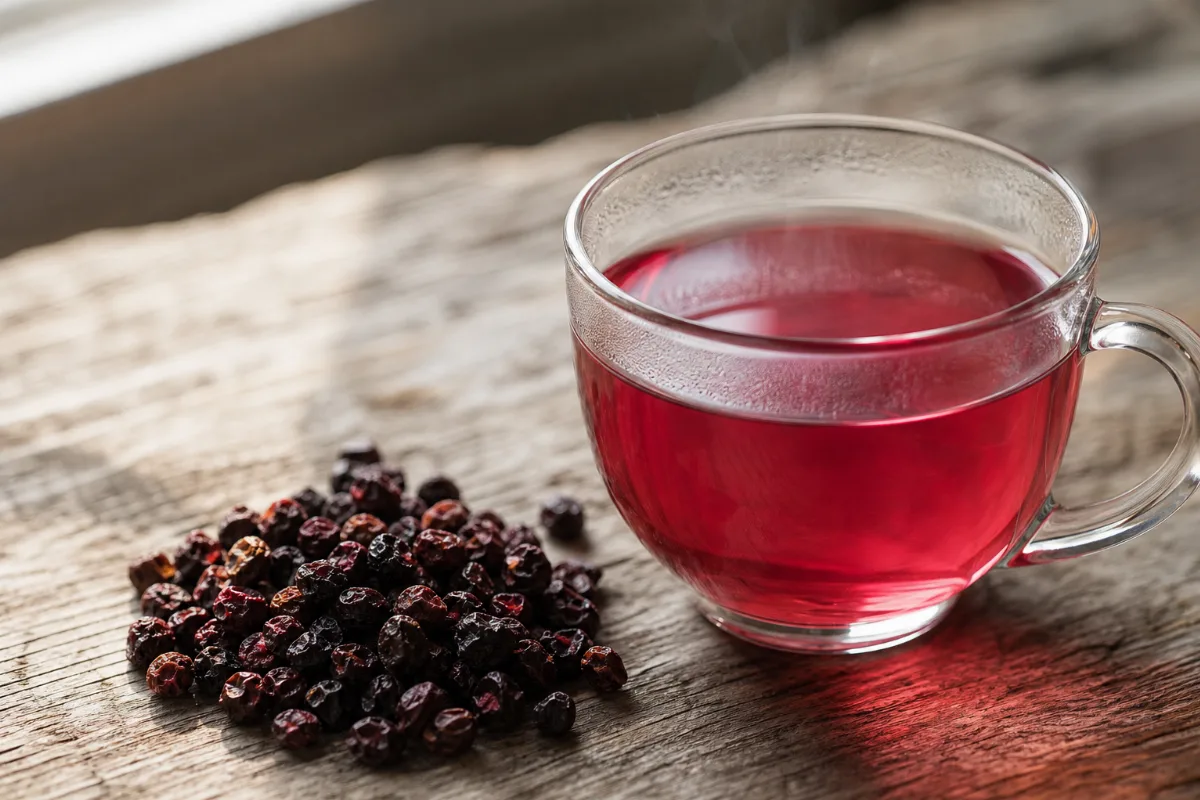
Schisandra tea is a drink made by steeping the dried red berries of Schisandra chinensis, a vine of northeast Asia. In Korea it is called omija tea and in China wu wei zi, the five-flavour berry. It is used as a tonic for stress, tiredness and the liver. We found no trial of the tea itself; the human studies tested extracts, tablets and herb mixes, and nothing is rated above low certainty. The main caution is that a related species raised tacrolimus and midazolam levels in people.
General information, not medical advice. Last substantive update · Not medically reviewed. A named clinician has not signed off on this page. How this page is made
About Schisandra Tea
Schisandra tea is a drink made from the dried red berries of Schisandra chinensis, called omija in Korea and wu wei zi in China. People drink it as a tonic for stress, tiredness and the liver. No trial has tested the tea. The human studies used extracts and herb mixes and nothing is rated above low certainty. The key cautions are drug interactions (tacrolimus, midazolam, possibly warfarin), pregnancy, and heartburn for people prone to it.
What it is
Schisandra chinensis is a climbing vine that grows wild in Siberia, the Russian Far East, northern China, Korea and Japan. The part used is the berry. Steeped in water it makes schisandra tea. In Korea, omija tea is a well-known version; a 2009 lab paper notes that omija is consumed as tea and wine and has a pinkish-red colour.
It is not from the tea plant (Camellia sinensis). We found no measurement of caffeine in schisandra tea. A lab study of 33 herbal teas from plants other than the tea plant found no caffeine in them, but its abstract does not name schisandra, so this is indirect.
Tea, extract and capsule are not the same thing
Tea is the dried berry steeped in water. Extracts, capsules and tablets are concentrated products, and the trials on this page used them or herb mixes. The most studied compounds in the berry are lignans. We found no chemical analysis of a cup of schisandra tea, so what water pulls out is not known from a source we read. A lab analysis of an omija water extract found its main red pigment explains most of its antioxidant activity in test tubes.
Results from extract trials cannot be assumed for tea, and safety findings carry the same warning. Two species are also sold as wu wei zi, and the interaction numbers in people come from the other one.
Traditional use and what the research found
In traditional Chinese medicine the berry is a tonic for cough, liver conditions, stomach disorders and sweating. In Russia it was adopted as an adaptogen in the early 1960s, as a review of Russian research reports. That review describes animal findings of stress protection and higher working capacity, and says clinical trials were reported; it is a narrative overview and the trials were not independently checked.
In modern trials of extracts, stress and anxiety (a three-herb formula) and muscle strength (an extract) reach low certainty. Attention, tiredness, sleep, menopause symptoms, liver blood tests and blood sugar are very low. In 28 obese women the fruit did not significantly change weight.
How strong is the research?
Weak. No tea trial exists. Trials of extracts are small, short (12 weeks or less), often use mixes in which schisandra cannot be credited alone, and some were run by people who develop the products. Only abstracts were read for nearly every study. Blood-test changes such as liver enzymes and glucose are not the same as a health benefit.
At a glance
Traditional uses history, not proof
- In traditional Chinese medicine the berry (wu wei zi, five-flavour fruit) is a tonic used for cough, liver conditions, stomach disorders and sweating, according to Memorial Sloan Kettering.
- In Korea the berry (omija) is consumed as tea and wine, according to a 2009 lab paper.
- Russian official medicine adopted schisandra as an adaptogen in the early 1960s, according to a review of Russian research. 'Adaptogen' is a contested term, not an approval category.
- Traditional use is not the same as trial proof.
Studied for research
- Tea itself: no human trial found, insufficient
- Muscle strength in older adults (extract), low
- Stress and anxiety (three-herb formula), low
- Attention, tiredness, sleep, menopause symptoms, liver blood tests, blood sugar, pneumonia recovery (extracts and mixes), very low
- Weight loss, low certainty for no clear benefit
- Memory and brain protection: animal and cell studies only, insufficient
Main compounds
- Lignans such as schisandrol A, schisandrin A, B and C and schisantherin A, the markers studied most
- A red anthocyanin pigment that explains most of the antioxidant activity of an omija water extract in test tubes
- Acidic polysaccharides, studied in animal liver injury
- Tea is not from the tea plant (Camellia sinensis); no caffeine measurement of schisandra tea was found
Common forms
- Dried berries steeped in water as a tea (the tea itself)
- Omija syrup made from sugar-preserved berries
- Fruit extracts, capsules and tablets (concentrated; used in the trials)
- Mixes with Rhodiola, Eleutherococcus, soybean, sesamin or ginseng
- Wuzhi capsules from a different species, Schisandra sphenanthera (not tea)
Research links: Memorial Sloan Kettering Cancer Center: Schisandra · Review of Russian research on Schisandra chinensis (2008), PubMed record · Review of Schisandra lignans and drug interactions (2022), PubMed record · Tacrolimus and Schisandra sphenanthera extract in healthy volunteers (2007), PubMed record · Research Library · Genes & Biomarkers Library
What it is and its history
- Accepted scientific name
- Schisandra chinensis (Turcz.) Baill.
- Naming authority
- (Turcz.) Baill., published in Baillon (1868), Histoire des Plantes 1: 148 (GBIF). The original name was Kadsura chinensis Turcz. NCBI Taxonomy lists the species as Schisandra chinensis, taxid 50507.
- Synonyms
- Kadsura chinensis Turcz.; Maximowiczia amurensis Rupr.; Maximowiczia chinensis (Turcz.) Rupr.; Maximowiczia japonica (A.Gray) K.Koch; Maximowiczia sinensis Rob.; Schisandra chinensis (Turcz.) K.Koch, 1869; Schisandra chinensis var. glabrata Nakai; Schisandra chinensis var. leucocarpa P.H.Huang & L.H.Zhuo; Schisandra chinensis var. typica Nakai; Schisandra viridicarpa Y.N.Lee; Sphaerostema japonicum A.Gray
- Common names
- Schisandra (English); Chinese magnolia-vine (English); Five-flavour berry (five-flavor fruit) (English); Wu wei zi (Chinese (pinyin)); Omija (Korean); Schizandra (English (variant spelling)); Лимонник китайский (limonnik kitayskiy) (Russian); Chinesisches Spaltkölbchen (German); Cytryniec chiński (Polish); Schizandra čínská (Czech); Şizandra (Turkish)
- Family or group
- Schisandraceae (order Austrobaileyales) per GBIF. The 2022 review abstract (Zhang) and older sources place Schisandra in Magnoliaceae, the magnolia family; GBIF's accepted family is Schisandraceae.
- Classification
- Plantae > Tracheophyta > Magnoliopsida > Austrobaileyales > Schisandraceae > Schisandra > Schisandra chinensis
- Native range
- Per GBIF's distribution records (Catalogue of Life and the World Checklist of Vascular Plants): Siberia, the Russian Far East (Amur, Primorye, Sakhalin), north China (Hebei, Heilongjiang, Jilin, Liaoning, Inner Mongolia and others), Korea and Japan (Hokkaido, Honshu).
- Habitat
- Not verified from a flora. General knowledge only: a woody climbing vine of temperate forests.
- What it looks like
- Roots: Not verified from a flora.; Stems: A woody climbing vine (general description, not checked against a flora).; Leaves: Not verified from a flora.; Flowers: Not verified from a flora.; Fruit: The fruit (berry) is the part used; the Chinese name wu wei zi means 'five-flavour fruit', and GBIF lists 'five-flavor-fruit' as an English name. Berry colour and cluster form were not verified from a flora.
- Cultivation
- Not verified.
- Harvest and processing
- Not verified. Studies in the evidence use dried fruit extracts and wine-processed fruit (a traditional processing method mentioned in Su 2022).
- Look-alikes and adulterants
- Name: Schisandra sphenanthera Rehder & E.H.Wilson (south wu wei zi, Nan-Wuweizi); Note: A different species (GBIF key 3745294, accepted). It is the source of Wuzhi tablets/capsules and of most human drug-interaction data. It is a documented adulterant of S. chinensis fruit (8 of 27 market samples in one study).; Name: Schisandra rubriflora (Franch.) Rehder & E.H.Wilson; Note: Another species of the genus (GBIF key 3745220, accepted). Use as a supplement was not checked.; Name: Schisandra grandiflora (Wall.) Hook.fil. & Thomson; Note: Another species of the genus (GBIF key 3745238, accepted). Use as a supplement was not checked.
- Sustainability and conservation
- Not checked (no IUCN assessment retrieved).
Photographs
Traditional use and history history, not clinical proof
| Tradition or era | Documented use | Source |
|---|---|---|
| Korean omija tea and East Asian use as a drink | A 2009 lab paper says omija (Schisandra chinensis) is used in East Asian traditional medicine and consumed as tea and wine, and describes its pinkish-red colour. | p19323727 |
| Traditional Chinese medicine | The fruit (wu wei zi) is described as a sedative and tonic in the Chinese Pharmacopoeia (per the Wang 2014 abstract) and as used in China 'for thousands of years' to tonify the kidney and ease nervous, heart, liver and stomach complaints (per the Zhang 2022 abstract). Both statements are from secondary sources; the original texts were not read. | p25091466 |
| Chinese Pharmacopoeia | Since 2000 the Pharmacopoeia treats S. chinensis (Bei-Wuweizi, north) and S. sphenanthera (Nan-Wuweizi, south) as two separate crude drugs, as described in a 2009 review. | p18849034 |
| Modern Chinese hepatitis use | Wuzhi capsule, an ethanol extract of S. sphenanthera fruit, has long been used in China for viral and drug-induced hepatitis; a 2019 review says medicines based on Schisandra fruits or synthetic schisandrin C analogues are commonly prescribed for drug-induced liver injury there. | p25392942 |
| Adaptogen concept and sport | Schisandra chinensis is named with Panax ginseng, Eleutherococcus, Rhaponticum and Rhodiola as a plant adaptogen. A 2021 review says plant adaptogens were first used in professional sports about 50 years ago. | p34445021 |
| European regulation | The EMA's herbal committee mentioned Schisandra chinensis as a possible example of a herbal adaptogen in its 2008 reflection paper but did not create a Schisandra monograph that we could find. | s-ema-hmpc-adaptogenic |
| Far East folk use (widely repeated) | Claims that Far East hunters ate the berries to stay alert and see in the dark are widely repeated. NOT verified: no source was read for this. | none |
| Russian official medicine | A review of Russian research says Schisandra chinensis gained recognition as an adaptogen in the official medicine of the USSR in the early 1960s and is in the Russian pharmacopoeia and State Register of Drugs. Credit for this belongs to Russian research as the review reports it; the original studies were not read. | p18515024 |
Traditional use shows how it was used. It does not show that it works or is safe today.
What is inside, and how it may work
What it contains and how those compounds act in cells and animals. Laboratory and animal mechanisms are not proven effects in people.
Main compounds
| Compound | Family | Where it is concentrated | Activity studied | Level of evidence |
|---|---|---|---|---|
| Schisandrol A (schisandrin, schizandrol A) PubChem 3001664 | dibenzocyclooctadiene lignan | Fruit The Chinese Pharmacopoeia requires not less than 0.40% in S. chinensis (per the Wu 2024 review). | Described in a review as anti-inflammatory and liver-protective in animal work; rapid absorption, highest levels in the liver and mainly renal excretion in animal pharmacokinetic work. 44 | Animal research |
| Deoxyschizandrin (schisandrin A) PubChem 43595 | dibenzocyclooctadiene lignan | Fruit The most abundant lignan in the Schisandra fruit extract used in one lab study; amounts per gram not given. | Broken down mainly by CYP3A4 and CYP3A5 and competes with midazolam and testosterone for the enzyme; blocked P-glycoprotein in leukaemia cells. Blood levels of deoxyschisandrin were linked to tacrolimus levels in transplant patients taking Wuzhi capsule. 43 35 10 | Laboratory research |
| Schisandrin B (gamma-schisandrin) PubChem 108130 | dibenzocyclooctadiene lignan | Fruit | Activated PXR and raised CYP3A and bile-acid pathways in mice and liver cells; reduced brain damage and cognitive impairment in Alzheimer's-model mice. Inhibited P-gp efflux of tacrolimus in cells (Wuzhi lignans). 49 9 33 | Animal research |
| Schisandrin C PubChem 443027 | dibenzocyclooctadiene lignan | Fruit | Crossed a gut-cell layer poorly in a lab model; synthetic analogues of schisandrin C are used as drugs for liver injury in China. 22 51 | Laboratory research |
| Schisandrol B (gomisin A) PubChem 634470 | dibenzocyclooctadiene lignan | Fruit | Of six Wuzhi lignans, schisandrol B raised tacrolimus levels most in rats and inhibited P-gp efflux in cells; predicted to strongly block CYP3A4 breakdown of bosutinib. PubChem lists '(+)-Gomisin A' as a synonym of CID 634470 and a separate record (CID 15608605) under 'Gomisin A', so the two names may refer to different stereoisomers. 33 1 | Animal research |
| Schisantherin A PubChem 151529 | dibenzocyclooctadiene lignan (ester) | Fruit | Strongly blocked CYP3A4 breakdown of imatinib and bosutinib in lab enzymes. Studied mostly in S. sphenanthera (Wuzhi) products. 1 | Laboratory research |
| Gomisin N PubChem 158103 | dibenzocyclooctadiene lignan | Fruit | Among the strongest P-gp inhibitors of 15 S. chinensis lignans in leukaemia cells; pumped out of gut cells in a lab model. PubChem titles this CID '(+)-Schisandrin B' (same formula as schisandrin B), so check the stereoisomer before relying on the CID. 35 22 | Laboratory research |
| Gomisin J PubChem 3001686 | dibenzocyclooctadiene lignan | Fruit | Listed as a synonym relative of deoxyschizandrin ('dimethylgomisin J') in PubChem; no activity data were read. 57 | Laboratory research |
| Acidic polysaccharide (SCAP) | polysaccharide | Fruit | In ethanol-injured mice and liver cells it lowered ALT, AST, liver fat and CYP2E1 protein. 47 | Animal research |
Mechanisms, receptors and pathways
| Target or pathway | Gene or receptor | What was found | Level |
|---|---|---|---|
| CYP3A4/5 enzyme (short-term blocking) | CYP3A4, CYP3A5 | In 12 healthy men, 7 days of S. sphenanthera extract more than doubled oral midazolam exposure (AUC +119.4%). Human liver cells exposed to S. chinensis extract also showed CYP3A4/5 inhibition. 46 12 | Human (S. sphenanthera) and in vitro (S. chinensis) |
| CYP3A induction (long-term use) | CYP3A4 (human cells), CYP3A (rat) | In rats, long-term lignan pretreatment raised liver CYP3A protein 2.5-fold and gut 4.0-fold; human liver cells showed raised CYP3A4 mRNA with both Schisandra extracts. 19 12 | Animal and in vitro |
| P-glycoprotein efflux pump | ABCB1 (P-gp) | Fifteen S. chinensis lignans were tested in P-gp overproducing human leukaemia cells; gomisin N and deoxyschizandrin were most effective. Wuzhi lignans (schisandrin A, B, schisandrol B) blocked tacrolimus pumping in cells. The extract itself is pumped out by P-gp and MRP in a gut-cell model. 35 33 22 | Laboratory research |
| Pregnane X receptor (PXR) activation | NR1I2 (PXR), UGT1A1, CYP3A4/CYP3A11, MRPs | Schisandrin B bound PXR and raised UGT1A1, CYP3A4/CYP3A11 and MRP levels while lowering bile acids in a liver injury model. 49 | Animal and in vitro |
| Stress proteins NPY and Hsp72 | NPY, HSPA1A (Hsp72), HSF1 | ADAPT-232 (three-herb mix) raised NPY and Hsp72 in human neuroglia cells; silencing NPY or HSF1 reduced the effect. 29 | Laboratory research |
| Gene activity in brain-support cells | Hsp70 genes, ESR1 (ER-alpha), HTR3 (5-HT3), G-protein signalling genes | All tested adaptogens including S. chinensis berry extract and schizandrin B raised Hsp70 genes 3 to 45 fold and lowered ER-alpha (2.9 to 22.6 fold), CETP and 5-HT3 receptor genes. 30 | Laboratory research |
| Neuronal ferroptosis | GSK3B, NFE2L2 (Nrf2), GPX4, FSP1 | In Alzheimer's-model mice and nerve cells, schisandrin B blocked ferroptosis through GSK3-beta and Nrf2/GPX4 and improved cognitive impairment. 9 | Animal research |
| Sleep, melatonin receptor and HPA axis | MT1 (melatonin receptor), HPA-axis hormones | In rats, raw and wine-processed S. chinensis promoted sleep, raised hypothalamic MT1 and changed HPA-axis signalling. 37 | Animal research |
| Liver injury: oxidative stress and CYP2E1 | CYP2E1, ALT, AST, SOD, MDA | Across 54 animal studies S. chinensis compounds lowered ALT and AST and inflammation and oxidative stress markers; an acidic polysaccharide lowered CYP2E1 protein in ethanol-injured mice. 11 47 | Animal research |
Absorption, metabolism and elimination
- Absorption
- Gut-cell tests (Caco-2): gomisin A crossed by passive diffusion; gomisin N, the lignan mixture and the whole extract were pumped back out of cells more than they were absorbed (efflux ratios 2.2 to 5.2), reduced by P-gp and MRP blockers; schisandrin C crossed poorly. A review says liver and gut first-pass metabolism affect schisandrol A absorption.
- Distribution
- A review of schisandrol A (animal work) reports wide distribution with the highest level in the liver. Human tissue distribution was not found.
- Metabolism
- Deoxyschizandrin is broken down mainly by CYP3A4 and CYP3A5 in human liver microsomes. Lignans are both substrates and, at the same time, blockers or inducers of CYP3A.
- Elimination
- Mainly renal (kidney) excretion for schisandrol A according to a review of animal work; human elimination values were not found.
- Bioavailability
- Not established in people. A method to measure five Wuzhi capsule lignans in human plasma was validated and used in healthy volunteers, but the abstract gives no values; blood levels of deoxyschisandrin and gamma-schisandrin were related to tacrolimus levels in transplant patients.
Isolated compounds versus whole extracts
Schisandra extract is not one substance. A 2017 lab paper describes the extracts as mixtures of more than 50 lignans. The lignans differ: in rats schisandrol B raised tacrolimus levels most, while in lab enzymes schisantherin A and schisandrol B strongly blocked CYP3A4 and schisandrin A (deoxyschizandrin) did not for imatinib and bosutinib. The two species also differ in lignan content, so results with one species' extract or one isolated lignan cannot be assumed for a different species or whole-fruit product. Drugs based on synthetic analogues of schisandrin C are used in China for liver injury, which is a separate product from a supplement.
Nutritional composition
Not looked up. A USDA FoodData Central search was blocked by a rate limit and no Schisandra fruit entry was confirmed. The trials use extracts, not the fruit as a food, so the fruit's nutrient content is not part of the evidence here.
3 low certainty8 very low certainty5 not enough evidence
What was looked at
The 16 benefits and uses checked for Schisandra Tea, each with how strong the evidence is. Tap one to open it.
- Schisandra tea itself (berries steeped in water)Not enough evidence
- Attention and mental performance when tired or stressedVery low certainty
- Everyday stress and anxiety feelingsLow certainty
- Tiredness and recovery after illness (including long COVID)Very low certainty
- Low mood and mood swingsNot enough evidence
- Sleep qualityVery low certainty
- General stress tolerance (the adaptogen idea)Not enough evidence
- Memory and brain protection (animal and lab research only)Not enough evidence
- Menopause symptoms (hot flushes, sweating, palpitations)Very low certainty
- Muscle strength in older adults and womenLow certainty
- Tiredness markers in hard training (athletes)Very low certainty
- Liver blood tests (ALT and AST) in people with mildly raised levelsVery low certainty
- Liver protection in animal models (not shown in people)Not enough evidence
- Blood sugar and LDL cholesterol (Omija + soybean mixture)Very low certainty
- Weight loss and gut bacteria in obesityLow certainty
- Recovery from pneumonia (added to antibiotics)Very low certainty
Lab markers tracked in the studies
d2 Test of Attention score (TN-E)Perceived Stress Scale (PSS)Pittsburgh Sleep Quality Index (PSQI)Interleukin-6 (IL-6)C-reactive protein (CRP) and D-dimerBlood creatinineKupperman Index (menopause symptom score)Knee extensor strengthResting blood lactateBlood ammonia (fatigue marker)Alanine aminotransferase (ALT)Aspartate aminotransferase (AST)Total and direct bilirubinFasting and after-meal blood glucoseLDL cholesterolImmunoglobulin A (IgA)
What is Schisandra Tea good for?
The main studied uses and how strong the human evidence is for each. "Low" is the best rating found for any benefit. No trial used tea: each row says what was tested. Schisandra tea is not a replacement for medicine.
Benefits, one by one
Each card is a research question, not a promise. Tap a goal to filter. Open a card to see the studies, doses and limits.
Schisandra tea itself (berries steeped in water)
Not enough evidenceWe found no trial of schisandra tea in people. The human trials used extracts, capsules, tablets or mixes of several herbs. A cup of tea cannot be assumed to do the same.
3 studiesTea is dried berries steeped in water. Extracts, capsules and tablets…
Studies, doses and limits
What the trials found
No human trial of schisandra tea was found. Memorial Sloan Kettering calls the human studies limited and says more research is needed. A review of Russian research describes clinical trials in many conditions, but it is a narrative overview written by product researchers and the trials were not independently checked.
Results
Nothing can be said about what a cup of tea does.
Why this rating
No tea trial exists. Extract and combination trials cannot be carried over to tea.
Form and dose studied
Tea is dried berries steeped in water. Extracts, capsules and tablets are more concentrated products. Ask a doctor or pharmacist about amounts.
Limits
No human tea study; no chemical analysis of a cup of tea was found.
Why researchers looked
Schisandra berries are sold dried for tea. In Korea the berry is called omija and is drunk as a tea.
Traditional use
Wu wei zi means five-flavour fruit. Memorial Sloan Kettering lists traditional Chinese uses for cough, liver conditions, stomach disorders, sweating and as a tonic. A lab paper says omija is consumed as tea and wine in East Asia. Russian official medicine also adopted schisandra from the early 1960s, according to a review of Russian research. Traditional use is not trial proof.
Proposed mechanism Laboratory research
A water extract of omija fruit has a red anthocyanin pigment that explains most of its antioxidant activity in test tubes. This is chemistry, not a health effect in people.
A proposed mechanism does not show that the effect happens in people.
See the Safety tab. Safety data come from extracts and mixes, not tea.
Attention and mental performance when tired or stressed
Very low certaintyOne small trial found that a single tablet of a three-herb mix (Rhodiola, Schisandra and Eleutherococcus) improved attention, speed and accuracy two hours later in tired, stressed women. Schisandra on its own has not been tested for this.
5 studiesADAPT-232, a fixed combination of Rhodiola rosea, Schisandra chinensi…
Studies, doses and limits
What the trials found
One randomised, double-blind pilot trial (Aslanyan 2010): 40 healthy women aged 20 to 68 who felt long-term stress were tired out with a Stroop test, then took one tablet of ADAPT-232 or placebo. Two hours later the ADAPT-232 group scored better on the d2 attention test (attention, speed, accuracy; p<0.05). A review by the group that develops the mix (Panossian 2009) rates the evidence for Schisandra in fatigue as 'good', but that is the authors' own rating of mostly combination trials.
Results
Better d2 attention scores two hours after one dose of the three-herb mix. Exact scores were not given in the abstract. Nothing tests Schisandra alone, repeated dosing, or longer-term memory or thinking.
Effect sizes as reported
d2 TN-E scores differed between groups, p<0.05 (two hours after a single dose, n=40). No effect size in the abstract.
Why this rating
One small pilot with 40 women, a single dose, a three-herb combination so Schisandra cannot be separated out, and authors linked to the product's developers.
Form and dose studied
ADAPT-232, a fixed combination of Rhodiola rosea, Schisandra chinensis and Eleutherococcus senticosus extracts (one tablet in the trial). Ask a doctor or pharmacist about amounts.
Who was studied
Healthy women aged 20 to 68 who reported long-term psychological stress.
Limits
Combination product; 40 people; one dose; one attention test; funding and conflicts not stated in the abstract; the lead researchers also wrote the adaptogen reviews.
Why researchers looked
Schisandra fruit is grouped with Rhodiola and Eleutherococcus as an 'adaptogen', a herb said to help the body cope with stress and tiredness. Researchers who develop the ADAPT-232 mix tested it on mental tasks.
Traditional use
Wu wei zi (five-flavour fruit) is used in Chinese medicine as a tonic and calming herb. The review by Zhang 2022 describes use over thousands of years for kidney tonic and nervous, heart, liver and stomach complaints. Traditional use is not the same as trial proof.
Proposed mechanism Laboratory research
In human brain-support cells in a dish, the three-herb mix raised stress-related proteins (NPY and Hsp72) and changed gene activity for stress-signalling pathways. This is lab work and has not been shown to explain any effect in people.
A proposed mechanism does not show that the effect happens in people.
No serious side effects. Minor events (sleepiness and cold extremities) occurred in both the active and placebo groups.
Everyday stress and anxiety feelings
Low certaintyA 60-day trial of a Rhodiola, holy basil and Schisandra formula found lower stress and anxiety scores than placebo. It is a three-herb formula from a supplement company, so Schisandra's own part is unknown.
5 studiesA three-herb formula (Rhodiola, holy basil, Schisandra chinensis) tak…
Studies, doses and limits
What the trials found
McKinney 2026: 186 adults with high stress, aged 18 to 65, were randomised for 60 days to a formula with Rhodiola, holy basil and Schisandra chinensis (VL-G-A57), a separate ashwagandha formula, or placebo. At day 60 the three-herb formula lowered Perceived Stress Scale scores more than placebo (p<0.0001), improved anxiety (p=0.0004) and mood dysregulation (p=0.0454). Mental alertness did not differ. The trial is registered (NCT05602389). Authors include Gaia Herbs employees. The Long COVID adaptogen trial (Karosanidze 2022, ADAPT-232) found anxiety and depression scores improved in BOTH groups over time.
Results
Lower stress and anxiety scores with a three-herb formula than with placebo over 60 days; no Schisandra-only trial found for stress or anxiety.
Effect sizes as reported
Perceived Stress Scale vs placebo p<0.0001 (day 60); anxiety p=0.0004; mood dysregulation p=0.0454. Mean differences are not given in the abstract.
Why this rating
One registered, reasonably sized randomised trial, but a three-herb formula from a supplement company, only the abstract was read, effect sizes not reported there, and Schisandra cannot be credited alone.
Form and dose studied
A three-herb formula (Rhodiola, holy basil, Schisandra chinensis) taken for 60 days. Amounts were not stated in the abstract. Ask a doctor or pharmacist about amounts.
Who was studied
Adults aged 18 to 65 with high stress and BMI 18 to 29.9. Not people with diagnosed anxiety disorders.
Limits
Combination formula; industry-linked authors; many outcomes; no Schisandra-alone trial; no long-term follow-up.
Why researchers looked
Schisandra is classed with the adaptogens, herbs thought to raise tolerance to stress. Several adaptogen trials include it in a mix.
Traditional use
The review by Wu 2024 says the fruit is traditionally described as tranquilizing the heart, and the rat sleep paper Su 2022 says it is mainly used for dysphoria, palpitation and insomnia. That is traditional use.
Proposed mechanism Preliminary mechanism
Adaptogen researchers propose action through the HPA stress axis and stress-sensor proteins such as Hsp70. In cells the ADAPT-232 mix also changed 5-HT3 serotonin-receptor and other gene activity. These are lab and review ideas, not shown in these trials.
A proposed mechanism does not show that the effect happens in people.
Schisandra can change how the body handles some medicines, so people on prescription drugs should check first (see Safety).
Tiredness and recovery after illness (including long COVID)
Very low certaintyA two-week trial in people with long COVID found the three-herb ADAPT-232 mix (Rhodiola, Eleutherococcus, Schisandra) shortened fatigue and pain slightly. Both groups improved, and only a few outcomes beat placebo.
3 studiesChisan / ADAPT-232 for two weeks. Amounts were not given in the abstr…
Studies, doses and limits
What the trials found
Karosanidze 2022: 100 adults with long COVID took Chisan (ADAPT-232: Rhodiola, Eleutherococcus, Schisandra) or placebo for two weeks. The duration of fatigue and pain was shortened by one and two days in 50% of patients. Reported relief of pain on day 9 was 39% vs 57% and of fatigue on day 11 was 28% vs 43% (p=0.0019 and p=0.0157; the abstract's wording on direction is unclear). Symptoms improved in both groups; the clear differences from placebo were daily walk time and cough relief. IL-6 and creatinine were lower with Chisan; CRP and D-dimer were not different. Narimanian 2005 (60 pneumonia patients) is covered under pneumonia recovery. Panossian 2009 (review) calls the fatigue evidence for Schisandra 'good', which is the authors' own rating.
Results
Slightly shorter fatigue and pain in long COVID with the three-herb mix; many outcomes tested; only walk time and cough clearly beat placebo.
Effect sizes as reported
Day 9 pain 39% vs 57% (p=0.0019); day 11 fatigue 28% vs 43% (p=0.0157); fatigue and pain duration 1 and 2 days shorter in 50% of patients.
Why this rating
One trial, many outcomes with only a few differing from placebo, a combination product, an author employed by an adaptogen R&D company, and both groups improved a lot.
Form and dose studied
Chisan / ADAPT-232 for two weeks. Amounts were not given in the abstract. Ask a doctor or pharmacist about amounts.
Who was studied
Adults in Georgia who had COVID-19 and at least 3 of 9 long-COVID symptoms.
Limits
Combination; two-week treatment; many outcomes; the abstract does not describe corrections for repeated testing.
Why researchers looked
Adaptogens are used for tiredness and weakness. Long COVID has no proven treatment, so a trial tested an adaptogen mix.
Traditional use
Wu wei zi is used in Chinese medicine as a tonic for weakness and exhaustion. That is traditional use, not trial proof.
Proposed mechanism Preliminary mechanism
Not established. The proposed route is the stress-response system (HPA axis, Hsp70), shown only in cells and animals.
A proposed mechanism does not show that the effect happens in people.
Transplant recipients and people on medicines cleared by CYP3A should not add Schisandra without their prescriber (see Safety).
Low mood and mood swings
Not enough evidenceThe only human result is a small mood improvement in a three-herb formula trial. Schisandra alone has not been tested for mood in people.
4 studiesThree-herb formulas only. Ask a doctor or pharmacist about amounts.
Studies, doses and limits
What the trials found
In the 186-person three-herb trial (McKinney 2026) mood dysregulation improved on the Rhodiola, holy basil and Schisandra formula versus placebo (p=0.0454), a borderline result. In the Long COVID trial (Karosanidze 2022) anxiety and depression scores fell from mild or moderate to normal in both the Chisan and placebo groups, so the herbs cannot be credited. No trial of Schisandra alone in depression was found.
Results
A borderline mood benefit from a combination formula in one trial; no change that beat placebo in the long-COVID trial.
Effect sizes as reported
Mood dysregulation vs placebo p=0.0454 (McKinney 2026). No effect size in the abstract.
Why this rating
Only a secondary outcome with p=0.0454 in a combination trial, and no Schisandra-only trial.
Form and dose studied
Three-herb formulas only. Ask a doctor or pharmacist about amounts.
Who was studied
People with high stress, and long-COVID patients.
Limits
Secondary outcome; borderline p-value; combination; industry-linked authors.
Why researchers looked
Schisandra is used traditionally for restlessness and palpitation, and lab studies explore its effect on brain signalling.
Traditional use
Described in traditional Chinese medicine as tranquilizing the heart (Wu 2024 review). Traditional use.
Proposed mechanism Preliminary mechanism
In cells, the ADAPT-232 mix and schizandrin B lowered 5-HT3 serotonin-receptor gene activity. None of this shows an effect in people.
A proposed mechanism does not show that the effect happens in people.
Not a replacement for care of depression. Talk to a doctor if low mood lasts.
Sleep quality
Very low certaintySleep quality scores improved in the three-herb formula trial. Rat studies hint that Schisandra may promote sleep. No Schisandra-only sleep trial in people was found.
3 studiesThree-herb formula in the human trial. Ask a doctor or pharmacist abo…
Studies, doses and limits
What the trials found
McKinney 2026 (186 adults, 60 days) found sleep quality on the Pittsburgh Sleep Quality Index (PSQI) improved with the Rhodiola, holy basil and Schisandra formula versus placebo (p=0.0008), and restorative sleep also differed. This is a three-herb formula. No Schisandra-only sleep trial was found.
Results
Better sleep scores with a three-herb formula; animal data supportive; no direct human evidence for Schisandra alone.
Effect sizes as reported
PSQI vs placebo p=0.0008 (day 60); restorative sleep p<0.0001 for the adaptogen arms. No mean differences in the abstract.
Why this rating
Self-reported sleep scores in one combination-product trial from a supplement company; animal data only for Schisandra itself.
Form and dose studied
Three-herb formula in the human trial. Ask a doctor or pharmacist about amounts.
Who was studied
Adults with high stress, not people with diagnosed insomnia.
Limits
Self-reported scores; combination; industry-linked authors; no sleep-lab testing in people.
Why researchers looked
The fruit is used in traditional Chinese medicine for insomnia, palpitations and restlessness (as described in the rat paper Su 2022).
Traditional use
Su 2022 says the fruit is mainly used for dysphoria, palpitation and insomnia in traditional Chinese medicine. Traditional use.
Proposed mechanism Animal research
In free-moving rats, Schisandra (raw and wine-processed) promoted sleep recording patterns and was linked to higher melatonin receptor MT1 in the hypothalamus and changes in HPA-axis signals. Animal work only.
A proposed mechanism does not show that the effect happens in people.
Sleepiness was reported in the ADAPT-232 single-dose trial (in both groups), so take care when driving.
General stress tolerance (the adaptogen idea)
Not enough evidenceSchisandra is called an adaptogen, a herb said to help the body cope with stress. The European Medicines Agency says that word is not suitable for a marketing licence and that more trials are needed. Reviews by people who make adaptogen products are positive; independent evidence for Schisandra itself is thin.
4 studiesNot applicable.
Studies, doses and limits
What the trials found
The EMA reflection paper (HMPC, 2008) names Schisandra chinensis as one possible example of a herbal adaptogen, but says the term 'adaptogen' is not appropriate for a marketing authorisation and that more studies in clearly defined conditions are needed. Todorova 2021 says human trials of plant adaptogens are limited. Chan 2012 treats the three herbs as adaptogens. Panossian 2009 gives Schisandra a 'good' rating for mild fatigue, written by researchers who develop adaptogen products.
Results
No outcome measurement specific to Schisandra. The 'adaptogen' label is a concept, not a tested effect.
Effect sizes as reported
No pooled numbers for Schisandra.
Why this rating
A concept supported mostly by reviews, cell work and combination trials. The EU regulator regards the concept as not yet adequate for a licence.
Limits
Reviews are narrative and partly written by industry-linked authors; no independent pooled analysis for Schisandra.
Why researchers looked
The idea of adaptogens came from Soviet-era research on plants that raise resistance to stress. Schisandra is one of five plants usually named.
Traditional use
Wu wei zi has a long use in Chinese medicine as a tonic. Reviews note that Schisandra chinensis, Panax ginseng and Rhodiola rosea are called adaptogens.
Proposed mechanism Preliminary mechanism
Proposed: lifting stress-sensor proteins (Hsp70, NPY) and tuning the HPA axis. Shown in cells and animals only.
A proposed mechanism does not show that the effect happens in people.
'Adaptogen' does not mean safe or free of drug interactions. See Safety.
Memory and brain protection (animal and lab research only)
Not enough evidenceMouse and cell studies of schisandrin B and Schisandra extracts suggest nerve-protecting effects. No human trial of memory, dementia or Alzheimer's with Schisandra was found.
4 studiesIsolated schisandrin B in the mouse study, not a supplement.
Studies, doses and limits
Results
Mouse and cell results only. They are not evidence of benefit for memory in people.
Why this rating
Animal and cell work only; no human trial.
Form and dose studied
Isolated schisandrin B in the mouse study, not a supplement.
Limits
Animal and cell data; one isolated lignan; mouse doses cannot be converted to people.
Why researchers looked
Lignans from Schisandra, especially schisandrin B, show antioxidant and anti-inflammatory activity in nerve cells.
Traditional use
Traditional Chinese medicine uses the fruit as a tonic that tranquilizes the heart (Wu 2024 review); that is traditional use, not memory evidence.
Proposed mechanism Animal research
In Alzheimer's-model mice, schisandrin B reduced cognitive impairment and brain damage and blocked a type of cell death called ferroptosis through the GSK3-beta and Nrf2/GPX4 pathways (Ding 2025). Zhou 2021 reviews lignans' antioxidant, anti-inflammatory and neuroprotective actions.
A proposed mechanism does not show that the effect happens in people.
No human safety data in this use.
Menopause symptoms (hot flushes, sweating, palpitations)
Very low certaintyOne small Korean trial of a Schisandra chinensis extract found lower menopause symptom scores than placebo, with the authors pointing to hot flushes, sweating and palpitations. The result was borderline and the trial very small.
4 studiesBMO-30, a Schisandra chinensis extract, for 6 weeks. Amount not given…
Studies, doses and limits
What the trials found
Park & Kim 2016 (Climacteric): 41 women aged 40 to 70 with menopause symptoms were randomised to BMO-30, an extract of Schisandra chinensis, or placebo for 6 weeks and followed to 12 weeks; 36 finished (18 per group). Total Kupperman Index scores were lower with the extract than placebo when group and time were analysed together (p=0.042). The authors say hot flushes, sweating and palpitations improved most. Memorial Sloan Kettering's page describes this as a small trial suggesting possible help for hot flushes and sweating.
Results
Lower overall menopause symptom score with the extract than placebo, borderline significance, in a very small trial.
Effect sizes as reported
Kupperman Index group-by-time p=0.042; score values not given in the abstract.
Why this rating
One very small trial (36 completers) with a borderline p-value, one extract, no replication, only the abstract read.
Form and dose studied
BMO-30, a Schisandra chinensis extract, for 6 weeks. Amount not given in the abstract. Ask a doctor or pharmacist about amounts.
Who was studied
Korean women aged 40 to 70 with menopause symptoms.
Limits
Very small; borderline p-value; one trial; funding not stated in the abstract; no hot-flush diary results in the abstract.
Why researchers looked
Schisandra lignans have shown estrogen-related activity in lab work, and the fruit is used traditionally for sweating.
Traditional use
Wu wei zi is a traditional Chinese tonic that the Wu 2024 review calls astringent. A traditional use specifically for menopause was not verified.
Proposed mechanism Laboratory research
Not established. In human nerve-support cells, ADAPT-232 lowered activity of the estrogen receptor-alpha gene (2.9 to 22.6 fold), a lab result with no proven link to menopause symptoms. The Kupperman trial did not report that hormone levels changed.
A proposed mechanism does not show that the effect happens in people.
Schisandra can change how the body handles some medicines (see Safety). Anyone on hormone therapy or hormone-sensitive cancer treatment should ask their doctor.
Muscle strength in older adults and women
Low certaintyTwo small 12-week Korean trials found gains in leg strength with a Schisandra chinensis fruit extract, but no gain in muscle mass in the one that measured it.
4 studiesSchisandra chinensis fruit extract, daily for 12 weeks in both trials…
Studies, doses and limits
What the trials found
Cho 2021 (Am J Clin Nutr; registered NCT03402308): 54 adults over 50 with relatively low muscle mass walked daily and took Schisandra chinensis fruit extract or placebo for 12 weeks. Right knee extensor strength rose 10.2 Nm more than placebo (95% CI 3.7 to 16.8; P=0.003) and left 6.7 Nm more (95% CI 0.3 to 13.1; P=0.041). No difference in muscle mass, inflammation markers, antioxidant markers or quality of life; no adverse events reported. Park 2020 (IJERPH): 45 postmenopausal women (average 61.9 years) took a set daily amount of extract or starch for 12 weeks; quadriceps strength (interaction p=0.001) and resting lactate (p=0.038) changed in favour of the extract; other variables did not differ. Memorial Sloan Kettering notes possible strength gains but no change in muscle mass and that more studies are needed.
Results
Extra leg strength with the extract in two small trials; no muscle-mass gain; no everyday-function benefit shown.
Effect sizes as reported
Cho 2021: right knee +10.2 Nm (95% CI 3.7 to 16.8), left +6.7 Nm (95% CI 0.3 to 13.1) vs placebo. Park 2020: quadriceps strength group-by-time p=0.001.
Why this rating
Two small randomised, placebo-controlled trials from Korea pointing the same way on strength, but short, only abstracts read, no replication outside Korea and no muscle-mass benefit.
Form and dose studied
Schisandra chinensis fruit extract, daily for 12 weeks in both trials. Ask a doctor or pharmacist about amounts.
Who was studied
Older adults with low muscle mass doing daily walking, and postmenopausal women.
Limits
Small (54 and 45 people), 12 weeks, one country, abstracts only; strength rose but not mass; participants also exercised.
Why researchers looked
Animal work suggested the extract may help muscle and lower lactate. Two Korean groups tested it in older people.
Traditional use
Wu wei zi is a traditional tonic. Reviews list sarcopenia protection as a reported effect in preclinical work (Nowak 2019).
Proposed mechanism Preliminary mechanism
Not established in people. Review of mostly animal and lab work links the fruit to antioxidant and anti-inflammatory effects (Nowak 2019). The older-adult trial found no change in anti-inflammatory or antioxidant blood markers.
A proposed mechanism does not show that the effect happens in people.
No adverse events reported in the older-adult trial.
Tiredness markers in hard training (athletes)
Very low certaintyOne tiny trial of a three-herb drink containing Schisandra found lower ammonia and liver enzyme levels in tennis players after four weeks of hard training. It shows blood marker changes, not better performance.
3 studiesA three-herb drink (set servings over the trial) and, separately, an …
Studies, doses and limits
What the trials found
Juan 2023 (J Immunol Res): 17 male college tennis players trained hard five days a week for 4 weeks and drank Saengmaeksan (Liriope, Panax ginseng and Schisandra chinensis; set servings) or a placebo drink. Ammonia, AST and ALT fell and IgA rose in the herb group; lactic acid did not differ; IgM fell in both groups. In Park 2020 (45 older women, a set amount Schisandra extract for 12 weeks), resting lactate was lower with the extract (p=0.038).
Results
Lower ammonia and liver enzymes and higher IgA in athletes on a three-herb drink; lower resting lactate in older women on Schisandra extract. No test of actual sport performance or endurance time.
Effect sizes as reported
Significant group-by-time effects for ammonia, ALT and IgA in 17 players; numbers not given in the abstract.
Why this rating
17 men, three herbs together, blood markers only, abstract only read.
Form and dose studied
A three-herb drink (set servings over the trial) and, separately, an extract. Ask a doctor or pharmacist about amounts.
Who was studied
College male tennis players; postmenopausal women.
Limits
Tiny; combination; markers not performance; possibility that lower ALT/AST reflects less muscle strain rather than a liver benefit is not tested.
Why researchers looked
Adaptogens were first used in sport. Saengmaeksan is a traditional Korean drink of ginseng, Liriope and Schisandra.
Traditional use
Saengmaeksan (Sheng Mai San) is a traditional combination drink; Todorova 2021 says plant adaptogens have been used in professional sport for about 50 years.
Proposed mechanism Animal research
Cell and mouse work on the same three-herb drink exists but is not used as evidence for people here. A mechanism in people has not been shown.
A proposed mechanism does not show that the effect happens in people.
None specific in the abstract.
Liver blood tests (ALT and AST) in people with mildly raised levels
Very low certaintyA small Taiwanese trial of a Schisandra extract plus sesamin lowered ALT and AST in people with borderline-high levels. Reviews describe Chinese Schisandra-derived drugs lowering liver enzymes, but the evidence is thin and mixes species and synthetic drugs.
7 studiesA mixture of Schisandra fruit extract and sesamin (four tablets a day…
Studies, doses and limits
What the trials found
Chiu 2013 (Phytother Res): 40 people with borderline-high ALT or AST (40 to 60 U/L) took tablets of a Schisandra fruit extract and sesamin mixture or placebo for 5 months. ALT and AST fell, bilirubin did not change, antioxidant measures improved and fatty liver was reported as improved. Song 2015 (28 obese women, Schisandra chinensis fruit, 12 weeks): AST and ALT tended to fall more, but the differences between groups were not significant. Juan 2023 (17 athletes, three-herb drink): AST and ALT fell. Zhu 2019 (review of Chinese studies of Schisandra-fruit-derived drugs) reports lower ALT, AST and bilirubin in drug-induced liver injury and says high-quality clinical studies are needed. Jiang 2010 gave Schisandra sphenanthera extract (a different species) to liver transplant patients on tacrolimus and reported that liver function indices fell, but the same extract also raised tacrolimus levels several-fold (see Safety). Memorial Sloan Kettering calls the small uncontrolled studies 'inconclusive'.
Results
Lower ALT and AST in one small placebo-controlled trial with a sesamin mix; non-significant trends in another; supportive but weak Chinese data. These are blood tests, not proof of better liver health or longer life.
Effect sizes as reported
Chiu 2013 reduced ALT and AST (values not in the abstract). Song 2015: no significant difference between groups.
Why this rating
One small trial of a mixture, one null-ish trial, reviews that pool different species and synthetic drugs, and no trial in diagnosed liver disease for S. chinensis alone.
Form and dose studied
A mixture of Schisandra fruit extract and sesamin (four tablets a day for 5 months), or Schisandra chinensis fruit (12 weeks). Ask a doctor or pharmacist about amounts.
Who was studied
People with ALT or AST of 40 to 60 U/L; obese women; athletes.
Limits
Mixtures; liver enzymes are markers; S. sphenanthera and synthetic drugs in the Chinese reviews; reviews read at abstract level only.
Why researchers looked
In China, medicines made from Schisandra fruit or from synthetic schisandrin C analogues are widely used for hepatitis and drug-induced liver injury.
Traditional use
Wu wei zi is widely used in China for liver complaints. A Wuzhi capsule (Schisandra sphenanthera extract) is used for viral and drug-induced hepatitis (Wei 2014, Teng 2022).
Proposed mechanism Animal research
Animal work (see the animal liver benefit) suggests antioxidant, anti-inflammatory and bile-acid effects, including activation of PXR by schisandrin B.
A proposed mechanism does not show that the effect happens in people.
Lowering ALT or AST can make a liver test look better without proving the liver is healthier, and may affect how a doctor reads liver tests (Memorial Sloan Kettering). Tell your doctor you take it.
Liver protection in animal models (not shown in people)
Not enough evidenceA 2025 review pooling 54 animal studies found Schisandra chinensis compounds lowered liver enzymes in chemically injured animals. That is animal evidence only.
4 studiesLignans, extracts and polysaccharides at animal doses; not comparable…
Studies, doses and limits
Results
Large animal effects in models of liver injury with very high between-study variation.
Effect sizes as reported
ALT SMD -4.74 (95% CI -5.42 to -4.06); AST SMD -5.10 (95% CI -5.84 to -4.37); I2 90.8% and 91.7% (animals).
Why this rating
Animal data only; the human trials are small and use mixtures.
Form and dose studied
Lignans, extracts and polysaccharides at animal doses; not comparable to supplements.
Who was studied
Rodents and cell lines.
Limits
Animal results rarely transfer to people; very high heterogeneity; many studies use isolated lignans.
Why researchers looked
Lignans and polysaccharides from the fruit are tested in mouse and rat models of toxin, alcohol, drug and fatty-liver injury.
Traditional use
Traditional liver use in China (see above).
Proposed mechanism Animal research
Animal and cell work points to antioxidant, anti-inflammatory and anti-cell-death effects. Schisandrin B activated PXR and lowered bile acids in a cholestasis mouse model (Zhang 2026). An acidic polysaccharide lowered CYP2E1 and ethanol injury in mice (Yuan 2018).
A proposed mechanism does not show that the effect happens in people.
Animal studies also show Schisandra changes liver enzymes that clear medicines (see Safety).
Blood sugar and LDL cholesterol (Omija + soybean mixture)
Very low certaintyA 12-week Korean trial of an Omija (Schisandra chinensis) and soybean extract mixture in 80 adults with mildly high blood sugar found lower fasting glucose, fructosamine and LDL than placebo. The soybean part means Schisandra cannot be credited alone.
3 studiesOmija extract plus soybean mixture for 12 weeks. Amounts not stated i…
Studies, doses and limits
What the trials found
Kim 2022 (Nutrients): 80 adults with fasting plasma glucose of 100 to 140 mg/dL took the Omija and soybean mixture or placebo for 12 weeks. The mixture group had lower fasting glucose, after-meal glucose at 30 and 60 minutes, insulin at 60 minutes, insulin area under the curve, fructosamine and LDL cholesterol than the placebo group. No clinically significant safety changes. HbA1c is not listed among the significant results in the abstract. Song 2015 (28 obese women, Schisandra fruit): fasting glucose tended lower but not significantly.
Results
Lower fasting and after-meal glucose markers and LDL with a mixture; no HbA1c benefit stated; no Schisandra-only trial.
Effect sizes as reported
Significant reductions vs placebo in FPG, PPG, PPI, insulin AUC, fructosamine and LDL; numbers not given in the abstract.
Why this rating
One mixture trial of 80 adults, only the abstract read, no HbA1c result; Schisandra cannot be credited alone; the second trial was null.
Form and dose studied
Omija extract plus soybean mixture for 12 weeks. Amounts not stated in the abstract. Ask a doctor or pharmacist about amounts.
Who was studied
Adults with fasting plasma glucose 100 to 140 mg/dL (not diagnosed diabetes treated with drugs).
Limits
Mixture with soybean; one trial; surrogate markers; no outcomes such as complications.
Why researchers looked
An earlier animal study of Omija extract plus soybean improved blood sugar control in a diabetes model.
Traditional use
Omija is the Korean name for the fruit. The Nowak 2019 review lists antidiabetic potential from animal work.
Proposed mechanism Animal research
Not established in people; animal work suggests improved pancreatic function and insulin secretion (Nowak 2019).
A proposed mechanism does not show that the effect happens in people.
People on diabetes medicines should ask the prescriber before adding any supplement; blood sugar changes could add to drug effects. This is a general caution, not shown in the trial.
Weight loss and gut bacteria in obesity
Low certaintyA 12-week trial in 28 obese Korean women found Schisandra fruit changed the gut bacteria mix but did not significantly change weight, waist, fat mass or blood fats compared with placebo.
1 studiesSchisandra chinensis fruit for 12 weeks. Amount not stated in the abs…
Studies, doses and limits
What the trials found
Song 2015 (Nutr Res): 28 obese women took Schisandra chinensis fruit or placebo for 12 weeks. The fruit group tended to lose more waist size, fat mass, glucose, triglycerides, AST and ALT, but differences between groups were NOT significant. The authors conclude the fruit was not enough to change obesity-related measures against placebo.
Results
No significant benefit for weight or metabolism; the gut bacteria mix did change.
Effect sizes as reported
No significant between-group differences in obesity measures (trends only).
Why this rating
Small trial with a null main result, but it is randomised and placebo-controlled, so 'no clear weight benefit' is the best-supported statement.
Form and dose studied
Schisandra chinensis fruit for 12 weeks. Amount not stated in the abstract. Ask a doctor or pharmacist about amounts.
Who was studied
Obese Korean women.
Limits
28 women; gut bacteria measured by fingerprinting and PCR; no long-term follow-up.
Why researchers looked
Animal studies linked the fruit to anti-obesity and gut-bacteria effects.
Traditional use
Not a traditional use; a modern research question.
Proposed mechanism Preliminary mechanism
In the trial, Bacteroides and Bacteroidetes rose and Ruminococcus fell, with some correlations to fat mass and ALT/AST. Correlations do not show cause.
A proposed mechanism does not show that the effect happens in people.
None specific in the abstract.
Recovery from pneumonia (added to antibiotics)
Very low certaintyOne small 2005 trial of the three-herb ADAPT-232 mix added to standard drugs for pneumonia found about 2 days less antibiotic treatment and better quality of life. It needs replication and tests a combination.
2 studiesChisan twice daily for 10 to 15 days alongside antibiotics. Ask a doc…
Studies, doses and limits
What the trials found
Narimanian 2005 (Phytomedicine): 60 adults with acute non-specific pneumonia all got standard treatment (cephazoline, bromhexine and theophylline); 30 added Chisan (ADAPT-232: Rhodiola, Schisandra, Eleutherococcus) twice daily for 10 to 15 days and 30 added placebo. Antibiotic treatment to clear the acute phase was on average 2 days shorter with Chisan, and quality of life (WHOQOL-Bref) was higher in all four areas, significantly on day 5 after convalescence. Mental performance was higher in the rehabilitation period.
Results
Shorter antibiotic course and better quality of life in a small, old, combination-product trial.
Effect sizes as reported
Antibiotic treatment about 2 days shorter; quality of life higher (day 5 after convalescence significant). Exact scores not in the abstract.
Why this rating
Single small trial from 2005, a three-herb product, authors linked to the product's development, no replication.
Form and dose studied
Chisan twice daily for 10 to 15 days alongside antibiotics. Ask a doctor or pharmacist about amounts.
Who was studied
Adults with acute non-specific pneumonia in Armenia.
Limits
60 people; combination; 20 years old; the abstract does not give funding.
Why researchers looked
The ADAPT-232 research group tested the mix as an add-on in recovery.
Traditional use
Memorial Sloan Kettering notes that clinical trials of Schisandra for cough have not been conducted.
Proposed mechanism Preliminary mechanism
Not established.
A proposed mechanism does not show that the effect happens in people.
Never replace antibiotics or medical care for pneumonia with herbs.
Connections to the rest of health
How Schisandra Tea connects to the rest of our health knowledge graph. Every link says what kind of connection it is. A safety link (for example to the liver) is a warning, not a benefit. A study that merely mentions a topic never creates a benefit link.
Explore every connection: goals, body systems, organs, symptoms, genes
A. Wellness goals
| Connected to | Kind of connection | Evidence status | Context | Studies |
|---|---|---|---|---|
| Stress Balance | Potential benefit | Not enough evidence | Schisandra tea itself (berries steeped in water): We found no trial of schisandra tea in people. The human trials used extracts, capsules, tablets or mixes of several herbs. A cup of tea cannot be assumed to do the same. | 56 27 17 |
| Energy Vitality | Potential benefit | Not enough evidence | Schisandra tea itself (berries steeped in water): We found no trial of schisandra tea in people. The human trials used extracts, capsules, tablets or mixes of several herbs. A cup of tea cannot be assumed to do the same. | 56 27 17 |
| Mental Clarity | Potential benefit | Very low certainty | Attention and mental performance when tired or stressed: One small trial found that a single tablet of a three-herb mix (Rhodiola, Schisandra and Eleutherococcus) improved attention, speed and accuracy two hours later in tired, stressed women. Schisandra on its own has not been tested for this. | 3 28 29 30 48 |
| Better Focus | Potential benefit | Very low certainty | Attention and mental performance when tired or stressed: One small trial found that a single tablet of a three-herb mix (Rhodiola, Schisandra and Eleutherococcus) improved attention, speed and accuracy two hours later in tired, stressed women. Schisandra on its own has not been tested for this. | 3 28 29 30 48 |
| Cognitive Performance | Potential benefit | Very low certainty | Attention and mental performance when tired or stressed: One small trial found that a single tablet of a three-herb mix (Rhodiola, Schisandra and Eleutherococcus) improved attention, speed and accuracy two hours later in tired, stressed women. Schisandra on its own has not been tested for this. | 3 28 29 30 48 |
| Stress Reduction | Potential benefit | Low certainty | Everyday stress and anxiety feelings: A 60-day trial of a Rhodiola, holy basil and Schisandra formula found lower stress and anxiety scores than placebo. It is a three-herb formula from a supplement company, so Schisandra's own part is unknown. | 23 16 28 37 44 |
| Anxiety Support | Potential benefit | Low certainty | Everyday stress and anxiety feelings: A 60-day trial of a Rhodiola, holy basil and Schisandra formula found lower stress and anxiety scores than placebo. It is a three-herb formula from a supplement company, so Schisandra's own part is unknown. | 23 16 28 37 44 |
| Calm Relaxation | Potential benefit | Low certainty | Everyday stress and anxiety feelings: A 60-day trial of a Rhodiola, holy basil and Schisandra formula found lower stress and anxiety scores than placebo. It is a three-herb formula from a supplement company, so Schisandra's own part is unknown. | 23 16 28 37 44 |
| Resilience Support | Potential benefit | Low certainty | Everyday stress and anxiety feelings: A 60-day trial of a Rhodiola, holy basil and Schisandra formula found lower stress and anxiety scores than placebo. It is a three-herb formula from a supplement company, so Schisandra's own part is unknown. | 23 16 28 37 44 |
| Reduce Fatigue | Potential benefit | Very low certainty | Tiredness and recovery after illness (including long COVID): A two-week trial in people with long COVID found the three-herb ADAPT-232 mix (Rhodiola, Eleutherococcus, Schisandra) shortened fatigue and pain slightly. Both groups improved, and only a few outcomes beat placebo. | 16 28 39 |
| Energy Boost | Potential benefit | Very low certainty | Tiredness and recovery after illness (including long COVID): A two-week trial in people with long COVID found the three-herb ADAPT-232 mix (Rhodiola, Eleutherococcus, Schisandra) shortened fatigue and pain slightly. Both groups improved, and only a few outcomes beat placebo. | 16 28 39 |
| Burnout Recovery | Potential benefit | Very low certainty | Tiredness and recovery after illness (including long COVID): A two-week trial in people with long COVID found the three-herb ADAPT-232 mix (Rhodiola, Eleutherococcus, Schisandra) shortened fatigue and pain slightly. Both groups improved, and only a few outcomes beat placebo. | 16 28 39 |
| Mood Balance | Potential benefit | Not enough evidence | Low mood and mood swings: The only human result is a small mood improvement in a three-herb formula trial. Schisandra alone has not been tested for mood in people. | 23 16 30 44 |
| Better Sleep | Potential benefit | Very low certainty | Sleep quality: Sleep quality scores improved in the three-herb formula trial. Rat studies hint that Schisandra may promote sleep. No Schisandra-only sleep trial in people was found. | 23 37 3 |
| Sleep Quality | Potential benefit | Very low certainty | Sleep quality: Sleep quality scores improved in the three-herb formula trial. Rat studies hint that Schisandra may promote sleep. No Schisandra-only sleep trial in people was found. | 23 37 3 |
| Resilience Support | Traditional use | Not enough evidence | General stress tolerance (the adaptogen idea): Schisandra is called an adaptogen, a herb said to help the body cope with stress. The European Medicines Agency says that word is not suitable for a marketing licence and that more trials are needed. Reviews by people who make adaptogen products are positive; independent evidence for Schisandra itself is thin. | 52 39 5 28 |
| Stress Reduction | Traditional use | Not enough evidence | General stress tolerance (the adaptogen idea): Schisandra is called an adaptogen, a herb said to help the body cope with stress. The European Medicines Agency says that word is not suitable for a marketing licence and that more trials are needed. Reviews by people who make adaptogen products are positive; independent evidence for Schisandra itself is thin. | 52 39 5 28 |
| Healthy Aging | Traditional use | Not enough evidence | General stress tolerance (the adaptogen idea): Schisandra is called an adaptogen, a herb said to help the body cope with stress. The European Medicines Agency says that word is not suitable for a marketing licence and that more trials are needed. Reviews by people who make adaptogen products are positive; independent evidence for Schisandra itself is thin. | 52 39 5 28 |
| Memory Support | Preliminary mechanism | Not enough evidence | Memory and brain protection (animal and lab research only): Mouse and cell studies of schisandrin B and Schisandra extracts suggest nerve-protecting effects. No human trial of memory, dementia or Alzheimer's with Schisandra was found. | 9 50 26 44 |
| Brain Health | Preliminary mechanism | Not enough evidence | Memory and brain protection (animal and lab research only): Mouse and cell studies of schisandrin B and Schisandra extracts suggest nerve-protecting effects. No human trial of memory, dementia or Alzheimer's with Schisandra was found. | 9 50 26 44 |
| Cognitive Performance | Preliminary mechanism | Not enough evidence | Memory and brain protection (animal and lab research only): Mouse and cell studies of schisandrin B and Schisandra extracts suggest nerve-protecting effects. No human trial of memory, dementia or Alzheimer's with Schisandra was found. | 9 50 26 44 |
| Menopause Support | Potential benefit | Very low certainty | Menopause symptoms (hot flushes, sweating, palpitations): One small Korean trial of a Schisandra chinensis extract found lower menopause symptom scores than placebo, with the authors pointing to hot flushes, sweating and palpitations. The result was borderline and the trial very small. | 31 56 30 44 |
| Womens Wellness | Potential benefit | Very low certainty | Menopause symptoms (hot flushes, sweating, palpitations): One small Korean trial of a Schisandra chinensis extract found lower menopause symptom scores than placebo, with the authors pointing to hot flushes, sweating and palpitations. The result was borderline and the trial very small. | 31 56 30 44 |
| Hormone Balance | Potential benefit | Very low certainty | Menopause symptoms (hot flushes, sweating, palpitations): One small Korean trial of a Schisandra chinensis extract found lower menopause symptom scores than placebo, with the authors pointing to hot flushes, sweating and palpitations. The result was borderline and the trial very small. | 31 56 30 44 |
| Physical Stamina | Potential benefit | Low certainty | Muscle strength in older adults and women: Two small 12-week Korean trials found gains in leg strength with a Schisandra chinensis fruit extract, but no gain in muscle mass in the one that measured it. Tiredness markers in hard training (athletes): One tiny trial of a three-herb drink containing Schisandra found lower ammonia and liver enzyme levels in tennis players after four weeks of hard training. It shows blood marker changes, not better performance. | 7 32 56 26 15 39 |
| Muscle Recovery | Potential benefit | Low certainty | Muscle strength in older adults and women: Two small 12-week Korean trials found gains in leg strength with a Schisandra chinensis fruit extract, but no gain in muscle mass in the one that measured it. Tiredness markers in hard training (athletes): One tiny trial of a three-herb drink containing Schisandra found lower ammonia and liver enzyme levels in tennis players after four weeks of hard training. It shows blood marker changes, not better performance. | 7 32 56 26 15 39 |
| Healthy Aging | Potential benefit | Low certainty | Muscle strength in older adults and women: Two small 12-week Korean trials found gains in leg strength with a Schisandra chinensis fruit extract, but no gain in muscle mass in the one that measured it. | 7 32 56 26 |
| Endurance Support | Potential benefit | Very low certainty | Tiredness markers in hard training (athletes): One tiny trial of a three-herb drink containing Schisandra found lower ammonia and liver enzyme levels in tennis players after four weeks of hard training. It shows blood marker changes, not better performance. | 15 32 39 |
| Peak Performance | Potential benefit | Very low certainty | Tiredness markers in hard training (athletes): One tiny trial of a three-herb drink containing Schisandra found lower ammonia and liver enzyme levels in tennis players after four weeks of hard training. It shows blood marker changes, not better performance. | 15 32 39 |
| Liver Support | Potential benefit | Very low certainty | Liver blood tests (ALT and AST) in people with mildly raised levels: A small Taiwanese trial of a Schisandra extract plus sesamin lowered ALT and AST in people with borderline-high levels. Reviews describe Chinese Schisandra-derived drugs lowering liver enzymes, but the evidence is thin and mixes species and synthetic drugs. | 6 36 15 51 13 56 42 |
| Liver Support | Preliminary mechanism | Not enough evidence | Liver protection in animal models (not shown in people): A 2025 review pooling 54 animal studies found Schisandra chinensis compounds lowered liver enzymes in chemically injured animals. That is animal evidence only. | 11 49 47 50 |
| Blood Sugar Balance | Potential benefit | Very low certainty | Blood sugar and LDL cholesterol (Omija + soybean mixture): A 12-week Korean trial of an Omija (Schisandra chinensis) and soybean extract mixture in 80 adults with mildly high blood sugar found lower fasting glucose, fructosamine and LDL than placebo. The soybean part means Schisandra cannot be credited alone. | 18 36 26 |
| Metabolic Health | Potential benefit | Very low certainty | Blood sugar and LDL cholesterol (Omija + soybean mixture): A 12-week Korean trial of an Omija (Schisandra chinensis) and soybean extract mixture in 80 adults with mildly high blood sugar found lower fasting glucose, fructosamine and LDL than placebo. The soybean part means Schisandra cannot be credited alone. Weight loss and gut bacteria in obesity: A 12-week trial in 28 obese Korean women found Schisandra fruit changed the gut bacteria mix but did not significantly change weight, waist, fat mass or blood fats compared with placebo. | 18 36 26 |
| Cholesterol Balance | Potential benefit | Very low certainty | Blood sugar and LDL cholesterol (Omija + soybean mixture): A 12-week Korean trial of an Omija (Schisandra chinensis) and soybean extract mixture in 80 adults with mildly high blood sugar found lower fasting glucose, fructosamine and LDL than placebo. The soybean part means Schisandra cannot be credited alone. | 18 36 26 |
| Weight Management | Potential benefit | Low certainty | Weight loss and gut bacteria in obesity: A 12-week trial in 28 obese Korean women found Schisandra fruit changed the gut bacteria mix but did not significantly change weight, waist, fat mass or blood fats compared with placebo. | 36 |
| Gut Health | Potential benefit | Low certainty | Weight loss and gut bacteria in obesity: A 12-week trial in 28 obese Korean women found Schisandra fruit changed the gut bacteria mix but did not significantly change weight, waist, fat mass or blood fats compared with placebo. | 36 |
| Immune Support | Potential benefit | Very low certainty | Recovery from pneumonia (added to antibiotics): One small 2005 trial of the three-herb ADAPT-232 mix added to standard drugs for pneumonia found about 2 days less antibiotic treatment and better quality of life. It needs replication and tests a combination. | 25 56 |
B. Body systems
| Connected to | Kind of connection | Evidence status | Context | Studies |
|---|---|---|---|---|
| Hepatic system (liver) | Biological association | Mixed findings | Lowers ALT/AST in some human studies and animal models; no liver injury case found; may change liver test readings. Preparation or compound: Schisandra fruit and lignans |
6 11 56 |
| Muscle strength | Potential benefit | Low certainty | Two small 12-week trials found more leg strength, no gain in muscle mass. Preparation or compound: Schisandra chinensis fruit extract |
7 32 |
| Nervous System | Biological association | Not enough evidence | Studied for: Schisandra tea itself (berries steeped in water) Studied for: Attention and mental performance when tired or stressed | 56 27 17 3 28 29 30 48 23 16 37 44 39 52 5 9 50 26 |
| Stress Mood | Biological association | Very low certainty | Studied for: Attention and mental performance when tired or stressed Studied for: Everyday stress and anxiety feelings | 3 28 29 30 48 23 16 37 44 39 52 5 |
| Immune System | Biological association | Very low certainty | Studied for: Tiredness and recovery after illness (including long COVID) Studied for: Tiredness markers in hard training (athletes) | 16 28 39 15 32 25 56 |
| Sleep Recovery | Biological association | Very low certainty | Studied for: Sleep quality | 23 37 3 |
| Endocrine System | Biological association | Not enough evidence | Studied for: General stress tolerance (the adaptogen idea) Studied for: Menopause symptoms (hot flushes, sweating, palpitations) | 52 39 5 28 31 56 30 44 18 36 26 |
| Reproductive System | Biological association | Very low certainty | Studied for: Menopause symptoms (hot flushes, sweating, palpitations) | 31 56 30 44 |
| Musculoskeletal System | Biological association | Low certainty | Studied for: Muscle strength in older adults and women Studied for: Tiredness markers in hard training (athletes) | 7 32 56 26 15 39 |
| Hepatic System | Biological association | Very low certainty | Studied for: Liver blood tests (ALT and AST) in people with mildly raised levels Studied for: Liver protection in animal models (not shown in people) | 6 36 15 51 13 56 42 11 49 47 50 |
| Digestive System | Biological association | Very low certainty | Studied for: Liver blood tests (ALT and AST) in people with mildly raised levels Studied for: Weight loss and gut bacteria in obesity | 6 36 15 51 13 56 42 |
| Metabolism Weight | Biological association | Very low certainty | Studied for: Blood sugar and LDL cholesterol (Omija + soybean mixture) Studied for: Weight loss and gut bacteria in obesity | 18 36 26 |
| Respiratory System | Biological association | Very low certainty | Studied for: Recovery from pneumonia (added to antibiotics) | 25 56 |
D. Symptoms
| Connected to | Kind of connection | Evidence status | Context | Studies |
|---|---|---|---|---|
| Stress and anxiety feelings | Potential benefit | Low certainty | Lower stress and anxiety scores with a three-herb formula; Schisandra not tested alone. Preparation or compound: Rhodiola, holy basil and Schisandra formula |
23 |
| Menopause symptoms | Potential benefit | Very low certainty | One 36-person trial found lower symptom scores with borderline significance. Preparation or compound: Schisandra chinensis extract BMO-30 |
31 |
E. Health conditions
I. Biomarkers
| Connected to | Kind of connection | Evidence status | Context | Studies |
|---|---|---|---|---|
| d2 Test of Attention score (TN-E) | Biological association | Very low certainty | Measured in trials: raised. A lab change is not the same as a health benefit. | 3 16 |
| Perceived Stress Scale (PSS) | Biological association | Low certainty | Measured in trials: lowered. A lab change is not the same as a health benefit. | 23 |
| Pittsburgh Sleep Quality Index (PSQI) | Biological association | Very low certainty | Measured in trials: lowered. A lab change is not the same as a health benefit. | 23 |
| Interleukin-6 (IL-6) | Biological association | Very low certainty | Measured in trials: lowered. A lab change is not the same as a health benefit. | 16 |
| C-reactive protein (CRP) and D-dimer | Biological association | Very low certainty | Measured in trials: no-change. A lab change is not the same as a health benefit. | 16 |
| Blood creatinine | Biological association | Very low certainty | Measured in trials: lowered. A lab change is not the same as a health benefit. | 16 |
| Kupperman Index (menopause symptom score) | Biological association | Very low certainty | Measured in trials: lowered. A lab change is not the same as a health benefit. | 31 |
| Knee extensor strength | Biological association | Low certainty | Measured in trials: raised. A lab change is not the same as a health benefit. | 7 32 |
| Resting blood lactate | Biological association | Very low certainty | Measured in trials: lowered. A lab change is not the same as a health benefit. | 32 15 |
| Blood ammonia (fatigue marker) | Biological association | Very low certainty | Measured in trials: lowered. A lab change is not the same as a health benefit. | 15 |
| Alanine aminotransferase (ALT) | Biological association | Very low certainty | Measured in trials: lowered. A lab change is not the same as a health benefit. | 6 15 36 11 |
| Aspartate aminotransferase (AST) | Biological association | Very low certainty | Measured in trials: lowered. A lab change is not the same as a health benefit. | 6 15 36 11 |
| Total and direct bilirubin | Biological association | Very low certainty | Measured in trials: no-change. A lab change is not the same as a health benefit. | 6 |
| Fasting and after-meal blood glucose | Biological association | Very low certainty | Measured in trials: lowered. A lab change is not the same as a health benefit. | 18 36 |
| LDL cholesterol | Biological association | Very low certainty | Measured in trials: lowered. A lab change is not the same as a health benefit. | 18 |
| Immunoglobulin A (IgA) | Biological association | Very low certainty | Measured in trials: raised. A lab change is not the same as a health benefit. | 15 |
J. Genes, receptors and enzymes
| Connected to | Kind of connection | Evidence status | Context | Studies |
|---|---|---|---|---|
| CYP3A4 / CYP3A5 | Preliminary mechanism | Human (S. sphenanthera), in vitro, animal | Schisandra lignans are broken down by it and can block it in the short term; long-term use raised CYP3A in rats and human liver-cell mRNA. | 46 43 19 12 |
| NR1I2 (PXR) | Preliminary mechanism | Animal | Schisandrin B bound and activated PXR in mice and liver cells. | 49 |
| HSPA1A (Hsp72) and NPY | Preliminary mechanism | In vitro | Raised by ADAPT-232 in human neuroglia cells; proposed stress-protection route. | 29 30 |
| ESR1 (estrogen receptor alpha) | Preliminary mechanism | In vitro | Gene activity lowered 2.9 to 22.6 fold by tested adaptogens in a glial cell line; no hormone effect shown in people. | 30 |
| HTR3 (5-HT3 receptor) | Preliminary mechanism | In vitro | Gene activity lowered 2.2 to 6.6 fold in the same cell experiment. | 30 |
| CYP2E1 | Preliminary mechanism | Animal | Raised by S. chinensis extract in rats but lowered in ethanol-injured mice by a polysaccharide. | 41 47 |
| MT1 melatonin receptor | Preliminary mechanism | Animal | Higher in the hypothalamus of rats given S. chinensis. | 37 |
K. Biological pathways
| Connected to | Kind of connection | Evidence status | Context | Studies |
|---|---|---|---|---|
| ABCB1 (P-glycoprotein) | Preliminary mechanism | In vitro | Blocked by several S. chinensis lignans in cells; the extract is itself a P-gp/MRP substrate in a gut-cell model. | 35 22 |
| GSK3-beta / Nrf2 / GPX4 (ferroptosis) | Preliminary mechanism | Animal | Schisandrin B protected neurons in Alzheimer's-model mice through this route. | 9 |
L. Active compounds
| Connected to | Kind of connection | Evidence status | Context | Studies |
|---|---|---|---|---|
| Schisandrol A (schisandrin, schizandrol A) | Biological association | Animal | Described in a review as anti-inflammatory and liver-protective in animal work; rapid absorption, highest levels in the liver and mainly renal excretion in animal pharmacokinetic work. Preparation or compound: Fruit |
44 |
| Deoxyschizandrin (schisandrin A) | Biological association | In vitro | Broken down mainly by CYP3A4 and CYP3A5 and competes with midazolam and testosterone for the enzyme; blocked P-glycoprotein in leukaemia cells. Blood levels of deoxyschisandrin were linked to tacrolimus levels in transplant patients taking Wuzhi capsule. Preparation or compound: Fruit |
43 35 10 |
| Schisandrin B (gamma-schisandrin) | Biological association | Animal | Activated PXR and raised CYP3A and bile-acid pathways in mice and liver cells; reduced brain damage and cognitive impairment in Alzheimer's-model mice. Inhibited P-gp efflux of tacrolimus in cells (Wuzhi lignans). Preparation or compound: Fruit |
49 9 33 |
| Schisandrin C | Biological association | In vitro | Crossed a gut-cell layer poorly in a lab model; synthetic analogues of schisandrin C are used as drugs for liver injury in China. Preparation or compound: Fruit |
22 51 |
| Schisandrol B (gomisin A) | Biological association | Animal | Of six Wuzhi lignans, schisandrol B raised tacrolimus levels most in rats and inhibited P-gp efflux in cells; predicted to strongly block CYP3A4 breakdown of bosutinib. PubChem lists '(+)-Gomisin A' as a synonym of CID 634470 and a separate record (CID 15608605) under 'Gomisin A', so the two names may refer to different stereoisomers. Preparation or compound: Fruit |
33 1 |
| Schisantherin A | Biological association | In vitro | Strongly blocked CYP3A4 breakdown of imatinib and bosutinib in lab enzymes. Studied mostly in S. sphenanthera (Wuzhi) products. Preparation or compound: Fruit |
1 |
| Gomisin N | Biological association | In vitro | Among the strongest P-gp inhibitors of 15 S. chinensis lignans in leukaemia cells; pumped out of gut cells in a lab model. PubChem titles this CID '(+)-Schisandrin B' (same formula as schisandrin B), so check the stereoisomer before relying on the CID. Preparation or compound: Fruit |
35 22 |
| Gomisin J | Biological association | In vitro | Listed as a synonym relative of deoxyschizandrin ('dimethylgomisin J') in PubChem; no activity data were read. Preparation or compound: Fruit |
57 |
| Acidic polysaccharide (SCAP) | Biological association | Animal | In ethanol-injured mice and liver cells it lowered ALT, AST, liver fat and CYP2E1 protein. Preparation or compound: Fruit |
47 |
Each connection is stored with the ingredient, the connected record, the kind of connection, the evidence status, the supporting studies, the preparation or compound involved, and a review date (last reviewed October 25, 2026).
Evidence at a glance: what changed in 16 lab markers
Tap a number to show only those markers. Counts are markers, not people.
The evidence
The research centre for Schisandra Tea. Every record here was checked against PubMed or the publisher's page; we never list a study we have not verified.
Evidence by outcome
Bars show how many studies we found for each outcome, not how well it works. People are added up across trials only (reviews are not added, to avoid double counting).
How we rate evidence
High certainty
Several well-run trials or reviews agree; further research is unlikely to change the picture much.
Moderate certainty
Good trials point the same way, but some doubt remains.
Low certainty
Small, short or inconsistent trials. The finding could change with better research.
Very low certainty
Very little or very weak human data. Treat as a possibility only.
Mixed findings
Trials or reviews disagree with each other.
Not enough evidence
Not enough human research to say either way.
Evidence against
Good research found no benefit, or found harm.
We take the reviewers' own risk-of-bias and GRADE statements where they exist, and otherwise judge from study size, design, consistency, directness and whether a product matches what is sold. Many publications do not make evidence high. Method note: We built this page from our schisandra herb profile, re-used its PubMed records (title, authors, year, abstract read), added records on tea, warfarin and tacrolimus read on 2026-10-25, and searched for tea-specific studies. We found no human study of schisandra tea. The Memorial Sloan Kettering page and the EU adaptogen reflection paper were read. US FDA, LiverTox, LactMed, Commission E and WHO pages were not read. Certainty ratings are the compiler's own reading, not formal grades.
Study library: every study we checked 57
| Study | Design | People | Product, dose, length | Result |
|---|---|---|---|---|
| Adiwidjaja 2020 Potential for pharmacokinetic interactions between Schisandra sphenanthera and bosutinib, but not imatinib: in vitro metabolism study combined with a physiologically-based pharmacokinetic modelling approach. Br J Clin Pharmacol · PMID 32250458 · DOI |
Modelling in-vitro |
Lab enzymes and computer simulation | Schisandra lignans (schisantherin A, schisandrol B, schisandrin A) and S. sphenanthera isolated lignans Amounts not shown here; ask a doctor or pharmacist |
Schisantherin A and schisandrol B (not schisandrin A) strongly blocked CYP3A4 breakdown of imatinib and bosutinib; all three strongly blocked CYP2C8. The models matched the real human midazolam and tacrolimus rises (AUC ratios about 2.0 and 2.4). They predicted about a three-fold rise in bosutinib but no important change for imatinib. Predicted bosutinib AUC ratio 3.0 (model) Methods, limits and fundingOutcomes: CYP3A4 and CYP2C8 inhibition; predicted bosutinib and imatinib exposure Limitations: Model prediction, not a clinical trial. Species is S. sphenanthera. Funding and conflicts: No competing interests declared Read: abstract |
| Amaryan 2003 Double-blind, placebo-controlled, randomized, pilot clinical trial of ImmunoGuard--a standardized fixed combination of Andrographis paniculata Nees, with Eleutherococcus senticosus Maxim, Schizandra chinensis Bail. and Glycyrrhiza glabra L. extracts in patients with Familial Mediterranean Fever. Phytomedicine · PMID 12809357 · DOI |
Controlled trial |
24 24 children aged 3 to 15 with Familial Mediterranean Fever (14 on the product, 10 on placebo) |
ImmunoGuard, a four-herb fixed combination (Andrographis, Eleutherococcus, Schisandra chinensis, licorice) - COMBINATION unspecified Amounts not shown here; ask a doctor or pharmacist 1 month · vs Placebo |
The authors report that attacks improved in all three features with the product versus placebo and call it safe and efficacious in this pilot. Improvement in attack duration, frequency and severity; numbers not given in the abstract Methods, limits and fundingOutcomes: Duration, frequency and severity of fever attacks Limitations: 24 children, four herbs together (including licorice), only the abstract read. It cannot tell us about Schisandra alone and is not used for efficacy claims. Funding and conflicts: Not stated in the abstract Read: abstract |
| Aslanyan 2010 Double-blind, placebo-controlled, randomised study of single dose effects of ADAPT-232 on cognitive functions. Phytomedicine · PMID 20374974 · DOI |
Controlled trial |
40 40 healthy women aged 20 to 68 in Armenia who felt long-term stress, made tired by a Stroop test before assessment |
ADAPT-232, a fixed combination of Rhodiola rosea, Schisandra chinensis and Eleutherococcus senticosus extracts (COMBINATION, not Schisandra alone) unspecified Amounts not shown here; ask a doctor or pharmacist Single dose; tested 2 hours later · vs Placebo tablet (20 per group) |
The ADAPT-232 group did better than placebo on attention, speed and accuracy (TN-E scores, p<0.05) 2 hours after the tablet. There was a tendency to fewer errors. No serious side effects; minor events (sleepiness, cold extremities) occurred in both groups. Between-group difference in d2 TN-E scores p<0.05; exact scores not given in the abstract Methods, limits and fundingOutcomes: d2 Test of Attention (attention, speed, accuracy) before and 2 hours after the tablet Limitations: Small pilot (phase IIa), 40 women only, one dose, one test of attention, three herbs combined so Schisandra's own part cannot be separated. Funding and conflicts not stated in the abstract; several authors (Wikman, Panossian) work on ADAPT-232 and adaptogen reviews. Funding and conflicts: Not stated in the abstract Read: abstract |
| Bi 2016 Investigation of free amino acid, total phenolics, antioxidant activity and purine alkaloids to assess the health properties of non-Camellia tea. Acta Pharm Sin B · PMID 27006902 · DOI |
Other (laboratory analysis) n/a |
33 33 frequently used non-Camellia herbal teas (plants other than the tea plant) |
Water preparations of non-Camellia herbs mixed · vs Camellia teas (green, pu-erh, black) |
Purine alkaloids (caffeine, theobromine and theophylline) were not detected in the non-Camellia teas. Methods, limits and fundingOutcomes: Free amino acids, polyphenols, antioxidant activity, purine alkaloids (caffeine, theobromine, theophylline) Limitations: The abstract does not name schisandra, so for schisandra this is indirect support. The authors list their own set of herbs; check the paper for which herbs were included. Read: abstract |
| Chan 2012 Panax ginseng, Rhodiola rosea and Schisandra chinensis. Int J Food Sci Nutr · PMID 22039930 · DOI |
Review n/a |
Narrative review | Three adaptogen herbs including Schisandra chinensis (Wu Wei Zi) unspecified |
The review treats the three herbs as adaptogens and notes that their effects varied by patient age, gender, environment, diet and season. It discusses anti-cancer and other clinical effects of S. chinensis. Narrative review Methods, limits and fundingOutcomes: Overview of components and effects Limitations: Narrative review; abstract only read; gives no figures for Schisandra. Funding and conflicts: Not stated in the abstract Read: abstract |
| Chiu 2013 Improvement of liver function in humans using a mixture of schisandra fruit extract and sesamin. Phytother Res · PMID 22610748 · DOI |
Controlled trial |
40 40 people in Taiwan with borderline high ALT or AST (40 to 60 U/L) |
'SCH': a mixture of Schisandra fruit extract and sesamin (COMBINATION with sesamin, a sesame lignan) fruit extract plus sesamin Amounts not shown here; ask a doctor or pharmacist 5 months · vs Placebo, tablets daily (20 per group) |
SCH reduced ALT and AST and improved antioxidant measures. Total and direct bilirubin did not change. Fatty liver was reported as improved. Reduced ALT and AST vs placebo; values not given in the abstract Methods, limits and fundingOutcomes: ALT, AST, bilirubin, antioxidant measures, fatty liver Limitations: Small. Mixture with sesamin, so Schisandra cannot be credited alone. A change in liver blood tests is not the same as better liver health. Funding not stated in the abstract. Funding and conflicts: Not stated in the abstract Read: abstract |
| Cho 2021 Effect of Schisandra chinensis Baillon extracts and regular low-intensity exercise on muscle strength and mass in older adults: a randomized, double-blind, placebo-controlled trial. Am J Clin Nutr · PMID 33710261 · DOI |
Controlled trial |
54 54 adults over 50 with relatively low muscle mass who walked 30 to 60 minutes a day |
Schisandra chinensis Baillon fruit extract (SCe) fruit (extract) Amounts not shown here; ask a doctor or pharmacist 12 weeks · vs Placebo |
Knee extension strength rose more with the extract: right +10.2 Nm and left +6.7 Nm more than placebo. No difference in muscle mass, inflammation markers, antioxidant markers or EQ-5D. No adverse events were reported. Right knee extensor +10.2 Nm; left knee extensor +6.7 Nm vs placebo (Right 95% CI 3.7 to 16.8 Nm (P=0.003); left 0.3 to 13.1 Nm (P=0.041)) Methods, limits and fundingOutcomes: Knee extension strength, handgrip strength, body composition, inflammation and antioxidant blood markers, quality of life (EQ-5D) Limitations: Small, 12 weeks, participants were also walking daily, abstract only read. Strength rose but muscle mass did not. Funding and conflicts: Not stated in the abstract Registration: NCT03402308 Read: abstract |
| Dai 2024 Dosing strategy of tacrolimus when co-administered with Wuzhi tablet in renal transplant recipients. Int J Clin Pharmacol Ther · PMID 39157918 · DOI |
Observational |
305 305 adult kidney transplant patients (2,541 tacrolimus trough levels) |
Wuzhi tablet (S. sphenanthera extract) - A DIFFERENT SPECIES fruit (extract) Amounts not shown here; ask a doctor or pharmacist · vs Patients not taking Wuzhi |
Wuzhi, CYP3A5 genotype, hematocrit and weight all affected tacrolimus clearance. Clearance was lowest in CYP3A5 non-expressers who also took Wuzhi. The authors suggest the tacrolimus dose needs adjusting when Wuzhi is taken with it, depending on the patient. Wuzhi lowered tacrolimus clearance (CL/F estimated at 23.84 L/h overall) Methods, limits and fundingOutcomes: Population pharmacokinetic model of tacrolimus clearance and starting dose Limitations: Modelling study. Not a trial of safety. Species is S. sphenanthera. Funding and conflicts: Not stated in the abstract Read: abstract |
| Ding 2025 Schisandrin B ameliorates Alzheimer's disease by suppressing neuronal ferroptosis and ensuing microglia M1 polarization. Phytomedicine · PMID 40382817 · DOI |
Animal research animal |
3xTg Alzheimer's mice and human nerve cell lines | Schisandrin B (a single lignan) isolated lignan Amounts not shown here; ask a doctor or pharmacist · vs Untreated mice |
In Alzheimer's-model mice, schisandrin B reduced cognitive impairment and brain damage and blocked a form of cell death called ferroptosis through GSK3-beta and Nrf2/GPX4 pathways. Direction only in the abstract Methods, limits and fundingOutcomes: Cognitive impairment, brain damage markers, ferroptosis pathways Limitations: Mouse and cell study of one isolated lignan. Funding and conflicts: Not stated in the abstract Read: abstract |
| Huang 2024 Pharmacokinetic interactions between tacrolimus and Wuzhi capsule in liver transplant recipients: Genetic polymorphisms affect the drug interaction. Chem Biol Interact · PMID 38340974 · DOI |
Observational |
Liver transplant recipients taking tacrolimus and Wuzhi capsule | Wuzhi capsule (S. sphenanthera extract) - A DIFFERENT SPECIES fruit (extract) Amounts not shown here; ask a doctor or pharmacist |
Tacrolimus levels were linked to the blood levels of deoxyschisandrin and gamma-schisandrin, and the link depended on gene variants in ABCB1, ABCC2 and PXR. The model explained 47.89% of the person-to-person variation. Model explained 47.89% of person-to-person variation in tacrolimus dose-adjusted trough Methods, limits and fundingOutcomes: Link between tacrolimus dose-adjusted trough level, blood levels of two lignans (deoxyschisandrin, gamma-schisandrin) and gene variants Limitations: Observational, no comparison group. Species is S. sphenanthera. Sample size not stated in the abstract. Funding and conflicts: No conflict declared Read: abstract |
| Huang 2025 Efficacy of Schisandra chinensis in liver injury: a systematic review and preclinical meta-analysis. Front Pharmacol · PMID 40832608 · DOI |
Meta-analysis animal |
54 54 ANIMAL studies of liver injury models |
Schisandra chinensis compounds in animals fruit compounds Amounts not shown here; ask a doctor or pharmacist Varied · vs Untreated or vehicle animals |
In animal models of liver injury, S. chinensis compounds lowered ALT (SMD -4.74) and AST (SMD -5.10) and lowered inflammation and oxidative stress markers. Between-study differences were very large (I2 about 91%). ALT SMD -4.74; AST SMD -5.10 (ALT 95% CI -5.42 to -4.06; AST -5.84 to -4.37) Methods, limits and fundingOutcomes: ALT, AST, ALP, oxidative stress and inflammation markers Limitations: ANIMAL data only; extremely large heterogeneity; the authors say further research is needed to validate efficacy and safety. Registration INPLASY202520084. Funding and conflicts: No conflict declared Registration: INPLASY202520084 Read: abstract |
| Jackson 2017 Prediction of Clinically Relevant Herb-Drug Clearance Interactions Using Sandwich-Cultured Human Hepatocytes: Schisandra spp. Case Study. Drug Metab Dispos · PMID 28698304 · DOI |
Laboratory research in-vitro |
Cultured human liver cells | S. sphenanthera extract (SSE) and S. chinensis extract (SCE), both fruit (extract) Amounts not shown here; ask a doctor or pharmacist Chronic exposure in culture · vs Solvent control |
Both extracts blocked CYP3A4/5 metabolism and raised CYP3A4 mRNA in a dose-dependent way. Midazolam clearance fell to 0.577 (SSE) and 0.599 (SCE) of control. The authors say this matches the human SSE data and predicts a similar effect for SCE. Midazolam clearance 0.599 x control with S. chinensis extract (in vitro) Methods, limits and fundingOutcomes: CYP3A4/5 inhibition and induction, midazolam clearance Limitations: Lab cells, not people. A prediction, not a measured result in humans for S. chinensis. Funding and conflicts: Not stated in the abstract Read: abstract |
| Jiang 2010 Effect of Schisandra sphenanthera extract on the concentration of tacrolimus in the blood of liver transplant patients. Int J Clin Pharmacol Ther · PMID 20197017 · DOI |
Controlled clinical trial |
46 46 liver transplant patients on tacrolimus |
Schisandra sphenanthera extract (SchE) - A DIFFERENT SPECIES fruit (extract) Amounts not shown here; ask a doctor or pharmacist Second phase after a first phase on tacrolimus alone · vs Same patients before SchE (two-phase); some got the same tacrolimus dose, some a lower dose |
After starting SchE, the average tacrolimus blood concentration rose 339% (same dose group) and 262% (lower dose group). In the 14 patients with full tests, Cmax rose 183%, AUC0-12 212%. Liver function indices fell and some tacrolimus side effects (diarrhoea, agitation) became less common. Mean tacrolimus concentration +339% and +262%; AUC0-12 +212% Methods, limits and fundingOutcomes: Tacrolimus blood concentration, liver function indices, tacrolimus-related side effects; 14 patients had a full pharmacokinetic study Limitations: Non-randomised two-phase design in patients. Species is S. sphenanthera. Funding and conflicts: Not stated in the abstract Read: abstract |
| Jiang 2019 Detecting Schisandrae Chinensis Fructus and Its Chinese Patent Medicines with a Nucleotide Signature. Genes (Basel) · PMID 31121984 · DOI |
Laboratory analysis n/a |
35 27 batches of commercial crude Wuweizi and 8 Chinese patent medicines |
Schisandra chinensis fruit (Wuweizi) vs S. sphenanthera fruit (Nanwuweizi) fruit |
The paper states Wuweizi is often adulterated with S. sphenanthera. Using the DNA signature, 8 of 27 commercial crude drug samples labelled Wuweizi were adulterants, and 1 of 8 patent medicines contained adulterants. 8/27 crude samples and 1/8 patent medicines were adulterated (n/a) Methods, limits and fundingOutcomes: DNA test (ITS2 barcode) to tell the two species apart Limitations: Chinese herbal market samples, not Western supplements; small number of samples. Funding and conflicts: No conflict declared Read: abstract |
| Juan 2023 Effect of Saengmaeksan on Fatigue, Liver Function, and Immunity Combined with High-Intensity Training. J Immunol Res · PMID 37425492 · DOI |
Controlled trial |
17 17 male college tennis players doing high-intensity training five days a week |
Saengmaeksan, a traditional drink of three herbs: Liriope, Panax ginseng and Schisandra chinensis (COMBINATION) unspecified Amounts not shown here; ask a doctor or pharmacist 4 weeks · vs Placebo drink |
Ammonia, AST and ALT fell and IgA rose in the Saengmaeksan group. Lactic acid did not differ. IgM fell in both groups; IgG did not change. Significant group-by-time effects for ammonia, ALT and IgA; AST fell in the herb group; numbers not given in the abstract Methods, limits and fundingOutcomes: Ammonia, lactic acid, AST, ALT, immunoglobulins IgA, IgG, IgM Limitations: Only 17 athletes, three herbs together, abstract only read. Blood marker changes do not show better sports performance. Authors declare no conflicts. Funding and conflicts: No conflict declared Read: abstract |
| Karosanidze 2022 Efficacy of Adaptogens in Patients with Long COVID-19: A Randomized, Quadruple-Blind, Placebo-Controlled Trial. Pharmaceuticals (Basel) · PMID 35337143 · DOI |
Controlled trial |
100 100 adults in Georgia with confirmed past COVID-19 and at least 3 of 9 long-COVID symptoms in the past 30 days |
Chisan / ADAPT-232, a fixed combination of Rhodiola, Eleutherococcus and Schisandra (COMBINATION) unspecified Amounts not shown here; ask a doctor or pharmacist 2 weeks of treatment, then follow-up · vs Placebo |
Chisan shortened the duration of fatigue and pain by one and two days in 50% of patients. Reported relief of pain on day 9 was 39% vs 57% and of fatigue on day 11 was 28% vs 43% (p=0.0019 and p=0.0157; the abstract's wording on which direction counts as better is unclear). Symptoms, anxiety and depression improved over time in BOTH groups. The only clear differences from placebo were daily walk time and relief of cough. CRP and D-dimer did not differ; IL-6 and creatinine were lower with Chisan. Day 9 pain 39% vs 57% (p=0.0019); day 11 fatigue 28% vs 43% (p=0.0157) Methods, limits and fundingOutcomes: Symptom duration (fatigue, pain), symptom relief on set days, anxiety and depression scores, d2 attention test, daily walk time, CRP, D-dimer, IL-6, creatinine Limitations: Combination product. Many outcomes were tested and only a few differed from placebo, with no stated correction for this in the abstract. Both groups improved a lot. Conflict statement: one author is self-employed at Phytomed AB, an adaptogen research and development company; the authors state no conflict of interest. Funding and conflicts: No conflict declared; one author self-employed at Phytomed AB Read: abstract |
| Kim 2009 Structural identification and antioxidant properties of major anthocyanin extracted from Omija (Schizandra chinensis) fruit. J Food Sci · PMID 19323727 · DOI |
Other (laboratory analysis) n/a |
Laboratory analysis of a Korean omija cultivar | Water extract of omija (Schisandra chinensis) fruit fruit |
The abstract says omija is consumed as tea and wine. The main pigment of a water extract was identified as an anthocyanin, Cya-3-O-xylrut, which accounted for 86% (DPPH) and 98% (ABTS) of the extract's antioxidant activity in test-tube assays. Methods, limits and fundingOutcomes: Main red pigment and its antioxidant activity in test-tube assays Limitations: Test-tube chemistry only. It shows what a water extract contains and says nothing about health effects in people. Read: abstract |
| Kim 2022 Efficacy and Safety of Omija (Schisandra chinensis) Extract Mixture on the Improvement of Hyperglycemia: A Randomized, Double-Blind, and Placebo-Controlled Clinical Trial. Nutrients · PMID 35956334 · DOI |
Controlled trial |
80 80 adults in Korea with fasting plasma glucose of 100 to 140 mg/dL |
Omija (Schisandra chinensis) extract and soybean mixture (OSM) - COMBINATION with soybean fruit extract plus soybean Amounts not shown here; ask a doctor or pharmacist 12 weeks · vs Placebo |
Compared with placebo, the mixture group had lower fasting glucose, after-meal glucose (30 and 60 minutes), insulin at 60 minutes, insulin area under the curve, fructosamine and LDL cholesterol. No clinically significant safety changes. Significant reductions vs placebo in FPG, PPG, PPI, insulin AUC, fructosamine, LDL; numbers not given in the abstract Methods, limits and fundingOutcomes: Fasting and after-meal glucose and insulin, HbA1c, C-peptide, fructosamine, lipids, safety Limitations: Mixture with soybean, so Schisandra cannot be credited alone. Only the abstract was read. HbA1c is not listed among the significant results. Authors declare no conflict of interest. Funding and conflicts: No conflict declared Read: abstract |
| Lai 2009 Effects of short-term and long-term pretreatment of Schisandra lignans on regulating hepatic and intestinal CYP3A in rats. Drug Metab Dispos · PMID 19741040 · DOI |
Animal research animal |
Rats; rat liver and gut tissue | Schisandra lignan extract (SLE); species not stated in the abstract fruit lignan extract Amounts not shown here; ask a doctor or pharmacist Single dose vs long-term · vs Untreated rats |
One dose of the lignan extract raised oral midazolam levels (a block of CYP3A, with recovery half-life 38 hours). Long-term treatment instead raised liver (2.5-fold) and gut (4.0-fold) CYP3A protein and sped up midazolam clearance. The authors say induction was much stronger than inhibition. CYP3A protein +2.5x (liver) and +4.0x (gut) after long-term treatment (rats) Methods, limits and fundingOutcomes: Rat CYP3A and midazolam levels Limitations: Rat study. Shows that short-term and long-term use can have opposite effects, which has not been tested the same way in people. Funding and conflicts: Not stated in the abstract Read: abstract |
| Li 2017 Wuzhi Tablet (Schisandra sphenanthera Extract) is a Promising Tacrolimus-Sparing Agent for Renal Transplant Recipients Who are CYP3A5 Expressers: a Two-Phase Prospective Study. Drug Metab Dispos · PMID 28864749 · DOI |
Controlled trial |
44 12 kidney transplant patients (part I) and 32 randomised (part II), CYP3A5 expressers |
Wuzhi tablet, an ethanol extract of Schisandra sphenanthera - A DIFFERENT SPECIES fruit (extract) Amounts not shown here; ask a doctor or pharmacist Part I: before and after; Part II: randomised, early after transplant · vs Part II: standard tacrolimus dosing |
In part I, tacrolimus dose-adjusted trough rose on average 198.8% and the tacrolimus dose could be cut 40.9%. In part II, genotype-and-Wuzhi guided dosing needed less tacrolimus, with fewer out-of-range levels and dose changes; no difference in rejection rate or creatinine. The authors say a larger study is needed. Part I: dose-adjusted C0 +198.8%, AUC0-12 +126.1%, daily tacrolimus dose -40.9% (C0 95% CI 149.2 to 248.3; dose reduction 25.2 to 56.6) Methods, limits and fundingOutcomes: Tacrolimus levels and dose, out-of-range levels, rejection, creatinine Limitations: Small. The aim was to use the interaction on purpose under close monitoring; that is a specialist transplant practice, not self-treatment. Species is S. sphenanthera. Funding and conflicts: Not stated in the abstract Read: abstract |
| Lu 2009 Analysis of Schisandra chinensis and Schisandra sphenanthera. J Chromatogr A · PMID 18849034 · DOI |
Review n/a |
Review of chemistry and quality control | S. chinensis and S. sphenanthera fruit fruit |
Both species' fruits have long been used as Wuweizi, but their chemical constituents and contents of bioactive lignans are quite different. Since 2000 the Chinese Pharmacopoeia lists them as two separate crude drugs (Bei-Wuweizi and Nan-Wuweizi). The authors favour thin-layer chromatography for telling them apart. Narrative review Methods, limits and fundingOutcomes: Chemical differences and identification methods Limitations: Review; abstract only read. Funding and conflicts: Not stated in the abstract Read: abstract |
| Madgula 2008 Transport of Schisandra chinensis extract and its biologically-active constituents across Caco-2 cell monolayers - an in-vitro model of intestinal transport. J Pharm Pharmacol · PMID 18284817 · DOI |
Laboratory research in-vitro |
Caco-2 gut cell model | Schisandra chinensis extract and lignans (gomisin A, gomisin N, schisandrin C) fruit (extract) 2 hours |
Gomisin A moved both ways by passive diffusion. Gomisin N, the lignan mixture and the whole extract were pumped back out more than they were absorbed (efflux ratios 2.2 to 5.2), and the pumping was reduced by P-gp and MRP blockers. Schisandrin C crossed poorly. Efflux ratios 2.2 to 5.2 Methods, limits and fundingOutcomes: Movement of lignans across a gut-cell layer Limitations: Cell model, not people. Funding and conflicts: Not stated in the abstract Read: abstract |
| McKinney 2026 Effects of multi-herb and ashwagandha root formulas on stress modulation: a randomized, double-blind, placebo-controlled clinical study. Trials · PMID 41656269 · DOI |
Controlled trial |
186 186 adults aged 18 to 65 with high stress and BMI 18 to 29.9 |
VL-G-A57: a formula containing Rhodiola, holy basil and Schisandra chinensis (COMBINATION); a separate ashwagandha arm (VL-G-E12) is not about Schisandra unspecified Amounts not shown here; ask a doctor or pharmacist 60 days · vs Placebo |
At day 60 the Rhodiola, holy basil and Schisandra formula lowered Perceived Stress Scale scores more than placebo (p<0.0001), improved sleep quality on the PSQI (p=0.0008), anxiety (p=0.0004) and mood dysregulation (p=0.0454). No difference in mental alertness. PSS vs placebo p<0.0001 (day 60); PSQI p=0.0008; anxiety p=0.0004; mood p=0.0454; mean differences not given in the abstract Methods, limits and fundingOutcomes: Perceived Stress Scale (primary), sleep quality (PSQI), restorative sleep, fatigue, mental alertness, mood, anxiety Limitations: Three-herb formula, so Schisandra's own contribution is unknown. Only the abstract was read; effect sizes not given there. Funding: authors include Gaia Herbs employees (a herbal supplement company, per the affiliations and the conflict statement); the authors declare no competing interests. Funding and conflicts: Industry-linked: Gaia Herbs employees among authors Registration: NCT05602389; CTRI/2022/11/047635 Read: abstract |
| Mu 2006 Traditional Chinese medicines Wu Wei Zi (Schisandra chinensis Baill) and Gan Cao (Glycyrrhiza uralensis Fisch) activate pregnane X receptor and increase warfarin clearance in rats. J Pharmacol Exp Ther · PMID 16267138 · DOI |
Animal research rat / cells |
Cells and rats | Extracts of Wu Wei Zi (Schisandra chinensis) and Gan Cao (licorice), with warfarin given to rats fruit |
Wu Wei Zi extract and its schisandrol and schisandrin constituents switched on the PXR receptor and raised drug-handling enzymes (CYP3A and 2C) and a transporter in lab assays. In rats, giving Wu Wei Zi and Gan Cao together increased the breakdown of warfarin given at the same time. Methods, limits and fundingOutcomes: PXR activation, enzyme induction, warfarin metabolism Limitations: Cell and rat work; the rat test used Wu Wei Zi together with licorice, so the effect cannot be credited to Schisandra alone; no human warfarin data in the abstract. Read: abstract |
| Narimanian 2005 Impact of Chisan (ADAPT-232) on the quality-of-life and its efficacy as an adjuvant in the treatment of acute non-specific pneumonia. Phytomedicine · PMID 16323290 · DOI |
Controlled trial |
60 60 adults aged 18 to 65 in Armenia with acute non-specific pneumonia, all on standard antibiotics and other drugs |
Chisan / ADAPT-232 (Rhodiola, Schisandra, Eleutherococcus; COMBINATION) added to standard treatment unspecified Amounts not shown here; ask a doctor or pharmacist 10 to 15 days · vs Placebo added to standard treatment (30 per group) |
Antibiotic treatment needed to clear the acute phase was on average 2 days shorter with Chisan than with placebo. Quality of life scored higher in all four areas, significantly on day 5 after convalescence. Mental performance was higher in the rehabilitation period. Antibiotic duration about 2 days shorter; QOL higher on day 5 after convalescence Methods, limits and fundingOutcomes: Duration of antibiotic treatment for the acute phase, mental performance test, quality of life (WHOQOL-Bref) Limitations: Small, 1 centre, 3 herbs combined, old trial (2005). Funding not stated in the abstract. Several authors also wrote adaptogen reviews and lab papers on ADAPT-232. Funding and conflicts: Not stated in the abstract Read: abstract |
| Nowak 2019 Potential of Schisandra chinensis (Turcz.) Baill. in Human Health and Nutrition: A Review of Current Knowledge and Therapeutic Perspectives. Nutrients · PMID 30720717 · DOI |
Review n/a |
Narrative review, mostly molecular and animal work | Schisandra chinensis (SCE) fruit |
A broad narrative review. It describes mostly cell and animal findings (anti-cancer, blood sugar, anti-obesity, skin photoaging, endurance, cognitive effects). It says the fruit has 'no side effects' and that further research is needed to define mechanisms. Narrative review Methods, limits and fundingOutcomes: Overview of reported effects Limitations: Narrative review, not systematic. Its statement that no side effects exist should not be read as proof of safety. Funding and conflicts: No conflict declared Read: abstract |
| Panossian 2008 Pharmacology of Schisandra chinensis Bail.: an overview of Russian research and uses in medicine. J Ethnopharmacol · PMID 18515024 · DOI |
Review Schisandra chinensis (animal and human, as reported) |
Narrative review of Russian-language research | Schisandra chinensis preparations (Russian official medicine) fruit |
Says Schisandra gained recognition as an adaptogen in USSR official medicine in the early 1960s and is in Russian pharmacopoeia and drug register. Animal studies reported stress protection, higher working capacity and effects on uterus myotonic activity (muscle tone). The authors say numerous clinical trials showed efficiency in many conditions, including radioprotection of the fetoplacental system of pregnant women. Methods, limits and fundingOutcomes: Pharmacology and clinical uses reported in USSR research Limitations: Narrative overview by authors linked to herbal-product research; the clinical trials it describes were not independently checked; the uterus finding is from animal work and its direction is not stated in the abstract. Funding and conflicts: Authors work in herbal product research (Swedish Herbal Institute) Read: abstract |
| Panossian 2009 Evidence-based efficacy of adaptogens in fatigue, and molecular mechanisms related to their stress-protective activity. Curr Clin Pharmacol · PMID 19500070 · DOI |
Review n/a |
Review of adaptogen trials in fatigue | Rhodiola rosea SHR-5, Schisandra chinensis, Eleutherococcus senticosus unspecified |
The authors rate the evidence as strong for Rhodiola SHR-5 and 'good' for Schisandra chinensis and Eleutherococcus, which they say increased endurance and mental performance in people with mild fatigue and weakness. They propose that adaptogens act on stress sensors such as Hsp70 and the HPA axis. Narrative review with authors' own ratings Methods, limits and fundingOutcomes: Strength of the clinical evidence in fatigue Limitations: Written by researchers who develop adaptogen products (the same group behind ADAPT-232), a narrative review (2009) with their own rating scale, and it predates the newer trials. Funding and conflicts: Authors linked to the ADAPT-232 research group Read: abstract |
| Panossian 2012 Adaptogens stimulate neuropeptide y and hsp72 expression and release in neuroglia cells. Front Neurosci · PMID 22347152 · DOI |
Laboratory research in-vitro |
Isolated human neuroglia (brain support) cells | ADAPT-232 (Eleutherococcus root, Schisandra chinensis berry, Rhodiola SHR-5 extracts) and salidroside combination extract |
ADAPT-232 raised the stress-related proteins NPY and Hsp72 in human glial cells. Blocking NPY or HSF1 reduced the effect. Lab expression only Methods, limits and fundingOutcomes: NPY and Hsp72 expression Limitations: Cell study with the three-herb combination; authors are linked to the product's developers. Funding and conflicts: Not stated in the abstract Read: abstract |
| Panossian 2013 Synergy and Antagonism of Active Constituents of ADAPT-232 on Transcriptional Level of Metabolic Regulation of Isolated Neuroglial Cells. Front Neurosci · PMID 23430930 · DOI |
Laboratory research in-vitro |
Human neuroglial cell line T98G | ADAPT-232, its three extracts (including Schisandra chinensis berry) and schizandrin B among other single compounds combination extract |
All tested adaptogens shifted G-protein signalling genes, raised Hsp70 genes (3 to 45 fold), and lowered ER-alpha, 5-HT3 receptor and CETP genes. Mixing substances changed the pattern in ways that were neither additive nor predictable. Hsp70 gene +3.0 to 45.0 fold Methods, limits and fundingOutcomes: Gene activity (expression profiling) Limitations: Cell line study; gene activity is not a health effect. Funding and conflicts: Not stated in the abstract Read: abstract |
| Park 2016 A randomized, double-blind, placebo-controlled trial of Schisandra chinensis for menopausal symptoms. Climacteric · PMID 27763802 · DOI |
Controlled trial |
41 41 women aged 40 to 70 with menopausal symptoms (Kupperman Index); 36 finished |
BMO-30, an extract of Schisandra chinensis fruit (extract; part inferred from the species' use, not stated in the abstract) Amounts not shown here; ask a doctor or pharmacist 6 weeks of treatment, followed up to 12 weeks · vs Placebo (18 per group among the 36 analysed) |
Total Kupperman Index scores were lower with BMO-30 than placebo over time (p=0.042). The authors single out hot flushes, sweating and heart palpitations. Group-by-time p=0.042; score values not given in the abstract Methods, limits and fundingOutcomes: Change in Kupperman Index from baseline to week 12; Menopause Rating Scale items, lab tests Limitations: Very small trial (36 completers). Only borderline statistical significance. One extract. Funding not stated in the abstract. Funding and conflicts: Not stated in the abstract Read: abstract |
| Park 2020 Effect of Schisandra Chinensis Extract Supplementation on Quadriceps Muscle Strength and Fatigue in Adult Women: A Randomized, Double-Blind, Placebo-Controlled Trial. Int J Environ Res Public Health · PMID 32260466 · DOI |
Controlled trial |
45 45 healthy postmenopausal women (average age 61.9) in Korea |
Schisandra chinensis fruit extract fruit Amounts not shown here; ask a doctor or pharmacist 12 weeks · vs Starch placebo (24 extract, 21 placebo) |
Quadriceps strength rose and resting lactate fell more with the extract than with placebo (interaction p=0.001 and p=0.038). No differences in the other measures. Group-by-time interaction: strength p=0.001; lactate p=0.038 Methods, limits and fundingOutcomes: Quadriceps muscle strength, resting blood lactate, muscle mass, physical function Limitations: Small trial, women only, abstract only read, effect sizes not given in the abstract. Authors declare no conflict of interest. Funding and conflicts: No conflict declared Read: abstract |
| Qin 2014 In vivo to in vitro effects of six bioactive lignans of Wuzhi tablet (Schisandra sphenanthera extract) on the CYP3A/P-glycoprotein-mediated absorption and metabolism of tacrolimus. Drug Metab Dispos · PMID 24195812 · DOI |
Animal research animal |
Rats and lab cell systems | Six lignans of Wuzhi tablet (schisandrin A, B, C, schisandrol A, B, schisantherin A) - S. sphenanthera isolated lignans Amounts not shown here; ask a doctor or pharmacist · vs Tacrolimus alone |
All six lignans raised tacrolimus blood levels in rats, schisandrol B the most. Schisandrin A, schisandrin B and schisandrol B blocked P-gp pumping of tacrolimus in cells, and all six slowed tacrolimus breakdown in a dose-dependent way. Less gut first-pass loss was the biggest cause. Direction only in the abstract Methods, limits and fundingOutcomes: Tacrolimus levels in rats; P-gp efflux and CYP3A metabolism in the lab Limitations: Rat and cell study; species of the extract is S. sphenanthera. Funding and conflicts: Not stated in the abstract Read: abstract |
| Qu 2022 The pharmacokinetic study of tacrolimus and Wuzhi capsule in Chinese liver transplant patients. Front Pharmacol · PMID 36188616 · DOI |
Pharmacokinetic study |
15 15 Chinese liver transplant patients |
Wuzhi capsule (S. sphenanthera extract) - A DIFFERENT SPECIES fruit (extract) Amounts not shown here; ask a doctor or pharmacist · vs Same patients with and without Wuzhi capsule |
Wuzhi capsule shortened tacrolimus time to peak and lowered apparent clearance (CL/F) and volume (V/F). The authors conclude it can raise tacrolimus blood concentration in liver transplant patients. Lower CL/F with Wuzhi capsule (for example donor CYP3A5 expressers 24.421 to 12.864) Methods, limits and fundingOutcomes: Tacrolimus pharmacokinetics by CYP3A5 genotype of donors and recipients Limitations: 15 patients. Species is S. sphenanthera. No conflicts declared. Funding and conflicts: No conflict declared Read: abstract |
| Slanina 2014 Identification of key structural characteristics of Schisandra chinensis lignans involved in P-glycoprotein inhibition. J Nat Prod · PMID 25302569 · DOI |
Laboratory research in-vitro |
Human leukaemia cells that overproduce P-glycoprotein | 15 lignans from Schisandra chinensis (gomisin N and deoxyschizandrin strongest) isolated lignans |
Several Schisandra chinensis lignans blocked P-gp in cells; gomisin N and deoxyschizandrin were most effective and restored the effect of the cancer drug doxorubicin in those cells. Lab inhibition only Methods, limits and fundingOutcomes: P-glycoprotein inhibition (doxorubicin build-up in cells) Limitations: Cell study; no proof the same happens in people at supplement doses. Funding and conflicts: Not stated in the abstract Read: abstract |
| Song 2015 Schisandra chinensis fruit modulates the gut microbiota composition in association with metabolic markers in obese women: a randomized, double-blind placebo-controlled study. Nutr Res · PMID 26048342 · DOI |
Controlled trial |
28 28 obese Korean women |
Schisandra chinensis fruit (SCF) fruit Amounts not shown here; ask a doctor or pharmacist 12 weeks · vs Placebo |
The fruit group tended to lose more waist size, fat mass, glucose, triglycerides, AST and ALT, but the differences between groups were NOT significant. The gut bacteria mix changed (more Bacteroides and Bacteroidetes). The authors conclude the fruit was not enough to change obesity measures versus placebo. Trends only; no significant between-group differences in obesity measures Methods, limits and fundingOutcomes: Waist, fat mass, glucose, triglycerides, AST, ALT, gut bacteria (stool tests) Limitations: Only 28 women. The main result is null for weight and metabolism. Gut bacteria changes are exploratory. Funding and conflicts: Not stated in the abstract Read: abstract |
| Su 2022 Raw and Wine Processed Schisandra chinensis Regulate NREM-Sleep and Alleviate Cardiovascular Dysfunction Associated with Insomnia by Modulating HPA Axis. Planta Med · PMID 34911135 · DOI |
Animal research animal |
Free-moving rats with brain and heart recording | Schisandra chinensis (raw and wine-processed) fruit Amounts not shown here; ask a doctor or pharmacist Long-term intake · vs Untreated rats |
In rats, both forms promoted sleep and improved heart measures. The authors link this to higher melatonin receptor MT1 in the hypothalamus and changes in HPA-axis signals. Direction only in the abstract Methods, limits and fundingOutcomes: Sleep recording (EEG), heart recording, HPA-axis hormones, melatonin receptor MT1 Limitations: Rat study only. It is a lead, not proof for people. Funding and conflicts: No conflict declared Read: abstract |
| Teng 2022 Effect of hepar-protecting Wuzhi capsule on pharmacokinetics and dose-effect character of tacrolimus in healthy volunteers. Biopharm Drug Dispos · PMID 35180322 · DOI |
Pharmacokinetic study |
Healthy Chinese volunteers (number not stated in the abstract) | Wuzhi capsule (S. sphenanthera extract) - A DIFFERENT SPECIES fruit (extract) Amounts not shown here; ask a doctor or pharmacist · vs Tacrolimus without Wuzhi |
With Wuzhi, tacrolimus time to peak rose and apparent oral clearance fell. Tacrolimus levels were much lower in people with high CYP3A5 expression than in those with the mutant version. MDR1 variants were not linked to levels. Direction only; numbers not given in the abstract Methods, limits and fundingOutcomes: Tacrolimus pharmacokinetics, dose-response of Wuzhi, influence of CYP3A5 and MDR1 gene variants Limitations: Abstract gives no numbers or sample size. Species is S. sphenanthera. Funding and conflicts: Not stated in the abstract Read: abstract |
| Todorova 2021 Plant Adaptogens-History and Future Perspectives. Nutrients · PMID 34445021 · DOI |
Review n/a |
Review of the history and use of plant adaptogens | Panax ginseng, Eleutherococcus, Rhaponticum, Rhodiola and Schisandra chinensis unspecified |
The review lists Schisandra chinensis among five naturally occurring plant adaptogens, notes plant adaptogens were first used in professional sports about 50 years ago, and says human clinical trials are limited. It reports that meta-analytic data suggest benefits in chronic fatigue, cognitive impairment and immune protection for plant adaptogens as a group. Narrative review Methods, limits and fundingOutcomes: History and use of adaptogens Limitations: Group-level statement about adaptogens, not specific to Schisandra. Funding and conflicts: No conflict declared Read: abstract |
| Tolou-Ghamari 2025 Tacrolimus, Cytochrome P450, Interactions with Food Variables in Organ Transplant Recipients; A Current and Comprehensive Review. Curr Drug Metab · PMID 39757635 · DOI |
Review n/a |
Review of food and herb interactions with tacrolimus in transplant recipients | Foods, juices and herbs including schisandra |
Lists schisandra with grapefruit juice, berberine, turmeric, pomegranate juice, pomelo and ginger as items whose inhibition of CYP450 and the P-gp pump could raise tacrolimus availability. Recommends scheduled drug-level monitoring before and after transplant. Methods, limits and fundingOutcomes: Effect of food variables on tacrolimus levels Limitations: Narrative review; schisandra is one item in a list, species and preparation (tea or extract) are not stated in the abstract. Read: abstract |
| Wang 2014 Multifaceted interaction of the traditional Chinese medicinal herb Schisandra chinensis with cytochrome P450-mediated drug metabolism in rats. J Ethnopharmacol · PMID 25091466 · DOI |
Animal research animal |
Rats (liver tissue in the lab, and live animals) | Schisandra chinensis aqueous and alcoholic extracts fruit (extract) Amounts not shown here; ask a doctor or pharmacist 7 days · vs Untreated rats |
In the lab the extracts blocked several rat CYP enzymes (1A2, 2C6, 2C11, 2D2, 2E1, 3A1/2). After 7 days in live rats, CYP2E1 and CYP3A1/2 activity went UP and CYP2D2 went down, so the lignans and chlorzoxazone were cleared faster. Yet single or repeated doses of the alcoholic extract RAISED tacrolimus levels (AUC 7 to 12 times, Cmax about 10 times). Tacrolimus AUC 7-12 fold; Cmax about 10 fold (rats) Methods, limits and fundingOutcomes: CYP enzyme activity and expression; blood levels of tacrolimus, chlorzoxazone and four lignans Limitations: Rat study, high doses, rat enzymes differ from human. It is the species S. chinensis, but it shows mixed inhibit-and-induce effects. Funding and conflicts: Not stated in the abstract Read: abstract |
| Wei 2014 Validation of an LC-MS/MS method for quantitative analysis of the 5 bioactive components of Wuzhi capsule in human plasma samples. Ther Drug Monit · PMID 25392942 · DOI |
Laboratory analysis |
Healthy volunteers (plasma samples) | Wuzhi capsule, an ethanol extract of ripe Schisandra sphenanthera fruit fruit (extract) |
The paper states Wuzhi capsule has long been used in China for viral and drug-induced hepatitis and that its clinical pharmacokinetics were unknown; it builds a blood test method and uses it in a healthy-volunteer pharmacokinetic study. Method paper Methods, limits and fundingOutcomes: Lab method to measure five lignans in human plasma Limitations: A method paper. Species is S. sphenanthera. Funding and conflicts: No conflict declared Read: abstract |
| Wu 2014 Deoxyschizandrin, a naturally occurring lignan, is a specific probe substrate of human cytochrome P450 3A. Drug Metab Dispos · PMID 24131672 · DOI |
Laboratory research in-vitro |
Human and rat liver microsomes | Deoxyschizandrin, the most abundant lignan in Schisandra fruit extract isolated lignan |
Deoxyschizandrin is broken down mainly by CYP3A4 and CYP3A5 and competes with midazolam and testosterone for the same enzyme site, so the lignans are themselves CYP3A substrates. CYP3A4 and CYP3A5 are the major enzymes Methods, limits and fundingOutcomes: Which enzymes break deoxyschizandrin down Limitations: Lab enzyme study. Funding and conflicts: Not stated in the abstract Read: abstract |
| Wu 2024 Schisandrol A, the Major Active Constitute in Schisandra chinensis: A Review of Its Preparation, Biological Activities, and Pharmacokinetics Analysis. Am J Chin Med · PMID 38716620 · DOI |
Review n/a |
Review of one lignan | Schisandrol A from Schisandra chinensis isolated lignan |
Per the review, schisandrol A is absorbed rapidly, widely distributed, highest in the liver and mainly cleared by the kidneys; liver and gut first-pass metabolism affect how much is absorbed. The pharmacopoeia standard for S. chinensis requires schisandrol A at not less than 0.40%. Narrative review Methods, limits and fundingOutcomes: Pharmacokinetics and pharmacology of schisandrol A Limitations: Review; animal pharmacokinetics are summarised, not human; abstract only read. Funding and conflicts: Not stated in the abstract Read: abstract |
| Xin 2007 Effects of Schisandra sphenanthera extract on the pharmacokinetics of tacrolimus in healthy volunteers. Br J Clin Pharmacol · PMID 17506780 · DOI |
Pharmacokinetic study |
12 12 healthy Chinese men |
Schisandra sphenanthera extract (SchE) - A DIFFERENT SPECIES from the usual Schisandra chinensis supplement fruit (extract) Amounts not shown here; ask a doctor or pharmacist 13 days · vs Same men before SchE (own control) |
With the extract, tacrolimus AUC rose on average 164.2%, Cmax 227.1%, and apparent clearance fell 49.0%. AUC +164.2%; Cmax +227.1%; CL/F -49.0% (AUC 95% CI 70.1 to 258.4; Cmax 155.8 to 298.4) Methods, limits and fundingOutcomes: Tacrolimus blood levels (AUC, Cmax, clearance) Limitations: 12 healthy men, single tacrolimus dose, before-and-after design with no placebo group. Species is S. sphenanthera. Funding and conflicts: Not stated in the abstract Read: abstract |
| Xin 2009 Effects of Schisandra sphenanthera extract on the pharmacokinetics of midazolam in healthy volunteers. Br J Clin Pharmacol · PMID 19552749 · DOI |
Pharmacokinetic study |
12 12 healthy Chinese men |
Schisandra sphenanthera extract (SchE) - A DIFFERENT SPECIES fruit (extract) Amounts not shown here; ask a doctor or pharmacist 7 days · vs Same men before SchE |
With the extract, midazolam AUC rose on average 119.4%, Cmax 85.6%, and apparent clearance fell 52.1%; no significant change in half-life. The authors call the extract an inhibitor of CYP3A. AUC +119.4%; Cmax +85.6%; CL/F -52.1% (AUC 95% CI 83.9 to 155.0; CL/F 44.9 to 59.4) Methods, limits and fundingOutcomes: Midazolam (a CYP3A test drug) blood levels Limitations: 12 healthy men, before-and-after design. Species is S. sphenanthera, not S. chinensis. Funding and conflicts: Not stated in the abstract Read: abstract |
| Yuan 2018 Protective effect of acidic polysaccharide from Schisandra chinensis on acute ethanol-induced liver injury through reducing CYP2E1-dependent oxidative stress. Biomed Pharmacother · PMID 29902864 · DOI |
Animal research animal |
Mice and liver cells given ethanol | Acidic polysaccharide from Schisandra chinensis (SCAP) isolated polysaccharide Amounts not shown here; ask a doctor or pharmacist · vs Ethanol-only |
The polysaccharide lowered ALT, AST and liver fat and oxidative stress in ethanol-injured mice and cells, and blocked a rise in CYP2E1. Direction only in the abstract Methods, limits and fundingOutcomes: ALT, AST, oxidative stress markers, CYP2E1 Limitations: Mouse and cell study of a non-lignan part. Funding and conflicts: Not stated in the abstract Read: abstract |
| Zhang 2022 A Comprehensive Review of the Main Lignan Components of Schisandra chinensis (North Wu Wei Zi) and Schisandra sphenanthera (South Wu Wei Zi) and the Lignan-Induced Drug-Drug Interactions Based on the Inhibition of Cytochrome P450 and P-Glycoprotein Activities. Front Pharmacol · PMID 35359848 · DOI |
Review n/a |
Review of lab, animal and human papers | S. chinensis (north) and S. sphenanthera (south) fruit and lignans fruit |
The review compares the lignans of the two species and summarises effects of Wu Wei Zi extract and lignans on CYP and P-gp, noting that combining Wu Wei Zi with other drugs in patients has been reported to change the other drug's blood level. It says the species differences may explain some conflicting results. Narrative review Methods, limits and fundingOutcomes: Species differences in lignans and drug-interaction mechanisms Limitations: Narrative review; abstract only read. Funding and conflicts: No conflict declared Read: abstract |
| Zhang 2026 Schisandrin B Targets PXR to Enhance Bile Acid Metabolism and Alleviate ANIT-Induced Cholestatic Liver Injury via Dual Pathways. Int J Biol Sci · PMID 41362731 · DOI |
Animal research animal |
Mice, liver cells and liver-on-a-chip models | Schisandrin B (a single lignan) isolated lignan Amounts not shown here; ask a doctor or pharmacist · vs Untreated or vehicle |
Schisandrin B bound and activated PXR, raising UGT1A1, CYP3A4 (human cells) / CYP3A11 (mice) and MRP transporters, and reduced bile acid build-up and inflammation in a chemical liver-injury model. Mechanism study; PXR activation shown in mice and cells Methods, limits and fundingOutcomes: Bile acids, PXR activation, CYP3A, liver injury markers Limitations: Mouse and cell study with an isolated lignan. PXR activation is the standard way CYP3A is induced, which matches the induction signal in the interaction studies. Funding and conflicts: No competing interests declared Read: abstract |
| Zhou 2021 Pharmacodynamic effects and molecular mechanisms of lignans from Schisandra chinensis Turcz. (Baill.), a current review. Eur J Pharmacol · PMID 33345853 · DOI |
Review n/a |
Review of lignan research of the past five years | Lignans of Schisandra chinensis fruit isolated lignans |
Lignans are the main active ingredients, with a dibenzocyclooctadiene structure, and show antioxidant, anti-inflammatory and neuroprotective effects; the review also notes possible anti-cancer and anti-fibrosis effects and points out deficiencies in existing research. Narrative review Methods, limits and fundingOutcomes: Overview of lignan mechanisms Limitations: Narrative review; abstract only read. Funding and conflicts: No conflict declared Read: abstract |
| Zhu 2019 Schisandra fruits for the management of drug-induced liver injury in China: A review. Phytomedicine · PMID 31004881 · DOI |
Review n/a |
Chinese studies of Schisandra-fruit-derived drugs (and synthetic analogues of schisandrin C) in drug-induced liver injury | Schisandra fruit (S. chinensis or S. sphenanthera) drugs and synthetic analogues fruit-derived |
Clinical studies reported that Schisandra-fruit-derived drugs reduced drug-induced rises in ALT, AST and total bilirubin. The authors say high-quality clinical studies are needed to verify this. Narrative review; qualitative Methods, limits and fundingOutcomes: Liver enzymes and bilirubin in patients Limitations: Includes studies of derived drugs and synthetic analogues, both Schisandra species, mostly Chinese-language sources; abstract only read. Funding and conflicts: No conflict declared Read: abstract |
| s-ema-hmpc-adaptogenic EMA Committee on Herbal Medicinal Products (HMPC): Reflection paper on the adaptogenic concept (EMEA/HMPC/102655/2007), adopted 8 May 2008 · Source |
Regulatory document n/a |
Methods, limits and fundingRead: full-text | ||
| s-ema-monograph-search EMA herbal medicine pages: URL check for a Schisandra chinensis monograph · Source |
Regulatory database n/a |
Methods, limits and fundingRead: summary-only | ||
| s-gbif-schisandra-chinensis GBIF Backbone Taxonomy: Schisandra chinensis (Turcz.) Baill. (usageKey 7696841) · Source |
Reference database n/a |
Methods, limits and fundingRead: full-text | ||
| s-livertox-search NCBI Bookshelf / LiverTox search for Schisandra · Source |
Reference database n/a |
Methods, limits and fundingRead: summary-only | ||
| s-mskcc-schisandra Memorial Sloan Kettering Cancer Center: Schisandra (About Herbs, last updated June 3, 2022) · Source |
Authoritative guidance n/a |
Methods, limits and fundingRead: summary-only | ||
| s-pubchem-schisandra-lignans PubChem compound records for Schisandra lignans (CIDs 3001664, 108130, 443027, 43595, 151529, 158103, 634470, 15608605) · Source |
Reference database n/a |
Methods, limits and fundingRead: full-text |
What we do not know yet
- No trial of schisandra tea for any use was found.
- No chemical analysis of what a cup of schisandra tea carries was found, and no caffeine measurement (the one lab study of non-Camellia teas does not name schisandra).
- Whether S. chinensis itself interacts with tacrolimus, midazolam or warfarin in people is not measured; human numbers come from the S. sphenanthera capsule and the warfarin result is from rats.
- No pregnancy, breastfeeding or tea safety data; the uterus finding is from animal work and its direction is not stated in the abstract.
- Heartburn and stomach upset are listed on herbal sites but not verified in any study we read.
- Most trials were short and small, many by product developers, and only abstracts were read for nearly every study.
- Regulator pages for the US FDA, LiverTox, LactMed, Commission E and WHO were not read, and no EU monograph for schisandra fruit was found.
How new research is added
New studies are found by a saved PubMed search and are placed in a review queue. A person reads each one before it changes any evidence rating or safety wording. New publications never change ratings automatically.
Lab markers
What changed in blood or saliva tests during trials. A changed number is not the same as feeling or being healthier, and we give no "normal ranges".
Metabolic 2
Fasting and after-meal blood glucose
Lowered in trials
Blood sugar measured after fasting overnight, and 30 and 60 minutes after a test meal.
Very low certaintyResults and what it means
Why it was measured
To see how well sugar is controlled.
Statistical vs. clinical meaning
Statistically clear in one mixture trial; a glucose number is not the same as preventing diabetes.
Safety implication
Could add to diabetes medicines (general caution, not tested).
| Study | Result | People | Product |
|---|---|---|---|
| 18 | Lower fasting plasma glucose and after-meal glucose (30 and 60 min) than placebo; values not in the abstract | 80 adults with fasting glucose 100 to 140 mg/dL | Omija extract + soybean mixture, 12 weeks |
| 36 | Fasting glucose tended lower, not significant | 28 obese women | Schisandra chinensis fruit, 12 weeks |
LDL cholesterol
Lowered in trials
The 'bad' cholesterol carried in the blood.
Very low certaintyResults and what it means
Why it was measured
A heart-risk marker.
Statistical vs. clinical meaning
Soybean part may contribute; one trial.
Safety implication
None specific.
| Study | Result | People | Product |
|---|---|---|---|
| 18 | LDL cholesterol lower than placebo; value not in the abstract | 80 adults with mildly high fasting glucose | Omija extract + soybean mixture, 12 weeks |
Inflammatory 1
C-reactive protein (CRP) and D-dimer
No clear change in trials
CRP is a blood marker of inflammation; D-dimer is a marker of blood clotting.
Very low certaintyResults and what it means
Why it was measured
Safety and inflammation checks in long COVID.
Statistical vs. clinical meaning
Null result for these two markers.
Safety implication
None specific.
| Study | Result | People | Product |
|---|---|---|---|
| 16 | No significant difference over time between groups for CRP or D-dimer | 100 long-COVID patients | Chisan / ADAPT-232 for 2 weeks |
Organ function 4
Blood creatinine
Lowered in trials
A waste product measured in blood to check kidney function.
Very low certaintyResults and what it means
Why it was measured
A kidney marker checked in the long-COVID trial.
Statistical vs. clinical meaning
A lab change in one short trial; the kidney claim is the authors' suggestion, not a tested result.
Safety implication
Kidney markers should be read by a doctor.
| Study | Result | People | Product |
|---|---|---|---|
| 16 | Chisan significantly decreased blood creatinine compared with placebo (value not in the abstract); the authors suggest this may mean prevention of kidney decline, which the trial did not test | 100 long-COVID patients | Chisan / ADAPT-232 for 2 weeks |
Alanine aminotransferase (ALT)
Lowered in trials
A liver enzyme that leaks into blood when liver cells are irritated or injured.
Very low certaintyResults and what it means
Why it was measured
A common liver blood test.
Statistical vs. clinical meaning
A fall in ALT can reflect a real liver change or a drug effect on how the test behaves; it is not the same as better liver health.
Safety implication
May change how a liver test is read; tell your doctor you use it.
| Study | Result | People | Product |
|---|---|---|---|
| 6 | ALT reduced with the Schisandra extract + sesamin mixture vs placebo; values not in the abstract | 40 people with ALT/AST 40 to 60 U/L | Schisandra fruit extract + sesamin, tablets daily, 5 months |
| 15 | ALT fell with a three-herb drink (interaction effect) | 17 athletes | Saengmaeksan, 4 weeks |
| 36 | ALT tended lower with Schisandra chinensis fruit, not significantly different from placebo | 28 obese women | Schisandra chinensis fruit, 12 weeks |
| 11 | ALT SMD -4.74 (95% CI -5.42 to -4.06) in 54 animal studies | Animal liver injury models | Schisandra chinensis compounds |
Aspartate aminotransferase (AST)
Lowered in trials
A liver and muscle enzyme that leaks into blood after cell injury.
Very low certaintyResults and what it means
Why it was measured
A common liver blood test.
Statistical vs. clinical meaning
In athletes, AST also comes from muscle, so a fall may reflect less muscle strain.
Safety implication
May change how a liver test is read.
| Study | Result | People | Product |
|---|---|---|---|
| 6 | AST reduced with the extract + sesamin mixture vs placebo; values not in the abstract | 40 people with borderline-high ALT/AST | Schisandra fruit extract + sesamin, 5 months |
| 15 | AST fell in the three-herb drink group | 17 athletes | Saengmaeksan, 4 weeks |
| 36 | AST tended lower, not significant | 28 obese women | Schisandra chinensis fruit, 12 weeks |
| 11 | AST SMD -5.10 (95% CI -5.84 to -4.37) in animals | Animal liver injury models | Schisandra chinensis compounds |
Total and direct bilirubin
No clear change in trials
A yellow pigment processed by the liver; high levels cause jaundice.
Very low certaintyResults and what it means
Why it was measured
A liver function marker.
Statistical vs. clinical meaning
Null result; a reminder that only some liver blood tests moved.
Safety implication
None specific.
| Study | Result | People | Product |
|---|---|---|---|
| 6 | No change in total or direct bilirubin | 40 people with borderline-high ALT/AST | Schisandra extract + sesamin, 5 months |
Other 9
d2 Test of Attention score (TN-E)
Raised in trials
A paper test in which people cross out target letters; the score shows how many they handle correctly and how fast.
Very low certaintyResults and what it means
Why it was measured
Used to see attention and accuracy after a tiring mental task.
Statistical vs. clinical meaning
A test score change after one dose is not the same as long-term better thinking.
Safety implication
None specific.
| Study | Result | People | Product |
|---|---|---|---|
| 3 | Better TN-E attention, speed and accuracy than placebo 2 hours after one dose (p<0.05); values not given in the abstract | 40 stressed women, 20 to 68 | ADAPT-232 (Rhodiola, Schisandra, Eleutherococcus) single tablet |
| 16 | d2 attention improved over time in the Long COVID trial, but the abstract says only walk time and cough differed significantly from placebo | 100 long-COVID patients | Chisan / ADAPT-232 for 2 weeks |
Perceived Stress Scale (PSS)
Lowered in trials
A questionnaire in which people rate how stressed and overwhelmed they felt in the past month.
Low certaintyResults and what it means
Why it was measured
Primary outcome of the three-herb formula stress trial.
Statistical vs. clinical meaning
A self-rated score; a statistical difference does not say how big a change people felt.
Safety implication
None specific.
| Study | Result | People | Product |
|---|---|---|---|
| 23 | Lower PSS than placebo at day 60 (p<0.0001); mean values not in the abstract | 186 adults with high stress | Rhodiola, holy basil and Schisandra formula (VL-G-A57) |
Pittsburgh Sleep Quality Index (PSQI)
Lowered in trials
A questionnaire on sleep quality over the last month.
Very low certaintyResults and what it means
Why it was measured
Secondary outcome in the stress trial.
Statistical vs. clinical meaning
Self-reported; combination formula.
Safety implication
None specific.
| Study | Result | People | Product |
|---|---|---|---|
| 23 | Sleep quality improved on the formula vs placebo (p=0.0008); direction of the scale not stated in the abstract | 186 adults with high stress | Rhodiola, holy basil and Schisandra formula |
Interleukin-6 (IL-6)
Lowered in trials
A signalling protein of inflammation measured in blood.
Very low certaintyResults and what it means
Why it was measured
To see whether inflammation after COVID-19 changed.
Statistical vs. clinical meaning
A lab marker in one trial among many outcomes; it does not show better health.
Safety implication
None specific.
| Study | Result | People | Product |
|---|---|---|---|
| 16 | IL-6 was significantly lower in the Chisan group than placebo (value not in the abstract) | 100 long-COVID patients | Chisan / ADAPT-232 for 2 weeks |
Kupperman Index (menopause symptom score)
Lowered in trials
A scored checklist of common menopause symptoms such as hot flushes, sweating, sleep problems and palpitations.
Very low certaintyResults and what it means
Why it was measured
Primary outcome of the Schisandra menopause trial.
Statistical vs. clinical meaning
Borderline significance in a very small trial; a symptom score is not a hormone measure.
Safety implication
None specific.
| Study | Result | People | Product |
|---|---|---|---|
| 31 | Total Kupperman Index lower with BMO-30 than placebo (group x time p=0.042); values not in the abstract | 36 women aged 40 to 70 | BMO-30 Schisandra chinensis extract, 6 weeks |
Knee extensor strength
Raised in trials
How hard the thigh muscles push when the knee is straightened, measured on a machine in newton-metres (Nm).
Low certaintyResults and what it means
Why it was measured
A direct measure of leg strength that matters for walking and falls.
Statistical vs. clinical meaning
Real-world benefit not shown; muscle mass did not change.
Safety implication
None specific.
| Study | Result | People | Product |
|---|---|---|---|
| 7 | Right +10.2 Nm (95% CI 3.7 to 16.8; P=0.003); left +6.7 Nm (95% CI 0.3 to 13.1; P=0.041) more than placebo | 54 adults over 50 with low muscle mass doing daily walking | Schisandra chinensis fruit extract, daily for 12 weeks |
| 32 | Quadriceps strength increased more than placebo (interaction p=0.001); values not in the abstract | 45 postmenopausal women | Schisandra chinensis extract, daily for 12 weeks |
Resting blood lactate
Lowered in trials
Lactate is a by-product of muscle energy use measured in blood; high resting levels can reflect poor energy handling.
Very low certaintyResults and what it means
Why it was measured
A suggested marker of muscle fatigue.
Statistical vs. clinical meaning
Resting lactate is a weak marker; one positive and one null result.
Safety implication
None specific.
| Study | Result | People | Product |
|---|---|---|---|
| 32 | Resting lactate fell more with the extract (interaction p=0.038); values not in the abstract | 45 postmenopausal women | Schisandra chinensis extract, daily for 12 weeks |
| 15 | No difference in lactic acid with the three-herb drink in athletes | 17 male tennis players | Saengmaeksan, 4 weeks |
Blood ammonia (fatigue marker)
Lowered in trials
Ammonia builds up in muscle during hard exercise and is cleared by the liver.
Very low certaintyResults and what it means
Why it was measured
Used as a tiredness marker after hard training.
Statistical vs. clinical meaning
Marker only; combination; tiny trial.
Safety implication
None specific.
| Study | Result | People | Product |
|---|---|---|---|
| 15 | Ammonia fell significantly in the three-herb drink group (interaction effect); values not in the abstract | 17 male tennis players | Saengmaeksan (Liriope, ginseng, Schisandra), 4 weeks |
Immunoglobulin A (IgA)
Raised in trials
An antibody found in saliva and on gut and airway linings.
Very low certaintyResults and what it means
Why it was measured
Hard training can lower immune markers.
Statistical vs. clinical meaning
A marker; no test of infection rates.
Safety implication
None specific.
| Study | Result | People | Product |
|---|---|---|---|
| 15 | IgA rose in the three-herb drink group (interaction effect); IgM fell in both groups; IgG unchanged | 17 male tennis players | Saengmaeksan, 4 weeks |
Safety
What studies and official sources say about side effects, medicines and who should check first. Each point shows what kind of evidence it comes from.
Main points to know 7
- Nothing here has been tested for tea: safety data come from extracts, a related species' capsules and animal work. No safety study of schisandra tea was found. The human safety findings come from extracts, tablets and mixes, and the strongest drug-interaction numbers come from the Wuzhi capsule, which is made from a different species (Schisandra sphenanthera). Authoritative guidance 56 45 13
- If you take tacrolimus or another medicine cleared by the CYP3A enzyme, do not add Schisandra without your prescriber. The strongest safety fact is a drug interaction. In people, an extract of a RELATED species (Schisandra sphenanthera, sold as Wuzhi in China) raised tacrolimus levels by about 160 percent (exposure, healthy volunteers) and by 260 to 340 percent (average blood level, liver transplant patients), and raised midazolam levels by about 120 percent. For the usual supplement species, Schisandra chinensis, the same effect is predicted from lab, human liver cell and animal work, but we found no human study measuring it. The risk is that a transplant drug or other narrow-range medicine becomes too strong. Controlled trial 45 46 13 20 12 41 56
- Two different plants are both sold as 'Wu wei zi', and the lab data and the human interaction data come from different ones. Schisandra chinensis (north wu wei zi) is the common supplement. Schisandra sphenanthera (south wu wei zi, Wuzhi tablets) has different lignan contents. The Chinese Pharmacopoeia has listed them as two separate drugs since 2000. A test in 2019 found 8 of 27 market samples labelled wu wei zi were the other species. If a product label does not say which species, assume you cannot tell. Authoritative guidance 21 14 48
- Schisandra's effect on drug-handling enzymes can go both ways. In rats and human liver cells, short-term or single use of Schisandra extract blocks the CYP3A enzyme, but long-term use raises (induces) it. In rats the extract raised tacrolimus levels 7 to 12 times yet made some other drugs clear faster. Because the effect can change over time, a safe pattern cannot be predicted for a medicine you already take. Animal research 19 41 12 49
- Avoid in pregnancy and while breastfeeding: no safety data. We found no study of schisandra in pregnancy or breastfeeding in people. A review of Russian research lists effects on the muscle activity of the uterus (womb) in animal studies, and some herbal references say it may stimulate the uterus; we did not find an experiment showing which direction or whether it matters. Memorial Sloan Kettering's page does not address pregnancy. With no safety data, avoiding it is the sensible position and a doctor or midwife should be asked. Animal research 56 27
- No liver injury case reports were found, but liver tests may look better than they are. A PubMed search found no published case of liver injury from Schisandra. Memorial Sloan Kettering notes Schisandra can lower ALT and AST on blood tests and that this may affect how results are read. Tell your doctor if you use it before liver tests. Authoritative guidance 56 6
- Human safety data are limited and short. Most trials lasted 2 weeks to 5 months and had under 200 people. Reported side effects were mild: sleepiness and cold hands or feet in an ADAPT-232 trial (in both active and placebo groups), and none in a 54-person, 12-week trial. Long-term safety, children and heavy use are not studied. Controlled trial 3 7 23
Side effects 6
| Effect | How often | Severity and recovery | Evidence |
|---|---|---|---|
| Sleepiness The product was a three-herb mix (Rhodiola, Schisandra, Eleutherococcus). Because it also occurred with placebo, it cannot be blamed on the herb. | A few people in both the ADAPT-232 and placebo groups; numbers not given in the abstract (single-dose trial of 40 women) | mild Not stated; single-dose trial | Controlled trial 3 |
| Cold hands or feet Reported in both the active and placebo groups of the same trial. | A few people in both groups; numbers not given | mild Not stated | Controlled trial 3 |
| No adverse events reported in a 12-week trial of Schisandra chinensis fruit extract, taken daily Small trial; absence of reports in 54 people does not rule out rare effects. | None of the 54 participants reported adverse events | none reported n/a | Controlled trial 7 |
| No clinically significant safety changes in an Omija + soybean mixture trial Mixture with soybean. Only the abstract was read. | 80 adults, 12 weeks | none reported n/a | Controlled trial 18 |
| Stomach upset, heartburn, reduced appetite and skin rash (listed on herbal reference sites) NOT verified. These are commonly listed on supplement websites but we found no trial or case report in PubMed that reports them for Schisandra, so they are listed only so readers know what to watch for. | Not established | unknown unknown | Traditional use |
| Too-high blood level of another medicine (an interaction, not a direct side effect) Human numbers are for S. sphenanthera. Rat and human-liver-cell work indicates S. chinensis does something similar. | In people taking S. sphenanthera extract: tacrolimus exposure up about 164% in healthy volunteers (12 men) and up 339% and 262% on average in two groups of liver transplant patients | potentially serious for narrow-range drugs Rat data: enzyme blocking recovered with a half-life of about 38 hours; the human recovery time was not found | Controlled trial 45 13 19 |
Liver
We found no published case of liver injury linked to Schisandra in PubMed. The LiverTox database (US National Institutes of Health) was searched through the NCBI Bookshelf interface, which returned no Schisandra herb entry, and its web pages could not be opened to check, so no LiverTox rating can be stated. Chinese Schisandra-derived drugs are in fact used for liver conditions (a 2019 review reports lower ALT, AST and bilirubin in drug-induced liver injury), and animal studies report liver protection. The safety question for the liver is therefore different: Schisandra lowers liver enzyme blood tests, which may hide or change test results, and it changes the enzymes that clear medicines. 51 11 56 55 6
How often. No frequency of liver harm was found. Absence of published cases is not proof of safety; Schisandra is a common ingredient in mixed products and cases could be missed.
Monitoring. No agency monitoring advice was found. If you have liver disease or take liver-affecting drugs, tell your doctor you use it. Stop and seek care for yellow skin or eyes, dark urine, pale stools or severe tiredness with abdominal pain.
This is a safety connection. It is not evidence that Schisandra Tea supports liver health.
Medicines and supplements 9
| With | Why it matters | Importance | Evidence | What to do |
|---|---|---|---|---|
| Tacrolimus (transplant anti-rejection medicine) - with S. sphenanthera / Wuzhi extract prescription | The extract blocks CYP3A enzymes and P-glycoprotein pumping in the gut and liver, so more tacrolimus is absorbed and less is cleared. Lab work with Wuzhi lignans in rats found schisandrol B had the biggest effect. | Human data. Healthy men (n=12): tacrolimus AUC +164.2% (95% CI 70.1 to 258.4), Cmax +227.1%, clearance -49.0% after 13 days of extract. Liver transplant patients (46): average tacrolimus blood concentration +339% (same dose) and +262% (lower dose); AUC0-12 +212% in 14 who had full tests. Kidney transplant patients with CYP3A5 (12): dose-adjusted trough +198.8%; tacrolimus dose cut 40.9% in a monitored plan. Population model (305 kidney patients): Wuzhi lowered clearance, especially in CYP3A5 non-expressers. Chinese transplant units use this on purpose under close blood monitoring to save tacrolimus; that is specialist practice, not self-treatment. | Controlled trial Moderate certainty 45 13 20 34 38 10 8 | Transplant recipients must not start, stop or change Schisandra products without the transplant team, who will need to adjust tacrolimus and check blood levels. |
| Tacrolimus - with S. chinensis (the common supplement species) prescription | Human liver cells show S. chinensis extract blocks CYP3A4/5 and induces CYP3A4, reducing midazolam clearance to 0.599 of control, close to the 0.577 for S. sphenanthera. In rats, a single or repeated dose of S. chinensis alcoholic extract raised tacrolimus AUC 7 to 12 times. | Lab and animal data only for S. chinensis. A human cell study predicts a similar effect to the S. sphenanthera one but this has not been measured in people. In rats, long-term lignan treatment raised CYP3A protein (liver 2.5-fold, gut 4-fold) and sped midazolam clearance, so short-term and long-term effects point in opposite directions. A 2025 review of food and herb interactions with tacrolimus also lists schisandra among items that could raise tacrolimus availability, without naming species or tea. | Animal research Low certainty 12 41 19 40 | Treat the two species as likely to interact in the same direction until proven otherwise; ask the prescriber before combining with tacrolimus or ciclosporin. |
| Midazolam and other medicines cleared by CYP3A4 or CYP3A5 prescription | Schisandra lignans are broken down by CYP3A4/5 and compete with other CYP3A drugs for the same site (deoxyschizandrin); some lignans also inhibit the enzyme. | Human data for S. sphenanthera: in 12 healthy men, 7 days of extract raised oral midazolam AUC by 119.4% (95% CI 83.9 to 155.0), Cmax by 85.6%, and cut clearance by 52.1%. Model prediction: Schisantherin A and schisandrol B strongly block CYP3A4 breakdown of bosutinib and imatinib in lab tests, with about a three-fold bosutinib exposure rise predicted. The medicines affected are numerous and not all have been tested. | Controlled trial Moderate certainty 46 43 1 12 | Check every prescription with a pharmacist; tell the anaesthetist or dentist before sedation or surgery. |
| Drugs moved by P-glycoprotein (P-gp), such as some cancer and heart medicines prescription | Lignans from S. chinensis (gomisin N, deoxyschizandrin) block P-gp in cells; the whole extract is itself pumped out by P-gp and MRP in a gut-cell model. | Lab data. 15 S. chinensis lignans were tested in leukaemia cells that overproduce P-gp; two restored doxorubicin's effect. For tacrolimus the P-gp effect is part of the human interaction but cannot be separated from CYP3A. Memorial Sloan Kettering says to avoid with P-gp substrate drugs because Schisandra may raise their side effect risk, and that clinical relevance has yet to be determined. | Laboratory research Low certainty 35 22 33 56 | Tell the prescriber, especially for cancer chemotherapy, digoxin-type or transplant drugs. |
| Drugs cleared by CYP2C8, CYP1A2 or CYP2D6 prescription | In lab tests, three lignans strongly blocked CYP2C8 (Ki below 0.5 micromolar). In rats, extract blocked CYP1A2 and CYP2D2 activity in vitro, and repeated dosing lowered CYP2D2 while raising CYP2E1 and CYP3A. | Lab and animal data only; no human study of these routes was found. Memorial Sloan Kettering lists CYP1A2, 3A4 and 3A5 substrates as a do-not-take warning with clinical relevance undetermined. | Laboratory research Very low certainty 1 41 56 | Ask a pharmacist to check any regular medicine that carries a narrow dose range. |
| Liver blood tests and medicines checked by liver tests lab-test | Schisandra can lower ALT and AST in tests. It may therefore cover up early liver strain. | Memorial Sloan Kettering states that Schisandra can reduce certain liver enzymes on tests and that this may affect interpretation. Trials: one 5-month mixture trial lowered ALT and AST (values not in the abstract). | Authoritative guidance Low certainty 56 6 | Tell your doctor you take it before liver tests, especially if you use medicines that can affect the liver. |
| Hormone therapy, estrogen-sensitive conditions hormone | Memorial Sloan Kettering notes lignans have been linked to estrogen-like activity in lab settings. In human nerve-support cells, ADAPT-232 lowered estrogen receptor-alpha gene activity. Neither shows an effect in people. | Pharmacological theory only. A menopause trial reported symptom scores, not hormone safety. | Pharmacological theory Not enough evidence 56 30 31 | If you have a hormone-sensitive condition or take hormone treatment, ask your doctor first. |
| Blood sugar medicines prescription | A mixture trial reported lower fasting and after-meal glucose. | A general caution: if an herb lowers blood sugar it could add to diabetes medicines. This is not tested with Schisandra and the trial was a mixture with soybean in people not on drug treatment for diabetes. | Pharmacological theory Not enough evidence 18 | People on diabetes medicines should tell the prescriber before adding Schisandra. |
| Warfarin (blood thinner) prescription | In cells, Wu Wei Zi extract and its schisandrol and schisandrin constituents switched on the PXR receptor and raised CYP3A and CYP2C enzymes. In rats, Wu Wei Zi given together with licorice (Gan Cao) increased the breakdown of warfarin. | Cell and rat data only, and the rat test used two herbs together. No human warfarin study was found. The rat result points toward less warfarin effect, but human behaviour is unknown, and a changed warfarin effect matters because the safe range is narrow. | Animal research Very low certainty 24 | If you take warfarin, ask the prescriber or pharmacist before adding schisandra, and tell the clinic that checks your blood test. |
Who should check first 9
| Situation | Advice | Evidence |
|---|---|---|
| Transplant recipients on tacrolimus, ciclosporin or similar | Do not use unless your transplant team advises and monitors blood levels. | Controlled trial 45 13 20 |
| Pregnancy | Avoid. No human safety data. A review of Russian research lists effects on uterus muscle activity in animal studies (direction not stated in the abstract); the claim that schisandra stimulates the uterus is not verified by an experiment we read. Memorial Sloan Kettering does not address pregnancy. | Animal research 56 27 |
| Breastfeeding | Avoid or ask a clinician: no data were found. The LactMed database was not available to read, so no LactMed statement can be given. | Authoritative guidance 56 |
| Children | Not studied by itself. One four-herb product (including licorice) was tested for one month in 24 children with Familial Mediterranean Fever, and the authors called it safe in that pilot, but 24 children and four herbs together is too little to rely on. No safe amount for children is known. | Controlled trial 2 |
| People taking medicines cleared by CYP3A4/5, CYP2C8 or P-glycoprotein, especially with a narrow safe range | Ask a prescriber or pharmacist before use. | Controlled trial 46 1 56 |
| Planned surgery or sedation | Tell the anaesthetist. S. sphenanthera more than doubled midazolam exposure in healthy men; the same effect for S. chinensis is predicted, not measured. Stopping advice before surgery was not found from an agency. | Controlled trial 46 12 |
| Known allergy to Schisandra or other plants of the Schisandraceae family | Avoid. No allergy case reports were found in PubMed and no data on frequency, so this is general precaution. | Pharmacological theory |
| Liver disease or taking liver-affecting medicines | Ask your doctor; Schisandra can change liver blood tests and the enzymes that clear medicines. | Authoritative guidance 56 |
| Heartburn, reflux or stomach ulcers | Ask a doctor or pharmacist. Herbal reference sites list heartburn and stomach upset for schisandra, but we found no trial or case report that shows it, so this is NOT verified. It is noted so readers know what to watch for. | Traditional use |
Overdose, product quality and regulators
Summary. We found no report of an overdose or poisoning and no human toxicity trial. Most human trials were short (2 weeks to 5 months). We did not find animal toxicity studies (such as lethal-dose tests) in the searches we ran.
Animal. Not found in the searches. Animal studies in the evidence are about liver protection and enzyme effects, not toxicity testing.
Human doses studied. From the abstracts read: daily fruit extract for 12 weeks (older adults and postmenopausal women), tablets of a Schisandra and sesamin mixture for 5 months, a single tablet of a three-herb mix. Doses for many other trials were not stated in the abstract.
High dose or long term signals. No signals found, but long-term data are lacking and long-term use may switch on (induce) CYP3A, which in rats lowered the levels of some drugs. The interaction signal with CYP3A drugs is the main concern.
Overdose response. Not found.
Genotoxicity. Not found in the searches.
Toxic or hazardous parts. The fruit (berry) is the part used. Toxicity of leaves, stems, seeds and roots was not reviewed. Only the fruit extracts and isolated lignans were studied in the papers read.
The best-documented problem is substitution: Schisandra chinensis fruit is sometimes adulterated with Schisandra sphenanthera, which matters because the human drug-interaction data come from the second species. Heavy metals, pesticides and other contaminants were not searched in the evidence read.
Adulteration of S. chinensis (Wuweizi) with S. sphenanthera (Nanwuweizi). A DNA barcode test of 27 commercial batches labelled Wuweizi found 8 adulterants; 1 of 8 Chinese patent medicines contained adulterants. Samples were from the Chinese market. 14
The two species differ chemically. The two have quite different lignan constituents and contents and have been two separate crude drugs in the Chinese Pharmacopoeia since 2000; the 2022 review compares their lignans and DDI effects. 21 48
Quality standard. Per a 2024 review, the Pharmacopoeia standard requires schisandrol A at not less than 0.40% in S. chinensis. This is a Chinese standard; supplement makers outside China may not follow it. 44
| Body | Action | Date |
|---|---|---|
| European Medicines Agency, Committee on Herbal Medicinal Products (HMPC) (European Union) | Reflection paper on the adaptogenic concept (EMEA/HMPC/102655/2007, adopted 8 May 2008) names Schisandra chinensis (Turcz.) Baill. as one possible example of an herbal adaptogen and says the term 'adaptogen' is not appropriate for a marketing authorisation. It is not a monograph on Schisandra. source | 2008-05-08 |
| Memorial Sloan Kettering Cancer Center (About Herbs) (United States) | Page last updated 3 June 2022: no serious side effects reported but human studies are limited; do not take with CYP1A2/3A4/3A5 or P-gp substrate drugs (clinical relevance not yet determined); schisandra increased tacrolimus in liver transplant patients; can lower ALT/AST on tests; does not address pregnancy. source | 2022-06-03 |
When to get medical help
- Swelling of the face, lips or throat, trouble breathing or widespread hives after taking it: call emergency services.
- Transplant recipients: if you have taken Schisandra with tacrolimus or ciclosporin and feel unwell or notice any side effect your team told you to watch for, call your transplant team the same day.
- Yellow skin or eyes, dark urine or pale stools: stop and seek medical care.
- Unusual drowsiness or slowed breathing after taking sedative medicines together with Schisandra: seek urgent help.
- Pregnant and bleeding, cramping or contractions after using it: seek urgent care.
Stop using the product and contact a clinician or emergency service. In the US, Poison Control is 1-800-222-1222.
General information only, not medical advice. Ask a clinician or pharmacist before use, especially with medicines, in pregnancy or with a health condition. See the Natural Remedy Safety guide.
Frequently asked questions
Is there any research on schisandra tea?
What is schisandra (omija) tea?
Does schisandra tea contain caffeine?
Schisandra is not from the tea plant, so it is not a source of tea caffeine. We found no measurement of caffeine in schisandra tea. A lab study of 33 herbal teas from other plants found no caffeine in them, but its abstract does not name schisandra, so this is indirect. Blends may add other herbs, so read the label.
Is schisandra tea an adaptogen?
It is often called one. A review of Russian research says schisandra was adopted as an adaptogen in Soviet official medicine in the early 1960s. The European herbal committee names it as a possible example but says the word is not suitable for a marketing licence. It is a contested label, not proof.
Does schisandra help with stress, tiredness or sleep?
The best evidence is low certainty. A 60-day trial of 186 adults found lower stress and anxiety scores with a Rhodiola, holy basil and schisandra formula, but schisandra cannot be singled out and the authors include company staff. Tiredness and sleep results are very low certainty and also come from mixes. No trial used tea.
Can schisandra tea interact with medicines?
Possibly, and this is the main safety issue. An extract of a related species, Schisandra sphenanthera, raised tacrolimus levels about 160 percent in healthy volunteers and more than 250 percent on average in liver transplant patients, and more than doubled midazolam exposure. For S. chinensis the same is predicted from lab and rat work and has not been measured in people. A 2025 review also lists schisandra among items that may raise tacrolimus. Ask a prescriber or pharmacist first.
Is schisandra safe with warfarin?
Unknown in people. In cells, a Wu Wei Zi extract switched on the PXR receptor and raised drug-handling enzymes, and in rats Wu Wei Zi given with licorice increased the breakdown of warfarin. That is animal work with two herbs together. If you take warfarin, ask your prescriber before using it.
What is the difference between Schisandra chinensis and Schisandra sphenanthera?
Is schisandra tea safe in pregnancy or when breastfeeding?
No human safety data were found, so avoiding it is the sensible position. A review of Russian research lists effects on uterus muscle activity in animal studies, and some herbal books say it may stimulate the uterus, but we found no experiment showing which direction or whether it matters. Ask a doctor or midwife.
Can schisandra tea cause heartburn or reflux?
Is schisandra good or bad for the liver?
Explore by health goal
Cognitive PerformanceStress ReductionResilience SupportHealthy AgingPhysical StaminaMuscle RecoveryLiver SupportMetabolic HealthStress BalanceEnergy VitalityMental ClarityBetter FocusAnxiety SupportCalm RelaxationReduce FatigueEnergy BoostBurnout RecoveryMood BalanceBetter SleepSleep QualityMemory SupportBrain HealthMenopause SupportWomens WellnessHormone BalanceEndurance SupportPeak PerformanceBlood Sugar BalanceCholesterol BalanceWeight ManagementGut HealthImmune Support
Editorial transparency
- Written by
- AlternativeMed editorial team. Research compiled with AI assistance, then checked against PubMed records.
- Medical review
- None. This page has not been reviewed by a physician or pharmacist.
- First published
- 2026-10-25
- Last substantive update
- 2026-10-25
- How we research
- We built this page from our schisandra herb profile, re-used its PubMed records (title, authors, year, abstract read), added records on tea, warfarin and tacrolimus read on 2026-10-25, and searched for tea-specific studies. We found no human study of schisandra tea. The Memorial Sloan Kettering page and the EU adaptogen reflection paper were read. US FDA, LiverTox, LactMed, Commission E and WHO pages were not read. Certainty ratings are the compiler's own reading, not formal grades.
- How we rate evidence
- See "How we rate evidence" in the Evidence tab.
- Independence
- No product is promoted on this page. No affiliate links are shown. If one is added later it will be labelled and kept apart from the evidence.
Sources 57
Each source was opened and checked. Where we read only the abstract, it says so. The small numbers in the text point here.
- Adiwidjaja J, Boddy AV, McLachlan AJ. Potential for pharmacokinetic interactions between Schisandra sphenanthera and bosutinib, but not imatinib: in vitro metabolism study combined with a physiologically-based pharmacokinetic modelling approach.. Br J Clin Pharmacol. 2020. PMID 32250458. DOI 10.1111/bcp.14303. (abstract)
- Amaryan G, Astvatsatryan V, Gabrielyan E, et al.. Double-blind, placebo-controlled, randomized, pilot clinical trial of ImmunoGuard--a standardized fixed combination of Andrographis paniculata Nees, with Eleutherococcus senticosus Maxim, Schizandra chinensis Bail. and Glycyrrhiza glabra L. extracts in patients with Familial Mediterranean Fever.. Phytomedicine. 2003. PMID 12809357. DOI 10.1078/094471103322004767. (abstract)
- Aslanyan G, Amroyan E, Gabrielyan E, et al.. Double-blind, placebo-controlled, randomised study of single dose effects of ADAPT-232 on cognitive functions.. Phytomedicine. 2010. PMID 20374974. DOI 10.1016/j.phymed.2010.02.005. (abstract)
- Bi W, He C, Ma Y, Shen J. Investigation of free amino acid, total phenolics, antioxidant activity and purine alkaloids to assess the health properties of non-Camellia tea.. Acta Pharm Sin B. 2016. PMID 27006902. DOI 10.1016/j.apsb.2015.11.003. (abstract)
- Chan SW. Panax ginseng, Rhodiola rosea and Schisandra chinensis.. Int J Food Sci Nutr. 2012. PMID 22039930. DOI 10.3109/09637486.2011.627840. (abstract)
- Chiu HF, Chen TY, Tzeng YT, et al.. Improvement of liver function in humans using a mixture of schisandra fruit extract and sesamin.. Phytother Res. 2013. PMID 22610748. DOI 10.1002/ptr.4702. (abstract)
- Cho YH, Lee SY, Lee CH, et al.. Effect of Schisandra chinensis Baillon extracts and regular low-intensity exercise on muscle strength and mass in older adults: a randomized, double-blind, placebo-controlled trial.. Am J Clin Nutr. 2021. PMID 33710261. DOI 10.1093/ajcn/nqaa447. (abstract)
- Dai R, Cai Y, Li J, et al.. Dosing strategy of tacrolimus when co-administered with Wuzhi tablet in renal transplant recipients.. Int J Clin Pharmacol Ther. 2024. PMID 39157918. DOI 10.5414/CP204561. (abstract)
- Ding T, Song M, Wu Y, et al.. Schisandrin B ameliorates Alzheimer's disease by suppressing neuronal ferroptosis and ensuing microglia M1 polarization.. Phytomedicine. 2025. PMID 40382817. DOI 10.1016/j.phymed.2025.156780. (abstract)
- Huang S, Song W, Jiang S, et al.. Pharmacokinetic interactions between tacrolimus and Wuzhi capsule in liver transplant recipients: Genetic polymorphisms affect the drug interaction.. Chem Biol Interact. 2024. PMID 38340974. DOI 10.1016/j.cbi.2024.110906. (abstract)
- Huang BH, Lv BH, Wu DJ, et al.. Efficacy of Schisandra chinensis in liver injury: a systematic review and preclinical meta-analysis.. Front Pharmacol. 2025. PMID 40832608. DOI 10.3389/fphar.2025.1627081. (abstract)
- Jackson JP, Freeman KM, Friley WW, et al.. Prediction of Clinically Relevant Herb-Drug Clearance Interactions Using Sandwich-Cultured Human Hepatocytes: Schisandra spp. Case Study.. Drug Metab Dispos. 2017. PMID 28698304. DOI 10.1124/dmd.117.075408. (abstract)
- Jiang W, Wang X, Xu X, et al.. Effect of Schisandra sphenanthera extract on the concentration of tacrolimus in the blood of liver transplant patients.. Int J Clin Pharmacol Ther. 2010. PMID 20197017. DOI 10.5414/cpp48224. (abstract)
- Jiang W, Ren L, Guo M, et al.. Detecting Schisandrae Chinensis Fructus and Its Chinese Patent Medicines with a Nucleotide Signature.. Genes (Basel). 2019. PMID 31121984. DOI 10.3390/genes10050397. (abstract)
- Juan S, Lee JH, Won SJ, et al.. Effect of Saengmaeksan on Fatigue, Liver Function, and Immunity Combined with High-Intensity Training.. J Immunol Res. 2023. PMID 37425492. DOI 10.1155/2023/3269293. (abstract)
- Karosanidze I, Kiladze U, Kirtadze N, et al.. Efficacy of Adaptogens in Patients with Long COVID-19: A Randomized, Quadruple-Blind, Placebo-Controlled Trial.. Pharmaceuticals (Basel). 2022. PMID 35337143. DOI 10.3390/ph15030345. (abstract)
- Kim SH, Joo MH, Yoo SH. Structural identification and antioxidant properties of major anthocyanin extracted from Omija (Schizandra chinensis) fruit.. J Food Sci. 2009. PMID 19323727. DOI 10.1111/j.1750-3841.2009.01049.x. (abstract)
- Kim DS, Baek HI, Ha KC, et al.. Efficacy and Safety of Omija (Schisandra chinensis) Extract Mixture on the Improvement of Hyperglycemia: A Randomized, Double-Blind, and Placebo-Controlled Clinical Trial.. Nutrients. 2022. PMID 35956334. DOI 10.3390/nu14153159. (abstract)
- Lai L, Hao H, Wang Q, et al.. Effects of short-term and long-term pretreatment of Schisandra lignans on regulating hepatic and intestinal CYP3A in rats.. Drug Metab Dispos. 2009. PMID 19741040. DOI 10.1124/dmd.109.027433. (abstract)
- Li J, Chen S, Qin X, et al.. Wuzhi Tablet (Schisandra sphenanthera Extract) is a Promising Tacrolimus-Sparing Agent for Renal Transplant Recipients Who are CYP3A5 Expressers: a Two-Phase Prospective Study.. Drug Metab Dispos. 2017. PMID 28864749. DOI 10.1124/dmd.117.076737. (abstract)
- Lu Y, Chen DF. Analysis of Schisandra chinensis and Schisandra sphenanthera.. J Chromatogr A. 2009. PMID 18849034. DOI 10.1016/j.chroma.2008.09.070. (abstract)
- Madgula VL, Avula B, Choi YW, et al.. Transport of Schisandra chinensis extract and its biologically-active constituents across Caco-2 cell monolayers - an in-vitro model of intestinal transport.. J Pharm Pharmacol. 2008. PMID 18284817. DOI 10.1211/jpp.60.3.0012. (abstract)
- McKinney E, Stewart J, Kewalramani R, et al.. Effects of multi-herb and ashwagandha root formulas on stress modulation: a randomized, double-blind, placebo-controlled clinical study.. Trials. 2026. PMID 41656269. DOI 10.1186/s13063-026-09495-9. (abstract)
- Mu Y, Zhang J, Zhang S, Zhou HH, Toma D, Ren S, Huang L, Yaramus M, Baum A, Venkataramanan R, Xie W. Traditional Chinese medicines Wu Wei Zi (Schisandra chinensis Baill) and Gan Cao (Glycyrrhiza uralensis Fisch) activate pregnane X receptor and increase warfarin clearance in rats.. J Pharmacol Exp Ther. 2006. PMID 16267138. DOI 10.1124/jpet.105.094342. (abstract)
- Narimanian M, Badalyan M, Panosyan V, et al.. Impact of Chisan (ADAPT-232) on the quality-of-life and its efficacy as an adjuvant in the treatment of acute non-specific pneumonia.. Phytomedicine. 2005. PMID 16323290. DOI 10.1016/j.phymed.2004.11.004. (abstract)
- Nowak A, Zakłos-Szyda M, Błasiak J, et al.. Potential of Schisandra chinensis (Turcz.) Baill. in Human Health and Nutrition: A Review of Current Knowledge and Therapeutic Perspectives.. Nutrients. 2019. PMID 30720717. DOI 10.3390/nu11020333. (abstract)
- Panossian A, Wikman G. Pharmacology of Schisandra chinensis Bail.: an overview of Russian research and uses in medicine.. J Ethnopharmacol. 2008. PMID 18515024. DOI 10.1016/j.jep.2008.04.020. (abstract)
- Panossian A, Wikman G. Evidence-based efficacy of adaptogens in fatigue, and molecular mechanisms related to their stress-protective activity.. Curr Clin Pharmacol. 2009. PMID 19500070. DOI 10.2174/157488409789375311. (abstract)
- Panossian A, Wikman G, Kaur P, et al.. Adaptogens stimulate neuropeptide y and hsp72 expression and release in neuroglia cells.. Front Neurosci. 2012. PMID 22347152. DOI 10.3389/fnins.2012.00006. (abstract)
- Panossian A, Hamm R, Kadioglu O, et al.. Synergy and Antagonism of Active Constituents of ADAPT-232 on Transcriptional Level of Metabolic Regulation of Isolated Neuroglial Cells.. Front Neurosci. 2013. PMID 23430930. DOI 10.3389/fnins.2013.00016. (abstract)
- Park JY, Kim KH. A randomized, double-blind, placebo-controlled trial of Schisandra chinensis for menopausal symptoms.. Climacteric. 2016. PMID 27763802. DOI 10.1080/13697137.2016.1238453. (abstract)
- Park J, Han S, Park H. Effect of Schisandra Chinensis Extract Supplementation on Quadriceps Muscle Strength and Fatigue in Adult Women: A Randomized, Double-Blind, Placebo-Controlled Trial.. Int J Environ Res Public Health. 2020. PMID 32260466. DOI 10.3390/ijerph17072475. (abstract)
- Qin XL, Chen X, Wang Y, et al.. In vivo to in vitro effects of six bioactive lignans of Wuzhi tablet (Schisandra sphenanthera extract) on the CYP3A/P-glycoprotein-mediated absorption and metabolism of tacrolimus.. Drug Metab Dispos. 2014. PMID 24195812. DOI 10.1124/dmd.113.053892. (abstract)
- Qu J, Bian R, Liu B, et al.. The pharmacokinetic study of tacrolimus and Wuzhi capsule in Chinese liver transplant patients.. Front Pharmacol. 2022. PMID 36188616. DOI 10.3389/fphar.2022.956166. (abstract)
- Slanina J, Páchniková G, Carnecká M, et al.. Identification of key structural characteristics of Schisandra chinensis lignans involved in P-glycoprotein inhibition.. J Nat Prod. 2014. PMID 25302569. DOI 10.1021/np500521v. (abstract)
- Song MY, Wang JH, Eom T, et al.. Schisandra chinensis fruit modulates the gut microbiota composition in association with metabolic markers in obese women: a randomized, double-blind placebo-controlled study.. Nutr Res. 2015. PMID 26048342. DOI 10.1016/j.nutres.2015.05.001. (abstract)
- Su D, Luo J, Ge J, et al.. Raw and Wine Processed Schisandra chinensis Regulate NREM-Sleep and Alleviate Cardiovascular Dysfunction Associated with Insomnia by Modulating HPA Axis.. Planta Med. 2022. PMID 34911135. DOI 10.1055/a-1721-4971. (abstract)
- Teng F, Wang W, Zhang W, et al.. Effect of hepar-protecting Wuzhi capsule on pharmacokinetics and dose-effect character of tacrolimus in healthy volunteers.. Biopharm Drug Dispos. 2022. PMID 35180322. DOI 10.1002/bdd.2312. (abstract)
- Todorova V, Ivanov K, Delattre C, et al.. Plant Adaptogens-History and Future Perspectives.. Nutrients. 2021. PMID 34445021. DOI 10.3390/nu13082861. (abstract)
- Tolou-Ghamari Z. Tacrolimus, Cytochrome P450, Interactions with Food Variables in Organ Transplant Recipients; A Current and Comprehensive Review.. Curr Drug Metab. 2025. PMID 39757635. DOI 10.2174/0113892002328742241210102522. (abstract)
- Wang B, Yang S, Hu J, et al.. Multifaceted interaction of the traditional Chinese medicinal herb Schisandra chinensis with cytochrome P450-mediated drug metabolism in rats.. J Ethnopharmacol. 2014. PMID 25091466. DOI 10.1016/j.jep.2014.07.026. (abstract)
- Wei H, Miao H, Yun Y, et al.. Validation of an LC-MS/MS method for quantitative analysis of the 5 bioactive components of Wuzhi capsule in human plasma samples.. Ther Drug Monit. 2014. PMID 25392942. DOI 10.1097/FTD.0000000000000079. (abstract)
- Wu J, Cao Y, Zhang Y, et al.. Deoxyschizandrin, a naturally occurring lignan, is a specific probe substrate of human cytochrome P450 3A.. Drug Metab Dispos. 2014. PMID 24131672. DOI 10.1124/dmd.113.053884. (abstract)
- Wu Y, Ding C, Liu C, et al.. Schisandrol A, the Major Active Constitute in Schisandra chinensis: A Review of Its Preparation, Biological Activities, and Pharmacokinetics Analysis.. Am J Chin Med. 2024. PMID 38716620. DOI 10.1142/S0192415X24500290. (abstract)
- Xin HW, Wu XC, Li Q, et al.. Effects of Schisandra sphenanthera extract on the pharmacokinetics of tacrolimus in healthy volunteers.. Br J Clin Pharmacol. 2007. PMID 17506780. DOI 10.1111/j.1365-2125.2007.02922.x. (abstract)
- Xin HW, Wu XC, Li Q, et al.. Effects of Schisandra sphenanthera extract on the pharmacokinetics of midazolam in healthy volunteers.. Br J Clin Pharmacol. 2009. PMID 19552749. DOI 10.1111/j.1365-2125.2009.03383.x. (abstract)
- Yuan R, Tao X, Liang S, et al.. Protective effect of acidic polysaccharide from Schisandra chinensis on acute ethanol-induced liver injury through reducing CYP2E1-dependent oxidative stress.. Biomed Pharmacother. 2018. PMID 29902864. DOI 10.1016/j.biopha.2018.01.079. (abstract)
- Zhang F, Zhai J, Weng N, et al.. A Comprehensive Review of the Main Lignan Components of Schisandra chinensis (North Wu Wei Zi) and Schisandra sphenanthera (South Wu Wei Zi) and the Lignan-Induced Drug-Drug Interactions Based on the Inhibition of Cytochrome P450 and P-Glycoprotein Activities.. Front Pharmacol. 2022. PMID 35359848. DOI 10.3389/fphar.2022.816036. (abstract)
- Zhang Y, Lan H, Yu X, et al.. Schisandrin B Targets PXR to Enhance Bile Acid Metabolism and Alleviate ANIT-Induced Cholestatic Liver Injury via Dual Pathways.. Int J Biol Sci. 2026. PMID 41362731. DOI 10.7150/ijbs.121475. (abstract)
- Zhou Y, Men L, Sun Y, et al.. Pharmacodynamic effects and molecular mechanisms of lignans from Schisandra chinensis Turcz. (Baill.), a current review.. Eur J Pharmacol. 2021. PMID 33345853. DOI 10.1016/j.ejphar.2020.173796. (abstract)
- Zhu P, Li J, Fu X, et al.. Schisandra fruits for the management of drug-induced liver injury in China: A review.. Phytomedicine. 2019. PMID 31004881. DOI 10.1016/j.phymed.2018.11.020. (abstract)
- . EMA Committee on Herbal Medicinal Products (HMPC): Reflection paper on the adaptogenic concept (EMEA/HMPC/102655/2007), adopted 8 May 2008. . . (full-text)
- . EMA herbal medicine pages: URL check for a Schisandra chinensis monograph. . . (summary-only)
- . GBIF Backbone Taxonomy: Schisandra chinensis (Turcz.) Baill. (usageKey 7696841). . . (full-text)
- . NCBI Bookshelf / LiverTox search for Schisandra. . . (summary-only)
- . Memorial Sloan Kettering Cancer Center: Schisandra (About Herbs, last updated June 3, 2022). . . (summary-only)
- . PubChem compound records for Schisandra lignans (CIDs 3001664, 108130, 443027, 43595, 151529, 158103, 634470, 15608605). . . (full-text)
Where to buy
Check the label first. Whatever you buy, look for these:
- The herb is the first or only ingredient
- Organic or lab-tested if that matters to you
- Loose leaf or tea bags, and how long they have been stored
- If you take medicines or are pregnant, ask a pharmacist about the herb first
Talk to a pharmacist or doctor before you start any supplement, especially if you take medicines. See the Safety tab for interactions.
Support our free guides: as an Amazon Associate we earn from qualifying purchases. Full disclosure.


