Herbs & Botanicals · Herbs · Traditional European eye herb, with very little human research
Eyebright
Euphrasia officinalis L. (an aggregate of closely related species, including E. rostkoviana Hayne and E. stricta) · also called Eyebright, Augentrost (German), euphraise (French), ojo brillante (Spanish)
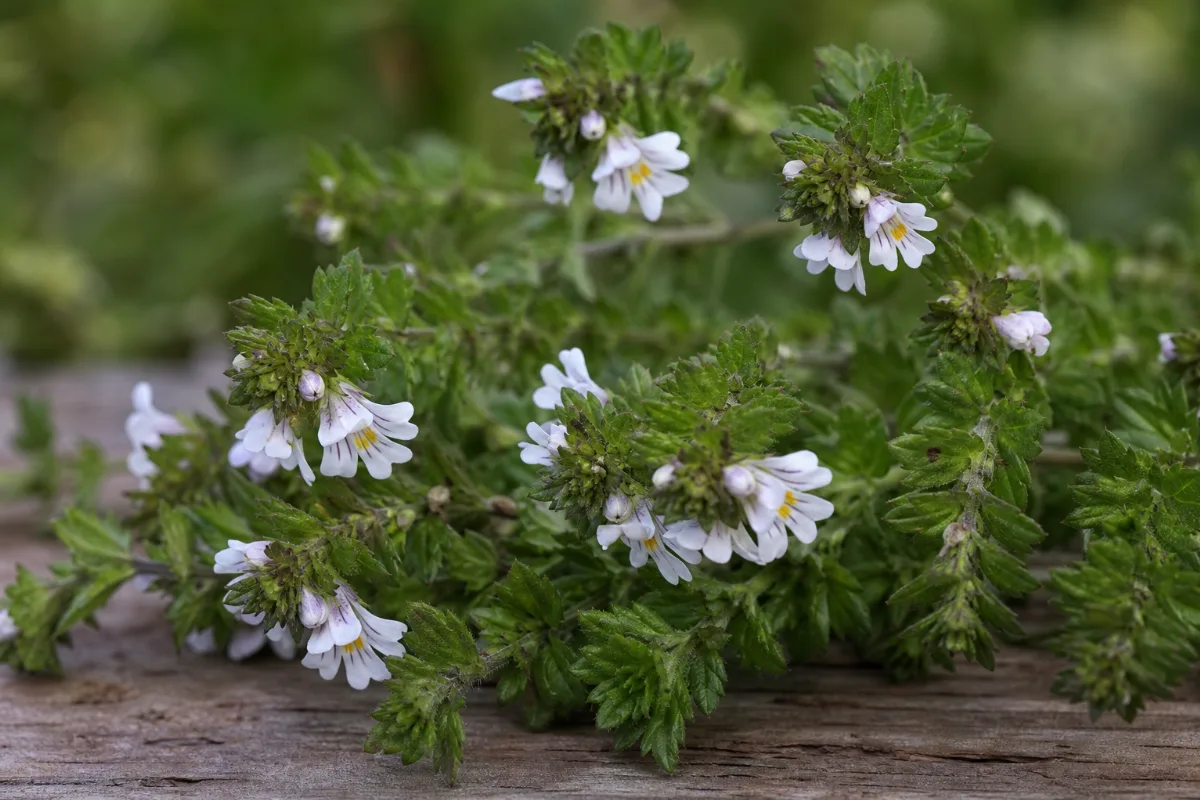
Eyebright is a small European plant. Its dried above-ground parts have been used for centuries as a tea or eye wash for sore eyes. Two small studies of manufactured eye drops exist, and the EU herbal committee found no adequate evidence for the traditional uses. It advised against homemade preparations in the eye, because they cannot be made sterile.
General information, not medical advice. Last substantive update · Not medically reviewed. A named clinician has not signed off on this page. How this page is made
About Eyebright
Eyebright (Euphrasia officinalis aggregate) is a small European plant whose dried above-ground parts have been used on the eyes since at least the 14th century. Human research is small: one open study of manufactured drops in 65 adults and one placebo-controlled trial in 84 premature babies. The EU herbal committee found no adequate evidence for the traditional uses and advised against homemade eye preparations.
What it is
Eyebright is a small herb of the family Orobanchaceae. The dried above-ground parts are used, usually as a fresh tea, a tincture, or in manufactured eye drops.
The plant name is a moving target. Botanists disagree about where one Euphrasia species ends and another begins, and the EU report calls Euphrasia officinalis an ambiguous name. Species differ in their chemistry, so a product label should name the species. The main compounds are flavonoids, an iridoid called aucubin, phenolic acids and tannins.
Traditional and current uses
Texts from about 1300 onward describe eyebright for diseases of the eye. Tea was made fresh and used as a compress or rinse. Tea or tincture by mouth, and a nasal ointment, were used for colds.
Today it appears mostly as manufactured eye drops, many of them homeopathic or anthroposophic types. The FDA says eye products labelled homeopathic should not be marketed in the US and are not approved.
What the research shows
A 2000 study followed 65 adults with conjunctivitis who used manufactured Euphrasia drops. Most (81.5%) recovered fully, but nobody was given a dummy treatment, and many cases of pink eye clear up alone. The EU committee judged the study of limited value.
A 2020 trial in 84 premature babies with eye discharge compared Euphrasia drops with saline. The main result was 55.0% vs 51.2% (not significantly different). Both studies were done by groups linked to anthroposophic medicine, and the babies' drops were made by Weleda.
Everything else is laboratory or animal work, or tradition.
At a glance
Traditional uses history, not proof
- Tea used as an eye compress or wash for conjunctivitis, sore eyelids, styes and tired eyes
- Tea or tincture by mouth, and a nasal ointment, for colds and a runny nose
- Homeopathic and anthroposophic eye drops (a modern manufactured form)
Studied for research
- Conjunctivitis (manufactured drops, open study, no comparison group), very low
- Eye discharge in premature babies (manufactured drops vs saline, no clear difference), low
- Eye allergy: named in a 2003 review, no result in the abstract, insufficient
- Eye-cell, antioxidant, germ-slowing and nerve-cell findings: laboratory only
- Blood sugar: one rat study only
Main compounds
- Flavonoids (apigenin, luteolin, quercetin, kaempferol)
- Iridoid glycosides, mainly aucubin (about 0.05% in one report)
- Phenolic acids (caffeic and chlorogenic acid) and tannins
- A small amount of essential oil in some species
Common forms
- Fresh tea (infusion) of the dried herb
- Tincture (alcohol extract)
- Manufactured single-dose eye drops, often homeopathic-type
- Nasal ointment made with the tincture (traditional)
Research links: Regulator: EU herbal committee public statement on eyebright (2010) · Trial: Euphrasia eye drops in preterm babies (2020) · Study: Euphrasia eye drops in conjunctivitis (2000) · Research Library · Genes & Biomarkers Library
The plant and its history
- Accepted scientific name
- Euphrasia officinalis L.
- Naming authority
- ACCEPTED in the GBIF backbone (key 8106874; Sp. Pl.: 604, 1753). The commonly sold plant is a group of closely related species ('aggregate'); the EU report names Euphrasia officinalis L. and Euphrasia rostkoviana Hayne. GBIF treats E. rostkoviana Hayne as a synonym that points to the accepted subspecies Euphrasia officinalis subsp. pratensis (key 7494089).
- Synonyms
- Euphrasia rostkoviana Hayne (GBIF synonym of E. officinalis subsp. pratensis); Euphrasia stricta (E. stricta J.P.Wolff ex J.F.Lehm. is a separate accepted species in GBIF; the EU report treats 'E. stricta' as an alternative name)
- Common names
- eyebright (English); Augentrost (German); euphraise, casse-lunettes (French); ojo brillante (Spanish); ogentroost (Dutch)
- Botanical family
- Orobanchaceae (GBIF). The 2010 EU report gives the older family Scrophulariaceae.
- Classification
- Plantae > Tracheophyta > Magnoliopsida > Lamiales > Orobanchaceae > Euphrasia > Euphrasia officinalis
- Native range
- Not verified in the sources read (the EU report describes E. stricta as a well-known European species).
- Habitat
- Not verified.
- What the plant looks like
- Roots: Not verified; eyebright is a small annual herb (not confirmed in sources read).; Stems: Euphrasia stricta is described as 2 to 40 cm high (EU report).; Leaves: E. stricta can be told from E. officinalis by curved hairs on the tops of the leaves (EU report).; Flowers: The herb is collected in flower (German pharmacopoeia description in the EU report).; Fruit: Not relevant.
- Cultivation
- Not verified.
- Harvest and processing
- The EU report describes the dried aerial parts, collected in flower; one handbook says harvested before flowering. The sources disagree.
- Look-alikes and adulterants
- Name: Euphrasia stricta, E. nemorosa and other Euphrasia species; Note: Sold and used interchangeably; their phenolic chemistry differs, and the genus classification is contradictory (EU report; Gawenda-Kempczynska 2022).
- Sustainability and conservation
- Not assessed in the sources read.
Traditional use and history history, not clinical proof
| Tradition or era | Documented use | Source |
|---|---|---|
| Medieval Europe (about 1300 onward) | Described as curing 'all evils of the eye' in the 14th century; named in a 1305 text; eye waters and syrups. | s-ema-hmpc-assessment |
| 19th-century European floras and homeopathy | Listed in botanical and medical books, including Hahnemann's 1826 materia medica, for eye and catarrh complaints. | s-ema-hmpc-assessment |
| Anthroposophic medicine, 20th century | Eye drops from Euphrasia rostkoviana used for more than 70 years, according to the authors of the 2000 cohort study. | p11152054 |
| EU regulation, 2010 | HMPC concluded no monograph can be established; eye use of homemade preparations not recommended. | s-ema-hmpc-statement |
Traditional use shows how a plant was used. It does not show that a supplement works or is safe today.
What is inside, and how it may work
What the plant contains and how those compounds act in cells and animals. Laboratory and animal mechanisms are not proven effects in people.
Main compounds
| Compound | Family | Where it is concentrated | Activity studied | Level of evidence |
|---|---|---|---|---|
| Aucubin PubChem 91458 | iridoid glycoside | Herb About 0.05% (EU report quoting Blazics 2008) | The EU report proposes anti-inflammatory activity from iridoids; not tested here. 5 17 | Pharmacological theory |
| Apigenin PubChem 5280443 | flavonoid | Herb Flavonoids together about 0.38% (EU report) | Not tested alone in the sources read. 5 17 | Laboratory research |
| Luteolin PubChem 5280445 | flavonoid | Herb Part of the 0.38% flavonoids | Not tested alone. 5 17 | Laboratory research |
| Quercetin PubChem 5280343 | flavonoid | Herb Part of the 0.38% flavonoids | Not tested alone. 5 17 | Laboratory research |
| Kaempferol PubChem 5280863 | flavonoid | Herb Part of the 0.38% flavonoids | Not tested alone. 5 17 | Laboratory research |
| Caffeic acid and its sugar and ester compounds PubChem 689043 | phenolic acid | Herb Hydroxycinnamic derivatives about 1.97% (EU report quoting Blazics 2008) | A glycosylated caffeic acid fraction had the strongest antioxidant activity in test tubes. 3 5 17 | Laboratory research |
| Chlorogenic acid PubChem 1794427 | phenolic acid | Herb Not given separately | Not tested alone. 5 17 | Laboratory research |
| Tannins | polyphenols | Herb About 0.56% (EU report) | The EU report proposes an astringent action; not tested for eyes. 5 | Pharmacological theory |
| Essential oil (hexadecanoic acid, thymol, linalool, anethole) | volatile oil and fatty acids | Aerial parts (not stated in abstract) Hexadecanoic acid 18.47%, thymol 7.97%, linalool 4.65%, anethole 4.09% of the oil | Slowed most tested microbes in the test tube. 15 | Laboratory research |
Mechanisms, receptors and pathways
| Target or pathway | Gene or receptor | What was found | Level |
|---|---|---|---|
| Inflammatory messengers (IL-1 beta, IL-6, TNF-alpha, IL-10) | IL1B, IL6, TNF, IL10 | Ethanol and ethyl acetate extracts lowered the output of these proteins by human corneal cells in a dish. 16 | Laboratory research |
| Oxidative stress and COX-2 / iNOS in UVB-exposed corneal cells | PTGS2 (COX-2), NOS2, HMOX1, SOD2, GSS | A chamomile plus Euphrasia drop lowered reactive oxygen species and COX-2, IL-1 beta and iNOS activity and improved wound healing in cells. 2 | Laboratory research |
| Radical scavenging | Caffeic acid and flavonoid fractions neutralised ABTS and DPPH radicals. 3 | Laboratory research | |
| Cholinesterase enzymes and amyloid-beta toxicity | ACHE, BCHE | Extracts were tested for cholinesterase blocking and raised survival of nerve-type cells exposed to amyloid-beta by 17.5 to 22.6%. 20 | Laboratory research |
| Microbe growth | Essential oil slowed all microbes tested except Pseudomonas aeruginosa. 15 | Laboratory research | |
| Astringent and anti-inflammatory action (proposed) | The EU report hypothesises astringent action from tannins and anti-inflammatory action from iridoids but found no data on either for eye use. 5 | Pharmacological theory | |
| Blood glucose | An aqueous extract lowered blood sugar in diabetic rats (reported by the EU report). 5 | Animal research |
Absorption, metabolism and elimination
- Absorption
- No data. The EU report lists pharmacokinetic data as not available.
- Distribution
- No data.
- Metabolism
- No data.
- Elimination
- No data.
- Bioavailability
- Unknown. Whether any compound reaches the eye tissue from a tea or drop has not been studied in the sources read.
Isolated compounds versus whole extracts
No single compound has been shown to explain a benefit. Results depend on how the extract is made: in corneal cells the heptane extract was toxic and did not scavenge radicals, while ethanol and ethyl acetate extracts did. Different Euphrasia species also differ in their chemistry, so a result from one extract or species does not transfer to another.
Nutritional composition
Eyebright is used as a herb, not as a source of nutrients. No nutrient values were read.
1 low certainty5 very low certainty4 not enough evidence
What was looked at
The 10 benefits and uses checked for Eyebright, each with how strong the evidence is. Tap one to open it.
- Tired, irritated or sore eyes, eyelid inflammation and styes (traditional use)Not enough evidence
- Conjunctivitis (pink eye) treated with manufactured Euphrasia eye dropsVery low certainty
- Eye discharge in premature babies (Euphrasia drops compared with saline)Low certainty
- Eye allergy symptomsNot enough evidence
- Calming and protective signals in eye-cell laboratory studiesVery low certainty
- Colds and runny nose (traditional use)Not enough evidence
- Blood sugar (rat study only)Not enough evidence
- Nerve-cell protection and memory (laboratory only)Very low certainty
- Germ-slowing effect in the test tubeVery low certainty
- Antioxidant activity in test tubesVery low certainty
Lab markers tracked in the studies
Eye discharge cleared without antibiotics (preterm babies)Redness and tearing in the babies' eyesConjunctivitis symptoms (redness, swelling, secretion, burning, foreign-body feeling)Inflammation messengers made by corneal cells (IL-1 beta, IL-6, TNF-alpha, IL-10)Blood glucose (rats)Survival of nerve-type cells exposed to amyloid-beta
What is Eyebright good for?
The main proposed uses and how strong the human evidence is for each. 'Insufficient' means no adequate human trial was found. Rows based only on tradition or lab work are marked that way.
Benefits, one by one
Each card is a research question, not a promise. Tap a goal to filter. Open a card to see the studies, doses and limits.
Tired, irritated or sore eyes, eyelid inflammation and styes (traditional use)
Not enough evidenceEyebright tea has been used in Europe on the eyes since at least the 14th century. It was used for conjunctivitis, sore eyelids (blepharitis), styes and tired eyes. The EU herbal committee looked at this use and found no adequate data to support it.
2 studiesTraditionally a fresh tea (infusion) used as an eye compress or rinse…
Studies, doses and limits
What the trials found
No human study of homemade eyebright tea on the eyes was found by the EU committee, which searched the literature up to early 2009. We found nothing newer.
Results
Traditional use only. The committee said the benefit is undocumented and that putting homemade preparations in the eye is not hygienic and not safe.
Effect sizes as reported
No numbers: no study.
Why this rating
Long use is not proof. No controlled study exists for tea or compresses.
Form and dose studied
Traditionally a fresh tea (infusion) used as an eye compress or rinse; the EU committee did not recommend this use. No amounts are given on this page.
Who was studied
Adults with minor eye irritation in the older European texts.
Limits
Tradition cannot show whether a person would have got better anyway; quality and cleanliness of homemade preparations cannot be guaranteed.
Why researchers looked
The name and the long tradition come from this use.
Traditional use
The EU assessment traces use as an eye medicine to the early 1300s in European texts, and lists conjunctivitis, blepharitis, eye fatigue, pus-forming eye inflammation and styes as traditional uses. Tea was made fresh and applied as a compress or eye rinse.
Proposed mechanism Pharmacological theory
The EU committee proposed that tannins may act as an astringent and iridoids such as aucubin as anti-inflammatory agents. It noted that no study had tested these ideas for eye use.
A proposed mechanism does not show that the effect happens in people.
Homemade eye preparations cannot be made sterile at home. See the Safety tab.
Conjunctivitis (pink eye) treated with manufactured Euphrasia eye drops
Very low certaintyOne open study followed 65 people with conjunctivitis who used manufactured Euphrasia eye drops. Most recovered within about two weeks. Because nobody was given a dummy treatment, it cannot show the drops did the work.
3 studiesManufactured single-dose Euphrasia eye drops (a product, not a home t…
Studies, doses and limits
What the trials found
Stoss and colleagues (2000): an open, one-group study in 12 practices in Germany and Switzerland. 65 people with inflammatory or catarrhal conjunctivitis used one drop 1 to 5 times a day and were checked after about 7 and 14 days.
Results
53 of 65 (81.5%) fully recovered, 11 (17.0%) clearly improved and 1 (1.5%) was slightly worse. No serious side effects were seen. Patients and doctors rated results 'good' to 'very good' in more than 85%.
Effect sizes as reported
81.5% complete recovery, 17.0% clear improvement (no comparison group, so no effect size).
Why this rating
Open design with no control group; most simple conjunctivitis clears on its own. The EU committee judged the study of limited value and said no conclusion on efficacy can be drawn.
Form and dose studied
Manufactured single-dose Euphrasia eye drops (a product, not a home tea). Amounts are not given in the abstract and none are stated here.
Who was studied
People with inflammatory or catarrhal conjunctivitis seen by doctors in Germany and Switzerland.
Limits
No placebo group; self-rated outcomes; one product; follow-up about 2 weeks; the EMA describes the study differently (a combination product, 80 patients), so check the original paper.
Why researchers looked
A group of doctors who use anthroposophic medicine wanted to describe how patients did in everyday practice.
Traditional use
Eye drops made from Euphrasia rostkoviana have been used in anthroposophic medicine for over 70 years, according to the study authors.
Proposed mechanism Preliminary mechanism
Not studied in this trial. The authors give an anthroposophic idea about the 'fluid organism' of the eye, which is not a scientific mechanism and is not accepted here.
A proposed mechanism does not show that the effect happens in people.
No serious adverse events reported. The abstract does not describe how the drops were made sterile. Antibiotics help only bacterial conjunctivitis, so have the cause checked.
Eye discharge in premature babies (Euphrasia drops compared with saline)
Low certaintyA randomized trial in 84 premature babies with eye discharge found no clear difference between Euphrasia drops and plain saline drops in the main result. There were small, non-significant trends toward less redness and tearing with Euphrasia.
2 studiesManufactured Euphrasia eye drops (Weleda). Amount per drop not given …
Studies, doses and limits
What the trials found
Meier-Girard and colleagues (2020): a double-blind trial at the Bern University Children's Hospital. Preterm babies were given Euphrasia eye drops (Weleda) or 0.9% saline, one drop in each eye four times a day for 96 hours.
Results
Treatment success (no discharge at 96 hours and no antibiotic eye drops): 22 (55.0%) with Euphrasia vs 21 (51.2%) with saline, p = 0.85. Redness cleared in 24 to 48 hours in 24 (92.3%) vs 12 (80.0%), p = 0.34. Relapse or first redness in 3 eyes (7.9%) vs 8 eyes (18.2%), p = 0.17. Tearing at 96 hours in 5 eyes (12.8%) vs 12 (27.3%), p = 0.10.
Effect sizes as reported
Main outcome: 55.0% vs 51.2%, p = 0.85 (no significant difference). The secondary differences were not statistically significant.
Why this rating
One small randomized, placebo-controlled trial with a null main result. The 'trend' findings are not reliable.
Form and dose studied
Manufactured Euphrasia eye drops (Weleda). Amount per drop not given in the abstract.
Who was studied
Preterm babies with white, yellow or green eye discharge.
Limits
Single centre; small; 96 hours only; secondary outcomes not significant; the abstract does not say how many babies were lost from each group.
Why researchers looked
Doctors wanted to know whether the drops could cut antibiotic use in newborns with sticky eyes.
Traditional use
The study authors come from an anthroposophic medicine group in Bern, which uses these drops.
Proposed mechanism Preliminary mechanism
Not tested.
A proposed mechanism does not show that the effect happens in people.
Babies under 30 days old with red sticky eyes need a doctor, not home treatment (NHS). No side-effect details are given in the abstract.
Eye allergy symptoms
Not enough evidenceA 2003 review lists Euphrasia officinalis among herbs that have been tested in controlled studies of eye allergy. The abstract gives no results for it, so we cannot say whether it helped.
1 studiesNot stated.
Studies, doses and limits
What the trials found
Bielory and Heimall (2003) review of complementary treatments for eye allergy. The abstract names Euphrasia officinalis, Petasites hybridus and Argemone mexicana as studied in controlled trials but does not report what was found. We did not read the full text.
Results
No result for Euphrasia can be taken from the abstract. In the same review, honey was no better than placebo and homeopathy gave conflicting results.
Effect sizes as reported
None reported in the abstract.
Why this rating
Only an abstract that does not report results; the underlying controlled study was not identified.
Form and dose studied
Not stated.
Who was studied
People with ocular allergy symptoms.
Limits
Abstract only; narrative review from 2003.
Why researchers looked
Eye allergy is common and many people look for natural options.
Traditional use
Not described in the abstract.
Proposed mechanism Pharmacological theory
Not described in the abstract.
A proposed mechanism does not show that the effect happens in people.
Not described.
Calming and protective signals in eye-cell laboratory studies
Very low certaintyIn dishes of human eye-surface (corneal) cells, some Euphrasia extracts lowered inflammation signals, and a chamomile-plus-Euphrasia drop protected cells from UV light damage. This is laboratory work only. It does not show a benefit in a person.
2 studiesLab extracts (ethanol, ethyl acetate, heptane) and a commercial combi…
Studies, doses and limits
What the trials found
No human data. Two cell studies: Paduch 2014 (three Euphrasia officinalis extracts on a corneal cell line) and Bigagli 2017 (a commercial chamomile and Euphrasia drop on UVB-exposed corneal cells).
Results
Extracts lowered pro-inflammatory messengers in cells and the combination drop kept more cells alive under UVB light. The result depended on the solvent used for the extract.
Effect sizes as reported
Cell results only; no effect sizes are meaningful for people.
Why this rating
Cell studies only; extracts and concentrations are not those of any product.
Form and dose studied
Lab extracts (ethanol, ethyl acetate, heptane) and a commercial combination drop; none is a home tea.
Who was studied
Cultured human corneal cells.
Limits
Cells in a dish; no human or animal eye tested; combination product cannot separate Euphrasia from chamomile.
Why researchers looked
Researchers wanted to find out whether the plant's traditional eye use has a biological basis.
Traditional use
Not applicable.
Proposed mechanism Laboratory research
In cells: lower IL-1 beta, IL-6 and TNF-alpha with ethanol and ethyl acetate extracts; a heptane extract was toxic. In the combination drop: less oxidative damage and less COX-2, IL-1 beta and iNOS activity.
A proposed mechanism does not show that the effect happens in people.
A heptane extract damaged cells at a low concentration, which shows that extract type matters.
Colds and runny nose (traditional use)
Not enough evidenceEyebright tea or tincture by mouth, and a nasal ointment made with the tincture, are traditional remedies for colds and a runny nose. The EU committee found no adequate data for any of them.
2 studiesTea, tincture and nasal ointment are traditional forms. No amounts ar…
Studies, doses and limits
What the trials found
No clinical study of eyebright for colds was found in the EU assessment.
Results
Traditional use only; efficacy undocumented.
Effect sizes as reported
No numbers: no study.
Why this rating
No trials; the tincture specification was not available to the EU committee.
Form and dose studied
Tea, tincture and nasal ointment are traditional forms. No amounts are given here.
Who was studied
Adults with colds in traditional books.
Limits
Tradition cannot show benefit; products were not standardised.
Why researchers looked
Traditional herbal books list it for catarrh and colds.
Traditional use
The EU assessment lists oral tea, a 1:5 tincture and a nasal ointment containing a 20% tincture as traditional uses for colds.
Proposed mechanism Pharmacological theory
Not studied.
A proposed mechanism does not show that the effect happens in people.
No safety data for oral or nasal use were found.
Blood sugar (rat study only)
Not enough evidenceA water extract of eyebright leaves lowered blood sugar in rats made diabetic, but not in rats with normal blood sugar. No human study exists.
1 studiesA water extract in rats; no human amounts exist.
Studies, doses and limits
What the trials found
No human data. The EU report describes one rat study (Porchezhian 2000): aqueous extract of Euphrasia officinalis leaves from India, 600 mg per kg, compared with phenformin.
Results
Blood sugar fell significantly 3 to 6 hours after the extract in diabetic rats; no significant drop in normal rats.
Effect sizes as reported
Rat results only; not read in the original paper.
Why this rating
Animal study seen only through the EU report.
Form and dose studied
A water extract in rats; no human amounts exist.
Who was studied
Diabetic and normal rats.
Limits
Not read in the original; animal only.
Why researchers looked
It was tested after traditional use in India was reported.
Traditional use
Not described.
Proposed mechanism Animal research
Not worked out.
A proposed mechanism does not show that the effect happens in people.
If a person takes diabetes medicine, nothing is known about combining it with eyebright.
Nerve-cell protection and memory (laboratory only)
Very low certaintyIn dishes of human nerve-type cells, some eyebright extracts kept more cells alive when exposed to a toxic protein linked to Alzheimer's disease. This has not been tested in animals or people.
1 studiesLab solvent extracts only.
Studies, doses and limits
What the trials found
No human data. One cell study (Ververis 2024) of seven extracts of Euphrasia officinalis grown in Greece.
Results
Cell survival rose by 17.5 to 22.6% with five extracts exposed to amyloid-beta; ethyl acetate and butanol extracts were most active.
Effect sizes as reported
17.5 to 22.6% higher cell survival in a dish.
Why this rating
Cell study only.
Form and dose studied
Lab solvent extracts only.
Who was studied
Human neuroblastoma cells.
Limits
No animal or human test; the Alzheimer's suggestion is only a hope.
Why researchers looked
Eyebright is mentioned in folk medicine for memory loss, and it contains antioxidants.
Traditional use
The 2024 paper says folk medicine used it for eye disorders and memory loss.
Proposed mechanism Laboratory research
Extracts blocked cholinesterase enzymes and had antioxidant activity in test tubes; five extracts raised cell survival by 17.5 to 22.6%.
A proposed mechanism does not show that the effect happens in people.
None known.
Germ-slowing effect in the test tube
Very low certaintyA distilled eyebright oil slowed the growth of most eye-infection germs in the test tube. This does not show that tea or drops treat eye infections.
1 studiesEssential oil, not a tea.
Studies, doses and limits
What the trials found
No human data. Novy 2015 tested the essential oil of Euphrasia rostkoviana against 7 microbes.
Results
Active against all tested microbes except Pseudomonas aeruginosa; best against Gram-positive bacteria at 512 micrograms per mL.
Effect sizes as reported
Minimum inhibiting concentration 512 micrograms per mL for Gram-positive bacteria.
Why this rating
Test-tube study of an oil, not an eyewash.
Form and dose studied
Essential oil, not a tea.
Who was studied
Seven lab microbes.
Limits
Not an eye treatment; the oil is not part of the teas or standard drops.
Why researchers looked
Eyebright is traditionally used for eye infections.
Traditional use
Used on infected eyes in older books (EU assessment).
Proposed mechanism Laboratory research
The oil contains thymol and linalool, which are known to slow some microbes; this was not tested alone.
A proposed mechanism does not show that the effect happens in people.
Essential oil safety in the eye was not studied.
Antioxidant activity in test tubes
Very low certaintyExtracts of eyebright, especially a fraction rich in caffeic acid compounds, scavenge free radicals in test-tube tests. This is chemistry, not proof of a health benefit.
2 studiesLab extracts.
Studies, doses and limits
What the trials found
No human data. Blazics 2009 (methanol extract and fractions of Euphrasia rostkoviana) and Paduch 2014 (ethanol and ethyl acetate extracts).
Results
Fraction 1 had IC50 11.88 micrograms per mL (DPPH) and 4.24 (ABTS). A heptane extract did not scavenge radicals.
Effect sizes as reported
IC50 11.88 and 4.24 micrograms per mL in two assays.
Why this rating
Test-tube assays only.
Form and dose studied
Lab extracts.
Who was studied
Chemical assays.
Limits
Chemistry only.
Why researchers looked
Oxidative stress is linked to inflammation, which is the traditional target.
Traditional use
Used for inflamed eyes in older books.
Proposed mechanism Laboratory research
Caffeic acid derivatives and flavonoid glycosides neutralise radicals in the assay.
A proposed mechanism does not show that the effect happens in people.
None.
Connections to the rest of health
How Eyebright connects to the rest of our health knowledge graph. Every link says what kind of connection it is. A safety link (for example to the liver) is a warning, not a benefit. A study that merely mentions a topic never creates a benefit link.
Explore every connection: goals, body systems, organs, symptoms, genes
A. Wellness goals
| Connected to | Kind of connection | Evidence status | Context | Studies |
|---|---|---|---|---|
| Seasonal Wellness | Traditional use | Not enough evidence | Eye allergy symptoms: A 2003 review lists Euphrasia officinalis among herbs that have been tested in controlled studies of eye allergy. The abstract gives no results for it, so we cannot say whether it helped. Colds and runny nose (traditional use): Eyebright tea or tincture by mouth, and a nasal ointment made with the tincture, are traditional remedies for colds and a runny nose. The EU committee found no adequate data for any of them. | 1 5 6 |
| Inflammation Balance | Preliminary mechanism | Very low certainty | Calming and protective signals in eye-cell laboratory studies: In dishes of human eye-surface (corneal) cells, some Euphrasia extracts lowered inflammation signals, and a chamomile-plus-Euphrasia drop protected cells from UV light damage. This is laboratory work only. It does not show a benefit in a person. | 16 2 |
| Immune Support | Traditional use | Not enough evidence | Colds and runny nose (traditional use): Eyebright tea or tincture by mouth, and a nasal ointment made with the tincture, are traditional remedies for colds and a runny nose. The EU committee found no adequate data for any of them. | 5 6 |
| Blood Sugar Balance | Preliminary mechanism | Not enough evidence | Blood sugar (rat study only): A water extract of eyebright leaves lowered blood sugar in rats made diabetic, but not in rats with normal blood sugar. No human study exists. | 5 |
| Memory Support | Preliminary mechanism | Very low certainty | Nerve-cell protection and memory (laboratory only): In dishes of human nerve-type cells, some eyebright extracts kept more cells alive when exposed to a toxic protein linked to Alzheimer's disease. This has not been tested in animals or people. | 20 |
| Brain Health | Preliminary mechanism | Very low certainty | Nerve-cell protection and memory (laboratory only): In dishes of human nerve-type cells, some eyebright extracts kept more cells alive when exposed to a toxic protein linked to Alzheimer's disease. This has not been tested in animals or people. | 20 |
| Immune Support | Preliminary mechanism | Very low certainty | Germ-slowing effect in the test tube: A distilled eyebright oil slowed the growth of most eye-infection germs in the test tube. This does not show that tea or drops treat eye infections. | 15 |
| Healthy Aging | Preliminary mechanism | Very low certainty | Antioxidant activity in test tubes: Extracts of eyebright, especially a fraction rich in caffeic acid compounds, scavenge free radicals in test-tube tests. This is chemistry, not proof of a health benefit. | 3 16 |
B. Body systems
| Connected to | Kind of connection | Evidence status | Context | Studies |
|---|---|---|---|---|
| Nervous System | Biological association | Not enough evidence | Studied for: Tired, irritated or sore eyes, eyelid inflammation and styes (traditional use) Studied for: Nerve-cell protection and memory (laboratory only) | 5 6 20 |
| Immune System | Biological association | Not enough evidence | Studied for: Eye allergy symptoms Studied for: Colds and runny nose (traditional use) | 1 5 6 15 |
| Respiratory System | Biological association | Not enough evidence | Studied for: Colds and runny nose (traditional use) | 5 6 |
| Endocrine System | Biological association | Not enough evidence | Studied for: Blood sugar (rat study only) | 5 |
C. Body parts and organs
| Connected to | Kind of connection | Evidence status | Context | Studies |
|---|---|---|---|---|
| Eyes | Adverse effect or risk | Not enough evidence | Non-sterile preparations may infect the eye; EU committee advises against; no eyebright case report found. Preparation or compound: Homemade eyebright tea, compress or wash |
6 5 19 |
| Eyes | Traditional use | Not enough evidence | Traditional eye use; two small drop studies; homemade eye preparations advised against by the EU committee. Preparation or compound: Eyebright tea or manufactured eye drops |
5 18 10 |
E. Health conditions
| Connected to | Kind of connection | Evidence status | Context | Studies |
|---|---|---|---|---|
| Conjunctivitis | Traditional use | Not enough evidence | One open study; antibiotics help only bacterial cases, so get the cause checked. Preparation or compound: Manufactured Euphrasia eye drops |
18 14 |
| Conjunctivitis | Potential benefit | Not enough evidence | One open study without a comparison group; get the cause checked. Preparation or compound: Manufactured Euphrasia eye drops |
18 14 |
G. Root causes and contributing factors
| Connected to | Kind of connection | Evidence status | Context | Studies |
|---|---|---|---|---|
| Non-sterile eye products | Adverse effect or risk | Not enough evidence | Cannot be made sterile; regulators warn against them. Preparation or compound: Homemade eye washes and compresses |
6 19 |
I. Biomarkers
| Connected to | Kind of connection | Evidence status | Context | Studies |
|---|---|---|---|---|
| Eye discharge cleared without antibiotics (preterm babies) | Biological association | Low certainty | Measured in trials: no-change. A lab change is not the same as a health benefit. | 10 |
| Redness and tearing in the babies' eyes | Biological association | Low certainty | Measured in trials: mixed. A lab change is not the same as a health benefit. | 10 |
| Conjunctivitis symptoms (redness, swelling, secretion, burning, foreign-body feeling) | Biological association | Very low certainty | Measured in trials: lowered. A lab change is not the same as a health benefit. | 18 |
| Inflammation messengers made by corneal cells (IL-1 beta, IL-6, TNF-alpha, IL-10) | Biological association | Very low certainty | Measured in trials: lowered. A lab change is not the same as a health benefit. | 16 |
| Blood glucose (rats) | Biological association | Not enough evidence | Measured in trials: lowered. A lab change is not the same as a health benefit. | 5 |
| Survival of nerve-type cells exposed to amyloid-beta | Biological association | Very low certainty | Measured in trials: raised. A lab change is not the same as a health benefit. | 20 |
J. Genes, receptors and enzymes
| Connected to | Kind of connection | Evidence status | Context | Studies |
|---|---|---|---|---|
| IL1B, IL6, TNF (inflammatory cytokines) | Preliminary mechanism | In vitro | Lowered by extracts in cultured corneal cells. | 16 |
| PTGS2 (COX-2) and NOS2 (iNOS) | Preliminary mechanism | In vitro | Lowered by a chamomile plus Euphrasia drop in UVB-stressed corneal cells. | 2 |
| ACHE, BCHE (cholinesterases) | Preliminary mechanism | In vitro | Tested in test-tube assays. | 20 |
L. Active compounds
| Connected to | Kind of connection | Evidence status | Context | Studies |
|---|---|---|---|---|
| Aucubin | Biological association | Pharmacological theory | The EU report proposes anti-inflammatory activity from iridoids; not tested here. Preparation or compound: Herb |
5 17 |
| Apigenin | Biological association | In vitro | Not tested alone in the sources read. Preparation or compound: Herb |
5 17 |
| Luteolin | Biological association | In vitro | Not tested alone. Preparation or compound: Herb |
5 17 |
| Quercetin | Biological association | In vitro | Not tested alone. Preparation or compound: Herb |
5 17 |
| Kaempferol | Biological association | In vitro | Not tested alone. Preparation or compound: Herb |
5 17 |
| Caffeic acid and its sugar and ester compounds | Biological association | In vitro | A glycosylated caffeic acid fraction had the strongest antioxidant activity in test tubes. Preparation or compound: Herb |
3 5 17 |
| Chlorogenic acid | Biological association | In vitro | Not tested alone. Preparation or compound: Herb |
5 17 |
| Tannins | Biological association | Pharmacological theory | The EU report proposes an astringent action; not tested for eyes. Preparation or compound: Herb |
5 |
| Essential oil (hexadecanoic acid, thymol, linalool, anethole) | Biological association | In vitro | Slowed most tested microbes in the test tube. Preparation or compound: Aerial parts (not stated in abstract) |
15 |
Each connection is stored with the ingredient, the connected record, the kind of connection, the evidence status, the supporting studies, the preparation or compound involved, and a review date (last reviewed October 25, 2026).
The evidence
The research centre for Eyebright. Every record here was checked against PubMed or the publisher's page; we never list a study we have not verified.
Evidence by outcome
Bars show how many studies we found for each outcome, not how well it works. People are added up across trials only (reviews are not added, to avoid double counting).
How we rate evidence
High certainty
Several well-run trials or reviews agree; further research is unlikely to change the picture much.
Moderate certainty
Good trials point the same way, but some doubt remains.
Low certainty
Small, short or inconsistent trials. The finding could change with better research.
Very low certainty
Very little or very weak human data. Treat as a possibility only.
Mixed findings
Trials or reviews disagree with each other.
Not enough evidence
Not enough human research to say either way.
Evidence against
Good research found no benefit, or found harm.
We take the reviewers' own risk-of-bias and GRADE statements where they exist, and otherwise judge from study size, design, consistency, directness and whether a product matches what is sold. Many publications do not make evidence high. Method note: We started from our existing eyebright summary, searched PubMed, read the abstract of every PubMed study cited, read the EU herbal committee assessment and public statement in full, read the FDA and NHS pages, and checked plant names in GBIF and NCBI Taxonomy and compounds in PubChem. Not verified: NCCIH had no eyebright page, LiverTox and LactMed had no entry, and Commission E, WHO and ESCOP were not read. Certainty ratings are the compiler's reading.
Study library: every study we checked 20
| Study | Design | People | Product, dose, length | Result |
|---|---|---|---|---|
| Bielory 2003 Review of complementary and alternative medicine in treatment of ocular allergies. Curr Opin Allergy Clin Immunol · PMID 14501441 · DOI |
Narrative review human review |
People with ocular allergy symptoms | Herbs including Euphrasia officinalis (details not in abstract) not stated in abstract Not applicable Not applicable · vs Not applicable |
The abstract says Euphrasia officinalis, Petasites hybridus and Argemone mexicana have been evaluated in controlled studies of ocular allergy. It gives no results for Euphrasia. Homeopathy results were conflicting. No result for Euphrasia can be taken from the abstract (Not reported) Methods, limits and fundingOutcomes: Evidence for complementary treatments of ocular allergy Limitations: Only the abstract was read; the controlled study of Euphrasia is not named or described there, so we cannot say what it found. Funding and conflicts: Not stated in the abstract. Read: abstract |
| Bigagli 2017 Pharmacological activities of an eye drop containing Matricaria chamomilla and Euphrasia officinalis extracts in UVB-induced oxidative stress and inflammation of human corneal cells. J Photochem Photobiol B · PMID 28704790 · DOI |
Laboratory (cell) study in-vitro |
Cultured human corneal epithelial cells (HCEC-12) exposed to UVB light | Commercial eye drop (Dacriovis) containing chamomile and Euphrasia officinalis extracts not stated in abstract Not applicable (lab concentrations) Not stated in abstract · vs Untreated or UVB-only cells |
The combination drop protected cells from UVB-induced death, improved wound healing, lowered reactive oxygen species and reduced COX-2, IL-1 beta and iNOS gene activity. Lab protection in cells; the effect of Euphrasia alone cannot be separated from chamomile (Not reported) Methods, limits and fundingOutcomes: Cell survival, wound healing, reactive oxygen species, COX-2, IL-1 beta, iNOS Limitations: Combination product, so Euphrasia cannot be singled out; cell study; no human data. Funding and conflicts: Not stated in the abstract. A commercial product was tested; maker link not checked. Read: abstract |
| Blazics 2009 Antioxidant activity of different phenolic fractions separated from Euphrasia rostkoviana Hayne. Acta Pharm Hung (article in Hungarian; English abstract read) · PMID 19526677 |
Laboratory study in-vitro |
Test-tube antioxidant assays | Methanol extract and fractions of Euphrasia rostkoviana Hayne not stated in abstract Not applicable Not applicable · vs Standard antioxidants |
The fraction dominated by a caffeic acid sugar compound was the strongest (IC50 11.88 micrograms per mL in DPPH and 4.24 in ABTS). Flavonoid glycoside fractions were similar but weaker. Strong in the test tube; no human meaning (Not reported) Methods, limits and fundingOutcomes: Radical scavenging (DPPH and ABTS assays) Limitations: Test-tube chemistry only; antioxidant activity in a tube does not show a benefit in the body. Funding and conflicts: Not stated in the abstract. Read: abstract |
| Carvalho 2009 Self-medication: initial treatments used by patients seen in an ophthalmologic emergency room. Clinics (Sao Paulo) · PMID 19690656 · DOI |
Cross sectional survey |
561 Consecutive patients at a university hospital eye emergency room in Sao Paulo, Brazil |
Homemade and manufactured eye treatments used before the visit (herbal infusions among them; eyebright not named in the abstract) not applicable Not applicable Not applicable · vs Not applicable |
40.5% of the 561 patients had used a self-treatment first. Boric acid solution (53.3%), saline (35.7%), herbal infusions (6.1%) and breast milk (4.8%) were the most frequent products used. Self-treatment at home is common even for urgent eye problems (Not reported) Methods, limits and fundingOutcomes: Which self-treatments people used before reaching the eye emergency room Limitations: Brazil only; does not say which herbs or whether any harm came from them; shows behaviour, not risk of a specific product. Funding and conflicts: Not stated in the abstract. Read: abstract |
| European Medicines Agency (HMPC) 2010 Assessment report on Euphrasia officinalis L. and Euphrasia rostkoviana Hayne, herba (EMA/HMPC/246799/2009) European Medicines Agency (HMPC) · Source |
Authoritative regulator assessment document |
Not applicable | Not applicable not applicable Not applicable Not applicable · vs Not applicable |
Judged the two published clinical studies (Stoss 2000 and a 2007 Swiss neonatal pilot) of limited value and found no pharmacology, pharmacokinetic or clinical safety data. It found no reports of serious adverse events or drug interactions, but also said the data are too few to conclude anything. Quality and safety of homemade eye preparations cannot be guaranteed; no monograph was set. Constituents (quoting Blazics 2008): flavonoids 0.38%, tannins 0.56%, aucubin 0.05%, hydroxycinnamic derivatives 1.97%. Rat studies: an aqueous extract lowered blood sugar in diabetic rats; no toxic signs at 0.1 to 6 g per kg in rats; no reproductive, genotoxicity or carcinogenicity tests. Guidance document (Not reported) Methods, limits and fundingOutcomes: Regulatory or public-health guidance Limitations: Dated 2010; the PDF text came out partly garbled, so some table values should be checked against the original; the older botanical family (Scrophulariaceae) is no longer the accepted one. Funding and conflicts: Not applicable (public regulator document). Read: full-text |
| European Medicines Agency (HMPC) 2010 Public statement on Euphrasia officinalis L. and Euphrasia rostkoviana Hayne, herba (EMA/HMPC/727465/2009) European Medicines Agency (HMPC) · Source |
Authoritative regulator statement document |
Not applicable | Not applicable not applicable Not applicable Not applicable · vs Not applicable |
Adopted 16 September 2010. The committee said no adequate data exist for the eye use or the nasal ointment, the efficacy of the claimed uses is undocumented, and 'external eye application of ex tempore preparations is not hygienic and not safe', so therapeutic use cannot be recommended and no Community herbal monograph can be established. Guidance document (Not reported) Methods, limits and fundingOutcomes: Regulatory or public-health guidance Limitations: Dated 2010; no newer EU statement was found. Funding and conflicts: Not applicable (public regulator document). Read: full-text |
| GBIF 2026 GBIF backbone: Euphrasia officinalis L. (key 8106874) GBIF · Source |
Taxonomic database record document |
Not applicable | Not applicable not applicable Not applicable Not applicable · vs Not applicable |
Euphrasia officinalis L. (Sp. Pl.: 604, 1753) is ACCEPTED in family Orobanchaceae, order Lamiales. Euphrasia rostkoviana Hayne (key 3171977) is a SYNONYM that points to the accepted subspecies Euphrasia officinalis subsp. pratensis (Fr.) Schubl. & G.Martens (key 7494089). Euphrasia stricta J.P.Wolff ex J.F.Lehm. (key 3171980) is a separate accepted species. Guidance document (Not reported) Methods, limits and fundingOutcomes: Regulatory or public-health guidance Limitations: Checked through the GBIF API on 2026-10-25; species limits in Euphrasia are disputed. Funding and conflicts: Not applicable (public regulator document). Read: API record |
| Gawenda-Kempczynska 2022 Phenolic acids as chemotaxonomic markers able to differentiate the Euphrasia species. Phytochemistry · PMID 35948137 · DOI |
Plant chemistry study plant chemistry |
Wild Euphrasia nemorosa, E. rostkoviana and E. stricta | Aerial herb of three Euphrasia species herb (aerial parts) Not applicable Not applicable · vs Not applicable |
Species differed a lot in phenolic content. E. rostkoviana had the highest total polyphenols and flavonoids; E. stricta the most phenolic acids. Content also depended on habitat. Chemistry differs by species and habitat (Not reported) Methods, limits and fundingOutcomes: Phenolic content by species Limitations: Chemistry only. It shows that products from different Euphrasia species or sites will not be the same. Funding and conflicts: Authors declare no competing interests. Read: abstract |
| Kyei 2020 Unorthodox ophthalmic preparations on the Ghanaian market: a potential risk for ocular and enteric infections. Afr Health Sci · PMID 33402940 · DOI |
Laboratory survey of products product survey |
27 Herbal and homeopathic eye preparations bought in ten regions of Ghana |
Unorthodox (herbal and homeopathic) eye preparations; eyebright not named in the abstract not applicable Not applicable Not applicable · vs Not applicable |
All 27 samples were contaminated with bacteria and most with fungi, including Staphylococcus aureus, Pseudomonas, Klebsiella and E. coli. The bacteria were resistant to all the common antibiotics tested except ciprofloxacin and gentamicin. Every product tested was contaminated (Not reported) Methods, limits and fundingOutcomes: Bacteria and fungi in the products Limitations: Ghana market only; eyebright is not named in the abstract; shows what can happen with unregulated eye products, not what is in any specific eyebright product. Funding and conflicts: Not stated in the abstract. Read: abstract |
| Meier-Girard 2020 Euphrasia Eye Drops in Preterm Neonates With Ocular Discharge: A Randomized Double-Blind Placebo-Controlled Trial. Front Pediatr · PMID 32850558 · DOI |
Randomized double blind placebo controlled trial |
84 Preterm babies with white, yellow or green eye discharge at one Swiss children's hospital |
Euphrasia eye drops (Weleda AG), manufactured product not stated in abstract One drop in each eye four times a day (concentration not stated in abstract) 96 hours · vs 0.9% saline drops |
Treatment success: 22 (55.0%) with Euphrasia vs 21 (51.2%) with saline (p = 0.85). Redness cleared in 24 to 48 hours in 24 (92.3%) vs 12 (80.0%) (p = 0.34). Relapse or first redness in 3 eyes (7.9%) vs 8 eyes (18.2%) (p = 0.17). Tearing at 96 hours in 5 eyes (12.8%) vs 12 eyes (27.3%) (p = 0.10). No significant difference on the main outcome; small non-significant trends for redness and tearing (Not reported) Methods, limits and fundingOutcomes: No eye discharge at 96 hours and no antibiotic eye drops (treatment success); redness, tearing Limitations: Small single-centre trial; secondary results were not statistically significant; one product; 96 hours only. The abstract does not say the drops were sterile or how many babies were lost from the groups. Funding and conflicts: Not stated in the abstract. The drops were made by Weleda AG; the authors are from an anthroposophic medicine institute; maker links not checked in the full text. Registration: ClinicalTrials.gov NCT04122300 Read: abstract |
| NCBI Bookshelf (LiverTox 2026 LiverTox and LactMed search for eyebright or Euphrasia (nothing found) NCBI Bookshelf (LiverTox, LactMed) · Source |
Database search (nothing found) document |
Not applicable | Not applicable not applicable Not applicable Not applicable · vs Not applicable |
A Bookshelf search on 2026-10-25 for LiverTox or LactMed with eyebright or Euphrasia returned no entries. Guidance document (Not reported) Methods, limits and fundingOutcomes: Regulatory or public-health guidance Limitations: Absence from these databases does not mean the herb is safe; it means no entry was found. Funding and conflicts: Not applicable (public regulator document). Read: search result |
| NCBI Taxonomy 2026 NCBI Taxonomy: Euphrasia officinalis (taxid 290213) NCBI Taxonomy · Source |
Taxonomic database record document |
Not applicable | Not applicable not applicable Not applicable Not applicable · vs Not applicable |
Euphrasia officinalis is an active species-level entry in NCBI Taxonomy (taxid 290213). Guidance document (Not reported) Methods, limits and fundingOutcomes: Regulatory or public-health guidance Limitations: Checked through the NCBI API on 2026-10-25. Funding and conflicts: Not applicable (public regulator document). Read: API record |
| NCCIH (US National Institutes of Health) 2026 NCCIH eyebright page (not found) NCCIH (US National Institutes of Health) · Source |
Authoritative fact sheet (not found) document |
Not applicable | Not applicable not applicable Not applicable Not applicable · vs Not applicable |
Not found: nccih.nih.gov/health/eyebright returned page-not-found on 2026-10-25. Guidance document (Not reported) Methods, limits and fundingOutcomes: Regulatory or public-health guidance Limitations: No fact sheet exists at the address tried; none confirmed. Funding and conflicts: Not applicable (public regulator document). Read: not found |
| NHS (UK) 2024 Conjunctivitis (NHS) NHS (UK) · Source |
Public health patient guidance document |
Not applicable | Not applicable not applicable Not applicable Not applicable · vs Not applicable |
Treatment depends on the cause; antibiotics help only bacterial conjunctivitis, not viral or allergic. Cleaning crusts with a cotton wool pad and a cold flannel are self-care steps. See a GP if symptoms have not cleared within 7 days, if a baby has red sticky eyes (urgent if under 30 days), or if you wear contact lenses and have symptoms. Get urgent help for eye pain, sensitivity to light, changes in vision or very red eyes. Page last reviewed 23 April 2024. Guidance document (Not reported) Methods, limits and fundingOutcomes: Regulatory or public-health guidance Limitations: Does not mention eyebright. Funding and conflicts: Not applicable (public regulator document). Read: full-text |
| Novy 2015 Composition and Antimicrobial Activity of Euphrasia rostkoviana Hayne Essential Oil. Evid Based Complement Alternat Med · PMID 26000025 · DOI |
Laboratory study in-vitro |
Seven microbes linked to eye infections | Essential oil of Euphrasia rostkoviana Hayne (aerial parts, not stated in abstract) not stated in abstract Not applicable Not applicable · vs Not applicable |
More than 70 compounds; the main ones were hexadecanoic acid (18.47%), thymol (7.97%), myristic acid (4.71%), linalool (4.65%) and anethole (4.09%). The oil slowed all microbes tested except Pseudomonas aeruginosa; best activity against Gram-positive bacteria at 512 micrograms per mL. Lab activity of an oil that is not in teas or standard eye drops (Not reported) Methods, limits and fundingOutcomes: Oil composition and effect on microbes Limitations: Test-tube study of a distilled oil, not an eyewash or tea; strong enough to matter in a lab does not mean it treats an eye infection. Funding and conflicts: Not stated in the abstract. Read: abstract |
| Paduch 2014 Assessment of eyebright (Euphrasia officinalis L.) extract activity in relation to human corneal cells using in vitro tests. Balkan Med J · PMID 25207164 · DOI |
Laboratory (cell) study in-vitro |
Cultured human corneal epithelial cells (10.014 pRSV-T line) | Ethanol, ethyl acetate and heptane extracts of Euphrasia officinalis L. not stated in abstract Not applicable (lab concentrations) 24-hour exposure · vs Untreated cells |
Heptane extract was toxic to cells at 25 micrograms per mL and did not scavenge free radicals. All three extracts lowered IL-1 beta, IL-6, TNF-alpha and also IL-10 output by the corneal cells. Lab signals only; no result in people (Not reported) Methods, limits and fundingOutcomes: Cell toxicity, free-radical scavenging, nitric oxide, inflammatory signals (IL-1 beta, IL-6, TNF-alpha, IL-10) Limitations: Cell culture only; extracts are not the tea or drops people use; an anti-inflammatory signal here does not show benefit in an eye. Funding and conflicts: Not stated in the abstract. Read: abstract |
| PubChem 2026 PubChem compound records for eyebright constituents PubChem · Source |
Chemical database record document |
Not applicable | Not applicable not applicable Not applicable Not applicable · vs Not applicable |
Compound ids confirmed by name through the PubChem API on 2026-10-25: aucubin 91458, apigenin 5280443, luteolin 5280445, quercetin 5280343, kaempferol 5280863, caffeic acid 689043, chlorogenic acid 1794427. Guidance document (Not reported) Methods, limits and fundingOutcomes: Regulatory or public-health guidance Limitations: Confirms the chemicals exist and their ids, not that a given amount is in any product. Funding and conflicts: Not applicable (public regulator document). Read: API record |
| Stoss 2000 Prospective cohort trial of Euphrasia single-dose eye drops in conjunctivitis. J Altern Complement Med · PMID 11152054 · DOI |
Open label single arm prospective cohort |
65 People with inflammatory or catarrhal conjunctivitis treated by 12 anthroposophic doctors in Germany and Switzerland |
Euphrasia single-dose eye drops (Euphrasia rostkoviana Hayne), manufactured product not stated in abstract One drop 1 to 5 times a day (amount per drop not stated in abstract) About 7 to 14 days (follow-up at 7 and 14 days) · vs None |
53 of 65 (81.5%) fully recovered and 11 (17.0%) clearly improved; 1 (1.5%) slightly worse; no serious adverse events. Most patients recovered, but with no comparison group natural recovery cannot be ruled out (Not reported) Methods, limits and fundingOutcomes: Redness, swelling, secretion, burning and foreign-body feeling; tolerability Limitations: Open label, no control group, no placebo; conjunctivitis often clears by itself; the EMA report describes this study differently (a homeopathic combination, 80 patients) so details should be checked; patients and doctors rated their own results. Funding and conflicts: Not stated in the abstract. Anthroposophic doctors tested an anthroposophic-type product; a link to the maker was not checked. Read: abstract |
| US Food and Drug Administration 2026 What You Should Know About Eye Drops (FDA) US Food and Drug Administration · Source |
Authoritative regulator consumer guidance document |
Not applicable | Not applicable not applicable Not applicable Not applicable · vs Not applicable |
Drugs put in the eyes bypass some natural defences and must be sterile to lower infection risk. Recalls of over-the-counter eye drops followed reports of infections, partial vision loss and blindness from contamination. FDA says not to use eye products labelled homeopathic because they should not be marketed and are not approved. Stop using eye drops and talk to a doctor if you get discharge, pain, vision changes or discomfort. Guidance document (Not reported) Methods, limits and fundingOutcomes: Regulatory or public-health guidance Limitations: General eye-drop guidance, not about eyebright by name. Funding and conflicts: Not applicable (public regulator document). Read: full-text |
| Ververis 2024 Chemical Characterization and Assessment of the Neuroprotective Potential of Euphrasia officinalis. Int J Mol Sci · PMID 39684612 · DOI |
Laboratory (cell) study in-vitro |
Human nerve-type (neuroblastoma) cells exposed to amyloid-beta; test-tube enzyme assays | Seven solvent extracts of Euphrasia officinalis L. grown in Greece not stated in abstract Not applicable Not applicable · vs Untreated cells |
Five extracts raised the survival of cells exposed to amyloid-beta by 17.5 to 22.6%. Ethyl acetate and butanol extracts were the most active. Lab signal in nerve cells only (Not reported) Methods, limits and fundingOutcomes: Antioxidant capacity, cholinesterase blocking, cell survival Limitations: Cell study only; authors speak of possible use for Alzheimer's disease, which is far from shown; no animal or human data. Funding and conflicts: Authors declare no conflicts of interest. Read: abstract |
What we do not know yet
- No controlled trial of homemade eyebright tea, compresses or washes.
- Only one placebo-controlled trial (premature babies) and it was null on the main outcome.
- No human data for oral or nasal use.
- No pregnancy, breastfeeding, liver, allergy or interaction data.
- No NCCIH, LiverTox or LactMed entry found; EU documents date from 2010.
How new research is added
New studies are found by a saved PubMed search and placed in a review queue. A person reads each one before it changes any rating or safety wording.
Lab markers
What changed in blood or saliva tests during trials. A changed number is not the same as feeling or being healthier, and we give no "normal ranges".
Metabolic 1
Blood glucose (rats)
Lowered in trials
The sugar level in blood.
Not enough evidenceResults and what it means
Why it was measured
The single animal experiment tested it.
Statistical vs. clinical meaning
Animal result; not a clinical outcome.
Safety implication
Nothing known about use with diabetes medicines in people.
| Study | Result | People | Product |
|---|---|---|---|
| 5 | Significantly lower 3 to 6 hours after an aqueous extract in diabetic rats (P<0.01); no significant fall in normal rats. Reported through the EU document; the original paper was not read. | Alloxan-diabetic and normal Wistar rats | Aqueous extract, 600 mg per kg by mouth |
Other 5
Eye discharge cleared without antibiotics (preterm babies)
No clear change in trials
Whether a baby's eye discharge was gone after 96 hours and no antibiotic eye drops were needed.
Low certaintyResults and what it means
Why it was measured
The trial's main outcome: can a gentle treatment spare newborns antibiotics.
Statistical vs. clinical meaning
No statistical difference on the main outcome.
Safety implication
Babies with red sticky eyes need medical assessment.
| Study | Result | People | Product |
|---|---|---|---|
| 10 | 22 of the Euphrasia group (55.0%) vs 21 of the saline group (51.2%) reached treatment success; p = 0.85. | Preterm babies with eye discharge | Euphrasia eye drops (Weleda) vs 0.9% saline, 1 drop per eye 4 times a day for 96 hours |
Redness and tearing in the babies' eyes
Mixed results in trials
Whether the eye was red and whether it watered at the end of the 96-hour trial.
Low certaintyResults and what it means
Why it was measured
These are comfort signs the authors looked at as secondary outcomes.
Statistical vs. clinical meaning
None of these differences was statistically significant; they are hints, not findings.
Safety implication
None reported in the abstract.
| Study | Result | People | Product |
|---|---|---|---|
| 10 | Redness resolved in 24 to 48 hours in 24 (92.3%) vs 12 (80.0%), p = 0.34. Relapse or first redness in 3 eyes (7.9%) vs 8 eyes (18.2%), p = 0.17. Tearing at 96 hours in 5 eyes (12.8%) vs 12 eyes (27.3%), p = 0.10. | Preterm babies with eye discharge | Euphrasia eye drops vs saline, 96 hours |
Conjunctivitis symptoms (redness, swelling, secretion, burning, foreign-body feeling)
Lowered in trials
Doctor and patient ratings of eye symptoms at about 7 and 14 days.
Very low certaintyResults and what it means
Why it was measured
The standard way to see whether eyes are getting better in everyday practice.
Statistical vs. clinical meaning
Recovery with no comparison group; many cases clear without treatment.
Safety implication
No serious adverse events reported.
| Study | Result | People | Product |
|---|---|---|---|
| 18 | 53 of 65 (81.5%) fully recovered and 11 (17.0%) clearly improved; 1 (1.5%) was slightly worse. | 65 people with conjunctivitis in 12 practices | Euphrasia single-dose eye drops, 1 to 5 drops a day, no control group |
Inflammation messengers made by corneal cells (IL-1 beta, IL-6, TNF-alpha, IL-10)
Lowered in trials
Proteins that cells release to signal inflammation, measured in a dish.
Very low certaintyResults and what it means
Why it was measured
To see whether the extracts calm inflammation signals in eye-surface cells.
Statistical vs. clinical meaning
Lab only. Lower IL-10 shows the effect is not simply 'anti-inflammatory'.
Safety implication
Extract type matters for cell damage.
| Study | Result | People | Product |
|---|---|---|---|
| 16 | All three extracts lowered IL-1 beta, IL-6, TNF-alpha and the anti-inflammatory IL-10 after 24 hours; heptane extract was also toxic at 25 micrograms per mL. | Cultured human corneal epithelial cells | Euphrasia officinalis ethanol, ethyl acetate and heptane extracts |
Survival of nerve-type cells exposed to amyloid-beta
Raised in trials
The share of cells that stay alive after a toxic protein is added.
Very low certaintyResults and what it means
Why it was measured
A lab stand-in for nerve protection.
Statistical vs. clinical meaning
A dish result with no animal or human support.
Safety implication
None assessed.
| Study | Result | People | Product |
|---|---|---|---|
| 20 | Cell viability rose by 17.5 to 22.6% with five of seven extracts. | Human neuroblastoma cells | Euphrasia officinalis extracts from Greece |
Safety
What studies and official sources say about side effects, medicines and who should check first. Each point shows what kind of evidence it comes from.
Main points to know 5
- Do not put homemade eyebright tea, compresses or washes in the eyes. The EU herbal committee said that putting homemade eyebright preparations on the eye is not hygienic and not safe, and it declined to set a monograph. Home preparations cannot be made sterile. The FDA says anything used in the eyes must be sterile, because contaminated eye products have been linked to infection, partial vision loss and blindness. We found no eyebright-specific infection case report, so the size of the risk for eyebright is unknown; the warning is based on the general rule for eye products and the committee's view. Authoritative guidance 6 5 19
- Eye products can be contaminated even when sold ready-made. In Ghana, all 27 herbal and homeopathic eye preparations tested were contaminated with bacteria, most with fungi too. Eyebright was not named in the abstract, so this shows what unregulated eye products can contain, not what a particular eyebright product contains. Other 9
- Eye problems can need real treatment, and delay can cost vision. The NHS lists eye pain, sensitivity to light, vision changes, very red eyes, and red sticky eyes in a baby under 30 days as reasons for urgent help. Antibiotics help only bacterial conjunctivitis. A person trying eyebright first may lose time. The EU committee also said medical supervision is needed if symptoms have not improved within 2 days. Authoritative guidance 14 5
- Very little human safety information exists. Two small studies of manufactured drops (65 adults and 84 premature babies) reported no serious side effects, but the EU committee said the 124 patients across the clinical reports it reviewed were too few to draw conclusions on safety. No safety data exist for tea by mouth. Tincture and nasal ointment uses are traditional only. Controlled trial 18 10 5
- Eyebright products labelled homeopathic. Many Euphrasia eye products are homeopathic-type. The FDA says eye products labelled homeopathic should not be marketed and are not approved. Outside the US the rules differ; the EU report lists only homeopathic Euphrasia products in several countries. Authoritative guidance 19 5
Side effects 4
| Effect | How often | Severity and recovery | Evidence |
|---|---|---|---|
| No adverse effects reported in the two small drop studies Absence of reports in small studies does not show safety. Not studied for homemade preparations. | No serious events among 65 adults; no side-effect details in the abstract of the 84-baby trial | none serious reported not applicable | Controlled trial 18 10 |
| Eye infection or irritation from a non-sterile preparation (general eye-product risk) General warning for eye products; no eyebright-specific case found. | Not established | can be serious, including vision loss (FDA, for contaminated eye products) not stated | Authoritative guidance 19 9 |
| Allergic reaction or contact dermatitis Not found: our PubMed search of Euphrasia/eyebright with allergy, dermatitis, adverse and toxicity terms gave no case report. The EU report lists no allergy data. Not finding a report is not proof it cannot happen. | Not established | unknown unknown | Insufficient |
| Local eye tolerance of homemade preparations The EU report says data on ocular toxicity and local tolerance are missing. | Not established | unknown unknown | Authoritative guidance 5 |
Liver
No liver injury case report for eyebright was found. LiverTox has no entry we could find, and our PubMed search found no case. Oral use is traditional only and rarely studied, so the absence of cases is weak reassurance. 11 5
How often. No frequency data exist.
Monitoring. No agency monitoring advice found. People with liver disease should ask a doctor before using any herbal product by mouth.
This is a safety connection. It is not evidence that Eyebright supports liver health.
Medicines and supplements 5
| With | Why it matters | Importance | Evidence | What to do |
|---|---|---|---|---|
| Other eye drops or ointments (glaucoma drops, antibiotic or steroid drops, lubricants) prescription | Not studied. Mixing products in the eye can change how each works and raises the chance of contamination. | Unknown. | Pharmacological theory Not enough evidence 19 | Do not add eyebright to the eye if you use eye medicine. Ask your eye doctor. |
| Diabetes medicines prescription | A water extract lowered blood sugar in diabetic rats. No human data. | Unknown. The rat result may not apply to people. | Animal research Very low certainty 5 | If you take diabetes medicine and want to use eyebright by mouth, ask a doctor or pharmacist. |
| Iron and other minerals (tannins in the herb) supplement | Tannins (about 0.56% according to a report quoted by the EU) can bind minerals in the gut in theory. Not tested for eyebright. | Unknown. | Pharmacological theory Very low certainty 5 | Theory only. A pharmacist can advise if you take mineral supplements. |
| Combination tinctures sold or described with eyebright other | The EU report describes a traditional mix of eyebright, passionflower and belladonna tinctures. Belladonna is a strong plant with its own dangers, so the safety of such a mix is not the safety of eyebright. | Not eyebright-specific. | Authoritative guidance Not enough evidence 5 | Check the ingredient list of any mix. |
| No drug-drug interaction report exists summary | The EU committee found no reports of drug interactions. That reflects a lack of study, not a finding of no interactions. | Unknown. | Authoritative guidance Not enough evidence 5 | Tell your doctor or pharmacist about any herb you use. |
Who should check first 6
| Situation | Advice | Evidence |
|---|---|---|
| Putting homemade preparations in or on the eye | Avoid (EU committee: not hygienic and not safe). | Authoritative guidance 6 5 |
| Eye pain, sensitivity to light, change in vision, or very red eyes | Get urgent medical help instead (NHS). | Authoritative guidance 14 |
| Babies, especially under 30 days old with red sticky eyes | See a doctor. The only trial in infants was in hospital preterm babies with a manufactured product. | Authoritative guidance 14 10 |
| Wearing contact lenses with eye symptoms | See a GP (NHS). Do not wear lenses until eyes are better. | Authoritative guidance 14 |
| Pregnancy and breastfeeding | Avoid unless a doctor agrees. No safety data were found; the EU report says reproductive toxicity tests were not performed, and LactMed has no entry we could find. | Authoritative guidance 5 11 |
| Known allergy to plants of the Orobanchaceae/Scrophulariaceae families | Unknown cross-reaction risk. No data found. | Insufficient |
Overdose, product quality and regulators
Summary. Very little. A rat study quoted in the EU report found no signs of toxicity from an aqueous extract at 0.1 to 6 g per kg by mouth over 72 hours. Reproductive toxicity, genotoxicity and carcinogenicity were not tested. In cells, a heptane extract was toxic to corneal cells at a low concentration.
Animal. Rats: no toxic symptoms at 0.1 to 6 g per kg (aqueous extract, acute), as reported in the EU assessment.
Human doses studied. Only manufactured eye drops in small studies; amounts not stated here.
High dose or long term signals. None studied.
Overdose response. No human overdose report found.
Genotoxicity. Not tested (EU report).
Toxic plant parts. The aerial parts (herb) are used. No toxic part is named in the sources read.
Home preparations are made fresh and cannot be sterile. Ready-made herbal or homeopathic eye products have been found contaminated in Ghana. Species mix-ups are possible because the genus is hard to tell apart: species differ in their chemistry, and the EU report says the classification of the genus is contradictory.
Contaminated unregulated eye products. All 27 herbal and homeopathic eye preparations collected in Ghana grew bacteria and most grew fungi. 9
Self-treatment of eyes. In a Brazilian eye emergency room, 40.5% of 561 patients had treated themselves first; herbal infusions were 6.1% of the products listed. The abstract does not say which herbs or any outcome. 4
Which species is in the product. E. rostkoviana, E. stricta and E. nemorosa differ in phenolic content. A product label should name the species. The EU report saw no major concern about adulteration with related species. 8 5
| Body | Action | Date |
|---|---|---|
| EMA / HMPC (EU herbal committee) (European Union) | No Community herbal monograph established; public statement of 16 September 2010 says efficacy of eye and nasal uses is undocumented and external eye application of ex tempore preparations is not hygienic and not safe. source | 2010-09-16 |
| US FDA (United States) | General eye-drop guidance: eye products must be sterile; eye products labelled homeopathic should not be marketed and are not approved. Not about eyebright by name. source | 2026 |
| NHS (UK) (United Kingdom) | Conjunctivitis guidance; does not mention eyebright. Used for urgent signs. source | 2024-04-23 |
When to get medical help
- Eye pain, sensitivity to light, or any change in vision, such as wavy lines or flashes (NHS).
- Very red eyes, or a red eye that is getting worse after using any eye product.
- A baby under 30 days old with red, sticky eyes (NHS: urgent).
- Discharge, swelling or pain after putting any herbal preparation in the eye. Stop and get medical help (FDA advice to stop eye drops with these signs).
- Symptoms not clearing within 7 days (NHS), or not improving within 2 days (EU committee).
Stop the supplement and contact a clinician or emergency service. In the US, Poison Control is 1-800-222-1222.
General information only, not medical advice. Ask a clinician or pharmacist before use, especially with medicines, in pregnancy or with a health condition. See the Natural Remedy Safety guide.
Frequently asked questions
Does eyebright work for conjunctivitis?
We cannot say. One open study of manufactured Euphrasia drops in 65 adults found most recovered, but it had no comparison group, and pink eye often clears without treatment. The EU committee found no adequate evidence. Antibiotics help only bacterial conjunctivitis, so it is worth having the cause checked.
Is it safe to use eyebright tea as an eye wash or compress?
No. The EU herbal committee said external eye use of homemade preparations is not hygienic and not safe. Homemade preparations cannot be made sterile, and the FDA links contaminated eye products to infection and vision loss. We found no eyebright-specific infection case report, so the exact risk is unknown.
Are eyebright eye drops from a shop safe?
Manufactured drops were used in two small studies with no serious side effects reported, but the studies were too small to prove safety. Many are homeopathic-type products; the FDA says eye products labelled homeopathic are not approved. Ask an eye doctor or pharmacist before using any eye drop.
Does eyebright help premature babies with sticky eyes?
Does eyebright help eye allergies?
Unknown. A 2003 review names it among herbs tested in eye allergy, but the abstract does not report results.
What does the EU say about eyebright?
Can I take eyebright by mouth or use it for colds?
Is eyebright safe in pregnancy or breastfeeding?
Does eyebright interact with medicines?
No interaction has been reported, but none has been studied. A rat study found lower blood sugar, so ask a doctor if you take diabetes medicine. Do not mix it into eye medicines.
Can eyebright cause liver or allergy problems?
What do the laboratory studies show?
When should I see a doctor about my eyes?
Get urgent help for eye pain, sensitivity to light, changes in vision, very red eyes, or a red sticky eye in a baby under 30 days old. See a GP if symptoms have not cleared within 7 days, or if you wear contact lenses and have symptoms.
Explore by health goal
Seasonal WellnessImmune SupportInflammation BalanceBlood Sugar BalanceMemory SupportBrain HealthHealthy Aging
Editorial transparency
- Written by
- AlternativeMed editorial team. Research compiled with AI assistance, then checked against PubMed records.
- Medical review
- None. This page has not been reviewed by a physician or pharmacist.
- First published
- 2026-10-25
- Last substantive update
- 2026-10-25
- How we research
- We started from our existing eyebright summary, searched PubMed, read the abstract of every PubMed study cited, read the EU herbal committee assessment and public statement in full, read the FDA and NHS pages, and checked plant names in GBIF and NCBI Taxonomy and compounds in PubChem. Not verified: NCCIH had no eyebright page, LiverTox and LactMed had no entry, and Commission E, WHO and ESCOP were not read. Certainty ratings are the compiler's reading.
- How we rate evidence
- See "How we rate evidence" in the Evidence tab.
- Independence
- No product is promoted on this page. No affiliate links are shown. Both drop studies came from groups linked to anthroposophic medicine, and the 2020 trial used drops made by Weleda; we flag this where it is stated.
Sources 20
Each source was opened and checked. Where we read only the abstract, it says so. The small numbers in the text point here.
- Bielory L, Heimall J.. Review of complementary and alternative medicine in treatment of ocular allergies.. Curr Opin Allergy Clin Immunol. 2003. PMID 14501441. DOI 10.1097/00130832-200310000-00013. (abstract)
- Bigagli E, Cinci L, D'Ambrosio M, et al.. Pharmacological activities of an eye drop containing Matricaria chamomilla and Euphrasia officinalis extracts in UVB-induced oxidative stress and inflammation of human corneal cells.. J Photochem Photobiol B. 2017. PMID 28704790. DOI 10.1016/j.jphotobiol.2017.06.031. (abstract)
- Blazics B, Alberti A, Kery A.. Antioxidant activity of different phenolic fractions separated from Euphrasia rostkoviana Hayne.. Acta Pharm Hung (article in Hungarian; English abstract read). 2009. PMID 19526677. (abstract)
- Carvalho RS, Kara-Jose N, Temporini ER, et al.. Self-medication: initial treatments used by patients seen in an ophthalmologic emergency room.. Clinics (Sao Paulo). 2009. PMID 19690656. DOI 10.1590/S1807-59322009000800005. (abstract)
- European Medicines Agency (HMPC). Assessment report on Euphrasia officinalis L. and Euphrasia rostkoviana Hayne, herba (EMA/HMPC/246799/2009). European Medicines Agency (HMPC). 2010. (full-text)
- European Medicines Agency (HMPC). Public statement on Euphrasia officinalis L. and Euphrasia rostkoviana Hayne, herba (EMA/HMPC/727465/2009). European Medicines Agency (HMPC). 2010. (full-text)
- GBIF. GBIF backbone: Euphrasia officinalis L. (key 8106874). GBIF. 2026. (API record)
- Gawenda-Kempczynska D, Olech M, Balcerek M, et al.. Phenolic acids as chemotaxonomic markers able to differentiate the Euphrasia species.. Phytochemistry. 2022. PMID 35948137. DOI 10.1016/j.phytochem.2022.113342. (abstract)
- Kyei S, Dogbadze E, Tagoh S, et al.. Unorthodox ophthalmic preparations on the Ghanaian market: a potential risk for ocular and enteric infections.. Afr Health Sci. 2020. PMID 33402940. DOI 10.4314/ahs.v20i1.58. (abstract)
- Meier-Girard D, Gerstenberg G, Stoffel L, et al.. Euphrasia Eye Drops in Preterm Neonates With Ocular Discharge: A Randomized Double-Blind Placebo-Controlled Trial.. Front Pediatr. 2020. PMID 32850558. DOI 10.3389/fped.2020.00449. (abstract)
- NCBI Bookshelf (LiverTox, LactMed). LiverTox and LactMed search for eyebright or Euphrasia (nothing found). NCBI Bookshelf (LiverTox, LactMed). 2026. (search result)
- NCBI Taxonomy. NCBI Taxonomy: Euphrasia officinalis (taxid 290213). NCBI Taxonomy. 2026. (API record)
- NCCIH (US National Institutes of Health). NCCIH eyebright page (not found). NCCIH (US National Institutes of Health). 2026. (not found)
- NHS (UK). Conjunctivitis (NHS). NHS (UK). 2024. (full-text)
- Novy P, Davidova H, Serrano-Rojero CS, et al.. Composition and Antimicrobial Activity of Euphrasia rostkoviana Hayne Essential Oil.. Evid Based Complement Alternat Med. 2015. PMID 26000025. DOI 10.1155/2015/734101. (abstract)
- Paduch R, Wozniak A, Niedziela P, et al.. Assessment of eyebright (Euphrasia officinalis L.) extract activity in relation to human corneal cells using in vitro tests.. Balkan Med J. 2014. PMID 25207164. DOI 10.5152/balkanmedj.2014.8377. (abstract)
- PubChem. PubChem compound records for eyebright constituents. PubChem. 2026. (API record)
- Stoss M, Michels C, Peter E, et al.. Prospective cohort trial of Euphrasia single-dose eye drops in conjunctivitis.. J Altern Complement Med. 2000. PMID 11152054. DOI 10.1089/acm.2000.6.499. (abstract)
- US Food and Drug Administration. What You Should Know About Eye Drops (FDA). US Food and Drug Administration. 2026. (full-text)
- Ververis A, Kyriakou S, Paraskeva H, et al.. Chemical Characterization and Assessment of the Neuroprotective Potential of Euphrasia officinalis.. Int J Mol Sci. 2024. PMID 39684612. DOI 10.3390/ijms252312902. (abstract)