Herbs & Botanicals · South African caffeine-free tea
Honeybush
Cyclopia intermedia · also called Honeybush tea, heuningbos, bergtee, mountain tea
Honeybush is a sweet, caffeine-free herbal tea from South Africa, made from the leaves and stems of Cyclopia plants. It is drunk for pleasure, and researchers study it for skin, hormone-related and blood-sugar effects. The human evidence is very thin: one skin trial of a special extract, and the rest is lab and animal work. The key caution: some extracts act on oestrogen receptors in the lab, so ask your doctor if you have a hormone-sensitive condition or take tamoxifen.
General information, not medical advice. Last substantive update · Not medically reviewed. A named clinician has not signed off on this page. How this page is made
About Honeybush
Honeybush (Cyclopia intermedia and other Cyclopia species) is a South African herbal tea made from leaves and stems, sold fermented or unfermented. It is caffeine-free and sweet-tasting. Its main polyphenols are mangiferin and hesperidin. The only human trial found tested a branded fermented extract on skin; other findings come from cells and animals, where some extracts act on oestrogen receptors. The main cautions are for hormone-sensitive conditions, hormone treatments such as tamoxifen, diabetes medicines, pregnancy and breastfeeding, where no human data exist. Related: rooibos. Ask a doctor or pharmacist about amounts.
What it is
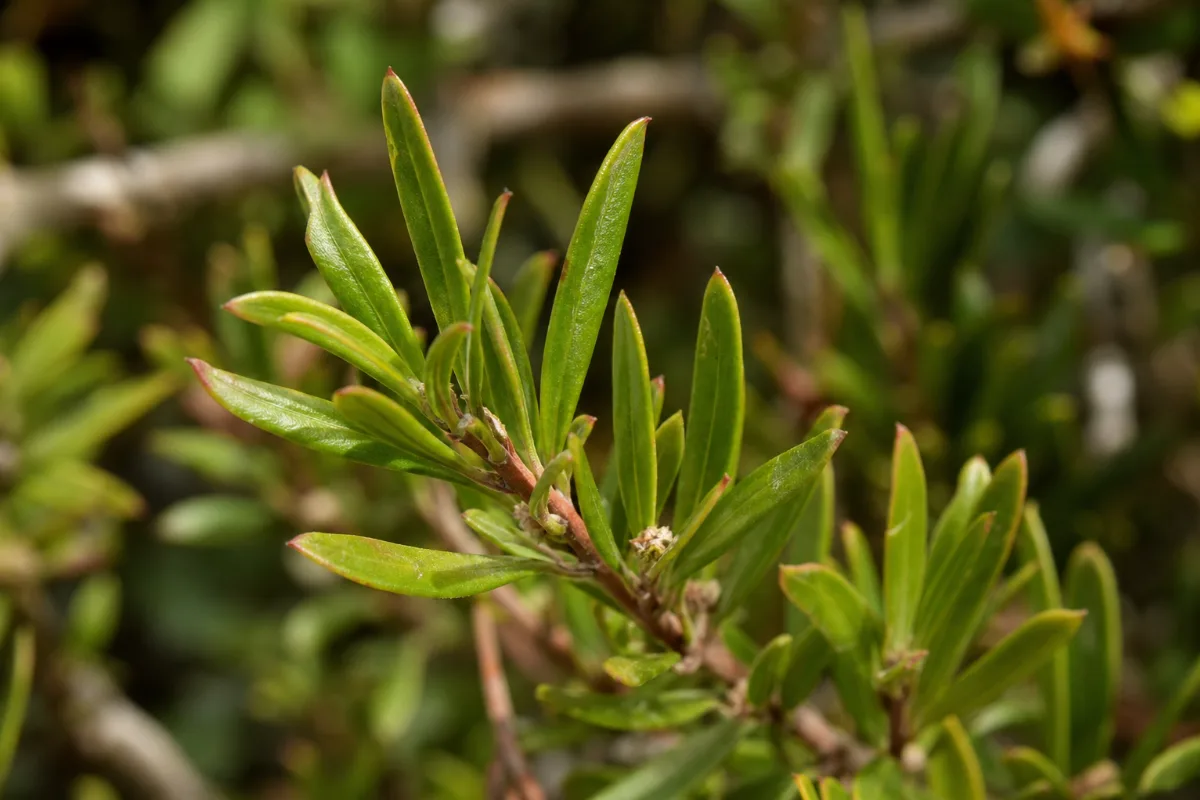
Honeybush is the name for several Cyclopia species from South Africa, mainly C. intermedia, C. subternata and C. genistoides. The leaves and stems are cut and brewed as a tea. It has a sweet taste and no caffeine.
It is not rooibos. Rooibos comes from a different plant, but both are South African herbal teas that people often compare.
What makes it distinctive
Honeybush is rich in mangiferin, a yellow polyphenol also found in mango, and in hesperidin. Mangiferin is highest in C. genistoides and in unfermented leaf. In pigs, only a small share of mangiferin was absorbed.
Some honeybush extracts act on oestrogen receptors in cells, which is why researchers study them and why this page has hormone cautions.
Historical and current uses
A decoction was traditionally used as a restorative and as an expectorant in chronic catarrh and pulmonary tuberculosis. Today it is mainly enjoyed as a hot or iced tea. No traditional use has been tested in a trial.
What the research shows
One randomised, placebo-controlled trial in 120 adults found that a fermented honeybush extract improved wrinkles, hydration and elasticity over 12 weeks. It tested a branded extract, not tea, and funding was not read.
A 2007 review said human studies of honeybush were absent. Everything else comes from cells and animals: effects on oestrogen receptors, breast cancer cells and rat tumours, glucose use in muscle cells, fat cells and bone cells. Lab antioxidant strength does not prove a health effect in people.
At a glance
Traditional uses history, not proof
- Restorative drink
- Expectorant in chronic catarrh and pulmonary tuberculosis (traditional, per a 2008 review)
Studied for research
- Skin wrinkles, hydration and elasticity: low certainty, one trial of a branded extract
- Plant-oestrogen (phytoestrogen) activity: lab and animal only
- Breast cancer cell and rat findings: lab and animal only
- Antioxidant and cell protection: lab and animal only
- Blood sugar: lab and animal only
- Weight and fat cells: lab and animal only
- Bone cell activity: cells only
Main compounds
- Mangiferin (a xanthone) and isomangiferin
- Hesperidin and other flavanones
- Other polyphenols; no caffeine
Common forms
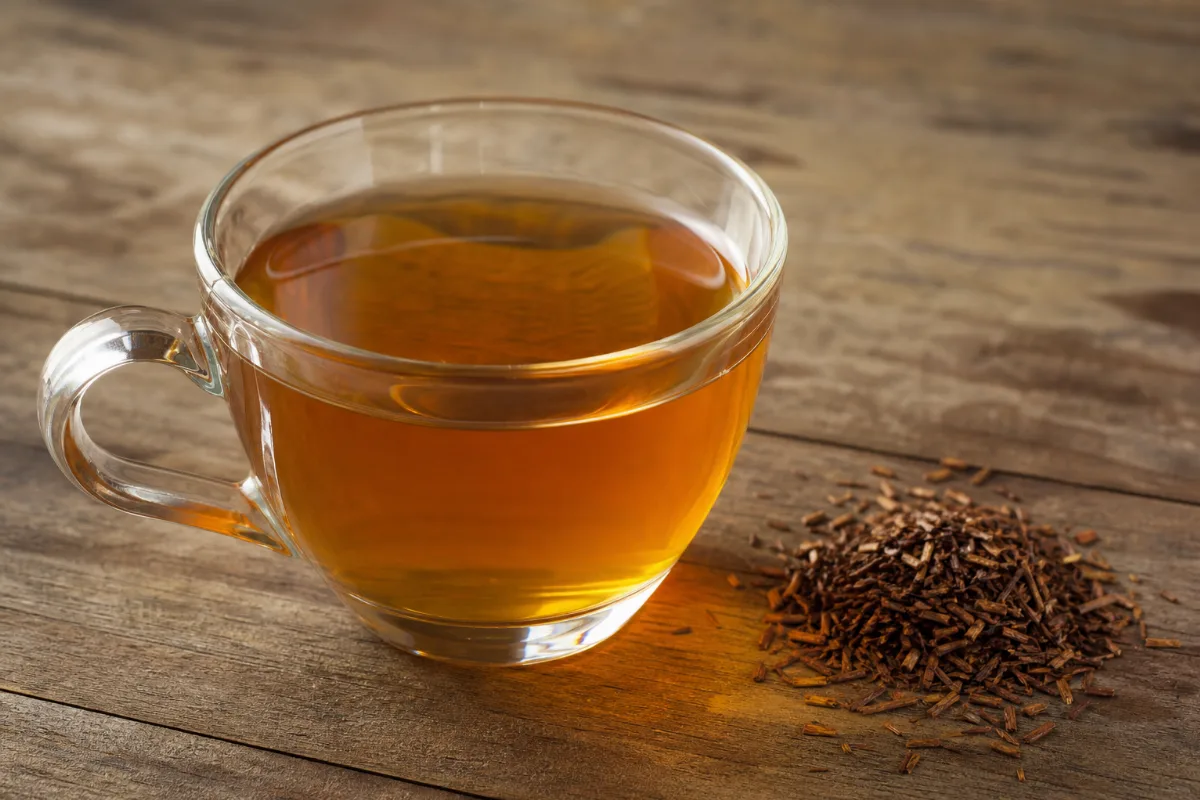
- Tea (dried leaf and stem, fermented or unfermented)
- Research extracts such as SM6Met, P104 and HU-018 (not the same as tea)
- Skin and cosmetic extracts (lab and one trial)
Research links: Skin-ageing trial (J Cosmet Laser Ther 2018) · Review of rooibos and honeybush (Phytother Res 2007) · Oestrogen receptor study (PLoS One 2013) · Tamoxifen combination in cells (Front Pharmacol 2022) · Research Library · Genes & Biomarkers Library
The plant and its history
- Accepted scientific name
- Cyclopia intermedia E.Mey.
- Naming authority
- E.Mey.
- Synonyms
- Other Cyclopia species are also sold as honeybush: C. subternata Vogel and C. genistoides (L.) R.Br. (both accepted in GBIF).
- Common names
- Honeybush (English); Honeybush tea (English); Heuningbos (Afrikaans); Bergtee (Afrikaans)
- Botanical family
- Fabaceae (legume family).
- Classification
- Plantae > Tracheophyta > Magnoliopsida > Fabales > Fabaceae > Cyclopia > Cyclopia intermedia
- Native range
- Indigenous to South Africa; one abstract places the species in the Western Cape and another in the south-west and south-east. Exact range not verified.
- Habitat
- A fynbos plant, per a 2023 abstract. Not otherwise verified.
- What the plant looks like
- Roots: Not verified.; Stems: Cut stems are included in the tea; per reviews, leaf and stem are used.; Leaves: Leaves are the main part used. Not verified in detail.; Flowers: Not verified.; Fruit: Not verified.
- Cultivation
- Not verified.
- Harvest and processing
- Honeybush is sold fermented (an oxidation step that turns the leaf brown and sweet-smelling) or unfermented. One lab study found fermentation lowered extract yield, polyphenol content and lab antioxidant activity, and that unfermented leaf kept the most mangiferin.
- Look-alikes and adulterants
- Name: Rooibos (Aspalathus linearis); Note: Another South African herbal tea from a different plant, also in Fabaceae, often compared with honeybush. See the rooibos page.; Name: Other Cyclopia species; Note: C. intermedia, C. subternata and C. genistoides all go by "honeybush" and differ in mangiferin content (p18198832).
- Sustainability and conservation
- Not assessed.
The plant and the parts used
Traditional use and history history, not clinical proof
| Tradition or era | Documented use | Source |
|---|---|---|
| Traditional South African use | A decoction of honeybush was used as a restorative and as an expectorant in chronic catarrh and pulmonary tuberculosis (2008 review). Today it is mainly a caffeine-free, sweet-tasting herbal tea. | p18621121 |
| Modern herbal tea | Described as a popular tisane with a growing worldwide market (2007 review). | p16927447 |
Traditional use shows how a plant was used. It does not show that a supplement works or is safe today.
What is inside, and how it may work
What the plant contains and how those compounds act in cells and animals. Laboratory and animal mechanisms are not proven effects in people.
Main compounds
| Compound | Family | Where it is concentrated | Activity studied | Level of evidence |
|---|---|---|---|---|
| Mangiferin PubChem 5281647 | xanthone (C-glycoside) | leaf and stem Highest in C. genistoides; lower after fermentation (relative, no numbers read) | Major polyphenol of honeybush. Antioxidant and iron-binding in the lab; many lab and animal effects reported. 26 5 12 2 | In vitro / animal |
| Isomangiferin PubChem 5318597 | xanthone (C-glycoside) | leaf and stem not reported in abstracts read | A close chemical relative of mangiferin. No paper on it alone was read. 25 | Not established |
| Hesperidin PubChem 10621 | flavanone glycoside | leaf and stem not reported | A principal honeybush flavanone; in pigs, about a quarter to a third of the given amount appeared in urine as hesperetin-type metabolites. 24 2 13 | Animal research |
Mechanisms, receptors and pathways
| Target or pathway | Gene or receptor | What was found | Level |
|---|---|---|---|
| Oestrogen receptors alpha and beta | ESR1 (ERalpha), ESR2 (ERbeta) | Extracts blocked ERalpha and activated ERbeta when tested separately; C. subternata extracts lowered ERalpha and raised ERbeta protein in breast cancer cells. 19 14 | In vitro / animal |
| Cell-cycle arrest | not specified | SM6Met with oestradiol caused G0/G1 cell-cycle arrest in cells, similar to tamoxifen. 20 | In vitro / animal |
| Bone-resorbing cell (osteoclast) genes | MMP-9, TRAP, cathepsin K | A fermented tea extract lowered these genes and osteoclast formation in mouse cells. 18 | In vitro |
| Glucose use in muscle cells | not specified | Tea extracts increased glucose use in muscle cells, less than insulin. 9 | In vitro |
| Skin matrix enzymes and reactive oxygen | matrix metalloproteinases | The skin-trial authors state the fermented extract lowers reactive oxygen and matrix metalloproteinase activity; this was background, not measured in the trial. 3 | In vitro / animal |
Absorption, metabolism and elimination
- Absorption
- No human data. In pigs given a C. genistoides extract, hesperidin metabolites were well recovered in urine (about 26 to 31% of the amount given) but only about 1.4 to 1.6% of mangiferin was, with about 8.2% in faeces.
- Distribution
- Mangiferin was converted to its aglycone norathyriol, found in pig plasma.
- Metabolism
- Mangiferin: methyl-mangiferin, norathyriol and its glucuronide. Hesperidin: hesperetin and glucuronides (pigs).
- Elimination
- Urine and faeces in pigs. Human data not found.
- Bioavailability
- Low for mangiferin in pigs; not established in people.
Isolated compounds versus whole extracts
Most biological work uses special extracts (SM6Met, P104, HU-018, Cycloferin) rather than ordinary tea. They differ by species, solvent and fermentation, so their results should not be read as results for a cup of tea.
Nutritional composition
Infusions of honeybush and rooibos were low in the minerals measured, except calcium (one food-chemistry study). No verified nutrient table was read. Honeybush is described as caffeine-free.
1 low certainty7 not enough evidence
What is Honeybush good for?
What honeybush has been studied for and how strong the human evidence is. For honeybush, almost all of it is from the lab or animals.
Benefits, one by one
Each card is a research question, not a promise. Tap a goal to filter. Open a card to see the studies, doses and limits.
Skin wrinkles, hydration and elasticity
Low certaintyOne 12-week trial in 120 adults reported fewer crow's-feet wrinkles and better skin hydration and elasticity with a fermented honeybush extract than with placebo. It tested a branded extract, not tea, and has not been repeated.
1 studiesNothing here compares products or gives amounts. Ask a doctor or phar…
Studies, doses and limits
What the trials found
One randomised, double-blind, placebo-controlled trial (HU-018, 120 Korean adults, 12 weeks) reported that global wrinkle grade, hydration and elasticity improved versus placebo in both extract groups, and water loss through the skin fell. No adverse effects were reported.
Results
Better wrinkle grade, hydration and elasticity than placebo after 12 weeks in one trial.
Effect sizes as reported
Significant versus placebo for wrinkle grade, hydration, elasticity and water loss (no sizes in the abstract).
Why this rating
A single positive trial of a branded extract; no effect sizes in the abstract; funding not read; not repeated; tea not tested.
Form and dose studied
Nothing here compares products or gives amounts. Ask a doctor or pharmacist about amounts.
Who was studied
Adults with crow's-feet wrinkles in Korea.
Limits
Abstract only. One trial, one extract. Funding and conflicts of interest not read, so an industry link cannot be excluded.
Why researchers looked
Lab work suggests honeybush compounds protect skin cells from sun-type damage, so researchers tested a fermented extract on facial wrinkles.
Traditional use
Not documented in the sources read for skin use.
Proposed mechanism Preliminary mechanism
Lab and animal work links the extract to less reactive-oxygen damage and lower matrix metalloproteinase activity (enzymes that break down skin support), as described in the trial abstract. Not shown in people beyond the trial result.
A proposed mechanism does not show that the effect happens in people.
No adverse effects were reported in this trial. Not a substitute for sun protection.
Plant-oestrogen (phytoestrogen) activity
Not enough evidenceSpecial honeybush extracts act on oestrogen receptors in cells and in rats, blocking one receptor type (ERalpha) and switching on another (ERbeta). No human hormone study was found, so what this means for someone drinking the tea is unknown.
3 studiesNothing here compares products or gives amounts. Ask a doctor or phar…
Studies, doses and limits
What the trials found
None found. All findings are from cells and rats using research extracts (P104, SM6Met, a cup-of-tea extract).
Results
Cell and rat results only.
Effect sizes as reported
Receptor effects in cells; rats showed no uterine growth. No human numbers.
Why this rating
Lab and animal work only, using concentrated research extracts; no trial in women.
Form and dose studied
Nothing here compares products or gives amounts. Ask a doctor or pharmacist about amounts.
Who was studied
None (cells, rats).
Limits
The effect differed between species and extracts: C. subternata extracts lowered ERalpha but the C. genistoides extract P104 did not. Tea itself was not tested for hormone effects.
Why researchers looked
Researchers hoped to find plant extracts that keep some benefits of oestrogen without the risks linked to hormone replacement.
Traditional use
Not documented as a traditional use in the sources read.
Proposed mechanism In vitro and animal
Extracts bind oestrogen receptors with subtype-specific effects. In immature rats, no uterus growth and delayed vaginal opening matched ERalpha blocking.
A proposed mechanism does not show that the effect happens in people.
See the Safety tab for what this may mean for hormone-sensitive conditions and for tamoxifen.
Breast cancer cell and rat-model findings
Not enough evidenceA Cyclopia subternata extract slowed tumours in two rat models and lowered ERalpha in breast cancer cells. This is lab and animal work on special extracts only. It is not evidence that honeybush tea prevents or treats cancer.
4 studiesNothing here compares products or gives amounts. Ask a doctor or phar…
Studies, doses and limits
What the trials found
None. No human breast cancer data were found.
Results
In rats given a chemical carcinogen, SM6Met delayed tumours and lowered tumour numbers and size. In a second rat model it matched tamoxifen without adding to liver-injury markers.
Effect sizes as reported
MNU rat model: tumour latency +7 days, tumour-free survival +42 days, palpable tumour frequency -32%, mass -40%, volume -53%.
Why this rating
Cell lines and chemically induced rat tumours only; one research extract; no human trial.
Form and dose studied
Nothing here compares products or gives amounts. Ask a doctor or pharmacist about amounts.
Who was studied
None (cells, rats).
Limits
Rat models are poor predictors of human cancer treatment. Abstracts only.
Why researchers looked
Because the extract acts on oestrogen receptors, scientists tested it against oestrogen-driven breast cancer in cells and rats.
Traditional use
Not documented.
Proposed mechanism In vitro and animal
Lowers ERalpha and raises ERbeta in cells; cell-cycle arrest similar to tamoxifen in cells with oestradiol.
A proposed mechanism does not show that the effect happens in people.
Do not use honeybush in place of cancer treatment or prevention advice. See the Safety tab on tamoxifen.
Antioxidant and cell-protective activity (lab and animal)
Not enough evidenceHoneybush is rich in polyphenols such as mangiferin and shows antioxidant and anti-mutation activity in lab tests, and some protection in rat studies. Lab antioxidant strength does not show a health benefit in people.
4 studiesNothing here compares products or gives amounts. Ask a doctor or phar…
Studies, doses and limits
What the trials found
The 2007 review concluded that human studies of honeybush are absent; no newer human trial of the tea was found.
Results
In rats, unfermented honeybush tea lowered the number of liver pre-cancer foci and oesophageal tumours caused by chemicals. Fermentation reduced these effects.
Effect sizes as reported
Oesophageal papillomas in rats: tumour number -45.5% and total size -94% with unfermented honeybush.
Why this rating
Lab and rat studies only; antioxidant tests are not health outcomes; unfermented and fermented tea differ.
Form and dose studied
Nothing here compares products or gives amounts. Ask a doctor or pharmacist about amounts.
Who was studied
None (lab, rats).
Limits
In one set of lab tests unfermented honeybush had similar or lower antioxidant activity than the other teas tested. Abstracts only.
Why researchers looked
Honeybush tea is rich in mangiferin and hesperidin-type compounds that are strong antioxidants in test tubes.
Traditional use
Described as a restorative drink in traditional use.
Proposed mechanism In vitro and animal
Radical scavenging and iron binding in the lab; changed activity of liver enzyme fractions in rats.
A proposed mechanism does not show that the effect happens in people.
None specific to this use.
Blood sugar and diabetes
Not enough evidenceCell and rat studies report that honeybush extracts increase glucose use in muscle cells and lower blood sugar in diabetic rats. No human trial was found, so it is not known whether drinking honeybush changes blood sugar in people.
3 studiesNothing here compares products or gives amounts. Ask a doctor or phar…
Studies, doses and limits
What the trials found
None found.
Results
All teas tested in muscle cells increased glucose use, less than insulin. A Cyclopia extract supplement (Cycloferin) lowered blood glucose in diabetic rats, with and without insulin.
Effect sizes as reported
Qualitative only; no human numbers.
Why this rating
Cells and rats only; a review of the field also rests on lab and animal work.
Form and dose studied
Nothing here compares products or gives amounts. Ask a doctor or pharmacist about amounts.
Who was studied
None (cells, rats).
Limits
The 2022 abstract does not separate honeybush from the other teas. One rat study used a branded extract.
Why researchers looked
Mangiferin and other honeybush compounds affect glucose handling in lab tests.
Traditional use
Not documented.
Proposed mechanism In vitro and animal
Raised glucose use in mouse muscle cells (weaker than insulin); lower blood glucose in diabetic rats.
A proposed mechanism does not show that the effect happens in people.
People taking diabetes medicines should ask their prescriber before using honeybush products regularly; see the Safety tab.
Body weight and fat cells
Not enough evidenceA review of cell and animal studies suggests Cyclopia extracts and their compounds act on fat tissue. No human weight-loss trial was found.
1 studiesNothing here compares products or gives amounts. Ask a doctor or phar…
Studies, doses and limits
What the trials found
None found.
Results
A review presents lab and animal data as a case for further research.
Effect sizes as reported
None.
Why this rating
Review of lab and animal studies only.
Form and dose studied
Nothing here compares products or gives amounts. Ask a doctor or pharmacist about amounts.
Who was studied
None (lab, animals).
Limits
Abstract only; no numbers given.
Why researchers looked
Honeybush xanthones, flavonoids and benzophenones were tested on fat cells and in obese animals.
Traditional use
Not documented.
Proposed mechanism In vitro and animal
Reported actions on fat tissue in cells and animals; details not given in the abstract.
A proposed mechanism does not show that the effect happens in people.
None specific.
Bone cell activity
Not enough evidenceIn mouse cells in the lab, a honeybush tea extract reduced the formation of bone-resorbing cells. There is no human bone study.
1 studiesNothing here compares products or gives amounts. Ask a doctor or phar…
Studies, doses and limits
What the trials found
None found.
Results
Extract of commercial fermented honeybush tea reduced osteoclast formation and bone resorption in mouse macrophage cells, without killing the cells.
Effect sizes as reported
Qualitative.
Why this rating
One cell-culture study.
Form and dose studied
Nothing here compares products or gives amounts. Ask a doctor or pharmacist about amounts.
Who was studied
None (mouse cells).
Limits
Cell culture only; no animal or human follow-up found.
Why researchers looked
Researchers looked for tea compounds that might slow bone loss.
Traditional use
Not documented.
Proposed mechanism Laboratory research
Lower osteoclast formation and lower MMP-9, TRAP and cathepsin K gene expression in cells.
A proposed mechanism does not show that the effect happens in people.
None specific.
Traditional restorative and chest remedy
Not enough evidenceA review records that a honeybush decoction was traditionally used as a restorative and as an expectorant in chronic catarrh and pulmonary tuberculosis. No trial tested these uses.
2 studiesNothing here compares products or gives amounts. Ask a doctor or phar…
Studies, doses and limits
What the trials found
None found for these uses.
Results
Historical record only.
Effect sizes as reported
None.
Why this rating
Traditional use only; no study found.
Form and dose studied
Nothing here compares products or gives amounts. Ask a doctor or pharmacist about amounts.
Who was studied
None.
Limits
Based on a review abstract; the original historical sources were not read. Do not use honeybush to treat tuberculosis or chest infections.
Why researchers looked
Traditional use is why the plant was first studied.
Traditional use
Restorative drink; expectorant in chronic catarrh and TB, per a 2008 review.
Proposed mechanism None
Not studied.
A proposed mechanism does not show that the effect happens in people.
Chest infections and TB need medical treatment.
Connections to the rest of health
How Honeybush connects to the rest of our health knowledge graph. Every link says what kind of connection it is. A safety link (for example to the liver) is a warning, not a benefit. A study that merely mentions a topic never creates a benefit link.
Explore every connection: goals, body systems, organs, symptoms, genes
A. Wellness goals
| Connected to | Kind of connection | Evidence status | Context | Studies |
|---|---|---|---|---|
| Healthy Skin | Low certainty | Skin wrinkles, hydration and elasticity: One 12-week trial in 120 adults reported fewer crow's-feet wrinkles and better skin hydration and elasticity with a fermented honeybush extract than with placebo. It tested a branded extract, not tea, and has not been repeated. | 3 | |
| Anti Aging Support | Low certainty | Skin wrinkles, hydration and elasticity: One 12-week trial in 120 adults reported fewer crow's-feet wrinkles and better skin hydration and elasticity with a fermented honeybush extract than with placebo. It tested a branded extract, not tea, and has not been repeated. | 3 | |
| Hormone Balance | Not enough evidence | Plant-oestrogen (phytoestrogen) activity: Special honeybush extracts act on oestrogen receptors in cells and in rats, blocking one receptor type (ERalpha) and switching on another (ERbeta). No human hormone study was found, so what this means for someone drinking the tea is unknown. | 19 14 7 | |
| Menopause Support | Not enough evidence | Plant-oestrogen (phytoestrogen) activity: Special honeybush extracts act on oestrogen receptors in cells and in rats, blocking one receptor type (ERalpha) and switching on another (ERbeta). No human hormone study was found, so what this means for someone drinking the tea is unknown. | 19 14 7 | |
| Womens Wellness | Not enough evidence | Plant-oestrogen (phytoestrogen) activity: Special honeybush extracts act on oestrogen receptors in cells and in rats, blocking one receptor type (ERalpha) and switching on another (ERbeta). No human hormone study was found, so what this means for someone drinking the tea is unknown. Breast cancer cell and rat-model findings: A Cyclopia subternata extract slowed tumours in two rat models and lowered ERalpha in breast cancer cells. This is lab and animal work on special extracts only. It is not evidence that honeybush tea prevents or treats cancer. | 19 14 7 20 15 27 | |
| Preventive Wellness | Not enough evidence | Breast cancer cell and rat-model findings: A Cyclopia subternata extract slowed tumours in two rat models and lowered ERalpha in breast cancer cells. This is lab and animal work on special extracts only. It is not evidence that honeybush tea prevents or treats cancer. | 20 15 14 27 | |
| Cellular Protection | Not enough evidence | Antioxidant and cell-protective activity (lab and animal): Honeybush is rich in polyphenols such as mangiferin and shows antioxidant and anti-mutation activity in lab tests, and some protection in rat studies. Lab antioxidant strength does not show a health benefit in people. | 13 5 11 17 | |
| Healthy Aging | Not enough evidence | Antioxidant and cell-protective activity (lab and animal): Honeybush is rich in polyphenols such as mangiferin and shows antioxidant and anti-mutation activity in lab tests, and some protection in rat studies. Lab antioxidant strength does not show a health benefit in people. | 13 5 11 17 | |
| Blood Sugar Balance | Not enough evidence | Blood sugar and diabetes: Cell and rat studies report that honeybush extracts increase glucose use in muscle cells and lower blood sugar in diabetic rats. No human trial was found, so it is not known whether drinking honeybush changes blood sugar in people. | 9 16 1 | |
| Metabolic Health | Not enough evidence | Blood sugar and diabetes: Cell and rat studies report that honeybush extracts increase glucose use in muscle cells and lower blood sugar in diabetic rats. No human trial was found, so it is not known whether drinking honeybush changes blood sugar in people. Body weight and fat cells: A review of cell and animal studies suggests Cyclopia extracts and their compounds act on fat tissue. No human weight-loss trial was found. | 9 16 1 4 | |
| Weight Management | Not enough evidence | Body weight and fat cells: A review of cell and animal studies suggests Cyclopia extracts and their compounds act on fat tissue. No human weight-loss trial was found. | 4 | |
| Bone Health | Not enough evidence | Bone cell activity: In mouse cells in the lab, a honeybush tea extract reduced the formation of bone-resorbing cells. There is no human bone study. | 18 | |
| Immune Support | Not enough evidence | Traditional restorative and chest remedy: A review records that a honeybush decoction was traditionally used as a restorative and as an expectorant in chronic catarrh and pulmonary tuberculosis. No trial tested these uses. | 6 13 | |
| Breathing Support | Not enough evidence | Traditional restorative and chest remedy: A review records that a honeybush decoction was traditionally used as a restorative and as an expectorant in chronic catarrh and pulmonary tuberculosis. No trial tested these uses. | 6 13 | |
| Daily Vitality | Not enough evidence | Traditional restorative and chest remedy: A review records that a honeybush decoction was traditionally used as a restorative and as an expectorant in chronic catarrh and pulmonary tuberculosis. No trial tested these uses. | 6 13 |
B. Body systems
| Connected to | Kind of connection | Evidence status | Context | Studies |
|---|---|---|---|---|
| Skin Hair Beauty | Biological association | Low certainty | Studied for: Skin wrinkles, hydration and elasticity | 3 |
| Integumentary System | Biological association | Low certainty | Studied for: Skin wrinkles, hydration and elasticity | 3 |
| Hormone Health | Biological association | Not enough evidence | Studied for: Plant-oestrogen (phytoestrogen) activity Studied for: Breast cancer cell and rat-model findings | 19 14 7 20 15 27 |
| Endocrine System | Biological association | Not enough evidence | Studied for: Plant-oestrogen (phytoestrogen) activity | 19 14 7 |
| Reproductive System | Biological association | Not enough evidence | Studied for: Plant-oestrogen (phytoestrogen) activity | 19 14 7 |
| Cellular Growth | Biological association | Not enough evidence | Studied for: Breast cancer cell and rat-model findings | 20 15 14 27 |
| Whole Body Balance | Biological association | Not enough evidence | Studied for: Antioxidant and cell-protective activity (lab and animal) | 13 5 11 17 |
| Metabolism Weight | Biological association | Not enough evidence | Studied for: Blood sugar and diabetes Studied for: Body weight and fat cells | 9 16 1 4 |
| Blood Sugar Support | Biological association | Not enough evidence | Studied for: Blood sugar and diabetes | 9 16 1 |
| Bones Joints Muscles | Biological association | Not enough evidence | Studied for: Bone cell activity | 18 |
| Musculoskeletal System | Biological association | Not enough evidence | Studied for: Bone cell activity | 18 |
| Respiratory Health | Biological association | Not enough evidence | Studied for: Traditional restorative and chest remedy | 6 13 |
| Immune System | Biological association | Not enough evidence | Studied for: Traditional restorative and chest remedy | 6 13 |
E. Health conditions
| Connected to | Kind of connection | Evidence status | Context | Studies |
|---|---|---|---|---|
| Breast cancer (hormone-sensitive) | Not enough evidence | Oestrogen-receptor activity in cells and rats; no human data. Preparation or compound: Cyclopia extracts |
19 14 20 | |
| Type 2 diabetes | Drug or supplement interaction | Not enough evidence | Lower blood glucose in diabetic rats; no human data. Preparation or compound: Honeybush extracts |
16 |
I. Biomarkers
| Connected to | Kind of connection | Evidence status | Context | Studies |
|---|---|---|---|---|
| Skin wrinkle grade | Biological association | Measured in trials: decrease. A lab change is not the same as a health benefit. | ||
| Skin hydration and elasticity | Biological association | Measured in trials: increase. A lab change is not the same as a health benefit. | ||
| Oestrogen receptor alpha-to-beta ratio | Biological association | Measured in trials: decrease. A lab change is not the same as a health benefit. | ||
| Tumour-free survival (rats) | Biological association | Measured in trials: increase. A lab change is not the same as a health benefit. | ||
| Uterus growth in young rats | Biological association | Measured in trials: no change. A lab change is not the same as a health benefit. | ||
| Chemically induced tumours (rats) | Biological association | Measured in trials: decrease. A lab change is not the same as a health benefit. | ||
| Blood glucose | Biological association | Measured in trials: decrease. A lab change is not the same as a health benefit. | ||
| Osteoclast formation (cell test) | Biological association | Measured in trials: decrease. A lab change is not the same as a health benefit. |
J. Genes, receptors and enzymes
K. Biological pathways
| Connected to | Kind of connection | Evidence status | Context | Studies |
|---|---|---|---|---|
| Osteoclast formation (RANKL pathway) | Preliminary mechanism | In vitro | Reduced in a mouse cell study. | 18 |
L. Active compounds
| Connected to | Kind of connection | Evidence status | Context | Studies |
|---|---|---|---|---|
| Mangiferin | Biological association | In vitro / animal | Major polyphenol of honeybush. Antioxidant and iron-binding in the lab; many lab and animal effects reported. Preparation or compound: leaf and stem |
26 5 12 2 |
| Isomangiferin | Biological association | Not established | A close chemical relative of mangiferin. No paper on it alone was read. Preparation or compound: leaf and stem |
25 |
| Hesperidin | Biological association | Animal | A principal honeybush flavanone; in pigs, about a quarter to a third of the given amount appeared in urine as hesperetin-type metabolites. Preparation or compound: leaf and stem |
24 2 13 |
Each connection is stored with the ingredient, the connected record, the kind of connection, the evidence status, the supporting studies, the preparation or compound involved, and a review date (last reviewed October 25, 2026).
The evidence
The research centre for Honeybush. Every record here was checked against PubMed or the publisher's page; we never list a study we have not verified.
Evidence by outcome
Bars show how many studies we found for each outcome, not how well it works. People are added up across trials only (reviews are not added, to avoid double counting).
How we rate evidence
High certainty
Several well-run trials or reviews agree; further research is unlikely to change the picture much.
Moderate certainty
Good trials point the same way, but some doubt remains.
Low certainty
Small, short or inconsistent trials. The finding could change with better research.
Very low certainty
Very little or very weak human data. Treat as a possibility only.
Mixed findings
Trials or reviews disagree with each other.
Not enough evidence
Not enough human research to say either way.
Evidence against
Good research found no benefit, or found harm.
We take the reviewers' own risk-of-bias and GRADE statements where they exist, and otherwise judge from study size, design, consistency, directness and whether a product matches what is sold. Many publications do not make evidence high. Method note: We searched PubMed and checked GBIF, PubChem and NCCIH for honeybush. Most sources were abstracts only. No study is cited that we could not verify.
Study library: every study we checked 27
| Study | Design | People | Product, dose, length | Result |
|---|---|---|---|---|
| Ajuwon 2018 The Potential of South African Herbal Tisanes, Rooibos and Honeybush in the Management of Type 2 Diabetes Mellitus. Molecules · PMID 30563087 · DOI |
Narrative review review of lab and animal work |
Review of rooibos and honeybush for type 2 diabetes | Honeybush and rooibos tisanes and their polyphenols leaf and stem (tea) not extracted not extracted · vs see results |
An in-depth discussion of the antidiabetic potential of rooibos and honeybush and their polyphenols; the abstract reports no human trial results. Narrative review (not applicable) Methods, limits and fundingOutcomes: Antidiabetic potential Limitations: Abstract mentions no human trial; claims rest on lab and animal work. Funding and conflicts: not read Read: abstract |
| Bock 2008 Mangiferin and hesperidin metabolites are absorbed from the gastrointestinal tract of pigs after oral ingestion of a Cyclopia genistoides (honeybush tea) extract. Nutr Res · PMID 19083501 · DOI |
Animal research animal |
Pigs fed an extract for 11 days | Cyclopia genistoides extract leaf and stem (extract) not extracted not extracted · vs see results |
Mangiferin was converted to norathyriol, found in plasma. About 1.4 to 1.6% of mangiferin and 26 to 31% of hesperidin were found in urine, and about 8.2% of mangiferin in faeces. The main metabolite was norathyriol. Urine: mangiferin 1.4 to 1.6%, hesperidin 26.0 to 30.8%; faeces: mangiferin 8.2% (not applicable) Methods, limits and fundingOutcomes: Mangiferin, hesperidin and metabolites in plasma, urine and faeces Limitations: Pigs, not people; one extract. Absorption in people is not established. Funding and conflicts: not read Read: abstract |
| Choi 2018 Protective effects of fermented honeybush (Cyclopia intermedia) extract (HU-018) against skin aging: a randomized, double-blinded, placebo-controlled study. J Cosmet Laser Ther · PMID 29388846 · DOI |
RCT |
120 120 Korean adults with crow's-feet wrinkles |
Fermented honeybush extract HU-018 (branded; low-dose, high-dose or placebo of dextran only) leaf and stem (fermented extract) not extracted 12 weeks · vs placebo (dextran only) |
Global wrinkle grade improved in both extract groups versus placebo, as did hydration and elasticity; water loss through the skin fell. No adverse effects during the 12 weeks. Significant improvement vs placebo (p-values and sizes not given in the abstract) (not applicable) Methods, limits and fundingOutcomes: Wrinkle grade, skin elasticity, skin hydration, water loss through the skin (TEWL), adverse effects Limitations: One 12-week trial of a branded extract, not tea; abstract gives no effect sizes; funding and conflicts of interest not read (branded product, so an industry link is possible); not replicated. Funding and conflicts: not read Read: abstract |
| Jack 2019 Adipose tissue as a possible therapeutic target for polyphenols: A case for Cyclopia extracts as anti-obesity nutraceuticals. Biomed Pharmacother · PMID 31590126 · DOI |
Narrative review review of in vitro and animal work |
Review of lab and animal studies of Cyclopia on fat tissue | Cyclopia extracts and their xanthone, flavonoid and benzophenone compounds leaf and stem (extracts) not extracted not extracted · vs see results |
Reviews in vitro and in vivo studies suggesting Cyclopia extracts and their phenolic compounds act on fat tissue; presented as a case for further research. Narrative review (not applicable) Methods, limits and fundingOutcomes: Obesity-related effects on fat cells Limitations: Lab and animal evidence only; no human trial in the abstract. Funding and conflicts: not read Read: abstract |
| Joubert 2008 Effect of species variation and processing on phenolic composition and in vitro antioxidant activity of aqueous extracts of Cyclopia spp. (Honeybush Tea). J Agric Food Chem · PMID 18198832 · DOI |
Lab analysis in vitro |
Extracts of four Cyclopia species, fermented and unfermented | Cyclopia spp. aqueous extracts (honeybush tea) leaf and stem (tea extracts) not extracted not extracted · vs see results |
Mangiferin was the major monomeric polyphenol in all Cyclopia extracts, highest in C. genistoides. Fermentation lowered extract yield, polyphenol content and lab antioxidant activity; unfermented material kept the most mangiferin. Overall, unfermented honeybush was of similar or lower lab antioxidant activity than the other teas tested. Qualitative (not applicable) Methods, limits and fundingOutcomes: Polyphenol content and lab antioxidant activity Limitations: Lab antioxidant tests only; not a human outcome. Funding and conflicts: not read Read: abstract |
| Joubert 2008 South African herbal teas: Aspalathus linearis, Cyclopia spp. and Athrixia phylicoides--a review. J Ethnopharmacol · PMID 18621121 · DOI |
Narrative review review of lab, animal and traditional-use records |
Review of history, botany, chemistry and biology of three South African herbal teas | Honeybush (Cyclopia spp.) leaf and stem (tea) not extracted not extracted · vs see results |
A honeybush decoction was traditionally used as a restorative and as an expectorant in chronic catarrh and pulmonary tuberculosis. The authors list bioavailability, markers of intake and possible herb-drug interactions as future research needs. Narrative review; no pooled numbers (not applicable) Methods, limits and fundingOutcomes: Traditional use, composition, lab and animal biology, research needs Limitations: Dated (2008); main emphasis is on rooibos; abstract read only. Funding and conflicts: not read Read: abstract |
| Louw 2013 Phytoestrogenic potential of Cyclopia extracts and polyphenols. Planta Med · PMID 23609108 · DOI |
Narrative review review of lab work |
Mini-review of Cyclopia polyphenols and extracts | Cyclopia species leaf and stem not extracted not extracted · vs see results |
Overview of Cyclopia polyphenols and the phytoestrogenic potential of selected polyphenols and extracts. The abstract gives no numbers. Narrative review (not applicable) Methods, limits and fundingOutcomes: Phytoestrogenic potential Limitations: Abstract is one sentence of scope; read only that. Funding and conflicts: not read Read: abstract |
| Malik 2008 Determination of certain micro and macroelements in plant stimulants and their infusions. Food Chem · PMID 26047460 · DOI |
Lab analysis n/a (food analysis) |
31 31 samples of teas, coffee, mate, rooibos, honeybush and chamomile |
Honeybush leaf and its infusion (among other products) leaf (dry material and infusion) not extracted not extracted · vs see results |
The amount of all elements in rooibos and honeybush infusions was low, except calcium. The authors found tea, not the other stimulants, to be the more important source of aluminium. Descriptive (not applicable) Methods, limits and fundingOutcomes: Aluminium, boron, copper, iron, manganese, phosphorus, zinc, calcium, potassium, magnesium Limitations: Small sample; a food-chemistry study, not a safety study; heavy metals such as lead and cadmium were not reported in the abstract. Funding and conflicts: not read Read: abstract |
| Malongane 2022 Anti-Inflammatory, Anti-Diabetic, Anti-Oxidant and Cytotoxicity Assays of South African Herbal Teas and Bush Tea Blends. Foods · PMID 35954001 · DOI |
Lab in vitro |
Mouse muscle cells (C2C12) and monkey kidney (Vero) cells | South African herbal tea extracts including honeybush (C. intermedia, C. subternata), bush tea and blends leaf and stem (extracts) not extracted not extracted · vs see results |
All tea samples increased glucose use in muscle cells, but less strongly than insulin. The standout antioxidant and anti-inflammatory results were for special tea and its bush-tea blend, not honeybush. Qualitative; weaker than insulin (not applicable) Methods, limits and fundingOutcomes: Antioxidant activity, inflammation enzyme, glucose use in muscle cells, cell toxicity Limitations: Cell tests only; honeybush results are not given separately in the abstract. Funding and conflicts: not read Read: abstract |
| Marnewick 2004 Ex vivo modulation of chemical-induced mutagenesis by subcellular liver fractions of rats treated with rooibos (Aspalathus linearis) tea, honeybush (Cyclopia intermedia) tea, as well as green and black (Camellia sinensis) teas. Mutat Res · PMID 15036128 · DOI |
Animal research animal |
Male rats given tea as the only drinking fluid for 10 weeks | Unprocessed and processed honeybush (C. intermedia) tea, with rooibos, green and black tea leaf and stem (tea) not extracted not extracted · vs see results |
Liver fractions from honeybush-fed rats changed how two test chemicals were activated: unprocessed honeybush reduced activation of aflatoxin B1 but, like green and black tea, enhanced the mutagenic response to 2-AAF. None of the tea treatments significantly changed the total amount of liver cytochrome P450. Qualitative; total P450 unchanged (not applicable) Methods, limits and fundingOutcomes: Liver enzyme fractions tested in bacterial mutagenicity tests; total liver cytochrome P450 Limitations: Rats, 10 weeks of tea; test-tube mutagenicity readout; says nothing about human drug interactions. Funding and conflicts: not read Read: abstract |
| Marnewick 2009 Chemoprotective properties of rooibos (Aspalathus linearis), honeybush (Cyclopia intermedia) herbal and green and black (Camellia sinensis) teas against cancer promotion induced by fumonisin B1 in rat liver. Food Chem Toxicol · PMID 19041360 · DOI |
Animal research animal |
Rats given the liver toxin fumonisin B1 plus a cancer initiator | Unfermented and fermented honeybush (C. intermedia) tea, with rooibos, green and black tea leaf and stem (tea) not extracted not extracted · vs see results |
Fermented herbal teas and unfermented honeybush lowered fumonisin-induced lipid peroxidation in the liver; unfermented honeybush reduced the number of liver foci. Fermentation seems to reduce the protective effect of the herbal teas. Qualitative; significant at P<0.05 for several markers (not applicable) Methods, limits and fundingOutcomes: Liver damage markers, lipid peroxidation, antioxidant enzymes, pre-cancer foci Limitations: Rats given a toxin; tea as drinking fluid; not shown in people. Funding and conflicts: not read Read: abstract |
| Matkowski 2013 Mangiferin - a bioactive xanthonoid, not only from mango and not just antioxidant. Mini Rev Med Chem · PMID 23190031 |
Narrative review review of lab and animal work |
Review of the compound mangiferin from mango, honeybush and other plants | Mangiferin (isolated compound; present in honeybush infusions) compound not extracted not extracted · vs see results |
Mangiferin dissolves well in water, so it is easily extracted into infusions. It is a strong antioxidant and an efficient iron chelator in the lab, and many other activities were found in lab and animal studies. Narrative review (not applicable) Methods, limits and fundingOutcomes: Mangiferin properties Limitations: Review of the isolated compound, mostly lab and animal work; not specific to honeybush tea. Funding and conflicts: not read Read: abstract |
| McKay 2007 A review of the bioactivity of South African herbal teas: rooibos (Aspalathus linearis) and honeybush (Cyclopia intermedia). Phytother Res · PMID 16927447 · DOI |
Narrative review review of lab, animal and human work |
Review of lab, animal and human work on rooibos and honeybush tea | Honeybush tea (Cyclopia intermedia) leaf and stem (tea) not extracted not extracted · vs see results |
Honeybush is rich in polyphenols (mangiferin, hesperetin, isokuranetin). Antioxidant and antimutagenic activity in lab tests; animal studies show antioxidant, immune-modulating and chemopreventive actions. Human studies of honeybush are absent. No adverse effects of drinking the teas were reported. Narrative review; no pooled numbers (not applicable) Methods, limits and fundingOutcomes: Antioxidant, antimutagenic, immune and chemopreventive actions; human data; adverse effects Limitations: Dated (2007); narrative, not systematic; abstract read only. "No adverse effects reported" is not proof of safety. Funding and conflicts: not read Read: abstract |
| Olayoku 2023 Cyclopia extracts act as selective estrogen receptor subtype downregulators in estrogen receptor positive breast cancer cell lines: Comparison to standard of care breast cancer endocrine therapies and a selective estrogen receptor agonist and antagonist. Front Pharmacol · PMID 36992834 · DOI |
Lab in vitro |
ER-positive breast cancer cell lines | Cyclopia subternata extracts SM6Met and "cup of tea"; C. genistoides extract P104 leaf and stem (extracts) not extracted not extracted · vs see results |
The C. subternata extracts (SM6Met and cup of tea), but not the C. genistoides extract P104, lowered ERα and raised ERβ, lowering the ERα:ERβ ratio in a similar way to fulvestrant and 4-hydroxytamoxifen in these cells. Qualitative; cell-line study (not applicable) Methods, limits and fundingOutcomes: ERα and ERβ protein levels Limitations: Cell lines only; no human data; abstract read only (the abstract text we read was cut short in the record). Funding and conflicts: not read Read: abstract |
| Oyenihi 2018 Chemoprevention of LA7-Induced Mammary Tumor Growth by SM6Met, a Well-Characterized Cyclopia Extract. Front Pharmacol · PMID 29973879 · DOI |
Animal research animal |
Rats with LA7 cell-induced mammary tumours | SM6Met (Cyclopia subternata extract) compared with tamoxifen, letrozole, fulvestrant and oestradiol leaf and stem (extract) not extracted not extracted · vs see results |
SM6Met suppressed tumour growth to the same extent as tamoxifen. Liver-injury markers rose in the tumour-control, tamoxifen, letrozole and long-term oestradiol groups, but SM6Met did not add to that rise and did not change blood fats. Tumour growth reduced similarly to tamoxifen (rats) (not applicable) Methods, limits and fundingOutcomes: Tumour growth; serum markers of liver injury; blood fats Limitations: Rat model with tumour growth that declined in controls; one research extract; no human data; abstract read only. Funding and conflicts: not read Read: abstract |
| Sathialingam 2019 Evaluation of Cycloferin Supplement on Health Parameters in Experimentally Induced Diabetic Rats with and Without Exogenous Insulin. J Diet Suppl · PMID 29958040 · DOI |
Animal research animal |
Rats made diabetic with streptozotocin | Cycloferin (a Cyclopia extract supplement), with or without insulin leaf and stem (extract) not extracted not extracted · vs see results |
Cycloferin lowered blood glucose and reduced evidence of kidney and liver damage in diabetic rats, with and without insulin. Qualitative; lower blood glucose in rats (not applicable) Methods, limits and fundingOutcomes: Blood glucose; kidney and liver damage markers Limitations: Rats only; a branded extract supplement; funding and conflicts not read. Funding and conflicts: not read Read: abstract |
| Sissing 2011 Modulating effects of rooibos and honeybush herbal teas on the development of esophageal papillomas in rats. Nutr Cancer · PMID 21541901 · DOI |
Animal research animal |
Male rats given a chemical that causes oesophageal tumours | Unfermented and fermented honeybush (C. intermedia) tea, with rooibos, green and black tea leaf and stem (tea) not extracted not extracted · vs see results |
Unfermented honeybush cut tumour number by 45.5% and total papilloma size by 94%; fermented honeybush cut total size by 74%. Fermentation reduced the protective effect. Tumour multiplicity -45.5% (unfermented honeybush, rats) (not applicable) Methods, limits and fundingOutcomes: Papilloma number and size Limitations: Chemical rat model; tea as drinking fluid; not shown in people. Funding and conflicts: not read Read: abstract |
| Visagie 2015 Commercial Honeybush (Cyclopia spp.) Tea Extract Inhibits Osteoclast Formation and Bone Resorption in RAW264.7 Murine Macrophages-An in vitro Study. Int J Environ Res Public Health · PMID 26516894 · DOI |
Lab in vitro |
Mouse macrophage cells (RAW264.7) | Aqueous extract of commercial fermented honeybush tea leaf and stem (tea extract) not extracted not extracted · vs see results |
The tea extract reduced the formation of bone-resorbing cells and bone resorption without killing cells, and lowered MMP-9, TRAP and cathepsin K gene expression. The tea is described as sweet-tasting and caffeine-free. Qualitative; cell study (not applicable) Methods, limits and fundingOutcomes: Osteoclast formation, bone resorption, osteoclast genes Limitations: Mouse cells only; no human data. Funding and conflicts: not read Read: abstract |
| Visser 2013 Cyclopia extracts act as ERα antagonists and ERβ agonists, in vitro and in vivo. PLoS One · PMID 24223909 · DOI |
Lab and animal in vitro / animal |
Cells in the lab and immature female rats | Three Cyclopia extracts: P104 and a "cup-of-tea" extract (C. genistoides, C. subternata) and SM6Met (C. subternata) leaf and stem (extracts) not extracted not extracted · vs see results |
Extracts acted as oestrogen receptor alpha (ERα) antagonists and ERβ agonists when the receptors were tested separately; when both were present only agonism was seen. They blocked oestrogen-driven breast cancer cell growth at lower concentrations than those that stimulated growth. In immature rats, no uterine growth and delayed vaginal opening supported ERα antagonism. Qualitative; no human data (not applicable) Methods, limits and fundingOutcomes: Oestrogen receptor activity, breast cancer cell growth, uterus growth in rats Limitations: Cells and rats only; research extracts, not tea; abstract read only. Funding and conflicts: not read Read: abstract |
| Visser 2016 The phytoestrogenic Cyclopia extract, SM6Met, increases median tumor free survival and reduces tumor mass and volume in chemically induced rat mammary gland carcinogenesis. J Steroid Biochem Mol Biol · PMID 27142456 · DOI |
Animal research animal |
Female rats with chemically induced mammary tumours; cells | SM6Met, a Cyclopia subternata extract leaf and stem (extract) not extracted not extracted · vs see results |
With oestradiol, SM6Met caused cell-cycle arrest in cells similar to tamoxifen. In rats it lengthened tumour latency by 7 days and median tumour-free survival by 42 days, and lowered palpable tumour frequency by 32%, mass by 40% and volume by 53%. Tumour frequency -32%, mass -40%, volume -53% (rats) (not given) Methods, limits and fundingOutcomes: Tumour latency, tumour-free survival, tumour frequency, mass and volume Limitations: Chemical rat model, one research extract; not tea; no human data; abstract read only. Funding and conflicts: not read Read: abstract |
| s-gbif-genistoides GBIF: Cyclopia genistoides (L.) R.Br. (key 7508648) · Source |
Reference database n/a |
Methods, limits and fundingRead: full-text | ||
| s-gbif-intermedia GBIF: Cyclopia intermedia E.Mey. (key 5341860) · Source |
Reference database n/a |
Methods, limits and fundingRead: full-text | ||
| s-gbif-subternata GBIF: Cyclopia subternata Vogel (key 5341866) · Source |
Reference database n/a |
Methods, limits and fundingRead: full-text | ||
| s-pubchem-hesperidin PubChem: Hesperidin (CID 10621) · Source |
Reference database n/a |
Methods, limits and fundingRead: full-text | ||
| s-pubchem-isomangiferin PubChem: Isomangiferin (CID 5318597) · Source |
Reference database n/a |
Methods, limits and fundingRead: full-text | ||
| s-pubchem-mangiferin PubChem: Mangiferin (CID 5281647) · Source |
Reference database n/a |
Methods, limits and fundingRead: full-text | ||
| van Dyk 2022 Combinatorial treatments of tamoxifen and SM6Met, an extract from Cyclopia subternata Vogel, are superior to either treatment alone in MCF-7 cells. Front Pharmacol · PMID 36210845 · DOI |
Lab in vitro |
MCF-7 ER-positive breast cancer cells | SM6Met (Cyclopia subternata extract) with 4-hydroxytamoxifen (active tamoxifen metabolite) leaf and stem (extract) not extracted not extracted · vs see results |
The combination strongly slowed cell growth; a 20 times lower amount of 4-hydroxytamoxifen was needed with SM6Met to match the effect of 4-hydroxytamoxifen alone. The authors suggest this as a research idea, not a treatment. Synergy in cells (20-fold lower 4-OH-tamoxifen for same effect) (not applicable) Methods, limits and fundingOutcomes: Cell growth, migration, invasion, colony formation Limitations: Cells only. Does not show what happens in people drinking tea or taking tamoxifen. Abstract read only. Funding and conflicts: not read Read: abstract |
What we do not know yet
- No randomised trial of honeybush tea as a drink was found.
- No human study of hormone, menopause, blood sugar, weight or bone outcomes.
- No human study of drug interactions, liver effects, pregnancy or breastfeeding.
- No testing of honeybush tea for metals, pesticides or adulteration was found.
- Funding and conflicts of interest were not read for any study.
How new research is added
New studies are found by a saved PubMed search and are placed in a review queue. A person reads each one before it changes any evidence rating or safety wording.
Lab markers
What changed in blood or saliva tests during trials. A changed number is not the same as feeling or being healthier, and we give no "normal ranges".
Metabolic 1
Blood glucose
Decrease in trials
The amount of sugar in the blood.
Results and what it means
Why it was measured
Used to test antidiabetic potential.
Other 7
Skin wrinkle grade
Decrease in trials
A rating of how deep and extensive facial wrinkles look.
Results and what it means
Why it was measured
Main outcome of the skin-ageing trial.
| Study | Result | People | Product |
|---|---|---|---|
| 3 | Global wrinkle grade improved significantly versus placebo (both groups) | 120 adults, crow's feet wrinkles | Fermented honeybush extract HU-018, 12 weeks |
Skin hydration and elasticity
Increase in trials
How much water the top skin layer holds and how well it springs back.
Results and what it means
Why it was measured
Markers of skin condition.
| Study | Result | People | Product |
|---|---|---|---|
| 3 | Hydration and elasticity improved significantly versus placebo; water loss through the skin fell | 120 adults | Fermented honeybush extract HU-018, 12 weeks |
Oestrogen receptor alpha-to-beta ratio
Decrease in trials
The balance of two oestrogen receptor types; alpha drives breast cell growth and beta tends to restrain it.
Results and what it means
Why it was measured
Used to show how an extract acts on hormone-sensitive cells.
| Study | Result | People | Product |
|---|---|---|---|
| 14 | C. subternata extracts lowered ERalpha and raised ERbeta, lowering the ratio; the C. genistoides extract did not | ER-positive breast cancer cell lines (lab) | SM6Met and cup-of-tea extracts |
Tumour-free survival (rats)
Increase in trials
How long animals stay free of tumours after a chemical carcinogen.
Results and what it means
Why it was measured
Animal measure of cancer-preventive potential.
| Study | Result | People | Product |
|---|---|---|---|
| 20 | Median tumour-free survival +42 days; tumour frequency -32%; mass -40%; volume -53% | Rats with chemically induced mammary tumours | SM6Met extract |
Uterus growth in young rats
No change in trials
A classic animal test: oestrogens make the uterus grow.
Results and what it means
Why it was measured
Checks whether an extract acts like oestrogen in the uterus.
| Study | Result | People | Product |
|---|---|---|---|
| 19 | No uterine growth and delayed vaginal opening, matching ERalpha antagonism | Immature rats | Cyclopia extracts |
Chemically induced tumours (rats)
Decrease in trials
Tumours produced in animals by a chemical, used to test protective effects.
Results and what it means
Why it was measured
Animal measure of chemoprotection by tea.
| Study | Result | People | Product |
|---|---|---|---|
| 17 | Oesophageal papilloma number -45.5%, total size -94% (unfermented honeybush) | Rats given a nitrosamine carcinogen | Honeybush tea as drinking fluid |
Osteoclast formation (cell test)
Decrease in trials
Osteoclasts are cells that break down bone.
Results and what it means
Why it was measured
Lab marker for bone-loss potential.
| Study | Result | People | Product |
|---|---|---|---|
| 18 | Reduced osteoclast formation, TRAP activity and bone resorption in cells | Mouse RAW264.7 macrophages | Aqueous extract of fermented honeybush tea |
Safety
What studies and official sources say about side effects, medicines and who should check first. Each point shows what kind of evidence it comes from.
Main points to know 4
- Hormone-sensitive conditions: no human data. Some honeybush extracts act on oestrogen receptors in cells and rats: they block ERalpha, switch on ERbeta, and in cells lowered ERalpha like some breast cancer medicines. We found no study in people. If you have or had breast, womb or ovarian cancer, endometriosis or fibroids, ask your specialist before using honeybush regularly, especially concentrated extracts. Laboratory research 19 14 20
- Tamoxifen and other hormone treatments: not studied in people. In breast cancer cells in the lab, a Cyclopia subternata extract and the active form of tamoxifen worked together. That is a cell result only. Nobody has tested whether drinking honeybush changes how tamoxifen, aromatase inhibitors or HRT work. If you take these medicines, tell your specialist before using honeybush regularly. Laboratory research 27 15
- Tea is the best-tolerated form; extracts and supplements are less known. A 2007 review found no reported adverse effects of drinking the teas, and the one 12-week extract trial reported none. This is absence of reports, not proof of safety, and no long-term safety study was found. Authoritative guidance 13 3
- Pregnancy and breastfeeding: no safety data. No pregnancy or breastfeeding study was found, and no LactMed record. Because some extracts act on oestrogen receptors, it is sensible to ask your doctor or midwife first. Other observational 19
Side effects 3
| Effect | How often | Severity and recovery | Evidence |
|---|---|---|---|
| No adverse effects reported for honeybush tea A 2007 review says none were reported for rooibos or honeybush tisanes; this reflects limited human data, not a safety study. | Not given. | not applicable Not applicable | Authoritative guidance 13 |
| No adverse effects in a 12-week extract trial Fermented honeybush extract HU-018 versus placebo; one trial; funding not read. | 0 reported in 120 adults. | not applicable Not applicable | RCT 3 |
| Allergy or other individual reactions Honeybush is a legume-family plant (Fabaceae). We found no allergy report either way; stop and seek help if you react. | Not found. | unknown unknown | Not found |
Liver
No human liver injury case or LiverTox record for honeybush was found. In rats, honeybush teas lowered an oxidative-damage marker (lipid peroxidation) during a liver-toxin experiment, and an extract did not add to liver-injury markers in tumour-bearing rats. These are animal findings and do not prove liver safety in people. 11 15 16
How often. Unknown. No case reports were read.
Monitoring. No agency monitoring advice was found.
This is a safety connection. It is not evidence that Honeybush supports liver health.
Medicines and supplements 5
| With | Why it matters | Importance | Evidence | What to do |
|---|---|---|---|---|
| Breast cancer hormone treatments (tamoxifen, aromatase inhibitors, fulvestrant) and HRT prescription | Some Cyclopia extracts act on oestrogen receptors (ERalpha blocking, ERbeta activating) and lowered ERalpha in cells. | Cell and rat work only; no human or drinking-tea study. The cell result with tamoxifen was a synergy, not a clash, but its meaning for people is unknown. | Laboratory research Not enough evidence 27 14 | Tell your specialist or pharmacist before using honeybush regularly while on hormone treatments. |
| Diabetes medicines (insulin, metformin, sulfonylureas and others) prescription | Honeybush extracts raised glucose use in muscle cells and lowered blood glucose in diabetic rats, so an added sugar-lowering effect is theoretical. | Cell and rat studies only; no human data. | Animal research Not enough evidence 9 16 | If you use diabetes medicines, tell your prescriber and keep checking your blood sugar as advised. |
| Liver-metabolised medicines (cytochrome P450 enzymes) prescription | In rats drinking honeybush for 10 weeks, total liver cytochrome P450 did not change significantly; individual enzymes and human effects were not studied. | No human CYP study was found; the 2008 review lists herb-drug interactions as unstudied. | Animal research Not enough evidence 10 6 | No specific interaction is proven. Tell your pharmacist you drink honeybush if you take medicines with a narrow safety margin. |
| Blood pressure medicines prescription | No mechanism or study was found. | We searched and found nothing on honeybush and blood pressure. | Not found Not enough evidence | No known interaction, but there is also no data. Mention regular use to your prescriber. |
| Iron supplements and iron absorption nutrient | Mangiferin binds iron strongly in the lab; tea polyphenols in general can bind iron. No study measured iron absorption from honeybush. | Lab chemistry only; not shown in people. | Laboratory research Not enough evidence 12 | If you have iron-deficiency anaemia, it is sensible to drink honeybush between meals rather than with iron-rich food or supplements, and to mention it to your doctor. |
Who should check first 7
| Situation | Advice | Evidence |
|---|---|---|
| Hormone-sensitive cancer or a history of it | Ask your specialist first. Some extracts act on oestrogen receptors in the lab; no human data. | Laboratory research 19 14 |
| Taking tamoxifen, an aromatase inhibitor or HRT | Ask your specialist or pharmacist first. Interaction has not been studied in people. | Laboratory research 27 |
| Pregnancy | No safety data found; ask your doctor or midwife first. | Not found |
| Breastfeeding | No LactMed record or study found; ask your doctor first. | Not found |
| Children | No study of honeybush in children was found; ask a doctor before giving more than an occasional cup. | Not found |
| Diabetes treated with medicines | Tell your prescriber; added sugar-lowering effect is theoretical. | Animal research 16 |
| Iron-deficiency anaemia | Drink between meals and tell your doctor; effect on iron is untested. | Laboratory research 12 |
Overdose, product quality and regulators
Summary. No toxic dose or toxic plant part was found. Honeybush has a long history as a drink. No formal toxicity study (such as a rat 90-day test) was found in our search.
Animal. Rats drank honeybush teas for 10 weeks as their only fluid in one study, and total liver cytochrome P450 was not significantly changed; other rat studies of extracts reported no extra liver-injury markers.
Human doses studied. Not given here. No safe upper amount has been established.
High dose or long term signals. Not found.
Overdose response. Not found.
Genotoxicity. Not found for the tea itself. In one rat study, liver fractions from honeybush-fed rats changed how two test chemicals were activated (less for aflatoxin B1, more for 2-AAF); the meaning for people is unclear.
Toxic plant parts. None identified.
Honeybush is usually sold as a dried leaf-and-stem tea. We found little on product quality.
Mineral content. In a food-chemistry study, honeybush and rooibos infusions had low levels of the elements measured, except calcium. 8
Heavy metals, pesticides, microbes, adulteration. We found no study of lead, cadmium, pesticides, microbes or adulteration in honeybush tea.
Species and processing differ. Different Cyclopia species and fermented versus unfermented leaf contain different amounts of mangiferin, so products are not the same. 5
| Body | Action | Date |
|---|---|---|
| LiverTox / LactMed (NCBI Bookshelf) (United States) | A Bookshelf search for honeybush and Cyclopia intermedia found no LiverTox or LactMed record. source | 2026-10-25 |
When to get medical help
- Swelling of the face, lips or throat, trouble breathing or hives after drinking or taking honeybush (possible allergy): get emergency help.
- Yellow skin or eyes, dark urine or severe stomach pain: stop and see a doctor.
- Unusual vaginal bleeding, breast changes or new symptoms if you have a hormone-sensitive condition: tell your doctor promptly.
- Very high or low blood sugar readings if you use diabetes medicines and have started honeybush: contact your care team.
Stop the supplement and contact a clinician or emergency service. In the US, Poison Control is 1-800-222-1222.
General information only, not medical advice. Ask a clinician or pharmacist before use, especially with medicines, in pregnancy or with a health condition. See the Natural Remedy Safety guide.
Frequently asked questions
What is honeybush?
Is honeybush the same as rooibos?
No. They are different South African plants, though both are herbal teas rich in polyphenols. Honeybush is high in mangiferin; rooibos in aspalathin.
Does honeybush tea have proven health benefits?
Can honeybush help with wrinkles?
One 12-week trial in 120 adults found better wrinkle grade, hydration and elasticity with a fermented honeybush extract than with placebo. It was one trial of a branded extract, not tea, and funding was not read.
Is honeybush a phytoestrogen?
Is honeybush safe with breast cancer or tamoxifen?
Is honeybush safe in pregnancy or while breastfeeding?
No pregnancy or breastfeeding data were found. Because some extracts act on oestrogen receptors, ask your doctor or midwife first.
Does honeybush lower blood sugar?
Does honeybush affect blood pressure medicines?
We found no study on honeybush and blood pressure or its medicines. There is no known interaction, but also no data. Mention regular use to your prescriber.
Does honeybush affect iron absorption?
No study measured it. Mangiferin binds iron in the lab, and tea polyphenols in general can bind iron, so people with iron-deficiency anaemia may prefer to drink it between meals and tell their doctor.
Can honeybush harm the liver or interact with medicines the liver breaks down?
Explore by health goal
Womens WellnessMetabolic HealthHealthy SkinAnti Aging SupportHormone BalanceMenopause SupportPreventive WellnessCellular ProtectionHealthy AgingBlood Sugar BalanceWeight ManagementBone HealthImmune SupportBreathing SupportDaily Vitality
Editorial transparency
- Written by
- AlternativeMed editorial team. Research compiled with AI assistance, then checked against PubMed records.
- Medical review
- None. This page has not been reviewed by a physician or pharmacist.
- First published
- 2026-10-25
- Last substantive update
- 2026-10-25
- How we research
- We searched PubMed and checked GBIF, PubChem and NCCIH for honeybush. Most sources were abstracts only. No study is cited that we could not verify.
- How we rate evidence
- See "How we rate evidence" in the Evidence tab.
- Independence
- No product is promoted on this page. No affiliate links are shown. If one is added later it will be labelled and kept apart from the evidence.
Sources 27
Each source was opened and checked. Where we read only the abstract, it says so. The small numbers in the text point here.
- Ajuwon OR, Ayeleso AO, Adefolaju GA. The Potential of South African Herbal Tisanes, Rooibos and Honeybush in the Management of Type 2 Diabetes Mellitus.. Molecules. 2018. PMID 30563087. DOI 10.3390/molecules23123207. (abstract)
- Bock C, Waldmann KH, Ternes W. Mangiferin and hesperidin metabolites are absorbed from the gastrointestinal tract of pigs after oral ingestion of a Cyclopia genistoides (honeybush tea) extract.. Nutr Res. 2008. PMID 19083501. DOI 10.1016/j.nutres.2008.08.001. (abstract)
- Choi SY, Hong JY, Ko EJ, Kim BJ, Hong SW, Lim MH, et al.. Protective effects of fermented honeybush (Cyclopia intermedia) extract (HU-018) against skin aging: a randomized, double-blinded, placebo-controlled study.. J Cosmet Laser Ther. 2018. PMID 29388846. DOI 10.1080/14764172.2017.1418512. (abstract)
- Jack BU, Malherbe CJ, Mamushi M, Muller CJF, Joubert E, Louw J, et al.. Adipose tissue as a possible therapeutic target for polyphenols: A case for Cyclopia extracts as anti-obesity nutraceuticals.. Biomed Pharmacother. 2019. PMID 31590126. DOI 10.1016/j.biopha.2019.109439. (abstract)
- Joubert E, Richards ES, Merwe JD, De Beer D, Manley M, Gelderblom WC. Effect of species variation and processing on phenolic composition and in vitro antioxidant activity of aqueous extracts of Cyclopia spp. (Honeybush Tea).. J Agric Food Chem. 2008. PMID 18198832. DOI 10.1021/jf072904a. (abstract)
- Joubert E, Gelderblom WC, Louw A, de Beer D. South African herbal teas: Aspalathus linearis, Cyclopia spp. and Athrixia phylicoides--a review.. J Ethnopharmacol. 2008. PMID 18621121. DOI 10.1016/j.jep.2008.06.014. (abstract)
- Louw A, Joubert E, Visser K. Phytoestrogenic potential of Cyclopia extracts and polyphenols.. Planta Med. 2013. PMID 23609108. DOI 10.1055/s-0032-1328463. (abstract)
- Malik J, Szakova J, Drabek O, Balik J, Kokoska L. Determination of certain micro and macroelements in plant stimulants and their infusions.. Food Chem. 2008. PMID 26047460. DOI 10.1016/j.foodchem.2008.04.009. (abstract)
- Malongane F, McGaw LJ, Olaokun OO, Mudau FN. Anti-Inflammatory, Anti-Diabetic, Anti-Oxidant and Cytotoxicity Assays of South African Herbal Teas and Bush Tea Blends.. Foods. 2022. PMID 35954001. DOI 10.3390/foods11152233. (abstract)
- Marnewick JL, Batenburg W, Swart P, Joubert E, Swanevelder S, Gelderblom WC. Ex vivo modulation of chemical-induced mutagenesis by subcellular liver fractions of rats treated with rooibos (Aspalathus linearis) tea, honeybush (Cyclopia intermedia) tea, as well as green and black (Camellia sinensis) teas.. Mutat Res. 2004. PMID 15036128. DOI 10.1016/j.mrgentox.2003.12.003. (abstract)
- Marnewick JL, van der Westhuizen FH, Joubert E, Swanevelder S, Swart P, Gelderblom WC. Chemoprotective properties of rooibos (Aspalathus linearis), honeybush (Cyclopia intermedia) herbal and green and black (Camellia sinensis) teas against cancer promotion induced by fumonisin B1 in rat liver.. Food Chem Toxicol. 2009. PMID 19041360. DOI 10.1016/j.fct.2008.11.004. (abstract)
- Matkowski A, Kus P, Goralska E, Wozniak D. Mangiferin - a bioactive xanthonoid, not only from mango and not just antioxidant.. Mini Rev Med Chem. 2013. PMID 23190031. (abstract)
- McKay DL, Blumberg JB. A review of the bioactivity of South African herbal teas: rooibos (Aspalathus linearis) and honeybush (Cyclopia intermedia).. Phytother Res. 2007. PMID 16927447. DOI 10.1002/ptr.1992. (abstract)
- Olayoku FR, Verhoog NJD, Louw A. Cyclopia extracts act as selective estrogen receptor subtype downregulators in estrogen receptor positive breast cancer cell lines: Comparison to standard of care breast cancer endocrine therapies and a selective estrogen receptor agonist and antagonist.. Front Pharmacol. 2023. PMID 36992834. DOI 10.3389/fphar.2023.1122031. (abstract)
- Oyenihi OR, Krygsman A, Verhoog N, de Beer D, Saayman MJ, Mouton TM, et al.. Chemoprevention of LA7-Induced Mammary Tumor Growth by SM6Met, a Well-Characterized Cyclopia Extract.. Front Pharmacol. 2018. PMID 29973879. DOI 10.3389/fphar.2018.00650. (abstract)
- Sathialingam M, Saidian M, Zhang S, Flores A, Alexander M, Lakey JR. Evaluation of Cycloferin Supplement on Health Parameters in Experimentally Induced Diabetic Rats with and Without Exogenous Insulin.. J Diet Suppl. 2019. PMID 29958040. DOI 10.1080/19390211.2018.1470130. (abstract)
- Sissing L, Marnewick J, de Kock M, Swanevelder S, Joubert E, Gelderblom W. Modulating effects of rooibos and honeybush herbal teas on the development of esophageal papillomas in rats.. Nutr Cancer. 2011. PMID 21541901. DOI 10.1080/01635581.2011.539313. (abstract)
- Visagie A, Kasonga A, Deepak V, Moosa S, Marais S, Kruger MC, et al.. Commercial Honeybush (Cyclopia spp.) Tea Extract Inhibits Osteoclast Formation and Bone Resorption in RAW264.7 Murine Macrophages-An in vitro Study.. Int J Environ Res Public Health. 2015. PMID 26516894. DOI 10.3390/ijerph121113779. (abstract)
- Visser K, Mortimer M, Louw A. Cyclopia extracts act as ERα antagonists and ERβ agonists, in vitro and in vivo.. PLoS One. 2013. PMID 24223909. DOI 10.1371/journal.pone.0079223. (abstract)
- Visser K, Zierau O, Macejova D, Goerl F, Muders M, Baretton GB, et al.. The phytoestrogenic Cyclopia extract, SM6Met, increases median tumor free survival and reduces tumor mass and volume in chemically induced rat mammary gland carcinogenesis.. J Steroid Biochem Mol Biol. 2016. PMID 27142456. DOI 10.1016/j.jsbmb.2016.04.019. (abstract)
- . GBIF: Cyclopia genistoides (L.) R.Br. (key 7508648). . . (full-text)
- . GBIF: Cyclopia intermedia E.Mey. (key 5341860). . . (full-text)
- . GBIF: Cyclopia subternata Vogel (key 5341866). . . (full-text)
- . PubChem: Hesperidin (CID 10621). . . (full-text)
- . PubChem: Isomangiferin (CID 5318597). . . (full-text)
- . PubChem: Mangiferin (CID 5281647). . . (full-text)
- van Dyk L, Verhoog NJD, Louw A. Combinatorial treatments of tamoxifen and SM6Met, an extract from Cyclopia subternata Vogel, are superior to either treatment alone in MCF-7 cells.. Front Pharmacol. 2022. PMID 36210845. DOI 10.3389/fphar.2022.1017690. (abstract)