Herbs & Botanicals · Ayurvedic joint-pain herb
Rasna
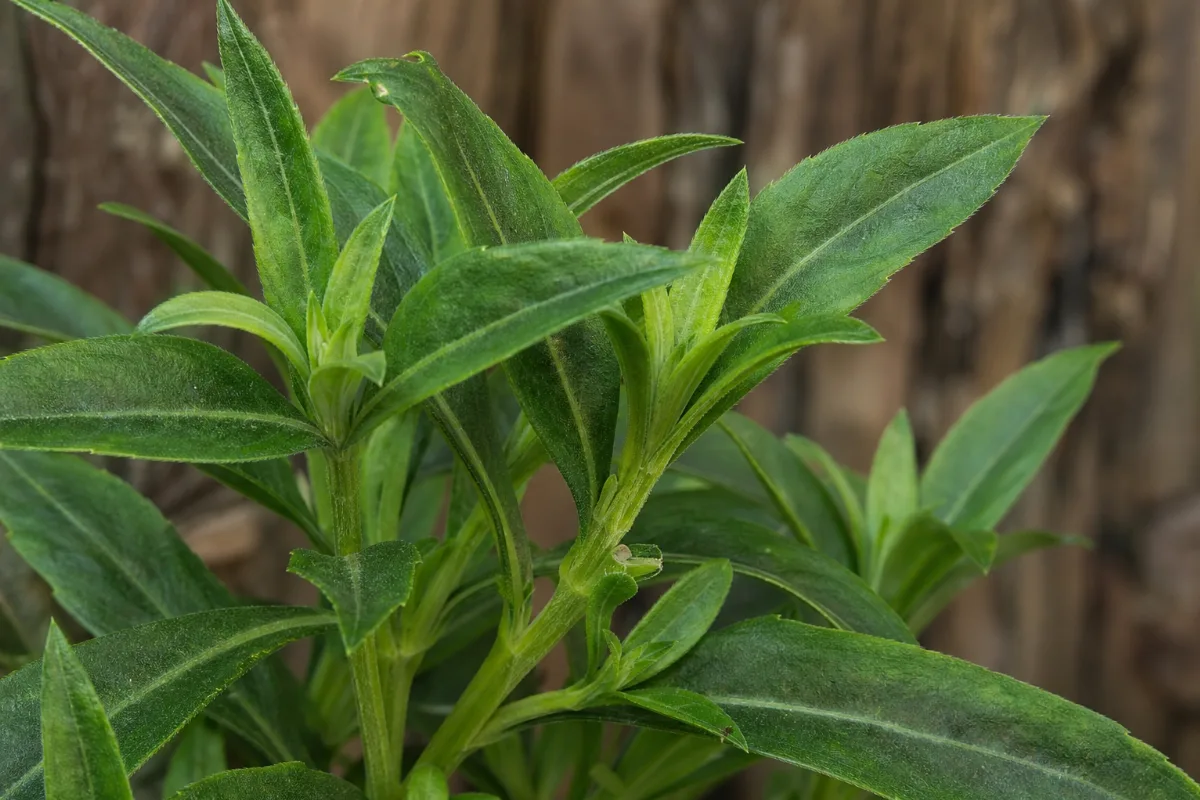
Pluchea lanceolata · also called Rasna
Rasna is a daisy-family plant used in Ayurveda for arthritis, joint pain and stiffness. Human research is very thin: one small formula comparison, a study plan with no results and one case report. The name is also given to galangal and an orchid, so check the label. If you have rheumatoid arthritis, do not replace your prescribed medicines.
General information, not medical advice. Last substantive update · Not medically reviewed. A named clinician has not signed off on this page. How this page is made
About Rasna
Rasna is a traditional Ayurvedic joint herb with very thin human evidence and almost no safety data. Its name is also used for other plants.
What it is
Rasna is the common name of Pluchea lanceolata, a plant in the daisy family (Asteraceae). It is used in Ayurveda for arthritis and joint pain, often inside formulas such as Rasnasaptak Kashaya or Rasnadi preparations.
Leaf and root are the parts usually described, but we did not confirm that in a source we read.
Why the name is confusing
The word Rasna is not used for one plant only. A research abstract says Alpinia galanga, greater galangal, is 'commonly known as greater galangal or raasna' in Ayurveda, and a 1997 rat study calls it Rasna. Galangal is in the ginger family and has its own page on this site.
An orchid, Vanda tessellata, is also studied for joint problems, although its abstract does not use the name Rasna. These are three different plants with different chemistry. Safety and research on one do not apply to the others. Look for the Latin name Pluchea lanceolata on a label.
How it may work
In rats with induced arthritis, Rasna extracts lowered swelling and blood inflammation markers. Computer models point to quercetin, isorhamnetin and other compounds acting on inflammation genes.
This is lab, animal and computer work. It has not been shown to explain any effect in people.
What the research shows
In 2011, 101 people with Amavata took one of two Ayurvedic joint pills for 3 months, and both groups improved. The Rasna-named pill did better, but the abstract gives no numbers, there was no placebo, and Rasna cannot be separated from the other herbs and the skin paste used.
A 2025 study plan enrolled 240 people with rheumatoid arthritis, but its results are not published. A single case report describes a man with frozen shoulder who improved on several treatments.
Overall, evidence that Rasna works in people is insufficient.
At a glance
Traditional uses history, not proof
- Joint pain and stiffness, including Amavata (linked to rheumatoid arthritis), in Ayurveda
- Frozen shoulder (Avabahuka) in an Ayurvedic case report
- Part of Ayurvedic formulas such as Rasnasaptak Kashaya
Studied for research
- Rheumatoid arthritis symptoms in multi-herb formulas, insufficient
- Joint inflammation in rats and computer models, insufficient
- Frozen shoulder (one case report), insufficient
- Kidney protection in rats, insufficient
- Brain protection (computer model only), insufficient
Main compounds
- Quercetin (PubChem CID 5280343)
- Isorhamnetin (CID 5281654)
- Linalool (CID 6549)
Common forms
- Water-boiled decoction (Kashaya or Kwath)
- Multi-herb pills
- Skin paste (Lepa)
- Laboratory extracts (rat studies only)
Research links: Mahto 2011: Two Ayurvedic formulas for Amavata (PubMed) · Makhija 2025: Ayurveda regimen for rheumatoid arthritis, protocol (PubMed) · Bhardwaj 2026: Rasna in rat arthritis (PubMed) · George 2021: Alpinia galanga, also called raasna (PubMed) · Research Library · Genes & Biomarkers Library
The plant and its history
- Accepted scientific name
- Pluchea lanceolata (DC.) C.B.Clarke
- Naming authority
- (DC.) C.B.Clarke, per GBIF.
- Common names
- Rasna (Hindi / Sanskrit (also applied to other plants))
- Botanical family
- Asteraceae (daisy family), the family of daisies, sunflowers, ragweed and chamomile.
- Classification
- Plantae > Asterales > Asteraceae > Pluchea > Pluchea lanceolata
- Native range
- Not verified from a source read.
- Habitat
- Not verified in a source read.
- What the plant looks like
- Roots: Root is named as a used part in the request for this page; not confirmed in a source we read.; Stems: Not verified.; Leaves: Leaf is named as a used part in the request; not confirmed in a source we read.; Flowers: Not verified.; Fruit: Not verified.
- Cultivation
- Not verified.
- Harvest and processing
- Not verified.
- Look-alikes and adulterants
- Name: Alpinia galanga (greater galangal); Note: Zingiberaceae (ginger family), rhizome. A 2021 research abstract says it is 'commonly known as greater galangal or raasna' and lists Rasnadi kashayam and Rasna panchakam as Ayurvedic preparations; a 1997 rat study calls it 'Rasna'. A different plant with a different chemistry and its own page on this site.; Name: Vanda tessellata (an orchid); Note: Orchidaceae. A 2024 study tested its extract on joint-lining cells for osteoarthritis. The abstract does not use the word Rasna; the link to the Rasna name is not confirmed here.; Name: Other plants sold as Rasna; Note: The old Ayurvedic name has been applied to several plants. We did not check further.
- Sustainability and conservation
- Not verified.
Traditional use and history history, not clinical proof
| Tradition or era | Documented use | Source |
|---|---|---|
| Ayurveda (India) | Rasna-named formulas such as Rasnasaptak Kashaya and Rasnadi preparations are used for joint pain and stiffness, including Amavata (linked to rheumatoid arthritis) and Avabahuka (frozen shoulder), per the 2011 trial, 2025 protocol and 2025 case report. These sources describe current practice; the age of the tradition and the plant part used were not verified. | p22131757 |
| Ayurveda (India) | The 2025 protocol and the case report name a decoction, Rasnasaptak Kashaya or Kwath, used in rheumatoid arthritis and frozen shoulder. | p39965200 |
| Name confusion | Another research abstract says Alpinia galanga is also known as Rasna and is used in Ayurveda for inflammatory disorders. Which plant a classical text means by Rasna was not checked here. | p33887419 |
Traditional use shows how a plant was used. It does not show that a supplement works or is safe today.
What is inside, and how it may work
What the plant contains and how those compounds act in cells and animals. Laboratory and animal mechanisms are not proven effects in people.
Main compounds
| Compound | Family | Where it is concentrated | Activity studied | Level of evidence |
|---|---|---|---|---|
| Quercetin PubChem 5280343 | flavonoid | Not stated | Named in a rat-plus-computer study as a potential active constituent of Rasna. Computer prediction, not shown in people. 3 16 | In silico |
| Isorhamnetin PubChem 5281654 | flavonoid (quercetin derivative) | Not stated | Scored better than diclofenac in a docking model for rheumatoid arthritis targets. Prediction only. 3 2 16 | In silico |
| Linalool PubChem 6549 | terpene alcohol | Not stated | Named with quercetin and isorhamnetin as a potential active constituent in the rat-plus-computer study. 3 16 | In silico |
| Pluchiol and cycloart-23-en-3,25-diol | triterpenoids / sterol-type compounds | Not stated | Scored well in a docking model for RA targets. No PubChem record was found by name for pluchiol, so no CID is given. 2 16 | In silico |
| Neolupenol | triterpenoid | Not stated | Top computer hit for an Alzheimer's-related protein. No PubChem record found by name. 10 16 | In silico |
| Sesquiterpenes (class) | terpenes | Not stated | Often described as a main compound class of Rasna. We did not confirm this in a source we read. 11 | Not verified |
Mechanisms, receptors and pathways
| Target or pathway | Gene or receptor | What was found | Level |
|---|---|---|---|
| VEGF signalling, MAPK and PI3K-Akt pathways | KDR (VEGFR2) | In arthritic rats, Rasna extracts were linked to lower VEGF signalling and lower IL-1 beta, IL-6 and TNF-alpha. Rat study with computer modelling. 3 | Animal research |
| Inflammation hubs (IL-17, NF-kappa-B, TNF signalling) | PTGS2, MMP3, ESR1, ESR2, BCL2A1, CYP19A1, PTPRC, DHFR | A computer model picked these eight genes as likely targets of Rasna compounds in rheumatoid arthritis. 2 | In silico |
| Keap1-Nrf2 antioxidant pathway | KEAP1 | Neolupenol was predicted to bind Keap1. Computer prediction only. 10 | In silico |
Absorption, metabolism and elimination
- Absorption
- No human data found.
- Distribution
- No human data found.
- Metabolism
- No human data found.
- Elimination
- No human data found.
- Bioavailability
- Not established.
Isolated compounds versus whole extracts
No single Rasna compound is shown to explain any effect. Computer studies name several candidates (isorhamnetin, linalool, triterpenoids); none was tested alone in people. The human studies used whole formulas with other herbs.
Nutritional composition
A nutrient table is not meaningful for Rasna, which is used as a medicinal herb and not as a food.
5 not enough evidence
What is Rasna good for?
The studied uses and how strong the human evidence is for each. Human evidence is very thin, and every rating is insufficient.
Benefits, one by one
Each card is a research question, not a promise. Tap a goal to filter. Open a card to see the studies, doses and limits.
Rheumatoid arthritis symptoms (Ayurvedic multi-herb formulas)
Not enough evidenceIn India, Rasna is a name found in many Ayurvedic joint formulas. One 2011 trial of 101 people compared two formulas for Amavata, an Ayurvedic condition linked to rheumatoid arthritis. Both groups improved, and the Rasna-named pill did better than the other formula. A 2025 study plan covers 240 people given a Rasna-named decoction as part of a larger regimen, but it has no results yet. Rasna has not been tested on its own in people.
2 studiesStudied as a multi-herb pill with a skin paste (2011) and as a water-…
Studies, doses and limits
What the trials found
Mahto 2011 (Ayu): 101 people with Amavata were split into two groups for 3 months. One group took Rasona Rasnadi Ghanavati, the other Simhanada Guggulu, and both also used Rasona Rasnadi Lepa, a paste, on the joints. Both groups improved on a specially made symptom form, and the Rasna-named pill did better. The abstract gives no numbers, no placebo group and no list of ingredients, and does not mention side effects. Makhija 2025 (JMIR Res Protoc) is a protocol for a single-arm study of 240 adults with rheumatoid arthritis who got Ayush-SG and Rasnasaptak Kashaya for 84 days, plus customised Ayurvedic care. 222 finished; results are not yet published.
Results
Symptoms improved in both groups of the 2011 trial, but Rasna cannot be separated from the other herbs and the paste. The 2025 study has no published results.
Effect sizes as reported
No numbers reported in the abstracts we read.
Why this rating
One small comparison with no placebo, no listed ingredients and no numbers in the abstract; one study plan without results. Rasna was never tested alone.
Form and dose studied
Studied as a multi-herb pill with a skin paste (2011) and as a water-boiled decoction inside a larger regimen (2025). Different products, so they cannot be compared. Ask a doctor or pharmacist about amounts.
Who was studied
Adults with Amavata or rheumatoid arthritis in India.
Limits
No placebo, no blinding stated, no numbers, mixed formulas. We read abstracts only.
Why researchers looked
Rasna is one of the best-known herb names in Ayurvedic treatment of joint pain and stiffness (Amavata and related conditions).
Traditional use
In Ayurveda, formulas such as Rasnasaptak Kashaya and Rasnadi preparations are used for joint complaints. The study abstracts we read describe these uses; they do not prove that the herb works.
Proposed mechanism Preliminary mechanism
Rat experiments and computer models suggest compounds in Rasna may dampen inflammation signals and the growth of new blood vessels in inflamed joints. These are lab ideas, not shown in people.
A proposed mechanism does not show that the effect happens in people.
Do not replace prescribed rheumatoid arthritis medicines with Rasna products. Neither abstract reports side effects, so safety is unknown, not proven.
Joint inflammation (rat and computer studies)
Not enough evidenceIn rats given an arthritis-causing injection, Rasna water and alcohol extracts reduced paw swelling and lowered blood inflammation markers. Computer studies point to quercetin-type compounds such as isorhamnetin. No human study tests this.
2 studiesLab water and alcohol extracts; not consumer products.
Studies, doses and limits
What the trials found
None. The studies are in rats (Bhardwaj 2026) and in computer models (Anand 2026).
Results
In rats with induced arthritis, paw volume and arthritis scores were lower and joint damage looked better after 4 weeks. Serum IL-1 beta, IL-6, TNF-alpha, CRP and COL2A1 were lower than in untreated arthritic rats. In the computer screen, isorhamnetin and two other compounds scored better than the drug diclofenac, which is a model result and not a drug comparison.
Effect sizes as reported
No numbers in the abstracts.
Why this rating
Animal and computer work only. Findings in rats often fail to carry over to people.
Form and dose studied
Lab water and alcohol extracts; not consumer products.
Who was studied
Rats and computer models. No people.
Limits
No numbers or group sizes in the abstracts; authors' claim of an advantage over standard care in people with weak immunity is speculation.
Why researchers looked
Researchers want to know whether the traditional use for joint pain has a biological basis.
Traditional use
Same Ayurvedic joint-pain tradition as above.
Proposed mechanism Preliminary mechanism
The rat study links the effect to lower VEGF (new blood vessel growth), MAPK and PI3K-Akt signalling and lower IL-1 beta, IL-6 and TNF-alpha. A separate computer model picked eight likely gene targets including PTGS2 (COX-2) and MMP3. All of this is lab, animal or computer work.
A proposed mechanism does not show that the effect happens in people.
Animal results say nothing about safety in people.
Frozen shoulder (one case report)
Not enough evidenceOne 62-year-old man with shoulder pain and stiffness was given several Ayurvedic treatments, including a Rasna-named decoction. The authors report relief within a month. One case with many treatments cannot show that Rasna worked.
1 studiesDecoction as one part of a multi-treatment plan.
Studies, doses and limits
What the trials found
Pardhekar 2025 (J Pharm Bioallied Sci): one man took a tablet, Rasnasaptak Kwath and Nisha Amalaki Vati for a month, had oil massage with Bala Ashwagandha oil, then a herbal steam bath with Nirgundi leaves for 7 days. The authors report less pain and stiffness and better movement.
Results
Improvement reported by the authors, with no measurements given in the abstract.
Effect sizes as reported
Not measured with numbers.
Why this rating
A single case with several treatments at once; frozen shoulder also tends to ease over time on its own.
Form and dose studied
Decoction as one part of a multi-treatment plan.
Who was studied
One adult man.
Limits
One person, no control, many treatments.
Why researchers looked
Reported in a clinical case by Ayurvedic doctors.
Traditional use
Rasnasaptak Kwath is used in Ayurveda for shoulder and joint stiffness (called Avabahuka).
Proposed mechanism None
No mechanism was tested in this report.
A proposed mechanism does not show that the effect happens in people.
None reported in the abstract.
Kidney protection from a stomach-acid medicine (rat study)
Not enough evidenceIn rats given the stomach-acid drug esomeprazole for four weeks, Rasna extract gave moderate protection against kidney damage. Coenzyme Q10 protected more. No human study exists.
1 studiesLab extract; not a consumer product.
Studies, doses and limits
What the trials found
None. Fakhry 2026 used 48 male rats in six groups for four weeks.
Results
Esomeprazole raised creatinine and urea and damaged kidney tissue; the Rasna and coenzyme Q10 groups had less damage, with coenzyme Q10 stronger.
Effect sizes as reported
No numbers in the abstract.
Why this rating
Rats only, abstract gives no numbers.
Form and dose studied
Lab extract; not a consumer product.
Who was studied
Male rats.
Limits
Animal study; one drug; no human data.
Why researchers looked
Researchers tested plant antioxidants against kidney damage caused by long-term use of proton pump inhibitors.
Traditional use
No traditional kidney use was described in the sources we read.
Proposed mechanism Preliminary mechanism
The authors point to oxidative stress and cell death in kidney tissue. This is rat and tissue work only.
A proposed mechanism does not show that the effect happens in people.
If you take a proton pump inhibitor and worry about your kidneys, talk to your doctor. Do not add Rasna on the strength of a rat study.
Brain protection (computer model only)
Not enough evidenceA computer study of 25 chemicals from Rasna picked one, neolupenol, as a possible Alzheimer's-related target. This is a prediction only. No cell, animal or human test was reported.
1 studiesNot applicable.
Studies, doses and limits
What the trials found
None.
Results
Neolupenol scored best among 25 chemicals in the model (-8.22 kcal/mol). The authors say lab and animal validation is still needed.
Effect sizes as reported
Docking score only.
Why this rating
Computer prediction only.
Form and dose studied
Not applicable.
Who was studied
None.
Limits
No experiment of any kind.
Why researchers looked
Researchers screened Rasna chemicals against targets linked to Alzheimer's disease.
Traditional use
Not a traditional Rasna use in the sources we read.
Proposed mechanism In silico
The model predicts neolupenol binds a protein called Keap1, which could switch on the body's antioxidant defence. This is a computer prediction.
A proposed mechanism does not show that the effect happens in people.
None.
Connections to the rest of health
How Rasna connects to the rest of our health knowledge graph. Every link says what kind of connection it is. A safety link (for example to the liver) is a warning, not a benefit. A study that merely mentions a topic never creates a benefit link.
Explore every connection: goals, body systems, organs, symptoms, genes
A. Wellness goals
| Connected to | Kind of connection | Evidence status | Context | Studies |
|---|---|---|---|---|
| Joint Support | Potential benefit | Not enough evidence | Rheumatoid arthritis symptoms (Ayurvedic multi-herb formulas): In India, Rasna is a name found in many Ayurvedic joint formulas. One 2011 trial of 101 people compared two formulas for Amavata, an Ayurvedic condition linked to rheumatoid arthritis. Both groups improved, and the Rasna-named pill did better than the other formula. A 2025 study plan covers 240 people given a Rasna-named decoction as part of a larger regimen, but it has no results yet. Rasna has not been tested on its own in people. Joint inflammation (rat and computer studies): In rats given an arthritis-causing injection, Rasna water and alcohol extracts reduced paw swelling and lowered blood inflammation markers. Computer studies point to quercetin-type compounds such as isorhamnetin. No human study tests this. | 6 7 3 2 |
| Mobility Support | Potential benefit | Not enough evidence | Rheumatoid arthritis symptoms (Ayurvedic multi-herb formulas): In India, Rasna is a name found in many Ayurvedic joint formulas. One 2011 trial of 101 people compared two formulas for Amavata, an Ayurvedic condition linked to rheumatoid arthritis. Both groups improved, and the Rasna-named pill did better than the other formula. A 2025 study plan covers 240 people given a Rasna-named decoction as part of a larger regimen, but it has no results yet. Rasna has not been tested on its own in people. Frozen shoulder (one case report): One 62-year-old man with shoulder pain and stiffness was given several Ayurvedic treatments, including a Rasna-named decoction. The authors report relief within a month. One case with many treatments cannot show that Rasna worked. | 6 7 9 |
| Inflammation Balance | Potential benefit | Not enough evidence | Joint inflammation (rat and computer studies): In rats given an arthritis-causing injection, Rasna water and alcohol extracts reduced paw swelling and lowered blood inflammation markers. Computer studies point to quercetin-type compounds such as isorhamnetin. No human study tests this. | 3 2 |
B. Body systems
| Connected to | Kind of connection | Evidence status | Context | Studies |
|---|---|---|---|---|
| Bones Joints Muscles | Biological association | Not enough evidence | Studied for: Rheumatoid arthritis symptoms (Ayurvedic multi-herb formulas) Studied for: Joint inflammation (rat and computer studies) | 6 7 3 2 9 |
| Pain Inflammation | Biological association | Not enough evidence | Studied for: Rheumatoid arthritis symptoms (Ayurvedic multi-herb formulas) Studied for: Joint inflammation (rat and computer studies) | 6 7 3 2 |
| Kidney Urinary | Biological association | Not enough evidence | Studied for: Kidney protection from a stomach-acid medicine (rat study) | 4 |
| Nervous System | Biological association | Not enough evidence | Studied for: Brain protection (computer model only) | 10 |
E. Health conditions
| Connected to | Kind of connection | Evidence status | Context | Studies |
|---|---|---|---|---|
| Rheumatoid arthritis | Not enough evidence | Do not replace prescribed medicines. Preparation or compound: Multi-herb Ayurvedic formulas containing Rasna |
6 7 |
I. Biomarkers
| Connected to | Kind of connection | Evidence status | Context | Studies |
|---|---|---|---|---|
| DAS-28 (rheumatoid arthritis disease activity score) | Biological association | Not enough evidence | Measured in trials: lowered. A lab change is not the same as a health benefit. | 7 |
| Blood inflammation markers in arthritic rats (IL-1 beta, IL-6, TNF-alpha, CRP) | Biological association | Not enough evidence | Measured in trials: lowered. A lab change is not the same as a health benefit. | 3 |
| Paw swelling and arthritis score in rats | Biological association | Not enough evidence | Measured in trials: lowered. A lab change is not the same as a health benefit. | 3 |
| Kidney function markers in rats (creatinine, urea, e-GFR) | Biological association | Not enough evidence | Measured in trials: mixed. A lab change is not the same as a health benefit. | 4 |
J. Genes, receptors and enzymes
| Connected to | Kind of connection | Evidence status | Context | Studies |
|---|---|---|---|---|
| PTGS2 (COX-2) | Preliminary mechanism | In silico | Predicted target of Rasna compounds in a computer model of rheumatoid arthritis. | 2 |
| MMP3 | Preliminary mechanism | In silico | Predicted target in the same model; MMPs break down joint cartilage. | 2 |
| KDR (VEGFR2) | Preliminary mechanism | Animal | Docking target in the rat-plus-computer study of Rasna in arthritis. | 3 |
L. Active compounds
| Connected to | Kind of connection | Evidence status | Context | Studies |
|---|---|---|---|---|
| Quercetin | Biological association | In silico | Named in a rat-plus-computer study as a potential active constituent of Rasna. Computer prediction, not shown in people. Preparation or compound: Not stated |
3 16 |
| Isorhamnetin | Biological association | In silico | Scored better than diclofenac in a docking model for rheumatoid arthritis targets. Prediction only. Preparation or compound: Not stated |
3 2 16 |
| Linalool | Biological association | In silico | Named with quercetin and isorhamnetin as a potential active constituent in the rat-plus-computer study. Preparation or compound: Not stated |
3 16 |
| Pluchiol and cycloart-23-en-3,25-diol | Biological association | In silico | Scored well in a docking model for RA targets. No PubChem record was found by name for pluchiol, so no CID is given. Preparation or compound: Not stated |
2 16 |
| Neolupenol | Biological association | In silico | Top computer hit for an Alzheimer's-related protein. No PubChem record found by name. Preparation or compound: Not stated |
10 16 |
| Sesquiterpenes (class) | Biological association | Not verified | Often described as a main compound class of Rasna. We did not confirm this in a source we read. Preparation or compound: Not stated |
11 |
Each connection is stored with the ingredient, the connected record, the kind of connection, the evidence status, the supporting studies, the preparation or compound involved, and a review date (last reviewed October 25, 2026).
Evidence at a glance: what changed in 4 lab markers
Tap a number to show only those markers. Counts are markers, not people.
The evidence
The research centre for Rasna. Every record here was checked against PubMed or the publisher's page; we never list a study we have not verified.
Evidence by outcome
Bars show how many studies we found for each outcome, not how well it works. People are added up across trials only (reviews are not added, to avoid double counting).
How we rate evidence
High certainty
Several well-run trials or reviews agree; further research is unlikely to change the picture much.
Moderate certainty
Good trials point the same way, but some doubt remains.
Low certainty
Small, short or inconsistent trials. The finding could change with better research.
Very low certainty
Very little or very weak human data. Treat as a possibility only.
Mixed findings
Trials or reviews disagree with each other.
Not enough evidence
Not enough human research to say either way.
Evidence against
Good research found no benefit, or found harm.
We take the reviewers' own risk-of-bias and GRADE statements where they exist, and otherwise judge from study size, design, consistency, directness and whether a product matches what is sold. Many publications do not make evidence high. Method note: We started from our existing Rasna summary, re-opened its PubMed abstracts and added a few more. Names were checked in GBIF and NCBI Taxonomy and compounds in PubChem. NCCIH, LiverTox, LactMed and EMA pages were searched and nothing for this plant was found.
Study library: every study we checked 16
| Study | Design | People | Product, dose, length | Result |
|---|---|---|---|---|
| Achuthan 1997 Hypolipidemic effect of Alpinia galanga (Rasna) and Kaempferia galanga (Kachoori). Indian J Clin Biochem · PMID 23100864 · DOI |
Animal study rat |
High-cholesterol-fed Wistar rats | Alpinia galanga and Kaempferia galanga ethanol extracts rhizome Animal dose not discussed here 4 weeks · vs Untreated high-cholesterol rats |
The authors call Alpinia galanga 'Rasna'. In rats the extracts lowered cholesterol and triglycerides and raised HDL. No numbers in abstract Methods, limits and fundingOutcomes: Blood and tissue cholesterol, triglycerides, HDL Limitations: Different plant from Pluchea lanceolata. Rats only, 1997. Only the abstract was read. Funding and conflicts: Not stated in abstract Read: abstract |
| Anand 2026 Deciphering the therapeutic mechanisms of Pluchea lanceolata in Rheumatoid arthritis (RA) using network pharmacology, molecular docking and in silico molecular dynamics simulations. In Silico Pharmacol · PMID 42926751 · DOI |
In silico in-silico |
Computer analysis of 22 plant chemicals from a database | Plant chemicals listed in the IMPPAT database (no real extract used) whole plant (database) n/a n/a · vs Diclofenac as a docking benchmark |
15 compounds passed the computer screen. Eight genes (PTGS2, MMP3, ESR1, ESR2, BCL2A1, CYP19A1, PTPRC, DHFR) were picked as likely targets. Isorhamnetin and two other compounds scored better than diclofenac in the model. Docking scores only Methods, limits and fundingOutcomes: Predicted gene targets and docking scores Limitations: Computer prediction only. No cells, animals or people. The authors call the results hypotheses. Only the abstract was read. Funding and conflicts: No competing interests declared Read: abstract |
| Bhardwaj 2026 Antiangiogenic Effect of Pluchea lanceolata in Adjuvant-Induced Rheumatoid Arthritis in Wistar Rats by Downregulating VEGF Signaling Pathway and Proinflammatory Cytokines. Assay Drug Dev Technol · PMID 42615374 · DOI |
Animal study plus in silico rat |
Rats with Freund's adjuvant-induced arthritis (plus computer modelling) | Rasna (Pluchea lanceolata) water and ethanol extracts not stated in abstract Animal doses not discussed here 4 weeks · vs Arthritis-induced rats and a standard-treatment group |
Paw swelling and arthritis scores were lower, joint damage looked better on X-ray and tissue slides, and blood inflammation markers were lower. No numbers in abstract Methods, limits and fundingOutcomes: Paw volume, arthritis score, X-ray and tissue changes, blood IL-1 beta, IL-6, TNF-alpha, CRP, COL2A1 Limitations: Rats and computer modelling only; the abstract gives no numbers or group sizes. The claim that it may beat standard care in people with weak immunity is the authors' speculation. Only the abstract was read. Funding and conflicts: No conflict of interest declared Read: abstract |
| Fakhry 2026 Protective effects of coenzyme Q10 and Pluchea lanceolata against proton pump inhibitor-induced nephrotoxicity: Biochemical, histological, and ultrastructural evaluation. Tissue Cell · PMID 41075621 · DOI |
Animal study rat |
48 48 male rats in 6 groups |
Pluchea lanceolata (PL) extract, alone or with esomeprazole not stated in abstract Animal doses not discussed here 4 weeks · vs Control, esomeprazole alone, and coenzyme Q10 groups |
Esomeprazole damaged the kidneys. Coenzyme Q10 protected strongly. PL gave moderate protection, according to the authors. No numbers in abstract Methods, limits and fundingOutcomes: Creatinine, urea, albumin-creatinine ratio, e-GFR, oxidative stress, kidney tissue changes Limitations: Rats only, one proton-pump-inhibitor drug, abstract gives no numbers. Whether PL alone is harmful is not stated in the abstract. Only the abstract was read. Funding and conflicts: Not stated in abstract Read: abstract |
| George 2021 Downregulation of TLR4/MyD88/p38MAPK and JAK/STAT pathway in RAW 264.7 cells by Alpinia galanga reveals its beneficial effects in inflammation. J Ethnopharmacol · PMID 33887419 · DOI |
Laboratory research cell |
Mouse immune cells (RAW 264.7) in a dish | Alpinia galanga (greater galangal) rhizome, water-alcohol extract rhizome n/a n/a · vs Untreated cells |
The abstract itself says A. galanga is 'commonly known as greater galangal or raasna' in Ayurveda. In cells the extract lowered inflammation signals. No numbers in abstract Methods, limits and fundingOutcomes: IL-6, TNF-alpha, NO, ROS, IL-10, COX-2, MMP-9, signalling pathways Limitations: Different plant from Pluchea lanceolata. Cell study only. Only the abstract was read. Funding and conflicts: Not stated in abstract Read: abstract |
| Mahto 2011 A comparative study of Rasona Rasnadi Ghanavati and Simhanada Guggulu on Amavata with special reference to Rheumatoid arthritis. Ayu · PMID 22131757 · DOI |
Randomised comparison no placebo |
101 101 people with Amavata (Ayurvedic term linked to rheumatoid arthritis) |
Rasona Rasnadi Ghanavati (multi-herb pill) plus Rasona Rasnadi Lepa (skin paste); the abstract does not list the ingredients not stated in abstract (Rasna is part of the formula name) Pill and paste; amounts not discussed here 3 months · vs Simhanada Guggulu pill plus the same paste |
Both groups improved. The Rasna-named pill group did better than the Simhanada Guggulu group. Both groups improved significantly; Rasona Rasnadi Ghanavati better than Simhanada Guggulu (no numbers in abstract) Methods, limits and fundingOutcomes: Symptom relief on a specially prepared form Limitations: Abstract gives no numbers, no placebo group, no list of ingredients, and no adverse events. Rasna cannot be separated from the other herbs and the paste. Only the abstract was read. Funding and conflicts: Not stated in abstract Read: abstract |
| Makhija 2025 Effectiveness of Composite Ayurveda Regimen in a Black Box Design for the Management of Rheumatoid Arthritis: Protocol of a Single Arm, Community-Based Study. JMIR Res Protoc · PMID 39965200 · DOI |
Protocol single arm |
240 240 adults aged 18 to 65 with rheumatoid arthritis, 6 centres in India (222 completed) |
Ayush-SG plus Rasnasaptak Kashaya (a decoction named for Rasna) plus customised Ayurvedic care not stated in abstract Not discussed here 84 days · vs None (single arm, before and after) |
Protocol paper. Recruitment done (240 enrolled, 222 finished). Results are not yet published. No results reported Methods, limits and fundingOutcomes: Planned: DAS-28 disease activity, inflammation markers, disability score, pain, use of painkillers, adverse events Limitations: This is a plan, not a result. All participants got a bundle of treatments, so the effect of Rasna cannot be separated. No control group. Only the abstract was read. Funding and conflicts: Authors report no conflicts of interest; trial registered CTRI/2023/06/054203 Read: abstract |
| Padhee 2024 Exploring the mechanism of action of Vanda tessellata extract for the treatment of osteoarthritis through network pharmacology, molecular modelling and experimental assays. Heliyon · PMID 39224251 · DOI |
In silico plus in vitro cell |
Computer modelling plus human joint-lining cells (SW982) in a dish | Vanda tessellata (an orchid) extract not stated in abstract n/a n/a · vs Untreated cells |
In cells the extract lowered several inflammation signals. The abstract does not use the name Rasna. Dose-dependent lowering of markers (no numbers in abstract) Methods, limits and fundingOutcomes: IL-6, IL-8, TNF-alpha, PGE-2, MMP-2, MMP-9, signalling pathways Limitations: Different plant from Pluchea lanceolata, in the orchid family. Cell and computer study only. Only the abstract was read. Funding and conflicts: No competing interests declared Read: abstract |
| Pardhekar 2025 Successful Management of Avabahuka (Frozen Shoulder) Using Ayurvedic Interventions: A Case Report. J Pharm Bioallied Sci · PMID 41846715 · DOI |
Case report |
1 One 62-year-old man with two months of left shoulder pain and stiffness |
Tablet Pirant, Rasnasaptak Kwath (Rasna-named decoction), Nisha Amalaki Vati, plus oil massage (Bala Ashwagandha oil) and a herbal leaf steam bath with Nirgundi not stated Not discussed here 1 month of medicines, then 7 days of steam · vs None |
The authors report relief of pain and stiffness and better movement within a month. Not measured with numbers in the abstract Methods, limits and fundingOutcomes: Pain, stiffness, shoulder movement Limitations: One person, several treatments at once, no control. It cannot show that Rasna did anything. Only the abstract was read. Funding and conflicts: No conflicts of interest declared Read: abstract |
| Syed 2025 Therapeutic Potential of products derived from Pluchea lanceolata for Alzheimer's Disease Treatment. J Mol Neurosci · PMID 40986212 · DOI |
In silico in-silico |
Computer screen of 25 plant chemicals | Neolupenol (one triterpenoid named in Pluchea lanceolata, from PubChem) n/a n/a 100 ns simulation · vs None |
The computer picked neolupenol as the best Keap1 binder (-8.22 kcal/mol). The authors say it needs animal and human testing. Docking score -8.22 kcal/mol Methods, limits and fundingOutcomes: Predicted binding to Keap1 and links to Alzheimer's-related genes Limitations: Entirely computer-based. No lab, animal or human data. Says nothing about whether any Rasna product helps memory. Only the abstract was read. Funding and conflicts: No competing interests declared Read: abstract |
| n/a 2026 Regulator and database lookups for Pluchea lanceolata: NCCIH, EMA/HMPC, LiverTox, LactMed NCCIH, EMA, NIH Bookshelf (LiverTox, LactMed), checked 2026-10-25 · Source |
Database or regulator record n/a |
n/a | n/a n/a n/a n/a · vs n/a |
The NCCIH Herbs at a Glance index loaded but did not mention Pluchea, Rasna or galangal. A search of NIH Bookshelf for Pluchea together with LiverTox or LactMed found 0 records. The EMA site search could not be read (it returned an access error). Not finding a page does not prove none exists. n/a Methods, limits and fundingOutcomes: Regulatory or safety statements Limitations: Quick lookups only; no pages for this plant were opened. EMA not checked successfully. Funding and conflicts: n/a Read: search-only |
| s-gbif-alpinia GBIF Backbone: Alpinia galanga (L.) Willd. (usageKey 5302225) · Source |
Reference database n/a |
Methods, limits and fundingRead: api-record | ||
| s-gbif-pluchea GBIF Backbone: Pluchea lanceolata (DC.) C.B.Clarke (usageKey 7923000) · Source |
Reference database n/a |
Methods, limits and fundingRead: api-record | ||
| s-gbif-vanda GBIF Backbone: Vanda tessellata (Roxb.) Hook. ex G.Don (usageKey 2783229) · Source |
Reference database n/a |
Methods, limits and fundingRead: api-record | ||
| s-ncbi-tax-pluchea NCBI Taxonomy: Pluchea lanceolata (esearch result, taxid 1950228) · Source |
Reference database n/a |
Methods, limits and fundingRead: api-record | ||
| s-pubchem-compounds PubChem: quercetin (CID 5280343), isorhamnetin (CID 5281654), linalool (CID 6549) · Source |
Reference database n/a |
Methods, limits and fundingRead: api-record |
What we do not know yet
- No placebo-controlled human trial of Rasna alone.
- Results of the 240-person 2025 study are not published.
- No NCCIH, LiverTox, LactMed or EMA entry found.
- No data on pregnancy, breastfeeding, children, liver, kidney or medicine interactions.
- Plant parts used and compound classes were not confirmed from a source read.
How new research is added
New studies are found by a saved PubMed search and placed in a review queue. A person reads each one before it changes any rating or safety wording.
Lab markers
What changed in blood or saliva tests during trials. A changed number is not the same as feeling or being healthier, and we give no "normal ranges".
Other 4
DAS-28 (rheumatoid arthritis disease activity score)
Lowered in trials
A score doctors use to track rheumatoid arthritis, combining swollen and tender joints, a blood inflammation marker and the patient's own rating.
Not enough evidenceResults and what it means
Why it was measured
The main planned outcome of the 2025 Rasnasaptak Kashaya study.
Statistical vs. clinical meaning
Cannot be judged until results are published.
Safety implication
None.
| Study | Result | People | Product |
|---|---|---|---|
| 7 | Planned outcome only. The abstract reports no results yet. | Adults with rheumatoid arthritis | Ayush-SG plus Rasnasaptak Kashaya plus customised care, 84 days |
Blood inflammation markers in arthritic rats (IL-1 beta, IL-6, TNF-alpha, CRP)
Lowered in trials
Proteins that rise when the body is inflamed. Drugs for rheumatoid arthritis often aim to lower them.
Not enough evidenceResults and what it means
Why it was measured
Used to see whether Rasna extracts calm inflammation in a rat arthritis model.
Statistical vs. clinical meaning
Animal result; not shown in people.
Safety implication
None known.
| Study | Result | People | Product |
|---|---|---|---|
| 3 | Serum IL-1 beta, IL-6, TNF-alpha, CRP and COL2A1 were lower than in the arthritis-induced group (no numbers in abstract). | Rats with Freund's adjuvant arthritis | Rasna (Pluchea lanceolata) water and ethanol extracts, 4 weeks |
Paw swelling and arthritis score in rats
Lowered in trials
How swollen a rat's paw is and how severe its joint changes look; a standard measure in rat arthritis models.
Not enough evidenceResults and what it means
Why it was measured
Main outcome of the rat study.
Statistical vs. clinical meaning
Animal result only.
Safety implication
None known.
| Study | Result | People | Product |
|---|---|---|---|
| 3 | Paw volume and arthritic score were suppressed; X-ray and tissue slides showed less joint deformity, pannus (abnormal joint tissue) and swelling. | Rats | Rasna extracts, 4 weeks |
Kidney function markers in rats (creatinine, urea, e-GFR)
Mixed results in trials
Blood and urine tests that show how well the kidneys filter waste. Higher creatinine and urea and lower e-GFR mean worse filtering.
Not enough evidenceResults and what it means
Why it was measured
The main outcome of the kidney-protection rat study.
Statistical vs. clinical meaning
Animal result only.
Safety implication
None known for people.
| Study | Result | People | Product |
|---|---|---|---|
| 4 | Esomeprazole worsened creatinine, urea, albumin-creatinine ratio and e-GFR. The Rasna (Pluchea lanceolata) groups had less kidney damage than esomeprazole alone, called moderate by the authors (no numbers in abstract). | 48 male rats | Pluchea lanceolata extract with or without esomeprazole, 4 weeks |
Safety
What studies and official sources say about side effects, medicines and who should check first. Each point shows what kind of evidence it comes from.
Main points to know 4
- Check which plant you are buying: 'Rasna' is also used for other plants. In Ayurveda, the name Rasna is applied to more than one plant. Pluchea lanceolata (a daisy-family plant) is the one this page covers. Alpinia galanga (greater galangal, ginger family) is called 'raasna' in a research abstract, and a rat study calls it 'Rasna'. A third plant, Vanda tessellata (an orchid), is also linked to joint remedies. Safety information for one does not apply to the others. A label that says only 'Rasna' may not tell you which plant is inside. Secondary source 5 1 8 13 12 14
- Do not replace arthritis medicines. Rheumatoid arthritis can damage joints if untreated. The human evidence for Rasna is a small mixed-formula comparison, a study plan without results and one case report. Keep taking prescribed medicines unless your doctor changes them. Authoritative guidance 6 7
- Daisy-family allergy. Rasna (Pluchea lanceolata) belongs to the daisy family (Asteraceae). People allergic to ragweed, daisies, chrysanthemums, marigolds or similar plants sometimes react to other plants in this family. This is a precaution based on family only; we found no report of a Rasna allergy. Theoretical 13 11
- Almost no human safety data. The abstracts we read report no side effects, but none of them measured safety in detail. We found no data on pregnancy, breastfeeding, children, the liver or the kidneys, and no medicine-interaction study. Absence of data is not proof of safety. Gap 6 7 11
Side effects 1
| Effect | How often | Severity and recovery | Evidence |
|---|---|---|---|
| None documented in the human sources we read The 2011 trial abstract and the case report do not list side effects. The 2025 study plans to record them but has not reported. This is a gap, not evidence that Rasna is free of side effects. | Not established | unknown Unknown | Gap 6 9 7 |
Liver
We found no published case of liver injury linked to Rasna, and no LiverTox entry. Not finding reports does not show the liver is safe. Many Ayurvedic products mix several herbs. 11
How often. No frequency known.
Monitoring. No agency advice found. Yellow skin or eyes, dark urine or severe itching need prompt medical care.
This is a safety connection. It is not evidence that Rasna supports liver health.
Medicines and supplements 5
| With | Why it matters | Importance | Evidence | What to do |
|---|---|---|---|---|
| Blood thinners (warfarin, apixaban, rivaroxaban, aspirin) prescription | Theory only: Rasna is said to contain quercetin-type flavonoids, and flavonoids as a group can affect clotting or drug-handling enzymes in the lab. Not tested for Rasna. | No Rasna study found. | Theoretical Not enough evidence 11 | If you take a blood thinner, ask your doctor or pharmacist before using any Rasna product. |
| Diabetes medicines and blood-sugar-lowering supplements prescription | No Rasna (Pluchea lanceolata) blood-sugar data found. A rat study on a different plant called Rasna (Alpinia galanga) looked at blood fats, not sugar. | Unknown. | Gap Not enough evidence 1 11 | Tell your diabetes team before adding any herbal product, and keep checking your sugar as usual. |
| Blood pressure medicines prescription | No Rasna blood-pressure data found. | Unknown. | Gap Not enough evidence 11 | Ask your doctor or pharmacist before combining. |
| Arthritis medicines (methotrexate, other disease-modifying drugs, anti-inflammatory painkillers) and steroids prescription | The human studies gave Ayurvedic products to people with arthritis, but the abstracts do not report interactions with their usual medicines. | Unknown. | Gap Not enough evidence 6 7 | Do not stop or change arthritis medicines on your own; discuss any Rasna product with your rheumatologist. |
| Other herbs in multi-herb Ayurvedic formulas herb | Rasna products often contain guggul (the 2011 comparison formula), Nirgundi and Ashwagandha oil (the case report). Their effects and interactions add to those of Rasna. | Cannot be separated in the studies. | Observational Low certainty 6 9 | Read the full ingredient list and ask a pharmacist about each ingredient. |
Who should check first 5
| Situation | Advice | Evidence |
|---|---|---|
| Allergy to daisy-family plants (ragweed, chrysanthemum, marigold, chamomile) | Be cautious; consider avoiding. This is a family-based precaution. | Theoretical 13 |
| Pregnancy | We found no safety data for Rasna in pregnancy. Avoid unless your doctor advises it. | Gap 11 |
| Breastfeeding | No LactMed entry or other data found. Avoid unless your doctor advises it. | Gap 11 |
| Children | No safety data in children. Ask a paediatrician. | Gap 11 |
| Liver or kidney disease, or planned surgery | No data. Tell your doctor or pharmacist if you use Rasna products. | Gap 11 |
Overdose, product quality and regulators
Summary. No toxic dose or toxic plant part was identified in the sources we read. Human toxicity has not been studied.
Animal. A 2026 rat study gave Rasna extract for four weeks as one of its groups; the abstract does not state any harm from the extract alone, and does not report that group's safety results in detail.
Human doses studied. Not discussed here.
High dose or long term signals. None found.
Overdose response. Not found.
Genotoxicity. Not found.
Toxic plant parts. Not established. Leaf and root are named as the parts used in the request for this page; we did not confirm that in a source we read.
We found no testing of Rasna products for metals, pesticides or adulterants. The main quality risk we can document is the shared name: a product called 'Rasna' may contain a different plant.
Same name, different plants. Research abstracts apply the name Rasna to Alpinia galanga and link Vanda tessellata to joint remedies, in addition to Pluchea lanceolata. 5 1 8
| Body | Action | Date |
|---|
When to get medical help
- Rash, hives, swelling of the face or lips, or trouble breathing (allergy).
- Yellow skin or eyes, dark urine, pale stools or severe itching.
- Joints that become hot, red and very swollen, or a fever, in someone with rheumatoid arthritis: see a doctor.
- Any new symptom after starting a Rasna product while pregnant or breastfeeding.
Stop the supplement and contact a clinician or emergency service. In the US, Poison Control is 1-800-222-1222.
General information only, not medical advice. Ask a clinician or pharmacist before use, especially with medicines, in pregnancy or with a health condition. See the Natural Remedy Safety guide.
Frequently asked questions
What is Rasna?
Is Rasna the same as galangal?
What is the orchid Vanda tessellata?
Does Rasna help arthritis?
Not proven. A 101-person trial of two Ayurvedic formulas found both improved, but Rasna cannot be separated from the other ingredients and there was no placebo.
Has Rasna been tested in rheumatoid arthritis patients?
Only inside formulas. A 240-person study of a regimen that includes a Rasna decoction finished enrolment, but results are not yet published.
Does it work for frozen shoulder?
One case report describes relief after several Ayurvedic treatments. One person cannot show that Rasna worked.
What does the animal research show?
In rats with induced arthritis, extracts lowered swelling and inflammation markers. Rat results often do not carry over to people.
Can Rasna replace my arthritis medicines?
Is Rasna safe in pregnancy or breastfeeding?
We found no safety data for either, and no LactMed entry. Avoid it unless your doctor advises otherwise.
Could I be allergic to it?
Rasna belongs to the daisy family. People allergic to ragweed, daisies or chrysanthemums sometimes react to related plants. We found no Rasna-specific allergy report, so this is a precaution.
Can it interact with medicines?
What warning signs need medical care?
Rash, swelling of the face or lips, trouble breathing, yellow skin or eyes, dark urine, or hot, very swollen joints with fever.
Explore by health goal
Editorial transparency
- Written by
- AlternativeMed editorial team. Research compiled with AI assistance, then checked against PubMed records.
- Medical review
- None. This page has not been reviewed by a physician or pharmacist.
- First published
- 2026-10-25
- Last substantive update
- 2026-10-25
- How we research
- We started from our existing Rasna summary, re-opened its PubMed abstracts and added a few more. Names were checked in GBIF and NCBI Taxonomy and compounds in PubChem. NCCIH, LiverTox, LactMed and EMA pages were searched and nothing for this plant was found.
- How we rate evidence
- See "How we rate evidence" in the Evidence tab.
- Independence
- No product is promoted on this page. No affiliate links are shown. Industry funding is flagged where an abstract shows it.
Sources 16
Each source was opened and checked. Where we read only the abstract, it says so. The small numbers in the text point here.
- Achuthan CR, Padikkala J. Hypolipidemic effect of Alpinia galanga (Rasna) and Kaempferia galanga (Kachoori).. Indian J Clin Biochem. 1997. PMID 23100864. DOI 10.1007/BF02867956. (abstract)
- Anand A, Kumari J, Kashyap H, Hitesh, Singh P, Khatri M. Deciphering the therapeutic mechanisms of Pluchea lanceolata in Rheumatoid arthritis (RA) using network pharmacology, molecular docking and in silico molecular dynamics simulations.. In Silico Pharmacol. 2026. PMID 42926751. DOI 10.1007/s40203-026-00772-8. (abstract)
- Bhardwaj N, Dixit PK, Nagarajan K, Bhardwaj S. Antiangiogenic Effect of Pluchea lanceolata in Adjuvant-Induced Rheumatoid Arthritis in Wistar Rats by Downregulating VEGF Signaling Pathway and Proinflammatory Cytokines.. Assay Drug Dev Technol. 2026. PMID 42615374. DOI 10.1177/1540658X261472169. (abstract)
- Fakhry OZ, Hassan MH, Galal AT, Elhameed BTA, Abdel-Rahman IAM, Amin YA, Ouies SM, Ahmed MAB. Protective effects of coenzyme Q10 and Pluchea lanceolata against proton pump inhibitor-induced nephrotoxicity: Biochemical, histological, and ultrastructural evaluation.. Tissue Cell. 2026. PMID 41075621. DOI 10.1016/j.tice.2025.103176. (abstract)
- George G, Shyni GL, Abraham B, Nisha P, Raghu KG. Downregulation of TLR4/MyD88/p38MAPK and JAK/STAT pathway in RAW 264.7 cells by Alpinia galanga reveals its beneficial effects in inflammation.. J Ethnopharmacol. 2021. PMID 33887419. DOI 10.1016/j.jep.2021.114132. (abstract)
- Mahto RR, Dave AR, Shukla VD. A comparative study of Rasona Rasnadi Ghanavati and Simhanada Guggulu on Amavata with special reference to Rheumatoid arthritis.. Ayu. 2011. PMID 22131757. DOI 10.4103/0974-8520.85724. (abstract)
- Makhija D, Mata S, Sharma A, Kachare K, Manathottathil A, Jain S, et al.. Effectiveness of Composite Ayurveda Regimen in a Black Box Design for the Management of Rheumatoid Arthritis: Protocol of a Single Arm, Community-Based Study.. JMIR Res Protoc. 2025. PMID 39965200. DOI 10.2196/57918. (abstract)
- Padhee S, Mohanty D, Sahoo A, Jena S, Chandra Panda P, Ray A, Nayak S. Exploring the mechanism of action of Vanda tessellata extract for the treatment of osteoarthritis through network pharmacology, molecular modelling and experimental assays.. Heliyon. 2024. PMID 39224251. DOI 10.1016/j.heliyon.2024.e35971. (abstract)
- Pardhekar AD, Pardhekar A, Davkare M, Deshpande MA. Successful Management of Avabahuka (Frozen Shoulder) Using Ayurvedic Interventions: A Case Report.. J Pharm Bioallied Sci. 2025. PMID 41846715. DOI 10.4103/jpbs.jpbs_538_25. (abstract)
- Syed A, Elgorban AM, Bahkali AH, Wang S, Wong LS, Dhara B, Uti DE, Alum EU, Atangwho IJ. Therapeutic Potential of products derived from Pluchea lanceolata for Alzheimer's Disease Treatment.. J Mol Neurosci. 2025. PMID 40986212. DOI 10.1007/s12031-025-02409-5. (abstract)
- n/a. Regulator and database lookups for Pluchea lanceolata: NCCIH, EMA/HMPC, LiverTox, LactMed. NCCIH, EMA, NIH Bookshelf (LiverTox, LactMed), checked 2026-10-25. 2026. (search-only)
- . GBIF Backbone: Alpinia galanga (L.) Willd. (usageKey 5302225). . . (api-record)
- . GBIF Backbone: Pluchea lanceolata (DC.) C.B.Clarke (usageKey 7923000). . . (api-record)
- . GBIF Backbone: Vanda tessellata (Roxb.) Hook. ex G.Don (usageKey 2783229). . . (api-record)
- . NCBI Taxonomy: Pluchea lanceolata (esearch result, taxid 1950228). . . (api-record)
- . PubChem: quercetin (CID 5280343), isorhamnetin (CID 5281654), linalool (CID 6549). . . (api-record)