Mushrooms · Medicinal mushroom
Agarikon
Laricifomes officinalis (also written Fomitopsis officinalis) · also called Agaricon, quinine conk, Gharikon (names listed in reviews and GBIF)
Agarikon is a large, hard, bitter conk that grows on old larch trees in old forests. It was used for centuries in folk medicine, mostly for lung complaints. The wild fungus is listed as Endangered. Human research is very thin: two small trials of a blend with turkey tail mycelium, and mostly lab work.
General information, not medical advice. Last substantive update · Not medically reviewed. A named clinician has not signed off on this page. How this page is made
About Agarikon
Agarikon is a rare, hard, bitter conk of old larch forests. It is listed as Endangered, so wild harvest is a real concern. Folk medicine used it for lung disease, but no human trial supports that. The only human studies are two small trials of a blend with turkey tail mycelium; the best result is fewer vaccine side-effects in one subgroup. There are no safety data for agarikon alone.
Conservation: an endangered fungus
GBIF reports the IUCN Red List category as Endangered. Wikipedia, quoting the IUCN, says the assessment dates from 2019, that populations are decreasing from habitat loss and unregulated harvest, and that Germany, Lithuania, Poland and Slovenia have protective laws. We could not open the IUCN page, so those details are not verified.
A 2025 review says overexploitation and habitat loss make conservation crucial and discusses sustainable culture methods. A 2026 lab paper says the fruiting bodies grow slowly in old-growth forest, which is why cultured mycelium is used. Please do not gather wild conks or buy them.
What it is
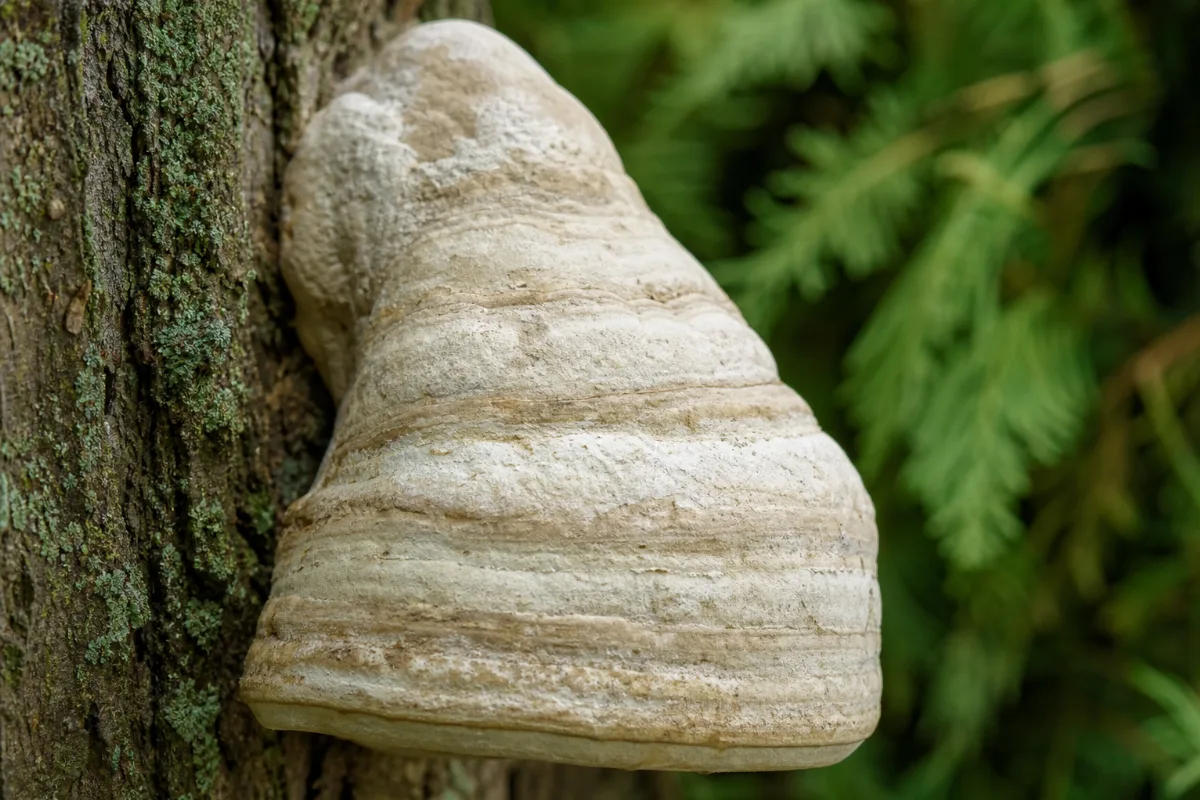
Agarikon is a perennial, woody bracket fungus that rots larch and other conifers in old forests across Europe, Asia and North America. The conk is hard, hoof-shaped or columnar, and bitter. It is listed as inedible, and it is called quinine conk for its bitter taste, not because it works against malaria.
The scientific name is unsettled. Most recent papers use Laricifomes officinalis. GBIF currently accepts Fomitopsis officinalis and lists Laricifomes as a synonym. They are the same fungus.
Traditional and current uses
Dioscorides wrote about agarikon in the 1st century AD. In European folk medicine it was known for asthma, pneumonia and tuberculosis. Iranian traditional medicine used it for bronchitis, constipation, jaundice, fever and more. Traditional use is not proof that it works or is safe.
Today it is sold as cultured mycelium, often blended with other mushrooms such as turkey tail.
What the research shows
The human evidence is two small trials of one blend of agarikon and turkey tail mycelium. In 90 vaccinated adults, the blend gave fewer side-effects on two days in people without earlier COVID exposure, and antibodies stayed up in that group. In a preprint of 50 adults with COVID-19, fewer symptoms were seen in exploratory analysis. Authors of the preprint and of a related lab paper work for a mushroom company, so independent repeat trials matter.
The rest is laboratory work. Extracts and isolated compounds stopped some bacteria and viruses and slowed cancer cell lines in dishes. Many antiviral claims come from patents. None of this shows treatment in people.
Fruiting body and mycelium are different
Chlorinated coumarins are reported from the mycelium and triterpenoids from the fruiting body. The human trials used mycelium blended with turkey tail. Results for one form cannot be assumed for another, and a product called agarikon may be a different mix.
Legal and regulatory status
No monograph or entry for agarikon was found at the places we checked, and no regulator has approved it for any condition. The COVID-19 preprint says its blend trial ran under an FDA Investigational New Drug application, which is permission to run a trial and not an approval. Collecting the wild fungus may be restricted by law in some countries.
At a glance
Traditional uses history, not proof
- Written about by Dioscorides in the 1st century AD (Girometta 2019).
- Renowned in traditional European medicine for lung conditions such as asthma, pneumonia and tuberculosis (Gafforov 2025).
- Used in Iranian traditional medicine, where it is called Gharikon, for bronchitis, constipation, jaundice, fever and other complaints (Vazirian 2016).
- Used in eighteenth and nineteenth century folk medicine in central Europe (Fijalkowska 2020).
Studied for research
- Side-effects after COVID-19 vaccination (blend with turkey tail, one trial), very low
- Antibody levels after vaccination (same trial), very low
- Mild-to-moderate COVID-19 symptoms (blend, preprint), insufficient
- Immune cells in the laboratory, insufficient (cells only)
- Lung conditions such as asthma, pneumonia, tuberculosis, insufficient (traditional use only)
- Germ-fighting and cancer-cell effects in the laboratory, insufficient (test tubes only)
Main compounds
- Chlorinated coumarins, reported from the mycelium
- Lanostane triterpenoids (fomitopsins), reported from the fruiting body
- Indole compounds including 5-hydroxytryptophan, sterols, phenolics and polysaccharides
Common forms
- Wild conk (hard, bitter, listed as inedible; not advised because the species is endangered)
- Cultured mycelium capsules or powder, the form used in the human trials (as a blend with turkey tail)
- Hot-water or alcohol extracts, mostly in laboratory studies
- Tinctures (no study of tinctures was read)
Research links: GBIF: IUCN Red List category (Endangered) · Vaccine trial of the blend (abstract) · COVID-19 trial of the blend (preprint, not peer reviewed) · Review: chemistry, traditional uses, conservation (abstract) · Review: antimicrobial properties (abstract) · Agarikon genome paper (abstract) · Research Library · Genes & Biomarkers Library
What it is and its history
- Accepted scientific name
- Laricifomes officinalis (Vill.) Kotl. & Pouzar (the name used in most recent papers). GBIF currently treats it as a synonym of Fomitopsis officinalis (Vill.) Bondartsev & Singer.
- Naming authority
- (Vill.) Kotl. & Pouzar (Laricifomes); (Vill.) Bondartsev & Singer (Fomitopsis)
- Synonyms
- Fomitopsis officinalis (older name, and the name GBIF accepts); Polyporus officinalis (Vill.) Fr.; Fomes officinalis (Vill.) Bres.; Boletus officinalis Vill.; Placodes officinalis (Vill.) Ricken
- Common names
- Agarikon (also spelled agaricon) (English); Quinine conk (English); Gharikon / Agharikon (Persian (Iranian traditional medicine)); Apothekerschwamm (German); Eburiko (Japanese)
- Family or group
- Fomitopsidaceae (a fungus family of woody bracket fungi)
- Classification
- Fungi > Basidiomycota > Agaricomycetes > Polyporales > Fomitopsidaceae > Fomitopsis (GBIF) / Laricifomes (recent papers) > Fomitopsis officinalis / Laricifomes officinalis
- Native range
- Europe, Asia and North America (Vazirian 2016); Wikipedia adds Morocco.
- Habitat
- A wood-rotting fungus on conifers, mainly larch, in old-growth forests (Vazirian 2016; Wikipedia, secondary). Fruiting bodies grow slowly (Doar 2026) and the conks are perennial, growing for several years (Girometta 2019).
- What it looks like
- Fruiting body: A large hard woody bracket, hoof-shaped or columnar, with a bitter taste (Wikipedia, secondary source). Young conks are soft and pale, older ones hard and chalky.
- Cultivation
- The fruiting body is slow to grow, so mycelium (the fungal threads) is grown in culture as a more easily cultivated alternative (Doar 2026). The grown medium is not stated in the trial abstracts.
- Harvest and processing
- Not checked in the sources read.
- Look-alikes and adulterants
- Name: Not documented; Note: No source we read lists look-alike fungi for agarikon. Do not use conks you found yourself.
- Sustainability and conservation
- Endangered on the IUCN Red List (category confirmed through GBIF on 2026-10-25). Reviews and a 2026 genome paper describe threats from overexploitation and habitat loss. See the Safety tab.
Traditional use and history history, not clinical proof
| Tradition or era | Documented use | Source |
|---|---|---|
| Ancient Greece and Rome | The first written report of agarikon is by Dioscorides in the 1st century AD, according to a review that read the history. The fungus later spread across the Alps, Central and Eastern Europe, the Urals, Siberia and North America, where it sometimes took on ritual meaning. | p30834150 |
| Traditional European medicine | Renowned for lung conditions such as asthma, pneumonia and tuberculosis. Traditional use is not evidence that it works. | p39988639 |
| Central European folk medicine (18th and 19th centuries) | A Polish study describes it as used in eighteenth and nineteenth century folk medicine. A broader review says five polypores, including this one, were used for period pain, haemorrhoids, bladder problems, fever, cough, cancer and rheumatism (not agarikon alone). | p24786572 |
| Iranian traditional medicine | Called Gharikon. Used since ancient times for sciatica, muscle weakness, bronchitis, constipation, stomach and womb pain, jaundice, fever and insect bites. | p27840500 |
Traditional use shows how it was used. It does not show that it works or is safe today.
What is inside, and how it may work
What it contains and how those compounds act in cells and animals. Laboratory and animal mechanisms are not proven effects in people.
Main compounds
| Compound | Family | Where it is concentrated | Activity studied | Level of evidence |
|---|---|---|---|---|
| Chlorinated coumarins (for example 6-chloro-4-phenyl-2H-chromen-2-one) | coumarin | Mycelium | Lowest MICs against the tuberculosis bacteria complex in the lab. 10 8 | Laboratory research |
| Lanostane triterpenoids (fomitopsins) | triterpenoid | Fruiting body | Antiviral (herpes simplex virus) and trypanocidal activity in the lab, per Girometta's review. 8 | Laboratory research |
| Indole compounds (tryptophan, melatonin, 5-hydroxytryptophan) | indole | Mycelium and fruiting body 5-hydroxy-L-tryptophan 517.99 mg/100 g dry weight in cultured mycelium (one lab analysis) | Measured in extracts; antioxidant activity of the extracts in the lab. 4 | Laboratory research |
| Sterols (ergosterol, ergosterol peroxide) and phenolic compounds | sterol / phenolic | Mycelium and fruiting body | Present in extracts that slowed growth of three cancer cell lines in dishes. 4 | Laboratory research |
| Polysaccharides | polysaccharide | Fruiting body | Listed among the compound groups in a 2025 review; this page did not read the original papers. 7 | Laboratory research |
Mechanisms, receptors and pathways
| Target or pathway | Gene or receptor | What was found | Level |
|---|---|---|---|
| Innate immune signalling in human white blood cells | IL-1, NF-kB, IL-1RA, toll-like receptors (TLR5 in stimulated cells) | Mycelium switched on IL-1 and NF-kB pathways while raising IL-1RA and lowering toll-like receptor transcripts; in LPS-stimulated cells it raised some immune effector genes and lowered some cytokine-pathway transcripts. 3 | Laboratory research |
| Bacterial growth (Mycobacterium tuberculosis complex) | Not identified | Chlorinated coumarins had the lowest MICs against the tuberculosis complex in a lab test. 10 | Laboratory research |
Absorption, metabolism and elimination
- Absorption
- Not found in the sources read.
- Distribution
- Not found in the sources read.
- Metabolism
- Not found in the sources read.
- Elimination
- Not found in the sources read.
- Bioavailability
- Not established.
Isolated compounds versus whole extracts
Mycelium and fruiting body contain different compounds (coumarins in mycelium, triterpenoids in fruiting bodies). The human trials used mycelium blended with turkey tail; the traditional record is of the wild conk. Results from one form cannot be assumed for the other.
Nutritional composition
Agarikon is a hard, bitter conk listed as inedible. It is not a food and has no nutrient role.
2 very low certainty5 not enough evidence
What was looked at
The 7 benefits and uses checked for Agarikon, each with how strong the evidence is. Tap one to open it.
- Side-effects after COVID-19 vaccination (blend with turkey tail)Very low certainty
- Antibody levels after COVID-19 vaccination (blend with turkey tail)Very low certainty
- Mild-to-moderate COVID-19 symptoms (blend with turkey tail)Not enough evidence
- Immune-cell and antioxidant effects in the laboratoryNot enough evidence
- Lung complaints (asthma, pneumonia, tuberculosis)Not enough evidence
- Fighting germs in the laboratory (bacteria, tuberculosis bacteria, viruses)Not enough evidence
- Cancer cells in the laboratoryNot enough evidence
Lab markers tracked in the studies
Self-reported vaccine side-effectsAnti-SARS-CoV-2 antibody levelsC-reactive protein (CRP)
What is Agarikon good for?
The uses people ask about and how strong the human evidence is for each. Almost none has been tested in people, and both human studies used a blend with turkey tail. Read this together with the Safety tab.
Benefits, one by one
Each card is a research question, not a promise. Tap a goal to filter. Open a card to see the studies, doses and limits.
Side-effects after COVID-19 vaccination (blend with turkey tail)
Very low certaintyOne placebo-controlled trial in 90 vaccinated people tested a blend of agarikon and turkey tail mycelium for four days. People who had never been exposed to the virus reported fewer vaccine side-effects on two days. The effect was not seen in people who had been exposed. It is one small trial of a blend, so it cannot be credited to agarikon alone.
2 studiesCapsules of cultured mycelium (agarikon plus turkey tail) for four da…
Studies, doses and limits
What the trials found
90 people having a COVID-19 vaccine took the blend (52) or a look-alike placebo (38). There were no adverse events and kidney and liver tests did not differ between groups. In the 'COVID-naive' group the blend lowered side-effects on days 3 and 5. In 'COVID-exposed' people there was no difference.
Results
Side-effects: fewer in the COVID-naive blend group on days 3 and 5 (no numbers in the abstract). 100% of participants completed the study.
Effect sizes as reported
Not given in the abstract
Why this rating
One trial, small, a blend of two mushrooms, and the benefit is in a subgroup. Side-effects were self-reported. No repeat trial by an independent team.
Form and dose studied
Capsules of cultured mycelium (agarikon plus turkey tail) for four days. The grown medium is not stated in the abstract. Fruiting body was not tested.
Who was studied
Adults having COVID-19 vaccination
Limits
Cannot say what agarikon does by itself. Fewer side-effects is not the same as better protection. Authors declare no competing interests, but companion papers on the same blend list authors from a mushroom company.
Why researchers looked
Agarikon is promoted as an immune-active mushroom, so the research group tested whether its mycelium could be a helper alongside vaccination.
Traditional use
Agarikon was used in traditional European medicine mostly for lung complaints (Gafforov 2025). No tradition of use around vaccines exists; vaccines are new.
Proposed mechanism Laboratory research
In human white blood cells in the laboratory, agarikon mycelium changed gene activity in immune pathways (IL-1, NF-kB) while also raising an anti-inflammatory signal (Doar 2026). This is a lab finding and does not show how the blend works in people.
A proposed mechanism does not show that the effect happens in people.
No adverse events were reported in this trial. Nothing is known about long-term use, pregnancy or medicine interactions. See the Safety tab.
Antibody levels after COVID-19 vaccination (blend with turkey tail)
Very low certaintyIn the same vaccine trial, antibody levels in the 'COVID-naive' blend group stayed up for 6 months and were possibly higher. The abstract says 'possibly' and gives no numbers. This is a lab marker, not proof of better protection.
1 studiesMycelium capsules, blend with turkey tail.
Studies, doses and limits
What the trials found
In the trial of 90 vaccinated people, the antibody response in COVID-naive people who took the blend was 'preserved across 6 months (and possibly increased)', an effect not seen in the other groups.
Results
Preserved and possibly increased over 6 months in one subgroup; no values in the abstract.
Effect sizes as reported
Not given
Why this rating
Subgroup finding in one small trial with a blend; the authors themselves use cautious wording.
Form and dose studied
Mycelium capsules, blend with turkey tail.
Who was studied
Vaccinated adults without earlier COVID exposure
Limits
Antibody level is a surrogate marker. The trial did not measure fewer infections.
Why researchers looked
Antibody levels are the usual way to check how well a vaccine has 'taken'.
Proposed mechanism Laboratory research
Not known. Lab work shows immune-gene changes in human white blood cells (Doar 2026), which is only a possible lead.
A proposed mechanism does not show that the effect happens in people.
See the Safety tab.
Mild-to-moderate COVID-19 symptoms (blend with turkey tail)
Not enough evidenceA small trial of 50 outpatients with COVID-19 is available only as a preprint, which has not been checked by independent reviewers. It was designed to test safety. In extra exploratory analysis the blend was linked to fewer and milder symptoms and lower C-reactive protein. This is a lead, not evidence that the blend treats COVID-19.
2 studiesMycelium capsules, blend with turkey tail; 14 days per the registry.
Studies, doses and limits
What the trials found
26 people took the blend and 24 placebo. Adherence was about 95 to 97%. Kidney, liver and clotting tests stayed in the normal range on average. The blend group showed a minor average fall in kidney filtration (eGFR). Symptoms and C-reactive protein were exploratory.
Results
Exploratory: fewer and less severe symptoms, especially sore throat and cough, and lower C-reactive protein in the blend group (no numbers in the abstract).
Effect sizes as reported
Not given
Why this rating
Not peer reviewed, 50 people, safety was the main aim, symptoms were exploratory, a blend of two mushrooms, and funders include a mushroom company.
Form and dose studied
Mycelium capsules, blend with turkey tail; 14 days per the registry.
Who was studied
Non-hospitalised adults with mild-to-moderate COVID-19
Limits
The result may change when peer reviewed. Nothing here shows agarikon lowers the risk of severe illness.
Why researchers looked
The same research group followed the vaccine trial with a trial in people who already had COVID-19.
Traditional use
Agarikon was used for lung complaints in traditional medicine (Gafforov 2025), which is a traditional use and not evidence.
Proposed mechanism Laboratory research
The preprint also reports that the blend reduced infection by a SARS-CoV-2 pseudovirus in the lab. A pseudovirus test is not a test in people.
A proposed mechanism does not show that the effect happens in people.
Small average fall in kidney filtration in the blend group; the abstract gives no figures. People with kidney disease should ask a doctor. See the Safety tab.
Immune-cell and antioxidant effects in the laboratory
Not enough evidenceIn dishes of human white blood cells, agarikon mycelium changed which immune genes were active and showed antioxidant and iron-binding activity. This is a laboratory result only and says nothing yet about people. Authors work for a company that sells mushroom products.
1 studiesAgarikon mycelium extract and two fractions.
Studies, doses and limits
Results
Gene-activity changes (adjusted p below 0.05) in human white blood cells; antioxidant, iron-chelating and kinase-binding activity measured.
Why this rating
Cell work only; many substances look active in a dish and fail in people.
Form and dose studied
Agarikon mycelium extract and two fractions.
Who was studied
Human cells in a dish
Limits
Does not show a benefit. Company-linked authorship (four authors employed by Fungi Perfecti, LLC).
Why researchers looked
To find a possible biological reason for the small human trials.
Proposed mechanism Laboratory research
IL-1 and NF-kB pathways switched on, with a balancing rise in IL-1RA and a fall in toll-like receptor transcripts; context-dependent changes in LPS-stimulated cells (Doar 2026).
A proposed mechanism does not show that the effect happens in people.
Not applicable.
Lung complaints (asthma, pneumonia, tuberculosis)
Not enough evidenceAgarikon was used for centuries in European folk medicine for lung conditions. No trial in people tested it for any lung disease. Traditional use is not evidence that it works, and lung infections such as tuberculosis and pneumonia need medical care.
3 studiesWild fruiting body in old records; modern products are usually cultur…
Studies, doses and limits
What the trials found
No human trial of agarikon for asthma, pneumonia, tuberculosis or any other lung condition was found in the reviews or the PubMed search.
Why this rating
Only traditional records and lab work exist.
Form and dose studied
Wild fruiting body in old records; modern products are usually cultured mycelium. No lung trial of either.
Limits
Cannot say whether it helps, harms or does nothing in lung disease.
Why researchers looked
Lung complaints are the use agarikon is most famous for in old records.
Traditional use
A review says it is renowned in traditional European medicine for asthma, pneumonia and tuberculosis (Gafforov 2025). Dioscorides wrote about it in the 1st century AD (Girometta 2019). Iranian traditional medicine lists bronchitis among its uses (Vazirian 2016).
Proposed mechanism None
No mechanism for lung effects has been shown in people.
A proposed mechanism does not show that the effect happens in people.
Do not use agarikon instead of medical care for a lasting cough, fever, breathlessness or coughing blood. See the Safety tab.
Fighting germs in the laboratory (bacteria, tuberculosis bacteria, viruses)
Not enough evidenceIn test tubes, some agarikon extracts and isolated compounds stopped the growth of certain bacteria, including the bacteria that cause tuberculosis, and some viruses. Many of the strongest virus claims come from patents, and crude extracts are not standardised. None of this shows that a supplement treats or prevents an infection.
3 studiesIsolated compounds, crude extracts of mycelium and fruiting body.
Studies, doses and limits
Results
Lowest MICs against Mycobacterium tuberculosis complex among four compounds (Hwang 2013; no figures in the abstract). Girometta reports an IC50 of 17 ug/mL for the triterpenoid fomitopsin D against herpes simplex virus (from a paper that review cites, not re-read).
Why this rating
Cells and test tubes only; extracts are mixtures of unknown make-up and methods vary; some antiviral work is from patents.
Form and dose studied
Isolated compounds, crude extracts of mycelium and fruiting body.
Limits
Test-tube activity often fails in the body. Different forms (mycelium or fruiting body) give different compounds.
Why researchers looked
Researchers looked for a lab reason behind its old use for lung infections.
Traditional use
Tuberculosis and other lung infections feature in traditional use (Gafforov 2025).
Proposed mechanism Laboratory research
Chlorinated coumarins from the mycelium had the lowest MICs against the tuberculosis complex in the lab (Hwang 2013). Triterpenoids from the fruiting body are linked to antiviral and trypanocidal activity (Girometta 2019).
A proposed mechanism does not show that the effect happens in people.
Not applicable
Cancer cells in the laboratory
Not enough evidenceExtracts of agarikon fruiting bodies and mycelium slowed the growth of lung, prostate and skin-cancer cell lines in dishes. This is a very early lab finding and says nothing about treating cancer in people.
2 studiesExtracts of wild fruiting bodies and cultured mycelium.
Studies, doses and limits
Results
Extracts slowed growth of A549 (lung), DU145 (prostate) and A375 (melanoma) cell lines in a lab test; no figures in the abstract.
Why this rating
Cell lines only. No animal-to-human step shown in the sources read.
Form and dose studied
Extracts of wild fruiting bodies and cultured mycelium.
Limits
Cannot be used to say agarikon treats any cancer.
Why researchers looked
Many medicinal mushrooms are tested on cancer cells first.
Traditional use
Folk use for cancer is listed for the group of five European polypores (Grienke 2014), not for agarikon alone.
Proposed mechanism Laboratory research
Antioxidant and growth-slowing effects on cell lines (Fijalkowska 2020).
A proposed mechanism does not show that the effect happens in people.
Do not delay or replace cancer care with a mushroom supplement.
Connections to the rest of health
How Agarikon connects to the rest of our health knowledge graph. Every link says what kind of connection it is. A safety link (for example to the liver) is a warning, not a benefit. A study that merely mentions a topic never creates a benefit link.
Explore every connection: goals, body systems, organs, symptoms, genes
A. Wellness goals
| Connected to | Kind of connection | Evidence status | Context | Studies |
|---|---|---|---|---|
| Immune Support | Preliminary mechanism | Very low certainty | Side-effects after COVID-19 vaccination (blend with turkey tail): One placebo-controlled trial in 90 vaccinated people tested a blend of agarikon and turkey tail mycelium for four days. People who had never been exposed to the virus reported fewer vaccine side-effects on two days. The effect was not seen in people who had been exposed. It is one small trial of a blend, so it cannot be credited to agarikon alone. Antibody levels after COVID-19 vaccination (blend with turkey tail): In the same vaccine trial, antibody levels in the 'COVID-naive' blend group stayed up for 6 months and were possibly higher. The abstract says 'possibly' and gives no numbers. This is a lab marker, not proof of better protection. | 11 3 12 2 |
B. Body systems
| Connected to | Kind of connection | Evidence status | Context | Studies |
|---|---|---|---|---|
| Immune System | Biological association | Very low certainty | Studied for: Side-effects after COVID-19 vaccination (blend with turkey tail) Studied for: Antibody levels after COVID-19 vaccination (blend with turkey tail) | 11 3 12 2 |
| Respiratory System | Biological association | Not enough evidence | Studied for: Mild-to-moderate COVID-19 symptoms (blend with turkey tail) Studied for: Lung complaints (asthma, pneumonia, tuberculosis) | 12 2 7 8 13 |
C. Body parts and organs
| Connected to | Kind of connection | Evidence status | Context | Studies |
|---|---|---|---|---|
| Kidneys | Adverse effect or risk | Not enough evidence | A minor average fall in estimated kidney filtration in one preprint trial; both groups equally likely to move from normal to abnormal. A minor average fall in estimated kidney filtration in one preprint trial. Preparation or compound: Mycelium blend with turkey tail |
12 |
I. Biomarkers
| Connected to | Kind of connection | Evidence status | Context | Studies |
|---|---|---|---|---|
| Self-reported vaccine side-effects | Biological association | Very low certainty | Measured in trials: lowered. A lab change is not the same as a health benefit. | 11 |
| Anti-SARS-CoV-2 antibody levels | Biological association | Very low certainty | Measured in trials: preserved (possibly raised). A lab change is not the same as a health benefit. | 11 |
| C-reactive protein (CRP) | Biological association | Not enough evidence | Measured in trials: lowered. A lab change is not the same as a health benefit. | 12 |
K. Biological pathways
| Connected to | Kind of connection | Evidence status | Context | Studies |
|---|---|---|---|---|
| NF-kB and IL-1 innate immune signalling | Preliminary mechanism | In vitro | Activated in human white blood cells in the lab. | 3 |
L. Active compounds
| Connected to | Kind of connection | Evidence status | Context | Studies |
|---|---|---|---|---|
| Chlorinated coumarins (for example 6-chloro-4-phenyl-2H-chromen-2-one) | Biological association | In vitro | Lowest MICs against the tuberculosis bacteria complex in the lab. Preparation or compound: Mycelium |
10 8 |
| Lanostane triterpenoids (fomitopsins) | Biological association | In vitro | Antiviral (herpes simplex virus) and trypanocidal activity in the lab, per Girometta's review. Preparation or compound: Fruiting body |
8 |
| Indole compounds (tryptophan, melatonin, 5-hydroxytryptophan) | Biological association | In vitro | Measured in extracts; antioxidant activity of the extracts in the lab. Preparation or compound: Mycelium and fruiting body |
4 |
| Sterols (ergosterol, ergosterol peroxide) and phenolic compounds | Biological association | In vitro | Present in extracts that slowed growth of three cancer cell lines in dishes. Preparation or compound: Mycelium and fruiting body |
4 |
| Polysaccharides | Biological association | In vitro | Listed among the compound groups in a 2025 review; this page did not read the original papers. Preparation or compound: Fruiting body |
7 |
Each connection is stored with the ingredient, the connected record, the kind of connection, the evidence status, the supporting studies, the preparation or compound involved, and a review date (last reviewed October 25, 2026).
Evidence at a glance: what changed in 2 lab markers
Tap a number to show only those markers. Counts are markers, not people.
The evidence
The research centre for Agarikon. Every record here was checked against PubMed or the publisher's page; we never list a study we have not verified.
Evidence by outcome
Bars show how many studies we found for each outcome, not how well it works. People are added up across trials only (reviews are not added, to avoid double counting).
How we rate evidence
High certainty
Several well-run trials or reviews agree; further research is unlikely to change the picture much.
Moderate certainty
Good trials point the same way, but some doubt remains.
Low certainty
Small, short or inconsistent trials. The finding could change with better research.
Very low certainty
Very little or very weak human data. Treat as a possibility only.
Mixed findings
Trials or reviews disagree with each other.
Not enough evidence
Not enough human research to say either way.
Evidence against
Good research found no benefit, or found harm.
We take the reviewers' own risk-of-bias and GRADE statements where they exist, and otherwise judge from study size, design, consistency, directness and whether a product matches what is sold. Many publications do not make evidence high. Method note: We read PubMed records and abstracts for nine papers (one randomized trial, four narrative reviews, three laboratory studies, one genome study), the abstract of one trial preprint, read the trial registry entry and one review in full text, and checked names and the IUCN category in the GBIF database. Wikipedia was used only as a marked secondary source. The IUCN website could not be opened. Only abstracts were read for papers, so numbers come from abstracts. Certainty ratings are the compiler's own reading.
Study library: every study we checked 14
| Study | Design | People | Product, dose, length | Result |
|---|---|---|---|---|
| Bennett 2026 Genomic Characterization of the Endangered Medicinal Polypore Agarikon (Laricifomes officinalis syn. Fomitopsis officinalis). G3 (Bethesda) · PMID 42641138 · DOI |
Genome study fungus |
One agarikon strain | n/a |
Assembled a 28.76 Mb nuclear genome (8,604 protein-coding genes, 27 candidate gene clusters for making secondary compounds) and a mitochondrial genome. Found genes for triterpenoid and polyketide pathways. Describes the species as an endangered fungus in a unique lineage of the Polyporales. Methods, limits and fundingOutcomes: Genome assembly and annotation Limitations: Describes genes, not effects in people. The abstract lists no funding or competing interests; some authors (for example Bair ZJ) also appear on a paper whose authors are employed by a mushroom company. Funding and conflicts: Not shown in the abstract Read: abstract |
| ClinicalTrials.gov registry 2025 ClinicalTrials.gov NCT04667247: Multicenter Double Blind, Placebo Controlled RCT of Fomitopsis Officinalis and Trametes Versicolor to Treat COVID-19 ClinicalTrials.gov · Source |
Trial registry n/a |
54 Registry lists 54 enrolled (actual); the preprint analysed 50 |
Fomitopsis officinalis and Trametes versicolor capsules Not shown here 14 days · vs Organic brown rice placebo |
Status completed (last update posted 2025-08-19). Sponsor: an individual investigator at the University of California, San Diego, with UCLA and UC Irvine as collaborators. Methods, limits and fundingOutcomes: Registry record of the COVID-19 trial described in the preprint Limitations: Registry record, not a result. Funding and conflicts: Sponsor is an academic investigator (UC San Diego); see the preprint for listed funders. Registration: NCT04667247 Read: full text |
| Doar 2026 Adaptive resilience: agarikon mycelium modulates immune responses and provides oxidative stress buffering in human immune cells. Frontiers in Immunology · PMID 42780590 · DOI |
Laboratory research human cells (in vitro) |
Human white blood cells (peripheral blood mononuclear cells) in the laboratory | Agarikon (Fomitopsis officinalis) mycelium extract and two fractions Mycelium Laboratory exposure · vs Untreated and LPS-stimulated cells |
In unstimulated cells the mycelium switched on innate immune pathways (IL-1 and NF-kB) while raising the anti-inflammatory signal IL-1RA and lowering toll-like receptor transcripts. In cells stimulated with LPS (a bacterial toxin) some immune effector genes (including TLR5) rose and some cytokine-pathway transcripts fell. The authors call this a 'context-dependent immune response profile'. Gene-activity changes in cells; not a result in people Methods, limits and fundingOutcomes: Gene activity (transcripts), antioxidant, iron-binding and kinase-binding activity, cell viability, cytokines Limitations: Laboratory study on cells only. It cannot show benefit or harm in a person. Several authors are employed by Fungi Perfecti, LLC, a company owned by Paul Stamets that sells mushroom products. Funding and conflicts: Four authors employed by Fungi Perfecti, LLC, a company owned by Paul Stamets (stated in the paper) Read: abstract |
| Fijalkowska 2020 Medicinal potential of mycelium and fruiting bodies of an arboreal mushroom Fomitopsis officinalis in therapy of lifestyle diseases. Scientific Reports · PMID 33208786 · DOI |
Laboratory research human cancer cell lines (in vitro) |
Extracts of wild fruiting bodies (collected in Poland) and lab-grown mycelium | n/a |
Found indole compounds (including melatonin and 5-hydroxy-L-tryptophan), phenolics, sterols (ergosterol, ergosterol peroxide) and trace elements in both mycelium and fruiting bodies. The extracts showed antioxidant effects and slowed the growth of lung, prostate and melanoma cancer cell lines in dishes. A high level of 5-hydroxy-L-tryptophan was recorded in cultured mycelium for the first time. Methods, limits and fundingOutcomes: Chemical content, antioxidant activity (DPPH), cancer-cell growth (MTT test) Limitations: Cell lines in dishes only; no animals or people. The authors' title speaks of 'therapy' but the abstract tests only extracts in the lab. Funding and conflicts: Authors declare no competing interests Read: abstract |
| GBIF (mirror of the IUCN Red List) 2026 GBIF Backbone Taxonomy API: IUCN Red List category for Fomitopsis officinalis / Laricifomes officinalis (IUCN taxon ID 75104087), checked by API 2026-10-25 GBIF API · Source |
Database record fungus |
n/a | n/a |
GBIF returns category ENDANGERED (code EN) for the accepted name Fomitopsis officinalis (IUCN taxon ID 75104087) and for the synonym Laricifomes officinalis. Methods, limits and fundingOutcomes: IUCN Red List category Limitations: GBIF repeats the IUCN category; the IUCN web pages returned an access error (403) when we tried to open them, so the assessment text, criteria and year were not read there. Funding and conflicts: Independent public data service Read: full text |
| GBIF 2026 GBIF Backbone Taxonomy API: Fomitopsis officinalis (key 2543474) and synonym Laricifomes officinalis (key 2543469), checked by API 2026-10-25 GBIF API · Source |
Database record fungus |
n/a | n/a |
GBIF accepts Fomitopsis officinalis (Vill.) Bondartsev & Singer and lists Laricifomes officinalis (Vill.) Kotl. & Pouzar as a synonym; family Fomitopsidaceae, order Polyporales. Lists German 'Apothekerschwamm' and Japanese 'Eburiko' among vernacular names. Methods, limits and fundingOutcomes: Accepted name, synonyms, family, order Limitations: Names are a database view and can change. Most recent papers use Laricifomes officinalis. Index Fungorum returned no data to our query, so it was not compared. Funding and conflicts: Independent public data service Read: full text |
| Gafforov 2025 Mycochemistry, Traditional Uses, and Nutraceutical Potential of Laricifomes officinalis: A Biotechnological and Pharmacological Perspective. Plant Foods for Human Nutrition · PMID 39988639 · DOI |
Narrative review fungus (review) |
Published literature on Laricifomes officinalis | n/a |
Says the species is renowned in traditional European medicine for the prevention and treatment of lung conditions such as asthma, pneumonia and tuberculosis. Reports compounds (coumarin derivatives, indoles, phenolics, polysaccharides, terpenoids, sterols) with antibacterial, anticancer, antifungal, anti-inflammatory, antioxidant and antiviral activity. States that further research is needed to understand efficacy and safety, and that overexploitation and habitat loss make conservation crucial. Methods, limits and fundingOutcomes: Chemistry, traditional uses, pharmacology, conservation, cultivation Limitations: Narrative review; the abstract does not separate lab results from human evidence. Authors declare no competing interests. Funding and conflicts: Authors declare no competing interests Read: abstract |
| Girometta 2019 Antimicrobial properties of Fomitopsis officinalis in the light of its bioactive metabolites: a review. Mycology · PMID 30834150 · DOI |
Narrative review in vitro and review |
Published laboratory and patent literature | n/a |
Reports broad-spectrum antibacterial and antiviral activity in the lab, including against Mycobacterium tuberculosis, Staphylococcus aureus and an orthopoxvirus. Chlorinated coumarins come from mycelium and lanostane triterpenoids from the fruiting body. Much of the literature uses crude extracts of undetermined mixtures whose effect is not standardised because methods vary widely. Bee experiments in the review come from a patent. The author notes that the first written report of agarikon is by Dioscorides (1st century AD) (full text). Methods, limits and fundingOutcomes: Antibacterial and antiviral activity and the compounds responsible Limitations: Review of laboratory and patent work. Full text read (PMC) on 2026-10-25: it contains no discussion of toxicity or human safety. Some antiviral claims come from patent applications, not peer-reviewed trials. Funding and conflicts: No funding or competing interest listed in the PubMed record Read: full text |
| Grienke 2014 European medicinal polypores--a modern view on traditional uses. Journal of Ethnopharmacology · PMID 24786572 · DOI |
Narrative review review |
Five polypore species including Laricifomes officinalis | n/a |
Says five polypores, including Laricifomes officinalis, were widely used in central European folk medicine for conditions such as period pain, haemorrhoids, bladder disorders, fever, cough, cancer and rheumatism (the list covers all five species together, not agarikon alone). Crude extracts and isolated compounds show anti-inflammatory, cytotoxic and antimicrobial activity in the lab. Methods, limits and fundingOutcomes: Traditional uses, chemistry, biological activity Limitations: Does not separate agarikon from the other four species in its summary; lab activity only. Funding and conflicts: Research support from a non-US government source is noted in the record Read: abstract |
| Hwang 2013 Chlorinated coumarins from the polypore mushroom Fomitopsis officinalis and their activity against Mycobacterium tuberculosis. Journal of Natural Products · PMID 24087924 · DOI |
Laboratory research bacteria (in vitro) |
Laboratory compounds from an ethanol extract of the fungus | Two chlorinated coumarins isolated from Fomitopsis officinalis, plus two lab-made look-alikes Mycelium (per Girometta 2019) |
The four compounds showed a narrow spectrum, with the lowest MICs against the Mycobacterium tuberculosis complex. Methods, limits and fundingOutcomes: Antimicrobial activity (MIC) Limitations: Test-tube result on isolated compounds. Does not show that eating agarikon treats tuberculosis. Funding and conflicts: Not shown in the abstract Read: abstract |
| Saxe 2026 Polypore mushroom mycelia as an adjunct to COVID-19 vaccination: a randomized clinical trial. BMC Immunology · PMID 41620671 · DOI |
Controlled trial |
90 90 people receiving COVID-19 vaccination (52 blend, 38 placebo); split into 'COVID-naive' (no antibodies before) and 'COVID-exposed' (antibodies already present) |
Capsules of cultured mycelium of Fomitopsis officinalis (agarikon) blended with Trametes versicolor (turkey tail) Mycelium (fungal threads); the growing medium is not stated in the abstract Not shown here Four days, taken around vaccination · vs Visually identical placebo |
No adverse events. Groups overlapped on the share moving from normal to abnormal kidney or liver tests. All 90 completed the study and adherence was above 95%. In COVID-naive people the blend gave fewer vaccine side-effects on days 3 and 5, but not in COVID-exposed people. In the COVID-naive blend group antibody responses were preserved over 6 months and possibly increased, which was not seen in other groups. Fewer vaccine side-effects on two days in one subgroup; antibody effect described as 'preserved and possibly increased'. The abstract gives no effect sizes. Methods, limits and fundingOutcomes: Safety (adverse events, kidney and liver tests, days 1 to 14), feasibility, self-reported vaccine side-effects (days 1 to 5), anti-SARS-CoV-2 antibody levels up to 6 months Limitations: Blend of two mushrooms, so nothing can be credited to agarikon alone. The main benefit is in a subgroup (people with no earlier exposure). Short treatment. Side-effects were self-reported. No independent repeat trial. The abstract does not name the grown medium or the funder. Funding and conflicts: Authors declare no competing interests; funding not stated in the abstract (two later papers on the same blend list authors employed by a mushroom company, see the other studies) Registration: ClinicalTrials.gov NCT04951336 Read: abstract |
| Saxe 2026 Safety, Feasibility, and Preliminary Clinical Findings of an Oral Polypore Fungi Combination with Mild-to-Moderate COVID-19: A Randomized, Placebo-Controlled Phase I Clinical Trial (preprint, not peer reviewed) medRxiv (preprint) · Source |
Rct preprint |
50 50 non-hospitalised adults with mild-to-moderate COVID-19 (26 blend, 24 placebo), diagnosed within 96 hours |
Fomitopsis officinalis (agarikon) mycelium blended with Trametes versicolor (turkey tail) Mycelium Not shown here 14 days (per the registry entry) · vs Placebo (organic brown rice, per the registry entry) |
Adherence 97% (blend) and 95% (placebo); dropout 0% and 4%. Mean kidney, liver and clotting tests stayed in the normal range in both groups. The blend group showed a minor fall in estimated kidney filtration (eGFR) over treatment, but both groups were equally likely to move from normal to abnormal. In exploratory analysis the blend was linked to fewer and less severe symptoms (especially sore throat and cough) and lower C-reactive protein. The abstract gives no effect sizes. In the lab the blend reduced infection by a SARS-CoV-2 pseudovirus. Exploratory, no effect sizes in the abstract Methods, limits and fundingOutcomes: Safety and feasibility (main aims); symptoms, C-reactive protein (exploratory) Limitations: Not peer reviewed. Small. Safety and feasibility were the main aims; symptom results are exploratory. Blend with turkey tail. Three authors work for the mushroom company Fungi Perfecti, which is also listed as a funder, although the authors declare no competing interests. Funding and conflicts: Funders listed: university and private foundations plus Fungi Perfecti, LLC (a mushroom company). Three authors are affiliated with Fungi Perfecti. The authors state no competing interest. Registration: ClinicalTrials.gov NCT04667247 Read: abstract |
| Vazirian 2016 "Gharikon"/"Agharikon" a Valuable Medicinal Mushroom in Iranian Traditional Medicine. Iranian Journal of Medical Sciences · PMID 27840500 |
Narrative review review |
Traditional medical texts and modern literature | n/a |
Says Laricifomes officinalis, called Gharikon in Iranian traditional medicine, has been used since ancient times for sciatica, muscle weakness, bronchitis, constipation, stomach and womb pain, jaundice, fever and insect bites. Lists reported biological effects (antiviral, anti-tuberculosis, immune boosting, anticoagulant activity) and says more pharmacologic assays and clinical trials are needed. Methods, limits and fundingOutcomes: Traditional uses and reported biological activities Limitations: Traditional texts are not evidence of effect. The abstract does not give study details for the reported effects, so they cannot be graded. Funding and conflicts: Not shown in the abstract Read: abstract |
| Wikipedia 2026 Wikipedia: Laricifomes officinalis (secondary source) Wikipedia · Source |
Secondary source fungus |
n/a | n/a |
Says the species is listed as Endangered by the IUCN (assessment by Kalucka and Svetasheva, 2019, under the name Fomitopsis officinalis); populations are decreasing from habitat loss and unregulated harvesting; conservation laws exist in Germany, Lithuania, Poland and Slovenia. Says it lives mainly in old-growth forests of Eurasia, Morocco and North America, prefers larch (Larix) and causes brown heart rot in conifers; large hoof-shaped or columnar conks; bitter taste; listed as inedible; the name 'quinine conk' came from the bitter taste and it has no antimalarial properties. Methods, limits and fundingOutcomes: Appearance, habitat, edibility, conservation citation Limitations: Secondary source. Several of its statements cite IUCN and Stamets 2009, which we could not open. Use only as a lead. Funding and conflicts: Open encyclopedia Read: full text |
What we do not know yet
- No trial tested agarikon on its own, and none tested it for lung disease, infection or cancer.
- Both human studies used a blend with turkey tail; the COVID-19 study is a preprint and neither has been repeated independently.
- No safety data for agarikon alone, in pregnancy, breastfeeding, children, allergy or long-term use, and no interaction studies.
- The IUCN assessment text could not be read here; the abstracts give no effect sizes for the trial outcomes.
- MSK, EMA/HMPC, NCCIH, LactMed and WHO had no entry we could find (some were not searched); no product testing was read.
How new research is added
New studies are found by a saved PubMed search and placed in a review queue. A person reads each one before it changes any evidence rating or safety wording. New publications never change ratings automatically.
Lab markers
What changed in blood or saliva tests during trials. A changed number is not the same as feeling or being healthier, and we give no "normal ranges".
Other 3
Self-reported vaccine side-effects
Lowered in trials
What people recorded themselves after vaccination on days 1 to 5: how many side-effects and how bad.
Very low certaintyResults and what it means
Why it was measured
A simple way to see how rough the days after vaccination feel.
Statistical vs. clinical meaning
Statistically significant in a subgroup, per the abstract.
Safety implication
No adverse events reported.
| Study | Result | People | Product |
|---|---|---|---|
| 11 | Lower in COVID-naive people on the blend on days 3 and 5 compared with placebo; no difference in COVID-exposed people. The abstract gives no numbers. | 90 vaccinated adults (52 blend, 38 placebo) | Agarikon plus turkey tail mycelium capsules for four days |
Anti-SARS-CoV-2 antibody levels
Preserved (possibly raised) in trials
Antibodies in blood against the COVID-19 virus (receptor-binding domain and Spike proteins).
Very low certaintyResults and what it means
Why it was measured
A standard marker of vaccine response.
Statistical vs. clinical meaning
Stated cautiously by the authors ('possibly increased').
Safety implication
Higher antibodies are not proof of better protection.
| Study | Result | People | Product |
|---|---|---|---|
| 11 | Responses were preserved across 6 months and possibly increased in the COVID-naive blend group; not seen in other groups. No values in the abstract. | COVID-naive vaccinated adults | Agarikon plus turkey tail mycelium capsules |
C-reactive protein (CRP)
Lowered in trials
A blood marker of inflammation that rises in many infections.
Not enough evidenceResults and what it means
Why it was measured
Explored as a sign of how inflamed the body is during COVID-19.
Statistical vs. clinical meaning
Exploratory, not peer reviewed.
Safety implication
None reported for this marker.
| Study | Result | People | Product |
|---|---|---|---|
| 12 | Lower CRP in the blend group in exploratory analysis; no values in the abstract. Preprint. | 50 adults with mild-to-moderate COVID-19 | Agarikon plus turkey tail mycelium capsules |
Safety
What studies and official sources say about side effects, medicines and who should check first. Each point shows what kind of evidence it comes from.
Main points to know 4
- No safety data for agarikon on its own. None of the reviews we read describe toxicity, side effects, overdose, pregnancy, breastfeeding, children, allergy or drug interactions for agarikon alone. Not knowing is not the same as safe. The only human safety information comes from two short trials of a blend of agarikon and turkey tail mycelium. Gap 8 7
- Short trials of a blend reported no adverse events; one small kidney-filtration dip. In a vaccine trial of 90 adults (four days of treatment) there were no adverse events, and kidney and liver tests did not differ between groups. In a preprint trial of 50 adults with COVID-19 (14 days per the registry), average kidney, liver and clotting tests stayed in the normal range, but the blend group showed a minor average fall in estimated kidney filtration (eGFR). Both groups were equally likely to move from normal to abnormal. The abstract gives no figures, and the preprint is not peer reviewed. These trials cannot speak for long-term use. Controlled trial 11 12
- Wild agarikon is endangered: please do not harvest or buy wild conks. GBIF reports the IUCN Red List category as Endangered. Reviews describe overexploitation and loss of old-growth forest, and a 2026 genome paper calls it an endangered fungus. Secondary information (Wikipedia, quoting the IUCN assessment) says populations are decreasing and that Germany, Lithuania, Poland and Slovenia have laws protecting it. Collecting wild conks may be illegal in some places, and each conk takes years to grow. Mycelium can be grown in culture without harvesting wild conks (a 2026 lab paper calls it easily cultivated), but a label alone does not show how a product was made. Conservation status 5 1 7 14
- Do not use it in place of care for a lung infection. Agarikon's old reputation is for lung disease. No human trial supports that use. Pneumonia, tuberculosis and asthma attacks can be serious and need medical care. Gap 7 13
Side effects 2
| Effect | How often | Severity and recovery | Evidence |
|---|---|---|---|
| No adverse events recorded in the vaccine trial (blend with turkey tail) Treatment lasted four days; this tells us little about longer use. | 0 of 90 participants had adverse events per the abstract | none reported Not applicable | Controlled trial 11 |
| Small average fall in estimated kidney filtration (eGFR) Both groups were equally likely to shift from normal to abnormal. Preprint, not peer reviewed. | Seen as an average change in the blend group; no figures in the abstract | minor, as described by the authors Not described | Rct preprint 12 |
Liver
No reports of liver injury from agarikon were found in the sources read, and we did not find a LiverTox entry for it. In the two blend trials, liver tests did not differ between groups or stayed in the normal range on average. That is reassuring only for short use of the blend. We cannot rule out rare reactions. 11 12
How often. Unknown; no case reports found and no long-term studies.
Monitoring. No agency advice found. Anyone with liver disease should ask a doctor first.
This is a safety connection. It is not evidence that Agarikon supports liver health.
Medicines and supplements 4
| With | Why it matters | Importance | Evidence | What to do |
|---|---|---|---|---|
| Blood thinners (warfarin-type) and antiplatelet medicines prescription | A review of Iranian traditional medicine lists 'anticoagulant activity' among reported effects of agarikon. The abstract gives no study details. | Theoretical. The preprint trial measured clotting tests and found averages in the normal range, but did not report on people taking blood thinners. | Theoretical Not enough evidence 13 12 | Tell your prescriber or pharmacist before using agarikon if you take a blood thinner. |
| Medicines that suppress or change the immune system (for example after a transplant or for autoimmune disease) prescription | Agarikon mycelium changes immune-gene activity in human white blood cells in the lab. | Theoretical. No interaction study exists, so we cannot say whether the lab finding matters for people. | Theoretical Not enough evidence 3 | Ask your doctor or pharmacist first. |
| Medicines that raise serotonin (for example some antidepressants) prescription | A lab analysis found a high level of 5-hydroxy-L-tryptophan (5-HTP) in cultured agarikon mycelium. 5-HTP is a building block of serotonin. | Unknown. No source we read tested whether a mycelium product delivers enough 5-HTP to matter. We list it only because it is a possible concern that has not been studied. | Theoretical Not enough evidence 4 | If you take an antidepressant, ask your doctor or pharmacist before trying any mushroom mycelium product. |
| Any other medicine prescription | No interaction studies, enzyme studies or case reports were found. | Unknown. | Gap Not enough evidence | Show the product label to your pharmacist. |
Who should check first 7
| Situation | Advice | Evidence |
|---|---|---|
| Pregnancy | No safety data. Avoid unless a doctor advises otherwise. | Gap |
| Breastfeeding | No safety data. Avoid unless a doctor advises otherwise. | Gap |
| Children | No safety data in children. Ask a paediatrician. | Gap |
| Kidney disease | A minor average fall in kidney filtration appeared in one preprint trial. Ask a doctor first. | Rct preprint 12 |
| Taking blood thinners, immune medicines or antidepressants | See the interactions above; ask a doctor or pharmacist. | Theoretical 13 3 4 |
| Mushroom or mould allergy | No allergy reports were found, but no one has looked. Ask a doctor first. | Gap |
| Before surgery | Tell your surgical team about any mushroom supplement. | Gap |
Overdose, product quality and regulators
Summary. No toxicity studies in animals or people were found in the sources read. The wild conk is a hard, bitter, woody bracket listed as inedible (Wikipedia, secondary source).
Animal. Not found in the sources read.
Human doses studied. Trials ran four days (vaccine trial) and 14 days (COVID-19 trial per the registry). This page gives no amounts and none are advised.
High dose or long term signals. Unknown. No long-term study exists.
Overdose response. No overdose description was found. Get medical help for the urgent signs below.
Genotoxicity. Not found.
Toxic or hazardous parts. Fungus: wild fruiting body (hard, bitter, inedible) and cultured mycelium. No source compared safety between them. Girometta 2019 says the compounds in mycelium and fruiting body differ, so results for one form do not carry over to the other.
We read no test of heavy metals, pesticides, mould toxins or label accuracy in agarikon products. What the sources do show is that different forms contain different things, and that the human trials used a blend, not agarikon alone.
Mycelium versus fruiting body. Chlorinated coumarins are reported from mycelium and lanostane triterpenoids from the fruiting body (Girometta 2019). A product made from one form does not carry what was found in the other. 8
Blends. Both human trials tested agarikon combined with turkey tail mycelium. A product sold as 'agarikon' may be a different mix, and the mushroom share in a blend can be unclear. 11 2
Wild-collected conks. Conks gathered in the wild can be mixed up with other woody bracket fungi, and agarikon is endangered. We found no source listing its look-alikes, so do not use wild conks you found yourself. 5
Quality rules. We found no regulator standard for agarikon products, no pharmacopoeia entry and no tests of what is in them.
| Body | Action | Date |
|---|---|---|
| IUCN Red List (read through GBIF) (International) | Lists the species as Endangered. Secondary source Wikipedia gives the assessment as 2019 by Kalucka and Svetasheva and says protective laws exist in Germany, Lithuania, Poland and Slovenia. source | 2019 (per Wikipedia) |
| US FDA (clinical trial status) (United States) | The COVID-19 preprint says its trial of the blend ran under an active FDA Investigational New Drug application. This is permission to run a trial, not an approval to treat anything. source | 2026 |
When to get medical help
- Swelling of the face or throat, wheeze, hives or trouble breathing after taking a mushroom product: call emergency services.
- A cough that lasts more than a few weeks, fever, night sweats, breathlessness, chest pain or coughing blood: see a doctor. Do not treat these with agarikon.
- Yellow skin or eyes, dark urine, pale stools, severe belly pain or heavy itching: stop the product and get medical help.
- Much less urine than usual, or swelling in the legs or face: get medical help.
If someone may be poisoned or in a crisis, contact a clinician or emergency service straight away. In the US, Poison Control is 1-800-222-1222.
General information only, not medical advice. Ask a clinician or pharmacist before use, especially with medicines, in pregnancy or with a health condition. See the Natural Remedy Safety guide.
Frequently asked questions
What is agarikon?
Is agarikon endangered?
Yes. GBIF reports the IUCN Red List category as Endangered. Reviews cite overexploitation and loss of old forest. Wikipedia, quoting the IUCN, adds that populations are decreasing and that a few European countries protect it. We could not open the IUCN page, so those extra details are not verified.
Is the scientific name Laricifomes or Fomitopsis?
Is agarikon safe?
Does agarikon help the lungs?
Does agarikon help with COVID-19?
Does agarikon kill viruses or bacteria?
Does agarikon fight cancer?
Only in dishes. Extracts slowed the growth of three cancer cell lines. No human trial exists. Do not delay or replace cancer care.
Does it interact with medicines?
Is it safe in pregnancy, breastfeeding or for children?
No data exist for any of these. Avoid unless a doctor advises otherwise.
What is the difference between wild conk and mycelium products?
Is agarikon approved by regulators?
No approval was found. We found no monograph for it at the places we checked. The FDA permission mentioned in a preprint was to run a trial, not to sell a treatment.
Explore by health goal
Editorial transparency
- Written by
- AlternativeMed editorial team. Research compiled with AI assistance, then checked against PubMed records.
- Medical review
- None. This page has not been reviewed by a physician or pharmacist.
- First published
- 2026-10-25
- Last substantive update
- 2026-10-25
- How we research
- We read PubMed records and abstracts for nine papers (one randomized trial, four narrative reviews, three laboratory studies, one genome study), the abstract of one trial preprint, read the trial registry entry and one review in full text, and checked names and the IUCN category in the GBIF database. Wikipedia was used only as a marked secondary source. The IUCN website could not be opened. Only abstracts were read for papers, so numbers come from abstracts. Certainty ratings are the compiler's own reading.
- How we rate evidence
- See "How we rate evidence" in the Evidence tab.
- Independence
- No product is promoted on this page. No affiliate links are shown. This page is information, not a recommendation to use agarikon.
Sources 14
Each source was opened and checked. Where we read only the abstract, it says so. The small numbers in the text point here.
- Bennett PI, Bair ZJ, Bradshaw AJ, et al. Genomic Characterization of the Endangered Medicinal Polypore Agarikon (Laricifomes officinalis syn. Fomitopsis officinalis).. G3 (Bethesda). 2026. PMID 42641138. DOI 10.1093/g3journal/jkag237. (abstract)
- ClinicalTrials.gov registry. ClinicalTrials.gov NCT04667247: Multicenter Double Blind, Placebo Controlled RCT of Fomitopsis Officinalis and Trametes Versicolor to Treat COVID-19. ClinicalTrials.gov. 2025. (full text)
- Doar E, Kishiyama J, Bair ZJ, et al. Adaptive resilience: agarikon mycelium modulates immune responses and provides oxidative stress buffering in human immune cells.. Frontiers in Immunology. 2026. PMID 42780590. DOI 10.3389/fimmu.2026.1946950. (abstract)
- Fijalkowska A, Muszynska B, Sulkowska-Ziaja K, et al. Medicinal potential of mycelium and fruiting bodies of an arboreal mushroom Fomitopsis officinalis in therapy of lifestyle diseases.. Scientific Reports. 2020. PMID 33208786. DOI 10.1038/s41598-020-76899-1. (abstract)
- GBIF (mirror of the IUCN Red List). GBIF Backbone Taxonomy API: IUCN Red List category for Fomitopsis officinalis / Laricifomes officinalis (IUCN taxon ID 75104087), checked by API 2026-10-25. GBIF API. 2026. (full text)
- GBIF. GBIF Backbone Taxonomy API: Fomitopsis officinalis (key 2543474) and synonym Laricifomes officinalis (key 2543469), checked by API 2026-10-25. GBIF API. 2026. (full text)
- Gafforov Y, Raseta M, Mykchaylova O, et al. Mycochemistry, Traditional Uses, and Nutraceutical Potential of Laricifomes officinalis: A Biotechnological and Pharmacological Perspective.. Plant Foods for Human Nutrition. 2025. PMID 39988639. DOI 10.1007/s11130-025-01316-9. (abstract)
- Girometta C. Antimicrobial properties of Fomitopsis officinalis in the light of its bioactive metabolites: a review.. Mycology. 2019. PMID 30834150. DOI 10.1080/21501203.2018.1536680. (full text)
- Grienke U, Zoell M, Peintner U, et al. European medicinal polypores--a modern view on traditional uses.. Journal of Ethnopharmacology. 2014. PMID 24786572. DOI 10.1016/j.jep.2014.04.030. (abstract)
- Hwang CH, Jaki BU, Klein LL, et al. Chlorinated coumarins from the polypore mushroom Fomitopsis officinalis and their activity against Mycobacterium tuberculosis.. Journal of Natural Products. 2013. PMID 24087924. DOI 10.1021/np400497f. (abstract)
- Saxe G, Smith CN, Golshan S, et al. Polypore mushroom mycelia as an adjunct to COVID-19 vaccination: a randomized clinical trial.. BMC Immunology. 2026. PMID 41620671. DOI 10.1186/s12865-026-00809-9. (abstract)
- Saxe G, Shubov A, Smith CN, et al. Safety, Feasibility, and Preliminary Clinical Findings of an Oral Polypore Fungi Combination with Mild-to-Moderate COVID-19: A Randomized, Placebo-Controlled Phase I Clinical Trial (preprint, not peer reviewed). medRxiv (preprint). 2026. (abstract)
- Vazirian M, Faridfar S, Eftekhari M, et al. "Gharikon"/"Agharikon" a Valuable Medicinal Mushroom in Iranian Traditional Medicine.. Iranian Journal of Medical Sciences. 2016. PMID 27840500. (abstract)
- Wikipedia. Wikipedia: Laricifomes officinalis (secondary source). Wikipedia. 2026. (full text)
Where to buy
Check the label first. Whatever you buy, look for these:
- Fruiting body versus mycelium on grain: the label should say which
- The extract type and the beta-glucan amount, if stated
- A third-party testing mark
- Interactions: ask a pharmacist if you take medicines or blood thinners
Talk to a pharmacist or doctor before you start any supplement, especially if you take medicines. See the Safety tab for interactions.
Support our free guides: as an Amazon Associate we earn from qualifying purchases. Full disclosure.


