Herbal Teas & Extracts · Herbal tea
Cardamom Tea
Elettaria cardamomum · also called Green cardamom tea, elaichi tea, cardamom pod infusion
Cardamom tea is a fragrant drink made by steeping cardamom pods or seeds in hot water. People drink it for taste and for digestion. We found no human trial of the tea itself; the small trials that exist used cardamom powder or capsules and found only small changes in blood tests. The main caution: if you have gallstones, are pregnant or breastfeeding, or are allergic to spices, keep to food amounts and ask your doctor or pharmacist.
General information, not medical advice. Last substantive update · Not medically reviewed. A named clinician has not signed off on this page. How this page is made
About Cardamom Tea
Cardamom tea is made by steeping cardamom pods or seeds in hot water. On its own it is a herbal tea without caffeine, but chai blends add black tea. We found no human trial of the tea. Small trials of cardamom powder and capsules show lower triglycerides and a very small blood-pressure change, with mixed blood-sugar results. Check cautions first if you have gallstones, are pregnant or breastfeeding, or are allergic to spices.
What cardamom tea is
Cardamom tea is made from the seeds, usually in their green pods, of Elettaria cardamomum (L.) Maton, in the ginger family, Zingiberaceae (name checked in GBIF). The pods may be cracked, or the seeds crushed or ground.
The seed oil is rich in 1,8-cineole and alpha-terpinyl acetate, according to LactMed. How much of these ends up in a cup of tea was not found in the sources we read.
Caffeine was not detected in the herbal teas tested in one lab analysis, though cardamom tea was not named. Blends with black tea leaves, such as chai, do contain caffeine. Black cardamom is a different plant.
Tea, powder and capsules are not the same
Every trial we read used cardamom powder, capsules or supplements with a known amount. A cup of tea is a water extract and its strength varies from cup to cup.
The main exception is one trial where spice powder was added to black tea in people with type 2 diabetes, which is still not a cardamom infusion.
This page gives no amounts, because the studies do not give a tea amount that has been shown to work. Ask a doctor or pharmacist what is right for you.
What the research found
The best-studied results are blood tests. Pooled trials find lower triglycerides, a diastolic blood pressure fall of under 1 mmHg, and lower inflammation markers. Blood sugar results are mixed. Weight did not fall, and one analysis found BMI rose slightly.
Single trials in fatty liver and PCOS found better results, but each stands alone and the PCOS trial had no placebo. For digestion, the traditional use has no trial behind it.
Cardamom tea is not a treatment for any condition. If you have lasting symptoms, see a doctor.
At a glance
Traditional uses history, not proof
- Cardamom seed is a food spice in many cuisines and is used in traditional medicine for digestion problems, according to the consumer reference we read. That reference rates these uses as insufficient evidence.
- NIH LactMed notes cardamom use during breastfeeding for infant colic and in milk-supply herb mixtures, and as a postpartum tonic in Sri Lanka.
Studied for research
- Blood fats (triglycerides), supplements, low
- Blood pressure (very small change), supplements, low
- Inflammation markers, supplements, low
- Blood sugar in diabetes, mixed
- Body weight, against
- Fatty liver, very low
- PCOS, very low
- Digestion, insufficient
Main compounds
- 1,8-Cineole, a main aromatic compound of the seed oil
- Alpha-terpinyl acetate, the other main aromatic compound of the seed oil
Common forms
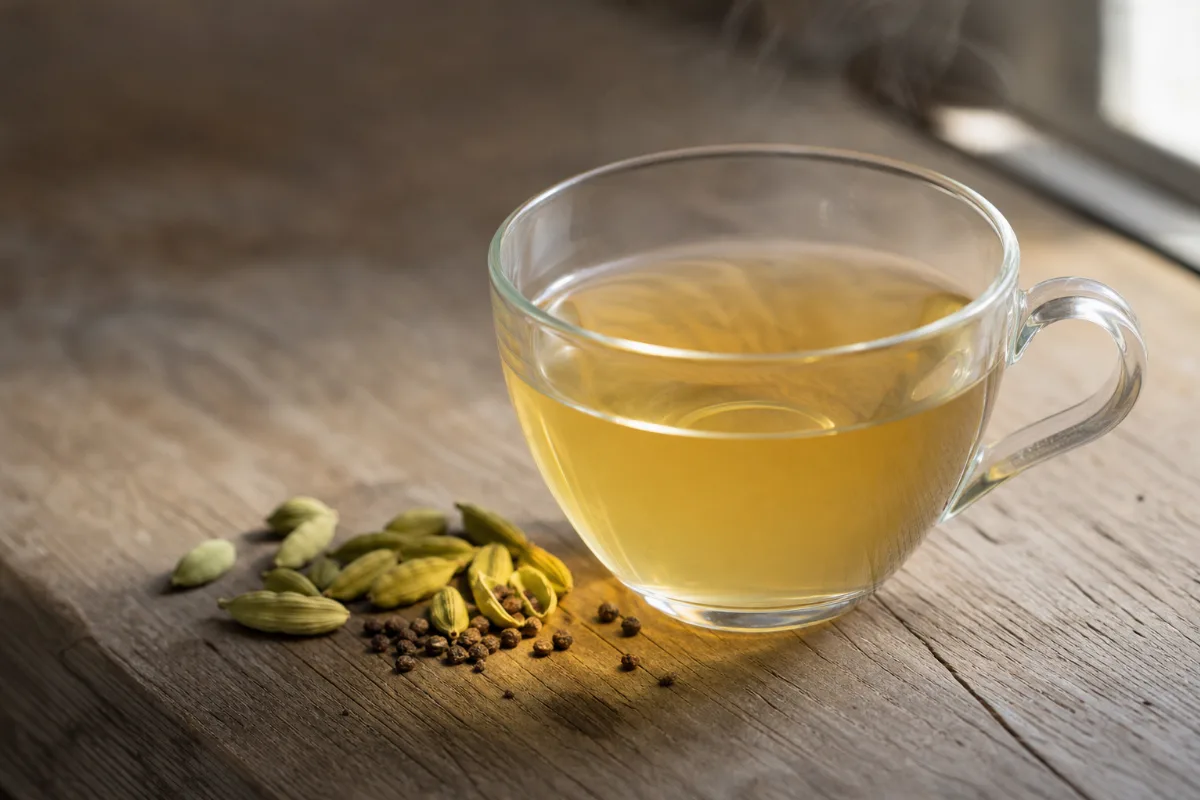
- Whole pods, cracked and steeped
- Seeds, crushed
- Ground cardamom
- Blend with black tea (chai), which adds caffeine
- Capsule or powder (used in the trials, not the same as a cup of tea)
Research links: PubMed: cardamom and blood fats, meta-analysis (abstract) · PubMed: cardamom and blood pressure, meta-analysis (abstract) · PubMed: cardamom in type 2 diabetes, trial (abstract) · LactMed: Cardamom · RxList: Cardamom (consumer reference) · Research Library · Genes & Biomarkers Library
What it is and its history
- Accepted scientific name
- Elettaria cardamomum (L.) Maton
- Naming authority
- (L.) Maton
- Common names
- Cardamom tea (English); Green cardamom tea (English); Elaichi tea (Hindi); Te de cardamomo (Spanish)
- Family or group
- Zingiberaceae
- Classification
- Plantae > Zingiberaceae > Elettaria > Elettaria cardamomum
- Native range
- Not read in the sources used for this page.
- Habitat
- Not read.
- What it looks like
- Part used: The seed, usually from the green pod; pods may be cracked or crushed, and seeds ground.
- Cultivation
- Not read.
- Harvest and processing
- Not described in the sources read.
- Look-alikes and adulterants
- Name: Black cardamom (Amomum subulatum); Note: A different plant with a smoky taste, sold as a separate spice. Studies of black cardamom do not apply to green cardamom tea.; Name: Blends sold as cardamom or chai tea; Note: Some tea bags add black tea leaves, ginger, cinnamon or other spices. Check the label.
- Sustainability and conservation
- Not assessed in the sources read.
Photographs
Traditional use and history history, not clinical proof
| Tradition or era | Documented use | Source |
|---|---|---|
| Cardamom as a spice and traditional remedy | The consumer reference we read says the seed is used as a food spice worldwide and in traditional medicine for digestion problems, colds and other complaints. It rates all of these uses as insufficient evidence. LactMed notes use as a postpartum tonic in Sri Lanka. These are reports of use, not proof it works. | RxList (2026) and LactMed (2025) |
Traditional use shows how it was used. It does not show that it works or is safe today.
What is inside, and how it may work
What it contains and how those compounds act in cells and animals. Laboratory and animal mechanisms are not proven effects in people.
Main compounds
| Compound | Family | Where it is concentrated | Activity studied | Level of evidence |
|---|---|---|---|---|
| 1,8-Cineole (eucalyptol) PubChem 2758 | monoterpene | Seed oil | A main aromatic compound in cardamom seed oil, according to LactMed. How much reaches a cup of tea was not found. 18 17 | Other |
| Alpha-terpinyl acetate PubChem 111037 | terpene ester | Seed oil | The other main aromatic compound in the seed oil, according to LactMed. Its content in tea was not found. 18 17 | Other |
Mechanisms, receptors and pathways
| Target or pathway | Gene or receptor | What was found | Level |
|---|---|---|---|
| No mechanism is confirmed for the small effects seen in supplement trials | The PCOS trial measured activity of obesity-related genes (FTO, CPT1A, LEPR, LAMIN, PPAR-gamma) and the diabetes trial measured SIRT1. These are markers in people given cardamom powder, not proof of how it works. We read no lab study for this page. 8 2 | Human marker |
Absorption, metabolism and elimination
- Absorption
- Not studied for cardamom tea in the sources read.
- Distribution
- The mouse study found cardamom compounds reached pups through the placenta or milk.
- Metabolism
- Not read.
- Elimination
- Not read.
- Bioavailability
- Not known for tea.
Isolated compounds versus whole extracts
The human trials gave cardamom as whole ground seed, capsules or powder, never as a single compound. Tea is a water extract of the seed, so it carries some of the water-soluble and aromatic parts in an unmeasured amount.
Nutritional composition
Cardamom tea is a very low-calorie drink and not a meaningful source of vitamins or minerals.
1 mixed findings3 low certainty2 very low certainty2 not enough evidence1 evidence against
What is Cardamom Tea good for?
The uses people ask about and how strong the evidence is for each. Read the certainty label first: every result below comes from cardamom powder, capsules or supplements, not from a cup of tea.
Benefits, one by one
Each card is a research question, not a promise. Tap a goal to filter. Open a card to see the studies, doses and limits.
Cardamom tea itself: no human trial found
Not enough evidenceWe found no human trial of cardamom tea. Everything below comes from cardamom powder, capsules or supplements.
1 studiesNot shown on this page.
Studies, doses and limits
What the trials found
Our searches of PubMed and Europe PMC found no human trial of a cardamom infusion. The consumer reference we read rates every listed use as insufficient evidence.
Results
No human result for the tea to report.
Effect sizes as reported
None.
Why this rating
No trial of the tea; the reference we read rates all uses as insufficient.
Form and dose studied
Not shown on this page.
Who was studied
None.
Limits
The supplement results do not carry over to tea.
Why researchers looked
People ask whether the tea helps digestion, heart health or blood sugar.
Traditional use
Cardamom seed is used as a spice and in traditional medicine for digestion; the sources we read give no human trial of cardamom tea.
Proposed mechanism Laboratory research
Cardamom seed holds aromatic oils (1,8-cineole, alpha-terpinyl acetate) and other plant compounds. How they might affect blood fats or sugar has been studied in lab and animal work; we did not rely on it. How much of these a cup of tea carries was not found.
A proposed mechanism does not show that the effect happens in people.
See the safety file.
Blood fats: triglycerides and cholesterol (powder and supplements)
Low certaintyPooled small trials of cardamom supplements find lower triglycerides. Total cholesterol is lower in one pooled analysis and not significantly changed in two others. HDL and LDL mostly did not change.
5 studiesNot shown on this page.
Studies, doses and limits
What the trials found
Zhang 2024 (12 trials, 989 adults) found lower total cholesterol and triglycerides but no significant change in HDL or LDL. Shekarchizadeh-Esfahani 2020 (5 trials) found lower triglycerides only. Asbaghi 2020 (7 trials) agreed on triglycerides and found no change in total, LDL or HDL. In the single trial of spice powder with black tea (204 adults with type 2 diabetes), cholesterol measures differed from the tea-only group; another trial in 80 women with pre-diabetes found no difference from placebo.
Results
Triglycerides lower in all three pooled analyses; total cholesterol lower in one of three; HDL and LDL mostly unchanged.
Effect sizes as reported
Triglycerides: -14.09 mg/dL (95% CI -24.01 to -4.17) in Zhang 2024; -20.55 mg/dL (95% CI -32.48 to -8.63) in Shekarchizadeh-Esfahani 2020.
Why this rating
Three pooled analyses point the same way for triglycerides, but they include few, small trials with different products, and the cholesterol results disagree. These are blood-test numbers, not heart attacks. None used tea.
Form and dose studied
Not shown on this page.
Who was studied
Adults, including people with diabetes, fatty liver or pre-diabetes
Limits
Few small trials; results for total cholesterol differ between reviews; no tea.
Why researchers looked
High blood fats are a heart-disease risk factor, so people look at spices for help.
Traditional use
Cardamom seed is used as a spice and in traditional medicine for digestion; the sources we read give no human trial of cardamom tea.
Proposed mechanism Laboratory research
Cardamom seed holds aromatic oils (1,8-cineole, alpha-terpinyl acetate) and other plant compounds. How they might affect blood fats or sugar has been studied in lab and animal work; we did not rely on it. How much of these a cup of tea carries was not found.
A proposed mechanism does not show that the effect happens in people.
See the safety file.
Blood pressure (powder and supplements)
Low certaintyPooled trials find a very small fall in diastolic blood pressure, under 1 mmHg. Systolic pressure fell slightly in one review and did not change in another.
3 studiesNot shown on this page.
Studies, doses and limits
What the trials found
Izadi 2023 (8 reports, 595 people with metabolic syndrome and related problems) found diastolic pressure lower by 0.91 mmHg and no significant effect on systolic. Heydarian 2024 (8 studies) found systolic lower by 0.54 mmHg and diastolic by 0.90 mmHg. The trial of spice powder with black tea (204 adults with type 2 diabetes) found no significant difference between the plants on blood pressure.
Results
A fall under 1 mmHg: too small to matter on its own.
Effect sizes as reported
Diastolic -0.91 mmHg (95% CI -1.19 to -0.62) in Izadi 2023; systolic -0.54 mmHg (95% CI -0.88 to -0.19) and diastolic -0.90 mmHg (95% CI -1.07 to -0.73) in Heydarian 2024.
Why this rating
Two pooled analyses with few, small trials; they disagree on systolic pressure; the effect is tiny; the one tea-with-powder trial was null. None used tea.
Form and dose studied
Not shown on this page.
Who was studied
Adults with metabolic syndrome or type 2 diabetes
Limits
Tiny size of effect; few trials; supplements and powder only.
Why researchers looked
Some people drink spiced teas hoping to lower blood pressure.
Traditional use
Cardamom seed is used as a spice and in traditional medicine for digestion; the sources we read give no human trial of cardamom tea.
Proposed mechanism Laboratory research
Cardamom seed holds aromatic oils (1,8-cineole, alpha-terpinyl acetate) and other plant compounds. How they might affect blood fats or sugar has been studied in lab and animal work; we did not rely on it. How much of these a cup of tea carries was not found.
A proposed mechanism does not show that the effect happens in people.
See the safety file.
Inflammation blood markers (CRP and IL-6)
Low certaintyTwo pooled analyses report lower CRP and interleukin-6 with cardamom supplements. These are lab numbers, not symptoms.
3 studiesNot shown on this page.
Studies, doses and limits
What the trials found
Zhang 2024 (12 trials, 989 adults): hs-CRP lower by 1.01 ng/mL (95% CI -1.81 to -0.22) and IL-6 lower by 1.81 pg/mL (95% CI -3.06 to -0.56). Izadi 2023: hs-CRP lower by 1.21 mg/L and IL-6 by 2.41 ng/L. Azimi 2014 (spice powder with black tea, 204 adults) found no significant effect on inflammation markers.
Results
Lower CRP and IL-6 in two pooled analyses; null in the one trial of powder with black tea.
Effect sizes as reported
hs-CRP -1.01 ng/mL (95% CI -1.81 to -0.22); IL-6 -1.81 pg/mL (95% CI -3.06 to -0.56) in Zhang 2024.
Why this rating
Two pooled analyses agree, but they contain few small trials, and a marker is not a symptom. None used tea.
Form and dose studied
Not shown on this page.
Who was studied
Adults with metabolic problems
Limits
Markers only; few trials; no tea.
Why researchers looked
Low-level inflammation is linked to heart and metabolic disease, so markers are often measured.
Traditional use
Cardamom seed is used as a spice and in traditional medicine for digestion; the sources we read give no human trial of cardamom tea.
Proposed mechanism Laboratory research
Cardamom seed holds aromatic oils (1,8-cineole, alpha-terpinyl acetate) and other plant compounds. How they might affect blood fats or sugar has been studied in lab and animal work; we did not rely on it. How much of these a cup of tea carries was not found.
A proposed mechanism does not show that the effect happens in people.
See the safety file.
Blood sugar and insulin (powder and supplements)
Mixed findingsResults are mixed. One pooled analysis found no change in fasting blood sugar but a lower insulin-resistance score. Single trials differ: one found lower HbA1c, one found no difference from placebo.
5 studiesNot shown on this page.
Studies, doses and limits
What the trials found
Nameni 2022 (6 publications, 410 people) found no significant change in BMI, weight, fasting sugar or insulin, but a lower HOMA-IR score. Aghasi 2019 (83 overweight adults with type 2 diabetes, placebo-controlled, 10 weeks) found lower HbA1c, insulin, HOMA-IR and triglycerides than placebo. Fatemeh 2017 (80 women with pre-diabetes, placebo-controlled) found no difference from placebo. Azimi 2014 (204 adults with type 2 diabetes, spice powder with black tea) found no significant effect on glycemic control. Asbaghi 2020 found no change in fasting glucose.
Results
Mixed: lower HbA1c in one trial; null in three other sources.
Effect sizes as reported
Aghasi 2019: HbA1c -0.4%, HOMA-IR -1.7 versus placebo.
Why this rating
Pooled analyses and single trials point different ways; trials are small; none used tea.
Form and dose studied
Not shown on this page.
Who was studied
Adults with type 2 diabetes or pre-diabetes
Limits
Small trials; mixed results; powder and capsules only.
Why researchers looked
Spices are often tried for blood sugar in type 2 diabetes and pre-diabetes.
Traditional use
Cardamom seed is used as a spice and in traditional medicine for digestion; the sources we read give no human trial of cardamom tea.
Proposed mechanism Laboratory research
Cardamom seed holds aromatic oils (1,8-cineole, alpha-terpinyl acetate) and other plant compounds. How they might affect blood fats or sugar has been studied in lab and animal work; we did not rely on it. How much of these a cup of tea carries was not found.
A proposed mechanism does not show that the effect happens in people.
Cardamom is not a replacement for diabetes medicine. If you take diabetes medicine, ask your doctor or pharmacist before changing anything.
Body weight and BMI
Evidence againstPooled trials show no clear weight loss. One analysis of three small studies found BMI went up slightly with cardamom.
3 studiesNot shown on this page.
Studies, doses and limits
What the trials found
Asbaghi 2020 (7 trials): no significant effect on body weight; a significant rise in BMI in 3 small studies. Nameni 2022 (6 publications, 410 people): no significant effect on BMI, weight or waist. Azimi 2016 (204 adults): no difference between the plants in body measures.
Results
No weight-loss effect shown; one signal of higher BMI from three small studies.
Effect sizes as reported
Numbers not given in the abstract for the BMI rise.
Why this rating
Pooled analyses find no benefit for weight; the BMI rise is from few small studies.
Form and dose studied
Not shown on this page.
Who was studied
Adults
Limits
No tea; few trials.
Why researchers looked
Spices are sometimes sold for weight loss.
Traditional use
Cardamom seed is used as a spice and in traditional medicine for digestion; the sources we read give no human trial of cardamom tea.
Proposed mechanism Laboratory research
Cardamom seed holds aromatic oils (1,8-cineole, alpha-terpinyl acetate) and other plant compounds. How they might affect blood fats or sugar has been studied in lab and animal work; we did not rely on it. How much of these a cup of tea carries was not found.
A proposed mechanism does not show that the effect happens in people.
None beyond the safety file.
Fatty liver (NAFLD)
Very low certaintyOne placebo-controlled trial in 87 people with fatty liver found improved blood fats, insulin resistance and fatty-liver grade on ultrasound with cardamom capsules.
1 studiesNot shown on this page.
Studies, doses and limits
What the trials found
Daneshi-Maskooni 2019: 87 overweight or obese adults with NAFLD; 43 got cardamom capsules and 44 got placebo for 3 months. Versus placebo: higher irisin, HDL and QUICKI; lower insulin, triglycerides, LDL, HOMA-IR and fatty-liver grade. No significant difference in fasting sugar, total cholesterol or BMI.
Results
Better blood-test results and ultrasound grade than placebo in one trial.
Effect sizes as reported
Not given as numbers in the abstract.
Why this rating
One small single-centre trial, capsules not tea, a rough ultrasound measure, no repeat trial found.
Form and dose studied
Not shown on this page.
Who was studied
Overweight or obese adults with NAFLD
Limits
One trial; short; not replicated.
Why researchers looked
Fatty liver goes with metabolic problems, so researchers tested a spice linked to blood-fat changes.
Traditional use
Cardamom seed is used as a spice and in traditional medicine for digestion; the sources we read give no human trial of cardamom tea.
Proposed mechanism Laboratory research
Cardamom seed holds aromatic oils (1,8-cineole, alpha-terpinyl acetate) and other plant compounds. How they might affect blood fats or sugar has been studied in lab and animal work; we did not rely on it. How much of these a cup of tea carries was not found.
A proposed mechanism does not show that the effect happens in people.
People with liver disease should talk to their doctor before using supplements.
Polycystic ovary syndrome (PCOS)
Very low certaintyOne 16-week trial in 194 obese women with PCOS on a low-calorie diet found better blood-sugar and hormone results with cardamom than with the diet alone.
1 studiesNot shown on this page.
Studies, doses and limits
What the trials found
Cheshmeh 2022: 194 women; 99 got green cardamom plus a low-calorie diet and 95 got the diet alone for 16 weeks. Both groups lost body measures. Glycemic indices and androgen hormones improved more with cardamom, and the activity of some obesity-related genes shifted.
Results
Better sugar and hormone results than diet alone in one trial.
Effect sizes as reported
Not given as numbers in the abstract.
Why this rating
One trial with no placebo, so people knew their group; gene activity is a lab marker; a correction notice was published.
Form and dose studied
Not shown on this page.
Who was studied
Obese women with PCOS
Limits
One trial; no placebo; lab markers.
Why researchers looked
PCOS often comes with weight and blood-sugar problems.
Traditional use
Cardamom seed is used as a spice and in traditional medicine for digestion; the sources we read give no human trial of cardamom tea.
Proposed mechanism Laboratory research
Cardamom seed holds aromatic oils (1,8-cineole, alpha-terpinyl acetate) and other plant compounds. How they might affect blood fats or sugar has been studied in lab and animal work; we did not rely on it. How much of these a cup of tea carries was not found.
A proposed mechanism does not show that the effect happens in people.
See the safety file for pregnancy.
Digestion: gas, heartburn, IBS, nausea
Not enough evidenceCardamom is used traditionally for digestion, but the consumer reference we read rates every digestive use as insufficient evidence, and we found no trial of the tea.
1 studiesNot shown on this page.
Studies, doses and limits
What the trials found
RxList (citing the Natural Medicines database) lists heartburn, intestinal spasms, IBS, gas, constipation and nausea after surgery, and rates all as insufficient evidence. We found no human trial of cardamom for these in our PubMed searches that tested an infusion.
Results
No usable result.
Effect sizes as reported
None.
Why this rating
No tea trials; the reference rates all uses insufficient.
Form and dose studied
Not shown on this page.
Who was studied
None.
Limits
Tradition is not evidence.
Why researchers looked
Cardamom is a traditional digestive spice, often added to tea for that reason.
Traditional use
Cardamom seed is used as a spice and in traditional medicine for digestion; the sources we read give no human trial of cardamom tea.
Proposed mechanism Laboratory research
Cardamom seed holds aromatic oils (1,8-cineole, alpha-terpinyl acetate) and other plant compounds. How they might affect blood fats or sugar has been studied in lab and animal work; we did not rely on it. How much of these a cup of tea carries was not found.
A proposed mechanism does not show that the effect happens in people.
Gallstones: see the safety file.
Connections to the rest of health
How Cardamom Tea connects to the rest of our health knowledge graph. Every link says what kind of connection it is. A safety link (for example to the liver) is a warning, not a benefit. A study that merely mentions a topic never creates a benefit link.
Explore every connection: goals, body systems, organs, symptoms, genes
A. Wellness goals
| Connected to | Kind of connection | Evidence status | Context | Studies |
|---|---|---|---|---|
| Digestive Support | Not enough evidence | Cardamom tea itself: no human trial found: We found no human trial of cardamom tea. Everything below comes from cardamom powder, capsules or supplements. Digestion: gas, heartburn, IBS, nausea: Cardamom is used traditionally for digestion, but the consumer reference we read rates every digestive use as insufficient evidence, and we found no trial of the tea. | 20 | |
| Cholesterol Balance | Low certainty | Blood fats: triglycerides and cholesterol (powder and supplements): Pooled small trials of cardamom supplements find lower triglycerides. Total cholesterol is lower in one pooled analysis and not significantly changed in two others. HDL and LDL mostly did not change. | 22 21 4 5 11 | |
| Heart Health | Low certainty | Blood fats: triglycerides and cholesterol (powder and supplements): Pooled small trials of cardamom supplements find lower triglycerides. Total cholesterol is lower in one pooled analysis and not significantly changed in two others. HDL and LDL mostly did not change. Blood pressure (powder and supplements): Pooled trials find a very small fall in diastolic blood pressure, under 1 mmHg. Systolic pressure fell slightly in one review and did not change in another. | 22 21 4 5 11 14 13 6 | |
| Blood Pressure Support | Low certainty | Blood pressure (powder and supplements): Pooled trials find a very small fall in diastolic blood pressure, under 1 mmHg. Systolic pressure fell slightly in one review and did not change in another. | 14 13 6 | |
| Inflammation Balance | Low certainty | Inflammation blood markers (CRP and IL-6): Two pooled analyses report lower CRP and interleukin-6 with cardamom supplements. These are lab numbers, not symptoms. | 22 14 5 | |
| Blood Sugar Balance | Mixed findings | Blood sugar and insulin (powder and supplements): Results are mixed. One pooled analysis found no change in fasting blood sugar but a lower insulin-resistance score. Single trials differ: one found lower HbA1c, one found no difference from placebo. | 19 2 11 5 4 | |
| Metabolic Health | Mixed findings | Blood sugar and insulin (powder and supplements): Results are mixed. One pooled analysis found no change in fasting blood sugar but a lower insulin-resistance score. Single trials differ: one found lower HbA1c, one found no difference from placebo. | 19 2 11 5 4 | |
| Weight Management | Evidence against | Body weight and BMI: Pooled trials show no clear weight loss. One analysis of three small studies found BMI went up slightly with cardamom. | 4 19 6 | |
| Liver Support | Very low certainty | Fatty liver (NAFLD): One placebo-controlled trial in 87 people with fatty liver found improved blood fats, insulin resistance and fatty-liver grade on ultrasound with cardamom capsules. | 10 | |
| Metabolic Health | Very low certainty | Fatty liver (NAFLD): One placebo-controlled trial in 87 people with fatty liver found improved blood fats, insulin resistance and fatty-liver grade on ultrasound with cardamom capsules. | 10 | |
| Womens Wellness | Very low certainty | Polycystic ovary syndrome (PCOS): One 16-week trial in 194 obese women with PCOS on a low-calorie diet found better blood-sugar and hormone results with cardamom than with the diet alone. | 8 | |
| Hormone Balance | Very low certainty | Polycystic ovary syndrome (PCOS): One 16-week trial in 194 obese women with PCOS on a low-calorie diet found better blood-sugar and hormone results with cardamom than with the diet alone. | 8 |
B. Body systems
| Connected to | Kind of connection | Evidence status | Context | Studies |
|---|---|---|---|---|
| Digestive System | Biological association | Not enough evidence | Studied for: Cardamom tea itself: no human trial found Studied for: Digestion: gas, heartburn, IBS, nausea | 20 |
| Cardiovascular System | Biological association | Low certainty | Studied for: Blood fats: triglycerides and cholesterol (powder and supplements) Studied for: Blood pressure (powder and supplements) | 22 21 4 5 11 14 13 6 |
| Immune System | Biological association | Low certainty | Studied for: Inflammation blood markers (CRP and IL-6) | 22 14 5 |
| Endocrine System | Biological association | Mixed findings | Studied for: Blood sugar and insulin (powder and supplements) | 19 2 11 5 4 |
| Metabolic System | Biological association | Evidence against | Studied for: Body weight and BMI | 4 19 6 |
| Hepatic System | Biological association | Very low certainty | Studied for: Fatty liver (NAFLD) | 10 |
| Reproductive System | Biological association | Very low certainty | Studied for: Polycystic ovary syndrome (PCOS) | 8 |
C. Body parts and organs
| Connected to | Kind of connection | Evidence status | Context | Studies |
|---|---|---|---|---|
| Gallbladder | Adverse effect or risk | Not enough evidence | One consumer reference advises food amounts only with gallstones. Preparation or compound: Cardamom seed; food amounts only |
20 |
I. Biomarkers
| Connected to | Kind of connection | Evidence status | Context | Studies |
|---|---|---|---|---|
| Triglycerides | Low certainty | Lower in three pooled analyses of small trials. Preparation or compound: Cardamom powder and supplements (not tea) |
22 21 4 | |
| Triglycerides | Biological association | Measured in trials: lowered. A lab change is not the same as a health benefit. | ||
| Blood pressure | Biological association | Measured in trials: lowered slightly. A lab change is not the same as a health benefit. | ||
| hs-CRP and interleukin-6 | Biological association | Measured in trials: lowered. A lab change is not the same as a health benefit. | ||
| HbA1c and insulin resistance (HOMA-IR) | Biological association | Measured in trials: lowered in some trials, unchanged in others. A lab change is not the same as a health benefit. | ||
| Fatty-liver grade (ultrasound) | Biological association | Measured in trials: lowered. A lab change is not the same as a health benefit. | ||
| Androgen hormones | Biological association | Measured in trials: improved. A lab change is not the same as a health benefit. |
J. Genes, receptors and enzymes
| Connected to | Kind of connection | Evidence status | Context | Studies |
|---|---|---|---|---|
| FTO / PPAR-gamma (obesity and diabetes genes) | Preliminary mechanism | Activity changed in women with PCOS given cardamom in one trial; a marker, not a mechanism. | 8 |
L. Active compounds
| Connected to | Kind of connection | Evidence status | Context | Studies |
|---|---|---|---|---|
| 1,8-Cineole (eucalyptol) | Biological association | Other | A main aromatic compound in cardamom seed oil, according to LactMed. How much reaches a cup of tea was not found. Preparation or compound: Seed oil |
18 17 |
| Alpha-terpinyl acetate | Biological association | Other | The other main aromatic compound in the seed oil, according to LactMed. Its content in tea was not found. Preparation or compound: Seed oil |
18 17 |
Each connection is stored with the ingredient, the connected record, the kind of connection, the evidence status, the supporting studies, the preparation or compound involved, and a review date (last reviewed October 25, 2026).
The evidence
The research centre for Cardamom Tea. Every record here was checked against PubMed or the publisher's page; we never list a study we have not verified.
Evidence by outcome
Bars show how many studies we found for each outcome, not how well it works. People are added up across trials only (reviews are not added, to avoid double counting).
How we rate evidence
High certainty
Several well-run trials or reviews agree; further research is unlikely to change the picture much.
Moderate certainty
Good trials point the same way, but some doubt remains.
Low certainty
Small, short or inconsistent trials. The finding could change with better research.
Very low certainty
Very little or very weak human data. Treat as a possibility only.
Mixed findings
Trials or reviews disagree with each other.
Not enough evidence
Not enough human research to say either way.
Evidence against
Good research found no benefit, or found harm.
We take the reviewers' own risk-of-bias and GRADE statements where they exist, and otherwise judge from study size, design, consistency, directness and whether a product matches what is sold. Many publications do not make evidence high. Method note: We read the abstracts of 18 PubMed papers, the LactMed record summary and the RxList consumer reference page, checked the plant name in GBIF and compounds in PubChem. The FDA, EU and NCCIH regulator statements were not re-opened for this page. Two papers are title-only or lack numbers in the abstract and are flagged.
Study library: every study we checked 22
| Study | Design | People | Product, dose, length | Result |
|---|---|---|---|---|
| Abu-Taweel GM. 2018 Cardamom (Elettaria cardamomum) perinatal exposure effects on the development, behavior and biochemical parameters in mice offspring. Saudi J Biol Sci · PMID 29379379 · DOI |
Animal research mouse |
30 Pregnant mice (10 per group) |
Cardamom mixed into the diet at 10% and 20% seed (diet) Not shown on this page From day 1 of pregnancy to day 15 after birth · vs Normal diet |
Pups had slower weight gain and delayed eye opening, hair growth and reflexes, but better learning and memory. Cardamom compounds reached pups through the placenta or milk. Methods, limits and fundingOutcomes: Pup development, learning, brain chemistry Limitations: Mice fed diets that are a tenth to a fifth cardamom: far above a cup of tea. Animal data only; cannot tell about people. Read: abstract |
| Aghasi 2019 Beneficial effects of green cardamom on serum SIRT1, glycemic indices and triglyceride levels in patients with type 2 diabetes mellitus: a randomized double-blind placebo controlled clinical trial. J Sci Food Agric · PMID 30701554 · DOI |
Controlled trial |
83 Overweight or obese adults with type 2 diabetes |
Green cardamom powder seed (ground) Not shown on this page 10 weeks · vs Rusk powder (placebo) |
Versus placebo: HbA1c lower by 0.4%, insulin lower by 2.8 microIU/dL, HOMA-IR lower by 1.7 and triglycerides lower by 39.9 mg/dL; SIRT1 higher. The abstract text is partly garbled, so other lipid results are not quoted here. HbA1c -0.4%; TG -39.9 mg/dL Methods, limits and fundingOutcomes: HbA1c, insulin, HOMA-IR, triglycerides, SIRT1 Limitations: One trial, 41 and 42 people, 10 weeks, powder not tea. Funding and conflicts: No conflict statement in the abstract. Read: abstract |
| Alawadhi 2024 Heavy metals in spices and herbs from worldwide markets: A systematic review and health risk assessment. Environ Pollut · PMID 39306065 · DOI |
Systematic review n/a |
50 studies of spices and herbs | Spices and herbs including green cardamom various Not shown on this page n/a · vs Permissible limits |
Levels varied by country and spice. Green cardamom from Bahrain had high lead (2.2 ug/g) and cadmium (0.9 ug/g); some spices exceeded permissible lead and cadmium limits. The risk assessment found no non-carcinogenic risk for the metals assessed in most regions (chamomile in Turkey was the exception). Methods, limits and fundingOutcomes: Heavy-metal levels and health-risk assessment Limitations: Reports one batch of green cardamom among many results; it does not describe cardamom tea or typical products. Funding and conflicts: No conflict declared. Read: abstract |
| Asbaghi 2020 Effect of green cardamom on lipoproteins, glycemic control and anthropometric parameters: A meta-analysis of randomized clinical trials. Clin Nutr ESPEN · PMID 32359750 · DOI |
Meta-analysis |
Healthy people and people with disease, 7 randomised trials | Green cardamom seed (unspecified) Not shown on this page Varied · vs Control groups |
Triglycerides were lower. Three small studies showed a significant rise in BMI with cardamom. No significant effect on total, LDL or HDL cholesterol, fasting glucose or body weight. Methods, limits and fundingOutcomes: Blood fats, fasting glucose, weight, BMI Limitations: Numbers not given in the abstract. BMI result comes from only three small studies. Funding and conflicts: Conflict statement: none declared. Read: abstract |
| Azimi 2014 Effects of Cinnamon, Cardamom, Saffron, and Ginger Consumption on Markers of Glycemic Control, Lipid Profile, Oxidative Stress, and Inflammation in Type 2 Diabetes Patients. Rev Diabet Stud · PMID 26177486 · DOI |
Controlled trial |
204 Adults with type 2 diabetes (five groups) |
Cardamom powder added to black tea (also tested: cinnamon, ginger, saffron) seed (ground) Not shown on this page 8 weeks · vs Three glasses of black tea alone |
All four spices changed total, LDL and HDL cholesterol versus the tea-only group (p < 0.05). No significant effect on measures of glycemic control, anthropometry, inflammation or oxidative stress. Results for cardamom alone were not broken out in the abstract. Methods, limits and fundingOutcomes: Blood sugar, blood fats, oxidative stress, inflammation Limitations: This is spice powder taken with black tea, not a cardamom infusion, and black tea carries caffeine and its own effects. Groups were compared as a set; no cardamom-only numbers in the abstract. Funding and conflicts: Not stated in the abstract. Read: abstract |
| Azimi 2016 Effect of cinnamon, cardamom, saffron and ginger consumption on blood pressure and a marker of endothelial function in patients with type 2 diabetes mellitus: A randomized controlled clinical trial. Blood Press · PMID 26758574 · DOI |
Controlled trial |
204 Adults with type 2 diabetes |
Cardamom powder added to black tea (also tested: cinnamon, ginger, saffron) seed (ground) Not shown on this page 8 weeks · vs Three glasses of black tea alone |
No significant difference between the plants for blood pressure, sICAM-1 or body measures. In within-group comparisons, saffron and ginger lowered sICAM-1 and ginger lowered systolic pressure; cardamom was not named among these. Methods, limits and fundingOutcomes: Blood pressure, sICAM-1, body measures Limitations: Same trial as Azimi 2014. Spice powder with black tea, not a cardamom infusion. Funding and conflicts: Not stated in the abstract. Read: abstract |
| Bernal-Rubio 2024 Identification of the Protein a-L-Fucosidase as the Possible Cause of Allergy to Cardamom. J Investig Allergol Clin Immunol · PMID 38888582 · DOI |
Other |
Allergy report (details not in the record) | Cardamom seed Not shown on this page n/a · vs n/a |
PubMed has no abstract for this short paper. The title says a protein, alpha-L-fucosidase, is the possible cause of cardamom allergy. Methods, limits and fundingOutcomes: Protein linked to cardamom allergy Limitations: Title only; we could not read the details. Shows cardamom allergy has been reported; it does not give how common it is. Read: title-only |
| Cheshmeh 2022 Effect of green cardamom on the expression of genes implicated in obesity and diabetes among obese women with polycystic ovary syndrome: a double blind randomized controlled trial. Genes Nutr · PMID 36522620 · DOI |
Controlled trial |
194 Obese women with polycystic ovary syndrome (PCOS), all on a low-calorie diet |
Green cardamom seed (ground) Not shown on this page 16 weeks · vs Low-calorie diet alone |
Body measures fell in both groups. Glycemic indices and androgen hormones improved more with cardamom than control; activity of the genes FTO, CPT1A, LEPR and LAMIN was lower and PPAR-gamma higher. Methods, limits and fundingOutcomes: Body measures, blood sugar, androgen hormones, gene activity Limitations: The comparison group had no placebo, so people knew who got cardamom. Gene-activity changes are lab markers. A correction notice was published in 2023 (not opened). Funding and conflicts: Competing interests: none declared. Registration: IRCT20200608047697N1 Read: abstract |
| Chin 2008 Caffeine content of brewed teas. J Anal Toxicol · PMID 19007524 · DOI |
Lab analysis n/a |
20 20 commercial tea products |
Brewed teas including herbal varieties leaf and herb Not shown on this page n/a · vs n/a |
Caffeine was not detected in the herbal tea varieties tested; white, green and black teas ranged from 14 to 61 mg per serving. Methods, limits and fundingOutcomes: Caffeine concentration Limitations: Cardamom tea was not named in the abstract. General evidence for herbal teas, not a test of this tea or of chai blends. Read: abstract |
| Daneshi-Maskooni 2019 Green cardamom supplementation improves serum irisin, glucose indices, and lipid profiles in overweight or obese non-alcoholic fatty liver disease patients: a double-blind randomized placebo-controlled clinical trial. BMC Complement Altern Med · PMID 30871514 · DOI |
Controlled trial |
87 Overweight or obese adults with fatty liver (NAFLD) |
Green cardamom capsules seed (ground) Not shown on this page 3 months · vs Placebo capsules |
Versus placebo: higher irisin, HDL and QUICKI; lower fasting insulin, triglycerides, LDL, HOMA-IR and fatty-liver grade on ultrasound. No significant difference in fasting blood sugar, total cholesterol or BMI. Methods, limits and fundingOutcomes: Irisin, glucose indices, blood fats, fatty-liver grade Limitations: Single-centre trial, 43 vs 44 people, capsules not tea. Ultrasound grading is a rough measure. Funding and conflicts: Competing interests: none declared. Registration: IRCT2015121317254N4 Read: abstract |
| Fatemeh 2017 The effect of cardamom supplementation on serum lipids, glycemic indices and blood pressure in overweight and obese pre-diabetic women: a randomized controlled trial. J Diabetes Metab Disord · PMID 29026804 · DOI |
Controlled trial |
80 Overweight or obese women with pre-diabetes |
Green cardamom powder seed (ground) Not shown on this page 2 months · vs Rusk powder (placebo) |
Within the cardamom group, total and LDL cholesterol fell and insulin sensitivity rose, but there was no significant difference from placebo for blood pressure, glycemic indices or lipids. The authors say the effects were not different from placebo. Methods, limits and fundingOutcomes: Blood fats, glycemic indices, blood pressure Limitations: Null result against placebo; first author is cited as PubMed lists it. Funding and conflicts: Competing interests: none declared. Registration: IRCT2014060817254N2 Read: abstract |
| GBIF Secretariat 2026 GBIF Backbone Taxonomy: Elettaria cardamomum (L.) Maton (usageKey 2759871) API / web page · Source |
Database record n/a |
n/a | Cardamom (Elettaria cardamomum) seed |
Match on 2026-10-25: accepted species, exact match, family Zingiberaceae. Methods, limits and fundingLimitations: Name database only; synonyms not reviewed. Read: full-text |
| Heydarian 2024 Effect of cardamom consumption on inflammation and blood pressure in adults: A systematic review and meta-analysis of randomized clinical trials. Food Sci Nutr · PMID 38268891 · DOI |
Meta-analysis |
Adults, 8 studies | Cardamom (forms vary) seed (unspecified) Not shown on this page Varied · vs Control groups |
Lower hs-CRP, IL-6 and TNF-alpha, and lower systolic (WMD -0.54 mmHg, 95% CI -0.88 to -0.19) and diastolic (WMD -0.90 mmHg, 95% CI -1.07 to -0.73) blood pressure. Authors urge caution because there were few studies. SBP -0.54 mmHg; DBP -0.90 mmHg (SBP -0.88 to -0.19; DBP -1.07 to -0.73) Methods, limits and fundingOutcomes: Inflammation markers and blood pressure Limitations: Fixed-effect model. The abstract's units for inflammation markers look inconsistent (for example TNF-alpha given in kg), so we quote only the blood pressure numbers. It finds a small systolic fall where Izadi 2023 found none. Funding and conflicts: Conflict statement: none declared. Read: abstract |
| Izadi 2023 The effect of green cardamom on blood pressure and inflammatory markers among patients with metabolic syndrome and related disorders: A systematic review and meta-analysis of randomized clinical trials. Phytother Res · PMID 36181264 · DOI |
Meta-analysis |
595 Adults with metabolic syndrome and related disorders, 8 reports |
Green cardamom (supplement) seed (unspecified) Not shown on this page Varied · vs Control groups |
Diastolic blood pressure fell by 0.91 mmHg (95% CI -1.19 to -0.62); hs-CRP by 1.21 mg/L (95% CI -2.18 to -0.24); IL-6 by 2.41 ng/L (95% CI -4.35 to -0.47). No significant effect on systolic pressure. DBP -0.91 mmHg (DBP -1.19 to -0.62) Methods, limits and fundingOutcomes: Blood pressure, hs-CRP, interleukin-6 Limitations: The authors say there were few eligible trials with low numbers of people. A fall under 1 mmHg is very small. Funding and conflicts: Not stated in the abstract. Read: abstract |
| Meding B. 1993 Skin symptoms among workers in a spice factory. Contact Dermatitis · PMID 8281784 · DOI |
Cross sectional |
93 70 factory workers and 23 office workers, Sweden |
Spice powders (cinnamon, cardamom, paprika, white pepper) powder Not shown on this page n/a · vs Office workers |
Skin symptoms in about half the factory workers; irritation was mostly from cinnamon powder. Irritant (not allergic) patch-test reactions were seen to powders of cardamom, paprika and white pepper. Methods, limits and fundingOutcomes: Skin symptoms, patch and prick tests Limitations: Workplace dust exposure to powders; says little about a drink. Read: abstract |
| Mobacken 1975 Allergic contact dermatitis from cardamom. Contact Dermatitis · PMID 138507 · DOI |
Case report |
1 A confectioner with chronic hand dermatitis |
Cardamom seed seed Not shown on this page n/a · vs n/a |
Positive patch-test reactions to cardamom and to certain terpenoid compounds in the seeds. The authors report one case of allergic contact dermatitis to cardamom. Methods, limits and fundingOutcomes: Skin patch test Limitations: One case, from handling the spice at work, not drinking it. Read: abstract |
| NCBI PubChem 2026 PubChem compound records: 1,8-cineole (CID 2758), alpha-terpinyl acetate (CID 111037) API / web page · Source |
Database record n/a |
n/a | Cardamom (Elettaria cardamomum) seed |
Names and formulas confirmed by the PubChem API on 2026-10-25: 1,8-cineole C10H18O; alpha-terpinyl acetate C12H20O2. Methods, limits and fundingLimitations: Identity check only; says nothing about activity or amounts in tea. Read: full-text |
| NICHD / 2025 Cardamom (LactMed, Drugs and Lactation Database) LactMed (record dated 2025-05-15) · Source |
Authoritative guidance |
Cardamom (Elettaria cardamomum) seed |
Record read through PubMed (summary text). Lists the main oil compounds, says cardamom has been used during breastfeeding for infant colic and as a milk-supply herb in mixtures with some literature support, and as a postpartum tonic in Sri Lanka. The text we read gives no safety finding. Methods, limits and fundingLimitations: Summary text only; the full record and its references were not opened. Read: summary | |
| Nameni 2022 Effect of cardamom supplementation on a number of metabolic factors: A systematic review and meta-analysis. Diabetes Metab Syndr · PMID 35691204 · DOI |
Meta-analysis |
410 Adults, 6 publications |
Cardamom supplementation seed (unspecified) Not shown on this page 8 weeks to 3 months · vs Control groups |
No significant effect on BMI, weight, waist, fasting blood sugar, insulin or QUICKI. HOMA-IR (an insulin-resistance score) was significantly lower. The authors conclude cardamom may help glucose metabolism. Methods, limits and fundingOutcomes: Glucose indices and weight measures Limitations: Only HOMA-IR moved; the rest were null. The abstract's conclusion is stronger than most of its own numbers. Funding and conflicts: Conflict statement: none declared. Read: abstract |
| RxList 2026 Cardamom: Health Benefits, Side Effects, Uses (consumer reference citing the Natural Medicines database) Web page, read 2026-10-25 · Source |
Authoritative guidance |
Cardamom (Elettaria cardamomum) seed |
Page text read. Says cardamom is likely safe for most people by mouth, but potential side effects are not known. Says there is not enough reliable information on medicinal amounts in pregnancy and breastfeeding and to stay with food amounts. Says people with gallstones should not take more than food amounts because the seed can trigger gallstone colic. Rates every listed use (digestion problems, gas, IBS, nausea after surgery, others) as insufficient evidence. Lists no drug interactions. Methods, limits and fundingLimitations: Consumer reference; the gallstone and pregnancy statements come from this one source. No dose figures are used on this page. Read: full-text | |
| Shekarchizadeh-Esfahani 2020 Effects of cardamom supplementation on lipid profile: A systematic review and meta-analysis of randomized controlled clinical trials. Phytother Res · PMID 31755188 · DOI |
Meta-analysis |
Adults, 5 randomised trials | Cardamom supplementation seed (unspecified) Not shown on this page Varied · vs Control groups |
No significant change in total cholesterol (WMD -6.11 mg/dL, 95% CI -13.06 to 0.83), LDL (WMD -4.31, 95% CI -9.75 to 1.13) or HDL (WMD 1.75, 95% CI -1.95 to 5.46). Triglycerides were lower (WMD -20.55 mg/dL, 95% CI -32.48 to -8.63). TG -20.55 mg/dL (TG -32.48 to -8.63) Methods, limits and fundingOutcomes: Blood fats Limitations: Only five trials; authors want trials in people with high blood fats, excluding lipid-lowering drugs. Total patient number not given in the abstract. Funding and conflicts: Not stated in the abstract. Read: abstract |
| Zhang 2024 Cardamom consumption may improve cardiovascular metabolic biomarkers in adults: A systematic review and meta-analysis of randomized controlled trials. Nutr Res · PMID 38593657 · DOI |
Meta-analysis |
989 Adults, 12 randomised trials |
Cardamom (forms vary between trials) seed (unspecified) Not shown on this page Varied · vs Control groups |
Lower total cholesterol (WMD -8.56 mg/dL, 95% CI -14.90 to -2.22), triglycerides (WMD -14.09 mg/dL, 95% CI -24.01 to -4.17), hs-CRP (WMD -1.01 ng/mL, 95% CI -1.81 to -0.22) and interleukin-6 (WMD -1.81 pg/mL, 95% CI -3.06 to -0.56). No significant change in HDL or LDL cholesterol or some oxidative stress markers. TC -8.56 mg/dL; TG -14.09 mg/dL (TC -14.90 to -2.22; TG -24.01 to -4.17) Methods, limits and fundingOutcomes: Blood fats, inflammation markers, oxidative stress markers Limitations: Authors call for larger, better-designed trials. Supplements and powders, not tea. Lab values, not heart attacks. Funding and conflicts: Not stated in the abstract. Read: abstract |
What we do not know yet
- No human trial of cardamom tea (an infusion) was found.
- Trials used powder, capsules or extracts; the amount and form differ from trial to trial.
- No safety study of cardamom tea in any group, including pregnancy, breastfeeding and children.
- The gallstone caution rests on one consumer source we could not trace to a regulator.
- No drug-interaction studies; no EU monograph, NCCIH fact sheet or LiverTox entry for cardamom was found or read.
- The fatty-liver and PCOS results each come from a single trial.
How new research is added
New studies are found by a saved PubMed search and are placed in a review queue. A person reads each one before it is added.
Lab markers
What changed in blood or saliva tests during trials. A changed number is not the same as feeling or being healthier, and we give no "normal ranges".
Metabolic 1
Triglycerides
Lowered in trials
A type of fat in the blood. High levels go with a higher risk of heart disease.
Results and what it means
Why it was measured
It is the one blood-fat result that came out lower in every pooled analysis.
Other 5
Blood pressure
Lowered slightly in trials
The force of blood on artery walls. Systolic is the top number and diastolic the bottom one.
Results and what it means
hs-CRP and interleukin-6
Lowered in trials
Blood markers of low-level inflammation.
Results and what it means
HbA1c and insulin resistance (HOMA-IR)
Lowered in some trials, unchanged in others in trials
HbA1c shows average blood sugar over about three months. HOMA-IR is a score for insulin resistance.
Results and what it means
Why it was measured
Used to judge blood-sugar control in diabetes and pre-diabetes.
| Study | Result | People | Product |
|---|---|---|---|
| 2 | HbA1c -0.4%; HOMA-IR -1.7 versus placebo | 83 adults with type 2 diabetes | Green cardamom powder |
| 19 | HOMA-IR significantly lower; fasting sugar and insulin not significantly changed | 6 publications, 410 people | Cardamom supplementation |
| 11 | No significant difference from placebo | 80 women with pre-diabetes | Green cardamom powder |
Fatty-liver grade (ultrasound)
Lowered in trials
A rough ultrasound score of how much fat is in the liver.
Results and what it means
Why it was measured
The main outcome in the fatty-liver trial.
| Study | Result | People | Product |
|---|---|---|---|
| 10 | Lower grade than placebo | 87 adults with NAFLD | Green cardamom capsules |
Androgen hormones
Improved in trials
Male-type hormones that are often raised in PCOS.
Results and what it means
Why it was measured
A key marker in PCOS.
| Study | Result | People | Product |
|---|---|---|---|
| 8 | Improved more than diet alone | 194 obese women with PCOS | Green cardamom plus low-calorie diet |
Safety
What studies and official sources say about side effects, medicines and who should check first. Each point shows what kind of evidence it comes from.
Main points to know 5
- Food amounts are the safe ground. Cardamom tea has not been studied for safety.. The consumer reference we read says cardamom is likely safe for most people by mouth, but that the potential side effects are not known. Nothing we found tested the safety of the tea, and a cup has an unmeasured amount of seed. Cardamom tea is best thought of as a spice drink, not a proven-safe medicine. Authoritative guidance 20
- Gallstones: stay with food amounts and ask your doctor. The consumer reference says people with gallstones should not take more than food amounts because the seed can trigger gallstone colic (spasmodic pain). This is one source, drawing on a database we could not open. We found no EU monograph, NIH fact sheet or trial to confirm it. Treat it as a caution, not a measured risk. Authoritative guidance 20
- Pregnancy and breastfeeding: not enough information. The consumer reference says there is not enough reliable information on medicinal amounts and to stay with food amounts. NIH LactMed says cardamom has been used while breastfeeding for infant colic and in milk-supply herbal mixtures, but the text we read gives no safety finding. We found no pregnancy study of cardamom tea. Ask your midwife or doctor. Authoritative guidance 20 18
- Allergy and skin reactions are reported. One case of allergic contact dermatitis in a confectioner who handled cardamom, a 1993 spice-factory study with irritant patch-test reactions to cardamom powder, and a 2024 paper naming a protein as a possible cause of cardamom allergy. These describe handling the spice or one allergy report; they say nothing about how common allergy to the tea is. Case report 16 15 7
- Tea, spice, supplement and oil are different products. Most research used powder or capsules. Cardamom essential oil is a concentrated product with its own safety rules and is not a tea. Chai and other blends that add black tea contain tea-plant caffeine. Other 20 5
Side effects 4
| Effect | How often | Severity and recovery | Evidence |
|---|---|---|---|
| Allergic reaction (rash, swelling, breathing trouble) Only a title and a case report; no rate. A 2024 paper names a protein as a possible cause. | Not established | varies Not stated | Case report 7 16 |
| Skin irritation or contact dermatitis from handling the spice Exposure to the dry spice or dust, not drinking tea. | One case (1975); irritant patch-test reactions to cardamom powder among spice-factory workers (1993). | mild Not stated | Case report 16 15 |
| Gallstone colic in people who have gallstones Single consumer source; no rate. | Not established | moderate Not stated | Authoritative guidance 20 |
| Side effects in trials The abstracts we read of the supplement trials do not report side-effect numbers, so we cannot say how many people had them. | Not established | not reported n/a | Controlled trial 10 2 |
Liver
We found no report of liver injury from cardamom in our PubMed searches, and the LiverTox entry was not read. Trials in people with fatty liver reported better liver ultrasound grades, which is not a safety finding. 10
How often. No cases found, so no rate can be given.
Monitoring. No guideline found.
This is a safety connection. It is not evidence that Cardamom Tea supports liver health.
Medicines and supplements 2
| With | Why it matters | Importance | Evidence | What to do |
|---|---|---|---|---|
| Diabetes, blood-pressure and cholesterol medicines prescription | Supplement trials found small changes in blood sugar markers, blood pressure and triglycerides. Whether a cup of tea adds to the effect of medicine has not been tested. | Unknown; effects in trials were small and mixed. | Theoretical Not enough evidence 14 22 2 | If you take these medicines and drink a lot of cardamom tea, mention it to your doctor or pharmacist. |
| Blood thinners prescription | No interaction report was found. | Unknown. | None found Not enough evidence 20 | Ask your pharmacist if you use blood thinners and drink the tea often. |
Who should check first 2
Overdose, product quality and regulators
Summary. We found no human toxicity data for cardamom tea. The only toxicity-type finding is from mice on very high cardamom diets.
Animal. Mice given cardamom at 10% or 20% of the diet during pregnancy and nursing had pups with delayed development (Abu-Taweel 2018).
Human doses studied. Trials of powder and capsules lasted 8 weeks to 3 months. No amounts are given on this page.
High dose or long term signals. Not found.
Overdose response. No overdose report found. If you feel very unwell after taking any herbal product, get medical help.
Genotoxicity. Not read.
Toxic or hazardous parts. Not applicable.
Heavy metals have been measured in spices from many markets. Spice levels vary by country and product, so a particular cardamom may be higher or lower.
Lead and cadmium in spices. A review of 50 studies found green cardamom from Bahrain with high lead (2.2 ug/g) and cadmium (0.9 ug/g); some spices exceeded permissible limits. Non-carcinogenic risk was found low in most regions. One batch tells little about what is sold elsewhere, and it describes the dry spice, not tea. 3
Caffeine in blends. Caffeine was not detected in the herbal teas tested in one analysis (cardamom tea not named), while true teas had 14 to 61 mg per serving. Chai and any blend with black tea leaves do contain tea caffeine. 9
| Body | Action | Date |
|---|---|---|
| NIH, Drugs and Lactation Database (LactMed) (United States) | Record on cardamom (updated 2025-05-15): lists main oil compounds and says it has been used during breastfeeding for infant colic and as a milk-supply herb in mixtures. The text we read gives no safety finding. source | 2025-05-15 |
When to get medical help
- Swelling of the face, lips or throat, trouble breathing or widespread hives after cardamom: get emergency help.
- Sudden severe pain in the upper right belly, especially with fever, vomiting or yellow skin, in someone with gallstones: get medical help.
Stop using the product and contact a clinician or emergency service. In the US, Poison Control is 1-800-222-1222.
General information only, not medical advice. Ask a clinician or pharmacist before use, especially with medicines, in pregnancy or with a health condition. See the Natural Remedy Safety guide.
Frequently asked questions
Does cardamom tea help with any health problem?
Does cardamom tea lower cholesterol?
Does cardamom tea lower blood pressure?
Is cardamom tea good for diabetes or blood sugar?
The evidence is mixed. One trial of cardamom powder in 83 adults with type 2 diabetes found lower HbA1c than placebo, but a pooled analysis found no change in fasting blood sugar and a trial in women with pre-diabetes found no difference from placebo. Cardamom is not a replacement for diabetes medicine.
Does cardamom tea have caffeine?
Cardamom on its own is not a caffeine plant, and caffeine was not detected in the herbal teas tested in one lab analysis (cardamom tea was not named). Chai and other blends that add black tea leaves do contain caffeine, so check the label.
Is cardamom tea safe in pregnancy?
Can I drink cardamom tea while breastfeeding?
Is cardamom tea safe if I have gallstones?
Be careful. A consumer reference says people with gallstones should not take more than food amounts because the seed can trigger gallstone colic. That comes from one source we could not trace to a regulator, so treat it as a caution and ask your doctor.
Can you be allergic to cardamom?
Yes, it has been reported. One case of allergic contact dermatitis in a confectioner, irritant skin reactions to cardamom powder in spice-factory workers, and a 2024 paper naming a protein as a possible cause of cardamom allergy. We do not know how common it is. Stop and get help if you get swelling, hives or trouble breathing.
Is cardamom tea the same as cardamom supplements or cardamom oil?
Is green cardamom the same as black cardamom?
No. Green (true) cardamom is Elettaria cardamomum. Black cardamom is a different plant (Amomum subulatum) with a smoky taste. Studies of one do not apply to the other.
Is there lead or other metal in cardamom?
Heavy metals have been measured in spices from many markets. A review found high lead and cadmium in one batch of green cardamom from Bahrain, though risk was judged low in most regions. Levels vary by country and product, so we cannot say what is in your tea.
Explore by health goal
Digestive SupportHeart HealthMetabolic HealthCholesterol BalanceBlood Pressure SupportInflammation BalanceBlood Sugar BalanceWeight ManagementLiver SupportWomens WellnessHormone Balance
Editorial transparency
- Written by
- AlternativeMed editorial team. Research compiled with AI assistance, then checked against PubMed records.
- Medical review
- None. This page has not been reviewed by a physician or pharmacist.
- First published
- 2026-10-25
- Last substantive update
- 2026-10-25
- How we research
- We read the abstracts of 18 PubMed papers, the LactMed record summary and the RxList consumer reference page, checked the plant name in GBIF and compounds in PubChem. The FDA, EU and NCCIH regulator statements were not re-opened for this page. Two papers are title-only or lack numbers in the abstract and are flagged.
- How we rate evidence
- See "How we rate evidence" in the Evidence tab.
- Independence
- No product is promoted on this page. No affiliate links are shown.
Sources 22
Each source was opened and checked. Where we read only the abstract, it says so. The small numbers in the text point here.
- Abu-Taweel GM.. Cardamom (Elettaria cardamomum) perinatal exposure effects on the development, behavior and biochemical parameters in mice offspring.. Saudi J Biol Sci. 2018. PMID 29379379. DOI 10.1016/j.sjbs.2017.08.012. (abstract)
- Aghasi M, Koohdani F, Qorbani M, et al.. Beneficial effects of green cardamom on serum SIRT1, glycemic indices and triglyceride levels in patients with type 2 diabetes mellitus: a randomized double-blind placebo controlled clinical trial.. J Sci Food Agric. 2019. PMID 30701554. DOI 10.1002/jsfa.9617. (abstract)
- Alawadhi N, Abass K, Khaled R, et al.. Heavy metals in spices and herbs from worldwide markets: A systematic review and health risk assessment.. Environ Pollut. 2024. PMID 39306065. DOI 10.1016/j.envpol.2024.124999. (abstract)
- Asbaghi O, Eslampour E, Reiner Z, et al.. Effect of green cardamom on lipoproteins, glycemic control and anthropometric parameters: A meta-analysis of randomized clinical trials.. Clin Nutr ESPEN. 2020. PMID 32359750. DOI 10.1016/j.clnesp.2020.03.015. (abstract)
- Azimi P, Ghiasvand R, Feizi A, et al.. Effects of Cinnamon, Cardamom, Saffron, and Ginger Consumption on Markers of Glycemic Control, Lipid Profile, Oxidative Stress, and Inflammation in Type 2 Diabetes Patients.. Rev Diabet Stud. 2014. PMID 26177486. DOI 10.1900/RDS.2014.11.258. (abstract)
- Azimi P, Ghiasvand R, Feizi A, et al.. Effect of cinnamon, cardamom, saffron and ginger consumption on blood pressure and a marker of endothelial function in patients with type 2 diabetes mellitus: A randomized controlled clinical trial.. Blood Press. 2016. PMID 26758574. DOI 10.3109/08037051.2015.1111020. (abstract)
- Bernal-Rubio L, Martinez-Alonso E, Fernandez-Lozano C, et al.. Identification of the Protein a-L-Fucosidase as the Possible Cause of Allergy to Cardamom.. J Investig Allergol Clin Immunol. 2024. PMID 38888582. DOI 10.18176/jiaci.0957. (title-only)
- Cheshmeh S, Elahi N, Ghayyem M, et al.. Effect of green cardamom on the expression of genes implicated in obesity and diabetes among obese women with polycystic ovary syndrome: a double blind randomized controlled trial.. Genes Nutr. 2022. PMID 36522620. DOI 10.1186/s12263-022-00719-6. (abstract)
- Chin JM, Merves ML, Goldberger BA, et al.. Caffeine content of brewed teas.. J Anal Toxicol. 2008. PMID 19007524. DOI 10.1093/jat/32.8.702. (abstract)
- Daneshi-Maskooni M, Keshavarz SA, Qorbani M, et al.. Green cardamom supplementation improves serum irisin, glucose indices, and lipid profiles in overweight or obese non-alcoholic fatty liver disease patients: a double-blind randomized placebo-controlled clinical trial.. BMC Complement Altern Med. 2019. PMID 30871514. DOI 10.1186/s12906-019-2465-0. (abstract)
- Fatemeh Y, Siassi F, Rahimi A, et al.. The effect of cardamom supplementation on serum lipids, glycemic indices and blood pressure in overweight and obese pre-diabetic women: a randomized controlled trial.. J Diabetes Metab Disord. 2017. PMID 29026804. DOI 10.1186/s40200-017-0320-8. (abstract)
- GBIF Secretariat. GBIF Backbone Taxonomy: Elettaria cardamomum (L.) Maton (usageKey 2759871). API / web page. 2026. (full-text)
- Heydarian A, Tahvilian N, Shahinfar H, et al.. Effect of cardamom consumption on inflammation and blood pressure in adults: A systematic review and meta-analysis of randomized clinical trials.. Food Sci Nutr. 2024. PMID 38268891. DOI 10.1002/fsn3.3738. (abstract)
- Izadi B, Joulaei H, Lankarani KB, et al.. The effect of green cardamom on blood pressure and inflammatory markers among patients with metabolic syndrome and related disorders: A systematic review and meta-analysis of randomized clinical trials.. Phytother Res. 2023. PMID 36181264. DOI 10.1002/ptr.7648. (abstract)
- Meding B.. Skin symptoms among workers in a spice factory.. Contact Dermatitis. 1993. PMID 8281784. DOI 10.1111/j.1600-0536.1993.tb03538.x. (abstract)
- Mobacken H, Fregert S.. Allergic contact dermatitis from cardamom.. Contact Dermatitis. 1975. PMID 138507. DOI 10.1111/j.1600-0536.1975.tb05361.x. (abstract)
- NCBI PubChem. PubChem compound records: 1,8-cineole (CID 2758), alpha-terpinyl acetate (CID 111037). API / web page. 2026. (full-text)
- NICHD / NLM. Cardamom (LactMed, Drugs and Lactation Database). LactMed (record dated 2025-05-15). 2025. (summary)
- Nameni G, Moradi Y, Zaroudi M, Jamshidi S.. Effect of cardamom supplementation on a number of metabolic factors: A systematic review and meta-analysis.. Diabetes Metab Syndr. 2022. PMID 35691204. DOI 10.1016/j.dsx.2022.102523. (abstract)
- RxList. Cardamom: Health Benefits, Side Effects, Uses (consumer reference citing the Natural Medicines database). Web page, read 2026-10-25. 2026. (full-text)
- Shekarchizadeh-Esfahani P, Arab A, Ghaedi E, et al.. Effects of cardamom supplementation on lipid profile: A systematic review and meta-analysis of randomized controlled clinical trials.. Phytother Res. 2020. PMID 31755188. DOI 10.1002/ptr.6543. (abstract)
- Zhang X, Wang C, Min R, et al.. Cardamom consumption may improve cardiovascular metabolic biomarkers in adults: A systematic review and meta-analysis of randomized controlled trials.. Nutr Res. 2024. PMID 38593657. DOI 10.1016/j.nutres.2024.03.002. (abstract)