Herbal Teas & Extracts · Herbal tea
Yaupon Tea
Ilex vomitoria · also called Yaupon, yaupon holly
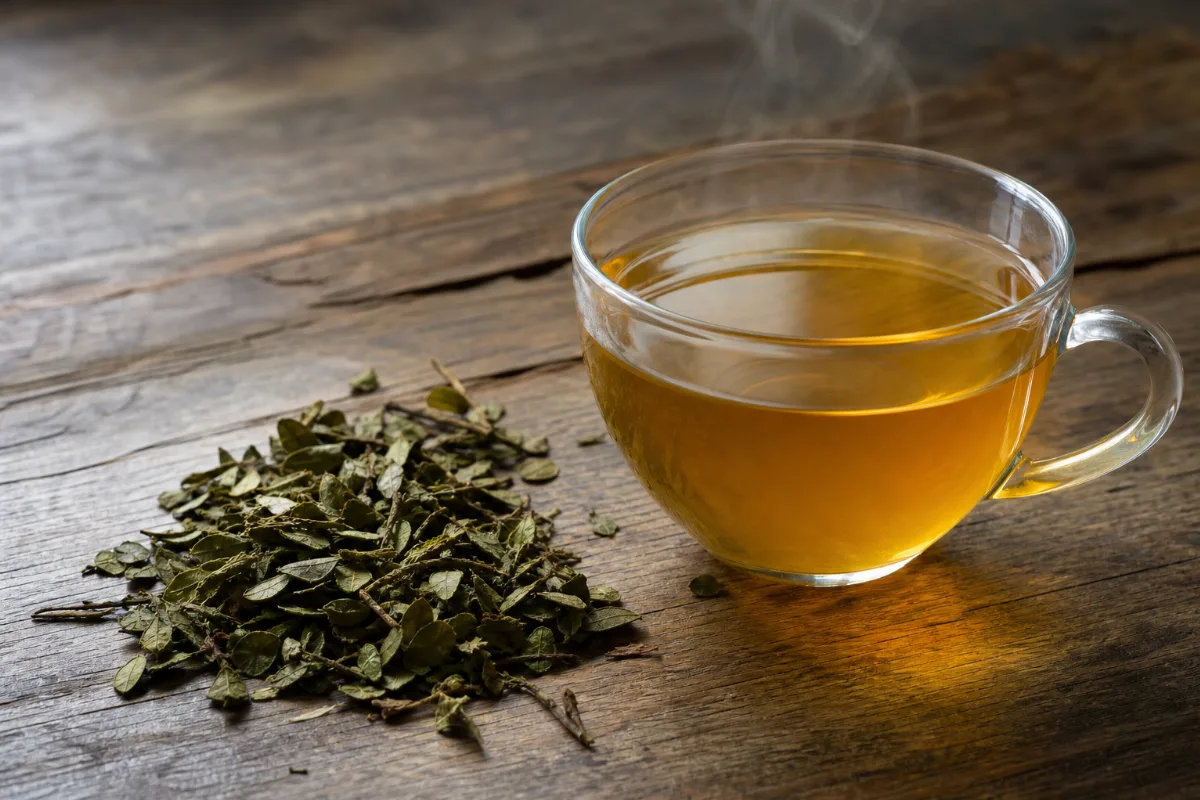
Yaupon tea is made from the leaves of a holly shrub native to the southeastern United States. It contains caffeine and has a long history as a drink of Native American peoples. We found no human studies of it, only lab work, so its health claims are unproven. The main cautions are caffeine, which varies a lot in the leaf, and the poisonous berries.
General information, not medical advice. Last substantive update · Not medically reviewed. A named clinician has not signed off on this page. How this page is made
About Yaupon Tea
Yaupon (Ilex vomitoria) is a holly shrub of the southeastern United States whose leaves make a caffeine-containing tea. There are no human trials. The sources we read give chemistry, lab and cell work, and history. The main cautions are caffeine, the poisonous berries and pregnancy limits.
What it is
Yaupon is an evergreen holly shrub native to the Coastal Plain of the southeastern United States. It belongs to the holly family, as do yerba mate and guayusa, which are different species with their own chemistry.
The tea is a water infusion of the leaf. A concentrated extract is a different product, and extracts have only been used in lab studies.
Traditional use, with care
Native American peoples of the southeast drank a strong holly drink, called Black Drink in historic records, for ritual purification and in social and political settings. Leaves and small twigs were parched and boiled. Chemical traces of it were found in pottery at Cahokia in Illinois, far north of where yaupon grows.
This is cultural history, described here only as the sources state. It is not clinical evidence.
What is in it
Yaupon contains caffeine, theobromine and a low level of theacrine. Caffeine ranged from none detected to 1.91% of dry leaf weight in reviewed studies, and fertiliser raised it 5 to 10 times in pot plants. It also holds chlorogenic acids, flavonols such as rutin, and saponins.
The sources do not agree on catechins, so we state no figure.
At a glance
Traditional uses history, not proof
- Peoples of the southeastern United States drank a strong holly drink, called Black Drink in historic records, in rituals of purification and in councils. This history is described as the sources state.
- Today it is sold as a caffeinated herbal tea.
Studied for research
- Energy and alertness from its caffeine, insufficient (no human study)
- Antioxidant and anti-inflammatory activity, insufficient (lab and cells only)
- Effects on cancer cells, insufficient (cells in a dish only)
- Traditional ritual purification, insufficient (history, not a trial)
Main compounds
- Caffeine, the main stimulant, in very uneven amounts
- Theobromine, a milder relative of caffeine
- Chlorogenic acids and flavonols such as rutin
- Saponins and other triterpenoids
Common forms
- Leaf tea (infusion), the usual form
- Roasted or unroasted leaf (and sometimes small twigs)
- Ready-to-drink and cold drinks
- Concentrated extracts exist in the lab only; none tested in people
Research links: Review of caffeinated Ilex teas, including yaupon (Gan 2018) · Chemistry of caffeine holly species (Negrin 2019) · Ritual Black Drink residues at Cahokia (Crown 2012) · Research Library · Genes & Biomarkers Library
What it is and its history
- Accepted scientific name
- Ilex vomitoria Aiton
- Naming authority
- Aiton (GBIF exact match, ACCEPTED, usageKey 5414250). Older papers write Ilex vomitoria Ait.
- Common names
- Yaupon (English); Yaupon holly (English); Black Drink (historic ritual drink; not the plant name) (English)
- Family or group
- Aquifoliaceae, the holly family. It also includes yerba mate (I. paraguariensis), guayusa (I. guayusa) and kudingcha.
- Classification
- Plantae > Tracheophyta > Magnoliopsida > Aquifoliales > Aquifoliaceae > Ilex > Ilex vomitoria
- Native range
- Coastal Plain of the southeastern United States from Virginia to Florida and west to Texas (Crown 2012).
- Habitat
- Evergreen shrub or small tree up to about 8 m (Crown 2012).
- What it looks like
- Stems: Dioecious (separate male and female plants) per Palumbo 2007 and NC State.; Leaves: Leaves are the part used for tea; evergreen. Detailed description not read.; Fruit: Fruits (berries) are named as the poisonous part by NC State.
- Cultivation
- Crown 2012 reports strong evidence that Native American populations transplanted and cultivated yaupon to make the drink.
- Harvest and processing
- Historic preparation: leaves and small twigs were parched and boiled (Crown 2012). Modern processing was not researched. Caffeine rose 5 to 10 times with nitrogen fertiliser in pot plants (Palumbo 2007) and leaf chemistry varies by season (Sha 2025).
- Look-alikes and adulterants
- Name: Ilex cassine (dahoon holly); Note: May also have been used in Black Drink (Crown 2012), but caffeine reports for it were not corroborated, so I. vomitoria was likely the traditional source (Negrin 2019).; Name: Yerba mate (I. paraguariensis) and guayusa (I. guayusa); Note: Related caffeine hollies from South America, each with its own chemistry. Research on one should not be assumed to apply to another.; Name: Other hollies; Note: Berries of hollies are reported poisonous. Plant identification matters; do not forage on guesswork.
- Sustainability and conservation
- Not assessed in the sources read.
Photographs
Traditional use and history history, not clinical proof
| Tradition or era | Documented use | Source |
|---|---|---|
| Native American peoples of the southeastern United States, historic period | Drunk as Black Drink for ritual purification (with fasting and vomiting for many groups), and before councils, ballgames and war parties; leaves and small twigs were parched, boiled and frothed. Needs Indigenous/cultural review by the owner. | p22869743 |
| Cahokia, Illinois, A.D. 1050-1250 | Chemical markers of Ilex (theobromine, caffeine, ursolic acid) in beaker fragments show sustained ritual drinking, far north of where yaupon grows. | p22869743 |
| Amerindians and later European colonists | Leaves used to make a caffeinated beverage, per a review; the species name vomitoria recalls purging after large quantities (NC State). | p30400635 |
| Today | Sold as a caffeinated herbal tea. Researchers describe it as a tea substitute (Sha 2025); no health claims are supported by human trials. | p40647928 |
Traditional use shows how it was used. It does not show that it works or is safe today.
What is inside, and how it may work
What it contains and how those compounds act in cells and animals. Laboratory and animal mechanisms are not proven effects in people.
Main compounds
| Compound | Family | Where it is concentrated | Activity studied | Level of evidence |
|---|---|---|---|---|
| Caffeine PubChem 2519 | methylxanthine alkaloid | Leaf 0% to 1.91% of dry weight in reviewed studies; undetectable by HPLC in another (Gan 2018) | Stimulant; blocks adenosine receptors. 4 12 2 | Laboratory |
| Theobromine PubChem 5429 | methylxanthine alkaloid | Leaf Amount not given in the abstracts read | Milder caffeine relative; marker of Ilex drinks in pottery residue. 2 4 | Laboratory |
| Theacrine | purine alkaloid (tetramethyluric acid) | Leaf Low level | Caffeine-related compound; first found in the genus Ilex in I. vomitoria samples. 10 | Laboratory |
| Chlorogenic acids (mono- and di-caffeoylquinic acids) PubChem 1794427 | phenolic acids | Leaf About 70% of total polyphenolics in infusions (Gan 2018, citing Noratto 2011) | Antioxidant in lab tests. 4 | Laboratory |
| Rutin and kaempferol 3-rutinoside (flavonols) PubChem 5280805 | flavonol glycosides | Leaf Not given | Antioxidant and anti-inflammatory signals in cultured colon cells. 11 4 | Cell |
| Ursolic acid PubChem 64945 | triterpenoid | Leaf Not given | Ilex marker found in pottery residue. 2 | Laboratory |
| Saponins | glycosides (class) | Leaf (measured); fruit named as toxic part Varies with season (Sha 2025) | Possible toxic principle per a plant database; role in tea not studied. 15 7 | Laboratory |
| Catechins | flavan-3-ols | Leaf Listed as measured (Sha 2025); other papers call yaupon polyphenolics catechin-free. The sources do not agree, so we state no figure. | Unclear. 15 5 | Laboratory |
Mechanisms, receptors and pathways
| Target or pathway | Gene or receptor | What was found | Level |
|---|---|---|---|
| Adenosine receptor blockade | Adenosine receptors | Caffeine, present in yaupon, blocks these receptors, which reduces drowsiness. General caffeine action; not tested with yaupon. 4 | Pharmacological theory |
| NF-kB pathway regulation via microRNA-146a | miR-146a | A flavonol-rich leaf fraction raised miR-146a in cultured colon cells. 11 | Cell |
| Antioxidant capacity | Lab antioxidant tests (DPPH, ABTS, FRAP) vary with season; spring leaves strongest. 15 | Laboratory |
Absorption, metabolism and elimination
- Absorption
- Not studied for yaupon.
- Distribution
- Not studied.
- Metabolism
- Caffeine is a sensitive CYP1A2 substrate in general (modelling paper); not studied with yaupon.
- Elimination
- Not studied.
- Bioavailability
- No data for yaupon compounds in people.
Isolated compounds versus whole extracts
Tea is a water infusion of the whole leaf. The cell studies used an isolated flavonol-rich fraction, which is more concentrated in selected compounds. Results from a fraction or extract should not be assumed to apply to tea, and the reverse is also true.
Nutritional composition
Leaf minerals, soluble sugars, vitamin C and amino acids were measured and change with season (Sha 2025). Amounts in a cup were not reported in the abstract.
4 not enough evidence
What was looked at
The 4 benefits and uses checked for Yaupon Tea, each with how strong the evidence is. Tap one to open it.
What is Yaupon Tea good for?
The main proposed uses and how strong the human evidence is for each. 'Insufficient' means not enough to judge. No human study of yaupon tea exists, so every row here is insufficient. Results come from specific lab samples and may not apply to tea.
Benefits, one by one
Each card is a research question, not a promise. Tap a goal to filter. Open a card to see the studies, doses and limits.
Energy and alertness (caffeine)
Not enough evidenceYaupon leaf contains caffeine, so people drink it to feel more awake. No study has tested this in people. We found only chemistry showing that caffeine is present, in very different amounts from one sample to the next.
5 studiesLeaf infusion (tea) is the traditional and common form. No yaupon ext…
Studies, doses and limits
What the trials found
No human trial of yaupon tea or extract was found in PubMed (22 records for yaupon or Ilex vomitoria, all chemistry, plant, animal or unrelated).
Results
Chemistry only. Reviewed amounts range from 0% to 1.91% of dry leaf weight, strongly raised by nitrogen fertiliser; another study could not detect caffeine by HPLC (Gan 2018). Fertilised pot plants had 5 to 10 times more caffeine than unfertilised ones (Palumbo 2007). Theobromine and a low level of theacrine were also reported (Crown 2012; Negrin 2019).
Why this rating
Our own reading. There is no human study of yaupon, so any effect on alertness is an assumption from caffeine in general.
Form and dose studied
Leaf infusion (tea) is the traditional and common form. No yaupon extract or supplement trial was found. Amounts are not given here.
Who was studied
Nobody was studied.
Limits
Caffeine in a cup of yaupon was not measured in the sources we read, so a reader cannot know how strong a given tea is.
Why researchers looked
Yaupon is one of few caffeine-containing plants native to North America, and Native American peoples of the southeast drank it long before European contact.
Traditional use
Used in the southeastern United States as a ritual and social drink, with leaves and small twigs parched and boiled (Crown 2012). This is a record of custom, not clinical evidence. Needs Indigenous/cultural review by the owner before publication.
Proposed mechanism Pharmacological theory
Caffeine blocks adenosine receptors in the brain, which lowers drowsiness. This is the general action of caffeine, not something shown for yaupon.
A proposed mechanism does not show that the effect happens in people.
Caffeine effects apply: sleep disruption, faster heartbeat in sensitive people, and pregnancy limits. See the Safety tab.
Antioxidant and anti-inflammatory activity (lab and cells)
Not enough evidenceIn test tubes and cultured cells, yaupon leaf chemicals protect cells from oxidative stress and lower an inflammation signal. This has not been tested by giving the tea to people.
3 studiesThe cell study used an isolated leaf fraction, not tea. Tea and extra…
Studies, doses and limits
Results
A flavonol-rich fraction (mainly quercetin and kaempferol 3-rutinosides) protected normal human colon cells against reactive oxygen species (Noratto 2011). Leaf antioxidant tests were strongest in spring leaves, with flavonoids and polyphenols the main antioxidants (Sha 2025). Antioxidant tests do not show a benefit from drinking the tea.
Why this rating
Lab and cell work only.
Form and dose studied
The cell study used an isolated leaf fraction, not tea. Tea and extract are not the same thing: tea is a water infusion of the leaf; a fraction concentrates selected compounds. No yaupon extract has been tested in people.
Limits
Concentrations in cell work are not the same as what reaches the body from a drink.
Why researchers looked
Yaupon leaf is rich in chlorogenic-type acids and flavonols such as rutin.
Traditional use
Traditionally drunk as a social and ritual drink, not as an antioxidant.
Proposed mechanism Cell study
A flavonol-rich fraction raised microRNA-146a, a negative regulator of an inflammation pathway (NF-kB), in colon cells in a dish.
A proposed mechanism does not show that the effect happens in people.
None specific to this use.
Effects on cancer cells (lab only)
Not enough evidenceIn a dish, a leaf fraction reduced the viability of colon cancer cells more than normal colon cells. This does not mean the tea prevents or treats cancer.
2 studiesIsolated fraction, not tea.
Studies, doses and limits
Results
The flavonol-rich fraction preferentially lowered viability of HT-29 colon cancer cells compared with normal CCD-18Co colon cells (Noratto 2011). The 2018 review lists cytotoxic action against cancer cells for several Ilex extracts in lab tests (Gan 2018).
Why this rating
Cell lines only; no animal or human data found for yaupon.
Form and dose studied
Isolated fraction, not tea.
Limits
Lab results often do not carry over to people.
Why researchers looked
Researchers screen plant polyphenols for effects on cancer cell lines.
Proposed mechanism Cell study
Not established; the cell study linked protective effects to antioxidant enzymes and microRNA-146a.
A proposed mechanism does not show that the effect happens in people.
Do not use yaupon in place of medical care for cancer.
Traditional Black Drink (ritual purification)
Not enough evidenceMany peoples of the southeastern United States drank a strong holly drink, called Black Drink in historic records, in rituals of purification and in councils. This is history, not proof that the drink does anything good for health.
3 studiesRitual amounts were very large by the records; they are not a guide t…
Studies, doses and limits
Results
Residues in beakers contained theobromine, caffeine and ursolic acid, markers of Ilex, showing sustained ritual drinking of a caffeine-laced drink made from southern holly leaves (Crown 2012).
Why this rating
Records of custom; no controlled study of purification, digestion or any health effect.
Form and dose studied
Ritual amounts were very large by the records; they are not a guide to anything.
Who was studied
Historic ritual drinkers, mostly men.
Limits
Observers' accounts and residue chemistry, written or analysed long after the events.
Why researchers looked
Archaeologists found chemical traces of the drink in pottery as old as A.D. 1050 to 1250 at Cahokia, far north of where the holly grows.
Traditional use
Historic reports describe leaves and small twigs parched, boiled and frothed, drunk especially by men before rituals, councils, ballgames and war parties, often with fasting and followed by ritual vomiting (Crown 2012). Yaupon is the most likely main source; Ilex cassine (dahoon) may also have been used (Crown 2012; Negrin 2019 did not confirm caffeine in I. cassine). This history is Native American cultural heritage and needs Indigenous/cultural review by the owner.
Proposed mechanism Traditional use
No mechanism for purging is established in the sources we read. The plant database we read says large quantities caused purging, and no source we read names an emetic chemical in the leaf.
A proposed mechanism does not show that the effect happens in people.
The drink's name and history include vomiting. If a drink makes you vomit, stop and talk to a clinician or poison center.
Connections to the rest of health
How Yaupon Tea connects to the rest of our health knowledge graph. Every link says what kind of connection it is. A safety link (for example to the liver) is a warning, not a benefit. A study that merely mentions a topic never creates a benefit link.
Explore every connection: goals, body systems, organs, symptoms, genes
A. Wellness goals
| Connected to | Kind of connection | Evidence status | Context | Studies |
|---|---|---|---|---|
| Energy boost | Potential benefit | Not enough evidence | Caffeine is present; no human study of its effect from yaupon. Energy and alertness (caffeine): Yaupon leaf contains caffeine, so people drink it to feel more awake. No study has tested this in people. We found only chemistry showing that caffeine is present, in very different amounts from one sample to the next. Preparation or compound: Yaupon leaf tea (caffeine) |
4 12 10 2 15 |
| Cellular Protection | Not enough evidence | Antioxidant and anti-inflammatory activity (lab and cells): In test tubes and cultured cells, yaupon leaf chemicals protect cells from oxidative stress and lower an inflammation signal. This has not been tested by giving the tea to people. Effects on cancer cells (lab only): In a dish, a leaf fraction reduced the viability of colon cancer cells more than normal colon cells. This does not mean the tea prevents or treats cancer. | 11 15 4 | |
| Holistic Balance | Traditional use | Not enough evidence | Traditional Black Drink (ritual purification): Many peoples of the southeastern United States drank a strong holly drink, called Black Drink in historic records, in rituals of purification and in councils. This is history, not proof that the drink does anything good for health. | 2 10 7 |
B. Body systems
| Connected to | Kind of connection | Evidence status | Context | Studies |
|---|---|---|---|---|
| Sleep and recovery | Adverse effect or risk | Low certainty | Caffeine can disturb sleep in sensitive people (FDA general guidance). Preparation or compound: Caffeine in yaupon leaf |
16 |
| Nervous System | Biological association | Not enough evidence | Studied for: Energy and alertness (caffeine) | 4 12 10 2 15 |
| Digestive System | Biological association | Not enough evidence | Studied for: Antioxidant and anti-inflammatory activity (lab and cells) Studied for: Effects on cancer cells (lab only) | 11 15 4 2 10 7 |
E. Health conditions
J. Genes, receptors and enzymes
| Connected to | Kind of connection | Evidence status | Context | Studies |
|---|---|---|---|---|
| CYP1A2 | Preliminary mechanism | Pharmacological theory | Main liver enzyme that breaks down caffeine; strong inhibitors such as fluvoxamine raise caffeine levels in models. | 1 |
L. Active compounds
| Connected to | Kind of connection | Evidence status | Context | Studies |
|---|---|---|---|---|
| Caffeine | Biological association | Laboratory | Stimulant; blocks adenosine receptors. Preparation or compound: Leaf |
4 12 2 |
| Theobromine | Biological association | Laboratory | Milder caffeine relative; marker of Ilex drinks in pottery residue. Preparation or compound: Leaf |
2 4 |
| Theacrine | Biological association | Laboratory | Caffeine-related compound; first found in the genus Ilex in I. vomitoria samples. Preparation or compound: Leaf |
10 |
| Chlorogenic acids (mono- and di-caffeoylquinic acids) | Biological association | Laboratory | Antioxidant in lab tests. Preparation or compound: Leaf |
4 |
| Rutin and kaempferol 3-rutinoside (flavonols) | Biological association | Cell | Antioxidant and anti-inflammatory signals in cultured colon cells. Preparation or compound: Leaf |
11 4 |
| Ursolic acid | Biological association | Laboratory | Ilex marker found in pottery residue. Preparation or compound: Leaf |
2 |
| Saponins | Biological association | Laboratory | Possible toxic principle per a plant database; role in tea not studied. Preparation or compound: Leaf (measured); fruit named as toxic part |
15 7 |
| Catechins | Biological association | Laboratory | Unclear. Preparation or compound: Leaf |
15 5 |
Each connection is stored with the ingredient, the connected record, the kind of connection, the evidence status, the supporting studies, the preparation or compound involved, and a review date (last reviewed October 25, 2026).
Evidence at a glance: what the research found for 4 outcomes
Each outcome below is one thing researchers measured. Certainty is how far the evidence can be trusted, not how well it works. The full studies are on the next tab.
The evidence
The research centre for Yaupon Tea. Every record here was checked against PubMed or the publisher's page; we never list a study we have not verified.
Evidence by outcome
Bars show how many studies we found for each outcome, not how well it works. People are added up across trials only (reviews are not added, to avoid double counting).
How we rate evidence
High certainty
Several well-run trials or reviews agree; further research is unlikely to change the picture much.
Moderate certainty
Good trials point the same way, but some doubt remains.
Low certainty
Small, short or inconsistent trials. The finding could change with better research.
Very low certainty
Very little or very weak human data. Treat as a possibility only.
Mixed findings
Trials or reviews disagree with each other.
Not enough evidence
Not enough human research to say either way.
Evidence against
Good research found no benefit, or found harm.
We take the reviewers' own risk-of-bias and GRADE statements where they exist, and otherwise judge from study size, design, consistency, directness and whether a product matches what is sold. Many publications do not make evidence high. Method note: We searched PubMed for yaupon and Ilex vomitoria (22 records, none a human trial) and Black Drink, read the abstracts, read the caffeinated-Ilex review and the Black Drink paper in full text, read the NHS and FDA caffeine pages and a plant database entry, and checked the plant name in GBIF and NCBI and compounds in PubChem. Not opened: EMA, NCCIH, LiverTox, LactMed, Commission E, WHO, EFSA. Ratings are the compiler's own reading, not formal grades.
Study library: every study we checked 16
| Study | Design | People | Product, dose, length | Result |
|---|---|---|---|---|
| Britz 2019 Physiologically-Based Pharmacokinetic Models for CYP1A2 Drug-Drug Interaction Prediction: A Modeling Network of Fluvoxamine, Theophylline, Caffeine, Rifampicin, and Midazolam CPT Pharmacometrics Syst Pharmacol · PMID 30762305 · DOI |
Modeling n/a |
Computer models checked against reported clinical interaction studies | Caffeine as a sensitive CYP1A2 substrate leaf |
Describes caffeine as a sensitive index substrate of the CYP1A2 enzyme and builds models of a strong CYP1A2 inhibitor (fluvoxamine) and an inducer (rifampicin) with it; most predicted interaction ratios were within twofold of observed values. Methods, limits and fundingOutcomes: Prediction of drug interactions through the CYP1A2 enzyme Limitations: Computer modelling of caffeine in general; nothing was tested with yaupon. Funding and conflicts: Not stated in the abstract. Read: abstract |
| Crown 2012 Ritual Black Drink consumption at Cahokia Proc Natl Acad Sci U S A · PMID 22869743 · DOI |
Laboratory n/a |
Pottery fragments (A.D. 1050-1250) from Cahokia and nearby sites, Illinois | Residues of a holly (Ilex) drink, historically called Black Drink leaf |
Theobromine, caffeine and ursolic acid (markers of Ilex) were found in beaker fragments. The paper also summarises historic reports: leaves and small twigs were parched, boiled and frothed; for many groups Black Drink was part of ritual cleansing and purging with fasting and vomiting, and observers recorded very large amounts drunk, often by men, before rituals, councils and ballgames. Methods, limits and fundingOutcomes: Chemical markers in pottery residue; history of Black Drink use Limitations: Archaeological chemistry and historical accounts, not a health study. It does not say what part of the vomiting was caused by the drink itself. Funding and conflicts: Research funding from public and university sources as listed in the paper; not read in detail. Read: full-text |
| GBIF Backbone Taxonomy 2026 GBIF species match: Ilex vomitoria GBIF Backbone Taxonomy · Source |
Database record n/a |
Ilex vomitoria leaf |
Exact match, status ACCEPTED, name Ilex vomitoria Aiton, usageKey 5414250, family Aquifoliaceae, order Aquifoliales. Methods, limits and fundingLimitations: Accepted-name check only; synonym list not opened. Read: full-text | |
| Gan 2018 Health Benefits of Bioactive Compounds from the Genus Ilex, a Source of Traditional Caffeinated Beverages Nutrients · PMID 30400635 · DOI |
Narrative review n/a |
Review of lab, animal and some human work on several Ilex teas (kudingcha, yerba mate, yaupon, guayusa) | Ilex leaves and extracts leaf |
For yaupon the review reports eight polyphenols in infusions (mostly caffeoylquinic acids, plus two flavonol glycosides), catechin-free polyphenols, three methylxanthines (theobromine, theophylline, caffeine) that differ between wild and domesticated types, and caffeine from 0% to 1.91% of dry weight depending mainly on nitrogen fertiliser, with caffeine undetectable by HPLC in another study. It concludes that controlled clinical trials of well-characterised Ilex drinks are still needed. Methods, limits and fundingOutcomes: Composition and health effects of Ilex drinks Limitations: Narrative review; for yaupon it relies on a few lab studies and no human trial. Funding and conflicts: No conflicts stated in the abstract. Read: full-text |
| Kim 2012 Tea creaming in nonfermented teas from Camellia sinensis and Ilex vomitoria J Agric Food Chem · PMID 23148671 · DOI |
Laboratory n/a |
Green tea and yaupon infusions in the lab | Yaupon leaf infusion leaf |
Yaupon is described as a caffeine-containing botanical tea free of catechin-based polyphenols. Cloudiness formed on cooling in both teas, and antioxidant capacity of each tea fell after creaming. Methods, limits and fundingOutcomes: Cloudiness (tea cream) on cooling and antioxidant capacity Limitations: A drink-quality study; says nothing about health effects. Funding and conflicts: Not stated in the abstract. Read: abstract |
| McCreedy 2018 Effects of maternal caffeine consumption on the breastfed child: a systematic review Swiss Med Wkly · PMID 30294771 · DOI |
Systematic review |
5 Five small studies of breastfeeding mothers and infants |
Caffeine (coffee, chocolate, other sources) leaf |
Direct studies found no significant effects on 24-hour heart rate, sleep time or night waking; one found a lower rate of full breastfeeding at 6 months. The authors judged the evidence scant, of limited quality and inconclusive. Methods, limits and fundingOutcomes: Infant heart rate, sleep, night waking, breastfeeding rates, colic Limitations: Not about yaupon; small studies of general caffeine. Funding and conflicts: Not stated in the abstract. Read: abstract |
| NC State Extension Gardener Plant Toolbox 2026 Ilex vomitoria (yaupon holly), plant database entry NC State Extension Gardener Plant Toolbox · Source |
Reference database n/a |
Yaupon plant leaf |
Says the leaves were used for ceremonial tea which, drunk in large quantities, caused the purging recalled in the species name vomitoria; says the leaves contain caffeine; rates the plant as low-severity poisonous to humans, with the fruits as the poisonous part, symptoms of nausea, vomiting and diarrhea, and a toxic principle given as illicin, possibly saponic glycosides and triterpenoids; says it is dioecious. Methods, limits and fundingLimitations: A horticulture database (secondary source), not a toxicology reference; no primary study is cited on the page we read. Read: full-text | |
| NCBI Taxonomy 2026 NCBI Taxonomy search: Ilex vomitoria NCBI Taxonomy · Source |
Database record n/a |
Ilex vomitoria leaf |
Search returned taxonomy id 4297. Methods, limits and fundingLimitations: Id only; lineage page not opened. Read: full-text | |
| NHS (UK) 2026 Foods to avoid in pregnancy (caffeine and herbal tea sections) NHS (UK) · Source |
Authoritative guidance n/a |
Caffeine and herbal teas generally leaf |
Sets a daily caffeine limit in pregnancy, links too much caffeine to a higher chance of miscarriage and stillbirth, lists tea, coffee, cola, energy drinks, chocolate, guarana and some supplements as sources, and says there is not much research on herbal teas in pregnancy so it is safest to limit them. Methods, limits and fundingLimitations: Does not mention yaupon or holly teas. Read: full-text | |
| Negrin 2019 LC-MS Metabolomics and Chemotaxonomy of Caffeine-Containing Holly (Ilex) Species and Related Taxa in the Aquifoliaceae J Agric Food Chem · PMID 31042034 · DOI |
Laboratory n/a |
Leaf samples of Ilex guayusa, I. paraguariensis and I. vomitoria, compared with I. cassine and others | Leaf leaf |
Purine alkaloids were found and measured in I. guayusa, I. paraguariensis and I. vomitoria. Caffeine reports for I. cassine were not corroborated, which suggests I. vomitoria was the traditional source of the Native North American tea yaupon. Theacrine, a caffeine-related compound, was found at a low level in I. vomitoria samples, the first time in the genus Ilex. Methods, limits and fundingOutcomes: Purine alkaloids and chemical markers that separate species Limitations: Chemistry of leaf samples; the abstract gives no per-cup amounts. Funding and conflicts: Not stated in the abstract. Read: abstract |
| Noratto 2011 Flavonol-rich fractions of yaupon holly leaves (Ilex vomitoria, Aquifoliaceae) induce microRNA-146a and have anti-inflammatory and chemopreventive effects in intestinal myofibroblast CCD-18Co cells Fitoterapia · PMID 21262328 · DOI |
Cell study cells |
Cultured human colon cells (normal CCD-18Co and HT-29 cancer cells) | Flavonol-rich fraction extracted from yaupon leaves (not tea) leaf |
A flavonol-rich leaf fraction (mainly quercetin and kaempferol 3-rutinosides) reduced the viability of HT-29 cancer cells more than normal colon cells, protected normal cells against reactive oxygen species and raised microRNA-146a, a negative regulator of an inflammation pathway. Methods, limits and fundingOutcomes: Cell viability, oxidative stress, inflammation signals Limitations: Cells in a dish with an isolated fraction at test concentrations; not a drink and not a person. Funding and conflicts: Not stated in the abstract. Read: abstract |
| Palumbo 2007 Nitrogen fertilizer and gender effects on the secondary metabolism of yaupon, a caffeine-containing North American holly Oecologia · PMID 17048011 · DOI |
Laboratory n/a |
Pot-grown yaupon plants, fertilised or not, male and female | Yaupon leaf leaf |
Caffeine and total alkaloids were 5 to 10 times higher in fertilised than in unfertilised plants, with no difference by plant sex. Phenolic compounds correlated with antioxidant capacity. Methods, limits and fundingOutcomes: Caffeine, alkaloids and phenolics in leaves Limitations: Plant biology in pots; shows why caffeine in yaupon leaf varies so much, not what is in a cup. Funding and conflicts: Not stated in the abstract. Read: abstract |
| Parker County Master Gardener Association (Texas) 2026 Are the Berries of Yaupon Hollies Poisonous? Parker County Master Gardener Association (Texas) · Source |
Reference database n/a |
Yaupon berries leaf |
Quotes the book Plants That Poison: berries of all hollies are reported poisonous if eaten in quantity, not considered very poisonous but dangerous to small children and animals, with nausea, vomiting, diarrhea and stupor listed. Methods, limits and fundingLimitations: Volunteer gardener FAQ quoting a book we did not read (secondary source). Read: abstract | |
| Regulator and database pages 2026 EMA/HMPC, NCCIH, LiverTox, LactMed, Commission E, WHO entries for yaupon: not opened Regulator and database pages · Source |
Regulatory record n/a |
Yaupon leaf |
None of these were opened or searched for this page, so we cannot say whether an entry exists. Methods, limits and fundingLimitations: Absence is not confirmed; this is a gap, not a finding. Read: not-found | |
| Sha 2025 Seasonal Dynamic Changes in the Nutrient Elements and Antioxidant Activity of Ilex vomitoria Leaf Plants (Basel) · PMID 40647928 · DOI |
Laboratory n/a |
Leaves of Ilex vomitoria harvested at different times of year | Yaupon leaf leaf |
Content of minerals, polyphenols, saponins, caffeine and catechins and the antioxidant test results changed significantly with the season. Spring leaves had more minerals and the strongest antioxidant capacity in the lab tests, and flavonoids and polyphenols were the main antioxidant substances. Methods, limits and fundingOutcomes: Minerals, sugars, vitamin C, amino acids, flavonoids, polyphenols, saponins, caffeine, catechins and antioxidant tests across seasons Limitations: Leaf chemistry and test-tube antioxidant tests only; amounts in a cup of tea were not measured; the abstract gives no caffeine figures. Funding and conflicts: Not stated in the abstract. Read: abstract |
| US Food and Drug Administration (consumer update 2024 Spilling the Beans: How Much Caffeine is Too Much? US Food and Drug Administration (consumer update, current as of 28 Aug 2024) · Source |
Authoritative guidance n/a |
Caffeine in general leaf |
Says caffeine sensitivity varies by body weight, medicines, medical conditions and the individual; some conditions and medicines make people more sensitive; people who are pregnant, trying to conceive or breastfeeding should talk to a provider about limits; medical experts advise against energy drinks for children and teens; too much caffeine in children and teens can cause a faster heart rate, palpitations, high blood pressure, anxiety, and sleep and digestive problems; natural and added caffeine are handled the same way by the body. Methods, limits and fundingLimitations: General caffeine page; does not mention yaupon. Read: full-text |
What we do not know yet
- What the evidence supports: nothing in people. Every benefit is insufficient; chemistry confirms caffeine, theobromine and polyphenols.
- What is uncertain: caffeine per cup, whether ordinary tea causes vomiting, and contamination of products.
- Not found or not opened: any human trial, case report or liver record; EMA, NCCIH, LiverTox, LactMed, EFSA entries; the origin of the species name from a scholarly source.
How new research is added
New studies are found by a saved PubMed search and placed in a review queue. A person checks each one before it is added.
Lab markers
What changed in blood or saliva tests during trials. A changed number is not the same as feeling or being healthier, and we give no "normal ranges".
Safety
What studies and official sources say about side effects, medicines and who should check first. Each point shows what kind of evidence it comes from.
Main points to know 5
- Yaupon contains caffeine, in unpredictable amounts. Reviewed amounts range from none detected to 1.91% of dry leaf weight, and fertiliser alone raised caffeine 5 to 10 times in pot plants. A label that states caffeine content would help; none of the sources we read measured a cup of yaupon tea. Count it with your other caffeine. Theobromine, a milder relative of caffeine, and a low level of theacrine are also present. Laboratory 4 12 2 10
- The species name and history involve vomiting. Vomitoria refers to purging recorded after very large amounts of the ritual Black Drink, which was taken with fasting (a plant database and an archaeology paper say this). No source we read says whether ordinary tea causes vomiting or names a chemical responsible. If a drink makes you vomit, stop and ask a clinician or poison center. Traditional use 2 7
- Saponins and the berries. Saponins were measured in yaupon leaf (Sha 2025). A plant database rates the plant low-severity poisonous, names the fruits as the poisonous part (nausea, vomiting, diarrhea) and gives the toxic principle as illicin, possibly saponic glycosides and triterpenoids. A gardener FAQ quoting a poisons book calls holly berries dangerous to small children and animals. The tea is made from leaves; we found no study of saponin harm from the tea. Authoritative guidance 15 7 13
- Pregnancy and breastfeeding. The NHS sets a daily caffeine limit in pregnancy and links too much caffeine to a higher chance of miscarriage and stillbirth. It says there is not much research on herbal teas in pregnancy. No yaupon-specific data exist. Ask a midwife or doctor. Authoritative guidance 9 16
- No human safety trials. No clinical trial or case report of yaupon tea was found, so side effects are inferred from caffeine in general. That is a gap, not proof of safety. Expert opinion 4
Side effects 3
| Effect | How often | Severity and recovery | Evidence |
|---|---|---|---|
| Caffeine effects: trouble sleeping, faster or irregular heartbeat, jitteriness, in sensitive people FDA general caffeine guidance; not shown in yaupon studies. | Not established | mild to moderate Usually settles as caffeine wears off | Authoritative guidance 16 |
| Nausea or vomiting after very large amounts (historic Black Drink, ritual setting) From historic accounts and a plant database; whether usual tea amounts do this was not found. | Not established | unknown Not stated | Traditional use 2 7 |
| Nausea, vomiting, diarrhea from eating the berries (fruits) Berries are not the tea part. | Not established | low (plant database rating) Not stated | Authoritative guidance 7 13 |
Liver
No human liver injury from yaupon tea was found. We did not open LiverTox, so we cannot say whether it has an entry. 14
How often. No frequency available; no cases found.
Monitoring. No agency advice found. Seek care for yellow skin or eyes, dark urine or severe abdominal pain.
This is a safety connection. It is not evidence that Yaupon Tea supports liver health.
Medicines and supplements 4
| With | Why it matters | Importance | Evidence | What to do |
|---|---|---|---|---|
| Other caffeine and stimulants (coffee, tea, energy drinks, guarana, yerba mate, stimulant medicines) food, supplements and medicines | Caffeine adds up across products; natural and added caffeine are handled the same way by the body (FDA). | Total daily caffeine matters, especially in pregnancy and for people sensitive to caffeine. | Authoritative guidance Low certainty 16 9 | Add up your caffeine from all sources and ask a pharmacist about stimulant medicines. |
| Medicines that slow caffeine breakdown (for example fluvoxamine, a strong CYP1A2 inhibitor) prescription | Caffeine is broken down by the CYP1A2 enzyme; modelling predicts that blocking it raises caffeine levels. | Could make caffeine effects stronger or last longer. Not tested with yaupon. | Pharmacological theory Very low certainty 1 | Ask a pharmacist if you take medicines that interact with caffeine. |
| Any medicine or condition that increases sensitivity to caffeine prescription and conditions | The FDA says some conditions and medicines make people more sensitive to caffeine. | Individual; the FDA tells people to ask their provider. | Authoritative guidance Low certainty 16 | Ask your doctor or pharmacist. |
| Blood thinners, diabetes medicines, antidepressants, other specific drugs prescription | No yaupon-specific interaction was found. | Unknown. Absence of evidence is not evidence of safety. | Expert opinion Not enough evidence 14 | Tell your pharmacist you drink yaupon tea. |
Who should check first 5
| Situation | Advice | Evidence |
|---|---|---|
| Pregnancy | The NHS sets a daily caffeine limit and says there is little research on herbal teas in pregnancy. No yaupon data. Ask a midwife or doctor. | Authoritative guidance 9 |
| Breastfeeding | No yaupon data. A systematic review of caffeine and breastfed infants found five small studies and called the evidence scant and inconclusive. The FDA tells breastfeeding people to talk to a provider. | Systematic review 6 16 |
| Children and teens | No yaupon data. The FDA says medical experts advise against energy drinks for children and teens, and that too much caffeine can cause a faster heart rate, palpitations, high blood pressure, anxiety and sleep and digestive problems. Berries are a risk for small children. Ask a pediatrician. | Authoritative guidance 16 13 |
| Heart rhythm problems, high blood pressure, anxiety, insomnia, or caffeine sensitivity | Caffeine can make these worse; ask a clinician. This is general caffeine guidance, not yaupon research. | Authoritative guidance 16 |
| Allergy to holly | No allergy report for yaupon tea was found. Stop and seek care if you get hives, swelling or trouble breathing. | Expert opinion 14 |
Overdose, product quality and regulators
Summary. No toxicity study of yaupon tea was found. The plant database rates the plant low-severity poisonous, via the fruits.
High dose or long term signals. Historic accounts link very large ritual amounts with vomiting. No long-term safety data found.
Overdose response. Too much caffeine of any kind can cause palpitations, tremor and sleeplessness; in an emergency call poison control or emergency services.
Genotoxicity. Not found.
Toxic or hazardous parts. Fruits (berries) are named as the poisonous part by a plant database; saponins are present in leaf and fruit per the sources read. Leaf used for tea.
We found no testing of yaupon tea products for heavy metals, pesticides or mislabelling in the sources read.
Caffeine strength varies. 0% to 1.91% of dry leaf weight in reviewed studies, 5 to 10 times higher with nitrogen fertiliser in pot plants, and leaf chemistry changes with season. 4 12 15
Tea versus extract versus supplement. Yaupon tea is a water infusion of the leaf. A concentrated extract or fraction (as used in cell studies) is a different, stronger product and was not tested in people. Capsules or powders could differ again; none were studied. 11
Look-alike plants. Hollies are a large group and berries of hollies are reported poisonous; Ilex cassine was not confirmed to contain caffeine. Do not pick plants for tea unless a botanist identifies them. 10 13
| Body | Action | Date |
|---|---|---|
| US FDA (United States) | Consumer update on caffeine: sensitivity varies; people who are pregnant, trying to conceive or breastfeeding should ask a provider; advice against energy drinks for children and teens. Does not mention yaupon. source | 2024-08-28 |
| NHS (UK) (United Kingdom) | Pregnancy guidance: daily caffeine limit; little research on herbal teas. source | 2026 |
| NC State Extension Plant Toolbox (United States) | Plant entry: low-severity poison characteristics, fruits the poisonous part. A horticulture reference, not a regulator. source | 2026 |
When to get medical help
- Chest pain, a racing or irregular heartbeat, fainting or severe headache after a caffeinated drink: get urgent medical care.
- Repeated vomiting, severe stomach pain or signs of dehydration after drinking it or after anyone eats berries: seek medical help or call poison control.
- A child or pet that has eaten holly berries: call poison control or a vet.
- Swelling of the face or throat, hives or trouble breathing: emergency care.
Stop using the product and contact a clinician or emergency service. In the US, Poison Control is 1-800-222-1222.
General information only, not medical advice. Ask a clinician or pharmacist before use, especially with medicines, in pregnancy or with a health condition. See the Natural Remedy Safety guide.
Frequently asked questions
What is yaupon tea?
Does yaupon have caffeine?
Is it the same as yerba mate or guayusa?
Why is it called vomitoria? Will it make me vomit?
A plant database says the leaves were used for a ceremonial tea which, in large quantities, caused the purging recalled in the name. An archaeology paper describes ritual purification with fasting and vomiting. We found no study of whether ordinary tea does this. If it makes you vomit, stop and ask a clinician.
What was the Black Drink?
Does yaupon tea have health benefits?
Is the tea the same as an extract or supplement?
Is it safe in pregnancy or while breastfeeding?
What medicines does it interact with?
Are yaupon berries poisonous?
Does it have saponins, and does that matter?
Explore by health goal
Editorial transparency
- Written by
- AlternativeMed editorial team. Research compiled with AI assistance, then checked against the original sources.
- Medical review
- None. This page has not been reviewed by a physician or pharmacist.
- First published
- 2026-10-25
- Last substantive update
- 2026-10-25
- How we research
- We searched PubMed for yaupon and Ilex vomitoria (22 records, none a human trial) and Black Drink, read the abstracts, read the caffeinated-Ilex review and the Black Drink paper in full text, read the NHS and FDA caffeine pages and a plant database entry, and checked the plant name in GBIF and NCBI and compounds in PubChem. Not opened: EMA, NCCIH, LiverTox, LactMed, Commission E, WHO, EFSA. Ratings are the compiler's own reading, not formal grades.
- How we rate evidence
- See "How we rate evidence" in the Evidence tab.
- Independence
- No product is promoted on this page. No affiliate links are shown. If one is added later it will be labelled and kept apart from the evidence.
Sources 16
Each source was opened and checked. Where we read only the abstract, it says so. The small numbers in the text point here.
- Britz H, Hanke N, Volz AK, Spigset O, Schwab M, Eissing T, Wendl T, Frechen S, Lehr T. Physiologically-Based Pharmacokinetic Models for CYP1A2 Drug-Drug Interaction Prediction: A Modeling Network of Fluvoxamine, Theophylline, Caffeine, Rifampicin, and Midazolam. CPT Pharmacometrics Syst Pharmacol. 2019. PMID 30762305. DOI 10.1002/psp4.12397. (abstract)
- Crown PL, Emerson TE, Gu J, Hurst WJ, Pauketat TR, Ward T. Ritual Black Drink consumption at Cahokia. Proc Natl Acad Sci U S A. 2012. PMID 22869743. DOI 10.1073/pnas.1208404109. (full-text)
- GBIF Backbone Taxonomy. GBIF species match: Ilex vomitoria. GBIF Backbone Taxonomy. 2026. (full-text)
- Gan RY, Zhang D, Wang M, Corke H. Health Benefits of Bioactive Compounds from the Genus Ilex, a Source of Traditional Caffeinated Beverages. Nutrients. 2018. PMID 30400635. DOI 10.3390/nu10111682. (full-text)
- Kim Y, Talcott ST. Tea creaming in nonfermented teas from Camellia sinensis and Ilex vomitoria. J Agric Food Chem. 2012. PMID 23148671. DOI 10.1021/jf303555f. (abstract)
- McCreedy A, Bird S, Brown LJ, Shaw-Stewart J, Chen YF. Effects of maternal caffeine consumption on the breastfed child: a systematic review. Swiss Med Wkly. 2018. PMID 30294771. DOI 10.4414/smw.2018.14665. (abstract)
- NC State Extension Gardener Plant Toolbox. Ilex vomitoria (yaupon holly), plant database entry. NC State Extension Gardener Plant Toolbox. 2026. (full-text)
- NCBI Taxonomy. NCBI Taxonomy search: Ilex vomitoria. NCBI Taxonomy. 2026. (full-text)
- NHS (UK). Foods to avoid in pregnancy (caffeine and herbal tea sections). NHS (UK). 2026. (full-text)
- Negrin A, Long C, Motley TJ, Kennelly EJ. LC-MS Metabolomics and Chemotaxonomy of Caffeine-Containing Holly (Ilex) Species and Related Taxa in the Aquifoliaceae. J Agric Food Chem. 2019. PMID 31042034. DOI 10.1021/acs.jafc.8b07168. (abstract)
- Noratto GD, Kim Y, Talcott ST, Mertens-Talcott SU. Flavonol-rich fractions of yaupon holly leaves (Ilex vomitoria, Aquifoliaceae) induce microRNA-146a and have anti-inflammatory and chemopreventive effects in intestinal myofibroblast CCD-18Co cells. Fitoterapia. 2011. PMID 21262328. DOI 10.1016/j.fitote.2011.01.013. (abstract)
- Palumbo MJ, Putz FE, Talcott ST. Nitrogen fertilizer and gender effects on the secondary metabolism of yaupon, a caffeine-containing North American holly. Oecologia. 2007. PMID 17048011. DOI 10.1007/s00442-006-0574-1. (abstract)
- Parker County Master Gardener Association (Texas). Are the Berries of Yaupon Hollies Poisonous?. Parker County Master Gardener Association (Texas). 2026. (abstract)
- Regulator and database pages. EMA/HMPC, NCCIH, LiverTox, LactMed, Commission E, WHO entries for yaupon: not opened. Regulator and database pages. 2026. (not-found)
- Sha L, Yin Y, Xue Y, Zou X, Zheng B, Zhang J, Yan D. Seasonal Dynamic Changes in the Nutrient Elements and Antioxidant Activity of Ilex vomitoria Leaf. Plants (Basel). 2025. PMID 40647928. DOI 10.3390/plants14131919. (abstract)
- US Food and Drug Administration (consumer update, current as of 28 Aug 2024). Spilling the Beans: How Much Caffeine is Too Much?. US Food and Drug Administration (consumer update, current as of 28 Aug 2024). 2024. (full-text)
Where to buy
Check the label first. Whatever you buy, look for these:
- The herb is the first or only ingredient
- Organic or lab-tested if that matters to you
- Loose leaf or tea bags, and how long they have been stored
- If you take medicines or are pregnant, ask a pharmacist about the herb first
Talk to a pharmacist or doctor before you start any supplement, especially if you take medicines. See the Safety tab for interactions.
Support our free guides: as an Amazon Associate we earn from qualifying purchases. Full disclosure.


