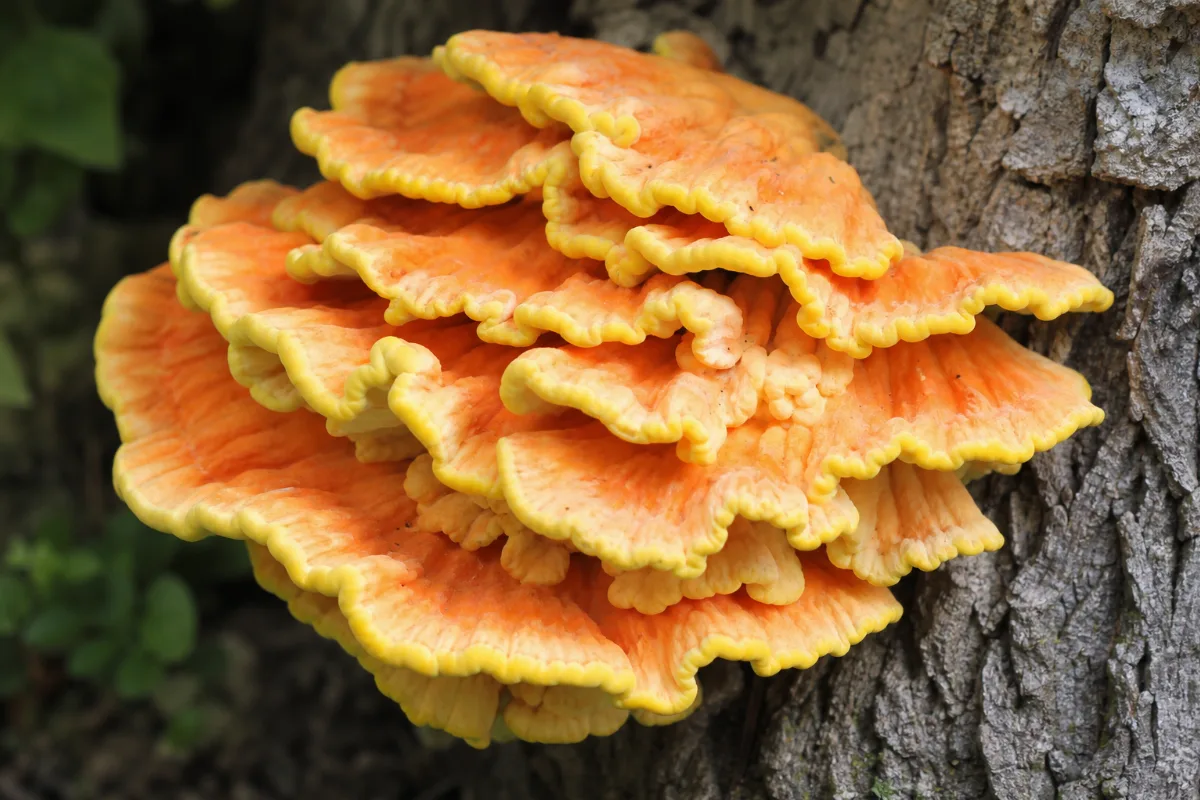
Mushrooms · Wild culinary mushroom
Chicken of the Woods
Laetiporus sulphureus; Laetiporus gilbertsonii (eucalyptus and oak form) · also called Sulphur shelf, sulphur polypore, crab of the woods, chicken mushroom
Chicken of the woods is a bright orange-yellow shelf fungus that grows on trees and is eaten cooked when young. Some people get nausea and vomiting after eating it, a few have had severe allergic reactions, and raw mushroom has harmed a child. Health claims rest on lab and mouse studies, and no controlled human study was found. Never eat any wild mushroom unless a trained expert has identified it in person.
General information, not medical advice. Last substantive update · Not medically reviewed. A named clinician has not signed off on this page. How this page is made
About Chicken of the Woods
Chicken of the woods is a wild shelf fungus eaten cooked when young. Reports describe stomach upset in some people, rare severe allergic reactions and harm from raw mushroom. Its health reputation comes from lab and mouse studies. The only human report on a health use mixed it with essential oils and had no random control. Ask a doctor or pharmacist if you have an illness or take medicines.
What it is
Chicken of the woods is a wood-rotting bracket fungus of the genus Laetiporus. GBIF lists Laetiporus sulphureus, Laetiporus gilbertsonii and Laetiporus conifericola as separate accepted species. MykoWeb says the true L. sulphureus does not occur along the Pacific coast of North America, where the form on eucalyptus and probably oaks is L. gilbertsonii and the form on conifers is L. conifericola.
The name is used for more than one species. A 2026 DNA study in Korea found the wild Laetiporus there were mostly L. versisporus and L. cremeiporus, not L. sulphureus as earlier records said. White-pored Laetiporus cincinnatus has its own page.
Traditional and current uses
Central European folk medicine used it, with four other polypores, for painful periods, haemorrhoids, bladder disorders, fevers, coughs, cancer and rheumatism. A 2026 review adds respiratory illness, stomach disorders and metabolic disease. Traditional use is not proof that it works or is safe.
Today it is mainly a wild food. Interest in its health effects comes from lab work, as the next section shows.
What the research shows
We found no controlled human study of chicken of the woods. The one human report on a health use followed 24 people with Crohn disease who were advised a mixture of the mushroom with oregano, cinnamon and clove essential oils: 19 followed it and 5 did not, and flare time was 5.6% against 75.0%. It had no placebo and no random assignment, so it cannot show the mushroom works.
Everything else is lab or mouse work: a polysaccharide extract eased colitis in mice, one triterpene protected the stomach lining of mice, and extracts showed antioxidant, antimicrobial and cancer-cell activity in dishes. Review authors list long-term safety, animal toxicology and clinical studies as missing.
Cooked food, extracts and mixtures are different
Almost all the research tested extracts, isolated compounds or a mixture with essential oils, not the cooked mushroom. Results from one cannot be carried to another. No quality or contamination test of any extract or powder was read. A 2018 review is said to quote metal levels in wild fruiting bodies, but we did not re-open those figures and do not state them.
Legal and regulatory status
No EMA, FDA or NCCIH statement on chicken of the woods was found, and a search of LiverTox and LactMed found no entry. A 2023 review abstract says the fungus is legally recognised in some countries as a raw material for the food industry; we did not read those laws. Rules differ by country and change.
At a glance
Traditional uses history, not proof
- Central European folk medicine used it for painful periods, haemorrhoids, bladder disorders, fevers, coughs, cancer and rheumatism (Grienke 2014).
- A 2026 review lists traditional use for breathing problems, stomach disorders, rheumatism, cancer and metabolic disease (Bensaada 2026).
- Eaten as a cooked wild food and described as edible and highly sought after (MykoWeb).
Studied for research
- Bowel inflammation (Crohn disease, one uncontrolled report of a mushroom and essential oil mixture), very low
- Immune and inflammation effects (mouse and lab work), insufficient
- Cancer-cell activity (cell lines only), insufficient
- Antioxidant and antimicrobial activity (test tube only), insufficient
- Stomach lining protection (one compound in mice), insufficient
- Food value (composition of other Laetiporus species), insufficient
Main compounds
- Glucans, including beta-glucans (fibre-like carbohydrates)
- Triterpenes such as eburicoic acid
- Lectins (sugar-binding proteins) with cell-breaking activity in the lab
Common forms
- Fresh young fruiting body, cooked (the food)
- Dried or frozen mushroom
- Extracts and polysaccharide fractions (research only; no human evidence)
Research links: MykoWeb: Toxic Fungi of Western North America · NAMA Toxicology Committee Report 2010 (PDF) · 2026 review of uses, compounds and safety · Child case report, 1988 (citation) · Crohn disease report (abstract) · Mouse colitis study (abstract) · Research Library · Genes & Biomarkers Library
What it is and its history
- Accepted scientific name
- Laetiporus sulphureus (Bull.) Murrill
- Naming authority
- (Bull.) Murrill (GBIF)
- Synonyms
- Not synonyms, but separate accepted species in GBIF: Laetiporus gilbertsonii Burds. (the eucalyptus and oak form on the US Pacific coast per MykoWeb) and Laetiporus conifericola Burds. & Banik (the conifer form per MykoWeb)
- Common names
- Chicken of the woods (English); Sulphur shelf (sulfur shelf) (English); Sulphur polypore (English); Crab of the woods (English)
- Family or group
- Laetiporaceae (a fungus family, not a plant)
- Classification
- Fungi > Basidiomycota > Agaricomycetes > Polyporales > Laetiporaceae > Laetiporus > Laetiporus sulphureus
- Native range
- Not checked in the sources read.
- Habitat
- A wood-rotting bracket fungus (brown rot) that grows on trees (Park 2026 abstract).
- What it looks like
- Fruiting body: Not described here by design.
- Cultivation
- Not covered in the sources read.
- Harvest and processing
- Not covered. Reviews advise using only heat-treated mushroom for food.
- Sustainability and conservation
- Not checked.
Traditional use and history history, not clinical proof
| Tradition or era | Documented use | Source |
|---|---|---|
| Central European folk medicine | Laetiporus sulphureus was one of five polypore fungi widely used for conditions such as painful periods, haemorrhoids, bladder disorders, fevers, coughs, cancer and rheumatism. The review links the polypore tradition to prehistoric artefacts over 5000 years old but does not say that this species was among them. | p24786572 |
| Traditional medicine (as summarised in 2026) | A 2026 review says it was used for respiratory illness, stomach disorders, rheumatism, cancer and metabolic disease. Traditional use is not proof it works or is safe. | s-bensaada-2026 |
| Food | Eaten as a cooked wild mushroom when young, and described by MykoWeb as edible and highly sought after. | s-mykoweb-duffy |
Traditional use shows how it was used. It does not show that it works or is safe today.
What is inside, and how it may work
What it contains and how those compounds act in cells and animals. Laboratory and animal mechanisms are not proven effects in people.
Main compounds
| Compound | Family | Where it is concentrated | Activity studied | Level of evidence |
|---|---|---|---|---|
| Glucans (including beta-glucans) | polysaccharide | Fruiting body In two other Laetiporus species in Korea: beta-glucan 25.7% (L. versisporus) and 15.1-34.8% (L. cremeiporus); total glucan up to 40.7% and 39.3%. Not measured in L. sulphureus. | A polysaccharide extract from L. sulphureus lowered inflammation in mice with colitis. 12 2 | Animal research |
| Eburicoic acid | triterpene | Fruiting body | Protected the stomach lining and lowered acid-pump enzyme activity in mice with ulcers; a docking model fits it to the enzyme. 14 | Animal research |
| Lectins (LSL family) | protein | Fruiting body | Sugar-binding proteins with a structure like pore-forming bacterial toxins; they break open red blood cells in the lab. 10 | Laboratory research |
| Triterpenoids, sesquiterpenoids and phenolics (groups) | mixed | Fruiting body | Reviews list antioxidant, antimicrobial, anti-inflammatory and cytotoxic activity in lab tests. 4 1 | Laboratory research |
Mechanisms, receptors and pathways
| Target or pathway | Gene or receptor | What was found | Level |
|---|---|---|---|
| Gut barrier proteins and inflammatory signals | Mucin-2, occludin, claudin-1, ZO-1; TNF-alpha, IL-6, IL-1 beta, IL-10, TGF-beta | A polysaccharide extract raised barrier proteins, lowered inflammatory signals and shifted gut bacteria in mice with chemical colitis. 2 | Animal research |
| Stomach acid pump | H+/K+-ATPase | Eburicoic acid lowered the enzyme's activity in mice; computer docking suggested it fits the enzyme. 14 | Animal research |
| Cell membranes (pore formation) | Not applicable | The lectin has a structure like aerolysin-type toxins and is thought to form rings of protein that make holes in cell membranes. Whether this matters for people who eat the cooked mushroom is not known. 10 | Laboratory research |
Absorption, metabolism and elimination
- Absorption
- Not found in the sources read.
- Distribution
- Not found in the sources read.
- Metabolism
- Not found in the sources read.
- Elimination
- Not found in the sources read.
- Bioavailability
- Not established. A 2026 review lists pharmacokinetic studies as a research gap.
Isolated compounds versus whole extracts
The mouse studies used a polysaccharide extract and a single isolated compound. The cooked mushroom, eaten as food, has not been tested for these effects, and results cannot be carried across.
Nutritional composition
Eaten as a cooked wild food. The only composition data read are from other Laetiporus species in Korea (protein 9.1-18.5%, large glucan share). Nothing here is a nutrient recommendation.
1 very low certainty5 not enough evidence
What was looked at
The 6 benefits and uses checked for Chicken of the Woods, each with how strong the evidence is. Tap one to open it.
- Food value (protein and fibre-type glucans)Not enough evidence
- Immune and inflammation effectsNot enough evidence
- Bowel inflammation (colitis and Crohn disease)Very low certainty
- Cancer-cell activity in the labNot enough evidence
- Antioxidant and antimicrobial activityNot enough evidence
- Stomach lining protection (mice)Not enough evidence
Lab markers tracked in the studies
Time in Crohn disease flare (CDAI above 220)Disease activity index in mice with colitis
What is Chicken of the Woods good for?
The uses people ask about and how strong the human evidence is for each. None is proven, and most rest on lab or mouse work. Read this together with the Safety tab.
Benefits, one by one
Each card is a research question, not a promise. Tap a goal to filter. Open a card to see the studies, doses and limits.
Food value (protein and fibre-type glucans)
Not enough evidenceChicken of the woods is eaten as a cooked food. Lab analysis of two related Korean Laetiporus species found about 9 to 19% protein and a large share of glucans (fibre-like carbohydrates). No study shows a health benefit from eating it.
3 studiesCooked fruiting body as food. This page gives no amounts.
Studies, doses and limits
What the trials found
No human study of health effects from eating it was found. The composition figures come from a 2026 study of other Laetiporus species (L. versisporus and L. cremeiporus) in Korea.
Results
Protein 11.3% (L. versisporus) and 9.1-18.5% (L. cremeiporus); beta-glucan 25.7% and 15.1-34.8%; total glucan up to 40.7% and 39.3% (Park 2026 abstract).
Why this rating
These are food-composition figures for other species. They do not show any effect on health.
Form and dose studied
Cooked fruiting body as food. This page gives no amounts.
Limits
The figures describe two other Laetiporus species, and wild mushrooms vary with tree, place and age.
Why researchers looked
It is a wild food mushroom, so researchers measure what it contains.
Traditional use
Eaten as a wild food in many places; folk medicine used the fungus for several complaints (Grienke 2014; Bensaada 2026).
Proposed mechanism Laboratory research
Glucans are carbohydrates that some mushrooms are rich in. Whether they do anything useful in the body after eating this mushroom has not been tested.
A proposed mechanism does not show that the effect happens in people.
The main concerns are stomach upset, rare allergic reactions and eating it raw. See the Safety tab.
Immune and inflammation effects
Not enough evidenceExtracts and polysaccharides from the fungus calm inflammation in lab and mouse experiments. No study in people tested this.
3 studiesA polysaccharide extract tested in mice. Not a food or supplement pro…
Studies, doses and limits
Results
Mouse colitis study: disease activity index about 60% lower, colon length restored about 1.5-fold with the extract versus untreated colitis mice (abstract).
Effect sizes as reported
Mouse data only
Why this rating
Lab and mouse work only, with an extract rather than the cooked mushroom, and no human outcome.
Form and dose studied
A polysaccharide extract tested in mice. Not a food or supplement product.
Who was studied
Mice
Limits
Mouse results often do not carry over to people. A correction notice exists for the mouse paper (its content was not read).
Why researchers looked
Mushroom polysaccharides often act on immune cells in the lab, so this fungus has been screened too.
Traditional use
Folk medicine in central Europe used the fungus for fevers, coughs and rheumatism (Grienke 2014).
Proposed mechanism Animal research
In mice with colitis, an extract of polysaccharides lowered the inflammatory signals TNF-alpha, IL-6 and IL-1 beta and raised IL-10 and TGF-beta (Ali 2026 abstract).
A proposed mechanism does not show that the effect happens in people.
No safety data exist for taking extracts. Rare allergic reactions are on record for the food.
Bowel inflammation (colitis and Crohn disease)
Very low certaintyOne uncontrolled French report followed 24 people with Crohn disease who were advised a mixture of this mushroom with three essential oils. People who took it had far less time in flare than those who did not. It was not a randomised trial and the mushroom cannot be separated from the oils.
3 studiesA mixture called LOCS (Laetiporus sulphureus plus oregano, cinnamon a…
Studies, doses and limits
What the trials found
A case series of 24 people with Crohn disease followed for at least 24 months. Nineteen followed the mixture and had flares for 5.6% of the follow-up time; five did not, with flares for 75.0% (P < 10-6). The authors say more research is needed.
Results
Time in flare (CDAI above 220): 5.6% versus 75.0%.
Effect sizes as reported
Large difference in an unblinded, non-randomised comparison
Why this rating
No placebo, no random assignment, people chose whether to take it, a three-oil mixture, and one small group from one team. The mouse work is a different kind of evidence.
Form and dose studied
A mixture called LOCS (Laetiporus sulphureus plus oregano, cinnamon and clove essential oils). Details are not given in the abstract.
Who was studied
24 adults with Crohn disease (mouse colitis in the animal work)
Limits
Cannot show the mushroom works, or that the mixture is safe. The abstract reports no side effects.
Why researchers looked
Mouse colitis work and one clinician's case series raised the question. Crohn disease needs medical treatment.
Traditional use
Folk medicine used the fungus for stomach disorders (Bensaada 2026).
Proposed mechanism Animal research
In mice, a polysaccharide extract raised gut-barrier proteins and shifted gut bacteria (Ali 2026 abstract).
A proposed mechanism does not show that the effect happens in people.
Never stop Crohn disease medicines because of a mushroom. Raw or undercooked mushroom has caused harm. See the Safety tab.
Cancer-cell activity in the lab
Not enough evidenceExtracts and compounds from the fungus slow or kill cancer cells in test tubes. No animal or human trial of cancer treatment was read. This is not evidence that eating it helps with cancer.
3 studiesExtracts and isolated compounds, not the food.
Studies, doses and limits
Results
Reviews describe cell-line results; no human figures exist.
Why this rating
Cells in dishes only.
Form and dose studied
Extracts and isolated compounds, not the food.
Limits
Most compounds that kill cancer cells in a dish never work as medicines.
Why researchers looked
Triterpenes and polysaccharides from fungi are often screened against cancer cell lines.
Traditional use
Folk medicine used the fungus for cancer (Grienke 2014; Bensaada 2026). Traditional use is not proof.
Proposed mechanism Laboratory research
Cytotoxic effects on cell lines (cells grown in dishes). Review authors say extracts are mostly harmless to normal cells in the same tests.
A proposed mechanism does not show that the effect happens in people.
Do not replace cancer treatment with a mushroom. Tell the cancer team about any supplement.
Antioxidant and antimicrobial activity
Not enough evidenceExtracts show antioxidant and germ-killing activity in test-tube assays. Reviews also mention blood-sugar-lowering activity of extracts. None of this has been tested in people.
3 studiesExtracts.
Studies, doses and limits
Results
Review statements only; no figures taken from them.
Why this rating
Lab assays do not show a benefit in the body.
Form and dose studied
Extracts.
Limits
A lab antioxidant is not the same as a health benefit.
Why researchers looked
Many mushrooms contain phenols and other antioxidants, and fungi make antimicrobial compounds.
Traditional use
No specific traditional use is claimed here.
Proposed mechanism Laboratory research
Chemical antioxidant assays and growth tests on microbes in the lab.
A proposed mechanism does not show that the effect happens in people.
See the Safety tab.
Stomach lining protection (mice)
Not enough evidenceA triterpene from the fungus, eburicoic acid, protected the stomach lining of mice with ulcers caused by alcohol and aspirin. It is a mouse study of one compound.
2 studiesIsolated eburicoic acid, not the mushroom.
Studies, doses and limits
Results
48 mice in six groups; the abstract gives no numbers.
Effect sizes as reported
Not given
Why this rating
One mouse study, one isolated compound, no numbers in the abstract.
Form and dose studied
Isolated eburicoic acid, not the mushroom.
Who was studied
48 mice
Limits
Mouse work only. The food itself upsets the stomach in some people.
Why researchers looked
Eburicoic acid is a main active compound of the fungus and lowers inflammation in lab tests.
Traditional use
Folk medicine used the fungus for stomach disorders (Bensaada 2026).
Proposed mechanism Animal research
Lowered activity of the stomach-acid pump enzyme H+/K+-ATPase in mice; a computer docking model fits the compound to the enzyme.
A proposed mechanism does not show that the effect happens in people.
Some people vomit after eating it. See the Safety tab.
Connections to the rest of health
How Chicken of the Woods connects to the rest of our health knowledge graph. Every link says what kind of connection it is. A safety link (for example to the liver) is a warning, not a benefit. A study that merely mentions a topic never creates a benefit link.
Explore every connection: goals, body systems, organs, symptoms, genes
A. Wellness goals
| Connected to | Kind of connection | Evidence status | Context | Studies |
|---|---|---|---|---|
| Immune Support | Preliminary mechanism | Not enough evidence | Immune and inflammation effects: Extracts and polysaccharides from the fungus calm inflammation in lab and mouse experiments. No study in people tested this. | 2 4 9 |
| Gut Health | Potential benefit | Very low certainty | Bowel inflammation (colitis and Crohn disease): One uncontrolled French report followed 24 people with Crohn disease who were advised a mixture of this mushroom with three essential oils. People who took it had far less time in flare than those who did not. It was not a randomised trial and the mushroom cannot be separated from the oils. | 6 2 4 |
B. Body systems
| Connected to | Kind of connection | Evidence status | Context | Studies |
|---|---|---|---|---|
| Digestive system | Adverse effect or risk | Low certainty | Nausea and vomiting reported 5 minutes to 1.5 hours after eating; frequency unknown. Nausea and vomiting within an hour or two of eating; frequency unknown. Preparation or compound: Cooked young fruiting body; worse with raw |
7 5 |
| Immune system | Adverse effect or risk | Very low certainty | Rare severe allergic-type reactions in single reports. Preparation or compound: Cooked fruiting body |
5 |
| Digestive System | Biological association | Not enough evidence | Studied for: Food value (protein and fibre-type glucans) Studied for: Bowel inflammation (colitis and Crohn disease) | 12 1 4 6 2 14 7 |
| Immune System | Biological association | Not enough evidence | Studied for: Immune and inflammation effects | 2 4 9 |
E. Health conditions
| Connected to | Kind of connection | Evidence status | Context | Studies |
|---|---|---|---|---|
| Food allergy or food reaction | Adverse effect or risk | Very low certainty | Single reports of allergic-type reactions. Preparation or compound: Cooked fruiting body |
5 4 |
| Children | Adverse effect or risk | Very low certainty | One child had unsteady walking and hallucinations. Preparation or compound: Raw fruiting body |
3 |
| Pregnancy and breastfeeding | Contraindication | Not enough evidence | No safety data found. Preparation or compound: All forms |
11 |
I. Biomarkers
| Connected to | Kind of connection | Evidence status | Context | Studies |
|---|---|---|---|---|
| Time in Crohn disease flare (CDAI above 220) | Biological association | Very low certainty | Measured in trials: lowered. A lab change is not the same as a health benefit. | 6 |
| Disease activity index in mice with colitis | Biological association | Not enough evidence | Measured in trials: lowered. A lab change is not the same as a health benefit. | 2 |
J. Genes, receptors and enzymes
| Connected to | Kind of connection | Evidence status | Context | Studies |
|---|---|---|---|---|
| H+/K+-ATPase (stomach acid pump) | Preliminary mechanism | Animal | Activity lowered by eburicoic acid in mice. | 14 |
K. Biological pathways
| Connected to | Kind of connection | Evidence status | Context | Studies |
|---|---|---|---|---|
| Gut inflammatory cytokines (TNF-alpha, IL-6, IL-1 beta, IL-10, TGF-beta) | Preliminary mechanism | Animal | Shifted by a polysaccharide extract in mice with colitis. | 2 |
L. Active compounds
| Connected to | Kind of connection | Evidence status | Context | Studies |
|---|---|---|---|---|
| Glucans (including beta-glucans) | Biological association | Animal | A polysaccharide extract from L. sulphureus lowered inflammation in mice with colitis. Preparation or compound: Fruiting body |
12 2 |
| Eburicoic acid | Biological association | Animal | Protected the stomach lining and lowered acid-pump enzyme activity in mice with ulcers; a docking model fits it to the enzyme. Preparation or compound: Fruiting body |
14 |
| Lectins (LSL family) | Biological association | In vitro | Sugar-binding proteins with a structure like pore-forming bacterial toxins; they break open red blood cells in the lab. Preparation or compound: Fruiting body |
10 |
| Triterpenoids, sesquiterpenoids and phenolics (groups) | Biological association | In vitro | Reviews list antioxidant, antimicrobial, anti-inflammatory and cytotoxic activity in lab tests. Preparation or compound: Fruiting body |
4 1 |
Each connection is stored with the ingredient, the connected record, the kind of connection, the evidence status, the supporting studies, the preparation or compound involved, and a review date (last reviewed October 25, 2026).
Evidence at a glance: what changed in 2 lab markers
Tap a number to show only those markers. Counts are markers, not people.
The evidence
The research centre for Chicken of the Woods. Every record here was checked against PubMed or the publisher's page; we never list a study we have not verified.
Evidence by outcome
Bars show how many studies we found for each outcome, not how well it works. People are added up across trials only (reviews are not added, to avoid double counting).
How we rate evidence
High certainty
Several well-run trials or reviews agree; further research is unlikely to change the picture much.
Moderate certainty
Good trials point the same way, but some doubt remains.
Low certainty
Small, short or inconsistent trials. The finding could change with better research.
Very low certainty
Very little or very weak human data. Treat as a possibility only.
Mixed findings
Trials or reviews disagree with each other.
Not enough evidence
Not enough human research to say either way.
Evidence against
Good research found no benefit, or found harm.
We take the reviewers' own risk-of-bias and GRADE statements where they exist, and otherwise judge from study size, design, consistency, directness and whether a product matches what is sold. Many publications do not make evidence high. Method note: We read PubMed records and abstracts for 8 papers (one case report with no abstract in PubMed, one case series, one mouse colitis study, one mouse ulcer study, one protein-structure review and three narrative reviews or composition studies), the MykoWeb page and NAMA 2010 report in full, a 2026 open-access review, and checked species names in GBIF and the NCBI Bookshelf for LiverTox and LactMed. The 2018 review was read at abstract level only. Numbers come from abstracts or the reports. Certainty ratings are the compiler's own reading.
Study library: every study we checked 14
| Study | Design | People | Product, dose, length | Result |
|---|---|---|---|---|
| Adamska 2023 The Possibility of Using Sulphur Shelf Fungus (Laetiporus sulphureus) in the Food Industry and in Medicine-A Review. Foods · PMID 37048360 · DOI |
Narrative review review |
Published studies on Laetiporus sulphureus, mainly 2016-2023 | Laetiporus sulphureus extracts and components (mostly lab work) fruiting body and extracts Not shown here |
The abstract says studies have shown antioxidant, antibacterial and anticancer properties of extracts and that, in some countries, the fungus is legally recognised as a raw material for the food and processing industries. It describes extracts and components, not human trials. Summary of mostly laboratory findings Methods, limits and fundingOutcomes: Chemical composition and possible food and medical uses Limitations: Narrative review. Abstract read only. The abstract does not separate lab, animal and human work or give numbers. Funding and conflicts: Not stated in the abstract Read: abstract |
| Ali 2026 Laetiporus sulphureus polysaccharides mitigate colitis by reshaping the gut microbiota and regulating immune responses. Frontiers in Pharmacology · PMID 42064799 · DOI |
Animal research mouse |
BALB/c mice with colitis caused by dextran sulfate sodium (DSS) | Polysaccharide extract from Laetiporus sulphureus (LSP) fruiting body extract Not shown here · vs DSS colitis mice without extract |
LSP lowered the disease activity index by about 60% and restored colon length by about 1.5-fold, raised gut-barrier proteins, lowered TNF-alpha, IL-6 and IL-1 beta, and shifted gut bacteria in mice. Disease activity index about 60% lower in mice (Not given in the abstract) Methods, limits and fundingOutcomes: Disease activity, colon length, gut-barrier proteins, cytokines and gut bacteria Limitations: Mice, not people. A polysaccharide extract, not the cooked mushroom. The number of mice is not given in the abstract. A correction notice for this paper was published (PMID 42494536); its content was not read. Funding and conflicts: Not stated in the abstract Read: abstract |
| Appleton 1988 Laetiporus sulphureus causing visual hallucinations and ataxia in a child. CMAJ (Canadian Medical Association Journal) · PMID 3383041 |
Case report |
1 One child |
Raw Laetiporus sulphureus mushroom (as described by later reviews) fruiting body Not shown here |
PubMed holds the title and citation only, with no abstract, so the details were NOT read. The title states hallucinations and ataxia in a child. A 2026 review says the child ate a small amount of the raw mushroom. Methods, limits and fundingOutcomes: Visual hallucinations and unsteady walking (ataxia) after eating the mushroom (from the title) Limitations: Single case; details not read; relies on how later reviews describe it. Funding and conflicts: Not stated (no abstract in PubMed) Read: citation only (no abstract in PubMed) |
| Bensaada 2026 Laetiporus sulphureus: ethnopharmacological uses, bioactive compounds, pharmacological activities, and therapeutic potential Studies in Fungi · Source · DOI |
Narrative review review |
Published work on Laetiporus sulphureus | Laetiporus sulphureus extracts and compounds (mostly lab work) fruiting body Not shown here |
Says L. sulphureus has been used in traditional medicine for respiratory illness, stomach disorders, rheumatism, cancer and metabolic disease. Says activity is shown for antioxidant, antimicrobial, anti-inflammatory, immunomodulatory and anticancer effects, and that this rests on lab work. Safety section: adverse effects reported include stomach problems, allergic reactions, vomiting and fever; the mushroom should be young and well heat-treated (blanched and cooked); specimens from conifers, especially yew, should be avoided because they might carry host-tree toxins; a child had unsteady walking and visual hallucinations after a small amount of raw mushroom in the late 1980s. It says systematic toxicology, long-term safety, animal and clinical data are research gaps. Methods, limits and fundingOutcomes: Traditional use, compounds, lab activity and safety Limitations: A narrative review that cites secondary sources for the safety advice. The yew/conifer toxin claim is advice from the review and was not traced to a primary study here. Funding and conflicts: Open-access review; funding not read Read: full text (open access; abstract, safety section and conclusions read) |
| Beug 2010 NAMA Toxicology Committee Report for 2010: North American Mushroom Poisonings North American Mycological Association · Source |
Authoritative guidance |
93 76 mushroom poisoning incidents involving 93 people reported to NAMA in 2010 |
Laetiporus sulphureus, L. cincinnatus and L. conifericola, eaten as food fruiting body Not shown here |
The text says that for every edible mushroom some people are sensitive and get an upset stomach, that severe anaphylactic shock is rare, that one 2010 case with Laetiporus sulphureus was very severe, and that several years earlier a death from shock followed Laetiporus conifericola. Its table lists a woman in New Jersey with Laetiporus cincinnatus: face puffed and red, fast pulse and trouble breathing after a few bites of cooked tender young mushroom, treated with steroids and Benadryl; the rest of the family was unaffected. It also lists a California woman, 53, with vomiting and nausea 1.5 hours after a second meal of young Laetiporus sulphureus; a second person felt queasy. Methods, limits and fundingOutcomes: Reported reactions after eating Laetiporus Limitations: Voluntary reports. The text and the table name different Laetiporus species for the severe case, so which species was involved is unclear. Counts are not rates. Funding and conflicts: Independent mycological society committee Read: full text (PDF text extracted and read 2026-10-25) |
| Donatini 2019 Medicinal Sulphur Polypore Mushroom Laetiporus sulphureus (Agaricomycetes) Plus Tiny Amounts of Essential Oils Decrease the Activity of Crohn Disease. International Journal of Medicinal Mushrooms · PMID 31002610 · DOI |
Case series |
24 24 patients with Crohn disease followed for at least 24 months (median 32 months) |
A mixture of Laetiporus sulphureus with oregano, cinnamon and clove essential oils (called LOCS), taken with other treatment unclear from the abstract Not shown here 24 to 54 months follow-up · vs Patients in the same group who did not follow the treatment |
Of 24 patients, 19 followed the treatment and 5 did not. Compliant patients had flares for 5.6% of the follow-up period; non-compliant patients for 75.0% (P < 10-6). The authors concluded the mixture lowers Crohn disease activity and called for more research. Flare time 5.6% (took the mixture) versus 75.0% (did not) Methods, limits and fundingOutcomes: Crohn Disease Activity Index (CDAI) above 220 (flare) over time Limitations: Not a randomised trial. Patients who chose to take the mixture were compared with those who did not, with no placebo. The product was a mixture with three essential oils, so the mushroom alone cannot be credited. The abstract does not report side effects or other treatments. The authors work in a French company for clinical research and information; no funding statement in the abstract. Funding and conflicts: Not stated in the abstract Read: abstract |
| Duffy 2008 Toxic Fungi of Western North America (MykoWeb), section on mushrooms causing gastrointestinal upset MykoWeb · Source |
Authoritative guidance |
Poisoning reports from North American toxicology committees | Laetiporus sulphureus, L. gilbertsonii and L. conifericola, eaten as food fruiting body Not shown here |
Says the 1975 San Francisco Toxicology Committee survey found that 7 of 158 fungal-poisoning reports were almost identical reactions to Laetiporus: nausea, often vomiting, within 5 to 45 minutes, lasting a few minutes to 2.5 hours. Says more cases followed, especially with raw or nearly raw specimens. Says the true L. sulphureus is not found on the Pacific coast; the one growing on eucalyptus and probably oaks is L. gilbertsonii and the one on conifers is L. conifericola. Says both are edible and can cause occasional idiosyncratic reactions. Says an early idea that eucalyptus-grown specimens caused trouble more often was later questioned, but it remains possible that L. gilbertsonii causes symptoms more often. Methods, limits and fundingOutcomes: Reported reactions after eating Laetiporus Limitations: Expert web summary of committee reports. Counts are not rates; the number of people who ate it is unknown. Funding and conflicts: Independent mycology website Read: full page text (read 2026-10-25) |
| Global Biodiversity Information Facility 2026 GBIF Backbone Taxonomy: Laetiporus sulphureus, L. gilbertsonii and L. conifericola (species match API) GBIF API · Source |
Database record n/a |
n/a | n/a Not shown here |
GBIF lists Laetiporus sulphureus (Bull.) Murrill (key 9072021), Laetiporus gilbertsonii Burds. (key 6016762) and Laetiporus conifericola Burds. & Banik (key 3362030) as ACCEPTED species in the family Laetiporaceae, order Polyporales. Methods, limits and fundingOutcomes: Accepted names and family Limitations: Name records only. Species limits inside the group are still studied. Funding and conflicts: Public database Read: API response read 2026-10-25 |
| Grienke 2014 European medicinal polypores--a modern view on traditional uses. Journal of Ethnopharmacology · PMID 24786572 · DOI |
Narrative review review |
Five European polypore fungi including Laetiporus sulphureus | Polypore fungi and extracts fruiting body Not shown here |
The review says Laetiporus sulphureus and four other polypores were widely used in central European folk medicine for conditions such as painful periods, haemorrhoids, bladder disorders, fevers, coughs, cancer and rheumatism. Crude extracts and isolated compounds showed anti-inflammatory, cytotoxic and antimicrobial activity in laboratory tests. Review of folk use and lab activity Methods, limits and fundingOutcomes: Traditional uses, chemistry and laboratory activity Limitations: Covers five fungi together. Folk use is not proof it works. Abstract read only. Funding and conflicts: Research support, non-US government (per PubMed) Read: abstract |
| Mancheno 2010 Laetiporus sulphureus lectin and aerolysin protein family. Advances in Experimental Medicine and Biology · PMID 20687481 · DOI |
Narrative review in-vitro |
Structural studies of mushroom lectins (sugar-binding proteins) | Laetiporus sulphureus lectins (LSLs) fruiting body protein Not shown here |
The mushroom makes a family of lectins with a structure like bacterial pore-forming toxins. The authors suggest its blood-cell-breaking (hemolytic) activity works by forming rings of protein that make holes in cell membranes. This is a structural and lab finding. It does not say whether the lectin causes illness after eating the cooked mushroom. Structural resemblance to pore-forming toxins Methods, limits and fundingOutcomes: Protein structure and how it breaks open red blood cells in the lab Limitations: Protein chemistry and lab work only. Says nothing about eating the mushroom. Funding and conflicts: Research support, non-US government (per PubMed) Read: abstract |
| NCBI 2026 NCBI Bookshelf search for Laetiporus / chicken of the woods / sulphur shelf with LiverTox or LactMed NCBI Bookshelf (E-utilities esearch) · Source |
Database record n/a |
n/a | n/a Not shown here |
The search returned 0 records on 2026-10-25, so no LiverTox or LactMed entry was found. This is a search result, not a statement that the mushroom is safe in liver disease, pregnancy or breastfeeding. Methods, limits and fundingOutcomes: Whether LiverTox or LactMed has an entry Limitations: A zero-hit search can miss records under other names. Funding and conflicts: Public database Read: search count only (2026-10-25) |
| Park 2026 Phylogenetic Analysis and Nutritional Evaluation of Laetiporus Species in Korea. Mycobiology · PMID 41522827 · DOI |
Lab analysis fungus |
21 21 wild Laetiporus strains collected in Korea (plus 39 previously reported specimens for the genetic comparison) |
Wild Laetiporus fruiting bodies (L. versisporus and L. cremeiporus, not L. sulphureus) fruiting body Not shown here |
DNA analysis found L. versisporus and L. cremeiporus, not L. sulphureus, were the main native species in Korea. Protein was 11.3% in L. versisporus and 9.1-18.5% (average 14.5%) in L. cremeiporus. Beta-glucan was 25.7% in L. versisporus and 15.1-34.8% in L. cremeiporus; total glucan reached up to 40.7% and 39.3%. Methionine was not detected in L. versisporus; cysteine was not analysed. Composition figures for two other Laetiporus species (Not applicable) Methods, limits and fundingOutcomes: Genetic identification, protein, amino acids and glucan content Limitations: A food-composition study of other Laetiporus species in Korea. It does not test health effects. The abstract does not say whether percentages are of dry weight. Funding and conflicts: Not stated in the abstract Read: abstract |
| Sulkowska-Ziaja 2018 Laetiporus sulphureus - chemical composition and medicinal value Acta Scientiarum Polonorum Hortorum Cultus · Source · DOI |
Narrative review review |
Published chemical and biological studies of fruiting bodies and mycelial cultures | Laetiporus sulphureus extracts fruiting body and mycelial culture Not shown here |
The abstract says studies have shown antimicrobial, anticancer, cytotoxic, blood-sugar-lowering, anti-inflammatory and antioxidant activity of extracts, and that only a few wood-decay fungi have practical medical use. Only the abstract page was read this time. Food-composition and heavy-metal figures in this review (for example lead and cadmium in wild fruiting bodies) come from our earlier notes and were not re-opened, so they are not stated as facts here. Methods, limits and fundingOutcomes: Chemical composition and biological activity Limitations: Narrative review. Abstract page only read; details summary-only. Funding and conflicts: Not read Read: abstract page only (details summary-only from earlier notes) |
| Wang 2015 Protective Effect of Eburicoic Acid of the Chicken of the Woods Mushroom, Laetiporus sulphureus (Higher Basidiomycetes), Against Gastric Ulcers in Mice. International Journal of Medicinal Mushrooms · PMID 26559696 · DOI |
Animal research mouse |
48 48 mice with stomach ulcers caused by ethanol and aspirin |
Eburicoic acid (a triterpene) isolated from Laetiporus sulphureus fruiting body compound Not shown here 5 days of treatment before ulcer induction (per abstract) · vs Untreated ulcer mice and omeprazole-treated mice |
Eburicoic acid protected the stomach lining and lowered H+/K+-ATPase activity in mice. A computer docking model also suggested it fits that enzyme. The abstract gives no numbers for the effect size. Protective effect in mice; no figures in the abstract Methods, limits and fundingOutcomes: Ulcer index and activity of the stomach-acid pump enzyme H+/K+-ATPase Limitations: Mice. An isolated compound, not the mushroom. Computer docking is a prediction, not a test in people. Funding and conflicts: Research support, non-US government (per PubMed) Read: abstract |
What we do not know yet
- No controlled human study of any health effect; the one Crohn report used a mixture and had no random control.
- How often stomach upset and allergy happen, and why, are not known.
- The yew and conifer warning is not traced to a primary study.
- No data on pregnancy, breastfeeding, medicines or extract quality; metal figures from a 2018 review were not re-verified.
- EMA, FDA, NCCIH and MSK statements were not found.
How new research is added
New studies are found by a saved PubMed search and placed in a review queue. A person reads each one before it changes any evidence rating or safety wording. New publications never change ratings automatically.
Lab markers
What changed in blood or saliva tests during trials. A changed number is not the same as feeling or being healthier, and we give no "normal ranges".
Other 2
Time in Crohn disease flare (CDAI above 220)
Lowered in trials
The Crohn Disease Activity Index scores symptoms such as stool number, pain and general wellbeing. A score above 220 is counted as a flare in this report.
Very low certaintyResults and what it means
Why it was measured
It is a common way to follow Crohn disease activity.
Statistical vs. clinical meaning
A big gap, but from an uncontrolled comparison of people who chose their own group.
Safety implication
The abstract mentions no side effects. Not a reason to change Crohn disease treatment.
| Study | Result | People | Product |
|---|---|---|---|
| 6 | Flare for 5.6% of the follow-up period in people who followed the mixture, versus 75.0% in those who did not (P < 10-6). | 24 adults with Crohn disease | Laetiporus sulphureus plus oregano, cinnamon and clove essential oils, versus not following the advice |
Disease activity index in mice with colitis
Lowered in trials
A score of weight loss, stool changes and bleeding in mice with chemically induced colitis.
Not enough evidenceResults and what it means
Why it was measured
The standard way to compare treatments in mouse colitis experiments.
Statistical vs. clinical meaning
Mouse result with an extract. Not a result in people.
Safety implication
No safety information for people.
| Study | Result | People | Product |
|---|---|---|---|
| 2 | About 60% lower disease activity index (about 2.5-fold, P < 0.001) with the extract versus untreated colitis mice. | BALB/c mice with DSS colitis | Laetiporus sulphureus polysaccharide extract, oral |
Safety
What studies and official sources say about side effects, medicines and who should check first. Each point shows what kind of evidence it comes from.
Main points to know 5
- Stomach upset is the most reported problem. A 1975 North American toxicology survey found 7 of 158 fungal-poisoning reports were near-identical reactions to Laetiporus: nausea, often vomiting, starting 5 to 45 minutes after eating and lasting from a few minutes to about 2.5 hours. A 2010 report lists another case of vomiting and nausea after a meal of young mushroom. Most people in these reports recovered. The cause is not known, and how often it happens is not known. Case report 7 5 4
- Rare severe allergic-type reactions have been reported. A 2010 report describes a woman who had a puffed red face, fast pulse and trouble breathing for days after a few bites of cooked young Laetiporus cincinnatus and was treated with steroids and an antihistamine. The same report mentions a very severe reaction to L. sulphureus and an earlier death from shock after L. conifericola. These are single reports, not rates. Anyone who has had a reaction should not eat it again. Case report 5 4
- Raw or undercooked mushroom is a risk. A child developed unsteady walking (ataxia) and visual hallucinations after a small amount of raw mushroom in a 1988 case report. Reviews advise using only young, fleshy mushroom that has been heat-treated (blanched, then cooked well). MykoWeb says more cases followed raw or nearly raw specimens. Case report 3 4 7
- The tree it grew on may matter. A 2026 review advises avoiding specimens from conifers, especially yew, because they might carry toxins from the host tree. That claim is advice in a review and we could not trace it to a primary study. MykoWeb says an early idea that eucalyptus-grown specimens caused trouble more often was later questioned, and that both the eucalyptus/oak form (L. gilbertsonii) and the conifer form (L. conifericola) can cause occasional reactions. Authoritative guidance 4 7
- Any wild mushroom can be mistaken for a dangerous one. This page does not help anyone identify mushrooms. Do not eat a wild mushroom unless a trained local expert has identified it in person. Names such as 'chicken of the woods' cover several species, and the set of species is still being sorted out. General advice 8 12
Side effects 4
| Effect | How often | Severity and recovery | Evidence |
|---|---|---|---|
| Nausea and vomiting Onset 5 to 45 minutes in the 1975 survey; 1.5 hours in a 2010 case. | Not established. 7 of 158 reports in one 1975 survey; a few later case reports. | mild to moderate Usually passed within hours in the reports read | Case report 7 5 |
| Allergic reaction (face swelling or redness, fast pulse, trouble breathing) One earlier death from shock after L. conifericola is mentioned in the 2010 report. | Rare; single reports | can be severe The New Jersey case had breathing trouble for days and was treated with steroids and an antihistamine | Case report 5 4 |
| Unsteady walking and visual hallucinations After a small amount of the raw mushroom. The abstract is not in PubMed, so details were not read. | One child described | serious Not described in the material read | Case report 3 4 |
| Fever The review lists stomach problems, allergic reactions, vomiting and fever; its source reports were not opened. | Listed in a review without a count | not described Not described | Narrative review 4 |
Liver
No report of liver injury from chicken of the woods was found in the sources read, and the NCBI Bookshelf search found no LiverTox entry. That means nothing was found, not that it is proven safe for the liver. 11 4
How often. Not known.
Monitoring. No monitoring advice exists. Anyone with liver disease should ask a doctor before eating wild mushrooms.
This is a safety connection. It is not evidence that Chicken of the Woods supports liver health.
Medicines and supplements 3
| With | Why it matters | Importance | Evidence | What to do |
|---|---|---|---|---|
| Prescription and over-the-counter medicines prescription | No interaction has been reported or studied. In the lab, the mushroom makes a protein (a lectin) with cell-breaking activity, but this was not linked to any drug interaction. | Unknown | Authoritative guidance Not enough evidence 4 10 | If you take medicines for a long-term illness, ask a doctor or pharmacist before eating wild mushrooms or taking any extract. |
| Medicines for Crohn disease or other bowel disease prescription | Not studied. The one Crohn report used a mushroom-and-essential-oil mixture with no random control. | Unknown. The report does not show the mixture can replace treatment. | Case series Very low certainty 6 | Do not stop or change bowel disease medicines because of a mushroom. Talk to your gastroenterologist first. |
| Other mushrooms or foods you are allergic to food | Cross-reaction between mushroom species has not been studied for this fungus. NAMA notes that for every edible mushroom some people are sensitive. | Unknown | Authoritative guidance Not enough evidence 5 | If you have had a food or mushroom allergy, ask an allergy doctor before trying it. |
Who should check first 6
| Situation | Advice | Evidence |
|---|---|---|
| Any past reaction to chicken of the woods | Do not eat it again. Severe allergic reactions are on record. | Case report 5 |
| Known mushroom or food allergy | Ask an allergy doctor first. Reactions were reported even in the cooked food. | Case report 5 4 |
| Children | No safety study exists in children. One child had unsteady walking and hallucinations after a small amount of the raw mushroom. | Case report 3 4 |
| Pregnancy and breastfeeding | No safety data were found, and LactMed has no entry. Ask a clinician rather than assume it is safe. | Authoritative guidance 11 |
| Crohn disease or other bowel disease | The mushroom is not a replacement for treatment, and one uncontrolled report is not evidence of safety. Raw or undercooked mushroom is a documented risk. | Case series 6 4 |
| Wild mushroom that has not been identified in person by a trained expert | Do not eat it. This page does not teach identification. | General advice 12 |
Overdose, product quality and regulators
Summary. Chicken of the woods is widely eaten, but poisoning reports exist: stomach upset in some people, rare severe allergic reactions, and harm from raw mushroom. Systematic toxicology, long-term safety and pharmacokinetic data are described as missing.
Animal. Reviews say extracts and compounds are mostly not toxic to normal cells in lab tests. No animal toxicology study was read. The mouse studies used extracts and gave no safety data in the abstracts.
Human doses studied. No dose is given on this page. The one Crohn report used a mixture whose amounts are not in the abstract.
High dose or long term signals. Long-term safety is not known (Bensaada 2026 lists it as a gap).
Overdose response. No overdose description exists. For repeated vomiting, breathing trouble or confusion, get medical help.
Genotoxicity. Not read.
Toxic or hazardous parts. Fungus, not a plant. Raw fruiting body has been linked to harm in a child. Specimens from some host trees (conifers, especially yew) are advised against by a review, though that advice is not traced to a primary study.
Wild-picked mushrooms are not covered by food-testing rules, and no commercial product was tested in the sources read.
Which species is it. A 2026 DNA study in Korea found that the wild Laetiporus there were mostly L. versisporus and L. cremeiporus, not L. sulphureus as earlier records said. GBIF treats L. sulphureus, L. gilbertsonii and L. conifericola as separate accepted species. The common name does not say which species you have. 12 8
Metals from site and wood. A 2018 review quotes older analyses of wild fruiting bodies containing lead and cadmium. Those numbers were not re-opened for this page, so they are not stated. Wild mushrooms can take up metals from soil and wood, depending on the site. 13
Extracts and powders. No quality test of any chicken of the woods extract or powder was found. Mushroom extracts and mycelium products differ widely. 4
| Body | Action | Date |
|---|---|---|
| NCBI Bookshelf (LiverTox and LactMed) (United States) | A search for Laetiporus, chicken of the woods and sulphur shelf with LiverTox or LactMed found no entry. source | 2026-10-25 |
When to get medical help
- Swelling of the face, lips or tongue, trouble breathing, fast pulse or fainting after eating it: call emergency services at once.
- Repeated vomiting, severe belly pain or signs of dehydration.
- Confusion, unsteady walking or seeing things that are not there, especially in a child.
- If anyone is ill after a wild mushroom meal, get medical advice and tell the clinicians exactly what was eaten and whether it was cooked.
If someone may be poisoned or in a crisis, contact a clinician or emergency service straight away. In the US, Poison Control is 1-800-222-1222.
General information only, not medical advice. Ask a clinician or pharmacist before use, especially with medicines, in pregnancy or with a health condition. See the Natural Remedy Safety guide.
Frequently asked questions
What is chicken of the woods?
Is chicken of the woods safe to eat?
Why does it make some people sick?
Can it cause an allergic reaction?
Yes, rarely. A 2010 report describes a puffed red face, fast pulse and trouble breathing after cooked young Laetiporus cincinnatus, treated with steroids and an antihistamine, and mentions a death from shock after L. conifericola years earlier. Get emergency help for breathing trouble or swelling.
Is it dangerous raw or undercooked?
Does the tree it grows on matter?
Does chicken of the woods fight cancer or inflammation?
Can it help with Crohn disease or colitis?
Does it interact with medicines?
Is it safe in pregnancy, breastfeeding or for children?
Explore by health goal
Editorial transparency
- Written by
- AlternativeMed editorial team. Research compiled with AI assistance, then checked against PubMed records.
- Medical review
- None. This page has not been reviewed by a physician or pharmacist.
- First published
- 2026-10-25
- Last substantive update
- 2026-10-25
- How we research
- We read PubMed records and abstracts for 8 papers (one case report with no abstract in PubMed, one case series, one mouse colitis study, one mouse ulcer study, one protein-structure review and three narrative reviews or composition studies), the MykoWeb page and NAMA 2010 report in full, a 2026 open-access review, and checked species names in GBIF and the NCBI Bookshelf for LiverTox and LactMed. The 2018 review was read at abstract level only. Numbers come from abstracts or the reports. Certainty ratings are the compiler's own reading.
- How we rate evidence
- See "How we rate evidence" in the Evidence tab.
- Independence
- No product is promoted on this page. No affiliate links are shown. This page is information, not a recommendation to eat or take chicken of the woods.
Sources 14
Each source was opened and checked. Where we read only the abstract, it says so. The small numbers in the text point here.
- Adamska I. The Possibility of Using Sulphur Shelf Fungus (Laetiporus sulphureus) in the Food Industry and in Medicine-A Review.. Foods. 2023. PMID 37048360. DOI 10.3390/foods12071539. (abstract)
- Ali S, Alioui Y, Khan I, et al. Laetiporus sulphureus polysaccharides mitigate colitis by reshaping the gut microbiota and regulating immune responses.. Frontiers in Pharmacology. 2026. PMID 42064799. DOI 10.3389/fphar.2026.1705032. (abstract)
- Appleton RE, Jan JE, Kroeger PD. Laetiporus sulphureus causing visual hallucinations and ataxia in a child.. CMAJ (Canadian Medical Association Journal). 1988. PMID 3383041. (citation only (no abstract in PubMed))
- Bensaada H, Carmona-Hernandez JC. Laetiporus sulphureus: ethnopharmacological uses, bioactive compounds, pharmacological activities, and therapeutic potential. Studies in Fungi. 2026. DOI 10.48130/sif-0026-0023. (full text (open access; abstract, safety section and conclusions read))
- Beug MW. NAMA Toxicology Committee Report for 2010: North American Mushroom Poisonings. North American Mycological Association. 2010. (full text (PDF text extracted and read 2026-10-25))
- Donatini B, Le Blaye I. Medicinal Sulphur Polypore Mushroom Laetiporus sulphureus (Agaricomycetes) Plus Tiny Amounts of Essential Oils Decrease the Activity of Crohn Disease.. International Journal of Medicinal Mushrooms. 2019. PMID 31002610. DOI 10.1615/IntJMedMushrooms.2019030122. (abstract)
- Duffy TJ. Toxic Fungi of Western North America (MykoWeb), section on mushrooms causing gastrointestinal upset. MykoWeb. 2008. (full page text (read 2026-10-25))
- Global Biodiversity Information Facility. GBIF Backbone Taxonomy: Laetiporus sulphureus, L. gilbertsonii and L. conifericola (species match API). GBIF API. 2026. (API response read 2026-10-25)
- Grienke U, Zoll M, Peintner U, Rollinger JM. European medicinal polypores--a modern view on traditional uses.. Journal of Ethnopharmacology. 2014. PMID 24786572. DOI 10.1016/j.jep.2014.04.030. (abstract)
- Mancheno JM, Tateno H, Sher D, Goldstein IJ. Laetiporus sulphureus lectin and aerolysin protein family.. Advances in Experimental Medicine and Biology. 2010. PMID 20687481. DOI 10.1007/978-1-4419-6327-7_6. (abstract)
- NCBI. NCBI Bookshelf search for Laetiporus / chicken of the woods / sulphur shelf with LiverTox or LactMed. NCBI Bookshelf (E-utilities esearch). 2026. (search count only (2026-10-25))
- Park MJ, Nam AH, Jeong YJ, et al. Phylogenetic Analysis and Nutritional Evaluation of Laetiporus Species in Korea.. Mycobiology. 2026. PMID 41522827. DOI 10.1080/12298093.2025.2607864. (abstract)
- Sulkowska-Ziaja K, Muszynska B, Gawalska A, Salaciak K. Laetiporus sulphureus - chemical composition and medicinal value. Acta Scientiarum Polonorum Hortorum Cultus. 2018. DOI 10.24326/asphc.2018.1.8. (abstract page only (details summary-only from earlier notes))
- Wang J, Sun W, Luo H, et al. Protective Effect of Eburicoic Acid of the Chicken of the Woods Mushroom, Laetiporus sulphureus (Higher Basidiomycetes), Against Gastric Ulcers in Mice.. International Journal of Medicinal Mushrooms. 2015. PMID 26559696. DOI 10.1615/intjmedmushrooms.v17.i7.20. (abstract)


