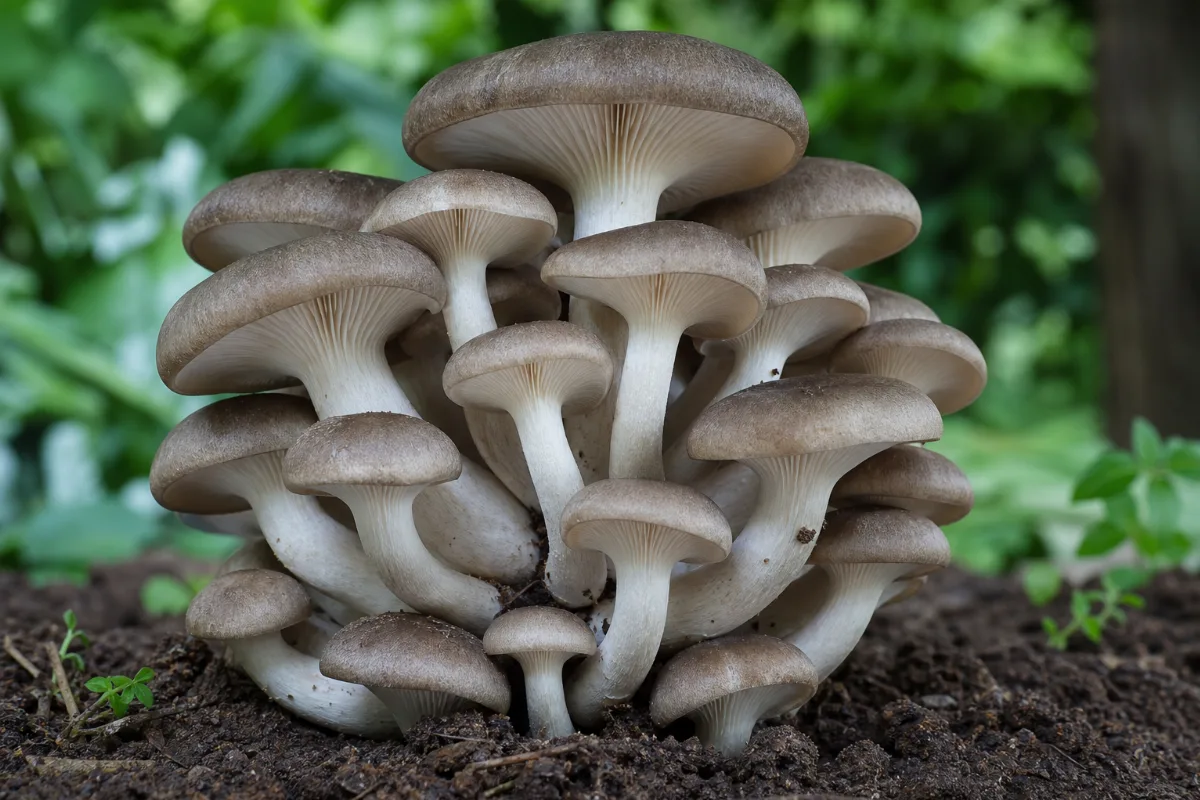
Mushrooms · Wild culinary mushroom
Fried Chicken Mushroom
Lyophyllum decastes · also called Clustered domecap, hatake shimeji, luronggu
Fried chicken mushroom (Lyophyllum decastes) is a clustered, gilled food mushroom that is farmed in East Asia and occasionally picked wild elsewhere. Research on it is from mice, rats and test tubes; we found no trial in people and rate every health use insufficient. One 2006 case report links it with liver injury. Wild mushrooms can be confused with poisonous ones, so never eat one unless an expert has identified it in person.
General information, not medical advice. Last substantive update · Not medically reviewed. A named clinician has not signed off on this page. How this page is made
About Fried Chicken Mushroom
Fried chicken mushroom (Lyophyllum decastes) is a food mushroom grown in East Asia and sometimes picked wild. All research on health effects is from mice, rats and test tubes; we found no human trial and one 2006 case report of liver injury. The main practical risk is wild picking, because poisonous mushrooms can look similar.
What it is
Fried chicken mushroom is a fungus, not a plant. GBIF accepts the name Lyophyllum decastes (Fr.) Singer, in the family Lyophyllaceae. It grows in dense clusters, and a mushroom expert notes it often appears on disturbed ground.
The name covers a group of look-alike species rather than one clear species, according to the same expert, who says it is not as easily identified as field guides suggest.
How it is used
It is eaten as a food. An encyclopedia summary says it is grown in Japan as hatake shimeji and in China as luronggu, and is sold both as a food and as a health supplement. We could not confirm this in a primary source, and we found no traditional medicine use. Traditional or food use is not proof that a supplement form works or is safe.
What the research shows
All of the health research is animal or test-tube work. In rats, the powder or hot-water extract lowered cholesterol. In obese mice, purified polysaccharides and a fibre extract reduced obesity and improved blood fats. A water extract lowered blood sugar in diabetic mice. In a dish, stool bacteria turned the mushroom's sugar chains into butyrate, and in mice they eased chemical colitis and liver injury.
Older mouse studies reported milder allergy-like skin lesions, slower growth of an artificial tumour, and less fall in blood cell counts after X-rays. None of this has been tested in a person, and the forms used (purified fractions and lab extracts) are not the same as a cooked mushroom.
Fresh mushroom, extracts and mycelium are different
The studies used purified polysaccharides, hot-water extracts and fibre fractions. One analysis found mycelium richer in protein but poorer in crude polysaccharide than the fruiting body. A product label may not tell you which part of the fungus is inside, so a result for one form cannot be applied to another.
Metals and radiation
In a lab experiment, cadmium moved strongly from the growing medium into this mushroom, while lead was largely kept out. In a separate study of six mushrooms, no cadmium was detected in it after simulated digestion. Bed-cultivated fried chicken mushroom at 14 forest sites in Fukushima had caesium-137 well under Japan's food limit. We found no measurement of wild-collected specimens.
Legal and regulatory status
We did not find or read any regulator statement on Lyophyllum decastes (EMA, FDA, EFSA, NCCIH, LiverTox, LactMed or WHO), so none is stated here. Rules differ by country and change.
At a glance
Traditional uses history, not proof
- Eaten as a food in Japan (hatake shimeji) and China (luronggu), where it is grown commercially (an encyclopedia summary; not verified in a primary source).
- Described as both a food and a health supplement in the same summary. We found no record of traditional medicine use in the sources we read.
Studied for research
- Cholesterol and weight in mice and rats, insufficient (no human data)
- Blood sugar in diabetic mice, insufficient
- Gut bacteria and colitis in a dish and in mice, insufficient
- Chemical liver injury in mice, insufficient
- Allergy-like skin disease in mice, insufficient
- Tumours and radiation in mice, insufficient
- A skin-pigment enzyme in a test tube, insufficient
Main compounds
- Polysaccharides (beta-glucans and other sugar chains)
- 6-Hydroxy-L-tryptophan, an uncommon amino acid
- Protein and fibre as a food
Common forms
- Fresh, cooked mushroom (the usual food form)
- Hot-water extracts and purified polysaccharides used in research
- Mycelium grown in culture, which differs in make-up from the fruiting body
Research links: Liver injury case report (record only) · Gut-bacteria fermentation in a dish (abstract) · Obese mice and polysaccharides (abstract) · Poison-centre monograph on muscarine mushrooms · GBIF name record · Research Library · Genes & Biomarkers Library
What it is and its history
- Accepted scientific name
- Lyophyllum decastes
- Naming authority
- (Fr.) Singer (GBIF)
- Synonyms
- Agaricus decastes Fr. (older name; Wikipedia, not checked in GBIF)
- Common names
- Fried chicken mushroom (English (North America)); Clustered domecap (English (UK)); Hatake shimeji (Japanese); Luronggu (Chinese)
- Family or group
- Lyophyllaceae (a fungus family), not a plant
- Classification
- Fungi > Basidiomycota > Agaricomycetes > Agaricales > Lyophyllaceae > Lyophyllum > Lyophyllum decastes
- Native range
- Wikipedia says it was described from Sweden and is widespread in Europe and north temperate regions, including North America and eastern temperate Asia. Not independently checked.
- Habitat
- A mushroom expert's page says it grows in dense clusters on the ground, often in disturbed soil such as roadbeds and paths, sometimes in woods. Wikipedia notes it is described as both saprotrophic and ectomycorrhizal.
- What it looks like
- Fruiting body: Not described here. Identification of wild mushrooms must be done in person by an expert, so no field description is given.
- Cultivation
- Wikipedia says it is grown commercially in Japan and China on sawdust or bark compost. Many recent papers (genome, growing conditions) are about cultivation, which supports farming in China; scale was not verified.
- Harvest and processing
- Eaten cooked. Several 2022-2025 papers study drying and cooking effects on flavour compounds; we did not read them.
- Look-alikes and adulterants
- Name: Poisonous Entoloma species (for example E. sinuatum, E. rhodopolium); Note: Named as possible confusion by Wikipedia, citing field guides we did not open (NOT verified). Papers call E. sinuatum notorious poisonous and report many Entoloma poisonings a year in Japan.; Name: Clitocybe dilatata and other Clitocybe; Note: Named by Wikipedia (NOT verified). A poison-centre monograph lists other Clitocybe species as muscarine mushrooms.; Name: Lyophyllum connatum, L. loricatum, L. fumosum; Note: Members of a species group, per MushroomExpert. Their edibility was not read.
- Sustainability and conservation
- Wikipedia cites NatureServe 'Apparently Secure'; not checked.
Traditional use and history history, not clinical proof
| Tradition or era | Documented use | Source |
|---|---|---|
| Food use in East Asia | Grown and eaten in Japan as hatake shimeji and in China as luronggu; described by Wikipedia as both a food and a health supplement. We found no historical record of medicinal use in the sources we read. | s-wikipedia-ld |
| Research era | Japanese studies from 2000-2007 tested hot-water extracts and glucans in mice and rats. Chinese groups have published more since 2022. | p16232825 |
Traditional use shows how it was used. It does not show that it works or is safe today.
What is inside, and how it may work
What it contains and how those compounds act in cells and animals. Laboratory and animal mechanisms are not proven effects in people.
Main compounds
| Compound | Family | Where it is concentrated | Activity studied | Level of evidence |
|---|---|---|---|---|
| Polysaccharides (beta-glucans and heteroglycans) | sugar chains | Fruiting body Crude polysaccharide 3.55% in the fruiting body in one analysis (basis not stated) | Main focus of the animal and test-tube work: gut-bacteria fermentation, cholesterol, colitis, liver and tumour models. 22 25 20 17 | Animal and in vitro |
| 6-Hydroxy-L-tryptophan PubChem 49867758 | uncommon amino acid | Fruiting body Not given in the abstract | Competitive tyrosinase blocker in a test tube (IC50 0.23 mM). 7 15 | Laboratory research |
Mechanisms, receptors and pathways
| Target or pathway | Gene or receptor | What was found | Level |
|---|---|---|---|
| Gut bacteria and bile acids | TGR5 (bile-acid receptor), deduced by authors | In obese mice, polysaccharides changed gut bacteria and raised secondary bile acids; the authors deduce more energy burning in brown fat. Giving two of the bacteria to mice prevented obesity in the same paper. 20 | Animal research |
| Butyrate production | not applicable | Human stool bacteria fermented the polysaccharides to short-chain fatty acids in a dish. 25 | Laboratory research |
| Nrf2 antioxidant pathway | Nrf2, Keap1, HO-1 | A polysaccharide raised antioxidant defences in poisoned mouse liver. 24 | Animal research |
Absorption, metabolism and elimination
- Absorption
- Not found. Simulated digestion left the polysaccharides largely unchanged before gut-bacteria fermentation (test tube).
- Distribution
- Not found.
- Metabolism
- Not found.
- Elimination
- Not found.
- Bioavailability
- Not established.
Isolated compounds versus whole extracts
Most health-type results come from purified polysaccharides, hot-water extracts or lab-made fibre fractions, not from eating the cooked mushroom. Those results cannot be carried over to a meal or to a supplement of unknown make-up. Fruiting body and mycelium also differ in composition.
Nutritional composition
One Chinese analysis (2010, read through our earlier summary) reports about 21% crude protein, 9.5% crude fibre and 3.55% crude polysaccharide in the fruiting body, with the dry or fresh basis not stated. No USDA entry was found.
8 not enough evidence
What was looked at
The 8 benefits and uses checked for Fried Chicken Mushroom, each with how strong the evidence is. Tap one to open it.
- Nutrition as a foodNot enough evidence
- Weight and blood fats (animal studies)Not enough evidence
- Blood sugar (mouse and test-tube work)Not enough evidence
- Gut bacteria and colitis (test-tube and mouse work)Not enough evidence
- Chemical liver injury in miceNot enough evidence
- Allergy-like skin disease in miceNot enough evidence
- Tumours in mice and radiation in miceNot enough evidence
- Skin-pigment enzyme (test tube)Not enough evidence
What is Fried Chicken Mushroom good for?
The uses people ask about and how strong the human evidence is for each. For every one, there is no human evidence. Read this together with the Safety tab.
Benefits, one by one
Each card is a research question, not a promise. Tap a goal to filter. Open a card to see the studies, doses and limits.
Nutrition as a food
Not enough evidenceFried chicken mushroom (Lyophyllum decastes) is eaten in East Asia, where it is grown commercially, and is occasionally collected wild elsewhere. One Chinese analysis, summarised in our earlier file, found about 21% crude protein and about 9.5% crude fibre in the fruiting body. This describes the food. No trial shows a health benefit from eating it.
1 studiesEaten cooked. Fruiting body and mycelium differ in make-up, so a figu…
Studies, doses and limits
What the trials found
No human trial of eating the mushroom was found.
Results
Fruiting body: 21.4% crude protein, 9.52% crude fibre, 3.55% crude polysaccharide (dry or fresh basis not stated). Mycelium: 28.3% protein and 1.77% crude polysaccharide. USDA has no entry for this mushroom in the files we hold, so no nutrient table is given.
Why this rating
A single old composition analysis, read only through our own summary, with no stated basis or sample size.
Form and dose studied
Eaten cooked. Fruiting body and mycelium differ in make-up, so a figure for one does not apply to the other.
Who was studied
General food use
Limits
Summary-only source; dry or fresh basis unknown; wild and farmed samples may differ.
Why researchers looked
It is mainly a food, so the first questions are what it contains.
Traditional use
No traditional medicine use was confirmed in the sources we read. The fungus is eaten as a food.
Proposed mechanism Compositional analysis
Not applicable: this is a composition fact, not a mechanism.
A proposed mechanism does not show that the effect happens in people.
Wild look-alikes can be poisonous and one human liver case report exists; see the Safety tab.
Weight and blood fats (animal studies)
Not enough evidenceIn mice and rats, fruiting body powder, hot-water extracts and purified polysaccharides lowered cholesterol and, in obese mice, reduced weight gain. Nobody has tested this in people, so we cannot say if it would work for a person.
3 studiesStudies used purified polysaccharides, hot-water extracts, or fruitin…
Studies, doses and limits
Results
Obese mice given purified polysaccharides had less obesity and related disorders, and their gut bacteria changed (2022). Obese mice given a soluble fibre extract for 6 weeks had lower cholesterol, triglycerides and LDL, higher HDL, and lower liver enzymes (2026). Rats fed fruiting body powder or hot-water extract had markedly lower total cholesterol, with HDL not significantly different (2002).
Effect sizes as reported
Lower cholesterol in rats and mice (numbers not read)
Why this rating
Animal evidence only: three studies in two species, no human trial. Numbers were not read beyond the abstracts.
Form and dose studied
Studies used purified polysaccharides, hot-water extracts, or fruiting body powder fed to animals. None is the same as eating the cooked mushroom, and no amount is advised here.
Who was studied
Rats and mice only
Limits
Animal results often do not carry over to people. Two of the three studies are on lab-made extracts.
Why researchers looked
Mushroom fibres and glucans are often studied for effects on cholesterol and body fat.
Traditional use
No traditional medicine use was confirmed in the sources we read. The fungus is eaten as a food.
Proposed mechanism Animal research
In the animal papers the authors link the effects to changed gut bacteria, more bile acids lost in the stool, and (in one mouse study) more energy burned in brown fat. These are explanations from animal work, not shown in people.
A proposed mechanism does not show that the effect happens in people.
Wild look-alikes can be poisonous and one human liver case report exists; see the Safety tab.
Blood sugar (mouse and test-tube work)
Not enough evidenceA water extract lowered blood sugar and insulin in diabetic mice but not in normal mice. A 2025 test-tube study found sugar-digesting enzyme blocking by purified polysaccharides. No person has been tested.
2 studiesStudies used purified polysaccharides, hot-water extracts, or fruitin…
Studies, doses and limits
Results
Water extract: lower blood glucose in genetically diabetic mice after one dose and after 3 weeks (p<0.05), lower insulin (p<0.01), no change in normal mice; more GLUT4 in muscle (2002). Two purified polysaccharide fractions were tested in cell-free assays, one stronger (2025).
Effect sizes as reported
Lower glucose and insulin in diabetic mice
Why this rating
One old mouse study and one test-tube study; nothing in people.
Form and dose studied
Studies used purified polysaccharides, hot-water extracts, or fruiting body powder fed to animals. None is the same as eating the cooked mushroom, and no amount is advised here.
Who was studied
Mice and test-tube assays
Limits
One mouse model; the 2025 paper's 'hypoglycemic' wording refers to an enzyme test, not blood sugar.
Why researchers looked
Mushroom extracts are often tested for effects on sugar handling.
Traditional use
No traditional medicine use was confirmed in the sources we read. The fungus is eaten as a food.
Proposed mechanism Animal research
In the mouse paper the authors suggest less insulin resistance through more GLUT4 sugar transporter in muscle. The 2025 paper used test-tube assays only.
A proposed mechanism does not show that the effect happens in people.
Wild look-alikes can be poisonous and one human liver case report exists; see the Safety tab. It must not replace diabetes care.
Gut bacteria and colitis (test-tube and mouse work)
Not enough evidenceHot-water sugar chains from the mushroom survived simulated digestion and were fermented by human stool bacteria in a dish, making butyrate. In mice with chemically induced colitis, the polysaccharides eased the disease. No human gut study exists.
2 studiesStudies used purified polysaccharides, hot-water extracts, or fruitin…
Studies, doses and limits
Results
In vitro fermentation: butyrate-making bacteria (Blautia, Roseburia, Bacteroides) and n-butyrate rose (2023). DSS colitis in mice: lower disease scores, lower TNF-alpha, IL-6 and IL-1beta, higher IL-10, IL-4 and TGF-beta, more barrier proteins (2025).
Effect sizes as reported
Milder colitis in mice (numbers not read)
Why this rating
A test-tube study and a mouse study only.
Form and dose studied
Studies used purified polysaccharides, hot-water extracts, or fruiting body powder fed to animals. None is the same as eating the cooked mushroom, and no amount is advised here.
Who was studied
Stool bacteria in a dish; mice
Limits
The mouse colitis model is chemical, not like human bowel disease. The authors' wording about a 'therapeutic agent' goes further than the evidence.
Why researchers looked
Fibres that gut bacteria feed on (prebiotics) are a common research topic for mushrooms.
Traditional use
No traditional medicine use was confirmed in the sources we read. The fungus is eaten as a food.
Proposed mechanism In vitro and animal
In the dish, stool bacteria broke the polysaccharides into short-chain fatty acids, and butyrate-making bacteria rose. In mice, the authors report lower inflammation signals and better gut-barrier proteins.
A proposed mechanism does not show that the effect happens in people.
Wild look-alikes can be poisonous and one human liver case report exists; see the Safety tab. Anyone with bowel disease should ask their doctor.
Chemical liver injury in mice
Not enough evidenceA polysaccharide from the fruiting body eased liver injury caused by a chemical (carbon tetrachloride) in mice. This is not a human finding, and a 2006 case report links a Lyophyllum decastes product with liver injury in a person (see Safety).
1 studiesStudies used purified polysaccharides, hot-water extracts, or fruitin…
Studies, doses and limits
Results
Lower ALT, AST, cholesterol, triglycerides, TNF-alpha and IL-6 in serum, better liver inflammation, higher SOD and glutathione, lower MDA (2022).
Effect sizes as reported
Less liver injury in poisoned mice
Why this rating
One mouse study.
Form and dose studied
Studies used purified polysaccharides, hot-water extracts, or fruiting body powder fed to animals. None is the same as eating the cooked mushroom, and no amount is advised here.
Who was studied
Mice
Limits
A chemical injury model; one study.
Why researchers looked
Polysaccharides are often tested for liver protection in poisoned mice.
Traditional use
No traditional medicine use was confirmed in the sources we read. The fungus is eaten as a food.
Proposed mechanism Animal research
The authors report more antioxidant defences and lower inflammation, through the Nrf2 pathway, in mouse liver.
A proposed mechanism does not show that the effect happens in people.
A human case report of liver injury exists; see the Safety tab.
Allergy-like skin disease in mice
Not enough evidenceAn extract lowered eczema-like skin lesions and blood IgE in mice. It did not tell us anything about people, and it does not show that the mushroom is safe for people with allergies.
1 studiesStudies used purified polysaccharides, hot-water extracts, or fruitin…
Studies, doses and limits
Results
Lower skin severity scores and serum IgE in NC/Nga mice (2007).
Effect sizes as reported
Milder lesions in mice
Why this rating
One mouse study from 2007.
Form and dose studied
Studies used purified polysaccharides, hot-water extracts, or fruiting body powder fed to animals. None is the same as eating the cooked mushroom, and no amount is advised here.
Who was studied
Mice
Limits
Picryl chloride mouse model; abstract only.
Why researchers looked
Mushroom extracts are tested for effects on immune allergy signals.
Traditional use
No traditional medicine use was confirmed in the sources we read. The fungus is eaten as a food.
Proposed mechanism Animal research
The authors report lower IL-4 (a Th2 allergy signal) with no change in IFN-gamma.
A proposed mechanism does not show that the effect happens in people.
Wild look-alikes can be poisonous and one human liver case report exists; see the Safety tab.
Tumours in mice and radiation in mice
Not enough evidencePurified glucans slowed an artificial tumour in mice, and an extract kept white blood cell counts from falling as far after X-rays in mice. Both are old mouse studies. This is not a cancer or radiation treatment.
2 studiesStudies used purified polysaccharides, hot-water extracts, or fruitin…
Studies, doses and limits
Results
Three glucan fractions showed marked antitumour activity against Sarcoma 180 in mice (2000). After 2 Gy whole-body X-rays, mice given the extract had significantly higher white cell, lymphocyte and monocyte counts than X-ray-only mice (2007).
Effect sizes as reported
Slower tumour growth; higher blood cell counts in mice
Why this rating
Two old mouse studies.
Form and dose studied
Studies used purified polysaccharides, hot-water extracts, or fruiting body powder fed to animals. None is the same as eating the cooked mushroom, and no amount is advised here.
Who was studied
Mice
Limits
Artificial tumour line; abstracts only.
Why researchers looked
Beta-glucans from mushrooms have long been tested on tumour and immune models.
Traditional use
No traditional medicine use was confirmed in the sources we read. The fungus is eaten as a food.
Proposed mechanism Animal research
The authors suggest immune, host-mediated effects (more macrophages and complement-positive cells) and help for blood-forming function.
A proposed mechanism does not show that the effect happens in people.
Wild look-alikes can be poisonous and one human liver case report exists; see the Safety tab. It is not a treatment for cancer.
Skin-pigment enzyme (test tube)
Not enough evidenceA compound in the hot-water extract, 6-hydroxy-L-tryptophan, blocked tyrosinase, the enzyme that makes melanin, in a test tube. It was not tested on skin or in people.
1 studiesHot-water extract, then a purified compound.
Studies, doses and limits
Results
IC50 0.23 mM against button mushroom tyrosinase (2019).
Effect sizes as reported
Enzyme blocked in a test tube
Why this rating
One test-tube study.
Form and dose studied
Hot-water extract, then a purified compound.
Who was studied
Test tube
Limits
Enzyme from a different mushroom.
Why researchers looked
Tyrosinase blockers are studied for skin lightening.
Traditional use
No traditional medicine use was confirmed in the sources we read. The fungus is eaten as a food.
Proposed mechanism Laboratory research
Competitive blocking of the enzyme (an enzyme from the button mushroom) with an IC50 of 0.23 mM.
A proposed mechanism does not show that the effect happens in people.
No skin safety data.
Connections to the rest of health
How Fried Chicken Mushroom connects to the rest of our health knowledge graph. Every link says what kind of connection it is. A safety link (for example to the liver) is a warning, not a benefit. A study that merely mentions a topic never creates a benefit link.
Explore every connection: goals, body systems, organs, symptoms, genes
C. Body parts and organs
| Connected to | Kind of connection | Evidence status | Context | Studies |
|---|---|---|---|---|
| Liver | Not enough evidence | One 2006 case report of liver injury; mouse studies point the other way but do not show safety. One 2006 case report; mouse studies in a chemical injury model do not show safety. Preparation or compound: Product sold as hatakeshimeji (case report, details not read) |
8 24 | |
| Gut | Preliminary mechanism | Not enough evidence | Butyrate-producing bacteria rose in a dish; colitis eased in mice; nothing in people. Preparation or compound: Polysaccharides (dish and mouse studies) |
25 4 |
G. Root causes and contributing factors
| Connected to | Kind of connection | Evidence status | Context | Studies |
|---|---|---|---|---|
| Environmental toxins | Not enough evidence | Cadmium moves strongly into the mushroom in a lab experiment; no wild sample was measured. Preparation or compound: Cadmium, lead, caesium (lab and cultivated samples) |
5 11 16 |
L. Active compounds
| Connected to | Kind of connection | Evidence status | Context | Studies |
|---|---|---|---|---|
| Polysaccharides (beta-glucans and heteroglycans) | Biological association | Animal and in vitro | Main focus of the animal and test-tube work: gut-bacteria fermentation, cholesterol, colitis, liver and tumour models. Preparation or compound: Fruiting body |
22 25 20 17 |
| 6-Hydroxy-L-tryptophan | Biological association | In vitro | Competitive tyrosinase blocker in a test tube (IC50 0.23 mM). Preparation or compound: Fruiting body |
7 15 |
Each connection is stored with the ingredient, the connected record, the kind of connection, the evidence status, the supporting studies, the preparation or compound involved, and a review date (last reviewed October 25, 2026).
Evidence at a glance: what the research found for 8 outcomes
Each outcome below is one thing researchers measured. Certainty is how far the evidence can be trusted, not how well it works. The full studies are on the next tab.
The evidence
The research centre for Fried Chicken Mushroom. Every record here was checked against PubMed or the publisher's page; we never list a study we have not verified.
Evidence by outcome
Bars show how many studies we found for each outcome, not how well it works. People are added up across trials only (reviews are not added, to avoid double counting).
How we rate evidence
High certainty
Several well-run trials or reviews agree; further research is unlikely to change the picture much.
Moderate certainty
Good trials point the same way, but some doubt remains.
Low certainty
Small, short or inconsistent trials. The finding could change with better research.
Very low certainty
Very little or very weak human data. Treat as a possibility only.
Mixed findings
Trials or reviews disagree with each other.
Not enough evidence
Not enough human research to say either way.
Evidence against
Good research found no benefit, or found harm.
We take the reviewers' own risk-of-bias and GRADE statements where they exist, and otherwise judge from study size, design, consistency, directness and whether a product matches what is sold. Many publications do not make evidence high. Method note: We screened the titles of 61 PubMed records on Lyophyllum decastes, plus a second search on poisoning, allergy, toxicity and safety terms, and found no human trial. We read the PubMed records and abstracts of 16 papers (fourteen on the mushroom and two on poisonous Entoloma), one poison-centre monograph and two web pages in full, checked the name in GBIF and one compound in PubChem. The 2006 liver case letter has no abstract and its text was not read. One composition source was reused from our earlier summary without being re-opened. EMA, FDA, EFSA, LiverTox and LactMed were not read. Certainty ratings are the compiler's own reading.
Study library: every study we checked 25
| Study | Design | People | Product, dose, length | Result |
|---|---|---|---|---|
| AlternativeMed editorial team 2026 PubMed search 'Lyophyllum decastes' (61 records) and a second search adding poisoning, allergy, toxicity, safety or human terms (13 records), run 2026-10-25 PubMed (NCBI E-utilities) · Source |
Literature search n/a |
n/a | n/a Not shown here |
We screened the titles of all 61 records. We found no clinical trial of eating or taking Lyophyllum decastes in people. One human case report letter (2006, liver injury) exists. Most records are about growing the mushroom, its genes, flavour or polysaccharides. Methods, limits and fundingOutcomes: What exists Limitations: Screening by title; we read abstracts only for the papers cited. Absence of a trial here is not proof that none exists. Funding and conflicts: n/a Read: search |
| Aoki et al 2020 Discrimination between edible and poisonous mushrooms among Japanese Entoloma sarcopum and related species based on phylogenetic analysis and insertion/deletion patterns of nucleotide sequences of the cytochrome oxidase 1 gene. Genes and Genetic Systems · PMID 32727969 · DOI |
Laboratory survey fungus (DNA study) |
Japanese Entoloma species (DNA study) | n/a (DNA sequencing) Not shown here |
The abstract says the edible Entoloma sarcopum looks like the poisonous E. rhodopolium and E. sinuatum, and that many cases of food poisoning from these poisonous species occur each year in Japan. It does not mention Lyophyllum decastes. Background statement on Entoloma poisonings in Japan Methods, limits and fundingOutcomes: Gene markers to separate edible from poisonous Entoloma Limitations: DNA-marker paper. It is about Entoloma only; it does not say these species are confused with fried chicken mushroom. Funding and conflicts: Not read in the abstract Read: abstract |
| GBIF 2026 GBIF Backbone Taxonomy: Lyophyllum decastes (Fr.) Singer (key 9173236) GBIF API · Source |
Taxonomy record n/a |
n/a | n/a Not shown here |
GBIF returns Lyophyllum decastes (Fr.) Singer as ACCEPTED (exact match), family Lyophyllaceae, order Agaricales, key 9173236. Methods, limits and fundingOutcomes: Accepted name Limitations: A database record; Index Fungorum was not opened (Wikipedia lists Index Fungorum number 299927, not checked). Funding and conflicts: Public database Read: record |
| Ghaleb 2025 Lyophyllum decastes-derived polysaccharides alleviate DSS-induced colitis in mice by suppressing inflammation, enhancing intestinal barrier integrity, and restoring gut microbiota homeostasis. Frontiers in Pharmacology · PMID 40717964 · DOI |
Animal study mouse |
BALB/c mice with colitis induced by DSS in drinking water | Lyophyllum decastes polysaccharides (LDP) by mouth fruiting body polysaccharides Not shown here 14 days of treatment after 7 days of DSS |
Treated mice had lower disease activity scores and better-preserved colon tissue, lower pro-inflammatory signals (TNF-alpha, IL-6, IL-1beta), higher anti-inflammatory signals (IL-10, IL-4, TGF-beta), more of the barrier proteins occludin and ZO-1, and a recovery of gut bacteria variety. Milder colitis in mice Methods, limits and fundingOutcomes: Disease activity, gut tissue, cytokines, tight-junction proteins, gut bacteria Limitations: Mouse chemical-colitis model; the authors' wording ('promising novel therapeutic agent') goes beyond what a mouse study shows; abstract only. Funding and conflicts: Not read in the abstract Read: abstract |
| Huang 2025 Accumulation and translocation of lead and cadmium in Lyophyllum decastes. Environmental Geochemistry and Health · PMID 40221625 · DOI |
Laboratory survey fungus (lab experiment) |
Cultured L. decastes grown with added lead or cadmium | Lead or cadmium added to the growing medium mycelium and fruiting body (caps and stems) Not shown here |
Added lead and cadmium slowed mycelium and cut yield, with cadmium worse at the same amount (20 mg/kg). Lead was kept out of the mushroom (uptake ratio under 1 in caps and stems, 'bioexcluder'). Cadmium moved strongly into the mushroom (transfer factors above 1). Cadmium transfers strongly; lead is largely excluded Methods, limits and fundingOutcomes: Mycelial growth, yield, metal uptake Limitations: Growth-medium experiment with added metals, not a survey of mushrooms people eat. Funding and conflicts: Not read in the abstract Read: abstract |
| IPCS INCHEM 2000 IPCS INCHEM Poisons Information Monograph G028: Inocybe, Clitocybe, Omphalotus and others (muscarine-containing mushrooms) inchem.org · Source |
Authoritative guidance n/a |
n/a | n/a Not shown here |
Lists Clitocybe dealbata, C. rivulosa, C. candicans, C. cerussata, C. phyllophila and Entoloma rhodopolium among the species causing most muscarine poisonings; the main toxin is muscarine and is not destroyed by cooking; fresh, dried or frozen mushrooms can poison; onset is 30 minutes to a few hours (average about 2 hours); in a French series of 248 incidents (483 patients) the commonest signs were sweating (96%), vomiting (70%), diarrhoea (62%), low blood pressure (36%) and belly pain (32%); most settle within 24 hours; atropine is the antidote for strong cholinergic signs, given in hospital. Methods, limits and fundingOutcomes: Muscarine mushroom poisoning Limitations: General monograph on muscarine mushrooms. It does not name Lyophyllum decastes. Most of the data are from southern France 1973-1998. Funding and conflicts: International programme on chemical safety (public body) Read: full text |
| Ishihara 2019 Isolation of 6-hydroxy-L-tryptophan from the fruiting body of Lyophyllum decastes for use as a tyrosinase inhibitor. Bioscience, Biotechnology, and Biochemistry · PMID 31131717 · DOI |
Laboratory research in vitro |
Test-tube enzyme assay (tyrosinase from Agaricus bisporus) | Hot-water extract of lyophilised fruiting body, then purified 6-hydroxy-L-tryptophan fruiting body Not shown here |
A hot-water extract blocked tyrosinase (the enzyme that makes melanin) from the button mushroom. The active compound was identified as the uncommon amino acid 6-hydroxy-L-tryptophan, a competitive inhibitor with an IC50 of 0.23 mM. IC50 0.23 mM in a test tube Methods, limits and fundingOutcomes: Tyrosinase inhibition Limitations: Enzyme from a different mushroom in a test tube; not tested on skin or people. Funding and conflicts: Not read in the abstract Read: abstract |
| Iwasa 2006 Hepatotoxicity associated with Lyophyllum decastes Sing. (Hatakeshimeji). Journal of Gastroenterology · PMID 16868813 · DOI |
Case report |
1 An aged woman in Japan (per the PubMed indexing terms: Aged, Female, Japan) |
Not read: the PubMed record has no abstract, and the publisher page could not be opened Not read |
The record is a one-and-a-half page letter (pages 606-607) of type Case Reports. PubMed indexes it under chemical and drug-induced liver injury, dietary supplements (adverse effects) and mycotoxicosis. We could not read the letter, so we cannot say which product was taken, how much, or how the case ended. Not read Methods, limits and fundingOutcomes: Liver injury Limitations: No abstract and no full text read. All we can say is what the PubMed record and its indexing terms show. Cause and effect cannot be judged from the record. Funding and conflicts: Not read Read: pubmed-record-only |
| Jiang 2026 Optimized Extraction of Soluble Dietary Fiber from Lyophyllum decastes and Its Effect on Hypolipidemic and Gut Microbiota in Mice. Foods · PMID 41750796 · DOI |
Animal study mouse |
Obese mice | Soluble dietary fibre extract made by hot water and ethanol precipitation fruiting body Not shown here 6 weeks |
After 6 weeks of oral gavage in obese mice the abstract reports less gain in body and organ weight, lower total cholesterol, triglycerides and LDL, higher HDL, lower liver enzymes (ALT, AST) and lower inflammation signals, plus a shift in gut bacteria. Improved blood fat markers in obese mice (numbers not read) Methods, limits and fundingOutcomes: Body weight, blood fats, liver enzymes, inflammation signals, gut bacteria Limitations: Mouse study of an extract made in a lab; abstract only; the paper is partly about the extraction method; no human data. Funding and conflicts: Not read in the abstract Read: abstract |
| Kuo 2010 MushroomExpert.Com: Lyophyllum decastes (Michael Kuo, 2010) mushroomexpert.com · Source |
Field guide page n/a |
n/a | n/a Not shown here |
Kuo writes that he does not know how many species hide under the name Lyophyllum decastes, treats it as a group of possible species, and says it is not as easily identified as field guides suggest. He lists four species in the group (L. connatum, L. loricatum, L. fumosum, L. decastes). The page says it contains no information on edibility or toxicity. Methods, limits and fundingOutcomes: Species concept, ecology Limitations: A single expert's web page, not peer reviewed. It gives no edibility advice, and none is given here. Funding and conflicts: Personal site Read: full text |
| Liu 2026 Integrating Speciation Analysis and Bioaccessibility to Reassess Cadmium Exposure Risk from Six Mushrooms. Toxics · PMID 41600615 · DOI |
Laboratory survey fungus (lab survey) |
Six mushroom species including Lyophyllum decastes | Dried mushrooms digested in a simulated gut (biomimetic digestion) fruiting body Not shown here |
Cadmium was mostly in a tightly bound 'residual' form in all six mushrooms. Agaricus blazei had the highest total cadmium (3.84 mg/kg) and about 6% was released in the simulated gut. After simulated digestion no cadmium was detected in the other five, which include Lyophyllum decastes. The abstract does not give the L. decastes total. No cadmium detected after simulated digestion in L. decastes Methods, limits and fundingOutcomes: Total cadmium, forms of cadmium, bioaccessibility Limitations: The abstract does not state the cadmium level of L. decastes, the source of the samples, or whether they were farmed or wild. Funding and conflicts: Not read in the abstract Read: abstract |
| Miura 2002 Antidiabetic activity of Lyophyllum decastes in genetically type 2 diabetic mice. Biological and Pharmaceutical Bulletin · PMID 12230127 · DOI |
Animal study mouse |
KK-Ay mice, a genetic type 2 diabetes model | Water extract of Lyophyllum decastes fruiting body (water extract) Not shown here · vs Control mice |
The water extract lowered blood glucose in diabetic mice 7 hours after one oral dose and after 3 weeks of repeated dosing (p<0.05), and lowered blood insulin (p<0.01). It did not change blood glucose in normal mice. Muscle membrane GLUT4 protein was higher (p<0.01). The authors suggest lower insulin resistance. Lower glucose and insulin in diabetic mice, not in normal mice Methods, limits and fundingOutcomes: Blood glucose, insulin, muscle GLUT4 Limitations: Mouse study from 2002; abstract only; one genetic mouse model. Funding and conflicts: Not read in the abstract Read: abstract |
| Morgado et al 2013 Multi-gene phylogenetic analyses reveal species limits, phylogeographic patterns, and evolutionary histories of key morphological traits in Entoloma (Agaricales, Basidiomycota). Persoonia · PMID 24761041 · DOI |
Laboratory survey fungus (DNA study) |
Entoloma subgenus Entoloma specimens from Europe, North America and Australasia | n/a (DNA sequencing) Not shown here |
The abstract describes E. sinuatum as 'notorious poisonous' and reports that North American collections mostly represent different (sister) species from the European ones. It does not mention Lyophyllum decastes. Describes E. sinuatum as notorious poisonous Methods, limits and fundingOutcomes: Species limits in Entoloma Limitations: Taxonomy paper; it gives no symptoms or case numbers. Funding and conflicts: Not read in the abstract Read: abstract |
| Nakamura 2007 Radioprotective effect of Lyophyllum decastes and the effect on immunological functions in irradiated mice. Journal of Traditional Chinese Medicine · PMID 17393633 |
Animal study mouse |
Mice given 2 Gy whole-body X-ray irradiation | Hot distilled-water extract of Lyophyllum decastes fruiting body (extract) Not shown here 2 weeks, every other day |
In non-irradiated mice the extract raised leukocyte, lymphocyte and monocyte counts. After 2 Gy irradiation, mice given the extract had significantly higher counts of these cells than the X-ray-only group. The authors suggest help from blood-forming function and NK/LAK cell activity. Blood cell counts fell less after X-rays in mice Methods, limits and fundingOutcomes: White blood cell counts after irradiation Limitations: Mouse study; abstract only; says nothing about radiation in people. Funding and conflicts: Not read in the abstract Read: abstract |
| PubChem 2026 PubChem: 6-Hydroxy-L-tryptophan (CID 49867758) PubChem API · Source |
Chemistry record n/a |
n/a | n/a Not shown here |
PubChem returns CID 49867758, title 6-Hydroxy-L-tryptophan, formula C11H12N2O3. Methods, limits and fundingOutcomes: Compound identity Limitations: Database record. Funding and conflicts: Public database Read: record |
| Sakai 2026 Radiocesium uptake in two fungal bed-cultivated edible mushroom species in forests in Fukushima, Japan. PLoS ONE · PMID 42546016 · DOI |
Laboratory survey fungus (field survey) |
Outdoor fungal beds at 14 forest sites in Fukushima Prefecture | Cultivated Lyophyllum decastes and Lepista nuda fruiting body Not shown here |
Caesium-137 in fruit bodies (Bq/kg at 90% water) was 0.4 to 12 (mean 2.2) for L. decastes and 0.2 to 42 (mean 8.0) for Lepista nuda. Both stayed below Japan's food limit of 100 Bq/kg. The transfer factor was about ten times lower than values reported for wild mushrooms. Mean 2.2 Bq/kg in cultivated L. decastes Methods, limits and fundingOutcomes: Caesium-137 in fruit bodies Limitations: Applies to bed-cultivated mushrooms at these sites, not to wild mushrooms gathered elsewhere. Funding and conflicts: Not read in the abstract Read: abstract |
| Ukawa 2000 Antitumor effects of (1-->3)-beta-D-glucan and (1-->6)-beta-D-glucan purified from newly cultivated mushroom, Hatakeshimeji (Lyophyllum decastes Sing.). Journal of Bioscience and Bioengineering · PMID 16232825 |
Animal study mouse |
Mice with Sarcoma 180 tumour cells | Purified beta-glucans from hot-water extract fruiting body Not shown here |
Eleven polysaccharides were isolated. Three mainly glucose-based ones (IV-1, IV-2, IV-3) showed marked antitumour activity against Sarcoma 180 in mice. Mice given IV-1 had more peritoneal macrophages and C3-positive cells, which the authors read as an immune, host-mediated effect. Slower Sarcoma 180 growth in mice Methods, limits and fundingOutcomes: Tumour growth, macrophage count, complement C3 cells Limitations: A 2000 mouse study with an artificial tumour line; abstract only; not a cancer treatment. Funding and conflicts: Not read in the abstract Read: abstract |
| Ukawa 2002 Effect of Hatakeshimeji (Lyophyllum decastes Sing.) Mushroom on serum lipid levels in rats. Journal of Nutritional Science and Vitaminology · PMID 12026194 · DOI |
Animal study rat |
Rats fed a cholesterol-containing or cholesterol-free diet | Fruiting body powder or its hot-water extract mixed into the diet fruiting body Percent of diet (not advice) · vs Control diet |
Rats fed the fruiting body powder or hot-water extract had markedly lower total cholesterol than controls on a cholesterol diet, with no significant difference in HDL cholesterol. On a cholesterol-free diet the powder also lowered total cholesterol. Triglycerides and phospholipids fell, and the enzyme that turns cholesterol into bile acids and the loss of bile acids in faeces rose. Lower total cholesterol in rats Methods, limits and fundingOutcomes: Serum cholesterol, triglycerides, phospholipids, bile acid excretion Limitations: Rat study from 2002; abstract only; amounts in rat diet are not advice for people. Funding and conflicts: Not read in the abstract Read: abstract |
| Ukawa 2007 Oral administration of the extract from Hatakeshimeji (Lyophyllum decastes sing.) mushroom inhibits the development of atopic dermatitis-like skin lesions in NC/Nga mice. Journal of Nutritional Science and Vitaminology · PMID 17874836 · DOI |
Animal study mouse |
NC/Nga mice with skin lesions induced by picryl chloride | Extract of Lyophyllum decastes by mouth fruiting body (extract) Not shown here |
The extract lowered skin severity scores and serum IgE. IL-4 (a Th2 allergy signal) fell, IFN-gamma did not. The authors suggest an anti-allergic action through lower IgE and Th2 responses. Milder allergy-like skin lesions in mice Methods, limits and fundingOutcomes: Skin severity score, serum IgE, IFN-gamma and IL-4 from spleen cells Limitations: Mouse model of eczema-like skin disease; abstract only; no human data. Funding and conflicts: Not read in the abstract Read: abstract |
| Wang 2022 Polysaccharides from Lyophyllum decastes reduce obesity by altering gut microbiota and increasing energy expenditure. Carbohydrate Polymers · PMID 35989006 · DOI |
Animal study mouse |
Diet-induced obese mice | Two purified heteroglycan polysaccharides (hot-water type extracts) fruiting body (per abstract: Lyophyllum decastes polysaccharides) Not shown here |
The abstract says the purified polysaccharides effectively reduced obesity and related disorders in obese mice. Gut bacteria changed (more Bacteroides intestinalis and Lactobacillus johnsonii) and secondary bile acids rose. Giving those two bacteria to mice prevented obesity and high blood fats. The authors deduce more energy burning in brown fat through a bile-acid receptor (TGR5). Reduced obesity in mice (numbers not read) Methods, limits and fundingOutcomes: Obesity and related disorders, gut bacteria, bile acids, energy use Limitations: Mouse study of purified polysaccharides, not the mushroom as food; abstract only; no human data. Funding and conflicts: Not read in the abstract Read: abstract |
| Wikipedia editors 2026 Wikipedia: Lyophyllum decastes (reading of 2026-10-25; secondary source) en.wikipedia.org · Source |
Encyclopedia secondary n/a |
n/a | n/a Not shown here |
The article says the mushroom is considered edible and occasionally collected in North America, with some reports of gastric upset and possible confusion with poisonous Entoloma species or Clitocybe dilatata. It cites two printed field guides (Phillips 2010; Miller and Miller 2006) that we did not open. It also says the fungus is cultivated in Japan (hatake shimeji) and China (luronggu). Methods, limits and fundingOutcomes: Edibility notes, look-alikes, cultivation Limitations: Encyclopedia summary of books we did not read. Treated as NOT verified; used only to point at questions. Funding and conflicts: Public encyclopedia Read: full text |
| Wu 2025 Ultrasound-Assisted Extraction of Polysaccharides from Lyophyllum decastes: Structural Analysis and Bioactivity Assessment. Molecules · PMID 40005271 · DOI |
Laboratory research in vitro |
Test-tube and cell assays | Two purified polysaccharides (LDP-A1, LDP-B1) from ultrasound extraction fruiting body Not shown here |
The two fractions differed in molecular weight and structure. Both showed some activity, with LDP-B1 stronger in the antioxidant, 'hypoglycemic', anti-inflammatory and anticancer assays. 'Hypoglycemic' here is a test-tube measure, not a measure in a living body. Test-tube activity of purified fractions Methods, limits and fundingOutcomes: Structure; antioxidant, sugar-enzyme, anti-inflammatory and anticancer assays Limitations: Purified fractions in assays; abstract only; no animals or people. Funding and conflicts: Not read in the abstract Read: abstract |
| Xi et al 2010 Comparative analysis of nutrients in fruit body, mycelia and fermentation broth of Lyophyllum decastes (Food Science, China, 2010; abstract page) Food Science (China) · Source |
Laboratory survey fungus (lab survey) |
Lyophyllum decastes samples (not stated if farmed or wild) | n/a fruiting body, mycelium, fermentation broth Not shown here |
Per our earlier summary file (not re-opened): fruiting body 21.4% crude protein, 9.52% crude fibre, 3.55% crude polysaccharide; mycelium richer in protein (28.3%) and poorer in crude polysaccharide (1.77%). Dry or fresh basis is not stated. Methods, limits and fundingOutcomes: Protein, fibre, polysaccharide Limitations: Summary-only: we reuse figures from our earlier summary and did not open the page again. Basis (dry or fresh) and sample size are unknown, so the numbers are rough. Funding and conflicts: Not read Read: summary-only |
| Zhang 2022 Lyophyllum decastes fruiting body polysaccharide alleviates acute liver injury by activating the Nrf2 signaling pathway. Food and Function · PMID 35107114 · DOI |
Animal study mouse |
Mice with acute liver injury caused by carbon tetrachloride (CCl4) | Fruiting body polysaccharide (LDFP) fruiting body Not shown here |
In mice poisoned with CCl4, the polysaccharide lowered ALT, AST, cholesterol, triglycerides, TNF-alpha and IL-6 in serum, improved liver inflammation, raised antioxidant defences (SOD, glutathione), lowered MDA, and activated the Nrf2 pathway. Less chemically induced liver injury in mice Methods, limits and fundingOutcomes: Liver enzymes, inflammation signals, antioxidant markers, Nrf2 pathway Limitations: A chemical liver-injury model in mice. Note the 2006 human case report in the Safety file linking a Lyophyllum decastes product with liver injury. Funding and conflicts: Not read in the abstract Read: abstract |
| Zhang 2023 Effects of polysaccharides from Lyophyllum decastes (Fr.) Singer on gut microbiota via in vitro-simulated digestion and fermentation. Frontiers in Microbiology · PMID 36860492 · DOI |
Laboratory research in vitro (human stool bacteria) |
Simulated digestion and human stool bacteria in a dish | Lyophyllum decastes polysaccharides fruiting body (hot-water polysaccharides) Not shown here |
The polysaccharides were not much changed by simulated digestion. After 24 hours with human stool bacteria they were broken down into short-chain fatty acids, and bacteria that make butyrate (Blautia, Roseburia, Bacteroides) and n-butyrate rose. The authors call them a potential prebiotic. Butyrate-producing bacteria and butyrate rose in the dish Methods, limits and fundingOutcomes: Digestion stability, short-chain fatty acids, gut bacteria Limitations: Test-tube fermentation only; stool from donors in a dish does not show what happens in a person. Funding and conflicts: Not read in the abstract Read: abstract |
What we do not know yet
- No human trial of eating or taking fried chicken mushroom was found.
- The 2006 liver case letter could not be read, so product, amount and outcome are unknown.
- The Entoloma and Clitocybe look-alike link rests on an encyclopedia summary of field guides we did not open; no poisoning case naming this mushroom was found.
- No interaction, pregnancy, breastfeeding, child or allergy data.
- No metals measurement in wild-collected specimens and no regulator statement was read.
How new research is added
New studies are found by a saved PubMed search and placed in a review queue. A person reads each one before it changes any evidence rating or safety wording. New publications never change ratings automatically.
Lab markers
What changed in blood or saliva tests during trials. A changed number is not the same as feeling or being healthier, and we give no "normal ranges".
Safety
What studies and official sources say about side effects, medicines and who should check first. Each point shows what kind of evidence it comes from.
Main points to know 3
- Wild look-alikes can poison, and cooking does not make a poisonous mushroom safe. Fried chicken mushroom grows wild in dense clusters, and some sources say it can be confused with poisonous mushrooms. An encyclopedia summary of two field guides names poisonous Entoloma species and Clitocybe dilatata (we did not open those books, so this is NOT verified). Separate papers describe poisonous Entoloma as a cause of food poisoning: one calls Entoloma sinuatum 'notorious poisonous', and another says Entoloma rhodopolium and E. sinuatum cause many poisonings a year in Japan. A poison-centre monograph says several Clitocybe species and Entoloma rhodopolium contain muscarine, which cooking does not destroy. No published poisoning case that names fried chicken mushroom was found. A mushroom expert writes that this species is really a group of look-alike species that are hard to separate. Never eat a wild mushroom unless an expert has identified it in person. This page gives no identification advice. Secondary and laboratory sources 21 13 2 6 10
- One case report links a Lyophyllum decastes product with liver injury. A 2006 letter in the Journal of Gastroenterology is indexed as a case report of liver injury linked to this mushroom (sold as hatakeshimeji) and to a dietary supplement. We could not read the letter, so we do not know the product, the amount, or the outcome. One case cannot show how common this is, but it is a reason to ask a doctor before taking it as a supplement, especially with liver disease. Case report record only 8
- Almost no safety research in people. We found no trial, and no study of interactions, pregnancy, breastfeeding, children or allergy. That means these are unknown, not that they are safe. Absence of evidence 1
Side effects 3
| Effect | How often | Severity and recovery | Evidence |
|---|---|---|---|
| Liver injury (one reported case) Indexed under chemical and drug-induced liver injury and dietary supplements; no details read. | Not established | Not read: the letter's text was not available to us Not read | Case report record only 8 |
| Stomach upset An encyclopedia article reports 'some reports of gastric upset' in North America from a printed field guide we did not open. NOT verified. | Not established | Not stated Not stated | Secondary source unverified 21 |
| Muscarine poisoning from a poisonous look-alike (not from this mushroom) Figures are for muscarine mushrooms in general in southern France, 1973-1998. They are given because muscarine species are named as possible look-alikes; they do not describe fried chicken mushroom. | French series of 248 incidents: sweating in 96% of 483 patients, vomiting 70%, diarrhoea 62%, low blood pressure 36%, belly pain 32% | Usually settles within 24 hours with hospital care; older literature reports deaths Signs usually clear within about 24 hours | Authoritative monograph 6 |
Liver
One case report (Japan, 2006) is indexed as liver injury linked to this mushroom as a dietary supplement. We could not read it. In mice, a polysaccharide eased chemically induced liver injury, but a mouse result does not show safety in people. 8 24
How often. Unknown. One case record only.
Monitoring. Ask a doctor first if you have liver disease or take medicines that affect the liver. Seek care for yellow skin or eyes, dark urine or severe tiredness.
- p16868813.
This is a safety connection. It is not evidence that Fried Chicken Mushroom supports liver health.
Medicines and supplements 3
| With | Why it matters | Importance | Evidence | What to do |
|---|---|---|---|---|
| Prescription and over-the-counter medicines prescription | No interaction report or study for fried chicken mushroom was found. | None found Not enough evidence 1 | Ask a pharmacist if you take regular medicines and plan to use it as a supplement. | |
| Diabetes medicines and insulin theoretical | A water extract lowered blood sugar in diabetic mice only. | Theoretical. Not tested in people. | Animal research Not enough evidence 12 | If you use diabetes medicines, ask your pharmacist before using extracts or supplements. |
| Cholesterol medicines and medicines for the liver theoretical | Cholesterol and liver enzymes changed in rats and mice. | Theoretical. Not tested in people. | Animal research Not enough evidence 18 9 | Ask a pharmacist if you take any of these. |
Who should check first 3
| Situation | Advice | Evidence |
|---|---|---|
| Anyone who cannot be sure of the mushroom's identity | Do not eat it. Only an expert, in person, can separate this species from poisonous look-alikes. | Expert guidance 10 6 |
| Liver disease, or earlier liver trouble after a mushroom product | Ask a doctor first because of the 2006 case report. | Case report record only 8 |
| Pregnancy, breastfeeding and young children | No data were found, so avoid supplement or extract forms unless a doctor advises otherwise. | Absence of evidence 1 |
Overdose, product quality and regulators
Summary. No toxicity test of fried chicken mushroom or its extracts was found. It is eaten as a food in East Asia, where it is grown commercially. Hazards found are look-alike poisonings, metals and one liver case report.
Animal. Not reviewed as a safety test. The animal papers report effects, not toxicity.
Human doses studied. No dose studies in people. No amounts are advised here.
Genotoxicity. Not read.
Toxic or hazardous parts. Fungus: the cap and stem are eaten. Whether any part is harmful, raw or cooked, is not covered by the sources we read.
A mushroom takes up what is in its growing medium or soil. For this species the papers we read cover cadmium, lead and caesium-137.
Cadmium. In a lab experiment, added cadmium moved strongly from the growing medium into L. decastes (transfer factors above 1) and cut yield. In a separate 2026 study of six mushrooms, no cadmium was detected in L. decastes after simulated digestion; the abstract does not give its total cadmium. 5 11
Lead. L. decastes largely kept lead out of the caps and stems in the same experiment (uptake ratio under 1). 5
Radiocaesium. Bed-cultivated L. decastes at 14 Fukushima forest sites had caesium-137 of 0.4 to 12 Bq/kg (mean 2.2), below Japan's food limit of 100 Bq/kg. This applies to bed-cultivated mushrooms, not wild ones. 16
Wild versus farmed. We found no measurement of metals in wild-collected L. decastes. The species is often found on disturbed ground such as roadbeds, according to a mushroom expert's page, where soil can carry pollutants; that is a general point, not a measured finding for this mushroom. 10
Supplement quality. No quality standard or product test was found. Fruiting body and mycelium differ in composition, so a label does not tell you what you get. 23
| Body | Action | Date |
|---|---|---|
| Ministry body in Japan (food limit for radiocaesium) (Japan) | A 2026 paper states Japan's food safety threshold for caesium-137 is 100 Bq/kg; cultivated L. decastes stayed below it. source | 2026-10-25 |
When to get medical help
- After eating any wild mushroom: heavy sweating, vomiting, diarrhoea or belly pain, slow heartbeat, tiny pupils or blurred vision. These started on average about 2 hours after eating in muscarine poisonings, and from 30 minutes to a few hours. Call emergency services or a poison centre and keep a sample of what was eaten.
- Yellow skin or eyes, dark urine or very pale stools after taking a mushroom product: see a doctor promptly.
- Any severe reaction after eating: swelling of the face or throat, trouble breathing, fainting. Call emergency services.
If someone may be poisoned or in a crisis, contact a clinician or emergency service straight away. In the US, Poison Control is 1-800-222-1222.
General information only, not medical advice. Ask a clinician or pharmacist before use, especially with medicines, in pregnancy or with a health condition. See the Natural Remedy Safety guide.
Frequently asked questions
What is fried chicken mushroom?
Is it safe to pick and eat from the wild?
We cannot advise that. Sources say poisonous Entoloma and Clitocybe mushrooms can be confused with it (one source is an encyclopedia summary we could not verify), and cooking does not destroy muscarine. No published poisoning case names this mushroom, but that is not reassurance. Do not eat a wild mushroom unless an expert has identified it in person.
What are the signs of poisoning from a look-alike?
In muscarine poisonings, the usual signs are sweating, vomiting, diarrhoea, belly pain and low blood pressure, starting from 30 minutes to a few hours after eating. Call emergency services or a poison centre and keep a sample of what was eaten.
Can it harm the liver?
Does it lower cholesterol or help with weight?
Can it help with diabetes or blood sugar?
Only in mice. A water extract lowered blood sugar in diabetic mice but not normal mice. No human study exists, and it must not replace diabetes care.
Is it good for gut health or colitis?
Does it fight cancer?
No. A 2000 mouse study found that purified glucans slowed an artificial tumour. No person has been tested, and it is not a cancer treatment.
Does it interact with medicines?
Is it safe in pregnancy, breastfeeding or for children?
No data were found for any of these groups, so avoid supplement or extract forms unless a doctor advises otherwise.
Does it carry metals or radiation?
Explore by health goal
Editorial transparency
- Written by
- AlternativeMed editorial team. Research compiled with AI assistance, then checked against PubMed records.
- Medical review
- None. This page has not been reviewed by a physician or pharmacist.
- First published
- 2026-10-25
- Last substantive update
- 2026-10-25
- How we research
- We screened the titles of 61 PubMed records on Lyophyllum decastes, plus a second search on poisoning, allergy, toxicity and safety terms, and found no human trial. We read the PubMed records and abstracts of 16 papers (fourteen on the mushroom and two on poisonous Entoloma), one poison-centre monograph and two web pages in full, checked the name in GBIF and one compound in PubChem. The 2006 liver case letter has no abstract and its text was not read. One composition source was reused from our earlier summary without being re-opened. EMA, FDA, EFSA, LiverTox and LactMed were not read. Certainty ratings are the compiler's own reading.
- How we rate evidence
- See "How we rate evidence" in the Evidence tab.
- Independence
- No product is promoted on this page. No affiliate links are shown. This page is information, not a recommendation to eat or take fried chicken mushroom.
Sources 25
Each source was opened and checked. Where we read only the abstract, it says so. The small numbers in the text point here.
- AlternativeMed editorial team. PubMed search 'Lyophyllum decastes' (61 records) and a second search adding poisoning, allergy, toxicity, safety or human terms (13 records), run 2026-10-25. PubMed (NCBI E-utilities). 2026. (search)
- Aoki et al. Discrimination between edible and poisonous mushrooms among Japanese Entoloma sarcopum and related species based on phylogenetic analysis and insertion/deletion patterns of nucleotide sequences of the cytochrome oxidase 1 gene.. Genes and Genetic Systems. 2020. PMID 32727969. DOI 10.1266/ggs.19-00032. (abstract)
- GBIF. GBIF Backbone Taxonomy: Lyophyllum decastes (Fr.) Singer (key 9173236). GBIF API. 2026. (record)
- Ghaleb E, et al. Lyophyllum decastes-derived polysaccharides alleviate DSS-induced colitis in mice by suppressing inflammation, enhancing intestinal barrier integrity, and restoring gut microbiota homeostasis.. Frontiers in Pharmacology. 2025. PMID 40717964. DOI 10.3389/fphar.2025.1644325. (abstract)
- Huang G, et al. Accumulation and translocation of lead and cadmium in Lyophyllum decastes.. Environmental Geochemistry and Health. 2025. PMID 40221625. DOI 10.1007/s10653-025-02476-y. (abstract)
- IPCS INCHEM. IPCS INCHEM Poisons Information Monograph G028: Inocybe, Clitocybe, Omphalotus and others (muscarine-containing mushrooms). inchem.org. 2000. (full text)
- Ishihara A, et al. Isolation of 6-hydroxy-L-tryptophan from the fruiting body of Lyophyllum decastes for use as a tyrosinase inhibitor.. Bioscience, Biotechnology, and Biochemistry. 2019. PMID 31131717. DOI 10.1080/09168451.2019.1621157. (abstract)
- Iwasa M, et al. Hepatotoxicity associated with Lyophyllum decastes Sing. (Hatakeshimeji).. Journal of Gastroenterology. 2006. PMID 16868813. DOI 10.1007/s00535-006-1811-4. (pubmed-record-only)
- Jiang J, et al. Optimized Extraction of Soluble Dietary Fiber from Lyophyllum decastes and Its Effect on Hypolipidemic and Gut Microbiota in Mice.. Foods. 2026. PMID 41750796. DOI 10.3390/foods15040604. (abstract)
- Kuo M. MushroomExpert.Com: Lyophyllum decastes (Michael Kuo, 2010). mushroomexpert.com. 2010. (full text)
- Liu P, et al. Integrating Speciation Analysis and Bioaccessibility to Reassess Cadmium Exposure Risk from Six Mushrooms.. Toxics. 2026. PMID 41600615. DOI 10.3390/toxics14010066. (abstract)
- Miura T, et al. Antidiabetic activity of Lyophyllum decastes in genetically type 2 diabetic mice.. Biological and Pharmaceutical Bulletin. 2002. PMID 12230127. DOI 10.1248/bpb.25.1234. (abstract)
- Morgado et al. Multi-gene phylogenetic analyses reveal species limits, phylogeographic patterns, and evolutionary histories of key morphological traits in Entoloma (Agaricales, Basidiomycota).. Persoonia. 2013. PMID 24761041. DOI 10.3767/003158513X673521. (abstract)
- Nakamura T, et al. Radioprotective effect of Lyophyllum decastes and the effect on immunological functions in irradiated mice.. Journal of Traditional Chinese Medicine. 2007. PMID 17393633. (abstract)
- PubChem. PubChem: 6-Hydroxy-L-tryptophan (CID 49867758). PubChem API. 2026. (record)
- Sakai M, et al. Radiocesium uptake in two fungal bed-cultivated edible mushroom species in forests in Fukushima, Japan.. PLoS ONE. 2026. PMID 42546016. DOI 10.1371/journal.pone.0342639. (abstract)
- Ukawa Y, et al. Antitumor effects of (1-->3)-beta-D-glucan and (1-->6)-beta-D-glucan purified from newly cultivated mushroom, Hatakeshimeji (Lyophyllum decastes Sing.).. Journal of Bioscience and Bioengineering. 2000. PMID 16232825. (abstract)
- Ukawa Y, et al. Effect of Hatakeshimeji (Lyophyllum decastes Sing.) Mushroom on serum lipid levels in rats.. Journal of Nutritional Science and Vitaminology. 2002. PMID 12026194. DOI 10.3177/jnsv.48.73. (abstract)
- Ukawa Y, et al. Oral administration of the extract from Hatakeshimeji (Lyophyllum decastes sing.) mushroom inhibits the development of atopic dermatitis-like skin lesions in NC/Nga mice.. Journal of Nutritional Science and Vitaminology. 2007. PMID 17874836. DOI 10.3177/jnsv.53.293. (abstract)
- Wang T, et al. Polysaccharides from Lyophyllum decastes reduce obesity by altering gut microbiota and increasing energy expenditure.. Carbohydrate Polymers. 2022. PMID 35989006. DOI 10.1016/j.carbpol.2022.119862. (abstract)
- Wikipedia editors. Wikipedia: Lyophyllum decastes (reading of 2026-10-25; secondary source). en.wikipedia.org. 2026. (full text)
- Wu Q, et al. Ultrasound-Assisted Extraction of Polysaccharides from Lyophyllum decastes: Structural Analysis and Bioactivity Assessment.. Molecules. 2025. PMID 40005271. DOI 10.3390/molecules30040961. (abstract)
- Xi et al. Comparative analysis of nutrients in fruit body, mycelia and fermentation broth of Lyophyllum decastes (Food Science, China, 2010; abstract page). Food Science (China). 2010. (summary-only)
- Zhang F, et al. Lyophyllum decastes fruiting body polysaccharide alleviates acute liver injury by activating the Nrf2 signaling pathway.. Food and Function. 2022. PMID 35107114. DOI 10.1039/d1fo01701b. (abstract)
- Zhang F, et al. Effects of polysaccharides from Lyophyllum decastes (Fr.) Singer on gut microbiota via in vitro-simulated digestion and fermentation.. Frontiers in Microbiology. 2023. PMID 36860492. DOI 10.3389/fmicb.2023.1083917. (abstract)


