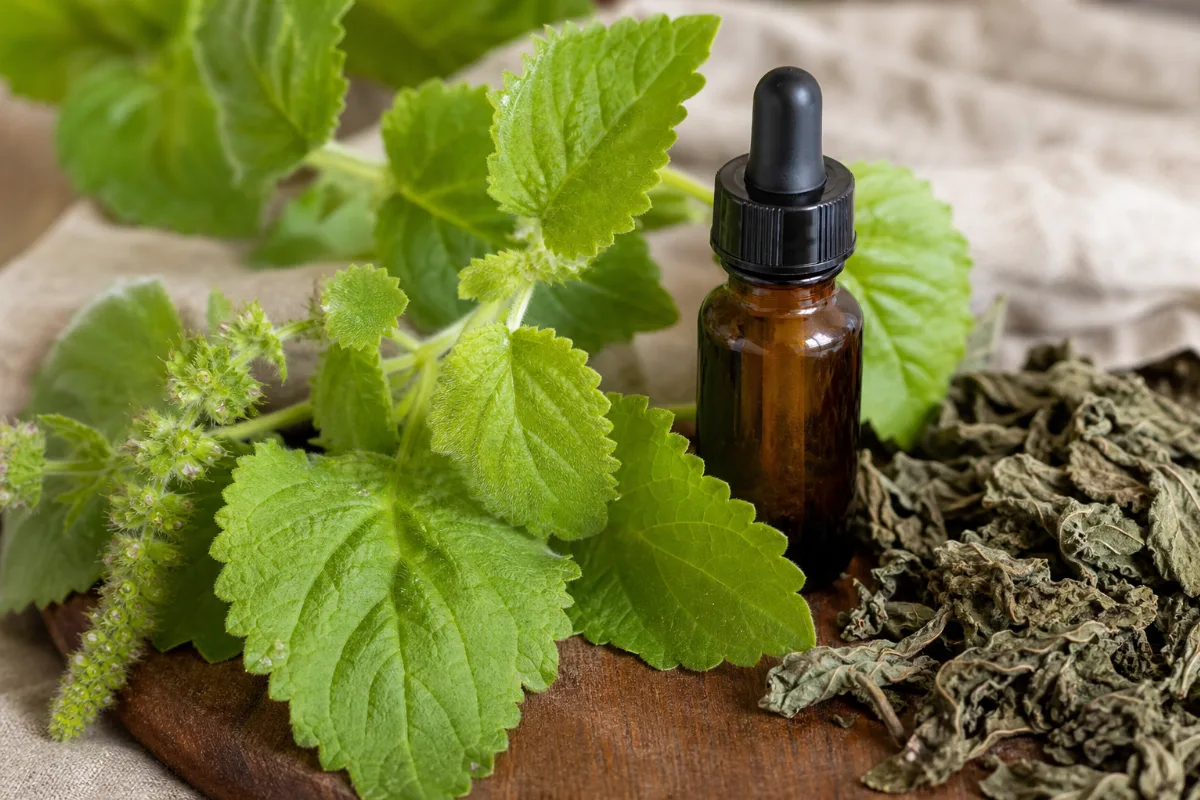
What Research Shows, What to Check Before You Use Them & Safety.
Safety comes first with essential oils. Explore each oil: what the plant and scent are, what studies in people have and have not found (and which studies were only in the lab), and what to check before you use it: sunlight, skin allergy, pets, pregnancy, babies and children, seizures, asthma and medicines. Carrier oils are included because they are what essential oils are diluted in.
Scent: Soft, sweet floral scent with a fresh herbal edge.
Skin irritation or allergyNever use undiluted on skinBabies and childrenHormone-related questions
Studied in people for: anxiety and stress, sleep, nausea
Lavender oil (Lavandula angustifolia): what research and official bodies say about anxiety, sleep, skin reactions and hormone questions, plus safety for children, pregnancy and pets.
Lavender oil capsules (Silexan) and anxiety (swallowed, one specific product)
Scent: Warm, sweet, herbal scent, often described as soft and apple-like.
Skin irritation or allergyNever use undiluted on skinPregnancy and breastfeedingMedicine interactions
Studied in people for: anxiety and stress, pain and muscle aches, sleep
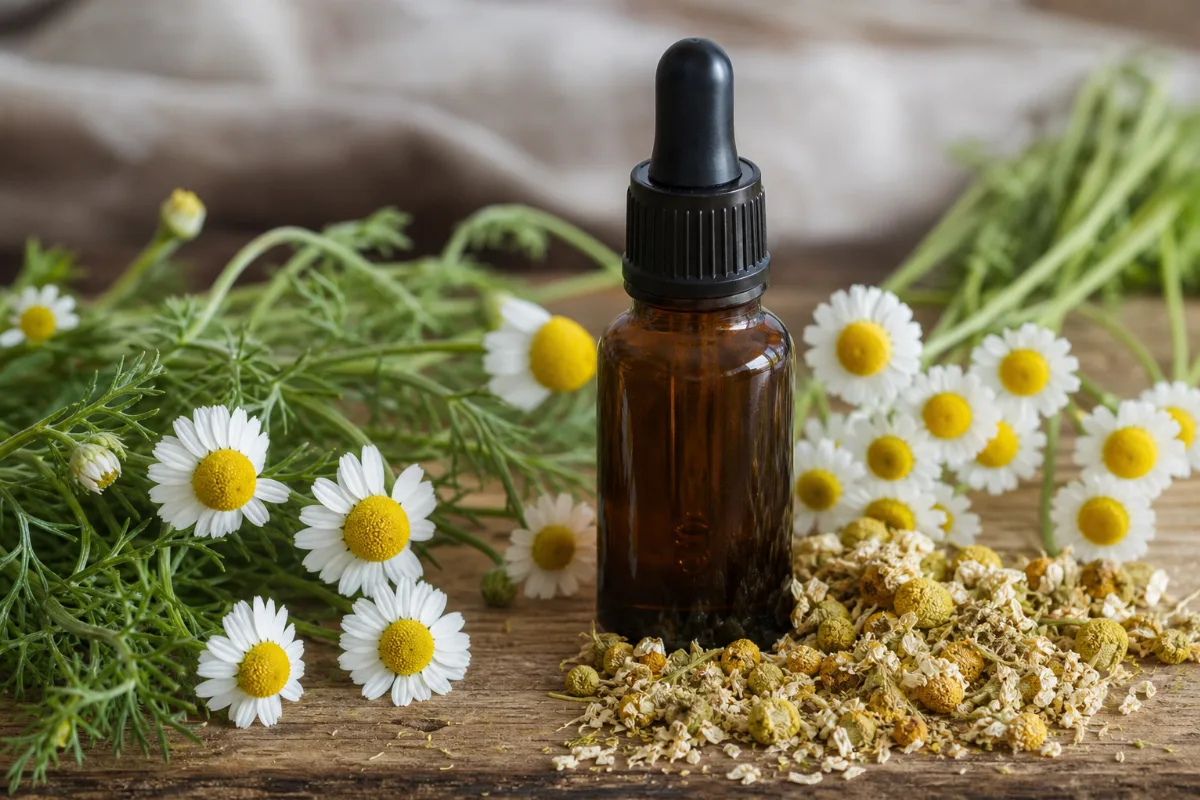
Roman and German chamomile oil are two different plants. What small aromatherapy trials found, why daisy-family allergy matters, and why the oil is never swallowed.
Chamomile oil scent and pain after cesarean birth (inhaled)
Skin irritation or allergyAsthma and breathingPregnancy and breastfeedingDangerous if swallowed
Studied in people for: pain and muscle aches, period symptoms
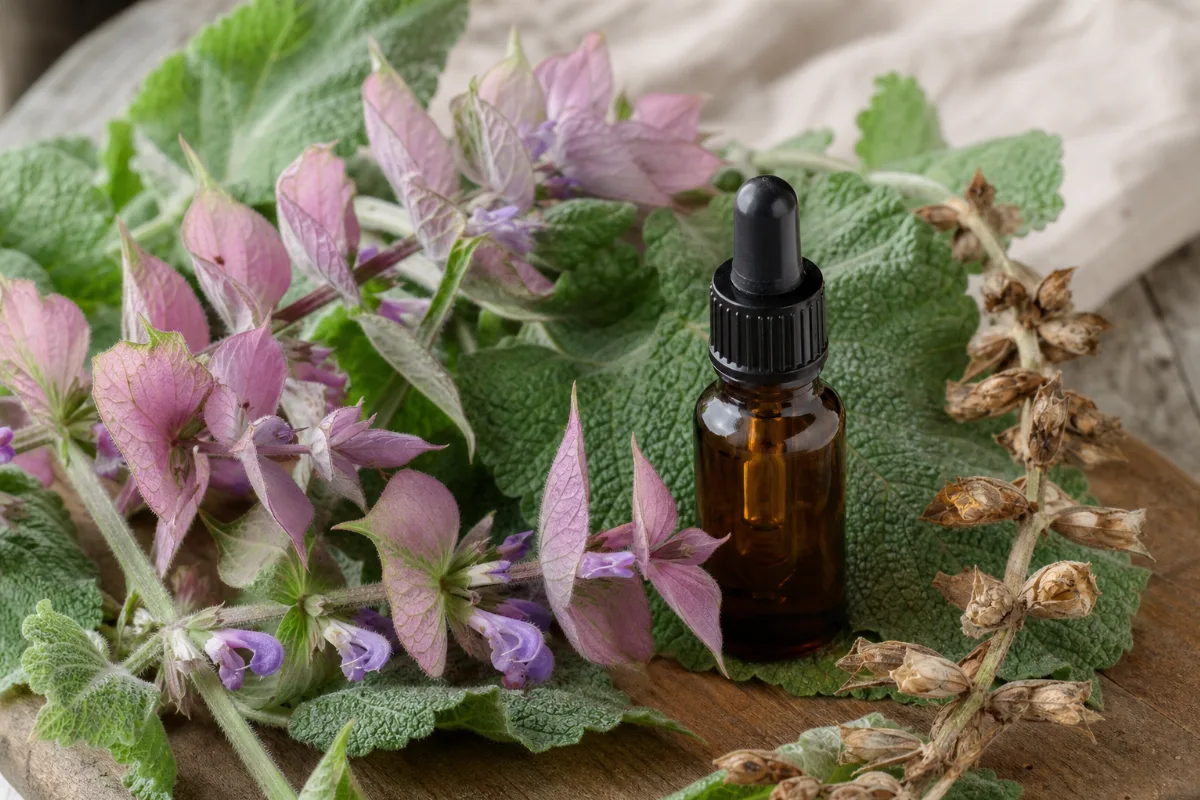
Clary sage oil comes from Salvia sclarea. Small trials looked at blood pressure, mood markers and labor, but claims that it balances hormones or starts labor are not shown.
Clary sage scent and blood pressure (inhaled, one small trial)
Clary sage scent and stress hormones (inhaled, menopausal women)
Clary sage and starting labor (inhaled or footbath)
Skin irritation or allergyDangerous if swallowedPregnancy and breastfeedingBabies and children
Studied in people for: anxiety and stress, focus and alertness
Ylang ylang oil comes from Cananga odorata flowers. It had the most positive skin patch tests among oils in one clinic network, and small inhaled trials show mixed effects.
Ylang ylang scent, calm and anxiety (inhaled)
Blood pressure and pulse after inhaling (healthy volunteers)
Skin irritation or allergyDangerous if swallowedPregnancy and breastfeedingBabies and children
Studied in people for: anxiety and stress, sleep
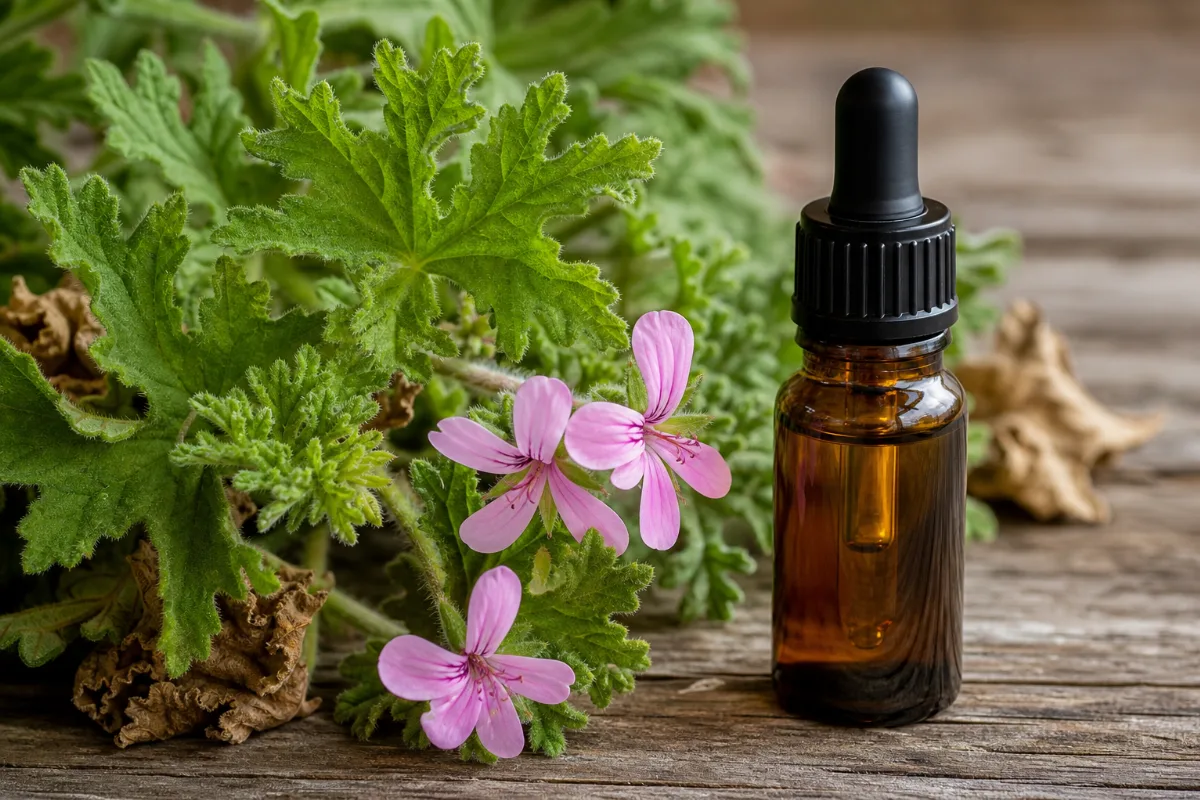
Geranium oil comes from Pelargonium graveolens. Small trials of inhaled geranium report less anxiety and fatigue; skin allergy is documented, and the oil is never swallowed.
Geranium scent and anxiety around medical events (inhaled)
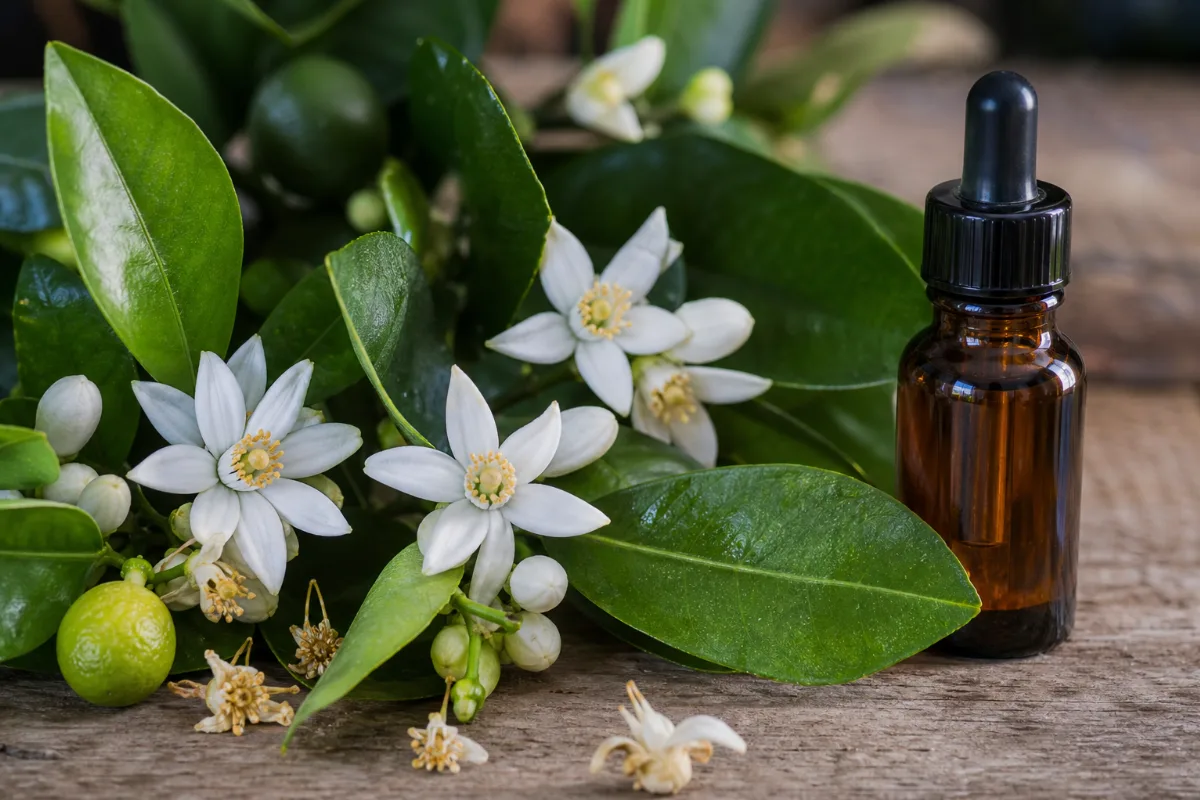
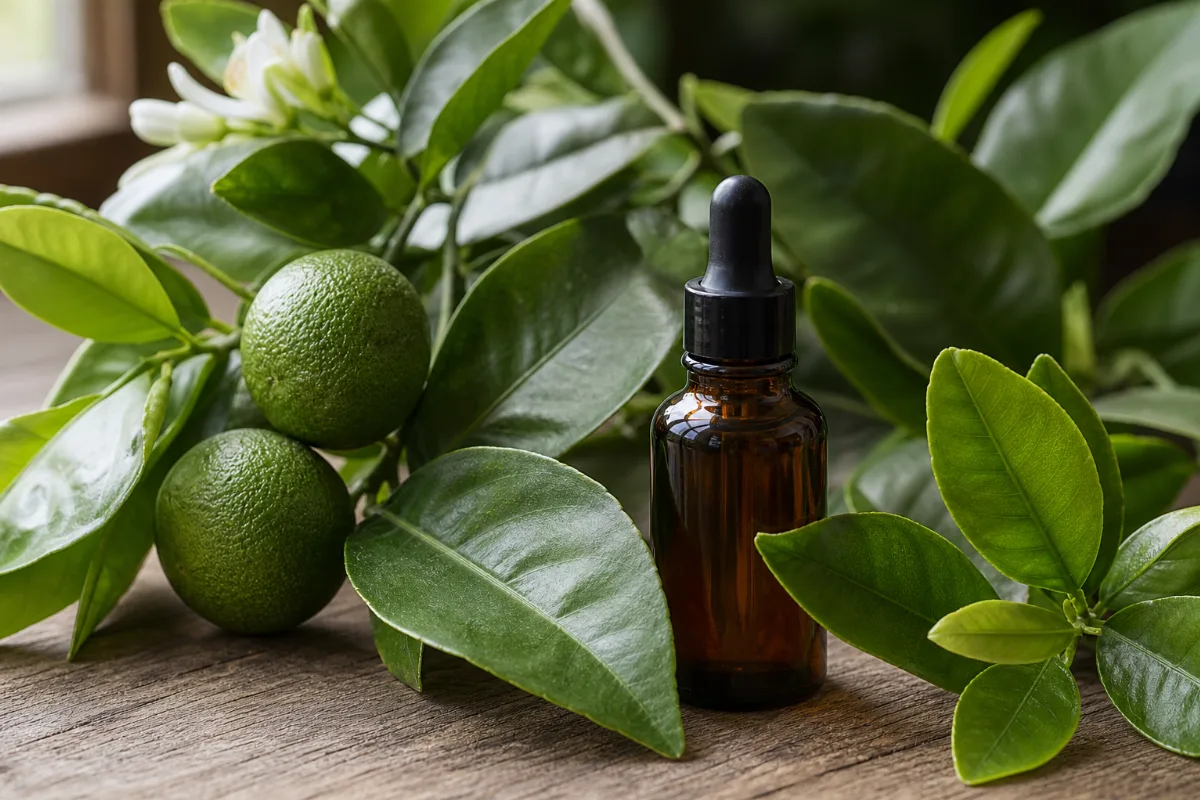
Citrus x aurantium (blossom), Citrus aurantium var. amara
Flower
Scent: Sweet, light orange-blossom flowers with a soft citrus edge.
Skin irritation or allergyDangerous if swallowedPregnancy and breastfeedingBabies and children
Studied in people for: anxiety and stress, period symptoms, pain and muscle aches
Neroli oil comes from Citrus x aurantium blossom. Small inhaled trials looked at anxiety, labor and menopause symptoms; skin allergy is documented and the oil is never swallowed.
Skin irritation or allergyDangerous if swallowedPregnancy and breastfeedingBabies and children
Palmarosa oil comes from Cymbopogon martinii grass. We found no human trials, only lab studies; it was a weak skin sensitizer in an animal test and is never swallowed.
Germ-killing in the lab (bacteria and fungi)
Antioxidant and other lab activity
Scent, skin or other human use: no human trials found
Never use undiluted on skinCats and dogsBabies and childrenDangerous if swallowed
Studied in people for: anxiety and stress, sleep, pain and muscle aches
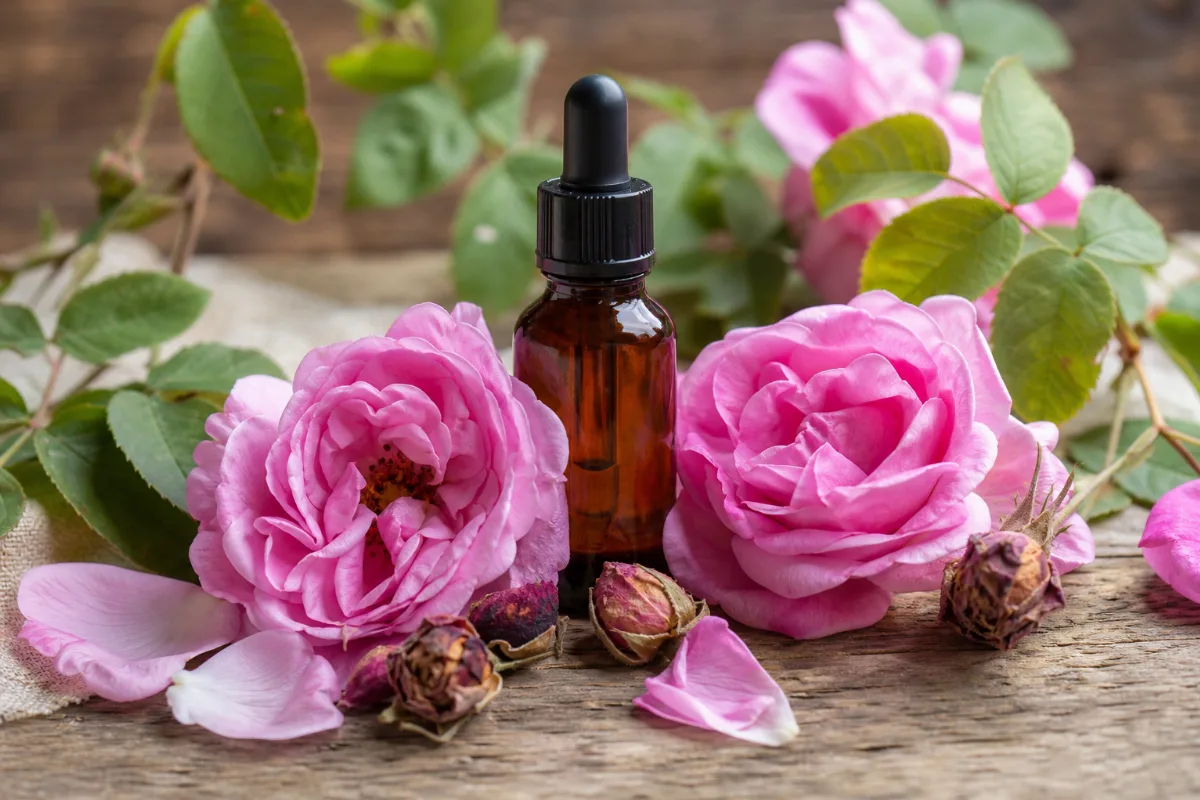
Rose oil (otto and absolute) from damask and cabbage rose petals: what small scent trials found for anxiety, sleep and pain, plus skin, pet, child and swallowing cautions.
Skin irritation or allergyNever use undiluted on skinCats and dogsBabies and children
Studied in people for: anxiety and stress, pain and muscle aches
Jasmine absolute from Jasminum grandiflorum and J. sambac flowers: skin allergy in patch-test clinics, a stimulating massage trial, pet and child cautions, and what is unknown.
Jasmine massage and alertness (skin)
Jasmine aromatherapy and children's dental anxiety
Babies and childrenSkin irritation or allergySeizure disordersPregnancy and breastfeeding
Studied in people for: digestion, headache, nausea
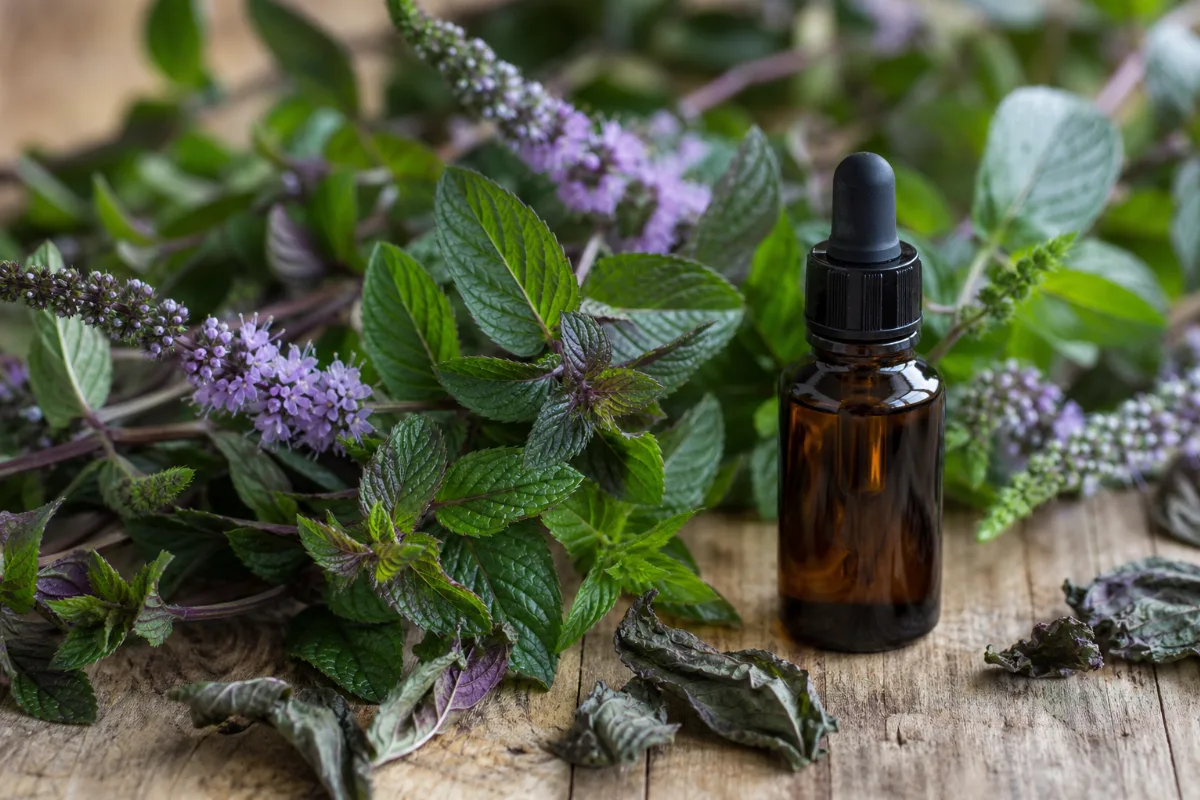
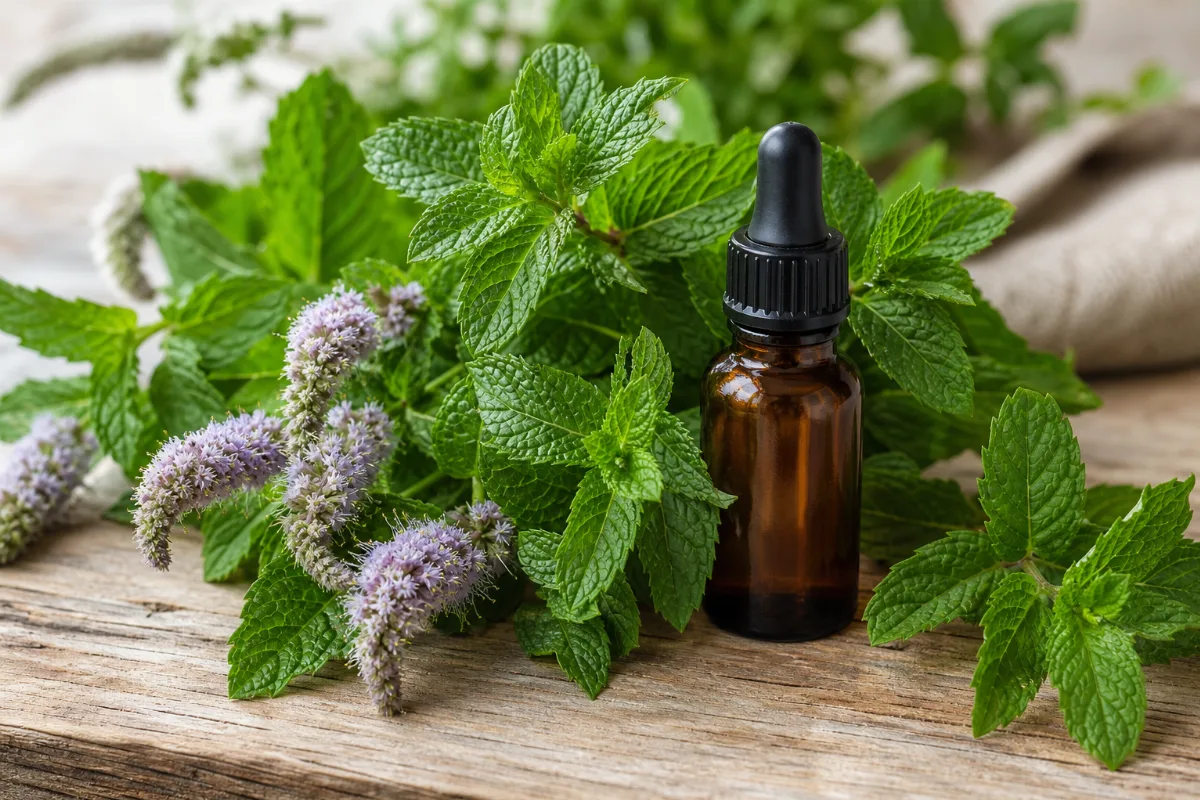
Peppermint oil (Mentha x piperita): what research says about IBS, headache and nausea, why menthol matters for babies and young children, and other safety points.
Peppermint oil capsules and IBS (swallowed, enteric-coated)
Tension headache (diluted oil on forehead)
Nausea (inhaled oil, chemotherapy settings)
Cough, cold, muscle pain and itch (traditional use)
Scent: Sweet, soft mint, less sharp than peppermint.
Cats and dogs
Studied in people for: nausea, skin
Spearmint oil is a carvone-rich mint oil, different from menthol-rich peppermint. What the few small trials found, and the safety points sources do and do not cover.
Scent: Fresh, medicinal and slightly camphor-like.
Skin irritation or allergyNever use undiluted on skinCats and dogsDangerous if swallowed
Studied in people for: skin, mouth and teeth, germs and infection
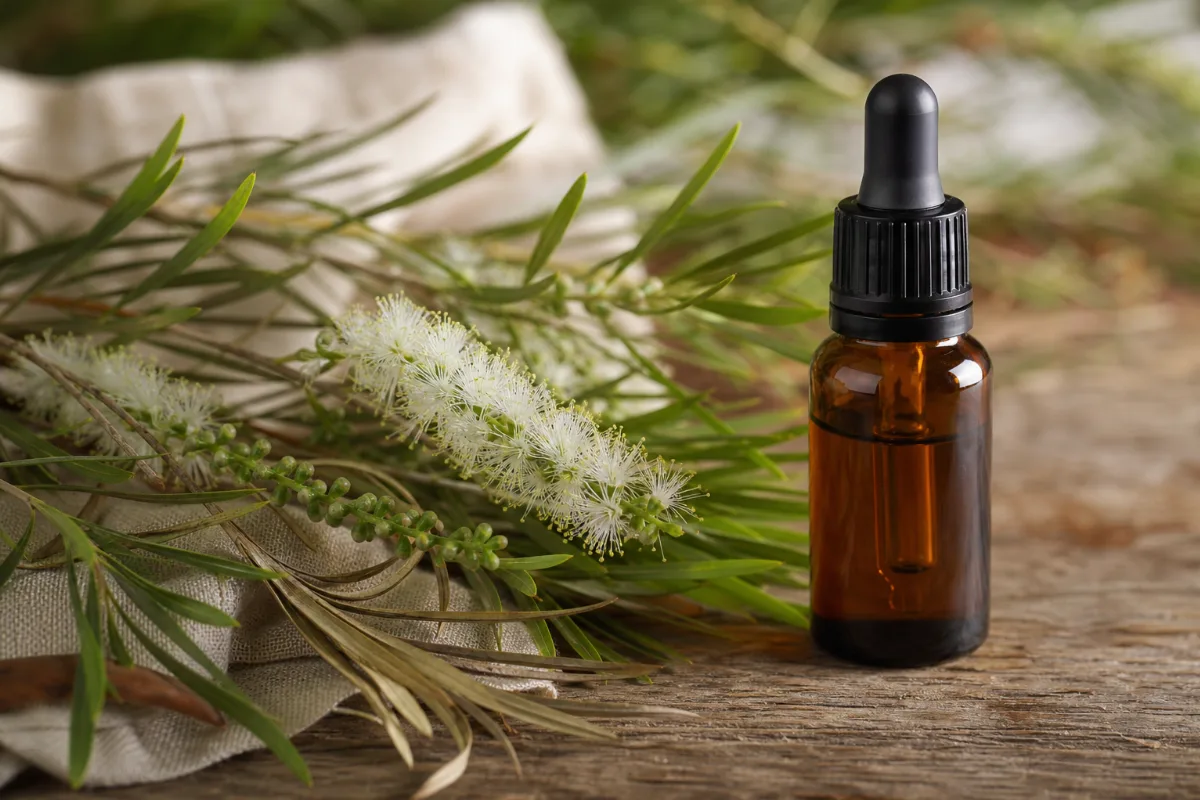
Tea tree oil (Melaleuca alternifolia): what NCCIH and trials say about acne and other skin uses, why it is poisonous if swallowed, skin allergy, and the risks to cats and dogs.
Scent: Sharp, cooling and camphor-like, fresh and clearing.
Dangerous if swallowedBabies and childrenSeizure disordersCats and dogs
Eucalyptus oil (mainly Eucalyptus globulus): why swallowing is dangerous, what the EMA and case reports say about children, and what evidence exists for colds and muscle aches.
Cough with a cold (inhaled, skin or bath products)
Bronchitis and asthma (studies used 1,8-cineole, not the oil)
Scent: Strong, fresh and herbal with a camphor-like edge.
Seizure disordersSkin irritation or allergy
Studied in people for: hair and scalp, anxiety and stress, sleep, focus and alertness
Rosemary oil (Salvia rosmarinus): what small trials say about hair loss, memory and mood, how it differs from rosemary leaf, and safety points for skin, children, pregnancy and pets.
Rosemary oil on the scalp for hair loss (androgenetic alopecia)
Smelling rosemary for memory, anxiety and sleep (inhaled)
Lavender-rosemary inhaler and test anxiety in students
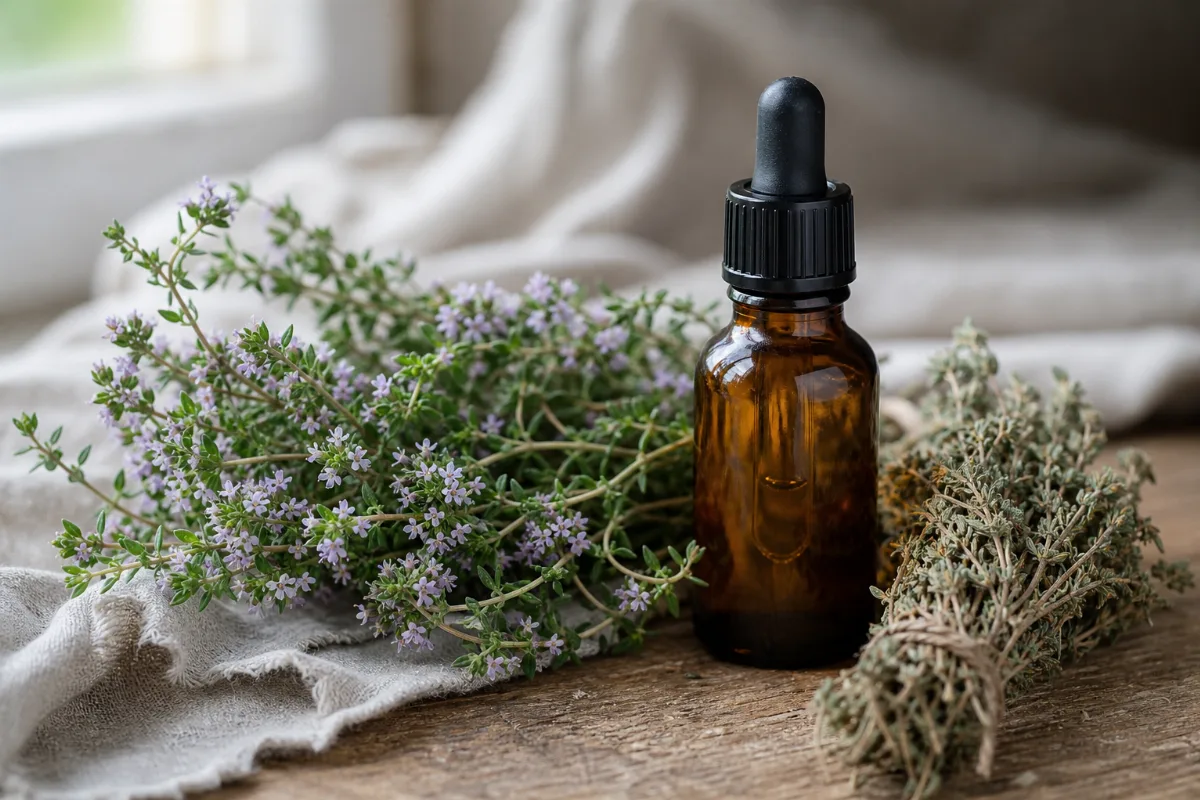
Thyme oil (Thymus vulgaris): what thymol and carvacrol are, the one inhalation trial we could read, what is not known about its safety, and why it is not for swallowing.
Thyme oil scent and COVID-19 symptoms (inhaled)
Thyme herb for productive cough (not the oil)
Thyme, rosemary, lavender and cedarwood blend and alopecia areata (skin massage)
Oregano oil (Origanum vulgare): what the claims are, what human research exists, how oil of oregano supplements differ from the essential oil, and safety points.
Oregano oil and minor bacterial infections (one small study)
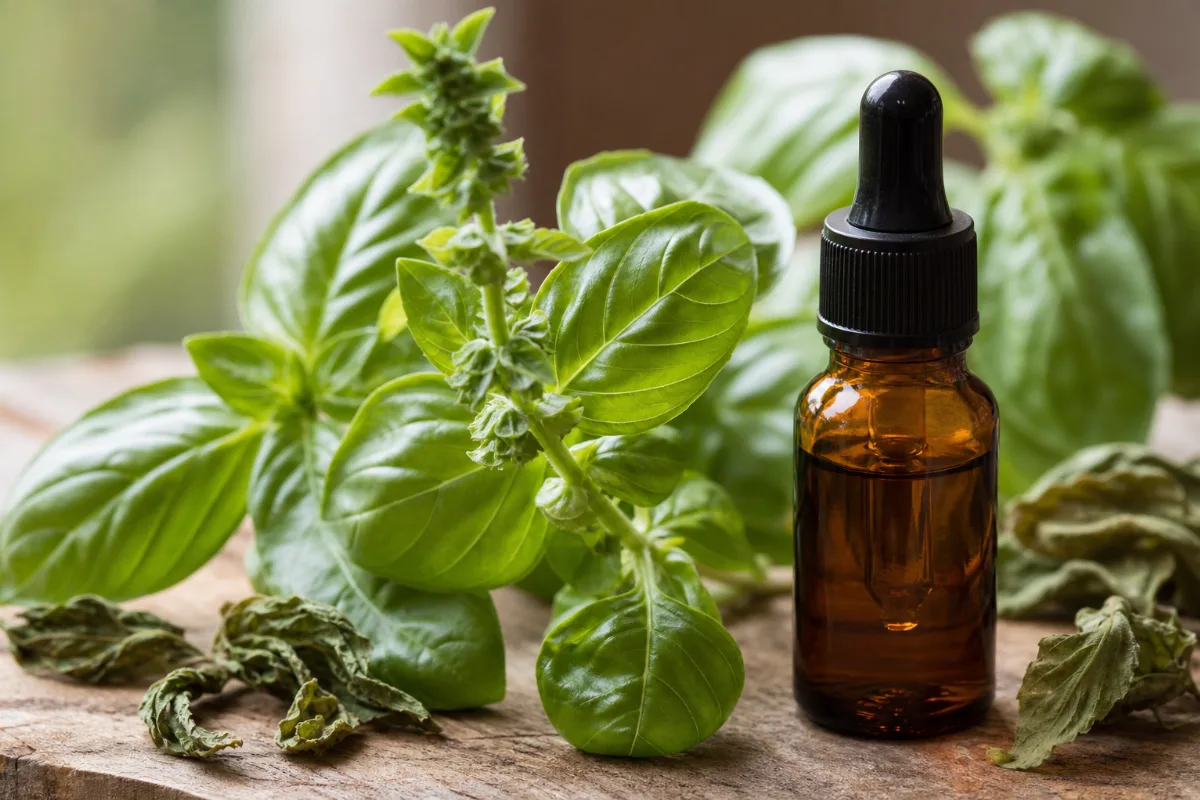
Basil oil (Ocimum basilicum): one migraine skin trial, why estragole and basil chemistry matter, skin and swallowing cautions, and what is not known about safety.
Basil oil on skin and migraine (with acetaminophen)
Basil syrup and anxiety in depression (not the oil)
Sweet marjoram oil (Origanum majorana): small scent and massage trials, EFSA's skin, breathing and estragole cautions for handlers, and what is not known about safety.
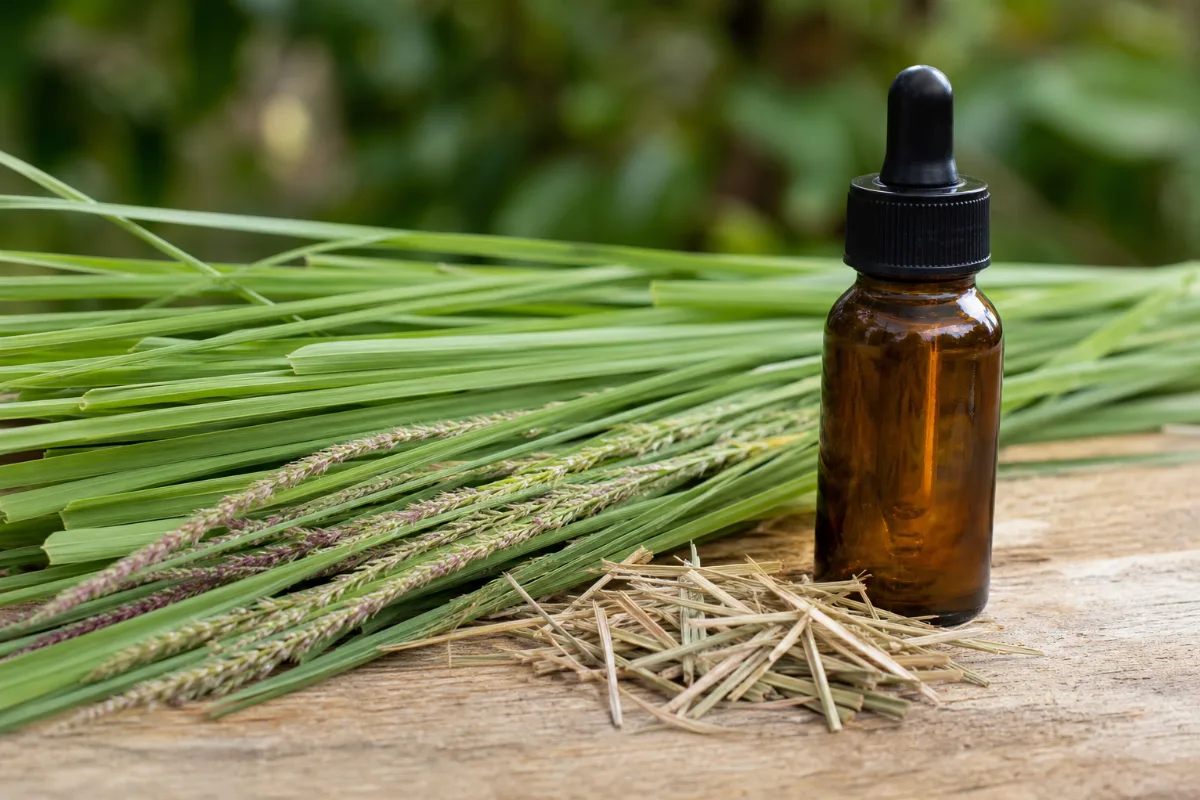
Scent: Strong, sweet and lemony, like lemon drops, with a grassy edge.
Skin irritation or allergyNever use undiluted on skinAsthma and breathingCats and dogs
Studied in people for: anxiety and stress, insects and lice, hair and scalp, mouth and teeth
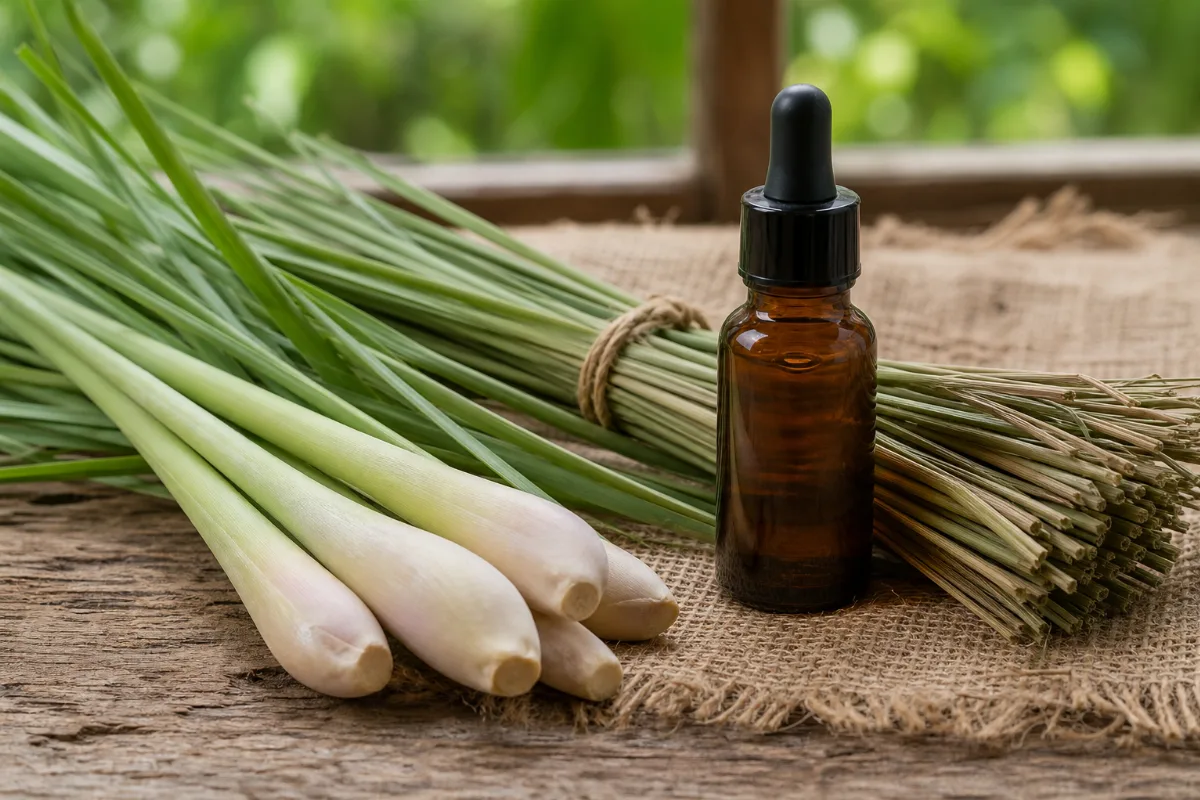
What lemongrass oil is, how it differs from citronella oil, what small studies and repellent reviews found, and why skin sensitization is the main safety point.
Lemongrass scent and dental anxiety (inhaled)
Mosquito repellency (on skin or in the air)
Dandruff (leave-on scalp tonic)
Gum disease and mouth health (mouthwash-type products)
Scent: Leafy and earthy with a grassy edge, per EFSA's description of the oil.
Skin irritation or allergyNever use undiluted on skinCats and dogsBabies and children
Studied in people for: insects and lice
Citronella oil comes from Cymbopogon grasses. Plant-oil repellents tend to wear off fast, EFSA treats the oil as a skin irritant and sensitizer, and it is never swallowed.
Scent: Sweet, juicy orange-peel scent; bitter orange is sharper.
Sunlight: can make skin burn (phototoxic)Skin irritation or allergyNever use undiluted on skinCats and dogs
Studied in people for: anxiety and stress, nausea, pain and muscle aches
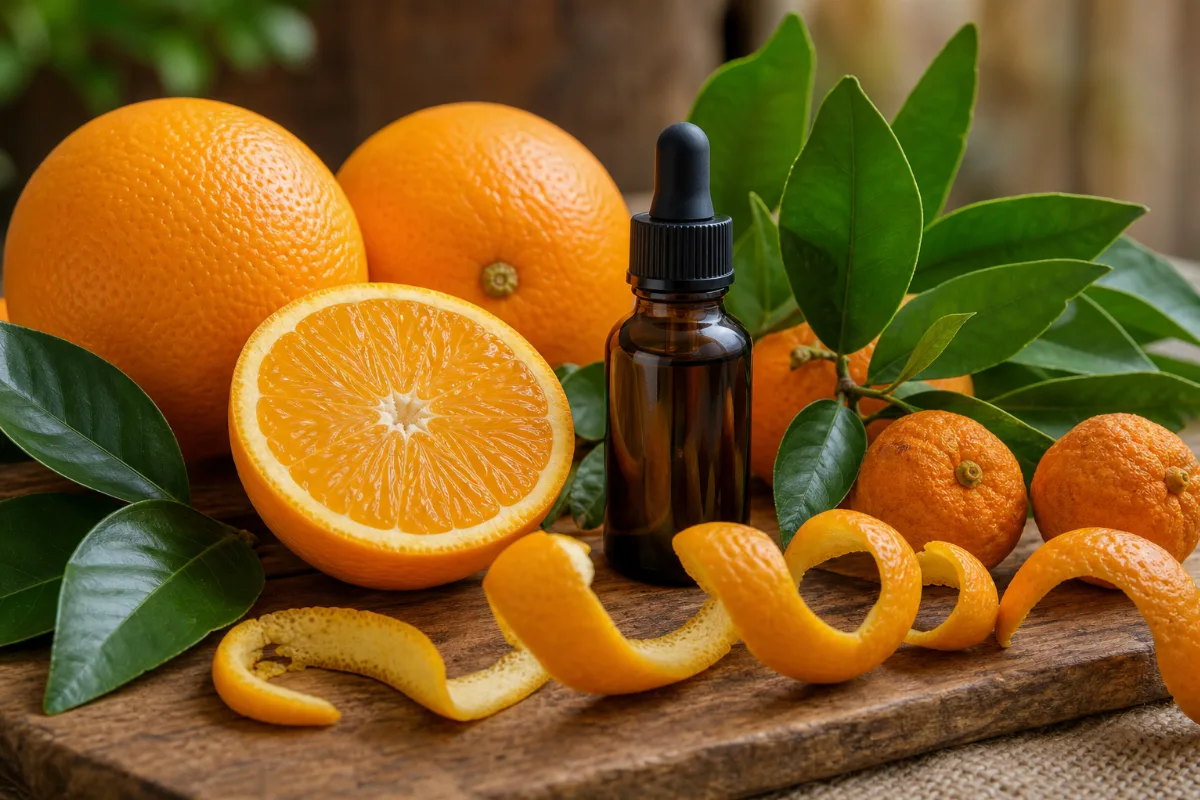
Sweet orange and bitter orange essential oils compared plainly: names, sun sensitivity, skin and poison-center cautions, and what small aromatherapy trials found.
Sweet orange scent in labor (pain and anxiety, inhaled)
Bitter orange scent and chemotherapy nausea (inhaled)
Scent: Fresh, tangy grapefruit-peel scent with a slightly bitter edge.
Never use undiluted on skinCats and dogsBabies and childrenDangerous if swallowed
Studied in people for: period symptoms, digestion
Grapefruit essential oil: the grapefruit-and-medicine question explained, sun and skin cautions, and what small scent trials found for PMS symptoms and procedure discomfort.
Grapefruit scent and premenstrual symptoms (inhaled)
Grapefruit scent and colonoscopy discomfort (vapor)
Scent: Fresh, bright citrus scent (described as pleasant and refreshing in a dermatology report).
Sunlight: can make skin burn (phototoxic)Never use undiluted on skinCats and dogsBabies and children
Studied in people for: anxiety and stress, period symptoms, skin
Bergamot essential oil and its sun-sensitizing compound bergapten: documented skin reactions, what small trials found for stress and PMS symptoms, and plain safety limits.
Sunlight: can make skin burn (phototoxic)Skin irritation or allergyNever use undiluted on skinCats and dogs
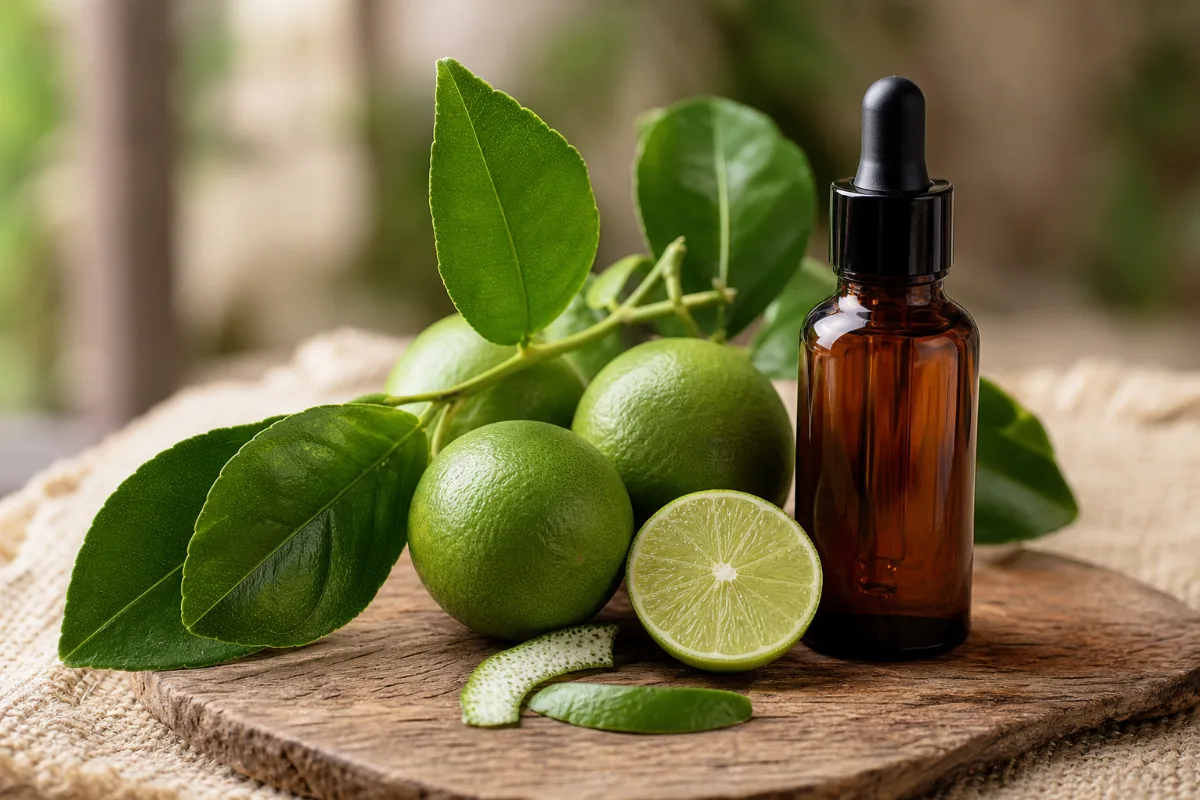
Lime essential oil and sunlight: why pressed and distilled lime oils differ, what safety assessments say about skin, and where trial evidence is missing.
Never use undiluted on skinCats and dogsBabies and childrenDangerous if swallowed
Studied in people for: pain and muscle aches
Mandarin and tangerine essential oils: how the names overlap, what a trial in infants found, sun and skin cautions that sources do not settle, and where evidence is missing.
Massage with mandarin oil after surgery in infants
Scent: Fresh, green citrus with a light woody and floral edge.
Skin irritation or allergyNever use undiluted on skinAsthma and breathingCats and dogs
Petitgrain oil is steam-distilled from bitter orange leaves. EFSA treats it as a skin sensitizer and irritant, and human research on it alone is very thin.
Petitgrain scent, sleep and memory in older adults (blend trial)
Scent: Warm, resinous and woody with a light fresh edge (general description, not from a cited source).
Skin irritation or allergyNever use undiluted on skin
Studied in people for: anxiety and stress, sleep, pain and muscle aches, skin
What frankincense oil is, what the research does and does not show, which safety points matter, and why the trees it comes from are a conservation concern.
Frankincense scent in blends and anxiety in early labor (inhaled)
Frankincense in blends and sleep (inhaler sticks)
Hand massage with a frankincense blend, pain and low mood
Scent: Warm, resinous and earthy with a slightly bitter edge (general description, not from a cited source).
Skin irritation or allergyBabies and children
Studied in people for: pain and muscle aches
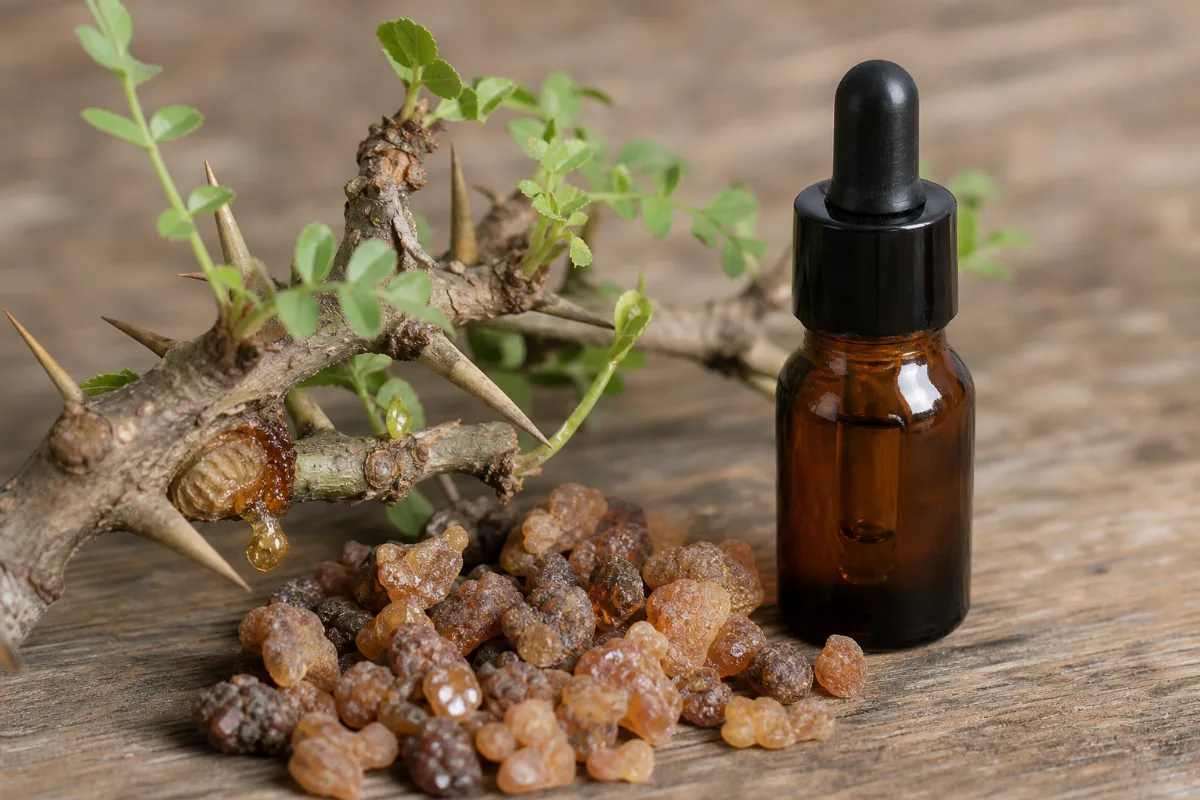
Myrrh oil (Commiphora myrrha resin): the difference between the essential oil and the EMA-assessed resin tincture, what two massage trials found, and safety notes.
Frankincense and myrrh massage for chronic low back pain
Back massage with the blend after a heart procedure
Myrrh tincture for minor mouth ulcers, wounds and small boils (not the oil)
Scent: Mild, woody and balsamic (general description, not from a cited source).
Studied in people for: wounds, mouth and teeth
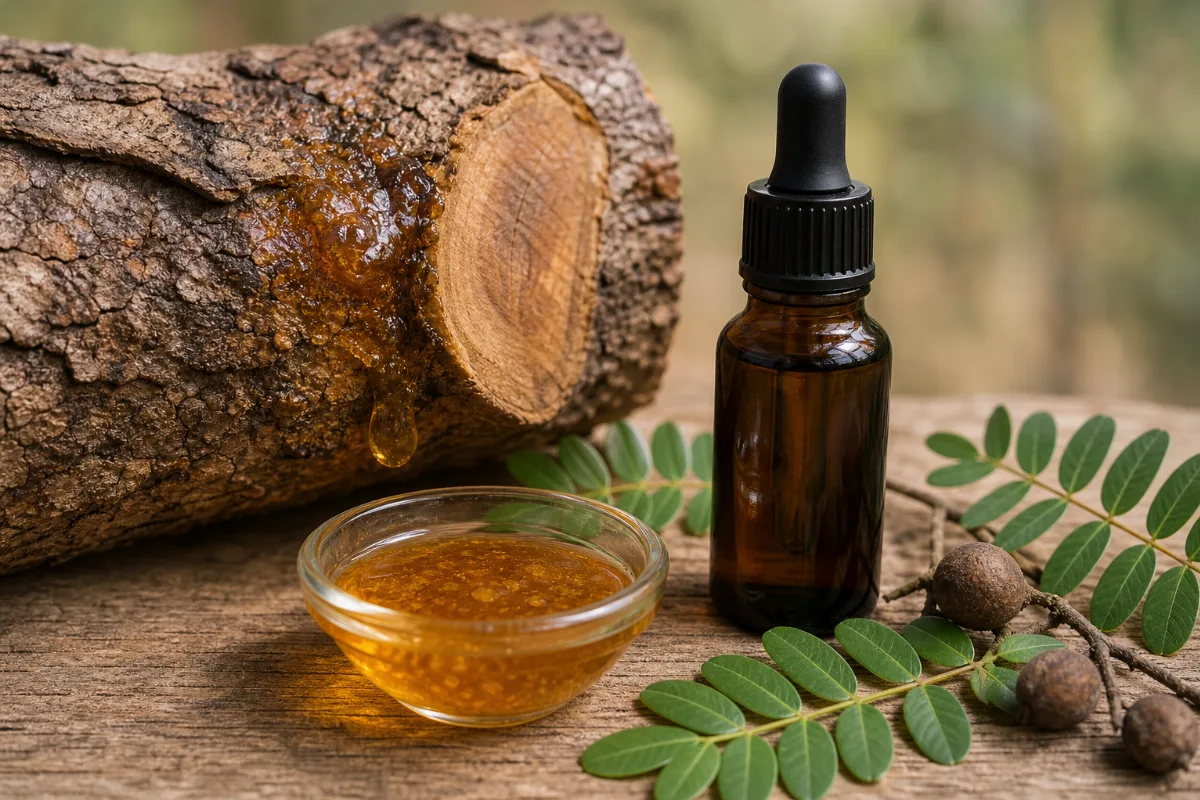
Copaiba oil (balsam) from Copaifera trees: what small trials and lab work show, why its safety is little studied, and why labels and adulteration matter.
Copaiba gel and tooth sensitivity after bleaching
Skin tear healing with copaiba oleoresin in a hydrogel
Skin irritation or allergyNever use undiluted on skinBabies and childrenCats and dogs
Studied in people for: hair and scalp
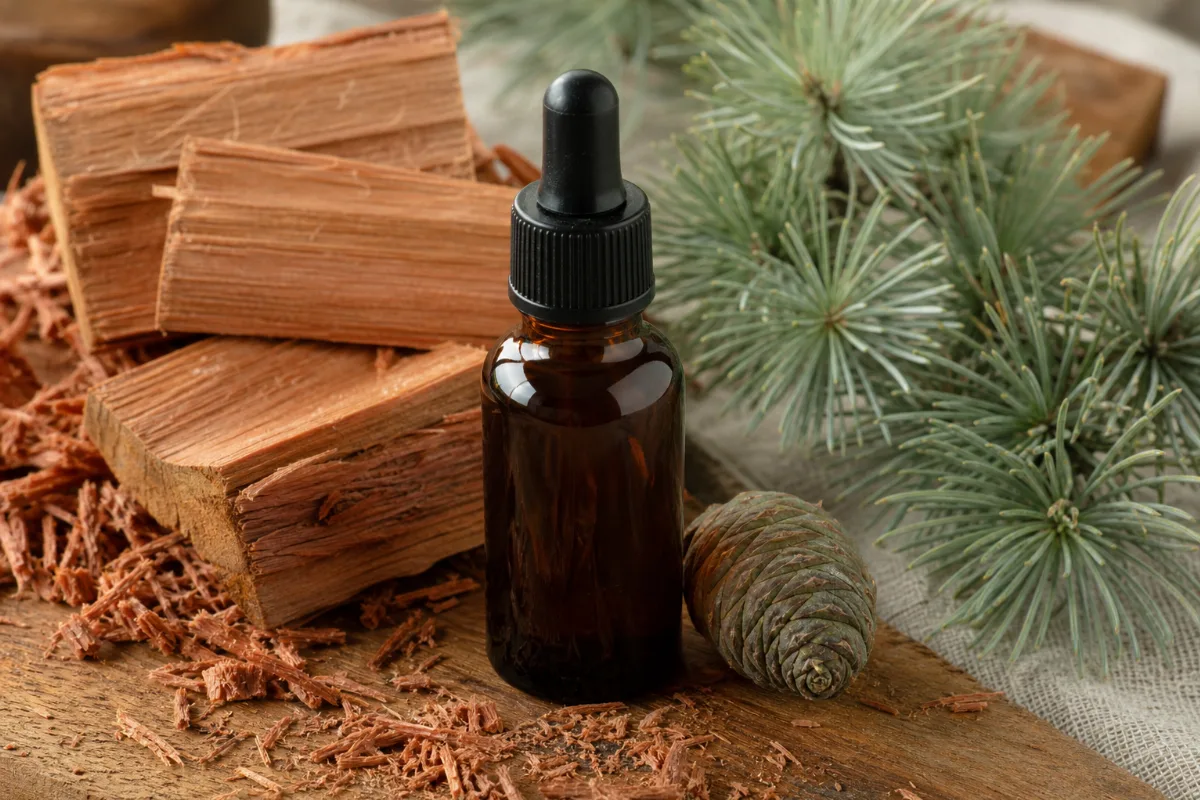
Cedarwood oil comes from several unrelated trees (Juniperus, Cedrus and others). What the human research is, what animal studies show, and the irritation and sensitization warnings.
Scalp massage blend and patchy hair loss (alopecia areata)
Toxicity data for Virginia cedarwood oil on skin
Anxiety (mice, injected oil)
Antioxidant and DNA-protection tests (Cedrus atlantica, cells)
Scent: Fresh, green and woody, like evergreen foliage.
Cats and dogs
Cypress oil (Cupressus sempervirens): mostly laboratory research, no good human trials found, and why hinoki cypress studies are about a different tree. Safety gaps stated plainly.
Scent: Fresh, piney and slightly sweet, like a forest.
Skin irritation or allergyNever use undiluted on skinCats and dogsPregnancy and breastfeeding
Juniper berry oil (Juniperus communis): what the EMA assessed, why kidney disease and pregnancy are listed as cautions, and why no clinical trials of the oil exist. Not for swallowing.
Traditional use in EU medicines (urinary, digestive, muscle and joint)
Skin irritation or allergyNever use undiluted on skinBabies and childrenCats and dogs
Pine oil from Pinus species: how it differs from household pine-oil cleaners, why swallowing is dangerous, what little human research exists, and skin sensitizer warnings.
Scent: Fresh, green, Christmas-tree-like scent with a woody edge.
Never use undiluted on skinBabies and childrenCats and dogsDangerous if swallowed
Spruce and fir needle oils (Picea and Abies): what they are, why human research is missing, and the skin, breathing and swallowing cautions that apply to conifer oils.
Scent: Soft, creamy, warm wood with a faint sweetness.
Skin irritation or allergyNever use undiluted on skin
Studied in people for: anxiety and stress, skin
Sandalwood oil (mainly Santalum album): what small studies found, why fake and mixed oils are common, skin allergy findings, and conservation concerns. Skin and scent use only.
Sandalwood massage or scent and anxiety in palliative care
Relaxation after skin absorption (healthy volunteers)
Scent: Deep, smoky, earthy scent like damp soil and roots.
Never use undiluted on skin
Studied in people for: focus and alertness, sleep, insects and lice
Vetiver oil is a deep, earthy oil from the roots of a grass. What the small human trials found, one fragrance-safety opinion on a related product, and what sources do not say.
Vetiver root scent and attention
Vetiver massage and fatigue or sleep in intensive care nurses
Mosquito repellent
Anti-inflammatory, pain, antimicrobial and cancer claims
Scent: Rich, damp-earth and woody scent with a sweet, musky edge.
Skin irritation or allergyNever use undiluted on skinAsthma and breathing
Studied in people for: anxiety and stress
What patchouli oil is, why it is mostly a fragrance material, the few small human studies that exist, and the skin and breathing cautions that sources describe.
Scent: Soft, sweet, slightly floral wood scent, like a mild lavender with a woody base.
Skin irritation or allergyNever use undiluted on skin
Rosewood oil comes from an endangered Amazon tree and is mostly linalool. What lab studies show, why no human trials were found, and skin allergy and sourcing cautions.
Rosewood scent and mood or anxiety in people
Mood and brain effects in rats (nose drops of oil)
Skin irritation or allergyNever use undiluted on skinCats and dogsBabies and children
What helichrysum (immortelle) oil is, what laboratory and animal studies show, why skin and scar claims lack human trials of the oil, and the allergy points to know.
Helichrysum oil and scars, bruises or wounds (skin)
Helichrysum extract and irritated skin (not the oil)
Inflammation in animals
Germ-killing in the lab (respiratory bacteria, fungi)
Skin irritation or allergyNever use undiluted on skinDangerous if swallowedCats and dogs
Studied in people for: mouth and teeth, pain and muscle aches
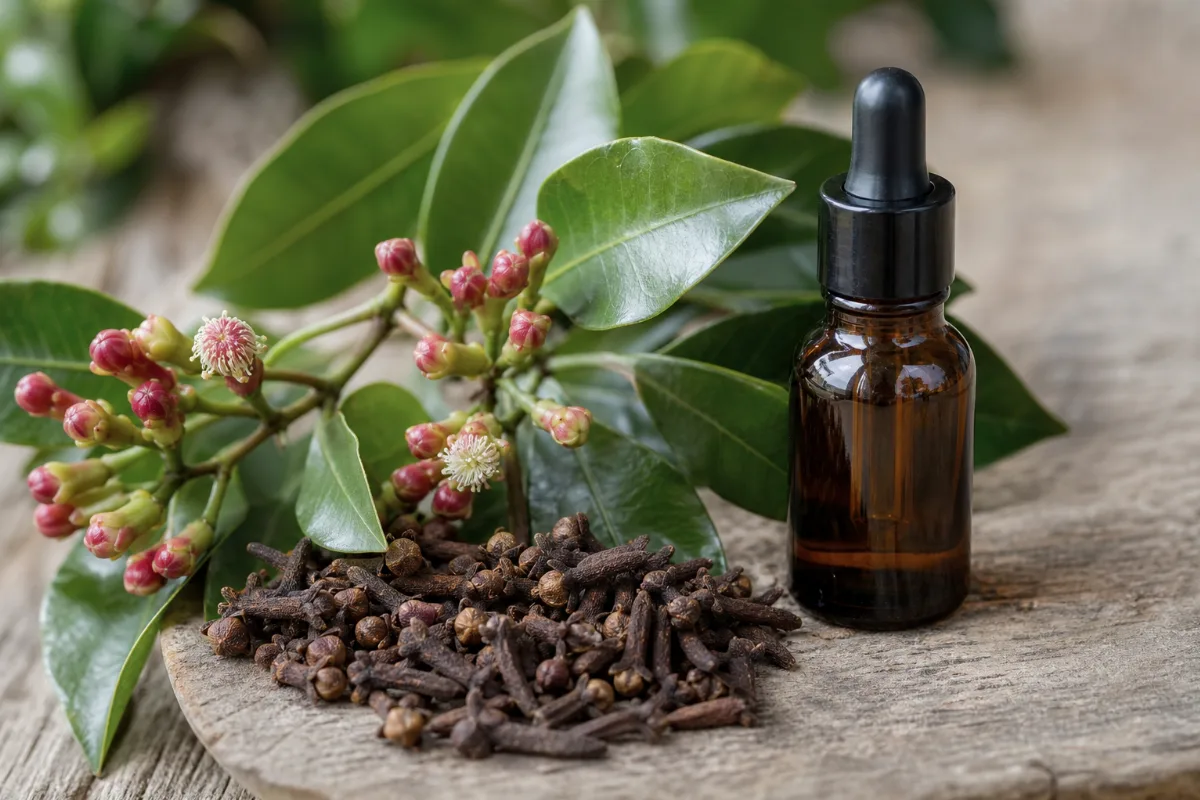
Clove oil (Syzygium aromaticum) and its main chemical eugenol: toothache claims, documented liver injury in toddlers who swallowed it, skin allergy, and why it is not for swallowing.
Clove oil and dental pain (applied by dental professionals)
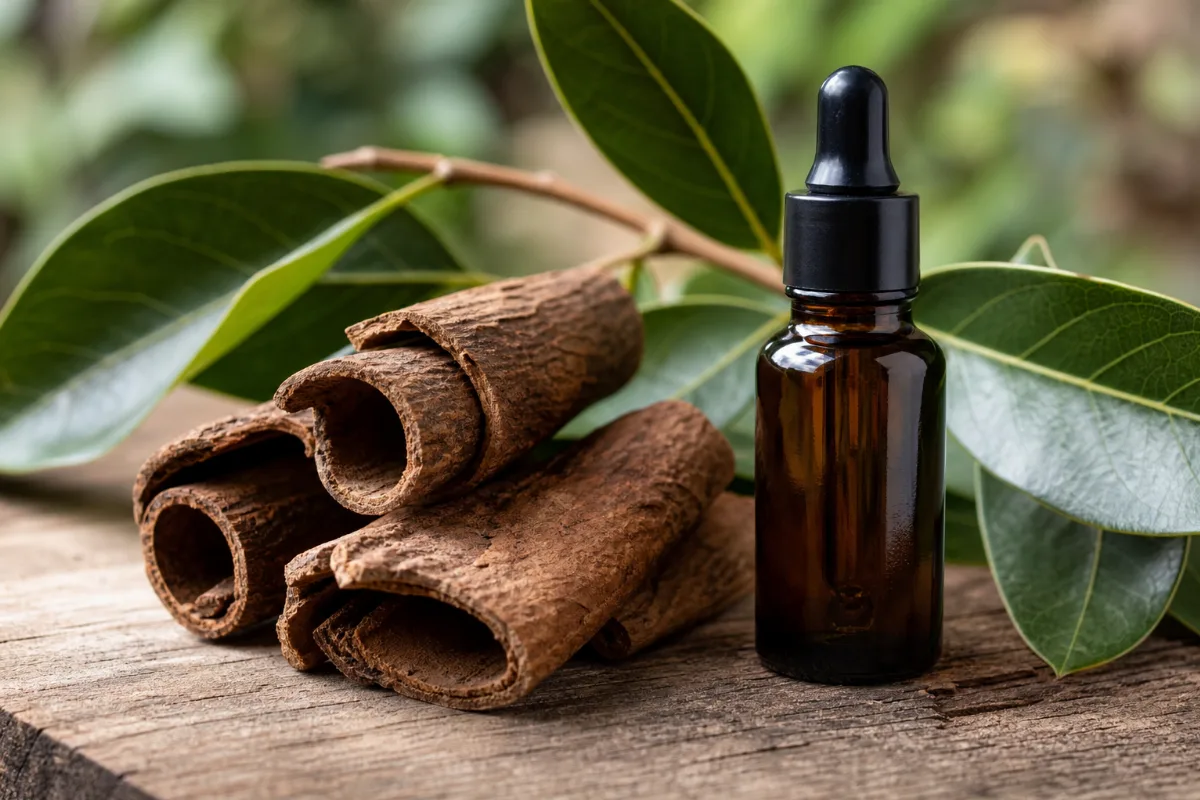
Cinnamomum verum, Cinnamomum cassia (also called Cinnamomum aromaticum)
BarkLeaf
Scent: Warm, sweet, spicy scent of cinnamon.
Skin irritation or allergyNever use undiluted on skinDangerous if swallowedPregnancy and breastfeeding
Studied in people for: nausea, germs and infection
Cinnamon oil (Cinnamomum species): what the sources say about skin irritation and allergy, the limited human research, bark versus leaf, and why it is never for swallowing.
Cinnamon oil scent and nausea (inhaled)
Oral yeast infection (mouthwash and spray product)
Dangerous if swallowedBabies and childrenPregnancy and breastfeeding
Studied in people for: mouth and teeth
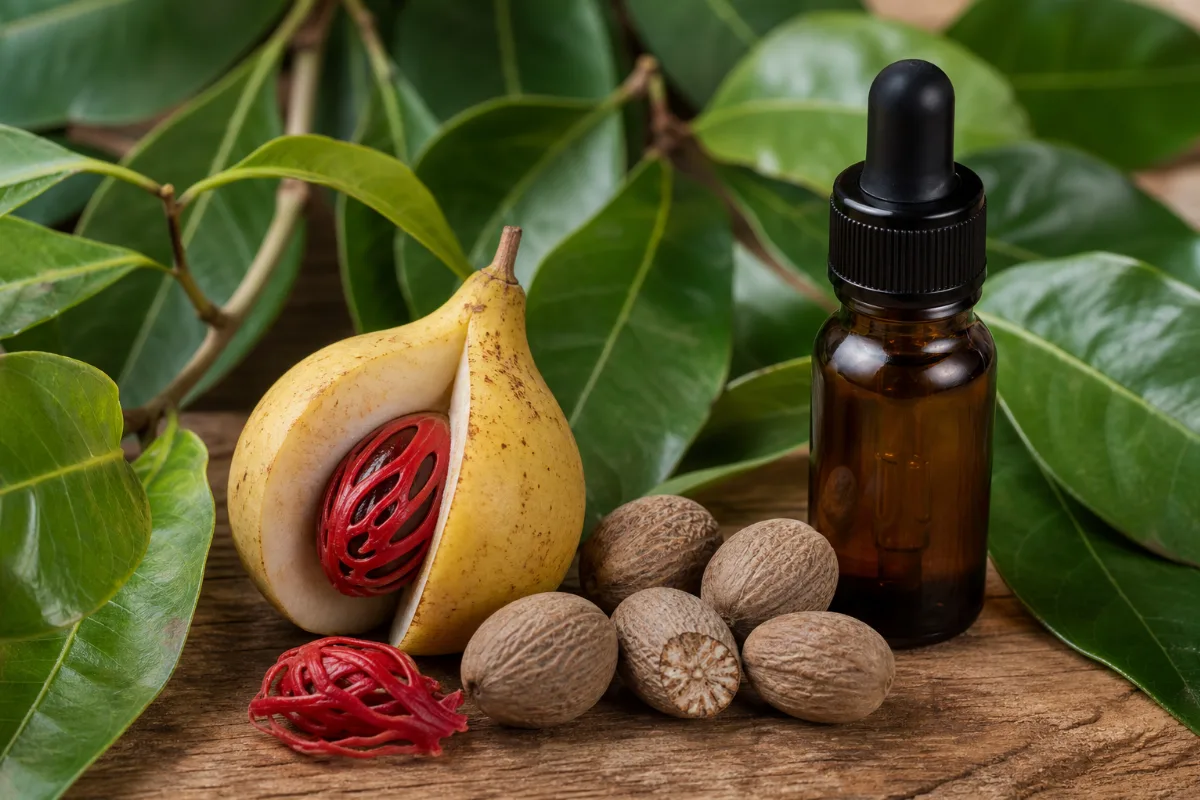
Nutmeg essential oil (Myristica fragrans): poison-center and case reports of nutmeg intoxication, almost no human research on the oil, and why it is not for swallowing.
Root canal filling in baby teeth
Wound healing, inflammation and other lab findings
Scent: Warm, sharp and spicy, like freshly ground pepper.
Skin irritation or allergyNever use undiluted on skinBabies and childrenDangerous if swallowed
Studied in people for: anxiety and stress
Black pepper essential oil (Piper nigrum): small scent studies on stress response and swallowing, no proven uses, and the key safety points, from dilution to children, pets and swallowing.
Black pepper scent and the stress response (inhaled)
Black pepper oil scent and the swallowing reflex in older people
Smoking withdrawal cravings (burned pepper, one case)
Scent: Warm, spicy and a little sharp, like fresh ginger root.
Skin irritation or allergyNever use undiluted on skinBabies and childrenDangerous if swallowed
Studied in people for: nausea, pain and muscle aches
Ginger essential oil (Zingiber officinale): small trials of scent and nausea after surgery, what is not shown, and safety on skin, for pets and children, and why it is not for swallowing.
Scent: Sweet and spicy with a cool, eucalyptus-like edge.
Skin irritation or allergyNever use undiluted on skinBabies and childrenDangerous if swallowed
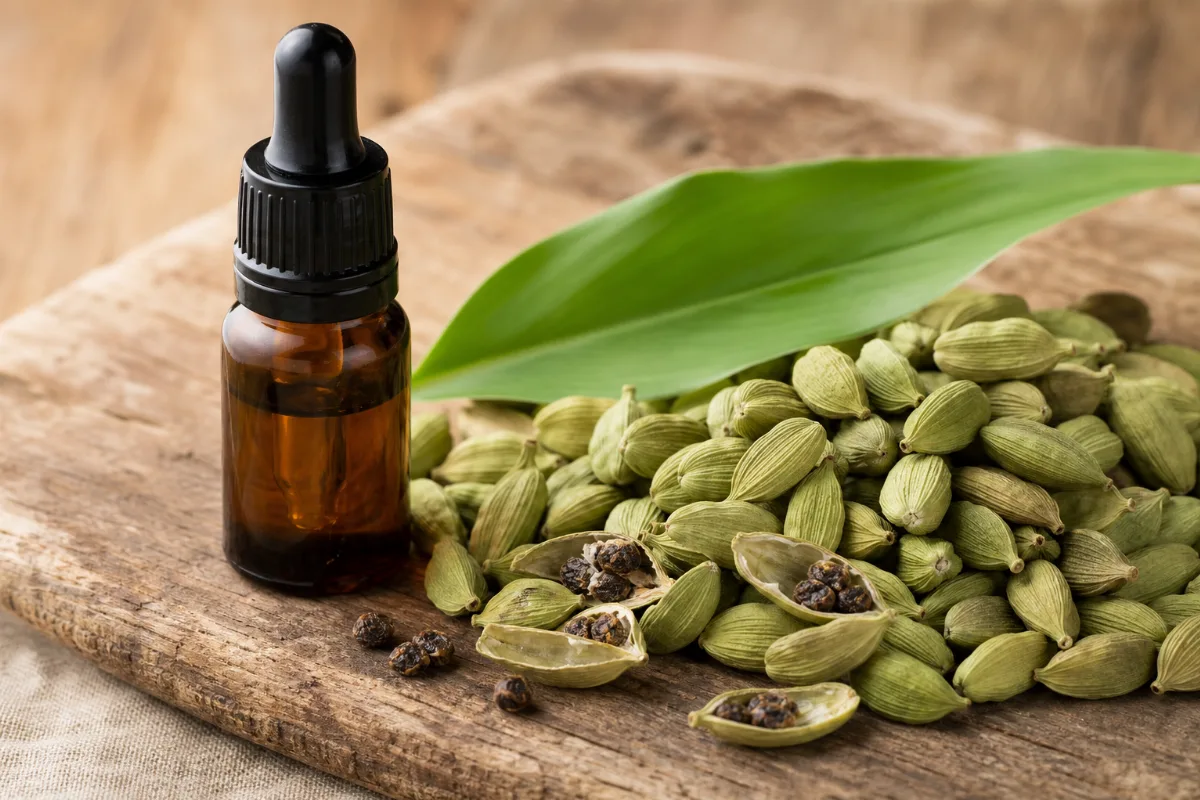
Cardamom essential oil (Elettaria cardamomum): only lab studies so far, no human trials found, and the main safety points on skin, children, pets and swallowing.
Cardamom oil against tooth-decay bacteria (lab only)
Cardamom extracts and oil: inflammation and antioxidant tests (lab only)
Scent: Sweet, warm and licorice-like, from the anethole in the seeds.
Skin irritation or allergyNever use undiluted on skinPregnancy and breastfeedingBabies and children
Studied in people for: anxiety and stress, digestion, sleep
Fennel essential oil (sweet and bitter): estragole and anethole safety questions, allergy, cautions for babies and pregnancy, and what small trials found for colic and anxiety.
Skin irritation or allergyNever use undiluted on skinPregnancy and breastfeedingBabies and children
Studied in people for: digestion
Anise and star anise essential oils: two different plants, anethole allergy, estragole and pregnancy cautions, star anise tea poisoning in infants, and what one IBS trial found.
Scent: Strong, sweet, medicinal minty scent like a pain rub.
Dangerous if swallowedBabies and childrenMedicine interactionsCats and dogs
Wintergreen oil is almost pure methyl salicylate. Learn why tiny swallowed amounts have poisoned children, how it can raise bleeding risk with warfarin, and what to do first.
Wintergreen oil for pain
How much salicylate swallowed cream gives versus oil
Scent: Sharp, medicinal and cooling, the classic camphor smell.
Dangerous if swallowedBabies and childrenSeizure disordersSkin irritation or allergy
Camphor oil and camphor products can cause seizures in young children after swallowing or heavy skin use. What poison experts and case reports say, and what to do first.
Dangerous if swallowedPregnancy and breastfeedingBabies and childrenCats and dogs
Pennyroyal oil has caused liver failure and deaths when swallowed. What the poison and liver sources say, why pennyroyal is not a safe remedy, and who to call.
Scent: Fresh, herbal and slightly camphor-like, with an earthy edge.
Seizure disordersDangerous if swallowedBabies and childrenCats and dogs
Studied in people for: breathing and colds
Hyssop essential oil is linked to seizures in case reports and reviews, mainly after swallowing. What the sources say about safety, pets, children and the little research there is.
Animal studies: high doses and seizures
Asthma (syrup of extract, not the oil)
Colds, cough, appetite and spasms (traditional use)
Scent: Strong, herbal and camphor-like with a sharp edge.
Seizure disordersSkin irritation or allergyNever use undiluted on skinCats and dogs
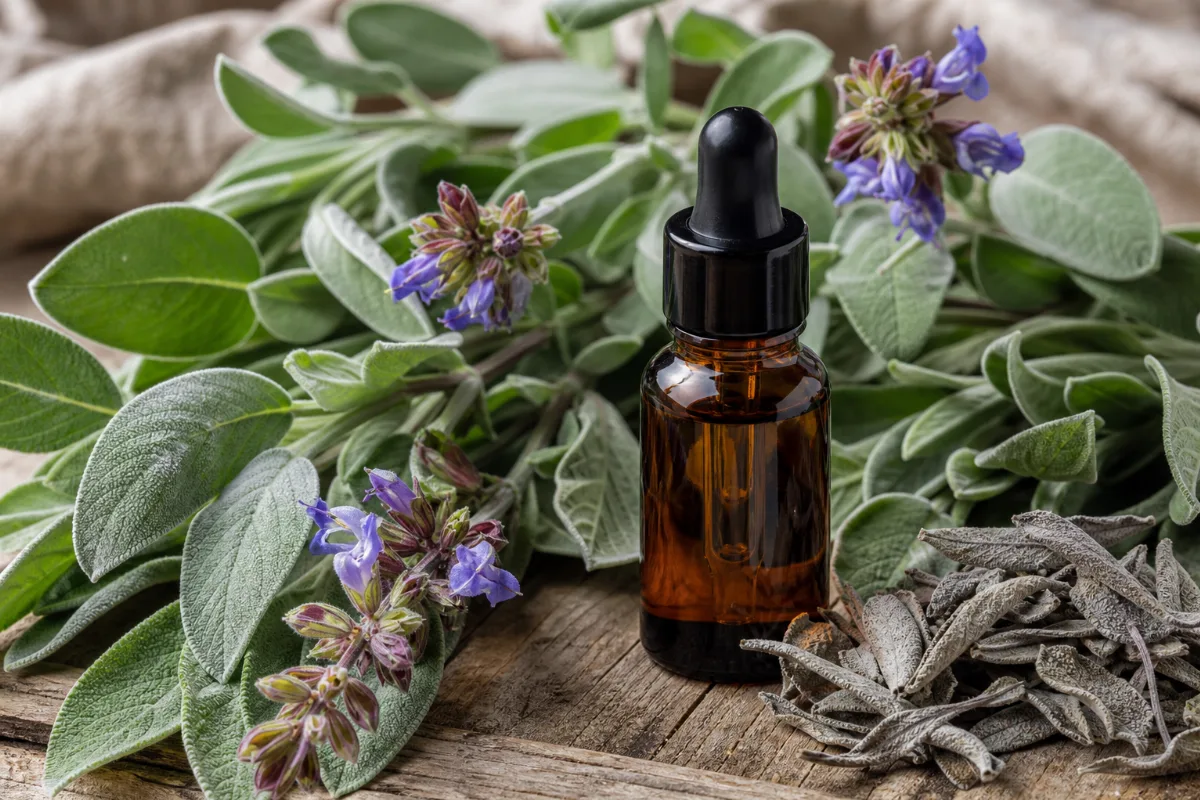
Sage essential oil (Dalmatian and Spanish): thujone and camphor can cause seizures if swallowed, including in two children; skin irritation, pregnancy cautions and thin human evidence.
Sage extract and memory
Sage oil in aromatherapy or on skin for health uses
Jojoba oil is a carrier oil (a liquid plant wax), not an essential oil. What reviews and small studies show for skin, a contact dermatitis case report, and safety points.
Carrier oil: what jojoba is (liquid wax, not an essential oil)
Jojoba oil on skin (moisturizing, skin conditions)
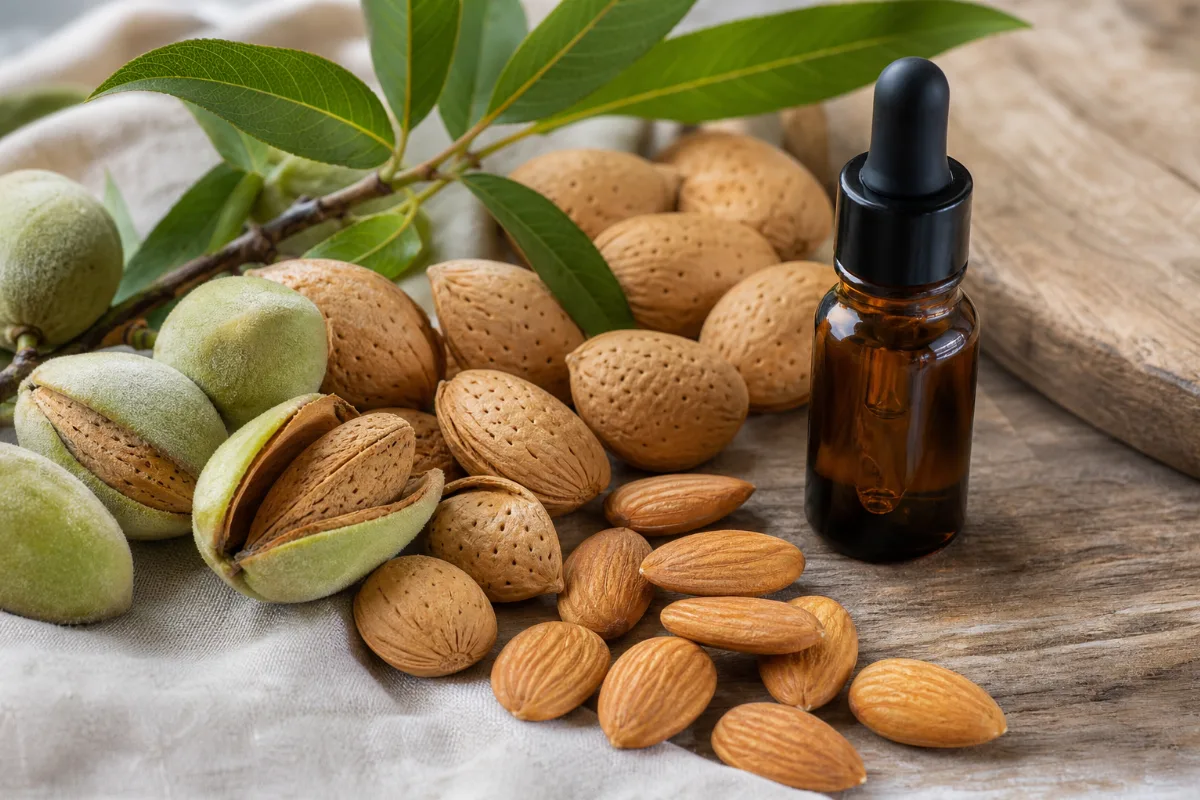
Sweet almond oil is a carrier oil from almond kernels, not an essential oil. Tree nut allergy is the key caution; small skin trials gave mixed results.
Scent: Faintly sweet and nutty when unrefined; refined oil has little scent.
Studied in people for: skin
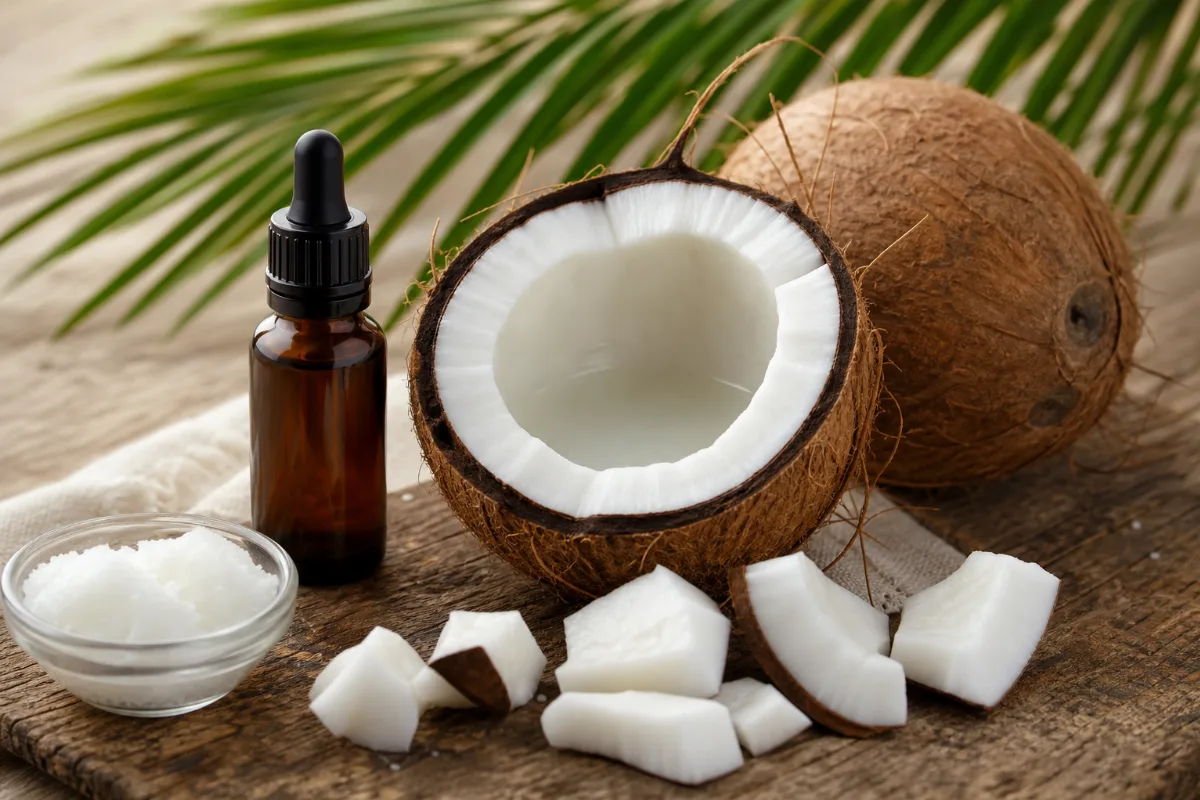
Coconut oil and "fractionated" coconut oil as carrier oils, not essential oils: skin trials in eczema, rare coconut allergy, and what we could not find for fractionated oil.
Scent: A carrier oil used for its feel on skin, not its scent; the sources we read describe no aroma.
Skin irritation or allergy
Studied in people for: skin, hair and scalp
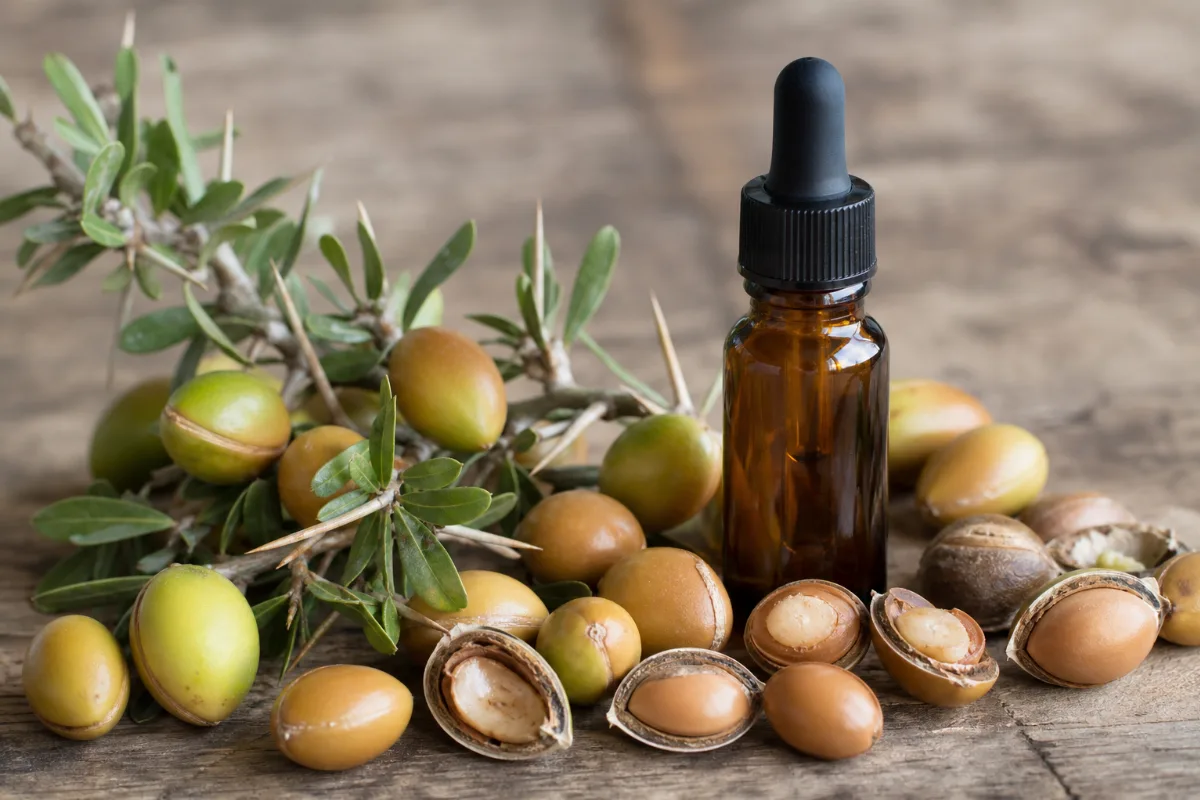
Argan oil is a carrier oil, not an essential oil: what small studies show for skin and hair, and the documented skin allergy reports to know before using it.
Scent: A carrier oil used for its feel on skin, not its scent; the sources we read describe no aroma.
Studied in people for: skin, wounds
Rosehip seed oil is a carrier oil, not an essential oil: what the scar and wound research really shows, why it spoils, and the safety points to check first.
Rosehip seed oil and scars
Rosehip seed oil, wound healing and skin (lab and animal)
Anti-aging, acne, pigment and other skin claims
What rosehip seed oil is (a carrier oil, not an essential oil)
Scent: A carrier oil used for its feel on skin, not its scent; the sources we read describe no aroma.
Grapeseed oil is a carrier oil, not an essential oil or grape seed extract: what we found for skin, what we did not, and basic safety points to check first.
Grapeseed oil on skin (small trials of mixed products)
What grapeseed oil is (a carrier oil, not an essential oil)
Scent: A fruity, herbal scent in lab reports; the oil itself is deep blue.
Skin irritation or allergyNever use undiluted on skinCats and dogsBabies and children
Blue tansy oil (Tanacetum annuum): what lab studies show, why the deep blue color varies, the daisy-family allergy risk, and why no human trial supports its skin or calming claims.
Blue tansy oil and skin soothing or calm (inhaled or on skin)
Scent: A herbal, slightly camphor-like scent; samples vary.
Skin irritation or allergyNever use undiluted on skinCats and dogsBabies and children
Yarrow essential oil (Achillea millefolium): a daisy-family skin sensitizer with variable blue-oil chemistry, no human trials of the oil, and plain safety limits for skin, pets and swallowing.
Yarrow herb (tea, extracts) for appetite, digestion, menstrual cramps and small wounds
Yarrow herb capsules in type 2 diabetes (liver enzymes and blood fats)
Skin irritation or allergyNever use undiluted on skinCats and dogsBabies and children
Cajeput (cajuput) essential oil from Melaleuca leaves: mostly 1,8-cineole, an EU safety review calling it a skin and airway sensitizer, and no human trials found.
Cajeput oil and colds, cough, stomach aches or insect bites (traditional)
Skin irritation or allergyNever use undiluted on skinDangerous if swallowedBabies and children
Niaouli oil (Melaleuca quinquenervia or viridiflora): a cineole-rich cousin of tea tree with only lab research, plus skin, child, pet and swallowing cautions.
Pregnancy and hormone questions (lab)
Niaouli oil and colds, cough or congestion (traditional)
Skin irritation or allergyNever use undiluted on skinDangerous if swallowedBabies and children
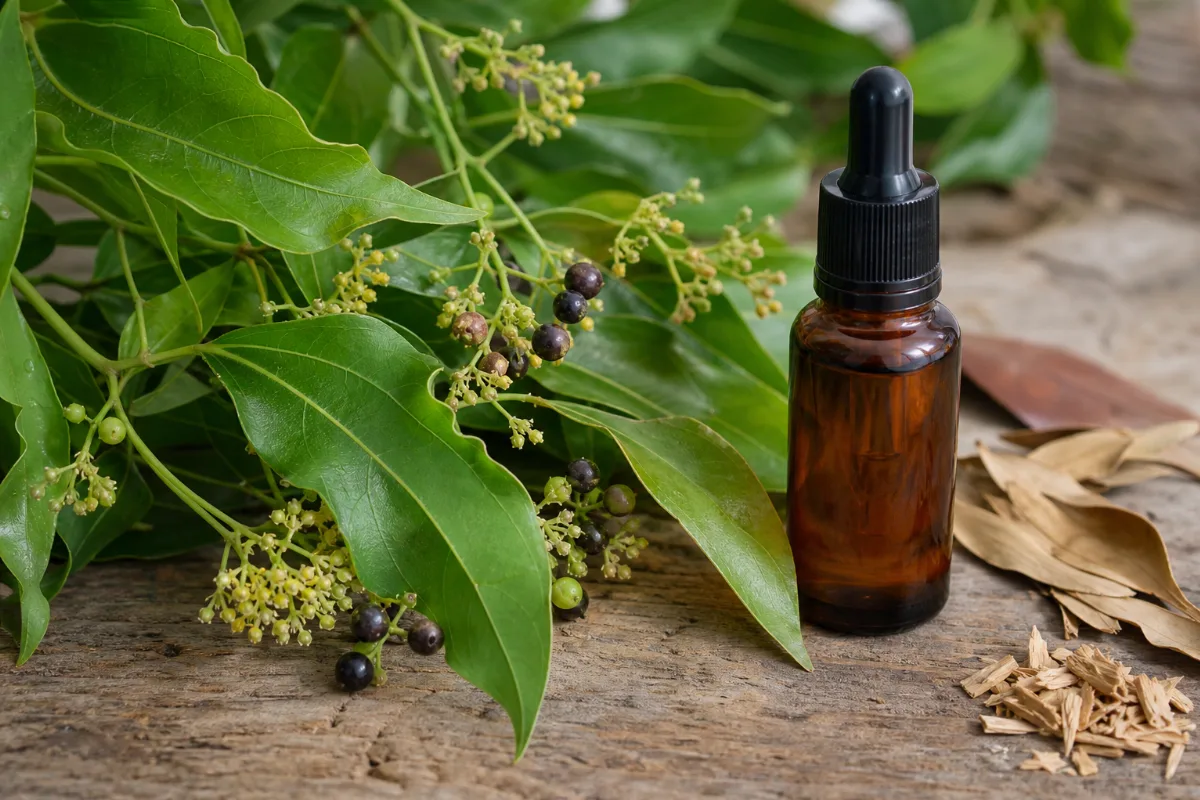
Ravintsara oil (Cinnamomum camphora, cineole type): no human trials found, but real cautions on skin allergy, young children, swallowing and mix-ups with camphor oil.
Babies and childrenNever use undiluted on skinDangerous if swallowedSkin irritation or allergy
Studied in people for: insects and lice
Lemon eucalyptus oil (Corymbia citriodora) and the refined PMD repellent are different products; not for children under 3 per CDC, and not for swallowing.
Registered oil-of-lemon-eucalyptus / PMD repellents on skin
Lemon eucalyptus essential oil as a mosquito repellent (human studies)
Scent: The dried leaf smells herbal and slightly floral; the oil's own scent is not described in the sources we read.
Skin irritation or allergyNever use undiluted on skinCats and dogsBabies and children
Bay oil means two different oils, West Indian bay (Pimenta racemosa) and bay laurel (Laurus nobilis): laurel oil is a documented skin allergen, and no human trials were found.
Laurel oil and memory in mice
Stomach bacteria, ticks and antioxidant tests (lab)
Scent: The scent is not described in the sources we read.
Dangerous if swallowedNever use undiluted on skinCats and dogsBabies and children
Tulsi (holy basil) oil from Ocimum tenuiflorum is rich in eugenol; no human trial of the oil was found, and human tulsi studies used leaf extracts, not the oil.
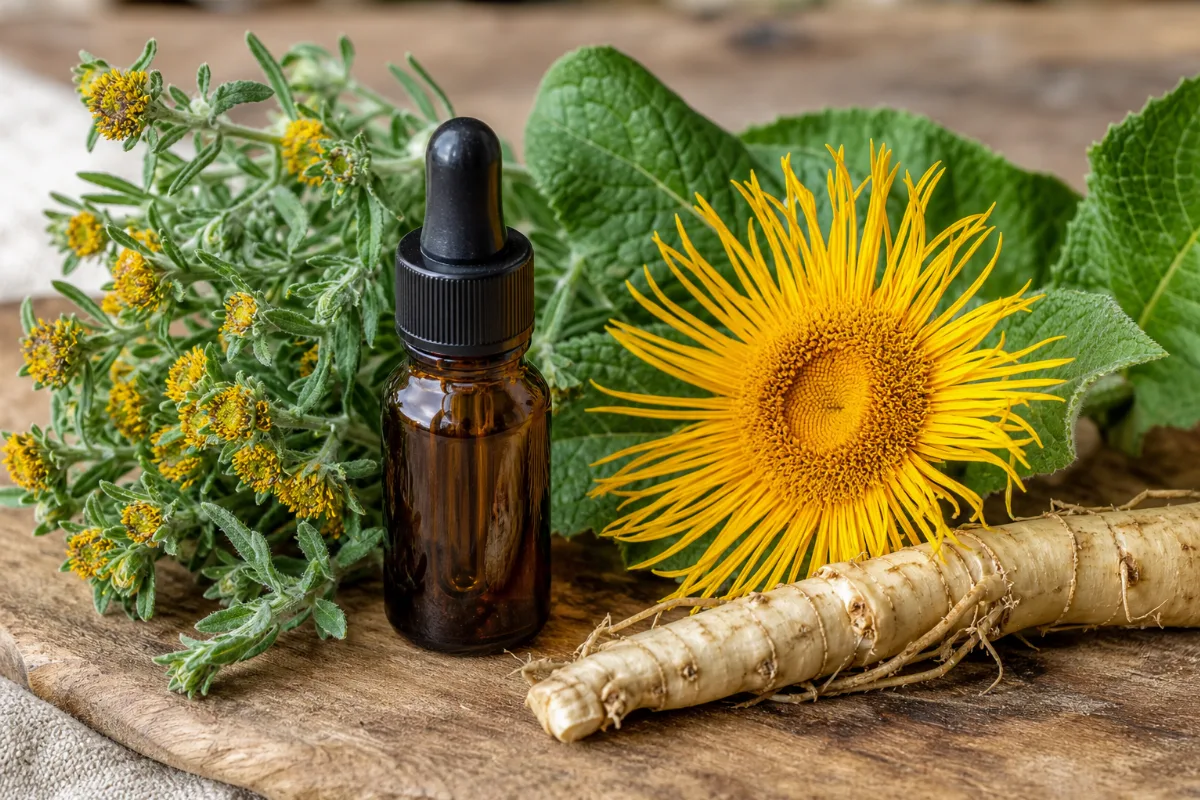
Inula graveolens (synonym of Dittrichia graveolens), Inula helenium
Whole plant / above-groundRoot
Scent: The scent is not described in the sources we read.
Skin irritation or allergyNever use undiluted on skinDangerous if swallowedBabies and children
Inula oil can mean two daisy-family plants, Inula graveolens or elecampane; no human trials were found, and daisy-family sensitizers make a skin-allergy check worthwhile.
Inula graveolens oil as a beetle repellent (lab)
Elecampane root compounds against staph bacteria (lab)
Scent: The sources we read do not describe the scent.
Never use undiluted on skinBabies and childrenDangerous if swallowed
Kunzea oil (Kunzea ambigua), a tea tree relative: what is known about its makeup, the lack of human trials, and the skin, pet and swallowing cautions that apply.
Kunzea oil in people (skin or scent)
Mites and germs in the lab
Oil makeup changes with harvest
Hormone questions (tea tree and lavender relatives)
Scent: The sources we read do not describe the scent.
Never use undiluted on skinBabies and childrenDangerous if swallowed
Studied in people for: skin
Manuka oil (Leptospermum scoparium): one eczema trial found no benefit over plain cream, most findings are lab-only, and skin, pet and swallowing cautions apply.
Scent: The sources we read do not describe the scent.
Skin irritation or allergyNever use undiluted on skinBabies and childrenDangerous if swallowed
Studied in people for: insects and lice
Litsea (May Chang) oil, Litsea cubeba: EFSA calls it a skin and respiratory sensitizer, citral is a known fragrance allergen, and human research is very thin.
Never use undiluted on skinDangerous if swallowedCats and dogsBabies and children
Studied in people for: anxiety and stress
Yuzu oil (Citrus junos): two small scent trials on mood and stress markers, one professional table that lists it as non-phototoxic, and the skin, pet and swallowing cautions.
Yuzu scent and mood or stress markers (inhaled)
Yuzu scent and heart rate or calm nervous system (inhaled)
Man-made copy of yuzu scent and stress tests (humans and mice)
Skin irritation or allergyNever use undiluted on skinDangerous if swallowedCats and dogs
Studied in people for: germs and infection
Cassia oil (Cinnamomum cassia) is a strong skin sensitizer and its plant carries coumarin; here is what the sources say about skin, liver, pets, and the very thin human research.
Scent: Warm, earthy and slightly musky, like toasted cumin seeds.
Sunlight: can make skin burn (phototoxic)Skin irritation or allergyNever use undiluted on skinDangerous if swallowed
Cumin oil (Cuminum cyminum) is safe in food but can blister skin: what the FDA, NLM and aromatherapy sources say about sun, skin, allergy, pets, and the lack of human trials.
Cumin supplements and blood sugar or blood fats (not the oil)
Cumin oil in skin cells and against a parasite (lab)
Scent: Fresh and herbal; the seed oil is often caraway-like and sweet.
Skin irritation or allergyNever use undiluted on skinCats and dogsDangerous if swallowed
Studied in people for: skin
Dill essential oil (seed or herb): EFSA calls it a skin irritant and sensitizer, what two small skin-massage trials found, and what is not known about pets, babies and pregnancy.
Scent: Sweet, lightly spicy and slightly floral, from linalool.
Skin irritation or allergyNever use undiluted on skinCats and dogsDangerous if swallowed
Studied in people for: mouth and teeth
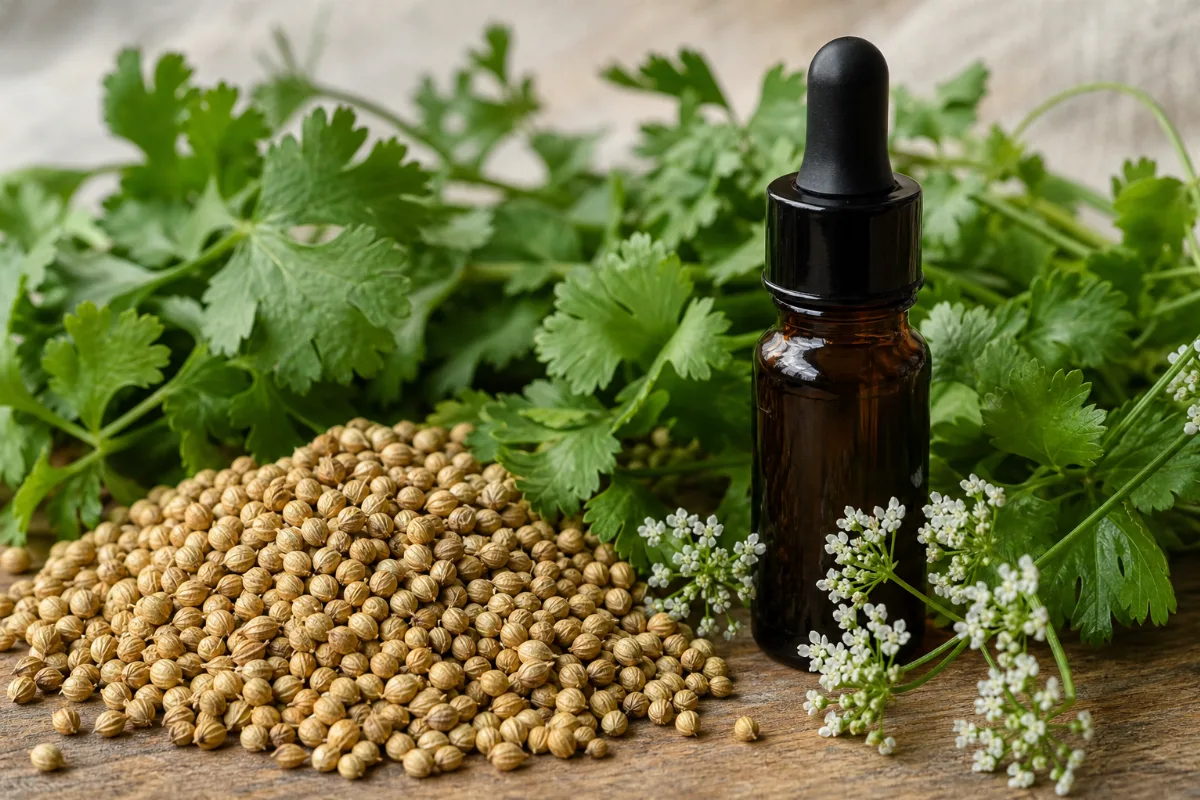
Coriander essential oil (from the seed): EFSA calls it a skin and breathing irritant and sensitizer, and the only human trial found was a null mouthwash study.
Scent: Earthy, woody and herbal with a musky depth.
Sunlight: can make skin burn (phototoxic)Never use undiluted on skinCats and dogsPregnancy and breastfeeding
Angelica root essential oil (Angelica archangelica) can make skin burn or blister in sunlight; IFRA limits it to 0.80 % in most products. What research shows and what is unknown.
Scent: Scent description not given in the sources we read.
Never use undiluted on skinCats and dogsPregnancy and breastfeedingBabies and children
Studied in people for: headache, sleep
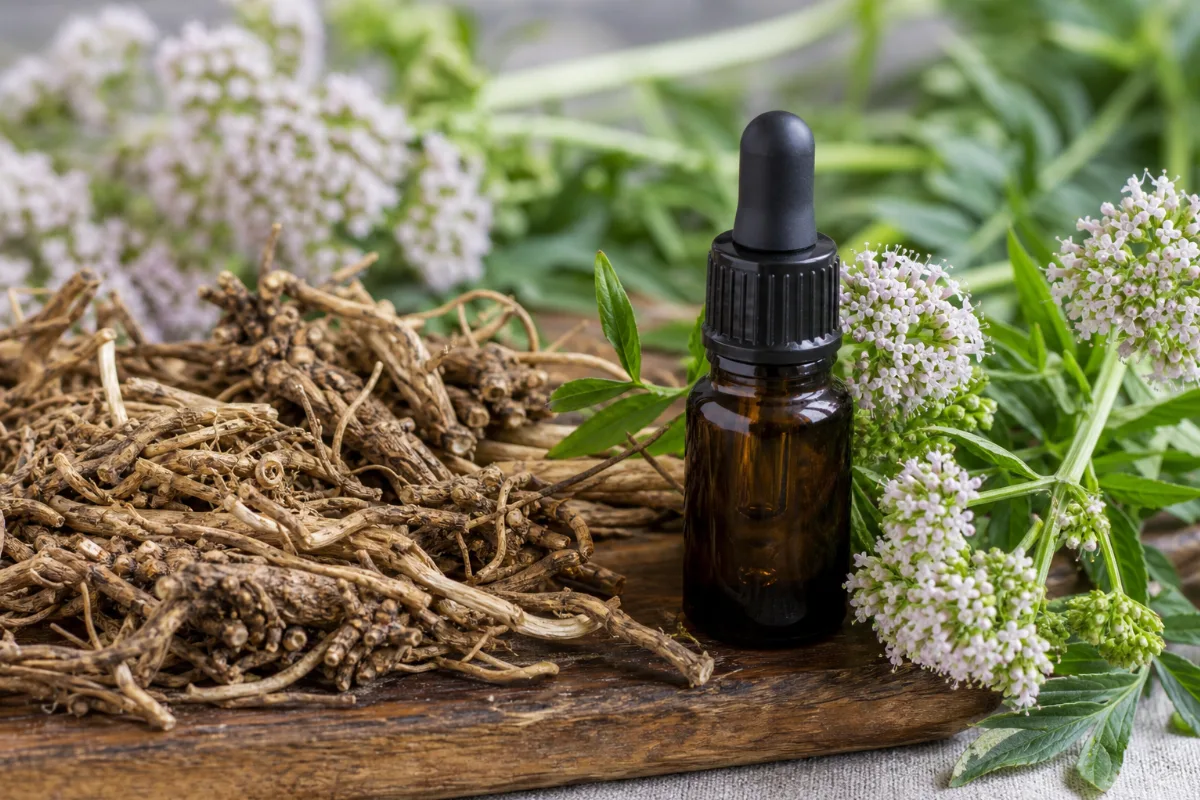
Valerian oil comes from the root of Valeriana officinalis. Little human research on the oil itself; root-product cautions with sedatives and alcohol; do not swallow the oil.
Valerian oil scent and headache from nitroglycerin (inhaled)
Massage with valerian oil in dementia and insomnia
Nardostachys jatamansi, Nardostachys grandiflora (name used by TRAFFIC)
Rhizome
Scent: Scent description not given in the sources we read.
Never use undiluted on skinCats and dogsBabies and childrenDangerous if swallowed
Spikenard oil comes from the rhizome of an endangered Himalayan plant. Almost no human research on the oil, thin safety data, and sourcing concerns. Do not swallow.
Distress in breast cancer (oil on the forehead, Ayurvedic treatment)
Scent: Scent description not given in the sources we read.
Skin irritation or allergyNever use undiluted on skinCats and dogsBabies and children
Ho wood oil is sold as a linalool-rich oil from the camphor tree. No human trials of it were found; check the chemotype, because camphor-type oils are a poisoning risk.
Relaxation and mood (inhaled; camphor-rich oil, not ho wood)
Scent: Warm, resinous and woody with a light fresh edge (general description, not from a cited source).
Skin irritation or allergyNever use undiluted on skin
Studied in people for: anxiety and stress, skin
Compares frankincense oil from Boswellia carterii, sacra, frereana and serrata: names, what sources say about composition and research, mislabeling, and safety. No species is better.
Which species is on the label? Names and look-alikes
Frankincense in blends and labor anxiety (inhaled)
Eczema and psoriasis (skin use)
Knee osteoarthritis: B. serrata resin extract (not the oil)
Scent: Sharp, sweet and minty-wintergreen (general description, not from a cited source).
Dangerous if swallowedMedicine interactionsBabies and childrenPregnancy and breastfeeding
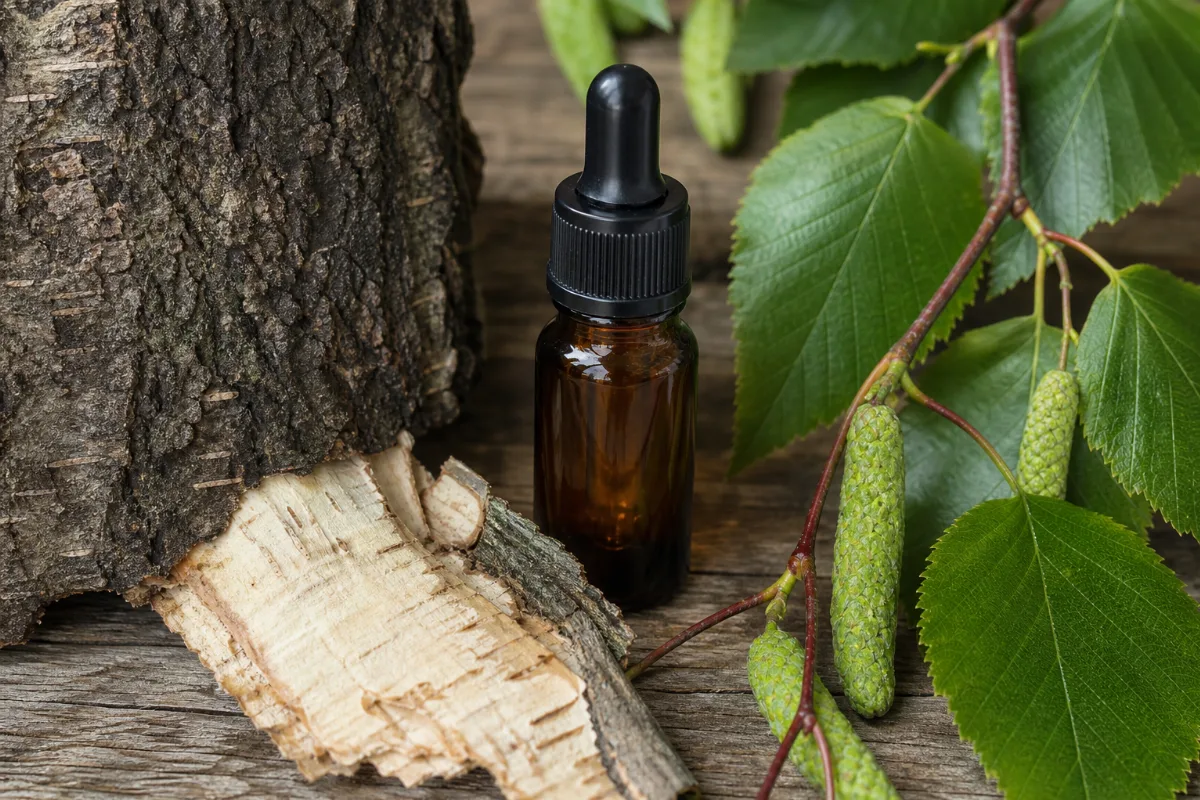
Sweet birch oil is almost all methyl salicylate, the same chemical as wintergreen oil. Learn why a tiny swallowed amount can poison a child and how it affects blood thinners.
Scent: Fruity and herbal (general description, not from a cited source).
Sunlight: can make skin burn (phototoxic)Skin irritation or allergy
Tagetes (marigold) oil is a sun-sensitizing perfumery oil. See what EU scientists limit, why it should stay off skin before sun or tanning, and what research exists.
Pregnancy, breastfeeding, babies, children and medicines
Scent: A carrier oil used for its feel on skin, not its scent; the sources we read describe no aroma.
Skin irritation or allergy
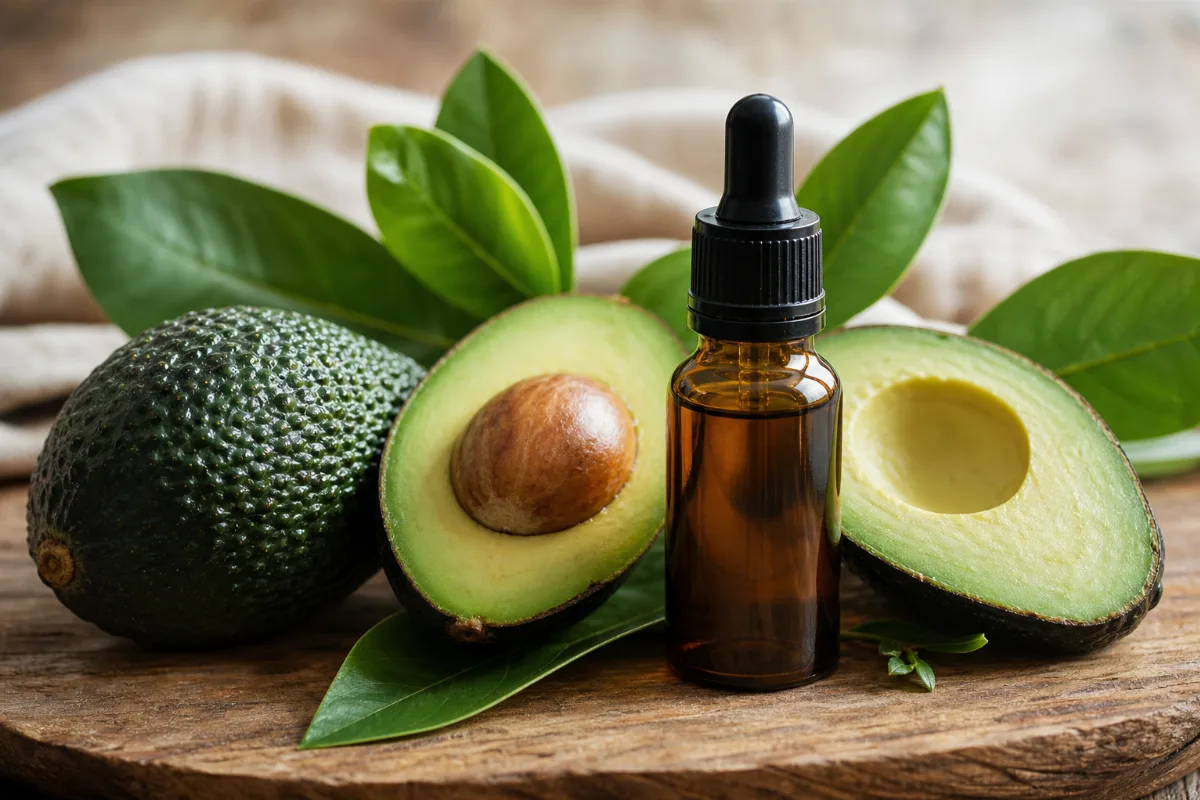
Avocado oil is a carrier oil, not an essential oil: what is known about its makeup, quality and skin use, and the allergy and blending cautions to check first.
Skin barrier (three-oil blend with avocado oil unsaponifiable)
Use as a carrier oil for essential oils
What avocado oil is made of
Wounds, eczema, psoriasis, hair and anti-aging claims
Scent: A thick, nearly scentless carrier oil; the sources we read describe no aroma.
Skin irritation or allergyPregnancy and breastfeedingBabies and childrenDangerous if swallowed
Studied in people for: hair and scalp
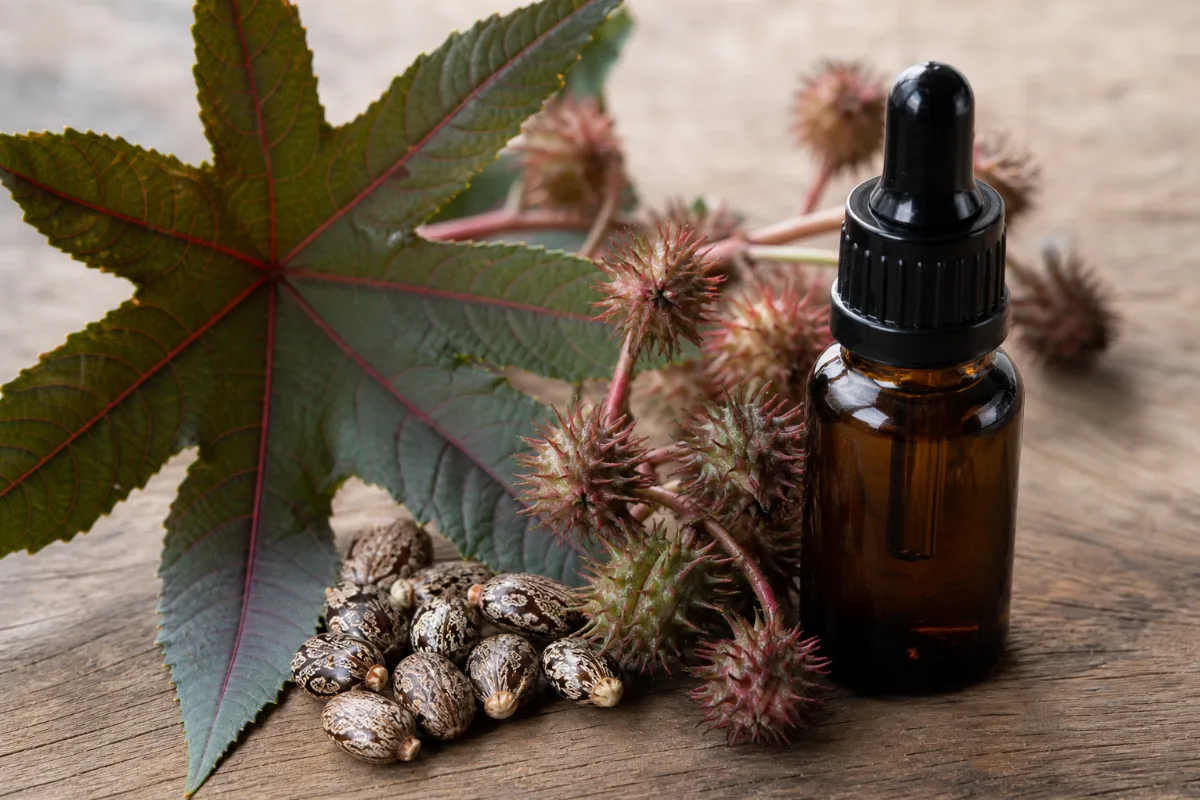
Castor oil is a carrier oil, not an essential oil. What studies found for hair, skin and labor, plus the allergy reports and pregnancy cautions to know first.
Scent: A carrier oil used for its feel on skin, not its scent; the sources we read describe no aroma.
Skin irritation or allergy
Studied in people for: skin
Olive oil as a carrier oil, not an essential oil: what trials show for skin pressure injuries, the caution for eczema-prone skin, and the allergy and quality points.
Scent: A carrier-type oil used for skin and as a supplement, not for scent; the sources we read describe no aroma.
Skin irritation or allergyMedicine interactions
Studied in people for: wounds
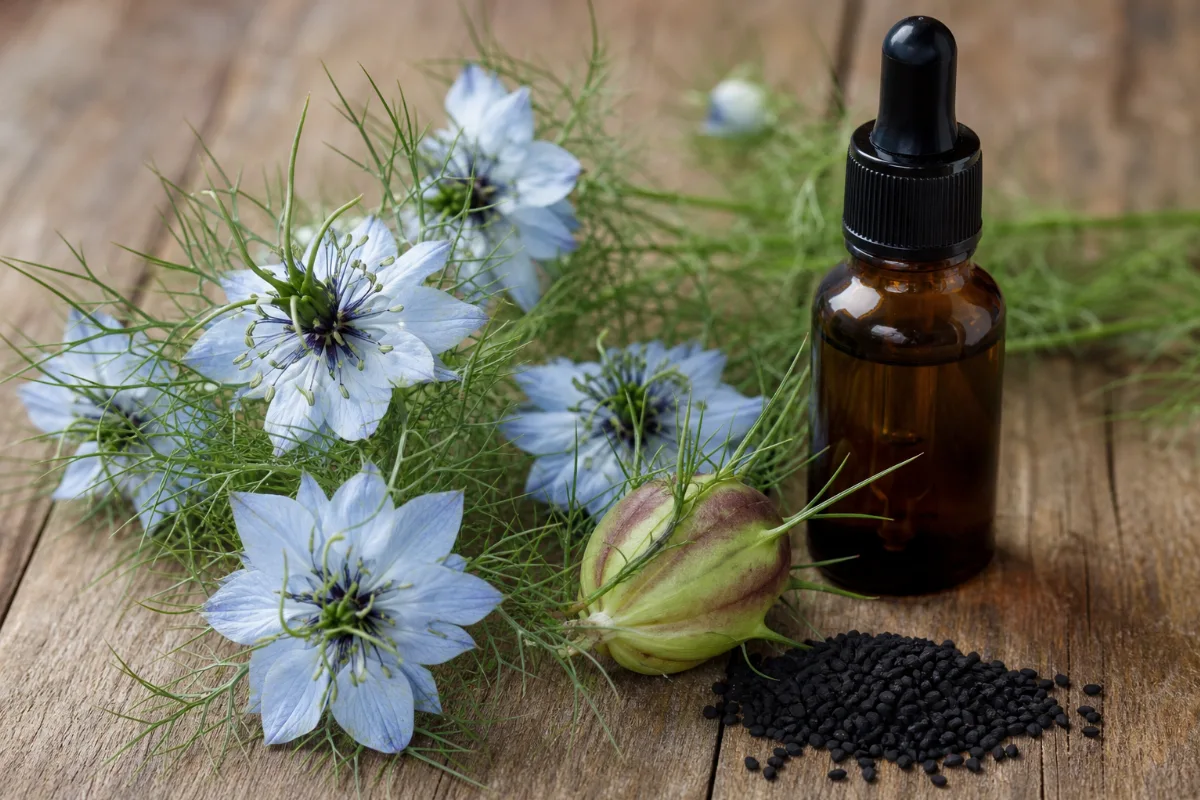
Black seed (Nigella) oil is a carrier oil, not an essential oil. Serious skin reactions are reported, and swallowed supplements may affect bleeding or other medicines.
Swallowed black seed products and blood sugar, weight and blood pressure
No oil matches all of these filters. Try removing one. Some topics (for example most herbs) are not oils and live elsewhere on the site.
"Studied for" means a study in people exists, not that the oil works. Many studies are small, short and hard to blind, because people can smell what they are given. Each oil page says what was tested, how, and what was only found in the lab.
Browse by oil oil family
Citrus
Lemon, orange, bergamot, lime, grapefruit and mandarin: pressed from the peel. Several can make skin burn in sunlight.
Understanding Essential Oils(8)What essential oils are, how they are made, how they differ from fragrance oils, absolutes and hydrosols, and how to read the claims.
An A to Z directory of every essential oil with a guide on this site: botanical name, plant part, the key caution found in the sources we read, and a link to its guide.
What essential oils are, how sources define them, what research and regulators say, and the safety points to know first. The starting page for the whole Essential Oils l…
How essential oils are made on an industrial scale, as published sources describe: steam distillation, cold pressing of citrus peel and solvent extraction, and what each…
How essential oils differ from fragrance oils and "fragrance" on a label, what US regulators and reviews say, and what a label can and cannot tell you about safety.
Absolutes, hydrosols and infused oils sound like essential oils but are made differently and carry their own cautions. Here is how published sources describe each one.
Essential oils are mixtures of many compounds, mostly terpenes. Plain-language chemistry on linalool, limonene, menthol and eucalyptol, and why air exposure creates alle…
In the US an essential oil is regulated by how it is marketed, as a cosmetic, a drug or a consumer product. This page also summarizes EU cosmetics rules and what we coul…
Most Searched Oils(9)Lavender, peppermint, tea tree, rosemary, eucalyptus and frankincense: one guide each with research and safety.
Lavender oil (Lavandula angustifolia): what research and official bodies say about anxiety, sleep, skin reactions and hormone questions, plus safety for children, pregna…
Peppermint oil (Mentha x piperita): what research says about IBS, headache and nausea, why menthol matters for babies and young children, and other safety points.
Tea tree oil (Melaleuca alternifolia): what NCCIH and trials say about acne and other skin uses, why it is poisonous if swallowed, skin allergy, and the risks to cats an…
Rosemary oil (Salvia rosmarinus): what small trials say about hair loss, memory and mood, how it differs from rosemary leaf, and safety points for skin, children, pregna…
Eucalyptus oil (mainly Eucalyptus globulus): why swallowing is dangerous, what the EMA and case reports say about children, and what evidence exists for colds and muscle…
What frankincense oil is, what the research does and does not show, which safety points matter, and why the trees it comes from are a conservation concern.
What lemongrass oil is, how it differs from citronella oil, what small studies and repellent reviews found, and why skin sensitization is the main safety point.
What patchouli oil is, why it is mostly a fragrance material, the few small human studies that exist, and the skin and breathing cautions that sources describe.
What helichrysum (immortelle) oil is, what laboratory and animal studies show, why skin and scar claims lack human trials of the oil, and the allergy points to know.
Citrus Oils(9)Lemon, orange, bergamot and other citrus oils pressed from peel. Several can make skin more sensitive to sunlight.
Sweet orange and bitter orange essential oils compared plainly: names, sun sensitivity, skin and poison-center cautions, and what small aromatherapy trials found.
Bergamot essential oil and its sun-sensitizing compound bergapten: documented skin reactions, what small trials found for stress and PMS symptoms, and plain safety limit…
Grapefruit essential oil: the grapefruit-and-medicine question explained, sun and skin cautions, and what small scent trials found for PMS symptoms and procedure discomf…
Lime essential oil and sunlight: why pressed and distilled lime oils differ, what safety assessments say about skin, and where trial evidence is missing.
Mandarin and tangerine essential oils: how the names overlap, what a trial in infants found, sun and skin cautions that sources do not settle, and where evidence is miss…
Petitgrain oil is steam-distilled from bitter orange leaves. EFSA treats it as a skin sensitizer and irritant, and human research on it alone is very thin.
Litsea (May Chang) oil, Litsea cubeba: EFSA calls it a skin and respiratory sensitizer, citral is a known fragrance allergen, and human research is very thin.
Yuzu oil (Citrus junos): two small scent trials on mood and stress markers, one professional table that lists it as non-phototoxic, and the skin, pet and swallowing caut…
Floral & Herbal Oils(26)Chamomile, geranium, ylang ylang, clary sage, neroli, lemongrass and other flower and leaf oils.
Roman and German chamomile oil are two different plants. What small aromatherapy trials found, why daisy-family allergy matters, and why the oil is never swallowed.
Geranium oil comes from Pelargonium graveolens. Small trials of inhaled geranium report less anxiety and fatigue; skin allergy is documented, and the oil is never swallo…
Ylang ylang oil comes from Cananga odorata flowers. It had the most positive skin patch tests among oils in one clinic network, and small inhaled trials show mixed effec…
Clary sage oil comes from Salvia sclarea. Small trials looked at blood pressure, mood markers and labor, but claims that it balances hormones or starts labor are not sho…
Neroli oil comes from Citrus x aurantium blossom. Small inhaled trials looked at anxiety, labor and menopause symptoms; skin allergy is documented and the oil is never s…
Jasmine and rose oils come from flowers and are used in perfume and aromatherapy. What small trials found, which allergy and safety points sources raise, and what is unk…
Basil and sweet marjoram oils are used in aromatherapy and massage. What small trials found, why basil chemistry and estragole matter, and what sources do not say about …
Spearmint oil is a carvone-rich mint oil, different from menthol-rich peppermint. What the few small trials found, and the safety points sources do and do not cover.
Vetiver oil is a deep, earthy oil from the roots of a grass. What the small human trials found, one fragrance-safety opinion on a related product, and what sources do no…
Palmarosa oil comes from Cymbopogon martinii grass. We found no human trials, only lab studies; it was a weak skin sensitizer in an animal test and is never swallowed.
Rose oil (otto and absolute) from damask and cabbage rose petals: what small scent trials found for anxiety, sleep and pain, plus skin, pet, child and swallowing caution…
Jasmine absolute from Jasminum grandiflorum and J. sambac flowers: skin allergy in patch-test clinics, a stimulating massage trial, pet and child cautions, and what is u…
Basil oil (Ocimum basilicum): one migraine skin trial, why estragole and basil chemistry matter, skin and swallowing cautions, and what is not known about safety.
Sweet marjoram oil (Origanum majorana): small scent and massage trials, EFSA's skin, breathing and estragole cautions for handlers, and what is not known about safety.
Citronella oil comes from Cymbopogon grasses. Plant-oil repellents tend to wear off fast, EFSA treats the oil as a skin irritant and sensitizer, and it is never swallowe…
Blue tansy oil (Tanacetum annuum): what lab studies show, why the deep blue color varies, the daisy-family allergy risk, and why no human trial supports its skin or calm…
Yarrow essential oil (Achillea millefolium): a daisy-family skin sensitizer with variable blue-oil chemistry, no human trials of the oil, and plain safety limits for ski…
Cajeput (cajuput) essential oil from Melaleuca leaves: mostly 1,8-cineole, an EU safety review calling it a skin and airway sensitizer, and no human trials found.
Niaouli oil (Melaleuca quinquenervia or viridiflora): a cineole-rich cousin of tea tree with only lab research, plus skin, child, pet and swallowing cautions.
Ravintsara oil (Cinnamomum camphora, cineole type): no human trials found, but real cautions on skin allergy, young children, swallowing and mix-ups with camphor oil.
Lemon eucalyptus oil (Corymbia citriodora) and the refined PMD repellent are different products; not for children under 3 per CDC, and not for swallowing.
Bay oil means two different oils, West Indian bay (Pimenta racemosa) and bay laurel (Laurus nobilis): laurel oil is a documented skin allergen, and no human trials were …
Tulsi (holy basil) oil from Ocimum tenuiflorum is rich in eugenol; no human trial of the oil was found, and human tulsi studies used leaf extracts, not the oil.
Inula oil can mean two daisy-family plants, Inula graveolens or elecampane; no human trials were found, and daisy-family sensitizers make a skin-allergy check worthwhile.
Kunzea oil (Kunzea ambigua), a tea tree relative: what is known about its makeup, the lack of human trials, and the skin, pet and swallowing cautions that apply.
Manuka oil (Leptospermum scoparium): one eczema trial found no benefit over plain cream, most findings are lab-only, and skin, pet and swallowing cautions apply.
Woody, Resin & Earthy Oils(14)Cedarwood, sandalwood, myrrh, pine, cypress, juniper, patchouli and others, with conservation notes where sources give them.
Cedarwood oil comes from several unrelated trees (Juniperus, Cedrus and others). What the human research is, what animal studies show, and the irritation and sensitizati…
Sandalwood oil (mainly Santalum album): what small studies found, why fake and mixed oils are common, skin allergy findings, and conservation concerns. Skin and scent us…
Myrrh oil (Commiphora myrrha resin): the difference between the essential oil and the EMA-assessed resin tincture, what two massage trials found, and safety notes.
Pine oil from Pinus species: how it differs from household pine-oil cleaners, why swallowing is dangerous, what little human research exists, and skin sensitizer warning…
Cypress oil (Cupressus sempervirens): mostly laboratory research, no good human trials found, and why hinoki cypress studies are about a different tree. Safety gaps stat…
Juniper berry oil (Juniperus communis): what the EMA assessed, why kidney disease and pregnancy are listed as cautions, and why no clinical trials of the oil exist. Not …
Camphor oil and camphor products can cause seizures in young children after swallowing or heavy skin use. What poison experts and case reports say, and what to do first.
Copaiba oil (balsam) from Copaifera trees: what small trials and lab work show, why its safety is little studied, and why labels and adulteration matter.
Spruce and fir needle oils (Picea and Abies): what they are, why human research is missing, and the skin, breathing and swallowing cautions that apply to conifer oils.
Rosewood oil comes from an endangered Amazon tree and is mostly linalool. What lab studies show, why no human trials were found, and skin allergy and sourcing cautions.
Valerian oil comes from the root of Valeriana officinalis. Little human research on the oil itself; root-product cautions with sedatives and alcohol; do not swallow the …
Spikenard oil comes from the rhizome of an endangered Himalayan plant. Almost no human research on the oil, thin safety data, and sourcing concerns. Do not swallow.
Ho wood oil is sold as a linalool-rich oil from the camphor tree. No human trials of it were found; check the chemotype, because camphor-type oils are a poisoning risk.
Compares frankincense oil from Boswellia carterii, sacra, frereana and serrata: names, what sources say about composition and research, mislabeling, and safety. No speci…
Spice & Strong Oils(22)Cinnamon, clove, oregano, thyme and wintergreen are strong irritants; camphor and pennyroyal can be dangerous. Extra caution applies.
Cinnamon oil (Cinnamomum species): what the sources say about skin irritation and allergy, the limited human research, bark versus leaf, and why it is never for swallowi…
Clove oil (Syzygium aromaticum) and its main chemical eugenol: toothache claims, documented liver injury in toddlers who swallowed it, skin allergy, and why it is not fo…
Oregano oil (Origanum vulgare): what the claims are, what human research exists, how oil of oregano supplements differ from the essential oil, and safety points.
Thyme oil (Thymus vulgaris): what thymol and carvacrol are, the one inhalation trial we could read, what is not known about its safety, and why it is not for swallowing.
Wintergreen oil is almost pure methyl salicylate. Learn why tiny swallowed amounts have poisoned children, how it can raise bleeding risk with warfarin, and what to do f…
Pennyroyal oil has caused liver failure and deaths when swallowed. What the poison and liver sources say, why pennyroyal is not a safe remedy, and who to call.
What sources document about skin irritation and allergy from cinnamon, clove, oregano and thyme oils, what we could not find on burns, and what to do after a reaction.
Nutmeg essential oil (Myristica fragrans): poison-center and case reports of nutmeg intoxication, almost no human research on the oil, and why it is not for swallowing.
Black pepper essential oil (Piper nigrum): small scent studies on stress response and swallowing, no proven uses, and the key safety points, from dilution to children, p…
Ginger essential oil (Zingiber officinale): small trials of scent and nausea after surgery, what is not shown, and safety on skin, for pets and children, and why it is n…
Cardamom essential oil (Elettaria cardamomum): only lab studies so far, no human trials found, and the main safety points on skin, children, pets and swallowing.
Fennel essential oil (sweet and bitter): estragole and anethole safety questions, allergy, cautions for babies and pregnancy, and what small trials found for colic and a…
Anise and star anise essential oils: two different plants, anethole allergy, estragole and pregnancy cautions, star anise tea poisoning in infants, and what one IBS tria…
Hyssop essential oil is linked to seizures in case reports and reviews, mainly after swallowing. What the sources say about safety, pets, children and the little researc…
Sage essential oil (Dalmatian and Spanish): thujone and camphor can cause seizures if swallowed, including in two children; skin irritation, pregnancy cautions and thin …
Cassia oil (Cinnamomum cassia) is a strong skin sensitizer and its plant carries coumarin; here is what the sources say about skin, liver, pets, and the very thin human …
Cumin oil (Cuminum cyminum) is safe in food but can blister skin: what the FDA, NLM and aromatherapy sources say about sun, skin, allergy, pets, and the lack of human tr…
Dill essential oil (seed or herb): EFSA calls it a skin irritant and sensitizer, what two small skin-massage trials found, and what is not known about pets, babies and p…
Coriander essential oil (from the seed): EFSA calls it a skin and breathing irritant and sensitizer, and the only human trial found was a null mouthwash study.
Angelica root essential oil (Angelica archangelica) can make skin burn or blister in sunlight; IFRA limits it to 0.80 % in most products. What research shows and what is…
Sweet birch oil is almost all methyl salicylate, the same chemical as wintergreen oil. Learn why a tiny swallowed amount can poison a child and how it affects blood thin…
Tagetes (marigold) oil is a sun-sensitizing perfumery oil. See what EU scientists limit, why it should stay off skin before sun or tanning, and what research exists.
Carrier Oils(10)Jojoba, sweet almond, coconut, argan, rosehip seed and grapeseed: the plant oils used to dilute essential oils. They are not essential oils, and some are nut-derived.
Jojoba oil is a carrier oil (a liquid plant wax), not an essential oil. What reviews and small studies show for skin, a contact dermatitis case report, and safety points.
Sweet almond oil is a carrier oil from almond kernels, not an essential oil. Tree nut allergy is the key caution; small skin trials gave mixed results.
Coconut oil and "fractionated" coconut oil as carrier oils, not essential oils: skin trials in eczema, rare coconut allergy, and what we could not find for fractionated …
Argan oil is a carrier oil, not an essential oil: what small studies show for skin and hair, and the documented skin allergy reports to know before using it.
Rosehip seed oil is a carrier oil, not an essential oil: what the scar and wound research really shows, why it spoils, and the safety points to check first.
Grapeseed oil is a carrier oil, not an essential oil or grape seed extract: what we found for skin, what we did not, and basic safety points to check first.
Avocado oil is a carrier oil, not an essential oil: what is known about its makeup, quality and skin use, and the allergy and blending cautions to check first.
Castor oil is a carrier oil, not an essential oil. What studies found for hair, skin and labor, plus the allergy reports and pregnancy cautions to know first.
Olive oil as a carrier oil, not an essential oil: what trials show for skin pressure injuries, the caution for eczema-prone skin, and the allergy and quality points.
Black seed (Nigella) oil is a carrier oil, not an essential oil. Serious skin reactions are reported, and swallowed supplements may affect bleeding or other medicines.
Aromatherapy: Practices & What Research Shows(9)Inhalation, diffusers, massage, hospital use and professional aromatherapy: what is practised and what is known.
What aromatherapy is, how it is delivered, what systematic reviews and NIH summaries say about sleep, anxiety, nausea and pain, how it is regulated, and the main caution…
How scent is delivered in inhalation aromatherapy, what trials and reviews found for nausea, anxiety, sleep and pain, why results are hard to compare, and the cautions.
What essential oil diffusers are, what air-quality studies measured for ultrasonic and heat diffusers, and the cautions for lungs, children and pets. No product rankings.
What aromatherapy massage is, what a Cochrane review and later meta-analyses found for people with cancer, and the skin, allergy and other cautions to know about.
What systematic reviews found for aromatherapy after surgery, during cancer treatment, for procedure anxiety and in palliative care, and why it is supportive care, not a…
What guidelines and trials say about aromatherapy in labor: results on pain and anxiety are mixed, NICE advises against offering it in early labor, and safety needs a mi…
What an aromatherapist title does and does not mean: US and UK sources on licensing, certification and training, how credentials are defined, and questions to ask before…
Candles, room sprays, rollers and reed diffusers sold as aromatherapy: what the label does and does not mean, who regulates them, and what studies found about emissions …
How aromatic plant oils came to be called aromatherapy: what sources say about early use, distillation, the word coined in France in the 1930s, and why the dates differ.
Lavender, Peppermint & Tea Tree in Depth(10)The three most searched oils in more detail: trials, side effects, hormone questions, children and pets.
What clinical trials and reviews found about lavender oil for sleep and anxiety, with inhaled and massage studies kept apart from trials of a specific oral lavender oil …
What the sources say about skin irritation and allergy from lavender and tea tree oils, and the unresolved question of breast tissue growth in children, with what a regu…
Popular claims about lavender oil for hair growth, skin, pain, insects and baths checked against what trials, lab studies and regulators actually found.
What trials and reviews found about peppermint oil rubbed on the forehead for tension headache and inhaled for nausea, with menthol cautions for young children.
What pooled trials found about enteric-coated peppermint oil capsules for irritable bowel syndrome, why a capsule made for medical use is not the same as bottled oil, an…
What health agencies and poison experts say about peppermint oil, the menthol in it, and young children, pets, skin reactions and allergy, with the gaps in the evidence …
Does peppermint oil repel spiders, mice or other pests? A plain check of the one spider experiment, what extension services say about rodents, and the safety questions a…
What clinical trials and reviews found for tea tree oil (Melaleuca alternifolia) on acne, toenail fungus and dandruff, with trial sizes, strength of evidence and safety …
Why tea tree oil is a poisoning risk when swallowed by people and when put on or eaten by cats and dogs, based on NCCIH, poison-center pages and veterinary case reviews.
Why tea tree oil can cause skin rashes and allergy, how air and light change the oil, and what patch-test studies and case reports show, with plain next steps.
Essential Oils by Wellness Goal(15)What research shows for sleep, anxiety, headache, nausea, pain, skin, hair, insects and more. Evidence, not promises.
What research shows for essential oils and common goals such as sleep, anxiety, headache, nausea, skin and hair, with an evidence label and a link to every goal page.
What reviews and trials found about lavender and other essential oils for sleep, how strong that evidence is, what the cautions are, and when poor sleep needs a clinicia…
What systematic reviews and NIH say about essential oils for anxiety, stress and low mood: lavender is studied most, the evidence is mixed and limited, and crisis help c…
What small trials and reviews found about peppermint and lavender oil for tension headache and migraine, where the evidence conflicts, and which headaches need urgent ca…
What reviews and trials found about inhaled peppermint, ginger and other essential oils for nausea after surgery, during chemotherapy and in pregnancy, with limits and c…
What trials and reviews found for essential oils and pain: period cramps, muscle and joint aches, and after surgery, with the limits of the studies and the safety points.
What research says about eucalyptus, menthol and other essential oils for colds, cough, congestion and sinus symptoms, the immune-boost claim, and why babies and swallow…
What research found for tea tree and other essential oils on acne and eczema, why oils are a common cause of skin allergy, and why eczema-prone skin needs extra care.
Rosemary oil versus minoxidil, a mixed-oil trial in patchy hair loss, and tea tree shampoo for dandruff: what each trial found, how small the evidence is, and scalp safe…
What research and CDC, EPA and NHS sources say about essential oils against mosquitoes, ticks and head lice, why registered repellents matter for disease protection, and…
What small studies found when people smelled rosemary, peppermint or lavender oil while testing memory, attention and tiredness, and why the results do not add up to a c…
What Cochrane and other reviews found about lavender and other scents for agitation and memory in people with dementia, and why the care team should be asked first.
What systematic reviews found about aromatherapy for menopause symptoms and period pain, what is known about clary sage and hormones, and when symptoms need a clinician.
Strong scents can bother sensitive airways. What the sources say about essential oils, diffusers, asthma and allergic rhinitis, and why an asthma plan comes first.
Claim check on essential oils marketed for weight loss, blood pressure and digestion, with what trials and reviews found and why they do not replace medical care.
Using Oils: What Sources Describe(9)Diffusing, inhaling and skin use as sources describe them, carrier oils, patch tests and storage. Never swallowing.
How health agencies and aromatherapy bodies describe breathing in and skin use of essential oils, what they warn against, and why swallowing is not part of the picture.
Why dilution matters, what a professional body and one aromatherapy educator publish, and why ratio, drop and percentage charts disagree. No universal chart is offered h…
What a carrier oil is, why sources say essential oils are diluted in one, what the sources we read say about jojoba and coconut oil, and where no evidence was found.
What sources say about skin reactions to essential oils, when a patch test is suggested, why reactions can appear days later, and when to get urgent help.
What sources say about essential oils added to baths, room sprays and rollerball products, including irritation of mucous membranes, flammability and children, without a…
Why this site gives no advice to swallow essential oils, what poison-center and hospital reports describe, and where to get help if someone has swallowed one.
Why homemade essential oil blends and recipes raise documented risks, with what poison centers, skin-allergy studies and the FDA say. This page contains no recipes.
What sources say about essential oil oxidation, old oils and skin allergy, why no shelf-life figure is given here, and keeping oils away from children with child-resista…
What is known about essential oils and medicines, from wintergreen and warfarin reports to peppermint and lavender studies, and where proper evidence was not found.
Quality, Purity & Labels(10)Botanical names, "pure" and "therapeutic grade" claims, testing, adulteration, storage and sustainability.
How to read essential oil quality claims: botanical names, "pure", "natural" and "therapeutic grade", what testing studies found, and what quality cannot tell you.
What published laboratory studies found when they tested commercial essential oils for adulteration, and what those findings can and cannot tell a buyer.
"Therapeutic grade" and "certified pure" on essential oil labels: what the claim says, what the sources we read say about regulation, and what a reader can safely do.
How to read an essential oil label: scientific name, plant part, country of origin, batch information and storage words, and what each does and does not tell you.
How to check health claims about essential oils made by sellers, including direct-sales and network-marketing sellers, using FDA and FTC guidance. No companies named.
Why some essential oils cost far more than others, what a published review says about yield and rarity, and why a high or low price does not prove purity or benefit.
What published sources say about conservation of the trees behind sandalwood, frankincense and rosewood oils, and about the communities who harvest them.
Essential oil safety in plain language: poisoning, skin reactions, sunlight, children, pregnancy, pets and who to call. No dilution chart and no advice to swallow any oi…
What to do first if a child or adult swallows an essential oil or gets one in the eyes or lungs, in plain steps, with US Poison Help and 911, and what poison centers say.
How essential oils can irritate skin or cause allergy, why a reaction can become lifelong, what dermatology studies found for tea tree, lavender and oxidized oils, and w…
Why some citrus and other oils can cause burns, blisters or dark patches when skin meets sunlight, which chemicals are involved, and what the FDA, a case series and lab …
What veterinary poison sources report about essential oils and pets: which animals are at most risk, signs of poisoning, what is known about tea tree oil and flea produc…
What poison centers, NIH and case reports say about essential oils near babies and children: swallowing, menthol, camphor, skin, hormone questions, and where to get help.
What NIH, a placental cell study and an aromatherapy association say about essential oils in pregnancy and breastfeeding, what is not known, and why to ask a midwife or …
What asthma organizations, agencies and the few studies we could read say about essential oils, diffusers and scented products for people with asthma or other breathing …
Reports of seizures linked to camphor, eucalyptus, sage and other oils, what a published review lists, and why laboratory anticonvulsant findings do not mean oils are sa…
Which liver and medicine concerns with essential oils are documented in case reports, which are only laboratory findings, and where the sources we read say nothing.
What health sources say about essential oils in the eyes, nose and other delicate tissues, with reported injuries, first-aid guidance for chemicals in the eye, and what …
What chamber studies, the EPA and an aromatherapy association say about essential oil diffusers and indoor air, and what is documented about skin reactions in people who…
Which warning signs after essential oil contact, swallowing, inhaling or an eye splash call for 911, Poison Help or a clinician, as poison centers and health services de…
Life Stages & Special Situations(5)Babies and children, pregnancy, older adults, people with asthma or epilepsy, cancer care and workplaces.
What sources say about essential oils and aromatherapy for older adults: sleep and mood research, medicine and falls questions, smell changes, and who to ask first.
What research and cancer agencies say about aromatherapy as supportive care during cancer treatment, what it cannot do, and why the oncology team should know first.
Shared-air questions about essential oils at work, in spas and in schools: scent sensitivity, asthma and allergy, diffuser air and what the sources say about policies.
Why essential oils can irritate or sensitize eczema-prone and sensitive skin, how allergy to oils and fragrance is described, and what to ask a pharmacist or clinician.
What sources say about essential oils in sports rubs and muscle products, including menthol and wintergreen, skin burns with heat, medicine interactions and what trials …
Science, History & Policy(8)How scent works, what trials measure, human versus lab research, regulation and conservation.
How much human research exists on essential oils and aromatherapy, what a publication count does and does not show, what NIH and systematic reviews conclude, and how to …
How smell signals reach the brain, what trials suggest about aroma and mood, why expectation and placebo effects are hard to separate, and why blinding a scent trial is …
What systematic reviews of human trials of aromatherapy and essential oils found, where reviews disagree, and why most trials are small, short and hard to blind.
A plain table of how much PubMed research exists for lavender, peppermint, tea tree, eucalyptus, rosemary and frankincense, beside what the reviews we read actually conc…
Why an essential oil that kills germs in a dish is not proof it helps a person, with real examples of cell, animal and human studies and how to tell them apart.
How the long use of aromatic plants in named traditions differs from what clinical trials show, with lavender, tea tree and frankincense as worked examples.
Why many essential oil and aromatherapy studies are hard to trust: small trials, scent that cannot be hidden, expectation effects, uneven reporting and who pays for rese…
What science has not yet settled about essential oils, from long-term safety and hormone questions to indoor air, contamination and whether scent benefits are more than …
Essential Oil Comparisons(8)Side-by-side comparisons that answer one question each. No rankings and no universal winners.
Lavender and chamomile oil side by side: how the plants differ, what small inhalation trials found, and the daisy-family allergy point. No winner is declared.
Peppermint and eucalyptus oil compared: what each is, what regulators and trials found, and why both need extra care around babies, young children and swallowing.
Roman and German chamomile oil come from different plants with different chemistry. What sources document, what they do not, and why daisy-family allergy applies to both.
Sweet and bitter orange oil compared: names and labels, what small inhalation trials found, the sunlight (phototoxicity) question, and the bitter orange supplement warni…
How essential oils and carrier oils differ, why sources describe diluting one in the other, how trials use a carrier oil as the comparison, and where no evidence was fou…
What the sources we read say about ultrasonic, nebulizing and heat diffusers as device types, including the one study that compared ultrasonic and heat, and where no evi…
How the sources we read place essential oils next to medical care: used alongside it, what trials compared, what regulators say, and why no oil is a replacement for trea…
A side-by-side look at what the sources we read say about aromatherapy, massage and herbal teas for relaxation, with each one's evidence label, safety points and gaps.
Glossary & Quick Reference(4)Terms, an oil table, frequently asked questions and a safety quick reference.
Plain definitions of essential oil and aromatherapy terms, from absolute and hydrosol to chemotype, phototoxicity and GC-MS, with sources and notes on terms with no offi…
A side-by-side table of 37 essential oil pages with the plant's checked scientific name, the evidence label from each oil's page, and the main safety point sources descr…
Plain answers to the questions people ask most about essential oils: are they safe, do they work, pregnancy, children, pets, medicines and labels, with the sources behin…
A one-page quick reference for essential oil warning signs and whom to call: Poison Help 1-800-222-1222, 911, 988 and a vet, with the oils that have caused the most seri…
Search oils: popular oils, A to Z, search with filters, more ways
Well-studied oils to start with
These oils have the most human research summarized in our guides (counted from the evidence ratings on each profile). More research does not mean the oil works or is safe for you: open the guide to see what was found, including negative and mixed results.
Every published oil guide (87), with its names and what it is made of. Each name opens one guide that brings together identity, traditional use, research, safety, forms and sources.
A (4)
Angelica Root OilAngelica archangelicaAlso: European angelica root oil, garden angelica oil, angelica archangelica oil · Part used: root
Anise and Star Anise OilPimpinella anisum, Illicium verumAlso: aniseed oil, anise oil, star anise oil · Part used: seed, berry / fruit
Ho Wood OilCinnamomum camphora ct. linalool, Cinnamomum camphora var. linalooliferaAlso: ho wood essential oil, ho leaf oil (trade name; not defined in the sources we read), linalool-type camphor tree oil · Part used: leaf
Lemon OilCitrus limon, Citrus x limonAlso: lemon essential oil, lemon peel oil, cold-pressed lemon oil · Part used: fruit peel
Lemongrass OilCymbopogon citratus, Cymbopogon flexuosusAlso: lemongrass essential oil, West Indian lemongrass, East Indian lemongrass · Part used: leaf
Lime OilCitrus x aurantiifoliaAlso: lime essential oil, key lime oil, Citrus aurantiifolia · Part used: fruit peel
Litsea (May Chang) OilLitsea cubebaAlso: May Chang oil, litsea cubeba oil, litsea berry oil · Part used: berry / fruit
M (3)
Mandarin and Tangerine OilCitrus reticulataAlso: mandarin oil, tangerine oil, mandarin orange oil · Part used: fruit peel
Manuka OilLeptospermum scopariumAlso: manuka essential oil, mānuka oil, New Zealand tea tree
Neroli OilCitrus x aurantium (blossom), Citrus aurantium var. amaraAlso: orange blossom oil (check the Latin name on the label), neroli, bitter orange flower oil · Part used: flower
Rosewood OilAniba rosaeodoraAlso: Brazilian rosewood oil, bois de rose, rosewood · Part used: wood
S (8)
Sage Oil (Dalmatian and Spanish)Salvia officinalis, Salvia lavandulifoliaAlso: common sage oil, Dalmatian sage oil, Spanish sage oil · Part used: leaf
Sandalwood OilSantalum album, Santalum spicatumAlso: East Indian sandalwood oil, sandalwood album oil, Australian sandalwood oil (S. spicatum) · Part used: wood
Spearmint OilMentha spicataAlso: spearmint essential oil, garden mint oil, Mentha viridis · Part used: whole plant / above-ground, leaf
Spikenard OilNardostachys jatamansi, Nardostachys grandiflora (name used by TRAFFIC)Also: jatamansi oil, Indian spikenard oil, nard oil · Part used: rhizome
Spruce and Fir OilsPicea spp., Abies spp.Also: spruce needle oil, fir needle oil, silver fir oil · Part used: needles and twigs
Sweet Almond OilPrunus dulcisAlso: almond oil, sweet almond kernel oil, Prunus amygdalus var. dulcis (older name; not sourced) · Part used: nut kernel
Sweet Birch OilBetula lentaAlso: black birch oil, cherry birch oil, birch bark oil · Part used: bark
Oils whose guide documents a point to check for this concern. Being listed does not mean the oil is unsafe for everyone. Open the guide to read the details.
Oils have been used for health in many cultures for centuries. A traditional use tells you what people have done, not that it works. Here every oil is listed under the goals, body systems and actions its guide connects it to, and each link carries the strength of the evidence behind it.
Strongest
3 oils
Clinical trials support a benefit
Promising
57 oils
Early or mixed human evidence
Early science
20 oils
Lab or animal research only
Unknown
6 oils
Too little evidence to say
Each oil is counted once, at the strongest level its guide documents for any use. A strong label for one use says nothing about its other uses or its safety. "Traditional use" alone is not one of these labels: where a guide only reports history, the link is rated "Too little evidence to say". Read the guide on traditional use and research evidence.
Oils by wellness goal
Each card shows how many oils are linked to a goal and how strong the evidence is. Green means clinical trials support a benefit; grey means too little evidence. These are links the guides document, not recommendations. For the wider picture, see the Wellness Goals section.
The same links, organized the way anatomy and physiology textbooks do. "Action" describes what an oil is said to do (for example calming or digestive support); it names the claim, not the proof.
Each guide below looks at one concern, from sleep to skin, and separates oils that were tested in people from oils that are only traditional or lab-tested.
People have used oils for health for many centuries. A traditional use tells you what people have done, not that it works. For what research found, see the Health Benefits and Scientific Evidence tabs.
Traditional oil medicine
Ayurveda, Traditional Chinese Medicine and other traditions each use natural remedies in their own systems. The oils below are the ones whose guide mentions the tradition in its own text. That a tradition uses an oil is history, not clinical evidence. Each guide says separately what trials found.
Oils are active substances. Some interact with prescription medicines, some are unsafe in pregnancy or with certain conditions, and some have been linked to serious harm. This tab brings together what the individual oil guides document, plus the general rules. Medicine interactions have their own tab.
If someone may have been poisoned or is seriously unwell
▸Collapse, seizure, trouble breathing, swelling of the face or throat, chest pain or a fast irregular heartbeat: call your local emergency number now (911 in the United States and Canada, 999 in the UK, 112 in the European Union).
▸Swallowed too much of an oil, or a child or pet got into a product, and the person seems well: in the United States call Poison Help, 1-800-222-1222 (free, 24 hours). Elsewhere, call your national poison centre or local emergency number.
▸Yellow skin or eyes, dark urine, severe belly pain, or a new rash after starting an oil: stop it and contact a clinician the same day.
Essential oils are strong. Swallowed oils (eucalyptus, tea tree, camphor, wintergreen, clove and others) have caused serious poisoning, most often in young children. This site gives no advice to swallow any essential oil.
Oils can cause skin burns, allergy and, with citrus oils, sun sensitivity. Menthol and camphor are a concern for young children, and diffused oils can harm cats and some other pets.
Tell a clinician if you are pregnant, breastfeeding, have asthma or epilepsy, or are treating a child.
If an oil was swallowed or got in the eyes, call Poison Help first. In the US, Poison Help is 1-800-222-1222; call 911 for collapse, seizure, trouble breathing or swelling of the face or throat.
"Natural" does not mean safe. Natural products can contain strong substances; some are harmful. Natural Does Not Mean Safe
Tell your pharmacist and clinician about every oil product you use, and ask before combining one with prescription or over-the-counter medicines.
Be extra careful with narrow-margin medicines such as warfarin, antidepressants, immunosuppressants, diabetes and blood pressure medicines.
Tell the surgical team about every oil before an operation. Many teams ask people to stop oil products ahead of surgery; ask yours how long.
Pregnancy, breastfeeding, children and older adults are groups where good safety data are often missing, so official sources usually advise asking first.
Start one product at a time, at the label amount, so a reaction can be traced. Stop and get advice if you feel unwell.
Products vary. Contamination, substitution and mislabelling are documented problems; third-party testing can reduce but not remove the risk.
Each line comes from an oil's own guide, where it is backed by cited sources: 468 documented risks across 87 of the 87 oils. A oil missing from a list is not proven safe: it may simply not have been studied. Open the oil's guide for the full wording and sources.
Eugenol-rich West Indian bay oil and the liver. Pimenta racemosa leaf and stem oils were 58% to 71% eugenol in two lab analyses. LiverTox says high-dose eugenol can cause severe…
Liver effects of camphor as a compound. A review of terpenes lists camphor among monoterpenes that showed liver toxicity. How this relates to the oil in people is not de…
Coumarin and the liver. NCCIH says coumarin in cassia cinnamon has been linked to liver problems in reports, typical food amounts usually do not contain …
Cassia coumarin and the liver. NCCIH says cassia cinnamon contains coumarin, linked to liver effects, and that prolonged use could affect sensitive people such …
Swallowing: liver failure in babies and toddlers. Case reports describe sudden severe liver failure in a 15-month-old who swallowed 10 ml and a 3-month-old who swallowed under 8 m…
Medicine interactions (liver enzymes, lab data). A review notes one flavonoid from the plant inhibited some CYP liver-enzyme forms in lab work; what this means for people is not …
Liver injury and death after swallowing. LiverTox (NIH) says pennyroyal oil taken by mouth is highly toxic and has been linked to several instances of toxic liver injury …
Oral products: heartburn, liver and gallbladder cautions. NCCIH lists heartburn, nausea, abdominal pain and dry mouth with oral peppermint oil. The EMA says oral belly products must not b…
Pregnancy, breastfeeding, children and liver conditions (leaf statements). EMA says rosemary leaf medicines should not be used in pregnancy or breastfeeding, under age 12, or with bile duct obstruction, g…
Eugenol-rich oil: swallowing and the liver. Tulsi oil was 32% to 35% eugenol in a Nepal study. LiverTox says high-dose eugenol can cause severe liver injury; a toddler devel…
Liver and withdrawal reports (root products). NCCIH reports very rare liver injury, mostly with other oils, and withdrawal symptoms after stopping abruptly following long u…
Kidney and heart cautions. The EU monograph lists severe kidney disease as a reason not to use the swallowed medicine form, and does not recommend it where …
Other organs: heart, kidney and blood. The 2023 review says liver, heart, kidney and blood toxicities need special consideration in people with significant exposures to…
Kidney inflammation reported after topical use. One case report describes persistent interstitial nephritis after topical methyl salicylate and menthol with a heating pad.
Kidney and heart cautions. The EU monograph lists severe kidney disease as a reason not to use the swallowed medicine form, and does not recommend it where …
Other organs: heart, kidney and blood. The 2023 review says liver, heart, kidney and blood toxicities need special consideration in people with significant exposures to…
Oral products: heartburn, liver and gallbladder cautions. NCCIH lists heartburn, nausea, abdominal pain and dry mouth with oral peppermint oil. The EMA says oral belly products must not b…
Estrogen-like effects (oil information). NCCIH says chamomile might act somewhat like estrogen and could worsen estrogen-sensitive conditions. Whether this applies to the…
Hormone-related questions in children (case reports and lab data). NCCIH says a few cases of breast tissue swelling were reported in children using topical lavender products, and it is unclear whe…
Hormone-related questions (case reports and lab work). A 2020 systematic review of four case-series papers (11 cases of breast growth in prepubertal children) found no evidence support…
Undiluted use and dilution. Poison Control says pure oils should be diluted in a carrier oil. The only figure read is IFRA's industry limit of 0.80 % (2020) …
Cats, dogs and birds. Pet Poison Helpline says cats and birds are at greatest risk from essential oils; angelica is not on its list, which is not proof…
Anaphylaxis after skin use (one case report). A case report is titled 'Anaphylaxis after cutaneous application of argan oil'. It is a single case; we could not read the abstra…
Swallowing and aspiration. Poison Control says swallowing some essential oils is poisonous and that swallowed oil can be breathed in, causing pneumonia. It …
Latex-fruit syndrome (avocado fruit). A 2024 review lists avocado among the most common fruits in people with latex-fruit syndrome. No source we read says whether the …
Estragole (methyl chavicol) in some basil oils. Some basil oils are mostly methyl chavicol (also called estragole): one analysis found 86%. A modeling and lab study says estrago…
Basil chemistry varies (chemotypes). A study of 90 basil lines found five chemical types: linalool, methyl chavicol, citral, methyl cinnamate and methyl eugenol. 'Bas…
Dilution: why charts differ. Poison Control says diluting an essential oil in a carrier oil is the best way to avoid a bad skin reaction, and not to use oils …
Undiluted use and dilution. Poison Control advises diluting essential oils in a carrier oil and not using them on damaged skin. The Tisserand Institute page …
Cats, dogs and birds. Pet Poison Helpline says essential-oil poisoning can affect all species and cats and birds are at greatest risk. Bay is not named…
Undiluted use on skin. Poison Control says pure essential oils are potent and that diluting them in a carrier oil is the best way to reduce skin reactio…
Cats, dogs and birds. Pet Poison Helpline lists citrus oils among oils that can poison animals and says cats and birds are at greatest risk; swallowing…
Oil makeup varies: chamazulene and camphor. Two Moroccan samples differed a lot: about 17.7% chamazulene (the blue compound family) and 14.2% camphor in one, and about 3.5% …
Cats, dogs and birds. Pet Poison Helpline says cats and birds are at greatest risk from essential oils and lists oils that can cause poisoning, includi…
Undiluted use on skin. Poison Control says diluting an essential oil in a carrier oil is the best way to avoid a bad reaction on skin. We found no dilut…
Confusion with common tansy (thujone). Common tansy (Tanacetum vulgare) oil is listed in a review as about 45% beta-thujone, a compound linked to convulsions when swall…
Skin and eye irritation; skin and airway sensitizer (EU safety review). EFSA (2024) says cajeput oil should be considered an irritant to skin and eyes and a skin and respiratory sensitizer. This rested…
Cats, dogs and birds. Pet Poison Helpline says cats and birds are at greatest risk and names tea tree and melaleuca oils among poisoning risks. EFSA sa…
Undiluted use on skin. Poison Control says diluting an essential oil in a carrier oil is the best way to avoid a bad reaction on skin. We found no cajep…
Oil makeup: mostly 1,8-cineole. In five batches 1,8-cineole averaged about 61% (specification 50 to 70%), with alpha-terpineol about 8% and d-limonene about 6%. …
Seizure disorders and other oils that can trigger seizures. A systematic review lists camphor oil among oils whose internal use can cause seizures and names camphor as a convulsive compound…
What 'camphor oil' contains varies. A study of 974 individual trees in China found six main oil types named for their main compounds: eucalyptol, nerolidol, camphor,…
Undiluted use, baths and mucous membranes. The Tisserand Institute says not to apply undiluted oils to skin. NAHA says cinnamon bark irritates mucous membranes and should b…
Cats, dogs and birds. Pet Poison Helpline says essential oil poisoning can affect all species, with cats and birds at greatest risk; its page does not …
Castor seeds and ricin (plant toxin). A case report describes ricin poisoning in a 6-year-old after eating castor seeds. The castor plant seed contains ricin, a highly…
Undiluted use and dilution. Poison Control says to dilute pure essential oils in a carrier oil before skin use and not to use them on damaged skin. We could …
Undiluted use, bark oil and dilution figures. The Tisserand Institute calls cinnamon bark and cassia oils high-risk for skin reactions and says most people should dilute them …
Methyleugenol in the oil. EFSA found methyleugenol in all four batches of citronella oil tested (0.41% to 1.00% of the oil) and advised keeping exposure of…
Undiluted skin use and dilution charts. Poison Control says pure essential oils are potent and should be diluted in a carrier oil before going on skin, and should not be…
Cats, dogs and other pets. Pet Poison Helpline says essential oil poisoning can affect all species and cats and birds are at greatest risk. EFSA set a lower…
Skin, eye and breathing irritation (EFSA). The EFSA animal-feed opinion says clary sage oil should be considered an irritant to skin and eyes and a dermal and respiratory s…
Undiluted use and dilution figures. Poison Control says mixing oil in a carrier oil is the best way to avoid a bad skin reaction and that oils should not be used on …
Eating coconut oil and LDL cholesterol. In a 2020 meta-analysis of 16 trials, eating coconut oil raised LDL cholesterol by 10.47 mg/dL and HDL by 4.00 mg/dL versus non-t…
Swallowing and aspiration. Copaiba oils are used by mouth in traditional medicine, but we found no human safety data. Poison Control says swallowing some oi…
Undiluted use and dilution. Poison Control says pure oils are potent and should be diluted in a carrier oil; not for damaged skin. No Tisserand, IFRA or SCCS…
Cats, dogs and birds. Pet Poison Helpline says cats and birds are at greatest risk; coriander is not on its list, which is not proof of safety. EFSA ca…
Undiluted use and dilution charts. The Tisserand Institute says not to apply undiluted oils to skin; Poison Control says dilution is the best way to avoid a bad rea…
Cats, dogs and birds. Pet Poison Helpline says essential oil poisoning can affect all species, with cats and birds at greatest risk; its page does not …
Cats, dogs and birds. Pet Poison Helpline lists cypress among essential oils that can cause poisoning in pets, and says cats and birds are at greatest …
Undiluted use and dilution. Poison Control says pure oils are potent and should be diluted in a carrier oil; not for damaged skin. No Tisserand, IFRA or SCCS…
Cats, dogs and birds. Pet Poison Helpline says cats and birds are at greatest risk from essential oils; dill is not on its list, which is not proof of …
Cats, dogs and birds. Pet Poison Helpline says cats and birds face the greatest risk from essential oils; fennel is not among the named dangerous oils.
Undiluted use, damaged skin and dilution charts. Poison Control says to dilute potent oils in a carrier oil and not to use oils on damaged skin. We could not read a published der…
Swallowing and aspiration. Poison Control says swallowing some essential oils can be dangerous and breathing one into the lungs can cause pneumonia. The sou…
Swallowing and aspiration. Poison Control says some essential oils are poisonous if swallowed and that breathing one into the lungs can cause pneumonia. NCC…
Cats and dogs (plant entry). ASPCA lists the geranium plant (Pelargonium) as toxic to dogs, cats and horses, naming geraniol and linalool as toxic principles,…
Undiluted skin use and dilution. Poison Control says diluting oils in a carrier oil is the best way to avoid a skin reaction and not to use them on damaged skin.
Swallowing and aspiration. Poison Control says swallowing some essential oils is poisonous and swallowed oil can be breathed in, causing pneumonia. It does …
Cats and dogs (and birds). A US animal poison center says essential oils can poison all species, with cats and birds at greatest risk; signs include droolin…
Using undiluted on skin. Poison Control says diluting a potent oil in a carrier oil is the best way to avoid a bad reaction from direct skin contact. Tiss…
Chemotype matters: linalool type vs camphor type. One tree species gives different oils: a study of 974 trees found eucalyptol, nerolidol, camphor, linalool, selina and mixed type…
Cats, dogs and birds. Pet Poison Helpline says cats and birds are at greatest risk from essential oils; ho wood is not named, which is not proof of saf…
Seizures linked to hyssop oil. A 1999 report describes seizures in three people, including a child, after they took several essential oils, and says oils from 1…
Cats, dogs and birds. Pet Poison Helpline lists hyssop among oils that can poison animals; cats and birds are at greatest risk and swallowing is the hi…
Undiluted use and dilution. Poison Control advises diluting essential oils in a carrier oil and not using them on damaged skin. The Tisserand Institute page …
Cats, dogs and birds. Pet Poison Helpline says cats and birds are at greatest risk from essential oils; inula is not named. A review says Dittrichia gr…
Which plant? Inula graveolens, Dittrichia and elecampane. GBIF files Inula graveolens as a synonym of Dittrichia graveolens; elecampane is the different species Inula helenium, and a Muxi…
Cats and dogs (and birds). A US animal poison center says essential oils can poison all species, with cats and birds at greatest risk; signs include droolin…
Using undiluted on skin. Poison Control says diluting a potent oil in a carrier oil is the best way to avoid a bad reaction from direct skin contact. Tiss…
Undiluted use on skin. Poison Control advises diluting pure essential oils in a carrier oil and avoiding damaged skin. We found no kunzea-specific dilut…
Cats, dogs and other pets. Nothing found for kunzea oil. For tea tree oil, 443 reported cases of 100% oil on dogs and cats caused drooling, lethargy and tre…
Cats and dogs (eucalyptus oil in general). Pet Poison Helpline says concentrated eucalyptus oil, by mouth or on skin, can cause severe signs in pets. The page does not name…
Undiluted skin use and dilution figures. Poison Control says diluting essential oils in a carrier oil is the best way to avoid a skin reaction and not to use them on dama…
Breathing: respiratory sensitization. EFSA says to treat lemongrass oil as a respiratory sensitizer, which means it may trigger breathing problems in people who become…
Cats, dogs and other pets. Pet Poison Helpline says essential oil poisoning can affect all species and cats and birds are at greatest risk. EFSA used a wide…
Sun sensitivity: pressed lime oil. A German food-safety commission said the highest furocoumarin levels were likely in products containing lime or bergamot oil, and…
Skin irritation and sensitization. An EU animal-feed panel (2021) concluded lime oil from Citrus aurantiifolia should be considered an irritant to skin, eyes and th…
Undiluted use on skin. Poison Control says pure essential oils are potent and that diluting them in a carrier oil is the best way to reduce skin reactio…
Cats, dogs and birds. Pet Poison Helpline lists citrus oils among oils that can poison animals and says cats and birds are at greatest risk; swallowing…
Skin and respiratory sensitizer, irritant. EFSA says litsea berry oil should be considered an irritant to skin and eyes and a skin and respiratory sensitizer.
Undiluted use on skin. Poison Control advises diluting pure essential oils in a carrier oil and avoiding damaged skin. We could not verify a litsea-spec…
Cats, dogs and other pets. EFSA's feed opinion gave cats the lowest calculated safe level of the species listed; that concerns oil in food, not skin or diff…
Undiluted use on skin. Poison Control says pure essential oils are potent and that diluting them in a carrier oil is the best way to reduce skin reactio…
Cats, dogs and birds. Pet Poison Helpline lists citrus oils among oils that can poison animals and says cats and birds are at greatest risk; swallowing…
Cats, dogs and other pets. Nothing found for manuka oil. For tea tree oil, 443 reported cases of 100% oil on dogs and cats caused drooling, lethargy and tre…
Undiluted use, swallowing and aspiration. Poison Control says to dilute potent oils, avoid damaged skin, and that swallowing some oils is dangerous and aspirating one can …
Undiluted use and dilution. Poison Control says to dilute pure oils in a carrier oil before skin use and not to use them on damaged skin. No niaouli-specific…
Cats, dogs and birds. Pet Poison Helpline says concentrated tea tree oil, on skin or swallowed, and concentrated eucalyptus oil can poison pets. Neithe…
Seizures after intentional large nutmeg intake. A 2015 case report title links intentional severe nutmeg intoxication with seizures; only the title and index terms were read.
Cats, dogs and birds. Pet Poison Helpline says essential oil poisoning can affect all species, with cats and birds at greatest risk; its page does not …
Eczema-prone or inflamed skin: caution with high-oleic oils. A review of 27 clinical studies concluded that oils high in oleic acid and low in linoleic acid may cause extra damage to the ski…
Undiluted skin use and dilution. Poison Control says diluting oils in a carrier oil is the best way to avoid a skin reaction and not to use them on damaged skin.
Bitter orange supplements are not the oil. NCCIH reports abnormal heart rhythms, heart attacks and strokes with bitter orange dietary supplements, mostly multi-ingredient p…
Dilution: why charts differ. Poison Control says diluting an essential oil in a carrier oil is the best way to avoid a bad skin reaction, and not to use oils …
Skin sensitization (animal test). In a mouse skin test (local lymph node assay), palmarosa oil was a weak sensitizer (EC3 9.6%); its main part, geraniol, was simil…
EFSA: irritant to skin and eyes, respiratory sensitiser. EFSA, assessing patchouli oil as an animal-feed additive, advised treating it as an irritant to skin and eyes and as a respirator…
Undiluted use on skin. Poison Control advises diluting potent essential oils in a carrier oil and not using them on damaged skin; the Tisserand Institut…
Seizures: pennyroyal named in reviews. Reviews list pennyroyal among 11 plant oils considered convulsant (1999) and among oils whose internal use can cause seizures (20…
Undiluted skin use and dilution charts. Poison Control says pure essential oils are potent and should be diluted in a carrier oil before going on skin, and should not be…
Cats, dogs and other pets. Pet Poison Helpline says essential oil poisoning can affect all species and cats and birds are at greatest risk. EFSA set a lower…
Skin and eye irritation, skin and breathing sensitiser. EFSA says pine white oil (Pinus pinaster) and a Pinus sylvestris bud tincture should be considered irritants to skin and eyes and…
Undiluted use and dilution. Poison Control says to dilute pure essential oils in a carrier oil before skin use and not to use them on damaged skin. We could …
Mix-ups with camphor-type oil. The camphor tree has distinct types (camphor, linalool, borneol, cineole, citral). A label that says only camphor or Cinnamomum c…
Undiluted use and dilution. Poison Control says to dilute pure oils in a carrier oil before skin use and not to use them on damaged skin. No ravintsara-speci…
Cats and dogs (related oils). Pet Poison Helpline says concentrated eucalyptus oil, by mouth or on skin, can cause severe signs in pets. No ravintsara-specific…
Cats and dogs (and birds). A US animal poison center says essential oils can poison all species, with cats and birds at greatest risk; signs include droolin…
Using undiluted on skin. Poison Control says diluting a potent oil in a carrier oil is the best way to avoid a bad reaction from direct skin contact. Tiss…
Swallowing and aspiration. Poison Control says swallowing some essential oils is poisonous and swallowed oil can be breathed in, causing pneumonia. It does …
Swallowing any essential oil. Poison Control advises calling 1-800-222-1222 (US) if someone swallows an essential oil, and says choking on an oil can cause pne…
Undiluted use on skin. Poison Control advises diluting potent essential oils in a carrier oil and not using them on damaged skin; the Tisserand Institut…
Seizures after swallowing sage oil. The EU oil committee says intake of sage oil has resulted in seizures, including intensive-care poisonings and two children (a…
Skin irritation and aromatherapy. The EU assessment report calls sage oil a moderate skin irritant and says it is not recommended for use in aromatherapy.
Cats, dogs and birds. Pet Poison Helpline names sage among the essential oils that can be dangerous to pets and says cats and birds face the greatest r…
Thujone limits and long use. The EU committee calls thujone neurotoxic and prefers low-thujone types; NCCIH says common sage may be unsafe in high amounts or …
Fake and mixed oils sold as sandalwood. In a study of six commercial 'sandalwood' oils, none met the international ISO standard; only one contained both santalols typica…
Undiluted use on skin. Sources say essential oils should be diluted in a carrier oil and not put on skin undiluted. A review noted most patch-test react…
Wild plant: endangered, sourcing matters. The plant is in CITES Appendix II and reported Critically Endangered (IUCN); TRAFFIC describes declines from habitat loss and ove…
Undiluted use and dilution. Poison Control says to dilute pure essential oils in a carrier oil before skin use and not to use them on damaged skin. We could …
Skin absorption, heat and occlusion. Methyl salicylate is absorbed through the skin in measurable amounts. Case reports describe salicylate poisoning after an oilal c…
Undiluted use and dilution figure. Poison Control says diluting potent oils in a carrier oil is the best way to avoid a bad reaction and not to use oils on damaged …
Cats, dogs and birds. Pet Poison Helpline says cats and birds are at greatest risk from essential oils and lists wintergreen and birch among oils that …
Estragole exposure for users. EFSA says that when handling the marjoram oil, unprotected users may be exposed to estragole, a genotoxic carcinogen, and that ex…
Dilution: why charts differ. Poison Control says diluting an essential oil in a carrier oil is the best way to avoid a bad skin reaction, and not to use oils …
Undiluted use and dilution figure. Poison Control says diluting potent oils in a carrier oil is the best way to avoid a bad reaction and not to use oils on damaged …
Swallowing and aspiration. Poison Control says some essential oils are poisonous if swallowed and breathing one into the lungs can cause pneumonia. No taget…
Cats, dogs and birds. Pet Poison Helpline says cats and birds are at greatest risk from essential oils. Its list of oils that can cause poisoning does …
Cats, dogs and birds. Pet Poison Helpline says higher concentrations are toxic to pets and even a few concentrated drops on skin or swallowed can cause…
Undiluted use and strength. Hammer 2006 says adverse reactions may be reduced by avoiding ingestion, applying only diluted oil on skin and storing oil correc…
Dilution: why charts differ. Poison Control says diluting an essential oil in a carrier oil is the best way to avoid a bad skin reaction, and not to use oils …
Cats, dogs and birds. Pet Poison Helpline says essential-oil poisoning can affect all species and cats and birds are at greatest risk. Tulsi is not nam…
Alcohol, sedatives and valerian (root products). NCCIH says valerian root should not be taken with alcohol or sedatives; a 2026 review lists strengthening of CNS depressants. EMA…
Cats, dogs and birds. Pet Poison Helpline says cats and birds are at greatest risk from essential oils; valerian is not among the examples it names, wh…
Skin sensitization (acetylated vetiver oil, EU opinion). The EU's SCCS noted acetylated vetiver oil is a moderate skin sensitizer in test animals, while judging it safe in cosmetics at t…
Sprays and diffusing: inhalation safety not assessed. The SCCS did not assess inhalation of acetylated vetiver oil because no data were provided, and said an inhalation assessment wou…
Undiluted use on skin. Poison Control advises diluting potent essential oils in a carrier oil and not using them on damaged skin; the Tisserand Institut…
Skin absorption, covered skin and heat. Methyl salicylate is absorbed through skin in measurable amounts. One case report describes salicylate poisoning after an oilal c…
Cats, dogs and birds. Pet Poison Helpline lists wintergreen birch among oils that can cause poisoning and says toxicosis can affect all species, with c…
Oil makeup varies (camphor, 1,8-cineole, chamazulene). One Polish sample had no chamazulene detected and was led by beta-pinene, bornyl acetate, nerolidol, 1,8-cineole and camphor; a 2…
Work-related asthma from dried yarrow flowers (single case). A review describes one case of work-related asthma with IgE antibodies to dried yarrow and safflower flowers. This was from the p…
Cats, dogs and birds. Pet Poison Helpline says cats and birds are at greatest risk from essential oils. Yarrow is not on its named list, and it does no…
Undiluted use on skin. Poison Control says diluting an essential oil in a carrier oil is the best way to avoid a bad reaction on skin. We found no yarro…
Undiluted use and dilution charts. Poison Control and the Tisserand Institute both say essential oils should not go on skin undiluted. We found no yuzu-specific dil…
Cats, dogs and birds. Pet Poison Helpline says essential oil poisoning can affect all species, with cats and birds at greatest risk. It names citrus oi…
Oil and medicine interactions
Some oils change how a medicine works, or add to its effect. This matters most for narrow-margin medicines such as blood thinners, antidepressants, immunosuppressants, and diabetes and blood pressure medicines. Always tell your pharmacist and clinician about every oil you take. Ask before starting, stopping or combining anything.
Each line comes from an oil's own guide and its cited sources. A oil missing from a list is not proven free of interactions: it may simply not have been studied. Open the oil's guide for the full wording.
Medicine interactions (prescription and over the counter) · 20 oils
Cats, dogs, pregnancy, babies, seizures, medicines. The sources we read do not describe argan oil for pets, pregnancy or breastfeeding, seizure disorders or medicine interactions on…
Black seed oil capsules, bleeding and medicines. One case report describes a large hematoma in a man taking black seed oil with dual antiplatelet therapy and chemotherapy; the au…
Medicine interactions. NCCIH says there are theoretical reasons that some cinnamon parts may interact with an anticancer medicine or nicotine; Poison Co…
Medicines: warfarin and birth control (oil information). NCCIH says interactions between chamomile and warfarin have been reported and that chamomile may reduce the effect of birth contr…
Medicine interactions. NCCIH says there are theoretical reasons some cinnamon components may interact with an anticancer medicine or nicotine; Poison Co…
Babies, children, pregnancy and medicines. Poison Control says children have thinner skin and immature livers, so they may be more vulnerable, and that essential oils may i…
Grapefruit and medicines: juice versus oil. The FDA says grapefruit juice and fruit can change how some medicines work by blocking the enzyme CYP3A4 (examples: some statins,…
Cats, dogs, pregnancy, babies, seizures, medicines. The sources we read do not describe grapeseed oil for pets, pregnancy or breastfeeding, babies, seizure disorders or medicine int…
Medicine interactions (liver enzymes, lab data). A review notes one flavonoid from the plant inhibited some CYP liver-enzyme forms in lab work; what this means for people is not …
Medicines (water pills and blood sugar). The assessment says there are no reports of drug interactions, but combining juniper with diuretic (water-loss) compounds is not …
Sedative medicines and surgery (theoretical). NCCIH says there are theoretical reasons to suspect lavender might interact with some sedative drugs or oils, which matters befo…
Babies, children, pregnancy and medicines. Poison Control says children have thinner skin and immature livers, so they may be more vulnerable, and that essential oils may i…
Babies, children, pregnancy and medicines. Poison Control says children have thinner skin and immature livers, so they may be more vulnerable, and that essential oils may i…
Cats, dogs, pregnancy, babies, seizures, medicines. The sources we read do not describe rosehip seed oil for pets, pregnancy or breastfeeding, babies, seizure disorders or medicine …
Blood thinners (warfarin) and bleeding. In 11 patients on warfarin, heavy use of a methyl salicylate ointment raised INR (a clotting measure) in all, with bruising in 2 …
Warfarin and other blood thinners. A series of 11 patients on warfarin had raised INR after significant use of topical methyl salicylate ointment, with bruising in …
Black seed oil capsules, bleeding and medicines. One case report describes a large hematoma in a man taking black seed oil with dual antiplatelet therapy and chemotherapy; the au…
Sedative medicines and surgery (theoretical). NCCIH says there are theoretical reasons to suspect lavender might interact with some sedative drugs or oils, which matters befo…
Blood thinners (warfarin) and bleeding. In 11 patients on warfarin, heavy use of a methyl salicylate ointment raised INR (a clotting measure) in all, with bruising in 2 …
Warfarin and other blood thinners. A series of 11 patients on warfarin had raised INR after significant use of topical methyl salicylate ointment, with bruising in …
Medicines (water pills and blood sugar). The assessment says there are no reports of drug interactions, but combining juniper with diuretic (water-loss) compounds is not …
Scientific evidence and research on oils
For most oils, good human evidence is limited. Every outcome in our oil guides is rated for how strong the evidence is, and the rating is shown next to it. Across the 87 guides, 84 oils have no outcome rated "clinical trials support a benefit".
What the evidence ratings add up to
3Clinical trials support a benefitTrials in people support a defined effect, usually a narrow one.
120Early or mixed human evidenceSmall, short or disagreeing studies. Positive and negative findings both count here.
90Lab or animal research onlySeen in cells or animals. This does not show a benefit in people.
142Too little evidence to sayPopular claims for which we found no usable human trials.
468Documented risksSafety findings, shown in the Safety tab.
How to read oil research
Lab, animal and human studies answer different questions. A chemical that kills cells in a dish, or helps mice, may do nothing in people.
A mechanism is not proof of benefit. Knowing which compounds an oil contains, or which pathway they touch, explains how an effect might happen, not that it does.
A study that mentions an oil does not show the oil works. Many records only name the oil, test it in animals, or find no effect.
Product and form matter. A result for one extract, dose or tea does not carry over to another product.
Look at size, length and who paid. Small, short or industry-funded trials are more likely to overstate effects; a single trial is rarely enough.
These are the outcomes our guides rate "clinical trials support a benefit", each with the sources the guide cites. Even here, the effect is usually for one preparation, one group of people and one outcome.
Lavender oil capsules (Silexan) and anxiety (swallowed, one specific product)
A pooled analysis of five placebo-controlled trials found one standardized lavender oil capsule product beat placebo on an anxiety rating scale after ten weeks in adults with mild to moderate anxiety problems. This is a manufactu…
Registered oil-of-lemon-eucalyptus / PMD repellents on skin
The CDC lists OLE and PMD as active ingredients in EPA-registered repellents, which it says are proven safe and effective when used as directed. This applies to registered products with an EPA number, not to plain essential oil.
Peppermint oil capsules and IBS (swallowed, enteric-coated)
A 2022 pooled analysis of 10 trials (1,030 adults) found enteric-coated peppermint oil better than placebo for overall IBS symptoms and belly pain, with more side effects. These were medicine-type capsules, not bottled oil.
How many outcomes each guide rates in each evidence group. Open a guide for the individual outcomes, what was found (including negative results) and the sources.
Many oil trials are small, short, and test a specific extract that is not what most people buy.
Natural products vary with source, growing or mining conditions and processing, so two products with the same name can differ in what they contain.
Safety is studied less than benefit: long-term use, children, pregnancy and combinations with medicines are often unstudied.
Positive trials are published more often than negative ones, and many reviews pool trials of very different quality.
Oil forms, preparations and quality
The same material can be sold as a powder, capsule, liquid or concentrated extract, and these are not interchangeable. A study of one preparation does not tell you what another does. This tab shows which forms each guide describes, and how to judge product quality.
Parts used
Different parts can contain different compounds, so the part named on the label matters.
Teas, tinctures, capsules, powders and topical products
For each kind of preparation, the oils whose guides describe it. The guides say which form was actually studied. Detailed preparation instructions are in Herbal Teas & Extracts, so they are not repeated here.
Teas, infusions and decoctions · 32 guides describe it
Whole oil, standardized extract, and what the numbers mean
A whole oil (fresh, dried or powdered) contains everything in the raw material, in amounts that vary. A standardized extract is made to contain a stated amount of one or more marker compounds, which makes batches more consistent but is not the same as the whole oil.
An extraction ratio such as 4:1 says how much raw material was used per unit of extract. It does not by itself say how much active compound a capsule holds or whether the product works. A marker compound is something measured for quality control; it is not always the compound that causes any effect.
Amounts and duration. We do not give universal dose recommendations. Where a source reports the amount and length of use tested for a named preparation, the oil's guide gives it in that context; an amount studied in one product does not carry over to another, or to food-level use.
Absorption. Some active constituents are poorly absorbed, which is why concentrated or specially formulated products exist (curcumin is the best-known case). Better absorption can also raise the risk of side effects.
Comparison guides
Identification, labels and product quality
A good label names the species by its scientific name, says which part is used, and states the amount and form. Third-party testing can check identity, strength and contamination, but a seal is not a guarantee of safety or benefit.
Content last updated . The tabs from Health Benefits onward are compiled automatically from the evidence ratings and sources in each oil's guide (last data update October 24, 2026). This section has not been medically reviewed.
Education, not medical advice. This section is for general information. It does not diagnose or treat any condition and is not a substitute for care from a qualified health professional. Natural does not automatically mean safe.